• 10 Reasons to Remember…
  • A Brief Word About…
  • About
  • For One Week Only
  • Happy Birthday
  • Monthly Roundup
  • Old-Time Crime
  • Other Posts
  • Poster of the Week
  • Question of the Week
  • Reviews
  • Trailers

thedullwoodexperiment

~ Viewing movies in a different light

thedullwoodexperiment

Tag Archives: Soviet Union

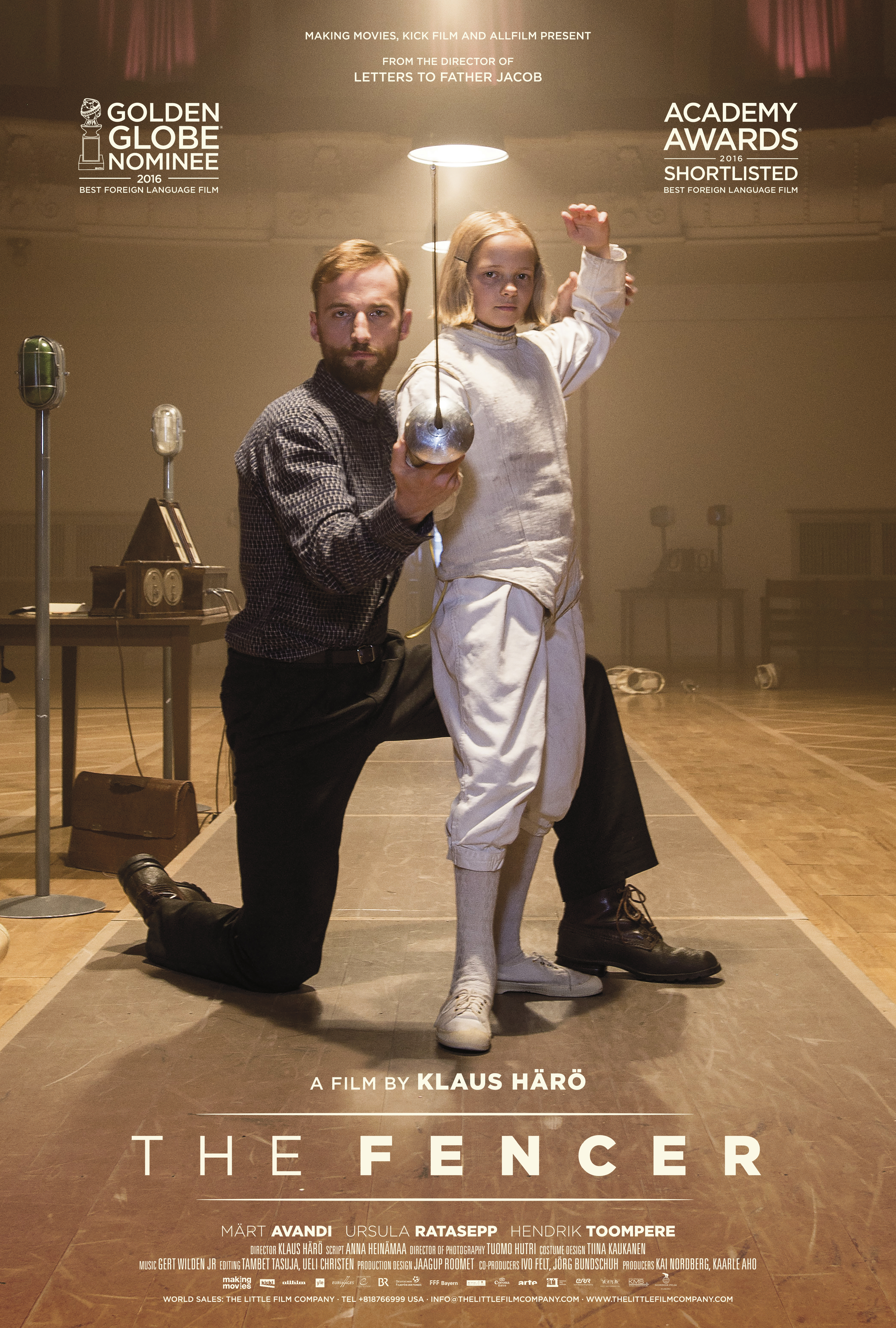
The Fencer (2015)

17 Tuesday May 2016

Posted by dullwood68 in Movies

≈ Leave a comment

Tags

Drama, Endel Nelis, Estonia, Fencing, Finland, Haapsalu, Hendrik Toompere Sr, Klaus Härö, Leningrad, Märt Avandi, Review, Soviet Union, Sports Club, Tournament, True story, Ursula Ratasepp, World War II
The Fencer

Original title: Miekkailija

D: Klaus Härö / 98m

Cast: Märt Avandi, Ursula Ratasepp, Hendrik Toompere Sr, Liisa Koppel, Joonas Koff, Ann-Lisett Rebane, Elbe Reiter, Egert Kadastu, Lembit Ulfsak, Kirill Käro

The Fencer begins with a brief – but necessary – history lesson: during World War II, Estonia was occupied by Nazi Germany; most of the men were conscripted into the German army. When Estonia was absorbed into the Soviet Union, it regarded all members of the German army as war criminals, regardless of any extenuating circumstances. In the years following the war, Estonians who were known to have been a part of the German forces were tracked down by the Soviets and imprisoned.

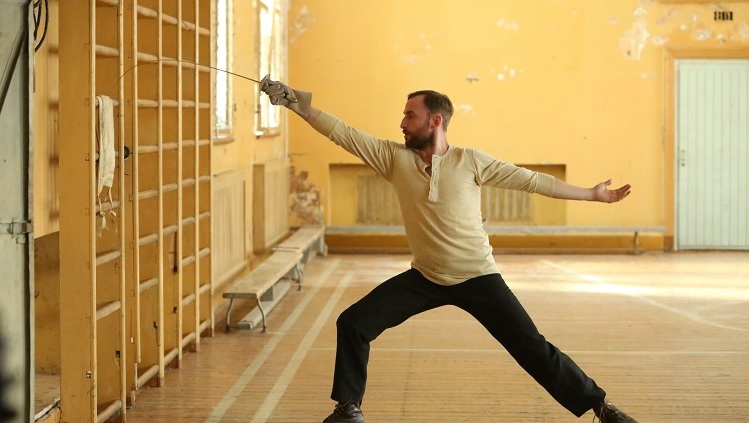
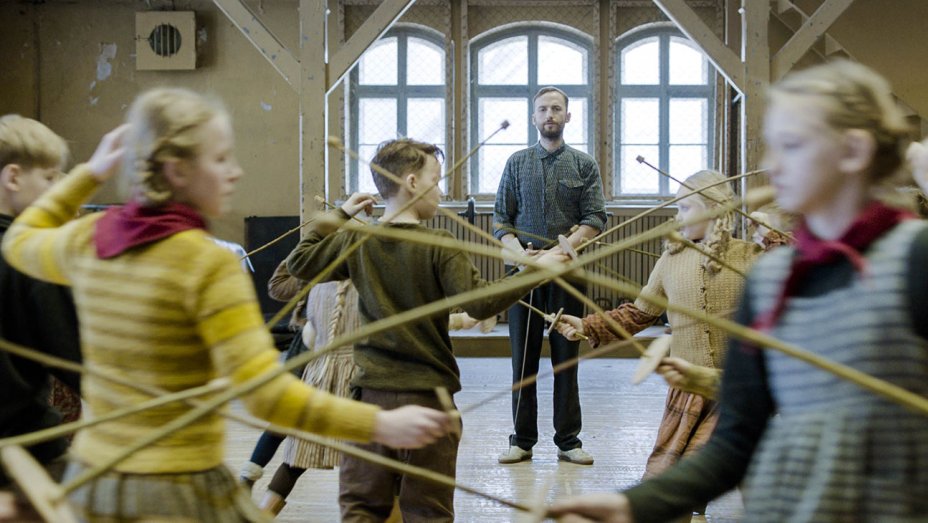
Against this backdrop, the movie tells the story of Endel Nelis (Avandi), an Estonian and former championship fencer who was himself drafted into the German army, and who is now trying to avoid capture by the Soviets. He arrives in the small Estonian town of Haapsalu to take up a position as a teacher. His arrival is greeted with disdain by the school principal (Toompere Sr), and Endel soon finds that one of his extra duties, running the sports club, is paid lip service to by the principal, and his initial attempt to get the club up and running is undermined accordingly. But when he decides to teach fencing as part of the sports club, he finds nearly all the students turning up for the first session.
TF - scene3

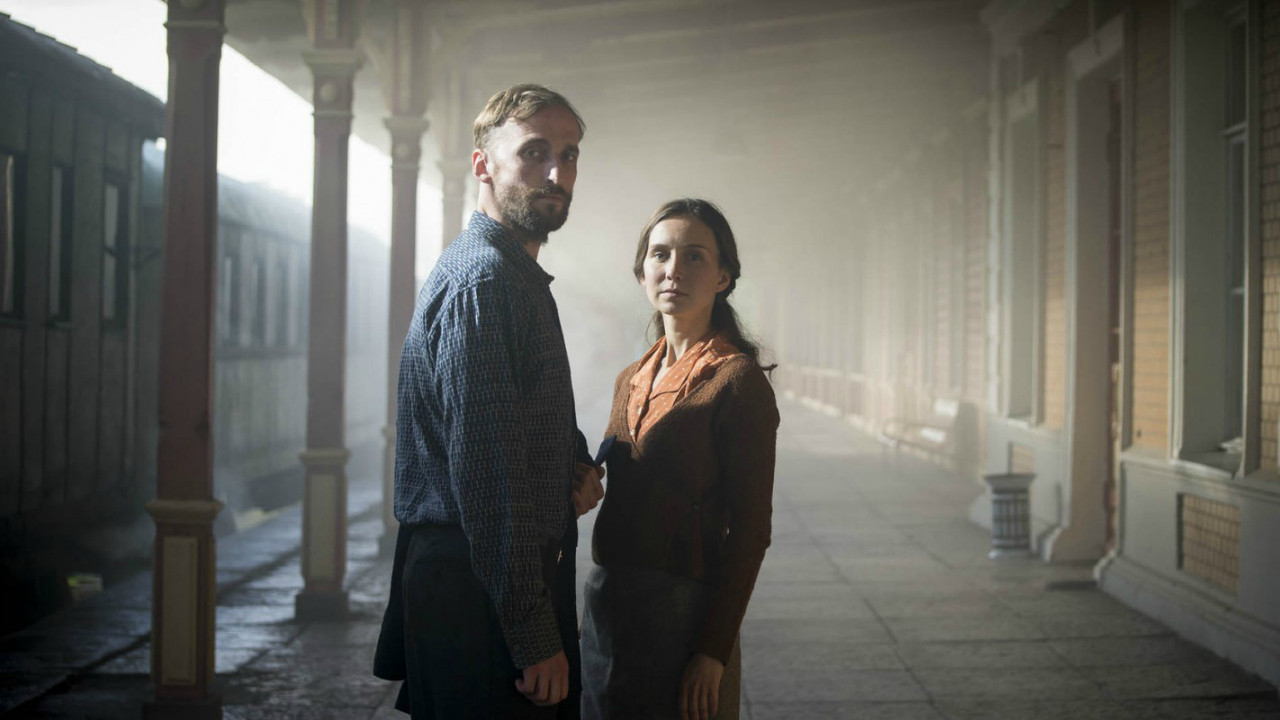
The principal is disconcerted by this show of enthusiasm, and mistrusts it, choosing instead to try and undermine its popularity at a parents meeting. While he alludes to dire consequences if the parents vote for the fencing to continue, the grandfather (Ulfsak) of one of the boys in the club, Jaan (Koff), encourages the rest of the parents to vote to keep it going. While all this is going on, Endel is visited by his best friend, Aleksei (Käro) who warns him that people are looking for him in Leningrad (where he’s come from). And Endel begins a tentative relationship with another teacher, Kadri (Ratasepp).

As time goes on, the children make enough progress that when one of them, Marta (Koppel), learns of a national fencing tournament to be held in Leningrad, and she wants Endel to enter them, it provides him with a diffcult decision: should he risk taking some of the students to Leningrad and being caught, or should he risk losing the faith the children have in him, and with it, witness the end of the club? (As if there’s any doubt as to what decision he’ll make.) Once at the tournament, the four pupils he’s chosen to compete – Marta, Jaan, Lea (Rebane), and Toomas (Kadastu) – show that the skills they’ve developed have a good chance of seeing them win the tournament outright. But the increased presence of armed guards throughout the building points to Endel’s chances of returning to Haapsalu as being even slimmer than he’d expected.
TF - scene1

Directed by Härö from a script by Anna Heinämaa, The Fencer is a melancholy rumination on individualism and patriotic duty, with Endel as the protagonist seeking the kind of quiet life that everyone on the run wishes for, yet rarely attains. It’s a stately, deliberately paced movie that still manages to be impactful and modestly gripping. It has a keen sense of the story it’s telling, and makes its points about the Soviet Union’s totalitarian approach to socialism with understated precision, preferring to acknowledge small instances of the system’s control rather than focus on the larger examples that most other movies fall back on. It paints a broad picture of the times, the early Fifties, but adds sufficient detail to be both impressive and insightful. (This is best evidenced in the scene with the parents’ meeting, where the principal’s officious and condescending nature is contrasted by what is effectively the “will of the people”. His attempt at intimidation almost works, but Heinämaa and Härö ramp up the tension through the slow awareness of the parents that they have more power than the principal wants them to realise.)

Endel’s relationship with the pupils is developed naturally and without resorting to the kind of sentimental clichés that a Hollywood version might fall back on without thinking. Jaan looks up to Endel because his father is missing, while even the majority of the other children look upon him as a father figure, someone they can trust. But it’s Endel’s trust in them, his belief that they can be good, if not great, fencers that buoys their affection for him, and provides the movie with a great deal of its heart and soul. Even though he confides in Kadri that he’s not good with kids, that he doesn’t know how to deal with them, Endel still has an instinctive feel for dealing with them that allows him to forge such great relationships with them (though he’s not exactly the kind of teacher who maintains boundaries; instead he appears to make it up as he goes along).

At its heart, The Fencer is about doing the right thing, and doing it for all the right reasons, even if it comes with a personal price attached. Endel turns down the chance of moving on and hiding out in Novosibirsk, and it’s here that you begin to get the sense that Endel is finished with running, that with the sports club he’s found a place where he belongs (not to mention the love of a good woman). Endel can be seen putting his life and its value in perspective, and when he makes his choice near the movie’s end, he can be applauded for being true to himself and no one else.
TF - scene2

As the beleaguered teacher, Avandi has a weary yet subtly engaged manner about him that is heartwarming and sympathetic. Endel is trying to do the best he can, and it’s easy for the viewer to root for him. Avandi’s sad, doleful features tell you more about how the character is feeling than any amount of exposition, and Härö takes every opportunity to focus on those features and weave a bit of acting magic. As the “villain” of the piece, Toompere Sr is a mean-spirited pedagogue stranded in a small town and seeking affirmation through adhering to the demands of the state. He’s a low man made even lower by his actions, but thanks to Toompere Sr he’s not a man to be hated (or even despised) but pitied instead; he’s as much a prisoner of fate as Endel is.

Once the movie arrives in Leningrad, and the tournament begins, Härö wisely drops the political and social elements for a solid, ever-so-slightly-gripping batch of fencing bouts that add a bit of zest to the pacing. The final bout is played out with élan, even if the outcome goes from being unpredictable to downright obvious halfway through, and the final coda provides a bittersweet ending that smacks of wish fulfillment on the makers’ part but at least gives the viewer the happy ending they’ve been hoping for.

Rating: 8/10 – a beautifully lensed movie that features a succinct, unpretentious yet absorbing screenplay, The Fencer can best be described as the kind of movie that sneaks up on you and takes you by surprise; it’s a quietly impressive movie that only falters when it tries to up the pace and be visually more dramatic, but this is a minor concern when weighed against the many, many, many things the movie gets right.
Share this:

  • Click to share on X (Opens in new window) X
  • Click to share on Facebook (Opens in new window) Facebook
  • More
  • Click to print (Opens in new window) Print
  • Click to email a link to a friend (Opens in new window) Email
Like Loading...

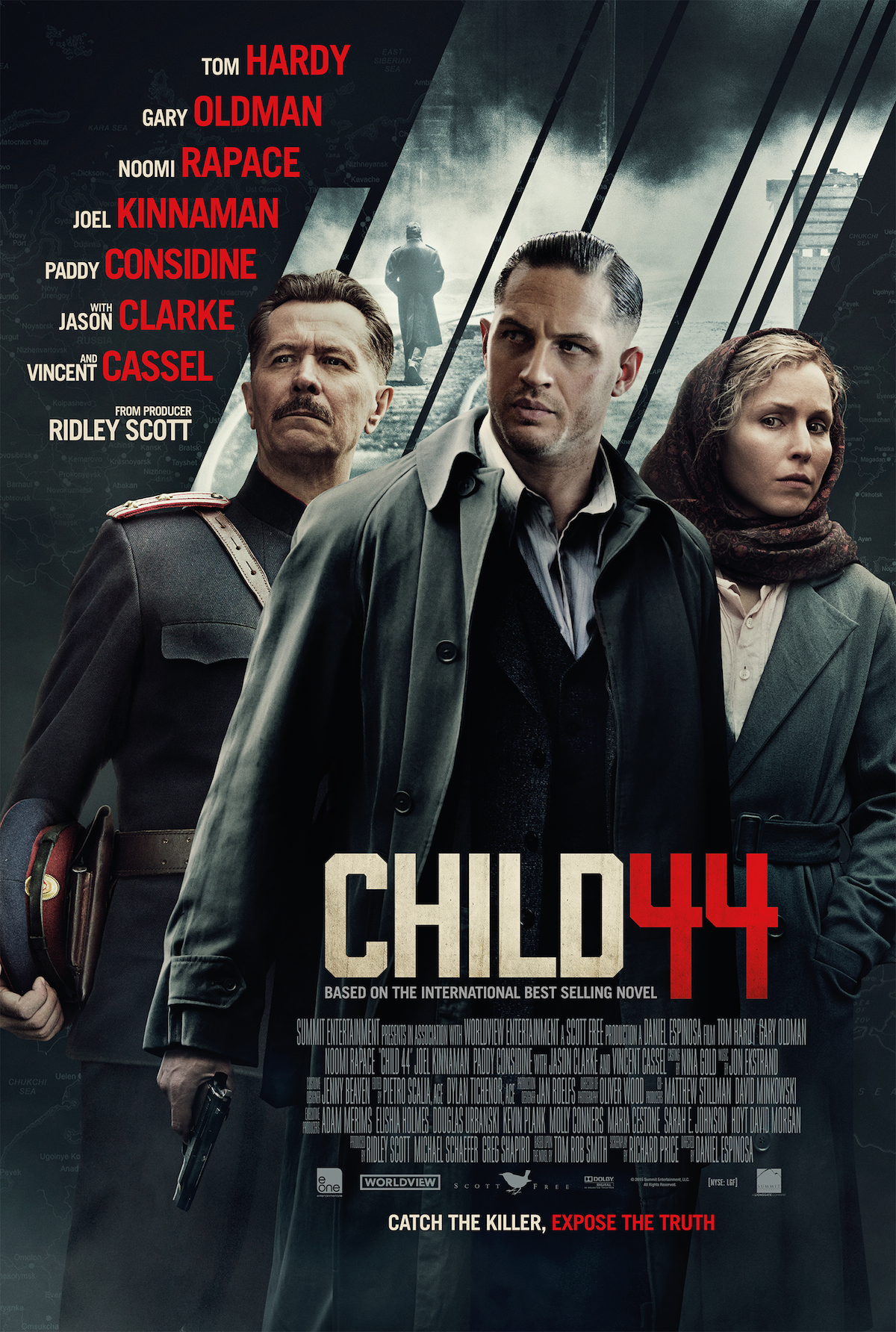
Child 44 (2015)

04 Monday May 2015

Posted by dullwood68 in Movies

≈ Leave a comment

Tags

Daniel Espinosa, Drama, Gary Oldman, Joel Kinnaman, Leo Demidov, Literary adaptation, Moscow, Murder, Noomi Rapace, Review, Rostov, Serial killer, Soviet Union, Thriller, Tom Hardy, Tom Rob Smith

Child 44

D: Daniel Espinosa / 137m

Cast: Tom Hardy, Noomi Rapace, Gary Oldman, Joel Kinnaman, Paddy Considine, Fares Fares, Vincent Cassel, Jason Clarke, Nikolaj Lie Kaas, Tara Fitzgerald, Sam Spruell, Charles Dance

In post-war Soviet Russia, Leo Demidov (Hardy) is a respected officer in the Secret Police. Along with wartime comrades Vasili Nikitin (Kinnaman) and Alexei Andreyev (Fares) he investigates crimes against the state. When a suspect, Anatoly Brodsky (Clarke) goes on the run, their pursuit takes them to a farm where Brodsky has taken refuge. Against Leo’s wishes, Vasili kills the farmer’s wife and his young son; this drives a wedge between the two men.

A short while later, Andreyev’s young son is found dead by some railroad tracks. Though it’s clear that he has been murdered, thanks to Stalin’s edict that there shall be “no murder in paradise”, Leo is commanded by his superior, Major Kuzmin (Cassel), to tell Andreyev that the death was accidental. The idea doesn’t sit well with Leo but he goes ahead with it. When another child is murdered, Leo learns that there have been even more, similar cases. At the same time, he is tasked with investigating another suspected enemy of the state: his wife, Raisa (Rapace). She works in a school, and is friendly with one of the teachers, Ivan Sukov (Kaas). When his investigation reveals nothing incriminating about Raisa, his report is used as an excuse to strip Leo of his job and his home.

Leo is sent to Rostov to work under the command of General Mikhail Nesterov (Oldman). There, the discovery of another child’s body leads Leo to believe that the killer is responsible for over forty murders and is using the railway line between Rostov and Moscow as a means of hiding his crimes. Convincing Nesterov of his theory, Leo, aided by Raisa, returns to Moscow to seek help from Andreyev and gain access to files that will provide further information. But Vasili, who has been promoted to Leo’s old post, learns of his being in Moscow and tries to track him down and arrest him. Leo and Raisa manage to get out of Moscow and make their way back to Rostov. Now knowing that this is where the killer lives and works, Leo tries to find him on his own, but he has to work completely outside the law to do so.

Child 44 - scene

Based on the novel by Tom Rob Smith, Child 44 looks, on the surface, to be the kind of quality literary adaptation that offers outstanding performances, first-rate direction, a gripping script, and all of it culminating in a rewarding cinematic experience. Alas, this isn’t that kind of movie.

Instead, Child 44 is one of the most lethargic, dullest thrillers in recent years. It’s hard to say just what is right about the movie, cloaked as it is in a thick layer of cod-Russian accents and the kind of amateur thesping expected from a movie with a much smaller budget.

That such a talented cast appears so ill-at-ease is thanks largely to a script by Richard Price that leaves them high and dry in terms of conviction, and rarely links two scenes with any sense that they’re connected. The movie opens with two scenes that show Leo and Vasili growing up and during the war. Anyone who’s read the novel will know the importance of this, but thanks to Price it has as much relevance later on as its clichéd outcome requires (which isn’t much). There are other moments and aspects of the novel that are included and then ignored, such as Raisa’s initial fear of Leo when they first met, and these go some way to making the movie feel uncoordinated and ill-considered.

And the movie feels rushed once Leo has to look into Raisa’s activities, as if the strain of adapting so much wieldy material became too much and Price had to jettison any subtlety in favour of just ploughing ahead with the thriller side of things. The end result is a movie that plods along avoiding any attempt to re-engage with its audience. As such, it becomes a chore, and the average viewer will be regretting the lengthy running time.

As mentioned above, the cast can do little with what they’re given. Hardy – usually a reliably  hard-working actor – here fails to get to grips with the character of Leo, and gives a drab, uninspired performance that runs out of steam before even a quarter of the movie is over. Raoace, who really should be picking her roles with more perspicacity, is left on the sidelines too much and only ever registers when taking part in a fight scene. Oldman appears halfway through, has a handful of scenes and then disappears until the end; Kinnaman plays Vasili as a one-note sociopath (and looks increasingly like a young Keith Carradine); and Considine is saddled with the role of the killer, but never looks comfortable when trying to make him seem pitiable.

Perhaps it’s as much Espinosa’s fault as the script’s, as the director never seems to have s firm grip on the material, and shoots several scenes with a peculiarly uninvolved approach that makes them seem as if they’ve been included for the sake of it. Under his wing, the movie lacks any real thrills, and the race to track down the killer is hampered by too many longeuers to be entirely effective. And when you have a cast of this quality, not getting the best out of them is practically criminal.

Rating: 4/10 – with its superficial recreation of Soviet Russia, and cruelly dispassionate approach to the material, Child 44 never convinces; when a movie adaptation is this disappointing it’s a sure sign that everyone was having a very long off day.

Share this:

  • Click to share on X (Opens in new window) X
  • Click to share on Facebook (Opens in new window) Facebook
  • More
  • Click to print (Opens in new window) Print
  • Click to email a link to a friend (Opens in new window) Email
Like Loading...

Planeta bur (1962)

08 Wednesday Apr 2015

Posted by dullwood68 in Movies

≈ 1 Comment

Tags

Drama, Georgi Zhzhyonov, John, Literary adaptation, Pavel Klushantsev, Review, Robot, Sci-fi, Sirius, Soviet Union, Spaceships, Vega, Venus, Vladimir Yemelyanov

Planeta bur

aka Planeta Burg; Planet of Storms; Planet of Tempests; Storm Planet

D: Pavel Klushantsev / 78m

Cast: Vladimir Yevelyanov, Georgi Zhzhyonov, Gennadi Vernov, Yuriy Sarantsev, Georgiy Teykh, Kyunna Ignatova

Three spaceships from the Soviet Union – Vega, Sirius and Capella – are approaching Venus when one of them, Capella, is struck by a meteorite and destroyed. The mission requires two of the ships to land on Venus while the remaining ship stays in orbit. But Capella’s replacement, Arcturus, will take four months to reach Venus, a situation the cosmonauts on board Sirius – Ilya (Yemelyanov), Aleksey (Zhzhyonov) and Roman (Vernov) – find unacceptable. They hatch a plan to land on Venus using a glider and one of the ships, but it means someone having to stay in orbit and monitor their progress on the planet. This falls to Masha (Ignatova), a Vega crew member. In the end, it’s her fellow crew members, Scherba (Sarantsev) and Dr Kern (Teykh), along with Kern’s robot John, who make the trip in the glider. However, when they land, all communication with them is lost.

The Sirius crew land in their ship to look for them. They encounter a strange, rocky environment that is perpetually shrouded in mist. They identify their colleagues’ location and set out in a hover car to find them, but not before Aleksey is almost killed by a carnivorous plant-like creature. Realising that Venus holds more dangers than they’d expected, they proceed with caution. Meanwhile, Scherba and Kern have encountered another danger, lizard-like creatures that walk upright. Fighting them off they soon find another problem: with their spacesuits torn in places, they’ve become susceptible to the air on Venus and are getting sick. They hole up in a cave and wait for their colleagues to find them.

Locking onto their position, Ilya, Aleksey and Roman find themselves under attack, this time from a creature resembling a pterodactyl (they’ve already encountered what appears to be a brontosaurus). Their hover car is damaged and ends up at the bottom of a lake. With communication lost with everyone on the surface, Masha has to decide whether or not she should mount her own rescue mission or wait for Arcturus to arrive. With time running out, the hover car is rescued from the lake and Ilya and his two colleagues get closer to finding their comrades. But not before Scherba, Kern and John have to deal with the lava flow from a nearby volcano. And all the while an ethereal female voice can be heard both in the distance and incredibly close by…

Planeta bur - scene

Viewed now, over fifty years on, Planeta bur is less of a curio than you might expect. While it’s not very prescient in terms of future science, and retains a quaint approach to some of its technology – Masha records her thoughts about making her rescue mission on a reel-to-reel tape recorder – there’s more than enough going on to keep the viewer interested, even if there are some unfortunately comic moments.

The trick is to put aside what we know now about Venus, and just go with the flow. After a stodgy opening period where the characters are introduced and the dilemma of landing on Venus is discussed and then decided on, the meat of the movie is introduced and we get to see the rugged, inhospitable landscape that represents the planet’s surface, as well as some very unpleasant inhabitants. It’s like a science fiction movie crossed with a disaster epic, as the cosmonauts encounter danger after danger, from man-eating plants to mini-Godzilla-like creatures to sudden volcanic eruptions. And though the pace is unhurried, there’s still enough tension built up between the various scenes of peril to keep the viewer interested and engaged.

In between these scenes there’s also time for the characters to wax philosophical about the origins of life on Venus and Earth – maybe we’re all descended from Martians – and the importance of the mission to the people back home in the Soviet Union (there’s even a short sequence where Masha envisions a parade with appropriately cheering masses in attendance). These interludes add a layer of intellectual gravitas to what is essentially an adventure, and is matched by the serious, intense nature of the cast and their performances. Yemelyanov looks like he’s lost the ability to smile, while Zhzhyonov’s eagerness to land on Venus makes him appear reckless. As the sole female on the mission, Ignatova looks concerned, worried and fearful throughout, and Teykh goes the opposite way ands affects a disinterested, unemotional stance that befits his reserved character.

The special effects employed range from the casually simple, such as the space suits, to the impressively clever, such as the hover car (which really looks like it’s floating a good foot off the ground). The locations, though feeling restricted, are used to very good effect, and there’s an otherworldly feel to them that adds a level of eeriness to proceedings. Klushantsev orchestrates the various alien encounters without overdoing it in terms of increasing the pace or making it look as if the cosmonauts are in any real danger, but their encounters are effective enough and shot with a good deal of style (if a little restrained at the same time). While some of the creatures remind the viewer of the budgetary constraints, again there’s a quaintness to it all that makes up for any shortcomings.

Concluding with a couple of revolutionary sounding songs extolling the virtues of both Earth and Venus, the movie has a satisfactory ending that hints at a possible sequel (but which sadly never happened). What did sadly happen is that American International Pictures got hold of the movie and re-edited it twice to make two vastly inferior “new” versions: Voyage to the Prehistoric Planet (1965), with Basil Rathbone added to the mix, and Voyage to the Planet of Prehistoric Women (1968), directed by Peter Bogdanovich and with Mamie Van Doren added instead. Neither movie has much to recommend it, and should be avoided at all costs.

Rating: 7/10 – a little clunky in places, but thankfully free of too much ideology or Soviet propaganda, Planeta bur is a serious sci-fi movie that has much to say about the idea of space exploration; entertaining throughout, and as an entry movie into the career of the under-appreciated Klushantsev, definitely a good place to start.

Trailer: Sadly, there doesn’t seem to be a trailer for Planeta bur available.

Share this:

  • Click to share on X (Opens in new window) X
  • Click to share on Facebook (Opens in new window) Facebook
  • More
  • Click to print (Opens in new window) Print
  • Click to email a link to a friend (Opens in new window) Email
Like Loading...

Blog Stats

  • 486,527 hits

Recent Posts

  • 10 Reasons to Remember Bibi Andersson (1935-2019)
  • Fantasia (1940)
  • Dances With Wolves (1990) – The Special Edition
  • Kiss of the Spider Woman (1985)
  • The Three Musketeers (1973)

Top Posts & Pages

  • Lost for Life (2013) - Another Look
    Lost for Life (2013) - Another Look
  • Lost for Life (2013)
    Lost for Life (2013)
  • About
    About
  • Mr. Topaze (1961)
    Mr. Topaze (1961)
  • Billy Lynn's Long Halftime Walk (2016)
    Billy Lynn's Long Halftime Walk (2016)
  • Winter's Tale (2014)
    Winter's Tale (2014)
  • The Hitman's Bodyguard (2017)
    The Hitman's Bodyguard (2017)
  • 5 Famous Movie Roles That Nearly Went to Someone Else
    5 Famous Movie Roles That Nearly Went to Someone Else
  • The Layover (2017)
    The Layover (2017)
  • Transcendence (2014)
    Transcendence (2014)
Follow thedullwoodexperiment on WordPress.com

Blogs I Follow

  • Rubbish Talk
  • Film 4 Fan
  • Fast Film Reviews
  • The Film Blog
  • All Things Movies UK
  • Interpreting the Stars
  • Let's Go To The Movies
  • Movie Reviews 101
  • TMI News
  • Dan the Man's Movie Reviews
  • Film History
  • Jordan and Eddie (The Movie Guys)

Archives

  • April 2019 (13)
  • March 2019 (28)
  • February 2019 (28)
  • January 2019 (32)
  • December 2018 (28)
  • November 2018 (30)
  • October 2018 (29)
  • September 2018 (29)
  • August 2018 (29)
  • July 2018 (30)
  • June 2018 (28)
  • May 2018 (24)
  • April 2018 (21)
  • March 2018 (31)
  • February 2018 (25)
  • January 2018 (30)
  • December 2017 (30)
  • November 2017 (27)
  • October 2017 (27)
  • September 2017 (26)
  • August 2017 (32)
  • July 2017 (32)
  • June 2017 (30)
  • May 2017 (29)
  • April 2017 (29)
  • March 2017 (30)
  • February 2017 (27)
  • January 2017 (32)
  • December 2016 (30)
  • November 2016 (28)
  • October 2016 (30)
  • September 2016 (27)
  • August 2016 (30)
  • July 2016 (30)
  • June 2016 (31)
  • May 2016 (34)
  • April 2016 (30)
  • March 2016 (30)
  • February 2016 (28)
  • January 2016 (35)
  • December 2015 (34)
  • November 2015 (31)
  • October 2015 (31)
  • September 2015 (34)
  • August 2015 (31)
  • July 2015 (33)
  • June 2015 (12)
  • May 2015 (31)
  • April 2015 (32)
  • March 2015 (30)
  • February 2015 (37)
  • January 2015 (39)
  • December 2014 (34)
  • November 2014 (34)
  • October 2014 (36)
  • September 2014 (25)
  • August 2014 (29)
  • July 2014 (29)
  • June 2014 (28)
  • May 2014 (23)
  • April 2014 (21)
  • March 2014 (42)
  • February 2014 (38)
  • January 2014 (29)
  • December 2013 (28)
  • November 2013 (34)
  • October 2013 (4)

Create a free website or blog at WordPress.com.

Rubbish Talk

Film 4 Fan

A Movie Blog

Fast Film Reviews

The Film Blog

The official blog of everything in film

All Things Movies UK

Movie Reviews and Original Articles

Interpreting the Stars

Dave Examines Movies

Let's Go To The Movies

Film and Theatre Lover!

Movie Reviews 101

Daily Movie Reviews

TMI News

Latest weather, crime and breaking news

Dan the Man's Movie Reviews

All my aimless thoughts, ideas, and ramblings, all packed into one site!

Film History

Telling the story of film

Jordan and Eddie (The Movie Guys)

Movie Reviews & Ramblings from an Australian Based Film Fan

Privacy & Cookies: This site uses cookies. By continuing to use this website, you agree to their use.
To find out more, including how to control cookies, see here: Cookie Policy
  • Subscribe Subscribed
    • thedullwoodexperiment
    • Join 481 other subscribers
    • Already have a WordPress.com account? Log in now.
    • thedullwoodexperiment
    • Subscribe Subscribed
    • Sign up
    • Log in
    • Report this content
    • View site in Reader
    • Manage subscriptions
    • Collapse this bar
 

Loading Comments...
 

    %d