• 10 Reasons to Remember…
  • A Brief Word About…
  • About
  • For One Week Only
  • Happy Birthday
  • Monthly Roundup
  • Old-Time Crime
  • Other Posts
  • Poster of the Week
  • Question of the Week
  • Reviews
  • Trailers

thedullwoodexperiment

~ Viewing movies in a different light

thedullwoodexperiment

Tag Archives: Stanley Tucci

The Children Act (2017)

28 Tuesday Aug 2018

Posted by dullwood68 in Movies

≈ Leave a comment

Tags

Blood transfusion, Court case, Drama, Emma Thompson, Fionn Whitehead, Ian McEwan, Jehovah's Witness, Judge, Leukaemia, Literary adaptation, Review, Richard Eyre, Stanley Tucci

D: Richard Eyre / 105m

Cast: Emma Thompson, Stanley Tucci, Fionn Whitehead, Ben Chaplin, Jason Watkins, Nikki Amuka-Bird, Anthony Calf, Rosie Cavaliero, Rupert Vansittart, Nicholas Jones

Fiona Maye (Thompson) is a High Court judge who specialises in cases involving the Children Act 1989, cases that often involve a strict interpretation of the law and which require a consideration of what is best for the child, even if it’s at odds with the wishes of the parents. Fiona is married to Jack (Tucci), a classics professor, but in the wake of a particularly difficult case, Jack announces that he plans to have an affair; he’s unhappy with the lack of intimacy in their marriage. Fiona is upset by this but remains reticent until a call from her chambers advises of an emergency case that needs her attention. Jack leaves, while Fiona prepares to deal with the case of Adam Henry (Whitehead), a seventeen year old Jehovah’s Witness who will die from leukaemia unless he is given a blood transfusion. Adam is refusing to have the transfusion, and so the hospital is seeking a ruling to overturn his refusal. Against a background of religious determination and legal necessity, Fiona meets Adam before making her judgment. It’s a meeting that proves to have a profound effect on both of them…
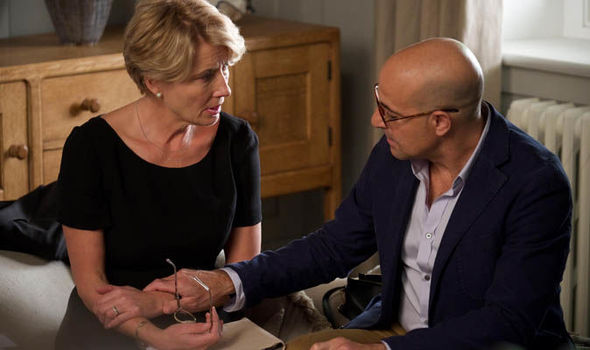
Sometimes a movie has no choice but to rely heavily, if not completely, on the merits of a particular performance. Without that performance, the movie loses its central focus, or becomes less of an accomplished piece, or worst of all, lacks any appreciable impact. Such is the case with The Children Act, an adaptation of Ian McEwan’s 2014 novel, and with a screenplay by McEwan himself. Without Emma Thompson, this would be a hollow movie with little to recommend it (though that’s not to say that another actress couldn’t have carried off the role to the same degree). What comes across, and  very early on, is that Fiona is the whole show, and without her the storyline and the movie as a whole would amount to very little indeed. McEwan is a terrific novelist, but he’s not necessarily a terrific screenwriter, because in translating his novel to the big screen, he’s forgotten to make the elements around Fiona as interesting or intriguing as those that directly concern her. This leaves the movie dependent entirely on Thompson’s performance throughout, and in the process, relegates everyone else to the second tier.

The decision Fiona makes in regard to Adam’s case won’t surprise anyone, but once she makes it, the movie jettisons its legal drama set up and becomes something entirely expected and dramatically demoralising: Fiona finds herself “pursued” by an overly enamoured Adam. Up until now, the story has played out with a keen awareness of the legal, religious and emotional undercurrents of Adam’s case – in the witness box, Adam’s father (Chaplin) is a passionate advocate for his faith in God – but with the verdict in and Adam’s life saved, it becomes an unwieldy drama of misspent longing and unwanted attention that turns Adam from a fierce proponent of religious and personal choice into a drippy, Yeats-quoting stalker whose intelligence and wit seems to have been drained out of him along with his own blood. This sudden change hurts the movie tremendously, and makes the final half an hour something of a struggle in terms of credibility. At the same time, the sub-plot with Jack is allowed to resolve itself with a minimum of effort. With so much initial momentum overturned, it’s again thanks to Thompson’s subtle yet deeply emotive portrayal that the viewer is able to carry on until the end, but with the certain (and unavoidable) awareness that, whatever the outcome, it won’t be as insightful or impactful as what happens before Fiona reveals her decision.

Rating: 7/10 – Thompson’s magnificent performance is the real deal here, and the only deal as well, making The Children Act something of a lop-sided endeavour that’s compelling when focused on Fiona’s emotional confusion, but merely adequate at all other times; Eyre’s direction is solid, but Tucci is wasted in a thankless role, and the whole thing unfolds against a backdrop of repressed emotions that the script seems uninterested in revealing.

Share this:

  • Click to share on X (Opens in new window) X
  • Click to share on Facebook (Opens in new window) Facebook
  • More
  • Click to print (Opens in new window) Print
  • Click to email a link to a friend (Opens in new window) Email
Like Loading...

Final Portrait (2017)

25 Thursday Jan 2018

Posted by dullwood68 in Movies

≈ Leave a comment

Tags

Alberto Giacometti, Armie Hammer, Art, Comedy, Drama, Geoffrey Rush, James Lord, Literary adaptation, Painting, Paris, Review, Stanley Tucci

D: Stanley Tucci / 90m

Cast: Geoffrey Rush, Armie Hammer, Clémence Poésy, Tony Shalhoub, Sylvie Testud

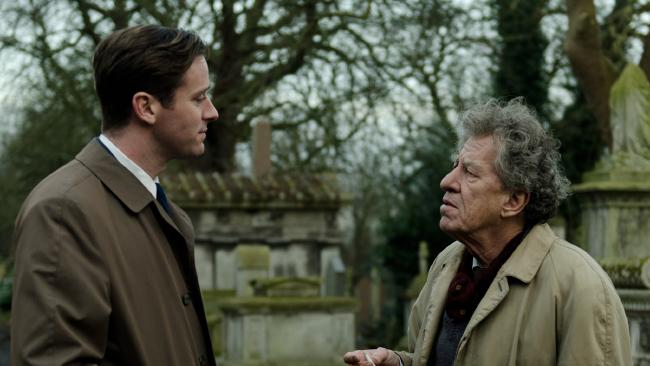
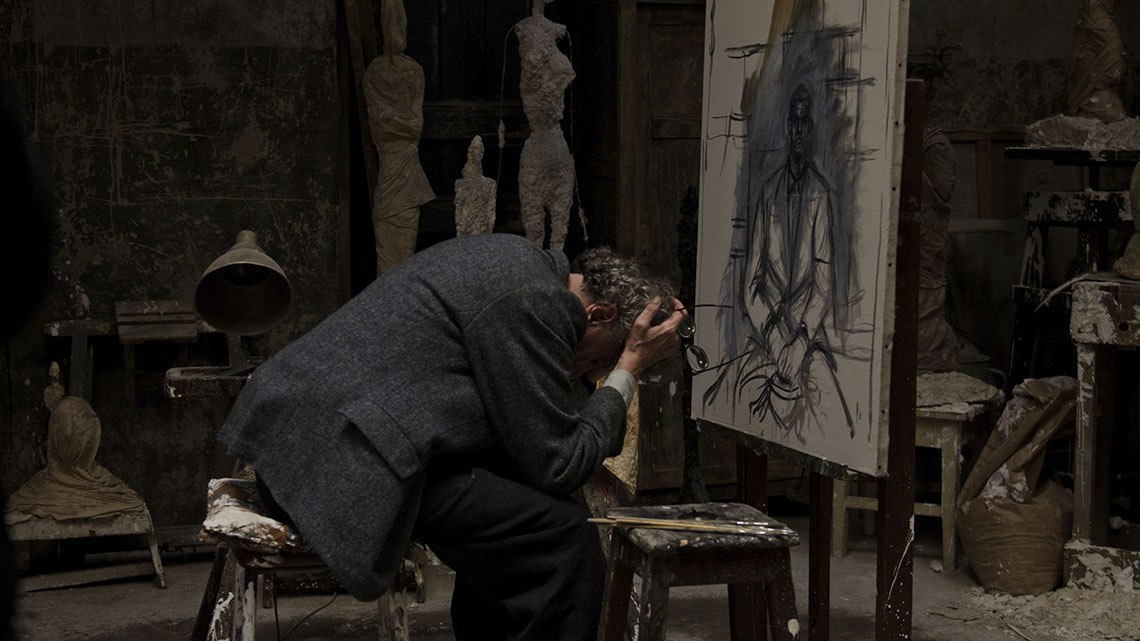
In 1964, the writer James Lord (Hammer) is in Paris on a short trip when his friend, the artist Alberto Giacometti (Rush), asks him to sit for a portrait. Giacometti initially says it will take a few hours – one afternoon – but his own eccentricities and his own self-doubts mean that one afternoon becomes several weeks, and Lord is faced with postponing his return to the US until the portrait is finished. Giacometti works in fits and starts, and his personal life often interferes with his progress with the painting. There are long-standing animosities between Giacometti and his wife, Annette (Testud), that are exacerbated by his relationship with Caroline (Poésy), whose portrait he’s also painting. As the time passes, Lord becomes an observer of Giacometti’s life and work, and his insecurities and obsessions.

Based on the biography written by Lord a year later, A Giacometti Portrait, Stanley Tucci’s fourth feature as a writer/director is a meditative exploration of the creative process, and the notion that no work of art can ever truly be regarded as finished. It’s an interesting idea for a movie to examine, as by its very nature, Final Portrait is exactly that: a finished product (unless Tucci decides to release revised versions of the movie in future years). But it’s an idea that Giacometti adheres to, and Tucci has him continually looking at the sculptures in his studio, examining them, assessing them, and sometimes changing them slightly, albeit in very minor ways, as if by doing so, he can improve the work in such a way that it becomes more relevant, and worth the effort he’s put into it. The same applies to Lord’s portrait, an endeavour that Giacometti says will never be truly completed, even if Lord were to be available to sit for the rest of his life; even then, more can always be done to improve the work, and then more again.

Tucci isn’t one for histrionics or exaggerated performances, and his cast comply with the needs of a script that requires a delicacy of touch and a sympathetic approach to both Giacometti and his erratic genius. Rush is a terrific choice as the artist who thinks nothing of throwing an envelope with two million francs in it under a bed and forgetting about it. Chain-smoking his way through the movie, Rush portrays Giacometti as a restless man who is always searching for that one moment of clarity in his work but never quite finding it. As the trapped, slightly bewildered, and increasingly frustrated Lord, Hammer is effectively the straight man to Rush’s manic devilry, but he carries the role well, and is a charming foil for Giacometti’s maddening behaviour. In support, Poésy and Testud offer polar opposites as the women in Giacometti’s life (neither of whom are as well treated as they would like), and there’s the quiet, reflective presence of Shalhoub as Giacometti’s brother, Diego. The movie is beautifully constructed, with the artist’s studio a wonderfully designed and assembled cave of wonders courtesy of production designer James Merifield, art director David Hindle, and set decorator Sarah Wan. The camera takes in all the elements that are on display and a wonderfully evocative world is entered into as a result. It’s all overlaid with a tremendous sense of fun, along with a dash of rueful humour here and there, and remains a captivating and entertaining experience throughout.

Rating: 8/10 – an affectionate tribute to the difficulties inherent in the artistic process, Final Portrait is a thoughtful, sincere, modest, and clever movie that offers a beguiling yet intuitive examination of the artist Alberto Giacometti and his work; Rush and Hammer give wonderful performances, Tucci directs with verve and confidence in his own script, and it all proves as invigorating as the pursuit of artistic “truth” should be.

Share this:

  • Click to share on X (Opens in new window) X
  • Click to share on Facebook (Opens in new window) Facebook
  • More
  • Click to print (Opens in new window) Print
  • Click to email a link to a friend (Opens in new window) Email
Like Loading...

Spotlight (2015)

29 Tuesday Dec 2015

Posted by dullwood68 in Movies

≈ 4 Comments

Tags

Boston Globe, Cardinal Law, Catholic Church, Drama, Investigation, Liev Schreiber, Mark Ruffalo, Michael Keaton, Priests, Rachel McAdams, Review, Sexual abuse, Stanley Tucci, Tom McCarthy, True story

Spotlight

D: Tom McCarthy / 128m

Cast: Mark Ruffalo, Michael Keaton, Rachel McAdams, Liev Schreiber, John Slattery, Brian d’Arcy James, Stanley Tucci, Billy Crudup, Jamey Sheridan, Paul Guilfoyle, Len Cariou, Neal Huff, Michael Cyril Creighton, Richard Jenkins

In 2001, the Boston Globe newspaper hired a new editor, Marty Baron (Schreiber). Baron noticed a column in the paper about a Catholic priest, John Geoghan, who was known to be a paedophile, and a lawyer, Mitchell Garabedian (Tucci) who claimed he had evidence that the Archbishop of Boston, Cardinal Law (Cariou), knew all about it and did nothing to stop Geoghan’s activities. Urging the paper’s Spotlight section – an investigative team made up of four people – to look more closely at the matter, Baron set in motion an investigation that would expand rapidly to reveal a far greater problem than one errant priest.

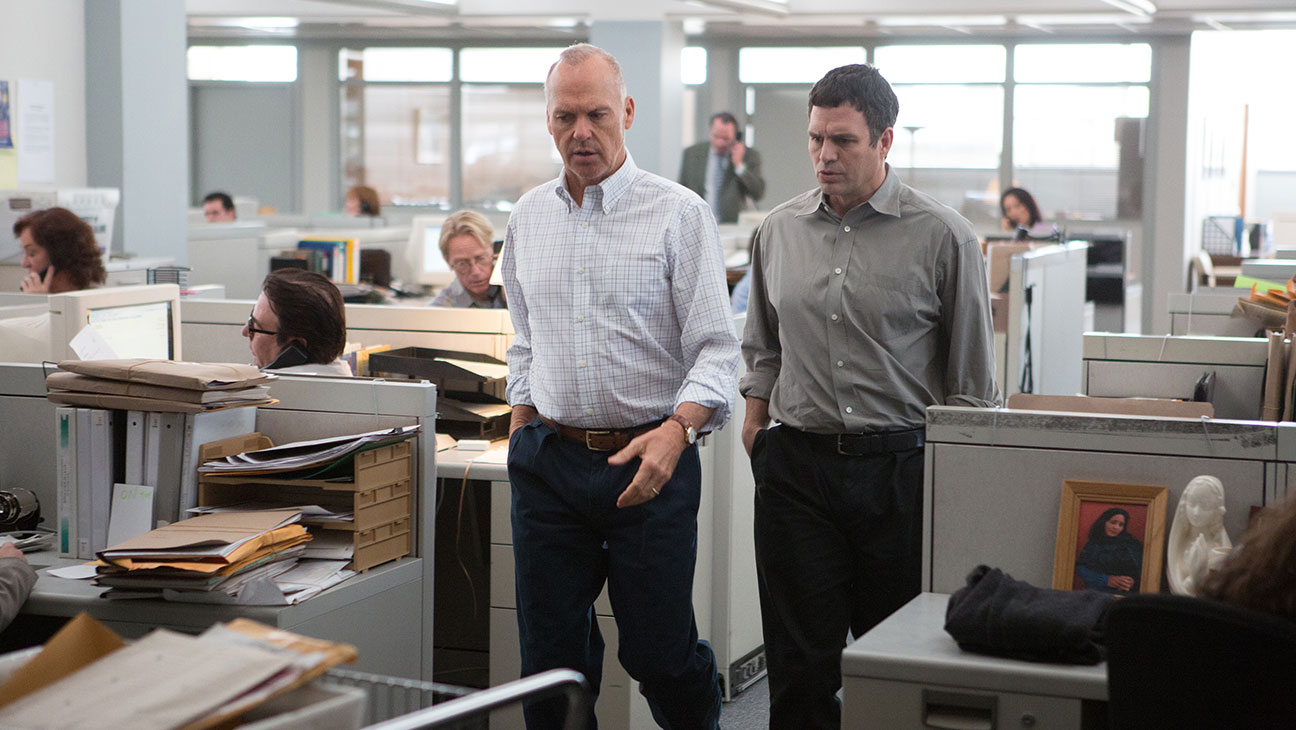
This is the story that Spotlight tells: the investigation into one priest’s predatory behaviour that revealed the systemic abuse of children over decades, and which had been covered up by the Catholic Church. It’s a tale of widespread abuse, and the political and legal corruption, and immorality, that goes with it. As the team – editor Walter “Robby” Robinson (Keaton), and reporters Mike Resendez (Ruffalo), Sacha Pfeiffer (McAdams), and Matt Carroll (James) – begin looking into the story they learn that the Globe was aware of some of the allegations being made as far back as 1996 following a similar case, but these were never followed up. They speak to the founder of a support group for people who have been abused by priests, Phil Saviano (Huff), who reveals that, based on what he’s been told, Goeghan is one of thirteen priests in the Boston area that have molested children over the years.

Spotlight - scene3

Shocked by this, the team divide their attention in different areas: Resendez contacts the lawyer, Garabedian, in order to find out what evidence he has; Pfeiffer meets with a victim, Joe Crawley (Creighton); and Carroll starts looking into the backgrounds of the priests Saviano has named. What emerges is a picture of abuse that appears to have been ignored or covered up by the Church, and which is still continuing. They also get in touch with an ex-priest, Richard Sipe (Jenkins), who worked at a “treatment centre” back in the Sixties. Since leaving the Church he’s made a thorough study of the “phenomena” of sexual abuse wihtin the priesthood, and in one particularly chilling telephone conversation with the Spotlight team he tells them his findings indicate that 6% of priests abuse children. Now the team has to rethink their strategy: based on Sipe’s findings, they’re no longer looking at thirteen priests in the Boston area, but ninety.

With the enormity of the problem now fully revealed, the team have to tread even more carefully, and refocus their investigation; it’s no longer enough to target Cardinal Law and his tacit allowance of the abuse. It’s now obvious that the abuse isn’t confined to Boston, it happens everywhere. The story becomes about how the Church itself allows this to happen and never disciplines its priests, preferring instead to move them around and still allowing them to have unsupervised access to children.

In the end, Spotlight broke the story in early 2002. It was the major news story of its day, and the movie recounts those days with a measured simplicity that avoids any potential hyperbole or grandstanding. Thanks to an intelligently constructed script by McCarthy and Josh Singer, the way in which the story unfolded is handled with a sensitivity and compassion for the victims that is offset by the Spotlight team’s increasing sense of disgust at the Church’s mistreatment of them. Each of the team is affected in their own way, showing just how pervasive the issue was, and without anyone realising. It’s a sobering realisation, that the abuse of children by a powerful organisation such as the Catholic Church – such a huge presence in so many people’s lives – can have such far-reaching consequences.

S_09159.CR2

Thanks again to the script, the legal and moral issues surrounding the cases are clearly laid out on both sides, and Mitchell Garabedian aside, the lawyers involved in out of court settlements fare badly, as they put ethical issues aside and justify their actions by virtue of “just doing their job”. As one of these lawyers, Billy Crudup has a small but crucial role that highlights just how much one section of the Boston legal system was prepared to look the other way. And the Cardinal’s spokesman, a wily operator called Joe Connelly (Guilfoyle), is on hand to show how the political machine tried to keep the Church from being exposed by attempting to make it seem that the revelations would be bad for the city.

It’s safe to say that the movie exposes a lot more than the hypocrisy of the city’s movers and shakers, and it does so in a low key dramatic manner that allows the horror of the situation to seep through as the movie progresses. McCarthy and his talented cast never let us forget just how awful the amount of abuse was, and through their pursuit of the truth we get to see levels of betrayal that most of us would be hard pressed to even consider let alone believe in. And when a necessary delay in printing the story leads to an angry outburst by Resendez, we can sympathise with him, because by then the audience wants the story to be told equally as much as he does.

In many ways, Spotlight‘s steady pace and determined approach is unexpectedly gripping. As each new development unfolds, the movie steps up a gear, until the viewer is completely enthralled and can’t look away. It doesn’t matter that you know the outcome in advance, this is one of those movies that is so well constructed that you can’t help but be drawn along with it. Helping McCarthy make such an impact is his cast. Keaton is the wise old newspaperman, determined not to let the story get away and the Church off the hook, and patient enough to wait for the right evidence to come along. Ruffalo is the cocksure reporter who feels too much too often, and who uses his anger and disgust at the abuse to fuel his work. By contrast, McAdams’ lone female is affected in small ways, as in the way in which the news will be hurtful to her devout grandmother. And James’ dogged researcher learns that the issue is much closer to home than he’d realised (and which leads to one of the movie’s rare moments of humour).

Spotlight - scene1

It’s a powerful movie about a powerful subject and although the naysayers will point to diffusions and imperfections in the story – this didn’t happen like that, that didn’t happen like they say it did – the truth is still clear: abuse happened and the Church covered it up. In 2002 alone, Spotlight ran a further 600 articles based on what they learned from victims. What the movie reminds us is that looking the other way can be even more uncomfortable than looking straight at something that’s too horrible to contemplate.

Rating: 9/10 – one of 2015’s best movies, Spotlight is tense, absorbing, horrifying, and a must-see, with superb performances and and one of the year’s best scripts; it’s already won a shedload of well-deserved awards, and as a movie that tackles a disturbing subject with tact and sensitivity, should gain even more further down the road – it’s that good.

Share this:

  • Click to share on X (Opens in new window) X
  • Click to share on Facebook (Opens in new window) Facebook
  • More
  • Click to print (Opens in new window) Print
  • Click to email a link to a friend (Opens in new window) Email
Like Loading...

Mini-Review: A Little Chaos (2014)

27 Monday Jul 2015

Posted by dullwood68 in Movies

≈ Leave a comment

Tags

Alan Rickman, Drama, France, Helen McCrory, History, Horticulture, Kate Winslet, Landscape gardening, Louis XIV, Matthias Schoenaerts, Period movie, Review, Romance, Stanley Tucci, Versailles

Little Chaos, A

D: Alan Rickman / 116m

Cast: Kate Winslet, Matthias Schoenaerts, Alan Rickman, Helen McCrory, Stanley Tucci,  Steven Waddington, Jennifer Ehle, Paula Paul, Danny Webb

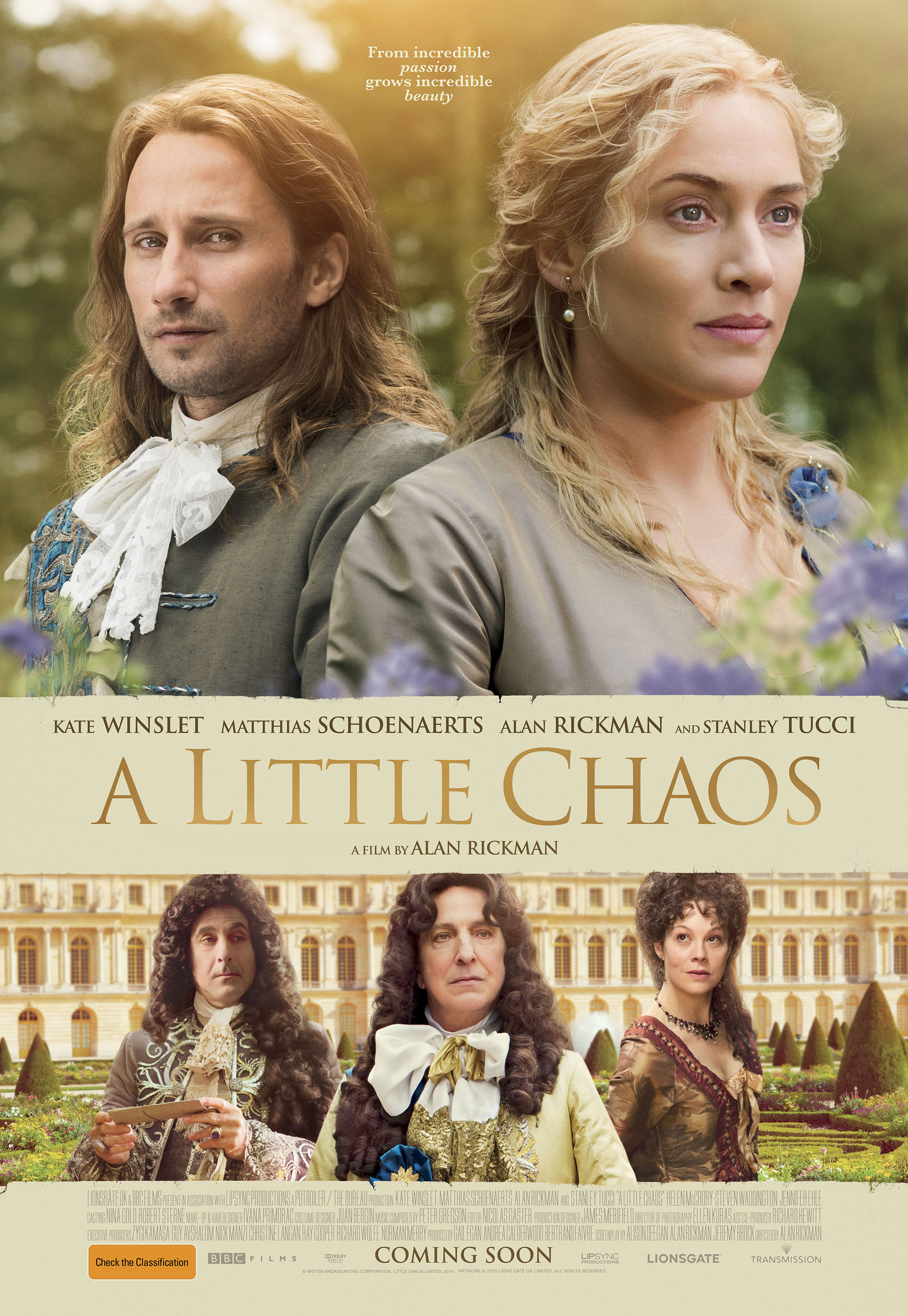
France, 1682. At the behest of King Louis XIV (Rickman), landscape garden designers are invited to submit their designs for the planned new gardens at the Palace of Versailles. Sabine De Barra (Winslet), a widow who has a keen eye for the disruptive yet beguiling influence that disorder can have on a garden, meets with the King’s renowned landscape architect, André Le Notre (Schoenaerts). He is concerned by her attitude and lack of formal training, but he nevertheless hires her to build one of the main gardens at Versailles, the Rockwork Grove.

Sabine begins her work in earnest but is initially hampered in her efforts by the other, male, designers. Le Notre intervenes for her, and as her design begins to take shape, he finds himself increasingly attracted to Sabine, despite his being married. He takes to spending more time with her, something which his wife (McCrory) notices. While Le Notre wrestles with his sense of honour and marital duty, Sabine unwittingly earns the respect of the King, and also his brother, Philippe (Tucci). As the project nears completion, Sabine is invited to attend the King’s court, where her honesty and subtle persuasiveness earns her many friends among the ladies in waiting – all except one, who decides to sabotage Sabine’s design…

Little Chaos, A - scene

An old-fashioned heritage picture, A Little Chaos – Rickman’s second directorial feature after The Winter Guest (1997) – is a movie that will sit well with anyone who’s seen similar movies from the Thirties, replete as it is with a woman battling against the preconceptions of her gender and the sexism of the times, a romance where convention says the couple should remain apart, and a minimal amount of political intrigue at the King’s court. It’s a pleasant movie to watch, not least because of Winslet’s emotive yet (mostly) carefully detailed performance, and shows Rickman is adept at staging scenes for their maximum emotional effect as well as their visual splendour.

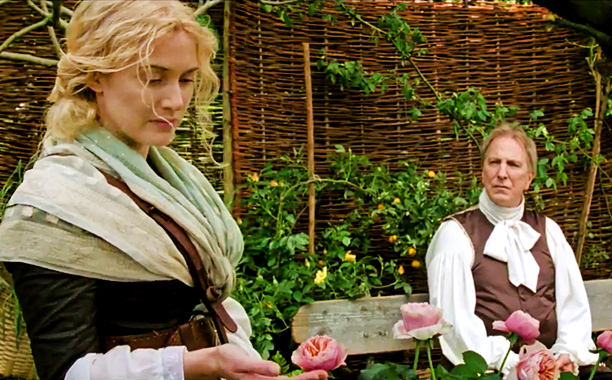
And yet, while the movie has plenty of positives about it, it’s let down by the romantic storyline, with Le Notre and Sabine’s ardour for each other feeling watered down and sounding less than enthusiastically entered into. Schoenaerts never looks entirely comfortable in these scenes, and Winslet too seems unsure of how to play the drama of their situation. In contrast, the scene where Sabine and the King exchange views on gardening and various flowers, is laden with subtext and deliberate innuendo, leaving the viewer with no doubt that, in a different life, the romance would be between them and not Sabine and Le Notre.

Rickman is a generous director when it comes to his cast, and he finds a willing aide in Ellen Kuras’ often stunning cinematography, for the movie is beautiful to look at. And as historical romantic dramas go there’s a degree of humour that helps leaven the seriousness of the story, while Tucci’s flamboyant Philippe gives the movie a much needed boost just as it was starting to sag. And there’s a wonderful, non-intrusive score courtesy of Peter Gregson.

Rating: 7/10 – enjoyable if lacking in any appreciable depth, A Little Chaos is gentle, harmless, and a pleasant diversion from this year’s slew of mega-blockbusters; with Winslet, Rickman and McCrory winning the acting plaudits, this trip back to 17th Century France is an undemanding one but worth seeing nevertheless.

Share this:

  • Click to share on X (Opens in new window) X
  • Click to share on Facebook (Opens in new window) Facebook
  • More
  • Click to print (Opens in new window) Print
  • Click to email a link to a friend (Opens in new window) Email
Like Loading...

Wild Card (2015)

02 Monday Feb 2015

Posted by dullwood68 in Movies

≈ 1 Comment

Tags

Action, Casino, Domink Garcia-Lorido, Gambling, Jason Statham, Las Vegas, Michael Angarano, Milo Ventimiglia, Review, Security consultant, Simon West, Stanley Tucci, The Golden Nugget, Thriller

Wild Card

D: Simon West / 92m

Cast: Jason Statham, Michael Angarano, Milo Ventimiglia, Dominik Garcia-Lorido, Hope Davis, Stanley Tucci, Max Casella, Sofia Vergara, Jason Alexander, Anne Heche

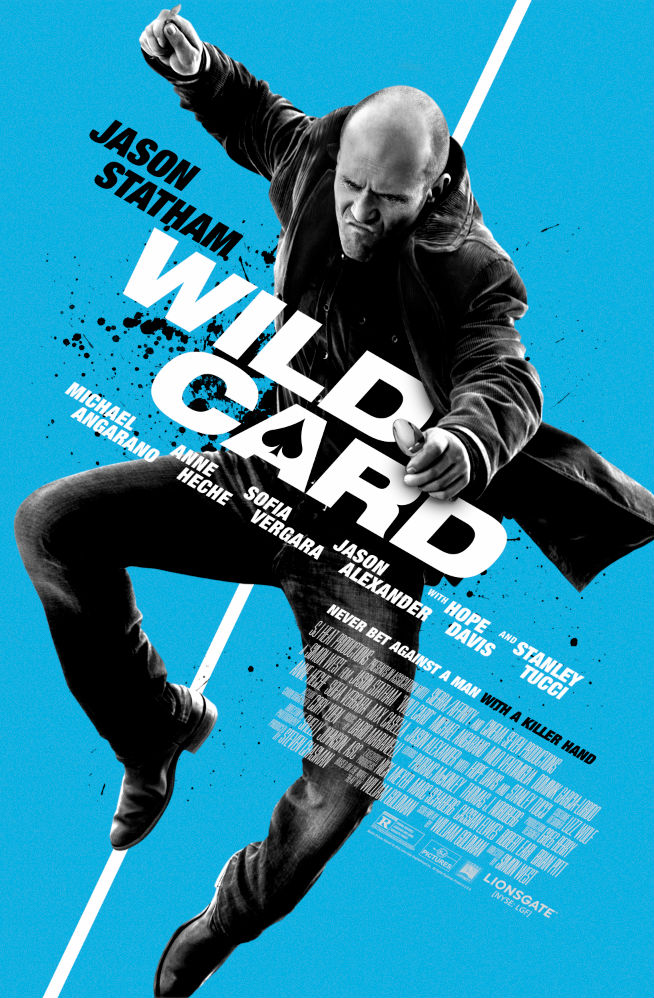
Nick Wild (Statham) is a security consultant living and working in Las Vegas. He’s also a gambler with a dream: win $500,000 and spend five years living the life he’s always wanted, starting with a year sailing around the Mediterranean. He takes a job protecting a young man named Cyrus Kinnick (Angarano) while he plays at the casinos. At the same time he receives a message from a friend called Holly (Garcia-Lorido), asking him to visit her. When he does he finds she’s been raped and beaten up by three men she met at the Golden Nugget. She tells Nick she wants to find out who they are so she can sue them.

Nick soon discovers the three men were local gangster Danny DeMarco (Ventimiglia) and two of his men. He’s warned not to go anywhere near them, but when he tries to tell Holly he couldn’t find out who the men were, she realises he’s lying and reminds him of a debt he owes her. Knowing it will cause trouble for him, Nick pays a visit to DeMarco at his suite. He disables DeMarco and his men, giving Holly – who’s never intended to sue them – a chance to exact her revenge on the gangster. She threatens to cut off his penis, and even nicks the side of it; he cries and pleads for forgiveness. Relenting, Holly takes $50,000 from him and splits it with Nick before leaving town.

Nick takes Cyrus to a casino, and while Cyrus plays at a craps table, Nick takes his half of DeMarco’s money and begins to gamble. He’s soon on a winning streak that culminates in his winning $506,000, enough for him to leave Las Vegas. He’s about to cash in his chips when he’s struck by an anxiety attack. He tells Cyrus that he’s been fooling himself: the money isn’t enough for him to avoid having to come back to Vegas after his five years are up. Telling himself he needs a bigger pot of money he stakes all his winnings on a single bet… and loses it all. Afterwards, he’s attacked by DeMarco’s men but manages to defeat them. But this leads to Nick being summoned to see Baby (Tucci), the boss of organised crime in Las Vegas. DeMarco has come to him with a story that Nick came to his suite, beat him up and shot his men, and stole the money to gamble with. Now Nick has to prove to Baby that DeMarco is lying, or his life will be forfeit…

Wild Card - scene

A remake of the Burt Reynolds’ movie Heat (1986), Wild Card is a project that Statham has been trying to get made for around five years. It’s also an adaptation by William Goldman of his own novel and a reworking of his script for Heat. A crime drama that features another of Statham’s occasional forays into character acting, the movie doesn’t offer anything new (hardly possible given the material’s history), but it does make for an entertaining, if occasionally risible, trip through the underbelly of life in Las Vegas.

It’s a milieu that’s been explored many, many times before, but here there’s a sense of  ennui that drifts alongside the narrative, making the characters’ desperation and need for self-improvement all the more affecting. Cyrus is a twenty-three year old self-made multi-millionaire who wants to know what it’s like not to be afraid, and to have the self-confidence to “be a man”. Holly is an escort who, like Nick, wants a better life where she’s not always at the mercy of others. And Nick himself is afraid that he’ll spend the rest of his life in Vegas, scratching a living and ending up alone. A lot of this is underplayed, a smart move by Goldman, and it gives the movie an edge that comes as a bit of a surprise.

With Las Vegas providing a more than suitable backdrop, Wild Card keeps its themes of redemption and avarice well to the fore. Nick’s return to the table after winning the money he’s always dreamed about is both inevitable and startling, and gives Statham the chance to show that he can be a better actor than a lot of people give him credit for. Sure he can pull off an action scene without breaking sweat or getting out of breath, but here he’s stretched on more than a few occasions – lying to Holly, appearing to kowtow to DeMarco, going back to the tables, looking bereft after he’s lost – and while he still maintains an aloof, taciturn presence, it’s a more rounded performance than usual.

But this being a Jason Statham movie, and one directed by Simon West – they also collaborated on The Mechanic (2011) – there’s room for a clutch of exhilarating, superbly choreographed fight scenes. Fans won’t be disappointed by the brutally inventive ways in which Nick dispatches various henchmen – one close up of a nose being broken is particularly impressive – and if these sequences still prove to be the main highlights of a movie that does its best not to be “just” an action movie, then it’s unfortunate but not entirely surprising.

The rest of the cast provide adequate support, though some are reduced almost to cameos or appear to have done only a day’s filming. Angarano and Ventimiglia have more than most to do but have a job with characters who remain cyphers throughout, with Ventimiglia in particular struggling to make more of DeMarco than the preening, psychotic gangster he appears. Garcia-Lorido brings an emotional intensity to her role that bodes well for her future, while Tucci phones in one of his patented “man with excess mannerisms” performances as Las Vegas’s capo di tutti capi. But with the likes of Davis, Heche and Vergara reduced almost to walk-on roles, the movie ends up feeling a little misogynistic.

All in all, West directs with his usual visual flair and helps Statham give one of his best performances. Goldman’s script is peppered with some less than quotable lines of dialogue – “He goes crazy and he shoots maybe my best two friends in the whole world” – but the structure is solid and Nick’s love/hate relationship with Sin City is woven into the storyline in a way that is meaningful and instructive of Nick’s personality. There’s a pleasingly claustrophobic feel to the casino scenes, and Shelly Johnson’s cinematography captures the glitz and the glamour of Las Vegas alongside its less attractive features.

Rating: 7/10 – worth seeing as a movie where Statham stretches his abilities as an actor, and for a couple of outstanding fight sequences, Wild Card is the kind of action movie that starts slow and builds to a (vicious) climax; unpretentious, and occasionally solemn, one can only hope that Statham and West get a chance to team up again soon.

Share this:

  • Click to share on X (Opens in new window) X
  • Click to share on Facebook (Opens in new window) Facebook
  • More
  • Click to print (Opens in new window) Print
  • Click to email a link to a friend (Opens in new window) Email
Like Loading...

The Terminal (2004)

16 Saturday Aug 2014

Posted by dullwood68 in Movies

≈ 1 Comment

Tags

Airport, Catherine Zeta-Jones, Comedy, Drama, Krakozhia, Review, Romance, Stanley Tucci, Steven Spielberg, Tom Hanks, Unacceptable, Viktor Navorski, Zoe Saldana

Terminal, The

D: Steven Spielberg / 128m

Cast: Tom Hanks, Catherine Zeta-Jones, Stanley Tucci, Chi McBride, Diego Luna, Barry Shabaka Henley, Kumar Pallana, Zoe Saldana, Eddie Jones, Michael Nouri

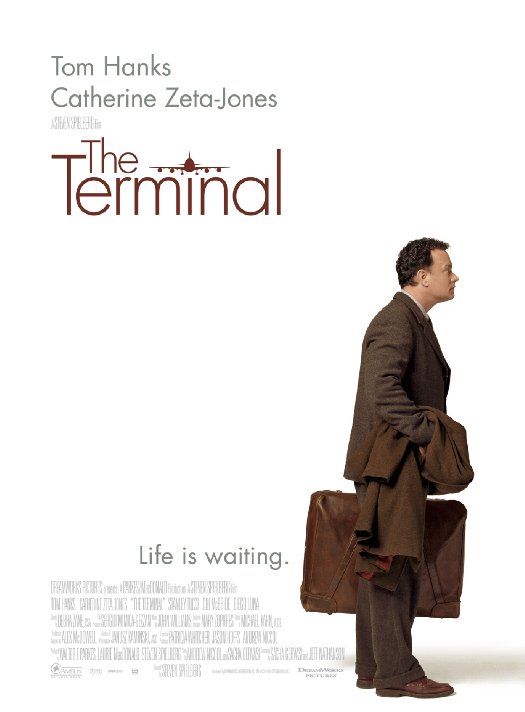
Arriving at JFK International Airport, Viktor Navorski (Hanks) learns that while he was travelling from his home country of Krakozhia, a civil war has broken out and all travel permits and visas have been suspended; this means he can’t return home.  To make matters worse, the US government is refusing to recognise the revolutionary Krakozhian government, so won’t allow anyone from there to enter the US.  This makes Viktor “unacceptable”.  The only place he can stay is in the airport’s international terminal, something that Customs and Border Protection head Frank Dixon (Tucci) isn’t happy about but believes will be only temporary.

Viktor settles in at Gate 67 which is unfinished.  From there he ventures forth each day in the hope that the civil war has ended and he can either go home or go into New York as he’d originally planned (he has made a promise to do something for his father, who has recently died).  Through this he strikes up a friendship with Dolores (Saldana), a Customs officer who processes visa applications.  This in turn leads to a friendship with Enrique (Luna), an airport worker who has a crush on Dolores.  In return for food that hasn’t been used on flights, Viktor learns about Dolores’ likes and dislikes and relays this information back to Enrique.  During this time, Viktor also meets air stewardess Amelia (Zeta-Jones).  His attraction to her is tempered by her seeing a married man, Max (Nouri), but a relationship develops between them nevertheless.

As Viktor gets to know more of the airport staff – including Mulroy (McBride) and Gupta (Pallana) – Dixon becomes more and more irritated by his presence in the airport.  He tries to persuade Viktor to leave the airport but Viktor doesn’t take the bait.  With an important inspection coming up that will help towards an expected promotion, Dixon is anxious that nothing interfere with his plans, yet when a desperate Russian with undocumented drugs for his father arrives on the day of the inspection, Viktor interprets for him and resolves the situation with a lie, making Dixon furious with him. This makes Viktor very popular with the rest of the airport staff.

Viktor also continues to see Amelia when she flies in and when she tells him she’s stopped seeing Max, Viktor arranges a romantic dinner but it turns out Amelia has resumed the relationship (though this has an unexpected benefit later on).  When the war in Krakozhia ends, Dixon tells Viktor he has to return home and that he can’t go into New York; with the plane home ready to take off, Gupta stands on the tarmac and blocks it from moving, giving Viktor the chance to leave the airport and honour the promise he made to his father.

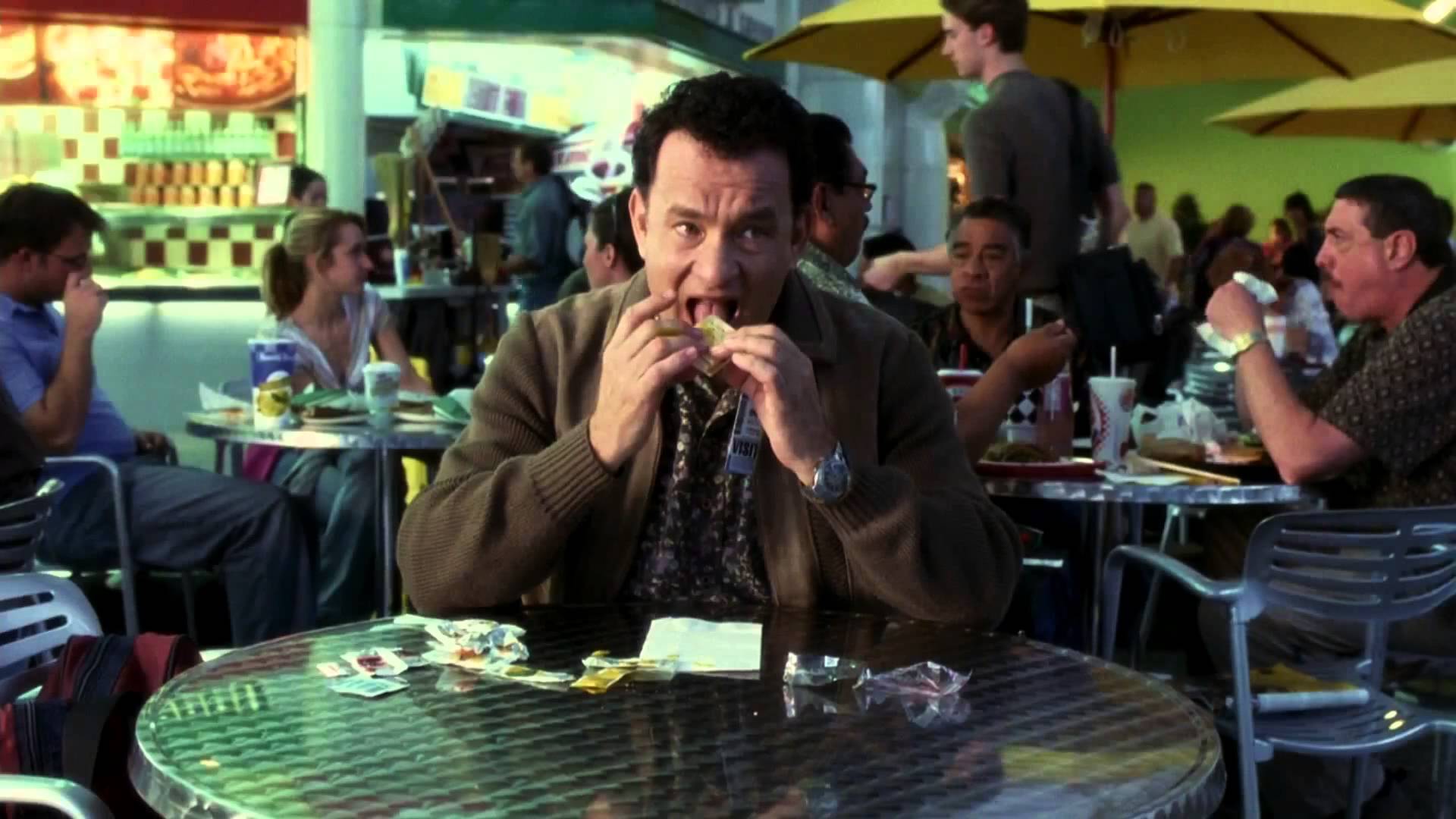
Terminal, The - scene

With a wonderful central performance from Hanks, The Terminal is glossy whimsy of the highest quality, a modern day fairy tale that features a princess in peril (Amelia), a wicked ogre (Dixon), three fairy godmothers (Enrique, Mulroy and Gupta), a maid (Dolores), and a handsome prince (Viktor – kind of).  It’s hugely enjoyable and is the type of movie that you can watch over and over again and still spot things you missed every other time (such as the head of the Statue of Liberty – keep an eye peeled, it’s there).  And like all good fairy tales it has a happy ending (though not the kind you might be thinking of).

Based around the true story of Mehran Karimi Nasseri, an Iranian refugee who spent eighteen years living in the departure lounge of Terminal One at Paris’s Charles de Gaulle airport, The Terminal downplays the drama inherent in such a predicament in favour of a heartwarming tale that is often hilarious, and which adds a romantic element that is both cute and bittersweet.  The script by Sacha Gervasi and Jeff Nathanson is structured much like a play, with act one concerning Viktor’s arrival at the airport, act two detailing his coming to terms with living in the airport, and act three showing his becoming a valued and respected member of the airport “staff”.  It’s a cleverly constructed script, with nods to wider issues such as immigration and racism, but included in such a way that they don’t intrude on the feelgood, aspirational  drive of the movie, or its message that tenacity and self-belief will always see you through.

It’s Viktor’s positive nature – so ably portrayed by Hanks – that is so affecting, his resourcefulness and persistence the very qualities we would like to think we’d have if we were in his position.  Hanks is nothing less than superb in a performance that is as richly nuanced as any other he’s given.  His choice of expressions alone offers a masterclass in acting; the scene in the men’s room when a traveller asks him, “Ever feel like you’re living in an airport?” is worth watching just for the stupefied look Viktor gives as a silent reply – and it’s made all the more impressive for being a reflection (and Hanks makes it all seem so effortless).

He has some great support too.  Zeta-Jones, still fresh from her Oscar-winning turn in Chicago (2002), makes Amelia appealing and sad at the same time, and in doing so makes the character more credible as Viktor’s possible love interest.  As the hard-nosed Customs and Borderland Protection administrator, Tucci is contained and hard to like but it’s a subtler performance than at first meets the eye, with echoes of a more sympathetic man showing through at odd moments.  And then there’s Pallana, whose deceptively expressive features are a joy to watch, his character’s unwavering paranoia amusing and wistful and, ultimately, well justified.  Luna plays Enrique as an adorable puppy, while McBride and Hensley are more stoic, and as Dolores, Saldana’s sunny approach to the character makes her more and more likeable as the movie goes on (it’s also fun to discover that Dolores is a Trekkie).

With all this favourable material allied to a raft of great performances, it comes as no surprise that Spielberg orchestrates everything with consummate ease, employing a lightness of touch that helps elevate Viktor’s plight from personal tragedy to unalloyed victory.  There’s more than a hint of Thirties screwball comedy in The Terminal, especially in Viktor’s confrontations with Dixon, and it’s to Spielberg’s credit that he augments such a contemporary story with such “old-fashioned” elements, and does it so seamlessly.  As with Hanks’ performance, this is one of Spielberg’s less appreciated movies, but one serious misstep aside – would Dixon really have been promoted after he grabbed Viktor by the neck and remonstrated with him? – he hits the movie out of the ballpark.

Rating: 8/10 – ripe for reassessment, The Terminal showcases an actor and a director working completely in synch, and providing their audience with a delightful slice of feelgood entertainment; richly detailed and with a clutch of stand-out moments, this is avowedly superior stuff.


Share this:

  • Click to share on X (Opens in new window) X
  • Click to share on Facebook (Opens in new window) Facebook
  • More
  • Click to print (Opens in new window) Print
  • Click to email a link to a friend (Opens in new window) Email
Like Loading...

Mr. Peabody & Sherman (2014)

25 Tuesday Feb 2014

Posted by dullwood68 in Movies

≈ 3 Comments

Tags

Adoption, Agamemnon, Allison Janney, Ancient Egypt, Animation, Ariel Winter, French Revolution, King Tut, Lake Bell, Leonardo da Vinci, Marie Antoinette, Max Charles, Mona Lisa, Patrick Warburton, Review, Robespierre, Stanley Tucci, Time travel, Trojan Horse, Troy, Ty Burrell, WABAC

Mr. Peabody & Sherman

D: Rob Minkoff / 92m

Cast: Ty Burrell, Max Charles, Ariel Winter, Allison Janney, Stanley Tucci, Patrick Warburton, Stephen Colbert, Leslie Mann, Lake Bell, Stephen Tobolowsky, Mel Brooks, Dennis Haysbert

The last Dreamworks animated movie was the dire Turbo (2013), a frustrating exercise in high concept animation that forgot very early on that it needed to be entertaining. With that in mind, and with How to Train Your Dragon 2 waiting in the wings, this update of two supporting characters from the Rocky and His Friends TV show that ran from 1959 to 1964 was likely to appear a bit of a gamble. In recreating Mr. Peabody the dog (Burrell) and his adopted son, Sherman (Charles), writer Craig Wright and director Minkoff have fashioned a fairly straightforward tale and surrounded it with some great visual gags, and all the emotional heft a movie like this could ever wish for.

After an extended prologue that introduces us to the WABAC machine – a device that allows Mr. Peabody to travel through time – and which finds the pair on a trip to the French Revolution (necessitating a daring escape from the clutches of Citizen Robespierre), Mr. Peabody reminds Sherman that the next day will see him go to school for the first time. His eagerness in History class earns the enmity of Penny Peterson (Winter), and during their lunch break she bullies him to the point where he retaliates and bites her. Enter Miss Grunion (Janney) from Child Services. She informs Mr. Peabody in no uncertain terms that if her investigation finds he is not a fit parent, then Sherman will be removed from his care.

On the same evening Miss Grunion is due to visit, Mr. Peabody invites Penny and her parents (Colbert, Mann) over for dinner in an attempt to smooth things over. While he entertains the Petersons, Sherman finds himself tricked into showing Penny the WABAC. Penny ends up in Ancient Egypt where she is to be betrothed to King Tutankhamun; at first she’s intent on staying as she’s being treated like a princess. When she learns that if he dies, so will she, Penny changes her mind about staying and it’s up to Mr. Peabody and Sherman to rescue her.

Getting back proves difficult and the trio end up visiting Leonardo da Vinci (Tucci) who is having problems painting a less than cooperative Mona Lisa (Bell). While Mr. Peabody repairs the WABAC, Sherman and Penny take da Vinci’s prototype aeroplane for a spin; here Sherman’s perceived recklessness causes the beginning of a rift between the titular pair. When their attempts to avoid a black hole ends with them back at the siege of Troy, Mr. Peabody is faced with Sherman’s determination to fight with Agamemnon (Warburton) and the rest of the Greek soldiers hidden within the Trojan Horse. Things escalate from there, and with Mrs Grunion planning to take Sherman into care at the same time as a rip in the space/time continuum threatens to destroy everything, can the pair patch things up in time to save the world?

Mr. Peabody & Sherman - scene

The good news is that, compared to Turbo, Mr. Peabody & Sherman is an absolute joy. There is so much to like about this movie. The relationship between Mr. Peabody and Sherman is played with obvious mutual affection, and Wright’s script tugs at the heartstrings on more than one occasion, highlighting the “deep respect” this odd parent and child have for each other. Burrell and Charles provide rich vocal performances, and while Robert Downey Jr was originally tipped to play Mr. Peabody, that interpretation may not have been the best idea because Burrell is terrific in a part that calls for him to relay more exposition than any other character in recent memory. Charles relays Sherman’s excitement and youthful insecurities with aplomb, and ends up almost stealing the show (although with Warburton in the cast, that’s nearly impossible).

The story has fun with its depictions of the past, taking a range of liberties but always with a sense of fun, and there’s an inspired shot that shows how the Greeks get out of the Trojan Horse. Historical figures are held up to gentle mockery but again there’s an obvious affection, even for Robespierre. There are cameos from Albert Einstein (Brooks), George Washington, and with a great one-liner, Bill Clinton. Of the present day characters, Mrs Grunion is a fearsome villain in the manner of Miss Trunchbull from Matilda, Penny is a mix of school bully and (eventual) best friend, and her parents are a winning combination of ditzy and clueless. The script juggles everyone to good effect, and rarely puts a foot wrong.

The movie is gorgeous to look at, the visuals popping off the screen – particularly in 3D – and the animation is packed with great sight gags and puns and there’s always something going on to overwhelm the attention. Minkoff keeps a sure hand on the tiller, making it look easy at times, and grounds the science fiction aspects through close attention to the relationship between Mr. Peabody and Sherman. The humour is infectious, and the general good-natured approach works tremendously, building up so much good will that by the movie’s end you’re prepared to forgive any missteps it might make on the way (there are a couple but they aren’t bad enough to hurt the movie or stop its momentum).

Rating: 9/10 – an early contender for best animated movie of 2014, Mr. Peabody & Sherman is a light-hearted romp that hits the mark with recurring ease; a treat for children and adults alike.

Share this:

  • Click to share on X (Opens in new window) X
  • Click to share on Facebook (Opens in new window) Facebook
  • More
  • Click to print (Opens in new window) Print
  • Click to email a link to a friend (Opens in new window) Email
Like Loading...

Blog Stats

  • 486,537 hits

Recent Posts

  • 10 Reasons to Remember Bibi Andersson (1935-2019)
  • Fantasia (1940)
  • Dances With Wolves (1990) – The Special Edition
  • Kiss of the Spider Woman (1985)
  • The Three Musketeers (1973)

Top Posts & Pages

  • Lost for Life (2013) - Another Look
    Lost for Life (2013) - Another Look
  • Lost for Life (2013)
    Lost for Life (2013)
  • About
    About
  • Mr. Topaze (1961)
    Mr. Topaze (1961)
  • Billy Lynn's Long Halftime Walk (2016)
    Billy Lynn's Long Halftime Walk (2016)
  • Winter's Tale (2014)
    Winter's Tale (2014)
  • Hunt for the Wilderpeople (2016)
    Hunt for the Wilderpeople (2016)
  • Irrational Man (2015)
    Irrational Man (2015)
  • Transcendence (2014)
    Transcendence (2014)
  • Kubo and the Two Strings (2016)
    Kubo and the Two Strings (2016)
Follow thedullwoodexperiment on WordPress.com

Blogs I Follow

  • Rubbish Talk
  • Film 4 Fan
  • Fast Film Reviews
  • The Film Blog
  • All Things Movies UK
  • Interpreting the Stars
  • Let's Go To The Movies
  • Movie Reviews 101
  • TMI News
  • Dan the Man's Movie Reviews
  • Film History
  • Jordan and Eddie (The Movie Guys)

Archives

  • April 2019 (13)
  • March 2019 (28)
  • February 2019 (28)
  • January 2019 (32)
  • December 2018 (28)
  • November 2018 (30)
  • October 2018 (29)
  • September 2018 (29)
  • August 2018 (29)
  • July 2018 (30)
  • June 2018 (28)
  • May 2018 (24)
  • April 2018 (21)
  • March 2018 (31)
  • February 2018 (25)
  • January 2018 (30)
  • December 2017 (30)
  • November 2017 (27)
  • October 2017 (27)
  • September 2017 (26)
  • August 2017 (32)
  • July 2017 (32)
  • June 2017 (30)
  • May 2017 (29)
  • April 2017 (29)
  • March 2017 (30)
  • February 2017 (27)
  • January 2017 (32)
  • December 2016 (30)
  • November 2016 (28)
  • October 2016 (30)
  • September 2016 (27)
  • August 2016 (30)
  • July 2016 (30)
  • June 2016 (31)
  • May 2016 (34)
  • April 2016 (30)
  • March 2016 (30)
  • February 2016 (28)
  • January 2016 (35)
  • December 2015 (34)
  • November 2015 (31)
  • October 2015 (31)
  • September 2015 (34)
  • August 2015 (31)
  • July 2015 (33)
  • June 2015 (12)
  • May 2015 (31)
  • April 2015 (32)
  • March 2015 (30)
  • February 2015 (37)
  • January 2015 (39)
  • December 2014 (34)
  • November 2014 (34)
  • October 2014 (36)
  • September 2014 (25)
  • August 2014 (29)
  • July 2014 (29)
  • June 2014 (28)
  • May 2014 (23)
  • April 2014 (21)
  • March 2014 (42)
  • February 2014 (38)
  • January 2014 (29)
  • December 2013 (28)
  • November 2013 (34)
  • October 2013 (4)

Blog at WordPress.com.

Rubbish Talk

Film 4 Fan

A Movie Blog

Fast Film Reviews

The Film Blog

The official blog of everything in film

All Things Movies UK

Movie Reviews and Original Articles

Interpreting the Stars

Dave Examines Movies

Let's Go To The Movies

Film and Theatre Lover!

Movie Reviews 101

Daily Movie Reviews

TMI News

Latest weather, crime and breaking news

Dan the Man's Movie Reviews

All my aimless thoughts, ideas, and ramblings, all packed into one site!

Film History

Telling the story of film

Jordan and Eddie (The Movie Guys)

Movie Reviews & Ramblings from an Australian Based Film Fan

Privacy & Cookies: This site uses cookies. By continuing to use this website, you agree to their use.
To find out more, including how to control cookies, see here: Cookie Policy
  • Subscribe Subscribed
    • thedullwoodexperiment
    • Join 481 other subscribers
    • Already have a WordPress.com account? Log in now.
    • thedullwoodexperiment
    • Subscribe Subscribed
    • Sign up
    • Log in
    • Report this content
    • View site in Reader
    • Manage subscriptions
    • Collapse this bar
 

Loading Comments...
 

    %d