• 10 Reasons to Remember…
  • A Brief Word About…
  • About
  • For One Week Only
  • Happy Birthday
  • Monthly Roundup
  • Old-Time Crime
  • Other Posts
  • Poster of the Week
  • Question of the Week
  • Reviews
  • Trailers

thedullwoodexperiment

~ Viewing movies in a different light

thedullwoodexperiment

Tag Archives: Teenagers

The Lifeguard (2013)

28 Saturday Jul 2018

Posted by dullwood68 in Movies

≈ Leave a comment

Tags

David Lambert, Drama, Journalist, Kristen Bell, Liz W. Garcia, Mamie Gummer, Martin Starr, Review, Romance, Teenagers

D: Liz W. Garcia / 98m

Cast: Kristen Bell, Mamie Gummer, Martin Starr, Alex Shaffer, Joshua Harto, David Lambert, Amy Madigan, Adam LeFevre, John Finn, Paulie Litt, Sendhil Ramamurthy

Fast approaching thirty, Leigh London (Bell) is a journalist working for the Associated Press in New York City. When a piece she writes about a tiger cub kept as a pet in someone’s home isn’t given the prominence she feels it deserves, she takes issue with her boss (Ramamurthy) – who is also her lover. When she learns he’s newly engaged to someone else, it proves too much, and she decides to return to her family home and rethink what she’s going to do. She takes a job as a lifeguard, and re-connects with some old friends, including art appraiser Todd (Starr), and school vice principal Mel (Gummer). Through her new job, Leigh comes to know a couple of teenage boys – artistic Matt (Shaffer), and skateboarder Jason (Lambert). Both boys want to quit school and head for Vermont, but a burgeoning relationship with Jason means Leigh doesn’t want him to go. With their friendship becoming more and more serious, it causes problems for Mel: as vice principal she has a duty to report any inappropriate relationships involving a student. But Leigh’s need for Jason to stay has tragic consequences…

The feature debut from writer/director Liz W. Garcia, The Lifeguard is a tough sell of a movie, a pained and painful examination of one woman’s headlong rush into self-pity, and the inappropriate behaviour that she uses to make herself feel better. It’s hard to think of another movie that has its central character behave in such a selfish fashion, and which still asks the audience to view her actions with sympathy and understanding. It’s a difficult ask, as Garcia paints Leigh as a victim right from the start, whether it’s in the way she throws away her job without a second thought, or the fact that she does nothing to express her anger at being so poorly treated by her boss. Back in her hometown there are plenty of moments where we see Leigh looking forlorn or thoughtful or pensive, but while you might expect these moments to be examples of Leigh planning her next move, instead, Garcia has her use Matt and Jason to score some pot. She also involves Mel, who with her husband, John (Harto), is trying to have a baby, and whose position as vice principal becomes instantly compromised.

That Leigh does all this – as well as just turning up at her parents’ house without notice – and without any consideration of her friends, or her family, and especially Jason, harms the movie irreparably. There’s no sense of responsibility, only a need for self-gratification that Garcia is unable to offset with any feelings of regret until it’s too late. This should have been a movie where the main character uses returning home as a chance to gather their thoughts and reconnect with a simpler time, but Leigh makes everything worse with every effort she makes. She makes fun of her mother’s attempts to start a new fitness business, she causes a wedge between Mel and John to develop, she keeps Jason in town out of selfish need, and enters into yet another illicit relationship. Sadly Bell, though she’s a more than capable actress, can’t find a way to mitigate against the choices Garcia has made for her character. Left stranded by the narrative, the actress does her best, but like her fellow cast members, she’s unable to make this memorable or affecting or even partway satisfactory.

Rating: 4/10 – with the indie clichés coming thick and fast, and in service to a script that lacks the depth needed to make it more compelling (or just agreeable), The Lifeguard wastes any opportunity it had to provide viewers with a convincing tale of one woman’s emotional downward spiral; passable if you’re in an undemanding mood, it’s a movie that tests the patience and the charity of the viewer at every turn.

Share this:

  • Click to share on X (Opens in new window) X
  • Click to share on Facebook (Opens in new window) Facebook
  • More
  • Click to print (Opens in new window) Print
  • Click to email a link to a friend (Opens in new window) Email
Like Loading...

Bang Gang (A Modern Love Story) (2015)

10 Wednesday Jan 2018

Posted by dullwood68 in Movies

≈ Leave a comment

Tags

Daisy Broom, Drama, Eva Husson, Finnegan Oldfield, France, Lorenzo Lefèbvre, Marilyn Lima, Relationships, Review, Sex, Teenagers

Original title: Bang Gang (une histoire d’amour moderne)

D: Eva Husson / 94m

Cast: Finnegan Oldfield, Marilyn Lima, Lorenzo Lefèbvre, Daisy Broom, Fred Hotier, Manuel Husson, Olivia Lancelot, Raphaël Porcheron, Tatiana Werner, Olivier Lefebvre

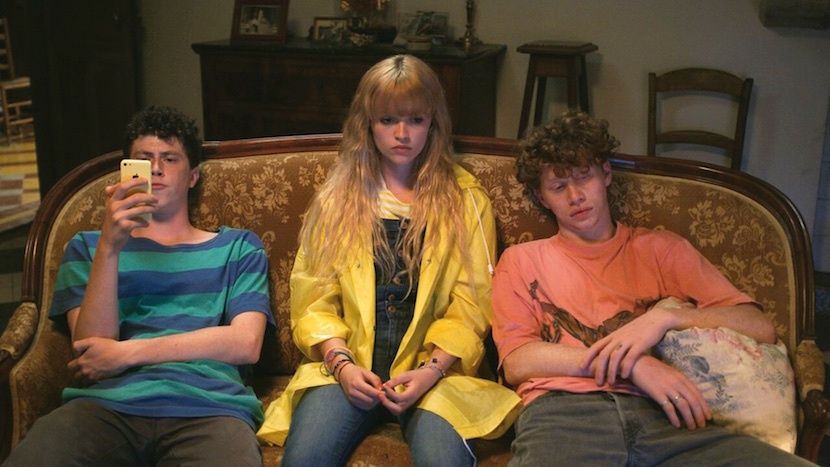
Eva Husson’s debut feature, set in the world of Biarritz high-schoolers, could be described as a French reworking of Fight Club (1999), but with sexual activity instead of fighting. What’s the first rule of Sex Club? Answer: nobody talks about Sex Club! This may sound like a trite way of approaching the movie but it’s hard not to draw parallels with a number of other movies that focus on teens and the troubles they have in negotiating that dread period of time between being a teenager and becoming an adult. Here, the teens are predictably bored, listless and lacking in ambition (except for Gabriel (Lefèbvre), who creates his own music). Alex (Oldfield) has his mother’s house all to himself and has decided that conspicuous hedonism is the way forward; he’s aided by his friend, Niki (Hotier), who’s a little dorky but not as arrogant as Alex. Best friends George (Lima) and Laetitia (Broom) have little experience of the opposite sex, though both are curious to learn in their separate ways. Gabriel, meanwhile, is Laetitia’s neighbour, something of a loner, and attracted to George.

Thus the movie is ripe for exploring the tangled relationships that only horny and confused teenagers can endure, and the inevitable fallout when things start to go irretrievably wrong (as it does here, when their school is forced to implement a particularly embarrasing round of health screenings). But the movie doesn’t quite manage to make any of the characters’ predicaments anything more than perfunctory. The sex parties (which begin innocuously enough with games of spin the bottle) include drug taking as well, and participants are allowed to take photos or record videos of what goes on, but only for future sharing within the group. Of course, this lasts about as long as it takes for George and Laetitia’s friendship to crumble when they both sleep with Alex, and soon the widespread knowledge of the group’s activities causes further problems, but for the most part, these teenagers are still as bored, listless, and lacking in ambition as they were at the beginning. Does anyone learn anything? It’s hard to tell, not even if the lesson is simply to avoid getting involved with sex parties, and Husson’s script strives for meaning far too often and without providing any answers.

That said, the performances are engaging and acceptably fearless, with Lima a stand out as the emotionally compromised George, a character whose injured self-esteem leads her into wanton behaviour that undermines her self-esteem even more. But Husson doesn’t seem able to make anyone truly sympathetic enough for the viewer to identify with, and the whole sorry mess that the sex parties engender is best summed up by Gabriel’s father (Husson) as, “…so profoundly mediocre.” This extends to the parties themselves, which provide tame examples of the kind of “action” that would be taking place, and which for all the “freedom” that is on display, is content to show females kissing and getting together, but not males doing the same (are there no gay teens in Biarritz?). It’s a movie that also feels lightweight in terms of any social or sexual subtexts, and there are frequent allusions to train wrecks on the local news that offer clumsy counterpoints to the derailment of normal teenage behaviour taking place at Alex’s house. All in all, the movie struggles for relevance, and tells its story in too mundane a fashion for it to strike any chords – even amongst teenagers.

Rating: 5/10 – not as controversial as may have been intended, and not as fascinating as the scenario could have been, Bang Gang (A Modern Love Story) offers a glimpse at a world that seeks to flout traditional rules of propriety, and without any long-term consequences; all wrapped up too neatly, Husson’s feature debut reveals a director with a certain visual flair but who needs to be aware that narrative loopholes – of which there are several – can hinder the success of any project.

Share this:

  • Click to share on X (Opens in new window) X
  • Click to share on Facebook (Opens in new window) Facebook
  • More
  • Click to print (Opens in new window) Print
  • Click to email a link to a friend (Opens in new window) Email
Like Loading...

Paper Towns (2015)

09 Friday Oct 2015

Posted by dullwood68 in Movies

≈ Leave a comment

Tags

Agloe, Austin Abrams, Cara Delevingne, Disappearance, Drama, Jake Schreier, John Green, Justice Smith, Literary adaptation, Mystery, Nat Wolff, Orlando, Prom, Review, Road trip, Romance, Teenagers

Paper Towns

D: Jake Schreier / 109m

Cast: Nat Wolff, Cara Delevingne, Austin Abrams, Justice Smith, Halston Sage, Jaz Sinclair, Cara Buono

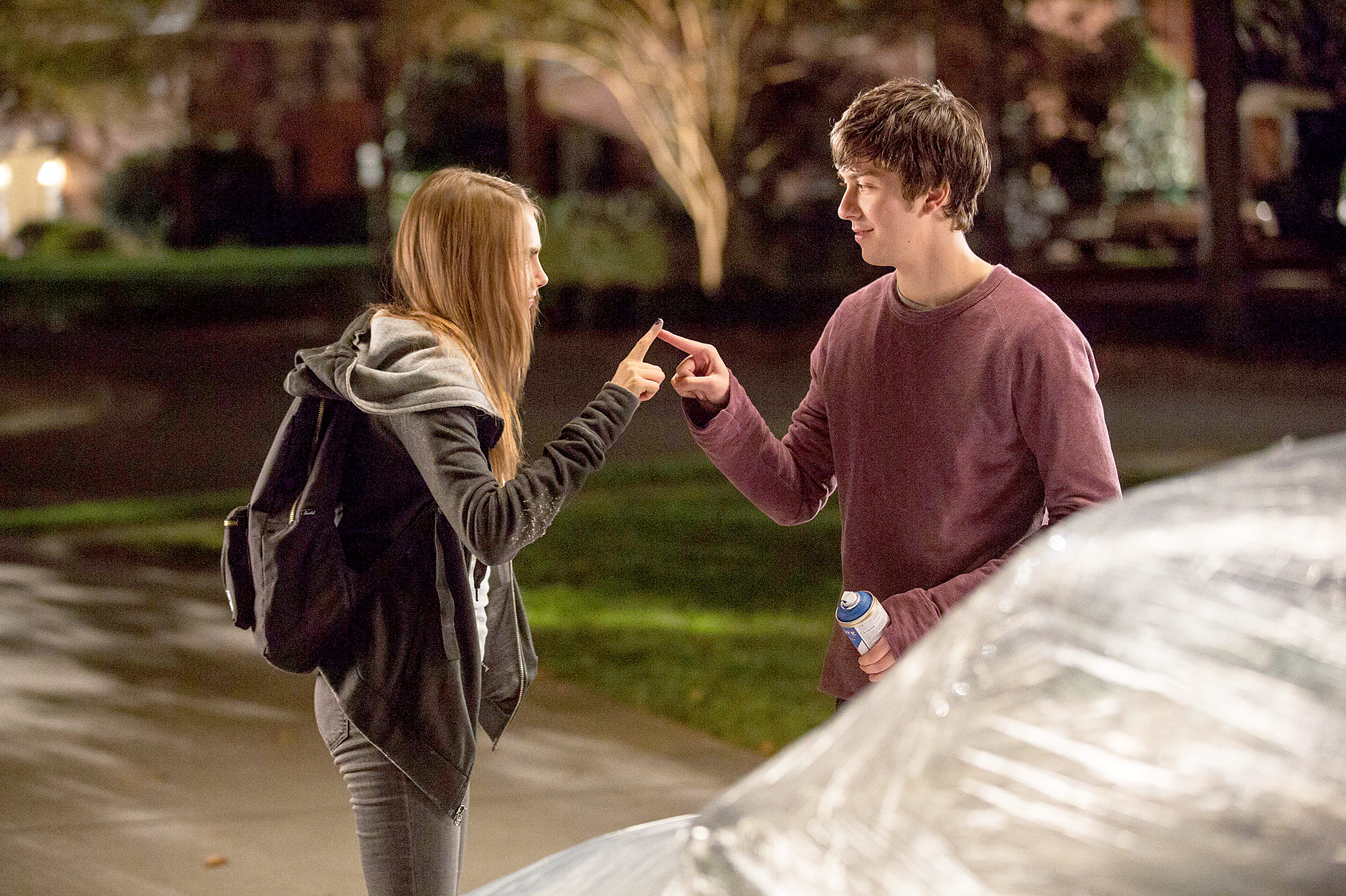
Ever since Margo Roth Spiegelman (Delevingne) moved in across the street from Quentin “Q” Jacobsen (Wolff) when they were kids, Quentin has looked on her as his one true love. But even though they grew up together as friends, and spent a great deal of time together, they’ve drifted apart and no longer even acknowledge each other in high school. All that changes however when, one night, Margo comes in through Q’s bedroom window and asks to borrow a car. She tells him that she has nine things she needs to do that night (some of which are illegal), and she needs his help. Reluctant at first, Q agrees to help her, and they take his mother’s car and head to the nearest Costco.

There they pick up various supplies including duct tape, a lot of Saran wrap, and a raw catfish. Margo explains that she’s out to get revenge on her boyfriend and her close friends; her boyfriend has been cheating on her with one of her friends, and at least one more friend knew it was happening and didn’t say anything. As the night progresses, and they play prank after prank, it becomes more and more like the times they spent together as kids, and Q finds his attraction for Margo rekindled. The next day though there’s no sign of Margo; a few more days pass before it becomes clear that Margo has disappeared.

Q is certain that Margo has left for a reason and that she wants to be found. He bribes her younger sister to look for clues in her bedroom. A Walt Whitman quote leads Q to finding a note with an address on it. With his friends Radar (Smith) and Ben (Abrams), he goes there and finds an abandoned store but they don’t find another clue. The next day, Q is approached by Lacey (Sage), one of Margo’s friends who is concerned about what’s happened to her. When the boys go back to the abandoned store she follows them there, and the four of them discover an atlas with a page torn out, a page that indicates Margo has gone to a small town in upstate New York called Agloe.

Q decides to throw caution to the wind and travel to Agloe. His friends, and Lacey, all agree to go with him, but only as long as they can get back in time for the upcoming prom. Radar’s girlfriend, Angela (Sinclair), comes along with them. Along the way they have a near-miss with a cow that sees their car spin off the road. Stranded for the night, Ben and Lacey develop a fondness for each other, while Radar and Angela pre-empt the plans they have for after the prom. The next day, with the car repaired, they finally make it to Agloe, but what they find there isn’t exactly what Q expected…

Paper Towns - scene

A teen romance where the romance is potentially illusory, and a teen drama where the drama is assembled through the filter of a mystery, Paper Towns is a heartfelt ode to teenage longing and seizing the moment. It features several moments where it seems the narrative is being forced along by contrivance and crude coincidence, but the movie has the presence of mind to excuse itself by a trick of the very same narrative. This is to do with the clues Margo has left behind, and the way in which Q responds to them, but as they are the crux of the matter – even more so than Q and Margo’s relationship – it’s hard to imagine the movie working out in any other way, faithful as it is to the structure and tone of John Green’s novel.

However, what is difficult to pin down successfully in the novel is also difficult to pin down in the movie. Q’s commitment/devotion/attachment to Margo is never quite believable, despite Wolff’s compelling performance, and hinges on that one night of prankdom that in itself seems unlikely. Some viewers might not be too concerned by Margo’s appearance in Q’s room after so long, but it’s hard to believe that after so long “apart” that she would rekindle their friendship, and then make it so memorable for Q before disappearing. And Q’s disappointment only lasts until it becomes clear that Margo has run away, but instead of feeling taken advantage of, he becomes certain she wants him to find her. All of which begs the question, is Q just lovesick, or a stalker in training?

Michael H. Weber and Scott Neustadter’s adaptation does its best to portray Q’s search for Margo as the grand romantic gesture it appears to be, but the script never manages to make his obsession credible or based on anything but an intellectual challenge (can he find her from the clues she’s left behind?). As a result, and again despite Wolff’s engaging portrayal, Q comes across as a loyal puppy dog willing to do whatever he believes his mistress wants him to do. So wedded to the idea of his being with Margo does Q become that a more appropriate liaison with Lacey is quickly nipped in the bud by pairing her off with Ben, a relationship that would be more credible in a Revenge of the Nerds movie.

In the end the movie’s central concept is that we – or more particularly Q – should live for the moment, and create our own dreams instead of following someone else’s, and while this is a tenet that’s worth taking to heart, here it follows in the footsteps of too many other teen dramas to be either relevant or anything other than jaded. But thanks to its gifted cast, and a sense of fun that is more appealing than the drama that occupies centre stage, the movie is by no means a chore to watch, and features warm, soothing cinematography by David Lanzenberg, and a charming score by Son Lux. Schreier’s direction is unobtrusive for the most part, and with the help of Wolff and Delevingne he imbues the scenes between Q and Margo with a sense of unspoken yet mutual affection that is entirely touching.

Rating: 7/10 – in many respects a missed opportunity, Paper Towns has a superficial fascination that draws in the viewer but will leave them feeling less than fully satisfied by the movie’s end; competently made but missing that vital spark needed to make the material sing, it has another delightful performance from Wolff, and gives Delevingne the chance to shine in what is the movie’s most important, and unexpectedly fascinating, supporting role.

Share this:

  • Click to share on X (Opens in new window) X
  • Click to share on Facebook (Opens in new window) Facebook
  • More
  • Click to print (Opens in new window) Print
  • Click to email a link to a friend (Opens in new window) Email
Like Loading...

Violet & Daisy (2011)

01 Friday Aug 2014

Posted by dullwood68 in Movies

≈ Leave a comment

Tags

Alexis Bledel, Assassins, Crime, Geoffrey Fletcher, James Gandolfini, Murder, Rival killers, Saoirse Ronan, Teenagers

Violet & Daisy

D: Geoffrey Fletcher / 88m

Cast: Saoirse Ronan, Alexis Bledel, James Gandolfini, Marianne Jean-Baptiste, Danny Trejo, Tatiana Maslany, Lynda Gravatt

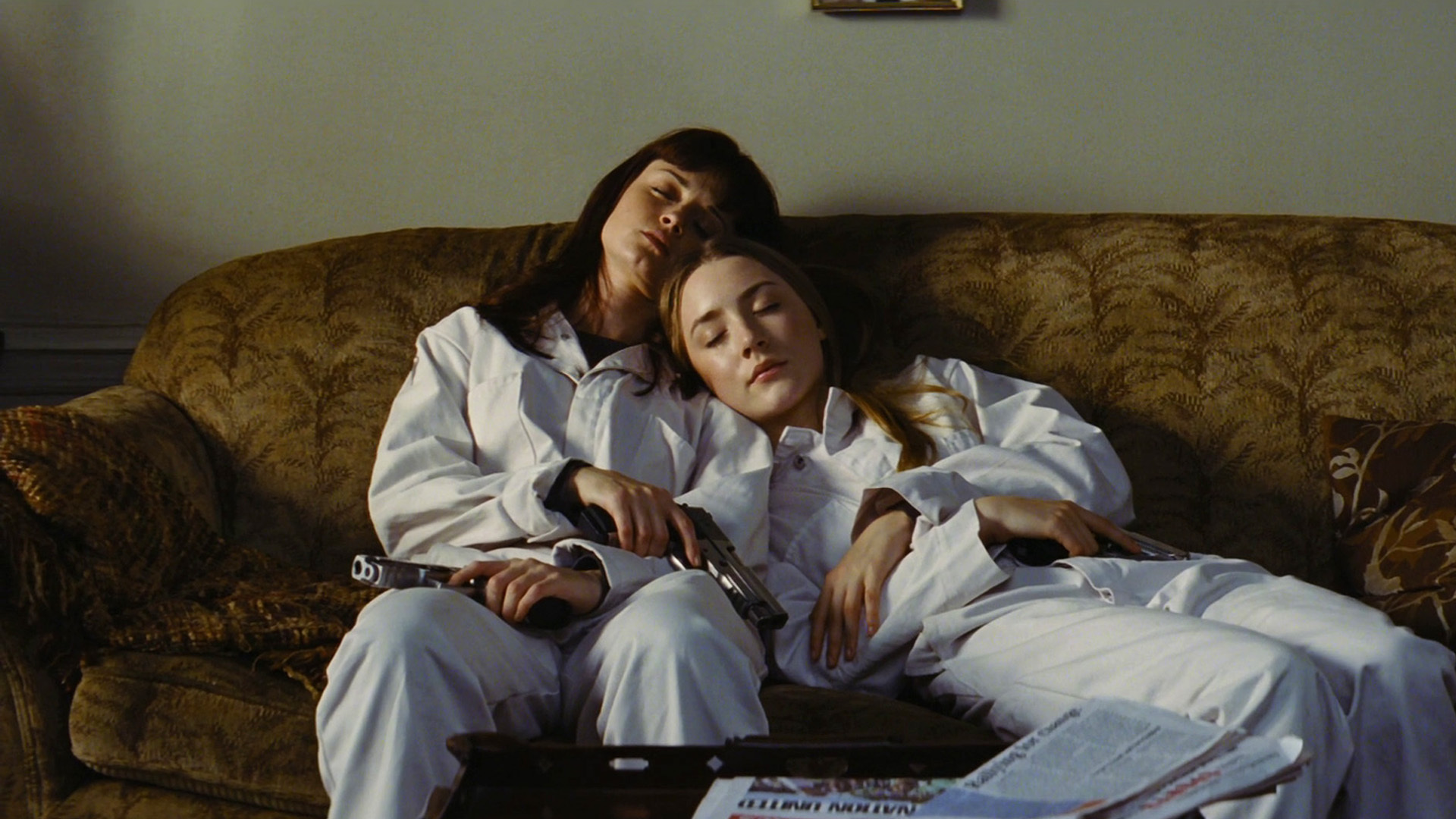
Two teenagers, Violet (Bledel) and Daisy (Ronan), when they’re not obsessing over singing sensation Barbie Sunday, are professional assassins.  They work for a man called Chet but they’ve never met him; instead they’re given their jobs via an intermediary, Russ (Trejo).  When their next assignment – to kill a man who’s stolen from Chet – is given to them the set up seems a little strange: the man has contacted Chet and given his name and address.  As planned, the pair wait for the man at his apartment, but fall asleep while waiting for him to come home.  When they wake, they find he’s covered them with a quilt and is unsurprised to see them; in fact, he tells them he’s been expecting them.  With the hit already not going to plan, Violet and Daisy decide to just shoot the man and have done with it but when they try – blasting away at where he was sitting moments before – they find he’s got up and made them cookies.

Now out of bullets, Violet leaves the apartment to get some more, leaving Daisy and the man alone.  They start to talk, learning about each other, and a bond develops between them.  The man reveals he’s also expecting another set of killers to pay him a visit as he’s stolen from their boss as well.  They’re part of a rival organisation and when they arrive at the man’s apartment, Daisy stalls them long enough for Violet to return and kill them.  Learning more about the man, and discovering he has terminal cancer, Violet once more leaves the flat to re-stock their arsenal, still determined to carry out their mission.  The man tells Daisy about his daughter, April (Maslany), and his regret over the way his relationship with her has deteriorated.  As it becomes increasingly clear that the man has engineered his death by stealing from Chet and his rival, it’s down to the two girls to decide if this is one hit that shouldn’t be carried out.

Violet & Daisy - scene

The feature debut of the screenwriter of Precious (2009), Violet & Daisy is a singularly adventurous movie that does its best to wrong foot its audience throughout, and maintains a quirky, offbeat charm through its sometimes whimsical script and its trio of lead performances.  The set up is intriguing, and provides a lot of laughs as Violet and Daisy try and get the measure of a man who isn’t afraid of them, or the fact that they’re there to kill him.  While their confidence doesn’t quite desert them, it is undermined by the man’s calmness, and how nicely he treats them.  It’s fun to see the pair heading off to another room (while remaining in earshot) in an effort to decide what to do, their experience counting for little in the face of such cooperation and concern for them as individuals.

This basic premise is fleshed out by the inclusion of the rival killers and the history that Violet has with them, as well as a nosy neighbour, Dolores (Gravatt), and the threat of Chet’s number one assassin (Jean-Baptiste) lurking outside the building (to take out the man or Violet and Daisy is never clear).  The girls’ relationship is explored as well, giving both actresses the chance to provide strong, compelling performances that highlight the disparity between the girls’ feelings about the way their mission has gone awry.  Ronan is superb as always, Daisy’s somewhat gauche behaviour during the early part of the movie giving way to a measured, more emotional response to the situation, her growing liking for the man giving her a confidence that she didn’t have before.  As the initially controlling Violet, Bledel has the more obviously showy role but as the movie progresses, she shows the vulnerability beneath the confidence, and while it would be taking it too far to say their roles are reversed, by the end there’s a balance that actually compromises their working relationship.  And Gandolfini is as artless and affecting as ever, imbuing his character with a quiet determination that perfectly illustrates his need to give meaning to the end of his life.

Fletcher organises his cast and the material with a poise and assurance that belies the fact this is his first director’s credit, and the movie’s mix of violence, black humour and indie drama makes Violet & Daisy a real pleasure to watch.  With top-notch performances, and an unshowy, yet deadpan approach to the situation, Fletcher creates a winning crime drama that has a strong visual approach and features equally strong performances.  The references to the singer Barbie Sunday are probably the movie’s main weakness, giving Violet and Daisy a fairly spurious reason for taking on the job in the first place, and there are a few moments where the humour does a disservice to the drama it’s meant to offset.  But these are minor issues, and don’t hinder the movie at all.

Rating: 8/10 – an underrated gem, Violet & Daisy has lots to offer, and rewards the viewer from start to finish; Ronan and Bledel make a great team, and the movie’s indie sensibility means it provides a fresh take on what could have been a much more straightforward and predictable tale.

Share this:

  • Click to share on X (Opens in new window) X
  • Click to share on Facebook (Opens in new window) Facebook
  • More
  • Click to print (Opens in new window) Print
  • Click to email a link to a friend (Opens in new window) Email
Like Loading...

Geography Club (2013)

17 Thursday Apr 2014

Posted by dullwood68 in Movies

≈ Leave a comment

Tags

Andrew Caldwell, Bullying, Cameron Deane Stewart, Gary Entin, Gay, High School, Homophobia, Homosexual, Lesbian, Review, Support group, Teenagers

Geography Club

D: Gary Entin / 80m

Cast: Cameron Deane Stewart, Justin Deeley, Andrew Caldwell, Meaghan Martin, Allie Gonino, Ally Maki, Nikki Blonsky, Alex Newell, Teo Olivares, Ana Gasteyer, Marin Hinkle, Scott Bakula

It’s a sad fact that even today, with society supposedly more tolerant, and understanding, of different sexual orientations that a movie such as Geography Club can still be relevant in addressing the issue of homophobia.  Set in Goodkind High School – a misnomer if ever there was one – the movie begins with Russell arranging to meet a guy he’s met online.  He’s nervous, and unsure of his sexuality, but the meet is mainly a test of his feelings.  At the park he bumps into fellow high schooler Kevin (Deeley), and when Kevin walks away after an awkward conversation, Russell realises it was Kevin he was due to meet.

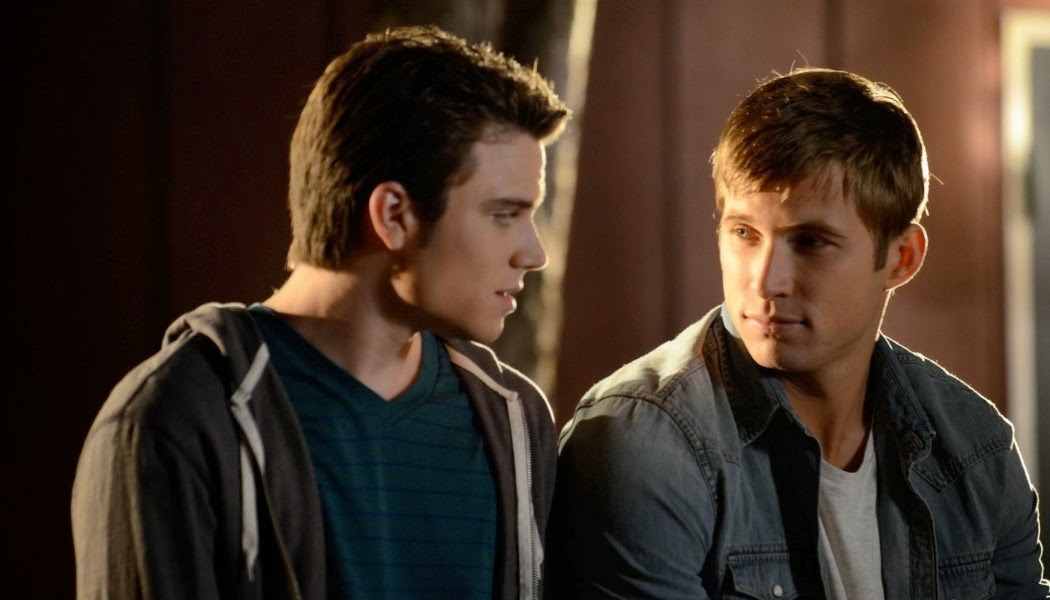
Later, on a school field trip, Russell and Kevin get to know each other better and one night they kiss.  The kiss is witnessed by Min (Maki), a fellow student.  Back at Goodkind, Min leaves Russell a message to meet her in one of the classrooms after school the next day.  Worried that she plans to blackmail him and Kevin, Russell goes to the classroom, and finds not only Min, but also Terese (Blonsky), Min’s partner, and Ike (Newell).  All three are gay and have formed the Geography Club in order to provide support for each other.  Min wants Russell to join them, but at first he refuses.  However, he goes back the next day, and in time becomes a member of the club.

Running parallel to all this are the efforts of his best friend Gunnar (Caldwell) to go out with Kimberly (Gonino), the object of Gunnar’s not inconsiderable lust.  While Russell tries to maintain a clandestine relationship with Kevin (who’s the star player on the school football team), his friendship with Gunnar threatens to fragment altogether, culminating in a disastrous weekend trip to Kimberly’s folks’ summer place.  With Gunnar counting on Russell’s support, his unwillingness to pair off with Kimberly’s friend Trish (Martin) leads to Russell being outed at school.  Determined not to let himself be categorised so unfairly, he feels it’s time for the Geography Club to go public.

Geography Club - scene

As an expose of what it’s like to be a teenager and either gay or lesbian, Geography Club falls a little short in its intentions, taking a serious subject – from the bestselling book by Brent Hartinger – and often undercutting that seriousness by placing the emphasis on humour, or by adopting a superficial approach to the material.  While the movie looks at ostracism, peer pressure, sexism, bullying, parental expectations, personal freedoms, teenage sexuality and its potential pitfalls, the perils of someone trying to find their place in the world, and the difficulty in being true to yourself (if you’re even sure what that means), this is all perhaps too much for Geography Club to address properly and with the right amount of attention for each issue.

Russell’s struggle is initially with his uncertainty about being gay, even after he and Kevin kiss.  But Min’s “intervention” has the effect of deciding the issue for him, and the rest of the movie settles for the inevitable how-long-will-it-be-before-the-main-character-is-honest-with-everyone? approach so prevalent in this type of movie.  As a result, Russell is forced to hide his true feelings for fear of being found out; he also takes part in bullying another student, Brian (Olivares), and with barely a moment’s hesitation (it’s a scene that involves Brian being humiliated in front of everyone in the school cafeteria, and yet Russell and his “friends” from the football team get away with it completely; there’s no punishment for their behaviour at all, one of the weirder instances that pop up throughout the movie).  And Russell would rather upset his best friend instead of trusting Gunnar with the knowledge that he’s gay.  With the movie changing focus so often, it’s hard to work out if there’s a main point trying to be made – be nice to gay people? bullying is an awful thing to do? friendships should be more important than emotional self-doubt?

The relationships in the movie range from the non-existent (Russell’s father is referred to but never seen, as if the family dynamic that would need to be addressed by his being gay was one issue too many for the filmmakers) to the predictable (Gunnar accepts Russell’s being gay without batting an eyelid).  Kevin is the jock who won’t commit to being homosexual because it would ruin his need to be “normal” (but he still wants to see Russell at the same time); Min and Terese appear more like lipstick lesbians than a real couple; Trish’s predatory attempts at making out with Russell are badly handled – and misconceived – considering her apparent experience with other guys; and Brian readily forgives Russell for his involvement in the cafeteria incident (but only after Russell is outed).

With the characters behaving either too predictably, or in ways that serve to advance the script rather than giving them some much-needed depth, the cast are constantly in danger of having their performances derailed by Edmund Entin’s lightweight script and Gary Entin’s overstretched direction.  Blonsky is wasted in a role that either has her playing the guitar or looking cynically at everyone else, while Martin is saddled with a one-note character and no chance of making Trish any or more interesting.  Deeley has less to do than most but what he does have to do is repetitive, and Kevin is so selfish and callow you hope he and Russell don’t end up together.  With a humorous turn from Gasteyer as an oddball teacher, and Caldwell stealing the movie as a desperate virgin (he’s like a young Jack Black at times), it’s left to Stewart to keep the audience’s attention and provide the sympathetic character the audience needs to make it through.  Fortunately he does just enough to engage our sympathies, but it’s a close run thing, and as expected, once Russell is outed, he becomes less annoying as well.

Rating: 6/10 – not quite as involving as was hoped for, perhaps, but still a pleasant enough way to spend eighty minutes, provided you have a tolerance for less than convincing character motivation; a decent enough effort, and a worthy subject matter, but too lacking in real drama to make much of an impact.

Share this:

  • Click to share on X (Opens in new window) X
  • Click to share on Facebook (Opens in new window) Facebook
  • More
  • Click to print (Opens in new window) Print
  • Click to email a link to a friend (Opens in new window) Email
Like Loading...

Blog Stats

  • 486,582 hits

Recent Posts

  • 10 Reasons to Remember Bibi Andersson (1935-2019)
  • Fantasia (1940)
  • Dances With Wolves (1990) – The Special Edition
  • Kiss of the Spider Woman (1985)
  • The Three Musketeers (1973)

Top Posts & Pages

  • Lost for Life (2013) - Another Look
    Lost for Life (2013) - Another Look
  • Lost for Life (2013)
    Lost for Life (2013)
  • About
    About
  • Mr. Topaze (1961)
    Mr. Topaze (1961)
  • Winter's Tale (2014)
    Winter's Tale (2014)
  • Hunt for the Wilderpeople (2016)
    Hunt for the Wilderpeople (2016)
  • Shock and Awe (2017)
    Shock and Awe (2017)
  • Billy Lynn's Long Halftime Walk (2016)
    Billy Lynn's Long Halftime Walk (2016)
  • BFI London Film Festival 2015
    BFI London Film Festival 2015
  • A Brief Word About La La Land (2016)
    A Brief Word About La La Land (2016)
Follow thedullwoodexperiment on WordPress.com

Blogs I Follow

  • Rubbish Talk
  • Film 4 Fan
  • Fast Film Reviews
  • The Film Blog
  • All Things Movies UK
  • Interpreting the Stars
  • Let's Go To The Movies
  • Movie Reviews 101
  • TMI News
  • Dan the Man's Movie Reviews
  • Film History
  • Jordan and Eddie (The Movie Guys)

Archives

  • April 2019 (13)
  • March 2019 (28)
  • February 2019 (28)
  • January 2019 (32)
  • December 2018 (28)
  • November 2018 (30)
  • October 2018 (29)
  • September 2018 (29)
  • August 2018 (29)
  • July 2018 (30)
  • June 2018 (28)
  • May 2018 (24)
  • April 2018 (21)
  • March 2018 (31)
  • February 2018 (25)
  • January 2018 (30)
  • December 2017 (30)
  • November 2017 (27)
  • October 2017 (27)
  • September 2017 (26)
  • August 2017 (32)
  • July 2017 (32)
  • June 2017 (30)
  • May 2017 (29)
  • April 2017 (29)
  • March 2017 (30)
  • February 2017 (27)
  • January 2017 (32)
  • December 2016 (30)
  • November 2016 (28)
  • October 2016 (30)
  • September 2016 (27)
  • August 2016 (30)
  • July 2016 (30)
  • June 2016 (31)
  • May 2016 (34)
  • April 2016 (30)
  • March 2016 (30)
  • February 2016 (28)
  • January 2016 (35)
  • December 2015 (34)
  • November 2015 (31)
  • October 2015 (31)
  • September 2015 (34)
  • August 2015 (31)
  • July 2015 (33)
  • June 2015 (12)
  • May 2015 (31)
  • April 2015 (32)
  • March 2015 (30)
  • February 2015 (37)
  • January 2015 (39)
  • December 2014 (34)
  • November 2014 (34)
  • October 2014 (36)
  • September 2014 (25)
  • August 2014 (29)
  • July 2014 (29)
  • June 2014 (28)
  • May 2014 (23)
  • April 2014 (21)
  • March 2014 (42)
  • February 2014 (38)
  • January 2014 (29)
  • December 2013 (28)
  • November 2013 (34)
  • October 2013 (4)

Create a free website or blog at WordPress.com.

Rubbish Talk

Film 4 Fan

A Movie Blog

Fast Film Reviews

The Film Blog

The official blog of everything in film

All Things Movies UK

Movie Reviews and Original Articles

Interpreting the Stars

Dave Examines Movies

Let's Go To The Movies

Film and Theatre Lover!

Movie Reviews 101

Daily Movie Reviews

TMI News

Latest weather, crime and breaking news

Dan the Man's Movie Reviews

All my aimless thoughts, ideas, and ramblings, all packed into one site!

Film History

Telling the story of film

Jordan and Eddie (The Movie Guys)

Movie Reviews & Ramblings from an Australian Based Film Fan

Privacy & Cookies: This site uses cookies. By continuing to use this website, you agree to their use.
To find out more, including how to control cookies, see here: Cookie Policy
  • Subscribe Subscribed
    • thedullwoodexperiment
    • Join 481 other subscribers
    • Already have a WordPress.com account? Log in now.
    • thedullwoodexperiment
    • Subscribe Subscribed
    • Sign up
    • Log in
    • Report this content
    • View site in Reader
    • Manage subscriptions
    • Collapse this bar
 

Loading Comments...
 

    %d