• 10 Reasons to Remember…
  • A Brief Word About…
  • About
  • For One Week Only
  • Happy Birthday
  • Monthly Roundup
  • Old-Time Crime
  • Other Posts
  • Poster of the Week
  • Question of the Week
  • Reviews
  • Trailers

thedullwoodexperiment

~ Viewing movies in a different light

thedullwoodexperiment

Tag Archives: Tragedy

Black Snow (2017)

09 Saturday Dec 2017

Posted by dullwood68 in Movies

≈ Leave a comment

Tags

Argentina, Drama, Laia Costa, Leonardo Sbaraglia, Martin Hodara, Mystery, Patagonia, Review, Ricardo Darín, Thriller, Tragedy
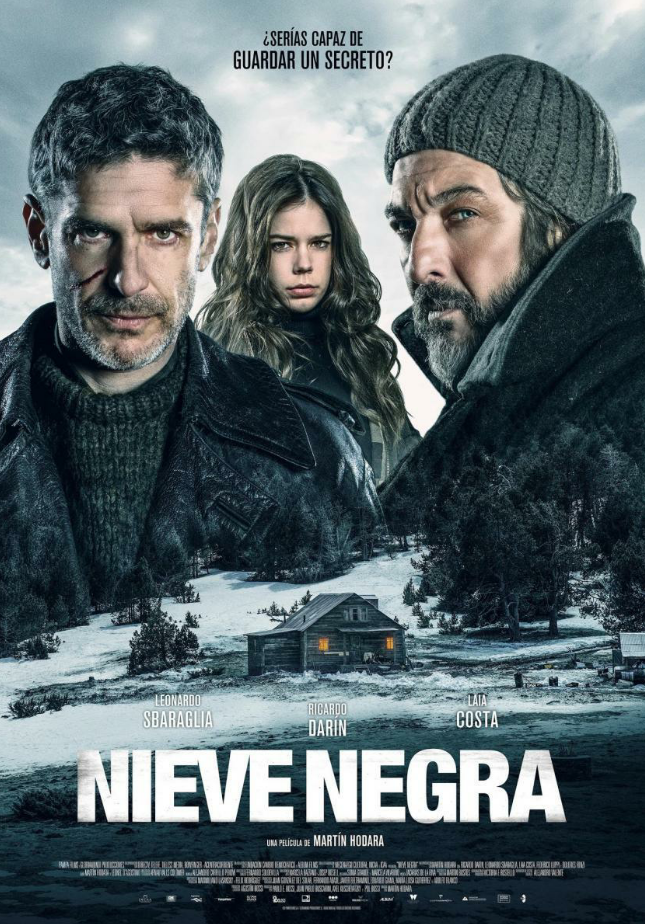
Original title: Nieve negra

D: Martin Hodara / 91m

Cast: Ricardo Darín, Leonardo Sbaraglia, Laia Costa, Federico Luppi, Dolores Fonzi, Andrés Herrera, Biel Montoro, Liah O’Prey, Mikel Iglesias, Iván Luengo

Upon learning of his father’s death, Marcos (Sbaraglia), along with his pregnant wife, Laura (Costa), travels to his home in Patagonia to settle his father’s affairs and sell the family home. But he encounters an obstacle to his plans in the form of his older brother, Salvador (Darín). Salvador still lives in the family home, and has no wish to move to somewhere new; nor is he tempted by gaining a share of the sale price that’s being offered by a local lawyer, Sepia (Luppi). He makes it clear that he wants to stay because of a tragedy that befell the family when he and Marcos when children, and their younger brother, Juan (Luengo), was accidentally killed during a hunting trip. Their father (Herrera) blamed Salvador for Juan’s death, and ever since, Salvador has lived a life of solitude and penitence, while Marcos has made a life for himself elsewhere, and their sister, Sabrina (Fonzi), has battled with mental health issues connected with the death of her younger brother. As Marcos does his best to persuade Salvador to change his mind, the truth about what happened when Juan was killed begins to surface, and secrets long buried come back to haunt the brothers, and send them down a path towards bloody conflict…

With family tragedies – and the inevitable dark secrets that seem to go with them at every turn – fuelling so many movies over the years, Argentinian thriller Black Snow has its work cut out for it before it’s even started. But while it doesn’t offer anything that’s particularly striking or original, it does have the benefit of its Patagonian setting, and a strong cast whose performances contribute greatly in making the viewer overlook how predictable it all is. It also takes great care through the various flashbacks that pepper the narrative, in revealing just enough about what happened the day Juan died, but without giving the viewer too much information to help them work out the why. Sharp-eyed and -eared viewers – or just those who have seen one too many of these kinds of thrillers – will be able to work out who did what, but this doesn’t spoil anything going forward, and the script – by director Hodara and Leonel D’Agostino – works hard to concentrate on the characters and their fractured relationships instead of making it all about the mystery surrounding Juan’s death.
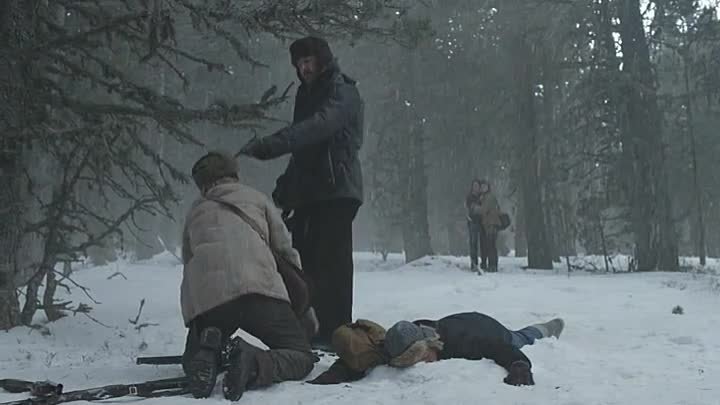
Away from that central mystery, there is still much to keep viewers occupied, from the sad fate of Sabrina, her brother’s death having scarred her to the point where she’s retreated from the world, to the legacy that their father has bequeathed them all, one that encompasses unhappiness and emotional distance. Marcos initially seems to have succeeded in avoiding the effects of their father’s legacy but his marriage shows signs that this isn’t the case, and as the movie progresses and he fights to maintain his own fragile equilibrium, whenever Laura challenges him about his behaviour or what happened all that time ago, you can see the façade that he’s so carefully hidden behind for so long begin to slip. For his part, Salvador is reticent and unhappy with Marcos’ attempts at further marginalising their shared tragedy, and the idea of selling their childhood home fuels the anger he’s kept at bay in the intervening years. And when Marcos finally goes too far, both brothers’ actions have unforeseen consequences.

The snow-covered mountains of Patagonia serve as an effective backdrop for the icy interactions between Marcos and Salvador, and the wintry weather also helps to highlight the simmering emotions that both brothers are trying to keep in check. (That said, a scene where Marcos’ and Laura’s car ends up stuck in a snowdrift, and they remain there until nightfall, sees a mistral-like wind suddenly spring up, and then just as quickly disappear once they reach safety.) It’s all shot by DoP Arnau Valls Colomer with a view to increasing the sense of isolation that these characters are experiencing, both within themselves, and as a result of where they are. Hodara takes care to make sure all this isn’t shown in a way that could be construed as heavy-handed, and as he teases out the various strands of the narrative, the overall effect is maintained and built on until those same strands are pulled together into an ending that offers both closure and ambiguity.
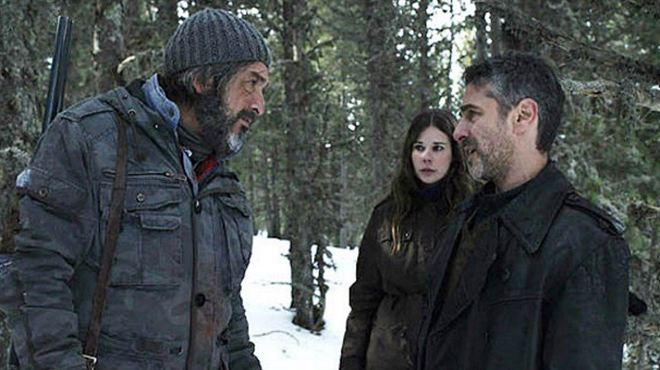
The final shot may have some viewers feeling that they’ve had the rug pulled out from under them, but there are clues that support the ending, and in terms of the narrative and what’s gone before, there’s a psychological underpinning that works well in supporting it. It’s also a moment that leaves you wanting to see what happens next, something that doesn’t always happen in this type of thriller, and if there is to be a sequel of some sort (though it’s unlikely), and if Hodara and his very talented cast do return, then the story really needs to be locked in before everyone’s on board. On the evidence here, though, the cast would be the least of Hodara’s worries. Darín, as usual, gives a terrific, detailed performance of a man living under a terrible shadow, but who is still able to retain an innate dignity despite what he’s done (which isn’t as straightforward as it seems). As his unwanted nemesis, Sbaraglia exudes a callous disregard for others that shows Marcos is more self-serving than he would ever admit, or want others to realise, and it’s in his scenes with Costa that this becomes more and more evident. Rounding out the main cast, Costa too is good in a role that seems like it’s going to be yet another “female character ignored by the plot” arrangement, but Laura proves integral to said plot, and Costa makes her determined and not at all vulnerable – which is a nice change.

The pace of the movie is measured, with the aforementioned flashbacks layered into the narrative at appropriate points, and the tone of the movie is suitably dark and gloomy, infused as it is by references to fratricide, mental illness, abuse, and emotional pessimism. It’s not a cheerful, sanguine movie by any means, but it tells its story in a way that maintains interest and keeps its central mystery exactly that – a mystery – until the final fifteen minutes. There are times when the material feels a little strained, and Hodara and D’Agostino seem to have painted themselves into a corner in terms of allowing the story to unfold organically, but these instances don’t hinder the movie too much even though they are noticeable, and the story is strong enough to press on without suffering any “ill effects”. A compelling thriller then, and one that has more than enough going on to attract even the most casual of viewers.

Rating: 8/10 – a neat psychological mystery that doesn’t feel like it’s trying to trick the viewer or string them along until a big twist is revealed, Black Snow is a confident, darkly agreeable movie that works hard to make its characters credible and their story more believable still; another winner from South America, and further evidence that movies from that part of the world deserve a wider platform on which to shine.

NOTE: The trailer below doesn’t have English subtitles, but it does enough without them to give you a good idea of what the movie is about, and its themes.

Share this:

  • Click to share on X (Opens in new window) X
  • Click to share on Facebook (Opens in new window) Facebook
  • More
  • Click to print (Opens in new window) Print
  • Click to email a link to a friend (Opens in new window) Email
Like Loading...

Buster’s Mal Heart (2016)

25 Thursday May 2017

Posted by dullwood68 in Movies

≈ Leave a comment

Tags

Concierge, DJ Qualls, Drama, Home invasions, Kate Lyn Sheil, Rami Malek, Review, Sarah Adina Smith, The Inversion, Tragedy

D: Sarah Adina Smith / 98m

Cast: Rami Malek, DJ Qualls, Kate Lyn Sheil, Mark Kelly, Sukha Belle Potter, Lin Shaye, Sandra Ellis Lafferty, Nicholas Pryor, Toby Huss, Bruce Bundy

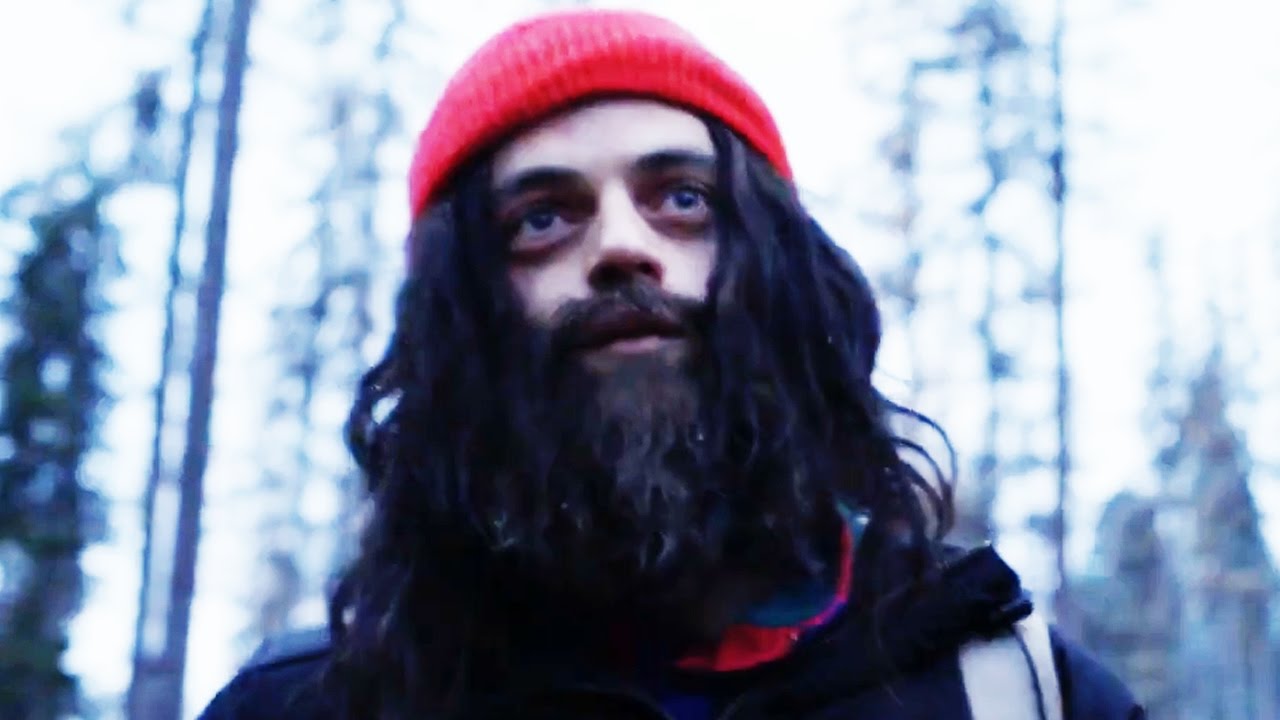
The eponymous Buster (Malek) is a vagrant who breaks into empty vacation homes in a remote mountain community, and who stays in each property for as long as he wishes. The authorities, led by a local deputy named Winston (Huss), have been trying to catch him for some time but Buster is wily and elusive. Buster has also gained his name thanks to his regular calls to radio stations where he rants and raves about the upcoming “Inversion”, an impending celestial event that will have a serious impact on everyone on Earth. But Buster’s real name is Jonah, and the events that have brought him to this place and time in his life are shown in flashback.

A night concierge at a less than busy hotel, Jonah is married to Marty (Sheil), and has a young daughter, Roxy (Potter). He doesn’t like working nights as he can’t always sleep during the day, but staffing problems at the hotel prohibit Jonah from changing to days; also his duties are dull and repetitive, and add to the overwhelming ennui that he’s begun to feel. When a stranger (Qualls) tries to get a room for the night but has no I.D. or other way of confirming his identity, the man’s talk of being free and able to do whatever he wants strikes a chord in Jonah, and he agrees to let him stay for just the one night. The man tells Jonah about the Inversion, an event that will coincide with the expected chaos of Y2K, and his impassioned speech has a profound effect on Jonah, who finds an unexpected succour in the idea.

The man returns the next night, and against Jonah’s better judgment, he allows him to stay until the morning. This leads to a tragedy that affects Jonah greatly, and causes him to abandon his life and take to the mountains where in time he becomes Buster. He stays one step ahead of the authorities, until one day the owners of the house he’s hiding out in arrive home unexpectedly, forcing him to deal with their presence and the attentions of a neighbour who comes calling one afternoon. Soon Buster is on the run, and cornered in a cave in the mountains…

The first thing to realise about Buster’s Mal Heart, the second feature from Sarah Adina Smith, is that the Inversion is the movie’s idea of a McGuffin: it never happens, it’s assigned too much importance by the stranger and Jonah/Buster, and it acts as a catalyst for certain events that Jonah becomes involved with. As a plot device it’s fairly simplistic, and as a way of providing or assigning motivation to the characters, it’s undermined by a plot development that Smith throws in towards the end of Jonah’s story. But what it does do that’s quite important is that it allows the movie to retain an air of mystery that, without it, would leave the movie looking and feeling a lot less mysterious and a lot more straightforward than it appears.

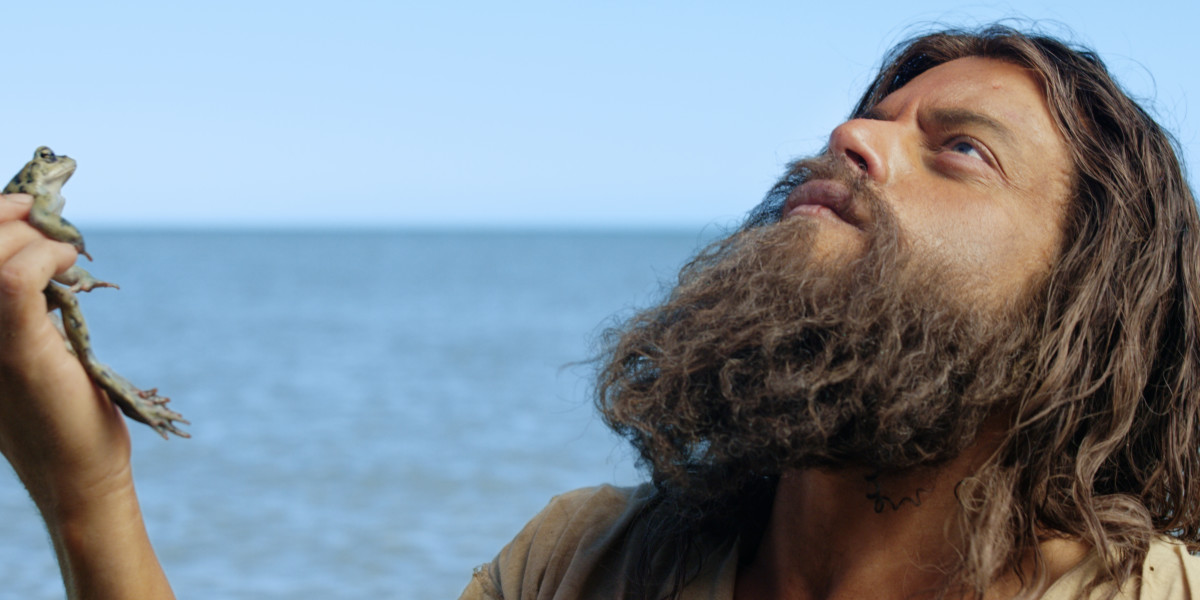
Smith introduces us to Buster from the start, then switches back to when he was Jonah, and in an attempt to make the movie seem more elliptical, shows him as another version of Buster but one stranded in a rowboat on the ocean. Smith then interweaves all three stories in an effort to explore the notion of a fractured, possibly irredeemable psyche, and the ways in which it tries to circumvent the overwhelming feelings brought on by a terrible tragedy. It’s powerful, humane stuff, made all the more powerful by Smith’s languorous, dream-like direction, and Malek’s emotive yet disconnected performances. The movie attempts to show that even when someone tries to beat an emotional retreat from the world, they’re still tied to it, no matter how hard they try and break away. Jonah becomes Buster out of necessity and lives a life of housebreaking and reclusivity. But in a moment that resonates deeply, Buster watches a news story about a message in a bottle that has washed up on a beach and been found. It’s a message his ocean-stranded alter ego created and sent out into the world – a lifeline, perhaps – and it precipitates an end to Buster’s life of crime.

This of course begs the question, is either of Jonah’s new identities “real”, or are they just avatars that his mind has come up with to help him deal with his agony and despair. Smith offers no easy answers (as befits a mystery), but can’t help but litter her screenplay with clues as to the likelihood that Jonah is experiencing a psychic split, or conversely, that it’s all a waking dream. It’s left to the viewer to make up their own minds, but in reality, the movie doesn’t need too close an inspection for it to reveal its secrets. Smith is an original, visually competent director, but in attempting to make Jonah’s journey more compelling, she makes the mistake of assigning depth to sections of the movie that don’t deserve them. In the end, Jonah’s breakdown is only that: a breakdown, and no matter much Smith tricks it out with cinematic sleights-of-hand, it’s not a puzzle that needs too much investigation to solve.

As Jonah, Malek’s constrained performance perfectly fits the bewilderment the character is experiencing in his daily life, while as Buster his wild man of the mountains appearance reflects the anguish that Jonah must be feeling. Malek is also on form as the version of Jonah who finds himself “all at sea”, a handy metaphor for how the character must be feeling overall. Some viewers may find all this too obvious for their liking, but what can’t be denied is that Smith, along with cinematographer Shaheen Seth, has created a number of milieus for Jonah to inhabit, and while they all spring from the same grounding in reality, they also serve as a jumping off point for the more surreal elements in Smith’s screenplay.

The ending is unsurprisingly designed to make viewers question their assumptions, but it’s one last parlour trick that is likely to evoke frustration rather than admiration. By doing so, Smith allows for yet one more outcome of Jonah’s breakdown, but though it ties in neatly with the notion that what we’ve witnessed is an allegory based on the story of Jonah and the whale, it’s not as effective as it first seems. Still, Smith is to be congratulated for creating a tale that is confidently handled for the most part, and which requires its audience to contemplate whether or not Jonah’s tri-lateral existence is a boon or a hindrance when it comes to reconfiguring his damaged psyche.

Rating: 7/10 – a somewhat dour narrative benefits greatly from Smith’s ambitious directing style and Malek’s propitious performance, making Buster’s Mal Heart an intriguing movie to watch but not necessarily one to revisit; the cinematography, editing (also by Smith), and soundtrack all add lustre to the movie’s tone and point of view, and though it all seems unnecessarily tricky, there’s heart and warmth here too, even if it’s in short supply.

Share this:

  • Click to share on X (Opens in new window) X
  • Click to share on Facebook (Opens in new window) Facebook
  • More
  • Click to print (Opens in new window) Print
  • Click to email a link to a friend (Opens in new window) Email
Like Loading...

The Vessel (2016)

05 Friday May 2017

Posted by dullwood68 in Movies

≈ Leave a comment

Tags

Aris Mejias, Drama, Faith, Jacqueline Duprey, Julio Quintana, Lucas Quintana, Martin Sheen, Puerto Rico, Religion, Review, San Juan, Tragedy, Tsunami

D: Julio Quintana / 86m

Cast: Lucas Quintana, Martin Sheen, Jacqueline Duprey, Aris Mejias, Hiram Delgado, Eugenio Monclova

At a small town on the coast of Puerto Rico, tragedy hangs heavy over the residents. Ten years before, a tsunami destroyed the elementary school and claimed the lives of forty-six children. The women, who all wear mourning black, have vowed never to have any more children, and the church services are largely unattended due to the townspeople’s loss of faith in God. Leo (Quintana), whose younger brother was one of the children who died, lives with his mother, Fidelia (Duprey), and is one of the few young men remaining in the town. Fidelia has remained grief-stricken since the tragedy, and has retreated into a world of her own.

Leo feels obliged to stay and look after his mother, even though the local priest, Father Douglas (Sheen), has told him that arrangements could be made for her to live another couple in the town. However, there is another reason for his staying, a widow called Soraya (Mejias). Leo has been entranced by her for years, and hopes one day they can have a relationship. Meanwhile, a chance to leave comes along when Leo’s friend, Gabriel (Delgado) announces his plan to leave town and start a new life elsewhere. On Gabriel’s last night in town they go out, have too many drinks, and at the end of the night, while at the sea wall, both fall into the water below.

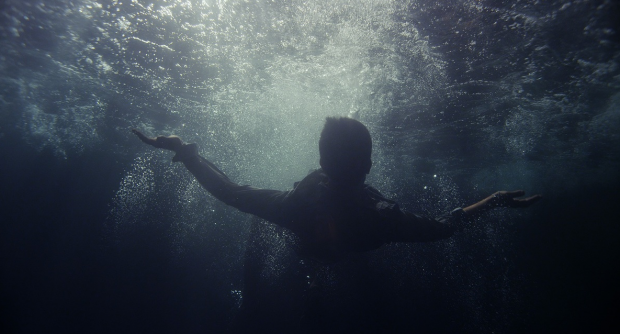
Both are drowned, and their bodies taken to the town’s makeshift morgue. Hours after he has died, Leo returns to life. Father Douglas views it as a miracle (though he makes no more of it than that), while the townspeople view it initially with suspicion, making the sign of the cross when they pass Leo on the street. However, church attendance increases, and Father Douglas sees the beginnings of a return to faith amongst the community as a whole. Leo feels emboldened enough to speak to Soraya, and a relationship begins to develop between them. At the same time, Leo is compelled to build first a shelter, and then a boat from the debris left in the church. Why he does this he doesn’t know, but he is convinced that it will float if it’s put out to sea. He plans to put his own rediscovered faith to the test, but some of the townspeople, wanting Leo to provide miracles for them, turn against him (and the church) when he’s unable to give them what they want, and they turn to sabotage as a means of hurting him…

A movie about renewed faith and rediscovered hope in a community that has shackled itself to the idea of perpetual penance, The Vessel is a rich, contemplative movie that tackles its religious themes with a modicum of proselytising, and which provides a thoughtful and thought-provoking approach to the material. All of the townsfolk – except for Leo – are waiting on a sign, an indication that God has not forsaken them in the wake of the tsunami. They want the deaths of their children to have some kind of meaning, and when finally they receive the sign they’ve been waiting for, it’s not what they’ve expected: a drowned man returned to life is the kind of message that seems to be taunting them: why him and not their children?

Crucially, it’s a question the movie, written and directed by Julio Quintana (making his first feature) never answers, settling instead for alluding to Leo as a Christ figure come to free the townsfolk from their self-imposed emotional prisons. But Leo isn’t interested in helping the townsfolk, in fact, he’s not even sure he’s helping himself. His actions in building the boat certainly have an effect on the people and friends he’s known all his life, but as Quintana the director/writer is keen to point out, whatever message there is, it’s as open to interpretation as any other message might be. This allows Quintana the director to show the townspeople’s varied reactions to the fact of Leo’s resurrection, and to focus on the way that these reactions are less concerned with regaining hope and faith than in exploiting potential solutions to their own grief and fears (and without too much forethought, as well).

Leo pursues Soraya with a determination that brooks no interference or rebuke, and their tentative, sensitively handled courtship shows both of them taking a leap of faith – Leo in acting on his feelings, and Soraya in allowing herself to have feelings again. Their romance provides the movie with a strong emotional core, while elsewhere Quintana focuses on notions of grief, sadness and religious fragility. All of these aspects are addressed in a simple, straightforward way that keeps the movie from descending into unnecessary melodrama, and allows it to maintain an even tone throughout. But it’s still the town’s lack of faith that infuses the narrative, and though it becomes clear by the movie’s end that the townsfolk have regained some of their faith (in God and each other), it’s also clear that it’s not come about because of any religious imperative. This is why Father Douglas appears to be more tolerated than needed.

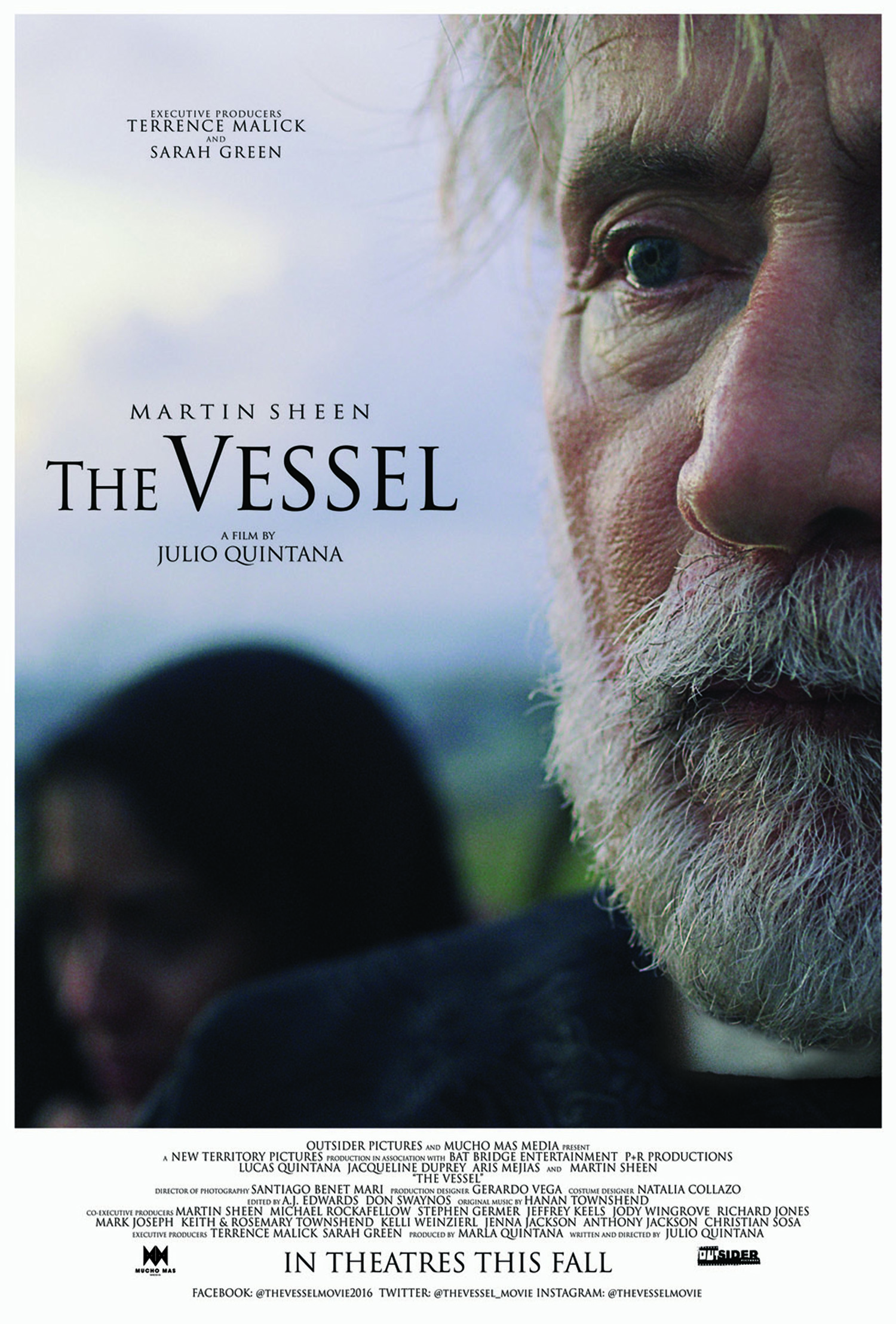
As the beleaguered priest, Sheen is a major draw for the movie, and his character’s involvement with Leo and the townspeople occupies a good part of the movie’s running time. It’s a measured, delicate performance from Sheen, who provides Father Douglas with a sense of ennui that perfectly explains the priest’s inability to make significant changes to the spiritual health of his flock. He’s too weighed down by the intransigence of the townsfolk, and despite his best attempts, he has no answer for it. As the source of reawakened feelings within the townspeople, Leo is perhaps an unwitting instrument of God, but Quintana leaves that up to the viewer to decide, and uses Leo’s own reluctance to engage with religion as a powerful way of sewing doubt as to the validity of Father Douglas’s claim that his return to life is a miracle.

The Vessel (and there’s no prizes for guessing who or what the title refers to) is also one of the most beautifully shot movies of 2016, thanks to some truly impressive location photography by Santiago Benet Mari. The visual acuity brought out by such spectacular surroundings creates a sense of natural beauty that is almost hyper-real, and even the interiors have a conspicuous harmony that complements the gorgeous exteriors. Quintana organises his characters within the frame so that they too seem like an organic part of the scenery, and some compositions are so striking they’re capable of making the viewer say, “Wow!” – and more than once.

Rating: 8/10 – a modest movie with modest ambitions, The Vessel succeeds in surpassing those ambitions to provide audiences with an earnest, yet genuine look at unfettered sorrow and dissipated faith; bewitching, and with good performances all round, Julio Quintana’s debut feature is honest, unpretentious, and above all, effortlessly absorbing from start to finish.

Share this:

  • Click to share on X (Opens in new window) X
  • Click to share on Facebook (Opens in new window) Facebook
  • More
  • Click to print (Opens in new window) Print
  • Click to email a link to a friend (Opens in new window) Email
Like Loading...

Blog Stats

  • 486,528 hits

Recent Posts

  • 10 Reasons to Remember Bibi Andersson (1935-2019)
  • Fantasia (1940)
  • Dances With Wolves (1990) – The Special Edition
  • Kiss of the Spider Woman (1985)
  • The Three Musketeers (1973)

Top Posts & Pages

  • Lost for Life (2013) - Another Look
    Lost for Life (2013) - Another Look
  • Lost for Life (2013)
    Lost for Life (2013)
  • About
    About
  • Mr. Topaze (1961)
    Mr. Topaze (1961)
  • Billy Lynn's Long Halftime Walk (2016)
    Billy Lynn's Long Halftime Walk (2016)
  • Winter's Tale (2014)
    Winter's Tale (2014)
  • The Hitman's Bodyguard (2017)
    The Hitman's Bodyguard (2017)
  • 5 Famous Movie Roles That Nearly Went to Someone Else
    5 Famous Movie Roles That Nearly Went to Someone Else
  • The Layover (2017)
    The Layover (2017)
  • Transcendence (2014)
    Transcendence (2014)
Follow thedullwoodexperiment on WordPress.com

Blogs I Follow

  • Rubbish Talk
  • Film 4 Fan
  • Fast Film Reviews
  • The Film Blog
  • All Things Movies UK
  • Interpreting the Stars
  • Let's Go To The Movies
  • Movie Reviews 101
  • TMI News
  • Dan the Man's Movie Reviews
  • Film History
  • Jordan and Eddie (The Movie Guys)

Archives

  • April 2019 (13)
  • March 2019 (28)
  • February 2019 (28)
  • January 2019 (32)
  • December 2018 (28)
  • November 2018 (30)
  • October 2018 (29)
  • September 2018 (29)
  • August 2018 (29)
  • July 2018 (30)
  • June 2018 (28)
  • May 2018 (24)
  • April 2018 (21)
  • March 2018 (31)
  • February 2018 (25)
  • January 2018 (30)
  • December 2017 (30)
  • November 2017 (27)
  • October 2017 (27)
  • September 2017 (26)
  • August 2017 (32)
  • July 2017 (32)
  • June 2017 (30)
  • May 2017 (29)
  • April 2017 (29)
  • March 2017 (30)
  • February 2017 (27)
  • January 2017 (32)
  • December 2016 (30)
  • November 2016 (28)
  • October 2016 (30)
  • September 2016 (27)
  • August 2016 (30)
  • July 2016 (30)
  • June 2016 (31)
  • May 2016 (34)
  • April 2016 (30)
  • March 2016 (30)
  • February 2016 (28)
  • January 2016 (35)
  • December 2015 (34)
  • November 2015 (31)
  • October 2015 (31)
  • September 2015 (34)
  • August 2015 (31)
  • July 2015 (33)
  • June 2015 (12)
  • May 2015 (31)
  • April 2015 (32)
  • March 2015 (30)
  • February 2015 (37)
  • January 2015 (39)
  • December 2014 (34)
  • November 2014 (34)
  • October 2014 (36)
  • September 2014 (25)
  • August 2014 (29)
  • July 2014 (29)
  • June 2014 (28)
  • May 2014 (23)
  • April 2014 (21)
  • March 2014 (42)
  • February 2014 (38)
  • January 2014 (29)
  • December 2013 (28)
  • November 2013 (34)
  • October 2013 (4)

Blog at WordPress.com.

Rubbish Talk

Film 4 Fan

A Movie Blog

Fast Film Reviews

The Film Blog

The official blog of everything in film

All Things Movies UK

Movie Reviews and Original Articles

Interpreting the Stars

Dave Examines Movies

Let's Go To The Movies

Film and Theatre Lover!

Movie Reviews 101

Daily Movie Reviews

TMI News

Latest weather, crime and breaking news

Dan the Man's Movie Reviews

All my aimless thoughts, ideas, and ramblings, all packed into one site!

Film History

Telling the story of film

Jordan and Eddie (The Movie Guys)

Movie Reviews & Ramblings from an Australian Based Film Fan

Privacy & Cookies: This site uses cookies. By continuing to use this website, you agree to their use.
To find out more, including how to control cookies, see here: Cookie Policy
  • Subscribe Subscribed
    • thedullwoodexperiment
    • Join 481 other subscribers
    • Already have a WordPress.com account? Log in now.
    • thedullwoodexperiment
    • Subscribe Subscribed
    • Sign up
    • Log in
    • Report this content
    • View site in Reader
    • Manage subscriptions
    • Collapse this bar
 

Loading Comments...
 

    %d