Although thedullwoodexperiment is primarily (and until now exclusively) about movies, there’s a 10-part TV series showing on Netflix at the moment that should be required viewing for anyone with even a passing interest in horror movies or the horror genre in general. That series is – you guessed it – The Haunting of Hill House. An expansion of the novel by Shirley Jackson, the series tells the story of the Crain family, and their experiences both living in Hill House in the early Nineties, and twenty-six years later when the influence of the house begins to make itself felt again. The story of the Crains is told in non-linear fashion with many scenes told from various perspectives and meshing between the past and the present. It features a terrific cast that includes Carla Gugino, Henry Thomas, Timothy Hutton, Michiel Huisman, Elizabeth Reaser, Kate Siegel, Oliver Jackson-Cohen and Victoria Pedretti as the Crain family, and is the brainchild of Mike Flanagan, the director of Oculus(2013), Before I Wake (2016), and Gerald’s Game (2017).
The series is quite simply one of the best things on TV at the moment: gripping, compelling, scary, finely written and directed (Flanagan directs all ten episodes), and replete with the kind of fluid camerawork that allows for increasing moments of dread in every episode. As the camera spins around the characters, or prowls the corridors and rooms of Hill House, each movement prompts the question, just what fresh horror is going to be revealed next? The series is also one of the finest examinations of the devastating effects that grief and loss can have on individuals that’s come along in a very long while. Alongside themes of mental illness, paranoia, and addiction, this is only occasionally played for laughs, and instead focuses on keeping audiences on the edge of their seats and hiding behind the nearest available cushion. With ghosts and apparitions likely to appear at any time and in any circumstance, watching the show becomes something of a challenge to get through if you’re easily spooked. But it’s definitely worth it. If you haven’t seen it yet, then give it a try – you won’t regret it.
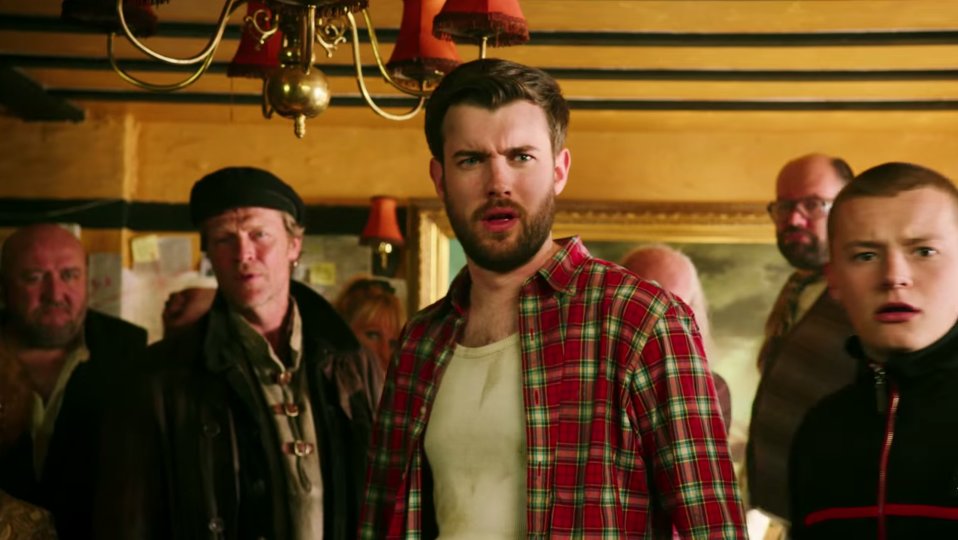
Cast: Jack Whitehall, Harry Enfield, Sarah Solemani, Mathew Horne, Iain Glen, Ethan Lawrence, Charlie Wernham, Layton Williams, Kae Alexander, Jack Binstead, Nikki Runeckles, Weruche Opia, Joanna Scanlan, Jeremy Irvine, Talulah Riley, Clarke Peters, Steve Oram, Steve Speirs, Marc Wootton
Just avoid. This is a movie whose “comic” highlight is its lead character teabagging a swan. Fans of the TV series will probably enjoy this but anyone else will be wondering how on earth this was ever made, and if they manage to get through to the end, they’ll also be wondering how they can get ninety minutes of their lives back.
Rating: 3/10 – yet another dreadful movie adaptation of a British TV comedy series, The Bad Education Movie wastes no time in insulting the viewer’s intelligence and doing its best to make as little effort as possible; some lovely Cornish locations aside, this has all the hallmarks of a movie that’s been written in a rush, directed in a fugue state, and acted on rare occasions (check out Horne’s constant mugging if proof is needed).
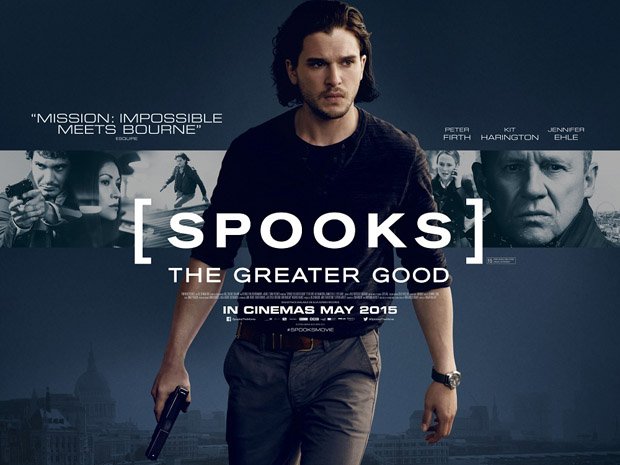
Cast: Peter Firth, Kit Harington, Jennifer Ehle, Elyes Gabel, Tim McInnerny, David Harewood, Lara Pulver, Eleanor Matsuura, Elliot Levey
While being taken across London under armed guard, MI5 lose the US’s most wanted terrorist, Adem Qasim (Elyes), in a rescue bid by his followers. It’s clear to the officer in charge of the operation, Harry Pearce (Firth), that Qasim’s escape was helped along by someone on the inside. However, he’s not short of suspects, from his own boss, Oliver Mace (McInnerney), to MI5 bigwig Geraldine Maltby (Ehle), US liaison Emerson (Levey), and British politician Francis Warrender (Harewood). Any of them could have been responsible; with MI5’s standing in the international community at an all-time low, it’s the perfect opportunity for the US to subsume MI5 within its own intelligence organisation.
To weed out the mole in MI5, Harry enlists ex-field operative Will Holloway (Harington), but not before he’s tracked down Qasim and made a deal with him: in exchange for arranging for Qasim’s wife to be released from a Russian prison, Harry will be given a phone number that will reveal the mole’s identity. Trusting no one else, Harry disappears, leaving Will to track down the mole from inside MI5. With his superiors uncertain if Harry has changed sides, or is working from his own agenda, he becomes as much of a target as Qasim. Aided by one of the officers, Erin Watts (Pulver) who was on the guard detail when Qasim escaped, Will learns that an order was given that requests for aerial support were to be ignored, and for the security teams not to engage with Qasim’s men.
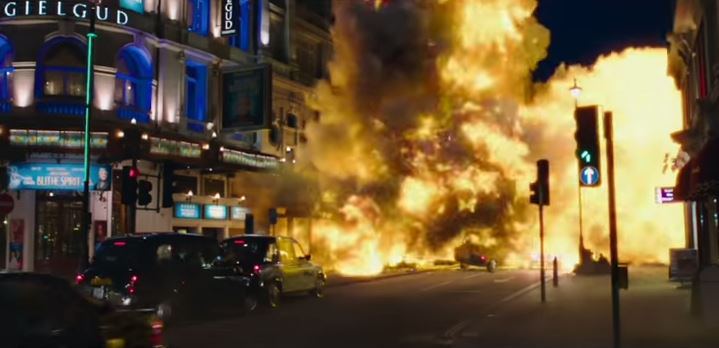
Meanwhile, Qasim presses on with his plans to plant bombs across London. He uses a suicide bomber to set off an explosion in London’s West End, at an event attended by Warrender, who is killed. With another bombing planned to happen soon, Harry discovers that Qasim’s wife is dead. In a race to stop the bombing and still find out who the mole is in MI5, Harry must join with Will in trying to find a way to convince Qasim that his wife is still alive, and to get hold of the phone number he needs to ferret them out. Enlisting the help of communications analyst Hannah Santo (Matsuura) to impersonate Qasim’s wife, a meeting is arranged to take place on Waterloo Bridge. But when it all goes wrong, Harry sets in motion a sequence of events that could potentially bring down MI5 and make a terrorist hero of Qasim.
Last seen in its incarnation as a TV series back in 2011, Spooks: The Greater Good, the long-mooted movie version, finally makes it to cinemas, and proves that, yet again, big screen adaptations of small screen successes are often pale imitations of their predecessors. As it is here, with a story that tries its hardest to be hard-boiled and suitably dour, but which comes across as dull and overly complicated.
Part of the problem is that the script – by returning writers Jonathan Brackley and Sam Vincent – makes things incredibly easy for Harry (the speed with which he tracks down Qasim after his escape) and incredibly difficult for Will (he’s arrested and faces extraordinary rendition at one point). Also, the script doesn’t clarify how MI5 can know Harry’s whereabouts in, say, Berlin, but never come close to arresting him – until he needs them to, that is. (There’s a laughably awful scene where Harry and Will are lured into a trap by someone who’s supposedly on their side, the dynamics of which are so badly set up, most viewers will be scratching their heads and saying, “Was it this bad as a TV series?”)
Whether it was or not – and critical consensus states it wasn’t – this movie outing is likely to tarnish the series’ reputation, replete as it is with espionage thriller clichés (is that a piece of conveniently incriminating evidence that’s been found in the waste basket?), and by-the-numbers performances (McInnerny makes a character he’s played before sound like nothing more than the world’s most obnoxious, clueless boss ever). The movie also seems reluctant to make Qasim really villainous. This leads to a twist in the narrative that induces more head scratching, and further leads to the movie’s big showdown, in which we learn that any perimeter breach of MI5’s HQ won’t be detected until the intruders have made it quite a way inside. It’s moments like these that undermine the movie’s good intentions and spoil the series’ reputation for intelligence and provocative storytelling.
Reprising his character from the series’, Firth is annoyingly enigmatic in the kind of role that can be boiled down to the phrase, “I know something you don’t know”. He flits in and out of the story, prompting angry outbursts from the other characters, and as mentioned above, moving around with impunity. Firth does what he can, but you can tell he’s not feeling it, and by the movie’s end he looks as tired as a man would be if he were waiting for a better, less banal line of dialogue to finish off with. Cynics might argue that Harington has been brought in to do all the physical stuff that Firth can’t manage anymore, but those who are even more cynical will recognise that he’s the international draw meant to attract foreign – sorry, American – audiences. He’s not given much to do other than run around a lot and look puzzled/upset/betrayed as each scene demands, but he acquits himself well enough, and seems aware of just what his role is in the overall production. As for the rest of the cast, Ehle is as cool and mysterious as her character requires her to be, while as Qasim, Elyes looks as if he’s just taken time off from shooting 2016’s Most Hunkiest Terrorists Calendar.
Another stalwart from the series’, Nalluri fails to inject any urgency into proceedings, and leaves the movie feeling run-of-the-mill and retaining a TV vibe that doesn’t suit the movie at all. Once again, London is insufficiently used as a backdrop (overhead establishing shots abound to little effect) and the use of Waterloo Bridge and the National Theatre building soon palls once the viewer realises that nothing too exciting is going to happen in either location. With its dull, gritty colour scheme as well, it’s not a visually interesting movie to watch either, and even though Hubert Taczanowski’s photography reflects the darker recesses of espionage work and its human casualties, there are too many occasions where the foregrounds merge into the backgrounds, giving the movie a sense that it lacks depth in both its visuals and its characters.
Rating: 5/10 – while a good idea on paper, Spooks: The Greater Good proves to be a turgid, uninspired affair that skimps on thrills in favour of too many scenes where characters’ question each other’s loyalties; with a pedestrian feel about it that stops the viewer from engaging with it properly, the movie fails to exploit the drama inherent in the world it explores, and remains a missed opportunity.
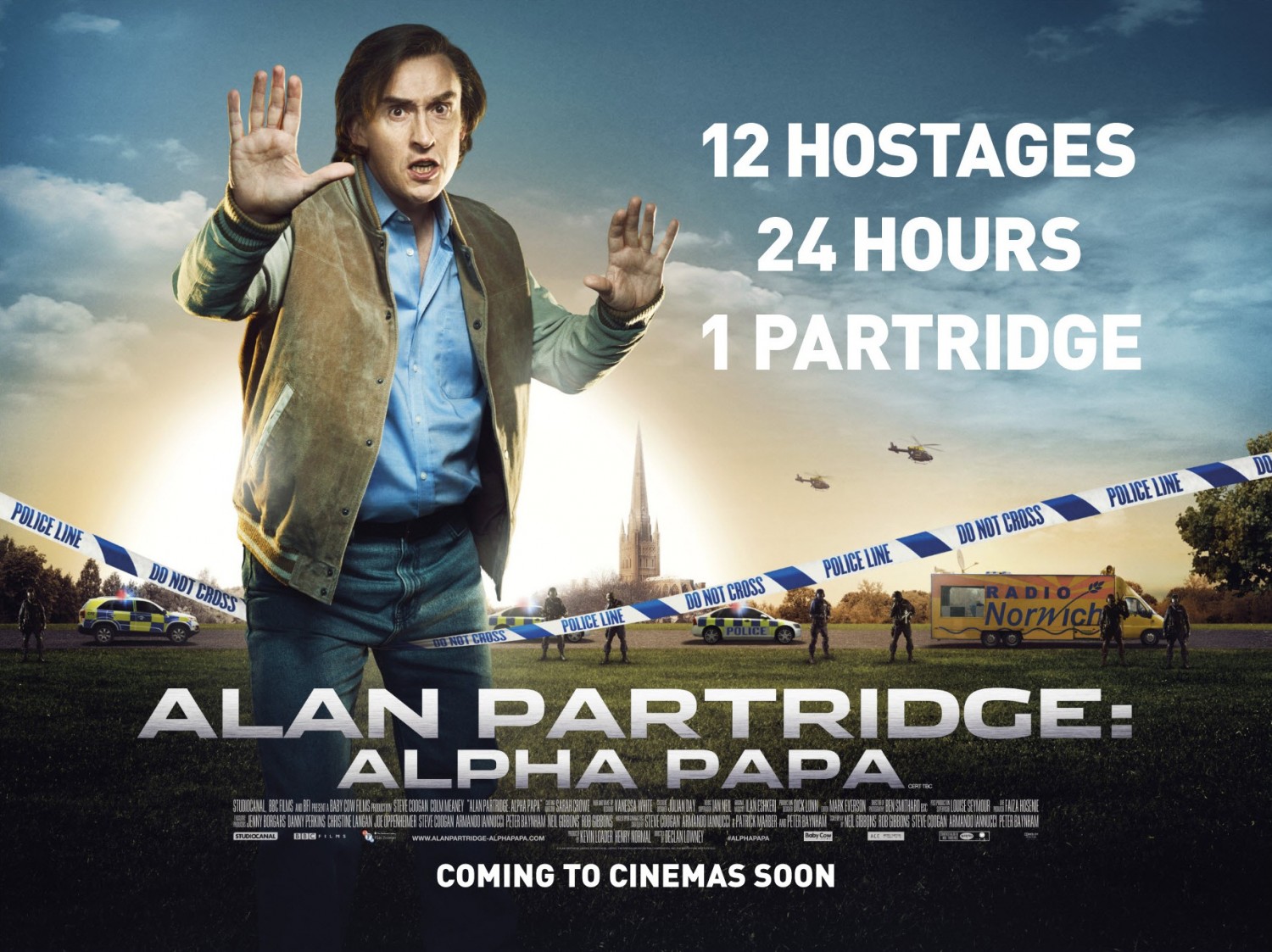
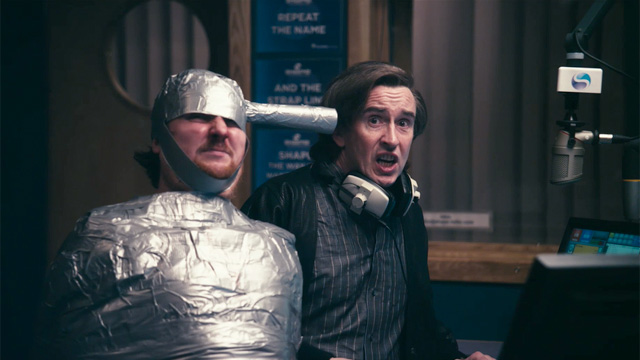
Cast: Steve Coogan, Colm Meaney, Felicity Montagu, Simon Greenall, Simon Delaney, Sean Pertwee, Tim Key, Monica Dolan, Phil Cornwell, Anna Maxwell Martin, Darren Boyd
When North Norfolk Radio is taken over by an American who wants to revamp the schedules and weed out the below-par presenters, Alan Partridge (Coogan) suggests they get rid of fellow presenter Pat Farrell (Meaney). Pat doesn’t take too kindly to being fired and returns to the radio station armed with a shotgun. Soon he’s taken the rest of the staff hostage and Partridge finds himself helping the police by being their “man on the inside”. What follows are several attempts by Partridge to get Pat to surrender, interspersed with scenes where Partridge seeks to boost his profile via the media attention surrounding the siege.
It was only a matter of time, and presumably the right script, before the TV legend that is Alan Partridge would be given his cinematic debut. Big screen incarnations of small screen successes don’t always get it right, though, and Coogan’s monstrous creation is another example to add to the pile. Too often the humour is forced by either circumstance or the need to inject a big laugh every ten minutes or so; it doesn’t arise organically so much from the characters, as from the situation they find themselves in. That’s not to say that the movie isn’t funny, it’s just that the jokes lack the inventiveness of Partridge’s TV outings, and the parts that do work are unpredictable and inconsistent. The script, by Coogan, Peter Baynham, Armando Iannucci, and Neil and Rob Gibbons, is a bit of a patchwork, with some scenes struggling and/or failing to make much of an impact.
Despite the script’s obvious shortcomings, Coogan is excellent – as expected – as the repellent yet strangely likeable Partridge, while Meaney is given little to do other than act menacing and wax lyrical about the “good old days” of radio broadcasting. Of the other cast members, Key shines as Partridge’s producer/assistant, Simon, and there are returning faces from the TV series’ such as Montagu as Lynn Benfield. There’s also a running joke involving the drummer of Marillion.
Lowney’s direction is flat and unrewarding, while the photography by Ben Smithard is drab and unremarkable. The confines of the radio station seem larger than the building appears from the outside, and the whole movie has that contrasting claustrophobic low budget feel of so many TV-to-movie adaptations. Partridge is a brilliant creation, spitting egotistical soundbites and ill-considered personal comments at every move, but on this occasion the feature-length format fails to add anything to the character and serves only to illustrate the strengths of the TV shows.
Rating: 5/10 – a misfire, and one that remains fitfully amusing; one for the fans, certainly, but newcomers to the world of Alan Partridge should beware: there’s less here than meets the eye.


 thedullwoodexperiment