• 10 Reasons to Remember…
  • A Brief Word About…
  • About
  • For One Week Only
  • Happy Birthday
  • Monthly Roundup
  • Old-Time Crime
  • Other Posts
  • Poster of the Week
  • Question of the Week
  • Reviews
  • Trailers

thedullwoodexperiment

~ Viewing movies in a different light

thedullwoodexperiment

Tag Archives: Will Poulter

The Little Stranger (2018)

22 Saturday Sep 2018

Posted by dullwood68 in Movies

≈ Leave a comment

Tags

Charlotte Rampling, Domhnall Gleeson, Drama, Hundreds Hall, Lenny Abrahamson, Literary adaptation, Mystery, Review, Ruth Wilson, Supernatural, Will Poulter

D: Lenny Abrahamson / 111m

Cast: Domhnall Gleeson, Ruth Wilson, Will Poulter, Charlotte Rampling, Liv Hill, Anna Madeley, Richard McCabe

In the wake of World War II, Dr Faraday (Gleeson), a recently appointed country doctor, is called to Hundreds Hall, a sprawling estate that he once visited as a child. There he meets the owners, the Ayres – the mother (Rampling), and her two children, Roderick (Poulter) and Caroline (Wilson). The main house is gloomy and in a state of decay that speaks of prolonged financial difficulties for the family. Roderick is in charge, but he also has to contend with severe injuries he received as a pilot in the war. When Faraday offers to provide some palliative care for Roderick, it’s also so that he can see Caroline, but as he begins to spend more and more time at the Hall, so he becomes aware that all is not well there. The Ayres’ believe there is a supernatural presence in the house, one that is targeting them one by one. Faraday refuses to believe this, but events seem to prove otherwise. As he and Caroline become closer, he’s forced to consider that she really is in danger, and that perhaps there really is a presence in the house…
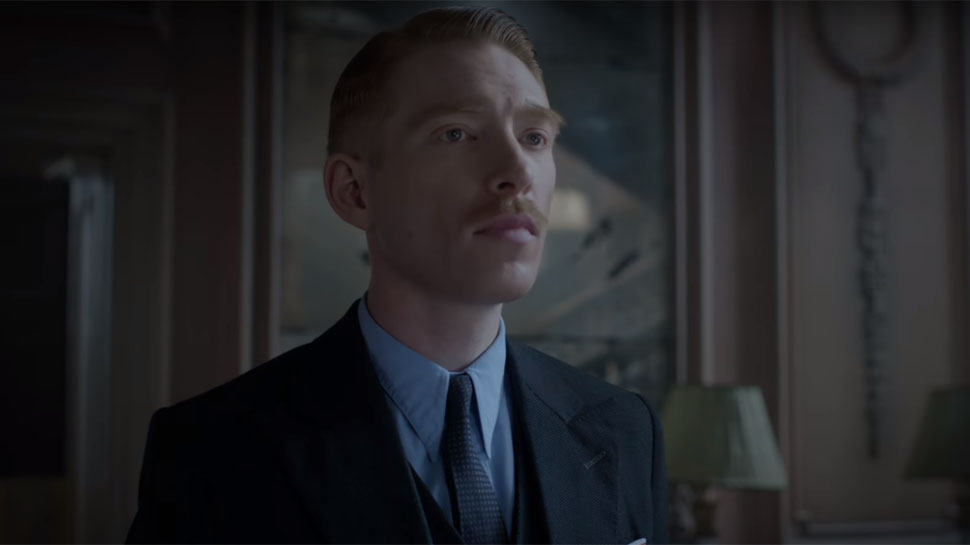
An adaptation of Sarah Waters’ novel, The Little Stranger is a ghost story without a ghost – perhaps – and a mystery that remains a mystery once the movie has ended. Whether or not this is a good thing will be down to the individual, as Lucinda Coxon’s screenplay deals in ambiguity and narrative sleight-of-hand at several key moments, but what it does mean is that the mystery of what is happening at Hundreds Hall plays out like a riddle that no one is meant to unravel. There are clues to be had, and some of what is shown can be taken at face value, but the script, in conjunction with Abrahamson’s measured, calculating direction, is more concerned with atmosphere and mood than with providing answers. This makes for a somewhat disconcerting viewing experience as scenes that build tension dissipate quickly once they’re established, and Ole Bratt Birkeland’s precision-tooled cinematography – always looking, always probing into the house’s darkest nooks and crannies, and its past – invites observation rather than immersion. There’s a detachment here that stops the viewer from becoming too involved with the Ayres family and their fears, and this despite very good performances from Wilson, Poulter and Rampling as the beleaguered trio.
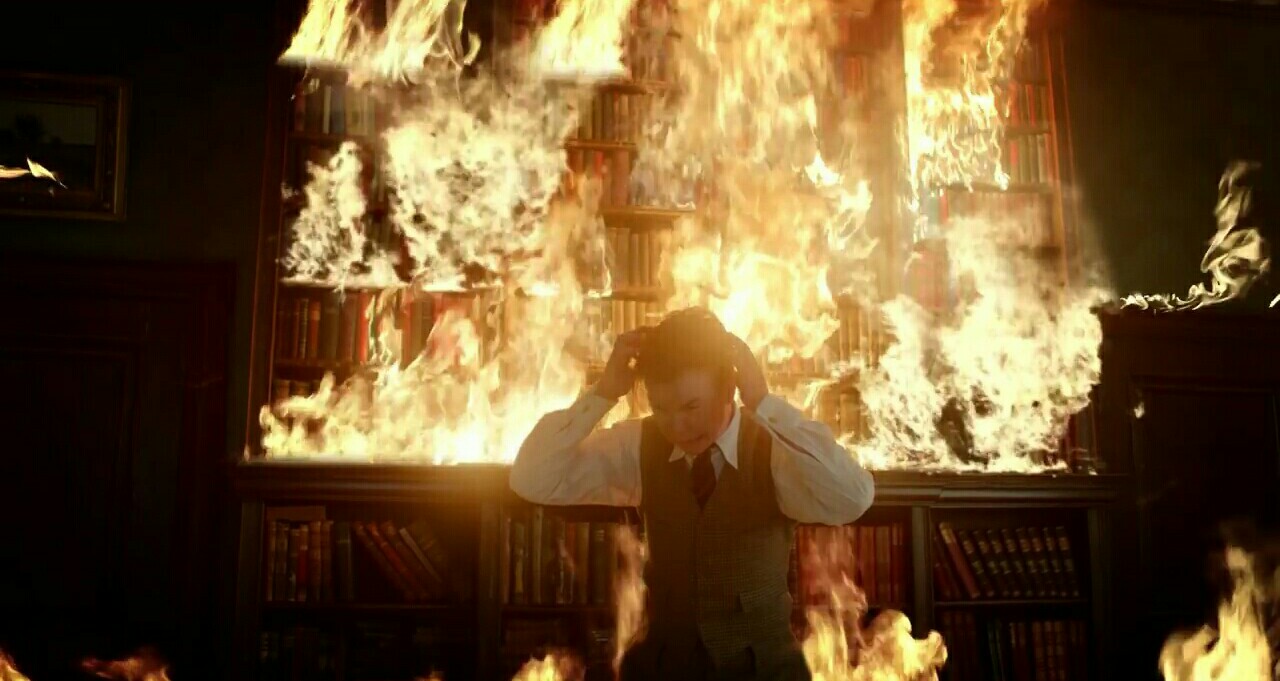
The reason for all this is the movie’s main theme, that of the rise of post-war socialism and the weakening of the power and influence once wielded by the landed gentry, here represented by the Ayres’ financial downfall, and Faraday’s barely concealed contempt for them. His pursuit of Caroline is less about love than about the need for possession, to have, finally, what he’s wanted ever since he was a child and saw Hundreds Hall in all its former glory. He’s the classic outsider: envious, ambitious, and determined to be on the inside. As played by a never better Gleeson, Faraday is supercilious and self-contained, yet brimming with indignation at the way in which the Ayres’ have let the Hall decline. Coxon and Abrahamson recognise the co-dependency that exists between Faraday and the Ayres’, and it’s this approach, and the way that it develops, that is ultimately more intriguing and compelling than if the movie was merely another haunted house tale. Abrahamson maintains a keen sense of unease in terms of Faraday’s motives, and as the threats to the Ayres’ become more tangible, a more human cause comes to the fore. But again, there’s that overwhelming ambiguity to keep the viewer on their toes, and wondering if what they’re seeing and hearing can be trusted.

Rating: 7/10 – some viewers may find The Little Stranger hard going as Abrahamson adopts an often glacial pace to the material while providing deft psychological insights into the characters and their social positions; with a pervasive sense of time and place, and an air of impending tragedy, it’s a movie that doesn’t trade in the accepted tropes of the genre, but instead, warps them to its own advantage.

Share this:

  • Click to share on X (Opens in new window) X
  • Click to share on Facebook (Opens in new window) Facebook
  • More
  • Click to print (Opens in new window) Print
  • Click to email a link to a friend (Opens in new window) Email
Like Loading...

Detroit (2017)

30 Wednesday Aug 2017

Posted by dullwood68 in Movies

≈ 3 Comments

Tags

12th Street riot, Algee Smith, Algiers Motel, Drama, John Boyega, Kathryn Bigelow, Review, The Dramatics, True story, Will Poulter

D: Kathryn Bigelow / 143m

Cast: John Boyega, Will Poulter, Algee Smith, Anthony Mackie, Jacob Latimore, Jason Mitchell, Kaitlyn Dever, Hannah Murray, Ben O’Toole, Jack Reynor, Malcolm David Kelley, Nathan Davis Jr, Peyton ‘Alex’ Smith, Austin Hébert, John Krasinski, Jeremy Strong

Like many extreme incidents of violence and aggression, the 12th Street riot began in somewhat innocuous fashion with a raid on an unlicensed underground club, a “blind pig” frequented by blacks. As everyone at the club was being loaded into police vans, a crowd gathered and began throwing rocks at the police, and when they had left the scene, the crowd – now more of an unruly mob – began destroying and looting any and all surrounding stores and properties. This was 23 July 1967. It was the beginning of one of the worst recorded outbreaks of civil disobedience in the entire history of the US. It lasted for five days, and during that time forty-three people died, 1,189 were injured, over 7,200 were arrested, and over 2,000 buildings were destroyed. Only the 1863 New York City draft riots, and the 1992 Los Angeles riots were worse.

By the third night, the situation had grown so bad that President Johnson authorised the use of federal troops in aiding the police in their attempts to quell the rioting. With the city of Detroit under a quasi-martial law, the looting and the destruction and the violence continued. Against this backdrop, director Kathryn Bigelow has chosen to tell the story of the Algiers Motel incident, a tragic event that saw three people die, and a trio of police officers arrested for murder. Working again with Mark Boal, the screenwriter of her previous two movies – The Hurt Locker (2008), Zero Dark Thirty (2012) – Bigelow has fashioned an incredibly tense, incredibly gripping thriller that grabs the viewer’s attention from the start, and thrusts them into the midst of the violent upheaval that occurred that fateful summer.

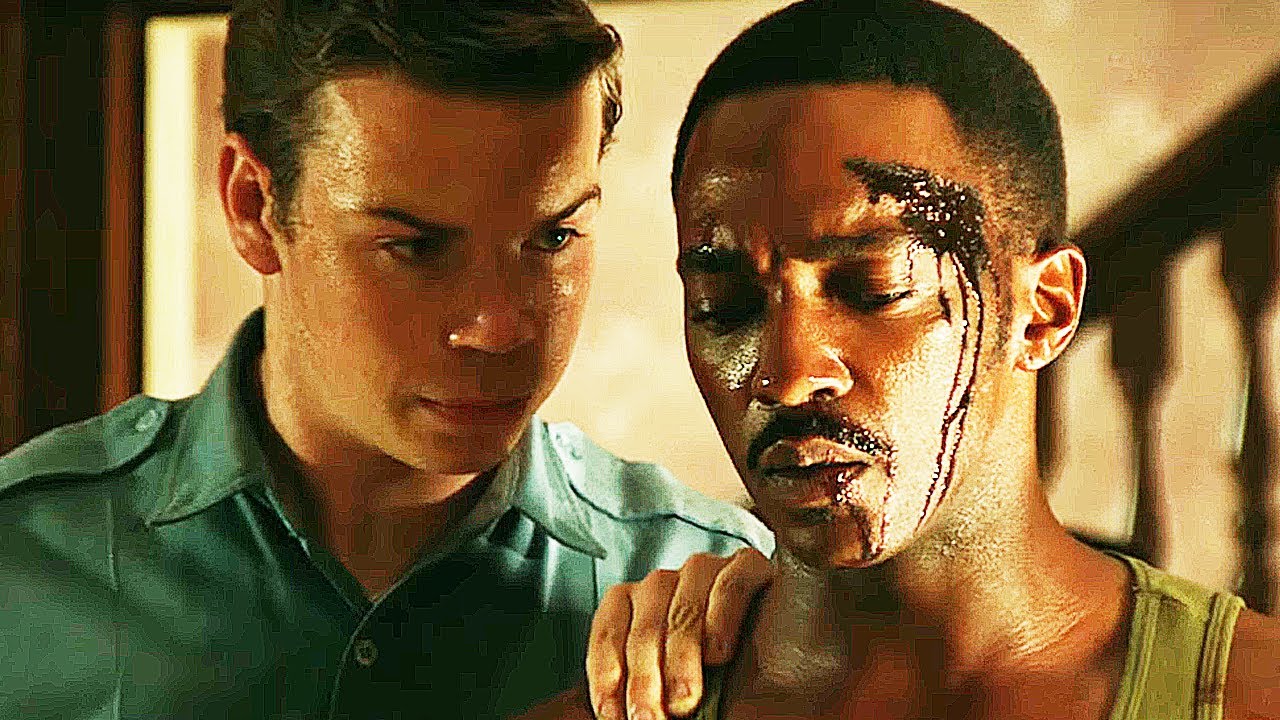
Bigelow is a bravura movie director, and she makes Detroit a visceral experience, hard-hitting and uncompromising, blending contemporary footage with the movie’s recreation of the period to brilliant effect. It’s the closest anyone is likely to get to being in an urban war zone, and Bigelow knows just how to ramp up the tension and make the movie as gripping as possible. From the moment when a young man named Carl (Mitchell) decides to have fun with the National Guard and the police by firing a starter pistol out of a window at the Algiers Motel, and in their direction, the sense of impending doom is palpable. It’s just the excuse that two particular cops, Krauss (Poulter), and Flynn (O’Toole), need: to be the heroes who apprehend the “sniper” at the Algiers Motel. Along with a third officer, Demens (Reynor), they soon make their presence felt at the motel, and within moments, one black man is dead and everyone else the cops have discovered are being forced to stand face first against a wall and keep quiet so that Krauss and his fellow officers can track down the sniper. What follows is a powerful examination of implicit racism applied in a pressure cooker environment. Krauss won’t believe anyone who says they didn’t see a sniper, or who says they didn’t even see a gun. He has to be sure, and what better way to get at the truth than by intimidating, bullying, abusing and beating the truth out of them?

As the movie continues, Detroit‘s sympathies lie very obviously with the people at the motel, including two white girls, Karen (Dever) and Julie (Murray), and a handful of black men, including would-be singer Larry Reed (Smith). As the tension grows, Bigelow successfully avoids making these characters mere ciphers, and uses the situation to inculcate audiences with just how they behave or react, whether it’s defiantly, bravely, or by being just plain scared. As Krauss’s psychopathy keeps everyone praying to be spared, a game of intimidation spirals out of control and the barely thought out motivations of Krauss and his fellow cops is exposed for the superficially “clever” institutional racism that dictates their every move. It’s horrifying to watch, and is made all the more horrifying by the casual evil displayed by Poulter as the intentionally duplicitous Krauss (it’s worth noting that Poulter is still only twenty-four, and his performance, while atypical, is also astounding).

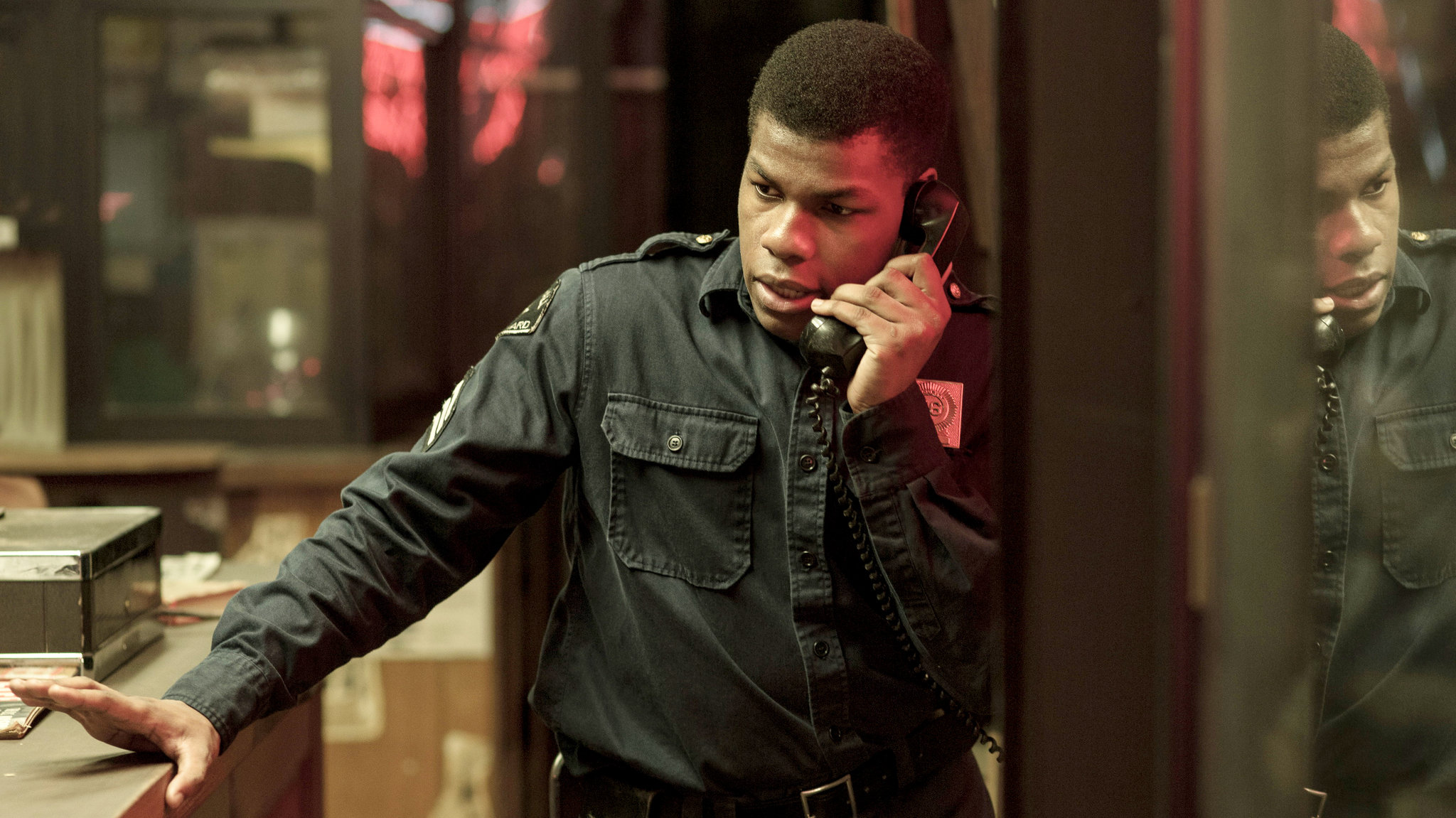
With the inherent tension in place and Bigelow tightening the screws at every turn, the wider cultural and social implications of the events that night are allowed to seep out around the narrative and add a further layer of discomfort to what the viewer is witnessing. Providing a counterpoint to Krauss’s predatory racism is the passive presence of store security guard Melvin Dismukes (Boyega). Drawn to the Algiers by the sound of the “gunfire”, Dismukes at first appears to be our eyes and ears on the inside, a witness to the horrors perpetrated by the police. But Dismukes’ presence proves disconcerting, as he soon adopts the role of quiescent observer, ever watchful but effectively complicit in what takes place. The initial bravery and diligence he shows when we first meet him is shorn away to reveal a man who shrinks before our eyes as the movie progresses. In contrast we see the unprompted heroism of the two young white girls, trapped in the wrong place at the wrong time and victims of violence, sexist rhetoric and inverse racism. Bigelow isn’t making any comments about “good whites and bad blacks”, or even “bad whites and good blacks”, instead she’s making the point that the decisions we make in extreme circumstances, such as the Algiers Motel incident, affect us all differently in the long run (though in Krauss’s case you’d have to argue that there’s no effect at all).

Valid notions of causality and pre-determinism aside, Detroit works best by not appearing to judge why the riots happened, or to provide a wider historical and cultural context for what did happen. That’s for another movie altogether, and Bigelow and Boal are right to keep their focus on events at the Algiers Motel, and for using them to explore the riots in microcosm, whether it’s through the yielding eyes of Dismukes, or the desperate, traumatised eyes of Larry Reed. Some viewers may find the aftermath of the riots more disturbing than the riots themselves, as Detroit picks itself up and dusts itself down and restores order in the best way it knows how: by refusing to acknowledge that “the establishment” did anything wrong. That’s an issue that is very much in the contemporary eye right now, and if Bigelow ever intended to make a political statement through her movie, that would be it.

Rating: 9/10 – a movie that burns brightly in its attempts to provide immediacy with a contemplation of the events of 25 July 1967, Detroit is a fierce, intelligent, provocative, and often incendiary piece of movie making from an equally fierce, intelligent and provocative movie maker; with exemplary cinematography from Barry Ackroyd, and practically precision-tooled editing from William Goldenberg and Harry Yoon, this is a movie that lingers in the mind and provides enough food for thought for three movies, let alone one.

Share this:

  • Click to share on X (Opens in new window) X
  • Click to share on Facebook (Opens in new window) Facebook
  • More
  • Click to print (Opens in new window) Print
  • Click to email a link to a friend (Opens in new window) Email
Like Loading...

Kids in Love (2016)

05 Thursday Jan 2017

Posted by dullwood68 in Movies

≈ Leave a comment

Tags

Alma Jodorowsky, Cara Delevingne, Chris Foggin, Comedy, Drama, Jamie Blackley, Love, Preston Thompson, Relationships, Review, Romance, Romantic drama, Sebastian De Souza, Will Poulter

kids-in-love-movie-poster

D: Chris Foggin / 87m

Cast: Will Poulter, Alma Jodorowsky, Jamie Blackley, Sebastian De Souza, Preston Thompson, Cara Delevingne, Gala Gordon, Geraldine Somerville, Pip Torrens

Ahhh… to be young and in love… Movies about teenagers attempting to deal with their feelings when in the flush of first love are plentiful, so any new movie trying to tell such a well established story needs to bring something new to the table. Kids in Love, co-scripted by co-stars De Souza and Thompson, does its best but while it’s enjoyable enough and features a terrific performance from Poulter, the drama is lacking and the romance is too bittersweet.

Poulter plays Jack, heading off to university but taking a gap year to travel to South America with his best friend, Tom (Blackley), and take up an internship at a law firm. His life seems set on its course: gap year, university, work as a lawyer (probably marriage and 2.4 children), but Jack is a little restless. He’s not sure he wants the life his parents (Somerville, Torrens) expect of him, but he doesn’t know how to change things. With doubt nagging away at the back of his mind, fate steps in in the form of French girl, Evelyn (Jodorowsky). Carefree and open-minded, she’s the antithesis of the girls Jack knows, and when she invites him to drop in anytime at a bar she frequents, he’s quick to take up the offer.

kidsinlove-h_2016

Through Evelyn and her group of friends – Cassius (Thompson), Viola (Delevingne) and Elena (Gordon) – Jack is introduced to a world that completely alters the way he views his own life. Free-spirited and seemingly impervious to the more mundane aspects of everyday life, Evelyn et al pursue and enjoy a never-ending party-style existence where responsibility is positively discouraged. Jack finds himself being won over by this hedonistic lifestyle, so much so that his home life and friendship with Tom begins to falter. Smitten with Evelyn – though she has a boyfriend, Milo (De Souza) – Jack spends more and more of his time with this new group of friends he’s made, and in the process he tells Tom he doesn’t go to South America anymore, and he quits the internship before he even starts.

He also learns something about Milo that Evelyn doesn’t know about, but resists telling her. Making the decision to leave home, he heads for Viola and Elena’s place (where everyone hangs out during the day) hoping to crash there, and arrives just as Evelyn and Milo have had a huge row. Viola suggests the two of them get away for a while at her family’s place in the country. Jack and Evelyn take off, but when they arrive, their first night alone together leads to what may well prove to be a mistake that ruins their relationship irrevocably.

kids-in-love-movie-1-1

Again, movies about young love are plentiful, and Kids in Love, though made with an obvious amount of care and thought, still manages to fall short in its aspirations. That’s because there are only so many ways you can make a compelling story out of “boy-meets-girl, boy-falls-in-love-with-girl, girl-loves-boyfriend, boy-waits-for-chance-to-be-with-girl” and make it seem fresh. To be fair, it appears that co-writers Thompson and De Souza are aware of this, which is why it’s a shame that the movie isn’t more successful in achieving its aims, but given the path they’ve taken narratively, it’s not surprising. And while Jack is engaging and enjoyable company – thanks in no small measure to Poulter’s winning performance – Evelyn is the enigma that he, and the audience, have to contend with.

By making Evelyn so “complex” – or awkward, depending on your point of view – Thompson and De Souza paint themselves and the character into a corner. Her relationship with Milo is clearly an unequal one, and he’s abusive towards her at almost every opportunity. The script never manages to explain why she stays with him, or why an alternative life/relationship with Jack is so impossible. Without these distinctions, Evelyn’s interest in Jack becomes a convenience that keeps the storyline going, but which proves frustrating for the audience. And any prolonged interest in Jack’s pursuit of her – which means his looking forlornly at her at every opportunity – wears thin also. In the end it’s a relationship you can’t actually root for.

kidsinlove

With the central romance lacking the necessary spark to keep it interesting, the audience has to look for distractions elsewhere. Thankfully, Thompson and De Souza do manage to make the carefree, wild-child lifestyle of Jack’s new friends look and sound like something we’d all want to be a part of, and though things never get too hedonistic (the beginnings of a threesome in a bathroom is the closest it gets), there aren’t any darker strands involving drugs either. Milo’s “occupation” is the nearest the movie gets to being edgy or upsetting, and even then it’s all over in the blink of a scene. Add to that a clumsy “break up” between Jack and Tom (“Why are you in my room, Tom?”), and you can appreciate that Thompson and De Souza’s inexperience as writers is the movie’s biggest handicap.

Overseeing it all is first-time feature director Foggin. Best known as third assistant director on movies such as The Iron Lady (2011) and The World’s End (2013), Foggin exercises a steady control over the material but keeps things bland and unremarkable for the most part, and there are certain scenes that should be much more affecting and dramatic than they actually are. It’s not hard to watch overall, and Foggin is helped by good performances all round, especially from Poulter who makes Jack’s initial, unaffected nervousness a joy to behold, but when everything is put together the movie lacks cohesion or a central relationship that is strong enough to carry the rest of the material along with it. In fact, sometimes it feels very much like it’s the other way round.

Rating: 6/10 – an appealing, funny, low-key movie with lively performances and a good sense of the milieu it wants to portray, Kids in Love nevertheless falls short of being the terrific little charmer it should have been; that said, it’s still head and shoulders over most of the low budget movies being made in the UK, and it at least tries, something that on this occasion, should be applauded.

Share this:

  • Click to share on X (Opens in new window) X
  • Click to share on Facebook (Opens in new window) Facebook
  • More
  • Click to print (Opens in new window) Print
  • Click to email a link to a friend (Opens in new window) Email
Like Loading...

The Revenant (2015)

30 Wednesday Dec 2015

Posted by dullwood68 in Movies

≈ 1 Comment

Tags

1820's, Alejandro González Iñárritu, Arikara Indians, Bear attack, Buried alive, Domhnall Gleeson, Fort Kiowa, Fur trappers, Hugh Glass, Left for dead, Leonardo DiCaprio, Literary adaptation, Missouri river, Tom Hardy, True story, Will Poulter

The Revenant

D: Alejandro González Iñárritu / 156m

Cast: Leonardo DiCaprio, Tom Hardy, Domhnall Gleeson, Will Poulter, Forrest Goodluck,  Paul Anderson, Duane Howard, Kristoffer Joner, Brendan Fletcher, Lukas Haas, Grace Dove, Melaw Nakehk’o

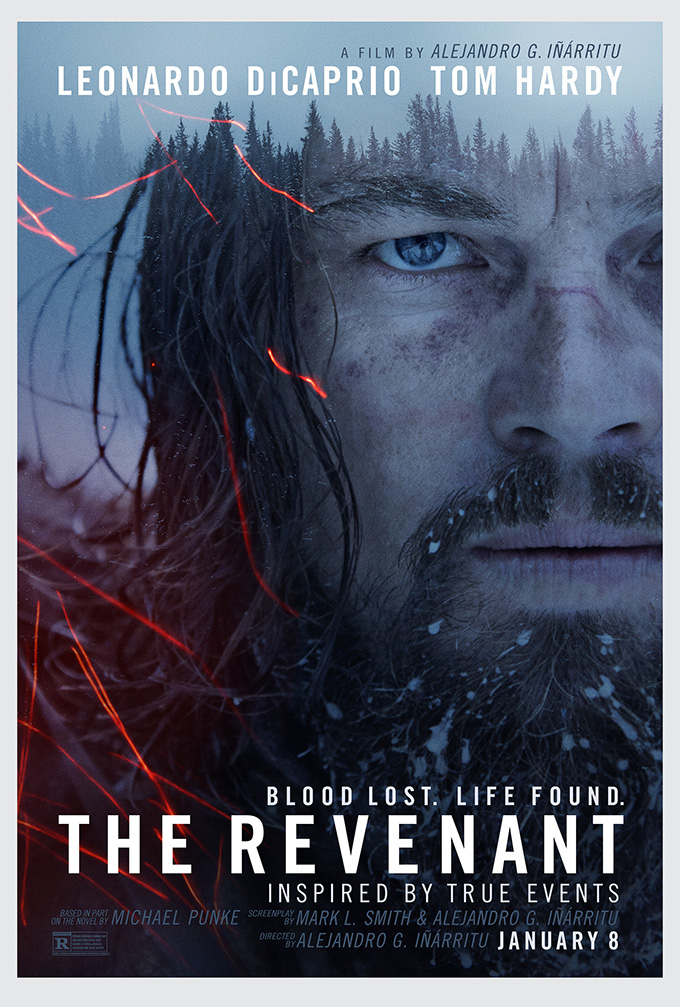
If you had to guess what Alejandro González Iñárritu’s next movie would be after Birdman or (the Unexpected Virtue of Ignorance) (2014), then chances are you wouldn’t have picked this one, a Western shot on a grand scale and based on events that happened to the fur trapper and explorer Hugh Glass in 1823. And maybe you would have thought that it was too much of a challenge for the director to pull off. But for anyone who still has their doubts, let’s make it clear from the start: this is one of the must-see movies of 2015 (which makes it a shame that most people won’t see it until 2016).

Glass’s story is the stuff of legend. While working for a fur-trapping expedition along the Missouri river, he and his fellow trappers were ambushed by Arikara Indians, and forced to flee back to their base at Fort Kiowa. While out scouting for food for the remaining men, Glass encountered a grizzly bear and her two cubs. The bear attacked Glass and he was severely mauled and injured. He managed to kill the bear with the aid of two other trappers, John Fitzgerald and Jim Bridger. His wounds, however, were such that it was believed he would die from his injuries. Leaving behind Fitzgerald and Bridger to bury Glass when the time came, the rest of the expedition, led by General William Henry Ashley, made it back to the fort. But Fitzgerald and Bridger left Glass for dead, and made their way back to the fort as well where they lied about his fate.

The Revenant - scene1

As a feat of physical endurance, Glass’s “return from the dead” was astonishing. Despite a broken leg, festering wounds, and cuts to his back that left his ribs exposed, the explorer bravely crawled most of the way to the Cheyenne river where he fashioned a basic raft and drifted downstream to Fort Kiowa. In all he travelled over two hundred miles, and it took him six weeks. One of the main things that kept him going was finding Fitzgerald and Bridger and exacting his revenge (though in the end he spared both of them).

In telling this tale of survival against the odds, Iñárritu has taken the book by Michael Punke and opened up the story to include rival French trappers, a tribe of Arikara Indians led by a chief whose daughter has been abducted, and a son for Glass whose mixed heritage (his mother was a Pawnee) makes Fitzgerald uneasy (with predictably violent results). And for Fitzgerald there’s no forgiveness here, as Glass hunts him down with the intention of making him pay with his life for betraying Glass and leaving him to die.

Along the way, Iñárritu shows the hardships and terrors of life on the frontier, with its sub-zero temperatures and harsh terrain, and where men face death at every turn – from each other, from the Indians, and more importantly, from nature itself, which is uncompromising and unsympathetic to their needs. The director immerses the viewer in this terrifying yet beautiful and alluring environment, and each new scene adds to the spectacle Iñárritu has created. This is a richly textured, sometimes hyper-real environment that Iñárritu has constructed, and its silent majesty is often awe-inspiring.

The Revenant - scene3

There are numerous scenes that stand out in this way, from the opening tracking shot through a water-logged forest to the brutal (very brutal) attack on the trappers, and on to the bear attack – quite possibly one of the most impressive sequences in any movie of 2015. But Iñárritu isn’t finished. Once Glass disinters himself he has to traverse the very same harsh territory that he knows is likely to kill him for sure this time, and the various places he finds himself at, offer equal parts safety and danger. And you have to applaud the commitment of DiCaprio, who must have risked hypothermia on many occasions in order to get the shots his director wanted.

The Revenant is a bloody, raw, uncompromising movie that treats the inherent violence of the times as if it was just a part of daily life, something that went largely unacknowledged. Men are replaceable but the pelts they gather are not. When Fitzgerald and Bridger arrive back at the fort there’s no warm welcome, no sign that anyone’s pleased to see them; there’s a complete indifference. The inference is clear: you do what you have to do. But while survival is a key issue, this is at heart a revenge tale, and Iñárritu doesn’t hold back in showing Glass’s angry determination to survive, or the sacrifices he has to make in order to do so. Whether it’s allowing a surging river to channel him away from the approaching Arikara, or keeping warm overnight in the belly of a horse, Glass simply will not give up.

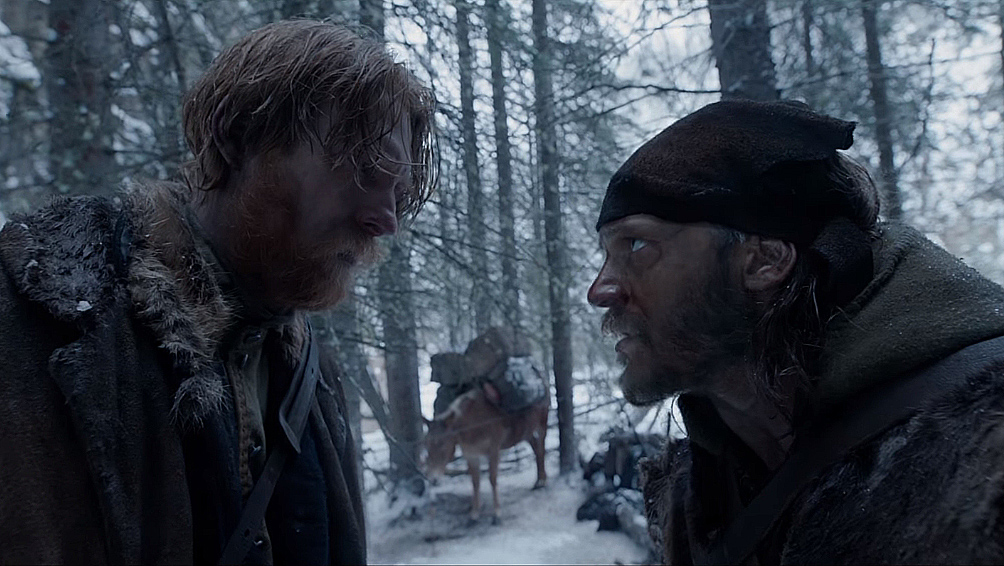
As the indefatigable Glass, DiCaprio gives one of his best performances. With limited dialogue, and relying on facial expressions and body language to impart his character’s feelings and emotions, this is a physical tour-de-force. There are times when DiCaprio isn’t even recognisable as DiCaprio, occasions where the demands of the script have him twisted and tormented in agony. It’s a magnificent portrayal, and superbly counter-balanced by Hardy’s performance as Fitzgerald. Fitzgerald is a survivor as well, a man who thinks of himself first and others second, whose sole motivation is to make it through in whichever way is needed. He’s an opportunist to be sure, but he’s also just as calculating as Glass. Both actors are astonishing in their roles, and their eventual showdown is a masterpiece of bloody threat and the will to survive.

The Revenant - scene2

The photography, by Oscar-winning DoP Emmanuel Lubezki, is stunning throughout, the landscapes and mountains and rivers captured with such penetrating exactness it’s almost like being in the movie yourself. It’s possibly the most beautifully realised and shot movie you’re likely to see for some time, and the decision to shoot with natural light has paid off handsomely. There’s also a beautiful, evocative score courtesy of Ryuichi Sakamoto, Bryce Dessner and Carsten Nicolai that adds to the richness of the material.

Rating: 9/10 – a tremendous, incredible piece of story telling – previously told in Man in the Wilderness (1971) with Richard Harris as Glass (albeit renamed) – The Revenant is a movie that is consistently impressive from start to finish, and which features stunning location photography and superb performances from all concerned; Iñárritu’s follow-up to Birdman or (the Unexpected Virtue of Ignorance) is intelligent, visceral, relentless movie making that packs an unexpected emotional punch, and is possibly the most impressively mounted movie of 2015.

Share this:

  • Click to share on X (Opens in new window) X
  • Click to share on Facebook (Opens in new window) Facebook
  • More
  • Click to print (Opens in new window) Print
  • Click to email a link to a friend (Opens in new window) Email
Like Loading...

The Maze Runner (2014)

20 Saturday Dec 2014

Posted by dullwood68 in Movies

≈ Leave a comment

Tags

Action, Drama, Dylan O'Brien, Grievers, James Dashner, Literary adaptation, Review, Sci-fi, The glade, Thomas Brodie-Sangster, Thriller, Wes Ball, Will Poulter

Maze Runner, The

D: Wes Ball / 113m

Cast: Dylan O’Brien, Aml Ameen, Ki Hong Lee, Blake Cooper, Thomas Brodie-Sangster, Will Poulter, Kaya Scodelario, Dexter Darden, Chris Sheffield, Patricia Clarkson

Thomas (O’Brien) wakes in a rapidly ascending elevator that deposits him in a glade inhabited by other boys of a similar age to himself. He has no idea why he’s there, and he can’t remember anything that happened before waking. Scared, he attempts to run but soon discovers the glade is surrounded on all sides by a huge wall. The group’s leader, Alby (Ameen) explains their situation: no one knows why they’re there, a new member arrives each month with supplies, and the wall opens each day to reveal a maze that may or may not provide a way out of the glade altogether.

Thomas is given a job to do like everyone else, but he keeps looking to the maze and has thoughts of escaping. He wants to be a maze runner, someone who goes into the maze each day and maps its twists and turns. When one of the group, Ben (Sheffield), is stung by a creature known as a Griever (and which lives in the maze), he becomes violent and attacks Thomas. With no cure available, he’s forced into the maze at sunset; in effect it’s a death sentence as no runner still in the maze when it closes at the end of the day has ever returned.

Alby decides to enter the maze the next day and find out what happened to Ben. He enters with lead runner Minho (Lee) but they don’t reappear until just as the wall closes, and Alby is injured, having been stung by a Griever. Thomas rushes in to help them and the wall closes behind him, leaving the three of them trapped. Night falls and they find themselves hunted by a Griever, a huge spider-like creature. Thomas succeeds in killing it, and they return to the glade. While Alby remains unconscious, the elevator returns. In it is a girl, Teresa (Scodelario); she carries a note that states “She’s the last one ever.”

Another glader, Gally (Poulter) calls for Thomas to be punished as he’s brought danger to the group. But Newt (Brodie-Sangster), Alby’s second-in-command sees merit in Thomas’s actions and makes him a runner. The next day Thomas, Minho and some of the other boys go into the maze where they discover the corpse of the Griever contains an electronic device with a display showing the number 7. Minho explains that the maze consists of different sections and when the Griever attacked them, number 7 was open. With this knowledge, Minho believes they can use the device to help them escape the maze. A further trip inside the maze reveals a sewer opening that leads to the outside but time runs out before it can be opened and they return to the glade where Teresa is now awake. She and Thomas share brief memories of their lives before the glade, and she reveals she has two syringes. They use one on Alby and he recovers. And then the wall opens and Grievers come spilling out…

THE MAZE RUNNER

Along with superhero movies, and Paranormal Activity-style shockers, the current trend for dystopian teen sci-fi seems unlikely to abate any time soon, and with The Maze Runner another (potentially) long-running movie series is born – a sequel, Maze Runner: Scorch Trials, will be with us in 2015, and as of 2016 there will be three further novels that could be adapted. On the one hand, Hollywood’s commitment to literary adaptations is to be applauded, but on the other, is yet another foray into a world where specially chosen teens are the central protagonists really what audiences are looking for?

Well, as it turns out, the answer is yes, and particularly in the case of The Maze Runner. Outperforming its two main rivals, Divergent and The Giver at this year’s box office, the movie has garnered a strong following allied with mostly positive reviews. With the future of the franchise seemingly secured, the question still remains: is this a story compelling enough to warrant our commitment over the next few years?

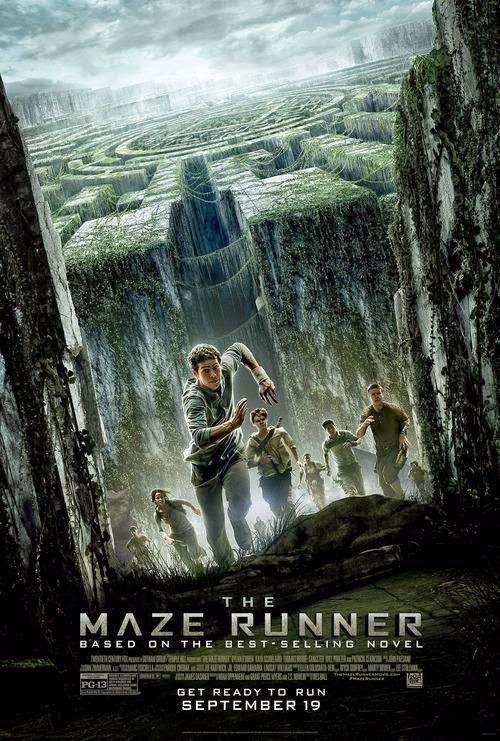
Predictably, the answer is yes and no. Where The Maze Runner scores highly is in its look and feel, a mix of the pastoral and the mechanical that keeps the movie visually interesting throughout. It’s a combination that works most effectively when the Grievers invade the glade, their rapacious presence exposing the frailty of the society the boys have built up. It’s also highly transgressive, the lurking threat made all too real, despite what the boys believe they know already. As a set piece, it’s incredibly effective, and solidifies the danger the boys face in trying to escape.

And the movie needs the Grievers because without them, this would be The Lord of the Flies without the angst or the grim brutality. There’s also problems with the basic set up, as the script asks us to accept that a group of teenage boys, stranded in a glade for up to three years, will all agree to cooperate with each other and create a benevolent social order. It’s an unlikely, and not entirely convincing conceit, and one that is compounded by the need for the wall to open at all. While there is a reason for the boys to have access to the maze, viewers may be wondering why that’s the case if the boys have established such a utopian existence. That something is going on outside the glade is obvious, but even when the why for everything is (partially) revealed at the movie’s end it still doesn’t make sense.

With the plot suffering from a case of constructus awkwardus, The Maze Runner also isn’t helped by its perfunctory characterisations – Thomas is the rebel, Alby the patrician leader, Gally the blinkered thug, Teresa the aloof female – and some trite dialogue (“Be careful. Don’t die.”). But the maze itself is an impressive creation, and the movie picks up every time the boys venture inside it, its crushing walls and huge metal plates that can trap and isolate working like a device dreamt up by a crazed Heath Robinson.

The cast provide serviceable performances, held back as they are by the lack of fully rounded characters, and even Poulter can’t do much with his role, leaving it difficult to root for anyone in particular. Clarkson pops up in a role that’s similar to those played elsewhere by the likes of Meryl Streep, Julianne Moore and Kate Winslet, but isn’t given enough to make more than a fleeting impact. Behind the camera, Ball directs competently enough but without displaying too much in the way of flair, and relies heavily on Enrique Chediak’s cinematography and Marc Fisichella’s production design.

Rating: 6/10 – unable to overcome the shortcomings of the source material (or in some cases, even address them), The Maze Runner falls short of reaching its full potential; uneven but visually arresting, it’s dystopian sci-fi with plenty of ideas but none that resonate too far beyond the movie’s own environs.

Share this:

  • Click to share on X (Opens in new window) X
  • Click to share on Facebook (Opens in new window) Facebook
  • More
  • Click to print (Opens in new window) Print
  • Click to email a link to a friend (Opens in new window) Email
Like Loading...

Blog Stats

  • 486,528 hits

Recent Posts

  • 10 Reasons to Remember Bibi Andersson (1935-2019)
  • Fantasia (1940)
  • Dances With Wolves (1990) – The Special Edition
  • Kiss of the Spider Woman (1985)
  • The Three Musketeers (1973)

Top Posts & Pages

  • Lost for Life (2013) - Another Look
    Lost for Life (2013) - Another Look
  • Lost for Life (2013)
    Lost for Life (2013)
  • About
    About
  • Mr. Topaze (1961)
    Mr. Topaze (1961)
  • Billy Lynn's Long Halftime Walk (2016)
    Billy Lynn's Long Halftime Walk (2016)
  • Winter's Tale (2014)
    Winter's Tale (2014)
  • The Hitman's Bodyguard (2017)
    The Hitman's Bodyguard (2017)
  • 5 Famous Movie Roles That Nearly Went to Someone Else
    5 Famous Movie Roles That Nearly Went to Someone Else
  • The Layover (2017)
    The Layover (2017)
  • Transcendence (2014)
    Transcendence (2014)
Follow thedullwoodexperiment on WordPress.com

Blogs I Follow

  • Rubbish Talk
  • Film 4 Fan
  • Fast Film Reviews
  • The Film Blog
  • All Things Movies UK
  • Interpreting the Stars
  • Let's Go To The Movies
  • Movie Reviews 101
  • TMI News
  • Dan the Man's Movie Reviews
  • Film History
  • Jordan and Eddie (The Movie Guys)

Archives

  • April 2019 (13)
  • March 2019 (28)
  • February 2019 (28)
  • January 2019 (32)
  • December 2018 (28)
  • November 2018 (30)
  • October 2018 (29)
  • September 2018 (29)
  • August 2018 (29)
  • July 2018 (30)
  • June 2018 (28)
  • May 2018 (24)
  • April 2018 (21)
  • March 2018 (31)
  • February 2018 (25)
  • January 2018 (30)
  • December 2017 (30)
  • November 2017 (27)
  • October 2017 (27)
  • September 2017 (26)
  • August 2017 (32)
  • July 2017 (32)
  • June 2017 (30)
  • May 2017 (29)
  • April 2017 (29)
  • March 2017 (30)
  • February 2017 (27)
  • January 2017 (32)
  • December 2016 (30)
  • November 2016 (28)
  • October 2016 (30)
  • September 2016 (27)
  • August 2016 (30)
  • July 2016 (30)
  • June 2016 (31)
  • May 2016 (34)
  • April 2016 (30)
  • March 2016 (30)
  • February 2016 (28)
  • January 2016 (35)
  • December 2015 (34)
  • November 2015 (31)
  • October 2015 (31)
  • September 2015 (34)
  • August 2015 (31)
  • July 2015 (33)
  • June 2015 (12)
  • May 2015 (31)
  • April 2015 (32)
  • March 2015 (30)
  • February 2015 (37)
  • January 2015 (39)
  • December 2014 (34)
  • November 2014 (34)
  • October 2014 (36)
  • September 2014 (25)
  • August 2014 (29)
  • July 2014 (29)
  • June 2014 (28)
  • May 2014 (23)
  • April 2014 (21)
  • March 2014 (42)
  • February 2014 (38)
  • January 2014 (29)
  • December 2013 (28)
  • November 2013 (34)
  • October 2013 (4)

Blog at WordPress.com.

Rubbish Talk

Film 4 Fan

A Movie Blog

Fast Film Reviews

The Film Blog

The official blog of everything in film

All Things Movies UK

Movie Reviews and Original Articles

Interpreting the Stars

Dave Examines Movies

Let's Go To The Movies

Film and Theatre Lover!

Movie Reviews 101

Daily Movie Reviews

TMI News

Latest weather, crime and breaking news

Dan the Man's Movie Reviews

All my aimless thoughts, ideas, and ramblings, all packed into one site!

Film History

Telling the story of film

Jordan and Eddie (The Movie Guys)

Movie Reviews & Ramblings from an Australian Based Film Fan

Privacy & Cookies: This site uses cookies. By continuing to use this website, you agree to their use.
To find out more, including how to control cookies, see here: Cookie Policy
  • Subscribe Subscribed
    • thedullwoodexperiment
    • Join 481 other subscribers
    • Already have a WordPress.com account? Log in now.
    • thedullwoodexperiment
    • Subscribe Subscribed
    • Sign up
    • Log in
    • Report this content
    • View site in Reader
    • Manage subscriptions
    • Collapse this bar
 

Loading Comments...
 

    %d