• 10 Reasons to Remember…
  • A Brief Word About…
  • About
  • For One Week Only
  • Happy Birthday
  • Monthly Roundup
  • Old-Time Crime
  • Other Posts
  • Poster of the Week
  • Question of the Week
  • Reviews
  • Trailers

thedullwoodexperiment

~ Viewing movies in a different light

thedullwoodexperiment

Tag Archives: Algee Smith

The Hate U Give (2018)

16 Sunday Dec 2018

Posted by dullwood68 in Movies

≈ 1 Comment

Tags

Algee Smith, Amandla Stenberg, Anthony Mackie, Drama, Garden Heights, George Tillman Jr, Literary adaptation, Police shooting, Racism, Regina Hall, Review, Russell Hornsby
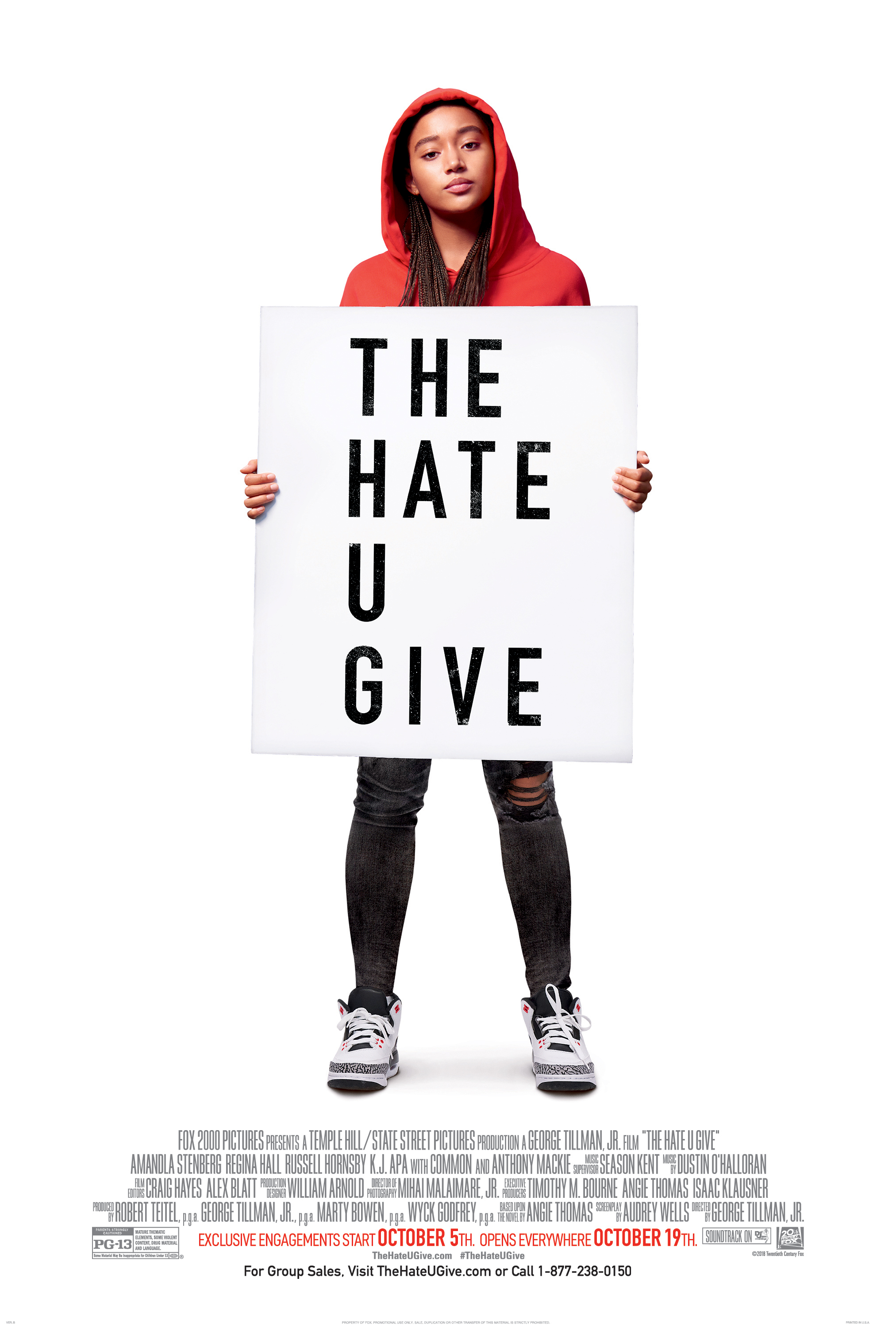
D: George Tillman Jr / 128m

Cast: Amandla Stenberg, Regina Hall, Russell Hornsby, Anthony Mackie, Algee Smith, Issa Rae, K.J. Apa, Lamar Johnson, Sabrina Carpenter, Dominique Fishback, Megan Lawless, Common

Starr Carter (Stenberg) is a sixteen year old black girl living in a predominantly black neighbourhood – Garden Heights – but who attends a predominantly white prep school, Williamson. One night, while at a party, she reconnects with a childhood friend, Khalil (Smith). Later, as Khalil takes her home, they’re pulled over by a white police officer, who insists Khalil gets out of the car. When Khalil reaches into the car for a hairbrush, the officer thinks he’s going for a gun, and reacts by shooting Khalil dead. The shooting causes a local outcry, but Starr’s involvement is kept a secret, even from her best friends (Carpenter, Lawless) at Williamson, and her white boyfriend, Chris (Apa). But as racial tensions increase, and Starr is required to testify before a grand jury, matters are further complicated by the attentions of local gang leader, King (Mackie), who doesn’t want Starr saying anything about Khalil selling drugs for him. Torn between keeping quiet and not putting herself or her family at risk, and honouring Khalil’s memory, Starr must find the courage to chart a course that ensures she does the right thing…
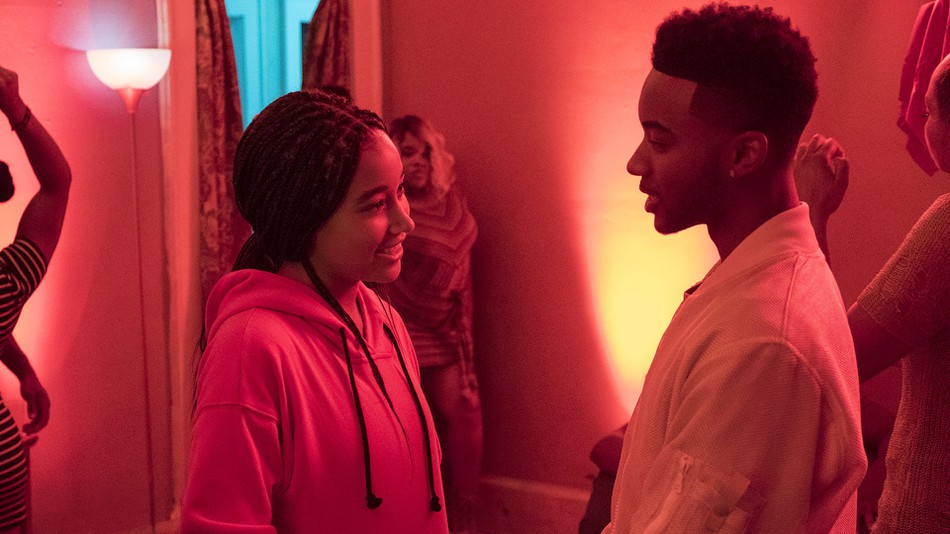
A contentious and powerful adaptation of the novel by Angie Thomas, The Hate U Give doesn’t shy away from tackling some pretty serious issues, and does so in spite of its YA backdrop, proving that the genre can address issues beyond dystopian futures and awkward romantic entanglements. And while the continuing effects of cultural and political racism are front and centre, the movie also delves into topics such as social deprivation (Garden Heights isn’t exactly an affluent neighbourhood), peer pressure, police accountability, gang culture, cultural appropriation, and political activism. It’s a heady brew, and as such, a challenge for any one movie to assimilate without running the risk of minimising the impact or importance of any one aspect at the expense of the others. But Audrey Wells’ screenplay is one of the best literary adaptations of recent years, and it addresses each issue succinctly and with a great deal of care, and ensures that the viewer understands the effects that each issue has on the characters. Whether it’s the injustice felt by a community that has already seen too many people die unnecessarily, or Starr’s increasing unhappiness at the way her friends behave as “black” because it’s “cool”, the movie refuses to treat these issues lightly, or inappropriately (as the kids at Williamson do).

With the script locked in, it’s left to the performances to amplify the importance of the issues the movie explores. As Starr, Stenberg gives one of the best performances of the year, courageously tackling her role head on, and always finding the emotional truth in any given scene. It’s such a mature portrayal, so nuanced and impressive, that on the rare occasions Starr isn’t the focus of a scene, you can’t wait to have her back. There’s fine support from Hall and Hornsby, and Smith proves that his break-out performance in Detroit (2017) wasn’t a flash in the pan. Tillman Jr has assembled a powerful, hard-hitting movie, but despite the quality of Wells’ script and the quality of the performances, it’s a movie that is often more effective in its quieter moments than when it seeks to escalate the tensions inherent within it. A protest march that descends into violence feels timid in relation to the emotions it’s engendered, while the sequence where Starr and Seven are trapped in their father’s burning store is over before any real threat to their lives can be allowed to create any tension. Minor bumps in the road such as these, however, do serve to distract from the good work the rest of the movie revels in, and as they come in the last half hour, unfortunately they undermine some of what’s gone before. But even so, this remains an intense and vigorous exploration of issues that rarely get addressed with this much clarity and confidence.

Rating: 8/10 – despite a few narrative leaps and bounds designed to wrap things up more quickly than necessary, and a few soap opera moments that always feel out of place, The Hate U Give is a vivid, potent examination of America’s continuing racial divide; with its superb central performance, and its ability to tackle complex issues without resorting to being dogmatic or condescending, it’s a significant reminder – as if it has to be said – that all lives matter.

Share this:

  • Click to share on X (Opens in new window) X
  • Click to share on Facebook (Opens in new window) Facebook
  • More
  • Click to print (Opens in new window) Print
  • Click to email a link to a friend (Opens in new window) Email
Like Loading...

Detroit (2017)

30 Wednesday Aug 2017

Posted by dullwood68 in Movies

≈ 3 Comments

Tags

12th Street riot, Algee Smith, Algiers Motel, Drama, John Boyega, Kathryn Bigelow, Review, The Dramatics, True story, Will Poulter

D: Kathryn Bigelow / 143m

Cast: John Boyega, Will Poulter, Algee Smith, Anthony Mackie, Jacob Latimore, Jason Mitchell, Kaitlyn Dever, Hannah Murray, Ben O’Toole, Jack Reynor, Malcolm David Kelley, Nathan Davis Jr, Peyton ‘Alex’ Smith, Austin Hébert, John Krasinski, Jeremy Strong

Like many extreme incidents of violence and aggression, the 12th Street riot began in somewhat innocuous fashion with a raid on an unlicensed underground club, a “blind pig” frequented by blacks. As everyone at the club was being loaded into police vans, a crowd gathered and began throwing rocks at the police, and when they had left the scene, the crowd – now more of an unruly mob – began destroying and looting any and all surrounding stores and properties. This was 23 July 1967. It was the beginning of one of the worst recorded outbreaks of civil disobedience in the entire history of the US. It lasted for five days, and during that time forty-three people died, 1,189 were injured, over 7,200 were arrested, and over 2,000 buildings were destroyed. Only the 1863 New York City draft riots, and the 1992 Los Angeles riots were worse.

By the third night, the situation had grown so bad that President Johnson authorised the use of federal troops in aiding the police in their attempts to quell the rioting. With the city of Detroit under a quasi-martial law, the looting and the destruction and the violence continued. Against this backdrop, director Kathryn Bigelow has chosen to tell the story of the Algiers Motel incident, a tragic event that saw three people die, and a trio of police officers arrested for murder. Working again with Mark Boal, the screenwriter of her previous two movies – The Hurt Locker (2008), Zero Dark Thirty (2012) – Bigelow has fashioned an incredibly tense, incredibly gripping thriller that grabs the viewer’s attention from the start, and thrusts them into the midst of the violent upheaval that occurred that fateful summer.

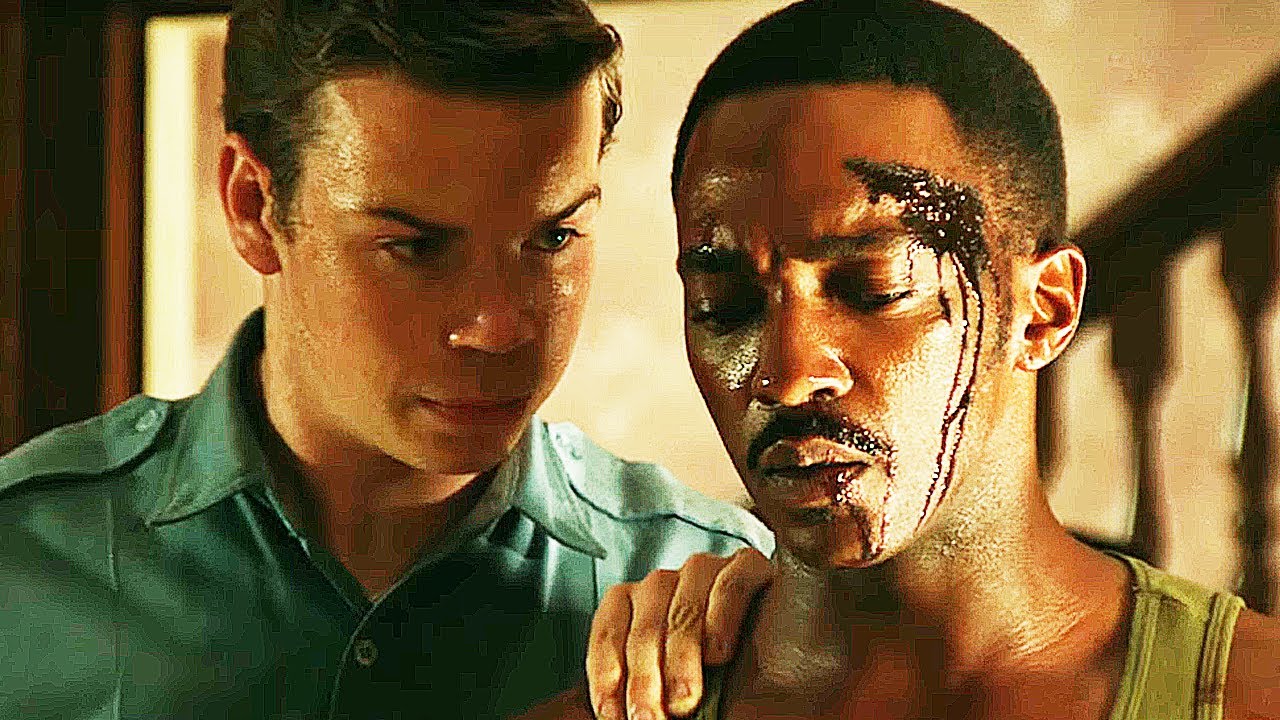
Bigelow is a bravura movie director, and she makes Detroit a visceral experience, hard-hitting and uncompromising, blending contemporary footage with the movie’s recreation of the period to brilliant effect. It’s the closest anyone is likely to get to being in an urban war zone, and Bigelow knows just how to ramp up the tension and make the movie as gripping as possible. From the moment when a young man named Carl (Mitchell) decides to have fun with the National Guard and the police by firing a starter pistol out of a window at the Algiers Motel, and in their direction, the sense of impending doom is palpable. It’s just the excuse that two particular cops, Krauss (Poulter), and Flynn (O’Toole), need: to be the heroes who apprehend the “sniper” at the Algiers Motel. Along with a third officer, Demens (Reynor), they soon make their presence felt at the motel, and within moments, one black man is dead and everyone else the cops have discovered are being forced to stand face first against a wall and keep quiet so that Krauss and his fellow officers can track down the sniper. What follows is a powerful examination of implicit racism applied in a pressure cooker environment. Krauss won’t believe anyone who says they didn’t see a sniper, or who says they didn’t even see a gun. He has to be sure, and what better way to get at the truth than by intimidating, bullying, abusing and beating the truth out of them?

As the movie continues, Detroit‘s sympathies lie very obviously with the people at the motel, including two white girls, Karen (Dever) and Julie (Murray), and a handful of black men, including would-be singer Larry Reed (Smith). As the tension grows, Bigelow successfully avoids making these characters mere ciphers, and uses the situation to inculcate audiences with just how they behave or react, whether it’s defiantly, bravely, or by being just plain scared. As Krauss’s psychopathy keeps everyone praying to be spared, a game of intimidation spirals out of control and the barely thought out motivations of Krauss and his fellow cops is exposed for the superficially “clever” institutional racism that dictates their every move. It’s horrifying to watch, and is made all the more horrifying by the casual evil displayed by Poulter as the intentionally duplicitous Krauss (it’s worth noting that Poulter is still only twenty-four, and his performance, while atypical, is also astounding).

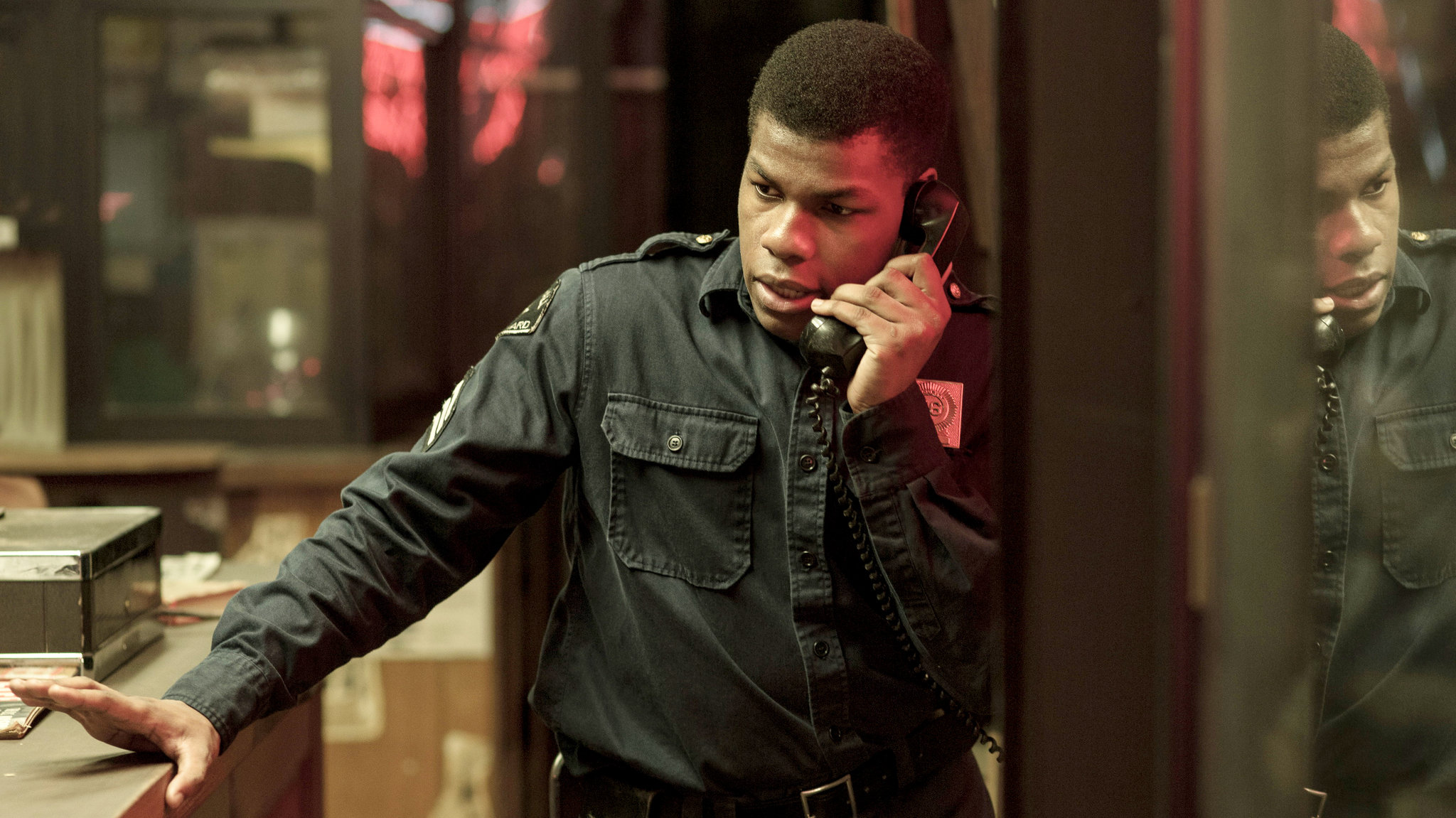
With the inherent tension in place and Bigelow tightening the screws at every turn, the wider cultural and social implications of the events that night are allowed to seep out around the narrative and add a further layer of discomfort to what the viewer is witnessing. Providing a counterpoint to Krauss’s predatory racism is the passive presence of store security guard Melvin Dismukes (Boyega). Drawn to the Algiers by the sound of the “gunfire”, Dismukes at first appears to be our eyes and ears on the inside, a witness to the horrors perpetrated by the police. But Dismukes’ presence proves disconcerting, as he soon adopts the role of quiescent observer, ever watchful but effectively complicit in what takes place. The initial bravery and diligence he shows when we first meet him is shorn away to reveal a man who shrinks before our eyes as the movie progresses. In contrast we see the unprompted heroism of the two young white girls, trapped in the wrong place at the wrong time and victims of violence, sexist rhetoric and inverse racism. Bigelow isn’t making any comments about “good whites and bad blacks”, or even “bad whites and good blacks”, instead she’s making the point that the decisions we make in extreme circumstances, such as the Algiers Motel incident, affect us all differently in the long run (though in Krauss’s case you’d have to argue that there’s no effect at all).

Valid notions of causality and pre-determinism aside, Detroit works best by not appearing to judge why the riots happened, or to provide a wider historical and cultural context for what did happen. That’s for another movie altogether, and Bigelow and Boal are right to keep their focus on events at the Algiers Motel, and for using them to explore the riots in microcosm, whether it’s through the yielding eyes of Dismukes, or the desperate, traumatised eyes of Larry Reed. Some viewers may find the aftermath of the riots more disturbing than the riots themselves, as Detroit picks itself up and dusts itself down and restores order in the best way it knows how: by refusing to acknowledge that “the establishment” did anything wrong. That’s an issue that is very much in the contemporary eye right now, and if Bigelow ever intended to make a political statement through her movie, that would be it.

Rating: 9/10 – a movie that burns brightly in its attempts to provide immediacy with a contemplation of the events of 25 July 1967, Detroit is a fierce, intelligent, provocative, and often incendiary piece of movie making from an equally fierce, intelligent and provocative movie maker; with exemplary cinematography from Barry Ackroyd, and practically precision-tooled editing from William Goldenberg and Harry Yoon, this is a movie that lingers in the mind and provides enough food for thought for three movies, let alone one.

Share this:

  • Click to share on X (Opens in new window) X
  • Click to share on Facebook (Opens in new window) Facebook
  • More
  • Click to print (Opens in new window) Print
  • Click to email a link to a friend (Opens in new window) Email
Like Loading...

Blog Stats

  • 486,528 hits

Recent Posts

  • 10 Reasons to Remember Bibi Andersson (1935-2019)
  • Fantasia (1940)
  • Dances With Wolves (1990) – The Special Edition
  • Kiss of the Spider Woman (1985)
  • The Three Musketeers (1973)

Top Posts & Pages

  • Lost for Life (2013) - Another Look
    Lost for Life (2013) - Another Look
  • Lost for Life (2013)
    Lost for Life (2013)
  • About
    About
  • Mr. Topaze (1961)
    Mr. Topaze (1961)
  • Billy Lynn's Long Halftime Walk (2016)
    Billy Lynn's Long Halftime Walk (2016)
  • Winter's Tale (2014)
    Winter's Tale (2014)
  • The Hitman's Bodyguard (2017)
    The Hitman's Bodyguard (2017)
  • 5 Famous Movie Roles That Nearly Went to Someone Else
    5 Famous Movie Roles That Nearly Went to Someone Else
  • The Layover (2017)
    The Layover (2017)
  • Transcendence (2014)
    Transcendence (2014)
Follow thedullwoodexperiment on WordPress.com

Blogs I Follow

  • Rubbish Talk
  • Film 4 Fan
  • Fast Film Reviews
  • The Film Blog
  • All Things Movies UK
  • Interpreting the Stars
  • Let's Go To The Movies
  • Movie Reviews 101
  • TMI News
  • Dan the Man's Movie Reviews
  • Film History
  • Jordan and Eddie (The Movie Guys)

Archives

  • April 2019 (13)
  • March 2019 (28)
  • February 2019 (28)
  • January 2019 (32)
  • December 2018 (28)
  • November 2018 (30)
  • October 2018 (29)
  • September 2018 (29)
  • August 2018 (29)
  • July 2018 (30)
  • June 2018 (28)
  • May 2018 (24)
  • April 2018 (21)
  • March 2018 (31)
  • February 2018 (25)
  • January 2018 (30)
  • December 2017 (30)
  • November 2017 (27)
  • October 2017 (27)
  • September 2017 (26)
  • August 2017 (32)
  • July 2017 (32)
  • June 2017 (30)
  • May 2017 (29)
  • April 2017 (29)
  • March 2017 (30)
  • February 2017 (27)
  • January 2017 (32)
  • December 2016 (30)
  • November 2016 (28)
  • October 2016 (30)
  • September 2016 (27)
  • August 2016 (30)
  • July 2016 (30)
  • June 2016 (31)
  • May 2016 (34)
  • April 2016 (30)
  • March 2016 (30)
  • February 2016 (28)
  • January 2016 (35)
  • December 2015 (34)
  • November 2015 (31)
  • October 2015 (31)
  • September 2015 (34)
  • August 2015 (31)
  • July 2015 (33)
  • June 2015 (12)
  • May 2015 (31)
  • April 2015 (32)
  • March 2015 (30)
  • February 2015 (37)
  • January 2015 (39)
  • December 2014 (34)
  • November 2014 (34)
  • October 2014 (36)
  • September 2014 (25)
  • August 2014 (29)
  • July 2014 (29)
  • June 2014 (28)
  • May 2014 (23)
  • April 2014 (21)
  • March 2014 (42)
  • February 2014 (38)
  • January 2014 (29)
  • December 2013 (28)
  • November 2013 (34)
  • October 2013 (4)

Blog at WordPress.com.

Rubbish Talk

Film 4 Fan

A Movie Blog

Fast Film Reviews

The Film Blog

The official blog of everything in film

All Things Movies UK

Movie Reviews and Original Articles

Interpreting the Stars

Dave Examines Movies

Let's Go To The Movies

Film and Theatre Lover!

Movie Reviews 101

Daily Movie Reviews

TMI News

Latest weather, crime and breaking news

Dan the Man's Movie Reviews

All my aimless thoughts, ideas, and ramblings, all packed into one site!

Film History

Telling the story of film

Jordan and Eddie (The Movie Guys)

Movie Reviews & Ramblings from an Australian Based Film Fan

Privacy & Cookies: This site uses cookies. By continuing to use this website, you agree to their use.
To find out more, including how to control cookies, see here: Cookie Policy
  • Subscribe Subscribed
    • thedullwoodexperiment
    • Join 481 other subscribers
    • Already have a WordPress.com account? Log in now.
    • thedullwoodexperiment
    • Subscribe Subscribed
    • Sign up
    • Log in
    • Report this content
    • View site in Reader
    • Manage subscriptions
    • Collapse this bar
 

Loading Comments...
 

    %d