• 10 Reasons to Remember…
  • A Brief Word About…
  • About
  • For One Week Only
  • Happy Birthday
  • Monthly Roundup
  • Old-Time Crime
  • Other Posts
  • Poster of the Week
  • Question of the Week
  • Reviews
  • Trailers

thedullwoodexperiment

~ Viewing movies in a different light

thedullwoodexperiment

Tag Archives: Andrew Garfield

Breathe (2017)

04 Saturday Nov 2017

Posted by dullwood68 in Movies

≈ Leave a comment

Tags

Andrew Garfield, Andy Serkis, Claire Foy, Drama, Mechanical respirator, Polio, Review, Robin Cavendish, Romance, Tom Hollander, True story
D: Andy Serkis / 118m

Cast: Andrew Garfield, Claire Foy, Tom Hollander, Stephen Mangan, Hugh Bonneville, Jonathan Hyde, Ed Speleers, Steven O’Donnell, Miranda Raison, Harry Marcus, Dean-Charles Chapman, Sylvester Groth, Diana Rigg

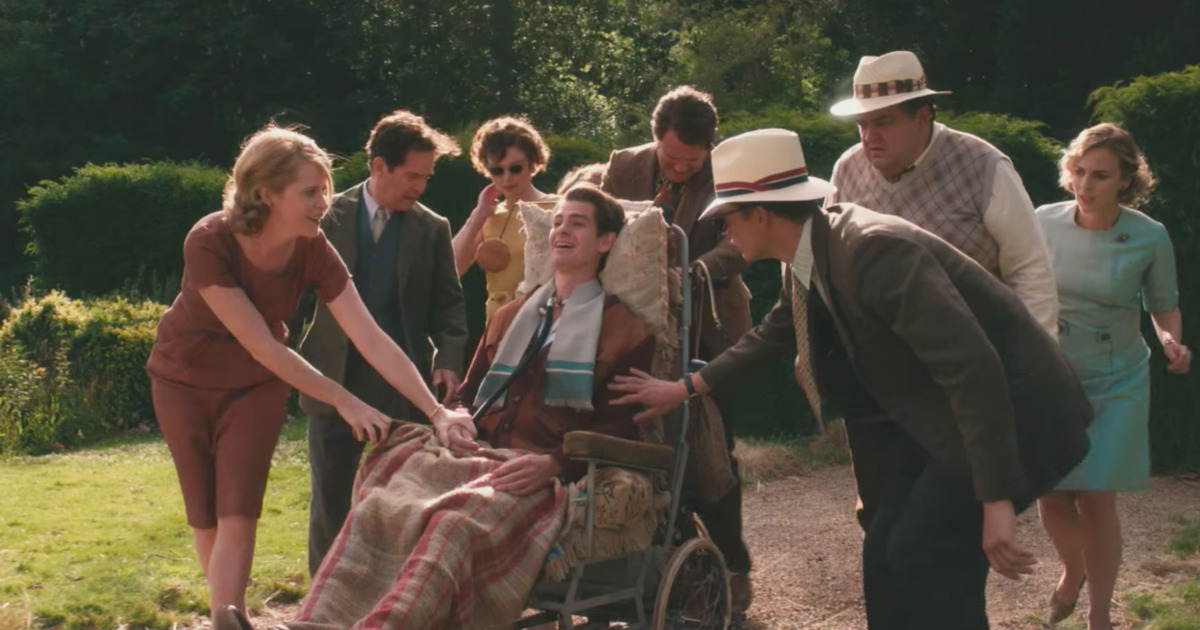
In December 1958, while working in Kenya, twenty-eight year old tea broker Robin Cavendish (Garfield) was struck down by polio, leaving him paralysed from the neck down and dependent on a mechanical respirator in order to remain alive. He was brought back to England where at first he was given three months to live, and then a year. His own reaction was to have his respirator turned off. He saw no future for himself and wanted his wife, Diana (Foy), whom he’d recently married and who was still only twenty-five, a chance at a better future for herself. To her credit, and his good fortune, Diana refused to entertain the idea, and told Robin in no uncertain terms that she wasn’t going to give up, even if he wanted to. They also had an infant child, Jonathan, to consider. Still facing a bleak future though, Robin’s only wish was to leave the hospital where he was effectively confined. Against the advice of his doctor (Hyde), he left the hospital, and the Cavendish’s moved into their own home in the countryside, where Diana took on the roles of wife, mother and nurse with the help of friends such as Colin Campbell (Speleers), and her twin brothers Bloggs and David (both Hollander).

In the way that only real life can manufacture, that could, and perhaps should have been the end of Robin’s story, but a truncated lifespan wasn’t on the cards. With the aid of his friend, Oxford professor Teddy Hall (Bonneville), Robin conceived the idea of a wheelchair with a built-in respirator that would allow him to leave the house, and eventually go on trips with the further aid of a converted van. Now more mobile than he could have ever predicted, Robin decided to show the progress he’d achieved to other disabled people, and the medical community. Thanks to private funding, Hall was able to construct a fleet of wheelchairs such as Robin’s, and these enabled other disabled people to leave hospital, and to function in the “outside” world. Robin soon became an advocate and champion for the rights of the disabled, and by the time of his death in 1994, was regarded, quite rightly, as a medical phenomenon, having lived with his deteriorating condition for thirty-six years.
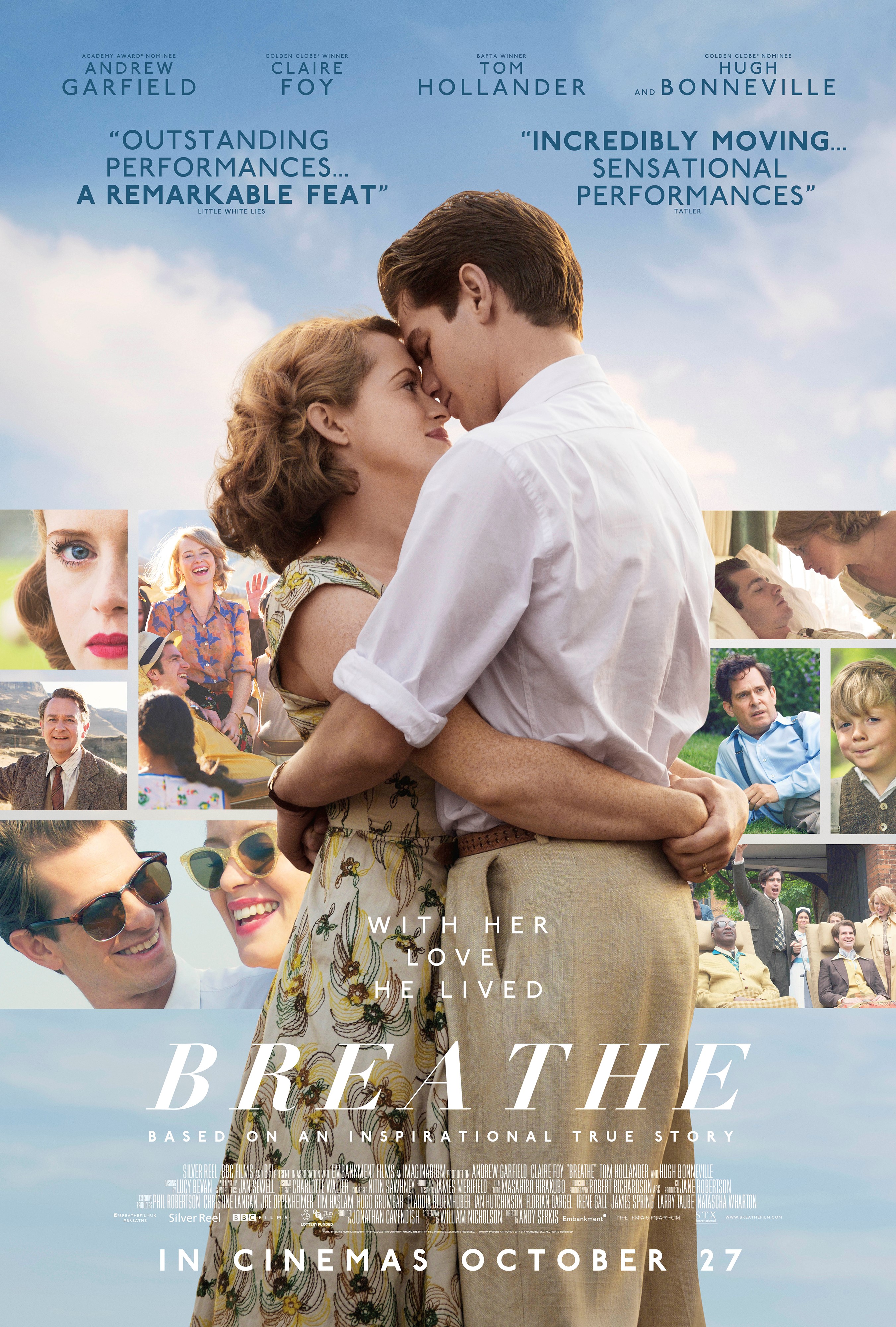
The directorial debut of Andy Serkis – it should have been his version of The Jungle Book, but delays on that production have pushed it back to 2018 – Breathe is exactly what it looks like from the poster and anything you may have heard about it: a tale of inspiration and personal courage. Though Serkis is best known for his motion capture performances as Gollum, King Kong and Caesar, as a director he’s clearly learnt a lot from those he’s worked with over the years because the movie is an assured, likeable production that tells its story in a measured, positive manner that allows the viewer to fully understand Robin’s plight, and the feelings that come with it. Thanks to an equally assured script by William Nicholson, Breathe tackles the various issues related to quadriplegia (though it studiously avoids the issue of sex) with sympathy and no small amount of understanding, most of which is provided by yet another excellent performance by Andrew Garfield. Following on from impressive turns in Silence (2016) and Hacksaw Ridge (2016), Garfield makes sure that every emotion, every feeling, every consideration or decision that Robin makes is clearly expressed so there can be no misunderstanding for the viewer. It’s a performance that also reflects the innate humanity that Robin possessed, and his complete and utter love for Diana, something that could have caused the movie to become cloying and overly sentimental, but which Serkis avoids through a combination of his knowing direction and Garfield and Foy’s awareness of, and immersion in, the characters.

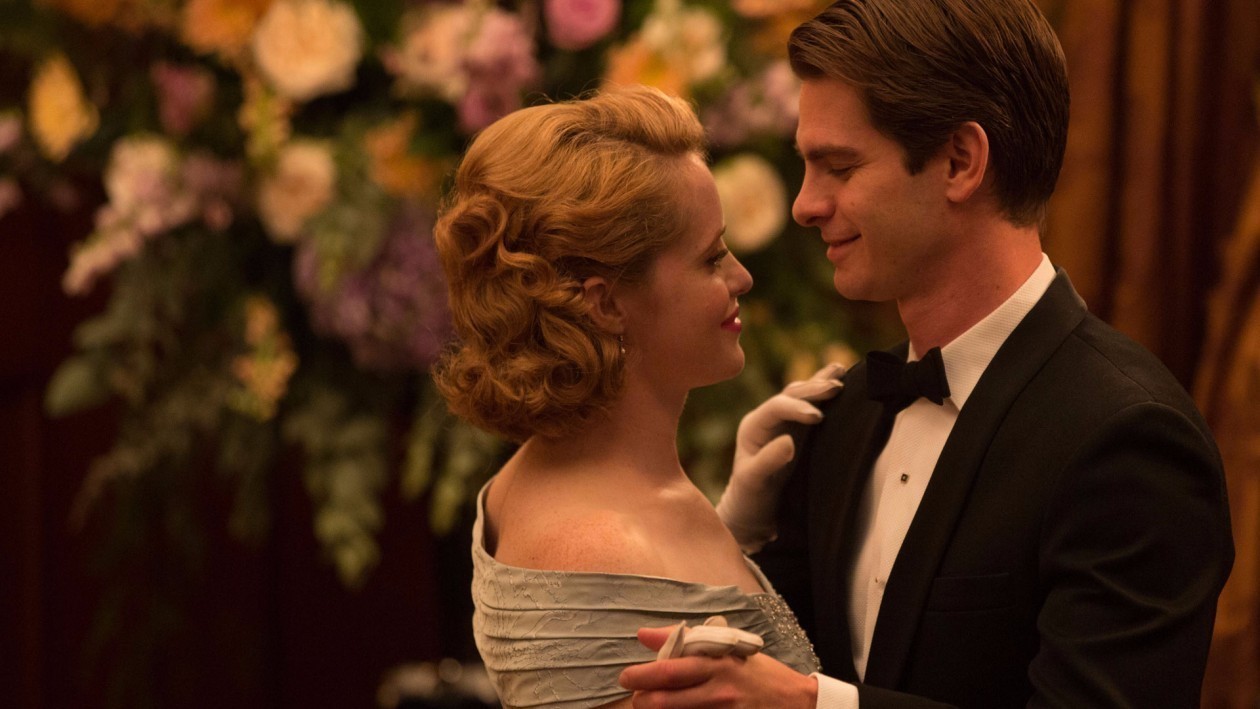
Inevitably, it’s not all triumph over adversity and lives lived happily ever after. This is a movie that starts off on a bright summer’s day at a cricket match where Robin and Diana meet. It couldn’t be more lovely, a replication of happier days when falling in love seemed so easy and uncomplicated. But once he’s struck down by polio and his lifestyle is curtailed, Robin’s life takes on an urgency and a scariness that makes for a number of scenes that are nail-biting even though we know the outcome must favour Robin. At home, their dog catches the lead to the respirator and pulls it out of the electrical socket. We already know that he can’t survive for more than two minutes without it (or someone using a manual respirator), and Serkis plays out those two minutes to the second, creating tension even though we know everything will be fine, but still making the viewer apprehensive and nervous as to how he’ll be saved.
Other moments such as the wheelchair respirator blowing up on a trip to Spain, and the deterioration of the lining of Robin’s lungs, serve as reminders as to the reality of his situation, and they’re used for maximum impact. But if there’s one scene, one image that highlights both Robin’s past predicament, and those of thousands of disabled people across the world at that time, the Sixties, it comes during a visit to a German hospital that is highly regarded for its treatment of the disabled. It’s the movie’s most impressive moment, one of tragedy and despair as we see rows of disabled people like Robin stacked on top of each other in gleaming iron lungs. And when Robin enters the room, the reaction of the head doctor (Groth) is one of horror and embarrassment: horror at the difference between Robin and his patients, and embarrassment at being so badly caught out for treating said patients so appallingly. It’s moments like this one, where the movie challenges the medical and social attitudes of the time that adds depth to the narrative and reminds us all that Robin wasn’t just making these improvements to his life for his own sake, but for the thousands of others just like him.

Breathe is also one of the most beautifully realised movies of the year, with Serkis and cinematographer Robert Richardson combining to provide a richly detailed series of shots and compositions that are often breathtaking in their simplicity, and in their ability to add an emotional layer to scenes that accentuate and support the performances at every turn. The score by Nitin Sawhney is another aspect of the production that Serkis uses to good effect, never allowing the music to overwhelm a scene or prove intrusive, using it instead to provide another sensitive layer to the proceedings. Garfield and Foy have a definite chemistry that makes the enduring love between Robin and Diana entirely credible, and there are terrific supporting turns from Hollander and Mangan (as Robin’s doctor in later life). In covering nearly forty years of one man’s life, the movie is necessarily episodic, and there are occasional lulls in the drama as the story moves from one period to the next, but other than this and some of the supporting characters having little to do except hang about marvelling at Robin’s progress, this is an admirable and accomplished feature debut by Serkis that isn’t afraid to “go dark” when it needs to, and which is inspiring without sounding like it’s preaching.

Rating: 8/10 – a sincere and affecting look at a man’s life and the positive choices that can be made even in the face of extreme adversity, Breathe is a testament to Robin Cavendish’s determination to still lead a fulfilling life, and the equal determination of his wife, Diana, that he should be able to; a moving and immensely entertaining movie, it bodes well for any future turns behind the camera that Serkis embarks on, and is one of the few “lead character with a disability” movies that doesn’t seem like it’s been made just so it can garner nominations and win awards in the year ahead.
Share this:

  • Click to share on X (Opens in new window) X
  • Click to share on Facebook (Opens in new window) Facebook
  • More
  • Click to print (Opens in new window) Print
  • Click to email a link to a friend (Opens in new window) Email
Like Loading...

Hacksaw Ridge (2016)

06 Monday Feb 2017

Posted by dullwood68 in Movies

≈ 5 Comments

Tags

Andrew Garfield, Biography, Conscientious objector, Desmond Doss, Drama, Hugo Weaving, Mel Gibson, Review, Sam Worthington, Teresa Palmer, True story, Vince Vaughn, World War II

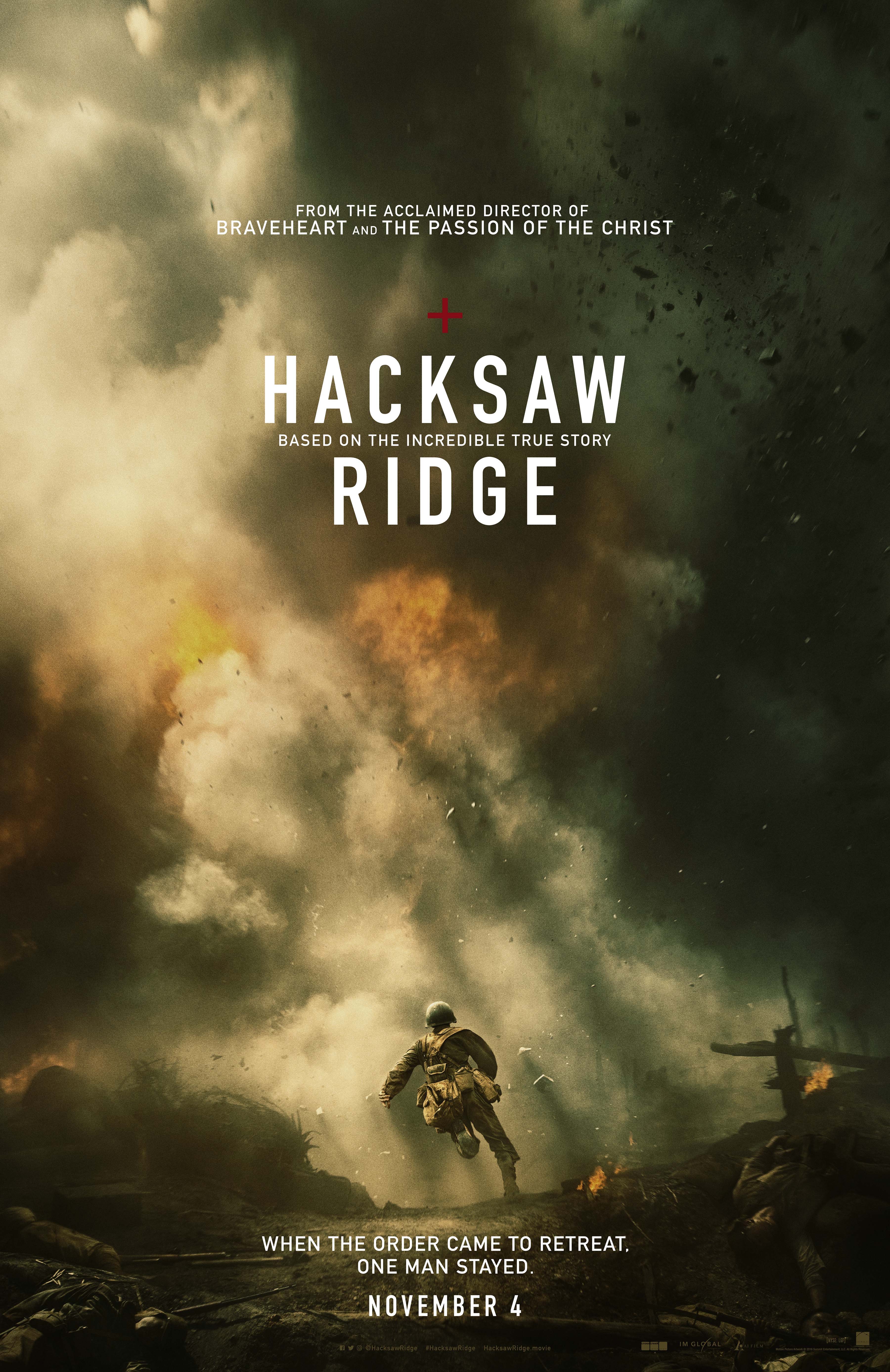
hacksaw-ridge-poster

D: Mel Gibson / 139m

Cast: Andrew Garfield, Sam Worthington, Teresa Palmer, Vince Vaughn, Luke Bracey, Hugo Weaving, Rachel Griffiths, Luke Pegler, Ben Mingay, Firass Dirani, Michael Sheasby, Nico Cortez, Goran D. Kleut, Richard Roxburgh, Ori Pfeffer

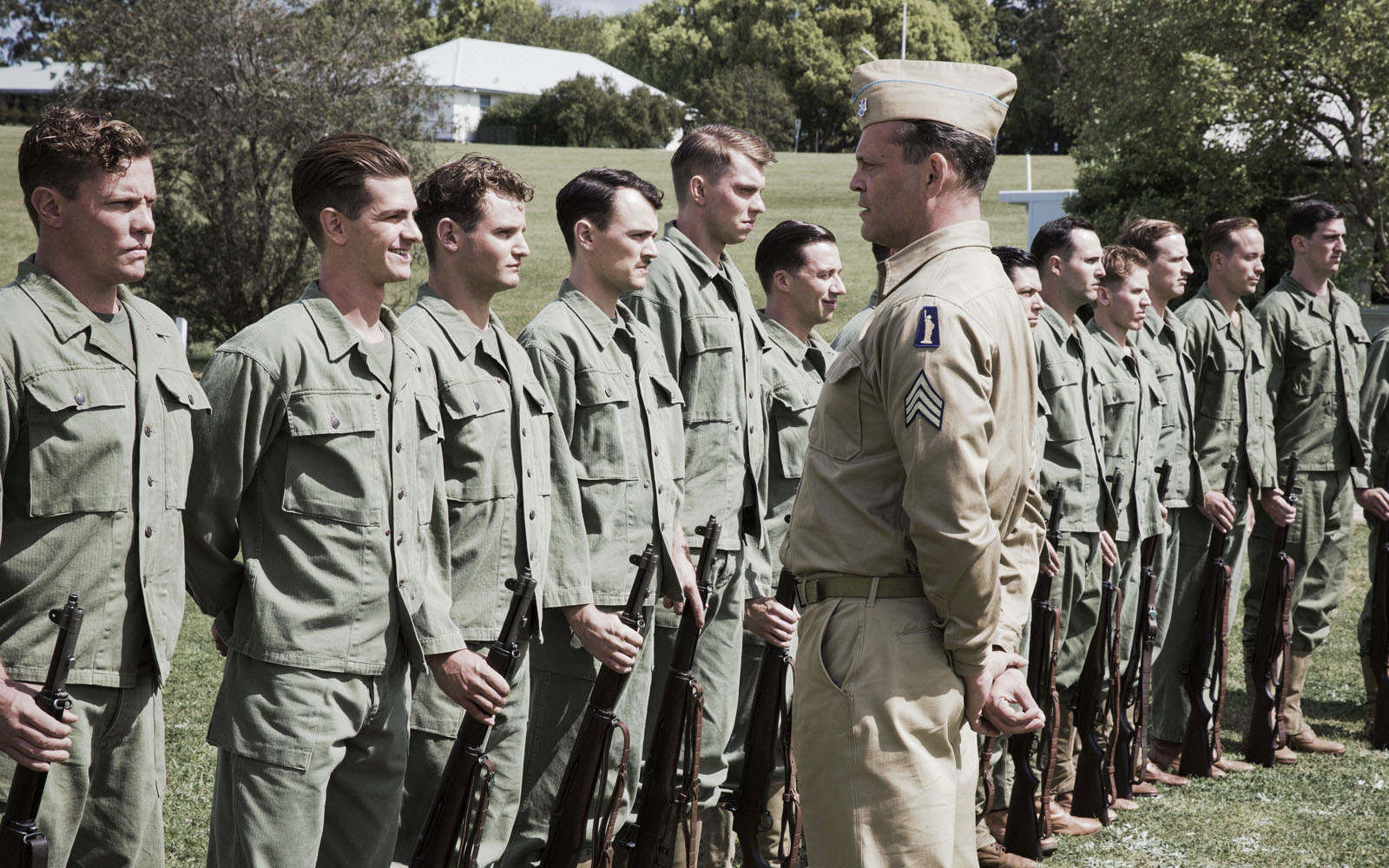
The story of Desmond T. Doss (Garfield) is one of those stories that seems tailor made for a big screen adaptation. After a childhood incident where he nearly kills his older brother, Desmond takes the sixth commandment, thou shalt not kill, very much to heart. When the US enters the Second World War, and pretty much every other young man has enlisted, Desmond enlists as well, and is sent to Fort Jackson in South Carolina for his basic training, he immediately upsets the normal order of things by refusing to touch a rifle… or indeed, any weapon. Naturally this antagonises his fellow trainees, and they make life difficult for him, as does his instructor, Sergeant Howell (Vaughn), and commanding officer, Captain Glover (Worthington), who want to see the back of Doss and his religious beliefs (he’s also a Seventh Day Adventist).

But Doss endures everything the army can throw at him, and begins to earn the respect of his comrades. However, when he’s given a direct order to pick up a gun and he refuses, he finds himself facing a court-martial. Luckily, a last-minute intervention by his father (Weaving), sees Doss allowed to take part in the war as a medic and without having to carry a rifle. Soon, Glover’s men, including Doss, are shipped out to the Pacific, and specifically, the island of Okinawa, where they are tasked with climbing the cliff face of the Maeda Escarpment – otherwise known as Hacksaw Ridge – and take on the Japanese forces that are dug in there. Their first attack is unsuccessful and they’re forced to take shelter on the ridge overnight. The next day they’re driven back down the Escarpment, leaving dozens of injured and wounded men behind.

hacksaw-ridge-2

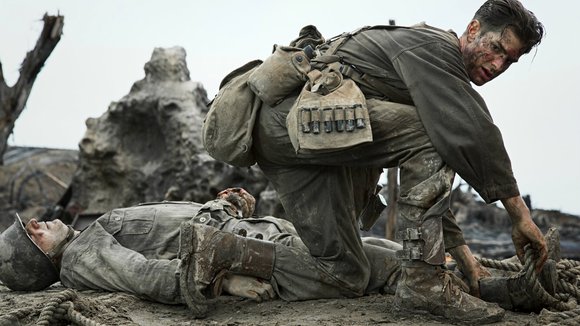
Doss, however, refuses to leave them there. Over the next twenty-four hours he rescues seventy-five men, keeping them safe from Japanese patrols and when it’s safe to do so, lowering them down the cliff face to the amazement of the US soldiers below. Doss’ last rescue saves the life of Sergeant Howell, and he and an equally chastened Captain Glover, admit how wrong they’ve been about Doss and the courage he’s shown in sticking to his beliefs, and in saving so many men. The next day, another assault is launched. This time it’s Doss who is injured, and this time it’s his fellow soldiers who have to take care of him.

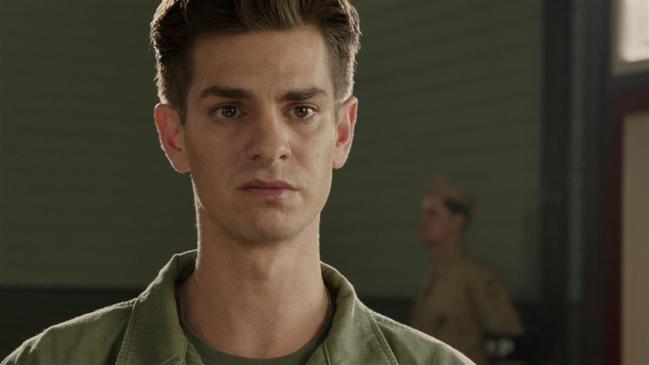
Doss’s heroism – and rescue of so many men – is told in a straightforward, linear fashion (its prologue aside), and is respectful of the man and his beliefs to such a degree that there’s a danger of his being a symbol rather than a fully fledged character. But thanks to a combination of Robert Schenkkan and Andrew Knight’s moving screenplay, Andrew Garfield’s impressive performance as Doss, and Mel Gibson’s equally impressive directing turn, Hacksaw Ridge never lionises Doss to the extent where he’s portrayed as an above average human being doing something extraordinary. Instead, Doss’s humility and keen sense of purpose keep him grounded firmly and effectively, and his sincerity is never doubted. He’s exactly the kind of man you want fighting alongside you in battle. Garfield – on somewhat of a religious roll with this and Silence (2016) – expresses Doss’s beliefs with a keen sense of how important his faith is to him, and gives a performance that is subtly nuanced, honest, and hugely sympathetic. When he’s saying to God, “Help me to get one more”, there’s no other line of dialogue in the movie that so perfectly encapsulates Doss’s character and personality, or his sense of personal responsibility.

external

Garfield is helped and surrounded by a terrific supporting cast, from Weaving as Doss’s sad, alcoholic father, to Palmer’s girl-next-door who he falls in love with at first glance, and on to Bracey’s gung-ho soldier who accuses Doss of cowardice. Vaughn, who rarely strays from his comedy man-child persona, here does some of his best work in years as the gruff Sergeant Howell, berating his men in a toned-down version of R. Lee Ermey’s Sergeant Hartman in Full Metal Jacket (1987), and doing so with a thinly disguised layer of affection. On the home front, Palmer is suitably fresh and enticing as the love of Doss’s life, and Griffiths is appropriately supportive as his mother. Only Worthington, saddled with a stock character and some clumsy dialogue, fails to make an immediate impression (though once he’s on Doss’s side it’s easier for the viewer to be on his side too).

But overall, this is Gibson’s triumph through and through, a powerful, riveting war movie that features some of the most exhilarating and, at the same time, exhausting battle sequences since Saving Private Ryan (1998). But where Spielberg’s ground-breaking recreation of the Normandy landings was brutal and uncompromising, and featured someone – Tom Hanks’ Captain Miller – that the viewer could relate to during all the carnage, here Gibson switches perspectives between the US and Japanese soldiers almost at will, and in doing so, captures some of the true, overwhelming nature of hand-to-hand combat (while also seeming a little too pre-occupied with setting men on fire, images of which crop up time and again).

hacksaw-ridge-20160349

But while the fierce exchanges at Hacksaw Ridge are given their due, Gibson is on equally solid ground during the sequences set in Doss’s home town of Lynchburg, Virginia, and at Fort Jackson, imbuing the Lynchburg scenes with a rosy, yet melancholy feeling, and then beginning to make things seem a little darker at Fort Jackson. By the time Doss reaches Okinawa, the viewer is left in no doubt that what follows will make Doss’s childhood trauma and boot camp humiliations seem like a walk in the park. It’s a slow build up as well, allowing the audience to get better acquainted with the men who’ll go into battle with Doss (and maybe not return), and to fully understand the dynamic between Doss and his father, and the bond between Doss and his fiancée, Dorothy.

Tales of heroism are often about the act or acts themselves, but here it’s “Doss the coward” (as he’s referred to) who is the focus. His determination, and over-riding desire to save life while everyone else is taking it, is embodied by Garfield’s praiseworthy performance, and further endorsed by the movie’s gung-ho, populist rhetoric. If it strays a little too close to feeling like a soap opera at times (especially in its scenes at Lynchburg), or unintentional melodrama, then Gibson is astute enough to bring it back from the brink. All of which makes Hacksaw Ridge one of the most “authentic-looking” war movies ever made, as well as being a fine tribute to the exploits of a man whose beliefs are truly inspirational.

Rating: 8/10 – bolstered by Simon Duggan’s bold cinematography, and Barry Robison’s exemplary production design, Hacksaw Ridge sees Gibson the director on fine form, and making one of the most impressive war movies of recent years; harrowing, visceral, and yet uplifting at the same time, the battle sequences are the movie’s main draw, though the earlier scenes contain enough emotional clout as well to balance things out, all of which provides viewers with one of the most fearless and potent true stories of 2016.

Share this:

  • Click to share on X (Opens in new window) X
  • Click to share on Facebook (Opens in new window) Facebook
  • More
  • Click to print (Opens in new window) Print
  • Click to email a link to a friend (Opens in new window) Email
Like Loading...

Silence (2016)

02 Monday Jan 2017

Posted by dullwood68 in Movies

≈ 4 Comments

Tags

Adam Driver, Andrew Garfield, Buddhism, Christianity, Drama, Historical drama, Issei Ogata, Japan, Liam Neeson, Literary adaptation, Martin Scorsese, Religion, Remake, Review, Shûsaku Endô, Tadanobu Asano

silence-poster

D: Martin Scorsese / 161m

Cast: Andrew Garfield, Adam Driver, Tadanobu Asano, Issei Ogata, Liam Neeson, Shin’ya Tsukamoto, Yoshi Oiza, Yôsuke Kubozuka, Ciarán Hinds

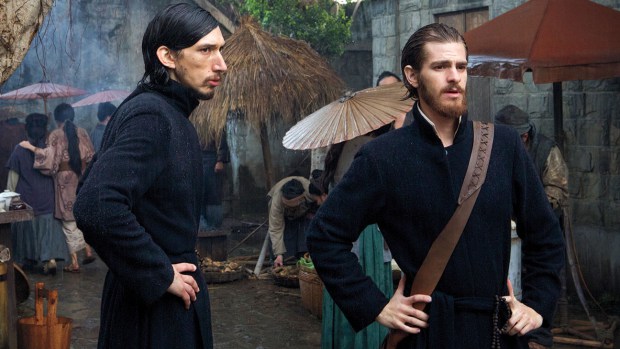
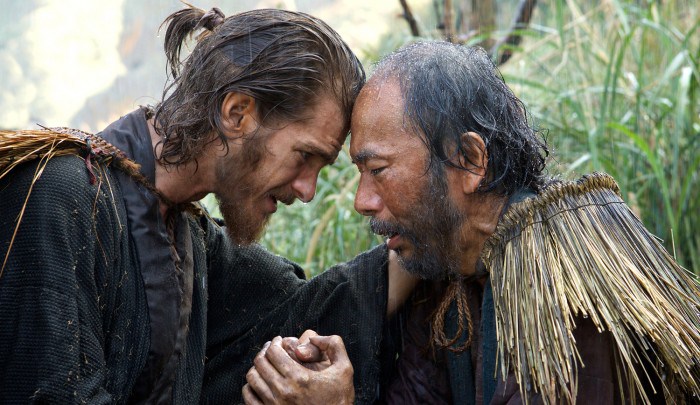
Seventeenth century Portugal: news has reached the Jesuit ministry that a missionary to Japan, Father Ferreira (Neeson), has renounced his faith and embraced not only the Japanese way of life, but their Buddhist teachings as well. Two of his pupils, Father Rodrigues (Garfield) and Father Garrpe (Driver), believing the news to be unsubstantiated rumour, are tasked with travelling to Japan and learning for themselves if the news is true. Needing a guide to help keep them safe once in Japan – the Japanese are persecuting anyone who promotes or follows the Christian faith – the two priests enlist the aid of Kichijiro (Kubozuka), a man whose contact with Christianity in his homeland has left him with a variety of personal demons.

Once in Japan, Rodrigues and Garupe soon discover how dangerous it is to be associated with Christianity. They witness the torture and murder of several villagers who have taken up the Christian faith, and are kept in hiding so that they don’t fall victim as well. They decide it will be safer for both of them if they split up, and make it easier to continue their search for Father Ferreira. But Rodrigues is soon captured. He’s assigned an interpreter (Asano), and is kept under the watchful eye of the local Inquisitor, Inoue-sama (Ogata). It soon transpires that Inoue wants Rodrigues to apostatize (renounce his belief in God) by stepping on an image of Christ. By this token, any Japanese who have been practicing Christianity will be allowed to live, and so will Rodrigues. Despite witnessing more atrocities, Rodrigues holds firm in his belief, even though his prayers remain frustratingly unanswered.

liam-neeson-explains-frail-appearance-says-he-lost-20-pounds-for-scorseses-silence

Rodrigues’ faith is tested time and again, and Inoue continually informs him of the obstacles that Christianity will always face in becoming established in Japan. Despair begins to set in when Garrpe is also found and his fate determined by an act of valour. For Rodrigues it’s the first of several turning points, all designed to bring him to the point of apostatizing, but when he finally comes face to face with Father Ferreira, instead of the encounter reaffirming his faith and his weakening determination to stand firm against the violence perpetrated by his captors, the priest finds himself even more stranded, both in terms of his faith and his emotions. With Inoue’s tactics beginning to finally wear him down, Rodrigues finds himself having to decide which is more important: his life and the lives of others, or his faith.

An adaptation of the novel by Shûsaku Endô (and previously made in 1971 by Masahiro Shinoda), Silence has been a project that Martin Scorsese has been looking to make for around thirty years. Passion projects don’t always turn out so well for their makers, their closeness to the material producing a kind of tunnel vision that filters out any flaws, but with this, Scorsese has made a riveting movie about faith, religious idealism, and agonising self-doubt. It’s a measured, deliberately paced movie that is unlikely to satisfy everyone who sees it, but if you give yourself over to it, then it’s a movie that will reward you over and over again.

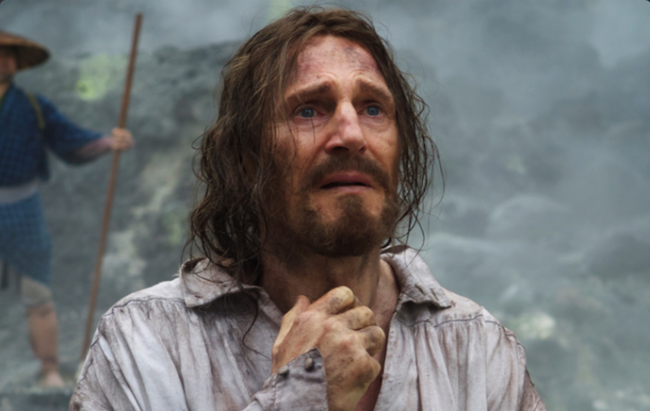
It opens with a blank screen and a cacophony of natural sounds including insects that builds to a crescendo before we see the title displayed briefly, and then the picture cuts to a medium shot of two severed heads resting on a piece of wood. It’s an arresting opening, and what follows isn’t for the faint hearted as Christian converts are tortured and left to die, with Neeson’s anguished priest looking on. This is the backdrop the movie keeps returning to, the resolute dispassion with which the Japanese treat all Christians in their country unless they apostatize themselves. And this is the very cauldron of hate that Fathers Rodrigues and Garrpe throw themselves into thanks to their naivete and, it must be acknowledged, no small degree of religious arrogance. And it’s not long before they, and the viewer, realise that they’re out of their depth.

SILENCE

A major part of the narrative is taken up with the argument that Christianity has no place in the Japan of the seventeenth century, that the country’s Buddhist principles, although sharing many similar facets and ideas with the Christian faith, will never be superseded. Scorsese and co-writer Jay Cocks make much of this battle for hearts and minds, and the script is often eloquent on the subject, highlighting not the differences between Christianity and Buddhism, but their similarities. And the Japanese argument for religious isolationism has its merits when stood up against the arrogant assumption that the Japanese need Christianity to make their lives better. But while all this makes the argument sound quite a simple one, Scorsese and Cocks are also aware that faith – which can apparently move mountains – can also be stubbornly resistant to notions of change. Thus, Rodrigues endures physical torture and mental anguish, and has to be broken psychologically by Inoue (aided by the interpreter’s cruel barbs).

It’s always a difficult matter showing religious faith on screen without the characters seeming like zealots. Thanks to Scorsese’s meticulous direction, and Garfield’s magnificent central performance, Silence isn’t burdened by any notions of extreme religious belief, and nor is it hampered by too much exposition. Rodrigues’ and Garrpe’s mission is, on the face of it, a simple one, but as strangers in a strange land they underestimate their ability to make a difference. All they have is their belief in God, and it strengthens them. But when Rodrigues begins to doubt that God is even listening to his prayers, then it’s only a matter of time before that belief will be tested, and how strong that belief really is. Scorsese keeps the viewer on the edge of their seat, piling on the pressure, but in such a way that you don’t know which way Rodrigues will fall: back into renewed faith, or forward into religious exclusion.

silence-2016-scorsese

With the religious and cultural backdrops firmly established throughout, Scorsese refrains from adding the political upheaval Japan was experiencing at the time, and which played such a heavy part in the country’s rejection of the Christian faith. It’s a wise move, as the narrative isn’t about politics per se, but Inoue makes an important point at one stage, likening Spain, Portugal, Holland and England to the four courtesans of a king who wisely sends them away to guarantee himself a quiet life. The question is, why should Japan open its borders to other countries and see its lifestyle and traditions trampled upon? Again, Scorsese keeps the material focused on the battle for the hearts and minds of the Japanese people, and the audacity of the Jesuits for believing they could, and should, undermine a foreign culture.

Away from ideas of faith and religious fundamentalism, Silence is also a quietly beautiful movie to watch, with almost painting-like vistas and compositions delicately brought to the screen by the extraordinary combination of Rodrigo Pietro’s exquisite cinematography, Thelma Schoonmaker’s matchless editing skills, and Dante Ferretti’s outstanding production and costume designs. This is organic movie making at its best, a never-ending feast for the senses that’s rounded off by a lilting, elegant score courtesy of Kathryn and Kim Allen Kluge. And then there’s the performances. Garfield – maybe not everyone’s first choice for the lead role – impresses at every step, giving a passionate, despairing portrayal of a man facing a seemingly impossible choice: renounce God (and himself), or be complicit in the deaths of potentially thousands of people. Garfield is growing in stature as an actor, and with this and Hacksaw Ridge (2016) under his belt, is heading for the A-list at a rate of knots. He’s ably supported by Driver (though he doesn’t have a lot of screen time), a slyly vindictive turn from Asano, and Ogata’s distinctive, hypnotic, somewhat casual portrayal of a man who uses physical and psychological torture to ensure his country’s religious status quo. As for Neeson, his presence is necessarily limited, but when he is on screen, his appearance serves as a reminder that, outside out of certain recent movies he’s appeared in, he’s more than capable of giving a nuanced and intuitive performance.

As mentioned above, and at 161 minutes, Silence and its subject matter will no doubt put off some potential viewers, and it’s likely that many who do see it will not be swayed by its content, or Scorsese’s approach to the material. But this really is the work of a director operating at a very high level indeed, and his confidence and expertise is there in every scene and every shot. It’s a rare movie that examines religious morality and personal faith with such authority and poise, but Scorsese has pulled it off, and with no small measure of style.

Rating: 9/10 – superb on just about every level (only Garfield’s wandering accent is any cause for annoyance or concern), Silence is a demanding yet rewarding watch made by a director whose engagement with the material is masterful; a devastating movie about ideas that is intelligent and precise in its meanings, this is a very (very) early contender for Movie of the Year.

Share this:

  • Click to share on X (Opens in new window) X
  • Click to share on Facebook (Opens in new window) Facebook
  • More
  • Click to print (Opens in new window) Print
  • Click to email a link to a friend (Opens in new window) Email
Like Loading...

Trailers – Hacksaw Ridge (2016), Split (2017) and King Arthur: Legend of the Sword (2017)

11 Thursday Aug 2016

Posted by dullwood68 in Movies

≈ Leave a comment

Tags

Andrew Garfield, Charlie Hunnam, Desmond T. Doss, Fantasy, Guy Ritchie, Hacksaw Ridge, James McAvoy, King Arthur: Legend of the Sword, M. Night Shyamalan, Mel Gibson, Previews, Psychological thriller, Split, Trailers, True story, War

If you don’t know who Desmond T. Doss was, then prepare to be amazed. The trailer for Hacksaw Ridge introduces us to a man whose pacifist leanings led to his being the only non-weapons carrying member of the US Army during World War II, and who was awarded the Medal of Honor for his bravery and courage in rescuing over seventy-five men during the Battle of Okinawa. It’s an incredible tale, and judging from the trailer this could very well be in contention for a whole slew of awards once it goes on general release in November 2016. Advance word is overwhelmingly positive, and many people who’ve seen the movie already are praising its director, Mel Gibson – making his first movie behind the camera since Apocalypto (2006) – for the way in which he presents both the intensity and horror of the conflict on Okinawa, and Doss’s personal faith and its effect on the men around him. Andrew Garfield looks to have finally found a movie that allows him to step up to the mark in terms of his acting ability, and there’s advance word that Vince Vaughn (seen briefly here as a drill sergeant) gives his best performance yet in a movie. If all this early praise is to be believed, then this could prove to be one of the finest war movies ever made, and a reminder that Gibson, whatever his personal problems in recent years, is still a damn fine movie maker.


The latest from writer/director M. Night Shyamalan, Split looks like an attempt at making a disturbing psychological thriller based around the notion that a kidnapper with multiple personalities – 23, in fact – is doing so at the behest of the strongest, most fearful personality of the lot… the Beast. It remains to be seen if Shyamalan can pull off this particular storyline with anything like the degree of credibility it needs (and having James McAvoy playing the central character, Kevin(!), will certainly help his chances), or if the mechanics of the narrative will require McAvoy to shift personalities at too rapid a speed for things to remain plausible. This being Shyamalan, it’s hard to tell, but what can be discerned from Split‘s first trailer is that he’s going for a taut, gripping viewing experience, the kind he hasn’t really tried before, and one without any supernatural elements either. It’s easy to dismiss Shyamalan as a writer/director, but The Visit (2015) was a welcome semi-return to form, and he’s such a strong, distinctive, visually arresting director that it’s about time his skills as a writer were able to once again match those he has as a director.


At first sight, King Arthur: Legend of the Sword looks like a spirited romp through an alternative Arthurian timeline, one where the fabled King begins life as a child of the streets, but still ends up removing Excalibur from its stone and ruling a kingdom. And while there’s nothing remotely wrong with the idea of retelling the Arthur legend in such a way, what is obviously, clearly, undoubtedly, unquestionably and visibly wrong here is the way in which that idea has been executed. Guy Ritchie may be a very talented director, and he may have assembled a very talented cast – Charlie Hunnam, Jude Law, Eric Bana, Djimon Hounsou, Aidan Gillen, Astrid Bergès-Frisbey, and, erm, David Beckham – but the tone of the movie is plainly off by a country mile. Martial arts fight sequences, modern day humour, large-scale battle sequences straight out of the Peter Jackson Middle Earth Playbook, and a visual style that apes any number of other fantasy movies made in recent years; all these aspects and more make the movie feel derivative and lacking in originality. While it’s evidently been created with the intention of being one of 2017’s must-see tentpole movies, here’s a prediction: come next March we’ll all be asking the same question, “Why, Guy, why?”

Share this:

  • Click to share on X (Opens in new window) X
  • Click to share on Facebook (Opens in new window) Facebook
  • More
  • Click to print (Opens in new window) Print
  • Click to email a link to a friend (Opens in new window) Email
Like Loading...

The Amazing Spider-Man 2 (2014)

28 Monday Apr 2014

Posted by dullwood68 in Movies

≈ 1 Comment

Tags

Andrew Garfield, Aunt May, Dane DeHaan, Electro, Emma Stone, Gwen Stacy, Harry Osborn, Jamie Foxx, Marc Webb, Marvel, Oscorp, Peter Parker, Review, Superhero, The Rhino

Amazing Spider-Man 2, The

D: Marc Webb / 142m

Cast: Andrew Garfield, Emma Stone, Jamie Foxx, Dane DeHaan, Sally Field, Colm Feore, Felicity Jones, Paul Giamatti, Campbell Scott, Embeth Davidtz, Marton Csokas, Chris Cooper

With this instalment – number two of four – the Spider-Man reboot continues to enervate and aggravate at the same time, and in many ways that are similar to the first movie.  The movie opens with a flashback to Peter Parker (Garfield) as a young child being left with his Uncle Ben (a non-returning Martin Sheen) and Aunt May (Field) while his parents, Richard (Scott) and Mary (Davidtz) head off for parts unknown.  So far, so retread of the opening of the first movie, but this time we discover what happened to Peter’s parents, and are given a brief glimpse into its importance in the series’ overall plot.  From there we pick up with Peter and Gwen Stacy (Stone) in the aftermath of The Lizard’s rampage and the resultant death of her father.  Peter’s promise to keep Gwen away from danger prompts him to end their relationship, despite Gwen’s protests.

At Oscorp, prodigal son Harry (DeHaan) returns from abroad at the request of his dying father, Norman (Cooper).  Given control of the company, and its secrets, Harry also discovers that the illness that is killing his father will also kill him.  When Norman dies, Peter hears about it and goes to see Harry to offer his condolences.  They pick up their old friendship, while back at Oscorp, loner employee Max Dillon (Foxx) – whose life Spider-Man saved in the opening chase sequence involving future-Rhino Aleksei Sytsevich (Giamatti) – ends up electrocuted in a tank full of electric eels.  When he awakens some time afterward he discovers he can control electricity.  Still adjusting to his new-found power, Max and Spider-Man have a showdown where Max is captured and sent to the Ravencroft Institute, a facility for the criminally insane that is run by Oscorp.  Under the instruction of Oscorp lawyer and bigwig Donald Menken (Feore), Max is “studied” by Dr Kafka (Csokas).

Harry learns that the research conducted by his father and Richard Parker may be the key to stopping his illness.  He asks Peter to contact Spider-Man with the intention of securing some of the web-slinger’s blood.  When Peter (as Spider-Man) refuses to help him, Harry is enraged, and vows to put an end to Spider-Man.  Meanwhile, Peter and Gwen try to be friends (but without much success), and Aunt May gives Peter a clue that might help him discover the truth about his parents’ disappearance.  This leads to an abandoned underground station, and a revelation that reinforces Peter’s decision not to help Harry.

When Harry tries to access certain Special Projects files, he’s unceremoniously dumped from Oscorp by Menken, but not before he finds out about Max and his incarceration at Ravencroft.  He frees Max – who now calls himself Electro – and they take back control of Oscorp.  Harry forces Menken to inject him with the spider serum but it has the predictable adverse effect.  He makes it to an exo-skeleton that has restorative and battle-focused properties and he survives, just as Electro and Spider-Man face off against each other again.

Spider-Man at GMA

There’s a lot more to the story, but surprisingly, the movie copes well with it all, even if at times it does throw off the pacing (some of the quieter scenes seem to drag in comparison with the more kinetic moments).  The tagline “No More Secrets” is only partly apt, as while we do get to know what Richard Parker was working on, its importance to Peter and his alter-ego, and the effect it’s had on Aunt May (not quite as important in the grand scheme of things but thanks to Field’s performance, effectively realised), we don’t get to know the full extent of Oscorp’s Special Projects (look out though for glimpses of Dr Octopus’s tentacles and the Vulture’s outfit), and any wider plan they’re being prepared for.  (In many ways, parts three and four look to be about developing these projects further, and while the prospect of Spider-Man versus the Sinister Six looks to be on the cards, it’s going to have to be very well thought out in order to work as well as it needs to.)

Where the movie works best is in its widening of the Spider-Man universe, and adding an extra layer of depth to the main characters that doesn’t always happen in sequels.  Peter’s ambivalence towards his relationship with Gwen is well-played, and Aunt May gets perhaps the best scene in the movie, while newcomers Harry and Max are painted with broad but effective brush strokes, although Max’s temerity and innate humility are jettisoned half way through to enable a more threatening second encounter with Spider-Man.  As the main villains, Foxx is on impressive form, particularly in his pre-Ravencroft scenes (including a suitably awkward elevator encounter with Gwen), while DeHaan does more than enough to prove that he’s not just replicating his performance as Andrew in Chronicle (2012), despite the similarities in the two characters.  Sadly though, the dreadful faux-Nazi/Dr Strangelove caricature that is Dr Kafka is the one character that will have everyone asking themselves, Really? and is the movie’s biggest misstep.

Tonally the movie flits between standard romantic drama, broad comedy (witness Sytsevich’s humiliating capture), overly stylised and over the top action sequences (with the by-now dramatically redundant but seemingly unavoidable mass destruction of property), cautious morality piece, and less than low-key father/son entanglements.  Some aspects don’t work as well as others – Spider-Man’s saving of a small child from bullies that leads to a very unlikely moment later on; Harry’s mastery of the exo-skeleton and its systems in about five minutes flat – while Webb’s direction, slightly off in the first movie, doesn’t improve here, leading to the movie having a surprisingly listless quality, where the highs don’t have the impact they should have, and the lows all operate at the same level.  There’s a lot going on but for a Spider-Man movie there really isn’t any “wow” factor; even Spider-Man’s aerial acrobatics, though better filmed than ever before, still have that “seen it too many times before” feel to them.

As the movie progresses into its final third there are some narrative lapses that undermine a lot of what’s gone before, especially considering the care that’s gone into the movie’s structure up til then, and one character’s emotional crisis is resolved in pretty much the blink of an eye, but it’s not enough to completely ruin things.  There’s one climax too many – and particularly as the last one is a bit of a throwaway – and too much is left unexplained in terms where certain characters end up (and how).  It makes for a disappointing ending and seems more about prepping audiences for part three than rounding off part two.

Rating: 7/10 – a solid sequel that builds on its predecessor by consolidating that movie’s strengths, The Amazing Spider-Man 2 still isn’t as invigorating or rewarding as it would like to be but is certainly more confident; not the best Spider-Man sequel but considering its collision of villains, not the worst either.

Share this:

  • Click to share on X (Opens in new window) X
  • Click to share on Facebook (Opens in new window) Facebook
  • More
  • Click to print (Opens in new window) Print
  • Click to email a link to a friend (Opens in new window) Email
Like Loading...

Blog Stats

  • 486,528 hits

Recent Posts

  • 10 Reasons to Remember Bibi Andersson (1935-2019)
  • Fantasia (1940)
  • Dances With Wolves (1990) – The Special Edition
  • Kiss of the Spider Woman (1985)
  • The Three Musketeers (1973)

Top Posts & Pages

  • Lost for Life (2013) - Another Look
    Lost for Life (2013) - Another Look
  • Lost for Life (2013)
    Lost for Life (2013)
  • About
    About
  • Mr. Topaze (1961)
    Mr. Topaze (1961)
  • Billy Lynn's Long Halftime Walk (2016)
    Billy Lynn's Long Halftime Walk (2016)
  • Winter's Tale (2014)
    Winter's Tale (2014)
  • The Hitman's Bodyguard (2017)
    The Hitman's Bodyguard (2017)
  • 5 Famous Movie Roles That Nearly Went to Someone Else
    5 Famous Movie Roles That Nearly Went to Someone Else
  • The Layover (2017)
    The Layover (2017)
  • Transcendence (2014)
    Transcendence (2014)
Follow thedullwoodexperiment on WordPress.com

Blogs I Follow

  • Rubbish Talk
  • Film 4 Fan
  • Fast Film Reviews
  • The Film Blog
  • All Things Movies UK
  • Interpreting the Stars
  • Let's Go To The Movies
  • Movie Reviews 101
  • TMI News
  • Dan the Man's Movie Reviews
  • Film History
  • Jordan and Eddie (The Movie Guys)

Archives

  • April 2019 (13)
  • March 2019 (28)
  • February 2019 (28)
  • January 2019 (32)
  • December 2018 (28)
  • November 2018 (30)
  • October 2018 (29)
  • September 2018 (29)
  • August 2018 (29)
  • July 2018 (30)
  • June 2018 (28)
  • May 2018 (24)
  • April 2018 (21)
  • March 2018 (31)
  • February 2018 (25)
  • January 2018 (30)
  • December 2017 (30)
  • November 2017 (27)
  • October 2017 (27)
  • September 2017 (26)
  • August 2017 (32)
  • July 2017 (32)
  • June 2017 (30)
  • May 2017 (29)
  • April 2017 (29)
  • March 2017 (30)
  • February 2017 (27)
  • January 2017 (32)
  • December 2016 (30)
  • November 2016 (28)
  • October 2016 (30)
  • September 2016 (27)
  • August 2016 (30)
  • July 2016 (30)
  • June 2016 (31)
  • May 2016 (34)
  • April 2016 (30)
  • March 2016 (30)
  • February 2016 (28)
  • January 2016 (35)
  • December 2015 (34)
  • November 2015 (31)
  • October 2015 (31)
  • September 2015 (34)
  • August 2015 (31)
  • July 2015 (33)
  • June 2015 (12)
  • May 2015 (31)
  • April 2015 (32)
  • March 2015 (30)
  • February 2015 (37)
  • January 2015 (39)
  • December 2014 (34)
  • November 2014 (34)
  • October 2014 (36)
  • September 2014 (25)
  • August 2014 (29)
  • July 2014 (29)
  • June 2014 (28)
  • May 2014 (23)
  • April 2014 (21)
  • March 2014 (42)
  • February 2014 (38)
  • January 2014 (29)
  • December 2013 (28)
  • November 2013 (34)
  • October 2013 (4)

Blog at WordPress.com.

Rubbish Talk

Film 4 Fan

A Movie Blog

Fast Film Reviews

The Film Blog

The official blog of everything in film

All Things Movies UK

Movie Reviews and Original Articles

Interpreting the Stars

Dave Examines Movies

Let's Go To The Movies

Film and Theatre Lover!

Movie Reviews 101

Daily Movie Reviews

TMI News

Latest weather, crime and breaking news

Dan the Man's Movie Reviews

All my aimless thoughts, ideas, and ramblings, all packed into one site!

Film History

Telling the story of film

Jordan and Eddie (The Movie Guys)

Movie Reviews & Ramblings from an Australian Based Film Fan

Privacy & Cookies: This site uses cookies. By continuing to use this website, you agree to their use.
To find out more, including how to control cookies, see here: Cookie Policy
  • Subscribe Subscribed
    • thedullwoodexperiment
    • Join 481 other subscribers
    • Already have a WordPress.com account? Log in now.
    • thedullwoodexperiment
    • Subscribe Subscribed
    • Sign up
    • Log in
    • Report this content
    • View site in Reader
    • Manage subscriptions
    • Collapse this bar
 

Loading Comments...
 

    %d