• 10 Reasons to Remember…
  • A Brief Word About…
  • About
  • For One Week Only
  • Happy Birthday
  • Monthly Roundup
  • Old-Time Crime
  • Other Posts
  • Poster of the Week
  • Question of the Week
  • Reviews
  • Trailers

thedullwoodexperiment

~ Viewing movies in a different light

thedullwoodexperiment

Tag Archives: Australian cinema

For One (Stretched) Week Only: Australian Cinema – Part V

25 Tuesday Aug 2015

Posted by dullwood68 in Movies

≈ 3 Comments

Tags

1991-2015, Australian cinema, Baz Luhrmann, Cate Blanchett, Chopper, Heath Ledger, Hollywood, Looking for Alibrandi, Mad Max: Fury Road, Movies, Muriel's Wedding, Nineties, Ozploitation, Sam Neill, Strictly Ballroom, The Adventures of Priscilla Queen of the Desert, The Castle, The Dish

Australian Cinema Part V – 1991-2015

The resurgence of the Australian Movie Industry during the Seventies and Eighties continued into the Nineties, but with an extra consideration: the industry had to make movies that could appeal to foreign audiences as much as those at home. Following the international success of “Crocodile” Dundee (1986), movie makers slowly came round to the idea that Australian movies didn’t have to be so insular or phlegmatic, determinedly historical or austere. It was during the Nineties that more and more Australian movies showed that they could get serious messages across – and still be fun.

Most of these movies were made on low budgets, but they were inventive and funny and warm-hearted, and audiences (and not just in Australia) found themselves enjoying the time they spent with some of the quirkiest characters to come out of any country’s working class psyche. Characters such as the determined Scott Hastings in Strictly Ballroom (1992), the socially awkward Muriel Heslop in Muriel’s Wedding (1994) (“You’re terrible, Muriel”), and the magnificently patriarchal Darryl Kerrigan in The Castle (1997) – these three and more showed audiences just how unconventional Australians could be and still be recognisable as individuals just like us. And these movies were hilarious, tapping into a cultural cheerfulness and sense of the absurdity of every day life that elevated them above the likes of Barry Mackenzie Holds His Own (1974) or The True Story of Eskimo Nell (1975). It was as if Australian producers, writers and directors had somehow (finally) tapped into the nation’s sense of humour and realised what a box office goldmine they had.

Further crowd pleasers followed: The Adventures of Priscilla, Queen of the Desert (1994) was such an unexpected treat that it spawned a stage musical that can still be seen somewhere in the world in 2015. Even now, lines like “Ummm… do you have The Texas Chainsaw Mascara?” and “That’s just what this country needs: a cock in a frock on a rock” are still as laugh out loud funny as they were twenty-one years ago. And the performances in these and other comedies are all first class, guided by precocious up-and-coming directors like Stephan Elliott, P.J. Hogan, and the Dutch-born Rolf de Heer. 1996 saw an Australian movie that successfully combined drama with comedy to provide an emotionally charged study of a musician battling with mental illness. The movie was Shine, and it brought Geoffrey Rush to the world’s attention (and bagged him a Best Actor Oscar). Here was further evidence that Australian movie makers were growing bolder and less afraid of taking risks with their projects. Even when certain movies didn’t achieve their full potential – Doing Time for Patsy Cline (1997), Paperback Hero (1999) amongst others – there was enough that was right about each production to warrant giving each movie a more than cursory look.

Dish, The

With the industry at its healthiest, it eased into the new millennium and gave the world three very different movies that showcased the confidence and eclecticism of contemporary Australian movie makers. One was The Dish (2000), the second was Looking for Alibrandi (2000), and the third was Chopper (2000). Though each movie told a different story in a different style, and they were poles apart in terms of subject matter and approach, with, in particular, Chopper‘s uncompromising violence and hard-edged grittiness contrasted against The Dish‘s feelgood, humanistic recounting of Australia’s involvement in the 1969 Moon landing (who can forget the band playing the US national anthem?), Looking for Alibrandi was an emotionally resonant and complex look at the trials and traumas of regular teenage life. But this disparity was proof that Australian cinema was continuing to be vital and expressive on a variety of themes, and that it was growing bolder with each year, challenging the notion that such a relatively small producer of movies couldn’t possibly hold its own against Hollywood.

Chopper

The decade continued in the same vein, with Australia proving a showcase for the type of talent that couldn’t be found elsewhere. Australia’s cultural heritage, once the “meat and potatoes” of Australian movie production, had given way to examinations of modern day issues that had previously been overlooked or given scant notice. Directors such as Baz Luhrmann came into their own, while actors such as Heath Ledger and Cate Blanchett rose to prominence. Awards from around the world kept flooding in, and there was a feeling that Australian cinema was unbeatable, its refusal to follow cinematic trends or the dictates of other movie industries, leading to further examples of a country finally embracing all the elements and factors that go into making a great Australian movie. Between 2001 and 2006, Australian production companies made and released the following movies:

2001 – Charlotte Gray, Lantana, The Man Who Sued God, Moulin Rouge!

2002 – Black and White, Dirty Deeds, Rabbit-Proof Fence, Swimming Upstream, The Tracker

2003 – Cracker Bag, Gettin’ Square, Japanese Story, The Rage in Placid Lake

2004 – A Man’s Gotta Do, Oyster Farmer, Somersault, Tom White

2005 – Little Fish, The Proposition, Wolf Creek

2006 – Candy, Happy Feet, Jindabyne, Kenny, Ten Canoes

And then in 2007, a strange thing happened: roughly the same amount of movies were being made, but the steady stream of critical and commercial hits dried up. 2007 was a year that yielded a succession of disappointing, uninspired movies, and 2008 proved only slightly better, with only The Black Balloon and Mark Hartley’s energetic Not Quite Hollywood: The Wild, Untold Story of Ozploitation! making any real impact (sad, also, that a movie looking back over Australia’s recent output should prove to be more engaging than its current offerings). 2009 brought some minor gems – The Boys Are Back, Bright Star, In Her Skin, Mary and Max – but again there wasn’t one movie that stood out from the rest in terms of quality or, more importantly, appeal.

Less movies were made in 2010 as the industry began to stumble in the face of increasing disappointment from critics and audiences alike. Animal Kingdom (2010) bucked the trend, but it was alone in its efforts to reinvigorate what many were coming to feel was a stagnant period in Australian movie making. 2011 was no different, leading viewers to mistrust the idea that Australia was still capable of making provocative, entertaining, relevant movies any more. Fred Schepisi had some success with The Eye of the Storm, and Sleeping Beauty was an icily stylised look at sexual compulsion, but again, two movies out of around thirty doesn’t make for a good return.

Sleeping Beauty

As the decade continued, Australian movies found themselves precariously balanced between staying true to their cultural and historical roots (and putting enough of a twist on things to make them appeal to a broader audience), and attempting, as “Crocodile” Dundee (1986) had, to appeal to as wide an audience as possible. A degree of uncertainty seemed to be holding movie makers back, and risk taking seemed to be avoided at all costs. 2012 was no different, and despite featuring new movies from the likes of John Duigan (Careless Love), Rob Sitch (Any Questions for Ben?), Rolf de Heer (The King Is Dead!), and P.J. Hogan (Mental), left many wondering if the industry would ever climb out of the innovative mire it had found itself in.

And then in 2013, signs that a revival – of sorts – was beginning to happen began appearing, with a clutch of movies that showed it wasn’t all doom and gloom (though the industry wasn’t quite out of the woods just yet). Baz Luhrmann released his lavishly mounted but flawed The Great Gatsby. Mystery Road, Tracks, Two Mothers, and The Railway Man were also released and made an impact that suggested the downturn was about to be redressed. And 2014 continued the upward trend, with more well received movies being released than in previous years, including The Babadook, Kill Me Three Times, The Mule, and Predestination.

Now in 2015, there’s still a lingering sense that the industry needs to step up its game. But a massive boost was given to it this year with the return of one, sorely missed, iconic character from Australia’s post-apocalyptic future, Max Rockatansky, in Mad Max: Fury Road. Now officially the most successful Australian movie ever made – sorry, “Crocodile” Dundee – George Miller’s crazy, riotous action movie is the kind of bold, frenetic auteur-driven visual/aural experience that doesn’t come along too often, but if it helps to give Miller’s directing confederates the push needed to make their own bold movies then with a bit of luck Australian cinema might just regain the acclaim it deserved in the Eighties and Nineties.

Mad Max Fury Road

Share this:

  • Click to share on X (Opens in new window) X
  • Click to share on Facebook (Opens in new window) Facebook
  • More
  • Click to print (Opens in new window) Print
  • Click to email a link to a friend (Opens in new window) Email
Like Loading...

For One Week Only: Australian Cinema – Part IV

23 Sunday Aug 2015

Posted by dullwood68 in Movies

≈ Leave a comment

Tags

"Crocodile" Dundee, Aborigines, Australian cinema, Australian New Wave, Fred Schepisi, Jimmy Governor, John Gorton, Literary adaptation, Outback gothic, Ozploitation, The Chant of Jimmie Blacksmith, Tommy Lewis, True story

Australian Cinema Part IV – 1971-1990

With Australian cinema firmly in the doldrums, it took John Gorton, the Prime Minister from 1968-1971 to come to its rescue. He implemented a raft of government sponsored schemes designed to support cinema and the arts, and this was continued by his successor, Gough Whitlam. With funding and training now widely available, Australian movies began to appear in ever greater numbers, and two distinct forms of movie making emerged in the Seventies, the Australian New Wave and Ozploitation.

The New Wave (also known as the Australian Film Revival, Australian Film Renaissance, or New Australian Cinema) introduced a more direct, volatile approach to movie making, with themes of violence and sexuality brought more to the fore than they had previously. New Wave directors often made movies that were tough and uncompromising, with the Australian landscape featuring as an integral part of contemporary features. The era saw the start of several impressive careers, both behind the camera – directors Peter Weir, Bruce Beresford, George Miller, John Duigan, and DoP John Seale – and in front of it – Judy Davis, Jack Thompson, Bryan Brown, Sam Neill, Nicole Kidman.

Australian movies began to be regarded highly abroad as well as at home. Walkabout (1971) premiered at the Cannes Film Festival. The Adventures of Barry McKenzie (1972) was the first movie to achieve over A$1,000,000 at the Australian box office. Production was booming suddenly, and some movies proved bulletproof; such was the scarcity of homegrown content in the Sixties that this resurgence also brought back audiences in droves. The New Wave revitalised and democratised the industry, leading to startling, indisputably Australian movies being made such as The Cars That Ate Paris (1974) and Sunday Too Far Away (1975). The so-called Ozploitation movement also saw highly individual movies being released, movies such as Alvin Purple (1973) and Inn of the Damned (1975). And there was a further sub-genre of Australian movies dubbed “outback gothic”, where survival in harsh situations or locations were a vital element of the plot or story. And Australia’s first animated movie was released: Marco Polo Jr. Versus the Red Dragon (1972). It seemed at last that there was something for everyone, both at home and abroad.

Australian movie makers also began looking to their own history and began to make forays into the darker moments of its colonial past. Though it wasn’t based on a true story (though it certainly felt like it), Picnic at Hanging Rock (1975) explored class and social distinctions of the era it depicted through the prism of a girls’ school. Eliza Fraser (1976), though ostensibly a bawdy romp, still had some pertinent things to say about early colonialism and the hardships involved. But one of the most powerful movies to be made during the Seventies, and one that explored themes of Aboriginal exploitation, was the industry’s first determined effort to fully address the issue of the country’s indigenous racism.

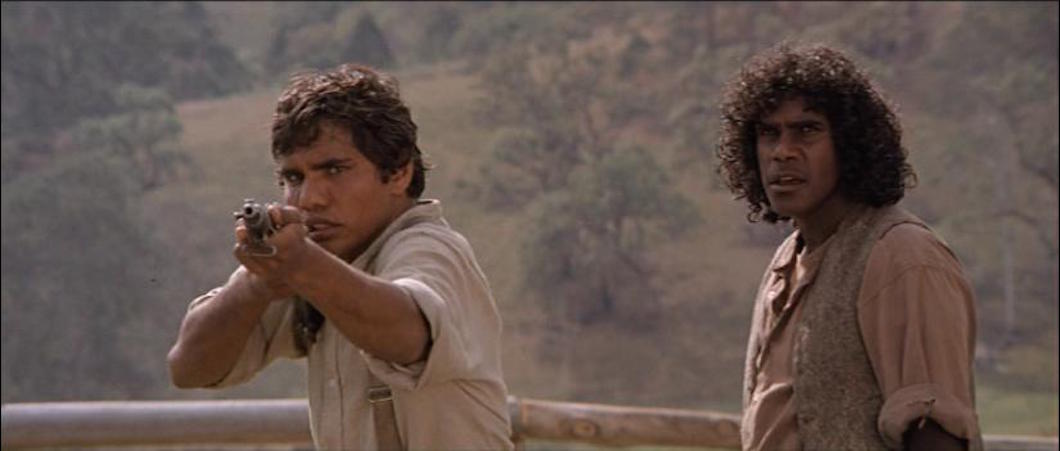
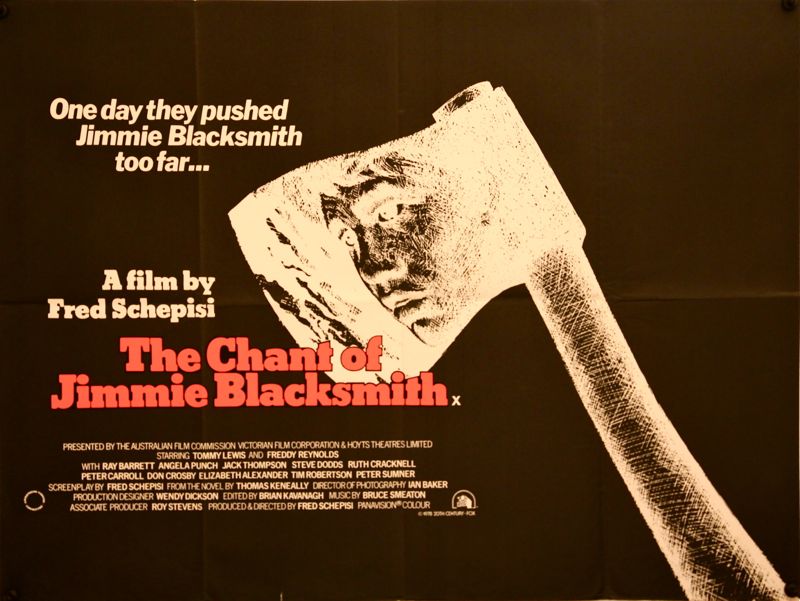
The Chant of Jimmie Blacksmith Quad

The Chant of Jimmie Blacksmith (1978) / D: Fred Schepisi / 120m

Cast: Tommy Lewis, Freddy Reynolds, Ray Barrett, Jack Thompson, Angela Punch McGregor, Steve Dodd, Peter Carroll, Ruth Cracknell, Don Crosby, Tim Robertson, Elizabeth Alexander, Peter Sumner

Half-white, half-Australian Jimmie Blacksmith (Lewis) is raised by a benevolent minister, Reverend Neville (Thompson) and his wife. Neville’s belief is that he can foster positive social ambitions in Jimmie by teaching him Christian values and by providing him with an entry into the wider, white society. Jimmie is a hard worker, conscientious and respectful, but this is due to his upbringing with the Nevilles. At the first job he takes on, building fences on a farm, the owner fails to pay Jimmie and his Aboriginal half-brother Mort (Reynolds) the agreed wage, and when Jimmie challenges this he’s then sacked. The same happens to him at the next farm he works at. By this point, Jimmie is beginning to understand that not all whites are like the Nevilles.

Jimmie finds work as a policeman. He accepts the role of law enforcer with equanimity, and has no trouble administering the law when it comes to Aboriginals. But matters change when he witnesses a flagrant abuse of the law he believes in, an abuse that shows him there will always be one rule for whites and no rules for others. Appalled, he leaves the police force and eventually finds work on a sheep ranch owned by a Mr Newby (Crosby). Here he sends for Gilda (McGregor), a woman he met at one of the farms and who has agreed to marry him. When she arrives she is heavily pregnant, but when the baby is born it’s obvious that Jimmie isn’t the father. Newby’s family are less than sympathetic, and take every opportunity to make snide remarks about “his child”. Jimmie makes the best of it, but when a well-meaning acquaintance of the Newby’s suggests that Gilda should take her baby and leave Jimmie, and he’s let go without any pay, the steady tide of oppression that he’s encountered since leaving the Nevilles leads to a shocking, violent outburst that leaves Jimmie, Mort, his uncle Tabidgi (Dodd), and Gilda on the run from the police.

Chant of Jimmie Blacksmith, The - scene

Adapted from the novel by Thomas Keneally, itself based on the true story of Jimmy Governor, The Chant of Jimmie Blacksmith is like an unexpected slap across the face, a shocking moment that is made all the worse by the surprise factor. The same can be said about the movie, one that the viewer goes into thinking they know what to expect, but then finds themselves reeling from the ferocity of emotion, violent or otherwise, that they experience. It’s an impressive, extraordinary movie that can still do that nearly forty years after it was first released, and a testament to the vision of Schepisi, and the lead performance of Lewis.

Watching the movie today its bleak and uncompromising nature really is that startling for modern viewers unused to having outrage displayed in such frank and brutal terms, from the casual verbal racism of the whites to the inverse scorn of the Aborigines who feel Jimmie is losing his heritage by associating too closely with whites. In a brave but necessary move, writer/director Schepisi paints a portrait of a time and a society where sympathy and consideration for Australia’s indigenous people was considered anathema, but offers no judgement on either sides feelings or beliefs. With Jimmie’s increasing disillusionment and anger at the attitude of his white employers and the larger, endemic disdain for his race, Schepisi’s uncompromising treatment of the material leaves the audience facing a dilemma: are Jimmie’s actions defensible given his treatment by the whites, or are they too extreme for extenuating circumstances to be taken into consideration or provide mitigation? Whatever your opinion, Schepisi doesn’t make it easy, and nor should he.

It’s refreshing too that the movie doesn’t try to be relevant to the Seventies, or invite the viewer to search for a subtext. This is entirely about the times, and the hardship of life in Australia in the early twentieth century if you weren’t white: it doesn’t need to be about anything else. And Jimmie, as a character, is refreshingly free from the type of psychological interpretation that would no doubt be employed if the movie were to be made today. Lewis is completely convincing in the title role, Jimmie’s sense of belonging to two cultures but without knowing which he should commit to, rendered with such detail and commitment that it’s hard to believe that Lewis had never acted before. It’s an amazing achievement, and with Schepisi, he reinforces the idea that Jimmie can be sympathised with or detested in equal measure.

With the movie proving so intense, it definitely can’t be regarded as entertainment, but it is thought-provoking, consistently tough-minded and hard-hearted, and avoids any undue sentimentality, settling for a discomforting nihilism that suits the mood of the times, and underpins Jimmie’s struggle to fit in. Schepisi left Australia for Hollywood after this, citing the struggles he had to endure to get the movie made, but he’s yet to make another movie on a par with this one. Lewis continued to make movies, but he never played a lead role again. Perhaps it’s fitting for both men as it’s hard to see how either could top The Chant of Jimmie Blacksmith for sheer gritty realism and power.

The movie also benefits from measured performances from Thompson, Barrett and McGregor, while there are minor roles for Bryan Brown, John Jarratt, and Arthur Dignam, and surprisingly, Lauren Hutton. It’s shot in a dour, unflattering way by Ian Baker that enhances and embraces the material, but still leaves room to showcase Australia’s natural beauty. And the score by Bruce Smeaton is similarly enriching, adding an emotive layer to the proceedings that complements the bleak narrative.

Rating: 9/10 – desolate and austere in its approach but all the more potent for it, The Chant of Jimmie Blacksmith is the kind of tough, relentlessly savage movie that is rarely this confident or emotionally draining; all credit to Schepisi for refusing to water down the febrile nature of the story, or the tragic consequences that arise from one man’s refusal to be treated so arrogantly.


The late Seventies and early Eighties saw a rise in the number of movies that looked at classical stories from Australian literature and history, movies such as My Brilliant Career (1979) and Breaker Morant (1980). International acclaim had been building steadily across the Seventies, with Peter Finch becoming the first Australian actor to win an Oscar (albeit posthumously) for Network (1976), and the Eighties saw Australian movies consolidate and expand on that success. The focus was more on dramatic stories rather than comedies, and several prestige movies garnered awards from around the world. At home, The Man from Snowy River (1982) proved to be such a well-received movie that it was regarded as the best Australian movie of all time (though not for long).

In 1986, a movie arrived that was a comedy, that had been cleverly constructed for international audiences, contained adventure and romance, told a delightful fish out of water story, and made an international star out of its creator, Paul Hogan. The movie was “Crocodile” Dundee, and when it was released in the US (in September ’86), it achieved the distinction of being the second highest grossing movie of the year (losing out to Top Gun). At the time, Hogan stated that he was “planning for it to be Australia’s first proper movie… a real, general public, successful, entertaining movie”. Some may have felt that Hogan was being unfair, but the movie’s success did lead to a sea change in the way that Australian movie makers approached those stories that were essentially Australian in terms of subject matter and cultural reference. As the Eighties drew to a close, and with the industry still enjoying its renaissance, “Crocodile” Dundee‘s example would lead to an even richer period of Australian movie making, and an even stronger presence abroad.

Share this:

  • Click to share on X (Opens in new window) X
  • Click to share on Facebook (Opens in new window) Facebook
  • More
  • Click to print (Opens in new window) Print
  • Click to email a link to a friend (Opens in new window) Email
Like Loading...

For One Week Only: Australian Cinema – Part III

21 Friday Aug 2015

Posted by dullwood68 in Movies

≈ Leave a comment

Tags

1941-1970, Australian cinema, Australian Film Awards, Australian Film Institute, Cattle drove, Charles Chauvel, Chips Rafferty, Cinesound Productions, Daphne Campbell, Ealing, Jedda, Kokoda Front Line!, Michael Powell, Northern Territory, The Overlanders, They're a Weird Mob, True story, World War II

Australian Cinema Part III – 1941-1970

With Australia’s entry into the Second World War in 1939, movie production dwindled in support of the war effort. Movies continued to be made but they were few and far between, and were dependent on their producers’ confidence in claiming enough of the domestic and international markets to be worthwhile in making. Cinesound Productions, though they’d stopped making feature length movies, were still making newsreels, and in 1942 they won the Oscar for Best Documentary for their full-length edition of the Cinesound Review entitled Kokoda Front Line! Other, fictional, propaganda movies were made (in keeping with similar efforts made in other countries at war); these included Forty Thousand Horsemen (1940), and The Rats of Tobruk (1944). (Both movies were directed by Charles Chauvel, and ever since 1992, the Brisbane International Film Festival has awarded a Chauvel Award for distinguished contributions to Australian cinema.) But once the war was over, any expected upturn in production failed to materialise, as can be seen by the release of just one movie in 1948, Always Another Dawn.

The Forties did see the emergence of homegrown stars who would go on to have international careers, actors such as Peter Finch (actually born in England) and Chips Rafferty. Rafferty was the star of one of Australia’s finest movies of the Forties, a saga of drovers transporting a large herd of cattle across 1600 miles of inhospitable outback. Produced by Ealing, it was very, very successful at the box office, with an estimated 350,000 Australians having seen it by February 1947, six months after its release.

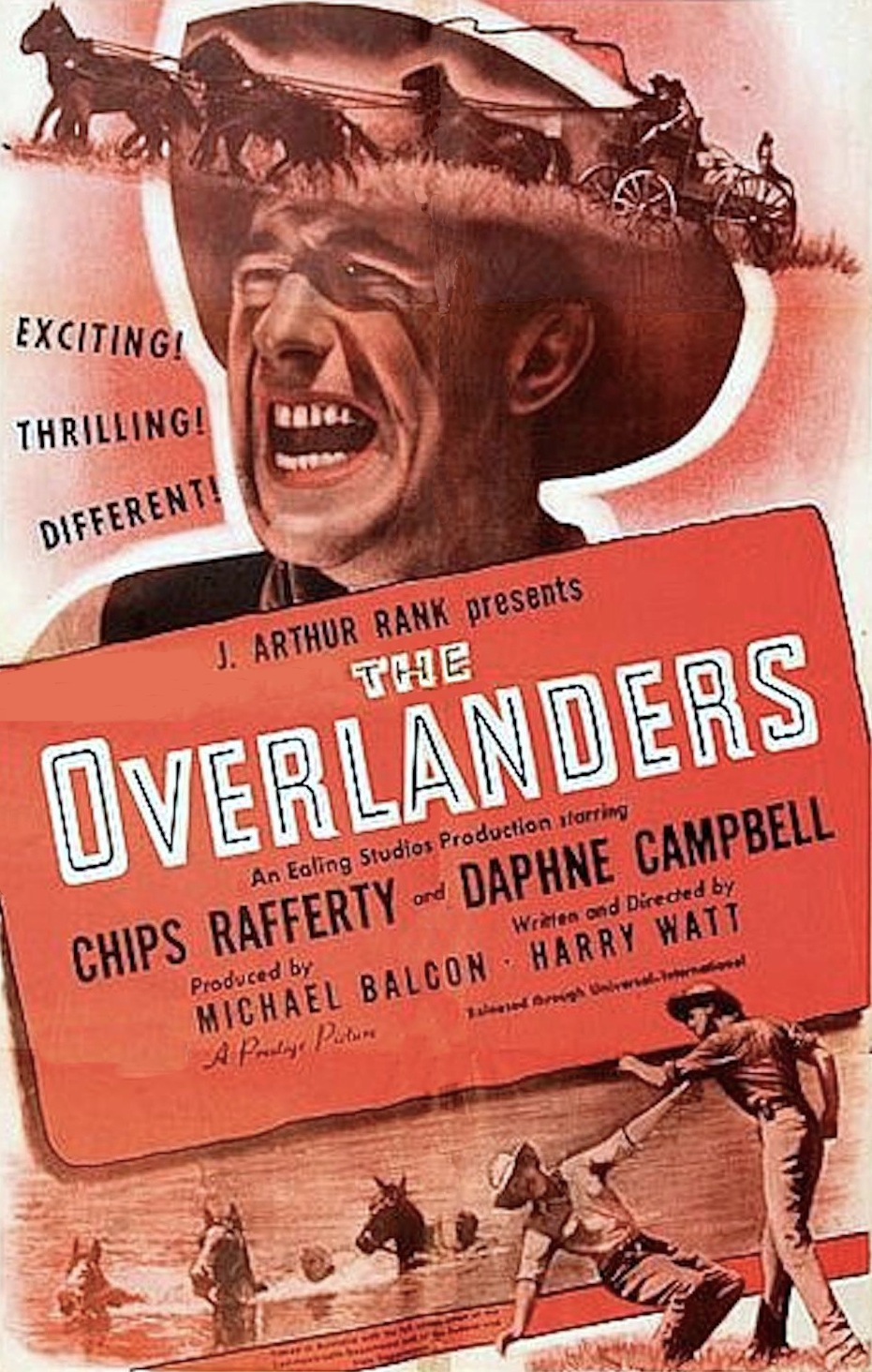
Overlanders, The

The Overlanders (1946) / D: Harry Watt / 91m

Cast: Chips Rafferty, John Nugent Hayward, Daphne Campbell, Jean Blue, Helen Grieve, John Fernside, Peter Pagan, Frank Ransome, Stan Tolhurst, Clyde Combo, Henry Murdoch

1942. With the threat of invasion by Japanese forces, many Australians feel it’s only a matter of time before they’re overrun. People in the north of the country begin evacuating their homes to head south and burning them in a kind of “scorched earth” policy. One such family are the Parsons: Bill (Hayward), his wife (Blue), and their two daughters, Mary (Campbell) and Helen (Grieve).

Meanwhile, in the Kimberley District of Western Australia, a meat export centre has been directed to pack up its operation and for its men to head south. When the manager (Tolhurst) tells cattle man Dan McAlpine (Rafferty) that the cattle will need to be shot, Dan comes up with an alternative: to drive the cattle – all 958 of them – overland to Queensland, a distance of 1500 miles. He manages to enlist some of his co-workers to help him, including a sailor, Sinbad (Pagan) a couple of aborigines, Jacky (Combo) and Nipper (Murdoch), and generally work-shy Corky (Fernside). As they make plans to set out, the Parsons’ join them.

At first, the drove is slow going. A couple of months pass of fairly easy travel before they reach the North-South Road, but a week later they encounter the first obstacle to reaching the East Coast, a crocodile-infested river that they need to cross. The crossing goes well with no loss of cattle, but on the other side the drove finds its second obstacle, scrubland that gives the cattle little to feed on; this also slows them down to making only five miles a day instead of an average ten or twelve. A little while later, a tragedy leaves them short of horses, but salvation proves to be at hand (and close by) in the form of a group of brumbies (wild horses). They trap and break enough of them to allow the drove to continue on, and soon they arrive at an outpost, Anthony’s Lagoon where they get fresh supplies.

The next leg of the drove proves even harder, with no surface water or much feed for the cattle, but all goes well though tempers are frayed due to the conditions. When they reach the Queensland border they have to stop so that the cattle can be inoculated. While this is done, Corky reveals his plans following the war to set up a company for the exploitation of land and mineral rights in the Northern Territory, a plan Dan is none too happy to hear about. That same night, Sinbad and Mary reveal their feelings for each other, and the cattle are spooked, causing a stampede. In the attempt to halt them, Sinbad is badly injured; Mary tries to alert the inoculation team who are leaving on the plane that brought them there, but they take off before she can reach them.

With no other option open to them, Sinbad is put on the back of the supply wagon and Mrs Parsons and Helen leave the drove to take him to the nearest place with a wireless that can summon the flying doctor. The drove then faces another setback at the next watering hole which is dry. Needing to water the cattle in the next two days or face losing them all, Dan must take a risk in taking them over a range of rocky hills along a track more suited for goats than cattle.

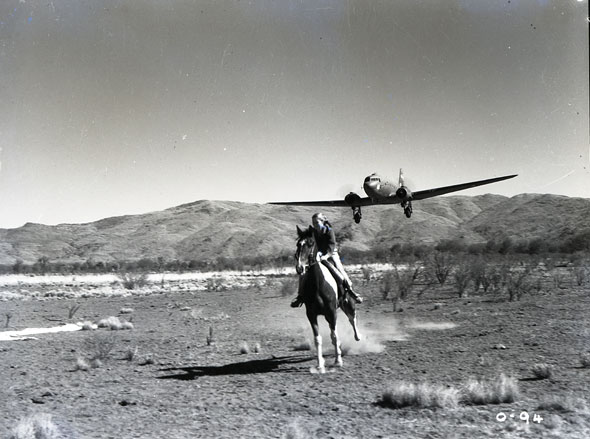
Overlanders, The - scene

Though shot in black and white, The Overlanders was the first Australian movie to be filmed almost entirely outdoors. This allowed the makers to shoot some of the most rugged and breathtaking scenery in the country’s northern states, as well as providing audiences with a realistic look at a cattle drove and the problems it might face. It was based on an actual event that occurred in 1942 where 100,000 cattle were driven 2,000 miles to avoid the (expected) Japanese invasion. Although the movie had to scale back those numbers out of necessity – though 958 is quoted as the number of cattle on the drove, Ealing only used 500 – it’s still an impressive looking sight, especially when the drove is seen from a distance.

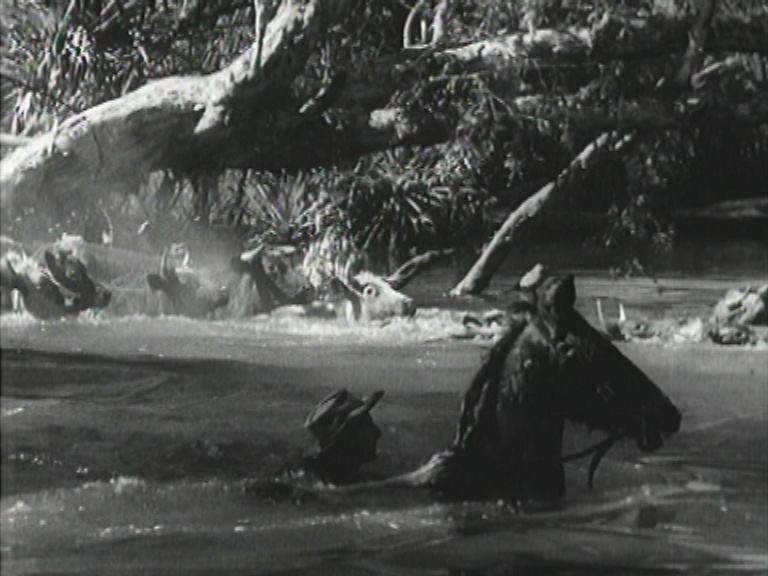
The sheer physical effort involved in bringing the movie to the screen is impressive, with the river crossing a particular highlight. The cast look the part too (though Pagan’s hairstyle marks him out as the matinee idol in the making), with Rafferty looking so at home in the saddle, and giving such a natural performance it’s no surprise that Ealing signed him to a long-term contract before the movie was even released. He’s possibly the quintessential pre-1970’s Australian actor, honest, as rugged as the country around him, and refreshingly no-nonsense in his approach to the art of acting. He’s an actor for whom a false note would be impossible, and here his condemnation of the plan to exploit the Northern Territory’s resources shows an impassioned side that is as plainly felt as it is expressed.

With the movie’s verisimilitude firmly in place and the location photography adding to the effectiveness of the overall drama, writer/director Watt’s decision to spend around eighteen months preparing the movie paid off handsomely (he even spent 1944 following the route of the original drove). His script is one of the most succinct and straightforward of the period, and is so lean it feels effortless in its construction. His original ending was more cynical than the one used but it wouldn’t have felt out of place; underneath all the belated pro-Australian war effort propaganda, there’s an undeniable sense that the country was on the cusp of some profound and far-reaching changes.

The movie does start out a little slowly, but sets out its stall with a minimum of fuss, and while the first hour sees everything go well, the inevitable setbacks and life-threatening situations make the movie more gripping, although in a matter-of-fact way that, weirdly, is entirely apposite. It speaks to the Aussie mentality of “let’s just get it done”, and shows the characters almost welcoming the adversity as a way of proving either their manhood (if male) or their unspoken capability (if female). Mary is congratulated on heading off the stampede, but she shrugs it off as no more appropriate than if she’d made dinner for everyone, so confident is she in her own abilities. It’s a small, neat touch that says everything you need to know about the characters’ inner strengths, and not just Mary’s, as they’re all so attuned to what they’re doing (and even if Corky is looking much further ahead than the others).

There’s a rousing score by English composer John Ireland that manages to be evocative at the same time, and the photography, so ravishing to look at, comes courtesy of Osmond Borradaile, a Canadian whose experience in shooting location footage more than justified Watt’s decision to hire him. And though Watt was unhappy with the way Inman Hunter edited the movie and brought in Leslie Norman to take over, whatever the final percentage of each man’s work, the movie is seamless and the decision doesn’t show in the finished product. And you have to admire a movie that includes the line, “bullocks are more important than bullets”.

Rating: 9/10 – an engrossing, simply told tale that highlights the strengths of the Australian movie industry at the time, The Overlanders is a tribute to both the men and women who lived through the threat of Japanese occupation and did their best to live outside the shadow of that dreadful possibility; with the Australian outback looking both daunting and alluring, it’s a movie that celebrates the country and its people’s apparently unflagging fortitude, and does so in such a skilful way that it stays in the memory long after it’s seen.

Overlanders, The - scene 2

In the Fifties, Australia became the place to make movies if you were a foreign production company (such as Ealing). But there was a degree of irony attached to this development, as movie makers from around the world came to Australia to make movies that depicted Australian life and culture, or were adaptations of Australian stories or literature. Chief amongst these were the likes of A Town Like Alice (1956) and The Shiralee (1957), but while they were made in Australia, they weren’t Australian movies; they were made by British or American companies and so were British or American movies. One movie made in the Fifties that was wholeheartedly Australian, funding and all, was Jedda (1955), notable for being the first Australian movie shot in colour, and for its casting of two Aboriginal actors – Ngarla Kunoth and Robert Tudawali – in the lead roles (it was also the last movie to be directed by Charles Chauvel).

Elsewhere though, indigenous movie making was struggling to make any kind of an impact. Robbery Under Arms (1957) was an exception, but otherwise there were few production companies that were willing or able to make movies that would have bolstered the industry’s standing, or made any headway at the box office. In 1958, the Australian Film Institute was founded, its mission to promote the industry both at home and abroad. The Institute also set up the annual AFI Awards which were designed in part to “improve the impoverished state of Australian cinema”. That first year there were seven categories: Documentary, Educational, Advertising, Experimental Film, Public Relations, and an Open category for any movie that didn’t fit any of the other criteria. Such was the parlous state of the industry at the time – and on into the Sixties – that it wasn’t until 1969 and Jack and Jill: A Postscript that a feature movie was given an award.

The Sixties began with a rare fillip for the industry in the form of Fred Zinnemann’s The Sundowners (1960), but it was a US/UK/Australian production, and without Zinnemann’s passion for the project, unlikely to have been made under other circumstances. The situation worsened as the decade continued. Clay (1965) was entered for the Palm Award at the Cannes Film Festival, but again this was a rare event that provided a momentary boost for an otherwise moribund industry. Even They’re a Weird Mob (1966), directed by Michael Powell, and featuring familiar faces such as Chips Rafferty, Ed Devereaux, John Meillon and Clare Dunne, couldn’t do much to stem the tide of inertia (though some say it was an inspiration to the generation of movie makers who would follow in the Seventies). (Look closely and you can see Jeanie Drynan and Jacki Weaver in early roles.)

Powell would return to Australia to make Age of Consent (1969) but as the decade drew to an end there was no sign that the movie industry was going anywhere but as steadily downhill as it had been since the late Forties.

Share this:

  • Click to share on X (Opens in new window) X
  • Click to share on Facebook (Opens in new window) Facebook
  • More
  • Click to print (Opens in new window) Print
  • Click to email a link to a friend (Opens in new window) Email
Like Loading...

For One Week Only: Australian Cinema – Part II

18 Tuesday Aug 2015

Posted by dullwood68 in Movies

≈ Leave a comment

Tags

1921-1940, American movies, Australian cinema, Beaumont Smith, Convicts, Eva Novak, For One Week Only, For the Term of His Natural Life, George Fisher, Historical drama, Literary adaptation, Marcus Clarke, Murder, Norman Dawn, Raymond Longford, Review, Romance

Australian Cinema Part II – 1921-1940

At the beginning of the 1920’s, the Australian movie industry was facing new challenges following the aftermath of World War I. Back in 1912, production companies had merged to form the Australasian Films and Union Theaters, a body which effectively controlled which movies were shown and where. However, it soon became apparent to distributors that there was a decreasing market for Australian movies, a belief that was exacerbated by the relatively cheap cost of importing, say, American movies that had already recouped their budgets in their home market. With local movies being passed over in favour of these imports, the industry began to dwindle. By 1923 this meant that 94% of all movies shown in Australia were American imports.

Movies did continue to be made though, and directors such as Raymond Longford and Beaumont Smith maintained their own standards against the influx of American product. Longford made several well-received movies during the early Twenties, including The Blue Mountains Mystery (1921) and The Dinkum Bloke (1923), but with the death of Lottie Lyell in 1925 his career began to flounder and he never regained the status he’d had in the 1910’s. Beaumont Smith made comedies, quickly and cheaply produced, and this practice earned him the nickname “One Shot Beau”. He too made several movies during the early Twenties, including While the Billy Boils (1921) and The Digger Earl (1924), but like Longford his career began to flounder and he retired officially in 1925 thanks to dwindling profits.

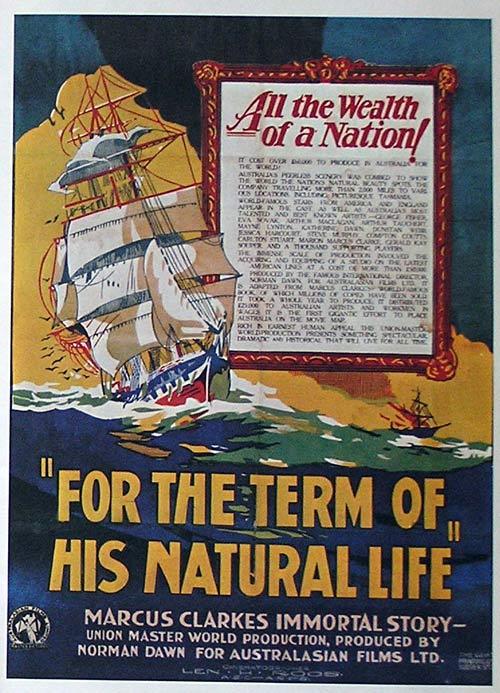
With the US continuing to dominate the market, especially in terms of the emerging “talkies”, Australian movie production maintained a reasonable level but not every movie was as successfully received as they had been in the past. New movie makers arrived on the scene, writer/directors such as Norman Dawn and Paulette McDonagh, and though they too faced an uphill battle to make an impact (or a profit) with their movies, nevertheless they succeeded. Dawn made one of the most impressive Australian movies of the late Twenties, the historical drama For the Term of His Natural Life (1927), yet another movie that showed Australia was just as capable as Hollywood of producing intelligent and compelling movies.

For the Term of His Natural Life

For the Term of His Natural Life (1927) / D: Norman Dawn / 102m

Cast: George Fisher, Eva Novak, Dunstan Webb, Jessica Harcourt, Arthur McLaglen, Katherine Dawn, Gerald Kay Souper, Marion Marcus Clarke, Arthur Tauchert, Mayne Lynton, Compton Coutts

1827, England. A row between Sir Richard Devine and his wife Ellinor (Clarke) leads to the revelation that their son, also Richard (Fisher), is illegitimate and the result of a brief affair with Lord Bellasis. Sir Richard banishes his son, while at the same time Lord Bellasis has an argument with his son, known as John Rex (also Fisher) that leads to John killing his father. Richard chances upon the body but is discovered by some of Lord Bellasis’s men. Accused of his murder, but thinking that Sir Richard has committed it, he remains silent (and helps to keep his mother’s shame from being exposed as well). He gives his name as Rufus Dawes and allows himself to be tried and sentenced to life imprisonment in a penal colony in Australia.

On the voyage a mutiny is organised by none other than John Rex, with the aid of his fiancée, Sarah Purfoy (Harcourt). Purfoy is travelling as nurse to the daughter of the new governor, Major Vickers (Souper) and his wife (Dawn). Rufus overhears the plans for the mutiny and alerts the crew. The mutiny is foiled but the mutineers guess that Rufus informed on them, and they have their revenge by claiming he was the leader. When the ship reaches Macquarie Harbour, Rufus is left in isolation on a nearby island.

Six years pass. The governor’s daughter, Sylvia (Novak) has grown into a beautiful young woman, and has attracted the attention of Captain Frere (Webb). Frere was in command of the penal ship that brought them all to Australia; his distrust of the convicts has made him cruel and merciless. His arrival at the harbour is to inform Major Vickers that he is to decamp to Port Arthur, along with all the convicts. This coincides with Rufus’s decision to end his life by jumping off a high cliff on his island; however, he survives. Meanwhile, Vickers travels with the prisoners on one ship while his wife and daughter, accompanied by Frere, travel on a second ship. This ship is hijacked by Rex and the trio are left on a beach, witjhout supplies, to fend for themselves. Rufus is washed ashore and sets about trying to return them all to the governor. He builds a makeshift boat and they set off, but not before Sylvia’s mother succumbs to a fever. It’s all too much for the young woman, and by the time they’re rescued, Sylvia also has a fever, but one that robs her of the memories of what has happened. Frere takes advantage of this and has Rufus re-imprisoned, and takes the credit for their being alive.

Years pass. Frere and Sylvia are due to be married, while Rex has been apprehended and is to be tried and expected to hang. Purfoy reappears and blackmails Frere into getting his sentence reduced. At the trial Rufus is called to testify, but when it becomes clear that Sylvia doesn’t recognise him, his accusations against Frere go unheeded. With his life spared, Rex plans another escape and asks Rufus to go with him. Rufus declines the offer but asks Rex to take a letter home to his mother. The escape plan is a success, and with Purefoy’s help, Rex gets to Sydney, whereupon he reads Rufus’s letter and discover the truth about their relationship. Realising that this is the reason why they look so much alike, Rex determines to go to England and impersonate Rufus and live his life in the way he’s always wanted…

For the Term of His Natural Life - scene

Based on the novel by Marcus Clarke, and previously adapted for the screen in 1908 and 1911, For the Term of His Natural Life is the most expensive Australian silent movie ever made, and also one of the most gripping. Its tale of doppelgängers, murder, mutinies, dangerous convicts, a scheming captain, a young woman in peril, the twin burdens of shame and regret – all combine to make a movie that grips from beginning to end, and it’s a movie that’s so well filmed for the time that it makes some modern day movies look amateurish in comparison.

The budget aside, Dawn’s adaptation aims high and rarely falls short, capturing the agony and despair of the convicts’ lives and the conditions they’re forced to live in. In this sense the movie doesn’t pull any punches, and as a record of the period it’s remarkably faithful, with the makers’ decision to film in the actual locations depicted adding to the credibility of the outdoor scenes (the Inca, an old sailing ship, was renovated and used for the scenes in Sydney harbour). With such an effort made to make the background as realistic as possible, and with exact copies of contemporary clothing made as well, Dawn’s grounding of the narrative pays off in dividends. It’s like looking through a window into the past.

Dawn is aided immeasurably by his cast, with Fisher a standout as the anguished Rufus and the malicious Rex. The viewer is never in any doubt as to which character is on screen, and even though there are few scenes where the two characters interact, it’s a testament to the efforts of DoP’s Len Roos, John William Trerise and Bert Cross that when they do it’s as seamlessly as possible. Of the two characters, Rufus is the more sympathetic (as you’d expect), but Fisher makes sure Rex’s dastardly behaviour isn’t entirely objectionable. It’s a delicate process, but you only have to look to the scene where his relationship to Rufus is revealed to see the desperate need to be accepted that has driven Rex onwards.

Novak is exquisitely lovely as Sylvia, and displays her character’s amnesia with aplomb, keeping her expressions natural and free from hysteria (or the declamatory style of acting that still afflicted some silent movies of the era). As the cowardly, villainous Frere, Webb is eminently hissable, while Harcourt, formerly a fashion model, is entirely convincing as Purfoy, using her feminine wiles to good effect as she charms and entices a variety of the male characters into doing what she wants. In smaller roles, The Sentimental Bloke‘s Tauchert pops up as a prison warden, while Dawn’s wife, Katherine has a touching death scene as Sylvia’s mother (she was also the movie’s editor).

There’s enough here to make a mini-series, but Dawn apportions the appropriate time needed for each scene and development of the storyline, so that no scene outstays its welcome or feels truncated. There’s a natural rhythm and flow to the narrative, and Dawn handles the crises and lulls with equal attention and commitment. In fact, so confident is he with the material that, when it’s over, you don’t realise just how quickly it’s all happened… and how rewarding it’s all been.

Rating: 9/10 – some very minor quibbles aside – such as Coutts eyeball-rolling performance, or an unnecessary reference to a secondary character’s claims of cannibalism – For the Term of His Natural Life is an exciting, character-driven historical drama that succeeds by virtue of its cast and crew’s commitment to the overall tale; one to be seen both for its confident, considered approach and its exacting take on both the material and the period evoked.

Movies such as For the Term of His Natural Life weren’t common however, and as the Twenties drew to a close, movie production resumed a more familiar pattern of homegrown comedies such as the Dad and Dave series along with turgid dramas such as Tiger Island (1930). It was in 1930 that exhibitor F.W. Thring established Efftee Studios in Melbourne, a production company that made the first Australian talkies, movies such as Diggers (1931), The Haunted Barn (1931), and the generally well received remake of The Sentimental Bloke (1932). But with the Australian government refusing to implement quotas for Australian movies it was difficult for any studio or production company to make a profit, and in 1935 Thring was forced to cease making movies; it was estimated he lost A$75,000 of his own money.

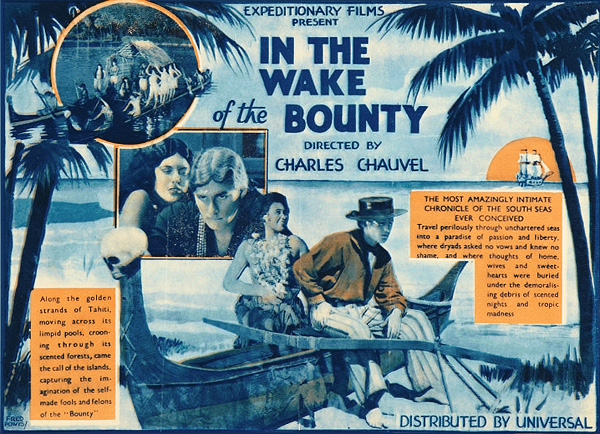
Another movie company, Cinesound Productions was more successful, making seventeen features between 1932 and 1940. Cinesound based their productions on the American model and promoted them well enough that each feature either broke even or made a profit. But while other movies continued to be made independently – e.g. In the Wake of the Bounty (1933), which introduced the world to Errol Flynn – the decline that had begun in the Twenties continued unabated. As fewer movies were made each year, and were less and less profitable, the Australian movie industry was dealt a further blow when the UK decided that Australian movies would no longer be included in the local movie quota, thus causing the loss of a previously guaranteed market.

In the Wake of the Bounty

As the Thirties drew to a close with World War II looming on the horizon, the industry began to implement a kind of self-imposed shutdown, recognising that feature length movies would prove too costly to make in the new economic climate. But the future was already uncertain, and though the War did have an impact on movie production, a break was perhaps just what the industry needed.

Share this:

  • Click to share on X (Opens in new window) X
  • Click to share on Facebook (Opens in new window) Facebook
  • More
  • Click to print (Opens in new window) Print
  • Click to email a link to a friend (Opens in new window) Email
Like Loading...

For One Week Only: Australian Cinema – Part I

17 Monday Aug 2015

Posted by dullwood68 in Movies

≈ Leave a comment

Tags

1896-1920, Albert Roche, Arthur Tauchert, Athanaeum Hall, Australian cinema, C.J. Dennis, Drama, For One Week Only, Gilbert Emery, John Gavin, Lottie Lyell, National Film and Sound Archive, Raymond Longford, Restoration, Review, Romance, The Limelight Department, The Sentimental Bloke, The Songs of a Sentimental Bloke

Australian Cinema Part I – 1896-1920

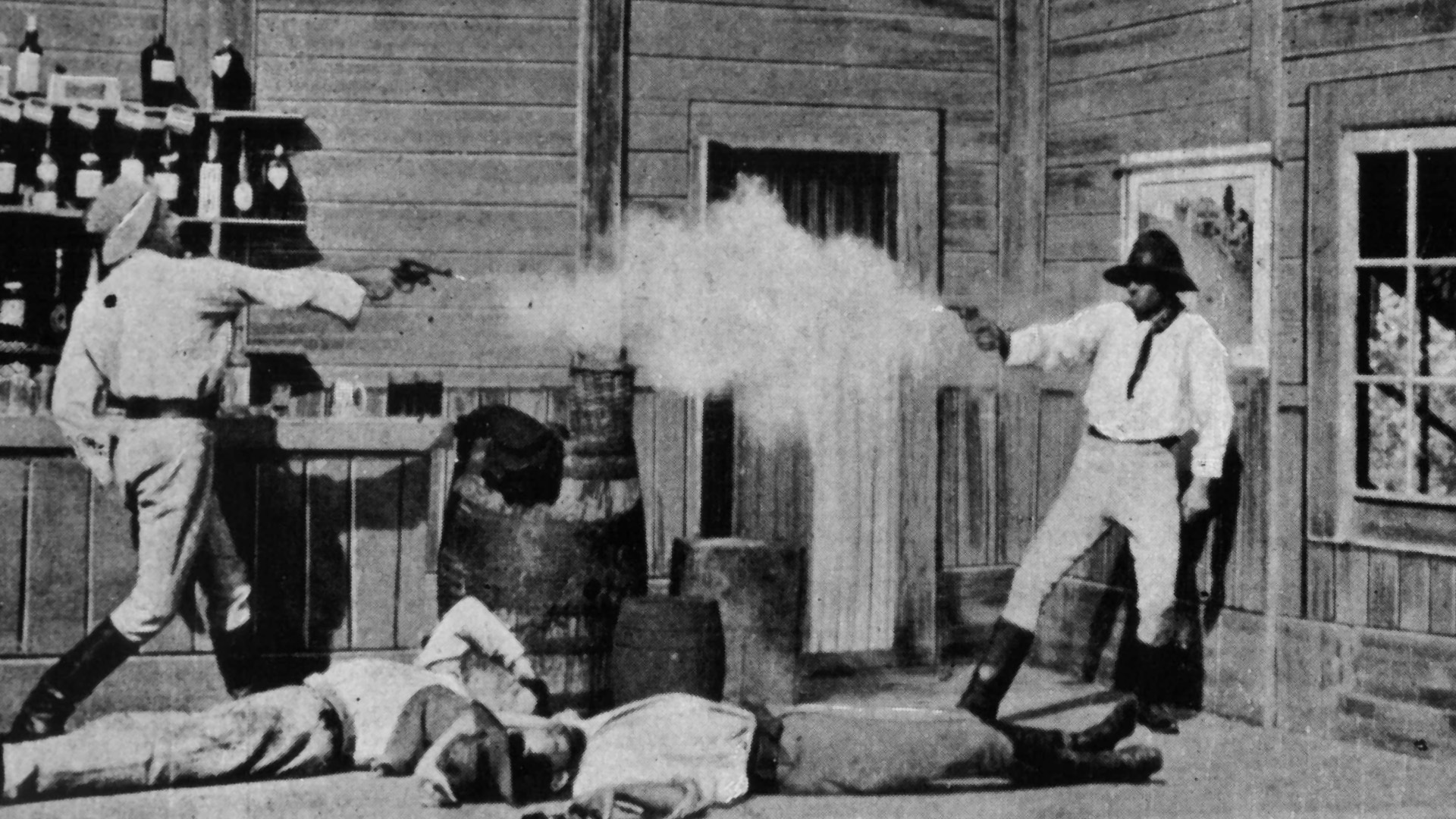
The first cinema presentation in Australia happened in October 1896 at the Athanaeum Hall in Melbourne. It was a short movie (of course), but while Australia and other movie producing countries around the world continued to make and show short movies, it was Australia that would produce the first full-length feature: The Story of the Kelly Gang (1906). Running for approximately sixty minutes, it was directed by Charles Tait, a concert, movie and theatrical entrepreneur, and featured several of his family in key roles. It was a major success, and was shown in New Zealand, Ireland and the UK (alas, only seventeen minutes of footage still survives).

Story of the Kelly Gang, The - scene

While the Athanaeum Hall continued to show movies, Melbourne was also the home of one of the world’s first movie studios, the Limelight Department, which was in use between 1897 and 1910 (and was overseen by the Salvation Army). It made a variety of movies of varying lengths, some three hundred in all, and was, for its time, the biggest producer of movies worldwide. It was responsible for a number of firsts: first feature length documentary, Inauguration of the Commonwealth (1901); first bushranging drama, Bushranging in North Queensland (1904); and first movie combining moving images, glass slides, oratory and music, Soldiers of the Cross (1900). As the Australian movie industry took off, the ensuing boom years of the 1910’s saw the industry flourish, with directors such as John Gavin, Alfred Roche, E.I. Cole and W.J. Lincoln leading the way (and even though some of their efforts may not have been as good as they’d hoped).

In 1911, first-time director Raymond Longford made The Fatal Wedding, a melodrama that proved to be a huge success and which was well received critically. It was also the first Australian movie to claim two particular innovations: that it was the first to use interior sets, and that it featured the first ever close-up. Whether or not this is actually true, it reinforces the view that Australia – despite its distance from the rest of the world’s movie-making community – was forging ahead with new ideas and was creating a robust, popular industry that was the equal of the US, Italy and the UK in terms of movie production and exhibition.

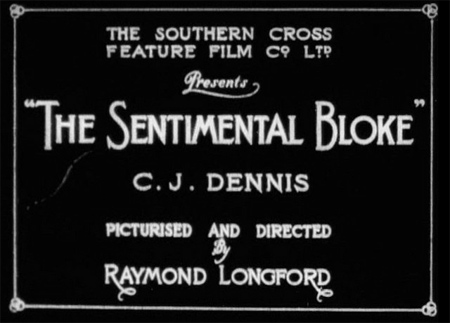
As the decade wore on, more and more movies were made and released, including The Sundowner (1911), Transported (1913), The Martyrdom of Nurse Cavell (1916), Australia’s Peril (1917), and the interestingly titled Does the Jazz Lead to Destruction (1919), but most titles are now considered lost. One movie that has survived, and was the subject of a restoration project in the early 2000’s, is Raymond Longford’s The Sentimental Bloke (1919), viewed as one of the best Australian movies of all time, and based on the poem The Songs of a Sentimental Bloke by C.J. Dennis. Here is a testament to the impressive development of the Australian movie industry, and an example of how advanced this island continent had become.

Sentimental Bloke, The

The Sentimental Bloke (1919) / D: Raymond Longford / 68m

Cast: Arthur Tauchert, Lottie Lyell, Gilbert Emery, Stanley Robinson, Harry Young, Margaret Reid, Charles Keegan, William Coulter, Helen Fergus, C.J. Dennis

Bill (Tauchert) is a larrikin, an uncultivated, mischievous man who behaves as if social conventions don’t apply to him. He drinks – usually with his best friend, Ginger Mick (Emery), and he gambles as well. When he’s caught in a raid on a gambling den, he’s sentenced to six months in gaol. When he gets out he vows to himself that he’ll give up his old life and walk the straight and narrow. He finds work at a market and avoids his old friends. One day he spies a young woman (Lyell) and is instantly smitten with her. But when he approaches her, and uses his usual slang terms to impress her, she rebuffs him. Chastened, and aware that he needs to improve his manners, Bill determines that if she should meet her again he will behave more responsibly.

He learns that the young woman is called Doreen and that she works in a pickle factory, putting labels on the bottles. Through a friend who works there also, Bill arranges a meeting with her, and putting aside his usual way of talking, he shows her that he’s not as bad as she thought previously. They begin seeing each other, but when another man Bill calls the Stror ‘at Coot (Young) starts to pay attention to Doreen as well, his natural belligerence and anger cause him to warn the man off. However, the Stror ‘at Coot persists in seeing Doreen until Bill gets violent with him, a situation that Doreen is unhappy about.

Knowing he’s skating on thin ice, but confused that defending his true love appears to be wrong, Bill assures Doreen that he will try harder. Eventually, after Bill has satisfied the concerns of Doreen’s mother (Reid), they marry and settle down together in their own home. But a chance encounter one night with Ginger Mick leads to Bill lapsing back into his old ways. He gambles away his money, and when he finally gets home in the early hours of the morning, he expects to be chastised for his foolishness. But the next morning brings a surprise, one that allows the couple to move on with their lives and in the fullness of time, to find peace and happiness.

Sentimental Bloke, The - scene

A huge success on its release, The Sentimental Bloke plays like a cross between Charles Dickens and an early Australian soap opera. It’s a charming, easily likeable movie, with a good central performance from Tauchert (who’d only made a couple of short movies before this), and tells its story in a direct, no frills way that makes it all the more enjoyable. In adapting Dennis’s work, Longford and his real life partner Lyell have kept the heart and soul of the poet’s work and translated it to the screen with surprising ease, even to the point of using Dennis’s prose for the intertitles (though some viewers may be put off by the use of colloquialisms and Aussie slang terms).

There’s much to admire, from Tauchert’s naturalistic interpretation of Bill, to Lyell’s considered portrayal of Doreen. Their scenes together reflect Longford’s decision to eschew the usual melodramatic excesses of silent movie acting, and opt for a more realistic approach, leaving Bill and Doreen resembling people that audiences could actually identify with. Tauchert has a wonderfully expressive face (especially when Bill is showing confusion), and Lyell matches him with several moments of pained acceptance, as Doreen’s love for Bill wins out over her reservations about his behaviour. (Sadly, Lyell, who was very very talented, and regarded as Australia’s first movie star, died in 1925 from tuberculosis.) Elsewhere, Emery and Reid provide solid support, but Longford keeps the focus on Bill and Doreen, and rightly so. Their relationship, with its ups and downs and unwavering commitment to each other, is shown without the need for undue or unnecessary emphasis, and is all the more effective for it.

What arises from all this is a great deal of humour to offset the pathos and muted drama. A highlight is a visit to the theatre to see a production of Romeo and Juliet (not something that Bill is too keen on at first). As the couple become wrapped up in the tragedy of Shakespeare’s young lovers, each twist and turn of the story sees them more and more emotionally invested, until the moment when Romeo slays Tybalt and Bill shouts out “Put in the boot!” The movie is stuffed with winning moments like that one, and each adds to the richness of the material.

The movie is also beautifully shot by Arthur Higgins. He was the DoP on The Fatal Wedding, and would work on this movie’s sequel, Ginger Mick (1920). He shows a firm grasp of lighting and composition, and the outdoor sequences have a freshness and vitality about them that few other cinematographers of the period could manage to achieve. It’s a shame that so many of the other movies he shot have since been lost – on this evidence he was exceptionally talented and deserves to be more widely known.

Following its release, The Sentimental Bloke was a success in the UK and Ireland, but not in the US because Dennis’s prose was found to be too difficult to understand. Despite the movie being recut and the intertitles changed, and being called The Story of a Tough Guy, it was quickly withdrawn from distribution. In the Fifties, a fire at a Melbourne movie library resulted in the destruction of all but two boxes of movie negatives. Fortunately, The Sentimental Bloke was saved, and following a transfer of the 35mm nitrate positive to 16mm acetate stock, it was shown to great acclaim at the 1955 Sydney Film Festival (ironically, Longford wasn’t invited to attend as the organisers were unaware he was still alive; he died in 1959).

But that wasn’t the end of the movie’s journey. In 1973 an original 35mm negative was discovered at a Film Archive in Rochester, New York. Even though it was a copy of the American version, the quality was better than any Australian copies (it had also been mislabelled The Sentimental Blonde). And in 2000, Australia’s National Film and Sound Archive embarked on a restoration project that included restoring the original colour tinting as much as possible. The results were shown at the 2004 Sydney Film Festival to further acclaim, proving that Longford and Lyell’s efforts all those years ago will continue to be appreciated – and rightly so.

Rating: 9/10 – a bona fide classic that still stands the test of time, The Sentimental Bloke is Australian silent cinema at its finest: dramatic, funny, emotionally earnest, and heartwarming; as one of the few movies to survive (relatively) intact from the period, it should be required viewing for anyone interested in silent cinema, or just because it’s a beautiful story beautifully told.

Share this:

  • Click to share on X (Opens in new window) X
  • Click to share on Facebook (Opens in new window) Facebook
  • More
  • Click to print (Opens in new window) Print
  • Click to email a link to a friend (Opens in new window) Email
Like Loading...

Ladies and Gentlemen – Introducing… For One Week Only

12 Wednesday Aug 2015

Posted by dullwood68 in Movies

≈ Leave a comment

Tags

Australian cinema, For One Week Only, Introduction

For anyone with an interest in movies, there’s generally a point in time when they realise that there’s one aspect of movie watching that provides more pleasure than all the others. It might be a particular genre, horror perhaps, or historical dramas, or movies set in a specific country. It might be a certain theme (addiction, corporate crime), or movies made by the same director or actor. Whatever it is, any movies connected with that aspect will come to mean the cinematic equivalent of comfort food, and sometimes, even if the movie is really, really, really bad, you’ll still gain some degree of satisfaction from watching it.

For me, horror movies fit the bill. I grew up watching them, I continue to watch them (good, bad, or frankly appalling), and if I’m having a really bad day, or just feel completely fed up or miserable, I sit down and watch the worst horror movie I can find. (We’re talking Leprechaun: Origins (2014) levels of bad here.) And it always does the trick.

With that in mind, let me introduce a new feature on thedullwoodexperiment: For One Week Only. The idea is to focus on one theme or actor or country’s output or cinematographer or point in history (or future) or genre or production company – you get the gist. This feature will occur roughly every six to eight weeks and will cover the selected topic/person in some detail across the week. During these weeks the regular reviews and trailer alerts will continue to appear, but will take a back seat to the new feature. Any and all feedback will be greatly appreciated, as will any suggestions for future weeks.

The first For One Week Only begins on Monday 17 August with a look at the Australian movie industry, and will comprise a kind of potted history of its development, and include reviews of movies that have been either instrumental in bringing Australia’s output to the attention of international audiences, or have a historical significance. Australian cinema is unique, and I’m looking forward to exploring that strange, wicked, off-beat world in all its cinematic glory. I can’t wait to get started on Monday – as Nux from Mad Max: Fury Road (2015) might say, “What a day! What a lovely day!”

For One Week Only (1)

Share this:

  • Click to share on X (Opens in new window) X
  • Click to share on Facebook (Opens in new window) Facebook
  • More
  • Click to print (Opens in new window) Print
  • Click to email a link to a friend (Opens in new window) Email
Like Loading...

Blog Stats

  • 486,528 hits

Recent Posts

  • 10 Reasons to Remember Bibi Andersson (1935-2019)
  • Fantasia (1940)
  • Dances With Wolves (1990) – The Special Edition
  • Kiss of the Spider Woman (1985)
  • The Three Musketeers (1973)

Top Posts & Pages

  • Lost for Life (2013) - Another Look
    Lost for Life (2013) - Another Look
  • Lost for Life (2013)
    Lost for Life (2013)
  • About
    About
  • Mr. Topaze (1961)
    Mr. Topaze (1961)
  • Billy Lynn's Long Halftime Walk (2016)
    Billy Lynn's Long Halftime Walk (2016)
  • Winter's Tale (2014)
    Winter's Tale (2014)
  • The Hitman's Bodyguard (2017)
    The Hitman's Bodyguard (2017)
  • 5 Famous Movie Roles That Nearly Went to Someone Else
    5 Famous Movie Roles That Nearly Went to Someone Else
  • The Layover (2017)
    The Layover (2017)
  • Transcendence (2014)
    Transcendence (2014)
Follow thedullwoodexperiment on WordPress.com

Blogs I Follow

  • Rubbish Talk
  • Film 4 Fan
  • Fast Film Reviews
  • The Film Blog
  • All Things Movies UK
  • Interpreting the Stars
  • Let's Go To The Movies
  • Movie Reviews 101
  • TMI News
  • Dan the Man's Movie Reviews
  • Film History
  • Jordan and Eddie (The Movie Guys)

Archives

  • April 2019 (13)
  • March 2019 (28)
  • February 2019 (28)
  • January 2019 (32)
  • December 2018 (28)
  • November 2018 (30)
  • October 2018 (29)
  • September 2018 (29)
  • August 2018 (29)
  • July 2018 (30)
  • June 2018 (28)
  • May 2018 (24)
  • April 2018 (21)
  • March 2018 (31)
  • February 2018 (25)
  • January 2018 (30)
  • December 2017 (30)
  • November 2017 (27)
  • October 2017 (27)
  • September 2017 (26)
  • August 2017 (32)
  • July 2017 (32)
  • June 2017 (30)
  • May 2017 (29)
  • April 2017 (29)
  • March 2017 (30)
  • February 2017 (27)
  • January 2017 (32)
  • December 2016 (30)
  • November 2016 (28)
  • October 2016 (30)
  • September 2016 (27)
  • August 2016 (30)
  • July 2016 (30)
  • June 2016 (31)
  • May 2016 (34)
  • April 2016 (30)
  • March 2016 (30)
  • February 2016 (28)
  • January 2016 (35)
  • December 2015 (34)
  • November 2015 (31)
  • October 2015 (31)
  • September 2015 (34)
  • August 2015 (31)
  • July 2015 (33)
  • June 2015 (12)
  • May 2015 (31)
  • April 2015 (32)
  • March 2015 (30)
  • February 2015 (37)
  • January 2015 (39)
  • December 2014 (34)
  • November 2014 (34)
  • October 2014 (36)
  • September 2014 (25)
  • August 2014 (29)
  • July 2014 (29)
  • June 2014 (28)
  • May 2014 (23)
  • April 2014 (21)
  • March 2014 (42)
  • February 2014 (38)
  • January 2014 (29)
  • December 2013 (28)
  • November 2013 (34)
  • October 2013 (4)

Create a free website or blog at WordPress.com.

Rubbish Talk

Film 4 Fan

A Movie Blog

Fast Film Reviews

The Film Blog

The official blog of everything in film

All Things Movies UK

Movie Reviews and Original Articles

Interpreting the Stars

Dave Examines Movies

Let's Go To The Movies

Film and Theatre Lover!

Movie Reviews 101

Daily Movie Reviews

TMI News

Latest weather, crime and breaking news

Dan the Man's Movie Reviews

All my aimless thoughts, ideas, and ramblings, all packed into one site!

Film History

Telling the story of film

Jordan and Eddie (The Movie Guys)

Movie Reviews & Ramblings from an Australian Based Film Fan

Privacy & Cookies: This site uses cookies. By continuing to use this website, you agree to their use.
To find out more, including how to control cookies, see here: Cookie Policy
  • Subscribe Subscribed
    • thedullwoodexperiment
    • Join 481 other subscribers
    • Already have a WordPress.com account? Log in now.
    • thedullwoodexperiment
    • Subscribe Subscribed
    • Sign up
    • Log in
    • Report this content
    • View site in Reader
    • Manage subscriptions
    • Collapse this bar
 

Loading Comments...
 

    %d