• 10 Reasons to Remember…
  • A Brief Word About…
  • About
  • For One Week Only
  • Happy Birthday
  • Monthly Roundup
  • Old-Time Crime
  • Other Posts
  • Poster of the Week
  • Question of the Week
  • Reviews
  • Trailers

thedullwoodexperiment

~ Viewing movies in a different light

thedullwoodexperiment

Tag Archives: Boarding school

Slaughterhouse Rulez (2018)

01 Thursday Nov 2018

Posted by dullwood68 in Movies

≈ Leave a comment

Tags

Asa Butterfield, Boarding school, Comedy, Crispian Mills, Drama, Finn Cole, Fracking, Horror, Michael Sheen, Monsters, Review, Simon Pegg

D: Crispian Mills / 104m

Cast: Asa Butterfield, Finn Cole, Simon Pegg, Michael Sheen, Hermione Corfield, Nick Frost, Max Raphael, Kit Connor, Isabella Laughland, Tom Rhys Harries, Louis Strong, Margot Robbie

Slaughterhouse is a traditional English boarding school, with the sons and daughters of the rich and famous and the establishment primed to follow in their parents’ footsteps. When a rare placement comes the way of Don Wallace (Cole), a teenager from a single parent, working class background, he doesn’t really want to go, but does so to please his mother. Once there, he’s placed in a room with Willoughby Blake (Butterfield), whose disaffection with the school leads him to carry out small acts of subversion. But the cruelties and occasional moments of relief from life at Slaughterhouse soon take a back seat to the consequences of a nearby fracking operation that has opened up a sinkhole. On a weekend when most of the pupils have gone home, the headmaster (Sheen), one of the teachers (Pegg), Don and Willoughby, along with a number of other pupils, find themselves fighting off attacks by a “frack” of subterranean monsters that have emerged from the sinkhole. It’s time to put personal differences aside and keep each other alive…

You know that feeling when you’re around five to ten minutes into a movie and you just know that you’re going to be disappointed – because you are already? That’s the feeling viewers of the first feature from Stolen Picture, a production company set up by stars Pegg and Frost, will have once they’ve started watching this ill-advised and poorly assembled comedy horror. It’s not just that Slaughterhouse Rulez isn’t that funny, or very effective in terms of its horror elements, it doesn’t work because it’s another movie that tries waaaaay too hard to be funny, scary, and exciting all at the same time, while not being able to strike a proper balance between all three. The script – by Mills and Henry Fitzherbert – adopts a kitchen sink approach to the comedy, with physical pratfalls, visual gags, terrible puns or references (you can guess the line that inevitably accompanies the apparent demise of the headmaster’s dog, Mr Chips), and lots of frightened yelling, screaming and running in fear. Like much else in the movie, it’s these efforts, and the extended effort that goes into them, that make you wonder if everyone’s trying too hard because they know the material isn’t strong enough to support itself.

So, the comedy is broad and buffoon-like, with the adult characters suffering the most, from Pegg’s lovelorn teacher, to Frost’s stoner anti-fracking campaigner, to Sheen’s priggish headmaster. These are caricature performances that have been done to death in dozens of other British (so-called) comedies, and they’re still not funny even now. The horror relies on gory special effects, and rapid fire editing to hide the deficiencies of the animatronics and prosthetics, while the monsters themselves look like they wouldn’t even pass muster in a Doctor Who episode. It’s also a movie that  fails to exploit the issue of fracking and approaches it in a simplistic, “fracking is bad” fashion that makes the whole thing a plot contrivance instead of anything more rigorous. Potshots at boarding school life are numerous but offer nothing new, and the characters are as passively stereotypical as you’d expect. Tasked with breathing life into a movie that begins tired and winds up positively comatose by the end, the cast can only struggle to make their characters’ plight convincing; though they’re hampered by Mills’ pedestrian and uninspired direction. A disappointing movie, then, and one that would have benefited from taking more risks with the material than it does.

Rating: 4/10 – not the auspicious debut for their production company that Pegg and Frost would have wished for, Slaughterhouse Rulez lacks energy and purpose, and doesn’t even charm on a pizza-and-beer-on-a-Saturday-night basis; as it goes through the motions, the same will be true of viewers wondering how they can escape this mess with their sanity intact.


Share this:

  • Click to share on X (Opens in new window) X
  • Click to share on Facebook (Opens in new window) Facebook
  • More
  • Click to print (Opens in new window) Print
  • Click to email a link to a friend (Opens in new window) Email
Like Loading...

Handsome Devil (2016)

10 Saturday Feb 2018

Posted by dullwood68 in Movies

≈ Leave a comment

Tags

Andrew Scott, Boarding school, Comedy, Coming of age, Drama, Fionn O'Shea, Ireland, John Butler, Nicholas Galitzine, Review, Rugby, Talent show

D: John Butler / 95m

Cast: Fionn O’Shea, Nicholas Galitzine, Andrew Scott, Michael McElhatton, Moe Dunford, Ruairi O’Connor, Jay Duffy, Ardal O’Hanlon, Amy Huberman, Stephen Hogan

Ned (O”Shea) is returning to boarding school for another year of being the outsider, the one pupil in the entire school for whom rugby – which the school is obsessed by – doesn’t mean anything. Ned prefers reading and music, but this has earned him the enmity of some of the other pupils, including Weasel (O”Connor), who is on the current team. However, there is good news: this year he has a room to himself. But this good fortune doesn’t last long. A new pupil called Connor (Galitzine), is assigned to Ned’s room. First impressions don’t help and the pair initially don’t get along. An incident in their English class allows for the barriers they’ve erected (literally and figuratively) to be broken down, and soon they share a genuine friendship. A joint love of music sees them cajoled by their English teacher, Mr Sherry (Scott), into taking part in a local talent show. But Connor has also made the school rugby team and is proving to be their star player. But Connor has a secret, one that Ned discovers by accident, and one that leads to their friendship becoming strained, as well as forcing Connor to make a difficult choice if he wants to remain at the school.

Told in the form of an extended flashback as Ned recounts the events of the previous months, Handsome Devil is another very likeable, very enjoyable movie that serves as a reminder that when it comes to coming-of-age tales, Ireland has assembled a pretty good track record in recent years. Irish movie makers seem to know instinctively how to balance comedy and drama in their movies, and John Butler’s follow up to The Stag (2013) is no exception. And more importantly, one isn’t allowed to overshadow the other. It’s sometimes a precarious balancing act, but here the dramatics surrounding Connor’s secret (an obvious one but treated with sympathy and understanding by Butler’s screenplay) are played out with a credibility lacking in many other movies, and thanks to a deftly handled performance by Galitzine. Connor’s friendship with Ned is another aspect that’s handled well, growing organically out of their shared appreciation for music. Butler gives both characters the chance to grow as the movie progresses, and they both emerge from their self-imposed shells more confident and more determined not to return to them.

There’s plenty of humour to be had as well, and the movie makes several salient points about the highs and lows to be experienced in a boarding school environment. There’s also a devil and angel scenario whereby Connor’s “soul” is the concern of both Mr Sherry and his rugby coach, Mr O’Keeffe (Dunmore). This leads to a few awkward scenes that don’t feel as well developed as in other areas, and despite good performances from both actors, these scenes always feel a little leaden in comparison. In truth, the main storyline isn’t anything new, but it’s the way in which Butler handles it that makes it so enjoyable. There’s an impish yet sincere quality to the material that is engaging, and within the world he’s created, much is recognisable in terms of the characters and their troubles. Butler is utilising universal elements to tell his story, and it’s this universality that makes it look and sound so good, even if sometimes, his message is a little too simplistic (the movie ends on a moment of fantasy wish fulfillment that will either make you groan or cheer).Your world won’t be changed – probably – by seeing this movie, but you will enjoy spending time with it.

Rating: 8/10 – bright and entertaining, and with a welcome degree of poignancy, Handsome Devil is a delightful movie full of terrific performances topped off by Butler’s assured direction, and a number of first-rate song choices on the soundtrack; definitely a feelgood movie, then, and one that doesn’t strain to be something it’s not or strive to make more of its story than is completely necessary.

Share this:

  • Click to share on X (Opens in new window) X
  • Click to share on Facebook (Opens in new window) Facebook
  • More
  • Click to print (Opens in new window) Print
  • Click to email a link to a friend (Opens in new window) Email
Like Loading...

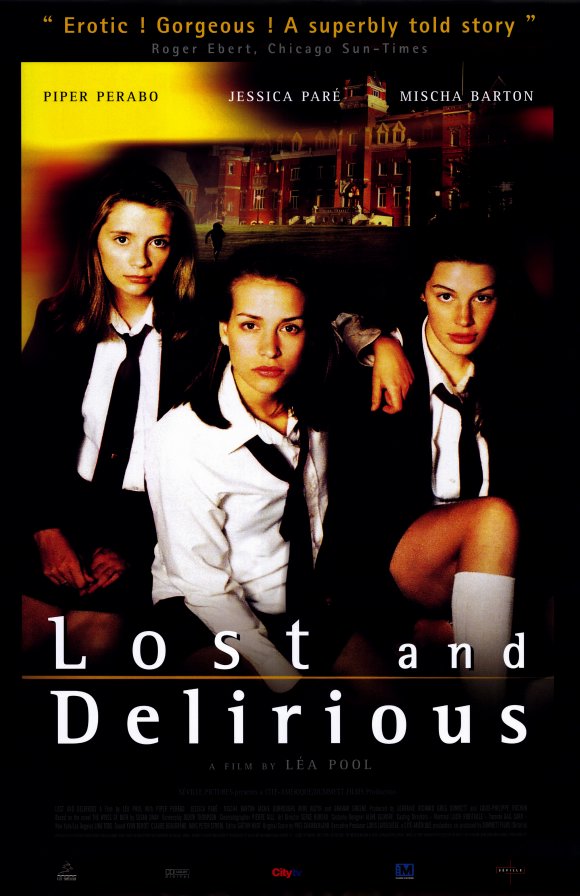
Lost and Delirious (2001)

09 Wednesday Mar 2016

Posted by dullwood68 in Movies

≈ 3 Comments

Tags

Boarding school, Drama, Falcon, Jessica Paré, Léa Pool, Lesbianism, Literary adaptation, Love, Mischa Barton, Piper Perabo, Prejudice, Relationships, Review, Susan Swan

Lost and Delirious

D: Léa Pool / 103m

Cast: Piper Perabo, Jessica Paré, Mischa Barton, Jackie Burroughs, Mimi Kuzyk, Graham Greene, Emily VanCamp, Amy Stewart, Caroline Dhavernas, Luke Kirby

A female-only boarding school. A new pupil still mourning her recently deceased mother. Two roommates who seem especially close. An atmosphere of prejudice and privilege. The attentions of a teenage boy from another, nearby school. Peer pressure. Love rejected and dismissed. An injured falcon. High emotions left unchecked and leading to tragedy. All these and more form the meat of Lost and Delirious, a movie that comes very close to capturing the urgency and intensity of first love, and the spiralling madness that follows in the wake of that first love being rejected out of self-preservation.

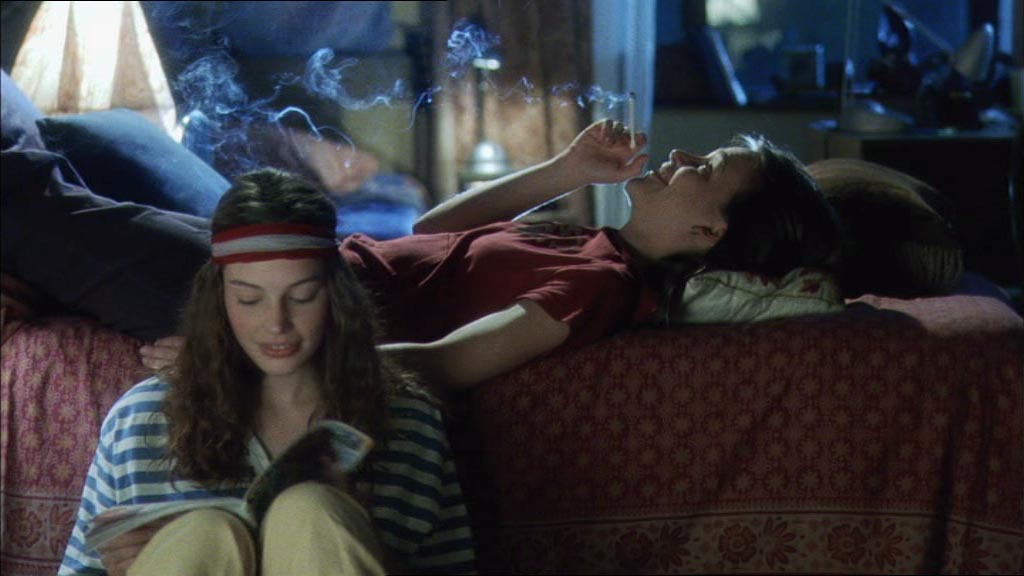
The movie opens with the arrival of fourteen year old Mary (Barton) at a semi-remote all-girls boarding school somewhere in Ontario, Canada. She’s shy and hesitant, so obviously a naïf that she might as well have it written across her forehead. Fortunately, the headmistress, Miss Vaughn (Burroughs), places her with Paulie (Perabo) and Tori (Paré), two older girls who take her under their combined protection and help her adjust to being away from home. It isn’t long though before Paulie and Tori’s relationship becomes much clearer: they’re lovers, but only Mary knows.

Of the two, Paulie is the more rebellious, challenging authority at (almost) every turn, and behaving with a reckless abandon. Tori is more studious, less willing to antagonise the teachers in the way that Paulie does, and their differences seem to have brought them closer together. As time goes by they drop any pretence around Mary that they’re not a couple, and she becomes a confidant to their affair. But as with all breathless (and secret) love affairs in such an environment, exposure isn’t too far away, and one morning Tori’s younger sister, Allison (VanCamp), with some of her friends burst into their room and find Tori and Paulie naked in Tori’s bed.

LAD - scene3

It proves a turning point for their relationship. Tori is unwilling to admit her feelings, or that she and Paulie are more than friends, and she tells her sister very forcefully that she isn’t a lesbian, and that she didn’t even know Paulie had got into her bed with her the night before. Allison accepts Tori’s explanation and agrees not to mention it to anyone, and especially their father who Tori knows is staunchly homophobic. Her withdrawal from Paulie though has the effect of driving Paulie to ever more extreme actions, including declaring her love for Tori in front of the other students. Embarrassed and afraid of being disowned by her family, Tori maintains her rejection of Paulie, and ever more desperate to win her back, the increasingly disturbed Paulie resorts to her most extreme actions yet.

Fans of all-girl boarding school stories will no doubt be expecting some melo- to go with their drama, and while Lost and Delirious certainly has its moments it’s a much better example of the genre that starts off quietly, taking care to establish its trio of leading characters and affording time to provide a (mostly) convincing backdrop for the action that unfolds. Adapted by Judith Thompson from the novel by Susan Swan, the movie’s isolated locale and sense of modulated behaviours is given potent expression through Mary’s initial feelings of abandonment by her newly remarried father. Seeing her wide-eyed dismay at the enormity of both the school and the task of fitting in that lies ahead of her, Mary’s story is likely to be the movie’s focus, the classic tale of the young girl who seeks acceptance but is rebuffed at every turn. But instead Mary is the young girl who finds herself caught up in someone else’s story, and learns a heartfelt lesson because of it.

By subverting our expectations in this way, the movie shows it’s not afraid to take risks, even if those risks incur some narrative wobbles later on. As Paulie and Tori’s relationship becomes the movie’s true focus, and Mary becomes their “accomplice”, the screenplay becomes playful and carefree, celebrating the girls’ love for each other, and paying no heed to any possible downfall that may be around the corner. It’s during this period that Lost and Delirious is at its most tolerant, placing Paulie and Tori in a perfect bubble of acceptance and indulging itself in their happiness. But from the moment that Allison bursts into their room and shatters that perfect bubble of acceptance, there’s nowhere else their relationship can go but downhill, and with terrible consequences.

LAD - scene2

But again, the movie wrong foots the viewer. Instead of Paulie and Tori finding sufficient strength from their relationship to allow them to overcome any prejudice or homophobic resentment towards them, Tori folds under the pressure of family ties and the loss of the life she’s used to. On the surface it seems a cowardly, awful thing to do, to deny your love for someone, but Tori is a product of her privileged background and she has no more choice in the matter than Paulie does in how she reacts. Torn by her sense of duty to her father and her feelings for Paulie, it’s the insidious nature of a “traditional” upbringing that is the villain, and Tori doesn’t have the strength to fight against it.

So it’s left to Paulie to fight against the injustice of losing the one person she loves with all her being. But she’s a tragic figure with a tragic future waiting just ahead for her. The script does nothing to allay our fears on this matter, letting Paulie’s unhappiness shred any remaining inhibitions or emotional restraints until the only outcome that’s possible is one that will have repercussions for all that witness it. As this event draws ever closer, and Paulie’s actions become ever more desperate, it becomes all the more awful to see her floundering in her search for a way to ease the pain she’s feeling.

LAD - scene1

As Paulie, Perabo is excellent, putting in the kind of performance that is both affecting and heart-rending at the same time. This came after Coyote Ugly (2000), and while that movie brought Perabo to everyone’s attention, this is the movie that should have cemented her reputation. As it is, it’s possibly her very finest role, one that’s tinged with melancholy, vulnerability, despair, longing, fearlessness, and above all, the joy that only true love can bring. It’s a fierce, impassioned performance, poignant and sincere, and the movie exploits it at every opportunity. Paré is somewhat sidelined by Tori’s self-imposed split from Paulie, but she does a good job in showing the pain Tori herself feels at giving up her own true love. She’s also asked to deny her love for Paulie once or twice too often for narrative comfort, which some viewers may find distracting as well as repetitive. But like Perabo, Paré is equally good at displaying the elation of first love, and their early scenes together are full of the exuberance that comes with loving unconditionally.

Tying all this together neatly and with a studied panache, Pool illustrates the various pressures and required conformities of single sex school life with a greater attention to detail than is at first apparent (this is definitely a movie that delivers more from a second viewing). She focuses on the girls’ emotions to very good effect, and shows a confident grasp of the sexual politics inherent in such an environment, while also displaying a keen eye (and ear) for the other exigencies that come with it. If she has slightly more trouble explaining how Paulie can be consistently rude to Miss Vaughn and her teachers, or that her increasingly disturbed behaviour can go equally unchallenged, then it’s a small price to pay for the quality achieved elsewhere.

Rating: 8/10 – a modest coming-of-age drama that succeeds in elevating itself by virtue of a superb central performance and careful attention to detail, Lost and Delirious is deserving of being “rediscovered” by a wider audience; with an emotional thrust that is both honest and credible, it’s a movie that resonates long after its tragic yet powerful ending.

Share this:

  • Click to share on X (Opens in new window) X
  • Click to share on Facebook (Opens in new window) Facebook
  • More
  • Click to print (Opens in new window) Print
  • Click to email a link to a friend (Opens in new window) Email
Like Loading...

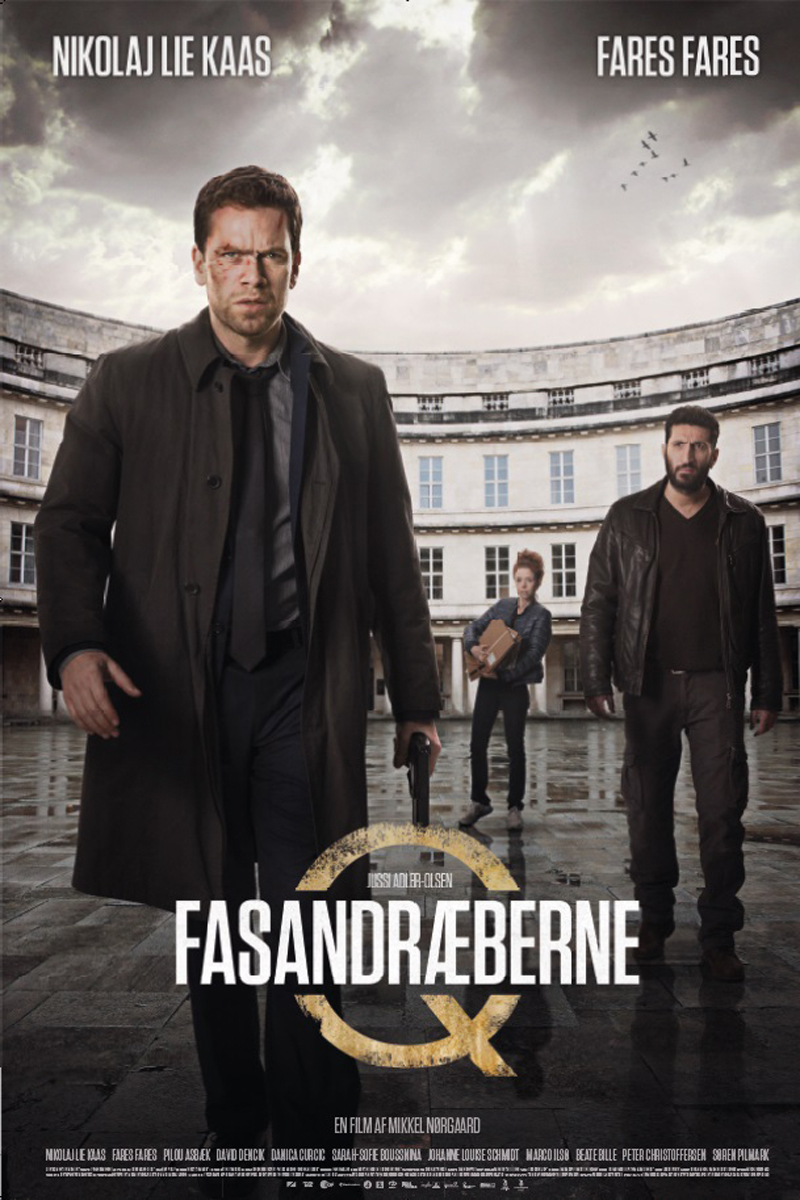
The Absent One (2014)

06 Monday Jul 2015

Posted by dullwood68 in Movies

≈ 1 Comment

Tags

Boarding school, Cold cases, Conspiracy, Crime, David Dencik, Denmark, Department Q, Drama, Fares Fares, Jussi Adler-Olsen, Literary adaptation, Mikkel Nørgaard, Murder, Nikolaj Lie Kaas, Pilou Asbæk, Review, Sequel, Thriller

Fasandraeberne

Original title: Fasandræberne

D: Mikkel Nørgaard / 119m

Cast Nikolaj Lie Kaas, Fares Fares, Pilou Asbæk, David Dencik, Sarah-Sofie Boussnina, Danica Curcic, Nikolaj Groth, Søren Pilmark, Beate Bille, Marco Ilsø, Philip Stilling, Kristian Høgh Jeppesen, Johanne Louise Schmidt, Hans Henrik Clemensen, Peter Christoffersen, Katrine Rosenthal

At a police awards ceremony, cold case investigator Carl Mørck (Kaas) is accosted by a retired policeman who begs him to look into the case of his two children who were both killed in 1994. Mørck refuses, and later the man commits suicide, prompting Mørck, supported by his partner Assad (Fares) to look into the case. They learn that the siblings both attended the same boarding school, and that there was a call to the police – made by a young woman – alerting them to the crime. With this as their only clue, Mørck and Assad visit the school where they learn that the young woman was probably Kimmie Lassen (Boussnina); but unfortunately for them she hasn’t been seen in twenty years.

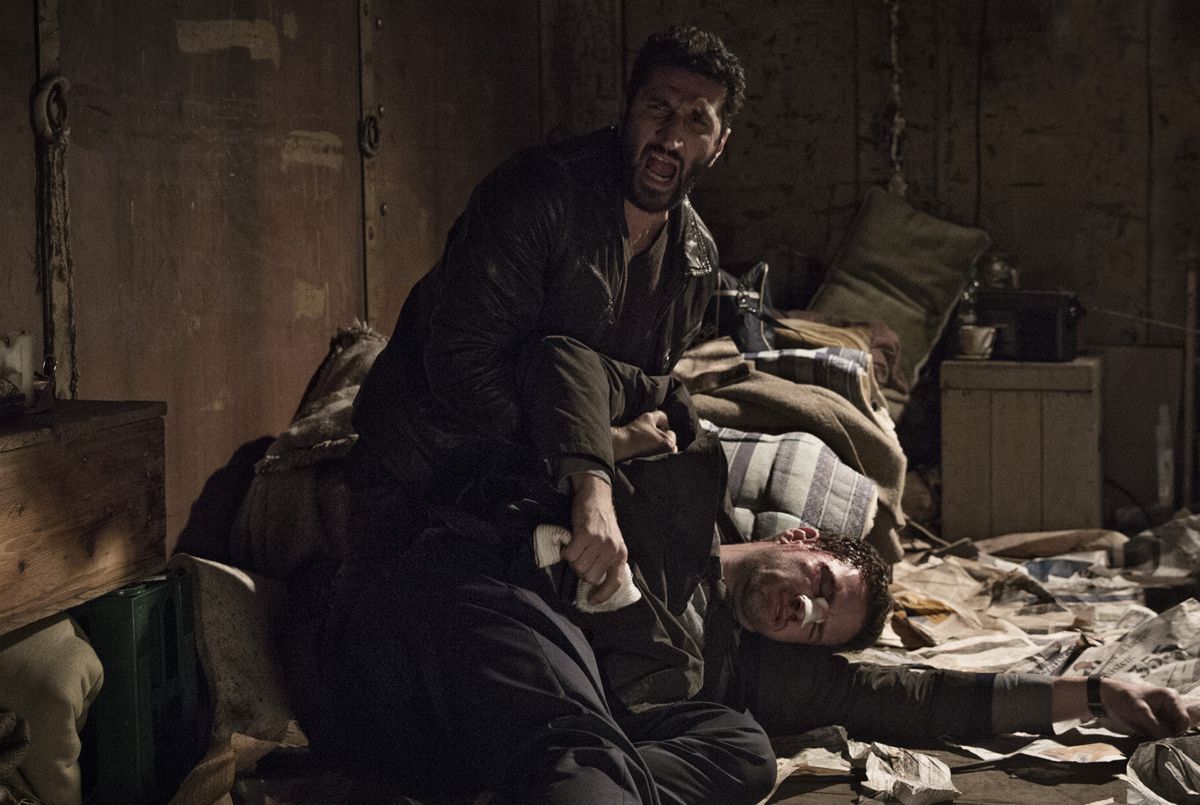
Learning also that Kimmie’s friends at the time included now reputable businessmen Ditlev Pram (Asbæk) and Ulrik Dybbøl (Dencik), and that the man who confessed to the crime, Bjarne Thøgersen (Jeppesen), was represented by the best criminal lawyer in Denmark, Bent Krum (Clemensen), and only served three years in prison, Mørck and Assad sense a conspiracy. They visit Thøgersen who alerts Pram to the new interest in the deaths. Pram hires a man named Albjerg (Christofferson) to look for Kimmie, while Mørck endeavours to find her first. But an older Kimmie (Curcic) is also a very wary Kimmie, and with the help of her friend, Tine (Rosenthal), she manages to stay one step ahead of everyone when she becomes aware that people are looking for her. But Albjerg tracks her down, and though she gets away, she also has a run in with Mørck that leaves him bruised and battered.

Meanwhile, Pram and Dybbøl use their political contacts to put pressure on senior police in an effort to get Mørck and Assad taken off the case. Furious, Mørck confronts his immediate boss (Pilmark) and makes enough of a case from the evidence that he’s amassed to show that it should be pursued further, and that Kimmie Lassen holds the key to what happened twenty years ago. When she is finally caught by the police, it seems that Pram and Dybbøl’s arrest is only a matter of time. But Kimmie has other ideas: she escapes and goes after them herself, as much to kill them first, and as much again to make up for her involvement in the deaths of the young brother and sister.

Fasandraeberne - scene

As much a riveting crime thriller as its predecessor, The Keeper of Lost Causes (2013), The Absent One is another triumphal adaptation of a novel by Jussi Adler-Olsen. With almost everyone involved in the first movie returning to make this one, the movie is like a seamless addition to what is an ongoing series. The tone, the feel, the pace, and the sensibility of The Absent One is such that anyone who has seen The Keeper of Lost Causes can slip into the series’ bleak, gloomy mise en scene with ease, sure in the knowledge that what follows will be of an equally high standard, and equally as satisfying (if not more so).

There are several reasons for this, not least the taut, gripping screenplay by Nikolaj Arcel and his writing partner Rasmus Heisterberg. In distilling Adler-Olsen’s novel they’ve kept the focus on the ripple effect the murders have had over the years, as well as Mørck’s inability to let something go once he’s got a grip on it. The detective’s persistence and dogged nature – which are pretty much all he has to keep him going – is beautifully expressed through Kaas’s beleaguered performance. This is a man who keeps his pain externalised to stop it from eating away at him inside, but the payoff is a lack of compassion and sympathy for others; he only takes on the case in the first place because he can’t deal with the guilt of refusing the retired policeman. Kaas gives a wonderfully fractured portrayal of Mørck, growing further into the character and inhabiting him completely.

Ably supported by Fares, whose Assad is never a foil for Mørck, Kaas heads up a cast that never puts a foot wrong, even in the smaller roles. The script supports them all the way, assembling the pieces of the plot with skill and precision, letting the viewer glimpse the events of twenty years ago without spoiling the true nature of the killings, and allowing the mystery surrounding those killings to remain in place almost until the very end. It’s a bold, confident approach, and allows the tension inherent in the story to build to a quietly devastating denouement (and which puts Mørck through the ringer once more – but then he probably wouldn’t have it any other way).

Retaining his place in the director’s chair, Nørgaard keeps things tightly focused and highlights the psychological toll felt by Kimmie over the course of twenty years (she has a terrible secret of her own that, when revealed, is the most upsetting thing seen in either movie). It’s to Nørgaard’s credit that Kimmie’s humanity is never downplayed,  and in the hands of Curcic, she’s a character so far removed from her younger self (also extremely well played by Boussnina) that the sadness of her situation is almost palpable. (In a better world, she and Mørck would make for an interesting couple.)

While the villains of the piece aren’t as effectively drawn, their callous natures are given plenty of screen time, as well as the slow disintegration of their self-confidence and eventual hubris. Asbæk and Dencik are appropriately cold and uncaring in their roles, revealing the innate hostility towards others that privilege has bestowed on them, and providing strong counterpoints to Mørck’s own disdain for others. It’s all reflected in the somber, unforgiving violence and shadowy dangers that permeate the movie and which help to make it such a rewarding (if slightly downbeat) experience.

Rating: 9/10 – a sequel that is as equally good as its forerunner, The Absent One is a dark, atmospheric thriller that is as uncompromising as it is compelling; with two further movies in the pipeline, let’s hope that the makers can maintain the quality shown so far.

Share this:

  • Click to share on X (Opens in new window) X
  • Click to share on Facebook (Opens in new window) Facebook
  • More
  • Click to print (Opens in new window) Print
  • Click to email a link to a friend (Opens in new window) Email
Like Loading...

Blog Stats

  • 486,563 hits

Recent Posts

  • 10 Reasons to Remember Bibi Andersson (1935-2019)
  • Fantasia (1940)
  • Dances With Wolves (1990) – The Special Edition
  • Kiss of the Spider Woman (1985)
  • The Three Musketeers (1973)

Top Posts & Pages

  • Lost for Life (2013) - Another Look
    Lost for Life (2013) - Another Look
  • Lost for Life (2013)
    Lost for Life (2013)
  • About
    About
  • Mr. Topaze (1961)
    Mr. Topaze (1961)
  • Winter's Tale (2014)
    Winter's Tale (2014)
  • Hunt for the Wilderpeople (2016)
    Hunt for the Wilderpeople (2016)
  • Shock and Awe (2017)
    Shock and Awe (2017)
  • Billy Lynn's Long Halftime Walk (2016)
    Billy Lynn's Long Halftime Walk (2016)
  • Exposed (2016)
    Exposed (2016)
  • 5 Famous Movie Roles That Nearly Went to Someone Else
    5 Famous Movie Roles That Nearly Went to Someone Else
Follow thedullwoodexperiment on WordPress.com

Blogs I Follow

  • Rubbish Talk
  • Film 4 Fan
  • Fast Film Reviews
  • The Film Blog
  • All Things Movies UK
  • Interpreting the Stars
  • Let's Go To The Movies
  • Movie Reviews 101
  • TMI News
  • Dan the Man's Movie Reviews
  • Film History
  • Jordan and Eddie (The Movie Guys)

Archives

  • April 2019 (13)
  • March 2019 (28)
  • February 2019 (28)
  • January 2019 (32)
  • December 2018 (28)
  • November 2018 (30)
  • October 2018 (29)
  • September 2018 (29)
  • August 2018 (29)
  • July 2018 (30)
  • June 2018 (28)
  • May 2018 (24)
  • April 2018 (21)
  • March 2018 (31)
  • February 2018 (25)
  • January 2018 (30)
  • December 2017 (30)
  • November 2017 (27)
  • October 2017 (27)
  • September 2017 (26)
  • August 2017 (32)
  • July 2017 (32)
  • June 2017 (30)
  • May 2017 (29)
  • April 2017 (29)
  • March 2017 (30)
  • February 2017 (27)
  • January 2017 (32)
  • December 2016 (30)
  • November 2016 (28)
  • October 2016 (30)
  • September 2016 (27)
  • August 2016 (30)
  • July 2016 (30)
  • June 2016 (31)
  • May 2016 (34)
  • April 2016 (30)
  • March 2016 (30)
  • February 2016 (28)
  • January 2016 (35)
  • December 2015 (34)
  • November 2015 (31)
  • October 2015 (31)
  • September 2015 (34)
  • August 2015 (31)
  • July 2015 (33)
  • June 2015 (12)
  • May 2015 (31)
  • April 2015 (32)
  • March 2015 (30)
  • February 2015 (37)
  • January 2015 (39)
  • December 2014 (34)
  • November 2014 (34)
  • October 2014 (36)
  • September 2014 (25)
  • August 2014 (29)
  • July 2014 (29)
  • June 2014 (28)
  • May 2014 (23)
  • April 2014 (21)
  • March 2014 (42)
  • February 2014 (38)
  • January 2014 (29)
  • December 2013 (28)
  • November 2013 (34)
  • October 2013 (4)

Create a free website or blog at WordPress.com.

Rubbish Talk

Film 4 Fan

A Movie Blog

Fast Film Reviews

The Film Blog

The official blog of everything in film

All Things Movies UK

Movie Reviews and Original Articles

Interpreting the Stars

Dave Examines Movies

Let's Go To The Movies

Film and Theatre Lover!

Movie Reviews 101

Daily Movie Reviews

TMI News

Latest weather, crime and breaking news

Dan the Man's Movie Reviews

All my aimless thoughts, ideas, and ramblings, all packed into one site!

Film History

Telling the story of film

Jordan and Eddie (The Movie Guys)

Movie Reviews & Ramblings from an Australian Based Film Fan

Privacy & Cookies: This site uses cookies. By continuing to use this website, you agree to their use.
To find out more, including how to control cookies, see here: Cookie Policy
  • Subscribe Subscribed
    • thedullwoodexperiment
    • Join 481 other subscribers
    • Already have a WordPress.com account? Log in now.
    • thedullwoodexperiment
    • Subscribe Subscribed
    • Sign up
    • Log in
    • Report this content
    • View site in Reader
    • Manage subscriptions
    • Collapse this bar
 

Loading Comments...
 

    %d