• 10 Reasons to Remember…
  • A Brief Word About…
  • About
  • For One Week Only
  • Happy Birthday
  • Monthly Roundup
  • Old-Time Crime
  • Other Posts
  • Poster of the Week
  • Question of the Week
  • Reviews
  • Trailers

thedullwoodexperiment

~ Viewing movies in a different light

thedullwoodexperiment

Tag Archives: Cillian Murphy

The Party (2017)

02 Saturday Dec 2017

Posted by dullwood68 in Movies

≈ Leave a comment

Tags

Black comedy, Bruno Ganz, Cherry Jones, Cillian Murphy, Drama, Emily Mortimer, Kristin Scott Thomas, Minister for Health, Patricia Clarkson, Review, Sally Potter, Timothy Spall

D: Sally Potter / 71m

Cast: Patricia Clarkson, Bruno Ganz, Cherry Jones, Emily Mortimer, Cillian Murphy, Kristin Scott Thomas, Timothy Spall

A small, intimate dinner party to celebrate becoming the Shadow Minister for Health – what could possibly go wrong? Well, when a movie begins with one of its characters answering the front door and aiming a gun at the new arrival, the answer must be: plenty. But we’re coming in at the end – naturally – and in order to understand just what has brought this threatening moment to pass, we must allow ourselves to be brought back in time, to an hour or so before, and into the company of Bill (Spall), an elderly man sitting in a chair drinking red wine and looking as if he’s only physically present, and not mentally or cognitively. His wife, Janet (Scott Thomas), is in the kitchen preparing food. Her mobile phone keeps ringing; people are calling to congratulate her on her promotion. Soon, Janet and Bill are joined by April (Clarkson), a long-time friend of theirs, and her current boyfriend, Gottfried (Ganz).

It’s not long before further guests arrive. Martha (Jones) has known Bill since their college days; her partner, Jinny (Mortimer), is expecting their first child. Later, Tom (Murphy), a banker, arrives without his wife, Marianne, who works in the same department as Janet and is one of her colleagues. While Martha and Jinny talk in the walled courtyard that passes for a garden, Tom behaves nervously from the moment he arrives. He rushes into the lavatory and snorts a couple of lines of cocaine and reveals he’s carrying a gun. Composing himself as best he can, he joins the others who are busy discussing everything but Janet’s promotion. April seeks to address this by raising a toast to Janet, but her ploy is over-shadowed by Jinny announcing that she is expecting triplets. But even that news is over-shadowed when Bill reveals that he is seriously ill and hasn’t long to live…
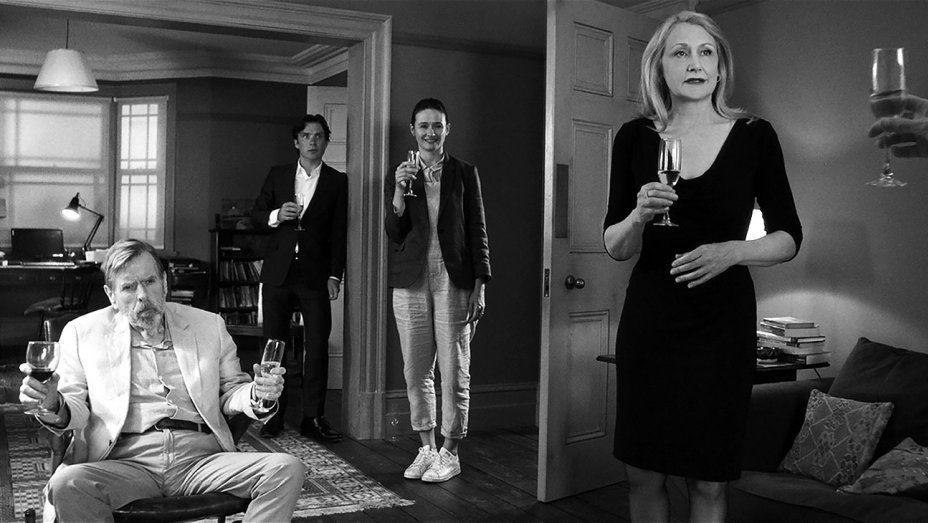
A biting, acerbic comedy of bad manners, the latest from Sally Potter – Orlando (1992), The Man Who Cried (2000) – is a bruising slugfest of a movie, with its characters giving and receiving no quarter in their efforts to maintain (or retain) a sense of their own importance. From the moment April and Gottfried arrive and she mentions that their relationship is over, the mood is gleaned and it’s just a matter of waiting for the inevitable verbal assaults to find their targets (April sets the ball rolling by telling Gottfried to shut up every time he says something). As the movie progresses and we discover the cracks that exist in the relationships of all the couples – even Tom and Marianne – we also see the desperation and the fear that has propelled them into causing these cracks. We learn that Janet is having an affair, and that Bill has no idea about it. But we sense an unhappiness in him that matches hers, what with her continual references to Bill having given up his career to support her own career in politics. The cost to Bill may be more than Janet is aware of: Bill doesn’t just look unwell, he looks positively beaten.

Potter, who wrote the screenplay as well, delves quickly and easily into the lives of everyone, and shows how the dynamics within each relationship shifts and changes with every personal and private confession and revelation that ensues. Janet is devastated by Bill’s news about his health and vows to quit her position within the Shadow Cabinet. Tom is aghast at the sympathy Bill is receiving (for reasons that come to light in time), while Gottfried slips free of April’s yoke and uses his knowledge as a spiritual healer to help Bill come to terms with his impending mortality. April remains stubbornly cynical of everyone else’s motives and opinions, while Martha and Jinny come to a crossroads in their own relationship. Accusations and recriminations fly thick and fast as secrets are revealed and self-preservation becomes the order of the day. By the end, and the opening of that front door, everyone’s lives – with the possible exception of Gottfried – will have been challenged, and changed as a result.
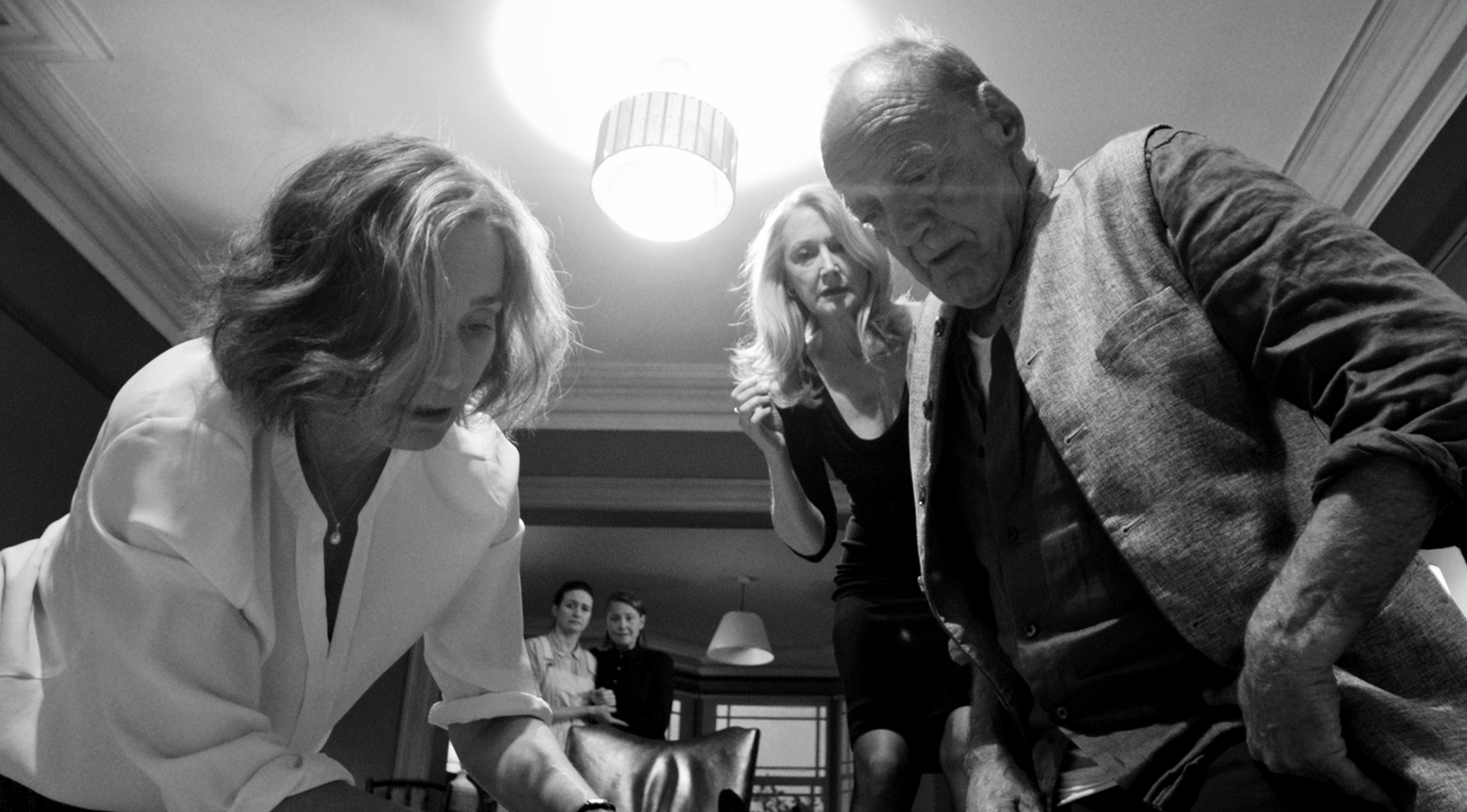
This being a Sally Potter movie, The Party is chock-full of endlessly quotable dialogue, from April’s withering retort, “Please tell me you’re not meditating, Gottfried. Pull yourself together”, to her observation of Martha: “You’re a first class lesbian and a second rate thinker. Must be all those women’s studies.” Clarkson is terrific as a self-confessed realist who can spot a weakness of character from a mile off, and she delivers April’s barbs with an unimpressed, deadpan attitude that is at once fearsome and hilarious. Scott Thomas is also terrific, never quite allowing the viewer to think that Janet’s always behaving like a dyed-in-the-wool politician, while Spall does a mean vacant stare that’s as unnerving as it is impressive (especially later in the movie). Rounding out the cast, Murphy does agitated with aplomb, Ganz is great as someone who thinks Western medicine is “voodoo”, and Jones and Mortimer spar over Martha and Jinny’s commitment issues in ways that add depth to both characters, and overcomes the impression that they have a peripheral involvement with the main storyline.

If all this sounds too heavy, or overly dramatic, rest assured The Party is bitingly funny, and is a black comedy par excellence. Tightly controlled by Potter working at the height of her writing and directing powers, this is short of running time but full of beautifully observed moments that are in service to a fairly straightforward (and predictable, if you look too closely) narrative. The decision to shoot in astonishingly crisp black and white gives the movie a sleek, distinguished feel that works surprisingly well for a movie that could have been adapted from a stage piece (kudos to DoP Aleksei Rodionov), and Potter is helped enormously by some stategic and humorously clever editing choices courtesy of Anders Refn and Emilie Orsini. There’s also a great soundtrack that includes an inspired (if a little predictable) use of Henry Purcell’s When I Am Laid in Earth (Dido’s Lament). All in all, this is a farce wrapped up in a tragedy wrapped up in a cautionary tale, and making the point that you never know what’s waiting for you right around the corner.

Rating: 8/10 – a stellar cast have a great deal of fun with one of Potter’s more approachable screenplays, and the result is a spirited, enjoyable movie that maintains a waspish vibe throughout and piles on the agony for its characters with glee; not to everyone’s tastes though, The Party may seem shallow and derivative at first, but once it gets going it has plenty of trenchant things to say about the nature of trust, and the need to be recognised for who you are in a relationship.

NOTE: The Party is the 15,000th movie that I’ve seen (so far), and it gives me great pleasure to be able to review it here on thedullwoodexperiment. I’ve been doing this for a little over four years now, and to reach such a landmark and to be able to celebrate it here, and with the wider world, is truly incredible. Here’s to reaching 20,000 sometime in 2030!
Share this:

  • Click to share on X (Opens in new window) X
  • Click to share on Facebook (Opens in new window) Facebook
  • More
  • Click to print (Opens in new window) Print
  • Click to email a link to a friend (Opens in new window) Email
Like Loading...

Dunkirk (2017)

03 Thursday Aug 2017

Posted by dullwood68 in Movies

≈ 2 Comments

Tags

Christopher Nolan, Cillian Murphy, Drama, Dunquerke, Fionn Whitehead, IMAX, Kenneth Branagh, Mark Rylance, Operation Dynamo, Review, Suspense, The Mole, Tom Hardy, World War II

D: Christopher Nolan / 106m

Cast: Fionn Whitehead, Tom Hardy, Mark Rylance, Kenneth Branagh, Cillian Murphy, Tom Glynn-Carney, Barry Keoghan, Aneurin Barnard, Harry Styles, Jack Lowden, James D’Arcy

NOTE: This review is based on an IMAX screening of the movie.

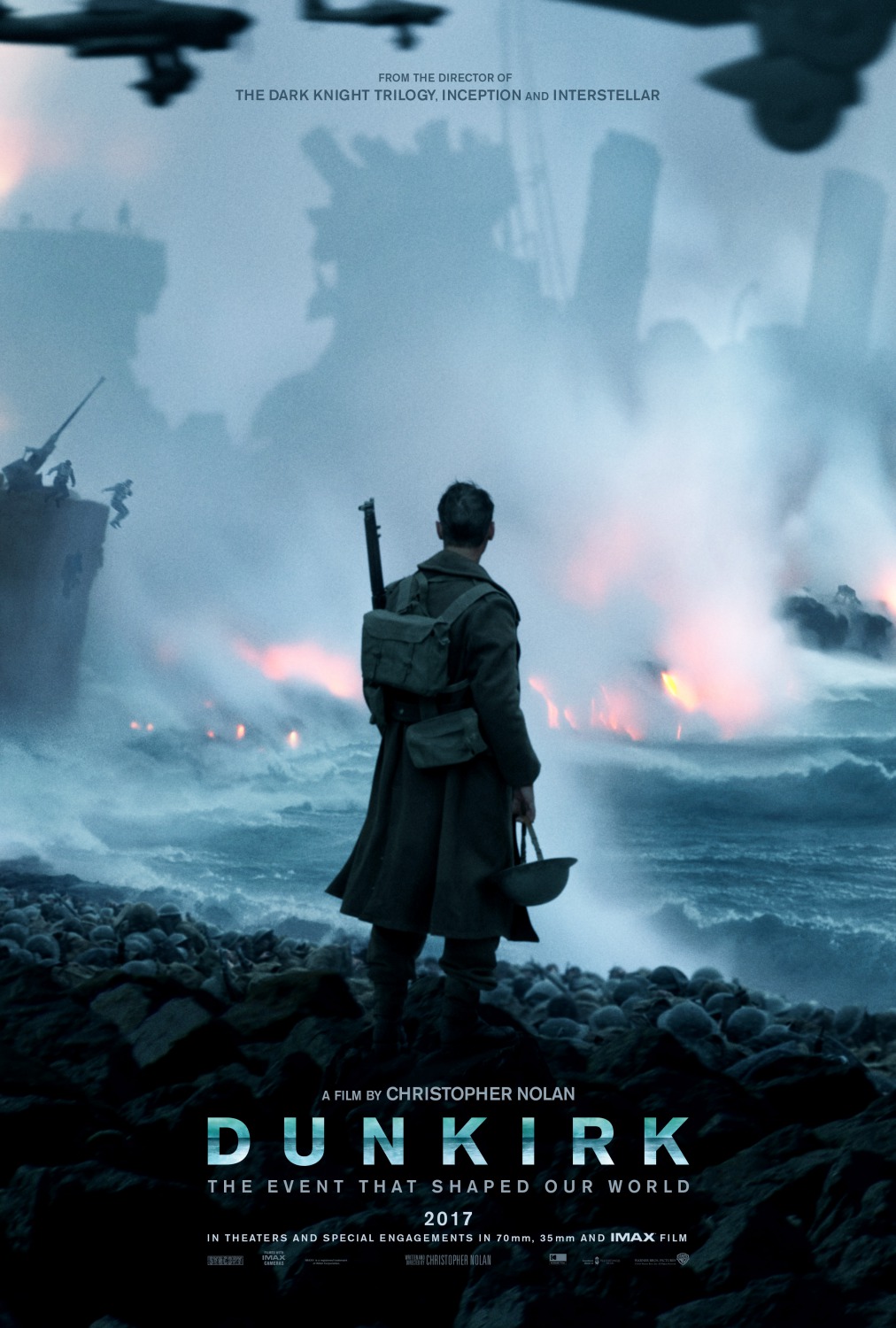
At one point during Christopher Nolan’s visually and sonically impressive ode to British heroism, Mark Rylance’s stoic Mr Dawson says, “Men my age dictate this war. Why should we be allowed to send our children to fight it?” It’s a rare moment of unexpected criticism (of the war) in a movie that celebrates the British determination to rescue victory from the jaws of defeat on the beaches at Dunquerke (through Operation Dynamo), and which does so in spectacular style. It’s one of a number of awkward moments where Nolan the writer appears to realise that he needs to be a commentator as well as an observer of events, and that he needs to add some much needed depth to proceedings. It’s also a moment that’s indicative of a greater problem with the movie as a whole: it doesn’t engage with the audience as much as it should do.

Nolan has gone on record to say that his idea for Dunkirk wasn’t to make a war movie but to make a suspense thriller, to take the three strands of land, sea and air and amalgamate them by the end of the movie into one combined incident. It’s typical of Nolan’s fondness for non-linear narratives, and he orchestrates the three different time frames – land: one week, sea: one day, air: one hour – with great skill and ingenuity, but amidst all the technical wizardry, the human element is left just as stranded as the Allied troops were back in 1940. Considering the scale of the evacuation, it’s hard to understand why Nolan decided to leave out such a crucial aspect. Thanks to the narrative decisions he’s made, the characters we do meet rarely make an impact, with patronym Tommy (Whitehead) suffering the most. Right from the start, where we see him fleeing from a barrage of gunfire and his comrades dropping like flies around him, and through all the travails he endures along the way, he’s a character we never fully identify or sympathise with. He’s a cypher in uniform, and Nolan never really introduces us to him.

The same goes for Hardy as RAF pilot Farrier. Once more hidden behind a mask that obscures his lower face, Hardy’s expression barely changes from scene to scene; he either looks determined or very determined. Alas, this isn’t enough to provide audiences with a character to identify with or relate to, and it’s only his heroic manner (which is shared by all but one other character) that allows us to appreciate him. Of all the characters we meet, only Rylance as the quietly resolute Mr Dawson and Branagh as Commander Bolton, overseer of the evacuation at Dunquerke itself, make much of an impact but that’s entirely due to their skill and experience as actors. It’s a shame that Nolan couldn’t have fleshed out his characters more; what’s the point of employing actors of the calibre of Murphy and Hardy when you’re not going to give them much to do?

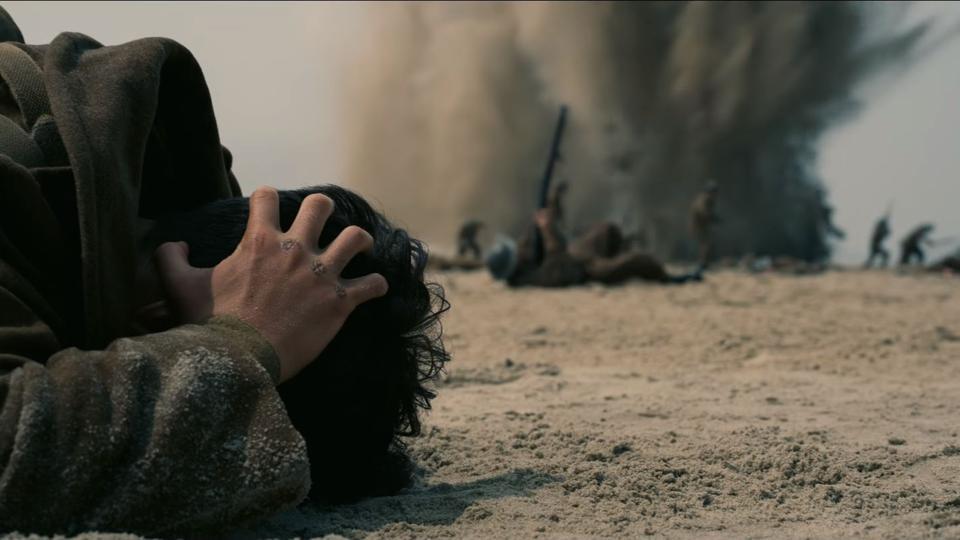
For a movie maker of Nolan’s stature, this is an unfortunate approach, and it leaves the movie in danger of becoming just an empty spectacle. Nolan has put a lot of time and effort into ensuring his take on the evacuation is as realistically mounted as possible, with a minimal use of CGI and the majority of practical effects being done in camera, and shooting on the very same beaches at Dunquerke. Thankfully this verisimilitude pays off handsomely, with Nolan’s standing as one of the most technically and visually gifted directors of his generation confirmed for all to see. There’s no room for doubt: Dunkirk is a stunning visual experience. Nolan wanted to give audiences the most immersive movie experience possible (albeit in the IMAX format) and he’s succeeded magnificently. Whether it’s on the beach, on the water, or in the air, Nolan, along with DoP Hoyte Van Hoytema, ensures that the viewer is thrust into the thick of things, whether it’s amongst a group of soldiers hemmed in on a jetty while German Stukas strafe them, or Tommy and some of his fellow soldiers stuck below decks in a torpedoed ship, or the cockpit of Farrier’s Spitfire, all these scenes and many more have an immediacy and a visceral intensity that is breathtaking to watch. On these occasions, the movie truly is an immersive experience, and Nolan’s ambition is fully realised.

But if Dunkirk looks visually astonishing, then it’s surpassed by its sound design. Every rifle shot and bullet hit, every creak and warp of timber on the boats, every burst and spin of the fighter planes is delivered with such clarity and impact that it adds an extra layer to the immersive nature of the material, and in IMAX 6-track format it’s even more impressive. There are details in the mix that are remarkably subtle as well, such as the different engine sounds of the small ships as they approach Dunquerke, or the trudge of footsteps across the beach. This is attention to detail taken to an almost obsessive degree, and the movie is all the better for it, creating a soundscape that highlights and dominates events shown, and which in terms of fidelity, sets a new benchmark.

Ultimately though (and a little unfortunately), what Nolan has devised and created is a movie that offers an unparalleled viewing and listening experience but which has moments where it seems to be saying, “look at this, isn’t that spectacular?” You can almost imagine a reporter turning to a newsreel cameraman and asking, a la Die Hard (1988), “Tell me you got that.” Nolan can perhaps be forgiven for a little grandstanding, or a little showing off from time to time, but when these moments occur they have the effect of taking the viewer out of the movie and reminding them that what they’re watching isn’t always as immersive as planned. What’s also distracting at times is Hans Zimmer’s score for the movie, which uses Nolan’s own pocket watch as a musical template for much of the tension that’s generated, though it’s a motif that’s over-used. It’s a divisive score, hugely effective on some occasions, an unfortunate pall over proceedings at others, but at least Zimmer stops short of making it all too triumphant and imperialistic – and that adds to the overall effect tremendously.

Rating: 7/10 – aside from some questionable narrative decisions, and restrictions around getting to know the characters, Dunkirk is the year’s most ambitious, and most mature, summer blockbuster; an incredible technical achievement by Nolan, the movie is a visual and aural tour-de-force, a feat of movie making that’s unlikely to be equalled or bettered any time in the near future, and which may well be Nolan’s best movie so far… oh, hang on, no, that’s still The Dark Knight (2008).

Share this:

  • Click to share on X (Opens in new window) X
  • Click to share on Facebook (Opens in new window) Facebook
  • More
  • Click to print (Opens in new window) Print
  • Click to email a link to a friend (Opens in new window) Email
Like Loading...

Free Fire (2016)

04 Tuesday Apr 2017

Posted by dullwood68 in Movies

≈ 2 Comments

Tags

Action, Armie Hammer, Ben Wheatley, Brie Larson, Cillian Murphy, Drama, Guns, Jack Reynor, Review, Sharlto Copley, Shootout, Thriller, Warehouse

D: Ben Wheatley / 90m

Cast: Sharlto Copley, Armie Hammer, Brie Larson, Cillian Murphy, Jack Reynor, Michael Smiley, Sam Riley, Enzo Cilenti, Babou Ceesay, Noah Taylor, Patrick Bergin

It’s 1978 (not that it really matters), and at an abandoned warehouse in Boston, two groups come together to conclude an arms deal. Chris (Murphy) and Frank (Smiley), are members of the IRA, and they’re accompanied by two local career criminals, Bernie (Cilenti) and Stevo (Riley). They’re attempting to buy M-16’s from arms dealer Vernon (Copley) and his associate, Martin (Ceesay); they in turn have back-up in the form of Harry (Reynor) and Gordon (Taylor). Also present are facilitators Justine (Larson), who has brought the two groups together, and Ord (Hammer) who is there to ensure the deal goes through without any problems.

But as night follows day and action comedies demand conflict followed by murderous gunplay, the deal almost falls through when Vernon reveals a case containing AR-70’s and not the M-16’s Chris ordered. Ord helps pacify things and the deal goes ahead, with Chris accepting the guns and Vernon happy with his payment. But the inevitable fly in the ointment occurs when Stevo recognises Harry as the person who beat him up earlier over Stevo’s treatment of Harry’s seventeen year old cousin. Harry sees him and is incensed, and the deal is in jeopardy again. Chris tells Stevo to apologise, but though he does, he can’t resist bragging about what he did to Harry’s cousin. Harry responds by shooting Stevo in the shoulder, and the next moment everybody is shooting at each other, and fanning out across the warehouse.

What follows sees everybody shot and wounded in some way, but in particular it’s Martin who becomes everyone’s focus as he suffers a head wound that leaves him unconscious and lying next to the briefcase with the money inside it. Efforts are made to retrieve it on both sides, but it proves more difficult than anyone could have expected, and further injuries/wounds occur, leaving pretty much everyone struggling to stay alive – and when two further men turn up and shoot at them all, the whole situation goes from bad to worse to ridiculous.

The Closing Night Gala at last year’s London Film Festival, Free Fire is a movie that further cements writer/director Ben Wheatley’s reputation, but does so in a way that will have some viewers wondering what all the fuss is about. This doesn’t mean that Wheatley isn’t a talent to watch, or that his movies aren’t worth watching either, but Free Fire arrives in cinemas with a wealth of expectation behind it following its successfully received screenings at various festivals. Whether or not that level of expectation is warranted will depend on your acceptance of Wheatley being a movie maker with a distinctive visual style, and something to say. Because even though Free Fire is certainly distinctive, and directed with no small amount of flair by Wheatley, it’s not his most accomplished movie to date, and after the misfire that was High-Rise (2015), prompts the question, When will he make another movie that really confirms the talent we all know he has?

This isn’t to say that Free Fire is necessarily a bad movie, but it does appear to have been made with the intention of being entertaining, and it’s here that the movie gives cause for concern. For a director of Wheatley’s talent and rising stature, Free Fire feels too forced too often to be effective, or win over its audience. Some viewers, if they take the movie at face value, will find it enjoyable, but in a kind of loud, dumb fun kind of way. Wheatley, and his co-writer (and wife) Amy Jump, have gone for a crowd-pleasing black comedy action thriller that focuses heavily on the “fun” to be had from seeing a group of villainous individuals shoot each other, and which then sits back and watches them suffer even further.

This is where the notion that the movie is “fun” loses traction the longer the movie goes on. By letting all of its motley assortment of characters drag themselves around to less and less dramatic effect – Stevo’s demise is a particular example, a moment that makes no sense given his capacity thus far for survival – the problem of what to do with them all becomes increasingly more difficult for Wheatley to solve. In the end, he signposts the movie’s final scene, attempts to wrap it all up neatly, and confirms that any originality has been spent long before. For all its likeability, the movie hopes to beguile its audience into thinking that it’s fresh, sharp and funny, and though it does raise a smile quite often, this is more to do with the performances than Wheatley and Jump’s script.

Once the action and the shooting begins, some viewers will be left wondering who’s shooting and wounding who, and why co-writers Wheatley and Jump couldn’t have hired someone other than themselves to edit the movie. In the initial melee, it’s hard to work out just exactly what’s going on, and while it may serve to highlight the chaotic nature of the action, the spacing and the staging of the various protagonists isn’t made clear enough for viewers to accurately gauge where everyone is and how anyone can shoot anyone else. As a result, characters are hit – some more than once – and often it seems as if it’s the random choice of the screenplay. The effect this has is to distance the viewer from what’s happening – and to whom – and to reduce the characters to little more than that of ducks in a shooting gallery.

Thankfully, the cast know what they’re doing, from Copley’s quick to take offence arms dealer, to Hammer’s smooth-talking facilitator, to Riley’s drug-addled liability. As the lone female in the cast, Larson quickly becomes “one of the lads” as Justine has no option but to fight for her own survival just like everyone else. Strangely though, it’s Murphy’s IRA man who is the movie’s nominal hero, but the movie doesn’t do anything with this, and like its period setting, lacks any relevance to the action. But then relevance doesn’t appear to be in Wheatley’s remit. Instead, he wants to bludgeon us with a movie whose ambition is to be a wildly anarchic, blackly amusing thrill ride that will have audiences wincing and laughing in equal measure. He succeeds with the wincing, and occasionally with the laughing, but overall, this is dispiriting stuff from a director who can do so much more. Perhaps this is a movie Wheatley had to do in order to “get it out of his system”, and if so, then hopefully his next project will showcase his real talents as a movie maker.

Rating: 6/10 – on a basic level, Free Fire is a movie that will attract a lot of fans, and for some, reinforce their opinion of Wheatley’s skill as a director; however, even as a slice of depth-free entertainment, it fails to hit the mark fully, and stumbles too often in its execution to offer more than an occasionally diverting experience, leavened only by the occasional humorous twist, and an equally occasional sense of its own absurdity.

Share this:

  • Click to share on X (Opens in new window) X
  • Click to share on Facebook (Opens in new window) Facebook
  • More
  • Click to print (Opens in new window) Print
  • Click to email a link to a friend (Opens in new window) Email
Like Loading...

Monthly Roundup – July 2016

31 Sunday Jul 2016

Posted by dullwood68 in Movies

≈ Leave a comment

Tags

Action, Apache War Smoke, Apaches, Australia, Bank robbers, Banshee Chapter, Ben Whishaw, Benjamin Walker, Blair Erickson, Brendan Gleeson, Cambodia, Chris Hemsworth, Cillian Murphy, Crawl, Daniel Zirilli, Drama, Gena Rowlands, George Shevtsov, Georgina Haig, Gilbert Roland, Glenda Farrell, Harold F. Kress, Herman Melville, Historical drama, Hitman, Home invasion, Horror, In the Heart of the Sea, James Garner, Katia Winter, Literary adaptation, Moby Dick, Nantucket, Nicholas Sparks, Nick Cassavetes, Numbers stations, Offshore Grounds, Online journalist, Paul China, Paul Holmes, Project MK Ultra, Rachel McAdams, Reviews, Robert Horton, Romance, Ron Howard, Ryan Gosling, Steven Seagal, Ted Levine, Thailand, The Asian Connection, The Essex, The Notebook, Thriller, Tom Holland, Tonto Valley Station, True love, True story, Wells Fargo, Western, Whales

Crawl (2011) / D: Paul China / 80m

Cast: George Shevtsov, Georgina Haig, Paul Holmes, Lauren Dillon, Catherine Miller, Bob Newman, Andy Barclay, Lynda Stoner

Crawl

Rating: 7/10 – a hitman (Shevtsov) hired by an unscrupulous bar owner (Holmes) winds up injured while trying to leave town, and ends up playing a deadly game of cat-and-mouse with a waitress (Haig) when he seeks refuge in her home; a slow-burn thriller that takes its time and relies on tension and atmosphere to keep the viewer hooked, Crawl often belies its low budget, and features terrific performances from Shevtsov (in a role written expressly for him) and Haig, but stops short of being completely effective thanks to some awkward narrative choices and first-timer China’s lack of experience as a director.

The Asian Connection (2016) / D: Daniel Zirilli / 91m

Cast: John Edward Lee, Pim Bubear, Steven Seagal, Sahajak Boonthanakit, Byron Gibson, Byron Bishop, Eoin O’Brien, Michael Jai White

The Asian Connection

Rating: 3/10 – career criminal Jack Elwell (Lee) meets the love of his life, Avalon (Bubear), and decides that robbing a bank is the way to a financially stable relationship, but unfortunately the money he steals belongs to crime boss Gan Sirankiri (Seagal), and soon Jack is being coerced into robbing more of Sirankiri’s banks when one of his men (Boonthanakit) threatens to expose him; what could have been a moderately entertaining action thriller is let down by some atrocious acting (and not just from Seagal), some equally atrocious camerawork, editing that looks like it was done with a hatchet, and the kind of direction that gives “point and shoot” a bad name, all of which leaves The Asian Connection looking like something to be avoided at all costs.

Banshee Chapter (2013) / D: Blair Erickson / 87m

Cast: Katia Winter, Ted Levine, Michael McMillian, Corey Moosa, Monique Candelaria, Jenny Gabrielle, Vivian Nesbitt, Chad Brummett, William Sterchi

Banshee Chapter

Rating: 3/10 – a journalist (Winter) looks into the disappearance of a friend, and discovers a secret world of government experiments that are linked to strange radio broadcasts and the discredited MK Ultra program from the Sixties; a paranoid thriller with supernatural overtones, Banshee Chapter tries extra hard to be unsettling and creepy – much of it takes place at night and has been shot using low light – but fails to make its story of any interest to anyone watching, which means that Winter and Levine put a lot of effort into their roles but are let down by the tortuous script and Erickson’s wayward direction.

In the Heart of the Sea (2015) / D: Ron Howard / 122m

Cast: Chris Hemsworth, Benjamin Walker, Cillian Murphy, Tom Holland, Ben Whishaw, Brendan Gleeson, Michelle Fairley, Paul Anderson, Frank Dillane, Joseph Mawle, Charlotte Riley

In the Heart of the Sea

Rating: 5/10 – the writer, Herman Melville (Whishaw), convinces retired sailor Tom Nickerson (Gleeson) to talk about his experiences as a young boy at sea, and in particular his time aboard the Essex, a whaling ship that encountered a creature Melville will call Moby Dick; based on the true story of the Essex, and the voyage that saw it sunk by an enormous whale, In the Heart of the Sea is technically well made but lacks anyone to care about, avoids providing a true sense of the enormity of what happened, sees Ron Howard directing on auto-pilot, and leaves Hemsworth and Walker struggling to make amends for characters who are paper-thin to the point of being caricatures (or worse still, carbon copies of Fletcher Christian and William Bligh from Mutiny on the Bounty).

The Notebook (2004) / D: Nick Cassavetes / 123m

Cast: Ryan Gosling, Rachel McAdams, James Garner, Gena Rowlands, Sam Shepard, David Thornton, Joan Allen, James Marsden

The Notebook

Rating: 7/10 – in the late Thirties, a young man, Noah (Gosling), sets his cap for the girl of his dreams, Allie (McAdams), and though they fall in love, social conventions keep them apart, while in the modern day their story is told by an old man (Garner) to a woman with dementia (Rowlands); handsomely mounted and told with a genuine feel for the central characters and their travails, Nicholas Sparks’ The Notebook is an old-fashioned romantic drama that could have been made in the time period it covers, and which is bolstered by the performances of its four stars, as well as Cassavetes’ (son of Rowlands) sure-footed direction, glorious cinematography by Robert Fraisse, and a sense of inevitable tragedy that permeates the narrative to very good effect indeed.

Apache War Smoke (1952) / D: Harold F. Kress / 67m

Cast: Gilbert Roland, Glenda Farrell, Robert Horton, Barbara Ruick, Gene Lockhart, Harry Morgan, Patricia Tiernan, Hank Worden, Myron Healey

Apache War Smoke

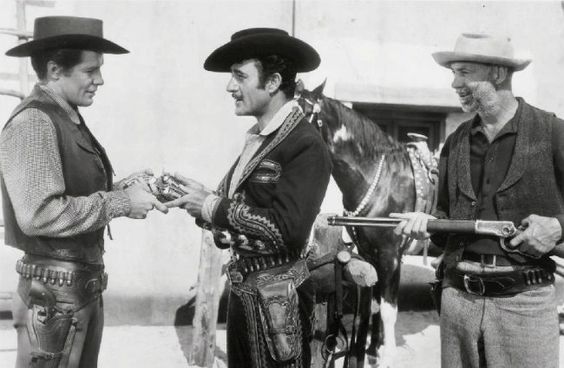
Rating: 6/10 – a stagecoach station finds itself under attack from angry Apaches after a white man kills several of their tribe – and the evidence points to the station agent’s father, a wanted outlaw (Roland), as the killer; a compact, fast-paced Western, Apache War Smoke zips by in low-budget style thanks to the efforts of two-time Oscar winner Kress – editing awards for How the West Was Won (1962) and The Towering Inferno (1974) – and a cast who enter willingly into the spirit of things, making this studio-made Western set in Tonto Valley Station(!) a surprising treat.

Share this:

  • Click to share on X (Opens in new window) X
  • Click to share on Facebook (Opens in new window) Facebook
  • More
  • Click to print (Opens in new window) Print
  • Click to email a link to a friend (Opens in new window) Email
Like Loading...

Peacock (2010)

02 Thursday Jan 2014

Posted by dullwood68 in Movies

≈ Leave a comment

Tags

Bill Pullman, Cillian Murphy, Drama, Ellen Page, Michael Lander, Review, Small-town America, Susan Sarandon, Thriller

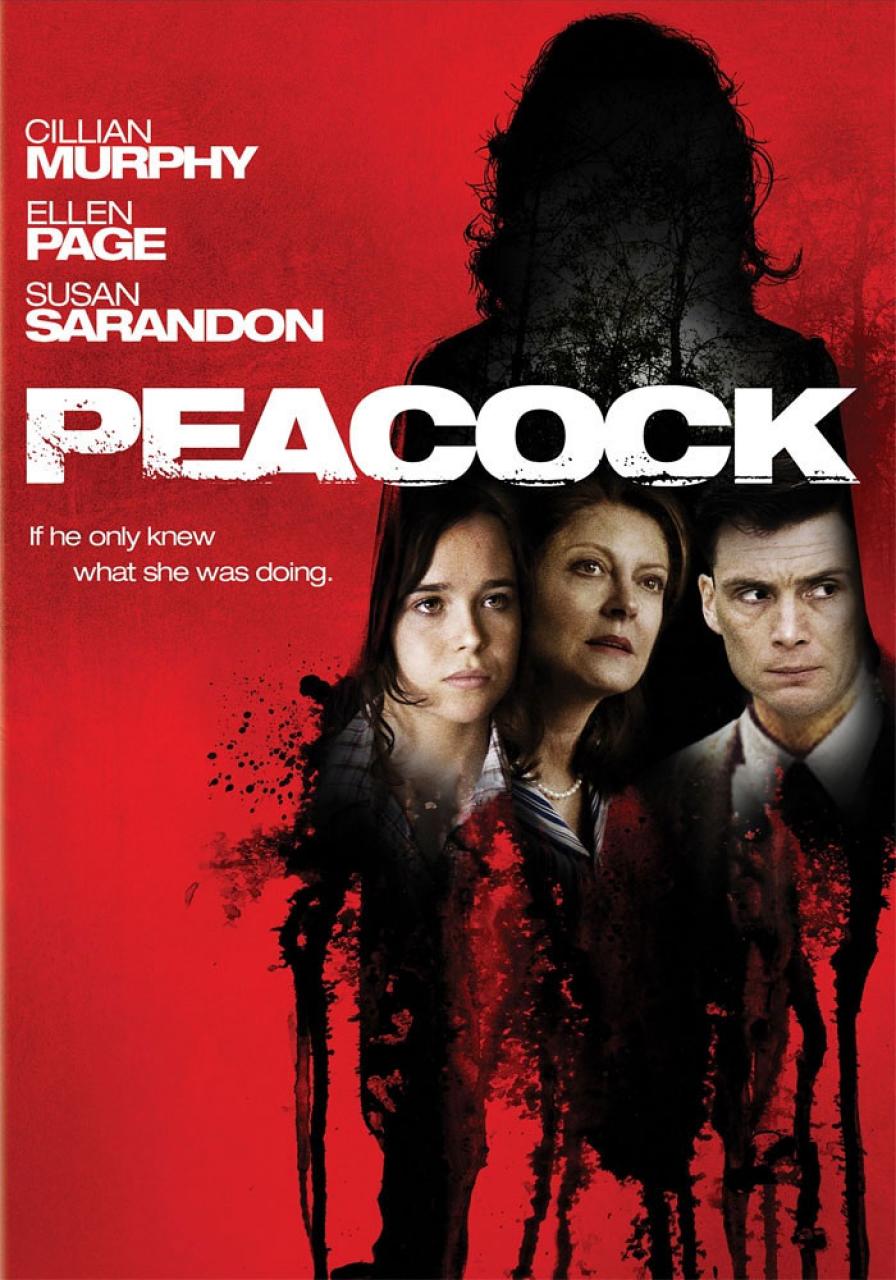
Peacock

D: Michael Lander / 90m

Cast: Cillian Murphy, Ellen Page, Susan Sarandon, Josh Lucas, Keith Carradine, Bill Pullman, Graham Beckel

Beginning with a major plot twist that most movies would leave until the final reel, Peacock is a small-town drama that focuses on notions of family and identity, as well as what it can mean to be part of a small-town community.

Murphy plays John, a painfully shy/socially awkward bank clerk who has managed to keep himself to himself in the year since his mother passed away, despite the best efforts of neighbours and some of the customers at the bank.  He lives in a large house next to the train tracks; when a carriage jumps the rails and ends up crashing into his back garden, narrowly missing him, his life becomes more complicated than he could ever have wished, leading him to discover things about himself that he would rather not have known.

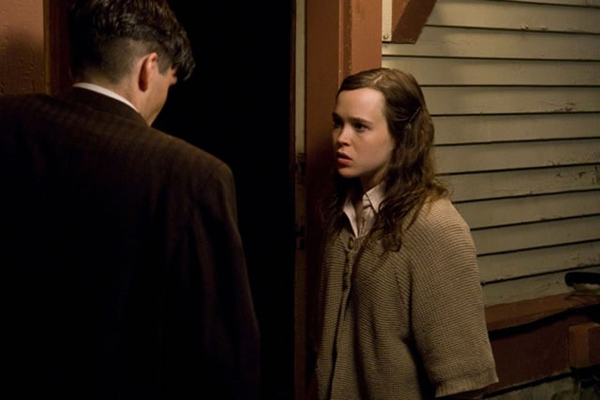
Peacock - scene

Peacock is a beguiling movie, with Murphy’s performance firmly at its heart.  He shows the complexity of the character and the fragility of John’s mental state with an ease that is hypnotic, keeping the viewer glued to the unfolding events and eliciting sympathy at every turn.  It is a bravura piece, and the movie is worth watching for his performance alone.  It’s great to be able to add that he is more than ably supported by Sarandon, Pullman and Carradine, whose characters all want something from John, and use their apparent concern for him to advance their own causes.  Lucas serves as the nearest John has to a friend, while Page plays Maggie, a figure from his past who further adds to the problems he can’t seem to shake.  It all leads to a desperate climax with John sacrificing everything in order to be able to carry on.

There is much to admire in Peacock.  Aside from the quality of the acting – unsurprising given the cast involved – the cinematography by Philippe Rousselot is perfectly framed throughout and at times shows an almost painterly eye.  The editing, by Sally Menke (on her last film) and Jeffrey M. Werner, keeps the movie expertly paced, and the production design, especially with regard to the darkened interior of John’s home, is faultless; this is small-town America as even non-Americans will recognise it.

Director and co-writer Lander, making his feature debut, has a good eye for the nuances and undercurrents of small-town life, and manages everything with the confidence of a director with many more films under their belt.  He also knows how to keep a scene moving and when to switch focus from character to character.  And lastly, a mention for the score by Brian Reitzell: it ably supports the various emotional arcs of the characters and adds an appropriately melancholy touch to the proceedings.

Rating: 8/10 – a touching drama that becomes a character-driven thriller at the end but which remains grounded in credibility throughout; a minor gem.

Originally posted on thedullwoodexperiment website.

Share this:

  • Click to share on X (Opens in new window) X
  • Click to share on Facebook (Opens in new window) Facebook
  • More
  • Click to print (Opens in new window) Print
  • Click to email a link to a friend (Opens in new window) Email
Like Loading...

Blog Stats

  • 490,516 hits

Recent Posts

  • 10 Reasons to Remember Bibi Andersson (1935-2019)
  • Fantasia (1940)
  • Dances With Wolves (1990) – The Special Edition
  • Kiss of the Spider Woman (1985)
  • The Three Musketeers (1973)

Top Posts & Pages

  • The White Orchid (2018)
    The White Orchid (2018)
  • Lost for Life (2013) - Another Look
    Lost for Life (2013) - Another Look
  • Captain Fantastic (2016)
    Captain Fantastic (2016)
  • Miss Baek (2018)
    Miss Baek (2018)
  • Two Shorts by François Ozon: A Summer Dress (1996) and X2000 (1998)
    Two Shorts by François Ozon: A Summer Dress (1996) and X2000 (1998)
  • Central Intelligence (2016)
    Central Intelligence (2016)
  • The Dark Tower (2017)
    The Dark Tower (2017)
  • Taken (2008)
    Taken (2008)
  • Deer Crossing (2012)
    Deer Crossing (2012)
  • Cardboard Boxer (2016)
    Cardboard Boxer (2016)
Follow thedullwoodexperiment on WordPress.com

Blogs I Follow

  • Rubbish Talk
  • Film 4 Fan
  • Fast Film Reviews
  • The Film Blog
  • All Things Movies UK
  • Interpreting the Stars
  • Let's Go To The Movies
  • Movie Reviews 101
  • TMI News
  • Dan the Man's Movie Reviews
  • Film History
  • Jordan and Eddie (The Movie Guys)

Archives

  • April 2019 (13)
  • March 2019 (28)
  • February 2019 (28)
  • January 2019 (32)
  • December 2018 (28)
  • November 2018 (30)
  • October 2018 (29)
  • September 2018 (29)
  • August 2018 (29)
  • July 2018 (30)
  • June 2018 (28)
  • May 2018 (24)
  • April 2018 (21)
  • March 2018 (31)
  • February 2018 (25)
  • January 2018 (30)
  • December 2017 (30)
  • November 2017 (27)
  • October 2017 (27)
  • September 2017 (26)
  • August 2017 (32)
  • July 2017 (32)
  • June 2017 (30)
  • May 2017 (29)
  • April 2017 (29)
  • March 2017 (30)
  • February 2017 (27)
  • January 2017 (32)
  • December 2016 (30)
  • November 2016 (28)
  • October 2016 (30)
  • September 2016 (27)
  • August 2016 (30)
  • July 2016 (30)
  • June 2016 (31)
  • May 2016 (34)
  • April 2016 (30)
  • March 2016 (30)
  • February 2016 (28)
  • January 2016 (35)
  • December 2015 (34)
  • November 2015 (31)
  • October 2015 (31)
  • September 2015 (34)
  • August 2015 (31)
  • July 2015 (33)
  • June 2015 (12)
  • May 2015 (31)
  • April 2015 (32)
  • March 2015 (30)
  • February 2015 (37)
  • January 2015 (39)
  • December 2014 (34)
  • November 2014 (34)
  • October 2014 (36)
  • September 2014 (25)
  • August 2014 (29)
  • July 2014 (29)
  • June 2014 (28)
  • May 2014 (23)
  • April 2014 (21)
  • March 2014 (42)
  • February 2014 (38)
  • January 2014 (29)
  • December 2013 (28)
  • November 2013 (34)
  • October 2013 (4)

Create a free website or blog at WordPress.com.

Rubbish Talk

Film 4 Fan

A Movie Blog

Fast Film Reviews

The Film Blog

The official blog of everything in film

All Things Movies UK

Movie Reviews and Original Articles

Interpreting the Stars

Dave Examines Movies

Let's Go To The Movies

Film and Theatre Lover!

Movie Reviews 101

Daily Movie Reviews

TMI News

Latest weather, crime and breaking news

Dan the Man's Movie Reviews

All my aimless thoughts, ideas, and ramblings, all packed into one site!

Film History

Telling the story of film

Jordan and Eddie (The Movie Guys)

Movie Reviews & Ramblings from an Australian Based Film Fan

Privacy & Cookies: This site uses cookies. By continuing to use this website, you agree to their use.
To find out more, including how to control cookies, see here: Cookie Policy
  • Subscribe Subscribed
    • thedullwoodexperiment
    • Join 481 other subscribers
    • Already have a WordPress.com account? Log in now.
    • thedullwoodexperiment
    • Subscribe Subscribed
    • Sign up
    • Log in
    • Report this content
    • View site in Reader
    • Manage subscriptions
    • Collapse this bar
 

Loading Comments...
 

    %d