• 10 Reasons to Remember…
  • A Brief Word About…
  • About
  • For One Week Only
  • Happy Birthday
  • Monthly Roundup
  • Old-Time Crime
  • Other Posts
  • Poster of the Week
  • Question of the Week
  • Reviews
  • Trailers

thedullwoodexperiment

~ Viewing movies in a different light

thedullwoodexperiment

Tag Archives: David Oyelowo

Gringo (2018)

10 Saturday Mar 2018

Posted by dullwood68 in Movies

≈ 1 Comment

Tags

Amanda Seyfried, Black comedy, Charlize Theron, Crime, David Oyelowo, Drama, Drugs, Joel Edgerton, Mexico, Nash Edgerton, Review, Sharlto Copley

D: Nash Edgerton / 110m

Cast: David Oyelowo, Charlize Theron, Joel Edgerton, Amanda Seyfried, Sharlto Copley, Harry Treadaway, Thandie Newton, Yul Vazquez, Carlos Corona, Diego Cataño, Rodrigo Corea, Hernán Mendoza, Alan Ruck, Kenneth Choi

Ah, the underdog. The plucky, conscientious, yet continually overlooked underdog. One of Life’s also-rans, he or she rarely gets ahead because everyone around them is too busy feathering their own nests to do anything other than take them for granted – except when it comes time to make them the fall guy in some nefarious scheme or other. How many times have we seen this scenario in a movie? (Don’t answer, that’s an entirely rhetorical question.) And how many times have we seen the underdog, after many trials and tribulations, find a way to come out on top? (Again, don’t answer.) But it doesn’t seem to matter how often this kind of scenario plays out in a movie, someone will always come along and attempt to provide another variation on such a time-worn theme. Which leads us to Gringo, the second feature from Nash Edgerton, and another example of the underdog story. Here, the underdog is Harold Soyinka (Oyelowo), a Nigerian-born executive at a US pharmaceutical company, Cannabax Technologies Inc, who finds himself in trouble with a Mexican drugs cartel.

It’s all the fault of his duplicitous bosses, Richard Rusk (Edgerton), and Elaine Markinson (Theron). The marijuana-based drug they’ve been developing for the mass market is ready to go, but in their haste to rake in as much profit as they can, Richard and Elaine have decided to sever ties with the drugs cartel they have been colluding with up until now. Harold doesn’t know any of this at first, but he soon gets wise, and he learns that Richard and Elaine are planning to sell the company, meaning he’ll lose his job. So on a trip to Cannabax’s Mexican factory, Harold decides to fake his own kidnapping. He hopes to force Richard and Elaine into paying the “ransom demand” and pocketing the money for himself. Inevitably, things don’t go the way Harold has planned them, and soon he’s being chased by the cartel, getting involved with the girlfriend (Seyfried) of a drug mule (Treadaway) (they’re all staying in the same hotel where he’s hiding out), and finding an unlikely saviour in an ex-mercenary (Copley) who isn’t all that he seems.

Gringo is the kind of black comedy thriller that always seems to attract a great cast, but which then spends a lot of time and effort in giving them hardly anything to do, or to work with. It’s a busy movie, but messy and dramatically uneven, and unsure of what tone to adopt in any given scene. As it plays out, the movie seems committed to providing as many stock characters in as many stock situations as it can, and to adding a thick layer of humour to proceedings in the hope that if the drama doesn’t work, then the audience will be distracted by the sight of Harold’s high-pitched yelping when given an injection (admittedly funny thanks to Oyelowo), or the cartel boss’s obsession with The Beatles (less so). When things turn violent, the movie becomes another beast altogether, and it tries for tragedy as well, something it can’t pull off because by then it’s way too late. The performances suffer as a result, with Oyelowo and Copley coming off best, but Theron is saddled with a thankless “corporate bitch” role that even she can’t enliven. There’s a half decent movie in there somewhere, but thanks to the vagaries of the script (by Anthony Tambakis and Matthew Stone) and Edgerton’s inability to maintain a consistent tone throughout, it’s never going to see the light of day.

Rating: 5/10 – intermittently funny, but otherwise too predictable and/or derivative of other, similar movies, Gringo wants to be entertaining but lacks the wherewithal to know how; a movie that coasts along at times in its search for the next incident to move it forward, it’s amiable enough, but not very ambitious in its ideas, something that leaves it feeling rough and ready and under-developed.


Share this:

  • Click to share on X (Opens in new window) X
  • Click to share on Facebook (Opens in new window) Facebook
  • More
  • Click to print (Opens in new window) Print
  • Click to email a link to a friend (Opens in new window) Email
Like Loading...

The Cloverfield Paradox (2018)

06 Tuesday Feb 2018

Posted by dullwood68 in Movies

≈ 1 Comment

Tags

Aksel Hennie, Chris O'Dowd, Daniel Brühl, David Oyelowo, Drama, Elizabeth Debicki, Gugu Mbatha-Raw, John Ortiz, Julius Onah, Prequel, Review, Sci-fi, Shepard particle accelerator, Space station, Thriller, Ziyi Zhang

D: Julius Onah / 102m

Cast: Daniel Brühl, Elizabeth Debicki, Aksel Hennie, Gugu Mbatha-Raw, Chris O’Dowd, John Ortiz, David Oyelowo, Ziyi Zhang, Roger Davies, Clover Nee

Originally titled God Particle and delayed twice before Netflix picked it up, The Cloverfield Paradox is the third in the series that began with Cloverfield (2008 – is it really that long ago?), and continued with 10 Cloverfield Lane (2016). A prequel to both movies in that it provides a partial explanation for the existence of the Cloverfield monster, this latest instalment has neither the strong visual aesthetic of the first movie, nor the strong storyline and characters of the second. It does have a great cast, but this time round the story isn’t there, and the muddled narrative that unfolds is chock-full of dramatic clichés, characters you’re never close to caring about (even Mbatha-Raw’s nominal heroine, Ava), and the kind of cod-science that sounds good unless you listen to what’s being said too closely. In essence, it’s a big let-down, both as a sci-fi movie, and as another entry in the Cloverfield franchise. And that shouldn’t be much of a surprise. Oren Uziel’s screenplay was originally a spec script that was picked up by J.J. Abrams’ Bad Robot production company back in 2012, and which had nothing to do with the Cloverfield universe. Until production began in 2016…

The story is a rote one that contains elements of Alien (1979), Event Horizon (1997), and any other sci-fi movie set on a space ship or station where the crew has to fight off an unseen and/or murderous presence. It also splits the narrative between scenes on the space station that see the plucky crew trying to reverse the effects of an infinite energy experiment that has flung them into an alternate reality, and scenes involving Ava’s doctor husband (Davies) back on Earth as the Cloverfield monster makes its presence felt. Each provides a respite from the other but only for a short while, and by the halfway mark, a complete respite from the whole silly set up is required. As the script inevitably picks off its space station characters one by one, the manner in which they’re dispatched ranges from the banal to the overly thought out set piece and back again. The cause of most of these deaths is concerning as Uziel’s script seems unable to explain exactly what is going on, and how, and why. A lot happens just because the characters are in a weird situation, and it seems fitting to throw weird stuff at them – a severed arm, a crew member trapped in a wall space, a condensation issue becoming a flood – but none of it makes any coherent sense.

As a result, the very talented cast have to work very, very hard to make the most of the script’s weaknesses and Onah’s by-the-numbers direction. Mbatha-Raw fares better than most, but then she’s playing the one character who has anything like a story arc. Ava has a tragic past, and the alternate reality she finds herself in gives her a chance to change things and alleviate her guilt. Against this, O’Dowd brings some necessary humour to the mix, while everyone else offers tepid support, from Oyelowo’s nondescript mission commander to Brühl’s German (and possibly villainous) scientist – #HollywoodStillSoRacist anyone? The movie also betrays its modest production values, with several scenes, especially those involving corridors on the space station, looking decidedly cheap. All in all, it’s a movie that offers nothing new to the franchise, or to viewers who might be intrigued enough to take a chance on watching it without having seen its predecessors. With the good possibility that a fourth movie in the Cloverfield universe will be with us in the next eighteen months, let’s hope that it’s not another spec script given a Cloverfield once-over, and instead an original story that fits more neatly into the world Bad Robot created ten years ago.

Rating: 4/10 – stock characters, stock situations, a garbled political crisis on Earth, and much more besides that doesn’t work, The Cloverfield Paradox is let down by its confusing screenplay, and by Onah’s inability to make much of it interesting; a jarring experience given the quality of its predecessors, the real paradox here isn’t why it was made, but how anyone could have thought it was any good.

Share this:

  • Click to share on X (Opens in new window) X
  • Click to share on Facebook (Opens in new window) Facebook
  • More
  • Click to print (Opens in new window) Print
  • Click to email a link to a friend (Opens in new window) Email
Like Loading...

A United Kingdom (2016)

28 Tuesday Mar 2017

Posted by dullwood68 in Movies

≈ Leave a comment

Tags

Amma Asante, Bamangwato tribe, Bechuanaland, David Oyelowo, Drama, Historical drama, Jack Davenport, Literary adaptation, Marriage, Politics, Review, Romance, Rosamund Pike, Ruth Williams, Seretse Khama, Tom Felton, True story

D: Amma Asante / 111m

Cast: David Oyelowo, Rosamund Pike, Jack Davenport, Tom Felton, Laura Carmichael, Terry Pheto, Jessica Oyelowo, Vusi Kunene, Nicholas Lyndhurst, Arnold Oceng, Anastasia Hille, Charlotte Hope, Theo Landey, Abena Ayivor, Jack Lowden, Anton Lesser

In 1947, Prince Seretse Khama of Bechuanaland (Oyelowo) was studying law in England when he met and fell in love with Ruth Williams (Pike), a clerk at a London-based law firm. Poised to inherit the position of King, Seretse’s relationship with a white woman caused concern among both the British government (who ruled over Bechuanaland as a proctectorate), and Seretse’s uncle, Tshekedi (Kunene), who was ruling as regent until Seretse was ready to ascend the throne. Faced with opposition on all sides – Ruth’s father effectively disowned her – the couple ignored warnings and approbation and eventually married in September 1948.

A political maelstrom ensued, and all intended to ensure that Seretse never became King. The British government, in the form of Alistair Canning (Davenport), their representative in South Africa, attempted to bully Seretse into renouncing his claim, but he stood firm, and both he and Ruth travelled to Bechuanaland (now modern day Botswana) to begin their life together. They received a muted welcome, with Ruth being treated with hostility by Seretse’s family, and Seretse’s uncle refusing to accept the marriage, or Seretse’s wish for them to work together to solve their country’s problems. With the people of Bechuanaland supporting Seretse’s claim to the throne (and his marriage), the British government tricked him into travelling to Britain, where in 1951, he was promptly informed that he and Ruth were being exiled from his home country for a period of five years (fortunately, Ruth stayed behind).

Back in Bechuanaland, Ruth discovered that she was pregnant. Her predicament proved beneficial in that it brought her closer to Seretse’s family, particularly his sister, Naledi (Pheto). With the women of Bechuanaland beginning to support her as well, Ruth did her best to support Seretse from afar, but with the British government proving intransigent in their attitude toward him, the would-be King was hindered at every turn. Eventually he found backing and support from members of the Labour Party, including Tony Benn (Lowden), and pressure was brought to bear. With the people of Britain voicing their dismay at the way in which Seretse and Ruth were being treated, a solution seemed on the horizon when Winston Churchill, ahead of the next General Election, announced he would rescind Seretse’s exile if the Conservatives won. They did win, but Seretse’s exile became even more of a political hot potato…

The story of Seretse Khama and Ruth Williams has been filmed before, as a TV drama in 1990 called A Marriage of Inconvenience. But where that version ran to an hour and focused more on their romance than the political upheaval that surrounded them, Amma Asante’s follow up to Belle (2013) aims to be a more comprehensive look at the trials and tribulations that affected both Seretse and Ruth, and an entire country. But as with so many historical dramas that have been made in recent years – The Birth of a Nation (2016), J. Edgar (2011), The Monuments Men (2014) – getting the balance right between historical accuracy and telling a compelling story is often the biggest problem of all. And so it proves with A United Kingdom, a movie that sets out to tell a fascinating tale wherein true love really does conquer all, but which somehow manages to fall short of making the impact it that should.

It begins well, placing the audience firmly in heritage picture-land, with convincing depictions of post-war London: its foggy streets, stoic populace, and rationing-led austerity. Seretse and Ruth’s courtship is depicted with a great deal of charm and it’s easy to see why these two fell in love with each other so easily and so readily, and despite the obvious social disapproval they would encounter (and on both sides of the racial divide, a theme that continues in Bechuanaland). Oyelowo and Pike have an easy-going chemistry, and it’s a delight to see them bring Seretse and Ruth together. Even the introduction of Davenport’s sneering, arrogant government representative can’t derail or diminish their love for each other. But this isn’t just a love story, it’s also a political drama, and once the movie switches from the gloomy back streets of London to the colourful plains of Bechuanaland, the movie changes tone and emphasis, and in doing so, loses sight of what has, up until now, made it so effective.

The trouble is that Seretse and Ruth’s relationship actually ceases being as relevant as it was before their arrival in Bechuanaland. Once there, the movie has to deal more directly with tribal politics, colonial do’s and don’t’s, government machinations, and the consequences of exile. Against all this and as a couple, Seretse and Ruth are required to take a back seat, as the wider world becomes more and more involved in their plight. Canning’s ruses and double dealings keep them marginalised, while the key to all their worries, Seretse’s uncle, disappears from the movie for around an hour. It’s left to British politicians to make the difference that’s needed, while Seretse lets himself become a figurehead for national change in Bechuanaland. And Ruth doesn’t fare any better, becoming a mother and gaining tribal respect. While this is important for the character, it has less impact than Guy Hibbert’s screenplay may have intended, and Pike is too often called upon to smile hopefully and talk in short, clichéd bursts.

Playing yet another important black historical figure after Dr Martin Luther King Jr in Selma (2014), Oyelowo is earnest, forthright, passionate in his dealings with Seretse’s people, and as the movie progresses, just a little on the dull side. It’s not Oyelowo’s fault; rather it seems that, by the time Seretse has been exiled, we’ve seen all there is to him. It’s a disconcerting thing to realise, and makes the movie’s second half more than a little disappointing as both central characters take an effective back seat in their own lives. Dramatically this is somewhat necessary – after all, they couldn’t be involved in all the background political manoeuvrings that occurred – but the downside is that the movie’s philosophical tagline, “No man is free who is not master of himself”, doesn’t feel quite as affirmative as it sounds.

Asante at least makes all those political manoeuvrings more interesting than expected (and easy to follow), and there’s some degree of humour to be derived from the way in which Canning and the rest of the British establishment receive their deserved come-uppance, but the movie ends on a triumphalist note that is a tad more simplistic than necessary (though it will send audiences away in a happy frame of mind). She also makes good use of the Botswanan locations, shooting in Seretse and Ruth’s real home at the time, and in the hospital where Ruth gave birth to their first child. Sam McCurdy’s cinematography is suitably drab and claustrophobic when in London, and beautifully airy when in Bechuanaland, making the movie hugely attractive to watch, and highlighting the impressive efforts of production designer Simon Bowles and costume designers Jenny Beavan and Anushia Nieradzik.

Rating: 7/10 – despite some prolonged stretches where the narrative either maintains the same tone from scene to scene, or it repeats itself (any scene between Seretse and Canning), A United Kingdom is still a movie that holds the attention and treats its real-life characters with respect and admiration; though not as powerful as it could have been, it’s still a movie that has the undeniable charm of a well-mounted heritage picture, and more besides.

Share this:

  • Click to share on X (Opens in new window) X
  • Click to share on Facebook (Opens in new window) Facebook
  • More
  • Click to print (Opens in new window) Print
  • Click to email a link to a friend (Opens in new window) Email
Like Loading...

Queen of Katwe (2016)

26 Wednesday Oct 2016

Posted by dullwood68 in Movies

≈ Leave a comment

Tags

Chess, David Oyelowo, Grandmaster, Katwe, Literary adaptation, Lupita Nyong'o, Madina Nalwanga, Mira Nair, Phiona Mutesi, True story, Uganda

qok

D: Mira Nair / 124m

Cast: Madina Nalwanga, David Oyelowo, Lupita Nyong’o, Martin Kabanza, Taryn Kyaze, Ronald Ssemaganda, Ethan Nazario Lubega, Nikita Waligwa, Edgar Kanyike, Esther Tebandeke

It may not be obvious at first glance but Disney like to make true stories into movies. Even better is if it’s an inspirational true story. Which is why their production of the true story of Phiona Mutesi isn’t as odd a project as it might seem at first glance. Based on the book, The Queen of Katwe: A Story of Life, Chess, and One Extraordinary Girl’s Dream of Becoming a Grandmaster by Tim Crothers, Mira Nair’s latest movie holds steady to the usual tenets stipulated by Disney when they make a true story into a movie, and the result is a polished but depth-free look at one young girl’s rise from the slums of Uganda to prominence within the world of African chess players.

Phiona (Nalwanga) lives with her mother, Harriet (Nyong’o), her older sister Night (Kyaze), and her two younger brothers, Brian (Kabanza) and Richard. They make a living from selling maize and sweetcorn on the streets of Katwe, one of eight slums in Kampala, Uganda. Early on, Night leaves home to live with her affluent boyfriend. As if her leaving wasn’t enough, Phiona realises that Brian isn’t spending much time selling maize and sweetcorn; instead he’s heading off to do something else. One day, Phiona follows him, and finds that he’s going to a project run by the Sports Outreach Institute, a Christian sports mission. Run by Robert Katende (Oyelowo), the children there are learning how to play chess. Phiona joins the group and it soon becomes obvious that she has a natural aptitude for the game.

queen-of-katwe-1

Robert encourages her, and when a local tournament is held, he enters some of the children, including Phiona and Brian. Phiona wins the tournament and she finds she has a degree of fame back in Katwe. Robert wants her to improve her game, but Harriet is suspicious of both chess and Robert’s assertion that Phiona can succeed as a future grandmaster. Initially reluctant to let Phiona follow her destiny, she eventually becomes supportive and proud of her youngest daughter. But Phiona’s increasing confidence leads to complacency and she loses another competition. What follows is a crisis of confidence that sees Phiona believe that the future within her grasp is no longer hers to achieve.

Queen of Katwe has several things going for it. One is the relative unfamiliarity of its location and its characters. Another is the quality of the performances. There’s also Nair’s attentive, confident direction. And there’s Sean Bobbitt’s rich, detailed, vibrant cinematography. All these elements come together and enhance the movie in ways that are entirely felicitous and sometimes unexpectedly profound. As Phiona’s story unfolds, the hardships and the setbacks she faces, while not exactly as grim-looking or -sounding as they probably were in real life, are given enough emphasis that when she and her family are evicted, the audience is likely to be concerned as to what they’ll do next, and where they will go. Their journey has become the viewer’s journey.

null

But Nair’s admirable direction, Nalwanga’s easy-going, likeable performance (allied to the more polished performances of Oyelowo and Nyong’o), the beautiful but desperate locations, and Bobbitt’s tremendous depictions of them, all of these wonderful components somehow lack the ability to offset the one major problem the movie has at its core: an over-reliance on predictability. Each development in the story is signposted with almost clockwork regularity, from Phiona’s first tournament loss, to Harriet’s eventual unconditional support for her daughter, to Robert’s decision in relation to a much longed for job opportunity. It’s as if the movie can’t help itself: it has to stick to formula, and it can’t be too imaginative.

What this leaves the viewer with is a further problem: how to adequately qualify their feelings about Phiona’s story, and how much of it is kept from being even more effective (and affecting) by this decision to keep things static. Whole scenes go by where their importance is tenuous to what follows, or indeed, to what’s gone before. It’s even more difficult to lay this weird displacement at the door of the screenwriter, William Wheeler. Wheeler has done a good job in making Phiona’s story both appealing and inspiring, but even when he strays too close to cliché and melodrama he’s still not strayed close enough for those two “bad guys” to have the kind of impact that slows a movie down or makes it seem like too much effort is required.

queen-katwe-movie-2016-reviews

In real terms, Queen of Katwe is a story we’ve seen too many times before, and because of this, it’s told in a way that is, at best, a comfortable one for the viewer, but also a desultory one for the movie. Phiona’s family dynamic offers nothing new, and nor does the way in which her story unfolds, from the unexpected success on the lower rungs of the Angolan chess ladder to the here-again-gone-again antics of Night. Even the section where Phiona doubts herself and becomes (somewhat) depressed is approached with a kind of bland decisiveness that adds little or no drama to what’s unfolding. Instead of feeling undue and unnecessary pressure, all it takes is a pep talk from Robert and she’s okay again – and the viewer will know in advance that this will be all she will need to start playing again.

There are many more moments like that one, and the movie is so reliant on them, it’s as if the makers decided to include as much movie shorthand as possible during Queen of Katwe‘s filming, and then they imbedded the idea even further during the editing process. It doesn’t make the movie unwatchable, or a bad movie that could have been better; rather it’s a movie that won’t surprise anyone, and it’s a movie that hits each emotional highpoint with all the skill and precision of someone pushing a dart into a bullseye from a foot away. It’s movie making by rote, and sadly, it lessens the impact of Phiona’s story, and her achievements – which can’t be right, can it?

Rating: 7/10 – a good movie that rescues outright victory from the jaws of averageness too often for its own good, Queen of Katwe has a lot that works but only in the context of its lack of narrative ambition; an odd movie then, one that can be liked and disliked in equal measure, and which will leave many viewers wondering if it’s as good as they think it is.

Share this:

  • Click to share on X (Opens in new window) X
  • Click to share on Facebook (Opens in new window) Facebook
  • More
  • Click to print (Opens in new window) Print
  • Click to email a link to a friend (Opens in new window) Email
Like Loading...

A Most Violent Year (2014)

09 Saturday Jan 2016

Posted by dullwood68 in Movies

≈ Leave a comment

Tags

Albert Brooks, Ambition, Crime, David Oyelowo, Drama, Gangsters, J.C. Chandor, Jessica Chastain, Oscar Isaac, Review, Theft, Thriller

A Most Violent Year

D: J.C. Chandor / 125m

Cast: Oscar Isaac, Jessica Chastain, David Oyelowo, Albert Brooks, Elyes Gabel, Christopher Abbott, Matthew Maher, Alessandro Nivola, Peter Gerety, Catalina Sandino Moreno

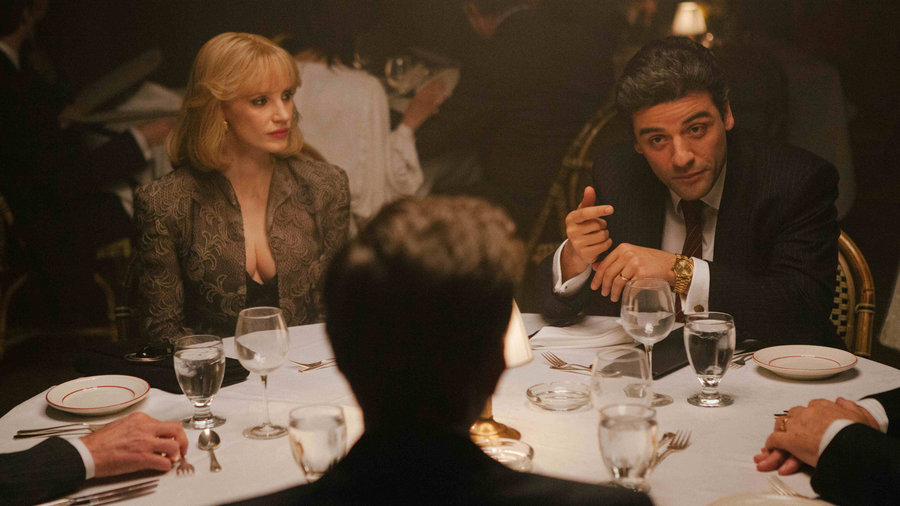
New York, 1981. In the midst of one of the most violent years in the city’s history, local businessman Abel Morales (Isaac) is looking to expand his fuel distribution company with the acquisition of a bay-front storage facility, and to do it all legally and above board. He’s supported by his wife, Anna (Chastain), but the deal he’s making for the facility is dependent on his being able to make the final payment. With his trucks being hijacked on a regular basis, and with his drivers afraid to make deliveries, Abel struggles to make sense of who’s behind it all.

Matters aren’t made any better by his having to contend with an investigation into his company by District Attorney Lawrence (Oyelowo). Lawrence is convinced that Abel’s business must be crooked in some way, despite his protestations. And as if that wasn’t bad enough, one of his drivers, Julian (Gabel), is involved in a shootout with robbers during an attempted hijacking. Julian goes on the run, and Abel has to track him down and convince him to give himself up. But Julian refuses and remains at large.

AMVY - scene2

Meanwhile, the due date for the final payment is fast approaching and Abel has to negotiate loans from as many people and places as he can, but he’s still short. When he learns that one of his trucks is in the process of being hijacked he pursues the robbers, eventually catching one of them. To his surprise he finds that the hijackings aren’t all that they seemed, though it does lead to a discovery about one of his competitors that he uses to his financial advantage. But with time running out he’s forced to approach Mafia-affiliated Peter Forente (Nivola); Forente agrees to loan Abel the money he needs but the terms are not very favourable. But when Abel tells Anna about the deal he’s made, she reveals something she’s done which has an impact on everything.

It’s been said on many previous occasions by many other people that the title A Most Violent Year is misleading. The movie contains little actual violence, despite including a bridge shootout and Abel chasing down one of the robbers, and there’s none of the tense showdowns we’ve come to associate with gangster movies. Instead, writer/director Chandor has chosen to focus on how difficult it is to operate in a criminal environment and remain honest. To look at Abel, and to see how close he’s getting to securing his company’s future, you do expect temptation to be placed in his way, and you expect him to struggle with each temptation, but what Chandor does instead is replace temptations with a series of setbacks. Abel’s a good man, solid and trustworthy through and through, and it’s how he maintains his innate honesty when faced with these setbacks – when he could be excused for taking a short cut or looking the other way for a moment – that defines him.

AMVY - scene3

As played by Isaac, Abel is a strong, determined individual who always seems a little out of his depth, despite his commitment. It’s his wife, Anna, played with spirited guile by Chastain, who is really the driving force and overseer of the business’s fortunes, and so we have a Lady Macbeth for the Eighties, as she cajoles and prompts and on occasion, bullies her husband into doing what’s needed. It’s a subtly constructed conceit – behind every successful man is an even more ambitious woman – but in the hands of Chandor and Chastain, the movie is all the more intelligent and engrossing when Anna is forced to take centre stage.

The period setting is entirely apt, with the cold, wintry conditions of the time reflecting purposefully on the narrative, as Abel’s fuel distribution business, mostly gas, is seen as a saviour not only for him, but for the city and its battle with the elements (Isaac is seen throughout in a big mustard-coloured coat that looks as warming as it does heavy). The movie wants Abel to succeed and so do we, and as he navigates the treacherous waters of “low” finance, each time he doesn’t quite achieve what he sets out to get, it has the effect of impressing on the viewer that he too will be fighting the elements if he fails completely. Bradford Young’s cinematography is a highlight, the wet, shiny, chilly streets of New York given a light sheen of glamour that makes for some impressive shots throughout the movie.

AMVY - scene1

By focusing on the trials and tribulations of someone seeking to firmly establish themselves in their chosen area of commerce, and by keeping the stakes firmly in the foreground, Chandor achieves a directness of style and narrative that keeps the viewer intrigued as to the outcome, and committed to following Abel’s story to its conclusion. It may not be a movie that features a swift pace and dazzlingly executed photography, but its measured approach to the material allows the viewer to become embroiled in the machinations and leverages that Abel becomes involved in. And if there aren’t any standout action beats or revenge style melodramatics then it’s entirely to the benefit of the movie, and stands as a testament to the quality of Chandor’s writing and directing.

Rating: 8/10 – a modest yet effective crime drama, A Most Violent Year is yet another example of just how good writer/director J.C. Chandor is, and why he’s one of the best movie makers working today; perceptive, extremely well acted, and lacking only in its inclusion of the DA subplot (which doesn’t add anything), this is the kind of movie that shouldput audiences in mind of the kind of thrillers that were being made in the early Seventies: assured, classy, and with a lot to say.

Share this:

  • Click to share on X (Opens in new window) X
  • Click to share on Facebook (Opens in new window) Facebook
  • More
  • Click to print (Opens in new window) Print
  • Click to email a link to a friend (Opens in new window) Email
Like Loading...

Selma (2014)

10 Tuesday Feb 2015

Posted by dullwood68 in Movies

≈ 2 Comments

Tags

Alabama, André Holland, Ava DuVernay, Carmen Ejogo, David Oyelowo, Drama, Edmund Pettus Bridge, Lyndon B. Johnson, Martin Luther King Jr, Racial equality, Review, Tim Roth, Tom Wilkinson, True story, Violence, Voting rights

Selma

D: Ava DuVernay / 128m

Cast: David Oyelowo, Tom Wilkinson, Carmen Ejogo, André Holland, Stephan James, Common, Lorraine Toussaint, Giovanni Ribisi, Tim Roth, Wendell Pierce, Alessandro Nivola, Stephen Root, Oprah Winfrey, Dylan Baker, Cuba Gooding Jr, Martin Sheen

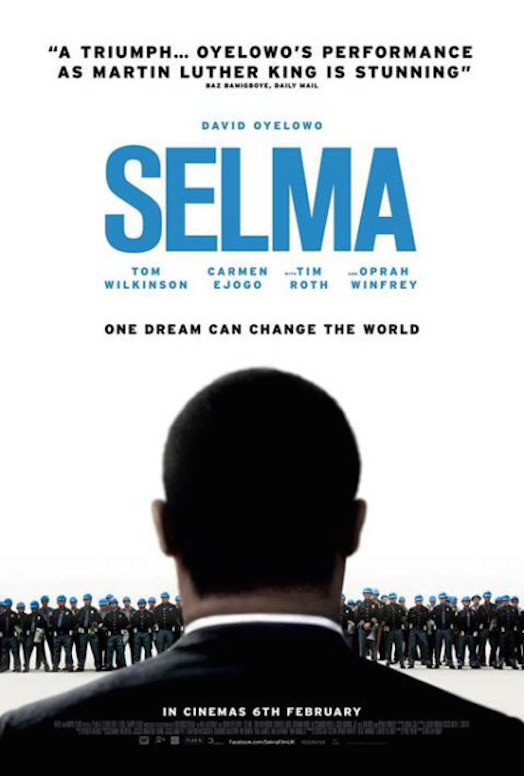
1964. Martin Luther King Jr (Oyelowo) receives the Nobel Peace Prize, mere weeks after the deaths of four children in an explosion at the 16th Street Baptist Church in Birmingham, Alabama. Also in Alabama, Annie Lee Cooper (Winfrey) tries to register to vote but has her application denied. King visits President Lyndon B. Johnson (Wilkinson) at the White House to ask for federal legislation that will allow black citizens to register without being impeded. Johnson tells him that, while he agrees with  King about the issue, it’s not one that he’ll be focusing on any time soon. Having already decided to march on the courthouse in Selma, Alabama if the President refuses to help, King sets things in motion.

Joined by members of the Southern Christian Leadership Conference (SCLC) and the Student Nonviolent Coordinating Committee (SNCC), King and his followers march on the courthouse where they’re confronted by the town sheriff and his men. A brawl ensues during which Clark is assaulted by Annie Lee Cooper and King and several others are jailed. Alabama’s governor, George Wallace (Roth) is angered by the protest, and when a night march in Marion is planned, he takes steps to have it dispersed. The march ends in violence and leads to the death of a young protester, shot while trying to avoid trouble in a restaurant. Following this, King receives criticism for his beliefs but he continues to insist that people should be fighting for their rights.

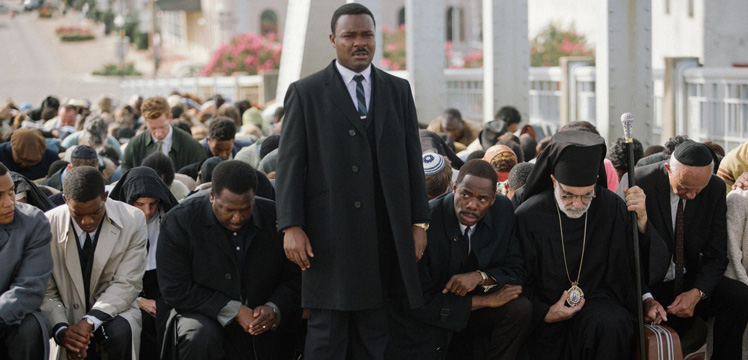
Another march is planned, this time from Selma to the state capital, Montgomery, a distance of fifty miles. Leaving Selma, the march crosses the Edmund Pettus Bridge where it is met by state troopers who instruct everyone to disperse. When they don’t, the troopers put on gas masks and start hurling tear gas into the crowd; they also attack the march using clubs and other weapons, as well as riding people down. It’s all witnessed by TV news crews and broadcast live across the nation, leaving Johnson angry at Wallace’s actions. He sends John Doar (Nivola), the Assistant Attorney General for Civil Rights to try and persuade King to call off the next attempt at marching to Montgomery, while he personally attempts to coerce Wallace into resolving the issue of registration and the use of state troopers if the march goes ahead.

White Americans who support King’s cause and civil rights in general, arrive to take part in the march. Again they cross the bridge, but this time King is leading. When they see the state troopers, they’re surprised to see them step aside. King kneels and prays for a few minutes, then heads back into Selma, effectively cancelling the march. More political manoeuvrings go on, including Johnson asking Congress for the quick passing of a bill to eliminate restrictions on registering, and the march to Montgomery finally goes ahead.

Selma - scene

For America, the Sixties were a turbulent decade, one that saw a variety of freedoms and rights enshrined in law, and the beginning of a transition from the kind of post-War conservatism that saw danger in any type of change, to a more free-minded liberalism that challenged the old order on almost every front. Racial issues were high on the agenda, if not for the politicians, then certainly for black people, and not just in the South. It was a time when people from all walks of life began to stand up and say, “enough is enough” (or to paraphrase Howard Beale in Network (1976): “We’re mad as hell, and we’re not going to take it anymore!”). But as ever, the battle was an uphill one, and there were plenty of people, equally, who were prepared to see it fail.

The determination and the will to succeed that existed in Martin Luther King Jr is shown here as forceful and impassioned, but there’s a measure of self-doubt as well, and it’s this rounding of the man that helps make the movie as commanding as it is. Avoiding any attempts at mythologising King, Selma gives us a portrait of a man fully aware of his mission in life and confident enough to second-guess himself when needed. It’s a balance that could have been lost on several occasions during the course of the movie, not least in its depiction of his troubled marriage, where the script so neatly sidesteps any possibility of descending into soap opera that it makes for a refreshing change. And the complexities of the organisations involved and how they all interact with King, are also well handled, showing the figurehead but not the leader. The movie shows King making decisions based both on his own ideas and those of others, and if his opponents – such as Wallace – appear too one-dimensional in comparison, well, maybe that’s because they just were.

King is played with tremendous gravitas and skill by Oyelowo, imbuing King with a pride and a sensitivity that never seem at odds with each other. It’s an impressive achievement, sharply detailed, perfectly pitched, and one of the finest acting performances you’re likely to see in a long while. It helps that he has a passing resemblance to King, but it’s the voice that he captures so well, that distinctive, low cadence that could rise to a crescendo so effortlessly in the middle of a sentence. It’s not far from the truth to say that Oyelowo inhabits the man rather than impersonates or mimics him (listen to the speech the real King made when the march reached Montgomery, and then listen to Oyelowo’s version and see how close he is), and he’s just as effective in the movie’s more pensive moments as he is when called upon to be the fiery orator.

Good as Oyelowo’s performance – and it is very good – he wouldn’t have been anywhere near as imposing if it weren’t for an extremely well-structured and heavily nuanced script, courtesy of Paul Webb (his first). He makes the politics easy to understand, the characters easy to empathise with or condemn (as necessary), and he doesn’t rein in on the complexities of the issues concerned. It’s a great screenplay, and the rest of the cast, aided and abetted by DuVernay’s strong, sanguine direction, relish every scene and line at their disposal. (If there is one area, though, where Webb fails to convince, it’s in Johnson’s refusal to address the issue of voting registration; his arguments are spurious at best, though they may have been so at the time – it’s hard to tell.)

DuVernay, making only her third feature, emphasises the various relationships that develop between the different factions, and never loses sight of the human factor in amongst all the politicking. She uses the camera with aplomb, particularly with medium shots, imparting a level of detail some more experienced directors fail to achieve ever. And there’s a richness about the movie that speaks of carefully considered choices made ahead of filming, of everyone involved knowing exactly what’s required and everyone involved having the conviction to carry it off. The mood of the times, and the look of the times, are tellingly rendered, and the atmosphere surrounding the planning of each march is palpable, taking the movie – unwittingly perhaps – into thriller territory. But the drama remains throughout, and by the movie’s end, the audience is rejoicing almost as much as the characters are.

Rating: 9/10 – a rewarding look at a particular place and time in American history, Selma takes a flashpoint that resonates far beyond its happening, and makes it as compelling and vital as if it were happening today; a triumph for all concerned and buoyed by Oyelowo’s superb performance, DuVernay’s apposite approach to the material, and Webb’s rewarding screenplay.

Share this:

  • Click to share on X (Opens in new window) X
  • Click to share on Facebook (Opens in new window) Facebook
  • More
  • Click to print (Opens in new window) Print
  • Click to email a link to a friend (Opens in new window) Email
Like Loading...

The Butler (2013)

29 Sunday Dec 2013

Posted by dullwood68 in Movies

≈ Leave a comment

Tags

Cecil Gaines, Civil rights movement, David Oyelowo, Drama, Eugene Allen, Forest Whitaker, History, Lee Daniels, Martin Luther King, Oprah Winfrey, Presidents, Racism, Review, True story, White House

Butler, The

D: Lee Daniels / 132m

Cast: Forest Whitaker, Oprah Winfrey, Cuba Gooding Jr, Lenny Kravitz, David Oyelowo, Terrence Howard, Olivia Washington, Yaya DaCosta, Clarence Williams III, Vanessa Redgrave, Alex Pettyfer, Robin Williams, John Cusack, James Marsden, Liev Schreiber, Alan Rickman, Jane Fonda

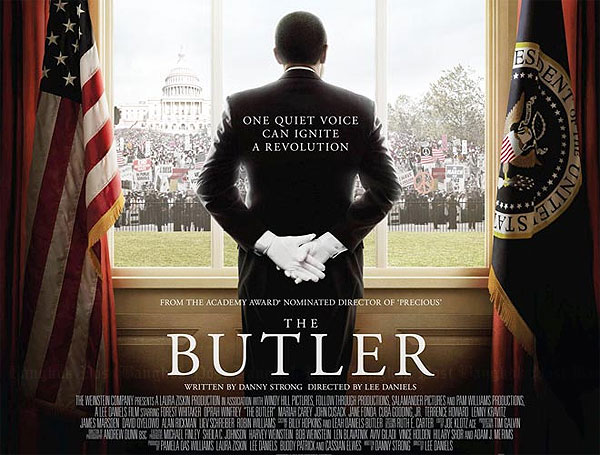
Based on the life of Eugene Allen (here re-named Cecil Gaines), The Butler covers over eighty years of American history, and focuses on the civil rights movement as seen through the eyes of Gaines, his family, and the various Presidents he served in the White House.  Beginning in 1926 where the young Gaines and his mother and father work on a cotton plantation, the film progresses through the decades touching on various important political events and attempts to establish the effect these events have on Gaines (Whitaker) and his family – wife Gloria (Winfrey), and two sons, Louis (Oyelowo) and Charlie (Isaac White, Elijah Kelley).

While Cecil’s climb from plantation worker’s son to White House servant takes up the first part of the movie, and reflects the prevailing attitudes surrounding race and social integration (or lack of it), there’s a hint throughout these scenes that this is merely the build up to the central story; there’s a lack of real incident once Cecil leaves the plantation and too much time passes as well.  Once he begins work at the White House it becomes clear that Louis isn’t as impressed by his father’s job, and sees his father’s easy acceptance of his place within a society struggling to achieve equality as a betrayal.

As Louis becomes more and more involved in the civil rights movement – he rides the Freedom Bus, works for Martin Luther King, joins the Black Panthers – we see the widening gulf between father and son at the same time as a nation begins to unify itself.  It’s this disparity that offers the most drama, while the political machinations and behind the scenes decision-making make for an interesting counterpoint to the home-spun drama being played out.

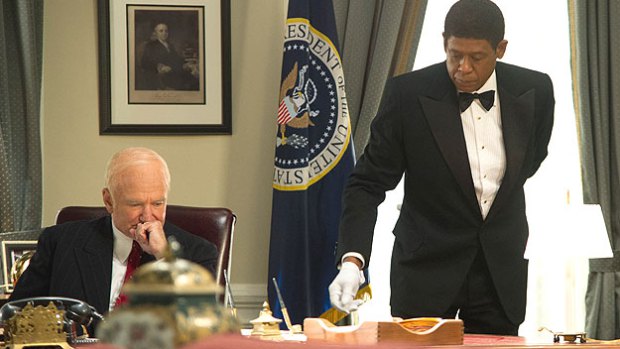
Butler, The - scene

It’s an interesting story, and one that shines a rare light on the personal side of political and social upheaval witnessed in the US during the 50s, 60s and 70s, and features strong performances from all concerned.  However – and it’s a big however – the movie has one major flaw: in attempting to cover so much ground it ends up being largely superficial and only fleetingly involving.  Thanks to Danny Strong’s wayward script, scenes pass with little purpose other than to reinforce Gaines’ apathy with regard to the fight for racial equality, and after the sixth or seventh or eighth time they become tedious and wearing (we get it already!).  Likewise for Louis’s involvement with the movement: yes, he’s committed, yes he sees his father as a sell-out, yes he feels with his head rather than his heart – all this is laboured and needlessly pedantic.  Gloria and Charlie are given small moments throughout as a result, and the larger family dynamic is reduced to odd scenes set around the dinner table; the only problem is there’s no meat being served. There are scenes that never amount to much: Gaines’ friend Howard (Howard) trying to seduce Gloria; a late-night encounter in the kitchens with Nixon (Cusack).

And then there are the Presidents, Eisenhower (Williams), Kennedy (Marsden), Johnson (Schreiber), Nixon and Reagan (Rickman).  Each actor has only two or three scenes to work with, and while each does well with what he’s given, they all suffer from the same approach: show the man in the highest office in the land struggling to decide what to do (though Kennedy comes off best in this regard).  At least the movie stops short of Gaines acting as some kind of authoritative guide, offering the best advice at the right time; but he does remain annoyingly non-partisan, except for the issue of equal pay between the white and the black employees at the White House (his own small battle for equality that is shown as the only part of the struggle he’s ever interested in).

The performances, though, are good, and while some of the cast are given little to work with – Kravitz, Washington, Howard, and surprisingly, Winfrey – they rise above the script’s limitations to convey a sense of what it was like to live during those troubled times.  Whitaker carries the movie with ease, and while it’s a little difficult to accept him as a man in his late twenties (when he takes over the part from Aml Ameen, himself a twenty-eight year old playing a fifteen year old), he displays a confidence and conviction that helps his character immensely.  Whitaker is an actor who can be unpredictable at times, but here he reins in any of his usual eccentricities and maintains the stolid, often resigned approach of a man who feels he has found his place in the world and doesn’t need to reach any further.

As with all historical dramas where real events are being portrayed there are inaccuracies and fabrications galore, but while this is sometimes glaring – Reagan’s indifference to civil rights, Eugene Allen’s son Charles wasn’t the political activist Louis is – they’re not so glaring that they detract from the story that’s being told.  This is based on the life of Eugene Allen, and if people are offended or upset by any deviation from “the truth” or historical fact, then they should avoid this movie completely.

On the technical side, Daniels directs with an increasingly confident flair but is hampered by the script’s lack of dramatic focus (it still feels odd to say that about a movie that appears to be all drama), and has no answer for its often stop/start structure.  That said, the movie is beautifully lensed by Andrew Dunn, and the production design by Tim Galvin, allied with Lori Agostino, Erik Polczwartek and Jason Baldwin Stewart’s art direction, means the movie is always handsome to look at.  Alas, Rodrigo Leão’s score is intrusive and overcooks the emotional beats.

Rating: 5/10 – not the incisive overview of the civil rights movement it should have been, nor the family drama it could have been, The Butler will probably do well in the Awards season, but there’s a lack of substance, and focus, here that holds it back from being a truly good movie; good performances aside, this has little to recommend it if you already know enough about its subject matter.

Share this:

  • Click to share on X (Opens in new window) X
  • Click to share on Facebook (Opens in new window) Facebook
  • More
  • Click to print (Opens in new window) Print
  • Click to email a link to a friend (Opens in new window) Email
Like Loading...

Blog Stats

  • 486,826 hits

Recent Posts

  • 10 Reasons to Remember Bibi Andersson (1935-2019)
  • Fantasia (1940)
  • Dances With Wolves (1990) – The Special Edition
  • Kiss of the Spider Woman (1985)
  • The Three Musketeers (1973)

Top Posts & Pages

  • Lost for Life (2013) - Another Look
    Lost for Life (2013) - Another Look
  • Lost for Life (2013)
    Lost for Life (2013)
  • About
    About
  • A Brief Word About La La Land (2016)
    A Brief Word About La La Land (2016)
  • Exposed (2016)
    Exposed (2016)
  • Cardboard Boxer (2016)
    Cardboard Boxer (2016)
  • The Monuments Men (2014)
    The Monuments Men (2014)
  • Irrational Man (2015)
    Irrational Man (2015)
  • BFI London Film Festival 2015
    BFI London Film Festival 2015
  • A Brief Word About Netflix Original Comedies
    A Brief Word About Netflix Original Comedies
Follow thedullwoodexperiment on WordPress.com

Blogs I Follow

  • Rubbish Talk
  • Film 4 Fan
  • Fast Film Reviews
  • The Film Blog
  • All Things Movies UK
  • Interpreting the Stars
  • Let's Go To The Movies
  • Movie Reviews 101
  • TMI News
  • Dan the Man's Movie Reviews
  • Film History
  • Jordan and Eddie (The Movie Guys)

Archives

  • April 2019 (13)
  • March 2019 (28)
  • February 2019 (28)
  • January 2019 (32)
  • December 2018 (28)
  • November 2018 (30)
  • October 2018 (29)
  • September 2018 (29)
  • August 2018 (29)
  • July 2018 (30)
  • June 2018 (28)
  • May 2018 (24)
  • April 2018 (21)
  • March 2018 (31)
  • February 2018 (25)
  • January 2018 (30)
  • December 2017 (30)
  • November 2017 (27)
  • October 2017 (27)
  • September 2017 (26)
  • August 2017 (32)
  • July 2017 (32)
  • June 2017 (30)
  • May 2017 (29)
  • April 2017 (29)
  • March 2017 (30)
  • February 2017 (27)
  • January 2017 (32)
  • December 2016 (30)
  • November 2016 (28)
  • October 2016 (30)
  • September 2016 (27)
  • August 2016 (30)
  • July 2016 (30)
  • June 2016 (31)
  • May 2016 (34)
  • April 2016 (30)
  • March 2016 (30)
  • February 2016 (28)
  • January 2016 (35)
  • December 2015 (34)
  • November 2015 (31)
  • October 2015 (31)
  • September 2015 (34)
  • August 2015 (31)
  • July 2015 (33)
  • June 2015 (12)
  • May 2015 (31)
  • April 2015 (32)
  • March 2015 (30)
  • February 2015 (37)
  • January 2015 (39)
  • December 2014 (34)
  • November 2014 (34)
  • October 2014 (36)
  • September 2014 (25)
  • August 2014 (29)
  • July 2014 (29)
  • June 2014 (28)
  • May 2014 (23)
  • April 2014 (21)
  • March 2014 (42)
  • February 2014 (38)
  • January 2014 (29)
  • December 2013 (28)
  • November 2013 (34)
  • October 2013 (4)

Create a free website or blog at WordPress.com.

Rubbish Talk

Film 4 Fan

A Movie Blog

Fast Film Reviews

The Film Blog

The official blog of everything in film

All Things Movies UK

Movie Reviews and Original Articles

Interpreting the Stars

Dave Examines Movies

Let's Go To The Movies

Film and Theatre Lover!

Movie Reviews 101

Daily Movie Reviews

TMI News

Latest weather, crime and breaking news

Dan the Man's Movie Reviews

All my aimless thoughts, ideas, and ramblings, all packed into one site!

Film History

Telling the story of film

Jordan and Eddie (The Movie Guys)

Movie Reviews & Ramblings from an Australian Based Film Fan

Privacy & Cookies: This site uses cookies. By continuing to use this website, you agree to their use.
To find out more, including how to control cookies, see here: Cookie Policy
  • Subscribe Subscribed
    • thedullwoodexperiment
    • Join 481 other subscribers
    • Already have a WordPress.com account? Log in now.
    • thedullwoodexperiment
    • Subscribe Subscribed
    • Sign up
    • Log in
    • Report this content
    • View site in Reader
    • Manage subscriptions
    • Collapse this bar
 

Loading Comments...
 

    %d