• 10 Reasons to Remember…
  • A Brief Word About…
  • About
  • For One Week Only
  • Happy Birthday
  • Monthly Roundup
  • Old-Time Crime
  • Other Posts
  • Poster of the Week
  • Question of the Week
  • Reviews
  • Trailers

thedullwoodexperiment

~ Viewing movies in a different light

thedullwoodexperiment

Tag Archives: Death

Almost Heaven (2017)

27 Tuesday Nov 2018

Posted by dullwood68 in Movies

≈ Leave a comment

Tags

Carol Salter, China, Death, Documentary, Ming Yang Mountain Funeral Home, Mortician, Review, Ying Ling
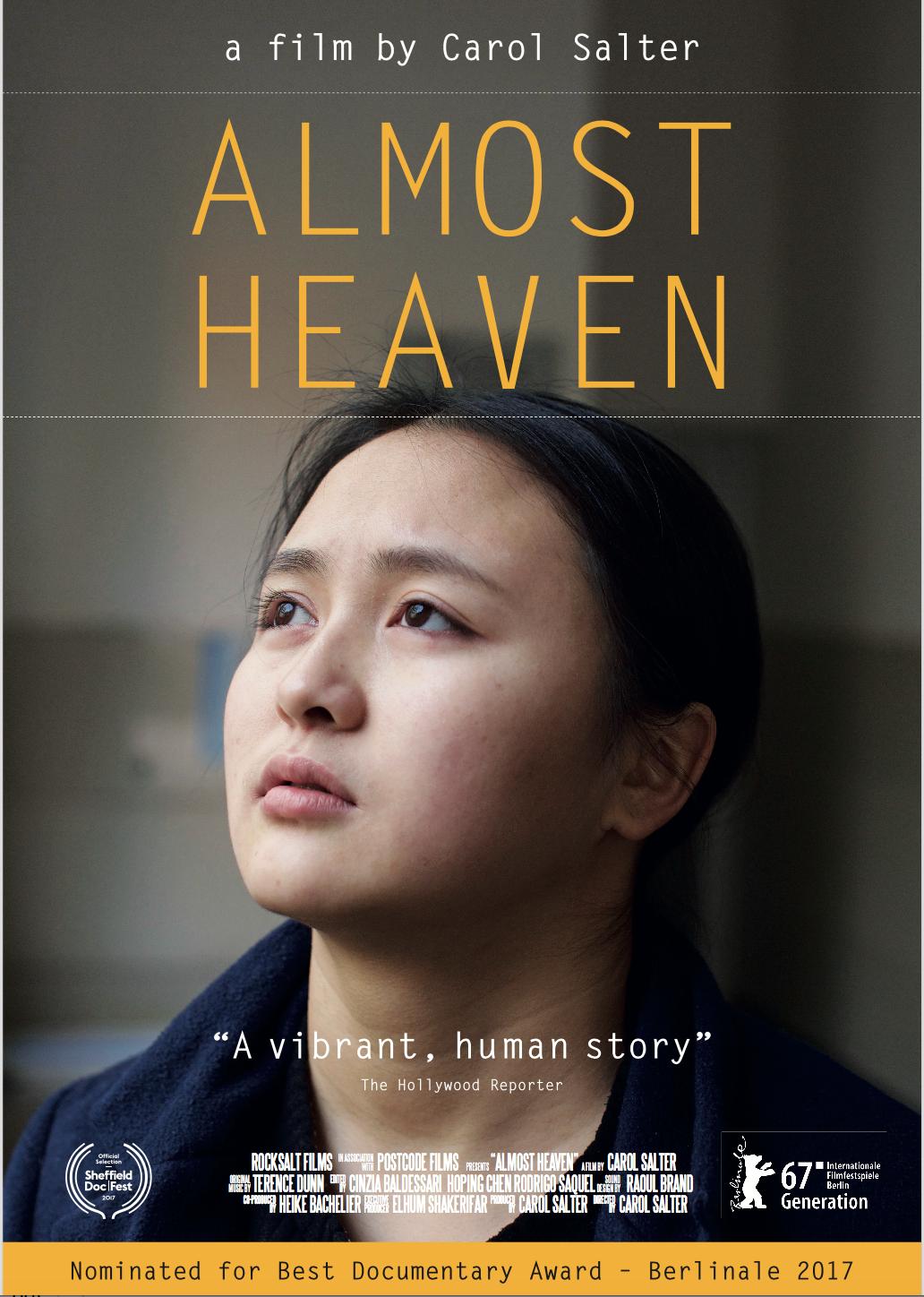
D: Carol Salter / 72m

In today’s China, if you’re a teenager and you’re looking for a job, chances are that you’ll have to travel hundreds of miles away from home to find one. Such are the demands of China’s modern industrial approach to funeral homes, that even seventeen year old girls like Ying Ling will be hired as morticians, and taught the traditions surrounding the handling of the dead, while also acknowledging the commercialisation of the whole funeral process. For any young girl it would be a daunting prospect, but even more so when you’ve never been away from your family before, and getting back to see them is problematical. For Ying, alone and living in a sparsely decorated and furnished room (her bed is a thin mattress on the floor covered by a large blanket) within the confines of the Ming Yang Mountain Funeral Home, her occasional calls home are both wistful and disappointing – wistful for the sad reactions they prompt in Ying, and disappointing for the lack of support that Ying seems to be receiving from her family. It’s no wonder that she feels isolated, and it’s no wonder she’s unsure if being a mortician is something she wants to continue with as a career.

The funeral home is an austere, brilliantly lit yet empty building split up into several different areas, some of which are accessible to grieving families. For Western audiences, seeing relatives watch as their loved ones are washed and cleaned is a little unnerving at first, but Salter’s unflinching cinematography soon draws in the viewer and makes them (eventually) a willing participant. It’s fascinating, and it’s strange, but these traditions and rituals are ultimately about what’s best for the deceased, and their transition to the next life. As Ying learns more and more, so too does the viewer, and Carol Salter’s intuitive yet restrained direction allows those unfamiliar with Chinese funeral practices a greater appreciation and understanding of why these rituals are so important. Ying has her own reservations at first, and isn’t always paying attention, but the mistakes she makes are minor, albeit enough to make her question her long-term future; she has her own hopes and dreams away from Ming Yang, even if it’s only to have a small shop that sells milk tea. Salter catches Ying in various moments of repose and contemplation, and each time she looks melancholy and unsure of what to do.
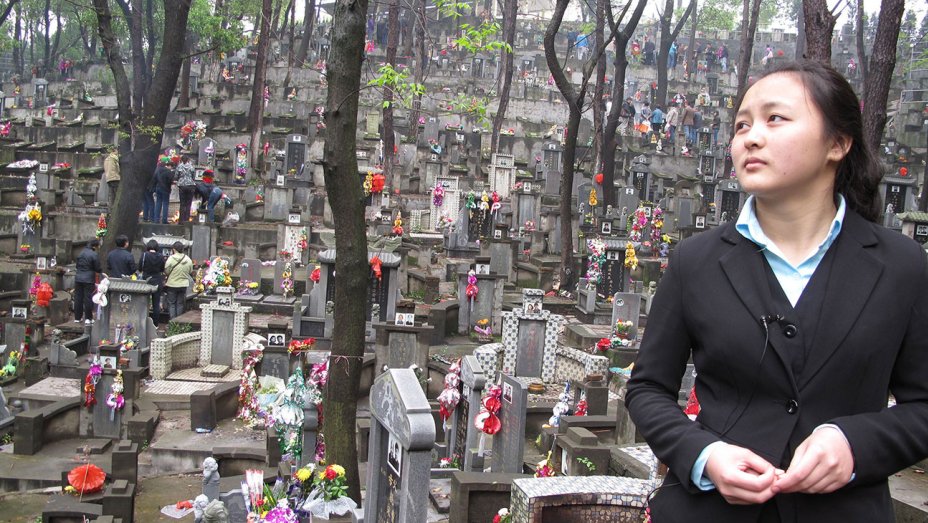
The stifling nature of Ying’s circumstances are exacerbated by the eventual departure of the young boy her own age who decides to leave and return home once he learns his grandparents aren’t well. Ying’s troubled features as she accompanies him to the airport tell you everything you need to know, both about her hesitant attraction for him, and the sense of loss she’s already feeling. Later, when they engage in a video chat, so much is left unspoken on both sides that it becomes painful to watch. Salter documents all this and creates a continual juxtaposition between Ying’s need to explore and live a more satisfying life, and the continual reminders of our inevitable mortality. Ying never really settles in her job, and appears to be unhappy for the most part, but whether this is a reflection of the work she doesn’t really want to do, or of her own issues, the movie doesn’t take the time to explore or reflect upon. Much is gained by the subtle inferences that Salter threads throughout the material, and there’s a great deal of poignancy to be found in the way that grief-fuelled outbursts are offset by the natural Chinese tendency for stoicism. And that’s without the occasional reminder that this is a business after all: “She will only be cremated after you have made the payment…”

Rating: 8/10 – an elegant, beautifully rendered meditation on the nature of death amidst life, Almost Heaven is also a quiet, intimate documentary that addresses how life causes us to reflect on death; though for many this will be the antithesis of a must-see movie – for the subject matter alone – this is nevertheless a powerful and insightful foray into a world that would otherwise remain a mystery to many of us.
Share this:

  • Click to share on X (Opens in new window) X
  • Click to share on Facebook (Opens in new window) Facebook
  • More
  • Click to print (Opens in new window) Print
  • Click to email a link to a friend (Opens in new window) Email
Like Loading...

A Ghost Story (2017)

12 Thursday Oct 2017

Posted by dullwood68 in Movies

≈ Leave a comment

Tags

Casey Affleck, David Lowery, Death, Drama, Grief, Review, Rooney Mara, Time

D: David Lowery / 92m

Cast: Casey Affleck, Rooney Mara, Liz Cardenas Franke, Sonia Acevedo, Will Oldham

There’s a saying that death comes to us all, and for some of us it means the end of life altogether, while for others it means the beginning of a new journey into an afterlife that may or may not prove to be better than the life we’ve lived. David Lowery’s latest movie takes that idea, but then adds a twist to it, and asks the question, what if there is an afterlife, but we were delayed in taking that journey onward? What if we found ourselves trapped between our old life and the next one? What would that be like? How would it feel? And how would someone cope in such a situation? Could someone cope in that situation? These are all intriguing ideas, and Lowery does his best to answer all of those questions, including what could sustain us through such an experience, and how much would it change us?

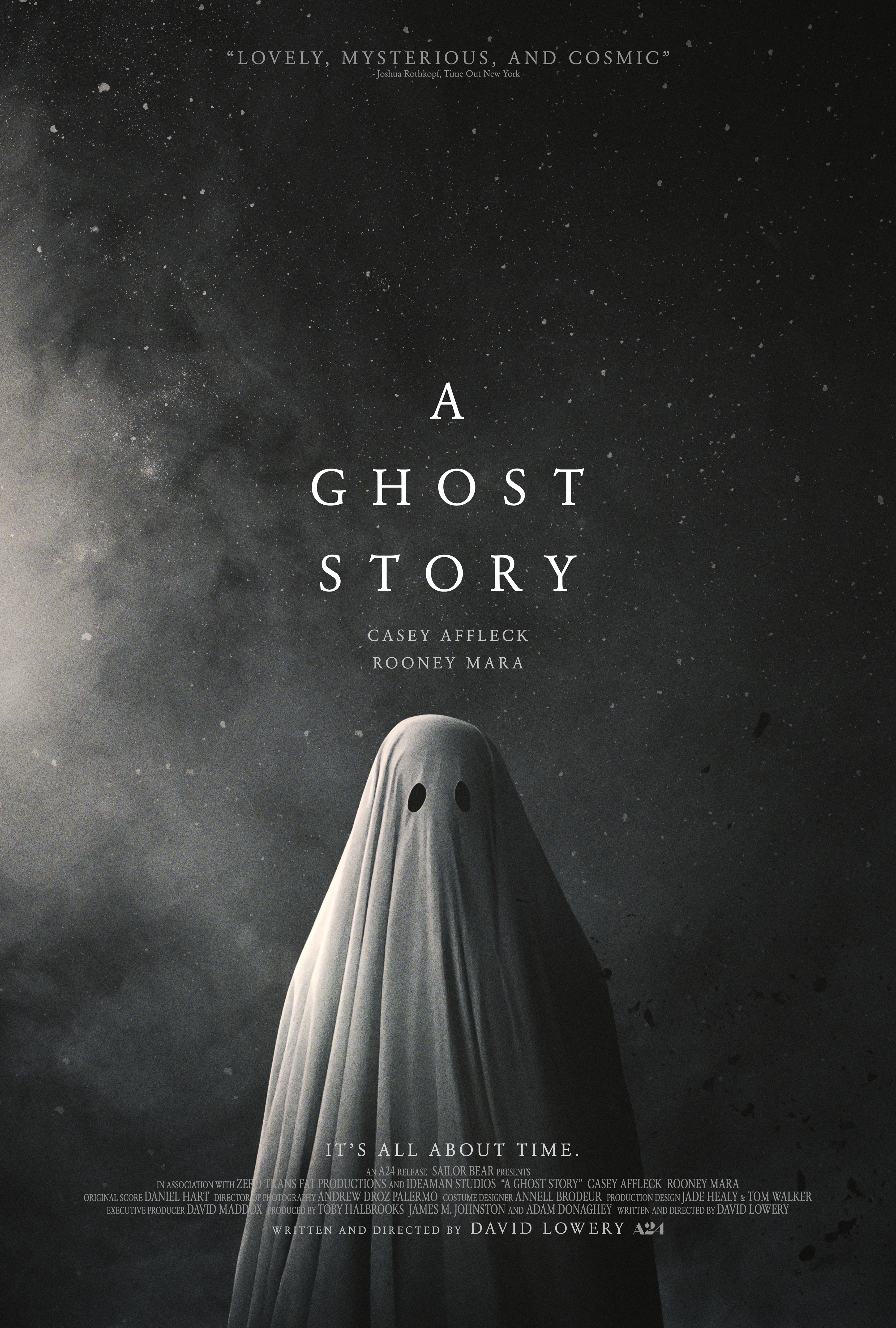
The ghost of the title is at first just a man, a musician called C (Affleck) who is married to M (Mara). They live in a small tract house, and seem to get along okay, but there are shifts and challenges in their relationship that show themselves from time to time. But their time together is coming to an end. C is killed in a car crash outside their home. M is asked to identify his body at a hospital mortuary. He lies on a table covered by a large white sheet, and after she has seen him and left, he sits up. He walks slowly through the hospital, unseen by staff, patients and visitors, until he comes to a wall. The wall opens to reveal a portal full of swirling light. The invitation is clear, but C doesn’t take it. Instead he makes his way back to his home, where a grieving M has no idea of his presence. He watches her as she begins to rebuild her life, and then one day he sees her write something down on a slip of paper, and then put the slip of paper in a small gap in the wall. She paints over the gap, sealing it. C decides to retrieve the slip of paper but the sheet makes it awkward to remove the paint. As he picks away at the paint, time appears to race on and he finds an Hispanic single mother (Acevedo) and her two children have moved into the house.

Having established a secondary reason for C’s remaining at the property, Lowery soon shows how this affects C and increases the sense of separation that he’s experiencing. As with everyone else, this new family go about their days oblivious to his presence, just as M did, but now it’s more pronounced. This family is living in his home, and M isn’t among them; she isn’t coming back and now he’s stranded there, amongst strangers. He learns how to move things, how to have a corporeal effect despite being a non-corporeal form. Eventually they leave, frightened by the violent behaviour he’s able to display. But it proves to be a transient victory. Soon he’s surrounded by people, as the next owners of the house throw a party. And then time passes more quickly, folding over and into itself, forging ahead in great leaps, and leaving the house behind as a distant memory, much as C has become a distant memory in the minds of those who knew him.

It’s at this point in the movie that Lowery effectively makes C’s existence the stuff of existential horror. As if things haven’t been bad enough, events transpire that keep C even more isolated and becalmed by his death. He’s forced to bear witness to changes and developments that he couldn’t have foreseen and Time becomes an implacable foe, thoughtless and cruel. He becomes even more stranded despite his never moving from the site of his home, and soon he’s nothing more than a shell, just existing in a vague approximation of Life. Lowery and Affleck find the sadness and the intense loneliness in this, and C becomes an even more tragic figure, the black eye holes of the sheet expressing longing, regret, anguish, melancholy, and the overwhelming grief that C is feeling. Affleck uses slow, measured movements to show just how C’s emotions are ebbing and flowing, and despite the sheet (or maybe because of it), there’s not one moment in the movie where C’s sensitivity to his situation isn’t easy to grasp. It’s a performance that is so detailed and so subtle that it makes the movie much more emotional and affecting than it looks.

Of course, what’s really clever and exceptional about A Ghost Story, is that Lowery has taken such an iconic image – perhaps the most simple ghost “costume” – and used it as a metaphor for the pain that grief can cause us, and its potentially unyielding nature. The enormity of C’s situation is horrifying, to remain trapped in a place that offers less and less reason to be there, and which only serves to highlight and increase the amount of pain C is experiencing as each and every day passes by. How crushing must that be? That Lowery is able to get this message across so effectively – and so chillingly – is a tribute to the clarity of his artistic vision, and the work of Affleck and Mara, and a very talented crew. Working with cinematographer Andrew Droz Palermo, and production designers Jade Healy and Tom Walker, Lowery has put together a movie whose distinct visual look includes a high number of static shots where the camera remains resolutely fixed in position, to careful framing of C as he watches and waits in the same location even as it changes all around him. This is as much about the space that he exists in, as it is his own existence within it.

What all this gives us is a movie that is by turns poetic, sad, poignant, humorous (yes), engrossing, and endlessly thought-provoking. It seeks to address and confront aspects of our existence that we don’t give regular consideration to, such as what it is to be truly alone, and our very reason for being, both physically and spiritually. But it’s not a “heavy” movie, and nor is it one to avoid because of the challenging ideas it explores. Rather it’s a movie that celebrates life and many of the complexities that make it worth living, and which we might continue to explore after death (if an afterlife is what awaits us). C has the opportunity to “move on” but he chooses to remain, to be with his wife and in his home, because – and as corny as it sounds – he loves them both and doesn’t want to lose them. What better reason could there be for spending an eternity covered in a sheet?

Rating: 9/10 – not for all tastes, but nevertheless one of the most audacious and moving movies of recent years, A Ghost Story is a powerful meditation on the forces of grief and love, and what they can make us do – and endure; a superb, necessarily understated performance by Affleck provides much of the movie’s emotional depth, but this is also intelligent and shrewd in its approach to what could have been a much weightier, and less focused story.

Share this:

  • Click to share on X (Opens in new window) X
  • Click to share on Facebook (Opens in new window) Facebook
  • More
  • Click to print (Opens in new window) Print
  • Click to email a link to a friend (Opens in new window) Email
Like Loading...

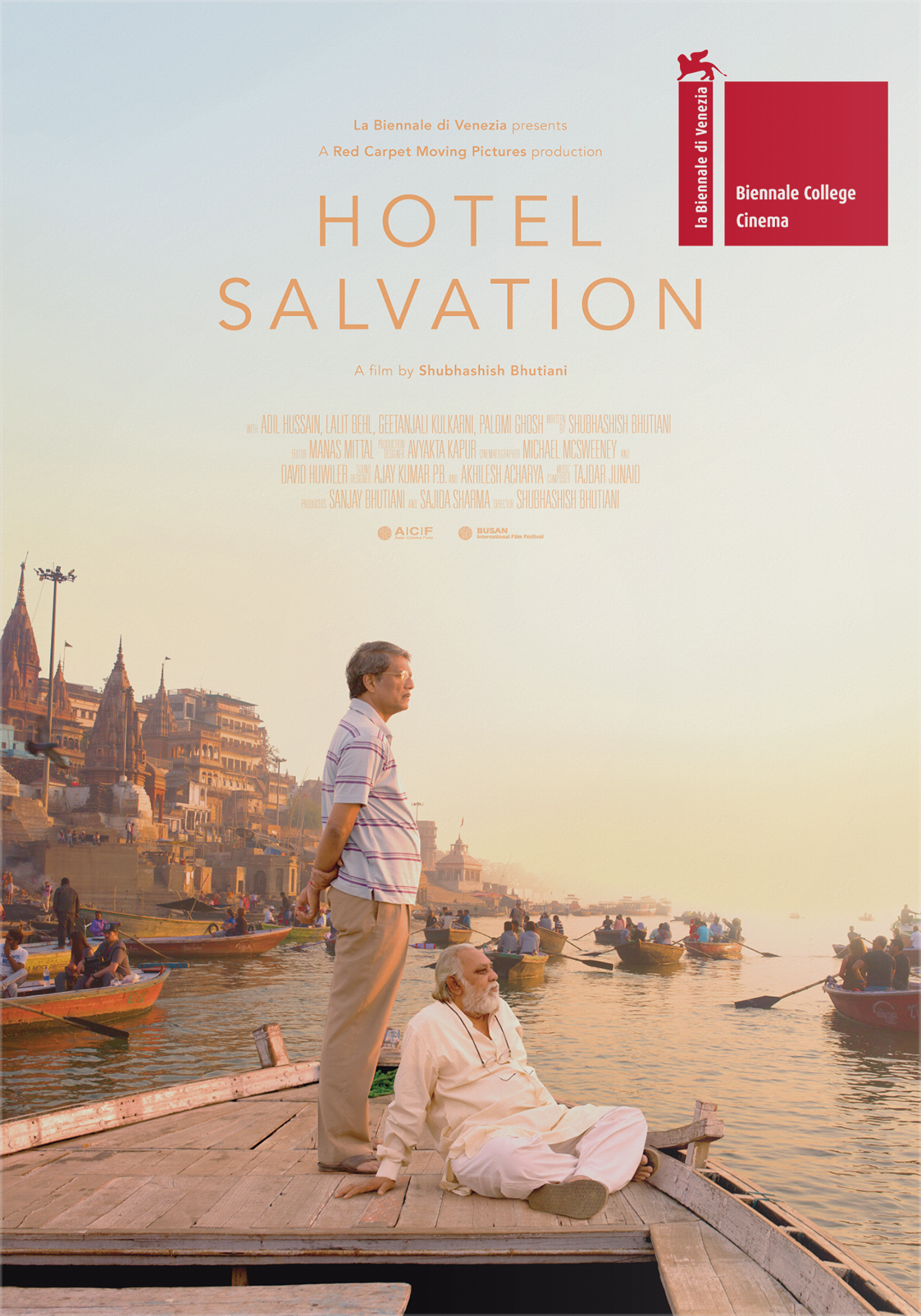
Hotel Salvation (2016)

28 Monday Aug 2017

Posted by dullwood68 in Movies

≈ Leave a comment

Tags

Adil Hussain, Comedy, Death, Drama, Father/son relationship, India, Lalit Behl, Review, River Ganges, Salvation, Shubhashish Bhutiani, Varanasi

Original title: Mukti Bhawan

D: Shubhashish Bhutiani / 99m

Cast: Adil Hussain, Lalit Behl, Geetanjali Kalkarni, Palomi Ghosh, Navnindra Behl, Anil K. Rastogi

What would you say if you had an elderly father and he announced one day that he thought that his time had come, that it would soon be time for him to die? And what if he also announced that he planned to spend his last days at a hotel that would allow him to prepare his soul for death? Outside of India, where there are three or four such hotels, the matter is unlikely to arise, but if it did, if your elderly father wanted to see out his life away from his family and friends, and with like-minded people, how supportive would you be? Would you remonstrate with him, try and get him to change his mind, emotionally blackmail him, perhaps, by impressing on him how upsetting this will be for his relatives (and yourself)? Or would you do everything in your power to make his final wishes come true? This is the dilemma faced by Rajiv (Hussain) in the feature debut of Shubhashish Bhutiani, an engaging, wistful look at death and its effect on the surviving family.

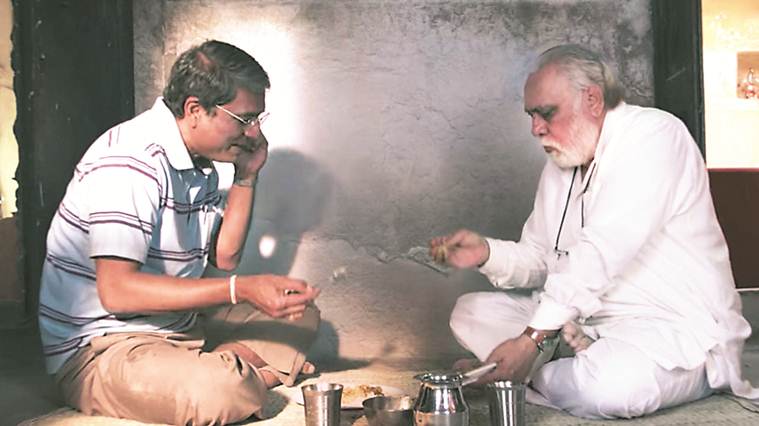
Daya (Lalit Behl) is the elderly father in question, a seventy-seven year old man who has a dream in which he pursues his boyhood self through the deserted village of his childhood. He takes it as a sign that he is being called to the afterlife, and tells his family – son Rajiv, daughter-in-law Lata (Kalkarni), and granddaughter Sunita (Ghosh) – that he plans to travel to Varanasi, on the banks of the River Ganges, to stay at a hotel where he hopes to attain salvation. Rajiv doesn’t know what to do about this, torn as he is between loyalty to his father, and his personal reluctance to entertain such an idea. It’s only when his father threatens to go by himself that Rajiv agrees to accompany him to Varanasi. Once there, Daya and Rajiv find the hotel to be a simple one, with basic amenities, and run by the sincere, yet business-like Mishraji (Rastogi). They settle in, with Daya having fifteen days to achieve salvation or face being asked to leave. Rajiv has a lot of trouble adjusting to the situation, and finds looking after his father more stressful than he could have imagined.

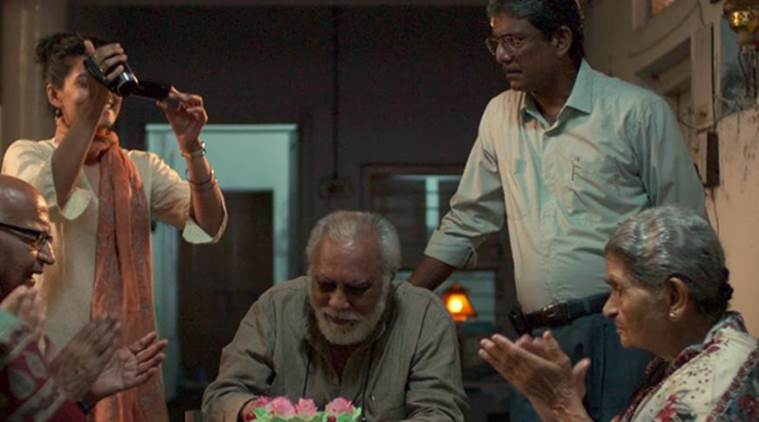
While Rajiv juggles caring for his father with the demands of his work, Daya embraces the atmosphere of the hotel, and gets to know some of the other guests. In particular, he becomes friendly with a widow, Vimla (N. Behl); they both find meaning in their being at the hotel and facing the certain futures they have decided for themselves. This gives them an increased sense of comfort, but it’s not enough for Rajiv to understand how clearly they see their salvation, or why they are so calm and practical about it all. Even the wise ministrations of Mishraji can’t put a dent in Rajiv’s unhappy presence. As the days pass, Daya’s peace of mind and acceptance of his fate leads to Rajiv having to make an equally fateful decision: whether to stay with his father until the end, or return home to his family and his work.

Death isn’t exactly the most cinema-friendly of subjects, and when it’s placed front and centre in a movie in the way that it is in Hotel Salvation, there’s always the chance that it will lead to a dour, dispiriting exercise in profound sorrow or morbid pessimism. But thanks to a knowing, sympathetic script by Bhutiani, this meditation on one of life’s greater certainties, is both affecting and sophisticated, using as it does the differences of opinion and belief in different generations, and by exploring the outer limits of faith and personal conviction. That said, faith and belief are only minor elements in a tale that more carefully examines the relationship between a father and a son that isn’t as clearly defined as it should be. There is a bond between the two, certainly, and it is borne out of familial love and affection, but it’s also become frayed at the edges, leaving both father and son unable to connect fully with each other. The trip to Varanasi, as well as giving Daya a chance at salvation, is also a last chance for the pair to make good on the strain in their relationship.

However, both men are too wrapped up in their own concerns to notice right away the opportunity that’s in front of them, and Bhutiani’s trenchant, observant script doesn’t let either character off the hook for their near-sighted behaviour. He’s aided by two standout performances by Hussain and Behl, both actors rising to the challenges of the script and giving well rounded portrayals that capture the idiosyncracies of both men, while also displaying the deep-rooted bond that they share as father and son. Hussain judges Rajiv’s flustered dismay at being away from his work and his family with a mix of baffled expressions and abject body language, his tactless references to trains home and the impolitic nature of his father’s last wishes, making the character credible from the start; if Rajiv doesn’t understand his father, then why has he accompanied him? Is it from guilt, feelings of familial responsibility, or a need to be “there” at the end? Bhutiani is clever enough to make all three viable, and Hussain’s layered portrayal allows for further interpretations to be made.

In many respects, Behl has the simpler role, but through his interactions with Vimla and the other guests, Bhutiani ensures that we get to know the man behind the decision, and how the surety of his purpose has liberated him as an individual. It’s a wonderfully expansive portrayal, with Behl striking the right note in every scene, and providing the viewer with clear insights into the workings of his (very much made up) mind. This interior work is finely balanced against a shooting style that errs on the side of wide shots for the most part, and a much broader, comedic canvas against which Bhutiani pokes genial fun at the idea of the hotel itself, while also detailing its more serious nature and the benefits available to its guests. But Bhutiani is just as interested in the effect on Daya’s family as he is on Daya himself, and the various reactions and emotions displayed by Rajiv, Lata, and Sunita offer clever insights into just how unsettling “co-operating” in someone’s death can be. In the end, it’s a movie about accepting death and celebrating life, two subjects that this movie addresses with ease.

Rating: 9/10 – a thoughtful, considerate, and witty examination of what it is to prepare for death, and the best way to go about it, Hotel Salvation is that rarity: a movie that draws you in and makes you forget you’re watching a movie; beautifully shot by DoPs Mike McSweeney and David Huwiler, Bhutiani’s feature debut already marks him out as a movie maker to watch, and takes the viewer on a journey of self-discovery that isn’t all about Daya, or Rajiv, but about the hopes and fears surrounding death for all of us.

Share this:

  • Click to share on X (Opens in new window) X
  • Click to share on Facebook (Opens in new window) Facebook
  • More
  • Click to print (Opens in new window) Print
  • Click to email a link to a friend (Opens in new window) Email
Like Loading...

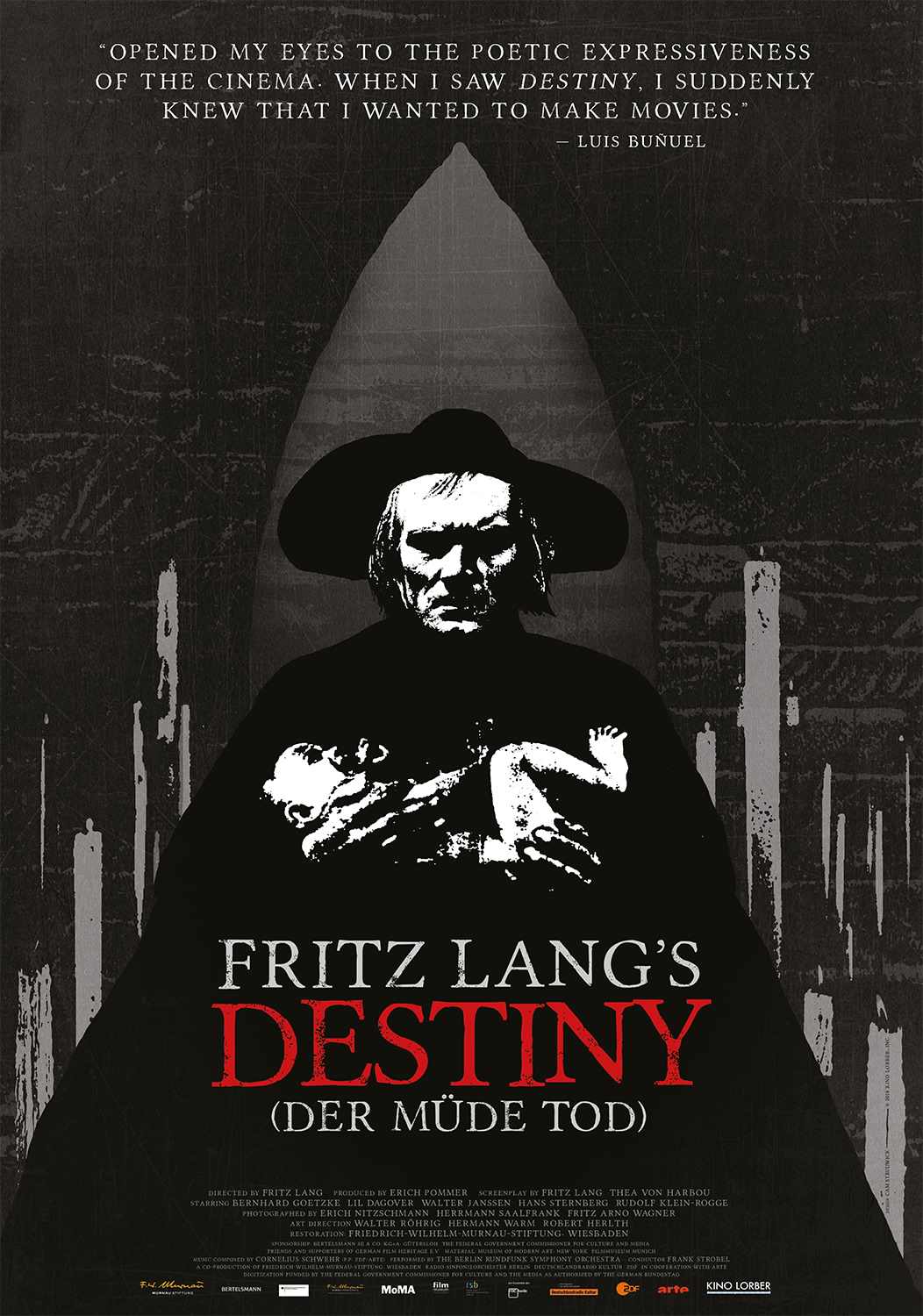
Destiny (1921)

10 Monday Jul 2017

Posted by dullwood68 in Movies

≈ Leave a comment

Tags

Bernhard Goetzke, Catch Up movie, China, Death, Drama, Fritz Lang, Lil Dagover, Review, Romance, Silent movie, The Middle East, Venice, Walter Janssen

Original title: Der müde Tod: ein deutsches volkslied in 6 versen

aka Behind the Wall

D: Fritz Lang / 94m

Cast: Lil Dagover, Walter Janssen, Bernhard Goetzke, Hans Sternberg, Karl Rückert, Max Adalbert, Wilhelm Diegelmann, Erich Pabst, Rudolf Klein-Rogge, Károly Huszár

Fritz Lang fled Germany in 1933 following a meeting with Josef Goebbels where Lang was offered a position as the head of the German movie studio, UFA. Up until that point he had made sixteen movies – seventeen if you include the French version of The Testament of Dr. Mabuse (1933) – and he was the most successful German director of the Twenties and early Thirties, both critically and commercially. He made movies that were beautiful examples of the Expressionist movement, and he introduced many future staples of sci-fi cinema such as the countdown to lift-off (Ten, nine, etc.) which was first seen in Woman in the Moon (1929). Destiny was the second movie he made with his wife, the actress Thea von Harbou, and their collaboration helped Lang display a better understanding of women than he’d shown previously, making this movie more relatable for female audiences as a result.

A young couple (Dagover, Janssen) arrive at a village where Death (Goetze) is in the process of erecting a great wall around the land he has purchased. While they spend time in the tavern, the girl is distracted and her lover disappears. Later, while she weeps by the wall, she sees a ghostly procession of souls pass through the wall, and the last of them is her lover. She exhorts Death to release him to her but instead he leads her into a dark room and shows her three candles, all lit, but each at a different stage of burning. Death tells her that each candle represents a life. If the girl can save just one of these lives then Death will restore her lover to life. The girl agrees to Death’s wager, and finds herself in a Middle Eastern city during Ramadan. Now a princess, Zobeide, she has to secure the life of her lover, the Frank (Janssen), but she fails in the attempt and he is killed.

Next, the girl finds herself in Venice as a noblewoman, Monna. She too has to protect the life of her lover, Gianfrancesco (Janssen), from the murderous intentions of her fiancé, Girolamo (Klein-Rogge). In this she fails again, and next the girl finds herself in China as a magician’s assistant, Tiao Tsien. The magician has another assistant, Liang (Janssen), who is Tiao Tsien’s lover. When the Emperor of China (Huszár) tries to seduce her she rejects him, and attempts to flee the palace with Liang. But Liang is killed and the girl has to face Death knowing that she has failed his challenge. But Death gives her one last chance: if she can persuade someone from the village to trade their life for hers, then the lovers will be reunited. Of course, she accepts, but will she be able to persuade anyone to make such a sacrifice?

For a movie that contains three sections that might be regarded as fantasies, Destiny’s framing storyline exists in a dream all by itself. Taking place “in some time and some place”, Lang invites us to follow his two young lovers as they arrive in a picturesque little village, unaware of the fate that awaits them. Even the appearance of the mysterious hitchhiker can’t dampen their enjoyment of life and love. But Lang has other plans for them, and soon happiness is replaced by grief and the lovers’ dream-like reality becomes a nightmare. Lang was always fascinated by the idea of Death as a spectral, other-worldly figure, and the character appears in a number of his movies, but this was the first time Lang brought him to the screen. Goetze’s gaunt features and fixed stare are a disturbing, unnerving sight, and the actor imbues the character with an impassive, worrying stillness, as if he’s always waiting for that next victim of “God’s will” – and it could be anyone. Lang makes Death an implacable, emotionless adversary for Lil Dagover’s heartsick protagonist, and the contrast between their acting styles adds a fine juxtaposition to their relationship in the movie.

The opening section, with its idyllic setting and array of “colourful” village stereotypes, seems very like Lang attempting to wrong foot the audience. But Death’s presence is an augur that all isn’t as it seems, and the wall he erects around the land he’s purchased gives rise to that. But the young lovers remain unaware of the darker forces around them, until it’s too late, and Dagover is pleading for mercy for the life of her paramour. Happiness, Lang seems to be saying, is fleeting and can’t be relied upon. But if you want it badly enough, you’ll do whatever you can to keep hold of it. And so, Dagover’s chastened young woman must endure a series of travails that the audience can see will be doomed to failure, but which she must put her heart and soul into. There’s a phrase, Love Conquers All, but for most of the movie, Lang seems to be saying, Don’t you believe it. It’s this overtly pessimistic point of view that drives the movie forward, as each new scenario sees love thwarted at every turn, and Dagover’s determined character suffers more and more.

The three scenarios that the young woman becomes involved in all have an element of the fantastical about them, and depict a romantic idealism that reflects the feelings of the young lovers. Unavoidable fate and tragedy are the outcome of each tale, and Lang is resolute in denying the young woman any joy during these episodes. But the art direction – by Robert Herlth, Walter Röhrig, and Hermann Warm – along with Heinrich Umlauff’s striking costume designs – is a joy. Silent movies in 1921 were rarely charged with such expressive and impressive imagery, and it’s equally rare for a silent movie of the period to overcome the impression of appearing fake or overly theatrical (though Dagover does do histrionic with gleeful abandon from time to time). Lang was a master when it came to the visual styling of his movies, and Destiny doesn’t disappoint in this area. Allied to a script that deftly explores notions of love as an immutable force, and the will to endure for love, it features good performances from its cast, and strong, passionate direction from Lang.

Rating: 8/10 – a tight, purposeful script allows Lang to expand and build on the promise of his career up until that point, and he shows that there are no lessons wasted or ignored in his tale of love under threat; emotionally redolent and deceptively poignant in places, Destiny is a terrific example of a director finding his “groove” and having found it, never looking back. (10/31)

Share this:

  • Click to share on X (Opens in new window) X
  • Click to share on Facebook (Opens in new window) Facebook
  • More
  • Click to print (Opens in new window) Print
  • Click to email a link to a friend (Opens in new window) Email
Like Loading...

Collateral Beauty (2016)

30 Friday Dec 2016

Posted by dullwood68 in Movies

≈ Leave a comment

Tags

Actors, Bereavement, Comedy, David Frankel, Death, Drama, Edward Norton, Grief, Helen Mirren, Jacob Latimore, Kate Winslet, Keira Knightley, Letters, Love, Michael Peña, Naomie Harris, Review, Time, Will Smith

collateral-beauty_poster

D: David Frankel / 97m

Cast: Will Smith, Edward Norton, Kate Winslet, Michael Peña, Helen Mirren, Naomie Harris, Keira Knightley, Jacob Latimore, Ann Dowd

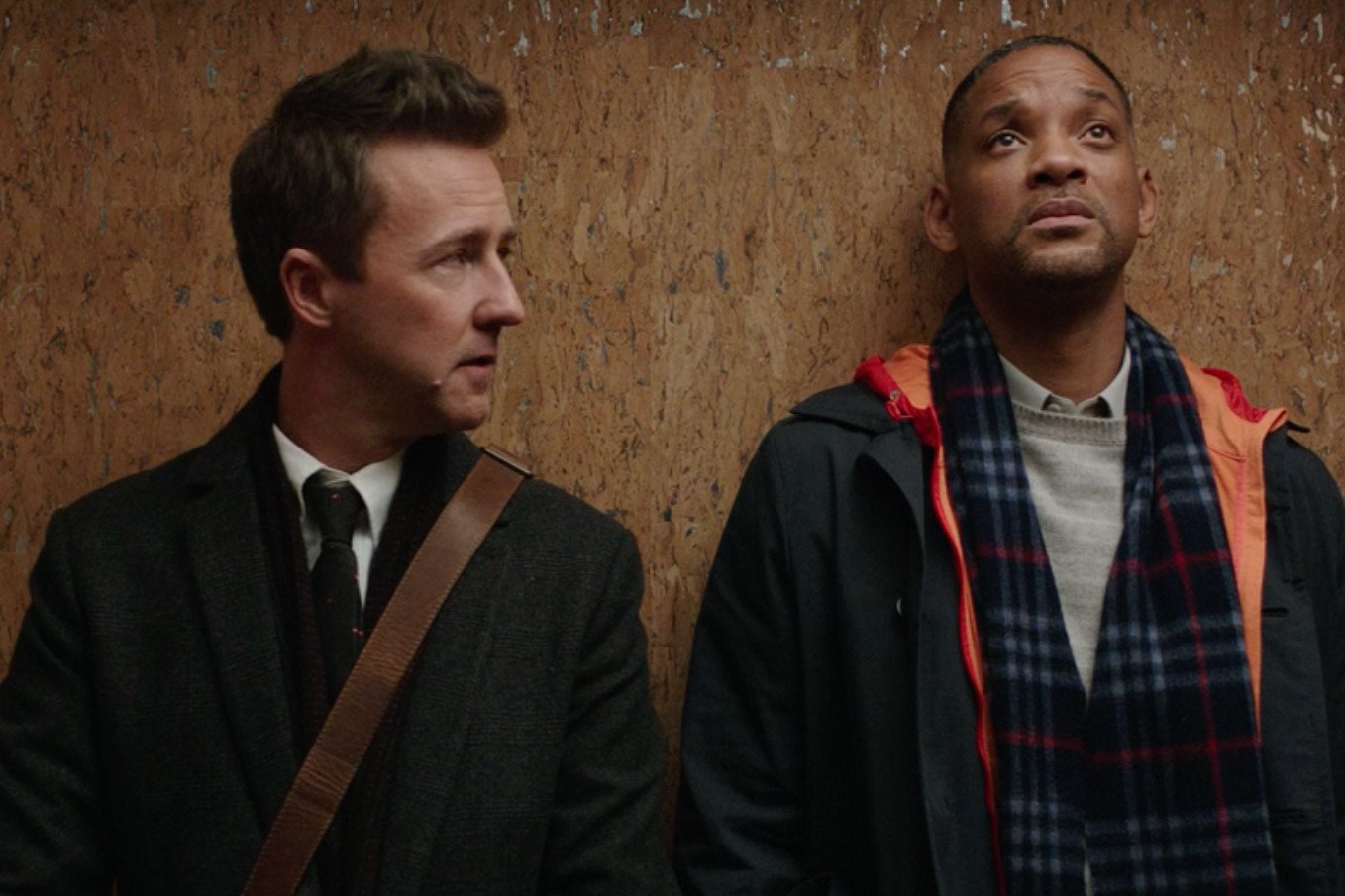
Sometimes, a movie arrives with very little fanfare or advance notice (in comparison to the supposed blockbusters of the day), and features a cast that makes the average viewer say to themselves, “Wow! What a cast! This movie’s got to be good!” Collateral Beauty is one of those movies, with its dream cast in service to a story that deals with unyielding grief, and which does so by employing magical realism as its main approach to telling the story. It’s meant to be an uplifting, emotionally dexterous movie – set at Xmas – that will leave viewers with a warm glow in their heart as they leave the cinema.

Alas, Collateral Beauty – and despite the best efforts of its dream cast – isn’t actually that movie. What it is, is a tragedy wrapped up in a comedy wrapped up in a magical realist fantasy wrapped up in an awkwardly staged feelbad movie. It’s a movie that revels in the pain and suffering of a group of individuals who are the very definition of stock characters. Some effort has been made with Smith’s character, a marketing executive whose six year old daughter has recently died from brain cancer. Unable to let go of his grief (and not really wanting to), Howard still shows up for work but spends his time creating elaborate domino structures and neglecting the business he built up with best friend, Whit (Norton). With the company on the brink of losing their biggest contract thanks to Howard having “zoned out”, Whit needs to prove to a prospective buyer that Howard, who has the controlling interest, is sufficiently non compos mentis for the sale to go ahead without his involvement.

8472687-922147

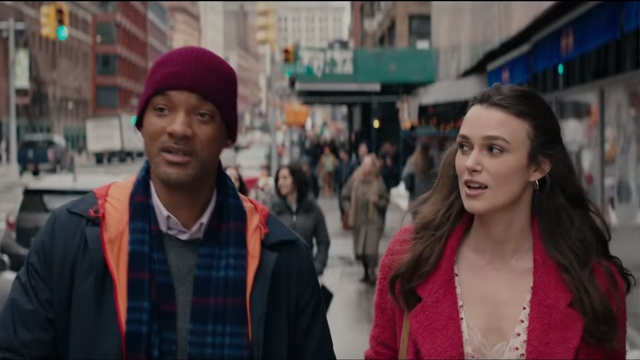
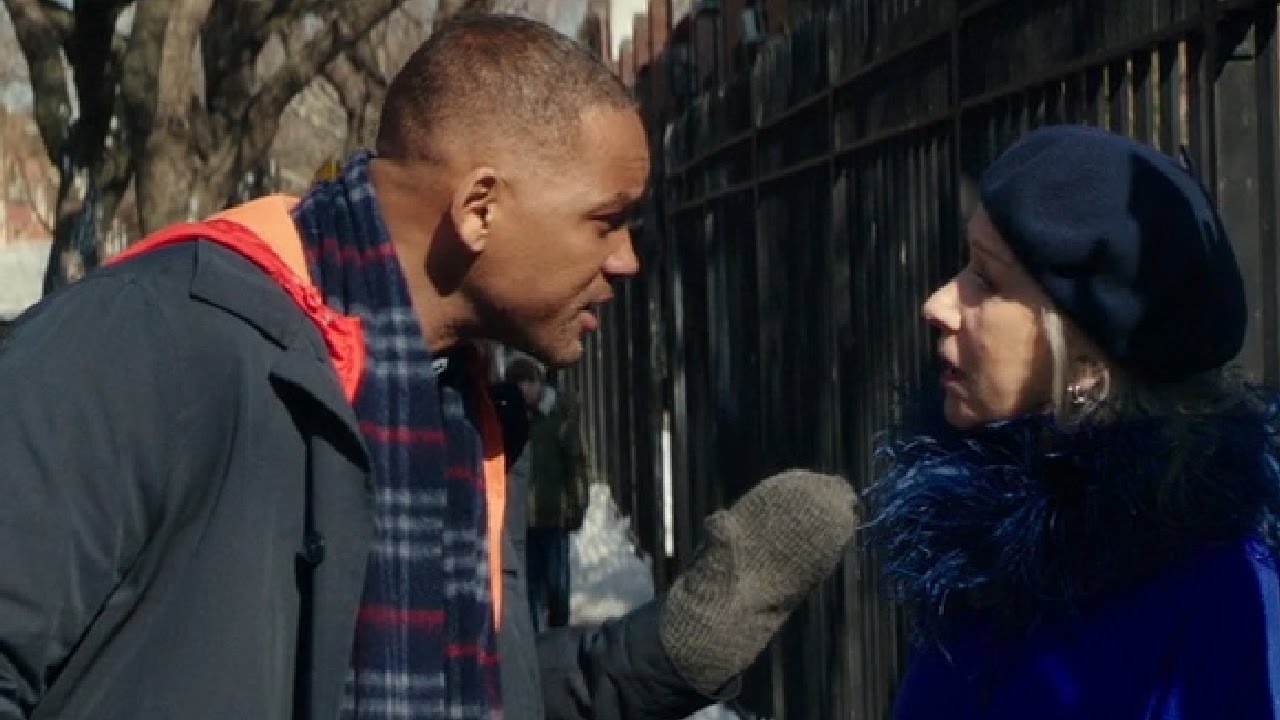
But how to prove this? How, indeed. The answer arrives, like a gift from Heaven, in the form of budding actress Amy (Knightley). Through a process too unlikely to relate here, he hires Amy and her friends, Brigitte (Mirren) and Raffi (Latimore) to act as Love, Death and Time respectively, concepts that Howard has been writing to. Yes, Howard has been railing against Love, Death and Time for stealing his daughter away from him. Whit’s idea is for the trio to pop up at random and talk to Howard in various public places. These encounters will be filmed by a private investigator (Dowd), and the actors removed digitally before the footage is shown to the buyer, thus making Howard seem, at the very least, delusional, or at worst, completely bonkers.

Now, the thing to remember here is that Whit, along with his colleagues, Claire (Winslet) and Simon (Peña), is Howard’s friend. Let’s let that sink in for a moment. His friend. Who with Claire and Simon decides to play charades with a man whose grief is all-consuming and all in order to save the company where they all work. They want to do this not, in the first place, to help Howard deal with his grief, but so that they can save their jobs. And this is meant to be a good idea, both in practice and as the basis for a movie.

But not content with having them play mind games with their boss, the script also gives them their own problems to deal with. Whit has a young daughter who hates him because he had an affair that led to her parents’ divorce (as she puts it, he broke her heart). Claire has sacrificed her longing for a child in order to be successful at work. And Simon, who has fought off a serious illness twice before, is having to face up to the possibility that the third time might not be the charm. Throw in Naomie Harris’s grief counsellor, Madeleine (the only person Howard seems able to talk to about how he feels), who has also lost a daughter, and you have a group of people you’d cross the room to avoid at a feelgood seminar. They do glum with a capital G-L-U-M, and each time the script – by Allan Loeb, who has penned such classics as Here Comes the Boom (2012) and Just Go With It (2011) – indulges in their suffering it does so in a way that’s detrimental to the central storyline: Howard and his grief.

499295-will-smith-keira-knightley-collateral-beauty

There’s also the problem of the movie’s tone. Collateral Beauty is about death, and the sorrow felt and experienced by the people left behind; it’s also about how grief can twist and contort feelings of pain and guilt into something much more violent and harmful. But Loeb’s script doesn’t want to address these issues head on, as quite rightly, this would make the movie a bit of a downer (and then some). So instead of making a straight-up drama about grief and loss, Frankel et al have made a middling comedy about grief and loss. While the themes in play remain serious, they’re all dusted with a light-hearted sheen that never feels right and never sounds right. The comedy elements distract from the drama of the piece, and in such an awkward, “oh no, they didn’t” way as to be confusing to the viewer. Is this a drama about grief, or a comedy about grief? But there’s no point in asking, as the movie doesn’t know any more than anyone else does.

With the whole premise undermined from the very beginning, Collateral Beauty becomes an exercise in perpetual wincing. When actors of the calibre of Norton and Winslet can’t make the material work then it’s time to head home and call it a day. Scenes come and go that make no sense dramatically, but seem intended to provide a level playing field for all the cast so they have enough moments to add to their showreels. As the actors with no background in psychotherapy but given carte blanche to say anything they can think of, Mirren, Knightley and Latimore are acceptable, but rarely do anything that takes them out of their thespian comfort zones (there’s also a suspicion that Mirren is playing a version of herself that fans have come to expect rather than an actual character).

maxresdefault

Smith at least tries to inject some much needed dramatic energy into his role, but until the very end, when Howard is required to undergo an about face because the script needs him to, he’s held back by the script’s decision to make him appear either vague or angry (or sometimes, vaguely angry). Norton and Winslet coast along for long stretches, and a restrained Harris is the voice of wisdom that Howard desperately needs to hear. That leaves Peña, whose performance elicits some real sympathy late on in the movie, and who proves once again that he’s a talented actor who needs to be given better opportunities and roles than this one.

Overseeing it all is Frankel, whose previous movies include Marley & Me (2008) and Hope Springs (2012). You can understand why he got the job, but with the script unable to decide what approach it wants to take, Frankel is left stranded and unable to find an effective through-line with which to link everything together. It never feels as if he’s got a firm grasp on the narrative, or any of the underlying subtleties that Loeb’s script managed to sneak in when the writer wasn’t looking. In the end, he settles for a perfunctory directing style that keeps things moving along on an even keel but which doesn’t allow for anything out of the ordinary to happen. There’s no real dramatic ebb and flow here, and sadly, like so many other directors out there today, he’s not able to overcome something that is one of the movie’s biggest flaws.

Rating: 4/10 – near enough to “meh” as to be on close, personal speaking terms, Collateral Beauty is bogged down by its schizophrenic script, and an over-developed propensity for ridiculousness; rarely has magical realism felt so false or poorly staged, and rarely has a movie about grief instilled the same feeling in its audience for having seen it in the first place.

Share this:

  • Click to share on X (Opens in new window) X
  • Click to share on Facebook (Opens in new window) Facebook
  • More
  • Click to print (Opens in new window) Print
  • Click to email a link to a friend (Opens in new window) Email
Like Loading...

Southbound (2015)

06 Friday May 2016

Posted by dullwood68 in Movies

≈ Leave a comment

Tags

Chad Villella, David Bruckner, Death, Drama, Fabianne Therese, Horror, Jailbreak, Mather Zickel, Matt Bettinelli-Olpin, Patrick Horvath, Radio Silence, Review, Roxanne Benjamin, Sacrifice, Siren, The Accident, The Way In, The Way Out, Thriller

Southbound

D: Radio Silence, Roxanne Benjamin, David Bruckner, Patrick Horvath / 89m

Cast: Chad Villella, Matt Bettinelli-Olpin, Fabianne Therese, Nathalie Love, Hannah Marks, Susan Burke, Davey Johnson, Mather Zickel, David Yow, Tipper Newton, Matt Peters, Gerald Downey, Kate Beahan, Hassie Harrison, Larry Fessenden

The anthology has been a staple of the horror movie genre going back as far as Ealing’s Dead of Night (1945). This latest offering, a portmanteau of five interlocking stories – The Way Out, Siren, The Accident, Jailbreak, and The Way In – offers a range of competing terrors, and predictably, some are better than others.

We begin with Mitch (Villella) and Jack (Bettinelli-Olpin), speeding through the desert night, both of them covered in blood and anxiously looking behind them as they travel, on the look out for what is revealed to be a group of winged skeletal figures. These figures are still following them when they reach a gas station with a motel round the back. The two men take time to clean themselves up, but when they leave find that the road now brings them back to the gas station… again and again… and the skeletal figures are closing in.

From the motel in back we follow the efforts of three young women, Sadie (Therese), Ava (Marks), and Kim (Love), as they head towards their next gig. There should be four of them but their friend Alex died recently, something for which Sadie accepts some of the blame for not keeping their friend safe. When they find themselves stranded at the side of the road after a tire blows, a lift from a passing couple (Burke, Johnson) should be the answer to their prayers but instead Sadie’s friends begin acting strangely, and she discovers that they’re all in the hands of a group of devil worshippers.

Southbound - scene1

Sadie manages to get away but in doing so has a fateful encounter with Lucas (Zickel) (which the trailer gives away unfortunately). Lucas is on his way home but soon finds himself needing to get Sadie to the nearest town. Receiving instructions via his cell phone from the emergency services, Lucas finds the local hospital, but what he finds there is far from what he’s expecting, and the night takes an even more bizarre turn for the worse, worse enough that Lucas may never leave the town ever again.

Lucas’s tale gives way to that of Danny (Yow), a man in search of his missing sister, Jessie (Newton). He abducts a bartender (Peters) and forces him to take him to where he believes his sister is being held against her will. Along the way he learns about the true nature of the people Jessie has chosen to live amongst, and that his determination to find her has terrible consequences.

In the last segment we meet a family made up of Daryl (Downey), his wife Cait (Beahan), and their daughter, Jem (Harrison). They’re on a family vacation before Jem goes off to college, and they’ve rented a house. As they prepare to have dinner, three masked men show up outside before forcing their way in. Daryl is their target, and it soon becomes clear that the men are there out of revenge for something he’s done.

Southbound - scene3

Any portmanteau movie stands and falls on the quality of its individual stories, and Southbound is no different. The Way Out throws the viewer into the middle of an escape from supernatural creatures that it makes no attempt to explain. Mitch and Jack have done something bad – that we can guess – but the sparseness of the dialogue allied with the striking visuals used to depict the skeletal entities leaves any exposition unnecessary. This is the stuff of nightmares, and the viewer is forced to go along with it all and hope for answers later. (Observant readers will already have gathered that the final segment, The Way In, is more directly linked than the other episodes, and so it proves.)

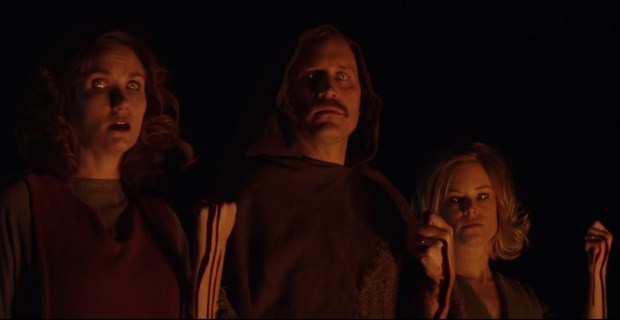
Siren drops the ball however, its tale of desert-based devil worshippers proving clumsy both in its construction and its presentation. Writer/director Benjamin aims for eerie but never quite achieves the right tone. A dinner party that should be chilling thanks to the behaviour of everyone but the three friends is muted thanks to the generic set up and unfulfilled sense of menace. It’s further hampered by the unconvincing performances of Love and Marks, a poorly choreographed and framed scene in which the cultists induct Sadie’s friends around a fire pit, and the ease with which Sadie escapes a bear trap.

The Accident more than makes up for Siren‘s shortcomings, though, and is the movie’s stand out segment, a squirm-inducing tale of punishment and body horror that employs some truly excellent special effects and is the sort of tale that wouldn’t have been out of place in an old Tales of the Crypt comic book. It’s a sweaty, claustrophobic, blood-drenched episode, with an equally sweaty performance from Zickel that overcomes the segment’s only failing, that being the ease with which Lucas performs certain tasks with only the barest of encouragement to persuade him.

Southbound - scene2

Jailbreak and The Way In aren’t able to match the intensity of David Bruckner’s ballsy contribution, and although the rest of the movie isn’t quite the anti-climax it might seem, Patrick Horvath’s tale of unfortunate brotherly devotion is too slight to work effectively and feels like an under-developed Twilight Zone episode, while The Way In brings the movie back to where it started with a home invasion tale gone horribly, terribly wrong. These are acceptable as stand-alone segments but lack the edge needed to make them more memorable within the confines of the movie as a whole.

Eagle eyed viewers will spot clues and references to each of the segments popping up here and there, indicating the characters are trapped in some kind of purgatorial existence that they’re all doomed to repeat, and there are cameos from the skeletal creatures. Budgetary constraints hold the movie back however, though the majority of the performances fit well with the stories on offer, with Zickel grabbing the lion’s share of the acting plaudits. That said, the lonely desert landscapes are used to good effect, and the photography – by Tarin Anderson, Tyler Gillett, Alexandre Naufel, and Andrew Shulkind – is exemplary throughout, blending the action of each vignette into a surprisingly cohesive whole. And the whole thing is topped off by a gravelly, ominous voice over by Fessenden as a radio DJ who, if you listen closely, seems to know exactly what’s happening… and why.

Rating: 7/10 – despite some obvious flaws, Southbound is a largely effective and inventive horror anthology that does its best to offer jaded audiences something at least a little different; it succeeds for the most part thanks to the makers’ decision to link each of the stories in clever and intriguing ways, and by imbuing each tale with a satisfying sense of dread.

Share this:

  • Click to share on X (Opens in new window) X
  • Click to share on Facebook (Opens in new window) Facebook
  • More
  • Click to print (Opens in new window) Print
  • Click to email a link to a friend (Opens in new window) Email
Like Loading...

It Follows (2014)

05 Thursday Mar 2015

Posted by dullwood68 in Movies

≈ 3 Comments

Tags

Daniel Zovatto, David Robert Mitchell, Death, Disasterpeace, Drama, Entity, Horror, Keir Gilchrist, Maika Monroe, Review, Sex

It Follows

D: David Robert Mitchell / 100m

Cast: Maika Monroe, Keir Gilchrist, Daniel Zovatto, Olivia Luccardi, Lili Sepe, Jake Weary

Jay (Monroe) is nineteen and embarking on a new relationship with Hugh (Weary). At the cinema one night they play a game where they have to choose someone they can see that they’d like to change places with. Jay gets Hugh’s choice wrong, but when it’s his turn, Hugh points out a woman in a yellow dress that Jay can’t see; with Hugh visibly upset, they leave the cinema. On their next date, Jay and Hugh have sex in his car. Afterwards he drugs her. When she wakes, she’s tied to a wheelchair in a ruined building. Hugh tells her he’s sorry but he’s had no choice: he’s passed on to her a curse that means she will be stalked by an unknown entity until it catches her and kills her. Then it will go after him and then on down the line of everybody who’s ever been affected.

They both see a naked woman walking slowly but steadily toward them. Now that Jay has seen an example of how the entity may appear – to make matters worse, it might also appear as someone she knows – Hugh takes her back to his car and leaves her outside her house. Jay reports the incident to the police but they find no evidence of the naked woman, and Hugh has disappeared. When Jay goes back to school she sees an old woman in a hospital gown walking toward her across the grounds and then inside the building. Jay flees and tells her sister Kelly (Luccardi) and friend Paul (Gilchrist) about the curse and what it means. Along with another friend, Yara (Sepe), they agree to stay with her that night for support.

A smashed window in the kitchen leads to the entity gaining entry to Jay’s house. It tries to attack Jay but she escapes and flees to a nearby playground. Her sister and friends catch up with her, as does her neighbour, Greg (Zovatto), who’s seen Jay leave in a panic. He offers to help. Using his car to get there, they go to Hugh’s address but it’s abandoned. However, they find a clue that leads them to his real address. They confront him but he refuses to help, except to advise Jay that she should sleep with someone else to pass on the curse.

The group travel to Greg’s lake house but Jay is attacked there as well. Fleeing in Greg’s car she crashes it, ending up in hospital with her right arm in a cast. While there she sleeps with Greg (much to Paul’s disappointment as he has a crush on her). Days pass and the entity isn’t seen by either of them, until one night when Jay sees Greg break into his own house. She rushes across the street in time to see the entity kill Greg in the guise of his mother. She flees, but when she returns, Paul tells her he has a plan that might kill the entity once and for all.

It Follows - scene

Every now and then a horror movie comes along that critics praise to the skies as being the “new best thing” in horror. Recently it was The Babadook (2014). Now we have It Follows, a movie that brings us a new creature to fear. But where the Babadook made itself known through the pages of a book – Babadook is an anagram of a bad book (the clue’s there for anyone to see) – the implacable entity in It Follows makes itself known through sex. As the logical extension of all those slasher movies from the Seventies and Eighties where promiscuous teenagers made up the bulk of the killer’s victims, and the virgin was left to fend off and despatch said psycho, David Robert Mitchell’s second feature gives the sexually active no way out from their predicament.

It’s a great idea, one that should be filed under “careful what you wish for” perhaps, and the script cleverly introduces the idea that passing on the curse won’t make any difference, almost from the start. This makes the movie the most nihilistic horror movie in years, and it becomes an object lesson in how to maintain hope against all odds. Mitchell makes it clear: Jay and Hugh and anyone else they have sex with are – cue: ominous predatory silence – doomed. And yet we still root for Jay and her friends in their efforts to avoid the inevitable. Even when Paul says he has an idea of how to kill the entity, and despite all the evidence to the contrary, we still hold out hope that he’s right. For if he’s not, then aren’t we all – say it quietly now – doomed as well?

Having a supernatural creature in the role of sexually transmitted disease is a fine metaphor, and one that Mitchell has great deal of fun with. By allowing the creature to appear in any guise it chooses, the movie becomes a series of guessing games for the increasingly paranoid audience (forget the characters – half the time they’re not even looking). And although Mitchell shows a preference for having his entity appear as a nude or semi-nude woman, they’re sufficiently creepy, reanimated even, to add a chill when they’re first spotted (the director does redress the nudity issue though, with the sight of a naked man on the roof of Jay’s house – what he’s doing there specifically is a bit puzzling, however). And there’s an added resonance when it appears as a family member – eagle-eyed viewers will recognise its first appearance as Hugh’s mother when she turns up later in the movie. That said, being chased, however slowly, by your naked, corpse-like mother is wrong in all sorts of ways, and again, Mitchell shows he’s unafraid to pile on the psychological horror in his efforts to make the viewer uncomfortable.

With an ending that’s suitably ambiguous, and likely to annoy viewers who like a more clear-cut resolution to their movies, It Follows is a horror movie that does its best to offer something new and different, and by and large it succeeds. It doesn’t try to explain everything – like where and how the curse got started in the first place – and it doesn’t try to over-elaborate its basic plot. Instead it tells things plain and simple, and if the sight of Jay running away time after time seems too repetitive, then what else can she do? It will find her; all she can do is postpone the inevitable.

As the beleaguered Jay, Monroe gives a finely tuned performance that anchors the movie and gives it an emotional core for the viewer to connect with. Jay’s not as strong as you might expect the heroine of a horror movie to be, but Monroe gives her a tenacity that helps carry Jay through. Gilchrist has a slightly unenviable role as the lovelorn friend who gets passed over for the hot guy across the street, but he shades the character well, expressing Paul’s disappointment and pain with an economy of expression and attitude. Zovatto and Luccardi have little to do in comparison, and Sepe even less, but Weary makes Hugh appropriately anxious and frightened.

It Follows - scene2

The movie is bolstered by some of the finest camerawork – courtesy of Mike Gioulakis – in a horror movie since John Carpenter let Dean Cundey loose on the streets of Haddonfield. Mitchell’s use of space and distance, particularly the way in which he utilises the foreground in a shot, is remarkably reminiscent of Carpenter’s work, and as a homage, offers some superb moments that linger in the memory: Hugh’s car with the ruined building looming ominously behind it; the entity as a tall, cadaverous man appearing out of the shadows in Jay’s house; the vast space to the left of shot as Jay sits on a swing in the playground; seeing Yara appear on the beach when she’s already on a lilo offshore; Jay’s point of view when she sees Greg breaking into his own house; and in perhaps the most obvious visual nod to Halloween (1978), the entity having a sheet thrown over it so that Paul et al can see it.

There’s a terrific score as well by Disasterpeace that is as unsettling as the visuals, a dark electronic discordance that is sinister and harrowing at the same time. With all this, the movie proves as well-constructed and well delivered as you could hope for, and if there is to be a sequel – entirely likely given its critical and commercial reception – then let’s hope Mitchell is the one to see it through. In anyone else’s hands it’s likely to be a letdown.

Rating: 8/10 – a genuine surprise, It Follows is that rare beast: a horror movie that is fresh and surprising and creepy and keeps its scares and any gore to a minimum, choosing instead to focus on the terror inherent in its protagonists’ situation; beautifully shot and with a killer soundtrack, this is bold, compelling stuff, and a shot in the arm for a genre that seems to have one foot in the grave more often than not.

Share this:

  • Click to share on X (Opens in new window) X
  • Click to share on Facebook (Opens in new window) Facebook
  • More
  • Click to print (Opens in new window) Print
  • Click to email a link to a friend (Opens in new window) Email
Like Loading...

All the Wilderness (2014)

27 Friday Feb 2015

Posted by dullwood68 in Movies

≈ Leave a comment

Tags

Chopin, Danny DeVito, Death, Drama, Evan Ross, Isabelle Fuhrman, Kodi Smit-McPhee, Michael Johnson, Mother/son relationship, Review, Suicide, Therapy, Virginia Madsen

All the Wilderness

D: Michael Johnson / 76m

Cast: Kodi Smit-McPhee, Virginia Madsen, Isabelle Fuhrman, Evan Ross, Danny DeVito

Following the death of his father, James Charm (Smit-McPhee) has become emotionally isolated and withdrawn. While his mother, Abigail (Madsen) relies increasingly on extra glasses of wine to cope with her loss, James takes to roaming the nearby woods and sketching the dead animals and insects that he finds there. He attends therapy sessions with Dr Pembry (DeVito) but is largely uncommunicative when it comes to talking about his father. Before a session, James meets Val (Fuhrman); there’s an immediate connection, one that’s cemented when she catches him sneaking out during the session. As he heads home he sees a young man (Ross) playing an abandoned piano in an alleyway.

Later on he bumps into the young man while on a bus. The young man’s name is Harmon, and along with a friend, he invites James to tag along with him for the night. At a food area, James finds Val selling doughnuts out of a van. They have an awkward exchange but Val is pleased to see him. Harmon then takes James to a party, afterwards they head back to Harmon’s place where James smokes his first weed and, unwittingly, begins to open up about his problems. The next night he goes back to the food area and sees Val again. She writes an address on his palm and tells him to meet her there the next day.

Feeling unsure about their burgeoning relationship, James meets Val and they head out of the city to a lake where they spend time getting to know each other. Back in the city they meet up with Harmon at another party. But James witnesses Val and Harmon kissing and he leaves. At his next therapy session, Dr Pembry challenges James as to why he sees him. When he tells James he thinks it’s because he feels guilty for not being able to support his mother, and that he should just get on with life, James begins to see things differently. He confronts Harmon and patches things up with Val before heading home to speak to his mother and revealing something about his father’s death that nobody else knows.

All the Wilderness - scene

A lyrical coming of age tale from first-time writer/director Johnson, All the Wilderness is a slow, mood- rather than plot-driven movie that has a strong visual flair and does its best to be different in a genre with (perhaps) too many antecedents. Taking the basic idea of a teenager torn between clinging to his father’s memory (albeit in an unusual way) and finding a way out of his grief, the movie covers mostly typical territory, but thanks to a good central performance by Smit-McPhee, never seems forced or too over familiar.

James is initially an intriguing character, though his obsession with recording – and predicting – death does seem a little heavy-handed, especially when you add his fondness for Chopin into the mix, as well as his choice of reading material, Moby Dick. But Johnson’s script is smart enough to introduce these embellishments and then not play on them too much except to provide some occasional flashes of humour later on. As we get to know him, James’ uncertainty and social awkwardness gives way, and we see someone taking their first tentative steps in growing up. Again, the script does a good job in balancing the difficulties of dealing with grief and the need to leave it behind, and as James begins to do so, Smit-McPhee’s physicality and demeanour become more confident, and his emotions fall into place, allowing him to realise that the wilderness his father spoke of – a slightly clumsy metaphor for life and death – is not something he has to be a part of.

While James isn’t particularly self-destructive, his relationship with his mother is tested by his going AWOL to see Harmon and Val, and though the ensuing confrontations between them feel perfunctory, and Madsen is required to step back almost throughout, it’s the actors approach to them that stops them from being entirely redundant. It’s the same with James and Val’s trip to the lake: they exchange personal information, mess around in the water, and establish a bond that, despite what happens between Val and Harmon, won’t be broken. It’s thanks to Smit-McPhee and Fuhrman that this fairly brief sequence works so well, and makes their later talk in the wake of that kiss all the more credible.

Johnson does make some mistakes though. Pembry’s “resolution/advice” comes at the end of approximately six months of sessions, and appears to be so simple (and obvious) that you have to wonder why it’s taken him so long to say it. And James’s reaction to it is also too expedient to be taken entirely seriously; all of a sudden he’s focused and determined and knows exactly what he needs to do. James also imagines hooded assailants chasing him through the streets, and while this idea adds some much needed energy to the movie, their appearance is never properly explained (and in one case seems designed only to get James on the bus where he properly meets Harmon).

Where the movie scores highly is in its look and feel, with DoP Adam Newport-Berra giving the viewer the sense of how James sees the world around him, with all its sights and sounds either slightly distorted or given heightened emphasis. There’s also a good use of space and lighting that makes some of the images seem more original in their framing and composition than you’d expect. And there’s a great mix of classical and indie music on the soundtrack too.

Rating: 7/10 – a solid debut by Johnson, All the Wilderness deals with themes of loss, fear and personal responsibility and, by and large, makes them seem fresh; but with too much that’s familiar, not every attempt to subvert the formula works, leading to a movie that works for the most part but not entirely.

Share this:

  • Click to share on X (Opens in new window) X
  • Click to share on Facebook (Opens in new window) Facebook
  • More
  • Click to print (Opens in new window) Print
  • Click to email a link to a friend (Opens in new window) Email
Like Loading...

Blog Stats

  • 486,718 hits

Recent Posts

  • 10 Reasons to Remember Bibi Andersson (1935-2019)
  • Fantasia (1940)
  • Dances With Wolves (1990) – The Special Edition
  • Kiss of the Spider Woman (1985)
  • The Three Musketeers (1973)

Top Posts & Pages

  • Lost for Life (2013) - Another Look
    Lost for Life (2013) - Another Look
  • Lost for Life (2013)
    Lost for Life (2013)
  • About
    About
  • Exposed (2016)
    Exposed (2016)
  • Cardboard Boxer (2016)
    Cardboard Boxer (2016)
  • A Brief Word About La La Land (2016)
    A Brief Word About La La Land (2016)
  • My Top 10 Guilty Pleasures
    My Top 10 Guilty Pleasures
  • The Monuments Men (2014)
    The Monuments Men (2014)
  • BFI London Film Festival 2015
    BFI London Film Festival 2015
  • A Brief Word About Netflix Original Comedies
    A Brief Word About Netflix Original Comedies
Follow thedullwoodexperiment on WordPress.com

Blogs I Follow

  • Rubbish Talk
  • Film 4 Fan
  • Fast Film Reviews
  • The Film Blog
  • All Things Movies UK
  • Interpreting the Stars
  • Let's Go To The Movies
  • Movie Reviews 101
  • TMI News
  • Dan the Man's Movie Reviews
  • Film History
  • Jordan and Eddie (The Movie Guys)

Archives

  • April 2019 (13)
  • March 2019 (28)
  • February 2019 (28)
  • January 2019 (32)
  • December 2018 (28)
  • November 2018 (30)
  • October 2018 (29)
  • September 2018 (29)
  • August 2018 (29)
  • July 2018 (30)
  • June 2018 (28)
  • May 2018 (24)
  • April 2018 (21)
  • March 2018 (31)
  • February 2018 (25)
  • January 2018 (30)
  • December 2017 (30)
  • November 2017 (27)
  • October 2017 (27)
  • September 2017 (26)
  • August 2017 (32)
  • July 2017 (32)
  • June 2017 (30)
  • May 2017 (29)
  • April 2017 (29)
  • March 2017 (30)
  • February 2017 (27)
  • January 2017 (32)
  • December 2016 (30)
  • November 2016 (28)
  • October 2016 (30)
  • September 2016 (27)
  • August 2016 (30)
  • July 2016 (30)
  • June 2016 (31)
  • May 2016 (34)
  • April 2016 (30)
  • March 2016 (30)
  • February 2016 (28)
  • January 2016 (35)
  • December 2015 (34)
  • November 2015 (31)
  • October 2015 (31)
  • September 2015 (34)
  • August 2015 (31)
  • July 2015 (33)
  • June 2015 (12)
  • May 2015 (31)
  • April 2015 (32)
  • March 2015 (30)
  • February 2015 (37)
  • January 2015 (39)
  • December 2014 (34)
  • November 2014 (34)
  • October 2014 (36)
  • September 2014 (25)
  • August 2014 (29)
  • July 2014 (29)
  • June 2014 (28)
  • May 2014 (23)
  • April 2014 (21)
  • March 2014 (42)
  • February 2014 (38)
  • January 2014 (29)
  • December 2013 (28)
  • November 2013 (34)
  • October 2013 (4)

Blog at WordPress.com.

Rubbish Talk

Film 4 Fan

A Movie Blog

Fast Film Reviews

The Film Blog

The official blog of everything in film

All Things Movies UK

Movie Reviews and Original Articles

Interpreting the Stars

Dave Examines Movies

Let's Go To The Movies

Film and Theatre Lover!

Movie Reviews 101

Daily Movie Reviews

TMI News

Latest weather, crime and breaking news

Dan the Man's Movie Reviews

All my aimless thoughts, ideas, and ramblings, all packed into one site!

Film History

Telling the story of film

Jordan and Eddie (The Movie Guys)

Movie Reviews & Ramblings from an Australian Based Film Fan

Privacy & Cookies: This site uses cookies. By continuing to use this website, you agree to their use.
To find out more, including how to control cookies, see here: Cookie Policy
  • Subscribe Subscribed
    • thedullwoodexperiment
    • Join 481 other subscribers
    • Already have a WordPress.com account? Log in now.
    • thedullwoodexperiment
    • Subscribe Subscribed
    • Sign up
    • Log in
    • Report this content
    • View site in Reader
    • Manage subscriptions
    • Collapse this bar
 

Loading Comments...
 

    %d