• 10 Reasons to Remember…
  • A Brief Word About…
  • About
  • For One Week Only
  • Happy Birthday
  • Monthly Roundup
  • Old-Time Crime
  • Other Posts
  • Poster of the Week
  • Question of the Week
  • Reviews
  • Trailers

thedullwoodexperiment

~ Viewing movies in a different light

thedullwoodexperiment

Tag Archives: Depression

The Escape (2017)

15 Saturday Dec 2018

Posted by dullwood68 in Movies

≈ Leave a comment

Tags

Art, Depression, Dominic Cooper, Dominic Savage, Drama, Gemma Arterton, Marital problems, Paris, Review, The Lady and the Unicorn

D: Dominic Savage / 101m

Cast: Gemma Arterton, Dominic Cooper, Jalil Lespert, Frances Barber, Marthe Keller

Tara (Arterton) is a young, stay-at-home wife and mother. Her husband, Mark (Cooper), works long hours, while their two young children, Teddy and Florrie, are of school age but still young enough that they prove a constant source of struggle for Tara as she tries to deal with their beahviours. She is unhappy in the marriage, particularly with Mark’s constant need for sex, which she finds distressing (though he doesn’t know this). When she finally begins to express her unhappiness, Mark is confused, and tries his best to be more supportive, but when Tara puts forward the idea of taking art classes, his support wavers at the first mention. Things come to a head one day when Mark castigates her for being clumsy; Tara packs a bag and leaves right then. She travels to Paris to see a series of tapestries titled The Lady and the Unicorn (the source of her desire to start art classes), and to begin a new life free from the stifling constraints of marriage and motherhood. At the museum she meets a Frenchman, Phillipe (Lespert), and they strike up a friendship, but what seems to be a much needed turning point in Tara’s life, instead brings more problems…

The story of an unhappy woman looking for both meaning and satisfaction in her life, The Escape is a sombre, emotionally redolent drama that isn’t afraid to explore the dark side of being a wife and mother. At one point, Tara confesses that she doesn’t care about her children – at all – and she knows they hate her. It’s a startling admission, relayed in a low-key, subdued manner by Arterton, but exactly the kind of transgressive admission that mothers aren’t supposed to make. This reflection of the depth of Tara’s misery is the movie’s key revelation, the heart of what ails her (if you prefer), and once that particular genie is out of the bottle, it’s obvious that it can’t be put back. Tara will flee the nest she’s built but now detests, and she’ll seek to give her life a renewed purpose. Is she genuinely unhappy with her life? Has she genuinely fallen out of love with Mark? Is she depressed, or suffering from some other form of mental illness? The screenplay (by the director) doesn’t clarify matters – and deliberately so. Tara can’t fully articulate her distress herself, and Savage uses this as a way of holding things back from the viewer. But it’s this that proves the movie’s undoing.

We never get to know what has brought Tara to this point in her life, and why she feels so unhappy. And when she reaches Paris, her initial pleasure at being there soon dissipates once her liaison with Phillipe takes a more serious turn than expected. This section of the movie is the least effective, with Tara’s motivations lacking full credibility, and a brief scene featuring Keller appearing to have been thrown in just to provide a resolution to Tara’s time in Paris. Through it all, Tara remains an emotional enigma, and despite a tremendous performance from Arterton, it’s hard to fathom entirely what’s going on in her head, and why. More successful is Cooper’s distraught husband, unable to fathom why his marriage is falling apart, and without the skills to deal with Tara’s unhappiness. As his efforts to save their relationship fail at every turn, Mark becomes a source of profound pity, and more so than Tara. Cooper and Arterton are great together, and the movie is all the better for the scenes they share, while Lespert’s amiable Frenchman is given short shrift by Savage’s decision to handicap the character in a way that he doesn’t with Tara. The end is deliberately elliptical, and seems to hint at Tara being stuck in the same depressive mind-set as at the beginning – which if true, hints at a broader meaning to events, but one that hasn’t been made clear.

Rating: 6/10 – sterling performances from Arterton and Cooper add lustre to a movie that is much more successful as an exploration of a marriage in freefall, than as an examination of a woman’s need to feel fulfilled; with its writer/director taking a broader approach to the latter theme, The Escape ultimately feels disingenuous once it reaches Paris, and the movie never recovers from its change of scenery and narrative opacity.

Share this:

  • Click to share on X (Opens in new window) X
  • Click to share on Facebook (Opens in new window) Facebook
  • More
  • Click to print (Opens in new window) Print
  • Click to email a link to a friend (Opens in new window) Email
Like Loading...

Happy End (2017)

09 Tuesday Oct 2018

Posted by dullwood68 in Movies

≈ Leave a comment

Tags

Alcoholism, Calais, Depression, Drama, Dysfunctional family, Family relationships, Fantine Harduin, Isabelle Huppert, Jean-Louis Trintignant, Mathieu Kassovitz, Michael Haneke, Review, Suicide, Unhappiness

D: Michael Haneke / 107m

Cast: Jean-Louis Trintignant, Isabelle Huppert, Mathieu Kassovitz, Fantine Harduin, Franz Rogowski, Laura Verlinden, Toby Jones

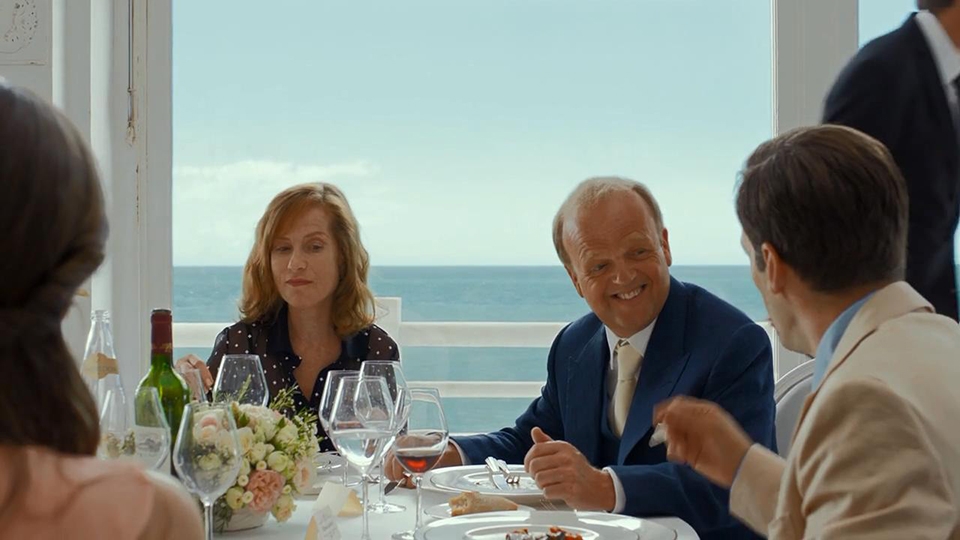
For the Laurent family, life is full of challenges. Patriarch Georges (Trintignant) is in his mid-Eighties and suffering from dementia. He has two children, Anne (Huppert), who runs the family construction business, and Thomas (Kassovitz), who is a well respected surgeon. Anne is divorced, but has a grown son, Pierre (Rogowski), who is in line to take over the family business, but he has a drink problem and is prone to angry outbursts. Thomas is married to Anaïs (Verlinden), who is his second wife; they have an infant child. He also has a twelve year old daughter from his first marriage, Eva (Harduin). Eva comes to live with her extended family when her mother falls ill from an overdose of tablets and is admitted to hospital. As she navigates both a bigger family and a bigger house (in Calais), Eva soon learns that everyone has their secrets, from Georges’ determination to commit suicide while he still has the mental and physical will, to her own father’s extra-marital activities, and Anne’s unwillingness to let Pierre assume control of the family business. In different ways, each supposedly well kept secret is revealed over the course of a short space of time, and the Laurents are exposed as the dysfunctional people they truly are…

If you’re a fan of the work of Michael Haneke, then you’ll no doubt appreciate the irony of his latest movie being called Happy End. Here, happiness is in very short supply, and when it is “allowed out” (as it were), it isn’t for long. With themes such as suicide, depression, alcoholism and immorality highlighted within the narrative, it’s no wonder that this is at times heavy going, with no light at the end of the tunnel for either the characters or the audience. Sombre movies such as this one don’t necessarily have to be a chore, or “difficult to watch”, and Haneke is a master at teasing out the most obscure of motivations for his characters’ behaviour, and making them telling, but here the knack seems to have abandoned him. This is a dour soap opera populated by people who are stuck in the routine melodramas of their daily lives and have no idea of how to change anything – except to make themselves even more unhappy. The odd one out is Anne, whose relationship with British lawyer Lawrence (Jones), provides the only expression of hope in the whole movie.

With terrible events happening in isolation or viewed from a distance – a collapsed retainer wall at a Laurent construction site early on is a great example – Haneke ensures that the audience is kept at a distance from both the events themselves and the characters who experience them. This has the effect of dulling the emotional pull of such scenes and denying the audience any connection with what’s happening and to whom. When Pierre visits the family of a construction worker injured during the collapse of the retainer wall, Haneke opts for a long shot from beside Pierre’s car. When Pierre is assaulted, the camera remains fixed, even when he staggers back to the car. This distancing has the effect of negating any sympathy we might have for the character, or any sense of shock or outrage. Only the concern of a passerby registers as an emotional response, but again, Haneke’s approach appears unconcerned with such details. Inevitably, it’s hard to work out just what Haneke is trying to say, or even if he has a message for us in the first place. The situations and conversations Georges et al experience are interesting on a basic level but rarely resonate, and when they do, it’s in a superficial, stylistically clever yet empty fashion that makes you wonder why anyone would want to spend time with such a bunch of self-absorbed ingrates.

Rating: 6/10 – with impressive cinematography by DoP Christian Berger that enhances Olivier Radot’s equally impressive production design, it’s a shame that Happy End emerges as a cold, uninvolving melodrama that tries too hard to make you care about its characters; still, the performances are good – Huppert is superb in what at times feels like a supporting role – but as they’re in service to a script that isn’t quite as well thought out as it needed to be, this remains, at best and worst, the movie version of a curate’s egg.

Share this:

  • Click to share on X (Opens in new window) X
  • Click to share on Facebook (Opens in new window) Facebook
  • More
  • Click to print (Opens in new window) Print
  • Click to email a link to a friend (Opens in new window) Email
Like Loading...

I Smile Back (2015)

23 Monday Nov 2015

Posted by dullwood68 in Movies

≈ Leave a comment

Tags

Adam Salky, Addiction, Alcoholism, Chris Sarandon, Depression, Drama, Drugs, Josh Charles, Literary adaptation, Mental illness, Rehab, Review, Sarah Silverman

I Smile Back

D: Adam Salky / 85m

Cast: Sarah Silverman, Josh Charles, Thomas Sadoski, Skylar Gaertner, Shayne Coleman, Mia Barron, Terry Kinney, Chris Sarandon

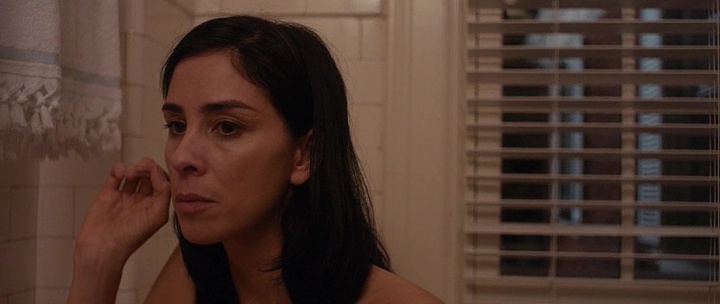
When we first meet Laney Brooks (Silverman), she’s in her bathroom, looking out the window at her husband Bruce (Charles) and their two young children, Eli (Gaertner) and Janey (Coleman), as they all shoot hoops. But she’s not actually seeing them. Her gaze is too distant, too removed from what’s going on outside. Instead she’s remembering recent events in her life: taking her kids to school, getting Chinese at a local restaurant, a dinner party with their friends Donny (Sadowski) and Susan (Barron), the unexpected arrival of a dog called Bingo… and then she snorts cocaine before taking a bath.

Faced with this kind of introduction to a character, some viewers may feel that they don’t want to spend any more time with them and will decide to go watch something else, something more light-hearted perhaps. But they would be missing out on one of the most impressive performances by an actress in the whole of 2015.

As I Smile Back progresses we come to realise that Laney has a heck of a lot more problems than just taking cocaine. She drinks to excess, pops pills like they’re sweets, and is cheating on Bruce with Donny. As well as struggling with being a wife, she struggles with being a mother, being overly fearful for Eli in particular, while proving unable to manage something as simple as bringing her school I.D. badge with her when she drops the kids off. She’s always a second or two behind everyone else, always a little distracted, always a little “vacant”.

vlcsnap-00001

It’s at around this point in Adam Salky’s take on the novel by Amy Koppelman (who also co-scripted with Paige Dylan) that the viewer begins to realise that Laney is suffering from depression and has mental health problems; the irresponsible behaviour is merely a sign of her inability to cope with every day life and its responsibilities. The average viewer will also realise that the movie can now only go in one of two ways: either Laney will hit rock bottom, get help, and get better, or she’ll spiral out of control until tragedy strikes. But Koppelman’s story takes a third way, one in which Laney has every opportunity to avoid ruining the rest of her life, but the question is: will she?

Thanks to the aforementioned impressive performance by Silverman, the answer to that question is not as simple as expected. There are some formulaic twists and turns to the story that most viewers will see coming, but on the whole, Laney is a character to root for, even when her self-destructive behaviour would have most people walking the other way. Silverman is incredibly good as a woman weighed down by the trauma of being abandoned by her father when she was nine, and whose inability to deal with the subsequent issues that have grown up around that event has led to the addictive behaviour that dictates her daily life. She has a loving husband, two great kids (though the movie hints that Eli may end up emulating his mother when he’s older), and an outwardly envious lifestyle. But for Laney, everything comes to an end; why not her marriage and all that goes with it?

vlcsnap-00002

After she drinks and takes too many drugs one night, Laney has a spell in rehab, and the movie starts to give her a chance, though there’s a noticeable distance now between her and Bruce that doesn’t bode well for the future. She talks about her father, and the fact that even though she knows where he lives, she hasn’t contacted him in thirty years (and vice versa). It becomes a challenge, to visit her father, and when she does Laney discovers that seeing him wasn’t such a great idea. From then on, things begin to spiral out of control again.

Let’s say it again: Silverman is magnificent as the self-torturing Laney. It’s the kind of dark, messy role that comediennes seem to be able to pull off without any problem at all, and Silverman gives a breathtakingly honest portrayal of a woman whose feelings are so raw, and yet who can’t connect with her emotions. And if you thought that this wouldn’t be an uncomfortable movie to watch because of Silverman’s presence, then there’s a scene involving a stuffed toy that shows just how committed the actress was to the role.

vlcsnap-00003

But, sadly, Silverman’s performance isn’t matched by Salky’s direction. The movie suffers from an icy tone that matches the wintry New York state locations, and Salky never fleshes out the characters around Laney, leaving Bruce to look and sound like a self-important grump with no amount of sympathy for Laney’s problems, while Sarandon as Laney’s father can only do limp regret in his brief scenes. The camera spends quite a lot of time observing Laney, and only gets in close when she’s really hurting or in trouble. Otherwise there’s a detachment going on that hampers the viewer from connecting with Laney, and stops any sympathy for her from becoming full-blown. It’s as if Salky has decided that, despite the obvious emotional traumas that Laney experiences, his movie is going to be more of an intellectual exercise, an examination of a character as they descend through their own personal hell. It’s not an approach that works, and detracts from the limited “enjoyment” the movie has to offer.

The script too has its faults, not least in the way that it avoids providing a convincing explanation for Laney’s mental illness/depression, and instead shows her popping pills, snorting coke, and gulping wine over and over, as if we won’t be aware of how addictive her behaviour is unless we keep seeing it. Eli’s problems are introduced but no attempt is made to resolve them, and her affair with Donny (which has so much dramatic potential) is dropped without a backward glance. Also, the scenes at the rehab centre are too short and too lacking in depth for them to be anything other than a bridge between two sets of aberrant behaviours, and the advice and comfort given by Laney’s psychiatrist (Kinney) is banal to the point of, well, extreme banality. But the final scene in the movie is thematically perfect, and ties in neatly with Laney’s problems, albeit to heartbreaking effect.

Rating: 7/10 – if it wasn’t for Silverman’s superb, and often harrowing, performance then I Smile Back wouldn’t be an attractive prospect, thanks to Salky’s distant feel for the material, and the repetitive nature of Laney’s behaviour built in to the script; but Silverman is superb, and her performance holds the movie together in a way that should be rewarded come Oscar time, but which will probably be ignored in favour of more mainstream, multiplex-friendly portayals – and that really is depressing.

Share this:

  • Click to share on X (Opens in new window) X
  • Click to share on Facebook (Opens in new window) Facebook
  • More
  • Click to print (Opens in new window) Print
  • Click to email a link to a friend (Opens in new window) Email
Like Loading...

Two Days, One Night (2014)

22 Sunday Feb 2015

Posted by dullwood68 in Movies

≈ Leave a comment

Tags

Belgium, Colleagues, Depression, Drama, Fabrizio Rongione, French movie, Jean-Pierre Dardenne, Luc Dardenne, Marion Cotillard, Review, Secret ballot, Seraing, The Dardenne Brothers, Weekend

Two Days, One Night

Original title: Deux jours, une nuit

D: Jean-Pierre Dardenne, Luc Dardenne / 95m

Cast: Marion Cotillard, Fabrizio Rongione, Catherine Salée, Batiste Sornin, Simon Caudry, Alain Eloy, Myriem Akeddiou, Fabienne Sciascia, Timur Magomedgadzhiev, Hicham Slaoui, Philippe Jeusette, Yohan Zimmer, Christelle Cornil, Laurent Caron, Serge Koto, Morgan Marinne, Gianni La Rocca, Ben Hamidou, Carl Jadot, Olivier Gourmet

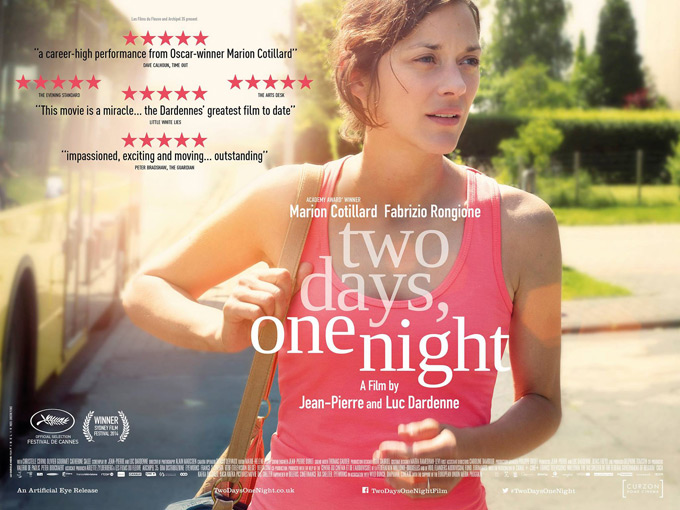
In Seraing, a small Belgian industrial town, Sandra (Cotillard) works at a solar panel factory. The workforce consists of seventeen people, but Sandra has recently been off sick due to a bout of depression. During her absence, her boss, Monsieur Dumont (Sornin) has realised that the work can be done just as well by sixteen people instead of seventeen. As a result, she has fallen foul of machinations orchestrated by her foreman, Jean-Marc (Gourmet), and Dumont has given the rest of the staff a choice: they can have a €1000 bonus or keep Sandra in her job. Thanks to Jean-Marc’s scare tactics and bullying, the staff have voted for the bonus. Sandra has all but given up on her job when her co-worker Juliette (Salée) calls to say Dumont has agreed to meet with them. He agrees to a secret ballot, to be held on the Monday morning (it’s currently Friday afternoon).

All Sandra has to do is visit the rest of her colleagues over the weekend, explain about Jean-Marc’s role in things, and ask if they will vote for her to keep her job at the secret ballot. But Sandra hasn’t fully recovered from her illness, and her confidence is at such a low that she just wants to curl up in bed and ignore everything going on around her. Urged on by her husband, Manu (Rongione), and furnished with a list of addresses by Juliette, she sets out on Saturday morning by public transport to persuade her colleagues to vote for her. Some agree readily, others inform her that the money will ease their own problems. She manages to change the minds of a few, but by the end of the day she’s only halfway to getting the numbers she needs.

Driven round by her husband, she continues on Sunday but although she makes further headway, by the afternoon the whole thing begins to look even bleaker when she suffers a setback. Filled with despair, she takes a whole bottle of Xanax but when a colleague changes her mind and visits Sandra to tell her, her hope returns. With the pills flushed out of her system at the hospital, Sandra resumes her visits to her remaining colleagues. But by the time of the secret ballot on Monday morning, it’s too close to call and she has an agonising wait to hear the result.

Two Days, One Night - scene

The latest from the Dardenne Brothers, after their wonderfully simple and affecting The Kid With a Bike (2011), Two Days, One Night is another simply told, emotionally honest drama that features a strong central performance, and tells its story with a minimum of artifice and a maximum amount of intelligence.

Its tale of a woman fighting to retain both her job and what little self-confidence she’s managed to keep following her illness, Two Days, One Night takes a straightforward storyline and imbues it with such emotional depth, and makes such an impact, that it lingers in the memory long after it’s ended. This is due in no small part to Cotillard’s superb portrayal of Sandra, a role that she inhabits so completely and so effortlessly that if you started watching the movie from just two minutes in, you could be forgiven for thinking you were watching a documentary. As the movie progresses, Cotillard’s beautifully shows the depth of despair and terror that Sandra is feeling about her situation, and the way in which she clings to each small victory with undeniable relief. By the time Monday morning arrives, she’s still nervous and she’s still unsure how the vote will go, but she’s gained so much confidence in herself, and so much more courage than she had on the Friday that you’re praying the ballot will go her way.

Cotillard gives such a brilliant performance that it’s a testament to the abilities of the Dardenne Brothers that she doesn’t dominate the movie to the point where the other characters and their stories are overwhelmed. Each of her colleagues has their own story to tell and each is indelibly presented, with special mention going to Cornil as a woman with an abusive husband (and who tips the balance when Sandra takes her overdose), and Magomedgadzhiev as a male colleague who doesn’t react in anything like the way Sandra expects when she catches up with him.

The Dardennes show a clear appreciation for the rhythms and symmetries of daily life, with Sandra’s home and family life and their importance for her naturally presented. It’s contrasted with the homes of her colleagues, none of which she sees except from the doorstep. Even when someone is home she’s never invited inside, as if she were an outsider, and this unspoken rejection adds to Sandra’s struggle, as she has to go further almost every time in tracking someone down (at one point she bumps into one of her colleagues by accident). It all adds to her sense of impending failure and shows just how difficult such a simple “exercise” can become when so much rides on it. The Dardennes capture every high and low of Sandra’s journey and by setting it in such a familiar, provincial environment, they reinforce how perilous ordinary life can be when something unexpected happens.

Alain Marcoen’s exquisite photography breathes added life into the movie’s mise en scène, and is complemented and enhanced by Marie-Hélène Dozo’s confident, precise editing (some scenes were filmed in a single take, adding to the verisimilitude). With the Dardenne Brothers free to weave their magic on the material, the movie becomes a spirited, uplifting look at one woman’s dark journey to personal redemption.

Rating: 9/10 – a quietly effective, quietly rousing tale of an underdog finding strength in the unlikeliest of circumstances, Two Days, One Night is a triumph for the Dardennes and a delight for the viewer; Cotillard is superb, and confirms her place as one of the finest actresses working in movies today (as if we needed reminding).

Share this:

  • Click to share on X (Opens in new window) X
  • Click to share on Facebook (Opens in new window) Facebook
  • More
  • Click to print (Opens in new window) Print
  • Click to email a link to a friend (Opens in new window) Email
Like Loading...

Blog Stats

  • 486,528 hits

Recent Posts

  • 10 Reasons to Remember Bibi Andersson (1935-2019)
  • Fantasia (1940)
  • Dances With Wolves (1990) – The Special Edition
  • Kiss of the Spider Woman (1985)
  • The Three Musketeers (1973)

Top Posts & Pages

  • Lost for Life (2013) - Another Look
    Lost for Life (2013) - Another Look
  • Lost for Life (2013)
    Lost for Life (2013)
  • About
    About
  • Mr. Topaze (1961)
    Mr. Topaze (1961)
  • Billy Lynn's Long Halftime Walk (2016)
    Billy Lynn's Long Halftime Walk (2016)
  • Winter's Tale (2014)
    Winter's Tale (2014)
  • The Hitman's Bodyguard (2017)
    The Hitman's Bodyguard (2017)
  • 5 Famous Movie Roles That Nearly Went to Someone Else
    5 Famous Movie Roles That Nearly Went to Someone Else
  • The Layover (2017)
    The Layover (2017)
  • Transcendence (2014)
    Transcendence (2014)
Follow thedullwoodexperiment on WordPress.com

Blogs I Follow

  • Rubbish Talk
  • Film 4 Fan
  • Fast Film Reviews
  • The Film Blog
  • All Things Movies UK
  • Interpreting the Stars
  • Let's Go To The Movies
  • Movie Reviews 101
  • TMI News
  • Dan the Man's Movie Reviews
  • Film History
  • Jordan and Eddie (The Movie Guys)

Archives

  • April 2019 (13)
  • March 2019 (28)
  • February 2019 (28)
  • January 2019 (32)
  • December 2018 (28)
  • November 2018 (30)
  • October 2018 (29)
  • September 2018 (29)
  • August 2018 (29)
  • July 2018 (30)
  • June 2018 (28)
  • May 2018 (24)
  • April 2018 (21)
  • March 2018 (31)
  • February 2018 (25)
  • January 2018 (30)
  • December 2017 (30)
  • November 2017 (27)
  • October 2017 (27)
  • September 2017 (26)
  • August 2017 (32)
  • July 2017 (32)
  • June 2017 (30)
  • May 2017 (29)
  • April 2017 (29)
  • March 2017 (30)
  • February 2017 (27)
  • January 2017 (32)
  • December 2016 (30)
  • November 2016 (28)
  • October 2016 (30)
  • September 2016 (27)
  • August 2016 (30)
  • July 2016 (30)
  • June 2016 (31)
  • May 2016 (34)
  • April 2016 (30)
  • March 2016 (30)
  • February 2016 (28)
  • January 2016 (35)
  • December 2015 (34)
  • November 2015 (31)
  • October 2015 (31)
  • September 2015 (34)
  • August 2015 (31)
  • July 2015 (33)
  • June 2015 (12)
  • May 2015 (31)
  • April 2015 (32)
  • March 2015 (30)
  • February 2015 (37)
  • January 2015 (39)
  • December 2014 (34)
  • November 2014 (34)
  • October 2014 (36)
  • September 2014 (25)
  • August 2014 (29)
  • July 2014 (29)
  • June 2014 (28)
  • May 2014 (23)
  • April 2014 (21)
  • March 2014 (42)
  • February 2014 (38)
  • January 2014 (29)
  • December 2013 (28)
  • November 2013 (34)
  • October 2013 (4)

Blog at WordPress.com.

Rubbish Talk

Film 4 Fan

A Movie Blog

Fast Film Reviews

The Film Blog

The official blog of everything in film

All Things Movies UK

Movie Reviews and Original Articles

Interpreting the Stars

Dave Examines Movies

Let's Go To The Movies

Film and Theatre Lover!

Movie Reviews 101

Daily Movie Reviews

TMI News

Latest weather, crime and breaking news

Dan the Man's Movie Reviews

All my aimless thoughts, ideas, and ramblings, all packed into one site!

Film History

Telling the story of film

Jordan and Eddie (The Movie Guys)

Movie Reviews & Ramblings from an Australian Based Film Fan

Privacy & Cookies: This site uses cookies. By continuing to use this website, you agree to their use.
To find out more, including how to control cookies, see here: Cookie Policy
  • Subscribe Subscribed
    • thedullwoodexperiment
    • Join 481 other subscribers
    • Already have a WordPress.com account? Log in now.
    • thedullwoodexperiment
    • Subscribe Subscribed
    • Sign up
    • Log in
    • Report this content
    • View site in Reader
    • Manage subscriptions
    • Collapse this bar
 

Loading Comments...
 

    %d