• 10 Reasons to Remember…
  • A Brief Word About…
  • About
  • For One Week Only
  • Happy Birthday
  • Monthly Roundup
  • Old-Time Crime
  • Other Posts
  • Poster of the Week
  • Question of the Week
  • Reviews
  • Trailers

thedullwoodexperiment

~ Viewing movies in a different light

thedullwoodexperiment

Tag Archives: Geoffrey Rush

The Daughter (2015)

30 Friday Mar 2018

Posted by dullwood68 in Movies

≈ Leave a comment

Tags

Auatralia, Catch Up movie, Drama, Ewen Leslie, Family secrets, Geoffrey Rush, Miranda Otto, Odessa Young, Paul Schneider, Review, Simon Stone, The Wild Duck, Wedding

D: Simon Stone / 96m

Cast: Geoffrey Rush, Ewen Leslie, Paul Schneider, Miranda Otto, Odessa Young, Sam Neill, Anna Torv, Wilson Moore, Ivy Mak

When he learns that his father, Henry (Rush) is remarrying, Christian Nielsen (Schneider) comes home to Australia from the US for the ceremony. He’s been away since his mother died, and in the meantime he’s developed a problem with alcohol, one that is jeopardising his current relationship with Grace (Mak), even though he’s been sober for three months. Henry is marrying his housekeeper, Anna (Torv), a situation that Christian is initially happy with. But it’s when he reconnects with his oldest friend, Oliver (Leslie), that he realises that this isn’t the first time his father has had a relationship with a housekeeper. Back when his mother was still alive, there was another, Charlotte (Otto), whom Oliver is married to. They have a teenage daughter, Hedvig (Young). When Christian starts putting two and two together, this coupled with Grace splitting up with him, prompts him to start drinking again. Tensions between Christian and his father threaten to mar the wedding, but it’s not until the evening reception that  Christian, fuelled by alcohol, reveals what he knows to an unsuspecting Oliver…

Another tale of secrets and lies, The Daughter tells exactly the story you think it’s telling, and does so in a melancholy, mournful way that says everything it’s relating is inevitable. From the moment when Christian mentions that he’s three months’ sober, to Grace telling him via video link that she’ll fly out to join him, writer-director Simon Stone’s movie adaptation of his own theatre adaptation of Henrik Ibsen’s The Wild Duck, proceeds carefully and assuredly along a path toward an inexorable and tragic fate that will sweep up and engulf all its main characters. Christian is the central protagonist, adrift in his own life and seeking some kind of permanence in order to make himself feel good, but too beset by his own personal demons to be able to. By contrast, Oliver is settled and content, even if he has just lost his job at the local sawmill (a sawmill owned by Henry in a subplot that goes undeveloped). Happily married and with a daughter he’s immensely proud of, Oliver is Christian’s opposite. At first it’s easy to sympathise with Christian, but as the movie progresses, it’s easy to see that his anger at his father’s actions is merely a cover for the jealousy he feels at Oliver’s happy home life.
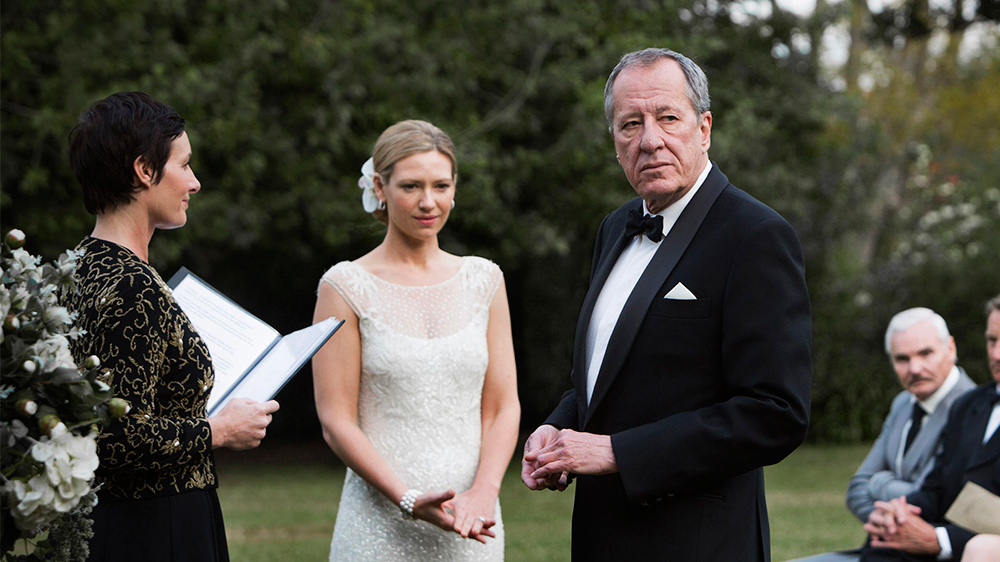
Though the story has its antecedents in Ibsen’s The Wild Duck, here Stone is unable to avoid providing viewers with a number of scenes that are more melodramatic than successful. There’s plenty of exposition too, some of which is dragged out across several scenes, while in contrast, Henry and Anna are sidelined by a succession of short exhanges where he refuses to talk to her. Thankfully, the performances come to the rescue, with both Leslie and Young on superb form. As Oliver and Hedwig, they make the pair’s father-daughter relationship both convincing and natural, while Young by herself makes Hedvig’s confusion over the fracturing of her family and the subsequent fallout heartrending to watch. Stalwarts Rush and Neill do what they’re required to do (which isn’t too much), Otto fleshes out her character to the extent that there’s more to Charlotte than her dialogue allows, and Schneider does equally well in revealing the depths of Christian’s insecurities and resentments. Stone’s direction wavers from time to time, and the movie’s flow is often curtailed; he also adopts a time distortion effect where dialogue is spoken over scenes that occur some moments after. It’s an interesting idea, but like much else in the script, sadly doesn’t have the impact that may have been intended.

Rating: 6/10 – intermittently absorbing, and plagued by scenes that come and go without being developed further or followed up, it’s left to the performances to keep viewers of The Daughter interested; that said, Andrew Commis’ cinematography is terrific compensation, but overall this is a movie that should be filed under missed opportunity.

Share this:

  • Click to share on X (Opens in new window) X
  • Click to share on Facebook (Opens in new window) Facebook
  • More
  • Click to print (Opens in new window) Print
  • Click to email a link to a friend (Opens in new window) Email
Like Loading...

Final Portrait (2017)

25 Thursday Jan 2018

Posted by dullwood68 in Movies

≈ Leave a comment

Tags

Alberto Giacometti, Armie Hammer, Art, Comedy, Drama, Geoffrey Rush, James Lord, Literary adaptation, Painting, Paris, Review, Stanley Tucci

D: Stanley Tucci / 90m

Cast: Geoffrey Rush, Armie Hammer, Clémence Poésy, Tony Shalhoub, Sylvie Testud

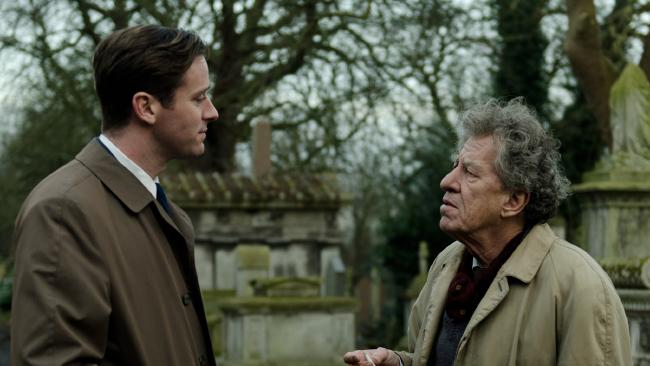
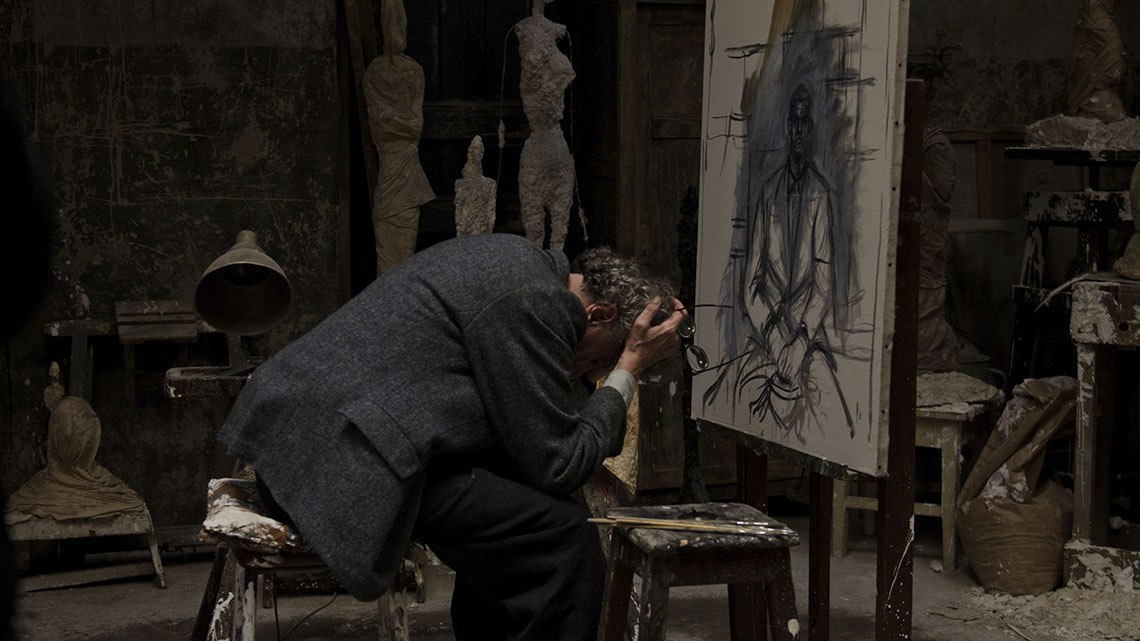
In 1964, the writer James Lord (Hammer) is in Paris on a short trip when his friend, the artist Alberto Giacometti (Rush), asks him to sit for a portrait. Giacometti initially says it will take a few hours – one afternoon – but his own eccentricities and his own self-doubts mean that one afternoon becomes several weeks, and Lord is faced with postponing his return to the US until the portrait is finished. Giacometti works in fits and starts, and his personal life often interferes with his progress with the painting. There are long-standing animosities between Giacometti and his wife, Annette (Testud), that are exacerbated by his relationship with Caroline (Poésy), whose portrait he’s also painting. As the time passes, Lord becomes an observer of Giacometti’s life and work, and his insecurities and obsessions.

Based on the biography written by Lord a year later, A Giacometti Portrait, Stanley Tucci’s fourth feature as a writer/director is a meditative exploration of the creative process, and the notion that no work of art can ever truly be regarded as finished. It’s an interesting idea for a movie to examine, as by its very nature, Final Portrait is exactly that: a finished product (unless Tucci decides to release revised versions of the movie in future years). But it’s an idea that Giacometti adheres to, and Tucci has him continually looking at the sculptures in his studio, examining them, assessing them, and sometimes changing them slightly, albeit in very minor ways, as if by doing so, he can improve the work in such a way that it becomes more relevant, and worth the effort he’s put into it. The same applies to Lord’s portrait, an endeavour that Giacometti says will never be truly completed, even if Lord were to be available to sit for the rest of his life; even then, more can always be done to improve the work, and then more again.

Tucci isn’t one for histrionics or exaggerated performances, and his cast comply with the needs of a script that requires a delicacy of touch and a sympathetic approach to both Giacometti and his erratic genius. Rush is a terrific choice as the artist who thinks nothing of throwing an envelope with two million francs in it under a bed and forgetting about it. Chain-smoking his way through the movie, Rush portrays Giacometti as a restless man who is always searching for that one moment of clarity in his work but never quite finding it. As the trapped, slightly bewildered, and increasingly frustrated Lord, Hammer is effectively the straight man to Rush’s manic devilry, but he carries the role well, and is a charming foil for Giacometti’s maddening behaviour. In support, Poésy and Testud offer polar opposites as the women in Giacometti’s life (neither of whom are as well treated as they would like), and there’s the quiet, reflective presence of Shalhoub as Giacometti’s brother, Diego. The movie is beautifully constructed, with the artist’s studio a wonderfully designed and assembled cave of wonders courtesy of production designer James Merifield, art director David Hindle, and set decorator Sarah Wan. The camera takes in all the elements that are on display and a wonderfully evocative world is entered into as a result. It’s all overlaid with a tremendous sense of fun, along with a dash of rueful humour here and there, and remains a captivating and entertaining experience throughout.

Rating: 8/10 – an affectionate tribute to the difficulties inherent in the artistic process, Final Portrait is a thoughtful, sincere, modest, and clever movie that offers a beguiling yet intuitive examination of the artist Alberto Giacometti and his work; Rush and Hammer give wonderful performances, Tucci directs with verve and confidence in his own script, and it all proves as invigorating as the pursuit of artistic “truth” should be.

Share this:

  • Click to share on X (Opens in new window) X
  • Click to share on Facebook (Opens in new window) Facebook
  • More
  • Click to print (Opens in new window) Print
  • Click to email a link to a friend (Opens in new window) Email
Like Loading...

Pirates of the Caribbean: Dead Men Tell No Tales (2017)

30 Tuesday May 2017

Posted by dullwood68 in Movies

≈ Leave a comment

Tags

Action, Black Pearl, Brenton Thwaites, Comedy, Curse, Drama, Fantasy, Geoffrey Rush, Javier Bardem, Joachim Rønning, Johnny Depp, Kaya Scodelario, Review, Sequel, Trident of Poseidon

aka Pirates of the Caribbean: Salazar’s Revenge

D: Joachim Rønning, Espen Sandberg / 129m

Cast: Johnny Depp, Javier Bardem, Geoffrey Rush, Brenton Thwaites, Kaya Scodelario, Kevin McNally, Golshifteh Farahani, David Wenham, Stephen Graham, Angus Barnett, Martin Klebba, Adam Brown, Giles New, Lewis McGowan, Orlando Bloom, Paul McCartney

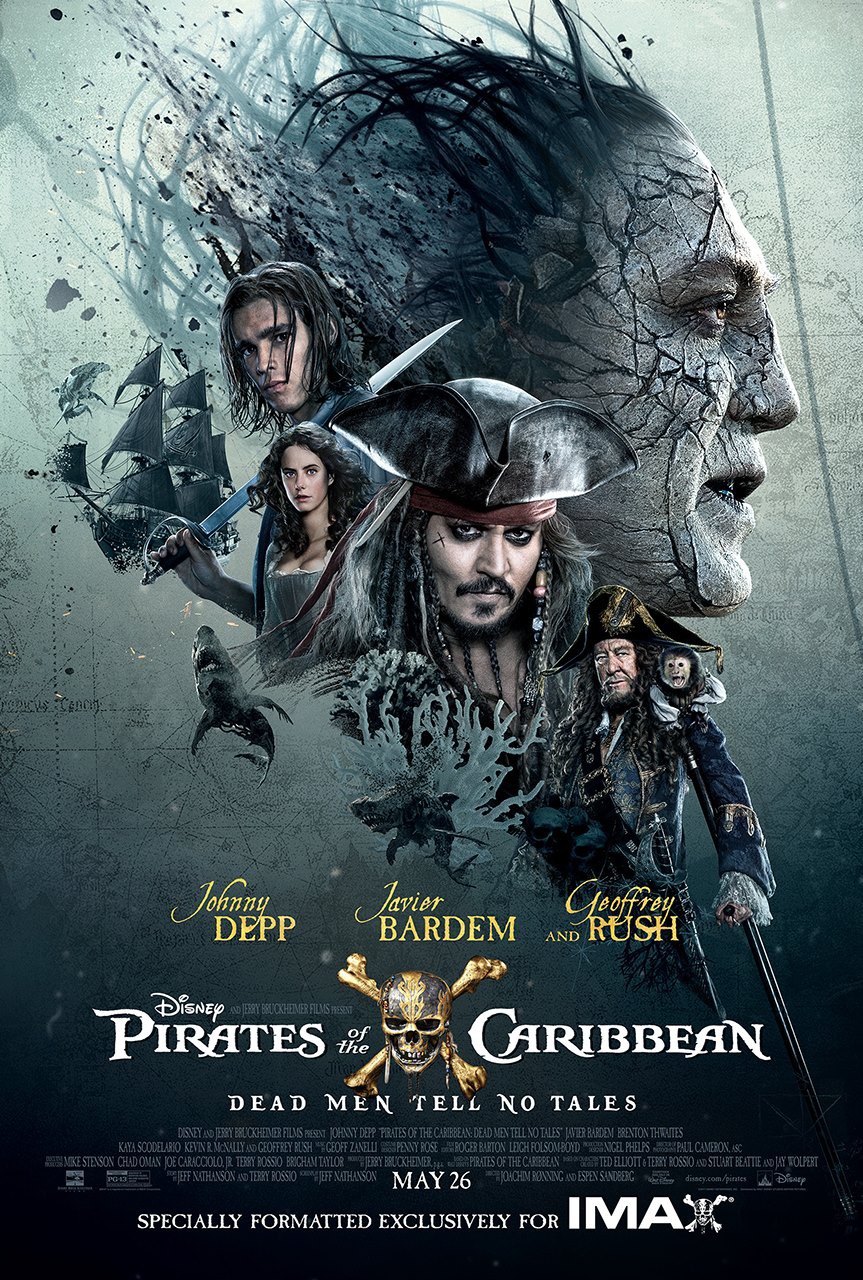
Six years after Pirates of the Caribbean: On Stranger Tides appeared to have brought the franchise to an end, Disney and Jerry Bruckheimer have resurrected Captain Jack Sparrow for one more round of hijinks on the high seas. This movie and a potential sixth in the series were being planned even before On Stranger Tides was released, but production delays and script problems kept Dead Men Tell No Tales from our screens until now. It’s debatable that anyone outside of the cast and crew and studio bosses were enthusiastic about the idea of a fifth movie, and it’s doubtful that even die-hard fans were expecting too much from it, but the series has made a lot of money since it began back in 2003 – over $3.7 billion before this installment – so perhaps another entry shouldn’t be too much of a surprise.

Dead Men Tell No Tales harks back to the simpler, more effective pleasures found in the series’ first movie, Curse of the Black Pearl, and attempts to forget the bloated excesses of the previous two installments by imitating much of what made that movie so successful. However, this approach hasn’t meant a return to form, but instead has stopped the rot. You can argue that this is a better movie than On Stranger Tides, and you wouldn’t be wrong, but both as a stand-alone entry and the continuation of a series that provides links to its predecessors in an ongoing game of Guess-the-Reference, number five in the series is still found wanting.

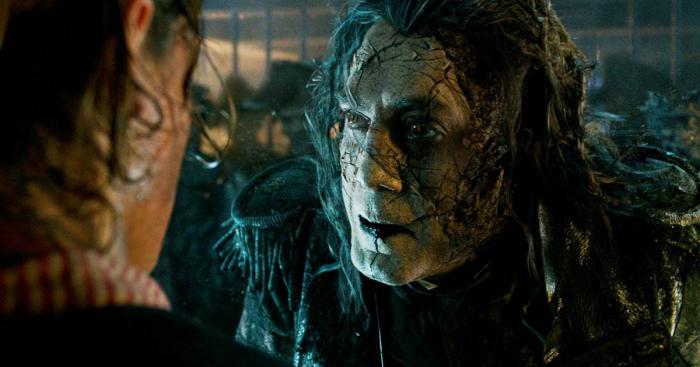
For a start, there’s the plot, a mish-mash of ideas that are borne out of the idea that hidden somewhere at sea is the Trident of Poseidon, and that this is the cure for all the curses of the sea. At the start of the movie, a young Henry Turner (McGowan) confronts his father, Will (Bloom), and tells him of his plan to find the Trident and free him from his fate as the Flying Dutchman. Will believes the Trident can’t be found, but Henry is determined. Nine years later, Henry is now a young man (Thwaites), and still searching for the Trident, as is astronomer Carina Smyth (Scodelario). She has a book that gives clues to the Trident’s whereabouts, but has been condemned by the British as a witch. Henry, meanwhile, has encountered the ghost of Captain Salazar (Bardem) who is seeking revenge on Captain Jack Sparrow for his supernatural existence. On the island of St Martin, Henry, Carina and Jack all come together and make sail for the unmarked island that can’t be navigated to, closely followed by Salazar and interested party Barbossa (Rush).

There’s more – much more – and therein lies one of the movie’s biggest problems: it takes what should be a fairly straightforward idea and twists it so far out of shape that every attempt to straighten it out merely serves to make it less and less, and less, straightforward. The plot becomes buried under layer after layer of unnecessary twists and turns and double crosses and “clever” subterfuges. The characters’ individual storylines become convoluted and unwieldy, with one relationship forged out of nothing, and as for any character development, that’s been ignored in favour of getting everyone from point A to point B with a minimum of effort or fuss. For a movie that was delayed partly because of script problems, it makes you wonder just how bad scribe Jeff Nathanson’s original screenplay really was (or if Johnny Depp’s widely credited contributions are to blame instead).

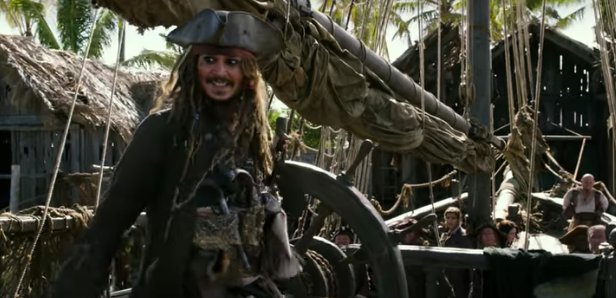
Another problem lies with the character of Jack Sparrow himself. Five movies in and it’s clear that the character has run out of steam both dramatically and comedically. He’s a pale shadow of his former self, no longer as witty as he once was, or retaining the skewed moral compass he once had, and halfway to being a lampoon. And for the most part Depp is going through the motions, offering brief glimpses of the portrayal that made such an impact fourteen years ago, but unable to rekindle the past glories that came with that portrayal. The usual grinning and grimacing are there but that’s the point: it’s exactly the same grinning and grimacing we’ve already seen four times before. When your main character becomes more and more of a caricature with every outing, then it’s time to really shake things up and do something different.

But doing something different – anything different – isn’t part of the movie’s agenda. Instead, newcomers Rønning and Sandberg cleave to the look and feel of the first movie, but are hamstrung by having little in the way of dramatic meat to work with, and a preponderance of comedic moments that are self-referential and which largely fall flat. Yes, there are moments where you’ll smile and maybe chuckle to yourself, but outright laughs are as rare as someone in Salazar’s crew having a complete body. The various action set pieces offer the occasional frisson, but again there’s very little that holds the attention or seems fresh by design or in execution. A bank heist early on plays like a low-budget version of the vault robbery from Fast Five (2011), while the finale steals its set up from the parting of the Red Sea in The Ten Commandments (1956).

On the acting front, returnees Rush, McNally, Klebba, Graham, Barnett, New, and Bloom do what they need to do within the confines of the script, while newcomers Bardem, Thwaites, Scodelario, Farahani (as a thinly disguised version of Naomie Harris’s Calypso), and Wenham face exactly the same problem. When an actor of the calibre of Javier Bardem can’t manage to make a character such as Salazar even occasionally memorable then there’s definitely something wrong going on. And just when you thought there wasn’t a rock star who could give a worse performance than Keith Richards in a Pirates movie, up pops Paul McCartney as Jack’s Uncle Jack, an appearance that makes you pray he doesn’t pop up again.

In essence, this is a movie (and a fourth sequel to boot) that atones for the appalling nature of its immediate predecessor, but which in doing so, defaults to being predictable and safe. This makes it a movie that offers few rewards for its fans, and even fewer rewards for anyone coming to the franchise for the first time. A post credits scene sets up a sixth movie which looks set to bring back another character from the series’ past, but if it does, then it will have to be a vast improvement on this entry, and perhaps require a complete rethink of a franchise that has gone astray and which shows no immediate signs of finding its way back.

Rating: 4/10 – impressive CGI and beautiful locations are about the best things in Pirates of the Caribbean: Dead Men Tell No Tales, but even they aren’t good enough to rescue a movie that opts for mediocre as a first choice, and is only fitfully entertaining; a tiptoe in the right direction for the franchise but still an underwhelming experience for anyone who remembers the glory days of the first Pirates of the Caribbean movie.

Share this:

  • Click to share on X (Opens in new window) X
  • Click to share on Facebook (Opens in new window) Facebook
  • More
  • Click to print (Opens in new window) Print
  • Click to email a link to a friend (Opens in new window) Email
Like Loading...

Gods of Egypt (2016)

12 Sunday Jun 2016

Posted by dullwood68 in Movies

≈ Leave a comment

Tags

Action, Adventure, Alex Proyas, Brenton Thwaites, Drama, Egypt, Elodie Yung, Fantasy, Geoffrey Rush, Gerard Butler, Gods, Horus, Nikolaj Coster-Waldau, Osiris, Ra, Review, Set, Sphinx

Gods of Egypt

D: Alex Proyas / 127m

Cast: Nikolaj Coster-Waldau, Brenton Thwaites, Gerard Butler, Elodie Yung, Rufus Sewell, Chadwick Boseman, Courtney Eaton, Geoffrey Rush, Bryan Brown, Emma Booth

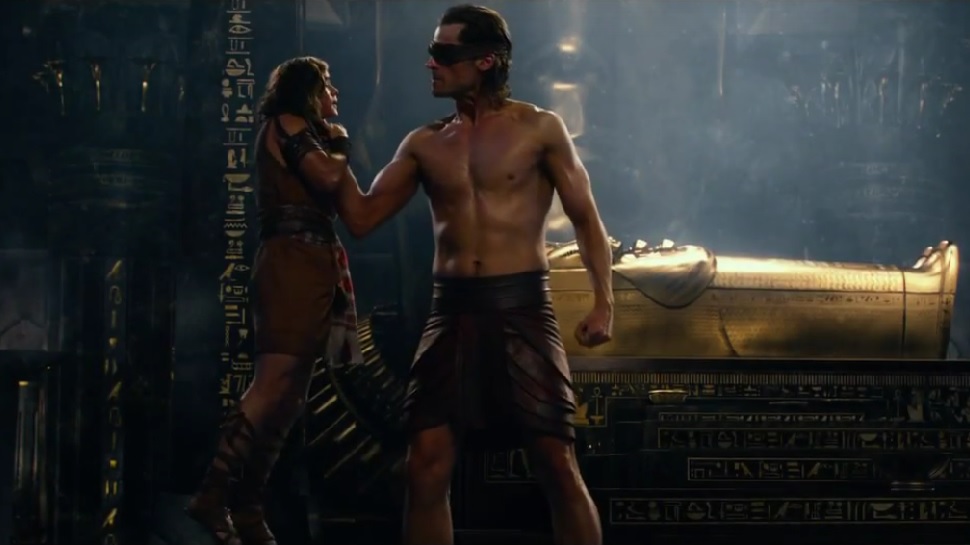
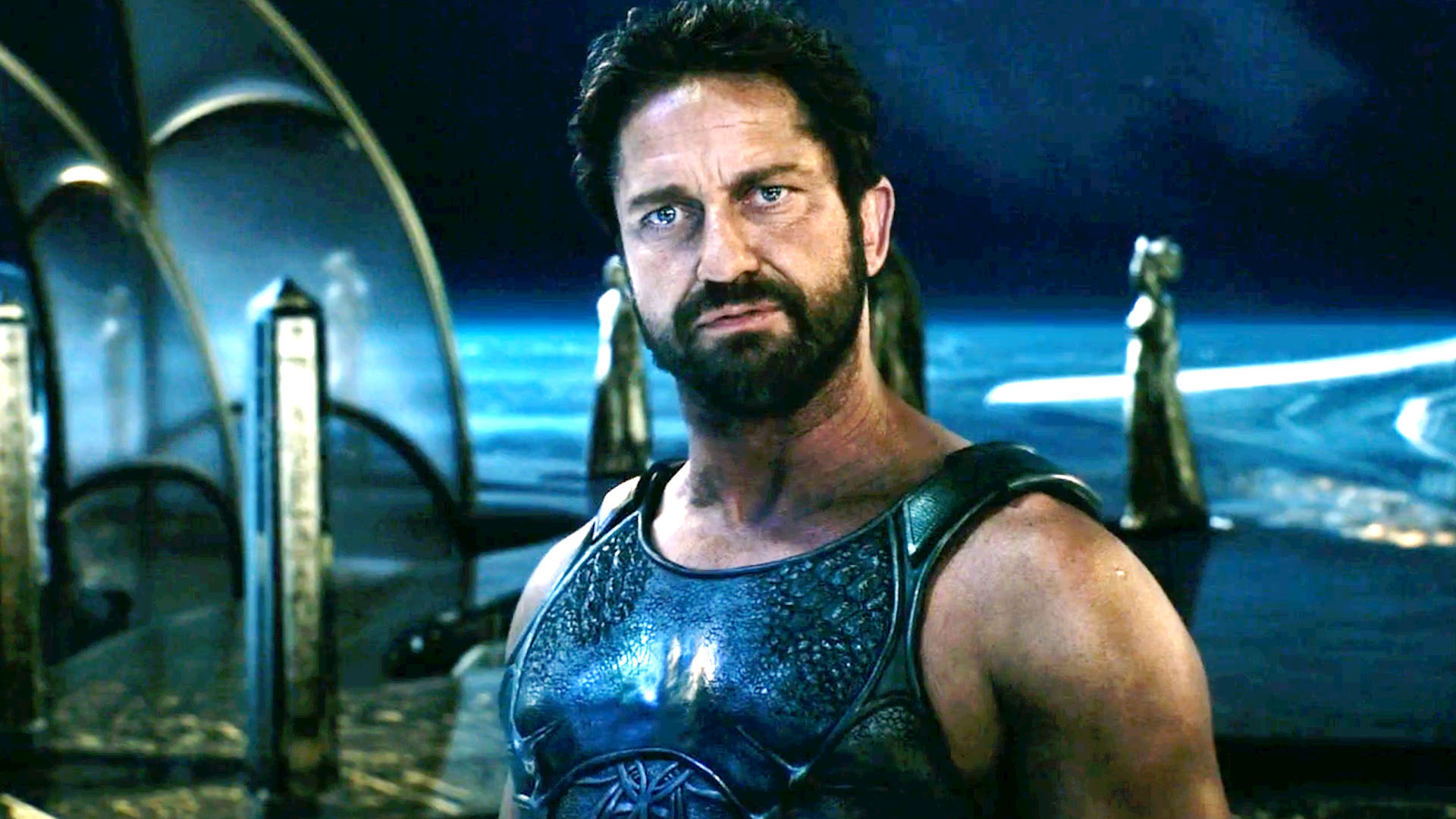
Gods of Egypt starts by reinventing Egyptian history. Overly sincere narration informs us that Osiris (Brown) ruled over the populous and bountiful Nile area, while his brother Set (Butler) was given dominion over the barren, desert areas at the far edges of Osiris’ kingdom. Time passes, until Osiris decides to abdicate his throne in favour of his son, Horus (Coster-Waldau). At the crowning ceremony, Set arrives and promptly kills Osiris, blinds Horus by taking out his eyes, and usurps the kingdom. He also sets about killing all the other gods and collecting their individual powers.

A year passes. Set has enslaved the people of Egypt and has put them to building monuments in his name, including one that reaches high into the sky, a tower so great that Ra (Rush), Set’s father, will be able to see it in his heavenly orbit. A slave girl, Zaya (Eaton), convinces her beloved, a thief called Bek (Thwaites), that only Horus can save everyone, but he will need his eyes back. Horus’ eyes are kept in Set’s vaults, and Zaya’s position in the home of master builder Urshu (Sewell) means that she has access to the vaults’ plans and can ensure that Bek avoids any booby traps in his search for the eyes. He retrieves one, but is unable to find the other. In their subsequent escape from Urshu’s home, Zaya is struck by an arrow and dies. Bek continues on to the home of Horus where he bargains for Zaya’s return from the land of the dead in exchange for Horus’ other eye. The god agrees to help him find it.

GOE - scene1

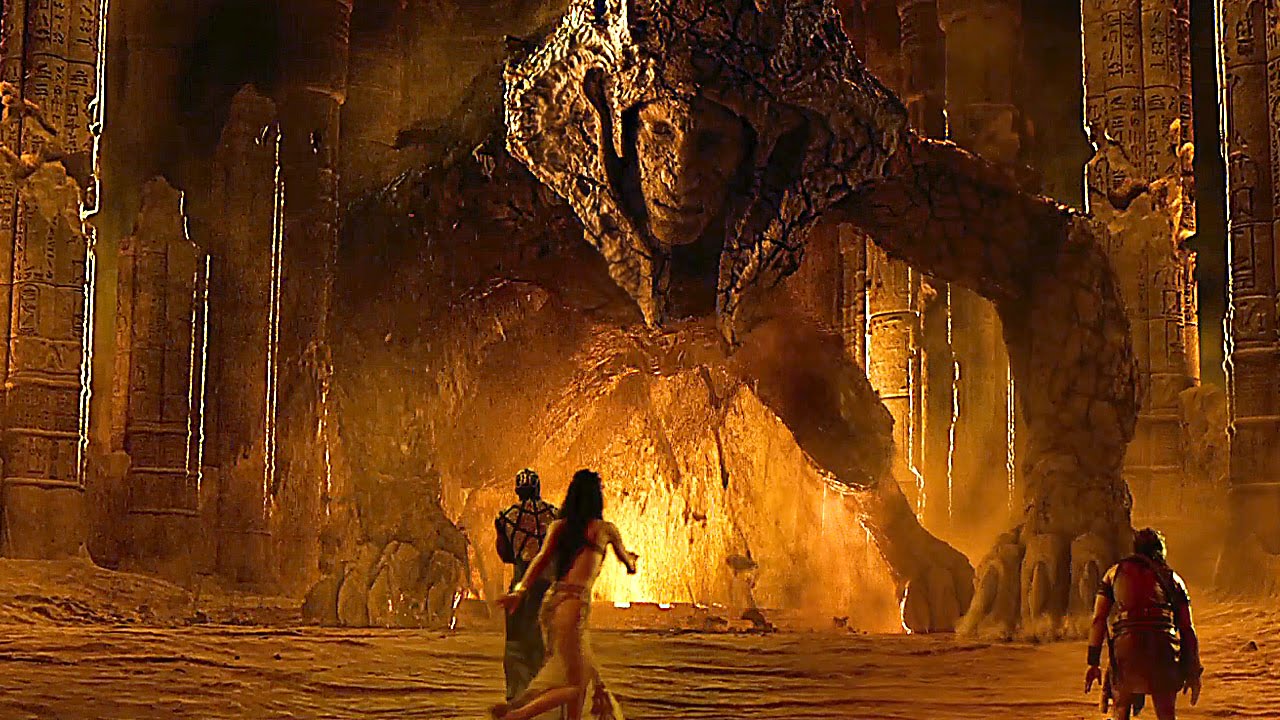
Naturally, Set becomes aware of what Horus is doing. He sends assassins, and even himself, to halt their journey to the Egyptian capital and the procurement of Horus’ other eye. But luck is on Bek and Horus’ side, and aided along the way by Hathor (Yung), the goddess of love, and Thoth (Boseman), the god of wisdom, they reach the capital and Horus does battle with Set. With Set having unleashed the world-devouring creature Apep, Horus and Bek must find Horus’ eye, and a way to defeat Set and save Egypt from complete annihilation.

Students of Egyptian history will be shaking their heads in dismay at such a (brief) description of the events that occur in Gods of Egypt. But if they were to actually sit down and watch the movie, that head shaking would quickly turn into uncontrolled apoplexy. As revisionist fantasies go, Gods of Egypt is tawdry stuff, and heavily reliant on spectacle provided by CGI and poor script decisions. The gods can transform into armoured, winged variations of themselves in order to do battle with one another, but this is nothing to the way in which the characters speak an awful mix of cod-literal pseudo-intellectual exposition, and apparently heartfelt twaddle. With deathless lines of dialogue such as “I don’t want to die, I want to live! I want to live down on earth, amongst the lands I have conquered!” (spoken by Set), it’s no wonder that the script, by Matt Sazama and Burk Sharpless – who also co-wrote Dracula Untold (2014) and The Last Witch Hunter (2015), and whose next project is Power Rangers (2017) – contains enough wince-inducing moments to stun a sphinx.

GOE - scene3

Ostensibly an adventure story, the movie packs in the usual amount of over-the-top action setpieces that seem de rigeuer in modern fantasy movies, and in doing so, sacrifices credibility at every turn, and on certain occasions, any coherence it’s built up along the way (which isn’t much). Characters behave erratically, leaving the audience to wonder if Sazama and Sharpless assembled their final script from the scattered pages of previous drafts, and the journey Bek and Horus embark on seems to take in every possible physical environment – from desert to swamp to mountain – available to the screenwriters’ imagination. The movie is a big, sprawling epic, eager to please with each new bout of CGI-rendered spectacle, and yet it’s spectacularly hollow, a crowd-pleasing exercise that lacks subtlety, depth and narrative stability (which begs the question, just which kind of audience is it looking for?).

The cast are lost amid all the surface glamour and overbearing special effects. Coster-Waldau is particularly adrift, varying the level of his performance from scene to scene and never quite managing to find a through line for Horus that doesn’t smack of constantly changing improvisation. He also has trouble giving weight to his dialogue, making Horus sound plaintive and reticent rather than angry and defiant. Thwaites is stuck with the awkward task of motivating Horus and his fellow gods to take up against Set, and providing most of the movie’s humour. That he only succeeds intermittently shouldn’t be much of a surprise, as again the script doesn’t support him in either endeavour, and often leaves him hanging high and dry. And then there’s Butler, chewing the scenery with all the energy of an actor working out a contractual obligation and not caring how bad he is.

GOE - scene2

The rest of the cast struggle manfully to maintain a semblance of interest in their characters with only Yung and Boseman injecting any passion into their roles. They’re not helped by the absence of Proyas in the director’s chair. Anyone who’s seen The Crow (1994), Dark City (1998), and I, Robot (2004), will be wondering what’s happened to the idiosyncratic and daring director whose visual ingenuity and flair marked him out as a talent to watch out for. Here, Proyas’ talent is squandered in a maelstrom of pixels and perfunctory plotting that does his reputation no favours, and makes his previous movie, the nonsensical Knowing (2009), look like a masterpiece in comparison. Proyas isn’t connected with another project as yet, but let’s hope he finds one that’s worthy of his talent and commitment.

Rating: 4/10 – overcooked and belligerent in its approach, Gods of Egypt looks good but remains resolutely superficial from beginning to end; an adventure movie that goes through the motions and proves hard to engage with, it trades plausibility for spectacle at every turn, and is entirely forgettable.

Share this:

  • Click to share on X (Opens in new window) X
  • Click to share on Facebook (Opens in new window) Facebook
  • More
  • Click to print (Opens in new window) Print
  • Click to email a link to a friend (Opens in new window) Email
Like Loading...

The Book Thief (2013)

19 Wednesday Mar 2014

Posted by dullwood68 in Movies

≈ 3 Comments

Tags

Brian Percival, Emily Watson, Geoffrey Rush, Germany, Jewish refugee, Library, Liesel Meminger, Markus Zusak, Nazis, Review, Sophie Nélisse, World War II

Book Thief, The

D: Brian Percival / 131m

Cast: Geoffrey Rush, Emily Watson, Sophie Nélisse, Ben Schnetzer, Nico Liersch, Levin Liam, Rainer Bock, Barbara Auer, Roger Allam

Literary adaptations are a perilous thing, both for filmmakers and audiences alike. For every Schindler’s List there’s a Bonfire of the Vanities. Some are critically bulletproof, such as the Harry Potter series; despite the turgid nature of the first two movies featuring the bespectacled wizard, they were huge box office successes and paved the way for the remaining instalments (which, effectively, meant they were commercially bulletproof as well). Most fall somewhere in-between, neither success nor failure but an often strange combination of the two e.g. The Mortal Instruments: City of Bones or Smilla’s Sense of Snow, one moment distilling the essence of the original novel, the next demolishing that moment with an ill-judged sequence or change from the source material. Others simply die on the screen (the aforementioned Bonfire of the Vanities, The Osterman Weekend, the Jack Black version of Gulliver’s Travels).

Most try to be faithful to the novel they’re adapting but sometimes this is the very thing that stops the movie from being a success: by cleaving to the set-up, the characters and the events depicted in the novel, the movie somehow misses the spark that made the book a must-read. Instead of a must-see movie, audiences are presented with an adaptation that keeps the essential components but fails to breathe cinematic life into them.

DF-05687.JPG

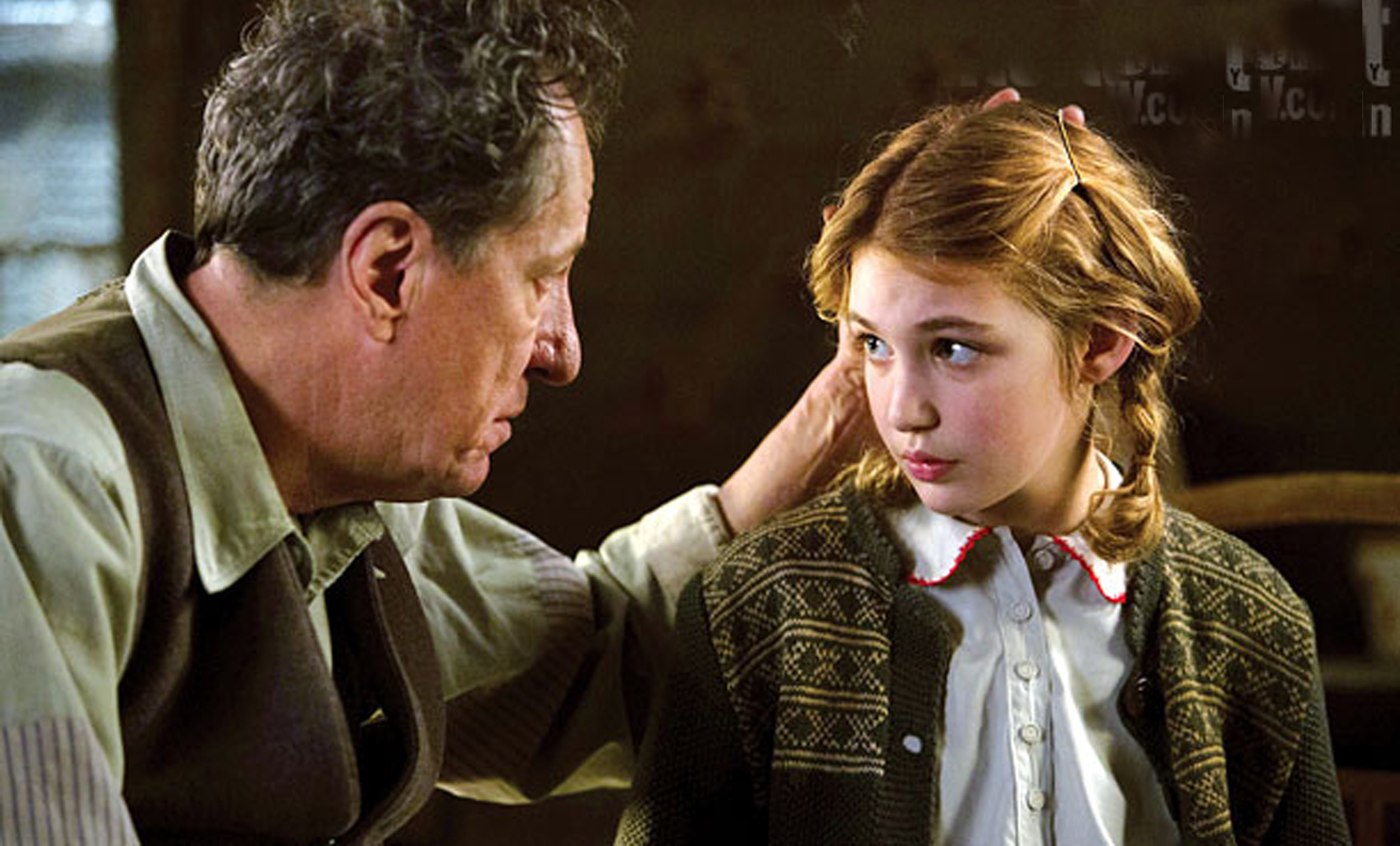
And so it is with The Book Thief. Adapted from the novel by Markus Zusak, The Book Thief in question is Liesel Meminger (Nelisse), a young girl who is given up for adoption by her mother (who may or may not be a communist) during the Second World War. She is taken in by the Hubermanns, Hans (Rush) and Rosa (Watson). Hans is a gentle, encouraging man who teaches Liesel how to read; from this Liesel develops her love of books. Rosa is stern and constantly criticising Liesel’s behaviour (though you know she has a soft spot for her, however horrid she might be). As time goes by and Liesel settles in to life with her new Mama and Papa, the war that seems to be going on in a separate part of Germany altogether, begins to encroach on their daily lives.

One day a young Jewish man called Max Vandenburg (Schnetzer) comes to their house. On the run from the Nazis, he is hurt and needs a place to hide. Owing a debt to his father, the Hubermanns at first hide him in Liesel’s room, then transfer him to the basement. There is an anxious occasion when a Nazi officer visits them and asks to see the basement but he goes away pretty quickly and has no idea that Max is there (and it turns out he’s not even looking for him). Helped back to nearly full health by Rosa’s administrations and Liesel’s reading to him (through books stolen from the burgermeister’s library), Max leaves before he can put them in greater danger. Then Hans is conscripted, despite his age. With the war getting nearer and nearer, Liesel’s future looks increasingly uncertain.

The Book Thief is a curiously flat, dramatically sterile movie that sticks to the same pace from its strikingly photographed opening to its let’s-try-and-be-upbeat-even-though-the-ending’s-a-downer conclusion. There’s very little drama here, very little of what the Germans refer to as sturm und drang (“storm and drive”). Michael Petroni’s adaptation is as dull and uneventful as a trip to a colour chart museum. There’s the visit by the Nazi officer, which should have the viewer on the edge of their seat, but as there’s so little invested in Max’s character, it doesn’t come across as a tense moment at all; it would have been more dramatic by this point if he had been discovered. The only other source of “trouble” that Liesel faces is from school bully and Nazi Youth member Franz Deutscher (Liam), and all he does is make empty threats about “reporting” her (and literally does no more than that). With such an absence of tension throughout, The Book Thief – while remaining true to its source – ends up being a collection of scenes that relate to each other but do little to involve the viewer at any particular point.

As a result, Rush and Watson have to fall back on their expertise to raise their characters from the level of caricatures or cardboard cut-outs, while newcomer Nelisse actually manages to impress even though she has as little to work with as her more experienced co-stars. Percival’s direction does nothing to improve things and is workmanlike at best, though the production – on a technical level – makes up for the emotional detachment, and is often lovely to look at. And there should be one final word for the narrator. Step forward, Death, as voiced by Roger Allam. If there is any further proof required that The Book Thief doesn’t work as well as it should, then take a listen to the dreadful dialogue Allam has to give voice to. If you’re not cringing after the first few sentences (right at the start of the movie) then you’ll probably enjoy The Book Thief a lot more than most.

Rating: 5/10 – dull as the proverbial ditchwater, and spoilt by a lack of engagement from its director and its writer; saved by the professionalism of its cast and crew, but a major disappointment nevertheless.

Share this:

  • Click to share on X (Opens in new window) X
  • Click to share on Facebook (Opens in new window) Facebook
  • More
  • Click to print (Opens in new window) Print
  • Click to email a link to a friend (Opens in new window) Email
Like Loading...

Blog Stats

  • 486,676 hits

Recent Posts

  • 10 Reasons to Remember Bibi Andersson (1935-2019)
  • Fantasia (1940)
  • Dances With Wolves (1990) – The Special Edition
  • Kiss of the Spider Woman (1985)
  • The Three Musketeers (1973)

Top Posts & Pages

  • Lost for Life (2013) - Another Look
    Lost for Life (2013) - Another Look
  • Lost for Life (2013)
    Lost for Life (2013)
  • About
    About
  • Cardboard Boxer (2016)
    Cardboard Boxer (2016)
  • A Brief Word About La La Land (2016)
    A Brief Word About La La Land (2016)
  • Exposed (2016)
    Exposed (2016)
  • A Brief Word About Netflix Original Comedies
    A Brief Word About Netflix Original Comedies
  • Removal (2010)
    Removal (2010)
  • My Top 10 Guilty Pleasures
    My Top 10 Guilty Pleasures
  • BFI London Film Festival 2015
    BFI London Film Festival 2015
Follow thedullwoodexperiment on WordPress.com

Blogs I Follow

  • Rubbish Talk
  • Film 4 Fan
  • Fast Film Reviews
  • The Film Blog
  • All Things Movies UK
  • Interpreting the Stars
  • Let's Go To The Movies
  • Movie Reviews 101
  • TMI News
  • Dan the Man's Movie Reviews
  • Film History
  • Jordan and Eddie (The Movie Guys)

Archives

  • April 2019 (13)
  • March 2019 (28)
  • February 2019 (28)
  • January 2019 (32)
  • December 2018 (28)
  • November 2018 (30)
  • October 2018 (29)
  • September 2018 (29)
  • August 2018 (29)
  • July 2018 (30)
  • June 2018 (28)
  • May 2018 (24)
  • April 2018 (21)
  • March 2018 (31)
  • February 2018 (25)
  • January 2018 (30)
  • December 2017 (30)
  • November 2017 (27)
  • October 2017 (27)
  • September 2017 (26)
  • August 2017 (32)
  • July 2017 (32)
  • June 2017 (30)
  • May 2017 (29)
  • April 2017 (29)
  • March 2017 (30)
  • February 2017 (27)
  • January 2017 (32)
  • December 2016 (30)
  • November 2016 (28)
  • October 2016 (30)
  • September 2016 (27)
  • August 2016 (30)
  • July 2016 (30)
  • June 2016 (31)
  • May 2016 (34)
  • April 2016 (30)
  • March 2016 (30)
  • February 2016 (28)
  • January 2016 (35)
  • December 2015 (34)
  • November 2015 (31)
  • October 2015 (31)
  • September 2015 (34)
  • August 2015 (31)
  • July 2015 (33)
  • June 2015 (12)
  • May 2015 (31)
  • April 2015 (32)
  • March 2015 (30)
  • February 2015 (37)
  • January 2015 (39)
  • December 2014 (34)
  • November 2014 (34)
  • October 2014 (36)
  • September 2014 (25)
  • August 2014 (29)
  • July 2014 (29)
  • June 2014 (28)
  • May 2014 (23)
  • April 2014 (21)
  • March 2014 (42)
  • February 2014 (38)
  • January 2014 (29)
  • December 2013 (28)
  • November 2013 (34)
  • October 2013 (4)

Create a free website or blog at WordPress.com.

Rubbish Talk

Film 4 Fan

A Movie Blog

Fast Film Reviews

The Film Blog

The official blog of everything in film

All Things Movies UK

Movie Reviews and Original Articles

Interpreting the Stars

Dave Examines Movies

Let's Go To The Movies

Film and Theatre Lover!

Movie Reviews 101

Daily Movie Reviews

TMI News

Latest weather, crime and breaking news

Dan the Man's Movie Reviews

All my aimless thoughts, ideas, and ramblings, all packed into one site!

Film History

Telling the story of film

Jordan and Eddie (The Movie Guys)

Movie Reviews & Ramblings from an Australian Based Film Fan

Privacy & Cookies: This site uses cookies. By continuing to use this website, you agree to their use.
To find out more, including how to control cookies, see here: Cookie Policy
  • Subscribe Subscribed
    • thedullwoodexperiment
    • Join 481 other subscribers
    • Already have a WordPress.com account? Log in now.
    • thedullwoodexperiment
    • Subscribe Subscribed
    • Sign up
    • Log in
    • Report this content
    • View site in Reader
    • Manage subscriptions
    • Collapse this bar
 

Loading Comments...
 

    %d