• 10 Reasons to Remember…
  • A Brief Word About…
  • About
  • For One Week Only
  • Happy Birthday
  • Monthly Roundup
  • Old-Time Crime
  • Other Posts
  • Poster of the Week
  • Question of the Week
  • Reviews
  • Trailers

thedullwoodexperiment

~ Viewing movies in a different light

thedullwoodexperiment

Tag Archives: Holocaust

Denial (2016)

05 Sunday Feb 2017

Posted by dullwood68 in Movies

≈ Leave a comment

Tags

Andrew Scott, David Irving, Deborah Lipstadt, Drama, Holocaust, Libel case, Mick Jackson, Rachel Weisz, Review, Timothy Spall, Tom Wilkinson, Trial, True story

denial_movie_poster_p_2016

D: Mick Jackson / 109m

Cast: Rachel Weisz, Tom Wilkinson, Timothy Spall, Andrew Scott, Jack Lowden, Caren Pistorius, Alex Jennings, Harriet Walter, Mark Gatiss, John Sessions, Nikki Amuka-Bird

“The most effective way to destroy people is to deny and obliterate their own understanding of their history.” That quote, made by George Orwell, is a particularly apt phrase when looking at Denial, a movie that explores the libel case brought by Holocaust denier David Irving (Spall) against renowned historian Deborah Lipstadt (Weisz) and her UK publishers, Penguin, back in 2000. In her book, Denying the Holocaust: the Growing Assault on Truth and Memory (1993), Lipstadt had referred to Irving as a “Holocaust denier, falsifier, and bigot”, and also stated “that he manipulated and distorted real documents.” Irving sued Lipstadt in the British courts for one very good reason: in the UK, the burden of proof is on the defendant. In this case it meant that Lipstadt and Penguin had to prove that the Holocaust did actually happen, thereby proving that Irving was a falsifier and the accusations in her book were true.

If you were around in the late Nineties, it’s likely you would have heard of David Irving. He was notorious for his denial of the Holocaust, and the very nature of the trial made it headline news at the time. In bringing this incredible true story to the screen, director Mick Jackson and screenwriter David Hare have managed to somehow make a movie that gets the salient points across but which does so with a minimum of apparent enthusiasm. Perhaps it’s the nature of the subject matter, and the makers have gone for a dour, unspectacular approach in recognition of this. If that’s the case, then they’ve done the movie a massive disservice.

maxresdefault

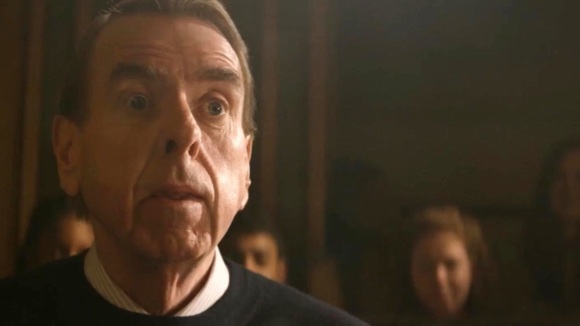
From the moment we see Irving challenge Lipstadt at one of her lectures, the very idea that the Holocaust didn’t happen – and that someone would willingly say such a thing, and then challenge someone to prove it did happen – is so bizarrely unnerving that it should make Irving all the more intriguing, and yet, as played by Spall, he’s more like a kindly uncle who’s gone slightly off his rocker. When he makes his opening speech at the trial – Irving represented himself – his off-kilter rhetoric and less than fashionable beliefs show a man whose disregard for historical truth has brought him to the last place he should ever want to be: in a courtroom, where his beliefs could be challenged under law and where his convictions could be exposed as terrible shams. Irving may have thought he was being clever bringing the case in an English court, but it was hubris that made him do so, and inevitably, he paid the price.

It’s an aspect that the movie fails to grasp, instead highlighting Irving’s sense of self-aggrandisement, and his talent for being a fly in the ointment of accepted historical fact. Spall is good in the role (when was the last time Spall wasn’t good in a role?*), but as written, Irving never appears truly threatening; he never comes across as someone who ever had even the slightest chance of winning, but the movie tries to make it seem as if he did. There are nods to the oxygen of publicity that encourages him in his efforts, but the real question that should be on everyone’s lips is never asked: Why? Why be a naysayer for the Nazis?

denialpic2-600x400

With Irving filling the role of boogeyman to Lipstadt’s crusading historian, the movie settles back, happy with its principal villain, and finds itself struggling to make the defence team just as interesting. As Lipstadt, Weisz brings determination and passion to the role, but it’s directed too often in opposition to her legal team, headed by barrister Richard Rampton QC (Wilkinson), and solicitor Anthony Julius (Scott). She butts heads with them over how she thinks the case should be handled, questions their commitment, and then wonders why her passion isn’t as openly shared as she expects. Wilkinson bounces back and forth between carefree bonhomie and courtroom gravitas, while Scott essays patrician superiority at every turn, all of which leaves little room for the rest of the defence team to make much of an impact.

In the courtroom, any expected fireworks fail to be set off. There’s so little tension, and so few moments where the inherent drama of the case is allowed a bit of breathing room that the viewer can only wonder if Hare somehow forgot that these scenes were meant to be gripping. The same could be said for Jackson’s direction, which relies on the same camera set ups throughout, the cut and thrust of Rampton’s cross-examination of Irving, and a last-minute inference from the judge (Jennings) that the defence’s case might crumble at the final hurdle to instil some heightened drama. But by the time it happens, most viewers will have ceased to care if Irving loses or not, just as long as there’s an end to the story.
denial__2016_5048

All in all, Denial works as a generalised account of an important moment in British legal, and Holocaust, history. But in taking the generalised road – the road most travelled, if you will – the movie loses any sprightliness it might have had, and resorts to plodding along, picking up plot points along the way, and under-utilising its very talented cast. It doesn’t fall down at any point; instead it lumbers along as if it’s about to. The only time it breaks free of its self-imposed shackles, is during a trip to Auschwitz, where Rampton appears to be insensitive to the surroundings. It’s a bleak, mournful sequence that speaks to how gripping the rest of the movie could have been.

All in all, it’s not everyone’s finest hour, but it does do just enough to give people the sense of what it was like back then, with Irving seemingly unassailable and the very real possibility that Lipstadt might lose. But the movie’s dry, methodical approach undermines the material – and the performances – too often for comfort, and though this is a worthy piece, it never gains the necessary traction to make it compelling as well.

Rating: 6/10 – not a straight up fiasco, nor a contentious thriller either, Denial falls somewhere between the two camps in its efforts to be absorbing and persuasive; a movie that could, and should, have been made as a legal thriller, it keeps a respectful distance from the horrors that Irving would have had us dismiss, and only really gets under its own skin when it’s at the real Auschwitz-Birkenau camp.


*The last time Spall wasn’t that great in a role? Sofia aka Assassin’s Bullet (2012). Don’t check it out.

Share this:

  • Click to share on X (Opens in new window) X
  • Click to share on Facebook (Opens in new window) Facebook
  • More
  • Click to print (Opens in new window) Print
  • Click to email a link to a friend (Opens in new window) Email
Like Loading...

Trailers – Denial (2016), Moana (2016) and Before I Wake (2016)

20 Monday Jun 2016

Posted by dullwood68 in Movies

≈ Leave a comment

Tags

Animation, Before I Wake, David Irving, Deborah Lipstadt, Denial, Drama, Holocaust, Horror, John Lasseter, Mike Flanagan, Moana, Movies, Previews, Rachel Weisz, Timothy Spall, Trailers

In 1996, the Holocaust denier David Irving sued the historian Deborah Lipstadt for libel in the English courts over remarks she had made about him in her book, Denying the Holocaust: the Growing Assault on Truth and Memory. With the burden of proof planted firmly in Lipstadt’s corner, she had to prove to a libel court that Irving’s claim that the Holocaust didn’t happen, was false. Now this trial is being brought to the screen with a script by David Hare, and a cast that has more than a little experience in bringing heavyweight drama to the fore. Weisz is a great choice to play Lipstadt (though she has replaced Hilary Swank in the role), and Spall looks both banal and creepy as Irving. With its terrible historical background, Denial looks like it has the potential to be a thought-provoking, morally complex thriller that examines one of the more darker, and disturbing assertions made about the Holocaust in the last thirty years.


If you’re John Lasseter, you’ve got to be feeling pretty satisfied with yourself and the state of play at Disney at the moment. Two out of the three last Disney animated releases have taken over a billion dollars at the international box office, and just in the last few days, the latest movie from Pixar, Finding Dory (2016), has broken all kinds of box office records including the largest opening weekend for an animated feature. Pretty sweet indeed. This must make the next Disney animated release another cause for (probable) celebration. However, this first teaser trailer for Moana doesn’t give anything away, and aside from some beautifully realised sea-faring animation, and a rather scrawny looking chicken as comic relief, there’s nothing to get excited about. Let’s hope Moana‘s first full trailer gives us something more to look forward to.


Mike Flanagan is a name that most mainstream movie goers will be unfamiliar with, but if you’re a fan of horror movies and have been paying attention in recent years then you’ll know that he’s made a handful of features that have tried (and sometimes succeeded) in doing something a little bit different with the genre. Absentia (2011) was a quietly unnerving experience, while Oculus (2013), even though it didn’t work completely, was a stylish and clever exercise in combining two linear narratives to heighten suspense. With Before I Wake, the signs are that Flanagan has found a story that will play to his visual strengths as well as his ability to craft unsettling experiences out of everyday occurrences. And for anyone who thinks the child actor has a familiar face, it’s Jacob Tremblay, from Room (2015).

Share this:

  • Click to share on X (Opens in new window) X
  • Click to share on Facebook (Opens in new window) Facebook
  • More
  • Click to print (Opens in new window) Print
  • Click to email a link to a friend (Opens in new window) Email
Like Loading...

Memory of the Camps (1945/1984)

27 Tuesday Jan 2015

Posted by dullwood68 in Movies

≈ Leave a comment

Tags

Alfred Hitchcock, Atrocities, Auschwitz, Belsen-Bergen, Dachau, Documentary, Holocaust, Mass graves, Review, SHAEF, Sidney Bernstein, Trevor Howard, True story, World War II

Memory of the Camps

Original title: German Concentration Camps Factual Survey

No director / 58m

Narrator: Trevor Howard

Compiled from footage shot by combat and newsreel cameramen, Memory of the Camps was meant to be shown to German prisoners of war as a caustic reminder of the atrocities committed by the Nazis. Thanks to problems connected with post-war shortages and international cooperation, the movie’s assembly foundered and with two other, completed, documentaries released in the meantime – along with a change in policy that led to the authorities feeling such a project was now inappropriate – it’s only screening was in rough cut form in September 1945 (and without a working title).

Plans to revisit the movie in 1946 failed to happen and in 1952 the footage was “inherited” by London’s Imperial War Museum. It wasn’t until the early Eighties that anyone looked at the various reels and realised the importance of the material. As a result the five reel rough cut was shown at the 1984 Berlin Film Festival – with the added title Memory of the Camps – and then in 1985 on the PBS Network in the US with Howard’s narration added. (In 2015 an expanded, restored version with additional modern day footage titled Night Will Fall was shown as part of the Holocaust remembrance events surrounding 27 January, the date when Auschwitz was liberated by the Russians.)

The movie is a straightforward, no-holds-barred piece of cinema verité, unflinching in its depiction of the depravity carried out at fourteen locations (ten camps and four sites of atrocity) and beginning with Belsen-Bergen. The film that was shot then and the images that were recorded are heartbreaking, with hundreds of sick and emaciated internees struggling to comprehend the change in their fortunes or too far gone to understand it at all. Inevitably, there are the bodies, thousands of them everywhere, unattended, cadavers made of skin and bone, their faces like stretched parchment. The sheer scope and number of the deceased is difficult to comprehend, each pile of bodies looking like the worst example you’ll see… until the next one.

The Allies – mostly the British – are shown providing much-needed aid and comfort, but the bodies are the greater problem, their decomposition providing a fertile breeding ground for typhus and delaying the dispersal of the internees from the camps. In an ironic (and possibly contemptuous) turn of events, the Allies made the camp guards do most of the disposal work, getting them to handle the corpses and fill the mass graves with them. Shot so dispassionately at the time, this particular footage is harrowing to watch, as decomposing body after decomposing body is carried, or in some cases dragged along, to the pits that will be their final resting places.

Memory of the Camps - scene

The movie stays at Bergen-Belsen for some time, relaying the extent of the horror perpetrated there and the wretched conditions the inmates endured. It shows us the gas ovens, the infrastructure that made it all happen, and the survivors venting their anger on the guards and lackeys who had so recently tormented them. By the time the movie leaves Belsen-Bergen the viewer is so shell-shocked there’s a danger that footage from the rest of the camps – including Dachau, Buchenwald, Auschwitz and Majdanek – won’t be as distressing, but nothing could be further from the truth. Each camp throws up its own unique horrors, and each visit adds to the mounting, inescapable conclusion that the Nazis’ Final Solution should never be downplayed or allowed to fade from memory.

Overseen by producer Sidney Bernstein, Memory of the Camps was meant to be the movie to be shown to German POW’s after the war. It was a prestige production, with Bernstein calling on the likes of Alfred Hitchcock to assist on the project – Hitchcock gave advice on how the footage should be assembled – as well as future British cabinet minister Richard Crossman to work on the commentary. Despite the setbacks it suffered, and even in its rough cut form, the movie is still incredibly powerful even today, and carries a horrible weight that reinforces the importance of its content. There are dozens of close ups of the faces of the unknown dead, each one a sad reminder of the millions of people who not only lost their lives but who will never be remembered.

Howard’s narration is a masterpiece of studied melancholy, his normally rich tones subdued by the details he has to recite. There are moments where he pauses for a second or two, not so much for deliberate effect (the movie doesn’t need any help in that department) but more out of a recognition that what he’s saying is almost beyond belief. The movie also includes long stretches where Howard remains silent and the images speak for themselves. When these silent passages occur, leaving the viewer alone with the horrors on screen and their own thoughts, it’s almost a relief when Howard resumes his narrative.

Good as Howard’s voice over is however, it’s still the visuals that carry the most weight, acting like random gut punches and leaving the viewer overwhelmed by their barbarity and callousness. With more recent acts of genocide having appeared on our TV screens it’s disturbing that the shameful acts carried out by the Nazis can still have such an effect on people over seventy years on. But in a strange way, that’s a good thing…

Rating: 9/10 – even in its incomplete form, Memory of the Camps is a gruelling, crushing reminder of how callously and deliberately the Nazis exterminated an astonishing eighteen million people; traumatic to watch, but if it wasn’t then its message would be lost completely, and that would be as unacceptable as the camps themselves.

For all the nameless victims who should never be forgotten.

Share this:

  • Click to share on X (Opens in new window) X
  • Click to share on Facebook (Opens in new window) Facebook
  • More
  • Click to print (Opens in new window) Print
  • Click to email a link to a friend (Opens in new window) Email
Like Loading...

Poster of the Week – Schindler’s List (1993)

05 Tuesday Aug 2014

Posted by dullwood68 in Movies

≈ Leave a comment

Tags

Drama, Holocaust, Movie poster, Poster of the week, Steven Spielberg

Schindler's List

Schindler’s List (1993)

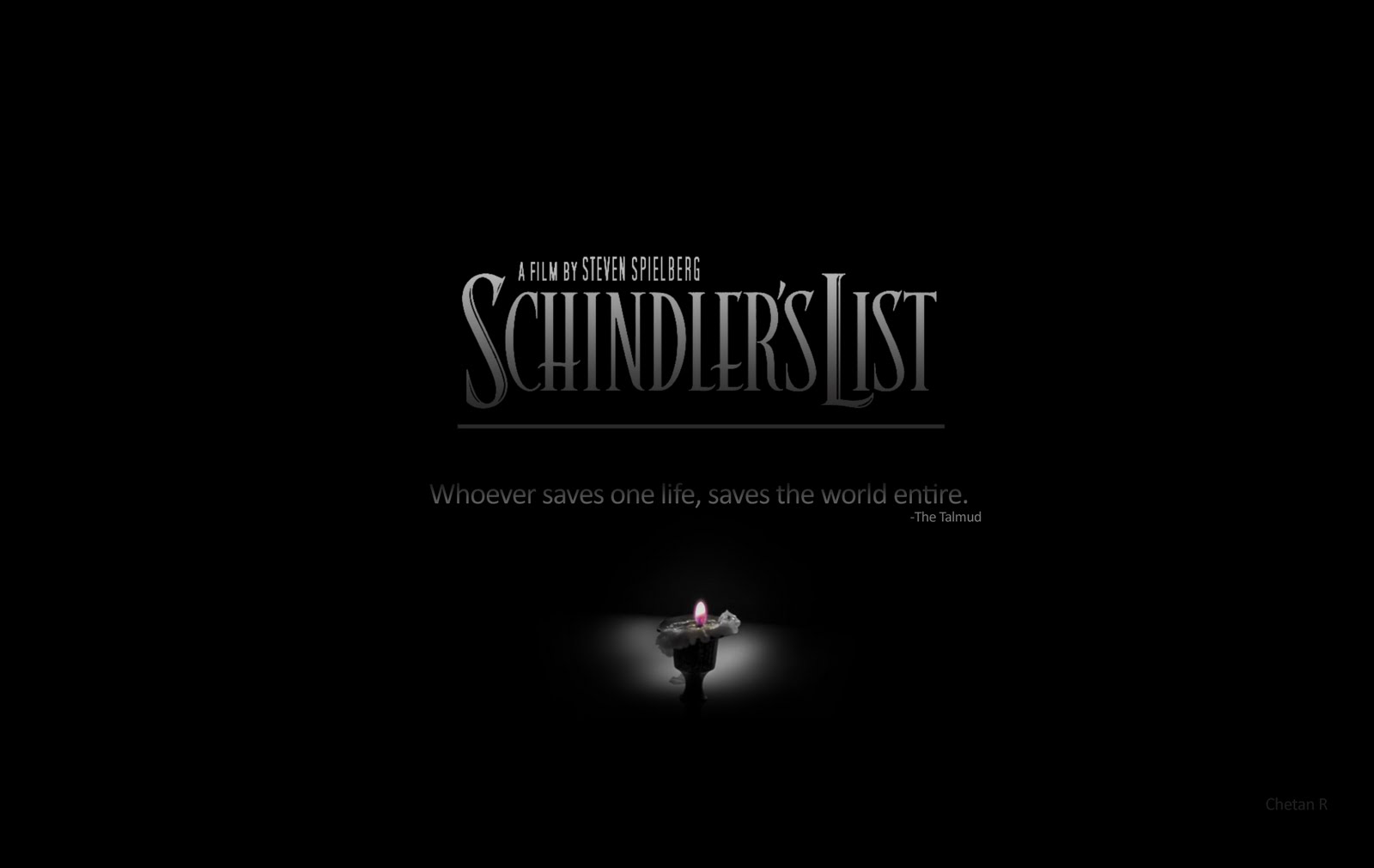
Sometimes the most effective posters are the simplest, the ones that offer the least amount of graphics, the least amount of text, and the least amount of information.  Often it’s a single image that will feature, something that is integral to the mood of the movie, or gives an impression of the subject matter.  At other times, it’s just the movie’s title, bold against a plain background, that is all that’s needed.  In many ways it’s this simplicity that is more effective than a poster that has lots of things “going on” in it, where the publicity department has decided sensory overload is the way to go.

But this poster for Steven Spielberg’s masterpiece is a perfect match for the movie’s solemn, haunting intensity.  With its uncompromising black background and sombre appearance the potential viewer is immediately alerted to the serious nature of the movie itself.  It’s a striking effect, that background, harsh and forbidding and so unlike the usual colourful or artistically driven posters that we’re more used to.

The background, while effective on its own, also serves to highlight the three components that make up the only respite from all that darkness.  There’s the legend “A Film by Steven Spielberg” tightly assembled above the movie’s title, the first of three complementary fonts used, but not overshadowing the title, its larger, more decorative appearance drawing the eye first and foremost.  And then the eye is drawn downward to the quote from the Talmud, the words slightly transparent towards the top of each letter, as if the very saying itself is in danger of disappearing, a subtle underlining of its importance to the story itself.

And then there’s the single image, a dying candle in its holder, a red flame representing fading hope but also endurance, its splash of colour both relevant to the image and reflective of the visual motif that appears in the movie itself.  It’s a quiet masterstroke, a beautiful touch that speaks volumes, affecting and dramatic and powerful all at the same time.

Agree?  Disagree?  Feel free to let me know.

Share this:

  • Click to share on X (Opens in new window) X
  • Click to share on Facebook (Opens in new window) Facebook
  • More
  • Click to print (Opens in new window) Print
  • Click to email a link to a friend (Opens in new window) Email
Like Loading...

Blog Stats

  • 486,575 hits

Recent Posts

  • 10 Reasons to Remember Bibi Andersson (1935-2019)
  • Fantasia (1940)
  • Dances With Wolves (1990) – The Special Edition
  • Kiss of the Spider Woman (1985)
  • The Three Musketeers (1973)

Top Posts & Pages

  • Lost for Life (2013) - Another Look
    Lost for Life (2013) - Another Look
  • Lost for Life (2013)
    Lost for Life (2013)
  • About
    About
  • Mr. Topaze (1961)
    Mr. Topaze (1961)
  • Hunt for the Wilderpeople (2016)
    Hunt for the Wilderpeople (2016)
  • Shock and Awe (2017)
    Shock and Awe (2017)
  • Billy Lynn's Long Halftime Walk (2016)
    Billy Lynn's Long Halftime Walk (2016)
  • Winter's Tale (2014)
    Winter's Tale (2014)
  • BFI London Film Festival 2015
    BFI London Film Festival 2015
  • 10 Reasons to Remember Arthur Hiller (1923-2016)
    10 Reasons to Remember Arthur Hiller (1923-2016)
Follow thedullwoodexperiment on WordPress.com

Blogs I Follow

  • Rubbish Talk
  • Film 4 Fan
  • Fast Film Reviews
  • The Film Blog
  • All Things Movies UK
  • Interpreting the Stars
  • Let's Go To The Movies
  • Movie Reviews 101
  • TMI News
  • Dan the Man's Movie Reviews
  • Film History
  • Jordan and Eddie (The Movie Guys)

Archives

  • April 2019 (13)
  • March 2019 (28)
  • February 2019 (28)
  • January 2019 (32)
  • December 2018 (28)
  • November 2018 (30)
  • October 2018 (29)
  • September 2018 (29)
  • August 2018 (29)
  • July 2018 (30)
  • June 2018 (28)
  • May 2018 (24)
  • April 2018 (21)
  • March 2018 (31)
  • February 2018 (25)
  • January 2018 (30)
  • December 2017 (30)
  • November 2017 (27)
  • October 2017 (27)
  • September 2017 (26)
  • August 2017 (32)
  • July 2017 (32)
  • June 2017 (30)
  • May 2017 (29)
  • April 2017 (29)
  • March 2017 (30)
  • February 2017 (27)
  • January 2017 (32)
  • December 2016 (30)
  • November 2016 (28)
  • October 2016 (30)
  • September 2016 (27)
  • August 2016 (30)
  • July 2016 (30)
  • June 2016 (31)
  • May 2016 (34)
  • April 2016 (30)
  • March 2016 (30)
  • February 2016 (28)
  • January 2016 (35)
  • December 2015 (34)
  • November 2015 (31)
  • October 2015 (31)
  • September 2015 (34)
  • August 2015 (31)
  • July 2015 (33)
  • June 2015 (12)
  • May 2015 (31)
  • April 2015 (32)
  • March 2015 (30)
  • February 2015 (37)
  • January 2015 (39)
  • December 2014 (34)
  • November 2014 (34)
  • October 2014 (36)
  • September 2014 (25)
  • August 2014 (29)
  • July 2014 (29)
  • June 2014 (28)
  • May 2014 (23)
  • April 2014 (21)
  • March 2014 (42)
  • February 2014 (38)
  • January 2014 (29)
  • December 2013 (28)
  • November 2013 (34)
  • October 2013 (4)

Create a free website or blog at WordPress.com.

Rubbish Talk

Film 4 Fan

A Movie Blog

Fast Film Reviews

The Film Blog

The official blog of everything in film

All Things Movies UK

Movie Reviews and Original Articles

Interpreting the Stars

Dave Examines Movies

Let's Go To The Movies

Film and Theatre Lover!

Movie Reviews 101

Daily Movie Reviews

TMI News

Latest weather, crime and breaking news

Dan the Man's Movie Reviews

All my aimless thoughts, ideas, and ramblings, all packed into one site!

Film History

Telling the story of film

Jordan and Eddie (The Movie Guys)

Movie Reviews & Ramblings from an Australian Based Film Fan

Privacy & Cookies: This site uses cookies. By continuing to use this website, you agree to their use.
To find out more, including how to control cookies, see here: Cookie Policy
  • Subscribe Subscribed
    • thedullwoodexperiment
    • Join 481 other subscribers
    • Already have a WordPress.com account? Log in now.
    • thedullwoodexperiment
    • Subscribe Subscribed
    • Sign up
    • Log in
    • Report this content
    • View site in Reader
    • Manage subscriptions
    • Collapse this bar
 

Loading Comments...
 

    %d