• 10 Reasons to Remember…
  • A Brief Word About…
  • About
  • For One Week Only
  • Happy Birthday
  • Monthly Roundup
  • Old-Time Crime
  • Other Posts
  • Poster of the Week
  • Question of the Week
  • Reviews
  • Trailers

thedullwoodexperiment

~ Viewing movies in a different light

thedullwoodexperiment

Tag Archives: Kate Beckinsale

The Only Living Boy in New York (2017)

11 Saturday Nov 2017

Posted by dullwood68 in Movies

≈ Leave a comment

Tags

Affair, Callum Turner, Cynthia Nixon, Drama, Jeff Bridges, Kate Beckinsale, Marc Webb, Pierce Brosnan, Review, Romance, Writing

D: Marc Webb / 89m

Cast: Callum Turner, Jeff Bridges, Kate Beckinsale, Pierce Brosnan, Cynthia Nixon, Kiersey Clemons, Bill Camp, Wallace Shawn, Tate Donovan, Anh Duong, Debi Mazar, Ben Hollandsworth, John Bolger

Pity poor Thomas (Turner). He’s the quintessential college graduate who can’t work out what he wants to do with his life. His father, Ethan (Brosnan), is a brusque senior editor at a publishing firm, and his mother, Judith (Nixon) appears to be a nervous soul who surrounds herself with people from the arts in order to offset her nervous disposition. Thomas has been discouraged by his father from becoming an author, and he doesn’t seem to have a fall-back career to help him move forward. Instead he spends time with his best friend Mimi (Clemons). He’s in love with Mimi, but his love isn’t reciprocated. One day, Thomas meets W.F. (Bridges), who’s just moved into his building. They strike up a friendship, and soon Thomas is sharing his woes and actively seeking advice from his new-found friend. Soon after, while Thomas and Mimi are out together one evening, they see Ethan in the company of another woman. From this, Thomas decides to find out who the woman is, and to stop any affair she and her father may be having.

The woman is Johanna (Beckinsale), a freelance book editor who has been working on and off with Ethan over the past year. Thomas tells W.F. about his father’s affair, but instead of being equally outraged or supportive of Thomas’s efforts to sabotage the affair, W.F. questions his motives, asking him if he, Thomas, wants to sleep with Johanna instead, and making it plain that this is the reason why Thomas wants to put an end to the affair… Of course, this is all true, and in the way that only the movies can offer, Johanna proves receptive to Thomas’s advances and they begin their own relationship. It’s at this point in the movie when it’s likely that many viewers will throw their hands up in the air and cry, Wish Fulfilment! It’s also the moment when the movie, struggling already to make us care about Thomas or any of the other characters, throws in the towel and decides to play out its insubstantial narrative with all the emotional finesse of an after hours drinking contest.

It’s always hard to work out just who qualifies as the potential audience for a movie like The Only Living Boy in New York, with its self-torturing central characters, middle class aspirations, mock intellectualising (W.F. quotes Ezra Pound at one point), and lazy approach to character building. Oh, and let’s not forget the usual number of occasions where people talk in riddles and never… explain… themselves… fully. It’s hard to understand just why so many of these movies get made, especially when the aim is to try to make these tortured souls and their mock-important lives relevant to the average viewer. Even if this is exactly the social milieu that you inhabit, and even if many of the characters on display reminded you of people you actually know, would you still be interested in watching them whine about how hard done by they are, or how sad or lonely or misunderstood they are? (It’s probably very unlikely.) So if even the people this truly relates to aren’t likely to engage with this particular story, why should anyone else?

Granted, some viewers might be attracted to the movie by the talent involved. Actors of the stature of Jeff Bridges and Pierce Brosnan will always garner interest in any movies they appear in, but on this occasion, they’re at the mercy of a script that challenges the audience to be emotionally involved at nearly every turn. No matter how good the performances – and Brosnan is very good (which is really nice to see after some of the movies he’s made in recent years) – if the script isn’t up to it, or isn’t as compelling as it should be, then no amount of acting experience can compensate for a story that carries little or no emotional weight. And Allan Loeb’s screenplay has exactly that problem: it’s dry and superficial, and any sympathies for Thomas et al. can only be arrived at by a huge amount of effort on the viewer’s part, and an effort that isn’t rewarded at any point during the movie. Even when the movie tries to be clever with the introduction of a back story that, once mentioned, gives away a large chunk of the plot, it stumbles on looking for a payoff that won’t feel forced or intrusive (hint: it doesn’t succeed).
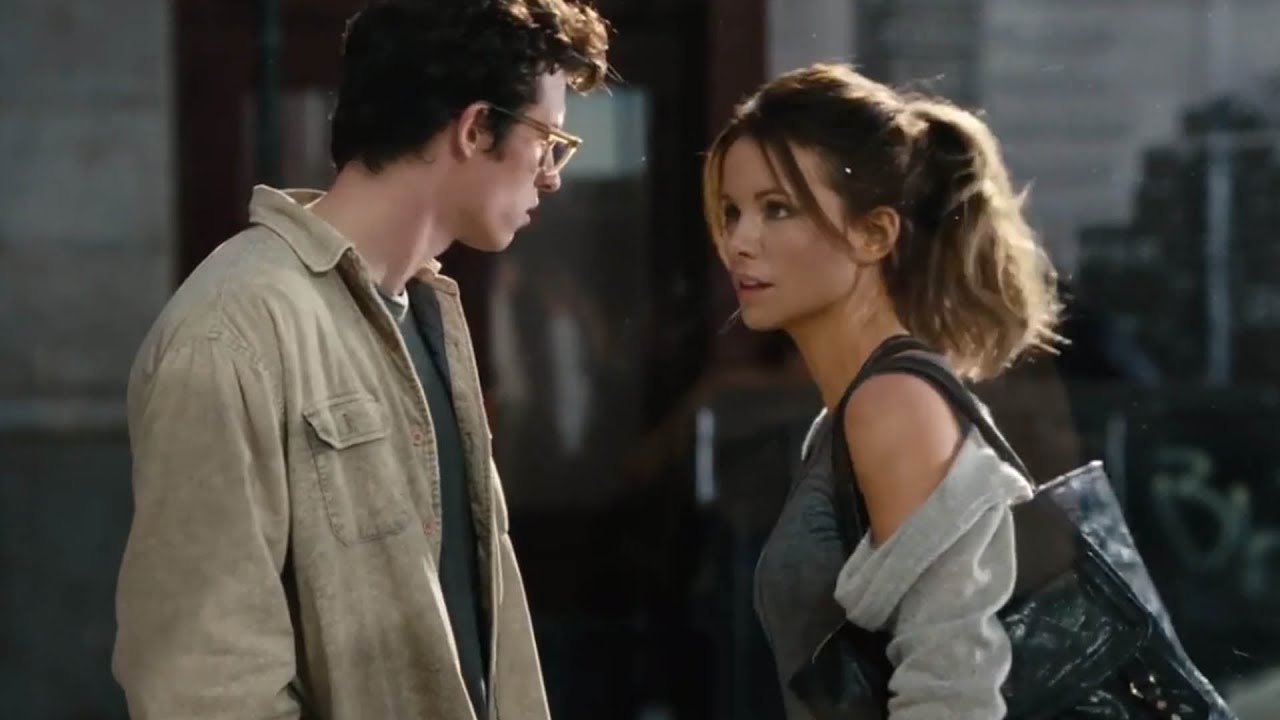
Following on from the much more engaging experience that was Gifted (2017), director Marc Webb does his best to make the various plot developments more interesting than they are, but too often finds himself trying to coax some much needed animation into the material, and struggling to provide any sense that all this is happening in the real world and to “real” people. He’s not helped by Turner’s less than stellar performance, his interpretation of Thomas unnecessarily making viewers wonder just why Johanna would sleep with him, or why Mimi – in a plot “twist” that can be seen coming from space, let alone a mile away – eventually decides she really does love him. It’s a role that unfortunately exposes Turner’s limited range as an actor, and especially in his scenes with Bridges, and it sometimes he does more harm to the movie than even the script. Bridges is good value as always, Beckinsale is trapped by a character arc that is actually one long downward spiral, Nixon does anxious (and should be on medication) because that’s the only thing we know about Judith, and Clemons shows flashes of inspiration as she attempts to make Mimi more than just the best friend whose knowing comments get ignored by the main character.

In the end it all builds to a confrontation that lacks energy, emotion, and purpose (except to help wind things up quickly). An awkward, and unnecessary, coda undermines everything that’s gone before, and is so dramatically redundant that it’s like a slap in the face to the viewer. It reinforces the notion that whatever message the movie is trying to make, whether it be about relationships and how hard they can be, or finding one’s way in the world (by sleeping with your father’s mistress; always a good starting point), or even selecting a career based on what you know you can’t do, the movie itself hasn’t fully made up its mind what that message is, or even if it’s sure about it. In that way it’s a lot like Thomas himself: confused, hoping for inspiration to strike, and held back by so many missed opportunities to do the right thing.

Rating: 4/10 – a glossy snapshot of a semi-privileged lifestyle that proves as empty as the shallowness of the characters and their wretchedly expressed desires, The Only Living Boy in New York is pretentious on one side, and wilfully obtuse on the other; a tale that lacks passion despite its use of affairs and sexual exploitation, it’s another exercise in trying to make middle class angst interesting when we’ve seen it waaaaay too many times before.

Share this:

  • Click to share on X (Opens in new window) X
  • Click to share on Facebook (Opens in new window) Facebook
  • More
  • Click to print (Opens in new window) Print
  • Click to email a link to a friend (Opens in new window) Email
Like Loading...

Mini-Review: Underworld: Blood Wars (2016)

22 Sunday Jan 2017

Posted by dullwood68 in Movies

≈ Leave a comment

Tags

Action, Anna Foerster, Charles Dance, Drama, Fantasy, Kate Beckinsale, Lara Pulver, Lycans, Review, Selene, Sequel, Theo James, Thriller, Tobias Menzies, Vampires

beckinsale-underworld-blood-wars-poster-2016

D: Anna Foerster / 91m

Cast: Kate Beckinsale, Theo James, Tobias Menzies, Lara Pulver, Charles Dance, James Faulkner, Peter Andersson, Clementine Nicholson, Bradley James, Daisy Head, Oliver Stark

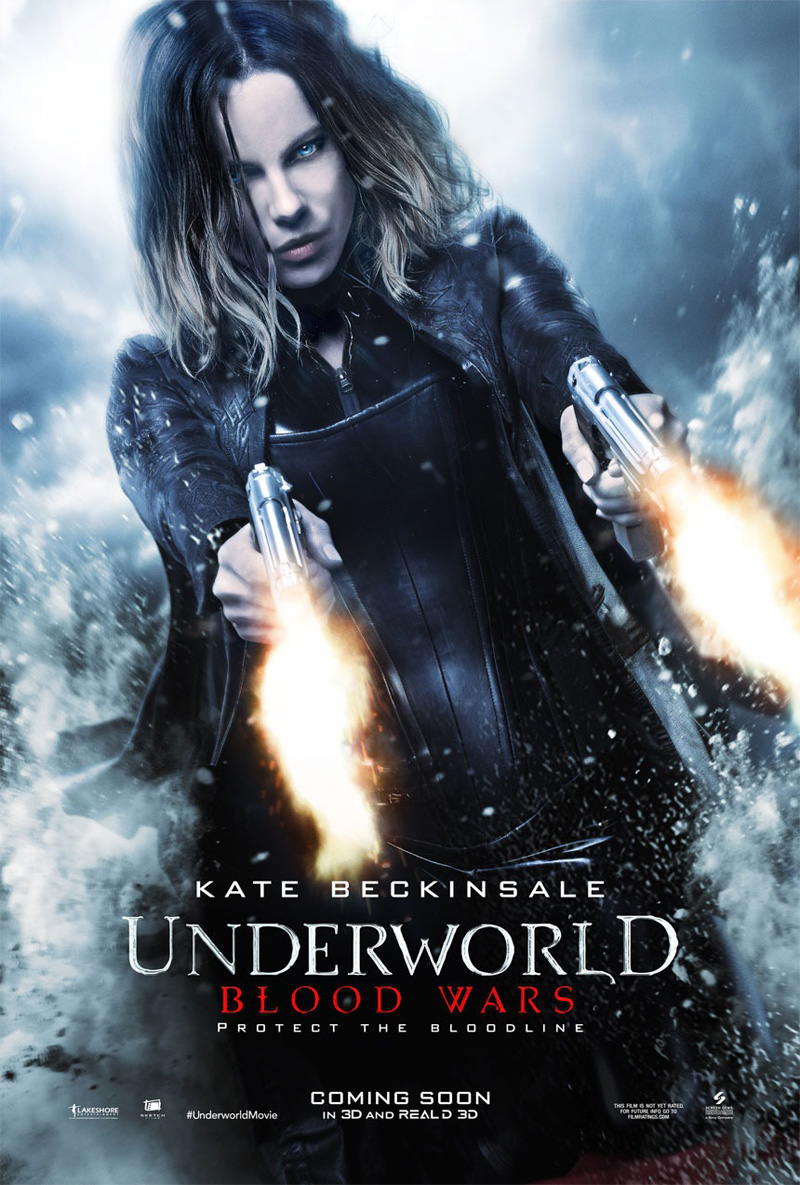
Seconds out… round five! Yes, four years after the resoundingly awful Underworld: Awakening (2012), the world is treated to yet another unwanted, unneeded, unnecessary, and unwatchable Underworld movie. Nothing has changed. The Vampires and the Lycans are still at war with each other (though the Lycans appear to have the upper hand), Selene is still an outcast from her fellow bloodsuckers for killing Victor way, way back in Underworld (2003), blood is still the most important commodity on both sides, Kate Beckinsale still looks great in skin-tight black leather, and the plot makes about as much sense as building a dam from ten packs of waffles. It’s complete and utter tosh, and you get the sense that no one was really taking this seriously; not one person.

What plot there is concerns the Lycans reducing Vampire numbers by the coven load, thanks to the inspired leadership of Marius (Menzies), who appears to be a kind of enhanced werewolf. On the Vampire side, Elder Thomas (Dance) is supported by Vampire Council member Semira (Pulver) in bringing Selene (Beckinsale) back into the fold in order for her to use her unique skills in fending off/killing the Lycans. Selene relcutantly accepts but is soon betrayed by the scheming Semira, and flees to the Nordic Coven, where a Lycan attack led by Marius leaves her dead beneath the ice. With Semira further emboldened by news of Selene’s death, she allows the Lycans access to the Eastern Coven, and soon the place is overrun by werewolves. With only Thomas’s son David (James) to lead them – which is handy as he’s the true heir to the Vampire leadership – the Vampires are in danger of being wiped out once and for all…

maxresdefault-1-1475940193986_large

By now, any movies in the Underworld franchise that find a release (and Alexander Corvinus help us, there’s another one in the works), are purely for the fans only. They will make a certain amount of money – so far Blood Wars has made over $75 million, more than double its production budget – and they’ll gain a respectable (new) lease of life on home video. For the makers, it’s a win-win situation, and to some degree, it’s the same for the fans. Kate Beckinsale as Selene + warring Vampires and Lycans + shoddy CGI effects + incomprehensible storylines and dialogue + the same steel blue lighting effects in each movie + poorly edited action sequences = the franchise that good taste can’t kill.

Like the Resident Evil series, which also foists a movie on us every few years, the Underworld movies feature a strong-minded, invincible heroine, and the merest interest in logic or credibility. As long as there’s a fight scene every ten minutes, and the villains are appropriately nasty and conniving and amoral, then nothing else is really needed. Well, except for an establishing shot to set up the next instalment, that is. That these movies continue to attract the likes of Beckinsale and Dance is possibly the only thing that’s impressive about them, but not even Beckinsale can do anything with lines such as, “There is no beginning, there is no end. There is only the coming.” That’ll be Underworld: Dead Poor then.

Rating: 3/10 – the first truly “meh” movie of 2017, Underworld: Blood Wars has all the attraction of root canal work and a rectal exam put together; unfailingly predictable, and trite on almost every level, the directorial debut of TV helmer Foerster readily shows that the producers are firmly in charge and there’s no room for originality – at all.

Share this:

  • Click to share on X (Opens in new window) X
  • Click to share on Facebook (Opens in new window) Facebook
  • More
  • Click to print (Opens in new window) Print
  • Click to email a link to a friend (Opens in new window) Email
Like Loading...

Oh! the Horror! – The Disappointments Room (2016) and The Bye Bye Man (2017)

13 Friday Jan 2017

Posted by dullwood68 in Movies

≈ Leave a comment

Tags

Cressida Bonas, D.J. Caruso, Douglas Smith, Drama, Grief, Haunted house, Horror, Kate Beckinsale, Lucas Till, Lucien Laviscount, Paranoia, Review, Stacy Title, Supernatural

disappointments_room

The Disappointments Room (2016) / D: D.J. Caruso / 85m

Cast: Kate Beckinsale, Mel Raido, Duncan Joiner, Lucas Till, Gerald McRaney, Celia Weston, Jennifer Leigh Mann, Ella Jones, Marcia DeRousse

After the tragic death of their baby daughter, Dana (Beckinsale) and David (Raido), and their son, Lucas (Joiner), relocate to a rundown, rural dream home. Haunted by their daughter’s death, Dana soon begins to hear the sounds of a baby crying, and also the sound of dripping water. She traces the dripping water sounds to a leak from the roof, but still hears a baby crying and other noises; she also sees a strange dog outside. David is oblivious to all this, and doesn’t think it’s at all mysterious when Dana discovers a hidden room in the attic that isn’t on the plans. Investigating it further the next day, she finds herself locked in and threatened by a malevolent force. Hours pass, but when she finally manages to get out of the room, she learns that only minutes have passed, and not hours; and that David is worried she’s not taking her medication (to help her deal with her grief).

With the help of a local historian (DeRousse), Dana discovers that the house has a disappointments room, a room that would have been used to hide away a child born with a deformity or some such, and which would have been highly embarrassing to its (usually) upper class family. Dana’s research uncovers a previous owner, Judge Blacker (McRaney), whose daughter, Laura, was believed to have died in childbirth. But Dana suspects Laura was the inhabitant of the disappointments room, and that it’s her spirit that is haunting the house. With a local workman (Till) helping restore the house, and Dana becoming increasingly disturbed by the things she’s seeing, the truth behind the disappointments room slowly begins to unfold, and Dana begins to understand that there’s a far more malevolent force at work…

thumbnail_24864

For a horror movie to have the word “disappointment” anywhere in its title is asking for trouble (or it’s being incredibly reckless). And The Disappointments Room, ah, doesn’t let us, or itself, down in that respect. It’s yet another haunted house movie where things happen for no reason at all, and scenes take place that are by-and-large independent of each other and only fit together if the viewer is lucky. The script – by director Caruso and Wentworth Miller – likes to play with visual motifs, like a child’s kite seen in historical photos floating above the house, even though it would have been proof of a child’s existence when there shouldn’t have been any; and it likes to have things happen outside the house when it’s clear that the ghost responsible for all the shenanigans doesn’t stray outside at all (so shouldn’t have that much influence).

Away from the kind of plot holes that you could fit an entire haunted house through twice over, the movie aims very low in its attempts to be scary or frightening, and falls back too often on the kind of traditional haunted house set ups that now invoke yawns rather than tension. Against such a plain, derivative backdrop, Beckinsale has no option but to put in a generic genre performance and walk away with as much dignity as she can manage. The rest of the cast lack for things to do, especially Raido, and Caruso’s directorial style largely involves ignoring how tedious and pedestrian the script is, and that the whole thing – though no more preposterous than usual – lacks energy and any kind of visual panache. It’s a glum, uninvolving movie to watch, and it isn’t helped by Brian Tyler’s overbearing, cliché-driven score.

Rating: 3/10 – bad horror movies are ten a penny these days – in fact, they’re ten a penny on most days – but The Disappointments Room is a particularly bad horror movie, one that can’t be bothered to be better than it is; hackneyed, with poor/lazy performances, and a terrible sense of its own effectiveness, it outstays its welcome within the first five minutes, and never once feels as if it’s about to surprise the viewer or give them something/someone to care about.


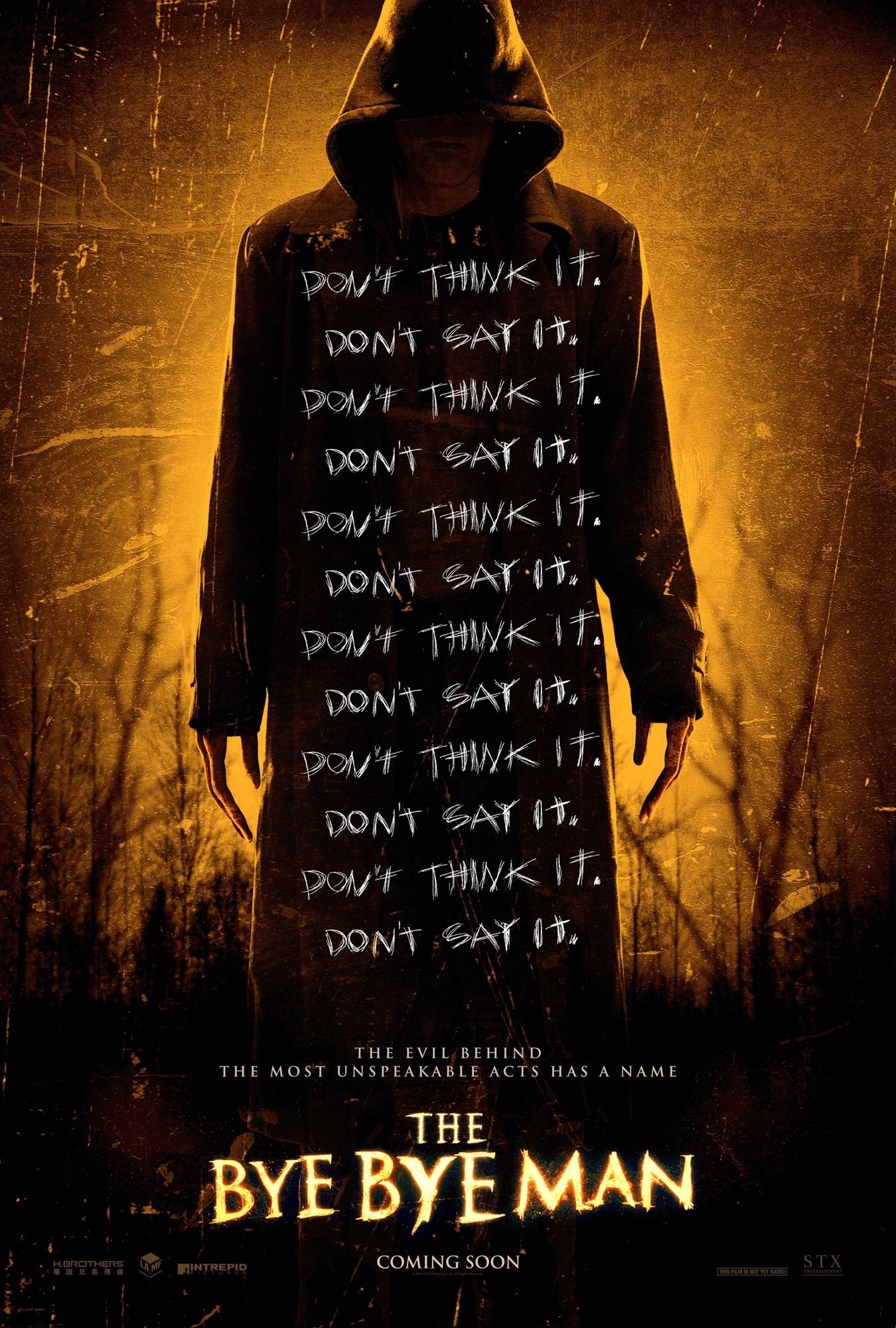
the-bye-bye-man-poster01

The Bye Bye Man (2017) / D: Stacy Title / 96m

Cast: Douglas Smith, Lucien Laviscount, Cressida Bonas, Doug Jones, Michael Trucco, Jenna Kanell, Erica Tremblay, Marisa Echeverria, Cleo King, Faye Dunaway, Carrie-Anne Moss, Leigh Whannell

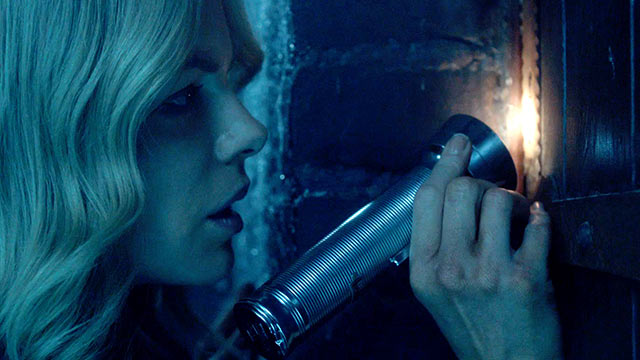
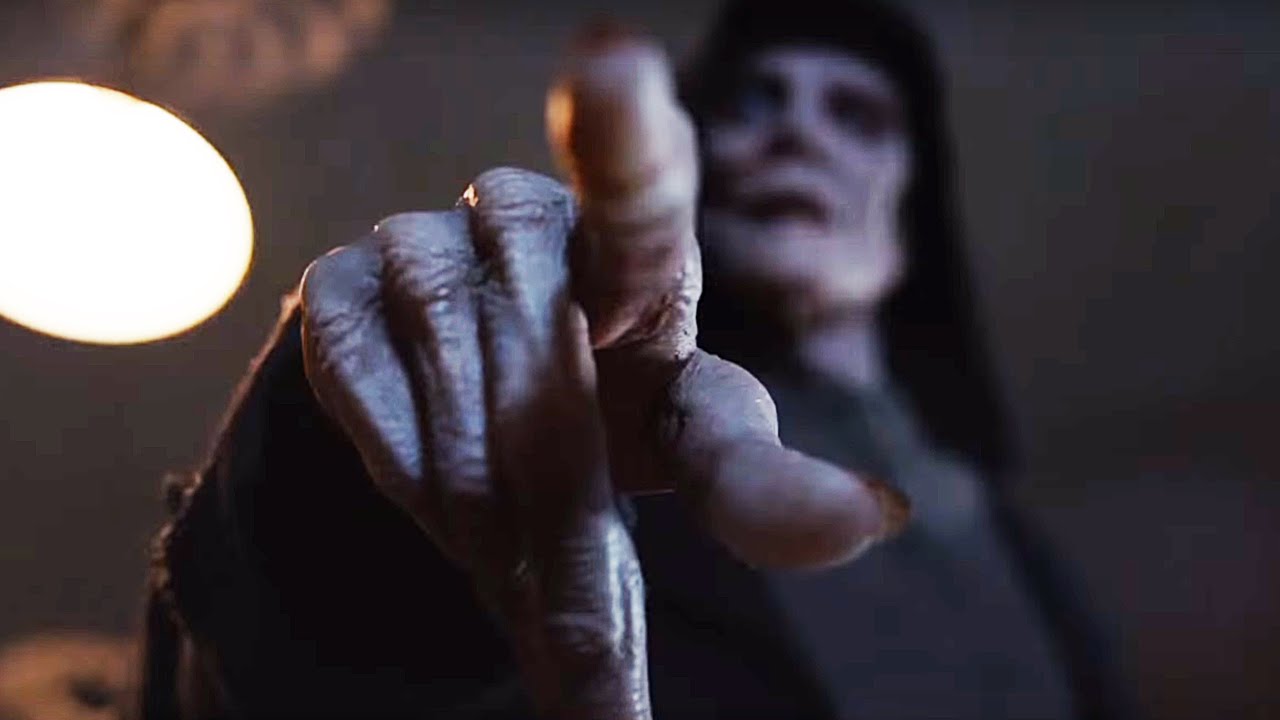
In 1969, a reporter, Larry Redmon (Whannell), goes on a killing spree in the town of Madison, Wisconsin. Fast forward forty-seven years and three university students – couple Elliot (Smith) and Sasha (Bonas), and best friend John (Laviscount) – rent an old house on the outskirts of town, and soon they’re having more than their fair share of weird experiences. After a housewarming party, a friend of Sasha’s, Kim (Kanell), performs a cleansing ceremony, but it doesn’t work. Soon she’s telling them that “something” is coming. Later, Elliot finds a sheet of paper with the words “Don’t think it” and “Don’t say it” written on it over and over again. These words are a caution relating to a supernatural entity known as the Bye Bye Man. If you say or think his name, he will come for you and he will make you do terrible things – like Larry Redmon did.

Soon the trio are seeing things and their own inner fears are being exploited. Elliot digs into the origins of the Bye Bye Man, while at the same time becoming ever more certain that Sasha and John are sleeping together. Sasha becomes increasingly ill, while John becomes more and more paranoid. When Kim is killed, the police become involved. And when Elliot tracks down Larry Redmon’s widow (Dunaway), he discovers a way to defeat the Bye Bye Man. But when he returns to the house, circumstances dictate that he might never get the opportunity to use his newfound knowledge, as the Bye Bye Man is there already…

maxresdefault

A better tagline for The Bye Bye Man would be “Don’t try it, don’t see it”, as this adaptation of The Bridge to Body Island, a chapter from Robert Damon Schneck’s non-fiction book The President’s Vampire, is one of the most poorly written, directed, and acted horror movies of recent years. Aside from the bravura pre-credits sequence where Larry Redmon goes on the rampage, The Bye Bye Man struggles at almost every turn in its attempts at telling a cohesive, halfway credible story, and fails to deliver any tension, any shocks, any drama, or any let-up from the crushing banality of Jonathan Penner’s screenplay. It’s as if Penner has watched a dozen or so recent horror movies featuring supernatural creatures, taken the worst aspects of those movies’ scripts, and put them all together to make this movie look and sound as atrocious as possible.

Things are further compounded by Title’s haphazard, scattershot approach to the material, directing most scenes as if she had no idea what was going to happen next (which would be odd, as Penner is her husband). She’s also unable to elicit one decent performance from anyone in the whole movie; even the likes of Dunaway and Moss have no chance when faced with such terrible dialogue and even worse character motivation. Bonas favours one facial expression throughout (sleepy), Laviscount does angry young man whatever the scene, and Smith is so bad you hope the Bye Bye Man gets him first. Things are further hampered by James Kniest’s unimaginative framing and cinematography, and worst of all, Ken Blackwell’s laissez-faire editing, which takes the movie to new depths of awfulness.

Rating: 3/10 – sometimes you wonder how some horror movies get a general release and don’t go straight to video, and The Bye Bye Man is one such horror movie; a real stinker, it insults its audience at every turn, can’t even rustle up an origin story for its title character, tries for franchise levels of integrity that are never achieved, and should be used as an object lesson in how not to make a supernatural creature feature.

Share this:

  • Click to share on X (Opens in new window) X
  • Click to share on Facebook (Opens in new window) Facebook
  • More
  • Click to print (Opens in new window) Print
  • Click to email a link to a friend (Opens in new window) Email
Like Loading...

Love & Friendship (2016)

06 Saturday Aug 2016

Posted by dullwood68 in Movies

≈ 2 Comments

Tags

Chloë Sevigny, Comedy, Drama, Jane Austen, Kate Beckinsale, Lady Susan, Literary adaptation, Marriage, Review, Romance, Whit Stillman, Xavier Samuel

Love and Friendship

D: Whit Stillman / 93m

Cast: Kate Beckinsale, Chloë Sevigny, Xavier Samuel, Emma Greenwell, Justin Edwards, Morfydd Clark, Tom Bennett, Jemma Redgrave, James Fleet, Jenn Murray, Stephen Fry

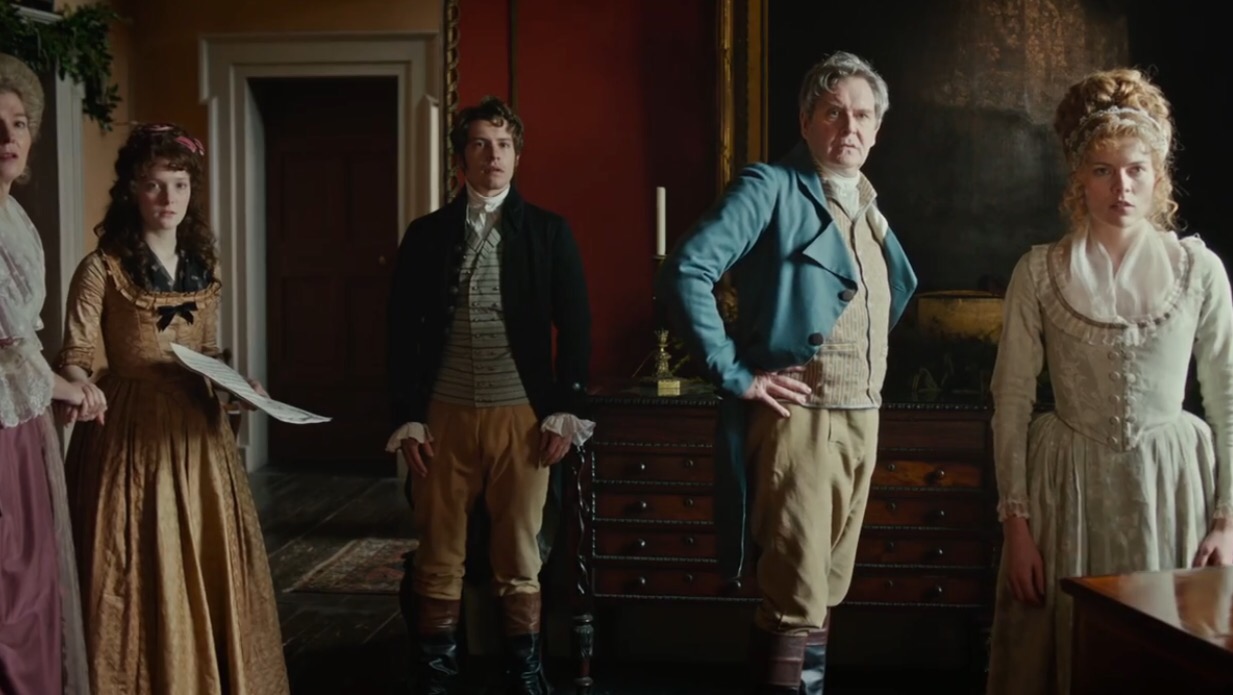
It may seem like an odd corollary, but Whit Stillman’s adaptation of Jane Austen’s posthumously published Lady Susan, and a certain Monty Python sketch involving the Piranha Brothers (Doug and Dinsdale) have something in common. In the Python sketch, Michael Palin as low-level criminal Luigi Vercotti talks about Doug as being the more vicious of the two gang leaders:

“Everyone was terrified of Doug. I’ve seen grown men pull their own heads off rather than see Doug. Even Dinsdale was frightened of Doug.”

“What did he do?”

“He used… sarcasm. He knew all the tricks, dramatic irony, metaphor, pathos, puns, parody, litotes and… satire. He was vicious.”

LAF - scene3

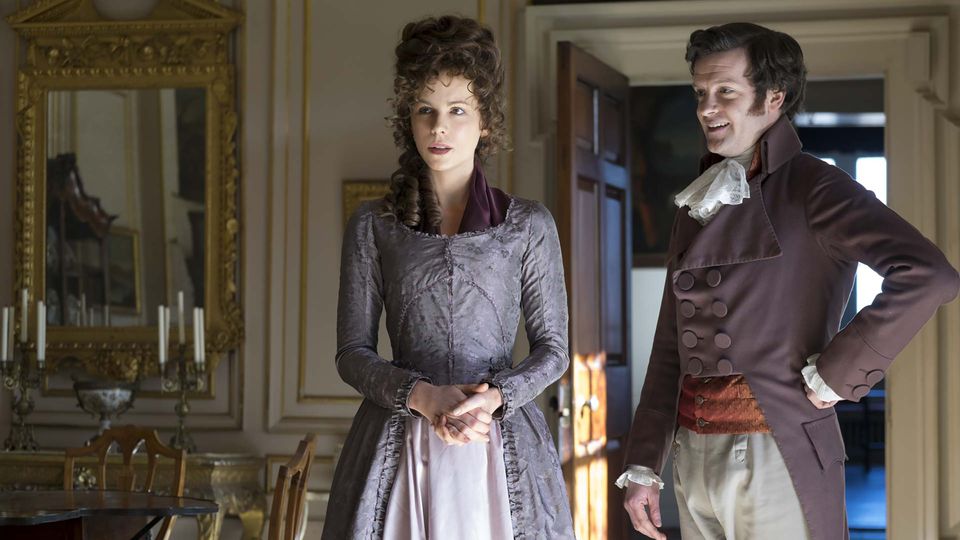
You could add mieosis to the list, or rhetoric, or even polemics – they’re all there in Stillman’s screenplay, all in service to one of the year’s funniest movies, and proof (as if it were truly needed) that Jane Austen had a wicked sense of humour, and enjoyed attacking the social mores of her time; no one was safe, high- or lowborn. In transferring Lady Susan to the screen, Stillman has retained the epistolary nature of the novella, allowing the audience to be swept along with the recent widow’s attempts to secure advantageous marriages for both herself and her daughter, Frederica (Clark)… while also brokering an affair between herself and the married Lord Manwaring. In the process, barbs are dispensed with precision, honeyed slanders voiced with mannered simplicity, and insults hurled with joyous abandon. There’s no turn left unstoned by the movie’s end, and nobody who doesn’t find themselves somehow injured by an unkind remark (even if they don’t know they’ve been injured – some remarks pass by so quickly the characters don’t even realise it’s happened).

This is the overwhelming joy of Love & Friendship: the ease with which the characters are disarmed by unexpected, cutting remarks, and the way in which their reactions are to stare in disbelief like rabbits caught in the headlights, trying to fathom just what to say in return – and then the moment is gone and they’re left there, still staring in shock. Stillman includes so many of these moments there’s a danger of his overdoing it, but the range of insults is so varied that everyone’s a winner, and every moment is assured a smile from the viewer. As Lady Susan (Beckinsale) weaves her tangled web of intrigue, she does so with a shrewd cunning that’s completely impressive. She’s the predatory shark in petticoats who cares for no one but herself and her assured future (or her daughter’s assured future, as that will lead to hers as well).

LAF - scene1

Watching the movie is like indulging in a massive bowl of whipped cream and citrus lemon sauce, a confection that’s rich and rewarding and a bit of a guilty pleasure. But it shouldn’t be, as Stillman elicits superb performances from his cast, with Beckinsale on particularly fine form as Lady Susan, revelling in her machinations and throwing out carefree lines such as “Facts are horrid things” with an amused detachment that fits the character perfectly. It’s good to see Beckinsale – along with Sevigny, reunited with Stillman after eighteen years – being given such a juicy role after so many bland fantasy outings. Maintaining an equilibrium and a sense of purpose while treating everyone around her – bar her good friend, Mrs Johnson (Sevigny) – with utter contempt, Beckinsale as Lady Susan is a poisonous delight, cunning, devious, and wholeheartedly shameless in her efforts to get what she wants. But there’s also grace and subtlety in her performance, a measured approach to the character and the material that reaps dividends when she’s called upon to be deceitful or just outright lying.

But it’s not just Beckinsale who puts in a fabulous performance. As Lady Susan’s confidant, Mrs Johnson, Sevigny has what looks to be the thankless role of best friend who’s there just so the main character has someone to show off to. But Stillman is too good a director, and Sevigny too good an actress, to let this happen, and even in her scenes with Beckinsale, Sevigny’s quiet attention and marvelling at the deplorable behaviour of Lady Susan’s relatives is too good to be ignored or undervalued. And she’s on even better form when the contents of a letter causes problems both for her and for Lady Susan.

LAF - scene2

On the spear side of things, there’s a pitch perfect exercise in buffoonery from Bennett as the idiotic Sir James Martin, whose halting, almost stream of consciousness dialogue is matched by the actor’s use of physical tics and surprised facial expressions; he’s like a child for whom everything is new and endlessly fascinating (he finds peas to be an amazing discovery). There’s a scene where he turns up unexpectedly at the home of Lady Susan’s brother-in-law (Edwards), and spends approximately two minutes waffling horrendously about almost nothing at all, and its one of the funniest things you’ll see this year, a perfect match of physical discomfort and mental truancy.

As befits an adaptation of a novella, the story is very slight, and does boil down to very little at all, but Stillman wisely concentrates on the characters and their idiosyncracies rather than the plot, and there’s reward enough in seeing them adrift – often – in a sea of their own making. It’s a romantic comedy, and a recalcitrant comedy of manners, and a comedy of hilarious misdirection that bubbles with energy and glee at providing so much mischief. Stillman doesn’t make very many movies these days, which is a shame, but let’s hope Love & Friendship is the beginning of a more prolific period in his career because it would be a shame if he spent another five years (the time since his last movie, Damsels in Distress) away from our screens.

Rating: 9/10 – a perfect mix of period drama (with sterling work by costume designer Eimer Ni Mhaoldomhnaigh and production designer Anna Rackard), and pin-sharp levity, Love & Friendship is perfectly designed to ensure a good time will be had by all; Stillman interprets Austen with authority, Beckinsale has a great time as the unprincipled Lady Susan, and the viewer is treated to one of the few comedies released this year that doesn’t rely on crass jokes or gross-out humour – and is all the more impressive for it.

Share this:

  • Click to share on X (Opens in new window) X
  • Click to share on Facebook (Opens in new window) Facebook
  • More
  • Click to print (Opens in new window) Print
  • Click to email a link to a friend (Opens in new window) Email
Like Loading...

Mini-Review: The Face of an Angel (2014)

20 Monday Jul 2015

Posted by dullwood68 in Movies

≈ Leave a comment

Tags

Amanda Knox, Angel Face, Barbie Latza Nadeau, Carla Delevingne, Crime, Daniel Brühl, Drama, Fame, Journalism, Kate Beckinsale, Literary adaptation, Michael Winterbottom, Murder, Publicity, Review, Siena, Valerio Mastandrea

Face of an Angel, The

D: Michael Winterbottom / 100m

Cast: Daniel Brühl, Kate Beckinsale, Valerio Mastandrea, Cara Delevingne, Corrado Invernizzi, John Hopkins, Genevieve Gaunt

Thomas (Brühl) is a documentary filmmaker who becomes interested in making a movie about the media circus surrounding the trial for murder of student Jessica Fuller (Gaunt), who, with her boyfriend, is accused of killing her roommate. He meets journalist Simone Ford (Beckinsale), and she provides him with the background material he needs in relation to the murder and the people involved. As Thomas begins to look into the case he finds himself focusing on the ways in which the spotlight has caught Jessica in its gaze, and how the media have lost sight of the victim. He determines to make his movie about this (perceived) injustice, and begins to interview the various players.

In doing so, Thomas meets a young English student, Melanie (Delevingne). She helps him with introductions within the community that Jessica is part of, but by this stage he’s already finding it difficult to write his script, and his frustration has led to him drinking heavily and taking drugs. When Thomas is introduced to Francesco (Invernizzi), who appears to know too much about the murder, and who Thomas believes is involved, it leads him to try and solve the mystery of the murder, and what exactly happened to Jessica’s roommate. But Thomas finds himself increasingly adrift in the town where the trial is taking place, and begins to have trouble sifting reality from fantasy, as his drink and drug use causes him to become desperate to find the truth.

Face of an Angel, The - scene

Michael Winterbottom’s career has always been an interesting and very often challenging one. He’s a director who’s unafraid to take risks – 9 Songs (2004), The Killer Inside Me (2010) – and his ability to genre hop and still maintain an impressive track record of movies, is unimpeachable. However, he does sometimes trip up, and for every 24 Hour Party People (2002) there’s a Genova (2008), and sadly, despite the movie’s real-life background and inspiration – Barbie Latza Nadeau’s book Angel Face – The Face of an Angel falls into the latter category.

While it’s refocused look at the Amanda Knox trial gives the movie a sense of immediacy, it’s overwhelmed by the decision to make Thomas’s gradual emotional and intellectual disintegration more important than the story he’s looking into. The movie’s initial examination of the machinations and narrow-sighted approach of the media soon gives way to Thomas’s increasingly fevered, personal investigation, and the possibility that Francesco is the real killer. Alas, by doing so, Winterbottom and writer Paul Viragh commit the same sin they’re seeking to expose at the beginning, and lose sight of the victim as well. What doesn’t help is that Thomas, despite Brühl’s best efforts, is charmless and unlikeable, and this makes it difficult for the audience to engage or sympathise with him. Beckinsale is underused, while Delevingne delivers a fresh, natural performance as Melanie.

Rating: 4/10 – unbearably arch at times, with the character of Thomas continually placed in situations where he’s clearly out of his depth, The Face of an Angel is an unnecessarily glum, and surprisingly tedious, outing from the usually reliable Winterbottom; the location photography is a much-needed bonus, and the basic idea is sound, but in its execution, the movie strays too far from its own agenda.

Share this:

  • Click to share on X (Opens in new window) X
  • Click to share on Facebook (Opens in new window) Facebook
  • More
  • Click to print (Opens in new window) Print
  • Click to email a link to a friend (Opens in new window) Email
Like Loading...

The Trials of Cate McCall (2013)

14 Sunday Sep 2014

Posted by dullwood68 in Movies

≈ 1 Comment

Tags

Alcoholism, Anna Anissimova, Appeal case, Courtroom drama, Custody battle, James Cromwell, Karen Moncrieff, Kate Beckinsale, Lawyer, Murder, Nick Nolte, Review, Thriller

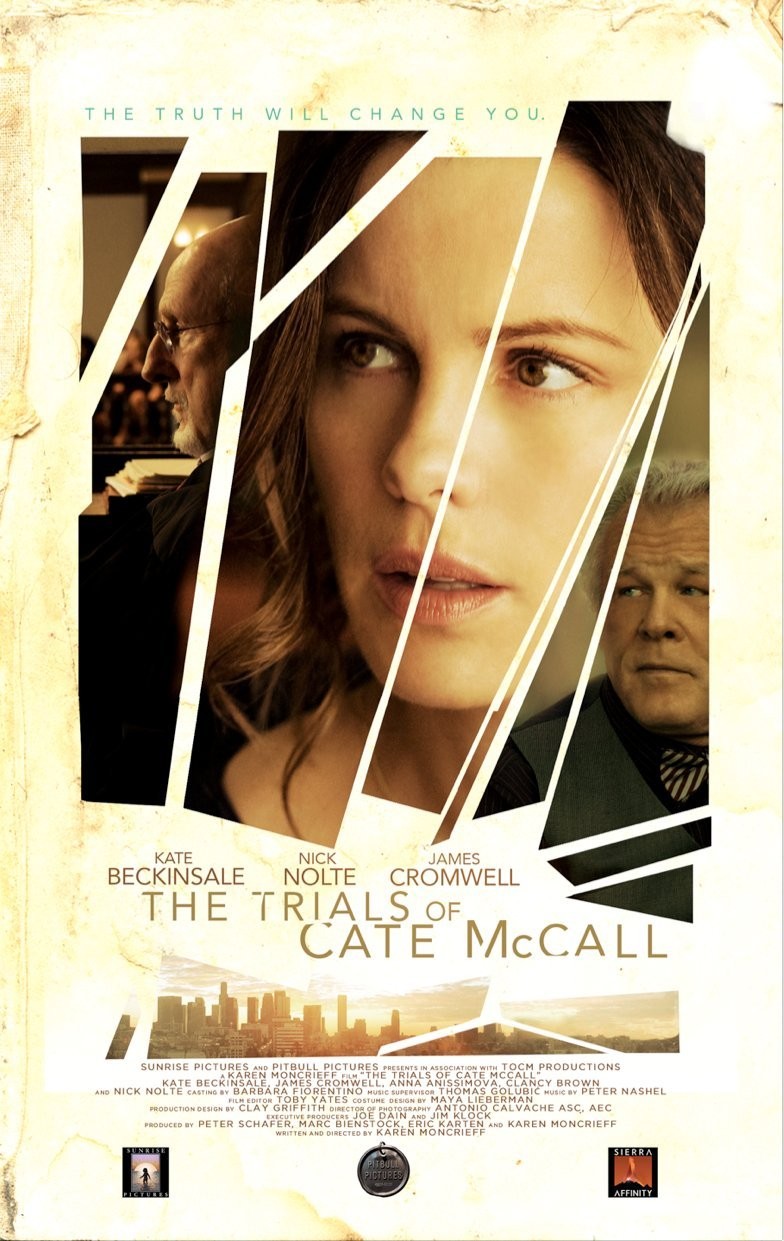
Trials of Cate McCall, The

D: Karen Moncrieff / 89m

Cast: Kate Beckinsale, Nick Nolte, James Cromwell, Mark Pellegrino, Anna Anissimova, Taye Diggs, Kathy Baker, Clancy Brown, Brendan Sexton III, David Lyons, Ava Kolker, Isaiah Washington, Dale Dickey, Amanda Aday

Cate McCall (Beckinsale) has her fair share of problems.  Despite being a talented lawyer, she has a serious drink problem that has resulted in her being put on probation and assigned to work in a small law office.  She’s also trying to retain custody of her daughter Augie (Kolker) following the break up of her marriage to Josh (Lyons).  As she fights to regain control of her life, Cate is assigned an appeal case involving Lacey Stubbs (Anissimova).  Lacey has been convicted of murder, but claims she was set up by the lead detective on the case, Welch (Pellegrino).  She also alleges that, while in prison, she was raped by a guard.

With the help of her mentor, Bridges (Nolte), Cate begins to look into the case and finds quickly that some of the witness testimonies don’t match up, and that there are problems with the police evidence.  Lacey maintains her innocence, while Welch proves evasive and aggressive when Cate talks to him.  As Cate begins to suspect a miscarriage of justice has taken place, the pressure of trying to deal with both the case and spending time with Augie begins to affect her ability to maintain her sobriety.

The appeal hearing sees Lacey’s case upheld, but Cate’s success is short-lived.  No sooner is the hearing over than she begins to uncover further evidence that Lacey has been lying all along.  But can she trust this new evidence?  Now Cate has to find out whether or not she was used by Lacey, and in the process, decide if being a part of Augie’s life is appropriate for her daughter while she still has a drink problem.

Trials of Cate McCall, The - scene

From the outset, The Trials of Cate McCall tries hard to be different from all the other courtroom-based dramas out there, and in terms of its title character, it certainly succeeds.  Cate McCall is, frankly, a bit of a mess, and while the reason for her drinking problem is adequately explained, the movie’s determination to make things difficult for her at almost every turn borders on the sadistic.  It’s only within the confines of the courtroom that she’s allowed to hold it together and have any success; outside, and she makes mistake after mistake, sometimes deliberately.  There is an element of masochism as well in these moments, as if Cate is punishing herself, and while on a psychological level this is all completely understandable, it makes for a somewhat frustrating viewing experience.  It’s not long into the movie before the viewer will be wondering, just how much more can this character take before she puts her head in the oven?

But Cate’s work keeps her going, even while she screws up everything else in her life.  The two worlds she inhabits, her professional and private lives, are addressed with equal gravitas, and thanks to Beckinsale’s committed, earnest portrayal, the movie is on solid ground when Cate tries to deal with the responsibilities of both (even if she fails more often than not).  It’s an unselfish performance from Beckinsale, an actress who can do a lot more than wear tight-fitting black leather and make fangs look sexy, and she’s at her best when the script piles on the setbacks (she even ends up in jail at one point, that’s how bad things get for her).  Beckinsale is also clever enough to ensure that Cate isn’t entirely sympathetic, and this helps make the character more credible.

She’s ably supported by the likes of Nolte (grizzled, understanding), Cromwell (sanguine, duplicitous), Anissimova (nervy, put-upon), and Pellegrino (arrogant, shady), and there’s a winning performance from six year old Kolker as Cate’s troubled daughter (Augie though – really?).  With such a good cast – and one that can find room for actors such as Brown and Baker in minor roles – the movie’s mix of domestic drama and courtroom machinations is handled well by writer/director Moncrieff, even if there are moments where plausibility is stretched so thin it’s practically see-through (the prosecution’s withholding of exculpatory evidence is a case in point; the ease with which Cate and Welch bury their differences is another).

But all in all, the movie is a worthwhile watch though it plays flat through certain stretches – the repetitive bickering between Cate and Josh, the subplot involving Cromwell’s lecherous judge – and the issue of Lacey’s guilt can be guessed from the beginning, but away from the courtroom there’s enough to keep an audience engaged and wanting to find out what happens next.  Ultimately though, and aside from the reliability of its cast, the material isn’t solid enough to withstand close scrutiny (or cross-examination), and while it’s entirely respectable in its aims and intentions, it doesn’t quite hit the mark.

Rating: 6/10 – with alcoholism, murder and a custody battle occupying the time of its main character, The Trials of Cate McCall is actually less intriguing than it thinks it is; Beckinsale is the movie’s major asset, and while there’s nothing to suggest this might be the beginning of a series, another visit with Cate could still be something to look forward to.

Share this:

  • Click to share on X (Opens in new window) X
  • Click to share on Facebook (Opens in new window) Facebook
  • More
  • Click to print (Opens in new window) Print
  • Click to email a link to a friend (Opens in new window) Email
Like Loading...

Blog Stats

  • 480,229 hits

Recent Posts

  • 10 Reasons to Remember Bibi Andersson (1935-2019)
  • Fantasia (1940)
  • Dances With Wolves (1990) – The Special Edition
  • Kiss of the Spider Woman (1985)
  • The Three Musketeers (1973)

Top Posts & Pages

  • Lost for Life (2013) - Another Look
    Lost for Life (2013) - Another Look
  • Lost for Life (2013)
    Lost for Life (2013)
  • Cardboard Boxer (2016)
    Cardboard Boxer (2016)
  • Mini-Review: The Falling (2014)
    Mini-Review: The Falling (2014)
  • Speak (2004)
    Speak (2004)
  • BFI London Film Festival 2015
    BFI London Film Festival 2015
  • Zootopia (2016)
    Zootopia (2016)
  • The Layover (2017)
    The Layover (2017)
  • Double Indemnity (1944)
    Double Indemnity (1944)
  • 2016 - A Review
    2016 - A Review
Follow thedullwoodexperiment on WordPress.com

Blogs I Follow

  • Rubbish Talk
  • Film 4 Fan
  • Fast Film Reviews
  • The Film Blog
  • All Things Movies UK
  • Interpreting the Stars
  • Let's Go To The Movies
  • Movie Reviews 101
  • TMI News
  • Dan the Man's Movie Reviews
  • Film History
  • Jordan and Eddie (The Movie Guys)

Archives

  • April 2019 (13)
  • March 2019 (28)
  • February 2019 (28)
  • January 2019 (32)
  • December 2018 (28)
  • November 2018 (30)
  • October 2018 (29)
  • September 2018 (29)
  • August 2018 (29)
  • July 2018 (30)
  • June 2018 (28)
  • May 2018 (24)
  • April 2018 (21)
  • March 2018 (31)
  • February 2018 (25)
  • January 2018 (30)
  • December 2017 (30)
  • November 2017 (27)
  • October 2017 (27)
  • September 2017 (26)
  • August 2017 (32)
  • July 2017 (32)
  • June 2017 (30)
  • May 2017 (29)
  • April 2017 (29)
  • March 2017 (30)
  • February 2017 (27)
  • January 2017 (32)
  • December 2016 (30)
  • November 2016 (28)
  • October 2016 (30)
  • September 2016 (27)
  • August 2016 (30)
  • July 2016 (30)
  • June 2016 (31)
  • May 2016 (34)
  • April 2016 (30)
  • March 2016 (30)
  • February 2016 (28)
  • January 2016 (35)
  • December 2015 (34)
  • November 2015 (31)
  • October 2015 (31)
  • September 2015 (34)
  • August 2015 (31)
  • July 2015 (33)
  • June 2015 (12)
  • May 2015 (31)
  • April 2015 (32)
  • March 2015 (30)
  • February 2015 (37)
  • January 2015 (39)
  • December 2014 (34)
  • November 2014 (34)
  • October 2014 (36)
  • September 2014 (25)
  • August 2014 (29)
  • July 2014 (29)
  • June 2014 (28)
  • May 2014 (23)
  • April 2014 (21)
  • March 2014 (42)
  • February 2014 (38)
  • January 2014 (29)
  • December 2013 (28)
  • November 2013 (34)
  • October 2013 (4)

Blog at WordPress.com.

Rubbish Talk

Film 4 Fan

A Movie Blog

Fast Film Reviews

The Film Blog

The official blog of everything in film

All Things Movies UK

Movie Reviews and Original Articles

Interpreting the Stars

Dave Examines Movies

Let's Go To The Movies

Film and Theatre Lover!

Movie Reviews 101

Daily Movie Reviews

TMI News

Latest weather, crime and breaking news

Dan the Man's Movie Reviews

All my aimless thoughts, ideas, and ramblings, all packed into one site!

Film History

Telling the story of film

Jordan and Eddie (The Movie Guys)

Movie Reviews & Ramblings from an Australian Based Film Fan

Privacy & Cookies: This site uses cookies. By continuing to use this website, you agree to their use.
To find out more, including how to control cookies, see here: Cookie Policy
  • Subscribe Subscribed
    • thedullwoodexperiment
    • Join 481 other subscribers
    • Already have a WordPress.com account? Log in now.
    • thedullwoodexperiment
    • Subscribe Subscribed
    • Sign up
    • Log in
    • Report this content
    • View site in Reader
    • Manage subscriptions
    • Collapse this bar
 

Loading Comments...
 

    %d