• 10 Reasons to Remember…
  • A Brief Word About…
  • About
  • For One Week Only
  • Happy Birthday
  • Monthly Roundup
  • Old-Time Crime
  • Other Posts
  • Poster of the Week
  • Question of the Week
  • Reviews
  • Trailers

thedullwoodexperiment

~ Viewing movies in a different light

thedullwoodexperiment

Tag Archives: Luc Besson

Valerian and the City of a Thousand Planets (2017)

08 Tuesday Aug 2017

Posted by dullwood68 in Movies

≈ 1 Comment

Tags

Action, Alpha, Cara Delevingne, Clive Owen, Dane DeHaan, Drama, Ethan Hawke, Fantasy, Luc Besson, Review, Rihanna, Sci-fi
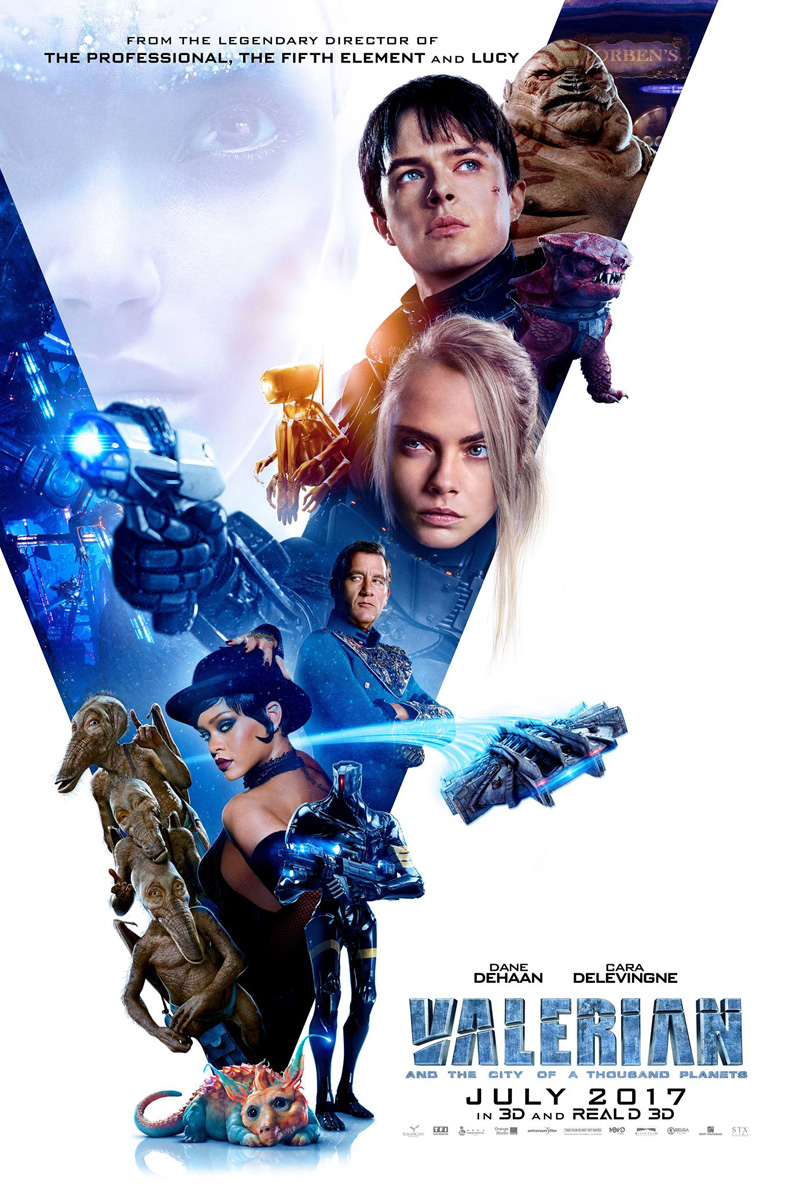
D: Luc Besson / 137m

Cast: Dane DeHaan, Cara Delevingne, Clive Owen, Rihanna, Ethan Hawke, Herbie Hancock, Kris Wu, Sam Spruell, Alain Chabat, John Goodman, Elizabeth Debicki, Rutger Hauer

There’s a phrase, “Beware of Greeks bearing gifts”, that needs an update. It should now read, “Beware of French movie directors making vanity projects”. A project that’s been on his mind to make since The Fifth Element (1997), Luc Besson’s Valerian and the City of a Thousand Planets arrives trailing a cosmos-worth of hype and anticipation, but somehow manages to land with a massive, resounding thud. This is a movie that looks continuously busy, but at the same time it feels like it’s leaden and ponderous. It’s another loud barrage of a sci-fi movie driven by mounds of uninteresting exposition, and supported by empty visuals that look amazing but offer as much refreshment as an empty bottle of water. It’s a mess, and one that never lets up in its efforts to impress you with its meticulously detailed sets and costumes, and its tired characterisations. There’s a love story too, between two charismatic military operatives, Valerian (DeHaan) and Laureline (Delevingne), that offers occasional and all too brief periods of respite from the CGI onslaught, and which feels as organic as the pixelated backgrounds it plays in front of. And there’s a villain, one so obvious that they might as well stomp around yelling, “I’m the bad guy!” (in case the viewer isn’t sure).

There’s more, lots more, lots and lots and lots of it, with Besson aiming to include a veritable kitchen sink’s worth of alien species, high-tech weaponry, dazzling backdrops, vibrant colours, impressive make up designs, and specious action scenes. There’s a story in there too – somewhere – but it’s overwhelmed by the movie’s need to keep moving from one breakneck-paced scene to another. There are long stretches where the viewer might find themselves wondering if they’ve transitioned into watching the video game version of Valerian… and other stretches where they might also be wondering if Besson actually knows what’s supposed to happen next. Too often, things happen for no better reason than that Besson wants them to, and the pacing seems relentless, as the writer/director flings his lead characters into danger after danger, but without once actually putting them in danger.
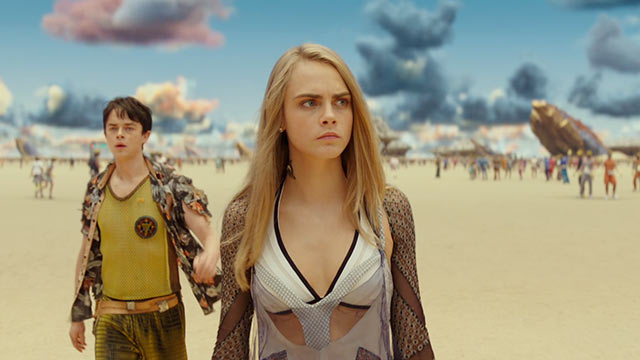
The cast suffer almost as often and as much as the viewer. As the titular hero, DeHaan tackles the role with enthusiasm and a fair degree of commitment, but is hampered by Besson’s decision to make Valerian look and sound like a high school kid on his first day at an entry-level job. DeHaan is a talented actor but fantasy sci-fi is not his forte, and he rarely seems comfortable with all the running and leaping about and firing guns. Delevingne, meanwhile, appears to be far more in tune with Besson’s ambitions for the movie, and her knowing, unimpressed demeanour works well for the character, and acts as a subtle commentary on the movie as a whole. But too often, Laureline has to play second fiddle to Valerian, an unhappy circumstance that gives rise to the idea that in the 28th century, sexism still hasn’t been consigned to the dustbin of history.

There’s a great supporting cast, too, used to occasional good effect, but too often required to stand around waiting for the next clunking shift in the storyline to get them moving again. Owen’s character is an angry clown in a self-consciously big hat, Rihanna is a shapeshifting cabaret artist whose admittedly enjoyable stage routine still stops the movie dead in its tracks, Hawke (as Jolly the Pimp no less!) seems to be acting in another movie altogether, while Hauer gets off lightly with a Presidential address at the start of the movie that has all the hallmarks of being a favour to the director. Only Spruell as an harassed general seems to have grasped Besson’s intentions for his character, and as a result, his appearances are a godsend.

In case you’re wondering if there’s anything remotely good about Valerian and the City of a Thousand Planets, then rest assured there is, but unfortunately it’s all packed into the first fifteen to twenty minutes. Here we see the International Space Station grow in size as several countries from Earth send representatives in space vehicles that attach themselves to the station. As time goes by, alien life-forms also visit the station, and the same welcoming rituals are observed: a handshake, a bemused smile/grimace from the human in charge, and a succession of impressively realised aliens who seemed equally bemused by the idea of said handshake. As more and more ships arrive and attach themselves, the space station becomes – ta-da! – Alpha, the city of a thousand planets. It’s a terrific idea, well executed, and bodes well for the rest of the movie. Things look even better when the narrative shifts to the planet Mül, and we’re introduced to the race that live there, a peaceful, pearl-cultivating civilisation that becomes central to the plot later on (as expected), and which is apparently wiped out by events happening nearby in space. But with that prologue out of the way, we’re thrust thirty years on and forced to put up with the romantic aspirations of Valerian, and the machinations of a plot that serves as a second cousin retread of Besson’s earlier work on The Fifth Element (watch that movie now and you’ll see how inter-connected they are).

When a director announces that they’re finally going to make a long-cherished project, and one that they’ve delayed making due to the limitations of existing technology, it should be a cause for celebration. After all, it wouldn’t be wrong to believe that as they have such a passion for the project, that they’d make every effort to ensure the finished product was a vast cut above their other movies, the pinnacle of their career perhaps. But somewhere along the way, Besson has settled for making a movie that is plodding and uninspired. Scenes and characters come and go without making the slightest impact, and Besson makes the same basic error that so many other fantasy/sci-fi directors make: they mistake a distinct visual style for substance. This leaves Valerian… feeling like it’s only half the movie Besson envisaged, and with a generic genre score by the usually reliable Alexandre Desplat to add to the misery, this is a strong contender for Most Disappointing Movie of 2017.

Rating: 4/10 – technical wizardry aside, Valerian and the City of a Thousand Planets is an unabashed dud, content to make as little effort as possible, and trading on its writer/director’s past glories; with its €197 million budget making it the most expensive European and independent movie ever made, it’s a shame that all that money has been used to such undemanding and underwhelming effect.

Share this:

  • Click to share on X (Opens in new window) X
  • Click to share on Facebook (Opens in new window) Facebook
  • More
  • Click to print (Opens in new window) Print
  • Click to email a link to a friend (Opens in new window) Email
Like Loading...

Taken (2008)

17 Wednesday Dec 2014

Posted by dullwood68 in Movies

≈ 1 Comment

Tags

Action, Albanians, Drama, Famke Janssen, Human trafficking, Kidnapping, Liam Neeson, Luc Besson, Maggie Grace, Paris, Pierre Morel, Review, Thriller

Taken

D: Pierre Morel / 93m

Cast: Liam Neeson, Maggie Grace, Famke Janssen, Olivier Rabourdin, Leland Orser, Jon Gries, David Warshofsky, Holly Valance, Katie Cassidy, Gérard Watkins, Xander Berkeley

Retired government agent (or “preventer”) Bryan Mills (Neeson) is divorced from his wife Lenore (Janssen) and struggling to re-connect with his daughter, Kim (Grace). He’s over-protective, which works against him, and never more so when, shortly after her eighteenth birthday, Kim tells him she’s been invited to stay in Paris during the summer. He’s against the idea at first, but eventually gives his permission for her to go. Travelling with her friend, Amanda (Cassidy), Kim arrives in Paris and they settle into the apartment where they’re staying. But on the first night, intruders break in to the apartment, and Kim, who’s on the phone to her father, watches as she sees them grab Amanda, and then come looking for her.

Bryan learns that her abductors are Albanians who specialise in human trafficking, kidnapping young female tourists to be sold as sex slaves to the highest bidder. He travels to Paris, and with the help of old friend, Jean-Claude (Rabourdin), devises a plan to find Kim and get her back. He learns about a construction site where there is a problem with “new merchandise”, but Kim isn’t there; instead he finds a woman who has Kim’s jacket. He leaves with her and holes up in a hotel room where she tells him about a house in the Rue de Paradis. The house proves to be where the Albanians have their base. Bryan kills all but one of them, whom he tortures for more information.

The Albanian tells Bryan about a man called Saint Clair (Watkins), who hosts parties that act as cover for the buying and selling of any kidnapped women. Brian sees Kim there, but before he can rescue her, he’s knocked unconscious. When he comes to, Saint Clair and his henchmen have Bryan tied up, and are about to kill him…

Taken - scene

Back in 2008, the idea of Liam Neeson playing a full-on action role was regarded as a bit unusual, partly because few of his previous roles had been in the action genre, and partly because of his age (he was fifty-six at the time). But despite the preposterous, gung-ho approach taken by writers Luc Besson and Robert Mark Kamen, Neeson’s über-serious portrayal of Mills somehow offset the movie’s cocksure silliness, and made Taken a huge success at the box office (the movie took around $225 million worldwide).

The idea of a man with “a special set of skills” running riot in Paris with a flagrant disregard for the law or due process, while not exactly new, benefits hugely from Neeson’s performance. His single-minded pursuit of his daughter’s kidnappers grounds the movie so effectively that even when Mills is directly in the line of fire of a man with a semi-automatic weapon and he doesn’t receive so much as a scratch, it’s almost like an entitlement; he’s a father, and what he’s doing is right (godammit).

This leads to a lot of indiscriminate killing, and in one sequence casual maiming, as Mills sense of justice borders on the psychopathic (he shoots one Albanian in the back, something our cinematic heroes are very rarely seen to do). This unapologetic violence is what gives the movie its edge, as Mills’ unfettered brutality keeps the audience wondering just how far he will go to rescue his daughter. Neeson is completely focused and convincing, and when you realise just how committed he is, you almost begin to feel sorry for the bad guys – they really don’t stand a chance (even with the nature of the script and the storyline, they really don’t stand a chance).

Away from the continual bloodshed, the earlier scenes where we first meet Bryan and Kim are more compulsory than enthralling, while the idea that Bryan sees his daughter as being younger than she is and in need of more “protection” is never fully developed (when he tells Lenore Kim’s been abducted you half expect him to say, “I told you so”). This is less a kind of over-developed fatherly concern and more of a deep-rooted paranoia, which might have had a more effective pay-off if Kim had been kidnapped because of something he did in the past. As it is, it still leaves Bryan Mills as one seriously screwed-up ex-government agent, and his morally dubious approach to “working” makes him more interesting than most armed avengers.

This extra-added depth to the main character, allied with Neeson’s compelling performance, makes Taken a bit of a guilty pleasure. Benson and Kamen’s script does its best to plug up any plot holes when they crop up, but it doesn’t always succeed – Bryan’s friend, Sam (Orser), identifies the kidnapper Bryan speaks to over the phone with only two words to go on (that’s some voice recognition software they’ve got there!) – and outside of Bryan, Kim and Lenore, characterisations are kept to a minimum, with broad brush strokes used throughout. As the bad guys, the Albanians could have been Russian or Croatian or any other Eastern European ethnic minority, and lack an identity as a result: they’re just there to be despatched as quickly as possible.

The fight scenes are cleverly constructed and choreographed to make Neeson look like he’s doing most of his own stunts (though when he’s not it’s a little too obvious), and it all looks appropriately bone-crunching and painful (the sound effects guys must have a field day on these kinds of movies). And as if to pour scorn on the idea that French stunt drivers aren’t the best in the world, there’s a short sequence involving Bryan chasing a boat that is as brazenly exciting and well edited as any in, say, The Transporter movies, or Ronin (1998). Having cut his teeth on The Transporter (2005), Morel directs with confidence and knows enough to let Neeson take the reins and do what he does best, while injecting a fierce intensity into the action scenes. Janssen and Grace provide adequate support (though Grace does overdo the squeals of delight when Kim gets something she wants), while a sub-plot involving a pop star (Valance) comes and goes so quickly that you wonder why it was included.

Rating: 8/10 – a thudding, crunching, pumped-up action movie shot mostly at night for maximum atmosphere, Taken is a supremely confident addition to the lone avenger sub-genre of action movies; with a commanding central performance by Neeson that re-energised his career, this should be filed under “Gratuitous Violence – for the enjoyment of”.

Share this:

  • Click to share on X (Opens in new window) X
  • Click to share on Facebook (Opens in new window) Facebook
  • More
  • Click to print (Opens in new window) Print
  • Click to email a link to a friend (Opens in new window) Email
Like Loading...

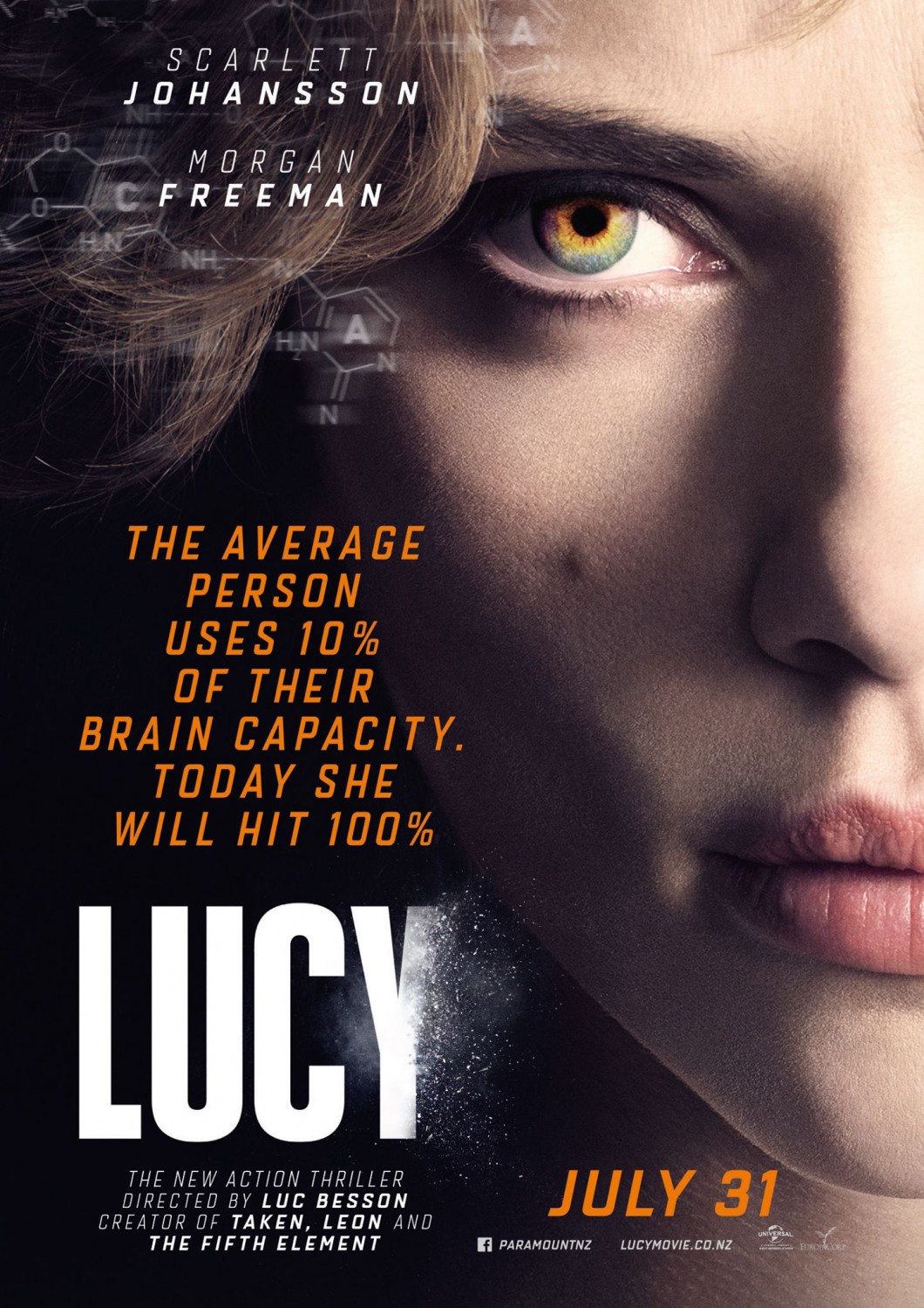
Lucy (2014)

15 Monday Sep 2014

Posted by dullwood68 in Movies

≈ Leave a comment

Tags

Action, Brain function, CPH4, Drug mules, Luc Besson, Min-sik Choi, Morgan Freeman, Mr Jang, Paris, Review, Scarlett Johansson, Taiwan

Lucy

D: Luc Besson / 89m

Cast: Scarlett Johansson, Morgan Freeman, Min-sik Choi, Amr Waked, Julian Rhind-Tutt, Pilou Asbæk, Analeigh Tipton

In Taiwan, Lucy (Johansson) is coerced by her week-long boyfriend, Richard (Asbæk) into delivering a mysterious briefcase to a man called Mr Jang (Choi) at his hotel.  While she waits in reception, she sees Richard killed outside, and then finds herself grabbed and brought to Jang’s room.  The briefcase is opened to reveal four bags of a blue substance.  The substance is tested on a drug addict who is then shot dead by Jang.  He then offers Lucy a job; she refuses and is knocked unconscious.  When she comes to, she finds she’s been operated on.  She’s taken to a room where there are three men who are in the same situation as she is.  Jang’s plan is explained to them: each has a bag of the blue substance inside them.  They will travel to various European destinations where the bags will be removed and they will be paid for their trouble.

Lucy is taken to a cell where she is chained to a wall.  She antagonises one of her captors and he kicks her repeatedly in the stomach, causing the bag inside her to split and release the blue substance into her body.  When another of her captors returns, she overpowers him and escapes; she is shot in the process but is able to remove the bullet without feeling any pain.  She goes to a nearby hospital where she forces a surgeon to remove the bag inside her.  When she tells him it’s something called CPH4, he tells her that it’s something produced by pregnant women at around six weeks that provides nutrients for a foetus.  He also tells her that she’s lucky to be alive with that much CPH4 having leaked into her.

Lucy returns to Jang’s hotel room where she learns the destinations of the three men. She then visits a friend, Caroline (Tipton), and uses her laptop in order to find out about brain function.  She learns about the research of Professor Samuel Norman (Freeman), and with her new abilities allowing her to manipulate electronic systems, contacts him via the television in his hotel room in Paris.  She tells him what she’s able to do and how her brain function is increasing in leaps and bounds, and that she’ll be there to see him in person in twelve hours.  At the airport she contacts French police officer Pierre Del Rio (Waked) and tells him about the drug mules, and convinces him to have them picked up when they land in Rome, Berlin and Paris respectively.

In Paris, and with the drug mules all in French police custody, they are taken to a hospital to have the bags removed.  Jang’s men arrive and grab the bags but Lucy incapacitates them and steals them back.  She and Del Rio head for the university where Norman has assembled some of his colleagues.  Jang and his men follow them and while a pitched battle breaks out in the university between the police and Jang’s men, Lucy ingests a synthesised version of the CPH4 that sees her take the next step in what has become, for Lucy at least, her evolution.

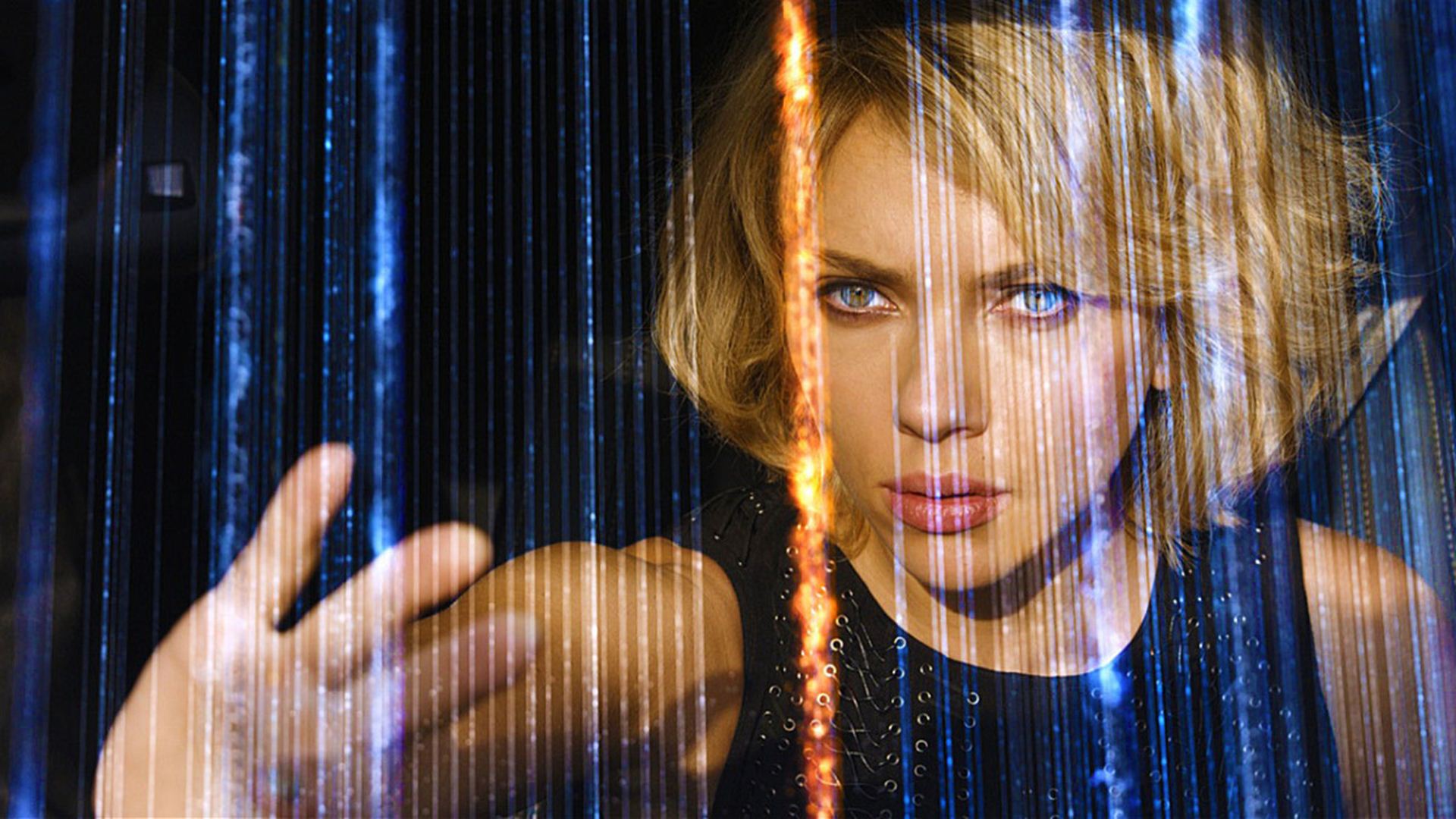
Lucy - scene

At the end of Lucy, French policeman Del Rio asks perpetually puzzled Professor Norman, “where is she?”  The answer is displayed on his mobile phone – viewers will have already guessed the answer – but it’s indicative of the movie’s less than well thought out idea about brain function that it effectively challenges not only our notions of evolution but of God as well.  If Lucy’s use of one hundred per cent of her brain means she no longer exists in human form but continues to live on some other plane of existence, then Besson (directing his own script) seems to be saying we all have the potential to be omnipotent and all-seeing.  If he is, then it means Lucy is perhaps the most philosophical and metaphysical action movie ever created.

However, while Besson is clearly a moviemaker who likes to have fun with his audiences, Lucy is not one of his better efforts, ending up as a ragbag of ideas that doesn’t make any coherent (or cohesive) sense and which often gives the impression that, like Brian in Monty Python’s Life of Brian, “He’s making it up as he goes along”.  As Lucy’s brain function expands towards one hundred per cent, she has a variety of experiences that apparently come and go, or can be turned on and off at will (and with very little effort).  These experiences also happen independently of one another, as if Besson had a tick list of cool effects he wanted to use at each stage of Lucy’s “development” (on the plane to Paris, Lucy begins to disintegrate, but the reason for this is never satisfactorily explained – but, again, it looks cool).  With this “anything goes” approach it’s to Besson’s credit that Lucy becomes less and less of an action heroine as the movie progresses, content in its later stages to just incapacitate Jang’s men and to leave the shootouts and the bloodshed to the French police.

It’s this undermining of accepted action movie devices that adds a level of originality and cleverness to proceedings – witness the car chase sequence where Lucy, driving for the first time, is merely in a hurry to get to the hospital and is unconcerned about the police cars that are trying to stop her; she’s not even trying to outrun them – but the movie’s best moment by far is perhaps it’s quietest, Lucy talking to her mother on the phone and trying to explain how she can feel things like the heat leaving her body before saying goodbye to her for the last time.  Johansson is hypnotic in this scene, and she’s equally good throughout, her questing gaze hinting at secrets that only she can see; it’s hard now to think of another actress in the role.

The rest of the cast are reduced to virtual walk-ons in Besson’s version of The Lucy Show.  Freeman essays another of his bemused expert roles but to even lesser effect than usual, while Choi (still refusing to learn English for a role) plays the urbane gangster Jang with a great deal of muted style.  Waked is little more than a bystander, and Rhind-Tutt comes in for one scene to explain Jang’s dastardly plot before disappearing back from whence he came.

On the whole, Lucy feels like an experiment in cinematic form that was forced to conform to the demands of mainstream movie-making, and as such, falls between the two disciplines.  It’s a shame, because if it had had a more judiciously constructed script, Lucy could have been 2014’s most adventurous and challenging action movie.

Rating: 5/10 – with far more intriguing ideas and concepts about the meaning of existence than it knows what to do with, Lucy is too uneven to be completely effective; but as an action movie with a mind-bending twist, Besson should be applauded for at least trying to be different.

Share this:

  • Click to share on X (Opens in new window) X
  • Click to share on Facebook (Opens in new window) Facebook
  • More
  • Click to print (Opens in new window) Print
  • Click to email a link to a friend (Opens in new window) Email
Like Loading...

Mini-Review: Brick Mansions (2014)

13 Wednesday Aug 2014

Posted by dullwood68 in Movies

≈ Leave a comment

Tags

Action, Banlieue 13, Camille Delamarre, David Belle, Detroit, Luc Besson, Parkour, Paul Walker, Remake, Review, RZA, Undercover cop

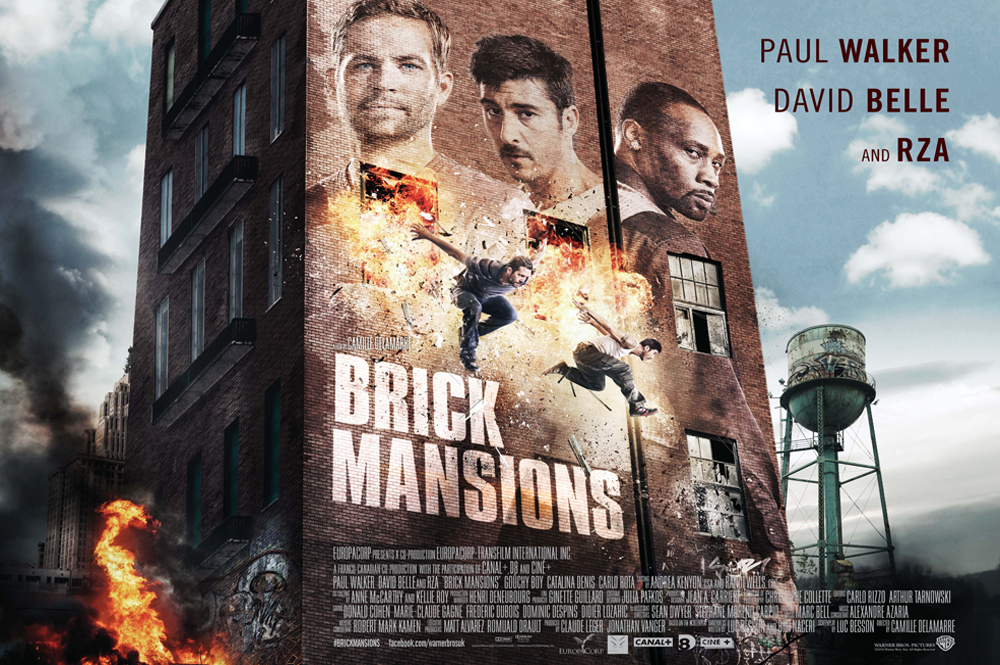
28616Quad_Final.indd

D: Camille Delamarre / 90m

Cast: Paul Walker, David Belle, RZA, Gouchy Boy, Catalina Denis, Ayisha Issa, Bruce Ramsay, Richard Zeman, Andreas Apergis, Carlo Rota, Frank Fontaine

In the not-too-distant future, Detroit has erected a wall around an area known as Brick Mansions.  Ruled over by crime boss Tremaine Alexander (RZA), this ghettoised area is full of drugs and guns and gang members (but not, it seems, any ordinary folk).  When the Mayor (Ramsay) decides that Brick Mansions has to be replaced by a brand new commercial development, he concocts a plan that involves sending undercover cop Damien Collier (Walker) into Brick Mansions to retrieve and “disarm” a hijacked bomb that could destroy the entire area.

On the inside, Alexander is having his own problems.  One of his drug shipments has been stolen by Lino (Belle) (and for no other reason than because the script needs him to).  When Lino proves too elusive to capture, Alexander has his ex-girlfriend Lola (Denis) kidnapped in retaliation.  He tries to rescue her but ends up in jail where Collier engineers a meeting with him and then tries to use him as a way of finding the bomb.  They form an uneasy alliance, and go after Alexander and the bomb together.

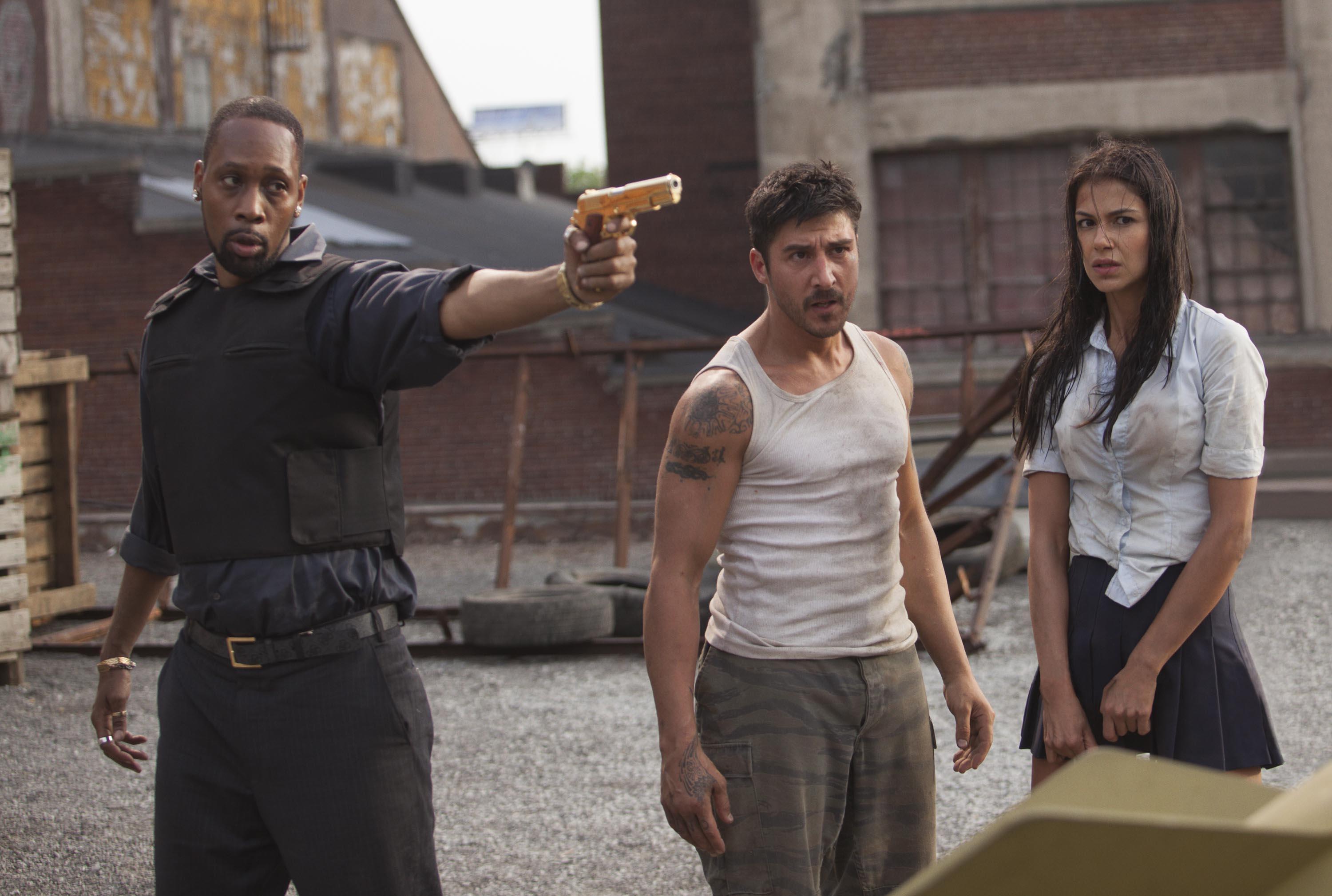
Brick Mansions - scene

As unnecessary remakes go, Brick Mansions gets by on its high-impact action scenes – expertly crafted and assembled by Delamarre and the movie’s stunt team – and the still impressive parkour abilities of Belle (who starred in the original movie, Banlieue 13 (2004), and doesn’t look a day older).  Beyond these elements, though, the movie pays lip service to plotting, characterisation, consistency and credibility, and merely jumps from one action sequence to the next with a minimum of fuss or subtlety.

The performances range from so-so (Belle, who has only the one facial expression) to trying (Walker, unable to create a character out of nothing), to embarrassing (RZA – when will someone tell him he can’t do menacing?).  The rest of the cast struggle with roles so under-developed they don’t even reach the level of being generic, and Luc Besson’s script (adapted from his co-written original) further handicaps everyone by relying on the kind of dialogue that sounds like it’s been badly translated from the original French.  While it’s true that Banlieue 13 isn’t perfect, it’s still the much better movie, and all Brick Mansions does is prove it.

Rating: 4/10 – a movie where acting was clearly not a requirement, Brick Mansions revels in its many patent absurdities; as brain-dead a movie as you’re likely to see all year but saved from being a complete loss by its well-staged action sequences.

Share this:

  • Click to share on X (Opens in new window) X
  • Click to share on Facebook (Opens in new window) Facebook
  • More
  • Click to print (Opens in new window) Print
  • Click to email a link to a friend (Opens in new window) Email
Like Loading...

The Family (2013)

08 Sunday Dec 2013

Posted by dullwood68 in Movies

≈ Leave a comment

Tags

Action, Comedy, Drama, Hitman, Luc Besson, Michelle Pfeiffer, Normandy, Review, Robert DeNiro, the Mob, Tommy Lee Jones, Witness Protection

Family, The

D: Luc Besson / 111m

Cast: Robert De Niro, Michelle Pfeiffer, Tommy Lee Jones, Dianna Agron, John D’Leo, Jimmy Palumbo, Domenick Lombardozzi, Stan Carp, Vincent Pastore, Jon Freda

Having ratted on his bosses in the Mob, Giovanni Manzoni (De Niro) and his family – wife Maggie (Pfeiffer), daughter Belle (Agron) and son Warren (D’Leo) – are living in France under the Witness Protection Program.  Following an incident at their placement on the Riviera, the Manzonis are moved to a quiet Normandy town where their handler, CIA agent Robert Stansfield (Jones), hopes they’ll settle down and stay out of trouble. While the Manzonis (now the Blakes) try to fit in, a hitman (Freda) is trying to track them down.

Each member of the family does their best to adapt to their new surroundings but with varied results.  Giovanni begins writing his memoirs, Maggie takes an interest in a nearby church, Belle fends off the advances of the local teenage boys and falls in love with a mature student, while Warren takes over the various rackets at their school.  They all encounter problems along the way, and each deals with these problems in their own way: Giovanni with violence, Belle with violence, Warren with violence, and Maggie with violence but then followed by her making confession.  It’s their inability to fit in without reverting to their Mob ways that causes Stansfield to threaten them with yet another relocation, especially after he reads Giovanni’s memoirs and realises how dangerous they could be if anyone outside the family were to read them.  But then the hitman and his gang find them, and everyone has to pull together to keep the Manzonis alive.

Family, The - scene

Ostensibly a comedy, The Family is ultimately a bit of a mixed bag.  Besson, directing from a script co-written with Michael Caleo, adds drama, romance, action, a lot of casual violence, a wonderful moment for De Niro at a film screening, and a soupçon of domestic troubles.  The main characters are well-drawn: Giovanni is both naturally aggressive and yet also quite melancholy and thoughtful, while Maggie appears lonely and struggling to adjust; she’s a mother whose role is no longer as clearly defined as it was back in New York.  Belle is sophisticated and yet naïve at the same time: she misunderstands the situation with the mature student, and takes too much for granted.  And Warren finds he’s not quite the clever gangster he thought he was.  All four actors are on top form, De Niro providing a world-weary performance that belies the uncompromising mobster he’ll always be at heart; he’s a joy to watch.  Pfeiffer revisits her character from Married to the Mob (1987), and gives a shaded turn where her unhappiness at her family’s situation is offset by her obvious pride and love for them.  As the children, Agron (from TV’s Glee) is confident, poised and vulnerable, and D’Leo plays Warren with an equal confidence that is impressive for his age.

What spoils the movie though is the continuing shifts in tone.  Beginning with a hit on a family (and providing Freda with a great entrance) that is horribly violent, the movie shifts uneasily between moments of light humour – there are no really laugh-out-loud moments in the movie – and more and more extreme bouts of violence: Belle taking a tennis racket to a teenage boy’s face, Giovanni fantasising about pushing a man’s face onto a barbecue grill.  These episodes, meant to remind the audience perhaps that these people, after all, were part of the Mob and have done some horrible things in the past, serve only to show that, Giovanni’s writing aside, the experience of being in the Witness Protection Program hasn’t changed them at all; if anything, they are using their unique skill-sets to dominate their community just as they used to do.  It’s this lack of personal improvement or growth that undermines the characters and makes them appear close to stereotypes.  There’s also an unpleasant whiff of institutionalised racism that runs throughout the movie, with the Manzonis the target of some unvarnished cultural attacks (“they eat hamburgers morning, noon and night”); the family’s only response is to have a barbecue for their neighbours where they serve only American food, and of course, the French all go away very happy.

The movie also isn’t quite as funny as it thinks it is, and shifts in tone aside, fails to hit the mark too often.  It’s largely predictable and while this isn’t necessarily a bad thing with this type of movie, with the cast involved you’d hope for something a little richer, and with more surprises.  The final shootout is well-staged and shows Besson is still more than adept at shooting action scenes.  The preceding set-up is equally well-staged and quite gripping.  If only the previous hour and a half had been the same.  That said, Thierry Arbogast’s photography is deceptively fluid and gives certain scenes an almost painterly finish, and the score by Sacha and Evgueni Galperine subtly enhances things throughout.

Rating: 6/10 – only fitfully entertaining, and saved by strong performances; The Family won’t change your life, but then it hasn’t changed theirs either.

Share this:

  • Click to share on X (Opens in new window) X
  • Click to share on Facebook (Opens in new window) Facebook
  • More
  • Click to print (Opens in new window) Print
  • Click to email a link to a friend (Opens in new window) Email
Like Loading...

Un prince (presque) charmant (2013)

04 Wednesday Dec 2013

Posted by dullwood68 in Movies

≈ Leave a comment

Tags

Comedy, French movie, Jacques Weber, Luc Besson, Philippe Lellouche, Review, Road trip, Romance, Romantic comedy, Vahina Giocante, Vincent Perez

Un Prince (Presque) Charmant

aka A Prince (Not Very) Charming

D: Philippe Lellouche / 88m

Cast: Vincent Perez, Vahina Giocante, Jérôme Kircher, Chloé Coulloud, Jacques Weber, Nicole Calfan, Côme Levin, Judith Siboni, Astrid Veillon

Businessman Jean-Marc (Perez), along with his partner Bertrand (Kircher), has clinched an important deal with a Russian company, but at the expense of a small, family-run business he’s dealt with for years. Incensed by his attitude, and the fact that her father’s company won’t survive without Jean-Marc’s patronage, Marie (Giocante) heads to Paris to confront him. However, Jean-Marc is heading out of Paris for his daughter’s wedding; her name is also Marie (Coulloud), and she is sure her father won’t make it, so focused is he on his work. A general strike doesn’t help matters, and with one mishap after another – including having to abandon his car and use an electric car instead – Jean-Marc and Marie end up travelling together, he to the wedding, she back to her home town and her parents’ farmhouse. When they arrive at Marie’s parents’, Jean-Marc discovers who Marie is but keeps quiet about his own identity, having begun to realise he is in love with her. With the wedding getting ever closer, and still more hold-ups to come, can Jean-Marc get there on time, and can he find a way to keep his budding romance with Marie from failing when she, inevitably, finds out who he is.

Un Prince (Presque) Charmant - scene

With a script by Luc Besson, this is a charming romantic comedy with a modicum of  dramatic moments dotted here and there. Besson packs a lot in to the short running time, and the story is ably realised by Lellouche, showing off the French countryside to beautiful effect, and his two leads in the same manner. Perez is wonderful, arrogant and egotistical at the beginning but gradually coming to terms with what he’s missed by being so fixated on his work. Giocante matches Perez in the performance stakes, and makes her aggrieved daughter a more fully-rounded character than at first might be expected. The dialogue, while not really that original or sparkling, is still affecting in places and Besson is clever enough to avoid the potential pitfalls from such a clichéd scenario. The supporting cast provide much of the laughs, but it’s a gentle humour that runs throughout the movie, and it never overwhelms the romantic storyline.

To be fair, this is the kind of movie the French can do in their sleep, and if it’s not the most original of storylines or plots, it doesn’t really matter. The familiar set up, the predictable outcome, the warmth even estranged characters have for each other – Jean-Marc and his ex-wife Liliane (Veillon) – all these things act to reassure the viewer that there won’t be any nasty surprises, and the course of true love, while never quite running smooth, will have a satisfactory ending, whatever the obstacles in its way.

Rating: 6/10 – a minor but enjoyable effort, heart-warming and inoffensive at the same time; perfect for a romantic evening in with your partner of choice.

Share this:

  • Click to share on X (Opens in new window) X
  • Click to share on Facebook (Opens in new window) Facebook
  • More
  • Click to print (Opens in new window) Print
  • Click to email a link to a friend (Opens in new window) Email
Like Loading...

Blog Stats

  • 480,426 hits

Recent Posts

  • 10 Reasons to Remember Bibi Andersson (1935-2019)
  • Fantasia (1940)
  • Dances With Wolves (1990) – The Special Edition
  • Kiss of the Spider Woman (1985)
  • The Three Musketeers (1973)

Top Posts & Pages

  • Lost for Life (2013) - Another Look
    Lost for Life (2013) - Another Look
  • Lost for Life (2013)
    Lost for Life (2013)
  • Cardboard Boxer (2016)
    Cardboard Boxer (2016)
  • Bone Tomahawk (2015)
    Bone Tomahawk (2015)
  • The Monuments Men (2014)
    The Monuments Men (2014)
  • Irrational Man (2015)
    Irrational Man (2015)
  • About
    About
  • Spotlight (2015)
    Spotlight (2015)
  • Jungle (2017)
    Jungle (2017)
  • Lost and Delirious (2001)
    Lost and Delirious (2001)
Follow thedullwoodexperiment on WordPress.com

Blogs I Follow

  • Rubbish Talk
  • Film 4 Fan
  • Fast Film Reviews
  • The Film Blog
  • All Things Movies UK
  • Interpreting the Stars
  • Let's Go To The Movies
  • Movie Reviews 101
  • TMI News
  • Dan the Man's Movie Reviews
  • Film History
  • Jordan and Eddie (The Movie Guys)

Archives

  • April 2019 (13)
  • March 2019 (28)
  • February 2019 (28)
  • January 2019 (32)
  • December 2018 (28)
  • November 2018 (30)
  • October 2018 (29)
  • September 2018 (29)
  • August 2018 (29)
  • July 2018 (30)
  • June 2018 (28)
  • May 2018 (24)
  • April 2018 (21)
  • March 2018 (31)
  • February 2018 (25)
  • January 2018 (30)
  • December 2017 (30)
  • November 2017 (27)
  • October 2017 (27)
  • September 2017 (26)
  • August 2017 (32)
  • July 2017 (32)
  • June 2017 (30)
  • May 2017 (29)
  • April 2017 (29)
  • March 2017 (30)
  • February 2017 (27)
  • January 2017 (32)
  • December 2016 (30)
  • November 2016 (28)
  • October 2016 (30)
  • September 2016 (27)
  • August 2016 (30)
  • July 2016 (30)
  • June 2016 (31)
  • May 2016 (34)
  • April 2016 (30)
  • March 2016 (30)
  • February 2016 (28)
  • January 2016 (35)
  • December 2015 (34)
  • November 2015 (31)
  • October 2015 (31)
  • September 2015 (34)
  • August 2015 (31)
  • July 2015 (33)
  • June 2015 (12)
  • May 2015 (31)
  • April 2015 (32)
  • March 2015 (30)
  • February 2015 (37)
  • January 2015 (39)
  • December 2014 (34)
  • November 2014 (34)
  • October 2014 (36)
  • September 2014 (25)
  • August 2014 (29)
  • July 2014 (29)
  • June 2014 (28)
  • May 2014 (23)
  • April 2014 (21)
  • March 2014 (42)
  • February 2014 (38)
  • January 2014 (29)
  • December 2013 (28)
  • November 2013 (34)
  • October 2013 (4)

Create a free website or blog at WordPress.com.

Rubbish Talk

Film 4 Fan

A Movie Blog

Fast Film Reviews

The Film Blog

The official blog of everything in film

All Things Movies UK

Movie Reviews and Original Articles

Interpreting the Stars

Dave Examines Movies

Let's Go To The Movies

Film and Theatre Lover!

Movie Reviews 101

Daily Movie Reviews

TMI News

Latest weather, crime and breaking news

Dan the Man's Movie Reviews

All my aimless thoughts, ideas, and ramblings, all packed into one site!

Film History

Telling the story of film

Jordan and Eddie (The Movie Guys)

Movie Reviews & Ramblings from an Australian Based Film Fan

Privacy & Cookies: This site uses cookies. By continuing to use this website, you agree to their use.
To find out more, including how to control cookies, see here: Cookie Policy
  • Subscribe Subscribed
    • thedullwoodexperiment
    • Join 481 other subscribers
    • Already have a WordPress.com account? Log in now.
    • thedullwoodexperiment
    • Subscribe Subscribed
    • Sign up
    • Log in
    • Report this content
    • View site in Reader
    • Manage subscriptions
    • Collapse this bar
 

Loading Comments...
 

    %d