• 10 Reasons to Remember…
  • A Brief Word About…
  • About
  • For One Week Only
  • Happy Birthday
  • Monthly Roundup
  • Old-Time Crime
  • Other Posts
  • Poster of the Week
  • Question of the Week
  • Reviews
  • Trailers

thedullwoodexperiment

~ Viewing movies in a different light

thedullwoodexperiment

Tag Archives: Mark Rylance

The BFG (2016)

31 Thursday Aug 2017

Posted by dullwood68 in Movies

≈ Leave a comment

Tags

Catch Up movie, Drama, Fantasy, Giant Country, Giants, Literary adaptation, Mark Rylance, Penelope Wilton, Review, Roald Dahl, Ruby Barnhill, Runt, Sophie, Steven Spielberg

D: Steven Spielberg / 117m

Cast: Mark Rylance, Ruby Barnhill, Penelope Wilton, Jemaine Clement, Rebecca Hall, Rafe Spall, Bill Hader, Ólafur Darri Ólafsson, Adam Godley, Michael Adamthwaite, Daniel Bacon, Jonathan Holmes, Chris Gibbs, Paul Moniz de Sa

Steven Spielberg meets Roald Dahl against the backdrop of a billion computer generated pixels – less a case of “Who could ask for anything more”, and more a case of “Be careful what you wish for”. This is very much a movie where the child in Spielberg has been sat on and made to go without his dinner. While this is a movie that looks absolutely stunning – in Giant Country at least, London feels drabbed down in comparison – and there’s a richness to the colours and the detail that few other directors would have achieved for their movie, overall The BFG lacks something that has been a consistent part of Spielberg’s directorial skills over the last forty-plus years, and that’s honest, heartfelt emotion.

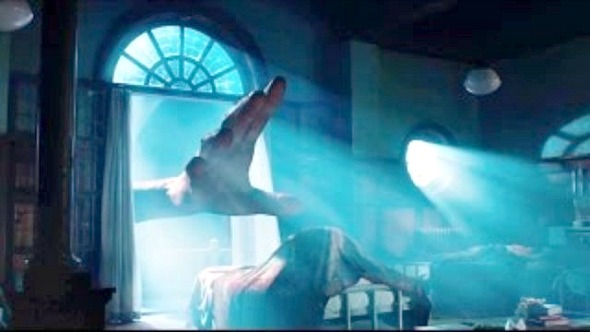
It’s an odd feeling to realise, but this is a movie where Spielberg has managed to avoid creating an emotional connection between the characters and the audience. Right from the start, and from our first encounter with tomboyish Sophie as she hides under a rug late one night at the orphanage (handily called the Orphanage) where she lives, what should be a tale that inspires various levels of child-friendly awe and wonder, does so in dribs and drabs, and rarely feels inspired or inspirational. Even the moment when Sophie spies a large, very large hand righting a fallen rubbish bin – which should provoke a degree of wonder all by itself – plays out plainly and matter-of-factly. The scene would have played out much the same if it the bin had been knocked over by a cat, and the cat had turned round and picked it up by itself. It’s the first of many moments that fail to achieve the necessary degree of childish delight that would allow viewers – and not just adults – to connect with the material.
Elsewhere, the relationship between Runt (the BFG in question) and Sophie soon develops into the kind of easy-going father-daughter dynamic that allows for few disagreements and full-on harmony. Both of them may be unlocking nurturing instincts in each other, but Melissa Mathison’s adaptation of Dahl’s hugely popular novel foregoes any depth and relates everything in a matter-of-fact manner that leaves their relationship feeling perfunctory instead of earned. While it’s expected that they hit it off and prove to be firm friends, there’s still little in the way of any grounding to their friendship, and it happens with barely a whisper of discord between them. Even when Runt tells Sophie she can’t go back to the orphanage, her reaction has all the impact of a child being told that they can’t have semolina for dessert. It’s another example of the way in which Spielberg’s direction can’t elevate the material and make the movie more interesting. Instead it ambles along, creating indifference for long stretches and relying heavily on Rylance’s performance as the BFG.

Rylance, who has become Spielberg’s first choice, go-to actor since they made Bridge of Spies (2015), is on terrific form, his motion capture performance perhaps the very best thing the movie has to offer. Whether he’s muttering and mumbling about snozzcumbers or frobscottle, or a myriad of other Giant-ish terms, Rylance’s simple, delicate portrayal is affecting and whimsical, an object lesson in how not to let a CGI conversion take anything away from the performance itself. But thanks to Spielberg’s puzzling detachment from the material, Rylance’s portrayal is operating in a vacuum, separated from the rest of the movie by an invisible wall that even he can’t penetrate. It’s like giving the world’s greatest footballer the chance to score from five yards out, and then removing the goal just before he shoots.
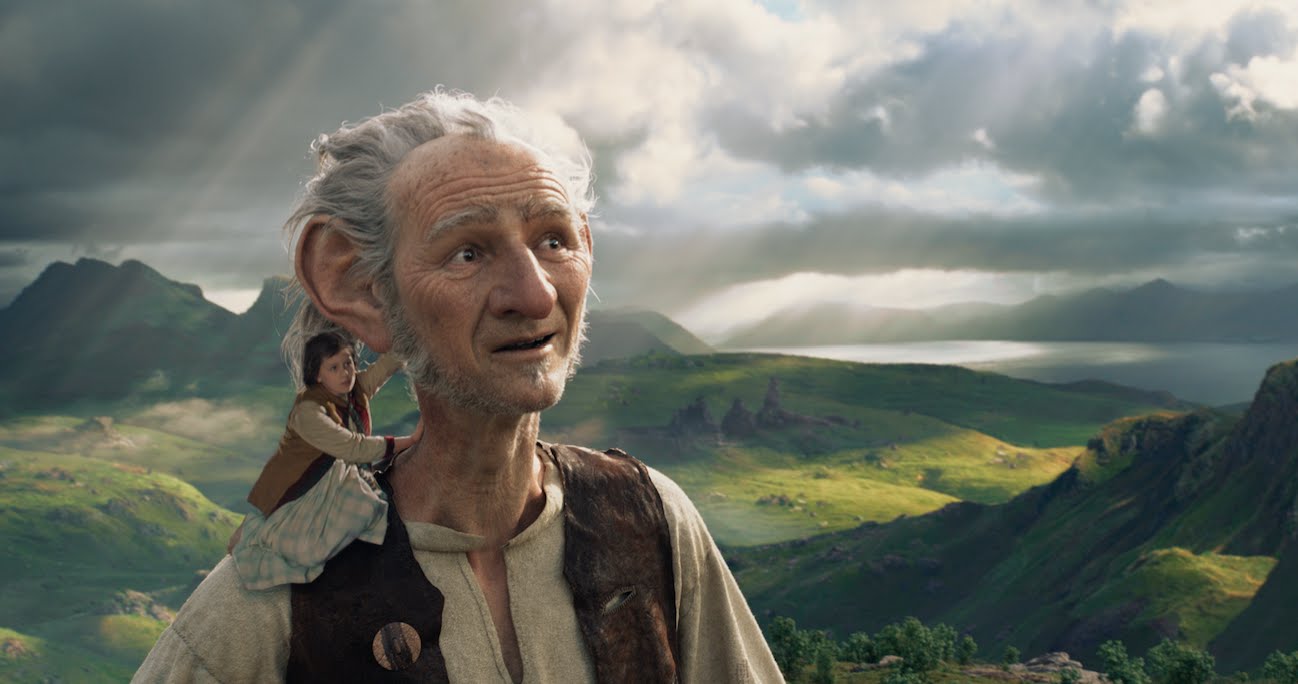
On the performance front, Rylance is surprisingly alone in terms of the quality of his portrayal. Elsewhere, there are problems galore, from Barnhill’s stilted line readings to Wilton’s wide-eyed and easily dismayed Queen of England, to Hall’s unexpected and underwhelming turn as the Queen’s maid (a role that could have been played by anyone, such is its importance to the story). And that’s without Clement’s turn as chief unfriendly giant, Fleshlumpeater, a performance that leaves him sounding like David Walliams with a bad nasal infection. Rylance aside, this is a movie where the cast aren’t given much to do, and the imbalance between the success of his efforts and theirs is telling. This is largely the fault of Mathison’s screenplay, which maintains its focus on the BFG at all times, and to the detriment of the other characters, who feel unsupported and under-developed at the same time.

This being a Roald Dahl story, there should be plenty of subtexts shoring up the main plot, and the notion of Runt and Sophie creating their own family as a way of confronting their sense of being alone should be one of them, but instead of informing their bond and its importance to both of them, it’s given an occasional and brief acknowledgment before the movie heads into another visually impressive but empty bout of physical comedy. Said comedy is a mix of pratfalls – cue those loveable cannibal giants! – incredible shrinking orphan moments, and CGI corgis, and these should find favour with viewers younger than ten. But adults, for whom Dahl wrote just as much as he did for children, will find themselves curiously locked out of the garden of delights that have been broadly assembled out of Mathison’s screenplay. A movie then that’s lacking in too many areas for it to be entirely or even moderately successful in its ambitions, a state of affairs that is all the more surprising given the quality of the source material and its director’s affinity for children’s fantasy.

Rating: 5/10 – a movie that’s easy to admire but very difficult to engage with, The BFG sees Spielberg operating at half throttle, and dialling back on the emotional elements of Dahl’s story; Rylance is the key player here, giving a captivating performance and anchoring the movie in a way that he shouldn’t have to given the quality and the experience of the rest of the cast, and the very talented crew.
Share this:

  • Click to share on X (Opens in new window) X
  • Click to share on Facebook (Opens in new window) Facebook
  • More
  • Click to print (Opens in new window) Print
  • Click to email a link to a friend (Opens in new window) Email
Like Loading...

Dunkirk (2017)

03 Thursday Aug 2017

Posted by dullwood68 in Movies

≈ 2 Comments

Tags

Christopher Nolan, Cillian Murphy, Drama, Dunquerke, Fionn Whitehead, IMAX, Kenneth Branagh, Mark Rylance, Operation Dynamo, Review, Suspense, The Mole, Tom Hardy, World War II

D: Christopher Nolan / 106m

Cast: Fionn Whitehead, Tom Hardy, Mark Rylance, Kenneth Branagh, Cillian Murphy, Tom Glynn-Carney, Barry Keoghan, Aneurin Barnard, Harry Styles, Jack Lowden, James D’Arcy

NOTE: This review is based on an IMAX screening of the movie.

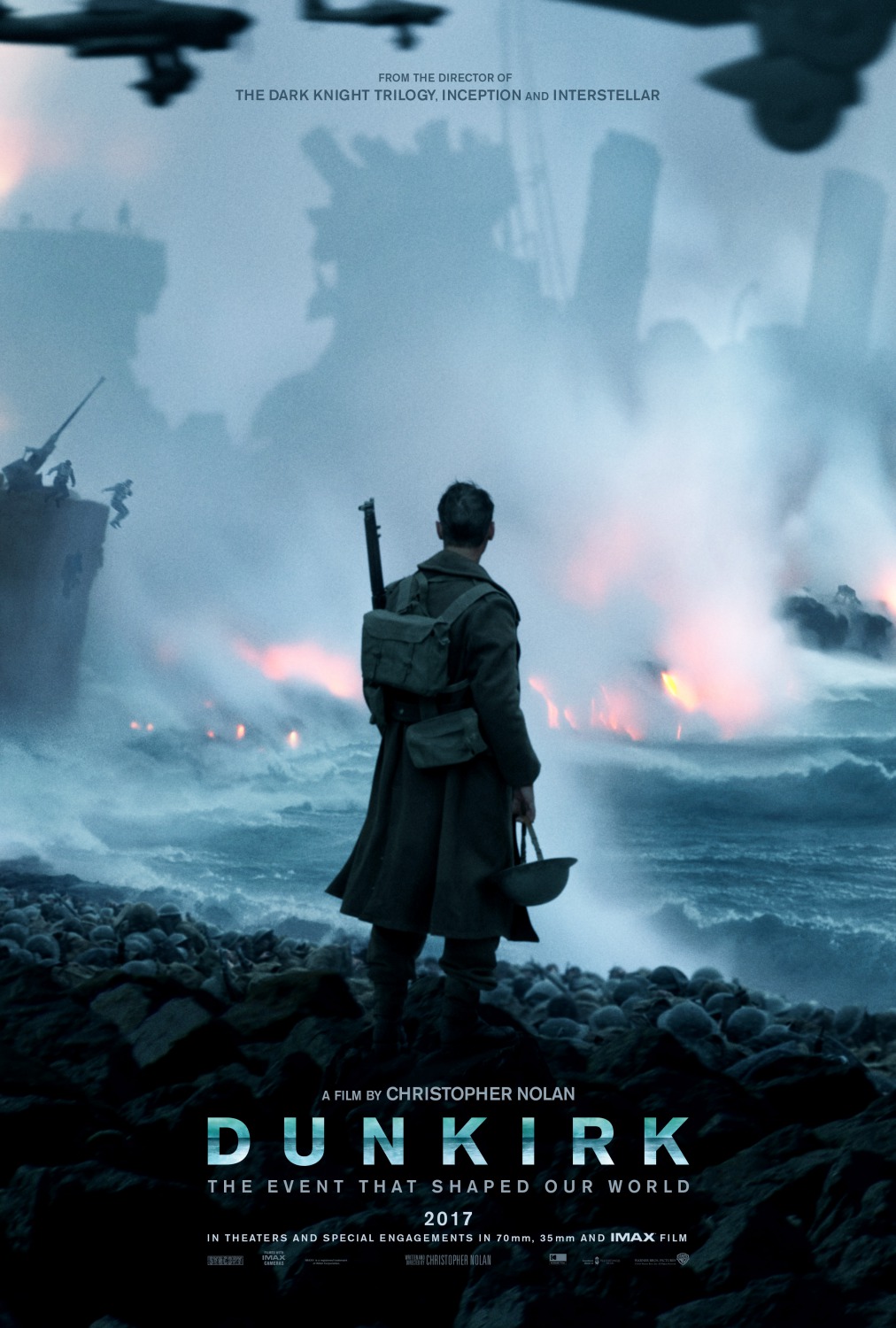
At one point during Christopher Nolan’s visually and sonically impressive ode to British heroism, Mark Rylance’s stoic Mr Dawson says, “Men my age dictate this war. Why should we be allowed to send our children to fight it?” It’s a rare moment of unexpected criticism (of the war) in a movie that celebrates the British determination to rescue victory from the jaws of defeat on the beaches at Dunquerke (through Operation Dynamo), and which does so in spectacular style. It’s one of a number of awkward moments where Nolan the writer appears to realise that he needs to be a commentator as well as an observer of events, and that he needs to add some much needed depth to proceedings. It’s also a moment that’s indicative of a greater problem with the movie as a whole: it doesn’t engage with the audience as much as it should do.

Nolan has gone on record to say that his idea for Dunkirk wasn’t to make a war movie but to make a suspense thriller, to take the three strands of land, sea and air and amalgamate them by the end of the movie into one combined incident. It’s typical of Nolan’s fondness for non-linear narratives, and he orchestrates the three different time frames – land: one week, sea: one day, air: one hour – with great skill and ingenuity, but amidst all the technical wizardry, the human element is left just as stranded as the Allied troops were back in 1940. Considering the scale of the evacuation, it’s hard to understand why Nolan decided to leave out such a crucial aspect. Thanks to the narrative decisions he’s made, the characters we do meet rarely make an impact, with patronym Tommy (Whitehead) suffering the most. Right from the start, where we see him fleeing from a barrage of gunfire and his comrades dropping like flies around him, and through all the travails he endures along the way, he’s a character we never fully identify or sympathise with. He’s a cypher in uniform, and Nolan never really introduces us to him.

The same goes for Hardy as RAF pilot Farrier. Once more hidden behind a mask that obscures his lower face, Hardy’s expression barely changes from scene to scene; he either looks determined or very determined. Alas, this isn’t enough to provide audiences with a character to identify with or relate to, and it’s only his heroic manner (which is shared by all but one other character) that allows us to appreciate him. Of all the characters we meet, only Rylance as the quietly resolute Mr Dawson and Branagh as Commander Bolton, overseer of the evacuation at Dunquerke itself, make much of an impact but that’s entirely due to their skill and experience as actors. It’s a shame that Nolan couldn’t have fleshed out his characters more; what’s the point of employing actors of the calibre of Murphy and Hardy when you’re not going to give them much to do?

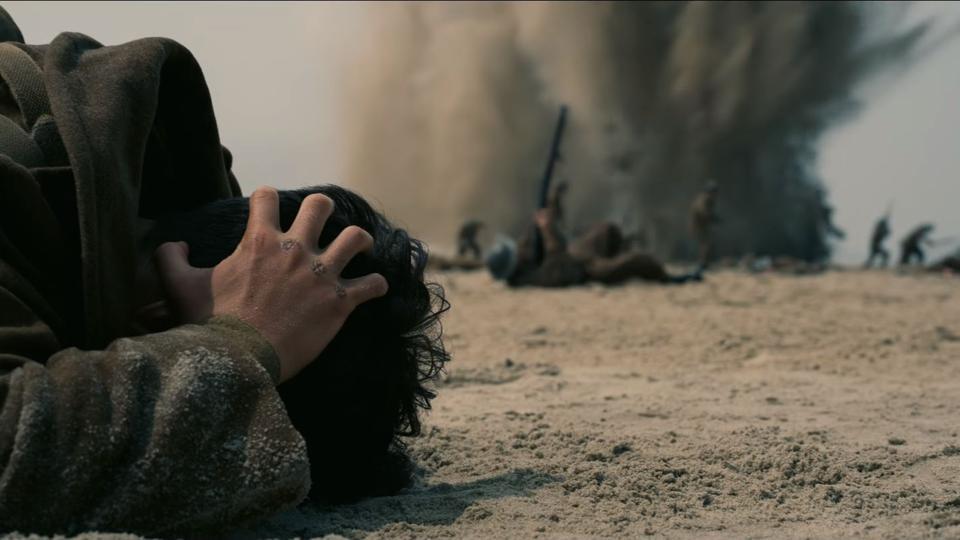
For a movie maker of Nolan’s stature, this is an unfortunate approach, and it leaves the movie in danger of becoming just an empty spectacle. Nolan has put a lot of time and effort into ensuring his take on the evacuation is as realistically mounted as possible, with a minimal use of CGI and the majority of practical effects being done in camera, and shooting on the very same beaches at Dunquerke. Thankfully this verisimilitude pays off handsomely, with Nolan’s standing as one of the most technically and visually gifted directors of his generation confirmed for all to see. There’s no room for doubt: Dunkirk is a stunning visual experience. Nolan wanted to give audiences the most immersive movie experience possible (albeit in the IMAX format) and he’s succeeded magnificently. Whether it’s on the beach, on the water, or in the air, Nolan, along with DoP Hoyte Van Hoytema, ensures that the viewer is thrust into the thick of things, whether it’s amongst a group of soldiers hemmed in on a jetty while German Stukas strafe them, or Tommy and some of his fellow soldiers stuck below decks in a torpedoed ship, or the cockpit of Farrier’s Spitfire, all these scenes and many more have an immediacy and a visceral intensity that is breathtaking to watch. On these occasions, the movie truly is an immersive experience, and Nolan’s ambition is fully realised.

But if Dunkirk looks visually astonishing, then it’s surpassed by its sound design. Every rifle shot and bullet hit, every creak and warp of timber on the boats, every burst and spin of the fighter planes is delivered with such clarity and impact that it adds an extra layer to the immersive nature of the material, and in IMAX 6-track format it’s even more impressive. There are details in the mix that are remarkably subtle as well, such as the different engine sounds of the small ships as they approach Dunquerke, or the trudge of footsteps across the beach. This is attention to detail taken to an almost obsessive degree, and the movie is all the better for it, creating a soundscape that highlights and dominates events shown, and which in terms of fidelity, sets a new benchmark.

Ultimately though (and a little unfortunately), what Nolan has devised and created is a movie that offers an unparalleled viewing and listening experience but which has moments where it seems to be saying, “look at this, isn’t that spectacular?” You can almost imagine a reporter turning to a newsreel cameraman and asking, a la Die Hard (1988), “Tell me you got that.” Nolan can perhaps be forgiven for a little grandstanding, or a little showing off from time to time, but when these moments occur they have the effect of taking the viewer out of the movie and reminding them that what they’re watching isn’t always as immersive as planned. What’s also distracting at times is Hans Zimmer’s score for the movie, which uses Nolan’s own pocket watch as a musical template for much of the tension that’s generated, though it’s a motif that’s over-used. It’s a divisive score, hugely effective on some occasions, an unfortunate pall over proceedings at others, but at least Zimmer stops short of making it all too triumphant and imperialistic – and that adds to the overall effect tremendously.

Rating: 7/10 – aside from some questionable narrative decisions, and restrictions around getting to know the characters, Dunkirk is the year’s most ambitious, and most mature, summer blockbuster; an incredible technical achievement by Nolan, the movie is a visual and aural tour-de-force, a feat of movie making that’s unlikely to be equalled or bettered any time in the near future, and which may well be Nolan’s best movie so far… oh, hang on, no, that’s still The Dark Knight (2008).

Share this:

  • Click to share on X (Opens in new window) X
  • Click to share on Facebook (Opens in new window) Facebook
  • More
  • Click to print (Opens in new window) Print
  • Click to email a link to a friend (Opens in new window) Email
Like Loading...

The BAFTAs 2016

14 Sunday Feb 2016

Posted by dullwood68 in Movies

≈ Leave a comment

Tags

2016, Alejandro González Iñárritu, Awards, BAFTA, Brie Larson, John Boyega, Kate Winslet, Leonardo DiCaprio, Mad Max: Fury Road, Mark Rylance, Movies, Stephen Fry, The Revenant

BAFTA

It’s that time of year again for the British Film Industry to slap its collective back and try and reassure itself that it’s in some way as vital as the US in terms of production, star power, and prestige (if not box office returns). Held in the slightly cramped environment of the Royal Opera House in London’s Covent Garden, and presented yet again by Stephen Fry, the ceremony followed the usual, tried and tested formula, and thanks to the miracle of pre-recording, didn’t outstay its welcome like the Oscar ceremony does.

One thing you probably won’t see at the Oscars is the BAFTA Kiss-Cam, an awkward bit of fun that had brief hook-ups between Cuba Gooding Jr and Stanley Tucci, Bryan Cranston and Julianne Moore, Eddie Izzard and Rebel Wilson, and oddly, Leonardo DiCaprio and Maggie Smith. Valentine’s Day, eh? What were the odds? (Winners in bold.)

BAFTA1

Outstanding British Film
45 Years – Andrew Haigh, Tristan Goligher
Amy – Asif Kapadia, James Gay-Rees
Brooklyn – John Crowley, Finola Dwyer, Amanda Posey, Nick Hornby
The Danish Girl – Tom Hooper, Tim Bevan, Eric Fellner, Anne Harrison, Gail Mutrux, Lucinda Coxon
Ex Machina – Alex Garland, Andrew Macdonald, Allon Reich
The Lobster – Yorgos Lanthimos, Ceci Dempsey, Ed Guiney, Lee Magiday, Efthimis Filippou

Not a surprise but also not the best result, with both The Danish Girl and 45 Years more deserving. Presented by Kate Winslet and Idris Elba.

Special Visual Effects
Ant-Man – Jake Morrison, Greg Steele, Dan Sudick, Alex Wuttke
Ex Machina – Mark Ardington, Sara Bennett, Paul Norris, Andrew Whitehurst
Mad Max: Fury Road – Andrew Jackson, Dan Oliver, Tom Wood, Andy Williams
The Martian – Chris Lawrence, Tim Ledbury, Richard Stammers, Steven Warner
Star Wars: The Force Awakens – Chris Corbould, Roger Guyett, Paul Kavanagh, Neal Scanlan

With little to choose between any of the nominees, it wasn’t a surprise that the Force took the BAFTA, but good to see Chris Corbould, an industry veteran, rewarded (with his team) for doing such fantastic work. Presented by Emilia Clarke and Matt Smith.

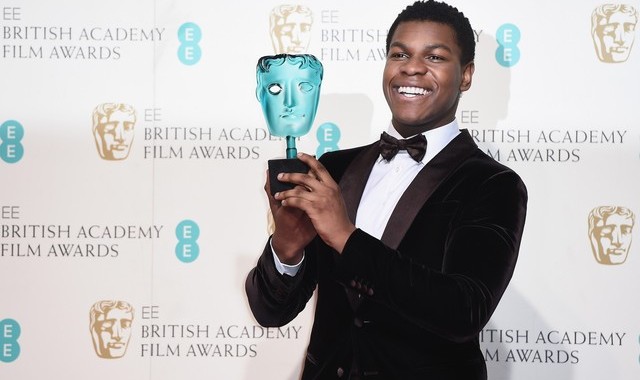
EE Rising Star Award

John Boyega; Taron Egerton; Dakota Johnson; Brie Larson; Bel Powley

A public vote that Boyega himself described as a “fluke” but well-deserved nevertheless. Presented by Jack O’Connell.

BAFTA6

Best Supporting Actor
Benicio Del Toro – Sicario
Christian Bale – The Big Short
Idris Elba – Beasts of No Nation
Mark Ruffalo – Spotlight
Mark Rylance – Bridge of Spies

Absolutely the right result, Rylance’s performance was a masterclass of internalised emotion. Accepted by Steven Spielberg. Presented by Rebel Wilson, who made a really funny speech about diversity and how the Oscars are racist, not to mention how Idris Elba made her nervous.

Animated Film
Inside Out – Pete Docter
Minions – Pierre Coffin, Kyle Balda
Shaun the Sheep Movie – Mark Burton, Richard Starzak

Well, who else was going to win? Presented by Eddie Izzard.

Best Supporting Actress
Kate Winslet – Steve Jobs
Alicia Vikander – Ex Machina
Rooney Mara – Carol
Jennifer Jason Leigh – The Hateful Eight
Julie Walters – Brooklyn

Winslet gave far and away the best performance in this category, and if she hadn’t won, then it would have been as baffling as why Carol hasn’t been nominated at the Oscars. Presented by Eddie Redmayne.

BAFTA3

Costume Design
Brooklyn – Odile Dicks-Mireaux
Carol – Sandy Powell
Cinderella – Sandy Powell
The Danish Girl – Paco Delgado
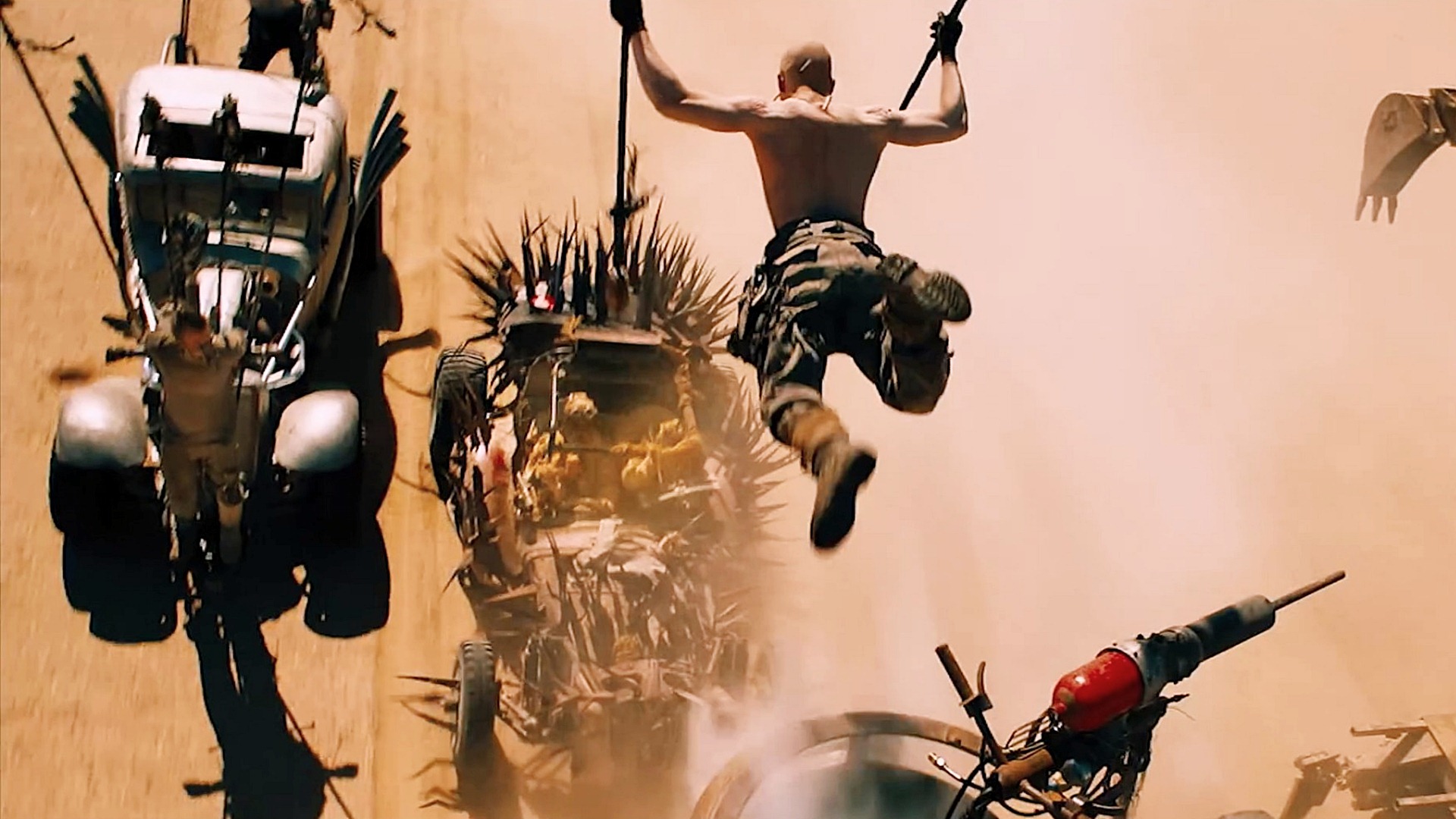
Mad Max: Fury Road – Jenny Beavan

A good result for both Beavan and Mad Max: Fury Road, and she got to say, “Oh what a lovely day” at the podium. Presented by Olga Kurylenko and Riz Ahmed.

Outstanding Debut by a British Writer, Producer or Director
Alex Garland (Director) – Ex Machina
Debbie Tucker Green (Writer/Director) – Second Coming
Naji Abu Nowar (Writer/Director) Rupert Lloyd (Producer) – Theeb
Sean McAllister (Director/Producer), Elhum Shakerifar (Producer) – A Syrian Love Story
Stephen Fingleton (Writer/Director) – The Survivalist

A great choice for this award, and good to see such a simple, moving story get its due recognition. Presented by Dakota Johnson and Will Poulter.

Adapted Screenplay
The Big Short – Adam McKay, Charles Randolph
Brooklyn – Nick Hornby
Carol – Phyllis Nagy
Room – Emma Donoghue
Steve Jobs – Aaron Sorkin

Congrats to McKay and Randolph who took a daunting, difficult subject and made it accessible to anyone who watched the movie. Presented by Angela Bassett.

Outstanding British Contribution to Cinema (The Michael Balcon Award) 

Established 175 years ago, the winners of this award, Angels Costumes, have been involved in the movies since 1913 and whichever movie you think of, it’s likely you’ve seen at least one of their costumes over the years, from Indiana Jones’ outfit to Gandhi’s robes, and a whole lot more. Presented by Cate Blanchett.

Original Screenplay
Bridge of Spies – Matthew Charman, Ethan Coen, Joel Coen
Ex Machina – Alex Garland
The Hateful Eight – Quentin Tarantino
Inside Out – Josh Cooley, Pete Docter, Meg LeFauve
Spotlight – Tom McCarthy, Josh Singer

A popular choice that wasn’t any kind of a surprise, and out of a fairly level playing field, but still a good result. Presented by Cuba Gooding Jr.

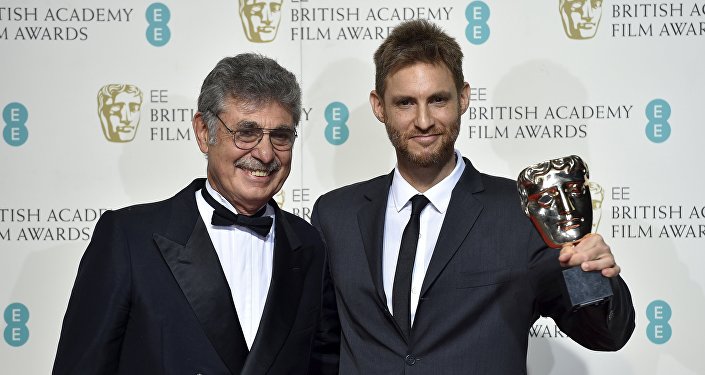
Film Not in the English Language
The Assassin – Hou Hsiao-Hsien
Force Majeure – Ruben Ostlund
Theeb – Abu Naji Nowar, Rupert Lloyd
Timbuktu – Abderrahmane Sissako
Wild Tales – Damian Szifron

A great result for the portmanteau revenge movie, and good to see that a fiercely adult and uncompromising movie can win a BAFTA. Presented by Carrie Fisher and Domhnall Gleeson.

BAFTA4

The Fellowship Award

Sidney Poitier. Given by the Academy in recognition of a lifetime’s achievement in cinema, with contributions from Oprah Winfrey, Noel Clarke and Lulu. Alas, Poitier was unable to attend due to ill health but there was a filmed (and quite heartfelt) acceptance, and his award was given to him by Jamie Foxx.

Director
The Big Short – Adam McKay
Bridge of Spies – Steven Spielberg
Carol – Todd Haynes
The Martian – Ridley Scott
The Revenant – Alejandro González Iñárritu

Another non-surprise given the scale and the difficulty of making The Revenant, though Todd Haynes may well have felt robbed by comparison. Presented by Stanley Tucci.

BAFTA5

Best Actress
Brie Larson – Room
Saoirse Ronan – Brooklyn
Cate Blanchett – Carol
Alicia Vikander – The Danish Girl
Maggie Smith – The Lady in the Van

Accepted by Lenny Abrahamson, this was completely unexpected. That Cate Blanchett didn’t win was possibly the only real shock of the night. Presented by Sacha Baron Cohen.

Best Actor
Leonardo DiCaprio – The Revenant
Eddie Redmayne – The Danish Girl
Michael Fassbender – Steve Jobs
Matt Damon – The Martian
Bryan Cranston – Trumbo

What a surprise! A shoo-in for the award, DiCaprio thanked many British actors who have inspired him over the years, and Tom Hardy in particular. Presented by Julianne Moore.

BAFTA2

Best Film
The Big Short
Bridge of Spies
The Revenant
Carol
Spotlight

With DiCaprio and Iñárritu winning in their categories this wasn’t any kind of a shock, but it was a sad moment to see Carol overlooked yet again. Presented by Tom Cruise.

The following awards weren’t shown during the broadcast:

Documentary
Amy – Asif Kapadia, James Gay-Rees
Cartel Land – Matthew Heineman, Tom Yellin
He Named Me Malala – Davis Guggenheim, Walter Parkes, Laurie MacDonald
Listen to Me Marlon – Stevan Riley, John Battsek, George Chignell, R.J. Cutler
Sherpa – Jennifer Peedom, Bridget Ikin, John Smithson

Cinematography
Bridge of Spies – Janusz Kaminski
Carol – Ed Lachman
Mad Max: Fury Road – John Seale
The Revenant – Emmanuel Lubezki
Sicario – Roger Deakins

Editing
The Big Short – Hank Corwin
Bridge of Spies – Michael Kahn
Mad Max: Fury Road – Margaret Sixel
The Martian – Pietro Scalia
The Revenant – Stephen Mirrione

Production Design
Bridge of Spies – Adam Stockhausen, Rena DeAngelo
Carol – Judy Becker, Heather Loeffler
Mad Max: Fury Road – Colin Gibson, Lisa Thompson
The Martian – Arthur Max, Celia Bobak
Star Wars: The Force Awakens – Rick Carter, Darren Gilford, Lee Sandales

Make Up & Hair
Brooklyn – Morna Ferguson, Lorraine Glynn
Carol – Jerry DeCarlo, Patricia Regan
The Danish Girl – Jan Sewell
Mad Max: Fury Road – Lesley Vanderwalt, Damian Martin
The Revenant – Sian Grigg, Duncan Jarman, Robert Pandini

Sound
Bridge of Spies – Drew Kunin, Richard Hymns, Andy Nelson, Gary Rydstrom
Mad Max: Fury Road – Scott Hecker, Chris Jenkins, Mark Mangini, Ben Osmo, Gregg Rudloff, David White
The Martian – Paul Massey, Mac Ruth, Oliver Tarney, Mark Taylor
The Revenant – Lon Bender, Chris Duesterdiek, Martin Hernandez, Frank A. Montaño, Jon Taylor, Randy Thom
Star Wars: The Force Awakens – David Acord, Andy Nelson, Christopher Scarabosio, Matthew Wood, Stuart Wilson

So in the end it was The Revenant‘s night, with five wins. More heartening was the four wins for Mad Max: Fury Road, a movie that was released (in awards terms at least) so long ago that some people might have forgotten all about it. That Carol didn’t pick up a win remains as baffling as America’s fascination with Donald Trump, and its snub here seems to be in keeping with the Oscars more overt slight. Which begs the question, just what does a lesbian love story have to do to win an award?

Mad Max Fury Road

Share this:

  • Click to share on X (Opens in new window) X
  • Click to share on Facebook (Opens in new window) Facebook
  • More
  • Click to print (Opens in new window) Print
  • Click to email a link to a friend (Opens in new window) Email
Like Loading...

Bridge of Spies (2015)

09 Wednesday Dec 2015

Posted by dullwood68 in Movies

≈ 1 Comment

Tags

America, Amy Ryan, Cold War, Drama, East Germany, Espionage, Exchange, Francis Gary Powers, Glienicke Bridge, Historical drama, James B. Donovan, Mark Rylance, Review, Rudolf Abel, Russia, Scott Shepherd, Spies, Steven Spielberg, Thriller, Tom Hanks, U2 spy plane

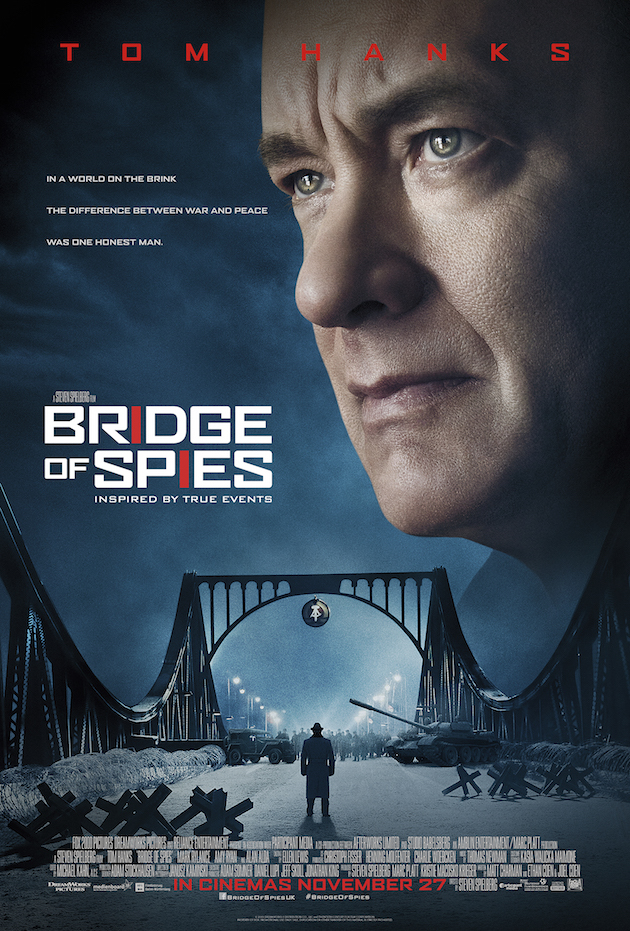
Bridge of Spies

D: Steven Spielberg / 141m

Cast: Tom Hanks, Mark Rylance, Scott Shepherd, Amy Ryan, Austin Stowell, Sebastian Koch, Alan Alda, Jesse Plemons, Will Rogers, Michael Gaston, Dakin Matthews, Billy Magnussen, Peter McRobbie, Mikhail Gorevoy, Burghart Klaußner, Max Mauff

In 1957, Rudolf Abel (Rylance) was arrested by FBI agents and charged with three counts of conspiracy as a Soviet spy. He was defended by an insurance attorney called James B. Donovan (Hanks), but despite Donovan’s best efforts (and to no one’s surprise) Abel was found guilty on all counts and sentenced to a total of forty-five years in prison (which was a surprise). An appeal to the Supreme Court was rejected and Abel remained in jail.

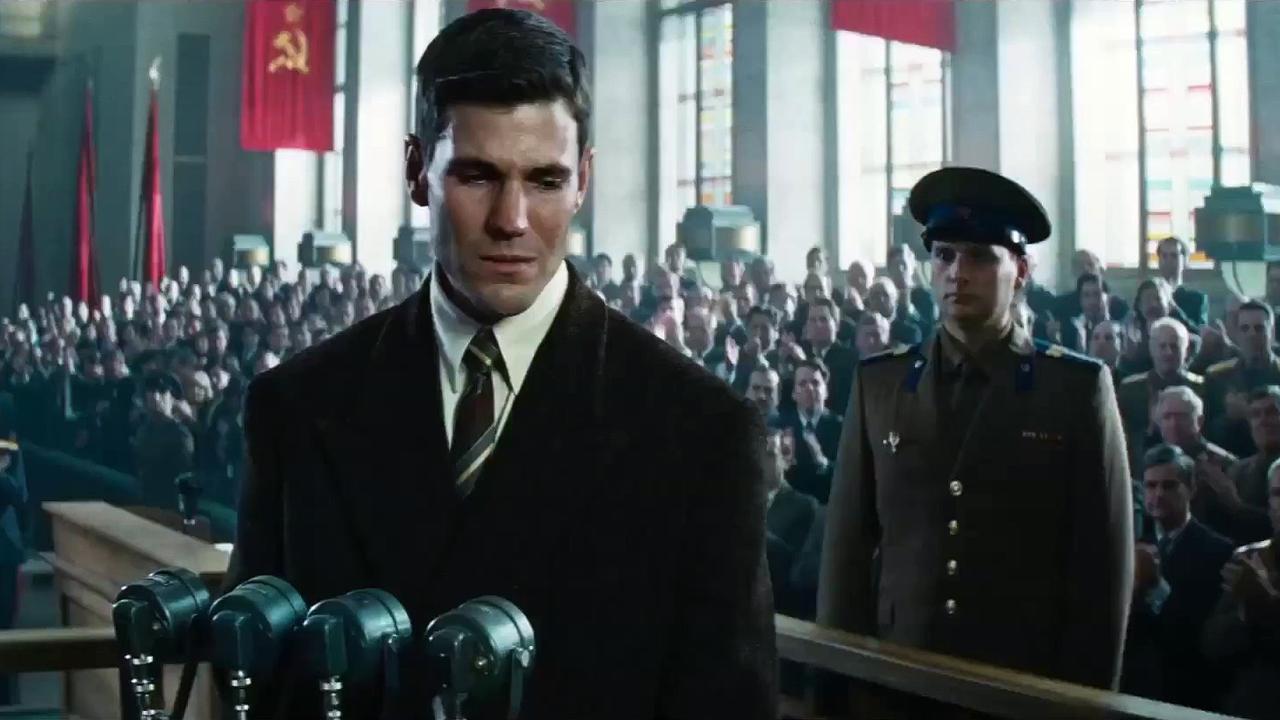
In 1960, US pilot Francis Gary Powers (Stowell) was shot down while on a spy plane mission over Soviet territory. He was charged with espionage against the Soviet Union and sentenced to ten years in prison. In 1961, American economics student Frederic Pryor (Rogers) found himself arrested and held without charge by the East German police. In 1962, Donovan, at the request of CIA chief Allen Dulles (McRobbie), travelled to Berlin to negotiate the exchange of Abel for Powers; when he learned of Pryor’s incarceration he made the young student’s release a part of the deal as well. On 10 February 1962, Pryor was released at Checkpoint Charlie, and Abel and Powers’ exchange took place at the Glienicke Bridge.

Bridge of Spies - scene3

These are the basic facts that Bridge of Spies elects to tell, and while it makes it clear from the beginning that the movie is “inspired” by real events, writers Matt Charman and Joel and Ethan Coen have expanded on those facts in order to fill in the gaps and make the movie more audience friendly. They’ve done a terrific job, with the politics of the time, both American and Soviet, explored and explained with a conciseness and brevity that allows the story to breathe and not be bogged down by endless exposition (there’s even room for a brief exposé of East German politics as well). What this means is that Bridge of Spies becomes a movie where all the twists and turns don’t leave the viewer baffled as to what’s going on, and they have a firm grounding as to why it’s all happening.

With the political and espionage themes so effectively set up and presented, Spielberg is left to get on with doing what he does best: telling a complex, complicated story easily and with surprising verve. The director seems at home when making historical dramas, and he has an enviable track record in the genre, from Empire of the Sun (1987) to Schindler’s List (1993) to Munich (2005) to Lincoln (2012). Spielberg is rightly regarded as a populist movie maker, but it’s his forays into history that often prove more satisfying, and Bridge of Spies is no different. Most of the “action” takes place behind closed doors, and consists generally of conversations between Donovan and one or two others. But it’s during these scenes that Spielberg teases out the subtleties and unspoken nuances of the various negotiations and political manoeuvrings, and makes them resonate in a way that few other directors are able to.

Bridge of Spies - scene2

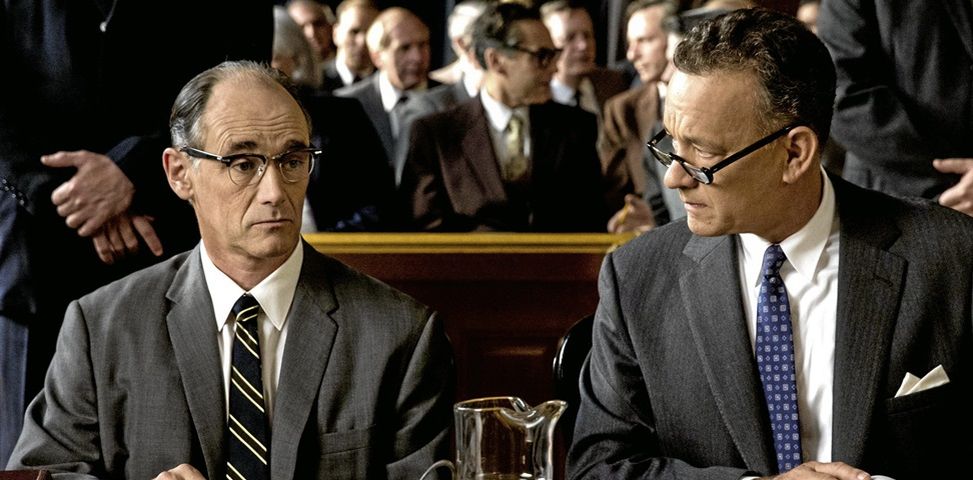
As Donovan juggles the demands of his own government with the needs of the Soviet Union, and the aims of the newly created East German authorities, Spielberg shows how close everyone is in terms of not wanting to be seen to be directly involved in any of the negotiations – Donovan himself is officially a private citizen representing his client, Abel – and how appearances are more important than the truth. Donovan is seen as an honorable man doing the best he can, and as he sees fit, in difficult circumstances, and his early brushes with his own legal system (which seems happy to ignore due process and the Fourth Amendment when it comes to prosecuting Soviet spies) show just how determined and independent-minded he is; or, as Abel puts it, a “standing man”. Donovan provides the moral compass to help audiences steer their way through the various schemes and ruses that each side comes up with.

In the more than capable hands of Hanks, Donovan is an ordinary man thrust into the extraordinary world of legal and political expediency and asked to put aside his personal and moral beliefs. That he doesn’t, and that he doesn’t in such a way that he also doesn’t appear to be pedantic or judgmental (at least not publicly) is a measure of Hanks’ controlled portrayal and what’s needed to make Donovan both sympathetic and credible. Hanks is matched by an equally impressive performance from Rylance, his stoic features and polite bearing providing a neat counterpoint to the American public’s view of him as reprehensible and an enemy of the American way of life. At different points in the movie, Donovan asks Abel the same question but in different ways: “Aren’t you worried by what might happen to you?” And always he answers: “Would it help?” Rylance plays Abel quietly and with dignity, his awareness of his situation and the political games going on around him expressed with a resigned authority.

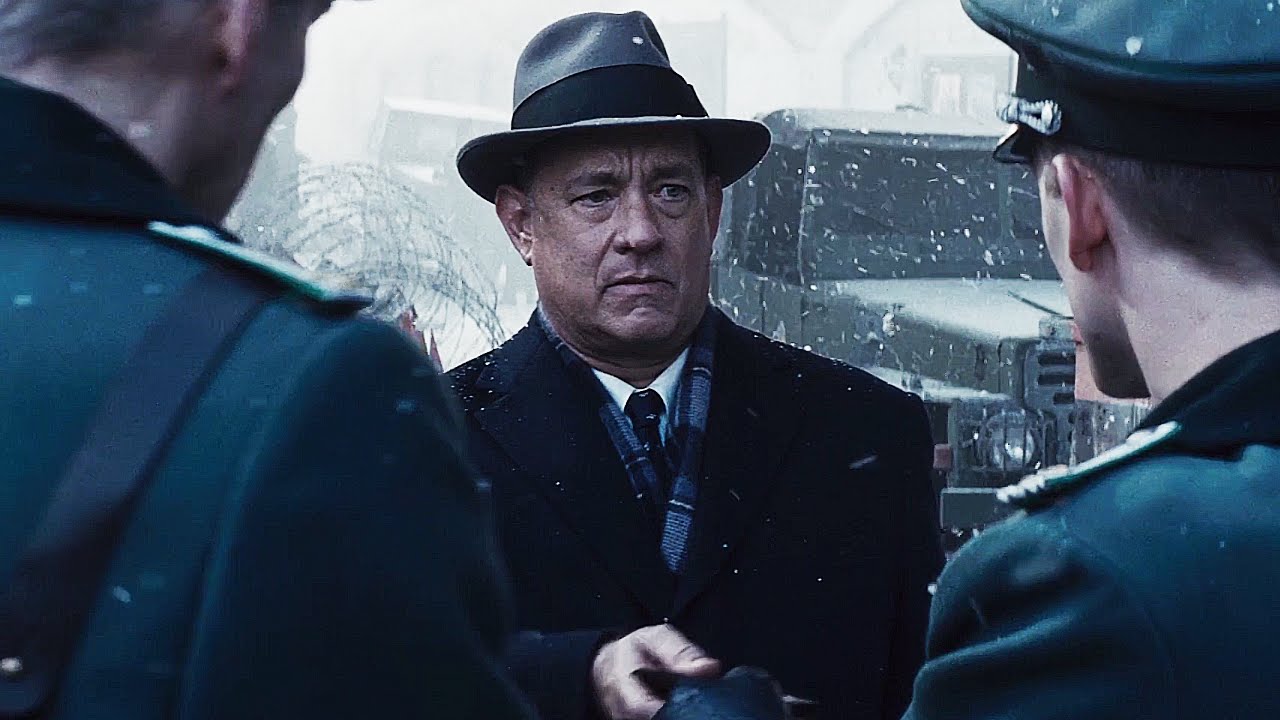
Spielberg recreates the period with his trademark exactitude, and aided by longtime collaborator Janusz Kaminski highlights the differences between US and East German life by emphasising Powers’ homeland via warm tones and an ingrained sense of comfort, while recreating Berlin’s post-War identity as the still-blasted, partially rebuilt city it was. The contrast is illuminating, adding to Donovan’s initial feelings of unease as he navigates the treacherous waters of international diplomacy.

Bridge of Spies - scene1

It’s here though that the movie loses some of the traction it’s built up along the way. Abel’s arrest and subsequent trial, along with Donovan’s hampered attempts to defend him properly, are expertly handled by Spielberg, and if the movie had only been concerned with Abel’s case then it would be an unqualified success. But once Donovan arrives in Berlin, and despite the various obstacles that threaten to derail his negotiations with the Soviets and the East Germans, there’s no tension in these scenes. Donovan overcomes each obstacle by either refusing to accept the problem is worth worrying about, or by making demands in the hope that the other side will blink first. By making this stretch of the movie so “easy” for Donovan, by the time we get to the exchange at the Glienicke Bridge, there’s so little reason or chance for things to go wrong at the last minute that any apprehension on the audience’s part has evaporated long before.

It’s a shame as the scenes in Berlin should have provided most if not all of the movie’s dramatic highlights, but alas it’s not to be. There is humour however, with Donovan’s fish-out-of-water situation used to good effect, and it’s drily executed by Hanks and perfectly in keeping with Donovan’s increasingly weary view of the world (at one point he remarks that the full names of the Soviet Union and East Germany are just too long). Away from Donovan’s efforts to negotiate the exchange and Pryor’s release, there’s a powerful sequence that shows Powers’ U2 plane being shot down and just how lucky he was to survive (though the movie makes it clear he shouldn’t have), and we see the initial creation of the Berlin Wall, a sight that remains unnerving even now that it’s gone.

Rating: 8/10 – measured, patient and deceptively simple in its approach, Bridge of Spies lacks resonance in terms of what’s happening in the world today, but as an examination of a particular event in recent world history it’s still fascinating and informative; capped by another of Hanks’ effortless performances, and Spielberg’s mastery of the medium, it’s a movie that holds the attention throughout even if it isn’t particularly thrilling.

Share this:

  • Click to share on X (Opens in new window) X
  • Click to share on Facebook (Opens in new window) Facebook
  • More
  • Click to print (Opens in new window) Print
  • Click to email a link to a friend (Opens in new window) Email
Like Loading...

Blog Stats

  • 491,358 hits

Recent Posts

  • 10 Reasons to Remember Bibi Andersson (1935-2019)
  • Fantasia (1940)
  • Dances With Wolves (1990) – The Special Edition
  • Kiss of the Spider Woman (1985)
  • The Three Musketeers (1973)

Top Posts & Pages

  • Cardboard Boxer (2016)
    Cardboard Boxer (2016)
  • Carrie (2013)
    Carrie (2013)
  • Hickey (2016)
    Hickey (2016)
  • I Origins (2014)
    I Origins (2014)
  • Lone Survivor (2013)
    Lone Survivor (2013)
  • Iris (2016)
    Iris (2016)
  • Happy Hunting (2017)
    Happy Hunting (2017)
  • The Inner Circle (1946)
    The Inner Circle (1946)
  • Death in High Heels (1947)
    Death in High Heels (1947)
  • Speak (2004)
    Speak (2004)
Follow thedullwoodexperiment on WordPress.com

Blogs I Follow

  • Rubbish Talk
  • Film 4 Fan
  • Fast Film Reviews
  • The Film Blog
  • All Things Movies UK
  • Interpreting the Stars
  • Let's Go To The Movies
  • Movie Reviews 101
  • TMI News
  • Dan the Man's Movie Reviews
  • Film History
  • Jordan and Eddie (The Movie Guys)

Archives

  • April 2019 (13)
  • March 2019 (28)
  • February 2019 (28)
  • January 2019 (32)
  • December 2018 (28)
  • November 2018 (30)
  • October 2018 (29)
  • September 2018 (29)
  • August 2018 (29)
  • July 2018 (30)
  • June 2018 (28)
  • May 2018 (24)
  • April 2018 (21)
  • March 2018 (31)
  • February 2018 (25)
  • January 2018 (30)
  • December 2017 (30)
  • November 2017 (27)
  • October 2017 (27)
  • September 2017 (26)
  • August 2017 (32)
  • July 2017 (32)
  • June 2017 (30)
  • May 2017 (29)
  • April 2017 (29)
  • March 2017 (30)
  • February 2017 (27)
  • January 2017 (32)
  • December 2016 (30)
  • November 2016 (28)
  • October 2016 (30)
  • September 2016 (27)
  • August 2016 (30)
  • July 2016 (30)
  • June 2016 (31)
  • May 2016 (34)
  • April 2016 (30)
  • March 2016 (30)
  • February 2016 (28)
  • January 2016 (35)
  • December 2015 (34)
  • November 2015 (31)
  • October 2015 (31)
  • September 2015 (34)
  • August 2015 (31)
  • July 2015 (33)
  • June 2015 (12)
  • May 2015 (31)
  • April 2015 (32)
  • March 2015 (30)
  • February 2015 (37)
  • January 2015 (39)
  • December 2014 (34)
  • November 2014 (34)
  • October 2014 (36)
  • September 2014 (25)
  • August 2014 (29)
  • July 2014 (29)
  • June 2014 (28)
  • May 2014 (23)
  • April 2014 (21)
  • March 2014 (42)
  • February 2014 (38)
  • January 2014 (29)
  • December 2013 (28)
  • November 2013 (34)
  • October 2013 (4)

Blog at WordPress.com.

Rubbish Talk

Film 4 Fan

A Movie Blog

Fast Film Reviews

The Film Blog

The official blog of everything in film

All Things Movies UK

Movie Reviews and Original Articles

Interpreting the Stars

Dave Examines Movies

Let's Go To The Movies

Film and Theatre Lover!

Movie Reviews 101

Daily Movie Reviews

TMI News

Latest weather, crime and breaking news

Dan the Man's Movie Reviews

All my aimless thoughts, ideas, and ramblings, all packed into one site!

Film History

Telling the story of film

Jordan and Eddie (The Movie Guys)

Movie Reviews & Ramblings from an Australian Based Film Fan

Privacy & Cookies: This site uses cookies. By continuing to use this website, you agree to their use.
To find out more, including how to control cookies, see here: Cookie Policy
  • Subscribe Subscribed
    • thedullwoodexperiment
    • Join 481 other subscribers
    • Already have a WordPress.com account? Log in now.
    • thedullwoodexperiment
    • Subscribe Subscribed
    • Sign up
    • Log in
    • Report this content
    • View site in Reader
    • Manage subscriptions
    • Collapse this bar
 

Loading Comments...
 

    %d