• 10 Reasons to Remember…
  • A Brief Word About…
  • About
  • For One Week Only
  • Happy Birthday
  • Monthly Roundup
  • Old-Time Crime
  • Other Posts
  • Poster of the Week
  • Question of the Week
  • Reviews
  • Trailers

thedullwoodexperiment

~ Viewing movies in a different light

thedullwoodexperiment

Tag Archives: Marton Csokas

Mark Felt: The Man Who Brought Down the White House (2017)

02 Tuesday Jan 2018

Posted by dullwood68 in Movies

≈ Leave a comment

Tags

Deep Throat, Diane Lane, Drama, FBI, Liam Neeson, Marton Csokas, Peter Landesman, Review, True story, Watergate
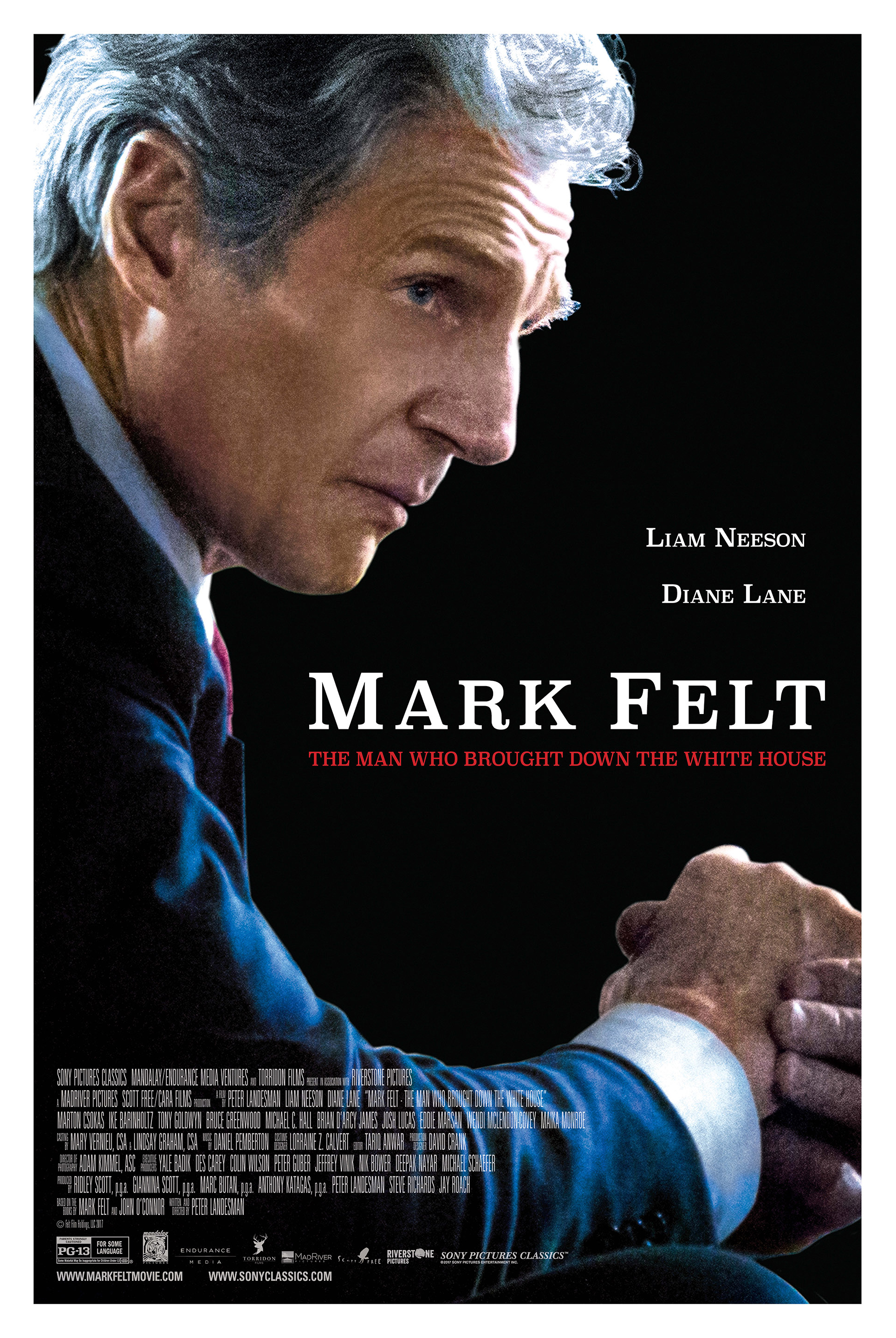
aka The Secret Man

D: Peter Landesman / 103m

Cast: Liam Neeson, Diane Lane, Marton Csokas, Tony Goldwyn, Ike Barinholtz, Josh Lucas, Wendi McLendon Covey, Kate Walsh, Brian d’Arcy James, Maika Monroe, Michael C. Hall, Tom Sizemore, Bruce Greenwood, Eddie Marsan, Noah Wyle

To have lived in America during the late Sixties and early Seventies was to have lived in troubled times. The country was experiencing seismic shifts in practically all areas: sexually, racially, politically, socially. But if there was one constant, one small part of the US that could be counted on to remain the same, no matter what was occurring anywhere in the country, it was the FBI. The FBI under J. Edgar Hoover remained apart from political bias or influence, an autonomous body that answered to no one, but which involved itself – if needed – in the lives of everyone. If you ever wanted to know just how much Hoover was feared, you only have to watch the first scene in Mark Felt: The Man Who Brought Down the White House. In it, the FBI’s Deputy Associate Director Mark Felt (Neeson) is called to the White House for a meeting with John Dean (Hall) and two of his colleagues in the Nixon administration, John Mitchell and John Ehrlichmann. When they infer that Hoover should step down as Director of the FBI, it’s Felt who chillingly reminds them about Hoover’s secret files, the ones that contain everybody’s dirty laundry. What would happen, Felt counter infers, if those files were made public. The idea of Hoover retiring is quickly dropped.

The scene serves two purposes: one, to show just why the FBI was so autonomous, and two, to make it clear to the viewer that even if Hoover wasn’t around, Felt would be, and he was just as much a keeper of the secrets as Hoover was. It’s a necessary distinction to make, as what follows in the wake of Hoover’s death on 2 May 1972, is a watershed in US history, and Felt’s involvement in that watershed is crucial to the events that led to President Nixon’s resignation from office. Make no mistake: without Felt’s involvement, and without the decision he ultimately took in becoming “Deep Throat”, the US political landscape would have continued to change irrevocably for the worse. It’s a theme that runs throughout the movie, and which has modern day parallels. After Hoover’s death, and the discovery of the Watergate break-in, the White House did its best to influence the FBI and stop it from carrying out a thorough investigation (sound familiar?). And the White House’s efforts would have succeeded – if it hadn’t been for Mark Felt.
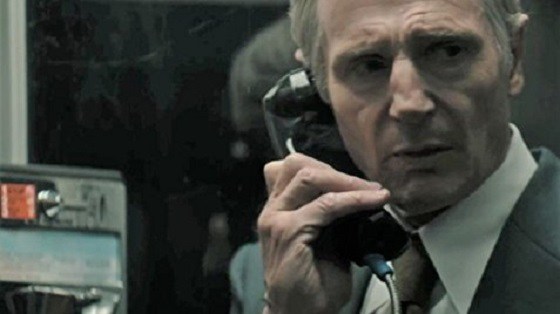
And so we have Felt portrayed by Liam Neeson in a political drama that goes behind the scenes at the FBI during the two years between Hoover’s death and Nixon’s resignation. Based largely on A G-Man’s Life (2006), a memoir Felt wrote with John O’Connor, Peter Landesman’s latest movie is ultimately a strange beast, neither compelling enough to grab its audience and guide it safely through the political upheaval of the time, or clear enough on the details of just how Nixon was caught in a web of his own deception. Instead, Landesman’s script focuses on the need to keep Acting Director L. Patrick Gray (Csokas) in the dark about the investigation, the search for the mole in the FBI who’s leaking information to Time and The Washington Post, and on a personal front, Felt’s search for his runaway daughter, Joan (Monroe). These three strands lead to a lot of repetition as Felt repeatedly goes behind Gray’s back, accusations of someone being “Deep Throat” fly thick and fast through the FBI offices with almost everyone being accused at one point or another, and Felt reassuring his wife, Audrey (Lane), that Joan will be found safe and well.

It’s all done in a watchable, unpretentious way, with Landesman apparently content to play out the story as if he were doing it by the numbers. There’s energy here in the way that people around Felt seem to be rushing around but to no obvious purpose (Felt gives out lots of instructions but rarely receives any related feedback), and the pace of the movie is quick enough that boredom is never likely to set in, but it all seems like a missed opportunity. It’s another movie where we all know the outcome in advance (or at least should do), and so it’s also a movie where the script’s ability to create tension and maintain it is undermined from the word go. Even when Felt falls under suspicion of being “Deep Throat” and Gray implies that Felt is being bugged because of this, all it leads to is a few minutes of Felt searching his office and his home for hidden microphones, and then it’s all forgotten. In his efforts to include as much as possible that occurred during that tumultuous two-year period, Landesman has forgotten to ensure that what is included is both relevant and advances the narrative. As a result, there are too many occasions where said narrative stalls and needs to be kickstarted again.

In the title role, Neeson is square-jawed, determined, strikingly gray-haired, and a bit of a dull date. Spending time with Felt eventually becomes something of a chore. He’s not the most expressive of men – though when he becomes angry about something, his outbursts are like the tantrums of a six year old, or someone trying out being angry for the first time – and his stolid, rigid demeanour doesn’t exactly warm you to him, but where Neeson does succeed with the character is in showing his commitment to the FBI and the depth of his affiliation with it. The script hints at Felt becoming a whistleblower because of what was happening to the FBI rather than any disgust at Nixon’s criminal behaviour, but it falls short of exploring this idea fully, and instead paints Felt as a kind of Gary Cooper figure who has to do the right thing, no matter what. Neeson is also lumbered with some gloriously tedious dialogue, though the moment where he gets to say, “No one can stop the driving force of an FBI investigation, not even the FBI”, is one to cherish.

There’s good support from the likes of Lucas and Monroe, but Csokas comes across as too heavy handed as the out of his depth Gray. Lane, meanwhile, apparently gave such a great performance as Felt’s troubled wife that most of her scenes ended up on the cutting room floor, which is a shame as Lane provides easily the movie’s best performance in spite of this. Visually the movie is quite restrained, with a dark, limiting colour palette that is probably meant to represent the gloominess of the times, but which in reality makes the movie look unnecessarily dreary. In the end it’s a competently made movie but not one that stands out from the crowd despite its subject matter.

Rating: 5/10 – a movie that has all the potential to be a riveting political thriller is instead a rather uninspired trek through a period of US history that was anything but humdrum; Mark Felt: The Man Who Brought Down the White House lacks drive and ambition in its attempts to tell Felt’s story, and settles early on for playing it safe and pedestrian in terms of its willingness to amble instead of soaring.
Share this:

  • Click to share on X (Opens in new window) X
  • Click to share on Facebook (Opens in new window) Facebook
  • More
  • Click to print (Opens in new window) Print
  • Click to email a link to a friend (Opens in new window) Email
Like Loading...

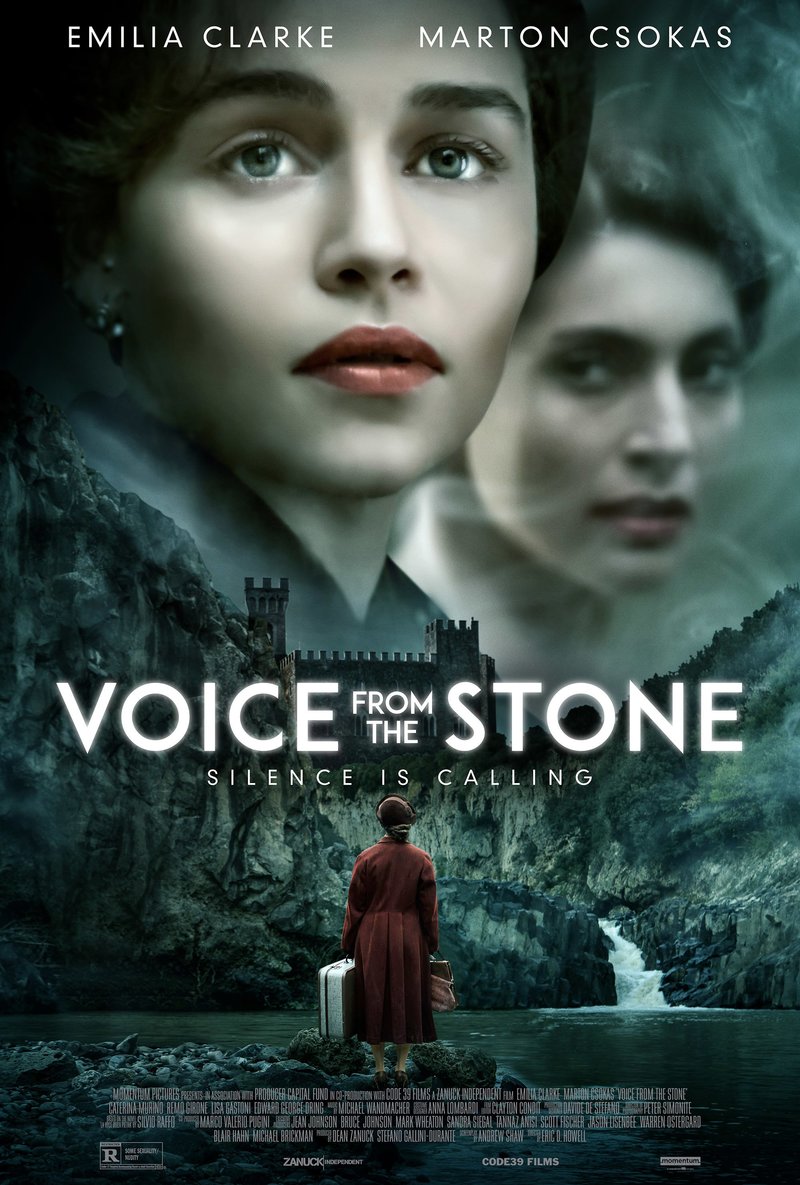
Voice from the Stone (2017)

29 Friday Sep 2017

Posted by dullwood68 in Movies

≈ Leave a comment

Tags

Caterina Murino, Drama, Emilia Clarke, Eric Dennis Howell, La Voce Della Pietra, Literary adaptation, Marton Csokas, Mystery, Review, Tuscany

D: Eric Dennis Howell / 90m

Cast: Emilia Clarke, Marton Csokas, Caterina Murino, Remo Girone, Lisa Gastoni, Edward George Dring

There’s a whole other sub-section of the movies where English or American actors and actresses take roles that are shot in foreign locations with a foreign crew, and often their presence is there to ensure a decent enough showing in the international market. A lot of these movies, however, don’t always get the exposure they need, and head straight for DVD or VOD. Some manage to get into cinemas but they rarely make much of an impact, and often see out a week’s residency without too much fuss and bother. One such movie is Voice from the Stone, which since its world premiere at the Minneapolis-St Paul International Film Festival on 20 April this year, has made it onto the big screen in only five countries so far (six if you include its appearance at this year’s UK FrightFest). So how does this movie fare against all the others?

Without deliberately invoking this blog’s favourite i-word, Voice from the Stone proves largely disappointing, and for a number of reasons. The basic premise is ideal for setting up a semi-Gothic mystery thriller, but somewhere along the way, Howell’s interpretation of Andrew Shaw’s screenplay (itself an adaptation of Silvio Raffo’s novel La Voce Della Pietra), jettisons the idea of playing the obvious mystery elements – is grief-stricken son Jakob (Dring) really hearing the voice of his dead mother, Malvina (Murino), in the walls of his Tuscan villa home? – in order to focus on the nature of grief and the (not too) dark places it can lead us to. There’s Jakob’s grief, the grief his father, Klaus (Csokas), is dealing with, and then to a lesser extent, there’s the grief that Verena (Clarke) is feeling. Verena is a nurse who tends to sick children in their homes, and each time her work is done, it becomes harder and harder to leave, such is the emotional connections she makes as part of her approach to caring for the children in her charge.

Jakob was with his mother when she died, and had stayed by her bedside almost all throughout her illness. Since then he hasn’t said a word, whether through choice (as an expression, excuse the pun, of his grief), or something more sinister. The fact that he listens to the walls, and seems to be hearing his dead mother’s voice, is excused by his father as the boy’s way of dealing with his sadness. But Verena sees it as much more dangerous to Jakob’s emotional health, and in an initially oblique way, begins to challenge his behaviour. She’s encouraged in this by Lilia (Gastoni), Malvina’s mother, who is confident that Verena can get Jakob to talk. But although Verena slowly begins to make headway in bringing Jakob out of his grief, the dynamic within the villa starts to shift around her, and she finds she can no longer trust all that she believed when she first arrived…

Annoyingly, Voice from the Stone sets itself up as a slow-paced, methodical thriller that’s big on atmosphere and rich in emotional detail. However, while it never promises startling revelations along the way, what it does do is morph ever so slowly into a static drama that can’t make much of the few dramatic incidents that the script sets up. A visit to the family mausoleum should be disquieting but avoids making an impact by having its heroine behave as if she’s seeing ghosts that aren’t there, and a potentially frightening dream sequence is undermined by the way in which it’s staged. And despite Clarke’s best efforts, the character of Verena doesn’t convey the necessary depth that would allow the viewer to care about her predicament. The same is true of Csokas’ one-minute-guarded, the next-minute-approachable reading of Klaus, a grieving husband whose personality and demeanour lacks consistency, and who occupies a kind of there-when-the-script-needs-him-to-be middle ground that keeps the character from engaging with the viewer.

Shaw’s screenplay becomes increasingly erratic the longer the movie goes on, and there are a couple of jarring shifts in the narrative, along with a dramatic development involving a piece of sculpture that Klaus is working on, that nudges the story along but so unconvincingly you might be wondering if there’s a reel missing. There’s also a “surprise” that some viewers will have spotted a mile off, and which, when it’s revealed, has all the impact of being slapped with a damp tissue. As for the mystery of the voice in the walls, the script settles for being ambiguous when it needs to be more definitive (otherwise it’s a mystery with no payoff, and how much fun are they?). And the ending, when it comes, proves just as underwhelming as what’s gone before, though it does at least avoid throwing in a cheap twist to round things off or to try and set up a potential sequel.

With Shaw’s screenplay suffering from a number of fatal flaws, matters aren’t helped by Howell’s turn in the director’s chair. Only his second feature since From Heaven to Hell in 2002 (check out its cast), Voice from the Stone soon proves itself to be a challenge that Howell, a former stuntman, isn’t able to overcome. There are too many scenes that are flat and drearily composed, and the flow of the movie is stalled time and time again by decisions made in the editing suite, decisions that stop the movie from gaining any traction when it needs to, and stop it from being anything other than a chore to sit through for much of its running time. Clarke tries her best to get a good grip on the character of Verena but is unable to because her character makes too many random, unsupported choices, while Csokas is left to fashion a performance from too few clues and too few insights. And Dring, as the silent Jakob, can only frown a lot or remain passive, something he does well, but it’s not necessarily a recommendation of his performance, rather a drawback he can’t defeat. The movie is also unattractive to watch for the most part, too often dimly lit (even the exteriors) and attempting to provide itself with some atmosphere by doing so.

Rating: 4/10 – undercooked and underwhelming, Voice from the Stone is a movie that offers little in the way of satisfactory viewing, and only occasionally rises above the mundane handling of the material; a thriller that doesn’t thrill and with a mystery that’s never solved one way or the other, this is one for Emilia Clarke completists only, or viewers willing to give it the benefit of the doubt – though it would be hard to understand why.

Share this:

  • Click to share on X (Opens in new window) X
  • Click to share on Facebook (Opens in new window) Facebook
  • More
  • Click to print (Opens in new window) Print
  • Click to email a link to a friend (Opens in new window) Email
Like Loading...

Loving (2016)

03 Friday Feb 2017

Posted by dullwood68 in Movies

≈ 1 Comment

Tags

ACLU, Anti-miscegenation laws, Drama, Jeff Nichols, Joel Edgerton, Marton Csokas, Nick Kroll, Racism, Review, Ruth Negga, Supreme Court, True story, Virginia

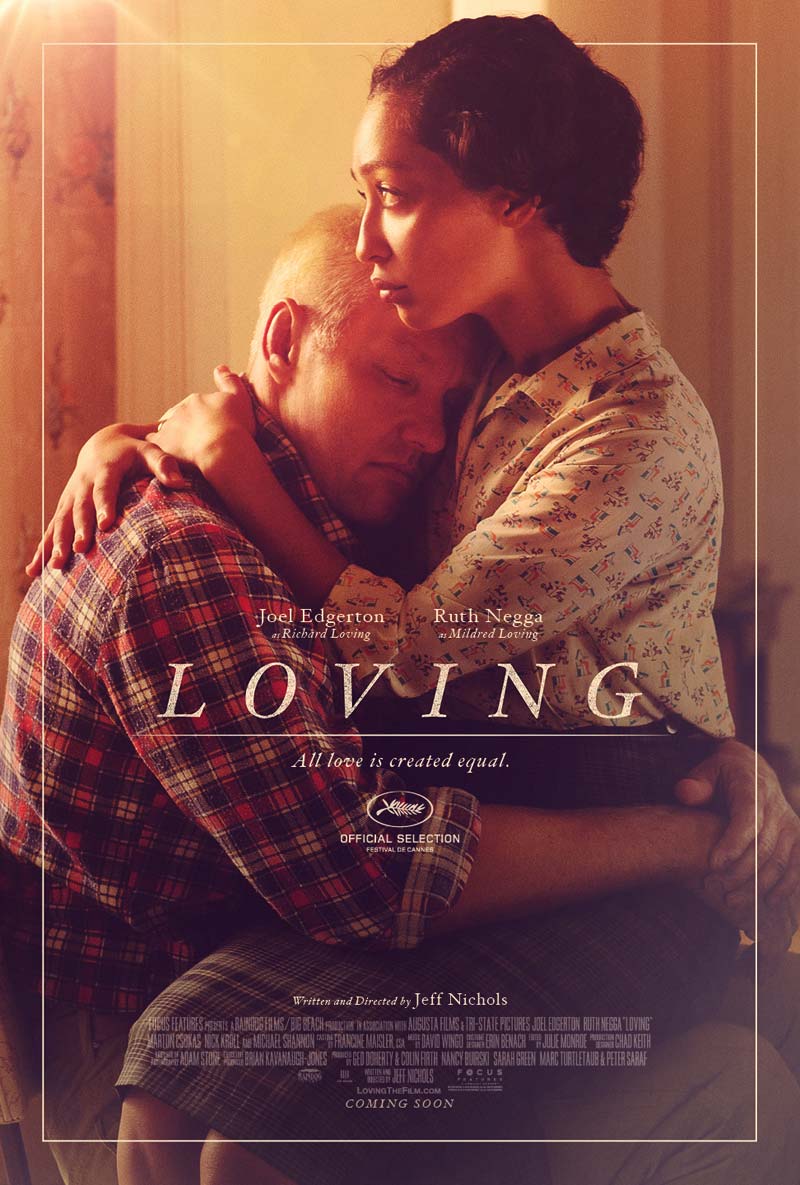
qpzm7ok

D: Jeff Nichols / 123m

Cast: Joel Edgerton, Ruth Negga, Marton Csokas, Nick Kroll, Terri Abney, Alano Miller, Sharon Blackwood, Bill Camp, David Jensen, Jon Bass, Michael Shannon

Caroline County, Virginia, 1958. Bricklayer Richard Loving has fallen in love with Mildred Jeter (Negga), and now she’s pregnant. Knowing that Virginia’s anti-miscegenation laws prohibit inter-racial marriage, they travel to Washington D.C. and get married there. They return to Caroline County and begin their married life in the home of Mildred’s parents. But news of their marriage has reached the wrong people; in a dawn raid carried out by the local sheriff (Csokas), Richard and Mildred are arrested and put in jail. Richard is allowed out on bail soon after, but Mildred is kept there until the following Monday. At their trial, and on the recommendation of their lawyer (Camp), they plead guilty and are both sentenced to one year in prison, which will be suspended if they leave Virginia and don’t return for twenty-five years. With no other choice available to them, they move to Washington and stay with one of Mildred’s friends.

Richard’s mother (Blackwood) is a midwife, and Mildred is determined that their first baby should be delivered by her. They sneak back to Caroline County and Mildred gives birth to a son, Sidney. But again, the sheriff arrives to arrest them. In court, the judge is on the point of sentencing them when their lawyer intervenes and assumes the blame for their having returned. They return to Washington, and in time, have two more children: another son, Donald, and a daughter, Peggy. But Mildred is unhappy that her children can’t grow up surrounded by trees and fields and a more simple country life. On the advice of her friend she writes to Robert F. Kennedy (at the time the Attorney General), explaining their situation. A little while later, Mildred receives a call from Bernard S. Cohen (Kroll), a lawyer working for the American Civil Liberties Union (ACLU), who has been passed their case and wants to meet with them. But their first meeting doesn’t go too well, mainly because he suggests they return to Caroline County and get re-arrested so Cohen can begin mounting a challenge through the courts.

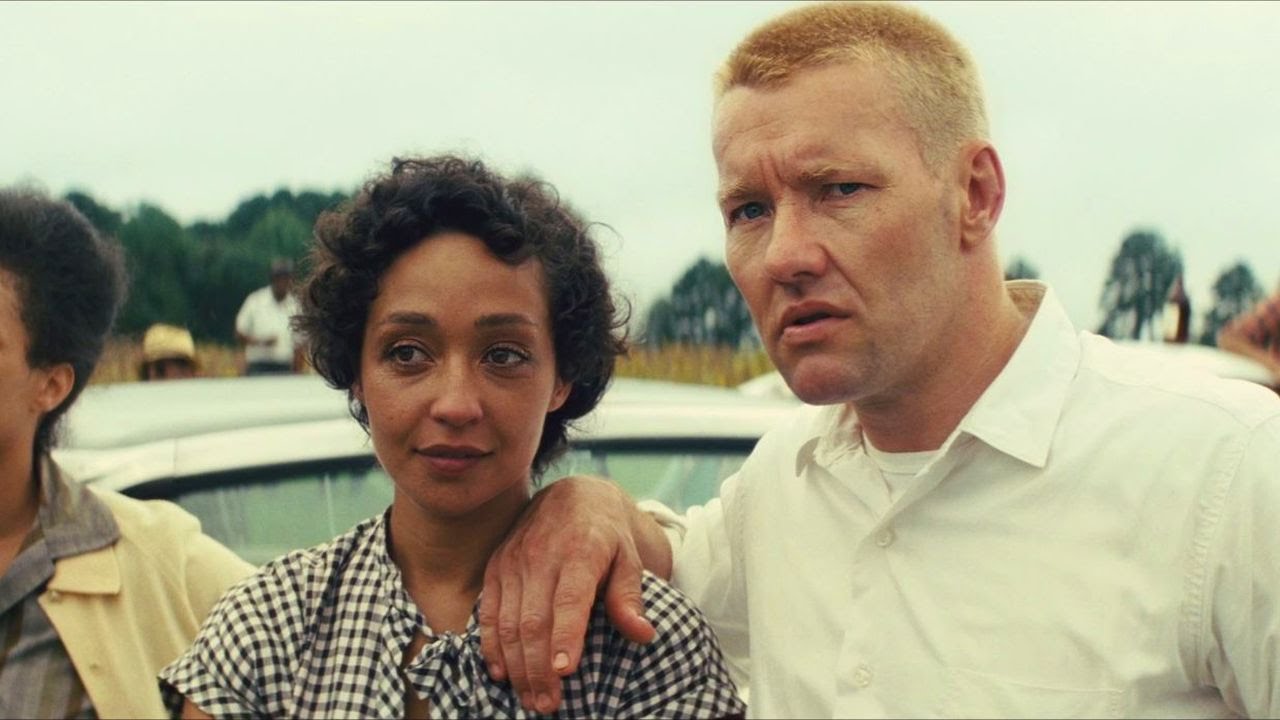
maxresdefault

Circumstances however, dictate a return to Caroline County, and the Lovings rent an old farm house nearby where they’re unlikely to be noticed. Cohen is encouraged to keep working on their case, and with the aid of constitutional lawyer Phil Hirschkop (Bass), they keep appealing the verdicts given at Virginia state level, until they have an appearance before the Supreme Court, an appearance that will have a far-reaching effect on not just the Lovings, but the whole country.

Following quickly on the heels of his previous movie, Midnight Special (also 2016), writer/director Jeff Nichols has made a much quieter, less spectacular movie, but also one that speaks directly from the heart. Anyone expecting the usual courtroom pyrotechnics that such a story might provoke other movie makers to attempt will be either sorely disappointed or pleasantly surprised. There are only three courtroom scenes in the entire movie, and they’re all very brief. And aside from the dawn raid that sees the couple’s first arrest by Sheriff Brooks, there’s little in the way of full-blown drama or tension. What we have instead, is a movie that quite rightly focuses on the Lovings, and the various ways that their love for each other allows them to weather the legal and social ramifications of their fight to have their marriage recognised – and not just in the state of Virginia.

L_03449.jpg

Nichols has gone to great lengths to make this movie about the Lovings, and not the crusade that Cohen and Hirschkop went on to get the anti-miscegenation law changed, a law that had been born out of the South’s desire to maintain racial purity (Virginia’s argument was that it was unfair to bring mixed race children into the world; the state regarded them as bastards). This contentious stance, and the challenge to it would make for a great movie, but Nichols is more astute than that, and he’s recognised that it’s the Lovings themselves that are the important element here. In scene after scene we witness a couple whose commitment and reliance on each other is evident from a glance here, a touch there, and how strong they are because they’re a couple. It’s their love that shines through, time and again, and it’s all done so subtly and so delicately that the breadth and depth of it is sometimes surprising – and that makes it all the more extraordinary.

Nichols is helped by two very good choices for the roles of Richard and Matilda. Edgerton gives possibly his best performance as the buttoned-down, emotionally and intellectually restrained bricklayer whose involvement all along is tempered by a fatalistic attitude. Edgerton is hunched over and taciturn, weighed down (and yet unbowed) by the wider relevance of his situation. It’s a situation that he doesn’t trust fully, but because Matilda supports it, he supports it through supporting her. Edgerton displays all this by relaxing his features when needed, softening his mostly pinched facial muscles as signs of both acceptance and admration for Mildred’s patience and persistence; you know he’d rather settle for a quiet life in Washington, but he also recognises that it’s not the life he should be leading. For some viewers, it may seem that Edgerton is just brooding a lot and being monosyllabic, but there’s a depth and a profundity to his performance that is very impresssive indeed.

1466022807_loving_gallery9_joeledgerton_ruthnegga_jeffnichols-1830x1029

He’s matched by Negga, who gives one of the year’s most sublime performances. Best known perhaps for her TV work on shows such as Marvel’s Agents of S.H.I.E.L.D. and more recently, Preacher, Negga is a revelation here, not portraying Mildred but inhabiting her, and in the process, revealing aspects and nuances that play out through her expressions and her body language. Like her husband, Mildred has a pride and a sense of her own worth that won’t be taken from her, and it’s she who drives the story forward. Negga shows us the determination not to be told where she can or cannot live and bring up her children, and she does so with a quiet fierceness that is entirely credible. Just watching her as she tries to take in what “going to the Supreme Court” actually means, with the character’s naïvete and lack of education shining through, is a perfect example of Negga’s confidence in the role, as she combines vulnerability and tenacity to quite stunning effect. And if further proof were needed as just how good she is, watch Negga when Mildred gets the call from Cohen as to the Supreme Court’s verdict; it’s simply breathtaking, both for its emotional complexity and its simplicity, a conflation that few actresses are able to achieve no matter how much they try.

Nichols is also astute enough to make sure that Loving isn’t about miscegenation, or the racial, social and political turmoil of the time (though they’re acknowledged), but what marriage means for a couple who love each other so deeply. It’s no coincidence that the movie is most effective when a scene involves just Richard and Mildred, and the audience can see how important they are to each other. Nichols is to be congratulated for making a movie that is truly about a couple and not what happened to them; here, all that is of secondary importance. With tremendous, striking cinematography from regular DoP Adam Stone, and a quietly emotive yet affecting score by David Wingo, Nichols adopts a measured, deliberate approach to the Lovings’ story that makes the whole experience that much more thought-provoking and absorbing.

Rating: 9/10 – a simple, yet powerful movie about love and hope, and a couple whose faith and belief in each other was unshakeable, Loving is one of the better screen biographies of recent years, featuring two superb central performances, and a fidelity to the real Richard and Mildred Loving that is refreshing to witness; with few obvious fireworks to grab the attention, what the movie does instead to such good effect, is to introduce us to a couple who never sought the attention they received (except insofar as it helped their legal challenge), and who, while they were alive, were a shining example of love really, truly conquering all.

Share this:

  • Click to share on X (Opens in new window) X
  • Click to share on Facebook (Opens in new window) Facebook
  • More
  • Click to print (Opens in new window) Print
  • Click to email a link to a friend (Opens in new window) Email
Like Loading...

Blog Stats

  • 486,842 hits

Recent Posts

  • 10 Reasons to Remember Bibi Andersson (1935-2019)
  • Fantasia (1940)
  • Dances With Wolves (1990) – The Special Edition
  • Kiss of the Spider Woman (1985)
  • The Three Musketeers (1973)

Top Posts & Pages

  • Lost for Life (2013) - Another Look
    Lost for Life (2013) - Another Look
  • Lost for Life (2013)
    Lost for Life (2013)
  • About
    About
  • A Brief Word About La La Land (2016)
    A Brief Word About La La Land (2016)
  • Exposed (2016)
    Exposed (2016)
  • Cardboard Boxer (2016)
    Cardboard Boxer (2016)
  • Irrational Man (2015)
    Irrational Man (2015)
  • The Monuments Men (2014)
    The Monuments Men (2014)
  • BFI London Film Festival 2015
    BFI London Film Festival 2015
  • A Brief Word About Netflix Original Comedies
    A Brief Word About Netflix Original Comedies
Follow thedullwoodexperiment on WordPress.com

Blogs I Follow

  • Rubbish Talk
  • Film 4 Fan
  • Fast Film Reviews
  • The Film Blog
  • All Things Movies UK
  • Interpreting the Stars
  • Let's Go To The Movies
  • Movie Reviews 101
  • TMI News
  • Dan the Man's Movie Reviews
  • Film History
  • Jordan and Eddie (The Movie Guys)

Archives

  • April 2019 (13)
  • March 2019 (28)
  • February 2019 (28)
  • January 2019 (32)
  • December 2018 (28)
  • November 2018 (30)
  • October 2018 (29)
  • September 2018 (29)
  • August 2018 (29)
  • July 2018 (30)
  • June 2018 (28)
  • May 2018 (24)
  • April 2018 (21)
  • March 2018 (31)
  • February 2018 (25)
  • January 2018 (30)
  • December 2017 (30)
  • November 2017 (27)
  • October 2017 (27)
  • September 2017 (26)
  • August 2017 (32)
  • July 2017 (32)
  • June 2017 (30)
  • May 2017 (29)
  • April 2017 (29)
  • March 2017 (30)
  • February 2017 (27)
  • January 2017 (32)
  • December 2016 (30)
  • November 2016 (28)
  • October 2016 (30)
  • September 2016 (27)
  • August 2016 (30)
  • July 2016 (30)
  • June 2016 (31)
  • May 2016 (34)
  • April 2016 (30)
  • March 2016 (30)
  • February 2016 (28)
  • January 2016 (35)
  • December 2015 (34)
  • November 2015 (31)
  • October 2015 (31)
  • September 2015 (34)
  • August 2015 (31)
  • July 2015 (33)
  • June 2015 (12)
  • May 2015 (31)
  • April 2015 (32)
  • March 2015 (30)
  • February 2015 (37)
  • January 2015 (39)
  • December 2014 (34)
  • November 2014 (34)
  • October 2014 (36)
  • September 2014 (25)
  • August 2014 (29)
  • July 2014 (29)
  • June 2014 (28)
  • May 2014 (23)
  • April 2014 (21)
  • March 2014 (42)
  • February 2014 (38)
  • January 2014 (29)
  • December 2013 (28)
  • November 2013 (34)
  • October 2013 (4)

Create a free website or blog at WordPress.com.

Rubbish Talk

Film 4 Fan

A Movie Blog

Fast Film Reviews

The Film Blog

The official blog of everything in film

All Things Movies UK

Movie Reviews and Original Articles

Interpreting the Stars

Dave Examines Movies

Let's Go To The Movies

Film and Theatre Lover!

Movie Reviews 101

Daily Movie Reviews

TMI News

Latest weather, crime and breaking news

Dan the Man's Movie Reviews

All my aimless thoughts, ideas, and ramblings, all packed into one site!

Film History

Telling the story of film

Jordan and Eddie (The Movie Guys)

Movie Reviews & Ramblings from an Australian Based Film Fan

Privacy & Cookies: This site uses cookies. By continuing to use this website, you agree to their use.
To find out more, including how to control cookies, see here: Cookie Policy
  • Subscribe Subscribed
    • thedullwoodexperiment
    • Join 481 other subscribers
    • Already have a WordPress.com account? Log in now.
    • thedullwoodexperiment
    • Subscribe Subscribed
    • Sign up
    • Log in
    • Report this content
    • View site in Reader
    • Manage subscriptions
    • Collapse this bar
 

Loading Comments...
 

    %d