• 10 Reasons to Remember…
  • A Brief Word About…
  • About
  • For One Week Only
  • Happy Birthday
  • Monthly Roundup
  • Old-Time Crime
  • Other Posts
  • Poster of the Week
  • Question of the Week
  • Reviews
  • Trailers

thedullwoodexperiment

~ Viewing movies in a different light

thedullwoodexperiment

Tag Archives: Maxine Peake

Peterloo (2018)

13 Tuesday Nov 2018

Posted by dullwood68 in Movies

≈ Leave a comment

Tags

Drama, History, Manchester, Massacre, Maxine Peake, Mike Leigh, Politics, Radicals, Review, Rory Kinnear, St Peter's Fields, True story

D: Mike Leigh / 154m

Cast: Rory Kinnear, Maxine Peake, Pearce Quigley, Karl Johnson, Neil Bell, Philip Jackson, John-Paul Hurley, Tom Gill, Vincent Franklin, Jeff Rawle, Philip Whitchurch, Martin Savage, Roger Sloman, Sam Troughton, Alastair Mackenzie, Tim McInnerny, Dorothy Duffy, Victoria Moseley

In the wake of Napoléon Bonaparte’s defeat on the Continent in 1815, the working classes in the north of England turn their attention to protesting against the lack of fair political representation, and asking for extended voting rights (one vote per household). Getting wind of this, and viewing it as impending sedition, the British Government – as represented by the Home Secretary, Lord Sidmouth (Johnson) – decides to do all it can to ensure that this new movement is unsuccessful, and preferably crushed before it can begin. While local radicals from the Manchester Observer, including its founder, Joseph Johnson (Gill), organise a great assembly to take place at St Peter’s Fields in Manchester on 9 August 1819, with a speech to be delivered by the great reformist orator Henry Hunt (Kinnear), government spies and local magistrates plot to have Hunt arrested and the crowd dispersed by force if necessary. With a crowd of around 60,000 people attending, the local militia’s attempts to break up the gathering lead to a terrible tragedy…

Beginning on the battlefield in 1815, Mike Leigh’s latest movie features several firsts for the director in terms of action and bloodshed, but Peterloo is also his most fiercely political movie to date. In telling the story of one of Britain’s worst tragedies, Leigh takes us on a vital history lesson, ranging from the semi-rural mill towns of Lancashire and their inhabitants’ clamour for fair political representation, to the richly decorated rooms of the Establishment and their unwillingness to ease the yoke of political oppression, to the austere courtrooms of the local magistrates and their callous disregard for the lives of the working class. In meeting rooms and at outdoor venues, Leigh explores and illuminates the political and social climate of the period, and through the use of lengthy speeches and extended conversations, brings to life a time when liberty was a luxury afforded only to the ruling elite, and the working classes were so beaten down they were constantly in danger of dying from starvation and disease. Leigh brings all this to life, and gives powerful voice to both the ideals of the radicals and their supporters, and the arrogance of the Establishment. By the time the massacre gets under way, the audience knows exactly what is being fought for (albeit peacefully), and why it matters. And why the elite are so determined to impede any progress.

If all this sounds irredeemably dry and didactic, then nothing could be further from the truth. Like Eric Rohmer, whose movies often consist of just two people talking at length but which are still fascinating to watch, Leigh has the same ability to draw in the viewer and make the expression of ideas as compelling as the action that inevitably follows in their wake (though if anything, the massacre itself isn’t as well realised as the rest of the movie, and carries a strangely muted impact, as if Leigh didn’t want to go too far in depicting the violence). There are real emotions on display, however, from the peacock-ish pride of Henry Hunt, to the cautious reticence of Peake’s unconvinced wife and mother, to the fervour and enthusiasm of the leaders of the nascent Manchester Female Reform Society, to the priggish belligerence of the Prince Consort (McInnerny). In this, the cast are uniformly excellent, with special mention going to Bell as radical reformer Samuel Bamford, and Franklin as the vituperative, apoplectic Magistrate Rev Etlhelson. With expressive, beautifully composed cinematography by Dick Pope that further brings the period to life, along with Suzie Davies’ highly impressive production design, this is a gripping account of a despicable act of state-organised domestic terrorism.

Rating: 9/10 – not for all tastes, but a compelling and revealing look at a key moment in 19th century British history nevertheless, Peterloo sees Mike Leigh working at the height of his considerable story-telling powers; absorbing, intelligently handled, and brimming with vitality, this does border on being unashamedly polemical at times, but when the quality of the material is this good, it’s something that can be easily forgiven.

Share this:

  • Click to share on X (Opens in new window) X
  • Click to share on Facebook (Opens in new window) Facebook
  • More
  • Click to print (Opens in new window) Print
  • Click to email a link to a friend (Opens in new window) Email
Like Loading...

Funny Cow (2017)

18 Thursday Oct 2018

Posted by dullwood68 in Movies

≈ Leave a comment

Tags

Adrian Shergold, Comedienne, Comedy, Domestic abuse, Drama, Maxine Peake, Paddy Considine, Review, Stand-up, Tony Pitts

D: Adrian Shergold / 102m

Cast: Maxine Peake, Paddy Considine, Tony Pitts, Alun Armstrong, Macy Shackleton, Stephen Graham, Kevin Eldon, Lindsey Coulson

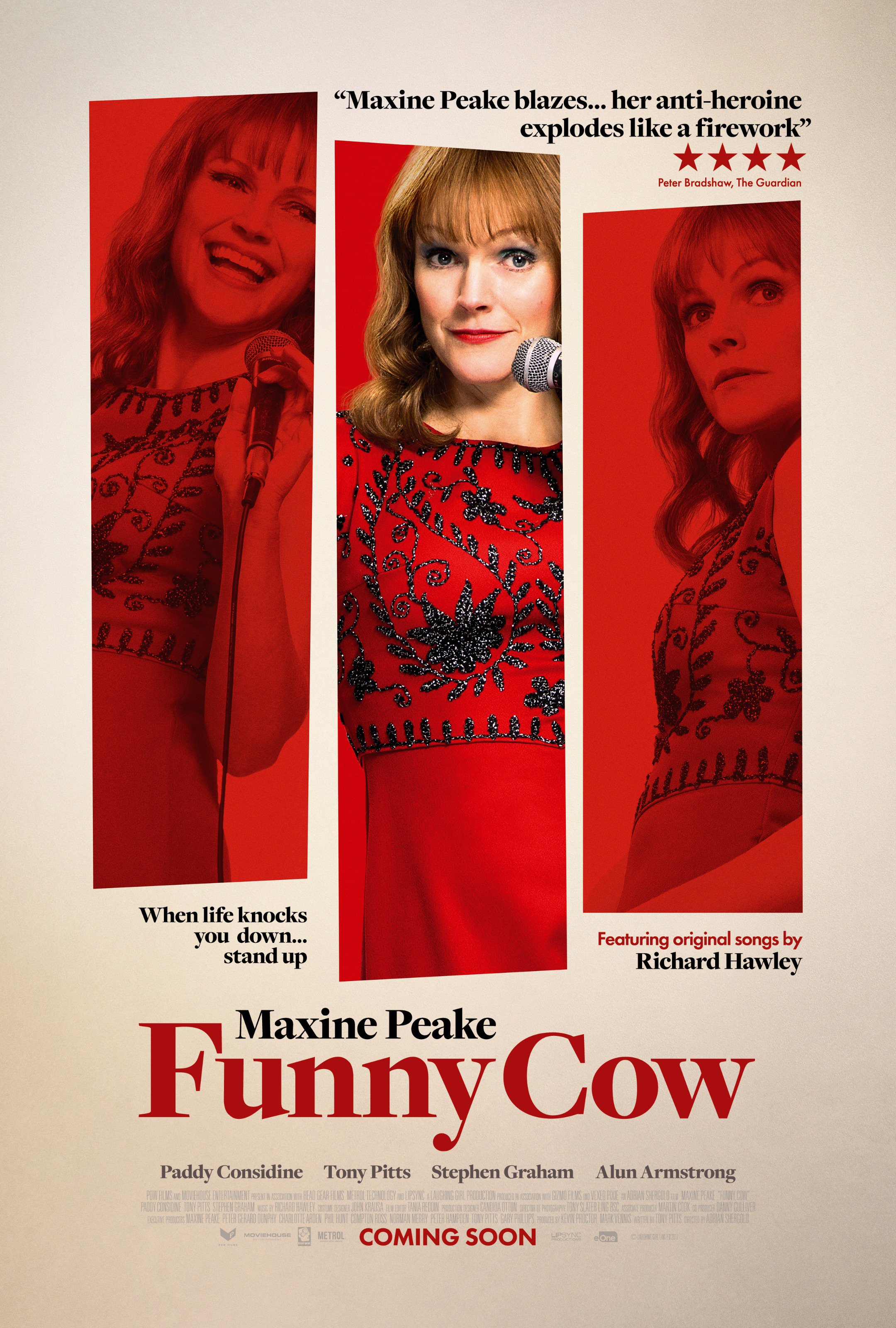
Growing up in Yorkshire in relative poverty, ‘Funny Cow’ (Peake – we never learn the character’s real name) experiences physical abuse from her father (Graham), indifference from her mother, and suffers attempts at bullying from other children. Through it all she remains defiant, using humour to help her through the worst of occasions. As a young woman, she meets and marries Bob, but although he’s loving and attentive at first, soon he reveals a violent nature that resembles her father’s. A night out at a local working men’s club offers an unlikely escape route: a comedian (Armstrong) helps ‘Funny Cow’ realise that this is something she can do, and which could offer her some form of independence. Meanwhile, she meets a bookshop owner, Angus (Considine), and a relationship develops between them. But Angus wants more from her than she is able to give, and her first attempt at taking to the stage falters due to her nervousness. While she tries to pull her life together, and make something positive out of it, another chance to prove her skill as a comedienne unexpectedly presents itself…

Told through a stage performance by its main character when it appears she’s reached a period of success, Funny Cow recounts her life more as a form of therapy than as a part of an established routine (if you were in the audience you’d be wondering when the jokes are going to start). Starting with her childhood and moving through the various stages and relationships that have brought her to this point, ‘Funny Cow’s story is one that proffers a dispiriting look at the life of a woman struggling to find happiness, and a true sense of her place in the world. It’s a harsh movie about a harsh life, relentless in the way it portrays domestic abuse and the psychological effects it has on ‘Funny Cow’, and unforgiving of the Northern working class background that she comes from. Almost everyone is either violent, depressed, selfish, abusive, or a mix of all four. Only Angus is different, but it’s his difference from all the other men she’s known that makes him unacceptable; she just doesn’t trust that he can be so naturally kind. With happiness feeling like a dream that’s not just out of reach but completely unobtainable, co-star Tony Pitts’ screenplay keeps ‘Funny Cow’ firmly in her place, trapped by her past and fearful of the future.

Of course, she has a wilful streak that gets her into trouble, and during her first stand up performance, out of it as well. But even her humour is harsh and unrelenting. A heckler suffers for his efforts, ‘Funny Cow’ using him as catharsis for all the abuse she’s suffered in the past. But she’s suffered too much for this to be anything but a temporary release. She’s angry too, and by using her stand up routine to express her anger, ‘Funny Cow’ finds a part of her life where she finally has some measure of control. As the unnamed title character, Peake is on superb form, audacious, brash, haunting, and fearless in her exploration of someone whose past is inextricably entwined wth her present, and to deleterious effect. Whether ‘Funny Cow’ is being mournful of her relationship with Angus, or laughing manically after having her nose broken by Bob, Peake is nothing less than outstanding. Making only his second feature, director Shergold adds poignancy to proceedings by having the older ‘Funny Cow’ cross paths with younger versions of herself, and he ensures that the humour is often pitch black – but still as devastating as the violence that’s depicted.

Rating: 8/10 – though as far from being a feelgood movie as you’re likely to find, conversely there is much to enjoy in Funny Cow, from Peake’s stellar performance, to a truly scabrous stand up routine, and flashes of magical realism in amongst all the tragedy; challenging and compelling, it also takes a sharp look at sexist attitudes of the period (the Seventies), and offers audiences an unflinching look at one woman’s attempt to break free from the patriarchal society that has continually aimed to hold her back.

Share this:

  • Click to share on X (Opens in new window) X
  • Click to share on Facebook (Opens in new window) Facebook
  • More
  • Click to print (Opens in new window) Print
  • Click to email a link to a friend (Opens in new window) Email
Like Loading...

Mini-Review: The Falling (2014)

09 Wednesday Sep 2015

Posted by dullwood68 in Movies

≈ 6 Comments

Tags

1969, Carol Morley, Drama, Fainting, Florence Pugh, Girls' school, Greta Scacchi, Maisie Williams, Mass hysteria, Maxine Peake, Mystery, Review

Falling, The

D: Carol Morley / 102m

Cast: Maisie Williams, Maxine Peake, Greta Scacchi, Florence Pugh, Anna Burnett, Joe Cole, Rose Caton, Lauren McCrostie, Katie Ann Knight, Evie Hooton, Morfydd Clark, Monica Dolan, Mathew Baynton

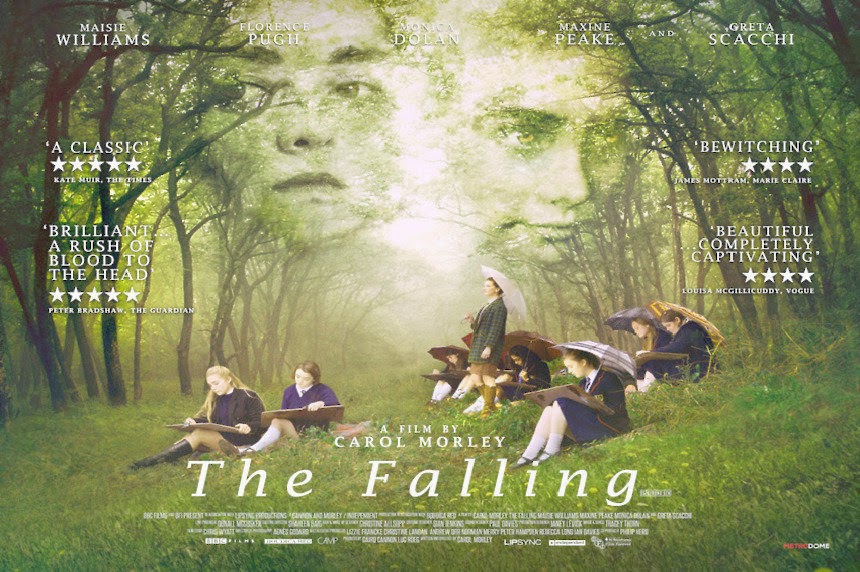
At a British girls’ school in 1969, Abbie Mortimer (Pugh) is liked and admired by all, especially her best friend, Lydia Lamont (Williams). Abbie though, has a rebellious streak, and is the first of the girls to have sex. But this leads to her falling pregnant and a subsequent series of fainting spells that lead to her unexpected death. Stunned by this sudden turn of events, Lydia begins to feel unwell herself, and soon she too is fainting, both at school, and at home where her mother Eileen (Peake) hides herself away from the world.

Lydia now assumes the role Abbie had in the school, and much to the vexation of teacher Miss Mantel (Scacchi) and school head Miss Alvaro (Dolan), more and more of the other girls begin to show similar signs of illness, and start fainting as well. At first, Miss Alvaro refuses to believe that anything is wrong, and is certain that Lydia and the rest are faking their attacks. But when it also affects one of the other teachers, Miss Charron (Clark), at an assembly, the school is faced with no option but to send the girls to hospital for tests to see if the pupils are guilty of deception, or if there’s a real medical reason for what’s happening.

Falling, The - scene

Despite the crispness of Agnès Godard’s often exquisite photography, and an insistent but strangely apt soundtrack involving original music by Tracey Thorn, The Falling is not as mysterious or dramatic as it seems, relying heavily on visual motifs and too many shots that are meant to increase the sense of foreboding, but which only go to show that trees used as a metaphor actually remain just trees. The same goes for the repetitive nature of the faintings – instead of instilling any sense of dread they happen so regularly that by the time we see a group of schoolgirls hyperventilating in a hospital corridor, it’s more a cause for laughter than concern.

Morley leaves a lot of questions unanswered (not the least of which is the cause of Abbie’s death), and avoids taking one or two subplots down roads that would have made for more dramatic results (Lydia’s growing attraction for her brother, Kenny (Cole), for example), while the cast do their best with poorly motivated characters and the kind of dialogue that only teenagers in the movies come out with (Lydia even yells “Kill the system!” at one point). It’s all meant to be a fervent hotbed of paranoid mass hysteria, and while it’s a situation that obviously goes too far, there are few consequences for the characters involved, and by the end we’re back where we started. There’s a decent idea here, but there’s also too much that’s elliptical or left hanging, leaving the movie only occasionally successful in what it’s trying to do, and only occasionally rewarding for the viewer.

Rating: 5/10 – dramatically unsound and lacking in any clear focus as to what it’s trying to say (other than that teenage girls are incredibly susceptible to hysteria), The Falling is a psychological mystery overlaid with an arthouse approach that doesn’t suit the material; obtuse and trying to be profound, the movie stumbles along revealing little about its characters beyond the obvious, and does its best to keep them at a distance.

Share this:

  • Click to share on X (Opens in new window) X
  • Click to share on Facebook (Opens in new window) Facebook
  • More
  • Click to print (Opens in new window) Print
  • Click to email a link to a friend (Opens in new window) Email
Like Loading...

Blog Stats

  • 486,528 hits

Recent Posts

  • 10 Reasons to Remember Bibi Andersson (1935-2019)
  • Fantasia (1940)
  • Dances With Wolves (1990) – The Special Edition
  • Kiss of the Spider Woman (1985)
  • The Three Musketeers (1973)

Top Posts & Pages

  • Lost for Life (2013) - Another Look
    Lost for Life (2013) - Another Look
  • Lost for Life (2013)
    Lost for Life (2013)
  • About
    About
  • Mr. Topaze (1961)
    Mr. Topaze (1961)
  • Billy Lynn's Long Halftime Walk (2016)
    Billy Lynn's Long Halftime Walk (2016)
  • Winter's Tale (2014)
    Winter's Tale (2014)
  • The Hitman's Bodyguard (2017)
    The Hitman's Bodyguard (2017)
  • 5 Famous Movie Roles That Nearly Went to Someone Else
    5 Famous Movie Roles That Nearly Went to Someone Else
  • The Layover (2017)
    The Layover (2017)
  • Transcendence (2014)
    Transcendence (2014)
Follow thedullwoodexperiment on WordPress.com

Blogs I Follow

  • Rubbish Talk
  • Film 4 Fan
  • Fast Film Reviews
  • The Film Blog
  • All Things Movies UK
  • Interpreting the Stars
  • Let's Go To The Movies
  • Movie Reviews 101
  • TMI News
  • Dan the Man's Movie Reviews
  • Film History
  • Jordan and Eddie (The Movie Guys)

Archives

  • April 2019 (13)
  • March 2019 (28)
  • February 2019 (28)
  • January 2019 (32)
  • December 2018 (28)
  • November 2018 (30)
  • October 2018 (29)
  • September 2018 (29)
  • August 2018 (29)
  • July 2018 (30)
  • June 2018 (28)
  • May 2018 (24)
  • April 2018 (21)
  • March 2018 (31)
  • February 2018 (25)
  • January 2018 (30)
  • December 2017 (30)
  • November 2017 (27)
  • October 2017 (27)
  • September 2017 (26)
  • August 2017 (32)
  • July 2017 (32)
  • June 2017 (30)
  • May 2017 (29)
  • April 2017 (29)
  • March 2017 (30)
  • February 2017 (27)
  • January 2017 (32)
  • December 2016 (30)
  • November 2016 (28)
  • October 2016 (30)
  • September 2016 (27)
  • August 2016 (30)
  • July 2016 (30)
  • June 2016 (31)
  • May 2016 (34)
  • April 2016 (30)
  • March 2016 (30)
  • February 2016 (28)
  • January 2016 (35)
  • December 2015 (34)
  • November 2015 (31)
  • October 2015 (31)
  • September 2015 (34)
  • August 2015 (31)
  • July 2015 (33)
  • June 2015 (12)
  • May 2015 (31)
  • April 2015 (32)
  • March 2015 (30)
  • February 2015 (37)
  • January 2015 (39)
  • December 2014 (34)
  • November 2014 (34)
  • October 2014 (36)
  • September 2014 (25)
  • August 2014 (29)
  • July 2014 (29)
  • June 2014 (28)
  • May 2014 (23)
  • April 2014 (21)
  • March 2014 (42)
  • February 2014 (38)
  • January 2014 (29)
  • December 2013 (28)
  • November 2013 (34)
  • October 2013 (4)

Blog at WordPress.com.

Rubbish Talk

Film 4 Fan

A Movie Blog

Fast Film Reviews

The Film Blog

The official blog of everything in film

All Things Movies UK

Movie Reviews and Original Articles

Interpreting the Stars

Dave Examines Movies

Let's Go To The Movies

Film and Theatre Lover!

Movie Reviews 101

Daily Movie Reviews

TMI News

Latest weather, crime and breaking news

Dan the Man's Movie Reviews

All my aimless thoughts, ideas, and ramblings, all packed into one site!

Film History

Telling the story of film

Jordan and Eddie (The Movie Guys)

Movie Reviews & Ramblings from an Australian Based Film Fan

Privacy & Cookies: This site uses cookies. By continuing to use this website, you agree to their use.
To find out more, including how to control cookies, see here: Cookie Policy
  • Subscribe Subscribed
    • thedullwoodexperiment
    • Join 481 other subscribers
    • Already have a WordPress.com account? Log in now.
    • thedullwoodexperiment
    • Subscribe Subscribed
    • Sign up
    • Log in
    • Report this content
    • View site in Reader
    • Manage subscriptions
    • Collapse this bar
 

Loading Comments...
 

    %d