• 10 Reasons to Remember…
  • A Brief Word About…
  • About
  • For One Week Only
  • Happy Birthday
  • Monthly Roundup
  • Old-Time Crime
  • Other Posts
  • Poster of the Week
  • Question of the Week
  • Reviews
  • Trailers

thedullwoodexperiment

~ Viewing movies in a different light

thedullwoodexperiment

Tag Archives: Mental illness

Madeline’s Madeline (2018)

23 Tuesday Oct 2018

Posted by dullwood68 in Movies

≈ Leave a comment

Tags

Drama, Experimental theatre, Helena Howard, Josephine Decker, Mental illness, Miranda July, Molly Parker, Review, Theatre group

D: Josephine Decker / 93m

Cast: Helena Howard, Molly Parker, Miranda July, Okwui Okpokwasili, Sunita Mani, Myra Lucretia Taylor, Curtiss Cook

Sixteen year old Madeline (Howard) is part of an experimental theatre group run by Evangeline (Parker). The group is working on a new production that will explore aspects of mental illness, but first, Evangeline wants them to take on animal roles and become the animals they choose. Madeline chooses to be a cat and a sea turtle, and she impresses Evangeline so much with her efforts and her commitment that Madeline soo receives more of Evangeline’s attention, and a bigger role within the production. While things are going well within the group though, at home it’s a different matter. Madeline lives with her mother, Regina (July), and they have a somewhat adversarial relationship, due mainly to the fact that Madeline has mental health issues that require her to take medication on a regular basis. When the lure of the group, and Evangeline’s attention, proves too powerful for Madeline to ignore, she becomes immersed in the production and begins to use her own experiences as a basis for her performance, something that causes a rift between Evangeline and the rest of the group (because she encourages it), and sees Madeline making a number of unwise decisions…

From the very beginning of Madeline’s Madeline (a reference to the immersive quality of her performance, where Madeline effectively plays herself), first-time writer/director Josephine Decker seeks to show the audience just how Madeline experiences the world around her. When she’s not taking her medication this means the world is a confusing, fractured series of blurred images and out-of-sync audio. It’s no wonder Madeline looks so overwhelmed all the time; it must be a continual struggle for her to assimilate what’s going on and/or why. At first, she’s shy but desperate to impress, quiet but not lacking in confidence in her acting abilities. Except she isn’t acting. Decker makes it clear: Madeline doesn’t know how to act, all she can do is inhabit a character – whether human or animal – and be herself as that character. There’s no role to create, just Madeline being Madeline. As she becomes more and more accepted, by Evangeline and by the group, the blurred lines between performance and reality fall away to reveal a young woman whose sense of self is so overwhelming that she cannot behave in any other way. And yet her mental illness is the very thing that allows her to stand out. But is it appropriate for Evangeline to exploit this?

Watching the movie you could be forgiven for thinking that it takes a side on the issue, but Decker is clever enough to make it a more difficult proposition to consider. By making Madeline wholly complicit in her own exploitation – and encouraging it – the issue becomes a question of just who is exploiting who. This ambiguous approach helps maintain a grim fascination as the story plays out and Madeline’s behaviour, particularly at a party at Evangeline’s home, becomes ever more worrying and unsettling. Howard, making her acting debut, is simply superb as Madeline, bright, intelligent, fearless, and giving such an assured, indelible performance that she dominates the whole movie, and leaves veterans such as Parker and July trailing in her wake. That said, Parker is also on exceptionally good form as Evangeline, her mother hen nature hiding a naturally cruel streak that brooks no contradiction because she knows what’s best for the group. July swings between Regina’s anguish and pride at Madeline’s behaviour, while there are telling moments from members of the group that mark them out as not just the followers they appear to be. In assembling such a provocative story, Decker has made an experimental movie about an experimental theatre group that is endlessly inventive and evocative, and which takes the viewer into the mind of its very erratic title character – which proves to be a place that’s hard to forget.

Rating: 8/10 – not a movie for all tastes, Madeline’s Madeline is a tremendous achievement by Decker, and features an equally tremendous performance from Howard; with wit and skill and an abundance of imagination, this is that rare movie that takes you to a world you think you know, and presents it in such a remarkable manner that you can’t help but be impressed by both its verve and the underlying simplicity of its approach.
Share this:

  • Click to share on X (Opens in new window) X
  • Click to share on Facebook (Opens in new window) Facebook
  • More
  • Click to print (Opens in new window) Print
  • Click to email a link to a friend (Opens in new window) Email
Like Loading...

Aardvark (2017)

09 Thursday Aug 2018

Posted by dullwood68 in Movies

≈ Leave a comment

Tags

Brian Shoaf, Brothers, Drama, Jenny Slate, Jon Hamm, Mental illness, Review, Sheila Vand, Therapy, Zachary Quinto

D: Brian Shoaf / 89m

Cast: Zachary Quinto, Jenny Slate, Sheila Vand, Jon Hamm

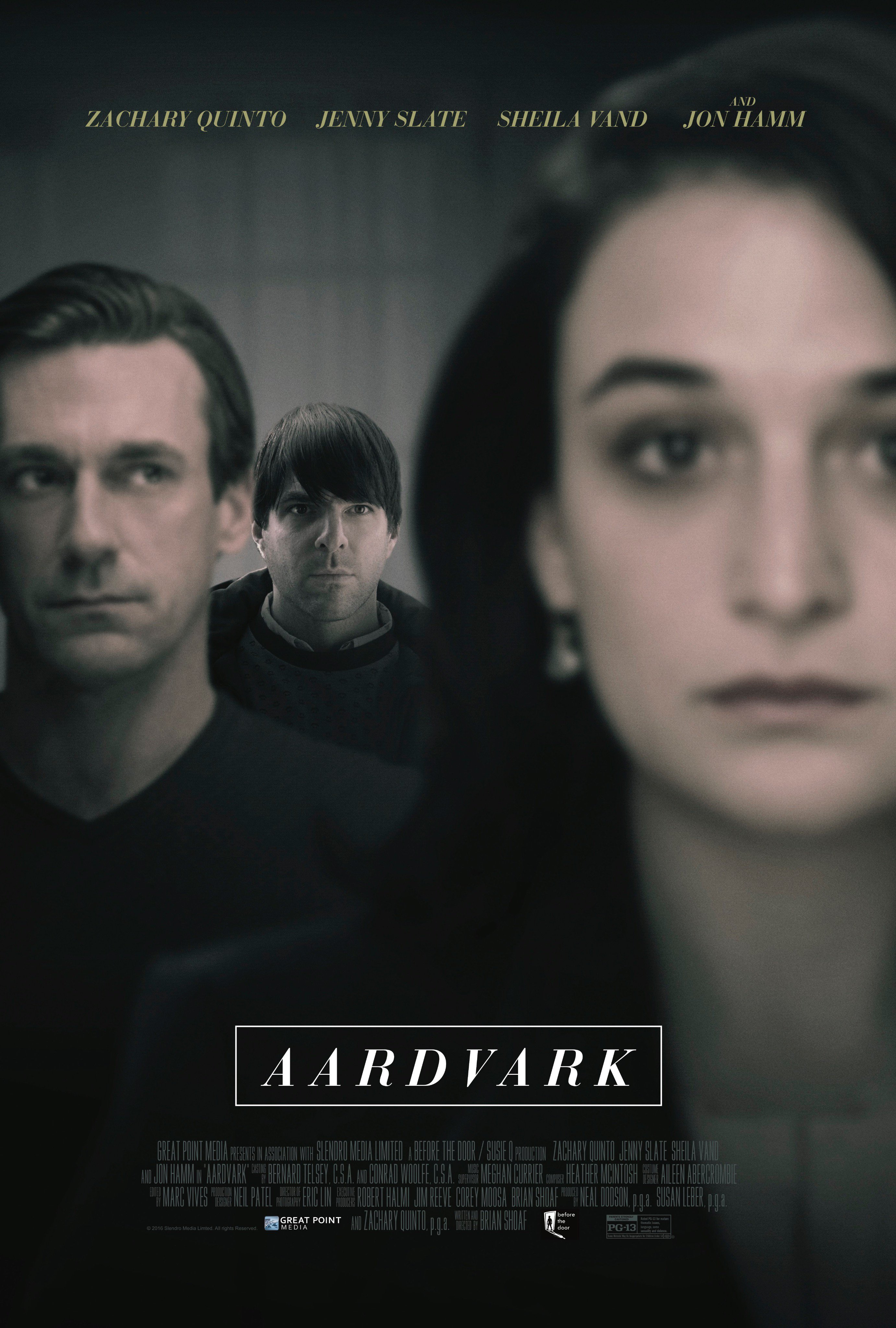
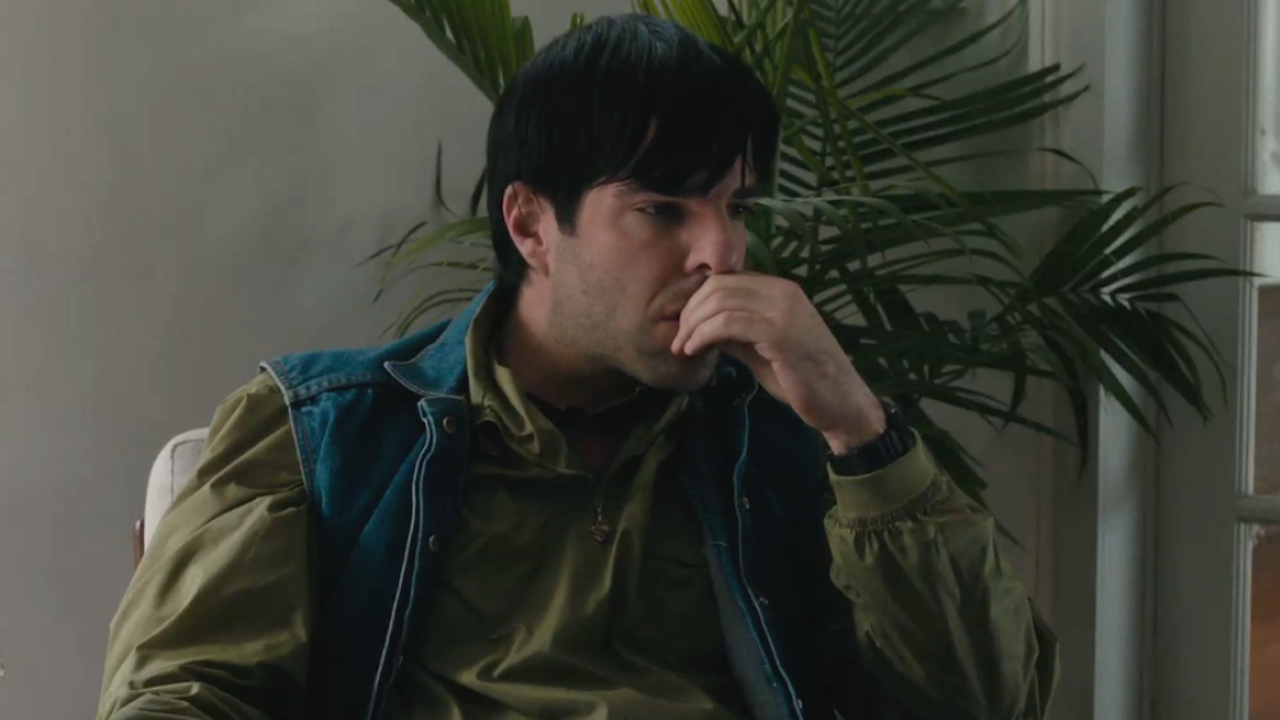
Josh Norman (Quinto) has his fair share of issues – more, actually – and most of them relate to the strained relationship he has with his brother, Craig (Hamm). When he was nineteen, Josh suffered a psychotic break, and since then he’s been on a variety of medications for a variety of undiagnosed afflictions. In recent years, Josh has come to believe that Craig visits him from time to time, and in disguise as his latest role (and even if it’s an elderly homeless lady). Josh is aware that he is ill, and so he seeks out Emily Milburton (Slate), a licensed clinical support worker, to help him with his problems. Emily correctly identifies that much of what ails Josh stems from unresolved issues to do with Craig, but is unable to get Josh to face them – or Craig, who appears at Emily’s door one night. He and Emily begin a relationship, while Josh finds a measure of solace in a burgeoning romance with Hannah (Vand), with whom he goes for long walks. But Emily’s efforts to reconcile the two brothers aren’t as successful as she hopes they’ll be, and her own relationship with Craig suffers as a result…

The debut feature of writer/director Brian Shoaf, Aardvark is a curious beast (pun intended) that is likely to test the patience of viewers as they wait for Shoaf to work out just what it is he’s trying to say, and to put more than two scenes together that are organically linked. This is a meandering, focus-lite movie that generates a modicum of polite interest in its characters, all of whom interact with each other as if they’re meeting for the first time. It’s like a version of Chinese Whispers where no one deliberately pays any attention to what the other person is saying, and misconceptions and misunderstandings abound as a natural result. In Josh this would make sense as his perceptions are skewed anyway, but there’s no excuse for Emily, a therapist who is so obtuse that when her skill as a therapist is brought into question, you want to shout out, “Finally!” Perhaps Shoaf wants us to feel more sympathy for Emily than for Josh, and that would be fine if she weren’t so poorly defined as a character. Slate does what she can, but as Emily is called upon to look bewildered a lot of the time, perhaps it’s a more perfect meld of actress and role than expected.

As Josh, Quinto does well in portraying his character’s dissociative tendencies, and he does a nice line in wounded perplexity, but it’s still a performance that relies on the actor’s input rather than the script’s, or Shoaf’s imprecise direction. Josh’s friendship with Hannah also suffers, coming across at first as a staple meet-cute of romantic dramas but with added mental illness to help it stand out, something that doesn’t happen anyway thanks to Hannah’s status as a cypher and Josh’s judgmental narcissism. But Shoaf really scores an own goal with Craig, a character who appears to have all the answers for Josh’s condition, but is used more as a convenient plot device than a credible protagonist (you have to ask at what point Shoaf thought putting Emily and Craig together was ever a good idea). Stilted and frustrating, the movie wanders around in various directions without ever settling on a simple, straightforward through line, and by the end, all of the characters have been undermined for the sake of narrative expediency, and an ending that feels detached from what’s gone before. And the aardvark of the title? Hmmm…

Rating: 4/10 – an indie drama that plays at being smart and contemplative while missing the mark by a country mile, Aardvark is an awkwardly assembled reminder that good intentions alone don’t make a movie; a good cast can’t save this from being anything more than a curiosity, and even then, that curiosity is unlikely to be satisfied.

Share this:

  • Click to share on X (Opens in new window) X
  • Click to share on Facebook (Opens in new window) Facebook
  • More
  • Click to print (Opens in new window) Print
  • Click to email a link to a friend (Opens in new window) Email
Like Loading...

Mad to Be Normal (2017)

28 Monday May 2018

Posted by dullwood68 in Movies

≈ Leave a comment

Tags

David Tennant, Drama, Elisabeth Moss, Gabriel Byrne, Kingsley Hall, Mental illness, Psychiatry, R.D. Laing, Review, Robert Mullan, Schizophrenia, True story

D: Robert Mullan / 105m

Cast: David Tennant, Elisabeth Moss, Michael Gambon, Gabriel Byrne, David Bamber, Adam Paul Harvey, Olivia Poulet, Jerome Holder, Lydia Orange, Tom Richards

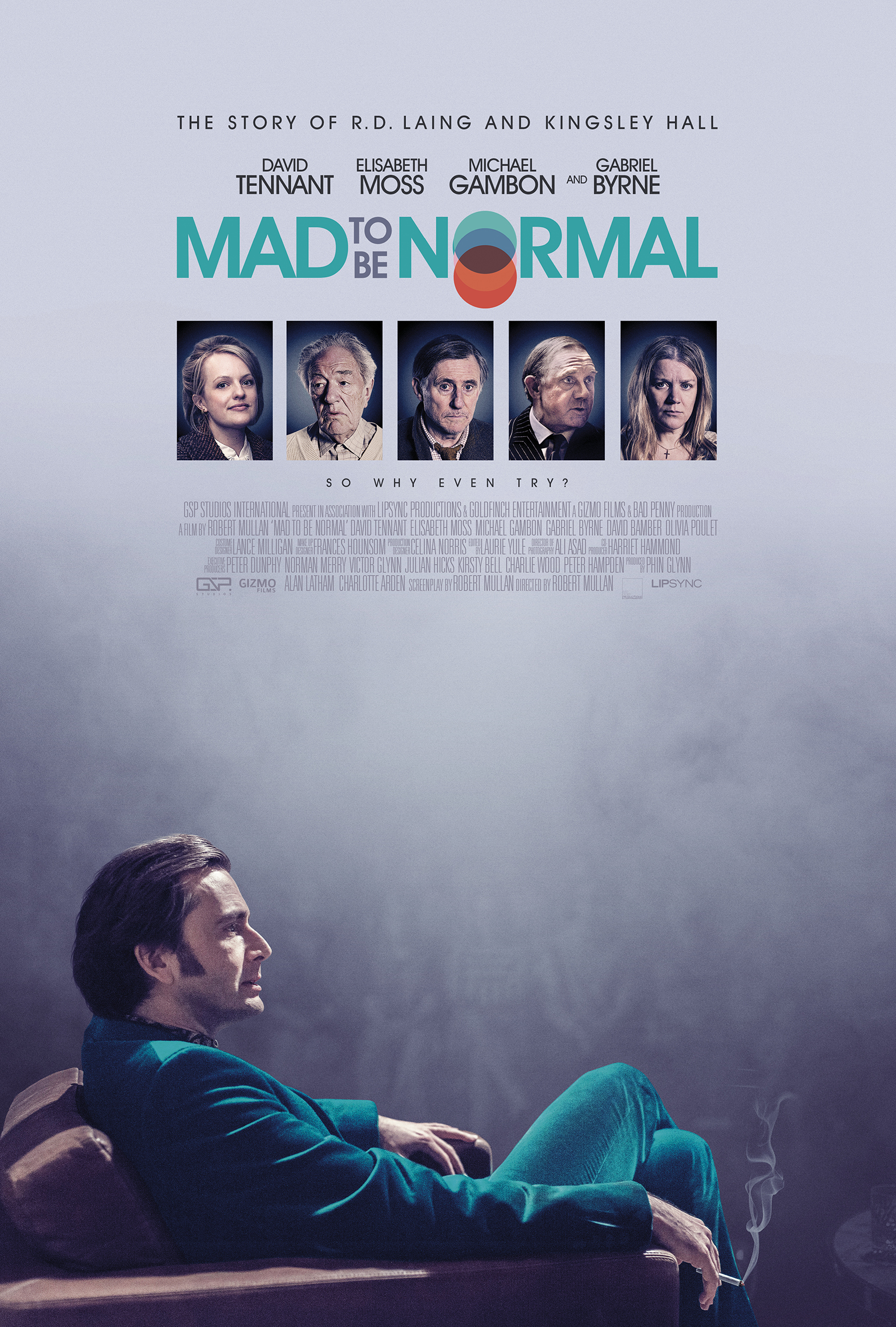
Beginning in 1965, the noted psychiatrist R.D. Laing (Tennant) was the head of the Philadelphia Association, a community-based psychiatric project based at Kingsley Hall in London’s  East End. There, therapists and patients lived together, and the aim was to provide a restraint-free, drug-free environment for those afflicted by schizophrenia. It was a pioneering experiment that drew plenty of criticism from the psychiatric establishment of the time, which decried Laing’s rejection of traditional treatments such as constant sedation and electro-convulsive therapy. For the purposes of Mad to Be Normal, Laing’s relationship with his girlfriend at the time, Jutta Werner, is transposed into one with an ambitious American student called Angie Wood (Moss). Their relationship provides the backbone of Robert Mullan’s movie, a serious yet distant piece that only superficially explores both Laing the man and Laing the health care professional. While he deals with the dynamics of their relationship, Laing also fights off challenges from the establishment (in the form of David Bamber’s blinkered traditionalist), and the patients at Kingsley Hall itself.

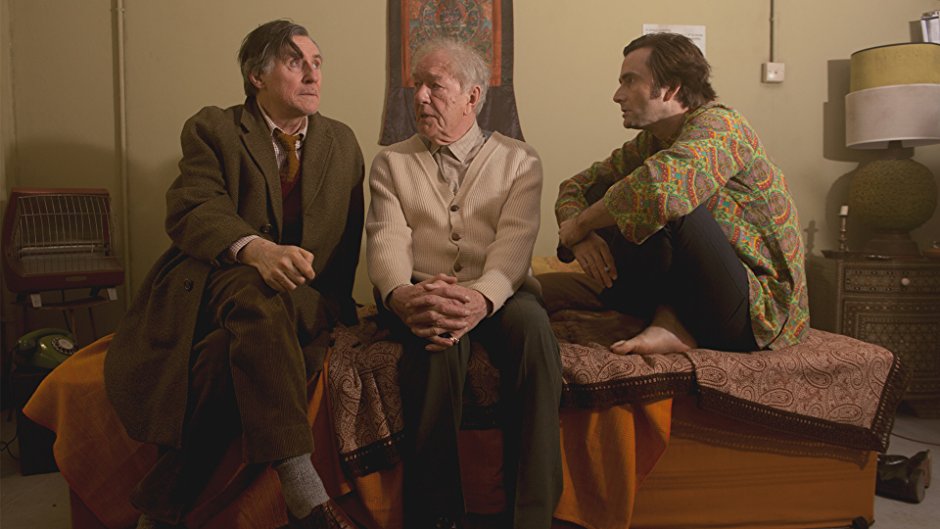
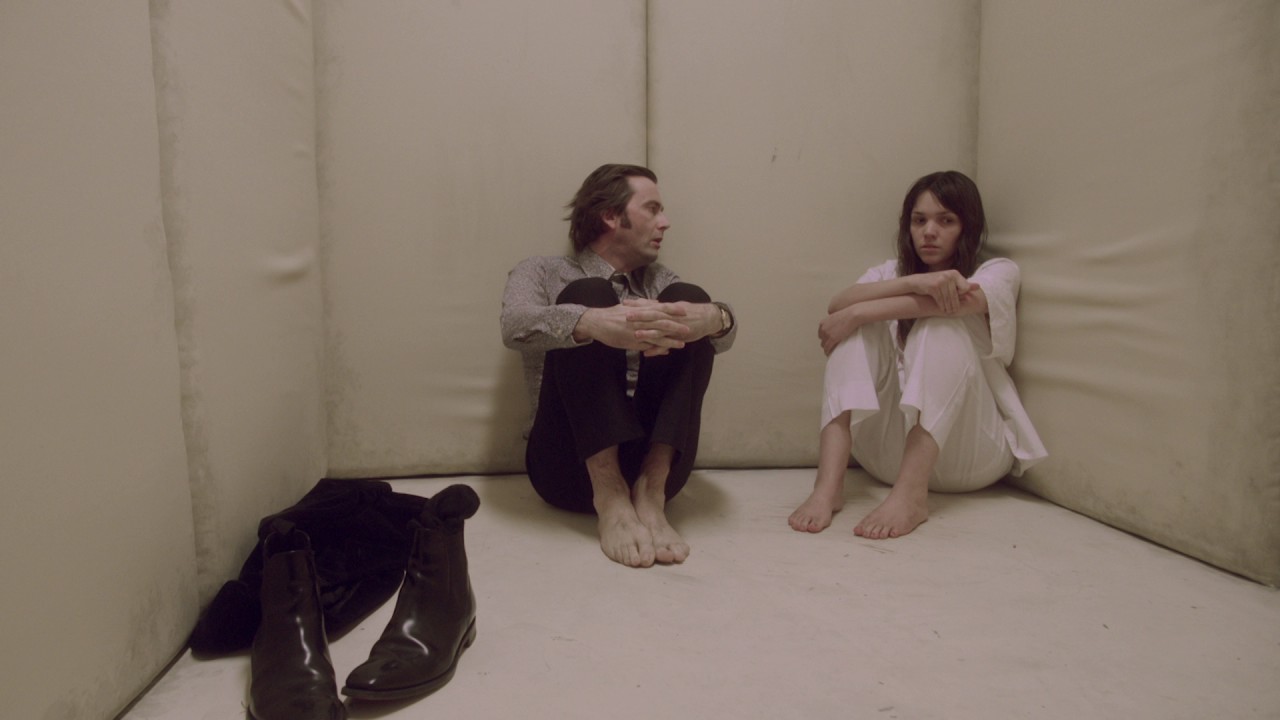
These patients include Sydney (Gambon), an elderly childhood trauma sufferer, Maria (Poulet), who can’t forgive herself for losing her baby, John (Holder), who hears voices, and Jim (Byrne), whose obsession with the moon belies violent tendencies relating to childbirth. The movie works well when it focuses on the patients, and there’s a terrific scene set in New York where Laing coaxes responses from a young woman, Sarah (Orange), who doesn’t speak or eat or otherwise engage with anyone. But away from these interactions, Laing’s life and commitment to his work don’t have the same impact, or come anywhere close to it. This is a major drawback for the movie as a whole, because though there is plenty of tension and dramatic incident borne out of Mullan and co-screenwriter Tracy Moreton’s script, Mullan doesn’t seem to know how to present these incidents in such a way that we get a clear insight into Laing’s own mental processes. He’s eloquent enough when challenged, and Tennant displays a passion and commitment to the role that gets the character through several moments where the drama lapses into soap opera, but as to the man himself, and his reasons for doing the work he does, this isn’t necessarily the forum for that kind of revelation.

This leaves the movie focusing mainly on said challenges, and the slow descent into violent madness experienced by Jim. Despite a terrific performance from Byrne, though, Jim’s story is predictable in the extreme, and the irony of his eventual treatment is hammered home with all the subtlety of an ECT session. But while Byrne is gifted with possibly the best role in the movie (it reminds you just how good an actor he is), Moss is left stranded by a role that keeps her sidelined for much of the running time, and which reduces Angie to the status of a secondary character, even when she has Laing’s child (though not his first; a subplot involving the five children he already has is thrown in for good but not lasting measure). Mullan and the script rarely attempt to explore the efficacy of the work carried out at Kingsley Hall, or show if there is any improvement gained by any of the patients there, and so we see patients behaving erratically though consistently, while Laing becomes more and more depressed himself. That there’s no real dramatic conclusion to all this – the movie ends very abruptly – doesn’t help either, leaving the viewer to wonder if there was any point to the movie, and on which level.

Rating: 6/10 – an uneven and dramatically unsatisfying look at a pivotal moment in the annals of “alternative psychiatry”, Mad to Be Normal is predicated on the assumption that Laing knew exactly what he was doing – and then doesn’t show the viewer how or why he was doing it; rescued by a clutch of good performances, the movie short changes Laing in favour of a routinely mounted biography that only skims the surface of its controversial and charismatic central character.

Share this:

  • Click to share on X (Opens in new window) X
  • Click to share on Facebook (Opens in new window) Facebook
  • More
  • Click to print (Opens in new window) Print
  • Click to email a link to a friend (Opens in new window) Email
Like Loading...

The Ghoul (2016)

14 Monday Aug 2017

Posted by dullwood68 in Movies

≈ Leave a comment

Tags

Alice Lowe, Drama, Gareth Tunley, Mental illness, Occult, Review, Thriller, Tom Meeten

D: Gareth Tunley / 82m

Cast: Tom Meeten, Dan Renton Skinner, Rufus Jones, Alice Lowe, Niamh Cusack, Geoffrey McGivern, James Eyres, Paul Kaye

It’s very, very difficult to keep one step ahead of audiences today, what with narrative twists and turns coming at us thick and fast in what feels like every other movie (so much so that we’re looking out for them all the time), and with the Internet being a boundless source of spoilers and inappropriate info. Any movie that tries to hoodwink its audience, or lead them down the path marked ‘astray’, will inevitably stand or fall by the quality of its deception, and the way in which viewers are misled. Show them one thing and then show them something else that brings the first thing into question and you have a mystery. Show them one thing and then another and then another and keep everything vague and unknowable – until the end – and you have a head scratcher.

A head scratcher is what The Ghoul presents us with early on. Chris (Meeten), a police detective, arrives at a quiet suburban house that has become a crime scene. His partner, Jim (Skinner), tells a disturbing, impossible story: a burglar, surprised by the owners, shoots both of them… and neither of them dies, not until he flees the scene. Chris is a taciturn individual, wrapped up in himself and his thoughts, thoughts that make him look in the direction of the lettings agent, Michael Coulson (Jones), who has been helpful in the early stages of their investigation. When they try to talk to him, they find that on one wall of his flat is a collage of notes and pictures that indicate he’s seeing a psychotherapist, Dr Fisher (Cusack). Chris decides to go undercover and try and find out about Coulson through his seeing Fisher. A friend of his, a forensics officer, Kathleen (Lowe), helps with his fictional pathology, and soon Chris is seeing Dr Fisher as well. And through his visits, he meets Coulson, and the two strike up an initially uneasy friendship. Soon they are both seeing another therapist, Dr Morland (McGivern), and Coulson starts behaving strangely, accusing Morland of having an alternative and sinister reason for treating them both. And soon, Coulson’s paranoia begins to show itself in Chris’s behaviour as well…

Up to a point, fans of psychological thrillers and intriguing mysteries will be kept enthralled by Gareth Tunley’s debut feature as writer/director. There’s not much precedent in British detective fiction or movies for a detective to go undercover as a patient needing psychotherapy in order to find out if a potential witness is also complicit in a crime. But it’s not until much later that Tunley reveals the reason why Chris does this and why the few people around him – Jim, Kathleen – don’t have any objections to the idea, or think it’s a strange way of tracking down a man who can help them with their enquiries. The average viewer may well find this approach to be dramatically unsound, but Tunley is more interested in making the viewer question Chris’s state of mind rather than his investigative methods (though both are linked). But then there’s that point mentioned at the beginning of this paragraph, and once the movie reaches that moment, it takes a turn that encourages bafflement and bewilderment, and quite deliberately.

At a session with Dr Fisher, Chris reveals that he sometimes daydreams about being a detective. In his head he’s created characters from people he knows, such as Kathleen, who in reality (or so it seems) is a teacher and not a forensics officer. It’s at this point that the movie mutates from being a dour, unconventional police procedural into an unsettling excursion into the mind of a man who may not be a police detective at all, and who may just be someone in need of help in dealing with manic depression or hallucinatory episodes or an inability to distinguish fantasy from reality. Chris also says he knows his daydreams aren’t real – but are they? That’s the question the movie wants the viewer to be asking themselves, and as it moves further and further into a world that offers few concrete answers, the movie becomes less of a thriller and more of an ominous horror movie.

Thanks to a non-linear narrative, and Tunley’s decision to include several moments where time and memory become disjointed, Chris’s investigation begins to unravel and fall apart. And so does Chris. He becomes more and more insular, saying less and less and bowing his head as if trying to hide. Soon the viewer will have to decide which narrative strand is the real one: Chris as a police officer, or Chris as an ordinary man suffering from depression (who thinks he’s a police officer). There are clues as to which strand is the correct one, and the inclusion of visual motifs such as a Klein bottle, and an ouroboros, provide strong evidence for what’s happening over all, but Tunley does his best to keep everything blurred and out of focus, both for Chris and the viewer. That he doesn’t succeed entirely is due to the number of aforementioned clues, several of which spell things out quite clearly, and a need to shoehorn Chris into the events of the last ten minutes where his fate is revealed and the tension is amped up considerably.

Tunley invokes a stylish mix of visuals, with avant-garde imagery jostling side by side with gothic expressionism and a dash of magical realism. It’s a heady concoction, prone to lapsing into the kind of fractured, portentous imagery that wouldn’t look out of place in a found-footage movie (where the camera is in the hands of someone who’s running with it). There’s also a subdued Twilight Zone kind of vibe to the material, with Chris heading for the kind of uncomfortable denouement that will see him revealed as a pawn in a much larger game. The character is played in a brooding, melancholic, and abstract manner by Meeten, a performance that is largely internalised, but which still allows Chris’s pain to reveal itself. Meeten is like a forlorn, lonely ghost, one that seeks the company of the living but then doesn’t know how to connect with them. Meeten’s performance is a massive plus for the movie, and Tunley exploits his star’s morbidly depressed approach to Chris in a way that reveals often contradictory mannerisms that help support both notions surrounding the truth of his situation. He’s ably supported by the likes of Lowe and McGivern, and there’s a bitter poignancy to Chris’s scenes with Kathleen that works extremely well in grounding the character’s otherwise wayward emotions and feelings.

Rating: 8/10 – though not a movie for everyone, and one that could be accused of creating an artificial mood throughout, The Ghoul is nevertheless an intriguing if overly bleak treatise on the nature of mental illness as a doorway to a different reality; Tunley directs with a confidence that allows the narrative to play out in its own way and time (much like Chris’s fate), and to keep the viewer from becoming too comfortable – much like Chris himself, who thanks to Meeten, remains an unlikely, yet memorable movie creation.

Share this:

  • Click to share on X (Opens in new window) X
  • Click to share on Facebook (Opens in new window) Facebook
  • More
  • Click to print (Opens in new window) Print
  • Click to email a link to a friend (Opens in new window) Email
Like Loading...

Captain Fantastic (2016)

21 Tuesday Feb 2017

Posted by dullwood68 in Movies

≈ 2 Comments

Tags

Comedy, Drama, Frank Langella, Funeral, George MacKay, Home schooling, Kathryn Hahn, Matt Ross, Mental illness, Mexico, Review, Viggo Mortensen, Washington state

ho00003779

D: Matt Ross / 119m

Cast: Viggo Mortensen, George MacKay, Samantha Isler, Annalise Basso, Nicholas Hamilton, Shree Crooks, Charlie Shotwell, Steve Zahn, Kathryn Hahn, Frank Langella, Ann Dowd, Trin Miller, Erin Moriarty, Missi Pyle

Parents inevitably want the best for their kids, but equally inevitably, are never quite sure if their kids are getting the best. While most children go through whatever state education system is available to them, there are some who are home schooled, whether it’s a lifestyle choice determined by their parents, or a matter of their culture or social background. In Matt Ross’s charming and idiosyncratic Captain Fantastic, we’re able to see both sides of the coin, and also see the pros and cons of a conventional upbringing, and the pros and cons of an unconventional upbringing. Which is best? That’s up to the viewer to decide.

Ben Cash (Mortensen) and his wife, Leslie (Miller), have elected to raise their six children – Bodevan “Bo” (MacKay), Kielyr (Isler), Vespyr (Basso), Rellian (Hamilton), Zaja (Crooks), and Nai (Shotwell) – in the mountains of Washington state. As the movie opens, Leslie is in hospital, and nobody knows when she’ll be home. In the meantime, Ben continues instructing their children through mental and physical exercises and tests that are designed to make them smarter and fitter than most children of their respected ages. But while he and Bo are on a trip to the nearest town, Ben learns that Leslie has died. He tells the children the exact circumstances of their mother’s death, and for a while they are all visibly upset. But they soon rally round thanks to Ben ensuring that their normal routine isn’t altered.

web-captain-fantastic_rgb

Matters are complicated by Leslie’s father, Jack (Langella), refusing to acknowledge his daughter’s wish to be cremated, and threatening to have Ben arrested if he shows up at the funeral. The children want to go however, and persuade their father to ignore their grandfather’s dictates. They set off on their first ever road trip, heading for Mexico, with the children getting their first real glimpses of the wider world. On the way, they stop off at the home of Ben’s sister, Harper (Hahn), and her husband, Dave (Zahn). Ben’s honesty and directness in talking about Leslie in front of their two young boys leads to a row between Ben and Harper as to the suitability of speaking explicitly about issues that children don’t need to know about until they’re older. Ben apologises, but the next day he’s forced to show that his sister’s children are no match for even his second youngest child in terms of intelligence.

At a camping ground, Bo meets Claire (Moriarty), and experiences his first kiss, an event that leaves him confused and unhappy enough (though not about the kiss) to reveal that he’s applied to all the top colleges (Princeton, Yale etc.) and been accepted by all of them. Ben is upset that Bo has gone behind his back, but Bo reveals a secret that gives Ben pause, and makes him start to rethink his decision to raise the children in the wilderness. When they arrive at the funeral, Ben takes over from the priest, and reads out Leslie’s will. This angers Jack who has him removed. Still threatened with arrest if they turn up at the burial, his children convince Ben to stay away. But when Rellian makes it clear that he wants to stay with his grandparents (and the reasons why), it leads Ben further down the path of inappropriate parenting, results in one of his children ending up in hospital, leaves Ben with an unhappy decision to make, and unites his family in an endeavour that pushes the boundaries of what even the Cashes deem acceptable… probably.

maxresdefault

Based around the idea of being “completely present” in a child’s life, and how difficult that would be in today’s technology-saturated world, Matt Ross’s second feature is a warm, funny, yet profoundly sincere examination of what it means to be a parent, and the role of education in children’s lives. It offers a tantalising glimpse of a child’s true potential if that potential is guided and shaped by someone who is with them every day (like a parent), and not someone who may only interact with them for a few hours each week (like a teacher – and then not every week). But of course, while children may very well thrive in such an environment, the obvious pitfalls are there too. If you’re squirrelled away in the woods, then social skills become an issue, and so too does a child’s emotional development. You can teach a child about social interaction, but that’s no substitute for experience. But while Ross appears to be fully on the side of individualism and non-conformity, he’s astute enough to know that that’s not the full story, and that a more rounded approach needs to be in place (even if it does mean rejoining the “rat race”).

However, what this still means in terms of the narrative is a series of incidents and behaviours condoned and endorsed by Ben that are hugely amusing and yet wildly inappropriate at the same time. Robbing a grocery store, receiving hunting knives in order to celebrate Noam Chomsky day instead of Xmas, proposing marriage to the girl you’ve just kissed, climbing over a roof – all these and more are carried out by the children without even a first thought (let alone a second) as to how acceptable they are. It’s all fun and no consequences, games without frontiers or boundaries, and if there’s one thing we all know about consequences, it’s that they always come around sooner or later; and here those consequences turn up in the form of Leslie’s father. And Ross turns the tables on the viewers who’ve taken Ben’s side up til now by showing that Jack has a point too, and Ben’s way of parenting isn’t the only or right way of doing things.

5790f2a02400002600b3257a

This emotional and determinist tug-of-war occupies the movie’s final third, and leads to an overly sentimental conclusion to the whole affair (but which also begs a whole new set of questions about behaviour and consequences). In attempting to avoid providing any easy answers, Ross adds complexity to his narrative that stands the movie in very good stead, and which makes it an intriguing experience to watch. He’s helped immensely by a terrific, richly textured, and shrewd performance from Mortensen, expertly portraying Ben’s growing realisation that in order to be the good parent he thinks he is, he has to change and adapt to a new way of raising his children. As for the children themselves, high praise should be given to casting director Jeanne McCarthy for assembling such an amazing group of child actors. Each one of them has the chance to shine over and over, and not one of them is less than convincing (especially Shotwell, whose gender in the movie may be confusing for quite some time). They also get the lion’s share of the movie’s best lines, such as this (a)cute observation by Zaja: “You said Americans are under-educated and over-medicated.”

Ross mines the children’s superior intellects for much of the movie’s humour, but does so in a warmhearted, affectionate way that never grates or feels gratuitous. He’s not afraid to put his characters in emotionally distressing situations either, and there are times when the feelings on display are so raw as to be a little awkward to watch. But again, Ross keeps everything balanced and maintains a sense of purpose throughout, allowing scenes to flow easily and with obvious intent. It’s all shot beautifully by Stéphane Fontaine, who’s had a banner year in 2016, what with Jackie and Elle also under his belt (now there’s versatility), and the production design by Russell Barnes adds to the richness of the imagery. All in all, it’s a movie that entrances and captivates, and packs an emotional wallop when you least expect it.

Rating: 9/10 – owing a little to the work of Wes Anderson (and that’s definitely not a criticism), Captain Fantastic is a graceful, appealing look at parenting under pressure, and the highs and lows that come with it; with terrific performances all round, and assured, perceptive writing and direction from Ross, this is one of the more quietly profound movies of 2016, and also one of the most delightful.

Share this:

  • Click to share on X (Opens in new window) X
  • Click to share on Facebook (Opens in new window) Facebook
  • More
  • Click to print (Opens in new window) Print
  • Click to email a link to a friend (Opens in new window) Email
Like Loading...

I Smile Back (2015)

23 Monday Nov 2015

Posted by dullwood68 in Movies

≈ Leave a comment

Tags

Adam Salky, Addiction, Alcoholism, Chris Sarandon, Depression, Drama, Drugs, Josh Charles, Literary adaptation, Mental illness, Rehab, Review, Sarah Silverman

I Smile Back

D: Adam Salky / 85m

Cast: Sarah Silverman, Josh Charles, Thomas Sadoski, Skylar Gaertner, Shayne Coleman, Mia Barron, Terry Kinney, Chris Sarandon

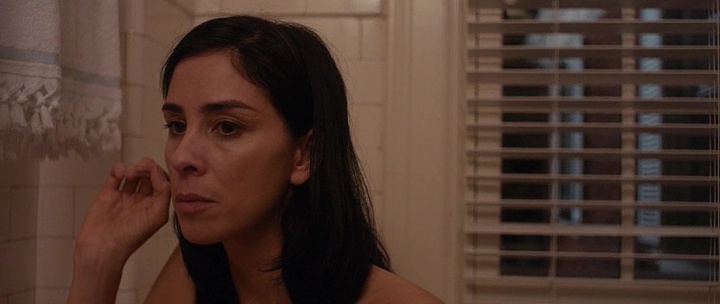
When we first meet Laney Brooks (Silverman), she’s in her bathroom, looking out the window at her husband Bruce (Charles) and their two young children, Eli (Gaertner) and Janey (Coleman), as they all shoot hoops. But she’s not actually seeing them. Her gaze is too distant, too removed from what’s going on outside. Instead she’s remembering recent events in her life: taking her kids to school, getting Chinese at a local restaurant, a dinner party with their friends Donny (Sadowski) and Susan (Barron), the unexpected arrival of a dog called Bingo… and then she snorts cocaine before taking a bath.

Faced with this kind of introduction to a character, some viewers may feel that they don’t want to spend any more time with them and will decide to go watch something else, something more light-hearted perhaps. But they would be missing out on one of the most impressive performances by an actress in the whole of 2015.

As I Smile Back progresses we come to realise that Laney has a heck of a lot more problems than just taking cocaine. She drinks to excess, pops pills like they’re sweets, and is cheating on Bruce with Donny. As well as struggling with being a wife, she struggles with being a mother, being overly fearful for Eli in particular, while proving unable to manage something as simple as bringing her school I.D. badge with her when she drops the kids off. She’s always a second or two behind everyone else, always a little distracted, always a little “vacant”.

vlcsnap-00001

It’s at around this point in Adam Salky’s take on the novel by Amy Koppelman (who also co-scripted with Paige Dylan) that the viewer begins to realise that Laney is suffering from depression and has mental health problems; the irresponsible behaviour is merely a sign of her inability to cope with every day life and its responsibilities. The average viewer will also realise that the movie can now only go in one of two ways: either Laney will hit rock bottom, get help, and get better, or she’ll spiral out of control until tragedy strikes. But Koppelman’s story takes a third way, one in which Laney has every opportunity to avoid ruining the rest of her life, but the question is: will she?

Thanks to the aforementioned impressive performance by Silverman, the answer to that question is not as simple as expected. There are some formulaic twists and turns to the story that most viewers will see coming, but on the whole, Laney is a character to root for, even when her self-destructive behaviour would have most people walking the other way. Silverman is incredibly good as a woman weighed down by the trauma of being abandoned by her father when she was nine, and whose inability to deal with the subsequent issues that have grown up around that event has led to the addictive behaviour that dictates her daily life. She has a loving husband, two great kids (though the movie hints that Eli may end up emulating his mother when he’s older), and an outwardly envious lifestyle. But for Laney, everything comes to an end; why not her marriage and all that goes with it?

vlcsnap-00002

After she drinks and takes too many drugs one night, Laney has a spell in rehab, and the movie starts to give her a chance, though there’s a noticeable distance now between her and Bruce that doesn’t bode well for the future. She talks about her father, and the fact that even though she knows where he lives, she hasn’t contacted him in thirty years (and vice versa). It becomes a challenge, to visit her father, and when she does Laney discovers that seeing him wasn’t such a great idea. From then on, things begin to spiral out of control again.

Let’s say it again: Silverman is magnificent as the self-torturing Laney. It’s the kind of dark, messy role that comediennes seem to be able to pull off without any problem at all, and Silverman gives a breathtakingly honest portrayal of a woman whose feelings are so raw, and yet who can’t connect with her emotions. And if you thought that this wouldn’t be an uncomfortable movie to watch because of Silverman’s presence, then there’s a scene involving a stuffed toy that shows just how committed the actress was to the role.

vlcsnap-00003

But, sadly, Silverman’s performance isn’t matched by Salky’s direction. The movie suffers from an icy tone that matches the wintry New York state locations, and Salky never fleshes out the characters around Laney, leaving Bruce to look and sound like a self-important grump with no amount of sympathy for Laney’s problems, while Sarandon as Laney’s father can only do limp regret in his brief scenes. The camera spends quite a lot of time observing Laney, and only gets in close when she’s really hurting or in trouble. Otherwise there’s a detachment going on that hampers the viewer from connecting with Laney, and stops any sympathy for her from becoming full-blown. It’s as if Salky has decided that, despite the obvious emotional traumas that Laney experiences, his movie is going to be more of an intellectual exercise, an examination of a character as they descend through their own personal hell. It’s not an approach that works, and detracts from the limited “enjoyment” the movie has to offer.

The script too has its faults, not least in the way that it avoids providing a convincing explanation for Laney’s mental illness/depression, and instead shows her popping pills, snorting coke, and gulping wine over and over, as if we won’t be aware of how addictive her behaviour is unless we keep seeing it. Eli’s problems are introduced but no attempt is made to resolve them, and her affair with Donny (which has so much dramatic potential) is dropped without a backward glance. Also, the scenes at the rehab centre are too short and too lacking in depth for them to be anything other than a bridge between two sets of aberrant behaviours, and the advice and comfort given by Laney’s psychiatrist (Kinney) is banal to the point of, well, extreme banality. But the final scene in the movie is thematically perfect, and ties in neatly with Laney’s problems, albeit to heartbreaking effect.

Rating: 7/10 – if it wasn’t for Silverman’s superb, and often harrowing, performance then I Smile Back wouldn’t be an attractive prospect, thanks to Salky’s distant feel for the material, and the repetitive nature of Laney’s behaviour built in to the script; but Silverman is superb, and her performance holds the movie together in a way that should be rewarded come Oscar time, but which will probably be ignored in favour of more mainstream, multiplex-friendly portayals – and that really is depressing.

Share this:

  • Click to share on X (Opens in new window) X
  • Click to share on Facebook (Opens in new window) Facebook
  • More
  • Click to print (Opens in new window) Print
  • Click to email a link to a friend (Opens in new window) Email
Like Loading...

D.W. Griffith Double Bill – The House of Darkness (1913) and The Mothering Heart (1913)

24 Thursday Sep 2015

Posted by dullwood68 in Movies

≈ Leave a comment

Tags

Affair, Asylum, Charles Hill Mailes, Claire McDowell, D.W. Griffith, Drama, Lillian Gish, Lionel Barrymore, Marriage, Mental illness, Review, Silent movies, Walter Miller

House of Darkness, The

The House of Darkness (1913)

D: D.W. Griffith / 17m

Cast: Lionel Barrymore, Claire McDowell, Charles Hill Mailes, Lillian Gish, Christy Cabanne, Robert Harron, William Elmer

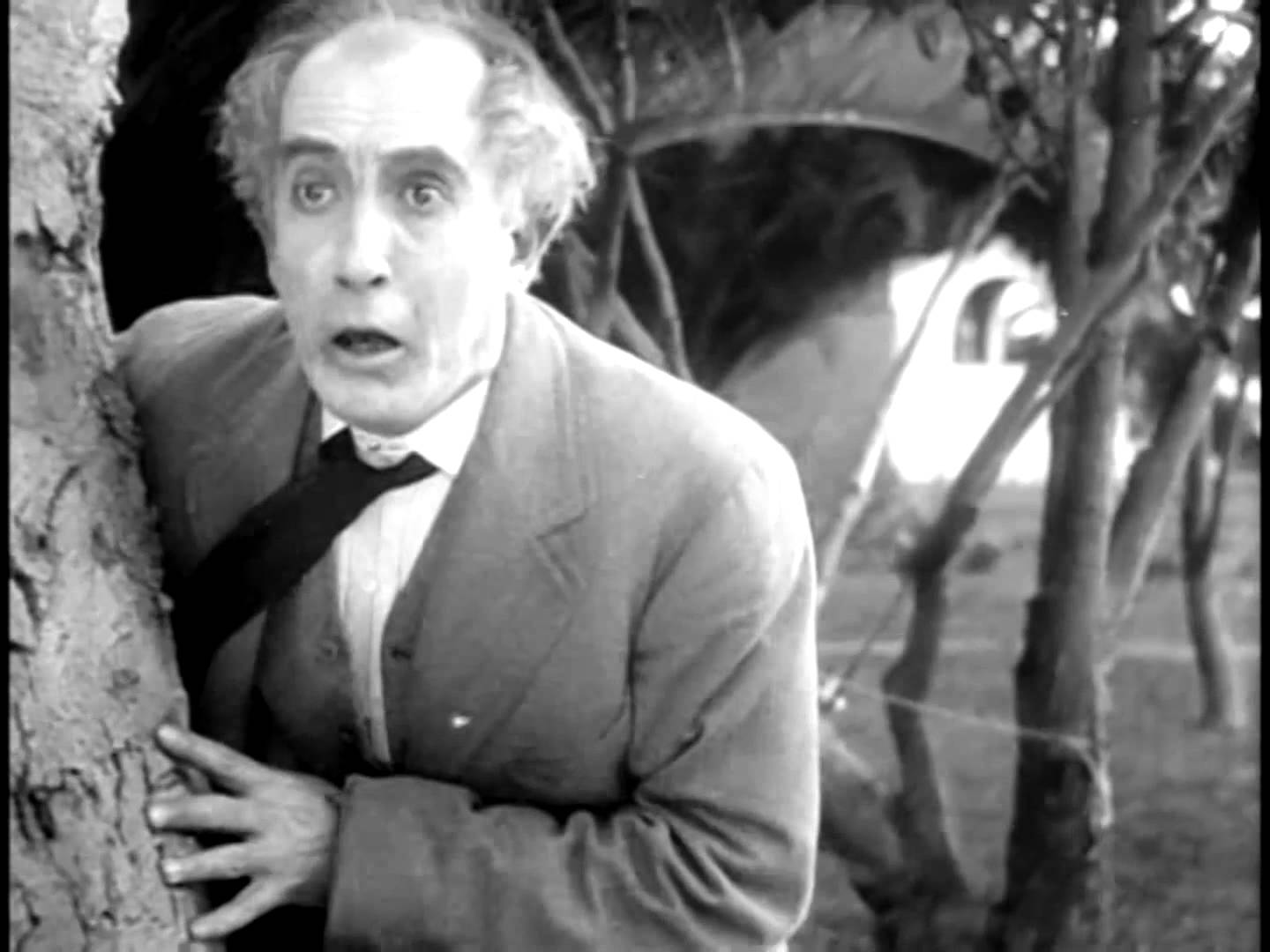
In an asylum for people with “disordered minds”, a young nurse (McDowell) is wooed by one of the doctors (Barrymore). Their courtship leads to marriage, and a happy one at that. Meanwhile, one of the inmates, an older man (Mailes) who has clearly seen better times, wanders around quite calmly and with a dazed expression that speaks of his confusion. But when he suddenly turns violent, and for no apparent reason, he has to be physically restrained. As he struggles against the orderlies restraining him, the sound of a piano being played nearby by one of the other nurses (Gish), proves successful in calming down the old man, and returning him to his former docile state.

The hospital staff make a note of this, and the nurse is encouraged to play the piano whenever the man shows signs of aggression. However, it isn’t long before the man has another psychotic episode; in the process he escapes from the grounds of the asylum. He attacks two men in a park, and manages to wrest a gun from one of them. With orderlies and the police in pursuit, he flees the park and eventually finds himself outside the home of the recently married nurse and doctor. He breaks in, and discovers the nurse there by herself…

House of Darkness, The - scene

An interesting, well-made movie that shines an unexpectedly sympathetic spotlight on the mentally ill, Griffith’s even-paced, non-melodramatic portrayal of the “insane” (only once is the old man referred to as a lunatic), The House of Darkness is a perfect metaphor for the mind of a man with mental health problems. Without a strait-jacketed or gibbering madman in sight, this is still a powerful cry for a better understanding of those whose minds have betrayed them, and is remarkably “modern” in the way in which the old man’s mania is dealt with (even if it is based on the idea that “music hath charms to soothe the savage breast”).

With Barrymore and McDowell reduced to supporting players once their marriage is established it falls to Mailes to be the focus of the movie, and he gives a poignant, affecting performance that belies his usual role as a patrician elder, and also serves as a reminder that silent movie acting wasn’t always all declamatory hand gestures and facial gurning. Mailes has the viewer’s sympathy from the start, and even when he goes berserk, there’s always the sense that he can’t help what he’s doing and that he still deserves our understanding. Griffith, by now such an assured presence behind the camera that every shot and every camera placement provides information for the viewer to react to, keeps things from being too dramatic, and lets the story unfold with a grim fatalism that is thankfully derailed in the movie’s climax.

With the script having been written by the appropriately named Jere F. Looney (or unfortunately named, depending on your point of view), The House of Darkness is a solid, unspectacular yet moving account of madness and the burden it bestows on those affected by it. And in its own way, it’s as much an affecting drama as it is a gripping thriller.

Rating: 8/10 – a good example of Griffith subverting his audience’s expectations in terms of the movie’s approach to the subject matter, and bolstered by a great performance by Mailes, The House of Darkness is both illuminating and inspiring; a small-scale triumph and as relevant now as it was back then.

Mothering Heart, The

The Mothering Heart (1913)

D: D.W. Griffith / 29m

Cast: Walter Miller, Lillian Gish, Kate Bruce, Viola Barry, Charles West

A young woman (Gish), romantically involved with a young man called Joe (Miller), allows herself to be persuaded to marry him. They move into their new home but money is tight, and Joe is weighed down by his lack of success at work. His new bride earns extra money taking in ironing, and she’s pleased to do so, believing that it will only be a matter of time before her husband begins to earn better money. After a period where he returns home each night feeling more melancholy than the last, he finally has some good news: a welcome bonus. Joe wants to celebrate, and he tells his wife to get dressed to go out, but what she has to wear is neither new nor fashionable.

They go to a nightclub where Joe attracts the attention of a woman (Barry) sitting at the next table. His wife becomes aware of this and insists they leave, but a chance encounter with the woman leads to Joe neglecting his wife and spending more and more time with her, and in the same nightclub. When she finds out what he’s doing, she resolves to leave him. When she does, Joe is only momentarily upset, and continues to spend time with his new flame. His wife, meanwhile, goes back to living with her mother (Bruce), and without telling her husband that she’s expecting their child…

Mothering Heart, The - scene

By the time of The Mothering Heart, Griffith was looking ahead to making feature length movies, but this didn’t mean that he was restless or putting any less of an effort into his short features. Here he pulls no punches in highlighting the pitiful surroundings of the young married couple, and contrasting them with the gaudy excesses of the nightclub, with its ornate furnishings and impeccably attired clientele. Through this juxtaposition he shows just how easy it is for young men to forget what’s really important in their lives, and how it can just as easily drain the love of a young bride for her husband. It’s a simple tale, and while Griffith’s approach is simple as well, he also makes Joe’s deception and its consequences tremendously emotive.

Of course, he’s aided immeasurably by Gish. It’s a little hard to credit, but at the time the movie was made, Gish was still only twenty, but in the scene where she first suspects her husband is deceiving her, she finds a glove in his coat pocket. At first she’s glad to find it, thinking it’s a present from him, but when she realises there’s only one, her expression begins to change from happiness to disappointment, all there for the audience to see as she stares into the camera. It’s a bravura moment, and beautifully crafted, as her faith in her husband is taken from her in a matter of seconds.

For all its passion and heartfelt melancholy, The Mothering Heart is also quite a restrained movie in terms of its look and the way in which Griffith uses fixed camera set ups throughout. This is a movie that is content to observe its characters and their actions, and its no frills approach adds beautifully to the carefully constructed mise en scene, the simple story allowed to be the focus and with little in the way of any distractions or irrelevancies (except for the nightclub dancers, that is).

Rating: 8/10 – with a tremendous performance by Gish, and assured, impressive direction from Griffith, The Mothering Heart is one of the very best of his American Biograph movies; powerful and moving, and visually striking, it’s a movie that rewards on far more levels than you’d expect, and paints a sobering portrait of young love undone.

Share this:

  • Click to share on X (Opens in new window) X
  • Click to share on Facebook (Opens in new window) Facebook
  • More
  • Click to print (Opens in new window) Print
  • Click to email a link to a friend (Opens in new window) Email
Like Loading...

Blog Stats

  • 486,580 hits

Recent Posts

  • 10 Reasons to Remember Bibi Andersson (1935-2019)
  • Fantasia (1940)
  • Dances With Wolves (1990) – The Special Edition
  • Kiss of the Spider Woman (1985)
  • The Three Musketeers (1973)

Top Posts & Pages

  • Lost for Life (2013) - Another Look
    Lost for Life (2013) - Another Look
  • Lost for Life (2013)
    Lost for Life (2013)
  • About
    About
  • Mr. Topaze (1961)
    Mr. Topaze (1961)
  • Winter's Tale (2014)
    Winter's Tale (2014)
  • Hunt for the Wilderpeople (2016)
    Hunt for the Wilderpeople (2016)
  • Shock and Awe (2017)
    Shock and Awe (2017)
  • Billy Lynn's Long Halftime Walk (2016)
    Billy Lynn's Long Halftime Walk (2016)
  • Irrational Man (2015)
    Irrational Man (2015)
  • Exposed (2016)
    Exposed (2016)
Follow thedullwoodexperiment on WordPress.com

Blogs I Follow

  • Rubbish Talk
  • Film 4 Fan
  • Fast Film Reviews
  • The Film Blog
  • All Things Movies UK
  • Interpreting the Stars
  • Let's Go To The Movies
  • Movie Reviews 101
  • TMI News
  • Dan the Man's Movie Reviews
  • Film History
  • Jordan and Eddie (The Movie Guys)

Archives

  • April 2019 (13)
  • March 2019 (28)
  • February 2019 (28)
  • January 2019 (32)
  • December 2018 (28)
  • November 2018 (30)
  • October 2018 (29)
  • September 2018 (29)
  • August 2018 (29)
  • July 2018 (30)
  • June 2018 (28)
  • May 2018 (24)
  • April 2018 (21)
  • March 2018 (31)
  • February 2018 (25)
  • January 2018 (30)
  • December 2017 (30)
  • November 2017 (27)
  • October 2017 (27)
  • September 2017 (26)
  • August 2017 (32)
  • July 2017 (32)
  • June 2017 (30)
  • May 2017 (29)
  • April 2017 (29)
  • March 2017 (30)
  • February 2017 (27)
  • January 2017 (32)
  • December 2016 (30)
  • November 2016 (28)
  • October 2016 (30)
  • September 2016 (27)
  • August 2016 (30)
  • July 2016 (30)
  • June 2016 (31)
  • May 2016 (34)
  • April 2016 (30)
  • March 2016 (30)
  • February 2016 (28)
  • January 2016 (35)
  • December 2015 (34)
  • November 2015 (31)
  • October 2015 (31)
  • September 2015 (34)
  • August 2015 (31)
  • July 2015 (33)
  • June 2015 (12)
  • May 2015 (31)
  • April 2015 (32)
  • March 2015 (30)
  • February 2015 (37)
  • January 2015 (39)
  • December 2014 (34)
  • November 2014 (34)
  • October 2014 (36)
  • September 2014 (25)
  • August 2014 (29)
  • July 2014 (29)
  • June 2014 (28)
  • May 2014 (23)
  • April 2014 (21)
  • March 2014 (42)
  • February 2014 (38)
  • January 2014 (29)
  • December 2013 (28)
  • November 2013 (34)
  • October 2013 (4)

Blog at WordPress.com.

Rubbish Talk

Film 4 Fan

A Movie Blog

Fast Film Reviews

The Film Blog

The official blog of everything in film

All Things Movies UK

Movie Reviews and Original Articles

Interpreting the Stars

Dave Examines Movies

Let's Go To The Movies

Film and Theatre Lover!

Movie Reviews 101

Daily Movie Reviews

TMI News

Latest weather, crime and breaking news

Dan the Man's Movie Reviews

All my aimless thoughts, ideas, and ramblings, all packed into one site!

Film History

Telling the story of film

Jordan and Eddie (The Movie Guys)

Movie Reviews & Ramblings from an Australian Based Film Fan

Privacy & Cookies: This site uses cookies. By continuing to use this website, you agree to their use.
To find out more, including how to control cookies, see here: Cookie Policy
  • Subscribe Subscribed
    • thedullwoodexperiment
    • Join 481 other subscribers
    • Already have a WordPress.com account? Log in now.
    • thedullwoodexperiment
    • Subscribe Subscribed
    • Sign up
    • Log in
    • Report this content
    • View site in Reader
    • Manage subscriptions
    • Collapse this bar
 

Loading Comments...
 

    %d