• 10 Reasons to Remember…
  • A Brief Word About…
  • About
  • For One Week Only
  • Happy Birthday
  • Monthly Roundup
  • Old-Time Crime
  • Other Posts
  • Poster of the Week
  • Question of the Week
  • Reviews
  • Trailers

thedullwoodexperiment

~ Viewing movies in a different light

thedullwoodexperiment

Tag Archives: Naomie Harris

Monthly Roundup – April 2018

12 Saturday May 2018

Posted by dullwood68 in Movies

≈ Leave a comment

Tags

Action, Adventure, Alain Guiraudie, Alberto Cavalcanti, Amen Island, Animation, Anthony Russo, Assassin, Avengers: Infinity War, B-movie, Babak Nafari, Bank robbery, Barbara Britton, Billy Brown, Blaxploitation, Blue Sky, Brad Peyton, Bullfighting, Burglars, Carlos Saldanha, Children of the Corn: Runaway, Children's Film Foundation, Chris Evans, Christina De Vallee, Comedy, Crime, Danny Glover, David Paisley, Drama, Eugeniusz Chylek, Ferdinand, France, Genetic experiment, Hafsia Herzi, Horror, Jake Ryan Scott, Jeffrey Dean Morgan, Joe Russo, John Cena, John Gulager, Johnny on the Run, Kate McKinnon, Le roi de l'évasion, Lewis Gilbert, Literary adaptation, Ludovic Berthillot, Maggie Grace, Marci Miller, Mark Harriott, Marvel, Marvel Cinematic Universe, Mike Matthews, Naomie Harris, Pine-Thomas, Proud Mary, Rampage, Reviews, Rival gangs, Rob Cohen, Robert Downey Jr, Robert Lowery, Romance, Ryan Kwanten, Sequel, Sydney Tafler, Taraji P. Henson, Thanos, The Hurricane Heist, The Monster of Highgate Ponds, They Made Me a Killer, Thriller, Toby Kebbell, Unhappy Birthday, Video game, William C. Thomas

They Made Me a Killer (1946) / D: William C. Thomas / 64m

Cast: Robert Lowery, Barbara Britton, Lola Lane, Frank Albertson, Elisabeth Risdon, Byron Barr, Edmund MacDonald, Ralph Sanford, James Bush

Rating: 5/10 – a man (Lowery) drives across country after the death of his brother and gives a lift to a woman (Lane) who tricks him into being the getaway driver in a bank robbery, a situation that sees him on the run from the police but determined to prove his innocence; a gritty, hard-boiled film noir, They Made Me a Killer adds enough incident to its basic plot to keep viewers entertained from start to finish without really adding anything new or overly impressive to the mix, but it does have a brash performance from Lowery, and Thomas’s direction ensures it’s another solid effort from Paramount’s B-movie unit, Pine-Thomas.

Proud Mary (2018) / D: Babak Najafi / 89m

Cast: Taraji P. Henson, Billy Brown, Jahi Di’Allo Winston, Danny Glover, Neal McDonough, Margaret Avery, Xander Berkeley, Rade Serbedzija, Erik LaRay Harvey

Rating: 3/10 – a female assassin (Henson) finds herself protecting the teenage boy (Winston) whose father she killed years before, and at a time when her actions cause a murderous dispute between the gang she works for and their main rival; as the titular Proud Mary, Henson makes for a less than convincing assassin in this modern day blaxploitation thriller that lets itself down constantly thanks to a turgid script and lacklustre direction, and which has far too many moments where suspension of disbelief isn’t just required but an absolute necessity.

Children of the Corn: Runaway (2018) / D: John Gulager / 82m

Cast: Marci Miller, Jake Ryan Scott, Mary Kathryn Bryant, Lynn Andrews III, Sara Moore, Diane Ayala Goldner, Clu Gulager

Rating: 3/10 – arriving in a small Oklahoman town with her teenage son, Ruth (Miller) attempts to put down roots after over ten years of running from the child cult that nearly cost her her life, but she soon finds that safety still isn’t something she can count on; number ten in the overall series, Children of the Corn: Runaway is yet another entry that keeps well away from any attempts at providing anything new, and succeeds only in being as dull to watch as you’d expect, leaving unlucky viewers to ponder on why these movies still keep getting made when it’s clear the basic premise has been done to death – again and again and again…

Johnny on the Run (1953) / D: Lewis Gilbert / 68m

Cast: Eugeniusz Chylek, Sydney Tafler, Michael Balfour, Edna Wynn, David Coote, Cleo Sylvestre, Jean Anderson, Moultrie Kelsall, Mona Washbourne

Rating: 7/10 – after running away from his foster home in Edinburgh, a young Polish boy, Janek (Chylek), unwittingly falls in with two burglars (Tafler, Balfour), and then finds himself in a Highland village where the possibility of a new and better life is within his grasp; an enjoyable mix of drama and comedy from the UK’s Children’s Film Foundation, Johnny on the Run benefits from sterling performances, Gilbert’s astute direction, excellent location work, and a good understanding of what will interest both children and adults alike, making this one of the Foundation’s better entries, and still as entertaining now as when it was first released.

Ferdinand (2017) / D: Carlos Saldanha / 108m

Cast: John Cena, Kate McKinnon, Anthony Anderson, Bobby Cannavale, Peyton Manning, David Tennant, Jeremy Sisto, Lily Day, Gina Rodriguez, Daveed Diggs, Gabriel Iglesias

Rating: 8/10 – a young bull called Ferdinand (Cena) whose disposition includes a fondness for flowers and protecting other animals, finds himself temporarily living with a supportive family, until events bring him back to the world of bullfighting that he thought he’d left behind; the classic children’s tale gets the Blue Sky treatment, and in the process, retains much of the story’s whimsical yet pertinent takes on pacifism, anti-bullying, and gender diversity, while providing audiences with a rollicking and very humorous adventure that makes Ferdinand a very enjoyable experience indeed.

The Hurricane Heist (2018) / D: Rob Cohen / 98m

Cast: Toby Kebbell, Maggie Grace, Ryan Kwanten, Ralph Ineson, Melissa Bolona, Ben Cross, Jamie Andrew Cutler, Christian Contreras

Rating: 4/10 – thieves target a US Treasury facility during a Category 5 hurricane, but don’t reckon on their plans going awry thanks to a Treasury agent (Grace), a meteorologist (Kebbell), and his ex-Marine brother (Kwanten); as daft as you’d expect, The Hurricane Heist continues the downward career spiral of Cohen, and betrays its relatively small budget every time it sets up a major action sequence, leaving its talented cast to thrash against the wind machines in search of credibility and sincerity, a notion that the script abandons very early on as it maximises all its efforts to appear as ridiculous as possible (which is the only area in which it succeeds).

The Monster of Highgate Ponds (1961) / D: Alberto Cavalcanti / 59m

Cast: Sophie Clay, Michael Wade, Terry Raven, Ronald Howard, Frederick Piper, Michael Balfour, Roy Vincente, Beryl Cooke

Rating: 6/10 – when his uncle (Howard) returns home from a trip to Malaya, David (Wade) gets to keep a large egg that’s been brought back, but little does he realise that a creature will hatch from the egg – a creature David, his sister Sophie (Clay), and their friend, Chris (Raven) need to protect from the authorities until his uncle returns home from his latest trip; though the special effects that bring the “monster” to life are less than impressive, there’s a pleasing low budget, wish fulfillment vibe to The Monster of Highgate Ponds that allows for the absurdity of it all to be taken in stride, and thanks to Cavalcanti’s relaxed direction, that absurdity makes the movie all the more enjoyable.

Rampage (2018) / D: Brad Peyton / 107m

Cast: Dwayne Johnson, Naomie Harris, Malin Akerman, Jeffrey Dean Morgan, Jake Lacy

Rating: 5/10 – a gorilla, a wolf, and an alligator are all exposed to an illegal genetic engineering experiment and become massively bigger and more aggressive thanks to the corporation behind the experiment, leaving the gorilla’s handler (Johnson) to try and help put things right; based on a video game, and as brightly ridiculous as any movie version of a video game could be, Rampage uses its (very) simple plotting to bludgeon the audience into submission with a variety of exemplary digital effects, while also trying to dredge up a suitable amount of emotion along the way, but in the end – and surprisingly – it’s Johnson’s knowing performance and Morgan’s affected government spook that trade this up from simple disaster to almost disaster.

Unhappy Birthday (2011) / D: Mark Harriott, Mike Matthews / 91m

aka Amen Island

Cast: David Paisley, Christina De Vallee, Jill Riddiford, Jonathan Deane

Rating: 4/10 – Rick (Paisley) and his girlfriend, Sadie (De Vallee), along with their friend Jonny (Keane), travel to the tidal island of Amen to reunite Sadie with her long lost sister, only to find that the islanders have a secret that threatens the lives of all three of them; a low budget British thriller with distinct echoes of The Wicker Man (1973) – though it’s not nearly as effective – Unhappy Birthday highlights the isolated nature of the island and the strangeness of its inhabitants, but reduces its characters to squabbling malcontents pretty much from the word go, which makes spending time with them far from appealing, and stops the viewer from having any sympathy for them once things start to go wrong.

Avengers: Infinity War (2018) / D: Anthony Russo, Joe Russo / 149m

Cast: Robert Downey Jr, Chris Evans, Mark Ruffalo, Chris Hemsworth, Chris Pratt, Josh Brolin, Scarlett Johansson, Don Cheadle, Benedict Cumberbatch, Tom Holland, Chadwick Boseman, Zoe Saldana, Karen Gillan, Tom Hiddleston, Paul Bettany, Elizabeth Olsen, Anthony Mackie, Sebastian Stan, Idris Elba, Danai Gurira, Peter Dinklage, Benedict Wong, Pom Klementieff, Dave Bautista, Vin Diesel, Bradley Cooper, Gwyneth Paltrow, Benicio Del Toro, William Hurt, Letitia Wright

Rating: 8/10 – Thanos (Brolin) finally gets around to collecting the Infinity stones and only the Avengers (and almost every other Marvel superhero) can stop him – or can they?; there’s much that could be said about Avengers: Infinity War, but suffice it to say, after eighteen previous movies, Marvel have finally made the MCU’s version of The Empire Strikes Back (1980).

The King of Escape (2009) / D: Alain Guiraudie / 90m

Original title: Le roi de l’évasion

Cast: Ludovic Berthillot, Hafsia Herzi, Pierre Laur, Luc Palun, Pascal Aubert, François Clavier, Bruno Valayer, Jean Toscan

Rating: 6/10 – when a middle-aged homosexual tractor salesman (Berthillot) falls in love with the daughter (Herzi) of a rival salesman, this unexpected turn of events has further unexpected repercussions, all of which lead the pair to go on the run from her father and the police; as much a comedy of manners as an unlikely romance, The King of Escape is humorous (though far from profound), and features too many scenes of its central couple running across fields and through woods, something that becomes as tiring for the viewer as it must have been for the actors, though the performances are finely judged, and Guiraudie’s direction displays the increasing confidence that would allow him to make a bigger step with Stranger by the Lake (2013).
Share this:

  • Click to share on X (Opens in new window) X
  • Click to share on Facebook (Opens in new window) Facebook
  • More
  • Click to print (Opens in new window) Print
  • Click to email a link to a friend (Opens in new window) Email
Like Loading...

Moonlight (2016)

29 Sunday Jan 2017

Posted by dullwood68 in Movies

≈ 4 Comments

Tags

Barry Jenkins, Chiron, Drama, Drugs, Homosexuality, Janelle Monáe, Mahershala Ali, Miami, Naomie Harris, Review, Tarell Alvin McCraney

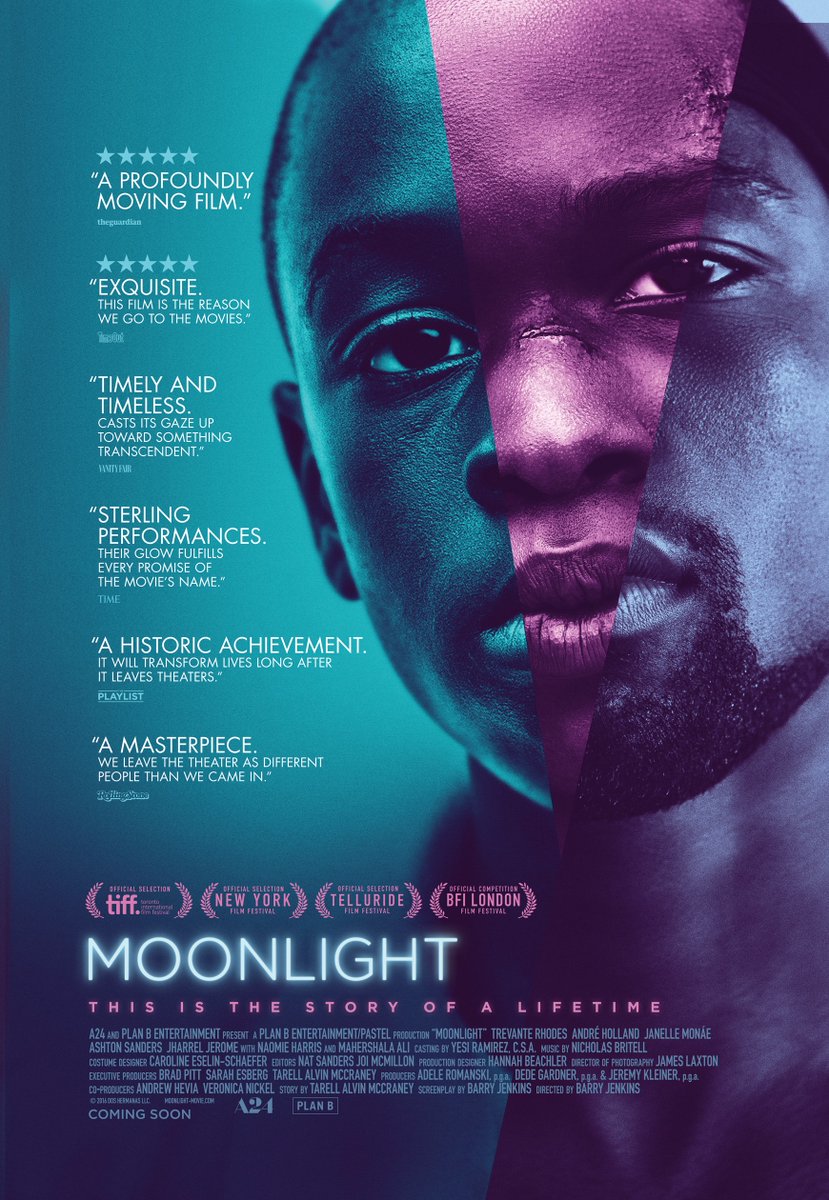
cyy-htkvqaadir8

D: Barry Jenkins / 111m

Cast: Alex R. Hibbert, Ashton Sanders, Trevante Rhodes, Naomie Harris, Mahershala Ali, Janelle Monáe, Jaden Piner, Jharrel Jerome, André Holland, Patrick Decile

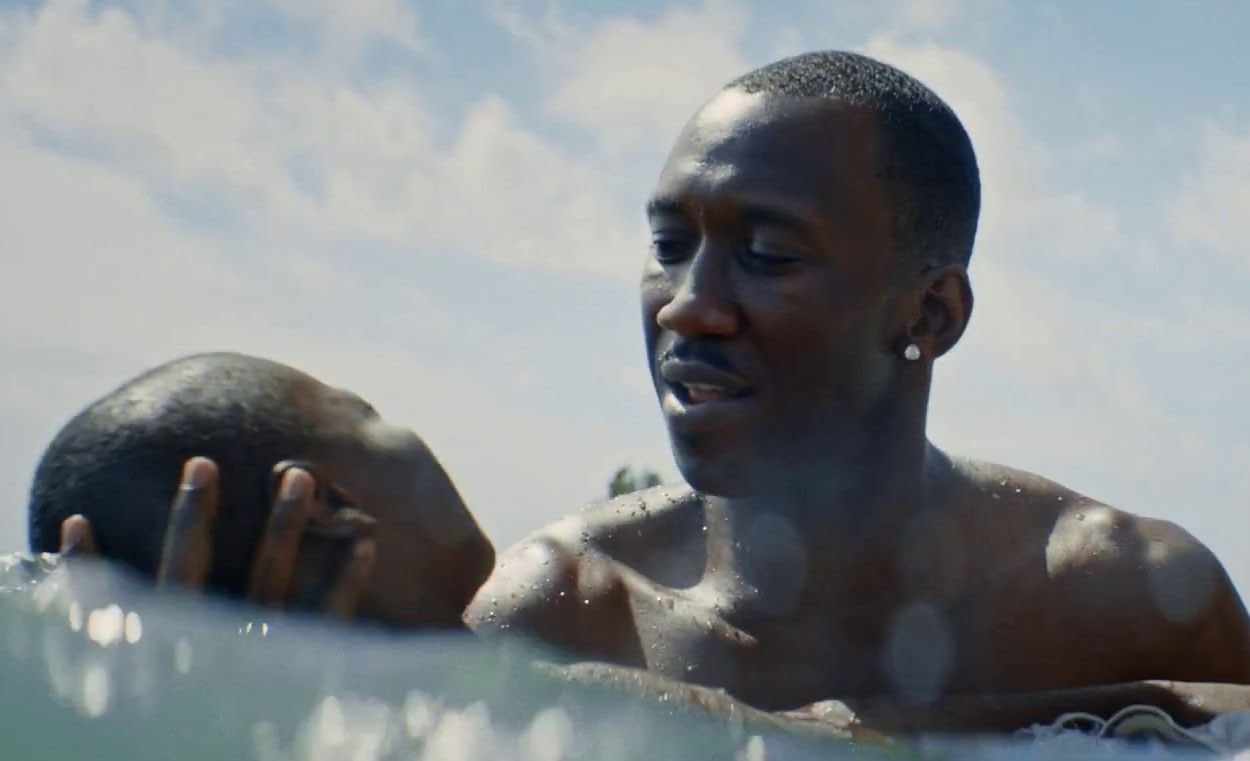
Chiron (Hibbert) is a young boy living in Miami who is being bullied at school. Avoiding another attempt by his classmates to harrass him, Chiron seeks refuge in an abandoned property. He’s discovered by local drug dealer, Juan (Ali), who takes him under his wing. With his girlfriend, Teresa (Monaé), Juan looks after Chiron overnight, and learns that his nickname is Little, because of his shy, withdrawn nature. The next day, Juan takes Chiron home to his mother, Paula (Harris). The only person he likes is his schoolmate Kevin (Piner), and they become firm friends. When Juan sees Paula with one of his customers, he berates her but she responds by criticising his supplying drugs to her. Chiron keeps going back to see Juan and Teresa, eventually revealing that he hates his mother.

At the age of sixteen, Chiron (Sanders) is still being bullied, now by a specific classmate, Terrel (Decile). His mother is now addicted to crack and prostitutes herself to support her habit. Chiron still visits Teresa, and his relationship with Kevin (Jerome) becomes more intimate following a party. But Terrel’s bullying takes a more sinister turn when he pressures Kevin into taking part in a hazing ritual that requires him to punch Chiron in the face. The ritual leads to Chiron taking out his anger and his frustration on Terrel in front of his classmates, and being arrested.

maxresdefault

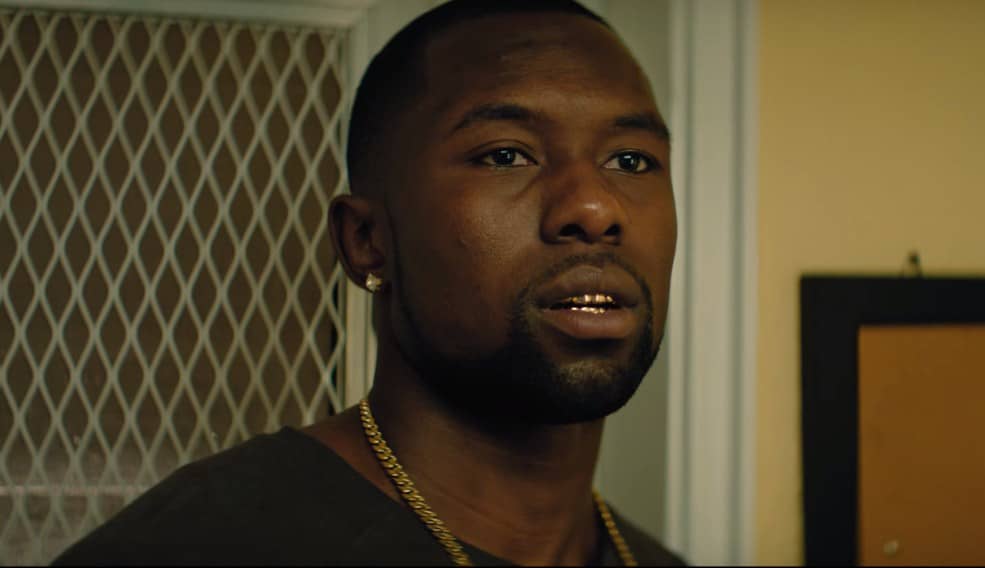
As an adult, Chiron (Rhodes), now known as Black, has moved to Atlanta and followed in Juan’s footsteps and become a drug dealer. He’s estranged from his mother, but she keeps asking him to visit her. One night, out of the blue, Chiron receives a call from Kevin, who is still living in Miami. Kevin apologises for his actions years before, and this in turn prompts Chiron to visit his mother at the drug treatment facility where she now lives. She too apologises for the way she treated Chiron when he was growing up. He then travels to Miami and meets up with Kevin who is working in a diner. And Chiron reveals a surprising truth to his old schoolfriend that allows for a reconciliation between them.

A surprise hit at several festivals in 2016, Moonlight is a heartfelt, emotionally charged drama that portrays the experiences of a young boy as he grows into a teenager and then a young man. Based on the play In Moonlight Black Boys Look Blue by Tarell Alvin McCraney, as well as both McCraney and director Jenkins’ experiences growing up with similar family backgrounds to that of Chiron, Moonlight is a superb example of low-budget, independent movie making that’s by turns intelligent, compelling, meaningful, vital, and above all, crafted with a tremendous amount of heart and soul.

8a9b56e91cdfd5f25967c2b89b2ae580

In telling Chiron’s story across three different time periods, Jenkins is able to show the slow, inevitable loss of innocence that comes from living in an environment where life is held in poor regard, and regret is a squandered by-product of selfish need. Already having seen and heard far more of the adult world than is good for him, as well as facing the daily trial of being the target of bullies, it’s no wonder that Chiron is withdrawn and non-communicative. What voice does he have? Who will listen to him? The lack of a father in his life doesn’t help, making his relationship with Juan, however inappropriate, the nearest he has to having a male role model. With his mother worried more about satisfying her own needs, Chiron is adrift in life. Only his friendship with Kevin provides him with hope of something better; Juan and Teresa offer him support but on a limited basis, and when he learns that Juan has sold drugs to his mother, it’s another disappointment that reinforces his view that adults don’t care. In this, the movie’s first section, Jenkins displays a sureness of touch in detailing Chiron’s sense of alienation, a situation he has no control over. It’s heartbreaking to see this young boy, treated so unfairly, both directly and indirectly, and to know that whatever is in store for him in the future, it’s unlikely that his situation will improve.

And so it proves when we see Chiron as a teenager. Still the victim of bullying, still withdrawn and being emotionally neglected by his mother, the young boy sitting on a powder keg of ill-formed anger is now older, but still struggling to find a place for himself in the world, and trying to make sense of his burgeoning feelings toward Kevin. It’s this section that delves deeply into the pain and frustration that he feels more and more, and when he does connect with Kevin it’s a rare moment of joy in an otherwise unrewarding life. But Jenkins is ahead of his audience. Just as viewers might be thinking, “Well, this happiness can’t last”, he subjects Chiron to further pain and betrayal. This, Jenkins seems to be saying, is Chiron’s lot in life: for every good thing that happens to him, a reversal must come along to balance things out.

597669130

And in the final section, where we see Chiron as an adult, and it appears as though his future will be short-lived due to his being a drug dealer, the movie also makes it seem as if Chiron will remain adrift for the rest of his life. But Jenkins and McCraney have other plans for him, and by subtly shifting the focus from Chiron’s distrust of life and the pain it has caused him, the movie offers hope in the form of the one thing that ever brought him happiness: his sexuality. This allows the movie to end on a triumphal note that is both unexpected and incredibly moving, and though you might argue that Chiron’s life won’t change irrevocably, he does now have a chance at changing some things for the better.

Moonlight is an audacious movie that explores notions of identity and belonging with a great deal of conviction and confidence. Jenkins and McCraney have constructed a delicate, thought-provoking screenplay that offers no easy answers to the various predicaments Chiron experiences, and which does so out of a sense of fidelity to their own lives growing up. There are further themes around personal responsibility, parental neglect, peer pressure, and flexible morality, and Jenkins juggles all these elements with admirable ease, presenting Chiron’s world with a deceptively fluid directing style that’s enhanced by James Laxton’s often luminous cinematography, Joi McMillon and Nat Sanders’ intuitive, languorous editing, and a beautifully redolent score by Nicholas Britell. But it’s the performances that impress the most. As the three incarnations of Chiron, Hibbert, Sanders and Rhodes are all equally impressive, while Ali underplays his role as Juan to such good effect that you really want him to break the stereotype and be the male role model Chiron needs. And for someone who didn’t initially want to play the role, Harris is magnificent as the mother whose love for her son is diminished by addiction but not abandoned entirely.

Rating: 9/10 – an immensely personal and rewarding movie that paints a vivid picture of a life recognised but rarely this effectively examined, Moonlight is unapologetic and touching at the same time; treating its characters with a compassion and a tenderness that belies the life that Chiron is a part of, the movie is a wonderfully realised testament to the idea that connections can be made in the most inauspicious of situations, and that love – really and truly – can make all the difference.

Share this:

  • Click to share on X (Opens in new window) X
  • Click to share on Facebook (Opens in new window) Facebook
  • More
  • Click to print (Opens in new window) Print
  • Click to email a link to a friend (Opens in new window) Email
Like Loading...

Collateral Beauty (2016)

30 Friday Dec 2016

Posted by dullwood68 in Movies

≈ Leave a comment

Tags

Actors, Bereavement, Comedy, David Frankel, Death, Drama, Edward Norton, Grief, Helen Mirren, Jacob Latimore, Kate Winslet, Keira Knightley, Letters, Love, Michael Peña, Naomie Harris, Review, Time, Will Smith

collateral-beauty_poster

D: David Frankel / 97m

Cast: Will Smith, Edward Norton, Kate Winslet, Michael Peña, Helen Mirren, Naomie Harris, Keira Knightley, Jacob Latimore, Ann Dowd

Sometimes, a movie arrives with very little fanfare or advance notice (in comparison to the supposed blockbusters of the day), and features a cast that makes the average viewer say to themselves, “Wow! What a cast! This movie’s got to be good!” Collateral Beauty is one of those movies, with its dream cast in service to a story that deals with unyielding grief, and which does so by employing magical realism as its main approach to telling the story. It’s meant to be an uplifting, emotionally dexterous movie – set at Xmas – that will leave viewers with a warm glow in their heart as they leave the cinema.

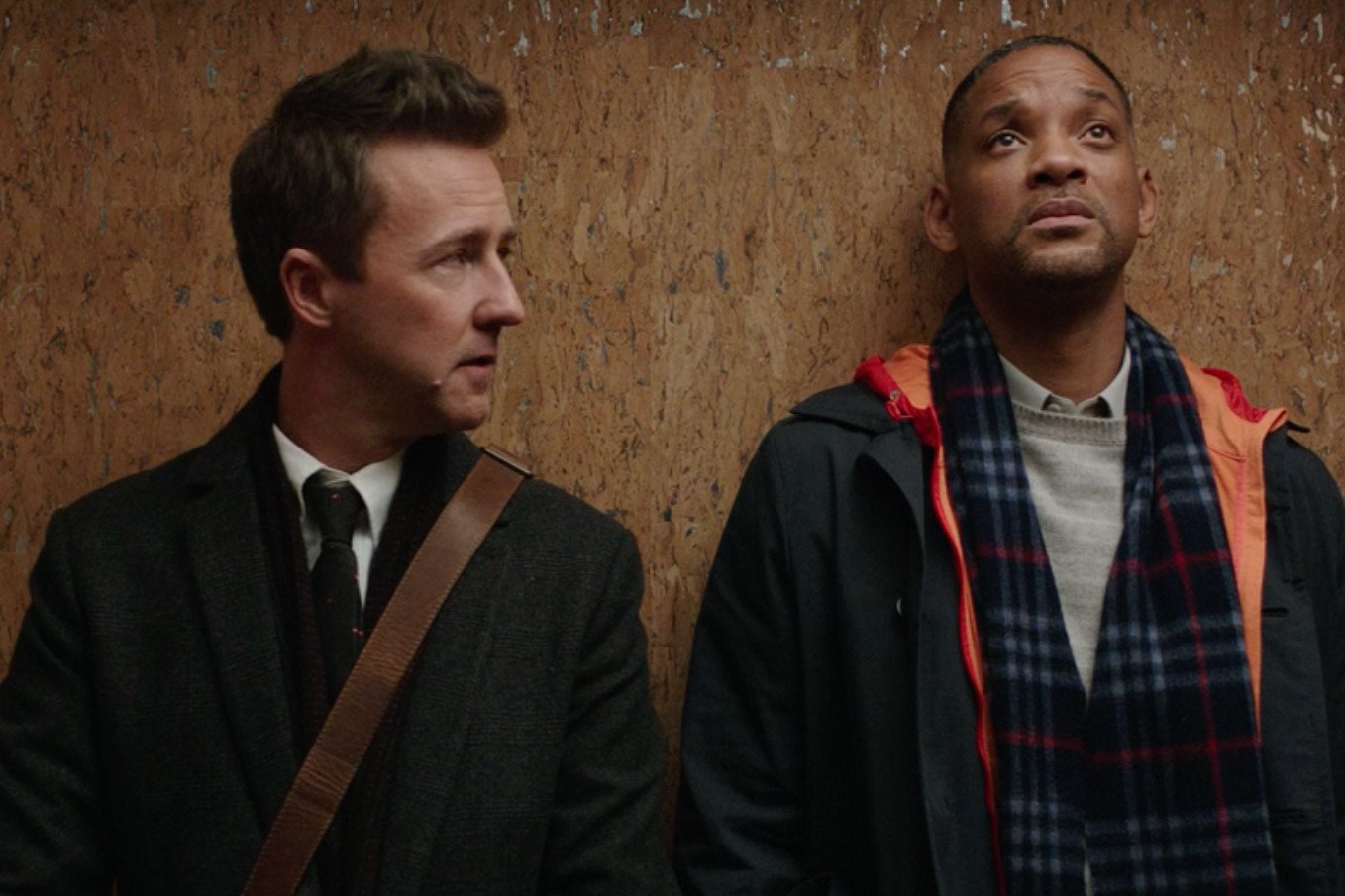
Alas, Collateral Beauty – and despite the best efforts of its dream cast – isn’t actually that movie. What it is, is a tragedy wrapped up in a comedy wrapped up in a magical realist fantasy wrapped up in an awkwardly staged feelbad movie. It’s a movie that revels in the pain and suffering of a group of individuals who are the very definition of stock characters. Some effort has been made with Smith’s character, a marketing executive whose six year old daughter has recently died from brain cancer. Unable to let go of his grief (and not really wanting to), Howard still shows up for work but spends his time creating elaborate domino structures and neglecting the business he built up with best friend, Whit (Norton). With the company on the brink of losing their biggest contract thanks to Howard having “zoned out”, Whit needs to prove to a prospective buyer that Howard, who has the controlling interest, is sufficiently non compos mentis for the sale to go ahead without his involvement.

8472687-922147

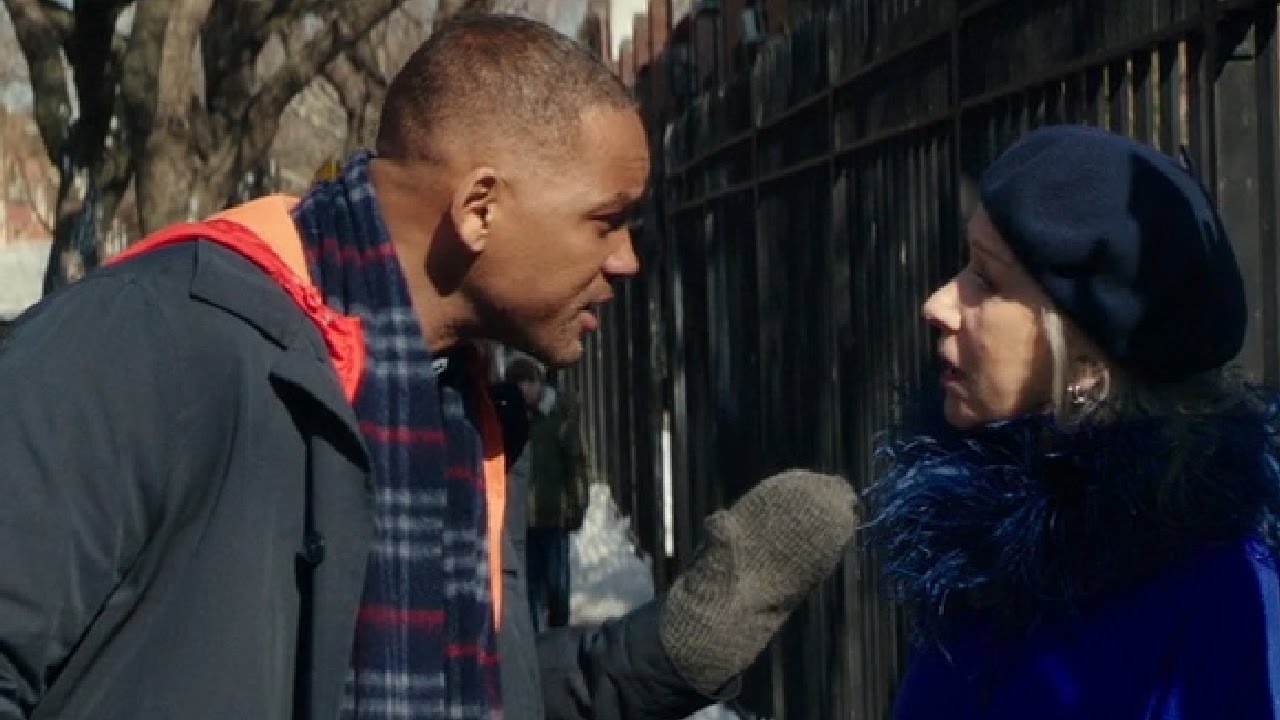
But how to prove this? How, indeed. The answer arrives, like a gift from Heaven, in the form of budding actress Amy (Knightley). Through a process too unlikely to relate here, he hires Amy and her friends, Brigitte (Mirren) and Raffi (Latimore) to act as Love, Death and Time respectively, concepts that Howard has been writing to. Yes, Howard has been railing against Love, Death and Time for stealing his daughter away from him. Whit’s idea is for the trio to pop up at random and talk to Howard in various public places. These encounters will be filmed by a private investigator (Dowd), and the actors removed digitally before the footage is shown to the buyer, thus making Howard seem, at the very least, delusional, or at worst, completely bonkers.

Now, the thing to remember here is that Whit, along with his colleagues, Claire (Winslet) and Simon (Peña), is Howard’s friend. Let’s let that sink in for a moment. His friend. Who with Claire and Simon decides to play charades with a man whose grief is all-consuming and all in order to save the company where they all work. They want to do this not, in the first place, to help Howard deal with his grief, but so that they can save their jobs. And this is meant to be a good idea, both in practice and as the basis for a movie.

But not content with having them play mind games with their boss, the script also gives them their own problems to deal with. Whit has a young daughter who hates him because he had an affair that led to her parents’ divorce (as she puts it, he broke her heart). Claire has sacrificed her longing for a child in order to be successful at work. And Simon, who has fought off a serious illness twice before, is having to face up to the possibility that the third time might not be the charm. Throw in Naomie Harris’s grief counsellor, Madeleine (the only person Howard seems able to talk to about how he feels), who has also lost a daughter, and you have a group of people you’d cross the room to avoid at a feelgood seminar. They do glum with a capital G-L-U-M, and each time the script – by Allan Loeb, who has penned such classics as Here Comes the Boom (2012) and Just Go With It (2011) – indulges in their suffering it does so in a way that’s detrimental to the central storyline: Howard and his grief.

499295-will-smith-keira-knightley-collateral-beauty

There’s also the problem of the movie’s tone. Collateral Beauty is about death, and the sorrow felt and experienced by the people left behind; it’s also about how grief can twist and contort feelings of pain and guilt into something much more violent and harmful. But Loeb’s script doesn’t want to address these issues head on, as quite rightly, this would make the movie a bit of a downer (and then some). So instead of making a straight-up drama about grief and loss, Frankel et al have made a middling comedy about grief and loss. While the themes in play remain serious, they’re all dusted with a light-hearted sheen that never feels right and never sounds right. The comedy elements distract from the drama of the piece, and in such an awkward, “oh no, they didn’t” way as to be confusing to the viewer. Is this a drama about grief, or a comedy about grief? But there’s no point in asking, as the movie doesn’t know any more than anyone else does.

With the whole premise undermined from the very beginning, Collateral Beauty becomes an exercise in perpetual wincing. When actors of the calibre of Norton and Winslet can’t make the material work then it’s time to head home and call it a day. Scenes come and go that make no sense dramatically, but seem intended to provide a level playing field for all the cast so they have enough moments to add to their showreels. As the actors with no background in psychotherapy but given carte blanche to say anything they can think of, Mirren, Knightley and Latimore are acceptable, but rarely do anything that takes them out of their thespian comfort zones (there’s also a suspicion that Mirren is playing a version of herself that fans have come to expect rather than an actual character).

maxresdefault

Smith at least tries to inject some much needed dramatic energy into his role, but until the very end, when Howard is required to undergo an about face because the script needs him to, he’s held back by the script’s decision to make him appear either vague or angry (or sometimes, vaguely angry). Norton and Winslet coast along for long stretches, and a restrained Harris is the voice of wisdom that Howard desperately needs to hear. That leaves Peña, whose performance elicits some real sympathy late on in the movie, and who proves once again that he’s a talented actor who needs to be given better opportunities and roles than this one.

Overseeing it all is Frankel, whose previous movies include Marley & Me (2008) and Hope Springs (2012). You can understand why he got the job, but with the script unable to decide what approach it wants to take, Frankel is left stranded and unable to find an effective through-line with which to link everything together. It never feels as if he’s got a firm grasp on the narrative, or any of the underlying subtleties that Loeb’s script managed to sneak in when the writer wasn’t looking. In the end, he settles for a perfunctory directing style that keeps things moving along on an even keel but which doesn’t allow for anything out of the ordinary to happen. There’s no real dramatic ebb and flow here, and sadly, like so many other directors out there today, he’s not able to overcome something that is one of the movie’s biggest flaws.

Rating: 4/10 – near enough to “meh” as to be on close, personal speaking terms, Collateral Beauty is bogged down by its schizophrenic script, and an over-developed propensity for ridiculousness; rarely has magical realism felt so false or poorly staged, and rarely has a movie about grief instilled the same feeling in its audience for having seen it in the first place.

Share this:

  • Click to share on X (Opens in new window) X
  • Click to share on Facebook (Opens in new window) Facebook
  • More
  • Click to print (Opens in new window) Print
  • Click to email a link to a friend (Opens in new window) Email
Like Loading...

Spectre (2015)

10 Tuesday Nov 2015

Posted by dullwood68 in Movies

≈ Leave a comment

Tags

007, Action, Adventure, Andrew Scott, Ben Whishaw, Christoph Waltz, Daniel Craig, Dave Bautista, Eon Productions, Franchise, Ian Fleming, James Bond, Jesper Christensen, Léa Seydoux, M, MI5, Miss Moneypenny, Monica Bellucci, Mr Hinx, Mr White, Naomie Harris, Q, Ralph Fiennes, Sam Mendes, Sequel, Thriller

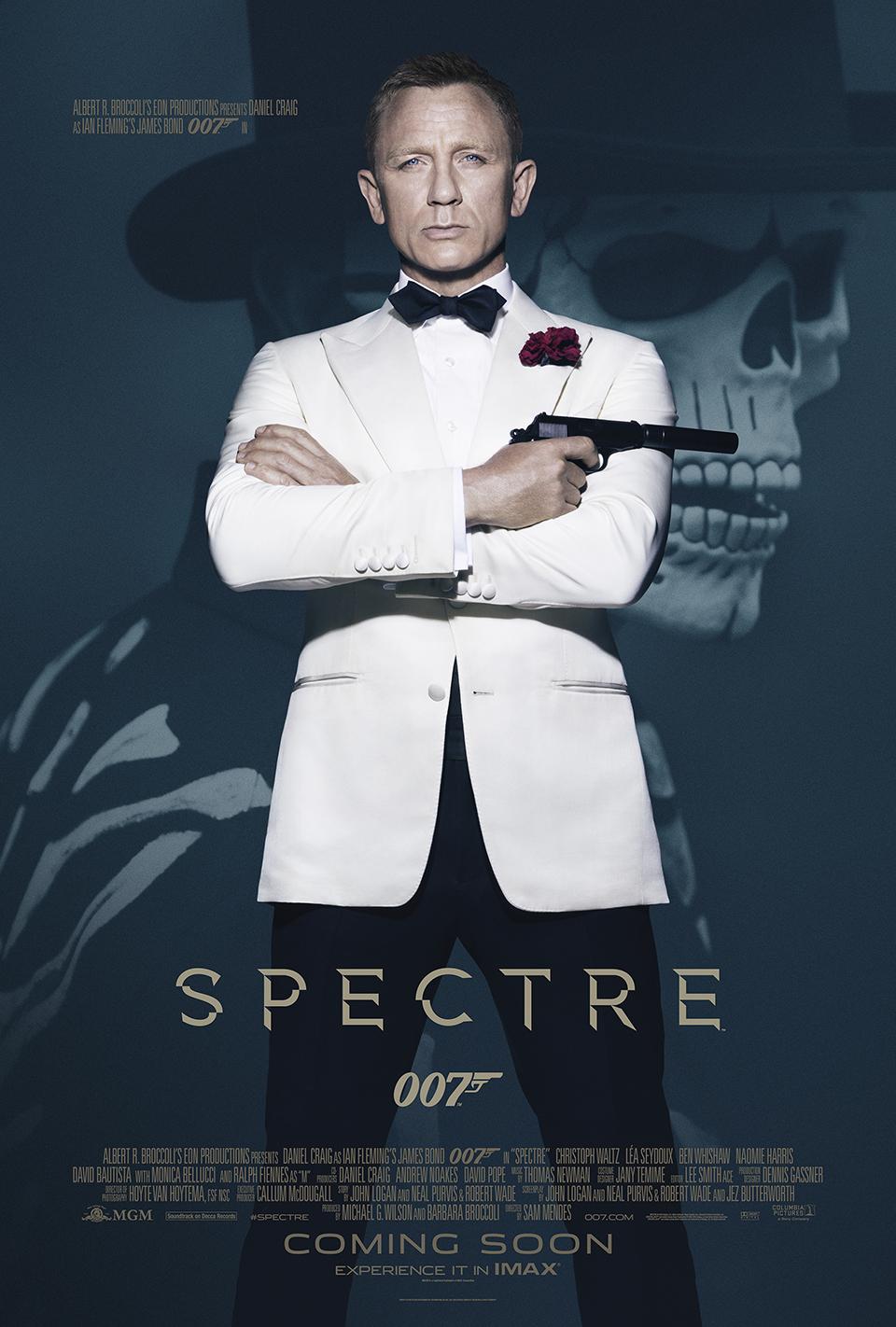
Spectre

D: Sam Mendes / 148m

Cast: Daniel Craig, Christoph Waltz, Léa Seydoux, Ralph Fiennes, Ben Whishaw, Naomie Harris, Monica Bellucci, Dave Bautista, Andrew Scott, Rory Kinnear, Jesper Christensen, Alessandro Cremona

And so, here we are again, back in familiar territory: after a run of three movies with a new actor playing James Bond, and with the material getting worse and worse, we arrive at a fourth movie that neither grips or excites, boasts a decent script or direction, and which labours through its extended running time like an asthmatic running a half-marathon. We could be talking about Die Another Day (2002), but instead we’re talking about Spectre, the latest in the oft-rebooted franchise, and possibly Daniel Craig’s last outing as Bond (he may do one more but nothing’s definite yet).

It’s been a relatively short nine years since Casino Royale exploded onto our screens in a welter of frenzied, punishing action sequences, and one of the best Bond scripts ever. It was everything you could ever hope for from a Bond movie, and then some, and for many fans it went straight to the top of their favourite Bond movie list. There were some psychological aspects to it in terms of Bond’s behaviour, the best Bond villain for an age, and as an “origin story” it worked much better than most. But most of all it was fun with a capital F.

And then there came the inevitable stumble with Quantum of Solace (2008). A straight-out revenge flick but with James Bond as the central character, it was basically a direct follow-up to Casino Royale that suffered from a weak villain and a mid-section that dragged as if the writers had lost focus on the story they were telling. But it did have some great action sequences, just as tough and brutal as before, and a great performance from Craig. (If you watch it back to back with Casino Royale as a four hour movie it plays a lot better than on its own.)

Spectre - scene2

Now at this stage, the producers brought on board Sam Mendes to helm the third outing for Craig, and he delivered the most successful Bond movie to date: Skyfall (2012). But while critics and fans heaped praise on the first Bond movie to make over a billion dollars at the box office, less easily swayed viewers could see the cracks starting to show as the writers tried to include a mystery relating to Bond’s past. And there were problems elsewhere, where the script showed signs of laziness (the train crash – how could Silva have “known” that he and Bond would meet at that particular place and time for the train to come crashing through the ceiling?).

That laziness has been extended to Spectre, with its tired action sequences (only the fight on the train between Bond and Mr Hinx has any energy or verve about it), eggshell thin characterisations (why does it seem as if Vesper Lynd is the only female character in the Bond franchise with any depth?), nonsensical reason for the villain’s actions (whatever happened to blackmailing the world’s leaders into not killing them with hijacked nukes?), and nods to previous entries in the franchise that only serve to remind audiences of the good old days when Bond just got on with the job and didn’t have to deal with questions about his lifestyle or any emotional scarring arising out of his childhood.

There’s also the absurd plot about linking all the world’s security systems under one (though it looks as if Waltz’s character is already doing that anyway), and then there’s Christoph Waltz’s ersatz-Blofeld scampering around like an escaped inmate from Bellevue, and providing none of the menace required to make his character a match for Bond’s determination and drive; in fact, he has more in common with Elliot Carver, Jonathan Pryce’s crazed media tycoon in Tomorrow Never Dies (1997) (but that’s still not a recommendation). Waltz is a good actor, but he’s all too often an actor making his own decisions about playing a role, and without, it seems, much instruction from the director. Here he tries the playful über-villain too often for comfort, and for the head of an organisation that included Le Chiffre and Raoul Silva as mere agents, looks entirely like someone’s younger brother who finally gets to play with his bigger brother’s toys.

Spectre - scene

Once again, the female characters are there for decoration, with Seydoux going to sleep in a hotel room fully clothed and then waking up some time later in her slip, and Bellucci wasted as the wife of a man Bond kills in the opening sequence. Harris though, does get more to do as Miss Moneypenny (we even get a glimpse of her home life), but beyond that it’s business as usual, with no other female roles of note, and the focus firmly on the macho posturing that occurs elsewhere throughout (even Whishaw gets a moment out in the field where he encounters some danger). Fiennes is a grumpy-looking M (though he does get the movie’s best line), Scott is a slimy-looking C, and Bautista is all the more imposing for being dressed in bespoke tailoring throughout. The returning Christensen is a welcome sight but he’s only there to reiterate what he said in Quantum of Solace (though “we have people everywhere” now becomes “he’s everywhere”), and his one scene is over far too quickly.

Returning as well, of course, is Mendes, whose handling of Skyfall meant he was always going to be asked to return, but perhaps it would have been better to go with someone who could inject some much needed energy into proceedings. Mendes is good at the MI6 stuff, prowling the corridors of power and highlighting the power games surrounding the shake up of the security services that serves as the political backdrop for the movie, but “out in the field” he’s less confident, and on this evidence, less engaged. There are too many scenes that go by without making much of an impact, and too many scenes that could have been more judiciously pruned in the editing suite. Instead, Mendes does just enough to make Spectre a facsimile of Skyfall, but without the emotional ending (here Bond rides off into the sunset with Seydoux’s character, but you know she won’t be back for the next movie).

If Craig decides not to play Bond one more time then the producers will need to go back to square one and start afresh – again. If they do, then let’s hope this whole let’s-give-Bond-an-origin-story-he-doesn’t-need angle is dropped in favour of seeing him do what he does best: being a one-man wrecking crew with no time for niceties. In many ways, Ian Fleming’s creation is a “sexist, misogynist dinosaur”, but it’s what we’ve loved about him for over fifty years now, and in their efforts to give us a “new” Bond for contemporary times, the producers have lost sight of what makes him truly Bond: he doesn’t do introspection or guilt, and because of that he’s good at his job. (And if a reboot is in order, then let’s get Martin Campbell back in the director’s chair – he seems to know what he’s doing.)

Rating: 5/10 – not a complete stinker – it’s production values, along with Craig’s still committed performace see to that – but not the best Bond outing you’re likely to see either, and proof that the series, in this stretch at least, is heading downhill fast; when even the action sequences in Spectre feel tired and lacklustre, then it’s time for the producers to take a step back and work out where they really want to take Bond next, because right now, it doesn’t look as if they know.

Share this:

  • Click to share on X (Opens in new window) X
  • Click to share on Facebook (Opens in new window) Facebook
  • More
  • Click to print (Opens in new window) Print
  • Click to email a link to a friend (Opens in new window) Email
Like Loading...

Mini-Review: Southpaw (2015)

04 Tuesday Aug 2015

Posted by dullwood68 in Movies

≈ Leave a comment

Tags

Antoine Fuqua, Billy Hope, Boxing, Curtis '50 Cent' Jackson, Drama, Forest Whitaker, Jake Gyllenhaal, Legal custody, Light heavyweight, Naomie Harris, Oona Laurence, Rachel McAdams, Review, Shooting, Wills' Gym, World Champion

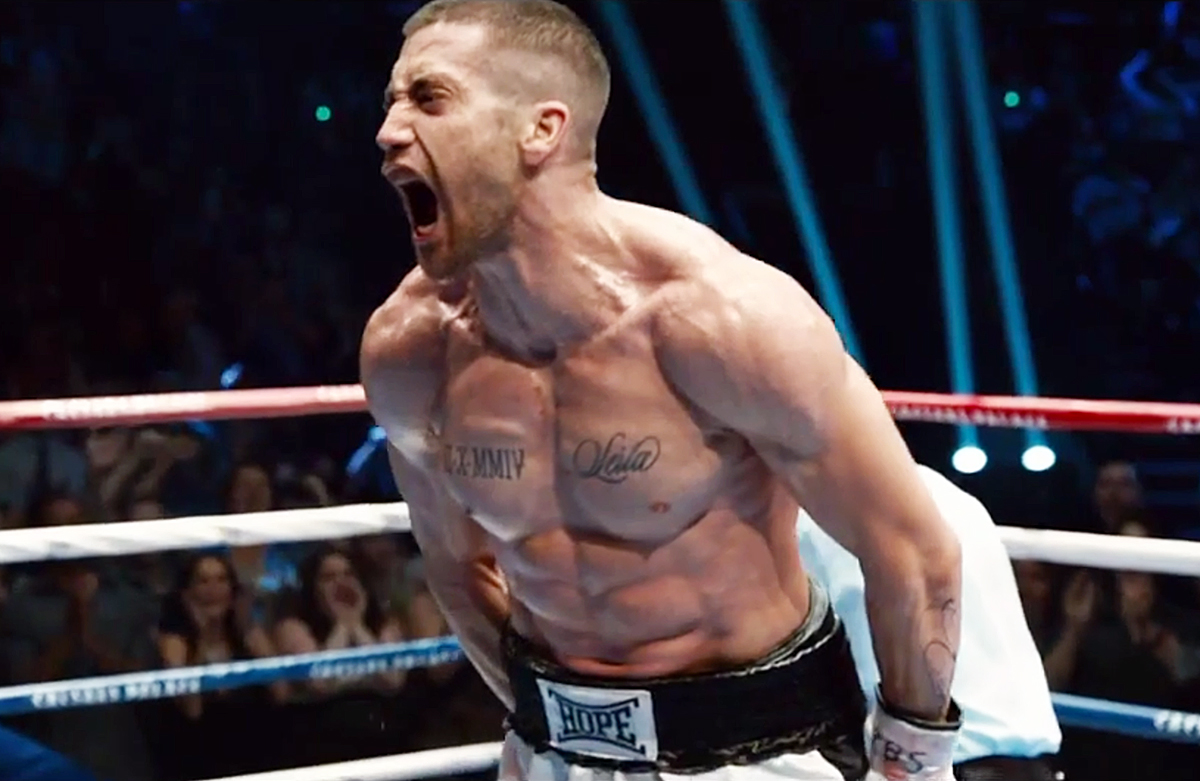
Southpaw

D: Antoine Fuqua / 124m

Cast: Jake Gyllenhaal, Forest Whitaker, Rachel McAdams, Oona Laurence, Curtis ’50 Cent’ Jackson, Naomie Harris, Skylan Brooks, Victor Ortiz, Beau Knapp, Miguel Gomez

Billy ‘The Great’ Hope (Gyllenhaal) is both the light heavyweight boxing champion of the world and undefeated in forty-three professional fights. Defending his title against the latest challenger, Billy’s lack of defence causes the fight to last longer and take more of a toll. His wife, Maureen (McAdams) feels he should take some time off to fully recover, while his manager, Jordan Mains (Jackson), wants him to sign a lucrative contract with a TV network for three further fights. And another boxer, young and cocky Miguel ‘Magic’ Escobar (Gomez), is trying to goad Billy into letting him challenge for the title.

At a charity event, a brawl between Billy and Miguel ends in tragedy when one of Miguel’s entourage accidentally shoots and kills Maureen. Devastated, Billy retreats from his daughter, Leila (Laurence), and embarks on a self-destructive path that sees him accept the TV network offer but lose the first fight in embarrassing fashion when he punches the referee, lose his licence to box professionally, be let go by Mains, lose his home and property through mounting debts, and when he tries to kill himself, he loses custody of Leila as well. Charged by the court to straighten himself out, Billy turns to boxing coach Tate Wills (Whitaker) to help him get back in the ring and in turn, regain custody of Leila. When it’s clear he’s back in shape and boxing better than ever, Mains reappears and offers him a fight he can’t refuse: against Miguel, now the light heavyweight champion of the world.

Southpaw - scene

On paper at least, Southpaw should have been a sure-fire winner (or in boxing parlance, a knockout). With a director known for his visual flair and aptitude for strong male characters, a lead actor who – Accidental Love (2015) aside – is on one of the hottest streaks of recent years, and the screenwriter who created Sons of Anarchy, this tale of riches to rags to redemption should have been a gripping examination of one man’s descent into despair, and his journey back to a more stable life.

But alas, Southpaw is a movie that consistently disappoints the viewer and sticks to such a precisely engineered, formulaic script that when there is a moment of unexpected originality, it sticks out like a sore thumb. And all this despite another physically demanding performance from Gyllenhaal, but one that is strangely lacking in  the kind of passion that would have made Billy a lot more sympathetic. As it is, he’s a sullen presence throughout, and not very likeable either. McAdams and Whitaker fare better, taking the flimsiness of their characters and making them appear to have more depth than they actually have. But in the acting stakes it’s Laurence who steals the show (and somebody needed to), giving yet another outstanding child performance. Behind the lens, Fuqua doesn’t seem to have the energy to vary the tempo, leaving some scenes feeling flatter than others, while the estimable Mauro Fiore’s photography is reduced to showcase scenes that are so underlit that it makes you wonder if the production couldn’t afford lighting rigs or spots.

Rating: 6/10 – too predictable and too bland despite the punishing boxing matches and the various attempts at emotionally manipulating its audience, Southpaw falls short of being a great boxing movie; it ticks all the boxes marked cliché, and never once tries to lift itself up off the canvas and land a killer blow.

Share this:

  • Click to share on X (Opens in new window) X
  • Click to share on Facebook (Opens in new window) Facebook
  • More
  • Click to print (Opens in new window) Print
  • Click to email a link to a friend (Opens in new window) Email
Like Loading...

Mandela: Long Walk to Freedom (2013)

02 Sunday Mar 2014

Posted by dullwood68 in Movies

≈ Leave a comment

Tags

ANC, Apartheid, Idris Elba, Justin Chadwick, Long trousers, Naomie Harris, Nelson Mandela, President de Klerk, Prisoner, Review, Robben Island, South Africa, True story, Winnie Mandela

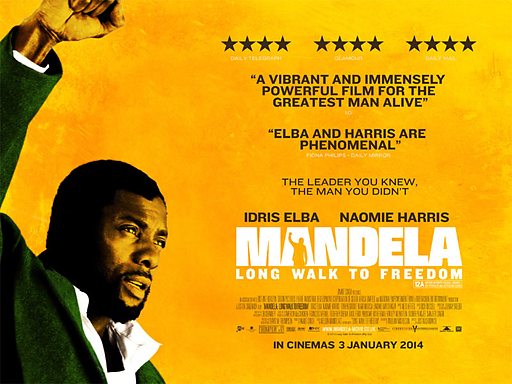
Mandela Long Walk to Freedom

D: Justin Chadwick / 141m

Cast: Idris Elba, Naomie Harris, Tony Kgoroge, Riaad Moosa, Zolani Mkiva, Simo Mogwaza, Fana Mokoena, Thapelo Mokoena

Since its publication in 1995, Nelson Mandela’s autobiography, Long Walk to Freedom has been one of those books that was always going to be adapted for the big screen; Mandela’s life was just too extraordinary to be ignored.  And now, thanks to producer Anant Singh, overseer of the project since the book’s publication, we now have fifty years of Mandela’s life condensed down into two hours and twenty one minutes.  Is it enough?  Perhaps…

The movie opens in 1942.  Mandela is a lawyer along with Oliver Tambo.  He works within the courts system and in his spare time, boxes.  He marries and has two children.  He is aware of the political injustice prevalent in South Africa, but has yet to become politicised.  When, in 1950, he witnesses a demonstration that advocates boycotting the buses – because the fares have increased unfairly – it triggers something inside him that makes him join the African National Congress.  Now a revolutionary, he supports non-violent means of attacking the system, but when the massacre at Sharpeville occurs in 1960, he realises that violence is a necessary tool against the Afrikaaners.  During this period, he also meets and takes as his second wife Winnie Madikizela (Harris), his first marriage having ended when he became radicalised.  Arrested in 1962 (according to the movie), Mandela is tried and sentenced to life imprisonment.  Along with seven other ANC members he is transported to Robben Island.  During his internment he remains an important figure within the ANC, but while he learns to approach the problem of apartheid by promoting peace, violent demonstrations and clashes with the police continue to occur across South Africa.  When the government comes calling with the promise of his being released if he helps quell the violence – by renouncing it – Mandela is faced with opposition from both Winnie and right-wing factions within the ANC.  He gains his release, begins to put into place his vision for a united South Africa, and this is where the movie ends, with Mandela having become president.

Mandela Long Walk to Freedom - scene

Adapting such a complex book was always going to be a challenge, and in the hands of William Nicholson, the screenplay does its best to cover the key moments in Mandela’s life without seeming like a hagiography.  However, this leads to many events being given a brief amount of screen time, and it becomes difficult on occasion to judge the importance of some of those events – for example, when Mandela and his fellow ANC members arrive at Robben Island, only one of them is given long trousers to wear, the rest, including Mandela, have to wear shorts.  Mandela campaigns to have long trousers for everyone, but his persistence – as well as the script’s – is free from explanation.  Elsewhere, Winnie’s own imprisonment – sixteen months in solitary confinement at one point – is referred to only when she gets out.  And therein lies another problem: the script shies away from making anything too unpalatable for the viewer.  Robben Island was an awful place, with cells that were too small, and living conditions that were designed to sap the will.  And yet, Mandela seems to get on okay there; you could argue that he even flourishes.  Winnie’s change from supportive wife and mother to violence advocating activist is presented in broad brush strokes, and while Harris convinces in an otherwise underwritten role, there’s too little character development for her, or the viewer, to latch onto.  (It doesn’t help that, due to the need to focus on Mandela, Winnie appears only here and there in the narrative, and in the end, she becomes the violent “face” of the ANC, a political boogeyman that Mandela is forced to distance himself from.)

With too many years to cover and too many incidents and events to fit in, Mandela: Long Walk to Freedom suffers in the long run, and ends up like a potted history of one man’s turbulent life.  There’s also a semi-reverential tone that stops the movie from being too emotive, even when the characters are suffering or events such as the Sharpeville massacre take centre stage (this tragedy, where children were killed as well as adults, is over in a matter of minutes; there’s no time to fully appreciate the horror of the impending situation nor its aftermath, and not in the way that, say, Richard Attenborough addressed the massacre at Amritsar in Gandhi).  With the movie thus appearing flat and with no appreciable highs and lows, it’s like being told about someone’s life but by someone who can’t quite connect with, or understand, the events they’re relating.

As Mandela, Elba gives a superb, measured performance that, thankfully, makes up for  a lot of the movie’s inefficiencies (good luck to anyone trying to work out who’s who in the ANC and on Robben Island; they may have names in the credits but they’re certainly not identified in the movie).  Elba dominates the movie, nailing the husky cadences of Mandela’s speech, and projecting an authoritative aura in the movie’s later stages when dealing with the government’s representatives and the political liability that Winnie has become.  He is never less than convincing throughout, and it’s a tribute to Elba that he manages to imbue Mandela with a spiritual quality that the script downplays and which might otherwise have been missed.  In support, Harris matches Elba for commitment and avoids demonising Winnie for her beliefs.  It’s a far more subtle performance than it first appears.

Hampered by the script, director Chadwick nevertheless manages to keep the movie interesting and rightly trains the camera on Elba as much as he can.  There’s a fine score courtesy of Alex Heffes, as well as crisp, warm cinematography from Lol Crawley.  With glorious location work, and good performances  all round, Mandela: Long Walk to Freedom doesn’t fly as high as you’d hope, but it does offer a fairly straightforward account of Mandela’s life over fifty years and the struggles he – and his country – endured during that period.

Rating: 7/10 – solid if unspectacular production raised up a notch or two by Elba’s excellent performance; worthy, yes, but also dull in places, and lacking in verve.

Share this:

  • Click to share on X (Opens in new window) X
  • Click to share on Facebook (Opens in new window) Facebook
  • More
  • Click to print (Opens in new window) Print
  • Click to email a link to a friend (Opens in new window) Email
Like Loading...

Blog Stats

  • 486,528 hits

Recent Posts

  • 10 Reasons to Remember Bibi Andersson (1935-2019)
  • Fantasia (1940)
  • Dances With Wolves (1990) – The Special Edition
  • Kiss of the Spider Woman (1985)
  • The Three Musketeers (1973)

Top Posts & Pages

  • Lost for Life (2013) - Another Look
    Lost for Life (2013) - Another Look
  • Lost for Life (2013)
    Lost for Life (2013)
  • About
    About
  • Mr. Topaze (1961)
    Mr. Topaze (1961)
  • Billy Lynn's Long Halftime Walk (2016)
    Billy Lynn's Long Halftime Walk (2016)
  • Winter's Tale (2014)
    Winter's Tale (2014)
  • The Hitman's Bodyguard (2017)
    The Hitman's Bodyguard (2017)
  • 5 Famous Movie Roles That Nearly Went to Someone Else
    5 Famous Movie Roles That Nearly Went to Someone Else
  • The Layover (2017)
    The Layover (2017)
  • Transcendence (2014)
    Transcendence (2014)
Follow thedullwoodexperiment on WordPress.com

Blogs I Follow

  • Rubbish Talk
  • Film 4 Fan
  • Fast Film Reviews
  • The Film Blog
  • All Things Movies UK
  • Interpreting the Stars
  • Let's Go To The Movies
  • Movie Reviews 101
  • TMI News
  • Dan the Man's Movie Reviews
  • Film History
  • Jordan and Eddie (The Movie Guys)

Archives

  • April 2019 (13)
  • March 2019 (28)
  • February 2019 (28)
  • January 2019 (32)
  • December 2018 (28)
  • November 2018 (30)
  • October 2018 (29)
  • September 2018 (29)
  • August 2018 (29)
  • July 2018 (30)
  • June 2018 (28)
  • May 2018 (24)
  • April 2018 (21)
  • March 2018 (31)
  • February 2018 (25)
  • January 2018 (30)
  • December 2017 (30)
  • November 2017 (27)
  • October 2017 (27)
  • September 2017 (26)
  • August 2017 (32)
  • July 2017 (32)
  • June 2017 (30)
  • May 2017 (29)
  • April 2017 (29)
  • March 2017 (30)
  • February 2017 (27)
  • January 2017 (32)
  • December 2016 (30)
  • November 2016 (28)
  • October 2016 (30)
  • September 2016 (27)
  • August 2016 (30)
  • July 2016 (30)
  • June 2016 (31)
  • May 2016 (34)
  • April 2016 (30)
  • March 2016 (30)
  • February 2016 (28)
  • January 2016 (35)
  • December 2015 (34)
  • November 2015 (31)
  • October 2015 (31)
  • September 2015 (34)
  • August 2015 (31)
  • July 2015 (33)
  • June 2015 (12)
  • May 2015 (31)
  • April 2015 (32)
  • March 2015 (30)
  • February 2015 (37)
  • January 2015 (39)
  • December 2014 (34)
  • November 2014 (34)
  • October 2014 (36)
  • September 2014 (25)
  • August 2014 (29)
  • July 2014 (29)
  • June 2014 (28)
  • May 2014 (23)
  • April 2014 (21)
  • March 2014 (42)
  • February 2014 (38)
  • January 2014 (29)
  • December 2013 (28)
  • November 2013 (34)
  • October 2013 (4)

Create a free website or blog at WordPress.com.

Rubbish Talk

Film 4 Fan

A Movie Blog

Fast Film Reviews

The Film Blog

The official blog of everything in film

All Things Movies UK

Movie Reviews and Original Articles

Interpreting the Stars

Dave Examines Movies

Let's Go To The Movies

Film and Theatre Lover!

Movie Reviews 101

Daily Movie Reviews

TMI News

Latest weather, crime and breaking news

Dan the Man's Movie Reviews

All my aimless thoughts, ideas, and ramblings, all packed into one site!

Film History

Telling the story of film

Jordan and Eddie (The Movie Guys)

Movie Reviews & Ramblings from an Australian Based Film Fan

Privacy & Cookies: This site uses cookies. By continuing to use this website, you agree to their use.
To find out more, including how to control cookies, see here: Cookie Policy
  • Subscribe Subscribed
    • thedullwoodexperiment
    • Join 481 other subscribers
    • Already have a WordPress.com account? Log in now.
    • thedullwoodexperiment
    • Subscribe Subscribed
    • Sign up
    • Log in
    • Report this content
    • View site in Reader
    • Manage subscriptions
    • Collapse this bar
 

Loading Comments...
 

    %d