• 10 Reasons to Remember…
  • A Brief Word About…
  • About
  • For One Week Only
  • Happy Birthday
  • Monthly Roundup
  • Old-Time Crime
  • Other Posts
  • Poster of the Week
  • Question of the Week
  • Reviews
  • Trailers

thedullwoodexperiment

~ Viewing movies in a different light

thedullwoodexperiment

Tag Archives: Ritesh Batra

The Sense of an Ending (2017)

04 Sunday Jun 2017

Posted by dullwood68 in Movies

≈ Leave a comment

Tags

Charlotte Rampling, Diary, Drama, Harriet Walter, Jim Broadbent, Literary adaptation, Review, Ritesh Batra, Suicide, The Sixties
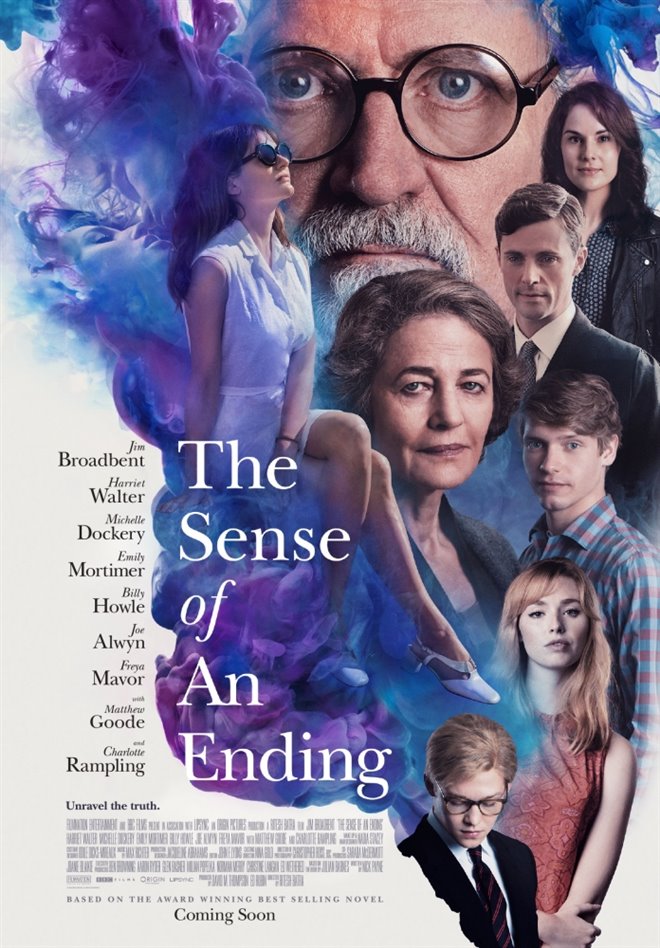
D: Ritesh Batra / 108m

Cast: Jim Broadbent, Charlotte Rampling, Harriet Walter, Michelle Dockery, Matthew Goode, Emily Mortimer, James Wilby, Edward Holcroft, Billy Howle, Freya Mavor, Joe Alwyn, Peter Wight, Hilton McRae

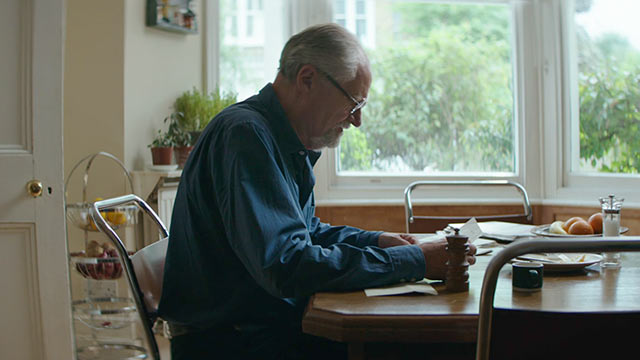
In Ritesh Batra’s first movie since The Lunchbox (2013), Jim Broadbent’s elderly divorcé, Tony Webster, receives a solicitor’s letter telling him that he has been left something in the will of a woman he knew back in the Sixties. The woman was Susan Ford (Mortimer), the mother of Tony’s first love, Veronica (Mavor). At first, Tony is puzzled by the news, and he’s further puzzled when he discovers that the “something” is the diary of a schoolfriend, Adrian Finn (Alwyn). This prompts Tony to reflect back on his life as a university student, and his relationship with Veronica. But getting hold of Adrian’s diary proves more difficult than he expects; it’s in Veronica’s hands and she’s not passing it on to her solicitors’.

Tony seeks advice from his ex-wife, Margaret (Walter), who is also in the legal profession. Margaret, though, can’t understand why getting hold of the diary means so much to Tony, so he attempts to tell her the story of how he and Veronica met, and the beginning of his friendship with Adrian. As he recounts that period of his life, Tony remembers times and events that he had largely forgotten, and he begins to suspect that things were happening that he wasn’t fully aware of. Eventually he persuades Veronica’s solicitors to ask her to contact him, and they arrange to meet. Tony is expectant that he’ll finally receive the diary, but Veronica is distant and tells him that she’s burnt it. After the meeting, Tony follows Veronica but is unable to find out where she lives.
Tony’s memories of his student days continue to plague him, forcing him to remember a letter he wrote when Veronica stopped seeing him and began seeing Adrian instead. The events that followed his sending the letter make Tony view himself in a bad light, but then another attempt to follow Veronica reveals a circumstance that takes him by surprise. In time, this circumstance shows that his understanding of the events of his school days is not only flawed, but has informed the majority of his adult life, something that means Tony has to face up to the idea that he’s lived a life that could have been very much different.

An adaptation of Julian Barnes’ 2011 Man Booker Prize-winning novel, The Sense of an Ending is the kind of low-key, measured drama that offers big rewards provided that you can get past its slow, deceptively pedestrian approach. This is a movie that relies on teasing out the emotional undercurrents of its story, and doing so in a well considered, thoughtful manner that makes each revelation and divulgence of motive more affecting than you might suspect. Barnes’ novel concerned itself with notions of memory and ageing, and while both those aspects are present here, there are others that are equally potent. Adapted by Nick Payne, the movie seeks to explore the ways in which the actions of our youth inform our behaviour as adults, and the ways in which the consequences of those actions can lead to repressed feelings and the slow accumulation of guilt.

At the beginning of the movie, Tony has no understanding of the events that surrounded him as a student, other than how they affected him at the time. However, Tony’s involvement, when looked at closely, was entirely minimal, and as the movie progresses and we see more of those events unfold, what emerges is a portrait of a man trying to attach meaning to a period of his life where he was in many ways a supporting character in the drama of everyone else’s lives. It’s instructive that as an adult Tony’s life is lived somewhat on the fringes as well. He’s divorced though still in touch with his ex-wife, has a daughter whose pregnancy brings them only slightly more together (he attends a pre-natal class with her), and owns a business that sells classic Leica cameras (in a very small shop). It’s not clear that he has any appreciable “life” beyond these things, and his general demeanour is dismissive. He may not be living in the past – until the solicitor’s letter arrives that is – but he’s not exactly living in the present either.

As the past exerts a fearsome pull on Tony, his memories begin to have a profound effect on him, leading him to question what he remembers and what actually happened. Veronica is pre-disposed not to help him, and as her story is revealed you can understand why. But Tony’s determination to solve the mystery of his youth and reconstruct his younger self from the tangle of his memories at least proves cathartic, and by the movie’s end he’s more settled than perhaps he’s ever been. As we follow Tony on his journey of self-rediscovery, we’re guided along the way by another terrific performance from the ever-reliable Broadbent, whose initially perplexed expressions speak of credible bemusement. But soon these give way to expressions of doubt and regret, as the full enormity of what happened all those years ago begins to unravel and Tony’s foundations as an adult begin to crumble. Broadbent allows the audience to see the tragic trajectory of Tony’s life, and the hollow man he’s become, and still he maintains a sympathy for the character that’s not entirely deserved.
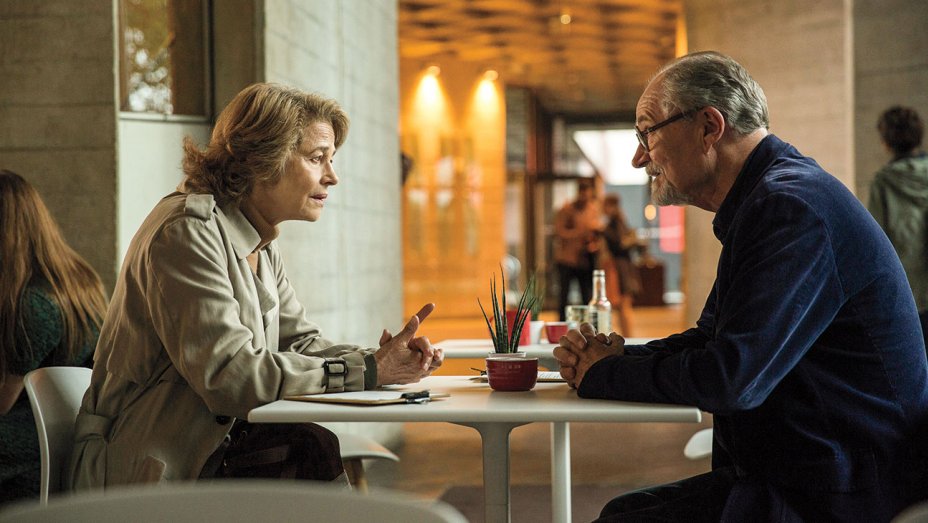
Carrying the majority of the movie, Broadbent is simply magnificent in a role that is heartfelt, honest and sincere. He’s also at the top of a very impressive cast, with Rampling excelling as usual as Veronica, a woman who has no time for broad introspection or revisiting a past that is painful to her if not to Tony. The rest of the cast provide sterling support, with special mentions going to Howle as the younger Tony, and Mortimer as Veronica’s mother. Even the likes of Goode and Holcroft (as Tony’s teacher and Veronica’s brother respectively) make an impact despite being given less to do than others, and Alwyn – in only his second movie after Billy Lynn’s Long Halftime Walk (2016) – handles Finn’s philosophical musings with both humour and subtlety.

The contrasts between the past and the present are handled well by Batra and his talented production crew, with Tony’s student days presented in a warm, nostalgic glow that could be considered rose-tinted were it not for the tragic elements at the heart of it all. The present day is much more airy and coolly defined, with sharper colours and rigid edges used to define the emotional trap waiting for Tony to walk into it. Batra displays a confidence with the material that keeps it all feeling genuine and without guile, and as the narrative builds toward its inevitable (and only semi-signposted) revelation, his skill at revealing the various complexities of Tony’s student days becomes more and more evident. And by the time Tony’s daughter has given birth and he’s accepted his life for what it can be rather than what it is, the movie has provided rich dividends for the viewer willing to look beyond its superficially mundane surface.

Rating: 8/10 – something of a mood piece, but bolstered by assured direction, a weighty and compelling script, and skilled performances from its cast, The Sense of an Ending is an engaging and thought-provoking movie that makes a virtue of its earnest and somewhat melancholy narrative; a prime example of a literary adaptation that takes the virtues of its source material and adds a smattering of cinematic probity to the mix, it’s a plaintive, absorbing investigation into the nature of elusive recall and the relationship between memory and remembrance.

Share this:

  • Click to share on X (Opens in new window) X
  • Click to share on Facebook (Opens in new window) Facebook
  • More
  • Click to print (Opens in new window) Print
  • Click to email a link to a friend (Opens in new window) Email
Like Loading...

The Lunchbox (2013)

02 Sunday Oct 2016

Posted by dullwood68 in Movies

≈ 1 Comment

Tags

Comedy, Dabba, Dabbawala, Drama, Irrfan Khan, Mumbai, Nawazuddin Siddiqui, Nimrat Kaur, Review, Ritesh Batra, Romance

the-lunchbox

Original title: Dabba

D: Ritesh Batra / 104m

Cast: Irrfan Khan, Nimrat Kaur, Nawazuddin Siddiqui, Lillete Dubey, Nakul Vaid, Bharti Achrekar, Yashvi Puneet Nagar, Denzil Smith, Shruti Bapna

In Mumbai, a dabbawala is literally “one who carries a box”. A dabbawala is part of a delivery system that allows workers who don’t want to eat at a food stand or a restaurant, to have hot, home-cooked food for lunch. The lunchboxes are collected from the worker’s home in the morning, delivered in time for their lunch break, and then returned to the worker’s home by the evening. This service first started in 1890, and has grown to the point where anywhere between 175,000 and 200,000 lunchboxes are delivered every day, and incredibly, it’s estimated that dabbawalas make less than one mistake in every six million deliveries.

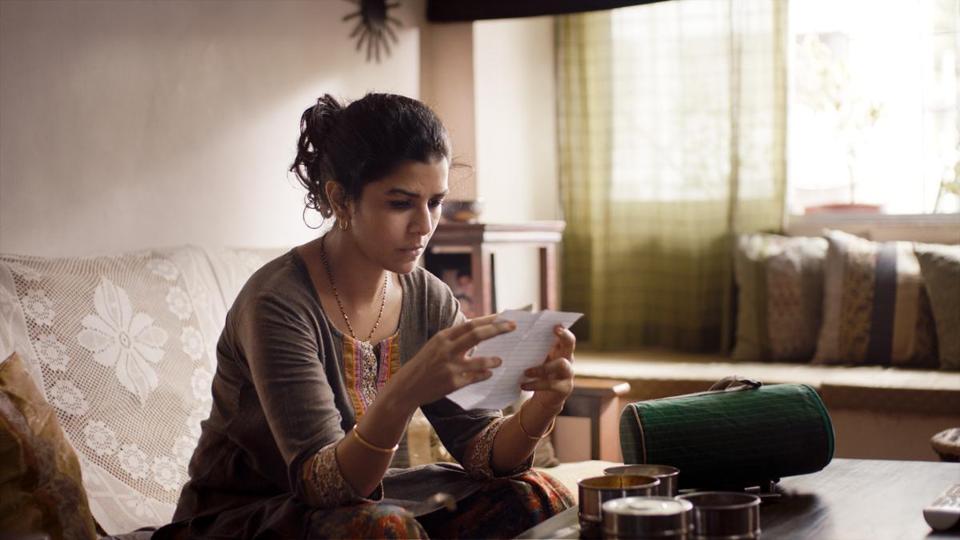
It’s this amazing service that forms the backdrop and set up for The Lunchbox, a wonderfully complex, and still very simple, May-December romance that develops between soon-to-retire claims actuary Saajan Fernandes (Khan) and housewife Ila (Kaur). Saajan is a widower, well-regarded in the workplace but somewhat withdrawn from his colleagues. He doesn’t socialise outside of work, and he appears to be resigned to remaining alone. Ila has a husband, Rajeev (Vaid) who is distant from her, and from their young child, Yashvi (Nagar). Ila wants Rajeev to play more of an active part in their marriage; some nights he comes home and doesn’t say a word. Ila’s aunty (Achrekar), who lives in the flat above them, suggests that Ila make delicious lunches for Rajeev, in order to help rekindle the romance they used to have.

the-lunchbox-scene2

But instead of Rajeev receiving the first of these lunches, it’s Saajan who gets to discover just how good a cook Ila is. When she realises that her husband hasn’t been receiving the lunches, she leaves a note in the next one, advising the person who is getting them, about the mistake. Saajan is amused by this, but he’s even more enamoured by the quality of Ila’s cooking. He replies to her note, and so begins a correspondence that both keep to themselves, and which enables both of them to feel that there is more to life than the boundaries that seem to keep them hemmed in. As their relationship begins to deepen, Saajan has to cope with the irritating interruptions and attention of his successor, Shaikh (Siddiqui), while Ila has to cope with her father’s long-term illness, and the effect it’s having on her mother (Dubey), and the realisation that Rajeev is having an affair.

The first, and so far, only feature from Mumbai-born Ritesh Batra, The Lunchbox is so deceptively simple, and so elegantly complex, that it’s difficult to work out which of these two aspects is the more effective. Ostensibly a romantic drama with comedic overtones, the movie resists the temptation to be acceptably superficial, and instead, lays the groundwork for perceptive ruminations on growing old in modern India, and what it means to accept the role in life you believe you’ve been given. Through Saajan’s listless acceptance of his fate as a widower with no future in retirement, the movie casts an observant eye over what it is to become inured to a certain way of life, and to regard change as unobtainable. Saajan believes his fate is unavoidable, and in believing so, can do nothing about it.

Ila wants her husband back from wherever it is that his mind is taking him. She at least believes she can change things back to how they were, and has yet to resign herself to a stale marriage of convenience. But Rajeev’s continued indifference, and Ila’s eventual discovery of his infidelity, both serve to leave her feeling trapped and unable to make a better life for herself and Yashvi. Thankfully, Saajan’s enjoyment of her food, and his willingness to engage with her via the notes they send each other, allows her to feel that there is hope for the future, whether she leaves Rajeev and goes to live in Bhutan with Yashvi and Saajan (as he suggests at one point), or even if it’s just her and her daughter.

the-lunchbox-scene1

For Saajan, things are made more complicated by his age and his position in the workplace. After thirty-five exemplary years in the same job, he’s retiring out of some sense of commitment to the memory of his late wife. Closed off from everyone, including himself from time to time, Saajan has resigned himself to a life of anonymity and seclusion, and in a place, Nashik, for which he has little actual enthusiasm. It’s only through the persistence of his successor, the garrulous and irritating Shaikh, and Ila’s notes, that Saajan begins to come out of his shell. He becomes more outgoing, less gloomy, and he tolerates Shaikh’s ebullient behaviour, even when he joins Saajan for lunch and the older man finds himself sharing with the younger man – and is surprised to find he’s happy to do so.

Saajan and Ila’s relationship develops to the point where the audience is practically praying that they’ll meet and properly fall in love, and not rely on the kind of epistolary romance that suits a novel but not necessarily a movie (unless that movie is Whit Stillman’s Love & Friendship). But the course of true love is never known to run smoothly, and despite their obvious need for each other, Saajan’s awareness of the age difference between them leads him to snatch defeat from the jaws of victory. An arranged meeting doesn’t go as planned, and their romance suffers as a result, leaving both parties to decide if what they had was even tangible. Decisions are made, and though they seem immutable, Batra’s clever script allows for optimism in the face of dramatic certainty.

the-lunchbox-scene3

Batra is helped immensely by his two leads. Khan is a perceptive, dignified actor, and he brings those qualities to bear on a role that requires him to reveal more and more about Saajan as the movie progresses. With his gaze registering bemused astonishment with every mouthful and smell of Ila’s cooking, Khan is a delight to watch, and he handles the disappointments and self-imposed barriers to living that Saajan endures with an emotional clarity that is an acting masterclass all by itself. Kaur is equally impressive. Whether Ila is trading quips or recipe tips with her aunty, or whether she’s coming to terms with the likelihood of a loveless marriage for years to come, the actress displays a range and an understanding of her character’s situation that is breathtaking to watch. Both actors are superb here, so much so that it’s very difficult to envisage anyone else in either role.

With Batra proving to be as good a screenwriter as he is a director, The Lunchbox is in very good hands throughout. He makes a background character out of the city of Mumbai, and the hustle and bustle of its streets and trains and buses – all constant reminders that life goes on around us, vibrant and compulsive, even if we choose to step back from it – is used to potent effect, as Saajan in particular experiences its highs and lows. Batra is aided by sterling work from DoP Michael Simmonds, and the movie’s slow, lyrical pace is courtesy of editor John F. Lyons. Scenes play out sometimes at such a stately pace that it’s hard to believe it’s all been agreed in advance, and that so many quiet moments could have such a cumulative, and remarkable effect. But the pace and the tone of the movie are aspects that have been achieved with a great deal of skill, and they serve the material with undisguised aplomb.

Rating: 9/10 – a beautifully observed, beautifully constructed movie that takes two trapped souls and sets them free by virtue of their finding in each other a kindred spirit, The Lunchbox is touching, affecting, stylish, and endlessly gracious in its delivery; a sparkling romantic drama that pays dividends from the very start, and which never short changes either its characters or its audience, it’s a movie that delights with ease, and lingers in the memory long after it’s over.

Share this:

  • Click to share on X (Opens in new window) X
  • Click to share on Facebook (Opens in new window) Facebook
  • More
  • Click to print (Opens in new window) Print
  • Click to email a link to a friend (Opens in new window) Email
Like Loading...

Blog Stats

  • 486,682 hits

Recent Posts

  • 10 Reasons to Remember Bibi Andersson (1935-2019)
  • Fantasia (1940)
  • Dances With Wolves (1990) – The Special Edition
  • Kiss of the Spider Woman (1985)
  • The Three Musketeers (1973)

Top Posts & Pages

  • Lost for Life (2013) - Another Look
    Lost for Life (2013) - Another Look
  • Lost for Life (2013)
    Lost for Life (2013)
  • About
    About
  • Exposed (2016)
    Exposed (2016)
  • Cardboard Boxer (2016)
    Cardboard Boxer (2016)
  • A Brief Word About La La Land (2016)
    A Brief Word About La La Land (2016)
  • The Monuments Men (2014)
    The Monuments Men (2014)
  • Removal (2010)
    Removal (2010)
  • My Top 10 Guilty Pleasures
    My Top 10 Guilty Pleasures
  • BFI London Film Festival 2015
    BFI London Film Festival 2015
Follow thedullwoodexperiment on WordPress.com

Blogs I Follow

  • Rubbish Talk
  • Film 4 Fan
  • Fast Film Reviews
  • The Film Blog
  • All Things Movies UK
  • Interpreting the Stars
  • Let's Go To The Movies
  • Movie Reviews 101
  • TMI News
  • Dan the Man's Movie Reviews
  • Film History
  • Jordan and Eddie (The Movie Guys)

Archives

  • April 2019 (13)
  • March 2019 (28)
  • February 2019 (28)
  • January 2019 (32)
  • December 2018 (28)
  • November 2018 (30)
  • October 2018 (29)
  • September 2018 (29)
  • August 2018 (29)
  • July 2018 (30)
  • June 2018 (28)
  • May 2018 (24)
  • April 2018 (21)
  • March 2018 (31)
  • February 2018 (25)
  • January 2018 (30)
  • December 2017 (30)
  • November 2017 (27)
  • October 2017 (27)
  • September 2017 (26)
  • August 2017 (32)
  • July 2017 (32)
  • June 2017 (30)
  • May 2017 (29)
  • April 2017 (29)
  • March 2017 (30)
  • February 2017 (27)
  • January 2017 (32)
  • December 2016 (30)
  • November 2016 (28)
  • October 2016 (30)
  • September 2016 (27)
  • August 2016 (30)
  • July 2016 (30)
  • June 2016 (31)
  • May 2016 (34)
  • April 2016 (30)
  • March 2016 (30)
  • February 2016 (28)
  • January 2016 (35)
  • December 2015 (34)
  • November 2015 (31)
  • October 2015 (31)
  • September 2015 (34)
  • August 2015 (31)
  • July 2015 (33)
  • June 2015 (12)
  • May 2015 (31)
  • April 2015 (32)
  • March 2015 (30)
  • February 2015 (37)
  • January 2015 (39)
  • December 2014 (34)
  • November 2014 (34)
  • October 2014 (36)
  • September 2014 (25)
  • August 2014 (29)
  • July 2014 (29)
  • June 2014 (28)
  • May 2014 (23)
  • April 2014 (21)
  • March 2014 (42)
  • February 2014 (38)
  • January 2014 (29)
  • December 2013 (28)
  • November 2013 (34)
  • October 2013 (4)

Blog at WordPress.com.

Rubbish Talk

Film 4 Fan

A Movie Blog

Fast Film Reviews

The Film Blog

The official blog of everything in film

All Things Movies UK

Movie Reviews and Original Articles

Interpreting the Stars

Dave Examines Movies

Let's Go To The Movies

Film and Theatre Lover!

Movie Reviews 101

Daily Movie Reviews

TMI News

Latest weather, crime and breaking news

Dan the Man's Movie Reviews

All my aimless thoughts, ideas, and ramblings, all packed into one site!

Film History

Telling the story of film

Jordan and Eddie (The Movie Guys)

Movie Reviews & Ramblings from an Australian Based Film Fan

Privacy & Cookies: This site uses cookies. By continuing to use this website, you agree to their use.
To find out more, including how to control cookies, see here: Cookie Policy
  • Subscribe Subscribed
    • thedullwoodexperiment
    • Join 481 other subscribers
    • Already have a WordPress.com account? Log in now.
    • thedullwoodexperiment
    • Subscribe Subscribed
    • Sign up
    • Log in
    • Report this content
    • View site in Reader
    • Manage subscriptions
    • Collapse this bar
 

Loading Comments...
 

    %d