• 10 Reasons to Remember…
  • A Brief Word About…
  • About
  • For One Week Only
  • Happy Birthday
  • Monthly Roundup
  • Old-Time Crime
  • Other Posts
  • Poster of the Week
  • Question of the Week
  • Reviews
  • Trailers

thedullwoodexperiment

~ Viewing movies in a different light

thedullwoodexperiment

Tag Archives: South Africa

Monthly Roundup – September 2018

30 Sunday Sep 2018

Posted by dullwood68 in Movies

≈ Leave a comment

Tags

Action, Adam Driver, Adventure, Alien, Animation, Anjelah Johnson-Reyes, Anna Faris, Arnold Schwarzenegger, BlacKkKlansman, Bob Odenkirk, Boyd Holbrook, Brett Dalton, Children's movie, Christopher Robin (2018), Dallas Jenkins, Darrell Roodt, Destination Wedding, Documentary, Drama, El club se los buenos infieles, Eugenio Derbez, Ewan McGregor, Fele Martínez, Hayley Atwell, Horror, John Campopiano, John David Washington, Justin White, Katherine Barrell, Keanu Reeves, Kenne Duncan, Killing Gunther, Ku Klux Klan, Lake Placid: Legacy, Lluís Segura, Marc Forster, Melvin Goes to Dinner, Michael Blieden, Overboard (2018), Raúl Fernández de Pablo, Religion, Remake, Reviews, Rob Greenberg, Robert Clarke, Romance, Ronald V. Ashcroft, Sci-fi, Sequel, Shane Black, South Africa, Spain, Spike Lee, Stephanie Courtenay, Taran Killam, The Astounding She-Monster, The Predator, The Resurrection of Gavin Stone, Thriller, Tim Rozon, Trevante Rhodes, Unearthed & Untold: The Path to Pet Sematary, Victor Lewin, Winona Ryder

Christopher Robin (2018) / D: Marc Forster / 104m

Cast: Ewan McGregor, Hayley Atwell, Bronte Carmichael, Mark Gatiss, Oliver Ford Davies, Jim Cummings, Brad Garrett, Peter Capaldi, Sophie Okonedo, Toby Jones
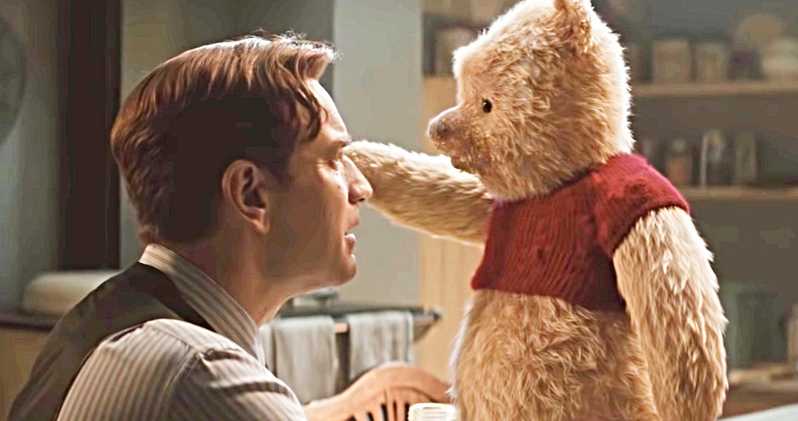
Rating: 7/10 – having left behind his childhood friends at the Hundred Acre Wood, an adult Christopher Robin (McGregor), now married and weighed down by the demands of his work, is reunited with them just at the moment that they all most need each other; a live action/CGI variation on A.A. Milne’s Winnie the Pooh stories, Christopher Robin is an enjoyable if lightweight confection from Disney that features good performances from McGregor and Cummings (as both Pooh and Tigger), but which also takes a very straightforward approach to its story, and allows Gatiss to overdo it as the smug villain of the piece.

Melvin Goes to Dinner (2003) / D: Bob Odenkirk / 83m

Cast: Michael Blieden, Stephanie Courtney, Matt Price, Annabelle Gurwitch, Maura Tierney, David Cross, Melora Walters, Jack Black
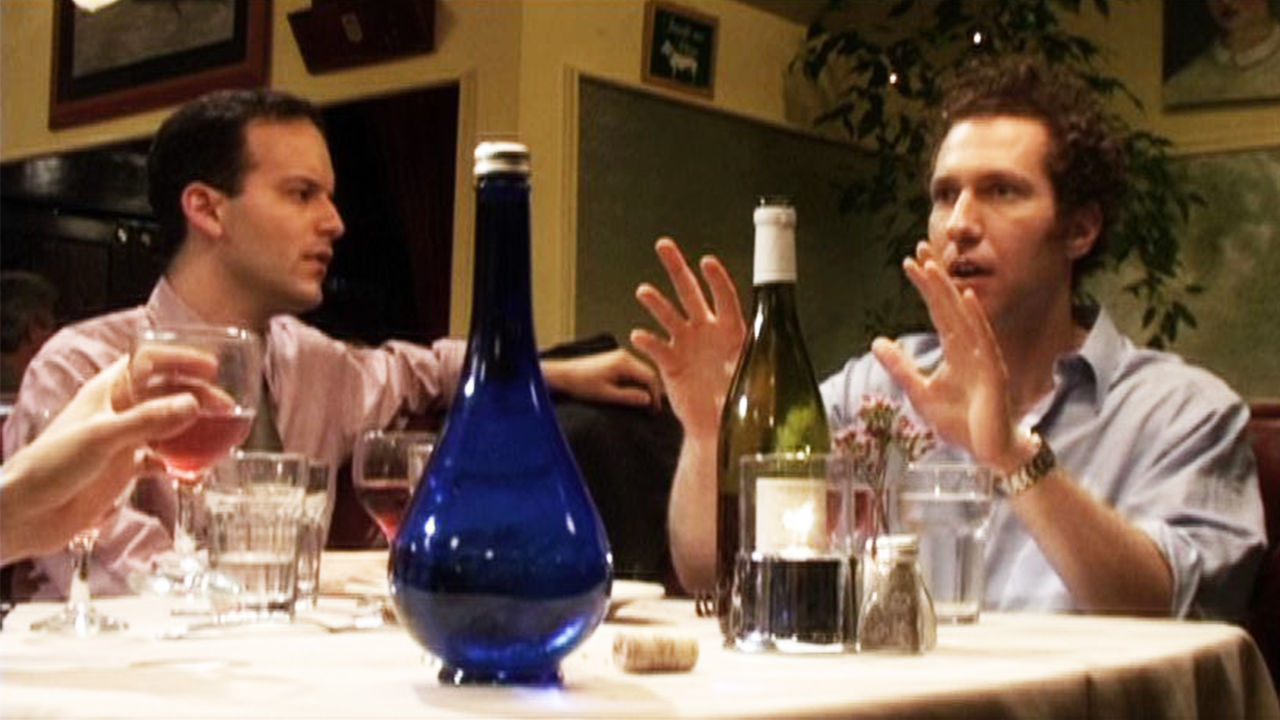
Rating: 7/10 – two friends agree to meet for dinner but two other people end up joining them, leading to an evening of surprising connections and revelations that causes each to rethink their own opinions and feelings about each other; adapted from the stage play Phyro-Giants! (and written by Blieden), Odenkirk’s debut as a director is an amusing examination of what we tell ourselves to be true while being closely examined by others who may (or may not) know better, making Melvin Goes to Dinner a waspish if somewhat diffident look at social mores that feels a little forced in places, but is well acted by its cast.

BlacKkKlansman (2018) / D: Spike Lee / 135m

Cast: John David Washington, Adam Driver, Laura Harrier, Topher Grace, Jasper Pããkkönen, Ryan Eggold, Paul Walter Houser, Ashlie Atkinson, Michael Buscemi, Robert John Burke, Frederick Weller, Corey Hawkins, Harry Belafonte, Alec Baldwin

Rating: 9/10 – the true story of how, in the early Seventies, the Colorado Springs Police Department’s first black officer, Ron Stallworth (Washington), infiltrated the local chapter of the Ku Klux Klan with the aid of a fellow, Jewish officer, Flip Zimmerman (Driver); a return to form for Spike Lee, BlacKkKlansman is entertaining and frightening in equal measure for the way it deals with contentious issues surrounding politics and racism that are as entrenched today as they were back in the Seventies, and for the deft way in which Lee allows the humour to filter through without negating the seriousness of the issues he’s examining.

Unearthed & Untold: The Path to Pet Sematary (2017) / D: John Campopiano, Justin White / 97m

With: Mary Lambert, Dale Midkiff, Denise Crosby, Brad Greenquist, Peter Stein, Elliot Goldenthal, Miko Hughes, Susan Blommaert, Heather Langenkamp

Rating: 6/10 – a look at the making of Pet Sematary (1989), with interviews and recollections from the cast and crew, and an assessment of the movie’s impact and legacy in the years that have followed; coming across very much like a labour of love for its directors, Unearthed & Untold: The Path to Pet Sematary features a wealth of details about the making of the movie, some of which is fascinating, and some of which is less so, making this a mixed bag in terms of content, but if you’re a fan of Pet Sematary, this will be a must-see, and should offer up behind-the-scenes information that hasn’t been seen or heard before.

Lake Placid: Legacy (2018) / D: Darrell Roodt / 93m

Cast: Katherine Barrell, Tim Rozon, Sai Bennett, Luke Newton, Craig Stein, Joe Pantoliano, Alisha Bailey

Rating: 3/10 – a group of eco-warriors discover a remote island that’s not on any maps, and find a genetically altered apex predator that soon begins whittling down their numbers; the sixth entry in the franchise, Lake Placid: Legacy ignores the previous four movies and acts – without explanation – as a direct sequel to the original, though that doesn’t make it any less abysmal, and it’s easily the worst in the series, something it achieves thanks to a dreadful script, Roodt’s absentee direction, the less than stellar efforts of the cast, and just by being greenlit in the first place.

Killing Gunther (2017) / D: Taran Killam / 93m

Cast: Taran Killam, Bobby Moynihan, Hannah Simone, Cobie Smulders, Arnold Schwarzenegger, Allison Tolman, Paul Brittain, Aaron Yoo, Ryan Gaul, Amir Talai, Peter Kelamis

Rating: 4/10 – an assassin, Blake (Killam), hires a team of other assassins to help him track down and eliminate Gunther (Schwarzenegger), the world’s most feared, and successful, hitman; ostensibly a comedy, Killing Gunther is yet another ill-advised movie where the script – and the cast – try way too hard to make absurdist behaviour funny all by itself, and where the tone is as wayward as the narrative, something that makes the movie an uneven watch and less than successful in its attempts to entertain – and the less said about Schwarzenegger’s performance the better.

Overboard (2018) / D: Rob Greenberg / 112m

Cast: Eugenio Derbez, Anna Faris, Eva Longoria, John Hannah, Swoosie Kurtz, Mel Rodriguez, Josh Segarra, Hannah Nordberg, Alyvia Alyn Lind, Payton Lapinski, Fernando Luján, Cecilia Suárez, Mariana Treviño
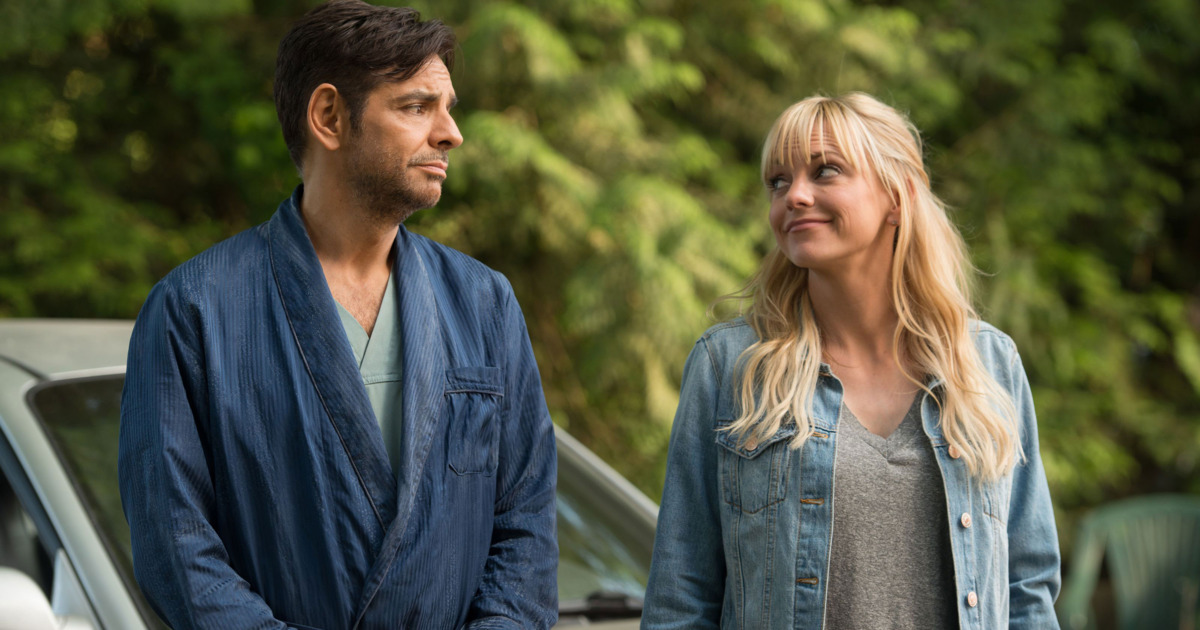
Rating: 6/10 – when a rich, arrogant, multi-millionaire playboy (Derbez) falls overboard from his yacht and loses his memory, a struggling single mother (Faris) that he’s treated badly sees an opportunity to exploit his misfortune for her own personal gain; a gender-swap remake of the 1987 original, Overboard is pleasant enough, with well judged performances from Derbez and Faris, but it plays out in expected fashion, with only occasional moments that stand out, and never really tries to do anything that might make viewers think of it as anything more than an acceptable remake doing its best to keep audiences just interested enough to stay until the end.

El club de los buenos infieles (2017) / D: Lluís Segura / 84m

Cast: Raúl Fernández de Pablo, Fele Martínez, Juanma Cifuentes, Hovik Keuchkerian, Albert Ribalta, Jordi Vilches, Adrián Lastra
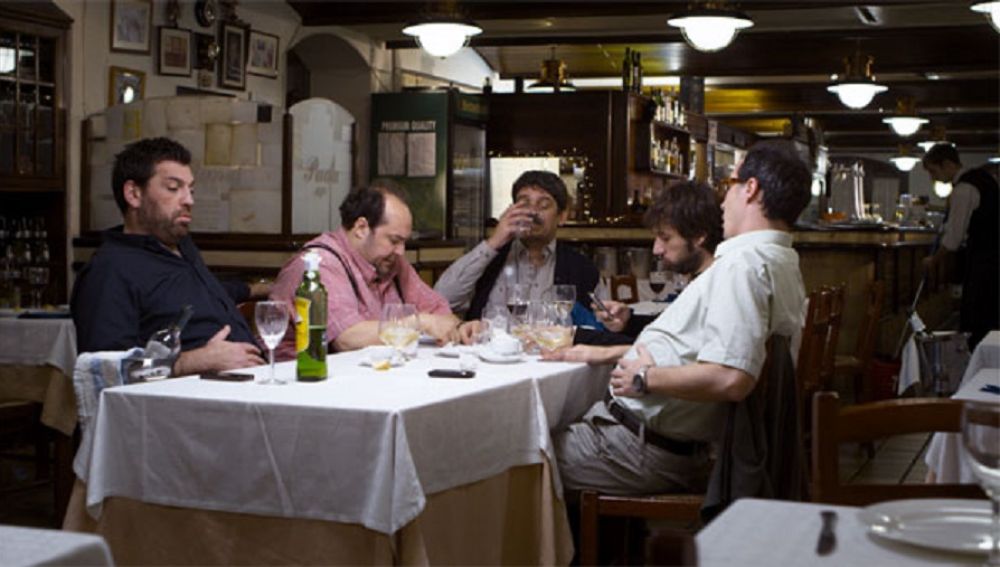
Rating: 7/10 – four friends, all married but experiencing a loss of desire for their wives, decide to start a club for men with similar problems, and in the hope that by “seeing” other women, it will rekindle their desire; based on a true story, El club de los buenos infieles starts off strongly as the men explain their feelings, but soon the ridiculous nature of their solution leads to all sorts of uncomfortable moments and situations that stretch the credibility of the material, leaving the principal cast’s performances to keep things engaging, along with Segura’s confident direction (which helps overcome much of the script’s deficiencies), and a couple of very funny set-pieces that are worth a look all by themselves.

Destination Wedding (2018) / D: Victor Lewin / 87m

Cast: Winona Ryder, Keanu Reeves
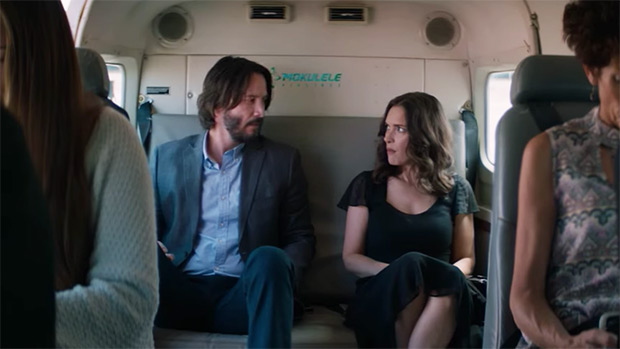
Rating: 5/10 – two misanthropes (Ryder, Reeves) invited to the same wedding (he’s the groom’s brother, she’s the groom’s ex), find they have much more in common than expected, including an attraction to each other; the kind of movie that has its characters spout pseudo-intellectual nonsense at every opportunity in an effort to make them sound wise and/or studiously profound, Destination Wedding could have been much funnier than it thinks it is, and wastes the talents of both Ryder and Reeves (yes, even Reeves) as it leaves no turn unstoned in its efforts to be a romantic comedy that isn’t in the least bit romantic, or comic.

The Resurrection of Gavin Stone (2016) / D: Dallas Jenkins / 92m

Cast: Brett Dalton, Anjelah Johnson-Reyes, Neil Flynn, D.B. Sweeney, Shawn Michaels, Patrick Gagnon, Tim Frank, Tara Rios

Rating: 6/10 – a former teen TV star whose adult acting career isn’t going as well as he’d hoped, finds himself doing community service at his hometown church, and discovering that having a lack of religious faith is the least of his problems; a bright and breezy romantic comedy, The Resurrection of Gavin Stone wears its Christian beliefs on its sleeve, while doing absolutely nothing that you wouldn’t expect it to, thanks to likable performances from Dalton and Johnson-Reyes, a solid if predictable script, and workmanlike direction that never lets the material stray from its formulaic constraints, though if truth be told, on this occasion that’s not necessarily a bad thing.

The Predator (2018) / D: Shane Black / 107m

Cast: Boyd Holbrook, Trevante Rhodes, Jacob Tremblay, Sterling K. Brown, Olivia Munn, Keegan-Michael Key, Thomas Jane, Alfie Allen, Augusto Aguilera, Jake Busey, Yvonne Strahovski
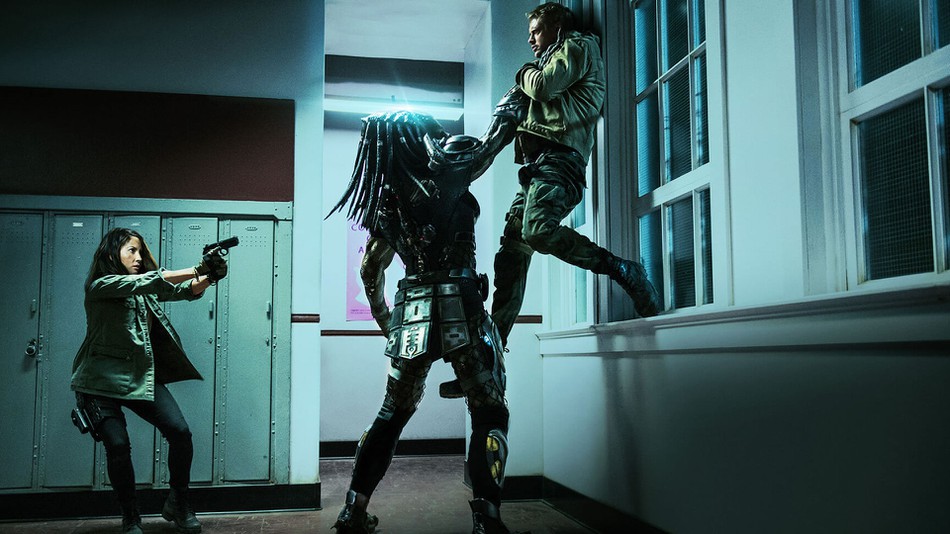
Rating: 5/10 – a rag-tag band of PTSD sufferers and an army sniper (Holbrook) find themselves taking on a couple of Predators while a secret arm of the US government atempts to exploit their presence on Earth; a movie that could and should have been so much better (soooo much better), The Predator is unnecessarily convoluted and stupid at the same time, and despite Black’s best efforts, remains the kind of sequel that everyone has high hopes for, only to see them drain away with every dumb moment that the script can squeeze in, and every tortuous twist of logic that can be forced onto the narrative, all of which leaves everyone hoping and praying that this is the end of the line.

The Astounding She-Monster (1957) / D: Ronald V. Ashcroft / 62m

aka Mysterious Invader

Cast: Robert Clarke, Kenne Duncan, Marilyn Harvey, Jeanne Tatum, Shirley Kilpatrick, Ewing Miles Brown

Rating: 3/10 – kidnappers take their hostage up into the mountains, unaware that a space ship has crash landed nearby, and the sole occupant (Kilpatrick) is more than capable of defending itself; not a cult classic, and not a movie to look back fondly on for any low-budget virtues it may have (it doesn’t), The Astounding She-Monster is a creature feature without a creature, a crime drama with an annoying voice over, a sci-fi horror with minimal elements of both, and a movie with far too many scenes where the cast run through the same stretch of woods trying to get away from an alien whose only speed is ultra-ultra-slow.

Share this:

  • Click to share on X (Opens in new window) X
  • Click to share on Facebook (Opens in new window) Facebook
  • More
  • Click to print (Opens in new window) Print
  • Click to email a link to a friend (Opens in new window) Email
Like Loading...

Siembamba (2017)

24 Saturday Feb 2018

Posted by dullwood68 in Movies

≈ Leave a comment

Tags

Brandon Auret, Darrell Roodt, Drama, Eden Rock, Horror, Midwife, Post-partum depression, Psychological thriller, Reine Swart, Review, South Africa, Thandi Puren

aka The Lullaby

D: Darrell Roodt / 86m

Cast: Reine Swart, Thandi Puren, Brandon Auret, Deànré Reiners, Dorothy Ann Gould

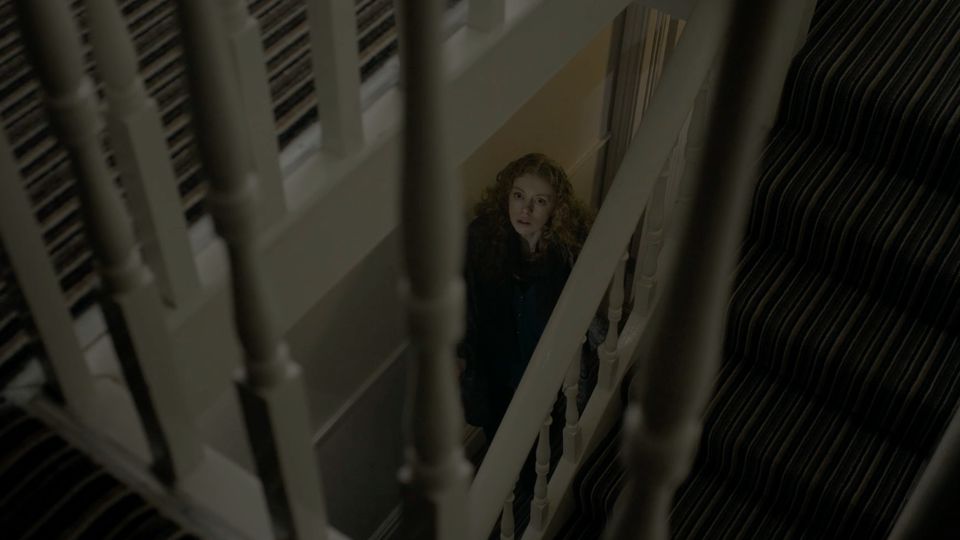
Touted as the first horror movie from South Africa, Siembamba is as much a psychological thriller as it is a straight-out chiller, and it juggles both interpretations with a degree of confidence as it tells the story of nineteen year old Chloe van Heerden (Swart), returning to her home in Eden Rock with a newborn baby, Liam, in tow. Chloe ran away after a row with her mother, Ruby (Puren). What happened to her, and why she fell pregnant, Chloe won’t – or can’t – explain, but she is resigned to being back home and being a young mother. Soon, strange things begin happening around the house, and Chloe becomes convinced that there is a strange presence there, and it wants Liam. She sees and hears things, including a nightmarish vision of a woman, a midwife, wearing a black bonnet. Ruby shares her own concerns with Dr Reed (Auret), who wonders if Chloe is merely suffering from post-partum depression. But Chloe’s visions become more and more violent, and she even begins to doubt her mother’s role in everything, her paranoia and distrust building with each new frightening experience. And then, on Dr Reed’s advice, Chloe is left by herself for the evening…

If you’re a country that’s never made an out and out horror movie before, but you don’t want to make just another slasher movie, then what better way to start off than by adapting a poem by South African poet Louis Leipoldt that, with some slight re-wording, goes as follows: Siembamba, mother’s little baby / Siembamba, mother’s little child / Wring his neck, throw him in the ditch / Step on his head, make sure he is dead. And the movie sets out its stall right from the beginning with a baby having its neck broken within the first five minutes; as a statement of intent it’s up there with Georgie Denbrough getting his arm torn off by Pennywise in It (2017). This is strong, mature stuff (albeit shot in a distressed, found-footage style that grates more than it should), and as the movie delves into Chloe’s tortured present and past, Tarryn-Tanille Prinsloo’s script finds ever more horrible and unsettling ways to put little Liam in harm’s way, including a nerve-wracking moment where Chloe is trimming his fingernails – or is she cutting off his fingers? The movie is at its best in moments like these, when the viewer can’t be sure if it’s all in Chloe’s mind or if there really is a supernatural presence in the house.

But while the movie goes to great pains to keep the audience guessing, it does so with little regard to pacing or the overall tone. Like many horror movies it makes the mistake of having strange events happen as soon as Chloe gets home after giving birth. There’s no appreciable build-up, and the adversarial nature of Chloe and Ruby’s relationship is exacerbated by the script’s refusal to have them actually talk to each other unless it involves recriminations on each side. Likewise, when Chloe sees Dr Reed, a scene that could have provided audiences with a deeper understanding of the folklore the movie is based on, instead remains a missed opportunity. But these issues are to be expected in a modern horror movie, whereas the pacing is seriously off, with scenes lacking energy and purpose at times, making the movie as a whole a somewhat frustrating experience. Roodt is an experienced director, and in many ways a good choice for South Africa’s first horror movie, but the fractured imagery and off-kilter visual style he’s adopted along with editor Leon Gerber hampers the movie instead of helping it. There are a couple of good scares to be had along the way, but much of what frights there are involve the midwife, a character that wouldn’t feel out of place in the Insidious franchise. As things progress, the movie relies on her presence more and more, though without her, the psychological aspects could have been used to make things even more unsettling. For a first attempt, Siembamba overcomes some hurdles with ease, but it also manages to knock down too many others in its efforts to stand out from the crowd.

Rating: 6/10 – good performances from Swart and Puren keep Siembamba from dissembling under the weight of its (modest) ambitions, and though there is much that doesn’t work as well as it should, genre enthusiasts should seek this one out because of its provenance; neither great nor terrible, it’s to be hoped that South Africa doesn’t stop here in its attempts to make horror movies, because even though a lot of the movie is derivative of other work, there’s enough here to be hopeful for better things to come.

Share this:

  • Click to share on X (Opens in new window) X
  • Click to share on Facebook (Opens in new window) Facebook
  • More
  • Click to print (Opens in new window) Print
  • Click to email a link to a friend (Opens in new window) Email
Like Loading...

The Jackals (1967)

22 Thursday Sep 2016

Posted by dullwood68 in Movies

≈ Leave a comment

Tags

Bank robbers, Diana Ivarson, Drama, Gold mine, Prospector, Review, Robert D. Webb, Robert Gunner, South Africa, Vincent Price, Western

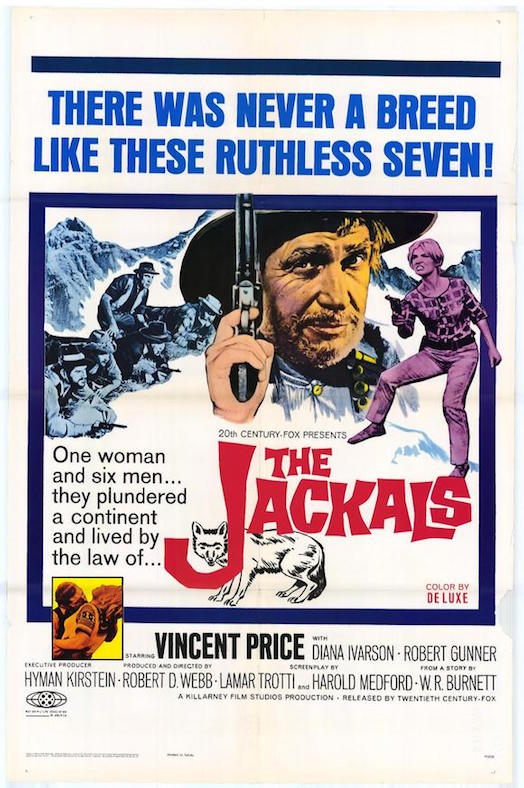
the-jackals

D: Robert D. Webb / 96m

Cast: Vincent Price, Diana Ivarson, Robert Gunner, Bob Courtney, Patrick Mynhardt, Bill Brewer, John Whiteley

The mid- to late Sixties were a strange time for Vincent Price’s career. Prior to making The Jackals, the actor had teamed with Roger Corman to make a series of gothic horrors based on the works of Edgar Allan Poe, made a handful of TV appearances in the likes of The Man from U.N.C.L.E. and Voyage to the Bottom of the Sea, showed he could do camp as well as anyone else in two movies as Dr. Goldfoot, and proved especially hammy (though to good effect) with occasional appearances as Egghead in TV’s Batman. And then he made this: a Western filmed in South Africa – and possibly the oddest movie in his filmography.

A remake of Yellow Sky (1948), which starred Gregory Peck, Anne Baxter, and Richard Widmark, The Jackals begins with shots designed to establish its South African setting. We see zebras and elephants, and other animals, while a drum- and xylophone-based music score stands out awkwardly in the soundtrack’s foreground. We also see some snippets of tribal dancing until a group of cowboys are shown riding through the South African countryside. Soon they reach a small town, where they rob the bank. In the getaway, one of them is shot and killed. The group’s leader, Stretch (Gunner), persuades the rest to traverse an inhospitable desert area as a way of losing the posse chasing them. When they get to the other side, they find a ghost town, and the two remaining people who live there.

One is a young woman, Willie (Ivarson). She wants the men to go, but her grandfather, Oupa (Price), invites them to stay for as long as it takes for their horses to be well-rested. The men soon learn that Oupa is a prospector and has been working a nearby gold mine. At first, they intend to steal everything that the old man has accumulated, but Stretch’s attraction for Willie leads to his having a change of heart, and he strikes a deal with the old man that is meant to avoid any bloodshed. But two of Stretch’s men, Dandy (Courtney) and Gotz (Mynhardt), have their minds set on taking all the gold, and having their way with Willie. The longer they stay, the more that tempers flare, and Stretch’s command is called more and more into question, until Dandy can’t wait any more – and tries his best to remove his “competition”.

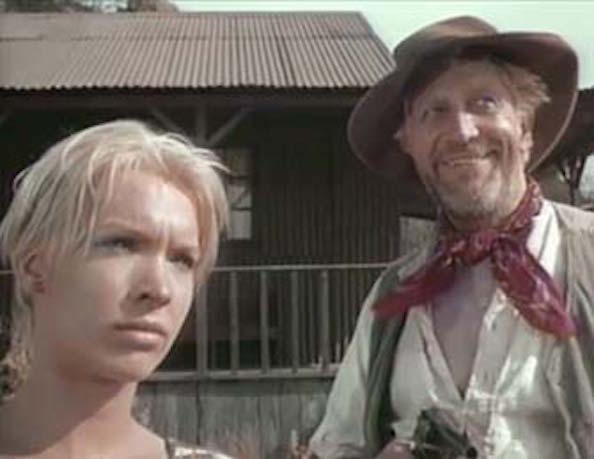
the-jackals-scene2

Why Price made this particular movie isn’t known. It’s likely he signed on because it meant a chance to visit South Africa, it’s also likely it was because it meant a change of pace and character for someone who had become somewhat typecast as a horror star (it didn’t help that he went from this to making Witchfinder General (1968) for Michael Reeves). Whatever the reason, the finished product is not one of his best; though he is the best thing in it, by a longshot. With a twinkle in his eye, and a laugh not too far from his lips, Price plays Oupa like the kindly old man he was in real life. He’s the only member of the cast who appears to be behaving normally (given the circumstances), and the only actor who can speak his/her lines without sounding like they’re still learning them.

But Price, despite being top-billed, is actually playing a supporting role. Off screen for much of the movie, Price has to leave the heavy lifting to contract players Gunner and Ivarson. Alas, neither of them are particularly convincing, especially as a romance develops between their characters and they’re required to look as if they’re attracted to each other. Gunner went on to make one more movie, playing the astronaut Landon in Planet of the Apes (1968), while Ivarson made three more movies before leaving the business. It’s easy to see why both actors didn’t have longer careers; Gunner looks tense and uncertain throughout, and makes hard work of his dialogue. Ivarson spits out her lines with venom, mistaking her character’s insecurity for hatred, and her performance is maddingly one-note as a result. Watching them both, you just wish and pray that they’ll loosen up at some point; sadly, they don’t.

They’re not helped by the vagaries of the script, a combination of Lamar Trotti’s 1948 screenplay and Harold Medford’s undistinguished update. The characters have all the traits of often-seen stereotypes, from Courtney’s scheming Dandy (the only one who looks as dapper as his name), to Brewer’s good-natured oaf, and on down to Whiteley’s callow youth. And with lines of the calibre of, “I just wanted to show you how safe you’d be if I really wanted to get rough” (spoken by Stretch after he forces himself on Willie), the movie strays too close to misogyny for comfort – and not just the once.

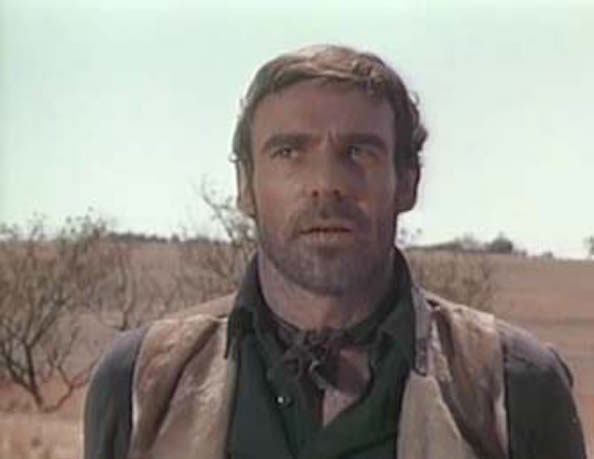
the-jackals-scene1

In the director’s chair, Webb adopts a tired, bare minimum approach that doesn’t help either. Scenes come and go in a perfunctory manner, as if most of them were assembled from first takes (there are a lot of continuity issues here), and lack the vitality needed to keep the audience involved with the material. Even the final shootout, usually the one aspect of a Western that most directors manage to get right, is so flatly choreographed and shot that by the time it’s over, it’s as much a relief for the viewer as it is for the characters. This was Webb’s last outing save for a couple of documentaries, and as swansong’s go isn’t one that can be recommended. As well as being unable to extract decent performances from his cast, he’s unable to elicit good work from his DoP, David Millin, or rescue the movie with his editor, Peter Grossett.

There’s too much that doesn’t work in The Jackals, and the whole thing is saddled (no pun intended) with a score that is completely South African in flavour and style, and which never matches the content or the mood of the narrative. All it does is remind the viewer that they’re watching a Western that’s been made in South Africa, and even though it’s a 20th Century Fox movie, it’s clear that concessions were made in order to get the movie agreed to and completed. As a further consequence of the movie’s low budget and scaled-back production values, it all leads to the realisation that whenever anyone is walking or running, it’s not footsteps that appear on the soundtrack but the sound of hoofbeats instead.

Rating: 4/10 – pretty meagre stuff, with poor performances from everyone except Price, and ineffectual direction from Webb, making The Jackals a disappointing experience from start to finish; as a curio it has a certain caché, but unless you’re a fan of Price there’s very little here to reward the casual viewer, and even less for regular Western enthusiasts.

NOTE: At present there is no trailer available for The Jackals.

Share this:

  • Click to share on X (Opens in new window) X
  • Click to share on Facebook (Opens in new window) Facebook
  • More
  • Click to print (Opens in new window) Print
  • Click to email a link to a friend (Opens in new window) Email
Like Loading...

Short Movies Volume 4

13 Wednesday Jul 2016

Posted by dullwood68 in Movies

≈ Leave a comment

Tags

'Tolulope Ajayi, Adeyemi Okanlowan, Blake Fraser, Blink, David Schmidt, Demon, Dennis Frymire, George Herpick, Georgina Haig, Horror, Idol Threats, Kim Rodriguez, Mark Pound, Michelle Courvais, Nightmares, Oliver Park, Open House, Rachel Winters, Recon 6, Richard Rodriguez, Short movies, South Africa, Vicious

The short movie is an oft-neglected aspect of movie viewing these days, with fewer outlets available to the makers of short movies, and certainly little chance of their efforts being seen in our local multiplexes (the exceptions to these are the animated shorts made to accompany the likes of Pixar’s movies, the occasional cash-in from Disney such as Frozen Fever (2015), and Blue Sky’s Scrat movies). Otherwise it’s an internet platform such as Vimeo, YouTube (a particularly good place to find short movies, including the ones in this post), or brief exposure at a film festival. Even on DVD or Blu-ray, there’s a dearth of short movies on offer. In an attempt to bring some of the gems that are out there to a wider audience, here’s another in an ongoing series of posts (that this time focuses on short horror movies). Who knows? You might find one that becomes a firm favourite – if you do, please let me know.

Recon 6 (2011) / D: Blake Fisher / 12m

Cast: Georgina Haig, Mark Pound

Recon 6

Rating: 7/10 – In the future, a blood compound designed to eradicate disease has had the opposite effect, and now threatens the world’s population. In order to stave off the effects, sufferers have to take Recon 6, a drug that inhibits their propensity for murderous, carnivorous rage. But Christine (Haig) enjoys the rush of being off the drug; when she meets suicidal Dave (Pound), she sees someone who might share her approach to being a sufferer. Essentially a comedy of romantic errors, Recon 6 features a great performance from Haig, and a sharpness that only falters in its efforts to remain true to the staples of a romantic drama. The horror is kept to a minimum, and though there’s an awkwardness to the denouement, this is nevertheless a neat little movie that is well worth checking out.

Vicious (2015) / D: Oliver Park / 12m

Cast: Rachel Winters, Isabelle King, Alex Holden

Vicious

Rating: 8/10 – It’s late at night and a woman, Lydia (Winters), returns home to find her front door is ajar. A check of the house shows no sign of an intruder, and she goes to bed. During the night she has a nightmare involving her recently deceased friend, Katie (King), that wakes her. And then she hears a noise from along the landing… An atmospheric chiller, Vicious is a model of expert camera movement and slowly built tension. Park creates such a climate of fear within Lydia’s home that by the time the answer to the question, Is she alone? is answered, audiences will be glad it’s all over. A great use of shadow and light as well, particularly in a standout moment involving a pile of clothes and a dreadful realisation.

Open House (2013) / D: Richard Rodriguez / 12m

Cast: George Herpick, Kim Rodriguez, Alex DeMarco, Denzel Ward, Ashley Hernandez

vlcsnap-00001

Rating: 4/10 – A young married couple (Herpick, Rodriguez) with their first baby on the way, go to view a house that their real estate agent says is perfect for them. When they get there they initially agree, but soon find themselves trapped in a house that doesn’t seem to want them to leave. Low production values and clumsy performances mar this short which ultimately tries too hard in almost every department. While Open House may well have the odd chilling moment to recommend it, it’s saddled with a “twist” you can see coming a mile off, and a score that’s too intrusive to work properly.

Blink (2013) / D: ‘Tolulope Ajayi / 12m

Cast: Adeyemi Okanlawon, Funlola Aofiyebi Raimi, Florence Uwaleke, Seun Faleke

Blink

Rating: 6/10 – A man (Okanlowan) awakens to find himself tied and weighted to a chair that’s underwater. He struggles to free himself but soon runs out of air – and wakes to find it’s all been a nightmare. But it’s not the only nightmare he suffers, and despite his best efforts, they recur each night. A bleak exercise in nihilistic justice, Blink is a South African short that is initially compelling but loses momentum once the man’s condition is revealed and explained. It’s also more of a psychological horror movie than an out-and-out scarefest, but has enough effective moments to warrant a look, plus it’s nice to see a movie like this from a country that doesn’t always produce this type of thing.

Idol Threats (2014) / D: David Schmidt / 10m

Cast: Michelle Courvais, Dennis Frymire, Brenda E. Kelly

Idol Threats

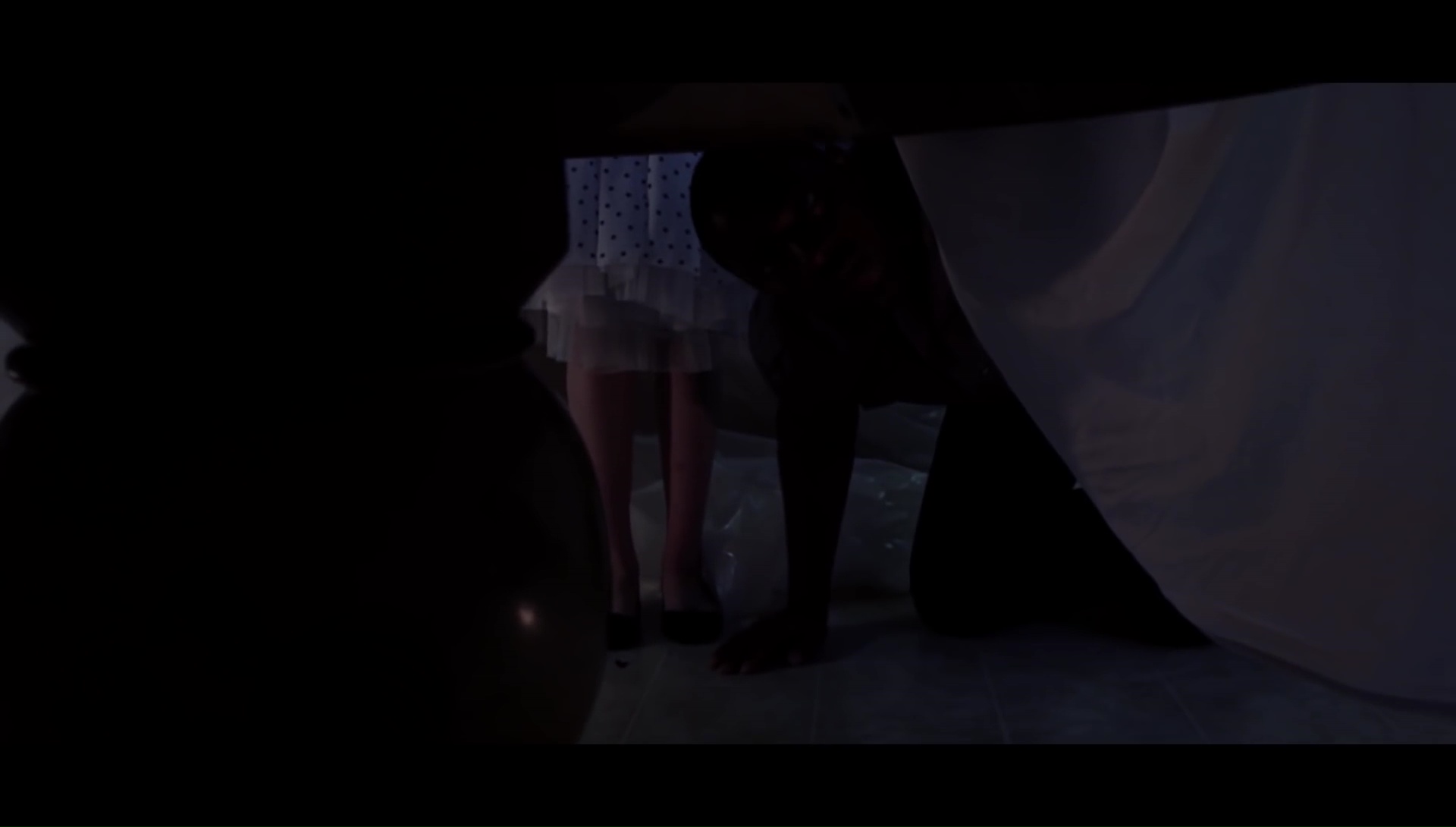
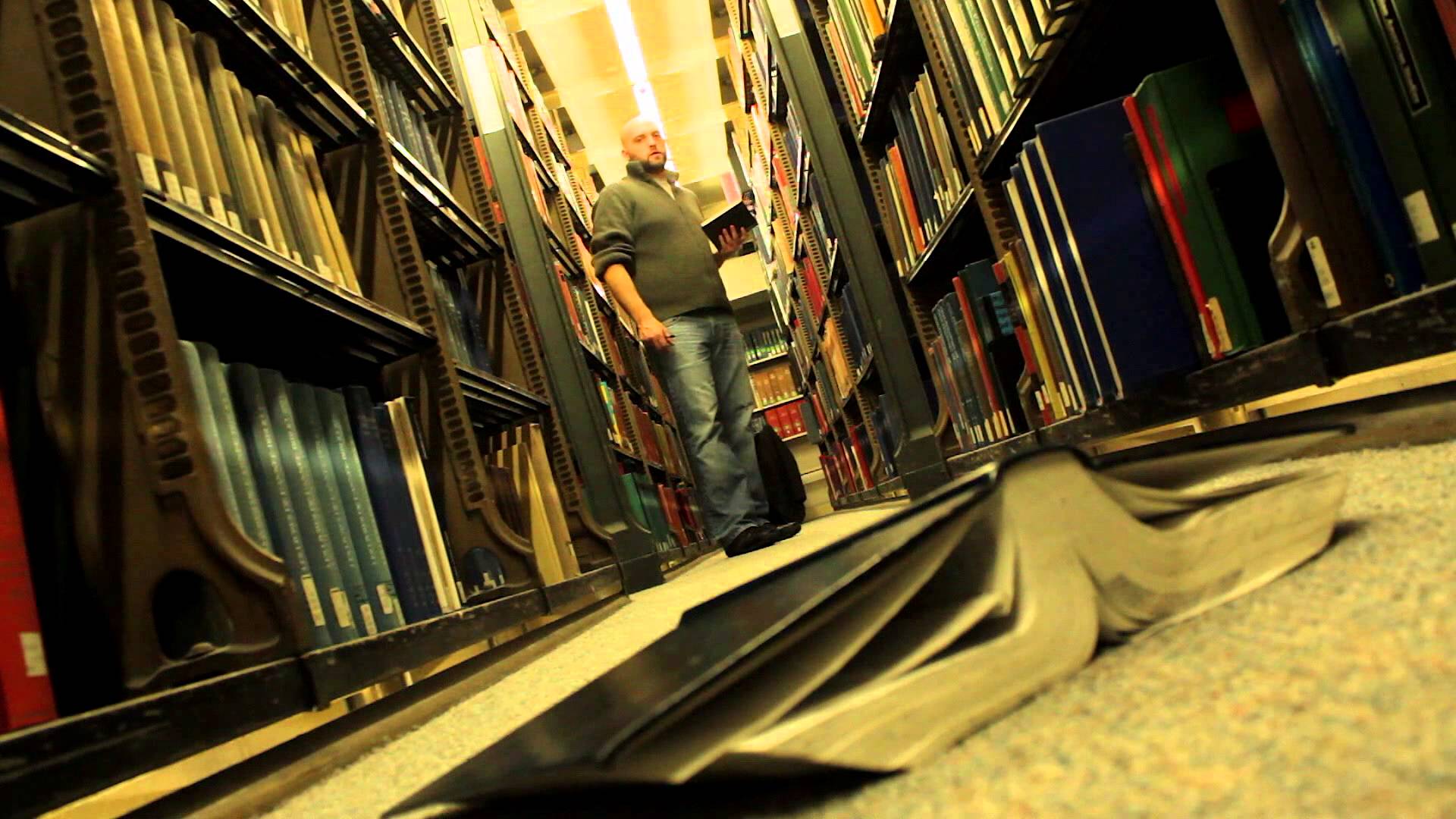
Rating: 6/10 – When a couple – Hanna (Courvais) and Colin (Frymire) – discover an ancient-looking figurine hidden inside the base of a statue, they find that the figurine holds within it a vengeful, angry spirit. Like a lot of horror shorts, Idol Threats takes a staple of the genre, the imprisoned demon, but adds a little tweak to proceedings by making its discoverers an upwardly mobile couple who are also quick to believe they’ve found something terrifying. However, while Schmidt makes good use of the bright, modern surroundings (the couple’s flat, a library), he’s let down by Courvais’ strident delivery of her lines, and some odd framing choices that are probably meant to create unease but just seem, well, odd. At least, as the end credits tell us, no books were harmed in the making of the movie.

Share this:

  • Click to share on X (Opens in new window) X
  • Click to share on Facebook (Opens in new window) Facebook
  • More
  • Click to print (Opens in new window) Print
  • Click to email a link to a friend (Opens in new window) Email
Like Loading...

Tremors 5: Bloodlines (2015)

28 Monday Sep 2015

Posted by dullwood68 in Movies

≈ 2 Comments

Tags

Ass Blasters, Burt Gummer, Cradle of Humankind, Don Michael Paul, Drama, Graboids, Horror, Jamie Kennedy, Michael Gross, Pearl Thusi, Review, Sequel, South Africa, Thriller, Wildlife reserve

Tremors 5 Bloodlines

D: Don Michael Paul / 99m

Cast: Michael Gross, Jamie Kennedy, Pearl Thusi, Daniel Janks, Ian Roberts, Zak Hendrikx, Nolitha Zulu, Rea Rangaka, Brandon Auret, Sello Sebotsane

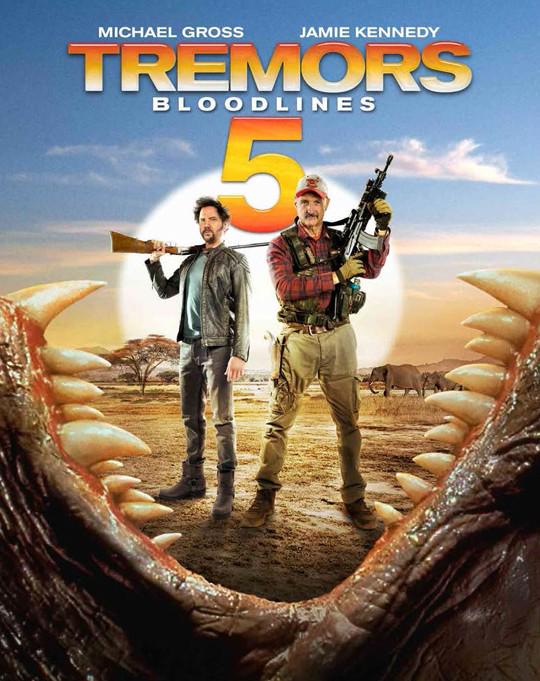
After successfully hunting down and restricting Graboid outbreaks to the south-western United States, Burt Gummer (Gross) is restyling himself as a survivalist. He films his treks into the wilderness with the aid of a cameraman, but when his regular cameraman is replaced by bike-riding, smart-talking Travis Welker (Kennedy), Burt isn’t too pleased by his attitude or his suddenly showing up out of the blue. While Travis tries to tell Burt how he can improve his profile, they’re interrupted by the arrival of a South African called Erich Van Wyck (Janks). Van Wyck tells Burt there is a problem with Graboids in a wildlife reserve, and he wants him to travel there to help solve the problem. Naturally, Burt agrees, and Travis goes with him to document everything.

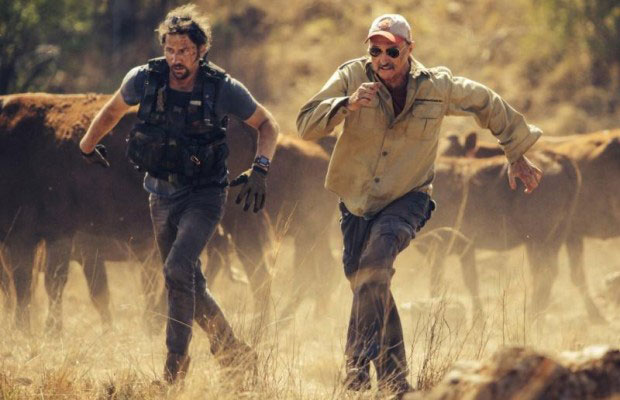
At the wildlife reserve, Van Wyck introduces them to their guide, Johan (Auret), and the facility’s doctor, Nandi Montabu (Thusi). An attack on an archaeological dig reveals the existence of a different form of Graboid, and while Burt tries to figure out how these particular creatures have come to exist and why they don’t behave in the same way as their American counterparts, the attacks become more frequent and claim more lives. The discovery of an egg leads to the realisation that somewhere there’s a nest, and if they’re allowed to hatch then the area will be overrun. But Burt’s plan to eradicate them is foiled by Van Wyck who reveals a different plan for the Graboids – one that has the potential to put a lot more people in danger, and not just in South Africa.

Tremors 5 Bloodlines - scene

Eleven years after we last saw Michael Gross as a member of the Gummer family, in the wonderfully left-field Tremors 4: The Legend Begins (2004) (where he played Burt’s ancestor, Hiram), the trigger-happy, gun-loving “survivalist” is back, and though as expected this fourth sequel to the 1990 original is severely let down by a lazy, focus-lite script, it’s good to see the man back again, and doing what he does best: blasting Graboids, because he can. It’s a good thing too, because without him the movie would be a complete disaster, with only some unexpectedly impressive creature designs to save the day. (Forget about the rest of the cast, who range from perpetually annoying – Kennedy, Auret – to mildly embarrassing – Thusi, Janks – to just plain woeful – the couple at the archaeological dig.)

Any film with a 5 in the title is always going to be a bit suspect when it comes to quality, but here, with the participation of series’ creators Brent Maddock and S.S. Wilson reduced to providing the storyline only, the finished script by Woodrow Truesmith, M.A. Deuce, and John Whelpley is a hodgepodge of dreary dialogue, lazy character motivation, clumsy nods to the other movies in the franchise, a blatant steal from Jurassic Park (1993), and a couple of moments of casual racism. It’s all put together in unconvincing style by Paul, who’s made a career (of sorts) out of directing rubbish sequels such as Lake Placid: The Final Chapter (2012), Jarhead 2: Field of Fire (2014), and the upcoming – God help us all – Kindergarten Cop 2 (2016). Between Paul and DoP Michael Swan, the movie looks like it was shot by someone with very bad Parkinson’s, and Vanick Moradian’s editing is so uneven it looks as if the footage used in the final cut was chosen at random.

It’s a shame, as the Tremors series has, by and large, been a source of surprising thrills and sometimes wicked humour, as well as introducing us to a monster that exists with a clear set of boundaries as to its behaviour. This movie abandons that idea, but in trying to expand the threat – flying Graboids anyone? – it merely reinforces how lazy it all is. And even though Gross is the icing on the cake in the previous movies, here he’s the icing, the cake, and the cake stand as well.

Rating: 3/10 – bottom of the barrel stuff that “ass blasts” over the series’ legacy, and doesn’t even have the courtesy to pretend to care, Tremors 5: Bloodlines is far and away the worst instalment yet, and should remain the last; dead in the water from the word go, this gets by on Gross’s professionalism and little else, while every frame serves as a reminder of just how good the original movie was.

Share this:

  • Click to share on X (Opens in new window) X
  • Click to share on Facebook (Opens in new window) Facebook
  • More
  • Click to print (Opens in new window) Print
  • Click to email a link to a friend (Opens in new window) Email
Like Loading...

Izulu lamí (2008)

25 Saturday Apr 2015

Posted by dullwood68 in Movies

≈ Leave a comment

Tags

Chili-Bite, Drama, Durban, Khwezi, Madoda Ncayiyana, Mat, Priest, Review, Sibonelo Malinga, Sobahle Mhkabase, South Africa, Street kids, Thembi, Tshepang Mohlomi

Izulu lami

aka My Secret Sky

D: Madoda Ncayiyana / 96m

Cast: Sobahle Mhkabase, Sibonelo Malinga, Tshepang Mohlomi, Sanele Ndawo, Sizwe Xaba, Slindile Nodangala, Michael Gritten, Peter Gardner

When their mother dies, Thembi (Mhkabase) and Khwezi (Malinga) are at first looked after by their aunt Juba (Nodangala). But when it transpires that she’s only there to take what she can from their mother’s belongings, and a particular mat that their mother made is missing, their aunt soon leaves. With no money or food to get by with, and with no other family to turn to, Thembi – who has kept her mother’s mat hidden – and Khwezi decide to travel from their village to the city to sell the mat to the priest who bought others in the past.

Despite not knowing where he lives, or where his church is located, the siblings set out on foot, eventually hitching a ride on a train that takes them into the city. After wandering around for a while, they meet a young boy called Chili-Bite (Mohlomi) who is part of a gang of children living on the streets. He takes them under his wing and gives them a place of stay. Thembi tells him about the priest, and Chili-Bite assures her that he’ll help find him. When they see him talking to a white man, Tony (Gritten), Chili-Bite tells Thembi and Khwezi that this man knows the priest and will take them to him the next day.

When the time comes, the man takes Thembi and Khwezi to the home of a black man who is looking for a child bride. When he tries to confirm her virginity, she fights him off with Khwezi’s help and they manage to escape. Realising that Chili-Bite knew what was meant to happen, she confronts him before leaving. But she doesn’t go far and the next day Chili-Bite reveals he can take her and Khwezi to the priest – but when he tries he can’t find the church. Thembi challenges him but he walks off. When she then tells Khwezi they need to return to their village, he refuses to go with her and blames their mother’s mat for all the trouble they’ve been through.

Khwezi follows Chili-Bite while Thembi assumes he’s behind her. When she realises he isn’t she stops in the street until two nuns pass by. She follows them to a church and there finds the priest. He remembers her mother and is keen to see the mat. But when she returns to Chili-Bite’s hideout she finds that Khwezi has done something that will test their relationship – and both their futures.

Izulu lami - scene

A movie that has the feel of a modern-day Dickens novel, Izulu lamí is a charming look at the perils of big city life as seen through the eyes of two innocents abroad. With its trio of first-time performances – and in Mhkabase and Malinga’s case their only performances – Ncayiyana’s ode to childhood hope and perseverance is an uneven yet enjoyable movie that occasionally tries to punch above its weight, but is all the more admirable for trying.

Though juxtaposing the quieter, simpler village life Thembi and Khwezi are used to, with the noise and bustle of the city of Durban, Ncayiyana maintains a measured approach to his and co-producer Julie Frederikse’s script that, ultimately, drains the movie of any tension or drama. Even when Khwezi’s actions threaten his relationship with Thembi, it’s portrayed with such objectivity that he could have done something far less terrible, and her reaction would have been the same – and so would have the framing, camerawork and direction. It’s indicative of the movie’s main problem throughout: the less than involved presence of its director.

From this, the casual viewer may well be put off from seeing the movie through to the end, believing that they’ve seen all they need to by the halfway mark (or possibly sooner, once they arrive in Durban in fact). For the early scenes before Thembi and Khwezi get on the train are more interesting than what follows. The brief scenes of mock parental persecution by Aunt Juba, though expected, are well played by Nodangala and the two children, and have that grim inevitably that is familiar in these situations. But while the movie looks as if it’s going to be a battle of wills between the aunt and her niece and nephew, the script has them heading off to find their future in the big city instead, and while this is handled with a fair degree of persuasiveness, it’s the nature of what happens to them that brings things to a dramatic standstill on too many occasions.

While it’s clear that Chili-Bite is “interested” in Thembi, his decision to put her in harm’s way via Tony is at odds with the character’s innate humanity (yes, he’s a street urchin, and yes he’s out to get whatever he can, but the script makes Chili-Bite too likeable for him to be a bad guy; plus he has too much of the Artful Dodger about him). And the tone, quite light-hearted and occasionally whimsical for the most part, is shredded by the attack on Thembi by the man Tony takes her to. It’s a dark, moderately uncomfortable sequence that doesn’t fit with the rest of the script, and seems included because otherwise there would be very little dramatic incident in the movie at all. And the ending, though expectedly upbeat, leaves the trio of Thembi, Khwezi, and Chili-Bite exactly as they were when they met. For a movie that shows two young children on a (not quite so) dangerous journey, there’s no arc for them to follow as individuals.

Thankfully, Mhkabase and Malinga prove enchanting to watch, even if they do stumble over the occasional line of dialogue, and their fresh, natural performances give the movie a much needed boost to offset the paucity of ideas that permeates throughout the rest of the movie. Mhkabase is so assured it’s a shame she hasn’t made any more movies, while Malinga has the best pout of any child actor in recent memory. They’re also credible as brother and sister, their arguments with each other brought to life effortlessly and with conviction. When they share a scene together it’s often hard to decide which one to watch more closely. As the conniving Chili-Bite, Mohlomi is the more relaxed and he gives an appropriately brash performance, and just this side of broad caricature (watch him as he walks along with his gang). Together, all three evince a mutual respect and reliance for each other that is both touching and heartfelt.

Rating: 5/10 – overall a disappointing viewing experience, and with too many coincidences driving the narrative forward, Izulu lamí lacks a strong enough storyline to be entirely effective; with good performances allied to some poetic imagery and a degree of spirituality attached to the children’s quest, there’s still enough to warrant a more than cursory look.

Share this:

  • Click to share on X (Opens in new window) X
  • Click to share on Facebook (Opens in new window) Facebook
  • More
  • Click to print (Opens in new window) Print
  • Click to email a link to a friend (Opens in new window) Email
Like Loading...

Mandela: Long Walk to Freedom (2013)

02 Sunday Mar 2014

Posted by dullwood68 in Movies

≈ Leave a comment

Tags

ANC, Apartheid, Idris Elba, Justin Chadwick, Long trousers, Naomie Harris, Nelson Mandela, President de Klerk, Prisoner, Review, Robben Island, South Africa, True story, Winnie Mandela

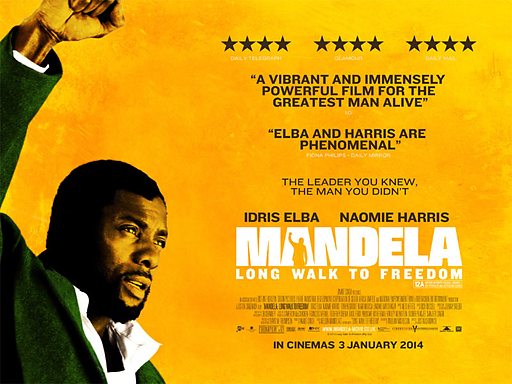
Mandela Long Walk to Freedom

D: Justin Chadwick / 141m

Cast: Idris Elba, Naomie Harris, Tony Kgoroge, Riaad Moosa, Zolani Mkiva, Simo Mogwaza, Fana Mokoena, Thapelo Mokoena

Since its publication in 1995, Nelson Mandela’s autobiography, Long Walk to Freedom has been one of those books that was always going to be adapted for the big screen; Mandela’s life was just too extraordinary to be ignored.  And now, thanks to producer Anant Singh, overseer of the project since the book’s publication, we now have fifty years of Mandela’s life condensed down into two hours and twenty one minutes.  Is it enough?  Perhaps…

The movie opens in 1942.  Mandela is a lawyer along with Oliver Tambo.  He works within the courts system and in his spare time, boxes.  He marries and has two children.  He is aware of the political injustice prevalent in South Africa, but has yet to become politicised.  When, in 1950, he witnesses a demonstration that advocates boycotting the buses – because the fares have increased unfairly – it triggers something inside him that makes him join the African National Congress.  Now a revolutionary, he supports non-violent means of attacking the system, but when the massacre at Sharpeville occurs in 1960, he realises that violence is a necessary tool against the Afrikaaners.  During this period, he also meets and takes as his second wife Winnie Madikizela (Harris), his first marriage having ended when he became radicalised.  Arrested in 1962 (according to the movie), Mandela is tried and sentenced to life imprisonment.  Along with seven other ANC members he is transported to Robben Island.  During his internment he remains an important figure within the ANC, but while he learns to approach the problem of apartheid by promoting peace, violent demonstrations and clashes with the police continue to occur across South Africa.  When the government comes calling with the promise of his being released if he helps quell the violence – by renouncing it – Mandela is faced with opposition from both Winnie and right-wing factions within the ANC.  He gains his release, begins to put into place his vision for a united South Africa, and this is where the movie ends, with Mandela having become president.

Mandela Long Walk to Freedom - scene

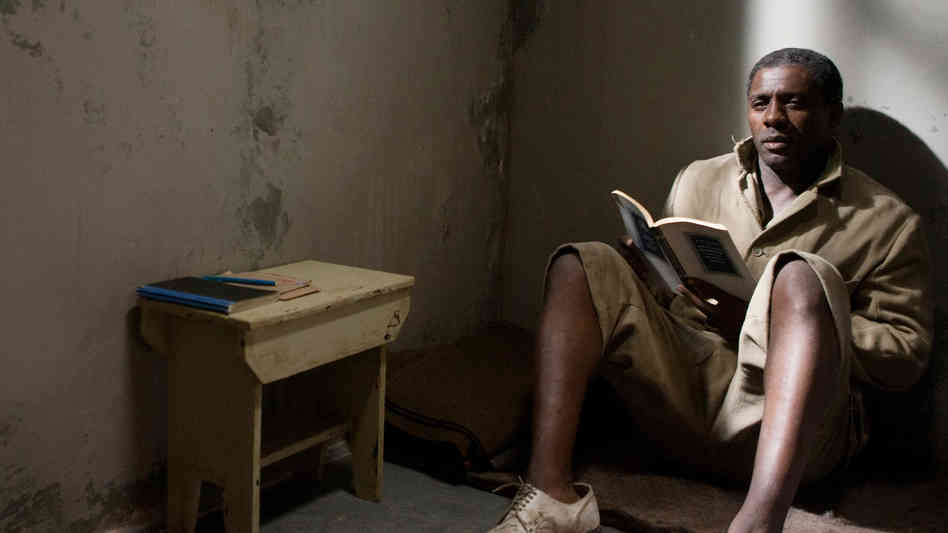
Adapting such a complex book was always going to be a challenge, and in the hands of William Nicholson, the screenplay does its best to cover the key moments in Mandela’s life without seeming like a hagiography.  However, this leads to many events being given a brief amount of screen time, and it becomes difficult on occasion to judge the importance of some of those events – for example, when Mandela and his fellow ANC members arrive at Robben Island, only one of them is given long trousers to wear, the rest, including Mandela, have to wear shorts.  Mandela campaigns to have long trousers for everyone, but his persistence – as well as the script’s – is free from explanation.  Elsewhere, Winnie’s own imprisonment – sixteen months in solitary confinement at one point – is referred to only when she gets out.  And therein lies another problem: the script shies away from making anything too unpalatable for the viewer.  Robben Island was an awful place, with cells that were too small, and living conditions that were designed to sap the will.  And yet, Mandela seems to get on okay there; you could argue that he even flourishes.  Winnie’s change from supportive wife and mother to violence advocating activist is presented in broad brush strokes, and while Harris convinces in an otherwise underwritten role, there’s too little character development for her, or the viewer, to latch onto.  (It doesn’t help that, due to the need to focus on Mandela, Winnie appears only here and there in the narrative, and in the end, she becomes the violent “face” of the ANC, a political boogeyman that Mandela is forced to distance himself from.)

With too many years to cover and too many incidents and events to fit in, Mandela: Long Walk to Freedom suffers in the long run, and ends up like a potted history of one man’s turbulent life.  There’s also a semi-reverential tone that stops the movie from being too emotive, even when the characters are suffering or events such as the Sharpeville massacre take centre stage (this tragedy, where children were killed as well as adults, is over in a matter of minutes; there’s no time to fully appreciate the horror of the impending situation nor its aftermath, and not in the way that, say, Richard Attenborough addressed the massacre at Amritsar in Gandhi).  With the movie thus appearing flat and with no appreciable highs and lows, it’s like being told about someone’s life but by someone who can’t quite connect with, or understand, the events they’re relating.

As Mandela, Elba gives a superb, measured performance that, thankfully, makes up for  a lot of the movie’s inefficiencies (good luck to anyone trying to work out who’s who in the ANC and on Robben Island; they may have names in the credits but they’re certainly not identified in the movie).  Elba dominates the movie, nailing the husky cadences of Mandela’s speech, and projecting an authoritative aura in the movie’s later stages when dealing with the government’s representatives and the political liability that Winnie has become.  He is never less than convincing throughout, and it’s a tribute to Elba that he manages to imbue Mandela with a spiritual quality that the script downplays and which might otherwise have been missed.  In support, Harris matches Elba for commitment and avoids demonising Winnie for her beliefs.  It’s a far more subtle performance than it first appears.

Hampered by the script, director Chadwick nevertheless manages to keep the movie interesting and rightly trains the camera on Elba as much as he can.  There’s a fine score courtesy of Alex Heffes, as well as crisp, warm cinematography from Lol Crawley.  With glorious location work, and good performances  all round, Mandela: Long Walk to Freedom doesn’t fly as high as you’d hope, but it does offer a fairly straightforward account of Mandela’s life over fifty years and the struggles he – and his country – endured during that period.

Rating: 7/10 – solid if unspectacular production raised up a notch or two by Elba’s excellent performance; worthy, yes, but also dull in places, and lacking in verve.

Share this:

  • Click to share on X (Opens in new window) X
  • Click to share on Facebook (Opens in new window) Facebook
  • More
  • Click to print (Opens in new window) Print
  • Click to email a link to a friend (Opens in new window) Email
Like Loading...

Blog Stats

  • 490,512 hits

Recent Posts

  • 10 Reasons to Remember Bibi Andersson (1935-2019)
  • Fantasia (1940)
  • Dances With Wolves (1990) – The Special Edition
  • Kiss of the Spider Woman (1985)
  • The Three Musketeers (1973)

Top Posts & Pages

  • The Dark Tower (2017)
    The Dark Tower (2017)
  • The White Orchid (2018)
    The White Orchid (2018)
  • Central Intelligence (2016)
    Central Intelligence (2016)
  • Taken (2008)
    Taken (2008)
  • Lost for Life (2013) - Another Look
    Lost for Life (2013) - Another Look
  • Captain Fantastic (2016)
    Captain Fantastic (2016)
  • Miss Baek (2018)
    Miss Baek (2018)
  • Two Shorts by François Ozon: A Summer Dress (1996) and X2000 (1998)
    Two Shorts by François Ozon: A Summer Dress (1996) and X2000 (1998)
  • Cardboard Boxer (2016)
    Cardboard Boxer (2016)
  • A Brief Word About Cineworld Unlimited
    A Brief Word About Cineworld Unlimited
Follow thedullwoodexperiment on WordPress.com

Blogs I Follow

  • Rubbish Talk
  • Film 4 Fan
  • Fast Film Reviews
  • The Film Blog
  • All Things Movies UK
  • Interpreting the Stars
  • Let's Go To The Movies
  • Movie Reviews 101
  • TMI News
  • Dan the Man's Movie Reviews
  • Film History
  • Jordan and Eddie (The Movie Guys)

Archives

  • April 2019 (13)
  • March 2019 (28)
  • February 2019 (28)
  • January 2019 (32)
  • December 2018 (28)
  • November 2018 (30)
  • October 2018 (29)
  • September 2018 (29)
  • August 2018 (29)
  • July 2018 (30)
  • June 2018 (28)
  • May 2018 (24)
  • April 2018 (21)
  • March 2018 (31)
  • February 2018 (25)
  • January 2018 (30)
  • December 2017 (30)
  • November 2017 (27)
  • October 2017 (27)
  • September 2017 (26)
  • August 2017 (32)
  • July 2017 (32)
  • June 2017 (30)
  • May 2017 (29)
  • April 2017 (29)
  • March 2017 (30)
  • February 2017 (27)
  • January 2017 (32)
  • December 2016 (30)
  • November 2016 (28)
  • October 2016 (30)
  • September 2016 (27)
  • August 2016 (30)
  • July 2016 (30)
  • June 2016 (31)
  • May 2016 (34)
  • April 2016 (30)
  • March 2016 (30)
  • February 2016 (28)
  • January 2016 (35)
  • December 2015 (34)
  • November 2015 (31)
  • October 2015 (31)
  • September 2015 (34)
  • August 2015 (31)
  • July 2015 (33)
  • June 2015 (12)
  • May 2015 (31)
  • April 2015 (32)
  • March 2015 (30)
  • February 2015 (37)
  • January 2015 (39)
  • December 2014 (34)
  • November 2014 (34)
  • October 2014 (36)
  • September 2014 (25)
  • August 2014 (29)
  • July 2014 (29)
  • June 2014 (28)
  • May 2014 (23)
  • April 2014 (21)
  • March 2014 (42)
  • February 2014 (38)
  • January 2014 (29)
  • December 2013 (28)
  • November 2013 (34)
  • October 2013 (4)

Blog at WordPress.com.

Rubbish Talk

Film 4 Fan

A Movie Blog

Fast Film Reviews

The Film Blog

The official blog of everything in film

All Things Movies UK

Movie Reviews and Original Articles

Interpreting the Stars

Dave Examines Movies

Let's Go To The Movies

Film and Theatre Lover!

Movie Reviews 101

Daily Movie Reviews

TMI News

Latest weather, crime and breaking news

Dan the Man's Movie Reviews

All my aimless thoughts, ideas, and ramblings, all packed into one site!

Film History

Telling the story of film

Jordan and Eddie (The Movie Guys)

Movie Reviews & Ramblings from an Australian Based Film Fan

Privacy & Cookies: This site uses cookies. By continuing to use this website, you agree to their use.
To find out more, including how to control cookies, see here: Cookie Policy
  • Subscribe Subscribed
    • thedullwoodexperiment
    • Join 481 other subscribers
    • Already have a WordPress.com account? Log in now.
    • thedullwoodexperiment
    • Subscribe Subscribed
    • Sign up
    • Log in
    • Report this content
    • View site in Reader
    • Manage subscriptions
    • Collapse this bar
 

Loading Comments...
 

    %d