• 10 Reasons to Remember…
  • A Brief Word About…
  • About
  • For One Week Only
  • Happy Birthday
  • Monthly Roundup
  • Old-Time Crime
  • Other Posts
  • Poster of the Week
  • Question of the Week
  • Reviews
  • Trailers

thedullwoodexperiment

~ Viewing movies in a different light

thedullwoodexperiment

Tag Archives: Supernatural

The Little Stranger (2018)

22 Saturday Sep 2018

Posted by dullwood68 in Movies

≈ Leave a comment

Tags

Charlotte Rampling, Domhnall Gleeson, Drama, Hundreds Hall, Lenny Abrahamson, Literary adaptation, Mystery, Review, Ruth Wilson, Supernatural, Will Poulter
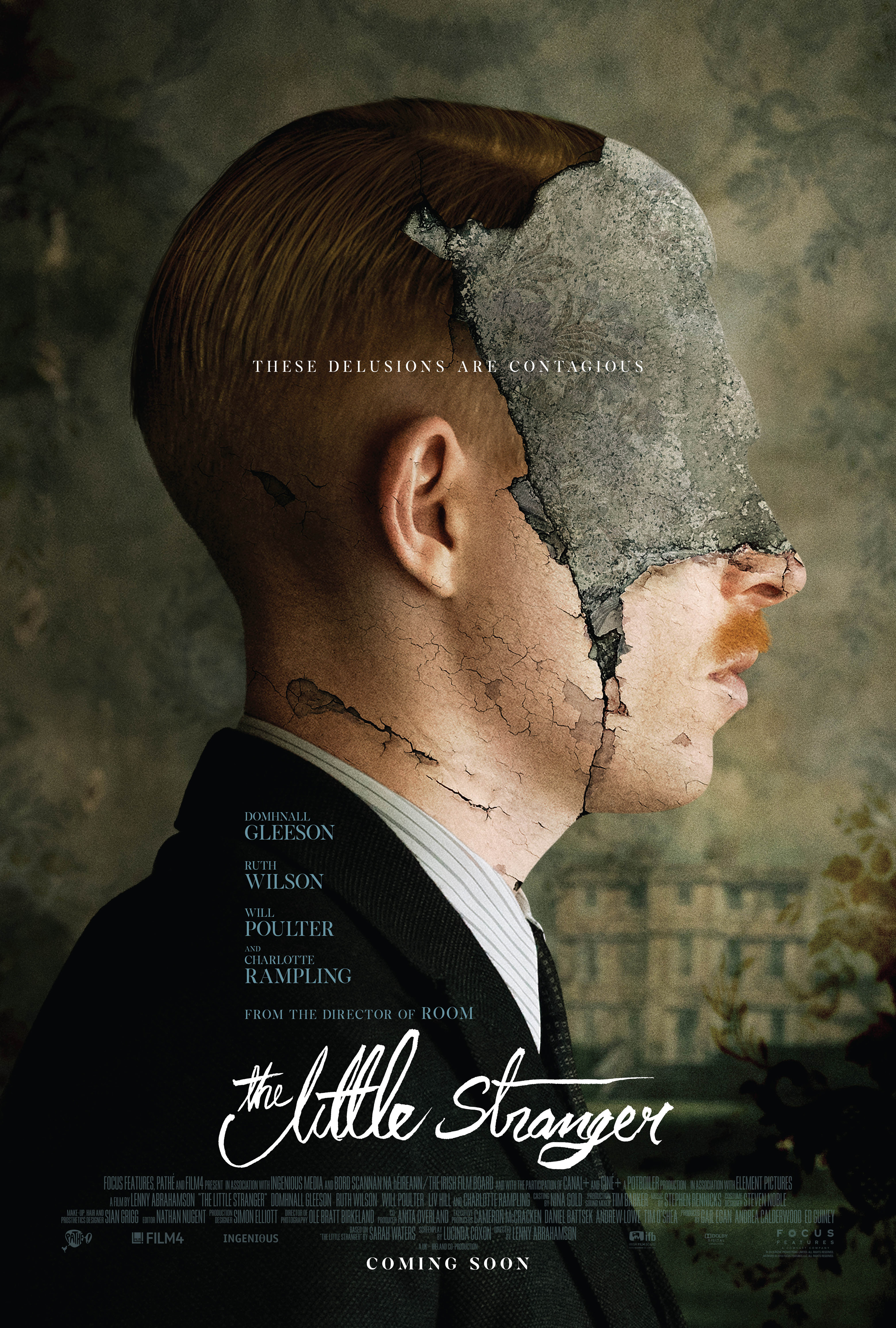
D: Lenny Abrahamson / 111m

Cast: Domhnall Gleeson, Ruth Wilson, Will Poulter, Charlotte Rampling, Liv Hill, Anna Madeley, Richard McCabe

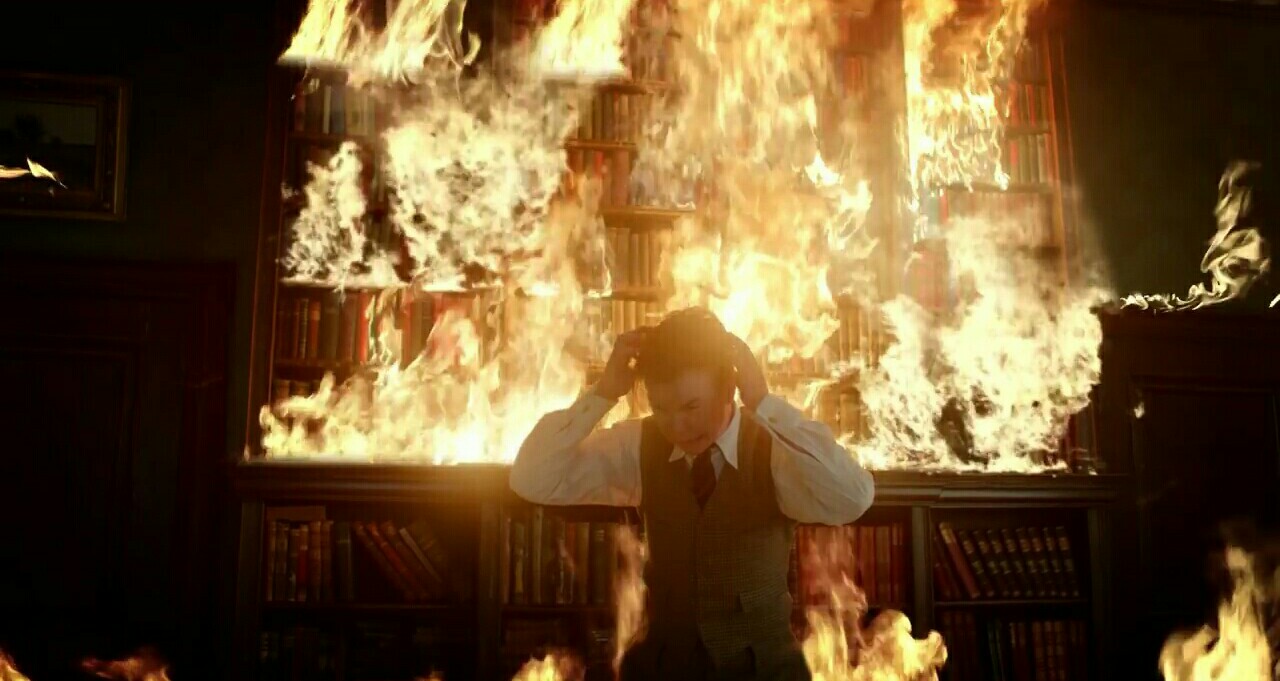
In the wake of World War II, Dr Faraday (Gleeson), a recently appointed country doctor, is called to Hundreds Hall, a sprawling estate that he once visited as a child. There he meets the owners, the Ayres – the mother (Rampling), and her two children, Roderick (Poulter) and Caroline (Wilson). The main house is gloomy and in a state of decay that speaks of prolonged financial difficulties for the family. Roderick is in charge, but he also has to contend with severe injuries he received as a pilot in the war. When Faraday offers to provide some palliative care for Roderick, it’s also so that he can see Caroline, but as he begins to spend more and more time at the Hall, so he becomes aware that all is not well there. The Ayres’ believe there is a supernatural presence in the house, one that is targeting them one by one. Faraday refuses to believe this, but events seem to prove otherwise. As he and Caroline become closer, he’s forced to consider that she really is in danger, and that perhaps there really is a presence in the house…
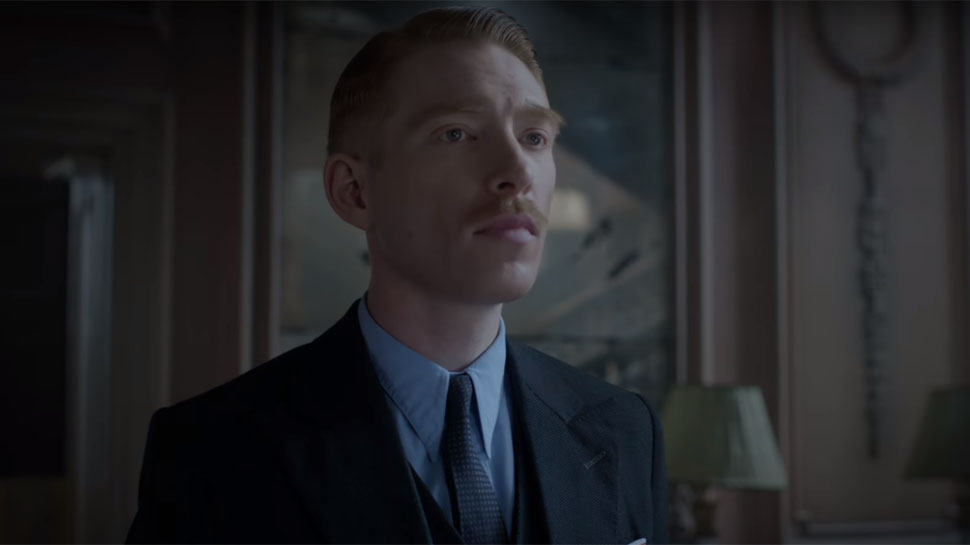
An adaptation of Sarah Waters’ novel, The Little Stranger is a ghost story without a ghost – perhaps – and a mystery that remains a mystery once the movie has ended. Whether or not this is a good thing will be down to the individual, as Lucinda Coxon’s screenplay deals in ambiguity and narrative sleight-of-hand at several key moments, but what it does mean is that the mystery of what is happening at Hundreds Hall plays out like a riddle that no one is meant to unravel. There are clues to be had, and some of what is shown can be taken at face value, but the script, in conjunction with Abrahamson’s measured, calculating direction, is more concerned with atmosphere and mood than with providing answers. This makes for a somewhat disconcerting viewing experience as scenes that build tension dissipate quickly once they’re established, and Ole Bratt Birkeland’s precision-tooled cinematography – always looking, always probing into the house’s darkest nooks and crannies, and its past – invites observation rather than immersion. There’s a detachment here that stops the viewer from becoming too involved with the Ayres family and their fears, and this despite very good performances from Wilson, Poulter and Rampling as the beleaguered trio.
The reason for all this is the movie’s main theme, that of the rise of post-war socialism and the weakening of the power and influence once wielded by the landed gentry, here represented by the Ayres’ financial downfall, and Faraday’s barely concealed contempt for them. His pursuit of Caroline is less about love than about the need for possession, to have, finally, what he’s wanted ever since he was a child and saw Hundreds Hall in all its former glory. He’s the classic outsider: envious, ambitious, and determined to be on the inside. As played by a never better Gleeson, Faraday is supercilious and self-contained, yet brimming with indignation at the way in which the Ayres’ have let the Hall decline. Coxon and Abrahamson recognise the co-dependency that exists between Faraday and the Ayres’, and it’s this approach, and the way that it develops, that is ultimately more intriguing and compelling than if the movie was merely another haunted house tale. Abrahamson maintains a keen sense of unease in terms of Faraday’s motives, and as the threats to the Ayres’ become more tangible, a more human cause comes to the fore. But again, there’s that overwhelming ambiguity to keep the viewer on their toes, and wondering if what they’re seeing and hearing can be trusted.

Rating: 7/10 – some viewers may find The Little Stranger hard going as Abrahamson adopts an often glacial pace to the material while providing deft psychological insights into the characters and their social positions; with a pervasive sense of time and place, and an air of impending tragedy, it’s a movie that doesn’t trade in the accepted tropes of the genre, but instead, warps them to its own advantage.
Share this:

  • Click to share on X (Opens in new window) X
  • Click to share on Facebook (Opens in new window) Facebook
  • More
  • Click to print (Opens in new window) Print
  • Click to email a link to a friend (Opens in new window) Email
Like Loading...

Lavender (2016)

28 Thursday Jun 2018

Posted by dullwood68 in Movies

≈ Leave a comment

Tags

Abbie Cornish, Dermot Mulroney, Diego Klattenhoff, Drama, Ed Gass-Donnelly, Horror, Justin Long, Memories, Murder, Mystery, Review, Supernatural, Thriller

aka Trauma

D: Ed Gass-Donnelly / 92m

Cast: Abbie Cornish, Diego Klattenhoff, Lola Flanery, Dermot Mulroney, Justin Long, Sarah Abbott, Liisa Repo-Martell, Peyton Kennedy

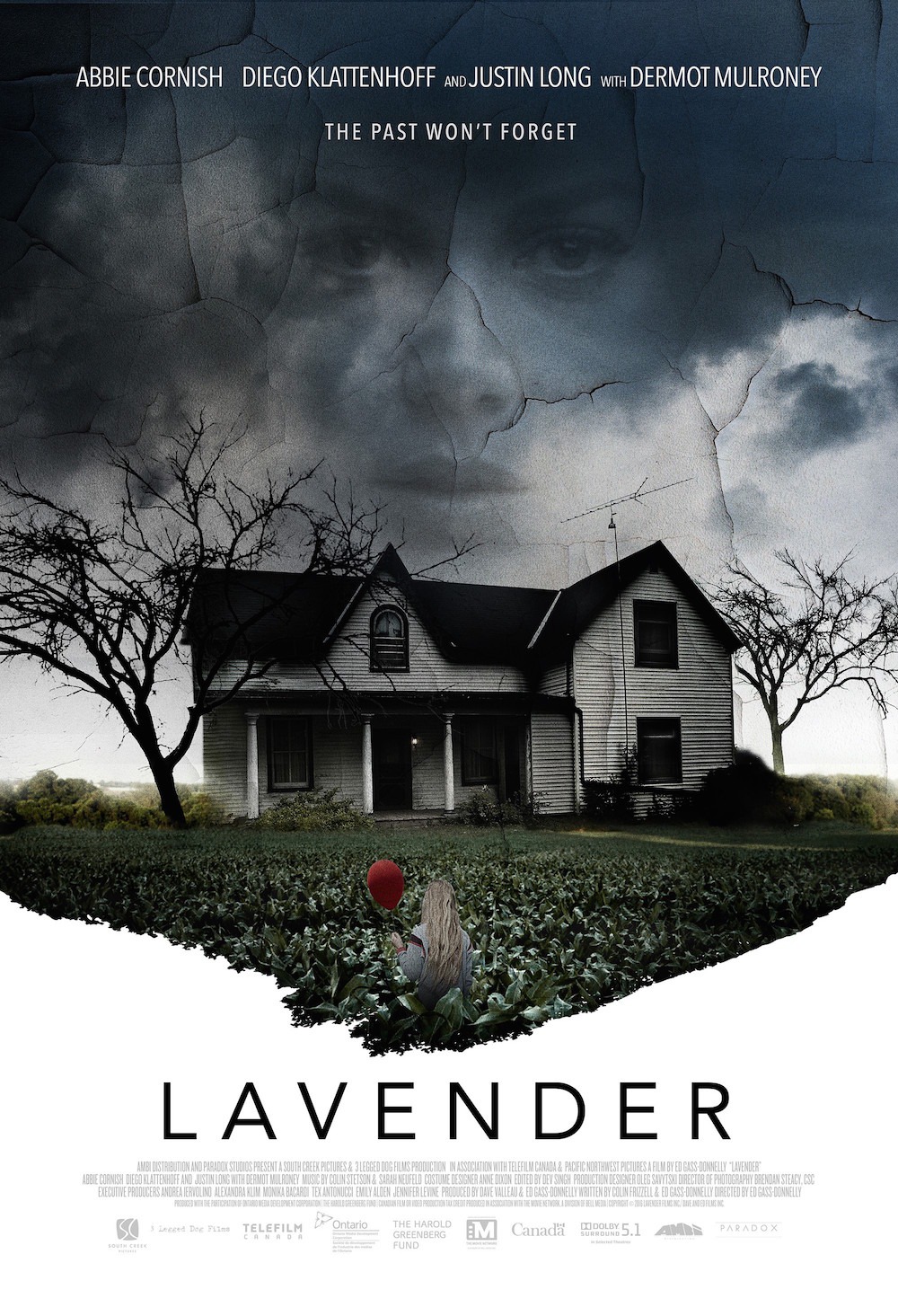
1985 – Jane Ryer (Kennedy) is the sole survivor when her family is murdered in their remote farmhouse; she’s found covered in blood and holding a cutthroat razor. Twenty-five years later, Jane (Cornish) is married to Alan (Klattenhoff), and has a young daughter, Alice (Flanery). She runs a photographer’s studio that showcases the pictures she takes of often abandoned rural properties, and is plagued by lapses in her memory. A stay in hospital following a car accident reveals Jane has several skull fractures from when she was a child, but she has no memory of being injured. She also comes to learn that one of the farmhouses she has photographed is one that she owns, even though she has no memory of it, or an uncle, Patrick (Mulroney), who has been paying the taxes on it and maintaining it. Drawn to discovering what happened when she was a child, Jane, Alan and Alice decide to meet Patrick and stay at the farmhouse. Soon, Jane discovers that the house is the source of a series of supernatural occurrences that relate to the murder of her family all those years before…

From the outset, with Patrick being informed of the deaths of his sister’s family and the horrific aftermath being presented in a series of tableaux, it seems as if Lavender isn’t interested in offering viewers another generic rural ghost story. But that opening sequence, culminating in the discovery of a clearly traumatised Jane, unfortunately marks the beginning of the end in terms of originality. Jane’s plight, going from being forgetful to being plagued by supernatural events and visions, is played out in too flat a manner for it to be entirely effective. While the script – by director Gass-Donnelly and Colin Frizzell – takes its time in revealing the details of just what happened in 1985, it does so in a measured, unhurried way that robs the movie of any appreciable pace or momentum. This doesn’t even allow for a slowburn approach to the material, and instead, has the opposite effect, making the viewer wish some scenes would hurry up, while wishing others wouldn’t repeat motifs and experiences that Jane – and we – have already witnessed over and over. As a result, the central mystery is treated with sincerity but lacks verve, and the characters are forced to repeat conversations and actions that harm the movie’s narrative structure.

When presenting supernatural events on screen, many directors and screenwriters adopt a kind of “kitchen sink” approach, and throw in scares and jolts and all sorts of shenanigans because they might look good (or cool), and because even a cheap scare can be a winner. Lavender has a number of these moments, such as when adult Jane and her younger sister, Susie (Abbott), hide under a sheet in the stables. As something wicked comes nearer – cue heavy footfalls – Susie urges Jane to run, and when she does the sheet becomes more voluminous than it should be and when she finally escapes from it, she’s in the middle of a field. The juxtaposition between the expanse of the field after the confines of the sheet works well, but in terms of dramatic effect, it makes no sense (we already know Jane’s mental state isn’t the best). Gass-Donnelly works hard to give the movie a tense, unnerving atmosphere, and employs a grimly portentous score from Colin Stetson and Sarah Neufeld to help matters along, but the material is too thinly stretched in places, and too flatly handled, for their efforts to be successful. By the time things pick up for the climax, and some energy is injected into the proceedings, some viewers might have already taken their leave.

Rating: 5/10 – with the performances proving merely adequate (Cornish, though, makes a virtue of appearing blank-faced), and the script veering off at odd tangents at odd moments, Lavender is a lukewarm psychological horror that doesn’t follow through on its initial promise; tiresome in places, and with a central mystery that shouldn’t come as a surprise when it’s exposed, the movie struggles to be consistently interesting, and passes on several opportunities to better itself.

Share this:

  • Click to share on X (Opens in new window) X
  • Click to share on Facebook (Opens in new window) Facebook
  • More
  • Click to print (Opens in new window) Print
  • Click to email a link to a friend (Opens in new window) Email
Like Loading...

Oh! the Horror! – The Disappointments Room (2016) and The Bye Bye Man (2017)

13 Friday Jan 2017

Posted by dullwood68 in Movies

≈ Leave a comment

Tags

Cressida Bonas, D.J. Caruso, Douglas Smith, Drama, Grief, Haunted house, Horror, Kate Beckinsale, Lucas Till, Lucien Laviscount, Paranoia, Review, Stacy Title, Supernatural

disappointments_room

The Disappointments Room (2016) / D: D.J. Caruso / 85m

Cast: Kate Beckinsale, Mel Raido, Duncan Joiner, Lucas Till, Gerald McRaney, Celia Weston, Jennifer Leigh Mann, Ella Jones, Marcia DeRousse

After the tragic death of their baby daughter, Dana (Beckinsale) and David (Raido), and their son, Lucas (Joiner), relocate to a rundown, rural dream home. Haunted by their daughter’s death, Dana soon begins to hear the sounds of a baby crying, and also the sound of dripping water. She traces the dripping water sounds to a leak from the roof, but still hears a baby crying and other noises; she also sees a strange dog outside. David is oblivious to all this, and doesn’t think it’s at all mysterious when Dana discovers a hidden room in the attic that isn’t on the plans. Investigating it further the next day, she finds herself locked in and threatened by a malevolent force. Hours pass, but when she finally manages to get out of the room, she learns that only minutes have passed, and not hours; and that David is worried she’s not taking her medication (to help her deal with her grief).

With the help of a local historian (DeRousse), Dana discovers that the house has a disappointments room, a room that would have been used to hide away a child born with a deformity or some such, and which would have been highly embarrassing to its (usually) upper class family. Dana’s research uncovers a previous owner, Judge Blacker (McRaney), whose daughter, Laura, was believed to have died in childbirth. But Dana suspects Laura was the inhabitant of the disappointments room, and that it’s her spirit that is haunting the house. With a local workman (Till) helping restore the house, and Dana becoming increasingly disturbed by the things she’s seeing, the truth behind the disappointments room slowly begins to unfold, and Dana begins to understand that there’s a far more malevolent force at work…

thumbnail_24864

For a horror movie to have the word “disappointment” anywhere in its title is asking for trouble (or it’s being incredibly reckless). And The Disappointments Room, ah, doesn’t let us, or itself, down in that respect. It’s yet another haunted house movie where things happen for no reason at all, and scenes take place that are by-and-large independent of each other and only fit together if the viewer is lucky. The script – by director Caruso and Wentworth Miller – likes to play with visual motifs, like a child’s kite seen in historical photos floating above the house, even though it would have been proof of a child’s existence when there shouldn’t have been any; and it likes to have things happen outside the house when it’s clear that the ghost responsible for all the shenanigans doesn’t stray outside at all (so shouldn’t have that much influence).

Away from the kind of plot holes that you could fit an entire haunted house through twice over, the movie aims very low in its attempts to be scary or frightening, and falls back too often on the kind of traditional haunted house set ups that now invoke yawns rather than tension. Against such a plain, derivative backdrop, Beckinsale has no option but to put in a generic genre performance and walk away with as much dignity as she can manage. The rest of the cast lack for things to do, especially Raido, and Caruso’s directorial style largely involves ignoring how tedious and pedestrian the script is, and that the whole thing – though no more preposterous than usual – lacks energy and any kind of visual panache. It’s a glum, uninvolving movie to watch, and it isn’t helped by Brian Tyler’s overbearing, cliché-driven score.

Rating: 3/10 – bad horror movies are ten a penny these days – in fact, they’re ten a penny on most days – but The Disappointments Room is a particularly bad horror movie, one that can’t be bothered to be better than it is; hackneyed, with poor/lazy performances, and a terrible sense of its own effectiveness, it outstays its welcome within the first five minutes, and never once feels as if it’s about to surprise the viewer or give them something/someone to care about.


the-bye-bye-man-poster01

The Bye Bye Man (2017) / D: Stacy Title / 96m

Cast: Douglas Smith, Lucien Laviscount, Cressida Bonas, Doug Jones, Michael Trucco, Jenna Kanell, Erica Tremblay, Marisa Echeverria, Cleo King, Faye Dunaway, Carrie-Anne Moss, Leigh Whannell

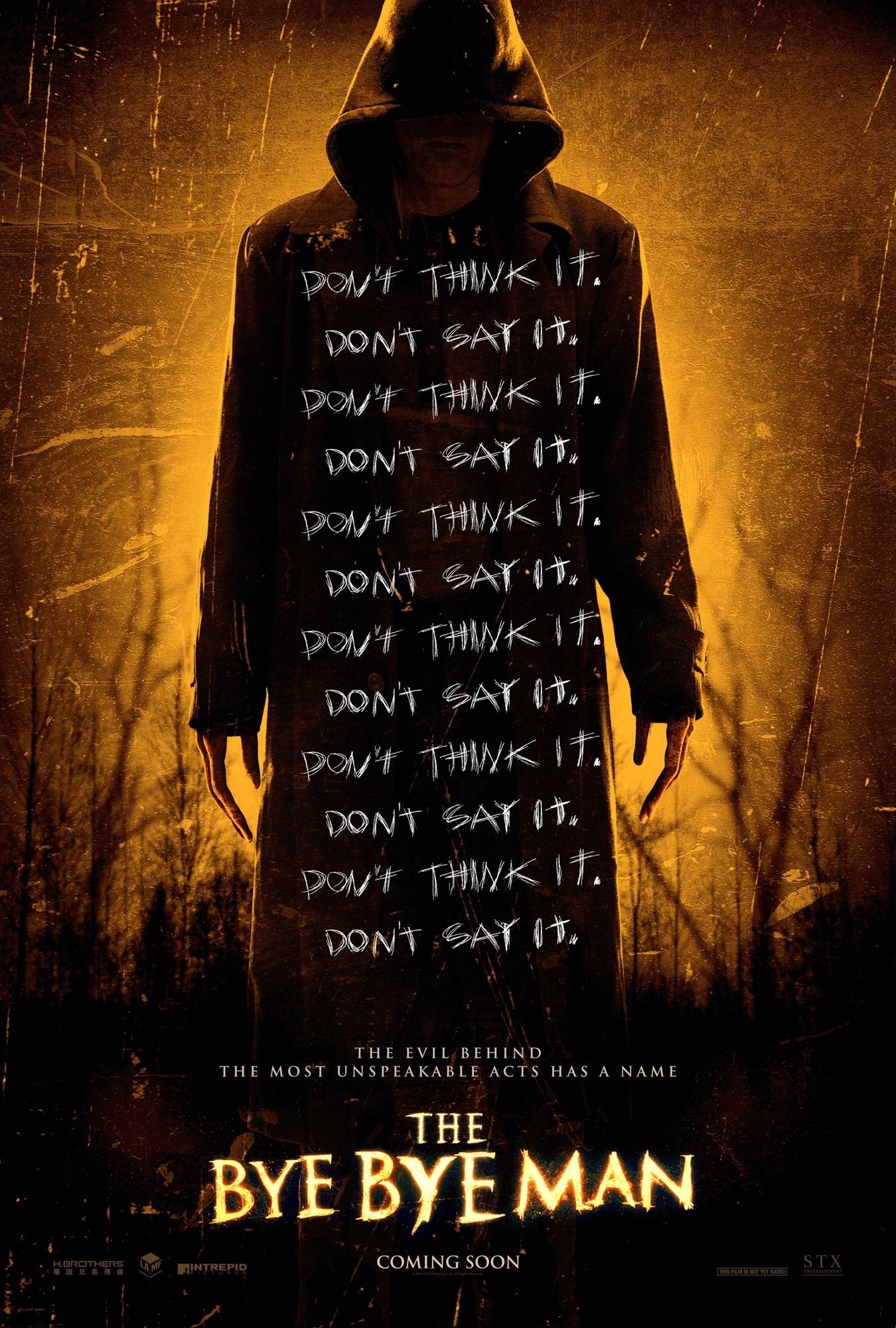
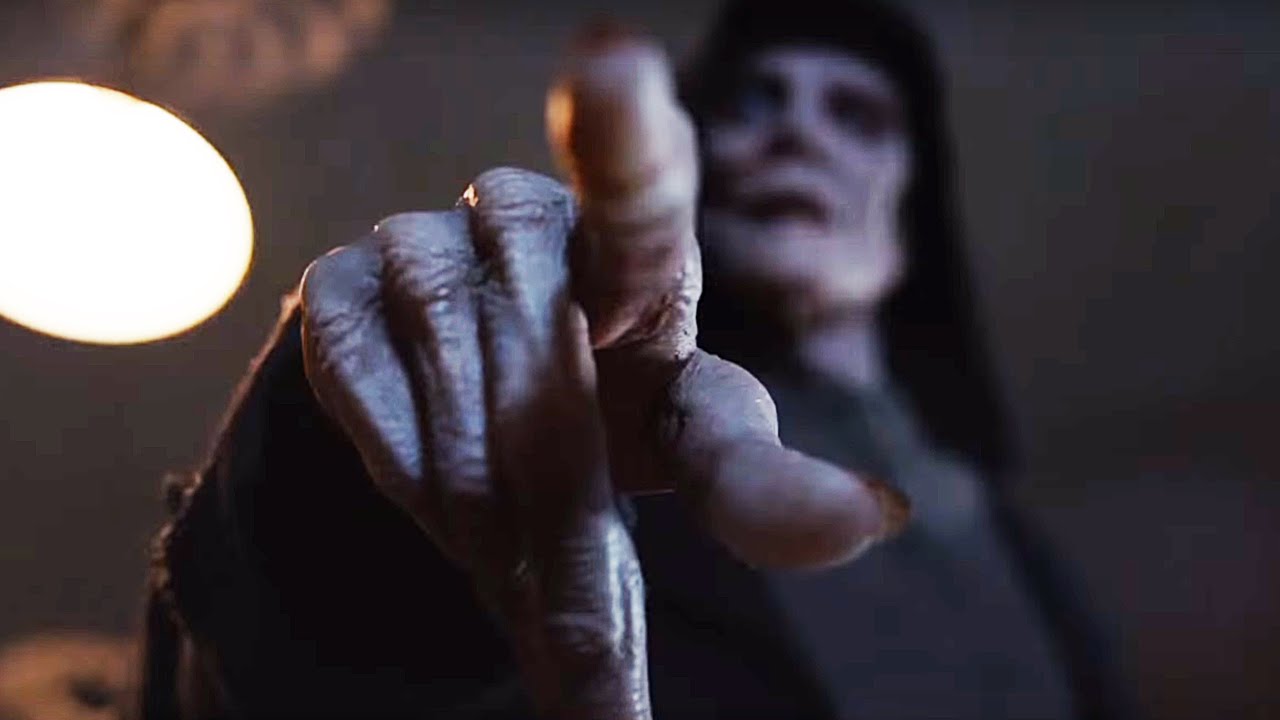
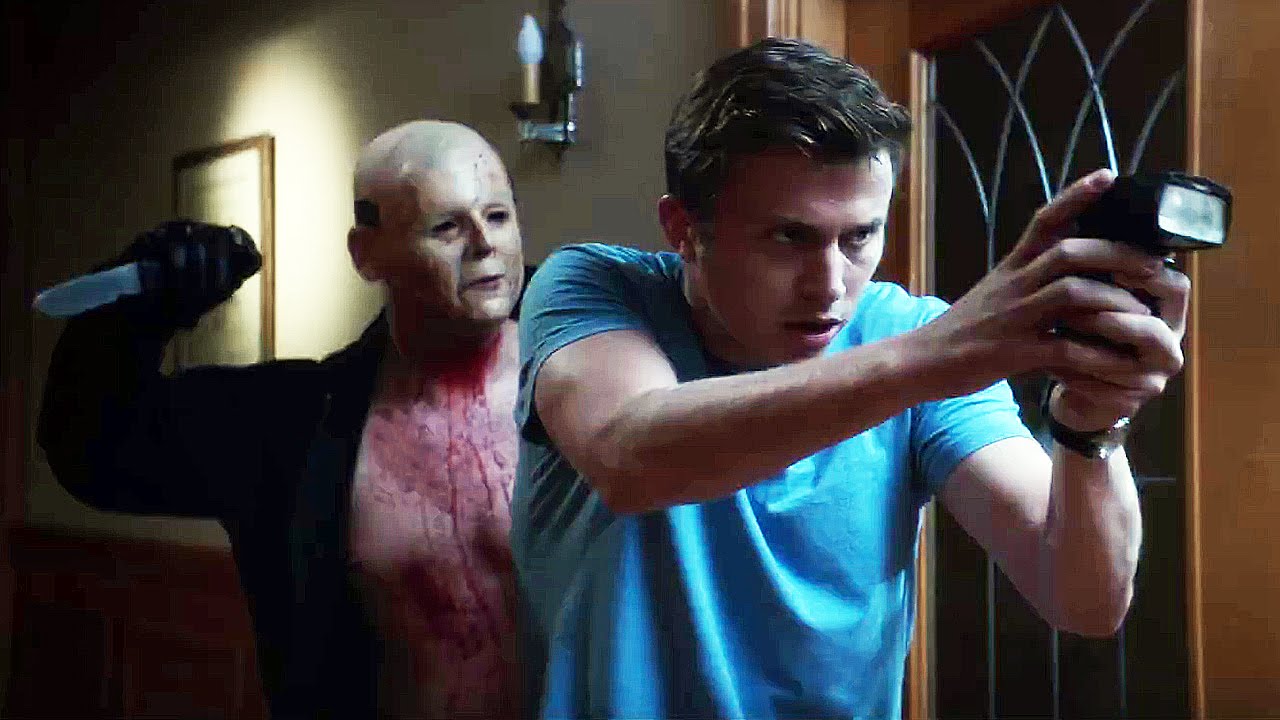
In 1969, a reporter, Larry Redmon (Whannell), goes on a killing spree in the town of Madison, Wisconsin. Fast forward forty-seven years and three university students – couple Elliot (Smith) and Sasha (Bonas), and best friend John (Laviscount) – rent an old house on the outskirts of town, and soon they’re having more than their fair share of weird experiences. After a housewarming party, a friend of Sasha’s, Kim (Kanell), performs a cleansing ceremony, but it doesn’t work. Soon she’s telling them that “something” is coming. Later, Elliot finds a sheet of paper with the words “Don’t think it” and “Don’t say it” written on it over and over again. These words are a caution relating to a supernatural entity known as the Bye Bye Man. If you say or think his name, he will come for you and he will make you do terrible things – like Larry Redmon did.

Soon the trio are seeing things and their own inner fears are being exploited. Elliot digs into the origins of the Bye Bye Man, while at the same time becoming ever more certain that Sasha and John are sleeping together. Sasha becomes increasingly ill, while John becomes more and more paranoid. When Kim is killed, the police become involved. And when Elliot tracks down Larry Redmon’s widow (Dunaway), he discovers a way to defeat the Bye Bye Man. But when he returns to the house, circumstances dictate that he might never get the opportunity to use his newfound knowledge, as the Bye Bye Man is there already…

maxresdefault

A better tagline for The Bye Bye Man would be “Don’t try it, don’t see it”, as this adaptation of The Bridge to Body Island, a chapter from Robert Damon Schneck’s non-fiction book The President’s Vampire, is one of the most poorly written, directed, and acted horror movies of recent years. Aside from the bravura pre-credits sequence where Larry Redmon goes on the rampage, The Bye Bye Man struggles at almost every turn in its attempts at telling a cohesive, halfway credible story, and fails to deliver any tension, any shocks, any drama, or any let-up from the crushing banality of Jonathan Penner’s screenplay. It’s as if Penner has watched a dozen or so recent horror movies featuring supernatural creatures, taken the worst aspects of those movies’ scripts, and put them all together to make this movie look and sound as atrocious as possible.

Things are further compounded by Title’s haphazard, scattershot approach to the material, directing most scenes as if she had no idea what was going to happen next (which would be odd, as Penner is her husband). She’s also unable to elicit one decent performance from anyone in the whole movie; even the likes of Dunaway and Moss have no chance when faced with such terrible dialogue and even worse character motivation. Bonas favours one facial expression throughout (sleepy), Laviscount does angry young man whatever the scene, and Smith is so bad you hope the Bye Bye Man gets him first. Things are further hampered by James Kniest’s unimaginative framing and cinematography, and worst of all, Ken Blackwell’s laissez-faire editing, which takes the movie to new depths of awfulness.

Rating: 3/10 – sometimes you wonder how some horror movies get a general release and don’t go straight to video, and The Bye Bye Man is one such horror movie; a real stinker, it insults its audience at every turn, can’t even rustle up an origin story for its title character, tries for franchise levels of integrity that are never achieved, and should be used as an object lesson in how not to make a supernatural creature feature.

Share this:

  • Click to share on X (Opens in new window) X
  • Click to share on Facebook (Opens in new window) Facebook
  • More
  • Click to print (Opens in new window) Print
  • Click to email a link to a friend (Opens in new window) Email
Like Loading...

Trailers – American Pastoral (2016), The 9th Life of Louis Drax (2016) and Keeping Up With the Joneses (2016)

30 Thursday Jun 2016

Posted by dullwood68 in Movies

≈ Leave a comment

Tags

Aaron Paul, Action, Alexandre Aja, Comedy, Drama, Ewan McGregor, Gal Gadot, Greg Mottola, Isla Fisher, Jamie Dornan, Jennifer Connelly, Jon Hamm, Literary adaptation, Liz Jensen, Mystery, Philip Roth, Previews, Sarah Gadon, Supernatural, Thriller, Trailers, Zach Galifianakis

For his feature debut as a director, Ewan McGregor could have (probably) chosen any project he wanted, but not one to shirk a challenge, the actor has decided to film Philip Roth’s Pulitzer Prize-winning novel (it’s been in development for over a decade, and Jennifer Connelly is the only person still on board from back then). So, no pressure there, then. But the trailer reveals, albeit in a disjointed fashion, that McGregor appears to have found a way of coherently presenting the various social and political upheavals of the period (the Sixties), and without sacrificing any of the personal or emotional effects these events have on the characters involved. With David Strathairn cast as Roth’s alter ego Nathan Zuckerman, and a supporting cast that also includes Molly Parker and Peter Riegert, McGregor has found himself in very good company indeed, and if his direction, allied with John Romano’s screenplay, is as good as it looks (and thanks to DoP Martin Ruhe it looks beautiful indeed), then this could be a strong Oscar contender come next February.


In The 9th Life of Louis Drax (it’s never Johnny Smith anymore, is it?), a young boy’s fall from a cliff and subsequent coma opens up a mystery that will involve his parents (Sarah Gadon, Aaron Paul) and his doctor (Jamie Dornan). Liz Jensen’s 2004 novel was due to be adapted by Anthony Minghella before his untimely death in 2008, but now it’s been adapted for the screen by his son Max, and with the formidable talent of Alexandre Aja in the director’s chair. The trailer is sufficiently twist-y enough for clues to Louis’s “condition” to be given in one second and then overturned in another, and the movie’s success is likely to depend on how well the mystery is maintained before answers have to be revealed. The cast also features the likes of Oliver Platt, the ubiquitous Molly Parker, and Barbara Hershey, and seems to have got a firm hold on the supernatural thriller aspects of the story, so this should be as satisfying – hopefully – as it looks.


Whatever you want to say or think about Keeping Up With the Joneses, there’s little doubt that this mix of action and comedy about a suburban couple (Zach Galifianakis, Isla Fisher) who discover that their new neighbours (Jon Hamm, Gal Gadot) are international spies, is exactly the kind of moderately high concept idea that the Hollywood studios love to put their money behind. The trailer offers perhaps too many laughs (and hopefully not all the best ones), while downplaying the inevitable action sequences, but whatever the finished product gives us, let’s hope that director Greg Mottola’s quirky sense of humour is front and centre, and the chemistry between each couple adds to the fun to be had. If not we’ll just have to chalk it up to a good idea gone bad, or to put it another way, a movie that you switch off from once it’s started.

Share this:

  • Click to share on X (Opens in new window) X
  • Click to share on Facebook (Opens in new window) Facebook
  • More
  • Click to print (Opens in new window) Print
  • Click to email a link to a friend (Opens in new window) Email
Like Loading...

Oh! the Horror! – The Girl in the Photographs (2015) and The Other Side of the Door (2016)

01 Wednesday Jun 2016

Posted by dullwood68 in Movies

≈ 1 Comment

Tags

Ashes, Claudia Lee, Drama, Horror, India, Jeremy Sisto, Johannes Roberts, Kal Penn, Kenny Wormald, Murders, Nick Simon, Photographs, Review, Sarah Wayne Callies, Serial killer, Spearfish, Supernatural, Temple

The Girl in the Photographs

The Girl in the Photographs (2015) / D: Nick Simon / 98m

Cast: Kal Penn, Claudia Lee, Kenny Wormald, Toby Hemingway, Luke Baines, Miranda Rae Mayo, Oliver Seitz, Autumn Kendrick, Mitch Pileggi

Colleen (Lee) is young, pretty, stuck in a dead-end job in her home town of Spearfish, and has a jerk of a boyfriend called Ben (Hemingway). Her dull, unexciting existence is eased by the discovery of a photograph that appears to show a murdered woman. She take it to the cops but with no clear evidence that the picture is real, it’s quickly dismissed as some kind of prank. But Colleen starts receiving more photographs, all similar in tone and content, and each one more disturbing than the last. News of the photographs finds its way onto the Internet and is seen by LA photographer Peter Hemmings (Penn). He’s the type of edgy photographer who likes to think his work is “out there”, and he’s affronted by the fact that these photographs have been taken by someone else; he’s also from Spearfish so adopts an even more personal interest.

When Hemmings arrives in Spearfish it isn’t long before he meets Colleen and wants her to be the focus of the photo shoot he’s planning. Colleen, having nothing better to do, agrees to take part, and she recieves an invite to a party where Hemmings is staying. Meanwhile, one of Colleen’s friends goes missing, and the photographs keep coming. As the party gets under way, the guests start ending up dead, and Colleen, along with Hemmings’ put-upon assistant, Chris (Wormald), find themselves trying to stay one step ahead of a killer who now seems content to come out of the shadows and create their own murderous “artistic” showcase.

The Girl in the Photographs

The last movie that Wes Craven was involved with before his death in August 2015, The Girl in the Photographs is one that he may well have been pleased with, but perhaps with some reservations as well. It starts off with the roadside murder of a young woman, the first of many narrative decisions that stop the movie from being an intriguing murder mystery-cum-horror thriller. Instead this helps the movie nail its colours to the mast as another serial killer movie, albeit with a neat twist. Where it wins points for originality is the inclusion of celebrity photographer Peter Hemmings and his selfish attitude to everyone; he’s so obnoxious you don’t know whether to cheer him or not. Penn is terrific in the role, and the script wisely includes him as much as possible.

However, the movie is on less surer ground when Hemmings isn’t around. The murders lack the kind of visceral intensity that the photographs point to, and the decision to reveal the villain’s identity by the halfway mark (after the movie spends a lot of time and energy hiding his face) allows much of the tension to dissipate, especially as the reason for the murders is none too complex. Director and co-writer (with Osgood Perkins and Robert Morast) Nick Simon shows that he’s learnt a thing or two from watching Craven’s ouevre, but the slow, deliberate, and rewarding pace of the first hour is abandoned in favour of the kind of stalk and slash routine we’ve seen way too many times before. The cast are likeable if not exactly memorable – Penn aside – though Lee is a sympathetic heroine, and the movie is enhanced by the contribution of veteran cinematographer Dean Cundey, who shot Halloween (1978) and all three Back to the Future movies. A little too nihilistic perhaps by the end but still something that Craven could, and probably would, have been proud of.

Rating: 6/10 – narrative muddles and tonal shifts aside, The Girl in the Photographs is a valiant attempt to do something different within the overstuffed serial killer sub-genere of horror movies; worth a watch though for Penn’s performance, and some subtle nods to several other horror movies that both Craven and Cundey have been involved with.


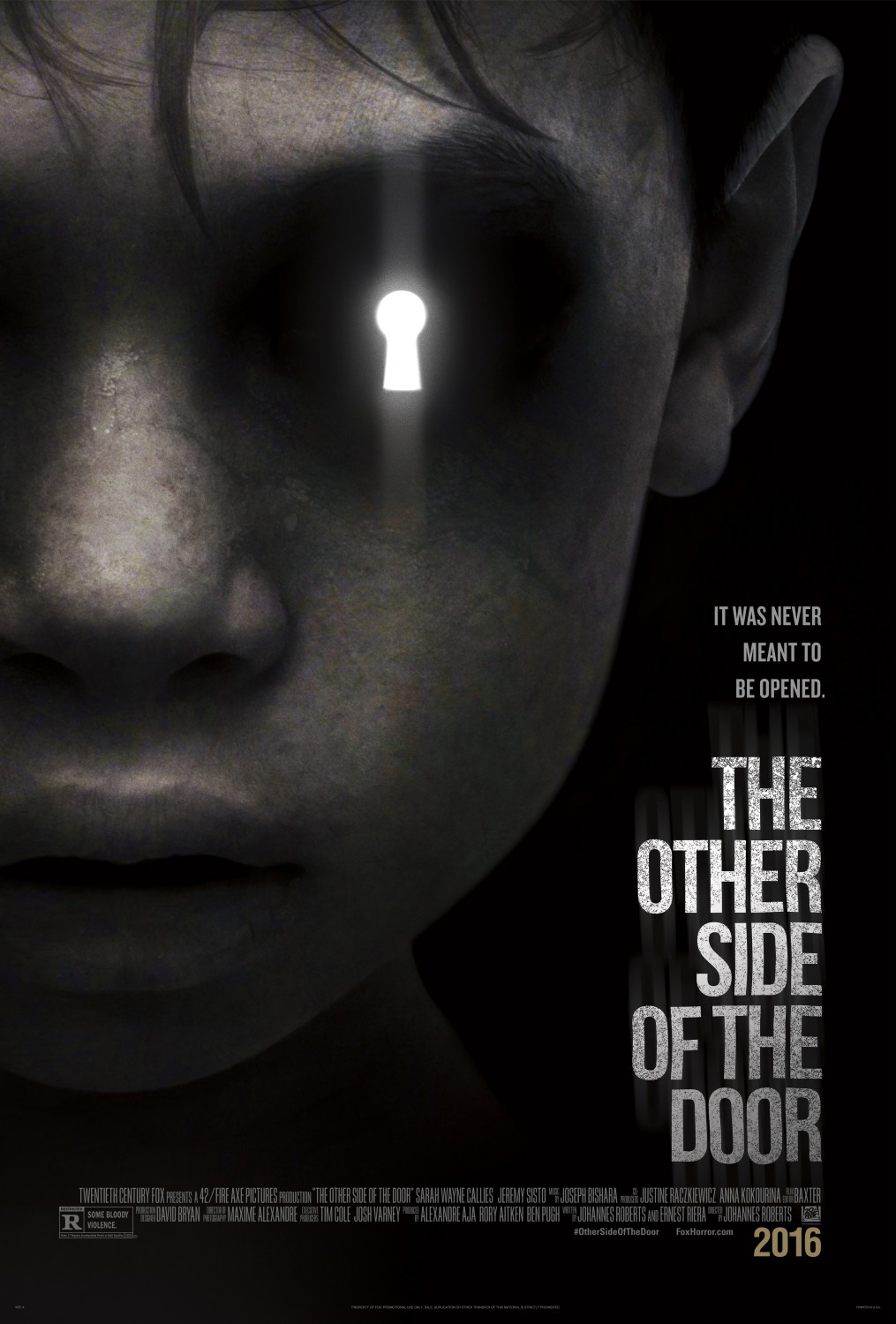
Other Side of the Door

The Other Side of the Door (2016) / D: Johannes Roberts / 96m

Cast: Sarah Wayne Callies, Jeremy Sisto, Sofia Rosinsky, Logan Creran, Suchitra Pillai

Michael (Sisto) is an antiquities dealer who visits India a lot. He and his wife Maria (Callies) decide to make Mumbai their permanent home, and start a family. Six years later, the couple are struggling to come to terms with the sudden death of their young son, Oliver (Creran) in a car accident. They still have their daughter, Lucy (Rosinsky), but for Maria the pain of losing Oliver is too much and she tries to commit suicide. In the hospital, their housekeeper, Piki (Pillai), offers Maria a chance of speaking to Oliver one last time. All she has to do is travel to an abandoned temple in the woods near Piki’s home, spread Oliver’s ashes on the steps outside, and wait inside the temple with the door shut. The only proviso: she mustn’t open the door while Oliver’s spirit is there.

Of course, Maria opens the door, and soon strange, supernatural events are happening back at home. Lucy tells Maria that Oliver is back, but it soon transpires that Oliver isn’t the happy-go-lucky boy he was when he was alive. And when Piki realises what’s happened, she berates Maria for her foolishness. Oliver is a malicious spirit now, and will stop at nothing to avoid going back to where he came from. But there’s also another entity to contend with: the temple’s gatekeeper, a supernatural guardian who will also stop at nothing to retrieve Oliver’s soul. With Oliver targeting his sister, and Michael away a lot through work, Maria has to find a way of dealing with Oliver’s return, and the gatekeeper’s increasing presence.

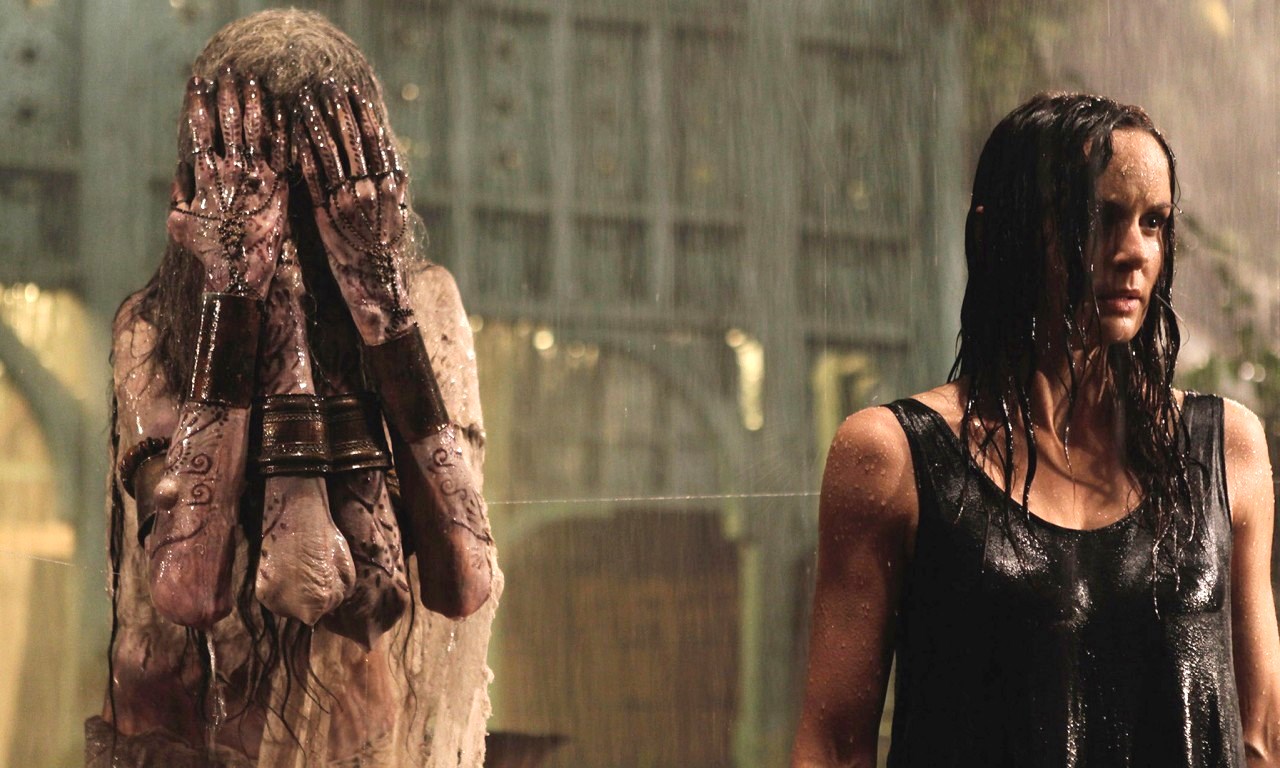
The Other Side of the Door

A grim variation on The Monkey’s Paw, The Other Side of the Door wastes no time in getting its lead character to behave unbelievably and without even a first thought about what she’s doing, let alone a second one. When Maria has Oliver dug up in the middle of the night so she can burn his body for the ashes, you know that this is a movie that credibility forgot on its way to the multiplex. It’s the kind of horror movie that relies on a few jump scares, a series of strange occurrences (here all the plant and animal life, except for the family dog (for some reason), dies off due to the approach of the gatekeeper – though exactly why is a tough question to answer), and the occasional appearances of a group called the Aghori, Aboriginal-looking guardians of the dead who pop up menacingly from time to time but are there to do the same work as the gatekeeper (for some reason).

By the time the final showdown comes around, the characters have behaved too stupidly for anyone to care, and the final scene is entirely predictable. Roberts, who also co-wrote the movie with Ernest Riera, never quite grasps the idea that evil spirits disguised as children should look normal instead of covered in zombie makeup, and that long close ups of a children’s toy – for sinister effect – are only disturbing when you realise just how often they’ve been done before. As a result of these and other lacklustre decisions, both Callies and Sisto are left stranded, with Callies, whose post- The Walking Dead career is going from bad to worse – this is her third turkey in a row after Into the Storm (2014) and Pay the Ghost (2015) – unable to do anything more with a character who makes so many bad decisions that the audience will be rooting for Oliver or the gatekeeper – it doesn’t matter which – to take her with them to the other side of the door.

Rating: 4/10 – a movie that’s just plain tired in its structure and execution, and with plot developments you can see coming a mile off, The Other Side of the Door tries hard to be different with its Mumbai setting, but lets itself down by being so determinedly prosaic; it also fails to generate any genuine terror, and with the Aghori, creates a mythology that it never fully tries to explain.


Share this:

  • Click to share on X (Opens in new window) X
  • Click to share on Facebook (Opens in new window) Facebook
  • More
  • Click to print (Opens in new window) Print
  • Click to email a link to a friend (Opens in new window) Email
Like Loading...

Pay the Ghost (2015)

19 Saturday Sep 2015

Posted by dullwood68 in Movies

≈ Leave a comment

Tags

Child abduction, Children, Curse, Drama, Halloween, Literary adaptation, Nicolas Cage, Review, Sarah Wayne Callies, Supernatural, Thriller, Uli Edel

Pay the Ghost

D: Uli Edel / 94m

Cast: Nicolas Cage, Sarah Wayne Callies, Lyriq Bent, Jack Fulton, Veronica Ferres, Susannah Hoffmann, Lauren Beatty, Stephen McHattie

It’s Halloween, and newly tenured professor Mike Lawford (Cage) arrives home just in time to take his young son Charlie (Fulton) to a nearby Halloween carnival. Charlie is a little nervous as the night before he saw something outside his bedroom window, and at the carnival he sees a large vulture circling overhead, though Mike doesn’t. When they queue up to get ice cream, Charlie asks his dad if they can “pay the ghost”, and in seconds he’s disappeared. Mike searches frantically for him but there’s no trace of Charlie, only the pirate hat he was wearing as part of his Halloween costume. The police are called, and the lead detective, Reynolds (Bent) assures Mike that these things usually resolve themselves within twenty-four hours.

A year later, with three days to go before Halloween, Mike and his wife Kristen (Callies) have separated, and Charlie is still missing. Mike pesters Detective Reynolds, accusing him of not trying hard enough, while also putting up flyers detailing Charlie’s disappearance. When he begins to hear Charlie’s voice, he initially doubts his senses, but when he sees him on a bus and chases after it, it leads him to an abandoned warehouse that’s become home to a group of vagrants. On the outside of the building the phrase “pay the ghost” has been painted. Mike asks if anyone knows what it means, and a blind man (McHattie) shows him a wall covered with the phrase; however he has little more to offer.

Mike tries to convince Kristen that Charlie might be trying to communicate with them from wherever he’s been taken. He discovers that a child who went missing on the Halloween before Charlie’s disappearance also said the same thing to her father. Kristen refuses to believe him until she has her own supernatural encounter. Together, Charlie’s parents begin to look into the number of child disappearances that have occurred on Halloween; a disturbing pattern emerges, one that leads them to believe that this has been happening for a very long time. They dig deeper, and find that the abductions are related to a tragedy that happened over three hundred years before.

Pay the Ghost - scene

For fans of Nicolas Cage, it’s been a rough few years since his lauded turn in Kick-Ass (2010). Since then, only Joe (2013) has shown audiences what Cage can do when he’s fully engaged with a project. Otherwise, the movies he’s chosen to star in have been so lacking in quality they could only have been taken on as a way of paying off his mortgage. Anyone who’s sat through the likes of Seeking Justice (2011), Rage (2014), and/or Left Behind (2014) will have wondered what’s happened to an actor who won an Oscar for one of the most powerful portrayals of an alcoholic ever committed to celluloid. With each new movie, his loyal fans must hope that this will be the one to change his dwindling fortunes and prove he still has what it takes.

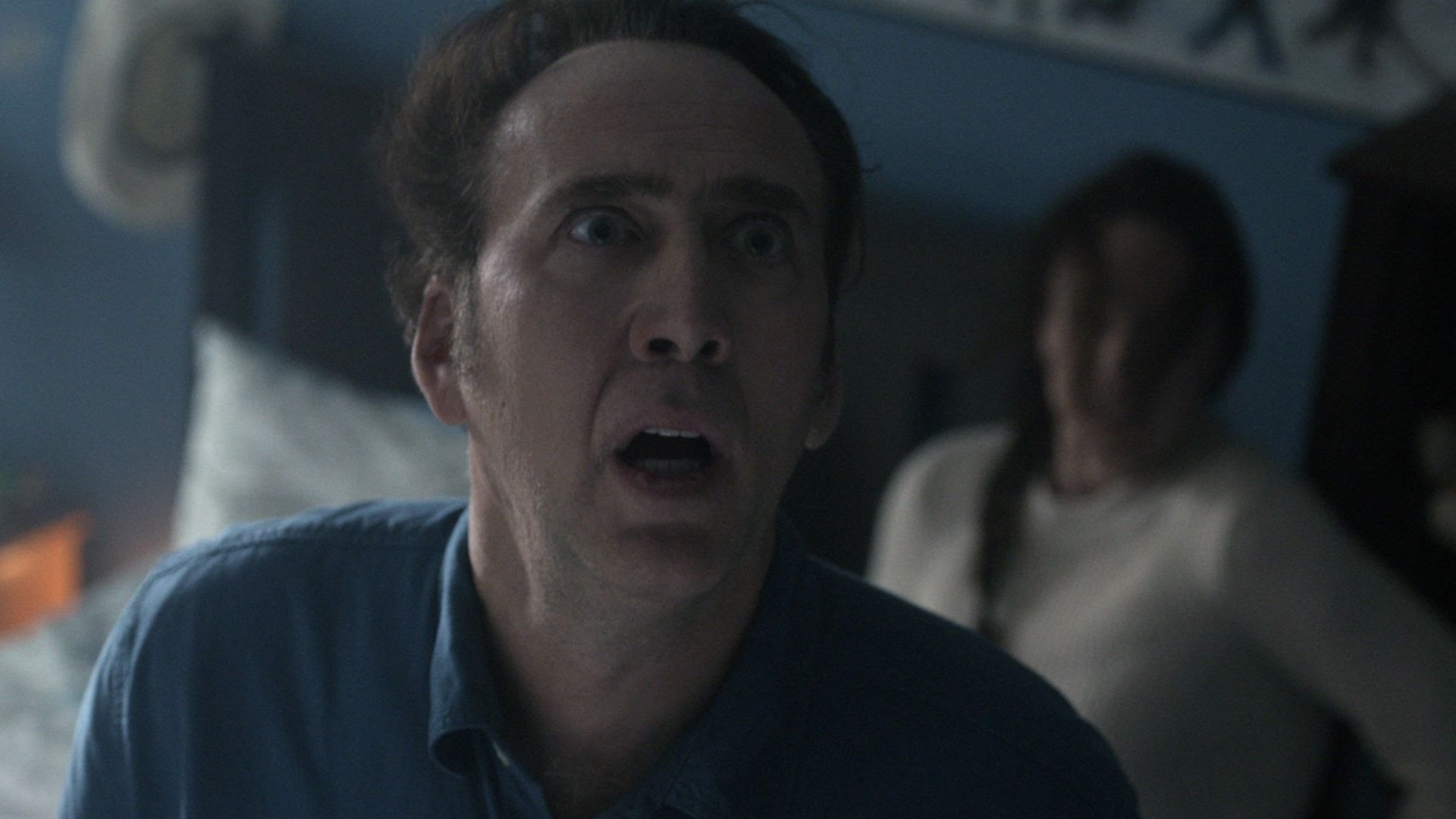
Alas, Pay the Ghost isn’t the one. Here Cage doesn’t so much phone in his performance as fax it over an intermittent connection. Trying to maintain a semblance of commitment to the material, Cage goes through the motions with all the intensity of someone who can’t wait to move on to the next project. At one point, after Kristen has made it clear she blames Mike for losing Charlie, Cage is required to fall to the floor and begin crying. It should be an uncomfortable moment of parental grief, but instead it’s uncomfortable because Cage can’t sell the emotion (or any tears). In comparison with Callies, who at least makes an effort to be traumatised by Charlie’s disappearance, Cage sleepwalks through their scenes together, only showing any passion when called upon to share his growing suspicions about Charlie’s abduction.

To be fair to Cage, he isn’t helped by the material, a hodgepodge of supernatural thriller clichés stitched together by screenwriter Dan Gay and adapted from the novella by Tim Lebbon. Fans of the genre will have fun spotting the references to other, similar movies, while the makers of the Insidious franchise will have good cause to wonder if Edel and co. haven’t made an unofficial companion movie to that particular series (Hoffmann’s medium is certainly no match for Lin Shaye’s Elise Rainier). You know a movie hasn’t got a clue when the supernatural entity at the heart of everything is able to organise all kinds of mischief at the drop of a hat – including killing someone by spontaneous combustion – but fails to put Cage off his stride at any point (yes, he’s the hero, but really, shouldn’t he be put in danger at least once during the movie?).

Further incongruities occur throughout, with Bent’s credulous detective used to poor effect and removed from the movie once he experiences his own supernatural awakening. Fulton spends most of the movie in a pirate costume, and sporting an eye patch applied with black make up that makes him look like a reject from a KISS audition. The evil entity has evolved from a curse made centuries before but its modern day raison d’être is arbitrary and convenient at the same time, reinforcing the idea that the makers have adopted a kitchen sink approach to its behaviour (just why Charlie has been chosen is one of the many questions the movie fails to even ask let alone explain).

In charge of all this, Edel never shows he has a grip on the material, and several scenes seem under-rehearsed or sloppily staged. Even the de rigeuer scares are heavily signposted and too reminiscent of similar ones from the Insidious series, while the final showdown between Mike and the entity takes place on a gantry that’s surrounded by some of the worst visual effects seen for some time. It’s almost as if everyone concerned just wanted to do enough to get the movie made and then move on.

Rating: 3/10 – Cage has made few worse movies, but Pay the Ghost comes pretty close to being at the top of the list; derivative, uninspired, dull, laughable, ridiculous, awful – it’s all these things and more, and serves as yet another unfortunate nail in the coffin of Cage’s career.

Share this:

  • Click to share on X (Opens in new window) X
  • Click to share on Facebook (Opens in new window) Facebook
  • More
  • Click to print (Opens in new window) Print
  • Click to email a link to a friend (Opens in new window) Email
Like Loading...

Insidious Chapter 3 (2015)

28 Sunday Jun 2015

Posted by dullwood68 in Movies

≈ Leave a comment

Tags

Angus Sampson, Dermot Mulroney, Drama, Elise Rainier, Horror, Leigh Whannell, Lin Shaye, Prequel, Review, Specs, Stefanie Scott, Supernatural, The Further, Thriller, Tucker

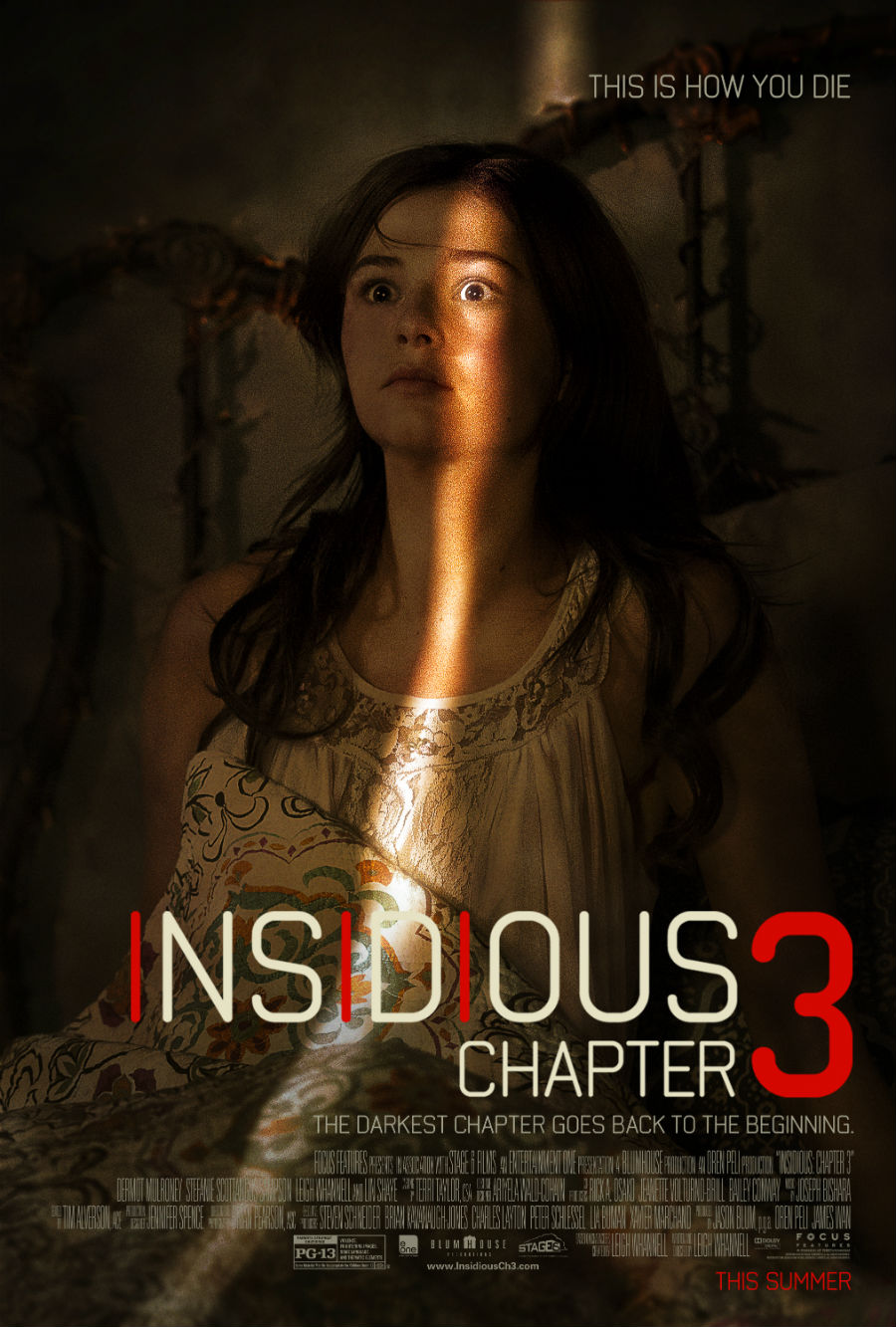
Insidious Chapter 3

D: Leigh Whannell / 97m

Cast: Lin Shaye, Dermot Mulroney, Stefanie Scott, Angus Sampson, Leigh Whannell, Michael Reid MacKay, Phyllis Applegate, Ele Keats

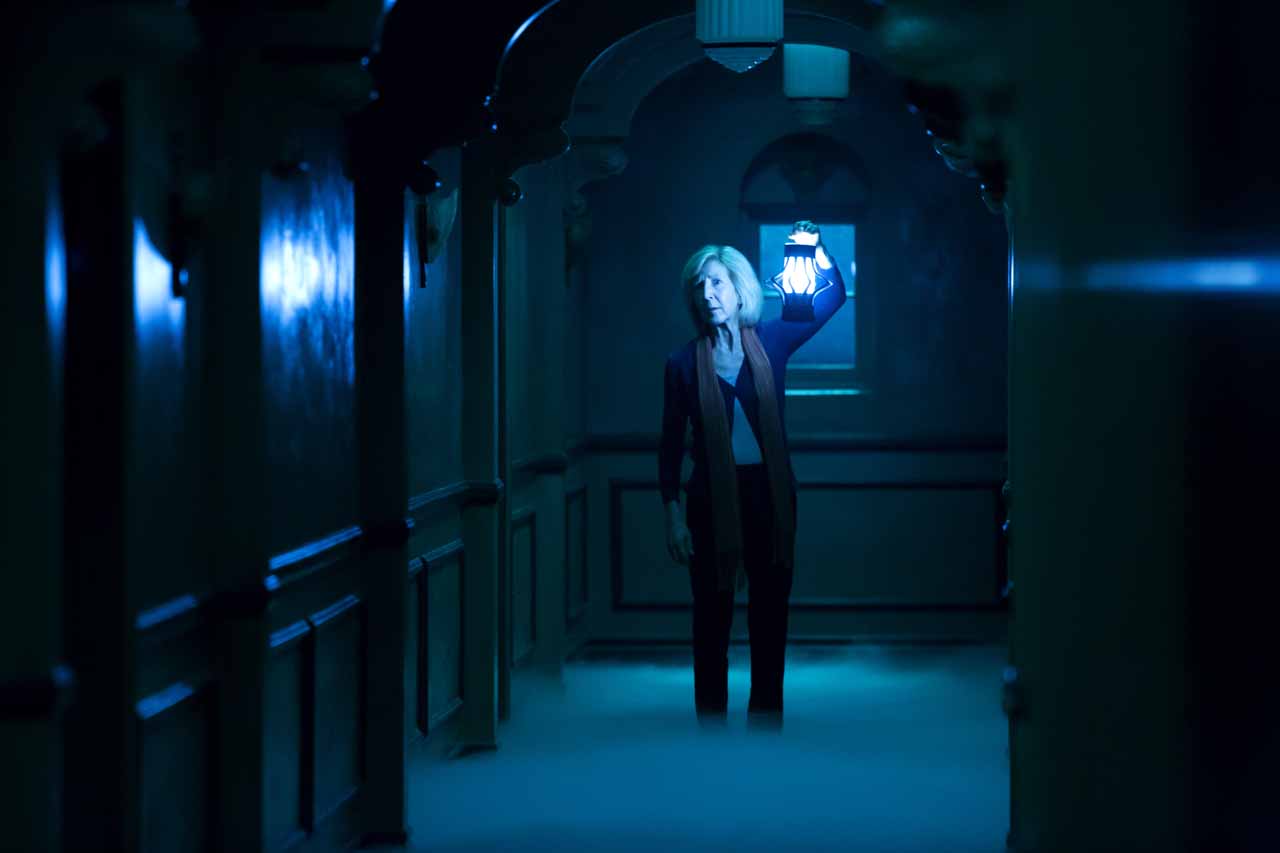
When single father Sean Brenner (Mulroney) and his teenage daughter, Quinn (Scott), move into a new apartment following the death of Quinn’s mother (Keats), the teenager’s desire to contact her mother leads her to visit retired medium Elise Rainier (Shaye). Reluctant to use her gift since becoming aware that each time she does she leaves herself open to attack from a murderous spirit – the bride in black – Elise agrees to try and contact Quinn’s mother, but another presence makes itself felt, one that scares Elise into warning Quinn to be careful about contacting her mother in the future.

Quinn begins to experience strange phenomena within the apartment, including knocking and loud footsteps from the apartment above. Cracks appear in the ceiling and walls of her room. Sean checks the upstairs apartment but it’s been empty for a while. Further disturbances occur, and Quinn is attacked, leading to both her legs being broken. Later, another attack witnessed by her father leads to her neck being injured. At this point, Sean reluctantly contacts Elise, who equally reluctantly agrees to try and help. Elise comes to the apartment and tries to contact the spirit persecuting Quinn – an entity who died in the building and is dubbed the Man Who Can’t Breathe – but is attacked by the bride in black instead. Shocked by this, Elise leaves, saying she can no longer help them.

As Quinn becomes more and more frightened by what’s happening to her, she persuades her father to contact a couple of paranormal investigators, Tucker (Sampson) and Specs (Whannell). They set up their equipment but are unprepared for the supernatural events that follow; as they pack up, Elise returns, having been reassured by a friend as to the strength of her gift. With Tucker and Specs in support, Elise travels back into the Further where she discovers Quinn, but in a faceless, limbless state: the half of Quinn’s soul that the entity has control of. Back in the apartment, Elise reveals that the battle for Quinn’s soul is down to Quinn herself. But Quinn is losing the battle, until Elise becomes aware of a presence that could tip the balance in the young girl’s favour…

3S7C3792.CR2

As any horror movie afficionado will tell you, three is rarely the charm when it comes to horror movie franchises. And Insidious Chapter 3 is no different in that respect, coming as it does after two previous entries that explored the effects of prolonged supernatural distress on the same family, the unlucky Lamberts. The decision here to make a prequel to those movies seems, at first look, to be a solid idea given the chance it takes to bring back Lin Shaye’s popular psychic. But as with any third entry, familiarity undercuts any chance of effective suspense or scares, a problem that Leigh Whannell’s script never overcomes.

The main problem is that we’ve all been here before, and though Whannell – taking over from James Wan in the director’s chair – is well-versed in the particular universe he and Wan have created, is still unable to bring anything new to the table (or the realm of the Further) that provides the required thrills and chills. The Man Who Can’t Breathe is an admittedly unsettling presence – at first – but then makes too many appearances to remain entirely scary. The appearance of the bride in black also lacks the fear factor of the previous instalments (as we know she can’t actually harm Elise), and she’s seen too much in close up to be truly startling. And the Further, once the realm of the scarily unexpected, is now the realm of the mildly alarming. But it’s the movie’s final shot that shows just how much the movie is its own insidious mix of narrative set up (for parts one and two) and self-reflexive homage, as a moment from the first movie is rehashed with a lot less style or potency.

But at least it’s not as dubiously shambolic as some prequels/sequels/later entries in a horror movie franchise. Whannell and co are really trying to scare their audience, and while any originality in doing so is quickly exhausted, at least there’s an effort involved here that most Part Threes never manage. The plot is fairly simple, a hook on which to hang a few uneasy moments that, unfortunately, never fully realise their potential, and though most viewers will see what few twists the narrative provides from a whole other dimension away, there’s enough serious intent here to offset any shortcomings. This doesn’t mean that the movie works per se, just that it doesn’t work as badly as may be expected.

Where the movie does do well is with the performances. Mulroney, making his horror debut – though a case could be made for Stoker (2013) – is surprisingly good as the beleaguered father who’s way out of his depth, but determined to save his daughter no matter what. Returning as the equally out of their depth paranormal investigators Tucker and Specs, Sampson and Whannell replay their enjoyable double act but as in the previous movies, without making them seem too much like complete buffoons. The one weak link is Scott, who never quite convinces as a teen in peril, and whose reactions to the events going on around her always feel like they’ve been lifted from the performance of another actress in a similar role. But it’s Shaye’s movie throughout, her portrayal of Elise given added depth thanks to the inclusion of nods to her deceased husband, and her ability to get across just how scary the Further really is (even if the time spent there in the movie doesn’t support her contention). She also gets a moment straight out of the Sigourney Weaver/Ripley School of Confrontational One-Liners, aimed at the bride in black and guaranteed to raise a smile.

If there is to be a fourth in the series then it’s difficult to see where the makers could go next. As the movie which brings together Elise and Tucker and Specs, Insidious Chapter 3 does its job with a certain amount of gusto and charm. But if the series is to move forward rather than, say, further back, or sideways, then a whole new approach is going to be required. Whether it will restore the intensity and the scares of the first movie, though, is another matter entirely.

Rating: 6/10 – with the scare quotient dialled down in favour of connecting to the previous (subsequent?) entries in the series, Insidious Chapter 3 is only occasionally scary, and only occasionally enthralling; helped greatly by the commitment of its cast and crew, this is one horror movie prequel that tries hard to avoid the pitfalls of its place in the franchise.

Share this:

  • Click to share on X (Opens in new window) X
  • Click to share on Facebook (Opens in new window) Facebook
  • More
  • Click to print (Opens in new window) Print
  • Click to email a link to a friend (Opens in new window) Email
Like Loading...

Mini-Review: The Possession of Michael King (2014)

30 Saturday Aug 2014

Posted by dullwood68 in Movies

≈ Leave a comment

Tags

Angels, Bereavement, David Jung, Demons, Found footage, Horror, Possession, Review, Shane Johnson, Supernatural, Tomas Arana

Possession of Michael King, The

D: David Jung / 83m

Cast: Shane Johnson, Julie McNiven, Jed Rees, Ella Anderson, Cara Pifko, Cullen Douglas, Freda Foh Shen, Patricia Healy, Dale Dickey, Tomas Arana

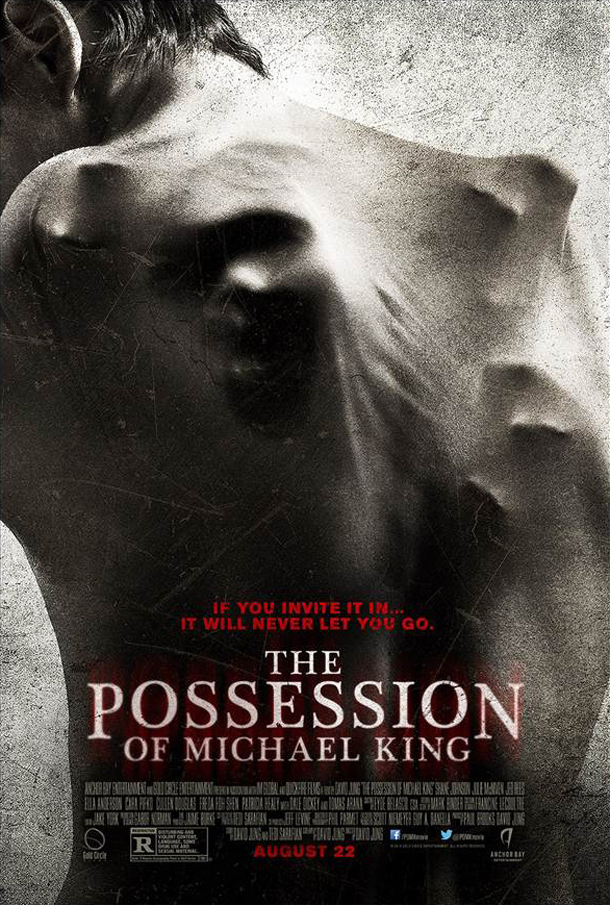
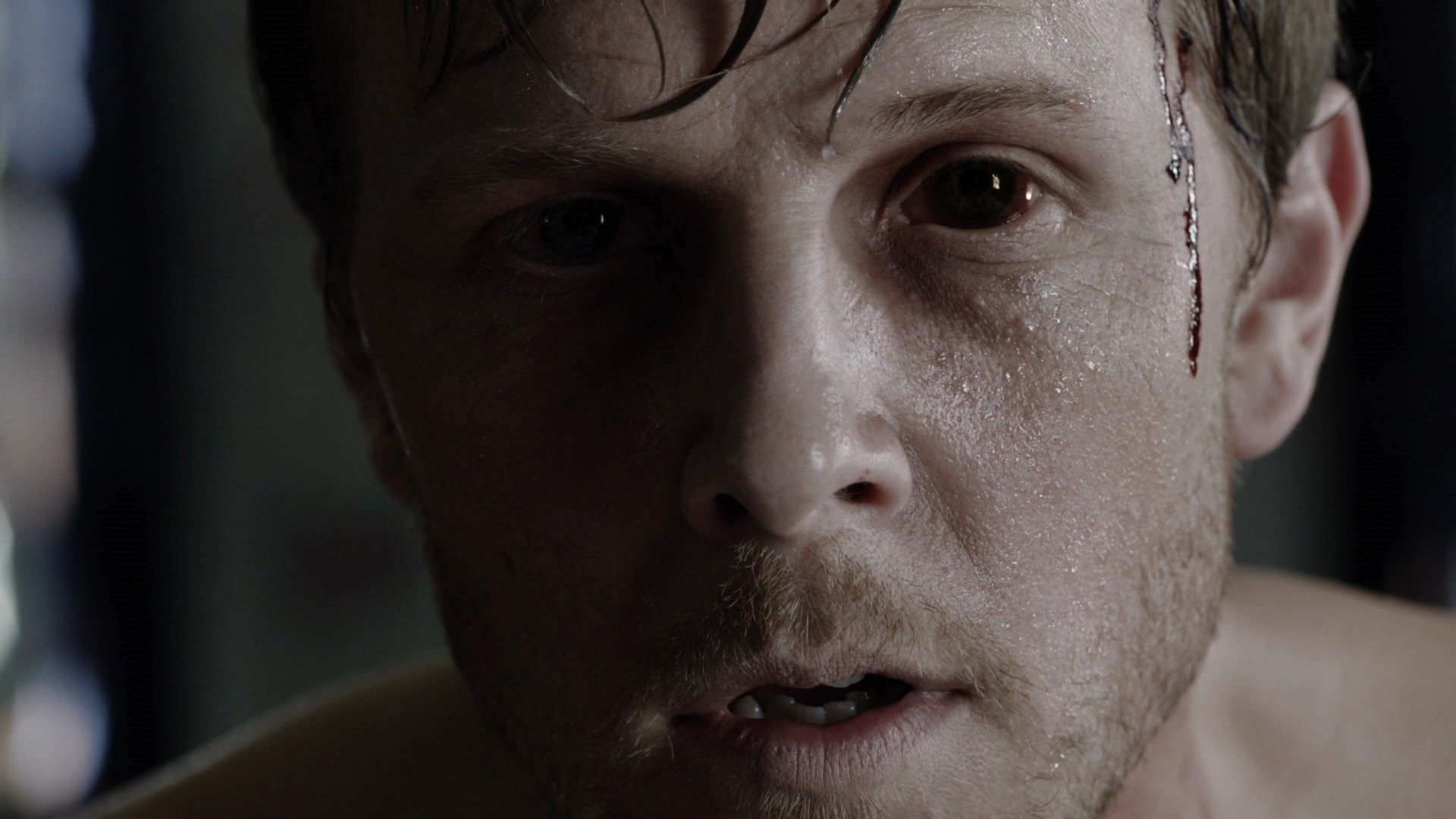
Following the tragic demise of his wife, Samanatha (Pifko), distraught Michael King (Johnson) decides to make a film about the search for the existence of the supernatural.  By placing himself at the centre of the search, and by allowing all sorts of demonologists and occult practitioners to involve him in their spell-castings, Michael hopes they’ll all fail, thereby reinforcing his belief that it’s all just hokum.  Aided at first by cameraman Jordan (Rees), Michael’s initial endeavours bear little or no fruit until a meeting with a mortician (Douglas) leads to a ritual that doesn’t go as expected.  Plagued by fugue moments, unexplained phenomena, and a persistent noise like interference that only he can hear, Michael begins to suspect that something has happened to him.

He retraces his steps but everyone he’s spoken to or encountered, including the mortician, wants nothing more to do with him.  Rebuffed, and with his behaviour slowly but surely estranging him from everyone else around him, including his pre-teen daughter Ellie (Anderson) and sister Beth (McNiven), Michael struggles to control the often violent transformation he begins to experience, as well as trying to ignore the voice he can hear beneath the interference – a voice that urges him to harm his daughter.

Possession of Michael King, The - scene

Let down by the stupidity of its central character, The Possession of Michael King is a hyper-stylised found footage movie that throws logic out of the window at the first opportunity and never looks back.  With a visual style that’s reminiscent of Se7en (1995) (albeit without the constant rainfall), first-time writer/director Jung assembles a woeful mess that rehashes motifs and camera angles from the Paranormal Activity series, as well as a hundred other found footage movies.  In short, there’s little that’s new or original here, although Michael’s reasons for making his film are certainly some of the dumbest heard for a long time.

The movie also suffers from a final third that seeks to inject some menace via Michael’s attempts to kill his daughter, attempts that are about as frightening as her being chased by a Care Bear.  To be fair, there are some effective moments where Jung employs some uncomfortable body horror but these are few and far between.  Johnson gamely struggles against the script’s more absurd quirks and foibles, and in doing so, saves Michael from being a complete idiot and elicits some much-needed sympathy by the movie’s end.  However, by then, like Michael, you’ll be praying for a way out from all the misery.

Rating: 3/10 – despite several attempts to be cleverer than the average found footage horror movie, The Possession of Michael King undermines itself by having its title character behave as stupidly as possible at pretty much every turn; for found footage, or possession movie completists only.

Share this:

  • Click to share on X (Opens in new window) X
  • Click to share on Facebook (Opens in new window) Facebook
  • More
  • Click to print (Opens in new window) Print
  • Click to email a link to a friend (Opens in new window) Email
Like Loading...

Oculus (2013)

19 Thursday Jun 2014

Posted by dullwood68 in Movies

≈ 3 Comments

Tags

Brenton Thwaites, Horror, Karen Gillan, Katee Sackhoff, Mike Flanagan, Mirror, Possession, Review, Rory Cochrane, Spirits, Supernatural

Oculus

D: Mike Flanagan / 104m

Cast: Karen Gillan, Brenton Thwaites, Katee Sackhoff, Rory Cochrane, Annalise Basso, Garrett Ryan, James Lafferty, Miguel Sandoval

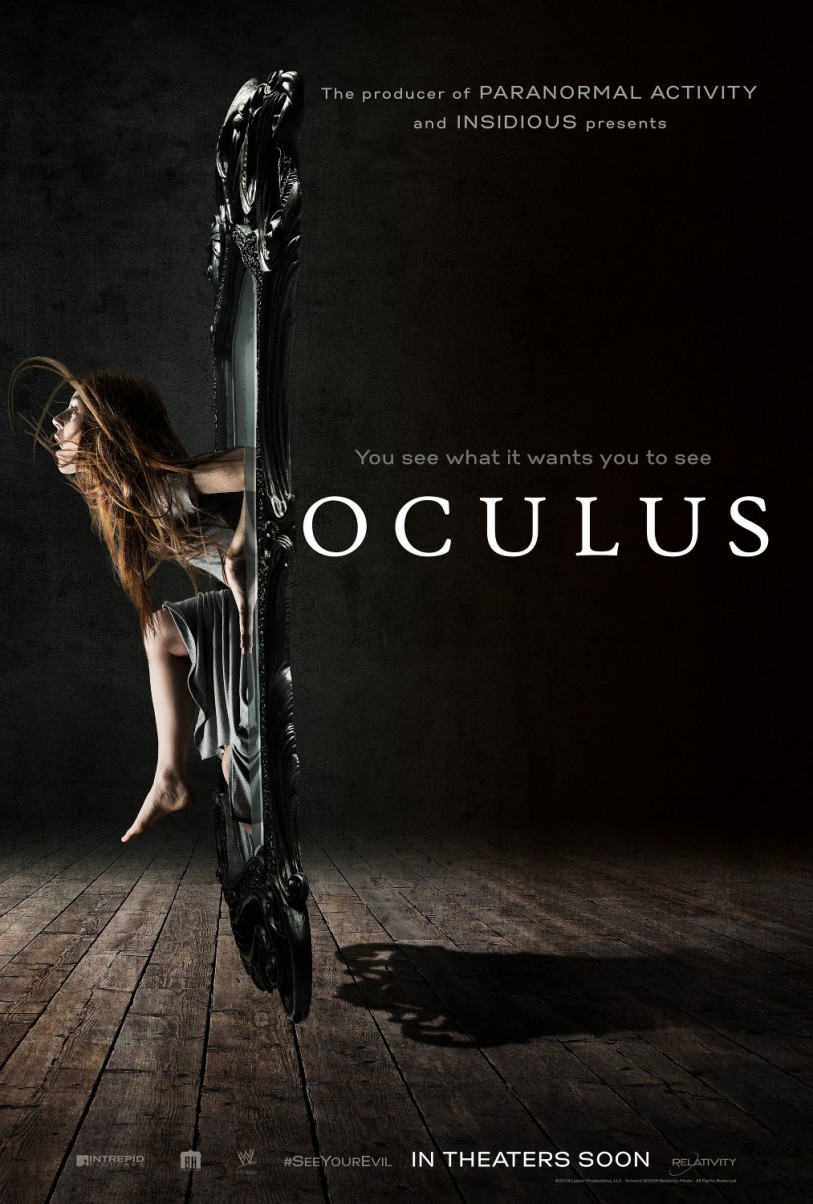
Upon his release from a psychiatric hospital, Tim Russell (Thwaites) is met by his sister, Kaylie (Gillan) and reminded of a promise he made when they were children: to destroy the mirror she believes was responsible for the deaths of their parents eleven years before.  Tim has done his best to overcome the trauma of that event, and has no wish to relive it.  But Kaylie has become obsessed with destroying the mirror, and since its time in their childhood home, she has kept track of it and has managed to get it put up for sale at the auction house where she works.  On the pretext of having it checked for any necessary repairs before sending it off to the buyer, Kaylie takes it to their old home; there she has set up cameras and various recording devices in an attempt to prove that the mirror is possessed of an evil force.  Tim is less than convinced, despite the number of bizarre deaths that have happened to the mirror’s owners over the years.  As the plan progresses, Tim begins to remember more and more about the past, and the events that led up to the deaths of their mother, Marie (Sackhoff), and father, Alan (Cochrane).  With the mirror increasingly able to manipulate their minds into seeing what it wants them to see, Tim and Kaylie fight to stay one step ahead in their efforts to destroy it.

Oculus - scene

At first glance, Oculus looks and feels like a throwback to early Seventies horror, with its slow build up and emphasis on tension and suspense.  The early scenes, where Kaylie and Tim are introduced both as adults and as children (Basso, Ryan) are well constructed and as the movie unfolds, they show clearly how Kaylie and Tim have become the people they are now.  Young Kaylie is headstrong and a little rebellious; adult Kaylie is forceful and determined.  Young Tim lacks confidence and is easily scared; adult Tim is reticent and emotionally withdrawn.  The conflict between the two siblings is well handled and credible – even if what they’re attempting to deal with is incredible – and the dynamic of their relationship as children is echoed in their behaviour as adults.  It’s a smart move on the part of co-writer and director Flanagan, and helps keep things grounded when the tension and suspense is dropped in favour of a more violent and gory approach.

The structure employed here is unusual too.  Both storylines are allowed to run side by side, and in doing so, the movie keeps Kaylie and Tim in peril in two different time frames.  Although we know their parents died all those years ago, the how is still a mystery, and as the two strands are allowed to dovetail closer and closer together, so events become inter-related, with scenes cutting from then to now, allowing us to see, for example, adult Kaylie running into a room and then young Kaylie facing what awaited her there in the past.  It’s a clever approach and serves to keep the audience on the back foot for most of the last thirty minutes, but sadly, becomes too clever for its own good.  A more linear retelling would expose some lapses in the movie’s internal logic, and its reliance on all the cross-cutting to hide some further inconsistencies in continuity (though the one big problem with the movie is never adequately addressed: why not just destroy the mirror in the first place, why go to all the trouble of setting up cameras etc.).

With the two storylines allowed almost equal running time, it also becomes clear that the events of the past, though occasionally sacrificing coherence for effect (Alan’s recurring fingernail problem, Marie’s apparent possession), are the more engrossing and thrilling, while there’s too much arguing amongst the adults (as it were) for those sequences to be completely effective.  And with the present’s dependence on its scientific hardware and Kaylie’s unwavering belief in its effectiveness, the ease with which she and Tim are regularly outmanoeuvred becomes wearing and just a little too predictable.  In contrast, the past has more of a “kids-trapped-in-a-house-with-a-psycho-killer” approach, and their fight for survival is played out more effectively.

It’s no surprise, then, that the younger actors provide the more compelling performances, and are ably supported by Sackhoff and Cochrane.  Gillan overdoes the older Kaylie’s obsession with the mirror to the point where it becomes uncomfortable to watch, while Thwaites is stuck with playing the older Tim as little more than a bystander.  There’s a couple of suitably nasty moments – older Kaylie making the wrong choice between an apple and a light bulb; Alan removing a plaster from over his fingernail (it’s worse than it sounds) – and there are undeniably creepy moments involving one of the mirror’s previous victims that add to the dread-fuelled atmosphere.  Flanagan, who made the even creepier Absentia (2011), is definitely one to watch and as a calling card for the big leagues, Oculus should secure his future.

Rating: 7/10 – a horror film that attempts to mix an original storyline with its sequel, Oculus is brim-full of ideas, most of which work with unexpected panache; it’s a shame then that the sequel strand lets the movie down by being so derivative and predictable.

Share this:

  • Click to share on X (Opens in new window) X
  • Click to share on Facebook (Opens in new window) Facebook
  • More
  • Click to print (Opens in new window) Print
  • Click to email a link to a friend (Opens in new window) Email
Like Loading...

Silent House (2011)

09 Monday Jun 2014

Posted by dullwood68 in Movies

≈ 1 Comment

Tags

Chris Kentis, Elizabeth Olsen, Escape, Haunted house, Horror, Injured father, Laura Lau, Locked in, Remake, Review, Supernatural, Thriller, Visions

Silent House

D: Chris Kentis, Laura Lau / 86m

Cast: Elizabeth Olsen, Adam Trese, Eric Sheffer Stevens, Julia Taylor Ross, Adam Barnett, Haley Murphy

While renovating the summer home her family hasn’t visited or used for some time, Sarah (Olsen) begins to experience strange phenomena that may mean the house is haunted.  She is particularly attuned to the strange goings on, and finds herself becoming more and more aware that not everything is as it should be.  A visit from childhood friend, Sophia (Ross), whom she clearly doesn’t remember, adds to the sense of unease Sarah feels.  When her uncle Peter (Stevens) leaves after a dispute with her father John (Trese), Sarah starts to hear weird noises coming from one of the rooms upstairs.  She gets her dad to investigate but at first they don’t find anything (though John does find some photographs that he quickly hides away).  When her father is attacked and injured, Sarah tries to flee the house but finds herself locked in and unable to get out.  With someone else in the house, stalking her, Sarah becomes increasingly terrified; she finds a key to the padlock on the storm cellar door and escapes.

Outside, she has a vision of a young girl (Murphy), and runs into her returning uncle.  She tells him about her father and they head back to the house.  Peter goes inside; while Sarah waits in the car she becomes convinced someone has gotten in there with her.  She runs back into the house and locks the front door behind her.  Peter can’t find her father’s body (though he does find some photographs that he quickly hides away).  They search for John but Peter is attacked and knocked unconscious by the unknown intruder (Barnett).  Sarah’s visions of the young girl become more frequent, and the intruder looks more and more like a reanimated corpse.  Once again, Sarah tries to flee the house…and runs into Sophia who begins to challenge her memories of the past.  With her visions of the young girl proving more and more revealing of a past tragedy that happened at the house, Sarah is forced to confront some horrible truths surrounding her childhood.

Silent House - scene

A remake of the Uruguayan movie La casa muda (2010), Silent House starts off well, its remote lakeside location just wintry enough to make things feel eerie from the start.  The house is a bit of a labyrinth and seems to contain more rooms than seems feasible when looking at it from the outside, and the basement seems twice as large again.  The lack of working electricity adds to the atmosphere and the battery lamps used throughout throw out just enough light to keep things hidden in the shadows, further adding to the sense of foreboding, while Olsen’s wide-eyed moon face reflects the building tension with unexpected authority.

With all this in place, it’s a surprise then that the movie doesn’t work as well as it should.  The main problem lies in the approach to the material. What begins as a haunted house movie mutates part way through into a psychological thriller with lingering supernatural overtones, and ends as an uncomfortable revenge drama.  Wearing and shedding so many identities leaves Silent House feeling as if the writer (co-director Lau) couldn’t decide which approach was the most effective.  This also leaves the movie feeling disjointed and incohesive, and there are too many moments when the requirements of the script make for forced (non-)activity on screen – is it unreasonable to assume that Sarah wouldn’t be seen hiding under the kitchen table by the intruder?  There’s also the issue of what’s real and what’s not real – there’s a good argument to be made for Sophia not being real throughout, but this isn’t confirmed one way or the other – and it’s unclear if what Sarah is seeing is happening at all, but in the hands of Kentis and Lau the ending is inconclusive (but maybe deliberately so).

While the directors try and decide what kind of a movie they’re making, it’s left to Olsen to shoulder the burden of selling the movie and its twists and turns.  Fortunately she’s up to the task, and even if she can’t quite make the final scenes ring true, it’s still a strong performance, Sarah’s increasing hysteria tempered by an overriding obduracy.  Trese and Stevens are fine, if underused, and Ross is realistically creepy in her manner; when Sophia gives Sarah a hug it’s so awkward as to be cringe-inducing.  When she returns towards the movie’s end, her appearance is a powerful boost to proceedings (even if it doesn’t make complete sense for her to be there).

Rating: 6/10 – it needs a better ending, but on the whole Silent House works well within its (for the most part) interior location; a great performance from Olsen anchors the more outlandish moments and there’s a degree of fun to be had in trying to work out what’s happening and why, but sadly the movie stumbles far too often for it to be completely successful.

Share this:

  • Click to share on X (Opens in new window) X
  • Click to share on Facebook (Opens in new window) Facebook
  • More
  • Click to print (Opens in new window) Print
  • Click to email a link to a friend (Opens in new window) Email
Like Loading...

Blog Stats

  • 486,528 hits

Recent Posts

  • 10 Reasons to Remember Bibi Andersson (1935-2019)
  • Fantasia (1940)
  • Dances With Wolves (1990) – The Special Edition
  • Kiss of the Spider Woman (1985)
  • The Three Musketeers (1973)

Top Posts & Pages

  • Lost for Life (2013) - Another Look
    Lost for Life (2013) - Another Look
  • Lost for Life (2013)
    Lost for Life (2013)
  • About
    About
  • Mr. Topaze (1961)
    Mr. Topaze (1961)
  • Billy Lynn's Long Halftime Walk (2016)
    Billy Lynn's Long Halftime Walk (2016)
  • Winter's Tale (2014)
    Winter's Tale (2014)
  • The Hitman's Bodyguard (2017)
    The Hitman's Bodyguard (2017)
  • 5 Famous Movie Roles That Nearly Went to Someone Else
    5 Famous Movie Roles That Nearly Went to Someone Else
  • The Layover (2017)
    The Layover (2017)
  • Transcendence (2014)
    Transcendence (2014)
Follow thedullwoodexperiment on WordPress.com

Blogs I Follow

  • Rubbish Talk
  • Film 4 Fan
  • Fast Film Reviews
  • The Film Blog
  • All Things Movies UK
  • Interpreting the Stars
  • Let's Go To The Movies
  • Movie Reviews 101
  • TMI News
  • Dan the Man's Movie Reviews
  • Film History
  • Jordan and Eddie (The Movie Guys)

Archives

  • April 2019 (13)
  • March 2019 (28)
  • February 2019 (28)
  • January 2019 (32)
  • December 2018 (28)
  • November 2018 (30)
  • October 2018 (29)
  • September 2018 (29)
  • August 2018 (29)
  • July 2018 (30)
  • June 2018 (28)
  • May 2018 (24)
  • April 2018 (21)
  • March 2018 (31)
  • February 2018 (25)
  • January 2018 (30)
  • December 2017 (30)
  • November 2017 (27)
  • October 2017 (27)
  • September 2017 (26)
  • August 2017 (32)
  • July 2017 (32)
  • June 2017 (30)
  • May 2017 (29)
  • April 2017 (29)
  • March 2017 (30)
  • February 2017 (27)
  • January 2017 (32)
  • December 2016 (30)
  • November 2016 (28)
  • October 2016 (30)
  • September 2016 (27)
  • August 2016 (30)
  • July 2016 (30)
  • June 2016 (31)
  • May 2016 (34)
  • April 2016 (30)
  • March 2016 (30)
  • February 2016 (28)
  • January 2016 (35)
  • December 2015 (34)
  • November 2015 (31)
  • October 2015 (31)
  • September 2015 (34)
  • August 2015 (31)
  • July 2015 (33)
  • June 2015 (12)
  • May 2015 (31)
  • April 2015 (32)
  • March 2015 (30)
  • February 2015 (37)
  • January 2015 (39)
  • December 2014 (34)
  • November 2014 (34)
  • October 2014 (36)
  • September 2014 (25)
  • August 2014 (29)
  • July 2014 (29)
  • June 2014 (28)
  • May 2014 (23)
  • April 2014 (21)
  • March 2014 (42)
  • February 2014 (38)
  • January 2014 (29)
  • December 2013 (28)
  • November 2013 (34)
  • October 2013 (4)

Blog at WordPress.com.

Rubbish Talk

Film 4 Fan

A Movie Blog

Fast Film Reviews

The Film Blog

The official blog of everything in film

All Things Movies UK

Movie Reviews and Original Articles

Interpreting the Stars

Dave Examines Movies

Let's Go To The Movies

Film and Theatre Lover!

Movie Reviews 101

Daily Movie Reviews

TMI News

Latest weather, crime and breaking news

Dan the Man's Movie Reviews

All my aimless thoughts, ideas, and ramblings, all packed into one site!

Film History

Telling the story of film

Jordan and Eddie (The Movie Guys)

Movie Reviews & Ramblings from an Australian Based Film Fan

Privacy & Cookies: This site uses cookies. By continuing to use this website, you agree to their use.
To find out more, including how to control cookies, see here: Cookie Policy
  • Subscribe Subscribed
    • thedullwoodexperiment
    • Join 481 other subscribers
    • Already have a WordPress.com account? Log in now.
    • thedullwoodexperiment
    • Subscribe Subscribed
    • Sign up
    • Log in
    • Report this content
    • View site in Reader
    • Manage subscriptions
    • Collapse this bar
 

Loading Comments...
 

    %d