• 10 Reasons to Remember…
  • A Brief Word About…
  • About
  • For One Week Only
  • Happy Birthday
  • Monthly Roundup
  • Old-Time Crime
  • Other Posts
  • Poster of the Week
  • Question of the Week
  • Reviews
  • Trailers

thedullwoodexperiment

~ Viewing movies in a different light

thedullwoodexperiment

Tag Archives: Tom Hardy

Dunkirk (2017)

03 Thursday Aug 2017

Posted by dullwood68 in Movies

≈ 2 Comments

Tags

Christopher Nolan, Cillian Murphy, Drama, Dunquerke, Fionn Whitehead, IMAX, Kenneth Branagh, Mark Rylance, Operation Dynamo, Review, Suspense, The Mole, Tom Hardy, World War II
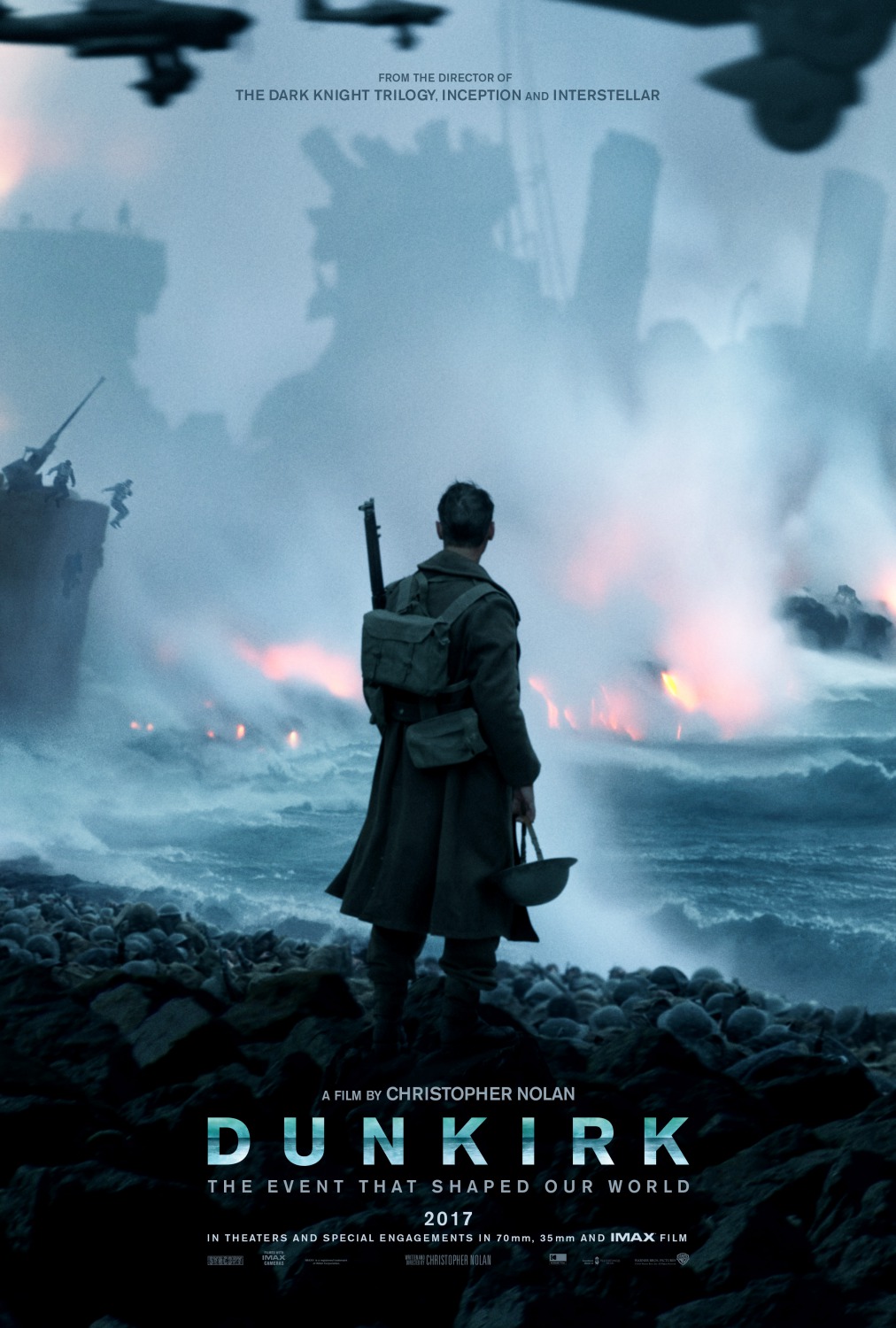
D: Christopher Nolan / 106m

Cast: Fionn Whitehead, Tom Hardy, Mark Rylance, Kenneth Branagh, Cillian Murphy, Tom Glynn-Carney, Barry Keoghan, Aneurin Barnard, Harry Styles, Jack Lowden, James D’Arcy

NOTE: This review is based on an IMAX screening of the movie.

At one point during Christopher Nolan’s visually and sonically impressive ode to British heroism, Mark Rylance’s stoic Mr Dawson says, “Men my age dictate this war. Why should we be allowed to send our children to fight it?” It’s a rare moment of unexpected criticism (of the war) in a movie that celebrates the British determination to rescue victory from the jaws of defeat on the beaches at Dunquerke (through Operation Dynamo), and which does so in spectacular style. It’s one of a number of awkward moments where Nolan the writer appears to realise that he needs to be a commentator as well as an observer of events, and that he needs to add some much needed depth to proceedings. It’s also a moment that’s indicative of a greater problem with the movie as a whole: it doesn’t engage with the audience as much as it should do.

Nolan has gone on record to say that his idea for Dunkirk wasn’t to make a war movie but to make a suspense thriller, to take the three strands of land, sea and air and amalgamate them by the end of the movie into one combined incident. It’s typical of Nolan’s fondness for non-linear narratives, and he orchestrates the three different time frames – land: one week, sea: one day, air: one hour – with great skill and ingenuity, but amidst all the technical wizardry, the human element is left just as stranded as the Allied troops were back in 1940. Considering the scale of the evacuation, it’s hard to understand why Nolan decided to leave out such a crucial aspect. Thanks to the narrative decisions he’s made, the characters we do meet rarely make an impact, with patronym Tommy (Whitehead) suffering the most. Right from the start, where we see him fleeing from a barrage of gunfire and his comrades dropping like flies around him, and through all the travails he endures along the way, he’s a character we never fully identify or sympathise with. He’s a cypher in uniform, and Nolan never really introduces us to him.
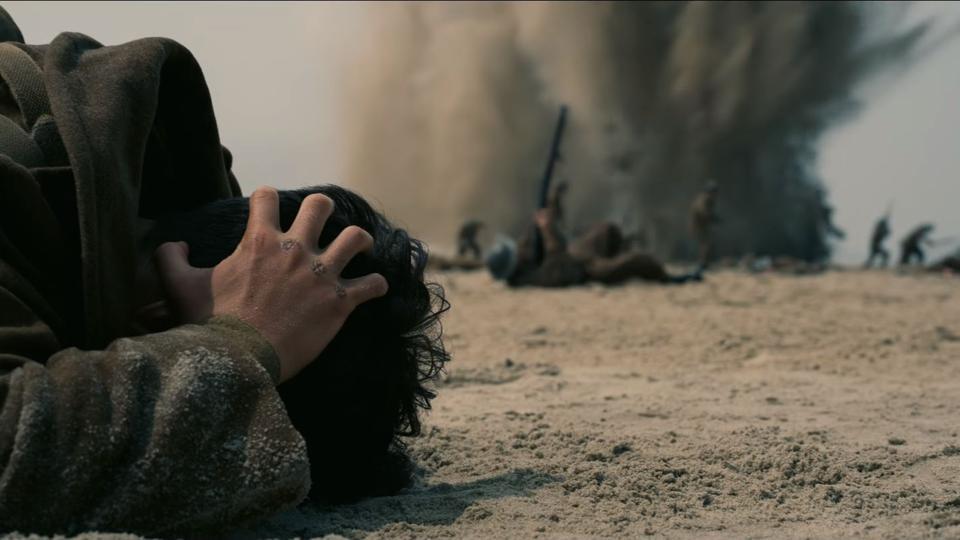
The same goes for Hardy as RAF pilot Farrier. Once more hidden behind a mask that obscures his lower face, Hardy’s expression barely changes from scene to scene; he either looks determined or very determined. Alas, this isn’t enough to provide audiences with a character to identify with or relate to, and it’s only his heroic manner (which is shared by all but one other character) that allows us to appreciate him. Of all the characters we meet, only Rylance as the quietly resolute Mr Dawson and Branagh as Commander Bolton, overseer of the evacuation at Dunquerke itself, make much of an impact but that’s entirely due to their skill and experience as actors. It’s a shame that Nolan couldn’t have fleshed out his characters more; what’s the point of employing actors of the calibre of Murphy and Hardy when you’re not going to give them much to do?

For a movie maker of Nolan’s stature, this is an unfortunate approach, and it leaves the movie in danger of becoming just an empty spectacle. Nolan has put a lot of time and effort into ensuring his take on the evacuation is as realistically mounted as possible, with a minimal use of CGI and the majority of practical effects being done in camera, and shooting on the very same beaches at Dunquerke. Thankfully this verisimilitude pays off handsomely, with Nolan’s standing as one of the most technically and visually gifted directors of his generation confirmed for all to see. There’s no room for doubt: Dunkirk is a stunning visual experience. Nolan wanted to give audiences the most immersive movie experience possible (albeit in the IMAX format) and he’s succeeded magnificently. Whether it’s on the beach, on the water, or in the air, Nolan, along with DoP Hoyte Van Hoytema, ensures that the viewer is thrust into the thick of things, whether it’s amongst a group of soldiers hemmed in on a jetty while German Stukas strafe them, or Tommy and some of his fellow soldiers stuck below decks in a torpedoed ship, or the cockpit of Farrier’s Spitfire, all these scenes and many more have an immediacy and a visceral intensity that is breathtaking to watch. On these occasions, the movie truly is an immersive experience, and Nolan’s ambition is fully realised.

But if Dunkirk looks visually astonishing, then it’s surpassed by its sound design. Every rifle shot and bullet hit, every creak and warp of timber on the boats, every burst and spin of the fighter planes is delivered with such clarity and impact that it adds an extra layer to the immersive nature of the material, and in IMAX 6-track format it’s even more impressive. There are details in the mix that are remarkably subtle as well, such as the different engine sounds of the small ships as they approach Dunquerke, or the trudge of footsteps across the beach. This is attention to detail taken to an almost obsessive degree, and the movie is all the better for it, creating a soundscape that highlights and dominates events shown, and which in terms of fidelity, sets a new benchmark.

Ultimately though (and a little unfortunately), what Nolan has devised and created is a movie that offers an unparalleled viewing and listening experience but which has moments where it seems to be saying, “look at this, isn’t that spectacular?” You can almost imagine a reporter turning to a newsreel cameraman and asking, a la Die Hard (1988), “Tell me you got that.” Nolan can perhaps be forgiven for a little grandstanding, or a little showing off from time to time, but when these moments occur they have the effect of taking the viewer out of the movie and reminding them that what they’re watching isn’t always as immersive as planned. What’s also distracting at times is Hans Zimmer’s score for the movie, which uses Nolan’s own pocket watch as a musical template for much of the tension that’s generated, though it’s a motif that’s over-used. It’s a divisive score, hugely effective on some occasions, an unfortunate pall over proceedings at others, but at least Zimmer stops short of making it all too triumphant and imperialistic – and that adds to the overall effect tremendously.

Rating: 7/10 – aside from some questionable narrative decisions, and restrictions around getting to know the characters, Dunkirk is the year’s most ambitious, and most mature, summer blockbuster; an incredible technical achievement by Nolan, the movie is a visual and aural tour-de-force, a feat of movie making that’s unlikely to be equalled or bettered any time in the near future, and which may well be Nolan’s best movie so far… oh, hang on, no, that’s still The Dark Knight (2008).
Share this:

  • Click to share on X (Opens in new window) X
  • Click to share on Facebook (Opens in new window) Facebook
  • More
  • Click to print (Opens in new window) Print
  • Click to email a link to a friend (Opens in new window) Email
Like Loading...

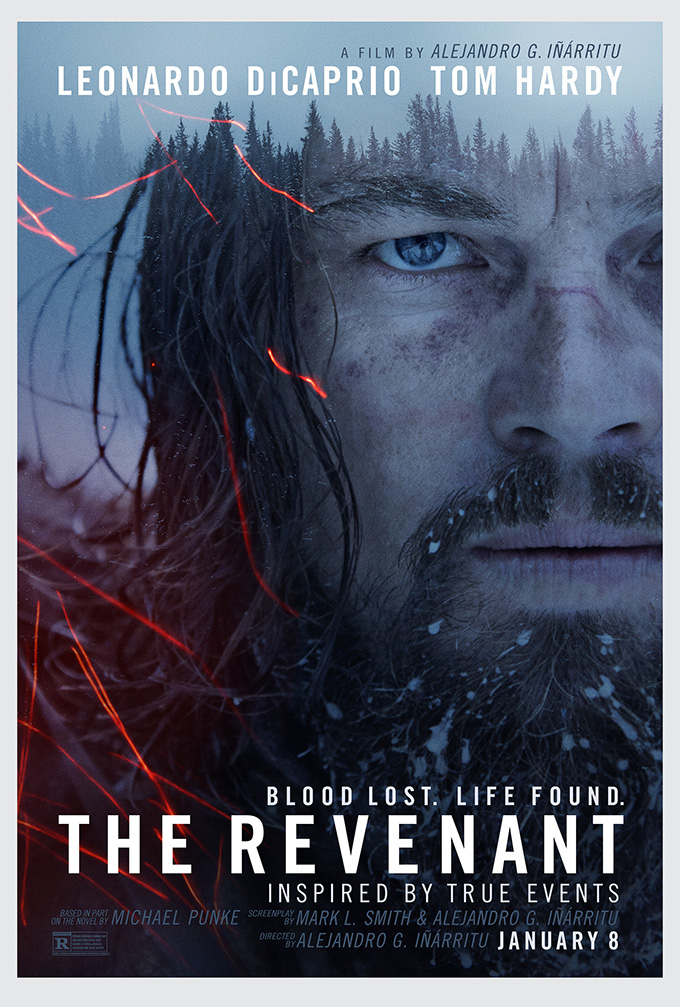
The Revenant (2015)

30 Wednesday Dec 2015

Posted by dullwood68 in Movies

≈ 1 Comment

Tags

1820's, Alejandro González Iñárritu, Arikara Indians, Bear attack, Buried alive, Domhnall Gleeson, Fort Kiowa, Fur trappers, Hugh Glass, Left for dead, Leonardo DiCaprio, Literary adaptation, Missouri river, Tom Hardy, True story, Will Poulter

The Revenant

D: Alejandro González Iñárritu / 156m

Cast: Leonardo DiCaprio, Tom Hardy, Domhnall Gleeson, Will Poulter, Forrest Goodluck,  Paul Anderson, Duane Howard, Kristoffer Joner, Brendan Fletcher, Lukas Haas, Grace Dove, Melaw Nakehk’o

If you had to guess what Alejandro González Iñárritu’s next movie would be after Birdman or (the Unexpected Virtue of Ignorance) (2014), then chances are you wouldn’t have picked this one, a Western shot on a grand scale and based on events that happened to the fur trapper and explorer Hugh Glass in 1823. And maybe you would have thought that it was too much of a challenge for the director to pull off. But for anyone who still has their doubts, let’s make it clear from the start: this is one of the must-see movies of 2015 (which makes it a shame that most people won’t see it until 2016).

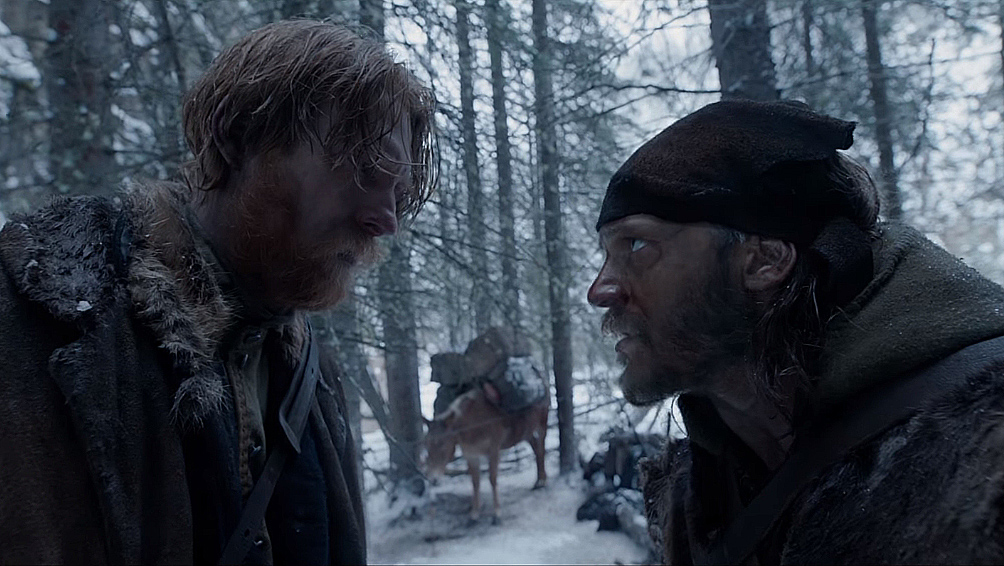
Glass’s story is the stuff of legend. While working for a fur-trapping expedition along the Missouri river, he and his fellow trappers were ambushed by Arikara Indians, and forced to flee back to their base at Fort Kiowa. While out scouting for food for the remaining men, Glass encountered a grizzly bear and her two cubs. The bear attacked Glass and he was severely mauled and injured. He managed to kill the bear with the aid of two other trappers, John Fitzgerald and Jim Bridger. His wounds, however, were such that it was believed he would die from his injuries. Leaving behind Fitzgerald and Bridger to bury Glass when the time came, the rest of the expedition, led by General William Henry Ashley, made it back to the fort. But Fitzgerald and Bridger left Glass for dead, and made their way back to the fort as well where they lied about his fate.

The Revenant - scene1

As a feat of physical endurance, Glass’s “return from the dead” was astonishing. Despite a broken leg, festering wounds, and cuts to his back that left his ribs exposed, the explorer bravely crawled most of the way to the Cheyenne river where he fashioned a basic raft and drifted downstream to Fort Kiowa. In all he travelled over two hundred miles, and it took him six weeks. One of the main things that kept him going was finding Fitzgerald and Bridger and exacting his revenge (though in the end he spared both of them).

In telling this tale of survival against the odds, Iñárritu has taken the book by Michael Punke and opened up the story to include rival French trappers, a tribe of Arikara Indians led by a chief whose daughter has been abducted, and a son for Glass whose mixed heritage (his mother was a Pawnee) makes Fitzgerald uneasy (with predictably violent results). And for Fitzgerald there’s no forgiveness here, as Glass hunts him down with the intention of making him pay with his life for betraying Glass and leaving him to die.

Along the way, Iñárritu shows the hardships and terrors of life on the frontier, with its sub-zero temperatures and harsh terrain, and where men face death at every turn – from each other, from the Indians, and more importantly, from nature itself, which is uncompromising and unsympathetic to their needs. The director immerses the viewer in this terrifying yet beautiful and alluring environment, and each new scene adds to the spectacle Iñárritu has created. This is a richly textured, sometimes hyper-real environment that Iñárritu has constructed, and its silent majesty is often awe-inspiring.

The Revenant - scene3

There are numerous scenes that stand out in this way, from the opening tracking shot through a water-logged forest to the brutal (very brutal) attack on the trappers, and on to the bear attack – quite possibly one of the most impressive sequences in any movie of 2015. But Iñárritu isn’t finished. Once Glass disinters himself he has to traverse the very same harsh territory that he knows is likely to kill him for sure this time, and the various places he finds himself at, offer equal parts safety and danger. And you have to applaud the commitment of DiCaprio, who must have risked hypothermia on many occasions in order to get the shots his director wanted.

The Revenant is a bloody, raw, uncompromising movie that treats the inherent violence of the times as if it was just a part of daily life, something that went largely unacknowledged. Men are replaceable but the pelts they gather are not. When Fitzgerald and Bridger arrive back at the fort there’s no warm welcome, no sign that anyone’s pleased to see them; there’s a complete indifference. The inference is clear: you do what you have to do. But while survival is a key issue, this is at heart a revenge tale, and Iñárritu doesn’t hold back in showing Glass’s angry determination to survive, or the sacrifices he has to make in order to do so. Whether it’s allowing a surging river to channel him away from the approaching Arikara, or keeping warm overnight in the belly of a horse, Glass simply will not give up.

As the indefatigable Glass, DiCaprio gives one of his best performances. With limited dialogue, and relying on facial expressions and body language to impart his character’s feelings and emotions, this is a physical tour-de-force. There are times when DiCaprio isn’t even recognisable as DiCaprio, occasions where the demands of the script have him twisted and tormented in agony. It’s a magnificent portrayal, and superbly counter-balanced by Hardy’s performance as Fitzgerald. Fitzgerald is a survivor as well, a man who thinks of himself first and others second, whose sole motivation is to make it through in whichever way is needed. He’s an opportunist to be sure, but he’s also just as calculating as Glass. Both actors are astonishing in their roles, and their eventual showdown is a masterpiece of bloody threat and the will to survive.

The Revenant - scene2

The photography, by Oscar-winning DoP Emmanuel Lubezki, is stunning throughout, the landscapes and mountains and rivers captured with such penetrating exactness it’s almost like being in the movie yourself. It’s possibly the most beautifully realised and shot movie you’re likely to see for some time, and the decision to shoot with natural light has paid off handsomely. There’s also a beautiful, evocative score courtesy of Ryuichi Sakamoto, Bryce Dessner and Carsten Nicolai that adds to the richness of the material.

Rating: 9/10 – a tremendous, incredible piece of story telling – previously told in Man in the Wilderness (1971) with Richard Harris as Glass (albeit renamed) – The Revenant is a movie that is consistently impressive from start to finish, and which features stunning location photography and superb performances from all concerned; Iñárritu’s follow-up to Birdman or (the Unexpected Virtue of Ignorance) is intelligent, visceral, relentless movie making that packs an unexpected emotional punch, and is possibly the most impressively mounted movie of 2015.

Share this:

  • Click to share on X (Opens in new window) X
  • Click to share on Facebook (Opens in new window) Facebook
  • More
  • Click to print (Opens in new window) Print
  • Click to email a link to a friend (Opens in new window) Email
Like Loading...

Legend (2015)

18 Friday Sep 2015

Posted by dullwood68 in Movies

≈ 2 Comments

Tags

"Nipper" Read, Brian Helgeland, Christopher Eccleston, Crime, David Thewlis, Drama, Emily Browning, Gangsters, London's East End, Murder, Protection, Reggie Kray, Review, Ronnie Kray, The Kray Twins, Tom Hardy, True story, Violence

Legend

D: Brian Helgeland / 131m

Cast: Tom Hardy, Emily Browning, David Thewlis, Christopher Eccleston, Paul Anderson, Taron Egerton, Colin Morgan, Tara Fitzgerald, Sam Spruell, John Sessions, Chazz Palminteri, Paul Bettany, Kevin McNally, Shane Attwooll, Jane Wood

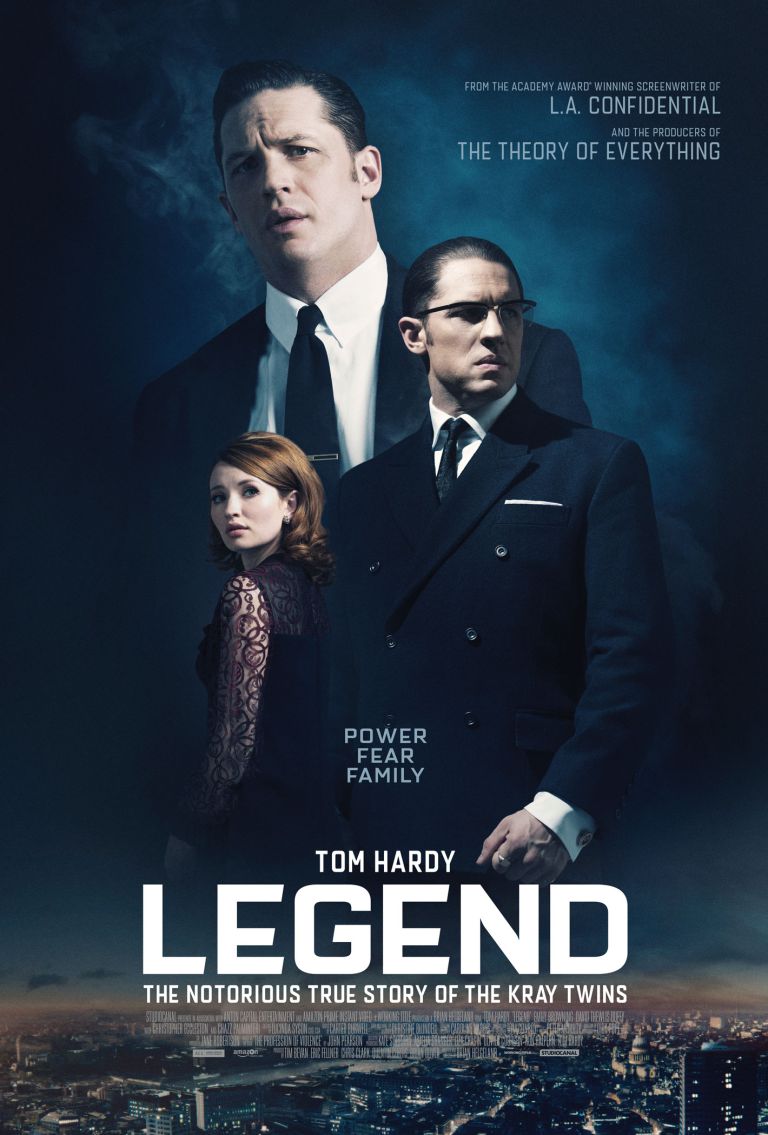
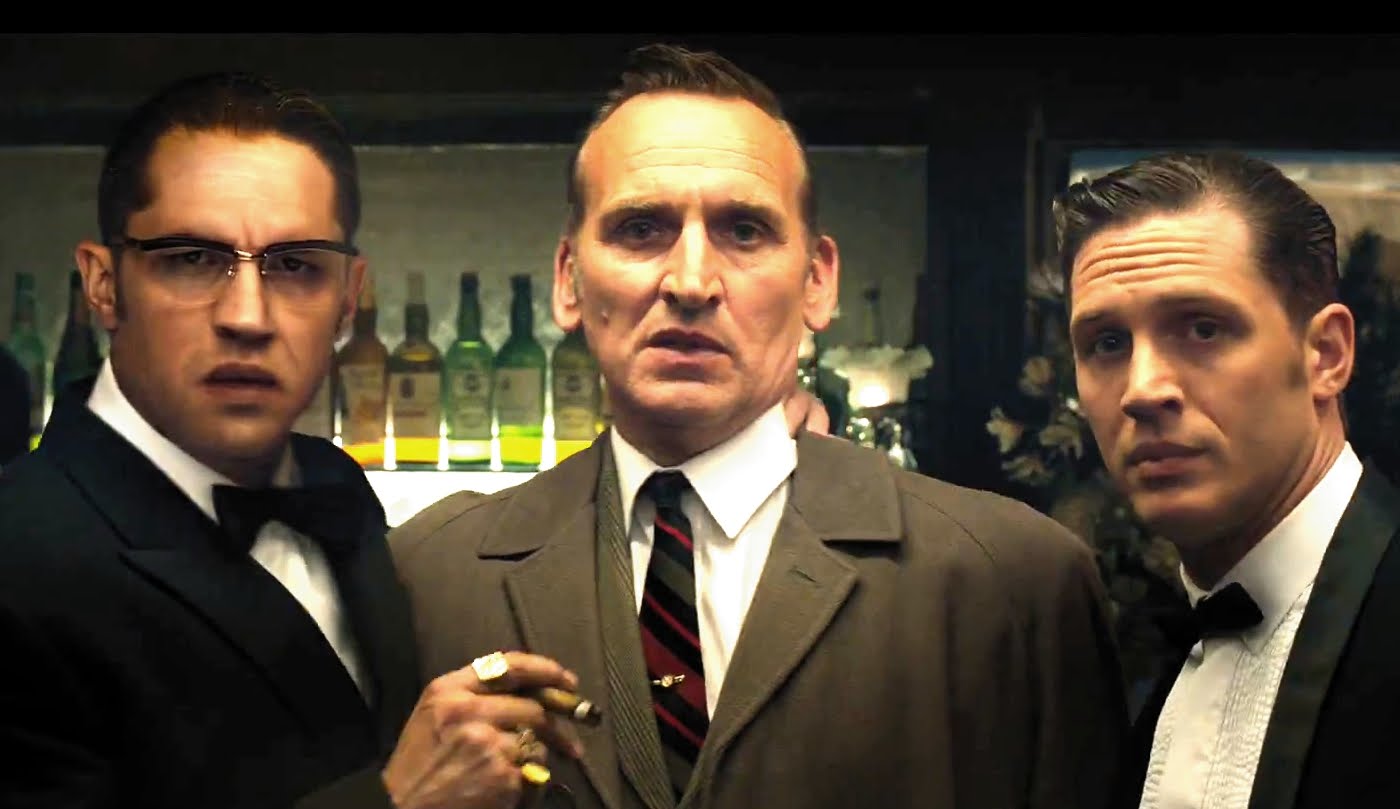
London, the 1960’s. The East End is home to two brothers, the confident, ambitious Reggie Kray (Hardy), and his psychotic twin Ronnie (Hardy). Together they run a criminal network based around providing protection to local businesses, while Reggie owns a club that attracts celebrities and politicians who like to mingle with London’s criminal element. The pair are well-liked in their local neighbourhood, and are both feared and respected. Reggie is continually followed by Detective Superintendent “Nipper” Read (Eccleston) who has been given the task of bringing the twins to justice. But they’re always one step ahead of him.

One morning, Reggie’s regular driver, Frankie Shea (Morgan) hasn’t shown up. Reggie goes to his house; the door is opened by Frankie’s sister, Frances (Browning). He’s immediately attracted to her and he asks her out. She agrees to go out with him, despite her mother’s misgivings, and despite Reggie’s reputation. Meanwhile, one of the Krays’ gang has been caught “working” on the south side of the river, an area run by the Richardson family. This infraction leads to a meeting between the Krays and the Richardsons on neutral ground, but the Richardsons send some of their men instead to get rid of Reggie and Ronnie once and for all. But the twins prove too much for the men, and are all viciously beaten up.

With no other serious rivals, the Krays’ criminal empire spreads further afield. With the aid and advice of their accountant, Leslie Payne (Thewlis) – whom Ronnie dislikes and is suspicious of – they take over a casino in an attempt to earn some legitimate money (while still maintaining their regular criminal activities). An old warrant sees Reggie spend six months in prison, during which time he and Frances grow closer, though she seeks reassurances that he’ll be more honest when he gets out. But it doesn’t happen, and even with her hopes dashed, Reggie and Frances get married. Ronnie is welcoming at first, but their marriage leads him to think that Reggie is trying to move on without him. At the same time, Read’s investigation is sidelined when he allows himself to be photographed with the Krays in their casino.

Frances finds herself isolated, and begins to rely more and more on medication to ease her growing sense of anguish. Reggie is oblivious, and has more urgent matters to attend to when Ronnie kills one of the Richardsons’ men, George Cornell (Attwooll) in a pub in front of witnesses. In order to protect his brother, Reggie must intimidate the witnesses, which he does, but when Ronnie hatches another plan to eliminate a perceived enemy, and hires Jack “The Hat” McVitie (Spruell) to do the job, it leads to the end of their criminal careers and the empire they’ve built up.

Legend - scene

Adapted from the book The Profession of Violence: The Rise and Fall of the Kray Twins by John Pearson (who was once an assistant to Ian Fleming), Legend is a curious movie in that it takes the two most notorious criminals known in Britain in the last sixty years, and tells their story in such a way that, on the whole, they don’t seem that bad. Sure they use intimidation and violence as a way of getting what they want from people, but we don’t see any of this, so the viewer has to take it for granted that they were as nasty as their “legend” would have it. Instead, writer/director Helgeland shows us the Kray twins as entrepreneurs, buying into legitimate businesses and making inroads into so-called polite society, including the patronage of Lord Boothby (Sessions), a predatory homosexual whose relationship with Ronnie leads to the Krays being acquitted at trial for fear of a government scandal. What’s given scant attention is their youth and how they got to where they were in the mid-Sixties, and how they actually attained the powerful position they enjoyed.

Then there’s the relationship between Reggie and Frances, which at first follows an almost predictable girl-meets-bad-boy scenario before settling down into something much darker and terrible. It’s hard to pick out just why Frances stays with Reggie for so long, because Helgeland doesn’t provide very many clues to help explain it all, and it’s equally unclear why Reggie wants Frances. It’s all very superficial, and though it’s based on real events etc., it doesn’t quite gel on screen, leaving the viewer with the feeling that whatever the truth about their marriage – and the movie makes some strong claims – there’s more to it than meets the eye (or is included in Helgeland’s script).

The same is true of the movie as a whole, with the sense that Helgeland’s adaptation isn’t concerned with providing any depth or subtext, leaving the poor viewer (again) suspecting that they just have to go along with everything and accept it all for what it is. It makes for a frustrating viewing experience as the characters – and there are a lot of them – all appear to lack an inner life (with the possible exception of Ronnie, whose inner life seems entirely weird and deranged). The movie also lacks a sense of time, its events and occurrences sometimes feeling like they’re happening in the absence of any  recognisable timescale, or have been cherry-picked from Pearson’s book at random (one example: Frances meets Reggie when she’s sixteen but doesn’t marry him until she’s twenty-two). And that’s without mentioning that as a retelling of the Krays’ activities and lives, it’s not very faithful or accurate.

The period of the Krays’ infamy is, however, extremely well-realised, with the East End of London looking as foreboding and shadowy as it did back in the Sixties, and with the period detail proving impressive. In terms of the time and the place, Tom Conroy’s incredibly detailed production design is enhanced by Dick Pope’s sharply focused cinematography, and further augmented by Carter Burwell’s appropriately Sixties-style score. The costumes are also a plus, with the fashions of the time recreated in fine style by Caroline Harris, an underrated costume designer who has provided equally fine work on movies as varied as An Ideal Husband (1999), A Knight’s Tale (2001), and And When Did You Last See Your Father? (2007).

Legend - scene2

As to the performances, it’s either a one-man or a two-man show, depending on how you look at it. Hardy is magnificent in roles that it would be difficult now to imagine any other actor attempting. As the charming, urbane-sounding Reggie, Hardy does more with a glance than some actors can manage with a long speech and an unwavering close up. He’s magnetic in most of his scenes, grabbing the attention as firmly as if he had the viewer in a headlock, and making it difficult to look away from him. And as Ronnie it’s like watching a human shark, his dark eyes staring out from behind the character’s glasses with vicious intent, just waiting for the chance to explode, and speaking with the delusional belief that his ideas are as sane as he thinks they sound (at one point he comes out with a plan to protect the homeless children of Nigeria). In both cases, Hardy is superb, even if he’s let down by the material, but he’s such a good actor that he overcomes Helgeland’s negligence and commands the audience’s attention throughout.

In support, Browning is captivating and sincere as Frances, and finds layers in the role that aren’t so evident from the script, while Thewlis gives one of his best recent performances as Payne, the accountant who earns Ronnie’s enmity. Anderson is quietly effective as Reggie’s right-hand man Alby, Fitzgerald is a scornful Mrs Shea (she wears black to her daughter’s wedding), Sessions is suitably slimy as Lord Boothby, and Palminteri, as the Mafia representative who wants the Krays to run London as part of a criminal franchise overseen by Meyer Lansky, exudes a rough Italian charm that hides a more dangerous persona. Alas, Eccleston is given little to do beyond looking exasperated, and Spruell’s McVitie is required to “grow a pair” just when the script needs him to; up ’til then he’s the very definition of compliant.

Ultimately, Helgeland the writer undermines Helgeland the director, focusing on Reggie to the detriment of Ronnie, and trying to make this about Reggie’s loyalty to his brother, rather than the exploits that made them infamous (which are almost incidental here). Some scenes lack the intensity they deserve, as if Helgeland didn’t have the nerve to show some things as they actually occurred (McVitie’s murder was much more vicious than what is shown in the movie), and though the emphasis is quite rightly on the Krays, more time with some of the other characters would have added some richness to the material and kept it from feeling (on occasion) somewhat uninspired. Perhaps there’s a longer cut waiting to be released on DVD/Blu ray, and it fills in a lot of the gaps, but at this length, Helgeland’s scattershot approach to the Krays’ lives is too much of a hindrance to make it anything more than just okay.

Rating: 6/10 – missing the vital spark that would have elevated it into the realm of the truly great gangster movies, Legend instead squanders its chance and remains a mostly pedestrian account of the lives of two men who meant to rule London’s criminal underworld with four iron fists; not as violent as you might expect, but with two standout performances from Hardy to help compensate, this is one “real life” movie that feels like it could have, and should have, been a whole lot better.

Share this:

  • Click to share on X (Opens in new window) X
  • Click to share on Facebook (Opens in new window) Facebook
  • More
  • Click to print (Opens in new window) Print
  • Click to email a link to a friend (Opens in new window) Email
Like Loading...

Trailer – The Revenant (2015)

18 Saturday Jul 2015

Posted by dullwood68 in Movies

≈ Leave a comment

Tags

1820's, Alejandro González Iñárritu, Leonardo DiCaprio, Preview, Tom Hardy, Trailer, True story

After his audacious, Oscar-winning Birdman: or (the Unexpected Virtue of Ignorance), Alejandro González Iñárritu turns his attention to a story – based on real events – that takes place in America’s uncharted wilderness in the 1820’s. Leonardo DiCaprio is the frontiersman betrayed and left for dead by his best friend (played by Tom Hardy), and whose fight for survival following a bear attack looks to be as harsh and as gripping as conditions at the time would have merited. The supporting cast includes Domhnall Gleeson, Will Poulter and Lukas Haas, and the spectacular visuals are courtesy of Iñárritu’s long-time cinematographer Emmanuel Lubezki. All in all, it makes The Revenant look like a must-see (and a shoo-in for a slew of awards).

Share this:

  • Click to share on X (Opens in new window) X
  • Click to share on Facebook (Opens in new window) Facebook
  • More
  • Click to print (Opens in new window) Print
  • Click to email a link to a friend (Opens in new window) Email
Like Loading...

Mini-Review: Mad Max: Fury Road (2015)

18 Monday May 2015

Posted by dullwood68 in Movies

≈ 2 Comments

Tags

Action, Australia, Charlize Theron, Chase, Drama, George Miller, Hugh Keays-Byrne, Immortan Joe, Imperator Furiosa, Max Rockatansky, Nicholas Hoult, Nux, Review, Sequel, Thriller, Tom Hardy, Water

Mad Max Fury Road

D: George Miller / 120m

Cast: Tom Hardy, Charlize Theron, Nicholas Hoult, Hugh Keays-Byrne, Josh Helman, Nathan Jones, Zoë Kravitz, Rosie Huntington-Whiteley, Riley Keough, Abbey Lee, Courtney Eaton, John Howard, Richard Carter

Captured by men under the command of Outback warlord Immortan Joe (Keays-Byrne), Max Rockatansky (Hardy) is held prisoner in the Citadel, Joe’s fortress hideout. When one of Joe’s lieutenants, Imperator Furiosa (Theron), helps five of Joe’s “brides” escape, Joe sends everyone after her, including Nux (Hoult), a war boy with little experience and who’s been given Max as a “blood bag”. Forced to take Max with him in the pursuit, Nux catches up to Furiosa, who is driving a large petrol tanker. He and some of the other war boys attempt to stop Furiosa, but are unsuccessful. And in the melee, Max – who was chained to the front of Nux’s vehicle – frees himself and joins the fleeing women.

Quickly earning their trust, and still being pursued by Immortan Joe, Max learns that they are heading for the “Green Place”, where Furiosa was born; there they will be safe and able to live freely. Joe succeeds in catching up to them and in their efforts to elude him, one of the brides is killed. They manage to get away from him and further along the way, they meet up with a band of women called the Vuvalini. The women plan to carry on across a vast salt flat but with no guarantee that they’ll reach the other side alive. Instead, Max convinces them to go back the way they came, through Joe’s forces, and take the Citadel from him while it’s undefended.

Mad Max Fury Road - scene

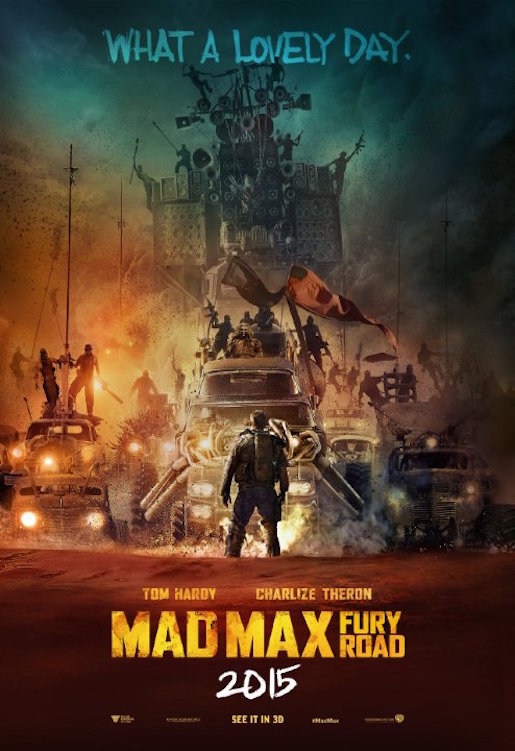
Let’s get the superlatives out of the way, shall we? Thrilling, exciting, stirring, incredible, jaw-dropping, amazing, breathtaking, magnificent, gripping, mind-blowing, superb… the list goes on and on. Thirty years on from the frankly disappointing Mad Max: Beyond Thunderdome (1985), George Miller has returned to the barren future world inhabited by Max Rockatansky, and he’s come up with one of the best action movies you’ll see for some time to come. Mad Max: Fury Road is simply stunning, from John Seale’s exquisite cinematography, to Jason Ballantine and Margaret Sixel’s impressive editing techniques, to Jenny Beavan’s wonderfully expressive costume design, the movie has all this and more going for it, and in a year with so many action thrillers coming our way, will prove very hard to beat.

It’s a major triumph for Miller, hewing to a simple formula: don’t let up on the pace and don’t let up on the mayhem. There are some astonishing stunts performed in this movie, and they leave the viewer open mouthed in admiration for the various stunt teams who put all this together, and also for the sensational vehicles that have been designed and created (and endlessly destroyed). The cast are impressive as well, and if Theron steals the movie it’s mainly because Miller has amped up Max’s taciturn nature and made him more of a physical presence than an intellectual one. But everyone’s a winner, not least the audience, and this is one movie that deserves every plaudit coming its way.

Rating: 9/10 – with not an animated penguin in sight, George Miller returns to doing what he’s always done best: providing the kind of over-the-top, automobile anarchy that has the viewer watching with undisguised awe; filmed with undeniable passion – and with a lovely nod to Peter Weir’s The Cars That Ate Paris (1974) – Mad Max: Fury Road is a cause for joy and exultation, and is possibly the only time a fourth movie in a franchise has proven to be the best of the series.

Share this:

  • Click to share on X (Opens in new window) X
  • Click to share on Facebook (Opens in new window) Facebook
  • More
  • Click to print (Opens in new window) Print
  • Click to email a link to a friend (Opens in new window) Email
Like Loading...

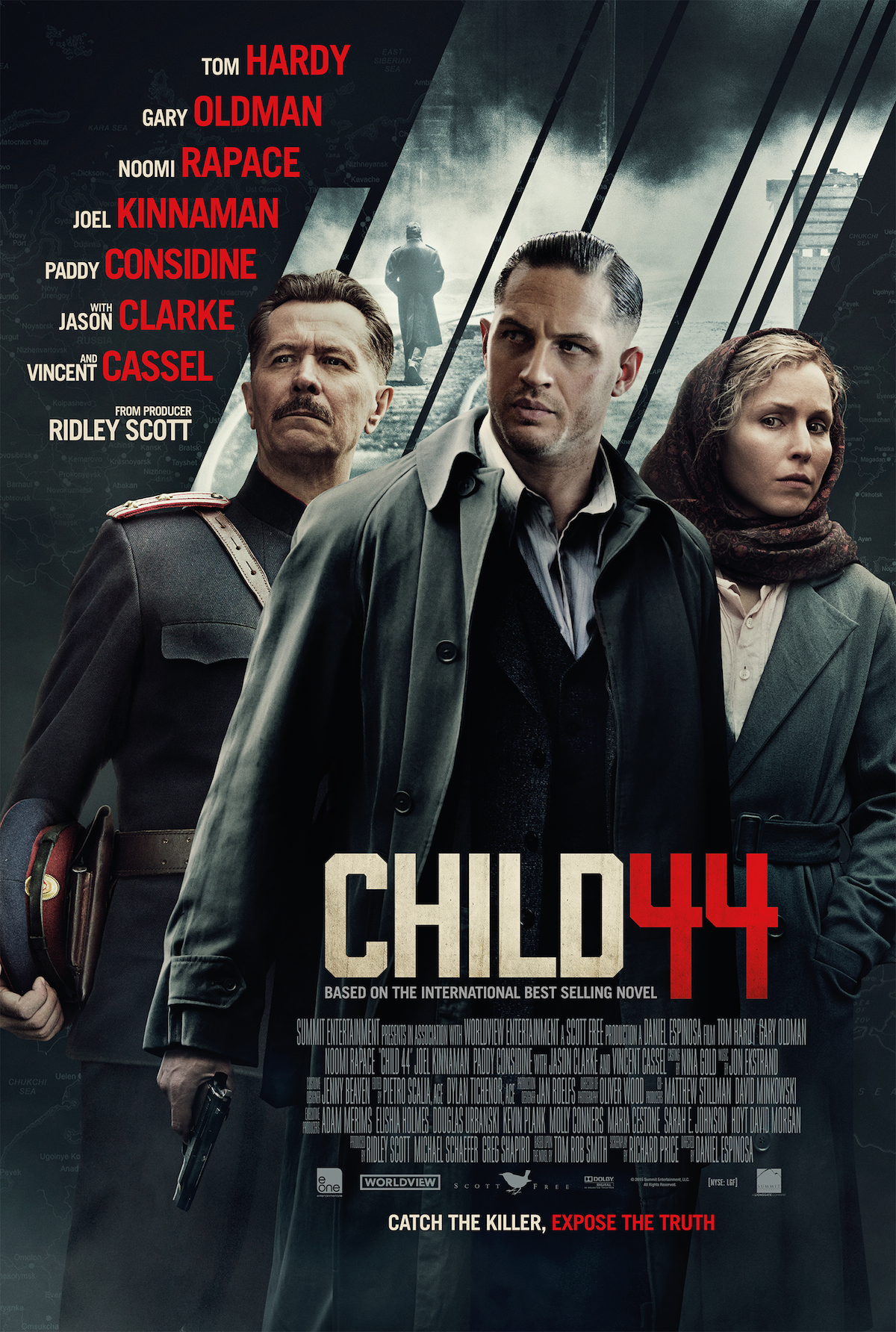
Child 44 (2015)

04 Monday May 2015

Posted by dullwood68 in Movies

≈ Leave a comment

Tags

Daniel Espinosa, Drama, Gary Oldman, Joel Kinnaman, Leo Demidov, Literary adaptation, Moscow, Murder, Noomi Rapace, Review, Rostov, Serial killer, Soviet Union, Thriller, Tom Hardy, Tom Rob Smith

Child 44

D: Daniel Espinosa / 137m

Cast: Tom Hardy, Noomi Rapace, Gary Oldman, Joel Kinnaman, Paddy Considine, Fares Fares, Vincent Cassel, Jason Clarke, Nikolaj Lie Kaas, Tara Fitzgerald, Sam Spruell, Charles Dance

In post-war Soviet Russia, Leo Demidov (Hardy) is a respected officer in the Secret Police. Along with wartime comrades Vasili Nikitin (Kinnaman) and Alexei Andreyev (Fares) he investigates crimes against the state. When a suspect, Anatoly Brodsky (Clarke) goes on the run, their pursuit takes them to a farm where Brodsky has taken refuge. Against Leo’s wishes, Vasili kills the farmer’s wife and his young son; this drives a wedge between the two men.

A short while later, Andreyev’s young son is found dead by some railroad tracks. Though it’s clear that he has been murdered, thanks to Stalin’s edict that there shall be “no murder in paradise”, Leo is commanded by his superior, Major Kuzmin (Cassel), to tell Andreyev that the death was accidental. The idea doesn’t sit well with Leo but he goes ahead with it. When another child is murdered, Leo learns that there have been even more, similar cases. At the same time, he is tasked with investigating another suspected enemy of the state: his wife, Raisa (Rapace). She works in a school, and is friendly with one of the teachers, Ivan Sukov (Kaas). When his investigation reveals nothing incriminating about Raisa, his report is used as an excuse to strip Leo of his job and his home.

Leo is sent to Rostov to work under the command of General Mikhail Nesterov (Oldman). There, the discovery of another child’s body leads Leo to believe that the killer is responsible for over forty murders and is using the railway line between Rostov and Moscow as a means of hiding his crimes. Convincing Nesterov of his theory, Leo, aided by Raisa, returns to Moscow to seek help from Andreyev and gain access to files that will provide further information. But Vasili, who has been promoted to Leo’s old post, learns of his being in Moscow and tries to track him down and arrest him. Leo and Raisa manage to get out of Moscow and make their way back to Rostov. Now knowing that this is where the killer lives and works, Leo tries to find him on his own, but he has to work completely outside the law to do so.

Child 44 - scene

Based on the novel by Tom Rob Smith, Child 44 looks, on the surface, to be the kind of quality literary adaptation that offers outstanding performances, first-rate direction, a gripping script, and all of it culminating in a rewarding cinematic experience. Alas, this isn’t that kind of movie.

Instead, Child 44 is one of the most lethargic, dullest thrillers in recent years. It’s hard to say just what is right about the movie, cloaked as it is in a thick layer of cod-Russian accents and the kind of amateur thesping expected from a movie with a much smaller budget.

That such a talented cast appears so ill-at-ease is thanks largely to a script by Richard Price that leaves them high and dry in terms of conviction, and rarely links two scenes with any sense that they’re connected. The movie opens with two scenes that show Leo and Vasili growing up and during the war. Anyone who’s read the novel will know the importance of this, but thanks to Price it has as much relevance later on as its clichéd outcome requires (which isn’t much). There are other moments and aspects of the novel that are included and then ignored, such as Raisa’s initial fear of Leo when they first met, and these go some way to making the movie feel uncoordinated and ill-considered.

And the movie feels rushed once Leo has to look into Raisa’s activities, as if the strain of adapting so much wieldy material became too much and Price had to jettison any subtlety in favour of just ploughing ahead with the thriller side of things. The end result is a movie that plods along avoiding any attempt to re-engage with its audience. As such, it becomes a chore, and the average viewer will be regretting the lengthy running time.

As mentioned above, the cast can do little with what they’re given. Hardy – usually a reliably  hard-working actor – here fails to get to grips with the character of Leo, and gives a drab, uninspired performance that runs out of steam before even a quarter of the movie is over. Raoace, who really should be picking her roles with more perspicacity, is left on the sidelines too much and only ever registers when taking part in a fight scene. Oldman appears halfway through, has a handful of scenes and then disappears until the end; Kinnaman plays Vasili as a one-note sociopath (and looks increasingly like a young Keith Carradine); and Considine is saddled with the role of the killer, but never looks comfortable when trying to make him seem pitiable.

Perhaps it’s as much Espinosa’s fault as the script’s, as the director never seems to have s firm grip on the material, and shoots several scenes with a peculiarly uninvolved approach that makes them seem as if they’ve been included for the sake of it. Under his wing, the movie lacks any real thrills, and the race to track down the killer is hampered by too many longeuers to be entirely effective. And when you have a cast of this quality, not getting the best out of them is practically criminal.

Rating: 4/10 – with its superficial recreation of Soviet Russia, and cruelly dispassionate approach to the material, Child 44 never convinces; when a movie adaptation is this disappointing it’s a sure sign that everyone was having a very long off day.

Share this:

  • Click to share on X (Opens in new window) X
  • Click to share on Facebook (Opens in new window) Facebook
  • More
  • Click to print (Opens in new window) Print
  • Click to email a link to a friend (Opens in new window) Email
Like Loading...

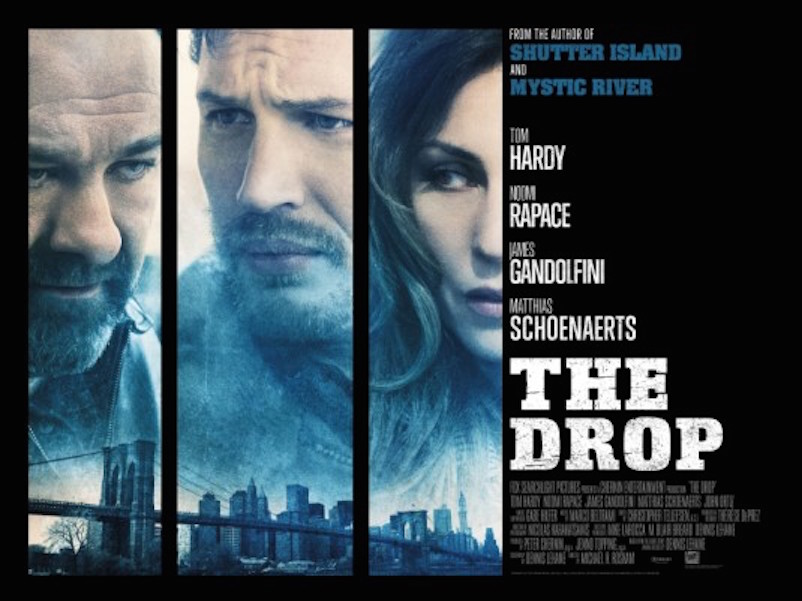
The Drop (2014)

29 Monday Dec 2014

Posted by dullwood68 in Movies

≈ Leave a comment

Tags

Chechen mob, Dennis Lehane, Drama, James Gandolfini, Literary adaptation, Matthias Schoenaerts, Michaël R. Roskam, Murder, Noomi Rapace, Review, Robbery, Thriller, Tom Hardy

Drop, The

D: Michaël R. Roskam / 106m

Cast: Tom Hardy, Noomi Rapace, James Gandolfini, Matthias Schoenaerts, John Ortiz, Elizabeth Rodriguez, Michael Aronov, Ann Dowd, James Frecheville, Tobias Segal

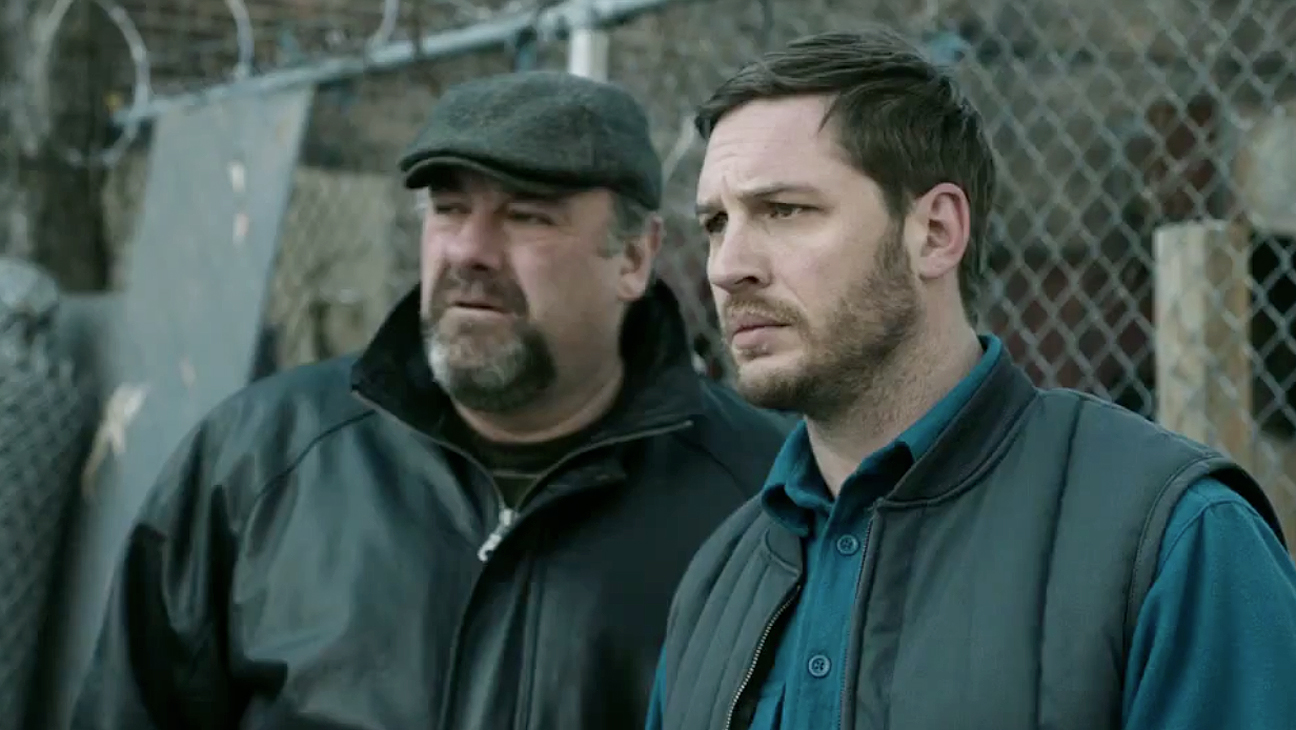
Cousin Marv’s is a bar managed by Marv (Gandolfini). It serves as a “drop bar” for money owed to the Chechen mob (who own the bar). Helping Marv is long-time friend Bob Saginowski (Hardy), a quiet, brooding man who appears somewhat slow-witted. While on his way home one day, Bob discovers an injured dog that’s been dumped in a trash can. As he rescues it, Nadia (Rapace), whose trash can it is, sees him and though wary of Bob at first, helps him with the dog.

The bar is robbed one night by two masked gunmen. They get away with just the money from the till, but it’s the Chechen mob’s money, and Marv will need to get it back. Meanwhile, a local hoodlum, Eric Deeds (Schoenaerts) begins following Bob around. Eventually he visits Bob at his home and tells him he’s the dog’s owner and can prove it, but he makes only veiled threats about going to the police if Bob causes any trouble over it. Deeds is suspected of killing a man named Richie Whelan ten years before, and has a reputation for being unpredictable and violent. It also turns out that he and Nadia (whom Bob is slowly getting closer to) were in a relationship once.

Later on, Bob and Marv find a trash bag that contains the severed arm of one of the gunmen and the money they stole. Bob disposes of the arm, cleans the money of the blood on it, and gives it to the Chechen mob’s enforcer Chovka (Aronov). In return, Chovka tells Bob and Marv that the bar will be the “drop bar” on the upcoming Super Bowl night.

Deeds tells Bob that he wants $10,000 or he’ll go to the police about the dog. He arranges to meet Bob at his home to collect the money but he doesn’t show. Instead he goes to Nadia’s house and tells her they’ll be going away together that night; Nadia is too intimidated to do otherwise. That night, the night of the Super Bowl, they go to the bar where it becomes clear to Bob that Eric is looking to steal the money being dropped off for the mob.

Drop, The - scene

Adapted by Dennis Lehane from his short story, Animal Rescue, The Drop is a quietly impressive, deliberately paced crime drama that features strong performances from its four leads, intelligent direction, and a slow build up in tension that benefits the movie greatly. There’s not a lot that’s new here, but The Drop is a movie where there’s just enough misdirection and plot-tweaking to keep the audience guessing at what’s going to happen next.

A big part of this is due to the character of Bob, as mentioned above, a quiet, brooding man who leads a simple life but lacks certain social skills (his budding romance with Nadia is awkward yet sweet, and proceeds at a hesitant pace that suits them both). As the movie progresses it’s revealed that he and Marv were part of a crew before the Chechens came along, and thanks to Lehane’s well-constructed screenplay and Hardy’s compelling performance, the viewer begins to get a sense that there’s more to Bob than meets the eye. In his dealings with Deeds, Bob is taciturn and compliant but there’s a definite hint of repressed menace there; part of the energy of these scenes is derived from waiting to see if Bob will respond with violence or not.

The threat of violence is palpable throughout, and when it does happen it has an almost cathartic effect, releasing the tension so effectively constructed by Lehane and director Roskam. This is a movie where so much is on the line, and so much is dependent on people doing what’s expected of them that it becomes unnerving when things come to a head. But through it all, Bob treats each new development in such a matter-of-fact way it’s like he’s just an observer. He’s the rock around which the movie is built, and in a role that would defeat a lot of actors, Hardy brings a subtlety and a quiet grace to the role.

In support, Gandolfini reminds us of just how gifted an actor he was, imbuing Marv with a melancholic bitterness that reflects his dismay at being ousted by the Chechens. He’s a man who hasn’t been able to move on, forced to live with his sister (Dowd), and always harking back to the days when he had respect in the neighbourhood. It’s an intense performance, full of the brio we’ve come to expect from Gandolfini, and as his last released movie, a fitting end to his career. As Nadia, Rapace is, somewhat predictably, reduced to playing the girlfriend who becomes a pawn in the game that Deeds plays with Bob. It’s a role that needs a bit more depth given to it in the screenplay, but Rapace uses her curious looks to good effect, and her scenes with Hardy are refreshingly appealing. It falls to Schoenaerts to provide the main thread of menace, and he does so by making Deeds unpleasant to watch at all times, his eyes showing a lack of amenity and concern for others that is often disturbing. It could have been a much showier performance, but Schoenaerts gets it just right, keeping the viewer on edge throughout.

All this is orchestrated with aplomb by director Roskam making his English language debut after the success of Bullhead (2011). He’s a director with a clear, precise style of movie making, and he frames his scenes with a refreshing lack of artifice, keeping things simple and without recourse to odd camera angles or visual trickery. He’s aided in this by DoP Nicholas Karakatsanis and editor Christopher Tellefsen; together the trio’s efforts make for a surprisingly low-key but effective viewing experience. Roskam also keeps the various sub-plots, particularly the one involving the murder of Richie Whelan, as relevant as they need to be, and as potent.

Rating: 8/10 – a riveting crime drama that sports four terrific performances, The Drop is a confident, compelling movie that offsets familiarity with attention to detail; a slow burn movie that yields a plethora of riches and features a killer pay-off line.

Share this:

  • Click to share on X (Opens in new window) X
  • Click to share on Facebook (Opens in new window) Facebook
  • More
  • Click to print (Opens in new window) Print
  • Click to email a link to a friend (Opens in new window) Email
Like Loading...

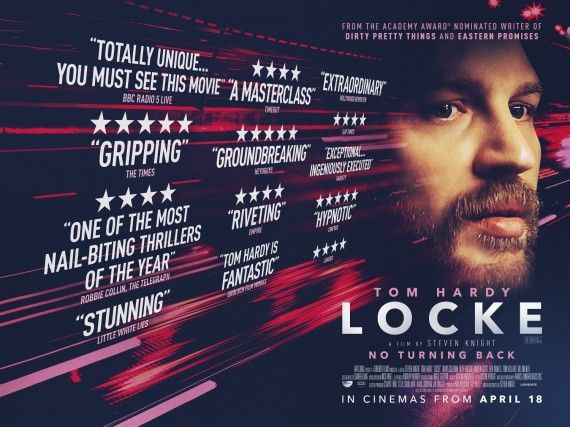
Locke (2013)

20 Sunday Apr 2014

Posted by dullwood68 in Movies

≈ 2 Comments

Tags

Concrete, Giving birth, Marriage, Olivia Colman, One night stand, Review, Road trip, Steven Knight, Tom Hardy, Welsh accent

Locke

D: Steven Knight / 85m

Cast: Tom Hardy, Olivia Colman, Ruth Wilson, Andrew Scott, Ben Daniels, Tom Holland, Bill Milner

Movies where there is only one central character are notoriously difficult to pull off, and there are very few movies where there is only a single character for the audience to connect with, without anyone else impinging on the set up, either through a telephone call, or a flashback, or an imagined exchange.  There’s also the difficulty connected with keeping that one character in a single location – e.g. Colin Farrell in Phone Booth (2002), Ryan Reynolds in Buried (2010) – and Locke is no different.  When we first meet Ivan Locke (Hardy), he’s leaving work and getting into his car.  Once he’s behind the wheel we learn that he’s on his way to London (from where isn’t fully disclosed) where a woman, Bethan (Colman), he had a one night stand with is having his child.

Ivan is a man who needs to be in control.  He has a list of phone calls he has to make while he heads for London.  The people on the list includes his wife, Katrina (Wilson), his boss Gareth (Daniels), a colleague, Donal (Scott), and of course, Bethan.  In making these calls he’s looking to make sure a variety of things are taken care of: his marriage, the pouring of a major load of concrete the next morning at the building project he’s been working on, and that Bethan – who he regards as “fragile” – follows the doctors and nurses’ advice during her labour.

For Ivan, making the journey to be with Bethan is both an inconvenience and an obligation, but an obligation that he’s determined to go through with.  Bethan is in her early forties and all alone, and to an extent, Ivan feels sorry for her, but the main reason he’s determined to be at her side is due to the mistakes his father made when Ivan was born.  At odd times during the journey, Ivan talks to his father as if he were travelling with him, and he’s nothing less than vitriolic in his scorn for the man.  However, even with this, his commitment to Bethan – the crux of the movie – seems forced and doesn’t really convince.

His relationship with his wife is problematical as well.  For such a pragmatic, practical man, Ivan is sure that Katrina will forgive him as it’s “the only time” he’s ever slept with someone else, and there was a lot of booze involved.  Katrina is understandably horrified by her husband’s revelation, and while his two sons watch a football match he was expected home for downstairs, she shuts herself away upstairs trying to make sense of what Ivan’s saying, and what she should do next.  Ivan’s naiveté is at odds with his confidence in other aspects of his life, though whether he knows Katrina might leave him is open to question, and even when he speaks to his sons (Holland, Milner) he maintains a positive outlook that he can’t be sure of.

But Ivan’s personal issues take a back seat to his determination to ensure that the pour planned for the next morning goes ahead as arranged.  Unable to be there in person he entrusts the details – including checking rebars, the mix, road closures – to subordinate Donal.  At first, Donal is petrified of the responsibility but through a mix of cajolement and bullying Ivan persuades him to see things through.  At the same time he fields calls from his boss, Gareth (called Bastard in his phone’s contact list), who has been forced by Ivan’s unexpected absence to inform their bosses in Chicago.  Ivan expects to be fired, but he has decided to ensure the pour goes ahead without a hitch irrespective of his bosses’ decision, and as a matter of personal pride.  He keeps in touch with Donal throughout the journey, and as problems arise, coaxes Donal through each one until they’re dealt with.

Locke - scene

Locke is a difficult movie to categorise.  Ostensibly it’s a drama about one man’s attempts to deal with a crisis of conscience, and there are certain thriller elements, but it’s also an emotional roller coaster ride as each time Ivan’s phone rings the audience is on tenterhooks as to what’s coming next.  It’s this involvement that helps the movie tremendously.  As conceived by writer/director Steven Knight, Ivan Locke is a hard man to empathise with, and spending almost an hour and a half with him isn’t easy.  His insistence on being with Bethan makes no real sense, and the justification for it – not repeating the sins of his father – feels arch and ill-conceived.  His devotion to the pour shows him at his most animated and motivated, while his handling of the calls to and from Katrina are conducted as if he were dealing with someone he doesn’t know (or maybe even care about).  He’s also unable to reassure Bethan on anything but a superficial level, and is dismissive of her with the hospital staff.

As portrayed by Hardy, Ivan’s dour exterior and closed-off emotions are effectively portrayed.  Adopting a soft Welsh accent, Hardy is hypnotic, and while he’s not on screen the entire time – Knight intersperses shots of the motorways Ivan travels along with interior shots looking out as well as Ivan shot from different angles – his performance is a bravura one, with not a false note throughout.  Colman and Wilson offer solid support, but it’s Scott who wins the vocal plaudits, Donal being a memorable creation all by himself (look out for the conversation about cider).  In the director’s chair, Knight adds a kineticism to the journey that grabs the audience and never lets go, but can’t quite make up visually for the contradictions and anomalies in Ivan’s character.

Rating: 7/10 – at times gripping, but with a worrying tendency to underplay its main character’s reluctance to engage emotionally, Locke is often tense and nerve-wracking; a shame then that Ivan Locke is not someone you’d any more time with than necessary.


Share this:

  • Click to share on X (Opens in new window) X
  • Click to share on Facebook (Opens in new window) Facebook
  • More
  • Click to print (Opens in new window) Print
  • Click to email a link to a friend (Opens in new window) Email
Like Loading...

Blog Stats

  • 486,713 hits

Recent Posts

  • 10 Reasons to Remember Bibi Andersson (1935-2019)
  • Fantasia (1940)
  • Dances With Wolves (1990) – The Special Edition
  • Kiss of the Spider Woman (1985)
  • The Three Musketeers (1973)

Top Posts & Pages

  • Lost for Life (2013) - Another Look
    Lost for Life (2013) - Another Look
  • Lost for Life (2013)
    Lost for Life (2013)
  • About
    About
  • Exposed (2016)
    Exposed (2016)
  • Cardboard Boxer (2016)
    Cardboard Boxer (2016)
  • A Brief Word About La La Land (2016)
    A Brief Word About La La Land (2016)
  • The Monuments Men (2014)
    The Monuments Men (2014)
  • BFI London Film Festival 2015
    BFI London Film Festival 2015
  • A Brief Word About Netflix Original Comedies
    A Brief Word About Netflix Original Comedies
  • Removal (2010)
    Removal (2010)
Follow thedullwoodexperiment on WordPress.com

Blogs I Follow

  • Rubbish Talk
  • Film 4 Fan
  • Fast Film Reviews
  • The Film Blog
  • All Things Movies UK
  • Interpreting the Stars
  • Let's Go To The Movies
  • Movie Reviews 101
  • TMI News
  • Dan the Man's Movie Reviews
  • Film History
  • Jordan and Eddie (The Movie Guys)

Archives

  • April 2019 (13)
  • March 2019 (28)
  • February 2019 (28)
  • January 2019 (32)
  • December 2018 (28)
  • November 2018 (30)
  • October 2018 (29)
  • September 2018 (29)
  • August 2018 (29)
  • July 2018 (30)
  • June 2018 (28)
  • May 2018 (24)
  • April 2018 (21)
  • March 2018 (31)
  • February 2018 (25)
  • January 2018 (30)
  • December 2017 (30)
  • November 2017 (27)
  • October 2017 (27)
  • September 2017 (26)
  • August 2017 (32)
  • July 2017 (32)
  • June 2017 (30)
  • May 2017 (29)
  • April 2017 (29)
  • March 2017 (30)
  • February 2017 (27)
  • January 2017 (32)
  • December 2016 (30)
  • November 2016 (28)
  • October 2016 (30)
  • September 2016 (27)
  • August 2016 (30)
  • July 2016 (30)
  • June 2016 (31)
  • May 2016 (34)
  • April 2016 (30)
  • March 2016 (30)
  • February 2016 (28)
  • January 2016 (35)
  • December 2015 (34)
  • November 2015 (31)
  • October 2015 (31)
  • September 2015 (34)
  • August 2015 (31)
  • July 2015 (33)
  • June 2015 (12)
  • May 2015 (31)
  • April 2015 (32)
  • March 2015 (30)
  • February 2015 (37)
  • January 2015 (39)
  • December 2014 (34)
  • November 2014 (34)
  • October 2014 (36)
  • September 2014 (25)
  • August 2014 (29)
  • July 2014 (29)
  • June 2014 (28)
  • May 2014 (23)
  • April 2014 (21)
  • March 2014 (42)
  • February 2014 (38)
  • January 2014 (29)
  • December 2013 (28)
  • November 2013 (34)
  • October 2013 (4)

Blog at WordPress.com.

Rubbish Talk

Film 4 Fan

A Movie Blog

Fast Film Reviews

The Film Blog

The official blog of everything in film

All Things Movies UK

Movie Reviews and Original Articles

Interpreting the Stars

Dave Examines Movies

Let's Go To The Movies

Film and Theatre Lover!

Movie Reviews 101

Daily Movie Reviews

TMI News

Latest weather, crime and breaking news

Dan the Man's Movie Reviews

All my aimless thoughts, ideas, and ramblings, all packed into one site!

Film History

Telling the story of film

Jordan and Eddie (The Movie Guys)

Movie Reviews & Ramblings from an Australian Based Film Fan

Privacy & Cookies: This site uses cookies. By continuing to use this website, you agree to their use.
To find out more, including how to control cookies, see here: Cookie Policy
  • Subscribe Subscribed
    • thedullwoodexperiment
    • Join 481 other subscribers
    • Already have a WordPress.com account? Log in now.
    • thedullwoodexperiment
    • Subscribe Subscribed
    • Sign up
    • Log in
    • Report this content
    • View site in Reader
    • Manage subscriptions
    • Collapse this bar
 

Loading Comments...
 

    %d