• 10 Reasons to Remember…
  • A Brief Word About…
  • About
  • For One Week Only
  • Happy Birthday
  • Monthly Roundup
  • Old-Time Crime
  • Other Posts
  • Poster of the Week
  • Question of the Week
  • Reviews
  • Trailers

thedullwoodexperiment

~ Viewing movies in a different light

thedullwoodexperiment

Tag Archives: Alan Rickman

British Classics: Love Actually (2003)

24 Monday Dec 2018

Posted by dullwood68 in Movies

≈ Leave a comment

Tags

Alan Rickman, Colin Firth, Comedy, Emma Thompson, Hugh Grant, Keira Knightley, Liam Neeson, London, Love, Provence, Review, Richard Curtis, Romance, Xmas
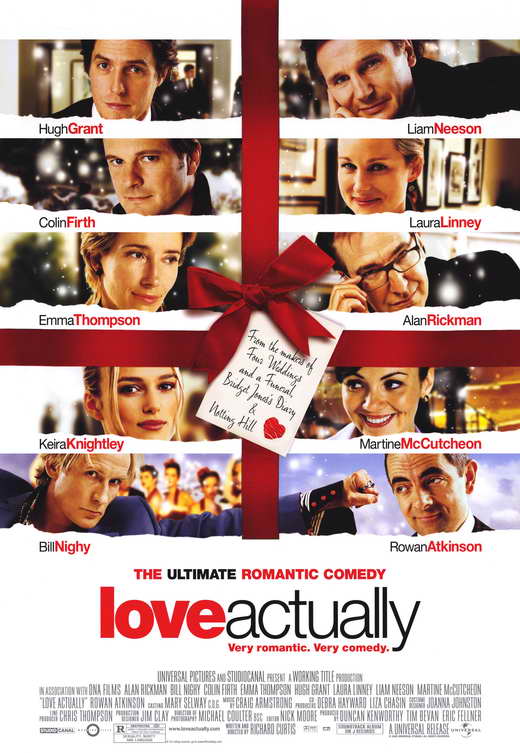
D: Richard Curtis / 135m

Cast: Rowan Atkinson, Thomas Brodie-Sangster, Chiwetel Ejiofor, Colin Firth, Gregor Fisher, Martin Freeman, Hugh Grant, Keira Knightley, Andrew Lincoln, Laura Linney, Heike Makatsch, Kris Marshall, Martine McCutcheon, Lúcia Moniz, Liam Neeson, Bill Nighy, Joanna Page, Alan Rickman, Rodrigo Santoro, Emma Thompson, Billy Bob Thornton

In the weeks leading up to Xmas, several friends and relatives who are all connected to each other find themselves dealing with love in (almost) all its various forms. David (Grant) is the newly elected Prime Minister who finds himself attracted to Natalie (McCutcheon), a junior member of the staff at 10 Downing Street. Mark (Lincoln) is the best friend of Peter (Ejiofor), who has just married Juliet (Knightley) – who Mark is secretly in love with. Writer Jamie (Firth), after being cheated on by his girlfriend, heads to Provence to write his latest novel, and falls in love with his housekeeper, Aurélia (Moniz). David’s sister, Karen (Thompson), begins to suspect that her husband, Harry (Rickman), is having an affair with someone at his work. Meanwhile, one of his other employees, Sarah (Linney), has feelings for her colleague, Karl (Santoro), but doesn’t know how to broach them. Daniel (Neeson), a friend of Karen’s, is a recent widower who’s stepson Sam (Brodie-Sangster) reveals his own life for a girl at his school. John (Freeman) and Judy (Page) are body doubles working on a movie, while Colin (Marshall) dreams of visiting the U.S. where he believes his being British will attract lots of women.

The glue that binds all these characters together, even more so than writer/director Richard Curtis’s excessive generosity in connecting them in the first place, is the character of Billy Mack (Nighy), an aging singer making a comeback with a cover version of The Troggs’ Love Is All Around, retitled Christmas Is All Around. Whenever the movie is spending time with the other characters, Billy is often there in the background, his cheesy monstrosity of a Xmas record and louche behaviour a much needed antidote to the surfeit of sentimentality and saccharine romanticism that peppers the narrative from start to finish. Even the less “happy” storylines – Harry and Karen, Sarah and Karl, Juliet and Mark – are bittersweet entries that are layered with poignancy and hopefulness. But that’s the point of the movie: it’s a positive message of love for everyone. Even if a marriage founders for a moment (Harry and Karen), or love is a case of wrong place, wrong time (Mark and Juliet), or even if it never gets off the ground at all (Sarah and Karl), all the clichés are in place: love will find a way, love is all you need, love conquers all… That Curtis holds it all together and still manages to make it work despite all the plot contrivances and rampant wish fulfillment that threaten to derail it several times over, is a testament to his confidence in the material.

Of course, he’s aided by an accomplished ensemble cast who rise to their individual challenges with gusto and no small amount of charm. Grant’s dance routine, Rickman’s hangdog expressions, Nighy’s inappropriate smirking – all of these character beats and more help to make the movie a feast of feelgood moments that linger like treasured memories long after it’s ended. Curtis may have laid on the romance with a trowel (sometimes it’s like being battered over the head with a dozen red roses), but this is a very, very funny movie with endlessly quotable lines (Colin: “Stateside I am Prince William without the weird family”), visual gags aplenty, and the ability to spring a number of clever narrative sleights of hand when you’re least expecting them. It’s an appealing, but unsophisticated slice of romantic fairy tale excess that’s bolstered by pin-sharp humour, terrific performances, and a refreshing awareness that it all takes place in a fantasy-based “reality” of Curtis’s devising (where else would the US President get such a public dressing down for his behaviour?). Fifteen years on, it remains a perennial favourite at Xmas, and despite an initial lack of enthusiasm on the part of critics, a movie that has transcended any criticism – deserved or otherwise – to become one of those rare movies that can be enjoyed over and over again, and which never seems to grow old or stale with repeated viewings.

Rating: 8/10 – a movie that tells nine separate stories and which does justice to all of them, Love Actually is a moving, thoughtful, and emotional look at love itself and what it means for a variety of people in a variety of situations and circumstances (though notably, not anyone who’s LGBT); comic and romantic in equal measure, it’s a movie you can fall in love with easily and unreservedly (and any movie that contains Jeanne Moreau in a blink-and-you’ll-miss-it cameo has got to be getting things more right than wrong).

Share this:

  • Click to share on X (Opens in new window) X
  • Click to share on Facebook (Opens in new window) Facebook
  • More
  • Click to print (Opens in new window) Print
  • Click to email a link to a friend (Opens in new window) Email
Like Loading...

CBGB (2013)

05 Wednesday Jul 2017

Posted by dullwood68 in Movies

≈ Leave a comment

Tags

Alan Rickman, Ashley Greene, Biography, Blondie, Donal Logue, Drama, Hilly Kristal, Punk, Ramones, Randall Miller, Review, Talking Heads, The Bowery, The Dead Boys

D: Randall Miller / 101m

Cast: Alan Rickman, Malin Akerman, Justin Bartha, Richard de Klerk, Johnny Galecki, Kyle Gallner, Ashley Greene, Rupert Grint, Estelle Harris, Taylor Hawkins, Ryan Hurst, Stana Katic, Donal Logue, Joel David Moore, Ahna O’Reilly, Freddy Rodriguez, Mickey Sumner, Bradley Whitford, Josh Zuckerman

When a movie begins by telling its audience that punk began, not in the UK, but in a basement in New York in 1975, then you can be sure that the story you’re about to be told isn’t going to be too concerned with getting all the details absolutely correct. Admittedly, that’s the prerequisite of any movie portraying real events, but when it takes the time and effort to make such a statement (and such a questionable one at that), then it does tend to make the viewer question the validity of anything else that’s depicted. (That said, if you pay attention to the closing credits there’s an acknowledgment relating to Iggy Pop that’s more than a little relevant to any notions of fidelity to the truth.)

There’s a saying that, “If you remember the 60s, then you weren’t really there”. In truth you could substitute “the 60’s” for “CBGB’s” and the saying would retain the same meaning. And with the screenplay by director Randall Miller and Jody Savin not having been based on an article or a book or a memoir, how factual it all is becomes very much the issue. Because as a remembrance of (mostly) good times past, CBGB is a massive disappointment. This should have been a celebration of a period when underground music was making a bigger and bigger impact on the wider music industry, and helping to shape the future for emerging artists. Instead it quickly defaults into telling a piecemeal tale where CBGB’s owner, Hilly Kristal (Rickman), continuously mismanages the club to the point of near-bankruptcy, scenes revisit the same issues time and time again, characters pop in and out of the narrative with little reference as to why they’re there, and the viewer gets to play Spot the Famous Band Before They Were Famous. And that’s about it.

As an evocation of the late Seventies/early Eighties, CBGB rarely strays far enough away from its Bowery location to give any indication of the musical and cultural changes that were going on elsewhere, and relies on newspaper articles being read out to provide any sense that the club is having any greater impact than at a local level. As a result, the movie maintains an insular and largely passive tone that makes even the more dramatic events – a New York shakedown, band The Dead Boys crashing their tour bus – feel bland and uninteresting to watch. Part of the issue is with Kristal himself, who is portrayed as a man travelling the path of least resistance, and who seems passively intent on ruining the most successful business he’s ever had (when we meet him he’s in bankruptcy court for the second time). While his business partner, Merv (Logue), and daughter Lisa (Greene), continually berate him for ignoring the basics of owning a club (like paying the rent), Kristal floats above it all, oblivious to the risks to the club and focusing on the bands coming through his doors looking for a stage on which to express themselves.

With the main storyline – how did Kristal manage to keep the club open for so long? – failing to provide anything meaningful for the viewer to connect with, it falls to the music to add some flair and excitement to proceedings. However, despite the level of talent that appeared at the club over the years, and despite some very obvious choices – Television, Talking Heads, Blondie, Ramones, The Police – the musical interludes lack for energy, even when Justin Bartha throws himself around as Dead Boys’ singer Stiv Bators. When even the music that’s meant to be celebrated can’t make a difference to things then it’s time to close the club (or shutdown the movie) and send everyone home.

Thanks to the script the performances have no option but to range from adequate to perfunctory. Rickman is on good form in terms of expressing Kristal’s blasé attitude, but it ends up being the whole performance. Everyone else is a secondary character, with Logue, Greene and Hawkins (as Iggy Pop) faring best, and the rest contributing what are mostly extended cameos. Rodriguez is the junkie Kristal gives a kitchen job to, Grint looks out of place as Dead Boys’ bassist Cheetah Chrome (who really cameos as a cab driver), Harris is Kristal’s mother who when told Stiv Bators has been known to jerk off into Hilly’s Chili remarks that she’s “had worse in her mouth”, and Akerman is so stiff as Debbie Harry you’d be happy for the real thing to step in and take over (and despite Harry being seventy-two). When you have such a great cast and they’re given so little to work with, it definitely qualifies as a waste.

As alluded to above, the fault lies squarely with Miller and Savin’s script, and Miller’s direction. With the screenplay lacking purpose, and much of the dialogue sounding like the co-writers’ did a first pass and kept to what they’d written, there are too many occasions where what’s being said seems trivial and/or unlikely given the circumstances on screen. Miller seems unable to inject any verve or energy into proceedings, and the movie trails along in a functional, pedestrian way that saps what little vigour the movie does possess. By the movie’s end it’s hard to work out what the motive was behind making it, but if it was in tribute to Hilly Kristal and his championing of the underground music scene, then it’s unfortunate that his influence is best exemplified by an end credits sequence that shows real-life footage from the 2002 Rock and Roll Hall of Fame Induction Ceremony. Here we get to see Talking Heads accepting their award and inviting Kristal up on stage with them, and then thanking him for his support. Sadly, it’s the most poignant and moving moment in the whole movie.

Rating: 4/10 – lacking a clear purpose and repeating itself too often, CBGB at least has a killer soundtrack to fall back on – and thank heavens for that; less a biopic than a slow trawl through a defining era in the history of rock music, the movie spends too much time trying to define the iconic nature of the club, and in doing so, fails to portray adequately its influence on the wider music scene. (5/31)

Share this:

  • Click to share on X (Opens in new window) X
  • Click to share on Facebook (Opens in new window) Facebook
  • More
  • Click to print (Opens in new window) Print
  • Click to email a link to a friend (Opens in new window) Email
Like Loading...

Eye in the Sky (2015)

25 Monday Apr 2016

Posted by dullwood68 in Movies

≈ Leave a comment

Tags

Aaron Paul, Al-Shabaab, Alan Rickman, Barkhad Abdi, Drama, Drone warfare, Gavin Hood, Helen Mirren, Kenya, Review, Suicide bombers, Terrorists, Thriller

Eye in the Sky

D: Gavin Hood / 102m

Cast: Helen Mirren, Aaron Paul, Alan Rickman, Barkhad Abdi, Phoebe Fox, Aisha Takow, Jeremy Northam, Richard McCabe, Monica Dolan, Iain Glen, Babou Ceesay, Vusi Kunene, Kim Engelbrecht, Laila Robins, Michael O’Keefe, Armaan Haggio, Gavin Hood, Lex King

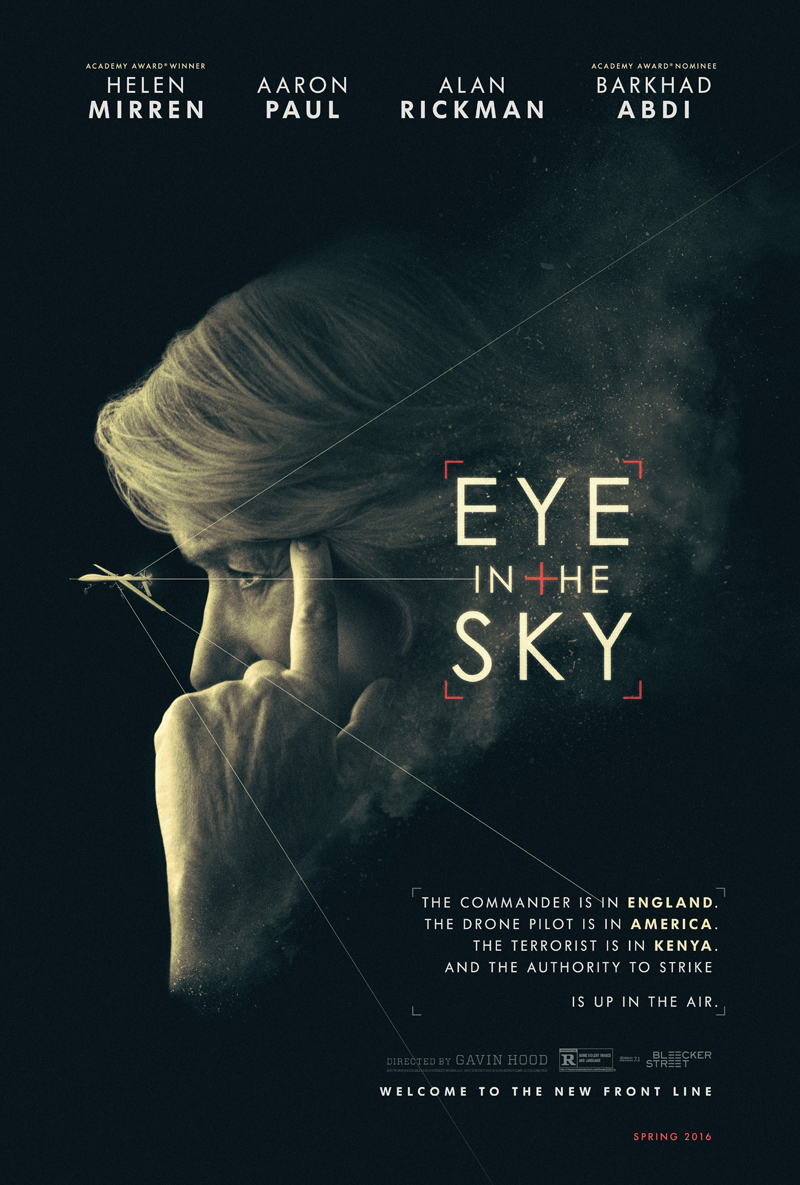
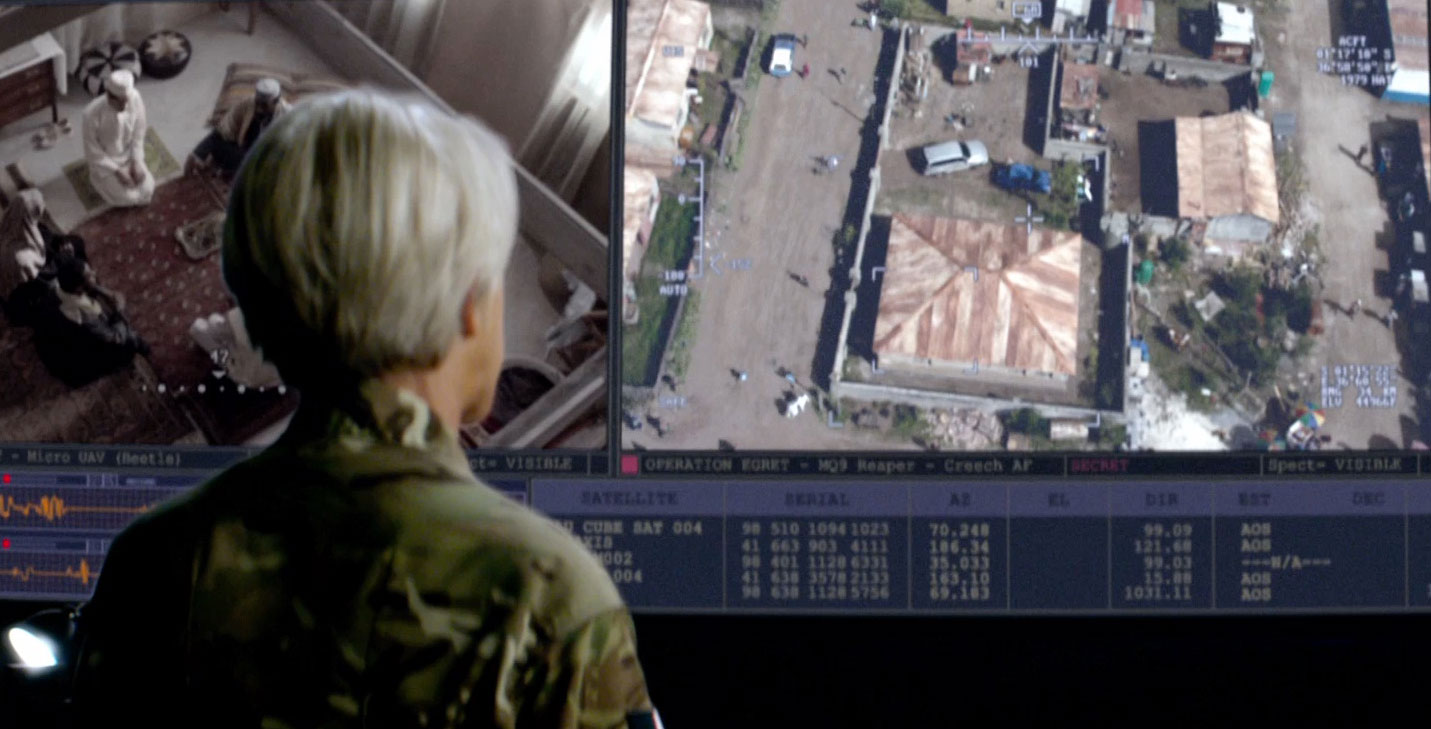
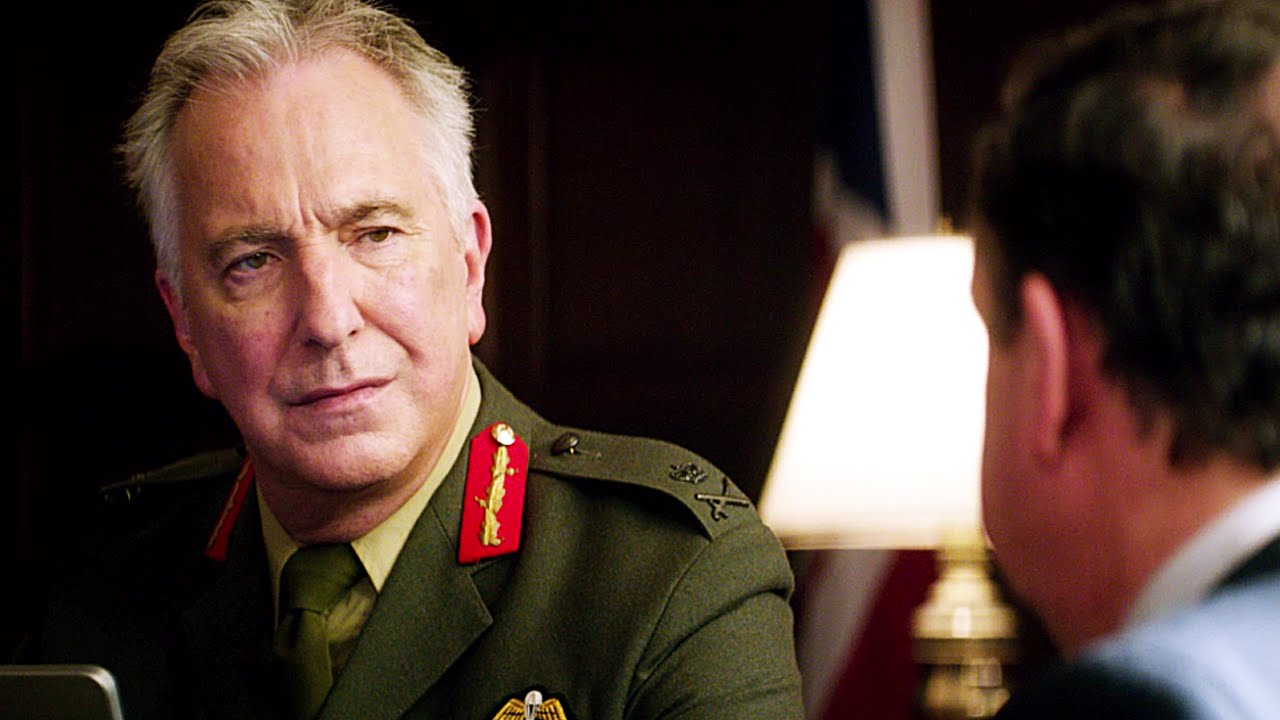
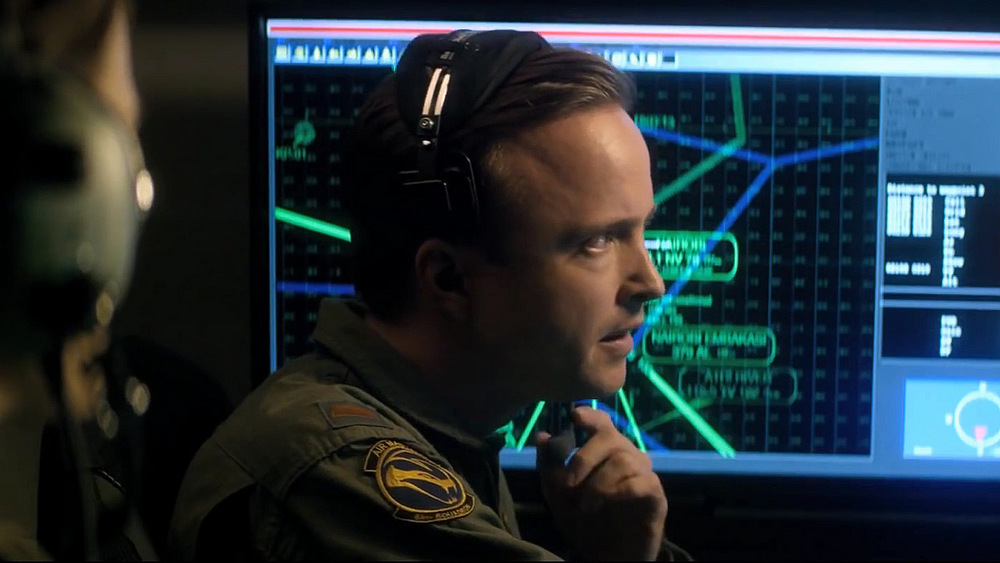
The poster for Eye in the Sky correctly identifies the range of personnel that are involved in its story of a military operation to capture several high profile terrorists from a property in Nairobi, Kenya. The commander is Colonel Katherine Powell (Mirren), the drone pilot is Lieutenant Steve Watts (Paul), and the terrorist is radicalised British woman Susan Danford (King). But the range doesn’t end there. There’s also military facilitator Lieutenant General Frank Benson (Rickman) overseeing things from a briefing room in London’s Whitehall, a target recognition analyst, Lucy Galvez (Engelbrecht), based in Hawaii, and the Kenyan military forces, led by Major Moses Owiti (Kunene), and also in Nairobi. Throw in the British Foreign Secretary, James Willett (Glen), who’s in Singapore, and the American Secretary of State, Ken Stanitzke (O’Keefe), who’s on a trip to Beijing, and you have a movie that relentlessly globe trots in its efforts to up the tension as the original mission to capture Danford and her terrorist allies mutates unavoidably into a strike mission.

The set up is a simple one: intel puts Danford, a member of terrorist organisation Al-Shabaab, her husband, and two recently radicalised young men at a house in Nairobi. Powell’s job is to coordinate the various strands of a US/UK/Kenyan operation to capture them. But things become more complicated when the intended targets move to another Nairobi location, one that’s heavily fortified by Somalian militia. With the drone flying twenty-three thousand feet above the action and unable to see inside the building the terrorists have moved to, the decision is made to send in an FPV, operated remotely by Jama (Abdi), a Somalian member of the Kenyan military forces. With the targets inside the building confirmed, the mission can go ahead, but then the FPV sees something no one was expecting: a room full of explosives and two suicide bomb vests. Now the reason for the terrorist meeting becomes clear: the two young men have been chosen to commit further terrorist outrages.

EITS - scene2

For Powell it’s an open and shut case. With two separate terrorist acts being prepared, the mission has to change, and the drone used to send a Hellfire missile into the building. But Powell finds that getting permission to change the operation’s parameters  is harder than she thought. Benson, overseeing things with members of the British government, explains the need for a kill strike but no one wants to make a decision without it being referred to someone further up the chain of command. And when a young girl, Alia (Takow), arrives outside the compound to sell bread, the moral and political issues surrounding collateral damage come into play – and the terrorists continue their plans.

Make no mistake, Eye in the Sky is a taut, gripping thriller that throws in enough twists and turns to keep viewers on the edge of their seat (or holding their breath) from the moment the terrorists’ plan becomes evident and the politicians start backing away from making a decision that involves the potential death of a young girl. With ethical and moral considerations being thrown around in support of both pushing ahead and stepping down, Guy Hibbert’s script treads a fine line between political expediency and military necessity, and in doing so, provides audiences with a tense, anxious experience that is both intelligently handled and uncomfortably topical.

In doing so though it paints a portrait of UK politicians as indecisive and media-cowed, afraid of making tough decisions unless they’re authorised by someone nearer the top of the political food chain than they are (this is why the UK Foreign Secretary and the US Secretary of State become involved). It’s a little unnerving to see these characters vacillate so much in the face of an established threat, and some viewers may well find themselves feeling frustrated by their behaviour to the point of wishing they were the victims of the drone strike instead. But it still makes for compelling viewing as each round of political manoeuvring fails to solve the problem on the ground, namely, how  can the little girl be moved on, and how can any collateral damage be minimised to an acceptable level.

EITS - scene1

The answers to both these dilemmas are not as cut and dried as some viewers might expect. An attempt to buy up the girl’s bread goes awry, and the level of collateral damage varies depending on where the missile strike hits, but in any case it’s obvious the girl will suffer some form of injury. Knowing this, the back and forth between Powell and the politicians Benson has to deal with becomes an arduous, unpleasant, exasperating stretch of the movie’s running time, and despite feeling contrived for the most part, still maintains the tension needed to keep viewers glued to the screen.

Away from the Brits, Watts’s increasing unhappiness at the way things are developing leads to a further delay in proceedings, but the movie presents this as a positive turn of events, with the plucky Yank standing up to the formidable British Colonel. Whether this would happen in “real life” is debatable – Watts and his co-pilot, Carrie Gershon (Fox) appear far too emotionally affected to be entirely credible – but as another example of the script’s ability to make things as uncomfortable for the audience as possible it also gives the audience a way in in terms of how upsetting this must really be for two characters who will be expected to be back on duty twelve hours later. Alternatively, Powell and Benson’s feelings are best summed up by Benson’s assertion, “Never tell a soldier that he does not know the cost of war.”

EITS - scene3

With drone strikes becoming an increasingly hot topic in terms of modern warfare against terrorists, the movie is both timely and uncompromising. It paints a convincing portrait of the hardware used and the complicity that comes with it, and if the movie ultimately comes down on the side of using it for the greater good – the needs of the many outweigh the needs of the few – then it’s still a convincingly made argument. And thanks to a very well chosen cast, both sides of that argument are given due attention, with Mirren and Rickman giving standout performances, while being ably supported by the likes of Abdi, Northam and Ceesay. In coordinating all this, Hood makes up for Ender’s Game (2013) and X-Men Origins: Wolverine (2009) by keeping things deadly serious throughout, and with the help of regular editor Megan Gill, creates a febrile atmosphere for the mission to exist in.

Rating: 8/10 – a few narrative niggles aside, Eye in the Sky is a provocative, unnerving cinematic experience that never once falters in its intention to keep viewers on the edge of their seats; tense and dramatic, the movie shines a light on the kind of ethical and moral dilemmas that only a select few have to deal with, and reinforces the notion that warfare, whether modern or ancient, is not for the faint of heart.

Share this:

  • Click to share on X (Opens in new window) X
  • Click to share on Facebook (Opens in new window) Facebook
  • More
  • Click to print (Opens in new window) Print
  • Click to email a link to a friend (Opens in new window) Email
Like Loading...

10 Reasons to Remember Alan Rickman (1946-2016)

14 Thursday Jan 2016

Posted by dullwood68 in Movies

≈ Leave a comment

Tags

Actor, Alan Rickman, Career, Movies

Alan Rickman (21 February 1946 – 14 January 2016)

Alan Rickman

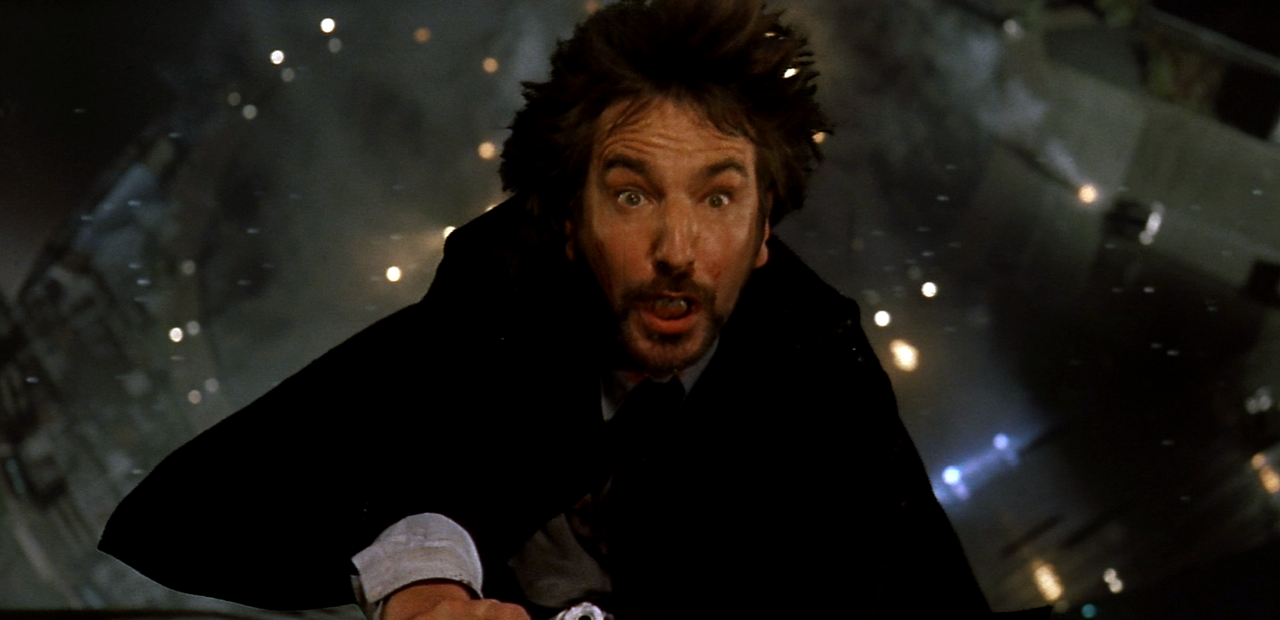
2016 has already seen the deaths of Vilmos Zsigmond and David Bowie, which ordinarily would have been bad enough, but now we have the sad passing as well of Alan Rickman. Rickman was one of Britain’s finest actors with a rich, varied career both on stage and screen, and back when he started out, on TV as well (if you get a chance to see The Barchester Chronicles (1982), you’ll see he’s always been talented). He came late to movies, making his big screen debut in a role that has proven iconic over the years, the immaculately groomed, urbane thief Hans Gruber in Die Hard (1988) (and doesn’t he look great for forty-two?). More villainous roles followed but Rickman was sharp enough to move away from those types of parts and he began making movies that showcased the wide range of skills he had as an actor, even showing on occasion what many believed was a surprising gift for comedy; who can forget the witheringly funny way he would intone “By Grabthar’s hammer” in Galaxy Quest (1999)? For many he will always be Professor Severus Snape from the Harry Potter movies, a role he made his own. You never quite knew what he was going to do in a scene as Snape, and that dangerous energy could be a feature of roles elsewhere. As well as acting he made two movies as a director, the understated yet poignant The Winter Guest (1997) and the romantic period drama A Little Chaos (2014); both are well worth checking out. But what we’ll miss most about Alan Rickman will be his voice, that rich, mellifluous sound that could ooze charm, villainy, passion and disdain in equal measure and still draw you in almost like a character all its own.

Die Hard

1 – Die Hard (1988)

2 – Truly Madly Deeply (1990)

3 – Robin Hood: Prince of Thieves (1991)

4 – Bob Roberts (1992)

5 – Sense and Sensibility (1995)

6 – Galaxy Quest (1999)

7 – Love Actually (2003)

8 – Snow Cake (2006)

9 – Harry Potter and the Deathly Hallows Part 2 (2011)

10 – CBGB (2013)

CBGB

Share this:

  • Click to share on X (Opens in new window) X
  • Click to share on Facebook (Opens in new window) Facebook
  • More
  • Click to print (Opens in new window) Print
  • Click to email a link to a friend (Opens in new window) Email
Like Loading...

Mini-Review: A Little Chaos (2014)

27 Monday Jul 2015

Posted by dullwood68 in Movies

≈ Leave a comment

Tags

Alan Rickman, Drama, France, Helen McCrory, History, Horticulture, Kate Winslet, Landscape gardening, Louis XIV, Matthias Schoenaerts, Period movie, Review, Romance, Stanley Tucci, Versailles

Little Chaos, A

D: Alan Rickman / 116m

Cast: Kate Winslet, Matthias Schoenaerts, Alan Rickman, Helen McCrory, Stanley Tucci,  Steven Waddington, Jennifer Ehle, Paula Paul, Danny Webb

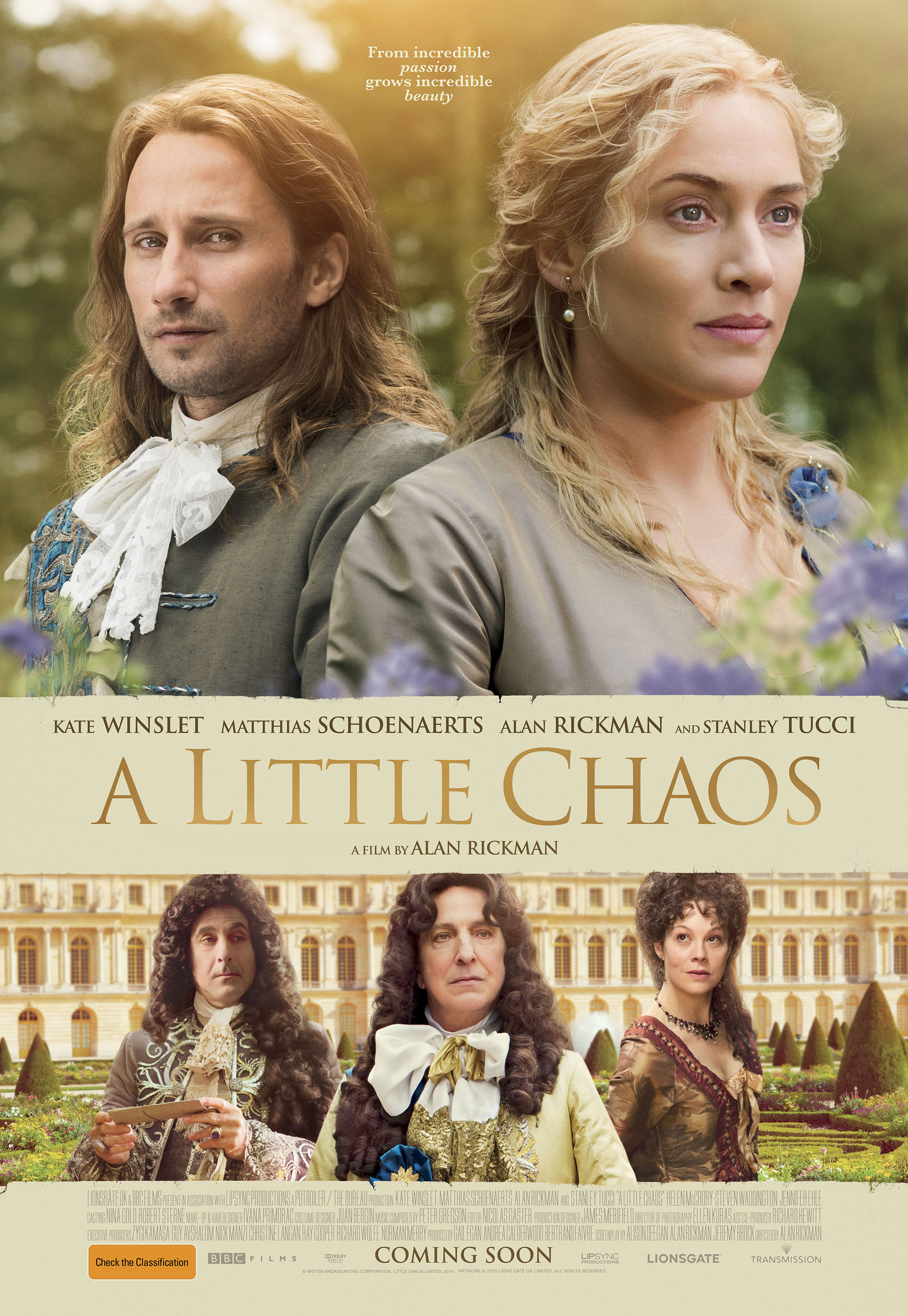
France, 1682. At the behest of King Louis XIV (Rickman), landscape garden designers are invited to submit their designs for the planned new gardens at the Palace of Versailles. Sabine De Barra (Winslet), a widow who has a keen eye for the disruptive yet beguiling influence that disorder can have on a garden, meets with the King’s renowned landscape architect, André Le Notre (Schoenaerts). He is concerned by her attitude and lack of formal training, but he nevertheless hires her to build one of the main gardens at Versailles, the Rockwork Grove.

Sabine begins her work in earnest but is initially hampered in her efforts by the other, male, designers. Le Notre intervenes for her, and as her design begins to take shape, he finds himself increasingly attracted to Sabine, despite his being married. He takes to spending more time with her, something which his wife (McCrory) notices. While Le Notre wrestles with his sense of honour and marital duty, Sabine unwittingly earns the respect of the King, and also his brother, Philippe (Tucci). As the project nears completion, Sabine is invited to attend the King’s court, where her honesty and subtle persuasiveness earns her many friends among the ladies in waiting – all except one, who decides to sabotage Sabine’s design…

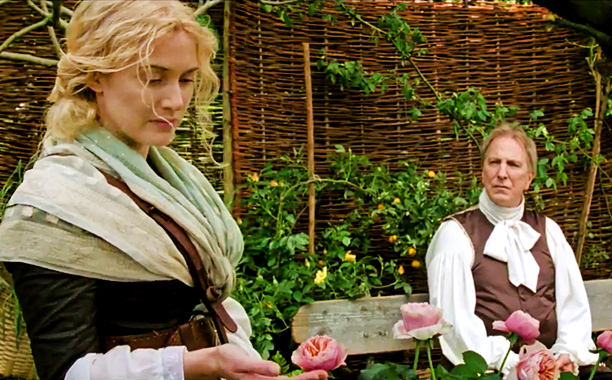
Little Chaos, A - scene

An old-fashioned heritage picture, A Little Chaos – Rickman’s second directorial feature after The Winter Guest (1997) – is a movie that will sit well with anyone who’s seen similar movies from the Thirties, replete as it is with a woman battling against the preconceptions of her gender and the sexism of the times, a romance where convention says the couple should remain apart, and a minimal amount of political intrigue at the King’s court. It’s a pleasant movie to watch, not least because of Winslet’s emotive yet (mostly) carefully detailed performance, and shows Rickman is adept at staging scenes for their maximum emotional effect as well as their visual splendour.

And yet, while the movie has plenty of positives about it, it’s let down by the romantic storyline, with Le Notre and Sabine’s ardour for each other feeling watered down and sounding less than enthusiastically entered into. Schoenaerts never looks entirely comfortable in these scenes, and Winslet too seems unsure of how to play the drama of their situation. In contrast, the scene where Sabine and the King exchange views on gardening and various flowers, is laden with subtext and deliberate innuendo, leaving the viewer with no doubt that, in a different life, the romance would be between them and not Sabine and Le Notre.

Rickman is a generous director when it comes to his cast, and he finds a willing aide in Ellen Kuras’ often stunning cinematography, for the movie is beautiful to look at. And as historical romantic dramas go there’s a degree of humour that helps leaven the seriousness of the story, while Tucci’s flamboyant Philippe gives the movie a much needed boost just as it was starting to sag. And there’s a wonderful, non-intrusive score courtesy of Peter Gregson.

Rating: 7/10 – enjoyable if lacking in any appreciable depth, A Little Chaos is gentle, harmless, and a pleasant diversion from this year’s slew of mega-blockbusters; with Winslet, Rickman and McCrory winning the acting plaudits, this trip back to 17th Century France is an undemanding one but worth seeing nevertheless.

Share this:

  • Click to share on X (Opens in new window) X
  • Click to share on Facebook (Opens in new window) Facebook
  • More
  • Click to print (Opens in new window) Print
  • Click to email a link to a friend (Opens in new window) Email
Like Loading...

My Top 10 Movies – Part Ten

24 Monday Feb 2014

Posted by dullwood68 in Movies

≈ 1 Comment

Tags

Action, Alan Rickman, Bonnie Bedelia, Bruce Willis, Hans Gruber, John McClane, John McTiernan, Nakatomi Building, Review, Terrorists, Thriller

Die Hard (1988)

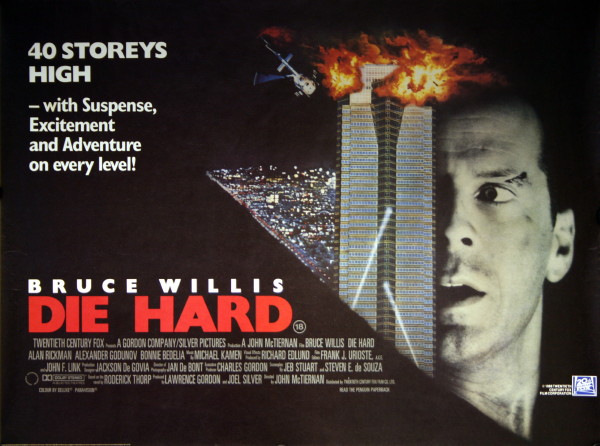
Die Hard

D: John McTiernan / 131m

Cast: Bruce Willis, Bonnie Bedelia, Alan Rickman, Reginald VelJohnson, William Atherton, Alexander Godunov, Paul Gleason, Hart Bochner, James Shigeta

If, like me, you started watching action movies during the Seventies, then you had a plethora of riches.  There was Clint Eastwood’s Dirty Harry series, the stunt-heavy movies of Burt Reynolds, Charles Bronson’s vigilante excursions, and occasional gems such as Dirty Mary, Crazy Larry (1974) and Vanishing Point (1971).  These movies were often gritty and darkly humorous.  The violence in them was often brutal.  They did their best to reflect the times in which they were made, and often there were political overtones that couldn’t be ignored or missed.

This attitude carried on into the Eighties but the introduction of broad humour in movies such as Commando (1985), and the sense of a genre trading on old glories became more prevalent.  For every Southern Comfort (1981) and First Blood (1982) that kept the flame alive, there was a Stroker Ace (1983) or a Missing in Action 2: The Beginning (1985).  Action movies were becoming stale and unimaginative.  It seemed the doldrums had set in, and we would have to wait some time for the genre to see a resurgence, and to reinvent itself.

Instead of a long wait into the Nineties, we only had to wait until 1988, and the introduction of a character created by author Roderick Thorp, New York cop John McClane.  Die Hard came along unheralded and with a star in Bruce Willis who had no proven track record as an action hero.  In many ways it was a risky deal for 20th Century Fox, but it paid off handsomely (even with parts of the script not having been finalised by the time filming began).

For my part, I wasn’t that interested in seeing it.  I knew Willis from TV’s Moonlighting, but had the same feeling about him as everyone else, and the concept didn’t seem to lend itself to an exciting, two-hour thrill ride.  And so I didn’t see it straight away, even when I saw the positive reviews it garnered, and even when friends who’d seen it did nothing but rave about it.  It wasn’t until three weeks had passed that I finally went to see it, expecting to be disappointed, and not looking forward to it at all.

Well, we’re all allowed to get it wrong sometimes, aren’t we?

Die Hard - scene

In fact, I was riveted.  I couldn’t remember the last time I’d been so impressed by an action movie, by the twists and turns, by the cat and mouse games played out between McClane and Hans Gruber (Rickman), by the skill of John McTiernan’s direction, and the sheer exuberance of the action sequences.  Here was a movie that didn’t short change the audience in terms of intelligence, thrills and well-judged humour.  Die Hard was exciting.  I remember still that classic moment where McClane drops the C4 explosive down the lift shaft and blows up one of the lower floors (and a couple of Gruber’s henchmen): not only was it an incredible moment, but it was topped by smarmy reporter Richard Thornberg’s quip to his cameraman, “Tell me you got that”.  I wanted to see that scene again so badly, I’d already decided I was going to stay on and see the movie again.

Over the next two weeks, I saw Die Hard a further three times, and enjoyed it more and more.  I became a majorly annoying convert, extolling the film’s virtues to anyone who’d listen (and a few who wouldn’t).  Aside from the appallingly ill-judged Deputy Chief of Police Dwayne T. Robinson (Gleason), the movie didn’t put a foot wrong.  The relationships were well handled, the characters believable, and the cast were all on top form (even the unfortunate Gleason).  I loved the fact that John McClane was an everyman character, and that Willis imbued him with a vulnerability that the likes of Arnold Schwarzenegger and Chuck Norris would have found beyond their acting abilities.  His self-doubt was a nice change of pace as well.  And, of course, he had the perfect adversary in Alan Rickman’s Hans Gruber, a villain so urbane and charming his very sneer could probably cut glass.  (Rickman steals the movie, as he would three years later in Robin Hood: Prince of Thieves).

When I got my first surround sound system – and Die Hard on DVD – this was one of two movies I used to show how good the system was (the other was The Matrix).  Over the years I’ve watched it countless times, and it’s still as fresh as ever.  It’s also one of the most influential action movies of all time: even now, the Die Hard template is still being used – Olympus Has Fallen, anyone?  And with one of the best catchphrases ever: “Yippie ki-ay, motherfucker”, it’s a movie that will keep on having a great reputation and winning over audiences with each new generation.

Rating: 9/10 – a tense, exciting, action movie that has a down-to-earth appeal amongst the gunfire and explosions; Willis and Rickman elevate the material and make it sing, just like Dean Martin.

Share this:

  • Click to share on X (Opens in new window) X
  • Click to share on Facebook (Opens in new window) Facebook
  • More
  • Click to print (Opens in new window) Print
  • Click to email a link to a friend (Opens in new window) Email
Like Loading...

Blog Stats

  • 486,647 hits

Recent Posts

  • 10 Reasons to Remember Bibi Andersson (1935-2019)
  • Fantasia (1940)
  • Dances With Wolves (1990) – The Special Edition
  • Kiss of the Spider Woman (1985)
  • The Three Musketeers (1973)

Top Posts & Pages

  • Lost for Life (2013) - Another Look
    Lost for Life (2013) - Another Look
  • Lost for Life (2013)
    Lost for Life (2013)
  • About
    About
  • BFI London Film Festival 2015
    BFI London Film Festival 2015
  • Mr. Topaze (1961)
    Mr. Topaze (1961)
  • Shock and Awe (2017)
    Shock and Awe (2017)
  • Hunt for the Wilderpeople (2016)
    Hunt for the Wilderpeople (2016)
  • Cardboard Boxer (2016)
    Cardboard Boxer (2016)
  • Billy Lynn's Long Halftime Walk (2016)
    Billy Lynn's Long Halftime Walk (2016)
  • Winter's Tale (2014)
    Winter's Tale (2014)
Follow thedullwoodexperiment on WordPress.com

Blogs I Follow

  • Rubbish Talk
  • Film 4 Fan
  • Fast Film Reviews
  • The Film Blog
  • All Things Movies UK
  • Interpreting the Stars
  • Let's Go To The Movies
  • Movie Reviews 101
  • TMI News
  • Dan the Man's Movie Reviews
  • Film History
  • Jordan and Eddie (The Movie Guys)

Archives

  • April 2019 (13)
  • March 2019 (28)
  • February 2019 (28)
  • January 2019 (32)
  • December 2018 (28)
  • November 2018 (30)
  • October 2018 (29)
  • September 2018 (29)
  • August 2018 (29)
  • July 2018 (30)
  • June 2018 (28)
  • May 2018 (24)
  • April 2018 (21)
  • March 2018 (31)
  • February 2018 (25)
  • January 2018 (30)
  • December 2017 (30)
  • November 2017 (27)
  • October 2017 (27)
  • September 2017 (26)
  • August 2017 (32)
  • July 2017 (32)
  • June 2017 (30)
  • May 2017 (29)
  • April 2017 (29)
  • March 2017 (30)
  • February 2017 (27)
  • January 2017 (32)
  • December 2016 (30)
  • November 2016 (28)
  • October 2016 (30)
  • September 2016 (27)
  • August 2016 (30)
  • July 2016 (30)
  • June 2016 (31)
  • May 2016 (34)
  • April 2016 (30)
  • March 2016 (30)
  • February 2016 (28)
  • January 2016 (35)
  • December 2015 (34)
  • November 2015 (31)
  • October 2015 (31)
  • September 2015 (34)
  • August 2015 (31)
  • July 2015 (33)
  • June 2015 (12)
  • May 2015 (31)
  • April 2015 (32)
  • March 2015 (30)
  • February 2015 (37)
  • January 2015 (39)
  • December 2014 (34)
  • November 2014 (34)
  • October 2014 (36)
  • September 2014 (25)
  • August 2014 (29)
  • July 2014 (29)
  • June 2014 (28)
  • May 2014 (23)
  • April 2014 (21)
  • March 2014 (42)
  • February 2014 (38)
  • January 2014 (29)
  • December 2013 (28)
  • November 2013 (34)
  • October 2013 (4)

Blog at WordPress.com.

Rubbish Talk

Film 4 Fan

A Movie Blog

Fast Film Reviews

The Film Blog

The official blog of everything in film

All Things Movies UK

Movie Reviews and Original Articles

Interpreting the Stars

Dave Examines Movies

Let's Go To The Movies

Film and Theatre Lover!

Movie Reviews 101

Daily Movie Reviews

TMI News

Latest weather, crime and breaking news

Dan the Man's Movie Reviews

All my aimless thoughts, ideas, and ramblings, all packed into one site!

Film History

Telling the story of film

Jordan and Eddie (The Movie Guys)

Movie Reviews & Ramblings from an Australian Based Film Fan

Privacy & Cookies: This site uses cookies. By continuing to use this website, you agree to their use.
To find out more, including how to control cookies, see here: Cookie Policy
  • Subscribe Subscribed
    • thedullwoodexperiment
    • Join 481 other subscribers
    • Already have a WordPress.com account? Log in now.
    • thedullwoodexperiment
    • Subscribe Subscribed
    • Sign up
    • Log in
    • Report this content
    • View site in Reader
    • Manage subscriptions
    • Collapse this bar
 

Loading Comments...
 

    %d