Although thedullwoodexperiment is primarily (and until now exclusively) about movies, there’s a 10-part TV series showing on Netflix at the moment that should be required viewing for anyone with even a passing interest in horror movies or the horror genre in general. That series is – you guessed it – The Haunting of Hill House. An expansion of the novel by Shirley Jackson, the series tells the story of the Crain family, and their experiences both living in Hill House in the early Nineties, and twenty-six years later when the influence of the house begins to make itself felt again. The story of the Crains is told in non-linear fashion with many scenes told from various perspectives and meshing between the past and the present. It features a terrific cast that includes Carla Gugino, Henry Thomas, Timothy Hutton, Michiel Huisman, Elizabeth Reaser, Kate Siegel, Oliver Jackson-Cohen and Victoria Pedretti as the Crain family, and is the brainchild of Mike Flanagan, the director of Oculus(2013), Before I Wake (2016), and Gerald’s Game (2017).
The series is quite simply one of the best things on TV at the moment: gripping, compelling, scary, finely written and directed (Flanagan directs all ten episodes), and replete with the kind of fluid camerawork that allows for increasing moments of dread in every episode. As the camera spins around the characters, or prowls the corridors and rooms of Hill House, each movement prompts the question, just what fresh horror is going to be revealed next? The series is also one of the finest examinations of the devastating effects that grief and loss can have on individuals that’s come along in a very long while. Alongside themes of mental illness, paranoia, and addiction, this is only occasionally played for laughs, and instead focuses on keeping audiences on the edge of their seats and hiding behind the nearest available cushion. With ghosts and apparitions likely to appear at any time and in any circumstance, watching the show becomes something of a challenge to get through if you’re easily spooked. But it’s definitely worth it. If you haven’t seen it yet, then give it a try – you won’t regret it.
Cast: Asa Butterfield, Gary Oldman, Carla Gugino, Britt Robertson, BD Wong, Janet Montgomery, Gil Birmingham, Colin Egglesfield
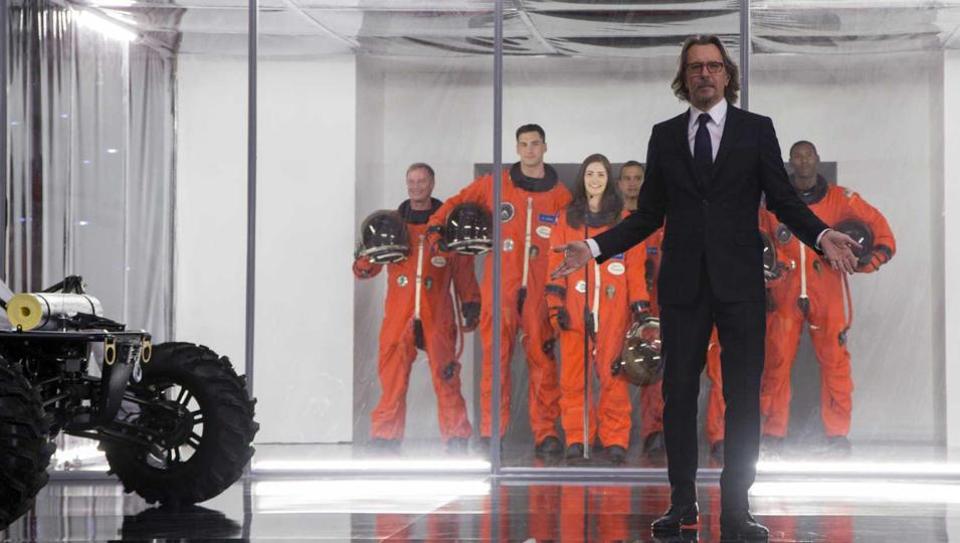
In a strange version of the future that appears to be happening today, space exploration bigwig Nathaniel Shepherd (Oldman) announces the latest mission to Mars, and the crew that are going there to continue the Red Planet’s colonisation. But in one of those “What if?” scenarios that jump start way too many movies, the lone female astronaut, Sarah Elliot (Montgomery), proves to be pregnant. She gives birth to a son on Mars, and promptly dies from eclampsia. And from that moment on, The Space Between Us throws all sense and logic out of the window, and gallops headlong towards absurdity with all the gusto of a starving man at an all-you-can-eat buffet. It’s unsurprising to learn that the movie has been in development in one form or another since 1999, when it was titled Mainland and its central protagonist was a boy born on the Moon. Put in turnaround until it was picked up again in 2014, the basic idea has remained the same – boy born in space wants to visit Earth – but the idea that his physiology would be compromised, perhaps fatally, has also remained. Tough break for the kid, huh? Just don’t think it about it too much, though – no, really, don’t.
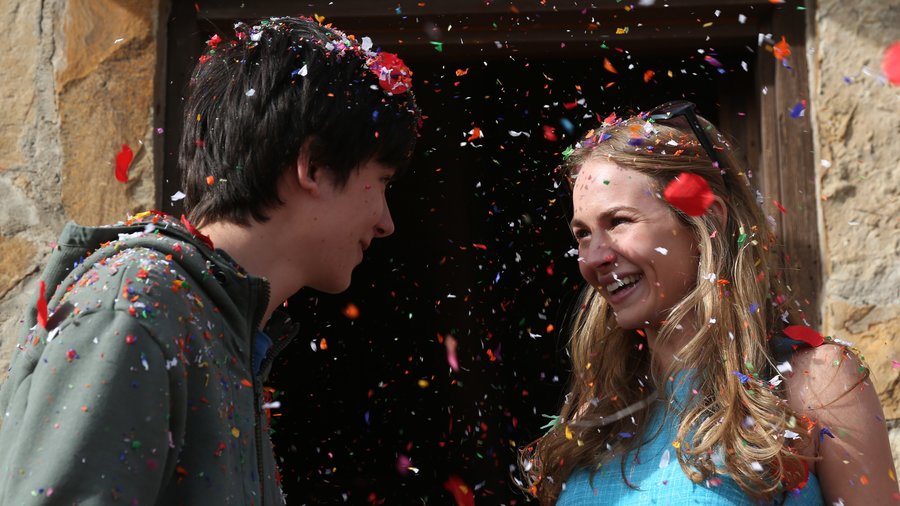
The Space Between Us is a movie that wants to tell its cute romantic story against a backdrop of new-fangled technological advancement and old school moral dilemmas. It’s a movie that bounces from scene to scene with no clear through line, and which lets its lovers on the run scenario get sillier and sillier as Gardner and his only friend on Earth, Tulsa (Robertson), avoid capture by stealing cars at every turn staying one step ahead of a pursuing Shepherd and astronaut-nominally-playing-stepmother-to-Gardner Kendra (Gugino) (with all the technology at Shepherd’s disposal you wonder how he’s so bad at catching up to them). Gardner’s mission on Earth is to find his father, something that should be easy enough as he has a photo of the man with his mother, but the script throws huge curve balls in the way of this, including a detour to a shaman (Birmingham), and a sidetrip to an ER where Gardner’s bone implants (don’t ask) barely register as a concern. And along the way, Gardner gets a crash course in human relationships including how not to sound weird, and losing your virginity (not to be funny, but does anyone remember that Eighties movie, Earth Girls Are Easy?).
There are far too many moments and scenes where the average viewer will be asking themselves, Really? Most of them involve Oldman, whose performance can best be described as desperately seeking relevance. Stuck with some of the movie’s worst dialogue, the more than capable Oldman has no redress against the inanities of both the script and his character. It’s a similar situation for Butterfield, playing a role that requires him to be a science whizz on the one hand but one who’s learned absolutely zero social skills while growing up on Mars (yes, he’s smart and dumb at the same time). Gugino and Robertson have interchangeable roles once you take out the sex, and everyone else has no option but to go along with it all and hope for the best. In the director’s chair, Chelsom keeps things moving in the haphazard way the script (by Allan Loeb) dictates, but he appears to lose interest early on, while Barry Peterson’s sharp and detailed cinematography proves to be one of the movie’s few blessings. At several points, Gardner asks people, What’s your favourite thing about Earth? One answer seems obvious: being able to avoid seeing this inane, stupid movie.
Rating: 3/10 – with its tortured science (just think about the environment Gardner has been living in since birth and ask yourself, would he really suffer on Earth?), and equally tortured YA theatrics, The Space Between Us is a movie that trips over itself continually in its efforts to tell a coherent, relatable story; a waste of everybody’s time and effort, the hint should have been taken back in 1999 when rewrites on the original Mainland script proved unworkable.
Cast: Carla Gugino, Bruce Greenwood, Henry Thomas, Chiara Aurelia, Kate Siegel, Carel Struycken
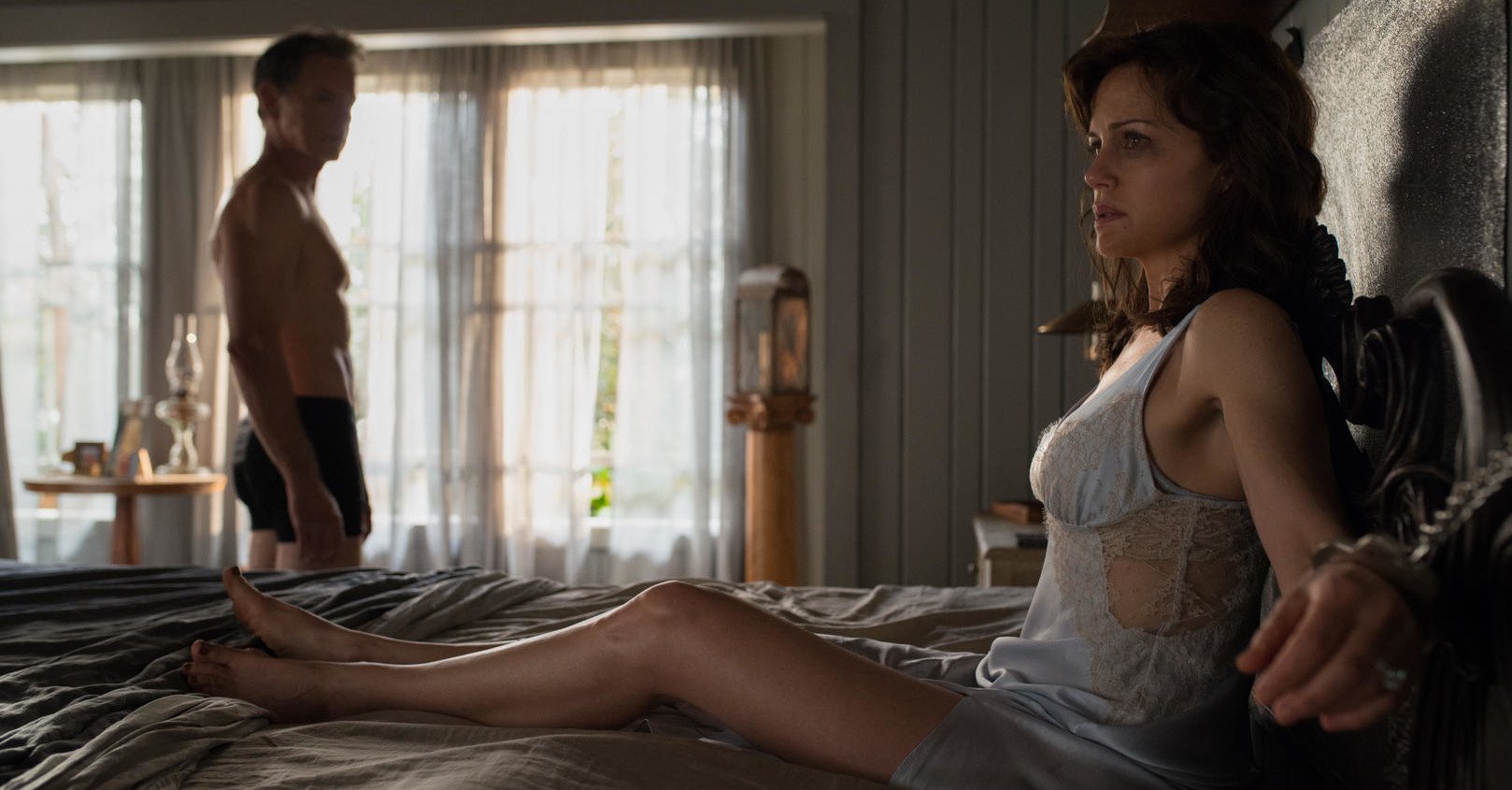
And so we have another Stephen King adaptation, the third within two months after The Dark Tower and It, and a movie that falls somewhere in between the two in terms of quality. Gerald’s Game may not be as bad as The Dark Tower, but it’s certainly nowhere near as good as It. But what it is, is a huge disappointment, one that forgets the cardinal rule when adapting one of King’s novels: that all the interior stuff that King does so well, doesn’t translate well to the screen. Unfortunately, that’s what takes up most of King’s novel, as unhappy wife Jessie Burlingame (Gugino) finds herself handcuffed to a bed while her previously equally unhappy husband, Gerald (Greenwood), lies dead on the floor from a heart attack. The one major problem? They’re at a deserted lake house, and no one’s likely to happen by any time soon. In fact, it might be a week or more before anyone shows up. And by then? Well, if Jessie doesn’t find a way out of her predicament, then whoever does show up is likely to find two dead bodies for the price of one.
And there you have it: the plot in a nutshell. It’s a slight plot, very simple in its nature, and if you were to make a movie based purely on that plotline and nothing else, you’d have a very short movie (and King would most likely have written a short story). But King wrote a novel, and he gave Jessie an abusive childhood (one more example of his parents as monsters motif) that enabled the basic plot to be expanded upon and Jessie’s plight made all the more resonant for highlighting how trapped she’s been throughout her life, first as a protector to her sister, and then as a trophy wife. More importantly, King is very good indeed at exploring the interior lives of his characters. But again, how King writes, and the detail he provides, doesn’t translate well to the (on this occasion small) screen. But director Mike Flanagan – who gave us the better than average Oculus (2013) and the entertaining if flawed Before I Wake (2016) – along with his fellow screenwriter, Jeff Howard, opts to include Jessie’s back story, but ends up having far more trouble connecting it to her present situation than perhaps should be the case. What the viewer is left with, is a movie that plays connect the psychological dots, but which manages to leave out some of those very same dots.
The basic set up is one we’ve seen many times before, both in novels and the movies, with a couple whose marriage isn’t working as well as it used to (if it did at all), trying to “spice things up in the bedroom” as way of improving things. But it’s obvious from the start that Jessie isn’t as confident about this as Gerald is, and when things become uncomfortable for her she calls a halt. But she’s already handcuffed to the bed, and after a short marital spat where a number of home truths are laid out on both sides, Gerald has a heart attack and dies (let that be a lesson to hypertensives who take Viagra). Cue Jessie having conversations in her head that are shown as hallucinations. Gerald keeps returning to tell her just how bad her situation is, and how unlikely it is that she’ll survive, while she also conjures up a version of herself who is more supportive and willing to do a bit of problem solving in order to keep Jessie alive. Both “characters” function as a part of Jessie’s psyche, which is fractured enough (and very quickly thanks to the demands of the script), but the repetitive nature of their dialogue soon becomes tiring, and any impact they initially have from “being there” disappears just as quickly as they show up.
From this we head off into Jessie’s childhood and the abuse she suffered at the hands of her father, Tom (Thomas). But Flanagan and Howard don’t quite know how to equate the abuse she suffered with the way in which Jessie behaves as an adult; the two don’t connect in a way that would make Jessie’s current predicament that much more affecting. In the end, the movie seems to be more about laying to rest the ghosts of Jessie’s childhood. And once that’s done, then it can get back to the small matter of Jessie being handcuffed to the bed. With that having been decided on, it’s left to Gugino to look increasingly awful thanks to dehydration, and to use an incident from her childhood to spark an idea as to how she can free herself. (Those familiar with the novel may be pleased/repulsed to know that King’s solution has been retained – and it’s not for the squeamish.)
Along the way there’s the added danger of a hungry stray dog who takes a liking to Gerald’s body and who might want to have a taste of “fresher meat”, and a mysterious presence, the Moonlight Man (Struycken), who may or may not be real. The problem with these elements, and many more besides, is that they are all signposted long before they become unveiled, and any suspense is squashed before it has a chance to make itself felt. Consequently, there is very little tension in the movie, and the pacing is erratic, with whole scenes feeling flat and pedestrian in nature. When the movie does pick up the pace, it’s only fleeting, but it still feels as if Flanagan hasn’t got as firm a grip on the material as he should have. He’s not helped by the performances of Gugino and Greenwood, which are serviceable at best, and often hampered by some unappealing dialogue (kudos to Greenwood though: he looks great for sixty-one).
Somewhat predictably, the script can’t help but throw in some referential dialogue to other works by King – the dog is referred to as “Cujo”, Gerald tells Jessie “all things serve the beam” – and there are moments when the promise inherent in the material threatens to break out, particularly with the Moonlight Man, but the wordplay is allowed to dominate, making this a movie that stops on several occasions to allow for lengthy speeches and broad declarations of how bad Jessie and Gerald’s marriage had become, or Jessie’s feelings about her childhood. Flanagan manages the odd flourish here and there, and visually it’s quite robust despite its mostly single set restrictions. There’s also a simple, yet evocative score by the Newton Brothers that does its best to amplify the emotional and psychological components of the script without making them too heavy handed. Good as these things are, though, they’re not enough to prevent Gerald’s Game from being a bit of a letdown.
Rating: 5/10 – yet another King adaptation that could have been a whole lot better, Gerald’s Game is a movie that only occasionally delivers any suspense or tension, and which concentrates more on its central character’s mental health than on tightening the structure of the main plot; earnest and a little bland (and despite the basic premise), this should be a tour-de-force of acting and directing, but instead it falls down way too often to provide the impact it needs.
Cast: Dwayne Johnson, Carla Gugino, Alexandra Daddario, Paul Giamatti, Ioan Gruffudd, Archie Panjabi, Hugo Johnstone-Burt, Art Parkinson, Will Yun Lee, Kylie Minogue
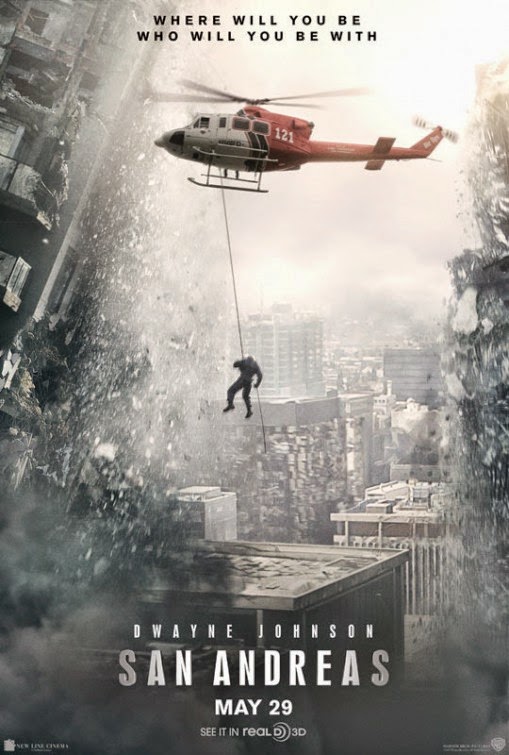
Ray Gaines (Johnson) is a helicopter rescue pilot with the Los Angeles Fire Department, separated from his wife Emma (Gugino), but on very good terms with his daughter, Blake (Daddario). He plans to take a few days off to spend some time with her in San Francisco, but he has to shelve those plans when an earthquake destroys the Hoover Dam, and he’s called back to work. In apologising to Blake, he learns that Emma is planning to live with her new boyfriend, property developer Daniel Riddick (Gruffudd). Daniel suggests taking Blake to San Francisco himself and they leave soon after.
While Ray takes part in various rescue missions, seismologist Lawrence Hayes (Giamatti) – who was at the dam when it broke – is becoming increasingly worried that that earthquake was just a precursor to a series of much bigger, much more devastating ones. When one such earthquake strikes Los Angeles, Emma finds herself in a high rise building having lunch with Daniel’s sister, Susan (Minogue). As the quake hits she’s talking to Ray on the phone; he tells her to get to the roof and he’ll come and rescue her. Further quakes strike towns and cities up and down the California coast, including San Francisco. With Emma safe on board his helicopter, Ray receives a call from Blake: she’s trapped in a car in the basement of Daniel’s office building and it’s about to collapse.
Ray and Emma decide they have to try and rescue Blake, but the helicopter they’re in develops a fault and they crash land in Bakersfield. Managing to commandeer a plane, they continue on to San Francisco. Meanwhile, Blake has been rescued by a British engineer she met earlier at Daniel’s offices. Ben (Johnstone-Burt) and his younger brother Ollie (Parkinson) stay with Blake as she works out a way to let Ray know she’s okay. When she does he tells her to meet him in a particular place that has a special meaning to both of them. But it’s not possible for her to get there, so she heads for Daniel’s latest high rise development instead. Ray and Emma parachute out of the plane and land in San Francisco; when they realise Blake can’t get to the rendezvous site, they also discover that a tsunami is coming that will swamp the city. And when it does, Blake, Ben and Ollie find themselves trapped in Daniel’s building with the waters steadily rising, and Ray and Emma having no idea of where they are…
A disaster movie – the moviegoer’s guilty pleasure – should always favour spectacular destruction over coherent plot, story or characterisation. It should feature enough devastation to leave the viewer slack-jawed in admiration at what the special effects wizards can achieve. It should cater to that part of us that slows down to look when we pass a road accident. And above all, it should show us something that we might all experience some day, regardless of how safe we might feel in our own little corner of the world.
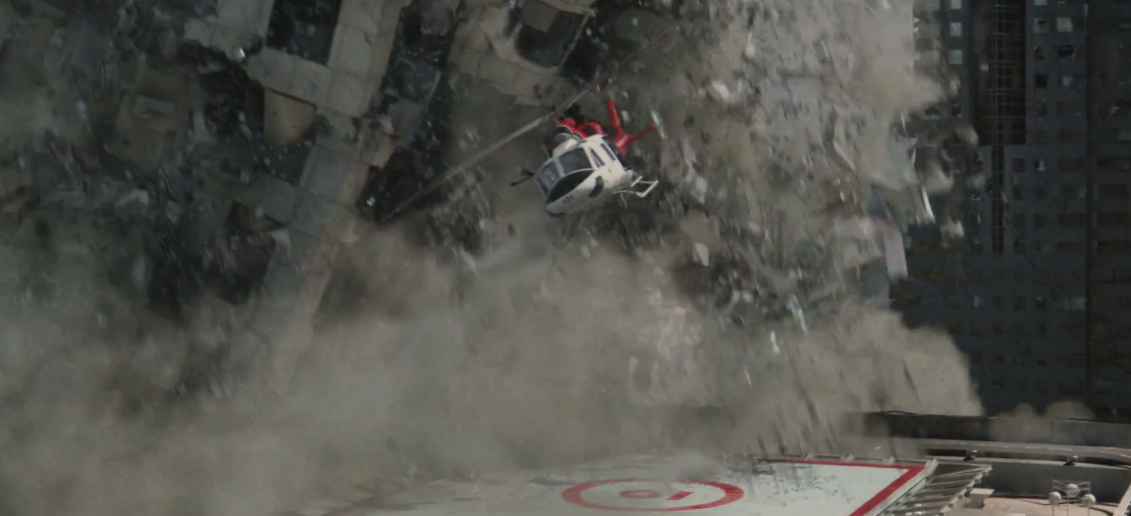
San Andreas should give us all that and more. But instead it’s a curiously bloodless affair, full of moments where the cast look awestruck at some fresh new aspect of the disaster around them, and where Hayes’ doom-laden dialogue hypes the destruction to near-apocalyptic levels. There are some impressive shots it’s true, but some – such as the awkward destruction of the Golden Gate Bridge – seem too absurd to appear feasible, or are rendered in such a way that the wow factor plays second fiddle to any plausibility. This might not be too much of a concern though if what we’re witnessing is something new, but the devastation wrought in the movie, while impressively mounted, has been done elsewhere already, and San Andreas, while promising the mother of all earthquakes from very early on – one that will be felt “on the East Coast” – actually falls short of doing so.
Instead, what we have is a tale of a family’s determination to survive against all the odds, and in Ray’s case, without regard for the job he does. Once the earthquake hits Los Angeles and all points Californian, Ray becomes a solo pilot, where before he’s been part of a four-man team. He rescues Emma and then jettisons any notion of helping others with a quick “we have to find our daughter” (not that anyone’s trying to contact him with any instructions or requests for help). He’s reckless as well, putting himself and Emma in harm’s way time after time: let’s crash the helicopter in a clothing store, let’s parachute out of a plane, let’s head into the swell of an oncoming tsunami – the more dangerous the action, the more determined he seems to tackle it. In a different kind of movie, Ray would be an adrenaline junkie with a death wish; here, he’s a big-hearted father who’s doing the best he can (gosh darn it!).
It’s a good thing then that Johnson is more than capable of helping the viewer ignore or forget these contradictions, putting in an emotive performance that sees him remind everyone why he’s the go-to guy for this kind of big-budget nonsense. Whether he’s ripping car doors off their hinges, or holding his breath underwater for minutes at a time, Johnson’s amiable muscularity fits the needs of the script admirably, even when Ray is called upon to relive a past tragedy. As a chip off the old block, Daddario provides an earnest counterpoint to Johnson’s grim-faced determination, while Giamatti bleeds sincerity as the tormented seismologist who saw it all coming. Spare a thought however, for Gugino – along for the ride and little else – and Gruffudd – asked to become a prick in the space of a nano-second. Both actors are ill-served by Carlton Cuse’s ill-focused screenplay, as is Johnstone-Burt, who’s called upon to play the kind of stereotypical good-natured bumbling Brit who sounds like minor royalty.
Behind the camera, Peyton orchestrates all the mayhem with a good eye for packing the frame with as much incident as possible, and there’s an effective score from Andrew Lockington that supports the action without overwhelming it. Fans of the disaster genre will particularly approve of the many building falling into/against/onto other building shots, and the refreshingly practical effects work used to show that a movie of this sort doesn’t have to be all digital. Others, though, may look at all the devastation and wonder, why does a lot of it have problems with scale?
Rating: 6/10 – while it’s enjoyable in a big dumb leave-your-brain-at-the-door kind of way, San Andreas has a script that features enough fault lines to warrant a warning sign all its own; a movie where the spectacle never quite inspires the awe or wonder it needs to, it fits neatly into the category of guilty pleasure but without really doing too much to earn its place there.
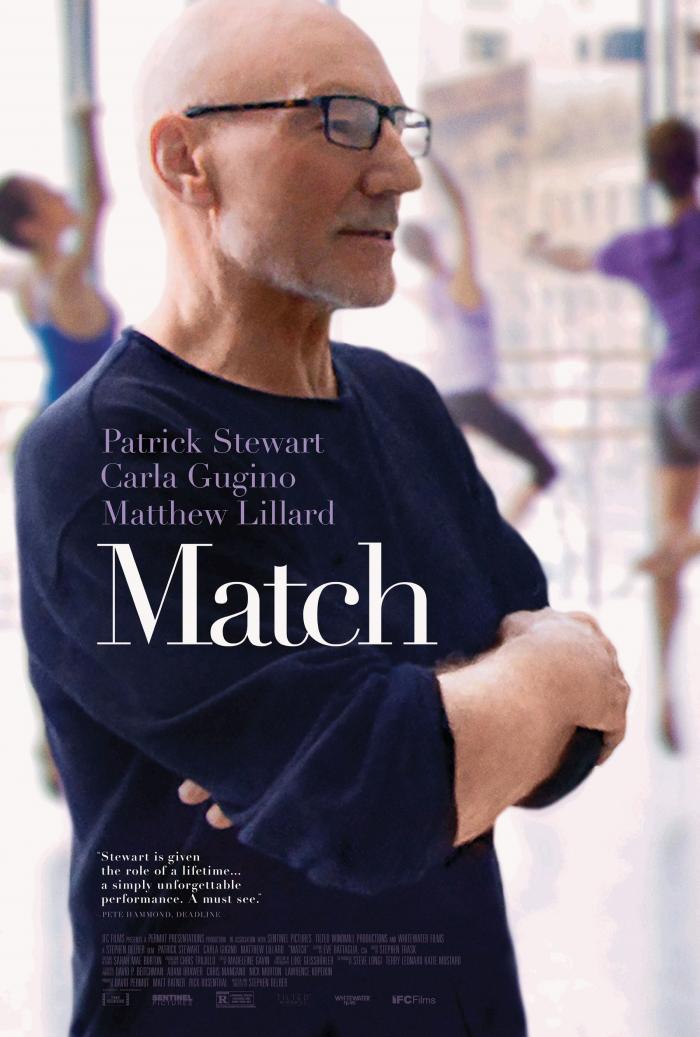
Cast: Patrick Stewart, Carla Gugino, Matthew Lillard, Jaime Tirelli
Tobi Powell (Stewart) is an aging ballet instructor at Juilliard. He’s a lonely man, given to rejecting offers of friendship from his colleagues, and he lives by himself in an apartment in New York’s Inwood hamlet. Despite this he agrees to give an interview to Lisa Davis (Gugino) who is writing a dissertation on the dance community during the Sixties. Accompanied by her husband, Mike (Lillard), the three meet in Tobi’s favourite Greek diner. Lisa is bright and attentive to Tobi’s flamboyant personality, while Mike is more reserved. The interview continues at Tobi’s apartment, but Mike, who is ostensibly there to support his wife, begins to ask more pointed questions about the Sixties and in particular, Tobi’s sexual liaisons.
Tobi is initially perplexed by Mike and Lisa’s focus on the sexual mores of the period until they mention the name of a dancer he knew called Gloria Rinaldi. Tobi had a brief affair with her in the latter part of 1967, but she gave up a potential career as a dancer to have a child. That child is Mike and he thinks Tobi is his father. Tobi denies being this and tells them both that it would have been impossible as he always wore a condom in those days. Mike doesn’t believe him and becomes aggressive; Tobi asks them both to leave. Instead, Mike refuses and pins down Tobi so he can take a DNA swab from Tobi’s mouth. Having got what he came for, he leaves, but not before Lisa has made it clear that she’s unhappy with the way things have gone.
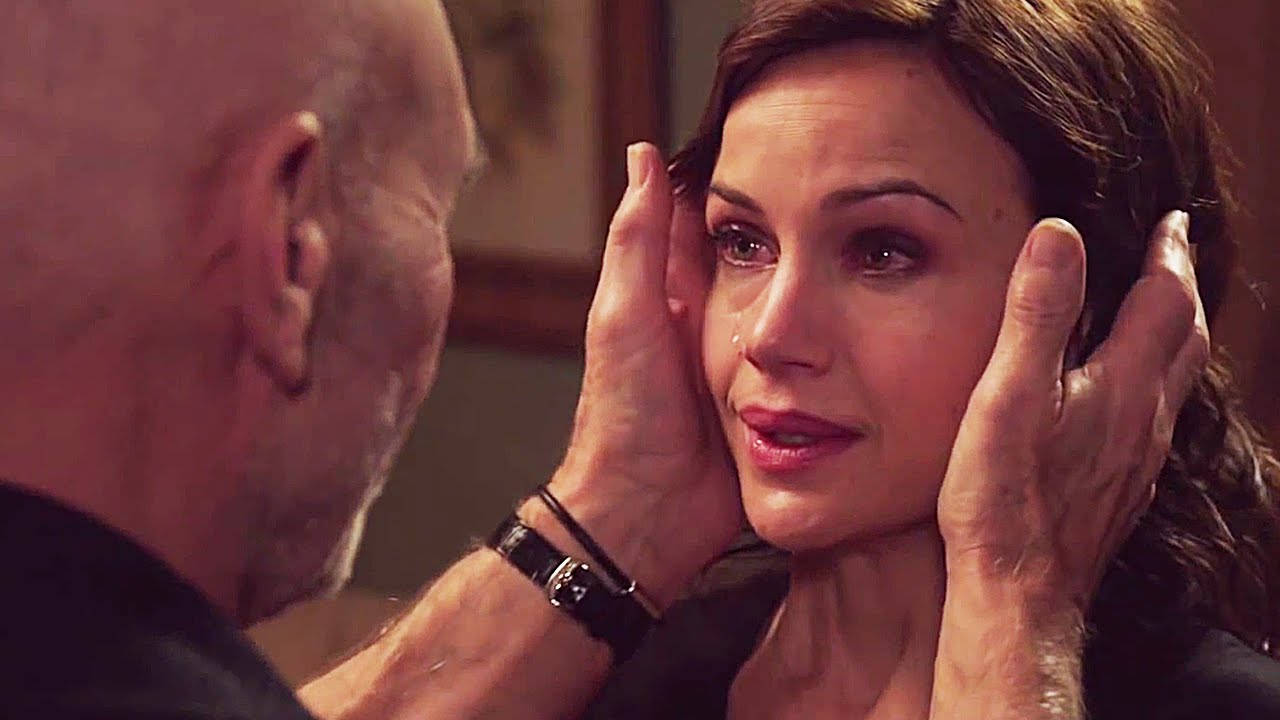
While Mike heads for a nearby forensics lab where a friend works, Lisa stays with Tobi and they begin to bond over prune pastries and Tobi’s love of knitting. He lets her know he can see the cracks in her marriage to Mike, and Lisa admits Mike has become a different man in recent months as the idea of finding and confronting Tobi has eaten away at him. Moved by Lisa’s honesty, Tobi shows a newspaper clipping he’s kept from when Mike was fifteen and he’d taken part in a fencing competition. He reveals that he knew Gloria was pregnant and that she asked him to be the child’s father but he refused; instead he decided to focus on building his career. And when he saw the newspaper clipping he sent Gloria a sum of money towards Mike’s college fund. But with all this he still can’t be Mike’s father: it’s all too late.
When Mike returns to the apartment, both men are forced to confront some unpleasant truths about each other, while Lisa is left to hope that some degree of reconciliation can be found.
Originally a stage play by writer/director Belber that opened in 2004 (and featured Frank Langella, Jane Adams and Ray Liotta as Tobi, Lisa and Mike respectively), Match still retains the look and feel of a stage play and the type of staging that betrays its theatrical origins. That’s not an entirely bad thing, but it does contribute to several occasions during the narrative where certain developments feel artificial and/or forced.
There’s always a degree of contrivance that accompanies a theatrical adaptation, and Match is no exception. In opening out his play from the constraints of Tobi’s apartment, Belber has chosen to also constrict it (the play ran half an hour longer), and while this possibly helps, there is still a sense that the story gets a little rushed once the trio reach Tobi’s humble abode. Following a number of flamboyant embellishments to his answers, and as many sidetrack comments as he can muster, Tobi is side-swiped by Mike’s bullish demeanour, and while there’s an argument that the movie needs to pick up some speed – and get to the crux of the matter – by this point, it’s done in such a clumsy way that Belber’s careful character building is given the cinematic equivalent of a knee-capping.
From here on until the end of the movie, Match struggles to regain the momentum it has carefully built up, and the characters’ attempts at connecting with each other become more unlikely and more laboured. Tobi and Lisa at one point have a discussion about the pleasures of giving and receiving cunnilingus, as unlikely a conversation as any that two strangers would have within a couple of hours of meeting. They go through Tobi’s collection of self-made knitwear and go up to the roof where Tobi tries to get Lisa to dance. It’s uncomfortably like a courtship, and despite Tobi’s obvious homosexuality, these events still provoke an uncertainty about Belber’s motives in putting these two characters together for so long. And when Mike returns, his confrontation with Tobi is resolved – with admirable speed, but at the expense of a fair degree of credibility.
With the narrative proving unwieldy and uneven, it’s a good thing that Belber has chosen well with his cast. Tobi is the kind of camp, peacockish character that an actor of Stewart’s calibre can bring to life with the twitch of an eyebrow, or the shake of a scarf. He dominates the movie, revelling in Tobi’s arch, semi-pretentious musings, his passion for life at odds with his self-enforced solitude, and still having an insatiable curiosity about the lives of others. It’s a performance that appears effortless, and Stewart is hypnotic throughout, smoothing over the cracks in Belber’s script with a well-timed expression here and a well-considered line reading there. He’s ably supported by Gugino, though Lisa appears largely out of her depth in the situation, two steps away from being entirely subordinate to her husband. When Tobi recognises the problems in their marriage, Gugino shows Lisa to be a woman looking for the answers to questions she hasn’t thought of, and displays the character’s sad-hearted vulnerability with admirable understated precision.
Unfortunately for Lillard, Mike is required to be a kind of aggressive deus ex machina, bulldozing his tight-lipped way through Tobi’s rambling reminiscences and being unnecessarily abusive to Lisa. It’s a dangerously underwritten part, but Lillard manages to salvage some of the pent-up sadness and disappointment Mike has been feeling throughout his life, and he makes it all the more evident when he challenges Tobi’s assertion that Gloria chose her life.
Belber proves to be an erratic director, depending too much on close ups to impart sincere emotion, and never quite knowing where to place the camera in Tobi’s apartment, leading to some odd framing that sees the characters either squeezed into shot and/or suffering a kind of temporary dismemberment. The scene at the forensics lab is dramatically unnecessary (but does remind us that Mike is still part of the story), and the ending, while entirely predictable, is an example of the way in which Belber wants to both punish and celebrate Tobi’s decision all those years ago, but can’t make up his mind which is the more appropriate.
Rating: 6/10 – with strong, committed performances from its main cast, Match maintains the audience’s interest despite some clumsy, ill-considered plot developments and a sense that it’s all a bit too overwrought for it’s own good; the fact that it’s taken ten years to reach the screen may give potential viewers enough of a warning, however, not to expect too much.





 thedullwoodexperiment