• 10 Reasons to Remember…
  • A Brief Word About…
  • About
  • For One Week Only
  • Happy Birthday
  • Monthly Roundup
  • Old-Time Crime
  • Other Posts
  • Poster of the Week
  • Question of the Week
  • Reviews
  • Trailers

thedullwoodexperiment

~ Viewing movies in a different light

thedullwoodexperiment

Tag Archives: Chicago

Widows (2018)

08 Thursday Nov 2018

Posted by dullwood68 in Movies

≈ 1 Comment

Tags

Chicago, Colin Farrell, Crime, Cynthia Erivo, Drama, Elizabeth Debicki, Literary adaptation, Michelle Rodriguez, Review, Steve McQueen, Thriller, Viola Davis
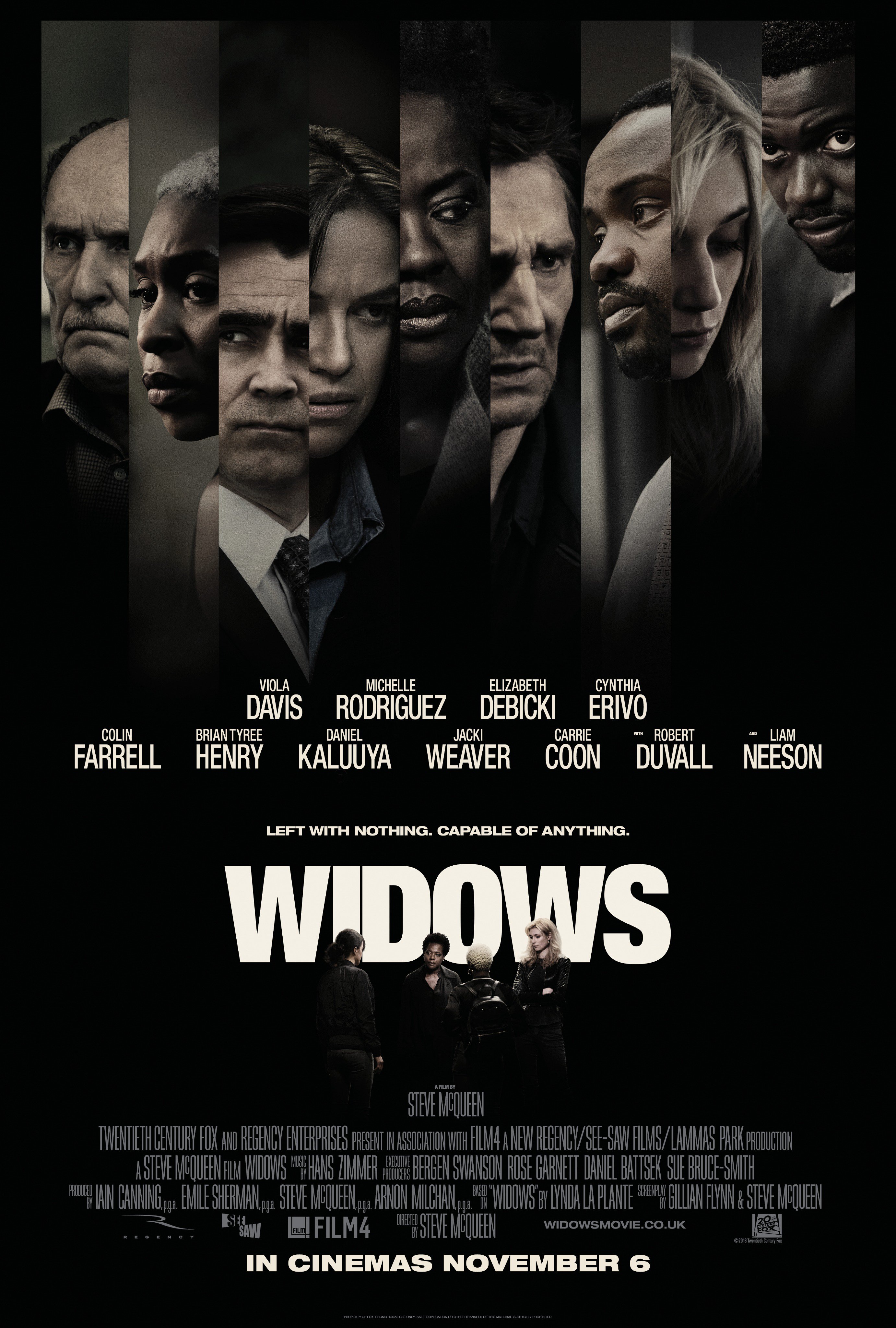
D: Steve McQueen / 130m

Cast: Viola Davis, Michelle Rodriguez, Elizabeth Debicki, Cynthia Erivo, Colin Farrell, Brian Tyree Henry, Daniel Kaluuya, Carrie Coon, Garret Dillahunt, Lukas Haas, Kevin J. O’Connor, Jacki Weaver, Matt Walsh, Adepero Oduye, Robert Duvall, Liam Neeson

In the wake of her husband’s death in a heist gone wrong, Veronica Rawlings (Davis) finds herself in a whole lot of trouble. Her husband, Harry (Neeson), along with three of his friends – all career criminals – stole two million dollars from gang boss Jamal Manning (Henry), and though his money is gone, he expects Veronica to pay him back within a month. With no money of her own, and only a notebook Harry left her that gives details of his previous heists – and the one he had planned next – Veronica decides her only option is to contact the wives of the other men in Harry’s gang, and persuade them to help her carry out his next robbery, which will net them a cool five million. Two of the women, Linda Perelli (Rodriguez) and Alice Gunner (Debicki), agree to help, but the fourth, Amanda (Coon), isn’t interested. Needing four of them to carry out the heist, Linda recruits her babysitter, Belle (Erivo). They move forward with the plan, but are unaware that they’re being watched…
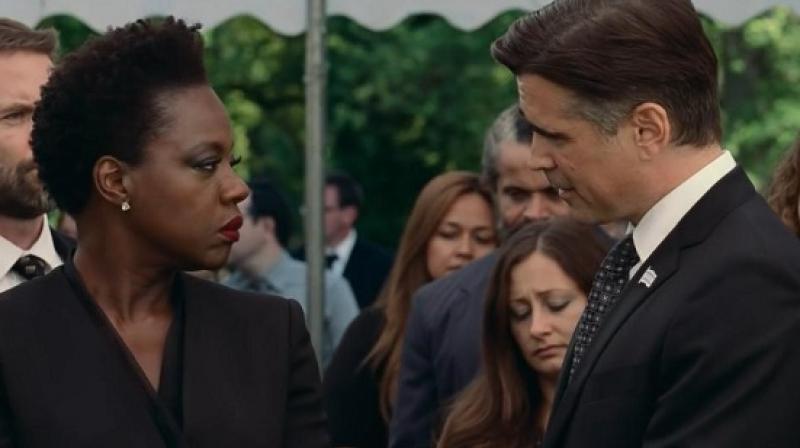
An adaptation of Lynda La Plante’s novel, Steve McQueen’s latest movie is an odd beast indeed, quite formal in its approach, but with occasional directorial flourishes to remind the viewer that this isn’t just a heist movie, it’s a serious heist movie, unlike, say, Ocean’s Eight (2018). Here, lives are at stake, and the cost of failure is unthinkable. It’s a dour, earnest movie that explores notions of sexism, political expediency (care of a subplot surrounding a ward campaign involving Farrell’s reformist alderman versus Henry’s aspiring gang boss), proto-feminism, spousal betrayal, and personal legacies. The script, by McQueen and author Gillian Flynn (Gone Girl, Sharp Objects), is adroitly constructed, but though the pair have worked hard to bring the characters to life and present them against a credible backdrop (well, as credible as these kinds of movies can manage), there’s not much here that will either come as a surprise, or which doesn’t follow in an expected order. Even if you’re not familiar with La Plante’s novel, or the original British TV series, the few twists and turns in the narrative won’t have much of an impact, and getting through the movie almost becomes a tick box exercise.

That’s not to say, however, that the movie is bad, or disappointing, just oddly straightforward and dramatically sincere without ever rising above the expectations of the genre. Perhaps this kind of story has been told too many times before for McQueen to provide us with anything fresh or new. And there’s the small matter of Davis’ and Debicki’s characters having more screen time than Rodriguez’ and Erivo’s. This lop-sided approach to the main quartet seems a little counter-intuitive in a movie that seems to be promoting female solidarity, and often, some character beats are cut short in order to move on to the next phase of the heist and its planning. On the agnate side, the likes of Duvall, Kaluuya and Dillahunt are saddled with perfunctory, under-developed secondary roles, while Farrell does his best to make sense of a character whose ambivalent motives rarely make sense. Thankfully, Davis and Debicki are on hand to provide two excellent performances. That Davis is so good is a given, but it’s Debicki who shines the most, imbuing Alice with a steely survivor’s determination to make life better for herself that is both complex and credible; whenever she’s on screen, she holds the audience’s attention in a vice-like grip. That the rest of the movie doesn’t manage to do this, is again, something of a surprise, but in playing out as expected, it doesn’t disappoint entirely. Instead it’s a respectable effort that isn’t as memorable as we all might have hoped.

Rating: 7/10 – despite all the effort and all the talent involved, Widows lacks the kind of verve needed to make the thriller elements thrill, and the dramatic elements resonate; McQueen directs as if his brief was to be a pair of safe hands, and though it’s technically well put together, somewhere along the way, any idea of elevating the material doesn’t appear to have been acted on.
Share this:

  • Click to share on X (Opens in new window) X
  • Click to share on Facebook (Opens in new window) Facebook
  • More
  • Click to print (Opens in new window) Print
  • Click to email a link to a friend (Opens in new window) Email
Like Loading...

Death Wish (2018)

24 Thursday May 2018

Posted by dullwood68 in Movies

≈ Leave a comment

Tags

Bruce Willis, Burglary, Chicago, Dean Norris, Drama, Eli Roth, Murder, Remake, The Grim Reaper, Thriller, Vigilante, Vincent D'Onofrio

D: Eli Roth / 107m

Cast: Bruce Willis, Vincent D’Onofrio, Elisabeth Shue, Camila Morrone, Dean Norris, Beau Knapp, Kimberly Elise, Len Cariou, Jack Kesy, Ronnie Gene Blevins

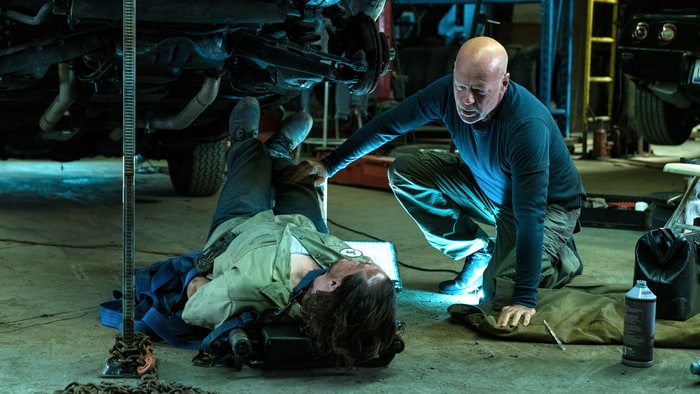
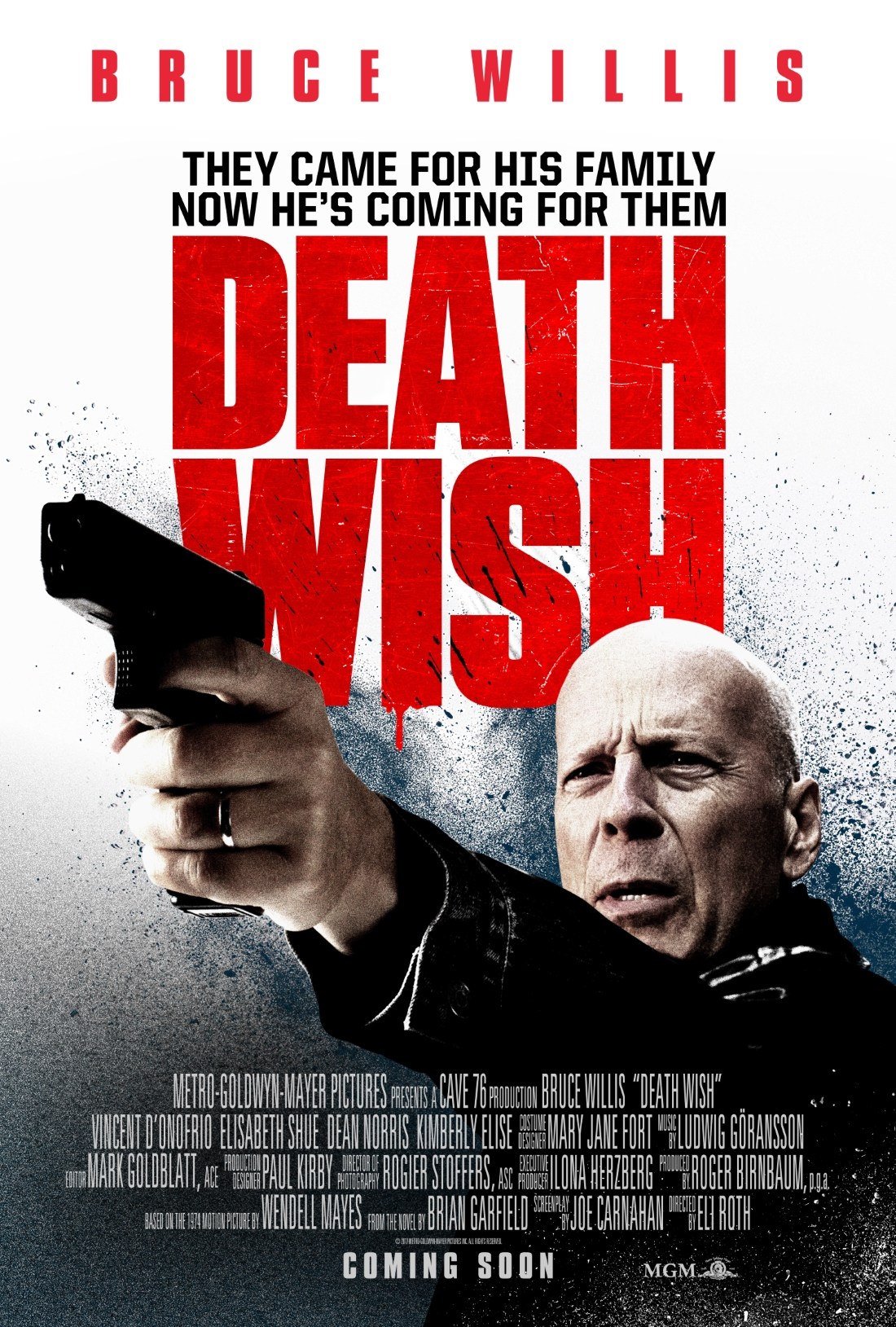
Paul Kersey (Willis) is a trauma surgeon working at a Chicago hospital. He has a wife, Lucy (Shue), and a teenage daughter, Jordan (Morrone), who is about to go off to college. One night, while Kersey is working, three burglars break into his home while everyone is out, but Lucy and Jordan return while they’re still there. Lucy is killed, and Jordan suffers a skull fracture that leaves her in a coma. The police, represented by Detective Kevin Raines (Norris) and Detective Leonore Jackson (Elise), offer hope that they’ll catch the men responsible, but with no leads, time passes and Kersey begins to wonder if he’ll ever have justice for his family. Angry at the police’s inability to protect people, Kersey becomes a vigilante, and earns the soubriquet The Grim Reaper. When a gunshot victim is admitted to the ER and is wearing one of Kersey’s stolen watches, it provides him with enough information to begin tracking down the men the police can’t find. But as he hunts them down, Raines and Jackson become suspicious of his actions, and the leader of the men (Knapp) targets him directly…

The idea of a remake of Michael Winner’s exploitation “classic” has been mooted for a while now (since 2006 when Sylvester Stallone was set to direct and star). There have been a few stops and starts along the way, and now we have the combination of Eli Roth and Bruce Willis, and a movie that has all the charm and appeal of applying haemorrhoid cream. There’s no other way of putting it: this incarnation of Death Wish is appalling, a right-wing political tract that lacks the courage of its own convictions, and strives for relevance in a day and age where violence is a sad, every day occurrence in the good old US of A. While talking heads debate the merits of having a vigilante on the streets of Chicago, Willis’s monotone Kersey goes on a journey of violent wish-fulfillment that screams “under-developed!” For a surgeon with no previous experience of handling a gun even, he’s able to act with impunity (he takes out a drug dealer on the street – in daylight – without being shot at by anyone), and even when he takes on the burglars, he leaves no evidence of his involvement.

So while Kersey gets away with murder, the police amble through proceedings like unwitting sleepwalkers at a narcolepsy convention (they even have time to joke about their investigation with their boss). It’s laughable, and something of an insult to the talent and skill of Joe Carnahan, the sole credited writer of this farrago, whose original script was re-written once Roth came on board. With a plethora of poorly written characters (D’Onofrio plays Kersey’s brother, but why he’s even there is impossible to work out), dialogue that sounds like a deaf person’s idea of dialogue, and Kersey’s motivations remaining murky at best, this is further sabotaged by Roth’s inability to maintain a consistent tone or invest proceedings with any appreciable energy. Willis continues to look bored out of his skull (a too common occurrence these days), the bad guys are straight out of generic villain central casting, and the action scenes are the nearest the movie comes to waking up. It has all the hallmarks of a movie that was rushed into production before the rights ran out, or worse, was rushed into production without anyone having a clear idea of what they were doing. So they truly did have a death wish…

Rating: 3/10 – abandoning any notion of moral ambiguity from the outset, Death Wish – Roth’s exploitation-free remake – is as dull as they come, and as ineptly handled as you’d expect; if you need any proof, just watch the early scene where Kersey “consoles” a cop whose partner has just died – and then hang your head in dismay.

Share this:

  • Click to share on X (Opens in new window) X
  • Click to share on Facebook (Opens in new window) Facebook
  • More
  • Click to print (Opens in new window) Print
  • Click to email a link to a friend (Opens in new window) Email
Like Loading...

A Family Man (2016)

25 Sunday Jun 2017

Posted by dullwood68 in Movies

≈ Leave a comment

Tags

Alison Brie, ALL, Blackridge Recruiting, Chicago, Drama, Father/son relationship, Gerard Butler, Gretchen Mol, Headhunting, Mark Williams, Max Jenkins, Review, Willem Dafoe

Original title: The Headhunter’s Calling

D: Mark Williams / 108m

Cast: Gerard Butler, Gretchen Mol, Alison Brie, Anupam Kher, Max Jenkins, Alfred Molina, Willem Dafoe, Mimi Kuzyk, Dustin Milligan, Julia Butters, Dwain Murphy, Ethan MacIver Wright

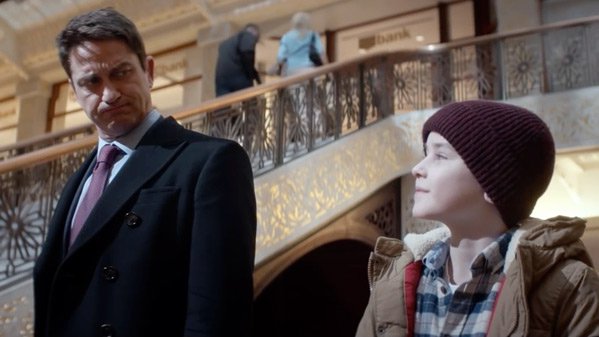
Dane Jensen (Butler) is a tough, no-nonsense headhunter who uses a mixture of insider knowledge, sharp practice and carefully orchestrated bullying to get the sales figures he needs; everyone he successfully finds employment for earns his company, Blackridge Recruiting, a five-figure sum. His boss and mentor, Ed Blackridge (Dafoe), informs Dane and his main rival, Lynn Vogel (Brie), that he’s taking a step back from running the company, and his successor will depend on which one of them is the more successful in the forthcoming financial quarter. Dane is the better headhunter, and heading into the quarter has no doubts that he will take Ed’s place.

But while Ed is all-conquering at work, at home it’s a different matter. His wife Elise (Mol), would like Dane to be home more, as would his kids, Ryan (Jenkins), Lauren (Butters), and Nathan (Wright). But Dane is committed more to his work than he is to his family, and he continually makes excuses for getting home late and/or missing events in his children’s lives. The only promises he can’t seem to break or those that he makes to his clients, such as engineer Lou Wheeler (Molina). However, Dane’s outlook on life and his commitment to Blackridge begins to derail when Ryan is diagnosed with ALL (Acute Lymphoblastic Leukemia). Faced with losing Ryan if his treatment fails, Dane spends more and more time with his son but to the detriment of the sales target he needs to reach to step into Ed’s position. As he struggles to come to terms with his son’s illness and his declining fortunes at work, Dane has to decide which is more important: his family, or providing for them.

If you decide to watch A Family Man, then be prepared to enter a world where lots of things happen that don’t happen in the real world. Now, of course, A Family Man isn’t based on a true story (not that it would matter), and it’s not a movie that’s set in a far-off fantasy world where dragons lurk over the next hillside, or wizards in pointy hats loiter in the local tavern. But its story does take place in an alternate reality, one that looks and feels just like the real world, but it’s also one that gives itself away from time to time as being wholly imaginary. It’s on these occasions that the movie, and Bill Dubuque’s saccharine-drenched screenplay, give the game away, and as a result, any suspension of disbelief disappears in an instant. And it’s a shame, as the movie didn’t need to be created in this fashion, and if the makers had excised all the otherworld trappings, then it might have stood a better chance than it does in its current form.

It’s a familiar story, told with a smattering of charm and a large amount of pontificating. Dane is the classic absent husband, too hooked up on the importance and the power he has at work to notice his home life slipping away from him. There’s always one more phone call to take, one more employer to call and cajole into taking on a client, one less occasion to spend with his wife and kids. He tries to justify his behaviour, his absenteeism, by spouting that he’s doing it for his family, as if they should be grateful that he’s becoming less and less of a presence in their lives. But the script isn’t satisfied with just having Dane dressed up in Hugo Boss and seeing life with blinkers on. He has conversations with Elise where he wonders about the bigger questions in life: is there more to everything than work (yes), how do you know if you’re happy (you just know), and why should it take forty minutes to ejaculate (ah, you’re too stressed?). It’s okay that Dane’s not just a lean, mean recruiting machine, but the script’s idea to make him seem more rounded as a character is laughable and obtuse.

But with the arrival of Ryan’s cancer, the movie abandons any attempt at investigating Dane’s interior life, and instead, takes us on a journey into the alternate reality already mentioned above. This is a world where a child’s desire to be an architect when they grow up leads to Dane and Ryan visiting five famous Chicago landmarks, and Dane being able to recite facts about each one with confidence and precision. Dane appears able to skip work whenever he needs to in order to make these trips, and the hospital where Ryan is being treated seems remarkably unconcerned about them (one of Ryan’s main symptoms is generalised weakness and fatigue; wouldn’t these trips be detrimental?). A phone call between Dane and Lou sees Lou try to act as Dane’s counsellor when he doesn’t even know him. And then there’s Ryan’s doctor, an oncologist (Kher), whose bedside manner includes kissing Ryan’s hand at one point (yeah, that probably happens all the time).

There are further examples as the movie grinds mercilessly towards the kind of sugar-coated resolution that is meant to extract copious amounts of tears from its audience, but which in reality (yes, the real reality), is likely to encourage groans and unforced laughter. It’s all topped off by an unlikely last-minute piece of character reversal that only happens in the movies, and which even the most forgiving of viewers will find ludicrous/ridiculous/silly (delete as appropriate). Through it all, Butler at least plays it straight, even when the absurdity of some scenes seems written in letters forty feet high, and he’s backed by Mol whose role as Elise is undermined by the character’s yo-yoing back and forth between castigating Dane and supporting him. Dafoe’s role is nothing more than a recurring cameo, Brie is wasted, Molina has perhaps the movie’s best moment – in a bathroom, and the rest of the cast orbit around Butler until told what to do. Directing for the first time, Williams lacks the necessary experience to overcome or iron out the script’s inherent problems, and there are too many times where his direction brings out the commonplace rather than anything that might raise the material above the level of acceptable.

Rating: 4/10 – adequately done, A Family Man won’t stick around in the memory, but while you’re watching it, it will make an impact, albeit an unfortunate one; laden with too many moments and scenes that are hellbent on manipulating its audience’s emotions, the movie has all the hallmarks of a glossy disease-of-the-week TV movie, but with a bigger budget, a better known cast, and more time to drag out its increasingly implausible narrative.

Share this:

  • Click to share on X (Opens in new window) X
  • Click to share on Facebook (Opens in new window) Facebook
  • More
  • Click to print (Opens in new window) Print
  • Click to email a link to a friend (Opens in new window) Email
Like Loading...

Allegiant (2016)

03 Sunday Apr 2016

Posted by dullwood68 in Movies

≈ 1 Comment

Tags

Ansel Elgort, Bureau of Genetic Welfare, Chicago, Divergent Series, Drama, Jeff Daniels, Literary adaptation, Miles Teller, Naomi Watts, Providence, Review, Robert Schwentke, Sci-fi, Sequel, Shailene Woodley, Theo James, Thriller, Veronica Roth

Allegiant

D: Robert Schwentke / 120m

Cast: Shailene Woodley, Theo James, Naomi Watts, Octavia Spencer, Jeff Daniels, Zoë Kravitz, Ansel Elgort, Miles Teller, Keiynan Lonsdale, Daniel Dae Kim, Maggie Q, Bill Skarsgård, Jonny Weston, Ray Stevenson, Mekhi Phifer, Ashley Judd

And so Jeanine is dead, killed by Four’s mother, Evelyn (Watts). Everything’s okay and peace has been restored. Except that Evelyn is making sure it comes at a further price: everyone who was on Erudite’s side has to be put on trial and their “crimes” answered for. This means executions on a wide scale, and although Tris (Woodley) has disowned her brother, Caleb (Elgort), he faces the same fate. With the message from outside Chicago still indicating that there are more answers to be found outside the city than in, Tris and Four (James) opt to breach the wall and go in search of those answers. Four decides to help Caleb escape, and the trio are joined by Christina (Kravitz), Tori (Maggie Q), and Peter (Teller). Despite an attempt to stop them by Evelyn’s lieutenant, Edgar (Weston), they climb over the wall and down to the other side.

There they find a toxic wasteland, where the earth is a scorch blasted red. Having been followed by Edgar, the group are relieved when they reach a force field that opens to reveal an armed force. This group protects Tris and her friends from Edgar, and with his threat neutralised, they take Tris and company to their base far out in the wasteland, the so-called Bureau of Genetic Welfare, where Tris in particular is welcomed by the Bureau’s director, David (Daniels). With Tris being the fruit of an experiment to right a wrong perpetrated long ago, David is keen to run tests on her, while keeping Four and the others occupied and away from her as much as possible. But Four is quick to suspect that David isn’t as honest as he makes out, but Tris doesn’t see it.

Allegiant - scene2

Meanwhile, back in Chicago, Johanna (Spencer) has formed a group she calls Allegiant, and who are at odds with Evelyn’s way of running things. Another war of attrition is about to take place between the two factions, and though Tris wants David to intervene – after all, he has been monitoring Chicago for a long time because of the experiment – but instead of doing so, he sends Peter back with a nerve gas that will render everyone who comes into contact with it, unable to remember anything that happened to them before they were exposed. And while David takes Tris to meet the Council who ultimately decide everyone’s fate, Four discovers what the gas has been used for in the wasteland. And when Tris finally becomes aware of David’s duplicity, she and Four, along with Christina and Caleb, return to Chicago to stop Evelyn from using the gas on Allegiant.

Three movies in and the Divergent series is showing serious signs that it’s running out of ideas. Allegiant is superficially entertaining, but in comparison with parts one and two, it lacks anything fresh to entertain either fans or newcomers. It’s also the first time that the series gives up on Tris as an independent, strong-minded female, and instead hands over leadership duties to Four – which wouldn’t be such a bad idea if he wasn’t written as a bit of a pompous told-you-so kind of character. (Throughout the series, Four has been the gloomiest character of them all, unable to smile or express his feelings about anything without a frown.) And with Tris relegated to a secondary role, there’s only Daniels left to pick up the slack, as everyone else (James excepted) is afforded only enough screen time to either provide any relevant exposition, or keep the plot ticking over (Spencer and Watts are wasted, while Judd is brought back yet again to add some more of her character’s turgid back story).

Allegiant - scene1

The problem with the movie is twofold: one, it’s the first half of the third book in the series, and as such, doesn’t have a credible ending, just another narrowly avoided cliffhanger that leaves things open for part four (or should that be part three-point-five?); and two, the action seems more than usually contrived once Tris et al leave Chicago. The wasteland is less than threatening, and the Bureau is predictably shiny on the surface (and in David’s “office”), while the barracks Four and Christina are assigned to are remarkably similar to those inhabited by Dauntless in the first movie. It’s all brightly lit and commendably shot by esteemed DoP Florian Ballhaus (returning from Insurgent (2015) and already hired for the next instalment), but it’s becoming hard to care what happens to anyone.

At its heart, the Divergent series is about DNA profiling and the perils that can follow on from it. It’s a concept that’s been there in the first two movies, but which hasn’t been addressed directly. But now that it has, and through the medium of video no less, the truth behind the use of Chicago as a test ground, and the true meaning of being Divergent, all sounds quite dull and unexciting. The movie fails to make Tris’s nature important to its own story, and instead opts for being yet another race-against-time thriller, abandoning the ethical and moral debate it wants to engage in and relying on tried and trusted action movie clichés to wind up its narrative.

Allegiant - scene3

It’s no surprise that the movie has underperformed at the box office (leading to the final movie, Ascendant, due next year, having its budget cut), because even though Tris makes it out of Chicago, once she does, the movie doesn’t know what to do with her, and for a character as intriguing and interesting as Tris, that’s a terrible decision to make on any level. And it doesn’t help that your central villain is ultimately a harried bureaucrat, a futuristic pen-pusher if you will. That’s another stumble, and especially bad after having Kate Winslet fill the villain’s shoes for the first two movies. It all adds up to a movie that coasts on the success of its predecessors, and feels and looks like a stopgap before the real conclusion in part four.

Rating: 5/10 – another series instalment that will have newcomers wondering what all the fuss has been about, Allegiant is a movie that has little to offer in terms of its characters’ development, or in terms of expanding the wider narrative; Woodley – this series’ biggest asset – is sidelined for much of the movie, and though James is a competent enough actor, he doesn’t have his co-star’s presence on screen, which makes large chunks of the movie something of a chore to sit through.

Share this:

  • Click to share on X (Opens in new window) X
  • Click to share on Facebook (Opens in new window) Facebook
  • More
  • Click to print (Opens in new window) Print
  • Click to email a link to a friend (Opens in new window) Email
Like Loading...

Battle Creek Brawl (1980)

11 Tuesday Nov 2014

Posted by dullwood68 in Movies

≈ Leave a comment

Tags

Action, Chicago, Drama, Golden Harvest, Jackie Chan, José Ferrer, Kristine DeBell, Kung fu, Mako, Martial arts, Protection money, Review, Robert Clouse, Thirties

Battle Creek Brawl

aka The Big Brawl

D: Robert Clouse / 95m

Cast: Jackie Chan, José Ferrer, Kristine DeBell, Mako, Ron Max, David Sheiner, Rosalind Chao, H.B. Haggerty, Chao Li Chi

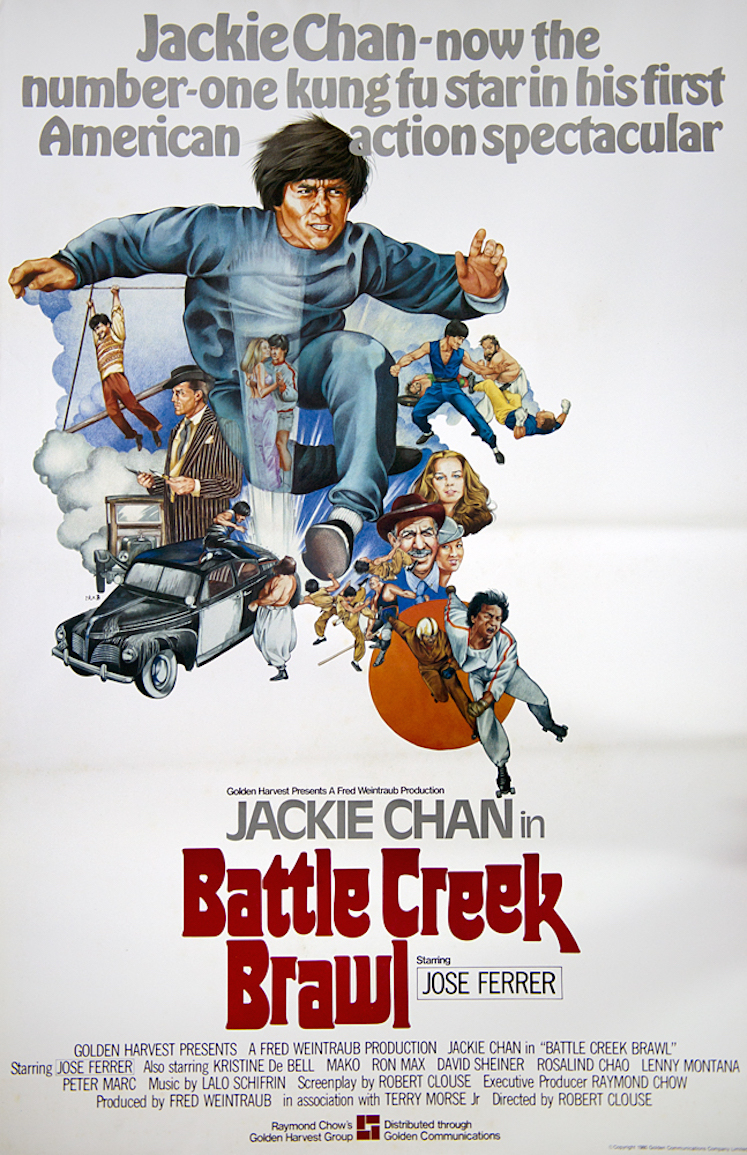
In Chicago in the 1930’s, restaurant owner Kwan (Chi) is being pressured into paying protection money to gangster Dominici (Ferrer). When he receives a visit from Dominici’s henchman Leggetti (Max) and some of his goons, Kwan is physically intimidated but doesn’t pay. As Leggetti leaves, Kwan’s son Jerry (Chan) – who has considerable martial arts prowess but has promised his father he won’t fight – intervenes and leaves the goons thoroughly embarrassed and beaten by using their own moves against them.

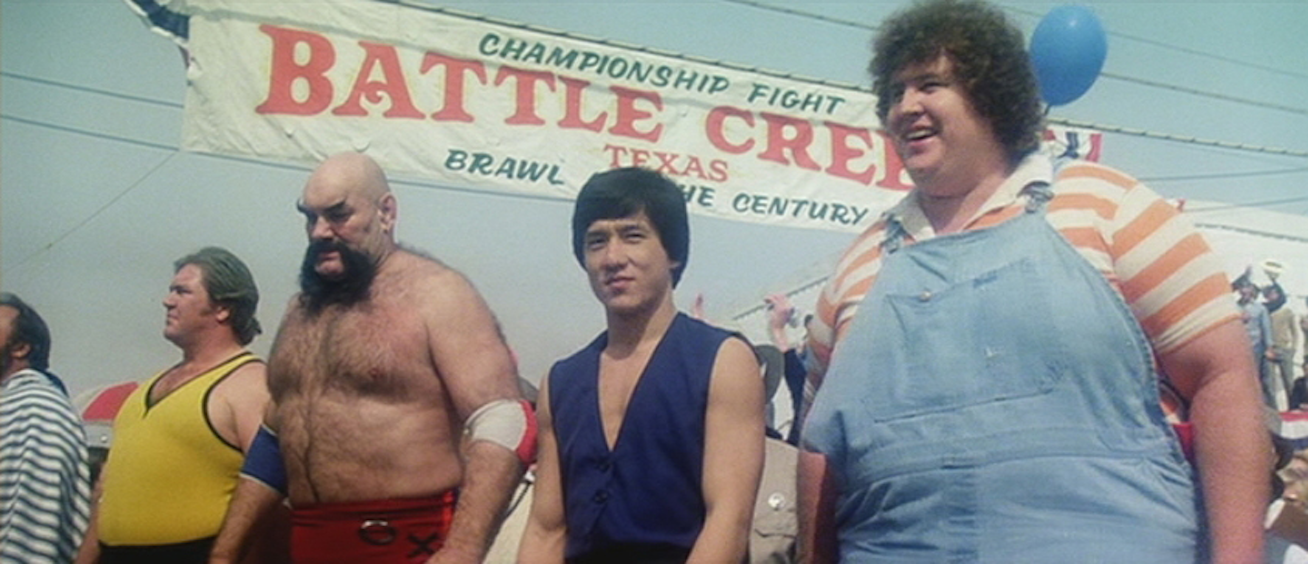
When Dominici hears about Jerry’s prowess he believes he’s found the fighter he needs for the upcoming Battle Creek Brawl, a street fighting contest held in Texas. Dominici needs Jerry to combat the fighter backed by rival gangster Morgan (Sheiner), but Jerry  refuses at first. This leads Dominici to have Jerry’s brother’s fiancee (Chao) kidnapped and held hostage. Jerry attempts to rescue her – aided by his martial arts mentor, Herbert (Mako) – but Dominici outsmarts him; they strike a bargain though, and Jerry agrees to take part in the brawl.

Morgan, meanwhile, has persuaded Leggetti to betray Dominici and ensure his fighter’s win by kidnapping Herbert. Having made it to the final round, and facing off against Morgan’s fighter, Kiss (Taggerty), Leggetti threatens Jerry with his mentor being hurt if he doesn’t lose the contest. The only thing Jerry can do is to stall until he can find a way of saving Herbert, and then defeating Kiss.

Battle Creek Brawl - scene

Chan’s first English language feature, Battle Creek Brawl is an enjoyable, free-wheeling martial arts movie that gives the diminutive star the chance to show off his athletic skills and flash the cheeky grin that’s stood him in such good stead for more than forty years. It’s a mainly lightweight distraction, unconcerned with providing any depth to the proceedings, and in many ways all the better for it. It’s a very likeable movie, made purely to entertain its target audience, and on that level it’s a complete success.

Chan’s acrobatics are given plenty of screen time, and as ever he’s a joy to watch, the sheer inventiveness and physical dexterity of his movements proving as entertaining as ever. His wonderfully expressive features and often amazing agility are placed to the fore as much as possible, and writer/director Clouse – with a few awkward exceptions – keeps the camera focused on Chan and leaves everyone else several places behind. The clever intricacy of the fight scenes, particularly the incredibly well choreographed bouts between Chan and Mako, raises the bar throughout, and if Chan’s adversaries are a little too eager to line up and take their punishment, well, that’s always going to be a drawback when working with US stuntmen – it’s a question of timing.

The movie takes place in a strange mix-world of Thirties Chicago and Seventies Texas, with only the costumes and the cars giving an indication that the brawl itself is taking place in the same time zone as the rest of the movie (keep an eye on the Texas backgrounds and you’ll see how jarring it can be). That said, the decision to make it a period piece in the first place makes no difference to the story or the action, but the apparent acceptance of Jerry’s inter-racial relationship with Nancy (DeBell) is a refreshing change (even if it does reinforce the lightweight nature of the script).

With the script’s refusal to add any real intensity to events, the performances are necessarily lacking in substance with even Ferrer struggling to add any appropriate menace to his role. He’s more like a cuddly uncle figure playing at being nasty but in as urbane a manner as possible. As his rival, Sheiner tries to add some threat to events but he’s not given enough screen time to succeed, while Max is given the chance to take on Chan, but with predictable results. DeBell is kept firmly in the background, and of the rest of the cast, only Haggerty as the dastardly Kiss, and Mako as Herbert make any real impression.

Clouse keeps the focus firmly on the fight scenes, and keeps the action moving in ever more exciting ways, and the camerawork by Robert C. Jessup – aided by editor George Grenville – is surprisingly precise and fluid in equal measure; there’s always something going on in the frame and some of it is as interesting to watch as what’s going on in the foreground, especially during the brawl itself, where there are plenty of “bits” that enrich the fights themselves. And to round things off there’s a rich, emphatic score courtesy of Lalo Schifrin that works so well with the material.

Rating: 8/10 – almost too flimsy in its construction and execution, Battle Creek Brawl is still simple yet effective, and a terrific introduction to Chan’s remarkable agility; with an innocence that borders on deliberate naïvete, the movie succeeds by having a great sense of humour and by not taking itself at all seriously – and by showcasing some tremendous fight scenes.

Share this:

  • Click to share on X (Opens in new window) X
  • Click to share on Facebook (Opens in new window) Facebook
  • More
  • Click to print (Opens in new window) Print
  • Click to email a link to a friend (Opens in new window) Email
Like Loading...

Inside Llewyn Davis (2013)

26 Sunday Jan 2014

Posted by dullwood68 in Movies

≈ 1 Comment

Tags

Audition, Carey Mulligan, Chicago, Drama, Ethan Coen, Folk music, Gaslight Café, Greenwich Village, Joel Coen, John Goodman, Justin Timberlake, Llewyn Davis, New York, Oscar Isaac, Relationships, Review

Inside Llewyn Davis

D: Ethan Coen, Joel Coen / 104m

Cast: Oscar Isaac, Carey Mulligan, John Goodman, Justin Timberlake, Garrett Hedlund, Adam Driver, Stark Sands, Jeanine Serralles, F. Murray Abraham

The Coen brothers have led a remarkably charmed cinematic life, making quirky, offbeat movies featuring all sorts of weird and wonderful characters in all sorts of weird and wonderful situations. Part of the fun to be had from watching a Coen brothers movie is that you never quite know what’s going to happen next; the Coens are so unpredictable there’s always that element of surprise in every movie, even something as outwardly formulaic as The Ladykillers (2004) or True Grit (2010). It’s a real surprise then, to find that the main character in their latest melancholy opus, Inside Llewyn Davis is, to put it mildly, a bit of a shit.

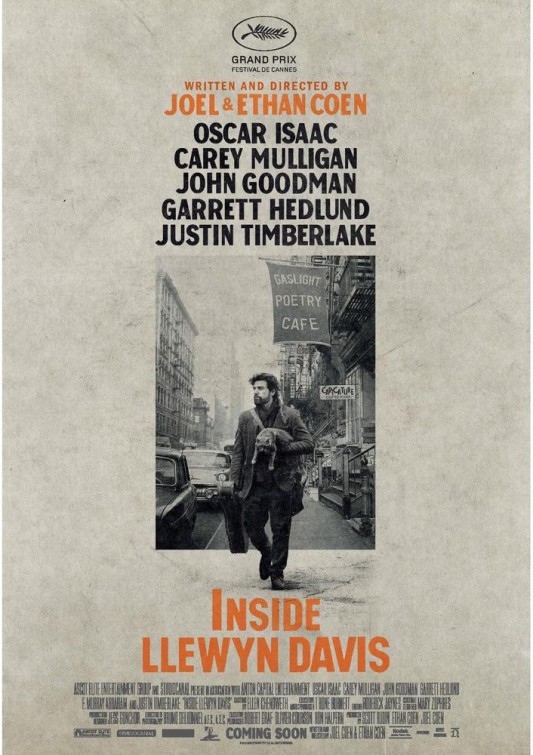
The movie is set in Greenwich Village, New York in 1961. Davis (Isaac) is a folk singer, eking out a career in clubs but without a clear idea on where he’s heading. He doesn’t have a place to live, so he sofa hops from place to place, trying the patience of friends and acquaintances, and never really repaying their kindnesses to him. He scoffs at the performances of others, including folk duo Jim (Timberlake) and Jean (Mulligan), but fails to see the weakness in his own abilities, weaknesses exacerbated by the recent death of his singing partner. Davis is horrible to just about everyone around him, foisting his unhappiness on them with all the fervour of a man trying to offload his troubles as fast as he gains them. His relationship with Jean becomes complicated when she tells him she’s pregnant and he might be the father. But Davis is so wretched she would rather have an abortion than give birth to a child that might be his. While he tries to deal with that issue, he’s also trying to deal with having lost his friends, the Gorfeins, cat. (When he takes a replacement cat back to them, it leads to one of the best lines in a Coen brothers movie ever.)  Taking a chance he can kick start his solo career in Chicago, Davis travels with proto-beat poet Johnny Five (Hedlund) and musician Roland Turner (Goodman) to audition for promoter Bud Grossman (Abraham). What he learns there has the possibility of changing his life.

Inside Llewyn Davis - scene

From its darkened, confessional-style opening at the Gaslight Café with Isaac proving himself to be a passionate vocalist, Inside Llewyn Davis is a fitting tribute to the era when folk music was at a turning point (see the singer who follows Davis on stage at the movie’s end). As well, though, it’s a clever, witty and engaging look at a man for whom Life is a constant struggle, but only because he hasn’t developed the ability to be happy. Thanks to a terrific performance by Isaac, Davis isn’t entirely the angry curmudgeon he appears to be. There are glimmers of hope throughout the movie that elicit the audience’s sympathy for him, and if he buries those glimmers almost as soon as they pop up, it’s still enough that they happen for him. Davis is like the black sheep of the family or the troubled friend you secretly like – despite all the times they upset you or let you down – and hope Life will eventually be kind to. For Davis it’s all about the music, the only thing he truly cares about, and around which his life revolves; without it he would be a truly broken man.

Once again, the Coens have chosen a strong supporting cast for their leading man, with Mulligan’s angry turn a standout, and Goodman close behind as the disabled, anecdote spouting Turner. It’s good to see the likes of Driver and Sands given the chance to shine in small, beautifully realised roles, and Abraham too, albeit in a smaller though more pivotal role (and obviously fitted in between episodes of Homeland). A wintry New York looks cold and yet somehow vibrant thanks to crisp, striking photography courtesy of Bruno Delbonnel, and the period detail is subtly evoked by Jess Gonchor’s production design and Deborah Jensen’s art direction.

What is less obvious from this review so far is the humour that permeates the movie. Davis may be an awkward, unlikely source of merriment, but the Coens weave comedy into the somewhat solemn proceedings with deceptive skill. There are laughs to be had, and they’re scattered here and there in the script like precious jewels. And then there’s the music. Perhaps closest to O Brother, Where Art Thou? (2000) in terms of dramatic importance, the music in Inside Llewyn Davis is extremely well chosen, both for reflecting the state of Davis’s life, and for providing a candid view of the folk music scene at the time (check out the wonderfully daft Please Mr. Kennedy, an ode to world peace performed by Isaac, Timberlake and Driver that amazes as much as it amuses). As already noted, Isaac has a commanding vocal style, and his deep, rich, melodic delivery suits the material well; it’s hard now to imagine anyone else in the role.

Rating: 9/10 – a richly detailed movie that delights and impresses in equal measure; confident, absorbing, and wickedly funny in places, Inside Llewyn Davis confirms once more that when it comes to off-kilter, the Coen brothers are in a class of their own.

Share this:

  • Click to share on X (Opens in new window) X
  • Click to share on Facebook (Opens in new window) Facebook
  • More
  • Click to print (Opens in new window) Print
  • Click to email a link to a friend (Opens in new window) Email
Like Loading...

Blog Stats

  • 486,528 hits

Recent Posts

  • 10 Reasons to Remember Bibi Andersson (1935-2019)
  • Fantasia (1940)
  • Dances With Wolves (1990) – The Special Edition
  • Kiss of the Spider Woman (1985)
  • The Three Musketeers (1973)

Top Posts & Pages

  • Lost for Life (2013) - Another Look
    Lost for Life (2013) - Another Look
  • Lost for Life (2013)
    Lost for Life (2013)
  • About
    About
  • Mr. Topaze (1961)
    Mr. Topaze (1961)
  • Winter's Tale (2014)
    Winter's Tale (2014)
  • Billy Lynn's Long Halftime Walk (2016)
    Billy Lynn's Long Halftime Walk (2016)
  • The Hitman's Bodyguard (2017)
    The Hitman's Bodyguard (2017)
  • Shock and Awe (2017)
    Shock and Awe (2017)
  • 5 Famous Movie Roles That Nearly Went to Someone Else
    5 Famous Movie Roles That Nearly Went to Someone Else
  • The Layover (2017)
    The Layover (2017)
Follow thedullwoodexperiment on WordPress.com

Blogs I Follow

  • Rubbish Talk
  • Film 4 Fan
  • Fast Film Reviews
  • The Film Blog
  • All Things Movies UK
  • Interpreting the Stars
  • Let's Go To The Movies
  • Movie Reviews 101
  • TMI News
  • Dan the Man's Movie Reviews
  • Film History
  • Jordan and Eddie (The Movie Guys)

Archives

  • April 2019 (13)
  • March 2019 (28)
  • February 2019 (28)
  • January 2019 (32)
  • December 2018 (28)
  • November 2018 (30)
  • October 2018 (29)
  • September 2018 (29)
  • August 2018 (29)
  • July 2018 (30)
  • June 2018 (28)
  • May 2018 (24)
  • April 2018 (21)
  • March 2018 (31)
  • February 2018 (25)
  • January 2018 (30)
  • December 2017 (30)
  • November 2017 (27)
  • October 2017 (27)
  • September 2017 (26)
  • August 2017 (32)
  • July 2017 (32)
  • June 2017 (30)
  • May 2017 (29)
  • April 2017 (29)
  • March 2017 (30)
  • February 2017 (27)
  • January 2017 (32)
  • December 2016 (30)
  • November 2016 (28)
  • October 2016 (30)
  • September 2016 (27)
  • August 2016 (30)
  • July 2016 (30)
  • June 2016 (31)
  • May 2016 (34)
  • April 2016 (30)
  • March 2016 (30)
  • February 2016 (28)
  • January 2016 (35)
  • December 2015 (34)
  • November 2015 (31)
  • October 2015 (31)
  • September 2015 (34)
  • August 2015 (31)
  • July 2015 (33)
  • June 2015 (12)
  • May 2015 (31)
  • April 2015 (32)
  • March 2015 (30)
  • February 2015 (37)
  • January 2015 (39)
  • December 2014 (34)
  • November 2014 (34)
  • October 2014 (36)
  • September 2014 (25)
  • August 2014 (29)
  • July 2014 (29)
  • June 2014 (28)
  • May 2014 (23)
  • April 2014 (21)
  • March 2014 (42)
  • February 2014 (38)
  • January 2014 (29)
  • December 2013 (28)
  • November 2013 (34)
  • October 2013 (4)

Create a free website or blog at WordPress.com.

Rubbish Talk

Film 4 Fan

A Movie Blog

Fast Film Reviews

The Film Blog

The official blog of everything in film

All Things Movies UK

Movie Reviews and Original Articles

Interpreting the Stars

Dave Examines Movies

Let's Go To The Movies

Film and Theatre Lover!

Movie Reviews 101

Daily Movie Reviews

TMI News

Latest weather, crime and breaking news

Dan the Man's Movie Reviews

All my aimless thoughts, ideas, and ramblings, all packed into one site!

Film History

Telling the story of film

Jordan and Eddie (The Movie Guys)

Movie Reviews & Ramblings from an Australian Based Film Fan

Privacy & Cookies: This site uses cookies. By continuing to use this website, you agree to their use.
To find out more, including how to control cookies, see here: Cookie Policy
  • Subscribe Subscribed
    • thedullwoodexperiment
    • Join 481 other subscribers
    • Already have a WordPress.com account? Log in now.
    • thedullwoodexperiment
    • Subscribe Subscribed
    • Sign up
    • Log in
    • Report this content
    • View site in Reader
    • Manage subscriptions
    • Collapse this bar
 

Loading Comments...
 

    %d