• 10 Reasons to Remember…
  • A Brief Word About…
  • About
  • For One Week Only
  • Happy Birthday
  • Monthly Roundup
  • Old-Time Crime
  • Other Posts
  • Poster of the Week
  • Question of the Week
  • Reviews
  • Trailers

thedullwoodexperiment

~ Viewing movies in a different light

thedullwoodexperiment

Tag Archives: Hugo Weaving

Black ’47 (2018)

29 Saturday Dec 2018

Posted by dullwood68 in Movies

≈ Leave a comment

Tags

Action, Drama, History, Hugo Weaving, Ireland, James Frecheville, Lance Daly, Review, Stephen Rea, The Great Famine, Thriller
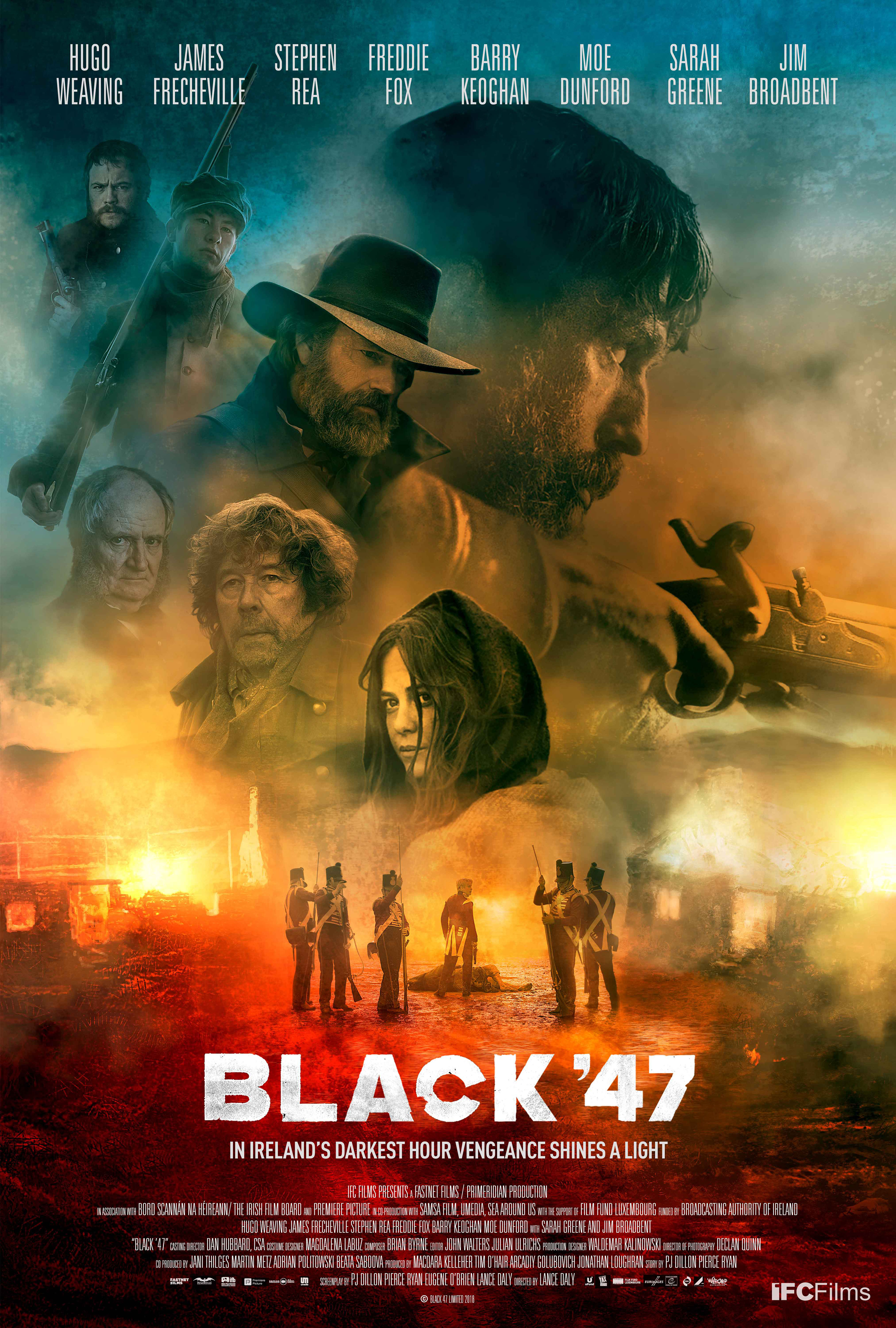
D: Lance Daly / 100m

Cast: Hugo Weaving, James Frecheville, Stephen Rea, Freddie Fox, Barry Keoghan, Moe Dunford, Sarah Greene, Jim Broadbent, Dermot Crowley, Aidan McArdle

In 1847, Martin Feeney (Frecheville), an Irish ranger who has served in the English army, returns home to Connemara only to discover that his mother has died of starvation and his brother has been hanged for stabbing a bailiff while being evicted. Staying with his brother’s family, their own eviction from the property they’re squatting in, leads to the death of Martin’s nephew, and his arrest by the constabulary. Escaping from the barracks where he was being held, and burning it down in the process, Martin is targeted by the British authorities, and an up-and-coming lieutenant called Pope (Fox) is assigned to find and kill him. He’s aided by a veteran of the British Army called Hannah (Weaving), and a young English private called Hobson (Keoghan). While they attempt to track him down, Feeney goes on a revenge spree, beginning with the man who took advantage of his mother’s plight by purchasing her home after her eviction, to the judge (Crowley) who sentenced his brother to hang, and all the way to the biggest landlord in the area, Lord Kilmichael (Broadbent). And it’s not long before the paths of everyone involved come together…

Expanded from the short, An Ranger (2008), which was written and directed by P.J. Dillon (here one of four co-writers), Black ’47 explores a period in Irish history that hasn’t really been seen on the big screen before. The title refers to the worst year of a famine that lasted from 1845 to 1849, when as many as a million people died from starvation and disease brought about by a potato blight. Here the use of the Great Famine as the backdrop to a tale of violent, unmerciful revenge helps the narrative greatly, giving it an immediacy and power – and depth – that allows the movie to become more than just another exercise in morally doubtful vigilantism. The nature and the widespread effects of the famine can be seen in scene after scene, with communities decimated and starving families congregating in fields or at the side of the road because they no longer have homes, and work is unavailable. Feeney is an avenging angel, targeting the corrupt Irish officials who have opted to collude with the British, and the British authorities, whose arrogance and greed has led them to view the famine as an opportunity to make themselves richer by removing the labourers and farmers they never wanted on their lands in the first place.
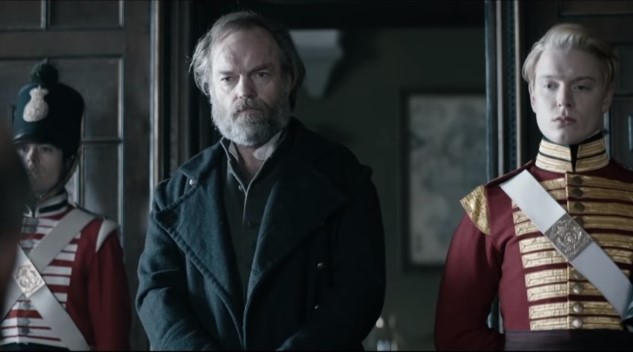
By allowing the backdrop to become a big part of the movie’s foreground, director Lance Daly ensures that what’s at stake on a national level isn’t entirely forgotten, even if it’s not the movie’s primary focus. Feeney may be an Irishman with “a very particular set of skills” for the time, and he may be taciturn out of expediency, but he’s also someone who accepts that he can’t change anything; he’s just doing what he can. Frecheville is an imposing figure, his eyes glowering with suppressed rage, and he makes Feeney as much a victim as an avenger. Weaving adds a sense of melancholy to his role, making Hannah the most conflicted character of all thanks to a connection with Feeney that complicates things when they matter most. However, these characters, and Rea’s world-weary translator, are the only ones that have any meat on them (excuse the pun), and as a result, the script struggles to make their actions and motives entirely credible (Hobson has a mad moment of naïve idealism that is jarring thanks to its unlikely occurrence). Sometimes the politics is a little pedantic as well, but when it comes to Feeney exacting his revenge, the movie is on much firmer ground, and Daly provides viewers with a number of exciting, well staged – and brutal – action sequences. It’s not an entirely successful movie, but it is gripping, and for anyone who has seen An Ranger, yes, the pig is back.

Rating: 7/10 – though a markedly genre exercise (a Western) set against a grim historical backdrop, Black ’47 uses said backdrop as a way of adding depth and intensity to its otherwise generic main storyline; with starkly beautiful imagery thanks to DoP Declan Quinn (and this despite some very dodgy matte work), and equally impressive production design courtesy of Waldemar Kalinowski, this is a movie that tells its simple story in ways that help elevate the material, and make it a far more emotional experience than expected.
Share this:

  • Click to share on X (Opens in new window) X
  • Click to share on Facebook (Opens in new window) Facebook
  • More
  • Click to print (Opens in new window) Print
  • Click to email a link to a friend (Opens in new window) Email
Like Loading...

Poster of the Week – The Adventures of Priscilla, Queen of the Desert (1994)

22 Thursday Mar 2018

Posted by dullwood68 in Movies

≈ Leave a comment

Tags

Australian Outback, Costumes, Draq queens, Guy Pearce, Hugo Weaving, Poster of the week, Terence Stamp, Tour bus

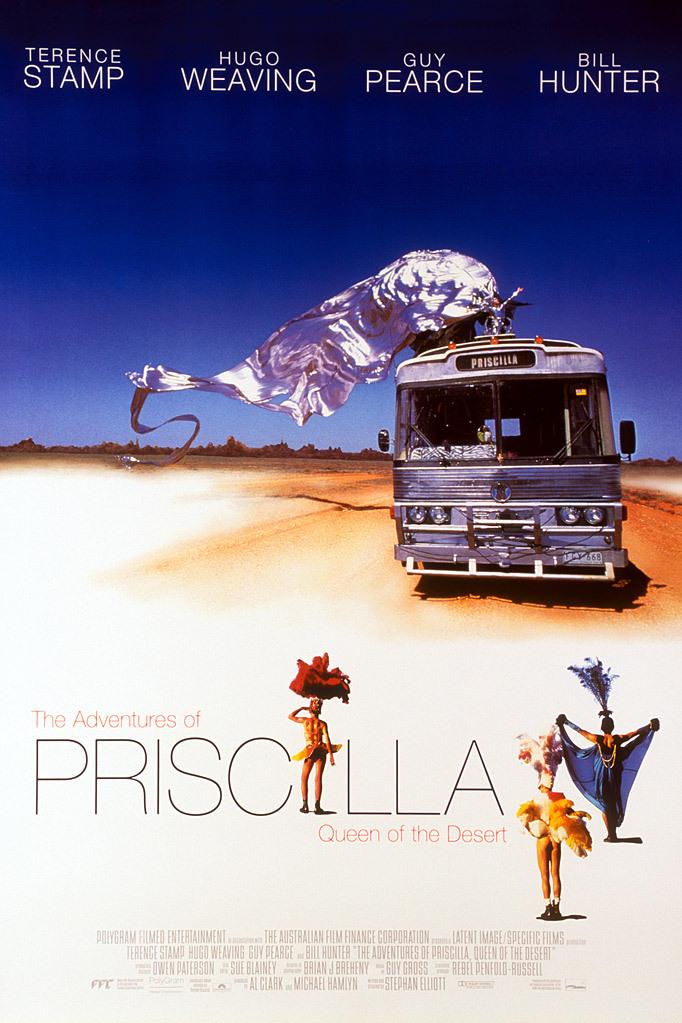
When considering this particular poster for The Adventures of Priscilla, Queen of the Desert, one thing is obvious: it’s so much subtler than some of the other versions out there. It takes one of the movie’s most iconic images and makes it the centrepiece, and does so in such a way that it highlights the exuberance contained within the movie itself, and the striking nature of the costumes. That massively extended, billowing train of silver fabric is also a bold statement of intent, a signal to prospective viewers that, just as they haven’t seen this kind of imagery before, so the movie will offer other sights they won’t have witnessed before (not the least of which will be the sight of Hugo Weaving in full on drag queen make up). This vision of excess and casual effrontery is impressive for its juxtaposition with the rather more solid and slightly battered presence of Priscilla herself, the tour bus seen making its way across the Australian Outback. By providing an apparent contrast between the expressive freedom of the costume, and the bulky shell of the tour bus, it’s takes a second to realise that in terms of the overall image there’s a connection that allows each to be an extension of the other; after all, they are both silver in colour.

Above them both is the poster’s boldest and most dramatic element: the dark blue sky against which the costume is framed. That much blue – taking up over a third of the poster – seems like it should be a bad idea, but with the principal cast members’ names arraigned across the top of the poster, their presence undercuts and softens the harsh nature of the blue sky. It also draws the attention to the sloping nature of Terence Stamp’s name, something that is at odds with the uniformity of the other three names. It’s a slight difference, and one that would probably go unnoticed at first glance, but it’s there, and little quirks such as this one always make a poster that much more interesting. In contrast, the lettering used for the title is split in such a way that the overlong (and somewhat clunky) title is rendered more palatable to the eye than if it had taken up more space. The reduction of all the words except for Priscilla works despite their almost being lost against the white sandy backdrop. And with the name Priscilla being given “star billing”, the importance of the tour bus to the story is reinforced by its name being on its own destination panel as well.

However, and despite the very good work on display across much of the poster, it does get some things wrong – three of them to be precise. The inclusion of what amounts to tiny doll representations of the characters played by Terence Stamp (black head-dress), Hugo Weaving (red head-dress), and Guy Pearce (tanned legs and shiny buttocks), is something of a design faux pas (darlings). Each image looks like the kind of scale size action figure available in a collector’s set, or as an offer from a cereal packet (send in six tokens to get the set!). Two are awkwardly placed and detract from the overall effect the poster is aiming for, and appear to have been included as a way of filling what would otherwise have been more blank space. Weaving’s place as the second I in Priscilla at least gives his figure a purpose, but it’s still an unnecessary one; it would have been better not to have included them at all. It’s still an evocative and attractive poster, though, and it uses its other elements to better, and more persuasive effect. (And better still, there aren’t any ping pong balls to explain away.)

Share this:

  • Click to share on X (Opens in new window) X
  • Click to share on Facebook (Opens in new window) Facebook
  • More
  • Click to print (Opens in new window) Print
  • Click to email a link to a friend (Opens in new window) Email
Like Loading...

Hacksaw Ridge (2016)

06 Monday Feb 2017

Posted by dullwood68 in Movies

≈ 5 Comments

Tags

Andrew Garfield, Biography, Conscientious objector, Desmond Doss, Drama, Hugo Weaving, Mel Gibson, Review, Sam Worthington, Teresa Palmer, True story, Vince Vaughn, World War II

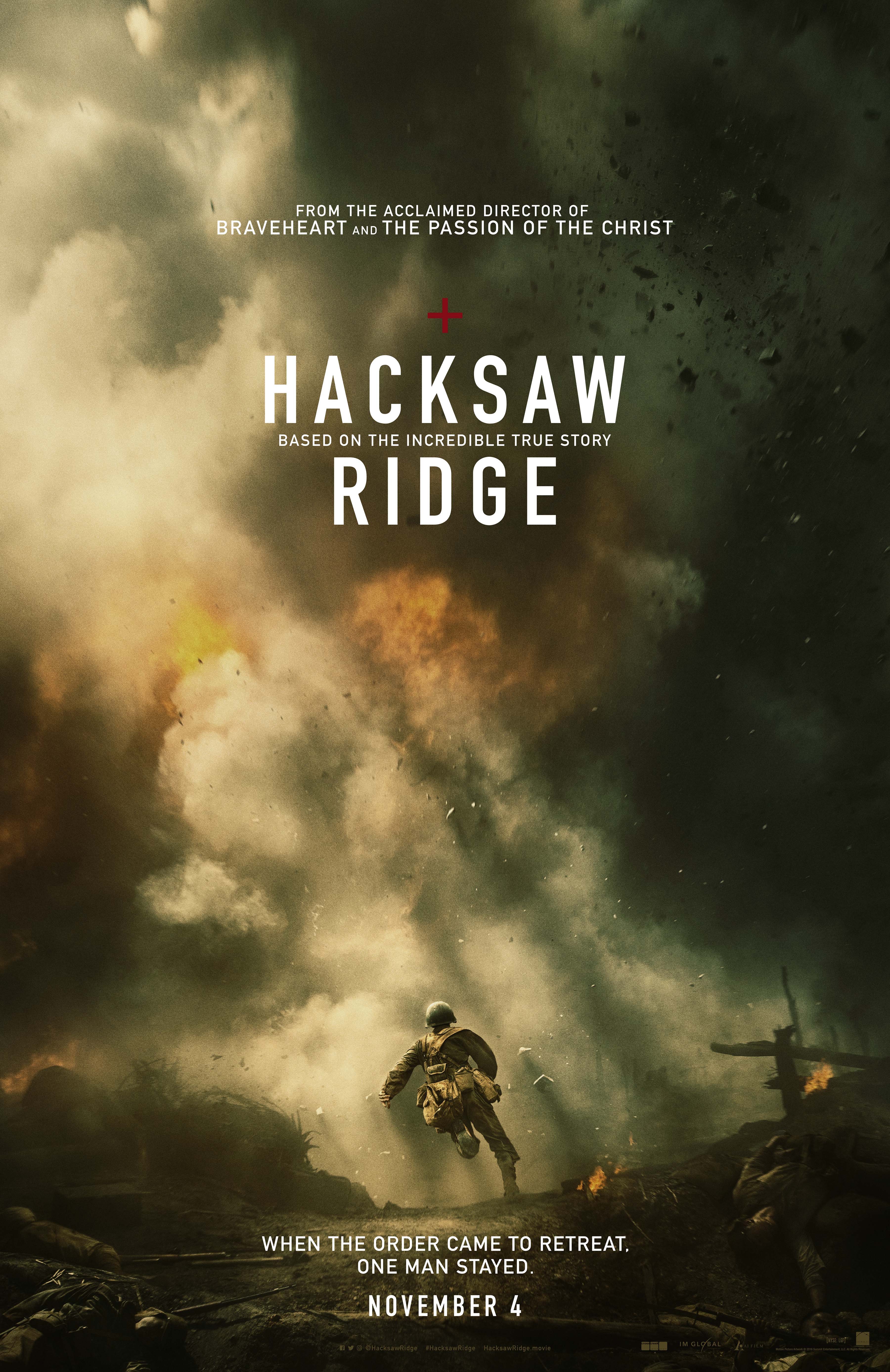
hacksaw-ridge-poster

D: Mel Gibson / 139m

Cast: Andrew Garfield, Sam Worthington, Teresa Palmer, Vince Vaughn, Luke Bracey, Hugo Weaving, Rachel Griffiths, Luke Pegler, Ben Mingay, Firass Dirani, Michael Sheasby, Nico Cortez, Goran D. Kleut, Richard Roxburgh, Ori Pfeffer

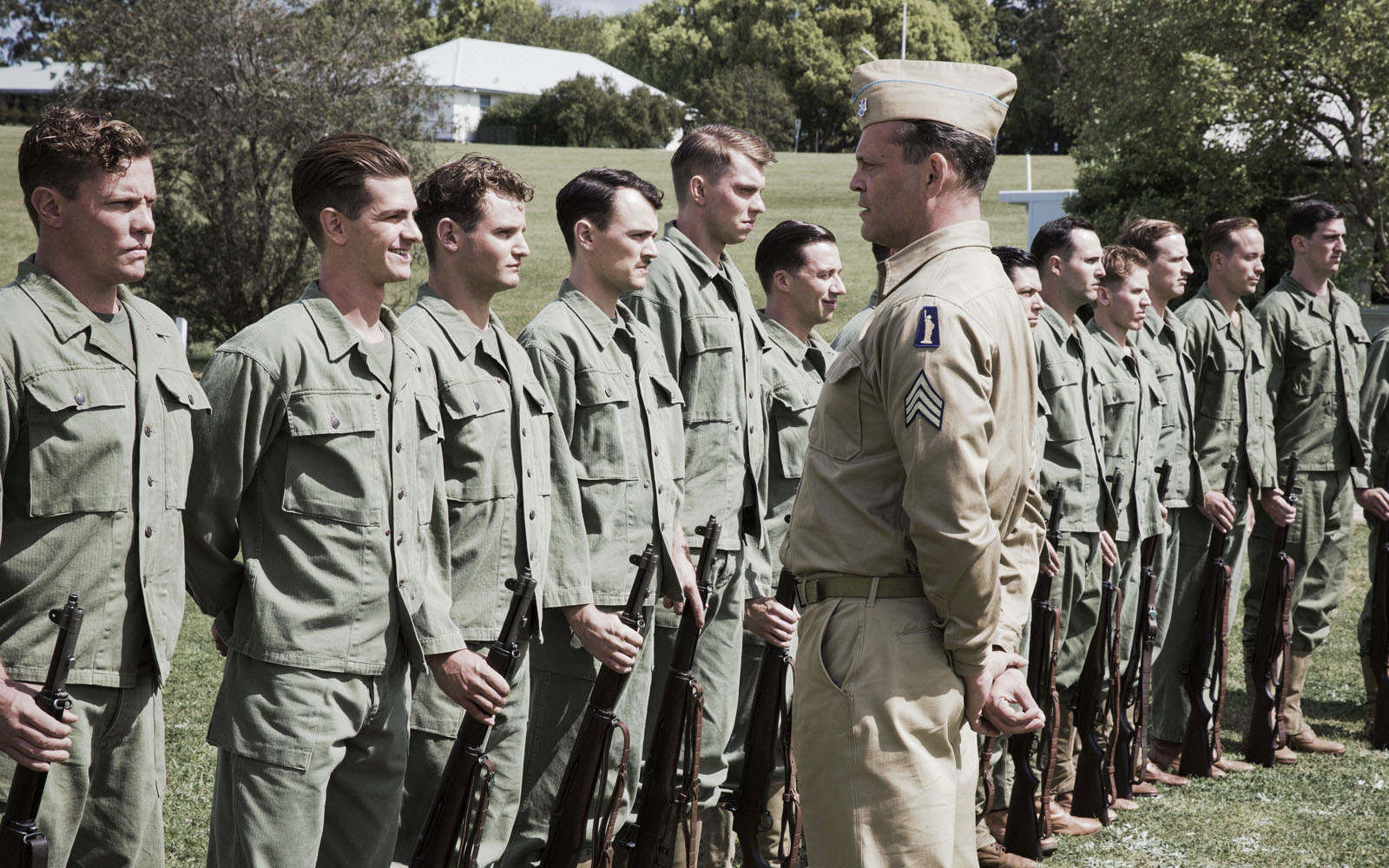
The story of Desmond T. Doss (Garfield) is one of those stories that seems tailor made for a big screen adaptation. After a childhood incident where he nearly kills his older brother, Desmond takes the sixth commandment, thou shalt not kill, very much to heart. When the US enters the Second World War, and pretty much every other young man has enlisted, Desmond enlists as well, and is sent to Fort Jackson in South Carolina for his basic training, he immediately upsets the normal order of things by refusing to touch a rifle… or indeed, any weapon. Naturally this antagonises his fellow trainees, and they make life difficult for him, as does his instructor, Sergeant Howell (Vaughn), and commanding officer, Captain Glover (Worthington), who want to see the back of Doss and his religious beliefs (he’s also a Seventh Day Adventist).

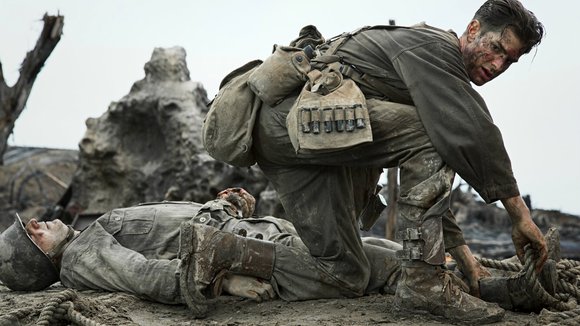
But Doss endures everything the army can throw at him, and begins to earn the respect of his comrades. However, when he’s given a direct order to pick up a gun and he refuses, he finds himself facing a court-martial. Luckily, a last-minute intervention by his father (Weaving), sees Doss allowed to take part in the war as a medic and without having to carry a rifle. Soon, Glover’s men, including Doss, are shipped out to the Pacific, and specifically, the island of Okinawa, where they are tasked with climbing the cliff face of the Maeda Escarpment – otherwise known as Hacksaw Ridge – and take on the Japanese forces that are dug in there. Their first attack is unsuccessful and they’re forced to take shelter on the ridge overnight. The next day they’re driven back down the Escarpment, leaving dozens of injured and wounded men behind.

hacksaw-ridge-2

Doss, however, refuses to leave them there. Over the next twenty-four hours he rescues seventy-five men, keeping them safe from Japanese patrols and when it’s safe to do so, lowering them down the cliff face to the amazement of the US soldiers below. Doss’ last rescue saves the life of Sergeant Howell, and he and an equally chastened Captain Glover, admit how wrong they’ve been about Doss and the courage he’s shown in sticking to his beliefs, and in saving so many men. The next day, another assault is launched. This time it’s Doss who is injured, and this time it’s his fellow soldiers who have to take care of him.

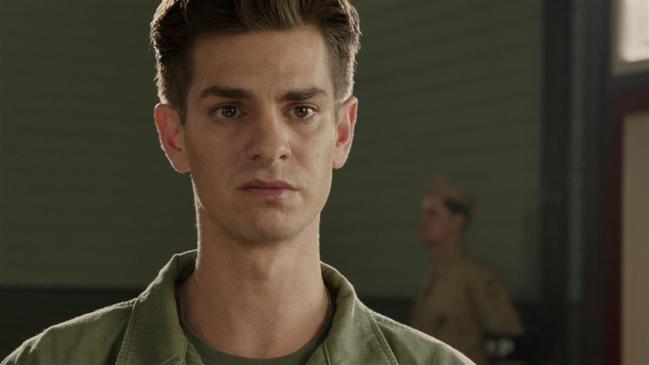
Doss’s heroism – and rescue of so many men – is told in a straightforward, linear fashion (its prologue aside), and is respectful of the man and his beliefs to such a degree that there’s a danger of his being a symbol rather than a fully fledged character. But thanks to a combination of Robert Schenkkan and Andrew Knight’s moving screenplay, Andrew Garfield’s impressive performance as Doss, and Mel Gibson’s equally impressive directing turn, Hacksaw Ridge never lionises Doss to the extent where he’s portrayed as an above average human being doing something extraordinary. Instead, Doss’s humility and keen sense of purpose keep him grounded firmly and effectively, and his sincerity is never doubted. He’s exactly the kind of man you want fighting alongside you in battle. Garfield – on somewhat of a religious roll with this and Silence (2016) – expresses Doss’s beliefs with a keen sense of how important his faith is to him, and gives a performance that is subtly nuanced, honest, and hugely sympathetic. When he’s saying to God, “Help me to get one more”, there’s no other line of dialogue in the movie that so perfectly encapsulates Doss’s character and personality, or his sense of personal responsibility.

external

Garfield is helped and surrounded by a terrific supporting cast, from Weaving as Doss’s sad, alcoholic father, to Palmer’s girl-next-door who he falls in love with at first glance, and on to Bracey’s gung-ho soldier who accuses Doss of cowardice. Vaughn, who rarely strays from his comedy man-child persona, here does some of his best work in years as the gruff Sergeant Howell, berating his men in a toned-down version of R. Lee Ermey’s Sergeant Hartman in Full Metal Jacket (1987), and doing so with a thinly disguised layer of affection. On the home front, Palmer is suitably fresh and enticing as the love of Doss’s life, and Griffiths is appropriately supportive as his mother. Only Worthington, saddled with a stock character and some clumsy dialogue, fails to make an immediate impression (though once he’s on Doss’s side it’s easier for the viewer to be on his side too).

But overall, this is Gibson’s triumph through and through, a powerful, riveting war movie that features some of the most exhilarating and, at the same time, exhausting battle sequences since Saving Private Ryan (1998). But where Spielberg’s ground-breaking recreation of the Normandy landings was brutal and uncompromising, and featured someone – Tom Hanks’ Captain Miller – that the viewer could relate to during all the carnage, here Gibson switches perspectives between the US and Japanese soldiers almost at will, and in doing so, captures some of the true, overwhelming nature of hand-to-hand combat (while also seeming a little too pre-occupied with setting men on fire, images of which crop up time and again).

hacksaw-ridge-20160349

But while the fierce exchanges at Hacksaw Ridge are given their due, Gibson is on equally solid ground during the sequences set in Doss’s home town of Lynchburg, Virginia, and at Fort Jackson, imbuing the Lynchburg scenes with a rosy, yet melancholy feeling, and then beginning to make things seem a little darker at Fort Jackson. By the time Doss reaches Okinawa, the viewer is left in no doubt that what follows will make Doss’s childhood trauma and boot camp humiliations seem like a walk in the park. It’s a slow build up as well, allowing the audience to get better acquainted with the men who’ll go into battle with Doss (and maybe not return), and to fully understand the dynamic between Doss and his father, and the bond between Doss and his fiancée, Dorothy.

Tales of heroism are often about the act or acts themselves, but here it’s “Doss the coward” (as he’s referred to) who is the focus. His determination, and over-riding desire to save life while everyone else is taking it, is embodied by Garfield’s praiseworthy performance, and further endorsed by the movie’s gung-ho, populist rhetoric. If it strays a little too close to feeling like a soap opera at times (especially in its scenes at Lynchburg), or unintentional melodrama, then Gibson is astute enough to bring it back from the brink. All of which makes Hacksaw Ridge one of the most “authentic-looking” war movies ever made, as well as being a fine tribute to the exploits of a man whose beliefs are truly inspirational.

Rating: 8/10 – bolstered by Simon Duggan’s bold cinematography, and Barry Robison’s exemplary production design, Hacksaw Ridge sees Gibson the director on fine form, and making one of the most impressive war movies of recent years; harrowing, visceral, and yet uplifting at the same time, the battle sequences are the movie’s main draw, though the earlier scenes contain enough emotional clout as well to balance things out, all of which provides viewers with one of the most fearless and potent true stories of 2016.

Share this:

  • Click to share on X (Opens in new window) X
  • Click to share on Facebook (Opens in new window) Facebook
  • More
  • Click to print (Opens in new window) Print
  • Click to email a link to a friend (Opens in new window) Email
Like Loading...

The Dressmaker (2015)

28 Monday Nov 2016

Posted by dullwood68 in Movies

≈ Leave a comment

Tags

1951, Australia, Comedy, Drama, Dressmaking, Dungatar, Hugo Weaving, Jocelyn Moorhouse, Judy Davis, Kate Winslet, Literary adaptation, Mystery, Revenge, Review, Sarah Snook

dressmaker

D: Jocelyn Moorhouse / 119m

Cast: Kate Winslet, Judy Davis, Liam Hemsworth, Hugo Weaving, Sarah Snook, Kerry Fox, Shane Bourne, Alison Whyte, Caroline Goodall, James Mackay, Sacha Horler, Gyton Grantley, Julia Blake, Barry Otto, Rory Potter

It’s Australia, and it’s 1951. The tiny rural town of Dungatar sees the return of Myrtle “Tilly” Dunnage (Winslet) after having been sent away as a child twenty-five years before for the suspected murder of Stewart Pettyman (Potter), the son of town councillor Evan Pettyman (Bourne). She’s back for two reasons: to look after her mother, Molly (Davis), who is suffering from dementia, and to discover the truth about what happened twenty-five years ago (Tilly doesn’t remember). The townsfolk aren’t exactly pleased to see her, with only Sergeant Farrat (Weaving) treating her fairly. Unconcerned, Tilly goes about caring for her mother, while also stirring things up around town, appearing in sexy, haute couture gowns and turning the heads of all the eligible and not-so-eligible men, and in particular, Teddy McSwiney (Hemsworth).

With the townsfolk treating her with suspicion and disrespect, she lets them know that she can make any of them bespoke dresses or outfits. Her first customer is young bride-to-be Gertrude Pratt (Snook). Going against her mother’s wishes, Gertrude is over the moon with the dress Tilly makes for her, and it’s not long before most of the women in town have followed suit. Pettyman employs the services of another dressmaker, Una Pleasance (Horler), but her efforts aren’t anywhere near as successful. Meanwhile, Tilly begins a tentative relationship with Teddy, while her mother’s memory improves, and her investigation into what happened to Stewart Pettyman starts to gather momentum.

maxresdefault

Along the way, town secrets are exposed, simmering animosities boil over, and Tilly’s skills as a dressmaker serve as a way of exacting revenge for the way she was treated as a child. Answers are revealed, lives are changed irrevocably, a tragedy ensues, and Dungatar’s entry into a local Eisteddfod affords Tilly the opportunity to carry out her ultimate revenge.

An adaptation of the novel by Rosalie Ham, The Dressmaker is a mixed bag indeed. Combining drama, comedy and romance, and mashing them all together (sometimes in the same scene), it’s a movie that is likely to divide audiences into two camps: those who prefer to have their revenge dramas played entirely straight throughout, and those who prefer to have their comedies unspoiled by dramatic stretches that restrict the belly laughs found elsewhere. Your tolerance for this mash-up will depend very much on going with the movie’s very particular flow, as Moorhouse and her co-screenwriter, husband P.J. Hogan, have embraced both the jaundiced drama and the wicked comedy inherent in Ham’s novel.

The result is a movie that’s tonally uneven and switches focus from comedy to drama and back again with unrestrained abandon. Moorhouse concentrates on the humour during the first hour, and gifts Davis with some great lines, some of them throwaways that make you wish the actress had made more comedies before this. When Tilly tells Gertrude the cost of the dress she wants made, Gertrude remarks that the cost is “outrageous”. Quick as a flash, Molly says, “So’s your bum.” Davis’ timing is simply brilliant. There are other moments that are equally as funny, and the cast can be seen to be enjoying themselves tremendously during these scenes. But all good things must come to an end, and the movie’s second half slowly sheds the comedy in order to concentrate more fully, and with more necessity, on the drama.

article-lead-wide1001981650gker0aimage-related-articleleadwide-729x410-gkjxzm-png1446177715341-jpg-620x349

But as well as shedding the humour, the script also sheds the shading and carefully orchestrated character beats, and leaves the viewer overwhelmed by increasing levels of melodrama. As well as the tragedy already alluded to, there is madness, murder, and extended bouts of retribution. There’s so much in fact, that Moorhouse struggles to find a way of making it all feel organic, with most scenes feeling forced by the need for resolution of the various subplots involving the townsfolk. By the time Tilly leaves Dungatar behind, the viewer may well be heaving a sigh of relief before laughing in gratitude at her final line of dialogue.

Thankfully, the movie’s flaws are more than compensated for by the performances. Davis steals the movie as the raddled, alcoholic, dementia-suffering Molly. It’s possibly the least glamorous role you’re likely to see for some time, but Davis is superb in it, caustic and sharp despite the dementia, and effortlessly dominating the scenes she’s in. Alongside her, Winslet gives another impressive performance, expressing Tilly’s determination and anger at how she was treated as a child, and yet also displaying an uncertainty and a mistrust surrounding her memories of her childhood. There are moments where Winslet is called upon to point up the character’s emotional fragility, and she does so in such an honest way that it’s entirely credible.

mgid-ao-image-mtv-com-209255

In support, Weaving is a delight as the crossdressing Sergeant Farrat, fey on the one hand, sturdy on the other, and a hoot as Rudolph Valentino. Hemsworth does enough to avoid giving an entirely wooden performance, but against Winslet still looks like a complete amateur. Further down the list there are good roles for, and good performances from, the likes of Kerry Fox as the acid-tongued schoolteacher, Bourne as the philandering town councillor, Blake as the ailing wife of the town’s doctor (Otto), Snook as the initially vapid but later viperish Gertrude, and Grantley as Teddy’s brother, Barney, who holds the key to what happened to Stewart Pettyman.

As befits a movie concerned with dressmaking, the costumes, designed by Marion Boyce and Margot Wilson, are fantastic, beautiful creations that flatter and enhance the female cast they were made for in exactly the way they were meant to flatter and enhance the characters. Winslet gets to show off her curves in a variety of figure hugging outfits, and there’s one scene where the dress she wears is – in terms of the time in which the movie is set – a precursor to the one worn by Anita Ekberg in La Dolce Vita (1960). And the overall look of the movie is like that of a Western, with Tilly “riding” back into town as an avenging angel á la Clint Eastwood in Hang ‘Em High (1968) or Pale Rider (1985). There are other references to other movies, some quite easy to spot, and some more subtly placed, but these don’t detract from the movie at all, but do add to the fun that can be had (in the first hour).

Rating: 7/10 – on balance, The Dressmaker‘s imbalance in terms of its storyline and tone should make this at least an awkward or unfulfilling watch, but somehow it’s a movie where it works more often than it doesn’t; with a standout turn from Davis, ravishing costumes, and a spare visual sense that suits the material, this is one of those movies where it’s unlikely for two different viewers to come to a consensus – but strangely, that’s one of its strengths.

Share this:

  • Click to share on X (Opens in new window) X
  • Click to share on Facebook (Opens in new window) Facebook
  • More
  • Click to print (Opens in new window) Print
  • Click to email a link to a friend (Opens in new window) Email
Like Loading...

The Mule (2014)

09 Tuesday Dec 2014

Posted by dullwood68 in Movies

≈ 1 Comment

Tags

Angus Sampson, Australia, Crime, Crooked businessman, Drama, Drugs smuggling, Ewen Leslie, Federal Police, Hugo Weaving, John Noble, Leigh Whannell, Review, Thailand, True story

Mule, The

D: Tony Mahony, Angus Sampson / 103m

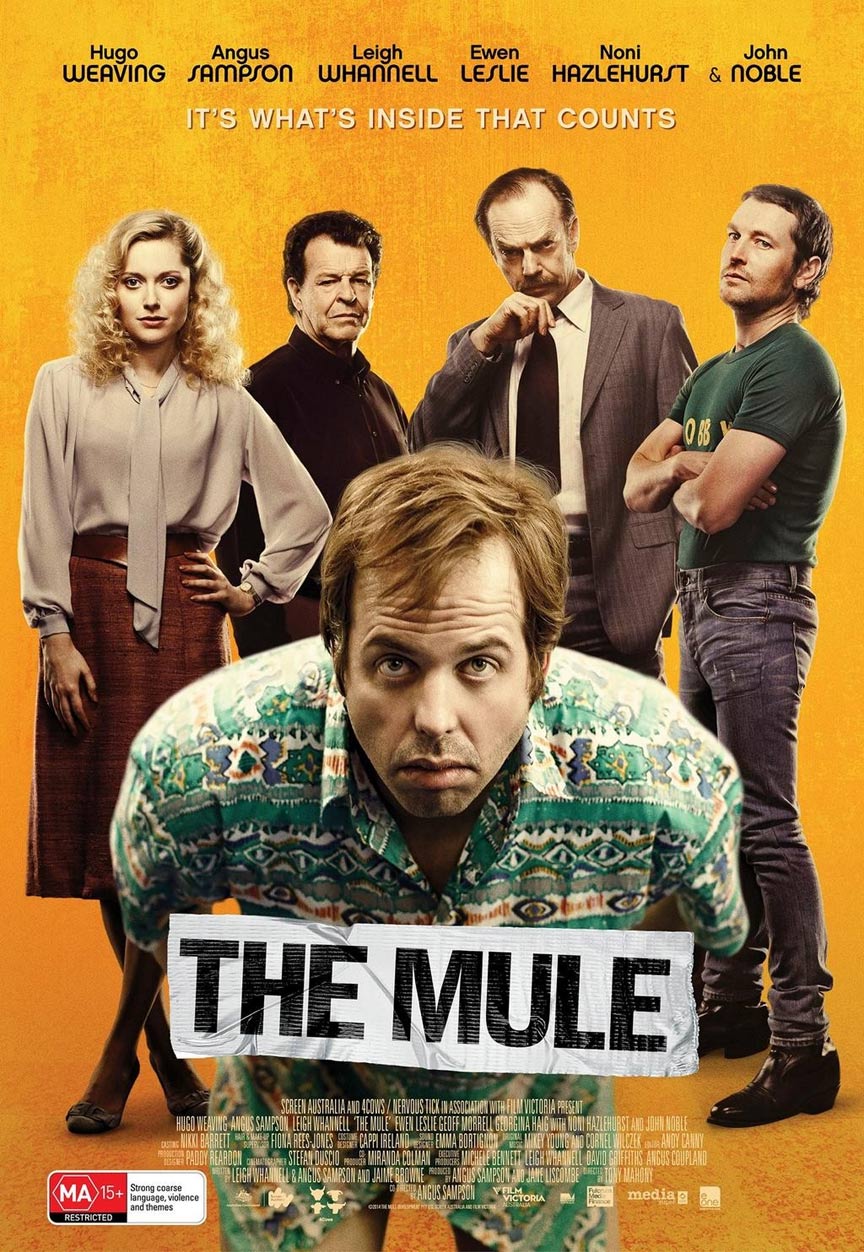
Cast: Hugo Weaving, Angus Sampson, Leigh Whannell, Ewen Leslie, Geoff Morrell, Georgina Haig, Noni Hazlehurst, John Noble

Melbourne, 1983. Ray Jenkins (Sampson) is voted player of the year at his local football club, and is included in the team’s trip to Thailand as part of its end of season celebrations. With the trip funded largely by local businessman Pat Shepherd (Noble), the team’s vice captain, Gavin Ellis (Whannell) makes Ray an offer: while they’re in Bangkok they can pick up a kilo of heroin, and smuggle it back by putting it in condoms and then swallowing them. Ray reluctantly agrees, but when the time comes only he swallows any condoms.

Back in Australia, Ray behaves suspiciously at the airport and is detained by customs officials. They suspect him of carrying drugs but he refuses to be x-rayed or be given any laxatives (Ray has to give his consent for either to happen). Ray is handed over to the Australian Federal Police, led by Detectives Croft (Weaving) and Paris (Leslie). They take him to a nearby motel where they keep him under surveillance for seven days, and where they wait for one of two outcomes: either Ray confesses to being a drug mule, or he defecates twice. Ray makes the decision to keep quiet and resist going to the toilet for as long as he can.

Meanwhile, Gavin is avoiding Pat, for whom he was smuggling the heroin in the first place. However, Gavin was planning to double cross Pat and sell the heroin himself, but Ray’s detention has ruined things. With Pat after him, Gavin finds out where Ray is being held and books into a room in the same motel. On Ray’s second day he’s appointed a lawyer, Jasmine Griffiths (Haig). She advises him not to cooperate with the police and to hold on for as long as he can. As the week goes on, Ray finds himself being bullied by Croft and some of the other officers, while Pat learns of Ray’s involvement (Gavin was meant to be working alone). When Pat finally catches up with Gavin he gives him no alternative but to find a way into Ray’s motel room and silence him before he can tell the police anything. But when he does, what happens afterwards makes matters far more complicated than even he could have predicted.

Mule, The - scene

Based on a true story, and set against the backdrop of the 1983 America’s Cup competition, The Mule is the kind of slightly warped, slightly off-kilter drama that Australian cinema does so well. Taking the bare bones of an arrest in the early Eighties, co-writers Sampson and Whannell, along with Jaime Browne, have fashioned a tale of personal endurance and criminal conspiracy that is by turns tense and dramatic, while also maintaining a fair degree of black comedy in its approach (see the above still). It sets things up with an economy and confidence that makes Ray’s dilemma all the more agonising, as he seeks to make it through his detention at the motel without giving anything away – literally.

Ray is initially presented as a bit of a quiet, unassuming, and gullible character, but there is an intelligence working beneath the furrowed brow that proves more than a match for the likes of Croft and his bully-boy tactics, and there’s a degree of fun to be had in seeing him turn the tables on the police, especially later on in the movie when he discovers a way out of his predicament. Along the way though, Ray has to make some hard choices in between the stomach cramps and protracted bowel spasms, and thanks to Sampson’s natural, perceptive performance, the viewer is sympathetic to Ray’s predicament throughout; he’s an easy character to like, and to root for. (Though one scene may well have audiences reaching for their sick bags, as Ray finds a temporary solution to his problems.)

With Ray’s predicament taking centre stage, the supporting storylines prove less original, though they do bolster the basic man-in-a-room-for-a-week scenario, and give the audience a break from Ray’s protracted agony. There is a twist that arrives partway through, but anyone who’s seen even a handful of crime dramas will see what’s coming based purely on its location, and it seems geared to provide a more “thrilling” ending to the movie than is actually necessary. As well as the criminal plotting going on, there’s some domestic drama ladled into the mix as well, and some crude sexism on Croft’s part that seems reflective of the period rather than an unnecessary character trait.

The cast all have enough to get their teeth into, with Weaving clearly relishing his role at the atavistic Croft, all macho posturing and sneering disdain. As his partner (and in a sense the straight man in their relationship), Leslie has the unshowy role that contrasts with Croft’s boorishness. Both actors put in good performances, and are matched by Haig’s idealistic public defender, Morrell’s shady stepfather, and Hazlehurst’s strong-willed mother. Noble exudes a cruel menace as the crooked businessman with a grim way of chastising his employees, while Whannell does sweaty paranoia with aplomb as the in-over-his-head Gavin. But it’s Sampson’s movie, his portrayal of Ray entirely convincing even when the script requires him to up the IQ points in his efforts to outsmart the police. It’s an often gruelling performance to watch, but as realistic in all likelihood as you’d expect.

Along with Mahony, Sampson also proves adept behind the camera, directing matters with an assurance and boldness that pays off handsomely. He even makes the many scenes where Ray is writhing around in pain as agonising for the audience as it is for the character, and ensures that the humour, when it’s included, isn’t there just for the sake of it. Two moments stand out: the two customs agents deciding who’s going to do Ray’s cavity search, and the police officer returning to Ray’s room and spraying some air freshener – small moments of hilarity that are also timed to perfection. There are also some inventive camera shots to keep things interesting from a visual perspective, and the editing by Andy Canny ensures the pace is kept tight and that scenes don’t outstay their welcome. On the downside, having the main character kept in the same location for so long does restrict the narrative, and while outside events prove engaging overall, without them the movie would have struggled to maintain the audience’s interest. There’s also the small issue of the police always falling asleep at night when they’re supposed to be watching Ray for signs of any “movement”. It’s a clumsy plot device, and is the one really false note in the whole movie.

Rating: 8/10 – thanks to the efforts of Sampson and Whannell – if they look familiar it’s because they play Tucker and Specs in the Insidious movies – The Mule is a little gem of a movie that deserves as big an audience as it can achieve; uncompromising in places, wickedly funny in others, this is an unusual tale that walks a fine line between implausibility and credibility, and succeeds in walking that line admirably.

Share this:

  • Click to share on X (Opens in new window) X
  • Click to share on Facebook (Opens in new window) Facebook
  • More
  • Click to print (Opens in new window) Print
  • Click to email a link to a friend (Opens in new window) Email
Like Loading...

Blog Stats

  • 490,504 hits

Recent Posts

  • 10 Reasons to Remember Bibi Andersson (1935-2019)
  • Fantasia (1940)
  • Dances With Wolves (1990) – The Special Edition
  • Kiss of the Spider Woman (1985)
  • The Three Musketeers (1973)

Top Posts & Pages

  • The White Orchid (2018)
    The White Orchid (2018)
  • The Dark Tower (2017)
    The Dark Tower (2017)
  • Lost for Life (2013) - Another Look
    Lost for Life (2013) - Another Look
  • Captain Fantastic (2016)
    Captain Fantastic (2016)
  • Miss Baek (2018)
    Miss Baek (2018)
  • Two Shorts by François Ozon: A Summer Dress (1996) and X2000 (1998)
    Two Shorts by François Ozon: A Summer Dress (1996) and X2000 (1998)
  • Central Intelligence (2016)
    Central Intelligence (2016)
  • Taken (2008)
    Taken (2008)
  • Cardboard Boxer (2016)
    Cardboard Boxer (2016)
  • A Brief Word About Cineworld Unlimited
    A Brief Word About Cineworld Unlimited
Follow thedullwoodexperiment on WordPress.com

Blogs I Follow

  • Rubbish Talk
  • Film 4 Fan
  • Fast Film Reviews
  • The Film Blog
  • All Things Movies UK
  • Interpreting the Stars
  • Let's Go To The Movies
  • Movie Reviews 101
  • TMI News
  • Dan the Man's Movie Reviews
  • Film History
  • Jordan and Eddie (The Movie Guys)

Archives

  • April 2019 (13)
  • March 2019 (28)
  • February 2019 (28)
  • January 2019 (32)
  • December 2018 (28)
  • November 2018 (30)
  • October 2018 (29)
  • September 2018 (29)
  • August 2018 (29)
  • July 2018 (30)
  • June 2018 (28)
  • May 2018 (24)
  • April 2018 (21)
  • March 2018 (31)
  • February 2018 (25)
  • January 2018 (30)
  • December 2017 (30)
  • November 2017 (27)
  • October 2017 (27)
  • September 2017 (26)
  • August 2017 (32)
  • July 2017 (32)
  • June 2017 (30)
  • May 2017 (29)
  • April 2017 (29)
  • March 2017 (30)
  • February 2017 (27)
  • January 2017 (32)
  • December 2016 (30)
  • November 2016 (28)
  • October 2016 (30)
  • September 2016 (27)
  • August 2016 (30)
  • July 2016 (30)
  • June 2016 (31)
  • May 2016 (34)
  • April 2016 (30)
  • March 2016 (30)
  • February 2016 (28)
  • January 2016 (35)
  • December 2015 (34)
  • November 2015 (31)
  • October 2015 (31)
  • September 2015 (34)
  • August 2015 (31)
  • July 2015 (33)
  • June 2015 (12)
  • May 2015 (31)
  • April 2015 (32)
  • March 2015 (30)
  • February 2015 (37)
  • January 2015 (39)
  • December 2014 (34)
  • November 2014 (34)
  • October 2014 (36)
  • September 2014 (25)
  • August 2014 (29)
  • July 2014 (29)
  • June 2014 (28)
  • May 2014 (23)
  • April 2014 (21)
  • March 2014 (42)
  • February 2014 (38)
  • January 2014 (29)
  • December 2013 (28)
  • November 2013 (34)
  • October 2013 (4)

Create a free website or blog at WordPress.com.

Rubbish Talk

Film 4 Fan

A Movie Blog

Fast Film Reviews

The Film Blog

The official blog of everything in film

All Things Movies UK

Movie Reviews and Original Articles

Interpreting the Stars

Dave Examines Movies

Let's Go To The Movies

Film and Theatre Lover!

Movie Reviews 101

Daily Movie Reviews

TMI News

Latest weather, crime and breaking news

Dan the Man's Movie Reviews

All my aimless thoughts, ideas, and ramblings, all packed into one site!

Film History

Telling the story of film

Jordan and Eddie (The Movie Guys)

Movie Reviews & Ramblings from an Australian Based Film Fan

Privacy & Cookies: This site uses cookies. By continuing to use this website, you agree to their use.
To find out more, including how to control cookies, see here: Cookie Policy
  • Subscribe Subscribed
    • thedullwoodexperiment
    • Join 481 other subscribers
    • Already have a WordPress.com account? Log in now.
    • thedullwoodexperiment
    • Subscribe Subscribed
    • Sign up
    • Log in
    • Report this content
    • View site in Reader
    • Manage subscriptions
    • Collapse this bar
 

Loading Comments...
 

    %d