• 10 Reasons to Remember…
  • A Brief Word About…
  • About
  • For One Week Only
  • Happy Birthday
  • Monthly Roundup
  • Old-Time Crime
  • Other Posts
  • Poster of the Week
  • Question of the Week
  • Reviews
  • Trailers

thedullwoodexperiment

~ Viewing movies in a different light

thedullwoodexperiment

Tag Archives: Israel

The Golem (2018)

12 Tuesday Feb 2019

Posted by dullwood68 in Movies

≈ Leave a comment

Tags

Community, Doron Paz, Drama, Hani Furstenberg, History, Horror, Ishai Golan, Israel, Lithuania, Plague, Review, Yoav Paz

D: Yoav Paz, Doron Paz / 95m

Cast: Hani Furstenberg, Ishai Golan, Kirill Cernyakov, Brynie Furstenberg, Lenny Ravich, Alexey Tritenko, Adi Kvetner, Mariya Khomutova, Veronika Shostak, Konstantin Anikienko

Lithuania, 1763. In a small isolated village made up of an entirely Jewish community, Hanna (Hani Furstenberg) and Benjamin (Golan), are a couple who are struggling to have a second child following the death of their first born, Joseph, seven years before. Their marriage seems mired in the expectations of the village elders, one of whom suggests Benjamin should renounce Hanna and take another wife. However, these considerations take a backseat with the arrival of Vladimir (Tritenko). Vladimir has come from a nearby, plague-ravaged village and his eldest daughter is dying, while no one in Hanna’s community is affected. Threatening to kill everyone and burn their village to the ground unless his daughter is saved, the task is taken up by the village’s healer, Perla (Brynie Furstenberg). But Hanna bristles under Vladimir’s threats, and challenges the elders to create a Golem, an ancient creature out of Jewish myth that could defend them. When they refuse, Hanna takes matters into her own hands, and brings the creature to life herself. What she doesn’t expect is the form the Golem takes: that of a young boy who reminds her too much of her lost son…

Taking some of its inspiration from The Witch (2015), the latest outing from the Paz brothers – fans of Jeruzalem (2015) will be pleased to know there’s a sequel in the works – is a sterling effort that does its best to explore the myth of the Golem, while placing the creature within a convincing setting. Though it doesn’t explain why Jewish lore would have such an acknowledged demon at its (potential) disposal, Ariel Cohen’s screenplay does highlight the circumstances under which it might be called upon, and then mixes those circumstances with the grief and sadness felt by Hanna over the death of her son. Though Hanna does come across as something of a modern day heroine, and her challenges to the orthodoxy of her community go unpunished, her motives are predominantly maternal; she’s being protective, albeit in a way that may prove more dangerous to the community than Vladimir’s murderous intentions. Her motives devolve with the Golem’s arrival, and the bond they share reawakens the feelings she had when Joseph was alive. And through all of this, there’s a palpable sense of threat from the Golem, its blank stare hiding much darker intentions than those it has been brought to life for.

Hanna’s maternal instincts inevitably lead to tragedy, and thanks to a first-rate performance from Hani Furstenberg, there’s an emotive undercurrent to events that lifts the material and makes it more than just a period horror movie with a generous sampling of gore effects. The Paz brothers also know when to focus on character over action, and the opening scenes establish both the sense of a tight-knit community, and a number of the stories that exist within that community, from the neighbouring widow who may be the second wife Benjamin needs, to Hanna’s sister who is on the verge of getting married. Vladimir’s arrival allows the movie to add a layer of historical persecution to the mix (his threats amount to a promise of a pogrom), and to highlight the elders’ belief in the power of prayer, but without forgetting that sometimes violence has to be met with violence. That these elements are present is a tribute to the density and complexity of Cohen’s screenplay, and the Paz brothers’ approach to the material, making the movie as a whole more involving and more effective as a result. With bleak, shadowy cinematography by Rotem Yaron, and  a pervading sense of menace throughout, this is necessarily grim stuff, and all the better for it.

Rating: 8/10 – it’s not often that a horror movie takes the time to explore the nature of evil, but it’s one of many surprises that The Golem has to offer, along with a lead female character who drives the story forward, and an ending that is both poignant and bittersweet; though there are moments where the dialogue sounds altogether too modern, and Hanna’s actions appear to be in defiance of historical accuracy, this is still an impressive outing from the Paz brothers, and one that augurs well for their future projects.
Share this:

  • Click to share on X (Opens in new window) X
  • Click to share on Facebook (Opens in new window) Facebook
  • More
  • Click to print (Opens in new window) Print
  • Click to email a link to a friend (Opens in new window) Email
Like Loading...

Operation Finale (2018)

15 Monday Oct 2018

Posted by dullwood68 in Movies

≈ Leave a comment

Tags

1960, Abduction, Adolf Eichmann, Ben Kingsley, Buenos Aires, Chris Weitz, Drama, Israel, Mélanie Laurent, Oscar Isaac, Review, True story

D: Chris Weitz / 123m

Cast: Oscar Isaac, Ben Kingsley, Mélanie Laurent, Lior Raz, Nick Kroll, Haley Lu Richardson, Joe Alwyn, Michael Aronov, Greta Scacchi, Pêpê Rapazote, Peter Strauss, Simon Russell Beale

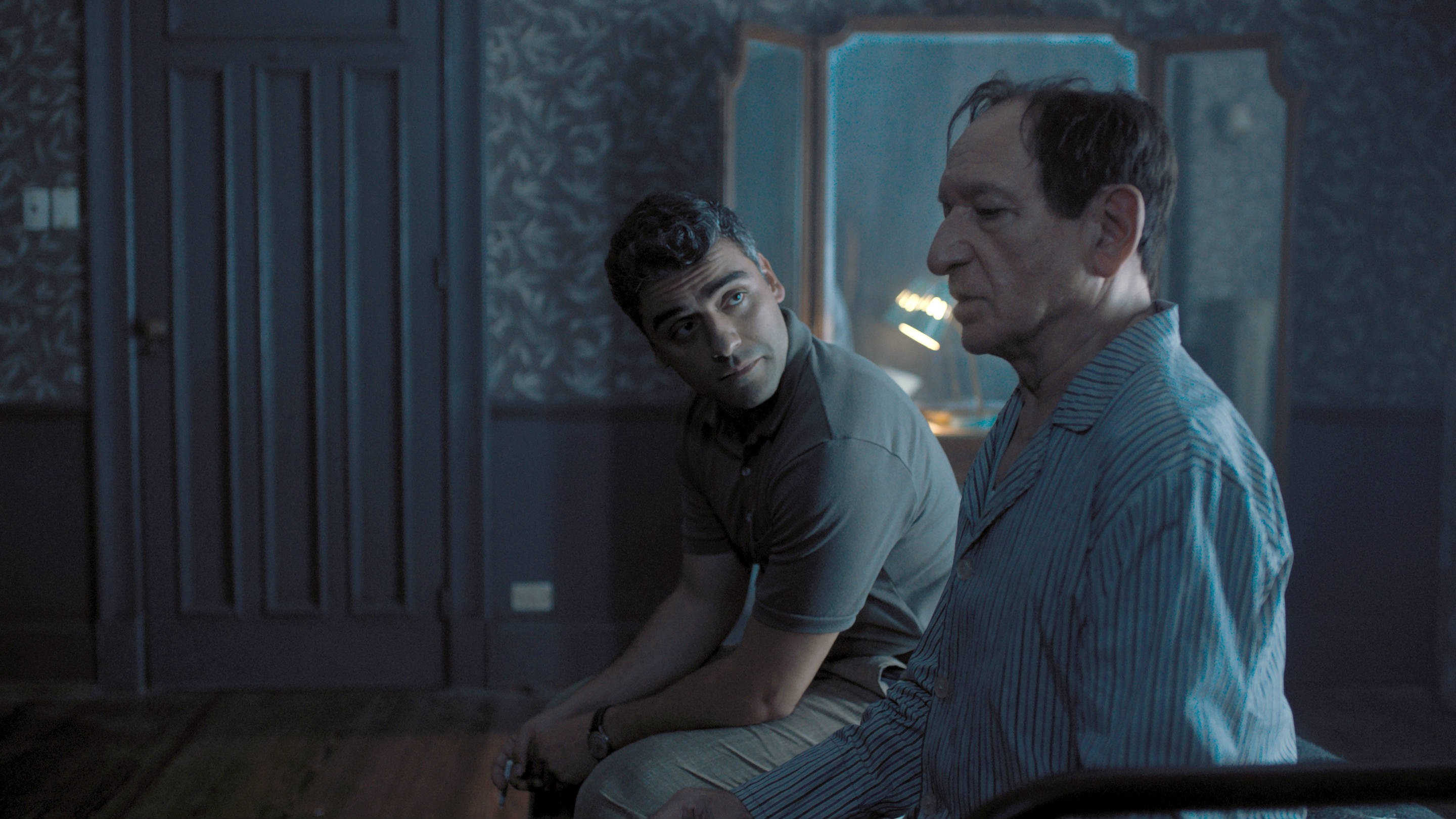
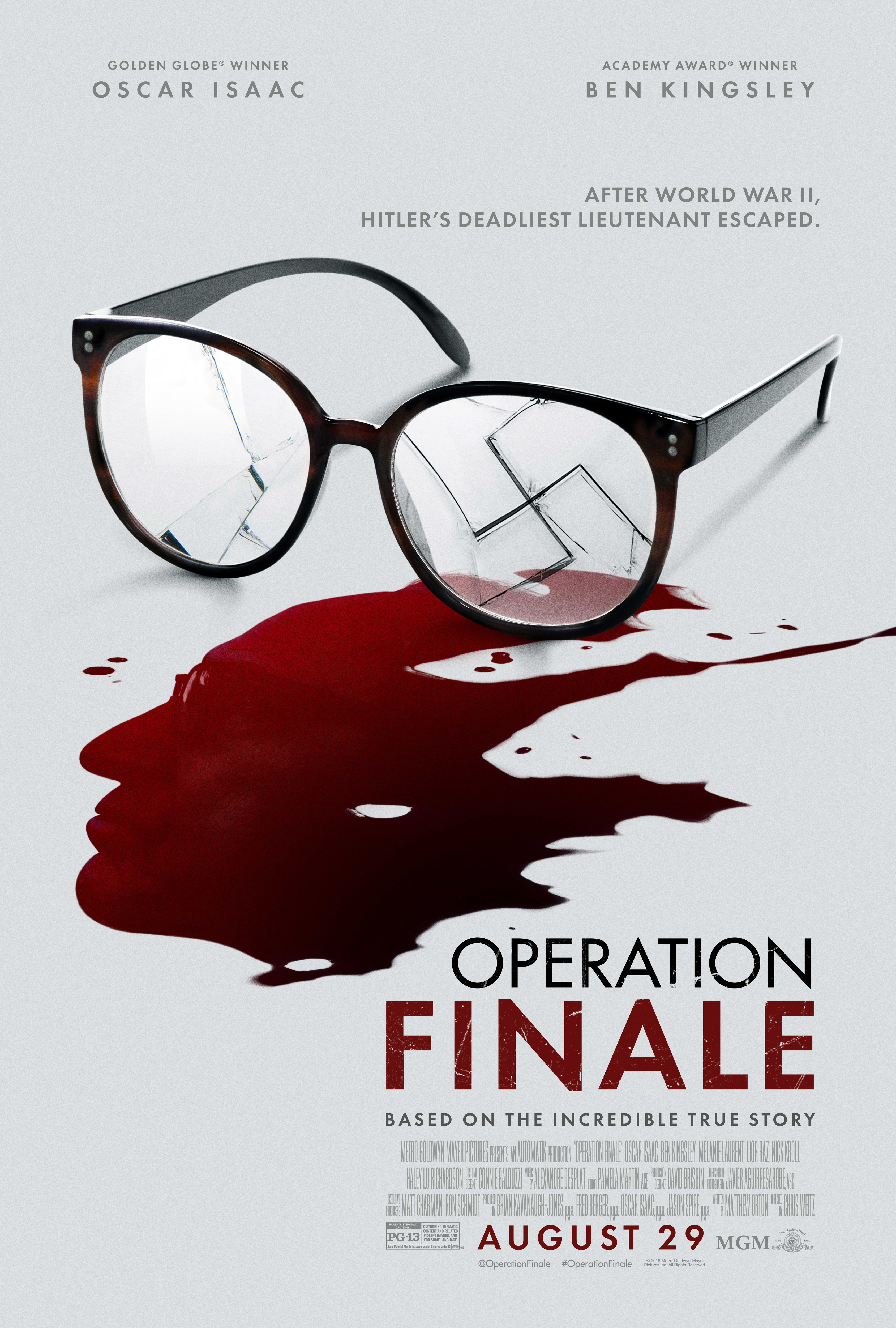
In Buenos Aires in 1960, a young woman called Sylvia Hermann (Richardson) begins dating a young man, Klaus (Alwyn), who tells her he lives with his uncle, who has been looking after him since his father died in World War II. The kindly uncle actually is his father, Adolf Eichmann (Kingsley), long wanted for war crimes, and now the focus of an Israeli attempt to kidnap him and bring him to trial. Mossad assembles a team that includes Peter Malkin (Isaac), a brash, opportunistic agent who was involved in a previous attempt to capture Eichmann that ended tragically; Rafi Eitan (Kroll), an intelligence specialist; and Hanna Elian (Laurent), a doctor and former agent. The team travels to Buenos Aires where they organise a safe house, and plot Eichmann’s abduction. Once captured, though, they find themselves with a problem: the only way they can get Eichmann out of the country is on an El Al plane that’s scheduled to leave in ten days’ time. But first, El Al wants a signed affidavit from Eichmann that he is willing to travel to Israel to stand trial…

The capture and subsequent “extradition” of Adolf Eichmann from Argentina to Israel in May 1960 has all the hallmarks of an exciting adventure story, with the Mossad team working in secrecy, and under the very real threat of being captured by the Argentinian police and finding themselves put on trial for espionage. And that’s without the substantial number of Nazis and Nazi sympathisers living in Buenos Aires at the time, who would most likely have had them killed on the spot. Eichmann’s capture was a huge coup for the Israelis, and though Operation Finale conflates much of the background detail – e.g. Sylvia Hermann began dating Klaus Eichmann in 1956 – it remains true to the spirit and the general sequence of events that saw one of the principle architects of the Final Solution finally brought to justice. However, Matthew Orton’s screenplay only provides an occasional sense of the danger Malkin and his colleagues were facing, and director Chris Weitz doesn’t seem able to make the movie as tense and exciting as it should be. Instead, we’re treated to a number of scenes where the team debate whether or not to kill Eichmann there and then (even though that’s not the mission), and several repetitive scenes where they endeavour to get him to sign El Al’s affidavit, but to no avail.

It’s a shame, as though this is a distinct improvement on The Man Who Captured Eichmann (1996), it never really gels as the historical thriller that was so clearly intended. The performances are uniformly good, with Kingsley subdued yet calculating as Eichmann, and Aronov matching him for intensity as chief interrogator Zvi Aharoni, but they’re in service to material that is often dry and unimaginative. Dramatic flourishes such as flashbacks to the death of Malkin’s sister (which put Eichmann unconvincingly at the scene), and a party where the entire gathering shouts “Sieg Heil!” and gives the Nazi salute over and over, stand out because they are more emotive, but elsewhere the movie treads an even keel and rarely strays from feeling perfunctory and ever so slightly mannered. Even the last minute race against time to get to the airport with the police on the team’s tail is less than exciting, just another cog in the story’s wheel that the makers feel obliged to turn for the audience’s sake. It’s another moment of restrained pretence in a movie that lacks the kind of emotional impact such a dramatic story truly deserves.

Rating: 5/10 – despite the good use of Argentinian locations, and David Brisbin’s detailed production design, Operation Finale feels more like the cinematic equivalent of a first draft than a finished product; with a handful of soap opera elements that further dilute the drama, the movie is too broad and too uneven in its approach to be anywhere near successful, but on its own terms it will suffice until the next interpretation comes along.

Share this:

  • Click to share on X (Opens in new window) X
  • Click to share on Facebook (Opens in new window) Facebook
  • More
  • Click to print (Opens in new window) Print
  • Click to email a link to a friend (Opens in new window) Email
Like Loading...

Blush (2015)

20 Monday Aug 2018

Posted by dullwood68 in Movies

≈ Leave a comment

Tags

Drama, Drugs, Dvir Benedek, Hadas Jade Sakori, Irit Pashtan, Israel, Lesbian, Michal Vinik, Review, Romance, Sexuality, Sivan Noam Shivon, Teens

Original title: Barash

D: Michal Vinik / 85m

Cast: Sivan Noam Shivon, Hadas Jade Sakori, Dvir Benedek, Irit Pashtan, Amit Muchtar, Bar Ben Vakil, Hila Gozlan, Einav Levi, Reut Akkerman

Naama (Shivon) is a typical Israeli teenager, living a different life from the one her parents (Benedek, Pashtan) believe she lives. Away from her home – where she’s something of a moody presence – Naama spends time with her best friends, Iris (Gozlan) and Lili (Levi), taking drugs and having casual sex with random boys. Her parents are more concerned with her older sister, Liora (Vakil), who’s a secretary in the Army, but who it soon transpires, has run off with her latest boyfriend. While the search for Liora escalates, Naama meets Dana (Sakori), a confident free spirit who she finds herself attracted to. The two become friends, and soon Dana is introducing Naama to the nightclub scene in Tel Aviv. Naama and Dana become lovers, but what is a serious development for Naama, appears to be less so for Dana, whose past hints at her having unresolved issues that threaten their relationship. When a trip to Tel Aviv takes an unexpected turn, Naama is forced to confront both the reality of her relationship with Dana, and her new-found sexuality…

A frank and appealing exploration of racial, sexual and political tensions in modern-day Israel, Michal Vinik’s debut feature (which she also wrote) is a movie that tells a familiar tale but with an edge that’s borne out of its setting and the parochialism of Naama’s social background. It’s a movie that avoids depicting easy sentimentality or indulging in melodramatic flourishes, and which subverts audience expectations in often clever and unexpected ways. One such occasion occurs when Naama, high on a drug whose effects will last for several hours, is given no choice but to accompany her mother on a trip to the military base where Liora is stationed. What feels like an opportunity for some embarrassing comedy at Naama’s expense, instead leads to an outpouring of rage at an unsuspecting (and inflexible) guard that is a perfect representation of the anger and frustration that Naama feels in her own life. So extreme is this outpouring that her mother can only stand and watch, unable to intervene. Elsewhere, Vinik casts an acerbic eye over a family dynamic that includes a father whose hatred of Palestinians is all-consuming, and a rebellious older sister whose personal liberation comes at the expense of her cultural heritage.

For much of the movie, this family dynamic, with its roiling undercurrents of inter-personal animosity, is the movie’s trump card, and easily more interesting than the somewhat standardised coming-of-age tale that sits at its centre. Though Naama is a wonderfully realised character – thanks to Shivon’s tough, unsparing efforts – and her sexual awakening is handled with a delicacy that’s at odds with the jarring discomfort of the social conventions she’s expected to adhere to, there’s still the feeling that we’re in much charted territory, even down to the inevitable betrayal that lies ahead of her. To offset this, Vinik employs Shai Peleg’s sharply composited cinematography to present a world that is both familiar and alien, and even to its protagonists. Often the frame teems with details that can be easily missed, visual cues that point to the stability of Naama’s emotional state. There are terrific performances from all concerned, with Shivon a standout as Naama, Benedek proving an uncompromising bull-like presence, and Pashtan quietly impressive as Naama’s mother, her passive body language and blank expressions hiding the kind of emotional intensity that has been repressed for far too long. In the end, it’s not the sadness of Naama’s failed romance that resonates, but the idea that it’s her mother’s life that is the future she’s locked into.

Rating: 8/10 – a mixture of the bold and the commonplace (dramatically speaking), Blush offers a fascinating insight into the trials and tribulations of an average Israeli family and the challenges faced when trying to be different; full of telling moments and deft directorial touches that add poignancy to an otherwise familiar tale of burgeoning sexual expression, this is finely tuned for the most part, and with a well-defined vibrancy that makes it all the more engaging.

Share this:

  • Click to share on X (Opens in new window) X
  • Click to share on Facebook (Opens in new window) Facebook
  • More
  • Click to print (Opens in new window) Print
  • Click to email a link to a friend (Opens in new window) Email
Like Loading...

Sand Storm (2016)

17 Wednesday Jan 2018

Posted by dullwood68 in Movies

≈ Leave a comment

Tags

Arranged marriage, Bedouins, Drama, Elite Zexer, First wife, Haitham Omari, Israel, Lamis Ammar, Review, Ruba Blal-Asfour, Sufat Chol

Original title: Sufat Chol

D: Elite Zexer / 88m

Cast: Lamis Ammar, Ruba Blal-Asfour, Haitham Omari, Khadija Alakel, Jalal Masarwa, Elham Arraf, Shaden Kanboura, May Azliah, Diamond Zaccak

The first feature by Israeli movie maker Elite Zexer, Sand Storm focuses on a Bedouin family whose patriarch, Suliman (Omari), has just married his second wife. His first wife, Jalila (Blal-Asfour), is none too happy about it, but as it’s part of the Bedouin culture and it’s a male-dominated society, she has no choice in the matter. Jalila has given Suliman four daughters, including teenager Layla (Ammar), who is in college. Layla and her father have a somewhat easy-going relationship, while her mother is stricter and less inclined to indulge her daughter’s wayward and more modern behaviour. Suliman’s marriage, combined with Layla’s recent exam results being less than satisfactory, focuses his mind on what he should do about his eldest daughter, and her future. His answer is to marry her to a man she doesn’t know, and whom she has never spoken to. Despite their differences, Jalila defends her daughter’s wish not to marry this man, but as tensions rise and threaten to boil over, it isn’t clear which side will win out: centuries old traditions or modern day aspirations.

Throughout Sand Storm, there’s the palpable sense of a tragedy unfolding, one that will prove life-changing for all concerned. As modern sensibilities clash with established social norms, the struggle that comes with understanding both sides of the argument is highlighted in the character of Suliman. He loves his first daughter, but he is bound by what is expected of him as a father; he may want Layla to be free to live her own life with the man of her choice, but he has no more say in what happens than she does. This element of Bedouin culture, so apparently cruel in its disregard for the feelings of an individual, adds tension and a dark, emotional undercurrent to the material, and as the movie progresses, it proves more gripping than expected. By the time Layla makes the decision to pack her bags and leave for good, Zexer’s tightly constructed and intelligent screenplay ensures that there’s no guarantee that she’ll be successful in her escape. And what the consequences will be of her actions carries an equally palpable sense of dread. Here, love is irrelevant. Here, love is a distant second to the marriage contract. Here, love is likely to be punished.

The tone throughout is one of simmering antipathy allowed an occasional outburst when things prove too much. This applies to all three main characters, with Jalila angry at her husband’s callous choice of husband for Layla (“Did you ever look at your daughter?”), Layla herself challenging her mother and father over their perceived intransigence, and Suliman when his authority is questioned repeatedly. Zexer neatly explores the ties that bind ever more tightly in these circumstances and sidesteps any potential sentimentality by showing that – sadly – there’s no place for it in any of the characters’ lives. The cast are uniformly impressive, their performances rich in detail and hugely affecting, with Blal-Asfour’s portrayal of the downtrodden yet still resilient Jalila commanding the viewer’s attention from the start. Zexer has a good eye for the rhythms of daily family life, and she’s careful to portray traditional Bedouin culture without any overt criticism, making this a respectful piece but one that’s also hopeful of change, even if takes a few more generations to achieve.

Rating: 8/10 – winner of the Grand Jury Prize in the World Cinema category at the 2016 Sundance Film Festival, Sand Storm has an emotional heft that belies the simplicity of its appearance and its plot; it’s a standard tale to be sure, and seen many times before, but this is a movie that is both humane and surprisingly tender despite its dramatic, and often devastating, exploration of the limits of female empowerment when brought up against the rigid cultural expectations of Bedouin society.

Share this:

  • Click to share on X (Opens in new window) X
  • Click to share on Facebook (Opens in new window) Facebook
  • More
  • Click to print (Opens in new window) Print
  • Click to email a link to a friend (Opens in new window) Email
Like Loading...

Don Verdean (2015)

19 Saturday Dec 2015

Posted by dullwood68 in Movies

≈ Leave a comment

Tags

Al Qaeda, Amy Ryan, Archaeology, Comedy, Danny McBride, Goliath, Israel, Jared Hess, Jemaine Clement, Leslie Bibb, Lot's Wife, Religion, Review, Sam Rockwell, Satire

Don Verdean

D: Jared Hess / 96m

Cast: Sam Rockwell, Amy Ryan, Jemaine Clement, Will Forte, Danny McBride, Leslie Bibb, Steve Park, Sky Elobar

Now and then a motion picture comes along that rocks the very foundation of accepted Christian belief, a movie that lifts the lid on the precepts of religious beliefs and exposes them to the light of clever satire. And for its first twelve minutes, Don Verdean looks like it might be that movie. But once those twelve minutes are over, and Don (Rockwell) commits to working with born-again preacher Tony Lazarus (McBride), any hopes of something special are dashed by the introduction of Boaz (Clement), an Israeli jack-of-all-trades who brings the movie down to earth with a resounding thud.

It’s not so much that Boaz is a manipulative, shady, stupid, sexist, arrogant, deceiving, lying opportunist, nor that he comes close to being one of the most offensive racial characters seen in recent years, but purely because he becomes the driving force behind a plot that doesn’t need him. Boaz is a character who belongs in another movie entirely, and one that hasn’t got the kind of ambition that Don Verdean has. But he’s there, he’s an idiot, and we’re stuck with him. (Even Clement, an actor whose comedy chops aren’t to be overlooked, can’t do much with him; and if he can’t, how’s the viewer meant to cope?)

Don Verdean - scene2

The way in which Boaz overwhelms both the narrative and the other characters is unfortunate for several reasons. The movie sets out its comedic stall from the start with an infomercial detailing Don’s successes finding holy artefacts in Israel, items such as his greatest find: iron shears dating back over 3000 years (and possibly the very shears used to rob Samson of his hair – yes?). The narration is portentous and deadly serious, and it’s this seriousness that is carried forward as we see Don field questions about the validity of his finds at a small church group. Don responds to these doubts with calm sincerity, and even though the viewer will know without a shadow of a doubt that he’s as naive in his own way as the people that believe in him, he’s also determined to provide reassurance for those whose faith might be wavering.

With Don’s unwavering naïvete matched by the public’s erstwhile gullibility, he joins forces with Lazarus and Lazarus’s ex-prostitute wife Joylinda (Bibb) to bring even more religious artefacts back from the Holy Land (even if the whole idea is both illegal and preposterous). Lazarus wants to put these items on display at his church, both as a display of his unwavering faith, and as a way of undermining a rival ministry run by ex-Satanist-turned preacher Pastor Fontaine (Forte). Don has a lead on the remains of Lot’s Wife – actually a rock formation that looks like it has breasts – and contacts Boaz to arrange to have them shipped to the States, but the Israeli sends a different “statue”. Lazarus retains his faith in Don and asks if there is a particular antiquity he’d like to track down. Don’s answer? The skull of Goliath.

Don Verdean - scene3

However, setbacks in Israel lead Don to make an awful decision, and he fakes finding the skull. When Boaz discovers the deception, he blackmails Don into bringing him to the US. And the script, by Hess and his wife Jerusha, quickly runs out of comedic steam as it brings Boaz’ selfish demands and childish behaviour to the fore, and sidelines Don’s attempts to weather the storm of his professional duplicity. It’s still a funny movie, but by now it’s lost the subtlety and the poise applied by a cast who know to play things completely straight, even when they’re called upon to behave ridiculously or say something absurd (even McBride, an actor not exactly known for the subtlety of his performances, reigns in the urge to put in a larger than life performance, and his tirade against sea monkeys is a highlight).

With the focus now on Boaz and his increasingly ludicrous machinations, the script brings in an unlikely scam: the finding of the Holy Grail (on an Indian reservation no less). It’s an idea that’s ripe for comic exploitation, but again, Hess misjudges the strength of the material, and the movie labours under the weight of that misjudgment, and struggles to recover. A twist in the tale proves laboured and is awkwardly revealed, and the subplot involving Don’s lovelorn assistant Carol (Ryan) is wrapped up with undue haste. And the less said about Pastor Fontaine and his efforts to see Lazarus’s church shut down the better.

Don Verdean - scene1

This is very much a movie with a core idea – the need for religious proof of events mentioned in the Bible in an increasingly secular world – that is downplayed and eventually discarded in favour of a succession of betrayals and implausible story turns that eradicate the good work done in the movie’s first half hour. Rockwell is laidback as  Don, playing him with a delicate sense of irony that makes the character immensely likeable and sympathetic, even when he responds to Carol’s dismay that he’s never asked her about her personal life by saying he hasn’t because he didn’t think she had one. Ryan struggles to make Carol anything more than an amiable stereotype, while Forte comes close to sabotaging his own performance by substituting mugging for acting. And Clement… well…

By the end, most viewers will be feeling a mixture of disappointment and ennui, as the script tries to wind things up with one last flourish, but it’s an effort that comes too late, and reminds the viewer of what might have been if the script had been more focused on the world of Biblical archaeology and its desperate-to-believe supporters. Instead, Hess’s latest fails to make the most of its central idea, and never fully gets to grips with its inherent notions of faith and honesty.

Rating: 5/10 – with a script that strays further and further away from its initial set up with each successive minute, Don Verdean lacks coherence and conviction once the search for Goliath’s skull is begun; Rockwell is good value as usual, but those expecting a more concerted, consistently humorous movie will be sorely disappointed thanks to some very poor storyline choices.

Share this:

  • Click to share on X (Opens in new window) X
  • Click to share on Facebook (Opens in new window) Facebook
  • More
  • Click to print (Opens in new window) Print
  • Click to email a link to a friend (Opens in new window) Email
Like Loading...

The Human Resources Manager (2010)

14 Tuesday Apr 2015

Posted by dullwood68 in Movies

≈ Leave a comment

Tags

A Woman in Jerusalem, Burial, Drama, Eran Riklis, Guri Alfi, Immigrant, Industrial bakery, Israel, Literary adaptation, Mark Ivanir, Noah Silver, Review, Romania, The Weasel, Yulia Petracke

Human Resources Manager, The

D: Eran Riklis / 99m

Cast: Mark Ivanir, Guri Alfi, Noah Silver, Rosina Kambus, Julian Negulesco, Bogdan E. Stanoevitch, Irina Petrescu, Gila Almagor, Reymonde Amsallem, Roni Karen, Papil Panduru

When an employee at a prestigious bakery in Jerusalem is killed, and her body goes unclaimed for some weeks, it leads to a public relations crisis for the company. With a newspaper article being prepared that will criticise the bakery, its owner, known as the Widow (Almagor), gives the job of defusing the matter to the human resources manager (Ivanir). He discovers that the employee was a Romanian immigrant called Yulia who had been living in Jerusalem for some time, but whose family is back in her home country. He also learns that she had been let go a month before by her supervisor, and believes that this absolves the bakery of any blame for her body going unclaimed.

However, the journalist writing the article, known as the Weasel (Alfi), publishes the article anyway. And instead of fighting any claim of negligence, the Widow decides to admit blame and pay compensation to the family; she also gives the job of escorting the body back to Romania and representing the company at the funeral to the HR manager. With his home life proving difficult to negotiate – he’s divorced and has a young daughter (Karen) he doesn’t spend enough time with – the prospect of being away for a few days isn’t ideal, but he doesn’t have a choice.

At the Widow’s request, the Weasel goes with him, which adds to his problems. And once he gets to Romania, the HR manager finds that bureaucracy and local customs place further obstacles in the way of arranging the funeral. First, Yulia’s ex-husband (Stanoevitch) can’t sign the burial form because he’s no longer family. A search for their son (Silver) reveals a wild child at odds with everyone, but who is too young to sign the form either. This leaves his grandmother (Petrescu), but she lives in a remote village that is a couple of days’ journey away. Borrowing the van used by the Israeli consul (Kambus), the HR Manager, accompanied by the Weasel, the Vice Consul (Negulesco), the son, and a driver (Panduru), make their way to the grandmother’s village. But the onset of a storm forces them to take shelter in a military barracks, where both the van breaks down, and the HR manager becomes ill…

Human Resources Manager, The - scene

A downbeat, yet curiously, almost accidentally uplifting adaptation of A.B. Yehoshua’s novel A Woman in Jerusalem, The Human Resources Manager is a strange beast, part black comedy, part tortuous road trip, and part voyage of discovery. These elements, fused together as they are here, work in ways that often come as a surprise, and it makes for rewarding viewing, as the HR manager finds a new lease of life from taking care of the dead.

As the HR manager learns to loosen up and out his own troubles behind him – a previous posting that went horribly wrong, his divorce, the Widow’s lack of confidence in him – he also learns how to deal with the problems of others, particularly the son, whom he eventually bonds with. It’s all done gradually and with a great deal of sympathy and warmth toward the character of the HR manager, and avoids any grand emotional gestures, preferring to keep things on an even level and without a great deal of show. This approach doesn’t undermine the characters’ experiences on their travels, but serves to keep matters realistic, and is remarkably naturalistic as well.

The movie has its quirks. No one is called by name, only by description: the son, the Vice Consul, the grandmother etc., and it makes for an everyman feel. The only person who has a name is the dead woman, Yulia. And while this may point to some notion of the movie playing with stereotypes, such is not the case. Yes, it makes for a kind of shorthand when characters are introduced, but the absence of names never becomes an issue. The same is true of Romania, obviously the country the HR manager travels to, but never named in the movie. It adds to the idea that this is a story that could happen to anyone, anywhere.

In the title role, Ivanir is a great choice, his stoic features and resigned looks fitting the character perfectly. His early frustration at being given such a job is played with just the right degree of self-absorption and rancour. As the movie develops and the HR manager becomes more involved with Yulia’s family, Ivanir portrays his new-found determination and purpose with credibility and a refreshing lack of artifice. By letting go of his life back in Israel, or at least the things he believes are important to him, and by learning that he tries to exercise too much control, he frees himself from the yoke he’s placed around his own neck. It’s an impressive, consistent performance that anchors the movie and gives the viewer someone to connect with (and root for).

The supporting characters are all fleshed out to good effect, with Silver as the angry, petulant, aggressive son, and Kambus as the waspish Consul standing out from the crowd. There’s often stunning location photography courtesy of DoP Rainer Klausmann, and the movie is edited with precision by Tova Asher. In the director’s chair, Riklis organises and orchestrates the script by Noah Stollman in such a way that each scene adds something more to the story, and enriches it as a whole. He’s also good at bringing out the less obvious emotions in a scene and rendering them accordingly, letting the story unfold in a way that keeps the viewer guessing what’s going to happen next. It all adds up to a movie that is as poignant as it is efficiently dramatic.

Rating: 8/10 – with a terrific central performance by Ivanir, The Human Resources Manager takes its time and tells its story with honesty and subdued passion; not as morbid as it may seem, this carries a warmth and a heart that makes it a lot more enjoyable than you’d imagine.

Share this:

  • Click to share on X (Opens in new window) X
  • Click to share on Facebook (Opens in new window) Facebook
  • More
  • Click to print (Opens in new window) Print
  • Click to email a link to a friend (Opens in new window) Email
Like Loading...

The Lady in No 6 (2014)

07 Friday Nov 2014

Posted by dullwood68 in Movies

≈ 1 Comment

Tags

Alice Herz-Sommer, Classical music, Documentary, Israel, Malcolm Clarke, Oscar winner, Piano, Prague, Raphael Sommer, Review, Theresienstadt, World War II

Lady in No 6, The

aka: The Lady in Number 6: Music Saved My Life

D: Malcolm Clarke / 39m

Alice Herz-Sommer

Born in Prague in 1903, Alice Herz grew up surrounded by the intelligentsia of the day, her parents’ cultural salon frequented by the likes of Franz Kafka (who would go for walks with Aiice and her twin sister, Mariana, and tell them stories) and Gustav Mahler. She learnt to play the piano at an early age and was encouraged to take it up as a career by another friend of the family, Artur Schnabel.  She studied at the prestigious Prague German Conservatory of Music (where she was the youngest pupil), and there drew the attention of cellist Leopold Sommer.  They married in 1931, and in 1937 had a son, Raphael.  Alice gave recitals and performed in concerts until the Nazis took control of Prague and Jewish involvement in performances was curtailed.  While several of her family members and friends fled to Israel, Alice remained in Prague to care for her mother who was very ill.

In July 1943, Alice was arrested and sent to Theresienstadt where her skills as a pianist were utilised in over one hundred concert performances, including those for the visiting Red Cross, as the Nazis strove to show that conditions were not as bad as the Allies suspected.  Billeted with Raphael, he and Alice were liberated in 1945 (sadly, Leopold died of typhus in Dachau six weeks before it too was liberated).  Rebuilding her life, she and Raphael emigrated to Israel in 1949 and were reunited with their family, including Mariana.  There, Alice worked as a teacher at the Jerusalem Academy of Music until she decided to emigrate to England in 1986.  In retirement she still played the piano for three hours every day, and remained an inspiration to everyone who knew her.  Remarkably, she was a hundred and ten when she died in February 2014.

Lady in No 6, The - scene

The key to Alice’s life, she always said, was optimism.  She unfailingly looked for the good in life, even during the terrible years when she and Raphael were incarcerated in Theresienstadt.  Like so many of her fellow concentration camp survivors – two of whom are featured in the movie – Alice’s positive attitude helped her to withstand the horror that surrounded her.  She saw “the beauty in life” in almost everything, but particularly in music.  For Alice, “music was magic”.  It could raise her spirits and bring happiness in even the most terrible of situations or circumstances.  With her unwavering memory for classical pieces, Alice could always retreat into her own mind, a place where even the Nazis couldn’t follow her.  It’s inspiring to think that, despite where she was, she was perhaps freer than anyone could imagine.

This remarkable woman is the focus of an equally remarkable documentary short.  The Lady in No 6 is a compelling, fascinating account of one woman’s lifelong love affair with music.  Alice is seen at 109, still mobile, still playing the piano with wonderful dexterity, and still enjoying life with a vitality and energy that would put most thirty-somethings to shame.  She’s always smiling and laughing, and her eyes – only slightly dulled by old age – twinkle with a mixture of mirth and sincerity that is surprisingly wistful when she sits in repose.  Alice’s upbeat nature and lack of pessimism is a joy to behold, and when she talks about her love of music you can see that she’s transported by it.  As she’s said in the past, “I am Jewish, but Beethoven is my religion”.

Wisely focusing on her passion for music for the most part – with an extended but emotive sidestep into World War II – Clarke deftly avoids any hint of sentimentality (as does Alice) and paints an engaging, winning portrait of a woman whose devotion to music has the effect of making the viewer wish they had even a tenth of Alice’s ability and commitment to her art.  Testimony from one of her neighbours provides an idea of how much her morning recitals are enjoyed, and a reminiscence of her time at Theresienstadt reveals the same approval from some of the guards.  It’s a wonderful affirmation of Alice and her dedication to her muse, that her playing has been able to cross social and ideological divides with such incredible efficacy.

Away from Alice and her contagious love affair with classical music, the movie paints a sobering yet hope-infused account of her time at Theresienstadt, with one of her friends recounting a particularly chilling account of an encounter with Josef Mengele.  The focus shifts to take into account the resilience of those inmates who could see no other outcome but their own survival, and while Alice takes a back seat during these moments, it still serves to highlight the tenacity she must have had to endure (and to be so well-balanced in the aftermath of it all).

Visually as well, The Lady in No 6 is a treat, with Clarke’s assembly of various archival materials proving both eye-catching and memorable, his blending of the historical and the modern throwing each element into sharp relief.  The post-production work is highly impressive, and so is the editing by co-writer Carl Freed, both of such a high standard that the movie has a precise, almost painterly feel to it, and the scenes of Alice in her flat feel entirely welcoming, not as if the audience is eavesdropping on her, but that she’s gladly invited everyone in… and couldn’t be more pleased for the intrusion.

Rating: 9/10 – a delightful and inspiring look at the life of an absolutely exceptional woman, The Lady in No 6 fully deserves its Oscar win and is one of the best documentary short movies of recent years; it’s a shame then that we get to spend such a short amount of time in Alice’s wonderful company.

Share this:

  • Click to share on X (Opens in new window) X
  • Click to share on Facebook (Opens in new window) Facebook
  • More
  • Click to print (Opens in new window) Print
  • Click to email a link to a friend (Opens in new window) Email
Like Loading...

Blog Stats

  • 486,528 hits

Recent Posts

  • 10 Reasons to Remember Bibi Andersson (1935-2019)
  • Fantasia (1940)
  • Dances With Wolves (1990) – The Special Edition
  • Kiss of the Spider Woman (1985)
  • The Three Musketeers (1973)

Top Posts & Pages

  • Lost for Life (2013) - Another Look
    Lost for Life (2013) - Another Look
  • Lost for Life (2013)
    Lost for Life (2013)
  • About
    About
  • Mr. Topaze (1961)
    Mr. Topaze (1961)
  • Billy Lynn's Long Halftime Walk (2016)
    Billy Lynn's Long Halftime Walk (2016)
  • Winter's Tale (2014)
    Winter's Tale (2014)
  • The Hitman's Bodyguard (2017)
    The Hitman's Bodyguard (2017)
  • 5 Famous Movie Roles That Nearly Went to Someone Else
    5 Famous Movie Roles That Nearly Went to Someone Else
  • The Layover (2017)
    The Layover (2017)
  • Transcendence (2014)
    Transcendence (2014)
Follow thedullwoodexperiment on WordPress.com

Blogs I Follow

  • Rubbish Talk
  • Film 4 Fan
  • Fast Film Reviews
  • The Film Blog
  • All Things Movies UK
  • Interpreting the Stars
  • Let's Go To The Movies
  • Movie Reviews 101
  • TMI News
  • Dan the Man's Movie Reviews
  • Film History
  • Jordan and Eddie (The Movie Guys)

Archives

  • April 2019 (13)
  • March 2019 (28)
  • February 2019 (28)
  • January 2019 (32)
  • December 2018 (28)
  • November 2018 (30)
  • October 2018 (29)
  • September 2018 (29)
  • August 2018 (29)
  • July 2018 (30)
  • June 2018 (28)
  • May 2018 (24)
  • April 2018 (21)
  • March 2018 (31)
  • February 2018 (25)
  • January 2018 (30)
  • December 2017 (30)
  • November 2017 (27)
  • October 2017 (27)
  • September 2017 (26)
  • August 2017 (32)
  • July 2017 (32)
  • June 2017 (30)
  • May 2017 (29)
  • April 2017 (29)
  • March 2017 (30)
  • February 2017 (27)
  • January 2017 (32)
  • December 2016 (30)
  • November 2016 (28)
  • October 2016 (30)
  • September 2016 (27)
  • August 2016 (30)
  • July 2016 (30)
  • June 2016 (31)
  • May 2016 (34)
  • April 2016 (30)
  • March 2016 (30)
  • February 2016 (28)
  • January 2016 (35)
  • December 2015 (34)
  • November 2015 (31)
  • October 2015 (31)
  • September 2015 (34)
  • August 2015 (31)
  • July 2015 (33)
  • June 2015 (12)
  • May 2015 (31)
  • April 2015 (32)
  • March 2015 (30)
  • February 2015 (37)
  • January 2015 (39)
  • December 2014 (34)
  • November 2014 (34)
  • October 2014 (36)
  • September 2014 (25)
  • August 2014 (29)
  • July 2014 (29)
  • June 2014 (28)
  • May 2014 (23)
  • April 2014 (21)
  • March 2014 (42)
  • February 2014 (38)
  • January 2014 (29)
  • December 2013 (28)
  • November 2013 (34)
  • October 2013 (4)

Blog at WordPress.com.

Rubbish Talk

Film 4 Fan

A Movie Blog

Fast Film Reviews

The Film Blog

The official blog of everything in film

All Things Movies UK

Movie Reviews and Original Articles

Interpreting the Stars

Dave Examines Movies

Let's Go To The Movies

Film and Theatre Lover!

Movie Reviews 101

Daily Movie Reviews

TMI News

Latest weather, crime and breaking news

Dan the Man's Movie Reviews

All my aimless thoughts, ideas, and ramblings, all packed into one site!

Film History

Telling the story of film

Jordan and Eddie (The Movie Guys)

Movie Reviews & Ramblings from an Australian Based Film Fan

Privacy & Cookies: This site uses cookies. By continuing to use this website, you agree to their use.
To find out more, including how to control cookies, see here: Cookie Policy
  • Subscribe Subscribed
    • thedullwoodexperiment
    • Join 481 other subscribers
    • Already have a WordPress.com account? Log in now.
    • thedullwoodexperiment
    • Subscribe Subscribed
    • Sign up
    • Log in
    • Report this content
    • View site in Reader
    • Manage subscriptions
    • Collapse this bar
 

Loading Comments...
 

    %d