• 10 Reasons to Remember…
  • A Brief Word About…
  • About
  • For One Week Only
  • Happy Birthday
  • Monthly Roundup
  • Old-Time Crime
  • Other Posts
  • Poster of the Week
  • Question of the Week
  • Reviews
  • Trailers

thedullwoodexperiment

~ Viewing movies in a different light

thedullwoodexperiment

Tag Archives: Kathryn Hahn

Private Life (2018)

20 Saturday Oct 2018

Posted by dullwood68 in Movies

≈ Leave a comment

Tags

Drama, Egg donor, Infertility, IVF treatment, Kathryn Hahn, Kayli Carter, Molly Shannon, Paul Giamatti, Review, Step-niece, Tamara Jenkins

D: Tamara Jenkins / 124m

Cast: Paul Giamatti, Kathryn Hahn, Kayli Carter, Molly Shannon, John Carroll Lynch, Emily Robinson, Desmin Borges, Denis O’Hare

Now in their forties, Richard (Giamatti) and Rachel (Hahn) are trying desperately to have a child before it’s too late. They’ve tried several attempts at artificial insemination but none have paid off. It’s only when they try for the first time with IVF treatment that they discover that their previous failures have been due to Richard having a blockage that stops him from providing sperm. He undergoes surgery to correct this, but still the IVF treatment isn’t successful. Their consultant, Dr Dordick (O’Hare), suggests they look into the possibility of finding an egg donor, but at first, Rachel is against the idea as she will have no biological input into any child that’s born. It’s only when their step-niece, Sadie (Carter), comes to stay with them after cutting short her college writing programme, that the couple begin to see a solution to their problems. It’s not an ideal solution – will Sadie want to give up some of her eggs, will it go down well with her parents, Cynthia (Shannon) and Charlie (Lynch), will it even be successful – but having warmed to the idea, Rachel and Richard decide to ask Sadie if she’ll be their egg donor…
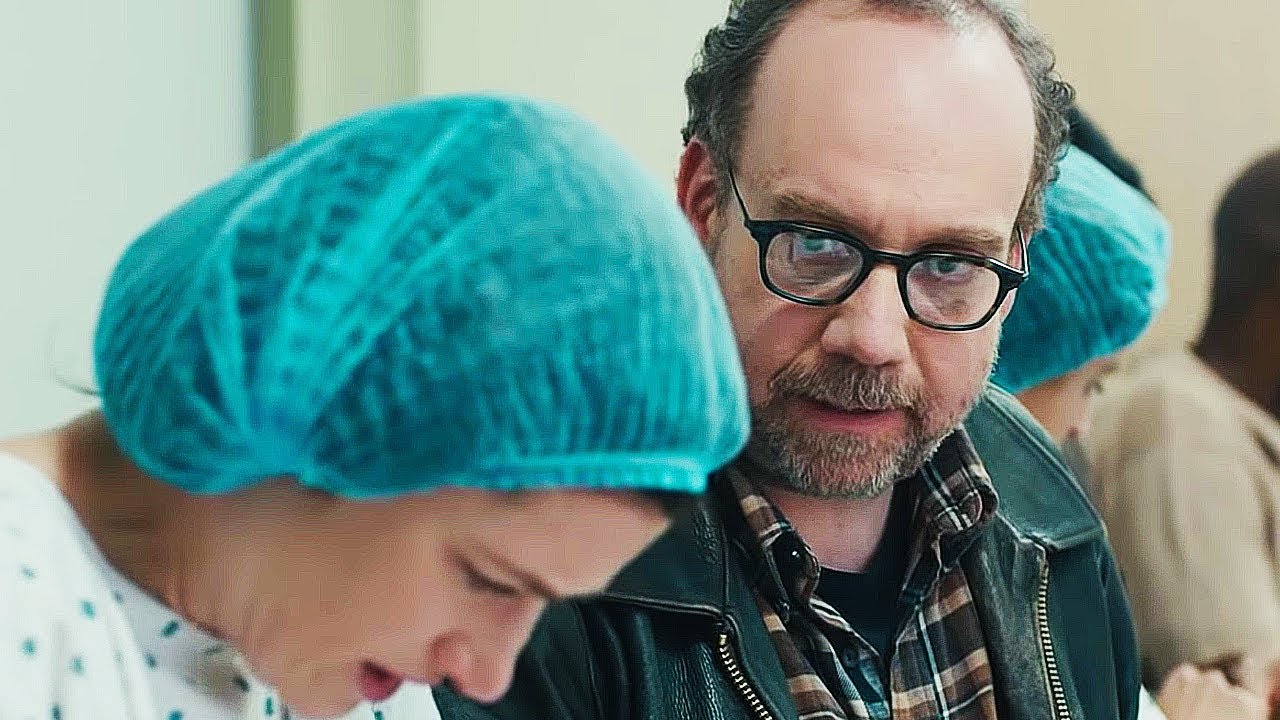
Although it’s an often touching, and moving exploration of the trials and tribulations of trying to have a baby (but not in the old-fashioned way), Tamara Jenkins’ latest, only her third feature in twenty years, is refreshingly non-judgmental about its lead characters and their determination to have a child. But Private Life leaves the viewer knowing almost nothing at all about why the couple want a child, and in terms of their back story, we learn that Rachel is a well regarded writer, while Richard was a well regarded theatre director who now owns and runs an artisan pickle company. With the how and the why of where they are now left unexamined, their plight – though well developed and scripted by Jenkins – means their struggle to conceive (or adopt if absolutely necessary) doesn’t have the impact needed to make viewers empathise with them as much as might be expected. The impetus seems to be with Rachel, while Richard seems to be going along with it all to please her or, worse still, keep her happy. It’s this aspect of their relationship that’s more intriguing, but unfortunately, Jenkins doesn’t go that deeply into things, preferring instead to focus on how they’re feeling right now.
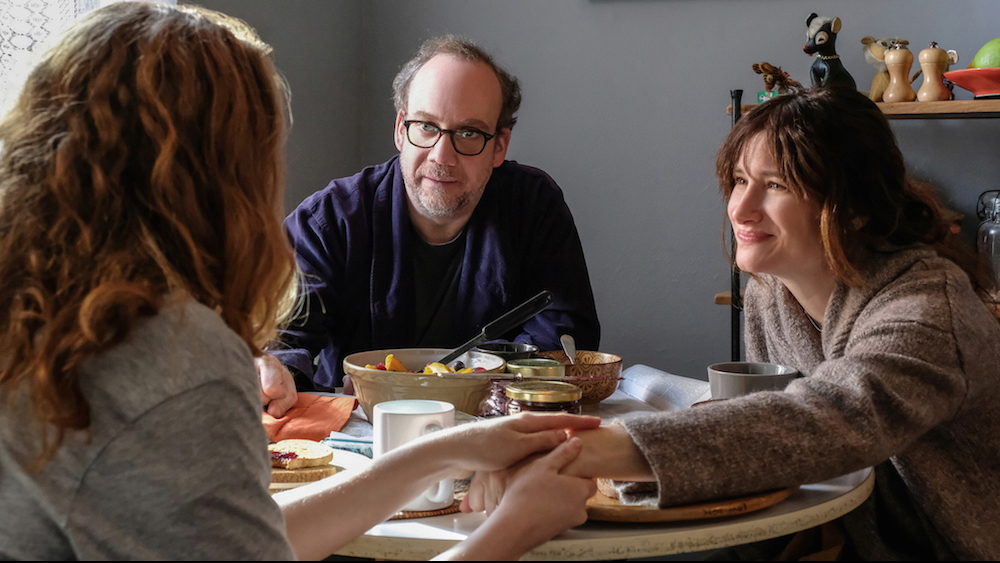
Inevitably, things don’t always go to plan for them, and the setbacks and attendant emotional pain and suffering that they endure is tellingly handled by Jenkins and her very talented cast. Hahn is perhaps a surprising choice for Rachel, but it’s possibly her best performance yet, with shading to the character that doesn’t appear to have been in the script. Whether angry or sad, or miserable or elated, or just plain confused by how difficult it all is, Hahn’s portrayal is authentic at every turn. As Richard, Giamatti suffers a little bit through his character’s continual ability to say the wrong thing at the wrong time and seem entirely shallow in comparison to Rachel. It’s still a good performance – Giamatti is one of the few actors working today who seems unable to give a bad performance in anything he does – but Richard isn’t as fully fleshed out as he could, or should, have been. The indignities of IVF and egg donor treatment are given due emphasis, and it all hinges on Sadie’s suitability as a donor, which is treated correctly as something beyond Richard and Rachel’s control. Overall, the movie is sympathetic to its desperate parents-to-be, though it does come close to being yet another teary-eyed tale of middle-class aspirations gone awry, something that would have derailed it from the start.

Rating: 7/10 – an observant and measured mix of emotional drama and physical comedy, Private Life still allows its characters hope in amongst all the setbacks they endure; thanks to Jenkins’ (mostly) incisive script, its cast being en point throughout, and a determination not to be melodramatic in any way, this is a compassionate and often witty study of infertility anxiety.

Share this:

  • Click to share on X (Opens in new window) X
  • Click to share on Facebook (Opens in new window) Facebook
  • More
  • Click to print (Opens in new window) Print
  • Click to email a link to a friend (Opens in new window) Email
Like Loading...

Captain Fantastic (2016)

21 Tuesday Feb 2017

Posted by dullwood68 in Movies

≈ 2 Comments

Tags

Comedy, Drama, Frank Langella, Funeral, George MacKay, Home schooling, Kathryn Hahn, Matt Ross, Mental illness, Mexico, Review, Viggo Mortensen, Washington state

ho00003779

D: Matt Ross / 119m

Cast: Viggo Mortensen, George MacKay, Samantha Isler, Annalise Basso, Nicholas Hamilton, Shree Crooks, Charlie Shotwell, Steve Zahn, Kathryn Hahn, Frank Langella, Ann Dowd, Trin Miller, Erin Moriarty, Missi Pyle

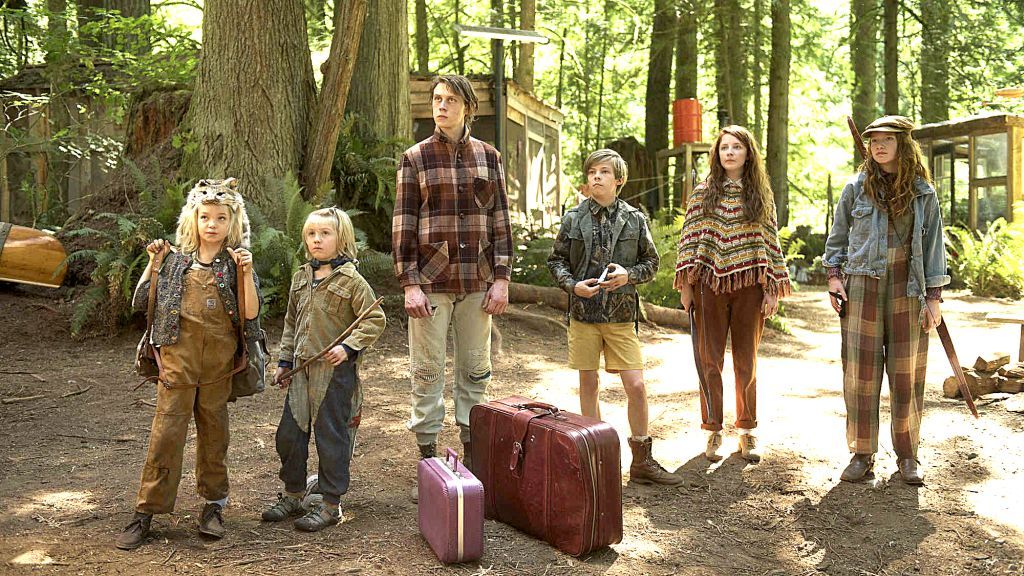
Parents inevitably want the best for their kids, but equally inevitably, are never quite sure if their kids are getting the best. While most children go through whatever state education system is available to them, there are some who are home schooled, whether it’s a lifestyle choice determined by their parents, or a matter of their culture or social background. In Matt Ross’s charming and idiosyncratic Captain Fantastic, we’re able to see both sides of the coin, and also see the pros and cons of a conventional upbringing, and the pros and cons of an unconventional upbringing. Which is best? That’s up to the viewer to decide.

Ben Cash (Mortensen) and his wife, Leslie (Miller), have elected to raise their six children – Bodevan “Bo” (MacKay), Kielyr (Isler), Vespyr (Basso), Rellian (Hamilton), Zaja (Crooks), and Nai (Shotwell) – in the mountains of Washington state. As the movie opens, Leslie is in hospital, and nobody knows when she’ll be home. In the meantime, Ben continues instructing their children through mental and physical exercises and tests that are designed to make them smarter and fitter than most children of their respected ages. But while he and Bo are on a trip to the nearest town, Ben learns that Leslie has died. He tells the children the exact circumstances of their mother’s death, and for a while they are all visibly upset. But they soon rally round thanks to Ben ensuring that their normal routine isn’t altered.

web-captain-fantastic_rgb

Matters are complicated by Leslie’s father, Jack (Langella), refusing to acknowledge his daughter’s wish to be cremated, and threatening to have Ben arrested if he shows up at the funeral. The children want to go however, and persuade their father to ignore their grandfather’s dictates. They set off on their first ever road trip, heading for Mexico, with the children getting their first real glimpses of the wider world. On the way, they stop off at the home of Ben’s sister, Harper (Hahn), and her husband, Dave (Zahn). Ben’s honesty and directness in talking about Leslie in front of their two young boys leads to a row between Ben and Harper as to the suitability of speaking explicitly about issues that children don’t need to know about until they’re older. Ben apologises, but the next day he’s forced to show that his sister’s children are no match for even his second youngest child in terms of intelligence.

At a camping ground, Bo meets Claire (Moriarty), and experiences his first kiss, an event that leaves him confused and unhappy enough (though not about the kiss) to reveal that he’s applied to all the top colleges (Princeton, Yale etc.) and been accepted by all of them. Ben is upset that Bo has gone behind his back, but Bo reveals a secret that gives Ben pause, and makes him start to rethink his decision to raise the children in the wilderness. When they arrive at the funeral, Ben takes over from the priest, and reads out Leslie’s will. This angers Jack who has him removed. Still threatened with arrest if they turn up at the burial, his children convince Ben to stay away. But when Rellian makes it clear that he wants to stay with his grandparents (and the reasons why), it leads Ben further down the path of inappropriate parenting, results in one of his children ending up in hospital, leaves Ben with an unhappy decision to make, and unites his family in an endeavour that pushes the boundaries of what even the Cashes deem acceptable… probably.

maxresdefault

Based around the idea of being “completely present” in a child’s life, and how difficult that would be in today’s technology-saturated world, Matt Ross’s second feature is a warm, funny, yet profoundly sincere examination of what it means to be a parent, and the role of education in children’s lives. It offers a tantalising glimpse of a child’s true potential if that potential is guided and shaped by someone who is with them every day (like a parent), and not someone who may only interact with them for a few hours each week (like a teacher – and then not every week). But of course, while children may very well thrive in such an environment, the obvious pitfalls are there too. If you’re squirrelled away in the woods, then social skills become an issue, and so too does a child’s emotional development. You can teach a child about social interaction, but that’s no substitute for experience. But while Ross appears to be fully on the side of individualism and non-conformity, he’s astute enough to know that that’s not the full story, and that a more rounded approach needs to be in place (even if it does mean rejoining the “rat race”).

However, what this still means in terms of the narrative is a series of incidents and behaviours condoned and endorsed by Ben that are hugely amusing and yet wildly inappropriate at the same time. Robbing a grocery store, receiving hunting knives in order to celebrate Noam Chomsky day instead of Xmas, proposing marriage to the girl you’ve just kissed, climbing over a roof – all these and more are carried out by the children without even a first thought (let alone a second) as to how acceptable they are. It’s all fun and no consequences, games without frontiers or boundaries, and if there’s one thing we all know about consequences, it’s that they always come around sooner or later; and here those consequences turn up in the form of Leslie’s father. And Ross turns the tables on the viewers who’ve taken Ben’s side up til now by showing that Jack has a point too, and Ben’s way of parenting isn’t the only or right way of doing things.

5790f2a02400002600b3257a

This emotional and determinist tug-of-war occupies the movie’s final third, and leads to an overly sentimental conclusion to the whole affair (but which also begs a whole new set of questions about behaviour and consequences). In attempting to avoid providing any easy answers, Ross adds complexity to his narrative that stands the movie in very good stead, and which makes it an intriguing experience to watch. He’s helped immensely by a terrific, richly textured, and shrewd performance from Mortensen, expertly portraying Ben’s growing realisation that in order to be the good parent he thinks he is, he has to change and adapt to a new way of raising his children. As for the children themselves, high praise should be given to casting director Jeanne McCarthy for assembling such an amazing group of child actors. Each one of them has the chance to shine over and over, and not one of them is less than convincing (especially Shotwell, whose gender in the movie may be confusing for quite some time). They also get the lion’s share of the movie’s best lines, such as this (a)cute observation by Zaja: “You said Americans are under-educated and over-medicated.”

Ross mines the children’s superior intellects for much of the movie’s humour, but does so in a warmhearted, affectionate way that never grates or feels gratuitous. He’s not afraid to put his characters in emotionally distressing situations either, and there are times when the feelings on display are so raw as to be a little awkward to watch. But again, Ross keeps everything balanced and maintains a sense of purpose throughout, allowing scenes to flow easily and with obvious intent. It’s all shot beautifully by Stéphane Fontaine, who’s had a banner year in 2016, what with Jackie and Elle also under his belt (now there’s versatility), and the production design by Russell Barnes adds to the richness of the imagery. All in all, it’s a movie that entrances and captivates, and packs an emotional wallop when you least expect it.

Rating: 9/10 – owing a little to the work of Wes Anderson (and that’s definitely not a criticism), Captain Fantastic is a graceful, appealing look at parenting under pressure, and the highs and lows that come with it; with terrific performances all round, and assured, perceptive writing and direction from Ross, this is one of the more quietly profound movies of 2016, and also one of the most delightful.

Share this:

  • Click to share on X (Opens in new window) X
  • Click to share on Facebook (Opens in new window) Facebook
  • More
  • Click to print (Opens in new window) Print
  • Click to email a link to a friend (Opens in new window) Email
Like Loading...

The Family Fang (2015)

21 Tuesday Jun 2016

Posted by dullwood68 in Movies

≈ Leave a comment

Tags

Christopher Walken, Comedy, Drama, Dysfunctional family, Family feud, Jason Bateman, Kathryn Hahn, Literary adaptation, Maryann Plunkett, Nicole Kidman, Performance art, Relationships

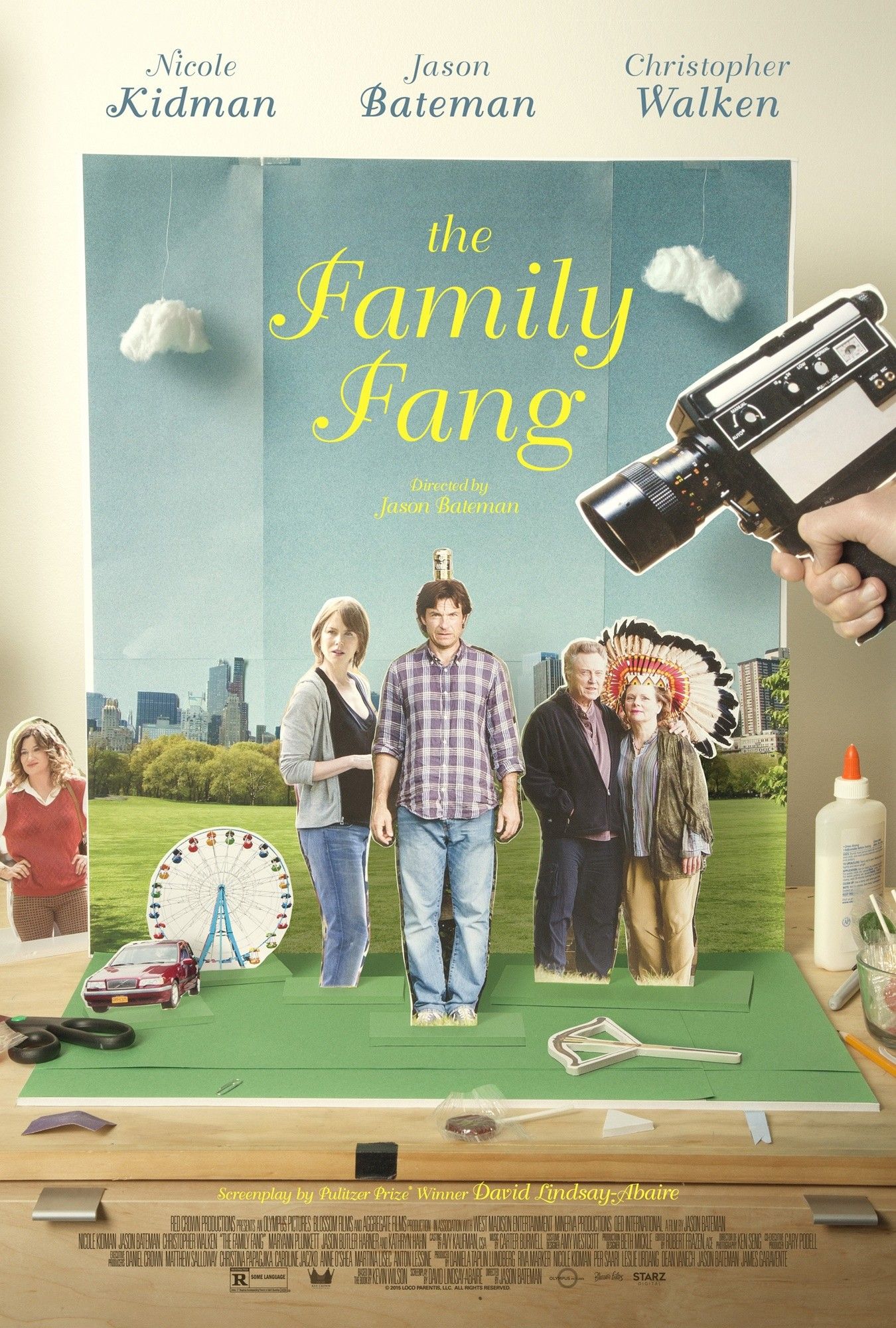
The Family Fang

D: Jason Bateman / 106m

Cast: Nicole Kidman, Jason Bateman, Christopher Walken, Maryann Plunkett, Jason Butler Harner, Kathryn Hahn, Harris Yulin, Linda Emond, Marin Ireland, Mackenzie Brooke Smith, Taylor Rose, Jack McCarthy, Kyle Donnery, Michael Chernus, Josh Pais

Annie and Baxter Fang (Kidman, Bateman) are the children of performance artists Caleb (Walken, Harner) and Camille Fang (Plunkett, Hahn). While growing up they took part in their parents’ various performances, which were often carried out in public places and without the people around them being aware they were taking part in a performance. Caleb and Camille have always used these “artistic moments” to highlight their idea that true art is only present in the moment it happens (they don’t acknowledge that they might be manipulating “art” in these circumstances rather than allowing it to be spontaneous).

As adults, Annie is an actress whose participation in a series of movies is under threat because she is no longer regarded as essential to the productions; she’s further challenged by a requirement to appear topless that she hadn’t previously agreed to. Baxter is a novelist whose last novel wasn’t well received. While he works on his latest book, he writes articles. On an assignment, he ends up shot in the head by a spud gun, and winds up in hospital. While he’s being treated, and much to Baxter’s consternation, the hospital staff contact Caleb and Camille, who agree to come and take him home. Not having seen his parents in years, Baxter contacts Annie and implores her to come and help him deal with them. Reluctantly, she agrees.

TFF - scene3

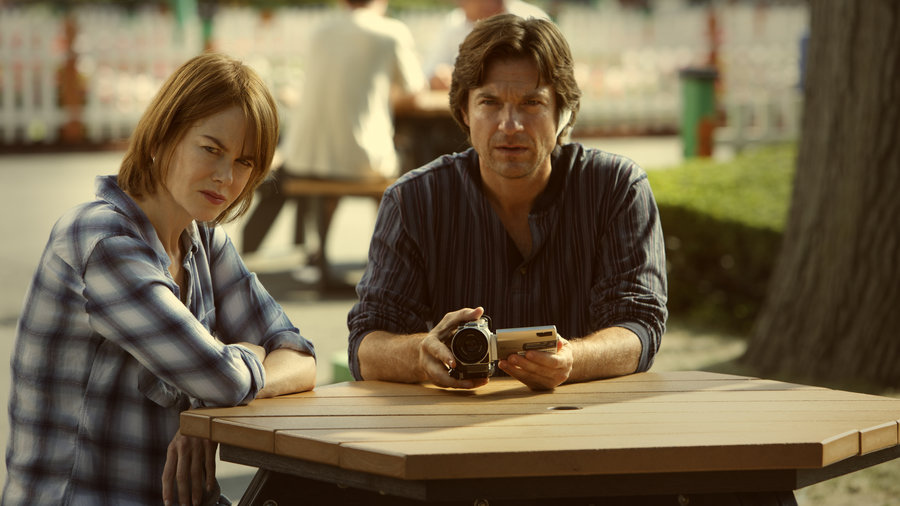
Back at the Fang family residence, old animosities surrounding the way Annie and Baxter were treated as children, and their involvement with their parents’ art, leads to their being involved yet again in one of Caleb’s schemes. But it backfires, and Caleb and Camille announce they’re heading off for a break. A while later, the local sheriff informs Annie and Baxter that their parents’ car has been found at a rest stop. The pair are missing, and there’s blood all over the inside of the car; foul play is suspected. Annie is adamant that it’s yet another of their parents’ performances, and that they’ll turn up safe and sound somewhere sometime later. Baxter isn’t quite as certain, and harbours some doubts. Annie challenges him to help her look for them in order to prove she’s right, but their efforts go unrewarded, until a song from their past provides them with a lead, one that finds them learning some uncomfortable truths about their parents, and the reasons for their disappearance.

The Family Fang is Jason Bateman’s second directorial feature – after Bad Words (2013) – and while it’s the kind of indie project you might expect Bateman to be attracted to, it’s not as good a fit as it seems. From the trailer the movie looks like a comedy but while there are some great comedic moments, this is a drama that examines notions of parental responsibility, the function of art in everyday life, sibling dependency and rivalry, fame, and personal fulfillment. But while the movie examines these notions, what it doesn’t do as successfully, is reach any conclusions or provide any answers to the questions it raises.

TFF - scene1

What it also fails to provide the audience with is anyone to connect with. For all of Annie’s complaining about her childhood, she’s actually broken away from her parents when we meet her. Any issues she has as an adult she relates back to when she was a child, but the movie – and in particular, David Lindsay-Abaire’s adaptation of Kevin Wilson’s novel – doesn’t make a convincing connection between the two. Likewise, Baxter’s inability to stand up for himself when confronted with Caleb and Camille in the flesh. There are flashbacks to instances where Annie and Baxter’s involvement with their parents’ “art” can be construed as inappropriate, but these don’t adequately explain the animosity they display. Without that connection it’s hard to see Annie (specifically) and Baxter (occasionally) as anything but whinging ingrates.

Unfortunately for the viewer, Caleb and Camille don’t come off any better. The movie never reconciles their unwavering dedication to their art with the selfishness that goes with it, and it never attempts to explain or rationalise Caleb’s anger when the public doesn’t recognise or understand what he’s trying to say. And Camille is so much the uncomplaining follower that when it’s revealed she had a promising career ahead of her before she met Caleb, and that she gave it all up to be with him, her reasons for doing so sound insubstantial and contrived.

TFF - scene4

As the feuding family, Kidman’s insecure and wailing Annie hogs most of the screen time, while Bateman takes a (largely) back seat as the lacking in confidence Baxter. Walken gives another of his semi-engaged performances, doing just enough to make it look like he’s interested, and is easily outgunned by Plunkett, who at least makes Camille a figure of sympathy even if she has only herself to blame for her predicament. As the younger Caleb and Camille, Harner and Hahn inject some much needed energy into proceedings, while Yulin contributes a pleasant enough cameo as Caleb’s mentor.

Watching The Family Fang, there are too many scenes where it feels that Bateman hasn’t gained a sufficient enough grip on things to make them entirely effective. Also, the pace of the movie works against it, as Bateman directs with a stubborn determination to make each scene work in the same way as all the others and with as much emotional impact (which is mostly diluted). The end result is a potentially intriguing movie that never finds its feet or a direction for it go in. And this despite some sterling camera work by Ken Seng and another wistful, deceptively emotive score by Carter Burwell.

Rating: 5/10 – a movie lacking in focus and drive, The Family Fang never rallies its constituent parts into a unified, satisfying whole; with no one to care about, the movie becomes a stilted, unconvincing piece that is only occasionally interesting, and some well judged moments of comedy aside, isn’t as sharp, or knowing, as it should be.

Share this:

  • Click to share on X (Opens in new window) X
  • Click to share on Facebook (Opens in new window) Facebook
  • More
  • Click to print (Opens in new window) Print
  • Click to email a link to a friend (Opens in new window) Email
Like Loading...

The Do-Over (2016)

02 Thursday Jun 2016

Posted by dullwood68 in Movies

≈ Leave a comment

Tags

Action, Adam Sandler, Cancer cure, Comedy, David Spade, Drama, High school reunion, Kathryn Hahn, Murder, Netflix, Paula Patton, Puerto Rico, Review, Save & Pay, Steven Brill

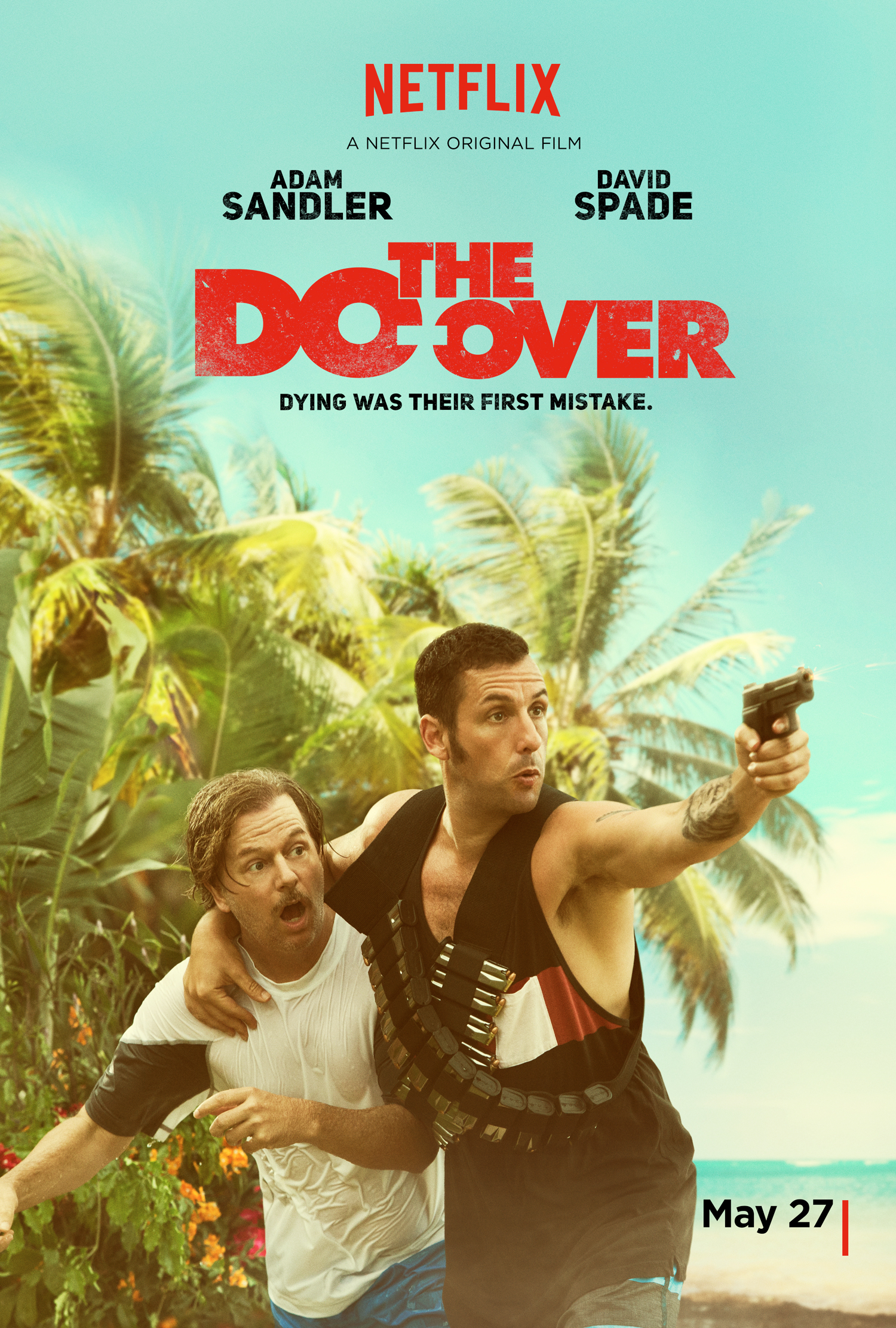
The Do-Over

D: Steven Brill / 108m

Cast: Adam Sandler, David Spade, Paula Patton, Kathryn Hahn, Nick Swardson, Matt Walsh, Renée Taylor, Sean Astin, Natasha Leggero, Luis Guzmán, Catherine Bell, Jackie Sandler, Michael Chiklis, Torsten Voges, Stan Ellsworth

The second movie in Adam Sandler’s six picture deal with Netflix, The Do-Over arrives with probably very little anticipation on anyone’s part except for those die-hard Sandler fans who’ve been helping keep him one of the most well-paid stars in Hollywood (still). But in a strange twist of fate, The Do-Over isn’t as bad as it looks. It’s bad, but considering some of Sandler’s other, more recent movies, it isn’t that bad. (There are all different levels of bad, and Sandler’s probably made at least one movie for each level, but this isn’t quite as low down as some of the others.)

The movie introduces us first of all to Charlie (Spade). He’s dressed conservatively, looks like the kind of guy who’d struggle to be recognised in a selfie, and he’s at a high school reunion watching his wife (Leggero) getting pawed by another man (Astin) on the dancefloor. He might as well have ‘Loser’ tattooed on his forehead. Enter Max (Sandler), perhaps Charlie’s only real friend from their high school days. As they swap stories about their lives since then, it seems Max has exceeded expectations and joined the FBI, while Charlie manages a bank inside a Save & Pay. It isn’t long before Max is encouraging Charlie to change his life and do what he really wants to do, but Charlie lacks the guts to do so. But a trip out to sea on Max’s boat sees Charlie forced to do exactly that, as Max has faked their deaths and they both have new identities: Charlie is Dr Ronald Fischman, and Max is Butch Rider.

TDO - scene2

The chance discovery of the key to a safety deposit box leads them to Puerto Rico and a luxury villa that the real Fischman and Rider own. But their new, idyllic existence is brought to an end by the appearance of a hired assassin, the Gymnast (Voges), who tries to kill them. Max gets them both away and in the process reveals that he’s not an FBI agent but exactly what their high school guidance counsellor always said he’d be: a morgue attendant. He wanted to change his life as well, and when the two men arrived at the morgue he took the opportunity to switch their identities. But now it’s clear that Fischman and Rider were involved in something dangerous, and using Fischman’s widow, Heather (Patton), as a source of information, they start to delve into the pair’s recent past, but in doing so, Charlie learns that even now, Max is hiding things from him.

If you’ve read the above synopsis and thought, ‘Okay, that doesn’t sound so bad’, then that’s because it isn’t. There’s more – obviously – and a lot of it is on the same dramatic level. Naturally, this being an Adam Sandler/David Spade buddy movie, there’s a fair bit of humour thrown into the mix, as well as brief moments of romance, and even some neat, uncontrived action beats. But all these elements, well intentioned as they are, remain flat and uninvolving, and despite several attempts at the kind of wacky, minor league offensive material Sandler is known for, The Do-Over consists of one largely unmemorable scene after another, and features Sandler doing what he does best: playing the same character he’s played for over thirty years now.

TDO - scene1

If anyone has to ask, after all this time, why is Adam Sandler still so popular, and why has Netflix decided to enter into a six-picture deal with him, then this movie contains the answer. It’s a quintessential Sandler movie: defiantly silly, with a series of unrelated scenes given a sprinkling of narrative cohesion to help them through; laughs based on personal abuse; visual gags at the expense of one or more of the characters; glamorous location work; and the same just-making-the-required-effort performance from Sandler that he gives in pretty much all his movies. Some may decry these aspects of his work, but Sandler knows exactly what he’s doing: he’s giving his fans what they want, and what they’ve come to expect. And it’s why his movies always make a profit, even the likes of Jack and Jill (2011) and That’s My Boy (2012).

So all that remains is to ask the question, where does The Do-Over fit in with the rest of Sandler’s movies? Well, it’s certainly not as bad as the ones mentioned in the previous paragraph, but it’s also nowhere near as good as, say, The Wedding Planner (1998 – so long ago now), or 50 First Dates (2004). It’s averagely entertaining, largely forgettable, and the script by Kevin Barnett and Chris Pappas doesn’t strive too hard in terms of the basic plot, but it does have moments where the ennui lifts and the shade of a better movie can be glimpsed. Most of these moments involve Spade, who makes Charlie quite endearing at times, and there’s a surprisingly well choreographed fight sequence between Patton and Hahn that’s funny and bruising. As mentioned before, Sandler coasts along but often looks disinterested. Unless he manages to fit in another movie for Netflix, Sandler isn’t due back on our screens until next year in Noah Baumbach’s Yeh Din Ka Kissa, a movie that also features Emma Thompson, Ben Stiller, Dustin Hoffman, and Candice Bergen. Just how he fares in such company will be interesting to see.

TDO - scene3

Frequent collaborator Brill keeps things moving at a decent pace, and the Puerto Rican locations are exploited to the full by DoP Dean Semler, yet the movie still manages to shift awkwardly between the tonal demands of the narrative, mixing comedy, drama and thriller elements to muddled effect often in the same scene (Max’s “torture” by the Gymnast is a perfect example). And for once, there aren’t the usual round of cameos from the likes of Rob Schneider et al, a minor blessing in a movie that at least doesn’t outstay its welcome.

Rating: 5/10 – amiable enough while it’s playing, The Do-Over is the kind of comedy that fades from the memory soon after it’s seen; if you don’t expect too much going in then you might be pleasantly surprised, otherwise it’s yet another Adam Sandler movie that it’s hard to get too excited about.

Share this:

  • Click to share on X (Opens in new window) X
  • Click to share on Facebook (Opens in new window) Facebook
  • More
  • Click to print (Opens in new window) Print
  • Click to email a link to a friend (Opens in new window) Email
Like Loading...

Trailers – Southside With You (2016), Bad Moms (2016), and Hunt for the Wilderpeople (2016)

07 Saturday May 2016

Posted by dullwood68 in Movies

≈ Leave a comment

Tags

Australia, Bad Moms, Barack Obama, Barry Crump, Comedy, Hunt for the Wilderpeople, Julian Dennison, Kathryn Hahn, Kristen Bell, Literary adaptation, Michelle Obama, Mila Kunis, Movies, Previews, Richard Tanne, Sam Neill, Southside With You, Taika Waititi, Trailers, True story

In Southside With You, writer/director Richard Tanne invites us to witness a very special first date: the one between Michelle Robinson (played by Tika Sumpter) and Barack Obama (played by Parker Sawyers). Taking place in the summer of 1989, it’s an epic date, taking in far more than the average dinner and a show, and the movie pitches this event at the level of an above average romantic comedy – but that’s not necessarily a bad thing. Sawyers looks particularly convincing as Obama, his tone of voice and physicality so reminiscent of a certain modern day President that it’s sometimes spooky to see, while Sumpter is equally convincing as the self-assured Michelle. The movie does look like it might be a little too “cute” in places, but there’s enough deprecating humour here to offset any charges that the movie is being overly winsome.


When your latest comedy stars Mila Kunis as an overworked, worn out, under-appreciated mom who decides to go on a bender in order to feel better about herself and her life, you’d better make sure that such a set up is at least halfway credible (Kunis as a mom is a bit of a stretch all by itself). Sadly, the trailer for Bad Moms – Kunis is joined by Kristen Bell and Kathryn Hahn to make up the titular trio – doesn’t give the potential viewer any such assurance. There are definitely laughs to be had but writers/directors Jon Lucas and Scott Moore have too much of a patchy track record – 21 & Over (2013), The Hangover (2009), and er, Four Christmases (2008) – to instil any confidence that we haven’t already seen the best bits from the movie in the trailer – and if that’s the case then the movie, and we the audience, are in a lot of trouble.


Playing like the surreal second cousin to Up (2009), Hunt for the Wilderpeople sees Julian Dennison’s troublesome youngster, Ricky Baker, the focus of a manhunt when he goes missing with his foster uncle Hector (played by Sam Neill). Adapted by writer/director Taika Waititi from the novel by Barry Crump, this is the kind of quirky, offbeat movie that offers a surfeit of genuine laughs to complement the heartfelt drama on display elsewhere. Having co-created the sublime What We Do in the Shadows (2014), Waititi is on his own here, but from the looks of the trailer has done a fantastic job in creating the kind of strange, off-kilter world that allows Ricky and Hector to bond without anyone voicing concerns about the difference in their ages or Hector’s less than friendly demeanour.

Share this:

  • Click to share on X (Opens in new window) X
  • Click to share on Facebook (Opens in new window) Facebook
  • More
  • Click to print (Opens in new window) Print
  • Click to email a link to a friend (Opens in new window) Email
Like Loading...

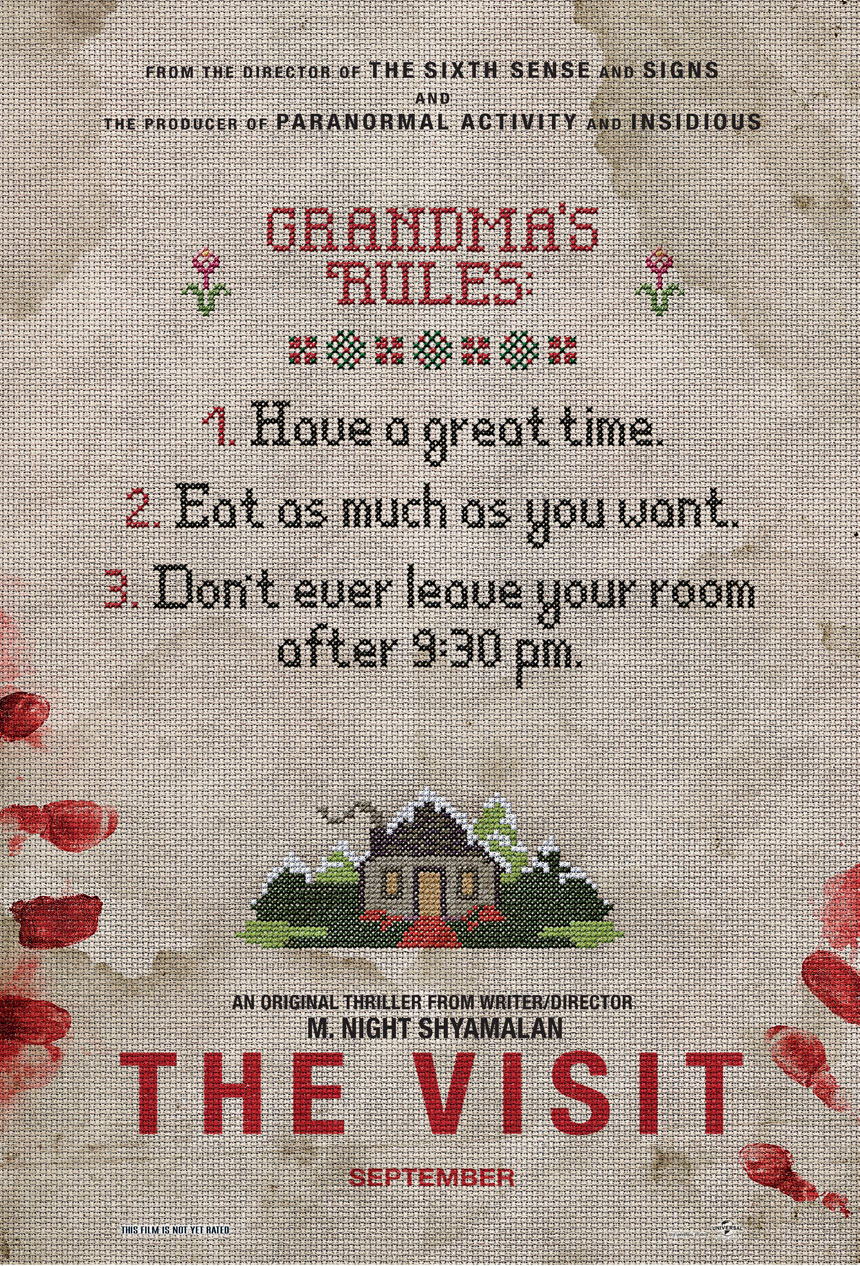
The Visit (2015)

03 Sunday Jan 2016

Posted by dullwood68 in Movies

≈ Leave a comment

Tags

Deanna Dunagan, Drama, Ed Oxenbould, Found footage, Grandchildren, Grandparents, Horror, Kathryn Hahn, M. Night Shyamalan, Olivia DeJonge, Peter McRobbie, Review, Thriller

The Visit

D: M. Night Shyamalan / 94m

Cast: Olivia DeJonge, Ed Oxenbould, Deanna Dunagan, Peter McRobbie, Kathryn Hahn, Celia Keenan-Bolger

If you’re M. Night Shyamalan, and your career has become known more for the disappointing movies you’ve made rather than the global box office success of your third feature, then what do you do? Do you plug away at the kind of movies you like to make, where there’s a twist in the tail every time, or do you try something different? And what do you do if “different” still doesn’t work?

Well, if you are M. Night Shyamalan, then you keep coming back to the kind of movie that brought you international fame and fortune in the first place. You keep tweeking the idea to be sure, but in the end it’s the same mystery set up with a twist at the end designed to make viewers gasp, “Wow! I didn’t see that coming!” The only problem with that approach though, is that viewers will be expecting the twist and trying to work it out from the word go. The beauty of The Sixth Sense (1999) was that it was a movie with so little fanfare that when the truth about Bruce Willis’s character was revealed, audiences were properly surprised. But now, audiences are that much more savvy, and getting something past them like that is even more difficult.

The Visit - scene2

But Shyamalan is a trier, and he certainly doesn’t give up easily. And so we have The Visit, his latest venture as writer/director, and a movie that is two parts Tales from the Crypt and one part The Twilight Zone. The set up is pretty simple: single mom (Hahn) decides to send her two young children – Becca (DeJonge) and Tyler (Oxenbould) – to visit their grandparents for the first time. Mom is estranged from her parents, but feels it will be good for her kids to meet them and build a relationship with them. Becca decides to film the trip and their stay, both as a record of the occasion and as part of a larger school project.

When they arrive at their grandparents’ place, they find Nana (Dunagan) and Pop-Pop (McRobbie) to be a pleasant, welcoming couple. However, it’s not long before they begin to realise that Nana and Pop-Pop might have a few issues related to their age. Nana exhibits strange behaviour during the night, from wandering (apparently) aimlessly through the house to scratching at the wall outside their room – and without any clothes on either. But Pop-Pop explains that Nana isn’t too well, and Becca and Tyler sympathise and continue their stay – even after they play hide and seek under the house and find Nana under there with them and chasing them on all fours.

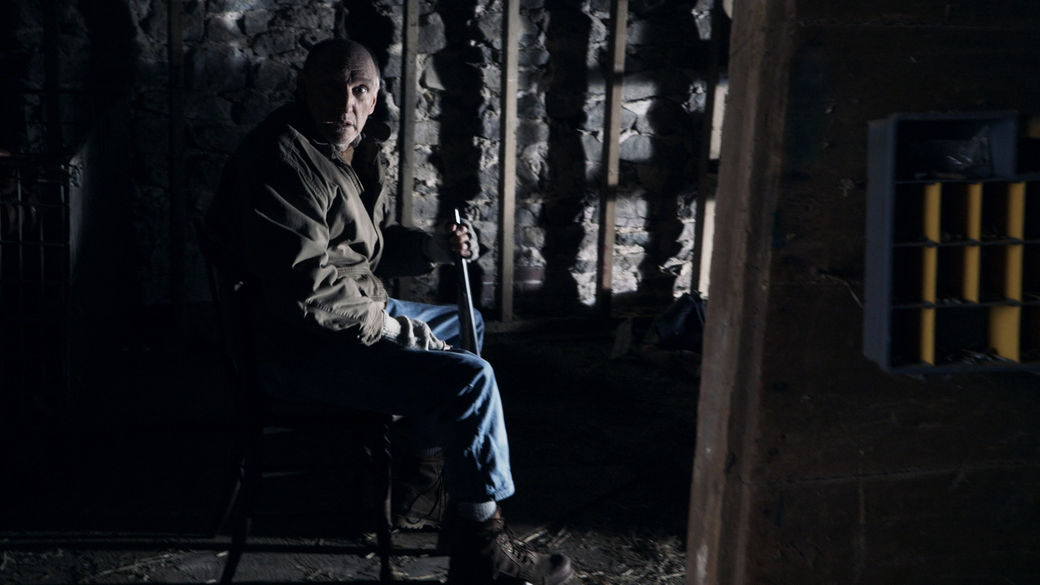
But Pop-Pop also exhibits some strange behaviour. He keeps going out to the shed each day and depositing a package there. Tyler investigates and finds that Pop-Pop has his own problems. And still the children continue their stay, even as they begin to suspect that good old Nana and Pop-Pop might not be in the best of mental and/or physical health. FaceTime calls with their mom don’t help, as she’s focused on the holiday she’s enjoying with her new man. But as the week of their stay progresses, events become more unnerving and both Becca and Tyler begin to look forward to going home, just as Nana and Pop-Pop begin to think it might be a good idea if they stayed longer.

The Visit - scene1

Let’s get the twist out of the way. It comes along with roughly fifteen minutes to go, and for seasoned veterans of this kind of movie, will have been guessed a long time before then. It’s not a particularly difficult twist to work out – Shyamalan provides enough clues – and when it comes it’s done in a suitably effective way. But while some viewers may feel it’s an unnecessary turn of events, advance knowledge actually doesn’t make the movie any less effective (as far as that goes). What it does do though is give Shyamalan the chance to ramp up the tension of the last ten minutes and inject some much needed energy.

The Visit lives or dies by how convincing the children’s reaction to their grandparents’ behaviour is. Today, with children being a lot more aware of the wider world around them, and of what is and isn’t right, being holed up with a couple of elderly people who exhibit bizarre behaviour that might lead to their being violent, doesn’t seem like something that two kids of Tyler and Becca’s intelligence would endure (even for their mom’s sake). But they do, and in reality we wouldn’t have a movie if they didn’t, but equally, in reality they would have been out of there the moment they saw Nana scratching at the walls in the all-together. Shyamalan is clever enough to invoke the sympathy card but when Becca surprises Pop-Pop “cleaning” his rifle, they still opt to wait out the week.

Suspension of disbelief is pretty much a standard requirement for horror thrillers, and The Visit requires it just as much as any other, similar movie. But here the basic set up is so banal, so bland, that when events become disturbing and threatening, Shyamalan can’t come up with a convincing reason for the kids to stay. And he’s not helped by the decision to use the found footage approach, which leads to several moments where suspension of disbelief is not only required but stretched to its limits (just how many times can a camera be dropped/left in exactly the right place to record things?).

The Visit - scene3

But while the movie’s more sinister elements aren’t entirely successful, with several references to Grimm’s Fairy Tales added to the mix, where Shyamalan does succeed is with his cast. DeJonge and Oxenbould are terrific as the children, siblings who fight and argue with each other all the time but who are clearly devoted to each other at the same time. Becca is a budding cineaste and talks about movie making as if she were an auteur; DeJonge captures the child’s need to feel and be treated like an adult with surprising precision. Tyler’s wannabe rapper feels like a way for him to deal with not having a father, and Oxenbould gives Tyler a wonderful braggadocio in these moments (even if his rapping is awful). As Nana and Pop-Pop, Dunagan and McRobbie don’t overplay their “issues” and prove remarkably effective at providing the chills beneath the sweetness of the couple’s exterior affability.

Made on a small budget but with a degree of creativity that makes the movie a lot more entertaining than some of Shyamalan’s other movies – The Happening (2008), The Last Airbender (2010) to name but two – The Visit still doesn’t quite mean a return to the early form Shyamalan showed with The Sixth Sense. But it’s a better found footage movie than most, tells its story with a refreshing lack of gimmicks, and might just be a sign that Shyamalan is turning the corner and starting to make good movies again.

Rating: 6/10 – not as eerie or as frightening as its writer/director may have wanted, The Visit is nevertheless a worthwhile entry in the found footage genre (even if it’s not technically “found” footage); good performances bolster a script that doesn’t fulfill its own potential, but most viewers will find the movie an okay watch that doesn’t insult them too much of the time, or deliberately.

Share this:

  • Click to share on X (Opens in new window) X
  • Click to share on Facebook (Opens in new window) Facebook
  • More
  • Click to print (Opens in new window) Print
  • Click to email a link to a friend (Opens in new window) Email
Like Loading...

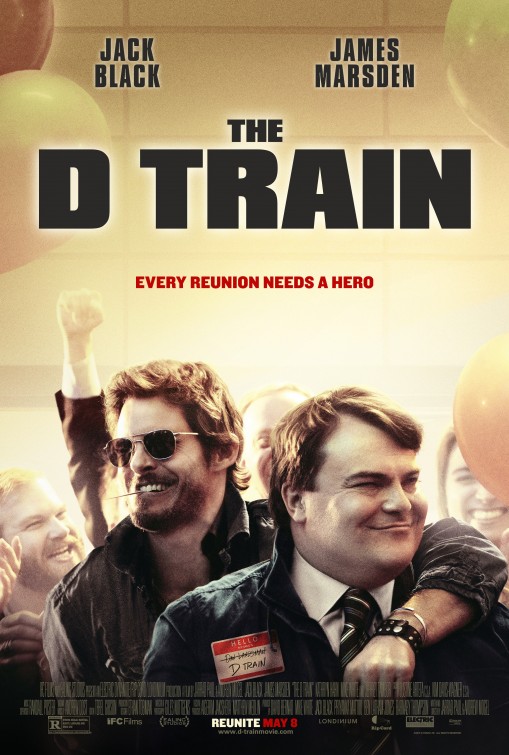
The D Train (2015)

22 Saturday Aug 2015

Posted by dullwood68 in Movies

≈ Leave a comment

Tags

Andrew Mogel, Banana Boat, Comedy, Commercial, Drama, High School, Jack Black, James Marsden, Jarrad Paul, Jeffrey Tambor, Kathryn Hahn, Reunion, Review

D Train, The

D: Jarrad Paul, Andrew Mogel / 101m

Cast: Jack Black, James Marsden, Kathryn Hahn, Jeffrey Tambor, Russell Posner, Mike White, Henry Zebrowski, Kyle Bornheimer

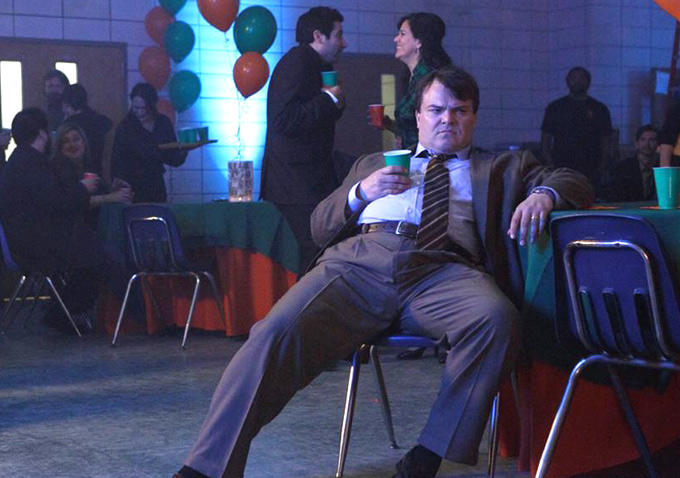
Dan Landsman (Black) is the self-styled chairman of his high school reunion committee. He enjoys what limited prestige comes with the position (which isn’t much), but can’t get the respect from his fellow committee members that he thinks he deserves. This is due to his overbearing, self-important approach to organising the reunion, and the fact that he was never popular in high school. As he and the rest of the committee call up their peers and are continually let down, Dan finds a solution in the unlikeliest of places: a Banana Boat commercial. The “star” of the commercial is none other than Oliver Lawless (Marsden), the most popular guy in high school. Dan reasons that if he can get Oliver to attend the reunion, everyone will.

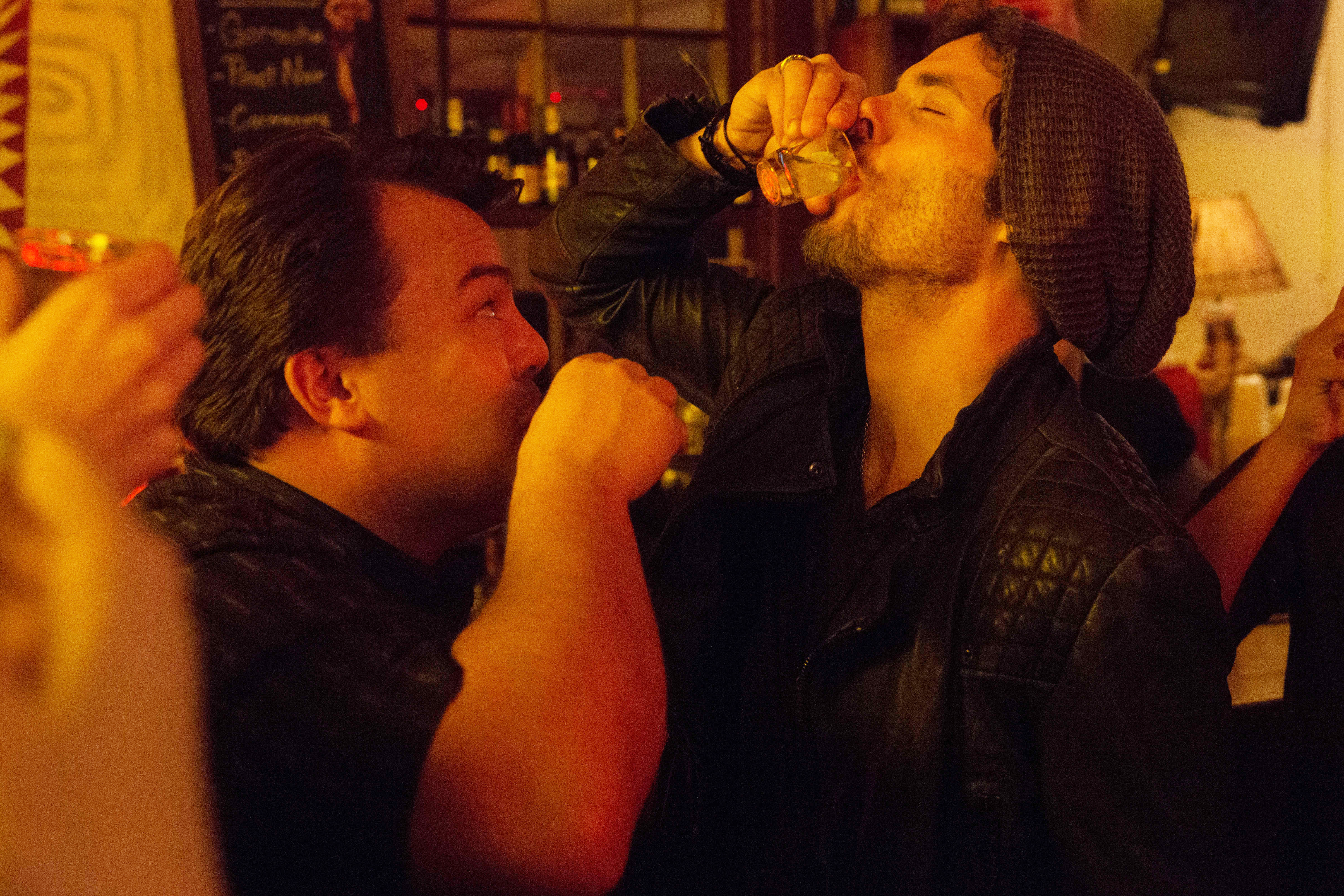
Dan determines that a face-to-face approach is needed, but Oliver lives in L.A., while he lives in Pittsburgh. Under the pretence of going there for an important business meeting, Dan books a flight and gets ready to go. But his boss, Mr Schurmer (Tambor), insists on coming with him to help facilitate the deal that Dan has supposedly set up. Unable to persuade his boss to stay in Pittsburgh, he has no choice but to make it seem as if the deal has fallen through. Dan tracks down Oliver and they spend the night on the town, going from club to club and bar to bar and getting drunk and high. Dan goes back to his hotel room but in the early hours, Oliver, feeling down, pays him a visit. Dan reveals the true reason for his visit, and even tells Oliver about the so-called business deal; Oliver agrees to attend the reunion.

The next morning, Oliver poses as the businessman Dan has been dealing with, but instead of killing the deal as Dan needs him to, he tells Schurmer that it’s a go. Oliver apologises, but tells Dan he can easily put a stop to things when he’s back in Pittsburgh. That night they go out on the town again, but this time they end up back at Oliver’s apartment. To Dan’s surprise, Oliver makes a pass at him. What happens next leaves Dan bewildered and confused. Back home he finds his boss spending lots of money on the business in expectation of the deal going through, his fourteen year old son Zach (Posner) experiencing problems of the heart, and his wife Stacey (Hahn) pleased for him for landing the deal and Oliver’s attendance at the reunion.

But when Oliver arrives for the reunion and stays at Dan’s home, Dan begins behaving erratically, and he starts to alienate his wife and son, and the members of the committee (who don’t like him that much anyway). As the reunion draws nearer, he tries his best to behave normally but the events in L.A. have had a greater impact on him than even he’s aware of. And it’s at the reunion itself that Dan’s behaviour causes the greatest upset as he and Oliver confront each other over what happened, and Dan is left feeling isolated and alone, and wondering what he can do to make things right with the people he cares about.

THE D TRAIN - 2015 FILM STILL - Jack Black (Dan Landsman) and James Marsden (Oliver Lawless) - Photo Credit: Hilary Bronwyn Gayle. An IFC Films release.

Having previously worked on the script for Yes Man (2008), writers/directors Jarrad Paul and Andrew Mogel have upped their game somewhat for The D Train, and the result is a clever, sometimes very funny comedy drama that gives Black his best role since Bernie (2011) (though to be fair he has only made two other movies in that time). It’s also smart, knowing and occasionally tragic in its look at its main character’s constant need for respect and approbation, and the lengths he’ll go to in order to be acknowledged.

The social misfit is perhaps Black’s niche role (it can only be a matter of time before he plays a serial killer), and as in Bernie he’s uncomfortably comfortable in the role of a man whose social standing is based on his lack of popularity in high school (when we see him calling his fellow alumni not one of them appears to remember him without the benefit of some heavy prompting). Away from the reunion committee he’s in a respected position at work, with his boss happy to defer to Dan’s judgement on matters, while his home life appears secure as well. But it’s his lack of social presence that bothers him, and why he’s never fit in. Meeting Oliver in L.A. reminds him he can be a fun guy, that he can be good company, and more importantly, that those traits have always been inside him; it’s just needed someone of Oliver’s carefree nature to bring them out of him.

But with freedom comes (no, not great responsibility) a complete misunderstanding of the nature of friendship and many of the unspoken rules that go with it. Back in Pittsburgh, Dan displays all the signs of someone who’s been abandoned or had their favourite toy taken away from them; he just doesn’t know how to deal with all the raw feelings he’s experiencing. He overcompensates in the bedroom (not that Stacey minds), but then rudely ignores Zach when he needs some fatherly advice. The situation at work becomes unmanageable, and when Oliver shows himself to be a better father figure, Dan over-reacts and tells him to leave. It’s in these moments when Dan’s insecurities and jealousy of Oliver’s “cool” attitude shows him for the desperately needy person that he is.

Black is superb in the role, and he’s matched by Marsden who portrays Oliver’s shallow lifestyle with a thread of sadness lurking beneath the rampant hedonism. Hahn, who goes from strength to strength with each movie she makes, delivers a polished if largely restrained performance that makes for an effective counterpoint to Black’s anguished social walrus. And Tambor is terrific as Dan’s boss, a confirmed Luddite whose puppy-dog adoption of computers and the Internet contributes to Dan’s downfall.

But while the performances are all above average, and while the basic premise is a sound one given enough room for considered examination, the movie does have its faults, and in the same way that Paul and Mogel’s script is on solid ground when dissecting Dan’s motives and behaviour, it’s less so when it introduces moments and scenes of crass humour. One scene in particular stands out, when Oliver gives Zach advice on how to manage in a threesome. Despite the obvious humour to be had from such a scene, it’s still at odds with the tone of the rest of the movie, and there’s nothing the directors can do to offset the awkwardness of having a man in his late Thirties giving sex advice to a fourteen year old (it’s also strange that the script thinks it’s entirely likely that Zach would ask his dad about such a subject while at the dinner table). And at the reunion, Dan snorts cocaine in the bathroom before being discovered by Jerry (White), one of the committee members. Dan rambles on and Jerry’s surprise at Dan’s behaviour evaporates as quickly as it occurs. And Mr Schurmer’s subdued reaction to the potential loss of his company is meant to be quietly tragic but seems instead to be a case of the script not wanting to follow that particular plot thread any further (the same goes for Stacey’s reaction to the revelation of what happened in L.A.).

D Train, The - scene 2

With the characters routinely involved in scenes that don’t always have a logical follow-on, or betray the emotion of a scene (e.g. when Oliver leaves for L.A. and says goodbye to two of the committee members), the movie tries for hard-edged adult humour too often at the expense of the more important dramatic aspects. While the humour is mostly very funny indeed, a lot of it feels shoe-horned in, as if they were added to the script somewhere in the pre-production phase. As a result the movie feels disjointed at times, and lacks the overall focus afforded the drama, leaving audiences to wonder if the humour is there to provide some relief from the themes of social inequality, self respect, alienation, and personal inadequacy. If it is, then unfortunately the way in which it’s been done lacks authority.

Rating: 7/10 – deficiencies in the script leave The D Train feeling like it’s falling short of its original intentions; Black is on terrific form however, keeping the movie afloat through some of its more unlikely moments, and perfectly judging the pathos needed to avoid Dan being completely unlikeable.

Share this:

  • Click to share on X (Opens in new window) X
  • Click to share on Facebook (Opens in new window) Facebook
  • More
  • Click to print (Opens in new window) Print
  • Click to email a link to a friend (Opens in new window) Email
Like Loading...

Bad Words (2013)

29 Sunday Jun 2014

Posted by dullwood68 in Movies

≈ 1 Comment

Tags

Comedy, Finals, Guy Trilby, Jason Bateman, Kathryn Hahn, Rohan Chand, Spelling Bee contest, The Golden Quill, Tournament

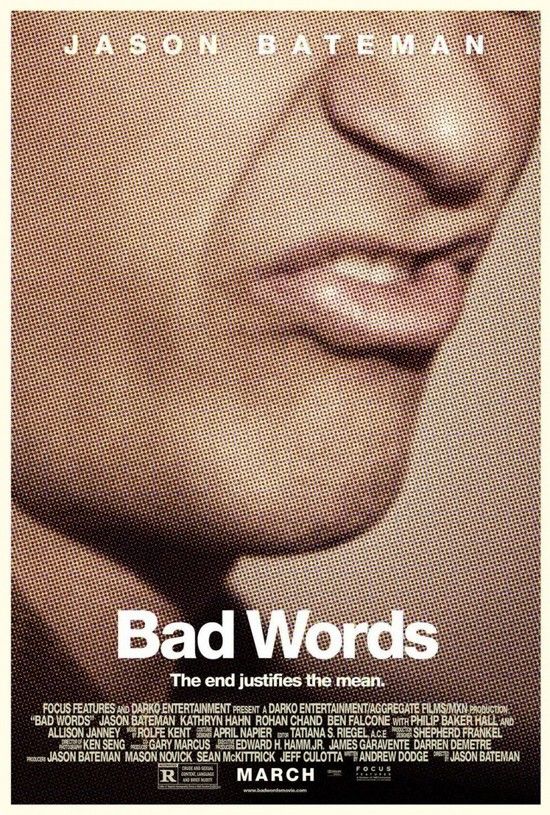
Bad Words

D: Jason Bateman / 89m

Cast: Jason Bateman, Kathryn Hahn, Rohan Chand, Philip Baker Hall, Allison Janney, Ben Falcone, Steve Witting

At a regional spelling bee competition, forty year old Guy Trilby (Bateman) takes advantage of a loophole in the rules in order to take part and win the competition.  This allows him to take part in the national tournament, which he attends accompanied by a representative, Jenny Widgeon (Hahn), of his sponsor, online newspaper The Click and Scroll.  Travelling to the tournament by plane Guy meets fellow competitor Chaitanya (nicknamed Chai) (Chand).  Chai tries to strike up a friendship with Guy but is rudely rebuffed.  At the tournament, Guy and Jenny are met by the director of the Golden Quill National Spelling Bee Championship, Bernice Deagan (Janney).  She makes it clear that she thinks Guy’s presence and tactics so far are despicable, and that he shouldn’t be there.  Guy is dismissive of her (as he is with most people) and heads for his hotel where he finds his room is a supply cupboard.  That night he and Jenny have sex in his “room” and she leaves her panties behind.  When there’s a knock at his door shortly after, he thinks it’s Jenny come back to get them but instead it’s Chai; they end up spending the rest of the evening together.

On the first day of the tournament, Guy uses Jenny’s panties to help psych out one of the favourites, giving them to the kid in question and asking him to give them back to his mother.  The kid gets his word wrong and is eliminated.  Guy and Chai both advance to the next round. With pressure mounting from the parents of the other finalists, Deagan attempts to manipulate the outcome of the second day so that Guy gets the most difficult words she can find.  That night, he and Chai go out and have fun together, their antics forging a bond between them.  On the second day, Guy again psychs out one of the other contestants, while dealing easily with words such as antidisestablishmentarianism and floccinaucinihilipilification.  He and Chai advance to the final day, while Deagan’s plan is discovered by the moderator (Witting) and she is forced to resign.  That evening, Jenny tries to talk to Guy about something she’s found out, but he avoids her.  He heads to Chai’s room only to overhear the boy and his father discussing Guy and their strategy for dealing with him in the contest.  He bursts in on them and tells Chaitanya that he wants nothing more to do with him.

On the final day, Jenny finally reveals to Guy what she’s discovered, and he in turn reveals his reasons for taking part in the contest.  Still confident of winning, Guy sees the tournament come down to just him and Chai.  He spells his word wrongly, but so too does Chai, who wants to prove to Guy that he is still his friend, despite his father’s plotting.  With neither of them spelling their words correctly, the final turns into a farce, one that Golden Quill president Bill Bowman (Hall) cannot countenance.  But even after he intervenes, the two continue to try and let the other one win until…

Jason Bateman

From the outset, Bad Words is unafraid to show its main character in a bad light; in fact, it revels in it.  Guy Trilby is one of the most obnoxious, caustic, disagreeable, and rude people you’re ever likely to encounter in a movie, and has a putdown for pretty much everybody he comes into contact with – his response to the mother (Rachael Harris) of one of the national competitors when she tells him what he’s doing is disgraceful, is one of the movie’s highlights.  Guy has so little regard for other people’s feelings he’s like a whirlwind of bile, abusive and profane in equal measure.  As created by screenwriter Andrew Dodge, Guy is the acid-tongued, cruelly manipulative, don’t-give-a-shit person we’d all like to be sometimes (but keep locked away for fear of being punched).  He’s a wonderfully nasty creation, and while, yes, of course he has a softer side, it’s still on his own terms.

It’s a wonderful role for an actor and Bateman rightly plays it deadpan, as if Guy’s worked out that his disdain for other people should preclude any physical effort; only a stony-faced expression is employed, one that perfectly illustrates his contempt.  Bateman is clearly enjoying himself, and there are several moments when Guy’s behaviour strays toward being cartoonish, but the actor keeps this from happening, his largely quiet performance grounding both the movie and the character.  When the reason for his being at the tournament is revealed, it’s another quiet moment in a movie that has a stillness about it that offsets Guy’s conduct (and the same is true when that reason is confronted).  This approach to the material is a refreshing change from the usual heavy-handed, ultra-kinetic style of so many comedies made today, and bodes well for any further movies Bateman may decide to direct (and let’s hope the scripts are as good as this one).

In support, Hahn is the internet reporter who is fascinated by, and attracted to Guy in equal measure, her feelings for him keeping her alongside him even though there’s no chance of a long-term relationship.  As Guy’s main competitor and potential friend Chai, Chand is appealingly winsome and, surprisingly, plays his age with little of the pretentious introspection that some child actors bring to their roles – hello, Elle and Dakota Fanning!  Janney plays Deagan with a snide supercilious attitude that fits the character perfectly; it would have been nice to see her trade off against Guy a few more times but the movie has too many other targets for Guy to skewer.  And as the Golden Quill president, Hall adds a level of formality to proceedings that is hilariously undermined by Guy at every opportunity.

Aside from some of Guy’s aggressive turns of phrase, there are several uncomfortable moments where Guy’s interaction with Chai is so inappropriate you’d be calling social services in a heartbeat, but these moments are made palatable – just – by virtue of being very, very funny (check out the lobster in the toilet, and a lady called Marzipan).  And we don’t learn nearly enough about Guy to find out why he behaves the way he does, leaving his motivation for being so awful to people an unexplained character trait and not much more.  And in the director’s chair, Bateman opts for some strange camera placements and angles during the tournament scenes that often interrupt the visual flow.  But these are minor complaints, and bring no lasting detriment to the movie at all.

Rating: 8/10 – not a movie for everyone, but if you like letting out your inner malcontent from time to time, then Bad Words easily fits the bill; a great directorial debut from Bateman and when Guy vents his spleen, so funny and outrageous it’ll make your sides hurt.

Share this:

  • Click to share on X (Opens in new window) X
  • Click to share on Facebook (Opens in new window) Facebook
  • More
  • Click to print (Opens in new window) Print
  • Click to email a link to a friend (Opens in new window) Email
Like Loading...

Blog Stats

  • 486,528 hits

Recent Posts

  • 10 Reasons to Remember Bibi Andersson (1935-2019)
  • Fantasia (1940)
  • Dances With Wolves (1990) – The Special Edition
  • Kiss of the Spider Woman (1985)
  • The Three Musketeers (1973)

Top Posts & Pages

  • Lost for Life (2013) - Another Look
    Lost for Life (2013) - Another Look
  • Lost for Life (2013)
    Lost for Life (2013)
  • About
    About
  • Mr. Topaze (1961)
    Mr. Topaze (1961)
  • Winter's Tale (2014)
    Winter's Tale (2014)
  • Billy Lynn's Long Halftime Walk (2016)
    Billy Lynn's Long Halftime Walk (2016)
  • The Hitman's Bodyguard (2017)
    The Hitman's Bodyguard (2017)
  • Shock and Awe (2017)
    Shock and Awe (2017)
  • 5 Famous Movie Roles That Nearly Went to Someone Else
    5 Famous Movie Roles That Nearly Went to Someone Else
  • The Layover (2017)
    The Layover (2017)
Follow thedullwoodexperiment on WordPress.com

Blogs I Follow

  • Rubbish Talk
  • Film 4 Fan
  • Fast Film Reviews
  • The Film Blog
  • All Things Movies UK
  • Interpreting the Stars
  • Let's Go To The Movies
  • Movie Reviews 101
  • TMI News
  • Dan the Man's Movie Reviews
  • Film History
  • Jordan and Eddie (The Movie Guys)

Archives

  • April 2019 (13)
  • March 2019 (28)
  • February 2019 (28)
  • January 2019 (32)
  • December 2018 (28)
  • November 2018 (30)
  • October 2018 (29)
  • September 2018 (29)
  • August 2018 (29)
  • July 2018 (30)
  • June 2018 (28)
  • May 2018 (24)
  • April 2018 (21)
  • March 2018 (31)
  • February 2018 (25)
  • January 2018 (30)
  • December 2017 (30)
  • November 2017 (27)
  • October 2017 (27)
  • September 2017 (26)
  • August 2017 (32)
  • July 2017 (32)
  • June 2017 (30)
  • May 2017 (29)
  • April 2017 (29)
  • March 2017 (30)
  • February 2017 (27)
  • January 2017 (32)
  • December 2016 (30)
  • November 2016 (28)
  • October 2016 (30)
  • September 2016 (27)
  • August 2016 (30)
  • July 2016 (30)
  • June 2016 (31)
  • May 2016 (34)
  • April 2016 (30)
  • March 2016 (30)
  • February 2016 (28)
  • January 2016 (35)
  • December 2015 (34)
  • November 2015 (31)
  • October 2015 (31)
  • September 2015 (34)
  • August 2015 (31)
  • July 2015 (33)
  • June 2015 (12)
  • May 2015 (31)
  • April 2015 (32)
  • March 2015 (30)
  • February 2015 (37)
  • January 2015 (39)
  • December 2014 (34)
  • November 2014 (34)
  • October 2014 (36)
  • September 2014 (25)
  • August 2014 (29)
  • July 2014 (29)
  • June 2014 (28)
  • May 2014 (23)
  • April 2014 (21)
  • March 2014 (42)
  • February 2014 (38)
  • January 2014 (29)
  • December 2013 (28)
  • November 2013 (34)
  • October 2013 (4)

Create a free website or blog at WordPress.com.

Rubbish Talk

Film 4 Fan

A Movie Blog

Fast Film Reviews

The Film Blog

The official blog of everything in film

All Things Movies UK

Movie Reviews and Original Articles

Interpreting the Stars

Dave Examines Movies

Let's Go To The Movies

Film and Theatre Lover!

Movie Reviews 101

Daily Movie Reviews

TMI News

Latest weather, crime and breaking news

Dan the Man's Movie Reviews

All my aimless thoughts, ideas, and ramblings, all packed into one site!

Film History

Telling the story of film

Jordan and Eddie (The Movie Guys)

Movie Reviews & Ramblings from an Australian Based Film Fan

Privacy & Cookies: This site uses cookies. By continuing to use this website, you agree to their use.
To find out more, including how to control cookies, see here: Cookie Policy
  • Subscribe Subscribed
    • thedullwoodexperiment
    • Join 481 other subscribers
    • Already have a WordPress.com account? Log in now.
    • thedullwoodexperiment
    • Subscribe Subscribed
    • Sign up
    • Log in
    • Report this content
    • View site in Reader
    • Manage subscriptions
    • Collapse this bar
 

Loading Comments...
 

    %d