• 10 Reasons to Remember…
  • A Brief Word About…
  • About
  • For One Week Only
  • Happy Birthday
  • Monthly Roundup
  • Old-Time Crime
  • Other Posts
  • Poster of the Week
  • Question of the Week
  • Reviews
  • Trailers

thedullwoodexperiment

~ Viewing movies in a different light

thedullwoodexperiment

Tag Archives: Margot Robbie

Mary Queen of Scots (2018)

29 Tuesday Jan 2019

Posted by dullwood68 in Movies

≈ Leave a comment

Tags

Drama, Elizabeth I, Guy Pearce, History, Jack Lowden, Joe Alwyn, Josie Rourke, Margot Robbie, Review, Saoirse Ronan, Scotland, True story

D: Josie Rourke / 124m

Cast: Saoirse Ronan, Margot Robbie, Jack Lowden, Joe Alwyn, Guy Pearce, Adrian Lester, Martin Compston, Ian Hart, James McArdle, David Tennant, Gemma Chan, Ismael Cruz Cordova, Brendan Coyle

Scotland, 1561. Following the death of her French husband, Mary Stuart (Ronan) returns to take up her rightful place as Queen. Her return is viewed with dismay and suspicion by the English court, as Mary has a claim to the English throne should Elizabeth I (Robbie) die without issue. Elizabeth suggests that Mary wed an Englishman, Robert Dudley (Alwyn), and despite Dudley being her lover. Aware that this is a ploy designed to weaken her claim, Mary agrees on one condition: that she be named heir to the throne. With Elizabeth unwilling to consent to this, she sends Henry Darnley (Lowden) to infiltrate Mary’s court, but Mary and Henry fall in love and marry. In time, Mary gives birth to a son, James, but political intrigue sees her own half-brother, the earl of Moray (McArdle) mount an insurgency against her. She quashes this, but further unrest is whipped up by militant preacher John Knox (Tennant), and Mary finds herself being forced to abdicate when James is taken from her by her former protector, Lord Bothwell (Compston). She flees to England, where she seeks help from Elizabeth…
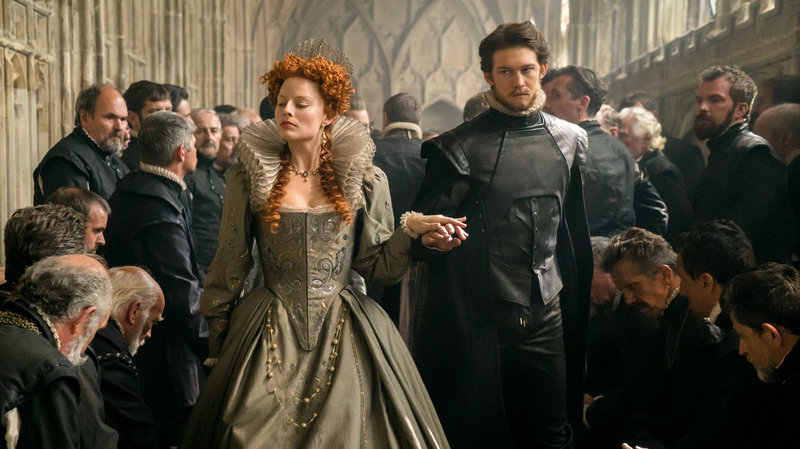
If you have a keen interest in Scottish history, and in Mary Stuart in particular, you might be perplexed by some of the “revelations” that Mary Queen of Scots includes as part of its adaptation of the book Queen of Scots: The True Life of Mary Stuart by John Guy. For instance, who knew that Henry Darnley and David Rizzio (Cordova), Mary’s “gay friend” (in reality her private secretary) slept together shortly after Mary and Henry were married? (That’s a rhetorical question.) It’s one of many historical inaccuracies and inventions that the movie comes up with to heighten the drama, as if the real story wasn’t exciting or dramatic enough. Also, the action takes place over twenty-six years, from Mary’s return to Scotland, to her execution in 1887. Not that you’d necessarily realise this as the movie appears to take place in a timeless period where no one ages, and plot developments come so thick and fast, that by the time you’ve absorbed one, two more have already gone by. With so much to cram in in two hours, Beau Willimon’s screenplay can only act as a yardstick for excessive historical exposition. But conversely, the movie is strangely reticent when it really matters, such as when Mary pardons Moray and others for their part in the insurgency, leaving the viewer to wonder if they really have missed something.
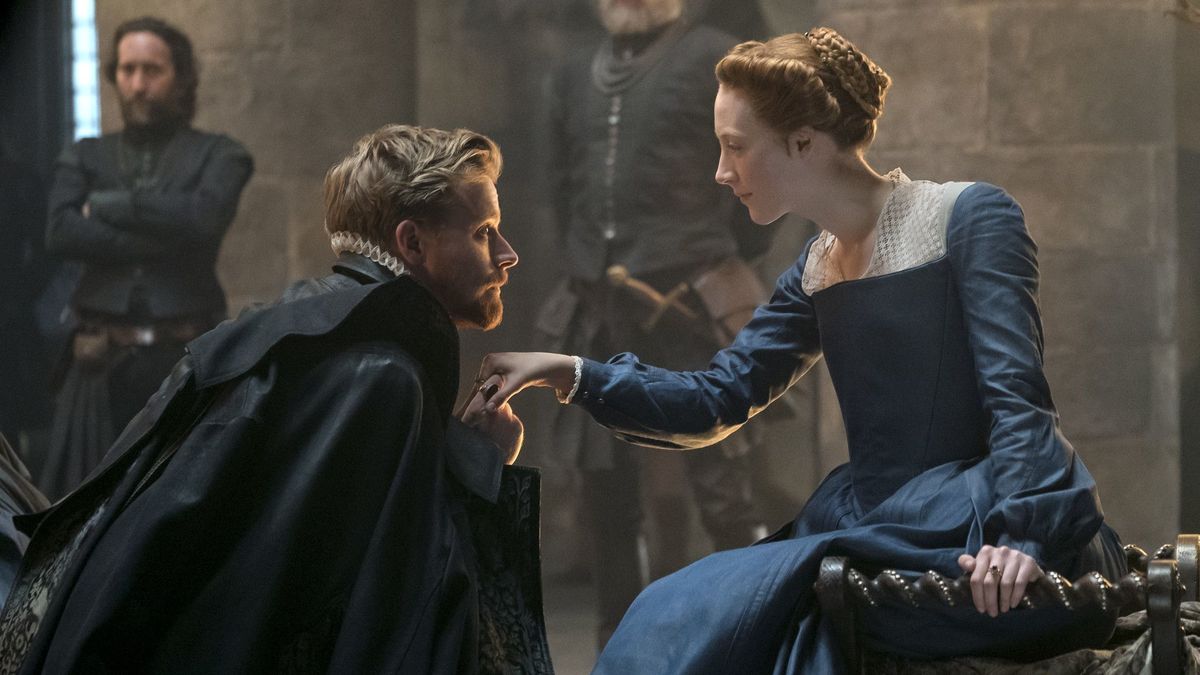
As the movie progresses, it becomes less and less involving, and less and less impactful, as all efforts to make Mary’s plight appear tragic slowly evaporate, and the narrative trundles on from one historical action point to the next with all the energy of someone trudging through treacle. First time director Josie Rourke, whose background is in theatre, does elicit two compelling performances from Ronan and Robbie, but hasn’t adapted her talents to meet the needs of her movie, and the result is a patchwork of disparate scenes that don’t always allow for a consistent narrative, or characterisations (Bothwell’s change of conscience is particularly troubling). But this is first and foremost a movie that affords Ronan and Robbie the opportunity to reveal just why they are two of the best actresses working today. Ronan is appropriately fiery as Mary, passionate and determined, but unable to combat the forces that lead her to tragedy. Good as Ronan is, though, Robbie is superb as Elizabeth, making her a tragic figure who knows what must be done to protect her kingdom, but whose conscience leaves her feeling sad and isolated. There’s good support too from Pearce and McArdle, and the sets and costumes are a highlight, but ultimately, this is a movie for those who don’t mind if their history lessons are compromised from start to finish.

Rating: 5/10 – coming away from Mary Queen of Scots, the realisation soon sinks in that as a retelling of tumultous events and times in Scotland’s history, it’s not as robust as it needs to be, or as insightful; inevitably, it’s the modernism that lets it down, with Willimon’s script making a bad hash of trying to make the movie feel relevant to today’s feminist outlook, but worse than that, it just doesn’t hold the interest in a way that would make it more compelling.
Share this:

  • Click to share on X (Opens in new window) X
  • Click to share on Facebook (Opens in new window) Facebook
  • More
  • Click to print (Opens in new window) Print
  • Click to email a link to a friend (Opens in new window) Email
Like Loading...

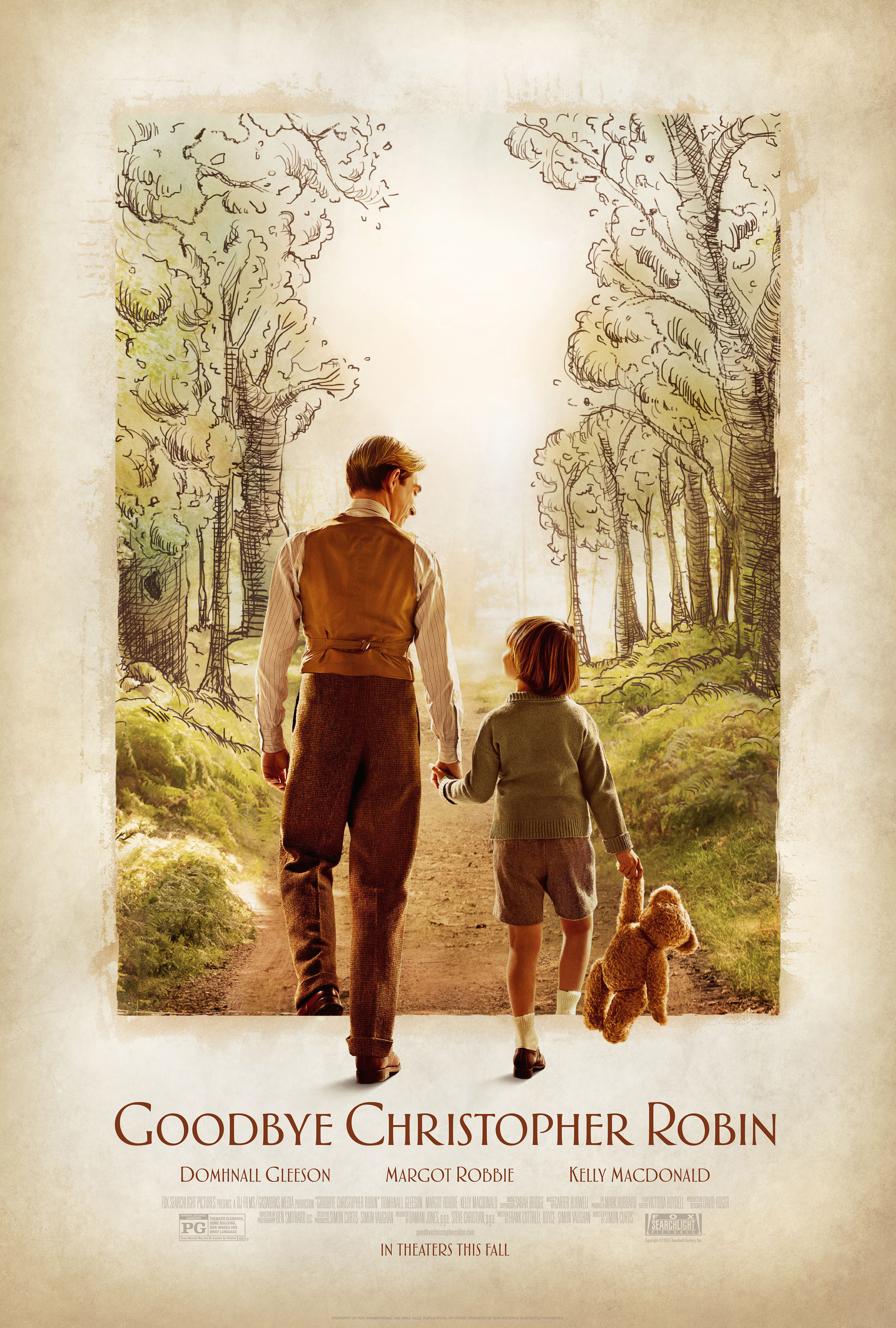
Goodbye Christopher Robin (2017)

15 Thursday Feb 2018

Posted by dullwood68 in Movies

≈ Leave a comment

Tags

A.A. Milne, Domhnall Gleeson, Drama, Kelly Macdonald, Margot Robbie, Review, Simon Curtis, True story, Winnie the Pooh, Writing

D: Simon Curtis / 107m

Cast: Domhnall Gleeson, Margot Robbie, Kelly Macdonald, Will Tilston, Alex Lawther, Stephen Campbell Moore, Richard McCabe, Geraldine Somerville, Phoebe Waller-Bridge

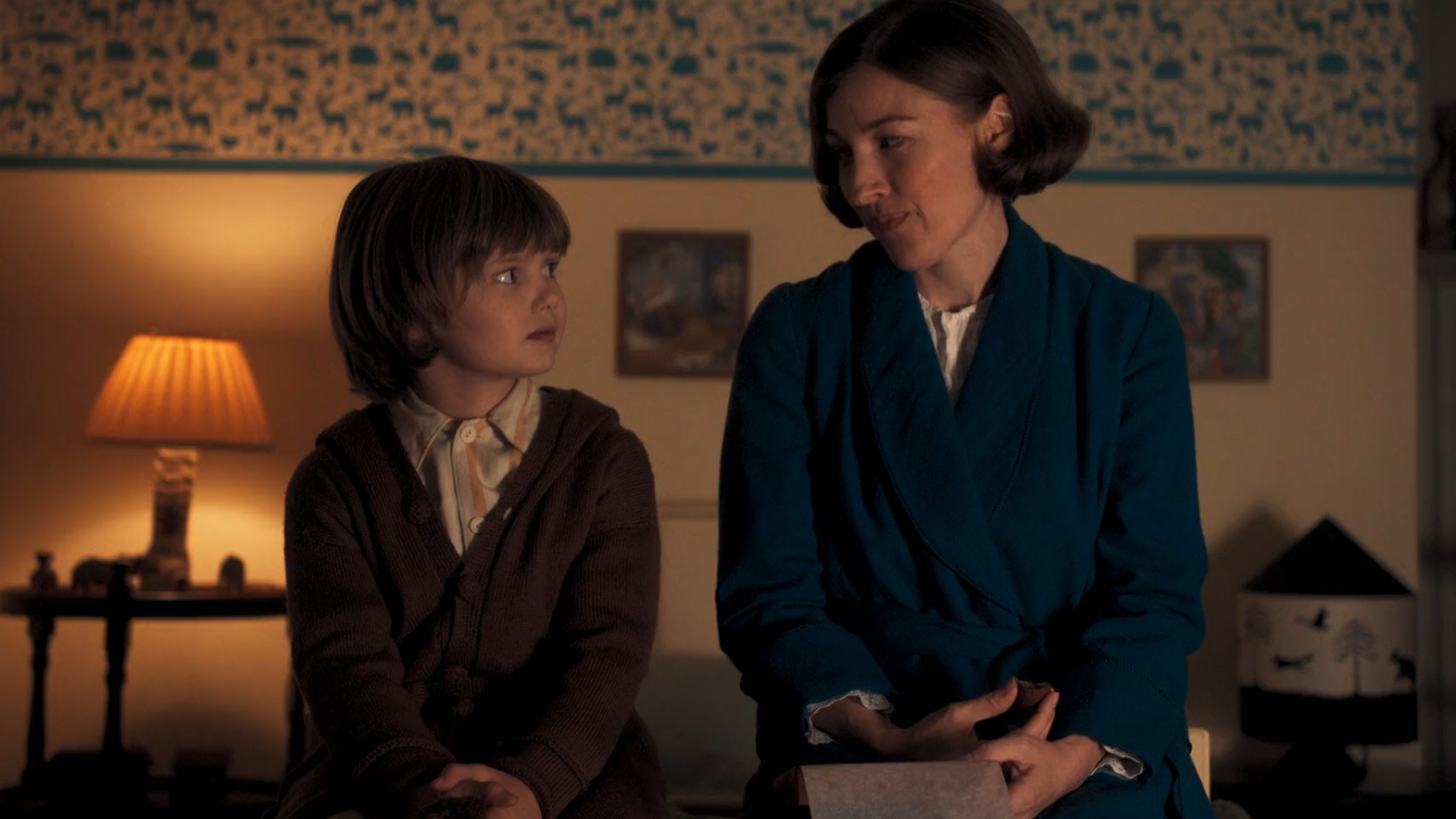
After fighting in the First World War, the playwright A.A. Milne (Gleeson) has difficulty adjusting to post-War life in the same way that his contemporaries have. While they behave as if the war had never happened, Milne suffers from delayed shell shock and debilitating flashbacks of his time at the Somme. Unable to reconcile his recent past with the demands of the present, Milne struggles to resume his writing; even the arrival of his first child, Christopher, is unable to make a difference. With a nanny, Olive (Macdonald), to look after Christopher (but called Billy), Milne moves his family to a secluded house in the Sussex countryside. When circumstances collude to leave Milne and Billy (Tilston) by themselves, their time together leads to Milne writing a series of books based around Billy’s toys, books whose main character is Christopher/Billy himself. But their success comes at a price, and Milne and his wife, Daphne (Robbie), allow Billy to become a part of the media circus that springs up around them, a decision that will have unexpected consequences when World War II brings things full circle…

From the outset, Goodbye Christopher Robin has all the hallmarks of a classic British heritage picture. With its impeccable period production design (courtesy of David Roger), sharply detailed costumes, attention to the social and political mores of the time, beautifully composed and lit cinematography (from Ben Smithard), and a surfeit of stiff upper lips, the movie has nostalgia running through it like a plumb line. This is a movie that looks and feels as if you could step into it at any moment and join A.A. Milne and his young son on their walks throught the Hundred Acre Wood. Luckily though, the script – by Frank Cottrell Boyce and Simon Vaughan – isn’t content with just recreating a bucolic time gone by. Instead it wants to paint a darker picture, one that encompasses PTSD, the expoitation of childhood innocence, remote parenting, the pitfalls of fame, and emotional disconnection. But while these issues serve to make the movie less superficial than it might be otherwise, even when they’re combined they don’t quite provide enough depth to stop the movie from feeling like a carefully selected box of confectionery. Make no mistake, it’s a lovely selection, but after a while you begin to realise that all the centres have the same flavour.

That’s not to say that the movie is a bad one, or that it fails somehow in its ambitions. Rather it’s a case of a movie doing exactly what is expected of it and very little more. There are the requisite number of moments where a loud noise sends Milne back to the trenches, the long-delayed moment when Olive tells her employers what she thinks of their parenting skills, and several more moments when Billy brings Milne out of his moody, self-imposed shell just by being a smiling young moppet. It’s attractively put together by director Simon Curtis, who shows more engagement with the subject matter than he did with his last feature, Woman in Gold (2015), and he coaxes a terrific performance from first-timer Tilston. Gleeson glowers in silence a lot but is effective as Milne, Macdonald shines in the kind of servant role she can do in her sleep now, Moore contributes a sensitive turn as Winnie the Pooh’s original illustrator, E.H. Shepard, but Robbie’s turn as Daphne is spoilt by the character’s unrelentingly mean-spirited and mercenary nature; the actress has nowhere to go with it. All in all though, the movie is an enjoyable one, with a strong emotional core to it, and a good sense of the childhood wonder that helped create such enduring and much-loved characters as Winnie the Pooh, Tigger and Piglet.

Rating: 7/10 – beautifully shot and edited, and with keenly expressed moments of insight into the creative process, Goodbye Christopher Robin nevertheless struggles to keep its dramatic elements meaningful or to the fore; thankfully it gets by on much else besides, including a magical vibe that’s maintained throughout, and the committed performances of its cast.

Share this:

  • Click to share on X (Opens in new window) X
  • Click to share on Facebook (Opens in new window) Facebook
  • More
  • Click to print (Opens in new window) Print
  • Click to email a link to a friend (Opens in new window) Email
Like Loading...

I, Tonya (2017)

11 Sunday Feb 2018

Posted by dullwood68 in Movies

≈ 1 Comment

Tags

Allison Janney, Craig Gillespie, Crime, Drama, Figure skating, Jeff Gillooly, Margot Robbie, Nancy Kerrigan, Olympics, Review, Sebastian Stan, Tonya Harding, True story

D: Craig Gillespie / 120m

Cast: Margot Robbie, Sebastian Stan, Allison Janney, Julianne Nicholson, Paul Walter Hauser, Bobby Cannavale, Bojana Novakovic, Caitlin Carver, Mckenna Grace, Anthony Reynolds, Ricky Russert

When a movie is said to be based on a true story, then chances are it won’t bear any resemblance to what actually happened. The movie becomes an approximation, an interpretation of events that took place, of conversations that people had, and their outcomes. Many movies use this idea to tell their own version of what they think happened and why, but often it’s in disservice to the original – and correct – story. If you want the truth, purists might argue, go see a documentary (like they don’t have their own biases). With so many movies released each year that are based on true stories, it’s often difficult to determine which ones are more accurate than others. But the makers of I, Tonya address this issue right from the start, with a caption that states: Based on irony free, wildly contradictory, totally true interviews with Tonya Harding and Jeff Gillooly. It’s a clever, and very effective tactic. By the movie’s end, and with no two individuals agreeing completely on the events that led to Tonya Harding’s fall from grace, the viewer is left to make up their own mind about what really happened. It’s akin to doing cinematic jury service.

Harding’s story (again if true) is another one that’s concerned with achieving the American dream, but it’s also a story that highlights the unspoken class divide that exists in the US and is still prevalent today. Born on the wrong side of the tracks and with a fearsome, domineering mother, LaVona (Janney), Harding (Robbie) was always going to find it difficult to adapt to and fit in with the somewhat rarefied surroundings of US professional figure skating, but even her ability to carry off a triple axel jump (she was the first American female figure skater to do so in competitions) couldn’t offset the disdain that her behaviour both on and off the ice prompted in both judges and followers of the sport. What didn’t help was her relationship with her husband, Jeff Gillooly (Stan). Harding was often the victim of domestic violence – something the movie goes to some uncomfortable lengths to illustrate – and the battles she waged at home were reflected in her demeanour during competitions. The movie doesn’t shy away from any of this, and Harding’s struggles to maintain an acceptable balance on the ice (no pun intended), point toward the reason why she was never entirely accepted by the figure skating cognoscenti.

Steven Rogers’ extremely fascinating and absorbing screenplay tells a mostly linear story but isn’t afraid to take detours that allow the characters to express themselves more fully during recorded interviews. There are other moments where the fourth wall is broken, but these again allow the characters to provide their own opinions on what’s happening, and it’s largely this approach to the material that keeps the movie from feeling routine or a best available reconstruction of recent history. The performances are uniformly superb, with Robbie and Stan giving career-best turns, while Janney almost steals the movie from everyone (everyone that is apart from Hauser, who plays Harding’s bodyguard, and self-professed “spy”, with such unorthodox charm that the character’s innate stupidity remains likeable throughout). Gillespie, bouncing back after the less than stellar The Finest Hours (2016), gives the movie a pace and a vibrancy that is upheld by Nicolas Karakatsanis’s stylish cinematography, and Tatiana S. Riegel’s flawless editing, while the soundtrack is peppered with songs that relate both to the period the movie covers and to the emotional peaks and troughs threaded throughout the screenplay. If Tonya Harding’s story is one that you’re unfamiliar with, then this is a great place to start if you want to find out how someone goes from being arguably the best female figure skater in the world, to someone who ends up being banned from the sport for life.

Rating: 9/10 – a dazzling concoction that mixes high drama with low comedy, and which also has time to be poignant, mournful, ecstatic, sad, joyous, profane, and reproachful, I, Tonya is a whirlwind of a movie that impresses at every turn; based on a true story, and open and honest about its various source materials, this gives everyone involved a voice and treats them all with respect, even when they do things that are irretrievably dumb – and that happens a lot.

Share this:

  • Click to share on X (Opens in new window) X
  • Click to share on Facebook (Opens in new window) Facebook
  • More
  • Click to print (Opens in new window) Print
  • Click to email a link to a friend (Opens in new window) Email
Like Loading...

Monthly Roundup – October 2016

31 Monday Oct 2016

Posted by dullwood68 in Movies

≈ 1 Comment

Tags

400 Days, Action, Africa, Alexander Skarsgård, Christoph Waltz, Crime, David Yates, Documentary, End of a Gun, Greg Kwedar, Historical drama, John Dower, Johnny Simmons, Keoni Waxman, Louis Theroux, Malin Buska, Margot Robbie, Matt Osterman, Michael Nyqvist, Mika Kaurismäki, Monthly roundup, My Scientology Movie, Queen Kristina of Sweden, Reviews, Samuel L. Jackson, Sarah Gadon, Sci-fi, Steven Seagal, The Girl King, The Legend of Tarzan, Thriller, Transpecos

The Legend of Tarzan / D: David Yates / 110m

Cast: Alexander Skarsgård, Samuel L. Jackson, Margot Robbie, Christoph Waltz, Djimon Hounsou, Jim Broadbent, Simon Russell Beale, Ben Chaplin

the-legend-of-tarzan-movie-review

Rating: 3/10 – “meh”; woeful only just about covers how bad this movie is, from the wooden performances, to the haphazard scripting, to Yates’s casual engagement with the material, and all the way to the creaky use of CGI to simulate the African backgrounds – at no point does The Legend of Tarzan ever feel as if it has any intention of putting any real effort into things.

400 Days (2015) / D: Matt Osterman / 91m

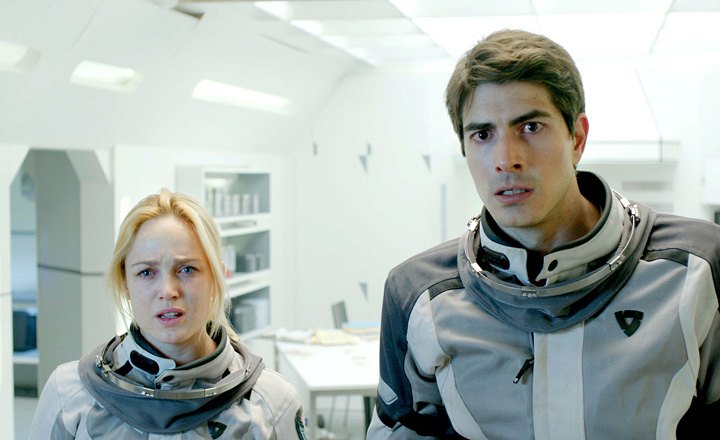
Cast: Brandon Routh, Dane Cook, Caity Lotz, Ben Feldman, Tom Cavanagh, Grant Bowler, Dominic Bogart, Fernanda Romero, Sally Pressman, Mark Steger

400-days-movie-review

Rating: 4/10 – four astronauts are locked inside a chamber designed to simulate the timescale of a planned mission, and the psychological effects of such a journey, but as the simulation nears its finish, the quartet find that things aren’t entirely what they seem; a mystery thriller that doesn’t need its sci-fi trappings (and where the mystery is unengaging), 400 Days plays out like an old Outer Limits episode but without the succinctness that show could provide, all of which leaves the viewer trying hard to make sense of what’s going on, and trying equally hard to decide whether or not they should be bothered about it all.

The Girl King (2015) / D: Mika Kaurismäki / 106m

Cast: Malin Buska, Sarah Gadon, Michael Nyqvist, Lucas Bryant, Laura Birn, Hippolyte Girardot, Peter Lohmeyer, François Arnaud, Patrick Bauchau

girl-king2

Rating: 5/10 – the story of Queen Kristina of Sweden (Buska), who in the ten years she ruled her country, did her best to bring enlightenment and peace for everyone, and who fought against her advisors’ insistence that she marry and secure her throne for the future; reminiscent of the Euro-pudding movies so prevalent in the late Seventies and throughout the Eighties, The Girl King lacks a coherent shooting style that isn’t helped by Hans Funck’s scattershot approach to the editing, but it does keep things admirably simple (if not too simple at times), and remains unexpectedly watchable thanks to Kaurismäki’s determined effort to convert Kristina’s reign (and her presumed lesbianism) into historical soap opera.

My Scientology Movie (2015) / D: John Dower / 99m

With: Louis Theroux, Marty Rathbun, Marc Headley, Tom De Vocht, Jeff Hawkins, Andrew Perez, Rob Alter

tumblr_o0t34k4rij1qzle40o1_1280

Rating: 7/10 – Louis Theroux, intrepid (and annoying) documentarian turns his attention onto Scientology, and attempts to understand why the organisation is so litigious and defensive about its practices; Theroux teams up with ex-Scientology bigwig Marty Rathbun to learn about what goes on behind the scenes, but succeeds largely in having childish spats with one of the organisation’s “security” team (very funny indeed), while organising a filmed representation of a meeting where Scientology leader David Miscavage threw a major tantrum, all of which leaves My Scientology Movie feeling arid for long stretches and not quite as illuminating as Theroux might have hoped.

Transpecos (2016) / D: Greg Kwedar / 86m

Cast: Johnny Simmons, Gabriel Luna, Clifton Collins Jr, Julio Oscar Mechoso

thumbnail_24647

Rating: 5/10 – three Border Patrol guards find themselves in trouble with a Mexican cartel when they stop the wrong car at a checkpoint, and learn that one of them is in even deeper trouble than anyone knew; Transpecos makes good use of its New Mexico locations, and the opening twenty minutes point towards the movie being a tense, tightly constructed thriller, but sadly it soon degenerates into an unconvincing, meandering collection of scenes that are often dramatically inert, and which stretch the narrative in a variety of ineffective ways that it can’t recover from.

End of a Gun (2016) / D: Keoni Waxman / 87m

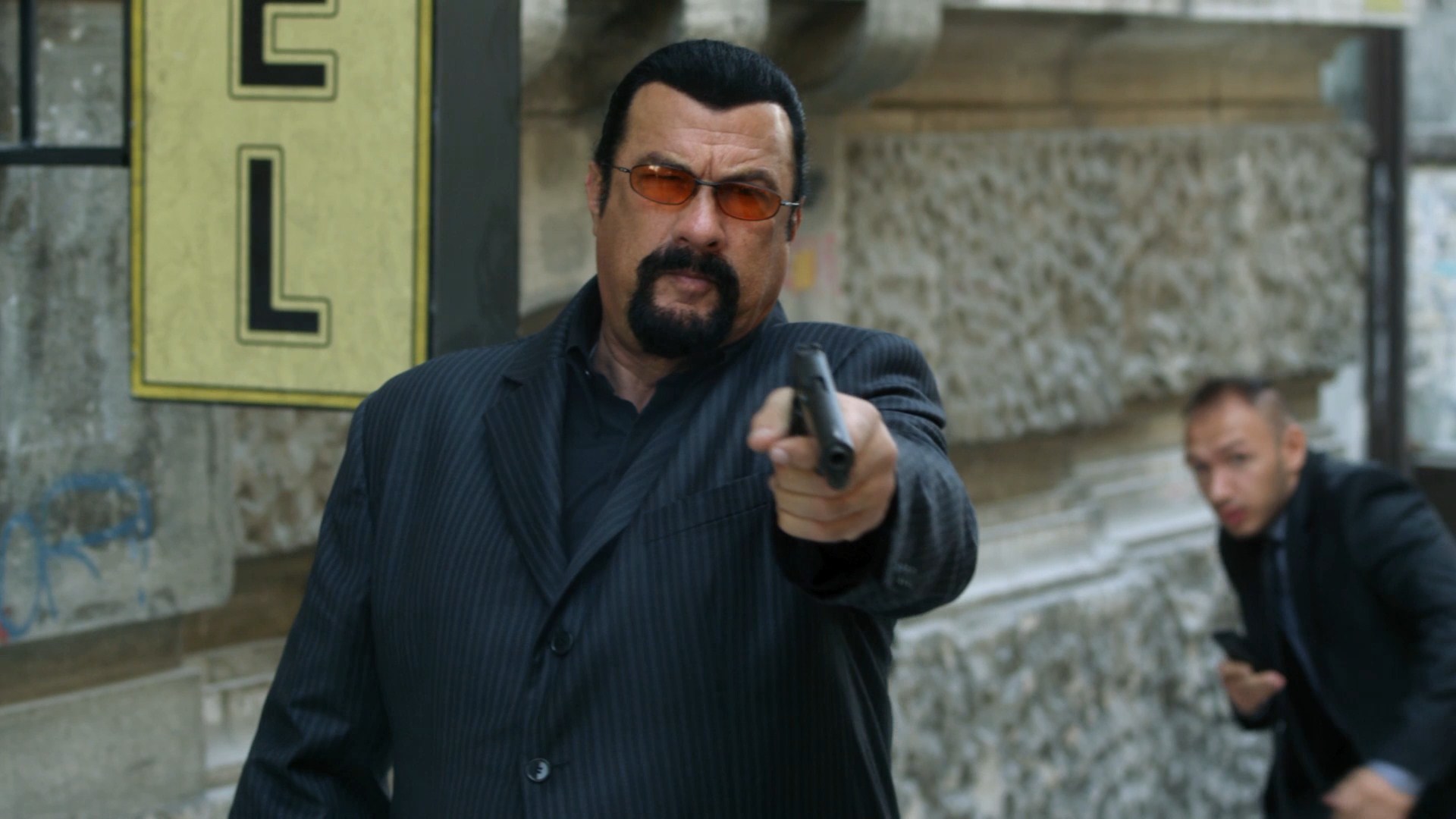
Cast: Steven Seagal, Florin Piersic Jr, Jade Ewen, Ovidiu Nicolescu, Jonathan Rosenthal, Alexandre Nguyen, Claudiu Bleont

138

Rating: 4/10 – retired DEA agent-cum-“ghost” Michael Decker (Seagal) rescues a stripper (Ewen) from her abusive boyfriend (by killing him) and finds himself helping her steal €2m of the man’s money – which doesn’t go down well with his drug czar boss; another Romanian-shot quickie from Seagal that keeps his stunt double, his running double, and his walking double in gainful employment, End of a Gun is made bearable thanks to a good performance from Piersic Jr, and Waxman’s ingenuity when shooting low-budget shootouts, but otherwise it’s business as usual, which is to say, pretty awful (and the less said about ex-Sugababes member Ewen, the better).

Share this:

  • Click to share on X (Opens in new window) X
  • Click to share on Facebook (Opens in new window) Facebook
  • More
  • Click to print (Opens in new window) Print
  • Click to email a link to a friend (Opens in new window) Email
Like Loading...

Suicide Squad (2016)

21 Sunday Aug 2016

Posted by dullwood68 in Movies

≈ 5 Comments

Tags

Action, Adewale Akinnuoye-Agbaje, Amanda Waller, Arkham Asylum, Belle Reve, Captain Boomerang, David Ayer, DC Universe, Deadshot, Drama, El Diablo, Enchantress, Harley Quinn, Jai Courtney, Jared Leto, Jay Hernandez, Joel Kinnaman, Killer Croc, Margot Robbie, Midway City, Review, Rick Flag, Task Force X, The Joker, Villains, Viola Davis, Warner Bros., Will Smith

Suicide Squad

D: David Ayer / 123m

Cast: Will Smith, Jared Leto, Margot Robbie, Joel Kinnaman, Viola Davis, Jai Courtney, Jay Hernandez, Adewale Akinnuoye-Agbaje, Cara Delevingne, Karen Fukuhara, Scott Eastwood, Adam Beach, Ike Barinholtz, David Harbour, Common, Alain Chanoine, Ben Affleck, Ezra Miller

At the beginning of 2016, DC Comics fans had two movies to look forward to in the coming year: Batman v Superman: Dawn of Justice, and Suicide Squad. Anticipation for both these movies was almost stratospherically high. But Batman v Superman proved to be a messy affair that lacked coherence and couldn’t even give audiences a rousing showdown between the Caped Crusader and the Man of Steel. Critically pounded, and causing a division between fans that in some quarters got way too heated, the movie fell short of making a billion dollars at the box office, and was judged a disappointment. Earlier this month, an extended cut of the film was released on home video, and though the extra footage tidied up a few things left adrift in the theatrical cut, the general consensus was that the additional thirty minutes didn’t make it a better movie.

Fans quickly turned their attention to Suicide Squad to save the day, and the hype began all over again. In development since 2009, the movie arrives now with all the fanfare of a Second Coming. Promoted and advertised and pushed for all it’s worth (IMAX screenings feature a new, Suicide Squad-inspired countdown that’s a nice but unnecessary gimmick), this was Warner Bros.’ chance to prove that they were listening when critics and fans alike said Batman v Superman was too dark and sombre. Director David Ayer promised there would be humour, and the tone would be lighter. Has he delivered? Predictably, the answer is yes and no.

Suicide Squad - scene1

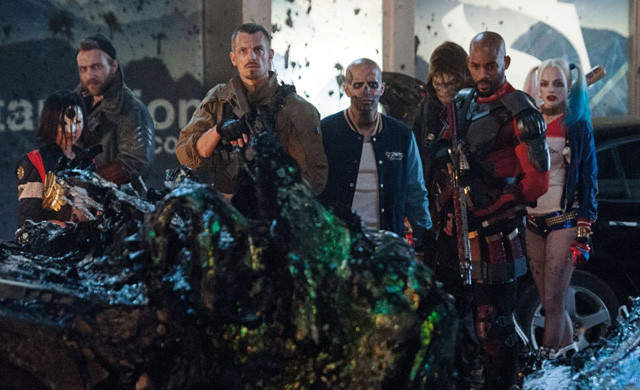
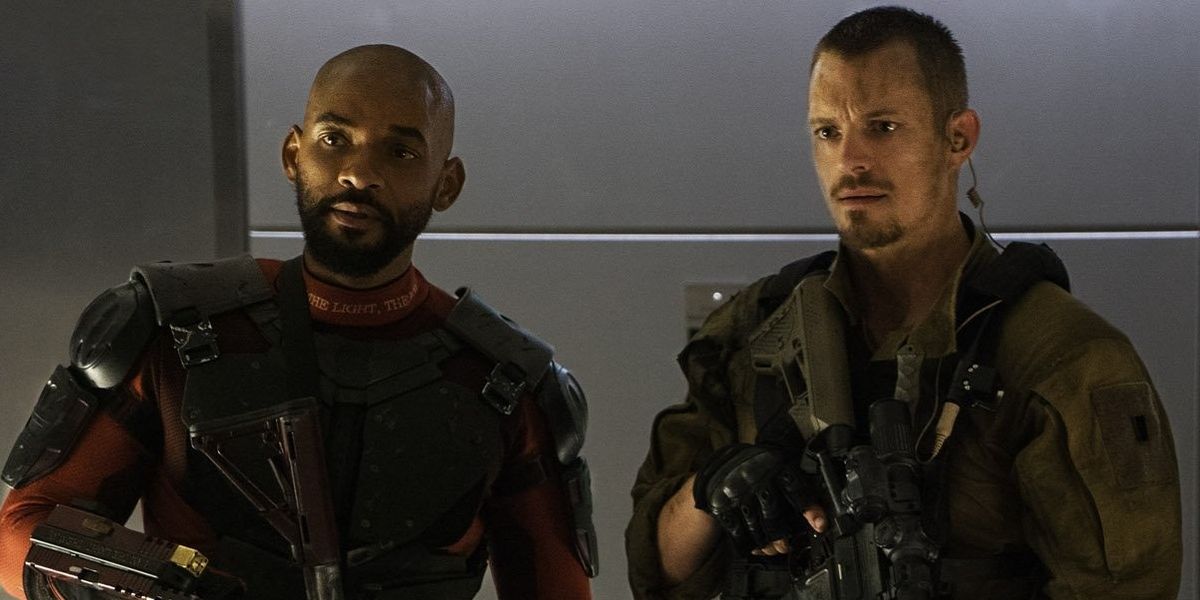
Suicide Squad is, first and foremost, just as messy as it’s DC Extended Universe predecessor. Its plotting is murky and frustratingly lacking in detail, character motivations vary wildly (sometimes in the same scene), there’s the usual over-reliance on a surfeit of destruction-porn, and no one to root for or care about, even though the script does try its best to make Deadshot (Smith) and El Diablo (Hernandez) at least halfway sympathetic. What fun there is to be had can be found in the opening twenty minutes as we’re introduced to each member of the squad, from the assassin who never misses with a gun, Deadshot, to meta-humans such as Killer Croc (Akinnuoye-Agbaje) and El Diablo, wicked witch Enchantress (Delevingne) and her human host June Moone (also Delevingne), thief extraordinaire Captain Boomerang (Courtney), and brain-fried Daddy’s Lil Monster, Harley Quinn (Robbie). Watching these characters interact with and defy authority at every turn gives hope to the direction the movie is heading in, but that hope is short-lived.

Assembled by government spook Amanda Waller (Davis), the squad is a fail-safe option if someone were to come along with Superman’s abilities and use them for evil. With explosive devices implanted in their necks to stop them absconding, the squad, led by Colonel Rick Flag (Kinnaman), are tasked with a mission in Midway City when Enchantress and her brother Incubus (Chanoine) begin building a machine that will destroy all other weapons on the planet and – well, this is one of those plot points that sounds great but is actually quite lame and badly thought out. With Flag and the squad further augmented by expert swordswoman Katana (Fukuhara), escape specialist Slipknot (Beach), and two teams of soldiers, they venture into the randomly destroyed city in search of a High Value Target to rescue. But Waller and Flag have been less than honest about the mission, and the squad must decide if working together is a more appropriate way forward than going their own ways.

Suicide Squad - scene2

It’s clear from the start that Suicide Squad wants to be edgy and smart, caustic and irreverent, and provide a great time for its audience. But as the movie progresses, and once the introductions are over, it soon becomes clear that these so-called supervillains are going to be trapped by the demands of a script that wants to show that, deep down, they’re all really good guys at heart. As a result, this leads to a watering down of the original concept – Worst.Heroes.Ever. – that should be revised to read Best.Antiheroes.Ever. Yes, they’re largely antisocial, and yes they have their issues with authority, and yes they haven’t got a problem with killing people (mostly), but by the end they’ve all bonded and are like one big happy dysfunctional family. It’s enough to tug at the heart strings.

And then there’s the Joker (Leto). Much has been made of Leto’s insistence on staying in character for the duration of the shoot – Smith has quipped that he didn’t meet Leto until after filming was completed – and the Joker’s heavily tattooed look. But it’s all immaterial as Leto is on screen for around fifteen to twenty minutes in total, in a subplot that sees him try to rescue Harley Quinn from being part of the squad. With the Joker reduced to a supporting role it’s hard to qualify Leto’s performance. Yes it’s mannered, heavily so, and completely different from any previous interpretations, but the script depicts him as a lunatic gangster figure rather than the Clown Prince of Chaos. The character has room for development, then, but right now his need to rescue Quinn keeps him working to a standard plotline and any antic diversions seem forced.

Suicide Squad - scene3

In what is fast becoming the one area in which Warner Bros. seems unable to act on the recommendations of others, Suicide Squad ramps up the destruction on offer, with endless gunfights and property devastation the order of the day. It’s all accompanied by one of recent cinema’s more overwhelming and intrusive scores (courtesy of Steven Price), a blaring cacophony of dramatic musical cues and declamatory passages that reinforce just how much the movie is like being hit repeatedly over the head (and by Harley Quinn’s mallet at that). Ayer can’t stop things from getting too overwrought in the movie’s final half hour, and inevitably any subtlety is made to hide in the shadows where it can’t interfere with anything.

Against all this the cast do their best, with Smith atoning for some recent poor choices by making Deadshot likeable and charismatic. Robbie has the most fun, and is the most fun to watch, but after a while the chirpy attitude and cheesy wisecracks begin to grate, and Ayer does away with any development the character has made as if it never happened, leaving her no different from how she was at the start. Davis essays the real villain of the piece, but once that particular “surprise” is established the character stops being interesting, as does her motivation, and she’s wisely sidelined. Kinnaman does stolid with ease but fails to make Flag memorable, while Hernandez makes El Diablo a surprisingly well-rounded character, less of a supervillain, and more Hulk-like in terms of his anger issues.

The movie is further hampered by Ayer’s insistence on giving the movie a noir feel instead of a comic book feel, and John Gilroy’s haphazard, wayward approach to the editing. Other odd moments/decisions stand out: Deadshot looking like a pimp when he’s out with his daughter; Enchantress swaying like a woman trying to keep up an invisible hula hoop; several flashbacks that slow the movie’s rhythm; a scene where El Diablo reveals a tragic consequence to his ability that feels out of place; and an origin story for Quinn that involves falling into a chemical vat for the sake of it.

Rating: 5/10 – slightly better than Batman v Superman: Dawn of Justice (but only slightly), Suicide Squad still has enough problems to stop it from becoming the first DC Extended Universe movie to overcome the series’ usual pitfalls; shedding its claim to being edgy and different with every minute that passes, the movie is further proof that Warner Bros. and DC need to work harder on their game plan, and that copying Marvel isn’t necessarily the right idea.

Share this:

  • Click to share on X (Opens in new window) X
  • Click to share on Facebook (Opens in new window) Facebook
  • More
  • Click to print (Opens in new window) Print
  • Click to email a link to a friend (Opens in new window) Email
Like Loading...

Whiskey Tango Foxtrot (2016)

03 Sunday Jul 2016

Posted by dullwood68 in Movies

≈ Leave a comment

Tags

Afghanistan, Alfred Molina, Billy Bob Thornton, Comedy, Drama, Glenn Ficarra, John Requa, Journalist, Kabul, Kim Barker, Literary adaptation, Margot Robbie, Martin Freeman, Review, Taliban, Tina Fey, True story, War

Whiskey Tango Foxtrot

D: Glenn Ficarra, John Requa / 112m

Cast: Tina Fey, Margot Robbie, Martin Freeman, Alfred Molina, Christopher Abbott, Billy Bob Thornton, Nicholas Braun, Stephen Peacocke, Sheila Vand, Evan Jonigkeit, Fahim Anwar, Josh Charles, Cherry Jones

If you’re a fan of Tina Fey, and have been waiting to see Whiskey Tango Foxtrot with some anticipation after seeing the trailer, be warned! This isn’t the out and out comedy with occasional dramatic moments that the trailer makes it out to be. Instead it’s the opposite, a drama with occasional comedic moments that fit awkwardly for the most part with the movie’s main focus, the true story of one woman journalist’s stay in Afghanistan and the experiences she had there.

Fey plays Kim Baker, the fictionalised version of Kim Barker (why the slight name change?). In 2004 and dissatisfied with the way her career in television news is going, she takes up the offer of an assignment reporting from Afghanistan. Taking a huge chance – she doesn’t know the language or the customs, and has never reported from a war zone before – Baker is assigned a driver/interpreter, Fahim (Abbott), and a personal bodyguard, Nic (Peacocke). She’s also grateful to find another female journalist there in the form of Tanya Vanderpoel (Robbie).

WTF - scene3

At first, Kim’s inexperience doesn’t do her any favours but she soon begins to gauge the lie of the land and the feelings of the US soldiers stationed there. Her status as a woman helps her gain access to news stories that other (male) journalists and reporters are unable to gather, and as time goes by, she earns the respect of her fellow journalists, Fahim, and even General Hollanek (Thornton), the head of the US forces. She also takes risks when she feels it necessary, such as leaving an armoured vehicle when the convoy she’s in is attacked and capturing the event on video. The only downside of her experience thus far is when she catches her boyfriend (Charles) with another woman during an unscheduled video call.

Her sudden availability has its upside, though. It allows her to manipulate local Afghan minister Ali Massoud Sadiq (Molina), into providing her with background intelligence, though Fahim warns her that she is becoming like the drug addicts he used to treat before the war: willing to do anything to get a story. She also develops a relationship with Scottish journalist Iain MacKelpie (Freeman); at first it’s only serious on his side, but Kim becomes attached to him, and their relationship deepens. As the two get to know each other, Iain tells her of an opportunity to interview a local warlord. The only drawback is his location: on the other side of a mountain pass that is closed due to heavy snow. While they wait for the snows to clear, Kim finds herself having to justify her continuing presence in Afghanistan, and travels to New York to state her case in person. There she discovers an unexpected rival for her “spot”, and also learns that Iain has been abducted for ransom…

WTF - scene1

Barker’s story – recounted in her book The Taliban Shuffle: Strange Days in Afghanistan and Pakistan – is remarkable for how “Pakistan and Afghanistan would ultimately become more all-consuming than any relationship [she] had ever had.” Sadly, Robert Carlock’s screenplay only manages to skirt round this attachment, preferring instead to imply an unrequited attraction between Kim and Fahim that can never be consummated, and an actual relationship with Iain that sees Fey look uncomfortable whenever she and Freeman end up in a clinch. This is one of many components that the movie never finds a satisfactory place for, and the result is an uneven, sporadically effecive piece that does occasional justice to Barker’s story, and Fey’s skills as an actress.

As with so many true stories adapted for the screen, the movie changes a lot, and in the process loses sight of what works best. Kim’s back story is predictably sketchy – why is she so miserable about her job?; how did she get to a point where the idea of covering a war in a far-off country became her best option? – and it’s jettisoned just as predictably once she arrives in Kabul. The movie continues in the same vein, offering brief soundbites in lieu of solid characterisations, and making only intermittent attempts to provide motivations for the actions of its principals (when it can be bothered to go beyond the superficial). By failing to provide any of its characters with any depth – Thornton’s General is so lightweight he’s practically gossamer-thin – it becomes hard to care about anyone, even Kim. Aside from a sincere yet unnecessary subplot involving a wounded soldier (Jonigkeit), Whiskey Tango Foxtrot rarely gives the viewer a reason to believe that any of Barker’s memoir has been adapted with a view to making it appear earnest or artless.

WTF - scene2

Fey’s obvious forté is comedy, and when the movie needs her to be, she’s very funny indeed. But she’s not quite so confident in the dramatic stretches, and it’s these moments that help undermine the movie further. Fey only comes across as comfortable in these situations if she can put a comedic spin on things, and the script lets her do this far too often for the audience to be comfortable as well. In support, Freeman puts in a good enough performance but isn’t given enough to do that’s memorable or fresh, while Robbie flits in and out of the narrative just enough for viewers to remember she’s there, and to remind Fey as Kim that in Afghanistan she’s gone from a solid six to a nine (so much for female solidarity in a male-dominated society). As for Molina, he plays Sadiq as a lecherous horny goat, a character two steps removed from a Carry On movie racial stereotype; it’s not quite a completely offensive portrayal, but both Molina and directors Ficarra and Requa should have known better.

Despite all this, the movie is amiable enough, and under Ficarra and Requa’s stewardship makes for an undemanding viewing experience. Like Fey they seem more at home when dealing with the more humorous aspects of Barker’s time in Afghanistan (Pakistan is left out of the equation entirely), though they redeem themselves in terms of the movie’s look. Along with DoP Xavier Grobet, the directing duo give the movie a rich visual style that offers crisp compositions at almost every turn, and a warm colour palette that refutes the idea of Afghanistan as a ravaged, war-blighted country lacking in beauty. At least they got that right.

Rating: 5/10 – an awkward mix of drama and comedy where neither comes out on top and where each ends up countering the other, Whiskey Tango Foxtrot isn’t as bad as it may seem, but it’s also not as good as it could have been; fans of Fey may be satisfied by her performance here, and she’s to be applauded for trying something outside her comfort zone, but there’s too many times when she doesn’t do the (admittedly) thin material any justice.

Share this:

  • Click to share on X (Opens in new window) X
  • Click to share on Facebook (Opens in new window) Facebook
  • More
  • Click to print (Opens in new window) Print
  • Click to email a link to a friend (Opens in new window) Email
Like Loading...

Z for Zachariah (2015)

29 Tuesday Mar 2016

Posted by dullwood68 in Movies

≈ Leave a comment

Tags

Chiwetel Ejiofor, Chris Pine, Contamination, Craig Zobel, Drama, Literary adaptation, Margot Robbie, Radiation, Review, Valley

Z for Zachariah

D: Craig Zobel / 98m

Cast: Chiwetel Ejiofor, Margot Robbie, Chris Pine

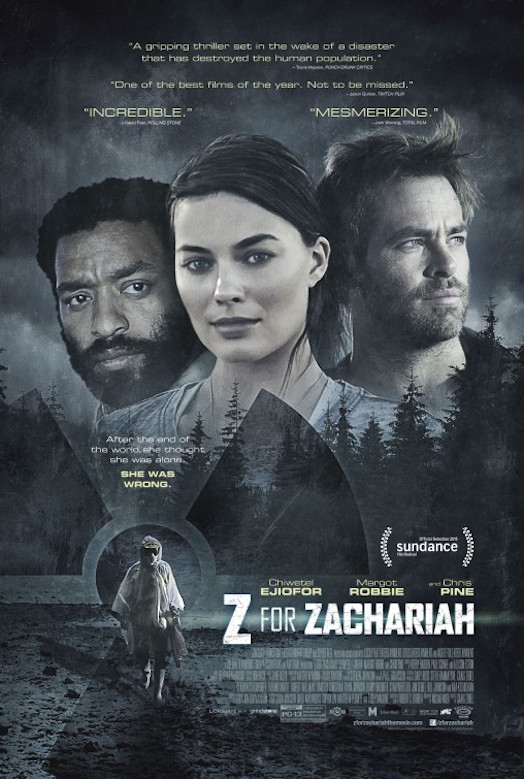
In an abandoned town, a young woman (Robbie) scavenges for food and other supplies. She wears home made protective clothing that protects her from the air. Once she has what she needs she heads out of town and into the nearby hills. Once she’s reached a certain distance she removes the protective clothing and continues on into a valley where it appears the air isn’t contaminated. She’s met by her dog, and together they reach her home, a farm where they live by themselves. There’s no electricity or gas, no working generator, but at least the weather is good, and the young woman has plenty of food.

It’s a lonely existence, but one borne out of necessity. The world has suffered a catastrophe, and the young woman, whose name is Ann, is a survivor, trapped/saved by the valley she lives in, which somehow acts as a natural barrier against whatever has happened. She’s already survived a hard winter where she nearly ran out of food, but she’s better prepared now, and is growing vegetables, tending chickens, and keeping a cow. She is becoming used to being alone, but still longs for human company.

ZFZ - scene1

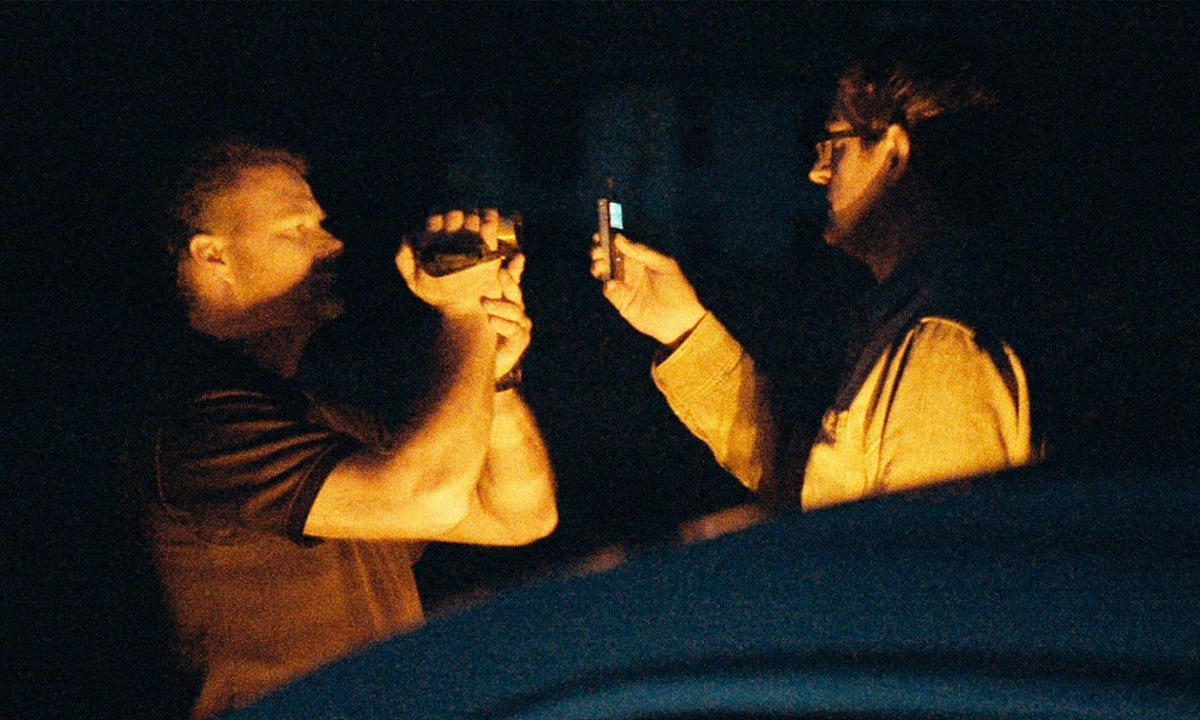
One day her unspoken wish is answered. She discovers a man (Ejiofor), dressed in an anti-radiation suit, on the road near her home. He has a portable Geiger counter and is taking readings. When he realises that the area is unaffected he removes his suit. When Ann moves closer she finds him gone from the road and bathing at the base of a nearby waterfall. She implores him to get out, quickly, as the water is contaminated. Back at the farmhouse his sickness threatens his life, but thanks to drugs he has in his possession, Ann is able to save him from dying. The man, whose name is John, recuperates slowly, but he helps Ann as much as he can and even comes up with a plan to get the tractor going again. Ann and John begin to rely on each other, and as they do they become closer, forming a bond of mutual reliance and affection. And then they discover that there’s somebody else in the valley as well…

Those familiar with Robert C. O’Brien’s novel will know that there are only two characters in Z for Zachariah, and that the novel concerns itself with themes of science versus nature, and the clash of identities between Ann and John. But in Nissar Modi’s adaptation these themes are missing, and the viewer is left with themes of sexual jealousy and remorse, and John’s need to control the people around him (even if it’s just Ann). With the introduction of Caleb (Pine), Modi not only changes the nature of the struggle between Ann and John, he also changes irrevocably the tone of the movie and makes it less intriguing to watch.

What begins as a clever survivalist movie soon develops into a relationship drama where two people, who previously thought they were the only ones alive in their part of the world, adapt to coexisting again. It’s this section of the movie, where it’s just Ann and John and their relationship takes hold that offers the most rewards. As portrayed by Robbie, Ann is a gauche, likeable character who has a simple sincerity about her. It’s a good contrast to John’s anguished, bitter personality, and Ejiofor shows us the man’s deep-rooted insecurities slowly but surely, until the viewer is forced to realise that he’s not quite the “good man” that Ann believes he is. Pitted against her God-fearing background – her father built and preached in the nearby church – John treads carefully enough, but still leaves enough clues that he’s not fully to be trusted.

ZFZ - scene3

And it would have been great to see that dynamic play out with just the two characters, with Ann perhaps coming to terms with living with a man she’s attracted to but can’t trust. But again Modi doesn’t want to do that. Instead he introduces Caleb and makes the movie about sexual desire, a ménage à trois, with both John and Caleb circling each other and looking for ways to impress Ann. But where Caleb is supportive and charming, John reacts boorishly, and it’s at this stage of the movie where it becomes uncomfortably like a soap opera, and where the script struggles to maintain a clarity of purpose. At one point tells Ann that he’s okay with her being attracted to Caleb, that it’s okay if they want to “go and be white people together”. This remark is said in an almost offhand manner by John, but it’s indicative of the way in which the script suddenly lacks purpose. It’s a casual, racist comment, and should be powerful in its own way for being voiced by someone who’s black, but the script leaves it hanging, and never goes back to it.

With the last third hamstrung by needing to be more dramatic, the good work of the first hour is left behind. Pine is appropriately charismatic but as Caleb worms his way into Ann’s affections, the combination of the script, Pine’s performance, and Zobel’s now wayward direction, makes the whole thing seem implausible. All three elements fail to make a cohesive whole, and while the trio toil away at harnessing the energy of the waterfall to provide power for the generator, the viewer is left to watch things develop in such a way that the inevitable confrontation between John and Caleb lacks any bite, and the movie tries to end on a note of ambiguity that doesn’t really hold up.

ZFZ - scene2

Robbie, who is definitely an actress to watch at the moment, is very good as Ann, capturing the character’s innate trusting nature and revealing the pain she feels when that trust is abused. Ejiofor is equally good but John is a flawed character in more ways than one, and the script is less than subtle when it comes to revealing his motivations, leaving the actor to make the most of some very clumsy dialogue and direction. Along with Pine, Ejiofor seems to have been left to figure things out for himself in the final third, and Zobel’s influence wanes on the material the longer the movie goes on. By the end it’s almost as if the cast have directed themselves, but it’s at odds with what Zobel’s done up til then, and it shows.

Narrative and character disappointments aside, the movie at least looks absolutely beautiful, the New Zealand backdrops shot with an exquisite eye by Tim Orr, who did some equally impressive work on The World Made Straight (2015). It’s the one aspect of the movie that’s consistent throughout, and in conjunction with Robbie’s performance, makes the movie worth seeing, but both have to work hard to offset the slow pace made at the beginning, and the tired resolution at the end.

Rating: 6/10 – a movie that never quite gels into a satisfying whole, Z for Zachariah still has enough going for it to warrant a look; with all due respect to Pine, perhaps it’s also one to watch up until the actor makes his appearance – then you’ll have seen the best of it.

Share this:

  • Click to share on X (Opens in new window) X
  • Click to share on Facebook (Opens in new window) Facebook
  • More
  • Click to print (Opens in new window) Print
  • Click to email a link to a friend (Opens in new window) Email
Like Loading...

Mini-Review: Focus (2015)

06 Friday Mar 2015

Posted by dullwood68 in Movies

≈ Leave a comment

Tags

Buenos Aires, Con artist, Drama, Gambling, Gerald McRaney, Glenn Ficarra, John Requa, Love affair, Margot Robbie, Motor racing, New Orleans, Pickpocket, Review, Rodrigo Santoro, Thriller, Will Smith

Focus

D: Glenn Ficarra, John Requa / 105m

Cast: Will Smith, Margot Robbie, Rodrigo Santoro, Gerald McRaney, Adrian Martinez, BD Wong, Robert Taylor, Brennan Brown, Dotan Bonen

Longtime conman Nicky Spurgeon (Smith) meets inexperienced grifter Jess (Robbie) and despite his initial misgivings, agrees to tutor her in the ways of becoming a real con artist. He takes her to New Orleans where he involves her in a series of minor cons such as pickpocketing. He introduces her to his crew as they prepare to hit the town during the Superbowl weekend. Altogether they amass $1.2 million from their efforts, but Nicky takes Jess to the Superbowl game where he’s challenged by compulsive gambler Liyuan Tse (Wong). The bets grow bigger until Nicky loses the money he and his crew have gained. He gets Liyuan to go for double or nothing and loses again. It’s only on when the stakes reach an even higher level that Jess realises it’s all a con designed to part Liyuan from his money.

With their relationship becoming romantic, Nicky’s reservations about becoming involved with a fellow con artist lead him to pay off Jess and leave her in New Orleans. Three years pass. Nicky is in Buenos Aires working a sting on local businessman and racing car team owner Garriga (Santoro) when he discovers that Jess is Garriga’s girlfriend. His feelings for her resurface, making it difficult for him to continue with the sting. He tries to pursue her at the same time, but Jess is reluctant to get involved with him a second time. Garriga’s head of security, Owens (McRaney) is suspicious of what Nicky is actually up to, and when he and Garriga become aware of the true sting, they grab Nicky and Jess as they try to leave town. Taken to an abandoned warehouse, Nicky has to find a way to keep both of them alive.

Focus - scene

Will Smith’s recent big screen appearances – the dreadful After Earth (2013), and cameos in Anchorman 2: The Legend Continues (2013) and Winter’s Tale (2014) – have been less than overwhelming, so it’s no surprise that he’s returned with a role that allows him to express the kind of genial, roguish charm that he’s more renowned for. However, thanks to a script by directors Ficarra and Requa that never quite works out what type of movie it is, Focus allows Smith only occasional chances to shine, and in the end, leaves him as stranded as Jess is in New Orleans. At one point, Nicky says that he can convince anyone of anything, but in practice he never convinces the viewer that his feelings for Jess are real, or even that he’s as good a conman as he makes out.

Away from Smith’s painful attempts at looking lovelorn, we have a movie that struggles to add any thrills to proceedings and only really comes alive thanks to Wong’s involvement at the Superbowl game; his extrovert performance is the movie’s one highlight. Afterwards it’s all downhill with a less than convoluted con game that steals shamelessly from The Sting (1974) and asks us to take such a leap of faith in terms of what happens to Nicky that most viewers will be picking their jaws up off the floor in stunned disbelief (or amusement). Slackly directed, and with a supporting cast reduced to mouthing platitudes, Focus won’t hang around long in the memory, and proves another stumbling block in Smith’s return to the A-list.

Rating: 5/10 – good location photography and a glossy sheen to things lift Focus out of the doldrums, and the pickpocket sequences – overseen by Apollo Robbins – are cleverly constructed and edited; with Robbie adrift in a sea of watered-down machismo, however, this is not a movie that serves its cast particularly well and is worryingly predictable.

Share this:

  • Click to share on X (Opens in new window) X
  • Click to share on Facebook (Opens in new window) Facebook
  • More
  • Click to print (Opens in new window) Print
  • Click to email a link to a friend (Opens in new window) Email
Like Loading...

The Wolf of Wall Street (2013)

02 Sunday Feb 2014

Posted by dullwood68 in Movies

≈ Leave a comment

Tags

Drama, FBI, Insider trading, Investment fraud, Jean Dujardin, Joanna Lumley, Jonah Hill, Jordan Belfort, Leonardo DiCaprio, Margot Robbie, Martin Scorsese, Matthew McConaughey, Penny stocks, Review, Stratton Oakmont, True story

Wolf of Wall Street, The

D: Martin Scorsese / 180m

Cast: Leonardo DiCaprio, Jonah Hill, Margot Robbie, Kyle Chandler, Matthew McConaughey, Rob Reiner, Jon Bernthal, Jon Favreau, Jean Dujardin, Joanna Lumley, Cristin Milioti, Shea Whigham, P.J. Byrne, Kenneth Choi, Brian Sacca, Henry Zebrowski, Ethan Suplee

Already the basis for the movie Boiler Room (2000), and adapted from the life and experiences of Jordan Belfort (DiCaprio), an investment broker who started his career on Wall Street in the late Eighties, and went on to become the head of his own company, selling penny stocks to gullible investors before moving into the big leagues, The Wolf of Wall Street is a modern day cautionary tale about greed, corruption and the pursuit of money.

Having become a licensed stock broker, Belfort begins work on the worst day possible, 19 October 1987, Black Monday. With his company ruined by the fallout, Belfort is forced to start again at the bottom, working for a small investment company that sells penny shares to small-time investors. Seeing the potential in a part of the investment industry that offers a fifty per cent commission on any sales, Belfort starts up his own investment company, Stratton Oakmont. Taking some of the staff from the investment company, he shows them how to persuade reluctant investors into parting with their money, and more importantly, ensuring they never take their money out again, thereby keeping up the exorbitant profits Belfort and his staff are raking in. He meets Donnie Azoff (Hill) who comes to work for him; together they build up the company until they’re at a point where they can compete with some of the bigger Wall Street firms. Their selling tactics and methods bring them to the attention of the FBI’s Agent Denham (Chandler) who begins an investigation into their fraudulent business practices. In the meantime, Belfort’s first marriage collapses; he becomes addicted to drugs, booze and sex; the FBI’s investigation prompts him to spirit his money away to Switzerland; he remarries, this time to Naomi (Robbie), and has two children with her; risks his life getting to Switzerland when it looks as if he’ll lose all his money; sees one of his friends, Brad (Bernthal), go to jail thanks to Azoff’s stupidity; and excess dominates his life completely. When a deal to take a shoe company public on the stock market (and illegally arrange to be the major stockholder) begins to unravel, and his marriage falls apart, Belfort finds himself helping the FBI incriminate his colleagues in order to avoid a long prison sentence.

With occasional breaks to camera, Belfort relates his life of excess with a relish that reflects both his character and, you suspect, a love for the times that hasn’t quite dissipated. Starting as a typically naive young man with bold aspirations, Belfort appears easily swayed when Azoff coaxes him into taking drugs, and he seems equally unconcerned by the ease with which he can swindle unsuspecting investors. While this aspect isn’t properly addressed, it’s not so much where Belfort has come from as what he does once he’s there that the movie is concerned with. The Wolf of Wall Street focuses on the excess of both the characters and the times they were active, a period in recent history (the Nineties) where affluence by any means was a mantra to live by, and if you weren’t rich then you were a nobody.

Wolf of Wall Street, The - scene

Working with his usual technical mastery, Scorsese recreates that period with remarkable skill and the level of incidental detail is impressive. The look of the movie is always arresting, and there’s never a moment when the camera doesn’t pick out an impressive detail or something visually interesting. Scorsese also knows when to keep the camera moving, or when to choose an odd camera angle to highlight the mood or emotion of a scene. There are moments when it’s like watching a cinematic masterclass, so sure is Scorsese of his filmmaking prowess and intuition.

Arresting as it is visually, The Wolf of Wall Street stumbles a bit when it comes to the structure of the movie and its content. There are too many extended pep talks that Belfort gives to his staff, too many scenes of drug-fuelled debauchery (we get it – that was the lifestyle), and too many occasions where the core of a scene is repeated but with some variation (Belfort reassuring first wife Teresa (Milioti) that everything will be okay; Azoff and Belfort congratulating themselves on the amount of money they’ve made).  There are moments that lead nowhere: Belfort’s butler saying he’s seen Azoff at a gay club; sudden changes in tone: Belfort attacks Naomi when she threatens to leave him and take their children with her; and awkward moments that should be more meaningful: Belfort confessing his addictions to Naomi’s Aunt Emma (Lumley).

Terence Winter’s script, adapted from Belfort’s own memoir, does contain some good scenes, hits a patchy stretch around the two hour mark, and relegates the FBI investigation to a handful of scenes where Denham stares at info-laden whiteboards.  Thankfully there are more than enough individual scenes that work – and work brilliantly – to offset the missteps.  There’s Belfort’s lunch with first boss Mark Hanna (McConaughey), a mini-classic where Hanna explains the attitude needed to succeed as a stockbroker; McConaughey almost steals the movie with that one scene alone.  There’s the scene where Azoff meets Belfort and quits his job upon seeing proof of the amount of Belfort’s earnings; Belfort waking up at the end of a flight to Switzerland and having Azoff explain why he’s restrained in his seat; Belfort’s veiled attempt to bribe Denham during a meeting on Belfort’s yacht – and Denham’s amused response; and best of all, Belfort’s attempts to leave a country club after succumbing to the effects of several out-of-date Quaaludes – it’s the funniest sequence of 2013 and shows that DiCaprio has a surprising aptitude for physical comedy.

As Belfort, DiCaprio puts in one of his best performances, imbuing the man with a vain pride that proves his downfall.  It’s no one-dimensional characterisation, and DiCaprio nails the insecurities and the insanity of Belfort’s lifestyle: regarding money as “fun vouchers”; thinking he can seduce Aunt Emma; the aforementioned trip to Switzerland that results in the sinking of his yacht.  It’s a raging, tornado-like performance, with DiCaprio towering above his co-stars, eclipsing everyone around him.  As Belfort’s loyal “partner in excess” Azoff, Hill sports prominent false teeth and exudes charmless unreliability from every pore.  Robbie, fresh from playing the girl who got away in Richard Curtis’ About Time, is superb as Naomi, a simple girl from New Jersey who falls for Belfort but resists the darker aspects of the dream life he builds for them.  In minor supporting roles, Dujardin – as a slimy Swiss banker – and Lumley stand out from the crowd, and in the role of Belfort’s father, Reiner provides a calm at the eye of the storm that helps offset the wanton debauchery.

Ultimately, the success of The Wolf of Wall Street depends on whether or not the rise and inevitable downfall of a self-confessed drug addict and convicted fraudster is worth three hours of anyone’s time.  The movie is entertaining and convincingly portrays the hedonistic, shallow lifestyle Belfort and his cronies enjoyed, and it’s shot through with humorous moments, and yet the movie appears to revel in the hedonism itself.  With a cameo from the real Belfort, as well as only a passing nod towards the thousands of investors who were defrauded, The Wolf of Wall Street could be seen to be saying that Belfort et al were just greedy and selfish, and not so deserving of our approbation.  The operative words here, though, are “could be”.  Without those occasional darker elements, our sympathy for Belfort would be complete.

Rating: 7/10 – a better collaboration for Scorsese and DiCaprio than the lamentable Shutter Island (2010), The Wolf of Wall Street is striking, beautifully filmed and too eager to have its coke and snort it; less a character study than a valediction of the times, and saved by a handful of smart, knowing performances.

Share this:

  • Click to share on X (Opens in new window) X
  • Click to share on Facebook (Opens in new window) Facebook
  • More
  • Click to print (Opens in new window) Print
  • Click to email a link to a friend (Opens in new window) Email
Like Loading...

About Time (2013)

12 Sunday Jan 2014

Posted by dullwood68 in Movies

≈ Leave a comment

Tags

Bill Nighy, Comedy, Domhnall Gleeson, Father/son relationship, Margot Robbie, Rachel McAdams, Review, Richard Curtis, Romantic comedy, Time travel, Tom Hollander

About Time

D: Richard Curtis / 123m

Cast: Domhnall Gleeson, Rachel McAdams, Bill Nighy, Lydia Wilson, Lindsay Duncan, Richard Cordery, Joshua McGuire, Tom Hollander, Margot Robbie, Will Merrick, Vanessa Kirby

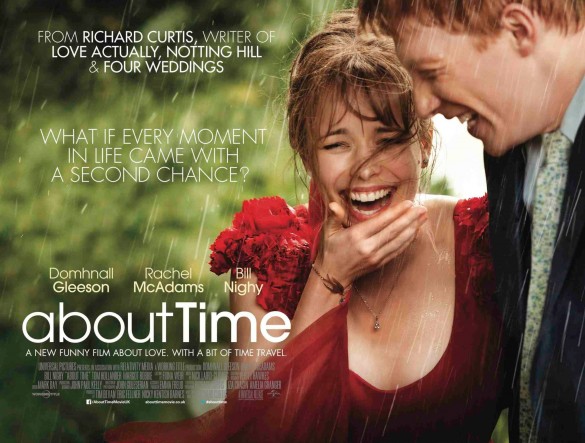
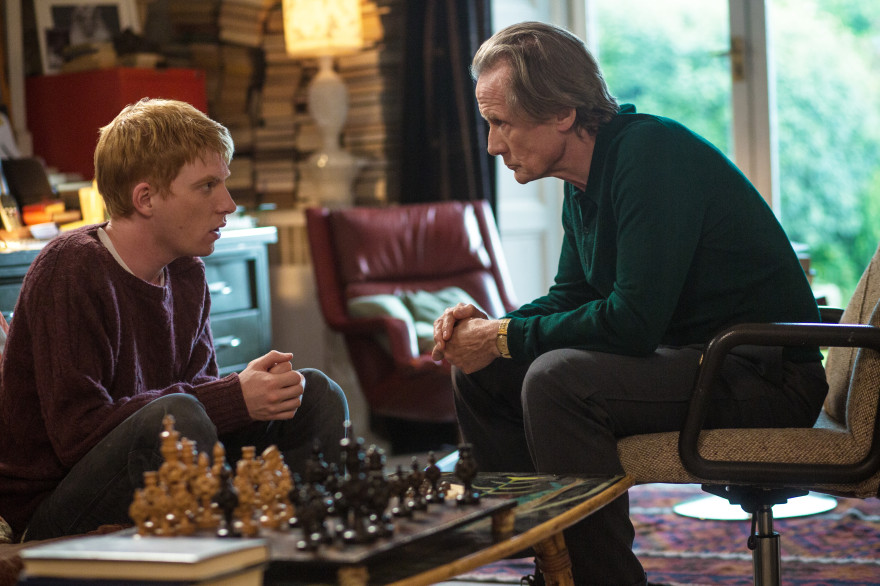
On his 21st birthday, Tim (Gleeson) is let into the big family secret by his dad (Nighy): that the men in the family can time travel.  Disbelieving at first, he follows his dad’s instructions and finds it’s all true; he travels back to a fateful New Year’s Eve party and  finds he’s able to change some of the things that did or didn’t happen.  Tim’s dad further explains the rules: they can’t travel back beyond their birth, they can’t travel forward in time, and they can only travel back to places and events that they can picture in their mind or can remember.

Tim initially uses this gift in order to rewrite awkward moments where he makes embarrassing mistakes, such as squirting a large amount of sun cream over sister Kit Kat’s friend Charlotte (Robbie).  Tim’s crush on Charlotte leads to his discovering that no matter how hard he tries, and no matter how many times he manipulates the past, he can’t make someone fall in love with him.  Which is just as well because when he meets Mary (McAdams) it’s love at first sight for both of them.  But when Tim makes a choice about returning to the night they met and does something different, he finds himself having to woo her all over again as that “something different” has meant they haven’t met (still with me?).

What follows is a series of events and situations requiring Tim’s intervention in the past, some to good effect, and one, involving Kit Kat (Wilson), that has a disastrous consequence requiring Tim to make a difficult reconsideration.  All the while, Tim and Mary’s relationship grows stronger, and their friends and families benefit from Tim’s gift.

About Time

At the heart of the movie is the relationship between Tim and his dad, a paternal romance that Curtis makes more of than the romance between Tim and Mary.  It’s uncomfortably sentimental and cloying at times, and Curtis only just manages to avoid it being completely off-putting, a testament to his skill as a writer, and the performances by Gleeson and Nighy, who portray the close bond the characters have with accomplished finesse.  If you like your romantic comedies with a little more bite or a little less mawkish, this isn’t the movie for you.  If, however, you don’t mind a couple of hours of breezy, effusive, bright-eyed and bushy-tailed romanticism, then this is definitely the movie to see.

Curtis directs capably if unspectacularly from his own script, and there’s a raft of great performances from the likes of Duncan (as Tim’s mum, acerbic but touching); Cordery as a slightly simple, less aggressive version of Four Weddings and a Funeral‘s Mad Old Man (as played by Kenneth Griffith); McGuire as the hapless Rory, Tim’s colleague; and the ever excellent Hollander as Harry, the scathing, egotistical playwright Tim lives with for a while.  As Tim’s first love, and potential moment of weakness once Tim and Mary are together, Robbie does well with a slightly underwritten character (actually more of a plot contrivance), and McAdams, here channelling the spirit of Andie MacDowell (and that’s not a bad thing), breathes life into a role that could have been relentlessly and annoyingly perky in the hands of some actresses.

But when all’s said and done the movie belongs to Gleeson and Nighy.  Gleeson, still probably best known for playing Bill Weasley in the Harry Potter movies, steps out from behind that particular shadow and gives a charming, instinctive performance that makes all the absurdities of Curtis’s script – and there are many – far more acceptable to an audience as a result; he’s credible in a way that draws in the viewer and makes Tim seem like a really good friend whose telling you this really good shaggy dog story.  And Nighy is just as excellent: diffident, amused (and amusing), relaxed, spontaneous, and a joy to behold.  He embraces the character’s foibles and makes virtues of them, grounding the movie also, and having a lot of fun at the same time.  It’s a performance made to look so easy you could be forgiven for thinking he wasn’t even trying.

The absurdities of the script can be overlooked because Curtis knows funny, and he uses the absurdities to punch up the humour rather than to drive the story forward.  That said, a couple of subplots help pad out the running time unnecessarily, and if Tim uses his gift three or four times too often, by the movie’s end he comes to a much delayed conclusion about the real benefits of time travel, and this offsets the repetition.  Curtis is a clever writer, a little under-appreciated for his movie work, but this is a clever movie, with a very clever cast, and a very clever central conceit.

Rating: 8/10 – ignore the naysayers, About Time is another quintessentially English movie from Richard Curtis that entertains from start to finish; blessed with a great cast and enough laugh-out-loud moments to shame a truckload of other comedies, this is a movie that radiates good will and is all the better for it.

Share this:

  • Click to share on X (Opens in new window) X
  • Click to share on Facebook (Opens in new window) Facebook
  • More
  • Click to print (Opens in new window) Print
  • Click to email a link to a friend (Opens in new window) Email
Like Loading...

Blog Stats

  • 486,528 hits

Recent Posts

  • 10 Reasons to Remember Bibi Andersson (1935-2019)
  • Fantasia (1940)
  • Dances With Wolves (1990) – The Special Edition
  • Kiss of the Spider Woman (1985)
  • The Three Musketeers (1973)

Top Posts & Pages

  • Lost for Life (2013) - Another Look
    Lost for Life (2013) - Another Look
  • Lost for Life (2013)
    Lost for Life (2013)
  • About
    About
  • Mr. Topaze (1961)
    Mr. Topaze (1961)
  • Winter's Tale (2014)
    Winter's Tale (2014)
  • Billy Lynn's Long Halftime Walk (2016)
    Billy Lynn's Long Halftime Walk (2016)
  • The Hitman's Bodyguard (2017)
    The Hitman's Bodyguard (2017)
  • Shock and Awe (2017)
    Shock and Awe (2017)
  • 5 Famous Movie Roles That Nearly Went to Someone Else
    5 Famous Movie Roles That Nearly Went to Someone Else
  • The Layover (2017)
    The Layover (2017)
Follow thedullwoodexperiment on WordPress.com

Blogs I Follow

  • Rubbish Talk
  • Film 4 Fan
  • Fast Film Reviews
  • The Film Blog
  • All Things Movies UK
  • Interpreting the Stars
  • Let's Go To The Movies
  • Movie Reviews 101
  • TMI News
  • Dan the Man's Movie Reviews
  • Film History
  • Jordan and Eddie (The Movie Guys)

Archives

  • April 2019 (13)
  • March 2019 (28)
  • February 2019 (28)
  • January 2019 (32)
  • December 2018 (28)
  • November 2018 (30)
  • October 2018 (29)
  • September 2018 (29)
  • August 2018 (29)
  • July 2018 (30)
  • June 2018 (28)
  • May 2018 (24)
  • April 2018 (21)
  • March 2018 (31)
  • February 2018 (25)
  • January 2018 (30)
  • December 2017 (30)
  • November 2017 (27)
  • October 2017 (27)
  • September 2017 (26)
  • August 2017 (32)
  • July 2017 (32)
  • June 2017 (30)
  • May 2017 (29)
  • April 2017 (29)
  • March 2017 (30)
  • February 2017 (27)
  • January 2017 (32)
  • December 2016 (30)
  • November 2016 (28)
  • October 2016 (30)
  • September 2016 (27)
  • August 2016 (30)
  • July 2016 (30)
  • June 2016 (31)
  • May 2016 (34)
  • April 2016 (30)
  • March 2016 (30)
  • February 2016 (28)
  • January 2016 (35)
  • December 2015 (34)
  • November 2015 (31)
  • October 2015 (31)
  • September 2015 (34)
  • August 2015 (31)
  • July 2015 (33)
  • June 2015 (12)
  • May 2015 (31)
  • April 2015 (32)
  • March 2015 (30)
  • February 2015 (37)
  • January 2015 (39)
  • December 2014 (34)
  • November 2014 (34)
  • October 2014 (36)
  • September 2014 (25)
  • August 2014 (29)
  • July 2014 (29)
  • June 2014 (28)
  • May 2014 (23)
  • April 2014 (21)
  • March 2014 (42)
  • February 2014 (38)
  • January 2014 (29)
  • December 2013 (28)
  • November 2013 (34)
  • October 2013 (4)

Create a free website or blog at WordPress.com.

Rubbish Talk

Film 4 Fan

A Movie Blog

Fast Film Reviews

The Film Blog

The official blog of everything in film

All Things Movies UK

Movie Reviews and Original Articles

Interpreting the Stars

Dave Examines Movies

Let's Go To The Movies

Film and Theatre Lover!

Movie Reviews 101

Daily Movie Reviews

TMI News

Latest weather, crime and breaking news

Dan the Man's Movie Reviews

All my aimless thoughts, ideas, and ramblings, all packed into one site!

Film History

Telling the story of film

Jordan and Eddie (The Movie Guys)

Movie Reviews & Ramblings from an Australian Based Film Fan

Privacy & Cookies: This site uses cookies. By continuing to use this website, you agree to their use.
To find out more, including how to control cookies, see here: Cookie Policy
  • Subscribe Subscribed
    • thedullwoodexperiment
    • Join 481 other subscribers
    • Already have a WordPress.com account? Log in now.
    • thedullwoodexperiment
    • Subscribe Subscribed
    • Sign up
    • Log in
    • Report this content
    • View site in Reader
    • Manage subscriptions
    • Collapse this bar
 

Loading Comments...
 

    %d