• 10 Reasons to Remember…
  • A Brief Word About…
  • About
  • For One Week Only
  • Happy Birthday
  • Monthly Roundup
  • Old-Time Crime
  • Other Posts
  • Poster of the Week
  • Question of the Week
  • Reviews
  • Trailers

thedullwoodexperiment

~ Viewing movies in a different light

thedullwoodexperiment

Tag Archives: Martin Scorsese

Silence (2016)

02 Monday Jan 2017

Posted by dullwood68 in Movies

≈ 4 Comments

Tags

Adam Driver, Andrew Garfield, Buddhism, Christianity, Drama, Historical drama, Issei Ogata, Japan, Liam Neeson, Literary adaptation, Martin Scorsese, Religion, Remake, Review, Shûsaku Endô, Tadanobu Asano

silence-poster

D: Martin Scorsese / 161m

Cast: Andrew Garfield, Adam Driver, Tadanobu Asano, Issei Ogata, Liam Neeson, Shin’ya Tsukamoto, Yoshi Oiza, Yôsuke Kubozuka, Ciarán Hinds

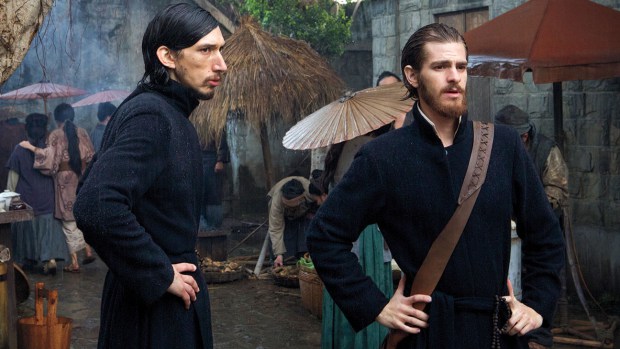
Seventeenth century Portugal: news has reached the Jesuit ministry that a missionary to Japan, Father Ferreira (Neeson), has renounced his faith and embraced not only the Japanese way of life, but their Buddhist teachings as well. Two of his pupils, Father Rodrigues (Garfield) and Father Garrpe (Driver), believing the news to be unsubstantiated rumour, are tasked with travelling to Japan and learning for themselves if the news is true. Needing a guide to help keep them safe once in Japan – the Japanese are persecuting anyone who promotes or follows the Christian faith – the two priests enlist the aid of Kichijiro (Kubozuka), a man whose contact with Christianity in his homeland has left him with a variety of personal demons.

Once in Japan, Rodrigues and Garupe soon discover how dangerous it is to be associated with Christianity. They witness the torture and murder of several villagers who have taken up the Christian faith, and are kept in hiding so that they don’t fall victim as well. They decide it will be safer for both of them if they split up, and make it easier to continue their search for Father Ferreira. But Rodrigues is soon captured. He’s assigned an interpreter (Asano), and is kept under the watchful eye of the local Inquisitor, Inoue-sama (Ogata). It soon transpires that Inoue wants Rodrigues to apostatize (renounce his belief in God) by stepping on an image of Christ. By this token, any Japanese who have been practicing Christianity will be allowed to live, and so will Rodrigues. Despite witnessing more atrocities, Rodrigues holds firm in his belief, even though his prayers remain frustratingly unanswered.
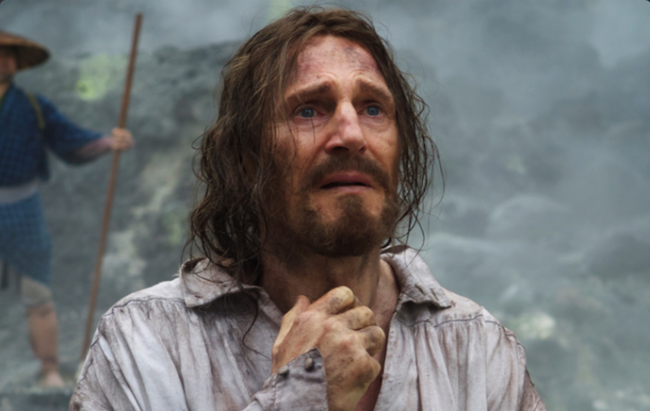
liam-neeson-explains-frail-appearance-says-he-lost-20-pounds-for-scorseses-silence

Rodrigues’ faith is tested time and again, and Inoue continually informs him of the obstacles that Christianity will always face in becoming established in Japan. Despair begins to set in when Garrpe is also found and his fate determined by an act of valour. For Rodrigues it’s the first of several turning points, all designed to bring him to the point of apostatizing, but when he finally comes face to face with Father Ferreira, instead of the encounter reaffirming his faith and his weakening determination to stand firm against the violence perpetrated by his captors, the priest finds himself even more stranded, both in terms of his faith and his emotions. With Inoue’s tactics beginning to finally wear him down, Rodrigues finds himself having to decide which is more important: his life and the lives of others, or his faith.

An adaptation of the novel by Shûsaku Endô (and previously made in 1971 by Masahiro Shinoda), Silence has been a project that Martin Scorsese has been looking to make for around thirty years. Passion projects don’t always turn out so well for their makers, their closeness to the material producing a kind of tunnel vision that filters out any flaws, but with this, Scorsese has made a riveting movie about faith, religious idealism, and agonising self-doubt. It’s a measured, deliberately paced movie that is unlikely to satisfy everyone who sees it, but if you give yourself over to it, then it’s a movie that will reward you over and over again.

It opens with a blank screen and a cacophony of natural sounds including insects that builds to a crescendo before we see the title displayed briefly, and then the picture cuts to a medium shot of two severed heads resting on a piece of wood. It’s an arresting opening, and what follows isn’t for the faint hearted as Christian converts are tortured and left to die, with Neeson’s anguished priest looking on. This is the backdrop the movie keeps returning to, the resolute dispassion with which the Japanese treat all Christians in their country unless they apostatize themselves. And this is the very cauldron of hate that Fathers Rodrigues and Garrpe throw themselves into thanks to their naivete and, it must be acknowledged, no small degree of religious arrogance. And it’s not long before they, and the viewer, realise that they’re out of their depth.
SILENCE

A major part of the narrative is taken up with the argument that Christianity has no place in the Japan of the seventeenth century, that the country’s Buddhist principles, although sharing many similar facets and ideas with the Christian faith, will never be superseded. Scorsese and co-writer Jay Cocks make much of this battle for hearts and minds, and the script is often eloquent on the subject, highlighting not the differences between Christianity and Buddhism, but their similarities. And the Japanese argument for religious isolationism has its merits when stood up against the arrogant assumption that the Japanese need Christianity to make their lives better. But while all this makes the argument sound quite a simple one, Scorsese and Cocks are also aware that faith – which can apparently move mountains – can also be stubbornly resistant to notions of change. Thus, Rodrigues endures physical torture and mental anguish, and has to be broken psychologically by Inoue (aided by the interpreter’s cruel barbs).

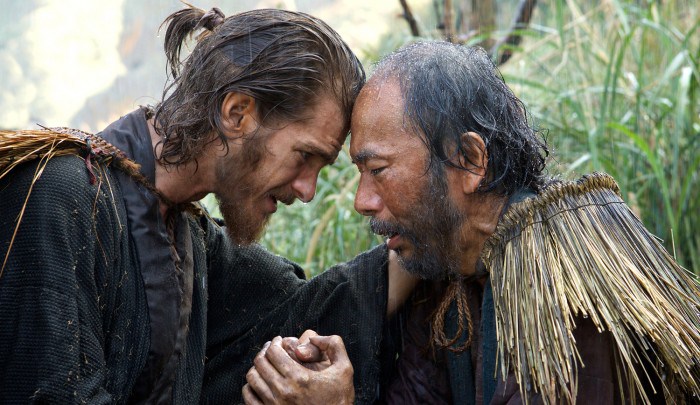
It’s always a difficult matter showing religious faith on screen without the characters seeming like zealots. Thanks to Scorsese’s meticulous direction, and Garfield’s magnificent central performance, Silence isn’t burdened by any notions of extreme religious belief, and nor is it hampered by too much exposition. Rodrigues’ and Garrpe’s mission is, on the face of it, a simple one, but as strangers in a strange land they underestimate their ability to make a difference. All they have is their belief in God, and it strengthens them. But when Rodrigues begins to doubt that God is even listening to his prayers, then it’s only a matter of time before that belief will be tested, and how strong that belief really is. Scorsese keeps the viewer on the edge of their seat, piling on the pressure, but in such a way that you don’t know which way Rodrigues will fall: back into renewed faith, or forward into religious exclusion.
silence-2016-scorsese

With the religious and cultural backdrops firmly established throughout, Scorsese refrains from adding the political upheaval Japan was experiencing at the time, and which played such a heavy part in the country’s rejection of the Christian faith. It’s a wise move, as the narrative isn’t about politics per se, but Inoue makes an important point at one stage, likening Spain, Portugal, Holland and England to the four courtesans of a king who wisely sends them away to guarantee himself a quiet life. The question is, why should Japan open its borders to other countries and see its lifestyle and traditions trampled upon? Again, Scorsese keeps the material focused on the battle for the hearts and minds of the Japanese people, and the audacity of the Jesuits for believing they could, and should, undermine a foreign culture.

Away from ideas of faith and religious fundamentalism, Silence is also a quietly beautiful movie to watch, with almost painting-like vistas and compositions delicately brought to the screen by the extraordinary combination of Rodrigo Pietro’s exquisite cinematography, Thelma Schoonmaker’s matchless editing skills, and Dante Ferretti’s outstanding production and costume designs. This is organic movie making at its best, a never-ending feast for the senses that’s rounded off by a lilting, elegant score courtesy of Kathryn and Kim Allen Kluge. And then there’s the performances. Garfield – maybe not everyone’s first choice for the lead role – impresses at every step, giving a passionate, despairing portrayal of a man facing a seemingly impossible choice: renounce God (and himself), or be complicit in the deaths of potentially thousands of people. Garfield is growing in stature as an actor, and with this and Hacksaw Ridge (2016) under his belt, is heading for the A-list at a rate of knots. He’s ably supported by Driver (though he doesn’t have a lot of screen time), a slyly vindictive turn from Asano, and Ogata’s distinctive, hypnotic, somewhat casual portrayal of a man who uses physical and psychological torture to ensure his country’s religious status quo. As for Neeson, his presence is necessarily limited, but when he is on screen, his appearance serves as a reminder that, outside out of certain recent movies he’s appeared in, he’s more than capable of giving a nuanced and intuitive performance.

As mentioned above, and at 161 minutes, Silence and its subject matter will no doubt put off some potential viewers, and it’s likely that many who do see it will not be swayed by its content, or Scorsese’s approach to the material. But this really is the work of a director operating at a very high level indeed, and his confidence and expertise is there in every scene and every shot. It’s a rare movie that examines religious morality and personal faith with such authority and poise, but Scorsese has pulled it off, and with no small measure of style.

Rating: 9/10 – superb on just about every level (only Garfield’s wandering accent is any cause for annoyance or concern), Silence is a demanding yet rewarding watch made by a director whose engagement with the material is masterful; a devastating movie about ideas that is intelligent and precise in its meanings, this is a very (very) early contender for Movie of the Year.

Share this:

  • Share on X (Opens in new window) X
  • Share on Facebook (Opens in new window) Facebook
  • More
  • Print (Opens in new window) Print
  • Email a link to a friend (Opens in new window) Email
Like Loading...

10 Quotes by 10 Movie Directors (oh, and one more by Danny Boyle)

21 Wednesday Oct 2015

Posted by dullwood68 in Movies

≈ Leave a comment

Tags

Clint Eastwood, Danny Boyle, David Fincher, David Lean, Directors, Federico Fellini, Martin Scorsese, Milos Forman, Movies, Paul Thomas Anderson, Quotes, Steven Soderbergh, William Wyler, Woody Allen

Yesterday was Danny Boyle’s birthday. The director is 59 years old, and over the course of his career has been quoted on a variety of matters to do with movie making, both in general and specifically. He once said: “I learned that what I’m better at is making stuff lower down the radar. Actually, ideally not on the radar at all.” It’s a great quote and one that shows the man doesn’t take himself too seriously. Here then are ten more great quotes by ten more directors, all of whom don’t take themselves – or the industry – too seriously either.

David Lean – “I wouldn’t take the advice of a lot of so-called critics on how to shoot a close-up of a teapot.”

David Lean

William Wyler – “It’s a miserable life in Hollywood. You’re up at five or six o’clock in the morning to be ready to start shooting at nine. The working hours aren’t arranged to suit the artists and the directors; they’re for the convenience of the technicians. If you go to a party at night, you’ll never find anyone there who’s shooting a picture; they’re all home in bed.”

David Fincher – “People always ask why I don’t make independent movies. I do make independent movies – I just make them at Sony and Paramount.”

Clint Eastwood – “When I was doing The Bridges of Madison County (1995), I said to myself, “This romantic stuff is really tough. I can’t wait to get back to shooting and killing.”

Clint Eastwood

Milos Forman – “It all begins in the script. If what’s happening is interesting, it doesn’t matter where you shoot from, people will be interested to watch. If you write something boring, you can film from mosquitoes’ underpants and it will still be boring.”

Steven Soderbergh – (on his retirement) “Cinema, as I define it and as something that inspired me, is under assault by the studios and, from what I can tell, with the full support of the audience.”

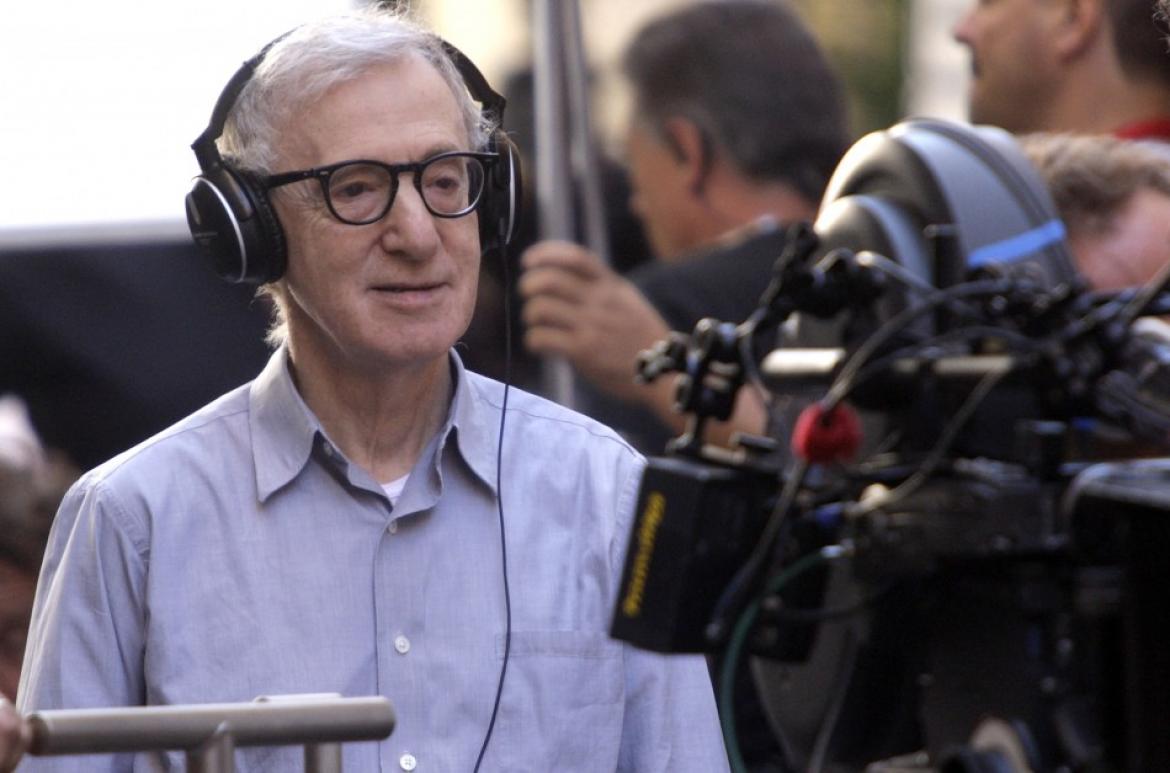
Woody Allen – “[The French] think I’m an intellectual because I wear these glasses, and they think I’m an artist because my films lose money.”

Woody Allen2

Federico Fellini – “Even if I set out to make a film about a fillet of sole, it would be about me.”

Martin Scorsese – “I’m not a Hollywood director. I’m an in-spite-of-Hollywood director.”

Paul Thomas Anderson – “Well I’d really love to work with Robert De Niro, because he’s still the most talented actor out there. Maybe he makes some bad choices, which can be frustrating. On the one hand, you want to say, ‘What the fuck’s going on?’ On the other, you can’t get mad at him for wanting to work, because most actors would be murderers if they weren’t working.”

Paul Thomas Anderson

Share this:

  • Share on X (Opens in new window) X
  • Share on Facebook (Opens in new window) Facebook
  • More
  • Print (Opens in new window) Print
  • Email a link to a friend (Opens in new window) Email
Like Loading...

Seduced and Abandoned (2013)

04 Thursday Dec 2014

Posted by dullwood68 in Movies

≈ Leave a comment

Tags

Alec Baldwin, Bernardo Bertolucci, Cannes Film Festival, Documentary, Financing, Francis Ford Coppola, Funding, James Toback, Last Tango in Tikrit, Martin Scorsese, Review, Ryan Gosling

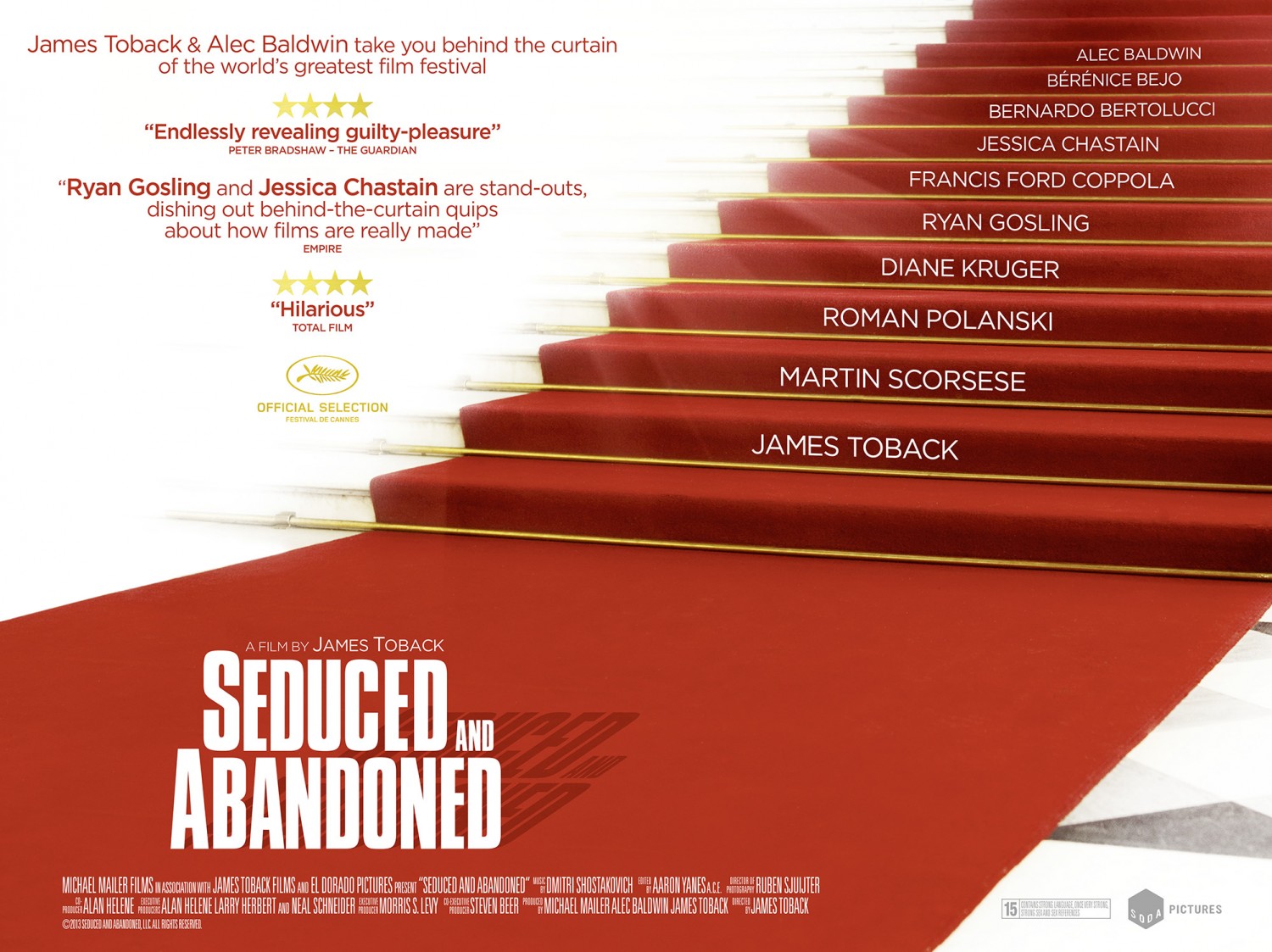
Seduced and Abandoned

D: James Toback / 98m

Alec Baldwin, James Toback, Bernardo Bertolucci, Martin Scorsese, Francis Ford Coppola, Roman Polanski, Bérénice Bejo, Diane Kruger, Ryan Gosling, Jessica Chastain, Neve Campbell, James Caan, Mark Damon, Avi Lerner, Ashok Amritraj

Deciding to make a movie together, director James Toback and actor Alec Baldwin first work out the kind of movie they want to make – a Last Tango in Paris-style project set in Iraq – and who they want to co-star with Baldwin, namely, Neve Campbell. Then, they take their idea to the 2012 Cannes Film Festival in the hope of securing the financing needed to get the movie made. Along the way they speak to various people about the difficulties of getting movies made, the challenges in persuading potential investors to part with their money, and how easier/harder it was back in the Seventies to get a project off the ground.

The search for investors leads to meditations on money, fame, acting, glamour, even death, as Toback and Baldwin look at the wider aspects of movie making, and the constraints that stop some movies from being made as their makers intended. The movie also looks at the industry from both a creative and a financial standpoint, and features interviews with the likes of Martin Scorsese and Francis Ford Coppola, and their own experiences of funding and making movies.

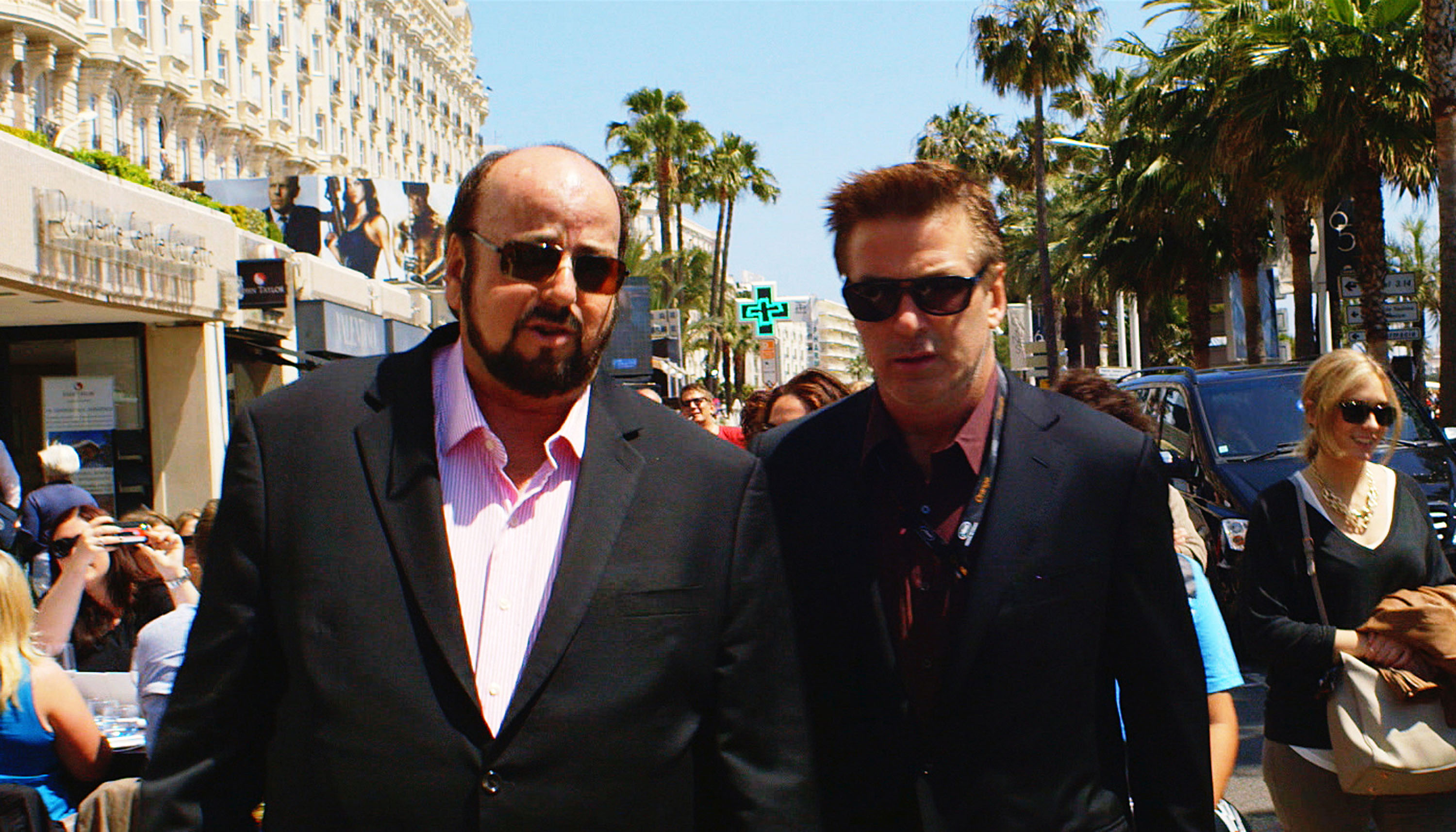
Seduced and Abandoned - scene

Opening with a quote from Orson Welles – “I look back on my life and it’s 95% running around trying to raise money to make movies and 5% actually making them. It’s no way to live.” – Seduced and Abandoned is an often hilarious, witty and insightful look at contemporary movie making, made by a director whose own career has seen him struggle to get movies made, and an actor whose career resurgence since The Aviator (2004) has propelled him to the lower reaches of the ‘A’ List. Together, they take the viewer on a tour of the highs and lows of movie making, and even when they’re coming up against closed door after closed door, still manage to stay positive.

In fact, it’s sometimes difficult to discern if this apparent by-product documentary is the real movie or not, or just some idea they had on the back of trying to make their version of what Baldwin refers to as Last Tango in Tikrit. Although the pair are seen in several meetings pitching their ideas for the movie, they never seem entirely convincing that this is a legitimate project that they’re trying to get off the ground; they don’t even have a script yet, nor anything approaching a synopsis. (Asked point blank if she’d appear in the movie, Diane Kruger blanches and then falls back on the tried and trusted, “If I can see a script I’ll consider it” answer.) Matters aren’t helped by Baldwin’s continual references to the sex scenes the movie would include, making it seem like some weird, sexual fantasy of his own that he’s trying to get off the ground.

However unlikely the premise, though, we all know there are movies out there that have been made out of worse ideas – Teenage Mutant Ninja Turtles (2014), anyone? – but the reactions of veteran producers/distributors Avi Lerner and Ashok Amritraj provide a short, predatory lesson in how to get a movie made: always bear in mind the profits. Toback is told in no uncertain terms that with Campbell aboard he won’t get the $15-$20m he wants to make the movie; instead he’ll only get $4-$5m. Only in those circumstances will producers or investors feel comfortable that they’ll get their money back. It’s a harsh reality, and one that shouldn’t come as a surprise, but it’s so casually discussed that it’s like a slap in the face.

The case for Last Tango in Tikrit being entirely a fabrication is given further credence by Toback’s almost slavish reactions to suggestions for changes to the plot and the story, and the casting. He agrees to almost all of them, seemingly eager – maybe too eager – to please his potential investors in order to secure the financing he needs. In moments such as these, Toback seems uncomfortably close to abandoning the whole concept of the movie, just as long as he gets the money to make a movie, if not the one he’s there to try and get made. (It’s a shame no one asks him to replace Baldwin with a bigger name actor; it would have been interesting to see his reaction to that.)

With Toback and Baldwin being rebuffed at every turn, and to ensure that the movie runs for more than half an hour, there are plenty of interviews with industry notables such as Martin Scorsese, who recounts some of the issues that came up when he was making Mean Streets (1973); Bernardo Bertolucci, who talks about working with Brando on Last Tango in Paris (1972); Francis Ford Coppola, who conveys his dismay at making two Godfather movies and then not being able to get backing for a movie of his own; and Ryan Gosling, whose reaction to an airplane emergency isn’t quite what you’d expect.

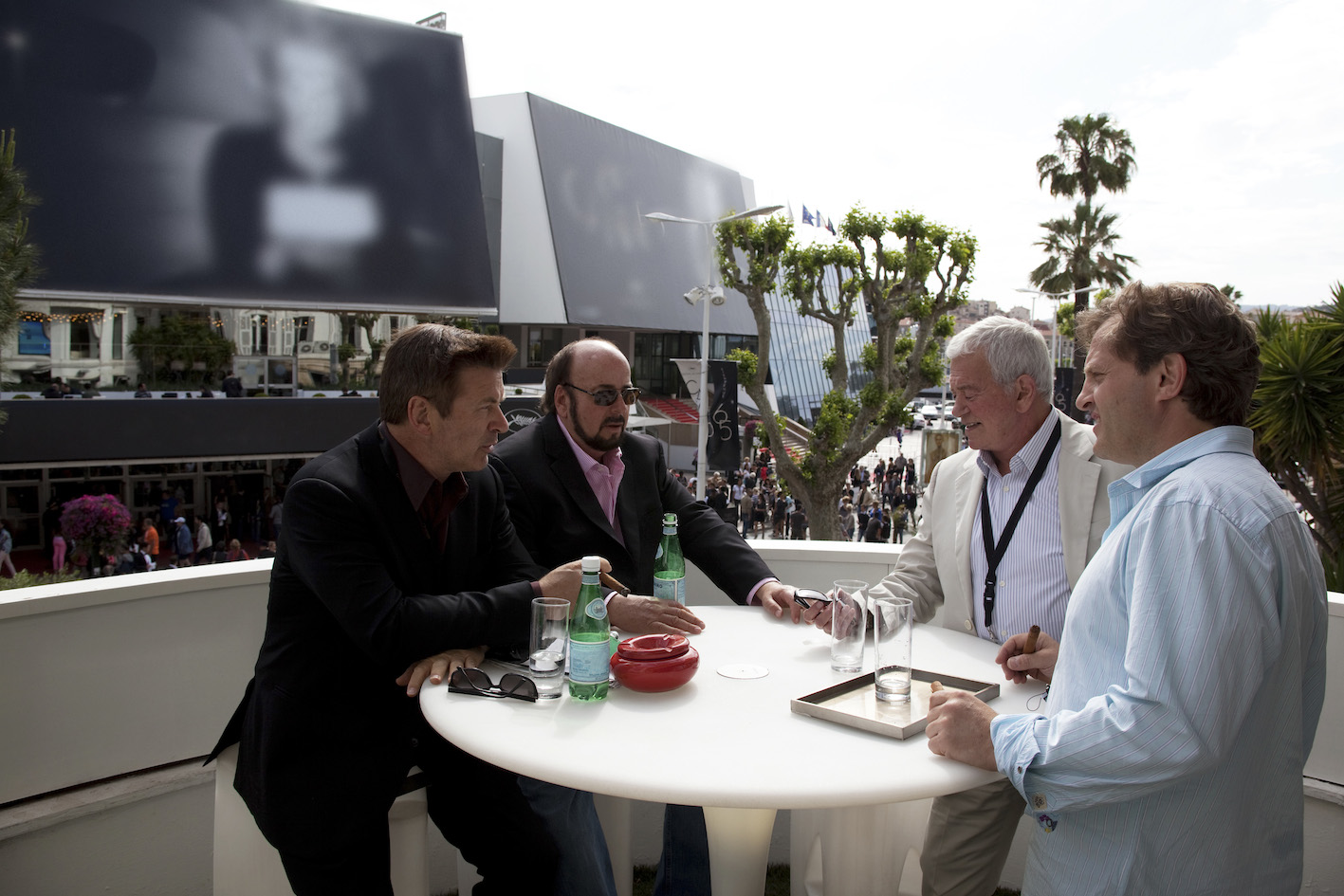
Seduced and Abandoned - scene2

The movie’s sly wit and acerbic humour help to keep things interesting, and it’s a good thing as Seduced and Abandoned is a documentary that will remain largely of interest to movie buffs and/or anyone trying to get their own project off the ground. The movie does assume a degree of awareness of what goes on at Cannes, and there’s also an assumption that viewers will be up to speed on the way in which movies are financed, but the lay person may well struggle, or find it less than fascinating. And Toback doesn’t always maintain a linear focus, letting the movie wander from one meeting to another but without any clear context (and reinforcing the idea that the movie is the movie, whatever Toback and Baldwin might say).

Rating: 7/10 – with its two “leads” obviously having a whale of a time, Seduced and Abandoned comes across more as a bit of a jolly boys’ outing to Cannes rather than a properly realised documentary; as a result it lacks focus and doesn’t entirely convince, instead making it seem like a huge in-joke that Toback and Baldwin have concocted for their own amusement.

Share this:

  • Share on X (Opens in new window) X
  • Share on Facebook (Opens in new window) Facebook
  • More
  • Print (Opens in new window) Print
  • Email a link to a friend (Opens in new window) Email
Like Loading...

The Wolf of Wall Street (2013)

02 Sunday Feb 2014

Posted by dullwood68 in Movies

≈ Leave a comment

Tags

Drama, FBI, Insider trading, Investment fraud, Jean Dujardin, Joanna Lumley, Jonah Hill, Jordan Belfort, Leonardo DiCaprio, Margot Robbie, Martin Scorsese, Matthew McConaughey, Penny stocks, Review, Stratton Oakmont, True story

Wolf of Wall Street, The

D: Martin Scorsese / 180m

Cast: Leonardo DiCaprio, Jonah Hill, Margot Robbie, Kyle Chandler, Matthew McConaughey, Rob Reiner, Jon Bernthal, Jon Favreau, Jean Dujardin, Joanna Lumley, Cristin Milioti, Shea Whigham, P.J. Byrne, Kenneth Choi, Brian Sacca, Henry Zebrowski, Ethan Suplee

Already the basis for the movie Boiler Room (2000), and adapted from the life and experiences of Jordan Belfort (DiCaprio), an investment broker who started his career on Wall Street in the late Eighties, and went on to become the head of his own company, selling penny stocks to gullible investors before moving into the big leagues, The Wolf of Wall Street is a modern day cautionary tale about greed, corruption and the pursuit of money.

Having become a licensed stock broker, Belfort begins work on the worst day possible, 19 October 1987, Black Monday. With his company ruined by the fallout, Belfort is forced to start again at the bottom, working for a small investment company that sells penny shares to small-time investors. Seeing the potential in a part of the investment industry that offers a fifty per cent commission on any sales, Belfort starts up his own investment company, Stratton Oakmont. Taking some of the staff from the investment company, he shows them how to persuade reluctant investors into parting with their money, and more importantly, ensuring they never take their money out again, thereby keeping up the exorbitant profits Belfort and his staff are raking in. He meets Donnie Azoff (Hill) who comes to work for him; together they build up the company until they’re at a point where they can compete with some of the bigger Wall Street firms. Their selling tactics and methods bring them to the attention of the FBI’s Agent Denham (Chandler) who begins an investigation into their fraudulent business practices. In the meantime, Belfort’s first marriage collapses; he becomes addicted to drugs, booze and sex; the FBI’s investigation prompts him to spirit his money away to Switzerland; he remarries, this time to Naomi (Robbie), and has two children with her; risks his life getting to Switzerland when it looks as if he’ll lose all his money; sees one of his friends, Brad (Bernthal), go to jail thanks to Azoff’s stupidity; and excess dominates his life completely. When a deal to take a shoe company public on the stock market (and illegally arrange to be the major stockholder) begins to unravel, and his marriage falls apart, Belfort finds himself helping the FBI incriminate his colleagues in order to avoid a long prison sentence.

With occasional breaks to camera, Belfort relates his life of excess with a relish that reflects both his character and, you suspect, a love for the times that hasn’t quite dissipated. Starting as a typically naive young man with bold aspirations, Belfort appears easily swayed when Azoff coaxes him into taking drugs, and he seems equally unconcerned by the ease with which he can swindle unsuspecting investors. While this aspect isn’t properly addressed, it’s not so much where Belfort has come from as what he does once he’s there that the movie is concerned with. The Wolf of Wall Street focuses on the excess of both the characters and the times they were active, a period in recent history (the Nineties) where affluence by any means was a mantra to live by, and if you weren’t rich then you were a nobody.

Wolf of Wall Street, The - scene

Working with his usual technical mastery, Scorsese recreates that period with remarkable skill and the level of incidental detail is impressive. The look of the movie is always arresting, and there’s never a moment when the camera doesn’t pick out an impressive detail or something visually interesting. Scorsese also knows when to keep the camera moving, or when to choose an odd camera angle to highlight the mood or emotion of a scene. There are moments when it’s like watching a cinematic masterclass, so sure is Scorsese of his filmmaking prowess and intuition.

Arresting as it is visually, The Wolf of Wall Street stumbles a bit when it comes to the structure of the movie and its content. There are too many extended pep talks that Belfort gives to his staff, too many scenes of drug-fuelled debauchery (we get it – that was the lifestyle), and too many occasions where the core of a scene is repeated but with some variation (Belfort reassuring first wife Teresa (Milioti) that everything will be okay; Azoff and Belfort congratulating themselves on the amount of money they’ve made).  There are moments that lead nowhere: Belfort’s butler saying he’s seen Azoff at a gay club; sudden changes in tone: Belfort attacks Naomi when she threatens to leave him and take their children with her; and awkward moments that should be more meaningful: Belfort confessing his addictions to Naomi’s Aunt Emma (Lumley).

Terence Winter’s script, adapted from Belfort’s own memoir, does contain some good scenes, hits a patchy stretch around the two hour mark, and relegates the FBI investigation to a handful of scenes where Denham stares at info-laden whiteboards.  Thankfully there are more than enough individual scenes that work – and work brilliantly – to offset the missteps.  There’s Belfort’s lunch with first boss Mark Hanna (McConaughey), a mini-classic where Hanna explains the attitude needed to succeed as a stockbroker; McConaughey almost steals the movie with that one scene alone.  There’s the scene where Azoff meets Belfort and quits his job upon seeing proof of the amount of Belfort’s earnings; Belfort waking up at the end of a flight to Switzerland and having Azoff explain why he’s restrained in his seat; Belfort’s veiled attempt to bribe Denham during a meeting on Belfort’s yacht – and Denham’s amused response; and best of all, Belfort’s attempts to leave a country club after succumbing to the effects of several out-of-date Quaaludes – it’s the funniest sequence of 2013 and shows that DiCaprio has a surprising aptitude for physical comedy.

As Belfort, DiCaprio puts in one of his best performances, imbuing the man with a vain pride that proves his downfall.  It’s no one-dimensional characterisation, and DiCaprio nails the insecurities and the insanity of Belfort’s lifestyle: regarding money as “fun vouchers”; thinking he can seduce Aunt Emma; the aforementioned trip to Switzerland that results in the sinking of his yacht.  It’s a raging, tornado-like performance, with DiCaprio towering above his co-stars, eclipsing everyone around him.  As Belfort’s loyal “partner in excess” Azoff, Hill sports prominent false teeth and exudes charmless unreliability from every pore.  Robbie, fresh from playing the girl who got away in Richard Curtis’ About Time, is superb as Naomi, a simple girl from New Jersey who falls for Belfort but resists the darker aspects of the dream life he builds for them.  In minor supporting roles, Dujardin – as a slimy Swiss banker – and Lumley stand out from the crowd, and in the role of Belfort’s father, Reiner provides a calm at the eye of the storm that helps offset the wanton debauchery.

Ultimately, the success of The Wolf of Wall Street depends on whether or not the rise and inevitable downfall of a self-confessed drug addict and convicted fraudster is worth three hours of anyone’s time.  The movie is entertaining and convincingly portrays the hedonistic, shallow lifestyle Belfort and his cronies enjoyed, and it’s shot through with humorous moments, and yet the movie appears to revel in the hedonism itself.  With a cameo from the real Belfort, as well as only a passing nod towards the thousands of investors who were defrauded, The Wolf of Wall Street could be seen to be saying that Belfort et al were just greedy and selfish, and not so deserving of our approbation.  The operative words here, though, are “could be”.  Without those occasional darker elements, our sympathy for Belfort would be complete.

Rating: 7/10 – a better collaboration for Scorsese and DiCaprio than the lamentable Shutter Island (2010), The Wolf of Wall Street is striking, beautifully filmed and too eager to have its coke and snort it; less a character study than a valediction of the times, and saved by a handful of smart, knowing performances.

Share this:

  • Share on X (Opens in new window) X
  • Share on Facebook (Opens in new window) Facebook
  • More
  • Print (Opens in new window) Print
  • Email a link to a friend (Opens in new window) Email
Like Loading...

Blog Stats

  • 495,301 hits

Recent Posts

  • 10 Reasons to Remember Bibi Andersson (1935-2019)
  • Fantasia (1940)
  • Dances With Wolves (1990) – The Special Edition
  • Kiss of the Spider Woman (1985)
  • The Three Musketeers (1973)

Top Posts & Pages

  • Stephanie (2017)
    Stephanie (2017)
  • Izulu lamí (2008)
    Izulu lamí (2008)
  • The White Orchid (2018)
    The White Orchid (2018)
  • Cardboard Boxer (2016)
    Cardboard Boxer (2016)
  • Old-Time Crime
    Old-Time Crime
  • Happy Birthday - Winona Ryder
    Happy Birthday - Winona Ryder
  • Unbroken (2014)
    Unbroken (2014)
  • Concussion (2015)
    Concussion (2015)
  • Poster(s) of the Week - A Landscape Collection
    Poster(s) of the Week - A Landscape Collection
  • A Brief Word About Cineworld Unlimited
    A Brief Word About Cineworld Unlimited
Follow thedullwoodexperiment on WordPress.com

Blogs I Follow

  • Rubbish Talk
  • Film 4 Fan
  • Fast Film Reviews
  • The Film Blog
  • All Things Movies UK
  • Interpreting the Stars
  • Let's Go To The Movies
  • Movie Reviews 101
  • TMI News
  • Dan the Man's Movie Reviews
  • Film History
  • Jordan and Eddie (The Movie Guys)

Archives

  • April 2019 (13)
  • March 2019 (28)
  • February 2019 (28)
  • January 2019 (32)
  • December 2018 (28)
  • November 2018 (30)
  • October 2018 (29)
  • September 2018 (29)
  • August 2018 (29)
  • July 2018 (30)
  • June 2018 (28)
  • May 2018 (24)
  • April 2018 (21)
  • March 2018 (31)
  • February 2018 (25)
  • January 2018 (30)
  • December 2017 (30)
  • November 2017 (27)
  • October 2017 (27)
  • September 2017 (26)
  • August 2017 (32)
  • July 2017 (32)
  • June 2017 (30)
  • May 2017 (29)
  • April 2017 (29)
  • March 2017 (30)
  • February 2017 (27)
  • January 2017 (32)
  • December 2016 (30)
  • November 2016 (28)
  • October 2016 (30)
  • September 2016 (27)
  • August 2016 (30)
  • July 2016 (30)
  • June 2016 (31)
  • May 2016 (34)
  • April 2016 (30)
  • March 2016 (30)
  • February 2016 (28)
  • January 2016 (35)
  • December 2015 (34)
  • November 2015 (31)
  • October 2015 (31)
  • September 2015 (34)
  • August 2015 (31)
  • July 2015 (33)
  • June 2015 (12)
  • May 2015 (31)
  • April 2015 (32)
  • March 2015 (30)
  • February 2015 (37)
  • January 2015 (39)
  • December 2014 (34)
  • November 2014 (34)
  • October 2014 (36)
  • September 2014 (25)
  • August 2014 (29)
  • July 2014 (29)
  • June 2014 (28)
  • May 2014 (23)
  • April 2014 (21)
  • March 2014 (42)
  • February 2014 (38)
  • January 2014 (29)
  • December 2013 (28)
  • November 2013 (34)
  • October 2013 (4)

Create a free website or blog at WordPress.com.

Rubbish Talk

Film 4 Fan

A Movie Blog

Fast Film Reviews

The Film Blog

The official blog of everything in film

All Things Movies UK

Movie Reviews and Original Articles

Interpreting the Stars

Dave Examines Movies

Let's Go To The Movies

Film and Theatre Lover!

Movie Reviews 101

Daily Movie Reviews

TMI News

Latest weather, crime and breaking news

Dan the Man's Movie Reviews

All my aimless thoughts, ideas, and ramblings, all packed into one site!

Film History

Telling the story of film

Jordan and Eddie (The Movie Guys)

Movie Reviews & Ramblings from an Australian Based Film Fan

Privacy & Cookies: This site uses cookies. By continuing to use this website, you agree to their use.
To find out more, including how to control cookies, see here: Cookie Policy
  • Subscribe Subscribed
    • thedullwoodexperiment
    • Join 481 other subscribers
    • Already have a WordPress.com account? Log in now.
    • thedullwoodexperiment
    • Subscribe Subscribed
    • Sign up
    • Log in
    • Report this content
    • View site in Reader
    • Manage subscriptions
    • Collapse this bar
 

Loading Comments...
 

    %d