• 10 Reasons to Remember…
  • A Brief Word About…
  • About
  • For One Week Only
  • Happy Birthday
  • Monthly Roundup
  • Old-Time Crime
  • Other Posts
  • Poster of the Week
  • Question of the Week
  • Reviews
  • Trailers

thedullwoodexperiment

~ Viewing movies in a different light

thedullwoodexperiment

Tag Archives: Michael Shannon

The Shape of Water (2017)

19 Friday Jan 2018

Posted by dullwood68 in Movies

≈ 1 Comment

Tags

Baltimore, Cold War, Creature, Doug Jones, Drama, Guillermo del Toro, Michael Shannon, Michael Stuhlbarg, Music, Octavia Spencer, Review, Richard Jenkins, Romance, Sally Hawkins, Sci-fi, The Sixties
D: Guillermo del Toro / 123m

Cast: Sally Hawkins, Michael Shannon, Richard Jenkins, Octavia Spencer, Michael Stuhlbarg, Doug Jones, David Hewlett, Nick Searcy, Lauren Lee Smith

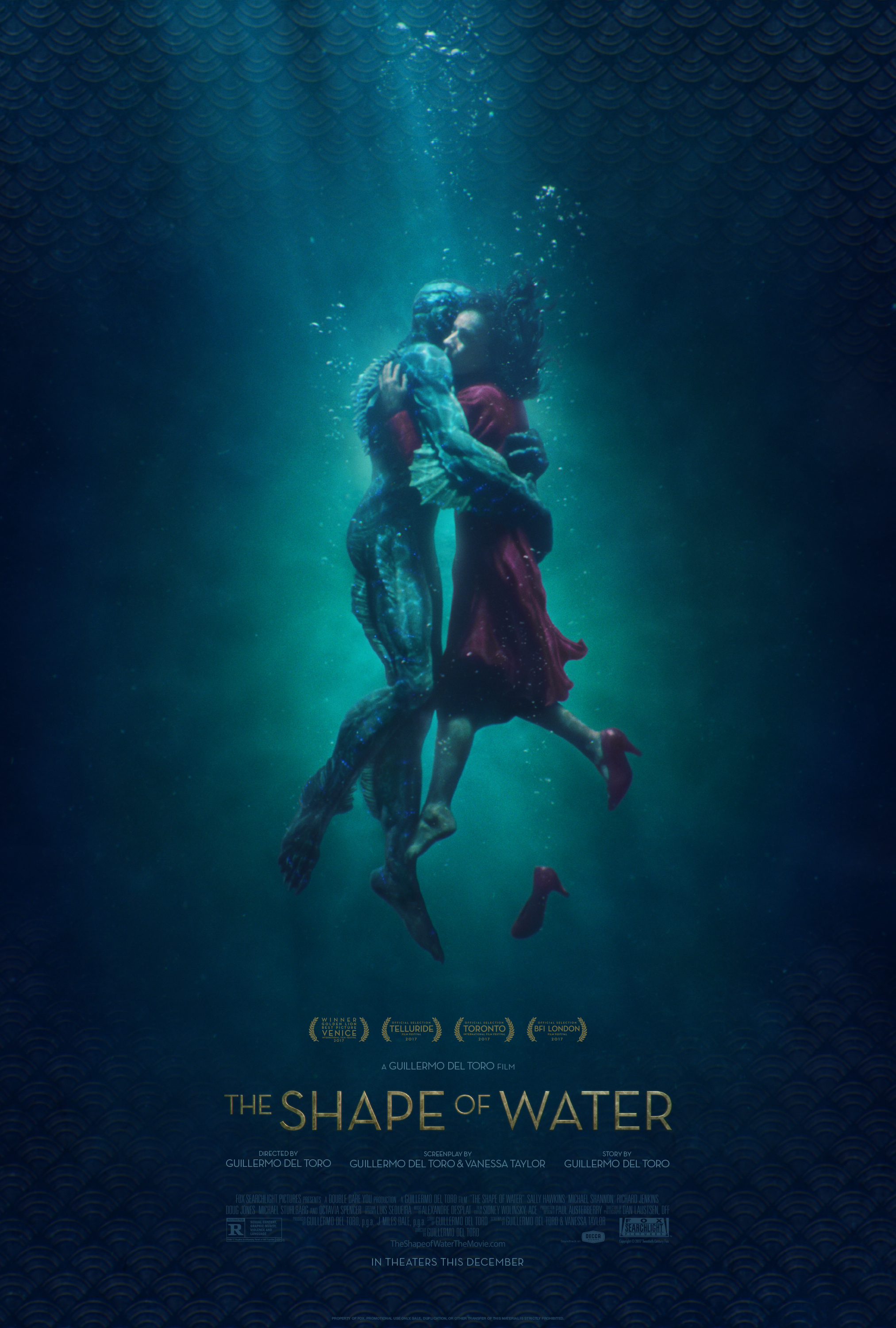
A romantic fairy tale set during the Cold War era of the Sixties, Guillermo del Toro’s latest feature is set in a secret government laboratory in Baltimore. Elisa Esposito (Hawkins) is a cleaner who works the night shift. She’s also mute from birth. One night the laboratory receives a new “asset”, an amphibious creature (Jones) captured in the Amazon river by military man Richard Strickland (Shannon). The creature proves to be humanoid, and though it’s ostensibly dangerous, Elisa develops a bond with it, and even uses sign language to communicate with it on a basic level. With the creature able to breathe in and out of water, the intricacies of its anatomy lead to the decision to have it vivisected. Elisa is horrified by this, and with the aid of her fellow cleaner, Zelda (Spencer), and her neighbour, elderly artist Giles (Jenkins), she determines to free the creature and return it to the sea. As she puts her plan into action, she finds unexpected assistance from one of the scientists at the laboratory, Dr Hoffstetler (Stuhlbarg), and unwanted attention from Strickland.

Fully and firmly back on track after the disappointment that was Crimson Peak (2015), Guillermo del Toro has made perhaps his best movie yet. The Shape of Water is a veritable treasure trove of delights. By turns funny, dramatic, sad, tender, exciting, joyous, imaginative, bold, romantic, uplifting, and poignant, it’s a movie that crams so much into its two hour running time that it should feel heavy-handed. Instead it feels like the lightest of confections, even with the overtly darker undertones that are threaded throughout the narrative and which help the movie add a credible and palpable sense of menace to the overall tone. del Toro has long wanted to make a movie inspired by Creature from the Black Lagoon (1954), but it’s unlikely even he could have predicted just how good the end result would be. From Paul D. Austerberry’s masterful period production design, to the efforts of the set dressers (so much detail), this is a movie that is constantly inviting the viewer to come nearer and peer closely at all the objects that fill each frame. And then there are the small yet seemingly effortless moments that pepper the movie, moments such as Elisa and Giles’ seated dance routine, or the man at the bus stop with the partially eaten cake. It all adds up to a richness of texture that is nigh-on faultless.

But the movie isn’t just beautiful to look at, it’s also an old-fashioned love story (an inter-species love story, to be fair, but hey, so what? As Joe E. Brown says at the end of Some Like It Hot (1959), “Nobody’s perfect”). It would have been so easy to misjudge the tone and the mood in presenting this romance, but del Toro and co-screenwriter Vanessa Taylor handle it perfectly, combining elements of magical realism and the aforementioned fairy tale aspect to wonderful effect. Hawkins – for whom the role of Elisa was written – gives a mesmerising performance, passionate and vulnerable, determined and caring, and capable of expressing any of Elisa’s emotions through the delicate shading of her features. As the principal villain, Shannon gets to add unexpected psychological layers to the role of Strickland, something that keeps the part from being that of a stereotypical bad guy, while Jenkins provides the majority of the laughs (and a great deal of pathos) as Giles, an elderly gay man still hoping to find love himself. Everything is rounded off by the music, as del Toro harks back to the golden era of Hollywood musicals. And just when you think he can’t squeeze in anything else, he gives us a black and white dance number featuring Elisa and the creature which is a tribute to Follow the Fleet (1936). This all leaves just one option: this much confidence must be applauded.

Rating: 9/10 – made with an intense amount of love and affection for its central characters, and with an elegance that shines throughout, The Shape of Water is a triumph of both style and substance; look closely, though, and you’ll find del Toro being quietly and unobtrusively subversive: ask yourself – which other movie are you likely to see where the heroes are in turn disabled, gay, black, and a Communist?

Share this:

  • Click to share on X (Opens in new window) X
  • Click to share on Facebook (Opens in new window) Facebook
  • More
  • Click to print (Opens in new window) Print
  • Click to email a link to a friend (Opens in new window) Email
Like Loading...

Pottersville (2017)

16 Saturday Dec 2017

Posted by dullwood68 in Movies

≈ 1 Comment

Tags

Bigfoot, Comedy, Drama, Furries, Ian McShane, Judy Greer, Michael Shannon, Monster Finder, Review, Ron Perlman, Seth Henrikson, Thomas Lennon

D: Seth Henrikson / 85m

Cast: Michael Shannon, Judy Greer, Ron Perlman, Thomas Lennon, Ian McShane, Christina Hendricks, Michael Torpey, Debargo Sandal, Greta Lee

In the same way that most music artists are seemingly contractually bound to release a Xmas album (or at the least, a single), the same appears to apply to actors as well. This is the only way to explain the existence of Pottersville, a movie that features a well-known and very capable cast literally going through the motions right before our eyes. It’s a movie that will encourage viewers to have one too many glasses of Xmas punch, or perhaps wish they could choke on a mince pie while they’re watching it. It’s not even so bad it’s good; in fact, it’s just plain awful. So what on earth could have attracted said cast to the project in the first place? And why did two of them jump on board as producers? (Perlman is a co-producer, while Shannon is one of several executive producers – along with Patricia Hearst, which is still a weird notion even after all this time.) Surely they had some degree of confidence in the script, some idea that this could be a traditional heart-warming tale for children and adults alike? Didn’t they?

Well, if they didn’t, then the final product – directed by relative newbie Henrikson from a script by feature debut screenwriter, Daniel Meyer – must have come as quite a surprise. For while this looks very much like a Xmas movie at first glance, and while there’s plenty of snow around, and the wintry feel lends itself to being a Xmas movie, Pottersville isn’t set at Xmas, there aren’t any Xmas trees or decorations in sight, no one dresses up as Santa, and nobody has a tragic Xmas tale to tell a la Gremlins (1984). It’s all so misleading, especially when the poster supports the idea that this is a Xmas movie, and features various Xmas trees and twinkly lights (and as for Lennon sporting Santa’s headgear, let’s not even go there). But while this isn’t a Xmas movie per se, it’s certainly feeding off the hope that viewers will begin watching it as such and wll be sucked in by the movie’s snowy mise en scene, but by the time they work out that they’ve been duped, the audience will have been exposed for too long to the movie’s daft sensibilities and ham-fisted attempts at providing the kind of generous helpings of down-home folksy wisdom that would make a reindeer choke and Santa blush with embarrassment.

When it’s not being a Xmas movie – which is still all the way through – Pottersville is content to disturb the spirit of Xmas Past and rehash key elements from a proper Xmas movie: It’s a Wonderful Life (1946). Alas, it’s a telling distinction, as Shannon’s main character, general store owner Maynard Greiger, is no George Bailey, and despite Shannon’s obvious skill as an actor, here he’s no James Stewart either. Financial matters, though, are to the fore as the struggling town of Pottersville faces an uncertain future thanks to an economic downturn. There are more stores that are closed than open, and Maynard is the kind of philanthropic individual who’ll happily let someone off their bill if they’re having difficulty finding the money. With only one employee, Parker (Greer), it’s hard to work out how he’s managed to stay open, but he seems happy enough (if a little resigned to following in the foreclosed footsteps of his main street neighbours). A chance discovery that his wife is a Furry, and that his long-time friend and town sheriff, Jack (Perlman) is too, leads Maynard to get drunk and put on a Sasquatch outfit in a moment of alcoholic “insight”. He roams the town at night, is seen by too many short-sighted townsfolk, and soon discovers that his drunken behaviour has led to everyone believing that Bigfoot is alive and well and living in the woods outside of town.

With “Bigfoot” attracting media attention, Pottersville is soon inundated with people hoping to catch sight of the hairy fella, and the residents are only too happy to help relieve said people of their money, offering Bigfoot related merchandise and the like. Maynard sees the turnaround in the town’s fortunes and decides to keep quiet about what he did, and even provide the odd extra sighting from time to time. But there’s a fly in the ointment, in the shape of reality TV presenter, Brock Masterson (Lennon). Masterson arrives in town with his Australian accent and bored entourage, and promises to catch Bigfoot live on his show, Monster Finder. His initial attempts though, are unsuccessful – surprise, surprise – but when he accepts the help of local tracker and hunter, Bart (McShane), Maynard’s secret is placed in jeopardy, and so is the town’s renaissance.

From the obvious references to It’s a Wonderful Life, to a scene that rips off Quint’s “you know me” speech in Jaws (1975), Pottersville lurches from one lapse in artistic judgment to another, and leaves its cast reeling in its wake. Rarely have so many talented actors looked so bemused or bewildered by what they’re being asked to do, and Meyer’s script proves of no assistance to them whatsoever. Probably best described as a broad comedy, this is cringeworthy stuff that many of the cast may well leave off their resumés in the future. Most of the movie’s “humour” is meant to come from the vain, cowardly antics of Lennon’s TV host, but he’s just tiresome from very early on, and irritating in a way that makes you want to reach through the screen and slap him. That he’s allowed so much screen time is one of the worst decisions the movie makes, and it’s right up there with its crude use of Furries – people who like to dress up in furry, anthropomorphic animal costumes – who at one point conveniently meet up in the woods for no apparent reason that anyone can think of. (If anyone in the Furry community is reading this, please be quick and get a documentary made about yourselves; don’t let this be the main representation of your lifestyle on screen.)

While there are some occasional moments when it seems as if the movie is going to break free of the heavy chains created out of Meyer’s poorly constructed (and hopelessly contrived) script, and Henrikson’s laboured direction, the movie shuts those moments down with a crash and its business as usual. There is a kind of perverse enjoyment to be had from watching such a bad movie, but the feeling rarely lasts for more than a minute, and the cast don’t seem able (or willing) to fight their way out from under. Shannon is under-used and left to look thoughtful for much of the movie, while Lennon portrays Masterson like a twelve-year-old going through atomoxetine withdrawal. Perlman and Greer fulfill their contractual obligations, Hendricks gets to spend a fair bit of time in a bunny costume, and McShane is perhaps the most “game” of all, but even he’s struggling, and when someone with McShane’s talent can be seen to be struggling, then it’s all you need to know.

Rating: 3/10 – like an evil Xmas present left out for the one kid on Santa’s Naughty List, Pottersville is appalling yet brief, far-fetched to the point of infinity, and not really worth anyone’s time – even fans of the cast; such a conspicuous waste of time and effort isn’t seen very often, and this is one of those occasions when it seems only WTF? will do as a response, but beware: you’ll be saying WTF? so many times it’ll be exhausting.

Share this:

  • Click to share on X (Opens in new window) X
  • Click to share on Facebook (Opens in new window) Facebook
  • More
  • Click to print (Opens in new window) Print
  • Click to email a link to a friend (Opens in new window) Email
Like Loading...

Salt and Fire (2016)

07 Friday Apr 2017

Posted by dullwood68 in Movies

≈ Leave a comment

Tags

Drama, Ecological disaster, El Diablo Blanco, Gael García Bernal, Michael Shannon, Review, Salt flats, The Consortium, Veronica Ferres, Volcano, Werner Herzog

D: Werner Herzog / 98m

Cast: Veronica Ferres, Michael Shannon, Gael García Bernal, Volker Michalowski, Lawrence Krauss, Danner Ignacio Márquez Arancibia, Gabriel Márquez Arancibia

If you’re a fan of movies where the characters sit around philosophising obliquely on the nature of existence or other such topics, and where said characters behave in a mannered, artificial way that doesn’t reflect the behaviour of anyone you know or have ever met, then Werner Herzog’s latest foray into movie making, Salt and Fire, will provide you with ninety-eight minutes of elliptical, cod-poetic pleasure. What ostensibly looks like a thriller soon turns into something else entirely, and just as you get to grips with where Herzog is taking you, he then pulls the rug out from under you and leaves you to deal with yet another change in tone – or, as you might want to put it, his latest attempt at narrative (and audience) manipulation.

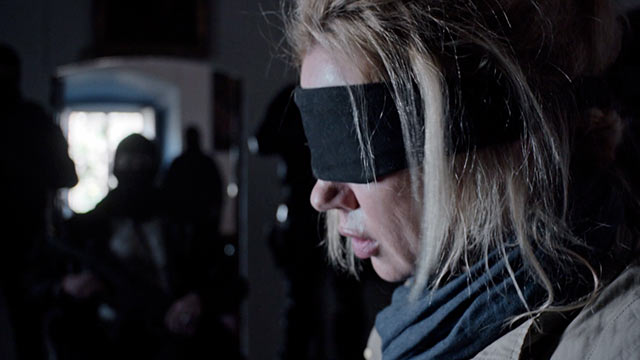
Such is the case with Salt and Fire, which begins with a car heading toward a lonely country estate. Once arrived, we see lots of armed guards, and a blindfolded woman taken out of the car and led inside. There she is surrounded by even more men, all of whom are wearing balaclavas to disguise their faces; one is even in a wheelchair. The woman is a scientist, Dr Laura Sommerfeld (Ferres), and it transpires that she is the head of a United Nations team sent to investigate a recent ecological disaster that has occurred somewhere in South America. Accompanied by two colleagues, Dr Fabio Cavani (Bernal) and Dr Arnold Meier (Michalowski), Sommerfeld is expecting to be met at the airport by a government representative. Instead, all three of them are flown to another location, and upon arrival, are kidnapped.

At the country estate, matters are made no clearer, and Sommerfeld is kept away from her colleagues. The man who seems to be in charge won’t explain why they’ve been abducted, but he does tell her that there won’t be any ransom demand. She’s given her own room, treated fairly despite the situation, and soon the man in charge reveals himself to be Matt Riley (Shannon), the CEO of The Consortium, the company responsible for the ecological disaster. Days pass without Sommerfeld becoming any the wiser as to the reason for Riley’s actions, but a grudging respect does develop between them. One day they head out on a trip to the site of the disaster, a vast expanse of salt flats known as El Diablo Blanco, and which is expanding at an exponential rate that could see it cover the entire continent in – possibly – a generation. Nearby is a supervolcano, Uturunku, that is showing signs of increased activity, and Riley is worried by that as well, though whether or not The Consortium is responsible for that, Riley neither confirms or denies.

By this stage of the movie, Shannon has been saddled with the kind of dialogue that could best be described as “pretentious twaddle”. Lines such as, “There is no reality, there are only perceptions of reality”, or “Truth is the only daughter of time”, are delivered with as much depth and sincerity as the actor can give them, but they just add to the whole pretentiousness of the situation. But once we’re at the salt flats, Herzog does us all a favour and removes Shannon and his daft philosophising from the movie, and leaves Sommerfeld stranded on a rocky outcrop that’s home to hundreds of cacti, and with supplies to last about a week. Oh, and she’s stranded there with two young boys, both nearly blind, called Huascar (Danner Arancibia) and Atahualpa (Gabriel Arancibia).

In this third act, Sommerfeld occupies her time by playing unofficial mum to the boys (who seem completely unperturbed by their being stranded in the middle of the salt flats), looking out over the vast expanse surrounding them, or making short videos on her tablet (which miraculously retains its battery charge for the whole time). Finally, and with their water on the verge of running out, Sommerfeld and the two brothers are saved by a twist that is as unlikely and dramatically unsound as most of the rest of the movie. If you’re still here at this point, you might be thinking that Herzog spent just as much time writing the script – itself based on the story, Aral, by Tom Bissell – as he did shooting it (a mere sixteen days). It’s a movie that rarely makes sense, rarely seems coherent, and though it’s trying to make a point about Man’s impact on nature, it makes the point so badly that no one’s ever going to care.

But while this is a movie by Werner Herzog that aims high and then never gets off the ground, this is also a Werner Herzog movie, and though it has a number of faults, and many of them are insurmountable, it can’t be dismissed so easily. Whatever he may be guilty of here, Herzog is still one of the most ingenious and perceptive directors working today, and while his dialectic approach to the material is an unfortunate liability, what isn’t is the truly stunning cinematography courtesy of Peter Zeitlinger. Salt and Fire features an impressive array of aerial views and beautifully framed landscapes, and the salt flats themselves, the quietly incredible Salar de Uyuni in Bolivia. Zeitlinger captures their vast expanse and the intricate nature of their honeycomb-like appearance so vividly that watching them can’t fail to provoke a response, even if that response is hard to articulate. What’s even more impressive is that the flats have been heavily exploited as a tourist attraction in recent years (you half expect the latest Kia model to zoom past in the background), but thanks to Zeitlinger’s diligence, you wouldn’t know it from seeing the movie.

Despite the poor quality of the script, and the lack of both nuance and insight, Salt and Fire, thanks to Herzog’s innate skill as a director, is still a mesmersing experience. There are few directors who could make a movie such as this one and still make it absorbing to watch, even if it doesn’t seem to be going anywhere, doesn’t give its cast a fair chance at providing good performances (Bernal’s lascivious, hysterical Italian feels like he should be in a romantic comedy instead of a semi-literate exploration of whatever Herzog is trying to say), and doesn’t bother to provide credible motivations for the characters. Instead, what’s surprisingly effective about the movie is the mood Herzog creates. He’s described Salt and Fire as “a daydream that doesn’t follow the rules of cinema”, and on that level, he’s not too far off. Somehow it manages to get under your skin and it keeps you watching right until the end.

With both Ferres and Shannon doing their best to cope with the demands of Herzog’s script, but left to drift without any recognisable direction – Shannon randomly shouts at his female co-star, Ferres talks to her tablet as if it were another character – there’s even less for Bernal and Michalowski to do, and they soon disappear from the story, their characters left suffering from extreme diarrhoea (if there’s a subtext here it’s incredibly difficult to track it down). Only Krauss provides some much-needed levity, but inevitably, it’s at odds with the overall tone. It all adds up to possibly Herzog’s worst fiction feature ever – yes, even worse than Queen of the Desert (2015) – and a clear indication that not every director should work from their own script.

Rating: 4/10 – with its fragmented structure and appetite for obfuscation, Salt and Fire is a misfire that will probably have little effect on Herzog’s ability to make the kind of movies he wants to make; dramatically inert for long stretches but saved by some outstanding photography, it’s a movie that frustrates and confounds without any consideration for the negative effect these drawbacks have on the movie as a whole (or, indeed, Herzog’s reputation).

Share this:

  • Click to share on X (Opens in new window) X
  • Click to share on Facebook (Opens in new window) Facebook
  • More
  • Click to print (Opens in new window) Print
  • Click to email a link to a friend (Opens in new window) Email
Like Loading...

Nocturnal Animals (2016)

16 Wednesday Nov 2016

Posted by dullwood68 in Movies

≈ 4 Comments

Tags

Aaron Taylor-Johnson, Amy Adams, Art gallery, Drama, Ex-husband, Isla Fisher, Jake Gyllenhaal, Literary adaptation, Michael Shannon, Murder, Novel, Review, Thriller, Tom Ford

nocturnal-animals-new-poster

D: Tom Ford / 117m

Cast: Amy Adams, Jake Gyllenhaal, Michael Shannon, Aaron Taylor-Johnson, Isla Fisher, Ellie Bamber, Armie Hammer, Karl Glusman, Robert Aramayo, Laura Linney, Andrea Riseborough, Michael Sheen, India Menuez, Graham Beckel, Jena Malone

Back in 2009, Tom Ford, once the creative director at Gucci between 1994 and 2004, made a movie called A Single Man. He produced it, he wrote it, and he directed it. In the process, he ensured Colin Firth received his first Oscar nomination as the single man of the title, a grief-stricken English professor who finds it difficult to deal with the death of his partner. It won a shedload of awards, and Ford was heralded as an exciting new voice in contemporary cinema. But even in amongst the sterling notices, reviewers and critics were largely in agreement: Firth’s performance saved the movie from being an empty exercise in style over content. Now, seven years later, he’s back with another adaptation, this time swapping Christopher Isherwood’s work for that of Austin Wright, and his novel, Tony and Susan. Should be good, eh?

Well, actually, no. This is a movie that can be admired for several reasons. For instance, there’s Seamus McGarvey’s often exquisite cinematography, whether he’s using the lens to amplify the sterile environments lead character Susan (Adams) spends her life inhabiting, or the tactile desert locations where the novel within the movie takes place. And then there’s Abel Korzeniowski’s string-driven score, which adds a delicious sense of impending doom to both storylines. But despite these solid, unassailable elements, what Ford attempts with the twin narratives doesn’t pan out quite as well.

nocturnal-animals

With its performance art opening sequence, Nocturnal Animals wants to keep the viewer wrong-footed, and it wants to keep its secrets all to itself. As you’re confronted by several large, ultra-wobbly ladies who are gyrating in the nude, Ford has already placed the viewer on the back foot. What you’re seeing, he seems to be saying, will be explained; just not right away. And this is how the tone of the movie is set from the beginning: you’ll see a lot of things that won’t immediately make sense, but in time they will… except for the things Ford has no intention of making clear. So, the naked ladies are part of an art exhibition at the gallery Susan owns. But Susan doesn’t seem to be too impressed by this particular exhibit. She appears to be elsewhere, caught up in her own thoughts. But again – already – Ford isn’t about to tell you what those thoughts are, or what they’ll mean (if anything) going forward.

We soon learn that Susan is on her second marriage, to a diffident, disconnected lump of a man called Hutton (Hammer). It’s obvious he doesn’t love her anymore, and he’s likely having an affair, but Susan doesn’t seem interested either way. She makes an effort toward they’re going away together but Hutton is too busy, and Susan is too lethargic to insist or get him to clarify the dates they can go. And while the viewer wonders if this is going to be yet another mannered, “arthouse” examination of a marriage break up with plenty of wistful stares into the distance by the wife, while the husband is unable to talk in meaningful sentences, Ford changes tack and introduces Susan’s ex-husband, Edward (Gyllenhaal).

But not in person. No, instead, Edward is introduced to us through a novel he’s written, and one that he’s dedicated to Susan. Surprised – but more importantly so that the movie can proceed in a viable fashion, intrigued – Susan begins to read it. It’s not what she expects, though. But let’s think about that. What was she expecting? And why? Because, as we later discover, Susan had no faith in Edward’s abilities as a writer. So why does she even read it? Curiosity? To reinforce her opinion about his talent (or lack of it)? Because she’s bored? (At home, Susan doesn’t appear to do very much apart from drink the occasional glass of wine.) Actually, it doesn’t matter, as it’s one of the things Ford isn’t going to take the time to explain.

noct

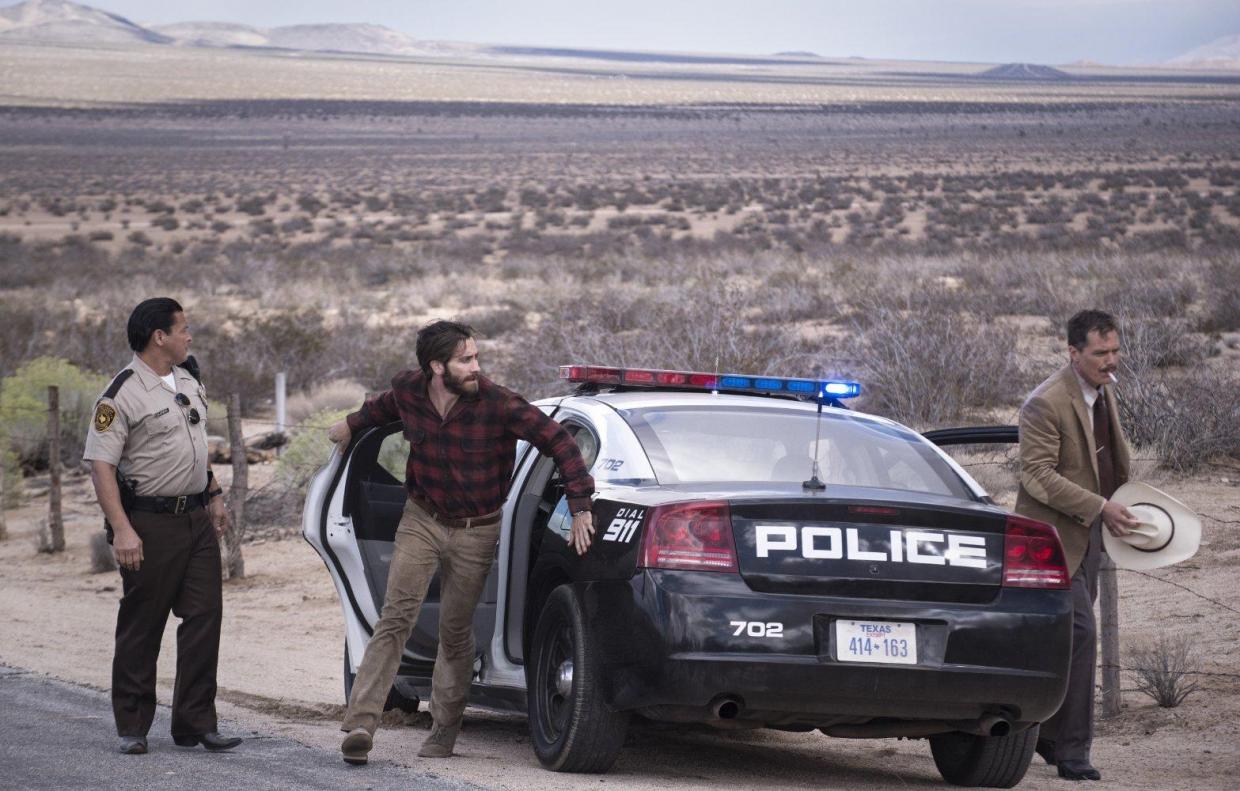
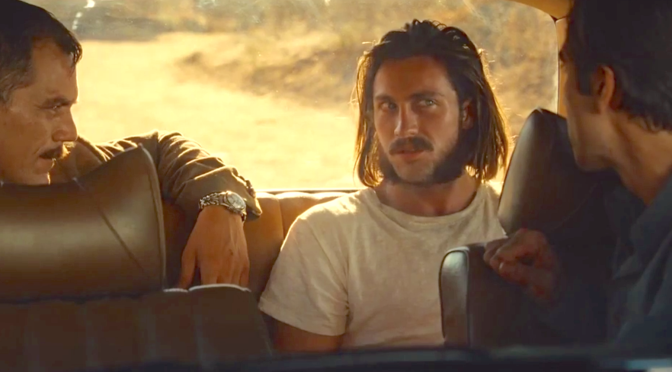
The story is a brutal one. Tony Hastings (Gyllenhaal) is travelling through the desert with his wife, Laura (Fisher), and daughter India (Bamber). Run off the road by a trio of men led by the would-be charming Ray (Taylor-Johnson), the family is threatened and verbally abused until chance sees Ray and one of his cohorts take the Hastings’ car – with Laura and India in it – and drive off, leaving Tony at the mercy of remaining “drunk baby” Lou (Glasman). Tony is made to drive after them, but it soon becomes obvious that Lou is just stringing him along, and Lou eventually makes Tony stop the car and get out; and then he drives off. Ray makes it back to the highway and hitches a ride to the nearest town. There he meets Detective Bobby Andes (Shannon) who agrees to go back out into the desert and check for the whereabouts of Tony’s family. They find them, both dead, but no sign of Ray and his buddies.

At this point, viewers should notice one of two things: that the character of Bobby Andes is at once more interesting and vital than anyone else in the movie (even Taylor-Johnson, who’s menacing and feral in equal measure), and secondly, that Edward’s novel, while intended to act as an emotional counterpoint to Susan’s life up until then, does get less involving and more straightforward as it continues. This allows two other, distinct things to happen: one) for Susan to begin to rethink her tidily tucked away feelings toward Edward, and two) for Ford to indulge in the kind of macho Western-style movie making once epitomised by the likes of Nicholas Ray and Budd Boetticher. But by then it’s all too late. Tony’s story can only have one outcome (which it does in such a contrived way you can hardly credit Ford the director agreeing with Ford the writer that it’s even partway acceptable dramatically), and the resolution to Susan’s immediate tale hints at a new beginning that she won’t be able to grasp.

nocturnal-animals-2016-michael-shannon-aaron-taylor-johnson-jake-gyllenhaal2

Throughout, Ford places great stock on having Adams stare off into space and think deep thoughts about her past with Edward and her present with Hutton, but it’s largely to little or no effect. Part of the problem is that Susan isn’t particularly likeable. In her time with Edward we witness what a horrible person she is beneath the surface veneer of respectability that she’s gained by being a gallery owner. This leaves her storyline feeling (and looking) like a succession of still-life paintings waiting to be given three-dimensional expression. But this isn’t on Ford’s agenda; more shots of Adams staring into space most definitely are though. Adams is a fine actress – see Arrival (2016) if you’re not sure – but here she’s wasted in a role that requires her to internalise her character’s feelings… and then leave them there. The actress is called upon to make so little of her role it’s almost insulting; why hire someone who’s capable of doing so much more than you’ll let them?

Fortunately, Shannon and Taylor-Johnson are on hand to breathe distinct and recognisable life into their respective roles, elevating the material through sheer force of skill, and making it difficult to look away from either of them, even if they’re in a scene together. Gyllenhaal, though, is a cypher, playing two roles and being made to appear as more of a supporting actor than someone given second billing and the responsibility of portraying two important characters. There are times when Gyllenhaal can only shine when the material challenges him in such a way that he has no choice but to commit himself wholly to the part. Movies such as Enemy (2013) and Nightcrawler (2014) show this, but here Ford makes the character of Tony a bystander in his own story, while Edward’s contribution to Susan’s tale is limited by the decision to focus on that particular story from Susan’s entirely subjective point of view (you can’t trust her memories).

Ultimately, Ford makes the mistake of believing that his adaptation carries the necessary weight and complexity to make each narrative work both against and for each other. And this leads to the viewer being unable to connect with any of the characters, or feel able to show any sympathy towards them (only Shannon’s ailing cop elicits any credible feeling in the audience). It’s as if Ford has decided he wants to make a movie where the idea of leading a self-contained life (Susan’s) is preferable to one where hazards and risks (Tony’s) are more likely to happen. Either way, the one-time Gucci guru has made something that plays to its strengths as the new Tom Ford movie, but which lacks a clear identity all of its own.

Rating: 5/10 – too much smoke and too many mirrors means Nocturnal Animals isn’t as effective as its writer/director would like you to believe – or as persuasive; it goes without saying that the movie has a tremendous visual sense, but it’s a shame that a similar level of effort wasn’t afforded the script or the characters.

Share this:

  • Click to share on X (Opens in new window) X
  • Click to share on Facebook (Opens in new window) Facebook
  • More
  • Click to print (Opens in new window) Print
  • Click to email a link to a friend (Opens in new window) Email
Like Loading...

Complete Unknown (2016)

20 Thursday Oct 2016

Posted by dullwood68 in Movies

≈ Leave a comment

Tags

Azita Ghanizada, Drama, Identity, Joshua Marston, Michael Chernus, Michael Shannon, Mystery, Rachel Weisz, Review

complete_unknown-243183734-large

D: Joshua Marston / 91m

Cast: Rachel Weisz, Michael Shannon, Michael Chernus, Azita Ghanizada, Omar Metwally, Frank De Julio, Condola Rashad, Kathy Bates, Danny Glover

What if you could just up and walk away from the life you were living, and go and be somebody else, assume a different identity and create a history for yourself to go with that identity? And what if you could do that over and over, changing your name and your looks every so often, and living a new life each time? What would be the rewards of doing such a thing? What would be the downside? And even if you could, why would you do it in the first place?

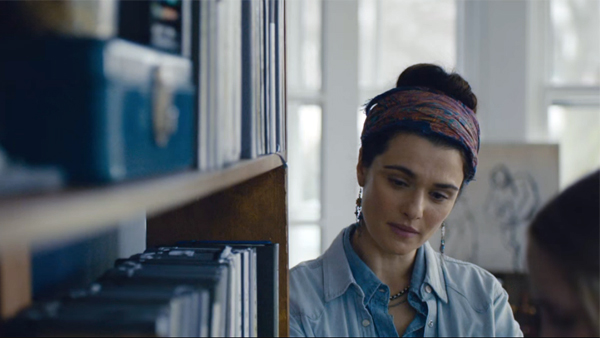
This is what Rachel Weisz’s character, Jenny, does. The movie opens by introducing us to some of the identities she’s adopted in the fifteen years since she left her home and family and friends behind and became someone else. She’s lived in Australia, been a magician’s assistant in China, and an ER nurse somewhere in the US. Currently she’s a biologist who’s part of a team that have discovered a previously unknown species of frog in Tasmania. Her name is Alice Manning, and her work has brought her back to New York, where she comes from originally. Looking to reconnect with her past she tracks down Tom (Shannon), a land reform advocate on a mission to have environmental protection clauses inserted into the legislature. As we learn later on, Tom is Jenny’s only link to her past since the death of her father, and despite the time and distance she’s put between her first life and her current one, she still has a need to affirm its existence.

complete-unknown-3

Adopting a softly, slowly approach, Alice gets to know Tom’s work partner, Clyde (Chernus). She dazzles him, and when it comes time for Tom’s birthday, Clyde invites her along to the birthday party as his plus one. Once there, Tom becomes suspicious that Alice isn’t Alice, but the Jenny he remembers. As the party continues, Alice admits to changing her identity when she wants to. Some of the guests are impressed, others think it’s a horrible idea because of the lies involved. Tom remains bemused, certain and yet uncertain that Alice is Jenny. He tries to tackle her about it, but her answers offer confirmation and non-confirmation at the same time. It’s only when they all go to a club to spend the rest of the evening dancing that Tom becomes convinced that it’s Jenny and not Alice. When she leaves, in a hurry to get away suddenly, he follows her and gets her to admit to her deception.

What follows can best be described as a cinematic chamber piece, as Alice and Tom walk the streets debating the rights and wrongs of Jenny’s “lifestyle”, encounter Kathy Bates’ Nina who is out walking her dog, and who subsequently has a fall, and her husband Roger (Glover) when they help her back to her apartment. Further discussion around why Jenny left follows, and eventually, Tom tells her he wants to see how she moves on to the next identity. Having experienced some form of emotional epiphany, Tom returns home to his wife, Remina (Ghanizada)… and on the cusp of a revelation, the movie ends.

complete-unknown-1

Fans of very slow-paced dramas will enjoy the last half an hour of Complete Unknown, as the script – by director Marston and Julian Sheppard – winds down in terms of pace, interest, and credibility. It’s here that Marston sheds any notion that he knows where the movie is going, and the viewer is left wondering if there has been any point to the movie at all. Tom and Alice/Jenny’s relationship is the key focus by this time, but it’s not as dramatic as it should be, and Marston is unable to create any drama or sense of heightened feelings as the emotionally distant duo fret over each other’s pain, but only for a short period before they move on. For both there are meant to be “lessons learned”, but it’s hard to tell if any “lessons” have been doled out. Jenny can’t explain with any precision why she does what she does, and Tom is so tightly wound-up at times that it’s hard to work out if he’s mad at Jenny for disappearing all those years ago, or because his marriage is about to go through a potentially very rough patch.

Throughout the movie, Marston fails to explain things in a way that isn’t confusing to the viewer, or problematical for the characters. Jenny/Alice’s motivation for leaving behind her original life remains spurious at worst, and unsatisfactory at best. And more importantly, the script never sells the viewer on the reasons for Jenny/Alice wanting to return to her roots, undermining her previous determination to avoid any confrontation from her past. Similarly, Tom’s steely-eyed persistence in wanting to know why Jenny left so abruptly, is shown as being immediate and close to the surface, the dynamic of which seems absurd given the passage of time. Are we really meant to believe that he hasn’t moved on after fifteen years? And if we are, then why doesn’t the script explain why?

complete-unknown-sundance-2016

It’s these dramatic exclusions that hurt the movie most, draining it of the few mystery elements it’s set up at the beginning. The result is a dry, mannered, unconvincing movie that fails to provide depth for its characters to build on, and lacks the necessary desire to fill in the multitude of gaps in the narrative. Marston doesn’t really know where his movie is going to, and he’s curiously unable to make sense of Jenny’s need for reinvention, or the mechanics of it (toward the end, Tom challenges Jenny over her ability to change her identity, and tells her he wants to see how she does it; she takes him to her apartment and packs a bag – and that’s it).

Against this, Weisz provides a thankfully intuitive performance that goes a long way toward helping the viewer engage with the material, but even she can only do so much. Shannon is largely passive throughout, his face a blank canvas that gives little away, and his default manner one of bewilderment. In their scenes together there’s precious little spark to help explain the feelings they had for each other, and why it’s so important for Jenny to see Tom again, and the distance between them is another aspect of the production that Marston is unable to do anything about.

Rating: 4/10 – questions of identity are left hanging in Complete Unknown, and what could have been an absorbing, insightful examination of one woman’s need to be different versions of herself, is abandoned in favour of a trite, vaguely rewarding trawl through poorly constructed dialogues that leave everything open for interpretation; a slowburn movie that treats its central character like a cypher (because it can’t do anything else with her), Marston’s micro-drama is unlikely to generate the interest it needs in order to find an audience willing to forgive its indolence.

Share this:

  • Click to share on X (Opens in new window) X
  • Click to share on Facebook (Opens in new window) Facebook
  • More
  • Click to print (Opens in new window) Print
  • Click to email a link to a friend (Opens in new window) Email
Like Loading...

Elvis & Nixon (2016)

11 Monday Jul 2016

Posted by dullwood68 in Movies

≈ Leave a comment

Tags

21 December 1970, Alex Pettyfer, Colin Hanks, Comedy, Drama, Elvis Presley, Evan Peters, Federal Agent at Large, Johnny Knoxville, Kevin Spacey, Liza Johnson, Meeting, Michael Shannon, Review, Richard Nixon, The Oval Office, The White House, True story

Elvis & Nixon

D: Liza Johnson / 86m

Cast: Michael Shannon, Kevin Spacey, Alex Pettyfer, Johnny Knoxville, Colin Hanks, Evan Peters, Sky Ferreira, Tracy Letts, Tate Donovan, Ashley Benson

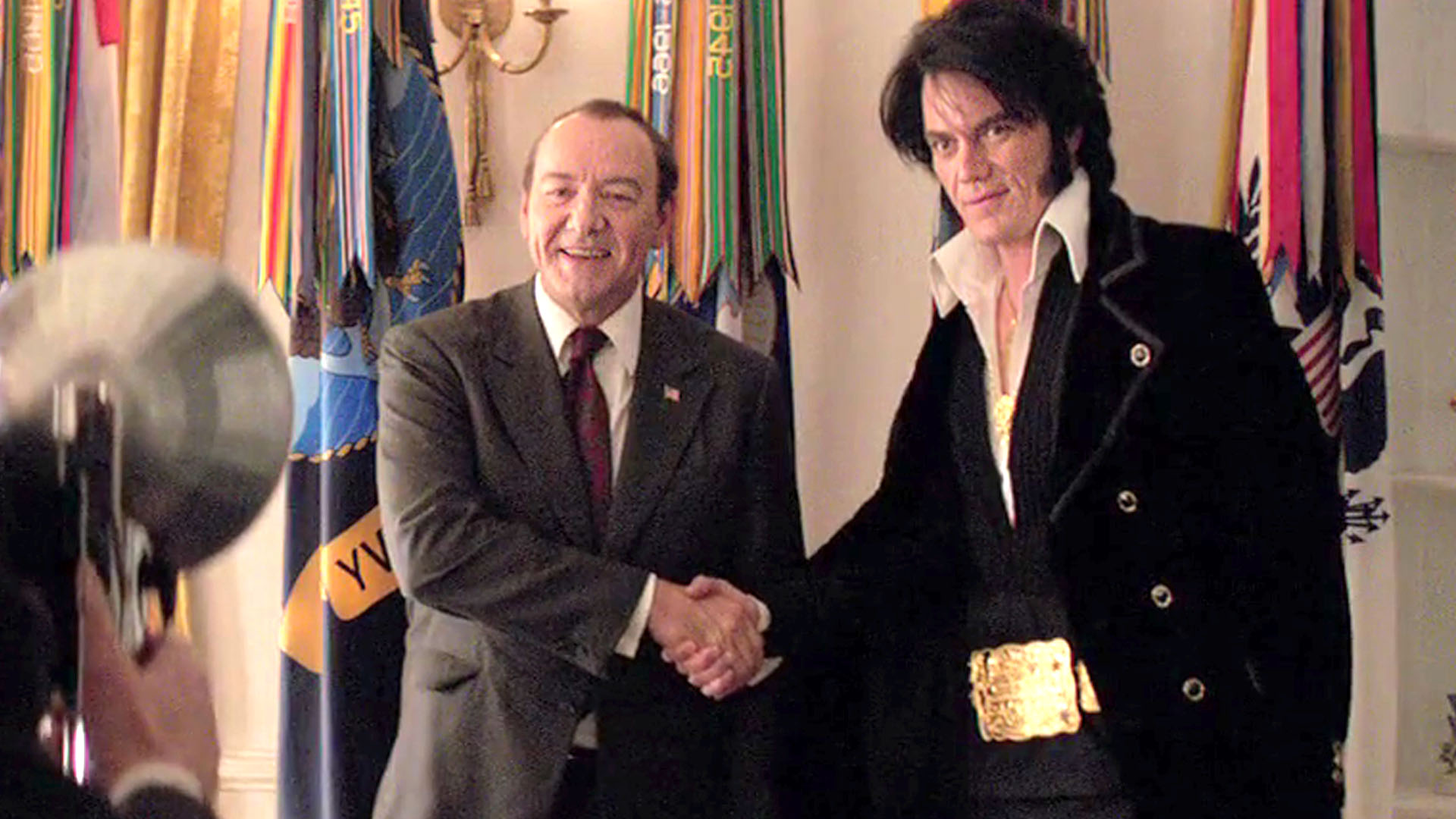
It’s one of those tales that has to be filed under Believe-It-Or-Not: when Richard Nixon (Spacey) met Elvis Presley (Shannon) in the White House on 21 December 1970. There’s no doubt that the meeting took place – one of the photographs taken that day is the most requested item in the US National Archives – but even so, if a conspiracy theorist came up to you and said Elvis met Nixon because he wanted to go undercover as an agent for the Bureau of Narcotics and Dangerous Drugs, you’d brush them off with a “Yeah, right,” and promptly move on with your life. But that is exactly what happened, and Liza Johnson’s bright and breezy movie looks at what might have occurred, and what might have been said, during that unexpected meeting (alas, Nixon didn’t start recording conversations in the Oval Office until some months after he met Elvis).

The Elvis Presley we meet at the movie’s beginning is an odd, troubled figure, unamused and made fearful by the revolution being played out on American streets by the youth of the day. To Elvis they’re all being misled, and to him, it’s the drugs that are leading them astray. What better way, thinks Elvis, to help his country and avoid a dire future, than to go to Washington and plead his case to become a Federal Agent at Large, an undercover role that would allow him to infiltrate the various organisations leading the so-called revolution. (And just in case you’re thinking, undercover? Is he mad?, then the answer is, probably. Or at least, very deluded. Very, very deluded.) And what better justification for his going undercover, than the fact that he already has various honorary law enforcement badges which have been given to him over the years (and which he seems to think is all the I.D. he needs wherever he goes – even the White House).

EAN - scene2

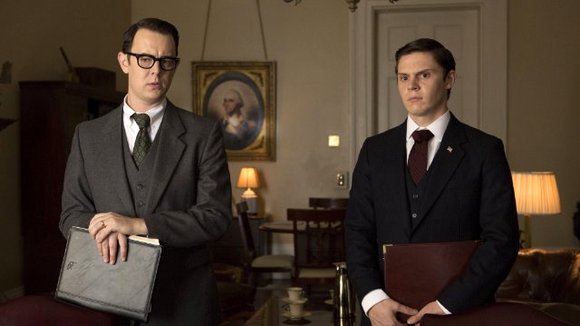
Elvis writes a letter to Nixon that he hand delivers to the North Gate of the White House. The letter reaches one of Nixon’s aides, Dwight Chapin (Peters), who in turn shows it to senior aide Egil “Bud” Krogh (Hanks). At first, Krogh is dismissive, until he realises the benefit to Nixon’s image that a meeting with Elvis might have; but Nixon is dismissive of the idea. It’s only when Elvis’s personal assistant, Jerry Schilling (Pettyfer), suggests that Krogh “let slip” to Nixon’s daughters that their father might be meeting Elvis, that Nixon is emotionally blackmailed into letting the meeting go ahead. And so, the stage is set for one of the most unlikely get-togethers in the history of US politics and entertainment.

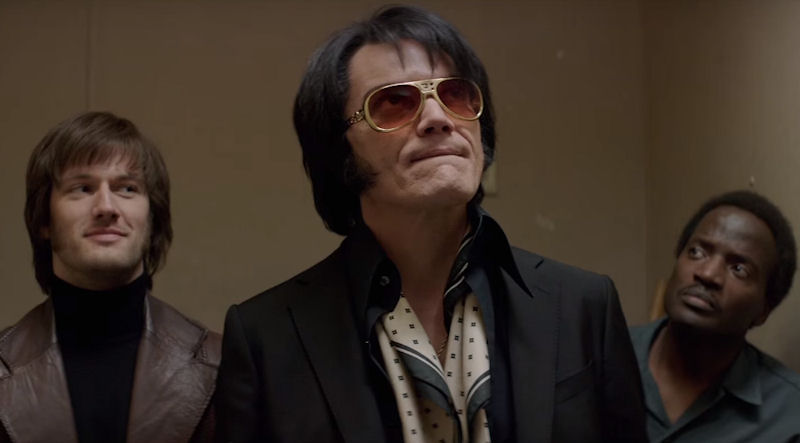
With the movie firmly deciding that Elvis was acting like a fruitcake at the time, and with Shannon playing him like a man who thinks everybody else around him is on the same wavelength – even though it’s doubtful there is a wavelength in the first place – his odd mannerisms and apparent lack of social awareness make for an amusing yet also deeply sad interpretation of the man and his misguided sense of commitment. That he really felt he could go undercover is the clearest guide to how barmy his idea was, but Shannon makes it all seem plausible – to Elvis if no one else. And that so many other people went along with it makes it even more bizarre. But amidst all the extraordinary behaviour, Shannon wisely adds a sense of almost child-like innocence to his portayal of Elvis that helps offset the surface notion that The King has lost his marbles. However you view his “ambition”, what Shannon consolidates in his offbeat, whimsical performance is that Elvis believed in everything he said – completely and without equivocation.

EAN - scene3

Shannon is probably not everyone’s idea of Elvis Presley, and it’s true that even with a wig, sideburns, and Elvis’s trademark sunglasses the actor still looks nothing like him. But the same is true of Spacey, whose portrayal of the President stops short of being a caricature of the man, and even with the aid of a terrific make-up job, the actor is still recognisable as himself first and foremost. In the end though, it doesn’t matter because the performances of both men are so very good indeed. Separately – and the movie keeps them apart for nearly an hour – they bring to life their real-life characters with a mixture of vocal impersonation, physical posturing, and attention to detail. But when they finally meet, and Nixon’s obduracy gives way to an unforeseen liking for Elvis and his right-wing political views, the apparent differences between the two men fall away, and both actors enjoy the kind of verbal sparring that helps lift the movie over and above its slightly pedestrian beginnings.

Ultimately, Elvis & Nixon only works fully once Elvis actually meets Nixon, and the script by Joey Sagal (who has a memorable cameo as an Elvis impersonator), Hanala Sagal and Cary Elwes (yes, Westley himself) springs into life in a way that makes up for the meandering, inopportune approach taken up until then. Make no mistake, the movie is a lightweight, engaging, yet deliberately frothy concoction, and it’s made in such a way that it’s not meant to be taken too seriously. But there’s an awful lot of running around for no good reason as the movie makes this momentous meeting happen. A subplot involving Schilling’s need to fly home to meet his girlfriend’s father is entirely superfluous, which makes Pettyfer’s presence entirely superfluous as well, while Knoxville’s presence is pared to the minimum. Hanks and Peters fare better, portraying Krogh and Chapin as two guys just trying to do their best, and getting quite a lot of the laughs as a result (however, there’s a sting in the tail when a pre-post credits sequence informs the viewer that both men were jailed for their involvement in the Watergate scandal).

EAN - scene1

Whatever was discussed between Nixon and Elvis on that December day is unlikely to ever be revealed. And even if this particular version has it all wrong, it is reassuring to know that it doesn’t matter. This is a movie where you could almost apply the old adage, “Print the legend!”, and it wouldn’t make any difference. Johnson’s direction is assured if not outstanding but she does coax outstanding performances from her two leads, and if it weren’t for them, the movie wouldn’t be as enjoyable as it is.

Rating: 7/10 – taken with a very large pinch of salt, Elvis & Nixon can be enjoyed for the sugar-coated treat it is, and not as anything more serious; with good performances all round (and not just from Shannon and Spacey), and a pleasing sense of its own silliness, the movie may not linger in the memory once you’ve seen it, but it will delight and impress you while you watch it.

Share this:

  • Click to share on X (Opens in new window) X
  • Click to share on Facebook (Opens in new window) Facebook
  • More
  • Click to print (Opens in new window) Print
  • Click to email a link to a friend (Opens in new window) Email
Like Loading...

Midnight Special (2016)

12 Tuesday Apr 2016

Posted by dullwood68 in Movies

≈ 3 Comments

Tags

Adam Driver, Drama, FBI, Jaeden Lieberher, Jeff Nichols, Joel Edgerton, Kirsten Dunst, Michael Shannon, Mystery, NSA, Review, Sci-fi, The Ranch, Thriller

Midnight Special

D: Jeff Nichols / 112m

Cast: Michael Shannon, Joel Edgerton, Jaeden Lieberher, Kirsten Dunst, Adam Driver, Bill Camp, Scott Haze, Sam Shepard, Paul Sparks, David Jensen

It’s only taken writer/director Jeff Nichols four movies to become a movie maker whose projects carry an enormous weight of expectation. First there was Shotgun Stories (2007), then there was Take Shelter (2011). He followed that up with Mud (2012), and now he brings us Midnight Special, a tale about an eight year old boy who may be an alien, or an emissary from God, or something else completely. It’s a measure of Nichols’ success that he’s taken what could have been an awkward, unconvincing story – in lesser hands – and made it into an articulate, gripping tale that’s also exciting and thought-provoking.

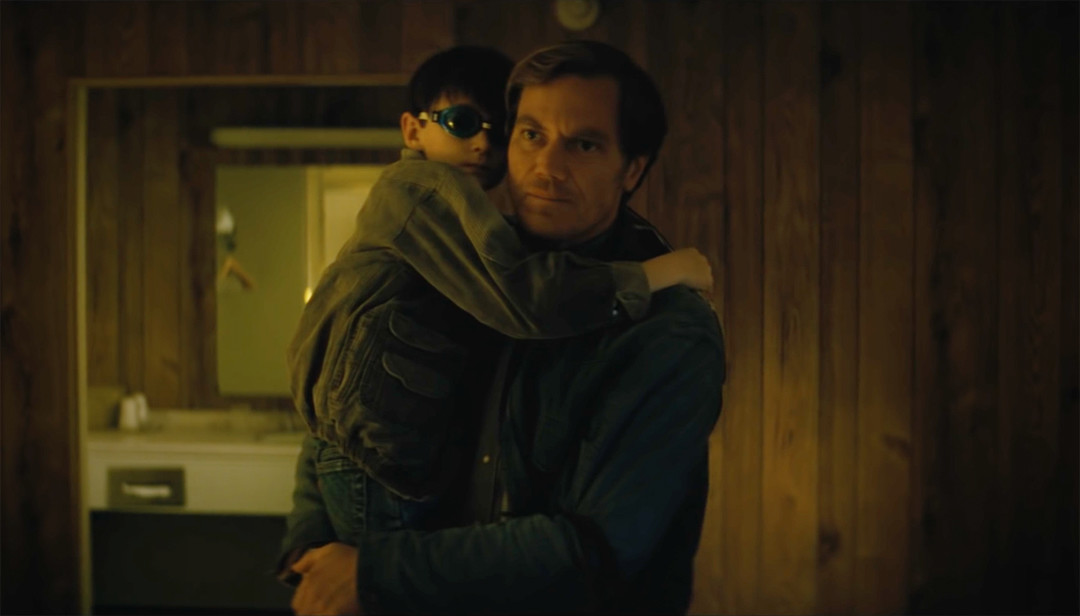
The movie begins with the police searching for a missing child called Alton Meyer (Lieberher). He’s been abducted from a religious compound known as the Ranch. It’s head, Alton’s adoptive father, Calvin Meyer (Shepard), wants him back, and within the next four days. But Alton – who has to wear blue goggles during daylight hours – has been abducted by his real father, Roy Tomlin (Shannon), and he, along with his friend, Lucas (Edgerton), are trying to keep Alton safe and also get him to a certain place in four days’ time. There, something momentous will happen, but neither Roy nor Calvin Meyer knows what it is; and at this point, Alton doesn’t know either.

MS - scene3

The FBI, and the NSA – in the form of agent Paul Sevier (Driver) – are also trying to find Alton, as they have become aware that he has been including coded intelligence in the sermons he’s written for Meyer. But Alton has other gifts, and one in particular, connected to his sight. When Ray decides to stop off at an old Ranch member’s home, that particular gift almost causes the house to shake apart. From there, the trio drive to the home of Alton’s mother, Sarah (Dunst), but not before an incident at a gas station reveals that Alton’s heat signature is similar to that of a nuclear bomb. Now a foursome, they travel on to the location that Alton must reach, however, they’re unaware that two members of the Ranch, Doak (Camp) and Levi (Haze), are tracking them with the intention of kidnapping Alton and returning him to the Ranch.

Before they are able to, Alton, who has been getting sicker and sicker, and has to avoid direct sunlight, tells Roy that he can no longer continue to keep hidden from the sun. Roy exposes Alton to a sunrise, and it has an extraordinary effect: he can now walk about unaffected in daylight, and knows exactly what he needs to do and why he needs to be in a certain place at a certain date and time. As he tells Roy: he doesn’t belong here.

MS - scene1

Whether or not Alton makes it to his rendezvous is, ultimately, neither here nor there. What’s important is the journey he makes getting there, and the way in which he and his parents, and Lucas, make it there. One of the strengths of Nichols’ impressive and layered screenplay is the way in which Roy’s parental determination to not let anything stop him from getting Alton to his rendezvous, sometimes presents itself as unfeeling and harsh. When he and Lucas encounter a state trooper, Roy is unequivocal: he tells Lucas to shoot him. Roy doesn’t care about anyone else, only Alton, and his zeal and willingness to put moral certitude aside makes him one of recent cinema’s more interesting and intriguing characters. Shannon is perfect for the role, morally absent when he needs to be, but a committed, loving father as well, and fully able to show these two sides of Roy’s character without any sense that he’s a Jekyll and Hyde personality and able to call on either side when necessary.

What’s also important is that Roy believes in Alton, albeit in a different way from Calvin (he and his followers believe that Alton’s rendezvous is also the time when they will all be judged by God). He believes in his son, wholeheartedly, and even if what he knows is incredibly far-fetched. If it wasn’t for the light that can stream from Alton’s eyes when he’s exposed to sunlight, the viewer would be hard pressed to believe in the same way as Roy does. Nichols doesn’t keep the viewer in the dark for long (no pun intended), and any doubts are dispelled when Elden (Jensen), the ex-Ranch member has to have “another look”. From then on, Alton’s gifts/abilities/powers are assimilated into the narrative in a way that both explores them and allows them to drive events forward. As the otherworldly Alton, Lieberher does a fantastic job of balancing his closeted childhood with his increasing awareness of the skills he really possesses (he reads a lot of comic books and at one point asks about Kryptonite as if it were real).

MS - scene2

Nichols orchestrates all this with a tremendous amount of flair, even as he keeps a tight rein on the more overt sci-fi elements of his screenplay. The subplot involving the Ranch members sometimes comes across as more of an afterthought, or late addition to the script, while the inclusion of Sarah doesn’t give Dunst much more to do than look concerned and hesitant. And there’s one very important question that Nichols leaves right until the very final shot to explain (in many respects it’s the most important question). But with such a high level of confidence on display, Nichols can be forgiven a couple of narrative faux pas, and his handling of the action sequences is bracing and not at all derivative (a major feat in itself). The whole thing is beautifully shot by Nichols’ regular DoP Adam Stone, and there’s an insidious, disorientating score courtesy of another Nichols’ regular, David Wingo.

Rating: 8/10 – Nichols continues his run of impressive features with a movie that asks what it is to be human, and comes up with some unexpected answers in the process; Midnight Special is an intelligent, original, and supremely well executed sci-fi drama, as well as a fantastic example of what can be done with a well constructed script, a more than willing cast, inspired direction, and all on a modest budget.

Share this:

  • Click to share on X (Opens in new window) X
  • Click to share on Facebook (Opens in new window) Facebook
  • More
  • Click to print (Opens in new window) Print
  • Click to email a link to a friend (Opens in new window) Email
Like Loading...

Mini-Review: Freeheld (2015)

22 Monday Feb 2016

Posted by dullwood68 in Movies

≈ 1 Comment

Tags

Cancer, Civil partnerships, Drama, Ellen Page, Equality, Freeholders, Julianne Moore, Laurel Hester, Michael Shannon, New Jersey, Ocean County, Pension rights, Peter Sollett, Police, Review, True story

Freeheld

D: Peter Sollett / 103m

Cast: Julianne Moore, Ellen Page, Michael Shannon, Josh Charles, Steve Carell, Dennis Boutsikaris, William Sadler, Tom McGowan, Kevin O’Rourke, Luke Grimes, Gabriel Luna, Anthony DeSando, Skipp Sudduth, Mary Birdsong, Kelly Deadmon

When Forrest Gump memorably announced that “life [is] like a box of chocolates. You never know what you’re gonna get”, he probably wasn’t referring to Freeheld, a cliché-ridden recounting of the struggle endured by New Jersey police detective Laurel Hester (Moore) as she tried to get her pension benefits assigned to her same-sex partner, Stacie Andree (Page). Hester had an aggressive form of lung cancer that spread to her brain, and she wanted her pension paid to Stacie so that she would be able to remain in their home.

Freeheld - scene1

But a combination of political and gender prejudices decreed that Stacie would not be entitled to those benefits, even though the Ocean County board of freeholders assigned to make that decision had been recently empowered to do so by the state legislature. Instead they rejected Laurel’s claim and, if you believe this version of events, remained stubborn in their rejection of her claim for some time afterward, and in the face of mounting protests and media criticism.

Now, if you’ve read this far – or have already seen the movie – it won’t be much of a stretch to realise that Laurel got her wish and Stacie got her benefits. But it’s the way in which this story is told that is likely to anger viewers, more than the intransigence of the board. With its bland, TV-movie-of-the-week visual style, and numbingly rote storytelling, Freeheld has all the appeal of televised jury service (and where the case is a minor one). It ticks all the boxes as it wends its weary way to its foregone conclusion: Hester’s concealment of her lesbianism from her colleagues and police partner Dane Wells (Shannon); the way in which this concealment affects her relationship with Stacie; Wells’ disappointment when he finds out (that Laurel didn’t tell him ages ago); the discovery of a lump that “isn’t that serious”; the male police detective (played by Grimes) who’s also gay and can’t/won’t show his support; Stacie’s determination to believe that Laurel will beat her cancer; one of the board (Charles) acting as its moral conscience; and the discovery of information about the board that will help in getting them to overturn their decision.

Freeheld - scene3

Freeheld is a movie that lacks joy and passion, and thanks to uninspired direction from Sollett, it’s even hard to be outraged by the board’s spurious reasons for their decision. Even Moore isn’t as engaged in her character as you’d expect her to be (perhaps she realised early on there wasn’t a lot of depth there), and Page plays Stacie as either grouchy or permanently upset with no room in between. Shannon looks uncomfortable throughout, Charles looks like he’s trying to solve a difficult maths problem, Grimes wears a guilty-through-shame expression that should be a giveaway to his colleagues but isn’t, and there’s an irritating, over-the-top performance by Carell as a gay rights activist that both enlivens the movie and highlights how drab it is elsewhere.

Rating: 4/10 – despite the movie’s attempts to retell an important milestone in the struggle for equal rights, Freeheld is a lazy attempt to do so, and fails to convince in almost every department; for a better overview of Laurel Hester’s story, track down Freeheld (2007), an Oscar-winning documentary short that doesn’t deal in awkward sentimentality or by-the-numbers moralising.

Share this:

  • Click to share on X (Opens in new window) X
  • Click to share on Facebook (Opens in new window) Facebook
  • More
  • Click to print (Opens in new window) Print
  • Click to email a link to a friend (Opens in new window) Email
Like Loading...

Trailer – Elvis & Nixon (2016)

16 Saturday Jan 2016

Posted by dullwood68 in Movies

≈ Leave a comment

Tags

Elvis Presley, Kevin Spacey, Knuckles of steel, Michael Shannon, Preview, Richard Nixon, Steel claws of a tiger, Trailer, True story

In America, the most requested photograph held in the National Archives is the one that depicts then President Richard Nixon shaking hands with Elvis Presley. Using this iconic image, Elvis & Nixon seeks to tell the story of the meeting that took place between the two men on 21 December 1970. The circumstances were certainly bizarre – and have already been explored in the movie Elvis Meets Nixon (1997) – but it is true that Elvis went to the White House to seek Nixon’s approval to become what he termed a “Federal Agent at Large” for the Bureau of Narcotics and Dangerous Drugs. Nixon thought the meeting would help with his lack of popularity with younger voters. That two men could be so deluded is hard to believe but as they say sometimes, truth is stranger than fiction. The absurdities of the situation and the meeting seems to be well covered, and Spacey as Nixon is the kind of casting that should have happened long ago. Shannon as Elvis may prove to be a tougher sell though, as the actor has a very distinct screen presence, but he does seem to have nailed the craziness of Elvis’s delusion. However the movie turns out it’s definitely one to check out, and could be an outside contender come the awards season next year.

Share this:

  • Click to share on X (Opens in new window) X
  • Click to share on Facebook (Opens in new window) Facebook
  • More
  • Click to print (Opens in new window) Print
  • Click to email a link to a friend (Opens in new window) Email
Like Loading...

Blog Stats

  • 486,704 hits

Recent Posts

  • 10 Reasons to Remember Bibi Andersson (1935-2019)
  • Fantasia (1940)
  • Dances With Wolves (1990) – The Special Edition
  • Kiss of the Spider Woman (1985)
  • The Three Musketeers (1973)

Top Posts & Pages

  • Lost for Life (2013) - Another Look
    Lost for Life (2013) - Another Look
  • Lost for Life (2013)
    Lost for Life (2013)
  • About
    About
  • Exposed (2016)
    Exposed (2016)
  • Cardboard Boxer (2016)
    Cardboard Boxer (2016)
  • A Brief Word About La La Land (2016)
    A Brief Word About La La Land (2016)
  • My Top 10 Guilty Pleasures
    My Top 10 Guilty Pleasures
  • The Monuments Men (2014)
    The Monuments Men (2014)
  • A Brief Word About Netflix Original Comedies
    A Brief Word About Netflix Original Comedies
  • Removal (2010)
    Removal (2010)
Follow thedullwoodexperiment on WordPress.com

Blogs I Follow

  • Rubbish Talk
  • Film 4 Fan
  • Fast Film Reviews
  • The Film Blog
  • All Things Movies UK
  • Interpreting the Stars
  • Let's Go To The Movies
  • Movie Reviews 101
  • TMI News
  • Dan the Man's Movie Reviews
  • Film History
  • Jordan and Eddie (The Movie Guys)

Archives

  • April 2019 (13)
  • March 2019 (28)
  • February 2019 (28)
  • January 2019 (32)
  • December 2018 (28)
  • November 2018 (30)
  • October 2018 (29)
  • September 2018 (29)
  • August 2018 (29)
  • July 2018 (30)
  • June 2018 (28)
  • May 2018 (24)
  • April 2018 (21)
  • March 2018 (31)
  • February 2018 (25)
  • January 2018 (30)
  • December 2017 (30)
  • November 2017 (27)
  • October 2017 (27)
  • September 2017 (26)
  • August 2017 (32)
  • July 2017 (32)
  • June 2017 (30)
  • May 2017 (29)
  • April 2017 (29)
  • March 2017 (30)
  • February 2017 (27)
  • January 2017 (32)
  • December 2016 (30)
  • November 2016 (28)
  • October 2016 (30)
  • September 2016 (27)
  • August 2016 (30)
  • July 2016 (30)
  • June 2016 (31)
  • May 2016 (34)
  • April 2016 (30)
  • March 2016 (30)
  • February 2016 (28)
  • January 2016 (35)
  • December 2015 (34)
  • November 2015 (31)
  • October 2015 (31)
  • September 2015 (34)
  • August 2015 (31)
  • July 2015 (33)
  • June 2015 (12)
  • May 2015 (31)
  • April 2015 (32)
  • March 2015 (30)
  • February 2015 (37)
  • January 2015 (39)
  • December 2014 (34)
  • November 2014 (34)
  • October 2014 (36)
  • September 2014 (25)
  • August 2014 (29)
  • July 2014 (29)
  • June 2014 (28)
  • May 2014 (23)
  • April 2014 (21)
  • March 2014 (42)
  • February 2014 (38)
  • January 2014 (29)
  • December 2013 (28)
  • November 2013 (34)
  • October 2013 (4)

Blog at WordPress.com.

Rubbish Talk

Film 4 Fan

A Movie Blog

Fast Film Reviews

The Film Blog

The official blog of everything in film

All Things Movies UK

Movie Reviews and Original Articles

Interpreting the Stars

Dave Examines Movies

Let's Go To The Movies

Film and Theatre Lover!

Movie Reviews 101

Daily Movie Reviews

TMI News

Latest weather, crime and breaking news

Dan the Man's Movie Reviews

All my aimless thoughts, ideas, and ramblings, all packed into one site!

Film History

Telling the story of film

Jordan and Eddie (The Movie Guys)

Movie Reviews & Ramblings from an Australian Based Film Fan

Privacy & Cookies: This site uses cookies. By continuing to use this website, you agree to their use.
To find out more, including how to control cookies, see here: Cookie Policy
  • Subscribe Subscribed
    • thedullwoodexperiment
    • Join 481 other subscribers
    • Already have a WordPress.com account? Log in now.
    • thedullwoodexperiment
    • Subscribe Subscribed
    • Sign up
    • Log in
    • Report this content
    • View site in Reader
    • Manage subscriptions
    • Collapse this bar
 

Loading Comments...
 

    %d