• 10 Reasons to Remember…
  • A Brief Word About…
  • About
  • For One Week Only
  • Happy Birthday
  • Monthly Roundup
  • Old-Time Crime
  • Other Posts
  • Poster of the Week
  • Question of the Week
  • Reviews
  • Trailers

thedullwoodexperiment

~ Viewing movies in a different light

thedullwoodexperiment

Tag Archives: Sam Worthington

The Hunter’s Prayer (2017)

09 Tuesday May 2017

Posted by dullwood68 in Movies

≈ 1 Comment

Tags

Action, Allen Leech, Assassin, Drama, For the Dogs, Jonathan Mostow, Kevin Wignall, Literary adaptation, Odeya Rush, Review, Sam Worthington, Thriller
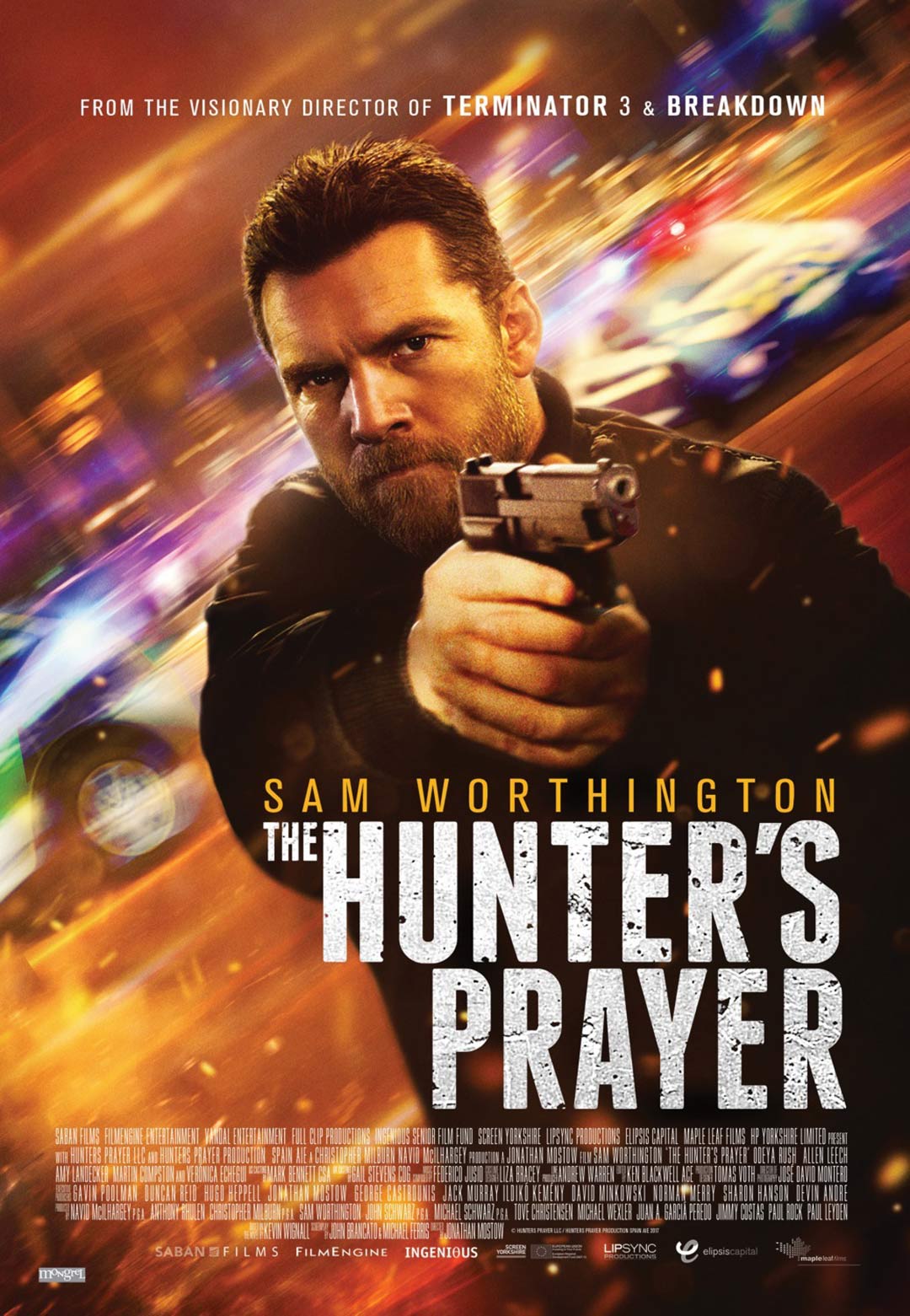
D: Jonathan Mostow / 91m

Cast: Sam Worthington, Odeya Rush, Allen Leech, Martin Compston, Amy Landecker, Verónica Echegui

A couple enjoying a quiet evening at home. A man (Compston) lurking in their garden. When the couple’s housekeeper lets out their dog, the man comes out of hiding, shoots the housekeeper and then heads straight into the house. He shoots the wife, and then the husband. He listens for any sound that might indicate there is anyone else in the house. Soon he is pouring something flammable over the furniture, and then setting it alight. As he drives away, flames in the house can be seen through his car’s rear window. The man has remained impassive throughout, and hasn’t said a word.

It’s a classic opening for a thriller: a hit that serves two purposes. It gets the audience asking themselves, what is going on; and it acts as notice from the makers that their movie is going to be tough and uncompromising. Except that here it also prompts another response, one that the makers won’t want audiences to think about, and piggy-backs off of that first purpose. That response is: why has this man gone to all the trouble of burning the bodies? It’s a question that’s never answered, but it’s indicative of a script that gets its characters to do lots of weird things on lots of different occasions… and by doing so, it robs the movie of any validity. If you see The Hunter’s Prayer, watch carefully and you will see all sorts of odd things going on, and where some movies can make these moments part of the fabric of the narrative, here, in Jonathan Mostow’s first movie since Surrogates (2009), all they do is draw attention to the deficiencies of a screenplay that no one thought to read more carefully.

However, this being a thriller with a degree of ambition, those deficiencies are overlooked while the plot lumbers on in search of a reason to exist. Adapted by Paul Leyden from the novel, For the Dogs (2004) by Kevin Wignall, The Hunter’s Prayer (which isn’t referenced once during the whole movie) concerns itself with the couple’s daughter, Ella (Rush), and the assassin, Lucas (Worthington), who was meant to kill her. That’s right, meant to kill her. The turgid plot that this hinges on is as follows: Ella’s father stole £25m from English businessman-cum-crook Richard Addison (Leech), and Addison wanted Ella killed first but Lucas didn’t do it in time, so her father and stepmother were killed instead. Now Addison still wants Ella killed, and Lucas has taken it on himself to protect her from the man (whose name is Metzger) and anyone else who might be hired to make it three out of three. Makes sense? No, of course it doesn’t.

To be fair, the script does address this issue, but then it quickly ignores it, preferring to see Ella and Lucas pursued across Europe in a pale imitation of The Bourne Identity (2002), whose wintry, isolated feel it tries to emulate. As usual in these kinds of movies, the pair is found easily whenever the script calls for an action sequence, and whatever efforts Lucas makes to keep them safe always opens them up to the potential of being killed instead. At one point, Ella and Lucas are on a train; he’s been shot in the leg and he’s arranged for a friend, Dani (Echegui), to treat his wound while they’re on the train. She does so, persuades Ella to get off at the next stop, and then attempts to kill Lucas by giving him a drug overdose (did you know Lucas was a high-functioning addict whose drug of choice is supplied to him by Addison? Don’t worry, there’s more). Thank God that the script’s choices of adversaries for Lucas are as dumb as a box of spanners, otherwise he would have been dead within the first fifteen minutes.
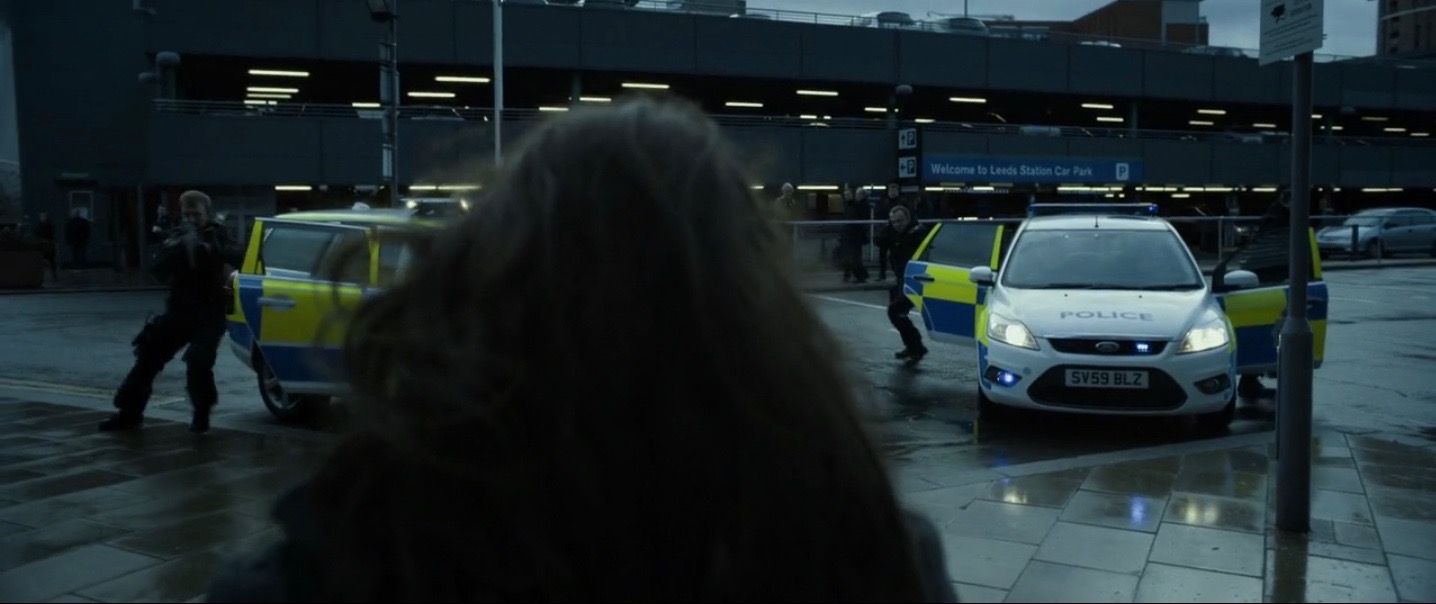
Despite the occasional attempt to intercept and kill them, Ella and Lucas make it to England, where Lucas has a hideout that’s conveniently in the same city, Leeds, that Addison has his business HQ. By now, the movie has decided to be as reckless with its own (limited) internal logic as it wants to be, and it sends Ella off to kill Addison at his offices. You can guess how successful she is from the image above, and while Lucas goes cold turkey in a matter of hours, Ella is put in the care of FBI Special Agent Gina Banks (Landecker), who is in Addison’s employ (don’t ask. No, really, don’t). There’s some guff about the £25m being hidden in a bank account only Ella has access to, and then everyone shows up at Addison’s country estate for the final showdown, which handily involves just three security guards for Lucas to get past, and Addison’s young son popping up with a bow and arrow (again, don’t ask).

There’s a real sense as you’re watching The Hunter’s Prayer that it’s all being made up on the spot, and that the movie has been shot in sequence with everyone improvising everything from character motivation to dialogue. If true, it explains why there are so many little ironies dotted throughout, or as on one occasion, a giant irony when Addison decides to spare Lucas because he’s not worth it, but still intends to kill Ella as an example to others. There are more – a lot more – but they all go toward making the movie feel like a terrible waste of everyone’s time and effort. Worthington isn’t the world’s best actor, and there are moments where his “skills” are cruelly exposed, as in the scene where Lucas explains to Ella that he can’t kill her. His expressions are bad enough, but what he does with his hands? Wow. Just – wow.
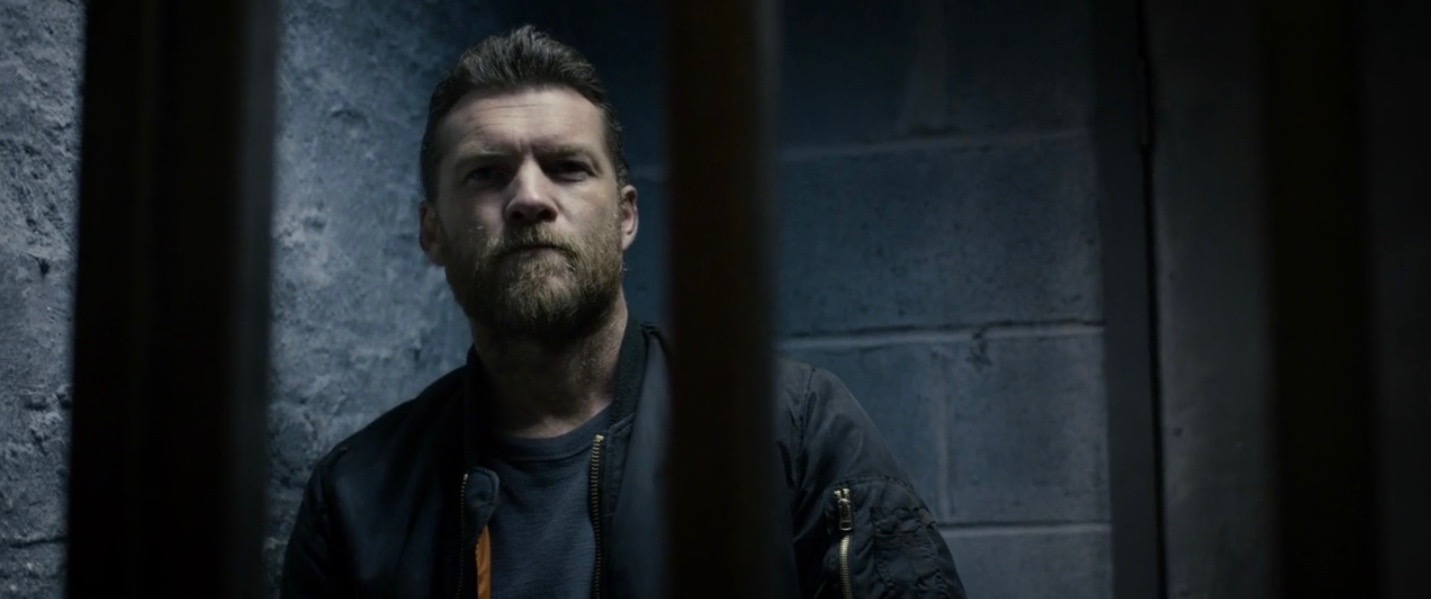
The rest of the cast run Worthington a combined close second in the bad acting stakes, with Leech overdoing his smarmy crook routine, Landecker struggling to make her FBI agent look and sound convincing, and Rush labouring under the optimistic impression that Ella is more than just a tired plot device. By the movie’s end it’s only Compston who gets off lightly, and that’s because he has so little dialogue. Attempting to organise it all, Mostow does what he can but most dialogue scenes are flat and don’t build on anything that’s gone before – at least not in a meaningful way – and the movie plods from action sequence to action sequence with all the intensity of a skin care advert. Only the action sequences themselves prove diverting enough, with Mostow and editor Ken Blackwell atoning for the poor choices made elsewhere and making them genuinely thrilling.

Somewhat inevitably, The Hunter’s Prayer is another movie that has sat on the shelf waiting for a distributor brave enough to take it on and give it a belated release. Shot in 2014, it’s further evidence that some movies really should be cancelled at the pre-production stage. It’s hard to believe that Saban Films saw enough in this to release it three years on, and it’s even harder to believe that this will gain any kind of an audience outside of the merely curious, or fans of Sam Worthington. Forgettable and beyond second-rate, it’s a movie that should be avoided at all costs. Seriously, if it’s a choice between this and a rectal exam, choose the rectal exam. It’ll be a lot less painful and it’ll be over sooner.

Rating: 3/10 – the kind of movie that should win a Razzie Award, The Hunter’s Prayer undermines itself at every turn, and wastes more opportunities than most movies of its type; banal, derivative, trite, depressing – it’s all these things and more, and a movie that you can bet will not be one that anyone involved in it will be highlighting on their resumé.
Share this:

  • Click to share on X (Opens in new window) X
  • Click to share on Facebook (Opens in new window) Facebook
  • More
  • Click to print (Opens in new window) Print
  • Click to email a link to a friend (Opens in new window) Email
Like Loading...

Hacksaw Ridge (2016)

06 Monday Feb 2017

Posted by dullwood68 in Movies

≈ 5 Comments

Tags

Andrew Garfield, Biography, Conscientious objector, Desmond Doss, Drama, Hugo Weaving, Mel Gibson, Review, Sam Worthington, Teresa Palmer, True story, Vince Vaughn, World War II

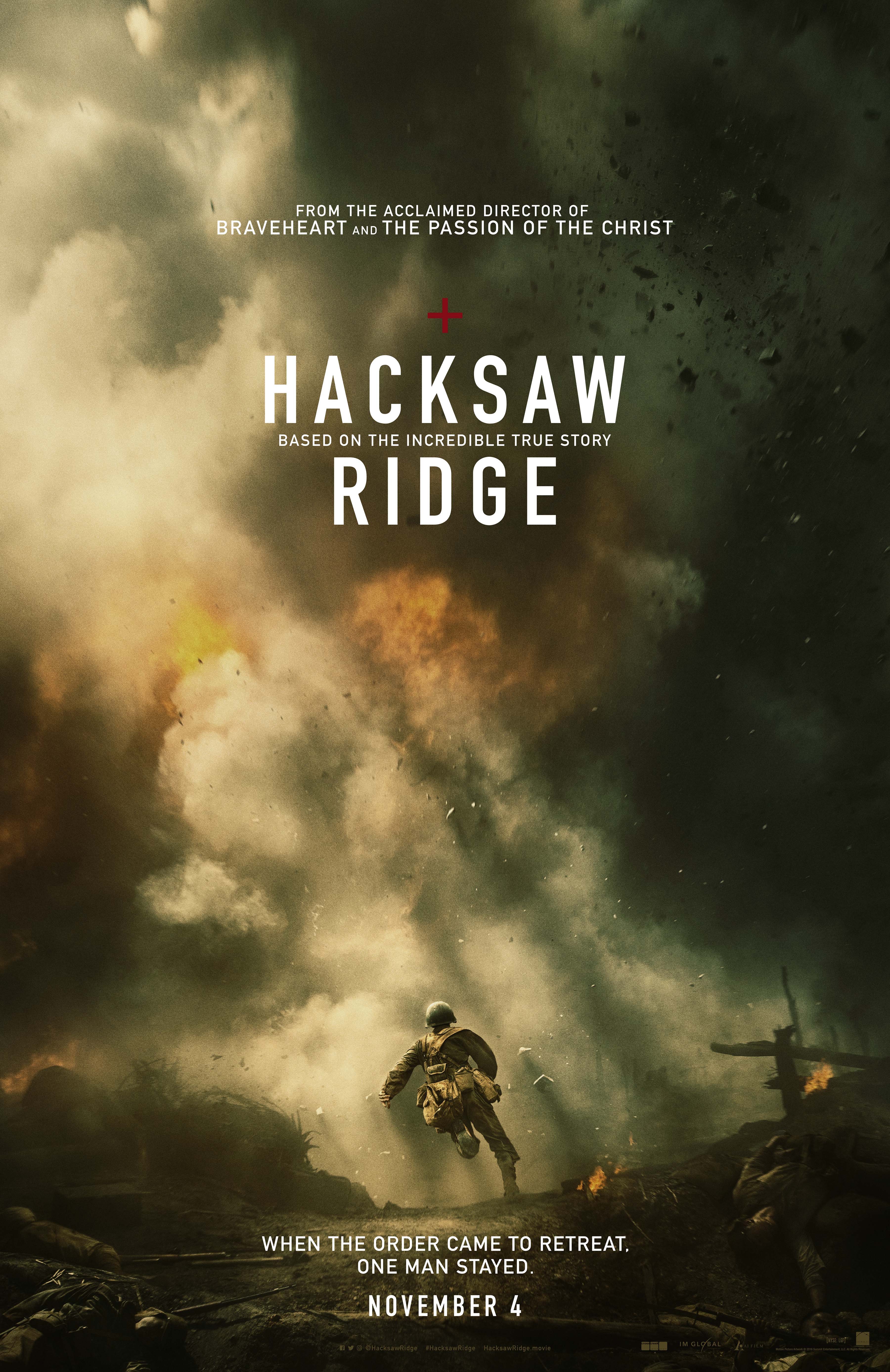
hacksaw-ridge-poster

D: Mel Gibson / 139m

Cast: Andrew Garfield, Sam Worthington, Teresa Palmer, Vince Vaughn, Luke Bracey, Hugo Weaving, Rachel Griffiths, Luke Pegler, Ben Mingay, Firass Dirani, Michael Sheasby, Nico Cortez, Goran D. Kleut, Richard Roxburgh, Ori Pfeffer

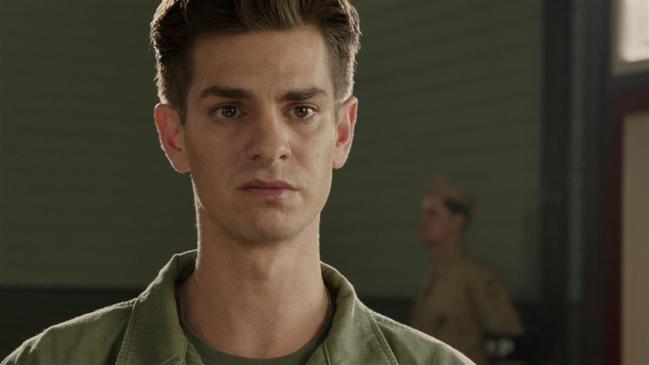
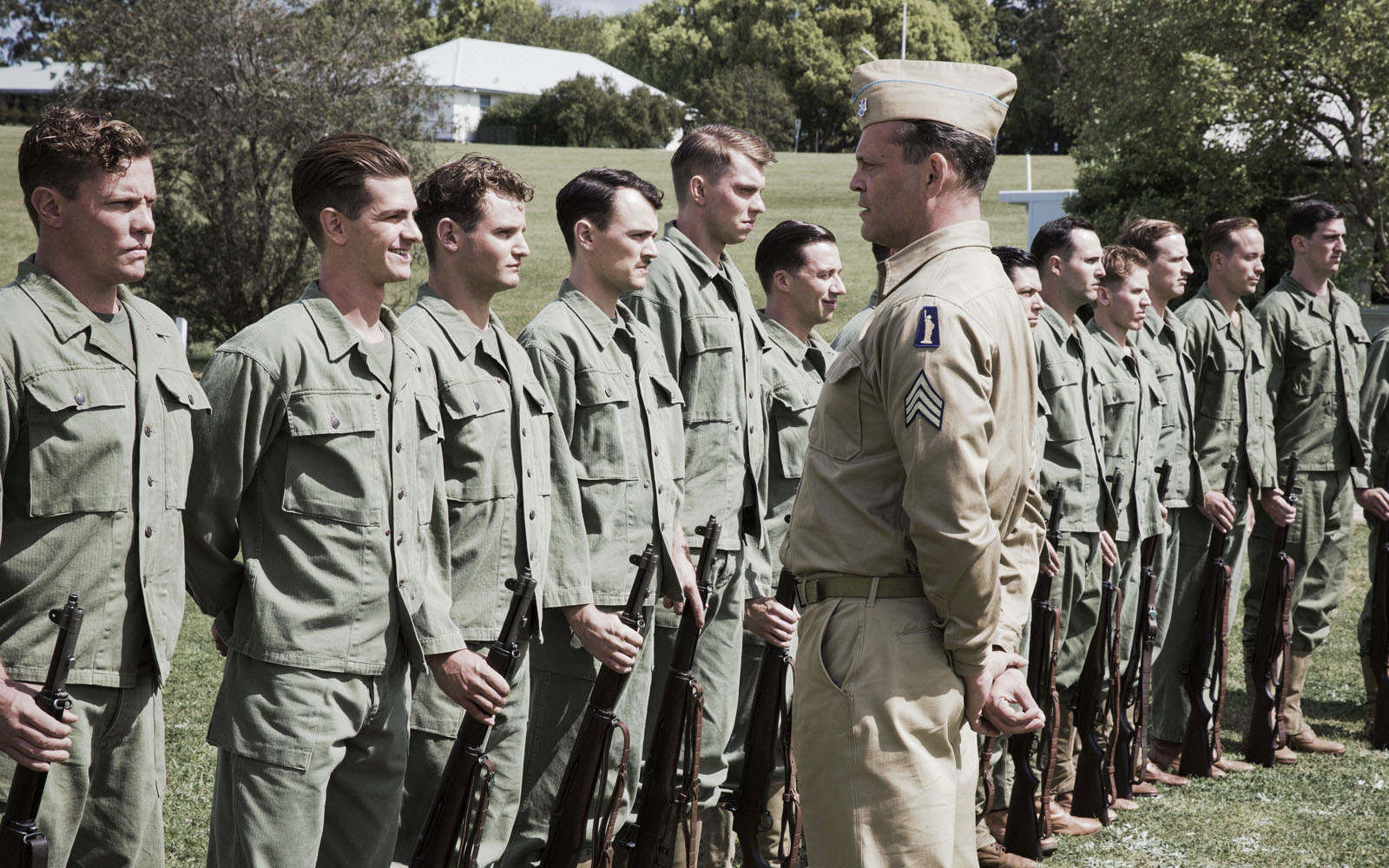
The story of Desmond T. Doss (Garfield) is one of those stories that seems tailor made for a big screen adaptation. After a childhood incident where he nearly kills his older brother, Desmond takes the sixth commandment, thou shalt not kill, very much to heart. When the US enters the Second World War, and pretty much every other young man has enlisted, Desmond enlists as well, and is sent to Fort Jackson in South Carolina for his basic training, he immediately upsets the normal order of things by refusing to touch a rifle… or indeed, any weapon. Naturally this antagonises his fellow trainees, and they make life difficult for him, as does his instructor, Sergeant Howell (Vaughn), and commanding officer, Captain Glover (Worthington), who want to see the back of Doss and his religious beliefs (he’s also a Seventh Day Adventist).

But Doss endures everything the army can throw at him, and begins to earn the respect of his comrades. However, when he’s given a direct order to pick up a gun and he refuses, he finds himself facing a court-martial. Luckily, a last-minute intervention by his father (Weaving), sees Doss allowed to take part in the war as a medic and without having to carry a rifle. Soon, Glover’s men, including Doss, are shipped out to the Pacific, and specifically, the island of Okinawa, where they are tasked with climbing the cliff face of the Maeda Escarpment – otherwise known as Hacksaw Ridge – and take on the Japanese forces that are dug in there. Their first attack is unsuccessful and they’re forced to take shelter on the ridge overnight. The next day they’re driven back down the Escarpment, leaving dozens of injured and wounded men behind.

hacksaw-ridge-2

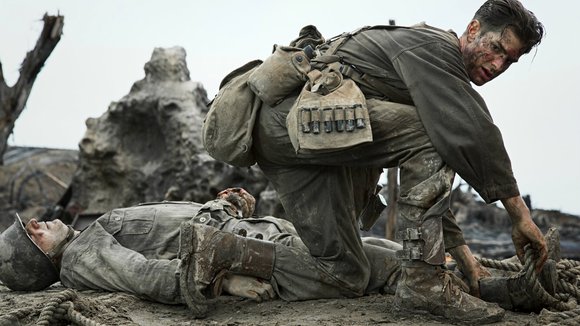
Doss, however, refuses to leave them there. Over the next twenty-four hours he rescues seventy-five men, keeping them safe from Japanese patrols and when it’s safe to do so, lowering them down the cliff face to the amazement of the US soldiers below. Doss’ last rescue saves the life of Sergeant Howell, and he and an equally chastened Captain Glover, admit how wrong they’ve been about Doss and the courage he’s shown in sticking to his beliefs, and in saving so many men. The next day, another assault is launched. This time it’s Doss who is injured, and this time it’s his fellow soldiers who have to take care of him.

Doss’s heroism – and rescue of so many men – is told in a straightforward, linear fashion (its prologue aside), and is respectful of the man and his beliefs to such a degree that there’s a danger of his being a symbol rather than a fully fledged character. But thanks to a combination of Robert Schenkkan and Andrew Knight’s moving screenplay, Andrew Garfield’s impressive performance as Doss, and Mel Gibson’s equally impressive directing turn, Hacksaw Ridge never lionises Doss to the extent where he’s portrayed as an above average human being doing something extraordinary. Instead, Doss’s humility and keen sense of purpose keep him grounded firmly and effectively, and his sincerity is never doubted. He’s exactly the kind of man you want fighting alongside you in battle. Garfield – on somewhat of a religious roll with this and Silence (2016) – expresses Doss’s beliefs with a keen sense of how important his faith is to him, and gives a performance that is subtly nuanced, honest, and hugely sympathetic. When he’s saying to God, “Help me to get one more”, there’s no other line of dialogue in the movie that so perfectly encapsulates Doss’s character and personality, or his sense of personal responsibility.

external

Garfield is helped and surrounded by a terrific supporting cast, from Weaving as Doss’s sad, alcoholic father, to Palmer’s girl-next-door who he falls in love with at first glance, and on to Bracey’s gung-ho soldier who accuses Doss of cowardice. Vaughn, who rarely strays from his comedy man-child persona, here does some of his best work in years as the gruff Sergeant Howell, berating his men in a toned-down version of R. Lee Ermey’s Sergeant Hartman in Full Metal Jacket (1987), and doing so with a thinly disguised layer of affection. On the home front, Palmer is suitably fresh and enticing as the love of Doss’s life, and Griffiths is appropriately supportive as his mother. Only Worthington, saddled with a stock character and some clumsy dialogue, fails to make an immediate impression (though once he’s on Doss’s side it’s easier for the viewer to be on his side too).

But overall, this is Gibson’s triumph through and through, a powerful, riveting war movie that features some of the most exhilarating and, at the same time, exhausting battle sequences since Saving Private Ryan (1998). But where Spielberg’s ground-breaking recreation of the Normandy landings was brutal and uncompromising, and featured someone – Tom Hanks’ Captain Miller – that the viewer could relate to during all the carnage, here Gibson switches perspectives between the US and Japanese soldiers almost at will, and in doing so, captures some of the true, overwhelming nature of hand-to-hand combat (while also seeming a little too pre-occupied with setting men on fire, images of which crop up time and again).

hacksaw-ridge-20160349

But while the fierce exchanges at Hacksaw Ridge are given their due, Gibson is on equally solid ground during the sequences set in Doss’s home town of Lynchburg, Virginia, and at Fort Jackson, imbuing the Lynchburg scenes with a rosy, yet melancholy feeling, and then beginning to make things seem a little darker at Fort Jackson. By the time Doss reaches Okinawa, the viewer is left in no doubt that what follows will make Doss’s childhood trauma and boot camp humiliations seem like a walk in the park. It’s a slow build up as well, allowing the audience to get better acquainted with the men who’ll go into battle with Doss (and maybe not return), and to fully understand the dynamic between Doss and his father, and the bond between Doss and his fiancée, Dorothy.

Tales of heroism are often about the act or acts themselves, but here it’s “Doss the coward” (as he’s referred to) who is the focus. His determination, and over-riding desire to save life while everyone else is taking it, is embodied by Garfield’s praiseworthy performance, and further endorsed by the movie’s gung-ho, populist rhetoric. If it strays a little too close to feeling like a soap opera at times (especially in its scenes at Lynchburg), or unintentional melodrama, then Gibson is astute enough to bring it back from the brink. All of which makes Hacksaw Ridge one of the most “authentic-looking” war movies ever made, as well as being a fine tribute to the exploits of a man whose beliefs are truly inspirational.

Rating: 8/10 – bolstered by Simon Duggan’s bold cinematography, and Barry Robison’s exemplary production design, Hacksaw Ridge sees Gibson the director on fine form, and making one of the most impressive war movies of recent years; harrowing, visceral, and yet uplifting at the same time, the battle sequences are the movie’s main draw, though the earlier scenes contain enough emotional clout as well to balance things out, all of which provides viewers with one of the most fearless and potent true stories of 2016.

Share this:

  • Click to share on X (Opens in new window) X
  • Click to share on Facebook (Opens in new window) Facebook
  • More
  • Click to print (Opens in new window) Print
  • Click to email a link to a friend (Opens in new window) Email
Like Loading...

Kidnapping Mr. Heineken (2015)

10 Sunday Jan 2016

Posted by dullwood68 in Movies

≈ 1 Comment

Tags

1982/3, Alfred Heineken, Amsterdam, Anthony Hopkins, Daniel Alfredson, Drama, Jim Sturgess, Kidnapping, Ransom, Review, Ryan Kwanten, Sam Worthington, Thriller, True story

Kidnapping Mr. Heineken

aka Kidnapping Freddy Heineken

D: Daniel Alfredson / 95m

Cast: Jim Sturgess, Sam Worthington, Ryan Kwanten, Anthony Hopkins, Mark van Eeuwen, Thomas Cocquerel, Jemima West, David Dencik

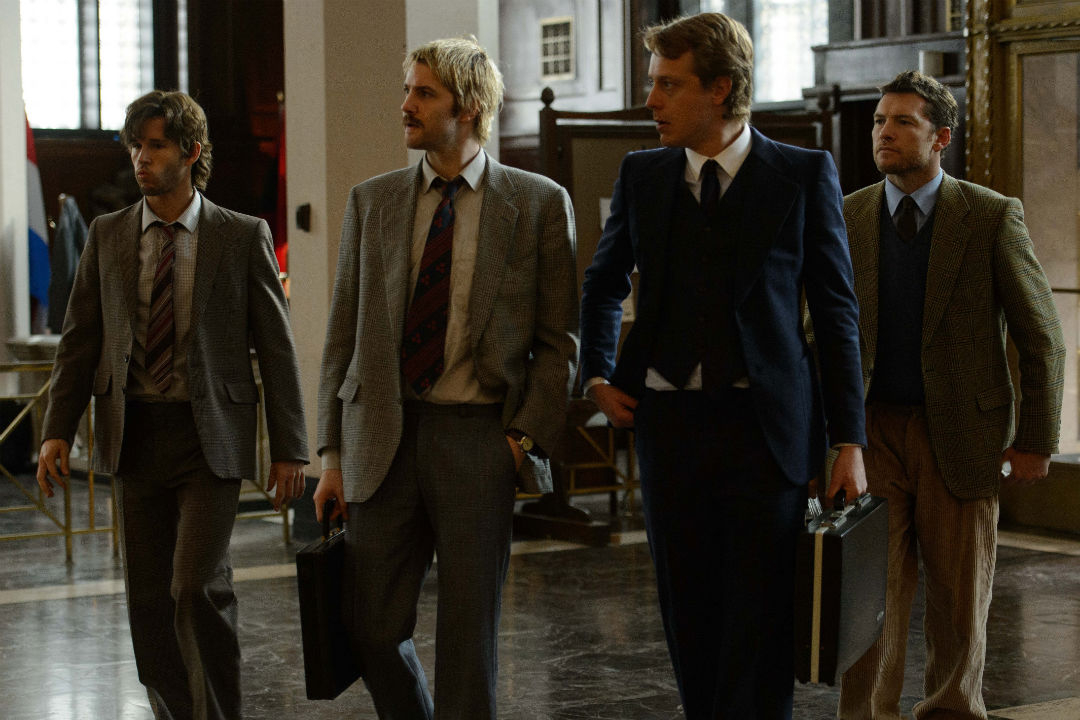
In 1982, five friends working and living in Amsterdam  – Cor Van Hout (Sturgess), Willem Holleeder (Worthington), Jan ‘Cat’ Boellard (Kwanten), Frans ‘Spikes’ Meijer (van Eeuwen), and Martin ‘Brakes’ Erkamps (Cocquerel) – are struggling to keep their construction business from going under. They don’t have any appreciable capital so the banks won’t lend them any money. But Cor has an idea (a New Year’s resolution in fact): to do something big, something that will see them all become immensely rich. That idea leads to a plan, and the plan is to kidnap the owner and founder of the Heineken brewery empire, Alfred ‘Freddy’ Heineken (Hopkins).

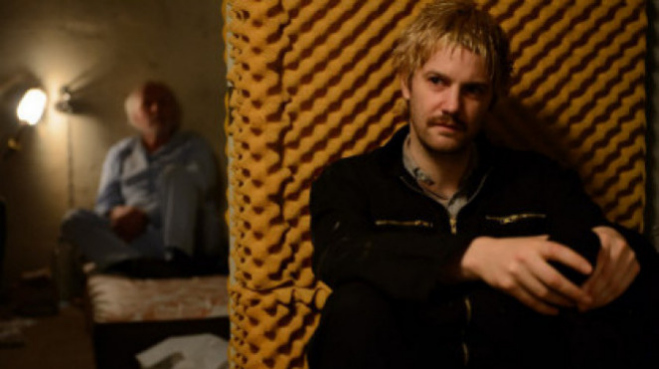
Needing to pull off this coup quite quickly, the five men begin to plan their abduction and how they will keep the ransom – $35m – and avoid being caught. They begin to watch Heineken to learn his routine, and to figure out the best time to grab him. They also realise that in order to look like professional kidnappers they’ll need to have some money behind them. So they rob a bank, and get away with enough cash to bankroll the abduction. At a shed owned by Jan, they construct soundproof cells where they can keep Heineken (and Ab Doderer (Dencik), his driver), and which are hidden behind false panelling.

KMH - scene2

The kidnapping is successful and the five men wait for the ransom note to be found by the police. They hole up at Jan’s shed, taking it in turns to check on Heineken and Doderer, and to wait for the ransom to be paid. But time passes, and after three weeks they’ve heard nothing. Willem is all for sending the police evidence that they will harm Heineken if the ransom isn’t paid, but when it comes to it he can’t do it. Another demand leads to the police and Heineken’s company agreeing to pay the ransom money, and the group successfully attain it. They stash most of it in buried tubes out in the forest, but in the days ahead they become more fearful and paranoid that the police will soon be snapping at their heels, and their long-term friendships begin to fray at the seams.

True stories – in the movies at least – usually come with the disclaimer that certain scenes, characters and/or dialogue have been fictionalised or conflated or created for dramatic purposes. This we know, and it’s always the problem with telling a true story: just how much of what you’re seeing is really true. The answer, of course, is absolutely none of it. It doesn’t matter if its’s based on a true story, or has the backing and involvement of the people it concerns or portrays, every single movie that’s based on a true story, or real events – what you’re watching is never going to be exactly what happened. And while we all know this deep down, still we take for granted that what we’re seeing actually happened, as if the writer(s), director(s) and cast have a special way of recreating past events exactly as they happened.

KMH - scene1

Sadly for Kidnapping Mr. Heineken, if that were the case, then it might help obscure or erase the movie’s most fundamental problem: it’s not in the least bit convincing or dramatic enough to work. A belated English language remake of The Heineken Kidnapping (2011), the movie is a tired, tangled piece that features five men who don’t seem to have anything in common except they take to kidnapping with apparent ease, especially when it comes to abandoning their consciences (not one of them offers any objections to the idea). And there’s an incredible naïvete about their decision that’s never properly addressed; none of them have a criminal background but they take to being criminals as if it were the most natural, and easiest, thing in the world.

With the movie establishing an awkward tone from the start, the middle section does little to rescue things, as Heineken gets the chance to be belligerent and caustic to his kidnappers on a regular basis, and they all sit around wondering why the ransom hasn’t been paid. Five more glum-looking faces you’re unlikely to see for quite some time, as the movie – scripted by William Brookfield from the book by Peter R. de Vries – fails to add any tension to proceedings, even when Willem wants to get violent. It gives rise to an odd feeling, that neither Brookfield nor Alfredson have made any connection to the story, and are telling it out of some sense of obligation.

The same can be said of the cast. Sturgess, usually a sharp-minded presence on screen, here seems held back by the vagaries of the script, in particular with regard to Cor’s relationship with his girlfriend Sonia (West), which appears to be of minor importance during the abduction but assumes a disproportionate relevance in the movie’s final third. Worthington continues to make audiences wonder why he gets so much work, giving a performance that’s so stiff you expect him to seize up at any moment. And Kwanten, thanks to one of the scruffiest wigs seen in ages, will have viewers trying to work out who he is (in real life) rather than how good his performance is. But spare a thought for Hopkins, playing yet another supporting performance and having to go from assured patriarch to rambling mental patient in the space of a competently edited chase sequence.

KMH - scene3

The story of Alfred Heineken’s kidnapping was a major news story at the time – in Holland at least – and is notable still today for the ransom being the largest ever paid for an individual, and for the fact that some of the money has never been recovered. The movie cites this at the end, along with the fates of the main characters (two of which may come as a very big surprise). But by then you’ll be less than interested, and just as relieved as Heineken probably was at being rescued from it all.

Rating: 4/10 – plodding, uninspired and plain dull for long stretches, Kidnapping Mr. Heineken is a movie that lacks commitment from its cast and crew, and ambles along with all the urgency of a downhill racer missing his skis; broadly factual (ironically, de Vries, who was an advisor on the movie, subsequently refused to watch the movie, citing numerous discrepancies between the movie and what really happened), this is a movie that gives new meaning to the words defiantly turgid.

Share this:

  • Click to share on X (Opens in new window) X
  • Click to share on Facebook (Opens in new window) Facebook
  • More
  • Click to print (Opens in new window) Print
  • Click to email a link to a friend (Opens in new window) Email
Like Loading...

Cake (2014)

07 Saturday Mar 2015

Posted by dullwood68 in Movies

≈ Leave a comment

Tags

Adriana Barraza, Anna Kendrick, Chronic pain, Daniel Barnz, Drama, Freeway, Jennifer Aniston, Review, Sam Worthington, Suicide, Tijuana

Cake

D: Daniel Barnz / 102m

Cast: Jennifer Aniston, Adriana Barraza, Sam Worthington, Anna Kendrick, Mamie Gummer, Felicity Huffman, Chris Messina, William H. Macy, Lucy Punch, Britt Robertson

Claire Bennett (Aniston) attends a chronic pain support group following a car accident that has left her severely injured and in constant pain. At one meeting she learns that another member of the group, Nina Collins (Kendrick), has committed suicide. When it’s Claire’s turn to express how she feels about this, she is cruel and acerbic. When she gets home, she finds a message on her phone from Annette (Huffman) who suggests Claire find another support group. There’s another message, from her estranged husband, Jason (Messina), but she ignores it.

Claire has a housemaid, Silvana (Barraza), who also drives her from place to place when needed. They have a combative relationship, especially when it comes to the amount of medication Claire consumes (she even hides extra pills around the house). However, Claire relies on her too much to fire her. One night, Claire has a vision of Nina in which Nina challenges Claire as to why she hasn’t committed suicide herself. The next day, at her aquatic therapy appointment Claire tries to drown herself but her instinct for survival stops her. Following this, Claire contacts Annette and blackmails her into giving her Nina’s address. She goes there and meets Nina’s husband, Roy (Worthington).

A mutually supportive relationship develops between them. This leads to Claire beginning to feel a little better about herself (though she still persuades Silvana to take her to Tijuana where she can get some stronger, non-prescribed medication). She starts to make things up to people, including Annette, and allows Roy to bring his son over to her house for lunch. The visit prompts several unhappy reminiscences but while she’s able to deal with them it proves impossible when Claire receives another, unwanted, visitor: the man (Macy) who caused the car accident. Claire attacks him and later takes an overdose. In hospital, and following another disturbing vision of Nina, she makes the decision to try and get by without any further medication.

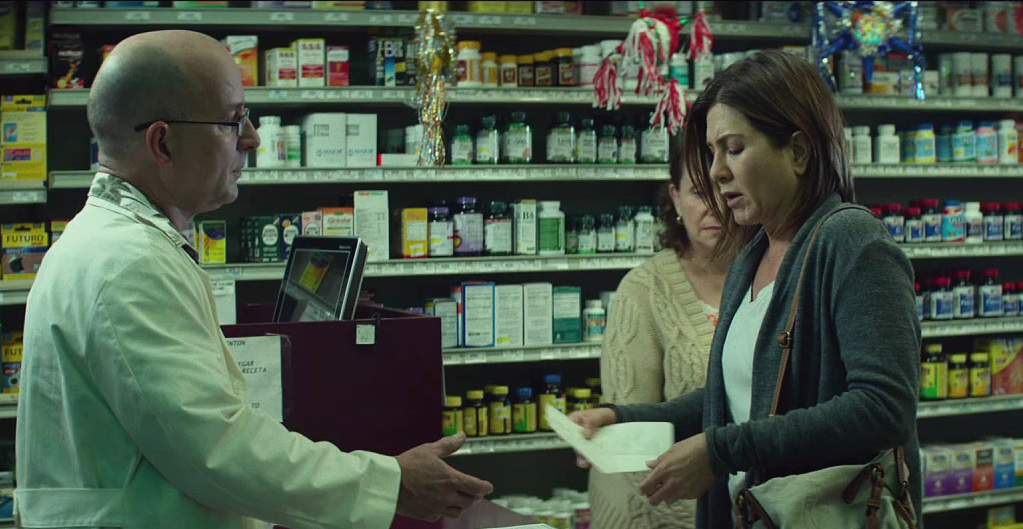
Cake - scene

An often stark, unshowy drama with spells of unexpected indifference to its own characters, Cake nearly overcomes its dour presentation thanks to an inspired performance by Aniston. In many ways, the movie wouldn’t be as good without her – she provides some much needed depth throughout, and a strong focal point. Claire is a great role for any actress, but Aniston is convincing from beginning to end, every painful twitch and grimace played so naturally the viewer could be forgiven for wondering if Aniston had deliberately injured herself ahead of filming.

With her puffy face, lank hair and baggy clothing, Claire is a woman whose only focus in life is her physical pain; beyond that, everything else is of minimal importance. She’s wounded, physically and emotionally, and is struggling to move forward. Without her medication, or her caustic view on life, she would have nothing. Struggling to keep mind and body together, she bullies Silvana, manipulates Roy, and keeps her distance from Jason, but even with these interactions and off-kilter relationships – especially her visions of Nina – she begins to find a way back to the person she was before the accident. It’s a gradual, carefully shaded portrayal, with Aniston keeping a lot below the surface but using her eyes to convey the warring emotions inside Claire. It’s an honest, deeply affecting performance and Aniston’s presence in the movie, as mentioned above, makes it all the more compelling.

If Aniston hadn’t committed to the project, or a similar performance hadn’t been provided by another actress, then Cake would not be as good a movie as it is. The problem lies with Patrick Tobin’s emotionally redolent screenplay, which focuses so completely on its main character that, Silvana aside, everyone else is underwritten and orbit around Claire to little effect. Roy and Claire’s relationship always looks to be a platonic one, so the usual will-they-won’t-they dramatics are ignored from the moment they first meet (there’s also a distinct lack of chemistry between Aniston and Worthington that undercuts things even further). The only other character of merit is Nina, but Kendrick is stuck with playing her as interfering and annoying rather than as the representation of Claire’s conscience that she should be. Thankfully, Barraza gives a wonderful performance that often matches Aniston’s for emotional honesty, Silvana’s increasing affection for Claire given full expression through every exasperated sigh and shrug of her shoulders.

The rest of the movie contains a lot of elements that don’t appear fully formed or thought through. Nina’s suicide, the McGuffin that propels the movie, is never explored from the angle of why she was at the pain support group in the first place, and the note she leaves, while meant to be poignant, instead comes across as poorly chosen and clichéd. Macy’s character turns up for no discernible reason other than as a chance to inject some much needed (actual) drama into proceedings; by this time we know the circumstances of Claire’s accident and its consequences, so it’s baffling as to why he’s there. And a later sequence that sees Claire chatting regretfully with Nina while lying across a train track, and which should be one of the movie’s standout moments, is let down by some trite dialogue and Barnz’ clumsy framing.

Further problems are caused by Barnz’ inability to maintain a consistent tone, and to move the camera in ways that might prove visually interesting, or at least stave off the criticism that most scenes are made up of dull shots of Claire being upset. It’s a bland, desaturated movie to watch, with disjointed rhythms and a lack of grace when dealing with shifts in emphasis and mood. There are moments of black humour – Claire asking Roy where he got the granite for Nina’s headstone as it’s the same material she’d like for a kitchen revamp – but Barnz doesn’t treat them any differently from occasions when Claire is feeling maudlin, or angry, or reflective. Yes, Claire is in some ways emotionally numb (if not physically so), but not to the extent that she’s operating on the same level at all times. But Barnz hits a plateau early on and rarely makes any attempt to aim any higher.

Rating: 5/10 – saved from being completely off-putting by Aniston’s intense, award-worthy performance, Cake is a movie that struggles with its own premise and never gets off the ground; occasionally heartfelt but mostly sterile in nature, it’s a movie that holds too much back in terms of its narrative to be successful.

Share this:

  • Click to share on X (Opens in new window) X
  • Click to share on Facebook (Opens in new window) Facebook
  • More
  • Click to print (Opens in new window) Print
  • Click to email a link to a friend (Opens in new window) Email
Like Loading...

Sabotage (2014)

28 Wednesday May 2014

Posted by dullwood68 in Movies

≈ 2 Comments

Tags

Action, Arnold Schwarzenegger, Crime, David Ayer, DEA agents, Drugs cartel, Murder, Olivia Williams, Review, Robbery, Sam Worthington, Stolen money

sabotage_c82f99af

D: David Ayer / 109m

Cast: Arnold Schwarzenegger, Sam Worthington, Olivia Williams, Terrence Howard, Mireille Enos, Joe Manganiello, Harold Perrineau, Josh Holloway, Max Martini, Kevin Vance, Martin Donovan

When a DEA task force led by veteran John “Breacher” Wharton takes down a house used by a Mexican drugs cartel, it becomes clear they have a more primary mission their superiors know nothing about: to steal $10 million of the cartel’s money.  Hiding the money in the sewers to be collected later, “Breacher” and his team – “Monster” (Worthington), “Grinder” (Manganiello), “Sugar” (Howard), “Neck” (Holloway), “Pyro” (Martini), “Tripod” (Vance), and Lizzy (Enos) – are soon under investigation by Internal Affairs on suspicion of stealing the money, but when they go to collect it, they find it’s gone.  Six months later, and with IA having found no evidence to prove they took the money, “Breacher” and his team are reinstated.

Shortly after, one of the team is killed when his trailer is hit by a train (it was moved onto the tracks while he was unconscious).  The death is investigated by Detective Caroline Brentwood (Williams) and her partner Darius Jackson (Perrineau).  Attempting to interview the team proves fruitless, and Brentwood enlists “Breacher”‘s help in talking to them.  They visit one of the team, only to find he’s been killed as well, and in a way that suggests the Mexican drugs cartel is targeting them in retaliation for stealing the money.  They find a third member of the team murdered also, along with clear evidence that he was killed by the cartel, one of whom they find dead nearby.  Jackson traces the dead man’s mobile phone to an apartment block; he and Brentwood take a squad there to arrest them but “Breacher” and the remainder of his team get there first and kill the men they find there, only to discover they aren’t the cartel’s hit squad.  When the bodies of the cartel hit squad are found a short time after, and it becomes clear they couldn’t have committed the first two murders, “Breacher” realises it’s one of his team that is picking them off one by one.

Things quickly unravel.  One of the team tells Brentwood about the money, and is subsequently murdered while talking to her and “Breacher”.  With no other possibilities as to the murderer’s identity, “Breacher” agrees to a meeting with them.  In the ensuing showdown, the whereabouts of the money is revealed and the motive for its theft becomes clear.

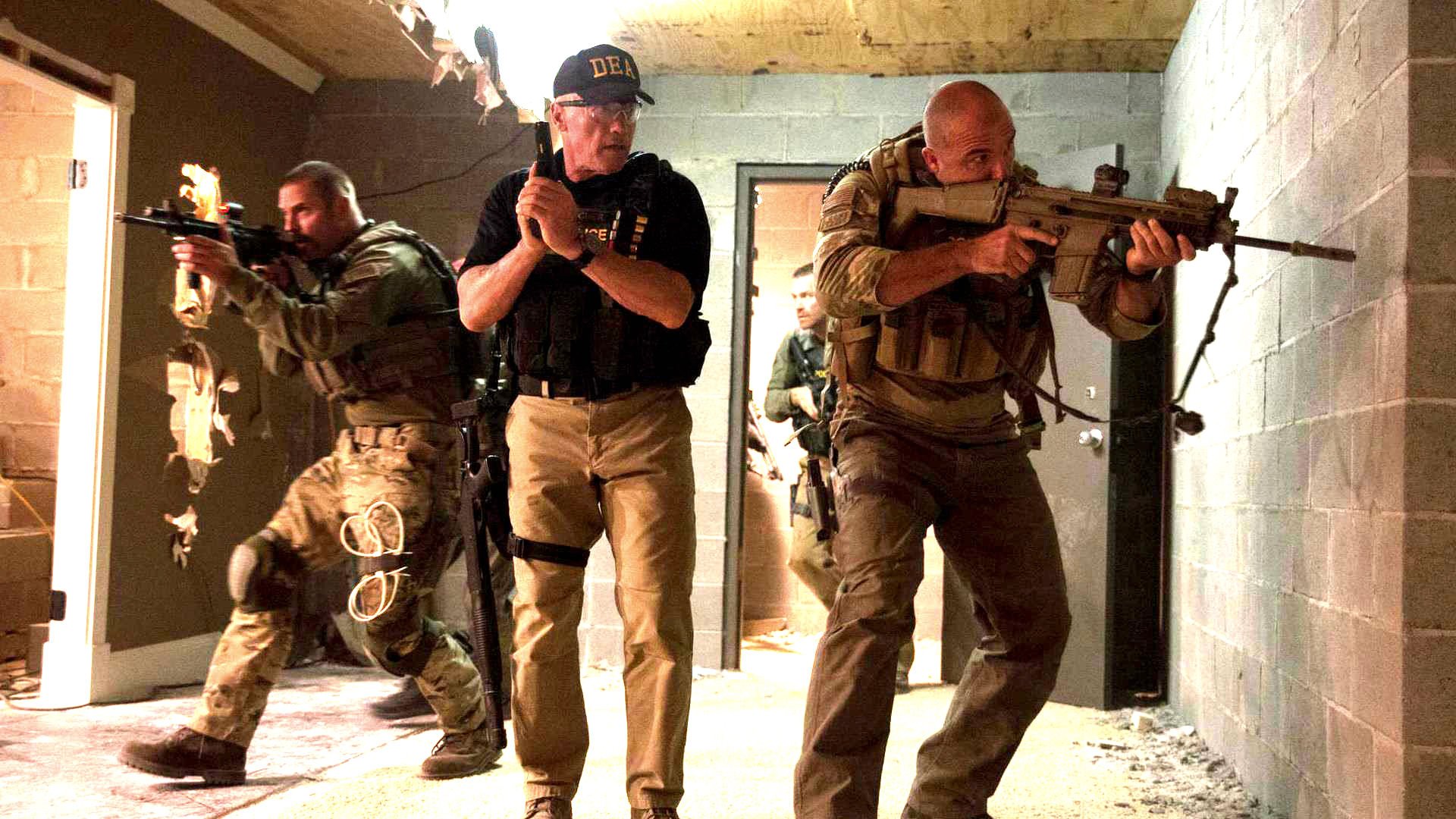
Sabotage (2014) - scene

Aiming for the kind of contemporary, gritty, urgent, down and dirty feel achieved in two of Ayer’s other outings as a writer – Training Day (2001) and End of Watch (2012) – Sabotage starts promisingly enough with a well-staged assault on the cartel house but then stumbles badly with its decision to delay the ensuing action for six months.  It doesn’t make sense that the cartel would wait that long to make their reprisals, nor that the killer within the team – especially when their motive is revealed – would also wait so long to target their teammates.  There’s also the matter of the back story involving “Breacher” that is revealed halfway through, which, once out in the open, muddies the waters even further.  With three separate ways of approaching the murders, and the reasons for them, Ayer’s script does its best to keep things as straightforward as possible, but there are too many times when narrative complexity is abandoned for moving the story along quickly to the next action sequence.  This leads to some lapses in logic that also weaken proceedings, such as Brentwood jumping into bed with “Breacher” at the drop of a hat, and “Breacher” allowing one of his team to have a drug problem, and there’s an air of convenience throughout.

Continuing his return to the big screen, Schwarzenegger puts in a grizzled performance that still relies on his trademark squint and square-jawed impassivity.  He’s the rock that anchors the movie but he doesn’t bring anything new to the table, and coasts on his physical presence, leaving the emoting to the rest of the cast (it’s still good to have him back though).  The casting of Williams is an interesting choice but she’s hampered by having to provide “Breacher” with a potential love interest, as well as trying to be a bad-ass detective.  From the team, Worthington and Enos fare best, while Holloway, whose career post-Lost seems to consist of uninspiring cameo turns, is forgettable in a role that appears written as one-dimensional.  Howard is sidelined for much of the movie, and Perrineau is the kind of peppy partner who’s so annoying you wonder why Brentwood hasn’t already shot him for the peace and quiet.

What hampers the movie most, though, is the curiously flat feel it has.  Everything happens at the same pitch, with little or no attempt to make even the action scenes tense or exciting, and the drama is disappointing for being so casually handled.  With Ayer’s direction largely AWOL, his and Skip Woods’ script is left to fend for itself, and its limitations are cruelly highlighted as a result.  By the time we get to the movie’s epilogue – a long time coming in and of itself – the viewer is left wondering what was the point.

Rating: 5/10 – not quite as terrible as it looks, Sabotage is nevertheless a serious letdown given the talent involved; one for fans of Ah-nold, and best viewed as an undemanding Saturday night/beer and a takeaway movie.

Share this:

  • Click to share on X (Opens in new window) X
  • Click to share on Facebook (Opens in new window) Facebook
  • More
  • Click to print (Opens in new window) Print
  • Click to email a link to a friend (Opens in new window) Email
Like Loading...

Blog Stats

  • 490,512 hits

Recent Posts

  • 10 Reasons to Remember Bibi Andersson (1935-2019)
  • Fantasia (1940)
  • Dances With Wolves (1990) – The Special Edition
  • Kiss of the Spider Woman (1985)
  • The Three Musketeers (1973)

Top Posts & Pages

  • The Dark Tower (2017)
    The Dark Tower (2017)
  • The White Orchid (2018)
    The White Orchid (2018)
  • Lost for Life (2013) - Another Look
    Lost for Life (2013) - Another Look
  • Captain Fantastic (2016)
    Captain Fantastic (2016)
  • Miss Baek (2018)
    Miss Baek (2018)
  • Two Shorts by François Ozon: A Summer Dress (1996) and X2000 (1998)
    Two Shorts by François Ozon: A Summer Dress (1996) and X2000 (1998)
  • Central Intelligence (2016)
    Central Intelligence (2016)
  • Taken (2008)
    Taken (2008)
  • A Brief Word About Cineworld Unlimited
    A Brief Word About Cineworld Unlimited
  • Nancy Drew... Reporter (1939)
    Nancy Drew... Reporter (1939)
Follow thedullwoodexperiment on WordPress.com

Blogs I Follow

  • Rubbish Talk
  • Film 4 Fan
  • Fast Film Reviews
  • The Film Blog
  • All Things Movies UK
  • Interpreting the Stars
  • Let's Go To The Movies
  • Movie Reviews 101
  • TMI News
  • Dan the Man's Movie Reviews
  • Film History
  • Jordan and Eddie (The Movie Guys)

Archives

  • April 2019 (13)
  • March 2019 (28)
  • February 2019 (28)
  • January 2019 (32)
  • December 2018 (28)
  • November 2018 (30)
  • October 2018 (29)
  • September 2018 (29)
  • August 2018 (29)
  • July 2018 (30)
  • June 2018 (28)
  • May 2018 (24)
  • April 2018 (21)
  • March 2018 (31)
  • February 2018 (25)
  • January 2018 (30)
  • December 2017 (30)
  • November 2017 (27)
  • October 2017 (27)
  • September 2017 (26)
  • August 2017 (32)
  • July 2017 (32)
  • June 2017 (30)
  • May 2017 (29)
  • April 2017 (29)
  • March 2017 (30)
  • February 2017 (27)
  • January 2017 (32)
  • December 2016 (30)
  • November 2016 (28)
  • October 2016 (30)
  • September 2016 (27)
  • August 2016 (30)
  • July 2016 (30)
  • June 2016 (31)
  • May 2016 (34)
  • April 2016 (30)
  • March 2016 (30)
  • February 2016 (28)
  • January 2016 (35)
  • December 2015 (34)
  • November 2015 (31)
  • October 2015 (31)
  • September 2015 (34)
  • August 2015 (31)
  • July 2015 (33)
  • June 2015 (12)
  • May 2015 (31)
  • April 2015 (32)
  • March 2015 (30)
  • February 2015 (37)
  • January 2015 (39)
  • December 2014 (34)
  • November 2014 (34)
  • October 2014 (36)
  • September 2014 (25)
  • August 2014 (29)
  • July 2014 (29)
  • June 2014 (28)
  • May 2014 (23)
  • April 2014 (21)
  • March 2014 (42)
  • February 2014 (38)
  • January 2014 (29)
  • December 2013 (28)
  • November 2013 (34)
  • October 2013 (4)

Create a free website or blog at WordPress.com.

Rubbish Talk

Film 4 Fan

A Movie Blog

Fast Film Reviews

The Film Blog

The official blog of everything in film

All Things Movies UK

Movie Reviews and Original Articles

Interpreting the Stars

Dave Examines Movies

Let's Go To The Movies

Film and Theatre Lover!

Movie Reviews 101

Daily Movie Reviews

TMI News

Latest weather, crime and breaking news

Dan the Man's Movie Reviews

All my aimless thoughts, ideas, and ramblings, all packed into one site!

Film History

Telling the story of film

Jordan and Eddie (The Movie Guys)

Movie Reviews & Ramblings from an Australian Based Film Fan

Privacy & Cookies: This site uses cookies. By continuing to use this website, you agree to their use.
To find out more, including how to control cookies, see here: Cookie Policy
  • Subscribe Subscribed
    • thedullwoodexperiment
    • Join 481 other subscribers
    • Already have a WordPress.com account? Log in now.
    • thedullwoodexperiment
    • Subscribe Subscribed
    • Sign up
    • Log in
    • Report this content
    • View site in Reader
    • Manage subscriptions
    • Collapse this bar
 

Loading Comments...
 

    %d