• 10 Reasons to Remember…
  • A Brief Word About…
  • About
  • For One Week Only
  • Happy Birthday
  • Monthly Roundup
  • Old-Time Crime
  • Other Posts
  • Poster of the Week
  • Question of the Week
  • Reviews
  • Trailers

thedullwoodexperiment

~ Viewing movies in a different light

thedullwoodexperiment

Tag Archives: Comedy

Band of Robbers (2015)

14 Thursday Apr 2016

Posted by dullwood68 in Movies

≈ Leave a comment

Tags

Aaron Nee, Adam Nee, Comedy, Criminal, Drama, Friendship, Huckleberry Finn, Injun Joe, Kyle Gallner, Mark Twain, Matthew Gray Gubler, Melissa Benoist, Murrell's treasure, Policeman, Review, Stephen Lang, Tom Sawyer
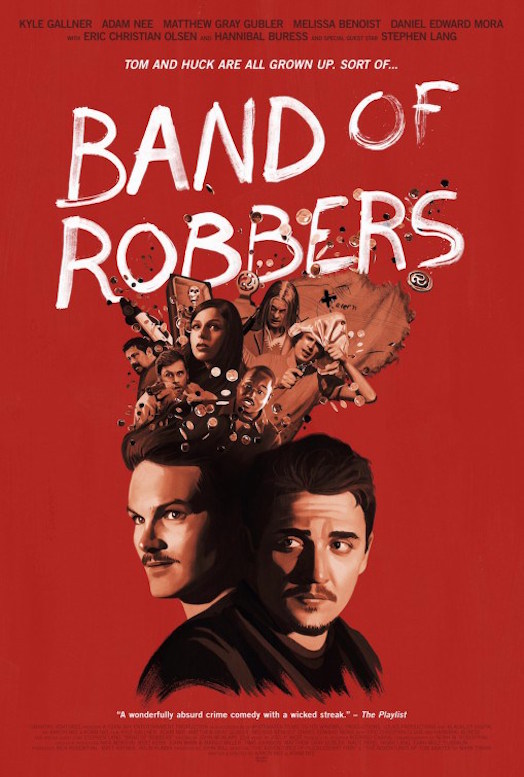
Band of Robbers

D: Aaron Nee, Adam Nee / 95m

Cast: Kyle Gallner, Adam Nee, Matthew Gray Gubler, Melissa Benoist, Hannibal Buress, Stephen Lang, Daniel Edward Mora, Johnny Pemberton, Eric Christian Olsen, Cooper Huckabee, Beth Grant

Sometimes the best movies happen because somebody had a “what if?” idea. What if toys had a life of their own? What if an amnesiac remembered the important parts of his life by tattooing them on his body? What if Netflix were to give Adam Sandler a six picture contract with carte blanche as to the movies he makes? (Hmmm…) Another great “What if?” idea is the one that makes Band of Robbers so intriguing (and appealing): what if Tom Sawyer and Huckleberry Finn were adults in the modern world, and they were still trying to find Murrell’s hidden treasure?

In the hands of the Brothers Nee, this idea is given a great deal of dramatic and comedic licence, with the older Tom and Huck still friends but on opposite sides of the law (or so it seems). Huck (Gallner) is a petty criminal who has just got out of prison and is determined to go straight. Tom (Nee) is a policeman living and working in the shadow of his older brother, Sid (Olsen). Tom is also a dreamer, still obsessed with finding the treasure that eluded Huck and him when they were boys. So when Huck is released from jail, it’s only natural that Tom is there to meet him. And it’s only natural that Tom has a plan, one that includes Huck, and their three friends, Joe Harper (Gubler), Ben Rogers (Buress), and Tommy Barnes (Pemberton).

Band of Robbers - scene2

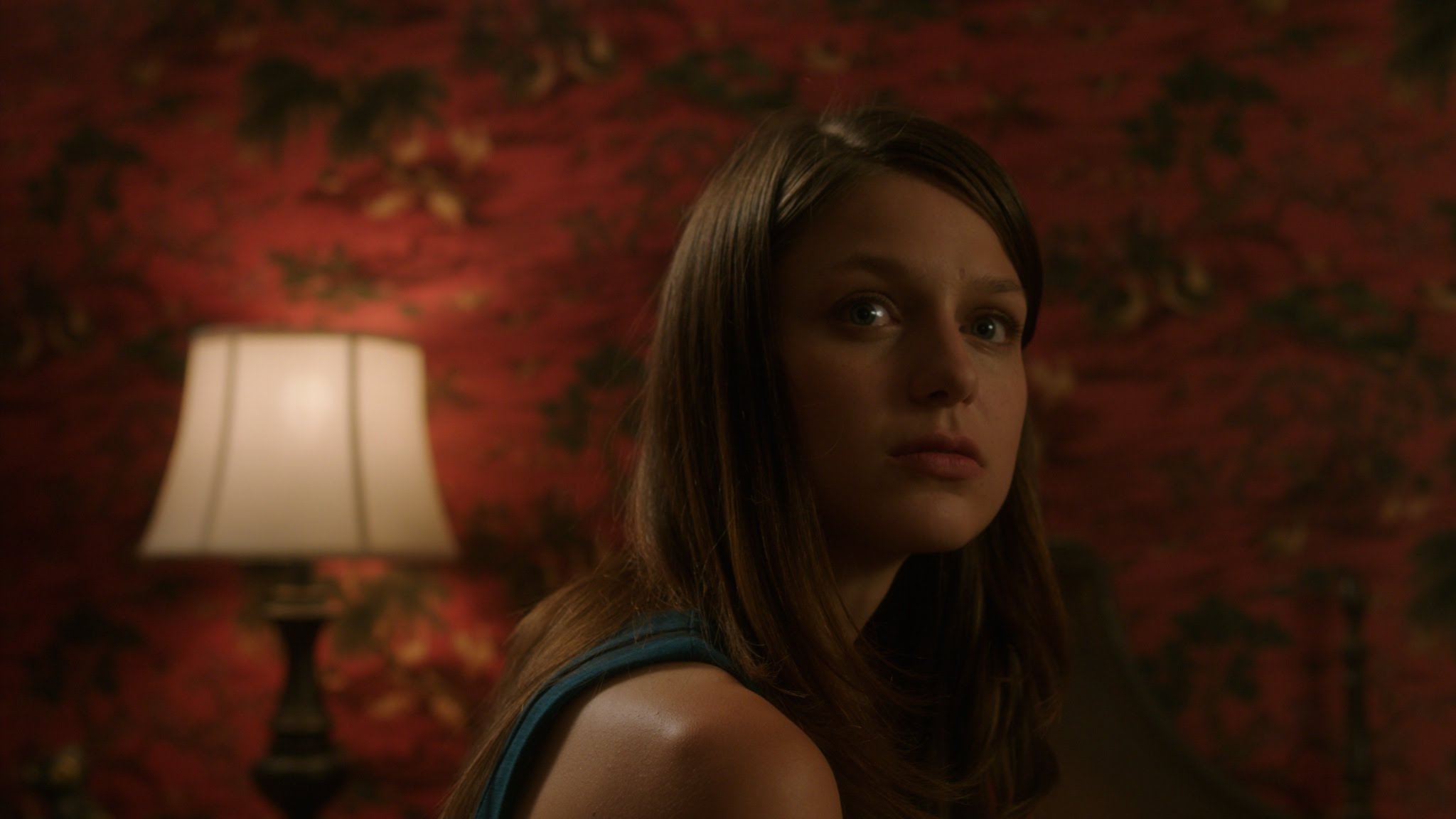
His plan is based on dubious intelligence gained from local sot Muff Potter (Huckabee). Muff has seen Injun Joe (Lang) – who has also never given up on finding the treasure – depositing something in the safe of a local pawn shop. Surmising that it must be something of great value to Injun Joe for him to keep it there, Tom has deduced (without any concrete evidence) that it must be the treasure that’s stowed away in the pawn shop’s safe. He devises a plan to rob the pawn shop that seems foolproof enough, but on the day his plan is stretched almost to ruin. First he’s teamed up with a new partner, Becky Thatcher (Benoist), then Joe forgets to hire a Mexican to drive the van he hasn’t stolen for the robbery (don’t worry, it does all makes sense in the context of the movie), and instead of stockings for Joe and Huck to wear, they’re stuck with carrier bags. But they do get away with the contents of the safe: what amounts to around two hundred dollars and a pewter coin.

Of course the pewter coin proves to be a clue to the whereabouts of the hidden treasure, but from this point on, Huck and Tom are pursued by Injun Joe. And as they solve another set of clues, Becky’s involvement – and awareness that Tom is up to no good – adds to the two friends’ predicament. And as Injun Joe’s “methods” of tracking them down leads to a surfeit of dead bodies, it becomes more and more difficult for Tom and Huck to find a way out that will keep both of them alive and out of jail. And then there’s the problem of the Mexican gardener, Jorge (Mora)…
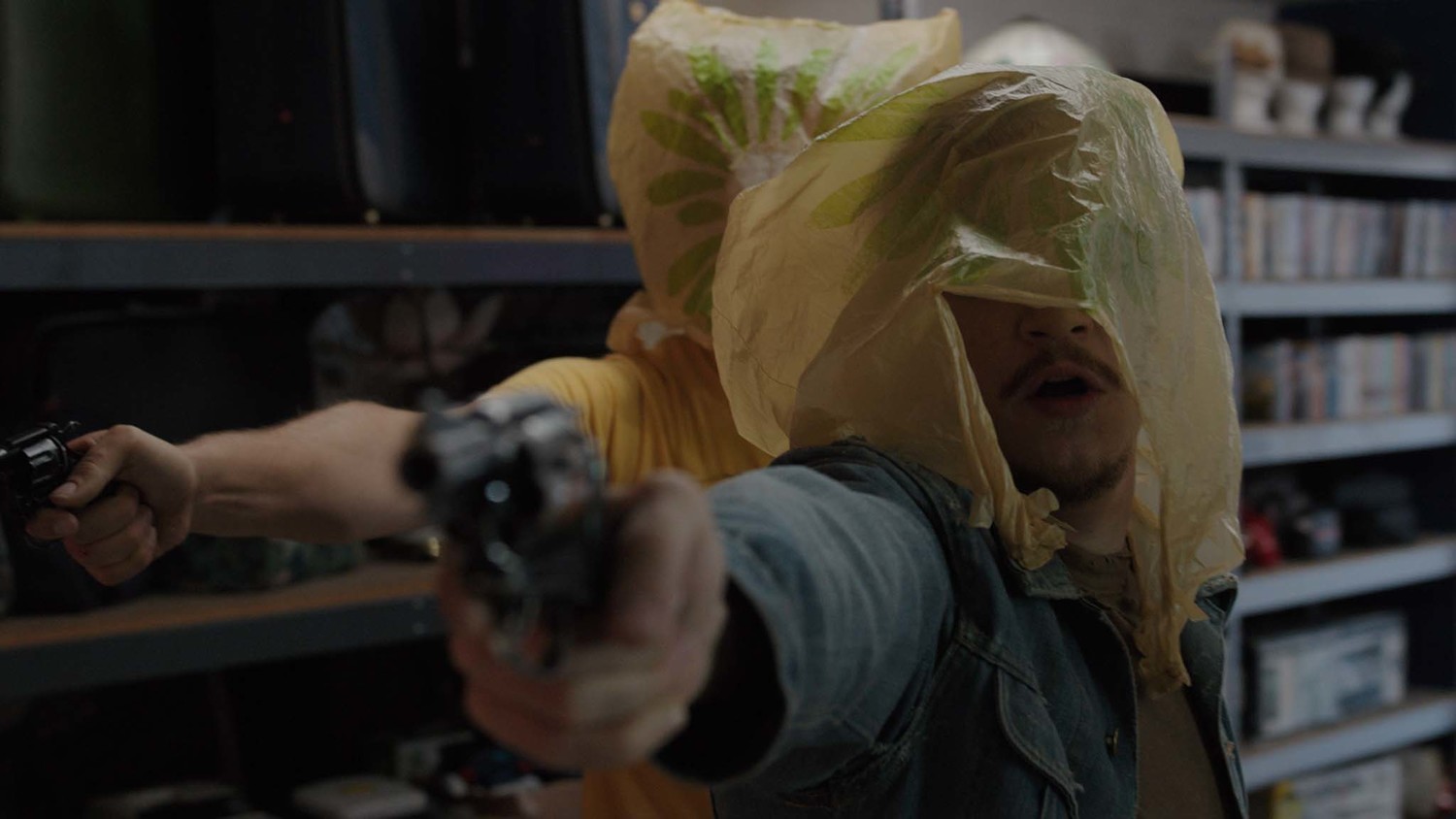
Band of Robbers - scene1

Band of Robbers is a movie that could have gone horribly, terribly wrong. But thanks to the Nee brothers’ inspired approach to the story they’ve concocted, the somewhat awkward mix of comedy and drama that threatens to deflate like an overcooked soufflé, both maintains its shape and rises confidently to provide a delicious pudding of a movie that is a joy to consume (okay, enough of the food metaphors). Viewers might initially be put off by Nee’s portrayal of Tom Sawyer – a literary icon let’s not forget – as a morally dubious, consequence-blind idiot, but this is just the surface of the character, and Nee wisely adds more serious layers to his performance as the movie progresses. But he also provides much of the humour in the movie’s first three chapters, his forty mile an hour, rambling streams of consciousness containing a good deal of anarchic tomfoolery and comic verbal dexterity. Some jokes miss the target (as you’d expect from this kind of onslaught), but they’re in the minority.

As Huck, Gallner is the necessary straight man to Nee’s grown up wild child. He gives Nee room to do his thing, and quietly holds the movie together by virtue of being the serious one. Huck is a counter-balance to Tom’s freewheeling hijinks, and while the part may appear staid in comparison, Gallner exudes a laconic resignation re: the events he finds himself caught up in, that anchors the movie and stops it from going too far in the opposite direction. Huck is the movie’s beating heart, while Tom is the brain that’s not been wired correctly. Both actors excel in their roles, and there’s a genuine sense of camaraderie in their moments together.
Band of Robbers - scene3

Elements of Twain’s work are woven into the storyline, with nods to the original stories, and characters other than Tom and Huck are given modern day life. There are time outs for the characters to reflect on issues of responsibility and hope, morality and immorality, and the nature of determinism. Heavyweight concepts some of them, but again, the Nee brothers keep things light and buoyant for the most part, and ensure that even in the movie’s darker places there’ll soon be another reassuring moment of lightheartedness to soothe away any anxiety. And it’s in the movie’s favour that whenever the material does darken – watch out for a chilling exchange between Injun Joe and Joe Harper – that the Nees’ let it go as dark as it needs.

It would be easy to dismiss Band of Robbers as just another low budget comedy with serious pretensions, but while it does have its very silly moments, it also has its fair share of moments that reward the viewer and should leave them grinning from ear to ear with the pleasure of it all (such as the little old lady who has her car hijacked by Injun Joe). It does fall down in places – Tom’s clumsiness is an extra attempt at comedy that the movie doesn’t need, Becky Thatcher is an overwhelmingly vanilla character, some of the visual gags aren’t so well staged as others – but all in all, this is a surprisingly effective tribute to the genius that is Mark Twain, and it more than holds its own against other modern day screwball comedies.

Rating: 8/10 – an unexpected gem of a movie, Band of Robbers has genuine heart and an engaging style, and is all kinds of quirky – but in a good way; Nee and Gallner make a great team, and the movie has a confidence about it that never falters, making it a treat for anyone fortunate enough to watch it.
Share this:

  • Share on X (Opens in new window) X
  • Share on Facebook (Opens in new window) Facebook
  • More
  • Print (Opens in new window) Print
  • Email a link to a friend (Opens in new window) Email
Like Loading...

Trailers – Our Kind of Traitor (2016), The Family Fang (2015) and The BFG (2016)

11 Monday Apr 2016

Posted by dullwood68 in Movies

≈ Leave a comment

Tags

Comedy, Ewan McGregor, Fantasy, Jason Bateman, John le Carré, Literary adaptation, Our Kind of Traitor, Previews, Roald Dahl, Steven Spielberg, The BFG, The Family Fang, Thriller, Trailers

John le Carré has always been a good source for the movies. His stories are both entertaining and complex, and his characters, often as complex and deceptively drawn as le Carré’s plotting, are the kind that actors can have a veritable field day with. Our Kind of Traitor, with its criminal Russian oligarch seeking to defect to the West, is, on the page, a terrific blend of cat-and-mouse political manoeuvring and heightened thrills. By making his main character a naïve teacher (played here by Ewan McGregor), le Carré draws the reader/viewer in by using their lack of experience to muddy the waters further in terms of what’s going on. With luck, the more than competent cast, along with screenwriter Hossein Amini and director Susanna White, can pull off yet another movie adaptation of a le Carré novel that’s both compelling and engrossing, and the cinematic equivalent of a page-turner (just like its source).


Making his second directorial feature – after Bad Words (2013) – Jason Bateman brings yet another dysfunctional group to the big screen, The Family Fang. It’s also yet another indie comedy, with quirky characters and even quirkier situations, but this appears to have a better pedigree than most, being an adaptation of the novel by Kevin Wilson – though the script is courtesy of David Lindsay-Abaire, whose last screenplay was for Poltergeist (2015) (not a great recommendation when you think about it). Hopefully, the top-notch cast, including Bateman himself, Christopher Walken, Josh Pais, Kathryn Hahn, Michael Chernus, and Nicole Kidman (in a performance that will hopefully remind us just how good she can be after a slew of recent, underwhelming performances), have brought their A-game to the material, and this will be one movie that proves to be both memorable and funny in equal measure.


It’s directed by Steven Spielberg. It’s a children’s fantasy from the extraordinary mind of Roald Dahl. It’s The BFG. And it looks – on the evidence of the trailer – a lot like Pan (2015). But again, this is Spielberg at work here, and when it comes to spinning magic on the big screen, he’s in a league of his own. The BFG also features the final screenplay written by the late Melissa Mathison, whose last collaboration with Spielberg was a little movie called E.T. – The Extra-Terrestrial (1982). And with recent Oscar-winner Mark Rylance playing the titular giant – his amazing voice tips you off before you even see the BFG’s face – it all looks to be in very good hands, even if – and this is just an instant reaction to seeing them – the other giants, Fleshlumpeater et al., all look like early character designs from Warcraft (2016).

Share this:

  • Share on X (Opens in new window) X
  • Share on Facebook (Opens in new window) Facebook
  • More
  • Print (Opens in new window) Print
  • Email a link to a friend (Opens in new window) Email
Like Loading...

Monthly Roundup – March 2016

31 Thursday Mar 2016

Posted by dullwood68 in Movies

≈ Leave a comment

Tags

Andy Mikita, Australia, Comedy, Cricket, Crime, Death of a Gentleman, Deathgasm, Devil worship, Disaster, Documentary, Drama, Ed Cowan, Edgar Ramirez, Ericson Core, Extreme Sports, FBI, Fred Durst, Horror, Ice Hockey, India, James Blake, Jarrod Kimber, Jason Bourque, Jeremy Sisto, Johnny Blank, Luke Bracey, Michael Shanks, Michelle MacLaren, Milo Cawthorne, Movies, Mr. Hockey: The Gordie Howe Story, Murder, Paul Johansson, Point Break (2015), Population / 436, Ray Winstone, Religion, Remake, Reviews, Robbery, Rockwell Falls, Sam Collins, Sci-fi, Sebastian Spence, Sports, Stonados, SyFy, Test match cricket, Twenty 20, Water spouts

Deathgasm (2015) / D: Jason Lei Howden / 86m

Cast: Milo Cawthorne, James Blake, Kimberley Crossman, Sam Berkley, Daniel Cresswell, Delaney Tabron, Stephen Ure, Andrew Laing, Colin Moy, Jodie Rimmer

Deathgasm

Rating: 7/10 – when a teenage wannabe death metal band come into possession of sheet music that, when played, summons a demon called the Blind One, it’s up to them to stop both a zombie outbreak and the Blind One from destroying the world; raucous, rough around the edges, and with a liberal approach to gore, Deathgasm is a good-natured horror comedy that stumbles on occasion but, luckily, never loses sight of its simple brief: to be loud, dumb and lots of fun.

Mr. Hockey: The Gordie Howe Story (2013) / D: Andy Mikita / 87m

Cast: Michael Shanks, Kathleen Robertson, Dylan Playfair, Andrew Herr, Emma Grabinsky, Martin Cummins, Andrew Kavadas, Teach Grant, Ali Tataryn, Lochlyn Munro, Tom Anniko, Donnelly Rhodes, Erik J. Berg

HANDOUT PHOTO; ONE TIME USE ONLY; NO ARCHIVES; NOTFORRESALE Actor Michael Shanks as Gordie Howe is shown in a scene from the film "Mr.Hockey:The Gordie Howe Story," airing on CBC-TV on Sunday. THE CANADIAN PRESS/HO -CBC-Allen Fraser

Rating: 6/10 – the true story of ice hockey legend Gordie Howe who, after retiring in 1971, came back two years later and played not only with his two sons but in a new league altogether – and maintained his winning ways; looking like a strange hybrid of TV movie and abandoned big screen project, Mr. Hockey: The Gordie Howe Story does its best to avoid being a formulaic biopic, but is let down by the episodic nature of the script and a tendency to raise issues but not always follow them through.

Point Break (2015) / D: Ericson Core / 114m

Cast: Edgar Ramirez, Luke Bracey, Ray Winstone, Teresa Palmer, Matias Varela, Clemens Schick, Tobias Santelmann, Delroy Lindo, Max Thieriot, Nikolai Kinski

Point Break

Rating: 4/10 – ex-extreme sportsman Johnny Utah joins the FBI and is given the opportunity to infiltrate a group of extreme sports fanatics who may or may not be responsible for a string of daring robberies; pretty to look at and featuring some great extreme sports sequences, Point Break is nonetheless a pointless remake with poor performances from all concerned, a woeful script, and lacks the edge Kathryn Bigelow brought to the original, leaving the viewer to wonder – yet again – why Hollywood insists on making so many dreadful remakes.

Stonados (2013) / D: Jason Bourque / 88m

Cast: Paul Johansson, Sebastian Spence, Miranda Frigon, Jessica McLeod, Dylan Schmid, William B. Davis, Grace Wolf, Thea Gill

Stonados

Rating: 3/10 – off the coast of Boston, freak water spouts appear and hurl large stone chunks in all directions, putting everyone in danger and hoping they don’t hit land and become… stonados!; made in the same year as Sharknado, this tries to take itself seriously, but without a sense of its own absurdity it stutters from one poorly staged “stonado” sequence to another while – ironically – being unable to shrug off a whole raft of ineffective, embarrassing performances.

Population / 436 (2006) / D: Michelle MacLaren / 88m

Cast: Jeremy Sisto, Fred Durst, Charlotte Sullivan, Peter Outerbridge, David Fox, Monica Parker, Frank Adamson, R.H. Thomson, Reva Timbers

Population 436

Rating: 6/10 – a census taker (Sisto) comes to the small town of Rockwell Falls and begins to suspect a terrible conspiracy, one that keeps the town’s population fixed at the same number; an uneasy, paranoid thriller with horror overtones, Population 436 features a good performance from Sisto and a well maintained sense of dread, but is held back from being entirely convincing by some awkward soap opera moments and a mangled reason for the town keeping its numbers to 436.

Death of a Gentleman (2015) / D: Sam Collins, Jarrod Kimber, Johnny Blank / 99m

With: Sam Collins, Jarrod Kimber, Ed Cowan, Giles Clarke, Narayanaswami Srinivasan, Lalit Modi, Gideon Haigh, Mark Nicholas, Chris Gayle

Death of a Gentleman

Rating: 8/10 – journalists Collins and Kimber set out to make a movie about their love of cricket and the challenges it faces, both commercially and culturally, and discover a scandal that threatens an end to test match cricket; not just for fans of “the gentleman’s game”, Death of a Gentleman is a quietly impressive documentary that sneaks up on the viewer and exposes the level of corruption at the very top of the game, revealing as it does the way in which the sport is being held to ransom by Srinivasan and a handful of others.

Share this:

  • Share on X (Opens in new window) X
  • Share on Facebook (Opens in new window) Facebook
  • More
  • Print (Opens in new window) Print
  • Email a link to a friend (Opens in new window) Email
Like Loading...

Trailers – Elstree 1976 (2015), The Nice Guys (2016) and Lights Out (2016)

30 Wednesday Mar 2016

Posted by dullwood68 in Movies

≈ Leave a comment

Tags

Action, Comedy, David F. Sandberg, Documentary, Elstree 1976, Horror, james Wan, Jon Spira, Lights Out, Previews, Russell Crowe, Ryan Gosling, Shane Black, Star Wars, The Nice Guys, Trailers

A big hit at the BFI London Film Festival last year, Elstree 1976 is a lovingly crafted ode to ten people who worked on a little movie called Star Wars, but who won’t necessarily be known to the wider public (well, Dave Prowse might argue about that). That none of them went on to find worldwide fame and fortune isn’t the point of Jon Spira’s documentary; rather it’s the communal joy that came out of working on a project that none of them could have known would have been so successful, and which has enriched their lives in ways they couldn’t have imagined (even if it didn’t feel like it at the time).


The latest movie from the mercurial mind of Shane Black, The Nice Guys is the kind of uproarious mismatched buddy movie that only Black can put together. The teaming of Russell Crowe and Ryan Gosling looks inspired, and the Seventies setting looks so vivid  it’s hard to believe it wasn’t filmed in 1978 and has been sitting on the shelf ever since. The plot concerns the apparent suicide of a fading porn star, but don’t be surprised if there are larger shenanigans afoot, along with lashings of stylised violence, visual gags galore, and whip-smart banter between the leads.


The latest chiller from producer James Wan, Lights Out takes writer/director David F. Sandberg’s short movie – just three minutes long – and expands it to feature length. Its tale of a supernatural entity stalking three generations of the same family may suffer from being extended from its original set up, but hopefully Sandberg has crafted a back story that will explain everything satisfactorily. Either way, expect plenty of scares, lots of spooky rooms for the scares to take place in, and an array of characters who keep turning the lights off when they know they really shouldn’t.

Share this:

  • Share on X (Opens in new window) X
  • Share on Facebook (Opens in new window) Facebook
  • More
  • Print (Opens in new window) Print
  • Email a link to a friend (Opens in new window) Email
Like Loading...

Get a Job (2016)

27 Sunday Mar 2016

Posted by dullwood68 in Movies

≈ Leave a comment

Tags

Advertising, Alison Brie, Anna Kendrick, Bryan Cranston, Christopher Mintz-Plasse, Comedy, Dylan Kidd, iStalkYou, Job hunting, Marcia Gay Harden, Miles Teller, Review, Teaching, The Decision Maker, Videos

Get a Job

D: Dylan Kidd / 83m

Cast: Miles Teller, Anna Kendrick, Bryan Cranston, Nicholas Braun, Brandon T. Jackson, Christopher Mintz-Plasse, Marcia Gay Harden, Alison Brie, Jay Pharaoh, Bruce Davison, Cameron Richardson, Greg Germann, Jorge Garcia, John C. McGinley, Seth Morris, John Cho

Be yourself. The movies are always telling us to be ourselves. If we do that then the world is our oyster, and we can achieve anything. But what if your name is Miles Teller? What if, back in 2014 you appeared in a movie called Whiplash, and right at that moment when the world was your oyster and you were on the brink of achieving anything, what would you do next? Would you capitalise on the recognition you’ve received as a dramatic actor and use it to land bigger, better roles? Or would you continue making comedies (romantic and straightforward), or would you try something a little different?

Since Whiplash, Teller’s cinematic output has been patchy at best. He’s appeared in all three Divergent movies (albeit in a supporting role), a romantic comedy, Two Night Stand (2014), an out-and-out comedy, That Awkward Moment (2014), and some superhero movie it’s best not to talk about. Later this year he’ll be back on funny man duties with Jonah Hill in War Dogs. It won’t be until either much later this year or in 2017 that we’ll see Teller in serious mode again. In the meantime, we have another comedy to wade through, the sporadically amusing Get a Job, a movie that feels like the kind of project Teller should have been making at the start of his career.

GAJ - scene2

He plays Will Davis, recently graduated and with a job at a local newspaper. His specialty is video reviews, but he’s soon fired thanks to cutbacks. Looking around for a job that suits him he ends up working for a recruitment firm that specialises in making video CVs for professionals looking to make an impression on potential employers. Meanwhile his father, Roger (Cranston) also finds himself out of a job after thirty years. He quickly identifies an ideal job for his skills, but he can’t get to the one man who has the power to say yes or no, the fabled decision maker. And while the Davis men face a variety of obstacles both in and out of work, Will’s friends – stoner Charlie (Braun), commodities broker Luke (Jackson), and sleazy app designer Ethan (Mintz-Plasse) – have similar problems navigating the choppy waters of employment. And then Will’s girlfriend, Jillian (Kendrick), also loses her job.

Right from the movie’s start it’s clear that the script by Kyle Pennekamp and Scott Turpel isn’t going to be as tightly constructed or relevant to today’s modern day job market as it may have intended, and actually that’s okay. Get a Job is a piece of fluff, an inconsequential movie whose message – be yourself, remember? – floats on the surface of its semi-humorous approach to job-seeking. It’s a movie to be watched when there’s nothing better on, or when you need to switch off your brain and let a movie just wash over you. And thanks to Messrs Pennekamp and Turpel, along with the movie’s director, that’s exactly what you get.

GAJ -scene3

But even inconsequential movies need to entertain, and Get a Job drops the ball too often to succeed. Three things we’re meant to find funny: Will taking dexedrine in order to work late(!) and behaving manically; Luke being coerced into drinking deer sperm to get ahead at work; and Ethan’s pervy iStalkYou app, that lets the user find someone even if they don’t want to be. With these and many more uneven attempts at provoking laughter, the movie is in constant search of a consistent comedic tone, and while there are some occasions when it’s successful, it does so against the odds. Teller and Kendrick are old hands at this sort of thing but even they can’t drag the material out of the rut it imposes on itself. The only cast member who seems to have the measure of things is Cranston; next to everyone else his is the only character whose situation you can sympathise with, and whose performance is actually enjoyable.

And like a lot of modern comedies, the viewer isn’t invited to like the characters in the movie, or even get to know them. They all have prescribed character arcs, and they all face challenges that are meant to show they can grow and be responsible as they take on adult roles. And although there is a definite “be yourself” vibe, and one that the movie maintains throughout, ultimately it’s done in such a conservative way that the message is worthless. Like so many other movies of its ilk, what Get a Job is really saying is be yourself for a while but only until regular society says it’s time to put that behind you, and be like everyone else. (American movies celebrate the individual with such persuasion.)

GAJ - scene1

The movie also falls back on too many tried and trusted scenarios to be fresh enough to work (ironically). Will has a boss, Katherine (Harden), who proves to be a ballbuster, but a fortunate discovery redresses the balance; Jillian won’t smoke from a bong – until the script decides she has to; Charlie appears to have no clue about being a teacher but he turns out to be inspirational; and Will’s early encounter with a pimp (Pharaoh) proves to be the most important working connection he ever makes. The performances, with many of the cast treading water (and with Teller and Kendrick proving the main offenders), are adequate without being memorable, and many scenes fall flat as a result.

Overseeing everything, Kidd doesn’t seem able to add any panache to proceedings, leaving the movie to coast along in its own wake, or run aground when the script loses momentum. However, there is one moment where the movie makes a relevant observation: when Jillian tells Will she’s been let go she mentions that she’s ninety thousand dollars in debt, no doubt a reference to the student loans she took out in order to get through college and/or university. It’s a throwaway comment, but it’s a better angle for a movie than the one used here.

Rating: 5/10 – the kind of movie that looks as if it’s a contractual obligation for all concerned, Get a Job could be retitled Get a Grip, or Get a Move On, or even Get a Life, such are the various ways it approaches its basic storyline; formulaic and only mildly amusing, it’s a movie that doesn’t really try too hard, but when it does, the extra effort doesn’t add up to much.

Share this:

  • Share on X (Opens in new window) X
  • Share on Facebook (Opens in new window) Facebook
  • More
  • Print (Opens in new window) Print
  • Email a link to a friend (Opens in new window) Email
Like Loading...

Mistress America (2015)

21 Monday Mar 2016

Posted by dullwood68 in Movies

≈ Leave a comment

Tags

Comedy, Drama, Greta Gerwig, Indie, Investors, Lit Group, Lola Kirke, Matthew Shear, Mom's, Noah Baumbach, Review, Step-sisters

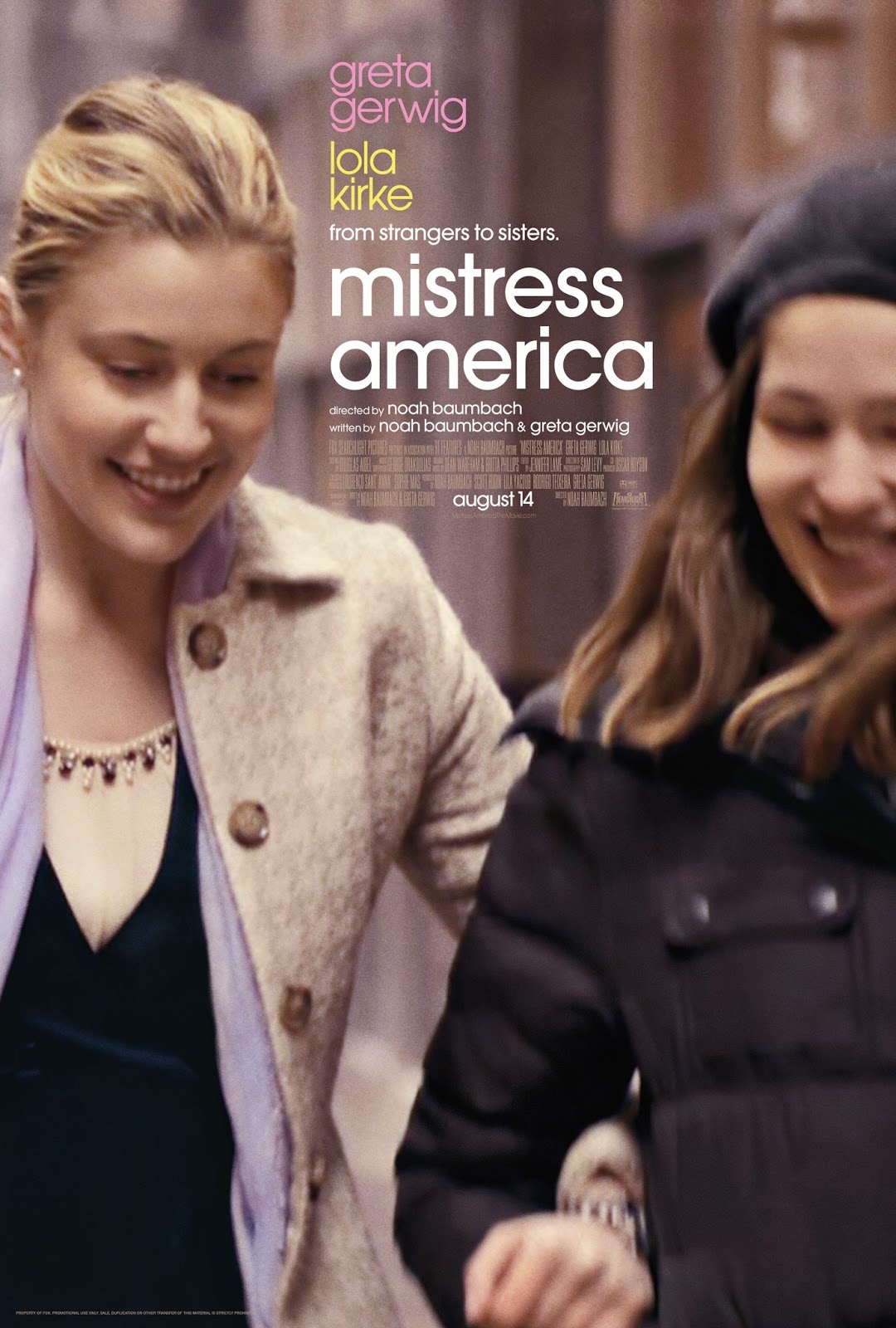
Mistress America

D: Noah Baumbach / 84m

Cast: Greta Gerwig, Lola Kirke, Matthew Shear, Heather Lind, Michael Chernus, Jasmine Cephas Jones, Kathryn Erbe, Cindy Cheung, Dean Wareham

Though not as prolific as Woody Allen, writer/director Noah Baumbach has made a name for himself by operating in the same milieu as Allen (though without the need for including May-December relationships), and for making witty, intelligent comedies that examine the human condition in a warm, deeply rewarding manner. Since his debut with Kicking and Screaming (1995), Baumbach has consistently entertained audiences with his mix of angst-ridden characters facing uncertain futures and sparkling dialogues. He’s a clever, erudite writer and a carefree, spontaneous director, and with movies such as The Squid and the Whale (2005) and Margot at the Wedding (2007) propping up his resumé, he’s a movie maker whose indie sensibilities often make for an enjoyable viewing experience. (By now you’re probably thinking, “there’s a but coming”, and you’d be right, though it’s not coming right now.)

In his latest, Baumbach, along with star and co-writer Gerwig, has fashioned a tale of self-imposed isolation and longing that finds itself butting heads with an examination of self-deception and longing. Tracy (Kirke) is a college student with a superiority complex and a consuming need to be accepted by the Lit Group, the one group she feels are of the same intellectual merit as herself (so it’d be okay to be a member). She submits a short story but is rejected. Faced with spending the approaching Thanksgiving by herself – unsurprisingly, Tracy has no real friends – a reminder from her mother (Erbe) that her soon-to-be step-sister Brooke lives in New York as well leads her to getting in touch and the two of them meeting up.

MA - scene3

In comparison to Tracy’s mostly solitary, mostly unfulfilling existence, Brooke is gregarious, constantly upbeat, well-liked, and in a relationship with a man who is helping her to open a restaurant. Tracy is dazzled by the range of Brooke’s social, personal and business involvements, and the evening (and next morning) they spend together inspires her to write another story for the Lit Group. Before she submits it she shows it to a fellow student who’s also keen to join the Lit Group, Tony (Shear). Tracy once had a crush on Tony but since they met he’s started dating Nicolette (Jones), a development Tracy doesn’t quite understand or agree with.

Tracy begins spending more and more time with Brooke and their sisterly relationship grows stronger and deeper. But Brooke’s plans to open her restaurant are thrown into disarray when her boyfriend dumps her and pulls out of the deal. Advised by a psychic that she needs to reconnect with someone from her past, someone who owes her money, Brooke is convinced she should visit an old friend, Mamie-Claire (Lind). Mamie-Claire not only stole Brooke’s boyfriend, Dylan (Chernus) and married him, she also stole Brooke’s T-shirt design (“hard flowers”) and made a mint out of it. Tracy enlists the aid of Tony (who has a car) to get there, and Nicolette goes too, her jealousy unable to let her stay behind if Tony is going to be alone with two other women.

mistressamerica

At Mamie-Claire’s, Brooke’s old friend proves to be less than agreeable to the idea of investing in the restaurant. Brooke persists, wanting to speak to Dylan who isn’t there. When he finally arrives home he’s more enthusiastic than Mamie-Claire and agrees to lend Brooke the money she needs but not for the same reason as she needs it. Meanwhile, Nicolette confronts Tony over her belief that he and Tracy are sleeping together, and when the opportunity to read Tracy’s story (which is about Brooke and isn’t exactly flattering) presents itself, Nicolette uses it to confront Tracy. In the end, everyone there reads it, but it’s Brooke’s reaction that has the biggest effect on Tracy, an effect that has unexpected implications.

(Now for that but.)

Maybe it’s the involvement of Gerwig in the writing process, or maybe Baumbach was just having an off-script, but Mistress America – the title refers to a female superhero Brooke can see herself being – has one crucial flaw that it never overcomes, or even appears likely to overcome: that in Tracy and Brooke it has two central characters that it’s almost impossible to care about. Tracy is an emotional and social leech, a hanger-on to Brooke’s coat-tails who has little or no discernible personality away from the people she manages to be around. She mirrors everyone and reflects nothing of herself – because there’s nothing to reflect. She should be a sympathetic character because of this, but in the hands of Baumbach and Gerwig she’s just another sad, lonely character who’s chosen to be that way; she doesn’t even try to be different, or change, and at the movie’s end we see exactly the same person we met at the beginning.

Brooke (Greta Gerwig) takes Tracy (Lola Kirke) under her wing in Mistress America.

In contrast, Brooke is so self-absorbed, so lacking in emotional acuity and self-awareness that when she talks about the problems she faces it’s like listening to someone who has no idea that all the things she’s feeling are no different to what anyone else feels. Take this for example: “Of course it’s possible to hurt me. I’m the most sensitive person.” It’s said at a moment when the movie attempts to be dramatic and ironic at the same time, but the irony is miscued and the drama is heavy handed, leaving the viewer to either laugh because it’s probably expected, or shake their heads in disappointment. (It’s also the one time in the movie where the “action” really feels like action and not passive observation, a trait the movie relies on far too often.)

In their roles, Gerwig is garrulous and whiny, while Kirke is listless and needy, four qualities that would cause most people to look the other way, and with Mistress America it’s no different. And faced with such an uphill struggle, the viewer has no choice but to hope that character arcs will be achieved, lessons will be learnt, and personalities will be rebuilt for the better. Alas, Baumbach and Gerwig have other ideas and none of these things happen. In the end it’s better to spend time with Tony and Nicolette, whose romantic war of attrition is one of the movie’s better attractions (Jones in particular is a deadly delight as the disbelieving Nicolette, all spite and anger and acid one-liners). In fact, it’s a better idea to spend time with any of the supporting characters, as they generate far more interest than the movie’s two spinsters in the making.

It also doesn’t help that he movie feels self-congratulatory throughout, as if it’s pulled off a clever piece of artistry. But while there are flashes of the confidence and the brio that Baumbach brought to some of his earlier work, there aren’t enough to make Mistress America more interesting or intriguing. If Brooke had been a little less erratic in her thinking, and Tracy a little less uptight about her social position then the viewer might have had a better understanding and/or liking of them, but without these tweaks it leaves said viewer wondering why they, like Brooke’s business partners, shouldn’t just get up and walk away.

Rating: 5/10 – a misfire that only occasionally engages its audience, Mistress America proves difficult to like thanks to the limited scope of its central characters and their misplaced sense of entitlement; when a line such as “Why don’t you just put pasta up her pussy?” (yes, it’s Nicolette) carries more weight and emotional honesty than the patronising “Being a beacon of hope for lesser people is a lonely business”, then you know something isn’t right in indie land.

Share this:

  • Share on X (Opens in new window) X
  • Share on Facebook (Opens in new window) Facebook
  • More
  • Print (Opens in new window) Print
  • Email a link to a friend (Opens in new window) Email
Like Loading...

Irrational Man (2015)

20 Sunday Mar 2016

Posted by dullwood68 in Movies

≈ 5 Comments

Tags

Comedy, Drama, Emma Stone, Existentialism, Joaquin Phoenix, Murder, Philosophy, Relationships, Review, Romance, Romantic comedy, Woody Allen

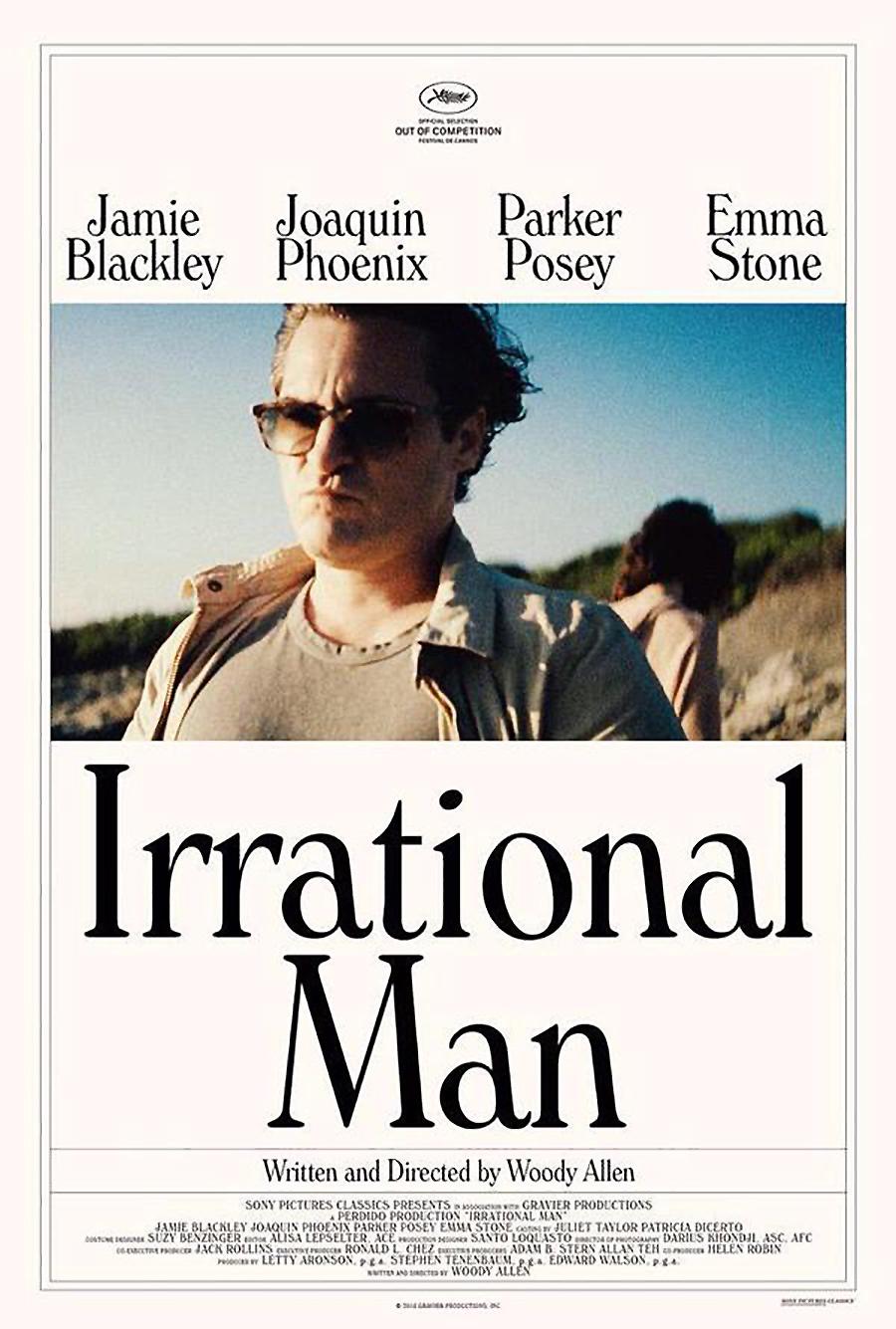
Irrational Man

D: Woody Allen / 95m

Cast: Joaquin Phoenix, Emma Stone, Parker Posey, Jamie Blackley, Betsy Aidem, Ethan Phillips, Sophie von Haselberg, Kate McGonigle, Tom Kemp

In the Seventies, Eighties and Nineties, Woody Allen’s annual offering to a grateful movie-going public was something to look forward to. With the turn of the century though, the cracks began to show, and the triple threat of Match Point (2005), Scoop (2006) and Cassandra’s Dream (2007) seemed to indicate that Allen had lost his story telling mojo. Since then he’s managed to regain some of that mojo but the last decade has been patchy at best. When he’s on top form, as with Blue Jasmine (2013), there’s no one who can touch him. But he’s just as likely to release something as oddly unrewarding as You Will Meet a Tall Dark Stranger (2010).

Irrational Man, Allen’s latest, is a movie that at first glance looks to be one of his on-form releases. A romantic comedy of philosophical manners, Allen introduces us to Abe Lucas (Phoenix), a philosophy professor who comes to teach at Braylin College in Rhode Island. Abe is a troubled soul, weighed down by despair and the kind of melancholy that won’t let him be happy or find joy in the world. He also has a reputation as a womaniser and an alcoholic, but these are overlooked because of the high regard in which he’s held and the caché the college gains by having him there.

IM - scene1

Despite his depressed airs and less than sunny disposition, Abe still manages to attract the attention of two very different women: fellow professor, Rita Richards (Posey), who is unhappy in her marriage and looking for a lover, and philosophy student Jill Pollard (Stone), who is attracted to Abe’s intellect and wants to help him out of the existential crisis he’s experiencing. At first, Abe resists both women’s approaches, and continues to live a bland, unfulfilling existence, refuting their beliefs that they can help him and refusing to accept that there is an answer to his particular personal crisis.

Both women persist in their attentions, with Jill having the better fortune. She begins spending more and more time with Abe, listening to his pessimistic outlook on life and love, and refusing to believe that he’s entirely right. But she’s still not able to gain any real headway… until the day they overhear a woman in a coffee shop complaining about the judge (Kemp) who’s unfairly dealing with her custody battle. Abe is suddenly galvanised into helping the woman with her predicament. His solution: to kill the judge in question. Once the decision is made, Abe finds his whole attitude has changed. He enjoys life again, appears happy and relaxed, and sleeps with Rita. With Jill agreeing in principle that the judge is too mean to live, he sets about concocting the perfect murder.

IM - scene3

Boosted by this newfound purpose, his relationship with Jill deepens, so much so that she splits from her boyfriend, Roy (Blackley). Caught up in Abe’s more positive outlook, she comes to believe that she loves him, and does her best to persuade him that he loves her. As they grow closer, Abe’s scheme to murder the judge is successful, and he and Jill celebrate the man’s demise (though Jill retains her initial discomfort about doing so). But when Jill begins to suspect that Abe really has committed murder, her suspicions, as well as the police arresting an innocent man, lead her to make a fateful decision.

Taking Irrational Man at face value, Allen appears to have constructed a romantic comedy that has a few telling things to say about the nature of free will and moral choices. But beneath the movie’s attractive sheen – the Rhode Island locations are given added lustre thanks to DoP Darius Khondji – Allen’s philosophical insights prove less than convincing, and the justification Abe gives for his actions come across as self-serving rather than fully thought out reasons made from the moral high ground. Along with such telling remarks as “So much of philosophy is just verbal masturbation”, and “Anxiety is the dizziness of freedom”, the movie looks and sounds like it knows what it’s saying, but when Jill challenges Abe’s assertions later on, the hollow nature of his reasoning becomes clear and the viewer is faced with the idea that Allen may not be as en point as he himself would like.

As a result, concerns over Abe’s philosophical stance remain throughout the movie, and Allen never really addresses the contradictions that arise through the narrative’s insistence on making murder into some kind of aphrodisiac for the soul and mind. But while this is problematical at best, the movie suffers even more thanks to the tired mechanics employed to bring Abe and Jill together. Their relationship has the feel of an intellectual exercise rather than the organic outcome of their proximity in the classroom. Jill’s upbeat demeanour and determination to make Abe “happier” borders on obsession, while her change of heart later on is as abrupt as it is convenient for the narrative. Stone does her best but she’s continually hampered by Allen’s insistence on making Jill a paragon of positivity, a decision that doesn’t give the actress much room for manoeuvring.

IM - scene2

Phoenix fares slightly better by virtue of having the lion’s share of the screen time, but like Jill, Abe is the kind of character who only exists in the movies and as such is more annoying than sympathetic. Allen doesn’t even allow the character (or Phoenix) to display any self-doubt once he decices to kill the judge, and as with Jill’s change of heart, Abe’s road-to-Damascus moment seems forced. Phoenix also appears to be having more fun as the depressed Abe than he is as the energised Abe, something that seems counter-intuitive but on occasion does at least allow the material to feel more natural.

With Allen preferring to show how witty he can be at the expense of various philosophers’, the romance between Abe and Jill takes a back seat, and the other characters, Posey’s desperately lovelorn Rita aside, fade into the background (and often during a scene). A subplot involving Jill’s boyfriend proves distracting and underdeveloped, and a further subplot addressing Rita’s dissatisfaction with her marriage seems included to give the character some measure of depth (or Posey something more to do than look bored and/or frustrated). Ultimately it’s hard to care for anyone in Irrational Man, and that includes Abe and Jill, a couple who look and sound too much like an approximation of a couple than the real thing. All in all, the movie struggles to address the issues it raises and lacks the finesse Allen has brought to other, more successful projects.

Rating: 5/10 – mildly diverting, and superficially amusing, Irrational Man should be filed under Minor Allen; while not entirely unrewarding, the movie isn’t particularly inviting either, and anyone thinking of watching it should do so only if they’re Allen completists or fans of Phoenix or Stone.

Share this:

  • Share on X (Opens in new window) X
  • Share on Facebook (Opens in new window) Facebook
  • More
  • Print (Opens in new window) Print
  • Email a link to a friend (Opens in new window) Email
Like Loading...

Oddball (2015)

18 Friday Mar 2016

Posted by dullwood68 in Movies

≈ Leave a comment

Tags

Alan Tudyk, Chicken farmer, Coco Jack Gillies, Comedy, Drama, Foxes, Maremma, Middle Island, Penguins, Review, Sanctuary, Sarah Snook, Shane Jacobson, Stuart McDonald, True story, Warrnambool

Oddball

aka Oddball and the Penguins

D: Stuart McDonald / 95m

Cast: Shane Jacobson, Sarah Snook, Alan Tudyk, Coco Jack Gillies, Richard Davies, Terry Camilleri, Deborah Mailman, Stephen Kearney, Tegan Higginbotham, Frank Woodley, Dave Lawson

When it comes to family movies, Australian movie makers tend to imbue their releases with a wistful, heartwarming feel that is at odds with the kind of syrupy, sentimental and ultimately cloying approach of their US brethrens. Movies such as Babe (1995) and The Black Balloon (2008), while tonally different, are nevertheless terrific examples of the ways in which Australian movie makers approach these kinds of movies, and don’t underestimate their target audience. Make the kids happy – absolutely; but don’t forget to add stuff for the adults.

At first glance, Oddball looks as if it’s going to fit alongside Babe and The Black Balloon quite easily. Taking its cue from the true story of the efforts to save the dwindling little penguin population on Middle Island, a rocky outcrop off the coast of Australia’s Victoria State, the movie wastes no time in outlining the problem: the penguins are at the mercy of marauding foxes who have learned that they can cross from the mainland and wreak as much havoc as they like. With the penguins’ numbers decreasing rapidly, the island’s status as a sanctuary is in jeopardy.

Oddball - scene2

The sanctuary is overseen by dedicated conservationist Emily Marsh (Snook). Fearful of seeing the penguins’ eradicated once and for all, she is losing all hope of finding a solution. With the mating season approaching she needs the numbers to stay at ten or above; if the count at that time is anything less the sanctuary closes and she loses her job. But when her father, an eccentric chicken farmer nicknamed Swampy (Jacobson) rescues an injured penguin and takes it home with him to recuperate, the attentions of a fox leads to the revelation that his dog, Oddball, has a natural aptitude for protecting the penguins.

There’s a problem, though. Oddball is effectively under house arrest after his boisterous nature causes mayhem (and some considerable damage) in Warrnambool, the local town. Confined to his master’s chicken farm, Oddball’s presence on the island would be frowned upon, so Swampy elects to put his effectiveness to the test by himself and in secret. Oddball’s first night is a success, which leads Swampy to enlist the help of his granddaughter, Olivia (Gillies), in keeping his plan a secret from Emily. (You could ask why he really needs to do this but you’d still be waiting for an answer once the movie has ended.) With the decline in the penguin population halted, and Emily finding out anyway quite soon after, Oddball’s nightly watch continues.

Inevitably, things take a turn for the worse. A mystery saboteur incapacitates Oddball and releases a fox onto the island. The number of penguins left drops to nine. With little doubt that the saboteur will return the next night to wipe out the penguins completely, the discovery of an egg that will bring the count up to ten and save the sanctuary, makes it even more important that the saboteur is stopped.

Oddball - scene3

While Oddball, both the dog and the movie, are friendly and quite endearing in their own way, and while the penguins’ plight is affecting, the truth is that Oddball doesn’t really work. It’s a disappointing realisation to make, because all the elements are in place to ensure that it does work, but thanks to Stuart McDonald’s pedestrian direction and Peter Ivan’s depth-free script, the movie meanders through redundant scene after redundant scene offering little more than gorgeous shots of the Victoria coastline – beautifully framed and shot by DoP Damian Wyvill – and occasional bursts of humour that raise a smile (but none that linger). It’s a movie that quickly settles for doing just enough to get by.

Elsewhere, the movie relies on poorly realised and developed characters who interact with each other in ways that are entirely baffling. Chief amongst these is Tudyk’s awkwardly imported Yank, Bradley Slater, tasked with putting Warrnambool on the map tourist-wise and being Emily’s choice of partner (what happened to Olivia’s father is never mentioned, something else you might wonder about but will never get the answer to). Bradley is a source of amusement throughout, but of the kind that makes the viewer want to reach into the screen and slap him for behaving so idiotically. He’s afraid of Swampy for no apparent reason other than that Swampy doesn’t like him (and yes, you don’t find out why). And he behaves in a predictably cowardly fashion when a subplot involving a whale watching centre being built on the island if the sanctuary closes, puts him in a difficult situation with Emily. Tudyk is a talented actor, but here his sojourn Down Under hasn’t done him any favours.

Oddball - scene1

Luckily for Tudyk though, his character is a secondary one. Hogging most of the screen time and working through his entire repertoire of facial tics and bewildered expressions, Jacobson, who made such a great impression in Kenny (2006), plays the real life Swampy Marsh as if he were only occasionally united with his full faculties; a kindly, irresponsible old man who comes good by accident. The real Swampy Marsh has an associate producer credit on the movie, so it’s likely he wasn’t entirely upset with Jacobson’s portrayal of him, but there are moments when you have to wonder if McDonald was even on set when certain scenes were being filmed, so painfully “humorous” is Jacobson’s performance.

For much of its running time, Oddball is too reminiscent of the kind of Disney-backed teen movie that offers ninety minutes of saccharine-drenched “entertainment”, and which leaves the viewer feeling drained of any remaining will to live. It has little to say beyond its obvious ecological message, and spends most of its time being defiantly innocuous, while wasting its cast’s time and effort. With much of Australia’s recent output proving so lacklustre, Oddball can be seen as yet another project where the very attributes that make Australian movies so distinctive and so richly rewarding are abandoned in favour of an unnecessarily bland, “let’s please the international market” approach. By the movie’s end you could be forgiven for thinking that the penguins’ plight is a metaphor for Australian cinema itself – but not necessarily with a happy ending to look forward to.

Rating: 4/10 – seriously disappointing, Oddball is superficially amusing and enjoyable only if you leave any expectations behind at the door; beautiful to look at but otherwise an empty shell, the movie, like its penguins, never takes flight and remains resolutely grounded, both dramatically and comedically.

Share this:

  • Share on X (Opens in new window) X
  • Share on Facebook (Opens in new window) Facebook
  • More
  • Print (Opens in new window) Print
  • Email a link to a friend (Opens in new window) Email
Like Loading...

Mini-Review: Kung Fu Panda 3 (2016)

11 Friday Mar 2016

Posted by dullwood68 in Movies

≈ 1 Comment

Tags

Alessandro Carloni, Angelina Jolie, Bryan Cranston, Chi, China, Comedy, Dragon Warrior, Dustin Hoffman, Famous Five, J.K. Simmons, Jack Black, Jennifer Yuh Nelson, Kai, Master Shifu, Po, Praying Mantis, Review, Sequel, Seth Rogen, Spirit Warrior, Spirit World, Tiger

Kung Fu Panda 3

D: Jennifer Yuh Nelson, Alessandro Carloni / 95m

Cast: Jack Black, Bryan Cranston, Dustin Hoffman, Angelina Jolie, J.K. Simmons, Seth Rogen, James Hong, Lucy Liu, David Cross, Jackie Chan, Kate Hudson, Randall Duk Kim

In the Spirit World, Master Oogway (Kim) has his chi stolen from him by the villainous Kai (Simmons). With Oogway’s chi and those of the other denizens of the Spirit World, Kai can regain his human form and seek out the only warrior who can defeat him, the Dragon Warrior, aka Po the panda (Black). Meanwhile, Po has his own problems. Master Shifu (Hoffman) has given him the role of teaching the Famous Five, and subsequently he meets his real father, Li (Cranston). When Kai sends his emissaries to challenge Po, the Famous Five intervene but aren’t strong enough to defeat them; one by one they have their chi’s taken from them. Only Po has the strength and skill to best Kai, but first he must travel with his father to the village of his birth, and take instruction in how to become a Chi master; only then will he be able to defeat Kai and banish him back to the Spirit World.

KFP3 - scene1

Sequels with 3 in the title are often tired, limited affairs that trade on former glories while lacking the energy and freshness of their predecessors. However, Kung Fu Panda 3 bucks the trend and delivers a movie that is as energetic as 1 and 2, and proves to be just as entertaining. The kung fu moves are as impressive as ever, and the animated stylings that go with them are particularly exciting, especially in the Spirit World, where physics is a concept that’s easily ignored. In the real world, Po’s dilemma at discovering his real father after being raised so faithfully by Mr Ling (Hong) is played out amidst a strong mix of comedy and pathos, and the depiction of the panda village is bursting with wonderful characters and visual humour.

Kai is a villain in the mold of the first movie’s Tai Lung, and as a result is the movie’s weakest link, but Simmons is obviously having fun with the role (as is everyone else), and in comparison with the rest of the story, the character’s familiarity is not a major flaw. The burgeoning relationship between Po and Li is a definite bonus and has been handled well by scriptwriters Jonathan Aibel and Glenn Berger, their inclusion of Mr Ling doing justice to the relationship established in parts one and two. The visuals are as stunning as ever, and the colours have a photo-realistic sheen to them that haven’t been seen in previous outings, making it all the more superb than before.

KFP3 - scene2

Rating: 8/10 – a treat for the eyes (and as rewarding for the mind), Kung Fu Panda 3 is something of a retread of the first movie but in this case, it’s not a bad thing; with a superb voice cast and stunning animation throughout, this sequel proves that putting a lot of heart and soul into a movie pays off every time.

Share this:

  • Share on X (Opens in new window) X
  • Share on Facebook (Opens in new window) Facebook
  • More
  • Print (Opens in new window) Print
  • Email a link to a friend (Opens in new window) Email
Like Loading...

Sisters (2015)

06 Sunday Mar 2016

Posted by dullwood68 in Movies

≈ Leave a comment

Tags

Amy Poehler, Booze, Childhood home, Comedy, Drugs, Ellis Island, Jason Moore, John Cena, John Leguizamo, Maya Rudolph, Mother/daughter relationship, Parents, Party, Review, Romance, Tina Fey

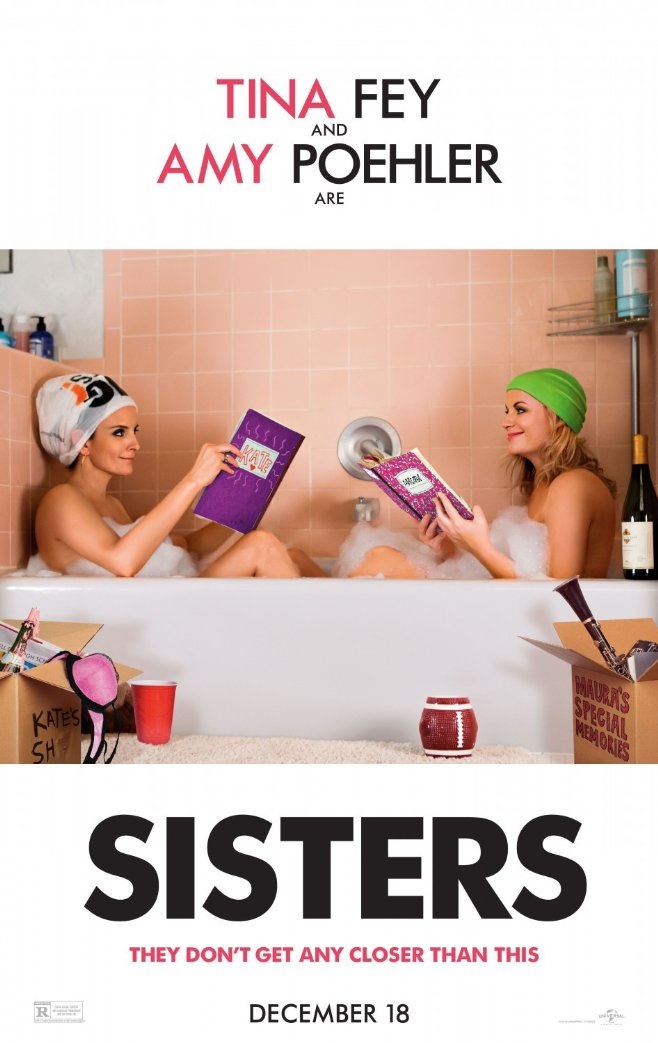
Sisters

D: Jason Moore / 118m

Cast: Amy Poehler, Tina Fey, Maya Rudolph, Ike Barinholtz, James Brolin, Dianne Weist, John Cena, John Leguizamo, Bobby Moynihan, Greta Lee, Madison Davenport, Rachel Dratch

Making the transition from TV to movies can be tough. For every Mike Myers or Johnny Depp, there are dozens more actors and actresses who make the leap only to find their particular schtick isn’t as popular with cinema audiences. Often it’s down to their choice of material, sometimes they make the mistake of doing exactly the same thing as they do on their TV show, and sometimes there’s just no explaining why their movie doesn’t click with audiences. Many persevere, trying time and again to make it work and be successful, and just as many fail.

Welcome then to Sisters, the latest attempt by Amy Poehler and Tina Fey to translate their TV personas into box office success. It’s a mix of teen party with adults, sibling dependency, and awkward romance, and it struggles to make any of these aspects even remotely entertaining. The teen party with adults is the worst of Sisters’ many creative decisions. Maura and Kate Ellis (Poehler, Fey) are middle-aged sisters. Maura is a nurse whose need to help others can be suffocating, and who hasn’t been in a relationship for some time. Kate is a nail technician who has a teenage daughter, Haley (Davenport), but no man, and has trouble keeping it together. When she loses her job it coincides with an invitation from their parents (Brolin, Weist) to come visit their childhood home before it’s sold.

Sisters - scene4

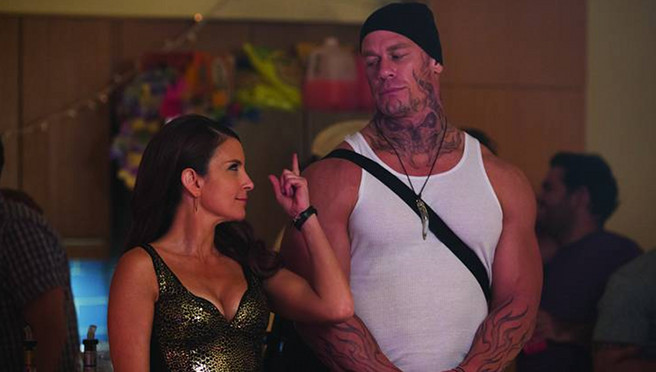
Maura and Kate are horrified by this, especially as the invite has really been about them coming to clear out their room. Left to get on with it, Maura and Kate decide instead to have one last party in the house, and set about inviting all their old schoolfriends – with the exception of realtor Brinda (Rudolph) – along with a neighbour, James (Barinholtz), that Maura has the hots for. Everyone turns up as expected but as everyone is as middle-aged as the sisters are, the party isn’t as exciting as they’d hoped for. The intervention of local drug dealer, Pazuzu (Cena), leads to a much wilder, much more enjoyable party, and inevitably, the house suffering some extreme wear and tear. And then Kate learns that she and Maura stand to benefit from the sale of the house. But by now it’s too late to put a halt to all the damage that’s been done, and matters are made even worse by the efforts of Brinda to crash the party, and the imminent arrival of Maura and Kate’s parents.

There’s no denying that Poehler and Fey are two very fine comediennes – on TV. With Parks and Recreation, and 30 Rock respectively, both women have carved out hugely successful careers for themselves, and earned a sackload of respect and admiration in the process. But on the big screen the results haven’t exactly been that impressive. Fey’s attempts have included Date Night (2010), Admission (2013) and This Is Where I Leave You (2014), while Poehler, who admittedly has been trying for longer, has struck out with the likes of Spring Breakdown (2009), Freak Dance (2010), and A.C.O.D. (2013). The idea of them appearing together as sisters sounds like a great idea on paper (and the roles of Maura and Kate were written specifically for them), but it’s the movie itself that stops them from making much of an impact.

There’s plenty of scope to be had from making Maura and Kate as different as chalk and cheese – Maura is the dependable, slightly strait-laced sister, Kate is the carefree, mainly irresponsible free spirit – but without any friction between them until very late on, most scenes they appear in until then tend to focus on highlighting those differences to the point where even someone whose not even watching the movie will be aware of them. But still they’re no cause for disagreement or arguments or any kind of falling out. As a result, the movie plods along, content to find humour in the behaviour of secondary characters such as grinning hound dog Dave (Leguizamo), and mildly depressed Kelly (Dratch). But even then the laughter is thin on the ground, and has to be propped up by some actually quite funny verbal barbs courtesy of Kate.

Sisters - scene2

And once the party gets really started, and several chocolate brownies have allowed the guests to loosen up, the movie encounters another problem. It wants to be a raucous comedy at this point, a la American Pie (1999), but as that series discovered when it arrived at American Reunion (2012), the idea of adults behaving like teenagers isn’t inherently funny, and something that audiences don’t really want to see. So the behaviour in Sisters is toned down to such an extent that whatever shenanigans or hijinks do happen, they’re about as funny as watching Amy and Tina trying on party dresses while a shop assistant drones that their outfits suit them (when of course they don’t).

Another part of the problem with Paula Pell’s script – and by extension Jason Moore’s direction – is that early on, scenes drag on past their proper length, partly in an effort to provide both actresses with equal screen time, and partly in an effort to wring out some extra laughs from situations and scenes that don’t support many laughs in the first place. That’s not to say that the movie isn’t funny it places, because it is, it’s just that it’s not funny consistently. It also tries too hard, and to the point where it tries to provoke a laugh from Weist using the C-word. When your comedy movie can’t manufacture enough laughs to maintain interest over nearly two hours, then you’ve got a problem.

Sisters - scene3

As the sisters, Poehler and Fey are likeable enough, but even they can’t do much with a script that lacks substance as well as sustained humour. Rudolph pulls a lot of faces to make up for the one-note character she’s been given, Brolin and Weist have to settle for being constantly annoyed by their daughters’ behaviour, Leguizamo is wasted in the kind of minor supporting role he takes on every now and then, and Moynihan, tasked with playing the kind of too loud funny man whose jokes are always awful, is saddled with mimicking Al Pacino in Scarface (1983) in a charades scene that feels like it’s never going to end. Only Cena as the taciturn drug dealer (whose safe word is “keep going”) avoids being hampered by the material, and the movie picks up whenever he’s on screen.

Sisters would be a better movie if it was twenty minutes shorter and if Pell’s screenplay had concentrated on laughs rather than giving its two main characters “life lessons” to learn. Viewers looking for a great time in the company of two very talented comediennes would do better to try their respective TV series’, while anyone unfamiliar with their TV work, but thinking of giving the movie a try on the off chance that a movie featuring Poehler and Fey must be good (right?), should take a hasty step back and save themselves from being disappointed.

Rating: 5/10 – sporadic laughs do not a comedy make, and Sisters struggles repeatedly to get the mix of visual and verbal humour to work effectively, leaving it feeling and looking dull and uninspired for long stretches; best viewed as a valiant attempt to give Poehler and Fey their big screen breakthrough, but otherwise a movie that fails to deliver both for them and for the audience.

Share this:

  • Share on X (Opens in new window) X
  • Share on Facebook (Opens in new window) Facebook
  • More
  • Print (Opens in new window) Print
  • Email a link to a friend (Opens in new window) Email
Like Loading...

Man Up (2015)

06 Sunday Mar 2016

Posted by dullwood68 in Movies

≈ Leave a comment

Tags

Ben Palmer, Blind date, Bowling, Comedy, Lake Bell, Olivia Williams, Review, Romance, Romantic comedy, Rory Kinnear, Simon Pegg, Six Billion People and You, Waterloo Station

Man Up

D: Ben Palmer / 88m

Cast: Simon Pegg, Lake Bell, Rory Kinnear, Sharon Horgan, Ken Stott, Harriet Walter, Ophelia Lovibond, Olivia Williams, Stephen Campbell Moore, Paul Thornley

Outside of his collaborations with Nick Frost and Edgar Wright, and his work on the Mission: Impossible and Star Trek franchises, Simon Pegg hasn’t had the kind of success on his own that you might have expected. Which is odd as Pegg has an agreeable, friendly persona that is instantly likeable. Perhaps the issue has been the choices he’s made over the years: a few mildly amusing comedies that haven’t really stretched his talents as a comic actor, or even been that funny. Movies such as Run, Fatboy, Run (2007) and A Fantastic Fear of Everything (2012). Otherwise there’s been a lot of voice overs, a couple of dramas, several shorts, and a role in Star Wars: The Force Awakens (2015).

Thankfully though, Pegg made a very good choice when he decided to take on the role of recently divorced Jack in Man Up. It’s a smart (and more importantly) funny romantic comedy that focuses on Nancy (Bell), a thirty-plus woman whose track record with the opposite sex has been less than stellar. Continually pushed to meet a man and settle down before it’s too late by her sister, Elaine (Horgan), Nancy isn’t so sure that she’ll ever meet Mr Right, and probably not even Mr Not-Quite-Right-But-Near-Enough. But things are about to change. On a train to London – travelling to make her parents’ fortieth wedding anniversary celebrations – Nancy meets Jessica (Lovibond), an ambitious young woman who is on her way to meet a blind date. Jessica swears by a self-help book called Six Billion People and You, and believes Nancy could benefit from its advice. By the journey’s end Nancy has fallen asleep, the train has arrived at Waterloo, Jessica is nowhere to be seen, and she’s left her copy of the book behind.

Man Up - scene3

Nancy gets off the train, taking the book with her, and soon finds herself talking to Jack (who believes he’s talking to Jessica). With her sister’s pleas to “take a chance” popping up in her head, Nancy pretends to be Jessica, and so she and Jack embark on “their” date. And thanks to Tess Morris’s deft screenplay, what follows is engaging, funny and credible as Jack and Nancy get to know each other and find they have quite a lot in common, even down to an affection for the same pop culture references. But there’s a fly in the ointment, in the form of Sean (Kinnear), who works in the bowling alley they go to, and who has maintained a stalker-type crush on Nancy since they were at school. When he overhears her being referred to as Jessica he sees his chance to worm his away into her affections.

Nancy manages to avoid being exposed, but only just. Jack’s suspicions taken care of they find themselves in a bar where his ex, Hilary (Williams) and her new husband, Ed (Moore), turn up. The four share a table and soon each couple is trying to outdo the other in terms of how happy they are. Nancy and Jack agree to pretend to have been together for longer, and they soon make Hilary and Ed feel uncomfortable. Having exorcised some of his demons, Jack and Nancy agree that they should see each other again, but Nancy’s decision to be honest about her deception proves to be a deal breaker, and back where they started at Waterloo Station, their potential love story comes to a halt. Or does it…?

Man Up - scene1

Long-time fans of romantic comedies will know the answer to that one. And what follows does tread a predictable path, but it’s the way in which Morris’s script allows Jack and Nancy to get to know each other that is the movie’s main strength. As mentioned above, as a couple they’re engaging, funny together and the chemistry they develop is entirely credible. So much effort seems to have gone into making their liking for each other so believable, that watching them spark and riff off each other becomes immensely rewarding. A big part of this, of course, is down to the playing of Pegg and Bell, both of whom take to their roles with undisguised glee and enthusiasm. As a result, their efforts make spending time with Jack and Nancy as infectiously enjoyable as it must have been to portray them. They’re exactly the kind of characters you’d want to spend time with in real life.

The supporting characters are generously drawn and brought to life, but with the exception of Sean, whose inappropriate comments and references are given life by Kinnear’s adoption of manic mannerisms and wild-eyed mugging. It’s an over-the-top performance in a movie that otherwise takes good care to ground its other characters and make them believable. If Kinnear is playing Sean as he’s written then it’s the script and the movie’s most obvious failing; if he’s not then someone should have taken Kinnear aside and pointed him in the right direction.

Man Up - scene2

Palmer, whose experience is largely in TV, and whose previous big screen outing was The Inbetweeners Movie (2011), directs with an understanding that, despite Pegg’s top billing, this is Bell’s movie. Nancy is the main character and we see almost everything from her perspective. And Bell is terrific throughout: vulnerable, appealing, funny, exuberant, and self-aware. You can see the character grow in confidence as the movie progresses, and by the end you can’t help but want Nancy and Jack to be together; nothing else would be appropriate or meaningful enough. Pegg is equally impressive, and supports Bell all the way, and together the duo are generous with each other in their scenes, allowing each other to shine and giving themselves the space to do so. In these days of risqué, gross-out gag-ridden romantic comedies that constantly refrain from doing anything as challenging as just putting two people together and seeing how their relationship develops, Man Up is a pleasing, enjoyable antidote to all the cynicism that can be found pretty much everywhere else.

Rating: 8/10 – a wonderful romantic comedy that wears its heart on its sleeve, Man Up is a consistently amusing, and lively romantic comedy that features good performances from (almost) all concerned, and a script that never loses sight of what’s credible; one to watch on a rainy Sunday afternoon, or with the one you love curled up on the sofa, this is a movie that rewards time after time after time.

Share this:

  • Share on X (Opens in new window) X
  • Share on Facebook (Opens in new window) Facebook
  • More
  • Print (Opens in new window) Print
  • Email a link to a friend (Opens in new window) Email
Like Loading...

Trailers – The Brainwashing of My Dad (2015), Ghostbusters (2016), and The Meddler (2015)

03 Thursday Mar 2016

Posted by dullwood68 in Movies

≈ Leave a comment

Tags

Comedy, Documentary, Drama, Jen Senko, Kirsten Wiig, Melissa McCarthy, Previews, Susan Sarandon, Trailers

In The Brainwashing of My Dad, documentary movie maker Jen Senko asks the perfectly reasonable question: why did my father change from a life-long Democrat with no axe to grind against minorities, to a right-wing fanatic with no time for gays, blacks, or the very Democrats he was a part of? The answer lies in the rise of the right-wing media in the US, and shows just how pervasive it’s become – and with no clear way of redressing the balance. By using her father as a prime example of how persuasive the right-wing media phenomenon has become, Senko seeks to understand and explore the ways in which Americans are being drip-fed a steady diet of paranoia and xenophobia, and how the effect of this diet is both wide-ranging and a major reason for concern in the years ahead.


The reboot of Ghostbusters features four of today’s finest comediennes – Kirsten Wiig, Melissa McCarthy, Kate McKinnon, and Leslie Jones – and plonks them down in many of the situations that made the original so entertaining. So is there likely to be a fresh approach to Ivan Reitman’s Eighties classic, or will we find ourselves awash in the kind of romantic nostalgia that provided the basis for Star Wars: The Force Awakens (2015)? It’s hard to tell from this first trailer, which combines two iconic moments from the original in its first twenty seconds, and then seems content to rehash scenes from Ghostbusters II (1989). That might be prove to be a good thing, but right now the jury’s still out on just how effective Paul Feig’s gender-switch update will be, and how funny.


With the unlikely name of Marnie Minervini, Susan Sarandon’s interfering mother – or The Meddler, if you prefer – has all the hallmarks of a woman who lacks boundaries and treats her kids as extensions of her own personality. In Lorene Scafaria’s offbeat yet heartwarming comedy, Sarandon doesn’t lack for opportunities to show off her comedic skills, but you can be sure that in amongst all the indie hijinks and scatterings of inappropriate behaviour, there’s a simple story about mother-daughter differences that are overcome in the end. A feelgood story? Very probably. A movie that offers us something fresh, or new? Maybe, but at least it looks as if you’ll have fun finding out.

Share this:

  • Share on X (Opens in new window) X
  • Share on Facebook (Opens in new window) Facebook
  • More
  • Print (Opens in new window) Print
  • Email a link to a friend (Opens in new window) Email
Like Loading...

My Old Lady (2014)

27 Saturday Feb 2016

Posted by dullwood68 in Movies

≈ Leave a comment

Tags

Comedy, Drama, Inheritance, Israel Horovitz, Kevin Kline, Kristin Scott Thomas, Maggie Smith, Paris, Relationships, Review, Theatrical adaptation, Viager

My Old Lady

D: Israel Horovitz / 107m

Cast: Kevin Kline, Maggie Smith, Kristin Scott Thomas, Dominique Pinon, Stéphane Freiss, Noémie Lvovsky, Stéphane De Groodt, Sophie Touitou

When impoverished American Matthias Gold (Kline) inherits a Paris apartment from his late father, he has no idea that his plan to sell the apartment for several million euros will be stalled by the presence of Mathilde Girard (Smith), the woman who has lived there as a kind of sitting tenant ever since the death of her husband forty years before (she’s now ninety-two). As well, Matthias discovers that the terms of his father’s arrangement with Madame Girard means that he has to pay her a monthly stipend. In France, this arrangement is known as viager, and it also means that the apartment, which consists of three floors and a large garden, can’t be sold until Madame Girard’s death.

Luckily, Matthias has a back-up plan, in the form of François Roy (Freiss), a Paris businessman who is interested in buying the contract for the apartment, and despite Madame Girard’s presence in the property. This means little in real terms for Madame Girard, whose life will be unaffected if the contract is bought by someone else. However, it means a great deal to her daughter, Chloé (Thomas), who also lives in the apartment, and would be left homeless in the event of her mother’s death (what Matthias doesn’t know is that Roy’s plan is to demolish the apartment building and build a hotel in its place).

My Old Lady - scene1

Matthias and Chloé are at odds over the situation, and find themselves clashing. Curious about her, Matthias follows her one day and discovers that she is having an affair with a married man, Philippe (De Groodt). Having been “persuaded” by Madame Girard to pay rent while he stays there, Matthias uses this information to blackmail Chloé into letting him stay rent-free. In the meantime, he’s been selling off items of furniture to local antique dealers in order to have some money. While searching the apartment for more items to sell, he finds a number of photographs that point to a much closer relationship between his father and Madame Girard than he ever suspected. In turn, this leads to further revelations that neither he, Madame Girard, or Chloé were ever aware of, and which have a profound effect on them all.

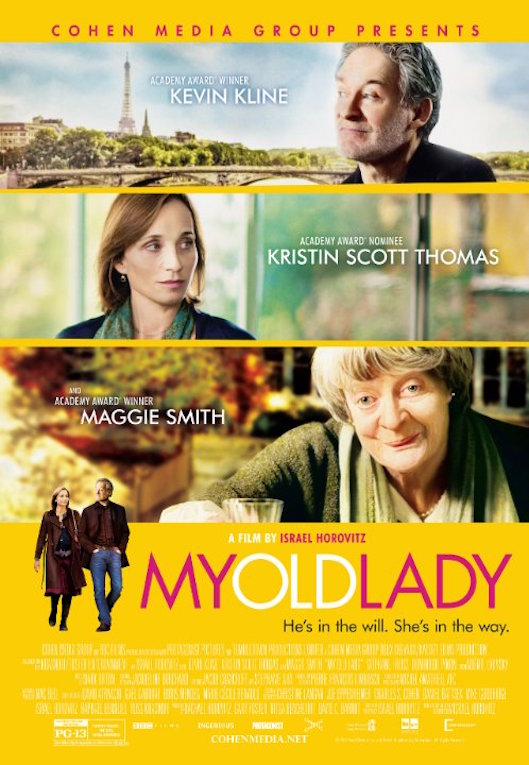
From the poster above (and from the trailer below), you’d be forgiven for thinking that My Old Lady is likely to be a bit of a genial romp, a comedy with heart that features a sprightly Maggie Smith running rings round a clueless Kevin Kline as she outmanoeuvres him time and again as he tries to oust her from the apartment. And initially, that’s exactly the kind of movie it is (except that Smith isn’t as sprightly as you might expect). Kline does a good job of looking exasperated and confused, Smith is polite and excessively punctilious, and the scene is set for a (one-sided) battle of wills, with humour aplenty and generous dollops of heart-warming sentiment served up throughout the movie as Matthias and Madame Girard learn to respect and like each other.

B004_B004_C005_10073O_0001.jpg

But writer/director Horovitz – adapting his stage play That Old Lady for the screen – has other ideas. It soon becomes apparent that Horovitz has a different tale to tell, one that includes humour as pathos only, and which at times, makes for a darker, more gruelling story than is first apparent. As Matthias begins to unravel the truths behind his parents’ marriage, and where Madame Girard and Chloé fit into it all, Horovitz takes the viewer on a journey into one man’s personal despair, and the way in which he finds redemption. There’s a long stretch where Matthias unburdens himself of a terrible event that happened when he was younger. It’s a scene that causes the viewer to hold their breath as Kline delivers a masterclass in dramatic acting, highlighting the depth of Matthias’s pain and the emotional devastation it’s caused him, and the effect it continues to have on him.

At first, this scene seems out of place, especially in terms of the movie’s tone, and subsequent scenes lack the power it contains (and some viewers may find the rest of the movie a bit of a letdown in terms of a lack of similar intensity), but it’s a cathartic moment, one that allows the viewer to understand both Matthias’s often crass, uncaring manner, and one that allows the viewer to connect with a character who seems motivated entirely by his own selfish needs. Chloé, who is present during the scene, has her own burdens, and this allows her to purge her resentments as well, as it becomes clear that she’s always known the truth about her mother and Matthias’ father. Both actors are superb, imbuing their characters with a common, tragic sadness that has hampered both their lives for so long, and to such terrible effect.

My Old Lady - scene3

Rather than being an out and out comedy, My Old Lady is a compelling drama that focuses on serious topics such as emotional dysfunction, parental neglect, suicide, social occlusion, and inappropriate self-respect, and deals with each one without a trace of flippancy. But it is funny in places, and there are some good visual gags thrown in at odd moments to leaven the drama, as well as some very good reparteé between Kline and Smith that shows neither of them has lost their sense of comic timing.

Clearly at ease with the material, Horovitz blends the comedy with the drama to refreshingly good effect, and takes the viewer on a journey that in meteorological terms, starts off bright and sunny, becomes increasingly cloudy, then very stormy before rays of sunshine start to break through the dark clouds and disperse them. As mentioned briefly before, the last twenty minutes cuts corners in its attempts to wind up the narrative, and some viewers may feel that scenes have been excised in an attempt to bring the movie down to its current running time. But this is a minor disappointment in comparison to what’s gone before, and Horovitz and his trio of outstanding lead performers should be congratulating themselves on a movie that doesn’t shy away from dealing with some very serious matters indeed.

Rating: 8/10 – an intelligent, unexpectedly gripping movie that may put off some viewers (though that would be the wrong reaction to it), My Old Lady is a must-see for fans of serious drama; Kline and Thomas are superb, and Horovitz uses the Paris settings to add a melancholy tone that aids the movie tremendously.

Share this:

  • Share on X (Opens in new window) X
  • Share on Facebook (Opens in new window) Facebook
  • More
  • Print (Opens in new window) Print
  • Email a link to a friend (Opens in new window) Email
Like Loading...

Our Brand Is Crisis (2015)

25 Thursday Feb 2016

Posted by dullwood68 in Movies

≈ Leave a comment

Tags

Anthony Mackie, Billy Bob Thornton, Bolivia, Campaign, Comedy, David Gordon Green, Drama, Joaquim de Almeida, Negative campaign, Political consultants, Politics, Polls, Presidential elections, Review, Sandra Bullock

Our Brand Is Crisis

D: David Gordon Green / 107m

Cast: Sandra Bullock, Billy Bob Thornton, Anthony Mackie, Joaquim de Almeida, Ann Dowd, Scoot McNairy, Zoe Kazan, Dominic Flores, Reynaldo Pacheco, Louis Arcello, Octavio Gómez Berríos, Luis Chávez

When a Bolivian politician, Pedro Castillo (de Almeida), hires an American political consulting firm to help him win the upcoming Presidential elections, they’re unprepared for how unpopular he is with the Bolivian people, and how uncharismatic he is. With their candidate adrift in the polls by twenty-eight points, the consultants, led by Ben (Mackie), bring in “Calamity” Jane Bodine (so called because of the way in which she’s mishandled the last four electoral campaigns she’s overseen). Arriving in Bolivia, Jane is initially laid low by altitude sickness, and takes a few days to find her feet. During this time, the other consultants do their best to make Castillo more voter friendly, but nothing seems to work.

Castillo’s main rival is a plain-speaking man of the people called Rivera (Arcello). His campaign is being run by Jane’s nemesis, Pat Candy (Thornton), a man who – like Jane – isn’t averse to lying and cheating to getting the job done. When he orchestrates a physical assault on Castillo, Jane sees the answer to the campaign’s problems in Castillo’s response – he knocks his assailant to the ground – and at once she regains her old flair for electoral battle. She quickly energises the consulting team (and against their better judgment on occasion), and impresses on them that the message should be that Castillo doesn’t have time for silly publicity stunts; he’s too busy trying to get elected so that he can save the country from the crisis it finds itself in right then.

Our Brand Is Crisis Movie Film Trailers Reviews Movieholic Hub

This approach begins to work, and Castillo makes up some ground in the polls, but there’s a problem: it won’t be enough. Jane advocates starting a negative campaign, looking for dirt on Rivera, anything that will put him in a bad light. But Castillo is resistant to the idea, and refuses to do it. Behind his back, Jane has some flyers printed that make it seem Rivera has launched his own negative campaign. Castillo relents, and Jane digs deep into Rivera’s background, uncovering a public funding fraud related to the purchase of some cars. It proves to be the first salvo in a battle between Jane and Candy that in time, changes the whole complexion of the campaign, and gives Castillo a fighting chance of winning the election.

For anyone watching Our Brand Is Crisis who finds themselves suffering an attack of déjà vu, it will be because this story has been covered before (with the real people concerned) in the 2005 documentary of the same name. Covering the 2002 Bolivian Presidential elections, and the involvement of US consulting firm Greenberg Carville Shrum, Rachel Boynton’s timely examination of political campaign tactics was both illuminating and worrying in equal measure. Arriving ten years on, and without the benefit of those elections to give it some much-needed context, Our Brand Is Crisis feels out-of-sorts with itself from the moment it touches down in Bolivia and tries to develop its comedy credentials by having Jane look ill and barf into a wastebasket.

It’s at this point that anyone expecting a political satire will begin to suspect they’re going to be disappointed. And so it proves, with the movie’s comic highlight involving the sad demise of a llama (so not really much of a highlight). Elsewhere there’s a nervy, whingy performance from McNairy that is meant to provide further humour but looks and sounds out of place, and the kind of uncomfortable banter between Jane and Candy that in any other workplace would have seen him fired for sexual harrassment. It’s hard to see why such obvious attempts at comedy were included in the movie, as all they do is interrupt the more carefully orchestrated drama, and detract from the somewhat clumsy message the movie is promoting (basically, never trust a politician or the people who work for him/her).

OBIC - scene1

That said, the movie does get its point across quite succinctly at times. Castillo has a quiet exchange on the campaign bus with a naïve young supporter called Eduardo (Pacheco) in which he spells out exactly what’s going to happen if he’s elected, and by inference, what it will mean for Bolivia. It’s played with due restraint by the two actors and is the movie’s most plainly shot scene, a simple two-hander (with cutaways to Jane) that also shows just how good the movie could have been if the effects of political expediency had been shown rather than the lengths that some consulting teams will go to to maintain that expediency. And in its own deceptive way it illustrates clearly the difference between a campaign promise and an elected imperative.

Again, it’s the political dirty tricks that become the focus, from the revelation that Castillo had an affair (and which Peter Straughan’s script never manages to make as devastating as it’s meant to be), to the ridiculous notion that Rivera has Nazi sympathies. The game of political oneupmanship between Jane and Candy is also one of the movie’s less convincing sleight of hands, while the impromptu visit by Jane to Eduardo’s home (and which leads to her getting drunk and arrested) merely adds to the notion that the script hasn’t decided what it wants to be: searing political drama, raucous comedy, or mocking satire. In the end it’s none of these. Instead it’s a messy political exposé that fails to tell us anything new about either South American politics or the grubby tactics used by US consulting firms to ensure their candidate’s success.

OBIC - scene3

It does, however, have one great redeeming feature: Sandra Bullock. In a movie that tries too hard and spreads itself too thin (and often in the same scene), Bullock is the through line that the audience can connect and stay with. Beneath her seen-it-all-with-warts-on demeanour and lack of shame at some of the things she devises, Jane is a memorable character made all the more memorable for Bullock’s portrayal of her as a media-savvy manipulator with hidden reserves of compassion. There’s a scene at the end that, in the hands of some actresses, would have appeared maudlin and unconvincing. But Bullock nails it with a dazed expression and eyes full of fear for what she’s done. It’s the movie’s strongest, most affecting moment; it’s just a shame that it comes so late in the day.

Developed by George Clooney and his producing partner Grant Heslov, Our Brand Is Crisis was originally meant to be directed by and star Clooney, but as time – and the movie’s development – rolled on, his intended participation dwindled to that of producer. Seeing the movie now this seems like a wise move on his part. Even though Green is a clever, often mercurial director, he’s defeated here by the hit-and-largely-miss script, and as a result he never finds a consistent tone that the movie can adhere to. Away from Bullock, the rest of the cast provide serviceable performances (thanks to some cruelly underdeveloped characters), with only de Almeida showing what can be done with the briefest of outlines. And Thornton, drafted in to give one of his patented Machiavellian opponent roles, does just that – and nothing more.

Rating: 5/10 – an undemanding look at how political campaigns can be manipulated toward a desired outcome, Our Brand Is Crisis lacks dramatic focus and a clear approach to the material; saved by Bullock’s performance, the movie nevertheless struggles to fly when she’s not on screen, and ends up as disappointing as the electoral outcome.

Share this:

  • Share on X (Opens in new window) X
  • Share on Facebook (Opens in new window) Facebook
  • More
  • Print (Opens in new window) Print
  • Email a link to a friend (Opens in new window) Email
Like Loading...

Deadpool (2016)

17 Wednesday Feb 2016

Posted by dullwood68 in Movies

≈ 2 Comments

Tags

Action, Ajax, Angel Dust, Colossus, Comedy, Drama, Ed Skrein, Fantasy, Marvel, Morena Baccarin, Mutants, Negasonic Teenage Warhead, Origin story, Ryan Reynolds, Superhero, T.J. Miller, Tim Miller, Violence, Wade Wilson

Deadpool

D: Tim Miller / 108m

Cast: Ryan Reynolds, Morena Baccarin, Ed Skrein, T.J. Miller, Gina Carano, Brianna Hildebrand, Leslie Uggams, Karan Soni, Jed Rees, Stefan Kapicic

Scabrous. Loud. Violent. Poignant. Sarcastic. Silly. Sophomoric. Raunchy. Confident. Sharp. Astute. Uncompromising. Thrilling. Audacious. Genre-defining. Sweet. Provocative. Homicidal. Brutal. Funny. Clever. Slick. Ingenious. Irreverent. Bold. Arresting. Forceful. Romantic. Cool. Bad-ass. Ribald. Biting. Shocking. Unapologetic. Intense. Frenetic. Demented. Gross. Lunatic. Crass. Superb.

You can use any of the above words to describe Deadpool, and they would all be appropriate. Deadpool is the kind of movie that attracts accolades by the inevitable bucket load, its twisted, hyper-real take on the superhero genre at odds with the more predictable, family-friendly approach favoured by Marvel et al. In fact, this is so far beyond anything you’ll have seen since Robert Downey Jr kitted himself out as Iron Man back in 2008 that it’s practically a reinvention of the superhero genre. The jokes are still there, and the sense that there’s one more quip just waiting around the corner is still prevalent, and there’s the usual over the top, physics-defying action sequences, but here it’s all about the tone. And the tone says: fuck ’em if they can’t take a joke.

Deadpool - scene3

Forget Marvel’s small screen successes with Daredevil and Jessica Jones, this is really, really adult stuff, with nudity, anal sex, deliberate on-screen amputations, lascivious one-liners, graphic violence, so many innuendos they could choke a wolverine, and enough off-colour material to offend just about everyone. It really is that kind of movie, a riotous panoply of bad taste, copious use of the F-word, visceral action, and pin-sharp humour. And thanks to the efforts of its director, star and writers, it all adds up to the best superhero movie since X2 (2003) (and minus the downbeat ending).

Of course, we’ve seen Ryan Reynolds as Wade Wilson before, in the poorly devised and executed X-Men Origins: Wolverine (2009). Unforgivably presented with his mouth sewn shut, the self-styled Merc With a Mouth was little more than an obstacle put in the way of the movie’s hero towards the end. But now we have a movie that does him full justice, and in the process, blows away any lingering cobwebs from previous incarnations, and raises the bar for what superhero movies can be.

That said, the basic plot and storyline isn’t the most original, and nor does it have to be, because it’s what the script does with it that makes it all so memorable, along with Reynolds’ relaxed, committed performance. Having found love with Vanessa (Baccarin), a prostitute who shares Wilson’s sense of humour and somewhat jaundiced outlook on the world, our principled mercenary learns he has terminal cancer. But he’s offered a chance: a secret experimental procedure that will both cure his cancer and make him virtually indestructible at the same time. With nothing to lose he takes up the offer, but Wilson finds himself at the mercy of super-soldier Ajax (Skrein) and his sidekick Angel Dust (Carano). Several tortuous procedures later and the dormant mutant genes in Wilson’s system have been awoken, but in doing so they’ve left him looking hideous (“like a testicle with teeth”).

Deadpool - scene2

One spectacular building explosion and subsequent collapse later, and Wilson decides to go after Ajax, who has boasted he can fix his appearance (“like an avocado had sex with an older, more disgusting avocado”). It all leads to a huge showdown at a salvage yard between Deadpool, X-Men Colossus (Kapacic) and Negasonic Teenage Warhead (Hildebrand), and Ajax, Angel Dust and their expendable goons. Oh, and Deadpool has to save Vanessa, who’s been kidnapped by Ajax (what else is a movie girlfriend for?).

There’s a whole lot more and it’s all as entertaining and enjoyable as you could have hoped for. Kudos should be given to 20th Century Fox for giving Deadpool a second chance – they made X-Men Origins: Wolverine – and for letting the movie develop in such a way that the character from the comics hasn’t had his reprobate behaviour curtailed. Of course, much of the credit is due to Reynolds and the way in which he stuck by the character over the last seven years. This may well be the role for which he will always be remembered, but if so, it’s unlikely the actor will have any qualms about it. His own deadpan sense of humour shines through, and his casual delivery of Wilson/Deadpool’s dialogue only adds to the overall effect (in fact, some lines are dispensed with so casually you’ll be wondering if you heard them properly).

But in amongst the genre-bending violence – the opening freeway assault is one of the most slickly produced and wince-inducing action sequences ever seen, purely for what happens to some of Ajax’s men – what makes Deadpool even more impressive is the romance between Wilson and Vanessa. As the besotted, sexually adventurous couple, Reynolds and Baccarin imbue their characters’ relationship with an unexpected and plaintive depth; when Wilson is diagnosed with cancer the script ensures it’s not just him that’s affected by the news. Baccarin is a good foil for Reynolds, and their scenes together exude a warmth that’s been missing from other superhero romances.

Deadpool - scene1

With moments where Deadpool breaks the fourth wall with gleeful abandon, to others where the movie pushes its luck in being scurrilous, the movie freewheels and pirouettes through its standard plotting with complete abandon. Reynolds’ Deadpool look (“like Freddy Krueger face-fucked a topographical map of Utah”) actually makes him look amazingly like Ted Danson after an horrific skin peel, while Hildebrand’s teen mutant is a cross between Teddy Munster and any number of Goth princesses. The only “look” that doesn’t quite work is Colossus’ CGI gaze, his lack of pupils making him look a little creepy, as well as a little backward.

All in all this is a tremendous romp, and one that breathes new life into what is fast becoming a moribund genre. Whether or not it prompts other superhero franchises to up their game (though not in the same direction; that would be a big mistake) remains to be seen, but it’s very likely that right now studio executives throughout Hollywood and beyond are looking at existing projects and wondering if they can (as Mark Watney might put it) “Deadpool the shit out of them”. Let’s hope wiser heads prevail, because otherwise, we’re in for a shedload of movies that will fall well short of what is a very impressive mark.

Rating: 9/10 – there’s often talk about superhero movies remaining true to the source material, but Deadpool embraces this idea with relish and comes up trumps as a result; exciting, profane, whip-smart and just plain FUN, this is a movie you can watch over and over again and never tire of.

Share this:

  • Share on X (Opens in new window) X
  • Share on Facebook (Opens in new window) Facebook
  • More
  • Print (Opens in new window) Print
  • Email a link to a friend (Opens in new window) Email
Like Loading...

Trailer – Mr. Right (2015)

17 Wednesday Feb 2016

Posted by dullwood68 in Movies

≈ Leave a comment

Tags

Action, Anna Kendrick, Comedy, Hitman, Preview, Romance, Sam Rockwell, Tim Roth, Trailer

The kind of “edgy” romantic comedy that we all know is going to be both mushy and appealingly sentimental at heart, Mr. Right is the latest from the pen of Max Landis – Chronicle (2012), American Ultra (2015), and, uh, Victor Frankenstein (2015) – and brings together Sam Rockwell (the title character) and Anna Kendrick in a tale that promises lots of comedy and some well-choreographed fight scenes. Rockwell is the hitman who’s developed a moral code (he kills the people who hire him instead of the intended victims) and who meets Kendrick’s Martha, a young woman whose last relationship ended badly. Their romance is hopefully the heart of the movie, but there’s bound to be plenty of action as Mr. Right finds himself being hunted down by his employers. With a supporting cast that includes Tim Roth, RZA, James Ransone and Michael Eklund, the only concern is the director, Paco Cabezas, whose last movie was the less than inspiring Rage (2014) starring Nicolas Cage. But festival audiences have taken to the movie so perhaps this will prove as entertaining and endearing as its makers intended.

Share this:

  • Share on X (Opens in new window) X
  • Share on Facebook (Opens in new window) Facebook
  • More
  • Print (Opens in new window) Print
  • Email a link to a friend (Opens in new window) Email
Like Loading...

Short Movies Volume 2

15 Monday Feb 2016

Posted by dullwood68 in Movies

≈ Leave a comment

Tags

Anton Sheptooha, Australia, Benjamin De Bandt, Comedy, Drama, Fabio Gradassi, France, I Miss You, Impuissance, Italy, Mech: Human Trials, Mihalis Monemvasiotis, Nick L'Barrow, Patrick Kalyn, Red Wine, Reviews, Romance, Sci-fi, Thriller, Una di troppo

The short movie is an oft-neglected aspect of movie viewing these days, with fewer outlets available to the makers of short movies, and certainly little chance of their efforts being seen in our local multiplexes (the exceptions to these are the animated shorts made to accompany the likes of Pixar’s movies, the occasional cash-in from Disney such as Frozen Fever (2015), and Blue Sky’s Scrat movies. Otherwise it’s an internet platform such as Vimeo, YouTube (a particularly good place to find short movies, including the ones in this post), or brief exposure at a film festival. Even on DVD or Blu-ray, there’s a dearth of short movies on offer. In an attempt to bring some of the gems that are out there to a wider audience, here is the second in an ongoing series of posts that will focus on short movies. Who knows? You might find one that becomes a firm favourite – if you do, please let me know.

I Miss You (2014) / D: Anton Sheptooha, Nick L’Barrow / 7m

Cast: Alex Fitzalan, Steph Howe

I MIss You

Rating: 8/10 – A touching, heartfelt little movie that charts the course of a romance between an unnamed young man and woman in a succession of scenes that show the rise, and eventual collapse, of their relationship. All the while the young man narrates his feelings of loss at not having his girlfriend in his life anymore. Subtly and succinctly made, with a voiceover that convincingly displays sadness and regret (even if the character says he doesn’t have any regrets), this Aussie charmer is one of those rare shorts that you wish was just that little bit longer.

Una di troppo (2015) / D: Fabio Gradassi / 4m

aka One Too Many

Cast: Arianna Ceravone, Marco Stefano Speziali

Una di troppo

Rating: 8/10 – It’s the morning after the night before and Marco is congratulating himself on yet another sexual conquest, a friend of his flatmate’s called Gianna. But there’s more to his apparent good fortune than he suspects, a fact that becomes all too clear when he asks to see Gianna again. A quickfire assault in the Italian battle of the sexes is handled with deft humour as Gradassi has fun with Marco’s pompous self-belief and Gianna’s no-nonsense intentions. The “twist” is perhaps a little too obvious but it’s handled with aplomb by the two stars, which makes Una di troppo a small but very delicious treat.

Impuissance (2015) / D: Cleaudya Deschamps, Ludovic Julia, Chloé Prendleloup, Júlia Tomàs Pagès, Benjamin De Bandt / 8m

aka Powerless

Cast: Benjamin De Bandt, Sylvie Morizot

Impuissance

Rating: 7/10 – A young boy tries to cope with feelings of pain and despair in the wake of his mother’s unexpected death. If you search out short movies on the Internet then you’re bound to come across some that are the results of school projects, such as this moody, slightly eerie French endeavour, that features an impassive performance from De Bandt, and a visual approach that favours bleak, existential compositions spliced into the boy’s humdrum daily routine. It has a gradual effect on the viewer, but one question will probably remain uppermost in most viewer’s thoughts: where is the father in all this?

Mech: Human Trials (2014) / D: Patrick Kalyn / 6m

Cast: Steve Baran, Rowland Pidlubny, Douglas Chapman, Pete Gasbarro

Mech Human Trials

Rating: 7/10 – Following an accident, a man retreats into the world of designer drugs, only to find their effect on him isn’t quite what he was expecting… and that he’s not alone. Along with school projects, there are an awful lot of short movies that are made to show what a movie maker can do, a) on a limited budget, b) with a lot of imagination, and c) as a calling card to the various studios out there. This sci-fi thriller, with its Terminator overtones, is high on moody shots of its star, and does well with its depiction of the drug’s physical effects, but also makes the mistake of repeating its one standout moment – and for a six-minute movie that’s not always a good thing.

Red Wine (2013) / D: Mihalis Monemvasiotis / 6m

Cast: Peter Greenall, Aggy Kukawka

Red Wine

Rating: 9/10 – Having cooked dinner and poured two glasses of red wine, a man waits for his wife to come home and join him. When she does, her being late leads to accusations of sexual impropriety, and an uncomfortable confrontation that speaks of domestic violence to come – or does it? With a bigger budget and a longer running time, it’s unlikely that Red Wine would work as well as it does. By keeping it tight and memorably disturbing, and even more so when the nature of the action becomes clear, Monemvasiotis manages to draw the viewer in and keep their attention fixed as events spiral seemingly out of control. Tense and hypnotic, Red Wine is one short that is astute enough to not “let off” its audience by providing a cosy ending.

Share this:

  • Share on X (Opens in new window) X
  • Share on Facebook (Opens in new window) Facebook
  • More
  • Print (Opens in new window) Print
  • Email a link to a friend (Opens in new window) Email
Like Loading...

Dad’s Army (2016)

09 Tuesday Feb 2016

Posted by dullwood68 in Movies

≈ 2 Comments

Tags

Bill Nighy, Blake Harrison, Captain Mainwaring, Catherine Zeta-Jones, Comedy, Corporal Jones, Drama, German spy, Home Guard, Invasion plans, Michael Gambon, Oliver Parker, Private Pike, Review, Sergeant Wilson, Toby Jones, Tom Courtenay, Walmington-on-Sea, War, World War II

Dad's Army

D: Oliver Parker / 100m

Cast: Toby Jones, Bill Nighy, Catherine Zeta-Jones, Tom Courtenay, Michael Gambon, Blake Harrison, Daniel Mays, Bill Paterson, Mark Gatiss, Sarah Lancashire, Felicity Montagu, Alison Steadman, Emily Atack, Holli Dempsey, Julia Foster, Annette Crosbie, Ian Lavender, Frank Williams

Those of a certain age will remember the original UK TV series that ran from 1968 to 1977. It was immensely popular, with episodes regularly hitting the eighteen million mark for viewers, and it spawned a radio version, a stage version, and in 1971, there was even a movie featuring the original cast. Even today, repeat showings of Dad’s Army garner viewing figures in the low millions. It’s a national institution, and one of the few shows in the UK that pretty much everyone either likes or has a soft spot for. In short, it’s that good.

And now we have a remake to contend with, an updating (of necessity) of the cast – though series’ veteran Frank Williams does return as the vicar – and an attempt at recreating past glories with a slightly modern slant attached. When the project was first announced in 2014, the reaction amongst fans wasn’t as enthusiastic as the makers would have hoped, and when the trailer was first shown in cinemas in late 2015, some audiences gave it a less than warm reception. The general consensus seemed to be: this can’t be any good… can it?

Dad's Army - scene2

The short answer is no. This version is so disappointing that for much of its running time, viewers will be wondering how the makers could have got it so badly wrong, and with such consistency. It’s obvious from the opening scenes that find the platoon attempting to capture a bull, and which lead to their running scattershot across a field while the camera adopts the POV of the bull, that this isn’t going to be the warmly humorous affair that the series was, or as cleverly constructed. And as the movie continues, introducing its tired plot centred around the Allied invasion in 1944 and the search for a German spy, it becomes abundantly clear that whatever merits Hamish McColl’s screenplay may have had, they’ve not been transferred to the screen.

In this version, as opposed to the series, Captain Mainwaring (a game but badly undermined Toby Jones) is portrayed not as the officious prig that he was on TV but as a bumbling idiot. Sergeant Wilson (Nighy) was always the quiet Lothario, but now we’re asked to believe that he would fall so easily and in such a headstrong way for a woman from his past, the worldly-wise journalist Rose Winters (Zeta-Jones) (he was her tutor at Oxford, which raises all sorts of questions that thankfully the script doesn’t want to explore). And then there’s the rest of the platoon: nervous Corporal Jones (Courtenay, going from the sublime 45 Years to this farrago), addled Private Godfrey (an admittedly well cast Michael Gambon), doomy Private Frazer (Paterson), upbeat spiv Private Walker (Mays), and dopey Private Pike (The Inbetweeners’ Harrison). If nothing else, it’s a great cast, but it’s also a cast who are given so little to do in real terms (other than to keep advancing the plot – there’s an incredible amount of exposition here) that one ultimately wonders what was the point of hiring them.

Dad's Army - scene3

When the best you can do with actors of this calibre is have them stand around in a church hall for no better reason than to see how terrible they are as a Home Guard – which we already know – and then repeat the same three or four more times, it shows up the paucity of ideas on display. The rivalry between Mainwaring and Wilson, so beautifully enacted by Arthur Lowe and John Le Mesurier on TV, is retained, but with Mainwaring appearing so petulant and bullying in his responses to Wilson that all the subtlety of their relationship is lost, abandoned possibly from the first draft. Corporal Jones’s nervous anxiety in the face of danger is poorly channelled by Courtenay (who never seems comfortable in the role), while Private Pike’s innate stupidity is bolstered for some reason by his quoting famous lines from the movies of the period and being made to look like Errol Flynn (and all to little effect). Only Gambon succeeds in beating the odds, making Godfrey endearingly silly in his dotage, but then the character isn’t given anything else to do other than be endearingly silly, so Gambon can’t go wrong.

And then there’s the plot, the kind of hackneyed attempt at combining contemporary concerns with light humour that the series would have done more justice to, and more effectively, in under half an hour. The original scripts by Jimmy Perry and David Croft were tightly constructed, beautifully observant of their characters’ foibles, and the humour always arose from those foibles; everything was in service to the characters. Here it’s the opposite, and the characters are shoehorned into a plot that never gets off the ground (unlike a certain number of tanks). Thankfully, the script doesn’t attempt to hide the identity of its German spy (and their identity is easily deduced from the trailer), so that’s one hurdle it doesn’t have to stumble over in the dark, but it does lay a massive egg in the form of Mark Gatiss’ Major Theakes, a martinet senior officer with an unexplained limp and a penchant for fitting the war in around his leisure activities. It feels like Theakes is there as a satirical nod to the incompetencies of the command structure, but if so, he’s out of place and would be better off appearing in a World War I tale instead.

Dad's Army - scene1

The movie is also one of the blandest, most visually depressing movies to watch in some time, its dour colour palette and compromised colour range doing little to engage the senses beyond the red dress worn by Zeta-Jones. Even the outdoor scenes seem to have been filmed only on days when the skies were overcast and/or gloomy. And the final shootout is so devoid of tension and excitement that you can only hope it’s all over with as quickly as possible.

If it seems unfair to judge Dad’s Army 2016 with the original show, then it’s because the original was so good, and this isn’t. This is laboured, uninspired, woeful stuff in places, and not a tribute to the enduring qualities of the TV show in any way, shape or form. Even the attempts to squeeze in the various catchphrases from the show are awkwardly handled, and some you might even miss as you fight to maintain a decent level of attention. With the show having gained such a level of respect and admiration and affection over the years, to have this released now, and to be so badly put together, begs the question that’s asked here quite often: why didn’t anyone realise how bad this was when they were making it, or was it all too late if they did?

Rating: 3/10 – another example of a UK TV sitcom given a lacklustre cinema outing, Dad’s Army should stand as a warning to other movie makers looking to adapt a small screen favourite; with a script that forgot to include any jokes, or anything that an audience that could react to by laughing out loud, this should be avoided by anyone who loves the series and who doesn’t want that love tarnished by what’s been attempted here.

Share this:

  • Share on X (Opens in new window) X
  • Share on Facebook (Opens in new window) Facebook
  • More
  • Print (Opens in new window) Print
  • Email a link to a friend (Opens in new window) Email
Like Loading...

Aaaaaaaah! (2015)

05 Friday Feb 2016

Posted by dullwood68 in Movies

≈ Leave a comment

Tags

Aggressive behaviour, Alpha male, Ape-like behaviour, Apes, Comedy, Dismemberment, Drama, Lucy Honigman, Murder, Noel Fielding, Primates, Robert Fripp, Sex, Steve Oram, Tom Meeten, Toyah Willcox

Aaaaaaaah!

D: Steve Oram / 79m

Cast: Steve Oram, Lucy Honigman, Toyah Willcox, Tom Meeten, Sean Reynard, Julian Rhind-Tutt, Julian Barratt, Holli Dempsey, Noel Fielding

If you’re familiar with Steve Oram, then you’ll know that he’s an actor/comedian who has popped up in a wide variety of UK TV comedies – Tittybangbang (2006-07), Heading Out (2013) and a slew of others – and that he was also responsible for the quirky Sightseers (2012). He’s always provided a somewhat skewed approach to the material he’s created himself, often coming up with characters who seem removed from daily life, and who don’t always see things in the same way that “normal” folk do. But with Aaaaaaaah!, he’s taken that removal and come up with something that’s both original and challenging.

What Oram has done is base Aaaaaaaah! on a simple premise: what if Man had involved in terms of walking upright and creating a civilisation we can all recognise, but in the process, retained the behaviours, instincts and language of the primates we’ve “evolved” from? The result is fascinating to watch, but it needs to be said at the outset: this is not a movie that everyone will either “get” or like. It’s absurdist, has obviously been shot on a very low budget, doesn’t really contain any jokes (though it is very funny), and features a game cast who are asked to behave in ways that you won’t have seen in a Planet of the Apes movie.

A - scene1

The first scene acts as a kind of litmus test for the rest of the movie, and many viewers may well decide that if what happens is an indication of what’s to come, then they’ll be better off watching something else. We see two men – Smith (Oram) and Keith (Meeten) – making their way through a wooded area until they come to a stop by a fallen tree. There they pause, and while Smith sits on the fallen tree, Keith wordlessly massages Smith’s thighs. Then Smith takes a framed picture out of a pocket and begins crying. Keith clears a space on the ground and Smith gently places the picture there. While Smith continues to cry, Keith unzips his fly and urinates on the picture. Once he’s done, Smith urinates on it as well, but before he zips back up, Keith dabs away any remaining urine from the end of Smith’s penis (and in close up).

If you’re put off by this, and do decide to stop and watch something else, then you’ll already be missing the point, and you’ll be missing out on a movie that really does provide the viewer with something they won’t have seen before. Keith’s actions are completely in keeping with grooming in male primate groups, and this is what the movie is about, seeing our notions of civilised behaviour undermined by the rudimentary behaviour of our primate ancestors. From Smith and Keith we move on to meet Denise (Honigman), her mother Barabara (Willcox), older brother Og (Reynard), and Ryan (Rhind-Tutt), who has ousted Denise’s father Jupiter (Barratt) as the household’s alpha male (Jupiter now sleeps against the fence at the side of the house). Here we get to see how this family lives and copes with each other, both in terms of human ambition – we first see Ryan trying to set up a new flatscreen TV – and primate-based emotions.

An argument over food between Ryan and Barabara leads to a one-sided food fight, and Denise leaves the house. She meets Helen (Dempsey) in a park and they decide to go and do some shoplifting. Caught by the manager and his deputy (Fielding), they only escape thanks to an injudicious desire for sex on Fielding’s part. Back home, a party is in full swing, one that’s soon attended by Smith and Keith. Smith marks his territory and mates with Denise before taking her with him when he leaves. This angers Og who tells Ryan later the next day. Together they track down Smith and Denise (and Keith) and there is a violent showdown that sees Keith stabbed by Og. Smith takes his revenge on both men and returns to Denise’s home, where he discovers Jupiter’s presence and welcomes him back into the house. Which doesn’t prove to be the best of ideas…

Aaaaaaaah!

For anyone willing to go with the flow and the strange depth of Oram’s research, Aaaaaaaah! is a heady mix of animal hysterics, vicious behaviour, cruel sight gags, highly attuned emotions such as jealousy and anger, and all couched in the kind of visual stylings that are reminiscent of British short comedies made in the Seventies (and which also had little or no dialogue). Oram has made a clever, stinging comedy that is also unexpectedly witty and engaging, full of pathos, and which doesn’t short change the viewer in terms of its storyline. If some of the behaviours displayed in the movie seem a little too extreme, or even weird, then again, Oram has done his homework, and there’s nothing that doesn’t happen in the same or similar way amongst our primate cousins.

The cast are all put through their paces, the demands of Oram’s script leading to darker moments that include physical and sexual abuse, murder, and unacceptable cruelty to humans (though Oram does stop at having any of his cast flinging faeces around). What’s illuminating is that none of this is unusual amongst apes, but appears absolutely horrifying when carried out by humans (it really is a different world). Honigman fares best, but spare a thought for a game Willcox, who really does get the worst of the food fight scene (though you might think that what touches Rhind-Tutt’s forehead while he’s passed out is worse).

A - scene3

To add to the sense of disorientation that viewers are likely to feel, Oram has employed a ragged, disjointed style of filming that offers odd angles and off-kilter framing, and has overlaid it with an unsettling score provided largely by Robert Fripp of King Crimson (and also Willcox’s husband). It all adds to a bravura piece of movie making that is more of a triumph than perhaps anyone had a right to expect – and that may just include its creator.

Rating: 8/10 – not for all tastes, and likely to alienate more viewers than are likely to be embraced in its inherently savage bosom, Aaaaaaaah! is a slice of natural history gone horribly wrong; subversive and strange, and at times very uncomfortable to watch, this is still incredibly funny amidst all the “madness” and chaos, and easily one of the more inventive movies made in recent years.

Share this:

  • Share on X (Opens in new window) X
  • Share on Facebook (Opens in new window) Facebook
  • More
  • Print (Opens in new window) Print
  • Email a link to a friend (Opens in new window) Email
Like Loading...

Love the Coopers (2015)

04 Thursday Feb 2016

Posted by dullwood68 in Movies

≈ Leave a comment

Tags

Alan Arkin, Christmas, Comedy, Diane Keaton, Drama, Dysfunctional family, Ed Helms, Family ties, Jessie Nelson, John Goodman, Olivia Wilde, Relationships, Review, Romance, Steve Martin

Love the Coopers

aka Christmas With the Coopers

D: Jessie Nelson / 107m

Cast: Diane Keaton, John Goodman, Alan Arkin, Olivia Wilde, Ed Helms, Marisa Tomei, Amanda Seyfried, June Squibb, Jake Lacy, Anthony Mackie, Alex Borstein, Timothée Chalamet, Maxwell Simkins, Blake Baumgartner, Steve Martin

It’s February, so what better time to watch a movie set at Xmas? Coming to Love the Coopers a couple of months or so after what would be deemed the best time to watch it, the first thing that comes to mind about the movie is that it didn’t have to be set at Xmas at all. As several branches of the same extended family all prepare to get together over the Yuletide period, it’s easy to see how this could have been set at Thanksgiving, or on an anniversary, or in the run up to a wedding (or even a funeral). The backdrop is just that: a backdrop, serviceable enough, but aside from the introduction of mistletoe to encourage some very sloppy kissing, there’s nothing about Love the Coopers that required it to be set at Xmas.

Love the Coopers - scene2

With that out of the way, the viewer can now sit back and enjoy the highly amusing interactions between the various members of the Cooper family, from acerbic patriarch Bucky (Arkin), to his uptight daughter Charlotte (Keaton) and her nearly estranged husband Sam (Goodman), and on down to their wayward daughter Eleanor (Wilde) who meets a soldier, Joe (Lacy), in an airport bar and persuades him to pose as her boyfriend. Then there’s Charlotte’s brother, Hank (Helms), who’s recently lost his job as an in-store photographer, and their sister, Emma (Tomei), who resorts to shoplifting as a way of getting Charlotte a present she’ll have to pretend to like. Oh, and then there’s diner waitress Ruby (Seyfried), whose friendship with Bucky might mean more to both of them than they’ll admit.

Wait, there was mention of “highly amusing interactions”. Well, that was probably the intention, but sadly, Steven Rogers’ screenplay forgot to include any appreciable laughs beyond the aforementioned sloppy kissing, and the tried and trusted use of inappropriate comments from a senior citizen with dementia, Sam’s Aunt Fishy (Squibb). Matters are made worse by the decision to include a narrator (Martin) who provides a running commentary on what’s happening, and what the characters are thinking, and who at the end, is revealed to be – well, let’s just say the narrator’s identity is meant to be whimsical and in some ways, cute, but it just goes to show how poorly constructed and thought out the whole thing is.

Love the Coopers - scene3

With the humour left somewhere behind in an earlier draft perhaps, the movie tries to make the most of a series of underwhelming dramatic scenarios, from the impending break up of Charlotte and Sam, to Hank’s inability to get a new job while keeping his recent unemployment a secret from everyone else, to Eleanor’s confusion over what sort of life she wants and whether or not she believes in love (yawn). Thanks again to Rogers’ screenplay though, the viewer will find these trials and tribulations having a minimal impact, and will most likely be checking their watch to see how much longer all these banal travails have got to continue.

Taking advantage of a Xmas metaphor, the movie is the equivalent of the Xmas roast that’s not been cooked properly. It’s dramatically turgid, unconvincing, and despite the incredibly talented cast (who are clearly wasted – and not in an alcoholic way; that might have been more interesting), never takes flight in the way that its makers probably intended. Quite why it was made is hard to work out, and it’s definitely a movie that you’ll only endure once, but if there’s one thing about it that can be used as a positive, it’s that – no, actually, there isn’t anything.

Love the Coopers - scene1

Rating: 3/10 – the dysfunctional American family coming together to feud and fuss with each other is a staple of US movie making, but Love the Coopers brings absolutely nothing new to the (Xmas) table; poor in every department, and one that its cast will probably want to forget, this is a movie that defies anyone to gain any kind of reward from it.

Share this:

  • Share on X (Opens in new window) X
  • Share on Facebook (Opens in new window) Facebook
  • More
  • Print (Opens in new window) Print
  • Email a link to a friend (Opens in new window) Email
Like Loading...

Joy (2015)

01 Monday Feb 2016

Posted by dullwood68 in Movies

≈ 1 Comment

Tags

Bradley Cooper, Comedy, David O. Russell, Drama, Edgar Ramirez, Inventions, Jennifer Lawrence, Joy Mangano, QVC Channel, Review, Robert De Niro, The Miracle Mop, True story

Joy

D: David O. Russell / 124m

Cast: Jennifer Lawrence, Robert De Niro, Bradley Cooper, Edgar Ramirez, Diane Ladd, Virginia Madsen, Isabella Rossellini, Dascha Polanco, Elisabeth Röhm, Aundrea Gadsby, Gia Gadsby

At first glance, Joy looks like a traditional rags to riches story about a plucky young woman who overcomes several hurdles on her way to making her fortune. And for the most part this is exactly the kind of movie that Joy is. But it’s also a David O. Russell movie, and that means that the story can’t be told in a completely straightforward way. Instead we’re treated to occasional dream sequences that apparently hold a mirror up to Joy’s feelings at the time, a voiceover that comes and goes without adding too much to the overall presentation, and a lengthy stopover at the headquarters of the QVC Channel that amounts to a very generous piece of promotion.

By returning to the kind of small-town milieu he depicted so well in Silver Linings Playbook (2012), Russell has forgotten to include the one thing that made that movie so affecting and effective: interesting characters. Here, we have budding business matriarch Joy Mangano (Lawrence) whose struggle to get her Miracle Mop – the first self-wringing mop – both into production and into people’s homes is punctuated by several obstacles and problems, not the least of which is her business naïvete. That she overcomes all these problems is a given – this is based on a true story after all – but in the hands of Russell and his co-story writer Annie Mumolo, Joy’s tale lacks the kind of investment in the characters that’s needed for an audience to be cheering them on through adversity after adversity.

Joy - scene2

The problems begin almost immediately, with Joy’s grandmother Mimi (an almost unrecognisable Ladd), foreshadowing events with an upbeat voiceover that predicts Joy’s success as an adult because Mimi knows she’s destined for greatness. This is the restaurant equivalent of being told that a particular meal on the menu is going to be a feast for the tastebuds. If you’re already seated at your table (or in the back row of your local cinema), then you’re not going to disbelieve the person telling you all this, and with Joy we know in advance that Mimi’s predictions will come true. So it doesn’t need all this dreamy talk of predestination and making one’s dreams come true. And this is largely the role that Ladd has in the movie, to pop up every now and then when things go wrong and remind everyone that everything will be alright in the end. (But we know this already…)

We then have a considerable amount of time spent introducing the characters. There’s Joy, obviously, a divorced mother of two who spends most of her time clearing up after her reclusive mother, Terry (Madsen), and her father, Rudy (De Niro), who owns an auto repair shop. Her parents are divorced, but circumstances have them living in Joy’s house, Terry in her room, Rudy in the basement. There’s also Tony (Ramirez), Joy’s ex-husband, who also lives in the basement, and has his own dreams of being a singer (but this subplot is smothered at birth and dismissed thereafter). Adding to the mix is Joy’s petulant half-sister Peggy (Röhm), whose own struggle to be accepted fully by Rudy is another subplot that gets an early grave, and Joy’s childhood friend Jackie (Polanco), whose role is to support Joy at the expense of having any character of her own. All these characters interact with each other in ways that are mostly confrontational, but which add up to a series of poorly timed dramatic interludes, Russell filming these scenes as if they were rehearsals rather than the finished offering.

Joy - scene3

And then there’s Joy herself. Whatever really happened in Joy Mangano’s life as she fought to get her Miracle Mop into people’s homes (“It’s the only mop you’ll ever need to buy” is repeated like a mantra), it’s hard to believe that someone with so much flair and the kind of intelligence to come up with such a revolutionary invention could be so continuously undermined both by her family – though admittedly with her best interests at heart – and by such a large number of poor business decisions. And the movie eventually realises this at the end, but by then it’s too late. Despite several setbacks, including a declaration of bankruptcy that gets ignored like so many other briefly introduced subplots, Joy wins out in the end, as expected, but it’s the way in which she does that shows just how uninterested Russell is in portraying his central character in any kind of consistent light. Joy solves all her business problems by providing the kind of expertly constructed and detailed deconstruction of her opponent’s position that only exists in the movies, and which has them backing down immediately.

Russell’s uneven, and often ill-considered script is the one major flaw that stops Joy from being the thought-provoking, inspirational movie it no doubt wants to be in the first place. Thankfully it’s bolstered by an impressive performance from Lawrence even if she is fighting against the script’s often painful restrictions on her ability to connect with the audience. Alas, the same can’t be said for Cooper, who plays a senior buyer at QVC as if he were a Messiah of the airwaves. It’s an arch, uncomfortable to watch performance, and helps to mire the movie around the halfway mark, as Joy’s initial attempts to sell the Miracle Mop are given awkward free rein on TV, and the movie’s pace, not the sprightliest at the best of times, grinds to a clunking halt. De Niro has the look of an actor whose starting to realise his role isn’t going to be as big or as important to the story as he’d thought, Madsen channels an odd combination of deliberate shut-in and shy Southern belle supposedly to comic effect but soon becomes annoying, Ramirez is sidelined early on and hangs around in the background for two thirds of the movie, and Rossellini comes in halfway through and behaves like a low-rent mafiosi whose just suffered a minor stroke.

Joy - scene1

Along with American Hustle (2013), Russell seems to be foregoing content over style, but here it doesn’t work either. The wintry Long Island setting and bland interiors do little to improve the visual malaise that stalks the movie throughout, and there are too many occasions where the framing seems off-kilter, though whether this is deliberate or not is hard to tell, but it does have the effect of further distancing the viewer from the characters. Russell adds a few cinematic tricks to mix things up but they only serve to reinforce how ineffective the overall design is. With it already being too difficult to connect with Joy and her dysfunctional family, Russell’s directorial stance and ragged screenplay offer little help in getting any actual joy out of Joy.

Rating: 6/10 – lacking the necessary creative steam to get it through the hesitancies and inconsistencies of the script, Joy is a pedestrian tale of success borne out of personal tenacity; Lawrence elevates proceedings but even her sterling effort can’t save a movie that doesn’t know what kind of movie it wants to be, and which fumbles around for too long trying to find out.


//ws-eu.amazon-adsystem.com/widgets/q?ServiceVersion=20070822&OneJS=1&Operation=GetAdHtml&MarketPlace=GB&source=ss&ref=as_ss_li_til&ad_type=product_link&tracking_id=thedullwoodex-21&marketplace=amazon&region=GB&placement=B019FCY2WK&asins=B019FCY2WK&linkId=f213782d1476d6cc31466bf718695513&show_border=true&link_opens_in_new_window=true

Share this:

  • Share on X (Opens in new window) X
  • Share on Facebook (Opens in new window) Facebook
  • More
  • Print (Opens in new window) Print
  • Email a link to a friend (Opens in new window) Email
Like Loading...

Monthly Roundup – January 2016

31 Sunday Jan 2016

Posted by dullwood68 in Movies

≈ Leave a comment

Tags

Acting, Affair, Antonia Scalari, BP, China, Cholera, Comedy, Documentary, Drama, Drugs, Edward Norton, Floodtide, Freebasing, Giulio Marchetti, Giuseppina, Gordon Jackson, Historical drama, Italy, Jack Lambert, James Hill, John Curran, John Laurie, Literary adaptation, Marina Zenovich, Naomi Watts, Oscar winner, Petrol station, Richard Pryor, Richard Pryor: Omit the Logic, Romance, Rona Anderson, Ship design, Shipyard, Short movie, Stand up comedy, The Clyde, W. Somerset Maugham

Richard Pryor: Omit the Logic (2013) / D: Marina Zenovich / 83m

With: Richard Pryor, Jennifer Lee, Rashon Khan, Thom Mount, Whoopi Goldberg, Bob Newhart, Patricia von Heitman, David Banks, Skip Brittenham, Paul Schrader, Stan Shaw, Robin Williams, David Steinberg, Rocco Urbisci, Lily Tomlin

Richard Pryor Omit the Logic

Rating: 6/10 – a look back over the life and career of Richard Pryor featuring comments from the people who lived and worked with him; if you’re familiar with Pryor and his work then Richard Pryor: Omit the Logic won’t provide you with anything new, but its concise, straightforward approach is effective enough, even if there’s an accompanying lack of depth to the way the material has been assembled.

Floodtide (1949) / D: Frederick Wilson / 90m

Cast: Gordon Jackson, Rona Anderson, John Laurie, Jack Lambert, James Logan, Janet Brown, Elizabeth Sellars, Gordon McLeod, Ian McLean, Archie Duncan

Floodtide

Rating: 7/10 – an eager to succeed shipyard worker (Jackson) earns both the respect of the shipyard owner (Lambert) and the love of his daughter (Anderson, who Jackson married in real life), as he climbs the ladder from metal worker to ship designer; the kind of cottage industry movie that Britain made in abundance in the late Forties/early Fifties, Floodtide has a great deal of charm, and an easygoing approach to its slightly fairytale narrative.

Giuseppina (1960) / D: James Hill / 32m

Cast: Antonia Scalari, Giulio Marchetti

Giuseppina

Rating: 9/10 – on a slow, sunny day at an Italian roadside garage, young Giuseppina (Scalari) finds that life isn’t quite as boring as she thinks; an Oscar-winning short, Giuseppina is a total delight, with minimal dialogue, some beautifully observed caricatures for customers, and a simple, unaffected approach that pays enormous dividends, and makes for an entirely rewarding experience.

The Painted Veil (2006) / D: John Curran / 125m

Cast: Naomi Watts, Edward Norton, Liev Schreiber, Toby Jones, Diana Rigg, Anthony Chau-Sang Wong

The Painted Veil

Rating: 7/10 – bacteriologist Walter Fane (Norton) takes his wife Kitty (Watts) to China as punishment for an affair, but in combatting an outbreak of cholera, discovers that she has qualities he has overlooked; previously made in 1934 with Greta Garbo, The Painted Veil (adapted from the novel by W. Somerset Maugham) is a moderately absorbing, moderately effective romantic drama that never quite takes off, but does feature some beautiful location photography courtesy of Stuart Dryburgh.

Share this:

  • Share on X (Opens in new window) X
  • Share on Facebook (Opens in new window) Facebook
  • More
  • Print (Opens in new window) Print
  • Email a link to a friend (Opens in new window) Email
Like Loading...

Grandma (2015)

29 Friday Jan 2016

Posted by dullwood68 in Movies

≈ Leave a comment

Tags

Abortion, Bereavement, Comedy, Granddaughter, Grandmother, Judy Greer, Julia Garner, Lesbian, Lily Tomlin, Marcia Gay Harden, Paul Weitz, Relationships, Review, Sam Elliott

Grandma

D: Paul Weitz / 78m

Cast: Lily Tomlin, Julia Garner, Marcia Gay Harden, Judy Greer, Sam Elliott, Laverne Cox, Elizabeth Peña, Nat Wolff, Lauren Tom

Elle Reid (Tomlin) is a once well-known poet. She’s also a lesbian whose long-term partner has recently passed away. She has a daughter, Judy (Harden), she isn’t on very good terms with. She’s grouchy, antagonistic and caustic as the mood takes her. She’s also just shown the door – horribly – to Olivia (Greer) whom she’s been in a relationship with for four months. And now she’s visited by her granddaughter Sage (Garner) who’s pregnant and needs $630 for an abortion by five forty-five that evening. No wonder she’s so unapologetically cranky.

Elle has another reason to be in a bad mood: thanks to an attack of principles she’s cut up her credit card and used it as a wind chime, so she can’t give Sage the money she needs. To make up for this selfish crime against modern day living, Elle agrees to help Sage find the money from other sources. First they visit Sage’s boyfriend, Cam (Wolff), where his aggressive and disrespectful attitude to Elle leads to some unexpected violence and the accrual of $50. From there they try to call in a loan from one of Elle’s friends, Deathy (Cox), but that only nets $65. When Elle next tries to sell some of her first edition books (even though they’re not in the best of condition), that plan backfires when Olivia appears on the scene and an argument ensues. With time running out, Elle decides she has to take a risk and visit an old flame, Karl (Elliott). At first Karl seems amenable to lending Elle the remaining $515 but their shared history ruins things and he refuses. This leaves Elle and Sage with only one remaining option: they have to see Judy and ask for her help, even though she and Elle are effectively estranged and she has no idea that Sage is pregnant (Elle also tells Sage that she’s afraid of Judy and has been since she was five).

Grandma - scene2

It should take the viewer roughly two minutes of Grandma‘s running time to see why Lily Tomlin signed up to play Elle. In keeping with her literary background, and doing her best to end her relationship with Olivia as quickly as possible, Elle refers to her as “a footnote”. It’s an unnecessarily cruel remark, and Tomlin delivers it casually, as if it were of no more significance than if Elle had called Olivia a terrible lay, or a boring conversationalist. And from that nasty remark, and Elle’s adamant refusal to apologise, the viewer can see that spending time with Elle is going to be made all the more enjoyable thanks to Tomlin’s acid dry performance. Yes, she’s unconscionably horrid at times, and yes she does her best to belittle the people she despises (which seems to be everyone outside of Sage and Deathy), but it’s Elle’s acerbic, take-no-prisoners attitude that is so ironically appealing, and Tomlin knows this. And knowing this she grabs the role in both hands and has a high old time with it.
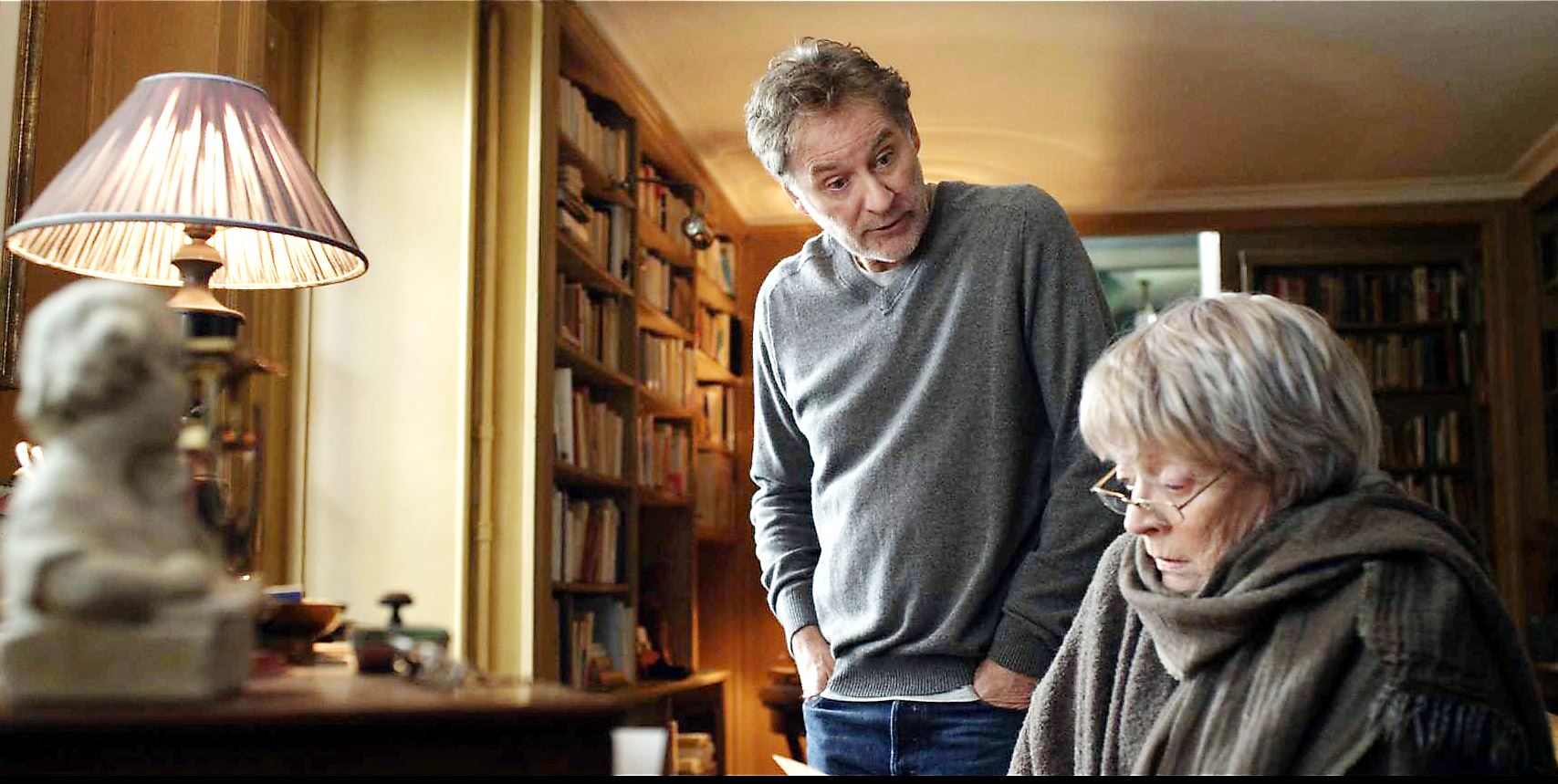
But Tomlin’s performance isn’t the whole movie, and thanks to Weitz’s command of his own script, Elle isn’t allowed to overwhelm the other characters, and she doesn’t get all the best moments. And it’s not just about one woman’s misanthropic attitude to the world around her, but the ruptured family dynamics that keep her alone following the death of her partner, and how her being needed leads to a reconciliation that everyone is a part of. This gives the movie the heart it needs to balance Elle’s angry behaviour, and leavens the nihilism she seems to revel in. Without it, Grandma would still be funny, absorbing even, but it wouldn’t be anywhere near as rewarding.

Weitz is back on form after a string of less than fully realised movies – Cirque du Freak: The Vampire’s Assistant (2009) and Little Fockers (2010) to name but two – and he creates a sympathetic storyline to hang his characters from, as well as making each encounter on the road to Judy’s office as grounded and credible as possible while also indulging Elle’s astringent nature. The outcome of the trip to see Karl is a particular highlight, adding a layer of unexpected poignancy to a situation that some viewers might not see coming until it’s there. It also gives Elliott the chance to show just how good an actor he is, and if Grandma has no other impact than to open the doors for Elliott to give further, equally moving performances then his appearance here will have been entirely worth it.
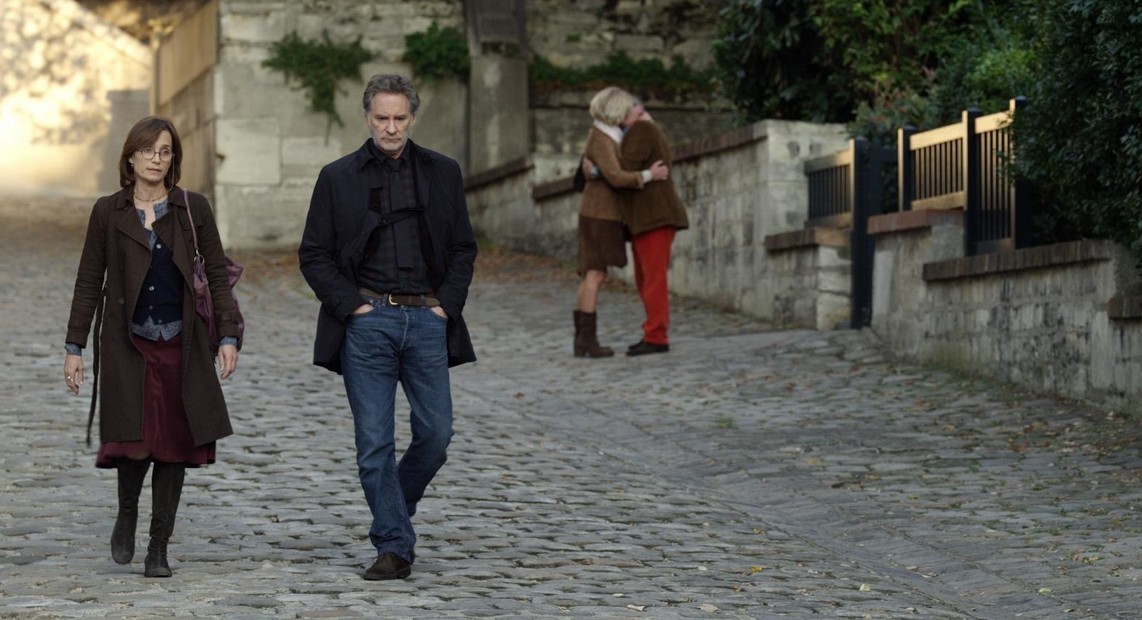
Grandma - scene3

By carefully balancing the inherent pathos and humour of Sage’s “situation”, Weitz also gets to poke fun at the American public’s antipathy to hearing the emotive word “abortion”. Elle and Sage are ejected from a coffee shop (that used to be a free clinic) thanks to Elle bemoaning out loud the clinic’s passing – “Where can you get a reasonably priced abortion in this town?” The word is used liberally throughout, and as an accurate description of the procedure Sage needs to have it’s entirely in context, but Weitz refuses to sugar coat the situation, and it’s to the movie’s credit that when Elle and Sage do encounter a pro-lifer (and her young daughter), their position isn’t criticised or lampooned, but instead is used to provide one of the movie’s best laughs.

With Weitz so assured in the handling of the material, his cast are free to provide fully rounded characters that you can empathise with and support (except for Cam, naturally). Tomlin, as mentioned before, is on superb form, and is ably supported by Garner who gives Sage a wistful nature that makes it seem as if she’s always working things out in her head, but is just a little bit too slow in doing so (“Screw you”). Harden pitches up in the final third and does sterling work as the mother who can’t quite work out why her daughter is afraid to tell her she’s pregnant when she has such a distant relationship with her own mother. Greer has a handful of scenes as the jilted Olivia and displays the character’s dismay and pain at being rejected with aplomb, her need to know the real reason for her dismissal a necessary challenge to Elle’s self-centred arrogance.

Grandma - scene1

Grandma is a movie that it would be easy to overlook, sounding as it does like an indie chick-flick for the generationally unbiased. That it’s profoundly moving in places, riotously funny in others, and completely charming all the way through is more than enough to recommend it. It’s short, sweet, avoids a lot of the clichés associated with the subject of abortion, features a cast who are behind Weitz all the way, and is just plain terrific.
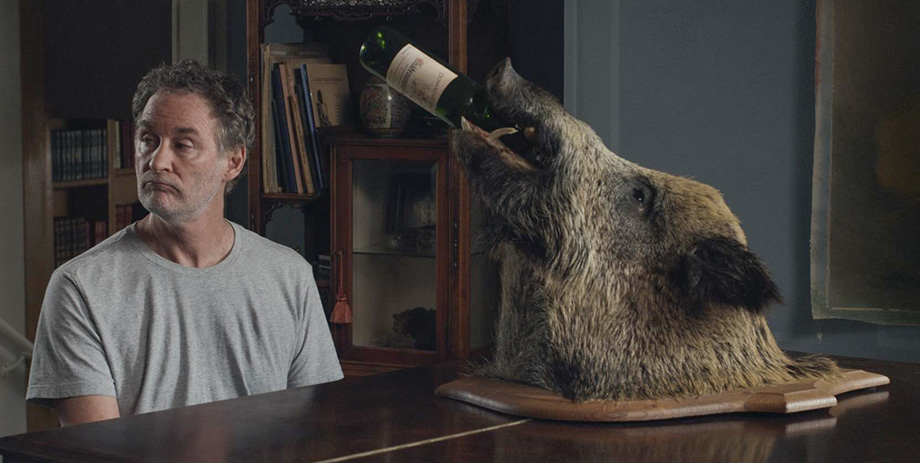
Rating: 9/10 – one of the smarter, funnier, more enjoyable comedies of 2015, Grandma is a small-scale joy that deserves to be seen by as wide an audience as possible; and let’s say it again, and louder this time: “Where can you get a reasonably priced abortion in this town?”

Share this:

  • Share on X (Opens in new window) X
  • Share on Facebook (Opens in new window) Facebook
  • More
  • Print (Opens in new window) Print
  • Email a link to a friend (Opens in new window) Email
Like Loading...

Trailer – Term Life (2016)

27 Wednesday Jan 2016

Posted by dullwood68 in Movies

≈ Leave a comment

Tags

Action, Comedy, Hailee Steinfeld, Preview, Trailer, Vince Vaughn

This may be unfair, and God knows there’s no real reason it should be getting any more exposure than it already has, but spare a thought for the people who put together the trailer for Term Life, the latest from Vince Vaughn, an actor who now wants to impose his tired, fast-talking idiot schtick on an action movie. This must have been a real challenge to assemble because this movie looks like it’d drain the life from you with every single minute of its running time (and do it deliberately). If this has anything going for it, the trailer fails to showcase it, and watching it gives the very real sense that the company responsible for the trailer must have been banging their heads against the wall trying to make the movie look less disappointing than the finished product’s likely to be. And when the trailer for your new movie makes it look this bad – even after a bunch of guys (presumably) have worked their asses off to make it look halfway decent – maybe it’s time to cancel any plans you had for promoting it, and just move on to the next project. If you’re still in any doubt about how bad this movie could be, then check out the trailer. And if after seeing it you think it’s not bad, or it’s a movie you’re now looking forward to, then drop me a line – I’d love to hear your reasons.
Share this:

  • Share on X (Opens in new window) X
  • Share on Facebook (Opens in new window) Facebook
  • More
  • Print (Opens in new window) Print
  • Email a link to a friend (Opens in new window) Email
Like Loading...

Anomalisa (2015)

20 Wednesday Jan 2016

Posted by dullwood68 in Movies

≈ 1 Comment

Tags

Animation, Charlie Kaufman, Cincinnati, Comedy, Customer service, David Thewlis, Drama, Duke Johnson, Jennifer Jason Leigh, Michael Stone, Mid-life crisis, Review, The Fregoli, Tom Noonan

Anomalisa

D: Charlie Kaufman, Duke Johnson / 90m

Cast: David Thewlis, Jennifer Jason Leigh, Tom Noonan

If you’re new to the work of Charlie Kaufman, and haven’t seen any of his earlier works such as Being John Malkovich (1999) or Eternal Sunshine of the Spotless Mind (2004), then Anomalisa may not be the best place to start. Not because it’s a bad movie – very far from it – but because it requires a great deal of navigation to get to where Kaufman wants to take you. You can approach the story at face value: middle aged man suffering a mid-life crisis has a one-night stand while on a business trip, or you can see past the obvious and examine the bizarre psycho-sexual mindset of a man for whom everyone else in the world looks and sounds the same, and for whom personal relationships are a form of existential torture.

By having his lead character suffer from the Fregoli Delusion, a rare disorder where a person believes that different people are in fact the same person but in constantly changing disguises, Kaufman has found a new way to look at how we assess new relationships and how we assign emotional links to new relationships from old ones. It all sounds heavy going, and maybe not the best material for an animated movie, but in fact it’s the perfect approach and style for telling Kaufman’s tale.

Anomalisa - scene4

Michael Stone (Thewlis) is a customer service guru. He’s written a well-known and highly regarded book on the subject and he’s arrived in Cincinnati to give a speech the next day. He’s married with a young son and on the ride from the airport establishes that there’s a toy store near his hotel where he can get a gift for his son. At the hotel, called The Fregoli, Stone checks in and goes to his room where he decides to call up an old girlfriend, Bella Amarossi, and see if she’ll meet him for a drink. She agrees and they meet up in the hotel bar. There are recriminations from Bella over the way Michael just upped and left her, and the reunion ends badly when he suggests they go up to his room to “talk more privately”; angered that he just wants to have sex with her, Bella leaves.

With nothing else to do, Michael visits the nearby toy store only to learn that it’s an adult toy store. But he sees a mechanical head and upper torso, with arms, of a Japanese woman behind the counter and he decides to buy it. Back in his room he’s just getting out of the shower when he hears a familiar woman’s voice from outside in the hallway. He dashes out but no one is there. Convinced she must be in one of the other rooms, he knocks on doors until one is opened by Emily. Emily is in town for his speech along with her colleague and best friend Lisa (Leigh). Michael is immediately smitten by Lisa and after the three of them have had cocktails in the hotel bar, he invites Lisa back to his room. Fascinated by her, and in particular by her voice, Michael flatters her into having sex with him.

Afterwards he has a dream where the hotel manager speaks to him in the basement and tells him that while assignations in the hotel rooms are to be expected, Michael can do so with anyone but Lisa. A team of secretaries all offer themselves to him and as he attempts to escape he wakes up. In the morning, Michael and Lisa have breakfast together, but he begins to criticise her behaviour, and soon her voice, which he finds so alluring, begins to pall, and she sounds like everyone else. Later, when he gives his speech, Michael rambles and goes off topic, and his previous confidence deserts him; he sounds alienated and confused. And when he returns home, he still finds no relief from the problems that plague him.

Anomalisa - scene3

Part of the pleasure of watching Anomalisa is trying to fathom if Michael knows he suffers from Fregoli disorder or not. There are times when it seems as if he does but is choosing to ignore it (or deal with it), and there are times when he seems oblivious to it (you can guess when these moments occur). The movie’s perspective doesn’t help, with everyone except for Michael and Lisa looking the same – and bearing an uncanny resemblance to Sonny from I, Robot (2004). Further disorientation is added by having Tom Noonan voice all the other characters, male or female. (It’s a great idea, and Noonan’s rich tones are used to very good effect.) If we’re seeing all this from Michael’s perspective, then he is aware of it and is choosing to deal with it. But if we’re seeing all this from the vantage point of an observer, then Michael’s awareness of his condition is open to question, and so are his motives.

There’s much that’s open to interpretation either way, but it’s his relationship with Lisa, however short-lived, that holds the key to Michael’s behaviour. His marriage is on the rocks because he’s unhappy with his life in general (because of his disorder?), he’s in town just overnight, alone, and seeking “company”; it’s a cliché waiting to happen. Kaufman relates the ensuing “courtship” with aplomb, embedding an early clue as to Lisa’s “place” in Michael’s mindset (the payoff comes when he gets home), and leading the viewer down the path called misdirection. It’s all cleverly done, and with more than a hint of mischief, and in terms of the narrative, is richly rewarding when all becomes clear at the end.

To explain more would be to ruin the fun of discovering how Michael overcomes his disorder and makes a connection with another person. The stop motion animation style employed appears clunky and hesitant but it’s a perfect fit for Michael’s confused mind and emotions, as well as his lumbering approach to other people. It’s charming too, with little details here and there that add depth to the narrative (the zoo sign that can be seen from Michael’s hotel window). And Kaufman adds sly, witty moments of his trademark humour: the plane that can be seen from Michael’s plane (you know exactly what’s going to happen), and the hotel clerk who taps away at a keyboard without taking his eyes off Michael at all.

Anomalisa - scene1

So much animation is aimed at the younger market that it’s refreshing to see a completely adult-themed animated movie that doesn’t include talking animals or magical fairy kingdoms. Kaufman and Johnson have created a unique world for us to visit and spend time in, and aided by a beautifully melancholy score by Carter Burwell, have made a movie that resonates long after it’s ended.

Rating: 9/10 – a superb movie in its own right but elevated by its distinctive use of stop motion animation, Anomalisa is a sheer delight from start to finish; with much to say about how we view other people and relate to them in times of emotional crisis, and how insular we can be, it’s also at times unbearably poignant – and that’s a very good thing indeed.

Share this:

  • Share on X (Opens in new window) X
  • Share on Facebook (Opens in new window) Facebook
  • More
  • Print (Opens in new window) Print
  • Email a link to a friend (Opens in new window) Email
Like Loading...

Daddy’s Home (2015)

07 Thursday Jan 2016

Posted by dullwood68 in Movies

≈ 1 Comment

Tags

Bobby Cannavale, Comedy, Infertility, Linda Cardellini, Mark Wahlberg, Review, Rivalry, Sean Anders, Stepdad, Thomas Haden Church, Will Ferrell

Daddy's Home

D: Sean Anders / 96m

Cast: Will Ferrell, Mark Wahlberg, Linda Cardellini, Thomas Haden Church, Scarlett Estevez, Owen Vaccaro, Hannibal Buress, Bobby Cannavale

Sometimes it’s easy to dismiss a movie when it appears formulaic and predictable, or has the same actor portraying the same kind of character they always do. And sometimes that’s okay because it’s the cinematic equivalent of comfort food. One such actor is Will Ferrell, who’s made a very successful career playing a man-child in a succession of comedies that have made a lot of money if never quite gaining critical approval (in short, the public likes him so the critics don’t matter). Ferrell rarely strays from playing this kind of character, and if he does it’s not very often; the last time Ferrell tried anything different was in Everything Must Go (2010).

And so he’s back in Daddy’s Home, as Brad Whitaker, a stepdad desperate to win his stepkids’ love and affection, and putting in the extra time and effort to do so because he can’t have kids of his own. Facing an uphill battle – his stepdaughter, Megan (Estevez) keeps drawing family pictures where Brad is shown either dead or dying – he begins to earn their respect and a confirmed place in their lives when, out of the blue, their biological father, Dusty Mayron (Wahlberg), calls up and Brad finds himself inviting Dusty to visit. Despite several warnings from his wife, Sara (Cardellini), that this isn’t a good idea, Brad assures her everything will be fine.

Daddy's Home - scene3

Now, up until this point, Ferrell does manage to portray a slightly different variation on his usual character, and Brad is a more confident (albeit naïve) person who knows what he’s doing. But with the arrival of Dusty, it’s back to normal as Brad’s confidence goes out the window, and Ferrell ramps up the childish and confused behaviour as Brad attempts to outdo Dusty for being cool. Of course, his efforts mostly backfire – moving Dusty’s motorbike allows for a quick succession of visual jokes – and he receives less and less support from the people around him as Dusty’s friendly nature and willingness to help others makes Brad look second-rate.

It’s obvious that Dusty is there to break things up between Brad and Sara, and the issue of Brad’s infertility is brought up time and again as a potential wedge between them, while bedtime stories about the king who returns to his castle to find an evil step-king ruling his people is stretched beyond its natural lifespan. Dusty’s efforts to undermine Brad’s role are purely of the “great gift” variety, such as the treehouse he builds in a day along with a skate ramp (he’s not averse to bribing his kids with cash to earn their loyalty, either). Against this, Brad’s efforts appear paltry and ill-advised. But when he tries to play Dusty at his own game, it leads to public humiliation and estrangement from Sara. Now it’s up to Dusty to prove he can be the kind of father that Brad is.

The Ferrell movie template is adhered to pretty closely as his character’s initial security is well established, only to be undermined or reversed with predictable ease. As Brad struggles to regain his position as head of the family, Ferrell can’t resist slipping back into the kind of character motifs he’s used over and over again in the past, from inherent cowardice to inappropriate boasting to emotional shallowness. By now, each feature Ferrell makes is like a greatest hits movie, allowing the audience to tick off familiar moment after familiar moment.

Daddy's Home - scene1

But does it all work with Daddy’s Home? The answer (predictably) is yes and no. The movie does have its moments, with Brad’s alcoholic meltdown at a basketball match proving a particular highlight, but there are still too many times when the humour is slowed down by muddled attempts to advance the (very slight) storyline, or to indulge in the kind of verbal sparring that drags on for far too long and to increasingly little effect – here it’s in a scene at the radio station where Brad works and features the man himself, his boss Mr Holt (Church), and a secondary character called Griff (Buress). The idea is there but the execution lacks both pacing and humour, leaving the viewer to wait patiently until it’s over.

There’s also a subplot involving Dylan (Vaccaro), Brad’s other stepkid, and his being bullied at school. It leads to a scene where Brad and Dusty compete to give him the best advice about dealing with the situation, but it drags on too long and loses all sense of momentum (or purpose). There is a payoff later on in the movie, and it is one of the funnier moments, if only for how unapologetically inappropriate it is, but even then, the script by Brian Burns, Anders and John Morris, follows it up with a scene that looks and feels strained and tired. It’s the movie’s curse: for every good scene that raises a chuckle or even a belly laugh, there’s at least two more scenes that cancel it all out.

With Ferrell on auto pilot for most of the movie, and the basic scenario not requiring too much effort from anyone to sell it, the rest of the cast breeze through their scenes as if they were on a break from more serious acting chores. Reuniting with his co-star from The Other Guys (2010), Wahlberg coasts along as Dusty, while Cardellini has the less than enviable task of playing the inevitably underwritten lead female. Church is frankly annoying as Brad’s boss, and is stuck with some of the worst “inspirational stories” ever relayed on screen; and Buress wanders in and out of the movie in order that Brad can be accused of racism at odd moments (and yes it is as awkward as it sounds).

Daddy's Home - scene2

If there’s a purpose to Daddy’s Home, other than to propagate the idea that one man’s sexual potency can reverse the infertility of another man, then it quickly gets lost in the telling. This is a movie whose central idea would have been better suited to a half hour short, or perhaps an episode of Modern Family. Anders directs with all the flair of someone who prints the first take, and the movie is blandly shot and edited so as not to stand out from the blandness of the material. All in all, it’s another knock-off Will Ferrell movie, and with all the disappointment that that entails.

Rating: 5/10 – more of an effort all round would have made all the difference to Daddy’s Home, but sadly it didn’t happen, and large stretches of the movie go by without making any kind of impact whatsoever (though it might encourage a degree of apathy in the casual viewer); but when it does get it right, on approximately half a dozen occasions, then its very good indeed (surprisingly), and makes you wonder what could have been achieved if the cast and crew hadn’t settled for “just good enough”.

Share this:

  • Share on X (Opens in new window) X
  • Share on Facebook (Opens in new window) Facebook
  • More
  • Print (Opens in new window) Print
  • Email a link to a friend (Opens in new window) Email
Like Loading...

Goodbye to All That (2014)

02 Saturday Jan 2016

Posted by dullwood68 in Movies

≈ Leave a comment

Tags

Angus MacLachlan, Anna Camp, Ashley Hinshaw, Audrey Scott, Comedy, Drama, Heather Graham, Heather Lawless, High school reunion, Marital break-up, Marriage, Melanie Lynskey, Paul Schneider, Relationships, Review, Romance

Goodbye to All That

D: Angus MacLachlan / 87m

Cast: Paul Schneider, Melanie Lynskey, Audrey Scott, Anna Camp, Ashley Hinshaw, Heather Lawless, Heather Graham, Michael Chernus, Amy Sedaris, Celia Weston

For Otto Wall (Schneider), life appears to be ticking along quite nicely. He has a wife, Annie (Lynskey) and a pre-teen daughter, Edie (Scott), a good job, and he wins local running competitions. He’s also quite accident prone, and one day he breaks his foot. One day during his recovery, Annie asks him to meet her at her therapist’s. Unaware of what’s about to happen, he learns that Annie wants a divorce (though the reason why is less than forthcoming). Shocked and confused, Otto struggles with the need to find a new place, and telling the people around him. The only positive is that he can still see Edie, and have her stay over at his new place.

Otto soon learns that Annie has been having an affair. This prompts him to consider dating again. He hooks up with an old girlfriend, Stephanie (Graham), when she contacts him via Facebook, and they have a one night stand that leaves Otto even more confused than before. Using a dating sight he meets Mildred (Hinshaw), who will willingly have sex with Otto, but doesn’t want a relationship. When Edie expresses an interest in going to church, he meets Debbie Spangler (Camp), a young single woman he takes to a cabin for the weekend. They too have sex, but the next morning she freaks out and tells Otto they shouldn’t have done what they did (which makes the journey home a little fraught).

Goodbye to All That - scene2

Otto still sees Annie occasionally, but their meetings are brittle moments of cordiality. When Edie begins to show signs that she doesn’t want to stay over any more, following a break-in, Otto begins to feel as if his life is now in complete freefall. It’s only his high school’s 20th anniversary reunion party that offers any relief: there he sees the girl who got away, Lara (Lawless). They spend time together briefly before she announces she has to leave. Otto gets her number though, and later calls her. He’s delighted to learn that she’s divorced, but surprised to learn that she’s heading to Costa Rica to teach scuba diving. It all leaves Otto with a big decision to make: whether to go with Lara, or stay and be near to Edie.

A gentle comedy of sexual manners married to a relationship drama that lacks depth, Goodbye to All That is a movie that most viewers will watch with the idea that at some point it’ll reveal what it wants to say. But unfortunately, MacLachlan, who wrote and directed the movie, never does reveal what the movie wants to say, or what it’s all about. On the surface – a very cloudy surface, admittedly – it’s about a man coming to terms with being single again after a lengthy time being married, and having no clue as to what to do next. Otto is possibly one of the most aimless, laidback characters seen in recent years, his oblivious manner and clueless expressions the marks of a man with little or no understanding of the people and places around him; it’s like he’s sleepwalked through his entire life so far.

His sexual liaisons with Stephanie, Mildred and Debbie should allow Otto the room and the experience to grow as both a father and an individual, but he’s much the same at the end as he was at the beginning, just less of a man with a puppy dog’s approach to life. Faced with women who are more emotionally and sexually complex than he is, Otto can only marvel at the ways in which relationships have evolved since he started dating Annie. As an observation on life in general, it’s pretty shallow, and as an observation of the female characters in the movie, it’s shallower still. Stephanie is all about self-gratification, Mildred is all about boundaries, and Debbie is all about unrestrained excess (with a side order of post-sexual guilt). Put them all together and they’re still not a complete woman. Instead they’re stereotypes, created to allow Otto to express his confusion about women’s needs.

Goodbye to All That - scene1

It’s this confused state that Otto wanders around in the whole time that makes the movie less than engaging. He doesn’t learn from any of his experiences, and doesn’t realise at any point that his laidback, “everything’s okay, I don’t have to try anymore” attitude is what has prompted Annie to push for a divorce. He can’t connect properly with her, or with the women he sleeps with, and even though he has an epiphany of sorts near the end, by then it’s too late, and the viewer is no longer interested.

What writer/director MacLachlan forgets to include is a scene where Otto behaves sympathetically to any of the women he knows. If he did we might have a degree of sympathy for Otto himself, but his relationship with Edie aside, it’s all about Otto. Schneider plays him as a well-meaning doofus, but it’s a portrayal that wears thin as the movie progresses, and by the end you’re hoping that Lara will bring him down to earth with some well-chosen observations about his behaviour, but instead the script has her supporting him unreservedly. It makes you wonder – still – what on earth the movie’s all about.

Goodbye to All That - scene3

Despite some serious pitfalls and and a less than cohesive story, Goodbye to All That does feature some good performances, with Lynskey and Camp making the biggest impressions. Lynskey is an underrated actress and should be given bigger and better roles, and here she takes what could be the shrew’s role and makes it much more rounded and emotional. Camp has a ball as the sexually expressive Debbie, playing demure one moment and bawdily kittenish the next. Both actresses hold the attention when they’re on screen, and both do more with their characters than the script would necessarily allow. And Scott is a winning screen presence, a moppet with a firm grasp on the mixed emotions Edie feels in the wake of her parents’ splitting up.

In contrast, MacLachlan’s direction is solid but unremarkable, though he does show an enthusiasm for shooting the sex scenes that makes all the other scenes appear like afterthoughts, and he can’t quite stop Otto from looking baffled in each and every scene once Annie (or rather, her therapist) tells him it’s over. Corey Walter’s cinematography is a definite plus, with the autumnal North Carolina locations given an extra lustre, and praise too to editor Jennifer Lilly for making a number of scenes feel more potent than the script did (the scene in the therapist’s, Otto and Mildred’s first time together to name but two).

Rating: 5/10 – uneven, sporadically amusing (for a comedy), lacking in focus, but somehow better than a lot of other, similar movies, Goodbye to All That is perfect for a wet Sunday afternoon after a big lunch; if you can ignore Otto’s unfortunate misogyny then you might be able to reap some enjoyment from the movie, but otherwise it’s a romantic comedy-drama that doesn’t know which one it is at any given moment.

Share this:

  • Share on X (Opens in new window) X
  • Share on Facebook (Opens in new window) Facebook
  • More
  • Print (Opens in new window) Print
  • Email a link to a friend (Opens in new window) Email
Like Loading...

10 Alternative Xmas Movies

24 Thursday Dec 2015

Posted by dullwood68 in Movies

≈ Leave a comment

Tags

A Very Harold & Kumar 3D Christmas, Alternative, Bad Santa, Black Christmas (1974), Christmas, Christmas (2003), Christmas With the Kranks, Comedy, Die Hard, Drama, Horror, Less Than Zero, Movies, The Apartment, The Ice Harvest, The Nightmare Before Christmas, Thriller, Xmas, Yuletide

When it comes to Xmas movies, the chances of there being a happy ending, an appearance by Santa Claus, plentiul shots of snow-covered streets, Xmas trees bedecked with tinsel and baubles and surrounded by brightly wrapped presents, and people being selfless and loving to the point of nausea, are pretty high. But for those of us who like a little (or a lot) of humbug mixed in with our Xmas cheer, here are ten movies that take the idea of Xmas and turn it on its head with unabashed enthusiasm and delight.

1 – The Nightmare Before Christmas (1993) / D: Henry Selick / 76m

The Nightmare Before Christmas

Perhaps the most obvious title on the list, this animated classic is a sure-fire winner for mixing ghoulish elements with a traditional(-ish) Xmas narrative. Even the songs are wonderfully appropriate – Oogie Boogie’s Cab Calloway-inspired number is a highlight – and the stop-motion adds an extra layer of charm to the proceedings, making this one of the best movies about the Yuletide season ever made.

2 – Black Christmas (1974) / D: Bob Clark / 98m

Black Christmas

If The Nightmare Before Christmas has its dark side, then this Xmas horror is way beyond even that, with a chilling storyline that is still impressive over forty years (and dozens of imitators) later. Superbly crafted and with great performances from the likes of Olivia Hussey and Margot Kidder, the movie comes complete with an ending that is even more unsettling than what’s gone before.

3 – Christmas (2003) / D: Gregory King / 89m

Christmas (1)

This New Zealand movie set at Xmas – which occurs during their summer – shows the flip side of family get-togethers and just how demoralising and depressing they can be when the family that meets up is the definition of dysfunctional. Dignity and self-preservation are the order of the day in a movie that is at once desperately funny, often unbearably sad, but remains a strangely poignant tribute to dealing with emotional fragility.

4 – Bad Santa (2003) / D: Terry Zwigoff / 91m

Bad Santa

A tour-de-force performance from Billy Bob Thornton anchors this scathing look at a department store Santa whose foul-mouthed attitude and disregard for the feelings of others is slowly eroded over the Xmas period by the attention of a fat kid who just won’t leave him alone. Scurrilous isn’t the word, and your tolerance for crude language may well be stretched very early on, but it’s laugh-out-loud funny and with a surprisingly tender heart at its core.

5 – A Very Harold & Kumar 3D Christmas (2011) / D: Todd Strauss-Schulson / 90m

A VERY HAROLD & KUMAR 3D CHRISTMAS

It’s Xmas Eve and you’ve just burned down your father-in-law’s beloved Xmas tree – what do you do? Well if you’re Harold Lee (John Cho), you enlist the help of your best friend Kumar Patel (Kal Penn) in finding a replacement. Whether or not that proves to be a good idea depends on how high Kumar is, and how long Harold can put off joining him as their plan backfires at every turn. For a second sequel, this is much better than expected, and its unapologetic stoner humour makes it all the more enjoyable.

6 – Christmas With the Kranks (2004) / D: Joe Roth / 99m

Christmas With the Kranks

Adapted from the novel by John Grisham, Skipping Christmas, this is a Xmas movie that for its first half at least, is a tribute to the joys of saying “bah humbug” to the festive season. Tim Allen is the dad who jumps for joy at the chance of spending Xmas without having to splurge on decorations or lights or being festive. But when his Xmas-loving daughter announces she’s coming home, it’s panic time and this once curmudgeonly dad becomes – sadly – a Xmas convert.

7 – The Ice Harvest (2005) / D: Harold Ramis / 92m

The Ice Harvest

A darkly comic thriller set on Xmas Eve, this sees John Cusack’s shady lawyer and Billy Bob Thornton’s strip club owner embezzle $2m from the local mob, and then thanks to a series of mishaps, they begin to see their plans unravel with humorous consequences. A bit of an overlooked treat, this uses the backdrop of the Xmas period to show that goodwill to all men is a great phrase in theory but little else in practice.

8 – Less Than Zero (1987) / D: Marek Kanievska / 98m

Less Than Zero

The Eighties were a time of selfishness and greed, and this adaptation of the novel by Bret Easton Ellis perfectly encapsulates the extremes to which some people would go to to realise their “dreams”. With plenty of snow on display (just not the stuff that lies on the ground), and a selection of gaudy Xmas parties to highlight the hollowness at the heart of the lead character’s return home for the holidays, this is a movie that takes no prisoners in depicting the decadence of the holiday season.

9 – Die Hard (1988) / D: John McTiernan / 131m

Die Hard

Set in L.A. at Xmas, this franchise opener uses the Yuletide season as a cover for all sorts of mayhem and destruction, and pits Bruce Willis’ lone cop against Alan Rickman’s group of mercenaries. Sly nods to the season abound throughout, but it’s John McClane’s ability to survive everything that’s thrown at him that acts as a surprising metaphor for negotiating the ups and downs of a family Xmas and coming out the other side (relatively) intact.

10 – The Apartment (1960) / D: Billy Wilder / 125m

The Apartment

While it starts at Xmas and then moves into the New Year, Wilder’s acerbic take on the holiday season is littered with allusions to the darker side of Xmas, including suicide, alcoholism, and extra-marital affairs. That it retains a positive side as well is a tribute to the screenplay by Wilder and I.A.L. Diamond, whose storytelling abilities make the whole tawdry period more bearable thanks to the sympathy they imbue the main characters with.

Share this:

  • Share on X (Opens in new window) X
  • Share on Facebook (Opens in new window) Facebook
  • More
  • Print (Opens in new window) Print
  • Email a link to a friend (Opens in new window) Email
Like Loading...

The Intern (2015)

23 Wednesday Dec 2015

Posted by dullwood68 in Movies

≈ Leave a comment

Tags

About the Fit, Anders Holm, Anne Hathaway, Business problems, Comedy, Drama, Fashion retailer, Internet, Nancy Meyers, Relationships, Rene Russo, Review, Robert De Niro, Senior intern programme

The Intern

D: Nancy Meyers / 121m

Cast: Robert De Niro, Anne Hathaway, Rene Russo, Anders Holm, JoJo Kushner, Andrew Rannells, Adam DeVine, Zack Pearlman, Jason Orley, Christina Scherer, Nat Wolff, Celia Weston, Linda Lavin

Taken at face value, The Intern looks like a movie that you could easily pass by. For one thing it’s a comedy starring Robert De Niro, not exactly the best recommendation a movie could have these days, and secondly, there’s the possibility of a May-December romance between De Niro and Hathaway (and with all due respect to both actors, nobody wants to see that). Look a little closer and it still doesn’t look like a great prospect: it’s about a small internet fashion retailer, built up out of nothing by Hathaway’s determined entrepreneur, and facing an uphill battle to maintain and expand on its initial successes. Then there’s the whole senior intern programme idea that’s bolted onto the basic storyline – and where De Niro’s Ben Whittaker comes in. Sold yet? Maybe not? Then consider this: Hathaway’s character, Jules Ostin, is neglecting her husband and young daughter while she builds her business empire. Sound familiar, maybe overly so? Any guesses as to who helps Jules get her business and private lives back in sync and on track?

If you’re still not sold on The Intern, and this type of comedy (with a smattering of light drama added) still doesn’t appeal, then fair enough, move on to something else. But you’d be making a mistake, because against all the odds, Nancy Meyers’ latest writing/directing gig is deceptively charming and warm-hearted, the movie equivalent of a hug from a loved one. In these days of mega-budget, special effects-laden tributes to the joys of target demographics, The Intern is a refreshing change of pace, a movie that plays out simply and effectively, and not without a degree of style all its own.

The Intern - scene2

What makes it work so well is Meyers’ well-balanced, and surprisingly intuitive script. Even though the majority of what unfolds has been done before, and will be again (and again), here familiarity breeds contentment, and fosters a relationship between the characters and the audience that allows some of the more sentimental moments to slide by without too much approbation. In short, it’s a joy to watch from its slightly slow beginning to its let’s-wrap-all-this-up-with-a-bow-on-top finish.

By marrying the two ideas – senior citizen with oodles of personal and business experience looking to keep busy, young internet-based company trying to move up to the next level but uncertain how to do it – Meyers has created a movie that looks at how little difference there is in generational thinking when it comes to relationships, and how it’s often true that experience can offer a much simpler solution than seems immediately apparent. At one point, one of Jules’ staff, Jason (DeVine) asks Ben for advice. He’s cheated on his girlfriend, co-worker Becky (Scherer), and hasn’t had much luck getting her to forgive him. Ben’s advice is simple: say sorry to her and do it face-to-face, not via texts. But where some movies might take that advice and have it work straight away, here Meyers is canny enough to make it just the first move in an eventual reconciliation.

So, with Ben’s experience of life and work clearly to his advantage, it’s all down to Jules to realise that it’s to her advantage as well. It doesn’t happen overnight, and along the way Jules makes the kind of mistakes that a lack of experience will bring out. But through it all Ben maintains a patience and a determination not to let things overwhelm or get the better of him that eventually has its effect on the other staff around him. And, of course, along the way, he helps Jules come to realise just how her behaviour and narrow focus on work is contributing to the problems she has both in the office and at home.

The Intern - scene1

Meyers keeps things light and airy throughout, and her insistence that old age is not a passport to obsolescence is well handled; it’s patently obvious but not rammed down our throats. And the relationship between Ben and Jules is handled so deftly that as it develops and they come to have a mutual respect for each other, there’s not one awkward moment for the viewer where they might suspect Ben and Jules will find themselves in a romantic situation.

De Niro is self-effacing and modest as Ben, always dressed in a suit, always shaving every day (even if he’s not seeing anyone he knows, even on a Sunday), and always ready with the right thing to say. It’s a quiet, mostly internal performance from De Niro, and if he still has a rampant tendency to grimace uncontrollably every time he’s called upon to be embarrassed or uncertain or surprised, it’s strangely effective here even if it is overdone. It’s not a role that was ever likely to tax him as an actor, but he gives a commitment to the part that he hasn’t done in some of his more recent movies (Heist (2015) anyone?).

Matching him for effort and commitment, Hathaway combines vulnerability, fortitude, uncertainty and a blinkered siege mentality with casual ease, and makes Jules an easily recognisable and sympathetic character from the start. It’s the more emotional role (naturally) but she handles it with skill and sensitivity, maintaining a through line that makes her journey from overwhelmed businesswoman to poised, decisive company head all the more credible. It’s worth pointing out again that this is a relatively lightweight movie that provides just enough depth for its characters to avoid being stereotypes, but it’s the themes around age and experience that are more important, and thanks to De Niro and Hathaway’s involvement, Ben and Jules are the kind of unlikely friends that really do crop up in real life.

The Intern - scene3

And it’s a genuinely funny movie, with the humour arising from the characters and their individual foibles. There’s a sequence where Ben and three other staffers volunteer to break into Jules’ parents’ home to delete a nasty e-mail she’s sent to her mother by mistake, and while it may seem out of place, it allows some of the secondary cast members a chance to impress, and they grab the opportunity with gusto; as a result it’s the funniest part of the movie. Meyers is also good at providing her willing cast with great dialogue, dialogue that doesn’t sound like lines to be acted but which is natural-sounding and far from contrived.

Modestly budgeted at $35m, The Intern has gone on to make nearly $200m at the box office (worldwide), and is a good sign that there’s room for intelligent, adult comedies that don’t rely on gross-out gags and puerile humour to attract audiences. It’s not a movie that will win tons of awards (or gain many nominations), but the fact that it’s been as successful as it has should be counted as a very good sign indeed that audiences know a good movie when they see them.

Rating: 8/10 – above average comedy with something to say about the compatibility between the young and the old, The Intern is charming and, as it progresses, irresistible; De Niro and Hathaway have a great chemistry, but it’s Meyers’ combination of great script and assured direction that makes this movie so enjoyable.

Share this:

  • Share on X (Opens in new window) X
  • Share on Facebook (Opens in new window) Facebook
  • More
  • Print (Opens in new window) Print
  • Email a link to a friend (Opens in new window) Email
Like Loading...

Don Verdean (2015)

19 Saturday Dec 2015

Posted by dullwood68 in Movies

≈ Leave a comment

Tags

Al Qaeda, Amy Ryan, Archaeology, Comedy, Danny McBride, Goliath, Israel, Jared Hess, Jemaine Clement, Leslie Bibb, Lot's Wife, Religion, Review, Sam Rockwell, Satire

Don Verdean

D: Jared Hess / 96m

Cast: Sam Rockwell, Amy Ryan, Jemaine Clement, Will Forte, Danny McBride, Leslie Bibb, Steve Park, Sky Elobar

Now and then a motion picture comes along that rocks the very foundation of accepted Christian belief, a movie that lifts the lid on the precepts of religious beliefs and exposes them to the light of clever satire. And for its first twelve minutes, Don Verdean looks like it might be that movie. But once those twelve minutes are over, and Don (Rockwell) commits to working with born-again preacher Tony Lazarus (McBride), any hopes of something special are dashed by the introduction of Boaz (Clement), an Israeli jack-of-all-trades who brings the movie down to earth with a resounding thud.

It’s not so much that Boaz is a manipulative, shady, stupid, sexist, arrogant, deceiving, lying opportunist, nor that he comes close to being one of the most offensive racial characters seen in recent years, but purely because he becomes the driving force behind a plot that doesn’t need him. Boaz is a character who belongs in another movie entirely, and one that hasn’t got the kind of ambition that Don Verdean has. But he’s there, he’s an idiot, and we’re stuck with him. (Even Clement, an actor whose comedy chops aren’t to be overlooked, can’t do much with him; and if he can’t, how’s the viewer meant to cope?)

Don Verdean - scene2

The way in which Boaz overwhelms both the narrative and the other characters is unfortunate for several reasons. The movie sets out its comedic stall from the start with an infomercial detailing Don’s successes finding holy artefacts in Israel, items such as his greatest find: iron shears dating back over 3000 years (and possibly the very shears used to rob Samson of his hair – yes?). The narration is portentous and deadly serious, and it’s this seriousness that is carried forward as we see Don field questions about the validity of his finds at a small church group. Don responds to these doubts with calm sincerity, and even though the viewer will know without a shadow of a doubt that he’s as naive in his own way as the people that believe in him, he’s also determined to provide reassurance for those whose faith might be wavering.

With Don’s unwavering naïvete matched by the public’s erstwhile gullibility, he joins forces with Lazarus and Lazarus’s ex-prostitute wife Joylinda (Bibb) to bring even more religious artefacts back from the Holy Land (even if the whole idea is both illegal and preposterous). Lazarus wants to put these items on display at his church, both as a display of his unwavering faith, and as a way of undermining a rival ministry run by ex-Satanist-turned preacher Pastor Fontaine (Forte). Don has a lead on the remains of Lot’s Wife – actually a rock formation that looks like it has breasts – and contacts Boaz to arrange to have them shipped to the States, but the Israeli sends a different “statue”. Lazarus retains his faith in Don and asks if there is a particular antiquity he’d like to track down. Don’s answer? The skull of Goliath.

Don Verdean - scene3

However, setbacks in Israel lead Don to make an awful decision, and he fakes finding the skull. When Boaz discovers the deception, he blackmails Don into bringing him to the US. And the script, by Hess and his wife Jerusha, quickly runs out of comedic steam as it brings Boaz’ selfish demands and childish behaviour to the fore, and sidelines Don’s attempts to weather the storm of his professional duplicity. It’s still a funny movie, but by now it’s lost the subtlety and the poise applied by a cast who know to play things completely straight, even when they’re called upon to behave ridiculously or say something absurd (even McBride, an actor not exactly known for the subtlety of his performances, reigns in the urge to put in a larger than life performance, and his tirade against sea monkeys is a highlight).

With the focus now on Boaz and his increasingly ludicrous machinations, the script brings in an unlikely scam: the finding of the Holy Grail (on an Indian reservation no less). It’s an idea that’s ripe for comic exploitation, but again, Hess misjudges the strength of the material, and the movie labours under the weight of that misjudgment, and struggles to recover. A twist in the tale proves laboured and is awkwardly revealed, and the subplot involving Don’s lovelorn assistant Carol (Ryan) is wrapped up with undue haste. And the less said about Pastor Fontaine and his efforts to see Lazarus’s church shut down the better.

Don Verdean - scene1

This is very much a movie with a core idea – the need for religious proof of events mentioned in the Bible in an increasingly secular world – that is downplayed and eventually discarded in favour of a succession of betrayals and implausible story turns that eradicate the good work done in the movie’s first half hour. Rockwell is laidback as  Don, playing him with a delicate sense of irony that makes the character immensely likeable and sympathetic, even when he responds to Carol’s dismay that he’s never asked her about her personal life by saying he hasn’t because he didn’t think she had one. Ryan struggles to make Carol anything more than an amiable stereotype, while Forte comes close to sabotaging his own performance by substituting mugging for acting. And Clement… well…

By the end, most viewers will be feeling a mixture of disappointment and ennui, as the script tries to wind things up with one last flourish, but it’s an effort that comes too late, and reminds the viewer of what might have been if the script had been more focused on the world of Biblical archaeology and its desperate-to-believe supporters. Instead, Hess’s latest fails to make the most of its central idea, and never fully gets to grips with its inherent notions of faith and honesty.

Rating: 5/10 – with a script that strays further and further away from its initial set up with each successive minute, Don Verdean lacks coherence and conviction once the search for Goliath’s skull is begun; Rockwell is good value as usual, but those expecting a more concerted, consistently humorous movie will be sorely disappointed thanks to some very poor storyline choices.

Share this:

  • Share on X (Opens in new window) X
  • Share on Facebook (Opens in new window) Facebook
  • More
  • Print (Opens in new window) Print
  • Email a link to a friend (Opens in new window) Email
Like Loading...

A Walk in the Woods (2015)

18 Friday Dec 2015

Posted by dullwood68 in Movies

≈ Leave a comment

Tags

Appalachian Trail, Bill Bryson, Comedy, Drama, Emma Thompson, Hiking, Ken Kwapis, Literary adaptation, Mary Steenburgen, Nick Nolte, Review, Robert Redford, True story

A Walk in the Woods

D: Ken Kwapis / 104m

Cast: Robert Redford, Nick Nolte, Emma Thompson, Mary Steenburgen, Kristen Schaal, Nick Offerman, R. Keith Harris, Susan McPhail

It all starts with a verbal chastisement-cum-ambush on TV: celebrated author Bill Bryson (Redford) is being interviewed and distinctly not feeling the love. When asked if he has retired, Bryson responds by saying, “Writers don’t retire. We either drink ourselves to death or blow our brains out.” The interviewer is unimpressed: “What will it be for you?” Bryson is resigned: “After this interview, probably both.” But the interviewer has found the nub of Bryson’s dilemma as an author, namely what to write about next.

He’s no nearer finding an answer while attending a funeral. While taking a break from the rest of the mourners, he finds himself on part of the Appalachian Trail, a hiking trail that runs 2,200 miles from Springer Mountain in Georgia all the way to Mount Katahdin in Maine. Suddenly inspired, Bryson tells his wife, Catherine (Thompson), that he’s going to hike the entire trail, despite being unfit and too old. Catherine is horrified by the idea, and takes to leaving newspaper and internet clippings around for him to see, with headlines such as “Decomposed body found on trail” in an effort to dissuade him. Eventually she gets him to agree to hike with a companion. Bryson reaches out to several of his male friends but they all turn him down. It’s only when an old friend he hasn’t seen in years, Stephen Katz (Nolte) gets in touch and volunteers to go with him that the trip becomes a go.

A Walk in the Woods - scene3

There are reservations though (how could there not be?). Bryson and Katz always used to rub each other up the wrong way, and back when they were friends, Katz was an habitual womaniser and alcoholic. But he tells Bryson he’s in good shape and ready to go on the hike. When Bryson and Catherine meet him at the airport, Katz’s physical condition raises cause for concern but he assures them he’ll be fine. They set out on the trail from Springer Mountain and soon find it hard going, much more so than they expected. Along the way they meet a variety of people, including the ever-talkative, ever-opinionated Mary Ellen (Schaal), a woman named Beulah (McPhail) who Katz hits up for a date (unaware that she’s married), and motel owner Jeannie (Steenburgn), who develops a crush on Bryson. They have an encounter with bears, hike through heavy snow drifts, and manage to fall down onto a ledge that they can’t get back up from (until two other hikers come along and rescue them).

And… that’s about it. For most of its running time, A Walk in the Woods proves to be a light-hearted, lightweight walk on the wild side, as Bryson and Katz tramp their way along the trail like two men at the head of the hip transplant list. They reminisce, they argue, they bicker, they explore notions of personal regret, and they remain “nice” throughout. Even when they have the expected and entirely predictable falling out, the movie has made it to that point with so little drama attached to it that you could be forgiven for thinking it had all been written out of the story. And it serves to highlight the story’s one major problem: once they’re on the trail, all the excitement is given little or no attention, and any potential for drama is wasted.
A Walk in the Woods - scene2

Once on the trail, Bryson and Katz are amiable enough companions, amiable to suit their own needs, and amiable enough for the time to pass without undue hardship or hazards to slow them down (even when they do fall down onto that ledge). It’s a hike that has its fair share of incidents but none of them are dramatic enough to warrant more than a passing interest. There’s also a distinct lack of personal growth for both Bryson and Katz, even though the script by Michael Arndt and Bill Holderman tries hard to include this idea. What we’re left with is a series of mildly amusing anecdotes peppered with isolated, random musings on the fate of the surrounding wilderness (one of the few thematic aspects of the novel retained by the movie). It wouldn’t be so bad if it weren’t so anodyne and disturbingly bland in its execution.

If the movie has anything going for it, it’s the scenery, beautifully lensed by DoP John Bailey. Parts of the trail are absolutely stunning, and the cinematography picks them out and, occasionally, makes them seem hyperreal, as with the McAfee Knob overlook, a jutting piece of rock that allows for a panoramic view of Virginia’s Catawba Valley. Against this splendid backdrop, Bryson and Katz’s mythologising of their younger days pales into insignificance, and the longer the hike goes on, the less involving it becomes, until the viewer is left with the same level of interest as someone having to sit through an extended slideshow of the same journey.

A Walk in the Woods - scene1

As the OAP’s who can survive a serious fall without so much as a scratch between them, Redford and Nolte make for a comfortable double act, but there’s little that allows them to spark against each other. Thompson makes more of an impression in her limited supporting role than either actor does across the whole movie, while Steenburgen, Schaal and Offerman all make temporary forays into the limelight before being quickly forgotten. Overseeing all this is Kwapis, a director best known for his work on US TV shows such as The Office and Malcolm in the Middle. In actuality he doesn’t so much direct the movie as guide it by the arm from scene to scene so that no harm comes to it.
Rating: 5/10 – with Bryson’s trademark acerbic wit toned down, and his love of knowledge for knowledge’s sake given few occasions to shine, A Walk in the Woods is a passion-free project that ambles along like its two aging stars, and like them, doesn’t take too many risks; with as little ambition employed as possible, it’s still a pleasant enough movie to watch, but it’s not one that will encourage anyone to take up the same challenge that Bryson did.

Share this:

  • Share on X (Opens in new window) X
  • Share on Facebook (Opens in new window) Facebook
  • More
  • Print (Opens in new window) Print
  • Email a link to a friend (Opens in new window) Email
Like Loading...

Mini-Review: Krampus (2015)

13 Sunday Dec 2015

Posted by dullwood68 in Movies

≈ Leave a comment

Tags

Adam Scott, Allison Tolman, Comedy, David Koechner, Drama, Elves, Horror, Michael Dougherty, Review, Santa Claus, Toni Collette, Toys, Xmas, Yuletide

Krampus

D: Michael Dougherty / 98m

Cast: Adam Scott, Toni Collette, David Koechner, Allison Tolman, Conchata Ferrell, Emjay Anthony, Stefania LaVie Owen, Krista Stadler, Lolo Owen, Queenie Samuel, Maverick Flack

If Krampus is someone (or something) you’ve never heard of before now, then you’re probably not alone. He (or it) is a figure from Austro-Bavarian Alpine folklore, an anti-Santa who punishes those who’ve been wicked. Michael Dougherty’s movie isn’t the first to feature the creature – if you’re a completist you can check out Krampus (2012), Krampus: The Christmas Devil (2013), Krampus: The Reckoning (2015), and A Christmas Horror Story (2015) as well – but this latest incarnation is very different from all the rest in one particular respect: it’s less concerned with being a horror movie.

Of all the horror movies you’re likely to see in 2015, Krampus will always retain the distinction of being scare-free, relatively bloodless, and more interested in creating a mood it can’t fully sustain. It’s also keen to impress with its focus on the extended dysfunctional family that finds itself trapped in one home in the run-up to Xmas and besieged by the title character, his trusty elves, and a bag full of demonic toys. (These last elements sound great but hold that thought for a moment…)

Krampus - scene3

The set up is simple enough: pre-teen Max (Anthony) still believes in Santa Claus, but the dismal, selfish attitudes of his mother’s sister’s family leads him to tear up his usual letter to Saint Nick and cast it to the wind. For this, a terrible snowstorm sets in, the other residents in the street disappear, and Krampus turns up to carry everyone off to whatever underground realm he’s come from. In the process, the two families who have little liking for each other learn to come together and defend themselves against the supernatural force that’s determined to make them suffer for being “naughty, not nice”.

What follows is designed to wring more laughs than scares or shocks from the material, and while the movie throws in a couple of sequences that are designed to leave the viewer perched on the edge of their seat, the threat is undermined by the makers’ determination not to upset their audience with too much blood and gore, or strangely, by making Krampus himself about as threatening as having your nails buffed. What is effective is a sequence set in the loft space where several of Krampus’s demonic toys attack Scott, Collette and Tolman, and it’s this that remains the movie’s stand out scene. But even then, the toys are too reminiscent of the puppets created by Full Moon Features, so much so that it wouldn’t have been a surprise to see Jester or Pinhead pop up at some point.
Krampus - scene1

Elsewhere, Dougherty uses his cast to fairly good effect but makes several characters one-note or underwritten – Ferrell’s bitchy mother, Tolman’s perplexed-looking sister – while the budget keeps Krampus sidelined until the final fifteen minutes. His elves launch an attack on the house that seems more arbitrary than properly planned, and the inclusion of growing numbers of ugly snowmen in the house’s front yard is meant to be menacing but is more of a distraction. It all ends with the kind of narrative trickery that is more confusing than conclusive, and leaves the viewer scratching their head in bewilderment.
Rating: 5/10 – a valiant attempt to make a Xmas horror movie with a difference, Krampus lacks bite and a truly scary monster; needing a greater sense of peril to work properly, and less bickering between the characters, it’s a movie that runs out of steam far too quickly and never recovers from doing so.

Share this:

  • Share on X (Opens in new window) X
  • Share on Facebook (Opens in new window) Facebook
  • More
  • Print (Opens in new window) Print
  • Email a link to a friend (Opens in new window) Email
Like Loading...

Goosebumps (2015)

06 Sunday Dec 2015

Posted by dullwood68 in Movies

≈ Leave a comment

Tags

Abominable Snowman, Amy Ryan, Comedy, Delaware, Drama, Dylan Minnette, Fantasy, Giant praying mantis, Jack Black, Madison, Monsters, Odeya Rush, R.L. Stine, Review, Rob Letterman, Ryan Lee, Slappy, Wolfman

Goosebumps

D: Rob Letterman / 103m

Cast: Jack Black, Dylan Minnette, Odeya Rush, Amy Ryan, Ryan Lee, Jillian Bell, Halston Sage, Ken Marino, Timothy Simons, Amanda Lund

There’s a moment in Goosebumps when Mr Shivers (Black), having already been rumbled as the writer R.L. Stine, tries to maintain his cover. Not believing him for a second, new neighbour Zach (Minnette) goads him by saying that he’s not as good a writer as Stephen King. Shivers/Stine rounds on Zach and in the process mentions that he’s sold way more books than “Steve”. It’s an odd moment in an otherwise straightforward, enjoyable imagining of Stine’s fictional world of monsters, and while it may be true, you can’t help but wonder if it’s there to give Stine some extra credibility now that he’s been adapted for the movies (not that he needs it). (And maybe it’s an issue for him.)

On the strength of this outing, Stine has little to be worried about. Although Goosebumps is a steadfastly homogenised horror fantasy for children – the zombies aren’t at all frightening, and the abominable snowman is played mostly for laughs – it has enough in the way of heavily stylised fantasy elements to keep its target audience happy for an hour and a half or so, and has been lucky enough to secure the services of Black as the “cursed” author. Black strikes just the right tone as an anxious, over-protective father-cum-author whose creations will spring fully formed and alive from the pages of his books if they’re opened (this doesn’t explain how his books have been published up til now, but it’s a great idea for a fantasy movie).

With Zach believing that his reclusive neighbour is mistreating his daughter, Hannah (Rush), he convinces a school friend, Champ (Lee) to help him break in to the house next door and ensure that Hannah is okay. Along the way, they discover bear traps in the basement and a bookcase full of Goosebumps novels that have locks on them. And in true children’s fantasy style, one of the books is opened, while the others all fall to the floor, leaving at least one of the books unlocked. The trouble is, this particular book features Slappy the ventriloquist’s dummy, and he’s the one monster that Stine doesn’t want to let out at all… and Slappy knows it.

Goosebumps - scene1

Soon the town of Madison, Delaware is home to all sorts of rampaging monsters and creatures, and it’s down to Stine, Hannah, Zach and Champ to save the day by getting all of the author’s creations back in their books. But Slappy is one step ahead of them, and is making sure each book is burnt once the creature in it is released. This leaves the quartet with only one option: to make sure Stine has the time he needs to write a new story that involves all the monsters so that they can be returned to the new pages en masse.

There are the usual obstacles to their doing this, and the usual action sequences when they encounter any of the monsters – the lawn gnomes are particularly good – but it’s all done with an energy and a sense of fun that carries the movie along and doesn’t allow it to get bogged down by too many distractions. As mentioned before, Black is great as the author whose sense of responsibility has kept him moving from place to place and isolated his daughter in the process (though a plot twist two thirds in unfortunately cancels this out), while Rush, Minnette and Lee all play their standard teen characters with verve if not too much depth. Ryan is continually sidelined as Zach’s mother and high school vice principal, and Simons and Lund are given brief exposure as the town’s (apparently) lone law enforcement officers, with Lund’s gung ho approach bagging quite a few laughs.

In the hands of screenwriter Darren Lemke, Goosebumps sets out its stall quite early on and sticks to what is a safe formula: kids accidentally release monsters, team up with concerned adult, and find a way to save the day. But the movie avoids outstaying its welcome, though it does takes each new monstrous development in its stride, which is at a cost to the drama and the tension that should be inherent in the storyline. By ensuring that its target audience isn’t too frightened or worried, there’s no real sense of danger or peril, and each “threat” is neatly or quickly dealt with.

Goosebumps - scene2

As you’d expect the special effects are woven seamlessly into the physical action, and there’s a pleasing sense of spectacle when the high school is besieged by all the creatures. Keeping things moving with an eye for the quirkier moments, Letterman allows his cast, both human and CGI, their individual moments to shine – Champ rescues the girl he likes from the wolfman, Slappy acknowledges his driving Stine’s car is compromised by not being able to reach the brakes – and includes enough adult humour to keep older viewers happy. And most of all, he manages to keep Zach and Hannah’s blossoming romance from becoming too mawkish or saccharine.

Rating: 7/10 – straying too close to formula to make it stand out from similar fare, Goosebumps is nevertheless a fun ride that can be enjoyed by children and adults alike; if there are to be any more adaptations of Stine’s work then that won’t be such a bad thing at all.

Share this:

  • Share on X (Opens in new window) X
  • Share on Facebook (Opens in new window) Facebook
  • More
  • Print (Opens in new window) Print
  • Email a link to a friend (Opens in new window) Email
Like Loading...

The Little Death (2014)

04 Friday Dec 2015

Posted by dullwood68 in Movies

≈ Leave a comment

Tags

A Funny Kind of Love, Alan Dukes, Bojana Novakovic, Comedy, Dacryphilia, Damon Herriman, Drama, Erin James, Fetishes, Josh Lawson, Kate Box, Kate Mulvany, Lisa McCune, Patrick Brammall, Relationships, Review, Roleplay fetishism, Sex, Sexual masochism, Sign language, Somnophilia, Telephone scatalogia, TJ Power

The Little Death

aka A Funny Kind of Love

D: Josh Lawson / 96m

Cast: Bojana Novakovic, Josh Lawson, Damon Herriman, Kate Mulvany, Kate Box, Patrick Brammall, Alan Dukes, Lisa McCune, Erin James, TJ Power, Kim Gyngell, Lachy Hulme, Genevieve Hegney

What do sexual masochism, roleplay fetishism, dacryphilia, somnophilia, and telephone scatalogia all have in common? Well, the answer is, they’re all sexual impulses, and they’re all used by Josh Lawson in his feature debut as writer/director to look at five different relationships – some of which interconnect – and how these sexual obsessions can affect how people behave.

First up we have Paul (Lawson) and Maeve (Novakovic). Maeve wants to be raped, which sounds awful, but it’s a fantasy she’s always had, and she wants Paul to help her play out her fantasy. Paul is initially aghast, but he loves Maeve so much he decides he’ll do it. There’s only one proviso: Maeve doesn’t want to know when or where it’s going to happen. Paul’s first attempt is less than successful, but he tries again, but with completely unexpected results.

The Little Death - scene1

Then there’s Dan (Herriman) and Evie (Mulvany). We first meet them in couples’ therapy, where it’s clear they’re not communicating properly with each other. The therapist suggests they try some roleplay; when they do, Evie can’t quite take it seriously enough for Dan but the sex is incredible and afterwards, Evie compliments Dan on his roleplaying. This leads to Dan taking the whole thing way too seriously, and his commitment to “acting” begins to threaten their marriage.

The third couple is Richard (Brammall) and Rowena (Box). They’re trying to have a baby but nothing’s working, and sex has become perfunctory. Rowena is advised by her doctor that she and Richard should try and time their orgasms to happen at the same time, thus increasing their chances of conception. But she and Richard never get a chance to try this out; Richard learns that his father has died, and when he breaks down in tears, Rowena discovers she’s turned on by the sight of his crying (this is dacryphilia). They have sex right then and Rowena becomes addicted to the intensity it provides, and she starts to engineer circumstances where Richard is made upset enough to cry… and Rowena can experience more orgasms.

All these couples live in the same street, as do Phil (Dukes) and Maureen (McCune). Phil’s compulsion is watching his wife while she sleeps (somnophilia). But Maureen is cold and abusive toward him, while at work his long nights spent watching her means he finds it hard to stay awake during the day. His boss (Hulme) gives him some strong sedatives to help with his sleeping problem, but Maureen unwittingly takes them. Now Phil can indulge his obsession to hisnheart’s content as he makes sure Maureen takes the sedatives each night. But it doesn’t help his case at work, and it doesn’t help either when Maureen accuses him of having an affair.

The Little Death - scene2

Lastly, there’s Monica (James) and Sam (Power), who aren’t a couple, but who do meet – and connect – in the unlikeliest of cirumstances. Monica works at a video relay company that helps deaf individuals make telephone calls to other people via their computers. Sam uses sign language to tell Monica what to say to the other person, and Monica signs back their replies. When Sam connects one evening, Monica is surprised to learn that he wants to connect to a telephone sex line. Her discomfort at having to repeat what Sam and the sex worker (Hegney) are saying makes it all the more awkward, but through it all there’s a hint of mutual attraction there.

All five stories, and a sixth involving Steve (Gyngell) – about whom little should be said other than that he has his own sexual predisposition – are funny, romantic, poignant, sometimes sad, sometimes dramatic, ocasionally outrageous, but always pertinent and credible. Lawson shows he has a keen ear (and eye) for the more absurd aspects of sexual behaviour, and he doesn’t hesitate to confound audience expectations by having three of the five stories end badly. This isn’t a standard rom-com where everyone is united or reunited in the last five minutes and they all live happily ever after. Instead, Lawson’s script makes it clear that compromise is a large part of everyday relationships, and that sins of omission can be just as devastating as outright lies (two characters never confess their compulsions, or the way in which they’ve manipulated their partners).

So there’s a strong dramatic element to each story, but Lawson layers each story with a fantastic amount of comedy (though Phil and Maureen’s tale, of necessity, is more sad and depressing than the rest), and there are moments where the viewer will be laughing out loud at the antics, and dialogue, played out on screen (this is likely to be the only time in a movie where you’ll hear the line, “How’s your cervical mucus – okay?”). Lawson is also astute at teasing out the subtleties and self-imposed dilemmas that come with modern day relationships, and there are plenty of times where his confidence in his own observations and his own script leave the viewer not knowing whether to laugh or grimace. When Rowena tells Richard a massive, horrible lie to get him to cry, it’s funny and deplorable at the same time, and Lawson’s fearlessness with the narrative means that both reactions are entirely acceptable; you can laugh and you can feel repelled.

The Little Death - scene3

Lawson is backed up by a great cast who all enter into the spirit of things with gusto, though special mention has to go to Herriman as the acting-obsessed Dan, whose idea of roleplay morphs from straightforward policeman interrogating helpless female suspect, and with no costumes used other than their own clothing, to kitting out his and Evie’s garage to house a prison set so he can play a jailbird about to have sex with a prison guard (Evie) – but not before he tells her he’s inside for sexually assaulting a man (it’s called having a backstory). Herriman as Dan is wonderfully unaware of anything else going on in his life, and his narrow, self-absorbed thinking is a constant source of humour. A joy to watch as well are James’s reactions to the comments made by Sam and the sex worker, her wide-eyed dismay and prudish distaste testing her professionalism at every turn. And there’s Gyngell as Steve, popping up here and there, often at the wrong time, but guaranteed to make the viewer laugh once his own “backstory” is revealed.

There’s a feeling that this is a movie that could only have come out of Australia. It’s brash, it’s sweet-natured, it’s romantic yet not idealistic, and it has bags of charm. You can imagine an American remake trying hard to be more gross or unnecessarily explicit (for a movie that’s ostensibly about sex there’s no nudity at all), and it would probably fumble the more serious strands that run through it all, but thankfully that’s unlikely to happen. Lawson advances the various stories by switching back and forth between them, though Monica and Sam’s story does occupy most of the last twenty minutes, its single location and textured narrative requiring a lengthier time on screen than the other stories. This does make the movie feel a little lopsided, and there’s a final scene that connects four of the stories in an unexpected and not wholly satisfying way, but by then the viewer will be more than happy to forgive Lawson his attempt at what might be regarded as closure. With a great soundtrack and score by Michael Yezerski that isn’t just there to provide musical cues or augment each of the character’s feelings or emotions, Lawson has made an entertaining and unexpectedly clever movie that packs an equally unexpected emotional punch as well.

Rating: 8/10 – movies from Down Under are still proving to be a little underwhelming, but The Little Death is definitely not one of them, combining as it does passion, wit and style to tremendous effect; mixing drama and comedy with heart makes for a small but terrific movie, and one that rewards the viewer over and over again.

Share this:

  • Share on X (Opens in new window) X
  • Share on Facebook (Opens in new window) Facebook
  • More
  • Print (Opens in new window) Print
  • Email a link to a friend (Opens in new window) Email
Like Loading...

Digging for Fire (2015)

28 Saturday Nov 2015

Posted by dullwood68 in Movies

≈ 1 Comment

Tags

Bones, Brie Larson, Comedy, Drama, Friendships, Jake Johnson, Joe Swanberg, Marriage, Orlando Bloom, Relationships, Review, Rosemarie DeWitt, Sam Rockwell

Digging for Fire

D: Joe Swanberg / 84m

Cast: Jake Johnson, Rosemarie DeWitt, Brie Larson, Orlando Bloom, Sam Rockwell, Anna Kendrick, Mike Birbiglia, Chris Messina, Tom Bower, Sam Elliott, Judith Light, Steve Berg, Ron Livingston, Melanie Lynskey, Jane Adams

Tim (Johnson) and Lee (DeWitt) are a young-ish couple with a three year old son who agree to housesit for one of Lee’s clients while they’re away. On their first day there, while doing some gardening, Tim unearths what looks like a human bone, and a handgun. Lee is all for putting them back and forgetting about them, reasoning that the two items don’t have to be linked. Tim is brimming over with curiosity and wants to do more digging, but nevertheless he calls the police; when they prove uninterested Tim lets himself be persuaded not to pursue it further.

The weekend begins the next day. Lee has made arrangements to take their son to visit her mother (Light) and stepfather (Elliott), while Tim is tasked with completing their tax returns. But both have other plans for their respective weekends: Tim has invited several of his friends for a barbecue and beers, while Lee is looking forward to a girls’ night out with her friend Squiggy (Lynskey). Neither knows of the other’s plans, and neither of them has any intention of letting the other know what they’ve been up to.

Digging for Fire - scene2

That nothing goes quite as either of them expect shouldn’t come as any surprise. Tim’s excitement about his discovery leads to his roping his friends into helping him dig for further remains, while Lee’s friend, too busy warring with her husband Bob (Livingston) to leave him alone with their children’s nanny for the evening, backs out of their arrangement. More of Tim’s friends turn up, with one of them, Billy Tango (Messina), bringing with him two women, Max and Alicia (Larson, Kendrick). While Tim finds himself digging alone, he’s joined by Max who shows an interest in what he’s doing, and digs with him. Meanwhile, Lee resigns herself to a quiet night at her mother’s.

The next day sees Tim making a half-hearted attempt to do the taxes before resuming his digging. Lee goes shopping and buys herself a leather jacket before returning to her mother’s and deciding that this evening she’s going to go out, even if it is by herself. Tim finds himself rejoined by Max and together they continue looking for more evidence of foul play. When he calls it a day he offers to take Max out for a bite to eat as a thank you for helping him. With her own clothes dirty from all the digging, Tim tells her to choose from Lee’s clothes. And while Tim’s evening heads in one direction, Lee’s heads in another as she meets Ben (Bloom) in a restaurant bar.

Digging for Fire - scene1

Right about now, anyone watching Digging for Fire will be sizing up each situation and deciding which one of Tim and Lee will make the classic mistake of sleeping with someone else. But co-writers Swanberg and Johnson don’t make it so easy, and deftly pull the rug out from under the viewer’s feet. This may seem like a movie whose focus is on what happens when both halves of a married couple experience some much longed-for freedom, but it’s a much cleverer movie than that, and despite all the drinking and drug-taking and sexual tensions that occur, this is a staunchly conservative movie that reinforces marriage, fidelity and parenthood as truly desirous states to be in.

With temptation placed firmly in the way of both Tim and Lee, it’s interesting to see how the script has them react. Tim wants to party like he used to before he got married but he’s only really comfortable when he’s focused on his digging; when he calls it a night he barely receives any acknowledgment from any of his friends, so keen are they to carry on partying. And when he’s joined by Max the next day he’s so pleased that someone wants to help him it doesn’t matter to him if that someone is male or female. For Tim, discovering further evidence of foul play – if indeed there is any – has added an extra layer of blinkers to the way he views other women anyway, and despite Max’s obvious good looks and equally obvious liking for him, he can only view her as a friend.

Digging for Fire - scene4

Lee, however, becomes seduced by Ben’s carefree nature, a world away from her life as a wife and mother, tied down by responsibilities (even though she tells their son they’re down to his father to deal with – or mommy will be angry), and a belief that her life as an individual is over with. Call it post-natal depression, or a post-marital fugue, but Lee sees herself as having lost touch with herself, while Tim tells anyone who’ll listen how much his life has changed for the good through being a parent. Neither is wrong, and their feelings are true for each of them, but it’s whether or not they really need to recapture their lives before marriage and parenthood “tied them down” that counts.

Swanberg has been making smart, subtly sophisticated comedy dramas like this one for some time now – Drinking Buddies (2013), also with Johnson, is a gem that should be tracked down immediately if you haven’t seen it already – and while you could level an accusation of naïvete at the way in which Tim and Lee behave around their “prospective partners”, it’s the way in which they recognise the strength and durability of their marriage, and how it enhances their individual lives as well as their commitment to each other that makes it all work so well. And Swanberg is aided by two generous central performances from Johnson and DeWitt, wonderful supporting turns from Birbiglia, Larson and Lynskey, and rounds it all off with a carefully chosen soundtrack that perfectly complements the events happening on screen.

Rating: 8/10 – full of indie charm and a raft of likeable characters we can all relate to, Digging for Fire is another winner from Swanberg; smart, funny, emotional and knowing, it’s a movie that many married couples will find themselves relating to, and never once gives in to the temptation of being self-conscious or patronising.

Share this:

  • Share on X (Opens in new window) X
  • Share on Facebook (Opens in new window) Facebook
  • More
  • Print (Opens in new window) Print
  • Email a link to a friend (Opens in new window) Email
Like Loading...

People Places Things (2015)

22 Sunday Nov 2015

Posted by dullwood68 in Movies

≈ 3 Comments

Tags

Comedy, Comic books, Graphic novels, Gray Williams, Jemaine Clement, Jessica Williams, Jim Strouse, Regina Hall, Review, Romance, Teaching

People Places Things

D: Jim Strouse / 87m

Cast: Jemaine Clement, Regina Hall, Stephanie Allynne, Jessica Williams, Aundrea Gadsby, Gia Gadsby, Michael Chernus

Will Henry (Clement) is a graphic novelist and teacher of same who, on the day of his twin girls’ fifth birthday, discovers that his wife, Charlie (Allynne), is having an affair. Charlie feels unfulfilled and wants a change to her life, but she appears confused as to exactly what she wants. Nevertheless she and Will split up and she takes their children with her. Fast forward a year and several things happen within the space of a few days: the twins celebrate their sixth birthday, Charlie announces she’s pregnant and getting married to her lover, Gary (Chernus), and one of his students, Kat (Williams), invites Will home to meet her mother, Diane (Hall).

Through all this, Will moves like a man in a bad dream, baffled by most of what’s happening around him, and unable to gain any traction. His meeting with Diane is undermined by her telling him she’s already seeing someone. He does get Charlie to agree to his having the twins more often, but this brings with it further problems. They converge one morning when their school is closed unexpectedly and the only place he can find to leave them while he teaches is at Kat’s. When Will goes to collect them, it’s late, Diane is there, and the kids are asleep. Diane refuses to let him wake them and take them home, so he stays the night, and their relationship starts to become more serious.

People Places Things - scene1

Matters are further complicated when Charlie voices doubts about marrying Gary and she and Will kiss. Believing that Charlie wants to try again, Will reluctantly informs Diane that he can’t see her anymore. To his surprise, Charlie denies any confusion on her part and maintains that she’s marrying Gary. Will retreats to his apartment, but Kat intrudes on his despair, and using some artwork he’s shown her, gets him to think about what he really wants, and what he needs to do next.

If you only see one romantic comedy about a graphic artist having to decide which one of two women he should be involved with, then make sure its People Places Things. It’s a wonderfully smart, sharply scripted movie – by the director – and packs in more laughs than the likes of Vacation (2015) or Get Hard (2015) combined. And though they might not be huge belly laughs, they’re the kind that leave a residual smile on the viewer’s face long after the scene they’re in has ended. The script makes a virtue of awkward dialogue, making Will sound prickly and insulting without thinking, responding to some comments with such disdain that you can’t believe he doesn’t get slapped more often than the one time in the movie when he does.

People Places Things - scene2

But it’s likely that Strouse’s acid-tinged script wouldn’t have been as effective if it weren’t for the casting of Clement as Will. His deadpan, slightly nasal delivery of his lines, along with several variations of open-mouthed dismay, makes Will a hugely enjoyable character to spend time with, as he stumbles his way through the various ups and downs of being a part-time father and apparent ex-husband (apparent because the script never makes it clear that he and Charlie have actually divorced). You can’t help but feel sorry for Will as he does his best to work out why everyone around him is doing their best to confuse him. (For fans of the UK TV show The IT Crowd, Clement’s performance may be a little off-putting as it’s very reminiscent of Richard Ayoade’s character, Maurice; he even wears trousers that are too short at one point.)

Strouse also scores strongly by making Charlie as confused as Will. Their scenes together are wonderfully plaintive, as each tries to state their own case for being miserable and wanting to be happy. Allynne makes Charlie’s struggle for happiness something to admire, and when she starts to have doubts about marrying Gary, the character’s sense of bewilderment is so beautifully played that you can’t help but feel sorry for her – even if it does screw things up for Will and Diane. As Diane, Hall is more direct and more certain about what she wants, and she challenges Will in ways that Charlie never did during their marriage. There’s a meeting of minds that Strouse makes deliberately fractious at first, and their dinner together is a mini-masterclass in how two people can be attracted to each other and still take umbrage at nearly everything each other says.

People Places Things - scene3

With the cast having a field day with the script, Strouse is free to take his somewhat lightweight plotting – and that’s not a negative, by any means – and add some depth to the movie by relating Will’s plight to the way in which graphic novels are constructed, and how they can be more expressive in a single panel than people can be their whole lives. This allows us to see Will for the implacably lonely man that he is, and gives us a better insight into why he struggles to understand Charlie’s motivaions, and often his own. Strouse also makes the point about how so much can happen in the space between panels and how this is similar to the way in which so much in our own lives happens without us even realising it.

Strouse also uses tight close ups to focus our attention on the emotions of a scene, and with DoP Chris Teague he keeps the action weighted in the ordinary and mundane, with only the various graphic realisations offering any visual relief. These images are provided by the artist Gray Williams and are witty, incisive and clever, and also mirror Will’s feelings throughout. They add strong support to the sincerity of Strouse’s script and are amusing all by themselves. And there’s a distinctive and well-chosen soundtrack that also adds to the simplicity of Strouse’s tale.

Rating: 9/10 – completely charming and free from all the “cuteness” of many recent romantic comedies, People Places Things has enough heart and quirky humour for a dozen similar movies; deceptively ambitious and a pleasure to watch, Strouse’s third feature as a director – after Grace Is Gone (2007) and The Winning Season (2009) – is a sure-fire crowd-pleaser and easily one of the best movies of 2015.

Share this:

  • Share on X (Opens in new window) X
  • Share on Facebook (Opens in new window) Facebook
  • More
  • Print (Opens in new window) Print
  • Email a link to a friend (Opens in new window) Email
Like Loading...

Trailers – The Huntsman (2016) & Zoolander 2 (2016)

18 Wednesday Nov 2015

Posted by dullwood68 in Movies

≈ Leave a comment

Tags

Ben Stiller, Charlize Theron, Chris Hemsworth, Comedy, Emily Blunt, Fantasy, Owen Wilson, Previews, Sequels, The Huntsman, Trailers, Will Ferrell, Zoolander 2

Ah, sequels… what would we do without them? Have less movies to watch probably, as movie makers the world over love giving us more of the same – even if it didn’t work out that well the first time. For me, both Snow White and the Huntsman (2012) and Zoolander (2001) were moderately entertaining movies that didn’t aim particularly high and didn’t reach their full potential. So it may not come as a surprise when I say that, based on these latest trailers, I’m not hugely excited about either sequel hitting our screens next year. With The Huntsman it already looks like it’s going to be a triumph of special effects over story and content, while Zoolander 2 has the feel of a long-in-development sequel that looks set to rehash what made the original outing a bit of a cult movie (I kept thinking of Anchorman 2: The Legend Continues (2013) while I was watching it). Still, both movies have their fans, and they’ll probably do well enough to make the option of a third movie in both series a good possibility, but I’m thinking that these trips to the well should be the last. Let me know what you think.


Share this:

  • Share on X (Opens in new window) X
  • Share on Facebook (Opens in new window) Facebook
  • More
  • Print (Opens in new window) Print
  • Email a link to a friend (Opens in new window) Email
Like Loading...

Ride (2014)

17 Tuesday Nov 2015

Posted by dullwood68 in Movies

≈ Leave a comment

Tags

Brenton Thwaites, Comedy, David Zayas, Drama, Helen Hunt, Luke Wilson, Mother/son relationship, Review, Surfing, Writing

Ride

D: Helen Hunt / 93m

Cast: Helen Hunt, Brenton Thwaites, Luke Wilson, David Zayas, Elizabeth Jayne, Callum Keith Rennie, Robert Knepper, Leonor Varela

Helen Hunt’s first directorial outing, Then She Found Me (2007), looked at the relationship between a mother and her daughter. Hunt also co-wrote the movie, co-produced it, and starred as the mother. The movie has its flaws, but all in all it’s enjoyable enough, even if some of the relationships don’t ring entirely true. This time round, Hunt addresses the relationship between a mother and her son, and as before she co-produces, stars and writes (solo this time). The result is a similar movie in terms of the relationships, but one that also has its flaws.

Hunt plays Jackie, a literary editor whose twenty year old son, Angelo (Thwaites), is writing a novel as he prepares to go off to university. He’s having trouble with the ending, and Jackie isn’t helping. She’s critical when she should be supportive, and keeps undermining Angelo’s confidence. In effect, she treats him like a child who needs to stand on his own two feet but every time he tries she tells him he’s doing it wrong. Faced with this continual barrage, it’s no wonder that Jackie’s marriage to Angelo’s father ended years ago, and he now lives with his new family in Los Angeles, a continent away from Jackie and Angelo who live in New York.

Ride - scene3

With his enrolment at university settled, Angelo takes a trip to see his father. Angelo loves surfing, and while he’s out in L.A. he spends most of his time at the beach. His love of surfing is so obvious that it’s unsurprising when Jackie learns he’s dropped out of university. Without a backward glance about her work commitments, or even if it’s the right thing to do, Jackie jumps on a plane and heads for L.A. And… here’s where the movie starts to become less about a mother and son relationship, and more about Jackie learning how to be less uptight and more relaxed.

This change in direction leads to the movie becoming disjointed and unfocused, with Jackie hijacking the driver who’s met her at the airport, Ramon (Zayas), to help her spy on Angelo and what he’s doing. It’s at odds with the direct, bulldozing approach that Hunt has established for Jackie, and while it’s meant to inject some humour into proceedings, it’s forced and not at all believable. Ramon becomes a bystander to Jackie’s odd behaviour and never once questions who Angelo is or why she’s following him. When she finally talks to him and he tells her he felt stifled by his life in New York and that surfing is what he wants to do, Jackie’s reaction is predictable: she accuses him of running away from being a writer and that he needs his education to succeed. And with no better argument, he criticises her in return for dismissing surfing when she’s never even tried it.

Ride - scene1

By now the even occasionally astute viewer will be able to guess what happens next. Jackie decides to learn to surf, but crucially, Hunt leaves out any clear-cut reason for her doing this, and we’re treated to several scenes where she stumbles about in the surf falling over, unable to get on her board, and generally acting as if surfing was the easiest thing in the world to master. It’s an obvious case of schadenfreude, and Hunt milks it for all its worth, from the difficulty in getting into a wetsuit to paddling out to the breakwater. Eventually she accepts help in the form of a surfer called Ian (Wilson). And… here’s where Hunt’s script further downplays the mother-son relationship even further, as Jackie embarks on an affair with Ian, and Angelo’s story is reduced to a couple of scenes where he reveals a family secret to a girl (Jayne) he meets on the beach.

With Hunt splintering her story into several different directions at once, the movie becomes less interesting and less involving. There’s a big, angry confrontation between Jackie and Angelo that comes out of the blue and feels shoehorned in to give the movie some much-needed drama, while Jackie’s journey of discovery weighs things down to the point that the viewer could be forgiven for hoping that Jackie’s board will fatally clump her on the head when she gets thrown off. And the resolution, when it comes, is entirely dependent on Jackie repeating something Ian tells her earleir on, and which she takes to heart without even a second thought. We’re meant to think that because she has to learn how to surf, and she’s not immediately proficient at it, that this has a way of humbling her. But Hunt doesn’t connect the dots in this regard, and much of how the movie is concluded seems awkward and clumsy, as if Hunt didn’t have a clear idea on how to round things up.

Ride - scene2

Hunt the director serves Hunt the star well, and there are glimpses in her performance that this could have been a different story entirely if Hunt the writer hadn’t felt the need to include so many surfing sequences (possibly in an effort to show how fit the actress is at fifty-two – though what appears to be one too many facelifts doesn’t help her case; her forehead is truly disturbing). With too many subplots thrown in at random as the movie unfolds, and with too many instances where Hunt’s script leaves a barrel big enough for two surfboards to plough through, Ride becomes an occasionally interesting viewing experience, and one that could have done with its script being tightened up considerably.

Rating: 5/10 – dead in the water for most of its running time, Ride‘s unfocused, repetitive script is its biggest downfall (how many times do we have see Jackie and Angelo text each other?); with a good cast given very little to do, and with Hunt unable to pep things up, it remains a movie that should be filed under Could Have Been So Much Better If…

Share this:

  • Share on X (Opens in new window) X
  • Share on Facebook (Opens in new window) Facebook
  • More
  • Print (Opens in new window) Print
  • Email a link to a friend (Opens in new window) Email
Like Loading...

A Royal Night Out (2015)

15 Sunday Nov 2015

Posted by dullwood68 in Movies

≈ Leave a comment

Tags

Airman, Bel Powley, British royalty, Comedy, Drama, Emily Watson, Jack Reynor, Julian Jarrold, King George VI, Military escort, Princess Elizabeth, Princess Margaret, Review, Rupert Everett, Sarah Gadon, True story, VE Day, World War II

A Royal Night Out

D: Julian Jarrold / 97m

Cast: Sarah Gadon, Bel Powley, Jack Reynor, Rupert Everett, Emily Watson, Jack Laskey, Jack Gordon, Roger Allam, Ruth Sheen

A Royal Night Out is based on real events: on V.E. Day, May 8 1945, Princess Elizabeth and Princess Margaret went out in a group that included their nanny, several friends, and a military detail as protection (one of whom was Group Captain Peter Townsend, who would later have a relationship with Margaret). They were charged by their father, King George VI, to be home by one a.m. – which they were. Nothing of any real significance happened, and the evening passed off without incident.

But in an attempt to overcome this disappointing outcome, A Royal Night Out chooses to paint an entirely different portrait of what happened that night, and in doing so, pushes the boundaries of credibility at every turn. It’s a movie that embraces the newspaper cry of “Print the Legend!”, and has no intention of worrying about just how far-fetched or unlikely it all is. And thanks to one of the most careless and poorly constructed screenplays of recent years – courtesy of Trevor De Silva and Kevin Hood – the movie limps from one unconvincing scene to another, and never once provides a moment’s plausibility.

From the moment that Gadon’s Elizabeth and Powley’s Margaret are introduced – responsible and carefree respectively – it’s clear that these characterisations aren’t going to change much as the movie progresses. Elizabeth is the thoughtful, considerate sister, always looking out for her younger, less mature sibling. Margaret is a pleasure-seeker, stifled by the conventions of royal life, and looking for a chance to express her more extrovert nature. Although there is some truth in both these approaches – Margaret definitely liked a good party – by reducing both young women to such paper-thin representations of their real counterparts, the movie avoids asking its audience to identify with them at all.

A Royal Night Out - scene1

What the movie does to compensate is to infuse the action with liberal dollops of comedy. Surprisingly, a lot of it works, even though it’s often corny, and relies on the idea that Elizabeth and Margaret are so far removed from “ordinary” folk that they’re unable to deal with the simplest of social interactions. The humour is also derived in part from a lazy interpretation of the social divide between the princesses and the people they meet. Margaret is far too trusting, while Elizabeth becomes acutely aware of how little she really knows about everyday people. It’s predictable stuff, and if it wasn’t for the jokes, the movie would be dangerously difficult to sit through.

As well as De Silva and Hood’s just-enough-done-to-get-by script, there’s Jarrold’s lacklustre direction to contend with. There are moments when it really seems as if he settled for the first take and had no interest in finding out if the actors had anything else to offer. Whole stretches of the movie play out at a sedated pace that deadens each scene it touches, and it makes the performances seem stilted and free from nuance. Jarrold, whose last theatrical feature was the similarly underwhelming Brideshead Revisited (2008), misses almost every opportunity to make the movie relevant to its time frame, and concentrates instead on various levels of slapstick and farce to push the narrative forward. It leaves the movie feeling disjointed and as unconcerned about itself as Margaret is when she goes off with a man she doesn’t know.

97-Girls Night Out-Photo Nick Wall.NEF

There are issues with the various relationships as well. Elizabeth meets AWOL airman Jack (Reynor) who helps her find Margaret after they’re separated. You can tell straight away that the script wants them to get together, but at the same time it wants to stay true to historical events, so what we’re left with is an attraction that can’t (and doesn’t) lead anywhere, and which is entirely redundant as a plot device. The same can be said for Jack’s AWOL status, a dramatic angle that is resolved with the neatness of a parcel tied up with string. (There really isn’t anything in the movie that the viewer won’t be able to guess the outcome of – and long before it happens.)

Elsewhere, Laskey and Gordon play their military detail roles as if they were auditioning for an X Factor comedy special, with Laskey mugging for all he’s worth, and Gordon’s Lieutenant Burridge behaving in such an inappropriate manner it’s ridiculous. Allam is introduced late on as a mix of low-rent pimp and black marketeer who Margaret calls Lord Stan, but it’s the fanciful way in which her royal status is exploited that raises a chuckle, as Stan uses her to get some of his working girls inside the Chelsea Barracks, and circulating amongst the guests at a party there. Again it’s this kind of non-threatening, breezy plotting that hampers the movie and stops it from having any kind of edge.

A Royal Night Out - scene3

The cast are left adrift to fend for themselves, with Watson coming off best by (ostensibly) directing herself, while the likes of Everett, Allam and Powley are stranded playing caricatures. Reynor can’t do anything with his establishment-baiting airman, and Gadon looks bewildered throughout, as if she can’t quite believe what she’s being asked to do (though, to be fair, her bewilderment could be down to the demands of the script).

Away from the uninspired direction and unimaginative script, A Royal Night Out struggles to rise above its TV movie look and feel, and some of the myriad night shots look like they were filmed during the day. And with the best will – or art direction – in the world, Hull is no substitute for London, leaving several scenes feeling incomplete in terms of the movie’s visual style. As a result, Christophe Beaucarne’s photography is choppy at best, though it suits the muddy compositions. And Luke Dunkley’s editing is so haphazard in its approach that a lot of scenes lack that all-important through line.

Rating: 4/10 – even though it’s an interpretation of what “might” have happened on the night of 8 May 1945, A Royal Night Out‘s script shows such a lack of imagination almost any other interpretation would be preferable; saved entirely by its sense of humour, and despite its being entirely nonsensical at times, the movie is one of those ideas that seemed like a good one at the time, but which should have been left well alone by all concerned.

Share this:

  • Share on X (Opens in new window) X
  • Share on Facebook (Opens in new window) Facebook
  • More
  • Print (Opens in new window) Print
  • Email a link to a friend (Opens in new window) Email
Like Loading...

Ricki and the Flash (2015)

06 Friday Nov 2015

Posted by dullwood68 in Movies

≈ Leave a comment

Tags

Comedy, Diablo Cody, Drama, Dysfunctional family, Jonathan Demme, Kevin Kline, Mamie Gummer, Meryl Streep, Mother/daughter relationship, Music, Musician, Review, Rick Springfield, Suicide attempt, Wedding

Ricki and the Flash

D: Jonathan Demme / 101m

Cast: Meryl Streep, Kevin Kline, Mamie Gummer, Rick Springfield, Sebastian Stan, Nick Westrate, Audra McDonald, Hailey Gates, Ben Platt

Let’s agree to disagree (perhaps): Meryl Streep can sing… sort of. She can carry a tune, certainly, but does she have the voice to be a rock singer? Well, as it turns out, it depends very much on the song (and particularly if it’s Bruce Springsteen’s My Love Will Not Let You Down, where she doesn’t). But thanks to Diablo Cody’s poorly constructed and focus-lite screenplay, maybe that’s the point, because Ricki, Meryl’s aging rock chick character, has been playing at the same bar for years, and has only managed to release one album in all the time she’s been a musician. She’s following her muse, and has sacrificed her family to pursue said muse, but it really seems as if Ricki hasn’t realised that her muse “left the building” ages ago.

On paper, Ricki and the Flash looks appealing and fun. The idea of La Streep strapping on a guitar and rocking out alongside Rick Springfield was no doubt more than enough to get the movie greenlit, and there’s plenty of songs included for Streep to wrap her larynx around, but while these scenes are fun to watch in a straightforward, head-on kind of way, the rest of the movie hangs around them like a groupie who’s only just realising they’re at the wrong gig. (And said groupie is likely to run for the exit as soon as Streep launches into an awkward, grating version of Lady Gaga’s Bad Romance.)

Ricki and the Flash - scene

What’s confounding about the movie is that it never seems to go anywhere. We’re supposed to believe that Ricki is a long-absent mother who no longer talks to her family – ex-husband Pete (Kline), sons Josh (Stan) and Adam (Westrate), and daughter Julie (Gummer, Streep’s real-life daughter) – and whose selfish behaviour informs her every decision. But she drops everything when Pete calls to tell her that Julie’s husband has left her and it might be a good idea for Ricki to come and visit. Once she arrives, Julie is antagonistic toward her, as is Adam, though Josh, who is about to get married, is more sympathetic. With the family dynamics now firmly established, Cody’s script resolves each issue in turn with incredible non-credible ease, and does so to ensure that Streep gets to rock out again (and again… and again).

Things wouldn’t have been so bad if the various “issues” weren’t of such a poor standard that even the most desperate of soap operas would pass on them. The dialogue is just as bad, and begs the question is this really a script created by the writer of Juno (2007)? There’s a scene between Ricki and Pete’s second wife, Maureen (McDonald), that contains so many clichés – on both sides – that the viewer could be forgiven for thinking the lines were improvised and the scene was a rehearsal that somehow made it into the final cut, except you’d be convinced they could have come up with dialogue that was a lot, lot better. It’s a childish tit-for-tat exchange that neither actress can do much with, and it sits like an ugly child in the middle of a pretty girls’ photoshoot.

But it’s not just Cody’s banal script that makes it all so frustrating, it’s also Demme’s disinterest, which emanates from the director’s chair in waves. He never so much as comes close to engaging with the material, and scenes go by that are tonally flat and lacking in flair. The material is already less than exhilarating, but Demme’s approach harms the movie further, leaving it feeling like a bland TV movie. It’s left to the cast to try and inject some energy into the proceedings, and Streep is certainly game when called upon to belt out another rock staple, but the likes of Kline, Gummer and Stan aren’t given enough to do to make much of an impression.

Julie (Mamie Gummer) and Ricki (Meryl Streep) in TriStar Pictures' RICKI AND THE FLASH.

In the end the script plumps for an eye-watering feelgood ending that wraps everything up nicely and without properly resolving any of the issues it’s tried to address earlier on, such as emotional abandonment, and robs itself of any dramatic resolution. It all ends with yet another excuse to put Streep behind the mike, and features a wedding party that seems to be made up entirely of professional dancers.

Rating: 4/10 – aimless, pointless, dreary, lifeless, meandering, ill-focused – all these are apt descriptions of Ricki and the Flash, a movie that never provides the viewer with a plausible reason for its existence; Streep somehow manages to hold it all together, but this is still a movie that wastes the talents of its cast, and suffers endlessly thanks to its wayward script and Demme’s absentee direction.

Share this:

  • Share on X (Opens in new window) X
  • Share on Facebook (Opens in new window) Facebook
  • More
  • Print (Opens in new window) Print
  • Email a link to a friend (Opens in new window) Email
Like Loading...

SuperBob (2015)

03 Tuesday Nov 2015

Posted by dullwood68 in Movies

≈ Leave a comment

Tags

Brett Goldstein, Catherine Tate, Comedy, Documentary, Jon Drever, Laura Haddock, Meteorite, Natalia Tena, Peckham, Review, Romance, Romantic comedy, Ruth Sheen, Short movie, Superhero, Superpowers, US Senator, WMD

SuperBob

D: Jon Drever / 82m

Cast: Brett Goldstein, Natalia Tena, Catherine Tate, Laura Haddock, Ruth Sheen, David Harewood, Ricky Grover, Christian Contreras, Martin McDougall

First brought to life in a three-minute short in 2009, SuperBob has been expanded to feature length movie proportions, and where some shorts should always remain as they are, here the team of writer/director Drever and writer/star Goldstein have spent the intervening years wisely avoiding the pitfalls of “going large”, and have crafted a low budget British superhero movie that is really a sweet-natured romantic comedy.

Bob (Goldstein) is a postman whose dull, ordinary life is changed forever when he’s struck by a meteorite in the middle of a park in Peckham. Quickly claimed by the British Ministry of Defence as their primary asset in emergency situations, and regarded by the jealous Americans as an uncontrollable weapon, Bob is given into the care of MoD bigwig Theresa (Tate), who manages his missions and oversees his private life as well. He has his own (completely unnecessary) security guard, Barry (Grover), and a cleaner, Dorris (Tena) who is from Colombia.

Six years on from being struck by the meteorite, Theresa decides it’s about time that the public see that Bob is actually pretty normal. She hires a documentary film crew to interview Bob and follow him around. Through this device we discover that Bob is a lonely, socially awkward man who has the support (of most) of his local community, but who is yearning to be loved. He is about to go on a date with local librarian June (Haddock) when Theresa hijacks him for a publicity shoot with US Senator Jackson (McDougall). Torn between wanting to go on his date and his sense of duty to the MoD, Bob’s hesitation is made harder to resolve by Dorris’s telling him he should say No more often.

Right about now viewers will probably be expecting SuperBob to become the tale of an affable, easily-swayed superhero who learns to stand up for himself and becomes his own man. And you’d be right. But it’s the way in which he achieves all this that makes the movie so charming and enjoyable. For instead of having Bob flex his muscles and take on hordes of special ops soldiers as they try to bring him back in line, Bob’s search for true love and someone “to shine his shoes with” (an unusual but lovely line retained from the short), takes centre stage.

SuperBob - scene

There’ll be no prizes for guessing just who it is that Bob realises he’s in love with, nor given that he’s inadvertently called her a whore earlier in the movie, that they’ll still end up together. But even though SuperBob follows the dictates of romantic comedies with enthusiasm, it does so with a freshness and a charm (yes, it’s that word again – it’s hard to avoid) that paints a wide grin on the viewer’s face and dares them to wipe it off. There’s a scene at the care home where Bob’s mother, Pat (Sheen), resides that is so simply and yet so effectively done that its very simplicity is to be applauded. Make no mistake, this may be a superhero movie on the surface, but underneath that enticing facade, this is a movie that is one of the most effortlessly romantic comedies of this or any other recent year.

It’s also deceptively and continuously funny, with Bob’s shy, awkward personality proving a winner in the Wildly Inappropriate Public Speaking category (his idea of congratulating a couple celebrating their 60th wedding anniversary is both cringeworthy and hilarious at the same time). And like all the best socially awkward people, Bob often gets things completely and utterly wrong, like the local gospel choir he joins each week; he’s so pleased when their rehearsal ends early, his crestfallen face when he hears them start up again – though entirely predictable – is still a cause for sadness and mirth in equal measure. It’s at moments like these, when Bob’s naturally optimistic disposition is dented that Goldstein is at his most effective, his smiling features slackening for a few seconds, his disappointment registering for just a moment until he regains a grip on that positive attitude. (And this is without mentioning some great visual gags.)

Drever orchestrates it all with a simplicity that matches the needs of the script, and he is very adept at ringing out the pathos of Bob’s situation without resorting to overstating it. He’s helped by a terrific performance by Goldstein that is best exemplified by the moment when Bob finds himself ordered away from the scene of a bad traffic accident (Theresa insists he only goes on MoD-sanctioned missions). It’s the movie’s most dramatic scene, and could have felt out-of-place, but Drever uses it to show the frustration that we would all feel in such circumstances, and the devastating effect it has on Bob.

SuperBob - scene2

Tate provides solid support in the role of overbearing beauracrat Theresa, relishing her tough-as-nails personality and commitment to keeping Bob as a British asset. Tena is abrasive and vulnerable as Dorris, while Haddock goes from playfully besotted to hopelessly obsessive in the space of a few minutes. Sheen portrays Bob’s embarrassing mother with a twinkle in her eye, and Harewood pops up throughout as a newscaster following the story of Bob’s (UN sanctioned) day off. And there’s a great little cameo from the comedian Joe Wilkinson who is probably the person least impressed by Bob’s powers.

The movie does have its flaws, but most of them are entirely forgivable, such as a few of Bob’s means-well utterances that are too contrived to work properly. The idea that Bob is being followed around by a documentary film crew soon becomes hit and miss due to the needs of the script, and the whole subplot involving US fears that Bob is uncontrollable seems shoehorned in to add some drama to the proceedings, but it’s not really needed. And the tight budget means that the visuals don’t always look as sharp as they need to. But again, these are minor problems in a movie that has so much going on that works, that it seems churlish to mention them.

Rating: 8/10 – an unabashed gem of a movie, SuperBob is a delight from start to finish, and features a great romantic thread that anchors the movie and its characters with formidable ease; a superhero movie with a tremendous difference then, and one that can be highly recommended as a refreshing antidote to the bloated offerings available elsewhere.

Share this:

  • Share on X (Opens in new window) X
  • Share on Facebook (Opens in new window) Facebook
  • More
  • Print (Opens in new window) Print
  • Email a link to a friend (Opens in new window) Email
Like Loading...

Oh! the Horror! – Old 37 (2015) and Scouts Guide to the Zombie Apocalypse (2015)

01 Sunday Nov 2015

Posted by dullwood68 in Movies

≈ Leave a comment

Tags

Alan Smithee, Ambulance, Bill Moseley, Christopher Landon, Comedy, David Koechner, Epidemic, Gruesome murders, Horror, Joey Morgan, Kane Hodder, Lawrence of Alabia, Logan Miller, Murder, Olivia Alexander, Review, Sarah Dumont, Scouts, Thriller, Tye Sheridan, Zombies

Old 37

Old 37 (2015) / D: Alan Smithee / 80m

Cast: Kane Hodder, Bill Moseley, Caitlin Harris, Olivia Alexander, Brandi Cyrus, Margaret Keane Williams, Robert Bogue, Sascha Knopf, Jake Robinson, Devon Spence, Kenneth Simmons, Catherine Blades

Anyone who read my review of The Vatican Tapes (2015) will, hopefully, remember my comment that “watching contemporary horror movies is a pastime perfectly suited for the unabashed masochist”. Having now watched Old 37 in the same week, I feel I ought to count myself as one of those armchair hopefuls, and the trauma of having seen two dreadful horror movies just days apart is prompting me to rethink seeing any more of them in the foreseeable future.

By now you’ll have guessed that Old 37 is pretty bad, but that description is just skimming the surface of how awful it all is. One very big clue is the name of the credited director, Alan Smithee, the pseudonym directors use when they no longer want their names attached to the movies they’ve made (directors who’ve done this include Dennis Hopper, Arthur Hiller, Rick Rosenthal and Stuart Rosenberg, and it’s the regular name used by Michael Mann when his movies are edited for TV). Here, the unhappy director in question is Christian Winters, and it doesn’t take long for the viewer to realise he made exactly the right choice.

From its opening in 1977 with bogus paramedic Jimmy (Simmons) being watched by his two young sons, Darryl and Jon Roy, as he kills the female victim of a road accident and then licks the blood from one of her wounds, to its modern day setting and close look at the life of teen Amy and her “friends”, who like nothing more than getting themselves involved in road accidents where someone dies and they refuse to take any responsibility, Old 37 takes so many left turns and diversions in its attempt to tell a coherent story that most viewers will probably give up trying to follow the “narrative” quite early on. The script, by Paul Travers and Joe Landes (and based on a dream Travers had), is frankly, a hodgepodge of scenes that barely connect with each other, and which at times can have no other reason for being there other than to pad out the otherwise meagre running time.

Old 37 - scene

It’s too ludicrous in too many places, from the subplot involving Amy’s breast enlargement, where she appears to have the operation and leave the hospital on the same day (and in a tight-fitting top), to the adult Jon Roy (Hodder) wearing a mask over his lower face to hide a disfigurement, one that, when revealed, makes him look more goofy than horrific. One of the characters is burnt alive but makes a comeback later on, Amy’s mother proves to have an “inappropriate” boyfriend, the idea of “Old 37” is abandoned in favour of a revenge plot, and any attempts at credibility are suffocated at birth. The acting is atrocious, with special mention going to Moseley, who can’t inject menace into any of the threats Darryl makes, and Alexander as the acid-tongued Brooke, a role that grates from the moment the actress tries for bitchy but ends up as merely petulant.

Rating: 2/10 – with so many unforced errors in the script, and what remains proving the result of very poor judgment on the writers’ part, Old 37 is horrific for all the wrong reasons, and isn’t helped by some very poor performances; a waste of everyone’s time, and best avoided by anyone who’s even halfway considering watching this – no, really, avoid it.

Scouts Guide to the Zombie Apocalypse

Scouts Guide to the Zombie Apocalypse (2015) / D: Christopher Landon / 93m

Cast: Tye Sheridan, Logan Miller, Joey Morgan, Sarah Dumont, Halston Sage, David Koechner, Cloris Leachman, Lukas Gage, Niki Koss

With Old 37 reinforcing the idea that low budget horror movies should be avoided at all costs (but not all of them, of course), it’s with a great deal of relief that Scouts Guide to the Zombie Apocalypse shows just how good a low budget horror movie can be. The difference? Well, actually, there are several. Here, the story – simple as it is – makes sense most of the time, and what narrative inconsistencies there are, aren’t so bad that they hurt the movie or bring the viewer up short. The performances are solid, and there’s a great sense of camaraderie between Sheridan, Miller and Morgan (and Dumont as well) that gives the movie an emotional core that isn’t always found in such movies. And Landon doesn’t allow the absurdity of the storyline to overwhelm the dramatic elements, keeping the more fanciful or gross out moments sufficiently in check (the trampoline sequence is a great case in point).

By mixing absurdist humour with lashings of latex and well-integrated CGI gore, the script – by Carrie Evans, Emi Mochizuki, and Landon – strikes a delicate balance between the two, as well as including a handful of heartfelt moments to offset the seriousness of the group’s predicament. It’s this “human focus” that aids the movie tremendously, and keeps the viewer rooting for the scouts and their stripper – sorry, cocktail waitress – comrade. There’s also the ongoing fate of their scout leader, played by Koechner, a dogged, determined man for whom the real downside of being a zombie is that he has even less respect than when he was alive/human.

Scouts Guide to the Zombie Apocalypse - scene

While the quartet try to find the whereabouts of a secret party that Ben’s not-so secret crush (Sage) has gone to, the zombie hordes increase and in amongst the head blasting and the physical humour there are some nice visual flourishes, like the signpost that says Haddonfield is forty miles away, or the zombie whose T-shirt says YOLO. It’s little moments like these that add to the innate fun of the situation, and if you’re not amused by the idea of zombie cats (see above), then this really isn’t the movie for you.

The movie treads this fine line because between comedy and horror with relative ease (though some one-liners fall flat), and as the stakes increase for our merit badge warriors, the movie sees fit to put them increasingly in harms way, and to the point where you begin to suspect that one of them might not make it through either intact or alive. And when Augie (Morgan) reveals he’s put together a homemade bomb (“What are you, the Taliban?”), it’s at a point in the movie where a sacrifice wouldn’t be unexpected, and where the idea of only two of them getting out alive begins to hold some caché. Landon is good at this kind of narrative uncertainty, and gets the most out of both the script and the cast in these moments (though not forgetting that these kids are virgins, and when do virgins ever die in horror movies, 2000’s Cherry Falls aside, that is).

For sheer unadulterated, occasionally sophomoric humour, the movie is a clever twist on an old formula, and it gives its teen cast more than enough chances to shine, and each of them does. Sheridan is on winning form as the nerdy looking Ben, and Miller is suitably abrasive as the self-centred, selfie-obsessed Carter. But it’s Morgan as the dedicated scout Augie who steals the show, his often wide-eyed and wondering features perfectly suited for the outlandish exploits he and his fellow scouts find themselves involved in. And praise too for Dumont, who despite being garbed in cut-down shorts and bust-enhancing top, sidesteps any accusations of sexism by making her character, Denise, easily more ballsy than any of her male comrades.

Rating: 7/10 – a hugely enjoyable horror comedy that delivers pretty much throughout, Scouts Guide to the Zombie Apocalypse has enough charm and low budget panache to meet the needs of genre fans everywhere; packed with moments to make you smile and go “Wow!” (and often at the same time), this is one horror treat that deserves cult status and to be a big hit on home video.

Share this:

  • Share on X (Opens in new window) X
  • Share on Facebook (Opens in new window) Facebook
  • More
  • Print (Opens in new window) Print
  • Email a link to a friend (Opens in new window) Email
Like Loading...

Vacation (2015)

25 Sunday Oct 2015

Posted by dullwood68 in Movies

≈ Leave a comment

Tags

Beverley D'Angelo, Chevy Chase, Chris Hemsworth, Christina Applegate, Chug run, Comedy, Ed Helms, Griswold Springs, John Francis Daley, Jonathan M. Goldstein, Leslie Mann, Reboot, Remake, Review, Road trip, Seal, Sequel, Skyler Gisondo, Steele Stebbins, The Griswolds, Walley World

Vacation

D: Jonathan M. Goldstein, John Francis Daley / 99m

Cast: Ed Helms, Christina Applegate, Skyler Gisondo, Steele Stebbins, Chris Hemsworth, Leslie Mann, Chevy Chase, Beverly D’Angelo, Charlie Day, Catherine Missal, Ron Livingston, Norman Reedus, Keegan-Michael Key, Regina Hall

Q: When is a movie a remake, a sequel and a reboot all put together?

A: When it’s Vacation!

With movie franchises being extended or rebooted at every turn, it was only a matter of time before we started to see an influx of movies made from comedies out of the Eighties (there’s a Police Academy reboot in the works, and Kevin Smith is still keen to make another Fletch movie). But while we anxiously await the arrival of a further Lemon Popsicle or Porky’s installment, we have this latest attempt at producing a contemporary version of a much-loved comedy favourite.

The set up is clever enough: now grown up, Rusty Griswold (Helms) has a family of his own: wife Debbie (Applegate), teenage son James (Gisondo), and pre-teen son Kevin (Stebbins). Each year he takes them all to the same cabin in the woods that everyone except Rusty is tired of. But when he overhears Debbie complaining about it to one of their friends he realises he needs to come up with a different destination this year. Remembering the trip he took to Walley World with his dad Clark (Chase), mom Ellen (D”Angelo) and sister Audrey (Mann) when he was a kid, Rusty decides the best way to get his family to be more excited about going away is to plan a road trip to the theme park that he recalls so fondly.

It’s at this point that the movie casts a knowing wink at the audience, and does its best to sound cleverer than it actually is. In response to James’s statement that he’s “never heard of the original vacation”, Rusty replies confidently, “Doesn’t matter. The new vacation will stand on its own”. It’s a bold though far from oversold moment, and one that will have fans of the original saying to themselves, “Really?” And that particular word will be one that viewers will come back to time and again as the Griswold family road trip unfolds from Chicago to Santa Monica with all the grim inevitability of an influenza outbreak in an old folks’ home.

Vacation - scene

With the original framework firmly in place, Vacation relies on a mix of modern day gross out humour, old fashioned puerility, and laboured jokes to provide the comedy while asking its cast to take a back seat and not do anything too funny. It’s a strange circumstance, but watch the movie closely and you’ll find that Helms, Applegate et al aren’t that funny in themselves (or as their characters), and that the script by Goldstein and Daley has the Griswolds acting largely as observers of their own road trip. On the few occasions when one of them is directly involved in a comedic situation, such as Rusty helping Stone Crandall (Hemsworth), his sister’s overly endowed husband, to round up some cows, the initial joke of his killing one is outdone by the one that follows, when one of the other cows chows down on the remains (yes folks, it’s a movie first, cannibal cows).

Elsewhere we’re treated to a paedophile trucker, a side trip to Debbie’s old alma mater, the Griswolds bathing in raw sewage, a rental car called the Prancer that comes with a remote control that includes buttons labelled with a rocket and a swastika (wisely, Rusty never presses that button), Stone showing off his “six pack”, a love interest for James, a white water rafting trip that goes wrong thanks to just-jilted guide Chad (Day), and the sight of Kevin trying to suffocate his older brother with a cellophane bag – twice (though, admittedly, the timing of this makes it a whole lot funnier than it sounds). There are various subplots: Rusty and Debbie’s attempts to put the spark back into their marriage by having sex wherever and whenever they can; Kevin’s bullying of James; Rusty’s run-ins with rival airline pilot Ethan (Livingston); and the whole notion of a family trying to bond over a trip only one of them wants to make (again).

If you’re easily amused, and don’t mind how uneven the movie is, then Vacation will seem like a great movie to sit down with a few beers and watch on a Saturday night, but the reality is that it’s hard to tell if writers/directors Goldstein and Daley were either in a rush with the script, or felt constrained by having to follow the original in terms of the movie’s structure. Whatever the case, the movie coasts along without making too much of an impact, and mixes gross out humour with long stretches of quiet amiability, and some very awkward moments that can’t help but feel out of place e.g. Rusty’s uncertain knowledge of sexual matters leads to James wanting to give the girl he likes a rim job (he thinks it’s kissing with your lips closed).

Vacation - scene2

The cast cope well enough, and it’s good to see Chase back as the Griswold patriarch, but equally it won’t be long before you’re wondering what’s happened to his eyelids. There are some cameos dotted here and there, and a certain singer appears in the closing credits, but there’s no standout character or performance. What this movie really needed was someone like Cousin Eddie to come along and really stir things up.

Rating: 5/10 – not as amusing as the original movie it tries to emulate, Vacation suffers from trying too hard to be funny, and not having the conviction to be as subversive as its predecessor (watch it again to see how dark it is); beautifully shot however, and with a great soundtrack that features Seal’s Kiss from a Rose, this is technically well made but not a movie you’ll want to watch more than once.

Share this:

  • Share on X (Opens in new window) X
  • Share on Facebook (Opens in new window) Facebook
  • More
  • Print (Opens in new window) Print
  • Email a link to a friend (Opens in new window) Email
Like Loading...

Ruben Guthrie (2015)

24 Saturday Oct 2015

Posted by dullwood68 in Movies

≈ Leave a comment

Tags

Abbey Lee, Advertising, Alcoholism, Alex Dimitriades, Australia, Brendan Cowell, Comedy, Drama, Harriet Dyer, Jack Thompson, Patrick Brammall, Review, Robyn Nevin

Ruben Guthrie

D: Brendan Cowell / 93m

Cast: Patrick Brammall, Alex Dimitriades, Abbey Lee, Harriet Dyer, Jack Thompson, Robyn Nevin, Jeremy Sims, Brenton Thwaites, Aaron Bertram

Four-time advertising award winner Ruben Guthrie (Brammall) has it all: the high-paid job that he’s phenomenally good at, the luxurious home with a pool, a beautiful model girlfriend, Zoya (Lee), and a drink problem to match it all. At a party to celebrate his latest awards win, his boozy, extrovert behaviour proves to be the proverbial straw that breaks the camel’s back for Zoya when Ruben finds himself up on his roof and jumping into his pool – and breaking his arm in the process. It’s time for Ruben to face up to his drinking problem and get some help.

So far, Brendan Cowell’s adaptation of his own stage play seems perfectly straightforward, and most viewers will believe they know exactly how the rest of the story will play out. But Cowell’s a shrewd writer who knows his story too well, and Ruben’s journey takes several unexpected turns along the way. He goes to his first AA meeting and instead of being ashamed or embarrassed, he reverts to his usual laddish behaviour and insults everyone. This leads to Zoya giving him an ultimatum: stay sober for a year while she’s gone, and if he can stay sober, to come find her. He somehow manages not to drink, revealing that he has a degree of self-control he either wasn’t aware of, or knew he had but has chosen not to use. At work though, his usual intuitive command of what makes for the best advertising is shown to have deserted him, so much so that his boss is thinking of replacing him with a talented/super chirpy youngster (Thwaites).

And in an effort to kick a character even more when he’s down, Cowell adds further fuel to the flame of Ruben’s reversal of fortune by having his parents (Thompson, Nevin) split up, and his gay best friend Damian (Dimitriades), who’s a bit of a sponger, move in on a temporary/permanent basis. But Ruben proves to be a forbearing soul, and with the aid of fellow alcoholic and mentor, Virginia (Dyer), he weathers the storm of these setbacks, and begins to find a way through them that makes him both stronger and more determined than ever to win Zoya back.

Well, determined might not be the right word, because he succumbs to the emotional fragility and neediness that Virginia exhibits around him and they become a couple. Now, in Australia, this could well be construed as acceptable behaviour on Ruben’s part, but when Zoya’s face adorns a whole wall in Ruben’s home as a permanent reminder of their five years together, you might expect him to be a little more circumspect. But nobody, not even Virginia (who might like to know where she stands in all this) mentions it, and Ruben himself seems to be oblivious to the double standard he’s following. It’s here that the movie finds itself in deeper, darker territory for a while, as Ruben’s sobriety leads him to make all sorts of decisions that he wouldn’t have made as a functioning alcoholic.

Ruben Guthrie - scene

Of course, further complications ensue when his father becomes ill, his parents’ relationship becomes even more confusing, he has a major falling out with Damian, and just when you think that things can’t possibly get any worse for him, Zoya turns up out of the blue, and he finds his mother pushing him to resume drinking… because when he’s sober it makes him less of a(n Aussie) man. By now the movie is hell-bent on being a dark comedy, as Ruben’s world continues to implode with the force of a thousand beer bottles crashing to the floor. And then Cowell dispenses with the last shred of Ruben’s self-confidence, and with his main character curling up on the floor, he delivers one last kick to the head.

This is a sincere movie that isn’t just about alcohol addiction and its effects on the addict and the people who love him or her, but a (some times) powerful depiction of all sorts of forms of addiction, from booze to drugs to sex to relationships and back again. It’s also a very funny examination of the pitfalls of modern day living, and the culture of expectation and acceptance of social drinking. It’s often said that everyone drinks in Australia, and that they’re the greatest nation in the world for coming up with ways to justify getting rotten, but while this is a proud boast Down Under, Cowell is canny enough to hold up a mirror to modern Australian society and expose the “rotten” underpinning that stops it from collapsing in on itself. That Ruben bucks the trend for so long is both impressive and unusual.

With Cowell providing such a clever script, and creating a visual style for the movie that confronts and reflects the consequences of Ruben’s decision to quit drinking, it does seem a shame when he develops butterfingers and drops the ball, however momentarily. The aforementioned scene where Ruben’s mother tempts him to return to “the dark side” by having a drink is by turns clumsy, awkward, horrifying, and unnecessary, a way that the movie can explain the social pleasures and pressures of drinking, and advance the plot towards the final third. The role of Damian in proceedings is never clear: he’s not Ruben’s conscience, and nor is he the kind of arch manipulator that a more superficial script might have painted him, but he is surplus to requirements in terms of the dynamics of Ruben’s relationships, and how Ruben sees himself in terms of others around him.

Ruben Guthrie - scene2

The cast are uniformly good, with Brammall keeping a firm grip on some of the script’s more vague motivational moments, and his performance as Guthrie is both staid and delirious, as the script requires. Dimitriades keeps Damian from becoming a completely stereotypical role, while Lee is allowed to be more than just a pretty face. But it’s Dyer as the addict’s addict – she’s firmly addicted to Ruben, amongst other things – that draws the most attention, and hopefully the movie will lead to bigger and brighter things for the actress. As expected the movie’s patriarch and matriarch dance lightly but with maximum effect to the tune of Cowell’s musical trenchwork, and Thompson and Nevin appear to steal their scenes with others with so little effort it’s almost embarrassing.

All in all, Cowell’s ode to Australia’s national pastime of hitting the turps is a lively, enjoyable movie that makes several relevant points about addiction, and is clever enough to know when to be funny, when to be serious, and when to mix the two elements to their best advantage. It’s a movie that’s a little rough around the edges, and some scenes go on beyond their necessary lifespan, but these are small beer in comparison to the good work found elsewhere. And if Ruben’s next adventure, should it happen, sees him pitch up in Prague in search of Zoya, then Cowell’s acknowledgment that “those motherf*ckers can drink” may well be the challenge that our hero needs.

Rating: 7/10 – hiding a warm, gooey centre amongst the emotional drama and the often ludicrous humour, Ruben Guthrie is a movie about need and addiction that doesn’t downplay the seriousness of the subject matter, but which also manages to find the absurdity in a lifestyle that is ultimately as hollow as an empty beer bottle; Cowell has made a good first feature, and while it has its faults, his commitment – and that of his star’s – isn’t one of them.

Share this:

  • Share on X (Opens in new window) X
  • Share on Facebook (Opens in new window) Facebook
  • More
  • Print (Opens in new window) Print
  • Email a link to a friend (Opens in new window) Email
Like Loading...

Just Before I Go (2014)

08 Thursday Oct 2015

Posted by dullwood68 in Movies

≈ 1 Comment

Tags

Bullying, Comedy, Courteney Cox, Drama, Garret Dillahunt, Homosexuality, Kate Walsh, Olivia Thirlby, Review, Rob Riggle, Seann William Scott, Sleep masturbation, Suicide

Just Before I Go

D: Courteney Cox / 95m

Cast: Seann William Scott, Olivia Thirlby, Garret Dillahunt, Kate Walsh, Kyle Gallner, Mackenzie Marsh, Evan Ross, Rob Riggle, Connie Stevens, David Arquette, Diane Ladd, Missi Pyle, Clancy Brown, Beth Grant, Griffin Gluck, Elisha Cuthbert

When his marriage falls apart, Ted Morgan (Scott) finds himself reassessing his life. He doesn’t like what he sees and this leads to him making the decision to return to his hometown and right the wrongs in his childhood that he feels have contributed to where he is now – and then he’ll kill himself. He moves in with his older brother, Lucky (Dillahunt), and his family: wife Kathleen (Walsh), and sons Zeke (Gallner) and Randy (Gluck). Ted’s first mission is to confront one of his teachers, Mrs Lawrence (Grant), who treated him harshly and undermined his confidence. He finds her in a home but his confrontation doesn’t go as planned, though he does meet Greta (Thirlby), his teacher’s granddaughter. When he tells her why he was there, and about his plan to kill himself, Greta threatens to tell Lucky (who’s also the town sheriff) unless Ted lets her tag along and film everything in lieu of his having to leave a suicide note.

Ted next visits the man who bullied him mercilessly at school, Rowley Stansfield (Riggle), but Ted’s plan to beat him up is ruined when Rowley apologises straight away for his terrible behaviour. With his expectations being dashed at every turn – a meeting with the one girl in school who treated him kindly, Vickie (Marsh), leads to a one night stand – Ted finds himself taken into his nephew’s confidence over the issue of Zeke’s confused sexuality. He also finds himself recognising that not everything is okay with his brother’s marriage (Kathleen spits in Lucky’s coffee and “sleep masturbates” in front of Ted each night). Still intending to kill himself despite how much he finds people like him, a secret from Greta’s past threatens to put an end to their burgeoning relationship, and an incident at school leads to Zeke disappearing. Faced with being involved with everyone else’s problems, Ted has to lend what aid he can before going through with his own “self-help” plan.

JUST BEFORE I GO

For a movie that deals with themes of suicide, childhood bullying, homophobia, teen peer pressure, sexism, marital disharmony, and adds a dash of casual racism to the mix for good measure, Just Before I Go could have been one of the dourest, most depressing movies of 2014 or any other given year. And while it contains a layer of seriousness that befits all those themes, Courteney Cox’s feature debut opts instead to throw in all manner of comic additions to the material, from the aforementioned sight of Kathleen “auditioning the finger puppets” (thankfully not in close-up) to a totally unexpected moment when Lucky sports an early morning hard-on that he does nothing to hide. It’s moments like these when it seems that David Flebotte’s script has lost any confidence it had in its own effectiveness and goes for the cheap laugh as a way of maintaing the audience’s interest.

What this means for the movie is that the humour, misjudged and awkwardly shoehorned into the narrative as it is, leaves the undercooked drama somewhat isolated and struggling to make the required impact. Take away the humour and you have a movie that, while it still struggles to be insightful, is at least broadly entertaining, with a quiet, understated performance from Scott, and an awareness that the issues it’s dealing with aren’t being tackled with any real depth but with enough energy to keep the audience involved (if only to see how many tonal switches the movie can make in ninety-five minutes). Cox apparently had advice from David Fincher and Gus Van Sant, but it’s hard to see where, or if, their advice was taken up, and she has trouble focusing on the emotions needed in any given scene, which adds to the disappointment of seeing a pretty good ensemble cast given very little to sink their teeth into. That it’s all wrapped up so neatly as well, merely reinforces the soap opera dramatics that do the movie such a disservice.

Rating: 4/10 – there’s already a movie called Trainwreck (2015), but this comes close to being the celluloid equivalent, as crass humour collides with sentimental drama to very poor effect; saved by a handful of well-judged if directorially unsupported performances, Just Before I Go is a badly constructed mess that stretches the patience and often betrays itself, let alone the viewer.

Share this:

  • Share on X (Opens in new window) X
  • Share on Facebook (Opens in new window) Facebook
  • More
  • Print (Opens in new window) Print
  • Email a link to a friend (Opens in new window) Email
Like Loading...

Pixels (2015)

01 Thursday Oct 2015

Posted by dullwood68 in Movies

≈ 3 Comments

Tags

Adam Sandler, Adventure, Centipede, Chris Columbus, Comedy, Donkey Kong, Galaga, Josh Gad, Kevin James, Light cannons, Michelle Monaghan, Pac Man, Peter Dinklage, Review, Sci-fi, US President, Video games

Pixels

D: Chris Columbus / 106m

Cast: Adam Sandler, Kevin James, Michelle Monaghan, Josh Gad, Peter Dinklage, Matt Lintz, Brian Cox, Sean Bean, Jane Krakowski, Fiona Shaw

Ten things you’ll be wondering while watching Pixels, and the answers that may well pop into your head:

1) How on earth has Adam Sandler landed a four-picture deal with Netflix – didn’t anyone at Netflix see this before they signed on the dotted line? (He must have something on the guys who run it.)

2) Is it really necessary for Sandler and Michelle Monaghan to behave like five year olds in the White House? (No, but it does seem like the script’s idea of cutting edge humour.)

3) Will it be easier to watch if I shut my eyes? (Probably.)

4) Would Americans really elect a complete idiot to the highest office in the land? (Hang on, who was that guy George something or other?)

5) When is that unfunny Rob Schneider cameo going to turn up? (Hopefully when it’s time for a toilet break.)

6) If the aliens are using video game characters that were around in 1982, just how many video games that came out post-1982 are they going to be allowed to use as well? (Loads, because nobody could be bothered to do the research.)

7) When is Chris Columbus going to direct another decent movie? (On this evidence, not any time soon.)

8) Why are the human characters more like cartoons than the video game characters? (Perhaps it’s meant to be ironic? Maybe?)

9) Just how many young actors are there that look like Adam Sandler when he was a kid, and are they all receiving counselling? (Too many, and probably not; what help could they possibly be given?)

10) Hang on, hasn’t this been done before – and better – in an episode of Futurama? (Yes, it has, so why aren’t I watching that instead of this mess?)

Pixels - scene2

Rating: 3/10 – sci-fi has had a rough summer this year, and Pixels, with its lazy script and so-what-if-it-doesn’t-make-sense-or-is-particularly-funny approach acts as yet another nail in the coffin of tent-pole sci-fi movies; Sandler coasts, James gives yet another unfunny embarrassing performance, Monaghan and Cox look inconsolable, and Gad is left to – well, it’s not clear – making this ill-advised project one of the biggest disappointments of the year.

Share this:

  • Share on X (Opens in new window) X
  • Share on Facebook (Opens in new window) Facebook
  • More
  • Print (Opens in new window) Print
  • Email a link to a friend (Opens in new window) Email
Like Loading...

The Overnight (2015)

29 Tuesday Sep 2015

Posted by dullwood68 in Movies

≈ Leave a comment

Tags

Adam Scott, Comedy, Drama, Jason Schwartzman, Judith Godrèche, Love, Marriage, Patrick Brice, Relationships, Review, Sex, Taylor Schilling

Overnight, The

D: Patrick Brice / 79m

Cast: Adam Scott, Jason Schwartzman, Taylor Schilling, Judith Godrèche, R.J. Hermes, Max Moritt

Newly moved to Los Angeles, Alex (Scott) and Emily (Schilling) are both unsure just how successful their move will prove to be. They have a young son, RJ (Hermes), but no friends or family that live nearby; starting afresh is both challenging and scary. Emily goes out to work while Alex stays at home to look after their son. Their sex life is perfunctory and predictable, but they support each other and both are happy with their relationship.

One day at a local park, their son begins to make friends with another boy, Max (Moritt), who is of a similar age. This leads to their being approached by the other boy’s father, Kurt (Schwartzman). He gives them some good advice about getting RJ into a good school, and the three of them find themselves hitting it off, so much so that Kurt invites Alex and Emily to come over for dinner; they can even bring RJ with them. They accept, but when they’re getting ready that evening, their worries about not enjoying the dinner leads to them deciding to leave at the earliest opportunity.

Kurt’s home proves to be spacious and impressive. Alex and Emily are introduced to his wife, Charlotte (Godrèche), who is French, and they all start to get to know each other. Kurt is very artistic: he renovated the house himself, likes to paint (though the recurring theme of his paintings is surprising), and even makes short movies that feature Charlotte (and the content of these movies is also surprising). Despite Alex and Emily becoming more and more uncomfortable with the way the evening is going, they also find themselves fascinated by what might happen next. They’re persuaded to stay longer than they planned, and RJ and Max are put to bed, leaving the adults to continue learning about each other.

It isn’t long before the conversation becomes more personal, though Alex finds his own hang-ups alleviated by what’s said, while Emily becomes even more uncomfortable. When Kurt suggests they all go skinny-dipping in the pool it proves to be a major turning point for both the way the evening is going, and for Alex personally as he confronts one of his major demons. And Emily finds herself going on a trip with Charlotte that results in an experience that she could never have predicted at the beginning of the evening, but which leaves her uncomfortable and confused. It all leads to a moment of confession that reveals a hidden truth about Kurt and Charlotte and their enviable lifestyle, and which also reveals unspoken truths about Alex and Emily.

Overnight, The - scene

The second feature from writer/director/actor Patrick Brice is a complete about face from his first movie, the horror thriller Creep (2014). The Overnight is a comedy about sexual attraction, relationships, hidden desires, emotional and physical honesty, and to a lesser degree, self-loathing. It’s smart, clever, funny, surprisingly wistful, and features four wonderful performances, particularly from Schwartzman, whose impish portrayal of Kurt mines the character for extra layers of depth and is as fully rounded a performance as you’re likely to see all year.

It’s an enjoyable movie that some viewers may find predictable as it picks its way through the minefield of modern marriage, but Brice’s main trick is to keep the dialogue sparkling and fresh, so that by the time Kurt falls back naked into the pool it’s a moment that is both surprising and unnerving – surprising for Schwartzman being completely nude, and unnerving because the viewer is suddenly unsure of just where this movie is going (there’s more than a hint of a swinging motive at play here, but Brice isn’t that obvious). As Alex embraces each twist and turn the evening throws at him, and Emily holds back in her perceived role of the voice of reason, the cracks in their relationship begin to show, and their conservatism is shown to be a mask of self-deception.

Brice cleverly dissects the threads of attraction that exist in all marriages, both internal and external, but isn’t judgmental at all, and he doesn’t encourage his audience to be either. It makes for an intelligent look at the secret fantasies couples keep from each other, and how such fantasies can be harmful if not given proper expression (though it does depend on the fantasy). As the couple who think they’re reading from the same page, Scott and Schilling are both terrific, his nervy apprehensive nature perfectly complementing her outwardly confident demeanour, while in reality these traits are what the other really feels on the inside. Alex has the greater character arc, and his relationship with Kurt is carefully written so as to show the emerging similarities between the two of them, while Charlotte’s French sensibilities and lack of patience with Alex and Emily’s reluctance to be honest with themselves about what they want helps propel the story to its conclusion.

It’s a lively, very humorous tale constructed with a view to hoodwinking the audience at various points. That Brice succeeds in his intentions so easily is partly due to the way in which he makes each revelation about Kurt and Charlotte’s relationship a part of a larger puzzle for the viewer to solve, and the way he structures each revelation around the bemusement that Alex and Emily feel; they’re fish out of water and they flounder accordingly for much of the movie.

Overnight, The - scene2

There are minor quibbles: in comparison to Kurt and Alex, Emily and Charlotte are afforded less screen time and attention; a particular “visual effect” looks unconvincing (as well as uncomfortable); and the emotional boldness on display throughout is undermined by the timidity of the movie’s penultimate scene. That said, Brice is firmly in control in the director’s chair, and the movie is adroitly assembled by editor Christopher Donlon. There’s also some subtly observant camera work courtesy of John Guleserian that keeps things focused and visually interesting, and the whole movie has an enviable pace that maintains the audience’s interest throughout.

Rating: 8/10 – smart, funny, intelligent, honest – The Overnight is all these things and more, and a rare example of a movie that isn’t afraid to explore the secret motives and desires of married couples; with its quartet of candid performances and Brice’s assured direction it’s a movie with so many nuances it bears a second, equally rewarding, viewing.

Share this:

  • Share on X (Opens in new window) X
  • Share on Facebook (Opens in new window) Facebook
  • More
  • Print (Opens in new window) Print
  • Email a link to a friend (Opens in new window) Email
Like Loading...

Cooties (2014)

22 Tuesday Sep 2015

Posted by dullwood68 in Movies

≈ 1 Comment

Tags

4th grade, Alison Pill, Cary Murnion, Comedy, Drama, Elijah Wood, Fort Chicken, Horror, Infected meat, Jonathan Milott, Leigh Whannell, Pupils, Rainn Wilson, Review, Teachers, Virus, Zombies

Cooties

D: Jonathan Milott, Cary Murnion / 88m

Cast: Elijah Wood, Rainn Wilson, Alison Pill, Jack McBrayer, Leigh Whannell, Nasim Predad, Ian Brennan, Jorge Garcia, Cooper Roth, Miles Elliot, Morgan Lily, Sunny May Allison, Armani Jackson, Peter Kwong

Clint Hadson (Wood) is a would-be writer who finds himself back in his home town of Fort Chicken and making ends meet as a substitute teacher at the same elementary school he attended fifteen years ago. On his first day he finds the teachers are an odd mix, while the pupils in his class, particularly Patriot (Roth), are an unruly bunch who give him a hard time. Another of the pupils in his class, Shelly (Allison), is being bullied by Patriot but when he tugs at a ponytail and it comes off in his hand leaving a raw open wound where it was attached only seconds before, he finds himself being attacked by Shelly and having a chunk taken out of his cheek. Shelly runs off after the attack, while Clint takes Patriot to the nurse’s station.

Talking about it afterwards in the teachers’ lounge with Lucy McCormick (Pill), who was at school with Clint at the same time, they are oblivious to the situation that’s developing outside in the playground, as Shelly infects Patriot’s friend, Dink (Elliot), and he in turn begins infecting the other children. As the children’s behaviour turns savage, some of the teachers try to intervene but they’re quickly overwhelmed… and eaten. At the same time, PE teacher Wade Johnson (Wilson) – who’s shooting hoops in a corner of the playground – and the rest of the staff who are watching from the teachers’ lounge, begin to realise that what they’re seeing is an outbreak of zombie children.

Wade makes it back inside the school building, but the now ravenous pupils soon find their way in, and the remaining teaching staff hole up in the music room for safety; along the way they find Calvin (Jackson) who is unaffected. Wade is all for making a dash for his truck, while Clint thinks they should try and get help from the outside. But Lucy has a better idea: they should wait until 3pm when the parents arrive to pick up their children, and signal to them from the roof. But when the time comes only one parent arrives and she’s despatched as quickly as she arrived. Clint and the rest now head down to the hall where they find another unaffected child, Tamra (Lily). And when the hall is overrun, it’s the janitor, Mr Hatachi (Kwong), who comes to their rescue. Now barricaded in the basement, and with no choice but to find a way out, Clint and Wade come up with an idea between them that, if all goes well, will see them free of the school and its murderous pupils.

Cooties - scene

These days, zombie movies are a dime a dozen, and most are instantly forgettable, so any movie using them as the central protagonists really needs to bring something new and/or different to the table. And thanks to Leigh Whannell, creator of the Saw and Insidious franchises, Cooties certainly fits the bill, taking the (accepted) innocence of youth and destroying it with unrestrained malice. The idea of feral kids isn’t a new one, but here it’s taken to the extreme, with teachers being torn limb from limb, and entrails spread about with gory abandon. It’s a bloody exercise that’s reminiscent of the inmates taking over the asylum, but done here with a layer of crass humour to offset the blood spatters.

Be warned though: the movie isn’t as polished, or as funny as the trailer makes out, thanks largely to the script’s decision to keep the teachers moving from one breachable room to another, and by some poor choices when it comes to some of the characters’ quirks and foibles (Pedrad’s angry feminist practically accuses Clint of being a potential rapist without being properly introduced, while Tracy (McBrayer) talks about his partner’s lovely balls – his tennis partner that is). When the movie attempts to subvert the genre it’s on firmer ground, as when Whannell’s scientifically knowledgeable Doug announces he’s discovered the cause of the outbreak to be a virus, and has done so by rooting around in Clint’s vomit and “anal leakage”; when the rest of the staff voice their disgust he rebukes them by saying he wore gloves – and holds up his hands which are clearly glove-free.

Making children into zombies turns out to be a whole lot of fun by itself, and the young cast are clearly having fun with it all, especially Roth and Allison who are the Adam and Eve of the zombie outbreak. The kids aren’t funny at all (which is a relief), and their ferocity is well-gauged, leaving the humour to the adults, and in particular to Wilson, whose bullish PE teacher is ill-equipped to deal with the finer emotions such as love and trust, and who finds it impossible to say “dual rear wheels” (one of the movie’s funnier moments). There’s a great deal of physical humour too – Lucy whacking one of the kids with a plastic umbrella, Wade constructing a weapon out of a tennis ball launcher – as well as a couple of inspired visual gags. It all works intermittently, but still has enough energy and verve to see it through, despite the obvious low budget and presumably short shooting period.

The performances are engaging, with Wood evincing wide-eyed surprise at the sudden, horrific turn of events, while Wilson plays Wade as a stubborn jackass who comes good in the end, and Pill does perky and bubbly before having a Rambo moment that leaves Wilson, for once, upstaged and put in his place. Garcia is the pot-smoking school guard who can’t believe what he’s seeing from the safety of his van, and Kwong is the fierce Oriental janitor who wants to tell the story of the caterpillar and the frog (you have to wait until after the end credits to hear the end of the story). In the directors’ chairs, Milott and Murnion keep things moving but don’t always get the rhythm right, and some scenes are shot with a flatness of style that hurts the movie by virtue of standing out so easily.

Rating: 6/10 – enjoyable hokum that fans of the comedy-horror genre will lap up, Cooties still struggles to maintain a clear focus, and rarely feels as confident as it should do; that said, it is good fun, and has a winning approach that does let some level of disappointment to be overlooked, but in the end, the chase elements are wearying, and there’s not enough balance in the way the differing components are assembled.

Share this:

  • Share on X (Opens in new window) X
  • Share on Facebook (Opens in new window) Facebook
  • More
  • Print (Opens in new window) Print
  • Email a link to a friend (Opens in new window) Email
Like Loading...

Mini-Review: Break Point (2014)

16 Wednesday Sep 2015

Posted by dullwood68 in Movies

≈ Leave a comment

Tags

Amy Smart, Brothers, Comedy, David Walton, Drama, Grand Slam tournament, J.K. Simmons, Jay Karas, Jeremy Sisto, Review, Tennis

Break Point

D: Jay Karas / 90m

Cast: Jeremy Sisto, David Walton, Amy Smart, J.K. Simmons, Joshua Rush, Adam DeVine, Chris Parnell, Vincent Ventresca, Jenny Wade, Cy Admundson

Jimmy Price (Sisto) is a pro tennis player who’s successfully alienated every doubles partner he’s ever played with. When his latest partner walks out on him, Jimmy tries to find a new one but his past behaviour catches up with him, and he’s turned down by everyone he contacts. Knowing that he has one last chance at taking part in a grand slam tournament, he has no option but to ask his brother, Darren (Walton), who is a substitute teacher, to be his partner. Darren is less than enthusiastic, as when they were younger Jimmy dumped him for another player during a tournament.

Darren eventually comes around to the idea, and he and Jimmy begin to practice together. They’re joined by one of Darren’s pupils, a precocious eleven year old called Barry (Rush) who has attached himself to Darren for the summer break. Supported and encouraged by their veterinarian father, Jack (Simmons), and his assistant Heather (Smart), they get through a qualifying tournament despite Jimmy’s confrontational antics. With one more qualifying match to play, a meet and greet sees Jimmy talking to several of the other pro players, leading Darren to suspect that history is about to repeat itself.

Break Point - scene

A broad mix of lightweight drama and affable comedy, Break Point is easy-going fare for those times when thinking about a movie isn’t required. It’s amiable and it pretty much does what it says on the tin, leading the viewer through a predictable yet enjoyable story that avoids any lows but equally doesn’t hit the heights either. A bit of a pet project for Sisto – as well as being its star, he’s the co-writer and one of the producers – the movie allows him to give another man-child performance that’s flecked with occasional moments of introspection. Sisto is good in the role but like all the characters, Jimmy is a step up from being one-dimensional, and nothing he does or says will come as a surprise to anyone.

With Sisto getting to play the “fun guy”, it falls to Walton to be the straight man, and while he’s more than up to the task, he has little to do beyond acting peevish or doubtful about his brother’s motives. With the exception of Rush as the cute but borderline annoying Barry, the rest of the cast are sidelined for much of the movie, with Simmons wasted as the brothers’ dad, and Smart roped in for the last third as a romantic partner for Darren. Karas directs ably but routinely, and even the tennis matches remain formulaic in both the way they’re shot and edited, with little in the way of any real excitement. All in all it’s a sweet movie, but not one you’re likely to remember for long.

Rating: 5/10 – while not a bad movie, Break Point is too laid-back for its own good, and it never really gets off the ground; a pleasant enough experience but it’s likely that the average viewer will be left wanting a whole lot more in order to feel rewarded for their time.

Share this:

  • Share on X (Opens in new window) X
  • Share on Facebook (Opens in new window) Facebook
  • More
  • Print (Opens in new window) Print
  • Email a link to a friend (Opens in new window) Email
Like Loading...

American Ultra (2015)

08 Tuesday Sep 2015

Posted by dullwood68 in Movies

≈ 1 Comment

Tags

Action, Animation, Apollo Ape, Assassin, Chip the Brick, CIA, Comedy, Connie Britton, Jesse Andrews, John Leguizamo, Kristen Stewart, Nima Nourizadeh, Review, Stoner, Thriller, Topher Grace, Tough guys, Ultra program

American Ultra

D: Nima Nourizadeh / 96m

Cast: Jesse Eisenberg, Kristen Stewart, Topher Grace, Connie Britton, Walton Goggins, John Leguizamo, Bill Pullman, Tony Hale, Stuart Greer, Monique Ganderton

Mike Howell (Eisenberg) is charitably known as a stoner. He works in a mini-mart that rarely sees any customers, and he lives with his girlfriend of five years, Phoebe (Stewart). Having made plans for a romantic trip to Hawaii, Mike doesn’t make it further than the airport as he always gets panic attacks when he tries to leave the sleepy town of Liman, where he and Phoebe live. Mike was going to propose when they were in Hawaii, and has kept the ring, waiting for the right moment.

At the CIA’s headquarters in Langley, Virginia, veteran agent Victoria Lasseter (Britton) receives a mysterious phone call that warns her that “Tough Guy is moving in on Little Man”. This refers to two separate CIA programs: the Little Man referred to was part of the Ultra program that was shelved several years before, while Tough Guy is the brainchild of fellow agent Adrian Yates (Grace). Lasseter confronts Yates who tells her he’s cleaning house and the one remaining participant in the Ultra program is regarded as a liability. Blocked by Yates’s seniority, she decides to take matters in her own hands.

That night, Lasseter visits the store where Mike works. She tells him some coded phrases that are meant to reactivate him, but they appear to be ineffective. But later, when he sees two men tampering with his car, he finds himself being attacked. Without thinking, he defends himself and kills both men. Freaked out he calls Phoebe and tells her what’s happened. When she arrives, she’s just ahead of the sheriff (Greer), who arrests them both. Mike is unable to explain how he was able to kill the men, but his newly realised (or reawakened) skills prove useful again when Yates sends two Tough Guys – Laugher (Goggins) and Crane (Ganderton) – to finish the job the other two couldn’t. In the process, the station is destroyed and all the police force killed; Mike kills Crane and he and Phoebe get away.

They head for the home of Mike’s dealer, Rose (Leguizamo). There they learn that the town has been quarantined and that Mike and Lasseter are being labelled animal rights terrorists who have released a deadly virus in the area. Two more Tough Guys arrive and start to flood the place with a deadly gas. Phoebe and Mike get out but not before he ingests a dangerous amount of it. She saves his life, but in the process Mike realises that she knows too much about what’s going on. Phoebe is forced to confess that she’s been hiding something from him, and this changes things between them. While Phoebe tries to explain things, Laugher pushes their car off a bridge. Mike is trapped, but Phoebe is captured by Laugher who takes her to Yates – but not before he’s poured gasoline on the overturned car and set it alight…

American Ultra - scene

An uneven mix of stoner comedy and action movie, American Ultra is the kind of late summer crowd pleaser that will likely please fans of both genres as it comfortably combines both to generally good effect. It’s a movie where lots of things happen coincidentally and predictably, but this is one occasion where it doesn’t really matter, as whatever flaws it has are compensated for by the huge sense of fun to be had, from Mike’s drug-fuelled paranoia – at one point he thinks he might be a robot – to the moment where he finally proposes to Phoebe.

It’s a deliberately offbeat, totally ridiculous slice of escapist fantasy that knows exactly what it’s doing, and if screenwriter Landis and director Nourizadeh between them can’t quite wrestle the whole premise into a manageable whole, it’s still comforting to know that they get it right more times than not. On the plus side, there’s the relationship between Mike and Phoebe, a touching, believable couple with minimal ambitions and secure in their love for each other (even if Mike can’t make an omelette without nearly burning down their home). As played by Eisenberg and Stewart, reuniting at last after first appearing together in Adventureland (2009), Mike and Phoebe provide the sweet-natured heart of the movie, and you root for them when Yates and his operation come to Liman. Even when Phoebe’s revelation threatens to come between them, there’s enough investment in their relationship made already that even though their reconciliation is inevitable, you still want it to happen sooner rather than later.

Another plus factor are the inventive fight scenes, particularly a standout sequence at the mini-mart that is shot almost like a first-person video game, and sees Mike using anything that comes to hand to ward off over a dozen Tough Guys. Eisenberg makes a convincing action hero, his slight frame and long hair at odds with the muscular attributes of most action stars, and he’s a revelation in these scenes, kicking ass in a way that the portrayer of Mark Zuckerberg wouldn’t usually be thought of. Stewart also has her moves, and she too is surprisingly effective as a bad-ass. There’s still a tendency to shoot the action sequences and fight scenes with too much of a nod to rapid editing, though there is a fair amount that’s seen in long shot, and is all the better for it.

On the downside, Leguizamo has an awkward role that sees him using the N-word too often, while Grace mugs and overacts in a way that suggests he’s read a different script to everyone else. The real script’s implausibilities threaten to derail the narrative at times, and Landis can’t always resist the temptation to throw in a few unnecessary curve balls (the character of Laugher and his eventual fate is a case in point), but as mentioned above there’s more than enough to make up for it all, including some very humorous moments that show Eisenberg’s complete ownership of his character (Mike’s reaction to a call from Yates is the best example, and very funny indeed).

And lastly, there’s Apollo Ape and Chip the Brick. Who are they? They’re characters Mike draws who have adventures – very violent adventures – in outer space. They make an animated appearance at the movie’s end that’s hopefully not the last time we see them.

Rating: 7/10 – too messy at times to be entirely effective, American Ultra is still a worthwhile view, ably enhanced by the pairing of Eisenberg and Stewart, and feeling fresh when concentrating on the action; if the machinations of the plot are too far-fetched to work as well as they should, it’s still good to know that there are far worse, similar movies out there that aren’t half this enjoyable.

Share this:

  • Share on X (Opens in new window) X
  • Share on Facebook (Opens in new window) Facebook
  • More
  • Print (Opens in new window) Print
  • Email a link to a friend (Opens in new window) Email
Like Loading...
← Older posts
Newer posts →

Blog Stats

  • 501,457 hits

Recent Posts

  • 10 Reasons to Remember Bibi Andersson (1935-2019)
  • Fantasia (1940)
  • Dances With Wolves (1990) – The Special Edition
  • Kiss of the Spider Woman (1985)
  • The Three Musketeers (1973)

Top Posts & Pages

  • The White Orchid (2018)
    The White Orchid (2018)
  • The Book Thief (2013)
    The Book Thief (2013)
  • Just Before I Go (2014)
    Just Before I Go (2014)
  • Poster of the Week - Schindler's List (1993)
    Poster of the Week - Schindler's List (1993)
  • Scooby-Doo! Frankencreepy (2014)
    Scooby-Doo! Frankencreepy (2014)
  • Cardboard Boxer (2016)
    Cardboard Boxer (2016)
  • The Dish (2000)
    The Dish (2000)
  • Mickey Cohen's nose
    Mickey Cohen's nose
  • Lost for Life (2013) - Another Look
    Lost for Life (2013) - Another Look
  • Lost for Life (2013)
    Lost for Life (2013)
Follow thedullwoodexperiment on WordPress.com

Blogs I Follow

  • Rubbish Talk
  • Film 4 Fan
  • Fast Film Reviews
  • The Film Blog
  • All Things Movies UK
  • Interpreting the Stars
  • Let's Go To The Movies
  • Movie Reviews 101
  • TMI News
  • Dan the Man's Movie Reviews
  • Film History
  • Jordan and Eddie (The Movie Guys)

Archives

  • April 2019 (13)
  • March 2019 (28)
  • February 2019 (28)
  • January 2019 (32)
  • December 2018 (28)
  • November 2018 (30)
  • October 2018 (29)
  • September 2018 (29)
  • August 2018 (29)
  • July 2018 (30)
  • June 2018 (28)
  • May 2018 (24)
  • April 2018 (21)
  • March 2018 (31)
  • February 2018 (25)
  • January 2018 (30)
  • December 2017 (30)
  • November 2017 (27)
  • October 2017 (27)
  • September 2017 (26)
  • August 2017 (32)
  • July 2017 (32)
  • June 2017 (30)
  • May 2017 (29)
  • April 2017 (29)
  • March 2017 (30)
  • February 2017 (27)
  • January 2017 (32)
  • December 2016 (30)
  • November 2016 (28)
  • October 2016 (30)
  • September 2016 (27)
  • August 2016 (30)
  • July 2016 (30)
  • June 2016 (31)
  • May 2016 (34)
  • April 2016 (30)
  • March 2016 (30)
  • February 2016 (28)
  • January 2016 (35)
  • December 2015 (34)
  • November 2015 (31)
  • October 2015 (31)
  • September 2015 (34)
  • August 2015 (31)
  • July 2015 (33)
  • June 2015 (12)
  • May 2015 (31)
  • April 2015 (32)
  • March 2015 (30)
  • February 2015 (37)
  • January 2015 (39)
  • December 2014 (34)
  • November 2014 (34)
  • October 2014 (36)
  • September 2014 (25)
  • August 2014 (29)
  • July 2014 (29)
  • June 2014 (28)
  • May 2014 (23)
  • April 2014 (21)
  • March 2014 (42)
  • February 2014 (38)
  • January 2014 (29)
  • December 2013 (28)
  • November 2013 (34)
  • October 2013 (4)

Create a free website or blog at WordPress.com.

Rubbish Talk

Film 4 Fan

A Movie Blog

Fast Film Reviews

The Film Blog

The official blog of everything in film

All Things Movies UK

Movie Reviews and Original Articles

Interpreting the Stars

Dave Examines Movies

Let's Go To The Movies

Film and Theatre Lover!

Movie Reviews 101

Daily Movie Reviews

TMI News

Latest weather, crime and breaking news

Dan the Man's Movie Reviews

All my aimless thoughts, ideas, and ramblings, all packed into one site!

Film History

Telling the story of film

Jordan and Eddie (The Movie Guys)

Movie Reviews & Ramblings from an Australian Based Film Fan

Privacy & Cookies: This site uses cookies. By continuing to use this website, you agree to their use.
To find out more, including how to control cookies, see here: Cookie Policy
  • Subscribe Subscribed
    • thedullwoodexperiment
    • Join 481 other subscribers
    • Already have a WordPress.com account? Log in now.
    • thedullwoodexperiment
    • Subscribe Subscribed
    • Sign up
    • Log in
    • Report this content
    • View site in Reader
    • Manage subscriptions
    • Collapse this bar
 

Loading Comments...
 

    %d