Monthly Roundup – December 2015

Tags

, , , , , , , , , , , , , , , , , , , , , , , , , , , , , , , ,

The Hike (2011) / D: Rupert Bryan / 83m

Cast: Barbara Nedeljakova, Zara Phythian, Ben Loyd-Holmes, Lisa-Marie Long, Jemma Bolt, Stephanie Siadatan, Daniel Caren, Dominic Le Moignan, Shauna Macdonald, Tamer Hassan

The Hike

Rating: 2/10 – five female friends decide to take a trip into the woods only to find themselves at the mercy of three psychos; an unforgivably awful UK torture porn movie, The Hike doesn’t have the strength of its own convictions and features some truly abysmal “acting”.

Extraction (2015) / D: Steven C. Miller / 83m

Cast: Kellan Lutz, Bruce Willis, Gina Carano, D.B. Sweeney, Joshua Mikel, Steve Coulter, Dan Bilzerian, Lydia Hull

Extraction

Rating: 3/10 – when former CIA operative Leonard Turner (Willis) is abducted by terrorists, it’s down to his son (Lutz) to rescue him; Willis’s career continues in its downward spiral, but now he’s starting to take his co-stars with him, in an action movie that occasionally glances at credibility but then looks away in shame.

Charlie Chan in the Secret Service (1944) / D: Phil Rosen / 65m

aka Charlie Chan and the Secret Service

Cast: Sidney Toler, Mantan Moreland, Arthur Loft, Gwen Kenyon, Sarah Edwards, George J. Lewis, Marianne Quon, Benson Fong, Muni Seroff, Barry Bernard, Gene Roth, Eddy Chandler, Lelah Tyler

vlcsnap-00001

Rating: 6/10 – Charlie Chan investigates when an inventor is found dead and the plans of the top secret weapon he was working on go missing; the first Charlie Chan movie to be made by Monogram, this is still an efficient murder mystery with a few tricks up its sleeve.

Outside the Law (2002) / D: Jorge Montesi / 90m

Cast: Cynthia Rothrock, Seamus Devers, Jessica Stier, Jeff Wincott, Stephen Macht, Dan Lauria, Brad Greenquist, Don Harvey, Petra Wright, James Lew

Outside the Law

Rating: 3/10 – betrayed secret agent Julie Cosgrove (Rothrock) takes time out from being on the run to bust up a drug smuggling ring operating out of a sleepy Florida town; late vintage Rothrock sees the action star still uncomfortable when called upon to smile, but there’s little she can do to improve this plodding (and naturally implausible) thriller.

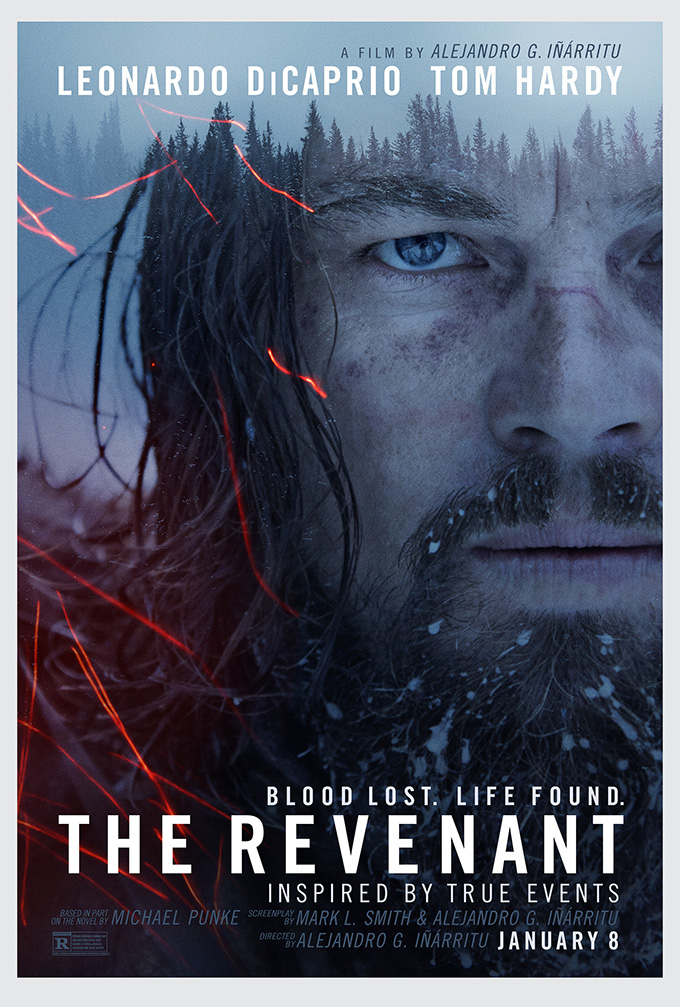
The Revenant (2015)

Tags

, , , , , , , , , , , , , , ,

The Revenant

D: Alejandro González Iñárritu / 156m

Cast: Leonardo DiCaprio, Tom Hardy, Domhnall Gleeson, Will Poulter, Forrest Goodluck,  Paul Anderson, Duane Howard, Kristoffer Joner, Brendan Fletcher, Lukas Haas, Grace Dove, Melaw Nakehk’o

If you had to guess what Alejandro González Iñárritu’s next movie would be after Birdman or (the Unexpected Virtue of Ignorance) (2014), then chances are you wouldn’t have picked this one, a Western shot on a grand scale and based on events that happened to the fur trapper and explorer Hugh Glass in 1823. And maybe you would have thought that it was too much of a challenge for the director to pull off. But for anyone who still has their doubts, let’s make it clear from the start: this is one of the must-see movies of 2015 (which makes it a shame that most people won’t see it until 2016).

Glass’s story is the stuff of legend. While working for a fur-trapping expedition along the Missouri river, he and his fellow trappers were ambushed by Arikara Indians, and forced to flee back to their base at Fort Kiowa. While out scouting for food for the remaining men, Glass encountered a grizzly bear and her two cubs. The bear attacked Glass and he was severely mauled and injured. He managed to kill the bear with the aid of two other trappers, John Fitzgerald and Jim Bridger. His wounds, however, were such that it was believed he would die from his injuries. Leaving behind Fitzgerald and Bridger to bury Glass when the time came, the rest of the expedition, led by General William Henry Ashley, made it back to the fort. But Fitzgerald and Bridger left Glass for dead, and made their way back to the fort as well where they lied about his fate.

The Revenant - scene1

As a feat of physical endurance, Glass’s “return from the dead” was astonishing. Despite a broken leg, festering wounds, and cuts to his back that left his ribs exposed, the explorer bravely crawled most of the way to the Cheyenne river where he fashioned a basic raft and drifted downstream to Fort Kiowa. In all he travelled over two hundred miles, and it took him six weeks. One of the main things that kept him going was finding Fitzgerald and Bridger and exacting his revenge (though in the end he spared both of them).

In telling this tale of survival against the odds, Iñárritu has taken the book by Michael Punke and opened up the story to include rival French trappers, a tribe of Arikara Indians led by a chief whose daughter has been abducted, and a son for Glass whose mixed heritage (his mother was a Pawnee) makes Fitzgerald uneasy (with predictably violent results). And for Fitzgerald there’s no forgiveness here, as Glass hunts him down with the intention of making him pay with his life for betraying Glass and leaving him to die.

Along the way, Iñárritu shows the hardships and terrors of life on the frontier, with its sub-zero temperatures and harsh terrain, and where men face death at every turn – from each other, from the Indians, and more importantly, from nature itself, which is uncompromising and unsympathetic to their needs. The director immerses the viewer in this terrifying yet beautiful and alluring environment, and each new scene adds to the spectacle Iñárritu has created. This is a richly textured, sometimes hyper-real environment that Iñárritu has constructed, and its silent majesty is often awe-inspiring.

The Revenant - scene3

There are numerous scenes that stand out in this way, from the opening tracking shot through a water-logged forest to the brutal (very brutal) attack on the trappers, and on to the bear attack – quite possibly one of the most impressive sequences in any movie of 2015. But Iñárritu isn’t finished. Once Glass disinters himself he has to traverse the very same harsh territory that he knows is likely to kill him for sure this time, and the various places he finds himself at, offer equal parts safety and danger. And you have to applaud the commitment of DiCaprio, who must have risked hypothermia on many occasions in order to get the shots his director wanted.

The Revenant is a bloody, raw, uncompromising movie that treats the inherent violence of the times as if it was just a part of daily life, something that went largely unacknowledged. Men are replaceable but the pelts they gather are not. When Fitzgerald and Bridger arrive back at the fort there’s no warm welcome, no sign that anyone’s pleased to see them; there’s a complete indifference. The inference is clear: you do what you have to do. But while survival is a key issue, this is at heart a revenge tale, and Iñárritu doesn’t hold back in showing Glass’s angry determination to survive, or the sacrifices he has to make in order to do so. Whether it’s allowing a surging river to channel him away from the approaching Arikara, or keeping warm overnight in the belly of a horse, Glass simply will not give up.

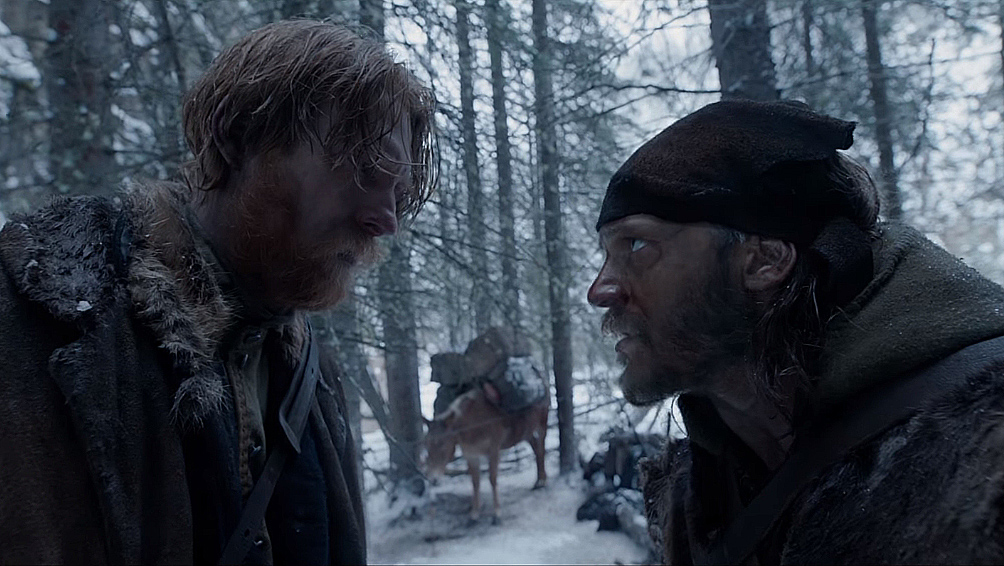
As the indefatigable Glass, DiCaprio gives one of his best performances. With limited dialogue, and relying on facial expressions and body language to impart his character’s feelings and emotions, this is a physical tour-de-force. There are times when DiCaprio isn’t even recognisable as DiCaprio, occasions where the demands of the script have him twisted and tormented in agony. It’s a magnificent portrayal, and superbly counter-balanced by Hardy’s performance as Fitzgerald. Fitzgerald is a survivor as well, a man who thinks of himself first and others second, whose sole motivation is to make it through in whichever way is needed. He’s an opportunist to be sure, but he’s also just as calculating as Glass. Both actors are astonishing in their roles, and their eventual showdown is a masterpiece of bloody threat and the will to survive.

The Revenant - scene2

The photography, by Oscar-winning DoP Emmanuel Lubezki, is stunning throughout, the landscapes and mountains and rivers captured with such penetrating exactness it’s almost like being in the movie yourself. It’s possibly the most beautifully realised and shot movie you’re likely to see for some time, and the decision to shoot with natural light has paid off handsomely. There’s also a beautiful, evocative score courtesy of Ryuichi Sakamoto, Bryce Dessner and Carsten Nicolai that adds to the richness of the material.

Rating: 9/10 – a tremendous, incredible piece of story telling – previously told in Man in the Wilderness (1971) with Richard Harris as Glass (albeit renamed) – The Revenant is a movie that is consistently impressive from start to finish, and which features stunning location photography and superb performances from all concerned; Iñárritu’s follow-up to Birdman or (the Unexpected Virtue of Ignorance) is intelligent, visceral, relentless movie making that packs an unexpected emotional punch, and is possibly the most impressively mounted movie of 2015.

Spotlight (2015)

Tags

, , , , , , , , , , , , , ,

Spotlight

D: Tom McCarthy / 128m

Cast: Mark Ruffalo, Michael Keaton, Rachel McAdams, Liev Schreiber, John Slattery, Brian d’Arcy James, Stanley Tucci, Billy Crudup, Jamey Sheridan, Paul Guilfoyle, Len Cariou, Neal Huff, Michael Cyril Creighton, Richard Jenkins

In 2001, the Boston Globe newspaper hired a new editor, Marty Baron (Schreiber). Baron noticed a column in the paper about a Catholic priest, John Geoghan, who was known to be a paedophile, and a lawyer, Mitchell Garabedian (Tucci) who claimed he had evidence that the Archbishop of Boston, Cardinal Law (Cariou), knew all about it and did nothing to stop Geoghan’s activities. Urging the paper’s Spotlight section – an investigative team made up of four people – to look more closely at the matter, Baron set in motion an investigation that would expand rapidly to reveal a far greater problem than one errant priest.

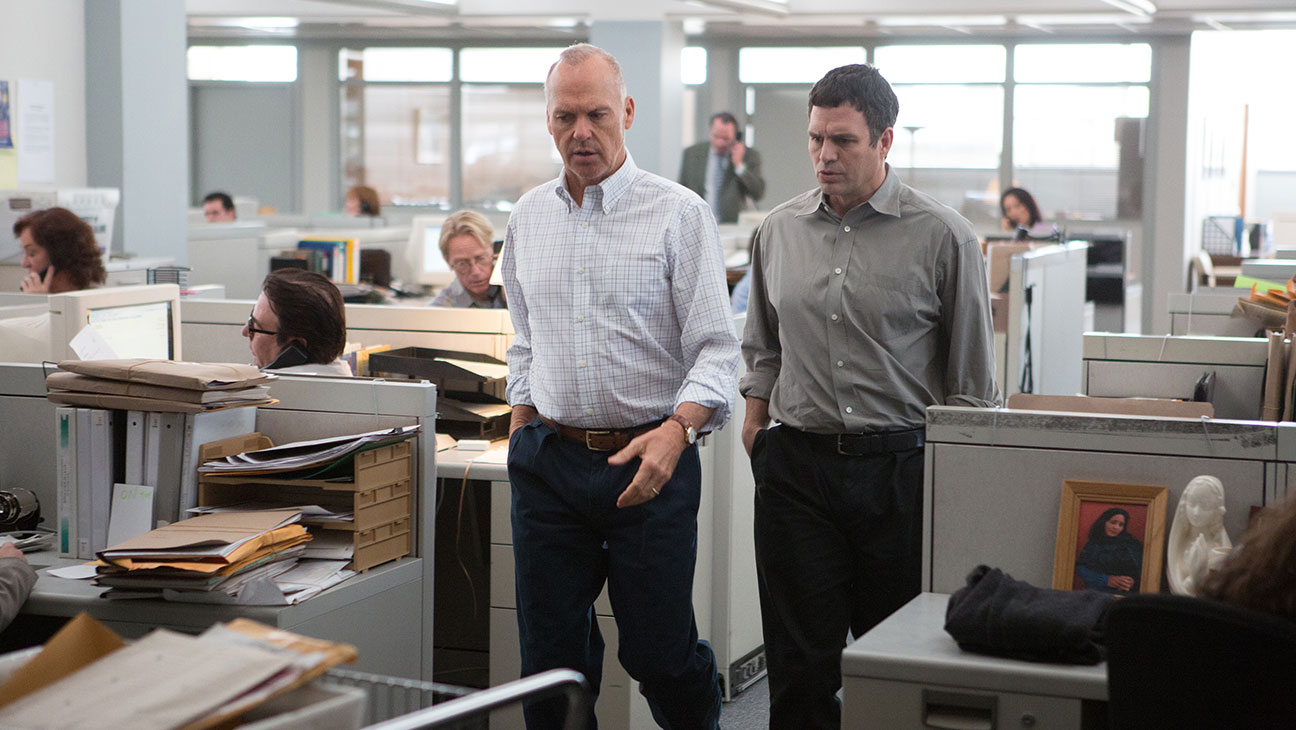
This is the story that Spotlight tells: the investigation into one priest’s predatory behaviour that revealed the systemic abuse of children over decades, and which had been covered up by the Catholic Church. It’s a tale of widespread abuse, and the political and legal corruption, and immorality, that goes with it. As the team – editor Walter “Robby” Robinson (Keaton), and reporters Mike Resendez (Ruffalo), Sacha Pfeiffer (McAdams), and Matt Carroll (James) – begin looking into the story they learn that the Globe was aware of some of the allegations being made as far back as 1996 following a similar case, but these were never followed up. They speak to the founder of a support group for people who have been abused by priests, Phil Saviano (Huff), who reveals that, based on what he’s been told, Goeghan is one of thirteen priests in the Boston area that have molested children over the years.

Spotlight - scene3

Shocked by this, the team divide their attention in different areas: Resendez contacts the lawyer, Garabedian, in order to find out what evidence he has; Pfeiffer meets with a victim, Joe Crawley (Creighton); and Carroll starts looking into the backgrounds of the priests Saviano has named. What emerges is a picture of abuse that appears to have been ignored or covered up by the Church, and which is still continuing. They also get in touch with an ex-priest, Richard Sipe (Jenkins), who worked at a “treatment centre” back in the Sixties. Since leaving the Church he’s made a thorough study of the “phenomena” of sexual abuse wihtin the priesthood, and in one particularly chilling telephone conversation with the Spotlight team he tells them his findings indicate that 6% of priests abuse children. Now the team has to rethink their strategy: based on Sipe’s findings, they’re no longer looking at thirteen priests in the Boston area, but ninety.

With the enormity of the problem now fully revealed, the team have to tread even more carefully, and refocus their investigation; it’s no longer enough to target Cardinal Law and his tacit allowance of the abuse. It’s now obvious that the abuse isn’t confined to Boston, it happens everywhere. The story becomes about how the Church itself allows this to happen and never disciplines its priests, preferring instead to move them around and still allowing them to have unsupervised access to children.

In the end, Spotlight broke the story in early 2002. It was the major news story of its day, and the movie recounts those days with a measured simplicity that avoids any potential hyperbole or grandstanding. Thanks to an intelligently constructed script by McCarthy and Josh Singer, the way in which the story unfolded is handled with a sensitivity and compassion for the victims that is offset by the Spotlight team’s increasing sense of disgust at the Church’s mistreatment of them. Each of the team is affected in their own way, showing just how pervasive the issue was, and without anyone realising. It’s a sobering realisation, that the abuse of children by a powerful organisation such as the Catholic Church – such a huge presence in so many people’s lives – can have such far-reaching consequences.

S_09159.CR2

Thanks again to the script, the legal and moral issues surrounding the cases are clearly laid out on both sides, and Mitchell Garabedian aside, the lawyers involved in out of court settlements fare badly, as they put ethical issues aside and justify their actions by virtue of “just doing their job”. As one of these lawyers, Billy Crudup has a small but crucial role that highlights just how much one section of the Boston legal system was prepared to look the other way. And the Cardinal’s spokesman, a wily operator called Joe Connelly (Guilfoyle), is on hand to show how the political machine tried to keep the Church from being exposed by attempting to make it seem that the revelations would be bad for the city.

It’s safe to say that the movie exposes a lot more than the hypocrisy of the city’s movers and shakers, and it does so in a low key dramatic manner that allows the horror of the situation to seep through as the movie progresses. McCarthy and his talented cast never let us forget just how awful the amount of abuse was, and through their pursuit of the truth we get to see levels of betrayal that most of us would be hard pressed to even consider let alone believe in. And when a necessary delay in printing the story leads to an angry outburst by Resendez, we can sympathise with him, because by then the audience wants the story to be told equally as much as he does.

In many ways, Spotlight‘s steady pace and determined approach is unexpectedly gripping. As each new development unfolds, the movie steps up a gear, until the viewer is completely enthralled and can’t look away. It doesn’t matter that you know the outcome in advance, this is one of those movies that is so well constructed that you can’t help but be drawn along with it. Helping McCarthy make such an impact is his cast. Keaton is the wise old newspaperman, determined not to let the story get away and the Church off the hook, and patient enough to wait for the right evidence to come along. Ruffalo is the cocksure reporter who feels too much too often, and who uses his anger and disgust at the abuse to fuel his work. By contrast, McAdams’ lone female is affected in small ways, as in the way in which the news will be hurtful to her devout grandmother. And James’ dogged researcher learns that the issue is much closer to home than he’d realised (and which leads to one of the movie’s rare moments of humour).

Spotlight - scene1

It’s a powerful movie about a powerful subject and although the naysayers will point to diffusions and imperfections in the story – this didn’t happen like that, that didn’t happen like they say it did – the truth is still clear: abuse happened and the Church covered it up. In 2002 alone, Spotlight ran a further 600 articles based on what they learned from victims. What the movie reminds us is that looking the other way can be even more uncomfortable than looking straight at something that’s too horrible to contemplate.

Rating: 9/10 – one of 2015’s best movies, Spotlight is tense, absorbing, horrifying, and a must-see, with superb performances and and one of the year’s best scripts; it’s already won a shedload of well-deserved awards, and as a movie that tackles a disturbing subject with tact and sensitivity, should gain even more further down the road – it’s that good.

Zatoichi on the Road (1963)

Tags

, , , , , , , , , , ,

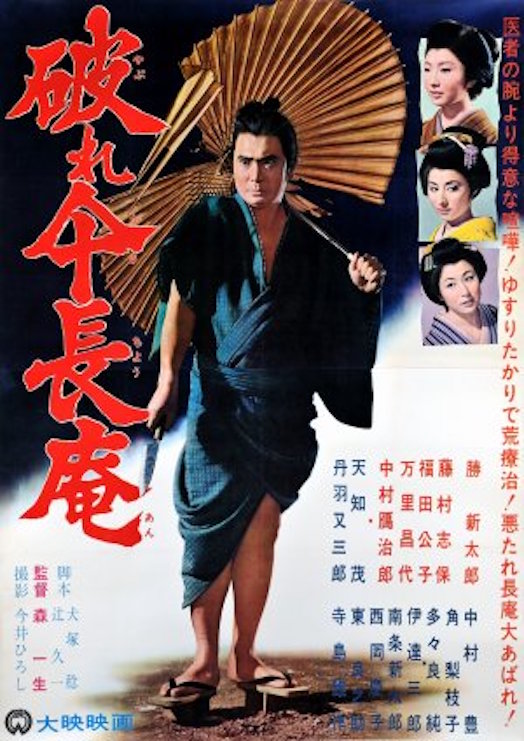
Zatoichi on the Road

Original title: Zatôichi kenka-tabi

aka Zatoichi’s Fighting Journey

D: Kimiyoshi Yasuda / 87m

Cast: Shintarô Katsu, Shiho Fujimura, Ryûzô Shimada, Reiko Fujiwara, Matasaburo Niwa, Yoshio Yoshida, Sônosuke Sawamura, Shôsaku Sugiyama, Yutaka Nakamura

The fifth entry in the series sees our hero being escorted to meet a prospective employer. Zatoichi (Katsu) is spotted by members of a yakuza clan who are aware that the propsective employer the blind swordsman is to meet is their sworn enemy, the head of a rival yakuza clan. With a showdown happening soon between the two clans, Zatoichi’s presence can mean only one thing: the rival boss is looking to hire him, and thereby swing matters in his favour. In an attempt to stop Zatoichi being hired, the gang members ambush him and his guide. Zatoichi despatches them with ease but not before his guide is killed.

The wife of one his would-be killers, Hisa (Fujiwara), witnesses the aftermath of the attack and learns Zatoichi’s identity. She takes this information back to the clan boss who, quite rightly, is disturbed by this development. But he has another plan in motion, one that involves the kidnapping of a young girl, Mitsu (Fujimura), for ransom. By luck, Zatoichi almost literally stumbles across a dying man who implores him to “save Mitsu”. Gaining her trust, Zatoichi determines to help her get back home. But it turns out that both yakuza clans have the same idea, and the blind masseur finds himself having to avoid both gangs, as well as the criminal intentions of a crooked innkeeper.

ZOTR - SCENE3

Five movies in and you could be forgiven for thinking that the series should already be running out of steam, but Zatoichi on the Road sees the franchise taking the basic “wandering swordsman” premise and putting a clever spin on things. Here, Zatoichi’s pledge to a dying man exposes the character’s nobility and selflessness to an even greater extent than in previous entries, as he shepherds Mitsu to her home in Edo, protecting her and keeping her safe. There is the usual romantic angle thrown in, but where before, Zatoichi has fallen in love with the lead female character, here his romantic feelings are held in check by his own awareness that there’s no chance of a relationship developing between them (though he does remain initially hopeful, as always).

Romanticism aside, the movie focuses on traditional notions of honour and fealty to the samurai code, with Zatoichi upholding these in isolation while – again – those who profess to follow the same code pay lip service to it. Both clan bosses are venal, greedy men who use the code for their own ends, and Zatoichi’s innate sense of propriety remains in stark contrast to the corruption that surrounds him. While each boss schemes and plots the end of the other, Zatoichi turns the tables on them, even when one of them finally manages to kidnap Mitsu and hold her hostage. By using their own avarice against them, Zatoichi highlights the ways in which their covetous natures will always undermine their criminal intentions. It’s a moral approach that everyone can relate to, and is played out with confidence and straightforward charm.

ZOTR - SCENE2

One of the series’ strengths is Zatoichi’s avoidance of violence wherever possible. Of course he’s going to find himself in situations where he has no choice but to fight, but here Minoru Inuzuka’s screenplay features a scene of such simple brilliance that it’s worth watching over and over again for Katsu’s superb performance and Yasuda’s assured direction. In it, Zatoichi rescues Mitsu from the clutches of a crooked innkeeper and does so without resorting to using his sword. It’s a tense, riveting scene, and sees Zatoichi attack the innkeeper and his men verbally over and over, denigrating their position and their competence. It’s further enhanced by their awareness of who Zatoichi is, and what he’s capable of; no one wants to risk their lives and prove him right.

But when there is a fight that Zatoichi can’t avoid, the sadness and melancholy that afflicts him is touchingly rendered by Katsu, whose immersion in the role is by now complete. He’s a wonderfully expressive actor, vulnerable and strong at the same time, and with no airs or graces about him. Whether he’s expressing his disappointment at the situations he finds himself in, or marvelling at some of the simpler pleasures in life (tea, for example), Katsu’s Zatoichi is a fully rounded character that any viewer can relate to. And he portrays the character’s loneliness so vividly that there’s very little further information we need to know about him in order to understand why he gets involved in righting wrongs and defeating injustice.

ZOTR - SCENE1

As the object of everyone’s crooked intentions, Mitsu is essentially a McGuffin decked out in a kimono, a hook to hang the plot on. But Fujiwara imbues her with a childlike artlessness that makes her more than just an object of lust and financial gain for the two clans. Her quiet, subservient nature is so calming that it’s no wonder Zatoichi finds himself falling for her, offering as she does a peaceful alternative to the wandering, often violent life he leads. Zatoichi’s search for peace is a constant theme in the series, but it’s here, where the chance of his attaining it is so close (and yet so far) that gives his yearning such resonance.

Filmed largely on location, with some poorly lit interiors doubling as the outdoors from time to time, Zatoichi on the Road retains the visual strengths of the previous colour entries, and the sword fights are still as well choreographed as before. Yasuda’s first outing as director on a Zatoichi movie proves both absorbing and resplendent, his positioning of the camera yet another example of how determined Daiei Studios had become in ensuring that each movie had its own identity while adhering to the overall tone and and accessibility of the series.

Rating: 7/10 – another successful entry in the series, Zatoichi on the Road is as engaging and captivating as its previous outings, and manages to provide further evidence that the character can – and will – avoid the pitfalls of series’ ennui; with Katsu providing yet another polished, emotionally astute performance, the movie never once takes the easy route in telling its deceptively simple story.

NOTE: Alas, the following trailer is free from subtitles.

10 Reasons to Remember Haskell Wexler (1922-2015)

Tags

, , , ,

Haskell Wexler (6 February 1922 – 27 December 2015)

Haskell Wexler

An influential figure in the world of cinematography, Haskell Wexler was a true genius with the camera, a master of mood, light and colour. From his first feature, the wonderfully titled Stakeout on Dope Street (1958) (where he was credited as Mark Jeffrey, his two sons’ names), all the way through to the numerous documentaries he lensed in the last twenty years, Wexler has been an outstanding cinematographer, adding a distinct and lasting aura to the movies he worked on, including his first feature as a director, Medium Cool (1969). Along the way he picked up two Oscars, for Who’s Afraid of Virginia Woolf (1966) and Bound for Glory (1976), and during the Sixties and Seventies (arguably his heyday) he worked with the likes of Milos Forman, Norman Jewison, Hal Ashby, and Francis Ford Coppola. But he kept going back to documentaries, either features or shorts, and it’s these movies, which often gave Wexler the chance to espouse his own political leanings, that form the bulk of his filmography. Watch any of the ten movies listed below and you’ll see just why he was regarded as one of the ten most influential cinematographers in cinema history.

The Loved One

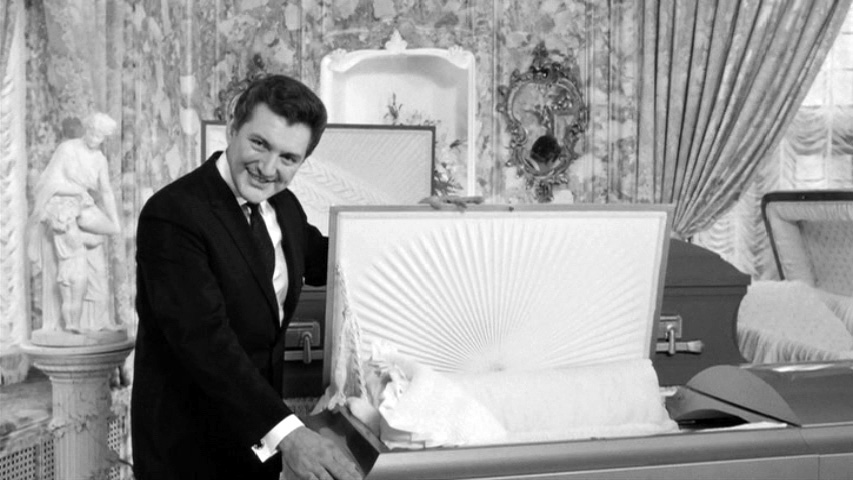
1 – The Loved One (1965)

2 – Who’s Afraid of Virginia Woolf (1966)

3 – In the Heat of the Night (1967)

4 – Medium Cool (1969)

5 – One Flew Over the Cuckoo’s Nest (1975)

6 – Bound for Glory (1976)

7 – Coming Home (1978)

8 – Matewan (1987)

9 – The Secret of Roan Inish (1994)

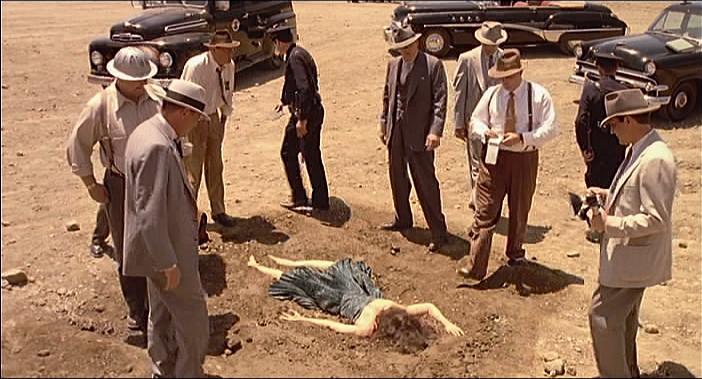
10 – Mulholland Falls (1996)

Mulholland Falls

Sunset Song (2015)

Tags

, , , , , , , , , , ,

Sunset Song poster

D: Terence Davies / 135m

Cast: Agyness Deyn, Peter Mullan, Kevin Guthrie, Jack Greenlees, Daniela Nardini, Ian Pirie, Douglas Rankine

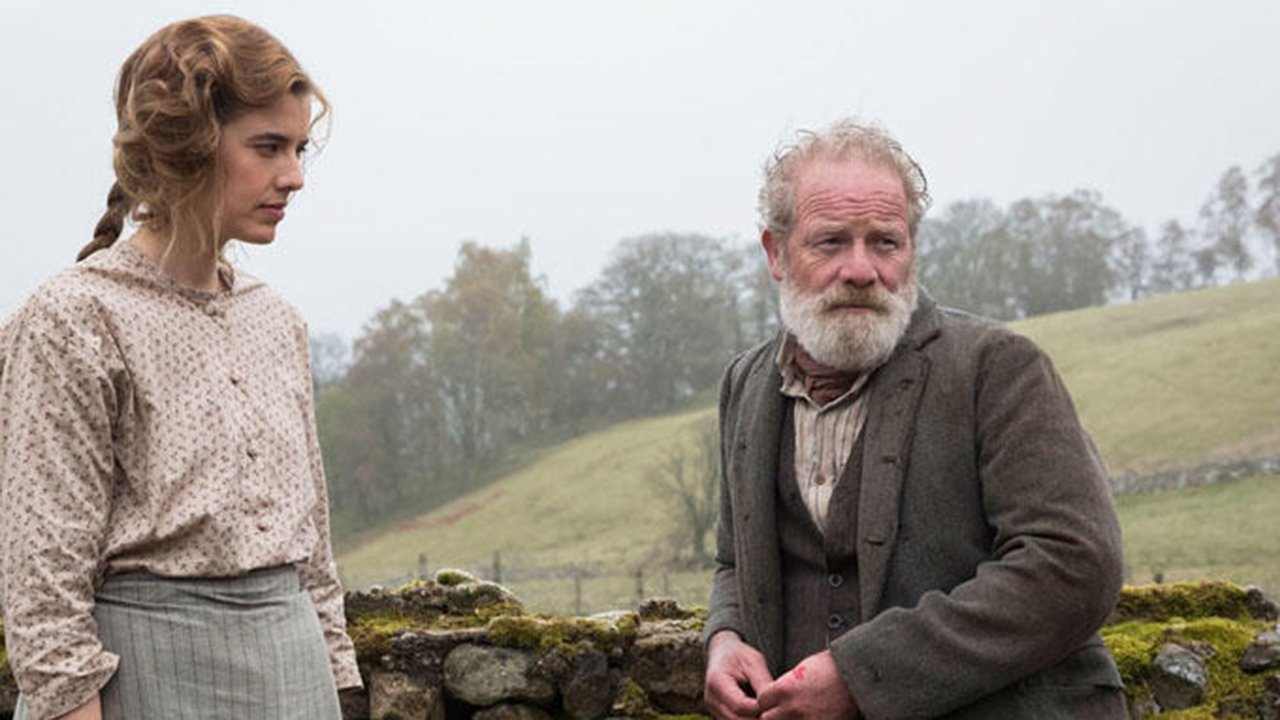
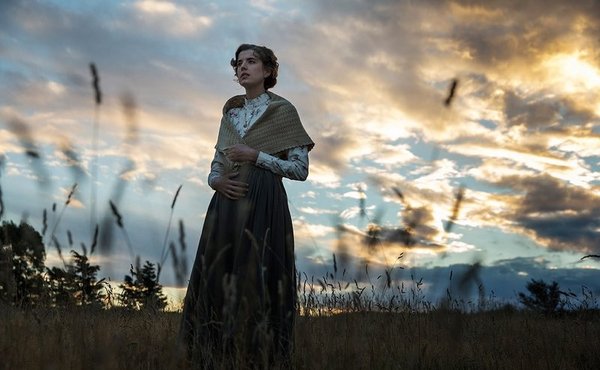
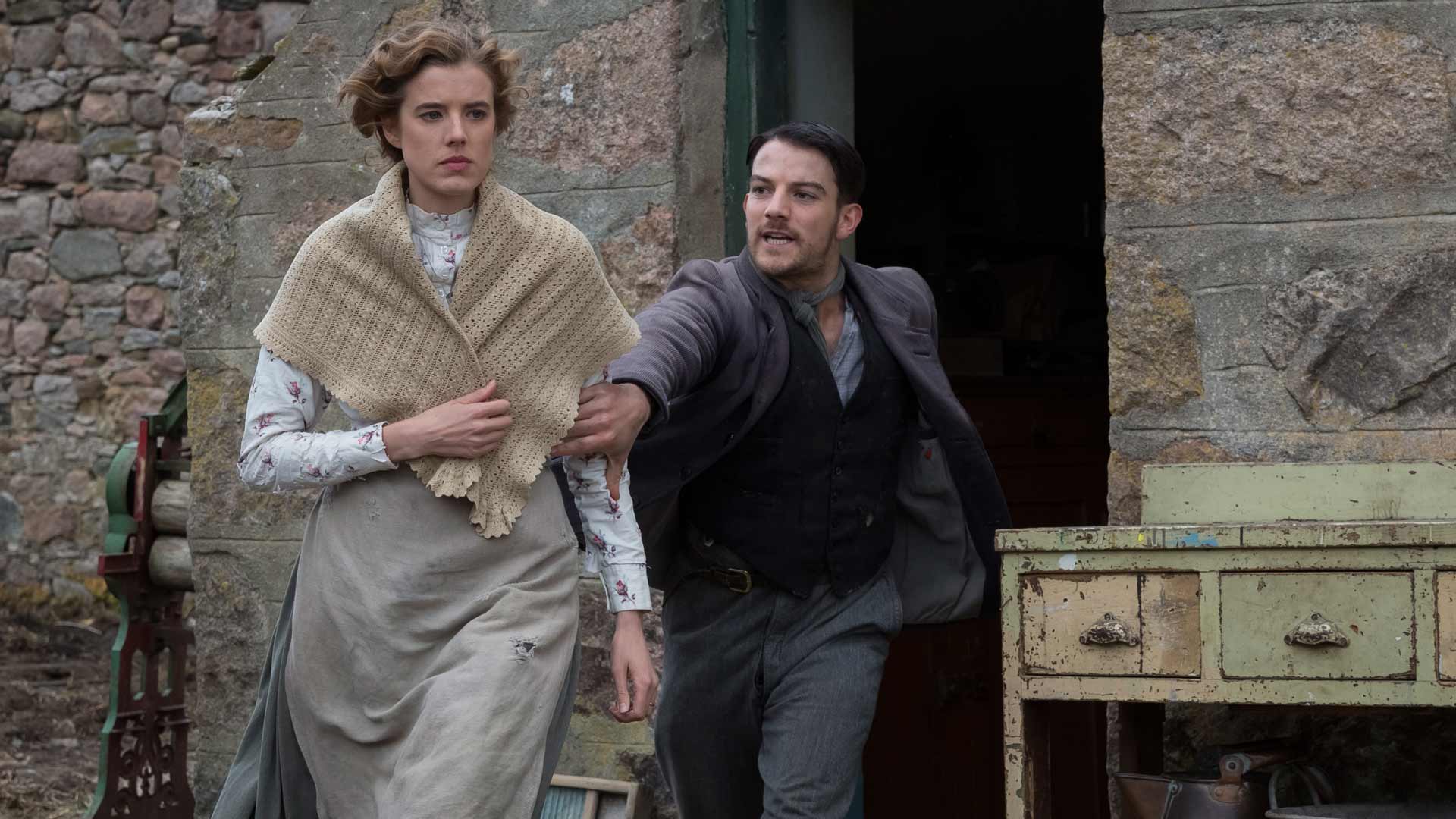
Terence Davies is not one of the UK’s most prolific movie makers, but he is one who is highly regarded and he’s been justly lauded over the years for movies such as Distant Voices, Still Lives (1988) and The House of Mirth (2000). He’s a director who chooses his projects with great care, and he invests a lot of time and effort in getting things right. Sunset Song, an adaptation of the classic novel by Lewis Grassic Gibbon, has taken fifteen years to reach our screens, and shows Davies focusing on the lives of a small farming family on the eve of World War I.

The main character is Chris Guthrie (Deyn), the eldest daughter of John (Mullan) and Jean (Nardini). She has her work on the farm to occupy her, but she has few plans for her own future, despite being well educated and with an innate sense of the world around her (even if she hasn’t travelled far enough to see it). Her father is a hard, pitiless man who controls the farm and his family with a harshness that tips over into brutality when he feels it necessary. As well as Chris, he has a son, Will, and two younger children, Dod and Alec. John and Will clash continually, and Chris tries to act as peacekeeper but her father’s attitude makes it difficult.

Sunset Song - scene1

When Jean discovers she is pregnant again, it proves too much for her, and the action she takes to avoid childbirth leads to Dod and Alec being sent to live with their aunt and uncle. Tensions and tempers flare up as John and Will clash ever more violently, and so much acrimony arises that Will makes the decision to emigrate to South America. Left on her own with her father, Chris has no choice but to fill both her brother’s and her mother’s shoes, and run the household as well as look after parts of the farm. She and her father have an uneasy relationship, and it’s made harder when he suffers a stroke that leaves him bedridden. Subsequently she finds herself in charge of the farm, and with a difficult decision to make: sell up or manage the farm herself.

She chooses the latter, and with help from some of her neighbours and old friends of her father’s, Chris finds she has a natural flair for farm management, and she comes to realise just how much she loves the life she leads. Wooed by a young farmer called Ewan Tavendale (Guthrie), Chris eventually marries him and they have a son. But World War I arrives and Ewan goes off to fight in France. Chris waits anxiously for his return but when he does he’s a changed man: violent, angry and aggressive. Fearing the consequences for their marriage if he’s the same when the war ends, Chris is left with yet another difficult decision to make.

If you’re adapting a classic novel then it makes sense to stick closely to the novel’s structure and themes, and with Sunset Song, Davies has done exactly that. The farm, Blawearie, is surrounded by rolling hills and (in summer at least) some very beautiful meadowland, but it’s an old farm, with few modern appliances or signs of mechanical progress to show that John is moving forward with the times. Chris and Will can see the value of these modernisations but their father is something of a grim traditionalist, holding out against the inevitability of change. It’s his way of staying in control, even if ultimately, it’s to his, and the farm’s, detriment.

Sunset Song - scene2

With themes of change firmly embedded in the script and foregrounding the relationships between Chris, Will, and their father, Davies is free to explore the role of women in such small communities – Chris is independent and speaks her own mind, not a commonplace for the period – as well as the way in which these small communities unite in times of need, and often in a way that is now anathema to modern ways of thinking; despite his often appalling behaviour, John is still highly regarded by his peers, and where he might be shunned today, back then he’s still a man to be respected, and helped when required.

But while the tone and the subject matter and the characters are all handled with skill and seemingly effortless dexterity, somehow Davies has managed to make Sunset Song somehow lacking, as if the story, by itself, should be enough to carry the viewer along quite comfortably. Instead, the narrative meanders at times as it tries to paint a broader picture of the small world it’s focused on. The events that occur on Blawearie Farm, while undeniably dramatic, also suffer from over-familiarity. The blinkered, brutal father figure is one we’ve seen time and again (and with Mullan in the role as well), and the character of Chris is the intelligent, brave, compassionate daughter who acts as a counterpoint to her father’s belligerence. A classic tale complete with classic characters is here transposed into a classic tale with all-too predictable character arcs.

To be fair it’s not entirely Davies’ fault. The problems are inherent in the story and the narrative, as each step of Chris’s journey to maturity and independence are threatened at every turn, and her resilience and resourcefulness is challenged each time. Davies never really finds a way to overcome these over-familiarities, and we’re left with a movie that is sumptuous to look at, and beautifully framed and realised as only Davies can devise, but also a movie that doesn’t allow itself to connect with the audience, preferring instead to tell its story at a distance. There’s never any real emotional investment made in the characters, or their trials and tribulations, and without that investment, many scenes lack the intensity needed to draw the audience in.

Sunset Song - scene3

Nevertheless, Sunset Song is still a good movie, but one that could have made more of an impact on viewers. Davies is at times a visually astonishing director, and there are several shots in the movie that are simply superb in terms of light and colour and shade and composition. His cast are uniformly excellent, with Deyn grabbing all the plaudits as Chris, giving a complex, striking performance as a young woman on the verge of achieving whatever she wants, but still retaining the insecurity that comes with being in such a momentous position. Mullan could probably play his type of role in his sleep by now, but there are few actors who can take such an objectionable character and make him recognisably, understandably human. The scenes between the two of them, though lacking the emotional charge that’s sorely needed, are still fascinating to watch for the ways in which both actors spar with each other.

There’s certainly room for this type of “heritage” movie in amongst all the over-hyped productions out there, and Davies is a movie maker we should all cherish for his ability to bring recent periods in history to life with such precision and attention to detail, but with Sunset Song he’s made a movie that only goes part way to achieving the classic status of its source novel.

Rating: 8/10 – a bracing depiction of early 20th Century Scottish farming life with terrific performances and Davies creating a fully recognisable world, Sunset Song – while missing a fair degree of passion in its telling – is still a movie with considerable merit; achingly beautiful in places, and a joy to watch if you appreciate measured, thoughtful movie making, Davies’ latest may be a tad disappointing but it’s still head and shoulders above the majority of movies out there at the moment.

Mini-Review: The Good Dinosaur (2015)

Tags

, , , , , , , , , , , , , , , , , , , ,

The Good Dinosaur

D: Peter Sohn / 93m

Cast: Raymond Ochoa, Jack Bright, Jeffrey Wright, Frances McDormand, Steve Zahn, Sam Elliott, Anna Paquin, A.J. Buckley, Jack McGraw

Anyone going to see The Good Dinosaur should know a couple of things before they do. One: if you’re expecting a movie as enjoyable and as creative as Inside Out was earlier this year, then you’re going to be disappointed. And two: you’ll be surprised at how bland and pedestrian it all is.

The Good Dinosaur - scene2

Getting that out of the way at the beginning of this review makes it easier to write the following: Pixar should have let this one die in development. The movie has had a troubled history. Original director Bob Peterson was removed from the movie in 2013 because he couldn’t come up with a final, third act. All of the cast, with the exception of McDormand, were replaced, large chunks of the script were re-written, and the movie was re-scheduled for release two years after its original, planned release date (27 November 2013). All in all, it feels very much as if, having sunk an awful lot of money into the production, Pixar had a choice: write off the project entirely and take a large financial hit, or carry on in the hope that the finished product will be good enough to earn back its costs.

Obviously they chose the latter, but it was the wrong decision. The Good Dinosaur is a movie that any other animation company could have made, and that’s not what we should be saying about a Pixar movie. It may be unfair, but Pixar is synonymous with animation excellence, both in terms of the visuals and the stories. And while The Good Dinosaur contains some of the most photo-realistic animation ever, when it comes to the story, it becomes clear that it wasn’t only the third act that had problems. Once the basic premise is done with – meteor that wipes out the dinosaurs 65 million years ago misses the earth, leaving dinosaurs to evolve further – the movie doesn’t know if it wants to be the new The Land Before Time (1988), an out-and-out Western, or a distant narrative cousin to The Lion King (1994). And it doesn’t help that against all the beautifully rendered backdrops, we have an apatosaurus whose animation looks like it was sub-contracted out to Aardman (it’s Arlo’s eyes – take a look at Chicken Run (2000) and you’ll see what I mean).

The Good Dinosaur - scene3

But whichever story it’s trying to tell, it’s not strong enough to hold the audience’s attention, and scenes pass by that provoke ennui instead of engagement. Even the relationship between Arlo and Spot, normally something you could rely on Pixar to make affecting and charming, proves merely sufficient to the story’s needs, and the “inventiveness” of having Spot being the “pet” wears off pretty quickly. With the movie’s two lead characters lacking a way to connect with the audience, it further hinders the movie’s attempts to make itself a satisfying experience for the viewer.

The movie also has problems with its tone, as it mixes humorous elements with moments of terrible heartbreak, and there’s an unexpected sequence where Arlo and Spot get stoned. The introduction of friendly T-Rexes is a bit of a stretch, and leads to a campfire scene where you wonder if an homage to Blazing Saddles (1974) is on the cards (The Good Dinosaur has lots of these moments, ones that remind you of other, better movies). It all goes to reinforce the idea that Pixar have released their latest movie in the hopes that it’ll recoup its costs before anyone notices how disappointing it is.

Rating: 5/10 – saved from a lower score by the incredible visuals, which elevate the material just by being there, The Good Dinosaur is yet another unfortunate example of Pixar having (mostly) lost their way in recent years; even the talented voice cast can’t do much to improve things, and potential viewers will be better off waiting until Finding Dory (2016) is released for their next Pixar fix.

Merry Xmas 2015

Tags

,

Just a quick post to wish everyone who reads or follows thedullwoodexperiment a Merry Xmas. I hope you all have a great day, that Santa (if applicable in your part of the world) brings you everything you asked for, that you don’t indulge too much (not really), and you find time to watch a movie or two.

Stuart Xmas

(Ignore Stuart, he looks great!)

10 Alternative Xmas Movies

Tags

, , , , , , , , , , , , , , , , , ,

When it comes to Xmas movies, the chances of there being a happy ending, an appearance by Santa Claus, plentiul shots of snow-covered streets, Xmas trees bedecked with tinsel and baubles and surrounded by brightly wrapped presents, and people being selfless and loving to the point of nausea, are pretty high. But for those of us who like a little (or a lot) of humbug mixed in with our Xmas cheer, here are ten movies that take the idea of Xmas and turn it on its head with unabashed enthusiasm and delight.

1 – The Nightmare Before Christmas (1993) / D: Henry Selick / 76m

The Nightmare Before Christmas

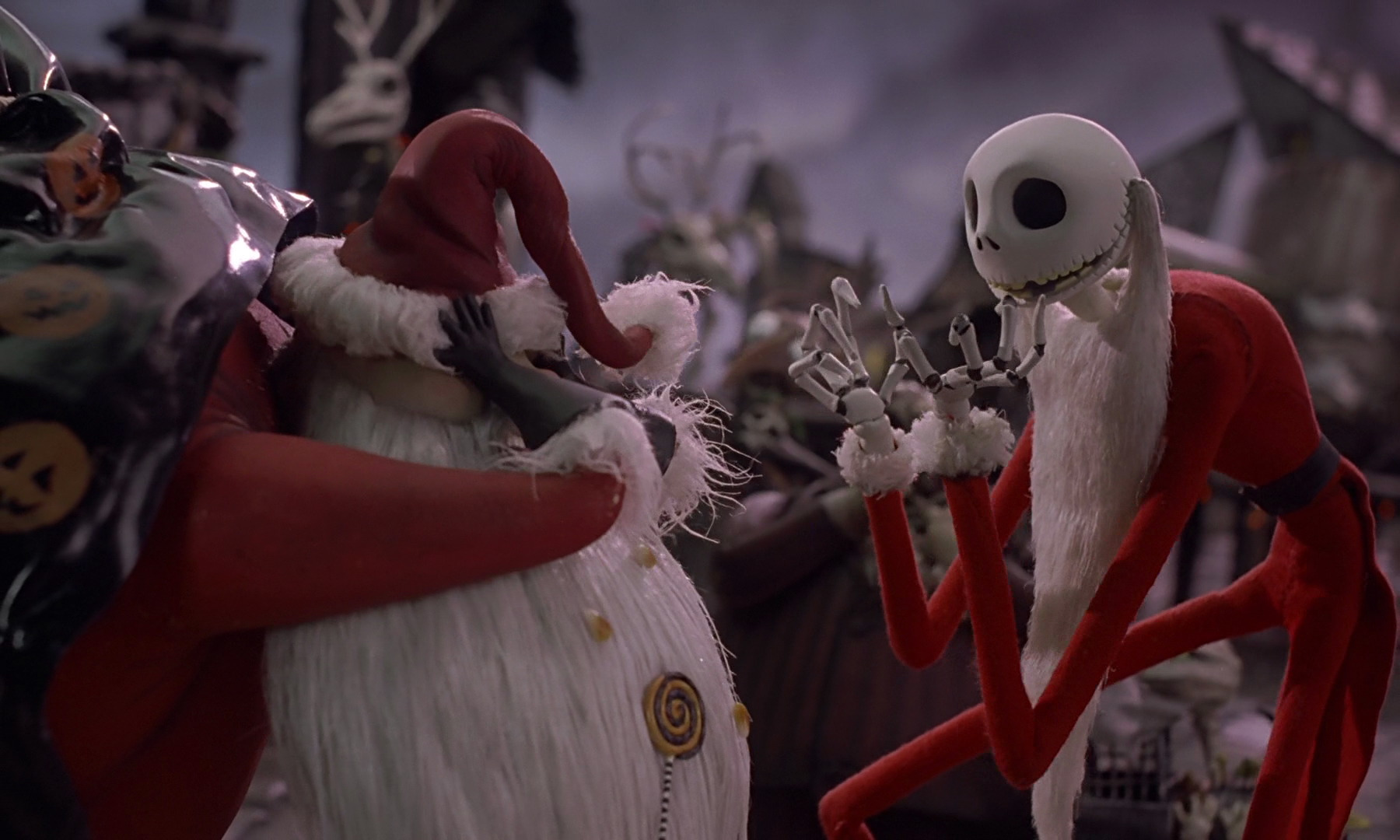
Perhaps the most obvious title on the list, this animated classic is a sure-fire winner for mixing ghoulish elements with a traditional(-ish) Xmas narrative. Even the songs are wonderfully appropriate – Oogie Boogie’s Cab Calloway-inspired number is a highlight – and the stop-motion adds an extra layer of charm to the proceedings, making this one of the best movies about the Yuletide season ever made.

2 – Black Christmas (1974) / D: Bob Clark / 98m

Black Christmas

If The Nightmare Before Christmas has its dark side, then this Xmas horror is way beyond even that, with a chilling storyline that is still impressive over forty years (and dozens of imitators) later. Superbly crafted and with great performances from the likes of Olivia Hussey and Margot Kidder, the movie comes complete with an ending that is even more unsettling than what’s gone before.

3 – Christmas (2003) / D: Gregory King / 89m

Christmas (1)

This New Zealand movie set at Xmas – which occurs during their summer – shows the flip side of family get-togethers and just how demoralising and depressing they can be when the family that meets up is the definition of dysfunctional. Dignity and self-preservation are the order of the day in a movie that is at once desperately funny, often unbearably sad, but remains a strangely poignant tribute to dealing with emotional fragility.

4 – Bad Santa (2003) / D: Terry Zwigoff / 91m

Bad Santa

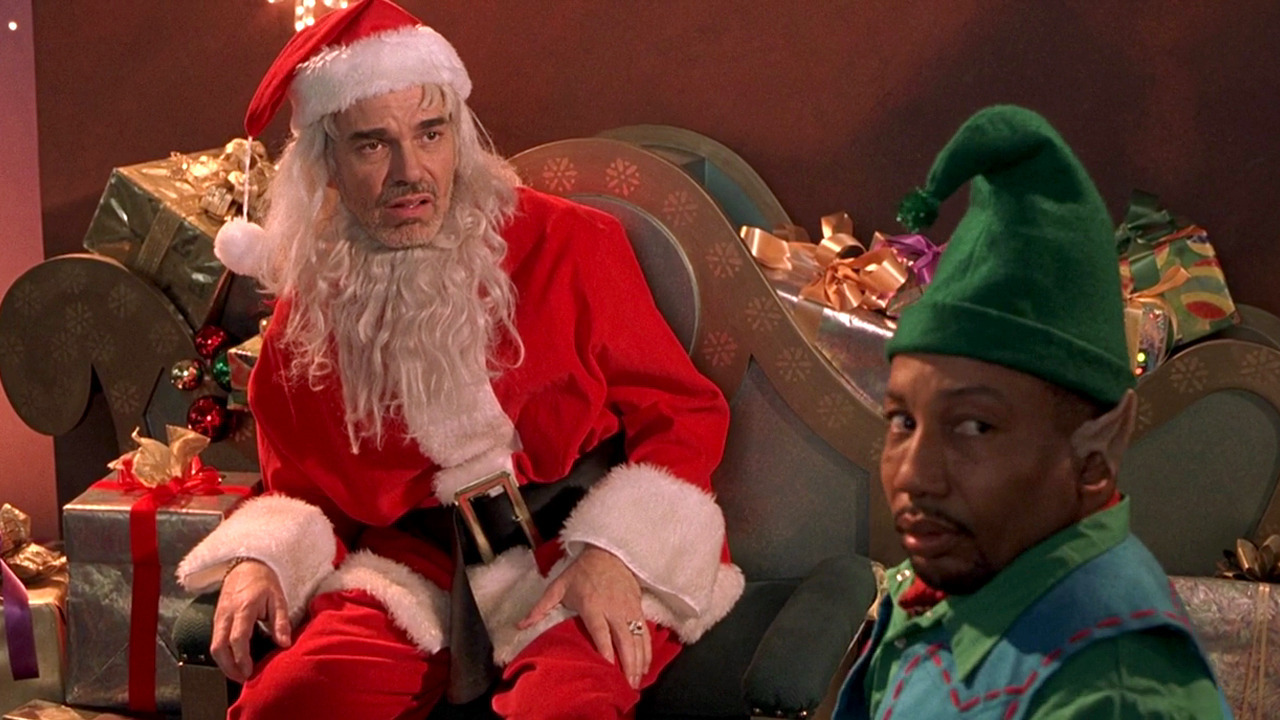
A tour-de-force performance from Billy Bob Thornton anchors this scathing look at a department store Santa whose foul-mouthed attitude and disregard for the feelings of others is slowly eroded over the Xmas period by the attention of a fat kid who just won’t leave him alone. Scurrilous isn’t the word, and your tolerance for crude language may well be stretched very early on, but it’s laugh-out-loud funny and with a surprisingly tender heart at its core.

5 – A Very Harold & Kumar 3D Christmas (2011) / D: Todd Strauss-Schulson / 90m

A VERY HAROLD & KUMAR 3D CHRISTMAS

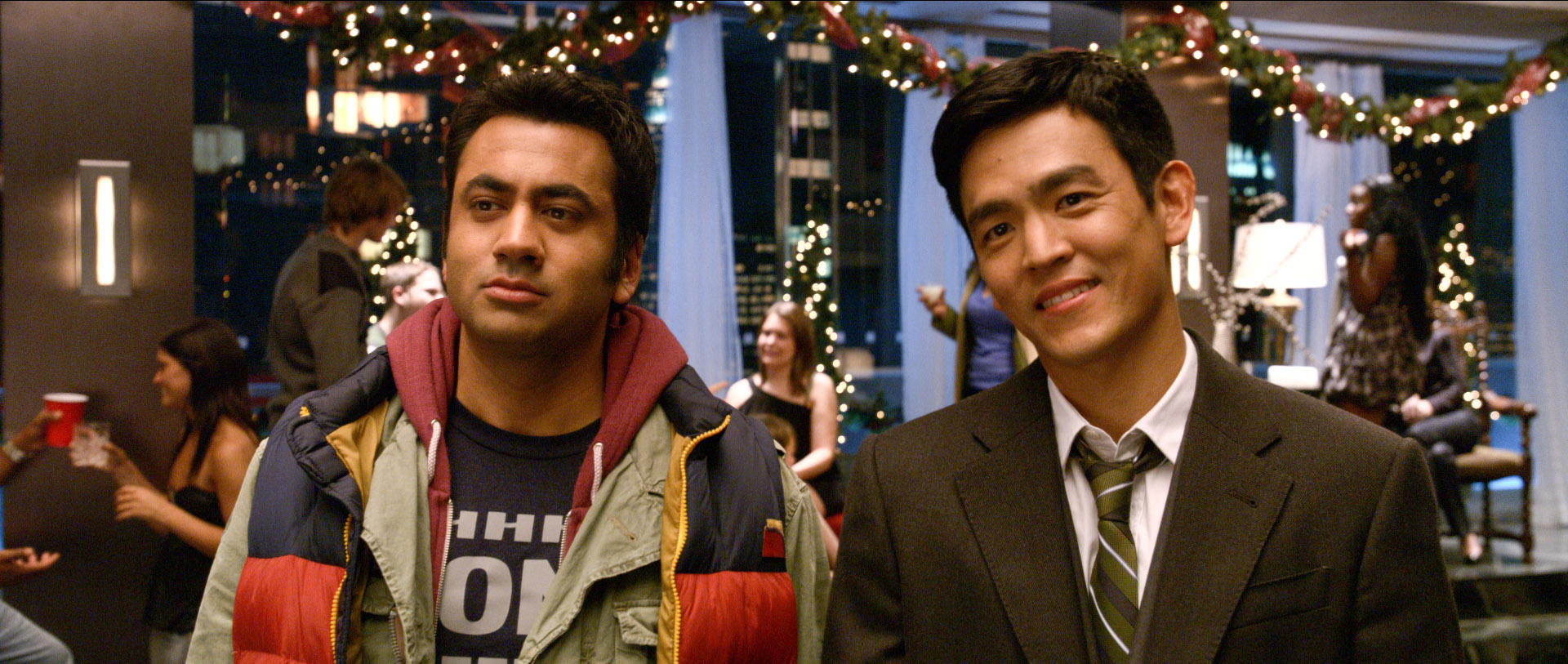
It’s Xmas Eve and you’ve just burned down your father-in-law’s beloved Xmas tree – what do you do? Well if you’re Harold Lee (John Cho), you enlist the help of your best friend Kumar Patel (Kal Penn) in finding a replacement. Whether or not that proves to be a good idea depends on how high Kumar is, and how long Harold can put off joining him as their plan backfires at every turn. For a second sequel, this is much better than expected, and its unapologetic stoner humour makes it all the more enjoyable.

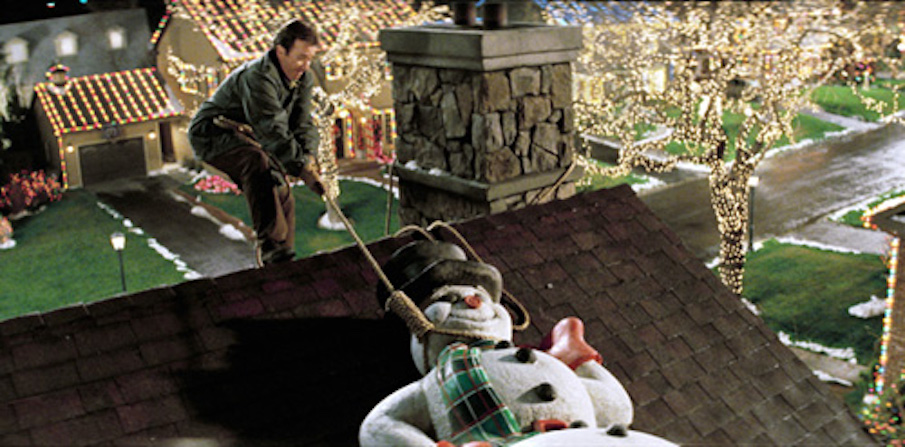
6 – Christmas With the Kranks (2004) / D: Joe Roth / 99m

Christmas With the Kranks

Adapted from the novel by John Grisham, Skipping Christmas, this is a Xmas movie that for its first half at least, is a tribute to the joys of saying “bah humbug” to the festive season. Tim Allen is the dad who jumps for joy at the chance of spending Xmas without having to splurge on decorations or lights or being festive. But when his Xmas-loving daughter announces she’s coming home, it’s panic time and this once curmudgeonly dad becomes – sadly – a Xmas convert.

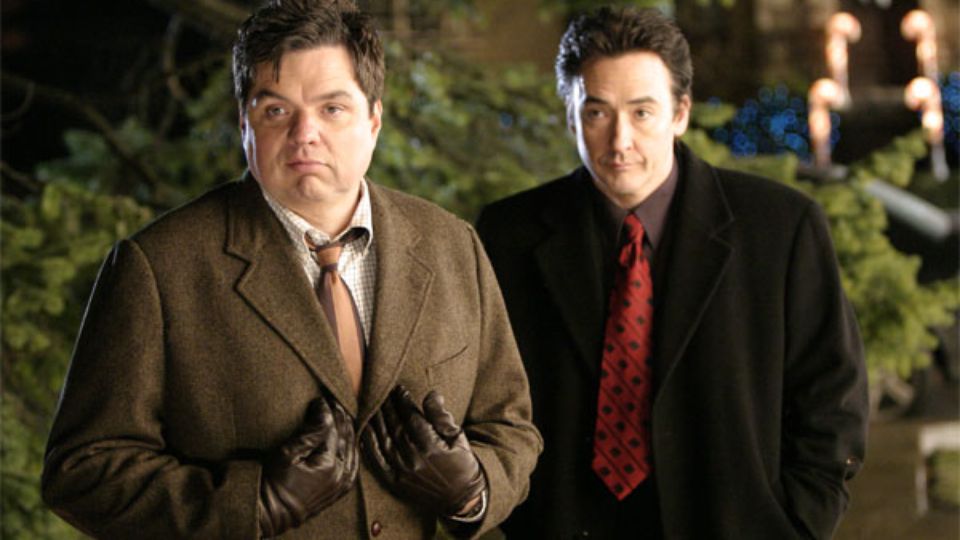
7 – The Ice Harvest (2005) / D: Harold Ramis / 92m

The Ice Harvest

A darkly comic thriller set on Xmas Eve, this sees John Cusack’s shady lawyer and Billy Bob Thornton’s strip club owner embezzle $2m from the local mob, and then thanks to a series of mishaps, they begin to see their plans unravel with humorous consequences. A bit of an overlooked treat, this uses the backdrop of the Xmas period to show that goodwill to all men is a great phrase in theory but little else in practice.

8 – Less Than Zero (1987) / D: Marek Kanievska / 98m

Less Than Zero

The Eighties were a time of selfishness and greed, and this adaptation of the novel by Bret Easton Ellis perfectly encapsulates the extremes to which some people would go to to realise their “dreams”. With plenty of snow on display (just not the stuff that lies on the ground), and a selection of gaudy Xmas parties to highlight the hollowness at the heart of the lead character’s return home for the holidays, this is a movie that takes no prisoners in depicting the decadence of the holiday season.

9 – Die Hard (1988) / D: John McTiernan / 131m

Die Hard

Set in L.A. at Xmas, this franchise opener uses the Yuletide season as a cover for all sorts of mayhem and destruction, and pits Bruce Willis’ lone cop against Alan Rickman’s group of mercenaries. Sly nods to the season abound throughout, but it’s John McClane’s ability to survive everything that’s thrown at him that acts as a surprising metaphor for negotiating the ups and downs of a family Xmas and coming out the other side (relatively) intact.

10 – The Apartment (1960) / D: Billy Wilder / 125m

The Apartment

While it starts at Xmas and then moves into the New Year, Wilder’s acerbic take on the holiday season is littered with allusions to the darker side of Xmas, including suicide, alcoholism, and extra-marital affairs. That it retains a positive side as well is a tribute to the screenplay by Wilder and I.A.L. Diamond, whose storytelling abilities make the whole tawdry period more bearable thanks to the sympathy they imbue the main characters with.

The Intern (2015)

Tags

, , , , , , , , , , , , ,

The Intern

D: Nancy Meyers / 121m

Cast: Robert De Niro, Anne Hathaway, Rene Russo, Anders Holm, JoJo Kushner, Andrew Rannells, Adam DeVine, Zack Pearlman, Jason Orley, Christina Scherer, Nat Wolff, Celia Weston, Linda Lavin

Taken at face value, The Intern looks like a movie that you could easily pass by. For one thing it’s a comedy starring Robert De Niro, not exactly the best recommendation a movie could have these days, and secondly, there’s the possibility of a May-December romance between De Niro and Hathaway (and with all due respect to both actors, nobody wants to see that). Look a little closer and it still doesn’t look like a great prospect: it’s about a small internet fashion retailer, built up out of nothing by Hathaway’s determined entrepreneur, and facing an uphill battle to maintain and expand on its initial successes. Then there’s the whole senior intern programme idea that’s bolted onto the basic storyline – and where De Niro’s Ben Whittaker comes in. Sold yet? Maybe not? Then consider this: Hathaway’s character, Jules Ostin, is neglecting her husband and young daughter while she builds her business empire. Sound familiar, maybe overly so? Any guesses as to who helps Jules get her business and private lives back in sync and on track?

If you’re still not sold on The Intern, and this type of comedy (with a smattering of light drama added) still doesn’t appeal, then fair enough, move on to something else. But you’d be making a mistake, because against all the odds, Nancy Meyers’ latest writing/directing gig is deceptively charming and warm-hearted, the movie equivalent of a hug from a loved one. In these days of mega-budget, special effects-laden tributes to the joys of target demographics, The Intern is a refreshing change of pace, a movie that plays out simply and effectively, and not without a degree of style all its own.

The Intern - scene2

What makes it work so well is Meyers’ well-balanced, and surprisingly intuitive script. Even though the majority of what unfolds has been done before, and will be again (and again), here familiarity breeds contentment, and fosters a relationship between the characters and the audience that allows some of the more sentimental moments to slide by without too much approbation. In short, it’s a joy to watch from its slightly slow beginning to its let’s-wrap-all-this-up-with-a-bow-on-top finish.

By marrying the two ideas – senior citizen with oodles of personal and business experience looking to keep busy, young internet-based company trying to move up to the next level but uncertain how to do it – Meyers has created a movie that looks at how little difference there is in generational thinking when it comes to relationships, and how it’s often true that experience can offer a much simpler solution than seems immediately apparent. At one point, one of Jules’ staff, Jason (DeVine) asks Ben for advice. He’s cheated on his girlfriend, co-worker Becky (Scherer), and hasn’t had much luck getting her to forgive him. Ben’s advice is simple: say sorry to her and do it face-to-face, not via texts. But where some movies might take that advice and have it work straight away, here Meyers is canny enough to make it just the first move in an eventual reconciliation.

So, with Ben’s experience of life and work clearly to his advantage, it’s all down to Jules to realise that it’s to her advantage as well. It doesn’t happen overnight, and along the way Jules makes the kind of mistakes that a lack of experience will bring out. But through it all Ben maintains a patience and a determination not to let things overwhelm or get the better of him that eventually has its effect on the other staff around him. And, of course, along the way, he helps Jules come to realise just how her behaviour and narrow focus on work is contributing to the problems she has both in the office and at home.

The Intern - scene1

Meyers keeps things light and airy throughout, and her insistence that old age is not a passport to obsolescence is well handled; it’s patently obvious but not rammed down our throats. And the relationship between Ben and Jules is handled so deftly that as it develops and they come to have a mutual respect for each other, there’s not one awkward moment for the viewer where they might suspect Ben and Jules will find themselves in a romantic situation.

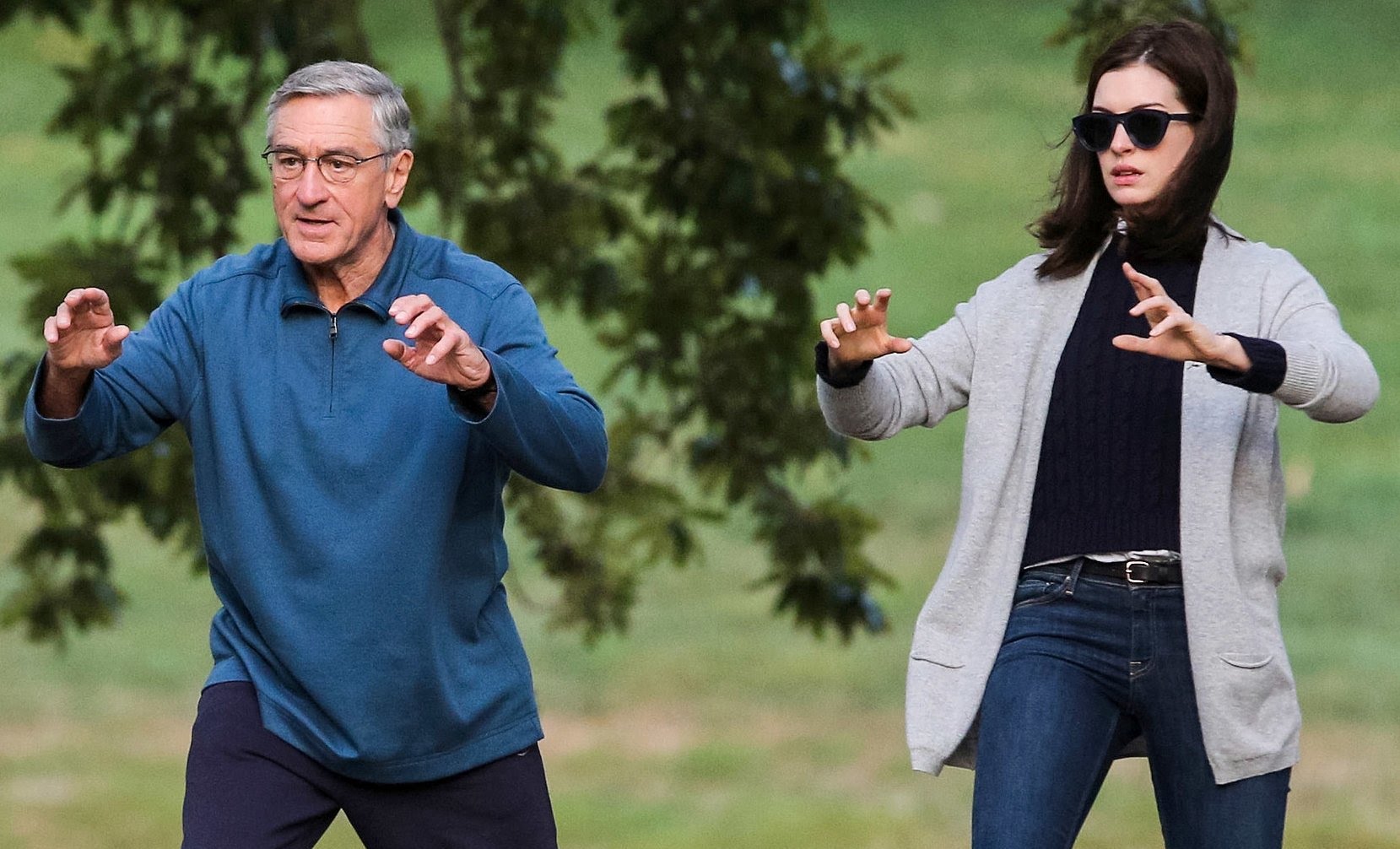
De Niro is self-effacing and modest as Ben, always dressed in a suit, always shaving every day (even if he’s not seeing anyone he knows, even on a Sunday), and always ready with the right thing to say. It’s a quiet, mostly internal performance from De Niro, and if he still has a rampant tendency to grimace uncontrollably every time he’s called upon to be embarrassed or uncertain or surprised, it’s strangely effective here even if it is overdone. It’s not a role that was ever likely to tax him as an actor, but he gives a commitment to the part that he hasn’t done in some of his more recent movies (Heist (2015) anyone?).

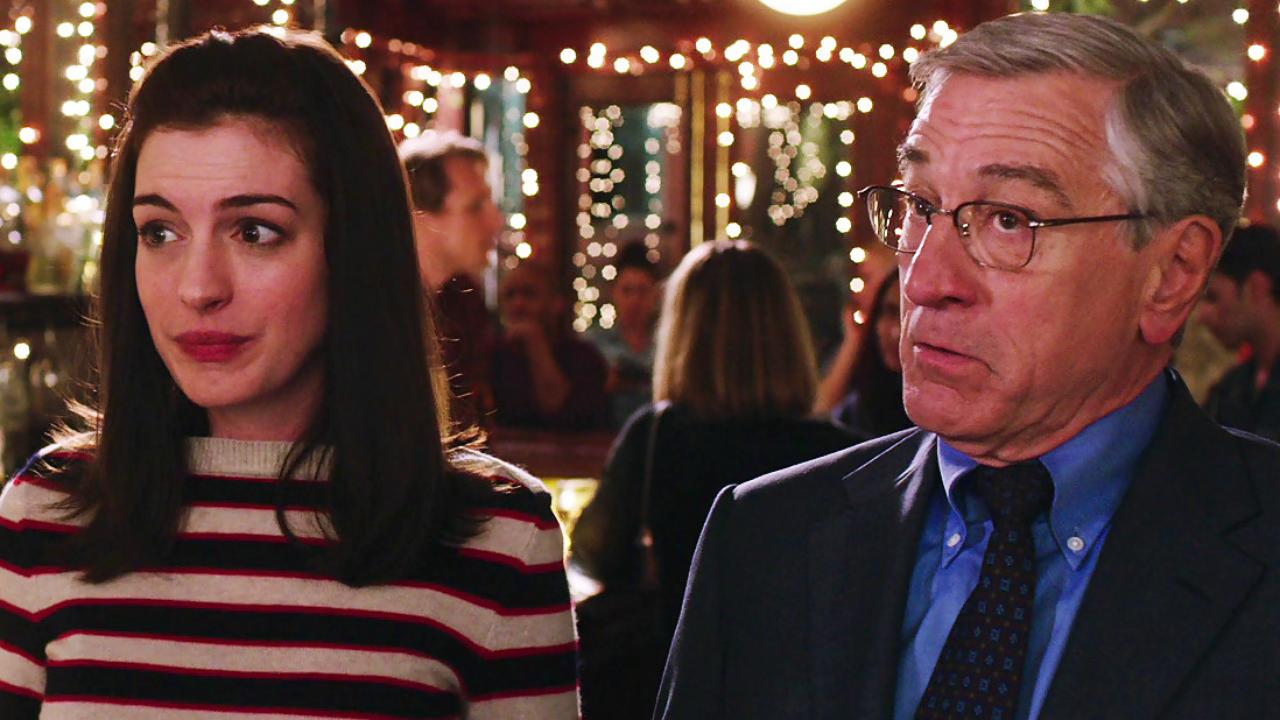
Matching him for effort and commitment, Hathaway combines vulnerability, fortitude, uncertainty and a blinkered siege mentality with casual ease, and makes Jules an easily recognisable and sympathetic character from the start. It’s the more emotional role (naturally) but she handles it with skill and sensitivity, maintaining a through line that makes her journey from overwhelmed businesswoman to poised, decisive company head all the more credible. It’s worth pointing out again that this is a relatively lightweight movie that provides just enough depth for its characters to avoid being stereotypes, but it’s the themes around age and experience that are more important, and thanks to De Niro and Hathaway’s involvement, Ben and Jules are the kind of unlikely friends that really do crop up in real life.

The Intern - scene3

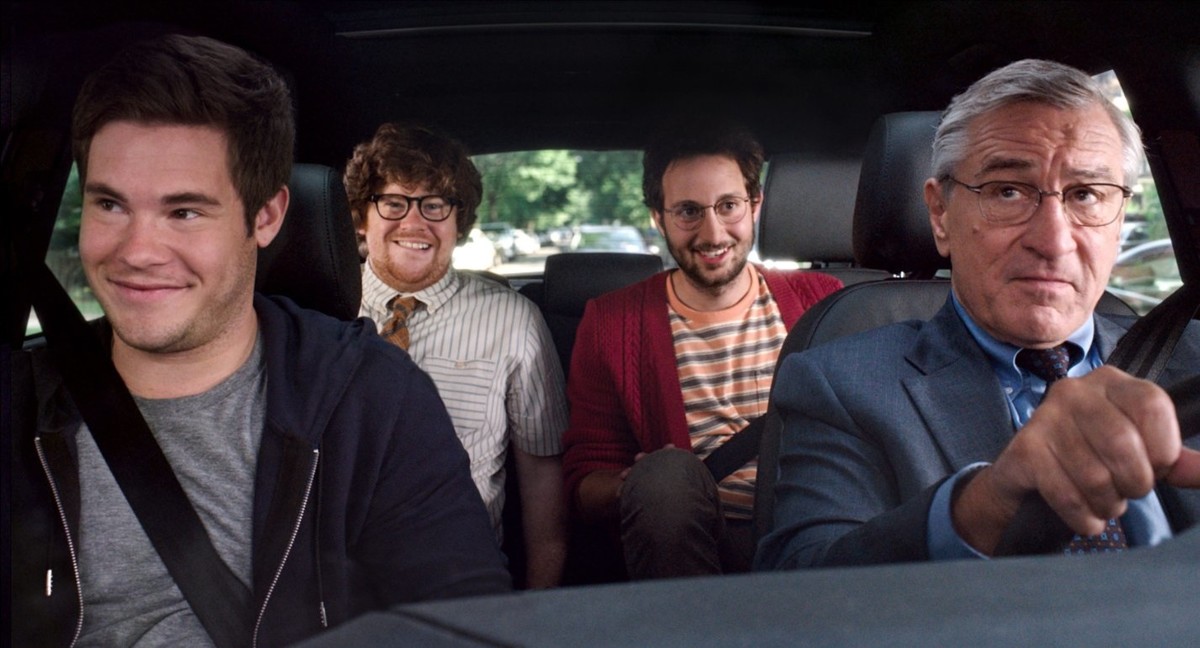
And it’s a genuinely funny movie, with the humour arising from the characters and their individual foibles. There’s a sequence where Ben and three other staffers volunteer to break into Jules’ parents’ home to delete a nasty e-mail she’s sent to her mother by mistake, and while it may seem out of place, it allows some of the secondary cast members a chance to impress, and they grab the opportunity with gusto; as a result it’s the funniest part of the movie. Meyers is also good at providing her willing cast with great dialogue, dialogue that doesn’t sound like lines to be acted but which is natural-sounding and far from contrived.

Modestly budgeted at $35m, The Intern has gone on to make nearly $200m at the box office (worldwide), and is a good sign that there’s room for intelligent, adult comedies that don’t rely on gross-out gags and puerile humour to attract audiences. It’s not a movie that will win tons of awards (or gain many nominations), but the fact that it’s been as successful as it has should be counted as a very good sign indeed that audiences know a good movie when they see them.

Rating: 8/10 – above average comedy with something to say about the compatibility between the young and the old, The Intern is charming and, as it progresses, irresistible; De Niro and Hathaway have a great chemistry, but it’s Meyers’ combination of great script and assured direction that makes this movie so enjoyable.

Trailer – Everybody Wants Some (2016)

Tags

, , , , ,

Richard Linklater follows up his award-winning Boyhood (2014) with this wild and carefree ode to the Eighties, a companion piece of sorts to his Seventies movie, Dazed and Confused (1993). Focusing on a college baseball team, and in particular newbie Jake (played by Blake Jenner), as they try their best (and worst) to make sense of their lives on the road to becoming adults, this promises to be funny and poignant in equal measure. Originally titled That’s What I’m Talking About, and with a cast of unfamiliar faces, Linklater looks to have captured the hedonistic lifestyle of the times, as well as the inherent, gloriously anarchic nature of college life (in the US at least). And knowing Linklater, it’ll have a killer soundtrack as well.

Star Wars: The Force Awakens (2015)

Tags

, , , , , , , , , , , , , , , , , , , , , , , , , , , ,

Star Wars The Force Awakens

D: J.J. Abrams / 135m

Cast: Daisy Ridley, John Boyega, Adam Driver, Harrison Ford, Oscar Isaac, Domhnall Gleeson, Carrie Fisher, Lupita Nyong’o, Andy Serkis, Peter Mayhew, Anthony Daniels, Mark Hamill, Max von Sydow, Gwendoline Christie, Greg Grunberg, Warwick Davis, Simon Pegg, Harriet Walter, Iko Uwais

The Lucasfilm logo appears. The screen fades to black. Then the opening crescendo of the Star Wars theme in perfect sync with the Star Wars logo sends a welcome shiver down the spine. And then the subtitle: Episode VII The Force Awakens appears, followed by a summary of recent events that tells us Luke Skywalker is missing and Princess (now General) Leia has sent her best man to find him. With everyone up to speed we see a familiar sprinkling of stars against the inky blackess of space. The camera begins its equally familiar pan down until a planet comes into view. Then an ominous sound can be heard, and a dark shadow falls across the planet, only this is no shadow, it’s a huge starship; this can’t be good.

And it isn’t. But we all know it isn’t. This is Star Wars, and huge starships are always bad news, because it’s a sure sign the bad guys are up to no good. But wait – haven’t the bad guys been defeated? Wasn’t the evil Emperor, Palatine, killed by Darth Vader at the end of Episode VI? And didn’t the Rebel Alliance take charge of the galaxy, and restore order where previously there had been tyranny and unfair trade embargoes? Isn’t this a brave new future we’re looking at?

SWTFA - scene3

Well, actually, no, it isn’t. Thirty years have passed since the Emperor’s death, thirty years in which a lot has obviously happened, but for some reason the Rebels are still fighting, this time against a pernicious new regime, the First Order, and they don’t seem to have been in charge of anything, or made any difference to the galaxy they fought so hard to free from oppression. Just what have they been doing all this time? (We learn what Luke has been doing, and Han Solo, but Leia? That’s a little less clear.) So with no one having ensured peace and prosperity are the “first order” of the day, we’re back to a frighteningly familiar situation: the bad guys are running things and a small group of rebels are the only thing standing between them and – wait, that’s a little less clear as well. Just what are the First Order planning to do, other than show off their fancy new weapon (or the Mark III as it might be known)?

Now, don’t get me wrong, I really liked Star Wars: The Force Awakens. It’s a fantastic thrill ride, for fans new and old, but instead of The Force Awakens it should be titled Another New Hope, because this is what writers J.J. Abrams, Lawrence Kasdan and Michael Arndt have given us, a retread of Episode IV with some fancy new trimmings. The similarities between the two movies are unavoidable, and are sometimes as unavoidable as the crashed star destroyers we see in the deserts of Jakku. Where we might have hoped that this new trilogy would strike out in a bold, new direction, instead it retreats back into the previous trilogy and gives us a kind of Star Wars Greatest Hits movie, with storylines lifted clean out of Episode IV, dusted down and given a shiny retooling, and references galore to the earlier episodes (“Is there a trash compactor?”).

As there may still be some people who haven’t seen the movie yet, I’m not going to spoil things by listing all the ways in which Abrams et al have cribbed from George Lucas’s original vision (not in this post anyway), but it’s relevant to say that he is very much present throughout, almost as if Abrams and his co-writers have continually asked themselves, what would George come up with next? So we have a movie that looks new but feels old at the same time, and it’s a tribute to Abrams – can the mantle of franchise viagra be stripped from Dwayne Johnson and given to Abrams now? – that despite this the movie feels as invigorarting as it does. It fizzes and pops in all the right places, and if it doesn’t quite have anything that really gets the audience saying “Wow!”, then you can put that down to the number of big-budget sci-fi spectaculars we’ve become overly familiar with since 1977 (and that includes the other five Star Wars movies).

SWTFA - scene2

What it does have that raises the bar for the franchise as a whole, are three new characters who audiences can relate to, and who have been developed with great care by… yes, Abrams et al. First there’s Rey, waiting for her parents to return to the planet of Jakku where she ekes out a living trading scrap for food. Then there’s Finn, a stormtrooper whose conscience won’t allow him to serve the First Order any more. And lastly, there’s this trilogy’s über-bad guy, Kylo Ren, a follower of the Dark Side who boasts Darth Vader as an inspiration. These three characters’ fates become intertwined, and it will be interesting to see how their storylines play out over the course of Episodes VIII and IX.

Thanks to some very astute casting – Ridley as Rey, Boyega as Finn, and Driver as Ren – these characters should prove to be as popular as Luke, Han and Leia, and its their diversity which is a major plus for the franchise as a whole. Rey is fearless and largely unimpressed by the testosterone she’s surrounded by (including Han Solo), and it’s great to see a female character so unencumbered by stereotypical programming at the forefront of such a huge movie. The same can be said for Finn, his character torn between doing the right thing and getting as far away as possible from the First Order. As for Ren, well, let’s just say he has issues and they’re not going anywhere anytime soon, and it’s good to see a level of emotional complexity that you don’t normally see in what’s effectively a space opera.

With the new cast members proving so effective – except for Isaac, alas, whose role as Leia’s “best man” Poe Dameron is sidelined for much of the movie – what of the old guard? Without giving too much away, it’s only Ford and Mayhew who grab much screen time, but it’s good to see them back, and there’s a moment in the cockpit of the Millennium Falcon that should bring a tear to the eye of every diehard fan of the series. This feels very much like a transition movie, and though one “old” character should be at the forefront of Episode VIII, it’s the new ones who’ve already proved they can connect with fans and it’s their journey that (hopefully) will drive the trilogy to its conclusion (and even if it seems clear already where those journeys will converge and end).

SWTFA - scene1

A good job, then, and imbued with the sense of wonder that made Episode IV such a breath of fresh air back in 1977. It has a modern day sheen to it, and is effortlessly funny in places, with Abrams’ trademark sense of humour applied liberally throughout, but it’s unmistakably a Star Wars movie, from John Williams’ magical score to the inclusion of so many different alien races and species, to the exhilarating aerial battles between T.I.E.’s and X-Wing fighters. And of course there’s the Force, so integral to everything that happens, and still the guiding factor for everyone concerned. It’s so good to know that it’s woken up at last.

Rating: 8/10 – not entirely the joyous celebration everyone wanted it to be, but still standing head and shoulders over every other sci-fi series, Star Wars: The Force Awakens is a welcome return to form after the po-faced seriousness of the prequel trilogy; with more than enough on display to make fans feel that the remaining two episodes are in good hands, this is easily the best feelgood movie of 2015, and if you don’t come out of the cinema with a big smile on your face, then you shouldn’t have gone in the first place.

Happy Birthday – Jenny Agutter

Tags

, , , , , , ,

Jenny Agutter (20 December 1952 -)

Jenny Agutter

In the early Seventies, Jenny Agutter shot to stardom on the back of two completely different movies, the children’s classic The Railway Children (1970), and the stark survival movie Walkabout (1971). But where she might have capitalised on this success, Agutter instead worked in television and theatre instead, only returning to movies in the latter half of the Seventies. She’s an actress who has worked steadily over the years, mixing TV appearances with the theatre and occasional roles in movies, and with a grace and intelligence that always shines through, even in the direst of efforts, such as Number One, Longing. Number Two, Regret (2004). Recently she’s landed a recurring role in the Marvel Cinematic Universe as a member of the World Security Council, and has a lead role in the BBC series Call the Midwife, all signs that she’s not prepared to retire anytime soon. Which is good as she’d be sorely missed. But if she did, we’d still have the following five performances to savour as testaments to her significant abilities as an actress.

Child’s Play 2 (1990) – Character: Joanne Simpson

JA - CP2

An unexpected choice for Agutter sees her as the foster mother of young Alex Barclay (played by the returning Alex Vincent), and reluctantly coming to terms with the fact that Chucky the malevolent doll is still trying to claim Alex’s soul for his own. Agutter is good in a role that could have been stereotypical, and she enters into the absurd spirit of things where some actresses would have made it clear they felt they were slumming it.

The Riddle of the Sands (1979) – Character: Clara Dollmann

JA - TROTS

Erskine Childers’ romantic spy thriller is given the low-key treatment as Agutter plays the daughter of a man (played by Alan Badel) suspected of espionage in the early years of the 20th Century, and who finds herself the object of attention from two young Englishmen (Michael York, Simon MacCorkindale). Agutter’s beauty complements the natural beauty of the Frisian Islands, where the movie is set, and she gives a quietly authoritative performance as a young woman torn between duty and love.

Equus (1977) – Character: Jill Mason

JA - E

It may be a supporting role, but Agutter’s involvement in Sidney Lumet’s adaptation of Peter Shaffer’s play, landed her a BAFTA. It’s also a pivotal role in that her character’s relationship with the troubled Alan Strang (played by Peter Firth) leads to the movie’s tragic and shocking denouement. The role shows as well how good Agutter can be when dealing with darker, more unconventional material.

Secret Places (1984) – Character: Miss Lowrie

JA - SP

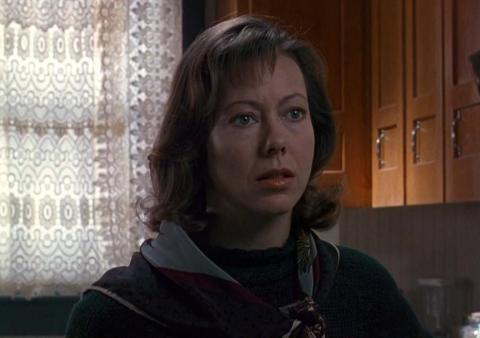
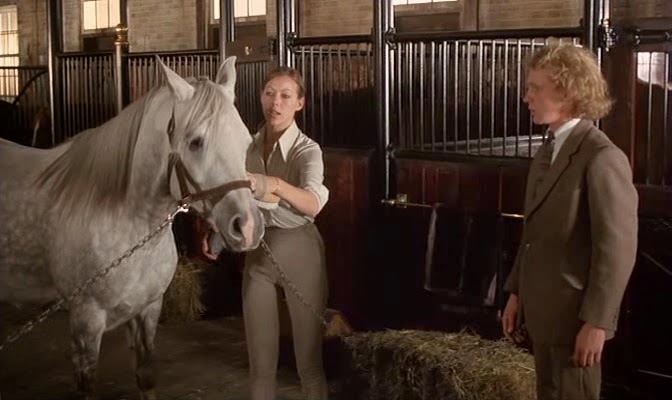
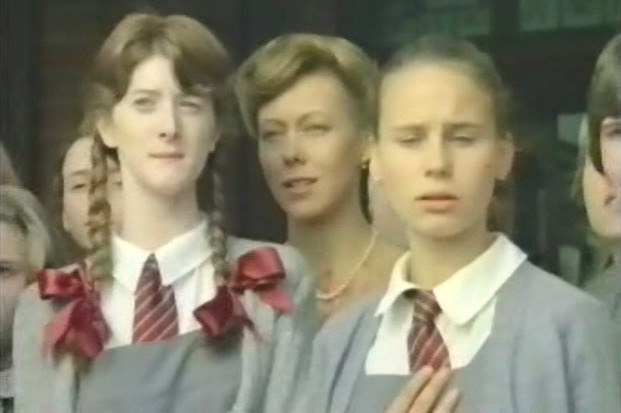
Agutter has another supporting role in this tale of two girls from different cultural backgrounds who form a bond at boarding school, and which threatens the stability of the entire establishment. As one of the younger teachers, Agutter is sympathetic to the young girls’ plight, and although she’s not on screen for long, she adds a much needed layer of understanding to a situation that seems likely to spiral out of control. A movie full of fine performances, even if it isn’t entirely compelling.

Act of God (2009) – Character: Catherine Cisco

(No image available at present)

This odd little thriller hasn’t had much exposure since its release, but it’s well worth seeking out, and features Agutter as the wife of a surgeon (played by David Suchet) who finds himself the target of a man who is angry his girlfriend wasn’t the recipient of a heart transplant. It’s short (75 mins) and with a deliberate pace that accentuates the tension, and Agutter is on form (as usual) as the wife whose comfortable life begins to fall apart.

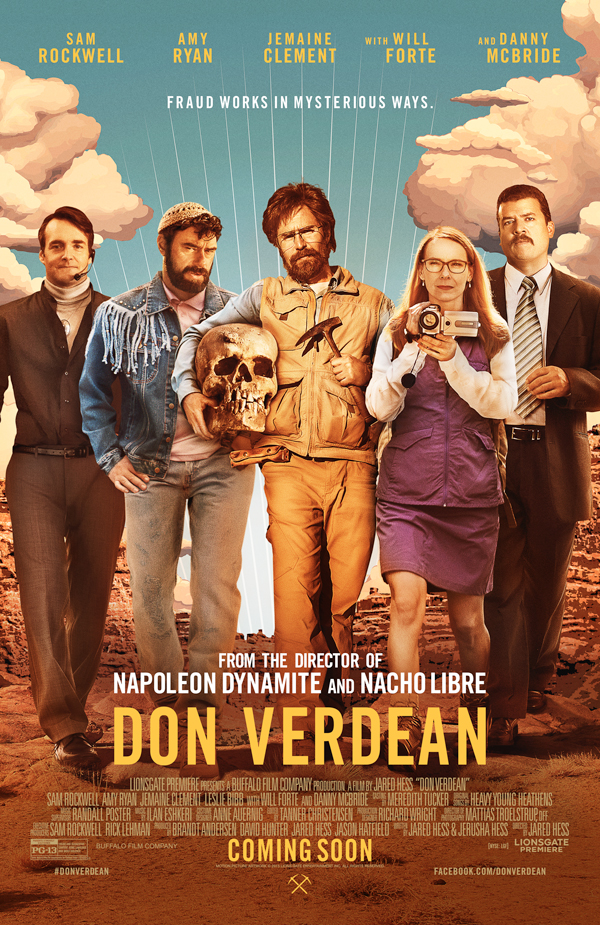
Don Verdean (2015)

Tags

, , , , , , , , , , , , , ,

Don Verdean

D: Jared Hess / 96m

Cast: Sam Rockwell, Amy Ryan, Jemaine Clement, Will Forte, Danny McBride, Leslie Bibb, Steve Park, Sky Elobar

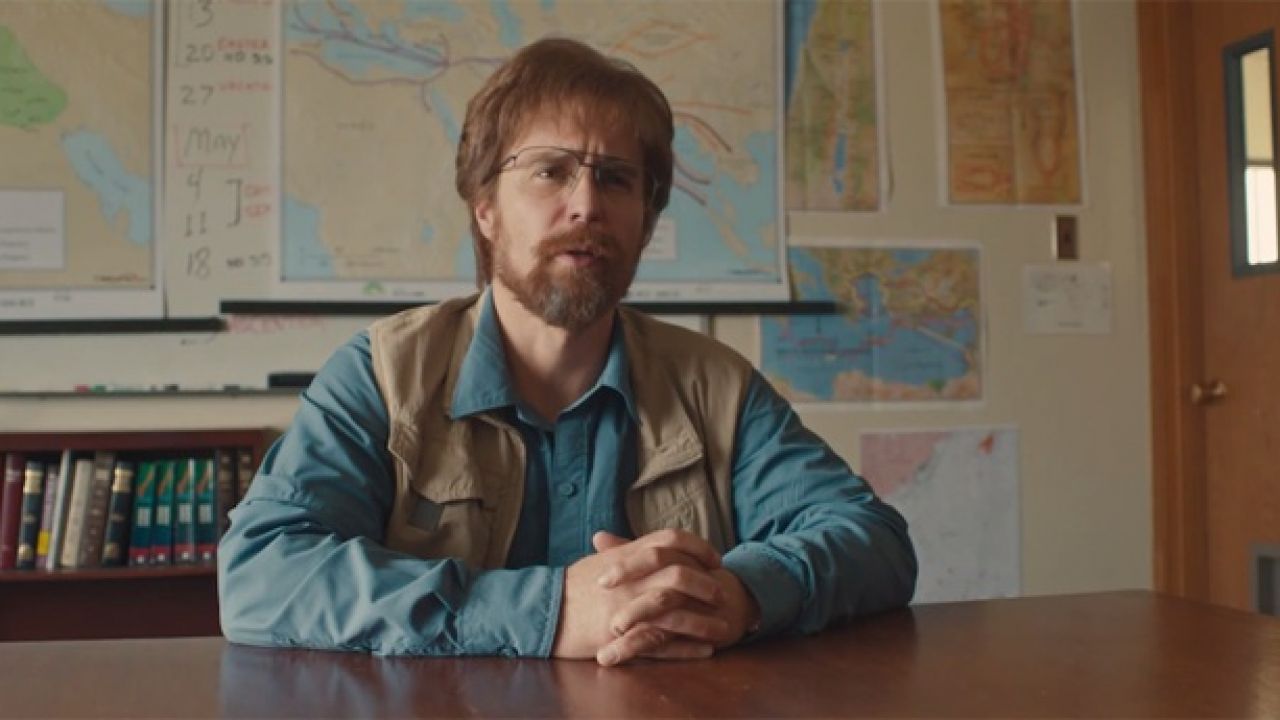
Now and then a motion picture comes along that rocks the very foundation of accepted Christian belief, a movie that lifts the lid on the precepts of religious beliefs and exposes them to the light of clever satire. And for its first twelve minutes, Don Verdean looks like it might be that movie. But once those twelve minutes are over, and Don (Rockwell) commits to working with born-again preacher Tony Lazarus (McBride), any hopes of something special are dashed by the introduction of Boaz (Clement), an Israeli jack-of-all-trades who brings the movie down to earth with a resounding thud.

It’s not so much that Boaz is a manipulative, shady, stupid, sexist, arrogant, deceiving, lying opportunist, nor that he comes close to being one of the most offensive racial characters seen in recent years, but purely because he becomes the driving force behind a plot that doesn’t need him. Boaz is a character who belongs in another movie entirely, and one that hasn’t got the kind of ambition that Don Verdean has. But he’s there, he’s an idiot, and we’re stuck with him. (Even Clement, an actor whose comedy chops aren’t to be overlooked, can’t do much with him; and if he can’t, how’s the viewer meant to cope?)

Don Verdean - scene2

The way in which Boaz overwhelms both the narrative and the other characters is unfortunate for several reasons. The movie sets out its comedic stall from the start with an infomercial detailing Don’s successes finding holy artefacts in Israel, items such as his greatest find: iron shears dating back over 3000 years (and possibly the very shears used to rob Samson of his hair – yes?). The narration is portentous and deadly serious, and it’s this seriousness that is carried forward as we see Don field questions about the validity of his finds at a small church group. Don responds to these doubts with calm sincerity, and even though the viewer will know without a shadow of a doubt that he’s as naive in his own way as the people that believe in him, he’s also determined to provide reassurance for those whose faith might be wavering.

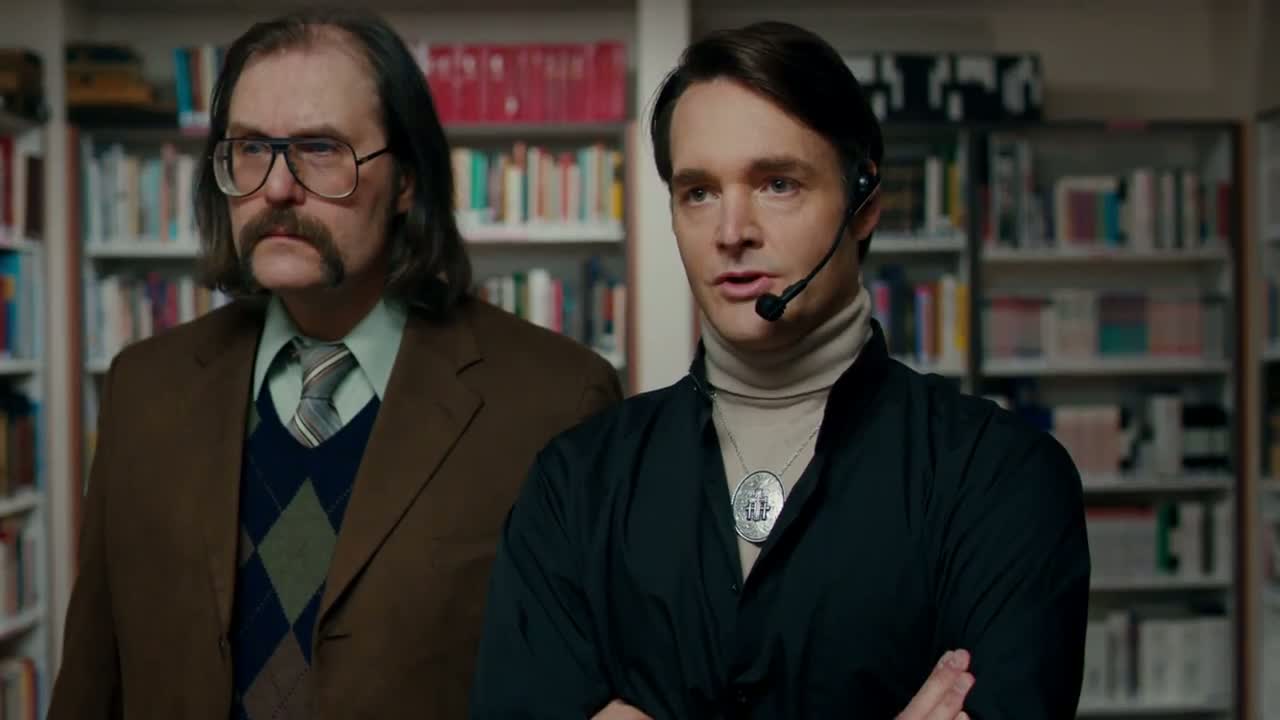
With Don’s unwavering naïvete matched by the public’s erstwhile gullibility, he joins forces with Lazarus and Lazarus’s ex-prostitute wife Joylinda (Bibb) to bring even more religious artefacts back from the Holy Land (even if the whole idea is both illegal and preposterous). Lazarus wants to put these items on display at his church, both as a display of his unwavering faith, and as a way of undermining a rival ministry run by ex-Satanist-turned preacher Pastor Fontaine (Forte). Don has a lead on the remains of Lot’s Wife – actually a rock formation that looks like it has breasts – and contacts Boaz to arrange to have them shipped to the States, but the Israeli sends a different “statue”. Lazarus retains his faith in Don and asks if there is a particular antiquity he’d like to track down. Don’s answer? The skull of Goliath.

Don Verdean - scene3

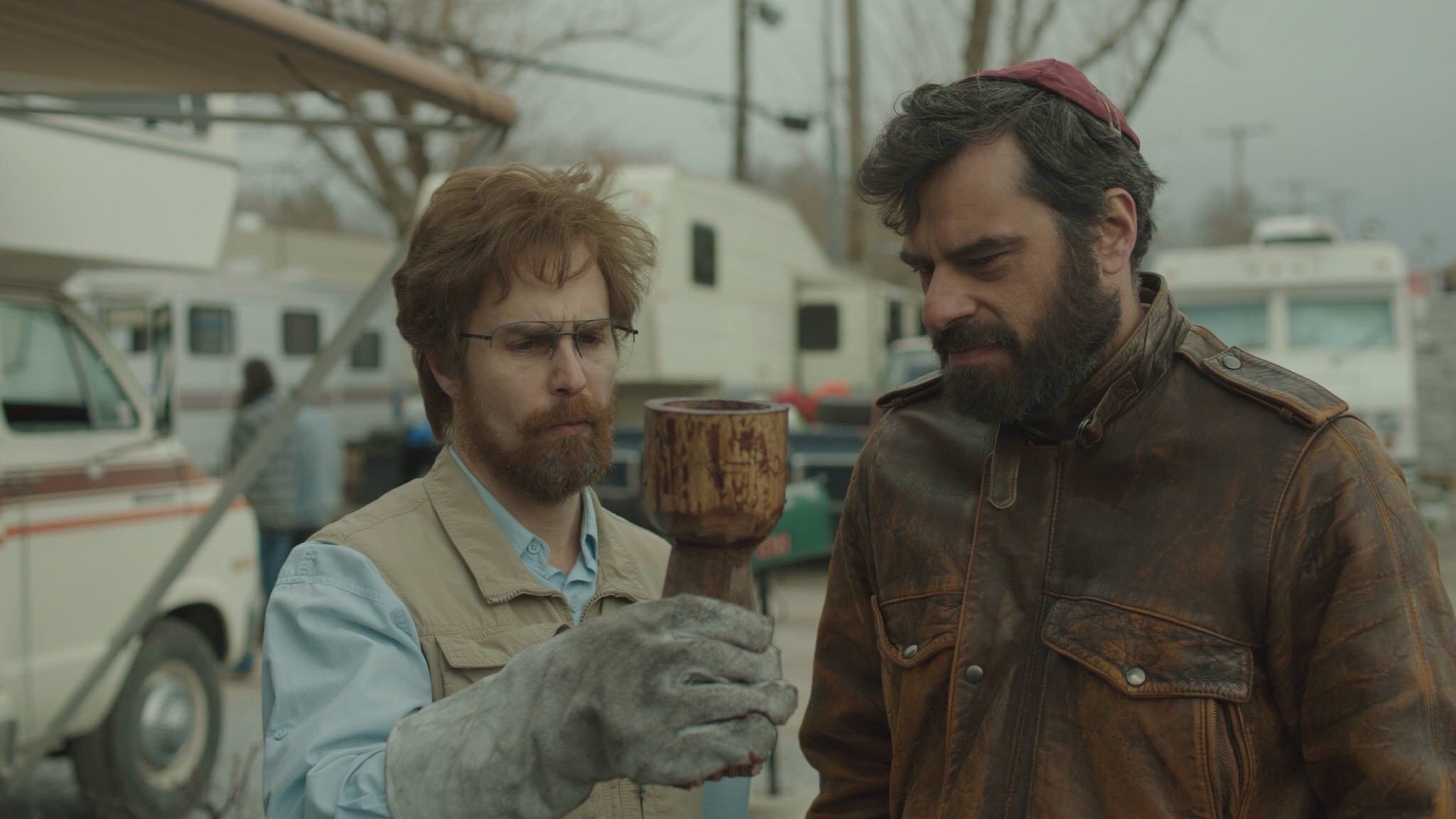
However, setbacks in Israel lead Don to make an awful decision, and he fakes finding the skull. When Boaz discovers the deception, he blackmails Don into bringing him to the US. And the script, by Hess and his wife Jerusha, quickly runs out of comedic steam as it brings Boaz’ selfish demands and childish behaviour to the fore, and sidelines Don’s attempts to weather the storm of his professional duplicity. It’s still a funny movie, but by now it’s lost the subtlety and the poise applied by a cast who know to play things completely straight, even when they’re called upon to behave ridiculously or say something absurd (even McBride, an actor not exactly known for the subtlety of his performances, reigns in the urge to put in a larger than life performance, and his tirade against sea monkeys is a highlight).

With the focus now on Boaz and his increasingly ludicrous machinations, the script brings in an unlikely scam: the finding of the Holy Grail (on an Indian reservation no less). It’s an idea that’s ripe for comic exploitation, but again, Hess misjudges the strength of the material, and the movie labours under the weight of that misjudgment, and struggles to recover. A twist in the tale proves laboured and is awkwardly revealed, and the subplot involving Don’s lovelorn assistant Carol (Ryan) is wrapped up with undue haste. And the less said about Pastor Fontaine and his efforts to see Lazarus’s church shut down the better.

Don Verdean - scene1

This is very much a movie with a core idea – the need for religious proof of events mentioned in the Bible in an increasingly secular world – that is downplayed and eventually discarded in favour of a succession of betrayals and implausible story turns that eradicate the good work done in the movie’s first half hour. Rockwell is laidback as  Don, playing him with a delicate sense of irony that makes the character immensely likeable and sympathetic, even when he responds to Carol’s dismay that he’s never asked her about her personal life by saying he hasn’t because he didn’t think she had one. Ryan struggles to make Carol anything more than an amiable stereotype, while Forte comes close to sabotaging his own performance by substituting mugging for acting. And Clement… well…

By the end, most viewers will be feeling a mixture of disappointment and ennui, as the script tries to wind things up with one last flourish, but it’s an effort that comes too late, and reminds the viewer of what might have been if the script had been more focused on the world of Biblical archaeology and its desperate-to-believe supporters. Instead, Hess’s latest fails to make the most of its central idea, and never fully gets to grips with its inherent notions of faith and honesty.

Rating: 5/10 – with a script that strays further and further away from its initial set up with each successive minute, Don Verdean lacks coherence and conviction once the search for Goliath’s skull is begun; Rockwell is good value as usual, but those expecting a more concerted, consistently humorous movie will be sorely disappointed thanks to some very poor storyline choices.

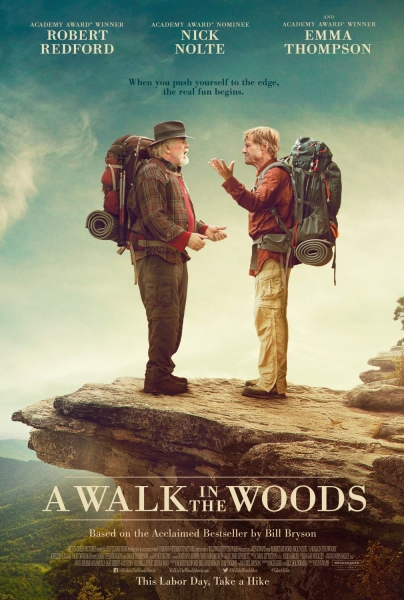
A Walk in the Woods (2015)

Tags

, , , , , , , , , , , ,

A Walk in the Woods

D: Ken Kwapis / 104m

Cast: Robert Redford, Nick Nolte, Emma Thompson, Mary Steenburgen, Kristen Schaal, Nick Offerman, R. Keith Harris, Susan McPhail

It all starts with a verbal chastisement-cum-ambush on TV: celebrated author Bill Bryson (Redford) is being interviewed and distinctly not feeling the love. When asked if he has retired, Bryson responds by saying, “Writers don’t retire. We either drink ourselves to death or blow our brains out.” The interviewer is unimpressed: “What will it be for you?” Bryson is resigned: “After this interview, probably both.” But the interviewer has found the nub of Bryson’s dilemma as an author, namely what to write about next.

He’s no nearer finding an answer while attending a funeral. While taking a break from the rest of the mourners, he finds himself on part of the Appalachian Trail, a hiking trail that runs 2,200 miles from Springer Mountain in Georgia all the way to Mount Katahdin in Maine. Suddenly inspired, Bryson tells his wife, Catherine (Thompson), that he’s going to hike the entire trail, despite being unfit and too old. Catherine is horrified by the idea, and takes to leaving newspaper and internet clippings around for him to see, with headlines such as “Decomposed body found on trail” in an effort to dissuade him. Eventually she gets him to agree to hike with a companion. Bryson reaches out to several of his male friends but they all turn him down. It’s only when an old friend he hasn’t seen in years, Stephen Katz (Nolte) gets in touch and volunteers to go with him that the trip becomes a go.

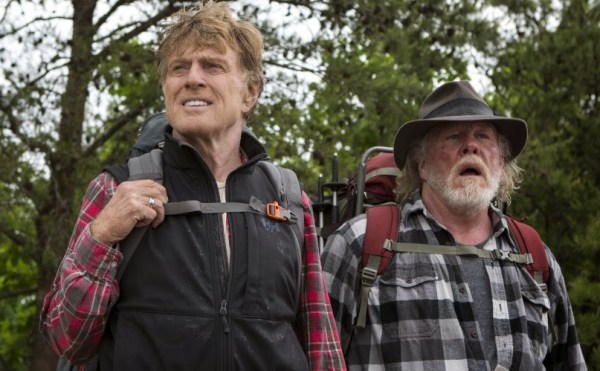
A Walk in the Woods - scene3

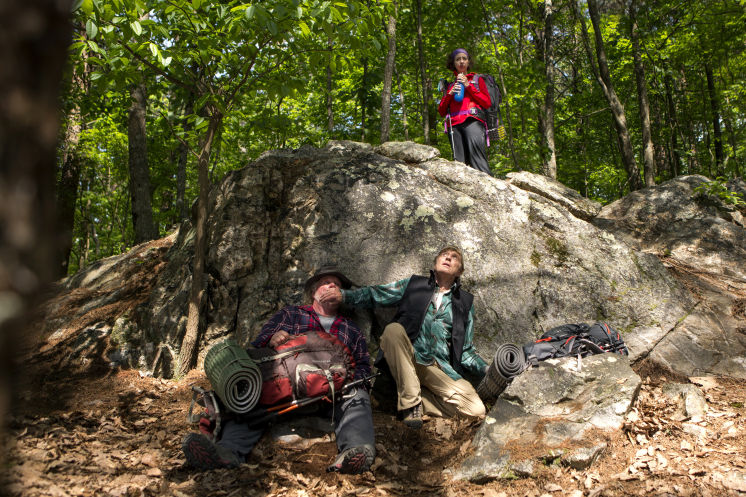
There are reservations though (how could there not be?). Bryson and Katz always used to rub each other up the wrong way, and back when they were friends, Katz was an habitual womaniser and alcoholic. But he tells Bryson he’s in good shape and ready to go on the hike. When Bryson and Catherine meet him at the airport, Katz’s physical condition raises cause for concern but he assures them he’ll be fine. They set out on the trail from Springer Mountain and soon find it hard going, much more so than they expected. Along the way they meet a variety of people, including the ever-talkative, ever-opinionated Mary Ellen (Schaal), a woman named Beulah (McPhail) who Katz hits up for a date (unaware that she’s married), and motel owner Jeannie (Steenburgn), who develops a crush on Bryson. They have an encounter with bears, hike through heavy snow drifts, and manage to fall down onto a ledge that they can’t get back up from (until two other hikers come along and rescue them).

And… that’s about it. For most of its running time, A Walk in the Woods proves to be a light-hearted, lightweight walk on the wild side, as Bryson and Katz tramp their way along the trail like two men at the head of the hip transplant list. They reminisce, they argue, they bicker, they explore notions of personal regret, and they remain “nice” throughout. Even when they have the expected and entirely predictable falling out, the movie has made it to that point with so little drama attached to it that you could be forgiven for thinking it had all been written out of the story. And it serves to highlight the story’s one major problem: once they’re on the trail, all the excitement is given little or no attention, and any potential for drama is wasted.

A Walk in the Woods - scene2

Once on the trail, Bryson and Katz are amiable enough companions, amiable to suit their own needs, and amiable enough for the time to pass without undue hardship or hazards to slow them down (even when they do fall down onto that ledge). It’s a hike that has its fair share of incidents but none of them are dramatic enough to warrant more than a passing interest. There’s also a distinct lack of personal growth for both Bryson and Katz, even though the script by Michael Arndt and Bill Holderman tries hard to include this idea. What we’re left with is a series of mildly amusing anecdotes peppered with isolated, random musings on the fate of the surrounding wilderness (one of the few thematic aspects of the novel retained by the movie). It wouldn’t be so bad if it weren’t so anodyne and disturbingly bland in its execution.

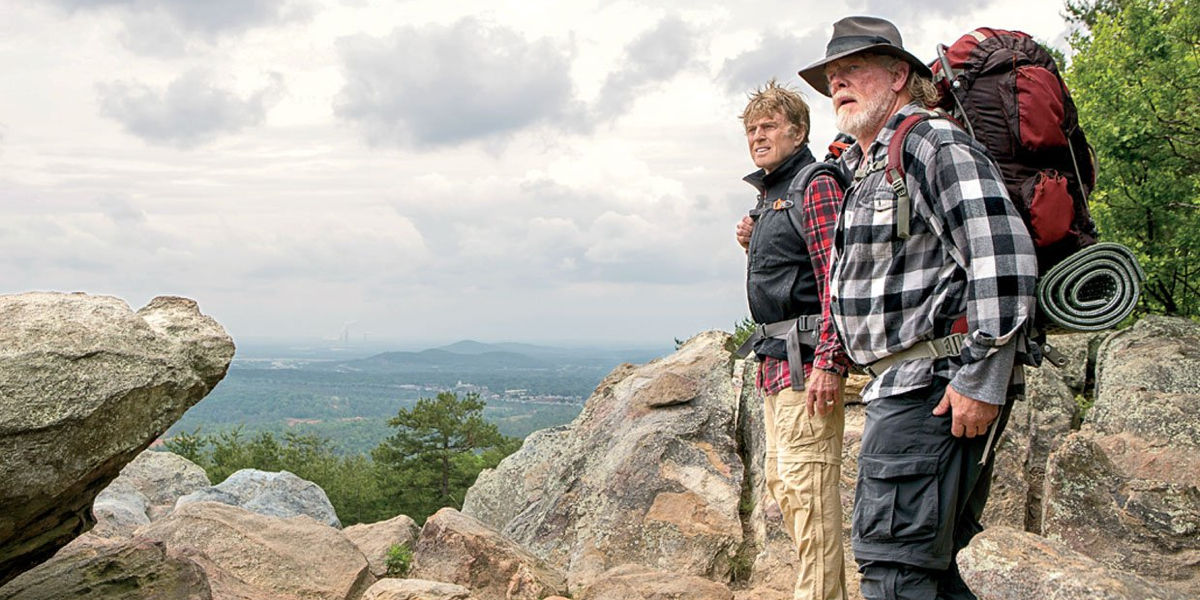
If the movie has anything going for it, it’s the scenery, beautifully lensed by DoP John Bailey. Parts of the trail are absolutely stunning, and the cinematography picks them out and, occasionally, makes them seem hyperreal, as with the McAfee Knob overlook, a jutting piece of rock that allows for a panoramic view of Virginia’s Catawba Valley. Against this splendid backdrop, Bryson and Katz’s mythologising of their younger days pales into insignificance, and the longer the hike goes on, the less involving it becomes, until the viewer is left with the same level of interest as someone having to sit through an extended slideshow of the same journey.

A Walk in the Woods - scene1

As the OAP’s who can survive a serious fall without so much as a scratch between them, Redford and Nolte make for a comfortable double act, but there’s little that allows them to spark against each other. Thompson makes more of an impression in her limited supporting role than either actor does across the whole movie, while Steenburgen, Schaal and Offerman all make temporary forays into the limelight before being quickly forgotten. Overseeing all this is Kwapis, a director best known for his work on US TV shows such as The Office and Malcolm in the Middle. In actuality he doesn’t so much direct the movie as guide it by the arm from scene to scene so that no harm comes to it.

Rating: 5/10 – with Bryson’s trademark acerbic wit toned down, and his love of knowledge for knowledge’s sake given few occasions to shine, A Walk in the Woods is a passion-free project that ambles along like its two aging stars, and like them, doesn’t take too many risks; with as little ambition employed as possible, it’s still a pleasant enough movie to watch, but it’s not one that will encourage anyone to take up the same challenge that Bryson did.

Happy Birthday – Milla Jovovich

Tags

, , , , , , ,

Milla Jovovich (17 December 1975 -)

Milla Jovovich

For many, Milla Jovovich will always be Alice in the Resident Evil movies (five down, one to go), but like so many actors and actresses who are associated with a signature role, there’s more to Jovovich’s career than looking mean and killing zombies. She’s an actress who can often surprise you, and when she’s given the chance she can display a gift for characterisation that isn’t always so apparent when she’s running around with a gun. She’s made more than her fair share of stinkers – Ultraviolet (2006), or The Three Musketeers (2011) anyone? – but much earlier in her career she was making a strong impression in a variety of movies, and proving that there was substance behind the model looks. Here then are five movies that are worth checking out for Jovovich’s performances, and as evidence that producers should be looking to bring her away from action/sci-fi thrillers and back into the real world.

The Claim (2000) – Character: Lucia

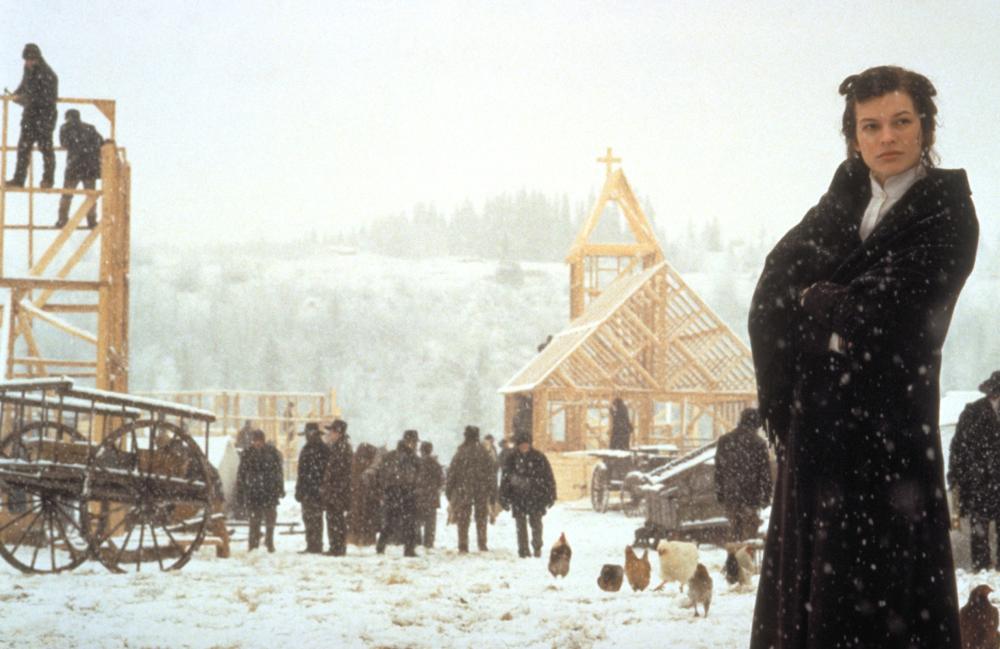
THE CLAIM, Milla Jovovich, 2000. ©United Artists

Michael Winterbottom’s adaptation of Thomas Hardy’s The Mayor of Casterbridge, relocated to California in the 1860’s, is a commanding movie full of impressive performances, not the least of which is Jovovich’s. She plays the owner of a saloon-cum-brothel in the town of Kingdom Come, and lover to Peter Mullan’s central protagonist, Daniel Dillon. When his past catches up with him, its Lucia’s actions that prompt his ultimate downfall, and as his rejected yet emotionally loyal “companion”, Jovovich gives a sensitive, proud portrayal of a woman determined to maintain her own sense of place in an overwhelmingly harsh environment.

He Got Game (1998) – Character: Dakota Burns

MJ - HGG

In Spike Lee’s compelling sports drama, Jovovich plays an abused prostitute who lives in the hotel room next to Denzel Washington’s convicted felon. Their relationship develops over the course of a week, and is a touching meeting of damaged souls. Jovovich is very good as the vulnerable yet still defiant Dakota, and more than holds her own in her scenes with Washington, matching him for emotional honesty every step of the way.

The Million Dollar Hotel (2000) – Character: Eloise

MJ - TMDH

Jovovich continues to work with some of the most challenging, most gifted of directors, this time Wim Wenders, in a movie that doesn’t always work, but which does allow the actress to give a well-rounded portrayal of a young woman whose tentative relationship with another of the residents at the titular hotel hints at far more than a standard love story. Jovovich shines throughout, and manages to avoid making her character’s mental health issues feel contrived or all-consuming.

Dummy (2002) – Character: Fangora “Fanny” Gurkel

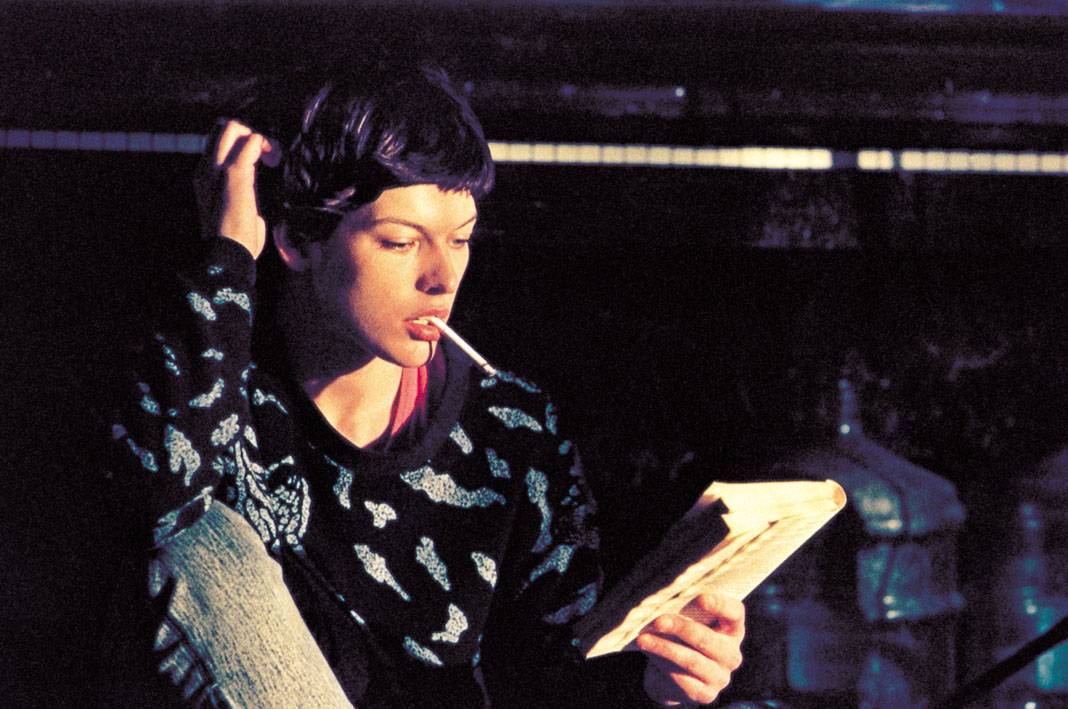
MJ - D

The very definition of quirkiness, Dummy‘s tale of a socially awkward office worker (played by Adrien Brody) who discovers a talent for ventriloquism, is backed up by Jovovich’s effervescent turn as the wonderfully named Fanny, a wannabe singer who takes up klezmer music just so she can get a gig. One of Jovovich’s best performances, and helped immensely by her own talents as a singer, Dummy gives the actress a chance to do comedy, and she proves more than capable of drawing out the laughs from writer/director Greg Pritikin’s sweet-natured screenplay.

A Perfect Getaway (2009) – Character: Cydney

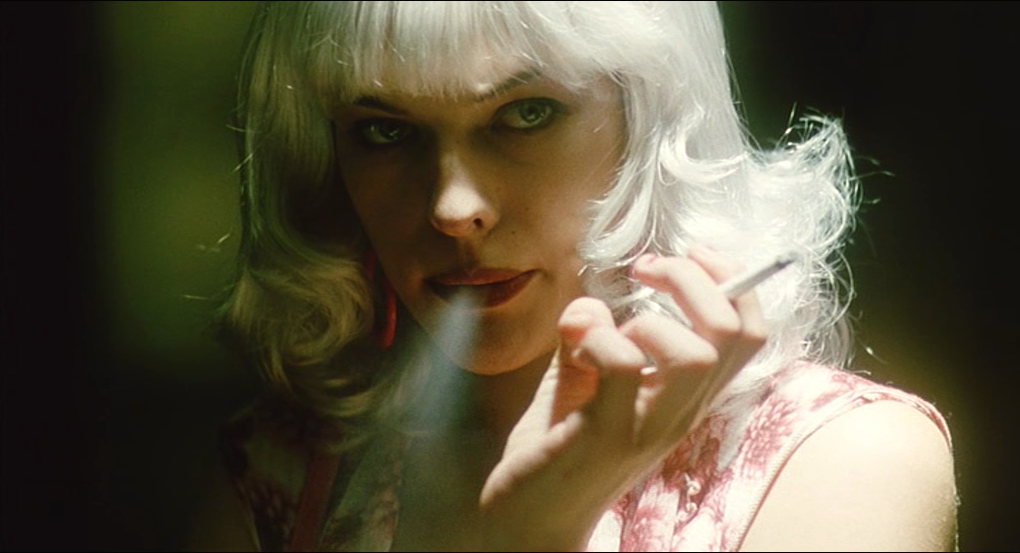
MJ - APG

David Twohy’s suspenseful psycho thriller sees Jovovich and Steve Zahn on honeymoon in Hawaii, and who begin to believe that the hitchhiking couple they meet (Marley Shelton, Chris Hemsworth) are serial killers currently on the island. It’s the kind of movie where everyone looks and acts suspicious most of the time, and Jovovich does a great job of keeping the audience guessing as to whether she’s good or bad, and maintains the required intensity throughout.

Pan (2015) or: One More Unnecessary Origin Movie

Tags

, , , , , , , , , , , , , , , , , ,

Pan

D: Joe Wright / 111m

Cast: Hugh Jackman, Levi Miller, Garrett Hedlund, Rooney Mara, Amanda Seyfried, Adeel Akhtar, Nonso Anozie, Kathy Burke, Lewis MacDougall, Cara Delevingne

Let’s cut to the chase: Pan, by itself, is a disappointment, an uneven children’s fantasy movie that is disjointed, awkwardly humorous, suffers from production overkill, and makes very little sense throughout. But unfortunately, Pan isn’t just a movie by itself, it’s an origin story for a beloved children’s tale that didn’t need it in the first place.

In recent years, Hollywood has given us origin story after origin story in an attempt to expand franchises and add “depth” to existing stories. Last year we had Maleficent, a movie that tried to rewrite the Sleeping Beauty story to make its Wicked Queen a more sympathetic character, as if somebody somewhere had decided that a Wicked Queen couldn’t just be a Wicked Queen; no, there had to be a good reason why she was a Wicked Queen. And now we get to see how a foundling called Peter became the high-flying leader of the Lost Boys, Peter Pan. But did we need to? Perhaps there’s a clue in the fact that J.M. Barrie, who created Peter Pan, never felt the need to go back and provide an origin story for him. And if he didn’t feel the need to, do we really need to know either?

Pan - scene2

But Hollywood knows better (or so they like to think), and now we have an origin story anyway, but one that’s been given so little thought it’s frightening given all the talent involved in making it. You only have to watch the first five minutes of Pan to know that the makers have got it completely, spectacularly wrong. The scene is London, between the two World Wars. An unidentified young woman, clearly scared and frightened that she’s being followed, carries an infant with her until she reaches the doorstep of the Lambert Home for Boys. There she leaves him but not before she’s told him that they’ll meet again, in this world or another. Already there’s a problem: why does the woman abandon her son so recklessly (it’s not the most pleasant-looking of orphanages) and if he’s in as much danger as she seems to think, why take the risk of leaving him in such an awful place?

We fast forward twelve years and find the infant has grown up to be Peter (Miller), and he’s still at the orphanage (surprise, surprise), and he’s a bright, confident child who has no problem challenging authority, in this case Kathy Burke’s snarling, growling, thoroughly unpleasant Sister Barnabas. At this point the movie introduces a superfluous subplot involving Sister Barnabas hoarding goods before Peter and some of the orphans are kidnapped by pirates who descend through the skylights on bungee cords (the dormitory is located conveniently in the roofspace). Now correct me if I’m wrong, but this now makes the woman’s decision to leave Peter there a tad careless, as she’s placed him in the very place that her adversary – who we learn is the pirate Blackbeard (Jackman) – is stealing children from. (What it is to be undone by unforeseen coincidence…)

Pan - scene3

Once in Neverland, the movie takes a left turn by introducing Blackbeard and his merry band of pirates, and what looks like thousands of Lost Boys, as they indulge in a  bit of a sing-song. The song in question turns out to be Nirvana’s Smells Like Teen Spirit, an anachronistic choice that serves only to remind viewers just how well this sort of thing was done in A Knight’s Tale (2001) (and begs the question, does Blackbeard time travel as well for his Lost Boys?). From then on, and despite the introduction of James Hook (Hedlund) (also trapped by Blackbeard), and Tiger Lily (Mara), the princess of the natives, and a plot involving Blackbeard’s determined efforts to wipe out all the fairies (don’t ask why – the movie doesn’t), Pan becomes the Hugh Jackman larger-than-life performance movie as he struts and rampages and roars his way through things with all the gusto of a pantomime villain. It’s not a bad performance per se, it’s just in the wrong movie.

As you’d expect, Neverland is beautifully, stunningly realised, and is a triumph of art direction, set construction, costume design, and special effects, but ultimately it all makes for a hollow confection, an empty shell that the narrative flits and jumps around without any clear idea of where it’s going or why. With the fairies hidden from Blackbeard’s grasp, and of course with Peter as his unwitting accomplice in getting to them, it comes as no surprise that the script shows the fairies completely able to defend themselves from Blackbeard and his men, thus ending any idea that the pirate’s intentions were in any way a threat. It’s not the first time in the movie that the  viewer is likely to be wondering why something is happening, or if it’s likely to be explained (usually not).

Pan - scene1

Pan is a movie that should be included in the ever-growing number of movies that come under the heading, Just Because You Can, Doesn’t Mean You Should. Joe Wright’s direction is focused largely on the cast, and while he’s obviously let Jackman do his own thing, he does allow Mara to give a decent performance, and Miller is suitably stout-hearted as Peter, even if he does take everything in his stride a little too easily. And Hedlund acts more by smiling roguishly than actually emoting, but it’s still a likeable portrayal. The only trouble is, Hook is a character who lacks for development, and remains the same from beginning to end.

Pan‘s terrible performance at the box office – so far it’s only grossed $125m against a budget of $150m – will hopefully discourage other studios/production companies from messing with other established, classic stories. These stories are so well-regarded for a reason: they work independently of any others and in many cases are archetypal and don’t need further embellishment or expansion. Such is the case with Barrie’s tale of the boy who never grew up, and Pan serves only to reinforce what a foolhardy idea it is to try.

Rating: 4/10 – lacking a true sense of childlike wonder, or focus in the story it’s telling, Pan is the movie equivalent of pudding: rich, stolid, and if you’ve had too much, weighing too heavily for comfort; another unsatisfactory, unnecessary origin story that shows just how difficult it is to get these things right, and especially when there’s no real need to.

Trailer – City of Women (1980)

Tags

, , , ,

In the past week or so we’ve seen the arrival of trailers for Captain America: Civil War, Teenage Mutant Ninja Turtles: Out of the Shadows, X-Men: Apocalypse, Independence Day: Resurgence, and Star Trek: Beyond. What these movies have in common of course – aside from an unhealthy reliance on colons and secondary titles – is that they’re all big-budget sci-fi movies that the various studios/prodcution companies behind them hope will bring in enough moolah at the box office to keep them going for another year (or more). They’re also sequels, and while we all know that familiarity breeds bums on seats, it also breeds laziness, and reconfirms that old phrase about the law of diminishing returns.

So in the period when it seems as if every potential tentpole movie of 2016 (and the TMNT movie) has been revealed to the public at large, it’s a relief to see a movie trailer that doesn’t rely on vast action sequences, characters in costume, or an in-built audience who’ll go however good or bad a movie is as long as they can release their inner geek for a couple of hours. The movie in question is also a re-release, and from 1980 at that. (Hey, this post is going from bad to worse!) But it’s also a movie by Federico Fellini, an amazing visual cornucopia exploring the nature of women and Fellini’s continuing fascination with them. It’s one of those movies that has to be seen to be fully appreciated, a dazzling, lunatic, magic carpet ride of sexual mores, confused male desire (as represented by Marcello Mastroianni), and satirical jamborees through the post-punk culture expressing itself in Italy at the time. City of Women is being re-released following a 2k restoration, and will never have looked as good as it does now, which is reason enough to see it, but it’s also Fellini, and while he did make some movies that didn’t work on their own terms, this is not one of them. See it if you can.

Life of a King (2013)

Tags

, , , , , , , , , , , , ,

Life of a King

D: Jake Goldenberger / 98m

Cast: Cuba Gooding Jr, Malcolm M. Mays, Kevin Hendricks, Carlton Byrd, Rachae Thomas, LisaGay Hamilton, Richard T. Jones, Dennis Haysbert, Paula Jai Parker, Jordan Calloway, Blake Cooper Griffin

A true story involving troubled teens, inner city trials and tribulations, an ex-con with family issues, and the redemptive power of chess, Life of a King has good intentions, a lot of heart, and the slow, steady pace of an illness-of-the-week TV movie. It also has a relaxed, committed performance from Gooding Jr, and enough hokey moments to choke an elephant. But what it also has is that curious approach to a true story that often leads audiences to believe that a real person’s life is stuffed full of clichés and dramatic coincidence.

The movie tells the story of Eugene Brown (Gooding Jr), who served seventeen years in prison for armed robbery, and who, once he was released, took the opportunity with a group of inner city youths to set up a community chess club. Along the way he finds it difficult to find honest work by admitting he’s an ex-con; subsequently lies on an application form for janitor at his local high school; tries to reunite with his disaffected children, Katrina (Thomas) and Marcus (Calloway); avoids being dragged back into a life of crime by his old partner Perry (Jones); faces down the school hard nut, Clifton (Byrd); sees potential in another student, Tahime (Mays); is fired once his principal (Hamilton) finds out he’s lied on his application; rents a derelict house so the chess club can carry on; stands helplessly by as one of the other students, Peanut (Hendricks), is dragged into a dangerous situation with unfortunate results; begins to connect with his children through his efforts with the chess club; overcomes a setback involving the house; and looks ahead to his chess protegés entering and triumphing in a local tournament. And then…?

Life of a King - scene2

If any of this sounds incredibly or entirely predictable, then by and large it is. From Brown’s surrogate father relationship with The Chessman (Haysbert) while in gaol, to Tahime’s showdown against a chess prodigy (Griffin), Life of a King ticks every possible true story box in its retelling of Brown’s story. It’s an homogenised approach to an uplifting tale that deserves better, but thanks to Goldberger’s mostly leaden direction, there are precious few moments of real power and emotion. What moments there are, are also mostly down to Gooding Jr’s earnest, well-modulated performance. He’s suitably determined as Brown, and shows the man’s resourcefulness and drive with a good sense of the difficulties he must have faced and overcome.

But again, he’s fighting against the poor performance of Goldberger in the director’s chair (making only his second feature). Goldberger – working from the script he wrote with David Scott and Dan Wetzel – seems unable to rise above the clichéd nature of his own narrative, and on several occasions seems to be embracing each cliché wholeheartedly. Some scenes feel like they’ve been constructed from the DNA of several true story TV movies, and viewers familiar with those kind of movies will notice that some of the scenes have been shot in that very style (and some individual shots as well).

Life of a King - scene1

This all makes the movie watchable enough thanks to the familiarity with which it’s being presented, but a bit of a chore as well thanks to the very same familiarity. Some fun can be had from anticipating each cliché before it appears, and if you felt so inclined, you could devise a predictability curve that could be drawn as the movie progresses (though it might end up being just a straight line). It’s all a shame as Brown’s story is engaging in its own right, and his efforts are well worth celebrating, but a different format is definitely needed. There’s also the problem of the script’s occasional moralising, as it uses the metaphor of chess to represent Life as often as it can, as if the audience wouldn’t get it the first time.

Aside from Gooding Jr’s portrayal of Brown, the rest of the cast do their best to make some headway against the material, with Mays’ reticent Tahime and Hendricks’ eager beaver Peanut making more of an impression than expected. Byrd’s sneering Clifton is straight out of Stock Characters 101, and he’s matched by Jones’ preening drug lord and Calloway’s petulant son. It’s the female characters that come off best (though that’s not saying much), and Hamilton is strongest as the high school principal who’s sympathetic to Brown’s cause (and even helps out with the dishes at the chess house).

Life of a King - scene3

As mentioned above, the movie ends with Tahime taking on a chess genius in an open tournament, and in the final naturally. But what should be a gripping sequence is let down by Goldberger’s inability to shoot it all with any sense of urgency or tension. And he’s further let down by editor Julie Garces, whose decision to represent the game through a flurry of indistinguishable moves and clock-punching makes it all impossible to follow (though that was probably the idea). It’s a clunky end to a movie that’s been the definition of clunky from the very beginning.

Rating: 4/10 – slackly and lazily constructed, Life of a King doesn’t do its subject matter justice, and lets the audience down in the process; tired and ineffective, it’s a true life tale that’s been soaked in complacency and shows off its shortcomings as if they were unavoidable.

Mini-Review: Krampus (2015)

Tags

, , , , , , , , , , , , ,

Krampus

D: Michael Dougherty / 98m

Cast: Adam Scott, Toni Collette, David Koechner, Allison Tolman, Conchata Ferrell, Emjay Anthony, Stefania LaVie Owen, Krista Stadler, Lolo Owen, Queenie Samuel, Maverick Flack

If Krampus is someone (or something) you’ve never heard of before now, then you’re probably not alone. He (or it) is a figure from Austro-Bavarian Alpine folklore, an anti-Santa who punishes those who’ve been wicked. Michael Dougherty’s movie isn’t the first to feature the creature – if you’re a completist you can check out Krampus (2012), Krampus: The Christmas Devil (2013), Krampus: The Reckoning (2015), and A Christmas Horror Story (2015) as well – but this latest incarnation is very different from all the rest in one particular respect: it’s less concerned with being a horror movie.

Of all the horror movies you’re likely to see in 2015, Krampus will always retain the distinction of being scare-free, relatively bloodless, and more interested in creating a mood it can’t fully sustain. It’s also keen to impress with its focus on the extended dysfunctional family that finds itself trapped in one home in the run-up to Xmas and besieged by the title character, his trusty elves, and a bag full of demonic toys. (These last elements sound great but hold that thought for a moment…)

Krampus - scene3

The set up is simple enough: pre-teen Max (Anthony) still believes in Santa Claus, but the dismal, selfish attitudes of his mother’s sister’s family leads him to tear up his usual letter to Saint Nick and cast it to the wind. For this, a terrible snowstorm sets in, the other residents in the street disappear, and Krampus turns up to carry everyone off to whatever underground realm he’s come from. In the process, the two families who have little liking for each other learn to come together and defend themselves against the supernatural force that’s determined to make them suffer for being “naughty, not nice”.

What follows is designed to wring more laughs than scares or shocks from the material, and while the movie throws in a couple of sequences that are designed to leave the viewer perched on the edge of their seat, the threat is undermined by the makers’ determination not to upset their audience with too much blood and gore, or strangely, by making Krampus himself about as threatening as having your nails buffed. What is effective is a sequence set in the loft space where several of Krampus’s demonic toys attack Scott, Collette and Tolman, and it’s this that remains the movie’s stand out scene. But even then, the toys are too reminiscent of the puppets created by Full Moon Features, so much so that it wouldn’t have been a surprise to see Jester or Pinhead pop up at some point.

Krampus - scene1

Elsewhere, Dougherty uses his cast to fairly good effect but makes several characters one-note or underwritten – Ferrell’s bitchy mother, Tolman’s perplexed-looking sister – while the budget keeps Krampus sidelined until the final fifteen minutes. His elves launch an attack on the house that seems more arbitrary than properly planned, and the inclusion of growing numbers of ugly snowmen in the house’s front yard is meant to be menacing but is more of a distraction. It all ends with the kind of narrative trickery that is more confusing than conclusive, and leaves the viewer scratching their head in bewilderment.

Rating: 5/10 – a valiant attempt to make a Xmas horror movie with a difference, Krampus lacks bite and a truly scary monster; needing a greater sense of peril to work properly, and less bickering between the characters, it’s a movie that runs out of steam far too quickly and never recovers from doing so.

Top 10 Actresses at the Box Office 2015

Tags

, , , ,

As with the list of the Top 10 Actors at the Box Office 2015, this was meant to be posted back in September, but with some unexpected box office successes this year it seemed prudent to wait to see if these successes had any effect on the list as a whole. As it turned out, there were quite a few changes to the list from last year, with only Kathy Bates not returning, but several of the other actresses in the list ended up leap-frogging all over the place. So much so, in fact, that it’ll be even more interesting to see who’s on the list next year – and where.

NOTE: HGM stands for Highest Grossing Movie, and the figures represent the worldwide gross. And all figures are courtesy of boxofficemojo.com.

10 – Sigourney Weaver / HGM: Avatar (2009) – $2,787,965,087

Sigourney Weaver

Down three from last year, Weaver maintains her hold on the Top 10 by virtue of being in the biggest movie at the box office ever, but her choices since then seem to have been entirely personal ones and not with a view to achieving further box office success. Without another potential blockbuster on the horizon until Avatar 2 hits our screens, it’s entirely likely that this time next year, Weaver will be absent from the list.

9 – Anne Hathaway / HGM: The Dark Knight Rises (2012) – $1,084,939,099

Anne Hathaway

Moving up the list from last year’s number ten, Hathaway has increased her earnings power by a further association with Christopher Nolan in Interstellar (2014), but it’s her appearance in The Dark Knight Rises that keeps her firmly in the Top 10. And if she continues to make the kind of canny choice that The Intern (2015) has turned out to be, then there’s no reason why she shouldn’t move even further up the list.

8 – Elizabeth Banks / HGM: The Hunger Games: Catching Fire (2013) – $865,011,746

Elizabeth Banks

The only newcomer to this year’s list, Banks is here purely because of her role in the Hunger Games series; before 2012 she had very little chance of appearing on this list at all. In between the big-scale shenanigans involving Katniss Everdeen she makes small-scale movies that don’t always perform that well – The Details (2011), Little Accidents (2015) – but her increased involvement in the Pitch Perfect movies may keep her in the list for a while longer.

7 – Sandra Bullock / HGM: Minions (2015) – $1,157,197,402

Scarlett Overkill

No change in the list for Bullock but her involvement with those little yellow henchmen has meant a change in HGM from last year’s Gravity (2013). That aside, her place in the list is curious due to the perceived lack of real box office success that she’s had throughout her career, but the truth is she’s made some very smart choices over the years, from Miss Congeniality (2000) to The Heat (2013), and continues to be a solid, dependable draw at the box office.

6 – Scarlett Johansson / HGM: The Avengers (2012) – $1,519,557,910

Scarlett Johansson

Up three places from last year, Johansson’s climb can be attributed entirely to her appearances as a certain black leather-clad assassin. Her continued presence in the Marvel Cinematic Universe seems to be assured, so there’s no reason for her to continue to climb the list over the next few years… unless she herself decides to retire from the franchise, or Marvel begins to experience difficulties at the box office (unlikely, yes, but you never know).

5 – Julia Roberts / HGM: Pretty Woman (1990) – $463,406,268

Julia Roberts

Roberts drops down two places as her recent choices continue to perform merely to expectation (though incredibly, Mirror Mirror (2012) bucked the trend). The actress is likely to drop down even further by this time next year, but it’s not something she’s ever going to worry about. That said, she still makes interesting choices when it comes to the movies she makes, so there’s always the possibility she’ll pick another major box office winner at some point in the future.

4 – Emma Watson / HGM: Harry Potter and the Deathly Hallows Part 2 (2011) – $1,341,511,219

EMMA WATSON as Hermione Granger in Warner Bros. PicturesÕ fantasy adventure ÒHARRY POTTER AND THE DEATHLY HALLOWS Ð PART 2,Ó a Warner Bros. Pictures release.

A drop of two places for Watson from last year is unsurprising given that the movies she’s made post-Potter have been either under-performers – My Week With Marilyn (2011), The Bling Ring (2013) – or surprisingly successful – Noah (2014). With only a small handful of projects lined up between now and the live action Beauty and the Beast (not due until 2017), Watson is likely to slip further down the list as the years pass.

3 – Helena Bonham Carter / HGM: Harry Potter and the Deathly Hallows Part 2 (2011) – $1,341,511,219

Helena Bonham Carter

Carter jumps up one place from last year, her appearance in Cinderella (2015) having given her the boost that Emma Watson needed. By rights though, she should be further down the list though rather than creeping up it, but thanks to Roberts and Watson’s lack of box office results, she finds herself in a better position than expected. But with only Alice Through the Looking Glass (2016) to come in the next year (so far), it’ll have to do just as well as its predecessor to keep Carter this high in the list.

2 – Cate Blanchett / HGM: The Lord of the Rings: The Return of the King (2003) – $1,119,929,521

Cate Blanchett

Up three places from last year, Blanchett continues to be the one actress whose career choices continue to amaze and astound, from her return to Middle Earth as Galadriel (the main reason for her leap into second place), to appearances in movies as diverse as Blue Jasmine (2013) and How to Train Your Dragon 2 (2014). With such a mercurial career paying out such continually high dividends, Blanchett may well find herself sitting at the top of the tree, if not next year, then maybe in 2017.

1 – Cameron Diaz / HGM: Shrek 2 (2004) – $919,838,758

Princess Fiona

Still at the top of the list thanks to her role as Princess Fiona in the Shrek franchise, Diaz continues to be a popular draw at the box office, though she’s not really had a big success since Bad Teacher (2011). Whether or not she remains in the top spot will depend on any upcoming projects (and there aren’t any in the pipeline at present), but when they do, they’ll need to make some serious money at the box office to keep her sitting pretty at the top of the list.

Happy Birthday – Kenneth Branagh

Tags

, , , , , , , ,

Kenneth Branagh (10 December 1960 -)

Undated handout photo of Kenneth Branagh who received a Knighthood in the Queen's Birthday Honours List published today. PRESS ASSOCIATION Photo. Issue date: Saturday June 16, 2012. See PA HONOURS stories Photo credit should read: Charlie Gray/PA Wire NOTE TO EDITORS: This handout photo may only be used in for editorial reporting purposes for the contemporaneous illustration of events, things or the people in the image or facts mentioned in the caption. Reuse of the picture may require further permission from the copyright holder.

Originally hailing from Belfast in Northern Ireland, Kenneth Branagh will always be remembered for his Shakespeare adaptations (six so far and counting) and for bringing a touch of studied class to his acting roles. He’s taken some risks in the past – Mary Shelley’s Frankenstein (1994) anyone? – but on the whole he’s been a consistently impressive performer, even if the movie he’s in has been less so – Wild Wild West (1999) anyone? He’s also made some odd choices over the years, and his filmography as an actor includes titles as diverse as Swing Kids (1993) (in an uncredited turn) and the TV movie Warm Springs (2005) (as Franklin Delano Roosevelt). Here then are five more roles that might have slipped under the radar, but which are still worth seeking out.

Rabbit-Proof Fence (2002) – Character: A.O. Neville

KB - RPF (1)

Branagh excels in Philip Noyce’s disturbing exposé of systematic, Australian government-sponsored aboriginal abuse in the early 1930’s. As the official Protector of Western Australian Aborigines, Branagh is cold, distant and unemotional in his treatment of “half-castes” such as the movie’s young heroines, Molly and Daisy. It’s only when they run away from one of his “re-education” centres and elude capture that his mask slips and the depths of his racism becomes apparent, and the extent of Branagh’s control of his portrayal becomes even more impressive.

How to Kill Your Neighbor’s Dog (2000) – Character: Peter McGowen

HOW TO KILL YOUR NEIGHBOR'S DOG, Peter Reigert, Kenneth Branagh, 2000

Easily the oddest movie title in Branagh’s filmography, How to Kill Your Neighbor’s Dog sees him playing a once-successful playwright whose recent string of flops has left him struggling to deal with the various stresses and strains of daily life while attempting to get his career back on track. Branagh keeps McGowen from going fully manic, and this left-field comedy benefits immensely from his performance, being both cheerfully misanthropic and delightfully caustic.

The Theory of Flight (1998) – Character: Richard

MCDTHOF EC015

A touching and emotionally honest drama (with comedic overtones), The Theory of Flight is effectively a two-hander between Branagh (as an unsuccessful artist who builds primitive flying machines) and Helena Bonham Carter (as a woman suffering from motor neurone disease who wants to lose her virginity before she dies). Contemplative and unapologetic, the movie is an unlikely gem thanks to the playing of both actors, and assured, sympathetic direction from Paul Greengrass (making only his second feature).

Five Children and It (2004) – Character: Uncle Albert

KB - FCAI

Branagh takes a supporting role in this children’s fantasy movie (adapted from the novel by E. Nesbit) set in World War I, and which sees the titular children discover a sand fairy, a Psammead (voiced by Eddie Izzard), in their uncle’s greenhouse. Branagh takes a back seat to the child actors (led by Freddie Highmore) but does more than enough to make Uncle Albert more than just a kindly, if eccentric, caricature.

Conspiracy (2001) – Character: Reinhard Heydrich

KB - C

A TV movie, but inarguably one of the finest ever made, with Branagh hypnotic as the overseer of the Wannsee Conference, where the Nazis worked out the details of the Final Solution. Much has been made of the movie’s ability to portray the so-called “banality of evil” that the Nazis’ actions represented, and it’s true that the matter-of-fact way in which matters of mass execution are referred to is horrible and chilling. Just Heydrich’s comment to begin the conference, “So to begin. We have a storage problem in Germany, with these Jews”, is all you need to know as to how terrible the next ninety minutes will be.

Victor Frankenstein (2015)

Tags

, , , , , , , , , , , , , , , , ,

Victor Frankenstein

D: Paul McGuigan / 110m

Cast: Daniel Radcliffe, James McAvoy, Jessica Findlay Brown, Andrew Scott, Freddie Fox, Callum Turner, Daniel Mays, Charles Dance, Mark Gatiss

And so we have the latest variation on Mary Shelley’s Frankenstein, or the Modern Prometheus, or as it perhaps should be known, Victor Frankenstein: A Funny Thing Happened on the Way to the Release Date…

When the first trailer was released back in August 2015, prospective viewers could have been forgiven for thinking that Victor Frankenstein was going to be a bit of a romp, a version where comedy was at the forefront, the bromance between Victor and Igor was going to carry the movie, and there was going to be lots of flashy special effects (and a monster). When the second trailer was released, the humour had been dialled back and the movie appeared to be a more serious take on the legend (albeit with a bromance between Victor and Igor and lots of flashy special effects – and a monster). Some prospective viewers may have sighed with relief; after all, if you’re going to make a Frankenstein movie that’s got humour in it, how on earth are you going to top Young Frankenstein (1974)?

VF - scene1

Thankfully, the makers seemed to have realised that the one-liners and the overt bromance weren’t as good an idea as they might have been, and the movie is a more serious proposition, but there are still echoes of both humour and bromance, mostly from McAvoy’s hyperactive performance and screenwriter Max Landis’s uncertainty as to what tone to take with the material. What we’re left with is a movie that tries to make two tortured individuals into an unofficial couple – they meet, they admire each other to bits, they fall out, they reunite and reconfirm their commitment to each other – while using Andrew Scott’s equally tortured, increasingly crazed police inspector as the religious foil for their scientific endeavours, and never quite reconciling the whole “benefit to mankind” approach that goads them on.

Victor is portrayed as a manic obsessive with a “history” that drives him on, and McAvoy, usually a sensitive actor, here can’t resist the urge to go for broke and just let rip. You half suspect that Victor’s taking drugs but it’s not that simple: it’s just his personality, and McAvoy parades around like he’s on display throughout, declaiming wildly and to little purpose. Radcliffe takes the quieter route, but his Igor is a dead weight in a movie that wants to celebrate Victor’s mania rather than his assistant’s good sense. As one half of a team that’s in danger of destroying itself and being forgotten by history, you can understand his willingness to spend more and more time with ex-circus aerialist Lorelei (Brown) (who only appears to like him when he’s not a hunchback or looking like Robert Smith from The Cure).

VF - scene2

On the visual side, Victor Frankenstein owes a lot to Guy Ritchie’s Sherlock Holmes movies, its late Victorian era setting full of background shots of building work going on and the streets teeming with the great and the downtrodden (and is further reinforced by the sudden appearance at the end of Gatiss as Victor’s new assistant). The climax is a suitably overwrought affair with plenty of explosions and destruction, and a monster that bears an unfortunate resemblance to both Dave Prowse’s incarnation in The Horror of Frankenstein (1970) and the Newborn from Alien: Resurrection (1997) (and why is it that mad scientists just can’t master putting a proper nose on their creation’s face?).

McGuigan doesn’t appear to have a firm grip on any of the movie, and there are moments of pure farce that undermine the intensity the makers are going for, such as Dance’s brief appearance as Victor’s father: there just to give Victor a slap and tell him he’s been a naughty boy. Still some humour then, but this time, unfortunate and unintentional, a bit like the movie as a whole.

Rating: 5/10 – another disappointing “adaptation” of Shelley’s tale, Victor Frankenstein is held back by weak plotting and a sense that there’s a different, perhaps better movie in there somewhere; McAvoy seems to be acting on his own recognisance, and the movie skips on providing any real horror from what Victor is bent on achieving, leaving it more anodyne than effective.

Bridge of Spies (2015)

Tags

, , , , , , , , , , , , , , , , , , , ,

Bridge of Spies

D: Steven Spielberg / 141m

Cast: Tom Hanks, Mark Rylance, Scott Shepherd, Amy Ryan, Austin Stowell, Sebastian Koch, Alan Alda, Jesse Plemons, Will Rogers, Michael Gaston, Dakin Matthews, Billy Magnussen, Peter McRobbie, Mikhail Gorevoy, Burghart Klaußner, Max Mauff

In 1957, Rudolf Abel (Rylance) was arrested by FBI agents and charged with three counts of conspiracy as a Soviet spy. He was defended by an insurance attorney called James B. Donovan (Hanks), but despite Donovan’s best efforts (and to no one’s surprise) Abel was found guilty on all counts and sentenced to a total of forty-five years in prison (which was a surprise). An appeal to the Supreme Court was rejected and Abel remained in jail.

In 1960, US pilot Francis Gary Powers (Stowell) was shot down while on a spy plane mission over Soviet territory. He was charged with espionage against the Soviet Union and sentenced to ten years in prison. In 1961, American economics student Frederic Pryor (Rogers) found himself arrested and held without charge by the East German police. In 1962, Donovan, at the request of CIA chief Allen Dulles (McRobbie), travelled to Berlin to negotiate the exchange of Abel for Powers; when he learned of Pryor’s incarceration he made the young student’s release a part of the deal as well. On 10 February 1962, Pryor was released at Checkpoint Charlie, and Abel and Powers’ exchange took place at the Glienicke Bridge.

Bridge of Spies - scene3

These are the basic facts that Bridge of Spies elects to tell, and while it makes it clear from the beginning that the movie is “inspired” by real events, writers Matt Charman and Joel and Ethan Coen have expanded on those facts in order to fill in the gaps and make the movie more audience friendly. They’ve done a terrific job, with the politics of the time, both American and Soviet, explored and explained with a conciseness and brevity that allows the story to breathe and not be bogged down by endless exposition (there’s even room for a brief exposé of East German politics as well). What this means is that Bridge of Spies becomes a movie where all the twists and turns don’t leave the viewer baffled as to what’s going on, and they have a firm grounding as to why it’s all happening.

With the political and espionage themes so effectively set up and presented, Spielberg is left to get on with doing what he does best: telling a complex, complicated story easily and with surprising verve. The director seems at home when making historical dramas, and he has an enviable track record in the genre, from Empire of the Sun (1987) to Schindler’s List (1993) to Munich (2005) to Lincoln (2012). Spielberg is rightly regarded as a populist movie maker, but it’s his forays into history that often prove more satisfying, and Bridge of Spies is no different. Most of the “action” takes place behind closed doors, and consists generally of conversations between Donovan and one or two others. But it’s during these scenes that Spielberg teases out the subtleties and unspoken nuances of the various negotiations and political manoeuvrings, and makes them resonate in a way that few other directors are able to.

Bridge of Spies - scene2

As Donovan juggles the demands of his own government with the needs of the Soviet Union, and the aims of the newly created East German authorities, Spielberg shows how close everyone is in terms of not wanting to be seen to be directly involved in any of the negotiations – Donovan himself is officially a private citizen representing his client, Abel – and how appearances are more important than the truth. Donovan is seen as an honorable man doing the best he can, and as he sees fit, in difficult circumstances, and his early brushes with his own legal system (which seems happy to ignore due process and the Fourth Amendment when it comes to prosecuting Soviet spies) show just how determined and independent-minded he is; or, as Abel puts it, a “standing man”. Donovan provides the moral compass to help audiences steer their way through the various schemes and ruses that each side comes up with.

In the more than capable hands of Hanks, Donovan is an ordinary man thrust into the extraordinary world of legal and political expediency and asked to put aside his personal and moral beliefs. That he doesn’t, and that he doesn’t in such a way that he also doesn’t appear to be pedantic or judgmental (at least not publicly) is a measure of Hanks’ controlled portrayal and what’s needed to make Donovan both sympathetic and credible. Hanks is matched by an equally impressive performance from Rylance, his stoic features and polite bearing providing a neat counterpoint to the American public’s view of him as reprehensible and an enemy of the American way of life. At different points in the movie, Donovan asks Abel the same question but in different ways: “Aren’t you worried by what might happen to you?” And always he answers: “Would it help?” Rylance plays Abel quietly and with dignity, his awareness of his situation and the political games going on around him expressed with a resigned authority.

Spielberg recreates the period with his trademark exactitude, and aided by longtime collaborator Janusz Kaminski highlights the differences between US and East German life by emphasising Powers’ homeland via warm tones and an ingrained sense of comfort, while recreating Berlin’s post-War identity as the still-blasted, partially rebuilt city it was. The contrast is illuminating, adding to Donovan’s initial feelings of unease as he navigates the treacherous waters of international diplomacy.

Bridge of Spies - scene1

It’s here though that the movie loses some of the traction it’s built up along the way. Abel’s arrest and subsequent trial, along with Donovan’s hampered attempts to defend him properly, are expertly handled by Spielberg, and if the movie had only been concerned with Abel’s case then it would be an unqualified success. But once Donovan arrives in Berlin, and despite the various obstacles that threaten to derail his negotiations with the Soviets and the East Germans, there’s no tension in these scenes. Donovan overcomes each obstacle by either refusing to accept the problem is worth worrying about, or by making demands in the hope that the other side will blink first. By making this stretch of the movie so “easy” for Donovan, by the time we get to the exchange at the Glienicke Bridge, there’s so little reason or chance for things to go wrong at the last minute that any apprehension on the audience’s part has evaporated long before.

It’s a shame as the scenes in Berlin should have provided most if not all of the movie’s dramatic highlights, but alas it’s not to be. There is humour however, with Donovan’s fish-out-of-water situation used to good effect, and it’s drily executed by Hanks and perfectly in keeping with Donovan’s increasingly weary view of the world (at one point he remarks that the full names of the Soviet Union and East Germany are just too long). Away from Donovan’s efforts to negotiate the exchange and Pryor’s release, there’s a powerful sequence that shows Powers’ U2 plane being shot down and just how lucky he was to survive (though the movie makes it clear he shouldn’t have), and we see the initial creation of the Berlin Wall, a sight that remains unnerving even now that it’s gone.

Rating: 8/10 – measured, patient and deceptively simple in its approach, Bridge of Spies lacks resonance in terms of what’s happening in the world today, but as an examination of a particular event in recent world history it’s still fascinating and informative; capped by another of Hanks’ effortless performances, and Spielberg’s mastery of the medium, it’s a movie that holds the attention throughout even if it isn’t particularly thrilling.

Trailer – Jane Got a Gun (2015)

Tags

, , , ,

It seems that eventually, and even if you’re an actress whose career to date has involved making largely independent movies with the occasional foray into big budget features, then it will come to pass that you will play the heroine in an action movie. And now it’s Natalie Portman’s turn (and before anyone mentions it, no, her role in Your Highness (2011) doesn’t count – it’s just a crap comedy, not an action movie). Here she plays a frontierswoman who falls foul of a ruthless gang of outlaws (led by Ewan McGregor) when her husband crosses their path. She seeks the help of an ex-lover (played by Joel Edgerton) to face them down. From the trailer it’s clear that Jane Got a Gun looks as if it’s got enough Western clichés in it to stuff an unfortunate mule, but the cast usually deliver good value, and though the production has had its problems – original director Lynne Ramsay quit the project early on, cinematographer Darius Khondji and star Jude Law quit as well in support of Ramsay, its world premiere was scheduled for 16 November in Paris, but following the terror attacks was cancelled – there’s still enough here to keep the movie looking like an interesting prospect, and Portman’s final line in the trailer is delivered so convincingly you’ll want to see the movie just to find out if she does what she threatens.

Happy Birthday – Ellen Burstyn

Tags

, , , , , , ,

Ellen Burstyn (7 December 1932 -)

Ellen Burstyn

In the early 1970’s Ellen Burstyn was the late-blooming star who shone in a handful of now classic Seventies movies: The Late Picture Show (1971), The King of Marvin Gardens (1972), The Exorcist (1973), and Alice Doesn’t Live Here Anymore (1974). But after this remarkable run of movies, Burstyn’s career seemed to stall, and she didn’t make another movie until Providence (1977). It was another great movie though, directed by Alain Resnais, and it seemed as if Burstyn was back on track, and she started the next decade with Resurrection (1980). But it was really at this point that Burstyn’s career began to falter, and subsequent roles/movies proved disappointing to audiences, and it seemed as if she couldn’t land those strong female roles she’d become synonymous with. But in the intervening years, Burstyn has made a number of movies that deserve closer attention. Here are five of them, all worth watching, and all displaying Burstyn’s trademark intelligence and unexpectedly soft voice, even though these are mostly supporting performances.

Playing by Heart (1998) / Character: Mildred

Playing by Heart

An ensemble cast that includes Angelina Jolie, Sean Connery and Gena Rowlands, Playing by Heart is a comedy/drama that tells several interconnected stories centred around various forms and expressions of love, and features Burstyn as a mother struggling to come to terms with the fact that her gay son (played by Jay Mohr) has AIDS. Burstyn gives a terrific performance and manages to make her character’s conflicted antipathy towards her son both disturbing and sympathetic.

Wish You Well (2013) / Character: Louisa Mae Cardinal

Wish You Well

Adapted from the novel by David Baldacci, Wish You Well sees Burstyn playing a family matriarch in 1940’s Virginia, and looking after her orphaned great-granddaughter and great-grandson. It’s a gentle, reflective movie that gives Burstyn the chance to play the usual wise old woman with attitude (when needed), but she infuses the role with a charm that you can’t help but warm to, and there’s a chemistry between Burstyn and Mackenzie Foy that helps elevate the somewhat predictable material.

How to Make an American Quilt (1995) / Character: Hyacinth (Hy) Dodd

How to Make an American Quilt

Another literary adaptation, this time from the novel by Whitney Otto, How to Make an American Quilt sees Burstyn as the older incarnation of a young woman who sleeps with her sister’s husband in a moment of emotional weakness. Facing off against an angry Anne Bancroft, Burstyn shows the pain and suffering associated with her character’s guilt, and layers her performance with an air of fragility that allows for an unexpectedly effective emotional impact.

Requiem for a Dream (2000) – Character: Sara Goldfarb

Requiem for a Dream

Darren Aronofsky’s searing drama about four Coney Island drug addicts, Requiem for a Dream earned Burstyn her sixth Academy Award nomination, and served as an impressive reminder of just how talented an actress she is. As a woman suffering from amphetamine psychosis, Burstyn is simply incredible, shunning any attempt to hold back on showing the devastating effects of her addiction, nor the terrible fate that awaits her when it spirals even further out of control.

Lovely, Still (2008) – Character: Mary Malone

Lovely, Still

A touching movie about love and longing between an elderly couple – Burstyn is joined by Martin Landau – Lovely, Still gives Burstyn the chance to play a rare romantic role, as her character begins a relationship with Landau’s reticent grocery clerk. The Xmas setting adds to the charm of the movie and Burstyn is as watchable as ever as a woman with a secret that may or may not have a lasting impact on the man she becomes involved with.

Top 10 Actors at the Box Office 2015

Tags

, , , ,

Welcome to this year’s look at the great and good amongst movie actors, those stars who keep us coming back to the cinema time after time, and help put as many bums on seats as they possibly can. I was going to do this post back in September, but with some surprising outcomes at the 2015 box office I thought I’d give it a bit more time, and see if there were any major changes to last year’s list. As it turns out there wasn’t, though we have lost Robin Williams and Bruce Willis from the list, but overall it seems as if this is a year for positions and box office returns to keep the rest of the Top 10 in a kind of holding pattern.

NOTE: HGM stands for Highest Grossing Movie, and the figures represent the worldwide gross. And all figures are courtesy of boxofficemojo.com.

10 – Gary Oldman / HGM: The Dark Knight Rises (2012) – $1,084,939,099
Gary Oldman

The first of two newcomers to the Top 10, Oldman is fast becoming a franchise expert, having appeared in not only the Dark Knight trilogy, but the Harry Potter series and the last Planet of the Apes movie. Without these appearances though, Oldman would be way down the list, but it’s good to see someone who truly doesn’t have that opening weekend star factor showing up in the list, and relying more on some good acting choices.

9 – Michael Caine / HGM: The Dark Knight Rises (2012) – $1,084,939,099
Michael Caine

The another newcomer to the list, and another beneficiary of the Dark Knight trilogy boosting them into the Top 10. Caine has obviously had a varied career but it’s his recent affiliation with Christopher Nolan that seems to have made all the difference, with Interstellar also adding to the star’s recent run of prestige movies. With the million dollar mark being passed by more and more movies each year though, whether or not he can maintain his position remains to be seen, but as with Oldman, it’s great to see a character actor break into the Top 10.

8 – Johnny Depp / HGM: Pirates of the Caribbean: Dead Man’s Chest (2006) – $1,066,179,725

Johnny Depp

Up one place from last year, Depp retains his position in the Top 10 despite appearing in the awful Mortdecai and the risible Transcendence. Without the Pirates franchise to keep him in the Top 10, Depp wouldn’t even be close to appearing in it, and while the disappointing Black Mass has allowed the actor to regain some of the critical standing he used to enjoy, another trip to the Pirates well doesn’t bode well, even if it does provide a boost to his box office status.

7 – Robert Downey Jr / HGM: The Avengers (2012) – $1,519,557,910

Robert Downey Jr

Up three places from 2014, Downey Jr continues to rely on his Marvel Cinematic Universe outings as Iron Man to keep him in the Top 10. That he’s still the best thing in the MCU is a given, but with only a supporting turn in Chef and a less than gripping courtroom drama The Judge under his belt away from Marvel, he’s yet another actor who might not even reach the Top 20 if it wasn’t for his association with a major franchise (if not the major franchise). It’ll be interesting to see how he fares once he hangs up the iron suit and goes back to making more “regular” movies.

6 – Tom Cruise / HGM: Mission: Impossible – Ghost Protocol (2011) – $694,713,380
Tom Cruise

No change for Cruise even though it looked for a while as if Mission: Impossible – Rogue Nation was going to surpass its predecessor at the box office, and despite the relative failure of Edge of Tomorrow. Cruise chooses his movies carefully, but with only two in the pipeline, and one of them the sequel to Jack Reacher, he’ll need to rely on his outings as Ethan Hunt to keep him in the Top 10.

5 – Eddie Murphy / HGM: Shrek 2 (2004) – $919,838,758

Donkey

No change either for Murphy, his place in the Top 5 secured by his role as Donkey in the Shrek franchise, and seemingly unassailable as a result. His place in the list is proof that you only have to pick just one part and have it becomes hugely successful to retain that place seemingly forevermore. Murphy hasn’t made a movie since A Thousand Words (2012), but he is attached to the Beverly Hills Cop reboot due in 2016, but whether that can be successful enough to push him up the list remains to be seen.

4 – Harrison Ford / HGM: Indiana Jones and the Kingdom of the Crystal Skull (2008) – $786,636,033

Harrison Ford

Another non-mover, it’s strange perhaps that Ford’s biggest success at the box office is also the least of the four Indiana Jones movies, but with a certain sequel heading its way to our screens very soon, there’s a good chance that this time next year Ford will be either heading up the list or will at least have a different HGM. Either way, it’s going to be quite a while before he loses his place in the Top 5, and it’s great that he’s done it all without making a superhero movie.

3 – Morgan Freeman / HGM: The Dark Knight Rises (2012) / $1,084,939,099
Dark Knight Rises

Down one place from last year, Freeman’s attachment to the Dark Knight trilogy keeps him in the Top 5, but recent choices such as 5 Flights Up and Dolphin Tale 2 haven’t added to his box office lustre, and the result is a slip that may well be the start of a more serious downward trend (though let’s hope not). With the veteran actor now taking what are largely supporting roles, there’s always the chance he’ll find himself in another blockbuster, but with the movies he has coming up, it doesn’t look as if that’s going to happen anytime soon.

2 – Tom Hanks / HGM: Toy Story 3 (2010) – $1,063,171,911
Woody

Down one place as well, Hanks loses the top spot by not releasing a movie in 2014, and only recently reappearing on our screens in Bridge of Spies. But like Harrison Ford, there’s a certain sequel on the horizon that could very well see him grab back the top spot in a couple of years’ time, and that combined with another outing as Robert Langdon in Inferno next year could well be all he needs to reassert his position as numero uno.

1 – Samuel L. Jackson / HGM: The Avengers (2012) – $1,519,557,910

Samuel L. Jackson

Up from last year’s third place to the number one spot, Jackson reigns supreme thanks to another treasure chest-bulging performance at the box office by a Marvel movie, namely Avengers: Age of Ulton. Full marks to Jackson for getting to the top of the list by virtue of playing a supporting character in an ongoing franchise, because like Downey Jr, without Marvel he wouldn’t be here. And as his continued involvement as Nick Fury hasn’t been confirmed as yet, a change at the top come this time next year could well be on the cards.

Goosebumps (2015)

Tags

, , , , , , , , , , , , , , , , ,

Goosebumps

D: Rob Letterman / 103m

Cast: Jack Black, Dylan Minnette, Odeya Rush, Amy Ryan, Ryan Lee, Jillian Bell, Halston Sage, Ken Marino, Timothy Simons, Amanda Lund

There’s a moment in Goosebumps when Mr Shivers (Black), having already been rumbled as the writer R.L. Stine, tries to maintain his cover. Not believing him for a second, new neighbour Zach (Minnette) goads him by saying that he’s not as good a writer as Stephen King. Shivers/Stine rounds on Zach and in the process mentions that he’s sold way more books than “Steve”. It’s an odd moment in an otherwise straightforward, enjoyable imagining of Stine’s fictional world of monsters, and while it may be true, you can’t help but wonder if it’s there to give Stine some extra credibility now that he’s been adapted for the movies (not that he needs it). (And maybe it’s an issue for him.)

On the strength of this outing, Stine has little to be worried about. Although Goosebumps is a steadfastly homogenised horror fantasy for children – the zombies aren’t at all frightening, and the abominable snowman is played mostly for laughs – it has enough in the way of heavily stylised fantasy elements to keep its target audience happy for an hour and a half or so, and has been lucky enough to secure the services of Black as the “cursed” author. Black strikes just the right tone as an anxious, over-protective father-cum-author whose creations will spring fully formed and alive from the pages of his books if they’re opened (this doesn’t explain how his books have been published up til now, but it’s a great idea for a fantasy movie).

With Zach believing that his reclusive neighbour is mistreating his daughter, Hannah (Rush), he convinces a school friend, Champ (Lee) to help him break in to the house next door and ensure that Hannah is okay. Along the way, they discover bear traps in the basement and a bookcase full of Goosebumps novels that have locks on them. And in true children’s fantasy style, one of the books is opened, while the others all fall to the floor, leaving at least one of the books unlocked. The trouble is, this particular book features Slappy the ventriloquist’s dummy, and he’s the one monster that Stine doesn’t want to let out at all… and Slappy knows it.

Goosebumps - scene1

Soon the town of Madison, Delaware is home to all sorts of rampaging monsters and creatures, and it’s down to Stine, Hannah, Zach and Champ to save the day by getting all of the author’s creations back in their books. But Slappy is one step ahead of them, and is making sure each book is burnt once the creature in it is released. This leaves the quartet with only one option: to make sure Stine has the time he needs to write a new story that involves all the monsters so that they can be returned to the new pages en masse.

There are the usual obstacles to their doing this, and the usual action sequences when they encounter any of the monsters – the lawn gnomes are particularly good – but it’s all done with an energy and a sense of fun that carries the movie along and doesn’t allow it to get bogged down by too many distractions. As mentioned before, Black is great as the author whose sense of responsibility has kept him moving from place to place and isolated his daughter in the process (though a plot twist two thirds in unfortunately cancels this out), while Rush, Minnette and Lee all play their standard teen characters with verve if not too much depth. Ryan is continually sidelined as Zach’s mother and high school vice principal, and Simons and Lund are given brief exposure as the town’s (apparently) lone law enforcement officers, with Lund’s gung ho approach bagging quite a few laughs.

In the hands of screenwriter Darren Lemke, Goosebumps sets out its stall quite early on and sticks to what is a safe formula: kids accidentally release monsters, team up with concerned adult, and find a way to save the day. But the movie avoids outstaying its welcome, though it does takes each new monstrous development in its stride, which is at a cost to the drama and the tension that should be inherent in the storyline. By ensuring that its target audience isn’t too frightened or worried, there’s no real sense of danger or peril, and each “threat” is neatly or quickly dealt with.

Goosebumps - scene2

As you’d expect the special effects are woven seamlessly into the physical action, and there’s a pleasing sense of spectacle when the high school is besieged by all the creatures. Keeping things moving with an eye for the quirkier moments, Letterman allows his cast, both human and CGI, their individual moments to shine – Champ rescues the girl he likes from the wolfman, Slappy acknowledges his driving Stine’s car is compromised by not being able to reach the brakes – and includes enough adult humour to keep older viewers happy. And most of all, he manages to keep Zach and Hannah’s blossoming romance from becoming too mawkish or saccharine.

Rating: 7/10 – straying too close to formula to make it stand out from similar fare, Goosebumps is nevertheless a fun ride that can be enjoyed by children and adults alike; if there are to be any more adaptations of Stine’s work then that won’t be such a bad thing at all.

The Little Death (2014)

Tags

, , , , , , , , , , , , , , , , , , , , , ,

The Little Death

aka A Funny Kind of Love

D: Josh Lawson / 96m

Cast: Bojana Novakovic, Josh Lawson, Damon Herriman, Kate Mulvany, Kate Box, Patrick Brammall, Alan Dukes, Lisa McCune, Erin James, TJ Power, Kim Gyngell, Lachy Hulme, Genevieve Hegney

What do sexual masochism, roleplay fetishism, dacryphilia, somnophilia, and telephone scatalogia all have in common? Well, the answer is, they’re all sexual impulses, and they’re all used by Josh Lawson in his feature debut as writer/director to look at five different relationships – some of which interconnect – and how these sexual obsessions can affect how people behave.

First up we have Paul (Lawson) and Maeve (Novakovic). Maeve wants to be raped, which sounds awful, but it’s a fantasy she’s always had, and she wants Paul to help her play out her fantasy. Paul is initially aghast, but he loves Maeve so much he decides he’ll do it. There’s only one proviso: Maeve doesn’t want to know when or where it’s going to happen. Paul’s first attempt is less than successful, but he tries again, but with completely unexpected results.

The Little Death - scene1

Then there’s Dan (Herriman) and Evie (Mulvany). We first meet them in couples’ therapy, where it’s clear they’re not communicating properly with each other. The therapist suggests they try some roleplay; when they do, Evie can’t quite take it seriously enough for Dan but the sex is incredible and afterwards, Evie compliments Dan on his roleplaying. This leads to Dan taking the whole thing way too seriously, and his commitment to “acting” begins to threaten their marriage.

The third couple is Richard (Brammall) and Rowena (Box). They’re trying to have a baby but nothing’s working, and sex has become perfunctory. Rowena is advised by her doctor that she and Richard should try and time their orgasms to happen at the same time, thus increasing their chances of conception. But she and Richard never get a chance to try this out; Richard learns that his father has died, and when he breaks down in tears, Rowena discovers she’s turned on by the sight of his crying (this is dacryphilia). They have sex right then and Rowena becomes addicted to the intensity it provides, and she starts to engineer circumstances where Richard is made upset enough to cry… and Rowena can experience more orgasms.

All these couples live in the same street, as do Phil (Dukes) and Maureen (McCune). Phil’s compulsion is watching his wife while she sleeps (somnophilia). But Maureen is cold and abusive toward him, while at work his long nights spent watching her means he finds it hard to stay awake during the day. His boss (Hulme) gives him some strong sedatives to help with his sleeping problem, but Maureen unwittingly takes them. Now Phil can indulge his obsession to hisnheart’s content as he makes sure Maureen takes the sedatives each night. But it doesn’t help his case at work, and it doesn’t help either when Maureen accuses him of having an affair.

The Little Death - scene2

Lastly, there’s Monica (James) and Sam (Power), who aren’t a couple, but who do meet – and connect – in the unlikeliest of cirumstances. Monica works at a video relay company that helps deaf individuals make telephone calls to other people via their computers. Sam uses sign language to tell Monica what to say to the other person, and Monica signs back their replies. When Sam connects one evening, Monica is surprised to learn that he wants to connect to a telephone sex line. Her discomfort at having to repeat what Sam and the sex worker (Hegney) are saying makes it all the more awkward, but through it all there’s a hint of mutual attraction there.

All five stories, and a sixth involving Steve (Gyngell) – about whom little should be said other than that he has his own sexual predisposition – are funny, romantic, poignant, sometimes sad, sometimes dramatic, ocasionally outrageous, but always pertinent and credible. Lawson shows he has a keen ear (and eye) for the more absurd aspects of sexual behaviour, and he doesn’t hesitate to confound audience expectations by having three of the five stories end badly. This isn’t a standard rom-com where everyone is united or reunited in the last five minutes and they all live happily ever after. Instead, Lawson’s script makes it clear that compromise is a large part of everyday relationships, and that sins of omission can be just as devastating as outright lies (two characters never confess their compulsions, or the way in which they’ve manipulated their partners).

So there’s a strong dramatic element to each story, but Lawson layers each story with a fantastic amount of comedy (though Phil and Maureen’s tale, of necessity, is more sad and depressing than the rest), and there are moments where the viewer will be laughing out loud at the antics, and dialogue, played out on screen (this is likely to be the only time in a movie where you’ll hear the line, “How’s your cervical mucus – okay?”). Lawson is also astute at teasing out the subtleties and self-imposed dilemmas that come with modern day relationships, and there are plenty of times where his confidence in his own observations and his own script leave the viewer not knowing whether to laugh or grimace. When Rowena tells Richard a massive, horrible lie to get him to cry, it’s funny and deplorable at the same time, and Lawson’s fearlessness with the narrative means that both reactions are entirely acceptable; you can laugh and you can feel repelled.

The Little Death - scene3

Lawson is backed up by a great cast who all enter into the spirit of things with gusto, though special mention has to go to Herriman as the acting-obsessed Dan, whose idea of roleplay morphs from straightforward policeman interrogating helpless female suspect, and with no costumes used other than their own clothing, to kitting out his and Evie’s garage to house a prison set so he can play a jailbird about to have sex with a prison guard (Evie) – but not before he tells her he’s inside for sexually assaulting a man (it’s called having a backstory). Herriman as Dan is wonderfully unaware of anything else going on in his life, and his narrow, self-absorbed thinking is a constant source of humour. A joy to watch as well are James’s reactions to the comments made by Sam and the sex worker, her wide-eyed dismay and prudish distaste testing her professionalism at every turn. And there’s Gyngell as Steve, popping up here and there, often at the wrong time, but guaranteed to make the viewer laugh once his own “backstory” is revealed.

There’s a feeling that this is a movie that could only have come out of Australia. It’s brash, it’s sweet-natured, it’s romantic yet not idealistic, and it has bags of charm. You can imagine an American remake trying hard to be more gross or unnecessarily explicit (for a movie that’s ostensibly about sex there’s no nudity at all), and it would probably fumble the more serious strands that run through it all, but thankfully that’s unlikely to happen. Lawson advances the various stories by switching back and forth between them, though Monica and Sam’s story does occupy most of the last twenty minutes, its single location and textured narrative requiring a lengthier time on screen than the other stories. This does make the movie feel a little lopsided, and there’s a final scene that connects four of the stories in an unexpected and not wholly satisfying way, but by then the viewer will be more than happy to forgive Lawson his attempt at what might be regarded as closure. With a great soundtrack and score by Michael Yezerski that isn’t just there to provide musical cues or augment each of the character’s feelings or emotions, Lawson has made an entertaining and unexpectedly clever movie that packs an equally unexpected emotional punch as well.

Rating: 8/10 – movies from Down Under are still proving to be a little underwhelming, but The Little Death is definitely not one of them, combining as it does passion, wit and style to tremendous effect; mixing drama and comedy with heart makes for a small but terrific movie, and one that rewards the viewer over and over again.

Heist (2015)

Tags

, , , , , , , , , , , ,

J1026_ThePrfctHst_Pstr_50FM.indd

D: Scott Mann / 93m

Cast: Jeffrey Dean Morgan, Robert De Niro, Dave Bautista, Gina Carano, Morris Chestnut, Kate Bosworth, Mark-Paul Gosselaar, Summer Altice, D.B. Sweeney, Lydia Hull

There are few things in the world of cinema more dispiriting, more dismal, than the sight of good actors struggling to make something out of nothing. We’ve all seen them: those star-drenched movies that feature a great cast; the kind of movie where you can’t help but think, “Well, if they all signed up for it then it must be good”. But here’s the thing, the thing that a lot of people forget: actors, just like everyone else on the planet, have bills to pay, and so, sometimes, they forget about the “art” of cinema and focus on getting paid. And you can tell within minutes of the movie starting that the Oscar-winner in the supporting role is bored, or that the up-and-coming actor with a few good roles under his belt is trying too hard by way of compensating for the paper-thin nature of his character, and the star looks weary throughout, as if once committed to making the movie he can’t wait for filming to be over. (And let’s not mention any promotion work, where they might have to talk about the movie and how “good” it is…)

And so it is with Heist, a movie that has no real reason for existing, and wouldn’t be missed if by some chance it suddenly didn’t. This is knock-off movie making of the finest ordure, a terrible waste of the cast’s time, the crew’s time, your time, everybody’s time. It sucks, and royally. Despite what you see on screen, the overwhelming impression is of a movie made just for the sake of it, because somebody  – and here we have to lay the blame very firmly at the feet of writer Stephen Cyrus Sepher – had an idea for a movie and they managed to persuade five separate production companies to cough up the money to make it. And as so often happens in these situations, nobody looked at Sepher’s script and said, “Er, hang on a second…”

Heist - scene1

Ironically given the movie’s subject matter, this should be filed under “take the money and run”, as everyone involved does not quite enough to make Heist a watchable affair, from Mann’s uninspired, by-the-numbers direction to Sepher’s cliché-ridden, nonsensical script to half a dozen bored performances that help to sap the life out of a movie that’s already on life support. The main offender is De Niro, giving possibly the worst performance of his career, a lazy, credibility-free caricature of a gangster. De Niro is so bad that if you were to show someone who had no idea about his career or his legacy this particular movie, and then showed them, say, Raging Bull (1980), that someone would be completely baffled as to how it could be the same actor. This is a role where he mugs his way through in lieu of providing a recognisable character, and where he makes absolutely no attempt to convince the audience that his character’s sudden change of heart in the last ten minutes is in any way believable.

Elsewhere, the movie’s star looks tired and/or bored, with Morgan summing up just enough energy to get him through each scene, while Bautista undoes the kudos he’s gained from Guardians of the Galaxy (2014) by giving such a one-note performance it’s embarrassing (though to be fair his character doesn’t exactly benefit from being written that well). He’s matched by Chestnut as De Niro’s psychotic right hand man, but both actors are outdone by Gosselaar’s crooked cop, a wise-cracking annoyance who’s introduced in the most unlikely of fashions and continues to be annoying until the script finally has done with him. And Carano continues to undo the good work she did in Haywire (2011) by steadfastly refusing to alter her expression no matter what.

Heist - scene2

With so many things going against it, Heist struggles along from scene to scene, clearly happening in its own little alternate universe where the laws of plausibility are flouted with impunity, and where bad directing, writing and acting are actively encouraged and supported. The plot, such as it is, involves Morgan teaming up with Bautista to rob De Niro’s casino, but when the robbery goes wrong, they hijack a bus and head for Texas (as you do). Bautista is bad through and through – hey, he doesn’t care if the pregnant lady on board goes into labour, that’s how badass he is – but Morgan is doing it to pay for his sick daughter’s transplant operation (so he’s much more noble). The threat of passengers being killed keeps the police at bay, while De Niro and Chestnut beaver away in the background looking for a way to isolate Morgan from the bus and for De Niro to get his money back. Along the way Carano becomes an ally, Bosworth cameos as De Niro’s daughter, and bus driver D.B. Sweeney continually looks like he’s wondering what happened to his career.

So, it’s a bad movie, but it’s professionally made and manages to look a little more glossy than your average TV movie, but with so many “did they really just do that?” moments littering the narrative, no amount of goodwill generated by the production crew can mitigate for the farrago of bad ideas and decisions made in front of the camera. This could – and should – have been better in every way but sadly, no one took the time or made the effort to improve things, and the result is a movie that should be a dictionary definition of the word lame. Or awful. Or lousy. Or rubbish (you get the picture).

Rating: 3/10 – one to avoid, Heist only scores so highly because the crew, at least, weren’t asleep at the wheel; with no one attempting to correct the mistakes inherent in the script, or even recognise them, all the viewer can do is to try and stop their jaw from continually hitting the floor from seeing all the ridiculous antics the script is packed with.

Happy Birthday – Julianne Moore

Tags

, , , , , , , ,

Julianne Moore (3 December 1960 -)

Julianne Moore

The Oscar-winning actress has the kind of career that few can ever dream of, but she’s known mostly for her dramatic roles in movies such as Savage Grace (2007), Short Cuts (1993), Boogie Nights (1997) and Still Alice (2014). But ever since her first big screen appearance in Tales from the Darkside: The Movie (1990), she’s flitted from genre to genre and made lasting, indelible impressions in all of them – even in something like Next (2007). Here are five movies you may have forgotten she was in, and which serve as evidence that she can do a wide range of movies and genres and not just drama.

Assassins (1995) – Character: Electra

Assassins

As the target for both Sylvester Stallone and Antonio Banderas’ titular assassins, Moore plays a nervy computer hacker who (somewhat inevitably) earns Stallone’s trust and protection. In real terms it’s a supporting role, but Moore’s presence is welcome amidst all the testosterone flying around, and she invests the character with a will to survive that plays well against Stallone’s taciturn hitman.

Evolution (2001) – Character: Dr Allison Reed

Evolution

Moore does comedy in this sci-fi extravaganza, as the clumsiest CDC scientist you’re ever likely to see, and matching old hands David Duchovny and Orlando Jones for laughs. It’s nice to see her doing something lightweight and angst-free, and she seems to be enjoying herself at the same time, displaying a flair for comedy that hasn’t been exploited nearly enough over the years.

Shelter (2010) – Character: Cara Harding

Shelter

This horror mystery gave Moore a chance to do scary as the forensic psychiatrist who learns that the multiple personalities displayed by one of her patients (played by Jonathan Rhys Meyers) are all murder victims. It’s not the best movie in her resumé, but Moore is as compelling as always and makes her character’s crusade for the truth more understandable and credible than in most movies of this type.

Surviving Picasso (1996) – Character: Dora Maar

SURVIVING PICASSO, Anthony Hopkins, Julianne Moore, 1996

In this biopic of the famous artist (played by Anthony Hopkins), Moore gets to appear in a Merchant-Ivory production, and play one of Picasso’s muses, the photographer Dora Maar. Moore is excellent as one of the many women Picasso mistreated during his life, and while this is definitely a dramatic role, here Moore rises to the challenge of playing a real person, and steals the movie.

The English Teacher (2013) – Character: Linda Sinclair

The English Teacher

As the character of the title, Moore mixes comedy and drama to disarming effect as a teacher who discovers she’s obsessed by a former student (played by Michael Angarano) who returns to their respective hometown after writing an unsuccessful play in New York. Linda’s determination to put on his play leads her to take risk after risk where she’s never done so before, and Moore makes her obsessive/compulsive behaviour both sweet and disturbing at the same time.

Trailer – Rolling Papers (2015)

Tags

, , , , ,

It may seem strange, but on 1 January 2014 it became legal to buy marijuana in the US state of Colorado. That’s right, you could legally buy pot from a store and not get arrested. This groundbreaking event was obviously big local news and The Denver Post responded by creating the first section in a US newspaper, The Cannabist, devoted entirely to pot: its production, its sale, strain reviews, recipes, you name it. The newspaper appointed an editor to oversee the section, Ricardo Baca, who surrounded himself with freelance journalists and in-house staffers with, shall we say, an affinity for the project. All this is covered in Mitch Dickman’s entertaining, wickedly funny documentary that tells the story of what might be regarded as a desperate ploy to boost sales, or an extraordinarily relevant reaction to a new social phenomenon – you decide. But when you do, ask yourself this question first: are you high?

Monthly Roundup – November 2015

Tags

, , , , , , , , , , , , , , , , , , , , , , , , , , , , , , , , , , , , , ,

Extraterrestrial (2014) / D: The Vicious Brothers / 101m

Cast: Brittany Allen, Freddie Stroma, Melanie Papalia, Jesse Moss, Anja Savcic, Gil Bellows, Michael Ironside, Sean Rogerson, Emily Perkins

Extraterrestrial

Rating: 4/10 – Teens in a remote cabin discover a crash-landed UFO, and soon learn that this isn’t an isolated incident, and that aliens have been abducting people for some time; yet another tired, gloomy-looking sci-fi/horror that starts promisingly and soon runs out of steam, Extraterrestrial aims to be edgy but is compromised by a convoluted narrative and some frustratingly poor performances.

A Close Call for Boston Blackie (1946) / D: Lew Landers / 60m

aka Lady of Mystery

Cast: Chester Morris, Lynn Merrick, Richard Lane, Frank Sully, George E. Stone, Claire Carleton, Erik Rolf, Mark Roberts, Russell Hicks

A Close Call for Boston Blackie

Rating: 6/10 – Private detective Boston Blackie (Morris) becomes embroiled in a scam involving a missing baby and an old flame, and finds himself accused of murder; one of the better entries in the series, A Close Call for Boston Blackie sees Morris having a ball as Blackie and the movie as a whole is a lot of fun, the simple, fast-paced approach to the material making the whole thing enjoyable even if you’re not a fan.

Christmas Icetastrophe (2014) / D: Jonathan Winfrey / 87m

Cast: Victor Webster, Jennifer Spence, Richard Harmon, Tiera Skovbye, Mike Dopud, Johannah Newmarch, Andrew Francis, Ben Cotton, Boti Bliss

Christmas Icetastophe

Rating: 4/10 – A meteorite splits in two in the Earth’s atmosphere, and one half crashes to earth in the small mountain town of Lennox causing everything in the area to flash-freeze; another slice of sci-fi hokum from the SyFy channel, Christmas Icetastrophe narrowly avoids being complete rubbish thanks to some good location work and a sense of its own absurdity, but when all’s said and done, it’s still rubbish.

McCanick (2013) / D: Josh C. Waller / 96m

Cast: David Morse, Cory Monteith, Mike Vogel, Ciarán Hinds, Rachel Nichols, Trevor Morgan, Tracie Thoms, Aaron Yoo

McCanick

Rating: 6/10 – Veteran detective Eugene McCanick (Morse) goes after a small-time crook (Monteith), but not for the reason everyone around him thinks; a feature role for the ever-reliable Morse is set in psychological thriller territory and gives the actor plenty of room and time to play “disturbed”, but Waller’s sterile direction lets him and the movie down, and McCanick becomes disturbing for all the wrong reasons.

We Are Your Friends (2015) / D: Max Joseph / 96m

Cast: Zac Efron, Wes Bentley, Emily Ratajkowski, Jonny Weston, Shiloh Fernandez, Alex Schaffer, Jon Bernthal

We Are Your Friends

Rating: 6/10 – An aspiring DJ (Efron) finds the road to fame and fortune paved with obstacles: the friends who are unwittingly holding him back, the girl who can’t fully commit, and the mentor who may or may not help him fulfill his dream; a surprisingly aimless movie with little actual drama to sustain its running time, We Are Your Friends is too lightweight in its execution to make much of an impact, and as a result, never gets off the ground.

The Hallow (2015) and the Curse of “Good” Horror Movies

Tags

, , , , , , , , , , , , ,

The Hallow

Original title: The Woods

D: Corin Hardy / 97m

Cast: Joseph Mawle, Bojana Novakovic, Michael McElhatton, Michael Smiley

Premiered at the Sundance Film Festival this year, The Hallow has garnered a great deal of positive buzz about it, with even some mainstream critics won over by its combination of rural Ireland setting and demonic creatures from Irish folklore (they’re a difficult bunch to please, mainstream critics; horror isn’t a genre they particularly care for). But while it’s always good to hear any horror movie get a positive response, when it comes from the mainstream it’s always worrying, as it raises expectations a little too high. The Babadook (2014) is a recent case in point, being a horror movie that William Friedkin avowed would “scare the hell out of you as it did me” (the movie is good, just not that good).

So is The Hallow in the same (presumed) league? When the movie was in production it certainly looked like it would be, and the initial response coming out of Sundance was encouraging, but now that the movie is available to a wider, more fan-based audience, it seems that our hopes have been cruelly dashed once again. For what begins as a creepy, atmospheric twist on the home invasion genre soon descends into the kind of aimless let’s-run-around-the-woods-in-circles-over-and-over-again scenario that we’ve seen countless times before. It’s not fun to watch, and once again it involves a female character having to make stupid mistakes in an attempt to generate tension. It doesn’t matter how many times we see this kind of thing, it always means one thing: the writers – in this case director Hardy and Felipe Marino – have run out of story ideas.

The Hallow - scene1

The set up here is a simple one: an English conservationist, Adam Hitchens (Mawle), moves with his family to Ireland where his job is to earmark trees in a forest for future felling. This angers not only the locals but ensures he earns the wrath of the faery creatures who live in the forest. In retaliation for his marking the trees with white X’s, they mount a terror campaign that involves breaking windows and skittering about just out of sight of the house where Adam lives. So far it’s a fairly standard set up, with Adam refusing to take notions of angry faery folk seriously, and falling back on unlikely scientific or rational explanations as the cause of all the strange happenings (the bird that’s had a few is a good one).

And of course, while Adam is busy ignoring the evidence that’s right in front of his eyes, and on the camera that he doesn’t refer back to after he’s snapped one of the snarling faeries, his increasingly beleaguered wife, Clare (Novakovic), is doing her best to hold it all together. This involves going along with Adam’s weak reassurances that faeries don’t exist and that he can deal with whatever is “out there”. And then there’s their child, Finn, the obvious target of the creatures, and continually placed in danger by his in-denial parents. (There’s a point where it becomes clear that if you mess with the faeries then they’ll come and swap your child for a changeling – which begs the question, what if you don’t have any children?) With the two main characters behaving like they’ve left their brains behind in England, The Hallow stutters through a middle third that sees them make one hare-brained mistake after another (seriously – who looks through a keyhole to see if the creature that’s been outside banging on the door has gone away?).

The Hallow - scene2

One critic has stated that the movie is “visually energized” and “dynamically paced”, and while it’s been very well shot by DoP Martijn van Broekhuizen – his use of low light levels is particularly good – the idea that it’s “dynamically paced” is stretching things. If there is any energy to the movie it’s sucked right out in the movie’s final third, as Clare’s attempts to flee with baby Finn fail, succeed, fail, possibly succeed, fail – you get the idea. At the same time, Adam, who’s fallen foul of an unfortunate poke in the eye (wonder where he got that from?) is in danger of becoming one of the faery folk, transforming as he is thanks to the demands of the script rather than any accepted piece of folklore. He joins Clare in wandering through the forest but he does it in a much cooler way, brandishing a flaming scythe, and waving it in a non-menacing way at any creature that hisses at him.

To be fair, the creatures/faeries/offspring of the Newborn from Alien: Resurrection (1997) (take your pick) are very well designed and executed by British SFX artist John Nolan, and are surprisingly effective despite being actors in suits backed up by a sparse use of CGI augmentation. Alas, Hardy chooses to make them only occasionally threatening, and even then in a way that won’t have audiences reaching for a cushion to hide behind. With their provenance limited to “well, it’s their forest, so you don’t mess with it”, the faeries’ physical appearance is left unexplained, and their actions are less persuasive, as Hardy chooses to strip any magical qualities they might have out of the script at the earliest opportunity. This leaves the notion of the changeling as the only supernatural aspect of the entire movie, and even then the reason for this occurring is dulled by the knowledge that the daughter of one of the villager’s was kidnapped by them, but no replacement was sent back.

The Hallow - scene3

Hardy has stated that he wanted to give the narrative “a more rational, scientific base than the traditional magic-based fable”, and to this end he introduces early on a black goo-like substance that has aggressive parasitic qualities. Whether this is produced by the faeries or works independently of them is never properly explained, but in either case it doesn’t bode well if you’re an animal or an unlucky conservationist, or just a viewer trying to work out why it’s there in the first place (except to set up a potential sequel, or an X-Files crossover). It’s an idea that ultimately isn’t given enough room to breathe, and like so many of the ideas Hardy populates the script with, is subsumed by the need to put Adam and Clare in as much peril as possible.

The main problem – and the “curse” alluded to in this post’s title – is that The Hallow, like a lot of modern horror movies that gain a degree of critical approval, tries hard to be different from the hundreds of other horror movies out there but still manages to make the same mistakes that all the rest do: it never manages to provide the audience with characters it can care about, it puts them in evermore ridiculous situations, has them behave irrationally (and run around in those ever decreasing circles), focuses more on the special effects, and abandons its own internal logic in favour of a semi-bravura showdown between the hero (or heroine) and the villain(s). It’s a shame that so few directors of horror movies understand what actually works, but every week we’re confronted with the evidence that supports this, whether it’s the latest franchise cash-in that just repeats the mistakes of its predecessors (and usually on a smaller budget), yet another serial killer/haunted house/paranormal activity variation, or something that has ideas above its station. But if one thing can be relied on, it’s that horror movie fans must be the most forgiving fans out there, because they keep on coming back for more, and that in itself is more scary than a whole host of horror pretenders.

Rating: 5/10 – bolstered by its visual style and location shooting, The Hallow looks the business but fails to deliver in terms of scares, thrills or credibility; a worthy effort, though a bit like the horror movie version of The Emperor’s New Clothes, and the first movie to show how easy it is to kick through the back seat of a car from the confined space of the boot.

The 33 (2015)

Tags

, , , , , , , , , , , ,

The 33

D: Patricia Riggen / 127m

Cast: Antonio Banderas, Rodrigo Santoro, Juliette Binoche, Lou Diamond Phillips, Gabriel Byrne, Mario Casas, Jacob Vargas, Juan Pablo Raba, Oscar Nuñez, Tenoch Huerta, Marco Treviño, Adriana Barraza, Kate del Castillo, Cote de Pablo, Naomi Scott, Bob Gunton, James Brolin

On 5 August 2010, thirty-three men working at the San José copper-gold mine in Chile’s Atacama Desert, found themselves trapped seven hundred metres underground when there was a major cave-in. What happened over the ensuing sixty-nine days captured the attention of the world, as the Chilean government overcame numerous obstacles in its attempts to rescue the men and restore them to their families. The men – thirty-two Chileans and one Bolivian – were a mix of mine workers and technical support workers, and they survived in an area called The Refuge, albeit with meagre rations that would only last them a few days unless strictly rationed. As an example of the human will to survive against incredible odds and adversity, there are fewer recent examples that can match the story of the 33.

With such an incredible story to tell, The 33 should have been a sure-fire winner, but somewhere along the way, the makers dropped the ball, leaving the movie lacking focus and tension throughout. We meet several of the miners on the day before their fateful shift, with Banderas’ Mario Sepúlveda and Phillips’ Luis ‘Don Lucho’ Urzúa strongly to the fore. With the quality of their home lives established, and how well they’re respected made clear, we move to the next day and meet some of the other men, such as alcoholic Darío Segovia (Raba), and husband caught between wife and mistress Yonni Barrios (Nuñez). And then there’s unlucky Bolivian Carlos Mamani (Huerta), starting his first day at the mine and completely unaware, like all the others, of what’s going to happen.

The 33 - scene4

Once inside the mine, and its winding corridors that lead down and down into the bowels of a mountain, the men begin their work but soon realise that they’re in terrible danger. Here the movie becomes a disaster epic, as the mountain collapses around them in spectacular fashion and the lights go out. So far, so good. But once the disaster has happened, the movie loses its grip on the story, and the ensuing struggle for survival juggles for time and attention with the rescue mission going on above ground. This has the effect of lessening the drama of both strands and giving the movie a stately pace that undermines the movie’s effectiveness even further.

By trying to focus on both the survivors and the rescue attempt – spearheaded by Santoro’s Laurence Golborne, the Minister of Mining – the script by Mikko Alanne, Craig Borten and Michael Thomas becomes an uneasy mix of pedestrian thriller and soap operatics, as below ground, Sepúlveda becomes the unofficial leader, while on the surface, Binoche’s forceful María Segovia (Dario’s sister) cajoles and embarrasses the Chilean government into rescuing her brother and his colleagues. It becomes pretty formulaic stuff, even down to the moment when, with the rescue mission on the verge of being called off, María says something to Golborne that gives him the idea that saves the day. It’s an awkward, cheesy moment, and neither Binoche or Santoro can do much with it to make it sound convincing.

The 33 - scene3

By and large the plight of the men is downplayed, particularly once their rations run out. A big chunk of time goes by without any reference to how the men maintained their morale, or the general physical well-being that allowed them to survive for so long. Sepúlveda is kept at the forefront, while the majority of the other men are painted in broad brush strokes; only Dario’s going cold turkey has any impact, and even then it’s quite muted. Banderas is reliable enough as the de facto leader, but it’s Phillips as the guilt-ridden ‘Don Lucho’ who stands out from the crowd, delivering the movie’s best performance by a By the movie’s end, even the sense of relief that every man was rescued is less enervating than it should be, with even the celebrations of the families feeling perfunctory and blandly choreographed.

Leading the rescue team, Santoro is too fresh-faced to be a Minister of Mining (especially as he doesn’t know the first thing about it), while Byrne’s grizzled drilling expert is seen throwing in the towel too often for his credentials to be that impressive. Brolin appears towards the end when the drilling effort becomes an internationa one, but he has so few lines and makes so little impression that the only thing that’s impressive is that he gets fourth billing in the credits. Representing the families, Binoche’s mix of agitator and social conscience is saddled with the unlikely prospect of an attraction to Santoro that feels like a clumsy attempt to shoehorn a degree of (unnecessary) romance into the story.

The 33 - scene2

But above all, The 33 is a movie that plods along doing just enough to look like it knows what it’s doing, but thanks to Riggen’s by-the-numbers direction it never becomes as tense or dramatic as it should be given the situation and the lives at stake. At least Checco Varese’s cinematography isn’t as staid, with sun-drenched vistas on offer above ground, and claustrophobic shadows below ground. And there’s a fine, wistful score courtesy of the late James Horner that lifts the movie whenever it’s included. Good as these elements are, however, they still only work to prop up a movie that gets more things wrong than right.

Rating: 6/10 – disappointing and onerous, the story of one of the most amazing survival/rescue events in recent history is treated in such a lacklustre way that it feels as if the men are being let down a second time (they’ve never received any compensation for their ordeal); subsumed by too many disaster clichés, The 33 lacks a sense of real danger and makes a remarkable story feel merely ordinary in the telling.

Digging for Fire (2015)

Tags

, , , , , , , , , , , ,

Digging for Fire

D: Joe Swanberg / 84m

Cast: Jake Johnson, Rosemarie DeWitt, Brie Larson, Orlando Bloom, Sam Rockwell, Anna Kendrick, Mike Birbiglia, Chris Messina, Tom Bower, Sam Elliott, Judith Light, Steve Berg, Ron Livingston, Melanie Lynskey, Jane Adams

Tim (Johnson) and Lee (DeWitt) are a young-ish couple with a three year old son who agree to housesit for one of Lee’s clients while they’re away. On their first day there, while doing some gardening, Tim unearths what looks like a human bone, and a handgun. Lee is all for putting them back and forgetting about them, reasoning that the two items don’t have to be linked. Tim is brimming over with curiosity and wants to do more digging, but nevertheless he calls the police; when they prove uninterested Tim lets himself be persuaded not to pursue it further.

The weekend begins the next day. Lee has made arrangements to take their son to visit her mother (Light) and stepfather (Elliott), while Tim is tasked with completing their tax returns. But both have other plans for their respective weekends: Tim has invited several of his friends for a barbecue and beers, while Lee is looking forward to a girls’ night out with her friend Squiggy (Lynskey). Neither knows of the other’s plans, and neither of them has any intention of letting the other know what they’ve been up to.

Digging for Fire - scene2

That nothing goes quite as either of them expect shouldn’t come as any surprise. Tim’s excitement about his discovery leads to his roping his friends into helping him dig for further remains, while Lee’s friend, too busy warring with her husband Bob (Livingston) to leave him alone with their children’s nanny for the evening, backs out of their arrangement. More of Tim’s friends turn up, with one of them, Billy Tango (Messina), bringing with him two women, Max and Alicia (Larson, Kendrick). While Tim finds himself digging alone, he’s joined by Max who shows an interest in what he’s doing, and digs with him. Meanwhile, Lee resigns herself to a quiet night at her mother’s.

The next day sees Tim making a half-hearted attempt to do the taxes before resuming his digging. Lee goes shopping and buys herself a leather jacket before returning to her mother’s and deciding that this evening she’s going to go out, even if it is by herself. Tim finds himself rejoined by Max and together they continue looking for more evidence of foul play. When he calls it a day he offers to take Max out for a bite to eat as a thank you for helping him. With her own clothes dirty from all the digging, Tim tells her to choose from Lee’s clothes. And while Tim’s evening heads in one direction, Lee’s heads in another as she meets Ben (Bloom) in a restaurant bar.

Digging for Fire - scene1

Right about now, anyone watching Digging for Fire will be sizing up each situation and deciding which one of Tim and Lee will make the classic mistake of sleeping with someone else. But co-writers Swanberg and Johnson don’t make it so easy, and deftly pull the rug out from under the viewer’s feet. This may seem like a movie whose focus is on what happens when both halves of a married couple experience some much longed-for freedom, but it’s a much cleverer movie than that, and despite all the drinking and drug-taking and sexual tensions that occur, this is a staunchly conservative movie that reinforces marriage, fidelity and parenthood as truly desirous states to be in.

With temptation placed firmly in the way of both Tim and Lee, it’s interesting to see how the script has them react. Tim wants to party like he used to before he got married but he’s only really comfortable when he’s focused on his digging; when he calls it a night he barely receives any acknowledgment from any of his friends, so keen are they to carry on partying. And when he’s joined by Max the next day he’s so pleased that someone wants to help him it doesn’t matter to him if that someone is male or female. For Tim, discovering further evidence of foul play – if indeed there is any – has added an extra layer of blinkers to the way he views other women anyway, and despite Max’s obvious good looks and equally obvious liking for him, he can only view her as a friend.

Digging for Fire - scene4

Lee, however, becomes seduced by Ben’s carefree nature, a world away from her life as a wife and mother, tied down by responsibilities (even though she tells their son they’re down to his father to deal with – or mommy will be angry), and a belief that her life as an individual is over with. Call it post-natal depression, or a post-marital fugue, but Lee sees herself as having lost touch with herself, while Tim tells anyone who’ll listen how much his life has changed for the good through being a parent. Neither is wrong, and their feelings are true for each of them, but it’s whether or not they really need to recapture their lives before marriage and parenthood “tied them down” that counts.

Swanberg has been making smart, subtly sophisticated comedy dramas like this one for some time now – Drinking Buddies (2013), also with Johnson, is a gem that should be tracked down immediately if you haven’t seen it already – and while you could level an accusation of naïvete at the way in which Tim and Lee behave around their “prospective partners”, it’s the way in which they recognise the strength and durability of their marriage, and how it enhances their individual lives as well as their commitment to each other that makes it all work so well. And Swanberg is aided by two generous central performances from Johnson and DeWitt, wonderful supporting turns from Birbiglia, Larson and Lynskey, and rounds it all off with a carefully chosen soundtrack that perfectly complements the events happening on screen.

Rating: 8/10 – full of indie charm and a raft of likeable characters we can all relate to, Digging for Fire is another winner from Swanberg; smart, funny, emotional and knowing, it’s a movie that many married couples will find themselves relating to, and never once gives in to the temptation of being self-conscious or patronising.

Short Movies Volume 1

Tags

, , , , , , , , , , , , , , , , , , , , , , , , , , , , , , , , , , , ,

The short movie is an oft-neglected aspect of movie viewing these days, with fewer outlets available to the makers of short movies, and certainly little chance of their efforts being seen in our local multiplexes (the exceptions to these are the animated shorts made to accompany the likes of Pixar’s movies, the occasional cash-in from Disney such as Frozen Fever (2015), and Blue Sky’s Scrat movies (see below). Otherwise it’s an internet platform such as Vimeo, YouTube (a particularly good place to find short movies, including the ones in this post), or brief exposure at a film festival. Even on DVD or Blu-ray, there’s a dearth of short movies on offer. In an attempt to bring some of the gems that are out there to a wider audience, here is the first in an ongoing series of posts that will focus on short movies. Who knows? You might find one that becomes a firm favourite – if you do, please let me know.

One-Minute Time Machine (2014) / D: Devon Avery / 6m

Cast: Brian Dietzen, Erinn Hayes

One-Minute Time Machine

Rating: 9/10 – A comedy about a young man who invents a time machine in order to impress the girl of his dreams, this brief but inventive short is like a sci-fi version of Groundhog Day, but with a humorous sting in the tale. The two leads are well chosen, with Dietzen (NCIS‘s Jimmy Palmer) playing the lovelorn geek to perfection, and Hayes proving to be an equally effective sparring partner. It does make up its own rules about time travel but that’s no bad thing, and Avery makes a virtue of the way in which he cuts between his two characters. A rewarding little movie that is well worth watching.

Turn Around When Possible (2014) / D: Dave Calub, David Mead / 7m

Cast: Megan Prescott, Holly Hoyland

Turn Around When Possible

Rating: 7/10 – Two young women trust their sat-nav too much in this British short that sees them lost in the forest and at the mercy of something strange lurking in the undergrowth. Just what is lurking in the undergrowth is very reminiscent of a creature you shouldn’t get wet or feed after midnight, and the acting is a little amateurish, but this is still an atmospheric, well-shot movie that also manages to provide viewers with a surprisingly ambiguous ending.

Is This Free? (2011) / D: Lauris Beinerts / 8m

Is This Free?

Cast: Jack Hawkins, Tarryn Meaker, Abdiel LeRoy, Cornelia Baumann, Julian Lamoral-Roberts, David Cullinane, Chloe Massey, Katie Goldfinch, Véronique Sevegrand

Rating: 8/10 – Observational comedy is the focus here as Hawkins’ Luka illustrates the various responses he gives to people who ask if the seat next to him is free. Ranging from the risible – woman agrees to pay £2 to avoid someone else getting the seat – to the awkwardly humorous – Luka allows someone to sit next to him on a bench but tells them they’re being watched – Beinerts makes the most of his central idea, and it’s put together with a great deal of heart. And of course Luka doesn’t get it all his own way, which helps the movie avoid being too clever for its own good.

The Plan (2008) / D: Matthew Kalish / 4m

Cast: Ryder Bach, Andrea Jensen

Plan, The

Rating: 8/10 – Mitch (Bach) is unhappy with his life and decides to ditch his job, his girlfriend, and travel to Las Vegas to bet everything’s he’s got on red. Along the way he meets a young woman (Jensen) who steals his camera, but proves to be an augur of a better future. Shot in black and white, and with a Fifties feel to it that adds to the movie’s overall charm, this is both romantic and transformative at the same time, and despite Kalish’s predilection for unnecessary camera angles.

The Accidental Sea (2011) / D: Ransom Riggs / 6m

Accidental Sea, The

Rating: 8/10 – The writer of the Miss Peregrine’s Home for Peculiar Children‘s trilogy provides a potted history of California’s Salton Sea, from its origins as a major engineering mistake to its heyday as a holiday destination before the sea became too salty to sustain the surrounding infrastructure. Of particular interest thanks to Riggs’ modern day footage, where the area looks like the aftermath of the end of the world, the only fault is the sudden appearance of an old man who’s been making art out of the area’s refuse, and who isn’t on screen for nearly long enough. Haunting and wistful, this is a documentary short that is visually arresting and endlessly fascinating.

Christmas Scrat-tastrophe (2015) / D: Mike Thurmeier, Galen Chu / 5m

Cast: Ray Romano, John Leguizamo, Denis Leary, Chris Wedge

Christmas Scrat-tastrophe

Rating: 9/10 – Scrat’s back, and this time his obsession with keeping his nut all to himself leads to his being aboard the spaceship we glimpsed in the first Ice Age movie. From there, Scrat heads off into space to play havoc with the planets and go for a space walk, with predictably disastrous effects. Unabashedly entertaining (and with a complete disregard for physics and astrodynamics), this is top-notch stuff that, unfortunately, serves as a reminder that Scrat’s solo adventures are still far more entertaining than the full-length movies he has a supporting turn in.

Cleopatra (1963)

Tags

, , , , , , , , , , , , ,

Cleopatra

D: Joseph L. Mankiewicz / 248m

Cast: Elizabeth Taylor, Richard Burton, Rex Harrison, Pamela Brown, George Cole, Hume Cronyn, Cesare Danova, Kenneth Haigh, Andrew Keir, Martin Landau, Roddy McDowall, Robert Stephens, Francesca Annis, Isobel Cooley, Richard O’Sullivan

Cleopatra, the movie that nearly ruined Twentieth Century Fox, has been given the 4k restoration treatment, and was shown at London’s BFI IMAX cinema on 24 November 2015 as part of the BFI’s season of movies about Love. Watching the movie on such a huge screen – now the largest in Europe after the one in Spain burnt down – it’s even more incredible the amount of detail that can be seen in each frame, and how magnificently crazy the whole project must have been to make at the time. The grandeur, the size, the ambition – it all comes across in a movie where the massive budget is defiantly there on screen, and for all to see. In these days of overwhelming CGI, it’s sobering to realise that, some poorly processed inserts, some matte painting, and some modelwork aside, everything was built both to scale and to impress (and not to mention twice). And even after fifty-two years, whatever else you can say about Cleopatra, it’s still a movie that impresses.

It’s interesting to wonder what the movie would have been like under the stewardship of its original director, Rouben Mamoulian, and if the production had stuck to its proposed $2 million budget. Or if the original cast had stayed on board: Peter Finch as Caesar, Stephen Boyd as Mark Antony, and briefly, before Elizabeth Taylor was cast in the title role, Joan Collins. Alas, we’ll never know, but one thing we can be sure of is that we wouldn’t be talking about that version anywhere near as much as we talk about this one.

Cleopatra - scene3

The production was almost doomed from the start. Shooting began in London in 1960, but soon ran way over-budget thanks to the elaborate sets and costumes. After sixteen weeks, Mamoulian was fired; seven million dollars had yielded around ten minutes of footage – none of it usable. At the same time, Taylor, who was being paid an unprecedented $1 million, fell ill and had to have a tracheotomy (the scar can be seen in many of her scenes). Production was suspended while the studio worked out what to do next. They approached Joseph L. Mankiewicz, who agreed to write and direct; he had hopes of making the movie in two distinct parts, Caesar and Cleopatra, and Antony and Cleopatra. Each part would run three hours.

With the British weather hampering continued production, and Taylor’s recovery taking longer than expected – so much so that Finch and Boyd had to leave to honour prior commitments – the studio decided to relocate to Rome. Production resumed in 1961 with all the London sets being rebuilt (some would be built a third time), and Mankiewicz finding himself being pressured into providing a script that was being written each day for the next. As the production continued, it also continued to experience delays and problems due to the sheer size of the project. Filming in Rome was eventually completed in 1962, with the final leg of production taking place in Egypt.

Mankiwicz was unceremoniously fired by new studio head Darryl F. Zanuck during post-production, but he had to be re-hired when Zanuck realised that only Mankiewicz knew how all the footage fit together. Re-shoots were filmed in early 1963 – by Mankiewicz – but his early cut lasted six hours (in line with his idea of releasing two separate movies). Zanuck baulked at this, and decided to re-cut the movie himself. The result was the four hour version that was released in June 1963. The movie received mixed reviews, but was surprisingly a commercial success, becoming that year’s highest grossing earner at the box office. However, due to the spiralling costs of making the movie, over $31 million, it failed to make a profit, only breaking even in 1973.

Cleopatra - scene1

But what of the movie itself? Well, yes, it is bloated and arguably in need of some judicious editing, but it is a fascinating viewing experience, with so much to recommend it that it’s a shame it lacks an overall shape to hold all its various elements together. Mankiewicz was a writer who didn’t lack for a great turn of phrase – “Fasten your seatbelts, it’s going to be a bumpy night!” was one of his, for All About Eve (1950) – and he doesn’t disappoint here, but amid all the declamatory, theatrical-sounding dialogue, there’s too much that sounds rooted in modern day psychology. Antony has a great speech after the disaster of the Battle of Actium that is an actor’s dream, but you have to wonder if Antony himself would have been quite so self-analytical. And Taylor has some of the most florid speeches about love you’re ever likely to hear.

The casting is one reason why the movie works as well as it does. Taylor and Burton, who famously began an affair during filming, transfer that newly-found passion to the screen in such a way that there’s no doubt that Antony and Cleopatra are bound together forever (even if he does marry Octavian’s sister – for political reasons, of course). Taylor gives one of her best performances, and Burton matches her for intensity, even though Mankiewicz’s script has him marked out as a self-pitying drunk for much of the time. As Caesar, Harrison is autocratic and ambitious, though a tad reliant on adopting a pedantic uncle approach to the character in his early scenes with Cleopatra.

Cleopatra - scene4

The supporting players are a mixed bunch but they’re spearheaded by a magnificent turn by McDowall as Caesar’s successor Octavian. His speech about Mark Antony’s death is worth the price of admission alone, and he makes the final hour all the more thrilling purely because he doesn’t look intimidating or savvy enough to be a match for Antony and Cleopatra put together. Danova is an intimidating presence as Cleopatra’s loyal servant Apollodorus, Keir is a growling, battle-hardened Agrippa, Cronyn is quietly authoritative as Cleopatra’s advisor Sisogenes, and Landau is Antony’s patient, loyal lieutenant, Rufio. All add lustre to the acting talent at the head of the cast, and add different textures through their performances that help lift the movie out of some occasional doldrums.

So, is it a good movie? Overall, yes it is. It’s clearly got its faults – the Battle of Actium, fought on water, suffers from having very little money spent on it – and some of the spectacle is there just because it can be, but it does have depth, and Mankiewicz is adept at navigating the political nuances of the era, making them accessible to the layman when necessary. In the director’s chair, Mankiewicz, along with DoP Leon Shamroy, creates a visual world for his cast to act in front of that feels both real and organic, and he keeps things moving with a great deal of style and purpose, which, considering the production’s problems, is a fantastic achievement. It’s never going to top any Top 10 Movies of All Time lists but it doesn’t have to. It’s a tribute to the folly of epic moviemaking, to studio perseverance in the face of an apparent disaster, and a monument to what can be achieved on a practical level when a production’s back is against the wall. Simply put, it’s a triumph over adversity.

Rating: 8/10 – much, much better than many people will tell you, and with a reputation for being bloated and unwieldy that just isn’t the case, Cleopatra is an event movie in more ways than one, and manages to achieve much of what it aspires to; with efforts being made to find the rest of Mankiewicz’s six-hour cut, let’s hope a fuller appreciation of this unfairly maligned movie will be available soon.

Happy Birthday – Vincent Cassel

Tags

, , , , , , , , ,

Vincent Cassel (23 November 1966 -)

Vincent Cassel

Blue-eyed and ruggedly handsome, Vincent Cassel has made a reputation for himself as a tough, uncompromising actor who can exude menace at the drop of a chapeau. But as is the case with most “tough guy” actors, there’s much more to Cassel than his performances in, say, La Haine (1995) or the one-two punch that was Mesrine Part 1: Killer Instinct and Mesrine Part 2: Public Enemy #1 (both 2008) – although he has been quoted as saying, “My father [Jean-Pierre Cassel] is best known for his light comedies, and I’m best known for crazy bad guys with short tempers”. Here are five movies where Cassel shows that his career has a lot more to offer viewers than just anger and violence (with one exception).

Brotherhood of the Wolf (2001) – Character: Jean-François de Morangias

VC - BOTW

Christophe Gans’ bonkers martial arts/werewolf/historical drama sees Cassel give one of his most over the top performances as the villain of the piece, and yet it fits perfectly with the thrust of the movie, and allows him to play flamboyant, cunning, sly, mendacious, cruel, vicious, and even romantic (it’s true), against the fervid backdrop of superstitious, 18th Century rural France. A one of a kind performance and hugely enjoyable to watch (as is the movie).

Read My Lips (2001) – Character: Paul Angeli

VC - RML

In the same year as Brotherhood of the Wolf, Cassel made this arresting drama for Jacques Audiard, playing an ex-con who falls in with a deaf, put-upon office worker (played by Emmanuelle Devos) who’s looking for a way to improve the way she’s treated. The relationship that develops between them is an uneasy mix of mutual exploitation and dependency, and Cassel matches his co-star for vulnerability and pathos, as her need for revenge and his criminal background make for an uneasy combination.

A Dangerous Method (2011) – Character: Otto Gross

VC - ADM

David Cronenberg’s look at the turbulent relationships involving Carl Jung, Sigmund Freud and Jung’s patient Sabina Spielrein (Michael Fassbender, Viggo Mortensen and Keira Knightley respectively), also gives Cassel the chance to impress as the unstable psychoanalyst Otto Gross. It’s a pivotal role and Cassel is on terrific form as the man who felt that sexual passion should be wholly embraced and never repressed.

As You Want Me (1997) – Character: Pasquale

VC - AYWM

Cassel does comedy as well as drama in this enjoyable if not entirely successful movie that still benefits from the actor’s usual commitment to a role. He plays a policeman in Rome, who, during a roundup, finds his old friend from school, Domenico (played by Enrico Lo Verso) is now called Desideria and is transgender. Romance rears its confused head and Cassel does a great job in convincing the viewer that he could fall for his old friend even though he has a fiancé (played by Monica Bellucci).

Secret Agents (2004) – Character: Georges Brisseau

VC - SA

A psychological thriller that sees Cassel reunited with Bellucci, this sees them as spies working together to foil an arms deal in Africa. Cassel’s character is cool and methodical, but when the mission begins to derail around him, and Bellucci’s character ends up in jail, it’s down to him to get her out. It’s formulaic stuff but with a Gallic spin that’s aided by one of Cassel’s most instinctive performances, as he tries to remain focused while dealing with being betrayed.

Honourable mentions: The Pupil (1996), Black Swan (2010).

I Smile Back (2015)

Tags

, , , , , , , , , , , ,

I Smile Back

D: Adam Salky / 85m

Cast: Sarah Silverman, Josh Charles, Thomas Sadoski, Skylar Gaertner, Shayne Coleman, Mia Barron, Terry Kinney, Chris Sarandon

When we first meet Laney Brooks (Silverman), she’s in her bathroom, looking out the window at her husband Bruce (Charles) and their two young children, Eli (Gaertner) and Janey (Coleman), as they all shoot hoops. But she’s not actually seeing them. Her gaze is too distant, too removed from what’s going on outside. Instead she’s remembering recent events in her life: taking her kids to school, getting Chinese at a local restaurant, a dinner party with their friends Donny (Sadowski) and Susan (Barron), the unexpected arrival of a dog called Bingo… and then she snorts cocaine before taking a bath.

Faced with this kind of introduction to a character, some viewers may feel that they don’t want to spend any more time with them and will decide to go watch something else, something more light-hearted perhaps. But they would be missing out on one of the most impressive performances by an actress in the whole of 2015.

As I Smile Back progresses we come to realise that Laney has a heck of a lot more problems than just taking cocaine. She drinks to excess, pops pills like they’re sweets, and is cheating on Bruce with Donny. As well as struggling with being a wife, she struggles with being a mother, being overly fearful for Eli in particular, while proving unable to manage something as simple as bringing her school I.D. badge with her when she drops the kids off. She’s always a second or two behind everyone else, always a little distracted, always a little “vacant”.

vlcsnap-00001

It’s at around this point in Adam Salky’s take on the novel by Amy Koppelman (who also co-scripted with Paige Dylan) that the viewer begins to realise that Laney is suffering from depression and has mental health problems; the irresponsible behaviour is merely a sign of her inability to cope with every day life and its responsibilities. The average viewer will also realise that the movie can now only go in one of two ways: either Laney will hit rock bottom, get help, and get better, or she’ll spiral out of control until tragedy strikes. But Koppelman’s story takes a third way, one in which Laney has every opportunity to avoid ruining the rest of her life, but the question is: will she?

Thanks to the aforementioned impressive performance by Silverman, the answer to that question is not as simple as expected. There are some formulaic twists and turns to the story that most viewers will see coming, but on the whole, Laney is a character to root for, even when her self-destructive behaviour would have most people walking the other way. Silverman is incredibly good as a woman weighed down by the trauma of being abandoned by her father when she was nine, and whose inability to deal with the subsequent issues that have grown up around that event has led to the addictive behaviour that dictates her daily life. She has a loving husband, two great kids (though the movie hints that Eli may end up emulating his mother when he’s older), and an outwardly envious lifestyle. But for Laney, everything comes to an end; why not her marriage and all that goes with it?

vlcsnap-00002

After she drinks and takes too many drugs one night, Laney has a spell in rehab, and the movie starts to give her a chance, though there’s a noticeable distance now between her and Bruce that doesn’t bode well for the future. She talks about her father, and the fact that even though she knows where he lives, she hasn’t contacted him in thirty years (and vice versa). It becomes a challenge, to visit her father, and when she does Laney discovers that seeing him wasn’t such a great idea. From then on, things begin to spiral out of control again.

Let’s say it again: Silverman is magnificent as the self-torturing Laney. It’s the kind of dark, messy role that comediennes seem to be able to pull off without any problem at all, and Silverman gives a breathtakingly honest portrayal of a woman whose feelings are so raw, and yet who can’t connect with her emotions. And if you thought that this wouldn’t be an uncomfortable movie to watch because of Silverman’s presence, then there’s a scene involving a stuffed toy that shows just how committed the actress was to the role.

vlcsnap-00003

But, sadly, Silverman’s performance isn’t matched by Salky’s direction. The movie suffers from an icy tone that matches the wintry New York state locations, and Salky never fleshes out the characters around Laney, leaving Bruce to look and sound like a self-important grump with no amount of sympathy for Laney’s problems, while Sarandon as Laney’s father can only do limp regret in his brief scenes. The camera spends quite a lot of time observing Laney, and only gets in close when she’s really hurting or in trouble. Otherwise there’s a detachment going on that hampers the viewer from connecting with Laney, and stops any sympathy for her from becoming full-blown. It’s as if Salky has decided that, despite the obvious emotional traumas that Laney experiences, his movie is going to be more of an intellectual exercise, an examination of a character as they descend through their own personal hell. It’s not an approach that works, and detracts from the limited “enjoyment” the movie has to offer.

The script too has its faults, not least in the way that it avoids providing a convincing explanation for Laney’s mental illness/depression, and instead shows her popping pills, snorting coke, and gulping wine over and over, as if we won’t be aware of how addictive her behaviour is unless we keep seeing it. Eli’s problems are introduced but no attempt is made to resolve them, and her affair with Donny (which has so much dramatic potential) is dropped without a backward glance. Also, the scenes at the rehab centre are too short and too lacking in depth for them to be anything other than a bridge between two sets of aberrant behaviours, and the advice and comfort given by Laney’s psychiatrist (Kinney) is banal to the point of, well, extreme banality. But the final scene in the movie is thematically perfect, and ties in neatly with Laney’s problems, albeit to heartbreaking effect.

Rating: 7/10 – if it wasn’t for Silverman’s superb, and often harrowing, performance then I Smile Back wouldn’t be an attractive prospect, thanks to Salky’s distant feel for the material, and the repetitive nature of Laney’s behaviour built in to the script; but Silverman is superb, and her performance holds the movie together in a way that should be rewarded come Oscar time, but which will probably be ignored in favour of more mainstream, multiplex-friendly portayals – and that really is depressing.

Happy Birthday – Jamie Lee Curtis

Tags

, , , , , , ,

NOTE: This is a new strand on thedullwoodexperiment. Each day (hopefully) I’ll be celebrating an actor or actress’s birthday by listing five of their more interesting movie roles. These won’t necessarily be their most famous roles; instead it will be an attempt to highlight some movies that people might not be aware they’ve appeared in, or parts that have been overlooked.

Jamie Lee Curtis (22 November 1958 -)

Jamie Lee Curtis

The star of Halloween (1978) and its cleverly titled sequel, Halloween II (1981), has been making movies since she debuted in John Carpenter’s iconic slasher movie. Away from that particular franchise, she’s been married to Arnold Schwarzenegger in True Lies (1994), befriended a homeless Eddie Murphy in Trading Places (1983), swapped bodies with Lindsay Lohan in Freaky Friday (2003), and been seduced by John Cleese in A Fish Called Wanda (1988). She’s a versatile actress who has maintained her career without appearing in too many bad movies (though you might want to give Halloween: Resurrection (2002) a miss), and has a bright, engaging personality that no doubt has contributed to her popularity. Over the course of thirty-seven years she’s made movies in a variety of genres. Below are five of those movies, all of which are well worth checking out, both for her performances in them, and just by themselves.

Forever Young (1992) – Character: Claire Cooper

JLC - FY

This romantic drama was a change of pace for both Mel Gibson and Curtis, with its mix of scientific experiment gone awry and requited long-lost love proving successful at the box office. Curtis is the nurse who helps Gibson’s Thirties US Army Air Corps pilot adjust to being adrift in time, and with the help of JJ Abrams’ script, takes a fairly conventional love interest role and makes more of it than expected.

The Tailor of Panama (2001) – Character: Louisa Pendel

JLC - TTOP

John le Carré’s tale of a con man (played by Geoffrey Rush) who gets in too deep with a British spy (played by Pierce Brosnan) in Panama is a gripping thriller that gives Curtis one of her better dramatic roles as the con man’s wife who hasn’t got a clue just how dangerous things are getting around her. Curtis gives a low-key, sympathetic performance, and her scenes with Brosnan are some of the movie’s best.

Amazing Grace and Chuck (1987) – Character: Lynn Taylor

JLC - AGAC

In this earnest slice of wish fulfilment, a young boy who refuses to play another game for his Little League baseball team until nuclear weapons are abolished, and whose decision is taken up by a professional basketball player, features Curtis as the basketball player’s agent. It’s a standard, almost formulaic role – at first she doesn’t agree with her client’s decision, then she sees the light – but again, Curtis adds lustre to a role that most actresses would have just walked through.

Mother’s Boys (1994) / Character: Judith ‘Jude’ Madigan

JLC - MB

Here, Curtis gets to play the bad girl as the unhinged mother who abandons her family for three years, and doesn’t like it when her husband divorces her and starts a new relationship. Curtis’s mad mom isn’t averse to the odd attempt at murder, and the actress plays her character borderline crazy and appropriately nasty, making this the only occasion where she’s played the psycho rather than been chased by one (and she looks good as a blonde).

Blue Steel (1989) – Character: Megan Turner

JLC - BS

Kathryn Bigelow’s third feature is a twisted obsessive stalker variant that pits Curtis’s rookie cop against Ron Silver’s sadistic killer, and gives Curtis one of her most effective and challenging early roles. Her character is certainly put through the wringer, but Curtis proves to be more than a match for the material, and this is perhaps one of her very best performances, despite how much of it is played at fever pitch.

Honourable mentions: Grandview, U.S.A. (1984), My Girl (1991)

Poster(s) of the Week – People Places Things (2015)

Tags

, , , ,

Right now it seems that it’s small, independent movies that have the best advertising, with posters proving particularly innovative. Earlier this year there were several posters created to support the release of Me and Earl and the Dying Girl, and now there’s a similarly effective collection available for People Places Things. Here are some of the posters available at the moment, starting with what might be regarded as the more traditional approach (on the left) and its Australian counterpart (on the right):

PPT8  PPT7AU

To be honest I don’t think either poster works that well. The first shows the main character, Will, with a space where his heart should be, but if you’ve seen the movie you’ll know that’s not one of Will’s major problems. But his relationship with his twin daughters is very relevant and its nice to see them feature so prominently.

However, it’s the range of posters created by the artist Gray Williams that give a better sense of the movie and what it’s about. Clever, witty and just all-round great to look at, they’re great examples of reflecting on a movie and its subject matter, and being entertaining all by themselves.

PPT1  PPT2

PPT3  PPT4

PPT6  PPT5

I’m not sure about that last one, though it’s certainly different, and the speech bubble with the title inside it is pretty awful, but the rest are definitely eye-catching. My favourite is the fifth poster because it perfectly represents Will’s situation in the movie (and yes, the kite is entirely symbolical). Feel free to let me know which one catches your eye, or even if none of them do.

People Places Things (2015)

Tags

, , , , , , , , , ,

People Places Things

D: Jim Strouse / 87m

Cast: Jemaine Clement, Regina Hall, Stephanie Allynne, Jessica Williams, Aundrea Gadsby, Gia Gadsby, Michael Chernus

Will Henry (Clement) is a graphic novelist and teacher of same who, on the day of his twin girls’ fifth birthday, discovers that his wife, Charlie (Allynne), is having an affair. Charlie feels unfulfilled and wants a change to her life, but she appears confused as to exactly what she wants. Nevertheless she and Will split up and she takes their children with her. Fast forward a year and several things happen within the space of a few days: the twins celebrate their sixth birthday, Charlie announces she’s pregnant and getting married to her lover, Gary (Chernus), and one of his students, Kat (Williams), invites Will home to meet her mother, Diane (Hall).

Through all this, Will moves like a man in a bad dream, baffled by most of what’s happening around him, and unable to gain any traction. His meeting with Diane is undermined by her telling him she’s already seeing someone. He does get Charlie to agree to his having the twins more often, but this brings with it further problems. They converge one morning when their school is closed unexpectedly and the only place he can find to leave them while he teaches is at Kat’s. When Will goes to collect them, it’s late, Diane is there, and the kids are asleep. Diane refuses to let him wake them and take them home, so he stays the night, and their relationship starts to become more serious.

People Places Things - scene1

Matters are further complicated when Charlie voices doubts about marrying Gary and she and Will kiss. Believing that Charlie wants to try again, Will reluctantly informs Diane that he can’t see her anymore. To his surprise, Charlie denies any confusion on her part and maintains that she’s marrying Gary. Will retreats to his apartment, but Kat intrudes on his despair, and using some artwork he’s shown her, gets him to think about what he really wants, and what he needs to do next.

If you only see one romantic comedy about a graphic artist having to decide which one of two women he should be involved with, then make sure its People Places Things. It’s a wonderfully smart, sharply scripted movie – by the director – and packs in more laughs than the likes of Vacation (2015) or Get Hard (2015) combined. And though they might not be huge belly laughs, they’re the kind that leave a residual smile on the viewer’s face long after the scene they’re in has ended. The script makes a virtue of awkward dialogue, making Will sound prickly and insulting without thinking, responding to some comments with such disdain that you can’t believe he doesn’t get slapped more often than the one time in the movie when he does.

People Places Things - scene2

But it’s likely that Strouse’s acid-tinged script wouldn’t have been as effective if it weren’t for the casting of Clement as Will. His deadpan, slightly nasal delivery of his lines, along with several variations of open-mouthed dismay, makes Will a hugely enjoyable character to spend time with, as he stumbles his way through the various ups and downs of being a part-time father and apparent ex-husband (apparent because the script never makes it clear that he and Charlie have actually divorced). You can’t help but feel sorry for Will as he does his best to work out why everyone around him is doing their best to confuse him. (For fans of the UK TV show The IT Crowd, Clement’s performance may be a little off-putting as it’s very reminiscent of Richard Ayoade’s character, Maurice; he even wears trousers that are too short at one point.)

Strouse also scores strongly by making Charlie as confused as Will. Their scenes together are wonderfully plaintive, as each tries to state their own case for being miserable and wanting to be happy. Allynne makes Charlie’s struggle for happiness something to admire, and when she starts to have doubts about marrying Gary, the character’s sense of bewilderment is so beautifully played that you can’t help but feel sorry for her – even if it does screw things up for Will and Diane. As Diane, Hall is more direct and more certain about what she wants, and she challenges Will in ways that Charlie never did during their marriage. There’s a meeting of minds that Strouse makes deliberately fractious at first, and their dinner together is a mini-masterclass in how two people can be attracted to each other and still take umbrage at nearly everything each other says.

People Places Things - scene3

With the cast having a field day with the script, Strouse is free to take his somewhat lightweight plotting – and that’s not a negative, by any means – and add some depth to the movie by relating Will’s plight to the way in which graphic novels are constructed, and how they can be more expressive in a single panel than people can be their whole lives. This allows us to see Will for the implacably lonely man that he is, and gives us a better insight into why he struggles to understand Charlie’s motivaions, and often his own. Strouse also makes the point about how so much can happen in the space between panels and how this is similar to the way in which so much in our own lives happens without us even realising it.

Strouse also uses tight close ups to focus our attention on the emotions of a scene, and with DoP Chris Teague he keeps the action weighted in the ordinary and mundane, with only the various graphic realisations offering any visual relief. These images are provided by the artist Gray Williams and are witty, incisive and clever, and also mirror Will’s feelings throughout. They add strong support to the sincerity of Strouse’s script and are amusing all by themselves. And there’s a distinctive and well-chosen soundtrack that also adds to the simplicity of Strouse’s tale.

Rating: 9/10 – completely charming and free from all the “cuteness” of many recent romantic comedies, People Places Things has enough heart and quirky humour for a dozen similar movies; deceptively ambitious and a pleasure to watch, Strouse’s third feature as a director – after Grace Is Gone (2007) and The Winning Season (2009) – is a sure-fire crowd-pleaser and easily one of the best movies of 2015.

The Hunger Games: Mockingjay Part 2 (2015)

Tags

, , , , , , , , , , , , , , , , , , ,

Mockingjay Part 2

D: Francis Lawrence / 137m

Cast: Jennifer Lawrence, Josh Hutcherson, Liam Hemsworth, Donald Sutherland, Julianne Moore, Woody Harrelson, Philip Seymour Hoffman, Willow Shields, Sam Claflin, Elizabeth Banks, Mahershala Ali, Jena Malone, Jeffrey Wright, Natalie Dormer, Evan Ross, Elden Henson, Wes Chatham, Michelle Forbes, Patina Miller, Stanley Tucci

Picking up after Peeta’s failed attempt to kill Katniss, the final instalment in The Hunger Games series begins with a problem for both the makers and the audience to consider: should the movie launch straight into the rebels’ expected attack on the Capitol, or should it hold back and spend some time reiterating the relationships between Katniss and Peeta and Gale, and begin to explore the similar machinations of President Snow and his potential successor, Alma Coin? The answer is the latter, and while this decision allows for further layers to be added to Katniss’s ever-present self-doubt (and sets up the ending), it also has the effect of reminding the viewer that we’ve been here before – and in each of the three previous movies.

One of the series’ strengths has always been the way in which Katniss appears to be a stranger to herself while everyone around her finds her actions entirely predictable. It’s an idea that continues here, with the Mockingjay being used at every turn, even when she acts independently. But it’s in danger of becoming as unwieldy a plot device as the idea that President Snow has a camera in every home in Panem (as well as in every shop, and on every street corner… you get the idea). We get it. And if the decision to split Mockingjay the novel into two parts was so that the final movie could be all about the rebels’ final push on the Capitol, then why are we still going over old ground?

Mockingjay Part 2 - scene1

To be fair, it’s the price the movie makes for being faithful to Suzanne Collins’ source material. But what it also does is to make The Hunger Games: Mockingjay Part 2 longer than it needed to be, and curiously sapped of urgency once Katniss et al begin their progress toward the Capitol. There are too many scenes where characters stop to muse on their individual plights, and Peeta tries to sort out if his memories are real or lies constructed by his torturers in the Capitol. At first glance it’s all meaningful, and yet another indication of how careful the makers have been in grounding the action, but do you know what? It’s Part Four – we already care about these characters. All we want now is for Katniss to come face to face with President Snow, and for the promise of all those booby traps we’ve seen in the trailer to give us a thrilling, rousing, edge-of-the-seat kick-ass end to everything.

What we’re looking for is the kind of series’ ending we got with Harry Potter and the Deathly Hallows Part 2 (2011), but the action sequences, though expertly staged and choreographed – and which winnow out the surplus characters – just… don’t… bring it. It’s a strange awareness to have, to realise that the best action scenes have all appeared in the earlier movies, but there it is: even the underground fight against the Capitol Mutts suffers from over-familiarity as Katniss shows off the same bow skills we’ve seen before from Legolas and Hawkeye. And as mentioned before, there’s a distinct lack of urgency to it all, as the movie’s rhythm is maintained at such a steady pace that even when Katniss and her comrades are out-running a booby-trap at full pelt, you can sense the editing team of Alan Edward Bell and Mark Yoshikawa making sure it’s not shown at too full a pelt or their hard work elsewhere might be jeopardised.

Mockingjay Part 2 - scene2

And yet, somehow – somehow – the movie overcomes these drawbacks and proves to be a fitting end to the saga. It’s still an intelligent, and intelligently made, movie, and the effort in maintaining the good work achieved in the previous movies is clear to see, with returning director Lawrence once again steering things to tremendous effect. He’s aided by a returning cast who all clearly want to be there, and who are committed to ending the series as best they can. And for the most part, they succeed. Lawrence doesn’t put a foot wrong as Katniss, miring her in doubt and misplaced guilt, and keeping her insecurities to the fore in a performance that becomes all the more impressive for having been sustained across four movies. Hutcherson impresses the most (four words I didn’t think I’d ever write), his PTSD Peeta being a difficult role to pull off, but he makes short work of it, and in doing so, makes Peeta the most sympathetic character in the whole series.

Completing the “romantic threesome” is Hemsworth as Gale. Four movies in and he’s still the series’ one weak link, an actor so stiff he could throw himself at the enemy instead of shooting them, and still score a death. (Now if Sam Claflin had played Gale, then the often tepid romance with Katniss might have been more compelling.) Sutherland continues to play Snow with effortless malice; without his silky venom to play against, the rebellion would have appeared less than necessary. As his rival for power, Moore strikes a more strident note as Coin, and as Coin’s true nature becomes more and more clear, the actress withstands the temptation to become the series’ answer to Cruella de Ville (the clue’s in the hair).

Mockingjay Part 2 - scene3

Further down the cast list, Harrelson is sidelined early on; the late, great Philip Seymour Hoffman has a few scenes that hint at a bigger, if obviously curtailed role; Claflin brings his trademark smirk to playing Finnick Odair, as well as a much needed sense of fun; Banks hangs around on the periphery of things as Effie; and Tucci is shoehorned in as Caesar Flickerman in a TV segment that goes against an earlier scene where Snow (very severely) chastises an underling. Everyone is present and correct, and director Lawrence coaxes good performances from everyone, making it incredibly easy for the audience to continue rooting for their favourite characters.

Whatever your feelings about The Hunger Games franchise – and there are plenty of nay-sayers out there – this has been one of the most surprisingly intelligent and well produced projects of the last ten years. Jennifer Lawrence has proved to be an inspired choice as Katniss Everdeen, and the world of the Districts has been so convincingly constructed that the plight of their inhabitants has been echoed by events taking place in the real world even now. And even though Suzanne Collins originally wrote her novels for the YA market, these are remarkably adult movies, with a strong sense of moral culpability and responsibility. A triumph then, and when all is said and done, one that few of us could have seen coming.

Rating: 8/10 – narrative hiccoughs aside, The Hunger Games: Mockingjay Part 2 is still head and shoulders above any other dystopian YA sci-fi series out there, and is a great showcase for what can be achieved if the intention is not to soft pedal any serious themes inherent in the material; thrilling (just) and chock-full of great performances, this is a fitting swansong to a series that has surprised and entertained audiences for four years and this despite getting increasingly bleaker as it’s gone along.

Mini-Review: Tangerine (2015)

Tags

, , , , , , ,

Tangerine

D: Sean Baker / 88m

Cast: Kitana Kiki Rodriguez, Mya Taylor, Karren Karagulian, Mickey O’Hagan, James Ransone, Alla Tumanian, Luiza Nersisyan, Arsen Grigoryan, Ian Edwards, Scott Krinsky, Clu Gulager

Tangerine is the latest feature from Sean Baker, an independent movie maker whose previous outings have looked closely at the lives of people who appear disenfranchised or who are living in a sub-culture that most people have no idea about. Here, Baker focuses on two transgender friends, Sin-Dee (Rodriguez) and Alexandra (Taylor), and what happens when Sin-Dee, having spent some time in jail, learns that her boyfriend, Chester (Ransone), has been cheating on her with Dinah (O’Hagan) while she was inside.

Tangerine - scene2

From this simple premise, Baker has crafted an equally simple tale that is by turns funny, sad, poignant, richly textured and incredibly bittersweet. Tangerine has a raw immediacy about it that compensates for some of the narrative’s more soap opera-like moments, and Baker is helped immeasurably by the performances of Rodriguez and Taylor. As Sin-Dee, Rodriguez is consumed by anger and a desire for revenge that fuels her journey throught the movie, and the actress is such a strong screen presence you can rarely take your eyes off her. As the aspiring singer Alexandra, Taylor is more reserved, almost a spectator, but she carries herself with such a strong sense of her own place in the scheme of things that she, like Rodriguez, becomes an equally strong screen presence.

Baker regular Karagulian – his character in Take Out (2004) is listed as “Chicken or beef” – features in a subplot involving an Armenian taxi driver, Razmik, who has a penchant for transgender prostitutes. At first it seems incidental to the main story, but Baker and co-scripter Chris Bergoch (seen briefly covered in another character’s vomit) link his story quite cleverly with Sin-Dee’s, and it all leads to the kind of embarrassing confrontation that is both funny and awful at the same time. This extended scene, which takes place in a branch of Donut Time, is the movie’s stand out sequence, and features an equally stand out turn from Ransone as the pimp who seems to be nicer than most but who shows glimpses of the shark beneath the pleasant exterior.

Tangerine - scene3

With the characterisations firmly established and locked down by his talented cast, Baker is free to explore the somewhat murkier realm of transgender prostitution and the darker side of sexual obsession (Razmik is disgusted when a girl he picks up proves to have a vagina). Baker doesn’t go too deeply but shows just enough to remind viewers that this isn’t a healthy lifestyle, and that Sin-Dee and Alexandra are both doing their best to survive. It’s an obvious point to make, perhaps, but one that fits in well with the narrative.

Tangerine has attracted a lot of attention for its visuals, having been shot on a number of iPhone 5s’s. It’s a fascinating fact, and shows just how far technology has come, but in reality, if you didn’t know this before seeing the movie you wouldn’t even notice (which is the better point to make). The title is derived from the colour the sky turns at dusk in Hollywood (where the movie was shot), and some of the compositions are breathtaking to look at. Baker has a keen eye for where to place his camera(phone) during a scene, and some of his framing packs in a lot of unexpected detail. With a soundtrack that features several judiciously placed songs, the movie has a style that is effective and embracing, and there’s a beautifully judged ending to round things off.

Rating: 8/10 – not without its problems in terms of its main plot, which seems too thin at times to mount a whole movie on, Tangerine nevertheless succeeds by virtue of two wonderful central performances, and Baker’s firm control over the project as a whole; it’s also a movie that rewards on multiple viewings and has a tendency to wrong-foot the viewer to good effect, making it even more worthwhile to watch.

Trailers – The Huntsman (2016) & Zoolander 2 (2016)

Tags

, , , , , , , , , , , ,

Ah, sequels… what would we do without them? Have less movies to watch probably, as movie makers the world over love giving us more of the same – even if it didn’t work out that well the first time. For me, both Snow White and the Huntsman (2012) and Zoolander (2001) were moderately entertaining movies that didn’t aim particularly high and didn’t reach their full potential. So it may not come as a surprise when I say that, based on these latest trailers, I’m not hugely excited about either sequel hitting our screens next year. With The Huntsman it already looks like it’s going to be a triumph of special effects over story and content, while Zoolander 2 has the feel of a long-in-development sequel that looks set to rehash what made the original outing a bit of a cult movie (I kept thinking of Anchorman 2: The Legend Continues (2013) while I was watching it). Still, both movies have their fans, and they’ll probably do well enough to make the option of a third movie in both series a good possibility, but I’m thinking that these trips to the well should be the last. Let me know what you think.


Ride (2014)

Tags

, , , , , , , , ,

Ride

D: Helen Hunt / 93m

Cast: Helen Hunt, Brenton Thwaites, Luke Wilson, David Zayas, Elizabeth Jayne, Callum Keith Rennie, Robert Knepper, Leonor Varela

Helen Hunt’s first directorial outing, Then She Found Me (2007), looked at the relationship between a mother and her daughter. Hunt also co-wrote the movie, co-produced it, and starred as the mother. The movie has its flaws, but all in all it’s enjoyable enough, even if some of the relationships don’t ring entirely true. This time round, Hunt addresses the relationship between a mother and her son, and as before she co-produces, stars and writes (solo this time). The result is a similar movie in terms of the relationships, but one that also has its flaws.

Hunt plays Jackie, a literary editor whose twenty year old son, Angelo (Thwaites), is writing a novel as he prepares to go off to university. He’s having trouble with the ending, and Jackie isn’t helping. She’s critical when she should be supportive, and keeps undermining Angelo’s confidence. In effect, she treats him like a child who needs to stand on his own two feet but every time he tries she tells him he’s doing it wrong. Faced with this continual barrage, it’s no wonder that Jackie’s marriage to Angelo’s father ended years ago, and he now lives with his new family in Los Angeles, a continent away from Jackie and Angelo who live in New York.

Ride - scene3

With his enrolment at university settled, Angelo takes a trip to see his father. Angelo loves surfing, and while he’s out in L.A. he spends most of his time at the beach. His love of surfing is so obvious that it’s unsurprising when Jackie learns he’s dropped out of university. Without a backward glance about her work commitments, or even if it’s the right thing to do, Jackie jumps on a plane and heads for L.A. And… here’s where the movie starts to become less about a mother and son relationship, and more about Jackie learning how to be less uptight and more relaxed.

This change in direction leads to the movie becoming disjointed and unfocused, with Jackie hijacking the driver who’s met her at the airport, Ramon (Zayas), to help her spy on Angelo and what he’s doing. It’s at odds with the direct, bulldozing approach that Hunt has established for Jackie, and while it’s meant to inject some humour into proceedings, it’s forced and not at all believable. Ramon becomes a bystander to Jackie’s odd behaviour and never once questions who Angelo is or why she’s following him. When she finally talks to him and he tells her he felt stifled by his life in New York and that surfing is what he wants to do, Jackie’s reaction is predictable: she accuses him of running away from being a writer and that he needs his education to succeed. And with no better argument, he criticises her in return for dismissing surfing when she’s never even tried it.

Ride - scene1

By now the even occasionally astute viewer will be able to guess what happens next. Jackie decides to learn to surf, but crucially, Hunt leaves out any clear-cut reason for her doing this, and we’re treated to several scenes where she stumbles about in the surf falling over, unable to get on her board, and generally acting as if surfing was the easiest thing in the world to master. It’s an obvious case of schadenfreude, and Hunt milks it for all its worth, from the difficulty in getting into a wetsuit to paddling out to the breakwater. Eventually she accepts help in the form of a surfer called Ian (Wilson). And… here’s where Hunt’s script further downplays the mother-son relationship even further, as Jackie embarks on an affair with Ian, and Angelo’s story is reduced to a couple of scenes where he reveals a family secret to a girl (Jayne) he meets on the beach.

With Hunt splintering her story into several different directions at once, the movie becomes less interesting and less involving. There’s a big, angry confrontation between Jackie and Angelo that comes out of the blue and feels shoehorned in to give the movie some much-needed drama, while Jackie’s journey of discovery weighs things down to the point that the viewer could be forgiven for hoping that Jackie’s board will fatally clump her on the head when she gets thrown off. And the resolution, when it comes, is entirely dependent on Jackie repeating something Ian tells her earleir on, and which she takes to heart without even a second thought. We’re meant to think that because she has to learn how to surf, and she’s not immediately proficient at it, that this has a way of humbling her. But Hunt doesn’t connect the dots in this regard, and much of how the movie is concluded seems awkward and clumsy, as if Hunt didn’t have a clear idea on how to round things up.

Ride - scene2

Hunt the director serves Hunt the star well, and there are glimpses in her performance that this could have been a different story entirely if Hunt the writer hadn’t felt the need to include so many surfing sequences (possibly in an effort to show how fit the actress is at fifty-two – though what appears to be one too many facelifts doesn’t help her case; her forehead is truly disturbing). With too many subplots thrown in at random as the movie unfolds, and with too many instances where Hunt’s script leaves a barrel big enough for two surfboards to plough through, Ride becomes an occasionally interesting viewing experience, and one that could have done with its script being tightened up considerably.

Rating: 5/10 – dead in the water for most of its running time, Ride‘s unfocused, repetitive script is its biggest downfall (how many times do we have see Jackie and Angelo text each other?); with a good cast given very little to do, and with Hunt unable to pep things up, it remains a movie that should be filed under Could Have Been So Much Better If…

For One Week Only: Women Directors – 5. Barbara Loden & the Seventies

Tags

, , , , , , , , , , , , , , , ,

Introduction

After a long period where female directors were working outside the mainstream and making experimental movies, the Sixties had started to see more women making movies that were accessible to a wider audience. This new generation of women directors wanted to tell stories that featured strong female characters, and as they garnered more and more recognition within the industry, so they also gained awareness with the general movie-going public. One movie, and its director, showed exactly what could be done on a small budget, and how powerful a story could be when told simply, and without resorting to accepted ideas about how a movie should look and feel.

Barbara Loden (1932-1980)

Barbara Loden

Loden began her career as a model and pin-up girl, but in the Fifties she decided to study acting and by the decade’s end she was appearing on Broadway. She was discovered by Elia Kazan who cast her in a minor role in the Montgomery Clift movie Wild River (1960). She followed it with Splendor in the Grass (1961) in which she played Warren Beatty’s wayward sister. Further movie roles failed to come along, and she did some work in television, but in 1964 she won a Tony award for her performance in Arthur Miller’s After the Fall (playing a fictionalised version of Marilyn Monroe). She continued with theatre roles, though in 1966 she was cast opposite Burt Lancaster in the movie version of The Swimmer. However, a dispute between the director Frank Perry and the producer Sam Spiegel over her scene with Lancaster – Loden apparently out-performed her more experienced co-star with ease – led to Perry being fired and several of the movie’s scenes being re-cast and re-shot. Loden’s role went to Janice Rule and it’s her performance that is seen in the finished movie.

In 1967 she married Kazan, and the following year appeared in the unsuccessful Fade-In (1968) with Burt Reynolds. At first she decided to go into semi-retirement, but out of the blue she wrote, directed and starred in a movie that was so innovative and so emotionally detailed (despite the main character’s disaffection with her life) that it took critics and audiences alike by surprise. The movie was Wanda (1970), and at that time it was one of the few American movies directed by a woman, independently or through a studio, to be released theatrically.

Loden’s tale of a coal miner’s wife who hooks up with a petty criminal was filmed in a cinéma vérité style that matched its melancholy subect matter; it’s so haunting at times that the viewer’s sympathy for Wanda is assured from the start. It’s an incredibly matter-of-fact movie, without a false note to it anywhere, and in all three capacities – writer/director/actress – Loden is supremely confident in what she’s doing, and the movie casts an hypnotic spell that’s hard to shake. You root for Wanda even though you know her life is heading in a downward spiral and the likelihood of her being saved is slim, but Loden’s pessimistic outlook allows for hope as well. It’s a fine line that Loden treads but she proves more than up to the task.

Wanda - scene1

Her efforts were rewarded when Wanda won the International Critics’ Prize at the 1970 Venice Film Festival. Rightly regarded as a masterpiece of independent movie making, Wanda cemented Loden’s place in cinema history, but instead of following it up, she withdrew altogether from making movies and returned to the semi-retirement she’d begun two years before (some say Kazan expressed doubts about Wanda that led Loden to question her ability). Eventually she made two short movies, The Frontier Experience and The Boy Who Liked Deer (both 1975), but they proved to be the final projects that Loden worked on. In 1978 she was diagnosed with breast cancer, and she died two years later.

Loden’s impact on the women directors who followed her can’t be stressed enough. Although she only made one movie, and even though it went virtually unseen for the best part of forty years before being restored for the 2010 Venice International Film Festival, it’s a touchstone movie that is as influential now as it was in 1970. Loden was an assured actress who could be glamorous and confident on screen, but her real talent lay behind the camera, dissecting the lives of ordinary people who are trying to find their place in Life. Whatever the reasons for her not making any more movies, ultimately they’re unimportant, because in Wanda she left us something very special indeed.

The Seventies

The new decade saw an increase in the presence of women directors across the globe. In America, Elaine May began her directing career with A New Leaf (1971), and after making two short movies, Joan Micklin Silver came to prominence with Hester Street (1975). They were followed by Barbara Kopple, a documentarian who won an Oscar for her first movie, Harlan County, USA (1976). In the UK, feminist filmmaker Jane Arden became the first British female director to gain a solo credit on the movie The Other Side of the Underneath (1972). Down Under, after spending most of the decade making shorts and a documentary, Gillian Armstrong broke into the mainstream with My Brilliant Career (1979) (it was also the first Australian movie to be directed by a woman in forty-six years).

OLYMPUS DIGITAL CAMERA

In Europe, female directors seemed to be everywhere as the decade drew on. Even though she had begun her career in the Sixties it wasn’t until the release of The Night Porter (1974) that Liliana Cavani came to the attention of a wider audience. Her fellow Italian, Lina Wertmüller, also started her career in the Sixties, but also didn’t find fame and a wider audience until the release of The Seduction of Mimi (1971). Germany’s Margarethe von Trotta made two movies with Volker Schlondorff, including the hugely influential The Lost Honor of Katharina Blum (1975), before she made her first solo feature The Second Awakening of Christa Klages (1978). In France, Catherine Breillat began her often controversial directing career with A Real Young Girl (1976), and in neighbouring Belgium, Chantal Akerman secured her position as one of the most influential female directors working at the time with Jeanne Dielman, 23 Quai du Commerce, 1080 Bruxelles (1975).

In Africa, Senegalese movie maker Safi Faye became the first female Sub-Saharan director to have a movie commercially distributed. The movie was Letter from My Village (1975) and it gained her international recognition. In Angola, Sarah Maldoror’s examination of the Angolan struggle for liberation, Sambizanga (1972) was a powerful movie that showed the tragedies caused by war, and the despair those tragedies trigger.

Sambizanga

As the decade drew to a close, the establishment of so many different women directors from all around the globe had the sense of “At last!” about it. It wouldn’t be long before female directors began to be heard from in South America and the Middle East as well, and they would bring even more ways of telling stories and entertaining audiences. In the Eighties the ratio of women directors to their male counterparts would still be minimal, percentage-wise at least, but they would definitely enjoy as much commercial and critical success as their male colleagues, a situation that had been long overdue. And as they headed into the Nineties, those barriers were lowered even further. Women directors were here, and they were here to stay.
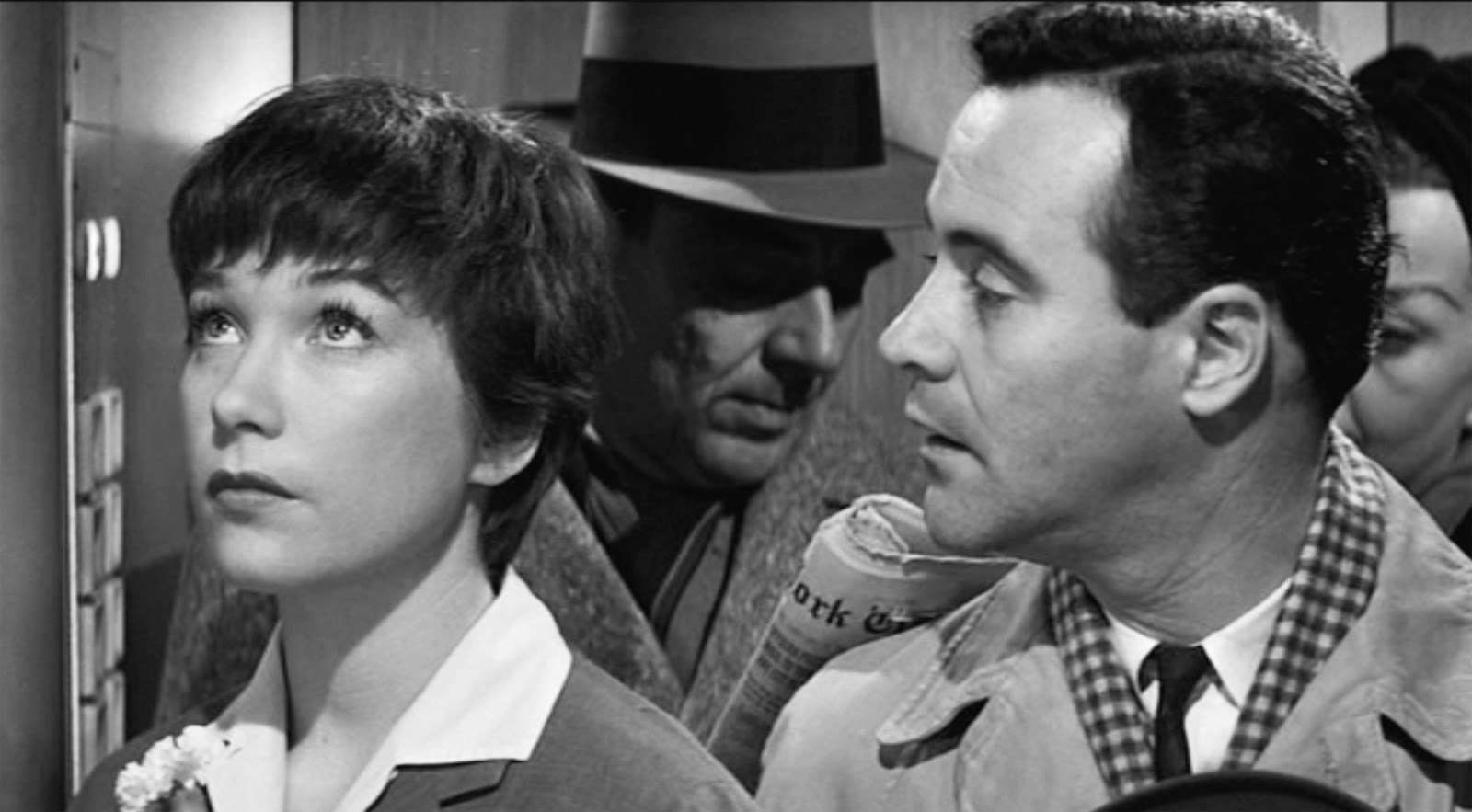
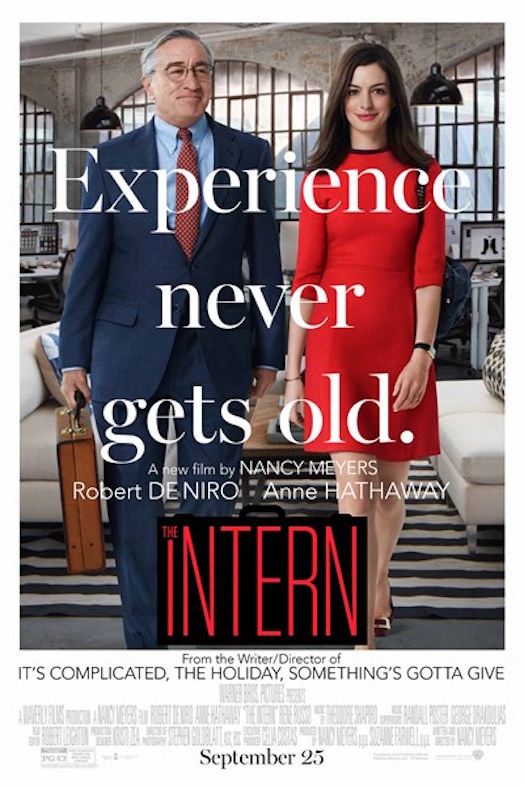
A Royal Night Out (2015)

Tags

, , , , , , , , , , , , , , , , ,

A Royal Night Out

D: Julian Jarrold / 97m

Cast: Sarah Gadon, Bel Powley, Jack Reynor, Rupert Everett, Emily Watson, Jack Laskey, Jack Gordon, Roger Allam, Ruth Sheen

A Royal Night Out is based on real events: on V.E. Day, May 8 1945, Princess Elizabeth and Princess Margaret went out in a group that included their nanny, several friends, and a military detail as protection (one of whom was Group Captain Peter Townsend, who would later have a relationship with Margaret). They were charged by their father, King George VI, to be home by one a.m. – which they were. Nothing of any real significance happened, and the evening passed off without incident.

But in an attempt to overcome this disappointing outcome, A Royal Night Out chooses to paint an entirely different portrait of what happened that night, and in doing so, pushes the boundaries of credibility at every turn. It’s a movie that embraces the newspaper cry of “Print the Legend!”, and has no intention of worrying about just how far-fetched or unlikely it all is. And thanks to one of the most careless and poorly constructed screenplays of recent years – courtesy of Trevor De Silva and Kevin Hood – the movie limps from one unconvincing scene to another, and never once provides a moment’s plausibility.
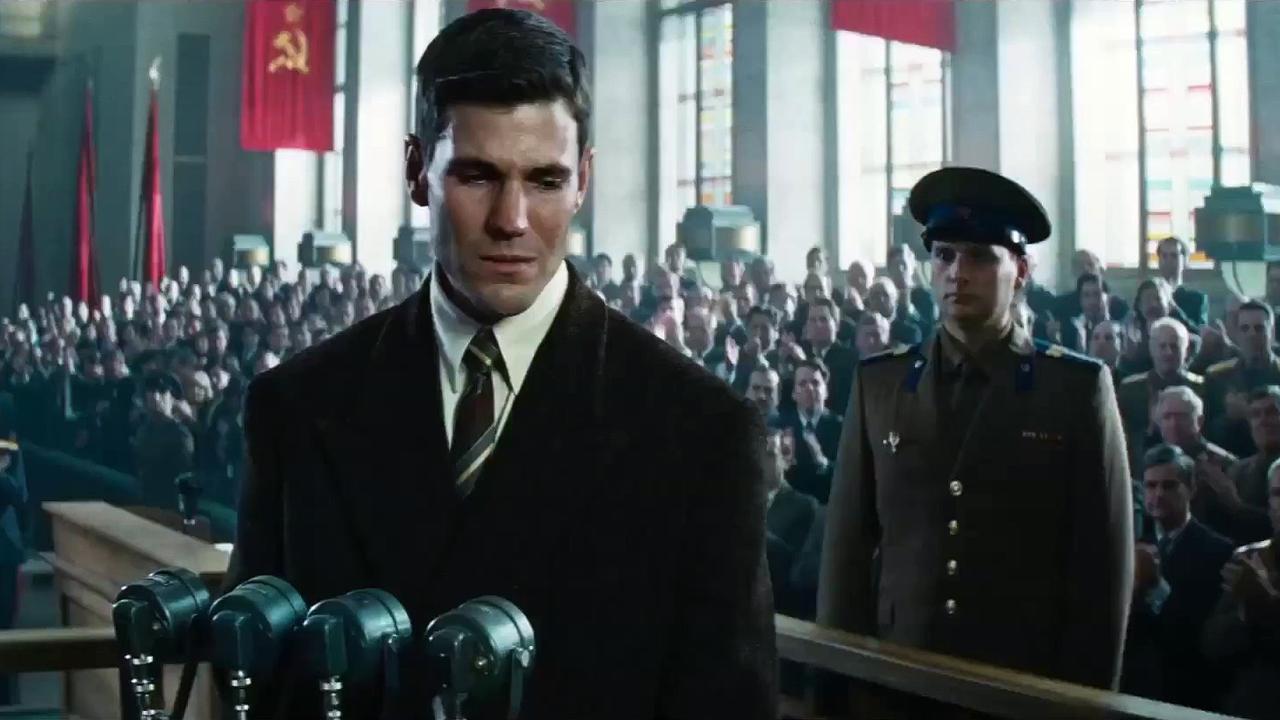
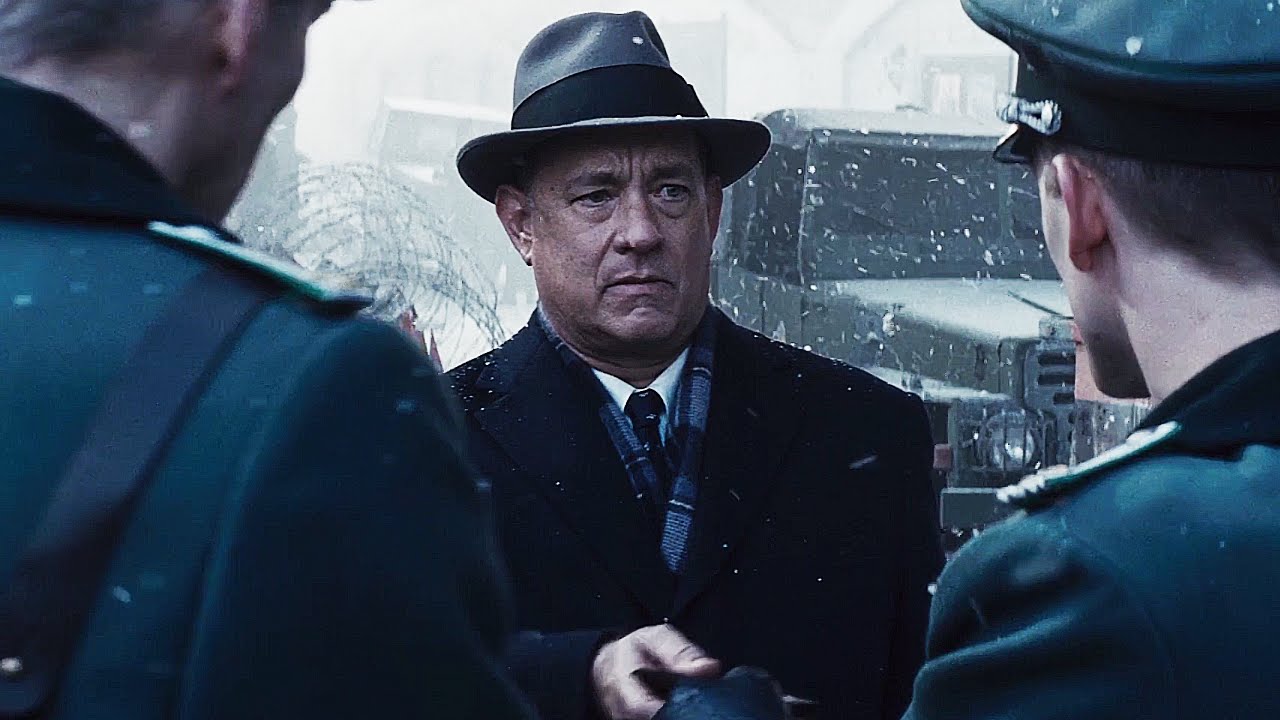
From the moment that Gadon’s Elizabeth and Powley’s Margaret are introduced – responsible and carefree respectively – it’s clear that these characterisations aren’t going to change much as the movie progresses. Elizabeth is the thoughtful, considerate sister, always looking out for her younger, less mature sibling. Margaret is a pleasure-seeker, stifled by the conventions of royal life, and looking for a chance to express her more extrovert nature. Although there is some truth in both these approaches – Margaret definitely liked a good party – by reducing both young women to such paper-thin representations of their real counterparts, the movie avoids asking its audience to identify with them at all.

A Royal Night Out - scene1

What the movie does to compensate is to infuse the action with liberal dollops of comedy. Surprisingly, a lot of it works, even though it’s often corny, and relies on the idea that Elizabeth and Margaret are so far removed from “ordinary” folk that they’re unable to deal with the simplest of social interactions. The humour is also derived in part from a lazy interpretation of the social divide between the princesses and the people they meet. Margaret is far too trusting, while Elizabeth becomes acutely aware of how little she really knows about everyday people. It’s predictable stuff, and if it wasn’t for the jokes, the movie would be dangerously difficult to sit through.

As well as De Silva and Hood’s just-enough-done-to-get-by script, there’s Jarrold’s lacklustre direction to contend with. There are moments when it really seems as if he settled for the first take and had no interest in finding out if the actors had anything else to offer. Whole stretches of the movie play out at a sedated pace that deadens each scene it touches, and it makes the performances seem stilted and free from nuance. Jarrold, whose last theatrical feature was the similarly underwhelming Brideshead Revisited (2008), misses almost every opportunity to make the movie relevant to its time frame, and concentrates instead on various levels of slapstick and farce to push the narrative forward. It leaves the movie feeling disjointed and as unconcerned about itself as Margaret is when she goes off with a man she doesn’t know.

97-Girls Night Out-Photo Nick Wall.NEF

There are issues with the various relationships as well. Elizabeth meets AWOL airman Jack (Reynor) who helps her find Margaret after they’re separated. You can tell straight away that the script wants them to get together, but at the same time it wants to stay true to historical events, so what we’re left with is an attraction that can’t (and doesn’t) lead anywhere, and which is entirely redundant as a plot device. The same can be said for Jack’s AWOL status, a dramatic angle that is resolved with the neatness of a parcel tied up with string. (There really isn’t anything in the movie that the viewer won’t be able to guess the outcome of – and long before it happens.)

Elsewhere, Laskey and Gordon play their military detail roles as if they were auditioning for an X Factor comedy special, with Laskey mugging for all he’s worth, and Gordon’s Lieutenant Burridge behaving in such an inappropriate manner it’s ridiculous. Allam is introduced late on as a mix of low-rent pimp and black marketeer who Margaret calls Lord Stan, but it’s the fanciful way in which her royal status is exploited that raises a chuckle, as Stan uses her to get some of his working girls inside the Chelsea Barracks, and circulating amongst the guests at a party there. Again it’s this kind of non-threatening, breezy plotting that hampers the movie and stops it from having any kind of edge.

A Royal Night Out - scene3

The cast are left adrift to fend for themselves, with Watson coming off best by (ostensibly) directing herself, while the likes of Everett, Allam and Powley are stranded playing caricatures. Reynor can’t do anything with his establishment-baiting airman, and Gadon looks bewildered throughout, as if she can’t quite believe what she’s being asked to do (though, to be fair, her bewilderment could be down to the demands of the script).

Away from the uninspired direction and unimaginative script, A Royal Night Out struggles to rise above its TV movie look and feel, and some of the myriad night shots look like they were filmed during the day. And with the best will – or art direction – in the world, Hull is no substitute for London, leaving several scenes feeling incomplete in terms of the movie’s visual style. As a result, Christophe Beaucarne’s photography is choppy at best, though it suits the muddy compositions. And Luke Dunkley’s editing is so haphazard in its approach that a lot of scenes lack that all-important through line.

Rating: 4/10 – even though it’s an interpretation of what “might” have happened on the night of 8 May 1945, A Royal Night Out‘s script shows such a lack of imagination almost any other interpretation would be preferable; saved entirely by its sense of humour, and despite its being entirely nonsensical at times, the movie is one of those ideas that seemed like a good one at the time, but which should have been left well alone by all concerned.

For One Week Only: Women Directors – 4. Agnès Varda & the Sixties

Tags

, , , , , , , , , , , , , , , , , , , , , , ,

Introduction

With the Fifties seeing a gradual rise in the number of female movie directors, the Sixties saw that slow expansion get bigger and bigger as more and more women took up the challenge of making movies that were at least as interesting or entertaining as their male counterparts (if they could be financially successful as well would be a great help too). Following in the footsteps of women such as Maya Deren, female experimental movie directors continued to flourish, but this independence didn’t seem to spread to more mainstream movie making. Only one female director of note emerged in the Sixties, and she forged a career for herself that is still going strong today.

Agnès Varda (1928-)

Agnes Varda

Although she’s regarded as a French movie director, Varda was actually born in Belgium. She moved to France in 1940 to live with her mother’s family, and studied art history and photography. Growing up she saw very few movies, but always viewed this as an advantage, so that when she came to make her first movie in 1957, La Pointe Courte, she did so with a naïvete that allowed her to do things she might otherwise have felt she couldn’t do.

Varda made a number of short movies before her next movie, Cléo from 5 to 7 (1961), made audiences and critics alike sit up and take notice. A sensitively handled drama about a woman (Corinne Marchand) who is waiting for the results of a biopsy, the movie deconstructs the way in which its heroine is seen by everyone around her, and how she deals with the possibility of her imminent mortality. If you’re new to the French New Wave of the early Sixties, then this is as good a movie to start out with, and shows Varda already has a distinct narrative style.

Cleo from 5 to 7

Her abilities as a director were further recognised with the release of her third feature, Le Bonheur (1965). A beautifully crafted rural drama, it’s about a young, happily married man who looks for even more “happiness” with another woman. Though the focus is on the young man, Varda doesn’t downplay the female characters, or make their roles of lesser importance. Instead she emphasises their strength and resilience, and reinforces the idea that neither of them is dependent on the young man’s attention. (1965 was also the year that Varda hired a young actor named Gérard Depardieu for a project called Christmas Carole; it was his first screen role, but alas the movie was never finished due to lack of funding.)

Les créatures (1966) followed, a puzzle box of a movie where the basic storyline of a mute woman’s husband who writes a novel that reflects the lives of the villagers, but in doing so, allows the distinction between fiction and reality to become irrevocably blurred, allowed Varda to play tricks on the viewer throughout. But she’s just being mischievous, and none more so than by casting Catherine Deneuve as the mute wife, using the actress’s physical presence to reinforce the character’s self-reliance and determination.

Les creatures

She contributed a section to the documentary Far from Vietnam (1967), along with the likes of Alain Resnais and Jean-Luc Godard, before making a fascinating though not entirely focused semi-documentary road trip through Los Angeles called Lions Love (1969). Varda had originally wanted Jim Morrison to appear in the movie but he declined (though he can still be seen as a member of the theatre audience in the opening scene). Interestingly enough, Varda attracted several well-known celebrities to appear as themselves, including fellow directors Peter Bogdanovich and Shirley Clarke. There’s no story as such, and what narrative there is is firmly non-linear, making this particular road trip/odyssey one that relies on its visual style to get its message across.

Varda was referred to as “the ancestor of the New Wave” when she was just thirty, but her literary influences and use of location shooting and non-professional actors marks her out as a member of the Left Bank cinema movement instead. She herself describes her style of movie making as cinécriture (writing on film), and she builds her finished product in the editing suite where she finds a movie’s motifs and its rhythm. She is a fiercely intelligent director whose international acclaim in the Sixties helped give other women directors a boost toward realising their own careers.

The 60’s

With the Sixties, female directors who had begun their careers in the Fifties continued to make challenging, independent movies outside the foundering Hollywood studio system. Shirley Clarke made her most well-known movies in the Sixties, The Connection (1962), about a group of junkies waiting in a room for their next fix to arrive, and Portrait of Jason (1967), a documentary about Aaron Payne (alias Jason Holliday) and his experiences of being black and gay in Sixties America. Both movies were well-received in critical circles but lacked for a wider audience. They were movies that held up a mirror to American society at the time, and are all the more powerful for the way they dissect the way said society actively marginalised some of its more vulnerable citizens.

The Canadian artist Joyce Wieland turned her hand to making movies in the Sixties. She made experimental, avant garde shorts on a variety of eclectic themes, and with titles such as Barbara’s Blindness (1965), Handtinting (1967), and Rat Life and Diet in North America (1968). She made her first feature movie in 1969, Reason Over Passion, a prosaic yet highly abstract voyage of discovery through the Canadian psyche as presided over by then Prime Minister Pierre Trudeau. Wieland’s movies were distinctive by the way in which she manipulated the film stock to provide a connection to the artistic style she had developed elsewhere in her work, and to make it feel more organic.

Joyce Wieland

Outside of experimental movie making, female directors tackling more conventional narratives were very thin on the ground. Swedish actress Mai Zetterling made her first feature, Loving Couples, in 1964, and packed it full of controversial elements, from a lesbian kiss to two gay men getting “married” in a church, and a close up of a real birth. She made three more features in the latter half of the decade and each showed a confident hand at the tiller.

In the world of low-budget exploitation features, Stephanie Rothman went from being an executive producer for Roger Corman to co-directing Blood Bath (1966) with Jack Hill, and then flying solo with It’s a Bikini World (1967). She added a strong feminist perspective to her movies, and did her best to mitigate the crassness of the movies she worked on. She was aware of the necessity for female nudity in these low-budget movies but focused on the visual presentation to make these scenes less repulsive and more transgressive.

After making several shorts, Czech director Věra Chytilová won international acclaim for her movie Daisies (1966), a funny, liberating attack on the formal traditions of Czech movie making, and a fascinating glimpse into the minds of two wilful young girls whose attitude to Life is to tear it down and damn the consequences – along as they’re having a good time doing it. It’s an invigorating experience, and eschews the rigid formalism of other Czech movies of the time. Chytilová’s career would pick up again in the Seventies, but Daisies was a statement of intent if ever there was one.

Daisies

And there was another statement of intent waiting just around the corner in 1970…