• 10 Reasons to Remember…
  • A Brief Word About…
  • About
  • For One Week Only
  • Happy Birthday
  • Monthly Roundup
  • Old-Time Crime
  • Other Posts
  • Poster of the Week
  • Question of the Week
  • Reviews
  • Trailers

thedullwoodexperiment

~ Viewing movies in a different light

thedullwoodexperiment

Tag Archives: Action

Zatoichi on the Road (1963)

28 Monday Dec 2015

Posted by dullwood68 in Movies

≈ Leave a comment

Tags

Action, Blind swordsman, Daiei Studios, Drama, Feudal Japan, Kimiyoshi Yasuda, Masseur, Review, Samurai, Shiho Fujimura, Shintarô Katsu, Yakuza

Zatoichi on the Road

Original title: Zatôichi kenka-tabi

aka Zatoichi’s Fighting Journey

D: Kimiyoshi Yasuda / 87m

Cast: Shintarô Katsu, Shiho Fujimura, Ryûzô Shimada, Reiko Fujiwara, Matasaburo Niwa, Yoshio Yoshida, Sônosuke Sawamura, Shôsaku Sugiyama, Yutaka Nakamura

The fifth entry in the series sees our hero being escorted to meet a prospective employer. Zatoichi (Katsu) is spotted by members of a yakuza clan who are aware that the propsective employer the blind swordsman is to meet is their sworn enemy, the head of a rival yakuza clan. With a showdown happening soon between the two clans, Zatoichi’s presence can mean only one thing: the rival boss is looking to hire him, and thereby swing matters in his favour. In an attempt to stop Zatoichi being hired, the gang members ambush him and his guide. Zatoichi despatches them with ease but not before his guide is killed.

The wife of one his would-be killers, Hisa (Fujiwara), witnesses the aftermath of the attack and learns Zatoichi’s identity. She takes this information back to the clan boss who, quite rightly, is disturbed by this development. But he has another plan in motion, one that involves the kidnapping of a young girl, Mitsu (Fujimura), for ransom. By luck, Zatoichi almost literally stumbles across a dying man who implores him to “save Mitsu”. Gaining her trust, Zatoichi determines to help her get back home. But it turns out that both yakuza clans have the same idea, and the blind masseur finds himself having to avoid both gangs, as well as the criminal intentions of a crooked innkeeper.

ZOTR - SCENE3

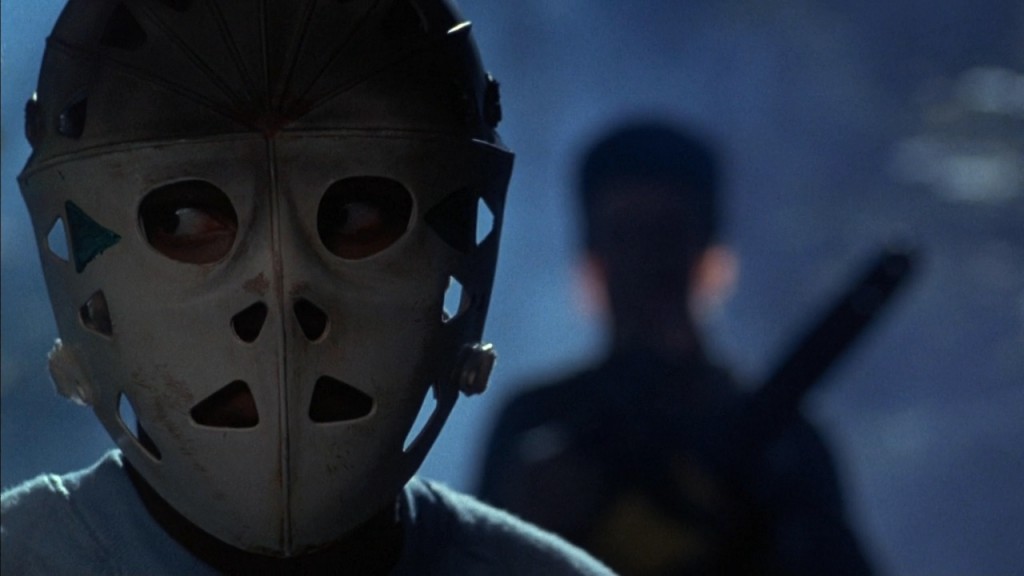
Five movies in and you could be forgiven for thinking that the series should already be running out of steam, but Zatoichi on the Road sees the franchise taking the basic “wandering swordsman” premise and putting a clever spin on things. Here, Zatoichi’s pledge to a dying man exposes the character’s nobility and selflessness to an even greater extent than in previous entries, as he shepherds Mitsu to her home in Edo, protecting her and keeping her safe. There is the usual romantic angle thrown in, but where before, Zatoichi has fallen in love with the lead female character, here his romantic feelings are held in check by his own awareness that there’s no chance of a relationship developing between them (though he does remain initially hopeful, as always).

Romanticism aside, the movie focuses on traditional notions of honour and fealty to the samurai code, with Zatoichi upholding these in isolation while – again – those who profess to follow the same code pay lip service to it. Both clan bosses are venal, greedy men who use the code for their own ends, and Zatoichi’s innate sense of propriety remains in stark contrast to the corruption that surrounds him. While each boss schemes and plots the end of the other, Zatoichi turns the tables on them, even when one of them finally manages to kidnap Mitsu and hold her hostage. By using their own avarice against them, Zatoichi highlights the ways in which their covetous natures will always undermine their criminal intentions. It’s a moral approach that everyone can relate to, and is played out with confidence and straightforward charm.

ZOTR - SCENE2

One of the series’ strengths is Zatoichi’s avoidance of violence wherever possible. Of course he’s going to find himself in situations where he has no choice but to fight, but here Minoru Inuzuka’s screenplay features a scene of such simple brilliance that it’s worth watching over and over again for Katsu’s superb performance and Yasuda’s assured direction. In it, Zatoichi rescues Mitsu from the clutches of a crooked innkeeper and does so without resorting to using his sword. It’s a tense, riveting scene, and sees Zatoichi attack the innkeeper and his men verbally over and over, denigrating their position and their competence. It’s further enhanced by their awareness of who Zatoichi is, and what he’s capable of; no one wants to risk their lives and prove him right.

But when there is a fight that Zatoichi can’t avoid, the sadness and melancholy that afflicts him is touchingly rendered by Katsu, whose immersion in the role is by now complete. He’s a wonderfully expressive actor, vulnerable and strong at the same time, and with no airs or graces about him. Whether he’s expressing his disappointment at the situations he finds himself in, or marvelling at some of the simpler pleasures in life (tea, for example), Katsu’s Zatoichi is a fully rounded character that any viewer can relate to. And he portrays the character’s loneliness so vividly that there’s very little further information we need to know about him in order to understand why he gets involved in righting wrongs and defeating injustice.

ZOTR - SCENE1

As the object of everyone’s crooked intentions, Mitsu is essentially a McGuffin decked out in a kimono, a hook to hang the plot on. But Fujiwara imbues her with a childlike artlessness that makes her more than just an object of lust and financial gain for the two clans. Her quiet, subservient nature is so calming that it’s no wonder Zatoichi finds himself falling for her, offering as she does a peaceful alternative to the wandering, often violent life he leads. Zatoichi’s search for peace is a constant theme in the series, but it’s here, where the chance of his attaining it is so close (and yet so far) that gives his yearning such resonance.

Filmed largely on location, with some poorly lit interiors doubling as the outdoors from time to time, Zatoichi on the Road retains the visual strengths of the previous colour entries, and the sword fights are still as well choreographed as before. Yasuda’s first outing as director on a Zatoichi movie proves both absorbing and resplendent, his positioning of the camera yet another example of how determined Daiei Studios had become in ensuring that each movie had its own identity while adhering to the overall tone and and accessibility of the series.

Rating: 7/10 – another successful entry in the series, Zatoichi on the Road is as engaging and captivating as its previous outings, and manages to provide further evidence that the character can – and will – avoid the pitfalls of series’ ennui; with Katsu providing yet another polished, emotionally astute performance, the movie never once takes the easy route in telling its deceptively simple story.

NOTE: Alas, the following trailer is free from subtitles.

Share this:

  • Share on X (Opens in new window) X
  • Share on Facebook (Opens in new window) Facebook
  • More
  • Print (Opens in new window) Print
  • Email a link to a friend (Opens in new window) Email
Like Loading...

Heist (2015)

03 Thursday Dec 2015

Posted by dullwood68 in Movies

≈ Leave a comment

Tags

Action, Bus 657, Casino, Crime, Dave Bautista, Drama, Gina Carano, Jeffrey Dean Morgan, Review, Robbery, Robert De Niro, Scott Mann, Thriller

J1026_ThePrfctHst_Pstr_50FM.indd

D: Scott Mann / 93m

Cast: Jeffrey Dean Morgan, Robert De Niro, Dave Bautista, Gina Carano, Morris Chestnut, Kate Bosworth, Mark-Paul Gosselaar, Summer Altice, D.B. Sweeney, Lydia Hull

There are few things in the world of cinema more dispiriting, more dismal, than the sight of good actors struggling to make something out of nothing. We’ve all seen them: those star-drenched movies that feature a great cast; the kind of movie where you can’t help but think, “Well, if they all signed up for it then it must be good”. But here’s the thing, the thing that a lot of people forget: actors, just like everyone else on the planet, have bills to pay, and so, sometimes, they forget about the “art” of cinema and focus on getting paid. And you can tell within minutes of the movie starting that the Oscar-winner in the supporting role is bored, or that the up-and-coming actor with a few good roles under his belt is trying too hard by way of compensating for the paper-thin nature of his character, and the star looks weary throughout, as if once committed to making the movie he can’t wait for filming to be over. (And let’s not mention any promotion work, where they might have to talk about the movie and how “good” it is…)

And so it is with Heist, a movie that has no real reason for existing, and wouldn’t be missed if by some chance it suddenly didn’t. This is knock-off movie making of the finest ordure, a terrible waste of the cast’s time, the crew’s time, your time, everybody’s time. It sucks, and royally. Despite what you see on screen, the overwhelming impression is of a movie made just for the sake of it, because somebody  – and here we have to lay the blame very firmly at the feet of writer Stephen Cyrus Sepher – had an idea for a movie and they managed to persuade five separate production companies to cough up the money to make it. And as so often happens in these situations, nobody looked at Sepher’s script and said, “Er, hang on a second…”

Heist - scene1

Ironically given the movie’s subject matter, this should be filed under “take the money and run”, as everyone involved does not quite enough to make Heist a watchable affair, from Mann’s uninspired, by-the-numbers direction to Sepher’s cliché-ridden, nonsensical script to half a dozen bored performances that help to sap the life out of a movie that’s already on life support. The main offender is De Niro, giving possibly the worst performance of his career, a lazy, credibility-free caricature of a gangster. De Niro is so bad that if you were to show someone who had no idea about his career or his legacy this particular movie, and then showed them, say, Raging Bull (1980), that someone would be completely baffled as to how it could be the same actor. This is a role where he mugs his way through in lieu of providing a recognisable character, and where he makes absolutely no attempt to convince the audience that his character’s sudden change of heart in the last ten minutes is in any way believable.

Elsewhere, the movie’s star looks tired and/or bored, with Morgan summing up just enough energy to get him through each scene, while Bautista undoes the kudos he’s gained from Guardians of the Galaxy (2014) by giving such a one-note performance it’s embarrassing (though to be fair his character doesn’t exactly benefit from being written that well). He’s matched by Chestnut as De Niro’s psychotic right hand man, but both actors are outdone by Gosselaar’s crooked cop, a wise-cracking annoyance who’s introduced in the most unlikely of fashions and continues to be annoying until the script finally has done with him. And Carano continues to undo the good work she did in Haywire (2011) by steadfastly refusing to alter her expression no matter what.

Heist - scene2

With so many things going against it, Heist struggles along from scene to scene, clearly happening in its own little alternate universe where the laws of plausibility are flouted with impunity, and where bad directing, writing and acting are actively encouraged and supported. The plot, such as it is, involves Morgan teaming up with Bautista to rob De Niro’s casino, but when the robbery goes wrong, they hijack a bus and head for Texas (as you do). Bautista is bad through and through – hey, he doesn’t care if the pregnant lady on board goes into labour, that’s how badass he is – but Morgan is doing it to pay for his sick daughter’s transplant operation (so he’s much more noble). The threat of passengers being killed keeps the police at bay, while De Niro and Chestnut beaver away in the background looking for a way to isolate Morgan from the bus and for De Niro to get his money back. Along the way Carano becomes an ally, Bosworth cameos as De Niro’s daughter, and bus driver D.B. Sweeney continually looks like he’s wondering what happened to his career.

So, it’s a bad movie, but it’s professionally made and manages to look a little more glossy than your average TV movie, but with so many “did they really just do that?” moments littering the narrative, no amount of goodwill generated by the production crew can mitigate for the farrago of bad ideas and decisions made in front of the camera. This could – and should – have been better in every way but sadly, no one took the time or made the effort to improve things, and the result is a movie that should be a dictionary definition of the word lame. Or awful. Or lousy. Or rubbish (you get the picture).

Rating: 3/10 – one to avoid, Heist only scores so highly because the crew, at least, weren’t asleep at the wheel; with no one attempting to correct the mistakes inherent in the script, or even recognise them, all the viewer can do is to try and stop their jaw from continually hitting the floor from seeing all the ridiculous antics the script is packed with.

Share this:

  • Share on X (Opens in new window) X
  • Share on Facebook (Opens in new window) Facebook
  • More
  • Print (Opens in new window) Print
  • Email a link to a friend (Opens in new window) Email
Like Loading...

Spectre (2015)

10 Tuesday Nov 2015

Posted by dullwood68 in Movies

≈ Leave a comment

Tags

007, Action, Adventure, Andrew Scott, Ben Whishaw, Christoph Waltz, Daniel Craig, Dave Bautista, Eon Productions, Franchise, Ian Fleming, James Bond, Jesper Christensen, Léa Seydoux, M, MI5, Miss Moneypenny, Monica Bellucci, Mr Hinx, Mr White, Naomie Harris, Q, Ralph Fiennes, Sam Mendes, Sequel, Thriller

Spectre

D: Sam Mendes / 148m

Cast: Daniel Craig, Christoph Waltz, Léa Seydoux, Ralph Fiennes, Ben Whishaw, Naomie Harris, Monica Bellucci, Dave Bautista, Andrew Scott, Rory Kinnear, Jesper Christensen, Alessandro Cremona

And so, here we are again, back in familiar territory: after a run of three movies with a new actor playing James Bond, and with the material getting worse and worse, we arrive at a fourth movie that neither grips or excites, boasts a decent script or direction, and which labours through its extended running time like an asthmatic running a half-marathon. We could be talking about Die Another Day (2002), but instead we’re talking about Spectre, the latest in the oft-rebooted franchise, and possibly Daniel Craig’s last outing as Bond (he may do one more but nothing’s definite yet).

It’s been a relatively short nine years since Casino Royale exploded onto our screens in a welter of frenzied, punishing action sequences, and one of the best Bond scripts ever. It was everything you could ever hope for from a Bond movie, and then some, and for many fans it went straight to the top of their favourite Bond movie list. There were some psychological aspects to it in terms of Bond’s behaviour, the best Bond villain for an age, and as an “origin story” it worked much better than most. But most of all it was fun with a capital F.

And then there came the inevitable stumble with Quantum of Solace (2008). A straight-out revenge flick but with James Bond as the central character, it was basically a direct follow-up to Casino Royale that suffered from a weak villain and a mid-section that dragged as if the writers had lost focus on the story they were telling. But it did have some great action sequences, just as tough and brutal as before, and a great performance from Craig. (If you watch it back to back with Casino Royale as a four hour movie it plays a lot better than on its own.)

Spectre - scene2

Now at this stage, the producers brought on board Sam Mendes to helm the third outing for Craig, and he delivered the most successful Bond movie to date: Skyfall (2012). But while critics and fans heaped praise on the first Bond movie to make over a billion dollars at the box office, less easily swayed viewers could see the cracks starting to show as the writers tried to include a mystery relating to Bond’s past. And there were problems elsewhere, where the script showed signs of laziness (the train crash – how could Silva have “known” that he and Bond would meet at that particular place and time for the train to come crashing through the ceiling?).

That laziness has been extended to Spectre, with its tired action sequences (only the fight on the train between Bond and Mr Hinx has any energy or verve about it), eggshell thin characterisations (why does it seem as if Vesper Lynd is the only female character in the Bond franchise with any depth?), nonsensical reason for the villain’s actions (whatever happened to blackmailing the world’s leaders into not killing them with hijacked nukes?), and nods to previous entries in the franchise that only serve to remind audiences of the good old days when Bond just got on with the job and didn’t have to deal with questions about his lifestyle or any emotional scarring arising out of his childhood.

There’s also the absurd plot about linking all the world’s security systems under one (though it looks as if Waltz’s character is already doing that anyway), and then there’s Christoph Waltz’s ersatz-Blofeld scampering around like an escaped inmate from Bellevue, and providing none of the menace required to make his character a match for Bond’s determination and drive; in fact, he has more in common with Elliot Carver, Jonathan Pryce’s crazed media tycoon in Tomorrow Never Dies (1997) (but that’s still not a recommendation). Waltz is a good actor, but he’s all too often an actor making his own decisions about playing a role, and without, it seems, much instruction from the director. Here he tries the playful über-villain too often for comfort, and for the head of an organisation that included Le Chiffre and Raoul Silva as mere agents, looks entirely like someone’s younger brother who finally gets to play with his bigger brother’s toys.

Spectre - scene

Once again, the female characters are there for decoration, with Seydoux going to sleep in a hotel room fully clothed and then waking up some time later in her slip, and Bellucci wasted as the wife of a man Bond kills in the opening sequence. Harris though, does get more to do as Miss Moneypenny (we even get a glimpse of her home life), but beyond that it’s business as usual, with no other female roles of note, and the focus firmly on the macho posturing that occurs elsewhere throughout (even Whishaw gets a moment out in the field where he encounters some danger). Fiennes is a grumpy-looking M (though he does get the movie’s best line), Scott is a slimy-looking C, and Bautista is all the more imposing for being dressed in bespoke tailoring throughout. The returning Christensen is a welcome sight but he’s only there to reiterate what he said in Quantum of Solace (though “we have people everywhere” now becomes “he’s everywhere”), and his one scene is over far too quickly.

Returning as well, of course, is Mendes, whose handling of Skyfall meant he was always going to be asked to return, but perhaps it would have been better to go with someone who could inject some much needed energy into proceedings. Mendes is good at the MI6 stuff, prowling the corridors of power and highlighting the power games surrounding the shake up of the security services that serves as the political backdrop for the movie, but “out in the field” he’s less confident, and on this evidence, less engaged. There are too many scenes that go by without making much of an impact, and too many scenes that could have been more judiciously pruned in the editing suite. Instead, Mendes does just enough to make Spectre a facsimile of Skyfall, but without the emotional ending (here Bond rides off into the sunset with Seydoux’s character, but you know she won’t be back for the next movie).

If Craig decides not to play Bond one more time then the producers will need to go back to square one and start afresh – again. If they do, then let’s hope this whole let’s-give-Bond-an-origin-story-he-doesn’t-need angle is dropped in favour of seeing him do what he does best: being a one-man wrecking crew with no time for niceties. In many ways, Ian Fleming’s creation is a “sexist, misogynist dinosaur”, but it’s what we’ve loved about him for over fifty years now, and in their efforts to give us a “new” Bond for contemporary times, the producers have lost sight of what makes him truly Bond: he doesn’t do introspection or guilt, and because of that he’s good at his job. (And if a reboot is in order, then let’s get Martin Campbell back in the director’s chair – he seems to know what he’s doing.)

Rating: 5/10 – not a complete stinker – it’s production values, along with Craig’s still committed performace see to that – but not the best Bond outing you’re likely to see either, and proof that the series, in this stretch at least, is heading downhill fast; when even the action sequences in Spectre feel tired and lacklustre, then it’s time for the producers to take a step back and work out where they really want to take Bond next, because right now, it doesn’t look as if they know.

Share this:

  • Share on X (Opens in new window) X
  • Share on Facebook (Opens in new window) Facebook
  • More
  • Print (Opens in new window) Print
  • Email a link to a friend (Opens in new window) Email
Like Loading...

Monthly Roundup – September 2015

30 Wednesday Sep 2015

Posted by dullwood68 in Movies

≈ Leave a comment

Tags

12 Rounds 3: Lockdown, Abigail Breslin, Action, Airlock, Alexander and the Terrible Horrible No Good Very Bad Day, Arizona, Axe to Grind, Baseball, Beverly Tyler, Birthday, Brian McGinn, Brighton, Cancer charity, Cattle rustling, Corrupt cops, Crime, Dean Ambrose, Debbie Rochon, Drama, Earl Bellamy, Ferrell Takes the Field, George Montgomery, Georgie Henley, Horror, Insurance fraud, Jennifer Garner, Jim Davis, Jim O'Connolly, John Carson, Josh Gad, Judith Viorst, Keoni Waxman, Literary adaptation, Matt Zettell, Mercenary, Michael Matzur, Michael Steppe, Miguel Arteta, Mira Sorvino, Movie role, Murder, Perfect Sisters, Peter Vaughan, Rob Margolies, Roger R. Cross, Romantic comedy, Sci-fi, Screenwriter, She Wants Me, Short movie, Silver mines, Smokescreen, Stanley M. Brooks, Stephen Reynolds, Steve Carell, Steven Seagal, The Boss, The Toughest Gun in Tombstone, True story, Vacuity, Vinnie Jones, Western, Will Ferrell, Wish, WWE, Yvonne Romain

Smokescreen (1964) / D: Jim O’Connolly / 70m

Cast: Peter Vaughan, John Carson, Yvonne Romain, Gerald Flood, Glynn Edwards, John Glyn-Jones, Penny Morrell, Barbara Hicks, Sam Kydd, Deryck Guyler

Rating: 7/10 – bowler-hatted insurance fraud investigator Roper (Vaughan) is called in to investigate when a heavily insured businessman’s car bursts into flames before going over a cliff – but was he in it?; a neat, unprepossessing British thriller, Smokescreen features an enjoyable performance from Vaughan, some stunning location photography, and a script that allows for plenty of ironic humour in amongst the drama.

Smokescreen

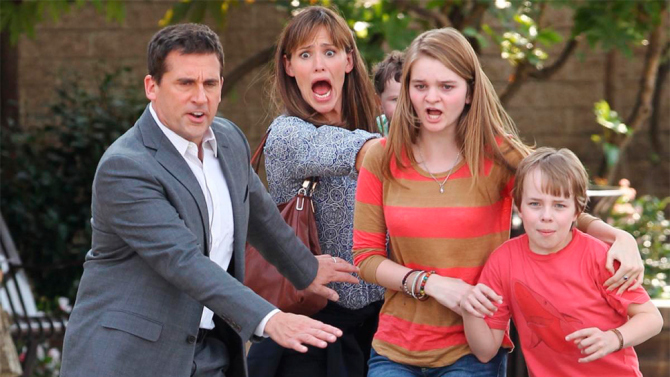
Alexander and the Terrible Horrible No Good Very Bad Day (2014) / D: Miguel Arteta / 81m

Cast: Steve Carell, Jennifer Garner, Ed Oxenbould, Dylan Minnette, Kerris Dorsey, Sidney Fullmer, Bella Thorne, Megan Mullally

Rating: 7/10 – when overlooked youngest child Alexander (Oxenbould) has the worst day ever, he wishes that his family could experience just a little of what he has to deal with – but when they do, things quickly escalate beyond anything that Alexander has ever faced; Judith Viorst’s novel gets a fun-filled adaptation that is amusing, clever, and visually inventive, but which lacks bite, and has surprisingly few characters to root for (that is, none).

Alexander etc

She Wants Me (2012) / D: Rob Margolies / 85m

Cast: Josh Gad, Kristen Ruhlin, Johnny Messner, Aaron Yoo, Hilary Duff, Melonie Diaz, Wayne Knight, Charlie Sheen

Rating: 6/10 – an ambitious though neurotic writer (Gad) working on his first screenplay faces a dilemma when the role written for his girlfriend (Ruhlin) grabs the attention of an A-list actress (Duff); a romantic comedy with few ambitions that struggles to make good comedy out of anxious indecision, She Wants Me is innocuous stuff that passes by in amiable fashion without ever really involving its audience.

She Wants Me

12 Rounds 3: Lockdown (2015) / D: Stephen Reynolds / 90m

Cast: Dean Ambrose, Roger R. Cross, Daniel Cudmore, Lochlyn Munro, Ty Olsson, Sarah Smyth, Rebecca Marshall, Kirby Morrow

Rating: 3/10 – an honest cop (Ambrose) finds himself trapped in a station house and hunted by several of his corrupt colleagues when he comes into possession of evidence that will see them put away for the rest of their lives; another depressing WWE Films action movie, 12 Rounds 3: Lockdown dispenses with the set up of the first two movies, and does its best to be yet another Die Hard rip-off, albeit one stifled by inept plotting, terrible dialogue and a performance by Ambrose that never gets started.

12 Rounds 3 Lockdown

Perfect Sisters (2014) / D: Stanley M. Brooks / 100m

Cast: Abigail Breslin, Georgie Henley, Mira Sorvino, James Russo, Rusty Schwimmer, Zoë Belkin, Jeffrey Ballard, Zak Santiago

Rating: 5/10 – two sisters (Breslin, Henley), fed up with the antics of their alcoholic mother (Sorvino) and her poor choice in boyfriends, decide the only way of improving their lives is to kill her; if it wasn’t based on a true story, Perfect Sisters would be dismissed as absurd nonsense with no basis in reality, but as it is it’s an uneven, tonally awkward movie that features average performances from its leads, but which does seem completely committed to drawing the viewer’s attention to Breslin’s cleavage at every opportunity.

Perfect Sisters

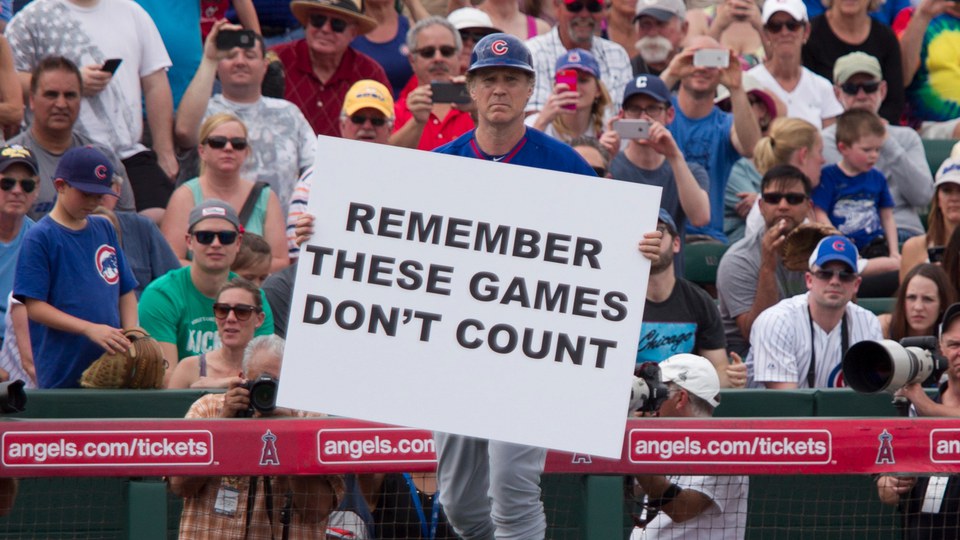
Ferrell Takes the Field (2015) / D: Brian McGinn / 49m

With: Will Ferrell

Rating: 5/10 – in support of a friend’s cancer charity, Will Ferrell takes to the baseball field to play all nine positions for ten major league teams at five separate pre-season games, and all in one day; if the charity had been the Reassure Will Ferrell He’s Still Funny Charity, then this would have made more sense because Ferrell Takes the Field is a mercifully brief documentary that sees the comedian attempt to appear relevant in an arena where he has no real talent, and where, when he gets it wrong, he’s quite rightly booed by fans, leaving viewers to wonder why on earth this idea was commissioned in the first place.

Ferrell Takes the Field

Axe to Grind (2015) / D: Matt Zettell / 81m

Cast: Debbie Rochon, Guy Torry, Matthew James Gulbranson, Paula Labaredas, Michelle Tomlinson, Dani Thompson, Adrian Quihuis, Tony von Halle

Rating: 2/10 – when the producer of her latest film tells aging actress Debbie Wilkins (Rochon) that her role has gone to another, younger actress, it sets her on a killing spree that sees her despatch the cast and crew, and anyone else who gets in her way; low-budget horror always runs the risk of being offensively stupid, and Axe to Grind is no exception, as it treats its audience with disdain while failing to appear as clever and entertaining as it thinks it is.

Axe to Grind

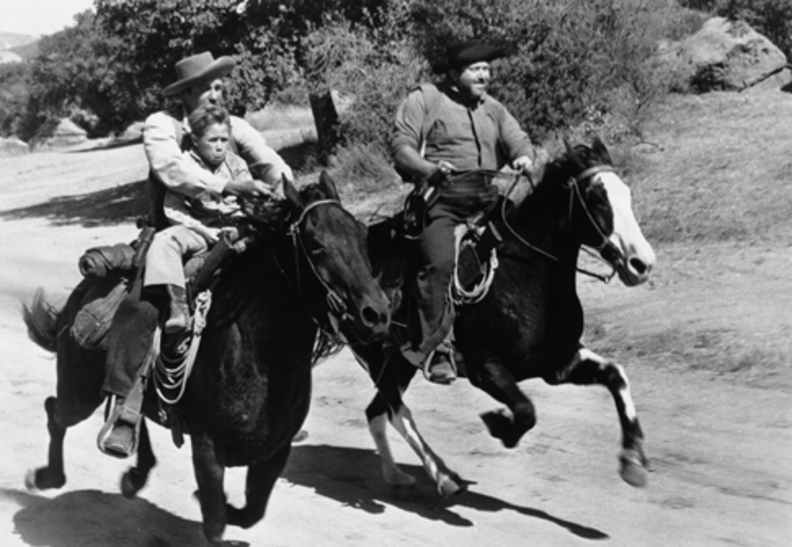
The Toughest Gun in Tombstone (1958) / D: Earl Bellamy / 72m

Cast: George Montgomery, Jim Davis, Beverly Tyler, Gerald Milton, Don Beddoe, Scotty Morrow, Harry Lauter

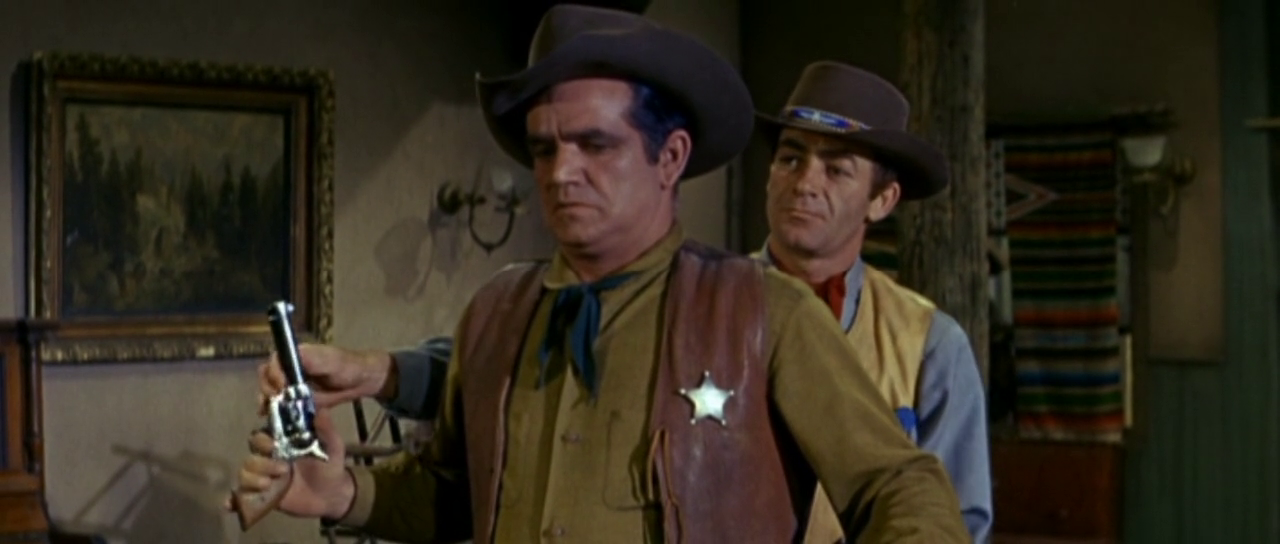
Rating: 6/10 – with outlaws running most of the nascent state of Arizona, the Governor assigns Matt Sloane (Montgomery) and a team of undercover officers to apprehend the gang involved with cattle rustling and silver thefts; a modest Western that tells its simple story plainly and with few frills, The Toughest Gun in Tombstone is acceptable fare that doesn’t exert itself too much, but is enjoyable nonetheless.

Toughest Gun in Tombstone, The

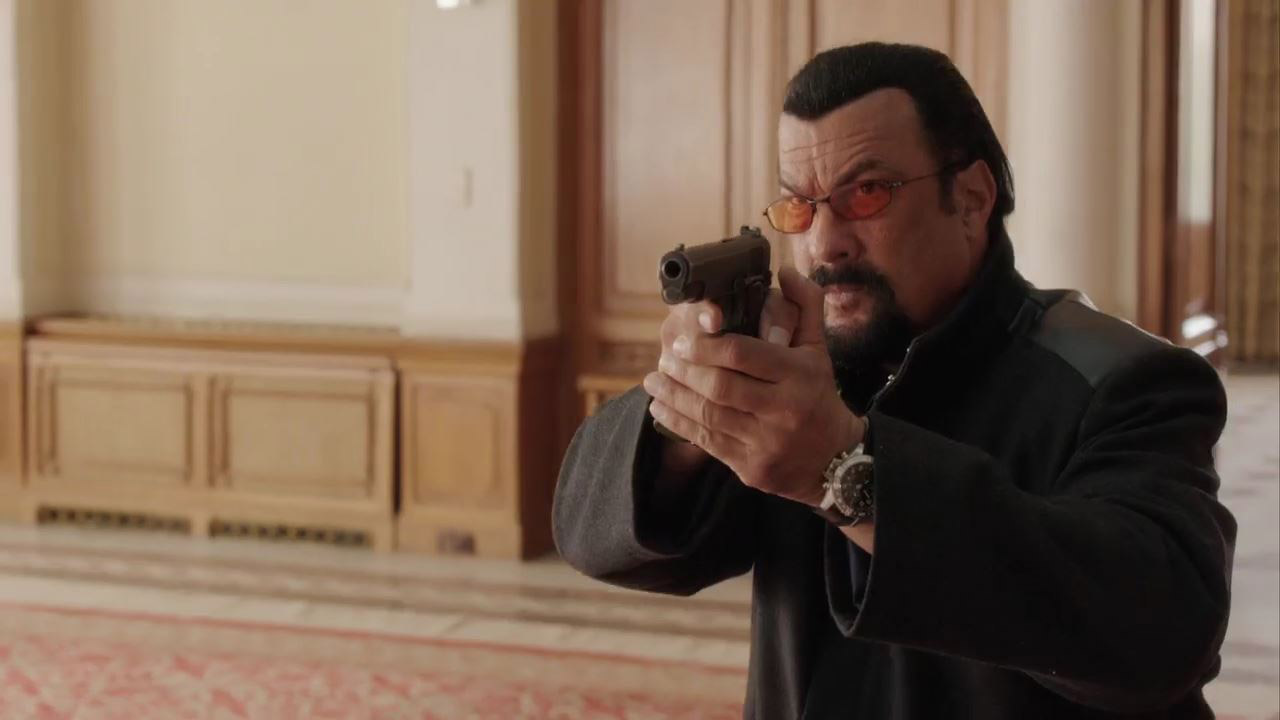
Absolution (2015) / D: Keoni Waxman / 91m

aka The Mercenary: Absolution

Cast: Steven Seagal, Byron Mann, Adina Stetcu, Vinnie Jones, Howard Dell, Josh Barnett, Maria Bata, Dominte Cosmin

Rating: 4/10 – mercenary John Alexander (Seagal) and his colleague Chi (Mann) find themselves battling both a criminal syndicate and their own corrupt boss when a contract killing proves to have larger ramifications; another mumbling, stand-in heavy performance from Seagal detracts from what is – for him – a better outing than of late, and thanks to Mann’s athleticism and Jones’ snarling villain, any scenes where Seagal doesn’t take part are actually halfway enjoyable.

Absolution

Vacuity (2012) / D: Michael Matzur / 14m

Cast: Michael Steppe

Rating: 6/10 – an astronaut, Alan Brahm (Steppe), stranded in an airlock while the space station he’s on begins to fall apart has a choice: either save his crew by jettisoning the airlock (but dooming himself), or save himself and get back to Earth (and dooming the crew) – which choice will he take?; as moral dilemmas go, the one facing Alan Brahm in Vacuity is, on the face of it, fairly cut and dried, but thanks to Matzur’s script and Steppe’s performance you’re never quite sure how things will play out, or even if either choice will be taken away from him, making this short movie a model of concisely focused drama.

Vacuity

Share this:

  • Share on X (Opens in new window) X
  • Share on Facebook (Opens in new window) Facebook
  • More
  • Print (Opens in new window) Print
  • Email a link to a friend (Opens in new window) Email
Like Loading...

The Transporter Refueled (2015)

10 Thursday Sep 2015

Posted by dullwood68 in Movies

≈ 2 Comments

Tags

Action, Camille Delamarre, Car chases, Crime, Ed Skrein, Loan Chabanol, Prostitution, Ray Stevenson, Reboot, Revenge, Review, South of France, Thriller

Transporter Refueled, The

D: Camille Delamarre / 96m

Cast: Ed Skrein, Ray Stevenson, Loan Chabanol, Gabriella Wright, Tatiana Pajkovic, Wenxia Yu, Radivoje Bukvic, Noémie Lenoir, Yuri Kolokolnikov, Lenn Kudrjawizki, Samir Guesmi, Anatole Taubman

Comments made following an advance US screening of The Transporter Refueled:

“When did Jason Statham get a facelift? Damn, he looks good!”

“Why was Florida full of French people?”

“Where can I learn to drive like the transporter?”

“Why was the transporter’s dad such a manwhore?”

“Who’s Ed Skrein?”

“A roundabout with four conveniently placed fire hydrants – what are the odds?”

“What a great idea to have the final showdown take place on a boat. Well done!”

“The four women looked really good after being prostitutes for fifteen years. What was their skin care regime?”

“It was good that the Russian bad guy and the English good guy had served in the same army at some point.”

“Will the next one be called, The Transporter: Are We There Yet?”

“Shouldn’t it be spelt refuelled?”

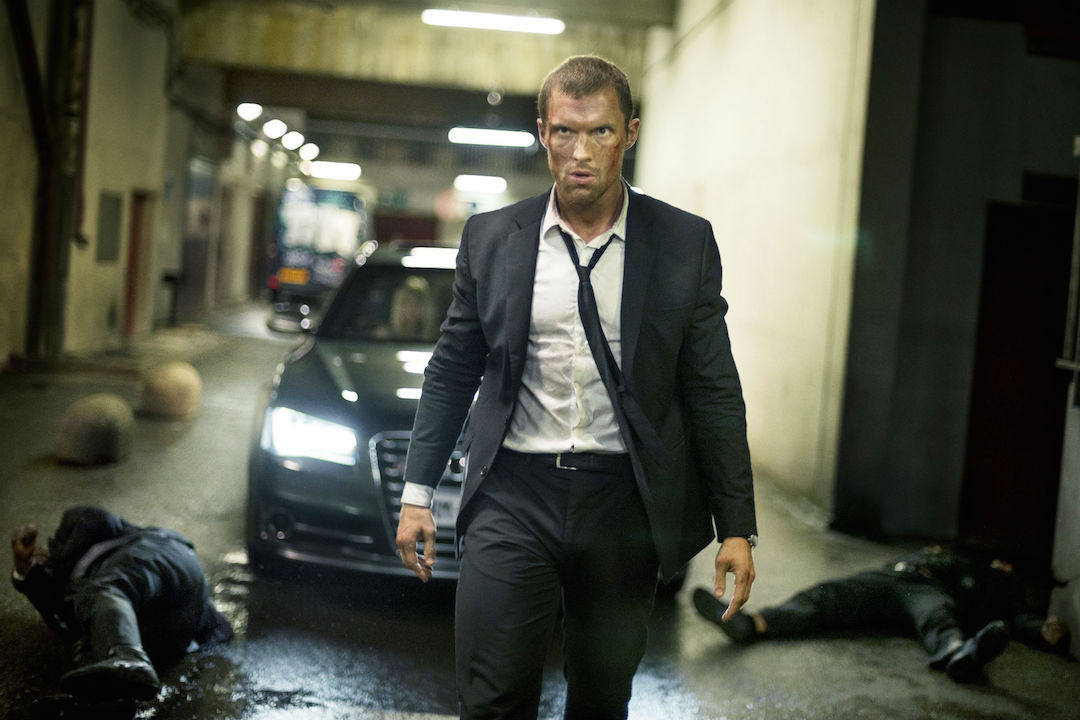
Transporter Refueled, The - scene

Rating: 4/10 – for a fast-paced action movie, The Transporter Refueled is instead quite sluggish, and easily the least of the four movies so far; Skrein doesn’t have Statham’s intensity (or his moves), and the plot – as usual – relies on far too many things falling conveniently into place for comfort, leaving the viewer with the feeling that the three screenwriters weren’t interested in scripting a movie that might have had audiences on the edge of their seats.

Share this:

  • Share on X (Opens in new window) X
  • Share on Facebook (Opens in new window) Facebook
  • More
  • Print (Opens in new window) Print
  • Email a link to a friend (Opens in new window) Email
Like Loading...

American Ultra (2015)

08 Tuesday Sep 2015

Posted by dullwood68 in Movies

≈ 1 Comment

Tags

Action, Animation, Apollo Ape, Assassin, Chip the Brick, CIA, Comedy, Connie Britton, Jesse Andrews, John Leguizamo, Kristen Stewart, Nima Nourizadeh, Review, Stoner, Thriller, Topher Grace, Tough guys, Ultra program

American Ultra

D: Nima Nourizadeh / 96m

Cast: Jesse Eisenberg, Kristen Stewart, Topher Grace, Connie Britton, Walton Goggins, John Leguizamo, Bill Pullman, Tony Hale, Stuart Greer, Monique Ganderton

Mike Howell (Eisenberg) is charitably known as a stoner. He works in a mini-mart that rarely sees any customers, and he lives with his girlfriend of five years, Phoebe (Stewart). Having made plans for a romantic trip to Hawaii, Mike doesn’t make it further than the airport as he always gets panic attacks when he tries to leave the sleepy town of Liman, where he and Phoebe live. Mike was going to propose when they were in Hawaii, and has kept the ring, waiting for the right moment.

At the CIA’s headquarters in Langley, Virginia, veteran agent Victoria Lasseter (Britton) receives a mysterious phone call that warns her that “Tough Guy is moving in on Little Man”. This refers to two separate CIA programs: the Little Man referred to was part of the Ultra program that was shelved several years before, while Tough Guy is the brainchild of fellow agent Adrian Yates (Grace). Lasseter confronts Yates who tells her he’s cleaning house and the one remaining participant in the Ultra program is regarded as a liability. Blocked by Yates’s seniority, she decides to take matters in her own hands.

That night, Lasseter visits the store where Mike works. She tells him some coded phrases that are meant to reactivate him, but they appear to be ineffective. But later, when he sees two men tampering with his car, he finds himself being attacked. Without thinking, he defends himself and kills both men. Freaked out he calls Phoebe and tells her what’s happened. When she arrives, she’s just ahead of the sheriff (Greer), who arrests them both. Mike is unable to explain how he was able to kill the men, but his newly realised (or reawakened) skills prove useful again when Yates sends two Tough Guys – Laugher (Goggins) and Crane (Ganderton) – to finish the job the other two couldn’t. In the process, the station is destroyed and all the police force killed; Mike kills Crane and he and Phoebe get away.

They head for the home of Mike’s dealer, Rose (Leguizamo). There they learn that the town has been quarantined and that Mike and Lasseter are being labelled animal rights terrorists who have released a deadly virus in the area. Two more Tough Guys arrive and start to flood the place with a deadly gas. Phoebe and Mike get out but not before he ingests a dangerous amount of it. She saves his life, but in the process Mike realises that she knows too much about what’s going on. Phoebe is forced to confess that she’s been hiding something from him, and this changes things between them. While Phoebe tries to explain things, Laugher pushes their car off a bridge. Mike is trapped, but Phoebe is captured by Laugher who takes her to Yates – but not before he’s poured gasoline on the overturned car and set it alight…

American Ultra - scene

An uneven mix of stoner comedy and action movie, American Ultra is the kind of late summer crowd pleaser that will likely please fans of both genres as it comfortably combines both to generally good effect. It’s a movie where lots of things happen coincidentally and predictably, but this is one occasion where it doesn’t really matter, as whatever flaws it has are compensated for by the huge sense of fun to be had, from Mike’s drug-fuelled paranoia – at one point he thinks he might be a robot – to the moment where he finally proposes to Phoebe.

It’s a deliberately offbeat, totally ridiculous slice of escapist fantasy that knows exactly what it’s doing, and if screenwriter Landis and director Nourizadeh between them can’t quite wrestle the whole premise into a manageable whole, it’s still comforting to know that they get it right more times than not. On the plus side, there’s the relationship between Mike and Phoebe, a touching, believable couple with minimal ambitions and secure in their love for each other (even if Mike can’t make an omelette without nearly burning down their home). As played by Eisenberg and Stewart, reuniting at last after first appearing together in Adventureland (2009), Mike and Phoebe provide the sweet-natured heart of the movie, and you root for them when Yates and his operation come to Liman. Even when Phoebe’s revelation threatens to come between them, there’s enough investment in their relationship made already that even though their reconciliation is inevitable, you still want it to happen sooner rather than later.

Another plus factor are the inventive fight scenes, particularly a standout sequence at the mini-mart that is shot almost like a first-person video game, and sees Mike using anything that comes to hand to ward off over a dozen Tough Guys. Eisenberg makes a convincing action hero, his slight frame and long hair at odds with the muscular attributes of most action stars, and he’s a revelation in these scenes, kicking ass in a way that the portrayer of Mark Zuckerberg wouldn’t usually be thought of. Stewart also has her moves, and she too is surprisingly effective as a bad-ass. There’s still a tendency to shoot the action sequences and fight scenes with too much of a nod to rapid editing, though there is a fair amount that’s seen in long shot, and is all the better for it.

On the downside, Leguizamo has an awkward role that sees him using the N-word too often, while Grace mugs and overacts in a way that suggests he’s read a different script to everyone else. The real script’s implausibilities threaten to derail the narrative at times, and Landis can’t always resist the temptation to throw in a few unnecessary curve balls (the character of Laugher and his eventual fate is a case in point), but as mentioned above there’s more than enough to make up for it all, including some very humorous moments that show Eisenberg’s complete ownership of his character (Mike’s reaction to a call from Yates is the best example, and very funny indeed).

And lastly, there’s Apollo Ape and Chip the Brick. Who are they? They’re characters Mike draws who have adventures – very violent adventures – in outer space. They make an animated appearance at the movie’s end that’s hopefully not the last time we see them.

Rating: 7/10 – too messy at times to be entirely effective, American Ultra is still a worthwhile view, ably enhanced by the pairing of Eisenberg and Stewart, and feeling fresh when concentrating on the action; if the machinations of the plot are too far-fetched to work as well as they should, it’s still good to know that there are far worse, similar movies out there that aren’t half this enjoyable.

Share this:

  • Share on X (Opens in new window) X
  • Share on Facebook (Opens in new window) Facebook
  • More
  • Print (Opens in new window) Print
  • Email a link to a friend (Opens in new window) Email
Like Loading...

Hitman: Agent 47 (2015)

03 Thursday Sep 2015

Posted by dullwood68 in Movies

≈ Leave a comment

Tags

20th Century Fox, Action, Agents, Aleksander Bach, Assassin, Drama, Hannah Ware, Jim Gianopulos, Memo, Review, Rupert Friend, Stacey Snyder, Tattoo, Thriller, Zachary Quinto

Hitman Agent 47

D: Aleksander Bach / 96m

Cast: Rupert Friend, Hannah Ware, Zachary Quinto, Ciarán Hinds, Thomas Kretschmann, Angelababy, Dan Bakkedahl, Jürgen Prochnow

Excerpted text from a memo sent by 20th Century Fox co-chairman Stacey Snyder to CEO Jim Gianopulos:

… and now that the dust has settled, it might be time to reboot Hitman, which we made and released in 2007. I think enough time has gone by that people will have forgotten just how bad/disappointing/clumsy the original was, and how we nearly sabotaged Timothy Olyphant’s career. I would suggest we get the original writer back on board, Skip Woods, and get him to fashion a Hitman movie that combines an original story with references and elements from the video games. I know he penned the original script, and I’m further aware that it wasn’t the best received script we’ve ever produced, but I believe that even in Hollywood, everyone deserves a second chance (don’t they?).

Perhaps we can entice a more well-known actor to the main role, Paul Walker for instance, or Vin Diesel (either of those Fast and Furious guys) as Olyphant has made it clear he doesn’t want to return to the role as “his house is fully paid for now”. Other casting will depend on Woods’ script and the availability of non-A list stars for the secondary roles, while it might be best to hire a British actress with little experience to fill any lead female role.

In terms of hiring a director, and in order to keep costs’ down, I would advise we give the job to someone with a background in commercials, and who hasn’t actually directed a movie before. This will allow us to bring a (hopefully) fresh approach to Woods’ script, and a visual look to the movie that will remind people of movies such as Equilibrium (2002) and the Resident Evil series. In terms of budget, and again in order to reduce costs, we should film abroad – Singapore, maybe – and keep the budget to between $30 and $40 million dollars. That way, and allowing for foreign distribution rights, DVD and Blu-ray sales, and any further revenue, the movie should be a financial success even if it is slated by the critics.

That’s all for now. Let me know how you want to proceed with these particular projects, and once things are in place, I’ll get back to you.

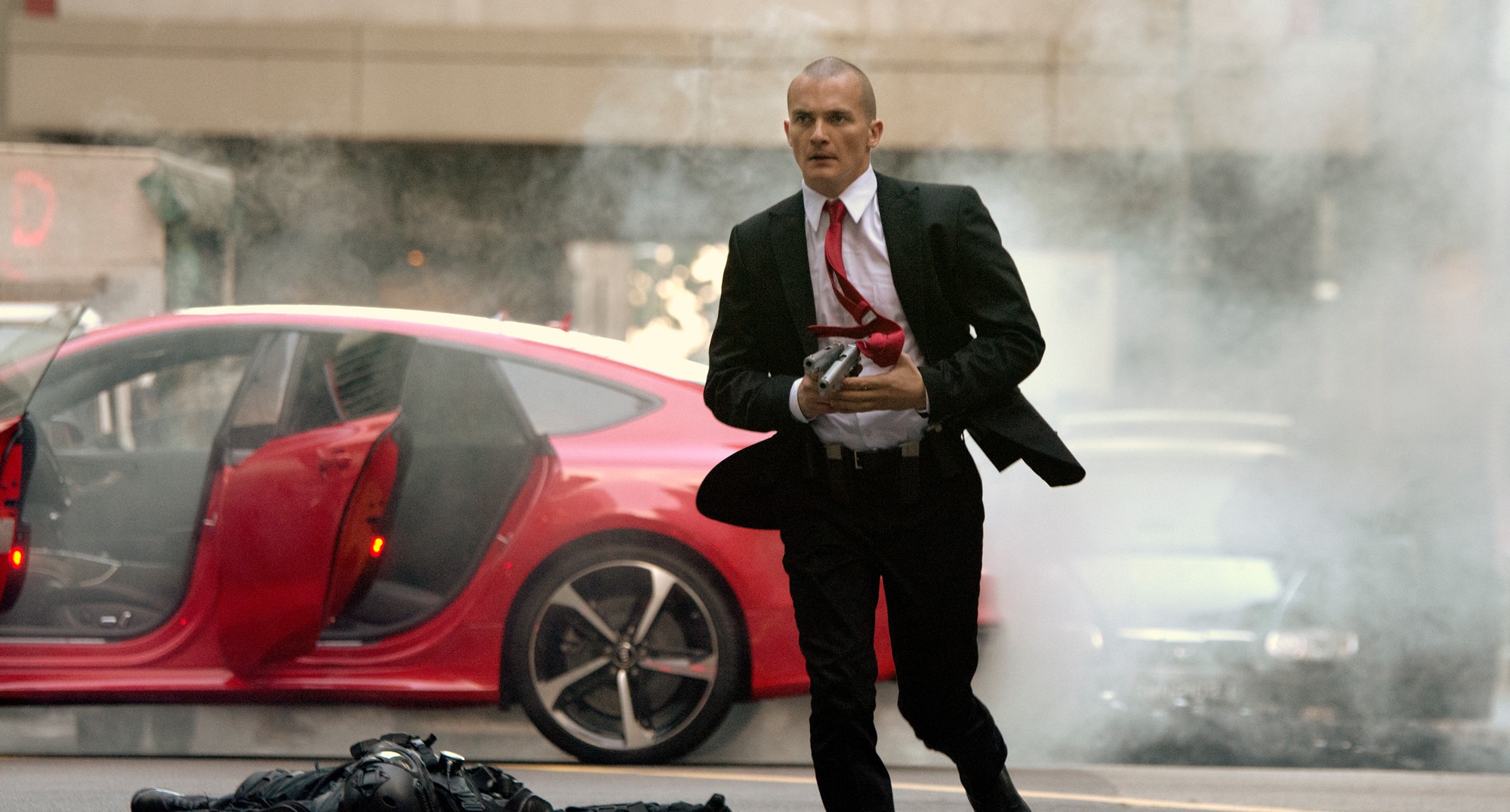
Hitman Agent 47 - scene

Excerpt from a memo sent by 20th Century Fox CEO Jim Gianopulos to co-chairman Stacey Snyder:

We made Hitman?!

Rating: 4/10 – professionally made tosh, Hitman: Agent 47 retains a modicum of credibility but only because it exists in a parallel world where the police don’t get involved in any gunplay, and where someone can be said to have subdural body armour – and no one blinks an eye; Friend is efficient though too remote, and Ware is blatantly awkward, leaving no one to carry the film on a human level, and allowing it to get by on badly edited action sequences that would have been even worse if they hadn’t been orchestrated by John Wick (2014) directors David Leitch and Chad Stahelski.

Share this:

  • Share on X (Opens in new window) X
  • Share on Facebook (Opens in new window) Facebook
  • More
  • Print (Opens in new window) Print
  • Email a link to a friend (Opens in new window) Email
Like Loading...

Monthly Roundup – August 2015

23 Sunday Aug 2015

Posted by dullwood68 in Movies

≈ 1 Comment

Tags

A Capella, Action, Anna Kendrick, Arnold Schwarzenegger, Bank robbers, Barden Bellas, Bloody Mary 3D, Brighton Mob, Cathryn Michon, Charlie Vaughn, Christian J. Hearn, Comedy, Crime, David Arquette, David Siegel, Derek Jameson, Documentary, Elizabeth Banks, James Cameron, Jamie Lee Curtis, Jaqueline Siegel, Lauren Greenfield, Lavalantula, Literary adaptation, Los Angeles, Max Day, Mike Mendez, Movies, Muffin Top: A Love Story, Musical, Nia Peeples, Pitch Perfect 2, Ray James, Real estate, Rebel Wilson, Reviews, Sci-fi, Self esteem, Spiders, Steve Guttenberg, Terrorists, Thriller, Tom Arnold, True Lies, Undercover cop, Veronica Ricci, Versailles, Volcanoes, Weight loss

True Lies (1994) / D: James Cameron / 141m

Cast: Arnold Schwarzenegger, Jamie Lee Curtis, Tom Arnold, Tia Carrere, Bill Paxton, Art Malik, Eliza Dushku, Grant Heslov, Charlton Heston

Rating: 8/10 – spy Harry Tasker (Schwarzenegger) must track down and thwart the plans of jihadists to detonate nuclear bombs on US soil – and keep it all secret from his unsuspecting wife (Curtis); even now, True Lies remains tremendous fun, even if it does get bogged down by its middle act domestic dramatics, and Cameron directs with his usual attention to detail and aptitude for kinetic energy.

True Lies

The Queen of Versailles (2012) / D: Lauren Greenfield / 100m

With: Jaqueline Siegel, David Siegel, Richard Siegel, Marissa Gaspay, Victoria Siegel, Wendy Ponce

Rating: 7/10 – a look at the lives of self-made millionaire David Siegel and his wife Jaqueline, as their lives go from riches to rags thanks to the economic crisis in 2008; “how the other half lived” might be an appropriate subtitle for The Queen of Versailles, and the ways in which the Siegels try to deal with their reversal of fortune will bring a wry smile to viewers who aren’t millionaires, but ultimately this is a story about a couple for whom hardship means not being able to build their dream home: an enormous mansion that defies both taste and propriety.

Queen of Versailles, The

Brighton Mob (2015) / D: Christian J. Hearn / 79m

Cast: Ray James, Max Day, Philip Montelli Poole, Stephen Forrest, Nick Moon, George Webster, Reuben Liburd, Amy Maynard

Rating: 2/10 – an inexperienced young policeman (James) is given the job of infiltrating a gang suspected of carrying out bank robberies across the South of England; a low-budget, amateurish effort, Brighton Mob features dreadful dialogue, awful acting, and the kind of direction that seems to have been carried out by someone who’s not actually watching any of the dailies.

Brighton Mob

Muffin Top: A Love Story (2014) / D: Cathryn Michon / 97m

Cast: Cathryn Michon, Diedrich Bader, Melissa Peterman, David Arquette, Marissa Jaret Winokur, Haylie Duff, Marcia Wallace, Gary Anthony Williams

Rating: 7/10 – when Suzanne (Michon) learns that her husband (Bader) is having an affair and wants a divorce, she goes on a voyage of personal discovery; with several pertinent (if obvious) points to make about self-esteem and body image, Muffin Top: A Love Story is a gently comedic, engaging movie that features an endearing performance from Michon, and doesn’t overdo its theme of female empowerment.

Muffin Top A Love Story

Lavalantula (2015) / D: Mike Mendez / 80m

Cast: Steve Guttenberg, Nia Peeples, Patrick Renna, Noah Hunt, Michael Winslow, Marion Ramsey, Leslie Easterbrook, Ralph Garman, Diana Hopper, Zac Goodspeed, Danny Woodburn, Time Winters

Rating: 4/10 – when volcanic activity strikes Los Angeles, it brings with it giant fire-breathing spiders, and only action movie hero Colton West (Guttenberg) can save the day; taking its cue from the Sharknado series’ combination of low-budget special effects and broad self-referential humour, Lavalantula is enjoyable enough if you just go with it, and benefits from having Mendez – who gave us the superior Big Ass Spider! (2013) – in the director’s chair.

Lavalantula

Pitch Perfect 2 (2015) / D: Elizabeth Banks / 115m

Cast: Anna Kendrick, Rebel Wilson, Hailee Steinfeld, Brittany Snow, Skylar Astin, Adam DeVine, Katey Sagal, Anna Camp, Ben Platt, Alexis Knapp, Hana Mae Lee, Ester Dean, Chrissie Fit, Birgitte Hjort Sørensen, Flula Borg, John Michael Higgins, Elizabeth Banks

Rating: 6/10 – after a show goes disastrously, embarrassingly wrong, the Barden Bellas are banned from competing in the US, but it doesn’t stop them from taking part in the World A Capella Championships and going up against the dominating Das Sound Machine; a predictable sequel that offers nothing new (other than a great cameo by Snoop Dogg), Pitch Perfect 2 will satisfy fans of the original but newcomers might wonder what all the fuss is about.

Pitch Perfect 2

Bloody Mary 3D (2011) / D: Charlie Vaughn / 77m

Cast: Veronica Ricci, Derek Jameson, Alena Savostikova, Bear Badeaux, Shannon Bobo, Michael Simon, Natalie Pero, Ryan Barry McCarthy, Shawn C. Phillips, Shay Golden

Rating: 2/10 – the ghost of Mary Worth (Ricci) targets the makers of a music video when her name is invoked and she finds the reincarnation of the man who killed her is the video’s star; dire in the extreme, Bloody Mary 3D is the kind of low budget horror movie that gives low budget horror movies a bad name, and criminally, takes too much time out to showcase Jameson’s limited talents as a singer (and the 3D is awful as well).

Bloody Mary 3D

Share this:

  • Share on X (Opens in new window) X
  • Share on Facebook (Opens in new window) Facebook
  • More
  • Print (Opens in new window) Print
  • Email a link to a friend (Opens in new window) Email
Like Loading...

Mini-Review: The Man from U.N.C.L.E. (2015)

19 Wednesday Aug 2015

Posted by dullwood68 in Movies

≈ 1 Comment

Tags

Action, Alicia Vikander, Armie Hammer, Atom bomb, CIA, Cold War, Drama, Elizabeth Debicki, Guy Ritchie, Henry Cavill, Hugh Grant, Ilya Kuryakin, KGB, Napoleon Solo, Review, Spies, The Sixties, Thriller, U.N.C.L.E.

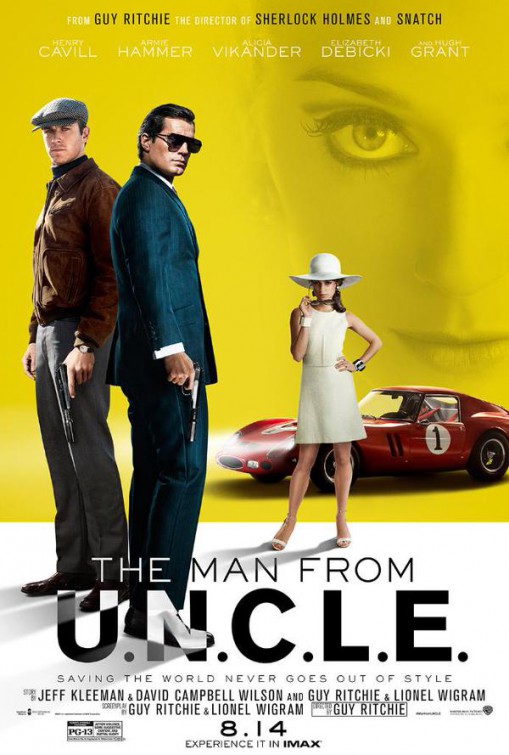
Man from U.N.C.L.E., The

D: Guy Ritchie / 116m

Cast: Henry Cavill, Armie Hammer, Alicia Vikander, Elizabeth Debicki, Luca Calvani, Sylvester Groth, Hugh Grant, Jared Harris, Christian Berkel, Misha Kuznetsov

Following his rescue of a scientist’s daughter, Gaby Teller (Vikander) from East Berlin, CIA agent Napoleon Solo (Cavill) is told by his boss (Harris) that he has a new partner: the KGB agent who tried to stop him, Ilya Kuryakin (Hammer). Gaby’s father, Udo (Berkel), is building an atom bomb that’s intended for a hidden Nazi group. Her Uncle Rudi (Groth) is suspected of knowing where he is. Solo and Kuryakin must take Gaby to Rome where evidence points to the involvement of the Alexanders (Calvani, Debicki). While Solo poses as an antiquities dealer, Kuryakin poses as Gaby’s fiancé. Solo and Kuryakin attend a party given by Victoria Alexander where they discover evidence that the atom bomb (and Udo) must be nearby. That night they both break in to the Alexanders’ factory where they find further evidence of Udo’s work.

Solo meets with Victoria but she drugs his drink. When he wakes he finds himself strapped to a chair and about to be tortured by Uncle Rudi who turns out to be an evil Nazi scientist. With Kuryakin’s aid he escapes, while Gaby is taken to an island where her father is putting the finishing touches to the bomb. It’s at this point that Solo and Kuryakin are introduced to Commander Waverly (Grant), a member of British intelligence. He fills them in on some information that’s been held back from them, and reveals a plan to infiltrate the island, seize the atom bomb, and rescue Gaby and her father. But the Alexanders have an ace up their sleeve…

Man from U.N.C.L.E., The - scene

The Man from U.N.C.L.E. (on the big screen at least) has been a long time coming. But up until the recent involvement of Ritchie and his producing partner Lionel Wigram, every attempt to make a movie version of the classic 60’s TV show has stalled, often before it’s even cleared the gate. Coming off two very successful Sherlock Holmes movies, Ritchie has clearly been given as much leeway as he needs in order to bring this movie to audiences, and while he uses many of the stylistic shooting techniques he used on the Holmes movies, what he’s failed to do is come up with a story that is either exciting or engrossing. It’s a shame as the potential is there for another successful franchise, but aside from a splendidly retro feel for the era, the movie lacks the kind of impact that would lift it out of the bin marked “ordinary”.

Things aren’t helped by the casting of Cavill and Hammer, two averagely effective actors who lack the subtlety required to make Solo and Kuryakin anything more than grudging partners. Sure it’s an origin story so the animosity is understandable, but they’re also highly skilled professionals, the best at what they do; so why make Solo a preening plank, or Kuryakin a headstrong liability? It’s a curious decision, to make your two leading men so unrelatable, but Ritchie’s gone with it completely, and the movie suffers appropriately. Thankfully, the same can’t be said of Vikander and Debicki, who save the movie from being too much of a debacle, and the involvement of Grant, who seems to be having the most fun he’s had in years. If there is to be a sequel – and at the moment the movie’s performance at the box office seems to indicate there won’t be – then a serious rethink is in order.

Rating: 5/10 – not as bad as it could have been, but also not as good as it should have been, The Man from U.N.C.L.E. lacks energy and limps uneasily from scene to scene in search of a consistently entertaining tone that it doesn’t find; a pleasant enough diversion if you’re in the mood, but definitely not a movie to expect too much from.

Share this:

  • Share on X (Opens in new window) X
  • Share on Facebook (Opens in new window) Facebook
  • More
  • Print (Opens in new window) Print
  • Email a link to a friend (Opens in new window) Email
Like Loading...

Oh! the Horror! – Lake Placid vs Anaconda (2015) and Sharknado 3: Oh Hell No! (2015)

25 Saturday Jul 2015

Posted by dullwood68 in Movies

≈ Leave a comment

Tags

A.B. Stone, Action, Anacondas, Anthony C. Ferrante, Black Lake, Cassie Scerbo, Clear Lake, Corin Nemec, Crocodiles, David Hasselhoff, Double bill, East Coast, Horror, Ian Ziering, Review, Sequels, Sharknado, Stephen Billington, Tara Reid, Thriller, Wexel Corporation, Yancy Butler

Lake Placid vs Anaconda

D: A.B. Stone / 91m

Cast: Corin Nemec, Yancy Butler, Stephen Billington, Skye Lourie, Oliver Walker, Ali Eagle, Annabel Wright, Laura Dale, Robert Englund

When the Wexel Corporation decides to create a hybrid anaconda/crocodile in order to increase their chances of procuring the rare properties of the Blood Orchid plant, their attempts to do so lead to both creatures being on the loose in and around Black Lake and Clear Lake. Fish and Wildlife ranger Will Tull (Nemec) and local sheriff Reba (Butler) team up to track and hunt them while at the same time trying to keep the news of the creatures’ escape quiet from the local residents.

Tull’s daughter, Bethany (Lourie), however, is at Clear Lake as part of her sorority pledge, and soon finds herself and her friends at the mercy of several crocodiles. While Tull and Reba try to find her, and fight off the attacks of the crocodiles, Wexel head Sarah Murdoch (Wright), along with hired muscle Beach (Billington) and two of his men, track the female anaconda who is due to lay her cross-fertilised eggs anytime soon. As the body count rises, the importance of finding the female anaconda before this happens becomes of paramount importance.

Lake Placid vs Anaconda - scene

For anyone who thought Lake Placid: The Final Chapter (2012) was really the final entry in the series, here’s yet another stab at the idea that ran out of steam in Lake Placid 2 (2007). If you’ve seen The Final Chapter, then as far as the crocodile parts of this movie go it’s very much business as usual, with Butler and England returning to provide a link with the previous instalment (and both looking as if they’ve regretted it). The inclusion of the anacondas from that particular series, along with the quest for the life-giving properties of the Blood Orchid, was probably felt to be a good enough idea to kickstart a new franchise – you can guess what happens in the final scene – but the whole teens in peril/let’s hunt predators in the woods set up is as dull and uninspired as it was before in both series.

Rookie director Stone is unable to make anything out of Berkeley Anderson’s patchwork script, and the performances range from perfunctory to embarrassing (Walker’s comedy deputy). Once again the special effects are of the sub-par CGI variety, with the requisite blood splatters looking even more fake than usual. The anacondas play second fiddle to the crocodiles, while the lacklustre Bulgarian locations give a clear indication of how far both series’ have fallen in terms of their production values. If, as seems likely, there’s to be another in the (joint) series, then it’s hard to imagine it could be any worse than this entry.

Rating: 3/10 – of only superficial interest, and one for the fans if no one else, Lake Placid vs Anaconda is an attempt at regenerating two flagging franchises that falls flat on its face within the first five minutes; that it’s terrible from start to finish is a given, but you have to see it to realise just how terrible it actually is.


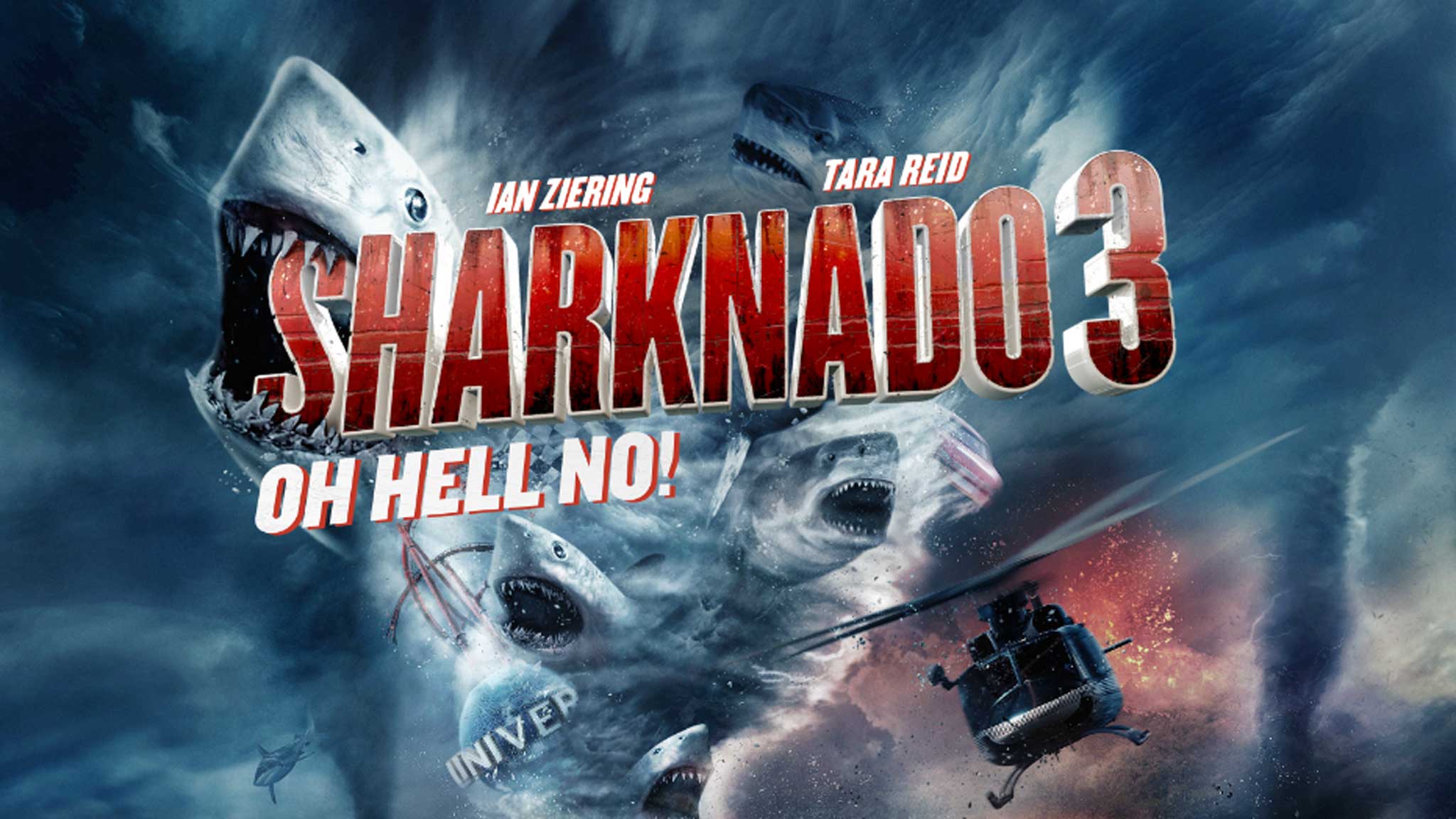
Sharknado 3

D: Anthony C. Ferrante / 88m

Cast: Ian Ziering, Tara Reid, Cassie Scerbo, Frankie Muniz, Ryan Newman, David Hasselhoff, Bo Derek, Mark Cuban

In Washington D.C. to receive a Freedom medal from the President (Cuban), unlucky hero Fin Shepard (Ziering) finds himself dealing with yet another, more intense sharknado that causes an incredible amount of destruction, hundreds of deaths, and leads to Fin saving the President’s life. Worse still, a series of storms out in the Atlantic are converging on America’s east coast, and look set to generate the worst, most devastating sharknado of them all. With his ex-wife April (Reid) close to giving birth, and spending some time with her mother May (Derek) and daughter Claudia (Newman) at the Universal Studios theme park in Florida, Fin determines to get to her as quickly as possible, and make sure she’s safe.

With mini-sharknados popping up out of the blue on his journey south, Fin finds himself rescued from one such obstacle by his friend and partner in shark killing, Nova (Scerbo). She and a friend, Lucas (Muniz) have been trying to find a way of stopping the sharknados from happening ever again, but as they help Fin get to Florida, their vehicle is destroyed and they’re forced to fly there. After a crash landing, Fin and April are reunited, and together with Nova they come up with a plan to put paid to the approaching weather system, but their plan fails, leaving Fin with only one option: to ask for help from his father, a retired NASA Colonel (Hasselhoff). By using a space shuttle, their plan is to drop the main fuel tank into the eye of the storm, but when that idea proves ineffective, there’s only one thing left to do: use the supposedly defunct Star Wars programme from the Eighties…

Sharknado 3 - scene

The first Sharknado (2013) was awful, dreadful rubbish that seemed unaware of its failings or how terrible it was. The second – aptly titled Sharknado 2: The Second One (2014) – was much better as it tried to be ironic and aware of its own absurdity. With Sharknado 3: Oh Hell No!, the makers have upped their game considerably in terms of how insane it all is and by throwing away the rule book entirely (this is perhaps the only movie where you’ll hear the line, “There’s sharks… in space!”). The sharks literally pop up out of nowhere: inside buildings, on staircases, through windows, and memorably, in the President’s secure underground bunker. With no thought to logic or any consideration for providing some level of working coherence, the movie races through each preposterous scene in Thunder Levin’s script with all the intended mayhem of a five year old with ADHD.

It’s a movie that’s incredibly, ridiculously stupid… and yet, by going balls out in terms of how absurd it can be, the movie actually attains a degree of charm that the previous movies never managed. It’s also laugh out loud funny in a way that doesn’t alienate the viewer, or have them shaking their head and groaning in despair. Instead, the laughs come thick and fast because of all the preposterous antics going on, and it’s clear the makers have just decided to make the movie as bizarre and reckless as they possibly can. Returning cast members Ziering, Reid and Scerbo play it as straight as they can, while there’s a plethora of cameos – Jerry Springer, Chris Jericho, Jedward, Lou Ferrigno, Jackie Collins, and Ne-Yo to name but a few – that adds to the fun, and the low rent special effects show no signs of being improved upon. With the potential for yet another episode to come, it’s hard to think how much more barmy this series can get.

Rating: 4/10 – as each movie improves on the last, Sharknado 3: Oh Hell No! is (currently) the series’ zenith and nadir combined, and shows that its makers have a firmer grasp on what makes these movies so successful; still terrible though in many, many, many ways, by trading on its own idiocy the movie makes a virtue of being extremely silly and defiantly farcical.

Share this:

  • Share on X (Opens in new window) X
  • Share on Facebook (Opens in new window) Facebook
  • More
  • Print (Opens in new window) Print
  • Email a link to a friend (Opens in new window) Email
Like Loading...

Ant-Man (2015) and the Problem with the Marvel Cinematic Universe

23 Thursday Jul 2015

Posted by dullwood68 in Movies

≈ 3 Comments

Tags

Action, Ant-Man, Anthony Mackie, Comedy, Corey Stoll, Drama, Evangeline Lilly, Hank Pym, Marvel, Marvel Cinematic Universe, Michael Douglas, Michael Peña, Paul Rudd, Peyton Reed, Review, S.H.I.E.L.D., The Falcon, Yellowjacket

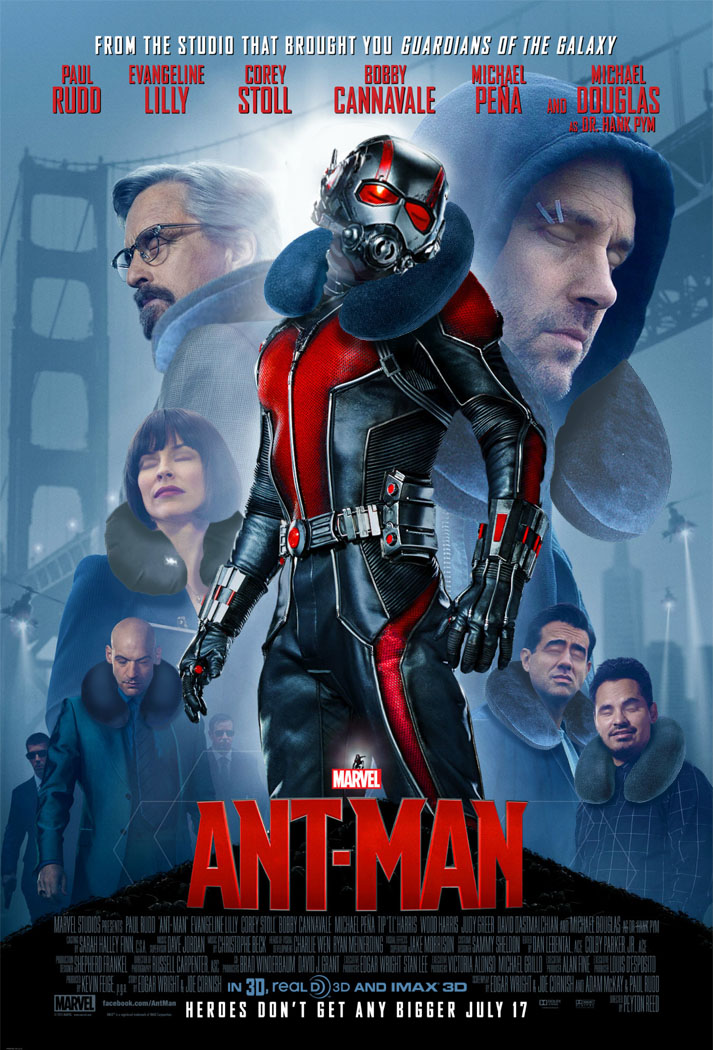
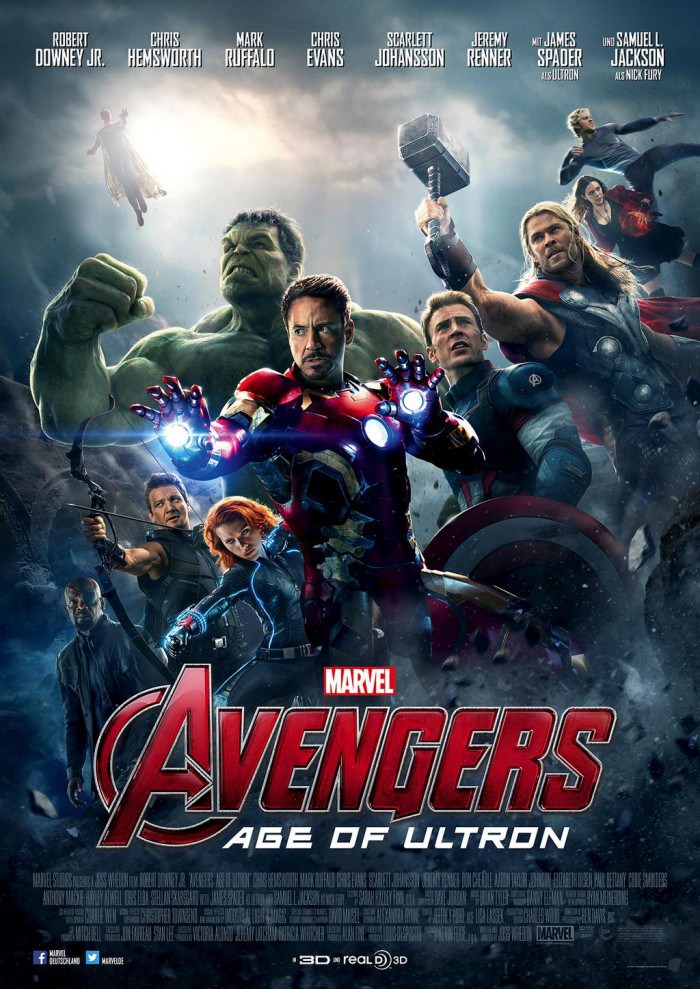
And so we say farewell to Phase Two of the Marvel Cinematic Universe, a place audiences have become incredibly familiar with in the last seven years. It’s been a wildly successful run so far: including Avengers: Age of Ultron (2015), Marvel has made eleven movies and reaped over eight and a half billion dollars worldwide. Their movies make up the most successful franchise ever… and with Ant-Man and a further ten movies making up Phase Three due between now and July 2019, it’s clear that title isn’t going to be relinquished anytime soon.

Ant-Man

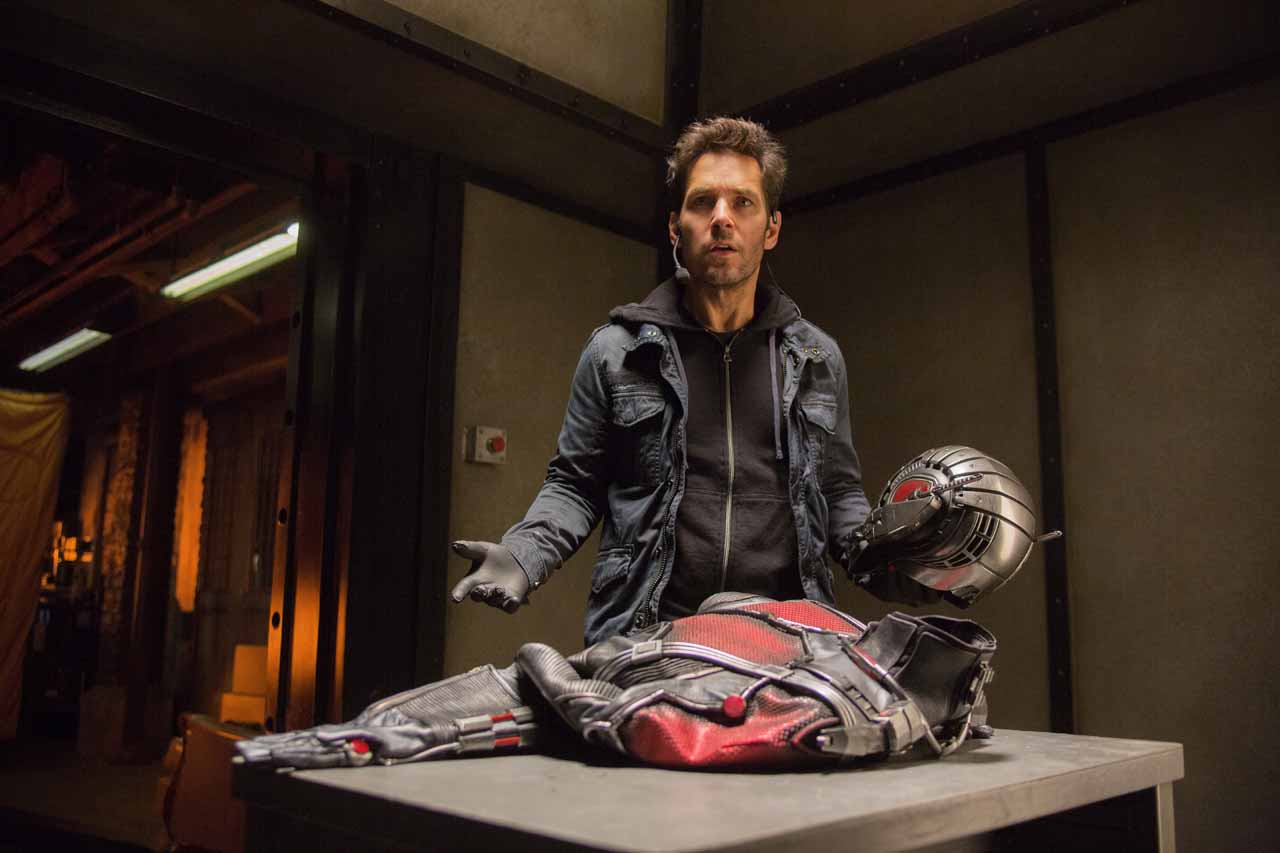
But while Ant-Man is pleasantly entertaining, and features possibly the best supporting turn in any Marvel movie – stand up, Michael Peña! – it’s also the most formulaic and predictable, from its opening scene set in 1989 and featuring an amazingly youthful Michael Douglas, to its introduction of Scott Lang (a criminal with a moral backbone), to the nefarious activities of villain Darren Cross and his attempts to replicate the work of Dr Henry Pym, to Scott’s friends/sidekicks, to the revelation that Pym is estranged from his daughter Hope (not really!), to Scott’s easy acceptance of Pym’s recruitment of him, to his quickly established command of the Ant-Man suit, to the foiled capers, and the eventual success of Cross in emulating Pym’s work. It’s a Marvel movie, true enough: safe, non-controversial, carrying a faint whiff of po-faced seriousness in amongst all the goofy humour, and sticking close to the established Marvel movie template, all the way down to the post-credits teaser for Captain America: Civil War (2016).

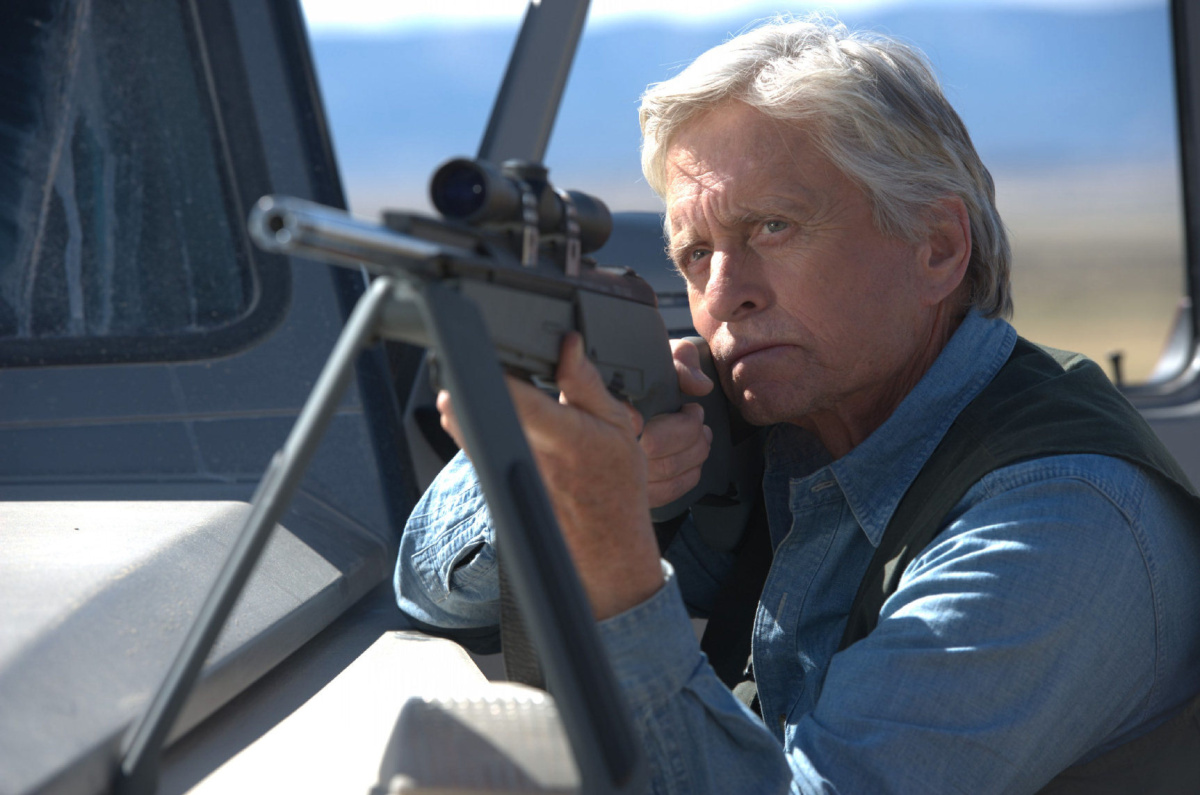
Ant-Man isn’t a bad film. In parts, it’s quite spirited and enjoyable, and there are clear indications that Edgar Wright knew what he was doing before Peyton Reed inherited the director’s chair (the toy locomotive derailing silently could only have come from the mind of the co-creator of the Cornetto Trilogy). The special effects are superb, with the 3D conversion (especially in the IMAX format) proving particularly immersive and impressive. But the story is bland, and so are the characters. When you have a cast that includes the likes of Douglas, Paul Rudd, Evangeline Lilly, Anthony Mackie and Peña, surely it would be a good idea to have them do something more adventurous and original than try to steal a suit (no matter what it can do). Even the humour, usually something that Marvel gets right, feels tired and derivative of other Marvel movies.

Marvel's Ant-Man..Scott Lang/Ant-Man (Paul Rudd)..Photo Credit: Zade Rosenthal..? Marvel 2014

And it’s this derivation, this close sticking to the perceived required template that is leading Marvel astray, leaving only Guardians of the Galaxy (2014) as their most fully realised and effective movie so far. With each stand-alone movie having to fit into the larger Marvel universe (an issue Guardians didn’t have to worry about), it’s clear that these entries lack the attention to their own stories that would allow them to be more distinctive. As it is, the similarities keep on coming: Iron Man fights another robot or batch of robots, Thor fights a race intent on destroying either Asgard or just about everything, Captain America acts as a moral compass while performing acrobatics with his shield, and both Avengers movies see the group fighting off overwhelming hordes of attackers (while also laying waste to whichever city they happen to be in). And the Hulk is sidelined because they can’t work out what to do with him.

Fans of the Marvel Cinematic Universe – and there’s obviously more than a few of them – will suggest that the movies are delivering almost exactly what they want, with all their in-jokes and easter eggs and cameos, and those post-credit scenes that keep people in their seats right until the very end of the movie, but the formula is already showing signs of becoming tired. Ant-Man was the project that prompted Marvel and producer Kevin Feige to go ahead with the whole Cinematic Universe idea; how sad then to see that the movie is less than the sum of its parts, and doing just enough to raise a smile or a jaded bout of wonder.

But maybe there is hope. In amongst the two Avengers movies (three if you count Civil War) and the Guardians and Thor sequels, there are some hopefully different movies coming, with new characters – Doctor Strange, Black Panther, Captain Marvel – and maybe, just maybe the promise of a new direction for the whole Universe. It would be great to see these characters carry Marvel forward into Phase Four and in doing so, offer audiences new experiences rather than the fatigue-ridden outings we’ve started to see in the last couple of years. Let’s hope so, anyway.

Rating: 6/10 – saddled with the kind of storyline and plot that would be more at home on the small screen, Ant-Man never lives up to its “Heroes don’t get any bigger” tagline; in many ways a kind of contractual obligation, it skimps on depth to provide the most lightweight and undemanding Marvel movie yet.

Share this:

  • Share on X (Opens in new window) X
  • Share on Facebook (Opens in new window) Facebook
  • More
  • Print (Opens in new window) Print
  • Email a link to a friend (Opens in new window) Email
Like Loading...

Monthly Roundup – June 2015

30 Tuesday Jun 2015

Posted by dullwood68 in Movies

≈ 1 Comment

Tags

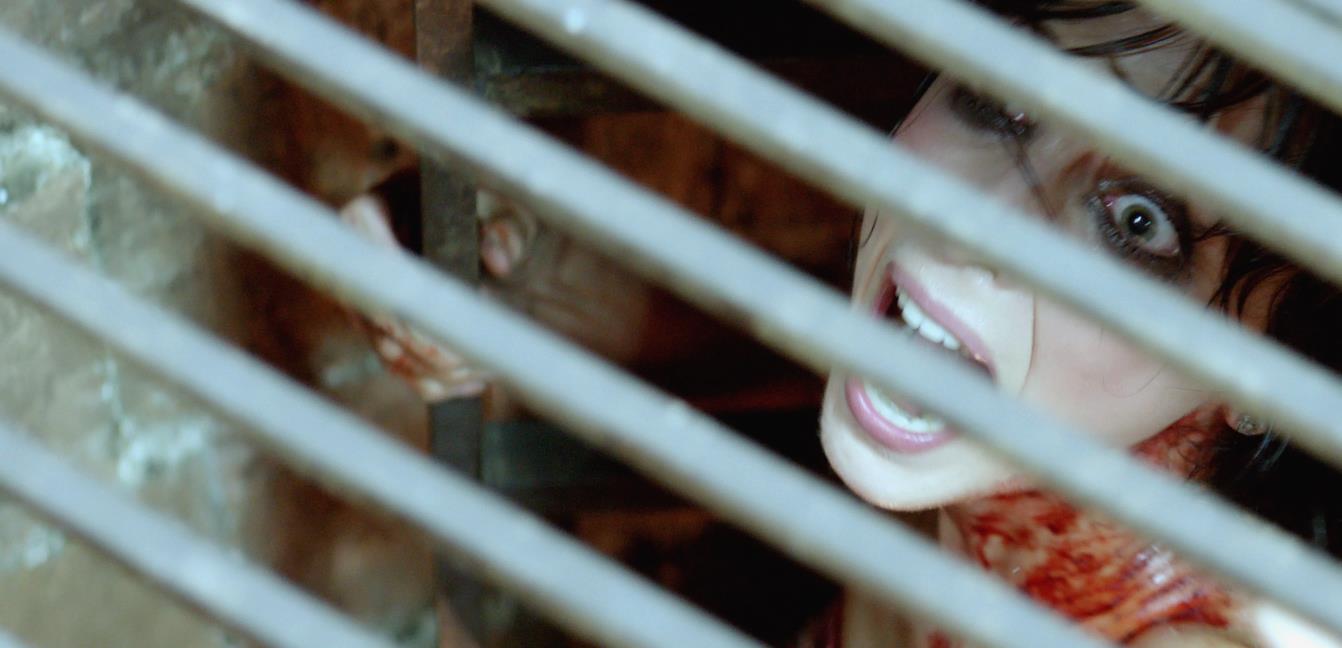
Action, Animation, Beyond the Reach, Black Samurai, Blood, Brian Cox, Bulldog Drummond Comes Back, Bulldog Drummond in Africa, Children of the Corn: Genesis, Chris Evans, Chyler Leigh, Crazy Sexy Cancer, Crime, Curse of the Witching Tree, Daphne, Documentary, Dolph Lundgren, Drama, Drunk Wedding, E.E. Clive, Echelon Conspiracy, Ed Burns, Espionage, Every Secret Thing, Faults, Forrest Tucker, Fred, Gambling, Green Dragon, Gunsmoke in Tucson, Horror, Human trafficking, Imogen Poots, Indie movie, Jennifer Aniston, Jeremy Irvine, John Barrymore, John Howard, Kris Carr, Leland Orser, Leticia Dolera, Louis King, Mark Stevens, Martin Sheen, Mary Elizabeth Winstead, Michael Douglas, Miguel Ferrer, Mojave Desert, Movies, Murder, Noboru Iguchi, Not Another Teen Movie, Owen Wilson, Pamela Springsteen, Paul Bethany, Peter Bogdanovich, Prague, Predator: Dark Ages, Reviews, Rhys Ifans, Riley Stearns, Scooby-Doo! and the Samurai Sword, Serial killer, Shaggy, Shane West, She's Funny That Way, Skin Trade, Sleepaway Camp 2: Unhappy Campers, Thailand, The Four-Faced Liar, The Night Flier, The Posthuman Project, The Reconstruction of William Zero, Thriller, Tony Jaa, uwantme2killhim?, Vampire, Velma, Ving Rhames, Witch's curse, Zombie Ass: The Toilet of the Dead, Zombies, [Rec]³ Génesis

This month, the roundup is bigger than usual thanks to spending three weeks in sunny France, in an area where the Internet was an occasional luxury rather than a constant presence. But in between drinking copious amounts of beer and wine, and sampling far too much cheese and local bread, there was quite a bit of movie watching going on. These are the movies I watched in a gite in the middle of the gorgeous Brittany countryside, almost all of them a reminder that when life is this good you can forgive quite a bit…

The Posthuman Project (2014) / D: Kyle Roberts / 93m

Cast: Kyle Whalen, Collin Place, Josh Bonzie, Lindsay Sawyer, Alexandra Harris, Jason Leyva, Rett Terrell, Will Schwab

Rating: 5/10 – a group of teens develop super powers thanks to a device created by the dastardly uncle of one of them, and must thwart his plan to use it for immoral profit; pretty much a low-budget, amateur version of The Fantastic Four, The Posthuman Project relies on its not inconsiderable charm to help the viewer get past its rough edges, but the acting and the dialogue leave an awful lot to be desired, sometimes too much so.

Posthuman Project, The

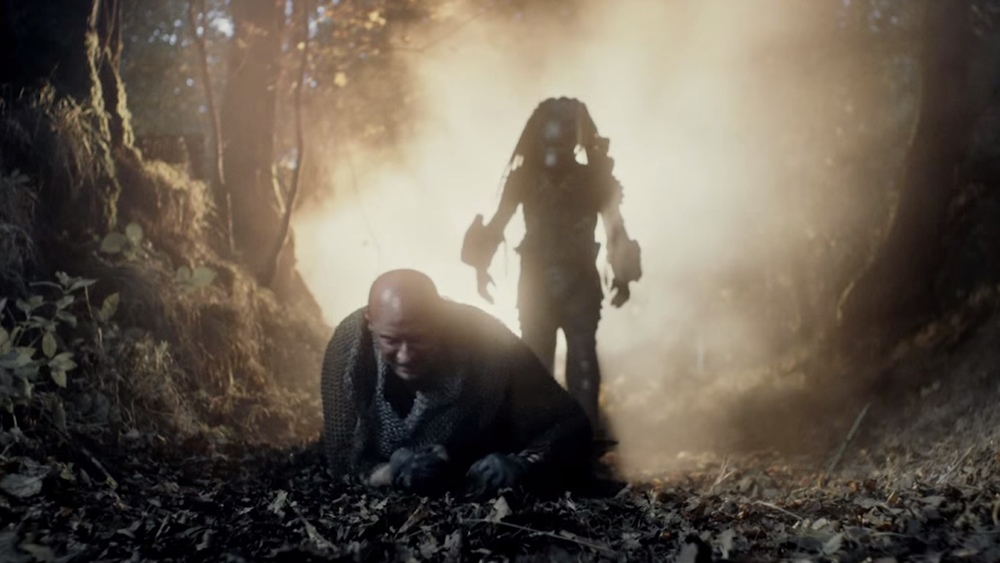
Predator: Dark Ages (2015) / D: James Bushe / 27m

Cast: Adrian Bouchet, Amed Hashimi, Sabine Crossen, Ben Loyd-Holmes, Jon Campling, Joe Egan, Philip Lane, Bryan Hands

Rating: 7/10 – a group of mercenaries led by Thomas (Bouchard) set off to hunt the mysterious creature killing people and animals in a nearby forest – and find something even more deadly than they expected; a fan-made short that adds a novel twist to the Predator saga, Predator: Dark Ages is a welcome distraction that confirms that, sometimes, the big studios don’t always have the right idea when it comes to their franchise characters.
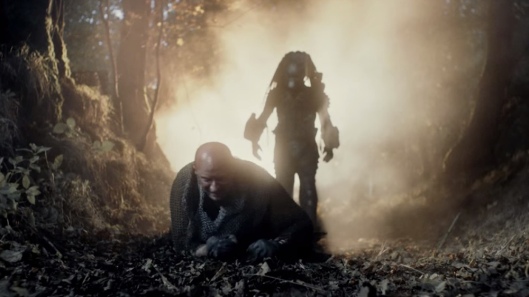
Predator Dark Ages

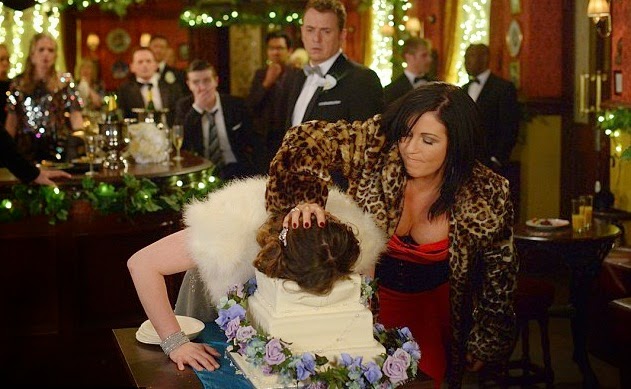
Drunk Wedding (2015) / D: Nick Weiss / 81m

Cast: Christian Cooke, Victoria Gold, Dan Gill, Anne Gregory, J.R. Ramirez, Nick P. Ross, Genevieve Jones, Diana Newton

Rating: 4/10 – when a couple decide to get married in Nicaragua, they and some of their friends are given hand-held cameras to film it all… with predictably awful, drunken, outrageous, and potentially life-altering effects; if your idea of comedy is seeing someone urinating on another person’s back, then Drunk Wedding is the movie for you, and despite its lowbrow modern day National Lampoon-style approach it still manages to hold the attention and is surprisingly enjoyable – if you don’t expect too much.
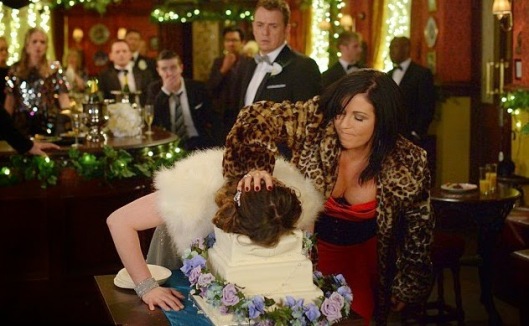
Drunk Wedding

Zombie Ass: The Toilet of the Dead (2011) / D: Noboru Iguchi / 85m

Original title: Zonbi asu

Cast: Arisa Nakamura, Mayu Sugano, Asana Mamoru, Yûki, Danny, Kentaro Kishi, Demo Tanaka

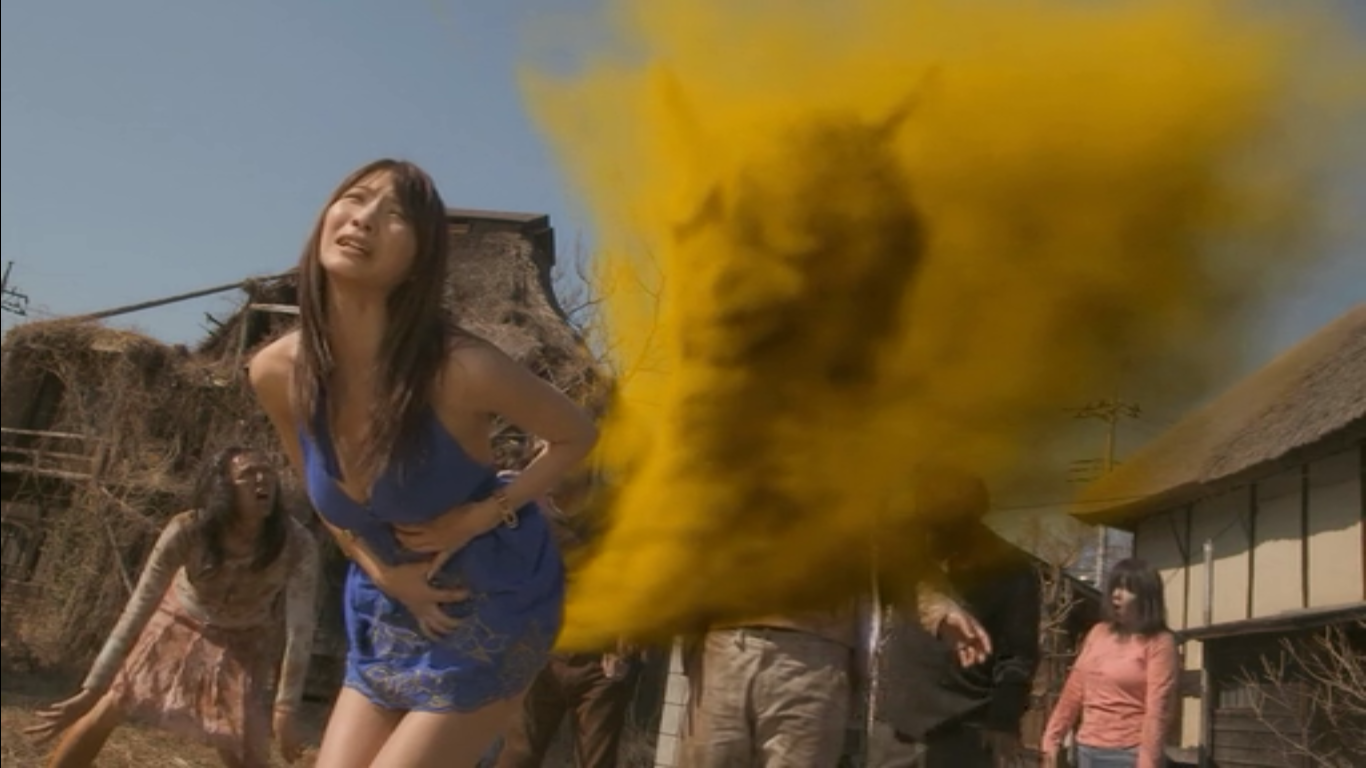
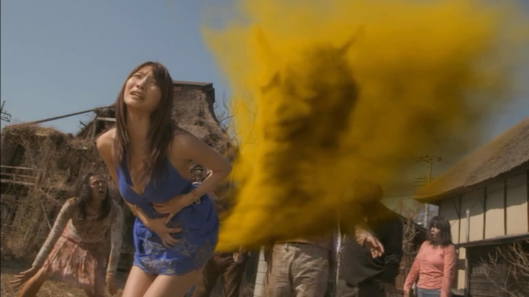
Rating: 5/10 – while on a trip to the woods, Megumi (Nakamura) and four older friends find themselves under attack from zombies who have emerged from the bowels of an outhouse – and only her martial arts skills can save them; a wild, wild ride from one of the masters of Japanese Shock Cinema, Zombie Ass: The Toilet of the Dead is equal parts raw, uncompromising, witless, and gross, but it’s also a movie that just can’t be taken at all seriously, and on that level it succeeds tremendously, providing enough WtF? moments to make it all worthwhile.
Zombie Ass

Faults (2014) / D: Riley Stearns / 89m

Cast: Leland Orser, Mary Elizabeth Winstead, Chris Ellis, Beth Grant, Jon Gries, Lance Reddick

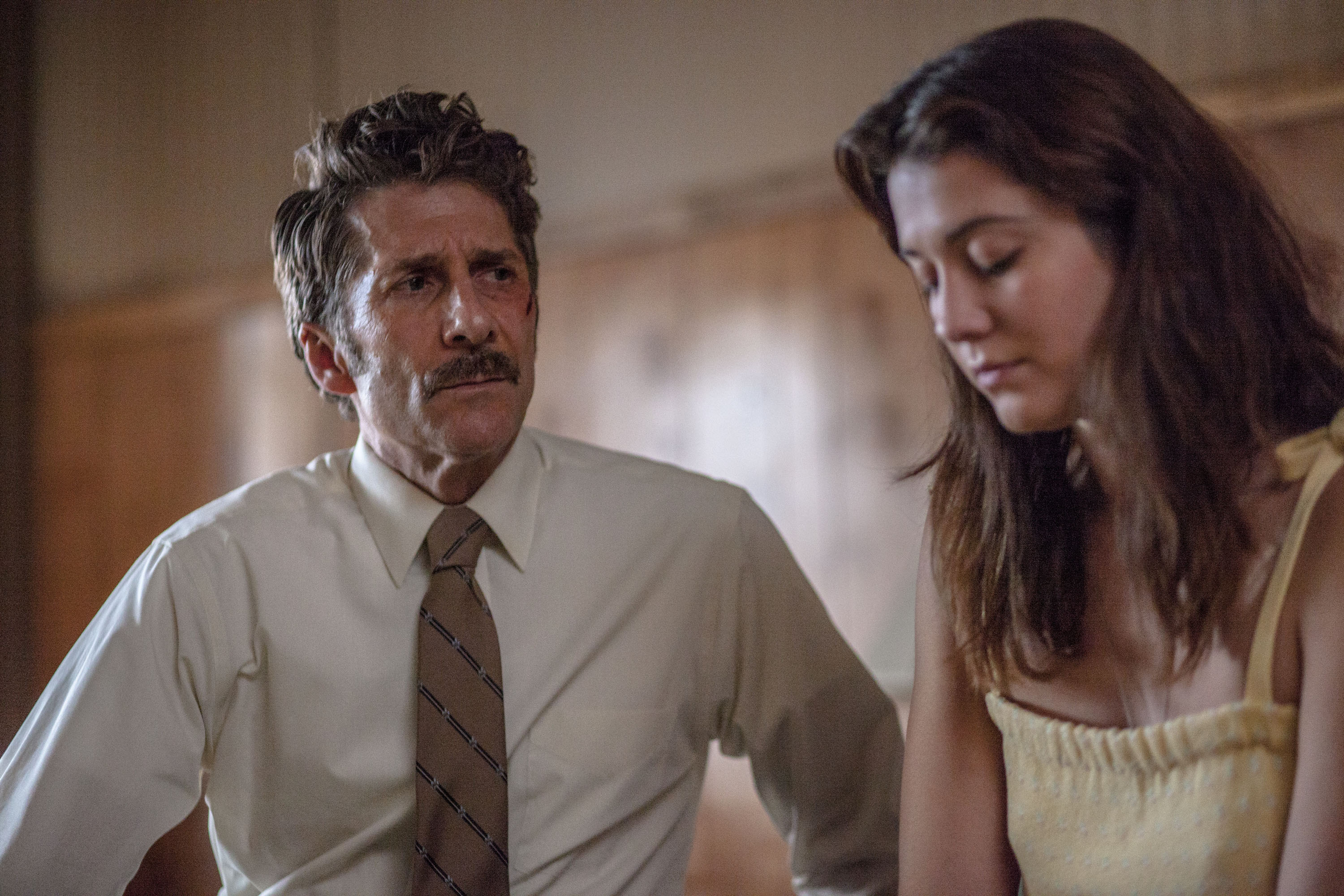
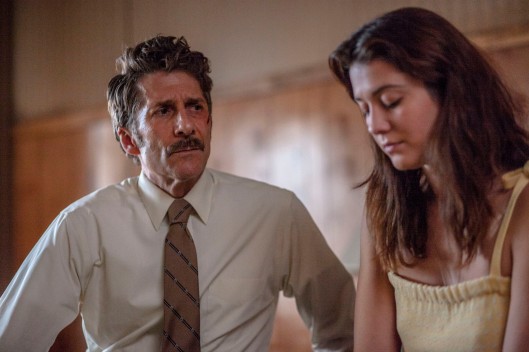
Rating: 8/10 – down on his luck cult expert Ansel (Orser) sees a way out of debt and a chance to regain some self-respect when a couple (Ellis, Grant) ask him to abduct and de-programme their daughter (Winstead), but he soon finds himself out of his depth and facing up to some hard truths; a tour-de-force from the always excellent Orser – and with a solid supporting performance from Winstead – Faults is an unnerving look at a man on the verge of a nervous breakdown, and the ways in which his broken life have led him to a motel room where his own personal beliefs come under as much scrutiny as his captive’s.
(l-r) Leland Orser and Mary Elizabeth Winstead stars in FAULTS. ©Snoot Entertainment. CR: Jack Zeman.

She’s Funny That Way (2014) / D: Peter Bogdanovich / 93m

Cast: Imogen Poots, Owen Wilson, Rhys Ifans, Jennifer Aniston, Will Forte, Kathryn Hahn, Illeana Douglas, Debi Mazar, Cybill Shepherd, Richard Lewis, Ahna O’Reilly, Joanna Lumley

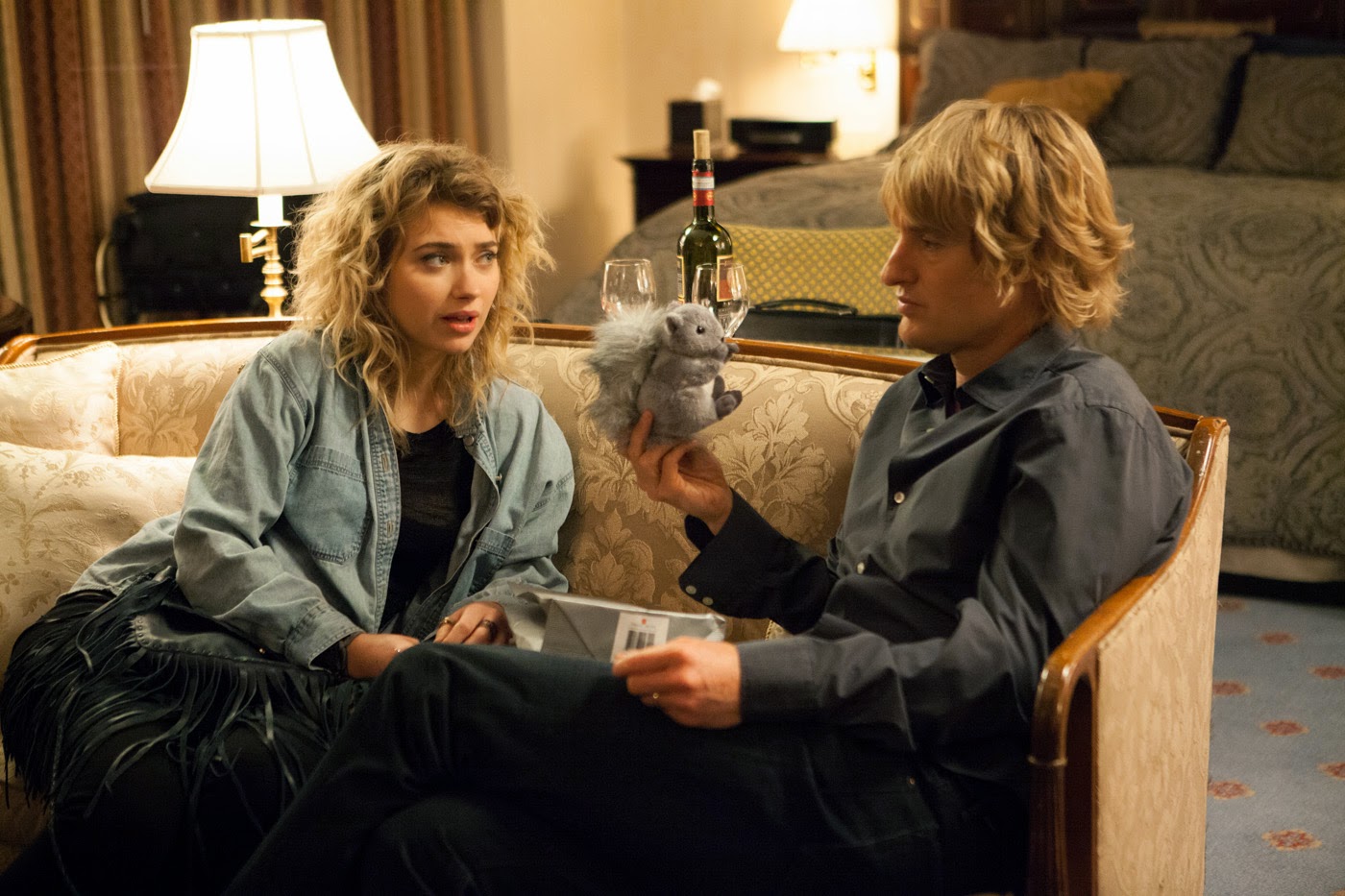
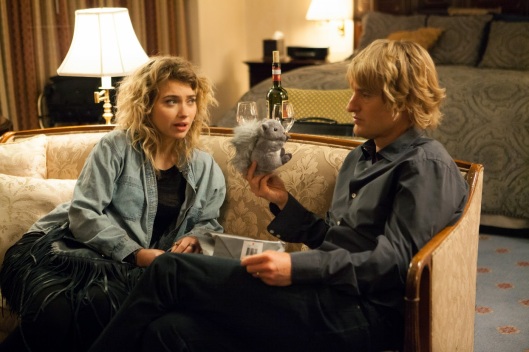
Rating: 6/10 – theatre director Arnold Albertson has a secret: he gives prostitutes money in order that they can set up their own businesses, but when his latest “project”, aspiring actress Isabella Patterson (Poots) lands the starring role in his latest production, it all leads to the kind of deception and duplicity that will test the notion that the show must go on; a modern attempt at a screwball comedy, She’s Funny That Way doesn’t have the sheer energy that made movies such as His Girl Friday (1940) or  Bringing Up Baby (1938) so enjoyable, but Bogdanovich knows his stuff and keeps the movie entertaining for the most part, even if it doesn’t stay in the memory for too long afterwards.
She's Funny That Way

Curse of the Witching Tree (2015) / D: James Crow / 102m

Cast: Sarah Rose Denton, Lucy Clarvis, Lawrence Weller, Jon Campling, Caroline Boulton, Danielle Bux

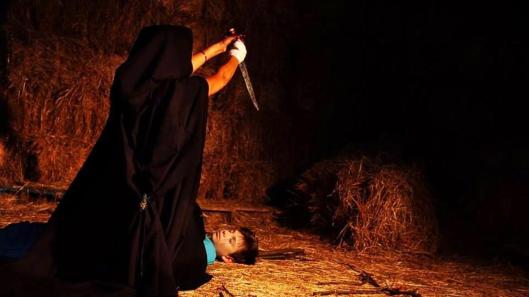
Rating: 2/10 – divorcée Amber Thorson (Denton) moves into an old house with her two children (Clarvis, Weller) only for strange phenomena to start happening that’s connected to a witch’s curse, and which leaves them all at risk of supernatural forces; woeful in the extreme, Curse of the Witching Tree is amateurish nonsense that is badly directed, poorly acted, contains defiantly stilted dialogue, suffers from below-par photography, is tension-free throughout, and stands as an object lesson in how not to make a low-budget British horror movie.
Curse of the Witching Tree

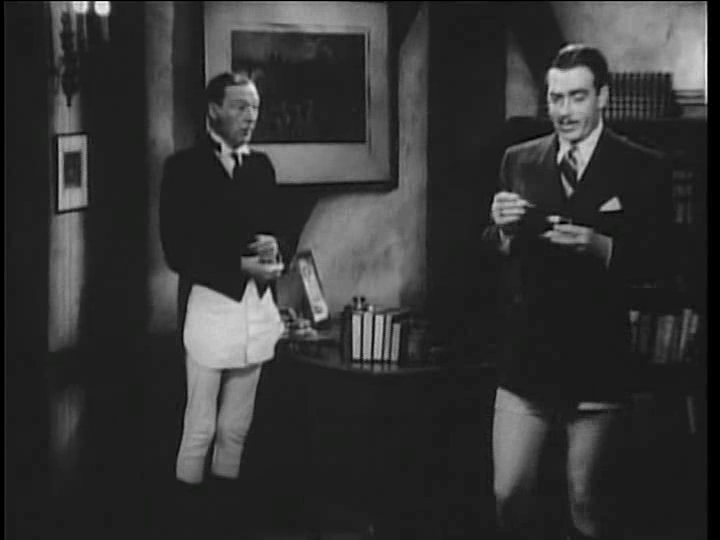
Bulldog Drummond Comes Back (1937) / D: Louis King / 64m

Cast: John Barrymore, John Howard, Louise Campbell, Reginald Denny, E.E. Clive, J. Carrol Naish, Helen Freeman

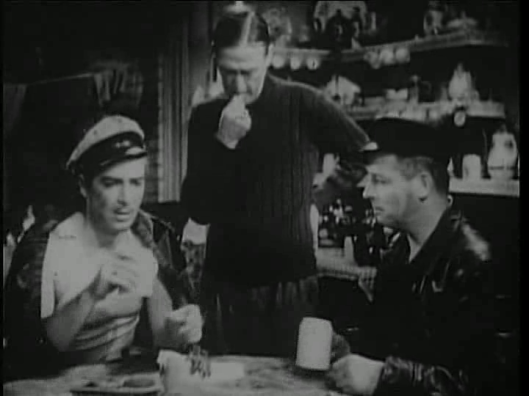
Rating: 5/10 – when dastardly villains Mikhail Valdin (Naish) and Irena Saldanis (Freeman) kidnap Phyllis Clavering (Campbell), the girlfriend of Captain Hugh Drummond (Howard), they send him on a merry chase where each clue he finds leads to another clue as to her whereabouts – but no nearer to finding her; the first of seven movies with Howard as the dashing sleuth created by H.C. “Sapper” McNeile, Bulldog Drummond Comes Back is as cheap and cheerful and antiquatedly entertaining as you might expect, and benefits enormously from a cast and crew who know exactly what they’re doing.
vlcsnap-00001

Every Secret Thing (2014) / D: Amy Berg / 93m

Cast: Diane Lane, Elizabeth Banks, Dakota Fanning, Danielle Macdonald, Nate Parker, Common

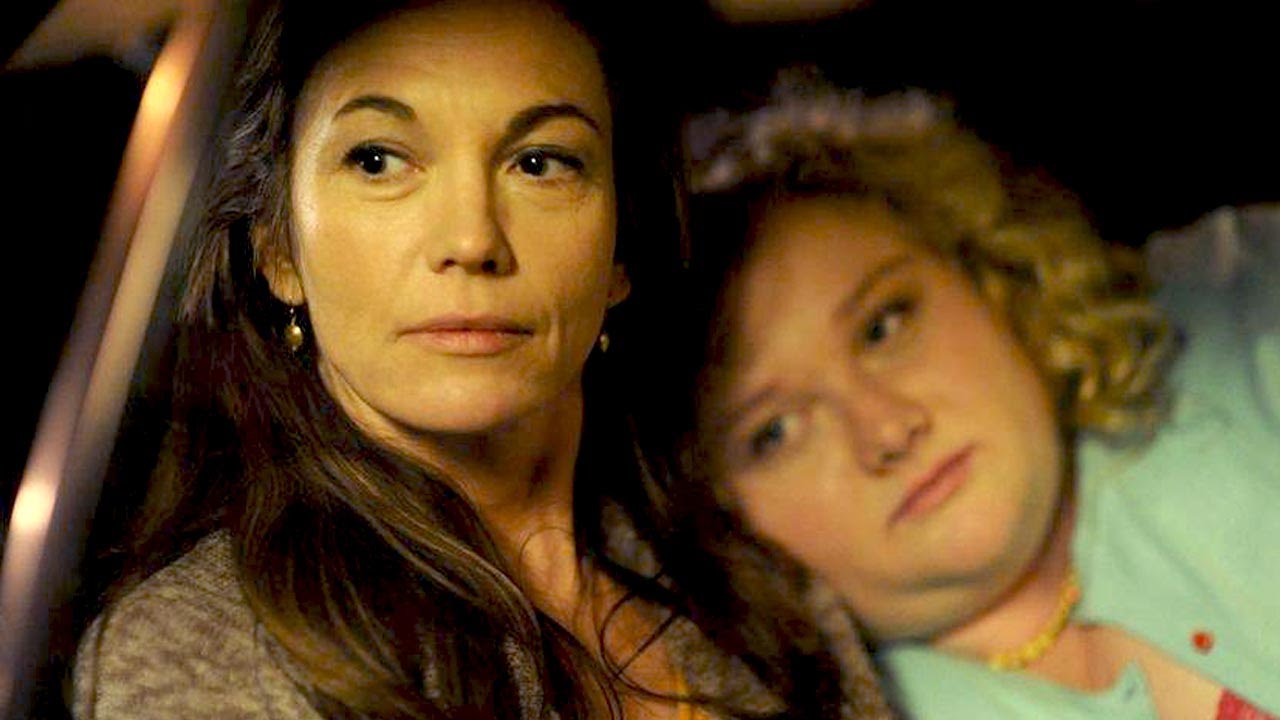
Rating: 7/10 – several years after two young girls are incarcerated for the murder of a younger child, their return to their hometown is marred by the disappearance of a little girl, and the belief that one or both of them is responsible; a stilted attempt at an indie film noir, Every Secret Thing features good performances – particularly from Macdonald – and focuses on the emotional effects a child abduction can have on everyone involved, but it never develops a sense of urgency, though its key revelation at the end carries a wallop that helps dismiss what will seem like a narrative impasse up until then.

Every Secret Thing

Children of the Corn: Genesis (2011) / D: Joel Soisson / 80m

Cast: Kelen Coleman, Tim Rock, Billy Drago, Barbara Nedeljakova

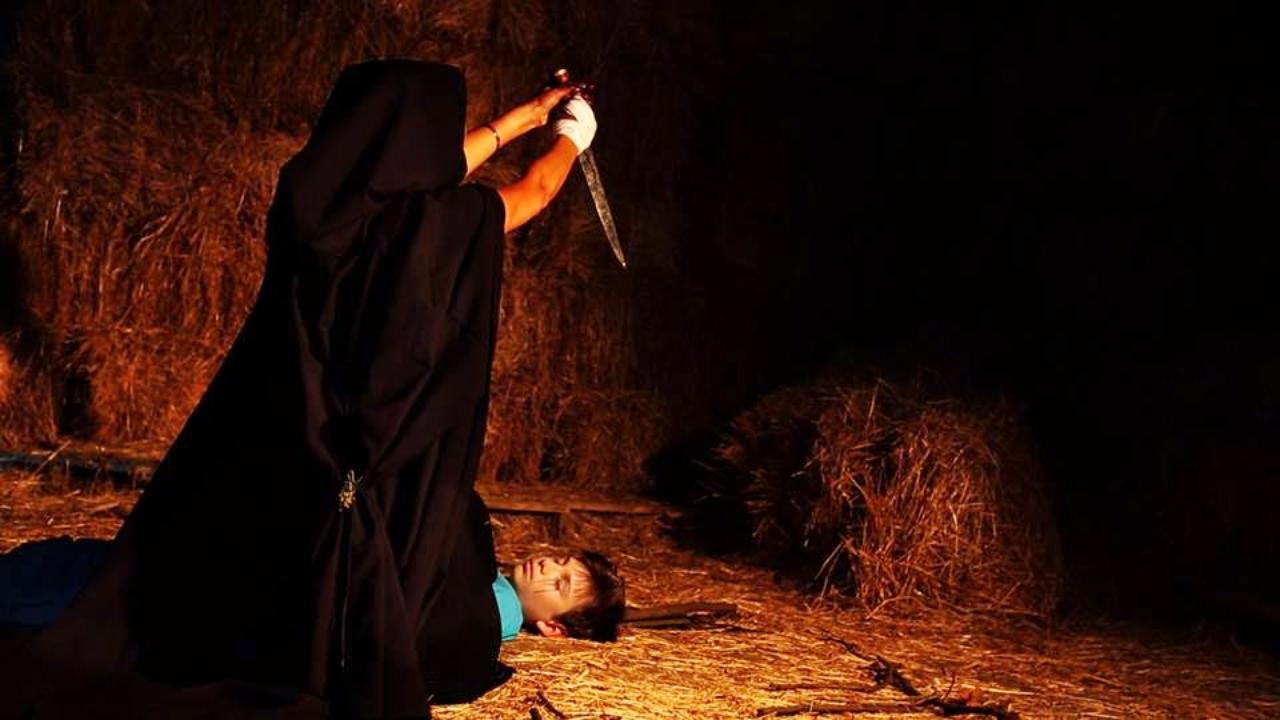
Rating: 3/10 – a couple (Coleman, Rock) break down on a desert highway but manage to find shelter overnight with a old preacher (Drago) and his much younger, foreign bride (Nedeljakova), but soon find that what’s in the preacher’s barn is much more menacing than the old man himself; placing the action largely away from Gatlin, Nebraska may have seemed like a smart move but this tired, dreary, and just downright dull entry in the franchise shows just how bad things have gotten since the 1984 original, and just why Children of the Corn: Genesis should remain the last in the series to be made.

Children of the Corn Genesis

Skin Trade (2014) / D: Ekachai Uekrongtham / 96m

aka Battle Heat

Cast: Dolph Lundgren, Tony Jaa, Michael Jai White, Ron Perlman, Celina Jade, Peter Weller

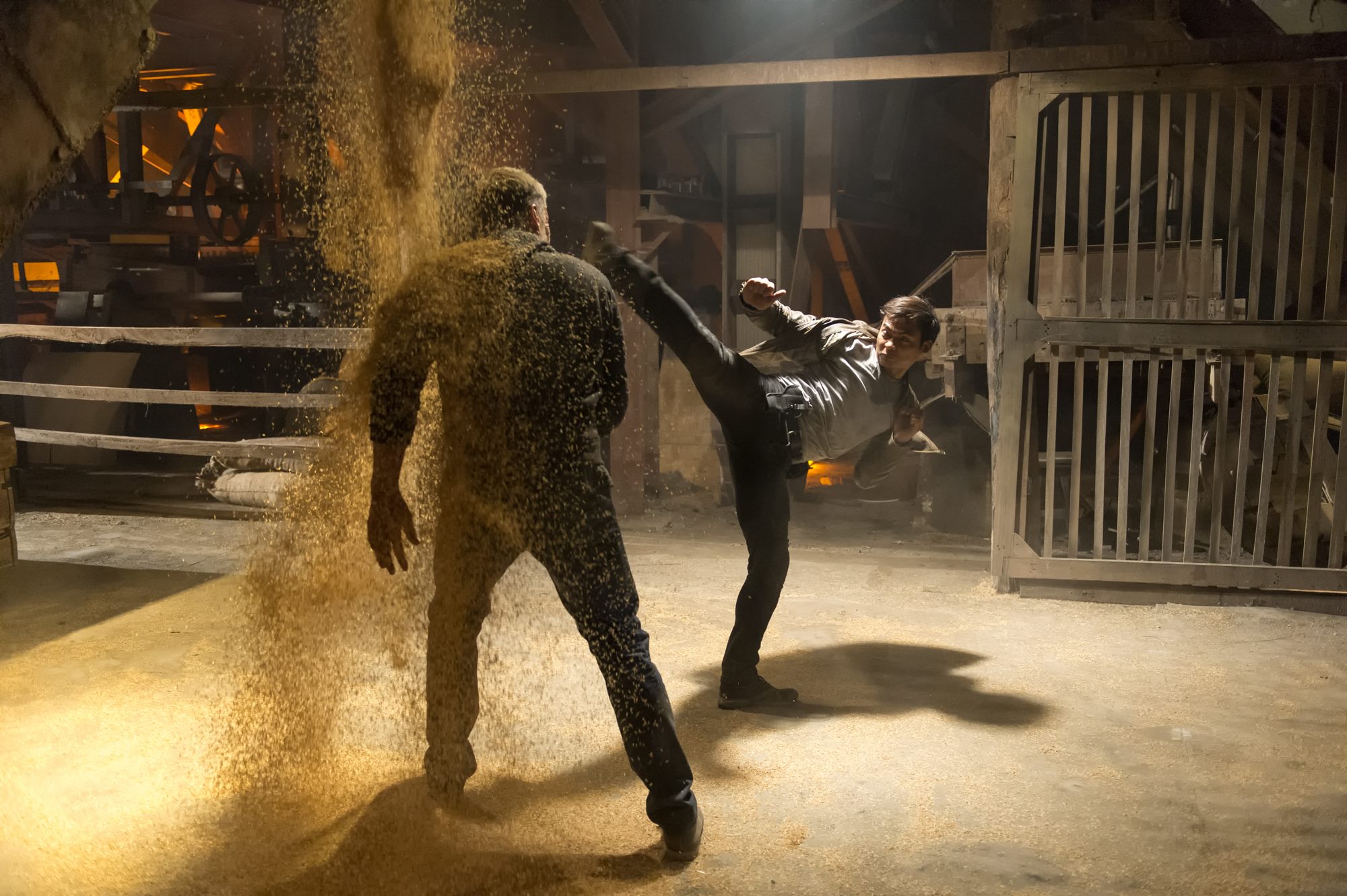
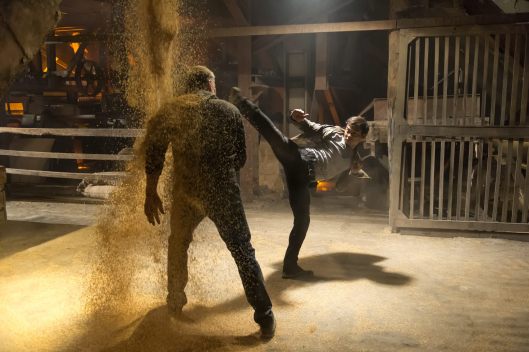
Rating: 6/10 – when cop Nick Cassidy (Lundgren) is powerless to stop his wife and daughter being killed, he determines to go after the crime boss responsible, Viktor (Perlman), and destroy his human trafficking network, which means travelling to Thailand and teaming up with detective Tony Vitayakul (Jaa), who’s also out to put a stop to Viktor’s illegal behaviour; with its human trafficking backdrop giving it an unexpected depth, Skin Trade is not just a brainless, slam-bang action movie, but instead a very well-made (for its budget) revenge flick that features some great fight scenes – particularly one between Lundgren and Jaa – and uses its Thai locations to very good effect.
Skin Trade

The Reconstruction of William Zero (2014) / D: Dan Bush / 98m

Cast: Conal Byrne, Amy Seimetz, Scott Poythress, Lake Roberts, Melissa McBride, Tim Habeger

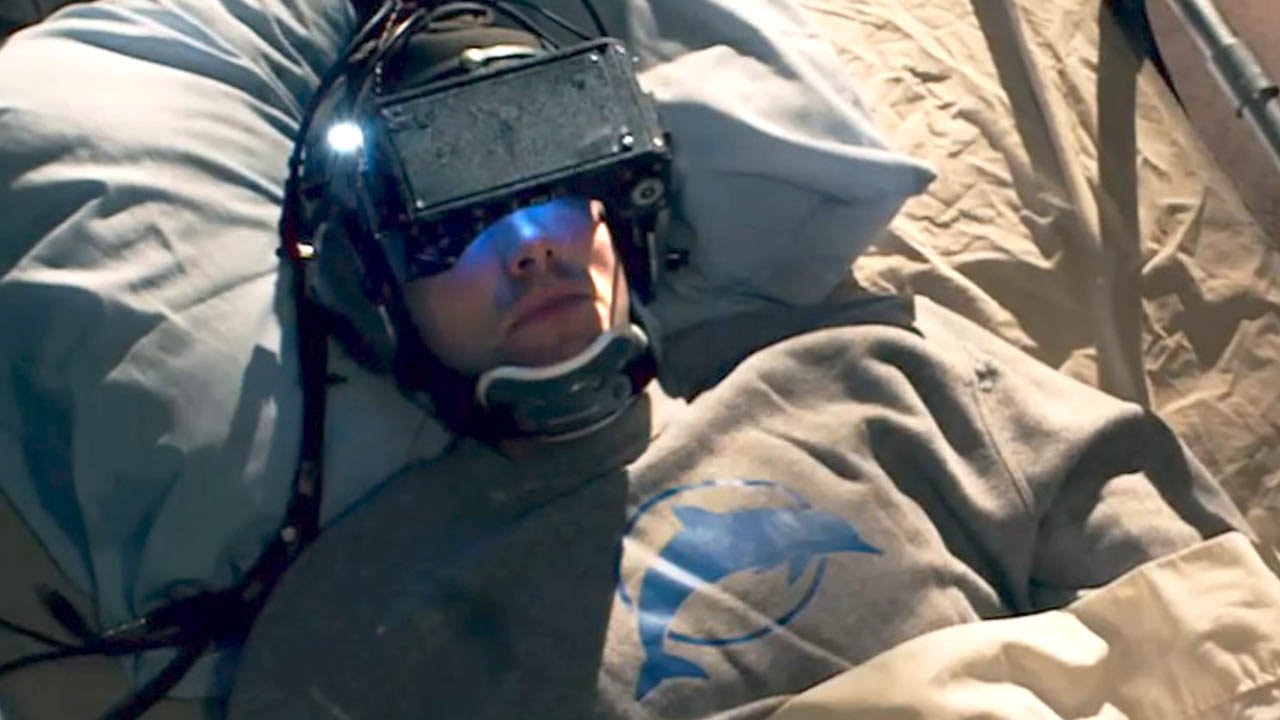
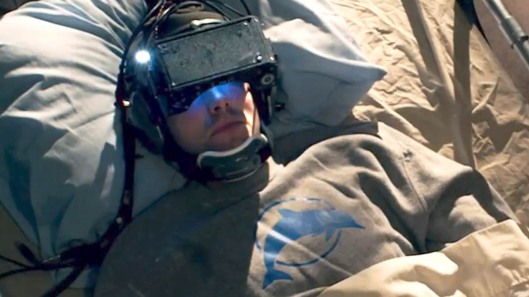
Rating: 6/10 – when the brother (Byrne) of a scientist (also Byrne) wakes from a coma, it’s not long before he begins to suspect that this identity may not be that of the scientist’s brother, and that he’s a pawn in a much bigger conspiracy, but the truth proves even stranger and more disturbing than he realised; a spare, almost antiseptic movie about notions of identity and individual consciousness, The Reconstruction of William Zero features terrific performances from Byrne, but lacks consistency of pace and sometimes feels as if Bush has taken his eye off the ball and taken a while to find it again, which leaves the movie often feeling flat and lifeless.
Reconstruction of William Zero, The

Not Another Teen Movie (2001) / D: Joel Gallen / 89m

aka Sex Academy

Cast: Chyler Leigh, Chris Evans, Jaime Pressly, Eric Christian Olsen, Randy Quaid, Mia Kirshner, Deon Richmond, Ed Lauter, Paul Gleason, Mr T, Molly Ringwald

Rating: 5/10 – at John Hughes High School, popular jock Jake Wyler (Evans) accepts a bet that he can’t take an ugly girl and transform her into the prom queen, but when he picks out Janey Briggs (Leigh), and begins to spend time with her, it makes him begin to question whether he should have made the bet in the first place; a predictably irreverent teen movie that parodies all those dreadful teen comedies from the Eighties, Not Another Teen Movie has more heart than most, and thanks to Mike Bender’s script contributions, is also quite funny in its knowing way, and gives viewers a chance to see the future Captain America back in the day when his skill as an actor wasn’t quite as honed as it is now.

Not Another Teen Movie

Bloomington (2010) / D: Fernanda Cardoso / 83m

Cast: Allison McAtee, Sarah Stouffer, Katherine Ann McGregor, Ray Zupp, J. Blakemore, Erika Heidewald

Rating: 7/10 – former child actress Jackie (Stouffer) attends Bloomington college, and finds herself having an affair with one of the professors, Catherine (McAtee), until the offer of a comeback threatens to end their relationship before it’s fully begun; an intelligent, finely crafted romantic drama, Bloomington has two great central performances, and an emotional honesty that is only undermined by the clichéd nature of Jackie’s need to return to acting, and Cardoso’s over-reliance on silent longing as a sign of emotional upheaval.

Bloomington

Sleepaway Camp 2: Unhappy Campers (1988) / D: Michael A. Simpson / 80m

Cast: Pamela Springsteen, Renée Estevez, Tony Higgins, Valerie Hartman, Brian Patrick Clarke, Walter Gotell

Rating: 5/10 – Angela Baker (Springsteen), having decimated most of the staff and children at Camp Arawak, and now judged to be safe around others, begins sending unruly teenagers “home” from Camp Rolling Hills – which in reality means killing them for any and all perceived infractions that Angela takes a dislike to; a much better sequel than expected, Sleepaway Camp 2: Unhappy Campers gets by on Springsteen’s preppy performance, some not-too-gory deaths, and Simpson’s confident touch behind the camera, as well as that dreadful musical interlude: The Happy Camper Song.
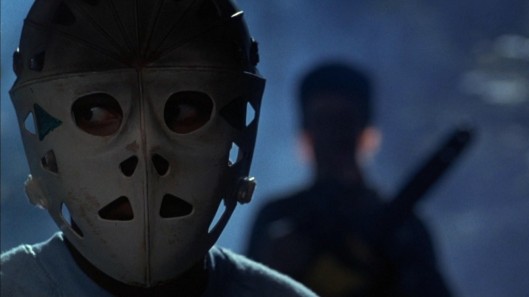
Sleepaway Camp 2

Gunsmoke in Tucson (1958) / D: Thomas Carr / 80m

Cast: Mark Stevens, Forrest Tucker, Gale Robbins, Vaughn Taylor, John Ward, Kevin Hagen, William Henry, Richard Reeves, John Cliff, Gail Kobe

Rating: 6/10 – brothers Jedediah (Stevens) and John (Tucker) are on opposite sides of the law, but when Jedediah becomes involved in a land dispute between cattle ranchers and farmers, his sense of right and wrong is put to the test, and he has to choose sides in the upcoming fight for the choicest plot of land; a robust, earnest Western, Gunsmoke in Tucson is a staid, respectable movie that doesn’t stray too far from its basic plot, and skimps on any psychological undertones in favour of a straight ahead anti-hero vs. the bad guys scenario that makes for a pleasant diversion.
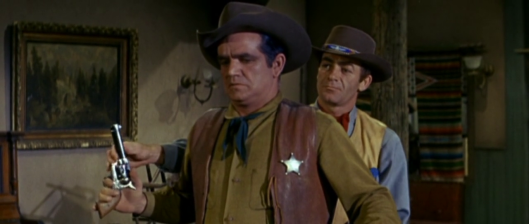
vlcsnap-00002

Beyond the Reach (2014) / D: Jean-Baptiste Léonetti / 91m

Cast: Michael Douglas, Jeremy Irvine, Ronny Cox, Hanna Mangan Lawrence

Rating: 6/10 – arrogant businessman Madec (Douglas) hires tracker Ben (Irvine) in order to bag some game out of season, but when he shoots and kills an old man by mistake, Madec refuses to accept responsibility for his actions and when Ben stands his ground over the issue, finds himself being hunted instead through the harsh Mojave Desert; an occasionally tense two hander that will do little for either actor’s career, Beyond the Reach ramps up the contrivance levels with each successive narrow escape that Ben makes, and with each missed shot that Madec makes, leading to the inevitable conclusion that this is one movie where credulity needs to be left at the door – an idea that is further enhanced by the movie’s risible conclusion.
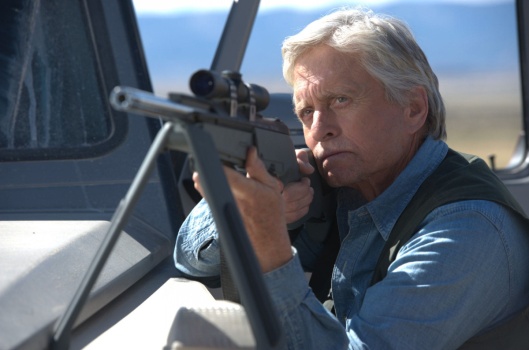
Email sent from: "Barnard, Linda"  lbarnard@thestar.ca  Subject: Beyond the Reach Date: 9 April, 2015 4:30:15 PM EDT   Jeremy Irvine and Michael Douglas star in Beyond The Reach Linda Barnard Movie Writer The Toronto Star thestar.com 416-869-4290

Blood (2012) / Nick Murphy / 92m

Cast: Paul Bettany, Mark Strong, Stephen Graham, Brian Cox, Ben Crompton, Naomi Battrick, Zoë Tapper, Adrian Edmondson

Rating: 5/10 – when a young girl is found murdered, the police, led by Joe Fairburn (Bethany) immediately set their sights on local child molester Jason Buleigh (Crompton), but when their prime suspect has to be let go for lack of evidence, Joe and his brother Chrissie (Graham) decide to take the law into their own hands, with terrible results; grim, visually depressing, and with a script that has more holes in it than a string vest, Blood has only its performances to recommend it, particularly those of Bethany, Graham and Cox, as well as the sense to know that its tale of a proud man’s downfall is always more interesting when you don’t know just how far they’ll fall.
Blood

Echelon Conspiracy (2009) / D: Greg Marcks / 102m

aka The Conspiracy; The Gift

Cast: Shane West, Ed Burns, Ving Rhames, Martin Sheen, Tamara Feldman, Jonathan Pryce, Sergey Gubanov, Todd Jensen

Rating: 3/10 – computer security tech Max Peterson is given a mysterious phone that helps him gain a small fortune, but in doing so he finds himself embroiled in a plot to ensure that the NSA’s super computer, Echelon, gains the upgrade it needs in order to spy on everyone globally; so bad on so many levels, Echelon Conspiracy wastes its (mostly) talented cast, flirts with credibility before running away from it at high speed, offers laughs in places where they shouldn’t be, and is the cinematic equivalent of a car crash.
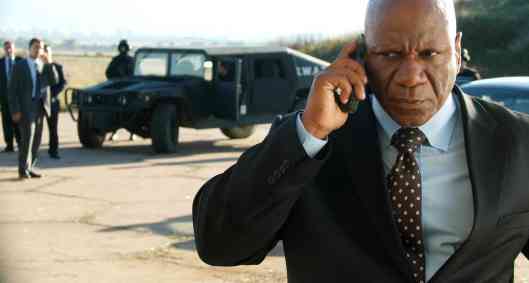
Echelon Conspiracy

Crazy Sexy Cancer (2007) / D: Kris Carr / 90m

With: Kris Carr, Jackie Farry, Melissa Gonzalez, Brian Fassett, Aura Carr, Kenneth Carr, Leslie Carr, Oni Faida Lampley, Bhavagan Das

Rating: 7/10 – when aspiring actress Kris Carr was diagnosed with cancer, she decided to make a visual record of the process of dealing with it, and the various ways in which other cancer sufferers have done so, and supported by the cameraman/editor who became her husband, as well as family and friends; an uplifting, positive message for anyone dealing with cancer, or who knows someone who is, Crazy Sexy Cancer is the kind of documentary that doesn’t attempt to overdo the physical and emotional strain of being in such a situation, but which does nevertheless offer plenty of poignant moments in amongst the hospital visits, and shows Carr to be a determined, aggressive would-be survivor.

Crazy Sexy Cancer

The Night Flier (1997) / D: Mark Pavia / 94m

Cast: Miguel Ferrer, Julie Entwisle, Dan Monahan, Michael H. Moss, John Bennes, Beverly Skinner, Rob Wilds, Richard K. Olsen, Elizabeth McCormick

Rating: 7/10 – hard-nosed, disreputable reporter Richard Dees investigates a series of murders carried out at small airstrips that appear to be the work of a vampire, but his initial scepticism gives way to reluctant belief as he talks to witnesses, and sees the injuries the victims have sustained; a well-crafted movie that betrays its low budget and scrappy production design, The Night Flier is still one of the better Stephen King adaptations thanks to Pavia’s confident handling of the material, Ferrer’s see-if-I-care performance, and some impressively nasty effects work courtesy of the KNB Group.

Night Flier, The

Killer by Nature (2010) / D: Douglas S. Younglove / 90m

Cast: Ron Perlman, Armand Assante, Zachary Ray Sherman, Lin Shaye, Haley Hudson, Richard Riehle, Richard Portnow, Svetlana Efremova, Jason Hildebrandt

Rating: 3/10 – troubled by nightmares of murder and sleepwalking, teen Owen (Sherman) undergoes therapy with Dr Julian (Perlman), a therapist who believes that a person’s essential nature is handed down through bloodlines – a theory originated by convicted murderer Eugene Branch (Assante), and who is connected to Owen in a way that causes Owen to believe he might be the perpetrator of a series of murders that mimic Branch’s modus operandi; a thriller that can’t decide if it’s tepid or overwrought, and then settles for both (sometimes in the same scene), Killer by Nature is a humdinger of a bad movie, and proof positive that sometimes the old saying that “if you can, it doesn’t mean you should” relates to far too many movies for comfort – especially this farrago of awful performances, pseudo-intellectual posturing, and deathless direction.
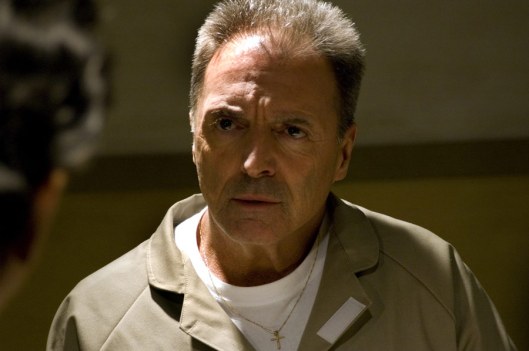
Killer by Nature

Scooby-Doo! and the Samurai Sword (2009) / D: Christopher Berkeley / 75m

Cast: Frank Welker, Casey Kasem, Mindy Cohn, Grey DeLisle, Kelly Hu, Kevin Michael Richardson, Sab Shimono, Keone Young, Gedde Watanabe, George Takei, Brian Cox

Rating: 6/10 – on a trip to Japan, Scooby-Doo and the gang become involved in the search for a mystical sword, while trying to thwart the efforts of the ghost of the Black Samurai to beat them to it; a middling entry in the series that at least provides a different backdrop than the standard old dark house (or mine, or hotel, or funfair…), and which allows Shaggy and Scooby to be the heroes we all know they really are deep down, while displaying a pleasing awareness of Japanese culture.
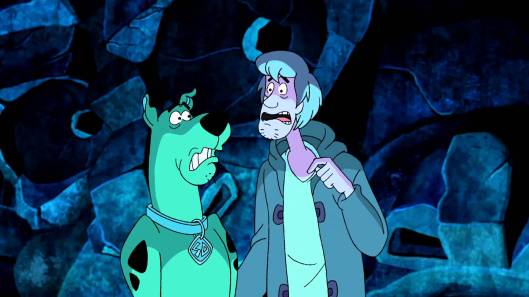
Scooby-Doo! and the Samurai Sword

[Rec]³ Génesis (2012) / D: Paco Plaza / 80m

Cast: Leticia Dolera, Diego Martín, Ismael Martínez, Àlex Monner, Sr. B, Emilio Mencheta, David Ramírez, Miguel Ángel González

Rating: 7/10 – a young couple’s wedding day is disrupted for good when one of the guests takes a bite out of another one, leading to a frenzied free-for-all among the guests and a fight for survival for those not affected by whatever’s causing people to become zombies – including the bride and groom, who have become separated in the mêlée; half found footage, half professionally filmed, [Rec]³ Génesis acts as a prequel to the events of the first two movies but is let down by both the change in location, and the absence of Claudia Silva, as well as a sense that by going backwards in terms of the outbreak and its possible cause, the makers are treading water until an idea as to how to carry the story forward from [Rec]2 (2009) comes along.
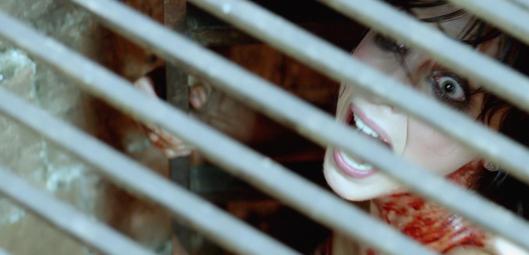
Rec3 Genesis

uwantme2killhim? (2013) / D: Andrew Douglas / 92m

Cast: Jamie Blackley, Toby Regbo, Joanne Froggatt, Jaime Winstone, Liz White, Mark Womack, Louise Delamere, Stephanie Leonidas, Mingus Johnston

Rating: 7/10 – popular schoolboy Mark (Blackley) leads a secret life on the Internet, where he invests his time and emotions in relationships with people he’s never met, but when of those people ask him to stop their younger brother, John (Regbo), from being bullied, what follows sets Mark on a dangerous path to murder; based on a true story, and told with a glum sense of foreboding throughout, uwantme2killhim? is an engrossing (though slightly frustrating) recounting of one of the strangest cases of the last fifteen years, and features two very good performances from Blackley and Regbo, though they have to fight against a script that favours repetition over clarity, but which still manages to flesh out what must have been a very strange relationship between the two boys.
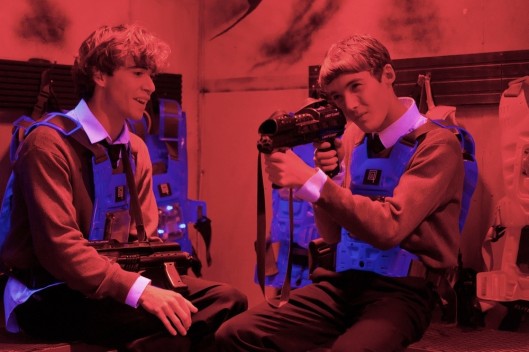
JAMIE BLACKLEY (Mark) (L) & TOBY REGBO (John) (R) in UWANTME2KILLHIM? (c) 2011 U Want M2K Ltd. Photo by Mark Tillie

Bulldog Drummond in Africa (1938) / D: Louis King / 58m

Cast: John Howard, Heather Angel, H.B. Warner, J. Carrol Naish, Reginald Denny, E.E. Clive, Anthony Quinn

Rating: 7/10 – on the very day that Drummond (Howard) is finally due to marry his long-suffering girlfriend Phyllis (Angel) he becomes embroiled in the kidnapping of his old friend Colonel Nielsen (Warner), and finds himself travelling to Morocco – with Phyllis, butler Tenny (Clive) and old pal Algy (Denny) in tow – in order to rescue him; the fourth in the series is perhaps the funniest, with Howard allowed to spread his comedic wings, and even the villain (played again by Naish) given some splendidly dry remarks to make in amongst the threats of death by hungry lion, and a bomb on Drummond’s plane.
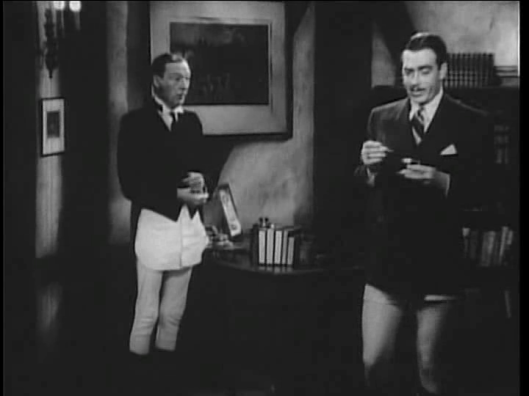
vlcsnap-00003

The Four-Faced Liar (2010) / D: Jacob Chase / 87m

Cast: Daniel Carlisle, Todd Kubrak, Emily Peck, Marja-Lewis Ryan, Liz Osborn

Rating: 8/10 – five friends – couples Greg (Carlisle) and Molly (Peck), Trip (Kubrak) and Chloe (Osborn), and single lesbian Bridget (Ryan) – experience various ups and downs in their relationships, especially when Trip has a one night stand, and Molly finds herself attracted to Bridget; a refreshingly honest look at what relationships mean to different individuals, and how they affect the people around them, The Four-Faced Liar is an effective, well-written drama that benefits from good performances all round, a soundtrack that supports the mood throughout, and Chase’s confident approach to Ryan’s script.
vlcsnap-00004

Share this:

  • Share on X (Opens in new window) X
  • Share on Facebook (Opens in new window) Facebook
  • More
  • Print (Opens in new window) Print
  • Email a link to a friend (Opens in new window) Email
Like Loading...

Mini-Review: Survivor (2015)

27 Saturday Jun 2015

Posted by dullwood68 in Movies

≈ Leave a comment

Tags

Action, American Embassy, Bombing, Conspiracy, Drama, Dylan McDermott, James McTeigue, London, Milla Jovovich, Pierce Brosnan, Review, Robert Forster, Thriller, Times Square

Survivor

D: James McTeigue / 96m

Cast: Milla Jovovich, Pierce Brosnan, Dylan McDermott, Angela Bassett, James D’Arcy, Robert Forster, Frances de la Tour, Roger Rees, Benno Fürmann, Genevieve O’Reilly, Corey Johnson

Kate Abbott (Jovovich) has transferred to the American Embassy in London. She oversees visa applications to the US by foreign nationals travelling through the UK. When she suspects that gas expert Dr Balan (Rees) isn’t all that he seems, it leads to her being hunted by assassin the Watchmaker (Brosnan). With only her colleague, Sam Parker (McDermott), believing she’s had nothing to do with the deaths of other colleagues in a bomb blast, or that of her immediate boss, Bill Talbot (Forster), Kate is forced to go on the run in an attempt to get to the bottom of the conspiracy she’s found herself entangled in.

Narrowly escaping several attempts on her life by the Watchmaker, Kate realises she has to get back into the embassy in order to find the proof she needs to expose the conspiracy. Helped by Sam and another colleague, Sally (de la Tour), Kate discovers enough information to send her off to New York on New Year’s Eve. Followed by the Watchmaker, Kate has only a few hours to foil a terrorist attack planned for midnight in Times Square, and which is backed by the pharmaceutical company that Balan works for.

Survivor - scene

Take a director whose previous output includes V for Vendetta (2005) and the underrated Ninja Assassin (2009), add two principal stars who are no strangers to the action genre, a supporting cast of more than capable (and proven) actors, and good location work in both London and New York – and what do you get? A terrible piece of nonsense that doesn’t even bother to try and hide how preposterous it all is. This is largely thanks to Philip Shelby’s overly-simplistic, corner-cutting script, a melange of action movie clichés and inane dialogue lumped in amongst an unconvincing plot and the kind of one-dimensional characterisations that leave the viewer shaking their head in disbelief.

There’s no point at which Survivor is even remotely credible, and while there’s a small degree of amusement to be had at each nutty development in the script, McTeigue fails to maintain any degree of confidence behind the camera. As a result, the movie plods from one uninspired set piece to the next without pausing for breath or an injection of self-belief. Jovovich runs around a lot looking frazzled and confused (as well she might), while Brosnan sleepwalks through his role with the look of an actor wondering where his career went to. By the end, with its inevitable showdown between Kate and the Watchmaker, the movie has given up trying to be exciting or different, and renders itself completely unremarkable.

Rating: 3/10 – why movies like these continue to be made is anybody’s guess, but Survivor is an object lesson in how not to make a modern day thriller with Cold War overtones; lacking credibility is one thing, but lacking suspense as well makes for a poorly judged and ill-considered movie that viewers can only help will end sooner than it does.

Share this:

  • Share on X (Opens in new window) X
  • Share on Facebook (Opens in new window) Facebook
  • More
  • Print (Opens in new window) Print
  • Email a link to a friend (Opens in new window) Email
Like Loading...

San Andreas (2015)

04 Thursday Jun 2015

Posted by dullwood68 in Movies

≈ 2 Comments

Tags

Action, Alexandra Daddario, Brad Peyton, Carla Gugino, Disaster movie, Drama, Dwayne Johnson, Earthquakes, Hoover Dam, Ioan Gruffudd, Paul Giamatti, Review, San Andreas Fault, San Francisco, Tsunami

San Andreas

D: Brad Peyton / 114m

Cast: Dwayne Johnson, Carla Gugino, Alexandra Daddario, Paul Giamatti, Ioan Gruffudd, Archie Panjabi, Hugo Johnstone-Burt, Art Parkinson, Will Yun Lee, Kylie Minogue

Ray Gaines (Johnson) is a helicopter rescue pilot with the Los Angeles Fire Department, separated from his wife Emma (Gugino), but on very good terms with his daughter, Blake (Daddario). He plans to take a few days off to spend some time with her in San Francisco, but he has to shelve those plans when an earthquake destroys the Hoover Dam, and he’s called back to work. In apologising to Blake, he learns that Emma is planning to live with her new boyfriend, property developer Daniel Riddick (Gruffudd). Daniel suggests taking Blake to San Francisco himself and they leave soon after.

While Ray takes part in various rescue missions, seismologist Lawrence Hayes (Giamatti) – who was at the dam when it broke – is becoming increasingly worried that that earthquake was just a precursor to a series of much bigger, much more devastating ones. When one such earthquake strikes Los Angeles, Emma finds herself in a high rise building having lunch with Daniel’s sister, Susan (Minogue). As the quake hits she’s talking to Ray on the phone; he tells her to get to the roof and he’ll come and rescue her. Further quakes strike towns and cities up and down the California coast, including San Francisco. With Emma safe on board his helicopter, Ray receives a call from Blake: she’s trapped in a car in the basement of Daniel’s office building and it’s about to collapse.

Ray and Emma decide they have to try and rescue Blake, but the helicopter they’re in develops a fault and they crash land in Bakersfield. Managing to commandeer a plane, they continue on to San Francisco. Meanwhile, Blake has been rescued by a British engineer she met earlier at Daniel’s offices. Ben (Johnstone-Burt) and his younger brother Ollie (Parkinson) stay with Blake as she works out a way to let Ray know she’s okay. When she does he tells her to meet him in a particular place that has a special meaning to both of them. But it’s not possible for her to get there, so she heads for Daniel’s latest high rise development instead. Ray and Emma parachute out of the plane and land in San Francisco; when they realise Blake can’t get to the rendezvous site, they also discover that a tsunami is coming that will swamp the city. And when it does, Blake, Ben and Ollie find themselves trapped in Daniel’s building with the waters steadily rising, and Ray and Emma having no idea of where they are…

San Andreas - scene

A disaster movie – the moviegoer’s guilty pleasure – should always favour spectacular destruction over coherent plot, story or characterisation. It should feature enough devastation to leave the viewer slack-jawed in admiration at what the special effects wizards can achieve. It should cater to that part of us that slows down to look when we pass a road accident. And above all, it should show us something that we might all experience some day, regardless of how safe we might feel in our own little corner of the world.

San Andreas should give us all that and more. But instead it’s a curiously bloodless affair, full of moments where the cast look awestruck at some fresh new aspect of the disaster around them, and where Hayes’ doom-laden dialogue hypes the destruction to near-apocalyptic levels. There are some impressive shots it’s true, but some – such as the awkward destruction of the Golden Gate Bridge – seem too absurd to appear feasible, or are rendered in such a way that the wow factor plays second fiddle to any plausibility. This might not be too much of a concern though if what we’re witnessing is something new, but the devastation wrought in the movie, while impressively mounted, has been done elsewhere already, and San Andreas, while promising the mother of all earthquakes from very early on – one that will be felt “on the East Coast” – actually falls short of doing so.

Instead, what we have is a tale of a family’s determination to survive against all the odds, and in Ray’s case, without regard for the job he does. Once the earthquake hits Los Angeles and all points Californian, Ray becomes a solo pilot, where before he’s been part of a four-man team. He rescues Emma and then jettisons any notion of helping others with a quick “we have to find our daughter” (not that anyone’s trying to contact him with any instructions or requests for help). He’s reckless as well, putting himself and Emma in harm’s way time after time: let’s crash the helicopter in a clothing store, let’s parachute out of a plane, let’s head into the swell of an oncoming tsunami – the more dangerous the action, the more determined he seems to tackle it. In a different kind of movie, Ray would be an adrenaline junkie with a death wish; here, he’s a big-hearted father who’s doing the best he can (gosh darn it!).

It’s a good thing then that Johnson is more than capable of helping the viewer ignore or forget these contradictions, putting in an emotive performance that sees him remind everyone why he’s the go-to guy for this kind of big-budget nonsense. Whether he’s ripping car doors off their hinges, or holding his breath underwater for minutes at a time, Johnson’s amiable muscularity fits the needs of the script admirably, even when Ray is called upon to relive a past tragedy. As a chip off the old block, Daddario provides an earnest counterpoint to Johnson’s grim-faced determination, while Giamatti bleeds sincerity as the tormented seismologist who saw it all coming. Spare a thought however, for Gugino – along for the ride and little else – and Gruffudd – asked to become a prick in the space of a nano-second. Both actors are ill-served by Carlton Cuse’s ill-focused screenplay, as is Johnstone-Burt, who’s called upon to play the kind of stereotypical good-natured bumbling Brit who sounds like minor royalty.

Behind the camera, Peyton orchestrates all the mayhem with a good eye for packing the frame with as much incident as possible, and there’s an effective score from Andrew Lockington that supports the action without overwhelming it. Fans of the disaster genre will particularly approve of the many building falling into/against/onto other building shots, and the refreshingly practical effects work used to show that a movie of this sort doesn’t have to be all digital. Others, though, may look at all the devastation and wonder, why does a lot of it have problems with scale?

Rating: 6/10 – while it’s enjoyable in a big dumb leave-your-brain-at-the-door kind of way, San Andreas has a script that features enough fault lines to warrant a warning sign all its own; a movie where the spectacle never quite inspires the awe or wonder it needs to, it fits neatly into the category of guilty pleasure but without really doing too much to earn its place there.

Share this:

  • Share on X (Opens in new window) X
  • Share on Facebook (Opens in new window) Facebook
  • More
  • Print (Opens in new window) Print
  • Email a link to a friend (Opens in new window) Email
Like Loading...

Spy (2015)

02 Tuesday Jun 2015

Posted by dullwood68 in Movies

≈ 2 Comments

Tags

Action, Budapest, CIA, Comedy, Drama, Jason Statham, Jude Law, Melissa McCarthy, Miranda Hart, Nuclear weapon, Paris, Paul Feig, Review, Rome, Rose Byrne, Spies, Thriller, Undercover

Spy

D: Paul Feig / 120m

Cast: Melissa McCarthy, Jason Statham, Rose Byrne, Miranda Hart, Allison Janney, Bobby Cannavale, Peter Serafinowicz, Morena Baccarin, Richard Brake, Nargis Fakhri, 50 Cent, Jude Law

CIA operatives Bradley Fine (Law) and Susan Cooper (McCarthy) are the best team in the organisation: Fine out in the field, Susan back at HQ guiding and protecting him on his missions. After Fine misses out on the chance to find the whereabouts of a nuclear weapon that’s up for sale – by accidentally shooting the seller – the CIA soon learns that the seller’s daughter, Rayna Boyanov (Byrne), has taken over the sale and through corrupt businessman Sergio De Luca (Cannavale) is offering it to terrorist Solsa Dudaev (Brake).

Fine infiltrates Rayna’s home but discovers it’s a trap; Susan has to watch as Rayna kills him. When it becomes clear that Rayna knows the identities of all of the CIA’s top agents, including gung-ho hothead Rick Ford (Statham), Susan volunteers to travel to Paris where De Luca has an office, and to report back any activity. Followed there by Ford, who thinks she’ll compromise the mission, Susan discovers that De Luca is now in Rome. Once there, she switches her dowdy undercover identity for a more upmarket one, and trails De Luca to a casino. She witnesses a man spike a drink at the bar; when the drink is delivered to none other than Rayna, Susan sees her chance to get close to Fine’s killer and find out the location of the nuclear weapon.

Gaining Rayna’s confidence, the pair fly to Budapest. During the flight one of the pilot tries to kill Rayna but Susan overpowers him and lands the plane instead. In the process she reveals her skills as an agent, and Rayna becomes convinced she works for the CIA. Susan manages to convince her that her father employed Susan to look after her. Rayna believes her story, but when they arrive in Budapest, matters are complicated by the arrival of Susan’s best friend and co-worker, Nancy (Hart) who has been sent to check on her. Pretending Nancy works for her, Susan foils another bid to kill Rayna, but in doing so finds herself at Rayna’s mercy, and with the sale of the nuclear weapon a matter of hours away.

Spy - scene

It’s been four short years since Melissa McCarthy shot to fame by defecating into a sink in the movie Bridesmaids (2011). In that time she’s continued with her role in the TV show Mike & Molly, had a minor role in This Is 40 (2012), given supporting turns in The Hangover Part III (2013) and St. Vincent (2014), co-starred with Sandra Bullock in The Heat (2013), and headlined two movies of her own, Identity Thief (2013) and Tammy (2014). If the last two movies didn’t exactly set critical pulses racing, both took over $100,000,000 worldwide, proving that audiences enjoyed watching slight variations on the character she first played in director Paul Feig’s earlier movie.

But it was a character that had a limited shelf life, and with Spy, McCarthy and Feig have wisely broadened their horizons, and in so doing, have given the actress her best role yet. As the ten years desk bound CIA agent who dreams of some excitement in her life, McCarthy delivers a performance that is at once more controlled and less wayward. In creating Susan Cooper, McCarthy shows that she has much more to offer than pratfalls and foul-mouthed schtick (even though there’s room for both here, just not as much as usual), and is more than capable of playing a fully rounded character. It’s good to see her owning the material as well and riffing on it to such good effect, making Susan possibly her most endearing, and appealing role to date, and entirely worthy of the movie itself.

For the best thing about Spy is that it’s consistently funny, whether it’s subverting genre conventions by thrusting the backroom girls into the spotlight, making Fine a preening douche, Ford a ridiculous blowhard, or giving Susan some of the worst makeovers in history for her undercover identities, the movie has great fun in spoofing the spy/action movie while maintaining a more serious subplot about Susan’s gaining enough self-confidence to fulfil her potential as an agent. That Feig’s script has the confidence to attempt both, and then succeed with seeming ease, adds to the movie’s lustre, and makes it all the more enjoyable.

As already noted, McCarthy delivers her best role to date, and she’s matched by the surprise – and inspired – casting of Statham as the kind of agent who can’t pass up an opportunity for a bit of self-aggrandisement. On this evidence, Statham should do more comedy, as here he’s hilarious, shouting and swearing like a man on the brink of a psychotic break, and making the kinds of boasts that are so absurd he doesn’t know how idiotic he sounds. But where Ford’s boasting is a highlight, he’s still outdone by the insults traded between Susan and Rayna, some of which are the funniest putdowns heard in recent years (and particularly when it comes to Rayna’s hairdo). Byrne and McCarthy have a great time deadpanning their lines at each other, and so does the audience as each insult escalates their dislike of each other’s character.

In support, Serafinowicz is irrepressible as Susan’s Italian contact, Aldo, for whom large bosoms are the key to happiness; Law is debonair, charming and an unfeeling arse; Janney is the CIA chief who sees promise in Susan’s wish to work in the field; Cannavale doesn’t really feature until the last twenty minutes; 50 Cent plays himself; and in a role that doesn’t see her stretch too far from her British TV persona, Hart racks up enough laughs as Nancy to have done her US career no harm at all. In short, it’s a great cast, and they all deliver as required.

The European locations are filmed by Robert D. Yeoman with that travelogue sheen that enhances even the most attractive of regions or cities, and as a result the movie is attractive to look at throughout. The music by Theodore Shapiro is occasionally overbearing, but this is due to its prominence in the sound mix rather than any compositional issues, and McCarthy’s wardrobe, courtesy of Christine Bieselin Clark, fluctuates from plain and functional to horrendous to glamorous (though her final look in the movie makes her appear too much like Dawn French for comfort). And the action scenes are splendidly realised, including a terrific fight between McCarthy and  Fakhri that wouldn’t look out of place in a… well, in a Jason Statham movie.

Rating: 8/10 – consistently entertaining, Spy is a treat for fans of McCarthy and spy spoofs in general; with a script that knows when to be serious and when to be gloriously silly, it’s a movie that is infectious in its desire to please its audience, something it does with no small amount of style and wit.

Share this:

  • Share on X (Opens in new window) X
  • Share on Facebook (Opens in new window) Facebook
  • More
  • Print (Opens in new window) Print
  • Email a link to a friend (Opens in new window) Email
Like Loading...

Kung Fury (2015)

31 Sunday May 2015

Posted by dullwood68 in Movies

≈ 3 Comments

Tags

Action, Adventure, David Sandberg, Drama, Jorma Taccone, Kickstarter, Kung fu, Laser raptors, Leopold Nilsson, Martial arts, Short film, Thor, Thriller, Triceracop

Kung Fury

D: David Sandberg / 31m

Cast: David Sandberg, Jorma Taccone, Leopold Nilsson, Steven Chew, Andreas Cahling, Erik Hörnqvist, Eleni Young, Helene Ahlson, Per-Henrik Arvidius, Eos Karlsson, David Hasselhoff

1985, Miami. When an arcade machine turns killer robot, there’s only one man for the police call on: Kung Fury! Destroying the robot proves easy for the Chosen One who was once just an ordinary cop. While chasing down a ninja (Karlsson) with his partner, Dragon (Chew), he was struck by lightning… and bitten by a cobra. From then on, and in line with an ancient prophecy, he became Kung Fury, the master of all kung fu, and the greatest crime fighter in the world.

Chewed out by his chief (Arvidius) over the amount of destruction Fury caused in disposing of the robot, he’s alarmed to find he’s got to work with a new partner, Triceracop (Hörnqvist). Refusing the idea point blank, Fury quits. When he learns that Adolf Hitler has travelled from the past to challenge Kung Fury’s position as the Chosen One, he decides there’s only one thing he can do: travel back to Nazi Germany and kill Hitler. With the help of Hackerman (Nilsson), Fury travels back in time, but instead of arriving in the 1940’s he ends up facing a laser raptor in the time of the Vikings. He also meets two Viking women, Barbarianna (Young), and Katana (Ahlson); when he tells them of his dilemma, they introduce him to Thor, the God of Thunder. Thor uses his hammer, Mjolnir, to create a time portal that will take Fury forward to Nazi Germany.

When he arrives, he crashes a rally being given by Hitler and proceeds to take on the assembled Nazi soldiers. Using his kung fu powers he dispatches them with ease, but when Hitler unloads with a machine gun, not even Kung Fury can survive the hail of bullets… or can he?

Kung Fury - scene

Part-funded by Kickstarter contributions, Kung Fury is an absolute blast, a knowing homage/pastiche of Eighties action and cop movies that goes to extreme lengths to entertain its target audience – and succeeds with a great deal of low budget panache. In realising that its budget required a novel approach to the material (written and directed by Swedish filmmaker Sandberg), the movie has been fashioned to look like a degraded copy of an Eighties video release. This allows the movie to hide a variety of problems such as Ahlson’s having replaced Joanna Häggblom, who filmed the scene where Katana summons Thor for the movie’s trailer. With the same footage being used in the completed short, visual scratches and distortion effects are used to hide the change in actress. In addition, the whole visual look of Kung Fury, from its softened colour palette and grainy film stock effect, gives it a pleasing retro feel that adds to the overall result.

The actual storyline is peppered with some of the craziest visual gags you’re likely to see for some time to come, as Sandberg challenges his special effects team in ways that seem impossible to complete on such a small budget: just $630,019. With digital effects, composite effects, model work, and a shed load of green screen work, Sandberg has made a movie that packs more into thirty-one minutes than some movies pack into two hours. Rampaging killer arcade machines, explosions, fight scenes, exploding heads, a giant Norse god, a talking dinosaur, Viking warrior women (with high-tech weapons), time travel, cars being tossed around like toys, gratuitous violence, a giant metal eagle, and Hitler as the Kung Führer – all this and more Sandberg manages to include in his movie, and every insane minute of it is more fun than fans of this twisted kind of thing could ever hope for.

Kung Fury‘s bizarre world is the distillation of every Eighties action cliché imaginable, from Fury being given a tongue lashing over the damage to the city he’s caused, to the absurd computations of Hackerman regarding time travel, to every macho pose that Fury strikes, all the way to Sandberg growling his lines like he gargles with gravel. There are scowling close ups, a portrayal of Hitler that veers between megalomania and whimsy, and in a great cameo, David Hasselhoff as the computer in Fury’s car, the Hoff9000 (he also gets to sing the movie’s theme tune, True Survivor).

It’s a fast, furious, absurdly entertaining fun ride, complete with an animated sequence two thirds of the way through, as well as an epilogue that sets up either a sequel or a full-length feature (either would be welcome). It’s not a movie, though, that will impress the serious cinéaste and is definitely – and defiantly – aimed at the type of movie goer who loves Chuck Norris, movies like Cobra (1986), and recent outings such as Iron Sky (2012). It’s a potent mix, full of WtF? moments, and as crazy funny (or funny crazy) as you’re ever likely to see, the cinematic equivalent of wading naked through a sea of jellyfish. Sandberg is to be congratulated for getting his project off the ground, and for getting it as far the Cannes Film Festival and since its upload to YouTube, an astonishing eight million plus views.

Rating: 8/10 – a few unnecessarily cheesy moments aside, Kung Fury is nothing short of astounding; with its cast and crew judging everything else perfectly, this is one movie that defies all logic by being so (deliberately) bad it’s brilliant.

Share this:

  • Share on X (Opens in new window) X
  • Share on Facebook (Opens in new window) Facebook
  • More
  • Print (Opens in new window) Print
  • Email a link to a friend (Opens in new window) Email
Like Loading...

Pound of Flesh (2015)

21 Thursday May 2015

Posted by dullwood68 in Movies

≈ Leave a comment

Tags

Action, Aki Aleong, Charlotte Peters, Darren Shahlevi, Drama, Ernie Barbarash, Jean-Claude Van Damme, John Ralston, Kidney transplant, Manila, Philippines, Review, Stolen kidney, Thriller

Pound of Flesh

D: Ernie Barbarash / 105m

Cast: Jean-Claude Van Damme, John Ralston, Aki Aleong (as Leonard Gonzales), Charlotte Peters, Darren Shahlevi, David P. Booth, Adele Baughan

While visiting Manila, kidnap and rescue expert Deacon Lyle (Van Damme) wakes up in his hotel room in a bath full of ice water and his right kidney missing. From hazy memories of the night before, Deacon remembers rescuing a woman (Peters) from her abusive boyfriend (Shahlevi) and her coming back to his room. He calls an old friend, Kung (Aleong) for help, and though Kung brings morphine, he also brings a warning: for Deacon to let it go. But he can’t, and the reason is made clear with the arrival of his brother, George (Ralston); George’s daughter needs a kidney transplant and in two days Deacon was going to be the donor.

Deacon goes to the bar where he and the woman went for a drink. A barmaid there reveals that the woman’s name is Ana Riley and the man who was abusing her is called Drake, and that they can be found at Gratis, an underground fight club. Using his contacts, Kung finds out where the club is being held that night. There Deacon finds Ana. She tells him that Drake paid her to be with Deacon and that it was a one time deal. Drake arrives and there is a shootout, but Drake gets away. Regrouping, Deacon, George, Ana and Kung go to George’s summer home. There it’s revealed that Deacon is really the father of George’s daughter; they also work out that whoever wants Deacon’s kidney must be on the donor register.

With the help of one of George’s ex-students, they discover the intended recipient is an Englishman, Simon Rants (Booth), with ties to an organisation that provides security via contracted mercenaries. Deacon decides to launch a one-man assault on Rants’s home. When his plan begins to backfire, George goes in as well, but what they eventually find changes all their preconceptions.

Pound of Flesh - scene

As a member of that illustrious group, the Lesser-Spotted Eighties Action Stars, Jean-Claude Van Damme is still busy churning out low-budget action flicks that bypass cinemas and head straight for DVD. Devised to be filmed in far-flung corners of the globe, and with minimal attempts at providing either a decent plot or characterisation, these movies focus on the requisite number of action or fight scenes and build to a predictable showdown between the hero and the villain. In some ways they’re the action movie equivalent of comfort food.

But sometimes comfort food isn’t enough by itself, and so it proves with Pound of Flesh, an action movie that tries to include concepts of fatalism, guilt, and religious ambivalence in an attempt to beef up the rather pedestrian plot. As an attempt at adding depth to an otherwise solidly underwhelming script it’s not such a bad idea, it’s just that it’s all handled so badly. You know these concepts are only there to fill in the downtime between fight scenes when one of the characters abandons his up-til-then deeply held beliefs, as George does here, going from guilt-ridden pacifist to gun-toting vigilante at the drop of a hat. (It doesn’t help that Ralston can’t quite carry it off.)

The script, by Joshua James, lets itself down in other ways. The most obvious is in the way it asks the viewer to suspend all disbelief as Deacon takes part in fight after fight so soon after losing his kidney. Deacon gets punched, kicked, thrown about, flash-bombed, stabbed, and aside from the odd look of discomfort, shrugs it off with the pithy comment, “I crossed the Afghan desert on two broken legs. So, this is nothing.” It’s the kind of witless macho posturing that should be ironic now, but instead it’s laughable, and the high point of the movie’s few attempts at humour (though it probably wasn’t meant that way). The script also asks us to accept that Drake (and we have to assume this) would go to all the trouble of going to George’s summer home and rigging the fridge with a grenade, so that whoever opens it next gets blown up. As that could be anyone, at any time, it’s an incredibly stupid “surprise” moment, and reinforces the idea that scripts for low budget action movies rarely reach a second draft.

Doing his best to make it work, Van Damme plays it straight but it all requires too much work, even for him, to bring it up to par. It’s a shame that his career seems to have stalled again in the direct-to-DVD arena after his “breakout” turn as himself in JCVD (2008). That movie showed a multi-faceted Van Damme, and a level of acting ability we hadn’t seen before, but he doesn’t seem to have capitalised on that at all. So now we still have him making the same moves he always makes: the high kicks, the splits, etc. And he looks so tired. He’ll be fifty-five this year, but he looks much older, much more worn down, and while this fits the character quite well given that he’s had a kidney removed, it does give rise to the possibility that Van Damme is tired himself of always being the action hero (maybe).

The rest of the cast provide varying turns, with Ralston overdoing the whole “God is good” angle, while Peters – who from certain angles resembles a thinner Rachel Weisz – makes her feature debut and seems to keep herself at a distance, as if she’s realised early on that this isn’t going to be the springboard for her career she was hoping for. Aleong is underused, and when he is on screen, is either asking for money, or bemoaning his character’s lack of influence, but always as the wise Oriental who meditates on the vagaries of life. As the main villain of the piece, Shahlavi – who sadly passed away in January this year – is as memorable as any other of Van Damme’s adversaries over the years, but does look fetching in mercenary black.

Barbarash is an old hand at this, having worked with Van Damme twice before, but he doesn’t bring anything new to the table, and several of the fight scenes suffer from having the camera in the wrong place, as well as being poorly cut together. China stands in for Manila (obvious from all the street signs), and overall, the whole thing has the air of a contractual obligation.

Rating: 3/10 – another depressing entry in Van Damme’s filmography, Pound of Flesh has all the hallmarks of a leftover script dusted off to meet its star’s requirements; with only a minimum of effort all round, it could almost be the cinematic description of “lacklustre”.

Share this:

  • Share on X (Opens in new window) X
  • Share on Facebook (Opens in new window) Facebook
  • More
  • Print (Opens in new window) Print
  • Email a link to a friend (Opens in new window) Email
Like Loading...

Mini-Review: Mad Max: Fury Road (2015)

18 Monday May 2015

Posted by dullwood68 in Movies

≈ 2 Comments

Tags

Action, Australia, Charlize Theron, Chase, Drama, George Miller, Hugh Keays-Byrne, Immortan Joe, Imperator Furiosa, Max Rockatansky, Nicholas Hoult, Nux, Review, Sequel, Thriller, Tom Hardy, Water

Mad Max Fury Road

D: George Miller / 120m

Cast: Tom Hardy, Charlize Theron, Nicholas Hoult, Hugh Keays-Byrne, Josh Helman, Nathan Jones, Zoë Kravitz, Rosie Huntington-Whiteley, Riley Keough, Abbey Lee, Courtney Eaton, John Howard, Richard Carter

Captured by men under the command of Outback warlord Immortan Joe (Keays-Byrne), Max Rockatansky (Hardy) is held prisoner in the Citadel, Joe’s fortress hideout. When one of Joe’s lieutenants, Imperator Furiosa (Theron), helps five of Joe’s “brides” escape, Joe sends everyone after her, including Nux (Hoult), a war boy with little experience and who’s been given Max as a “blood bag”. Forced to take Max with him in the pursuit, Nux catches up to Furiosa, who is driving a large petrol tanker. He and some of the other war boys attempt to stop Furiosa, but are unsuccessful. And in the melee, Max – who was chained to the front of Nux’s vehicle – frees himself and joins the fleeing women.

Quickly earning their trust, and still being pursued by Immortan Joe, Max learns that they are heading for the “Green Place”, where Furiosa was born; there they will be safe and able to live freely. Joe succeeds in catching up to them and in their efforts to elude him, one of the brides is killed. They manage to get away from him and further along the way, they meet up with a band of women called the Vuvalini. The women plan to carry on across a vast salt flat but with no guarantee that they’ll reach the other side alive. Instead, Max convinces them to go back the way they came, through Joe’s forces, and take the Citadel from him while it’s undefended.

Mad Max Fury Road - scene

Let’s get the superlatives out of the way, shall we? Thrilling, exciting, stirring, incredible, jaw-dropping, amazing, breathtaking, magnificent, gripping, mind-blowing, superb… the list goes on and on. Thirty years on from the frankly disappointing Mad Max: Beyond Thunderdome (1985), George Miller has returned to the barren future world inhabited by Max Rockatansky, and he’s come up with one of the best action movies you’ll see for some time to come. Mad Max: Fury Road is simply stunning, from John Seale’s exquisite cinematography, to Jason Ballantine and Margaret Sixel’s impressive editing techniques, to Jenny Beavan’s wonderfully expressive costume design, the movie has all this and more going for it, and in a year with so many action thrillers coming our way, will prove very hard to beat.

It’s a major triumph for Miller, hewing to a simple formula: don’t let up on the pace and don’t let up on the mayhem. There are some astonishing stunts performed in this movie, and they leave the viewer open mouthed in admiration for the various stunt teams who put all this together, and also for the sensational vehicles that have been designed and created (and endlessly destroyed). The cast are impressive as well, and if Theron steals the movie it’s mainly because Miller has amped up Max’s taciturn nature and made him more of a physical presence than an intellectual one. But everyone’s a winner, not least the audience, and this is one movie that deserves every plaudit coming its way.

Rating: 9/10 – with not an animated penguin in sight, George Miller returns to doing what he’s always done best: providing the kind of over-the-top, automobile anarchy that has the viewer watching with undisguised awe; filmed with undeniable passion – and with a lovely nod to Peter Weir’s The Cars That Ate Paris (1974) – Mad Max: Fury Road is a cause for joy and exultation, and is possibly the only time a fourth movie in a franchise has proven to be the best of the series.

Share this:

  • Share on X (Opens in new window) X
  • Share on Facebook (Opens in new window) Facebook
  • More
  • Print (Opens in new window) Print
  • Email a link to a friend (Opens in new window) Email
Like Loading...

Slow West (2015)

17 Sunday May 2015

Posted by dullwood68 in Movies

≈ Leave a comment

Tags

Action, American Mid-West, Ben Mendelsohn, Bounty hunters, Drama, John Maclean, Kodi Smit-McPhee, Michael Fassbender, Review, Reward, Western

Slow West

D: John Maclean / 84m

Cast: Kodi Smit-McPhee, Michael Fassbender, Ben Mendelsohn, Caren Pistorius, Rory McCann, Andrew Robertt

In the 1870’s, a young Scotsman by the name of Jay Cavendish (Smit-McPhee) is travelling alone across the American Mid-West in search of his true love, Rose Ross (Pistorius). Rose has fled to America with her father (McCann) after he accidentally killed a Scottish nobleman. As he passes through a burnt-out Indian settlement he meets Silas Selleck (Fassbinder), a loner who knows the territory and is willing to act as Jay’s escort and keep him safe until he finds Rose – for a price.

Jay has romantic notions that he and Rose will be able to resume the relationship they had back in Scotland, but what he doesn’t know is that her father’s crime has followed them across the Atlantic, and there is a bounty on their heads of $2,000, dead or alive. He’s also unaware that Silas is using Jay to find Rose and her father so he can collect the reward. And he’s further unaware that the gang Silas used to be a member of, led by Payne (Mendelsohn), are tracking them both in hopes of getting the bounty as well.

Along the way they stop at a trading post but a young couple try to rob the place. It leads to Jay shooting the woman, the first time he’s ever used a gun. When he and Silas leave, Jay discovers the couple’s two young children outside; he gives them the supplies he’s carried out by way of recompense. Jay later becomes distrustful of Silas and early one morning, leaves their camp and sets off alone again. On a barren plain he meets Werner (Robertt) who is hospitable and glad of the company, but when Jay wakes the next morning, Werner is gone and so are all of Jay’s possessions. Heading on in what he thinks is the right direction he’s eventually rejoined by Silas, who has everything that Werner stole.

As they find themselves getting nearer to where Rose and her father are living, they receive a visit from Payne who brings absinthe. The three men proceed to get drunk, yet when Jay goes off to relieve himself, Payne confronts Silas over his plans to claim the bounty. The next day, and with Payne and his gang close behind them, Jay and Silas set off on the last leg of their trek. But when they reach their destination, it’s not only Payne they have to worry about, but another bounty hunter, one who has got there before them.

Slow West - scene

A sombre, often downbeat Western, Slow West is nevertheless an engrossing, visually striking movie that tells a very simple tale with a great deal of panache. It’s a coming of age tale and a rite of passage movie as well as a journey of discovery, and is superbly acted by its talented cast.

It works best by focusing on the dreams and hopes of fish-out-of-water Jay, and how he matures over the course of his travels. In the hands of Smit-McPhee, and writer/director Maclean, Jay is one of the most fully rounded and believable characters of recent years (and any genre). His fervent belief that he and Rose are fated to be together is so compellingly drawn that what happens when they finally meet is like a punch to the heart. Jay is so focused on finding Rose that it colours his recollections of their time together in Scotland, and Maclean inserts flashbacks to those days at key moments in the narrative. As well as filling in Jay’s back story, these flashbacks serve to show how Jay’s romantic idealism has reached the point where he has travelled all the way from Scotland to find Rose – and that there’s every possibility that she won’t be as excited to see him as he hopes. It’s a feeling that develops as the movie progresses, and makes Jay’s naïve nature all the more credible, and all the more endearing.

Jay’s potentially misplaced confidence acts as a catalyst for Silas’s reassessment of his own life and needs. It’s a subtle transformation, handled expertly by Fassbender, and shows that it’s not just Jay who is on a journey of discovery, however unexpected it might be for Silas, or ultimately advantageous. His taciturn, withdrawn nature is slowly eroded by Jay’s determination, and in the end he behaves unselfishly and with a newfound purpose, and not just for Jay but for Rose as well, someone he doesn’t even know. Though this change of heart is rushed to make way for the traditional final third shootout – which is skilfully choreographed and assembled by Maclean and editors Roland Gallois and Jon Gregory – it’s still a sign of Maclean’s bold approach to his own script that it never feels like a contrivance but more of a well constructed fait accompli.

With both lead actors on such impressive form, it’s possibly one of the few movies where Mendelsohn is overshadowed, but he does play a secondary role and has far less screen time. As Jay’s romantic ideal, Pistorius plays Rose as an intelligent young woman who is more than aware of her place in the world, and Jay’s as well. Her scenes with Smit-McPhee have a charming quality to them that helps the viewer understand just what drives Jay to find Rose.

The movie’s strong, deceptively detailed script is enhanced by Robbie Ryan’s often stunning photography, its New Zealand locations (while not quite standing in for the Mid-West that convincingly) so beautifully depicted it’s hard not to stare in awe at the mountains that can be seen rising majestically in various backgrounds, or the clear, achingly blue skies above them. Aa a result, Maclean’s visual compositions range from dazzling to spectacular, and the landscapes that Jay and Silas travel through can be seen as characters in their own right (the ashen atmosphere surrounding the Indian settlement is a case in point). Add an evocative, mood-sensitive score from Jed Kurzel and you have a rare Western that speaks from the heart as well as from the mind.

Rating: 9/10 – one of the (so far) must-see movies of 2015, Slow West could have been another fifteen or twenty minutes longer, but that’s a very minor quibble; hugely impressive all round, this is a bona fide modern classic.

Share this:

  • Share on X (Opens in new window) X
  • Share on Facebook (Opens in new window) Facebook
  • More
  • Print (Opens in new window) Print
  • Email a link to a friend (Opens in new window) Email
Like Loading...

Big Game (2014)

13 Wednesday May 2015

Posted by dullwood68 in Movies

≈ Leave a comment

Tags

Action, Air Force One, Drama, Finland, Hunting, Jalmari Helander, Manhunt, Onni Tommila, President, Ray Stevenson, Review, Rite of passage, Samuel L. Jackson, Thriller

Big Game

D: Jalmari Helander / 90m

Cast: Samuel L. Jackson, Onni Tommila, Ray Stevenson, Victor Garber, Jim Broadbent, Mehmet Kurtulus, Ted Levine, Felicity Huffman, Jorma Tommila

On the eve of his thirteenth birthday, and following the tradition of his Finnish community, Oskari (Onni Tommila) must go alone into the mountains and hunt down and kill a wild animal such as a deer. If he succeeds, as his father (Jorma Tommila) did, he will be regarded as a man. But when Oskari chooses a bow as his weapon of choice, he proves less than capable with it, and he heads off uncertain as to how well he will do. Meanwhile, the President of the United States, William Moore (Jackson), is aboard Air Force One heading for a conference in Helsinki. Travelling with him is his senior security officer, Morris (Stevenson), who once took a bullet intended for the President. When the plane is targeted by mercenaries led by Hazar (Kurtulus), Morris gets Moore into an escape pod and jettisons it. As he parachutes to safety, missiles strike the plane and it explodes. Below, Oskari is tracking through the forest when Air Force One careens through the trees above him and crashes. Oscar discovers the escape pod and releases Moore.

At the Pentagon, the Vice President (Garber), along with General Underwood (Levine) and the director of the CIA (Huffman), are made aware of the situation. Using satellite feeds they begin to track the President’s whereabouts, and are aided by terrorism expert Herbert (Broadbent). He correctly identifies Hazar as the culprit responsible for the attack on Air Force One, though the mercenary’s true reason for doing so, to hunt the President for sport, remains a mystery to them. In time, they also learn that Morris  is working with Hazar and his job is to deliver the President so that Hazar can hunt him.

While Hazar and his men begin to track the President, Oskari tells Moore about the rite of passage he’s on. They make camp for the night and the next morning press on with Oskari’s hunt. It’s not long, however, before Hazar finds them both and takes the President hostage, though only temporarily, as Oskari rescues him (though not in the most conventional of manners). In the process they discover that Air Force One has come to rest in a lake, and that their best hope for survival lies within it. But once they’re aboard they find themselves trapped, and with a bomb that is quickly counting down…

Big Game - scene

The most expensive movie yet produced in Finland, Big Game is a throwback to those action thrillers from the Eighties and Nineties where one lone hero took on a whole slew of bad guys and offed them in various inventive ways. Here the twist is that the lone hero is a thirteen year old boy, and the location – while reminiscent of Cliffhanger (1993) – is the stunning Bavarian Alps (that’s right, it’s not Finland). Though he naturally has top billing, Jackson is actually a supporting player in a movie that keeps its focus firmly on the path to manhood being taken by Oskari.

This allows the movie to rise – briefly – above the usual run-of-the-mill heroics expected of this sort of thing, but at the same time, to minimise the amount of risk or danger both Oskari and Moore find themselves in. At one point they find themselves in a fridge hurtling down the side of a mountain and then plunging into a river. But Hazar and his men make only a token effort to chase them, and they both emerge from the fridge with minor abrasions. It’s meant to be a man hunt (and the title is a pretty big clue as well), but it’s more like a polite ramble with the occasional burst of distracting gunfire. And it ends with a gloriously explosive finale that feels rushed, even if it is immensely satisfying. There’s a specific target audience here – aside from Hollywood producers – and it’s early teenage boys. It’s a boys’ own adventure, but devoid of real threats or real pain.

But despite the long-winded beginning, and the lack of any appreciable tension, Big Game is still straightforward, enjoyable stuff that ticks a variety of boxes while sidestepping some others. Jackson’s slightly pompous President is soon taken down a peg and learns a lot from his young rescuer; Stevenson’s loyal agent has a secret agenda and an Achilles heel of a health condition; Hazar is a predictably urbane psychopath; the location photography is often breathtaking; the Pentagon seems to be staffed by only ten people; and Levine and Huffman’s characters seem so inept it’s a wonder they’re in the positions they’ve reached. Add to all that a performance from Broadbent that feels like it should be in another movie entirely, and you have a movie that falls back on some tried and (not to be) trusted plot devices and stereotypical characterisations.

However, Helander – adapting an original story by himself and producer Petri Jokiranta – does invest the movie with a sharp line in humour (Oskari doesn’t recognise Moore at all; Hazar tells a helicopter pilot his best chance is to run as the mercenary doesn’t have a gun yet), and even allows Jackson to get in a carefully edited “motherf-“. It’s good to see the star of so many low-grade thrillers in recent years play against type (Moore gets beaten up twice), and even better to see that he’s enjoying himself. But it’s Onni Tommila who steals the show, his narrow gaze and determined features giving perfect expression to a boy who won’t give up, despite the odds against him (and the fact that he’s terrible with a bow and arrow). With Helander adding some family issues to the mix as well, and making Oskari resourceful but not impossibly so, the movie retains a core focus that serves it immeasurably.

Rating: 7/10 – while not as violent as audiences might expect (or want it to be), Big Game is still an enjoyable, though lightweight, piece of high concept entertainment; Jackson and Onni Tommila make a great team, and if, as it seems, the way is left open for some kind of sequel, then that’s not such a bad thing either.

Share this:

  • Share on X (Opens in new window) X
  • Share on Facebook (Opens in new window) Facebook
  • More
  • Print (Opens in new window) Print
  • Email a link to a friend (Opens in new window) Email
Like Loading...

Mini-Review: Mortdecai (2015)

11 Monday May 2015

Posted by dullwood68 in Movies

≈ Leave a comment

Tags

Action, Art heist, Comedy, Crime, David Koepp, Ewan McGregor, Gwyneth Paltrow, Johnny Depp, Literary adaptation, Moustache, Murder, Paul Bettany, Review

Mortdecai

D: David Koepp / 107m

Cast: Johnny Depp, Gwyneth Paltrow, Ewan McGregor, Paul Bettany, Olivia Munn, Jonny Pasvolsky, Michael Culkin, Ulrich Thomsen, Jeff Goldblum, Michael Byrne, Paul Whitehouse

When an art restorer is killed and the painting she was working on stolen, Inspector Alistair Martland (McGregor) is put in charge of the investigation. He brings on board crooked art dealer Charlie Mortdecai (Depp) to help recover the painting which is a Goya. Mortdecai has potentially ruinous debts, and though agreeing to help, he plans to sell the painting when he finds it. While he begins the search, his wife Johanna (Paltrow) decides to look for it herself. She visits a duke (Byrne) who tells her it was stolen by a friend of his during the war, and that on the back of the painting are codes that will lead to a hidden stash of Nazi gold.

With criminal Emil Strago (Pasvolsky) also after the painting to help fund his terrorist activities, and the involvement of Russian mobster Romanov (Thomsen), Mortdecai, aided by his faithful manservant Jock Strapp (Bettany), eventually discovers the location of the painting and attempts to steal it back from the man who has it, American dealer Milton Krampf (Goldblum). Strago, in cahoots with Cramp’s daughter Georgina (Munn), manages to get the painting himself, but when he tries to find the codes, he inadvertently destroys it. But Johanna reveals that the painting was a fake, and that she knows the location of the real one.

Mortdecai - scene

Recent movies starring Johnny Depp have proved to be mostly disappointing, and Mortdecai continues that streak, lacking cohesion, credible characters, and worst of all, sufficient laughs to offset the movie’s other faults, such as Depp’s own performance. For anyone with even a passing knowledge of British comedy from the Fifties and Sixties, Mortdecai will be the movie where Depp does his best Terry-Thomas impersonation, even down to the gap in his upper teeth. It’s hard to say if Depp is being affectionate or paying tribute, but either way his overly mannered performance is so distracting it ultimately becomes off-putting (not to mention annoying).

Thanks to Eric Aronson’s trying-too-hard screenplay (adapted from the novel by Kyril Bonfiglioli), the movie struggles on almost every level except for cinematography and costume design, and makes a hash of its absurdist situations, refusing to acknowledge that less is more and that caper movies should be fun and not a trial to sit through. Koepp is a better writer than he is a director, and he plays around with the pace of the movie throughout, making some stretches play out inordinately while letting his cast direct themselves. The twists and turns of the plot are too predictable for anyone to care about, and the action scenes too pedestrian. With running gags the order of the day, the humour soon becomes tiresome as well. There’s a decent movie to be made from Bonfiglioli’s Mortdecai novels, but sadly, this isn’t it.

Rating: 3/10 – not as clever or funny as its makers will have intended, Mortdecai is yet another movie where no one realised early on just how many mistakes were being made; lacking subtlety, wit or charm, the movie is like a smörgåsbord of bad ideas all pulled together in the wrong place at the wrong time and in the wrong way.

Share this:

  • Share on X (Opens in new window) X
  • Share on Facebook (Opens in new window) Facebook
  • More
  • Print (Opens in new window) Print
  • Email a link to a friend (Opens in new window) Email
Like Loading...

Last Knights (2015)

08 Friday May 2015

Posted by dullwood68 in Movies

≈ Leave a comment

Tags

Action, Aksel Hennie, Cliff Curtis, Clive Owen, Corruption, Drama, Geza Mott, Kazuaki Kiriya, Knights, Morgan Freeman, Raiden, Revenge, Review

Last Knights

D: Kazuaki Kiriya / 115m

Cast: Clive Owen, Morgan Freeman, Cliff Curtis, Aksel Hennie, Ayelet Zurer, Tsuyoshi Ihara, Peyman Moaadi, Noah Silver, Shohreh Aghdashloo, Sung-kee Ahn, Daniel Adegboyega, Si-Yeon Park, Dave Legeno

In an unnamed medieval land, Raiden (Owen) is the leader of an order of knights called the Seventh Rank. He also acts as a retainer to Lord Bartok (Freeman), who took him in when he was younger and gave him a purpose. Bound by honour and his loyalty to his master, Raiden is disturbed to learn that Bartok has been summoned by Geza Mott (Hennie), a minister of the Emperor (Moaadi). Being nothing more than an attempt to extort money from him, Bartok makes the trip knowing full well that he will incur Mott’s enmity by not paying the fealty Mott expects. Mott confronts Bartok and there is a fight during which Mott is injured. The Emperor sides with his minister in the matter and condemns Bartok to death. When Raiden protests, matters are made worse by the Emperor’s insistence that Raiden be his master’s executioner.

With Bartok gone, his lands are dispersed and Raiden and his fellow knights are disavowed. They go their separate ways, with Raiden descending into alcoholism and losing all faith and honour. A year passes. While Raiden continues to be lost to drink and is distant to his wife, Naomi (Zurer), some of his men, led by Lt. Cortez (Curtis), are planning to break into the Emperor’s palace and kill Mott in revenge for their master’s death. But Mott has been paranoid about such a thing happening, and along with tasking his retainer, Ito (Ihara) with keeping watch on Raiden and his men, has fortified the palace to make it as impenetrable as possible.

With their plans in place, Cortez and the rest of the knights begin their infiltration of the Emperor’s palace, but instead of getting inside without being detected, they run into a group of guards. Now they have to battle through the Emperor’s entire garrison before they can reach Mott and take their revenge.

Kast Night Movie Film Trailers Reviews

It’s hard to know where to start with a movie like Last Knights. Do you wonder at the involvement of actors of the calibre of Owen, Freeman and Hennie, or how bad their performances are? Do you look to the script by Michael Konyves and Dove Sussman and wonder why did it have to be so derivative of every other medieval actioner, or so full of clunky dialogue? Or do you look to the uninspired, gloomy visuals and wonder why DoP Antonio Riestra mistook “natural lighting” for “atmosphere”? Or do you look at the movie as a whole and pin the blame entirely at the door of Kiriya, who seems to have left the heady promise of Casshern (2004) far behind him?

In truth, you could task everyone concerned with how bad the movie is, and you wouldn’t be far off the mark. There’s not a moment in Last Knights that doesn’t remind the viewer of better movies, better performances, or better all-round experiences. With the look and feel of a low budget Nineties Euro pudding but without the rural location work, Kiriya’s ode to the kind of honour-bound warrior caste that can be traced back to The Adventures of Robin Hood (1938) (and probably beyond) is a misfire from start to finish. It’s so full of cliché and deadly longueurs that it chokes on its good intentions from the moment that Freeman begins to expound the tortured premise that marks out Mott’s villainy. With a line of political intrigue that stops dead with the Emperor’s complicit awareness of Mott’s scheming, and the kind of daring, suicidal attack on a heavily fortified building that is supposed to create tension – but here only generates ennui – the movie doesn’t even attempt to capitalise on the potential of its basic idea.

Owen, no stranger to playing moody characters who don’t say much, looks bored for much of the running time; it’s one of the few times where it looks as if an actor can’t wait for a scene to be over so he can get back to his trailer and do something more challenging. Freeman at least attempts to engage with the po-faced solemnity of it all, but he’s undermined by the sheer dreariness of the dialogue, and falls back on looking autocratically passive as a defining character trait. Hennie goes the opposite way, hamming it up with fierce disregard for credibility and swamped in the kind of costumes that wouldn’t look amiss on Fu Manchu. The rest of the cast also struggle with the demands of the script and Kiriya’s lacklustre direction, though there are odd moments when it seems as if a performance might raise its head above the level of mediocrity (if only briefly).

There’s a bloated middle section that’s like wading through glue as it follows Raiden and his men as they adjust to their new lives and plot their revenge. And the assault on the palace, when it finally arrives, features the kind of poorly choreographed combat where the knights only have to wave their swords around for an adversary to fall down dead. But by the time the viewer – if they’re still watching – gets to this point, the attack proves only fitfully exciting, and it becomes another impediment to the movie’s finally ending (and even then there’s an extended coda that tries to be poignant and speak to the nature of honour – unsuccessfully of course).

Rating: 3/10 – as much of a chore to sit through as it must have been to film, Last Knights never gets off the ground and appears content to keep itself mired in apathy-inducing banality; tired – and tiring – it’s a movie that all concerned must have committed to, and then decided never to mention it again.

Share this:

  • Share on X (Opens in new window) X
  • Share on Facebook (Opens in new window) Facebook
  • More
  • Print (Opens in new window) Print
  • Email a link to a friend (Opens in new window) Email
Like Loading...

Uh-Oh! Here Comes Summer! – Furious 7 (2015) and Avengers: Age of Ultron (2015)

03 Sunday May 2015

Posted by dullwood68 in Movies

≈ 2 Comments

Tags

Action, Avengers, Black Widow, Chris Evans, Chris Hemsworth, Crime, Deckard Shaw, Dominic Toretto, Drama, Dwayne Johnson, Hulk, Iron Man, james Wan, Jason Statham, Joss Whedon, Mark Ruffalo, Marvel Cinematic Universe, Paul Walker, Reviews, Robert Downey Jr, Sequels, Superheroes, Thor, Thriller, Ultron, Villains, Vin Diesel

Furious 7

Furious 7 (2015)

aka Fast and Furious 7

D: James Wan / 137m

Cast: Vin Diesel, Paul Walker, Michelle Rodriguez, Jason Statham, Jordana Brewster, Dwayne Johnson, Tyrese Gibson, Ludacris, Kurt Russell, Nathalie Emmanuel, Elsa Pataky, Djimon Hounsou, Tony Jaa, Ronda Rousey, John Brotherton, Lucas Black

Having bested Owen Shaw and his gang in the previous instalment, now Dominic (Diesel), Brian (Walker), Letty (Rodriguez), and what seems like every main character from the series, have to pull together – with the aid of the mysterious Mr. Nobody (Russell) to take down his vengeful brother, Deckard Shaw (Statham). Throw in the hunt for a software programme, and its creator (Emmanuel), that can track anyone anywhere in the world, a trip to Abu Dhabi, and the usual amount of hyper-realistic cartoon violence, and you have the most successful entry in the franchise to date with, at time of writing, a worldwide gross of $1,352,724,000 (making it the fourth highest grossing movie ever).

Avengers Age of Ultron

Avengers: Age of Ultron (2015)

D: Joss Whedon / 141m

Cast: Robert Downey Jr, Chris Hemsworth, Mark Ruffalo, Chris Evans, Scarlett Johansson, Jeremy Renner, James Spader, Samuel L. Jackson, Don Cheadle, Aaron Taylor-Johnson, Elizabeth Olsen, Paul Bettany, Cobie Smulders, Anthony Mackie, Hayley Atwell, Idris Elba, Stellan Skarsgård, Linda Cardellini, Claudia Kim, Thomas Kretschmann, Andy Serkis, Julie Delpy, Henry Goodman

In an attempt to retire the Avengers from group duty, Tony Stark (Downey Jr) creates a robot that comes equipped with artificial intelligence. Only there’s a flaw: the robot, named Ultron (Spader), sees the best way of carrying out his peacekeeping mission is to wipe out the human race (and thereby ensure a peaceful world). With internal conflicts hampering their efforts to combat Stark’s creation, the introduction of Quicksilver (Taylor-Johnson) and Scarlet Witch (Olsen) to the mix, a showdown between the Hulk (Ruffalo) and Iron Man in his Hulkbuster suit, and Ultron planning an extinction level event, you have a sequel that has made $424,460,000 at the box office in just over a week.

And so we have the first two candidates for 2015’s Mega-Blockbuster of the Year Award. In the red corner we have the testosterone-fuelled, carmageddon-inspired Furious 7, and in the blue corner we have Avengers: Age of Ultron, the latest juggernaut designed to increase Marvel’s grip on the world and its wallet. The inclusion of their box office takes is deliberate, as this is really what both these movies are about: making as much money as possible off the back of a heavily marketable idea. That the idea is becoming stale (Furious 7) or showing signs of running out of steam already (Avengers: Age of Ultron) is neither here nor there. These movies are guaranteed crowd pleasers, and all the studios that make them have to do is give the fans enough of what they like most to ensure those big box office grosses.

It’s a well-known fact that recent entries in the Fast and Furious franchise have been built around the action sequences: the stunts come first and then a story is created around them. Such an approach isn’t exactly new, but as the series continues, it appears that the writer, Chris Morgan, is fast running out of ways to keep it as real as possible given the absurd, physics-defying world Dominic and his family live in. Morgan has scripted every movie since The Fast and the Furious: Tokyo Drift (2006), and this time round the law of diminishing returns has clearly set in with a vengeance. With its dodgy timescales, crude attempts at characterisation, and action sequences that go on and on and on without ever changing pace (or should that be, gear?), Furious 7 is a movie that believes in its hype so much that it’s forgotten it still needs to make an effort beyond what’s expected of it.

Of course, script revisions had to be made due to the untimely death of Paul Walker, but like so many of the cast, he’s marginalised in a movie that has too many characters and too little time to do much with them apart from put them in continual jeopardy. Brewster is sidelined in the Dominican Republic (admittedly, not so bad), Johnson winds up in hospital until needed at the end, and Walker’s contribution seems reduced to fighting Tony Jaa. But with the script showing more interest in the villains (Statham, Hounsou, Russell maybe) than its heroes, it comes as a bit of a shock to realise that the main characters have nowhere to go – everyone, even Letty with her amnesia, is still the same as they were when they first appeared. Maybe this kind of familiarity is what the fans want but ultimately it just means that future entries – and there are three more planned for release – will continue to mine the same formula and with less satisfying results.

Furious 7 - scene

The same problem that occurs in Furious 7 occurs in Avengers: Age of Ultron, namely what to do with so many different characters, especially the new ones. Writer/director Whedon doesn’t appear to be as sure this time round as he was on the first Avengers movie (and it may be why he won’t be helming the two Avengers: Infinity War movies). While he does effective work exploring the personalities and idiosyncrasies of the Avengers themselves – Stark’s continuing egotism, a burgeoning relationship between Bruce Banner and Black Widow (Johansson), where Hawkeye (Renner) spends his downtime – he’s less successful when it comes to the villain, the villain’s sidekicks, and the whole let’s-level-a-city-and-cause-as-much-destruction-as-possible angle.

With so many characters to deal with, it’s inevitable that some of them don’t receive as much attention as others. The introduction of Quicksilver and Scarlet Witch is a case in point, with Taylor-Johnson reduced to asking people he’s knocked over if they saw that coming (and not just once), and Olsen saddled with a perma-frown as she casts spells on people. They have a back story but it doesn’t impact on how they behave in the movie, and their teaming up with Ultron seems convenient rather than a well thought out plot development. Likewise, we have appearances by Kretschmann (dispensed with too quickly), Serkis (as an intro to his character’s appearance in Black Panther), and Delpy (as Natasha Romanoff’s childhood instructor). All great actors, and all reduced to walk-ons in the service of the ever-expanding Marvel Cinematic Universe.

But all great superhero teams need a great villain, and while Ultron seems to pass muster, the main problem with him is the actor cast to play him. Now it’s not that James Spader is a terrible actor – far from it – but what’s clear from his performance is that, rather than come up with an entirely new characterisation, he’s gone for a slight deviation on Raymond Reddington from The Blacklist… and it’s been encouraged. As a result we have a robot that often sounds whimsical rather than destructive, and petulant when he should be megalomaniacal. Whedon is good at injecting comedy into his movies – here, the throwaway line “No it wasn’t” is used perfectly – but when he tries too hard, as he does with Ultron, the effect is lost, and the viewer could be forgiven for wondering if Ultron is meant to be so eccentric.

On the action front, once again we’re treated (if that’s the right word) to another massive showdown where buildings are levelled, the Avengers fight off an army of attackers (last time the Chi’tauri, this time Ultron’s robots), and the special effects budget goes through the (recently blasted) roof. The whole massive destruction approach is a huge disappointment, having been done to death already in movies such as Man of Steel (2013) and the previous Avengers outing (and even Furious 7 with its car park demolition). (If anyone is listening, please let Thanos take on the Avengers on his own when he finally “does it himself”.)

Avengers Age of Ultron - scene

Ratings:

Furious 7: 6/10 – overblown (though no surprises there) and lacking a coherent story, Furious 7 has all the ingredients the fans love, but as a tribute to the late Paul Walker it falls short; a triumph of hype over content, someone seriously needs to look under the hood before taking this particular baby out for another drive.

Avengers: Age of Ultron: 7/10 – overblown and lacking in any real drama, Avengers: Age of Ultron skates perilously close to being Marvel’s first dud since Iron Man 2 (2010); saved by Whedon’s attention to (most of) the characters, it lumbers through its action set-pieces with all the joy of a contractual obligation.

Share this:

  • Share on X (Opens in new window) X
  • Share on Facebook (Opens in new window) Facebook
  • More
  • Print (Opens in new window) Print
  • Email a link to a friend (Opens in new window) Email
Like Loading...

Hamilton: In the Interest of the Nation (2012)

26 Sunday Apr 2015

Posted by dullwood68 in Movies

≈ Leave a comment

Tags

Action, Arms, Assassination, Drama, Guided missiles, Horn of Africa, Jan Guillou, Jason Flemyng, Kathrine Windfeld, Literary adaptation, Mikael Persbrandt, Pernilla August, Review, Saba Mubarak, Sectragon, Sweden, Thriller

Hamilton

Original title: Hamilton: I nationens intresse

D: Kathrine Windfeld / 109m

Cast: Mikael Persbrandt, Saba Mubarak, Pernilla August, Jason Flemyng, Lennart Hjulström, Aleksandr Nosik, Ray Fearon, Peter Andersson, Gustaf Hammarsten, Dan Ekborg, David Dencik, Leo Gregory, Fanny Risberg, Liv Mjönes, Kevin McNally

Posing as a member of a Russian mafia gang, Swedish intelligence officer Carl Hamilton (Persbrandt) is present at an arms deal between the Russian gang and a group of terrorists; the arms in question are Swedish guided missiles. Before the deal can be completed, both sides are ambushed by another group, who make off with the missiles. Making it to safety, Hamilton returns to Stockholm. There he resumes his relationship with a doctor, Maria (Risberg). He wants to settle down with her but an accident happens which prevents them from doing so.

In the meantime, in Ethiopia, a contractor, Martin Lagerbäck (Hammarsten) working for the Swedish company North Fors is kidnapped by fellow employee Benjamin Lee (Fearon). Lee’s reason for doing so is because Lagerbäck is the key to a conspiracy involving North Fors, their security company Sectragon, and the planned assassination of several African politicians using the guided missiles. When the Swedish government learns of Lagerbäck’s abduction, the Prime Minister (August) tasks Sectragon with his and Lee’s retrieval, and elects Hamilton to go along as an observer.

Though both men are rescued, Hamilton becomes suspicious of the intentions of Sectragon’s security chief, Hart (Flemyng). He decides to hijack an incoming helicopter and takes both men with him. Returning to Sweden via Amman in Jordan, and with the help of local PLO operative, Mouna (Mubarak), Hamilton thwarts Hart’s plans to recapture Lee and Lagerbäck. Back in Sweden it soon transpires that North Fors has a mole inside the government and that they are planning to assassinate a visiting Ethiopian politician, along with the Prime Minister. Lee is abducted by Hart, giving Hamilton very little time in which to track them both down and stop North Fors from carrying out their plan to foment war in the Horn of Africa.

Hamilton - scene

Not particularly well known for producing spy thrillers, Sweden is nevertheless very good at producing flawed heroes who are weighed down by angst and debilitating introspection. The same is true here of Carl Hamilton, the creation of author Jan Guillou and the subject of eleven novels so far (this is adapted from the third in the series). With his melancholy features and acerbic outlook, Hamilton is as far removed from James Bond – an obvious comparison to make – as Bond is from, say, Derek Flint. Persbrandt is a good choice, his imposing physique and steely gaze making him ideal for the role, and he’s as adept at the close quarter fighting as he is when either romancing Risberg or being quietly compassionate with Mubarak.

With the character arriving fully formed from the outset – a refreshing change from the usual approach taken at the beginning of a potential franchise (an oddly titled sequel, Agent Hamilton: But Not If It Concerns Your Daughter was also released in 2012) – the movie throws the viewer into the thick of things and only occasionally pauses to give them time to work out what’s going on. Alas, when the viewer is granted pause for reflection, they may well wonder what is going on a little too often for comfort. There are several moments when belief isn’t so much suspended as overlooked. Lee’s abduction of Lagerbäck refuses to make sense however you look at it, and why Hamilton has to keep making trips to the Middle East is never explained either. It’s either a case of lazy plotting, or perhaps worse, a script that’s been bowdlerised during production. Either way, this is a movie where a lot happens… because.

That’s not to say that it isn’t entertaining, because for the most part, it is. The globe-trotting aspects keep the movie looking fresh, and the location work, particularly in Jordan, is often spectacular. Orchestrating it all, Windfeld (who sadly passed away in February of this year) injects an energy into the action scenes that gives the movie a boost whenever they happen, and she shows a confidence that helps paper over the cracks created by the script. She’s good too with her cast, eliciting strong performances from Mubarak and August (you can believe in her world-weary prime minister implicitly), and even reining in most of Flemyng’s idiosyncrasies as an actor. The mix of English and Swedish actors proves fruitful, though McNally’s scenes as the head of Sectragon look to have been filmed in a day, and not by Windfeld; they stand out like a sore thumb: poorly shot and with McNally doing a tired impression of a corporate sleaze bag.

There’s little subtlety involved in the political machinations as well, with Dencik’s slimy government mole proving not too dissimilar to his role in Serena (2014). The subplot involving Hamilton’s girlfriend Maria is played out in the background, and proves more interesting in the end than the main plot itself, as a journalist (Mjönes) gets involved and Hamilton’s career is put in greater jeopardy than it is from Hart. The resolution to this subplot, however, is given short shrift in terms of dramatics, and its effect on Hamilton goes largely by the by, aside from a predictably angst-ridden conversation between Hamilton and his boss, DG (Hjulström). It’s another reminder that Hamilton, while very good at his job, just wants to get out and lead a “normal” life with Maria. But as with all spies who are too good at their job, it’s never going to happen, and Hamilton soon heads back to cracking skulls and saving the world.

Rating: 7/10 – doing just enough to win over its audience, and providing a pleasant enough diversion, Hamilton: In the Interest of the Nation is an often over-cautious attempt at making a spy thriller; with a good central performance from Persbrandt and decisive direction from Windfeld, though, it’s an interesting take on a genre that’s been reinventing itself in recent years, and well worth a look.

Share this:

  • Share on X (Opens in new window) X
  • Share on Facebook (Opens in new window) Facebook
  • More
  • Print (Opens in new window) Print
  • Email a link to a friend (Opens in new window) Email
Like Loading...

Nh10 (2015)

24 Friday Apr 2015

Posted by dullwood68 in Movies

≈ Leave a comment

Tags

Action, Anushka Sharma, Caste system, Drama, Honour killing, India, Navdeep Singh, Neil Bhoopalam, Review, Thriller

Nh10

aka NH10

D: Navdeep Singh / 106m

Cast: Anushka Sharma, Neil Bhoopalam, Darshan Kumaar, Jaswant Singh, Yogendra Singh, Ravi Jhankal, Ravi Beniwal, Deepti Naval, Tanya Purohit, Kanchan Sharma, Tushar Grover

Meera (Sharma) and her husband Arjun (Bhoopalam) are attending a party that Meera doesn’t really want to go to. When she gets an emergency call from her work, she leaves by herself. While driving she is almost forced off the road by thugs attempting to rob her. She escapes but is left so traumatised by the experience that, when an otherwise unhelpful police officer suggests she buy a gun, that’s exactly what she does. To make amends for not being with her, Arjun suggests they get away for Meera’s upcoming birthday. He books a private villa and they set off on the long journey along National Highway 10.

But along the way, Arjun decides to take a short cut, a bypass road that will shorten their journey considerably. They stop at a roadside Dhaba for something to eat, only to witness the abduction of a young couple by a group of men. Arjun attempts to intervene but the leader of the men, Satbir (Kumaar) strikes him; they then head off. Meera and Arjun continue on their journey but Arjun spies the men’s vehicle on a spur road and angry at the way he was treated, decides to follow them. The couple find the men’s vehicle and Arjun goes after them – with Meera’s gun. He finds them but is horrified to see them beating and kicking both the woman, Pinky (K. Sharma) and her partner, Mukesh (Grover). It becomes clear that Satbir and his comrades are about to commit an honour killing: Pinky is Satbir’s sister and she has married outside her caste.

Back in their car, Meera encounters Chhote (Beniwal), a simpleton who is with the group of men. She goes in search of Arjun who has witnessed Satbir pouring poison into Pinky’s mouth. But they are both captured, and are forced to watch as Pinky is killed by Satbir using Meera’ gun; Mukesh is then bludgeoned to death. During this, Chhote picks up the gun and Meera and Arjun manage to get it from him, but in doing so, the gun goes off and Chhote is killed. They run away but are pursued by Satbir and his friends, one of whom, Omi (Singh), is Chhote’s older brother. One of the gang catches up with them, but before Meera can intervene with the gun, Arjun is badly injured. Leaving him in a railway underpass, Meera goes in search of help. But when she finds the nearest police station, she also finds that things are about to get a whole lot worse.

Nh10 - scene

With its standard plot of urban couple versus rural gang, Nh10 contains – and relies on – several key elements from earlier movies such as Straw Dogs (1971) and Eden Lake (2008) (to name but two), but its unfamiliar setting and unwavering performance from Anushka Sharma stops it from becoming too derivative or banal.

It begins promisingly too, with the dynamics of Meera and Arjun’s marriage quickly and concisely outlined. Meera is the more successful of the two, and Arjun finds it hard to put aside, or hide, his dissatisfaction. When the police question his allowing Meera to travel by herself at night when she was attacked, his already wounded pride leads to the acquisition of the gun, but it’s as much to show that he can protect her as for her own peace of mind. And when he pursues the gang, against Meera’s increasingly anxious wishes, his later assertion that he was trying to do the right thing seems horribly disingenuous. By making Arjun the weaker, less confident half of the relationship, the script by Sudip Sharma sets up the movie’s second half and Meera’s resourcefulness with a confidence and an ease that belies the waywardness that is to come.

For once Meera makes the decision to leave Arjun and go for help, the tone of the movie – and its dramatic potential – becomes locked in service to the revenge motif that Chhote’s death has set in motion. As Meera encounters further danger at every turn, and finds herself trapped in a nightmare world where Indian law ends at the site of the last mall in the town where she and Arjun came from, the movie ratchets up the tension, but does so by piling coincidence on top of contrivance, and at the expense of its own credibility. In doing so, and despite Singh’s expertise in directing, there’s an inevitability about things that lets the movie down badly, and the movie struggles to maintain any sense of danger as Meera escapes the gang time after time.

As the movie drains of tension and excitement on its way to what feels like it should be a hard-hitting nihilistic conclusion, Nh10 provides enough revenge to satisfy the average viewer, and is defiantly graphic about it. These scenes benefit from – as mentioned above – an uncompromising performance by Sharma that at least adds some depth to events as they unfold, and which counteracts the descent into conformity that ensues. Sharma’s cold, dead-eyed stare in the movie’s final ten minutes is completely unnerving to watch and shows exactly how far Meera has come in such a short space of time.

The villains prove all too disposable by the time Meera makes her stand, and the introduction of a chief villain towards the end – who conveniently provides Meera with an excuse for what she feels compelled to do – lacks the kind of impact the script is aiming for. Singh makes the final showdown as exciting and horrifying as he can but with Meera’s invincibility already pre-determined, the outcome isn’t as rewarding as expected.

Rating: 6/10 – a good first half is squandered by the requirements of the second, leaving Nh10 feeling like it’s left itself high and dry; with a commanding performance by Sharma that compensates for most of the movie’s shortcomings, the movie ultimately lacks true audacity and cohesion.

Share this:

  • Share on X (Opens in new window) X
  • Share on Facebook (Opens in new window) Facebook
  • More
  • Print (Opens in new window) Print
  • Email a link to a friend (Opens in new window) Email
Like Loading...

Paul Blart: Mall Cop 2 (2015)

17 Friday Apr 2015

Posted by dullwood68 in Movies

≈ Leave a comment

Tags

Action, Andy Fickman, Comedy, Convention, Father/daughter relationship, Kevin James, Las Vegas, Neal McDonough, Raini Rodriguez, Review, Robbery, Sequel

Paul Blart Mall Cop 2

D: Andy Fickman / 94m

Cast: Kevin James, Raini Rodriguez, Neal McDonough, Eduardo Verástegui, Daniella Alonso, David Henrie, D.B. Woodside, Nicholas Turturro, Gary Valentine, Ana Gasteyer, Loni Love, Shelley Desai, Shirley Knight

INTERIOR. DAY. THE OFFICE OF MICHAEL LYNTON, CHAIRMAN & CEO OF SONY PICTURES ENTERTAINMENT. THE OFFICE DOOR OPENS. HIS SECRETARY COMES IN.

LYNTON: Yes?

SECRETARY: You’ve just had a call from Kevin James.

LYNTON: Okay. What was it about?

SECRETARY: He said he had a great idea for Paul Blart: Mall Cop 3.

LYNTON: Have you seen Paul Blart: Mall Cop 2?

SECRETARY: No, I haven’t.

LYNTON: Well, pray you never have to. And after we pass on number three, pray no other studio picks it up instead.

SECRETARY: Is 2 that bad?

LYNTON: Bad? It makes Zookeeper look like it should have won Best Film at the Oscars.

SECRETARY: Okay, that is bad. What shall I say if he calls back?

LYNTON: (thinks for a moment) Tell him I’ve died – No, that won’t stop him. No, tell him we’re only making horror movies from now on. And pray he doesn’t come up with an idea for one of those instead.

SECRETARY: Got it. Will do.

LYNTON: Hell, I wish he would.

THE SECRETARY LEAVES. LYNTON GETS UP FROM HIS DESK AND WALKS TO THE WINDOW. HE LOOKS OUT AND SHAKES HIS HEAD REPEATEDLY IN A WEARY, RESIGNED MANNER.

FADE OUT.

Paul Blart Mall Cop 2 - scene

Rating: 3/10 – so bad you wish you could forget it the moment you see it, Paul Blart: Mall Cop 2 is an appalling, unfunny mess that mistakes pratfalls for the height of humour, and makes continually desperate attempts to inject real mirth into proceedings; an early front runner for Worst Sequel of 2015.

Share this:

  • Share on X (Opens in new window) X
  • Share on Facebook (Opens in new window) Facebook
  • More
  • Print (Opens in new window) Print
  • Email a link to a friend (Opens in new window) Email
Like Loading...

Odd Couple (1979)

12 Sunday Apr 2015

Posted by dullwood68 in Movies

≈ Leave a comment

Tags

Action, Chia Yung Liu, Comedy, Drama, Hong Kong, Ka-Yan Leung, King of Sabres, King of Spears, Laughing Bandit, Martial arts, Master Rocking, Review, Sammo Hung

Odd Couple

Original title: Bo ming chan dao duo ming qiang

aka Eternal Conflict

D: Chia Lung Yiu / 91m

Cast: Sammo Hung, Ka-Yan Leung, Chia Yung Liu, Dean Shek, Hoi Sang Lee, Huang Ha, Peter Chan, Karl Maka, Lam Ching-Ying, Mars, San Tai

The King of Sabres (Hung) and the King of Spears (Liu) are fierce rivals whose fighting skills are tested in each year in a duel. But the contests are always a draw, and after fifteen years they hit upon the idea of each training an apprentice who will represent them in another duel and hopefully, decide the issue. With the idea agreed, the King of Sabres discovers his apprentice at a local market, where the young man, Stubborn Wing (Liu) is defending himself against a gangster (Lee) and two of his henchmen. With the King of Sabres’ aid, the trio are defeated, but Stubborn Wing resists the King of Sabres’ entreaties to become his apprentice. It’s only when his home is burned down and the King of Sabres offers to train Stubborn Wing with a view to letting him try to kill him when he’s ready, that the young man agrees to go with him.

In turn, the King of Spears finds his apprentice in the form of a boatman called Ah Yo (Hung). In contrast to Stubborn Wing, Ah Yo is more than eager to join the King of Spears, and joins him willingly. Over time they both learn from their respective masters, until the day comes for them to travel to the Wulin Sacred Place, where their respective masters have their duels. On the way, Ah Yo encounters a lord called Master Rocking (Shek) and his retinue at an inn. A fight ensues and Master Rocking and his men are defeated by Ah So; but when Stubborn Wing arrives at the same inn, Master Rocking returns with two mercenaries to challenge Ah Yo. Instead, the two apprentices take them on individually, beating them and teaching Master Rocking one final lesson.

At Wulin Sacred Place the pair begin their duel but are interrupted by the arrival of Laughing Bandit (Leung). Laughing Bandit, who bears a scar on his face and the back of one hand from duels he fought with both Kings years before, captures Stubborn Wing and Ah Yo. Knowing that their masters will try to rescue them, Laughing Bandit waits for them to arrive at his hideout, and to take revenge for the loss of face they’ve both caused him.

Odd Couple - scene

With dozens upon dozens upon dozens more martial arts movies made in Hong Kong during the Seventies, sorting the wheat from the chaff could be seen as either nigh on impossible, or the kind of project you’d need years to devote to. But what can be said about Odd Couple, is that it’s one of the best, a mix of silly comedy, stunning martial arts choreography, and a story that makes a virtue of its own simplicity.

It’s a movie that is almost incredibly silly at times, and yet it works, from the ridiculous mannerisms of Shek as Master Rocking, to the knowing facial expressions of its two Kings, to the scared remarks of two challengers to the King of Sabres’ title – “I’ll go and get my brother.” “I’ll go and tell my granny.” This is a movie that is easy to laugh along with and doesn’t descend fully into the kind of inexplicable playground humour that a lot of Hong Kong movies include (it may be funny to the people of Hong Kong but sometimes local humour doesn’t travel that well). There’s humour too in the relationships, where grudging respect is hidden beneath a barrage of insults and putdowns. There’s even a joke at the villain’s expense: when he and the two Kings come face to face it’s revealed that he used to be called Old Yellow Dog.

The story, despite some problems with its own timeline, keeps things moving from one glorious set-piece to another, and even lets some of the supporting characters share in the spotlight. A highlight is Mars’ performance as Potato, the King of Spears’ assistant. With a queue that features several short tufts of hair dotted above the forehead, and the kind of protruding upper middle teeth that Bugs Bunny would be proud of, Potato is a walking, talking “joke” all on his own. But it’s Hung and Liu who dominate, playing dual roles and yet creating four distinct and believable characters (and it’s a pleasant surprise that the movie doesn’t attempt to place them all in the same frame – or that it matters). Hung looks so youthful in this movie it serves as a reminder that he’s been making movies for such a long time (and to such a high standard). He has such a screen presence that he commands the screen in either role, and brings his usual high spirits to the material. But Liu matches him, playing his two roles with a more serious flair and frowning a lot, but clearly enjoying himself, both as an actor and as the director.

In the end, though, it’s action directors Yuen Biao, Lam Ching-Ying and Billy Chan who make the movie as entertaining and as breathtaking as it is. The martial arts choreography in Odd Couple is nothing short of astounding, with all concerned raising the bar with each action sequence. It’s incredible to see Hung and Liu – and Leung as well at the end – move with such speed and agility (though there is a moment where the action is speeded up deliberately, a nod perhaps to the sheer brio employed), and all without apparent benefit of wires or too much trickery in the editing suite. Every clash of sabre and spear or body blow is captured with loud, ringing clarity by the sound effects department, adding to the overall effect and making the action even more thrilling in its execution. Ming Ho’s cinematography supports it all with tremendous élan, perfectly framing each scene and showing a judicious use of close ups when required.

Rating: 8/10 – there’s a franchise that includes the words “fast” and “furious” in its title, but Odd Couple really is both those things, and very funny as well; with all the talent involved, it’s a movie that had every right to turn out as well as it did, and the overwhelming proof is there on the screen.

Share this:

  • Share on X (Opens in new window) X
  • Share on Facebook (Opens in new window) Facebook
  • More
  • Print (Opens in new window) Print
  • Email a link to a friend (Opens in new window) Email
Like Loading...

Wild Tales (2014)

12 Sunday Apr 2015

Posted by dullwood68 in Movies

≈ Leave a comment

Tags

Action, Airplane, Argentina, Érica Rivas, Comedy, Corruption, Damián Szifrón, Demolition, Diner, Drama, Hit and run, Julieta Zylberberg, Leonardo Sbaraglia, Marriage, Murder, Oscar Martínez, Parking fines, Portmanteau, Rat poison, Revenge, Review, Ricardo Darín, Rita Cortese, Road rage, Wedding reception

Wild Tales

Original title: Relatos salvajes

D: Damián Szifrón / 122m

Cast: Darío Grandinetti, María Marull, Rita Cortese, Julieta Zylberberg, César Bordón, Leonardo Sbaraglia, Walter Donado, Ricardo Darín, Nancy Dupláa, Oscar Martínez, Osmar Núñez, Germán de Silva, Érica Rivas, Diego Gentile

On a plane, catwalk model Isabel (Marull) meets classical music critic Salgado (Grandinetti). They discover they both know Gabriel Pasternak, Isabel’s ex-boyfriend. Soon, it becomes apparent that everyone on the flight knows Gabriel, and they’ve all held him back or made him angry in some way. But now Gabriel is flying the plane…

At a diner late one night, a man (Bordón) comes in and is rude to the waitress (Cortese). She recognises him as the man who caused her father’s death and made advances to her mother two weeks after her father’s funeral. The cook (Zylberberg), upon hearing this, suggests they put rat poison in his food. The waitress is horrified by the idea, but when the food goes out and she discovers the cook has added the poison, she makes little effort to stop the man from eating it. It’s only when the man’s son arrives and begins eating the food as well that she tries to take the food away, with terrible consequences…

Driving through the countryside, Diego (Sbaraglia) is deliberately held up by another driver, Mario (Donado). Diego finally overtakes him and yells abuse at him as he goes by. Several miles later, he gets a flat tyre just as he reaches a bridge. Just as he’s finishing putting a new wheel on, Mario arrives and pulls up directly in front of Diego’s car. Diego hides inside his car, while Mario takes the opportunity to vandalise it. When he’s finished, Mario gets back in his truck but before he can move off, an incensed Diego pushes Mario’s vehicle down the incline at the side of the bridge where it topples over into the river. Mario survives and clambers back up to the road, threatening to find Diego and kill him as Diego drives off. But Diego finds he can’t leave things as they are, and turns back…

Respected demolitions expert Simón (Darín) stops off on his way home to pick up a birthday cake for his daughter. While he does, his car is towed away for being in a No Parking zone. He goes to the towing depot and despite explaining that he couldn’t have known he was parked illegally, still has to pay to get his car released. He also finds that he has to pay the parking fine as well, but before he does he loses his temper and takes a fire extinguisher to the teller’s window. His subsequent arrest leads to his losing his job, which leads to his wife wanting a divorce, which – in a twist of fate – leads to his car being towed again. But this time, he makes the necessary payments, before embarking on a plan of revenge…

Well-off businessman Mauricio (Martínez) wakes one morning to learn that his teenage son has knocked down and killed a pregnant woman. He calls his lawyer (Núñez), who comes over straight away. They hit on a plan to persuade Mauricio’s groundskeeper Jose (de Silva) to take the blame for the hit-and-run in return for $500,000. When the fiscal prosecutor arrives he realises Jose isn’t the culprit, but proves willing to go along with Mauricio’s plan if he can be paid as well. When the cost of keeping things quiet begins to spiral out of control, Mauricio realises there’s only one thing he can do…

On the day of their wedding, Romina (Rivas) and Ariel (Gentile) are as happy as any newly-wed couple can be. Until Romina spies Ariel with a woman that he works with, and being more friendly than is comfortable. She confronts him and eventually he concedes that he’s slept with the other woman. Romina, angry and upset, runs off to the roof where she encounters one of the kitchen staff. He consoles her, which leads to Romina deciding to go back down and make this one wedding reception to remember…

Wild Tales - scene 3

With each of its six stories painting a picture of emphatic revenge, Wild Tales is a treasure trove of violence, pent-up emotion, unbridled anger, personal despair, and cathartic expression. It’s an often no-holds-barred experience where average people find themselves willing and able to do things they wouldn’t normally consider. As such it works on a visceral level that will have some viewers cheering in parts and laughing heartily in others; it’s that kind of feelgood movie.

The stories themselves vary in intensity, with several proving satisfactory on a wish fulfilment level, while a couple lack the bite of the rest. The opener has the initial feel of a Twilight Zone episode, but soon morphs into the ultimate revenge tale as one man decides to kill everyone who’s ever crossed him. It’s funny and horrifying at the same time and packs a punch with its final shot that isn’t forgotten very easily. The second tale has a classic structure, and is where revenge is complicated by the arrival of an innocent into the proceedings. It’s stylishly done, with a noir feel to it that complements and enhances the storyline, and Zylberberg’s fierce portrayal of the cook is an unexpected bonus.

The pick of the bunch is definitely the third tale, with its two protagonists descending rapidly from macho posturing to murderous determination with no attempt made to work things out. It’s brutal, uncompromising, and shocking in the way that these two men resort to such extreme measures – and with so little compunction. And then there’s the ironic postscript, where two investigators sum up their opinion of what happened, a perfect coda that subverts the savagery that’s gone before. By contrast, the fourth tale is a more considered tale of revenge, the kind that’s taken after one too many setbacks, reversals of fortune, or bad breaks. The issue of being towed away will be familiar to many people in many countries, and it’s this familiarity that gives the story it’s resonance. As Simón fights against an uncaring bureaucracy, you know it’s just a matter of time before he puts his “special set of skills” to good, vengeful use. And when he does, you can’t help but cheer, even though you know the system won’t let him get away with it.

The fifth tale is perhaps the weakest of the six, where the concept of revenge is used in its loosest form, with Mauricio taking a firm stand against the people who, seeing an opportunity, are looking to benefit from the awful situation his son has put him in. There’s a humorous side to the tale that manifests itself through the spiralling costs of people’s willingness to “help”, and finally by Mauricio’s assertion that enough is enough and all deals are off. But corruption has a way of winning out, and the outcome – while never in doubt – provides a sad, sour note that doesn’t feature elsewhere in the movie. The sixth tale is a riot, one of those stories that we’d like to think happens more often than it actually does, where fidelity is exposed and leads to the kind of publicly humiliating, extreme, morally indignant behaviour where verbal cruelty is the order of the day. It’s similar to the first tale in that it’s funny and horrifying at the same time, but on reflection, viewers may well find that it doesn’t go far enough, and that Romina’s actions aren’t quite as vindictive as they could have been. Still, it’s an entertaining tale, and in contrast to all the carnage and terrible behaviour seen in the previous stories, has a final scene that ends the movie on a positive note.

Wild Tales - scene 6

On the whole, Wild Tales is a darkly comic look at the various ways in which revenge can colour and alter our lives and lead us down some very dark paths indeed. As assembled by writer/director Szifrón, the movie is absorbing and compelling and bitingly satirical in its reflection of how quickly we dispense with so-called decent behaviour when we feel the need to. It’s difficult to detect any moral judgment in the stories, with Szifrón apparently content to let his audience make their own minds up as to how guilty or innocent each character is, but some will definitely have their supporters.

Each segment starts off slow then picks up speed, which does lead to the feeling that the movie is a bit of a stop-start experience, but the characters are concisely and effectively drawn, and Szifrón makes sure each tale is told in a lean, measured way that augments the material and ensures there’s nothing extraneous to deal with. The cast are uniformly excellent, with special mention going to Darín and Rivas. And each tale benefits from Javier Julia’s often invigorating and beautifully lit photography.

Rating: 8/10 – as portmanteau movies go, Wild Tales has such a high success rate it could be almost embarrassing; with its theme of revenge expressed in such an impressive fashion, the movie has so much to offer, and rewards on so many levels, that it can be returned to time and time again and still maintain its effectiveness.

Share this:

  • Share on X (Opens in new window) X
  • Share on Facebook (Opens in new window) Facebook
  • More
  • Print (Opens in new window) Print
  • Email a link to a friend (Opens in new window) Email
Like Loading...

Insurgent (2015)

08 Wednesday Apr 2015

Posted by dullwood68 in Movies

≈ 1 Comment

Tags

Abnegation, Action, Amity, Ansel Elgort, Candor, Dauntless, Drama, Erudite, Kate Winslet, Literary adaptation, Naomi Watts, Review, Robert Schwentke, Sci-fi, Sequel, Shailene Woodley, Theo James, Thriller, Veronica Roth

Insurgent

D: Robert Schwentke / 119m

Cast: Shailene Woodley, Theo James, Kate Winslet, Ansel Elgort, Miles Teller, Naomi Watts, Octavia Spencer, Jai Courtney, Mekhi Phifer, Zoë Kravitz, Maggie Q, Daniel Dae Kim, Jonny Weston, Ashley Judd, Ray Stevenson, Tony Goldwyn, Janet McTeer

In the aftermath of the attack on Abnegation, a search reveals a box that contains all the faction symbols. It’s taken to Erudite where Jeanine (Winslet) reveals it holds a message from the city’s elders, but only a Divergent can open it; this leads Jeanine to order that all Divergents are rounded up. Meanwhile, Tris (Woodley), Four (James), Caleb (Elgort) and Peter (Teller) are hiding out in Amity, under the protection of their leader Johanna (Spencer). Tris is all for returning to Erudite and killing Jeanine but Four warns against acting so hastily: they need to be a stronger force before they can attack the ruling faction.

Matters are brought to a head when Dauntless leader Max (Phifer) arrives to look for any Divergents. Peter reveals their presence but Tris, Four and Caleb manage to escape on a train that takes them into Factionless territory. There they meet Evelyn (Watts), the Factionless leader who, it turns out, is Four’s mother. She advocates a coalition between Factionless and the remainder of Dauntless. The next day, Tris, Four and Caleb leave to visit Candor, where the remainder of Dauntless have taken refuge. On the way, Caleb tells Tris he can’t go with them and they part. In Candor, their leader, Jack (Dae Kim) arranges a trial to determine the truth of Four’s insistence that Jeanine is lying to the other factions. A raid by Max and Eric (Courtney) leads to Tris being tested and found to be 100% Divergent. The raid is unsuccessful though and Tris is rescued by Four and Candor. At Erudite, Peter tells Jeanine the best way in which she can trap Tris. With the lives of all in Candor at risk because of Tris’s presence there, she determines to turn herself in.

At Erudite, Tris is apprehended and taken in front of Jeanine. She explains about the box and has Tris hooked up to it. In order to open it, Tris has to pass each Faction test, something none of the other Divergents abducted by Jeanine has managed. With Caleb having rejoined Erudite, and Peter also on their side, Tris can only hope that whatever message the box holds, that she will survive the ordeal long enough to learn what it is, and what it means for the city.

Insurgent - scene

After the prolonged set up and introduction of each Faction and the world they support that made up most of Divergent (2014), you’d think Insurgent would be less reliant on large chunks of awkward exposition. But it’s not the case, as this instalment introduces new characters and broadens the original’s scope. This leads to more explanations for everyone’s behaviour and more occasions where the not-exactly-complicated story has to be explained every step of the way (as if the audience wouldn’t be able to keep up). Which is a shame, as this time around, Tris’s newfound place in her world is much more interesting and exciting to be a part of.

Weighed down by the expectations that come with cinema’s version of “middle child syndrome” (and even though Allegiant will be released in two parts – damn you Harry Potter!), Insurgent gets a lot right. It ups the action content, makes the heroes more heroic, the villains more villainous, and ends with the news that we’ve all been waiting to hear: next time we go outside the wall. The movie couldn’t be more designed to please its audience, both existing and new. And that’s another factor that makes the movie work: you don’t have to have seen Divergent to work out what’s going on. Such is the care that’s been taken with the adaptation of the book, that even though there are huge chunks that are missing (including whole storylines), it’s a tribute to screenwriters Brian Duffield, Akiva Goldsman and Mark Bomback that this is a well constructed, and surprisingly streamlined version that holds its own and isn’t reliant on the first movie.

It also moves the characters forward in unexpected ways. Tris is hell-bent on killing Jeanine which isn’t the usual approach in a YA movie (you’d never expect to hear Katniss Everdeen sound so vehement about President Snow as Tris is about Jeanine). It’s refreshing to see someone be that blunt and not harbour any deep-seated guilt or reservations about the rights or wrongs of such a thing; Tris is resigned and more importantly, she can’t wait to do it. As for her love interest, the taciturn Four, we get to see him deal with a greater authority than Eric or Max, or even his dad: his mother, presumed dead all these years and as determined to get Jeanine almost as much as Tris. While he wrestles with his emotional scars, Tris gets down to the task of taking out Jeanine; it’s like he’s not even supporting her anymore.

Of course, true love overcomes any dispute or disagreement and Tris and Four leave their differences behind when it comes to overthrowing Erudite, and although the message in the box is one that only readers of the novel will have seen coming, it’s still a treat to see it revealed in such a dramatic, world-upsetting way. It’s yet another way in which new director Schwentke keeps things interesting and the viewer on their toes. He makes judicious use of the new cast members, with even Watts (who has Big Villain written all over her) required to keep it simple and not detract from the main storyline, that of Tris learning to forgive herself for the deaths of her parents and the turncoat Will. Woodley, still the best thing in both movies, shades her emotions with ease and presents a version of Tris that is still learning but who’s also streets ahead of her rebellious companions (but then she is Divergent).

The rest of the cast offer and provide excellent support, with special mention going to Courtney, Spencer, Watts and Teller, though Elgort is still stuck with possibly the blandest character in the whole series, and suffers as a result; he just can’t make him interesting. Winslet is icy and controlling and strangely attractive because of all that, and steals each scene she’s in. The final scene robs us of a major character and is a great way to end this movie and set up some of the dramatics of the next, but it also feels like a bit of a cheap shot at the audience’s expense. What, do we ask, does that mean for Tris and Four and all the rest? Well, to find out, tune in next year!

Rating: 7/10 – better than Divergent, and better assembled, Insurgent shows the franchise gaining in confidence and moving ahead in the right direction; not without its flaws – Peter is still an annoyingly underwritten character – the movie packs a lot in and, on the whole, makes it all work with a great deal of panache.

Share this:

  • Share on X (Opens in new window) X
  • Share on Facebook (Opens in new window) Facebook
  • More
  • Print (Opens in new window) Print
  • Email a link to a friend (Opens in new window) Email
Like Loading...

Tracers (2015)

31 Tuesday Mar 2015

Posted by dullwood68 in Movies

≈ Leave a comment

Tags

Action, Adam Rayner, Bike messenger, Chinatown, Crime, Daniel Benmayor, Drama, Marie Avgeropoulos, Parkour, Review, Robberies, Taylor Lautner, Thriller

Tracers

D: Daniel Benmayor / 94m

Cast: Taylor Lautner, Marie Avgeropoulos, Adam Raynor, Rafi Gavron, Luciano Acuna Jr, Josh Yadon, Johnny Wu, Sam Medina, Amirah Vann, Christian Steel, Wai Ching Ho

Cam (Lautner) has a problem: he owes the Chinese Mafia $15,000 and his work as a bike messenger isn’t earning him enough to meet the repayment schedule that’s been arranged. When his bike is totalled in a collision caused by a female freerunner, Cam doesn’t know what he’s going to do next. But the next day he finds that his “girlfriend” has dropped off a new bike where he works. Cam goes in search of his mystery benefactor and eventually catches up with her. Her name is Nikki (Avgeropoulos) and she’s part of a small group of tracers that includes her brother, Dylan (Gavron), and friends Tate (Acuna Jr) and Jax (Yadon). Cam is attracted to Marie and at first it’s his main reason for hanging out with them, but when his new bike is stolen and he has to move out of the garage space he’s renting because the Chinese Mafia threaten his landlord (Vann) and her young son (Steel), he tells the group that he wants “in” on whatever it is that they do (and which is probably both illegal and lucrative).

Cam eventually meets Miller (Raynor) who tells him that he runs the group as a kind of specialist team, hired to carry out dangerous or high risk “jobs” that are illegal, most of which involve stealing. Cam goes on a job with them that turns out to be a test, which he passes. But the money he’s earning isn’t enough to pay off his debt. At the same time, he and Nikki become closer, even though she is with Miller. They begin seeing each other, though Miller becomes suspicious. When Miller announces a big job, one that will earn each of them around $20,000, Cam sees his way out. But when he’s picked up for the job and Nikki isn’t taking part, he begins to wonder if Miller is setting him up. But the job, a robbery at the “bank” of a notorious Korean gang, goes wrong and in their attempt at escaping, Jax is killed and Cam ends up being arrested. But there is a surprise in store for him, but one that he might be able to turn to his advantage – if he stays alive long enough.

Tracers - scene

Since the first and subsequent Twilight movies, the career of Taylor Lautner hasn’t exactly set cinema screens alight. From being lost in the giant ensemble that was Valentine’s Day (2010), to the entirely risible Abduction (2011) and an uncredited turn in Grown Ups 2 (2013), his career seems to have stalled. On the strength of Tracers it doesn’t look as if it’s going to get any better any time soon.

It’s not that the movie is all bad or that Lautner is – in fact, he’s just about bearable – but it is the kind of movie that the word “disposable” was made for, occasionally exciting but generally quite benign and underwhelming. No one is required to do too much in the way of emoting, and the script seems determined to include as much in the way of bland dialogue as it can, while each character wanders from scene to scene with the vacant approach of someone under hypnosis. Even when Cam and Nikki end up in bed together it’s all Lautner and Avgeropoulos can do to make it seem like they’re attracted to each other.

But despite all this, where the movie does score points is with its parkour scenes, which stay just this side of inventive, and manage to install some much needed energy and thrills into proceedings. It’s also good to see that Lautner has put in his time learning how to participate without looking like an amateur, and if he’s not given anything too dangerous to jump across/down from/over, then it shouldn’t be a surprise. That said, it’s fun to watch his training montage and work out which fails were choreographed and which were originally meant to be outtakes.

With the camera following Cam and the gang from time to time on their parkour routines, the excitement of the chase is never far away, and there’s one sequence which looks set to emulate the foot chase from Point Break (1991), but unfortunately it’s over almost as soon as it’s started – did no one think to strap a helmet-cam on someone at any point? And the twin action sequences toward the end of the movie raise the raise things out of the doldrums of the previous hour. But without these elements – shot with an energetic, well-paced attention to low angles by DoP Nelson Cragg – Tracers is a largely humdrum affair that screams banality from every (other) angle.

Outside of Lautner, the cast are largely forgettable, with the exception of Wu who brings both humour and menace to his role as Tong enforcer Jerry, and Vann who portrays Cam’s landlady with a quiet grace that makes her the most credible character in the whole movie. Benmayor lacks the experience needed to meld the characters and the action together into a unified whole, and directs much of the movie as if from a distance, almost as if he were leaving the cast to direct themselves (and if so, that wasn’t such a good idea either). With his attention wandering – sometimes within a scene – it makes for an uneven, debilitating viewing experience that you won’t want to repeat.

Rating: 4/10 – with parts of the movie feeling padded out and slowed down unnecessarily, Tracers only picks up when its cast fling themselves over and around various rooftops; bordering on vacuous, it’s a movie that could be viewed as the second nail in the coffin of Lautner’s career.

Share this:

  • Share on X (Opens in new window) X
  • Share on Facebook (Opens in new window) Facebook
  • More
  • Print (Opens in new window) Print
  • Email a link to a friend (Opens in new window) Email
Like Loading...

The Homesman (2014)

25 Wednesday Mar 2015

Posted by dullwood68 in Movies

≈ 1 Comment

Tags

1850's, Action, Drama, Hilary Swank, History, John Lithgow, Literary adaptation, Madness, Mary Bee Cuddy, Meryl Streep, Nebraska Territory, Review, Tommy Lee Jones, Western

Homesman, The

D: Tommy Lee Jones / 122m

Cast: Tommy Lee Jones, Hilary Swank, Grace Gummer, Miranda Otto, Sonja Richter, Jo Harvey Allen, Barry Corbin, David Dencik, William Fichtner, Evan Jones, Caroline Lagerfelt, John Lithgow, Tim Blake Nelson, Jesse Plemons, James Spader, Hailee Steinfeld, Meryl Streep

In the Nebraska Territory in the 1850’s, three women – Arabella Sours (Gummer), Theoline Belknap (Otto), and Gro Svendsen (Richter) – fall victim to madness after enduring various hardships. Their pastor, Reverend Dowd (Lithgow), calls upon one of their husbands to take them to Hebron, Iowa where there is a church that will take care of them. With one refusing to do it at all, and the other two proving less than ideal, spinster and homesteader Mary Bee Cuddy (Swank) accepts the task, hoping that the “adventure” will help with her own feelings of isolation and depression.

Buddy encounters George Briggs (Jones), and saves him from being hanged for using another man’s home. She persuades him to accompany her and promises him $300 if they make it to Hebron. Briggs agrees but makes for surly company, and challenges Cuddy at every opportunity. However, they come to a mutual understanding, and Briggs’ experience proves invaluable when problems arise, such as one of the women wandering off and being found by a man (Nelson) who wants her for his own, and when they find themselves being watched by Indians.

However, when they find the desecrated grave of an eleven year old girl, Cuddy elects to restore it while Briggs continues on with the women. But Cuddy loses her way and finds herself back at the child’s grave. When she finally catches up with Briggs, she suggests to him that they should marry, but he rejects her offer, telling her – like som many other men before him – that she is too plain and too bossy. Later, she comes to him naked and they have sex. The next morning, Briggs makes a terrible discovery, one that changes the whole nature of the trek to Hebron.

Homesman, The - scene

Achingly stark yet beautiful at the same time, Jones’ adaptation of the novel by Glendon Swarthout, The Homesman, is a melancholic, richly detailed portrait of the hardships of frontier life in the 1850’s, and the different ways in which loneliness can affect even the strongest and most determined of people. Through the journey that Cuddy, Briggs and the three women make, the movie delves into notions of longing, despair, loss and, more curiously, faith (though to a lesser degree than the others). It’s a confident, expertly constructed and devised movie, and it features a handful of strong, finely detailed performances – from Jones, Swank, Streep and Lithgow – and also features some stunning photography courtesy of Rodrigo Prieto, but ultimately it’s a movie that plays too much to convention.

Part of the problem lies in the relationship between Briggs and Cuddy, two people for whom loneliness has become their lives. But where Briggs is comfortable in being alone, Cuddy isn’t, and strives to match herself with someone (at the beginning of the movie it’s another homesteader (Evan Jones), but her desperation is alienating). When she and Briggs meet it’s inevitable that she will offer him the same proposal of marriage it seems she’s made to everyone else. That Briggs will refuse her is another inevitability, and one that robs the moment of any dramatic tension; it also makes Cuddy’s willingness to strip naked and sleep with him too desperate (that Briggs would agree to this approach is unsurprising). What follows is robbed of any potency by Jones’ not allowing any build up to it – it’s presented so matter-of-factly that it makes Cuddy’s importance to the narrative seem irrelevant.

And so the focus remains on Briggs, a curmudgeonly old fox who lacks several degrees of decency, and who develops an unlikely sense of responsibility to the three madwomen (and purely, it seems, because they’ll follow him wherever he goes, a development that’s never really explained). He’s otherwise a selfish, mean-spirited man with no measure of social conscience, but who seems to gain said social conscience without a second thought, and who tries to echo Cuddy’s desperate need to fit in and be accepted by making a similar (uncomfortable) proposal to Steinfeld’s waitress. In Jones’s hands, he’s meant to be a sympathetic character overall, but his personality and way with others is too wayward to afford consistency, and Briggs’ initial roguishness gives way to behaving in whichever way the script needs him to.

With Jones the actor hamstrung by Jones the co-writer – along with Kieran Fitzgerald and Wesley A. Oliver – it’s left to Jones the director to save the day. If there’s one aspect that he’s very, very good at, it’s in the look of his movies. As in The Three Burials of Melquiades Estrada (2005), Jones’ mastery of the frame is simply superb, each shot crafted with a care and attention to light and shade and detail that is consistently impressive. His use of perspective is also finely attuned, the various landscape shots peppered throughout the movie displaying a level of natural beauty married to the width and depth of the image that is often breathtaking. And it’s no different in medium or close up shots: Jones displays such a sure knowledge of what’s he doing and how he’s presenting it that each scene has a rare quality to it, one that few other directors would be able to reproduce.

The movie moves along at a measured pace that gives the cast adequate time to make an impression, and which shows Jones to be generous when sharing the screen with someone else. He gives supporting actors such as Spader, Fichtner and Steinfeld plenty of room to impress, and stands well back to let them do their thing. Though the script gives them little to do except stare off into the distance, Gummer, Otto and Richter, are effective as the three women driven mad by circumstance and hardship (particularly Richter, who has a chilling and very disturbing scene with a sowing needle). They don’t quite achieve the prominence the story allows them at the beginning, but all three characters are convincingly portrayed throughout.

There are casual nods to the sexism of the times, and the grim nature of trying to survive in what was an often harsh, unforgiving environment is well depicted. The final twenty minutes serve more as a coda than a final act, and some viewers may feel this section is a little off-centre as a result, as the three madwomen arrive at their destination and Streep’s affable pastor’s wife takes centre stage (her performance is a reminder, if any were needed, of just how good an actress she is). And the final scene itself ends the movie on an awkward, offhand note that smacks of contrivance rather than a satisfying end to the story.

Rating: 7/10 – absorbing if uneven, The Homesman scores highly because of Jones’ ability as a director and his often glorious use of the camera; with its story often straying off into some unwanted dead ends, this journey is only occasionally involving, and only occasionally matches the commitment made by its cast.

Share this:

  • Share on X (Opens in new window) X
  • Share on Facebook (Opens in new window) Facebook
  • More
  • Print (Opens in new window) Print
  • Email a link to a friend (Opens in new window) Email
Like Loading...

Everly (2014)

12 Thursday Mar 2015

Posted by dullwood68 in Movies

≈ 1 Comment

Tags

Action, Apartment, Drama, Hiroyuki Watanabe, Joe Lynch, Laura Cepeda, Mother/daughter relationship, Review, Salma Hayek, The Sadist, Thriller

Everly

D: Joe Lynch / 92m

Cast: Salma Hayek, Hiroyuki Watanabe, Laura Cepeda, Togo Igawa, Akie Kotabe, Gabriella Wright, Caroline Chikezie, Jennifer Blanc, Jelena Gavrilovic, Aisha Ayamah

Everly (Hayek) has been held captive for four years in an apartment building by notorious gangster Taiko (Watanabe). She hasn’t seen her five year old daughter, Maisey (Ayamah), or mother Edith (Cepeda), in all that time. Having made the decision to help the police by informing on Taiko, her plan to get out from his clutches begins to backfire when he finds out what’s she’s done. He leaves her to several of his gang, who abuse her, but she has a gun hidden in her apartment and she uses it to kill them. With her police contact having been disposed of by Taiko, he calls to tell her that she won’t be getting out of the apartment alive. He puts a bounty on her head, and soon, the prostitutes working on the same floor are all trying to kill her.

Everly deals with all of them except for Anna (Wright), with whom she strikes a bargain: let her have two hours to make sure her mother and daughter are out of the city, and she’ll let Anna kill her and collect the bounty. Unable to get a sizeable amount of money to them, she thinks of a way in which they can come to her. Before that can happen she has to fight off various would-be assassins, and deal with one of Taiko’s gang she calls Dead Man (Kotabe), who is bleeding to death on her couch. He helps her to avoid being killed and when Edith and Maisey arrive he watches over Maisey while Everly explains the situation to her mother. But the arrival of The Sadist (Igawa) and his group of Kabuki-masked sidekicks puts Everly and her mother in mortal jeopardy, as Everly finds herself caged and forced to watch as her mother is threatened with various forms of acid.

Everly - scene

Beginning with a dark screen and a soundtrack filled with a woman’s cries of pain and then followed by an overhead shot of a heavily-tattooed, and naked, woman stumbling into a bathroom, Everly announces itself as a less-than-subtle action movie from the get-go. And so it proves, with ever more ridiculous bouts of frenzied action, ever more inane dialogue (which culminates in Taiko arriving and displaying his knowledge of the Psycho’s Book of Villainous Monologues), ever more uncomfortable moments involving the five year old Amayah, and the narrative skipping merrily from one absurd scene to the next in its quest to be as over-the-top as possible.

And therein lies the main problem with Yale Hannon’s overcooked screenplay: it tries too hard to be hip, funny and profane. Its hyper-stylised violence aside, the movie is a cornucopia of awkward humour – Maisey wanting to open a Xmas present that has a policeman’s head inside – and misjudged sentiment: Everly being able to convince Anna not to kill her straight away. (As plot devices go, this one is about as credible as Everly being shot in the side and it leaving huge entrance and exit wounds, wounds she then shrugs off for the rest of the movie.) Add in The Sadist’s cruel, icy menace, and Taiko’s barely suppressed rage, and you have a script that borders on misogyny at the same time as it propagates the idea of the strong, determined woman who’ll defend her family at all costs (as long as she’s wearing a tight-fitting, bust-enhancing bra and top).

Hayek is lumbered with a role that allows her to show Everly as brave, vulnerable, resourceful, sensitive, determined, and sometimes scared and fearless in the same scene (there are times when the actress looks as bewildered by what’s happening as the viewer probably is). But this is a movie where the main character is the movie, and without Hayek throwing herself into it – literally – a lot of what passes for serious dramatics would fall flat on its face in seconds (that original choice Kate Hudson would have been as good is hard to imagine). Hayek is rueful, proud and undeniably sexy (even when spattered with blood), and she dominates the movie, her sharp-angled features as expressive as ever, and her sheer physicality in the role proving a decided bonus.

Of the supporting cast, Kotabe as the kind-hearted yakuza “Dead Man”, and Cepeda as Everly’s worried, and harried, mother make the most impact, while Watanabe tries to be cold-hearted and threatening but succeeds in making Taiko peevish and grouchy instead, and considering the relative ease with which she’s offed around two dozen or so people, unable to realise just how deadly Everly can be (frighteningly so, in fact, showing an aptitude for handling and using guns that is never even close to being explained properly). With the main villain given such a build-up, to have him “monologue” and give Everly too many chances to kill him, it’s a wonder he’s made it as far as he has.

On the technical side, Steve Galner’s cinematography adds a pleasing amount of gloom to proceedings, and the movie never once looks as garish as you might expect. The action scenes are ably assembled by editor Evan Schiff and have a visceral intensity about them that keeps the movie ticking over from one outlandish stunt to the next, and Ondrej Nekvasil’s production design helps play down the fact that the apartment varies in size from scene to scene. Overseeing all this, Lynch displays a fondness for odd camera angles that don’t always enhance the image, but he does score highly in the way he stages each new assault on Everly with a fair degree of visual inventiveness.

Rating: 4/10 – uneven throughout, and lacking the flair needed to carry this beyond being just a vicarious thrill-ride, Everly is a balls-to-the-wall action movie whose reach is let down by its grasp; Hayek is great, but is let down by haphazard plotting and shifts in tone and perspective that don’t always work.

Share this:

  • Share on X (Opens in new window) X
  • Share on Facebook (Opens in new window) Facebook
  • More
  • Print (Opens in new window) Print
  • Email a link to a friend (Opens in new window) Email
Like Loading...

Bad Asses on the Bayou (2015)

09 Monday Mar 2015

Posted by dullwood68 in Movies

≈ Leave a comment

Tags

Action, Bad Ass, Baton Rouge, Bayou, Bernie Pope, Carmen, Craig Moss, Danny Glover, Danny Trejo, Drama, Frank Vega, Green machine, John Amos, Kidnapping, Review, Sequel, Thriller

Bad Asses on the Bayou

D: Craig Moss / 85m

Cast: Danny Trejo, Danny Glover, John Amos, Loni Love, Jimmy Bennett, Carol Sutton, Sammi Rotibi, Davi Jay, Judd Lormand, Jeff Pope

Pensioners with attitude Frank Vega (Trejo) and Bernie Pope (Glover) are still the best of friends and still annoying each other. When their friend Carmen (Love) calls to say she’s getting married, and she wants both of them to come to Baton Rouge for the wedding – with all expenses paid by her father Earl (Amos) – they head on down for the festivities. They meet Earl’s wife, Lois (Sutton), Carmen’s brother Ronald (Bennett), and Carmen’s wheelchair-bound fiancé, Geoffrey (Rotini). But on their first night at Earl’s mansion home, intruders break in and kidnap Carmen, despite Frank’s best efforts to stop them. The next day, Earl receives a ransom demand for $5 million, due in thirty-two hours.

The local chief of police, Broussard (Jay) takes charge of the investigation, but he’s aware of Frank and Bernie’s notoriety and warns them against getting involved. In no time at all they ignore Broussard’s advice, and using a clue found by Ronald, track one of the gang of intruders to a local club. There they force him to tell them the name of another gang member, Landry (Pope), who is more “connected”. While Carmen remains imprisoned in an abandoned factory, and her family struggle to deal with her kidnapping, Frank and Bernie ignore a further, more serious warning from Detective Williamson (Lormand) and track down Landry who tells them where Carmen is being held. At the same time, Carmen manages to escape from the room where she’s been imprisoned. She ends up in an office where she’s able to fax her location to the police.

However, the fax is intercepted by one of Broussard’s deputies who takes it to his chief. On their way to the abandoned factory, Frank and Bernie are forced to stop by uniformed police. Broussard is with them, and it becomes clear that he’s behind the kidnapping. He knocks Frank unconscious; when he comes to he and Bernie are on their way to an airstrip. Broussard’s plan is to have them thrown out of a plane to their deaths. But Frank and Bernie have other ideas…

Bad Asses on the Bayou - scene

The first Bad Ass movie, released in 2012, was based on the real-life exploits of Thomas Bruso. It was an uneven mix of wish fulfilment action beats and cornball humour that did enough to warrant a sequel, Bad Asses (2014). This upped the humour, thanks largely to the involvement of Glover, and showed that there was mileage to be had from a pensioner – or two – who wasn’t prepared to take any shit. With no sign that the series is stopping any time soon, and with the budget getting bigger with each instalment, Bad Asses on the Bayou shows the series stretching credibility and common sense in its efforts to provide a good time.

Lacking a cohesive script, the movie opts to play out like a Seventies low budget actioner, with dreadful leaps in both narrative and characterisation, and with writer/director Moss clearly having assembled his script from the bottom of the bin marked “clichés”. So we have Frank and Bernie bickering in a bank and foiling a robbery. We have Frank and Bernie taking out purse thieves at a gas station (actually well choreographed). We have Frank dispensing wisdom to a bullied Ronald, Carmen played as a sassy, high-energy stereotype, Bernie hitting on women around three times younger than he is, and the odd moment of sadistic violence (Frank pushing Landry’s face into a fat frier). And to cap it all we have intermittent scenes where Bernie’s recent liver transplant causes him pain at the wrong time (but which is never developed any further than that).

There’s also some poorly executed attempts at humour – Bernie: “I ain’t running” – and Moss hasn’t decided if he’s spoofing his own creation yet, but with Trejo’s performance bordering on tired already, and Glover playing Bernie exactly as he did in Bad Asses, the series is in danger of disappearing up its own absurdity. It’s not enough this time round for the movie to flirt with plausibility and then leave it high and dry like a forgotten bride at the altar, or for it to include moderately well executed action sequences that show off where the bulk of the budget has been used. Instead of using the extra money to strengthen, expand or add depth to the original concept, Moss and co have taken Frank and Bernie out of their comfort zones and relocated them to the Deep South – and fallen back on the same approach they used in the first two movies, thus making the change of scenery no real change at all (and Frank and Bernie never actually spend any time “on the bayou”).

With Baton Rouge proving a poor, unfriendly backdrop to the main storyline – a short montage of the sights of Baton Rouge shows very little that could be considered attractive about the area – and a visual style that highlights blandness each time, Bad Asses on the Bayou is the least interesting of the series to watch in terms of its look and feel, and is a movie propagated with too many similar-sounding rap songs. If there is to be another Bad Ass movie, and this one promises a next instalment titled Bad Asses in Bangcock (yep, that’s how they’ve spelt it), then let’s hope that Moss works from someone else’s (better) script, and Trejo and Glover are given more to do than beat people up and make cheap wisecracks.

Rating: 4/10 – the law of diminishing sequels kicks in with a vengeance, leaving Bad Asses on the Bayou looking and feeling like a half-finished idea that sounded good at the time; with a sense that everyone involved is treading water, or just going through the motions, keeping the series going may not be the best way forward for both the makers and for future audiences.

Share this:

  • Share on X (Opens in new window) X
  • Share on Facebook (Opens in new window) Facebook
  • More
  • Print (Opens in new window) Print
  • Email a link to a friend (Opens in new window) Email
Like Loading...

Mini-Review: No Good Deed (2014)

25 Wednesday Feb 2015

Posted by dullwood68 in Movies

≈ 1 Comment

Tags

Absent husband, Action, Drama, Escaped convict, Home invasion, Idris Elba, Leslie Bibb, Psychopath, Review, Sam Miller, Taraji P. Henson, Thriller

No Good Deed

D: Sam Miller / 84m

Cast: Idris Elba, Taraji P. Henson, Leslie Bibb, Kate del Castillo, Henry Simmons, Mirage Moonschein

Denied parole after serving five years for manslaughter, Colin Evans (Elba) makes his escape from a prison transport vehicle, killing a guard and the driver in the process.

In Atlanta, Terri Granger (Henson) is coping with the demands of a baby and young daughter Ryan (Moonschein). When her husband, Jeffrey (Simmons), comes home early from work and announces he has to leave right away to visit his father, Terri worries about the way he’s behaving (even though he reassures her that he loves her). Her friend, Meg (Bibb), suggests they have a girls night, to which she agrees. Meanwhile, elsewhere in Atlanta, Evans is stalking the woman who was his fiancée, Alexis (del Castillo), before he went to prison. He confronts her at her home with evidence that she’s seeing someone else; when she admits to it, Evans kills her.

With a violent storm raging, Evans crashes his car and seeks help at Terri’s house. He’s respectful and agreeable but when he calls for a tow truck and is told he could have a long wait due to the storm, Terri invites him in and gives him some dry clothes to change into. He mentions that his fiancée has been cheating on him; Terri is sympathetic (if a little unnerved by his telling her this so quickly). Meg arrives with wine and is clearly attracted to Terri’s guest. During a shared smoke break, Evans tries to get Meg to question Terri’s honesty, but when she doesn’t he kills her too. Evans tells Terri that Meg has left but Terri sees Meg’s umbrella is still there; she also discovers that the phone line has been cut. Realising that Evans is dangerous she attempts to leave with her children, but the escaped convict has other ideas.

No Good Deed - scene

A movie that all involved clearly took part in for the pay cheques, No Good Deed should be rechristened No Good Movie. Turgid and lacking in genuine excitement, the movie is a home invasion thriller that defies belief from the moment Evans is referred to as a “malignant narcissist” to one of the final scenes where multiple injuries leave Terri without a mark on her. It’s dull, it’s unimaginative, it’s repetitive, and a complete waste of its stars’ time and efforts. In fact, it’s so bad that a nadir of sorts is reached when Henson has to show fear and desperation to a police officer and succeeds only in looking as if she’s desperate for the toilet.

With Terri alternating between victim and victor (and sometimes in the same scene), and with Elba showing very little sign of the acting talent we know he has, the movie sputters its way through to one of those “Hollywood” showdowns where the attacks keep coming despite painful blows, stabbings, and the kind of injuries that would have ordinary people calling for an ambulance before the first flush of pain fully registered. It’s also a drab movie to watch, and is directed with an eye for awkward framing by Miller who probably got the job off the back of directing Elba in several episodes of the BBC series Luther. But here his lack of moviemaking experience shows and he fails to make much out of Aimee Lagos’s awful, awful script.

Rating: 3/10 – unsurprisingly pushed back for theatrical release on three occasions, No Good Deed squanders any good will by continually insulting the audience’s intelligence; poorly executed and lacking in energy, the movie seems content to undermine itself at every turn.

Share this:

  • Share on X (Opens in new window) X
  • Share on Facebook (Opens in new window) Facebook
  • More
  • Print (Opens in new window) Print
  • Email a link to a friend (Opens in new window) Email
Like Loading...

Blackhat (2015)

25 Wednesday Feb 2015

Posted by dullwood68 in Movies

≈ 1 Comment

Tags

Action, Chris Hemsworth, Computer virus, Crime, Drama, Hacker, Hong Kong, Jakarta, Leehom Wang, Michael Mann, Nuclear plant, Remote Access Tool, Review, Thriller, Viola Davis, Wei Tang

Blackhat

D: Michael Mann / 133m

Cast: Chris Hemsworth, Leehom Wang, Wei Tang, Viola Davis, Holt McCallany, Andy On, Ritchie Coster, Christian Borle, John Ortiz, Yorick van Wageningen

When a nuclear plant in Chai Wan, Hong Kong is targeted by a hacker (van Wageningen) and the cooling pumps made to explode and cause a radiation leak, the Chinese authorities hand over the investigation to cyber warfare officer Chen Dawai (Wang). When the same hacker infiltrates Chicago’s Mercantile Trade Exchange, causing soy futures to rise, it becomes clear that he’s using a Remote Access Tool (RAT). Dawai insists that that he be allowed to work with the FBI on a joint investigation, and he travels to the US where he joins forces with Agent Carol Barrett (Davis). Once there he reveals that the original code for the RAT was written by himself and another hacker named Nick Hathaway (Hemsworth). Hathaway is currently in prison for committing computer crimes; Dawai wants him released to help with the investigation.

With Nick on board – though security tagged and accompanied by US Marshal Jessup (McCallany) – and with Dawai’s US based sister, Lien (Tang) helping as well, they discover that the soy futures hack was designed to siphon off nearly $75 million, but they don’t know why. When they discover the hacker has had a mole in the Trade Exchange, Nick and Lien find he’s been killed but was supposed to meet his boss at a restaurant. Nick finds a clue to the hacker’s identity, while the money is traced to a mercenary named Kassar (Coster). An attempt to apprehend him in Hong Kong fails and several of Dawai’s men are killed.

A break in the investigation comes with the retrieval of a data drive from the nuclear plant. Although it’s been corrupted by the radiation leak, Barrett tells Hathaway about a program the NSA uses called Black Widow which assesses corrupt data and is then able to reconstruct it by “filling in the blanks”. Her request to use it is denied however, which prompts Hathaway to use it anyway, hacking into the programme and using it to discover that the hacker’s server is based in Jakarta. At the same time, Lien discovers that the hacker has an interest in a remote site in Perak, Malaysia.

Hathaway’s use of Black Widow is detected, and Barrett is ordered to bring him back to the US. Dawai alerts him about this, and Hathaway and Lien (who have started a relationship) attempt to flee Hong Kong with her brother’s help. But Kassar ambushes them. Hathaway and Lien manage to get away and they travel to Perak to see what is so interesting about the site. It’s there that they discover the hacker’s true motives, and devise a way in which they can stop him.

Blackhat - scene2

It’s always a pleasure to watch a Michael Mann movie. You know going in that it’s going to look beautiful (especially if there are scenes shot at night – and there’s always scenes shot at night), there’ll be a level of machismo that few other directors can attain, some pulse-pounding action sequences, and a storyline that will have been researched for the utmost authenticity. And so it proves with Blackhat, Mann’s first movie since Public Enemies (2009), and a return to the world of modern day criminals for which he has such a proven affinity. However, while Blackhat‘s plot and storyline are drawn from recent events – in this case the Stuxnet computer worm that apparently ruined one fifth of Iran’s nuclear centrifuges in 2010 – and it paints a convincing portrait of cyber crime and how systems can be breached, it badly falls down in its attempts to show just how cyber crime can be detected and defeated.

There are several problems with the overall plot that don’t add up, and it’s these problems that stop the movie from being as effective – or gripping – as Mann intended. The first is the coincidental nature of the relationship between Dawai and Hathaway and they’re having written the RAT code. It’s an unnecessary, and clumsy contrivance that asks the viewer to believe that they wrote this code as a test of their abilities and then they just left it on the Internet, apparently unaware of what it could be potentially used for. The second problem is the idea that a felon, serving time for computer crimes, would be allowed out of the country in order to help with the investigation. Hathaway is even allowed to take part in the attempt to capture Kassar in Hong Kong; how was that allowed to happen? All he needs is a desk and a computer – he doesn’t need to be globe-trotting with everyone else.

The third and most glaring problem is the way in which senior agents such as Barrett and Jessup allow Hathaway so much leeway in his efforts to catch the hacker. At the point where the Black Widow program is introduced, the speed and the ease with which Barrett goes along with Hathaway’s plan to hack into it is breathtaking for the way it undermines any authority she had up to that point. It would have been a better idea for Hathaway to have done it behind her back, thus making the need to bring him in once his hack is detected that much more dramatic, but Morgan Davis Foehl’s script instead takes the opportunity to throw all further attempts at credibility into the trash bin.

And like so many of his colleagues before him, Mann is unable to make looking at computer screens and tapping on keyboards anywhere near exciting. To offset this he focuses on the characters and their reactions to what’s happening on the computer screens, but this is even less exciting, and the viewer is subjected to endless reaction shots that are meant to convey various emotions but ultimately mean nothing as most reactions are ones of surprise or moments when a light bulb goes on over someone’s head.

Against all this, the cast do their best but Hemsworth is miscast, his performance only convincing when he’s required to physically go up against the bad guys. Wang and Tang both give earnest performances, but struggle with the script’s insistence on making their characters crime movie stereotypes: he the diligent cop battling professional prejudice, she the hero’s girlfriend (despite being independent and having a mind of her own the script still requires her to “stand by her man” when the going gets tough). Davis flits in and out of the narrative, while you could be forgiven for forgetting that McCallany was there at all, his character’s job to babysit Hathaway at all times conveniently ignored when the script requires it.

As with any Michael Mann movie, Blackhat does at least look impressive, DoP Stuart Dryburgh providing the kind of hyper-stylised, glossy feel to the night-time exteriors that we’ve come to expect from Mann’s movies. The scenes set in Hong Kong have a wonderfully organic, shiny aspect to them that makes the backgrounds and the locations the most effectively shot for a Mann movie since Collateral (2004), while the lighting throughout offers enough mood and intensity for a dozen other thrillers. But, ultimately, it’s not enough to rescue a movie that is let down by a poorly constructed script and its sympathy-free characters. (In fact, the movie has been so badly received that one of its distributors, Universal Pictures International, has decided not to release it theatrically in Australia at all.)

Rating: 4/10 – while Mann is a clever and experienced enough director to keep things moving, there are too many cracks to paper over no matter how quickly he does so; a major disappointment, Blackhat is a reminder that even the most talented of directors don’t always get it right (sadly).

Share this:

  • Share on X (Opens in new window) X
  • Share on Facebook (Opens in new window) Facebook
  • More
  • Print (Opens in new window) Print
  • Email a link to a friend (Opens in new window) Email
Like Loading...

Swamp Fire (1946)

19 Thursday Feb 2015

Posted by dullwood68 in Movies

≈ Leave a comment

Tags

Action, Bar pilots, Buster Crabbe, Carol Thurston, Cypress Point, Drama, Johnny Weissmuller, Louisiana, Mississippi River, Review, Romance, Virginia Grey, William H. Pine

Swamp Fire

D: William H. Pine / 69m

Cast: Johnny Weissmuller, Virginia Grey, Buster Crabbe, Carol Thurston, Pedro de Cordoba, Marcelle Corday, William Edmunds, Edwin Maxwell, Pierre Watkin

Coming home from the war, bar pilot Johnny Duval (Weissmuller) is a veteran whose return is tinged with a bittersweet quality. He lost both his ship and his men during the war and he’s haunted by the event, so much so that he’s lost his confidence as a bar pilot completely. But he does have the love of Toni Rousseau (Thurston) to look forward to, and the welcome of his friends. Travelling through the swamp to his home at Cypress Point, his row boat is side-swiped by a motor boat being driven by Janet Hilton, a wealthy socialite who lives at nearby Delta Island. With her motor boat run aground, Johnny offers to take her to Cypress Point where she can rent another boat. Once there, she wastes no time in alienating Johnny’s friends, including Toni, before leaving.

Johnny goes back to work for the Coast Guard but he takes a junior role, until one night the bar pilot on his ship feigns an illness that leads to Johnny taking over and seeing another boat through the river’s perilous sand bars. The boat belongs to Janet’s father; she’s also on the boat and makes advances towards him, but even with that and other distractions such as an hallucination from the war, he guides the boat safely through the waters, and regains his confidence. Quickly promoted to a lieutenant in the Coast Guard, Johnny resumes his usual work as a bar pilot. In the meantime, Janet continues to pursue him, much to the annoyance of Toni, and to the satisfaction of Mike Kalavich (Crabbe), a trapper who wants Toni for himself. Johnny decides to marry Toni and the date is set, but the night before, he finds himself persuaded to guide a ship through dangerous fog. There is a collision with another boat, one that leads to the death of Toni’s grandfather (de Cordoba).

Unable to cope with the guilt of what he’s done, Johnny goes away on leave and bar hops until he’s so drunk he stumbles into the path of a truck and is knocked down. He ends up in hospital and is there for two weeks before anyone discovers who he is. The news makes the papers and Toni and Johnny’s boss, Captain Moise (Maxwell), head to the hospital to bring him home. But when they get there they find Johnny has already left – in the care of Janet Hilton. At the Hiltons’, Janet tells them – falsely – that Johnny doesn’t want to see them, or anybody, from Cypress Point. Janet takes further steps to stop Johnny and Toni from contacting each other. With both believing the worst of the other, Johnny and Toni’s relationship falters then fails, until the capture of one of Kalavich’s comrades in poaching leads to Janet’s duplicity being revealed. But while Johnny tries to find Toni, Kalavich, enraged by this turn of events, decides to set fire to the swampland, putting them all in danger.

Swamp Fire - scene

The first of two movies uniting former Olympic swimming champions Weissmuller and Crabbe – the second would be the Jungle Jim adventure Captive Girl (1950) – Swamp Fire is an absorbing, though pedestrian drama that unfolds at a steady, if sometimes soporific pace, and which offers both actors a chance to spread their wings in roles they wouldn’t normally have played. Weissmuller, though as wooden as usual, does his best as the taciturn, PTSD-suffering Johnny, and makes a decent fist of his love scenes with Thurston (he certainly kisses her with gusto). Crabbe has the greater challenge, playing a disgruntled bad guy with a dodgy Cajun accent and a pencil-thin moustache, but it’s a more natural performance, and he seems more at ease in the role than Weissmuller does as Johnny, and the movie gains a noticeable energy whenever he’s on screen.

They’re kept apart for most of the movie, however, leaving room for Weissmuller to romance both Grey and Thurston in equal measure, and to show that his muscular frame still looks good in a T-shirt (he doesn’t go bare chested in this movie, perhaps because of the extra weight he’d put on at the time). The twin romances are agreeable, if not entirely believable. Grey’s character is so stuck up and manipulative that when Toni ends up in the river and at the mercy of an alligator, it’s likely the viewer will be wishing it was Janet in the water. The character vacillates between arrogant, passive and flirtatious (sometimes in the same scene), and Grey doesn’t always know when to move from one aspect to another. Thurston plays Toni as if she were more of a tomboy than a young woman with eyes for only one man, but she’s consistent in her approach to the character and makes slightly more of things than the script – by Daniel Mainwaring (credited as Geoffrey Homes) – would appear to allow. There’s an argument that both roles are underwritten, but the truth is they’re quite stereotypical for both the time the movie was made and its milieu.

In the hot seat, Pine – noted for being a producer more than a director – shows a sure hand in moving the camera around and elicits good performances from the supporting cast, including Edmunds as the local bar owner, and Maxwell as Johnny’s suppportive superior. The Louisiana locations are well chosen for their beautiful scenery, and make for splendid backdrops to the (occasionally) overheated emotions of the main characters (though the amount of rear projection work going on almost negates their effect). As well as being involved in several river collisions, Weissmuller gets to wrestle and kill an alligator – the danger of which he brushes off with manly stoicism – and there’s a catfight between Grey and Thurston that is, sadly, over almost as soon as it’s started. The fiery climax doesn’t look as impressive in the long shots as it does close up, but the emotional undercurrent is brought to the fore, making the denouement unexpectedly compelling, and satisfying as well.

Rating: 5/10 – like a lot of low-budget, modest post-War productions, Swamp Fire is borderline forgettable, but despite its faults, is a pleasant enough diversion for sixty-nine minutes; Weissmuller and Crabbe make for great adversaries, and the plot isn’t as banal as it seems, making this a notch above other, similar movies from the period.

Share this:

  • Share on X (Opens in new window) X
  • Share on Facebook (Opens in new window) Facebook
  • More
  • Print (Opens in new window) Print
  • Email a link to a friend (Opens in new window) Email
Like Loading...

Jupiter Ascending (2015)

18 Wednesday Feb 2015

Posted by dullwood68 in Movies

≈ 1 Comment

Tags

Abrasax Family, Action, Andy Wachowski, Caine Wise, Channing Tatum, Douglas Booth, Drama, Eddie Redmayne, Genetic reincarnation, Jupiter, Jupiter Jones, Lana Wachowski, Mila Kunis, Review, Sci-fi, Sean Bean, The Aegis, Thriller, Youth serum

Jupiter Ascending

D: Andy Wachowski, Lana Wachowski / 127m

Cast: Channing Tatum, Mila Kunis, Sean Bean, Eddie Redmayne, Douglas Booth, Tuppence Middleton, Nikki Amuka-Bird, Christina Cole, Nicholas A. Newman, Maria Doyle Kennedy, Gugu Mbatha-Raw, Jeremy Swift, Kick Gurry, James D’Arcy

Jupiter Jones (Kunis) works as a cleaner with her mother, Aleksa (Kennedy), and her aunt. She has no prospects, no will to succeed, and no man in her life. Shackled to her mother’s Russian family, she is unaware that she is the genetic reincarnation of the matriarch of the Abrasax family. The Abrasax family are part of an alien race whose business is that of seeding planets and harvesting the inhabitants once they reach a certain physical maturity. The Abrasax matriarch had Earth as part of her portfolio, and its importance as a source of youth-giving serum is not lost on her offspring, Balem (Redmayne), Kalique (Middleton) and Titus (Booth). Each of them is trying to acquire Earth for themselves, and when they learn of Jupiter’s existence, they initiate plans to either manipulate her or kill her (or both).

Jupiter can claim her genetic forebear’s titles and properties but if she does it will freeze out Balem and his siblings. His response is to send agents to Earth to kill her, but Titus sends a genetically engineered hunter called Caine Wise (Tatum) to protect her and bring her to him. Wise enlists aid of fellow hunter Stinger Apini (Bean) but a group of mercenaries manage to capture Jupiter and take her to a planet owned by Kalique. Kalique informs Jupiter that the conditions of her mother’s will were such that Earth would belong to her genetic reincarnation should one come forward. All Jupiter has to do is to claim her inheritance and her brothers’ plans will be thwarted.

Aided by Stinger and the Aegis, an intergalactic police force, Caine rescues Jupiter from Kalique and takes her to the planet where she can begin to claim her inheritance. Titus appears on the scene and tells Jupiter he plans to uphold his mother’s wish that Earth not be harvested, and that if she marries him it will ensure both Earth’s safety and an end to Balem and Kalique’s scheming. Titus isolates Caine from Jupiter and reveals his real plan which is to marry her and then have her killed, thus inheriting Earth by default. He has Caine expelled from an air lock, while Jupiter agrees to marry Titus…

Jupiter Ascending - scene

Originally set for release on 25 July 2014, Jupiter Ascending finally arrives on our screens and… is… well… just… terrible. It’s not quite as bad as, say, Teenage Mutant Ninja Turtles (2014) – that would be difficult – but it is shockingly, depressingly bad in ways that are completely surprising given the calibre of the directors, the cast and the crew. Already a box office bomb, with very little chance of its $176,000,000 budget being recouped any time soon, Jupiter Ascending is a classic example of what happens when you ask two feted filmmakers to come up with “an original intellectual property and franchise” – take a bow, Jeff Robinov (Warner Bros. president). The result? A movie that makes no sense at any point during its entire running time.

It’s a spectacular movie, true, but this is yet another sci-fi movie that is a triumph of style over substance. If there had been half as much effort put into the script as there has been into the special effects and the design of the movie then we might be talking about the movie in terms of it being a modern classic. But so successfully have the Wachowskis sabotaged their own script – sorry, “intellectual property” – that instead we have to talk about the movie in terms of it being an (almost) unmitigated disaster. Take the notion that only the human race can produce the serum that keeps the Abrasax family so youthful. So far, so good. But if this is the case, and the Abrasax family have “seeded” Earth in order to produce this serum, why haven’t they done it on other planets? Surely that would make sound business sense (not to mention keep them eternally young)? (It seems not.)

There are plenty of other elements within the script that don’t make sense, such as the whole idea that Jupiter is the genetic reincarnation of the Abrasax’ matriarch. How or why this should even happen in the first place is skipped over by the Wachowski’s, and it hovers over the movie like a particularly stinky McGuffin. And the speed with which Bean’s character changes sides (and is forgiven) has all the dramatic intensity of someone changing their washing powder instead of their allegiance. It’s all in service of a script that careens from one unlikely scene to another while ramping up the visual spectacle to such a pitch that the characters appear incidental to the vast spaceships and the vast sets inside them (though the Wachowskis have seen fit to ensure that no room is too small that Caine can’t pitch and hover around it with ease).

The cast look uncomfortable throughout, with Tatum doing his best not to appear confused (or wishing he was making another movie entirely), and Kunis unable to make Jupiter less irritating than she’s written. Bean appears to be apologising for each line he has to utter – his rhapsodising about bees is a highlight – while Booth mistakes petulance for silky menace, and Middleton is saddled with the weight of too much exposition (and wrinkles). And then there’s Redmayne, soft-spoken for most of the movie and evidencing Balem’s more psychotic tendencies by shouting loudly whenever he’s annoyed. By the end it’s become the movie’s most flamboyant performance, but it would have been better utilised in a pantomime than a science fiction movie trying to take itself seriously.

The action scenes are suitably large-scale and ambitious but still rely heavily on the bad guys being terrible shots, and Wise being able to get off a kill shot from any angle. The Renaissance feel to many of the sets and the overall design is, however, impressive, but the production facility on Jupiter is too overblown, and seems designed more to be destroyed (as it eventually is) than anything else. And therein lies another problem, the Zack Snyder Equation™, which posits that if there is a chance to provide mass destruction on a monumental level then it should be grasped with every gigabyte possible. It seems movie makers still haven’t caught on to the fact that while this may make for an arresting visual sequence, we’ve still seen it way too often now for it to have any meaningful effect.

Rating: 4/10 – with stumbling, forlorn attempts at comedy thrown in here and there – “I love dogs”, Jupiter’s Russian family, any time Famulus (Mbatha-Raw) makes an appearance – Jupiter Ascending succeeds in undermining its own credibility at nearly every turn; a space opera masquerading as something more (though exactly what is hard to determine), this sees the Wachowskis reprising themes from The Matrix to less than impressive effect.

Share this:

  • Share on X (Opens in new window) X
  • Share on Facebook (Opens in new window) Facebook
  • More
  • Print (Opens in new window) Print
  • Email a link to a friend (Opens in new window) Email
Like Loading...

The Timber (2015)

13 Friday Feb 2015

Posted by dullwood68 in Movies

≈ Leave a comment

Tags

Action, Anthony O'Brien, Drama, Elisa Lasowski, Foreclosure, Gold mine, James Ransone, Josh Peck, Julian Glover, Manhunt, Review, Western, Yukon Territory

Timber, The

D: Anthony O’Brien / 82m

Cast: Josh Peck, James Ransone, David Bailie, Elisa Lasowski, Maria Doyle Kennedy, Julian Glover, Mark Caven, Shaun O’Hagan, William Gaunt, Attila Arpa

1898, the Yukon Territory. Brothers Wyatt (Ransone) and Samuel (Peck), along with their mother Maggie (Kennedy) and Samuel’s wife, Lisa (Lasowski) and their newborn son, are struggling to keep their property from being foreclosed by local businessman and bank owner George Howell (Glover). When Howell tells Wyatt that their debt will be paid if he tracks down and captures the brothers’ father, Jebediah (Gaunt), he has no choice but to accept. Samuel goes with him, much to the dismay of Lisa who is fearful they won’t return.
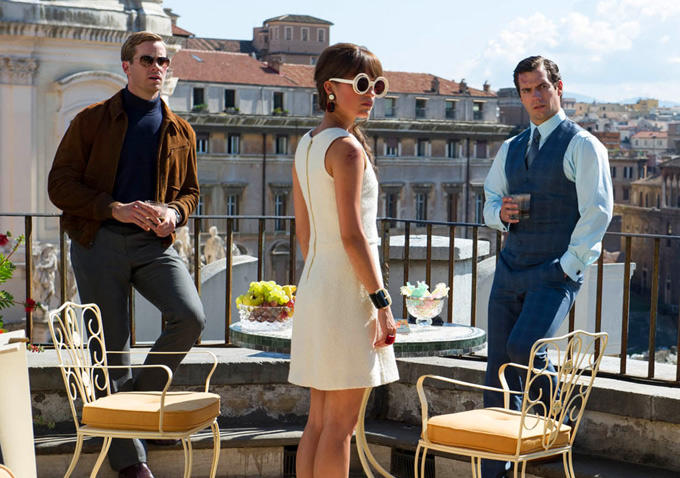
As they set out, Howell insists they’re accompanied by Colonel Rupert Thomas (Caven), a seasoned army man who knows the area they’re travelling into, the Timber. As they make their way up into the mountains to the mining camp where their father was last known to be, the town sheriff, Snow (Bailie) visits Maggie and Lisa to make sure they’re alright. While he’s there, two of Howell’s men arrive to begin assessing the property, but before it’s legal to do so; Snow runs them off.

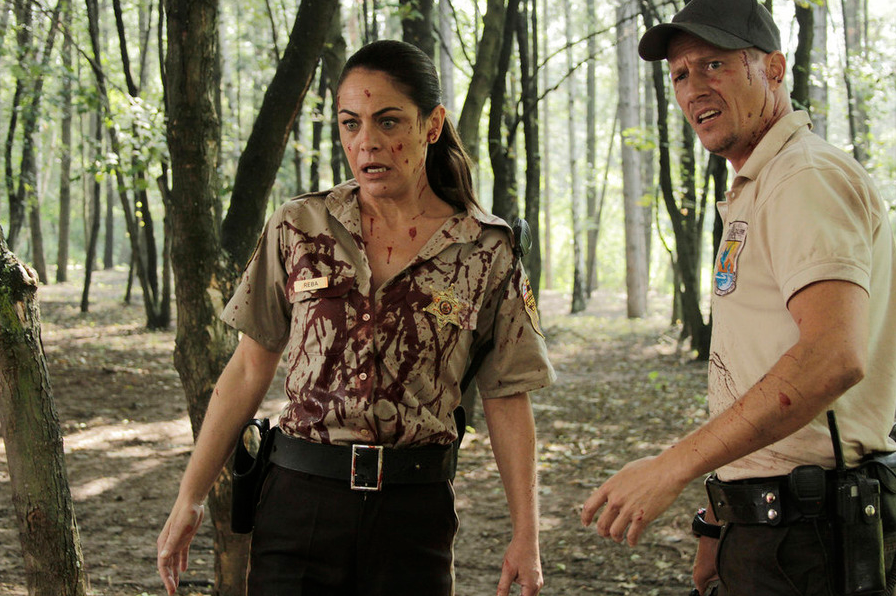
Heading deeper into the Timber, an accident with their horses and wagon leaves the three men having to travel on on foot. The next morning they’re attacked by a couple of mountain men and Thomas is killed. Wyatt and Samuel press on, struggling against the harsh elements and a further assault that sees Samuel captured and taken to a cave where his left hand is badly injured. Wyatt rescues him and they continue on up the mountain until they reach the mining camp. But madness has overtaken the men working there, and the foreman, Jim Broadswell (O’Hagan) has them locked up. When some of the workers use dynamite to blow up the camp, the brothers manage to escape, taking Broadswell with them.
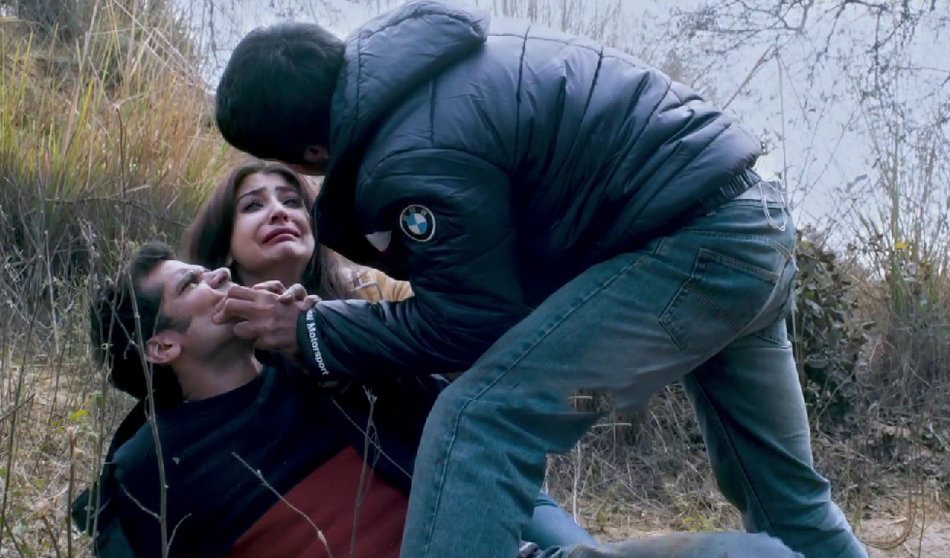
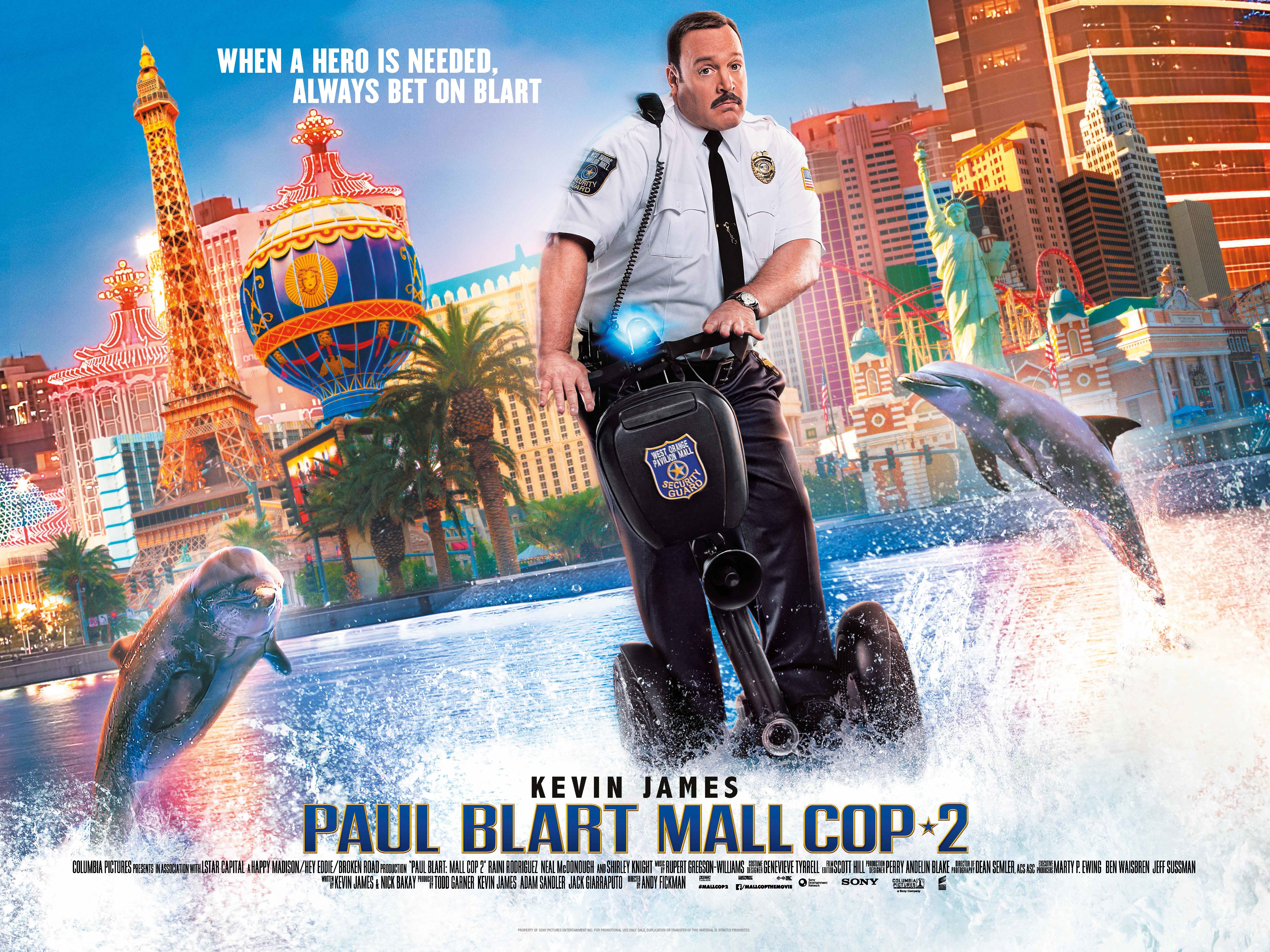
Their father, however, intercepts them, killing Broadswell and wounding Wyatt. Unable to do anything, Samuel passes out and he and his brother are taken to a small Indian encampment where Samuel wakes to find that Jebediah has amputated his injured hand. With their father clearly out of his mind and intending to murder Wyatt, Samuel has to find the strength to save his brother, while back at their home, Howell and three of his men arrive to take the property by force if they have to.

Timber, The - scene

Shot in the stunningly beautiful Carpathian Mountains, The Timber is a Western that features an odd editing style, and the kind of elliptical narrative that could well alienate audiences expecting a more straightforward plot or storyline. It’s a bold move on the makers’ part and while it does add to the overall, nightmarish quality of the brothers’ journey, there are also times when it proves frustrating. Scenes appear disjointed, and the movie is peppered with flashbacks and Samuel’s musings on the events that take place and his own mental state. It’s not a conventional approach by any means, but in the hands of screenwriters O’Brien, Steve Allrich and Colin Ossiander, it does make for an absorbing, though unpredictable viewing experience.

That said, there are enough genre conventions to help the wary viewer along. Howell is the devious land baron, Samuel’s wife Lisa is the plucky frontierswoman with a mind of her own, and the brothers are the traditional good men trying to stay that way. These staples help the movie immensely when its non-linear approach kicks in, its deliberately steady pace allowing for more detail than expected, and for the themes of betrayal, greed, revenge and madness to work their way through the narrative more effectively. It’s a considered, more thoughtful Western, and it retains a moral compass that anchors the characters.

Samuel and Wyatt appear to be opposites, with the younger brother, Samuel, seeming to be less experienced and less mature, but as the movie progresses he proves to be his brother’s equal, and by the movie’s end he’s passed through what might be termed an adult rite of passage. Wyatt is more confident, firm in his beliefs and unafraid of doing the difficult thing, but he proves just as unprepared for what happens on the journey as Samuel. In a way, it’s his over-confidence that determines how much trouble they’ll both face, and whether or not they’ll survive the ordeal.

On the distaff side, Lisa and Maggie are the type of dependable women who seem used to being left by their men, and who harbour a mainly unspoken resentment of it. Maggie is fearful for her sons’ return because she’s already lost her husband to the Timber; she doesn’t want to lose them in the same way. Lisa is fearful because of her newborn child and being left alone, and sees the brothers’ quest as being irresponsible. When they leave she makes her feelings clear by avoiding a kiss from Samuel, then adopts his role by guarding the property while they’re gone. She’s a practical woman because she has to be.

Peck and Ransone make a good pairing, their physicality and dramatic intensity proving an apt fit for the material, while Lasowski offers grit and determination to spare. Kennedy uses Maggie’s loss to present a woman living in both the past and the present, and Bailie gets the chance to reveal a greater depth to the sheriff’s character than is at first apparent. As the underhanded Howell, Glover exudes a cold nonchalance that befits his character’s greed, and for those of you who may be wondering, yes it is the same William Gaunt who appeared in the cult Sixties’ TV series The  Champions who plays Jebediah (though you’d be hard pressed to recognise him).

Timber, The - scene2

With the Carpathians standing in for Canada’s Yukon territory, and what must have been a difficult shoot due to the conditions – there are plenty of moments where Samuel and Wyatt are wading through knee-deep snow – The Timber is a movie full of arresting visuals and stunning scenery. O’Brien directs with a reliance on close-ups to add a measure of unnerving claustrophobia to the wide open spaces, and keeps the madness – or mountain sickness – from being too over the top. At a trim eighty-two minutes, the movie doesn’t outstay its welcome, and while as mentioned before, it provides enough genre staples to keep most Western fans happy, it’s still likely to divide audiences at the end of the trail.

Rating: 7/10 – a solid, no frills Western with a psychological core, The Timber is a well-intentioned, idiosyncratic movie that impresses as often as it hesitates; there’s much to appreciate here, but it may depend on your frame of mind when watching it as to just how much appreciation it’ll receive.

Share this:

  • Share on X (Opens in new window) X
  • Share on Facebook (Opens in new window) Facebook
  • More
  • Print (Opens in new window) Print
  • Email a link to a friend (Opens in new window) Email
Like Loading...

Kingsman: The Secret Service (2014)

08 Sunday Feb 2015

Posted by dullwood68 in Movies

≈ 1 Comment

Tags

Action, Colin Firth, Drama, Eggsy, Mark Strong, Matthew Vaughn, Michael Caine, Review, Samuel L. Jackson, SIM cards, Spies, Taron Egerton, Thriller, Valentine

Kingsman The Secret Service

D: Matthew Vaughn / 129m

Cast: Colin Firth, Samuel L. Jackson, Taron Egerton, Mark Strong, Michael Caine, Sofia Boutella, Sophie Cookson, Edward Holcroft, Mark Hamill, Samantha Womack, Geoff Bell, Jack Davenport

1997. While on a mission in the Middle East, Kingsman secret agent Harry Hart (code named Galahad) (Firth) makes a mistake that costs the life of his protege. He visits the man’s wife, Michelle (Womack), and their young son, who is known as ‘Eggsy’. He gives Eggsy a medal and tells him if ever he needs a favour, to ring the number on the back of the medal and say the phrase, “Oxfords not brogues”.

Eight years later, one of Harry’s fellow agents, Lancelot (Davenport) is killed while trying to rescue a kidnapped professor (Hamill). As the membership of Kingsman demands a continuous number of agents, Hart and his remaining colleagues are tasked by the service’s head, Arthur (Caine), with finding a replacement for him. Meanwhile, Eggsy’s home life hasn’t improved. His mother is in an abusive relationship with Dean (Bell), and he and his friends are bullied by Dean’s gang. When Eggsy steals  one of the gang’s car he ends up being arrested. Remembering the medal, Eggsy calls the number and repeats the phrase. Soon after he is released and finds himself in the company of Harry.

While all this is going on, the kidnapper of the professor, tech-billionaire and radical environmentalist Richmond Valentine (Jackson) is blackmailing or kidnapping important world figures in order to support his scheme to reduce the world population through the free dispersal of SIM cards adapted for use in any mobile phone. With Kingsman becoming aware of his activities, Eggsy agrees to undergo the training required to become a Kingsman agent. While he competes against the other candidates, including Roxy (Cookson) and Charlie (Holcroft), Harry pays Valentine a visit to find out more about his plans and eventually discovers that the billionaire is planning a test of his SIM cards at a church in the Deep South.

Eggsy does well enough in his training to reach the final stage where it’s between him and Roxy for the position of the new Lancelot. But his confidence and commitment is rocked by the task required of him, and in the Deep South, Harry’s infiltration of the congregation leads to an unexpected and shocking development…

Kingsman The Secret Service - scene

If Matthew Vaughn only ever made comic book adaptations from now until the end of time, it would be a wonderful outcome for movie lovers everywhere. Following on from Kick-Ass (2010) and X-Men: First Class (2011), Kingsman: The Secret Service is a razor-sharp, highly entertaining spy spoof that retains enough drama to give it the edge it almost doesn’t need. It’s a movie that is both self-referential and iconic, and shows just how this sort of material should be handled: with obvious love and affection.

Adapting Mark Millar and Dave Gibbons’ comic book The Secret Service, Vaughn and screenwriter Jane Goldman have created a world where the notion of a “gentleman spy” is still very highly regarded – by the spies themselves, and by the villain of the piece – and where a certain level of style is a necessity. It’s an Old Boys network, run as an elitist organisation that works so far behind the scenes no one’s ever heard of them. With its agents named after characters from Arthurian legend, and its adoption of high-tech weapons to back up each agent’s physical prowess, the Secret Service is a potent mix of the old and the new. From its bulletproof umbrellas to its poisoned knife tipped shoes to its underground hangar full of jets and helicopters and APC’s, this is an organisation that is serious about what it does, but also knows how to have fun while doing it.

The plot is straight out of the Sixties, with a megalomaniac threatening to destroy the world unless his demands are met, his ultra-dangerous sidekick – here Boutella’s artificial limbed killing machine, Gazelle – a variety of ingenious gadgets and some of the sharpest outfits this side of a Milan catwalk. As befits a Bondian villain, Valentine has a mountain lair with enough rough-hewn corridors for Eggsy to kill dozens of his henchmen, and he has a turncoat (or two) within the Kingsman organisation. It’s all presented with a splendid amount of panache (and above all, style), and Vaughn never loses sight of how important these aspects are in the grand scheme of things.

The director is more than ably supported by a first-rate cast that sees Firth cast entirely against type (but boy is he a great choice for the role), Jackson use a lisp to underline the absurdity of his character’s ambitions, Egerton grab the opportunity of a lifetime with both hands, Strong reinforce his status as one of the finest actors around (even if his Scottish accent wavers a bit), Caine provide gravitas and just a pinch of arrogance, and in a minor role as a kidnapped Scandinavian princess, Hanna Alström almost steals the movie with an offer Eggsy can’t refuse.

But what Kingsman: The Secret Service is most likely to be remembered for is the scene at the church, a technically impressive, devastatingly violent, gratuitously vicious, and brutally in-your-face sequence where the full effects of Valentine’s plan are felt. The camera swoops in and out and around the action, keeping its focus on Harry and never once letting up on the audience, as every blow and gunshot and stabbing movement is choreographed to furious perfection. It makes the night club sequence in John Wick (2014) look anaemic by comparison, and is all the more startling and effective by being almost balletic in its blood-soaked aesthetic.

Kingsman The Secret Service - scene2

Of course, while the violence is as bone-crunching and quasi-sadistic as you might expect from Vaughn, there’s also a great deal of humour, along with the underlying theme of finding your place in the world. It’s a rich mixture of pointed comedy and heightened violence, and as with Kick-Ass, Vaughn succeeds in ensuring neither element overwhelms the other, leaving the movie to find its own level throughout and proving an exhilarating mix of both. He’s further supported by dazzling cinematography by George Richmond, and there’s a terrific score by Henry Jackman and Matthew Margetson that uses various motifs from other spy movies and still sounds fresh. And of course, special mention must be made of the costumes by Arianne Phillips, her bespoke suits and accessories all now available for the gentleman spy in your life.

Rating: 8/10 – a little too long, with the final showdown in Valentine’s lair proving an unnecessarily two-part affair, Kingsman: The Secret Service is still a stylish, uncompromising action thriller that delights at every turn; Firth is simply superb, and Egerton is a rising star with bags of ability – and then some.

Share this:

  • Share on X (Opens in new window) X
  • Share on Facebook (Opens in new window) Facebook
  • More
  • Print (Opens in new window) Print
  • Email a link to a friend (Opens in new window) Email
Like Loading...

Wild Card (2015)

02 Monday Feb 2015

Posted by dullwood68 in Movies

≈ 1 Comment

Tags

Action, Casino, Domink Garcia-Lorido, Gambling, Jason Statham, Las Vegas, Michael Angarano, Milo Ventimiglia, Review, Security consultant, Simon West, Stanley Tucci, The Golden Nugget, Thriller

Wild Card

D: Simon West / 92m

Cast: Jason Statham, Michael Angarano, Milo Ventimiglia, Dominik Garcia-Lorido, Hope Davis, Stanley Tucci, Max Casella, Sofia Vergara, Jason Alexander, Anne Heche

Nick Wild (Statham) is a security consultant living and working in Las Vegas. He’s also a gambler with a dream: win $500,000 and spend five years living the life he’s always wanted, starting with a year sailing around the Mediterranean. He takes a job protecting a young man named Cyrus Kinnick (Angarano) while he plays at the casinos. At the same time he receives a message from a friend called Holly (Garcia-Lorido), asking him to visit her. When he does he finds she’s been raped and beaten up by three men she met at the Golden Nugget. She tells Nick she wants to find out who they are so she can sue them.

Nick soon discovers the three men were local gangster Danny DeMarco (Ventimiglia) and two of his men. He’s warned not to go anywhere near them, but when he tries to tell Holly he couldn’t find out who the men were, she realises he’s lying and reminds him of a debt he owes her. Knowing it will cause trouble for him, Nick pays a visit to DeMarco at his suite. He disables DeMarco and his men, giving Holly – who’s never intended to sue them – a chance to exact her revenge on the gangster. She threatens to cut off his penis, and even nicks the side of it; he cries and pleads for forgiveness. Relenting, Holly takes $50,000 from him and splits it with Nick before leaving town.

Nick takes Cyrus to a casino, and while Cyrus plays at a craps table, Nick takes his half of DeMarco’s money and begins to gamble. He’s soon on a winning streak that culminates in his winning $506,000, enough for him to leave Las Vegas. He’s about to cash in his chips when he’s struck by an anxiety attack. He tells Cyrus that he’s been fooling himself: the money isn’t enough for him to avoid having to come back to Vegas after his five years are up. Telling himself he needs a bigger pot of money he stakes all his winnings on a single bet… and loses it all. Afterwards, he’s attacked by DeMarco’s men but manages to defeat them. But this leads to Nick being summoned to see Baby (Tucci), the boss of organised crime in Las Vegas. DeMarco has come to him with a story that Nick came to his suite, beat him up and shot his men, and stole the money to gamble with. Now Nick has to prove to Baby that DeMarco is lying, or his life will be forfeit…

Wild Card - scene

A remake of the Burt Reynolds’ movie Heat (1986), Wild Card is a project that Statham has been trying to get made for around five years. It’s also an adaptation by William Goldman of his own novel and a reworking of his script for Heat. A crime drama that features another of Statham’s occasional forays into character acting, the movie doesn’t offer anything new (hardly possible given the material’s history), but it does make for an entertaining, if occasionally risible, trip through the underbelly of life in Las Vegas.

It’s a milieu that’s been explored many, many times before, but here there’s a sense of  ennui that drifts alongside the narrative, making the characters’ desperation and need for self-improvement all the more affecting. Cyrus is a twenty-three year old self-made multi-millionaire who wants to know what it’s like not to be afraid, and to have the self-confidence to “be a man”. Holly is an escort who, like Nick, wants a better life where she’s not always at the mercy of others. And Nick himself is afraid that he’ll spend the rest of his life in Vegas, scratching a living and ending up alone. A lot of this is underplayed, a smart move by Goldman, and it gives the movie an edge that comes as a bit of a surprise.

With Las Vegas providing a more than suitable backdrop, Wild Card keeps its themes of redemption and avarice well to the fore. Nick’s return to the table after winning the money he’s always dreamed about is both inevitable and startling, and gives Statham the chance to show that he can be a better actor than a lot of people give him credit for. Sure he can pull off an action scene without breaking sweat or getting out of breath, but here he’s stretched on more than a few occasions – lying to Holly, appearing to kowtow to DeMarco, going back to the tables, looking bereft after he’s lost – and while he still maintains an aloof, taciturn presence, it’s a more rounded performance than usual.

But this being a Jason Statham movie, and one directed by Simon West – they also collaborated on The Mechanic (2011) – there’s room for a clutch of exhilarating, superbly choreographed fight scenes. Fans won’t be disappointed by the brutally inventive ways in which Nick dispatches various henchmen – one close up of a nose being broken is particularly impressive – and if these sequences still prove to be the main highlights of a movie that does its best not to be “just” an action movie, then it’s unfortunate but not entirely surprising.

The rest of the cast provide adequate support, though some are reduced almost to cameos or appear to have done only a day’s filming. Angarano and Ventimiglia have more than most to do but have a job with characters who remain cyphers throughout, with Ventimiglia in particular struggling to make more of DeMarco than the preening, psychotic gangster he appears. Garcia-Lorido brings an emotional intensity to her role that bodes well for her future, while Tucci phones in one of his patented “man with excess mannerisms” performances as Las Vegas’s capo di tutti capi. But with the likes of Davis, Heche and Vergara reduced almost to walk-on roles, the movie ends up feeling a little misogynistic.

All in all, West directs with his usual visual flair and helps Statham give one of his best performances. Goldman’s script is peppered with some less than quotable lines of dialogue – “He goes crazy and he shoots maybe my best two friends in the whole world” – but the structure is solid and Nick’s love/hate relationship with Sin City is woven into the storyline in a way that is meaningful and instructive of Nick’s personality. There’s a pleasingly claustrophobic feel to the casino scenes, and Shelly Johnson’s cinematography captures the glitz and the glamour of Las Vegas alongside its less attractive features.

Rating: 7/10 – worth seeing as a movie where Statham stretches his abilities as an actor, and for a couple of outstanding fight sequences, Wild Card is the kind of action movie that starts slow and builds to a (vicious) climax; unpretentious, and occasionally solemn, one can only hope that Statham and West get a chance to team up again soon.

Share this:

  • Share on X (Opens in new window) X
  • Share on Facebook (Opens in new window) Facebook
  • More
  • Print (Opens in new window) Print
  • Email a link to a friend (Opens in new window) Email
Like Loading...

The Fast and the Furious (2001)

31 Saturday Jan 2015

Posted by dullwood68 in Movies

≈ Leave a comment

Tags

Action, Brian O'Conner, Crime, Dominic Toretto, Drama, Hijackings, Jordana Brewster, Michelle Rodriguez, Paul Walker, Race Wars, Review, Rob Cohen, Street racing, Thriller, Undercover cop, Vin Diesel

Fast and the Furious, The

D: Rob Cohen / 106m

Cast: Vin Diesel, Paul Walker, Michelle Rodriguez, Jordana Brewster, Rick Yune, Chad Lindberg, Johnny Strong, Matt Schulze, Ted Levine, Ja Rule, Vyto Ruginis, Noel Gugliemi, Reggie Lee

In Los Angeles, a gang of thieves are hijacking trucks using heavily modified Honda Civics. Sent undercover to find out who is behind the thefts, cop Brian O’Conner (Walker) infiltrates the street racing scene, making a particular impression at Toretto’s Market where he flirts with Mia Toretto (Brewster). This angers Vince (Schulze) who is attracted to Mia and is part of Dominic Toretto (Diesel)’s crew (Dominic is the focus of Brian’s investigation). Vince and Brian fight but Dominic breaks it up. Later, Brian turns up at a street race and bets his car’s pink slip that he can beat Dominic, but he loses. The police arrive to break up the event and Brian sees a chance to get into Dominic’s good books: he helps him get away.

They find themselves in territory controlled by Dominic’s old rival, Johnny Tran (Yune) and his cousin Lance (Lee). Johnny blows up Brian’s car, leaving him to find a “ten-second car” for Dominic. He finds a wrecked Toyota Supra and brings it to Dominic’s garage where he starts to restore it; he also begins dating Mia. Evidence points toward Tran being responsible for the hijackings, but a raid on Tran’s property reveals the goods Brian has seen there to have been legally purchased. With Tran no longer a suspect, Brian begins to believe that Dominic and his crew are responsible.

A street racing event, Race Wars, sees Dominic’s friend, Jesse (Lindberg) lose a race with Tran. Jesse flees with the car he should have handed over. Tran demands Dominic find the car and bring it to him, but Dominic is less than accommodating. Instead of looking for Jesse, Dominic and his team (who are the thieves), attempt a heist in order to help get Jesse out of Tran’s debt. But the heist goes wrong, and when Vince is badly injured, Brian breaks his cover to get him help.

Brian later attempts to arrest Dominic but he’s interrupted by the return of Jesse, who is killed by Tran and Lance in a drive-by shooting. Dominic and Brian both go after them, and it leads to a desperate chase through the streets and Brian making the toughest decision of his police career.

Fast and the Furious, The - scene

Back in 2001, the idea that this modest, straight-shooting actioner would spawn six sequels, and that they would be increasingly successful – so much so that the fifth sequel in the series, Fast & Furious 6 (2013) would gross over $750 million worldwide – seemed an unlikely one. The cast weren’t exactly household names, the director had made a modest success of Dragon: The Bruce Lee Story (1993) but again wasn’t very well known, and the concept of street racing as a backdrop for criminal activity involving high-speed cars didn’t sound that exciting.

And yet the movie was – and remains – a pleasant surprise, not quite as high-octane as some of its successors, but (if it’s at all possible) more grounded and less reliant on being over the top. The car chases and vehicular action sequences are all well-staged and expertly choreographed, but there’s a lot of attention paid to the characters, and their milieu is entirely credible. With the groundwork providing a solid basis for the action, the movie is free to examine notions of brotherhood, loyalty, respect, and most of all, family, with Dominic in the role of pater familias.

All this offsets some of the sillier aspects of the script – Brian’s superiors behave like they’ve had a collective tyre iron shoved somewhere uncomfortable, and make noises like spoilt children; the final heist is attempted on one of those long American roads that no one else travels along – and helps make the movie more than just a collection of scenes that car fetishists will replay over and over again. The cars are spectacular, and the street racing scenes do have a raw energy to them, but it’s the growing bromance between Dominic and Brian that takes centre stage and proves the most enjoyable element, as the gruff, laconic mechanic-cum-street-racer-cum-hijacker takes the foolhardy policeman under his wing and welcomes him into a world he barely knew existed. It’s a little too neat that Brian keeps Dominic out of jail and places his own career in jeopardy, and Brian’s reasons for doing so are never adequately explained, but within the confines of the movie it still, somehow, works.

As ever, Diesel does brooding with his usual menacing insouciance, while Walker is all tousled curls and winning smile, but not quite the fully formed character the movie needs (though this is due more to the script by Gary Scott Thompson, Erik Bergquist and David Ayer than Walker’s actual performance). On the distaff side, Rodriguez is as ballsy as you’d expect, and Brewster provides a softer contrast, though in most respects their characters serve as eye candy with dialogue (again a problem with the script). Of the supporting cast, only Schulze makes any real impression, and it soon becomes clear that none of the rest are going to return in later instalments.

Similarities to Point Break (1991) are pretty obvious, but The Fast and the Furious is still its own thing, a turbo-charged action movie that Cohen has fun with, changing gears with gusto and setting up several moments where the audience can say “wow!” and not feel embarrassed immediately afterward. There’s a terrific score by BT that fuses industrial, hip-hop and electronica and perfectly suits the movie’s mise en scene, as well as providing a propulsive background to some of the car sequences. And if not all the car stunts seem likely, it’s worth bearing in mind the physics-defying absurdity of some of the movies that followed.

Rating: 7/10 – a solid, unpretentious beginning to the franchise, The Fast and the Furious is one of those guilty pleasures guaranteed to put a smile on your face – every time; fast moving and tense, the movie aims for thrills and spills and doesn’t disappoint.

Share this:

  • Share on X (Opens in new window) X
  • Share on Facebook (Opens in new window) Facebook
  • More
  • Print (Opens in new window) Print
  • Email a link to a friend (Opens in new window) Email
Like Loading...

Ninja Scroll (1993)

26 Monday Jan 2015

Posted by dullwood68 in Movies

≈ Leave a comment

Tags

Action, Anime, Dakuan, Devils of Kimon, Drama, Emi Shinohara, Feudal Japan, Futaro Yamada, Genma, Jubei Kibagami, Kôichi Yamadera, Kogera, Review, Samurai, Shogun of the Dark, Stolen gold, Takuan Sōhō, Yoshiaki Kawajiri

Ninja Scroll

Original title: Jûbê ninpûchô

aka Jubei Ninpucho: The Wind Ninja Chronicles; Jubei the Wind Ninja

D: Yoshiaki Kawajiri / 94m

Cast: Kôichi Yamadera, Emi Shinohara, Takeshi Aono, Daisuke Gôri, Toshihiko Seki, Masako Katsuki, Shûichirô Moriyama, Ryûzaburô Ôtomo

In feudal Japan the village of Shimoda is wiped out by a mysterious plague. A team of Mochizuki ninja are sent by their chamberlain, Sakaki Hyobu (Moriyama) to investigate but are ambushed by a giant whose body is made of stone. He kills them all except for Kagero (Shinohara), the only female in the team. The giant, Tessai (Ôtomo), intends to use her for sex but is interrupted by a lone samurai called Jubei (Yamadera). Jubei Blinds Tessai in one eye and he and Kagero escape. She continues with her mission to discover the reason for the plague at Shimoda village, while Jubei finds himself pursued by Tessai; they fight a second time and Jubei is able to defeat him.

Afterwards, Jubei meets Dakuan (Aono), an old monk working for the government who  tells him that Tessai was one of the Devils of Kimon, seven supernatural entities under the control of Genma Himura (Gôri). Jubei is shocked as he had killed Genma five years before. Jubei was part of a ninja team led by Genma, and he was betrayed by him when Genma attempted to steal a horde of gold from his Lord; Jubei is shocked because Genma was beheaded. Dakuan informs him Genma now has the ability to reanimate himself, no matter how he’s killed. He also tells Jubei that with the death of Tessai the remaining Devils will seek him out to exact their revenge. Dakuan tries to hire Jubei to help him but he refuses; unwilling to accept his answer, Dakuan then poisons Jubei with the promise that if he assists the monk he’ll be given the antidote and a hundred pieces of gold.

True to the old monk’s warning, the remaining devils attack Jubei in turn. He defeats them, and as he does he learns that the gold that Genma tried to steal was on a ship that was sunk in a storm on the coast near to Shimoda village. He and the devils are in the process of recovering the gold. Jubei is rejoined by Kogera and also learns that she has a special gift: as her master’s poison expert her body is so full of toxins that she is immune to them; if anyone gets too close to her they run the risk of being poisoned themselves. Together, and only occasionally aided by Dakuan (who is using them as a distraction), they track the devils to Kishima Harbour where the gold is being loaded on to another ship. Once on board, they plan to sink the ship, but Genma and a remaining devil have other ideas.

Ninja Scroll - scene

Viewed over twenty years on from its debut, Ninja Scroll is still an exciting, vividly hand drawn (no CGI here) animated movie that stands head and shoulders above the majority of similar movies that have followed in its wake. It’s violent, unafraid to throw in some sexual activity (one scene is a little uncomfortable to watch), has a thin streak of malicious humour, and has some of the best choreographed fight scenes witnessed in an anime movie.

The storyline is almost classical in its simplicity, although the feudal politics might have some viewers reaching for the pause button if watching at home (good luck if you’re in the cinema). With its background of warring shogunates and treacherous clan retainers and double crosses, the history surrounding the gold and its whereabouts can be a mite confusing. But Kawajiri keeps it all brief enough to be ignored if the viewer wants to go that way, and concentrates on the clashes between Jubei and the devils, and his awkward romance with Kogera. Each of the showdowns features a devil with a particular way of fighting, from Tessai and his stone-like body to Yurimaru (Seki) and his command of electricity, and each makes for a continually compelling (and dangerous) series of foes for Jubei to defeat. It’s to Kawajiri’s credit that these encounters go such a long way to making the movie as successful as it is. The romance between Jubei and Kagero is equally well constructed and played out, its unrequited nature having a greater emotional depth than is usual, and the two characters’ scenes together add an extra punch to proceedings and benefit immeasurably from the voice talents of Yamadera and Shinohara.

The lone samurai figure is a staple of Japanese feudal fiction, and while Ninja Scroll is an homage to Futaro Yamada’s Ninpōchō novels, there’s much here that resonates beyond the source material. The themes of betrayal, honour, sacrifice, revenge and greed lie heavily on the narrative, but are complemented and enhanced further by aspects of love, duty, loyalty and compassion. All these add up to a storyline that is rich in potential, and which is used by Kawajiri to extremely impressive effect. He’s aided by an equally impressive voice cast, with Yamadera and Shinohara being superbly abetted by Aono (in a role that’s a homage to the famous Japanese monk Takuan Sōhō), Seki as the most debonair of the devils, and Gôri as the malignant sounding Genma.

The animation in Ninja Scroll is often stunning to look at, even if some of the imagery doesn’t always maintain the high standard set by surrounding scenes or shots – the hornets controlled by the devil Mushizo spring to mind – but this is a minor gripe in a movie that offers arresting image after arresting image (it’s a rare movie that can boast a death caused by head-butting). Again, Kawajiri assembles and orchestrates the material with undisguised skill, and is ably supported by Hitoshi Yamaguchi’s redolent cinematography, and the editing expertise of Yukiko Ito and Harutoshi Ogata.

Rating: 8/10 – an iconic anime that has stood the test of time (and what seems like a million and one imitators), Ninja Scroll has all the ingredients of a rousing samurai drama – and then some; bold, inventive, and endlessly enjoyable, it’s one animated movie that you just know will never be bettered by a live-action version.

Share this:

  • Share on X (Opens in new window) X
  • Share on Facebook (Opens in new window) Facebook
  • More
  • Print (Opens in new window) Print
  • Email a link to a friend (Opens in new window) Email
Like Loading...

John Wick (2014)

15 Thursday Jan 2015

Posted by dullwood68 in Movies

≈ 7 Comments

Tags

Action, Adrianne Palicki, Assassin, Chad Stahelski, David Leitch, Dead wife, Drama, Keanu Reeves, Michael Nyqvist, Revenge, Review, Russian Mafia, Thriller, Willem Dafoe

John Wick

D: Chad Stahelski, David Leitch / 101m

Cast: Keanu Reeves, Michael Nyqvist, Alfie Allen, Willem Dafoe, Dean Winters, Adrianne Palicki, Toby Leonard Moore, Daniel Bernhardt, Omer Barnea, Lance Reddick, Ian McShane, John Leguizamo, Bridget Moynahan

Having lost his wife, Helen (Moynahan), to an unexpected illness, retired assassin John Wick (Reeves) receives a posthumous gift from her: a puppy called Daisy. They begin to bond, and Wick takes her with him when he travels anywhere. At a gas station one day, Wick encounters a trio of Russian gang members; their leader, Iosef (Allen) asks to buy his car but Wick rebuffs him. Later that night, the trio break into Wick’s home, beat him up, kill Daisy, and make off with his car. While he recovers, Iosef takes the car to a chop shop run by Aurelio (Leguizamo) but he refuses to have anything to do with Iosef or the car. Wick visits Aurelio and learns that Iosef is the son of his former boss, Viggo Tarasov (Nyqvist). When Viggo finds out what his son has done, he’s less than happy; he tells Iosef that Wick was the best hitman in the business, not the boogeyman, but the man you sent to kill the boogeyman.

Viggo attempts to placate Wick but has no luck. He sends a hit squad to kill Wick at his home but Wick despatches them all. Viggo then puts out an open contract for $2 million on Wick, and approaches Marcus (Dafoe), Wick’s mentor, directly; Marcus agrees to take the job. Meanwhile, Wick checks in to the Continental, a hotel run by Winston (McShane) that caters to assassins. Wick learns that Iosef is being protected at a nightclub called Red Circle. He goes there but is stopped from killing Iosef by the intervention of Viggo’s enforcer Kirill (Bernhardt). Wounded, he returns to the hotel where he is attacked by fellow assassin Ms Perkins (Palicki). Overpowering her, he forces her to tell him where Viggo keeps both his private papers and the bulk of his personal cash.

The papers and cash are in a church vault; Wick burns it all. When Viggo arrives, Wick ambushes him and his men, but Kirill uses an SUV to knock Wick unconscious. Taken to an abandoned warehouse and tied up, Viggo remonstrates with Wick over his idea that he could ever lead a normal life. He leaves Wick to be killed by Kirill, but things don’t turn out as he expects.

John Wick - scene

A revenge movie with a distinctive visual style, John Wick is a huge breath of fresh air in a genre that often feels stodgy and underwhelming, and which often relies on rapid cross-cutting and headache-inducing editing tricks to give energy to its action scenes. This definitely isn’t the case here, with directors Stahelski and Leitch’s background as stunt coordinators bringing an impressive edge to the fight sequences, as they bring a whole new meaning to the phrase “gun-fu”.

Even more impressive than the action is the world created by the directors and writer Derek Kolstad. It’s at such a remove from our own world that it seems to operate independently, with its own rules and hierarchies. The Continental is a case in point, an establishment that allows no “business” on its premises, and inflicts the severest of penalties if that rule is ignored. It’s a world where respect and a person’s reputation carry as much caché as money, and where John Wick has the most respect of anyone. It’s also a world that appears bleached of positive feeling, where people hide behind polite, expressionless façades but are quick to display fear, anger and mistrust. And it’s a criminal underworld that mixes old-fashioned codes of conduct with a modern disregard for them when necessary. Against this, Wick acts like an old time vigilante, dismantling Viggo’s business and men with grim determination and no shortage of inner rage. And even though he’s not as invulnerable as he once was, he’s still the ne plus ultra of assassins.

With the world he inhabits so clearly defined, Wick strides through it like a colossus, giving Reeves his most commanding role for years. After non-starters Generation Um… (2012), Man of Tai Chi (2013) and 47 Ronin (2013), it’s good to see Reeves back on form, playing Wick with a taciturn, single-minded demeanour that suits him perfectly as an actor. His brief scenes with Moynahan also show convincingly the other John Wick, the loving husband and all-round “normal” guy. It’s a great performance, and one that’s given more than adequate support by the likes of Nyqvist, Dafoe and Palicki, all relishing their roles and the wonderfully expressive dialogue Kolstad has provided them with. The cast are obviously having a great time with the material, and it’s not surprising that this helps boost the audience’s enjoyment as a result. The interplay between Wick and Viggo is particularly effective, operating on several levels at once, and imparting more emotion than would normally be expected.

As for the action scenes these are tremendously shot and edited, full of fluid tracking shots, and with Reeves in the thick of it all, punching, kicking and blasting away with vicious, yet detached intent, and shooting more people in the head than probably any other hitman in movie history. One extended sequence, at the Red Circle nightclub, is as inventive and as thrilling as any action sequence in recent memory. Using their experience as stunt co-ordinators, Stahelski and Leitch (who thanks to the Directors Guild of America isn’t credited on the movie), keep the fight scenes breathtaking and immersive, and there’s not one moment during any of them where the viewer isn’t fully aware of what’s happening and who’s doing what to whom (something that Taken 3, for example, avoids doing throughout its disheartening running time).

In keeping with the overall mise en scene, the production design by Dan Leigh helps to reinforce the idea of a separate world where all this takes place, and is gloriously lensed by Jonathan Sela. The action is complemented by a pulsing, propulsive score by Tyler Bates and Joel J. Richard, and at times feels like it could be another of Wick’s opponents.

Rating: 8/10 – a modern day noir thriller that doesn’t pull its punches and has an emotional core that resonates throughout, John Wick is a wonderful surprise; with not an ounce of fat on it, and one of the tightest scripts of recent years, this is an action movie that constantly surprises and rewards in equal measure.

Share this:

  • Share on X (Opens in new window) X
  • Share on Facebook (Opens in new window) Facebook
  • More
  • Print (Opens in new window) Print
  • Email a link to a friend (Opens in new window) Email
Like Loading...

Mini-Review: Taken 3 (2014)

13 Tuesday Jan 2015

Posted by dullwood68 in Movies

≈ 1 Comment

Tags

Action, Dougray Scott, Famke Janssen, Forest Whitaker, Liam Neeson, Maggie Grace, Murder, Olivier Megaton, Review, Sequel, Thriller

Taken 3

D: Olivier Megaton / 109m

Cast: Liam Neeson, Forest Whitaker, Maggie Grace, Famke Janssen, Dougray Scott, Sam Spruell, Leland Orser, Jon Gries, David Warshofsky, Don Harvey, Dylan Bruno, Andrew Howard, Jonny Weston

When Bryan Mills (Neeson) receives a visit from his ex-wife Lenore, it’s because she wants to let him know she still has feelings for him, and that her marriage – to Stuart St John (Scott) – is on the rocks. Bryan tells her that they can’t be together while she’s still married. Stuart pays him visit as well and asks Bryan to stay away from Lenore while they try to sort out their marriage; Bryan tells him he will.

The next day, Lenore asks to meet Bryan at his place. When he gets there he finds she’s been murdered. The police arrive and try to arrest him but he escapes. He tells his daughter, Kim (Grace) what’s happened and vows to find Lenore’s killer. The police, led by Inspector Franck Dotzler (Whitaker), pursue Bryan while he tries to figure out the reason for Lenore’s death. He learns that Stuart has hired personal bodyguards and, fearing Kim is in danger from Lenore’s killer and Stuart is somehow involved, he abducts Stuart and learns that he owes a lot of money to a Russian gangster named Oleg Malankov (Spruell), and that Lenore’s death was probably to make Stuart pay up. With the help of his ex-CIA colleagues (Orser, Gries, Warshofsky), Bryan goes after Malankov, intending to kill him.

Taken 3 - scene

And so, the law of diminishing returns rears its predictable head and helps bury yet another action franchise. It shouldn’t really be a surprise, as this was a movie that wouldn’t have been made if 20th Century Fox hadn’t wanted it in the first place. With that decision made, and with Neeson unwilling to star unless no one was actually “taken”, you can see how the project was doomed from the start. As it is, no one could have been prepared for just how little effort was going to be put in by all concerned. From the lazy, credibility-free script by Luc Besson and Robert Mark Kamen, to the wayward, unfocused direction by Megaton, to the headache-inducing, rapid cross-cutting of the action scenes, to the (mobile) phoned-in performances from a cast that should know better.

Just how bad is it? Two examples: Lenore is killed by having her throat cut, but when Stuart has to identify her at the morgue she clearly has a scar where the cut should be. And despite being “trapped” in an underground car park full of police, Bryan escapes with ease by driving through them all and exiting the car park – which the police haven’t thought to cordon off or block. There are plenty of other moments where the unfortunate viewer will be shaking their head in disbelief, and plenty of other moments where they’ll be wondering if it can get any worse – the answer is yes, it can.

Rating: 3/10 – a sad conclusion to an otherwise entertaining if always far-fetched action franchise, Taken 3 is a spectacular misfire that often defies explanation; if there is to be a fourth movie – and Neeson appears to be keen on the idea – then maybe the tag line will be It Really Does End Here… Probably.

Share this:

  • Share on X (Opens in new window) X
  • Share on Facebook (Opens in new window) Facebook
  • More
  • Print (Opens in new window) Print
  • Email a link to a friend (Opens in new window) Email
Like Loading...

The Maze Runner (2014)

20 Saturday Dec 2014

Posted by dullwood68 in Movies

≈ Leave a comment

Tags

Action, Drama, Dylan O'Brien, Grievers, James Dashner, Literary adaptation, Review, Sci-fi, The glade, Thomas Brodie-Sangster, Thriller, Wes Ball, Will Poulter

Maze Runner, The

D: Wes Ball / 113m

Cast: Dylan O’Brien, Aml Ameen, Ki Hong Lee, Blake Cooper, Thomas Brodie-Sangster, Will Poulter, Kaya Scodelario, Dexter Darden, Chris Sheffield, Patricia Clarkson

Thomas (O’Brien) wakes in a rapidly ascending elevator that deposits him in a glade inhabited by other boys of a similar age to himself. He has no idea why he’s there, and he can’t remember anything that happened before waking. Scared, he attempts to run but soon discovers the glade is surrounded on all sides by a huge wall. The group’s leader, Alby (Ameen) explains their situation: no one knows why they’re there, a new member arrives each month with supplies, and the wall opens each day to reveal a maze that may or may not provide a way out of the glade altogether.

Thomas is given a job to do like everyone else, but he keeps looking to the maze and has thoughts of escaping. He wants to be a maze runner, someone who goes into the maze each day and maps its twists and turns. When one of the group, Ben (Sheffield), is stung by a creature known as a Griever (and which lives in the maze), he becomes violent and attacks Thomas. With no cure available, he’s forced into the maze at sunset; in effect it’s a death sentence as no runner still in the maze when it closes at the end of the day has ever returned.

Alby decides to enter the maze the next day and find out what happened to Ben. He enters with lead runner Minho (Lee) but they don’t reappear until just as the wall closes, and Alby is injured, having been stung by a Griever. Thomas rushes in to help them and the wall closes behind him, leaving the three of them trapped. Night falls and they find themselves hunted by a Griever, a huge spider-like creature. Thomas succeeds in killing it, and they return to the glade. While Alby remains unconscious, the elevator returns. In it is a girl, Teresa (Scodelario); she carries a note that states “She’s the last one ever.”

Another glader, Gally (Poulter) calls for Thomas to be punished as he’s brought danger to the group. But Newt (Brodie-Sangster), Alby’s second-in-command sees merit in Thomas’s actions and makes him a runner. The next day Thomas, Minho and some of the other boys go into the maze where they discover the corpse of the Griever contains an electronic device with a display showing the number 7. Minho explains that the maze consists of different sections and when the Griever attacked them, number 7 was open. With this knowledge, Minho believes they can use the device to help them escape the maze. A further trip inside the maze reveals a sewer opening that leads to the outside but time runs out before it can be opened and they return to the glade where Teresa is now awake. She and Thomas share brief memories of their lives before the glade, and she reveals she has two syringes. They use one on Alby and he recovers. And then the wall opens and Grievers come spilling out…

THE MAZE RUNNER

Along with superhero movies, and Paranormal Activity-style shockers, the current trend for dystopian teen sci-fi seems unlikely to abate any time soon, and with The Maze Runner another (potentially) long-running movie series is born – a sequel, Maze Runner: Scorch Trials, will be with us in 2015, and as of 2016 there will be three further novels that could be adapted. On the one hand, Hollywood’s commitment to literary adaptations is to be applauded, but on the other, is yet another foray into a world where specially chosen teens are the central protagonists really what audiences are looking for?

Well, as it turns out, the answer is yes, and particularly in the case of The Maze Runner. Outperforming its two main rivals, Divergent and The Giver at this year’s box office, the movie has garnered a strong following allied with mostly positive reviews. With the future of the franchise seemingly secured, the question still remains: is this a story compelling enough to warrant our commitment over the next few years?

Predictably, the answer is yes and no. Where The Maze Runner scores highly is in its look and feel, a mix of the pastoral and the mechanical that keeps the movie visually interesting throughout. It’s a combination that works most effectively when the Grievers invade the glade, their rapacious presence exposing the frailty of the society the boys have built up. It’s also highly transgressive, the lurking threat made all too real, despite what the boys believe they know already. As a set piece, it’s incredibly effective, and solidifies the danger the boys face in trying to escape.

And the movie needs the Grievers because without them, this would be The Lord of the Flies without the angst or the grim brutality. There’s also problems with the basic set up, as the script asks us to accept that a group of teenage boys, stranded in a glade for up to three years, will all agree to cooperate with each other and create a benevolent social order. It’s an unlikely, and not entirely convincing conceit, and one that is compounded by the need for the wall to open at all. While there is a reason for the boys to have access to the maze, viewers may be wondering why that’s the case if the boys have established such a utopian existence. That something is going on outside the glade is obvious, but even when the why for everything is (partially) revealed at the movie’s end it still doesn’t make sense.

With the plot suffering from a case of constructus awkwardus, The Maze Runner also isn’t helped by its perfunctory characterisations – Thomas is the rebel, Alby the patrician leader, Gally the blinkered thug, Teresa the aloof female – and some trite dialogue (“Be careful. Don’t die.”). But the maze itself is an impressive creation, and the movie picks up every time the boys venture inside it, its crushing walls and huge metal plates that can trap and isolate working like a device dreamt up by a crazed Heath Robinson.

The cast provide serviceable performances, held back as they are by the lack of fully rounded characters, and even Poulter can’t do much with his role, leaving it difficult to root for anyone in particular. Clarkson pops up in a role that’s similar to those played elsewhere by the likes of Meryl Streep, Julianne Moore and Kate Winslet, but isn’t given enough to make more than a fleeting impact. Behind the camera, Ball directs competently enough but without displaying too much in the way of flair, and relies heavily on Enrique Chediak’s cinematography and Marc Fisichella’s production design.

Rating: 6/10 – unable to overcome the shortcomings of the source material (or in some cases, even address them), The Maze Runner falls short of reaching its full potential; uneven but visually arresting, it’s dystopian sci-fi with plenty of ideas but none that resonate too far beyond the movie’s own environs.

Share this:

  • Share on X (Opens in new window) X
  • Share on Facebook (Opens in new window) Facebook
  • More
  • Print (Opens in new window) Print
  • Email a link to a friend (Opens in new window) Email
Like Loading...

Taken (2008)

17 Wednesday Dec 2014

Posted by dullwood68 in Movies

≈ 1 Comment

Tags

Action, Albanians, Drama, Famke Janssen, Human trafficking, Kidnapping, Liam Neeson, Luc Besson, Maggie Grace, Paris, Pierre Morel, Review, Thriller

Taken

D: Pierre Morel / 93m

Cast: Liam Neeson, Maggie Grace, Famke Janssen, Olivier Rabourdin, Leland Orser, Jon Gries, David Warshofsky, Holly Valance, Katie Cassidy, Gérard Watkins, Xander Berkeley

Retired government agent (or “preventer”) Bryan Mills (Neeson) is divorced from his wife Lenore (Janssen) and struggling to re-connect with his daughter, Kim (Grace). He’s over-protective, which works against him, and never more so when, shortly after her eighteenth birthday, Kim tells him she’s been invited to stay in Paris during the summer. He’s against the idea at first, but eventually gives his permission for her to go. Travelling with her friend, Amanda (Cassidy), Kim arrives in Paris and they settle into the apartment where they’re staying. But on the first night, intruders break in to the apartment, and Kim, who’s on the phone to her father, watches as she sees them grab Amanda, and then come looking for her.

Bryan learns that her abductors are Albanians who specialise in human trafficking, kidnapping young female tourists to be sold as sex slaves to the highest bidder. He travels to Paris, and with the help of old friend, Jean-Claude (Rabourdin), devises a plan to find Kim and get her back. He learns about a construction site where there is a problem with “new merchandise”, but Kim isn’t there; instead he finds a woman who has Kim’s jacket. He leaves with her and holes up in a hotel room where she tells him about a house in the Rue de Paradis. The house proves to be where the Albanians have their base. Bryan kills all but one of them, whom he tortures for more information.

The Albanian tells Bryan about a man called Saint Clair (Watkins), who hosts parties that act as cover for the buying and selling of any kidnapped women. Brian sees Kim there, but before he can rescue her, he’s knocked unconscious. When he comes to, Saint Clair and his henchmen have Bryan tied up, and are about to kill him…

Taken - scene

Back in 2008, the idea of Liam Neeson playing a full-on action role was regarded as a bit unusual, partly because few of his previous roles had been in the action genre, and partly because of his age (he was fifty-six at the time). But despite the preposterous, gung-ho approach taken by writers Luc Besson and Robert Mark Kamen, Neeson’s über-serious portrayal of Mills somehow offset the movie’s cocksure silliness, and made Taken a huge success at the box office (the movie took around $225 million worldwide).

The idea of a man with “a special set of skills” running riot in Paris with a flagrant disregard for the law or due process, while not exactly new, benefits hugely from Neeson’s performance. His single-minded pursuit of his daughter’s kidnappers grounds the movie so effectively that even when Mills is directly in the line of fire of a man with a semi-automatic weapon and he doesn’t receive so much as a scratch, it’s almost like an entitlement; he’s a father, and what he’s doing is right (godammit).

This leads to a lot of indiscriminate killing, and in one sequence casual maiming, as Mills sense of justice borders on the psychopathic (he shoots one Albanian in the back, something our cinematic heroes are very rarely seen to do). This unapologetic violence is what gives the movie its edge, as Mills’ unfettered brutality keeps the audience wondering just how far he will go to rescue his daughter. Neeson is completely focused and convincing, and when you realise just how committed he is, you almost begin to feel sorry for the bad guys – they really don’t stand a chance (even with the nature of the script and the storyline, they really don’t stand a chance).

Away from the continual bloodshed, the earlier scenes where we first meet Bryan and Kim are more compulsory than enthralling, while the idea that Bryan sees his daughter as being younger than she is and in need of more “protection” is never fully developed (when he tells Lenore Kim’s been abducted you half expect him to say, “I told you so”). This is less a kind of over-developed fatherly concern and more of a deep-rooted paranoia, which might have had a more effective pay-off if Kim had been kidnapped because of something he did in the past. As it is, it still leaves Bryan Mills as one seriously screwed-up ex-government agent, and his morally dubious approach to “working” makes him more interesting than most armed avengers.

This extra-added depth to the main character, allied with Neeson’s compelling performance, makes Taken a bit of a guilty pleasure. Benson and Kamen’s script does its best to plug up any plot holes when they crop up, but it doesn’t always succeed – Bryan’s friend, Sam (Orser), identifies the kidnapper Bryan speaks to over the phone with only two words to go on (that’s some voice recognition software they’ve got there!) – and outside of Bryan, Kim and Lenore, characterisations are kept to a minimum, with broad brush strokes used throughout. As the bad guys, the Albanians could have been Russian or Croatian or any other Eastern European ethnic minority, and lack an identity as a result: they’re just there to be despatched as quickly as possible.

The fight scenes are cleverly constructed and choreographed to make Neeson look like he’s doing most of his own stunts (though when he’s not it’s a little too obvious), and it all looks appropriately bone-crunching and painful (the sound effects guys must have a field day on these kinds of movies). And as if to pour scorn on the idea that French stunt drivers aren’t the best in the world, there’s a short sequence involving Bryan chasing a boat that is as brazenly exciting and well edited as any in, say, The Transporter movies, or Ronin (1998). Having cut his teeth on The Transporter (2005), Morel directs with confidence and knows enough to let Neeson take the reins and do what he does best, while injecting a fierce intensity into the action scenes. Janssen and Grace provide adequate support (though Grace does overdo the squeals of delight when Kim gets something she wants), while a sub-plot involving a pop star (Valance) comes and goes so quickly that you wonder why it was included.

Rating: 8/10 – a thudding, crunching, pumped-up action movie shot mostly at night for maximum atmosphere, Taken is a supremely confident addition to the lone avenger sub-genre of action movies; with a commanding central performance by Neeson that re-energised his career, this should be filed under “Gratuitous Violence – for the enjoyment of”.

Share this:

  • Share on X (Opens in new window) X
  • Share on Facebook (Opens in new window) Facebook
  • More
  • Print (Opens in new window) Print
  • Email a link to a friend (Opens in new window) Email
Like Loading...

The Fantastic Four (1994)

15 Monday Dec 2014

Posted by dullwood68 in Movies

≈ Leave a comment

Tags

Action, Alex Hyde-White, Ben Grimm, Doctor Doom, Drama, Jay Underwood, Johnny Storm, Marvel, Mr Fantastic, Rebecca Staab, Reed Richards, Review, Roger Corman, Sci-fi, Sue Storm, The Human Torch, The Thing, Unreleased

Fantastic Four, The

D: Oley Sassone / 90m

Cast: Alex Hyde-White, Jay Underwood, Rebecca Staab, Michael Bailey Smith, Joseph Culp, Ian Trigger, Kat Green, Carl Ciarfalio, George Gaynes

College friends Reed Richards (Hyde-White) and Victor Von Doom (Culp) have built a machine that they hope will harness the energy from a passing cosmic phenomenon, but their experiment backfires and Victor is horribly injured. Believed to have died from his injuries, Von Doom is spirited away to his home country by two of his followers.

Ten years later, the cosmic phenomenon has returned and Reed has built a spaceship to take him and a hand-picked team – his friends Ben Grimm (Smith), Sue Storm (Staab) and her brother Johnny (Underwood) – near enough to it that they can collect data about it. Reed acquires a large diamond that will allow them to harness the power of the phenomenon’s cosmic rays, but on the eve of the flight it’s stolen by a criminal called the Jeweler (Trigger) who replaces it with a fake. As a result, Reed’s ship is bombarded by cosmic rays and forced to crash land back on Earth. The four survive but discover the rays have altered them in different ways: Reed can stretch his body, Sue can turn invisible, Johnny can control fire, and Ben has been changed into an orange-skinned stone-like creature (Ciarfalio).

Picked up by Doom’s henchmen (posing as Marines), the four are held at Victor’s mountain hideout (where he is now known as Doctor Doom). They use their newfound powers to escape and head back to New York, where they try to work out what to do next. Ben leaves and ends up being inducted into the Jeweler’s gang. While there he learns that Doom needs the diamond for a laser cannon that he wants to use to destroy New York. When Doom subsequently steals the diamond, Ben alerts Reed. Together they all don costumes Sue has created and travel back to Doom’s mountain hideout, where they attempt to stop Victor from carrying out his plan.

Fantastic Four, The - scene

Famous for being the Marvel movie that’s never been released (but which can be seen on YouTube), The Fantastic Four makes for fascinating viewing. It’s as bad as bad can be – though there are worse movies out there – and plays like a Saturday morning serial, but without the tension of a cliffhanger moment. Its low budget, let’s-make-it-to-keep-the-rights approach stifles any creativity, and even though a lot of the origin material is taken directly from the comics, there’s a spark missing that keeps The Fantastic Four from being more than just a curiosity.

On the positive side, the movie does move at a good pace, and most scenes don’t outstay their welcome, but there’s very little energy within them. The dialogue is clunky and/or chock full of needless exposition, and the cast don’t always succeed in making it sound convincing. Some of the sets have that “one puff and they’ll fall down” look to them, and the photography by Mark Parry is often static and poorly framed, making some scenes so bland and uninteresting to watch that you end up pitying editor Glenn Garland (also an associate producer) for having so little effective coverage to play around with.

The whole sub-plot involving the Jeweler and his “dregs of society” underlings feels forced and his philosophical musings feel like they’ve been drafted in from an amateur Shakespeare production. Doom has two senior henchmen who do the bulk of his dirty work for him, but are about as threatening as day-old kittens, while Doom himself is too prone to posing and making fancy hand gestures to be menacing; he’s like the camp uncle who only gets to visit at Xmas. As for the Fantastic Four themselves, Reed’s elasticity is used at one point to trip some of Doom’s henchmen; Sue’s invisibility is sometimes only partial, leaving her head and/or upper body exposed as in the good old days of silent cinema; Johnny acts like a gosh-darn college student who wants to put on a show in the old barn; and Ben as the Thing gets to say, “It’s clobbering’ time!” on three separate, yet underwhelming occasions.

With all this it’s no surprise that the cast – apparently unaware that the movie wouldn’t be released – display all the vitality of actors attending a read-through. Hyde-White aims for gravitas but misses by a mile, making Reed seem out-of-touch instead (even when Sue is practically throwing herself at him). Staab matches him in terms of banality, and delivers her lines with a breathless urgency that befits an ingenue rather than an actress in her Thirties. Underwood has plenty of energy and enthusiasm but doesn’t know what to do with it, his wide-eyed mugging making Johnny look like an idiot. And Smith isn’t on screen long enough to make much of an impact (Ciarfalio does much better in the Thing suit, even without his own dialogue). With these four making very little impression, it’s left to Culp to provide the unintentional laughs, and once inside his Doctor Doom outfit, he does so with camp abandon.

Watching The Fantastic Four it’s hard to believe that even the Seventies’ Spider-Man movies that were made for TV are better viewing experiences – but they are. It’s also difficult to work out just what the $1 million budget was spent on, what with the shoddy sets, the below-par special effects – Johnny’s full-body Human Torch effect is rendered as animation rather than live action – and the “don’t touch too much” props (though, surprisingly, the costumes are not that bad). With Sassone unable to provide much in the way of capable direction, it’s amazing that the movie can be construed as anything even close to entertainment, but even with all its failings some fans may well be prepared to forgive much of what makes the movie so bad in the first place.

Rating: 2/10 – with its behind the scenes machinations finally revealed in Doomed! The Untold Story of Roger Corman’s “The Fantastic Four” (2014), the actual movie retains its standing as one of sci-fi’s greatest misfires; made for the sake of it, The Fantastic Four continually trumps each terrible scene with another – and that’s some feat in itself.

Share this:

  • Share on X (Opens in new window) X
  • Share on Facebook (Opens in new window) Facebook
  • More
  • Print (Opens in new window) Print
  • Email a link to a friend (Opens in new window) Email
Like Loading...

He Who Dares (2014)

10 Wednesday Dec 2014

Posted by dullwood68 in Movies

≈ Leave a comment

Tags

Abduction, Action, Car park, Christina Bellavia, Paul Tanter, Review, SAS, Simon Phillips, Terrorists, Tom Benedict Knight

He Who Dares

D: Paul Tanter / 82m

Cast: Tom Benedict Knight, Simon Phillips, Christina Bellavia, Ewan Ross, Zara Phythian, Ben Loyd-Holmes, Kye Loren, Lorraine Stanley

A ruthless gang of terrorists led by Holt (Phillips) kidnap the British Prime Minister’s daughter, Alice (Bellavia) and some of her friends from a nightclub. At a nearby multi-storey car park they barricade themselves in and wait for the authorities to find them. When they do, the officer in charge, Detective Carpenter (Ross) advises caution but an SAS unit led by Christopher Lowe (Knight) goes in without orders. They find each level rigged with explosives. Meanwhile, Holt waits for his larger plan to come to fruition, and when he becomes aware of the SAS, exhorts his gang to kill them. A cat and mouse game ensues as the SAS make their way through each level, while on the outside Carpenter tries to figure out how the gang can possibly make their escape, or if they really are intending to blow up the car park and themselves with it.

He Who Dares - scene

With so many independent, low budget gangster/crime movies having been made in the UK over the last ten years – often by the same people – you could be forgiven for thinking that with all that experience the movies would get better over time. But you’d be wrong. And He Who Dares is a perfect example of a genre that has nothing left to say, and even less to offer in terms of entertainment. It’s a grim, depressing movie that ranks as amateurish drivel; its below-par heroics and poorly choreographed action scenes are so bad that it makes even Steven Seagal’s run of Made-in-Romania movies look good.

There’s really no excuse for the appalling dialogue, the ridiculous and unconvincing set up, the woeful plotting, the atrocious acting, the clumsy direction, the lacklustre photography, the unimaginative fight scenes, and worst of all, the over-indulgent use of freeze frames, superimpositions and distressed image effects that passes for editing. Put all these things together and you have an appalling mess of a movie that seemingly has no idea of how stupid it is.

We have Phillips to thank for the risible story, and director Tanter, along with James Crow, to thank for the terrible dialogue and plotting. Tanter and Phillips are frequent collaborators – the White Collar Hooligan movies, Shame the Devil (2013) – and really should be kept apart from each other if this is the kind of movie they’re likely to come up with. What defeats the imagination is the possibility that these two men, with all their (limited) experience, can’t see that the movies they’re producing are so bad as to be almost unendurable. It’s worrying that movie after movie goes by and there’s no improvement in quality.

Rating: 1/10 – with nothing to recommend it, He Who Dares is an embarrassing, unintentionally hilarious movie that exposes the limitations of its makers, and would have gained more kudos if it had been a student movie; with a sequel – He Who Dares: Downing Street Siege – already completed (and which sees Knight, Phillips and Bellavia reprising their roles), it seems there’s no likelihood of things improving any time soon.

Share this:

  • Share on X (Opens in new window) X
  • Share on Facebook (Opens in new window) Facebook
  • More
  • Print (Opens in new window) Print
  • Email a link to a friend (Opens in new window) Email
Like Loading...

Mini-Review: Kite (2014)

05 Friday Dec 2014

Posted by dullwood68 in Movies

≈ 3 Comments

Tags

Action, Amp, Anime, Callan McAuliffe, India Eisley, Murdered parents, Ralph Ziman, Remake, Revenge, Review, Samuel L. Jackson, The Emir, Thriller

Kite

D: Ralph Ziman / 90m

Cast: India Eisley, Samuel L. Jackson, Callan McAuliffe, Carl Beukes, Deon Lotz, Zane Meas

Some time after the death of her parents, Sawa (Eisley) starts killing members of the criminal organisation headed by the Emir (Meas), the man held responsible for her parents’ deaths. Sawa is helped by Karl Aker (Jackson), a detective who was her father’s partner. As she kills the Emir’s people, she gets closer and closer to him, but her dependency on a drug called Amp causes her to begin making mistakes, and soon her identity is in danger of being revealed.

While Aker covers up any evidence she leaves behind, Sawa is also helped by a young man named Oburi (McAuliffe). He says he knows her from before her parents’ death, and that they were friends, but thanks to Amp, Sawa’s memories of him are hazy and indistinct (along with most of her past). When a hit sees her being chased by some of the Emir’s people, Oburi helps her escape and, with no access to Amp, her withdrawal symptoms begin to help her remember exactly what happened when her parents were killed. And when she finally comes face to face with the Emir, the encounter leaves her with more questions than answers.

Kite - scene

A live action version of Yasuomi Umetsu’s A kaito (1998), Kite was probably hoping that arriving so long after the original might mean any comparisons would be kept to a minimum. Sadly for the makers of this version, the gap in time isn’t an advantage, and the decision to “go live” has led to yet another dystopian vision of the future where street gangs dominate, crime appears to be the only growth industry, and the police are so jaded as to be little more than bystanders. We’ve seen this kind of movie so often now that it’s hard to get any kind of enjoyment out of it; the viewer can only sit back and watch as Kite ticks the boxes it so resolutely refuses to think outside of.

In the end, it’s all about the action, but despite some well choreographed moments of mayhem, including a bathroom shootout that’s reminiscent of the one in True Lies (1994), there’s nothing here that has any real impact. The characters are bland and/or one-dimensional, and nothing the cast does elevates the material in any way (not even Jackson, not exactly a stranger to crass or unconvincing dialogue, can do anything with lines that include “I can’t do this anymore”). As a result, there’s no one to care about, not even Sawa herself, and as the plot staggers towards the inevitable “twist” (that can be seen coming before the movie even starts), the sense of despair rises accordingly.

Rating: 3/10 – looking and feeling like a compendium of scenes and locations from every other ghetto-based action movie made in the last few years, Kite suffers from leaden direction and a script that fosters complacency all round; tiring and dispiriting, with missed opportunities galore, potential viewers should skip this altogether.

Share this:

  • Share on X (Opens in new window) X
  • Share on Facebook (Opens in new window) Facebook
  • More
  • Print (Opens in new window) Print
  • Email a link to a friend (Opens in new window) Email
Like Loading...

Teenage Mutant Ninja Turtles (2014)

01 Monday Dec 2014

Posted by dullwood68 in Movies

≈ 3 Comments

Tags

Action, Donatello, Jonathan Liebesman, Leonardo, Megan Fox, Michelangelo, Mutagen, Raphael, Remake, Reporter, Review, Shredder, Splinter, Superheroes, Will Arnett, William Fichtner

Teenage Mutant Ninja Turtles (2014)

D: Jonathan Liebesman / 101m

Cast: Megan Fox, Will Arnett, William Fichtner, Alan Ritchson, Noel Fisher, Pete Ploszek, Jeremy Howard, Danny Woodburn, Tohoru Masamune, Whoopi Goldberg, Minae Noji, Johnny Knoxville, Tony Shalhoub

Ten reasons NOT to see this movie:

1) Megan Fox – still trying too hard and still unable to display even a hint of a recognisable or credible emotion.

2) Splinter learns jujitsu from a book.

3) Splinter teaches the turtles jujitsu – after learning from a book.

4) April O’Neil saves the turtles and Splinter from a lab fire – only to dump them into a sewer.

5) The Foot Clan ninjas use automatic weapons – they never use their ninja skills.

6) April O’Neil tries to convince her boss that there are mutant ninja turtles acting as vigilantes – and doesn’t provide a shred of proof – twice.

7) The New York sewer system contains enough discarded electronic equipment to assemble a sophisticated, city-wide surveillance system.

8) The super-rich bad guy’s only reason for being the bad guy is so he can be even richer.

9) April O’Neil is the subject of constant sexual harassment from Michelangelo – this is regarded as humour.

10) Turtles – apparently – are bulletproof.

Rating: 2/10 – so bad it’s a crime, and continuing evidence that Michael Bay’s Platinum Dunes has no idea how to reboot a franchise or remake a movie from the Eighties; as poorly executed as you might expect, Teenage Mutant Ninja Turtles drains the life out of its own premise, and gives new meaning to the word “awful”.

Share this:

  • Share on X (Opens in new window) X
  • Share on Facebook (Opens in new window) Facebook
  • More
  • Print (Opens in new window) Print
  • Email a link to a friend (Opens in new window) Email
Like Loading...
← Older posts
Newer posts →

Blog Stats

  • 495,589 hits

Recent Posts

  • 10 Reasons to Remember Bibi Andersson (1935-2019)
  • Fantasia (1940)
  • Dances With Wolves (1990) – The Special Edition
  • Kiss of the Spider Woman (1985)
  • The Three Musketeers (1973)

Top Posts & Pages

  • Cold Lunch (2008)
    Cold Lunch (2008)
  • Lost for Life (2013)
    Lost for Life (2013)
  • Mayhem (2017)
    Mayhem (2017)
  • The White Orchid (2018)
    The White Orchid (2018)
  • The Corpse of Anna Fritz (2015)
    The Corpse of Anna Fritz (2015)
  • Assault on Wall Street (2013)
    Assault on Wall Street (2013)
  • The Road Within (2014)
    The Road Within (2014)
  • Jekhane Bhooter Bhoy (2012)
    Jekhane Bhooter Bhoy (2012)
  • 10 Best Explosions in the Movies
    10 Best Explosions in the Movies
  • Sing (2016)
    Sing (2016)
Follow thedullwoodexperiment on WordPress.com

Blogs I Follow

  • Rubbish Talk
  • Film 4 Fan
  • Fast Film Reviews
  • The Film Blog
  • All Things Movies UK
  • Interpreting the Stars
  • Let's Go To The Movies
  • Movie Reviews 101
  • TMI News
  • Dan the Man's Movie Reviews
  • Film History
  • Jordan and Eddie (The Movie Guys)

Archives

  • April 2019 (13)
  • March 2019 (28)
  • February 2019 (28)
  • January 2019 (32)
  • December 2018 (28)
  • November 2018 (30)
  • October 2018 (29)
  • September 2018 (29)
  • August 2018 (29)
  • July 2018 (30)
  • June 2018 (28)
  • May 2018 (24)
  • April 2018 (21)
  • March 2018 (31)
  • February 2018 (25)
  • January 2018 (30)
  • December 2017 (30)
  • November 2017 (27)
  • October 2017 (27)
  • September 2017 (26)
  • August 2017 (32)
  • July 2017 (32)
  • June 2017 (30)
  • May 2017 (29)
  • April 2017 (29)
  • March 2017 (30)
  • February 2017 (27)
  • January 2017 (32)
  • December 2016 (30)
  • November 2016 (28)
  • October 2016 (30)
  • September 2016 (27)
  • August 2016 (30)
  • July 2016 (30)
  • June 2016 (31)
  • May 2016 (34)
  • April 2016 (30)
  • March 2016 (30)
  • February 2016 (28)
  • January 2016 (35)
  • December 2015 (34)
  • November 2015 (31)
  • October 2015 (31)
  • September 2015 (34)
  • August 2015 (31)
  • July 2015 (33)
  • June 2015 (12)
  • May 2015 (31)
  • April 2015 (32)
  • March 2015 (30)
  • February 2015 (37)
  • January 2015 (39)
  • December 2014 (34)
  • November 2014 (34)
  • October 2014 (36)
  • September 2014 (25)
  • August 2014 (29)
  • July 2014 (29)
  • June 2014 (28)
  • May 2014 (23)
  • April 2014 (21)
  • March 2014 (42)
  • February 2014 (38)
  • January 2014 (29)
  • December 2013 (28)
  • November 2013 (34)
  • October 2013 (4)

Blog at WordPress.com.

Rubbish Talk

Film 4 Fan

A Movie Blog

Fast Film Reviews

The Film Blog

The official blog of everything in film

All Things Movies UK

Movie Reviews and Original Articles

Interpreting the Stars

Dave Examines Movies

Let's Go To The Movies

Film and Theatre Lover!

Movie Reviews 101

Daily Movie Reviews

TMI News

Latest weather, crime and breaking news

Dan the Man's Movie Reviews

All my aimless thoughts, ideas, and ramblings, all packed into one site!

Film History

Telling the story of film

Jordan and Eddie (The Movie Guys)

Movie Reviews & Ramblings from an Australian Based Film Fan

Privacy & Cookies: This site uses cookies. By continuing to use this website, you agree to their use.
To find out more, including how to control cookies, see here: Cookie Policy
  • Subscribe Subscribed
    • thedullwoodexperiment
    • Join 481 other subscribers
    • Already have a WordPress.com account? Log in now.
    • thedullwoodexperiment
    • Subscribe Subscribed
    • Sign up
    • Log in
    • Report this content
    • View site in Reader
    • Manage subscriptions
    • Collapse this bar
 

Loading Comments...
 

    %d