• 10 Reasons to Remember…
  • A Brief Word About…
  • About
  • For One Week Only
  • Happy Birthday
  • Monthly Roundup
  • Old-Time Crime
  • Other Posts
  • Poster of the Week
  • Question of the Week
  • Reviews
  • Trailers

thedullwoodexperiment

~ Viewing movies in a different light

thedullwoodexperiment

Tag Archives: Comedy

Me and Earl and the Dying Girl (2015)

07 Monday Sep 2015

Posted by dullwood68 in Movies

≈ Leave a comment

Tags

Alfonso Gomez-Rejon, Comedy, Drama, Friendship, Gabriel Mann, Home movies, Hospice, Jesse Andrews, Leukaemia, Literary adaptation, Olivia Cooke, Relationships, Review, RJ Cyler

Me and Earl and the Dying Girl

D: Alfonso Gomez-Rejon / 105m

Cast: Gabriel Mann, Olivia Cooke, RJ Cyler, Connie Britton, Nick Offerman, Molly Shannon, Jon Bernthal, Katherine C. Hughes

Aloof and self-conscious, Greg Gaines (Mann) is a senior at Pittsburgh’s Schenley High School. He keeps himself to himself and avoids the standard drawbacks of high school life by belonging to all the various cliques rather than just the one; for Greg this means no one gets on his case, and his life remains unblemished by involvement with anyone other than his best friend, Earl (Cyler). Together, they make home movies based on the pictures they like, but they give them all alternative titles, such as Sockwork Orange and My Dinner With Andre the Giant.

Greg’s carefree, reclusive life is thrown into turmoil when his mother (Britton) announces that a fellow student of his, Rachel Kushner (Cooke) has been diagnosed with leukaemia, and his mother wants him to spend time with her, and be her friend. Greg visits Rachel and he confesses the reason why he’s there, and asks her to go along with his mother’s idea so that he won’t need to bother her after this one visit. But Greg’s quirky, unorthodox way of looking at things amuses Rachel, and they agree to keep meeting up.

Earl convinces Greg to show Rachel the movies they’ve made, and she finds them entertaining. As Rachel’s condition worsens, so Greg finds himself spending more time with her, and supporting her through her illness. When he and Earl are found making another movie by Madison (Hughes), the girl Greg has a crush on, she tells them they should make a movie for Rachel. Meanwhile, Rachel convinces Greg to apply for a local college; he gets accepted but his grades begin to suffer because of all the time he spends with Rachel. But when she decides to stop having chemotherapy, her decision causes Greg to become angry with her; they argue, and unable to vent his anger on Rachel, he takes out his frustration on Earl, which leads to their friendship ending. And to make matters worse, his failing grades mean he loses his college place.

Some time later, Madison informs Greg that Rachel has been admitted to a hospice. She also asks him to be her date for the upcoming prom. Greg agrees, but on the night, he gets his limo driver to take him somewhere else instead…

Me and Earl and the Dying Girl - scene

A hit at this year’s Sundance Film Festival, where it won both the Grand Jury Prize and the Audience Award, Me and Earl and the Dying Girl arrives at cinemas trailing a heap of advance praise, and with raised expectations. An adaptation from his own novel by Jesse Andrews, it’s a bittersweet coming-of-age/disease-of-the-week movie that is intelligently crafted, beautifully acted, and put together so effectively that it constantly surprises and entertains in equal measure.

Where many teen-related movies trade in clichés and broad stereotypes, Me and Earl and the Dying Girl avoids such drawbacks by keeping them far enough in the background that they register, but not with any cause for concern that they’ll ever undermine the good work Andrews’ script has built up. There’s a recognisable milieu here, to be sure, but it’s one that’s skewed and twisted through the unhappy state of Greg’s perception. He doesn’t want to get involved with Rachel and her illness, but to his surprise he finds that she likes him, and this emboldens him to turn away from his usual selfish, rootless behaviour. Blossoming from the attention that Rachel gives him, Greg comes to depend on her approval, and he has the idea that this is reciprocated. But when Rachel stops taking her meds, and he falls out with Earl, he learns a valuable lesson: that friendship is more complicated than he’s ever considered.

As Greg navigates his way through the choppy waters of teen angst and self-imposed reclusivity, Rachel’s bravery in facing her mortality is used in sharp contrast to highlight Greg’s lack of empathy. He finds a purpose in befriending Rachel but it’s at the expense of his carefully arranged lifestyle, and her determination has the effect of threatening to eliminate the new emotions and feelings he’s begun to experience. Torn between his need for these feelings, and the safety provided by his usual reticence, Greg has to face up to the uncomfortable fact that, in Rachel, he’s found someone he cares about as much, if not more so, than himself. This leads to him being noticed in school, something he’s studiously avoided, but by being forced out into the open he benefits in ways he would never have imagined, and especially when Madison asks him to be her prom date.

That Greg slowly matures over the course of the movie is a given, but thanks to Andrews’ confident, eloquent script, his journey is less one of self-discovery than selfless acceptance that some friendships or relationships will cause pain more often than not, but it doesn’t mean they’re not worth it. Rachel learns to accept her fate, and in the end she embraces it with a fierce disregard for the fear she has about dying. She’s almost heroic in a way that teenagers can’t generally manage, and it’s a tribute to the script and Cooke’s performance that even when Rachel is sad and afraid it’s heart-wrenching to see someone finding hidden sources of courage that will also weaken her further.

Me and Earl and the Dying Girl - scene2

If Greg and Rachel’s friendship forms the core of the movie’s focus, then Greg’s friendship with Earl is its foundation, their relationship bordering on the kind of geeky mutual reliance that allows two outsiders to bond without any formal acknowledgment of their dependence on each other. Mann and Cyler have an ease about them that translates well in their scenes together, and the way they covertly emphasise the regard they have for each other is touching. Both young actors are excellent, teasing out the subtle nuances of their characters and looking entirely credible throughout.

With all three leads on superb form, they’re more than ably supported by the likes of Offerman and Britton, and there’s a great, unexpected cameo from Hugh Jackman that highlights the offbeat nature of the humour – Greg’s penchant for pillows, for instance. But while there are plenty of funny moments, this is still first and foremost a drama, and Gomez-Rejon’s self-assured direction teases out themes of alienation and personal courage, self-pity and despair with precision and skill, guiding the characters through their travails with a fondness for them that is evidenced by the clarity with which their thoughts and feelings are portrayed.

It’s a movie that’s also been wonderfully shot, with Chung-hoon Chung’s photography framed to perfection and lit with such confidence that every scene has the look and feel of a still shot. The movie further benefits from a cleverly muted score by Brian Eno that plays along in the background for the most part, and acts as an indirect reflection of the movie’s moods, accentuating some and downplaying others, its quirky nature almost like a character in itself. The movie is stylish, thoughtful, acutely aware of the message it wants to impart, and effortlessly affecting.

Rating: 9/10 – this year’s indie movie to beat, Me and Earl and the Dying Girl is the kind of multi-layered drama that rewards the viewer in so many ways it’s like taking part in a feast; imaginative and delightful, it’s a movie that actually has something to say, and does it eloquently and with commanding ease.
Share this:

  • Share on X (Opens in new window) X
  • Share on Facebook (Opens in new window) Facebook
  • More
  • Print (Opens in new window) Print
  • Email a link to a friend (Opens in new window) Email
Like Loading...

Zombie Mash-ups

01 Tuesday Sep 2015

Posted by dullwood68 in Movies

≈ Leave a comment

Tags

Animation, Comedy, Drama, Historical drama, Musical, Romance, Spoofs, War, Zombies

Ah, the zombie. Poor, pitiful, flesh-rotting, animated corpse searching for one thing and one thing only: food (preferably of the screaming human kind). Like many horror sub-genres, there’s always been the temptation to combine these marauding munch-aholics with other genres, or take them places you might not expect them to be a part of, like the upcoming Pride and Prejudice and Zombies (2016). Zombie Strippers! (2008) is another example, or you could have Pro Wrestlers vs Zombies (2014 – actually, maybe not). But while Zombie Fight Club (2014) or Zombie Hamlet (2012) might sound fun in terms of their crossover appeal, the fact remains that there are plenty of movies that could be reworked to include zombies, and still retain the values that made them the great movies we all know and love. Here then are ten examples of movies that might have benefitted from a more undead approach.

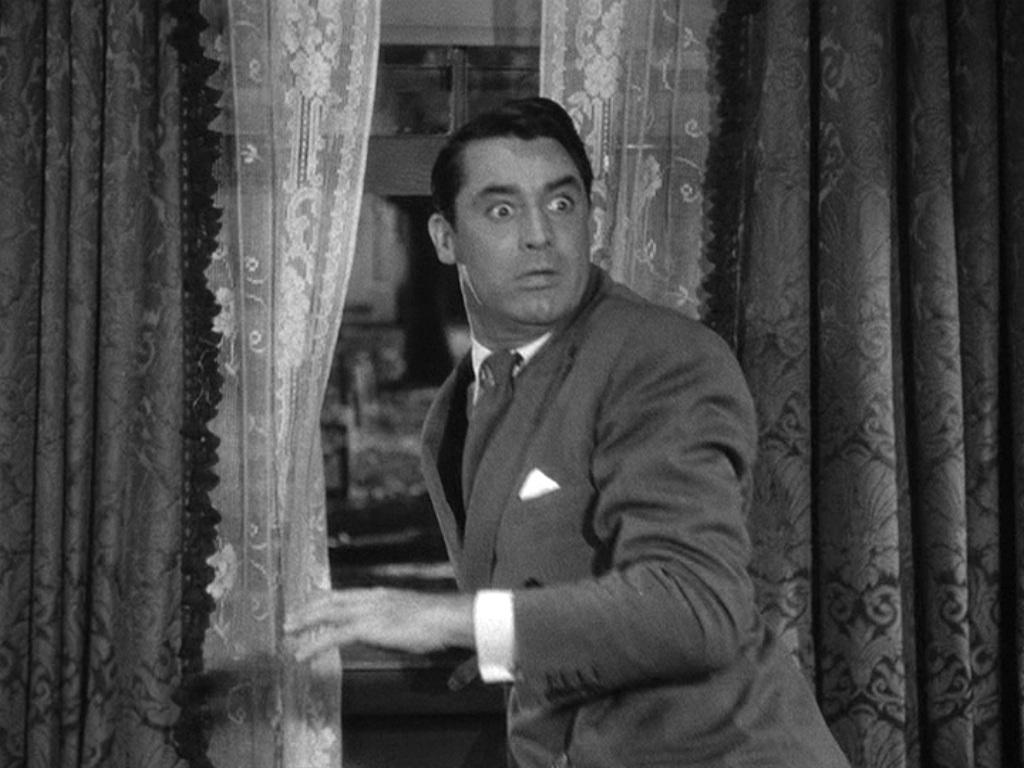
Arsenic and Old Zombies (1944)

Frantic comedy starring Cary Grant as a nephew to two spinster aunts who have been mercy killing their lodgers and burying them in the basement. As he tries to work out what to do about it, and keep it all a secret from his girlfriend, things are made even more complicated when the murdered lodgers rise from the dead and try to take their revenge.

Arsenic and Old Lace

A Zombie in Winter (1968)

King Henry II of England has a dilemma: having been bitten by a zombie he needs to ensure his successor is a) worthy of the crown, and b) not eaten by Henry before it can be arranged. With time running out, Henry must negotiate the treacherous waters of palace intrigue, and avoid questions about the mounting number of servants in his household who are being found partially devoured.

The Dirty Dozen Zombies (1967)

Desperate times call for desperate measures and with the outcome of World War II finely balanced on a knife edge, it’s up to tough Army major Lee Marvin to recruit a suicide squad for a dangerous mission. Going behind enemy lines to steal vital plans, Marvin’s pick of dead soldiers brought back to life with the promise of full restoration, get the job done with a minimum loss of limbs and a maximum amount of gnawing.

Mr. Zombie Goes to Washington (1939)

It’s politics gone mad as a newly appointed senator (James Stewart) bucks the system and endemic corruption when a bill that fosters land graft is bulldozed through the Senate, and the planned development disturbs a cemetery full of zombies. Using a long-unused statute to protect their rights to eternal peace, the senator takes to the floor of the Senate to overturn the decision and expose the corrupt officials behind the bill.

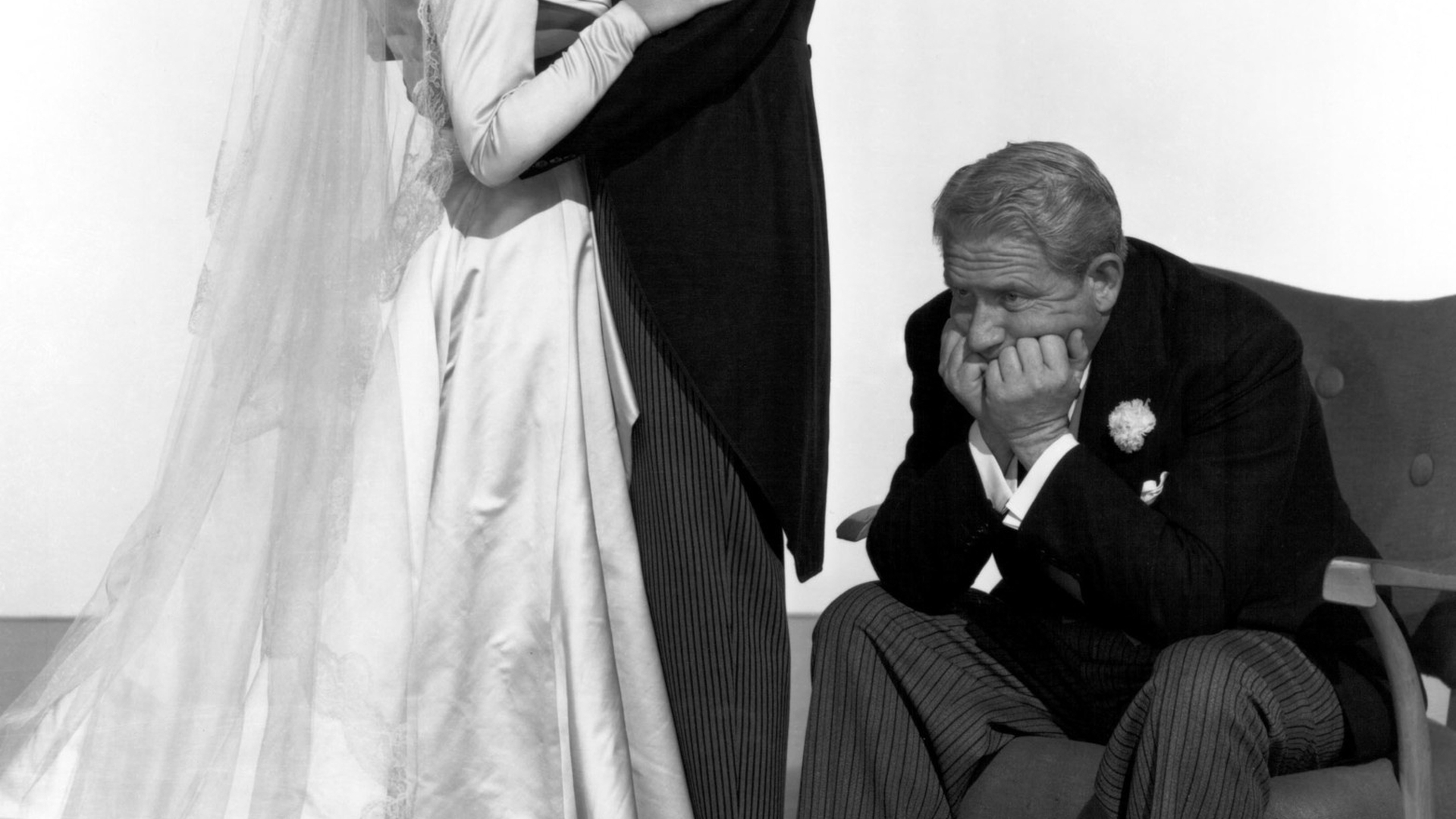
Father of the Zombie (1950)

Spencer Tracy is the unlucky father whose daughter’s impending wedding is thrown into doubt when she comes home with a strange bite on her arm and begins to show signs of cannibalism. Even when she attacks and takes a chunk out of the groom’s mother, Tracy manages to keep the wedding on track (and his daughter from eating the guests).

Father of the Bride

Snow White and the Seven Zombies (1937)

Early Walt Disney classic sees Snow White fleeing the dastardly intentions of the Queen and finding sanctuary in the forest with seven zombies. When she eats a poisoned apple and falls into a deep sleep they struggle to stop themselves from gorging themselves on her, but find it helps to frequently sing “Hi ho, hi ho, it’s off for lunch we go”.

A Connecticut Zombie in King Arthur’s Court (1949)

Danny Kaye is the unfortunate zombie cast back in time to Arthurian England and pressed into helping Arthur defeat Merlin’s plan to take over the kingdom, while trying to hide his condition and the hunger that comes over him at jousting tournaments when he sees the knights who are, to him, food in a can.

Who’s Afraid of Virginia Zombie? (1966)

Pain and humiliation are the order of the day as Elizabeth Taylor and Richard Burton play a married zombie couple who’ve lost sight of how much they used to chase down and devour young couples who remind them of their pre-zombie existence. Filled with angst and an existential dread of remaining undead forever, Taylor and Burton are terrific as the couple who’d rather flay each other than their unsuspecting dinner guests.

Zombie on a Hot Tin Roof (1958)

It’s high drama in the Deep South as long-held family secrets are brought out into the open, including the love that dare not speak its name: that of a human for a zombie. Paul Newman is excellent as the confused human whose willingness to be a buffet for his “close” zombie friend puts his marriage at risk, his inheritance, and in a scene heavily censored at the time, his chances of having a child.

The Fabulous Zombie Boys (1989)

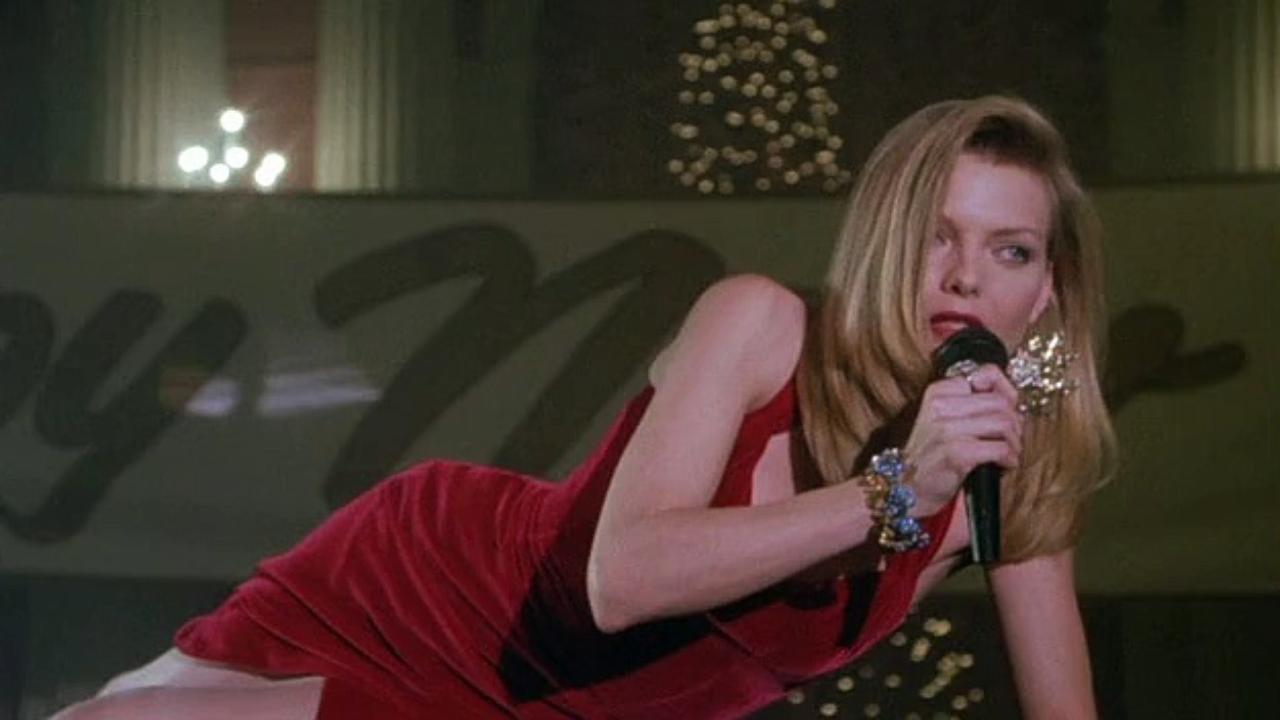
Two brothers, professional musicians, play small clubs and make enough to get by, but when they take on a singer (Michelle Pfeiffer) and both are subsequently bitten in a zombie attack, their attraction for her leads to jealousy, wounded pride, bitterness, and no small amount of mutual munching. Notable for the scene where Pfeiffer is forced to slide around the top of a piano to avoid the brothers’ attempts to turn her into a mid-show snack.

Fabulous Baker Boys, The

Share this:

  • Share on X (Opens in new window) X
  • Share on Facebook (Opens in new window) Facebook
  • More
  • Print (Opens in new window) Print
  • Email a link to a friend (Opens in new window) Email
Like Loading...

Monthly Roundup – August 2015

23 Sunday Aug 2015

Posted by dullwood68 in Movies

≈ 1 Comment

Tags

A Capella, Action, Anna Kendrick, Arnold Schwarzenegger, Bank robbers, Barden Bellas, Bloody Mary 3D, Brighton Mob, Cathryn Michon, Charlie Vaughn, Christian J. Hearn, Comedy, Crime, David Arquette, David Siegel, Derek Jameson, Documentary, Elizabeth Banks, James Cameron, Jamie Lee Curtis, Jaqueline Siegel, Lauren Greenfield, Lavalantula, Literary adaptation, Los Angeles, Max Day, Mike Mendez, Movies, Muffin Top: A Love Story, Musical, Nia Peeples, Pitch Perfect 2, Ray James, Real estate, Rebel Wilson, Reviews, Sci-fi, Self esteem, Spiders, Steve Guttenberg, Terrorists, Thriller, Tom Arnold, True Lies, Undercover cop, Veronica Ricci, Versailles, Volcanoes, Weight loss

True Lies (1994) / D: James Cameron / 141m

Cast: Arnold Schwarzenegger, Jamie Lee Curtis, Tom Arnold, Tia Carrere, Bill Paxton, Art Malik, Eliza Dushku, Grant Heslov, Charlton Heston

Rating: 8/10 – spy Harry Tasker (Schwarzenegger) must track down and thwart the plans of jihadists to detonate nuclear bombs on US soil – and keep it all secret from his unsuspecting wife (Curtis); even now, True Lies remains tremendous fun, even if it does get bogged down by its middle act domestic dramatics, and Cameron directs with his usual attention to detail and aptitude for kinetic energy.

True Lies

The Queen of Versailles (2012) / D: Lauren Greenfield / 100m

With: Jaqueline Siegel, David Siegel, Richard Siegel, Marissa Gaspay, Victoria Siegel, Wendy Ponce

Rating: 7/10 – a look at the lives of self-made millionaire David Siegel and his wife Jaqueline, as their lives go from riches to rags thanks to the economic crisis in 2008; “how the other half lived” might be an appropriate subtitle for The Queen of Versailles, and the ways in which the Siegels try to deal with their reversal of fortune will bring a wry smile to viewers who aren’t millionaires, but ultimately this is a story about a couple for whom hardship means not being able to build their dream home: an enormous mansion that defies both taste and propriety.

Queen of Versailles, The

Brighton Mob (2015) / D: Christian J. Hearn / 79m

Cast: Ray James, Max Day, Philip Montelli Poole, Stephen Forrest, Nick Moon, George Webster, Reuben Liburd, Amy Maynard

Rating: 2/10 – an inexperienced young policeman (James) is given the job of infiltrating a gang suspected of carrying out bank robberies across the South of England; a low-budget, amateurish effort, Brighton Mob features dreadful dialogue, awful acting, and the kind of direction that seems to have been carried out by someone who’s not actually watching any of the dailies.

Brighton Mob

Muffin Top: A Love Story (2014) / D: Cathryn Michon / 97m

Cast: Cathryn Michon, Diedrich Bader, Melissa Peterman, David Arquette, Marissa Jaret Winokur, Haylie Duff, Marcia Wallace, Gary Anthony Williams

Rating: 7/10 – when Suzanne (Michon) learns that her husband (Bader) is having an affair and wants a divorce, she goes on a voyage of personal discovery; with several pertinent (if obvious) points to make about self-esteem and body image, Muffin Top: A Love Story is a gently comedic, engaging movie that features an endearing performance from Michon, and doesn’t overdo its theme of female empowerment.

Muffin Top A Love Story

Lavalantula (2015) / D: Mike Mendez / 80m

Cast: Steve Guttenberg, Nia Peeples, Patrick Renna, Noah Hunt, Michael Winslow, Marion Ramsey, Leslie Easterbrook, Ralph Garman, Diana Hopper, Zac Goodspeed, Danny Woodburn, Time Winters

Rating: 4/10 – when volcanic activity strikes Los Angeles, it brings with it giant fire-breathing spiders, and only action movie hero Colton West (Guttenberg) can save the day; taking its cue from the Sharknado series’ combination of low-budget special effects and broad self-referential humour, Lavalantula is enjoyable enough if you just go with it, and benefits from having Mendez – who gave us the superior Big Ass Spider! (2013) – in the director’s chair.

Lavalantula

Pitch Perfect 2 (2015) / D: Elizabeth Banks / 115m

Cast: Anna Kendrick, Rebel Wilson, Hailee Steinfeld, Brittany Snow, Skylar Astin, Adam DeVine, Katey Sagal, Anna Camp, Ben Platt, Alexis Knapp, Hana Mae Lee, Ester Dean, Chrissie Fit, Birgitte Hjort Sørensen, Flula Borg, John Michael Higgins, Elizabeth Banks

Rating: 6/10 – after a show goes disastrously, embarrassingly wrong, the Barden Bellas are banned from competing in the US, but it doesn’t stop them from taking part in the World A Capella Championships and going up against the dominating Das Sound Machine; a predictable sequel that offers nothing new (other than a great cameo by Snoop Dogg), Pitch Perfect 2 will satisfy fans of the original but newcomers might wonder what all the fuss is about.

Pitch Perfect 2

Bloody Mary 3D (2011) / D: Charlie Vaughn / 77m

Cast: Veronica Ricci, Derek Jameson, Alena Savostikova, Bear Badeaux, Shannon Bobo, Michael Simon, Natalie Pero, Ryan Barry McCarthy, Shawn C. Phillips, Shay Golden

Rating: 2/10 – the ghost of Mary Worth (Ricci) targets the makers of a music video when her name is invoked and she finds the reincarnation of the man who killed her is the video’s star; dire in the extreme, Bloody Mary 3D is the kind of low budget horror movie that gives low budget horror movies a bad name, and criminally, takes too much time out to showcase Jameson’s limited talents as a singer (and the 3D is awful as well).

Bloody Mary 3D

Share this:

  • Share on X (Opens in new window) X
  • Share on Facebook (Opens in new window) Facebook
  • More
  • Print (Opens in new window) Print
  • Email a link to a friend (Opens in new window) Email
Like Loading...

The D Train (2015)

22 Saturday Aug 2015

Posted by dullwood68 in Movies

≈ Leave a comment

Tags

Andrew Mogel, Banana Boat, Comedy, Commercial, Drama, High School, Jack Black, James Marsden, Jarrad Paul, Jeffrey Tambor, Kathryn Hahn, Reunion, Review

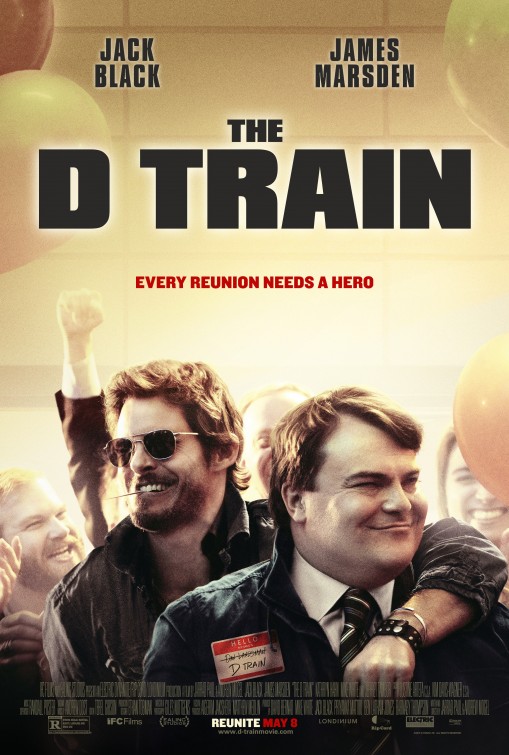
D Train, The

D: Jarrad Paul, Andrew Mogel / 101m

Cast: Jack Black, James Marsden, Kathryn Hahn, Jeffrey Tambor, Russell Posner, Mike White, Henry Zebrowski, Kyle Bornheimer

Dan Landsman (Black) is the self-styled chairman of his high school reunion committee. He enjoys what limited prestige comes with the position (which isn’t much), but can’t get the respect from his fellow committee members that he thinks he deserves. This is due to his overbearing, self-important approach to organising the reunion, and the fact that he was never popular in high school. As he and the rest of the committee call up their peers and are continually let down, Dan finds a solution in the unlikeliest of places: a Banana Boat commercial. The “star” of the commercial is none other than Oliver Lawless (Marsden), the most popular guy in high school. Dan reasons that if he can get Oliver to attend the reunion, everyone will.

Dan determines that a face-to-face approach is needed, but Oliver lives in L.A., while he lives in Pittsburgh. Under the pretence of going there for an important business meeting, Dan books a flight and gets ready to go. But his boss, Mr Schurmer (Tambor), insists on coming with him to help facilitate the deal that Dan has supposedly set up. Unable to persuade his boss to stay in Pittsburgh, he has no choice but to make it seem as if the deal has fallen through. Dan tracks down Oliver and they spend the night on the town, going from club to club and bar to bar and getting drunk and high. Dan goes back to his hotel room but in the early hours, Oliver, feeling down, pays him a visit. Dan reveals the true reason for his visit, and even tells Oliver about the so-called business deal; Oliver agrees to attend the reunion.

The next morning, Oliver poses as the businessman Dan has been dealing with, but instead of killing the deal as Dan needs him to, he tells Schurmer that it’s a go. Oliver apologises, but tells Dan he can easily put a stop to things when he’s back in Pittsburgh. That night they go out on the town again, but this time they end up back at Oliver’s apartment. To Dan’s surprise, Oliver makes a pass at him. What happens next leaves Dan bewildered and confused. Back home he finds his boss spending lots of money on the business in expectation of the deal going through, his fourteen year old son Zach (Posner) experiencing problems of the heart, and his wife Stacey (Hahn) pleased for him for landing the deal and Oliver’s attendance at the reunion.

But when Oliver arrives for the reunion and stays at Dan’s home, Dan begins behaving erratically, and he starts to alienate his wife and son, and the members of the committee (who don’t like him that much anyway). As the reunion draws nearer, he tries his best to behave normally but the events in L.A. have had a greater impact on him than even he’s aware of. And it’s at the reunion itself that Dan’s behaviour causes the greatest upset as he and Oliver confront each other over what happened, and Dan is left feeling isolated and alone, and wondering what he can do to make things right with the people he cares about.

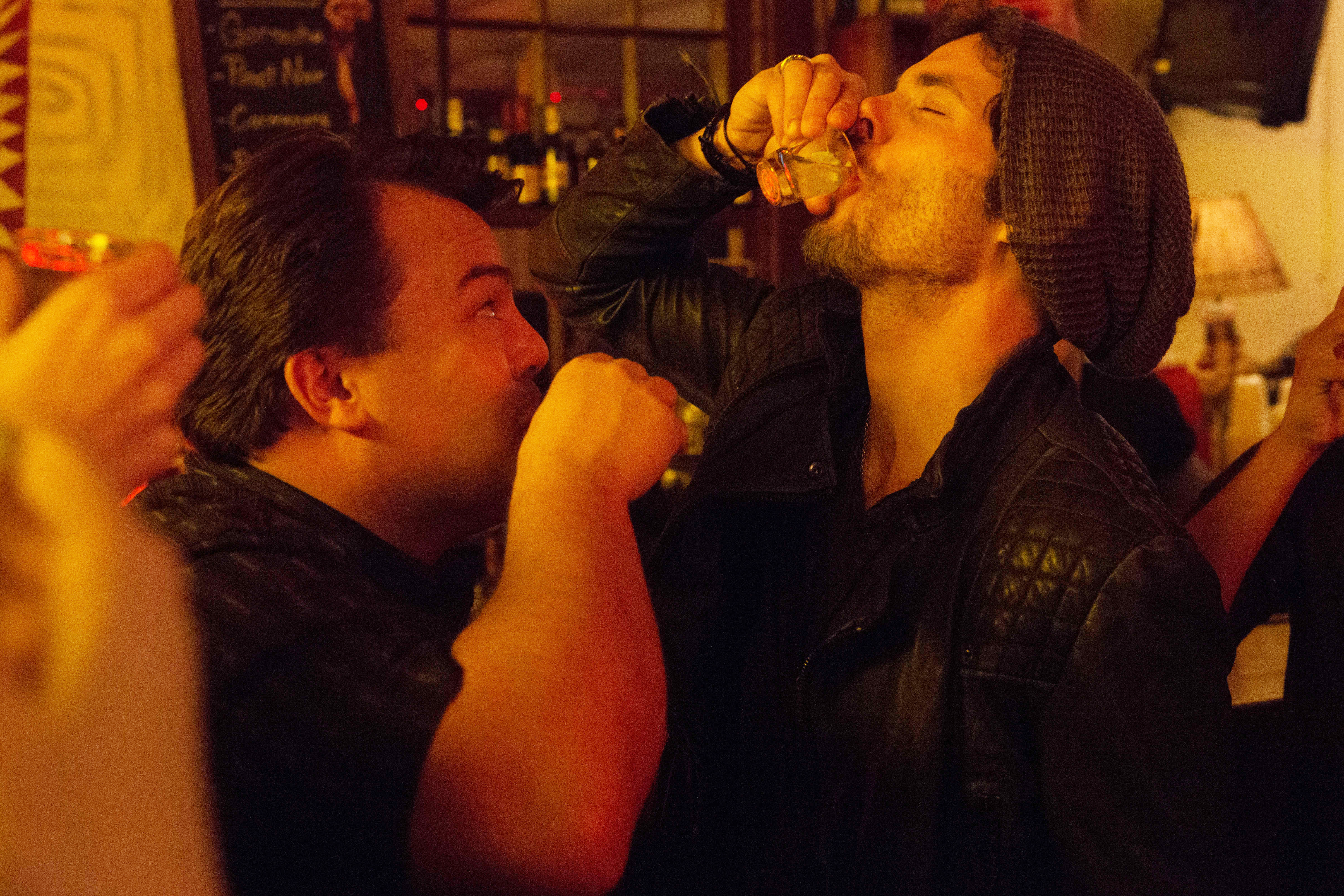
THE D TRAIN - 2015 FILM STILL - Jack Black (Dan Landsman) and James Marsden (Oliver Lawless) - Photo Credit: Hilary Bronwyn Gayle. An IFC Films release.

Having previously worked on the script for Yes Man (2008), writers/directors Jarrad Paul and Andrew Mogel have upped their game somewhat for The D Train, and the result is a clever, sometimes very funny comedy drama that gives Black his best role since Bernie (2011) (though to be fair he has only made two other movies in that time). It’s also smart, knowing and occasionally tragic in its look at its main character’s constant need for respect and approbation, and the lengths he’ll go to in order to be acknowledged.

The social misfit is perhaps Black’s niche role (it can only be a matter of time before he plays a serial killer), and as in Bernie he’s uncomfortably comfortable in the role of a man whose social standing is based on his lack of popularity in high school (when we see him calling his fellow alumni not one of them appears to remember him without the benefit of some heavy prompting). Away from the reunion committee he’s in a respected position at work, with his boss happy to defer to Dan’s judgement on matters, while his home life appears secure as well. But it’s his lack of social presence that bothers him, and why he’s never fit in. Meeting Oliver in L.A. reminds him he can be a fun guy, that he can be good company, and more importantly, that those traits have always been inside him; it’s just needed someone of Oliver’s carefree nature to bring them out of him.

But with freedom comes (no, not great responsibility) a complete misunderstanding of the nature of friendship and many of the unspoken rules that go with it. Back in Pittsburgh, Dan displays all the signs of someone who’s been abandoned or had their favourite toy taken away from them; he just doesn’t know how to deal with all the raw feelings he’s experiencing. He overcompensates in the bedroom (not that Stacey minds), but then rudely ignores Zach when he needs some fatherly advice. The situation at work becomes unmanageable, and when Oliver shows himself to be a better father figure, Dan over-reacts and tells him to leave. It’s in these moments when Dan’s insecurities and jealousy of Oliver’s “cool” attitude shows him for the desperately needy person that he is.

Black is superb in the role, and he’s matched by Marsden who portrays Oliver’s shallow lifestyle with a thread of sadness lurking beneath the rampant hedonism. Hahn, who goes from strength to strength with each movie she makes, delivers a polished if largely restrained performance that makes for an effective counterpoint to Black’s anguished social walrus. And Tambor is terrific as Dan’s boss, a confirmed Luddite whose puppy-dog adoption of computers and the Internet contributes to Dan’s downfall.

But while the performances are all above average, and while the basic premise is a sound one given enough room for considered examination, the movie does have its faults, and in the same way that Paul and Mogel’s script is on solid ground when dissecting Dan’s motives and behaviour, it’s less so when it introduces moments and scenes of crass humour. One scene in particular stands out, when Oliver gives Zach advice on how to manage in a threesome. Despite the obvious humour to be had from such a scene, it’s still at odds with the tone of the rest of the movie, and there’s nothing the directors can do to offset the awkwardness of having a man in his late Thirties giving sex advice to a fourteen year old (it’s also strange that the script thinks it’s entirely likely that Zach would ask his dad about such a subject while at the dinner table). And at the reunion, Dan snorts cocaine in the bathroom before being discovered by Jerry (White), one of the committee members. Dan rambles on and Jerry’s surprise at Dan’s behaviour evaporates as quickly as it occurs. And Mr Schurmer’s subdued reaction to the potential loss of his company is meant to be quietly tragic but seems instead to be a case of the script not wanting to follow that particular plot thread any further (the same goes for Stacey’s reaction to the revelation of what happened in L.A.).

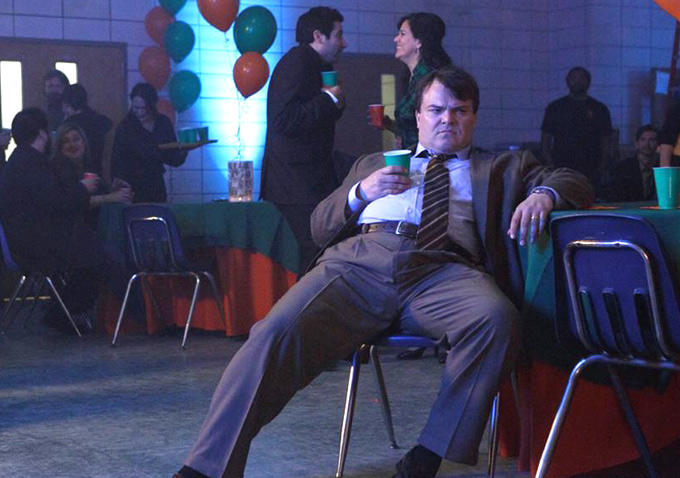
D Train, The - scene 2

With the characters routinely involved in scenes that don’t always have a logical follow-on, or betray the emotion of a scene (e.g. when Oliver leaves for L.A. and says goodbye to two of the committee members), the movie tries for hard-edged adult humour too often at the expense of the more important dramatic aspects. While the humour is mostly very funny indeed, a lot of it feels shoe-horned in, as if they were added to the script somewhere in the pre-production phase. As a result the movie feels disjointed at times, and lacks the overall focus afforded the drama, leaving audiences to wonder if the humour is there to provide some relief from the themes of social inequality, self respect, alienation, and personal inadequacy. If it is, then unfortunately the way in which it’s been done lacks authority.

Rating: 7/10 – deficiencies in the script leave The D Train feeling like it’s falling short of its original intentions; Black is on terrific form however, keeping the movie afloat through some of its more unlikely moments, and perfectly judging the pathos needed to avoid Dan being completely unlikeable.

Share this:

  • Share on X (Opens in new window) X
  • Share on Facebook (Opens in new window) Facebook
  • More
  • Print (Opens in new window) Print
  • Email a link to a friend (Opens in new window) Email
Like Loading...

Danny Collins (2015)

15 Saturday Aug 2015

Posted by dullwood68 in Movies

≈ Leave a comment

Tags

Al Pacino, Annette Bening, Baby Doll, Bobby Cannavale, Chime magazine, Christopher Plummer, Comedy, Dan Fogelman, Drama, Jennifer Garner, John Lennon, Letter, Review, Romance, Singer, Steve Tilston, True story

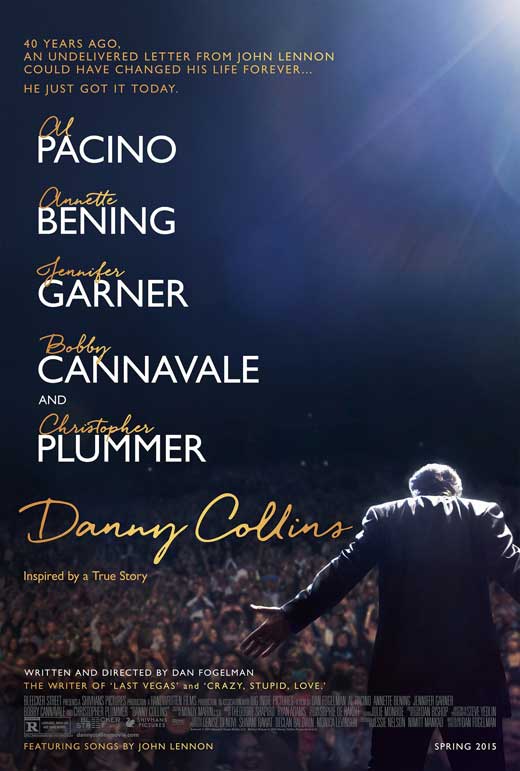
Danny Collins

D: Dan Fogelman / 106m

Cast: Al Pacino, Annette Bening, Jennifer Garner, Bobby Cannavale, Christopher Plummer, Katarina Cas, Giselle Eisenberg, Melissa Benoist, Josh Peck, Nick Offerman

In 1971, young folk singer Danny Collins is on the verge of stardom. His first album, featuring songs he’s written himself, is about to be released, and he’s about to give an interview for Chime magazine that will attract the attention of one of rock music’s most well-known performers (and one of Danny’s idols).

Fast forward to 2014 and Danny is touring in support of his third greatest hits album. He no longer sings his own material, and hasn’t written a song since he made his first album. His signature song is a track called Baby Doll, and his fans want him to sing it before anything else. With his audience aging as much as he is, Danny relies heavily on cocaine and booze to get him through his day, and he has a young girlfriend, Sophie (Cas), he’s thinking of making his fourth wife. When his birthday comes round, his manager and long-time friend Frank Grubman (Plummer) hands him a special present: a letter written to him by John Lennon in response to the Chime interview. In it, Lennon offers the young Danny help in avoiding the pitfalls of being famous in the music business, and even includes his phone number.

Danny is shell-shocked by the idea that Lennon could have changed the course of his career. Feeling that he’s wasted the last forty-plus years, he decides it’s time to make some changes. He catches Sophie with another, younger man, but isn’t angry; instead he tells her he’s going away for a while and to enjoy their home for a little longer (though he makes it clear their relationship is over). He travels to New Jersey and stays at a Hilton hotel with the intention of going to see his son who lives nearby but with whom he’s had no contact. He also begins writing a new song, while attempting to woo the hotel manager, Mary Sinclair (Bening). And when Frank comes to visit him, Danny tells him he doesn’t want to continue with the tour either.

Danny visits his son’s home, and meets his daughter-in-law Samantha (Garner) and his granddaughter Hope (Eisenberg). When his son Tom (Cannavale) arrives home he makes it clear he doesn’t want anything to do with Danny. But Danny perseveres, both with his new song, wooing Mary, and by arranging for Tom and Samantha to have an interview for a special school that will deal with Hope’s ADHD. As he begins to make headway with his new life, Danny learns that he’s not as financially secure as he thought, and going back on tour is his best option. But then Mary challenges him to play his new song at his next gig…

Danny Collins - scene

The idea of Al Pacino playing an aging singer trying to reconnect with his lost youth and aspirations seems like the perfect excuse for a stark, emotionally compelling drama, but writer/director Dan Fogelman has other ideas. Instead of dark and challenging, he’s gone for wistful and comic, with a side order of restrained sentimentality. Add in slices of romance, personal regret, misdirected anger, and selflessness, and you have a comedy that pokes fun at Danny’s lifestyle and sense of himself – “No, I’m sharp!” – but does so without laughing at him.

When we first meet him in 1971, Danny is anxious, mildly confident, but absolutely terrified of the thought he might be famous. When we see him again he’s a tired, unhappy man going through the motions of being famous, and his terror has given way to a weary resignation; this is his life, for better or worse. When he’s given the letter by Lennon, it opens his eyes both to the life he’s living, and the life he could have had. Pacino effortlessly portrays the sad realisation that Danny has in that moment, and the viewer can feel the sense of self-betrayal coast off of him in waves. It’s the movie’s most effecting moment, and Pacino is flawless. And from that, Danny regains a sense of purpose, a drive he’s not had in years, and the new Danny is funny, immensely likeable, supportive of others to a fault, and willing to own up to his mistakes. It’s a sea change that could have appeared unlikely or unconvincing, but Pacino, ably supported by Fogelman, brushes aside any apprehensions the viewer might have, and strides on imperiously like a rejuvenated force of nature.

With Pacino giving one of his best performances in recent years, Danny Collins is a pleasure to watch from start to finish, with equally impressive supporting turns from the always dependable Bening (perhaps too dowdily attired and coiffed to really attract a major singing star), Garner and Cannavale, and the sublime Plummer, who gets some of the movie’s best lines, and who is drily memorable throughout. It’s a movie that is very easy to watch as a result, as the cast go about their business with the surety of veteran performers, but it’s Fogelman who’s the real star here, effortlessly poking a stick at the ridiculous nature of celebrity, and imbuing the movie with a heart and a warmth that reaches out to the viewer and envelops them in its heartfelt embrace. Thankfully, this is one screenplay – based on the true story involving folk singer Steve Tilston – that he’s judged exceptionally well, and the confidence he and the cast have in the material is evident in the finished product (Fogelman has had a somewhat schizophrenic career as a screenwriter: for every Crazy, Stupid, Love. (2011), there’s been a Fred Claus (2007) to balance things out).

Shot with a preference for bright, sharply delineated colours by Steve Yedlin, and with a score by Ryan Adams and Theodore Shapiro that is overwhelmed by the inclusion of several of John Lennon’s solo works (some of which feel more intrusive than complementary), Danny Collins is a romantic comedy drama that is a great deal of fun, and well worth your time, even though it’s sadly apparent that Pacino, great actor though he is, is no great shakes as a singer.

Rating: 8/10 – surprisingly good and with the kind of warm-hearted approach that puts a smile on the viewer’s face throughout, Danny Collins is bolstered by a great performance from Pacino, and a very astute script from Fogelman; with as many visual gags as verbal ones (though none can beat Plummer’s offloading of a Steinway piano), it’s a movie that is continually entertaining, and definitely one to watch with a group of likeminded friends.

Share this:

  • Share on X (Opens in new window) X
  • Share on Facebook (Opens in new window) Facebook
  • More
  • Print (Opens in new window) Print
  • Email a link to a friend (Opens in new window) Email
Like Loading...

The To Do List (2013)

14 Friday Aug 2015

Posted by dullwood68 in Movies

≈ 1 Comment

Tags

Aubrey Plaza, Big Bun, Bill Hader, Comedy, Johnny Simmons, Lifeguard, Maggie Carey, Relationships, Review, Romance, Sex, Swimming pool, Virgin

To Do List, The

D: Maggie Carey / 104m

Cast: Aubrey Plaza, Johnny Simmons, Bill Hader, Alia Shawkat, Sarah Steele, Scott Porter, Rachel Bilson, Connie Britton, Clark Gregg, Christopher Mintz-Plasse, Andy Samberg, Donald Glover

High school valedictorian Brandy Klark (Plaza) is a straight-A student who’s looking forward to going off to college. She’s fiercely intelligent, studious and focused, but when her two best friends, Fiona (Shawkat) and Wendy (Steele) coerce her into attending a party, the sight of blonde beefcake Rusty (Porter) awakens feelings in her that she’s never experienced before. That night she gets drunk for the first time, and when Rusty comes into the room where she’s trying to sleep it off, he mistakes her for someone else. They start making out, but Brandy’s reaction stops Rusty short. He apologises and leaves. Confused by her newfound feelings, Brandy seeks advice from her older sister, Amber (Bilson). Astonished that Brandy has no sexual experience at all, Amber tells her that she needs to address the issue before she gets to college. In order to do so, Brandy compiles a list of sexual acts to experience over the course of the summer.

While she begins to put her plan into action, Brandy works at an outdoor swimming pool. On her first day she finds that Rusty works there too, as well as her friend Cameron (Simmons). Cameron wants to be her boyfriend but he’s too shy to ask her out. Brandy also meets their boss, Willy (Hader), who it transpires, is homeless and lives on site. Brandy flirts with Rusty who appears bemused by the attention, while at the same time she begins her voyage of sexual exploration, co-opting a willing Cameron into the process, and giving him the impression that she has feelings for him. But for Brandy, becoming sexually experienced is treated like a school project, and she approaches each sex act with an air of detachment. As she ticks off each item on her list, she begins to discover that sex can cause a lot of problems she wouldn’t previously have considered.

Soon, word gets round about her list. One of Cameron’s friends, Duffy (Mintz-Plasse) takes advantage of Brandy’s curiosity, as does her co-worker Derrick (Glover). She also hooks up with a rock singer called Van (Samberg) at the pool, but though she’s able to tick off one more sexual practice, she’s interrupted by Willy, who’s horrified by Brandy and her friends’ behaviour. And when Cameron discovers what’s been going on he refuses to have anything further to do with her. When Fiona tells Brandy that she’d like to date Cameron, Brandy’s confusion over her feelings leads to a breakdown in her relationship with Fiona and Wendy. Undeterred though, Brandy forges ahead with her plan, and finally plucks up the courage to ask Rusty on a date, a date where she plans to tick off one experience in particular: losing her virginity.

To Do List, The - scene

Anchored by a fearless performance from Aubrey Plaza – watch the masturbation scene to see just how fearless – The To Do List is a raucous, raunchy, pull-no-punches look at female sexual instruction and empowerment. Maggie Carey’s screenplay often finds itself very near the knuckle (though it does depend on where that knuckle is at the time), and paints a uniquely female perspective on the ups and downs of early sexual experiences. Through the character of Brandy, Carey’s script skewers some probable misconceptions about female sexuality, and provides an object lesson in the differences between the sexes. It’s scabrously funny at times, with much of the humour arising from Brandy’s unfamiliarity with certain sexual techniques (“What’s a rim job? Guess I’ll have to ask at the library”), and the posturing that teenagers adopt in order to look and feel more adult.

If you’re one of those teenagers then this movie is going to feel a lot like a documentary, but there’s enough staple rom-com ingredients to help allay any fears that this is going to end up abandoning subtlety at the side of the road and being cruder than a turd in a swimming pool – oh, hang on, there is one (and Brandy takes a bite out of it). And yet, while the movie appears to be a distaff relation to the American Pie series, it retains a sweet, harmless core that makes some of the more questionable moments easier to accept and deal with. Again, this is largely due to Carey’s clever, balanced script, and the familiarity of seeing teenagers pretending to be adults while getting it completely wrong.

In the lead role, Plaza shows once again why she’s one of the best young(-ish) actresses around – it’s hard to believe but she was twenty-nine when The To Do List was released. She takes great care in making Brandy as credibly naïve as possible, even to the point that she’s never had any amorous feelings until she sets eyes on Rusty (what have she and her friends been talking about all this time?). With that battle won, her studious, almost lab-based approach to discovering sex is presented in such a witty and laugh out loud way that it’s no surprise that the viewer ends up rooting for her, even when things start to go wrong through her own intransigence.

The rest of the cast take turns in sharing the glory of Plaza’s performance, with Hader (in real life, Carey’s husband) coming off best as the slightly seedy, sometimes cruel Willy, unaverse to making fun of Brandy’s boobs (or lack of them), and yet paternal and supportive when confronting her over her “experiment” with Van. While there isn’t one horrible person in the whole movie, Willy comes closest thanks to the scene where he encourages boob jokes at Brandy’s expense, and it’s the one scene in the whole movie that feels out of place. Elsewhere, Brandy’s verbal battles with Amber are ambitiously aggressive, and Plaza and Bilson are clearly revelling in spitting out so much bile at each other. Porter exudes surf dude manliness with ease, Simmons does awkward adolescent with aplomb, Mintz-Plasse does would-be Lothario with gusto, and Gregg is terrific as Brandy’s dad, a judge for whom any talk of sex is embarrassing and unnerving.

Some viewers, inevitably, will take issue with some of the more ruder content, but this is less about sex and more about finding oneself through sex, and becoming a more rounded person. As Cameron says towards the end, “sometimes sex is just sex”, and as a judicious summing up of what’s gone before, it’s entirely accurate. And the beauty of this movie is that it knows it as surely as finger-banging is really known as finger-blasting… or is it finger-bombing…?

Rating: 8/10 – a delight from start to finish and one that doesn’t patronise either its characters or its audience, The To Do List is one of the more honest movies about sex you’re ever likely to see; funny, compassionate, disarming, and defiantly rude, it’s some of the best fun you can have with your clothes on.

Share this:

  • Share on X (Opens in new window) X
  • Share on Facebook (Opens in new window) Facebook
  • More
  • Print (Opens in new window) Print
  • Email a link to a friend (Opens in new window) Email
Like Loading...

Captain Z & the Terror of Leviathan (2014)

03 Monday Aug 2015

Posted by dullwood68 in Movies

≈ 2 Comments

Tags

1714, Aleen Isley, Amulet, Captain Z, Comedy, Demons, Leviathan, Madison Siple, Pirate, Review, Ritual, Riverwood Ohio, Spoof, Steve Rudzinski, Zachariah Zicari, Zoltan Zilai

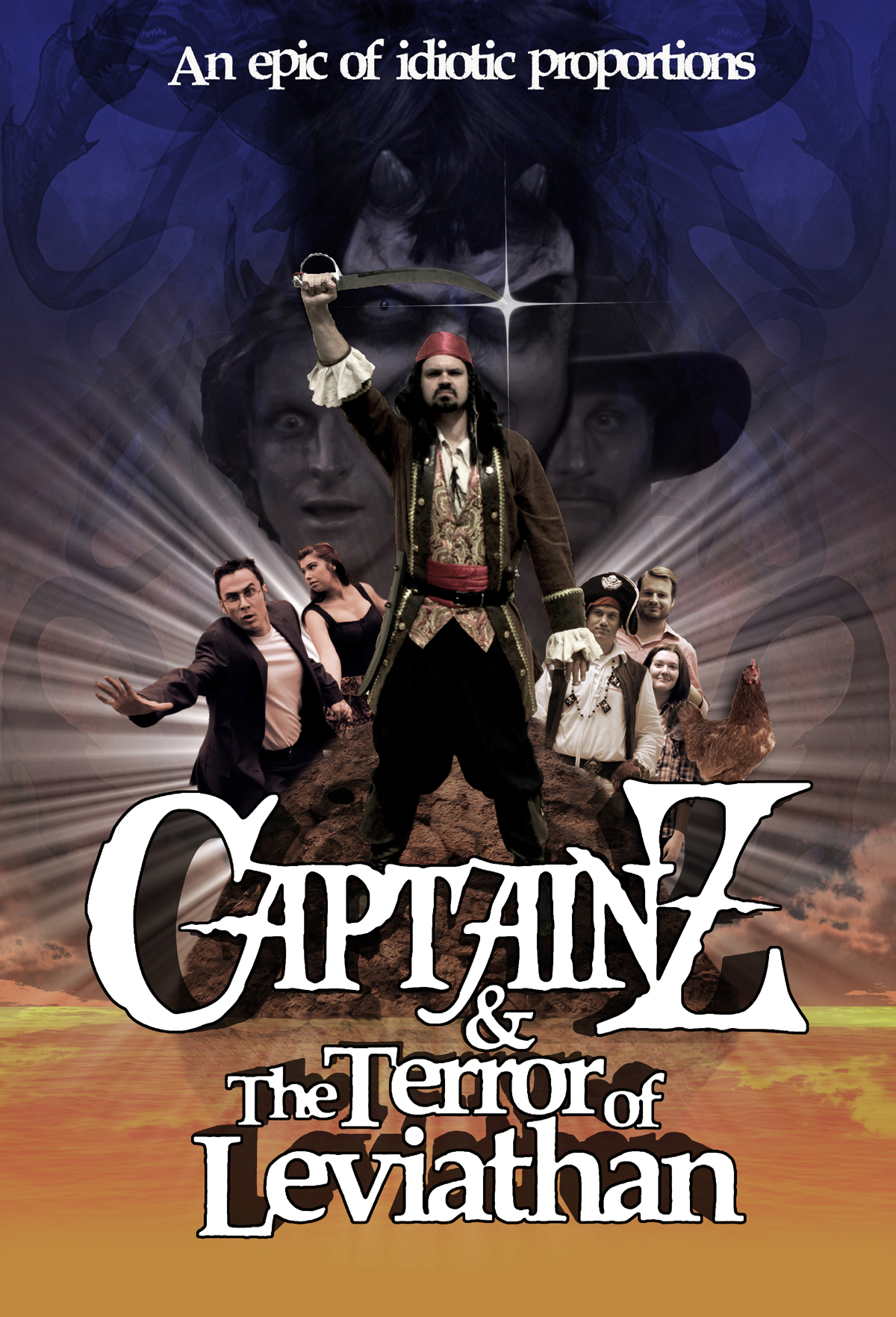
Captain Z

D: Steve Rudzinski / 80m

Cast: Zoltan Zilai, Steve Rudzinski, Madison Siple, Aleen Isley, Seth Gontkovic, Ian S. Livingston, Cerra Atkins, Josh Devett, Scott Lewis, Joshua Antoon

1714, the town of Riverwood, Ohio. Having taken possession of some of the townsfolk, a band of demons attempt to raise the dark god Leviathan using an amulet and the sacrifice of a redhead. With their victim about to be offered up, the infamous pirate captain Zachariah Zicari (Zilai) comes to her rescue and kills the demons’ human forms but in the process the demons and the captain are absorbed into the amulet, which ends up at the bottom of the nearby river.

2014. The Toy & Train Museum is celebrating the three hundredth anniversary of Captain Zicari’s triumph over the demons, an event that has come to be thought of as more of a local legend than historical fact. Under the auspices of museum head Mr Kincaid (Lewis), the staff there, intellectually challenged redhead Heather (Siple), inappropriate J.T. (Antoon), abrasive Samantha (Atkins) and Kincaid’s son Neal (Devett), all have their roles to play in the upcoming celebrations. The arrival of a paranormal researcher and author, Glen Stewart (Rudzinski), who’s come to investigate the legend and maybe find the amulet, prompts the museum staff to help him with his research.

Meanwhile, by the river, two of the locals, Jake (Livingston) and his son Judd (Gontkovic) are fishing. Jake lands the amulet and they take it home with them. Judd’s sister, Bobbie (Isley), looks it over and finds there’s writing on one side. She reads it aloud; this releases the demons – who promptly possess Bobbie, Jake and Judd and the rest of their family – and Captain Zicari. The Captain fights his way out and takes the amulet with him. Further along the river, Glen, Kincaid and Heather are pondering the possibility of the amulet being found when Captain Zicari appears. Although he tells them about the demons, it’s not until proof is provided by the arrival of one of Bobbie’s family (who kills Kincaid by ripping his heart out), does anyone believe him.

Killing the demon’s human form, Glen and Heather bow to the captain’s wishes and head for J.T.’s place, where he’s having a party. While the captain indulges in sex and rum, the demons trace him there and try to retrieve the amulet. The trio escape, and head back to the museum. There they bring Neal and Samantha up to speed on what’s happening, but before long Bobbie, Jake and Judd (now called Vepar, Barbatos and Bune respectively), turn up and various showdowns ensue, which lead to Barbatos and Bune being killed, but Vepar getting away with both the amulet and Heather. Now it’s up to the captain and Glen to stop Vepar from completing the ritual to summon Leviathan, and save the world… as we know it.

Captain Z - scene

Every now and then, a movie comes along that aims to spoof a particular genre or sub-genre of movie. Usually, those movies are pretty dire – anyone who’s seen just one of the Scary Movie series will know what I mean – but sometimes, on even rarer occasions, the spoof movie proves to be inspired, and well worth tracking down and watching. Such is the case with Captain Z & the Terror of Leviathan.

Be warned though: this movie looks incredibly cheap (the set representing Bobbie and her family’s home wouldn’t look out of place in a Seduction Cinema release). The opening scenes in 1714 are woefully acted, directed, shot and edited, and some viewers may think, “Uh uh, no way I’m watching any more of this”. But that would be the wrong idea, because with its extra-ropey prologue out of the way, the movie can begin to flourish, and its true purpose becomes clear: it’s an amateur production that wants to look even more amateurish in order to raise quite a few laughs – and intentional ones at that.

What Rudzinski and co-writer Zilai have done is to take the accepted style of a low budget horror movie, with its lame dialogue, low production values, and low rent special effects, and make these very drawbacks the whole point. This is a movie that knows it’s bad, and the great thing is that it’s all been done deliberately, from the terrible CGI to the rickety sets, from the arch, often over-ripe dialogue to the mannered, stereotypical performances; it’s all done with an absurdist air that helps make the movie far more enjoyable and self-reflexive than the viewer has any right to expect.

Throughout there are nods and small homages to other movies, and in-jokes that bear witness to the movie’s knowing attitude. At one point, Glen revs up a chainsaw and says he’s always wanted to say this: “Groovy!” And there’s a scene where Zicari and Neal share an emotional moment that ends with Heather saying it’s like in a comedy or action movie where it has to get real for a moment. It’s at times like these that the true intention behind the movie shines out, and any accusations that Captain Z & the Terror of Leviathan is low budget trash or completely unredeemable, crumble away to nothing. Sure, the sets look shoddy, and sure the framing usually has trouble fitting in more than two people in any given scene, and sure some of the editing looks to have been done with a pair of blunt scissors, but it truly does add to the charm of the piece, and makes it a lot more enjoyable.

Rudzinski and his cast and crew clearly know what they’re doing. The basic plot is silly and stupid, the characters act and behave as if they’ve never interacted with real people before, the dialogue is clumsy and leaves the characters looking like English isn’t their first language, the cast cope “awkwardly” with said dialogue, and despite all this, the movie just plain works. There’s a knowing attitude here, an approach that invites the audience to join in with the gag, that this movie is so bad it’s actually very good, that what the viewer sees has all been planned ahead of time and thanks to Rudzinski’s confidence in the material and the way in which it’s been put together, it provides more entertainment than anyone could envisage.

However, it should be noted that there are times when the in-jokes and the laughs aren’t as effective as they should be, and while some of the performances may seem as bad as they’re meant to be, a couple really are that bad, particularly Devett and Antoon. Siple is maddeningly good as the bubble-headed Heather, and in a role that often confounds the viewer: is she really this bad, or is she just really good at being bad? You decide, but anyone who can deliver the line, “I learned how to talk to cats today” in such a guileless way as Siple does, deserves to be congratulated rather than condemned. Elsewhere, Zilai isn’t the most convincing of pirates, while Rudzinski is obviously having too much fun to care. It all adds up to a movie with a definite agenda, and one that has clearly been achieved.

Rating: 7/10 – with some wicked moments of unforced hilarity in amongst all the superficial “errors of judgement”, Captain Z & the Terror of Leviathan is a Z-movie fan’s dream: continually witless, defiantly odd, and apparently awful; if you see only one spoof movie this year, make sure it’s this one, or the captain might just have something to say about it.

Share this:

  • Share on X (Opens in new window) X
  • Share on Facebook (Opens in new window) Facebook
  • More
  • Print (Opens in new window) Print
  • Email a link to a friend (Opens in new window) Email
Like Loading...

Trainwreck (2015)

01 Saturday Aug 2015

Posted by dullwood68 in Movies

≈ 4 Comments

Tags

Amy Schumer, Bill Hader, Brie Larson, Comedy, Drama, John Cena, Judd Apatow, LeBron James, One-night stands, Review, Romance, S'nuff, Sports doctor, Sports stars, The Dogwalker, Tilda Swinton

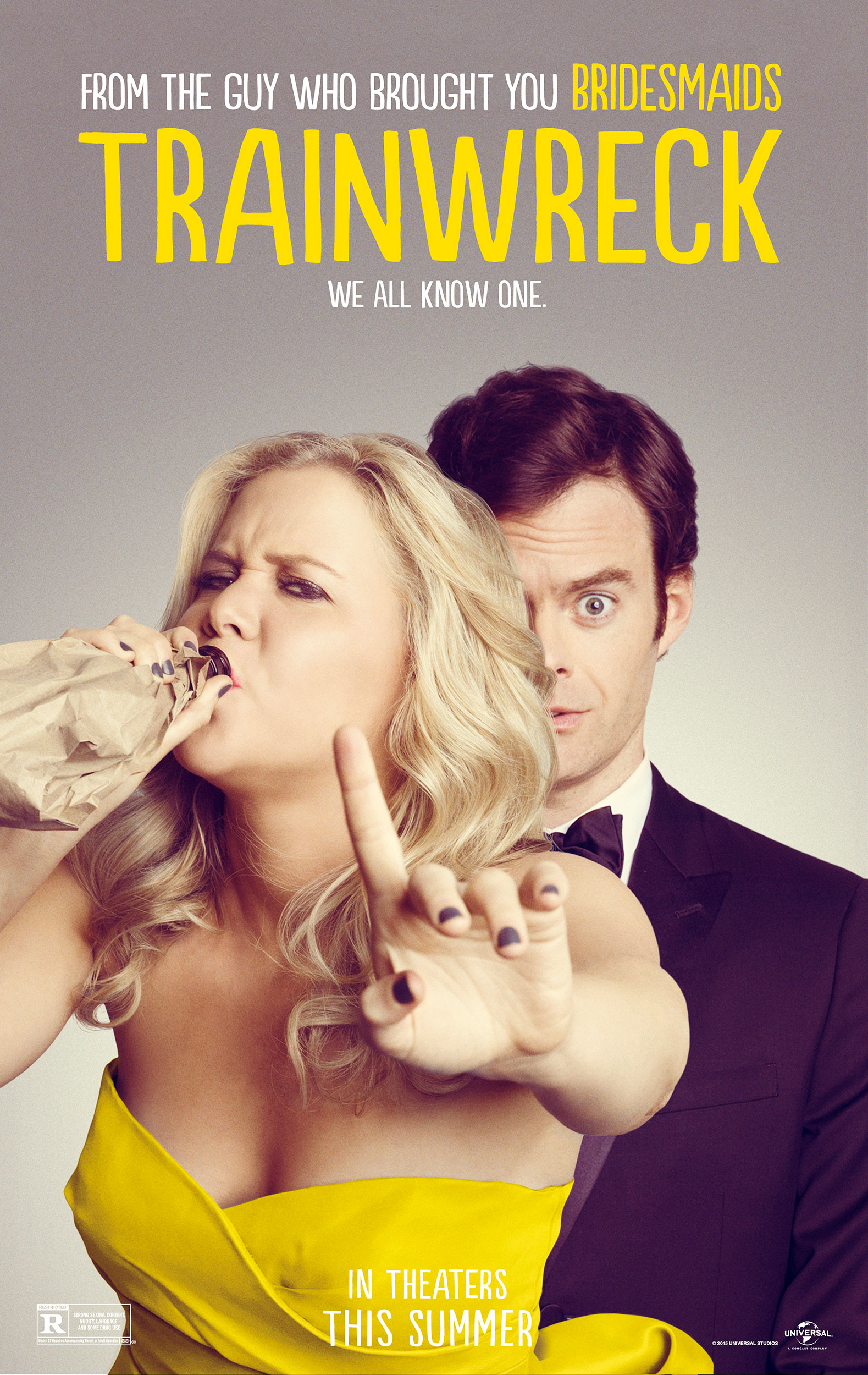
Trainwreck

D: Judd Apatow / 125m

Cast: Amy Schumer, Bill Hader, Brie Larson, Tilda Swinton, Colin Quinn, John Cena, Vanessa Bayer, Ezra Miller, Mike Birbiglia, Evan Brinkman, LeBron James, Amar’e Stoudemire, Daniel Radcliffe, Marisa Tomei

Amy Townsend (Schumer) is a magazine journalist whose idea of a relationship is to sleep with a guy on the first date and then wave goodbye to them in the morning (or sooner if she’s able to). She works for a men’s magazine called S’nuff that publishes articles such as “You’re Not Gay, She’s Boring”; when her editor, Dianna (Swinton) assigns her to write a profile on sports doctor Aaron Conners (Hader), she balks because she knows nothing about sports and thinks it’s all too silly.

At the same time as all this is going on, Amy and her sister Kim (Larson) are trying to get their father, Gordon (Quinn), who’s suffering from multiple sclerosis, into a nursing home. He’s a bit of a curmudgeon and is always antagonising or upsetting people. He also cheated on their mother and Kim resents him for it, though Amy is more forgiving. When she meets Aaron he quickly guesses that she knows nothing about sports, but there’s an attraction between them, and she plans to meet up with him again. In the meantime an evening with her on/off boyfriend Steven (Cena) goes horribly wrong when he learns about all the other men she’s been seeing.

Kim, who’s married to Tom (Birbiglia) and is stepmother to his son Allister (Brinkman), reveals she’s pregnant, but when she tells Gordon his attitude leads to her and Amy falling out. Amy meets Aaron again and after the interview they go back to his place and have sex; Amy breaks her own rule and stays the night. Panicked by this unexpected turn of events, Amy decides she must end things but Aaron calls wanting to see her again. At the next interview she intends to tell him but her dad has a fall and she and Aaron go to him, and Aaron stitches his head wound.

Amy and Aaron begin dating in earnest but she’s worried she’ll screw it up. At a baby shower for her sister, Amy upsets everyone with tales of her sexual escapades, but when she tries to apologise to Kim a couple of days later, Kim has some bad news that brings them back together. Later though they have another falling out, and she and Aaron argue as well. When she attends a function where Aaron is to receive an award she gets a call from Dianna and leaves the room while he makes his speech. When he catches up with her outside they have a fight which carries on back at his apartment. The next morning Aaron is unable to go ahead with an operation because of how tired he is. When he confronts Amy and says they should take a break, she takes him to mean permanently. Aware that this is one argument he’s not going to win, he leaves, which prompts Amy to return to her old ways… but this gets her into more trouble than she ever expected…

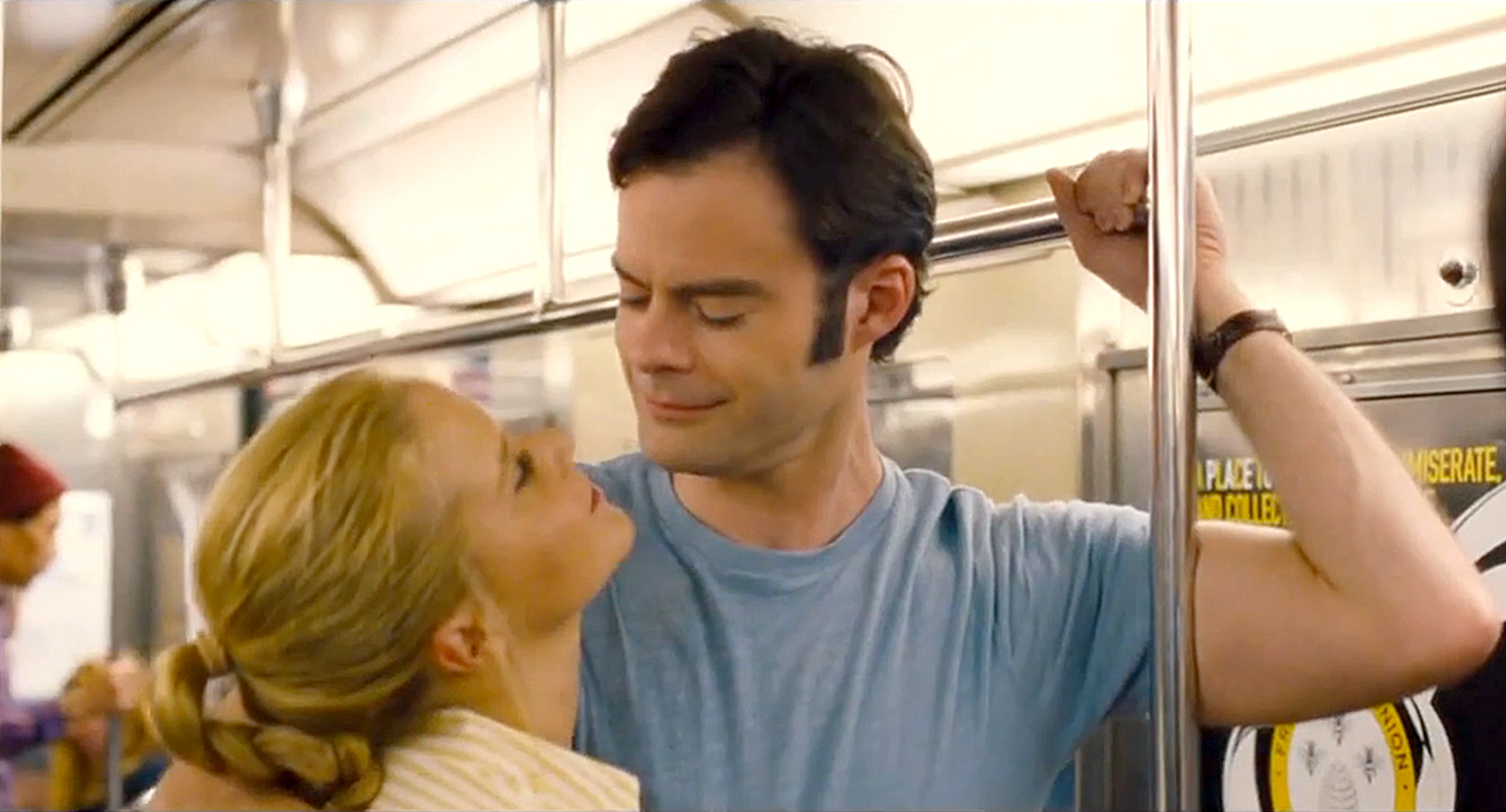
Trainwreck - scene

Best known for her TV appearances in the likes of A Different Spin with Mark Hoppus (2010), Delocated (2012) and her own show, Inside Amy Schumer (2013-15), the writer and star of Trainwreck is perhaps an unlikely choice to drive a relationship dramedy directed by Judd Apatow, but surprisingly enough, Schumer does extremely well in both departments. She’s not the world’s greatest actress, and her script skirts perilously close at times to being needlessly crude, but with the aid of Apatow, Hader and a strong supporting cast, Schumer has come up with a story that covers a lot of emotional ground and manages to avoid short-changing its characters.

And while her script isn’t exactly the most original concoction out there – too much happens that makes it look as if Schumer followed a pre-existing blueprint – what makes it work as well as it does is Apatow’s handling of the various relationships and the way in which he gives his cast the room to flesh out their characters beyond the story’s conventions, and pays close attention to the serious undertones that are present throughout. These are key to the movie’s overall effectiveness, and shows that Schumer the writer is able to be poignant and touching, as well as funny and caustic. There’s a brief scene between Amy and Allister that is as touching as anything you’ll see in a more dramatic movie, and the moment when Steven reveals his true feelings for Amy is superbly written, acted and directed.

Of course, this is primarily a comedy, but though it is incredibly funny in places – Amy’s attempt at a slam dunk is the movie’s comedy highlight – there are also times where the script tries too hard, notably in a sex scene involving Schumer and Cena that undermines the idea of Amy and Steven being together and includes Cena talking dirty in Chinese (but not really). Elsewhere there are some great one-liners (Aaron calling LeBron James his bitch), instances of situational comedy that brighten things immensely (Amy’s aforementioned speech about her sexual escapades), and some great visual gags too (co-worker Nikki’s smile). All in all the comedy and the drama are well balanced and neither detracts from the other.

The cast enter into the spirit of things with enthusiasm, and aside from the inclusion of some real life athletes (James is particularly awkward), there are some really great performances, notably from Larson as the sensible but resentful sister, and Cena as the boyfriend whose inappropriate responses to another cinema goer’s complaints is another of the movie’s highlights. Schumer proves herself to be a better actress than you might expect, and Hader shows a sensitivity as Aaron that grounds the character and makes him entirely sympathetic. And there are brilliant cameos from Daniel Radcliffe and Marisa Tomei in the movie Amy and Steven go to see called The Dogwalker, a small masterpiece of Sixties existential canine distress appropriately shot in black and white and which is such a glorious pastiche it leaves you wanting more.

Trainwreck is a little slow to get off the ground, and Amy’s behaviour may put off some viewers, but this is a movie that tugs at the heartstrings just as much as it tickles the funny bone. With Apatow using his directorial prowess to enhance Schumer’s script, and a cast prepared to give it their all, Schumer’s first attempt at a polished, nuanced movie is mostly successful, though what missteps it does make aren’t enough to hurt it.

Rating: 8/10 – an unexpected treat (even with the talent involved), Trainwreck is a small triumph, both laugh out loud funny and tearfully serious; all credit to Schumer for coming up with such an intelligent script and not trying to make every scene full of unnecessary jokes.

Share this:

  • Share on X (Opens in new window) X
  • Share on Facebook (Opens in new window) Facebook
  • More
  • Print (Opens in new window) Print
  • Email a link to a friend (Opens in new window) Email
Like Loading...

Monthly Roundup – July 2015

31 Friday Jul 2015

Posted by dullwood68 in Movies

≈ 1 Comment

Tags

1968, Adoption, Amanda Seyfried, Animation, Ari Sandel, Behind Office Doors, Bianca Rusu, Comedy, Daphne, Deportation, Designated Ugly Fat Friend, Drama, Fashion, Fred, Horror, KISS, KISS World, Kyle Balda, London, Mae Whitman, Mark Wahlberg, Mary Astor, Minions, Morocco, Paris á tout prix, Pierre Coffin, Reem Kherici, Reviews, Robbie Amell, Robert Ames, Rodrigo Gudiño, Romantic drama, Sandra Bullock, Scarlet Witch, Scarlett Overkill, Scooby-Doo! and KISS: Rock and Roll Mystery, Seth MacFarlane, Shaggy, Ted 2, The Demonology of Desire, The DUFF, The Mystery Gang, Thunderbuddies, Velma

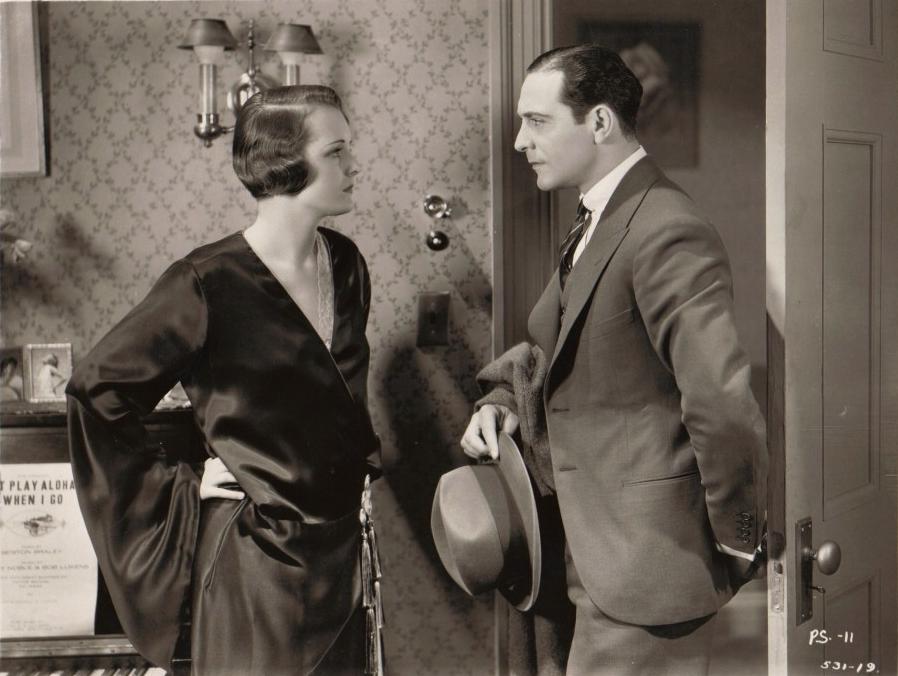
Behind Office Doors (1931) / D: Melville W. Brown / 82m

Cast: Mary Astor, Robert Ames, Ricardo Cortez, Catherine Dale Owen, Kitty Kelly, Edna Murphy, Charles Sellon, William Morris

Rating: 6/10 – at a paper supply company, personal assistant Mary Linden (Astor) is in love with rising young salesman Jim Duneen (Ames), but has to watch from the sidelines as he  plans to marry a socialite (Owen), completely unaware of how she feels about him; a broadly entertaining drama that was probably as predictable to watch in 1931 as it is today, Behind Office Doors benefits from a good performance from the always watchable Astor, and a breezy approach to social affairs that – pre-Hays code – allows Astor to kiss Cortez without being introduced first.

Behind Office Doors

Minions (2015) / D: Pierre Coffin, Kyle Balda / 91m

Cast: Sandra Bullock, Jon Hamm, Michael Keaton, Allison Janney, Steve Coogan, Jennifer Saunders, Geoffrey Rush, Steve Carell, Pierre Coffin

Rating: 8/10 – the origin of the Minions takes us all the way back to the first stirrings of life on earth and then catapults the viewer to 1968 and the efforts of three intrepid Minions – Kevin, Stuart and Bob – to find a new evil master; as absurdist and mayhem-filled as the Despicable Me movies, Minions promotes the little yellow sidekicks to centre stage, and has all sorts of fun riffing on the Sixties, even though some of the voice talents are far from recognisable (Hamm, Keaton, Janney).

Minions

Paris á tout prix (2013) / D: Reem Kherici / 93m

aka Paris or Perish

Cast: Reem Kherici, Cécile Cassel, Tarek Boudali, Philippe Lacheau, Shirley Bousquet, Salim Kechiouche, Stéphane Rousseau

Rating: 7/10 – Moroccan-born fashion designer Maya (Kherici) finds herself in the running for a promotion but is deported back to Morocco when it’s discovered her visa has expired, leaving her with no choice but to pretend she’s off sick until she can find a way back to Paris and win her promotion; Kherici’s likeable, frothy comedy has its poignant moments too, and takes an affectionate stab at the fashion industry, but in the end, Paris á tout prix suffers by being too predictable and slow to get off the ground while using very broad brush strokes on the secondary characters.

Paris a tout prix

Ted 2 (2015) / D: Seth MacFarlane / 115m

Cast: Mark Wahlberg, Seth MacFarlane, Amanda Seyfried, Jessica Barth, Giovanni Ribisi, Morgan Freeman, Sam J. Jones, Patrick Warburton, Michael Dorn, John Slattery, John Carroll Lynch

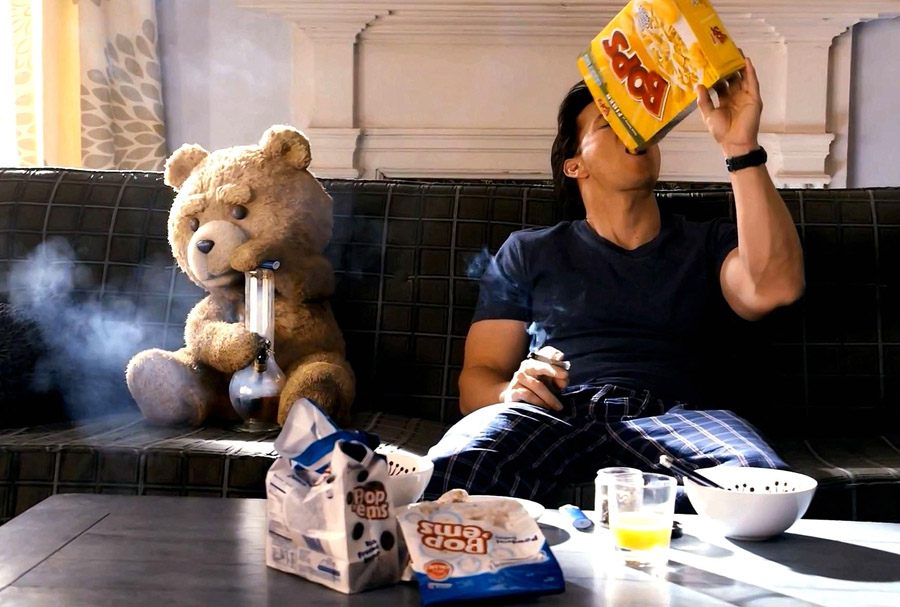
Rating: 6/10 – when Ted (MacFarlane) marries his sweetheart Tami-Lynn (Barth) and they want to have children, their adoption application leads to Ted being declared to be property rather than a person, and his only chance of reversing the decision is to employ the services of eminent lawyer Patrick Meighan (Freeman); a sequel was always in the works and to his credit MacFarlane hasn’t strayed too far from the first movie’s formula, but it also makes Ted 2 seem more like a rehash than a genuine sequel, and while some of it is as outrageous as expected, there’s a little too much unnecessary plotting getting in the way of the jokes.

Ted 2

Scooby-Doo! and KISS: Rock and Roll Mystery (2015) / D: Spike Brandt, Tony Cervone / 79m

Cast: Frank Welker, Mindy Cohn, Grey Griffin, Matthew Lillard, Gene Simmons, Paul Stanley, Eric Singer, Tommy Thayer, Jennifer Carpenter, Garry Marshall, Penny Marshall, Doc McGhee, Jason Mewes, Pauley Perrette, Rachel Ramras, Darius Rucker, Kevin Smith

Rating: 5/10 – at the KISS World amusement park, the appearance of the Scarlet Witch and her search for a legendary rock leads to the Mystery Gang and KISS teaming up to unmask the Witch and save the park from closing; not the best of Scooby-Doo’s recent outings, Scooby-Doo! and KISS: Rock and Roll Mystery is overlong – an extended fantasy sequence soon becomes tedious – and doesn’t play to either group’s strengths, while the actual mystery is sadly, quite weak, all of which leaves the movie both disappointing and unrewarding (unless you’re a die hard KISS fan, in which case you’ll probably love it).

Scooby-Doo! and KISS

The Demonology of Desire (2007) / D: Rodrigo Gudiño / 22m

Cast: Bianca Rusu, Tudor Plopeanu, Jewelia Fisico

Rating: 6/10 – a teenage girl (Rusu) torments a younger boy (Plopeanu) who professes his love for her, and leads him into a nightmare of death and madness; regarded as art-core, The Demonology of Desire is less art and more waspish commentary on the futility of young love, but it does feature some strong visuals and a performance from Rusu that makes a virtue of some very poor line readings.

Demonology of Desire, The

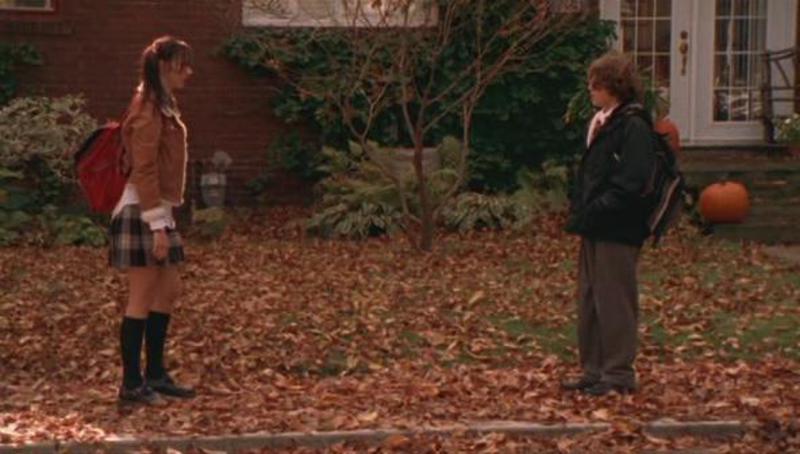
The DUFF (2015) / D: Ari Sandel / 101m

Cast: Mae Whitman, Robbie Amell, Bella Thorne, Bianca A. Santos, Skyler Samuels, Romany Malco, Nick Eversman, Chris Wylde, Ken Jeong, Allison Janney

Rating: 5/10 – ordinary-looking Bianca (Whitman) discovers she’s her two best (attractive) friends’ DUFF (Designated Ugly Fat Friend), but finds her way through the necessary social adjustments thanks to best friend Wesley (Amell); pleasant enough, though featuring too many stretches where the audience is likely to lose interest, The DUFF is yet another Cinderella makeover movie that adds little to its old-time scenario.

DUFF, The

Share this:

  • Share on X (Opens in new window) X
  • Share on Facebook (Opens in new window) Facebook
  • More
  • Print (Opens in new window) Print
  • Email a link to a friend (Opens in new window) Email
Like Loading...

Hot Pursuit (2015)

30 Thursday Jul 2015

Posted by dullwood68 in Movies

≈ Leave a comment

Tags

Anne Fletcher, Comedy, Crime, Drug cartel, Reese Witherspoon, Review, Road trip, Shoes, Sofía Vergara, Witness

Hot Pursuit

D: Anne Fletcher / 87m

Cast: Reese Witherspoon, Sofía Vergara, John Carroll Lynch, Matthew Del Negro, Michael Mosley, Robert Kazinsky, Richard T. Jones, Benny Nieves, Michael Ray Escamilla, Joaquín Cosio, Vincent Laresca

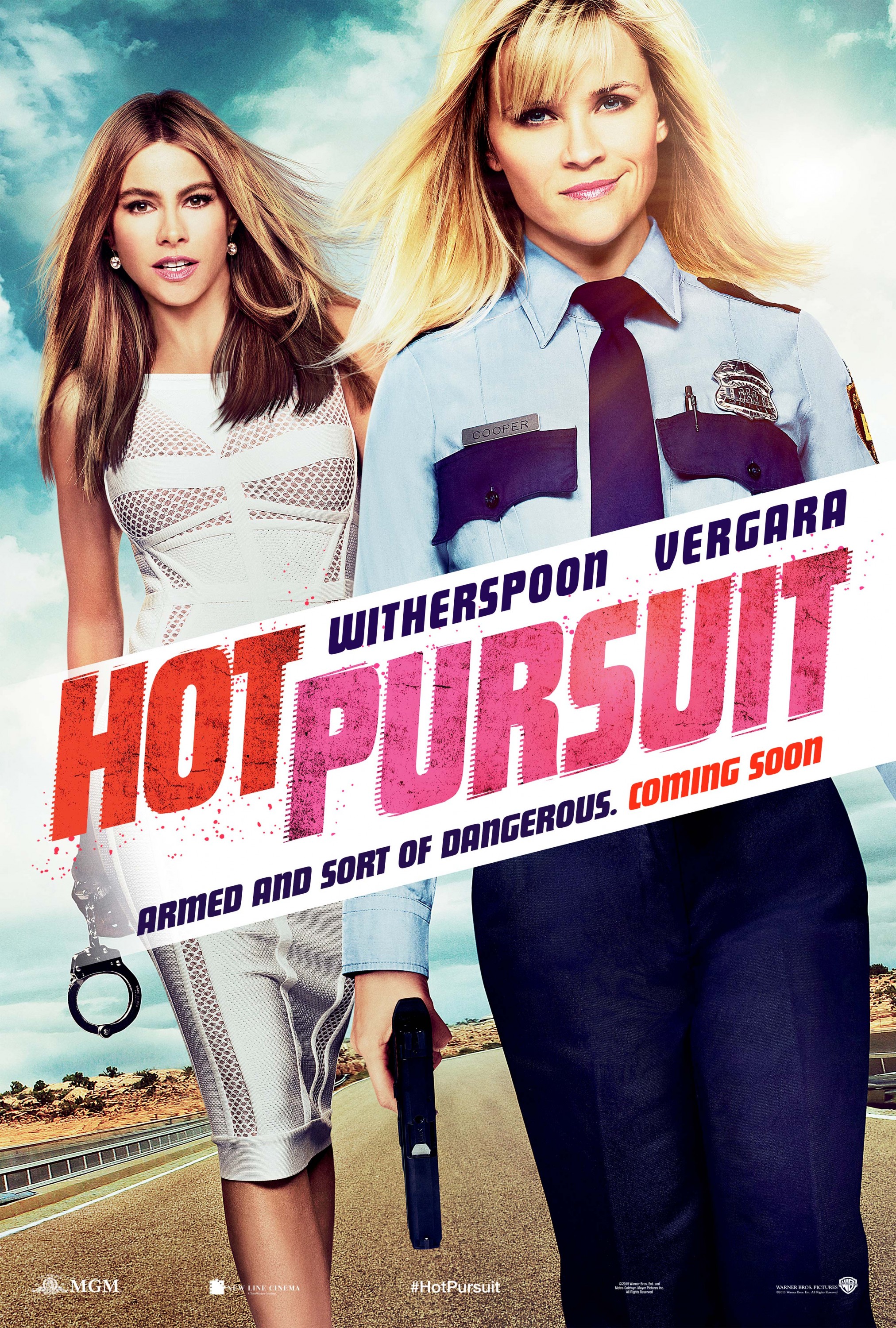
After an unfortunate incident involving a taser, San Antonio policewoman Rose Cooper (Witherspoon) finds herself stuck in the Evidence Room. She’s the butt of her colleague’s jokes, and things aren’t helped by her too eager nature and strict adherence to the police manual. But when a female officer is needed to help escort Felipe Riva (Laresca), a member of a drug cartel and his wife to Dallas, in the company of renowned Detective Jackson (Jones), her boss, Captain Emmett (Lynch) gives her the job. When they arrive to collect their witness, they find Riva engaged in an argument with his wife, Daniella (Vergara). While Cooper tries to convince Daniella not to take all her clothes and shoes, two armed men in masks break into the house – one of whom has a longhorn tattoo on his wrist – and start shooting. Then two more armed men show up and during the crossfire Riva is shot and killed. Jackson too is shot, leaving Cooper to get Daniella out of there.

They manage to escape, and though Daniella makes various efforts to get away, Cooper keeps hold of her until she can contact the San Antonio police. Two of her fellow officers, Hauser (Del Negro) and Dixon (Mosley), arrive to escort them back but Cooper notices that Hauser has the same longhorn tattoo that one of the armed gunmen had. She and Daniella evade the two officers, but discover later on that they are both wanted in connection with the deaths at Riva’s home; Cooper is even described as armed and dangerous. Having stolen a truck the two women begin to get to know each other, until they learn that there’s a man in the back of the truck. The man is called Randy (Kazinsky), and he’s a felon with an ankle tag who’ll gladly help them get to Dallas in return for the removal of his tag.

They hole up in an Indian casino for the night, but while Cooper and Kazinsky become closer, Daniella makes another escape attempt. Cooper stops her just as Hauser and Dixon arrive at their room, and thanks to Randy’s help they escape onto a tour bus. Pursued by the two crooked cops, as well as the other two armed gunmen, Cooper and Daniella manage to avoid being captured or killed, but when the bus stops, Cooper finds that Daniella has a plan that doesn’t include testifying against her husband’s boss  (Cosio), but taking a more drastic approach. Daniella gets away, and later, when Cooper is back in San Antonio, Captain Emmett commends her for her work in keeping Daniella alive and tells her to take some time off. But Cooper can’t rest knowing what Daniella plans to do, and set out to stop her.

Hot Pursuit - scene

You’re an A-list Oscar winner who’s just made a movie that features what many critics regard as your finest performance, a true life tale that reminded everyone of just how talented an actress you are. But then, what to do next? Another heavy, emotional drama that might attract more awards for your mantelpiece? An ensemble piece that combines comedy and drama to good effect? Something completely different perhaps, something you’ve never tried before, like a sci-fi movie, or even a horror flick? Of all the options and possibilities, what will be your next choice of movie?

If you’re Reese Witherspoon, then the answer is simple: go back to making the kind of comedy movie where mismatched characters learn to become best buddies during a road trip, and which offers all kinds of humorous encounters for a casual audience to laugh at. For such is Hot Pursuit, a formulaic, sporadically amusing comedy that does just enough to stop itself from being completely predictable, and which coasts along for much of its (admittedly) short running time like a student in detention asked to write out the same lines a hundred times.

There is talent here, but it’s in service to a script by David Feeney and John Quaintance that tries for substance but often resorts to the time honoured tradition of having two women insult each other in shouty voices for its humour – though they’re nowhere near the inspired level of abuse that Melissa McCarthy and Rose Byrne hurl at each other in Spy (2015). Aside from one visual gag involving a dead deer, and a short sequence involving a severed finger that leads to Witherspoon performing the Heimlich manoeuvre on a dog, Hot Pursuit moves from scene to scene without too much consideration for what’s gone before, or even what’s ahead. A lot of it doesn’t add up, such as Randy’s ankle tag: one minute it’s a way of their being tracked, the next it’s off and chucked in a river. If there’s a dramatic or even narrative need for this to happen, then it’s hard to work out why.

Fletcher’s previous movie was The Guilt Trip (2012), the Rogen/Streisand team-up that nobody wanted, and while Hot Pursuit is better than that movie, she still seems unable to add a level of madcap energy that most movies of this type require in order to succeed. Without the commitment of Witherspoon and Vergara, the movie would be even more difficult to sit through, and it’s thanks to them that it even partially succeeds. Witherspoon is an old hand at this sort of thing, and handles even the daftest developments with a practised shrug and a “let’s move on”, while Vergara doesn’t quite get out from under the role of pampered, shallow sex object (though there does seem to be a competition between the two actresses in terms of who can show the most cleavage).

Rating: 5/10 – if you were to switch off your brain and just go with the flow, Hot Pursuit would prove to be pretty enjoyable, but alas its tired scenario and merely acceptable heroics wouldn’t fool anyone who’s paying attention; not as lame as some other, similar comedies, but not quite the rib-tickler it’s trying to be either.

Share this:

  • Share on X (Opens in new window) X
  • Share on Facebook (Opens in new window) Facebook
  • More
  • Print (Opens in new window) Print
  • Email a link to a friend (Opens in new window) Email
Like Loading...

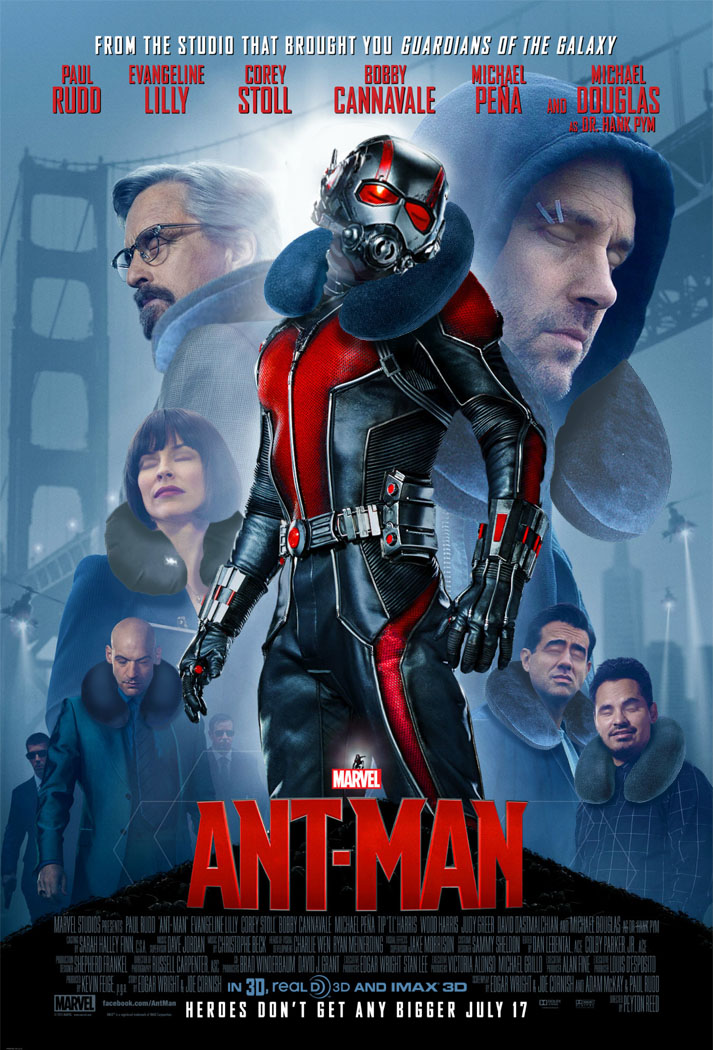
Ant-Man (2015) and the Problem with the Marvel Cinematic Universe

23 Thursday Jul 2015

Posted by dullwood68 in Movies

≈ 3 Comments

Tags

Action, Ant-Man, Anthony Mackie, Comedy, Corey Stoll, Drama, Evangeline Lilly, Hank Pym, Marvel, Marvel Cinematic Universe, Michael Douglas, Michael Peña, Paul Rudd, Peyton Reed, Review, S.H.I.E.L.D., The Falcon, Yellowjacket

And so we say farewell to Phase Two of the Marvel Cinematic Universe, a place audiences have become incredibly familiar with in the last seven years. It’s been a wildly successful run so far: including Avengers: Age of Ultron (2015), Marvel has made eleven movies and reaped over eight and a half billion dollars worldwide. Their movies make up the most successful franchise ever… and with Ant-Man and a further ten movies making up Phase Three due between now and July 2019, it’s clear that title isn’t going to be relinquished anytime soon.

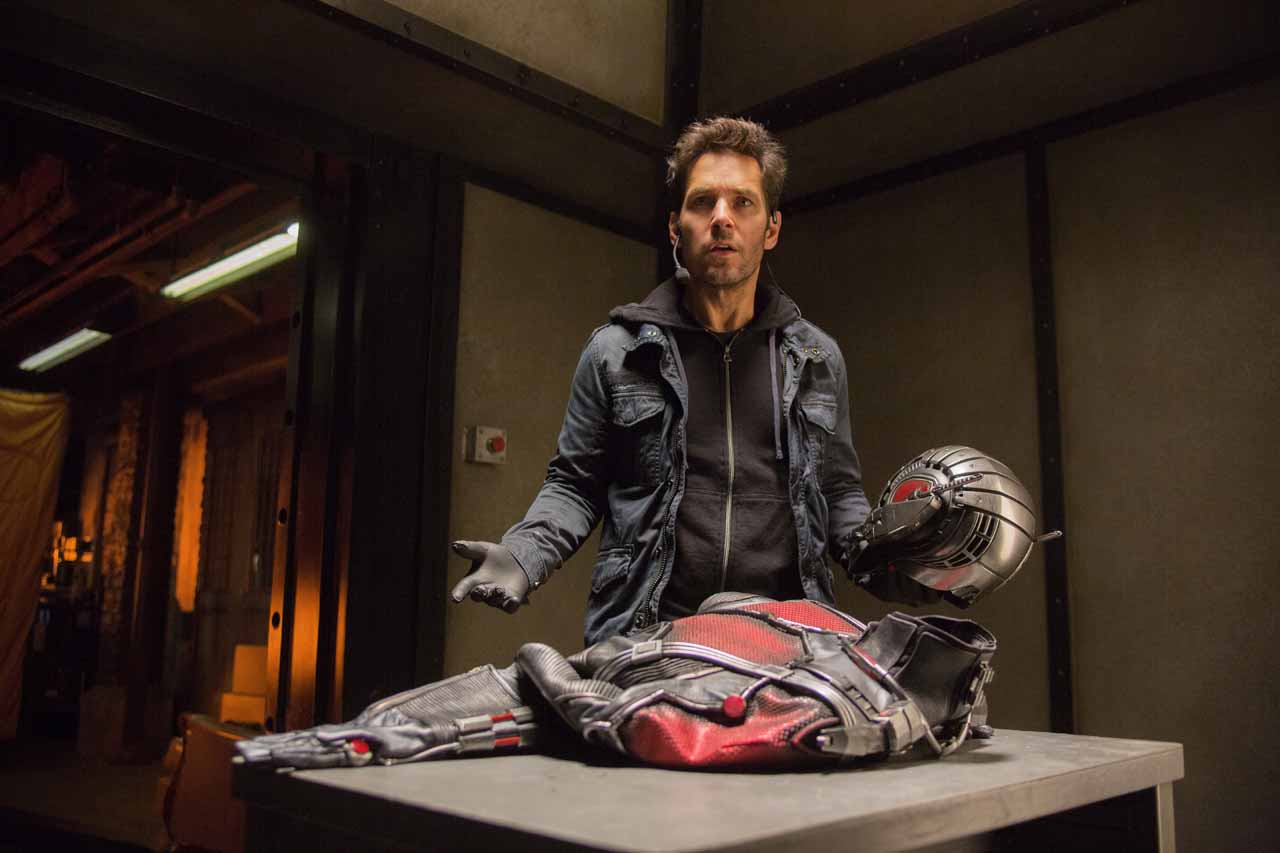
Ant-Man

But while Ant-Man is pleasantly entertaining, and features possibly the best supporting turn in any Marvel movie – stand up, Michael Peña! – it’s also the most formulaic and predictable, from its opening scene set in 1989 and featuring an amazingly youthful Michael Douglas, to its introduction of Scott Lang (a criminal with a moral backbone), to the nefarious activities of villain Darren Cross and his attempts to replicate the work of Dr Henry Pym, to Scott’s friends/sidekicks, to the revelation that Pym is estranged from his daughter Hope (not really!), to Scott’s easy acceptance of Pym’s recruitment of him, to his quickly established command of the Ant-Man suit, to the foiled capers, and the eventual success of Cross in emulating Pym’s work. It’s a Marvel movie, true enough: safe, non-controversial, carrying a faint whiff of po-faced seriousness in amongst all the goofy humour, and sticking close to the established Marvel movie template, all the way down to the post-credits teaser for Captain America: Civil War (2016).

Ant-Man isn’t a bad film. In parts, it’s quite spirited and enjoyable, and there are clear indications that Edgar Wright knew what he was doing before Peyton Reed inherited the director’s chair (the toy locomotive derailing silently could only have come from the mind of the co-creator of the Cornetto Trilogy). The special effects are superb, with the 3D conversion (especially in the IMAX format) proving particularly immersive and impressive. But the story is bland, and so are the characters. When you have a cast that includes the likes of Douglas, Paul Rudd, Evangeline Lilly, Anthony Mackie and Peña, surely it would be a good idea to have them do something more adventurous and original than try to steal a suit (no matter what it can do). Even the humour, usually something that Marvel gets right, feels tired and derivative of other Marvel movies.

Marvel's Ant-Man..Scott Lang/Ant-Man (Paul Rudd)..Photo Credit: Zade Rosenthal..? Marvel 2014

And it’s this derivation, this close sticking to the perceived required template that is leading Marvel astray, leaving only Guardians of the Galaxy (2014) as their most fully realised and effective movie so far. With each stand-alone movie having to fit into the larger Marvel universe (an issue Guardians didn’t have to worry about), it’s clear that these entries lack the attention to their own stories that would allow them to be more distinctive. As it is, the similarities keep on coming: Iron Man fights another robot or batch of robots, Thor fights a race intent on destroying either Asgard or just about everything, Captain America acts as a moral compass while performing acrobatics with his shield, and both Avengers movies see the group fighting off overwhelming hordes of attackers (while also laying waste to whichever city they happen to be in). And the Hulk is sidelined because they can’t work out what to do with him.

Fans of the Marvel Cinematic Universe – and there’s obviously more than a few of them – will suggest that the movies are delivering almost exactly what they want, with all their in-jokes and easter eggs and cameos, and those post-credit scenes that keep people in their seats right until the very end of the movie, but the formula is already showing signs of becoming tired. Ant-Man was the project that prompted Marvel and producer Kevin Feige to go ahead with the whole Cinematic Universe idea; how sad then to see that the movie is less than the sum of its parts, and doing just enough to raise a smile or a jaded bout of wonder.

But maybe there is hope. In amongst the two Avengers movies (three if you count Civil War) and the Guardians and Thor sequels, there are some hopefully different movies coming, with new characters – Doctor Strange, Black Panther, Captain Marvel – and maybe, just maybe the promise of a new direction for the whole Universe. It would be great to see these characters carry Marvel forward into Phase Four and in doing so, offer audiences new experiences rather than the fatigue-ridden outings we’ve started to see in the last couple of years. Let’s hope so, anyway.

Rating: 6/10 – saddled with the kind of storyline and plot that would be more at home on the small screen, Ant-Man never lives up to its “Heroes don’t get any bigger” tagline; in many ways a kind of contractual obligation, it skimps on depth to provide the most lightweight and undemanding Marvel movie yet.

Share this:

  • Share on X (Opens in new window) X
  • Share on Facebook (Opens in new window) Facebook
  • More
  • Print (Opens in new window) Print
  • Email a link to a friend (Opens in new window) Email
Like Loading...

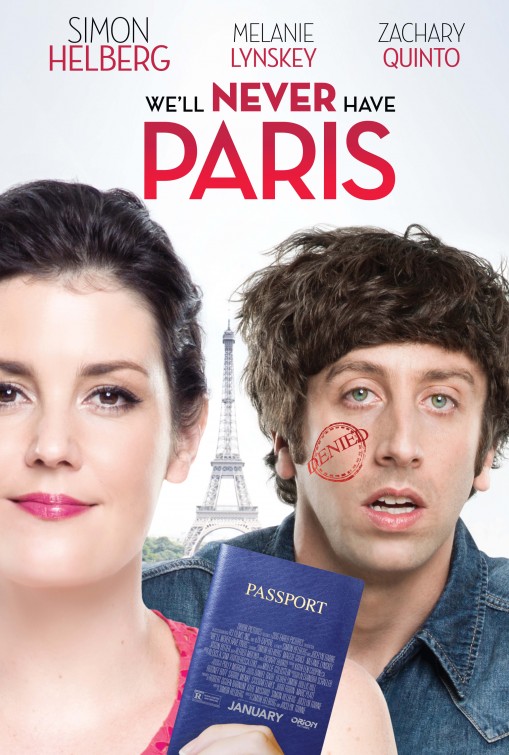
Mini-Review: We’ll Never Have Paris (2014)

16 Thursday Jul 2015

Posted by dullwood68 in Movies

≈ 2 Comments

Tags

Comedy, Drama, Florist, Jocelyn Towne, Maggie Grace, Melanie Lynskey, Paris, Relationships, Review, Romantic comedy, Simon Helberg

We'll Never Have Paris

D: Jocelyn Towne, Simon Helberg / 92m

Cast: Simon Helberg, Maggie Grace, Melanie Lynskey, Zachary Quinto, Alfred Molina, Jason Ritter, Fritz Weaver, Dana Ivey, Ebon Moss-Bachrach

Quinn (Helberg) is a florist who’s also a bit of a hypochondriac. He’s also in a long-term relationship with Devon (Lynskey), his high school sweetheart. Encouraged by his optometrist father Terry (Molina), he decides to ask Devon to marry him. But when he announces his intentions to his assistant, Kelsey (Grace), it prompts her to reveal her feelings for him.  Confused by this revelation, Quinn seeks advice from his best friend, Jameson (Quinto), but it all leads to Quinn having second thoughts about matrimony. Devon takes it badly and leaves him. Believing that he needs to explore other relationships, he starts seeing Kelsey, but her behaviour becomes distressing to him and he distances himself from her.

Quinn’s attempts to regain Devon’s trust and forgiveness but it all falls flat. She moves to Paris, and when Quinn finds out – and despite the continued attentions of Kelsey – he decides to pluck up the courage and follow her there in an effort to win her back. When he does he finds Devon has forged a friendship with a Frenchman called Guillaume (Moss-Bacharach), and is planning to spend some time with his family. Quinn follows her there but his visit is a disaster and prompts him to return to the US and put his relationship with Devon behind him. But he learns that it’s not all over…

We'll Never Have Paris - scene

Best known for his role as Howard Wolowitz on The Big Bang Theory, Simon Helberg is to be congratulated for writing, co-directing and starring in a romantic comedy that a) sees him as an object of lust and b) has attracted a good cast. However, somewhere along the way, Simon Helberg the writer seriously undermined Simon Helberg the actor, and in doing so was in cahoots with Simon Helberg the co-director, for Quinn the character is one of the most irritating creations seen in recent years. Quinn is a nebbish, an ineffectual, stuttering idiot who isn’t so much easily led as emotionally vacant. His relationship with Devon is unconvincing – why would she love such a man when he’s so obviously gornisht helfn?

But even if Helberg the writer had given Helberg the actor a better role, he still would have let him down by failing to make his character funny or even halfway amusing. We’ll Never Have Paris is simply not funny – at all. Helberg’s script meanders from one poorly developed scene to the next, with spurious character motivations thrown in at random moments, and supposedly humorous situations allowed to peter out before they can achieve any relevance or resolution. Against this, Grace and Lynskey struggle to make anything of the material, with Lynskey particularly hamstrung by a role that requires her to be continually forgiving in the face of Quinn behaving (repeatedly) like an ass. Only Molina comes out of it all with any dignity intact, popping up at the beginning and again at the end in what is effectively a cameo role, his cheery demeanour and impish behaviour showing how it should be done.

Rating: 3/10 – dreadful, and lacking in anything remotely resembling dramatic or comedic acuity, We’ll Never Have Paris is sluggish, implausible stuff that is a struggle to sit through; Helberg isn’t the writer he thinks he is, and lets himself down too often for this to succeed, leaving the viewer with the feeling that they’ve sat through a movie that was filmed from a first draft.

Share this:

  • Share on X (Opens in new window) X
  • Share on Facebook (Opens in new window) Facebook
  • More
  • Print (Opens in new window) Print
  • Email a link to a friend (Opens in new window) Email
Like Loading...

No Way Jose (2015)

09 Thursday Jul 2015

Posted by dullwood68 in Movies

≈ Leave a comment

Tags

Adam Goldberg, Ahna O'Reilly, Anna Belknap, Children's parties, Comedy, Drama, Eric Siegel, Gillian Jacobs, Indie movie, Mexico, Musician, Pat Healy, Relationships, Review, Romance, The Borges

MrsMiracle_DVD_Sleeve

D: Adam Goldberg / 98m

Cast: Adam Goldberg, Ahna O’Reilly, Eric Siegel, Anna Belknap, Pat Healy, Greg Pritikin, Gillian Jacobs, Emily Osment, Brendan Hines

Musician Jose Stern (Goldberg) is fast approaching forty and is reduced to playing children’s parties with his band, the Borges. He’s also engaged to Dusty (O’Reilly), and though they haven’t set a date, they have decided on where to go for their honeymoon: Mexico (as you can’t drive to Hawaii). When best friends Gabe and Kate (Siegel, Belknap) suggest that they hold a joint birthday party for Jose and their young daughter Violet, Jose is initially ambivalent, but thanks to Dusty’s urging, agrees to the idea. Later that night in their new apartment, Dusty downloads an app to her phone that brings to light something about Jose that she doesn’t know. For Dusty it proves to be a deal breaker, despite Jose’s explanation of what she’s learnt.

Their relationship over, Jose crashes on Gabe and Kate’s couch. Kate goes out to work while Gabe stays at home to look after Violet and their infant son, Fred, and provide piano lessons to children. They row a lot, but in-between times, Jose manages to get them to give their opinions on what to do next. Their answer (based on having two impressionable children in the home): frog Dusty and move on. But Jose can’t quite do that, even though he won’t contact her. Instead he hooks up with an old girlfriend, Penny (Jacobs), when she calls him out of the blue, but the evening they spend together proves disappointing.

With his friends, Lawrence (Healy) and Mickey (Pritikin), Jose begins to put Dusty behind him (though he still feels strongly about her). When he learns that Dusty has decided to cash in their honeymoon tickets and go by herself, Jose – who doesn’t fly – follows her there in a last ditch effort to win her back. But when he gets there, he gets a surprise, one that’s exacerbated by Dusty telling him something unexpected…

No Way Jose - scene

Adam Goldberg’s fourth directorial feature since 1998 (the last one, I Love Your Work, was released in 2003), No Way Jose is an acerbic, drily witty look at the pitfalls of modern relationships. Co-written with Sarah Kate Levy, Goldberg’s take on the middle-aged man-child coming to terms with commitment has a couple of comedic set pieces – Jose struggling to talk to Dusty while strung out on Ativan; Kate coming home and yelling coarsely at someone on the phone – but is mostly a sedate, considered drama that  features some great performances while never quite saying anything too profound about the differences between men and women.

From the outset it’s clear that Jose is out of his depth, somehow having reached the age of forty without getting married or having children. His musical career is in the doldrums, and while his relationship with Dusty seems like a dream come true (you know she’s far too good for him), his cavalier attitude and need for approbation marks him out as an outsider, jogging along but without much purpose or direction. Faced with having to grow up and find some meaning in his life, Jose’s reaction is to cling even tighter to his sense of freedom, even though losing Dusty has made him begin (without realising) to reassess what he wants from Life.

Goldberg is a quirky, unpredictable actor, but here he tones down his usual schtick to give us a character who’s more unsure than confident, and who’s only a few steps away from being a complete loser. As such it’s hard to sympathise with him completely as a lot of his problems are caused by a lack of consideration of others; he’s his own worst enemy. By making Jose so insecure, and with so little ambition, Goldberg has painted himself into a bit of a corner. It doesn’t take long to realise that Jose’s coasting along is robbing the movie of a good deal of drama, and with that realisation, most viewers may find themselves less interested in how things play out. It doesn’t help either that Dusty is sidelined once their relationship is over, and disappears until the movie’s end, when she’s required to respond to Jose’s lovelorn melancholy in a way that will be familiar to anyone who’s seen more than a few romantic dramas.

With Jose being less than completely interesting, it falls to the supporting cast to provide most of the entertainment. It’s here that Goldberg and Levy have done the movie a favour, investing the supporting characters with enough humorous foibles to offset the moodiness of the central storyline. Siegel and Belknap are terrific as a warring couple continually trying to score points off each other and offloading their parental responsibilities on each other at every opportunity (the phrase “Violet’s done a bad thing” will linger in the memory). Healy and Pritikin also provide sterling performances, their characters’ idiosyncrasies played to the fore and fully recognisable as the kind of friends most of us have despite our best wishes or intentions.

On the distaff side, O’Reilly is a pleasure to watch as Jose’s engaging other half, and she makes enough of an impact that her enforced departure from the story feels calamitous. As the “coconut water” drinking Penny, Jacobs soon turns into the ex we’d all like to forget, but instead of enhancing the drama by having Jose sleep with her (or just be seen with her by Dusty), Goldberg elects to have Jose refuse her overtures and not go through with anything, reaffirming his inability to take chances.

Where Goldberg does get things right is in his choice of music to support the emotional beats within the movie – the songs that play in Jose’s car shortly after Dusty dumps him, including One Is the Loneliest Number, are inspired – and his choice of cinematographer, Mark Putnam, his go-to guy when making features. Putnam is great at coming up with shots that provide maximum effect, and guided by Goldberg, keeps things continually interesting within the frame. It all serves to make the visual aspect of the movie more compelling than expected.

Rating: 7/10 – flawed but still mostly enjoyable, No Way Jose is an indie drama with comedic overtones that tells its simple story without much embellishment or pretentiousness; alas this makes for a movie that feels somewhat underdeveloped, and while there are good performances throughout, there’s too little of substance going on to improve things.

Share this:

  • Share on X (Opens in new window) X
  • Share on Facebook (Opens in new window) Facebook
  • More
  • Print (Opens in new window) Print
  • Email a link to a friend (Opens in new window) Email
Like Loading...

Mini-Review: Spanish Affair (2014)

08 Wednesday Jul 2015

Posted by dullwood68 in Movies

≈ Leave a comment

Tags

Andalusia, Basque, Carmen Machi, Clara Lago, Comedy, Dani Rovira, Emilio Martínez Lázaro, Karra Elejalde, Review, Romantic comedy, Seville, Spain

Spanish Affair

Original title: Ocho apellidos vascos

D: Emilio Martínez Lázaro / 98m

Cast: Clara Lago, Dani Rovira, Carmen Machi, Karra Elejalde, Alberto López, Alfonso Sánchez, Aitor Mazo

When Rafa (Rovira) meets Amaia (Lago) and they end up in bed together, the lovestruck barman is shocked to learn that Amaia is from the Basque region. As he is from Seville in Andalusia, and has never left the area, and there is an historical animosity between the two regions, Rafa is at first heartbroken when she leaves the next morning (and not on the best of terms). But when he realises Amaia’s left her purse behind, he takes the bull by the horns, and decides to travel to Amaia’s hometown of Euskadi in an attempt to win her back. On the bus ride to Euskadi he meets Merche (Machi) who takes a liking to him and offers her help should he need it during his stay. When Rafa finds Amaia she’s less than pleased to see him, but his romantic persistence has unexpected consequences: when he meets Amaia’s father, Koldo (Elejalde), he’s forced to claim to be of Basque heritage.

Keeping up this claim leads to Rafa’s being accepted within the community, but this acceptance makes his attempts to woo Amaia even more difficult as the charade requires him to behave as a Basque (and sometimes speak like one). With Koldo remaining suspicious of Rafa’s “origins”, he persuades Merche to be his “mother”. But when Amaia – who before going to Seville had been engaged to marry – decides to go ahead with the ceremony, Rafa is faced with a difficult choice: to reveal his true identity, or leave for good.

Spanish Affair - scene

The most popular Spanish movie at the Spanish box office, Spanish Affair – that’s enough of the word “Spanish” – is a light, frothy, romantic comedy delight that, in its first hour, is one of the funniest movies of recent years. Even with all the in-jokes and political references that are specific to the Basque region, there’s so much for international audiences to enjoy that some viewers may be in danger of suffering from injured ribs – it really is that laugh out loud funny. And even though the movie does run out of steam in its efforts to provide the standard romantic comedy outcome, there’s still plenty to enjoy, as the cast, helped immeasurably by Lázaro’s effortless direction of the script by Borja Corbeaga and Diego San José, have as much fun with the material as the audience.

Making his feature debut, TV presenter Rovira makes for an appealing, charming (though hapless) Lothario, and his comic timing is so acute it makes an extended set piece around the unfortunate ringing of a mobile phone one of the movie’s highlights. Lago, with her severe fringe cut and large, expressive eyes, is a fiery, passionate Amaia, while the undervalued (in Spanish cinema, at least) Elejalde steals the show as the Andalusia-hating Koldo – just watch his reaction when Rafa is called upon to recite the eight family names that will convince the old man of his Basque heritage. Shot on location, Gonzalo F. Berridi’s cinematography adds a sheen to the proceedings that enhances the mise-en-scene greatly, and the whole thing is rounded off by a sprightly score from Fernando Velázquez.

Rating: 8/10 – at times the sound of the viewer’s own laughter may overwhelm some of the often priceless dialogue, but it’s a small price to pay for so much enjoyment; with a sequel due in 2016, Spanish Affair is an absolute gem that sparkles so brightly you might need to wear sunglasses.

Share this:

  • Share on X (Opens in new window) X
  • Share on Facebook (Opens in new window) Facebook
  • More
  • Print (Opens in new window) Print
  • Email a link to a friend (Opens in new window) Email
Like Loading...

Spy (2015)

02 Tuesday Jun 2015

Posted by dullwood68 in Movies

≈ 2 Comments

Tags

Action, Budapest, CIA, Comedy, Drama, Jason Statham, Jude Law, Melissa McCarthy, Miranda Hart, Nuclear weapon, Paris, Paul Feig, Review, Rome, Rose Byrne, Spies, Thriller, Undercover

Spy

D: Paul Feig / 120m

Cast: Melissa McCarthy, Jason Statham, Rose Byrne, Miranda Hart, Allison Janney, Bobby Cannavale, Peter Serafinowicz, Morena Baccarin, Richard Brake, Nargis Fakhri, 50 Cent, Jude Law

CIA operatives Bradley Fine (Law) and Susan Cooper (McCarthy) are the best team in the organisation: Fine out in the field, Susan back at HQ guiding and protecting him on his missions. After Fine misses out on the chance to find the whereabouts of a nuclear weapon that’s up for sale – by accidentally shooting the seller – the CIA soon learns that the seller’s daughter, Rayna Boyanov (Byrne), has taken over the sale and through corrupt businessman Sergio De Luca (Cannavale) is offering it to terrorist Solsa Dudaev (Brake).

Fine infiltrates Rayna’s home but discovers it’s a trap; Susan has to watch as Rayna kills him. When it becomes clear that Rayna knows the identities of all of the CIA’s top agents, including gung-ho hothead Rick Ford (Statham), Susan volunteers to travel to Paris where De Luca has an office, and to report back any activity. Followed there by Ford, who thinks she’ll compromise the mission, Susan discovers that De Luca is now in Rome. Once there, she switches her dowdy undercover identity for a more upmarket one, and trails De Luca to a casino. She witnesses a man spike a drink at the bar; when the drink is delivered to none other than Rayna, Susan sees her chance to get close to Fine’s killer and find out the location of the nuclear weapon.

Gaining Rayna’s confidence, the pair fly to Budapest. During the flight one of the pilot tries to kill Rayna but Susan overpowers him and lands the plane instead. In the process she reveals her skills as an agent, and Rayna becomes convinced she works for the CIA. Susan manages to convince her that her father employed Susan to look after her. Rayna believes her story, but when they arrive in Budapest, matters are complicated by the arrival of Susan’s best friend and co-worker, Nancy (Hart) who has been sent to check on her. Pretending Nancy works for her, Susan foils another bid to kill Rayna, but in doing so finds herself at Rayna’s mercy, and with the sale of the nuclear weapon a matter of hours away.

Spy - scene

It’s been four short years since Melissa McCarthy shot to fame by defecating into a sink in the movie Bridesmaids (2011). In that time she’s continued with her role in the TV show Mike & Molly, had a minor role in This Is 40 (2012), given supporting turns in The Hangover Part III (2013) and St. Vincent (2014), co-starred with Sandra Bullock in The Heat (2013), and headlined two movies of her own, Identity Thief (2013) and Tammy (2014). If the last two movies didn’t exactly set critical pulses racing, both took over $100,000,000 worldwide, proving that audiences enjoyed watching slight variations on the character she first played in director Paul Feig’s earlier movie.

But it was a character that had a limited shelf life, and with Spy, McCarthy and Feig have wisely broadened their horizons, and in so doing, have given the actress her best role yet. As the ten years desk bound CIA agent who dreams of some excitement in her life, McCarthy delivers a performance that is at once more controlled and less wayward. In creating Susan Cooper, McCarthy shows that she has much more to offer than pratfalls and foul-mouthed schtick (even though there’s room for both here, just not as much as usual), and is more than capable of playing a fully rounded character. It’s good to see her owning the material as well and riffing on it to such good effect, making Susan possibly her most endearing, and appealing role to date, and entirely worthy of the movie itself.

For the best thing about Spy is that it’s consistently funny, whether it’s subverting genre conventions by thrusting the backroom girls into the spotlight, making Fine a preening douche, Ford a ridiculous blowhard, or giving Susan some of the worst makeovers in history for her undercover identities, the movie has great fun in spoofing the spy/action movie while maintaining a more serious subplot about Susan’s gaining enough self-confidence to fulfil her potential as an agent. That Feig’s script has the confidence to attempt both, and then succeed with seeming ease, adds to the movie’s lustre, and makes it all the more enjoyable.

As already noted, McCarthy delivers her best role to date, and she’s matched by the surprise – and inspired – casting of Statham as the kind of agent who can’t pass up an opportunity for a bit of self-aggrandisement. On this evidence, Statham should do more comedy, as here he’s hilarious, shouting and swearing like a man on the brink of a psychotic break, and making the kinds of boasts that are so absurd he doesn’t know how idiotic he sounds. But where Ford’s boasting is a highlight, he’s still outdone by the insults traded between Susan and Rayna, some of which are the funniest putdowns heard in recent years (and particularly when it comes to Rayna’s hairdo). Byrne and McCarthy have a great time deadpanning their lines at each other, and so does the audience as each insult escalates their dislike of each other’s character.

In support, Serafinowicz is irrepressible as Susan’s Italian contact, Aldo, for whom large bosoms are the key to happiness; Law is debonair, charming and an unfeeling arse; Janney is the CIA chief who sees promise in Susan’s wish to work in the field; Cannavale doesn’t really feature until the last twenty minutes; 50 Cent plays himself; and in a role that doesn’t see her stretch too far from her British TV persona, Hart racks up enough laughs as Nancy to have done her US career no harm at all. In short, it’s a great cast, and they all deliver as required.

The European locations are filmed by Robert D. Yeoman with that travelogue sheen that enhances even the most attractive of regions or cities, and as a result the movie is attractive to look at throughout. The music by Theodore Shapiro is occasionally overbearing, but this is due to its prominence in the sound mix rather than any compositional issues, and McCarthy’s wardrobe, courtesy of Christine Bieselin Clark, fluctuates from plain and functional to horrendous to glamorous (though her final look in the movie makes her appear too much like Dawn French for comfort). And the action scenes are splendidly realised, including a terrific fight between McCarthy and  Fakhri that wouldn’t look out of place in a… well, in a Jason Statham movie.

Rating: 8/10 – consistently entertaining, Spy is a treat for fans of McCarthy and spy spoofs in general; with a script that knows when to be serious and when to be gloriously silly, it’s a movie that is infectious in its desire to please its audience, something it does with no small amount of style and wit.

Share this:

  • Share on X (Opens in new window) X
  • Share on Facebook (Opens in new window) Facebook
  • More
  • Print (Opens in new window) Print
  • Email a link to a friend (Opens in new window) Email
Like Loading...

Teacher of the Year (2014)

01 Monday Jun 2015

Posted by dullwood68 in Movies

≈ 2 Comments

Tags

Comedy, Drama, Jason Strouse, Job offer, Keegan-Michael Key, Matt Letscher, Mockumentary, NISA, Review, Students, Sunny Mabrey, Teaching, Truman High School

Teacher of the Year

D: Jason Strouse / 80m

Cast: Matt Letscher, Keegan-Michael Key, Sunny Mabrey, Larry Joe Campbell, Jamie Kaler, Jason Sklar, Randy Sklar, Tamlyn Tomita, Brenda Strong, Caitlin Carmichael, Chris Conner, Eden Riegel, Shari Belafonte, Karl T. Wright, Richard Keith, Lahna Turner, Gabriel Chavarria, Jonathan Goldstein, Olivia Crocicchia

At the relatively new Truman High School in Los Angeles – opened in 2007 – English teacher Mitch Carter (Letscher) has recently won the state teacher of the year award. With his stock in the teaching community riding high, he’s approached by a representative (Goldstein) of the National Independent School Association to become a lobbyist for them. The job entails appearing at symposiums, making speeches on behalf of the Association, a hefty increase in salary, and moving himself and his family – wife Kate (Mabrey) and young daughter Sierra (Carmichael) – to Washington D.C. But though the offer is tempting, Mitch needs time to think about it.

While he does, Mitch is also part of a documentary being made about him and the rest of the faculty, and the students, at Truman High. The principal is Ronald Douche (pronounced Dow-shay, “the same spelling, but the Dutch pronunciation”) (Key), an uptight, trying-too-hard-to-be-liked bureaucrat who garners little respect from either the teachers or the students. While he promotes the school’s achievements, the documentary crew go behind the scenes to discover just how much of what he says is true. What they find is a group of teachers who are all just a little bit weird, or just plain strange, like Brian Campbell (Conner), who uses a glove puppet in his maths class.

Mitch is interviewed for the role with NISA and realises to his surprise that it’s a job he’ll be good at, but the work he does with his students gives him pause. Still unable to make a decision, his own problems have to be put on the back burner when Brian is accused of molesting a student (Crocicchia) and suspended. With Douche intending to fire Brian and thereby keep the whole situation away from the press, a meeting is set up with the girl and her mother. With Kate newly pregnant and working too hard at an unrewarding job, Mitch is given an ultimatum by NISA: decide one way or the other, but just decide. In the end, it’s the outcome of the meeting to decide Brian’s fate that pushes Mitch to make his mind up. But will he stay, or will he go?

Teacher of the Year - scene

A pure joy from start to finish, Teacher of the Year is one of the funniest comedies of 2014, an inspired, laugh-out-loud, intelligently handled movie that adds drama and sentiment to the mix with undisguised aplomb. Writer/director Strouse has fashioned the kind of movie that can be enjoyed on so many different levels it’s like being given the keys to the candy store. There’s not one false note or misstep in the whole of its eighty minute running time.

As well as one of the most effective, carefully constructed mise en scenes of recent years, Strouse has created a raft of characters that are so beautifully realised by his cast that spending so little time with them seems like a crime. Aside from Brian and his glove puppet, there’s robotics teacher Steven Queeg (Kaler) who has issues over Mitch’s winning teacher of the year and who tells his students that the robots will take over the world in the future. There’s ineffectual history teacher Ian Donovan (Keith) whose inability to control his class leads to his offering to pay them to pay attention; vice principal Marv Collins (Campbell) who’s forever giving out detention slips for the smallest of infractions; Ursula Featherstone (Turner), whose musical summing up of The Miracle Worker and The Diary of Anne Frank is a definite highlight; and tenured Eric Sanders (Wright) who would give back half his salary if he could “punch a parent once a year”. Add two counsellors (Sklar, Sklar) who regularly give the worst advice you’re ever likely to hear – “Stay away from Nevada. You can go. But you’re gonna kill a hooker.” – and you have such a marvellous collection of misfits and malcontents that, again, you’ll want to spend as much time with them as possible.

But while the movie correctly focuses on the comedy, it doesn’t downplay or undermine the dramatic elements. Brian’s dilemma is handled with a greater depth of feeling than expected, as is Mitch’s relationship with his students (it’s a tribute to Strouse’s script that if Mitch was a real teacher you’d want him teaching at your kids’ school). The trials and tribulations of being a suburban school teacher are handled with an adroitness that adds credibility to each character, and Mitch’s home life is ably rendered as well, his marriage refreshingly free of unnecessary drama, and with its attendant dynamics kept equally low-key. The movie is shot through with unanticipated poignancy, and has several moments where it displays a warm-hearted centre that enhances both the drama and the comedy, and leaves the viewer smiling at the sheer pleasure watching the movie is providing.

Mitch is the smiling, genial core of the movie, an everyman with a heart of gold and a passion for teaching that comes across as entirely genuine, and Letscher is first class in the role, imbuing the part with a sincerity that never feels false. He’s ably supported  by a cast that milks every nuance and subtlety from Strouse’s script, and who do it with an obvious eagerness. It’s hard to single out any one particular cast member, but Kaler and Wright flesh out their characters so effectively, they make it really difficult to forget them in a hurry.

Strouse is to be congratulated for coming up with such a wonderfully astute and shaded script, and for directing it with such perception and skill. He’s aided immensely by DoP/editor Matthew Skala, whose aptitude at cutting together his own footage gives the movie a rhythm and a flow that suits it perfectly. And with a score containing songs by The Chicharones, the movie is as uplifting to listen to as it is to watch.

Rating: 9/10 – a sheer delight throughout, Teacher of the Year deserves to be seen by as many people as possible, its good-natured charm and winning formula an absolute joy to behold; whatever Strouse turns his hand to next, let’s hope it’s as richly satisfying as this one is.

Share this:

  • Share on X (Opens in new window) X
  • Share on Facebook (Opens in new window) Facebook
  • More
  • Print (Opens in new window) Print
  • Email a link to a friend (Opens in new window) Email
Like Loading...

Hartenstraat (2014)

25 Monday May 2015

Posted by dullwood68 in Movies

≈ Leave a comment

Tags

Amsterdam, Bracha van Doesburgh, Comedy, Drama, Father/daughter relationship, Holland, Internet dating, Marwan Kenzari, Relationship Planet, Review, Romance, Sanne Vogel, Swans

Hartenstraat

aka Heart Street

D: Sanne Vogel / 86m

Cast: Marwan Kenzari, Bracha van Doesburgh, Nadia Koetje, Benja Bruijning, Tygo Gernandt, Egbert-Jan Weeber, Sieger Sloot, Susan Visser, Kitty Courbois, Frits Lambrechts, Georgina Verbaan, Gigi Ravelli, Terence Schreurs, Jan Koolijman, Stacey Rookhuizen

Daan (Kenzari) owns a delicatessen in Amsterdam’s Hartenstraat, where he lives with his eight year old daughter, Saar (Koetje). He and Saar’s mother, Inge (Rookhuizen), are divorced, and Saar wishes that Daan could find someone else to marry and be happy again. But Daan is too busy looking after Saar and his business to have time for dating – or so he tells himself. Meanwhile, two doors along, a new fashion shop is opened by Katje (van Doesburgh), a no-nonsense designer who doesn’t suffer fools gladly. When she and Daan first meet it’s not a happy encounter for either of them, and a mutual dislike is born.

To get Daan back into the dating arena, his friend Bas (Gernandt) sets him up on an Internet dating website called Relationship Planet. Soon, Daan is corresponding with several interested women and setting up dates so he can meet them. His luck, however, appears to desert him with every date, as each woman he meets proves undesirable for one reason or another, until he meets Mara (Verbaan). But Mara has her own issues: a lack of anger management, and an overly aggressive approach to sex. When Daan doesn’t want to see her again she makes a scene in the street that is witnessed by Katje.

On the evening of the opening of Katje’s shop she’s surprised to see Daan providing the catering. They spar for the entire evening, but when she learns that he’s using Relationship Planet it sparks her interest. She pretends to be someone else and starts an online relationship with him. At first it’s meant as a joke, a way of amusing herself at Daan’s (unknowing) expense. But as they get to know each other, both begin to fall for the other. And while they continue to have an uneasy relationship offline, Saar has a part in easing the animosity they share when Katje designs a swan dress for her to wear at a national schools talk competition.

Eventually, Katje’s online alter ego plucks up the courage to agree to meet Daan, but when he learns she is the woman he has fallen in love with, he is angry at her duplicity and wants nothing further to do with her. Even when she later apologises to him, he refuses to forgive her. And then Saar goes missing on the morning of the competition…

Hartenstraat - scene

Hartenstraat is a movie that’s all about relationships: broken ones – Daan and Inge; prospective ones – Daan and Mara; unfulfilling ones – Katje and self-absorbed boyfriend Thomas (Bruijning); established ones – gay coffee shop owners Jacob (Sloot) and Rein (Weeber); burgeoning ones – Katje’s mother, Bep (Courbois) and Daan’s elderly friend Aart (Lambrechts); ambivalent ones – Daan and Katje; and anonymous ones – Daan and Katje’s online alter ego. Even Saar has her problems, telling her father she can’t choose between two boys at school. With all these varied relationships taking up so much of the movie’s running time, you could be forgiven that Hartenstraat would be a somewhat overly dramatic feature with maybe some acerbic things to say about the nature of love. But you’d be wrong.

Instead, the movie is an enjoyable, light-hearted look at the trials and tribulations, expectations and disappointments, hopes and fears, associated with contemporary relationships. It makes its points with a great deal of charm and steers away from the kind of plot contrivances that mar many other romantic comedies (even if the outcome is completely predictable from the start). It doesn’t have an axe to grind, it doesn’t outstay its welcome, and it features a clutch of winning performances that are ably directed by Vogel from Judith Goudsmit’s quirky screenplay.

But with all the attendant relationships given sufficient emphasis and focus, it’s still the connection between Daan and Katje that provides the most satisfaction. As played by Kenzari and van Doesburgh, the ways in which the pair spark off each other are delivered with such a sense of mutual fun that it’s hard not to be won over by them both (it helps that there’s a definite chemistry between them). Kenzari is the kind of actor whose soulful expression can speak volumes, while van Doesburgh has a subtle screen presence that the camera picks up on in every scene she’s in. As Daan and Katje circle round their feelings for each other, both actors take the opportunity to make the relationship entirely believable.

They’re supported by a talented cast of character actors led by Gernandt as the borderline obnoxious ladies’ man Bas (aka the Choker), and Verbaan as the hilariously psychotic Mara (who tells Daan at one point he needs “destroying”). Koetje is appropriately winsome as Saar; Weeber and Sloot flesh out Jacob and Rein to the extent that they’re not the stereotypical gay couple they first seem to be; and as Katje’s less than intellectual assistants, Schreurs and Ravelli make for an appealingly funny double act.

Indeed, the movie’s sense of humour is one of its plusses, a lot of it arising from the characters themselves and their personalities, while the dialogue is dotted with moments of genuine wit and some glorious put-downs. Vogel – who also appears as Daan’s first date, Annabel – keeps things from getting too dramatic (which is to the movie’s advantage) and uses this to seduce the viewer into becoming invested in the various relationships and their outcomes. She’s aided by Ezra Reverda’s sterling camerawork, and a clever opening title sequence by Derk Elshof, Benno Nieuwstraten and Sietse van den Broek that features cast and crew names as part of the street’s window displays.

Rating: 8/10 – although there are times when Hartenstraat seems impossibly lightweight and seems to invite ridicule for its approach to its own storyline, nevertheless it’s a carefree, hugely enjoyable piece of “fluff”; full to the brim with moments that bring a smile to the viewer’s face, it’s the very epitome of a pleasant distraction.

Share this:

  • Share on X (Opens in new window) X
  • Share on Facebook (Opens in new window) Facebook
  • More
  • Print (Opens in new window) Print
  • Email a link to a friend (Opens in new window) Email
Like Loading...

Home (2015)

22 Friday May 2015

Posted by dullwood68 in Movies

≈ Leave a comment

Tags

Adam Rex, Animation, Boov, Comedy, Drama, Dreamworks, Gorg, Invasion, Jennifer Lopez, Jim Parsons, Literary adaptation, Review, Rihanna, Sci-fi, Steve Martin, The True Meaning of Smekday, Tim Johnson

Home

D: Tim Johnson / 94m

Cast: Jim Parsons, Rihanna, Steve Martin, Jennifer Lopez, Matt Jones, Brian Stepanek

Fleeing from their sworn enemy the Gorg, the Boov race – led by Captain Smek (Martin) – arrive on Earth and begin to colonise it, sequestering the human population in various locations around the globe. The Boov are otherwise a peaceful race, and believe they are doing Earth a favour by inhabiting it. One of them, Oh (Parsons), decides to invite everyone to a party at his apartment, but when he sends out his electronic invitation he doesn’t realise that it will be picked up by the Gorg as well. When Captain Smek learns of this, Oh is forced to go on the run.

In a convenience store, Oh runs into Tip (Rihanna) and her cat Pig. Tip is on her own after her mother, Lucy (Lopez), was taken away. She hates the Boov, but when Oh transforms her mother’s car into one that can fly, and he agrees to help her find her mother, she lets him come with her. They fly to Paris to the Boov Command Centre where they learn that Lucy is in Australia. Evading the Boov, they then find themselves under attack from a Gorg ship. They manage to bring it down but their car is damaged in the process. The Gorg ship proves to be a drone, and Oh is able to use a chip from it to get their car going again.

Once in Australia, Tip and Oh discover that the Boov are evacuating to their mothership. Tip wants to find her mother but Oh insists they leave with the rest of the Boov before the Gorg destroy them all. Tip refuses and continues her search for Lucy, while Oh begins to realise that he has to do something to stop the Gorg from killing everyone, Boov and human alike. On the Boov mothership he uses the chip from the drone to place their mothership at a distance from the newly arrived Gorg mothership. This leads to Captain Smek being dismissed from his position as Boov leader, and the honour is given to Oh.

Tip and Lucy are finally reunited, but there’s still the problem of the Gorg mothership which has entered Earth’s atmosphere and is preparing to land outside the Australian camp. Oh has only a short time to find a solution that will save them all, but he finds the answer in the most unlikeliest of places…

Home - scene

Now fully committed to making computer animated movies – their last traditional animated movie was Sinbad: Legend of the Seven Seas (2003) – Dreamworks now finds itself, perhaps like Pixar, in a very strange position. Each animated movie it releases comes under a great deal of scrutiny, and Home is no different, with the movie being accused of failing to live up to the standards set by the likes of How to Train Your Dragon (2010) or Kung Fu Panda (2008). It’s an invidious position to be in, and in the case of Home, more than a little unfair.

Certainly, the movie’s message that we’re all the same under the skin (even if it is purple) is a well-worn theme in cinema, but here it’s not as hammered home as some other movies, and it’s approach to racial diversity – Tip is the first non-Caucasian lead in an animated movie – as well as its integration of the Boov, who adopt most human lifestyles, is all cleverly done. If it all seems predictable and safe, then that’s because it is. There’s nothing inherently wrong with that though, because the movie does it all with a tremendous amount of verve and eye-popping visual splendour, and is consistently funny throughout, thanks to Tom J. Astle and Matt Ember’s astute adaptation of Adam Rex’s kid-lit novel The True Meaning of Smekday.

Fizzing with a day-glo colour scheme that makes almost every scene glisten and zing, Home creates one of the sweetest on screen relationships seen for some time, as Oh and Tip become friends and realise how strong their bond is. Parsons is excellent as Oh, his vocal tics and mannerisms – some lifted, admittedly, from The Big Bang Theory – a perfect match for the continually puzzled yet curious little Boov, and Rihanna is just as effective as Tip, matching her co-star for emotional expression and displaying a range that may come as a surprise to some viewers. Martin almost steals the show with his turn as the cowardly Captain Smek, the character’s pompous vanity perfectly expressed in every scene he’s in, and while it may not be the most layered performance, it doesn’t have to be. With less screen time, Lopez doesn’t quite register as strongly as Lucy, but again, the relationship between Tip and Oh is the main focus, and not Tip and her mother.

Ably directed by Johnson, Home sets out its stall quickly and efficiently and provides enough entertainment for adults and kids alike. It isn’t a serious movie by any standard, and relies on the charm of its lead characters for most of its running time, but Oh and Tip are delightfully animated and voiced, and make for a great screen partnership. The Boov are a delight as well, the way their bodies change shade or colour depending on how they feel being one of the movie’s small pleasures. The movie doesn’t try too hard and does a lot with its small-scale story and plot, and proves endlessly visually inventive. It’s a fun, popcorn movie, the kind of animated distraction we could all use from time to time… and what’s wrong with that?

Rating: 8/10 – with a bucket load of charm and a refreshingly straightforward approach to its storyline, Home is a movie that rewards the viewer from start to finish; fun with a capital F and proof it were needed that Dreamworks is still making good choices when it comes to its animated movies.

Share this:

  • Share on X (Opens in new window) X
  • Share on Facebook (Opens in new window) Facebook
  • More
  • Print (Opens in new window) Print
  • Email a link to a friend (Opens in new window) Email
Like Loading...

Welcome to Me (2014)

19 Tuesday May 2015

Posted by dullwood68 in Movies

≈ 1 Comment

Tags

$86m, Borderline Personality Disorder, Comedy, Drama, James Marsden, Joan Cusack, Kristen Wiig, Linda Cardellini, Lottery win, Mental health, Review, Shira Piven, Swan boat, Tim Robbins, TV show, Wes Bentley

Welcome to Me

D: Shira Piven / 105m

Cast: Kristen Wiig, Wes Bentley, Linda Cardellini, Joan Cusack, Loretta Devine, Jennifer Jason Leigh, Thomas Mann, James Marsden, Tim Robbins, Alan Tudyk

Alice Klieg (Wiig) suffers from borderline personality disorder and lives off of benefits. She doesn’t have a job, but she is on medication and she sees a psychiatrist, Dr Daryl Moffet (Robbins). She plays the California state lottery each week; when she wins $86 million, Alice decides she wants to regain the life she had before she was diagnosed. She stops taking her medication and tells Dr Moffet that she no longer wishes to see him. She also moves out of her apartment and goes to stay in a casino hotel.

An avid TV watcher, Alice becomes enamoured of a show hosted by Gabe Ruskin (Bentley). She is in the audience one day when a volunteer is needed; Alice rushes to the stage. What follows attracts the attention of Gabe’s brother, Rich (Marsden), his producer and with Gabe co-owner of the production company that airs the show. Alice takes the opportunity to request a show of her own that she wants to call Welcome to Me. When she pays for a hundred two-hour shows upfront, Rich agrees to her suggestion – though the rest of the production team aren’t so sold on the idea. The first show airs and is a disaster, but instead of being put off, Alice invests more money into the show, thus making it look more professional.

She and Gabe begin a relationship, and the show slowly gains in popularity thanks to Alice’s confessional approach to the show’s content, and re-enactments of key scenes from her past. However, as she becomes more and more fixated on the show, her family and her closest friend, Gina (Cardellini) are largely forgotten about. She has a brief fling with a college reporter (Mann); when Gabe learns about it on one of Alice’s shows he’s visibly upset and angry. And when Alice accidentally spills hot chili on herself, burning her chest and upper arms, he reassessment of what the show needs leads to her carrying out live neutering of dogs and cats.

Things come to a head when Gabe quits and Rich learns that, thanks to Alice’s slanderous statements about people on her show, the company is facing a number of lawsuits. Rich confronts Alice live on air and tells her she needs to change her ideas about the show and fast. This causes Alice to halt the show and return to the casino hotel where in the days that follow she suffers a nervous breakdown. While she’s in hospital – and back on her medication – Alice begins to think of a way in which she can make it up to all the people she’s let down.

Welcome to Me - scene

Treading a very fine line between being sympathetic (mostly) and exploitative (occasionally), Welcome to Me is an odd movie that appears to go to some lengths to make its audience uncomfortable while watching it. We’ve had movies that feature characters with mental health problems many, many, many times before, but none that have placed them in a world where their private fantasies have been given such a free rein, and so easily.

The problem with the movie’s treatment of Alice is that it wants you to believe that she has a plan when in fact she really doesn’t. It also wants you to believe that a television production company would let Alice on the air without first vetting her and putting any relevant checks and balances in place. This isn’t public service broadcasting, and the speed and the convenience of Alice’s show hitting the airwaves (and making it onto the ratings) makes for an unconvincing development. And it’s during these segments that it becomes clear the script – by Eliot Laurence – doesn’t really know what to do with Alice, or how to explore the traumatic experiences that have triggered Alice’s disorder.

It’s a shame as it takes the edge off of Wiig’s inspired performance – possibly her best to date – and saddles the movie with several tiresome stretches that fail to engage as effectively as when the action happens away from the studio. Laurence and director Piven (sister of Jeremy, and wife of co-producer Adam McKay) invest a lot of time and effort in making Alice such a credible, fully believable character, and then place her in a milieu that doesn’t even bother to reflect on the vagaries of being a celebrity with mental health problems. It does touch on the way in which fame can isolate celebrities from the “normal” people around them, but in Alice’s case she’s already isolated, so where is the drama? And it doesn’t help that the characters surrounding Alice aren’t as sufficiently well drawn as she is, leaving cast members such as Marsden and Bentley struggling to make much of an impact (Marsden is particularly ill-served).

With all the focus and attention going on Alice, it’s to Wiig’s credit that she inhabits the role so completely and confidently that she carries the movie effortlessly, making up for the shortfall elsewhere. In fact, it’s such a strong, emotive performance that the movie loses its footing on the rare occasions she’s not on screen. Emotionally adrift yet  bound up in her own unresolved feelings of anger and rejection, Alice is a role that suits Wiig’s ability to “blank face” to a tee; you can see Alice looking out at you and seeing right through you at the same time.

Elsewhere, Clayton Hartley’s production design (reflecting the chaotic nature of Alice’s mind at home and in the studio), and David Robbins’ score (providing clever emotional cues for Alice’s behaviour) work to the movie’s advantage, while the script’s attempts at quirky, indie sensibility humour work with more of a success rate than the drama does.

Rating: 6/10 – a decent idea but lacking a through follow through, Welcome to Me ultimately has little to say about mental illness or the perils of being a modern day celebrity; relenting when it should be biting, this is saved (constantly) by Wiig’s ambitious and exhilarating performance.

Share this:

  • Share on X (Opens in new window) X
  • Share on Facebook (Opens in new window) Facebook
  • More
  • Print (Opens in new window) Print
  • Email a link to a friend (Opens in new window) Email
Like Loading...

Stretch (2014)

11 Monday May 2015

Posted by dullwood68 in Movies

≈ Leave a comment

Tags

Chris Pine, Comedy, Crime, Drama, Ed Helms, FBI, Gambling debt, James Badge Dale, Jessica Alba, Joe Carnahan, Limo driver, Patrick Wilson, Review

Stretch

D: Joe Carnahan / 94m

Cast: Patrick Wilson, Chris Pine, Ed Helms, James Badge Dale, Brooklyn Decker, Jessica Alba, Shaun Toub, Randy Couture, Matthew Willig, Ben Bray, David Hasselhoff, Ray Liotta, Norman Reedus

Following the unexpected break up of his relationship with the love of his life, Candace (Decker), would-be actor and ex-cocaine and gambling addict Stretch (Wilson) turns to limo driving to make ends meet. With his life coasting along in neutral, it comes as a shock when one day a gambling debt he thought had lapsed, is taken over by Ignacio (Bray), who wants payment by midnight of the same day. With little chance of coming up with the $6,000 he owes, Stretch convinces one of his co-workers, Charlie (Alba), to steer any high-paying customers his way during the evening, in the hope that he’ll earn enough in tips to pay off Ignacio.

With his boss Naseem (Toub) worried about a rival limo company run by the mysterious Jovi (Couture), Stretch sees his first pick-up, David Hasselhoff, persuaded to go with the Jovi. In an attempt at getting his own back, Stretch gets to the Jovi’s next client, Ray Liotta, first. Picking him up from a movie set, Liotta leaves with a prop gun and fake police I.D., but insists that Stretch return them to the studio. Before he can do so, Charlie sets him up with another client, an eccentric businessman called Roger Karos (Pine). Knowing that he’s a renowned big tipper, Stretch tells Karos about his gambling debt; Karos agrees to tip Stretch that amount if he takes him wherever he wants to go.

“Wherever” turns out to be a secret sex club. When they get there, Karos gives Stretch a task: to visit another club, see a Frenchman called Laurent (Dale) and obtain a specific briefcase, plus locate a supply of cocaine, and all within one hundred minutes – without fail. But Laurent is expecting Karos to hand over some ledgers in exchange for the briefcase (which contains a lot of money). Using Ray Liotta’s fake police I.D., Stretch bluffs his way out of the club with the briefcase, and by chance runs into Candace. Without batting an eyelid he tells her he’s doing really well and when she shows a renewed interest in him, Stretch turns her down flat.

He gets hold of some cocaine but the limo gets stolen. With the briefcase hidden inside it, he tracks it down, only for it to be towed by the Jovi’s brother, Boris (Willig). Stretch manages to get the limo back and returns to pick up Karos. But Karos reneges on his deal to pay Stretch the $6,000, saying he was a minute late in returning to collect him. So when Ignacio calls demanding the money, Stretch tells him to meet him where Karos wants to go next. But when they all meet up, Stretch’s plans go awry when the Jovi appears and Karos hands Stretch over to him.

Stretch - scene

You know, a funny thing happened on the way to the box office…

Stretch was originally scheduled for release in March 2014, but with two months to go, Universal scrapped the release and allowed producer Jason Blum to offer the movie to other distributors. But no one picked it up, and it came back to Universal. Eventually the movie was released on iTunes and Amazon.com, and VOD, in October 2014. Which begs the question, if Universal were so eager to disown it, then just how bad a movie is it?

The answer is: not that bad. It is rough and ready though, and often threatens to disappear up its own backside by trying to be edgy and complicated, but on the whole Joe Carnahan’s blackly comic limo ride is a bit of a guilty pleasure. He’s helped immensely by the casting of Wilson in the title role, his resigned, long-suffering features put to excellent use throughout as Stretch manoeuvres his way through the kind of night that only happens to characters in the movies. It’s Scorsese’s After Hours (1985) given a more modern sensibility and with a higher absurdity quotient.

It does, however, take an age to get going. It’s not until Ray Liotta’s dropped off at his hotel that the movie begins to move up a gear, and Stretch’s evening really starts to fall apart. Up until then we’re treated to too many scenes that show just how much his life sucks, and how everything he tries never quite works out how he needs it to. By the third or fourth example we get the idea, but Carnahan isn’t finished, and Stretch’s humiliation continues, right up until the moment he cons the briefcase from Laurent. From then on he begins to fight back – against Naseem, the Jovi and Boris, Ignacio, and Karos. It’s great to see this particular worm turning, and Wilson’s unprotesting features change to reflect the smug satisfaction Stretch begins to experience as he turns the tables on everyone. It’s a winning performance, and one that makes the viewer root for Stretch at every turn.

Wilson is the calm centre at the midst of what is an otherwise wild and wacky tale of male empowerment gone AWOL, but more than holds his own when up against the feverish performance given by an uncredited Pine. Sporting a bushy hairstyle and beard, and making his appearance semi-naked in a parachute, Pine gives such a larger than life performance it’s almost as if he’s been given carte blanche by Carnahan to do and say whatever he wants (such as setting fire to the inside of the limo, or punching himself in the face for “clarity”). Luckily, he’s not so over-the-top that he proves too much of a distraction, but when he isn’t on screen, his absence is palpable; full marks to Carnahan then for not over-relying on him, or letting the character take over.

But while Wilson and Pine have fun with their roles, fun that translates as unwavering commitment in front of the camera, spare a thought for poor Ed Helms, saddled with playing Karl, the ghost of an ex-limo driver. The script requires him to pop up at odd moments and either point out Stretch’s failings, or pass comment on the action. He’s meant to be a source of humour, and Helms plays him that way, but alas nobody thought to tell Carnahan, who provides him with some of the most awkward dialogue this side of a later entry in the Saw series. To compensate, though, the cameos – from Hasselhoff, Liotta, Shaun White, and Norman Reedus – are all hilarious (especially Reedus’s).

Stretch - scene2

With the movie pushing credibility further and further under the wheels of absurdity, Stretch often comes perilously close to derailing, but at each crazy turn Carnahan reins it in and finds some plausibility – however weak – from somewhere, and the movie carries on regardless. It’s a movie that comes self-contained and relies on its own twisted logic to work, and  for the most part, that’s exactly what happens: it works. There’s a romantic sub-plot involving Stretch and a woman he’s met online, plus the whole running-scared-of-the-Jovi-and-his-brother routine, and they add nicely to the mix, adding some small amount of depth to the story and providing some secondary amusement.

If its’ all a little too far-fetched then it’s to be expected. And though being a little far-fetched doesn’t necessarily hurt the movie, it does raise that question again: just what bee had gotten into Universal’s bonnet? Because from here, Carnahan’s crazy thrill ride has a lot to offer once that shaky start has passed.

Rating: 7/10 – with a very slow start leading eventually to all sorts of comic encounters and dialogue – “I’m sorry, I didn’t see the light.” “Well, don’t go towards it now.” – Stretch is an imperfect but still hugely enjoyable comedy-thriller; best viewed with any expectations dialled down so that it can (again eventually) surprise you and make you glad you watched it.

Share this:

  • Share on X (Opens in new window) X
  • Share on Facebook (Opens in new window) Facebook
  • More
  • Print (Opens in new window) Print
  • Email a link to a friend (Opens in new window) Email
Like Loading...

Mini-Review: Mortdecai (2015)

11 Monday May 2015

Posted by dullwood68 in Movies

≈ Leave a comment

Tags

Action, Art heist, Comedy, Crime, David Koepp, Ewan McGregor, Gwyneth Paltrow, Johnny Depp, Literary adaptation, Moustache, Murder, Paul Bettany, Review

Mortdecai

D: David Koepp / 107m

Cast: Johnny Depp, Gwyneth Paltrow, Ewan McGregor, Paul Bettany, Olivia Munn, Jonny Pasvolsky, Michael Culkin, Ulrich Thomsen, Jeff Goldblum, Michael Byrne, Paul Whitehouse

When an art restorer is killed and the painting she was working on stolen, Inspector Alistair Martland (McGregor) is put in charge of the investigation. He brings on board crooked art dealer Charlie Mortdecai (Depp) to help recover the painting which is a Goya. Mortdecai has potentially ruinous debts, and though agreeing to help, he plans to sell the painting when he finds it. While he begins the search, his wife Johanna (Paltrow) decides to look for it herself. She visits a duke (Byrne) who tells her it was stolen by a friend of his during the war, and that on the back of the painting are codes that will lead to a hidden stash of Nazi gold.

With criminal Emil Strago (Pasvolsky) also after the painting to help fund his terrorist activities, and the involvement of Russian mobster Romanov (Thomsen), Mortdecai, aided by his faithful manservant Jock Strapp (Bettany), eventually discovers the location of the painting and attempts to steal it back from the man who has it, American dealer Milton Krampf (Goldblum). Strago, in cahoots with Cramp’s daughter Georgina (Munn), manages to get the painting himself, but when he tries to find the codes, he inadvertently destroys it. But Johanna reveals that the painting was a fake, and that she knows the location of the real one.

Mortdecai - scene

Recent movies starring Johnny Depp have proved to be mostly disappointing, and Mortdecai continues that streak, lacking cohesion, credible characters, and worst of all, sufficient laughs to offset the movie’s other faults, such as Depp’s own performance. For anyone with even a passing knowledge of British comedy from the Fifties and Sixties, Mortdecai will be the movie where Depp does his best Terry-Thomas impersonation, even down to the gap in his upper teeth. It’s hard to say if Depp is being affectionate or paying tribute, but either way his overly mannered performance is so distracting it ultimately becomes off-putting (not to mention annoying).

Thanks to Eric Aronson’s trying-too-hard screenplay (adapted from the novel by Kyril Bonfiglioli), the movie struggles on almost every level except for cinematography and costume design, and makes a hash of its absurdist situations, refusing to acknowledge that less is more and that caper movies should be fun and not a trial to sit through. Koepp is a better writer than he is a director, and he plays around with the pace of the movie throughout, making some stretches play out inordinately while letting his cast direct themselves. The twists and turns of the plot are too predictable for anyone to care about, and the action scenes too pedestrian. With running gags the order of the day, the humour soon becomes tiresome as well. There’s a decent movie to be made from Bonfiglioli’s Mortdecai novels, but sadly, this isn’t it.

Rating: 3/10 – not as clever or funny as its makers will have intended, Mortdecai is yet another movie where no one realised early on just how many mistakes were being made; lacking subtlety, wit or charm, the movie is like a smörgåsbord of bad ideas all pulled together in the wrong place at the wrong time and in the wrong way.

Share this:

  • Share on X (Opens in new window) X
  • Share on Facebook (Opens in new window) Facebook
  • More
  • Print (Opens in new window) Print
  • Email a link to a friend (Opens in new window) Email
Like Loading...

The Prize Winner of Defiance, Ohio (2005)

07 Thursday May 2015

Posted by dullwood68 in Movies

≈ 1 Comment

Tags

1950's, Affadaisies, Comedy, Contests, Drama, Jane Anderson, Julianne Moore, Laura Dern, Literary adaptation, Prizes, Review, Terry "Tuff" Ryan, True story, Woody Harrelson

Prize Winner of Defiance, Ohio, The

D: Jane Anderson / 95m

Cast: Julianne Moore, Woody Harrelson, Trevor Morgan, Ellary Porterfield, Laura Dern, Simon Reynolds, Martin Doyle, David Gardner

In the Fifties, hard-working mother of twelve, Evelyn Ryan (Moore) is a champion contester, winning prizes ranging from a couple of dollars to bicycles to washing machines, and sometimes, larger cash prizes. But with her husband Kelly (Harrelson) drinking away his wages, these prizes often serve as ways to prevent or avoid financial hardship from overwhelming the family entirely.

Raising ten kids, Evelyn often has to find creative ways of managing their finances, and while some of her wins help keep things going, she finds Kelly’s self-loathing and violent outbursts always stop them from having to stave off creditors such as the milkman, Ray (Reynolds) and the bank. Their family life is a mix of minor crises – one of her sons is arrested for theft, their car breaks down when Evelyn and daughter Tuff (Porterfield) take a trip – and major ones – Kelly remortgages their home without telling anyone, Evelyn suffers a fall and cuts her wrists on broken glass.

As the children grow up and begin to leave home, in the Sixties, Evelyn is contacted by Dortha Schaefer (Dern), a fellow contester who invites her to join a select group of women called the Affadaisies. All are contest winners several times over and all live similar lives of domestic drudgery enlivened by their successes. Her first trip to meet the group (where the car breaks down), leads to her being late home, and scares Kelly into thinking that Evelyn has left him. The ensuing confrontation sees Evelyn standing her ground for the first time.

But when she discovers that Kelly hasn’t repaid the mortgage he took out without her knowing, Evelyn has to fall back on winning a major contest sponsored by Dr Pepper. If she can win, then it will mean their being able to keep their home, and the family, together.

Prize Winner of Defiance, Ohio, The - scene

An adaptation of the memoir by Terry “Tuff” Ryan, and with a screenplay by her, The Prize Winner of Defiance, Ohio is an overly saccharine but enjoyable distraction from the usual dramatics of real life stories, and features yet another effortless performance from Moore. On the surface, Evelyn is a recognisable fixture of the Fifties: the outwardly downtrodden housewife who’s a lot more clued-in than people think. Moore had already portrayed a more dramatic version of the role in Todd Haynes’ Far from Heaven (2002), but here she accentuates the nicer, more even-tempered qualities of her character, while retaining an inner steeliness that is more than a match for the violent paroxysms displayed by Harrelson’s Kelly.

As befitting an actress of Moore’s stature and skill, Evelyn Ryan isn’t just a perma-grinned caricature of a Fifties housewife, and nor is she written that way, but Anderson’s only-just-dialled-down-from-day-glo approach to the material often gets in the way, making Evelyn seem impossibly irrepressible despite endless provocation. But Moore shows the character’s strength and determination to keep her family together, and the willingness to make sacrifices to achieve that aim, in such a way that the viewer can only admire Evelyn and the efforts she goes to to ensure everyone is cared for and supported. She’s selfless beyond the call of duty, and Moore inhabits the role in such a way that you never question her motives or her view of the world around her.

Against this, Harrelson has his work cut out for him, as Kelly does appear – initially at least – to be the very embodiment of an emasculated man, his deep-rooted anger at the way his life has turned out eating him from within and spilling out in booze-fuelled rages. But Harrelson shows how hard Kelly is trying to be better, even if he can’t quite achieve it with any consistency, and the scene where Evelyn returns home from visiting the Affadaisies, and Kelly is mad with panic, shows a man who is terrified of being left alone with his demons. In a separate scene we learn the reason for his frustration and anger, and when it’s revealed, the level of Harrelson’s empathy for the character becomes apparent. Always hovering in the background, afraid and uncertain as to how to engage with his children, Kelly is the alcoholic elephant in the room, and Harrelson imbues him with a desperate, overwhelming neediness that makes him surprisingly sympathetic.

Covering over ten years, the movie does tend towards the repetitive in terms of its depiction of Evelyn’s success with contests, presenting as it does a parade of problems that are resolved by the acquisition of an appropriately helpful item (and culminating in the Dr Pepper contest), but there’s enough incident in-between times to make up for the feeling that it’s all been done before, and will be again. The sexual politics of the time are held up for scrutiny, with Doyle’s oily bank manager downplaying Evelyn’s role in financial matters, and Gardner’s blatantly unhelpful priest who exhorts her to “try a little harder” in her marriage.

Away from the performances, it’s the recreation of the Fifties and the early Sixties (in many ways a simpler time for the average American family) that most impresses, with Edward T. McAvoy’s production design, matched by Clive Thomasson’s set decoration, providing the movie with a look and a sheen that DoP Jonathan Freeman exploits at every opportunity. And Terry Ryan’s script is often at its most enjoyable when reprising Evelyn’s abilities at coming up with winning slogans and rhymes, their hokey cleverness a perfect summation of Evelyn’s own outlook on life: cheery, slightly folksy, and always optimistic.

Rating: 8/10 – some may find Evelyn Ryan’s unremittingly cheerful attitude to life a little too much to stomach, but to do so would be to miss the point of Moore’s performance and Terry Ryan’s reminiscences of her mother: that she viewed life as an adventure, whatever the circumstances; as such, The Prize Winner of Defiance, Ohio scores heavily and brightly as a tribute to a woman whose unwavering attitude can – and should be – looked upon as inspiration for us all.

Share this:

  • Share on X (Opens in new window) X
  • Share on Facebook (Opens in new window) Facebook
  • More
  • Print (Opens in new window) Print
  • Email a link to a friend (Opens in new window) Email
Like Loading...

A Song of Lisbon (1933)

28 Tuesday Apr 2015

Posted by dullwood68 in Movies

≈ Leave a comment

Tags

Beatriz Costa, Comedy, Fado, José Cottinelli Telmo, Lisbon, Manoel de Oliveira, Medical student, Miss Seamstress, Musical, Portugal, Review, Romance, Vasco Santana

A Song for Lisbon

Original title: A Canção de Lisboa

D: José Cottinelli Telmo / 91m

Cast: Vasco Santana, Beatriz Costa, António Silva, Teresa Gomes, Sofía Santos, Alfredo Silva, Ana María, Manoel de Oliveira, Eduardo Fernandes

Vasco Leitão (Santana) is a medical student with two adoring aunts (Gomes, Santos) who have funded his studies, but who are unaware that their nephew has squandered their money on wine, women and song. To make matters worse, he’s told them he’s passed his exams, has an impressive office, and is doing really well. So when they write to him and tell him they plan to visit him, and see how successful he’s become, Vasco doesn’t know what to do.

He confides in his girlfriend, Alice (Costa), with whom he has a relationship fraught with animosity (she can’t stand his flirting with other women, he can’t stand her jealousy). When he tells her of the generous inheritance he stands to gain from his aunts, she in turn tells her father, Caetano (Silva) as a means to persuading him to accept Vasco as a future son-in-law. Caetano sees the light and welcomes Vasco into his home, but Vasco’s landlord (Alfredo Silva) muscles in on Caetano’s plans to appropriate the aunts’ money.

This leads to Vasco being made homeless on the same day as his aunts’ arrival. With the aid of his friends from medical school he manages to distract them both, while Caetano promises to impress them with tales of how Vasco has saved his life. In the process he and Alice have a falling out that ends their relationship. Inevitably his aunts discover the truth and disinherit him (even as they become enamoured of Caetano and Vasco’s now ex-landlord). With no money, no home, no job and no girlfriend, Vasco is at a loss as to what to do next.

A chance encounter with his friend Carlos (de Oliveira) leads to Vasco being asked to sing Fado at a restaurant with a stage area. Unfortunately, by the time he takes to the stage he’s had a little too much to drink and his “performance” sees the audience throw food at him and call for him to leave the stage. Chased off, Vasco ponders on the way in which things have turned out, and as a result he begins to turn his life around, beginning with singing Fado more professionally.

A Song for Lisbon - scene

Of interest for being the first Portuguese sound movie to have been produced entirely in Portugal, A Song for Lisbon is also only the second sound movie made in the Portuguese language, after A Severa (1931). Made during a period now regarded by many as Portugal’s Golden Era, the movie is a gleeful mix of comedy, romance and music, a sparkling piece of cinematic confectionery that plays to its strengths: a cast at the top of their game, a storyline that keeps it simple and straightforward, and direction that combines the two effortlessly.

The main draw here, of course, is Santana, already an accomplished stage performer and reminiscent of Roscoe ‘Fatty’ Arbuckle in his prime. This was his first starring role in a full-length movie, and there’s not a trace of nerves or hesitancy in his performance whatsoever. With his cheerful grin and impish sense of humour, allied to various bits of stage work that he manages to include in amongst the comedic goings-on, Santana is never less than fun to watch. His drunken Fado audition is a great example, as he uses a guitar like a tennis racket to fend off the fruit that’s hurtling in his direction – it’s a vaudeville moment, pure and simple, and all the more effective for being so. He’s a star turn, so confident that you wouldn’t be surprised if he turned and winked at the camera every now and then.

Under Telmo’s assured direction, Santana and the rest of the cast revel in the carefree mise-en-scene, with Costa’s angry yet besotted girlfriend proving a great foil for Santana’s mischievousness (their food fight is a highlight). As the devious Caetano, Silva manages to avoid twirling his moustache in the manner of a silent movie villain, but otherwise it’s a similar performance, perfectly executed and with just the right amount of self-awareness amidst all the pomposity. The sequence where he oversees the crowning of Miss Seamstress (unsurprisingly it’s Alice), is a masterclass in suppressed humility and blatant favouritism. Further down the list of course is de Oliveira, making his first credited appearance as an actor (he wouldn’t do so again until 1963). He doesn’t have a big part, nor does he stand out particularly, but in some strange way it’s fun to see him in the prime of life, and not as the centenarian director he became famous for.

The movie also works in various Lisbon locations, but its opening credits sequence aside, manages to avoid becoming a kind of travelogue for the city, and instead uses it as a beautiful backdrop, and thereby enhancing the story. The musical numbers include a melancholy song of love sung by Costa that is as touching now as it was then, and a sweetly ridiculous number called The Thimble and the Needle (also sung by Costa). It all adds up to a glorious piece of entertainment that gallops along while barely pausing for breath, and which sets out to entertain its audience thoroughly, and thoroughly succeeds.

Rating: 9/10 – a perfect example of how to transfer an energetic, entertaining script to the screen and make it sing, A Song of Lisbon is both delightful and delicious; a triumph for all concerned and in comparison with some of the musicals being produced by Hollywood at the time, absolutely streets ahead.

NOTE: There’s no trailer available for A Song of Lisbon, but the following clip gives a good example of the humour involved:

Share this:

  • Share on X (Opens in new window) X
  • Share on Facebook (Opens in new window) Facebook
  • More
  • Print (Opens in new window) Print
  • Email a link to a friend (Opens in new window) Email
Like Loading...

Riders of Pylos (2011)

19 Sunday Apr 2015

Posted by dullwood68 in Movies

≈ Leave a comment

Tags

Actor, Comedy, Democracy, Drama, Greece, Horse sanctuary, Ioulia Kalogridi, Messinia, Nikos Kalogeropoulos, Polypylon, Review, Romance, Telemachus

Riders of Pylos

D: Nikos Kalogeropoulos / 92m

Cast: Nikos Kalogeropoulos, Ioulia Kalogridi, Ilias Logothetis, Giorgos Kimoulis, Antonis Kafetzopoulos, Antonis Theodorakopoulos, Takis Spiridakis, Vanna Barba, Dimitris Kaberidis, Vasilis Tsimbidis, Maria Kalagbor

Aging and once distinguished actor Telemachus (Kalogeropoulos) owes so much money to his creditors that he has to flee the theatre he’s playing at early one morning, taking as many of his props and costumes as he can in the back of a truck. He’s also had a recent health scare, brought on by too much smoking and drinking. He arrives in historic Messinia and the rundown castle of Polypylon, site of a horse sanctuary, where he’s greeted by Euhemerus (Kaberidis) and his brother Myron (Logothetis).

Telemachus spends an uneasy first night at the castle, and the next morning is reacquainted with an old actor friend, Voikalis (Kimoulis). But Voikalis is suffering from Alzheimer’s and doesn’t recognise him; he’s there to perform for the two horses he has at the sanctuary. Telemachus later decides to go for a ride in the surrounding countryside. He meets a woman named Haido (Barba) who invites him to have lunch with her, but he carries on with his journey, telling her he’ll come back later. He also meets an old man (also Kalogeropoulos) carrying a large wooden cross and pretending to be Jesus. They talk for a while before the old man moves on. Later, Telemachus’ horse runs away from him, leaving him stranded. He goes in search of it, but while the horse finds its way to Ephemeris’ estranged daughter, Democracy (Kalogridi), Telemachus finds himself getting even more lost than he was to begin with.

Haido waits for him to return but Telemachus eventually finds his way to where Democracy and his horse are waiting with a team of ecologists called the Riders of Pylos. Riding the horse again, he returns to Haido where she provides food and wine for him, and eventually, despite his attempts to resist her, they have sex. The next morning he returns to Polypylon, where he gives Myron and Euhemerus invitations to a celebration being organised by the Riders of Pylos, and where Telemachus and Democracy meet again and discover a mutual attraction.

Riders of Pylos - scene

A light and frothy concoction by the multi-talented Kalogeropolous, Riders of Pylos is sufficiently entertaining to avoid any notions of whimsicality or waspishness, and comes with such a sense of freedom that it makes the viewer wish for the kind of (seemingly) rootless existence that Telemachus experiences once he’s fled from his creditors. His is a blundering presence, presumptuous at times, dramatic at others, but always with a flair that, financial pressures aside, never seems to desert him. He’s like a mini-cyclone, unaware of the damage or chaos he’s creating, a force of nature surrounded by a greater force of nature that he seems oblivious to.

That he beguiles and bewitches two of the women he encounters could be said to be very fortunate indeed, but Telemachus is, despite his odd features and wrinkled appearance, an attractive, sensitive man, a man who views romance as an essential part of living. His brief connection with Haido shows his sense of pride slowly being eroded by her determination to bed him, until he reaches a point where, for him, it all becomes irrelevant and he might as well go through with it. He’s a man after all, with a man’s sense of personal, unavoidable destiny, and Haido is left overwhelmed by the experience; once committed, Telemachus is unable to give a terrible “performance”.

As the wandering actor, Kalogeropoulos is a delight to watch, his clumsy physicality and brash demeanour in the role developed over the course of the movie with an almost effortless disregard for the character’s pretensions and woes. It’s a performance where the actor goes out of his way to make his character a little too self-absorbed and out of his depth to be anything other than entirely sympathetic. Telemachus is a terrific creation, and Kalogeropoulos broadens his portrayal with occasional moments where Telemachus has moments of self-reflection that prove liberating for him. With his distinguished career on hold for the foreseeable future, Telemachus’ growing enthusiasm for this “new world” around him is delightful and charming.

It’s a good thing too, as the storyline is overall, a slight one, and with very little depth to it other than what’s created through the use of philosophical and historical quotes, some of which are daubed onto the walls of Polypylon itself. These are enough to make the characters seem more learned and intelligent than they actually are, but they lack the cleverness needed to elevate the characters’ posturing. Also, there are too many scenes, particularly involving Myron, that fail to advance what little story there is, and hold the movie back from fulfilling its potential. Telemachus’ journey of self-discovery is the main focus but getting lost and being forcefully cajoled into having sex aren’t exactly life changing experiences, and Kalogeropoulos’ script never quite knows what to do next with the character.

What the movie does know what to do with is its location at Polypylon, a wonderfully rundown castle in the hills that is a character all by itself, and which provides a splendid backdrop for several scenes in the movie. Either shown at a distance to show its full size, or lit up at night, Polypylon is a fantastic setting for Kalogeropoulos’s tale, a theatrical “venue” used to good effect throughout, and brimming with colour. So too is the surrounding countryside with its hills and waterfalls and boulders and pools, shot with precision and fidelity by DoP Yannis Drakoularakos. There are moments of breathtaking beauty to be had in Riders of Pylos, and each one is to be savoured.

Writer/director/star/composer Kalogeropoulos has fashioned an appealing, seductive tale that should bewitch audiences everywhere. Earthy, occasionally profane, and entrancing, the movie is a testament to its creator’s abilities and his knowledge of Greek values through the ages. A small, but hugely enjoyable blend of rural drama and contemporary romantic mores, this is well worth seeking out and capable of delivering the kind of warm feeling few movies even aspire to. Rating: 8/10 – refreshing for being entirely carefree with its portrayal of romantic ideals, Riders of Pylos is light and jovial, and all the better for it; with a sterling central performance, it’s a movie that wants its audience to have as good a time as possible, and on that level, it succeeds admirably.

NOTE: The following trailer doesn’t have any English subtitles but is still worth a look:

Share this:

  • Share on X (Opens in new window) X
  • Share on Facebook (Opens in new window) Facebook
  • More
  • Print (Opens in new window) Print
  • Email a link to a friend (Opens in new window) Email
Like Loading...

Paul Blart: Mall Cop 2 (2015)

17 Friday Apr 2015

Posted by dullwood68 in Movies

≈ Leave a comment

Tags

Action, Andy Fickman, Comedy, Convention, Father/daughter relationship, Kevin James, Las Vegas, Neal McDonough, Raini Rodriguez, Review, Robbery, Sequel

Paul Blart Mall Cop 2

D: Andy Fickman / 94m

Cast: Kevin James, Raini Rodriguez, Neal McDonough, Eduardo Verástegui, Daniella Alonso, David Henrie, D.B. Woodside, Nicholas Turturro, Gary Valentine, Ana Gasteyer, Loni Love, Shelley Desai, Shirley Knight

INTERIOR. DAY. THE OFFICE OF MICHAEL LYNTON, CHAIRMAN & CEO OF SONY PICTURES ENTERTAINMENT. THE OFFICE DOOR OPENS. HIS SECRETARY COMES IN.

LYNTON: Yes?

SECRETARY: You’ve just had a call from Kevin James.

LYNTON: Okay. What was it about?

SECRETARY: He said he had a great idea for Paul Blart: Mall Cop 3.

LYNTON: Have you seen Paul Blart: Mall Cop 2?

SECRETARY: No, I haven’t.

LYNTON: Well, pray you never have to. And after we pass on number three, pray no other studio picks it up instead.

SECRETARY: Is 2 that bad?

LYNTON: Bad? It makes Zookeeper look like it should have won Best Film at the Oscars.

SECRETARY: Okay, that is bad. What shall I say if he calls back?

LYNTON: (thinks for a moment) Tell him I’ve died – No, that won’t stop him. No, tell him we’re only making horror movies from now on. And pray he doesn’t come up with an idea for one of those instead.

SECRETARY: Got it. Will do.

LYNTON: Hell, I wish he would.

THE SECRETARY LEAVES. LYNTON GETS UP FROM HIS DESK AND WALKS TO THE WINDOW. HE LOOKS OUT AND SHAKES HIS HEAD REPEATEDLY IN A WEARY, RESIGNED MANNER.

FADE OUT.

Paul Blart Mall Cop 2 - scene

Rating: 3/10 – so bad you wish you could forget it the moment you see it, Paul Blart: Mall Cop 2 is an appalling, unfunny mess that mistakes pratfalls for the height of humour, and makes continually desperate attempts to inject real mirth into proceedings; an early front runner for Worst Sequel of 2015.

Share this:

  • Share on X (Opens in new window) X
  • Share on Facebook (Opens in new window) Facebook
  • More
  • Print (Opens in new window) Print
  • Email a link to a friend (Opens in new window) Email
Like Loading...

Mini-Review: Get Hard (2015)

15 Wednesday Apr 2015

Posted by dullwood68 in Movies

≈ Leave a comment

Tags

Alison Brie, Comedy, Craig T. Nelson, Embezzlement, Etan Cohen, Fraud, Kevin Hart, Mayo, Prison, Review, Will Ferrell

Get Hard

D: Etan Cohen / 100m

Cast: Will Ferrell, Kevin Hart, Craig T. Nelson, Alison Brie, T.I. “Tip” Harris, Edwina Findlay, Ariana Neal, Paul Ben-Victor, John Mayer, Greg Germann, Ron Funchkes

Hedge fund manager James King (Ferrell) has it all: a beautiful home, a beautiful fiancee (Brie), a recent promotion to partner in his future father-in-law Martin’s firm, and all the money he needs for a dream lifestyle. But it all comes crashing down when he’s arrested for embezzlement. In court, the judge sentences him to ten years in San Quentin, but allows him thirty days to get his affairs in order. In the wake of this, Alissa dumps him, Martin vows to find the person really responsible for the embezzlement, and James faces the prospect of prison by trying to run away to Mexico. But when he bumps into Darnell Lewis, who runs the car wash business at his place of work, he makes the assumption that Darnell has been in prison because he’s black. Asking for Darnell’s help in surviving on the inside, Darnell agrees to help him for $30,000.

Darnell does his best to toughen up James and prepare him for prison life, but James proves a less than able pupil. In the end Darnell decides James needs to be protected on the inside and hooks him up with his cousin, Russell (Harris), who has his own gang, the Crenshaw Kings. James makes a good impression on Russell but Russell decides he needs protection from a white gang instead and sends him to see the Allegiance of Whites gang, but the meeting ends in disaster, and both he and Darnell barely escape with their lives. At this point, Darnell realises that James really is innocent, and together they look for the real crook. But finding and keeping the evidence to convict that person proves to be another matter entirely.

Get Hard - scene

Whatever your feeling about mismatched buddy comedies, or indeed any movie starring Will Ferrell or Kevin Hart, chances are that this will appeal to a broad audience base, and entertain accordingly. If the movie lapses too often into the kind of farcical schtick that seems to underpin this particular comedy sub-genre, then it shouldn’t be a surprise that it lacks even the requisite number of belly laughs. This isn’t to say that Get Hard isn’t funny – it definitely has its moments – but what holds it back is that it doesn’t try hard enough to make its intended audience really laugh out loud (though a couple of one-liners come close). What it does is present situation after situation that allows Ferrell to trot out his idiot man-child persona one more time, and with little or no variation from any other comedy he’s made in the last ten years. James is a role tailor-made for him, but the problem is that it doesn’t stretch Ferrell as an actor, and for large stretches he coasts along in the role, hitting his mark but without any appreciable effort.

It’s the same for Hart, giving us the same manic portrayal he’s given us in Ride Along (2014), The Wedding Ringer (2015) and others. With nothing to shake up the performance, it looks tired already. Add to that an increasingly bizarre series of situations where James has to “man up” – including giving a blow job to a stranger, easily the movie’s most uncomfortably plotted moment – and a criminal plot that has all the originality of of a photocopy, Get Hard is lazy, opportunistic and, at times, unbelievably crass.

Rating: 4/10 – not the absolute worst way to spend ninety-four minutes of your time, but certainly not the best either, Get Hard wastes the talents of its two stars, and plays it all by numbers; save your money and wait for it to become available for free in whichever way you can access it.

Share this:

  • Share on X (Opens in new window) X
  • Share on Facebook (Opens in new window) Facebook
  • More
  • Print (Opens in new window) Print
  • Email a link to a friend (Opens in new window) Email
Like Loading...

Odd Couple (1979)

12 Sunday Apr 2015

Posted by dullwood68 in Movies

≈ Leave a comment

Tags

Action, Chia Yung Liu, Comedy, Drama, Hong Kong, Ka-Yan Leung, King of Sabres, King of Spears, Laughing Bandit, Martial arts, Master Rocking, Review, Sammo Hung

Odd Couple

Original title: Bo ming chan dao duo ming qiang

aka Eternal Conflict

D: Chia Lung Yiu / 91m

Cast: Sammo Hung, Ka-Yan Leung, Chia Yung Liu, Dean Shek, Hoi Sang Lee, Huang Ha, Peter Chan, Karl Maka, Lam Ching-Ying, Mars, San Tai

The King of Sabres (Hung) and the King of Spears (Liu) are fierce rivals whose fighting skills are tested in each year in a duel. But the contests are always a draw, and after fifteen years they hit upon the idea of each training an apprentice who will represent them in another duel and hopefully, decide the issue. With the idea agreed, the King of Sabres discovers his apprentice at a local market, where the young man, Stubborn Wing (Liu) is defending himself against a gangster (Lee) and two of his henchmen. With the King of Sabres’ aid, the trio are defeated, but Stubborn Wing resists the King of Sabres’ entreaties to become his apprentice. It’s only when his home is burned down and the King of Sabres offers to train Stubborn Wing with a view to letting him try to kill him when he’s ready, that the young man agrees to go with him.

In turn, the King of Spears finds his apprentice in the form of a boatman called Ah Yo (Hung). In contrast to Stubborn Wing, Ah Yo is more than eager to join the King of Spears, and joins him willingly. Over time they both learn from their respective masters, until the day comes for them to travel to the Wulin Sacred Place, where their respective masters have their duels. On the way, Ah Yo encounters a lord called Master Rocking (Shek) and his retinue at an inn. A fight ensues and Master Rocking and his men are defeated by Ah So; but when Stubborn Wing arrives at the same inn, Master Rocking returns with two mercenaries to challenge Ah Yo. Instead, the two apprentices take them on individually, beating them and teaching Master Rocking one final lesson.

At Wulin Sacred Place the pair begin their duel but are interrupted by the arrival of Laughing Bandit (Leung). Laughing Bandit, who bears a scar on his face and the back of one hand from duels he fought with both Kings years before, captures Stubborn Wing and Ah Yo. Knowing that their masters will try to rescue them, Laughing Bandit waits for them to arrive at his hideout, and to take revenge for the loss of face they’ve both caused him.

Odd Couple - scene

With dozens upon dozens upon dozens more martial arts movies made in Hong Kong during the Seventies, sorting the wheat from the chaff could be seen as either nigh on impossible, or the kind of project you’d need years to devote to. But what can be said about Odd Couple, is that it’s one of the best, a mix of silly comedy, stunning martial arts choreography, and a story that makes a virtue of its own simplicity.

It’s a movie that is almost incredibly silly at times, and yet it works, from the ridiculous mannerisms of Shek as Master Rocking, to the knowing facial expressions of its two Kings, to the scared remarks of two challengers to the King of Sabres’ title – “I’ll go and get my brother.” “I’ll go and tell my granny.” This is a movie that is easy to laugh along with and doesn’t descend fully into the kind of inexplicable playground humour that a lot of Hong Kong movies include (it may be funny to the people of Hong Kong but sometimes local humour doesn’t travel that well). There’s humour too in the relationships, where grudging respect is hidden beneath a barrage of insults and putdowns. There’s even a joke at the villain’s expense: when he and the two Kings come face to face it’s revealed that he used to be called Old Yellow Dog.

The story, despite some problems with its own timeline, keeps things moving from one glorious set-piece to another, and even lets some of the supporting characters share in the spotlight. A highlight is Mars’ performance as Potato, the King of Spears’ assistant. With a queue that features several short tufts of hair dotted above the forehead, and the kind of protruding upper middle teeth that Bugs Bunny would be proud of, Potato is a walking, talking “joke” all on his own. But it’s Hung and Liu who dominate, playing dual roles and yet creating four distinct and believable characters (and it’s a pleasant surprise that the movie doesn’t attempt to place them all in the same frame – or that it matters). Hung looks so youthful in this movie it serves as a reminder that he’s been making movies for such a long time (and to such a high standard). He has such a screen presence that he commands the screen in either role, and brings his usual high spirits to the material. But Liu matches him, playing his two roles with a more serious flair and frowning a lot, but clearly enjoying himself, both as an actor and as the director.

In the end, though, it’s action directors Yuen Biao, Lam Ching-Ying and Billy Chan who make the movie as entertaining and as breathtaking as it is. The martial arts choreography in Odd Couple is nothing short of astounding, with all concerned raising the bar with each action sequence. It’s incredible to see Hung and Liu – and Leung as well at the end – move with such speed and agility (though there is a moment where the action is speeded up deliberately, a nod perhaps to the sheer brio employed), and all without apparent benefit of wires or too much trickery in the editing suite. Every clash of sabre and spear or body blow is captured with loud, ringing clarity by the sound effects department, adding to the overall effect and making the action even more thrilling in its execution. Ming Ho’s cinematography supports it all with tremendous élan, perfectly framing each scene and showing a judicious use of close ups when required.

Rating: 8/10 – there’s a franchise that includes the words “fast” and “furious” in its title, but Odd Couple really is both those things, and very funny as well; with all the talent involved, it’s a movie that had every right to turn out as well as it did, and the overwhelming proof is there on the screen.

Share this:

  • Share on X (Opens in new window) X
  • Share on Facebook (Opens in new window) Facebook
  • More
  • Print (Opens in new window) Print
  • Email a link to a friend (Opens in new window) Email
Like Loading...

Wild Tales (2014)

12 Sunday Apr 2015

Posted by dullwood68 in Movies

≈ Leave a comment

Tags

Action, Airplane, Argentina, Érica Rivas, Comedy, Corruption, Damián Szifrón, Demolition, Diner, Drama, Hit and run, Julieta Zylberberg, Leonardo Sbaraglia, Marriage, Murder, Oscar Martínez, Parking fines, Portmanteau, Rat poison, Revenge, Review, Ricardo Darín, Rita Cortese, Road rage, Wedding reception

Wild Tales

Original title: Relatos salvajes

D: Damián Szifrón / 122m

Cast: Darío Grandinetti, María Marull, Rita Cortese, Julieta Zylberberg, César Bordón, Leonardo Sbaraglia, Walter Donado, Ricardo Darín, Nancy Dupláa, Oscar Martínez, Osmar Núñez, Germán de Silva, Érica Rivas, Diego Gentile

On a plane, catwalk model Isabel (Marull) meets classical music critic Salgado (Grandinetti). They discover they both know Gabriel Pasternak, Isabel’s ex-boyfriend. Soon, it becomes apparent that everyone on the flight knows Gabriel, and they’ve all held him back or made him angry in some way. But now Gabriel is flying the plane…

At a diner late one night, a man (Bordón) comes in and is rude to the waitress (Cortese). She recognises him as the man who caused her father’s death and made advances to her mother two weeks after her father’s funeral. The cook (Zylberberg), upon hearing this, suggests they put rat poison in his food. The waitress is horrified by the idea, but when the food goes out and she discovers the cook has added the poison, she makes little effort to stop the man from eating it. It’s only when the man’s son arrives and begins eating the food as well that she tries to take the food away, with terrible consequences…

Driving through the countryside, Diego (Sbaraglia) is deliberately held up by another driver, Mario (Donado). Diego finally overtakes him and yells abuse at him as he goes by. Several miles later, he gets a flat tyre just as he reaches a bridge. Just as he’s finishing putting a new wheel on, Mario arrives and pulls up directly in front of Diego’s car. Diego hides inside his car, while Mario takes the opportunity to vandalise it. When he’s finished, Mario gets back in his truck but before he can move off, an incensed Diego pushes Mario’s vehicle down the incline at the side of the bridge where it topples over into the river. Mario survives and clambers back up to the road, threatening to find Diego and kill him as Diego drives off. But Diego finds he can’t leave things as they are, and turns back…

Respected demolitions expert Simón (Darín) stops off on his way home to pick up a birthday cake for his daughter. While he does, his car is towed away for being in a No Parking zone. He goes to the towing depot and despite explaining that he couldn’t have known he was parked illegally, still has to pay to get his car released. He also finds that he has to pay the parking fine as well, but before he does he loses his temper and takes a fire extinguisher to the teller’s window. His subsequent arrest leads to his losing his job, which leads to his wife wanting a divorce, which – in a twist of fate – leads to his car being towed again. But this time, he makes the necessary payments, before embarking on a plan of revenge…

Well-off businessman Mauricio (Martínez) wakes one morning to learn that his teenage son has knocked down and killed a pregnant woman. He calls his lawyer (Núñez), who comes over straight away. They hit on a plan to persuade Mauricio’s groundskeeper Jose (de Silva) to take the blame for the hit-and-run in return for $500,000. When the fiscal prosecutor arrives he realises Jose isn’t the culprit, but proves willing to go along with Mauricio’s plan if he can be paid as well. When the cost of keeping things quiet begins to spiral out of control, Mauricio realises there’s only one thing he can do…

On the day of their wedding, Romina (Rivas) and Ariel (Gentile) are as happy as any newly-wed couple can be. Until Romina spies Ariel with a woman that he works with, and being more friendly than is comfortable. She confronts him and eventually he concedes that he’s slept with the other woman. Romina, angry and upset, runs off to the roof where she encounters one of the kitchen staff. He consoles her, which leads to Romina deciding to go back down and make this one wedding reception to remember…

Wild Tales - scene 3

With each of its six stories painting a picture of emphatic revenge, Wild Tales is a treasure trove of violence, pent-up emotion, unbridled anger, personal despair, and cathartic expression. It’s an often no-holds-barred experience where average people find themselves willing and able to do things they wouldn’t normally consider. As such it works on a visceral level that will have some viewers cheering in parts and laughing heartily in others; it’s that kind of feelgood movie.

The stories themselves vary in intensity, with several proving satisfactory on a wish fulfilment level, while a couple lack the bite of the rest. The opener has the initial feel of a Twilight Zone episode, but soon morphs into the ultimate revenge tale as one man decides to kill everyone who’s ever crossed him. It’s funny and horrifying at the same time and packs a punch with its final shot that isn’t forgotten very easily. The second tale has a classic structure, and is where revenge is complicated by the arrival of an innocent into the proceedings. It’s stylishly done, with a noir feel to it that complements and enhances the storyline, and Zylberberg’s fierce portrayal of the cook is an unexpected bonus.

The pick of the bunch is definitely the third tale, with its two protagonists descending rapidly from macho posturing to murderous determination with no attempt made to work things out. It’s brutal, uncompromising, and shocking in the way that these two men resort to such extreme measures – and with so little compunction. And then there’s the ironic postscript, where two investigators sum up their opinion of what happened, a perfect coda that subverts the savagery that’s gone before. By contrast, the fourth tale is a more considered tale of revenge, the kind that’s taken after one too many setbacks, reversals of fortune, or bad breaks. The issue of being towed away will be familiar to many people in many countries, and it’s this familiarity that gives the story it’s resonance. As Simón fights against an uncaring bureaucracy, you know it’s just a matter of time before he puts his “special set of skills” to good, vengeful use. And when he does, you can’t help but cheer, even though you know the system won’t let him get away with it.

The fifth tale is perhaps the weakest of the six, where the concept of revenge is used in its loosest form, with Mauricio taking a firm stand against the people who, seeing an opportunity, are looking to benefit from the awful situation his son has put him in. There’s a humorous side to the tale that manifests itself through the spiralling costs of people’s willingness to “help”, and finally by Mauricio’s assertion that enough is enough and all deals are off. But corruption has a way of winning out, and the outcome – while never in doubt – provides a sad, sour note that doesn’t feature elsewhere in the movie. The sixth tale is a riot, one of those stories that we’d like to think happens more often than it actually does, where fidelity is exposed and leads to the kind of publicly humiliating, extreme, morally indignant behaviour where verbal cruelty is the order of the day. It’s similar to the first tale in that it’s funny and horrifying at the same time, but on reflection, viewers may well find that it doesn’t go far enough, and that Romina’s actions aren’t quite as vindictive as they could have been. Still, it’s an entertaining tale, and in contrast to all the carnage and terrible behaviour seen in the previous stories, has a final scene that ends the movie on a positive note.

Wild Tales - scene 6

On the whole, Wild Tales is a darkly comic look at the various ways in which revenge can colour and alter our lives and lead us down some very dark paths indeed. As assembled by writer/director Szifrón, the movie is absorbing and compelling and bitingly satirical in its reflection of how quickly we dispense with so-called decent behaviour when we feel the need to. It’s difficult to detect any moral judgment in the stories, with Szifrón apparently content to let his audience make their own minds up as to how guilty or innocent each character is, but some will definitely have their supporters.

Each segment starts off slow then picks up speed, which does lead to the feeling that the movie is a bit of a stop-start experience, but the characters are concisely and effectively drawn, and Szifrón makes sure each tale is told in a lean, measured way that augments the material and ensures there’s nothing extraneous to deal with. The cast are uniformly excellent, with special mention going to Darín and Rivas. And each tale benefits from Javier Julia’s often invigorating and beautifully lit photography.

Rating: 8/10 – as portmanteau movies go, Wild Tales has such a high success rate it could be almost embarrassing; with its theme of revenge expressed in such an impressive fashion, the movie has so much to offer, and rewards on so many levels, that it can be returned to time and time again and still maintain its effectiveness.

Share this:

  • Share on X (Opens in new window) X
  • Share on Facebook (Opens in new window) Facebook
  • More
  • Print (Opens in new window) Print
  • Email a link to a friend (Opens in new window) Email
Like Loading...

Xala (1975)

10 Friday Apr 2015

Posted by dullwood68 in Movies

≈ Leave a comment

Tags

Chamber of Commerce, Comedy, Corruption, Drama, Impotence, Literary adaptation, Marabout, Ousmane Sembene, Politics, Review, Senegal, Seune Samb, Thierno Leye, Third marriage, Younouss Seye

Xala

aka The Curse

D: Ousmane Sembene / 123m

Cast: Thierno Leye, Seune Samb, Younouss Seye, Myriam Niang, Fatim Diagne, Mustapha Ture, Iliamane Sagna, Dieynaba Niang

With independence from France finally achieved, the white administrators of the Senegalese Chamber of Commerce are ousted from their offices by a group of local businessmen (who promptly accept hefty bribes from the French so that true power resides with them, “behind-the-scenes”). One businessman, El Hadji Abou Kader Beye (Leye) is preparing to marry for a third time. His first wife, Adja (Samb), and his second, Oumi (Seye) are both unhappy with his decision, as his new bride is much younger than them. But on the night of the wedding, El Hadji finds he cannot get an erection and the marriage remains unconsummated.

The beleaguered businessman confides in the President of the Chamber of Commerce who recommends he visit a marabout (a local witchdoctor). But despite the marabout’s advice, El Hadji remains impotent. Oumi visits him and invites him to her home that evening with the promise of sex; during her visit El Hadji starts to wonder if his impotency is a curse – a xala – placed on him by his second wife. Leaving his office his driver (Sagna) advises El Hadji to visit his marabout. A cure is effected but El Hadji finds his new wife has her period; he visits Oumi as arranged and he has sex with her instead. Meanwhile, El Hadji’s colleagues begin to discover that he’s running up debts he’s unable to repay, and that he’s been selling rice on the black market to maintain his social and economic standing.

His store comes under scrutiny from one of his buyers. With no stock in it, El Hadji has to reassure and cajole the man into accepting that all will be well and soon. A summons from the President of the Chamber of Commerce interrupts them. At the meeting, El Hadji is advised to go and visit his bank director. When he does so, he’s told that any further advances he needs will be dependent on his clearing his existing debts. But it’s at a further Chamber of Commerce meeting that El Hadji finds his future  as both a member and a businessman in jeopardy, and he still has no idea who placed the xala on him to begin with, or why.

Xala - scene

There’s a French proverb that goes, plus ça change, plus c’est la même chose. It means, the more things change, the more they stay the same. This is the theme at the heart of Sembene’s scathing look at contemporary politics in Senegal during the Seventies (and as adapted from his own novel of the same name). Xala is unapologetic  in its attempts to expose the continuing corruption that plagues the country, whoever is in power, and it paints a powerful portrait of the ways in which that corruption affects the poor and the disadvantaged. Viewed now after forty years, and with much more known about the ways in which Colonial Africa overthrew its European masters, only to prove even more ruinous in its inability to govern itself, the movie is a candid snapshot of the times.

Sembene tells the audience everything they need to know about the political backdrop to the movie in the opening scenes where the local businessmen take over the Chamber of Commerce with all the pomp and circumstance of men acting with a moral certainty. The white administrators are rudely dispensed with, but are soon back, with briefcases full of money, one for each of the men who are supposed to be “better” than they are. With the bribes accepted eagerly, one of them hangs around as the President’s “advisor”, hovering in the background like a political fixer of old. The old corrupt system is dead, long live the new corrupt system. And once Sembene has established that indeed, things will remain the same, he focuses on El Hadji as an example of the greed and selfishness that were – and are – endemic in African politics.

The businessman’s lifestyle, or at least the lifestyles of his two wives, along with the cost of marrying a third, soon proves to be his undoing. Such is El Hadji’s need to be seen to be ascending the social and political ladder, it results in his risking everything to arrive and stay there. Like so many African leaders in the post-Colonial era, the temptation to appropriate resources for himself – and at the expense of the people – is shown as an extension of his usual business practice, a refinement if you will of sharp practice. The only difference between Xala and real life is that Sembene doesn’t let El Hadji off the hook, and his comeuppance is both well-deserved and horrible at the same time.

Although there is a great deal of drama to be had from El Hadji’s shady wheeling and dealing, it doesn’t come along until well after the halfway mark. Until then, the movie follows a recognisably European comic scenario, with the new groom afflicted by a bout of impotence that sees him berated by his new mother-in-law, and encouraged to approach his new wife on all fours with a fetish in his mouth that makes him look like some kind of dentally challenged vampire (it’s all part of a “cure”). There’s good fun to be had from the way in which this serious businessman, now in a position of power, will yield to the most bizarre of behaviours in order to regain his potency, and how he’ll let his first two wives dominate him. Sembene also pokes fun at El Hadji’s increasing “Europeanisation” through his wearing of Western clothing beneath more traditional robes, and his pretentious assertion that he only drinks bottled water (and which is used to fill his car’s radiator at one point).

Sembene also casts a judicious eye on El Hadji’s surroundings, spending time with those less fortunate than his main character, and speaking up for the rights of the disenfranchised and the disabled. As this storyline becomes more and more important to the narrative, Sembene more closely examines the ways in which this abandoned section of Senegalese society should have more of a voice than it does. Their ultimate effect on the fate of El Hadji is introduced with great skill by Sembene and leads to one of the most terrible of movie endings, but one that retains a redemptive feel, both for them and for El Hadji.

Xala - scene2

The movie has a washed-out colour scheme that may well be due to the film stock available for Sembene to use, but even so it makes for an effective reflection on the murky practices of El Hadji and the Chamber of Commerce (and their puppet masters). The soundtrack is filtered through the bustle of street life, and the occasional bursts of music enliven what is a mostly sombre tale. Sembene shows a complete confidence in the material throughout, and if he slips up occasionally in his attempts to make El Hadji as emotionally impotent as he is physically, then he can be forgiven for trying to add another layer to the character’s problems.

Rating: 8/10 – forthright and critical in its depiction of post-Colonial political corruption, and with a compelling comic sensibility, Xala tells it’s story simply and with a sense of righteous indignity; there are times when it seems as if we’re watching a documentary, but Sembene directs with compassion and no small amount of skill.

Share this:

  • Share on X (Opens in new window) X
  • Share on Facebook (Opens in new window) Facebook
  • More
  • Print (Opens in new window) Print
  • Email a link to a friend (Opens in new window) Email
Like Loading...

Wetlands (2013)

02 Thursday Apr 2015

Posted by dullwood68 in Movies

≈ Leave a comment

Tags

Anal fissure, Carla Juri, Charlotte Roche, Christoph Letkowski, Comedy, David Wnendt, Drama, Haemorrhoids, Literary adaptation, Marien Kruse, Meret Becker, Mother/daughter relationship, Personal hygiene, Review

Wetlands

Original title: Feuchtgebiete

D: David Wnendt / 109m

Cast: Carla Juri, Christoph Letkowski, Marien Kruse, Meret Becker, Axel Milberg, Peri Baumeister, Edgar Selge, Clara Wunsch, Ludger Bökelmann, Bernardo Arias Porras

Helen (Juri) is a rebellious teenager whose mother (Becker) and father (Milberg) are divorced; she wants nothing more than for them to get back together. Thanks to her controlling mother’s obsession with cleanliness when Helen was growing up, Helen has developed an opposite fascination with hygiene. This has led to her suffering from haemorrhoids and having an obsessive interest in her own bodily fluids, in particular those generated by and from her vagina. She gravitates to unclean toilets and wears her underwear for days at a time. She doesn’t have a boyfriend, and uses vegetables to masturbate with. She constantly challenges those around her, and affects a disinterested, yet provocative demeanour.

She does have a friend, Corinna (Kruse), but otherwise Helen doesn’t gravitate to any of her peers (though she does have a variety of sexual encounters). She reflects on her childhood and her mother’s abusive behaviour, but most of all she muses on her personal hygiene. However, when a burst of shaving results in her sustaining a cut to her anus, it creates an anal fissure that leads to her ending up in hospital and having an operation to remove part of her anus. Recovering in her hospital room, and attended by male nurse Robin (Letkowski), Helen is told she cannot leave until she has a bowel movement. Finding herself attracted to Robin, and using the situation to try and reunite her parents, Helen delays her release, but her childhood memories keep intruding, and it leads her to a clearer understanding of the trauma that she has been suppressing, and which has propelled her into being the person she is.

Robin becomes her confidante, and though he’s in an off-again-still-off-again relationship with teaching student Valery (Baumeister), he’s still hopeful that they’ll get back together. Valery does her best to speed up Helen’s recovery, but lacks the deviousness that Helen brings to the situation. And as the time for her leaving does approach, the likelihood of Helen’s parents being reunited seems remote.

Wetlands - scene

Those viewers whose gag reflex isn’t particularly good would do well to steer clear of Wetlands, as it’s a movie unafraid to go where practically every other movie fears to tread. In terms of body horror, this is a movie that even David Cronenberg might pass on, but David Wnendt’s adaptation – co-written with Claus Falkenburg – of Charlotte Roche’s novel is by turns comic, darkly dramatic, surreal, choc-full of squeamish moments, and occasionally bizarre. It’s a smorgasbord of cruelty, nudity, self-abuse, dysfunction, psychotropic nightmares, and casual sex, but it’s also possessed of a warm-hearted centre and is boosted by a raw, fearless performance by Juri that pushes more than a few boundaries to one side – and then comes back and tramples on them.

Vigorous and unnerving, Wetlands is a visceral trawl through the mind and life of a young woman for whom “normal” means rubbing her haemorrhoids on dirty toilet seats and making her own tampons (which she swaps with Corrina). Helen’s sense of propriety is so far out of whack that it’s amazing she has anyone close to her: she has no fear and no appreciation for the feelings of others, and alienates almost everyone in her path. That she remains likeable at all given all this is a testament to the script and Juri’s performance, which is often breathtaking. Juri inhabits the character of Helen with such gusto and disabling charm that the viewer can’t help but be drawn into her world – no matter how luridly disgusting it may be from time to time – and with her cheeky grin and unruly curls, she keeps Helen sympathetic throughout, even during the scene where she coldly berates Corinna for being pregnant. There’s a wealth of unexpected pathos beneath Helen’s ebullient, manipulative, mocking persona, and Juri keeps it all there, just close to the surface, threatening to succumb to it on several occasions but reining it in at the last second.

Helen’s combative relationship with her mother is agonisingly rendered by Juri and Becker, while the sad dependency she feels toward her father is reflected in the quiet, unforced performance of Milberg. Less fulfilling or convincing however is Helen’s relationship with Robin, which seems included as a way of giving Helen a chance at a quieter, more “normal” life. He also seems too much of a nice guy to fall for Helen’s ruinous antics, and Letkowski’s ingenuous portrayal never strays far from being bland and a trifle tame, leaving the viewer wondering what Helen sees in him. Also less convincing is Helen’s consultant, the patronising and insensitive Dr Notz (Selge); he’s the nearest the movie comes to having an authority figure to challenge but the character is too much of a cartoon to be effective as anything else.

With its clutch of spirited performances, Wetlands fares well when it focuses on the dysfunctions and disappointments of family life, and the ways in which people see the nuances of their life as defining them – there’s a great fantasy scene where Helen’s mother is dying and her last thought is about whether or not she’s wearing clean underwear, and which leads to a priceless moment straight out of Invasion of the Body Snatchers (1978). It’s also a highly stylised, visually inventive movie that offers a dizzying variety of close ups, point of view shots, flashbacks, and tightly edited scenes and sequences (thanks to Andreas Wodraschke). There’s even an animated sequence near the beginning that sets the tone of much of the fantasy/nightmare elements. All are well-staged and coordinated by Wdendt who shows a keen feel for the material and a determination not to pull any punches when it comes to Helen’s physical and sexual bravado.

By making Helen such an uncompromising character, it’s down to the viewer to decide just how far they want to go with her on her journey, but aside from all the notions of mental illness, sexual ethics and social acceptance, the movie is a surprisingly warm and nurturing experience, its gross-out moments (including the surprise ingredient in a pizza that should have take away sales plummeting) not as randomly added to the storyline as it appears.

Rating: 7/10 – not as morbid or deliberately confrontational as it may seem, Wetlands is all about love and acceptance, and the trials one young woman goes through to attain those; not without its flaws, the movie is still a mesmerising, emotional roller coaster ride, and not for the faint-hearted.

Share this:

  • Share on X (Opens in new window) X
  • Share on Facebook (Opens in new window) Facebook
  • More
  • Print (Opens in new window) Print
  • Email a link to a friend (Opens in new window) Email
Like Loading...

Let’s Kill Ward’s Wife (2014)

29 Sunday Mar 2015

Posted by dullwood68 in Movies

≈ Leave a comment

Tags

Black comedy, Body disposal, Bullying, Comedy, Donald Faison, Friendships, Golf, Greg Grunberg, James Carpinello, Marriage, Murder, Patrick Wilson, Review, Scott Foley

Let's Kill Ward's Wife

D: Scott Foley / 82m

Cast: Patrick Wilson, Scott Foley, Donald Faison, James Carpinello, Greg Grunberg, Dagmara Domińczyk, Amy Acker, Marika Domińczyk, Nicolette Sheridan

Ward (Faison) has three close friends: David (Wilson), Tom (Foley), and Ronnie (Carpinello), but since his marriage to Stacey (Dagmara Domińczyk) and the birth of their son, his chances of spending quality time with them has almost reached zero. The reason? Stacey has him browbeaten and henpecked and bullied and reduced to asking permission to see his friends (which he doesn’t get). When a planned Father’s Day trip to the golf course sees four end up as three, his friends start to muse on the idea of killing Stacey and ridding their lives of her forever. But while Tom and Ronnie dismiss the idea other than in principle, screenwriter David begins researching how to kill someone and get away with it.

At a party held at Ward’s house, the friends, along with Tom’s wife, Geena (Acker), and David’s ex-wife, Amanda (Marika Domińczyk), are all together when Tom receives a phone call from actress Robin Peters (Sheridan), whom he has recently interviewed for the magazine he and Ward work for. She flirts with him and he arranges to meet her. But Stacey overhears the conversation and threatens to tell Geena about it. In a fit of pent-up anger, Tom mashes her face into a cake. She comes up for air but slips on a piece of the cake and crashes to the floor, unconscious. She stirs, and Tom panics and strangles her.

He manages to keep the body away from prying eyes until everyone but his friends and Geena and Amanda have gone. He tells them what’s happened, and after the initial shock, they all decide to cover up Stacey’s murder, and then to dispose of the body. Ward is stunned but not unhappy, and goes along with the plan. When it comes to deciding what to do with the body, David reveals several ways in which they could get rid of it, and they decide to dismember it and bury the portions in various different locations. But there is a potential fly in the ointment: Ward’s nosy cop neighbour, Bruce (Grunberg), who senses something is up with Ward, and who keeps an eye on his and his friends’ comings and goings in the run up to the disposing of Stacey’s body.

But when it comes to actually dumping her body, Ronnie has a crisis of conscience that threatens the plan, and Ward is followed by an increasingly suspicious Bruce…

Let's Kill Ward's Wife - scene

There’s a moment in Let’s Kill Ward’s Wife that may well be too much for some viewers, and may prompt them to give the rest of the movie a miss, believing that there are some things – even in a black comedy – that shouldn’t be filmed. The moment in question involves Ward’s full bladder and his dead wife, and it’s the moment in the movie where any connection the audience might have had with Ward and his friends flies out of the window and heads south for the rest of eternity. Up til now, the easy complicity and the joking around have been awkwardly amusing, but here the script – by Foley – aims for the blackest of black comedy and misses by several country miles (there’s another moment later on, with a line of dialogue, that tries the same thing, but it also falls flat). These two moments are indicative of the script’s shortcomings – of which there are many – and why some movies shot on a low budget and in a short period of time… should remain unmade.

It’s true that there’s ambition here, but it’s almost choke-slammed into submission before the movie even begins. At their son’s Christening, Stacey berates Ward for his behaviour in front of all their guests, but he’s done nothing wrong; and while it’s a scene that’s played for maximum awfulness – and to show just how much of a shrew Stacey can be – it’s also a scene that feels too overwrought to be credible. And Stacey remains a shrew right up until she dies, with no attempt to show a different side to her personality, and with an almost blink-and-you’ll-miss-it explanation as to her bullying behaviour. It’s a one-note characterisation and harms the movie in ways that Foley hasn’t considered because he’s more interested in showing the four friends and their camaraderie. But they’re just a bunch of guys who can’t relate to women, and for whom casual misogyny is pretty much a way of life. Ronnie is a would-be Lothario, while Tom is planning to cheat on his wife because it’s easier than telling her she doesn’t turn him on anymore and trying to fix things. And apparent commitment-phone David can devise a plan to dismember and dispose of a dead body but he can’t devise a way in which he can win back his ex-wife. (And if you think these “issues” won’t be resolved by the movie’s end, then you need to think again.)

As the movie stumbles from one unconvincing set up to another – David proves to be a bit of a criminal mastermind, the friends all strip down to their underwear in order to get rid of their clothes… but before they leave Ward’s house, Ronnie fails to take a shovel with him to his burial site and has to use a golf club to dig the hole, Bruce proves to be the worst cop in the world – it soon becomes clear that writer/director Foley hasn’t got a grip on either the material or his cast’s performances. Wilson comes off best by making David gleefully amoral when it matters, and he wears a Cheshire Cat grin throughout. Faison plays Ward as either dazed or confused or panicky, and Carpinello adopts a breezy Brooklynite persona for Ronnie that is too close to parody for comfort. Of the rest of the cast, only Acker makes any kind of impression, but then only briefly before she’s required to turn into an unlikely sexpot. As for Foley, well, let’s just say this isn’t his finest hour.

With too much in the way of fixed camerawork going on, Let’s Kill Ward’s Wife isn’t the most visually arresting of movies, but Foley and DoP Eduardo Barraza do at least keep things moving within the frame, and their reliance on low angle shots occasionally pays off. There’s a score by John Spiker that rarely deviates from being twee and stiffly supportive of the action, and the movie’s brief running time proves to be an unexpected blessing.

Rating: 3/10 – considering the potential of its subject matter, Let’s Kill Ward’s Wife is a ridiculous, self-consciously careless attempt at making a whip-smart blacker-than-black comedy; with no one to root for, or care about, it’s a movie that tries too hard and as a result, fails to deliver.

Share this:

  • Share on X (Opens in new window) X
  • Share on Facebook (Opens in new window) Facebook
  • More
  • Print (Opens in new window) Print
  • Email a link to a friend (Opens in new window) Email
Like Loading...

Amira & Sam (2014)

20 Friday Mar 2015

Posted by dullwood68 in Movies

≈ Leave a comment

Tags

Comedy, Deportation, Dina Shihabi, Drama, Martin Starr, Paul Wesley, Racism, Relationships, Review, Romance, Sean Mullin, War veteran

Amira & Sam

D: Sean Mullin / 90m

Cast: Martin Starr, Dina Shihabi, Paul Wesley, Laith Nakli, David Rasche, Ross Marquand, Taylor Wilcox

Former Green Beret Sam (Starr), fresh out of the army, visits an old friend, Bassam (Nakli), who was an interpreter during Sam’s time in Iraq. He is there to repay a debt, and in the process he meets Bassam’s niece, Amira (Shihabi). However, she is rude and unwelcoming to him as her brother was also an interpreter, and he was killed by friendly fire.

Having lost his job, Sam visits his cousin Charlie (Wesley) for help. Charlie is a hedge fund manager, and Sam’s visit prompts him to ask Sam to help him land a potential investor he’s had trouble convincing to come on board. In exchange for Sam’s help, Charlie agrees to pay him $50,000; he also gives him the keys to his father’s boat, which Charlie has inherited but doesn’t use. Glad of the support, Sam agrees to help out. Meanwhile, Amira is stopped by a police officer while selling fake DVDs on the street; a check on her I.D. reveals she is in the country illegally. She runs away from the police officer and heads back to her uncle’s. Stuck with a job that requires him to be away for a few days, he contacts Sam and asks him to look after Amira until he gets back.

Sam agrees but Amira is less than happy about everything. She reluctantly allows Sam to take her to his apartment. He meets Charlie’s prospective investor, a Vietnam veteran called Jack (Rasche), and impresses him so much that Jack increases his investment beyond what Charlie was expecting. Feeling good about things, Sam takes Amira out on the boat and their relationship thaws as a result. Soon after, Charlie invites Sam to his engagement party, but asks him if he can wear his Army dress uniform; Sam agrees though he’s a little reluctant. He takes Amira with him but some of Charlie’s colleagues prove too aggressively racist toward her and an altercation ensues, during which Amira accidentally hits Charlie’s fiancé, Claire (Wilcox). She presses charges and Amira is arrested. As a result, she has only twenty-four hours before she’ll be deported back to Iraq – and there’s nothing Sam or Bassam can do…

Amira & Sam - scene

An unusual mix of interracial romance and army veteran adjusting to “normal” life dramatics, Amira & Sam is an absorbing combination of sub-genres that overcomes a somewhat staid, foreseeable approach to Sam’s troubles with his cousin, and scores heavily when portraying Amira and Sam’s growing relationship. It doesn’t try to be clever, but it does get its points across with a winning charm, and thanks to the well thought out script by writer/director Mullin, and the performances of the two leads, is a pleasure to watch.

There’s plenty to enjoy, from Sam’s horrible attempt at doing a stand up gig, to his letting Amira steer the boat (and then jumping overboard), to the awkward conversation he has with Jack about the realities of post-Army life. The movie is peppered with scenes that work because of the care and attention given to the characters, with even Charlie’s duplicitous nature proving less stereotypical than expected. And Mullin shows a complete command of the material, keeping it grounded and realistic, letting the narrative unfold at a steady, convincing pace, and placing the emotional lives of Amira and Sam at the forefront.

As the “unlikely” couple, Starr and Shihabi display a definite chemistry, their scenes together evincing a surety and a confidence that not only makes their relationship all the more credible, but all the more engaging as well. As these two very different people discover a common ground and develop their feelings for each other they become a couple for whom the word “cute” seems entirely appropriate. Mullin captures the first flush of romance with ease, and in the hands of his leads, that burgeoning romance is handled with aplomb. Starr has had a varied career in front of the camera, mostly as a supporting actor, but here he takes on his first lead role and shows a range and a capability that should have been exploited a long time ago. His deadpan looks and unhurried style suits Sam perfectly, making him feel like someone we might know in our own lives. Shihabi is equally as good, investing Amira with a tenacious yet sensitive quality that proves a match for Starr’s interpretation of Sam, and which makes their romance all the more credible. The bond they develop, and their need for each other, is never in doubt.

Less effective are the scenes designed to add some secondary drama to the proceedings, such as Charlie’s investigation by the SEC which feels entirely predictable, and the racial outbursts at the engagement party, which have been a longtime coming and which feel like the movie is ticking a box. And yet the idea of Sam being exploited by Charlie, of his Army veteran status being used to win over investors, is dealt with succinctly and the point is made with a minimum of fuss or attention. Likewise, the notion that Sam can be a funny guy in front of an audience when he’s clearly more of a storyteller, a feature of his personality that is explored casually but with a great deal of efficiency, is also a plus. Mullin proves how capable and subtle he can be in these scenes, and again, is helped immeasurably by his cast.

With a pleasing visual approach courtesy of DoP Daniel Vecchione, linked to Julian Robinson’s astute editing, the movie looks good and has a bright shine to it that reflects and enhances the romantic aspects while never downplaying the reality of Amira’s predicament or Sam’s need to “assimilate” back into society. It’s an enjoyable movie from start to finish, confidently assembled and memorable enough to warrant a second or third viewing.

Rating: 8/10 – surprising in places and yet overly familiar in others, Amira & Sam is a confident mix of comedy, drama and romance that features two first class lead performances; any flaws the movie may have are more than compensated for by the sheer goodwill the movie generates throughout.

Share this:

  • Share on X (Opens in new window) X
  • Share on Facebook (Opens in new window) Facebook
  • More
  • Print (Opens in new window) Print
  • Email a link to a friend (Opens in new window) Email
Like Loading...

The Road Within (2014)

19 Thursday Mar 2015

Posted by dullwood68 in Movies

≈ 1 Comment

Tags

Anorexia, Bereavement, Comedy, Dev Patel, Drama, Gren Wells, Kyra Sedgwick, OCD, Review, Road trip, Robert Patrick, Robert Sheehan, Stolen car, Therapy, Tourette's, Zoë Kravitz

Microsoft Word - RDW_1SHT_F

D: Gren Wells / 100m

Cast: Robert Sheehan, Dev Patel, Zoë Kravitz, Robert Patrick, Kyra Sedgwick, Ali Hills

Following the death of his mother, Vincent (Sheehan) is persuaded by his estranged father, Robert (Patrick), to attend an experimental treatment centre for his Tourette’s. After meeting with the head of the centre, Dr Rose (Sedgwick), Vincent is taken to the room where he’ll be staying, and meets OCD sufferer, Alex (Patel). Alex is horrified at having a roommate and does what he can to get Vincent moved to another room but his plans fail. Vincent also meets Marie (Kravitz), who is there because she suffers from anorexia (and who almost died a few months before).

Vincent and Marie strike up a friendship, but when he gets into trouble with Dr Rose, it’s she who offers an unexpected solution: take Dr Rose’s car and go wherever he wants to go. Vincent decides on the ocean so that he can scatter his mother’s ashes. He and Marie take off one night, but not without first having to abduct Alex and take him with them (he was going to inform on them to Dr Rose). When their absence is discovered, Dr Rose contacts Vincent’s father and tells him what’s happened. Despite being a politician in the middle of an election campaign, Robert agrees to come and help find his son.

He and Dr Rose struggle to get along as they pursue the runaways, while Vincent, Marie and Alex begin to forge stronger relationships. When Robert and Dr Rose catch up with them at a lake, they manage to get away. As they travel to the ocean they begin to learn to trust each other, and Vincent and Marie grow closer, while Robert, through talking about his son to Dr Rose, begins to realise that he’s not been the kind of father that Vincent needed while he was growing up. Meanwhile, Vincent and Marie’s relationship becomes intimate, but this angers Alex, who has seen her manipulate other patients at the centre in the same way. He takes off and leaves them stranded.

They catch up with him at the next town, and there is a violent confrontation, but it leads to a reconciliation, and they carry on to the ocean. But when they get there, Marie has a relapse and is taken to hospital, leaving Vincent to make the hardest decision of his life so far.

Road Within, The - scene

A dramatic comedy – or comic drama, whichever you prefer – The Road Within is an enjoyable, if formulaic, road movie that pitches itself somewhere to the left of inspirational, and partly to the right of sentimental. It’s a feelgood movie about people who can’t always, if ever, feel good about themselves, and as such has an air of wish fulfilment about it that it never quite shakes off. Alex’s OCD is a good case in point: he has to open and close doors four times before going through them but this comes and goes at the script’s discretion, and when he doesn’t do it it’s ignored rather than celebrated. But in the end, the movie is intelligent enough not to administer any miracle cures to Vincent, Marie or Alex, just some appropriate development in the way they deal with their conditions.

First-time director Wells, working from her own script, creates a narrative that most viewers will recognise from other road movies, and while sometimes familiarity can cause viewers to react in a blasé, seen-it-all-before way, here the journey is entirely important for the way in which it makes the characters interact. If the movie had been set entirely at the centre, then the metaphor of travelling toward an understanding of themselves would have been negated. And sometimes, comfort zones have to be left behind if we’re going to make any progress. These are obvious points to make, but the movie makes them with a sincerity and a sense of humour that allows the viewer to invest in the characters and care about what happens to them.

Thanks to the cast’s clever and often intuitive performances, the characters of Vincent, Marie and Alex never seem like the caricatures they could so easily have turned out to be. Vincent lives in the shadow of his father’s disappointment in having a son who causes him embarrassment, while Marie’s rebellious nature hides a young woman’s need for approbation despite how her illness makes her feel about herself. And Alex wants to be normal even though he knows at the same time that the likelihood of that ever happening is so minimal as to be impossible. Sheehan displays a vulnerable side to Vincent’s character that makes him instantly likeable, but there’s a deeply angry side to him that Sheehan exhibits with equal effectiveness, both aspects given due weight throughout. Kravitz gives Marie a bruised quality that highlights the suffering she’s endured and makes her the most damaged of the trio; it’s a surprisingly delicate performance, and one that keeps the viewer’s attention on her in any scene she’s in.

Patel, however, operates at the opposite end of the spectrum to Kravitz, portraying Alex as a screaming, panic-driven doomsayer – every pothole he hits while driving is someone he’s run over, like a pregnant woman – and providing someone for Vincent and Marie to play tricks on. It’s a confident performance, strident at times, but as with Sheehan and Kravitz, he portrays the character’s burden with sincerity and no small amount of sympathy. (This helps offset the several occasions when his tantrums make the viewer want to reach through the screen and give him a good slap – or wish the other characters would.)

The movie is attractive to watch, with beautiful location work at Yosemite National Park  proving a highlight, and the various themes of longing, connection and displacement given pertinent, if sometimes too gentle, attention, and Wells’ direction keeps the focus on the main characters’ often unsteady but quietly determined steps toward making their lives better, even if it’s just in small ways. This keeps the movie grounded and credible, and if the way in which Robert opens up to Dr Rose near the movie’s end seems a little too predictable or unlikely, then it’s a small misstep in an otherwise very enjoyable production.

Rating: 8/10 – not without some minor flaws – but none that keep the movie from being entertaining – The Road Within takes three people with serious illnesses and refuses to use those illnesses to define them; blackly comic in places – Vincent’s outburst at his mother’s funeral sets the tone – and with its heart in the right place, this is a movie that rewards the viewer on a small scale, but very effectively nevertheless.

Share this:

  • Share on X (Opens in new window) X
  • Share on Facebook (Opens in new window) Facebook
  • More
  • Print (Opens in new window) Print
  • Email a link to a friend (Opens in new window) Email
Like Loading...

American: The Bill Hicks Story (2009)

14 Saturday Mar 2015

Posted by dullwood68 in Movies

≈ 1 Comment

Tags

Alcohol, Bill Hicks, Biography, Cancer, Comedy, Documentary, Drugs, Dwight Slade, Matt Harlock, Paul Thomas, Review, Stand up comedy

American The Bill Hicks Story

D: Matt Harlock, Paul Thomas / 102m

Bill Hicks, Dwight Slade, Mary Hicks, Steve Hicks, Lynn Hicks, Kevin Booth, James Ladmirault, David Johndrow, John Farneti, Andy Huggins, Steve Epstein

From an early age growing up in Houston, Texas, it seems that Bill Hicks knew he wanted to be a comedian. At the age of thirteen he joined forces with his friend, Dwight Slade, and they started writing comedy material together. At fifteen, they snuck out of their homes to attend an open mic evening at the Comedy Workshop – and were a hit. But then Slade had to move away, leaving Hicks to build a career for himself.

He acquitted himself well on the comedy circuit, but early signs of alcohol abuse became more prevalent – and obvious – as Hicks used drinking in his act. While this allowed his true comic persona to show through, it lead to his addiction to cocaine, and a period in which his career virtually stalled. His initial promise, and fame, waned and it wasn’t until the late Eighties that he put his addictions behind him (though he continued to chain smoke throughout the rest of his life, even incorporating into his act). In 1990, Hicks’ career took an upturn when he appeared at the Montreal Just for Laughs festival. And later in the same year he appeared for the first time in the UK, where his brand of confrontational comedy caught on with audiences in a way that had never happened with US audiences; in short, they got him.

Hicks’ reputation increased off the back of his time in the UK, but even with such a boost he was still an acquired taste in the US. In 1993, he was scheduled to appear on Late Night with David Letterman, but his entire performance was cancelled from the show because the producers felt the content – which included references to the anti-abortion movement and religion – was unsuitable (the routine was finally aired on the show in 2009, and can be seen here). By this time, however, Hicks had been diagnosed with pancreatic cancer, which had also spread to his liver. He kept it quiet, but began joking that each performance he gave might be his last. He died in February 1994, aged just thirty-two, but he remains one of the most popular, and influential, comedians of the last twenty-five years.

American The Bill Hicks Story - scene

If you’ve never seen any of Bill Hicks’ stand up routines, or watched one of his live videos, then it’s difficult to understand just how good a comedian he was. He used his keen intelligence and acerbic wit to poke fun at US mainstream society and its relation to politics, religion, consumerism, and state controls. He was often vitriolic in his routines and unflaggingly dismissive of social apathy, refusing to accept that as one audience member once said, “We don’t come to comedy to think!” If you were in the audience at one of his gigs, you had to be ready to be challenged, and not in a softly, softly way either; Hicks was uncompromising.

In telling his story, from his early life growing up in Houston, through to his final gig in January 1994, American: The Bill Hicks Story picks out the highs and lows of Hicks’ life and career, and paints a portrait of a man who left behind an indelible body of work, and who was taken from us too soon. The movie benefits from the involvement of his family: mother Mary, sister Lynn, and brother Steve, all of whom speak candidly about Hicks and his various battles with addiction, as well as the effect these had on his career. Hicks also spoke about these issues in his routines (though he remained an advocate of LSD, psychedelic mushrooms and marijuana), and he did so candidly; it’s somehow reassuring to learn that his family are the same. With their honest, heartfelt contributions, the movie is able to acknowledge Hicks as a troubled individual, but also one who was able to deal with it all, and use it as a tool to inform and educate his audiences.

Co-directors Harlock and Thomas have done a great job in assembling the various interviews that pepper the movie and give it a great deal of balance throughout. There are dozens of clips of Hicks doing what he did best, and they’ve been chosen with obvious care – one montage of Hicks accepting or having a drink onstage shows just how bad his addiction was. There’s plenty of archival footage of Hicks growing up, and the makers have adopted a graphic animated style to the material that keeps things interesting away from Hicks’ routines, and often proves inventive. Using cut-outs and graphic overlays, the movie is visually engaging and compelling, and although some viewers may have trouble keeping up with who’s providing the voice over at any given time, it doesn’t detract from the overall effectiveness of the material.

Hicks, like Lenny Bruce before him, was unafraid to challenge the establishment, and his disillusion and anger towards the powers that be are given full expression, and allow the viewer to see the passion Hicks displayed on stage. Whether or not the movie is entirely successful in showing the man behind the comedian is open for debate, as Hicks’ private life is barely touched upon unless it involves his family (for example there’s no mention of a girlfriend, or indeed, any kind of significant other), or the friends he made on the comedy circuit in Texas. But the movie’s focus is clearly on Hicks the comedian rather than Hicks the private individual, and as such, works supremely well at providing a fitting eulogy for a man who once said, “Do I have a message? Yes, I do. Here’s my message: as scary as the world is – and it is – it is merely a ride…”

Rating: 8/10 – an enjoyable, affectionate look back over the life of one of America’s finest – if not fully appreciated – comedians, American: The Bill Hicks Story is a worthy endorsement of Hicks’ life and career; by turns funny, sad, poignant and moving, but above all funny, the movie is a celebration that is both imaginative and sincere.

Share this:

  • Share on X (Opens in new window) X
  • Share on Facebook (Opens in new window) Facebook
  • More
  • Print (Opens in new window) Print
  • Email a link to a friend (Opens in new window) Email
Like Loading...

Mini-Review: The Wedding Ringer (2015)

08 Sunday Mar 2015

Posted by dullwood68 in Movies

≈ 1 Comment

Tags

Best man, Comedy, Golden Tux, Groomsmen, Jeremy Garelick, Jorge Garcia, Josh Gad, Kaley Cuoco-Sweeting, Kevin Hart, Review, Wedding

Wedding Ringer, The

D: Jeremy Garelick / 101m

Cast: Kevin Hart, Josh Gad, Affion Crockett, Kaley Cuoco-Sweeting, Jorge Garcia, Dan Gill, Corey Holcomb, Colin Kane, Aaron Takahashi, Alan Ritchson, Ken Howard, Olivia Thirlby, Mimi Rogers, Cloris Leachman, Ignacio Serricchio, Jenifer Lewis

Though Doug Harris (Gad) is a successful tax attorney, when it comes to his impending marriage to Gretchen Palmer (Cuoco-Sweeting), he’s having no success in conjuring up a best man or any other friends to be his groomsmen. With literally no one to call on, Doug hears about The Best Man Inc and checks it out. He meets best man for hire Jimmy Callaghan (Hart) and explains his predicament. Jimmy realises he needs a “Golden Tux” (seven groomsmen), which has never been done before. He takes on the challenge and finds seven “friends” for Doug who will be able to attend various pre-wedding functions and be there on the day.

Jimmy assumes the role of Bic Mitchum, a military priest fresh from a tour in El Salvador. He and Doug spend time getting to “know” each other before Jimmy meets Gretchen’s family, including her ultra-competitive dad (Howard) and immediately suspicious sister, Allison (Thirlby). Doug and Jimmy do well enough that Gretchen doesn’t suspect a thing, though as the wedding day gets nearer and nearer, a bond develops between Jimmy and Doug that Jimmy is wary of, as his one stipulation is that their relationship is purely a business one. But on the day of the wedding, Jimmy learns something that changes everything, including his role of best man, and Doug’s role as the groom. Does he keep to the terms of his agreement with Doug, or does he put it all aside to help Doug?

Kevin Hart;Josh Gad;Affion Crockett;Jorge Garcia

The latest movie in Kevin Hart’s seemingly unstoppable rise to superstardom, The Wedding Ringer is a comedy feature that pauses on too many occasions to ram home its message about the importance of friendship, and largely forgets to include the belly laughs it so desperately needs to work. It’s workmanlike stuff, the script by director Garelick and Jay Lavender never really coming up with situations or diversions that prove really funny. It is amusing – what happens to Gretchen’s gran (Leachman) at the lunch is surreally hilarious – but only in fits and starts. Like many comedies released in recent years, there’s too much exposition and too much emphasis on the set up rather than the pay off. What doesn’t help is that Hart appears to coasting on auto pilot, while Gad (easily the better comic actor) is stuck playing the straight guy.

The whole premise is weak, and Doug’s explanation for his situation seems improbable, while Jimmy’s lack of friends seems equally unlikely. There are lots of other contrivances on display, and they all stop the movie from being anything more than a loosely connected series of scenes that are there to tick the boxes. Garelick makes his feature debut but fails to impress, and the whole look of the movie is one step removed from a TV episode. Ultimately, it’s a movie that doesn’t try very hard, and gives new meaning to the word “underwhelming”.

Rating: 4/10 – with Hart citing The Wedding Ringer as his “best work to date”, some viewers may think it has a lot going for it, but the truth is more banal: it’s just not as funny as it should be; predictable and too pedestrian to be effective, the movie is a disappointment, and wastes its more than capable cast.

Share this:

  • Share on X (Opens in new window) X
  • Share on Facebook (Opens in new window) Facebook
  • More
  • Print (Opens in new window) Print
  • Email a link to a friend (Opens in new window) Email
Like Loading...

The Second Best Exotic Marigold Hotel (2015)

04 Wednesday Mar 2015

Posted by dullwood68 in Movies

≈ 2 Comments

Tags

Bill Nighy, Celia Imrie, Comedy, Dev Patel, Drama, Hotel inspector, India, Jaipur, John Madden, Judi Dench, Maggie Smith, Marriage, Relationships, Review, Richard Gere, Ronald Pickup, Sequel

Second Best Exotic Marigold Hotel, The

D: John Madden / 122m

Cast: Judi Dench, Maggie Smith, Bill Nighy, Dev Patel, Celia Imrie, Ronald Pickup, Tina Desai, Diana Hardcastle, Richard Gere, Tamsin Greig, Penelope Wilton, Lillete Dubey, Shazad Latif, Claire Price, Rajesh Tailang, David Strathairn

With the Best Exotic Marigold Hotel a success, and extra rooms being added due to its popularity, owner Sonny (Patel) and his manager, Muriel (Smith) travel to San Diego to meet with Ty Burley (Strathairn), the owner of a string of hotels that cater to the elderly. Their plan is to purchase another hotel in Jaipur, but while Burley is enthusiastic about their plan, he tells them that any agreement will be dependent on his sending an anonymous inspector to the Best Exotic Marigold Hotel; it will be their recommendation that wins or loses the deal.

Back in Jaipur, Evelyn (Dench) and Douglas (Nighy) have yet to make a commitment to each other. They skirt around their friendship, too afraid to confess or reveal their true feelings for each other. In the meantime, Douglas works as a part-time tour guide (though he’s terrible at it), while Evelyn works for a company sourcing local fabrics. Another resident, Madge (Imrie), is having trouble deciding which one of two suitors to accept if they propose, while Norman (Pickup) and Carol (Hardcastle) are adjusting to being a couple after years of casual relationships. And preparations for Sonny’s impending wedding to Sunaina (Desai) are well under way.

The arrival of new guest Guy Chambers (Gere) has Sonny in a fluster as he thinks Guy is the anonymous hotel inspector. He goes all out to impress him, even to the point of showing him the nearby hotel he’s looking to buy. But a problem arises: an old friend of his and Sunaina’s, Kushal (Latif), has bought the hotel as an investment opportunity. Angered by this, and jealous of the time Kushal is spending with Sunaina arranging the wedding, Sonny puts his marriage in jeopardy. His problems are further added to when Guy shows a romantic interest in Sonny’s mother (Dubey).

Evelyn and Douglas continue to avoid committing to each other, and the arrival of Jean (Wilton), Douglas’s estranged wife, adds confusion to the mix. Madge finds her feelings for her suitors moving in an unexpected direction, and Norman begins to suspect that Carol is having an affair. With Guy and Sonny’s mother hitting it off as well, and Muriel receiving some unwelcome news following a check-up at the clinic, it’s left to Sonny and Sunaina’s wedding to bring everyone together, and to help everyone resolve their issues, and seal the fate of the second Best Exotic Marigold Hotel.

Second Best Exotic Marigold Hotel, The - scene2

The continued health and well-being of its stars permitting, the unexpected success of The Best Exotic Marigold Hotel (2011) was always likely to inspire a sequel – or, in this case, a follow on – and it’s a relief to find that the elements that made the first movie such a hit haven’t been ignored or forgotten about. And so, The Second Best Exotic Marigold Hotel, like its predecessor before it, is by turns funny, dramatic, sad, hopeful, colourful, affecting, and undemanding. This last isn’t a negative, however, but a recognition that this is a movie that doesn’t have to try too hard to be entertaining or provide its audience with anything more than they’re expecting. It does what it needs to do with the utmost confidence, and it doesn’t disappoint.

It’s a movie with a great deal of heart, and a great deal of affectionate humour too; and, for a movie with such an predominantly aging cast, a lot of energy. Madden directs Ol Parker’s script with an eye for the subtle moments in amongst the more farcical elements (Norman trying to “save” Carol), or those that seem too unlikely (Guy being attracted to Sonny’s mother). And he gets them: Douglas’s wistful wedding speech; Madge’s tearful recognition of the relationship she really wants; Sonny’s doorstep apology to Sunaina; Evelyn’s uncertainty about meeting Douglas in Mumbai; the manager of the Viceroy Club’s comment about their bedrooms: “They’re for guests when they’re tired… or fortunate”; and Guy’s quietly moving speech to Sonny’s mother.

Helped tremendously by its returning cast, writer, and director, the movie has an advantage right from the start: everyone knows what to do. If things seem too reminiscent of the first movie, then that’s a plus on this occasion, as familiarity breeds endearment and acceptance. It helps that actors of the calibre of Dench, Smith and Nighy are so loved by audiences around the globe, and that they rarely put a foot wrong or try to sell an unconvincing emotion. They’re past masters at this type of movie and their roles, and they inhabit their characters with ease. And if the main plot and various accompanying storylines seem a little obvious or straightforward – predictable even – then, again, this isn’t a negative. Sometimes you can have too much of a good thing.

The various Indian locations are used to good effect and remain a perfect backdrop for such an unlikely tale of success (both the hotel and the movie). The peace of the hotel is contrasted nicely with the din and the hubbub of the street scenes, and Ben Smithery’s cinematography adds a painterly sheen to everything, making the sights seem even more colourful than they are. There’s a well-choreographed dance routine to round things off, as well as a more sombre farewell to one of the characters, and the sense that if there were to be a third movie, the recognition that it might struggle to keep matters as interesting as the first two.

Rating: 8/10 – a sequel that’s as effective as its precursor, The Second Best Exotic Marigold Hotel is an enchanting, appealing return to Jaipur and some much-loved characters; while not pushing any boundaries (or needing to), it remains guaranteed to put a smile on the face of even the most indifferent of viewers.

Share this:

  • Share on X (Opens in new window) X
  • Share on Facebook (Opens in new window) Facebook
  • More
  • Print (Opens in new window) Print
  • Email a link to a friend (Opens in new window) Email
Like Loading...

Trailer – The Lady in the Van (2015)

04 Wednesday Mar 2015

Posted by dullwood68 in Movies

≈ Leave a comment

Tags

Alan Bennett, Comedy, Dominic Cooper, Drama, James Corden, Maggie Smith, Preview, Trailer, True story

Promising yet another spirited, and occasionally vulgar performance from the ever-reliable Maggie Smith, The Lady in the Van looks and feels like another British movie that will tug on the heartstrings while also having its audience laughing at the more absurd elements of this true story. With a script by Alan Bennett taken from his own experiences, and featuring a supporting cast that includes James Corden, Dominic Cooper and Jim Broadbent, this may not set the box office alight, but it should find a place in several moviegoers’ hearts when it hits our screens.

Share this:

  • Share on X (Opens in new window) X
  • Share on Facebook (Opens in new window) Facebook
  • More
  • Print (Opens in new window) Print
  • Email a link to a friend (Opens in new window) Email
Like Loading...

The Rewrite (2014)

28 Saturday Feb 2015

Posted by dullwood68 in Movies

≈ 2 Comments

Tags

Allison Janney, Bella Heathcote, Binghamton, Comedy, Hollywood, Hugh Grant, J.K. Simmons, Marc Lawrence, Marisa Tomei, Paradise Misplaced, Review, Romance, Romantic comedy, Screenwriter, Writing class

Rewrite, The

D: Marc Lawrence / 107m

Cast: Hugh Grant, Marisa Tomei, Bella Heathcote, J.K. Simmons, Chris Elliott, Allison Janney, Caroline Aaron, Steven Kaplan, Emily Morden, Annie Q, Andrew Keenan-Bolger, Aja Naomi King, Damaris Lewis

Keith Michaels (Grant) is a Hollywood screenwriter who had a big hit with his first script, Paradise Misplaced. But since then his caché has faded to the point where he can’t even get a job doing rewrites on other scripts. When his agent, Ellen (Aaron), tells him about a job teaching screenwriting at Binghamton University, he refuses to take it, but his lack of money persuades him to take it. He arrives in Binghamton and while at a fast-food restaurant, meets some of the university’s students, including Karen (Heathcote) who has signed up for his class.

The next day he wakes up in his new residence with Karen asleep beside him. He heads off to work and meets the university’s head, Dr Lerner (Simmons). He shows Michaels his office and leaves him with seventy script submissions made by students who want to attend his class; all he has to do is read through them and pick ten students whose work he feels is good enough. Instead, Michaels selects his students – eight of them at least – by checking their files and picking the ones he finds the most attractive (including Karen). On his way to a faculty meeting later that day he runs into mature student Holly Carpenter (Tomei) who gives him her own script and asks that he consider her for the class. Then, at the meeting, he falls foul of tenured professor Mary Weldon (Janney) when he rubbishes the idea of female empowerment and the novels of Jane Austen, Weldon’s specialist subject.

When he ends his first, very short, lesson with the proviso that his students meet back in a month after they’ve completed their scripts, Michaels finds that Weldon is also head of the ethics board and is looking to get rid of him, and if she finds out about his relationship with Karen, it’ll be all the ammunition she needs. He resumes lessons, and begins to take a closer interest in everyone’s scripts; at the same time he tries to end things with Karen. His relationship with Holly develops as she takes an equal interest in him, particularly in his son Alex, whom he hasn’t spoken to in a year. But when Weldon learns of his fling with Karen, he finds he has only two choices: either leave quietly, or face an enquiry which will eventually be made public. With one of his students, Clem (Kaplan) producing a script that Michaels can use as a way of boosting his career, he has to make a decision that proves to be harder than he expected.

Rewrite, The - scene

The fourth collaboration between Grant and director Lawrence – following Two Weeks Notice (2002), Music and Lyrics (2007), and Did You Hear About the Morgans? (2009) – The Rewrite is an amiable comedy sprinkled with astute literary and cinematic references, and features a romantic subplot that is practically traditional in this type of movie. It’s a fun, good-natured movie that coasts along for most of its runtime, but often redeems itself with a witty one-liner or a heartfelt scene that gives its talented cast a chance to make the material shine that much brighter than expected.

Much of the fun to be had comes from Grant, who downplays his usual tics and grimaces (though they’re still there) and provides a performance that’s a breezy mix of egocentric and rueful, charming and nonchalant. His more mature look is a pleasing addition to the mix and suits his character’s down-on-his-luck situation; Grant’s face makes Michaels’ moments of regret that much more effective. In the scene with Tomei where he talks about his son Alex, Grant reveals a vulnerability and a sadness we don’t see very often in his performances, and it serves as a reminder that, when required, Grant as an actor is capable of far more than just being a bumbling fish out of water.

Grant is ably supported by the likes of Tomei, Simmons and Janney, seasoned pro’s who can do this sort of thing in their sleep, and if their characters seem painfully underwritten at times it shouldn’t be surprising as this is Grant’s movie pure and simple, a star vehicle created for him and which he navigates with ease. It’s a good job too, as Lawrence’s script spends a lot of time ensuring that Michaels doesn’t encounter any real problems on his way to personal redemption. With the movie robbed of any real drama as a result, it’s left to Grant et al to inject a degree of seriousness at appropriate moments, and offset the more woolly aspects of the material.
However, Lawrence’s central conceit, that teaching can be as rewarding as doing, is ably demonstrated and the scenes where Michaels critiques his students’ work are among the most rewarding in the movie, and The Rewrite improves whenever these scenes occur. Again, it’s a good job, as without them (or the cast’s enthusiasm) the movie would be too familiar and unsurprising to be persuasive, and the goodwill Grant’s presence provides would be wasted. It is funny, though, but like so many comedies that don’t take the “edgy” approach of movies such as Sex Tape (2014), and instead rely on tried and trusted set ups and tropes, it struggles to provide its audience with anything new or original.

Still, it’s innocuous and pleasant enough to make it a not entirely disappointing prospect, and Lawrence’s direction – while a little wayward – does enough to ensure the viewer’s attention is held from start to finish. With efficient if unspectacular cinematography from Jonathan Brown that unfortunately adds a layer of blandness to some of the visuals, and a occasionally distracting soundtrack that mixes original songs with a score from irregular composer Clyde Lawrence, the movie’s aim doesn’t appear to be particularly high. But, perversely, it succeeds against a veritable truckload of odds by being oddly endearing and defiantly sweet.

Rating: 6/10 – sporadically effective and bolstered by Grant’s easy-going performance, The Rewrite is a middling comedy that comes alive in fits and starts; a tighter script – ironically – would have improved things, but even so, it hits the spot when required.

Share this:

  • Share on X (Opens in new window) X
  • Share on Facebook (Opens in new window) Facebook
  • More
  • Print (Opens in new window) Print
  • Email a link to a friend (Opens in new window) Email
Like Loading...

Top Five (2014)

21 Saturday Feb 2015

Posted by dullwood68 in Movies

≈ Leave a comment

Tags

Chris Rock, Comedy, Drama, Film critic, Gabrielle Union, Hammy the Bear, JB Smoove, Reality TV, Review, Romance, Rosario Dawson, Uprize, Wedding

Top Five

D: Chris Rock / 102m

Cast: Chris Rock, Rosario Dawson, JB Smoove, Gabrielle Union, Romany Malco, Cedric the Entertainer, Anders Holm, Tracy Morgan, Leslie Jones, Sherri Shepherd, Jay Pharaoh, Ben Vereen, Kevin Hart, Luis Guzmán, Adam Sandler, Jerry Seinfeld, Whoopi Goldberg, DMX, Taraji P. Henson, Gabourey Sidibe

Andre Allen (Rock) is a stand-up comedian whose move into movies has brought him international fame thanks to the Hammy trilogy where he plays a cop in a bear costume. Wanting to put the Hammy movies behind him and focus on more serious projects – his latest movie, Uprize, is about the slave revolt that began in Haiti in 1791 – Andre is also a recovering alcoholic and about to get married to reality TV star Erica Long (Union).With only a couple of days to go before the wedding, Andre agrees to an interview with the New York Times’ Chelsea Brown (Dawson).

The interview gets off to a poor start when Chelsea asks him a banal question that prompts him to challenge her to ask the questions she really wants to ask. She wants to know when he stopped being funny and why, and about his alcoholism. He tells her about the time he hit bottom, in 2003 on a trip to Houston, where a night of sex and drugs with a couple of prostitutes (and the unexpected involvement of his tour promoter) led to accusations of rape and his being arrested. He also credits Erica with helping him achieve sobriety and stay that way.

As the interview continues, Andre introduces Chelsea to some of his friends. He’s relaxed with them, and they all joke that he’s never been funny and still isn’t. At a press conference for Uprize, Andre is chagrined to hear calls for another Hammy the Bear movie. He and Chelsea stop off at a hotel so she can meet up with her boyfriend, Brad (Holm), whose birthday it is. Unfortunately, she discovers that Brad has been hiding the fact that he’s gay (despite some very obvious clues in their sex life). Upset and angry at being so easily duped, she’s less than happy when Andre expresses his disbelief at how naïve she’s been. They argue, but the argument leads to their kissing and ending up in a club bathroom about to have sex. They manage to stop themselves; Andre asks to borrow Chelsea’s phone to make a call. While he does he discovers that she is actually James Nielson. He confronts her. Chelsea admits to the deception but tries to explain that she does like him and that she regrets not having told him sooner. Andre refuses to accept her explanation and leaves her behind in the club. From there he goes to a convenience store where he gives in to temptation and starts drinking again…

Top Five - scene

A romantic comedy that weaves in some interesting dramatic elements, Top Five is an astute, cleverly constructed movie that shows Rock firing on all cylinders and mixing gross-out comedy with intelligent observations on fame and media exposure, as well as trenchant examinations of modern day relationships and their ups and downs. It’s a confident movie, unafraid to take a few risks, and Rock proves he has a gift for exposing some of the more absurd aspects of his profession, in particular the fame that can be gained from a movie trilogy based around the exploits of a cop in a bear costume (“It’s Hammy time!”).

He’s also more than adroit at creating a romance between Andre and Chelsea that anchors the movie and proves far more affecting than expected. Partly this is due to his script, which for the most part tries hard to avoid becoming standard romantic fare (though it follows an established formula), and the obvious chemistry he has with Dawson. As they travel the streets of New York, challenging each other, debating, laughing, supporting each other, the warmth and growing affection they feel for each other is so charmingly done that you find yourself rooting for them. As it becomes clear that their existing relationships are less than satisfactory, their slow pull towards each other becomes as rewarding for the viewer as it is for them. Dawson is always an appealing presence on screen, and here she proves a great foil for Rock’s often acerbic approach to his own material.

Of course, this being a Chris Rock movie, the focus is as much on the comedy as the romance, and here he succeeds in providing a slew of laugh-out-loud moments, from Cedric the Entertainer’s unexpected “party trick” to Andre and Chelsea’s discussion on the requirements for becoming the next President, to Chelsea’s punishment of Brad’s anal fixation, to Andre’s bodyguard Silk (Smoove) and his penchant for the larger lady (his encounter with Sidibe is brief but wonderful), to Andre’s adding “stank” to a radio promo – Rock maintains a high hit rate throughout. He also infuses several dramatic moments with a level of humour that adds poignancy and pathos to the material, and gives the likes of Union and Shepherd a chance to shine in scenes that hold a lot more weight than is immediately apparent.

While Rock scores highly with his script, and employs a cast who all make the most of their roles (and are clearly having a great deal of fun in the process), he’s not quite as successful in creating a visual palette that elevates or enlivens the material, and certain scenes have a perfunctory feel about them as a result (DoP Manuel Alberto Clara worked on Lars von Trier’s Nymph()maniac Vol. I & Vol. II and there are many similarities in style between those movies and this one). That said, there are some occasional moments – Andre’s impromptu appearance at a comedy club, the scene where Andre trashes the convenience store – where the visual approach works in the movie’s favour.

All in all though, Top Five is a movie that provides much to enjoy and admire, and serves as a reminder that when he puts his mind to it, Rock is one of the more gifted comedians working in movies today (it’s also amazing to think that he’s only recently turned 50; he definitely doesn’t look it). Let’s hope this is just the first of many more similar projects to come.

Rating: 8/10 – a disarmingly enjoyable romantic comedy, Top Five benefits greatly from its charming central romance and Rock’s willingness to offset the comedy with telling moments of drama; a winning return to form after the less than successful I Think I Love My Wife (2007), this has something for everyone and rarely disappoints.

Share this:

  • Share on X (Opens in new window) X
  • Share on Facebook (Opens in new window) Facebook
  • More
  • Print (Opens in new window) Print
  • Email a link to a friend (Opens in new window) Email
Like Loading...

Mini-Review: Life’s a Breeze (2013)

19 Thursday Feb 2015

Posted by dullwood68 in Movies

≈ Leave a comment

Tags

Comedy, Drama, Eva Birthistle, Fionnula Flanagan, Hidden money, Ireland, Kelly Thornton, Lance Daly, Mattress, One million Euros, Pat Shortt, Review

Life's a Breeze

D: Lance Daly / 80m

Cast: Fionnula Flanagan, Pat Shortt, Kelly Thornton, Eva Birthistle, Gerry McCann, Lesley Conroy, Willie Higgins

Thirteen year old Emma (Thornton) is tasked with visiting her Nan (Flanagan) twice a day to make sure she’s okay. Nan lives in a big old house with lots of clutter and her layabout son Colm (Shortt). They’re part of an extended family that includes Colm’s brother Des (McCann), his sister Annie (Conroy), Kelly’s mother Margaret (Birthistle) and their various spouses. Everyone has a fondness for Nan but are too busy with their own lives to pay her much attention. One day, Colm asks Emma to take Nan out for the day so that the family can surprise her by giving her home a makeover. When they get back, the clutter has vanished, there’s a new sofa, new kitchen appliances, and a new bed been installed. But Nan has only one question: where’s the mattress from the bed?

She asks because she kept all her life savings inside it, a sum that amounts to almost a million Euros. At first, the family doesn’t believe her but, unsure that she’s not telling the truth, they track down Arthur (Higgins), the man who took all the rubbish away. He tells them it’s gone to landfill, but when they visit the site they’re unable to find it. Nan thinks Arthur’s been lying and they follow him out of town to a place at the side of the road where he dumped everything, but the mattress isn’t there. Then Colm makes the mistake of going on a radio show and alerting everyone to the mattress’s disappearance and the money inside it. What began as a small-scale “search and rescue” mission now develops into a country-wide search for the mattress and the million Euros, and the family in danger of losing everything.

Life's a Breeze - scene

An Irish/Swedish co-production – with some scenes filmed in Sweden – Life’s a Breeze is the type of modest, low-key production that often succeeds just by being modest and low-key. However, while it’s moderately funny and it has a spirited cast who could do this sort of thing blindfolded and with their hands tied behind their backs, the short running time is an indication of how slight the material actually is. It’s also a simple tale, and while it skirts around issues relating to the elderly, personal dignity and avarice, it does so with such a lightness of touch that these attempts at adding some depth don’t always pay off.

That said, it is mildly diverting, and Daly handles it all with a confidence that helps make up for the less than attractive visual design and the often uncoordinated cinematography (Daly again, but uncredited). Ultimately though, the movie’s strengths are its cast and its score. Flanagan portrays Nan with a quiet sense of despair at the “idjit” antics of her family, Shortt does panic like it’s a daily occurrence for Colm, and Thornton displays a maturity that makes Emma the most interesting character of all. And the score – by Daly and Declan and Eugene Quinn – is jaunty and upbeat, and provides a suitably catchy counterpoint to the action.

Rating: 6/10 – with a little bit less going on than meets the eye, Life’s a Breeze is pleasant enough but isn’t likely to remain in the memory for long; boosted by an impressive first-time performance by Thornton, the movie is amusing, moderately charming, and doesn’t outstay its welcome.

Share this:

  • Share on X (Opens in new window) X
  • Share on Facebook (Opens in new window) Facebook
  • More
  • Print (Opens in new window) Print
  • Email a link to a friend (Opens in new window) Email
Like Loading...

Trailer – Aloha (2015)

13 Friday Feb 2015

Posted by dullwood68 in Movies

≈ Leave a comment

Tags

Alec Baldwin, Bradley Cooper, Cameron Crowe, Comedy, Danny McBride, Emma Stone, Pilot, Rachel McAdams, Romance, Trailer

The latest movie from Cameron Crowe has a trailer that is all kinds of funny and smart and funny and witty and funny and romantic and did I mention funny? With one of the best openings to a trailer ever, there’s a good chance that Crowe’s got his groove back after the slight hiccup that was We Bought a Zoo (2011). Enjoy!

Share this:

  • Share on X (Opens in new window) X
  • Share on Facebook (Opens in new window) Facebook
  • More
  • Print (Opens in new window) Print
  • Email a link to a friend (Opens in new window) Email
Like Loading...

What We Did on Our Holiday (2014)

12 Thursday Feb 2015

Posted by dullwood68 in Movies

≈ Leave a comment

Tags

75th birthday, Andy Hamilton, Ben Miller, Billy Connolly, Celia Imrie, Comedy, David Tennant, Guy Jenkin, Marital problems, Review, Rosamund Pike, Scotland, Viking funeral

What We Did on Our Holiday

D: Andy Hamilton, Guy Jenkin / 95m

Cast: Rosamund Pike, David Tennant, Billy Connolly, Ben Miller, Amelia Bullmore, Emilia Jones, Bobby Smalldridge, Harriet Turnbull, Lewis Davie, Celia Imrie, Annette Crosbie

Doug and Abi McLeod (Tennant, Pike) are separated but have agreed to travel with their three children – Lottie (Jones), Mickey (Smalldridge) and Jess (Turnbull) – to his father Gordy’s 75th birthday party in Scotland. The reason for their going together is that Gordy (Connolly) has cancer and this birthday is likely to be his last. Doug and Abi are worried that their children will say something awkward about their marriage as no one is aware they’ve split up – not Gordy, or Doug’s brother Gavin (Miller) and his wife Margaret (Bullmore), who are organising the party. The tension between Doug and Abi – brought about by Doug having had a brief affair – is exacerbated by the long journey, but they all arrive in one piece.

Once at Gavin’s mansion home, the children spend time with Gordy while their parents get involved with the plans for the party. Gordy is fun-loving and free of the hang-ups that trouble his children and their wives, but his cancer medication is putting a strain on his heart, making hm more unwell than he’s letting on. On the morning of his birthday, Gordy opts to take the youngsters to the beach, much to the dismay of Gavin who wants the day to go perfectly (and without his father going AWOL). While they’re gone, Doug learns that Abi wants to move to Newcastle with the children; she’s found a new job there.

Down at the beach, the children have a great time with Gordy, who reveals that because of his Viking heritage – 84% – he’d like to have a Viking funeral. His idea is that it will stop the arguments between Gavin and Doug. A little while later, Gordy passes away on the beach; Lottie heads back to tell her parents but when she gets to the mansion she finds her parents arguing (and discovers her mother already has a lover). Dismayed to see that what Gordy has said about arguments is true, she goes back to the beach, where she and Mickey and Jess decide to honour Gordy in the best way they know: by giving him a Viking funeral.

'WHAT WE DID ON OUR HOLIDAYS'

While there’s nothing completely new about What We Did on Our Holiday – except for Gordy’s ultimate fate – it’s been put together and produced with a great deal of heart and soul. As a result it’s a wonderfully amusing, often laugh-out-loud movie that has enough joie de vivre to offset some of the more predictable moments, and when it ends leaves you wanting to spend just a little more time with the characters, and to find out how they move on.

Part of the charm of the movie is it’s lack of sentimentality around Gordy’s illness (and his eventual death), and the way in which it makes the children more assured than their parents. Gordy talks about his impending death as if it’s a great inconvenience, and the scene where he tells Lottie about it is touchingly and simply done (it’s probably the way we’d all like to tell someone). His illness is never allowed to assume too great an importance, except when it comes to the adults, and it’s a refreshing change to see children being treated as able to cope with such information and not be affected by it (too much at least). It’s also refreshing to see them make the kind of decision that most adults would probably balk at.

Of course, it helps when your writers and directors are the very talented Andy Hamilton and Guy Jenkin (perhaps best known for the UK TV series’ Drop the Dead Donkey and Outnumbered). They have a knack for assembling and examining dysfunctional families and making their quirks and foibles and peccadilloes so completely entertaining that you can’t help but laugh with the characters instead of at them. So true to life are their efforts it’s not too much to imagine a little girl who collects rocks and breeze blocks (Eric and Norman respectively), or a pre-teen who uses a notebook to keep track of all the lies her parents tell. Equally, the squabbles and the caustic comments that Doug and Abi regale each other with have that essence of truth that make them so recognisable and appropriately amusing.

With the material striking only the occasional false note – Lottie’s speech to the adults late on seems forced and too much like wish fulfilment, Celia Imrie’s child protection officer is an unnecessary attempt to add some drama – the cast are left to have a field day. It’s easy to see that they’ve had a great time, and it shows in the performances. Tennant and Pike have an easy confidence around each other and their scenes together sparkle with mischievous energy. Miller does po-faced with aplomb but makes Gavin more than just strait-laced and lacking in humour (there’s a great scene where Lottie, Mickey and Jess interrogate him about what he does for a living). Bullmore doesn’t have quite as much to do but Margaret has her own back story and “the incident” is one of the funniest sequences in the whole movie. And Connolly plays Gordy with just the right mixture of resignation and resistance towards his cancer, reining in his usual acerbic style in favour of a more sweet-natured, affectionate approach that pays off in dividends. But if the adult cast are all on top form, they’re still outshone, out-performed and upstaged by the trio of Jones, Smalldridge and Turnbull. They’re so relaxed and self-assured it’s a pleasure to watch them handle the variety of emotions they’re called on to carry off, and with as much of a mischievous energy as their older co-stars. Full marks to casting directors Briony Barnett and Jill Trevellick for finding them and bringing them together.

Full marks too to the location scout who found the area of Scotland where the movie was filmed – the scenery is simply breathtaking. Having such a beautiful backdrop makes the movie all the more pleasing to watch and the visuals are supported by an unobtrusive yet fitting score by Alex Heffes. And watch out for Wiggins the ostrich – he only makes an occasional fleeting – literally – appearance but it’s one more level of comic absurdity amongst a plethora that makes the movie so delightful.

Rating: 8/10 – a great comedy that overcomes several moments of déja vu and the occasional stumble to provide a marvellous comedy experience, What We Did on Our Holiday is full of charm and playfulness; splendidly rewarding, it will put a smile on your face and keep it there until the final credits.

Share this:

  • Share on X (Opens in new window) X
  • Share on Facebook (Opens in new window) Facebook
  • More
  • Print (Opens in new window) Print
  • Email a link to a friend (Opens in new window) Email
Like Loading...

All Relative (2014)

29 Thursday Jan 2015

Posted by dullwood68 in Movies

≈ Leave a comment

Tags

Affair, Comedy, Connie Nielsen, Drama, J.C. Khoury, Jonathan Sadowski, Marital problems, Relationships, Review, Romance, Sara Paxton, Weekend fling

All Relative

D: J.C. Khoury / 85m

Cast: Connie Nielsen, Jonathan Sadowski, Sara Paxton, David Aaron Baker, Al Thompson, Erin Wilhelmi, Liz Fye

Harry (Sadowski) is still getting over the break up with his fiancée – after a year has gone by. He’s continually encouraged to meet new women by his best friend, Jared (Thompson), but he’s afraid to take the plunge. One night, while out bowling with Jared, Harry meets Grace (Paxton); they hit it off but when he walks her home she reveals she’s seeing someone. They part as friends. Later that evening, Harry is in a hotel bar having a drink when he meets Maren (Nielsen). She’s in New York for the weekend and interested in “having fun”. They have sex in her room, but agree that it’s all purely physical. Over the course of the weekend, Harry tells Maren about Grace and she encourages him to call her. Harry and Grace meet up but she still treats him like a friend. When Harry is next with Maren, Grace texts him urgently and he goes to her, but not before Maren has made clear her disappointment with Harry’s reaction.

A month later, Harry and Grace are on their way to meet her parents. He’s nervous as Grace’s father, Phil (Baker), owns the architectural firm where he’s applied for a job. But his nervousness turns to outright dismay when Grace’s mother turns out to be Maren. With cracks in Maren and Phil’s marriage apparent from the beginning, and both Harry and Maren worried that one of them will tell Grace about their weekend together, the visit becomes bogged down by arguments and misunderstandings. When Harry is persuaded to stay over he finds himself giving marital advice to both Maren and Phil in which he preaches the values of listening and honesty – two things he’s not doing with Grace. When he finally decides to tell Grace about his time with her mother, Maren pre-empts him and sends Grace a text from his phone that ends their relationship but without mentioning their affair.

Unaware of what Maren has done, Harry is told by her as well that Grace no longer believes in his commitment to their relationship and she has ended it. Harry goes back to New York City, but doesn’t give up on Grace, or their relationship, and does his best to win her back.

All Relative - scene

There’s a point about two thirds into All Relative where Maren and Phil sit down and discuss their marriage and where it’s all gone wrong. It’s a long scene, well acted by Nielsen and Baker, but not as dramatic as it’s meant to be, and it’s a good example of the movie’s inability to make the serious parts of the script really dramatic, and to make the humorous parts really comedic. It’s an awkward mix, made more awkward by the movie’s frankly unbelievable sequence of events once Maren and Grace’s relationship is revealed. Suspension of disbelief is one thing, but writer/director Khoury clearly hasn’t worked out how to make Harry’s predicament even remotely credible. And with a conclusion that feels more like a compromise than a realistic outcome, All Relative deprives the viewer of a fully rewarding experience.

Which is a shame as the movie could have been a lot sharper and a lot wittier. The initial scenes between Harry and Jared are handled with a pleasant whimsicality that bodes well for the rest of the movie, and Harry’s bashful approaches to Grace are cute without being overly cringeworthy. It’s all pointing to an enjoyable rom-com with an indie slant, and with the introduction of Maren, an indie rom-com with a slight hint of danger: will Harry have to choose between the two new women in his life?  Alas, any edge is pushed to the kerb as the movie enters farce territory with Maren’s reaction to Harry’s arrival. Nielsen’s performance teeters on the overblown at this point (and is a good indicator as to why this is her first “comedy”), but the script, on its way to being completely schizophrenic in tone, helps her out by reining in her outlandish attitude, but only by making her a relative figure of sympathy. As the movie progresses, Maren veers between being cunning and manipulative, and sensitive and thoughtful, but this inconsistency hurts both the character and the movie.

However, Maren’s uncertain personality is nothing compared to Harry’s unnecessary insistence on being truthful. Only in the movies would someone take another person at their word if they said, let’s be completely honest about everything. Harry’s need to reveal all about his fling with Maren often feels like the character can’t get by without the occasional bit of self-flagellation; here, his need provides the movie with what little real drama it can muster, but it feels forced purely by virtue of its repetition. It also leaves Harry sounding like an emotional misanthrope, as if by being completely honest he’ll be better than everyone around him (even if he doesn’t say this outright). Sadowski looks uncomfortable throughout, as if he’s realised that Harry is a bit of a dumbass and he’s decided to act accordingly (to be fair, the script does paint him that way).

With only Grace and Phil given anything remotely reminiscent of a believable personality or character, All Relative falls back too many contrivances and there-for-the-sake-of-it moments to make it all work. Khoury relies heavily on his cast to make the material more effective but alas they can’t, and while Paxton and Baker come out of things with their reputations intact, sadly, Nielsen and Sadowski give mannered, uneven performances that are often uncomfortable to watch. The movie is also quite bland in its look and feel and there’s no appreciable zing to proceedings, events and occurrences happening with what appears to be a frightening lack of consideration or interest on Khoury’s part (and that’s without taking the viewer into account).

Rating: 4/10 – let down by a script that can’t decide what kind of movie it wants to be, All Relative staggers along without making the audience care about its characters or what happens to them; too awkward to work effectively, the movie runs aground with indecent haste and never recovers its forward momentum.

Share this:

  • Share on X (Opens in new window) X
  • Share on Facebook (Opens in new window) Facebook
  • More
  • Print (Opens in new window) Print
  • Email a link to a friend (Opens in new window) Email
Like Loading...

Two Night Stand (2014)

16 Friday Jan 2015

Posted by dullwood68 in Movies

≈ 1 Comment

Tags

Analeigh Tipton, Blizzard, Comedy, Max Nichols, Miles Teller, One night stand, Online dating, Relationships, Review, Romance, Romantic comedy, Sex

Two Night Stand

D: Max Nichols / 86m

Cast: Analeigh Tipton, Miles Teller, Jessica Szohr, Scott Mescudi, Leven Rambin

Megan (Tipton) is unemployed, single, and getting on her roommate’s nerves. She prevaricates over getting a job, and won’t go out and meet new people, preferring to stay in the flat and waste her time. Pushed to do something different she signs up to a dating website but doesn’t arrange to meet anyone. One night she’s finally convinced by Faiza (Szohr), her roommate, to come out with her and her boyfriend, Cedric (Mescudi). But the evening backfires when she sees her ex-boyfriend with his new partner. Upset and angry, she goes home and decides to “get her own back” by meeting one of the men on the dating website. She chooses Alec (Teller) and goes to his apartment where they have a one night stand.

The next morning, a few wrong words leads to an argument and Megan leaving the apartment – but not the building; overnight a blizzard has deposited three feet of snow against the door of the building, and Megan can’t get out. With little choice but to return to Alec’s apartment they slowly, but with some effort, begin to make the best of a bad situation, and get to know each other a bit better. They discuss their views on relationships, and sex, and decide to be brutally honest with each other about how they were during their one night stand. Over the next day, their relationship improves but stalls when Megan finds a closet full of women’s clothes and learns that Alec has a girlfriend, Daisy (Rambin). Alec explains that Daisy is away but the reason Megan is there is that he found a break-up note Daisy had written but not given him. To get back at her, he joined the dating website. Angry, and with the snow having abated enough, Megan leaves.

When Daisy returns home, she finds a note that Megan had written, while he reveals her note to him, and they split up. Later, on New Year’s Eve, Megan is arrested at a party for breaking and entering; while she and Alec were together they broke into his neighbour’s apartment to find a toilet plunger. Alec has planted Megan’s note there in a bizarre attempt at getting back in touch with her as he can’t stop thinking about her, but when he tries to bail her out she refuses to budge. It’s only when Faiza does that she is released, but Alec isn’t giving up…

Two Night Stand - scene

As an attempt to do something slightly different with the rom-com format, Two Night Stand is an awkward mix of the refreshing and the inevitable, as it plays around with an established formula to sometimes winning, but equally distracting effect. Playing Russian roulette with the concept of honesty in a relationship, the movie tries to show that while it’s a wonderful idea in principle, in practice it’s prone to so many pitfalls you might as well not bother.

In rom-coms we’re used to seeing characters hold back on their feelings, or mistrust their partner’s motives, or skirt uncomfortably around the heart of a particular matter, and Two Night Stand does its best to waive all that aside and focus on two people who try to be open and honest from the start rather than finding out the truth about each other much later on. It’s a neat spin on the traditional idea that new partners set out to impress each other at the beginning and present the best version of themselves (only to relax into their usual personalities when the relationship is established). Of course, that kind of grandstanding is essentially unavoidable, and both Megan and Alec still try to impress each other, fanning that spark of attraction that has brought them together in the first place. They’re a match for each other – not that they realise this so much, though – but they have to endure some trials and tribulations before they work this out (and as usual one of them has to be persuaded by the other). It’s standard fare, pleasingly done, but nothing we haven’t seen a thousand times before.

The performances are above average, with Tipton shrugging off her supporting actress mantle and grabbing a lead role with gusto. She’s a gauche, intuitive presence on screen, gangly but with her own peculiar physical grace, and she makes Megan an appealing person to spend time with, insecure, clumsy, self-reliant despite any apparent real experience of life, and despite her reluctance to commit to romance after breaking up with her ex. As she navigates the troubled waters of internet dating, and the Alec’s murkier motives for doing so as well, Tipton maintains an honesty that befits the character and makes her entirely credible. Teller keeps it real as well, investing Alec with a self-protective, evasive veneer that is at first off-putting, but which becomes entirely understandable once Daisy’s note is revealed. He portrays Alec like a man caught between doing what’s right and what’s wrong, and not caring either way. It’s a winning performance, light-hearted when it needs to be, earnest at other times, but always carefully balanced so that Alec’s never too obnoxious or too offhand.

Good as their performances are though, neither Tipton nor Teller can compensate for the narrative version of jumping through hoops that the movie indulges in in its final third. It’s almost as if the script – by Mark Hammer – doesn’t really know what to do with Megan and Alec once she leaves his building, and the manner in which they’re reunited is so contrived as to be incredible. Not even Nichols, making his feature debut, can compensate for the straight up absurdity of the situation, and the result is a movie that goes from mostly entertaining to full-on bizarre in a matter of minutes. Bereft of an organic conclusion, Two Night Stand trusts to the standard emotional outpouring by one of the characters, and the equally standard (blanket) acceptance of same by the recipient. Trust and early love are resumed, and everyone lives happily ever after… probably.

Rating: 6/10 – bright and breezy, with some tellingl insights into modern relationships peppered throughout its first hour, Two Night Stand benefits from two sterling performances and a largely theatrical presentation; heartfelt and amusing for the most part (if not entirely original), the movie runs aground in the final third and never recovers.

Share this:

  • Share on X (Opens in new window) X
  • Share on Facebook (Opens in new window) Facebook
  • More
  • Print (Opens in new window) Print
  • Email a link to a friend (Opens in new window) Email
Like Loading...

Dumb and Dumber To (2014)

08 Thursday Jan 2015

Posted by dullwood68 in Movies

≈ 1 Comment

Tags

Adopted daughter, Comedy, Harry Dunne, Jeff Daniels, Jim Carrey, KEN conference, Kidney transplant, Lloyd Christmas, Review, Rob Riggle, Sequel, The Farrelly Brothers

Dumb and Dumber To

D: Bobby Farrelly, Peter Farrelly / 109m

Cast: Jim Carrey, Jeff Daniels, Rob Riggle, Laurie Holden, Rachel Melvin, Kathleen Turner, Steve Tom, Don Lake, Patricia French, Brady Bluhm, Tembi Locke

Ever since his failed romance with “Mary Samsonite”, Lloyd Christmas (Carrey) has been in a mental institution where he appears to be in a persistent vegetative state. Visited two or three times every week by his best friend, Harry Dunne (Daniels), Lloyd eventually reveals he’s okay and that he’s been playing an elaborate prank on Harry the whole time. Back at their old apartment, Harry tells Lloyd he needs a kidney transplant soon or he’ll die. They visit Harry’s parents in the hope one of them will be a donor, but Harry learns he was adopted. As they leave, Harry is given all the mail that’s been piling up since he moved out; amongst it all is a twenty-two year old postcard from Fraida Felcher (Turner) telling Harry she’s pregnant and to call her.

The duo track Fraida down and she reveals she had a daughter she named Fanny (Melvin) who she gave up for adoption. She also tells them she’s written to her but the letter was returned with a request not to try and contact Penny (her adopted name) ever again. Undeterred by this, Lloyd and Harry determine to find Penny and save Harry’s life. They travel to Maryland where Penny lives with her adoptive parents, famed scientist Bernard Pinchelow (Tom) and his wife Adele (Holden). Unfortunately, they just miss her, as Penny has gone to El Paso to represent her father at a KEN conference, but she’s forgotten to take a special gift for the conference’s organiser that Pinchelow says will be of major benefit to everyone worldwide.

Lloyd and Harry – accompanied by Travis (Riggle), the Pinchelow’s housekeeper – take the gift and head to El Paso. What they don’t know is that Travis is having an affair with Adele, and that they’re plotting to kill Pinchelow; they’re also looking to steal the gift and make millions from it. Along the way, Travis attempts to kill Lloyd and Harry but is thwarted by a freight train and killed. Harry and Lloyd continue on to El Paso, while Adele learns of Travis’s demise from his twin brother (Riggle); he agrees to help her with her plan.

At the conference, Harry is mistaken for Pinchelow and gains admittance, telling the organisers that Lloyd is a colleague. But when Lloyd lets slip that he’s attracted to Penny, Lloyd has him thrown out. Lloyd arranges a meeting with Penny and she reads the letter Fraida sent her; from it, Lloyd deduces that he is Penny’s father and not Lloyd. Penny leaves to get back to the convention, but Adele and Travis’s brother are there as well, and so is Fraida. It all leads to a showdown in a bathroom that sees Lloyd reappear having made the most generous gesture of his life.

Dumb and Dumber To - scene

How do you follow a cult favourite twenty years on? Do you keep to the same formula that made the first movie so successful, or do you try another approach with the same characters and hope it’s not too jarring for fans? Well, if you’re the Farrelly Brothers and you’ve got Jim Carrey and Jeff Daniels back on board, the weight of expectations can only lead to one answer: give ’em more of the same.

Dumb and Dumber To was always going to be a sequel that critics would have little time for, but the Farrellys, aided by their committed stars, have come up with a movie that honours the first one without entirely sullying its reputation. True, the plot is unsophisticated (not that the first movie’s was any more original or complex), and the humour is broad, puerile and often farcical, but this is a concept that lives or dies not by its content but its willingness to be as relentlessly silly as possible. And silly it is – unremittingly, gloriously, stupidly silly.

Leaving restraint at the door, the tone is set by Harry’s attempt to remove Lloyd’s catheter, an uncomfortably wrong moment that encapsulates the Farrellys approach to both Lloyd and Harry, and the movie as a whole – nothing is too out there. After almost twenty-five years of cinematic gross-out humour it’s got to be difficult to push that particular envelope but there are moments of inspiration that more than make up for the banality of the plot and the supporting cast’s perfunctory acting. The catheter joke gives way to a series of sight gags and one liners that are effortlessly sold by Carrey and Daniels, and it’s clear that the two actors are having a whale of a time, their efforts at raising laughs proving infectious. Carrey, an actor whose facial gurning was overplayed during the Nineties, brings that particular skill back to the big screen and reminds us just how talented he is when “silly” is a movie’s prime objective. But it’s Daniels who steals the show, his big rubbery face the perfect foil for Carrey’s sharp-edged contortions. Daniels is lovable in a way that Carrey can’t be because of the way the characters are written, and he takes full advantage, making Harry not only funnier to watch, but more endearing as well.

There are, inevitably, problems with the script – Lloyd’s selfless gesture involves a trip to Mexico he couldn’t possibly have made, references to the first movie are crammed in for no other reason than to have them there, the conference scenes are not as sharp as they could have been – but it’s the laughs that count, and the Farrellys deliver when it matters, including (for this reviewer) a brilliant moment when Lloyd and Harry think they’ve reached Penny’s home in Maryland (and if you ever end up in a situation where Lloyd is offering you goji berries, just don’t, okay?). The movie also runs around  ten minutes too long and some scenes could have done with some more judicious editing, but on the whole, this is much better than you might expect.

Rating: 7/10 – not the travesty some critics would have you believe, Dumb and Dumber To ends with an advert for Dumb and Dumber For (in 2034); if we do get to spend some more time with Lloyd and Harry, and it’s up to the standard of this outing, then 2034 can’t come round soon enough.

Share this:

  • Share on X (Opens in new window) X
  • Share on Facebook (Opens in new window) Facebook
  • More
  • Print (Opens in new window) Print
  • Email a link to a friend (Opens in new window) Email
Like Loading...

Housebound (2014)

03 Saturday Jan 2015

Posted by dullwood68 in Movies

≈ Leave a comment

Tags

Comedy, Gerard Johnstone, Glen-Paul Waru, Haunted house, Horror, Morgana O'Reilly, Mystery, Review, Rima Te Wiata, Thriller, Unsolved murder

HB POSTER FINAL_BLEED_3

D: Gerard Johnstone / 107m

Cast: Morgana O’Reilly, Rima Te Wiata, Glen-Paul Waru, Cameron Rhodes, Ross Harper, Ryan Lampp, Mick Innes

After an attempted robbery of an ATM goes wrong, Kylie Bucknell (O’Reilly) is sentenced to eight months house arrest and forced to move back in with her mother, Miriam (Te Wiata) and father Graeme (Harper). Not getting on with them in the first place, Kylie’s disdain is increased by Miriam’s insistence that the house is haunted. Dismissive of her mother’s claims, Kylie keeps to herself and refuses to help out, but soon she too begins to experience strange happenings.

One such happening leads to her ankle tag being activated and the involvement of security operative Amos (Waru). When he’s not being a security operative, Amos is a paranormal investigator. He begins an investigation but it’s an encounter with a stuffed toy bear that convinces Kylie something sinister might be taking place. While she comes to terms with the possibility that her mother has been right all along, she has to put up with visits from court appointed counsellor Dennis McRandle (Rhodes). But it’s the discovery of a box of personal effects belonging to a teenage girl that deepens the mystery of what’s happening in the house.

Kylie learns that the house was originally a halfway house, and that a young girl was murdered there sixteen years before. Her killer was never caught, and Kylie begins to suspect that her ghost is causing all the strange disturbances. During a visit, Dennis is attacked and injured, but the police believe Kylie is responsible and dismiss her claims of a malevolent spirit. She tries to run away but is stopped by Amos, who persuades her to return and get to the bottom of things.

Another strange occurrence leads to the discovery of a clue to the young girl’s murder: a denture left behind by the murderer. The evidence points toward their neighbour, Mr Kraglund (Innes). Kylie breaks into Kraglund’s home in an attempt to steal his current denture for comparison but her plan backfires. But when Amos returns by himself, Kraglund tells him a story that changes everything.

Housebound - scene

A horror-comedy-mystery-thriller from New Zealand, Housebound is a wonderfully barmy breath of fresh air that mixes its various components with skill and confidence. Making his feature debut, writer/director Johnstone has fashioned a movie that pleases on so many different levels that it works as an object lesson in how to balance several genres all at once.

Beginning with a botched attempt at stealing an ATM where Kylie’s accomplice is knocked out by his own sledgehammer, the humour in Housebound is laugh-out-loud funny and as sharp as a scalpel. Throughout the movie, Johnstone throws in hilarious one-liners – “He’s a cabbage in a polo fleece” – priceless visual gags – Amos taking the knife from the killer – and absurd props such as a three-quarter size Jesus. The humour complements perfectly the mystery elements and the increasing physical horror of the movie’s final third, providing an amusing tone that never tires and offers often clever distractions and highlights.

Johnstone’s script segues from sitcom to supernatural chiller with aplomb, and helps draw in the viewer, painting a picture of domestic disharmony with broad, effective strokes that introduce the characters and sets up the ensuing disturbances with both charm and a refreshing conviction. Kylie’s relationship with her mother is deftly handled, while the awkwardness of her relationship with her father is shown best in a basement scene where he tries to have a proper conversation with her.

The central mystery – who killed the young girl? – is another example of how cleverly Johnstone’s script is constructed, its introduction around the forty-minute mark providing a reason for the supernatural happenings and paving the way for the movie’s transition from ghost story to whodunnit. (The structure of the movie is such that it moves from one genre to another with polished ease, and does justice to each one, making the whole experience so enjoyable it’s difficult to separate one particular genre from the rest as being the best served.)

Once the mystery is solved and a highly relevant character is introduced, Housebound switches tone and genre once more to become a violent thriller, with peril introduced at every turn (but still shot through with enough comedy to off-set the often vicious nature of the violence). Johnstone handles this transition with invention and panache, and makes a virtue of what amounts to a home invasion approach to the material, using the house and its internal environs to good effect.

Johnstone is well served by his cast, with O’Reilly making a tremendous impression as the sulky, standoffish Kylie, her surly looks and waspish remarks wonderfully rendered; it’s a captivating performance, mordantly funny and surprisingly emotive. She’s matched by Te Wiata as Miriam, her blasé reactions and dotty demeanour dovetailing neatly with Kylie’s antipathy, creating a mother-daughter relationship that is entirely credible. Waru is similarly effective as the trusting Amos, his faith in the supernatural played so amusingly he provides most of the comic relief (he also gets the best line in the movie: in response to Kylie’s assertion that she’ll “smash” any hostile spirits “in the face”, he mutters plaintively, “You can’t punch ectoplasm”.)

Rating: 8/10 – funny, thrilling, violent and hugely enjoyable, Housebound is the kind of movie that comes along every once in a while, but rarely reaches a wider audience than genre fans and festival audiences; one of the best feature debuts of recent years and one that marks out Johnstone as a talent to keep an eye out for.

Share this:

  • Share on X (Opens in new window) X
  • Share on Facebook (Opens in new window) Facebook
  • More
  • Print (Opens in new window) Print
  • Email a link to a friend (Opens in new window) Email
Like Loading...

And So It Goes (2014)

21 Sunday Dec 2014

Posted by dullwood68 in Movies

≈ Leave a comment

Tags

Comedy, Diane Keaton, Estranged son, Granddaughter, Lounge singer, Michael Douglas, Realtor, Review, Rob Reiner, Romance, Romantic comedy, Sterling Jerins

Print

D: Rob Reiner / 94m

Cast: Michael Douglas, Diane Keaton, Sterling Jerins, Frances Sternhagen, Annie Parisse, Austin Lysy, Scott Shepherd, Yaya Alafia, Andy Karl, Rob Reiner, Frankie Valli

Since the death of his wife, realtor Oren Little (Douglas) has become self-absorbed and   somewhat of a misanthrope. He’s trying to sell his house – for $8.6m and not a penny less – while living at a waterfront four-plex property he owns. His neighbour, Leah (Keaton) is also widowed, and is trying to make a go of being a lounge singer; she continually tries to be friendly to Oren but he always rebuffs her. Only his fellow realtor, Claire (Sternhagen), is allowed to challenge him, and only because of their long working association.

Oren’s life is turned upside down by the reappearance of his estranged son, Luke (Shepherd). Luke is due to go to prison and wants Oren to look after his nine year old daughter, Sarah (Jerins). Oren reluctantly agrees but palms his granddaughter off on Leah. Leah and Sarah quickly establish a close bond, but Oren is less enamoured, his continuing efforts to sell his home in order to fund his retirement taking up most of his time. His feelings begin to change one evening when Leah has a gig and Oren has to look after Sarah himself. He finds himself getting along with her, and when Leah comes home he feels a twinge of reluctance about Leah taking her back.

With Sarah acting as a common denominator, Oren and Leah begin to spend more time together, and Oren takes an interest in Leah’s singing career. He becomes her manager and gets her a booking at an up-market venue. At the same time they act as grandparents for Sarah and when her tenth birthday comes around, they both take her out for the day. Their relationship becomes closer and closer, and even though it has its ups and downs, they both realise how important they’ve become to each other. And then Oren finds he has a buyer for his home…

And So It Goes - scene

It’s incredible to think that thirty years ago, Rob Reiner made the seminal This Is Spinal Tap (1984), the first in a run of seven movies* that brought him both critical and commercial success. Back then, Reiner could do no wrong, but with the release of North in 1994, his career began to seem less sure-footed and more haphazard. And over the last twenty years, his reputation has increasingly foundered, to the point where movies such as The Story of Us (1999), Alex & Emma (2003) and Rumor Has It… (2005) have slowly but surely eroded his reputation. It would be wonderful to report that And So It Goes is a welcome return to form, but unfortunately, this is Reiner’s worst movie yet.

While the script by Mark Andrus is tired, predictable, corny and nowhere near as funny as it thinks it is (or wants to be), Reiner’s direction is the very definition of uninspired. Simply put, the movie is a lifeless, hapless mess chock full of tedious scenes, cumbersome plot developments, awkward dialogue, poorly drawn and motivated characters, and a central relationship that could only exist in the most perfunctory of romantic comedies. Oren’s granddaughter is unsurprisingly cute but not even manipulative enough to make much of an impact (the script could have had Oren looking after his son’s dog and it would have had the same resonance). Not content with making things as easy as possible for Oren and Leah and Sarah to become their own family unit, the one potential moment of real drama is over in two minutes flat: Sarah’s first meeting with her mother, a terrible instance of misguided gravitas that shows just how much Reiner’s ability behind the camera has waned. If ever a scene could be described as “just sitting there”, that’s the one.

It’s actually hard to describe just how bland and disappointing the movie truly is. With all the talent involved, both in front of and behind the camera, And So It Goes should have been a winner, but there’s a lethargy about it that thwarts any enjoyment the viewer might be expecting to experience. Scenes follow each other without any sense that they have any relation to each other, and there’s a complete lack of credibility in the relationships that make the movie almost unendurable. Oren is another in a (too) long line of cinematic curmudgeons who all have a hidden, kindly nature, and Leah is the earth mother who responds to children with consummate ease despite never having had any of her own. Everyone else is there for Oren to treat appallingly until he proves he’s just a misunderstood, unhappy guy with a real heart of gold – how else do you explain his being allowed to help one of his neighbour’s give birth without her being embarrassed/distressed/anything but insistent?

As Oren, Douglas vacillates between confused and embarrassed, as if even he can’t believe how he wound up in this mishmash of clichés, while Keaton reprises her role in Something’s Gotta Give (2003) to much lesser effect. Sternhagen swaps barbs with Douglas but looks bored throughout, Jerins fails to avoid from almost disappearing when she’s on screen, but the worst turn of all is from the director himself: as Artie, Leah’s badly-wigged pianist, he gives a cringeworthy performance that culminates in one of the worst pratfalls in cinema history. That one moment seems to sum up everything that’s wrong with the movie: when even the director can’t pull off his character’s “best” moment, you know it’s not going to get any better. And that’s the only way in which Reiner, and the movie, doesn’t disappoint.

Rating: 3/10 – complacency and insipidness abound in And So It Goes, making this a movie that audiences will struggle to get through; not even Douglas and Keaton can save this from becoming the latest nail in the coffin of Reiner’s directorial career.

*The other six movies: The Sure Thing (1985), Stand by Me (1986), The Princess Bride (1987), When Harry Met Sally… (1989), Misery (1990), and A Few Good Men (1992).

Share this:

  • Share on X (Opens in new window) X
  • Share on Facebook (Opens in new window) Facebook
  • More
  • Print (Opens in new window) Print
  • Email a link to a friend (Opens in new window) Email
Like Loading...

A Merry Friggin’ Christmas (2014)

08 Monday Dec 2014

Posted by dullwood68 in Movies

≈ Leave a comment

Tags

Candice Bergen, Christmas, Clark Duke, Comedy, Drama, Dysfunctional family, Joel McHale, Lauren Graham, Oliver Platt, Review, Robin Williams, Santa, Tristram Shapeero

Merry Friggin' Christmas, A

D: Tristram Shapeero / 88m

Cast: Joel McHale, Lauren Graham, Robin Williams, Candice Bergen, Clark Duke, Oliver Platt, Wendi McLendon-Covey, Tim Heidecker, Pierce Gagnon, Bebe Wood, Ryan Lee, Amara Miller, Mark Proksch, Amir Arison

As a child, Boyd Mitchler (McHale) had Christmas, and his belief in Santa, ruined for him by his alcoholic father, Virgil (Williams). As an adult with a family of his own – wife Luann (Graham), daughter Vera (Wood) and son Douglas (Gagnon) – Boyd is determined to make Christmas special for all of them, but especially for Douglas, who still believes in Santa. Boyd figures he can keep Douglas’s belief going for one more Yuletide before that particular layer of innocence is stripped away.

When his brother, Nelson (Duke) calls and says that he has a son, and the christening is on December 24th, and he wants Boyd to be a godfather, it means only one thing: Boyd and his family will need to spend Christmas with Boyd’s parents, including his father who he’s estranged from. Also there will be Boyd’s sister, Shauna (McLendon-Covey), and her family: husband Dave (Heidecker), son Rance (Lee), and daughter Pam (Miller). It isn’t long before Boyd and Virgil are butting heads and letting old animosities interfere with the festive cheer.

With the children all bedded down for the night, and Douglas reassured that Santa will still find him, even though he’s not at home, Boyd discovers that they’ve left Douglas’s presents back at home. Though it’s late, Boyd decides he can make it home, collect the presents, and be back in time for when the children wake up. He sets off, but he doesn’t get far before his car breaks down. Virgil comes to his rescue and together they head for Boyd’s home. Along the way both men begin to understand each other a little better, while back at Virgil’s, Luann and Boyd’s mother, Donna (Bergen), try to come up with some alternative presents in case Boyd doesn’t get back in time.

Merry Friggin' Christmas, A - scene

Of note for being the first of three projects to be released after Robin Williams’ death, A Merry Friggin’ Christmas looks, on paper, to be a sure-fire piece of Yuletide entertainment. It has all the ingredients needed: a dysfunctional family trying to get along, a great ensemble cast, a race against time, pratfalls, verbal insults, two kids you’d cross the road to avoid – even if they were your own, and a seasonal message of goodwill to all men (especially if they’re hobo Santas played by Oliver Platt).

Sadly, what the movie doesn’t have is a focused or funny script, or sharper direction. The script, by first-timer Michael Brown, provides a reasonable enough set up for what follows, but struggles to move things along or keep matters interesting, and loses what little momentum it has pretty quickly. By the time Boyd hits the road, any real drama has been sucked out of the movie, along with most of the humour, and it’s left to McHale, Williams and Duke to provide what little energy it retains. The antipathy between father and son is reduced to their calling each other “Sally”, and aside from one moment of unexpected pathos, is resolved so easily the viewer could be forgiven for wondering how they remained at odds for so long. Likewise the matter of Boyd and Luann’s increasingly celibate marriage, referred to twice but never properly dealt with (and just one of several loose ends the movie never ties up, like Boyd hating his job).

Just as unsatisfactory is the humour, or lack of it. When you have someone of the calibre of Robin Williams in your movie and it’s meant to be a comedy, the worst thing you can do is give him dialogue that he can’t do anything with, and restrict any chances of physical hilarity to zero. All Williams is required to do is snarl off some less than witty insults and comments, and then, later, act wounded and upset. It’s a waste of his talent, but it’s also a measure of the man himself that even though the viewer will realise quickly this is the case, they’ll keep watching in the hope Williams pulls something out of the bag and saves the day (or should that be “seizes the day”?).

The rest of the cast fare just as badly, with McHale looking miserable throughout (but then who wouldn’t be if your character comes across as a jerk for most of the movie?), Graham looking non-plussed, Bergen doing her best to make the material sound better than it is, and Duke doing his lovable schlub routine for what seems like the hundredth time in just this year alone. Platt is almost unrecognisable as a hobo Santa, while the one member of the cast who manages to make something of their role is Proksch, who rescues the movie whenever he’s on screen as a trooper who’s always around when Boyd is speeding.

Such a leaden endeavour isn’t all the fault of the script, though. Making his feature debut, TV veteran Shapeero drops the ball right at the beginning and never manages to retrieve it. Scenes play out with all of their vitality drained out of them, and there’s a noticeable lack of consistency in both the tone and the rhythm of the movie, making it seem disjointed and like a jigsaw puzzle with several of the pieces missing (there’s also the sense that he’s left the cast to interpret their roles without any input from him at all). There are also too many occasions where the camera’s focus is on the wrong person altogether.

Rating: 3/10 – ending up as more of a ho-hum dirge than a ho-ho-ho comedy, A Merry Friggin’ Christmas fails to deliver in almost every department, and should come with a warning that expectations need to be lowered before watching it; slow-going and less than engaging, this is a Christmas movie that doesn’t even provide any snow to add to the effect.

Share this:

  • Share on X (Opens in new window) X
  • Share on Facebook (Opens in new window) Facebook
  • More
  • Print (Opens in new window) Print
  • Email a link to a friend (Opens in new window) Email
Like Loading...

The Skeleton Twins (2014)

03 Wednesday Dec 2014

Posted by dullwood68 in Movies

≈ Leave a comment

Tags

Attempted suicide, Bill Hader, Comedy, Craig Johnson, Drama, Kristen Wiig, Luke Wilson, Pregnancy, Relationships, Review, Ty Burrell

Skeleton Twins, The

D: Craig Johnson / 93m

Cast: Bill Hader, Kristen Wiig, Luke Wilson, Ty Burrell, Boyd Holbrook, Joanna Gleason

Following an unsuccessful suicide attempt, Milo Dean (Hader) agrees to stay for a while with his twin sister, Maggie (Wiig) and her husband, Lance (Wilson). Milo and Maggie haven’t seen or spoken to each other in ten years, and at first, they are hesitant with each other. Milo is gay, and getting over the end of a relationship (hence the suicide attempt), while Maggie appears happy in her marriage but is always off taking courses – currently it’s scuba diving – and while Lance is keen to have children, Maggie is secretly taking the pill.

While out one day, Milo sees an “old flame”, Rich (Burrell), working in a bookstore. He approaches him but Rich is hostile. Meanwhile, Maggie is becoming increasingly attracted to her scuba diving instructor, Billy (Holbrook). Milo begins helping Lance with his work clearing paths in the woods, and after a visit from their mother (Gleason) that doesn’t go well, Milo and Maggie take the first proper steps in rebuilding their relationship. The next day, Milo returns to the bookstore and things go better with Rich; Maggie though, goes to a bar after class with Billy and they end up having sex in the bathroom.

The issue of pregnancy and Maggie’s abilities as a mother lead to a falling out between her and Milo. They patch things up, and in the process, tell each other some secrets: Milo reveals he has had sex with a woman, while Maggie reveals she’s on birth control. She further reveals it’s not because she doesn’t want children, but that she always sleeps with her instructors; it’s a compulsion she can’t help. That evening, Milo meets up with Rich and they spend the night together (even though Rich has a wife and son).

Halloween comes round and Milo and Maggie decide to dress up and go out like they did as kids. While they’re in a bar, Milo goes to the bathroom and leaves his phone behind. It rings and Maggie sees that it’s Rich calling. This leads to a row between them. Soon after, Lance and Milo have a Dudes Day, during which Lance voices his concerns that he might be shooting blanks because of how long it’s taking for Maggie to become pregnant. Milo, still smarting over Maggie’s reaction to his seeing Rich, plants the seed that she may be taking some “medication” that Lance doesn’t know about. But unbeknownst to both Lance and Milo, Maggie just might be pregnant after all.

Skeleton Twins, The - scene

Early on in The Skeleton Twins we see Maggie holding a handful of pills with the intention of taking them and ending her life. She’s interrupted by the call that tells her about Milo’s failed attempt. Suicide is a big issue in the movie, and while it sets the scene for the movie as a whole, and is referred to on several occasions, it appears more as a deus ex machina than as a raison d’être, spurring the movie on when Craig Johnson and Mark Heyman’s script needs it to. There’s plenty of incident in the movie, and there’s more than enough to keep an audience interested, but the recurring use of suicide as a plot device makes it seem – by the movie’s end – artificial, and it loses its effect. If it had been used just to set up, or introduce, the characters of Milo and Maggie then it might have had more potency. As it is, their reasons for trying to end their lives – while obvious – are never really explored in any real depth, and what becomes clear as the movie progresses is that the viewer will only be given access to Milo and Maggie’s surface feelings and nothing more profound.

Which makes The Skeleton Twins a frustrating, though nevertheless enjoyable viewing experience. As mentioned above, there’s a lot going on in the movie, and a lot of it is very engaging, and even though it’s predictable in the way that indie movies that deal with fractured relationships often are, it’s that familiar sheen that carries the movie forward and makes it work (for the most part). Milo and Maggie live average lives that border on quiet desperation; they both want to feel something more than they usually feel, and both are searching for a contentment they can’t quite grasp hold of. Milo feels the need to brag to Rich about an acting career he doesn’t have, because he’s envious of the life Rich is leading. Maggie feels the need to have affairs because being settled scares her. Both of them want stability but don’t know to achieve or maintain it. In the end, they learn to rely on each other a little bit more than they used to, but they’re still a long way from finding the peace that has so far eluded them.

There are other angles and avenues that aren’t fully explored – their mother’s role in their childhood (and the same for their father), the previous relationship between Milo and Rich, Maggie’s compulsion re: extra-marital sex – and these add to the sense that the script wasn’t fully developed before filming began. However, the script does have its compensations, not least some terrific dialogue, and an often delightful sense of the absurd. And there’s a great sequence where Milo cheers up Maggie by miming to Starship’s Nothing’s Gonna Stop Us Now, so vividly expressed by the pair that it’s easily the movie’s highlight.

What saves the movie completely, though, are the performances from Hader and Wiig. Wiig is on fine form, displaying an understanding of the character that makes Maggie a lot more sympathetic than she might be otherwise (both she and Milo are quite self-centred and narcissistic in their own ways, and these aren’t always attractive qualities in either of them). Maggie has a vulnerability about her as well that Wiig portrays with skill, and she pulls off the difficult moments when Maggie is overwhelmed by her own feelings with both talent and proficiency. But the real performance of note is Hader’s, shrugging off his usual comic schtick to provide an impressive, noteworthy portrayal of a man hoping to reconnect with a time when he felt valued and needed (even if it wasn’t the best of situations). There’s a soulful aspect to his performance that makes Milo the more likeable of the two siblings, and even when he’s messing things up in his relationship with Maggie, you can see clearly that Milo is doing his best, even if it’s coming out wrong. It’s a well-balanced rendition that is more affecting that might be expected, and shows Hader to be a far more intuitive actor than previous roles have indicated.

Alongside Hader and Wiig, Wilson takes Lance’s almost puppy-dog looks and personality and makes him the quintessential good guy, but not quite so bland or vanilla that you can’t see Maggie’s attraction to him. It’s the awkward, not-quite-so-invested-in-by-the-script supporting role that can seem a bit colourless, but Wilson is quietly effective throughout. As Rich, Burrell has the more dramatic role, and gives a good portrayal of a man afraid of his past and the feelings it brings up, matching Hader for intensity in their scenes together.

Skeleton Twins, The - scene2

In the director’s chair, Johnson directs his and Heyman’s script with a delicate touch that, unfortunately, leaves much of the drama either quickly dispelled with or feeling lightweight and lacking in importance. He fares better with the visual look of the movie, the various locations and interiors given a sharp focus by Reed Morano’s complementary photography, and he uses close ups with a firm understanding of how potent they can be at the right time. Nathan Larson’s score is evocative and breezy, and full marks absolutely have to go to key makeup artist Liz Lash for coming up with Milo’s Halloween look – disturbing, for once, for all the right reasons.

Rating: 6/10 – with the material only scratching the surface of its characters lives and problems, The Skeleton Twins just misses out on being as poignant and as emotionally involving as it should have been; stellar lead performances aside, this is a movie that is still worth watching but with the proviso that it’s sadly less than the sum of its parts.

Share this:

  • Share on X (Opens in new window) X
  • Share on Facebook (Opens in new window) Facebook
  • More
  • Print (Opens in new window) Print
  • Email a link to a friend (Opens in new window) Email
Like Loading...

St. Vincent (2014)

22 Saturday Nov 2014

Posted by dullwood68 in Movies

≈ Leave a comment

Tags

Bill Murray, Bullying, Chris O'Dowd, Comedy, Drama, Gambling, Jaeden Lieberher, Loan shark, Melissa McCarthy, Naomi Watts, Neighbour, Pregnant stripper, Relationships, Review, Terrence Howard, Theodore Melfi

St. Vincent

D: Theodore Melfi / 102m

Cast: Bill Murray, Melissa McCarthy, Naomi Watts, Jaeden Lieberher, Chris O’Dowd, Terrence Howard, Kimberly Quinn, Donna Mitchell, Dario Barosso

Vincent McKenna (Murray) is the kind of curmudgeonly old man it’s best to steer clear of. He drinks to excess, gambles too much, and is about as sociable as a dose of the clap; in short, he’s the kind of you’d cross the street to avoid. When new neighbours Maggie (McCarthy) and her son Oliver (Lieberher) move in next door, relations are initially frosty as the removals van causes damage to Vincent’s car. On Oliver’s first day at his new school he falls foul of bully Ocinski (Barosso) and has his keys, wallet and phone stolen. He manages to get home but with his mother at work and no other way of getting in, he calls on Vincent to use his phone to call his mother. Vincent isn’t best pleased but agrees nevertheless and Oliver stays with him until Maggie can get home from work – but not before he’s agreed a babysitting rate with her.

The money is important as Vincent’s terrible luck at gambling has left him very short of money. He can’t get a loan from the bank, he owes too much money to loan shark Zucko (Howard), and he’s behind on payments to the care home that looks after his wife Sandy (Mitchell). With Maggie working late more and more, he and Oliver spend more and more time together. Vincent teaches Oliver to defend himself from bullies such as Ocinski, and takes him to the race track where Oliver learns how to bet. He also bonds with the old man, becoming the only friend Vincent really has, unless you count pregnant stripper Daka (Watts), who has a fondness for the old man that she plays down at every opportunity.

When Vincent and Oliver win big at the race track, it’s potentially the beginning of a big change in Vincent’s life, but he still avoids paying Zucko. Meanwhile, Maggie’s husband begins a custody battle for Oliver, leading to an awkward court appearance where the depth of her son’s relationship with Vincent is revealed, and with less than perfect consequences. And matters are made worse when Zucko pays Vincent a surprise visit at home.

St. Vincent - scene

If you’re looking to make a movie where the main character is a caustic, mean-spirited, emotionally withdrawn malcontent, well, in the words of one of his earlier movies, “Who ya gonna call?” The obvious answer is Bill Murray, the one actor who does “grumpy” better than anyone else on the planet, and for whom the art of being a killjoy seems like second nature. He’s the perfect choice to play Vincent, and it’s a good job writer/director Melfi was able to get him to commit to the movie because without him, St. Vincent may not have turned out to be as enjoyable as it actually is.

It’s a particular kind of actor who can pull off such a deceptively difficult role, for while Vincent is outwardly abrasive, there’s a grudging kindness and likeability buried below the surface that is reserved for the people he cares about. As he becomes more and more enamoured of Oliver and Maggie, it’s good to see that the script doesn’t do the one thing that most movies of this kind do without fail: have the main character renounce his mordant ways and become more agreeable. Here, Vincent remains unlikeable to pretty much everyone for the entire movie, allowing Murray to paint a convincing portrait of a man continually at war with a world that kicks the rug out from under him at nearly every opportunity. His antipathy towards the world is entirely understandable, but it’s his willingness to let some people in, while retaining that antipathy, that saves the character from being entirely one note.

Murray grabs the character of Vincent and gives the kind of assured, entirely believable performance that only he can pull off, making the old man by turns acerbically funny, justly melancholy, disappointingly selfish, and unsurprisingly reticent. It’s a virtuoso performance, one that lifts the movie up and out of the rut of its less than original plotting and straightforward storylines. Aside from a couple of instances that don’t turn out in just the way the viewer might expect – the result of the custody hearing, the outcome of Zucko’s home visit – Melfi, making his feature debut as writer/director, has assembled an old-fashioned drama with over-familiar characters we’ve all seen at least a dozen times before, added the kind of spiteful humour that modern audiences appreciate, and has made his movie seem fresh and unconventional.

He’s also procured a raft of excellent performances, and not just from Murray. Leaving behind the forced hilarity of movies such as The Heat (2013) and Tammy (2014), McCarthy excels as Oliver’s mother, playing her with an honesty and put-upon vulnerability that works effectively against Murray’s obnoxious grouch. Watts is equally as good as the pregnant Daka, her hard-boiled exterior the perfect foil for Vincent’s ingrained irascibility; when they spar it’s like watching an old married couple, and the fondness that builds up in such a relationship. Howard, sadly, has little to do but appear menacing in a couple of scenes, and O’Dowd works his magic as Oliver’s home room teacher, a priest with very relaxed ideas about prayer. But the real revelation here is Lieberher as Oliver – like Melfi, making his feature debut – giving the role a delicate, yet simple touch that dispels the idea early on that Oliver is going to be one of those precious and precocious kids that Hollywood is so fond of putting on screen. He’s a natural, comfortable with his dialogue and able to hold his own with Murray (it really feels like he’s been doing this for a lot longer).

With its deft one-liners and subtle nuances, Melfi’s script makes the occasional stumble – Zucko disappears completely after he visits Vincent, Oliver and Ocinski become friends a little too easily (you’ll understand why when you see the movie), and the sub-plot involving Vincent’s wife adds little to the mix – but all in all this is a solid, hugely enjoyable movie that features some terrific performances, a great score by Theodore Shapiro, and enough charm to melt a dozen icebergs.

Rating: 8/10 – a great first feature from Melfi – who’s now one to watch out for – St. Vincent is a breath of fresh air, and rarely puts a foot wrong with its main characters; Murray carries the movie with ease, and the movie’s indie sensibility isn’t allowed to overwhelm the material, making for a very good time to be had by all.

Share this:

  • Share on X (Opens in new window) X
  • Share on Facebook (Opens in new window) Facebook
  • More
  • Print (Opens in new window) Print
  • Email a link to a friend (Opens in new window) Email
Like Loading...
← Older posts
Newer posts →

Blog Stats

  • 501,478 hits

Recent Posts

  • 10 Reasons to Remember Bibi Andersson (1935-2019)
  • Fantasia (1940)
  • Dances With Wolves (1990) – The Special Edition
  • Kiss of the Spider Woman (1985)
  • The Three Musketeers (1973)

Top Posts & Pages

  • The White Orchid (2018)
    The White Orchid (2018)
  • Cardboard Boxer (2016)
    Cardboard Boxer (2016)
  • Mayhem (2017)
    Mayhem (2017)
  • Lost for Life (2013)
    Lost for Life (2013)
  • Poster of the Week - Schindler's List (1993)
    Poster of the Week - Schindler's List (1993)
  • Scooby-Doo! Frankencreepy (2014)
    Scooby-Doo! Frankencreepy (2014)
  • The Dish (2000)
    The Dish (2000)
  • Mickey Cohen's nose
    Mickey Cohen's nose
  • The Book Thief (2013)
    The Book Thief (2013)
  • Just Before I Go (2014)
    Just Before I Go (2014)
Follow thedullwoodexperiment on WordPress.com

Blogs I Follow

  • Rubbish Talk
  • Film 4 Fan
  • Fast Film Reviews
  • The Film Blog
  • All Things Movies UK
  • Interpreting the Stars
  • Let's Go To The Movies
  • Movie Reviews 101
  • TMI News
  • Dan the Man's Movie Reviews
  • Film History
  • Jordan and Eddie (The Movie Guys)

Archives

  • April 2019 (13)
  • March 2019 (28)
  • February 2019 (28)
  • January 2019 (32)
  • December 2018 (28)
  • November 2018 (30)
  • October 2018 (29)
  • September 2018 (29)
  • August 2018 (29)
  • July 2018 (30)
  • June 2018 (28)
  • May 2018 (24)
  • April 2018 (21)
  • March 2018 (31)
  • February 2018 (25)
  • January 2018 (30)
  • December 2017 (30)
  • November 2017 (27)
  • October 2017 (27)
  • September 2017 (26)
  • August 2017 (32)
  • July 2017 (32)
  • June 2017 (30)
  • May 2017 (29)
  • April 2017 (29)
  • March 2017 (30)
  • February 2017 (27)
  • January 2017 (32)
  • December 2016 (30)
  • November 2016 (28)
  • October 2016 (30)
  • September 2016 (27)
  • August 2016 (30)
  • July 2016 (30)
  • June 2016 (31)
  • May 2016 (34)
  • April 2016 (30)
  • March 2016 (30)
  • February 2016 (28)
  • January 2016 (35)
  • December 2015 (34)
  • November 2015 (31)
  • October 2015 (31)
  • September 2015 (34)
  • August 2015 (31)
  • July 2015 (33)
  • June 2015 (12)
  • May 2015 (31)
  • April 2015 (32)
  • March 2015 (30)
  • February 2015 (37)
  • January 2015 (39)
  • December 2014 (34)
  • November 2014 (34)
  • October 2014 (36)
  • September 2014 (25)
  • August 2014 (29)
  • July 2014 (29)
  • June 2014 (28)
  • May 2014 (23)
  • April 2014 (21)
  • March 2014 (42)
  • February 2014 (38)
  • January 2014 (29)
  • December 2013 (28)
  • November 2013 (34)
  • October 2013 (4)

Blog at WordPress.com.

Rubbish Talk

Film 4 Fan

A Movie Blog

Fast Film Reviews

The Film Blog

The official blog of everything in film

All Things Movies UK

Movie Reviews and Original Articles

Interpreting the Stars

Dave Examines Movies

Let's Go To The Movies

Film and Theatre Lover!

Movie Reviews 101

Daily Movie Reviews

TMI News

Latest weather, crime and breaking news

Dan the Man's Movie Reviews

All my aimless thoughts, ideas, and ramblings, all packed into one site!

Film History

Telling the story of film

Jordan and Eddie (The Movie Guys)

Movie Reviews & Ramblings from an Australian Based Film Fan

Privacy & Cookies: This site uses cookies. By continuing to use this website, you agree to their use.
To find out more, including how to control cookies, see here: Cookie Policy
  • Subscribe Subscribed
    • thedullwoodexperiment
    • Join 481 other subscribers
    • Already have a WordPress.com account? Log in now.
    • thedullwoodexperiment
    • Subscribe Subscribed
    • Sign up
    • Log in
    • Report this content
    • View site in Reader
    • Manage subscriptions
    • Collapse this bar
 

Loading Comments...
 

    %d