• 10 Reasons to Remember…
  • A Brief Word About…
  • About
  • For One Week Only
  • Happy Birthday
  • Monthly Roundup
  • Old-Time Crime
  • Other Posts
  • Poster of the Week
  • Question of the Week
  • Reviews
  • Trailers

thedullwoodexperiment

~ Viewing movies in a different light

thedullwoodexperiment

Tag Archives: Comedy

What If (2013)

16 Sunday Nov 2014

Posted by dullwood68 in Movies

≈ Leave a comment

Tags

Adam Driver, Comedy, Daniel Radcliffe, Dublin, Michael Dowse, Rafe Spall, Relationships, Review, Romance, Romantic comedy, Taiwan, Toothpaste & Cigars, Zoe Kazan

What If

D: Michael Dowse / 98m

Cast: Daniel Radcliffe, Zoe Kazan, Megan Park, Adam Driver, Mackenzie Davis, Rafe Spall

Following a difficult break-up, Wallace (Radcliffe) wants nothing to do with love. He no longer believes in it, and is in no hurry to hook up with someone new. At a party held by his best friend Alan (Driver) however, he meets Chantry (Kazan), Alan’s cousin. They hit it off, and he walks her home; at this point she reveals she has a boyfriend. Even so, Chantry gives Wallace her number but feeling that nothing good can come of their new association he doesn’t keep it. Sometime later they bump into each other outside a cinema they’ve just been to, and they pick up from where they left off. This time, when they reach Chantry’s home, she asks if they can be friends, to which Wallace agrees.

Their relationship grows as they spend more time together. Chantry invites Wallace to meet her boyfriend, Ben (Spall), and her sister, Dalia (Park). Ben warns Wallace off, while Dalia finds him attractive. An accident leaves Ben in the hospital overnight, and leads to his revealing why he’s so anti-love: his parents were doctors who cheated on each other until they divorced, and while he was a med student his girlfriend (also a med student) cheated on him with another doctor. Now he’s determined not to behave like his parents did.

Ben takes advantage of a job opportunity and moves to Dublin for six months, though he and Chantry commit to keeping their relationship going despite the distance between them. Alan and his girlfriend, Nicole (Davis) realise that Wallace is falling for Chantry, and even though he denies it, they keep pushing him to tell her how he feels about her, even on the day they get married. A disastrous night left naked and stranded at the beach by Alan and Nicole with just a sleeping bag to keep them warm, leads to an estrangement between Wallace and Chantry that neither knows how to fix. Confused about her feelings for Wallace she flies to Dublin and discovers that Ben has been offered a further job in Rio de Janeiro for another six months.

Alan tries once again to get Wallace to come clean to Chantry. Goaded to the point where he feels he has to come clean about his feelings for her, he follows Chantry to Dublin but receives a voicemail message when he gets there from Chantry that tells him she’s returned home and can he meet her. He rushes back and still feeling it’s best that he tells her how she feels, he tells her about his trip to Dublin and how much she means to him. Angry that he went to break up her relationship with Ben – something he’d promised he would never do – Chantry dismisses his claims that she has similar feelings for him, and they part. She accepts a promotion that means her moving to Taiwan. Realising that she’s not handled things too well, Chantry clings to the hope that Wallace will attend her leaving party, and they will have one last chance to make amends to each other.

What If - scene

Romantic comedies, these days at least, come in two forms: the kind that falls back on  gross-out humour to provide something memorable, and the kind that makes an effort to create memorable characters so that the humour flows organically from the actual set up. What If is definitely in the latter category, a rom-com that pitches two of the most appealing, agreeable characters that we’ve seen for a long while, and develops their relationship with patience and a surprising degree of skill.

Adapted from the play Toothpaste & Cigars by T.J. Dawe and Michael Rinaldi, What If scores highly by virtue of the script by Elan Mastai – coming a very long way from his debut script for MVP: Most Vertical Primate (2001) – and the inspired pairing of Radcliffe and Kazan. As the couple living in mutual denial of their feelings for each other, both actors excel, raising the movie’s standard plotting and set up into something much more worthwhile and affecting. (This isn’t to say that Mastai’s screenplay is lacking in any way, it’s just that it does follow the basic formula of boy-meets-girl, boy-keeps-his-feelings-to-himself-for-too-long, boy-finally-reveals-feelings-but-girl-feels-betrayed, boy-and-girl-may-or-may-not-be-reconciled that holds up most romantic comedies.)

Kazan and Radcliffe are both on terrific form, creating a convincing, captivating couple that makes it easier to root for them both through their personal and united travails. Kazan is a remarkably intuitive actress, able to adequately demonstrate the pain and confusion of unexpected love with an intensity that’s not often called for in a rom-com, but it all leads to a well-rounded, vivid characterisation and performance that elevates the material. She’s a beguiling actress, her unconventional looks and line readings adding to the believability of both Chantry as a character and her reactions to the developments in her relationship with Wallace. There are numerous moments where she reveals both the strength and the insecurity inherent in Chantry’s personality, and each moment is rendered beautifully.

Matching Kazan for believability and commitment is Radcliffe, demonstrating once again that he is one of the most talented actors of his generation. As the conflicted, honourably-minded Wallace, Radcliffe nails yet another role where he’s required (or so it seems) to be the engine that drives the movie on. Here he expertly dissects Wallace’s character and shows us the torment of a man whose experience of love has been so cruelly undermined by the people most important to him, and before he’s really had a chance to participate in it properly. It’s a measured, perceptive performance, full of insight and wit, and it complements Kazan’s role perfectly.

The secondary characters are well-drawn even if they’re unsurprisingly not as alluring or interesting as Chantry and Wallace are, but the supporting cast have fun with them nevertheless. Driver and Davis are a great match as the overly physical Alan and Nicole, their free-spiritedness at odds with the more closed in, hesitant natures of Chantry and Wallace, while Park is daffily amusing as Chantry’s predatory sister. And in the often thankless role of partner-who-must-be-shown-the-door, Spall makes Ben more interesting (and sympathetic) than the viewer might expect.

With a great script and great performances, the romantic aspects are handled with a great deal of delicacy and skill – the scene where Wallace helps Chantry out of a dress she’s trying on but has got stuck in is a superb case in point; the longing both characters display for each other is unexpectedly moving and outstandingly played. In the director’s chair, Dowse orchestrates things with poise and sensitivity, and shows an innate understanding of the characters and the material. He also knows when to let the camera linger on his leads, and when to go for the “killer” close up. It all adds up to a movie that’s not afraid to look good while pointing up the intimacy of the feelings on display. And there’s a wonderfully appropriate indie-style score by A.C. Newman that enhances and embellishes the action with casual aplomb.

Rating: 8/10 – funny, sad, heartwarming, quirky and absorbing, What If is a cleverly constructed, endlessly entertaining rom-com with two hugely impressive central performances; the perfect movie for singles looking for reassurance that love is just around the corner, or couples who want to rediscover that first thrill of finding someone special.
Share this:

  • Share on X (Opens in new window) X
  • Share on Facebook (Opens in new window) Facebook
  • More
  • Print (Opens in new window) Print
  • Email a link to a friend (Opens in new window) Email
Like Loading...

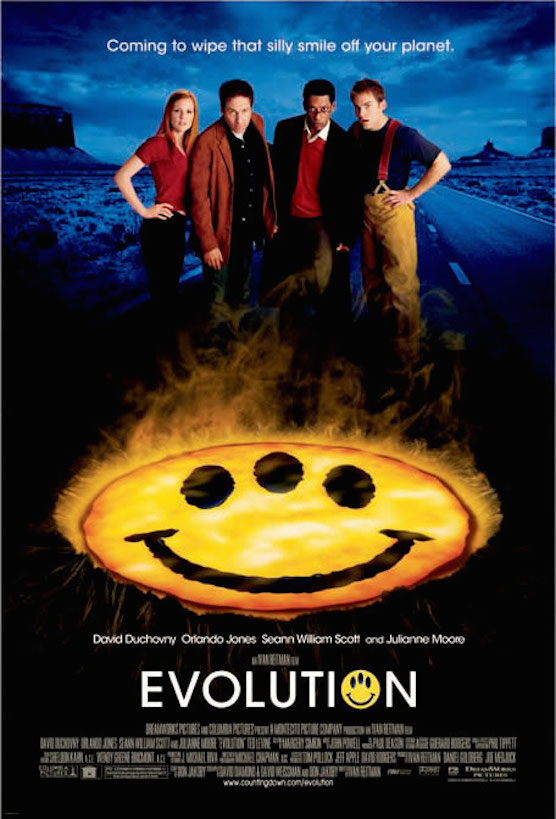
Evolution (2001)

01 Saturday Nov 2014

Posted by dullwood68 in Movies

≈ Leave a comment

Tags

Aliens, Comedy, David Duchovny, Glen Canyon, Ivan Reitman, Julianne Moore, Meteor, Orlando Jones, Review, Sci-fi, Seann William Scott

Evolution

D: Ivan Reitman / 101m

Cast: David Duchovny, Julianne Moore, Orlando Jones, Seann William Scott, Ted Levine, Ethan Suplee, Michael Bower, Pat Kilbane, Ty Burrell, Dan Aykroyd, Katharine Towne

A meteor crash lands outside of the small Arizona town of Glen Canyon, punching a hole through the ground and coming to rest in a cavern.  A professor at the local university, Harry Block (Jones), is also a member of the US Geological Service.  When he hears about the meteor he heads for the site with his friend and fellow professor, ira Kane (Duchovny).  They meet Wayne (Scott) who was there when the met or landed.  Harry and Ira descend into the cavern and find that the meteor is still warm, and when they begin taking a sample from it, they also discover that it releases a strange blue liquid, almost as if it were bleeding.  They take the sample back to Ira’s lab where he discovers that the liquid contains micro-organisms that appear to be single-celled, and which are definitely extraterrestrial in origin.

He breaks the news to Harry and they go back to the crash site with some of their students on the pretence of conducting a field trip (and to remove the meteor).  They find the beginnings of an entirely new eco-system, as well as evidence of evolutionary advances that are happening far too quickly.  When a flatworm dies from excess oxygen, Ira realises the importance of what they’ve discovered, and convinces Harry to  keep things to themselves until they can assess matters further (it helps that Harry is focused on a potential Nobel prize at some time in the future).

Meanwhile, while working at the local country club, Wayne sees evidence of the flatworms having spread further than the meteor site but he doesn’t say anything to anyone.  Harry and Ira return again to the cavern but are stopped when they find the site has been turned into a restricted military area overseen by General Woodman (Levine).  It turns out that Woodman was once Ira’s boss and that Ira has a checkered past involving an experimental virus that produced some unfortunate side effects.  Helped by Center for Disease Control scientist Alison Reed (Moore), Woodman takes over the site and bars ira and Harry from any further involvement.

While the military continue to monitor the cavern’s growing eco-system, and the creatures that are evolving there, other creatures are finding their way into the local community.  At the country club, one of the members is killed by a creature that is in turn killed by Wayne.  He takes the corpse to Ira and Harry; they later learn that dozens of creatures have died near the meteor site due to being oxygen intolerant.  When one gives birth to its offspring, a dragon-like creature, before dying, the newborn proves able to breathe properly and it flies off to cause mayhem at a nearby shopping centre.  Harry, Ira and Wayne track it down and kill it before warning General Woodman about the growing menace.  Under increasing pressure from the state governor (Aykroyd), Woodman advocates napalming the cavern and the tunnels that spur off from it.  But when Ira and co discover that heat speeds up the creatures’ evolutionary process, they face a race against time to stop them from over-running the planet.

Evolution - scene

An often raucous, good-natured sci-fi romp, Evolution is the type of comic fantasy that makes no bones about how absurd or ridiculous it might be, and throws caution, logic and plausibility as far out of the window as it can manage.  There’s a boisterous, almost schoolboy aesthetic going on, with Jones’ sex-obsessed geology teacher, Scott’s not-so-bright would-be fireman, and Duchovny’s good-natured ex-military scientist proving a good mix, and bolstered by Moore’s clumsy, well-meaning disease expert.  All four are clearly having fun and their enthusiasm, added to the script’s sense of mischief (courtesy of Don Jakoby, David Diamond and David Weissman), makes for an entertaining monster movie that flaunts its lack of scientific realism with wild abandon.

With its focus on making things as fun as possible, Evolution plays out like a movie whose basic concept was probably much simpler, but which, luckily, ended up being a whole lot more involved and wonderfully, gloriously silly.  There’s almost too much to enjoy: Wayne’s practice run at saving a woman from a burning building; Harry’s one-liners – “There’s ALWAYS time for lubricant!” – and extravagant facial expressions; Ira’s mooning of General Woodman; an encounter with Ira’s ex-girlfriend (played by Sarah Silverman); and Aykroyd’s pissed off state governor.  Amidst all the human levity, it would be easy to forget that there are some pretty weird alien creatures to deal with as well, but Reitman co-ordinates things with his trademark ease, and grounds the action with just enough unexpected gravitas to make the threat more credible than it might initially appear.

With the cast on top form, and Reitman orchestrating things with his usual aplomb, the occasional lapse can be forgiven – a cringe-inducing amount of sexist behaviour from Harry, Suplee and Bower being in Ira’s class in the first place (though it’s still funny) – and some of the creature effects are poorly integrated into the action, but there are some great desert locations that are beautifully photographed by Michael Chapman, and John Powell’s stirring score complements the movie throughout.

Rating: 8/10 – preposterous and silly, Evolution is nevertheless the kind of guilty pleasure you can brag about to your friends; even if you only watch it for Harry’s rectal procedure, it will still have been all worthwhile.

Share this:

  • Share on X (Opens in new window) X
  • Share on Facebook (Opens in new window) Facebook
  • More
  • Print (Opens in new window) Print
  • Email a link to a friend (Opens in new window) Email
Like Loading...

Tammy (2014)

26 Sunday Oct 2014

Posted by dullwood68 in Movies

≈ 2 Comments

Tags

Allison Janney, Bail, Comedy, Louisville, Mark Duplass, Melissa McCarthy, Niagara Falls, Review, Road trip, Susan Sarandon, Topper Jack's

Tammy

D: Ben Falcone / 97m

Cast: Melissa McCarthy, Susan Sarandon, Allison Janney, Mark Duplass, Gary Cole, Kathy Bates, Sandra Oh, Nat Faxon, Toni Collette, Dan Aykroyd, Ben Falcone

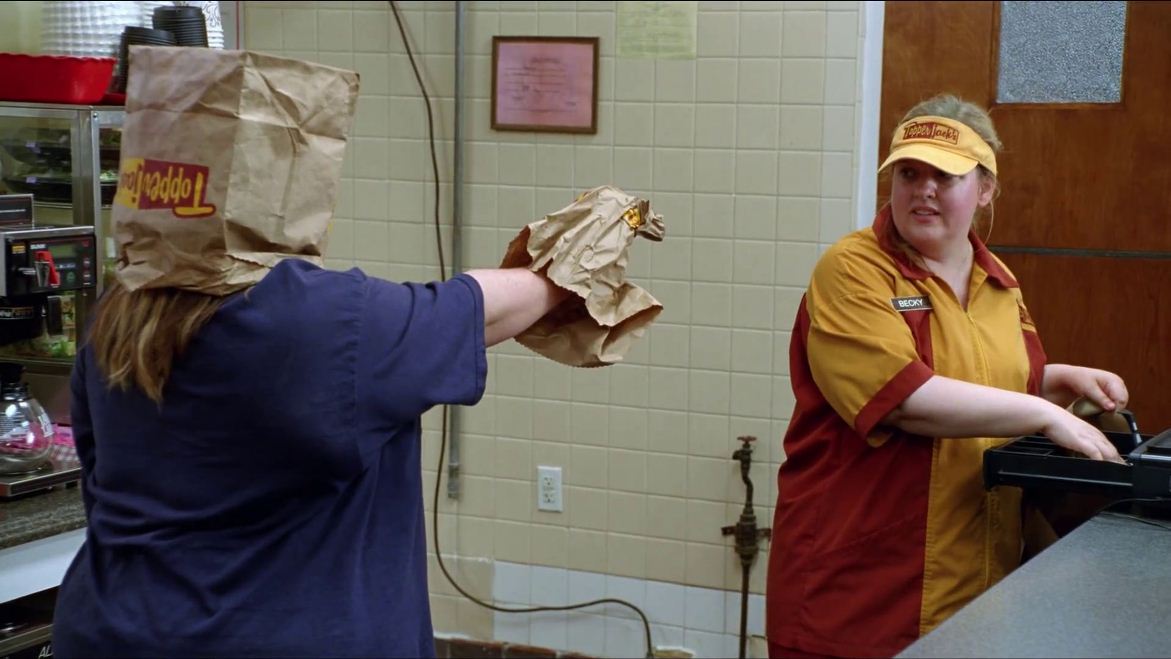
Tammy (McCarthy) is having a bad day: first her car is hit and totalled by a deer, then she’s fired from her job at Topper Jack’s for being late.  To make matters worse, when she gets home she finds her husband, Greg (Faxon) having a romantic meal with their neighbour, Missi (Collette).  With no car, no job, and her marriage over, Tammy does what she always does when things go wrong: she plans to leave town.  However, her mother (Janney) refuses to lend Tammy her car.  Enter Tammy’s grandmother, Pearl, who’ll let Tammy use her car, but under one condition: that she can come along for the ride.  Tammy has her misgivings but when Pearl says she can pay for the trip as well, Tammy agrees she can come along.

After a first night where they both end up drinking too much, Tammy wants to go home, but Pearl persuades her to stick with the trip, and they head for Niagara Falls.  On the way Tammy stops off to go jet skiing but she wrecks the jet ski and Pearl is forced to pay for it.  Next they go to Louisville where they visit a bar that serves the best barbecue around; there they meet Earl (Cole) and his son, Bobby (Duplass).  Pearl and Earl quickly hit it off – so much so that they end up having sex in the back of Pearl’s car – while Tammy and Bobby make a more restrained connection.

The next morning, Tammy discovers Pearl in a liquor store mixing whiskey in a Slurpee and trying to buy alcohol for some minors.  The police are called and both Tammy and Pearl are arrested.  Pearl pays for Tammy’s bail, but doesn’t have enough for herself.  Tammy robs a local Topper Jack’s to get her released but she’s beaten to it by Earl.  The robbery makes the news, and Pearl persuades Tammy to return the money.  From there they travel to meet Pearl’s old friend Lenore (Bates) and her partner Susanne (Oh) and be a part of their annual Fourth of July party.  Earl and Bobby turn up as well, and although Tammy and Bobby’s relationship deepens, Pearl’s drunken behaviour on the night causes a rift between grandmother and granddaughter that leads Tammy to rethink her life and what she wants from it.

Tammy - scene

Co-written by McCarthy with her husband (and director) Falcone, Tammy is ostensibly a comedy, but by the movie’s end it’s morphed into a somewhat sombre drama that abandons laughs in order to get across its message: that you can be whoever you want to be as long as put in the effort.  This shift in tone does two things: it adds some much needed depth to proceedings, and makes the viewer wonder how much better the movie could have been, played as a straight drama.  For this is the strange problem with Tammy: the more serious aspects are handled far more effectively than the comedic ones.

Part of the problem here is that, thanks to The Heat (2013) and Identity Thief (2013), McCarthy’s particular brand of comedy is fast becoming “old hat”, with her childish prolonging of bad behaviour and infantile arguments having lost their ability to amuse already.  It’s not so much that McCarthy is a one-trick pony, more that she plays the same character in each movie and with little variation.  But here, thanks to the way in which the script has been developed, McCarthy shows how adept she can be when giving a more balanced performance (perhaps it’s because she’s acting alongside the estimable Susan Sarandon; she certainly ups her game in their scenes together).

With the storyline proving more and more lacklustre as matters progress, and with Tammy herself made more considerate and less “dumb” as she interacts with Bobby and Lenore, the humour fades in service to the demands of an increasingly serious chain of events.  It’s almost as if McCarthy and Falcone ran out of funny ideas and decided to make more of an issue of Pearl’s alcoholism, while at the same time bringing Tammy up short and make her more responsible.  It’s like watching a character being made to grow up at the same time as the movie she’s in.

So, are the opening scenes funny?  Absolutely, but at the expense of Tammy’s likeability, and while the script wisely allows her to leave behind her childish attitude, it’s clear that her behaviour is so closely tied to the movie’s humorous set pieces that without them it struggles to reassert its identity.  Sarandon acts like she’s taking some time out from acting more sensibly and with greater purpose, while supporting turns from Janney, Cole, Collette and Aykroyd are little better than cameos.  Bates is fun to watch as a lesbian with a fetish for blowing things up, and Duplass brings his indie sensibility to a role that is largely there to help Tammy regain her self-esteem (as if she can’t do it for herself).

Falcone directs with confidence even if he doesn’t quite have an entirely sure hand on the material, and gives his cast the room to spark off each other.  It leads to mixed results throughout, and some scenes are less effective than others, particularly those where Tammy’s challenging of authority is more a scripted necessity than a clearly defined character trait.  But as noted before, the sobering final half hour – in a weird way – rescues the movie and the director is on firmer ground.  And there’s one last comedic flourish courtesy of a clutch of outtakes, and the revealing of McCarthy’s “secret” – now that’s funny.

Rating: 5/10 – disappointing in its approach and execution but still largely watchable, Tammy provides evidence that McCarthy needs to find herself a serious role to play, and soon; not as warm-hearted as it would like to be, and short on belly laughs, the movie gets by on McCarthy’s easy-going charm and Sarandon’s devil-may-care approach to the material.
Share this:

  • Share on X (Opens in new window) X
  • Share on Facebook (Opens in new window) Facebook
  • More
  • Print (Opens in new window) Print
  • Email a link to a friend (Opens in new window) Email
Like Loading...

10 Movies That Are 40 Years Old This Year – 2014

22 Wednesday Oct 2014

Posted by dullwood68 in Movies

≈ 1 Comment

Tags

1974, A Woman Under the Influence, Al Pacino, Biography, Bob Fosse, Chinatown, Comedy, Crime, Drama, Dustin Hoffman, Fear Eats the Soul, Francis Ford Coppola, Gena Rowlands, Gene Hackman, Gene Wilder, Gunnar Hansen, Horror, John Cassavetes, Lenny, Luis Buñuel, Mel Brooks, Movies, Rainer Werner Fassbinder, Reviews, Robert De Niro, Roman Polanski, The Conversation, The Godfather Part II, The Phantom of Liberty, The Taking of Pelham One Two Three, The Texas Chain Saw Massacre, Walter Matthau, Young Frankenstein

Pick any year and you’re likely to find ten really good films that were released during that year, but 1974 is a year when there were ten really great films released.  It’s not a year that stands out when first thought about, but upon closer inspection it seems like a banner year, when movie makers pulled out all the stops and gave us a succession of impressive movies that even now, still resonate and attract viewers in high numbers.  (And if truth be told, this list could have been stretched a little further, but 13 Movies That Are 40 Years Old This Year didn’t sound right.)  So, in no particular order, here are those ten movies we’re all still talking about.

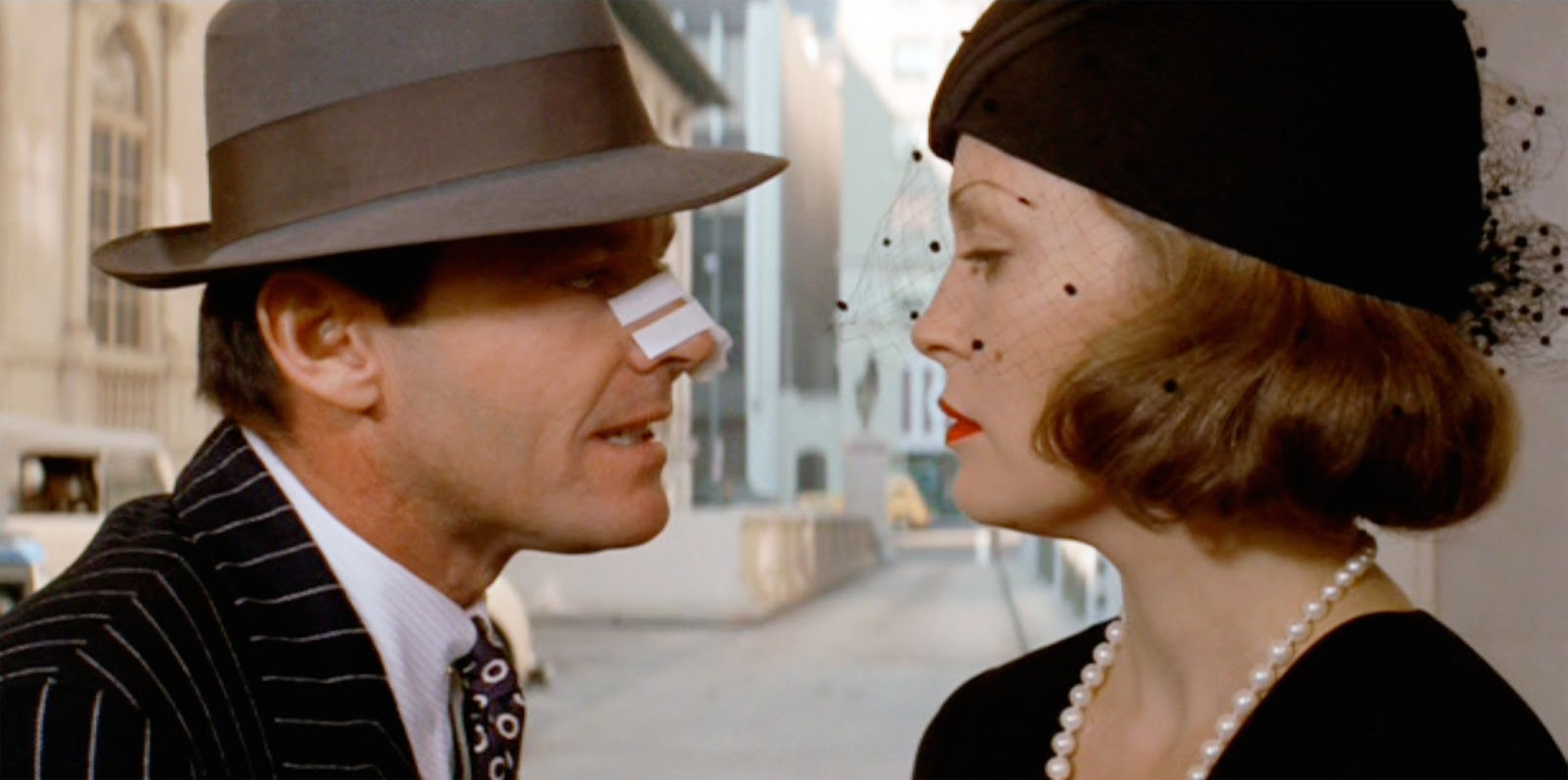
1) Chinatown – Roman Polanski’s stunning neo-noir thriller transformed Jack Nicholson into a superstar and made Robert Towne’s elaborate, gripping screenplay – one of the most compelling, intelligent screenplays ever written – the main reason for seeing the movie.  With superb performances from Faye Dunaway and John Huston, this incredible movie still has the power to unnerve and startle with its story of corruption and greed in 40’s Los Angeles, and that tragic revelation.

Chinatown - scene

2) Lenny – Revisiting the life of counter-culture, angst-ridden comic Lenny Bruce was always going to depend on the actor playing him, but Dustin Hoffman turns in an amazing, detailed performance that is possibly his best ever.  With a career best turn from Valerie Perrine, deft, sympathetic direction from Bob Fosse, and a grimy, authentic recreation of the clubs where Bruce vented his anger at the hypocrisies of society, Lenny still has the potential to shock and surprise, and takes no prisoners (just like Bruce himself).

3) Fear Eats the Soul – German auteur Rainer Werner Fassbinder had made a number of excursions into movies for TV before he wrote and directed this vital, important tale of the relationship between a Moroccan migrant worker (the soulful El Hadi ben Salem) and a German woman in her mid-sixties (the affecting Brigitte Mira). Ageism and racism are given short shrift by Fassbinder’s script, and the growing relationship is portrayed naturally and with little sentiment.  It’s a dour movie, to be sure, but uplifting at the same time.

4) The Godfather Part II – The crowning glory of Francis Ford Coppola’s career and a movie that’s nigh on faultless, The Godfather Part II is the classic example of a sequel that is better than its predecessor… so, so much better.  Even Brando’s presence isn’t missed.  With its flashback sequences detailing the origin of Vito Corleone’s role as Godfather conflated with the inexorable rise of his son Michael to the same position, this has tragedy and triumph in equal measure, and features astonishing achievements in directing, scripting, acting, cinematography, sound, editing, costumes, art direction, and set design.  In short, it’s a masterpiece.

Godfather Part II, The - scene

5) The Texas Chain Saw Massacre – With its fierce, tension-wringing set up and feral, nightmarish family of cannibals, Tobe Hooper’s second feature still has the power to shock, and leave audiences feeling drained by the end.  The iconic image of Gunnar Hansen with a literal “face”-mask and revving a chainsaw – once seen, never forgotten – sums up the movie’s terrifying approach to its subject matter, and confirms (if anyone needed reminding) that low budget horror can be startling, original and a once in a lifetime experience.

6) A Woman Under the Influence – Possibly the finest examination of mental illness within the family, John Cassavetes’ stinging, heart-rending drama features a tour-de-force performance from Gena Rowlands as the emotionally downtrodden Mabel, a woman whose ill treatment by her husband and children leads her to suppress any positive feelings for fear of being judged as “unbalanced”.  Not a movie for everyone but one that isn’t afraid to confront a complex, contentious issue with poise and a piercing intelligence.

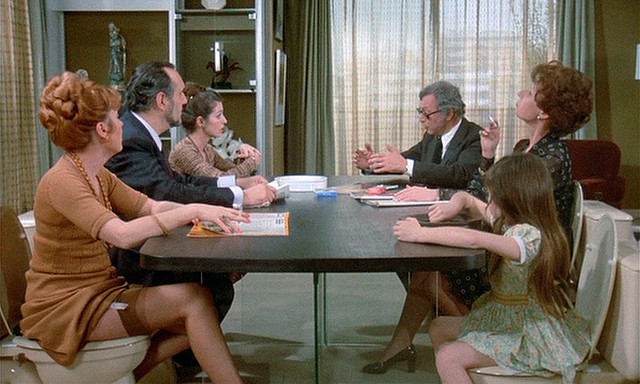
7) The Phantom of Liberty – If you like your movies chock-full of symbolism, surrealism and absurdist humour, then Luis Buñuel’s collection of barely connected episodes will capture your attention and never let go.  It’s a modern masterpiece of (mis)direction and subversive behaviour, and features a seasoned cast that includes Jean Rochefort, Monica Vitti and Adolfo Celi, all of whom enter into the spirit of things with undisguised gusto.

Phantom of Liberty, The - scene

8) The Conversation – It’s that man Coppola again, this time with an introspective low-key look at the self-contained life of a surveillance expert (the superb Gene Hackman) who finds himself drawn – against his better judgment – into a perfectly weighted mystery.  The chilly, withdrawn mise-en-scene is expertly crafted, and Coppola’s script delivers more and more as the movie heads toward its incredible denouement.  To release both this and The Godfather Part II in the same year – well, that’s just insane.

9) Young Frankenstein – Mel Brooks’ finest hour, even though Blazing Saddles was also released in ’74, this grand homage to the Universal horrors of the 30’s and 40’s is an undeniable treat, full of terrific one-liners – “To the lumber yard!” – and wonderful visual flourishes.  Co-writers Brooks and Gene Wilder are on top form, and their affection for the Fronkensteen movies made by Universal adds to the joy of watching Mary Shelley’s classic tale unfold in its own, very unique manner.  And the “Puttin’ on the Ritz” sequence is just inspired.

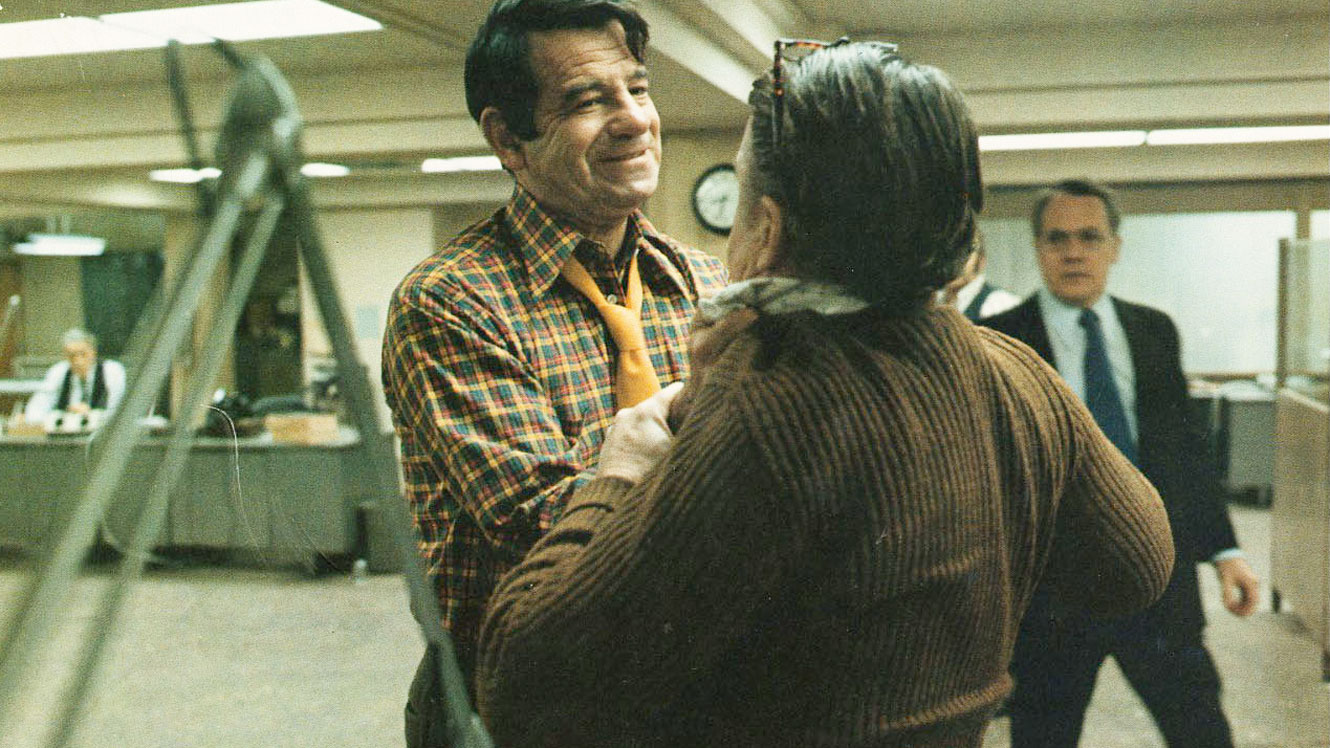
10) The Taking of Pelham One Two Three – Ignore the turgid remake with Denzel Washington and John Travolta, this is ten times as good and ten times as gripping.  Walter Matthau is the grizzled cop engaged in a battle of wits with train hijacker Robert Shaw, and as the movie ratchets up the tension, audiences are treated to one of the finest thrillers ever made.  Bravura movie making from all concerned but anchored by a fantastic job of direction by the underrated Joseph Sargent.

Taking of Pelham One Two Three, The - scene

If you agree or disagree with my choices, feel free to let me know.  And if there’s another year with an equally brilliant selection of movies released, feel free to let me know as well.  But more importantly, if you haven’t seen some or all of the movies listed above, then what are you doing reading this?  Get out there and watch them!

Share this:

  • Share on X (Opens in new window) X
  • Share on Facebook (Opens in new window) Facebook
  • More
  • Print (Opens in new window) Print
  • Email a link to a friend (Opens in new window) Email
Like Loading...

The Grand Seduction (2013)

21 Tuesday Oct 2014

Posted by dullwood68 in Movies

≈ Leave a comment

Tags

Brendan Gleeson, Comedy, Don McKellar, Gordon Pinsent, Newfoundland, Recycling plant, Remake, Review, Taylor Kitsch, Ticklehead

Grand Seduction, The

D: Don McKellar / 113m

Cast: Brendan Gleeson, Taylor Kitsch, Gordon Pinsent, Mark Critch, Liane Balaban, Cathy Jones

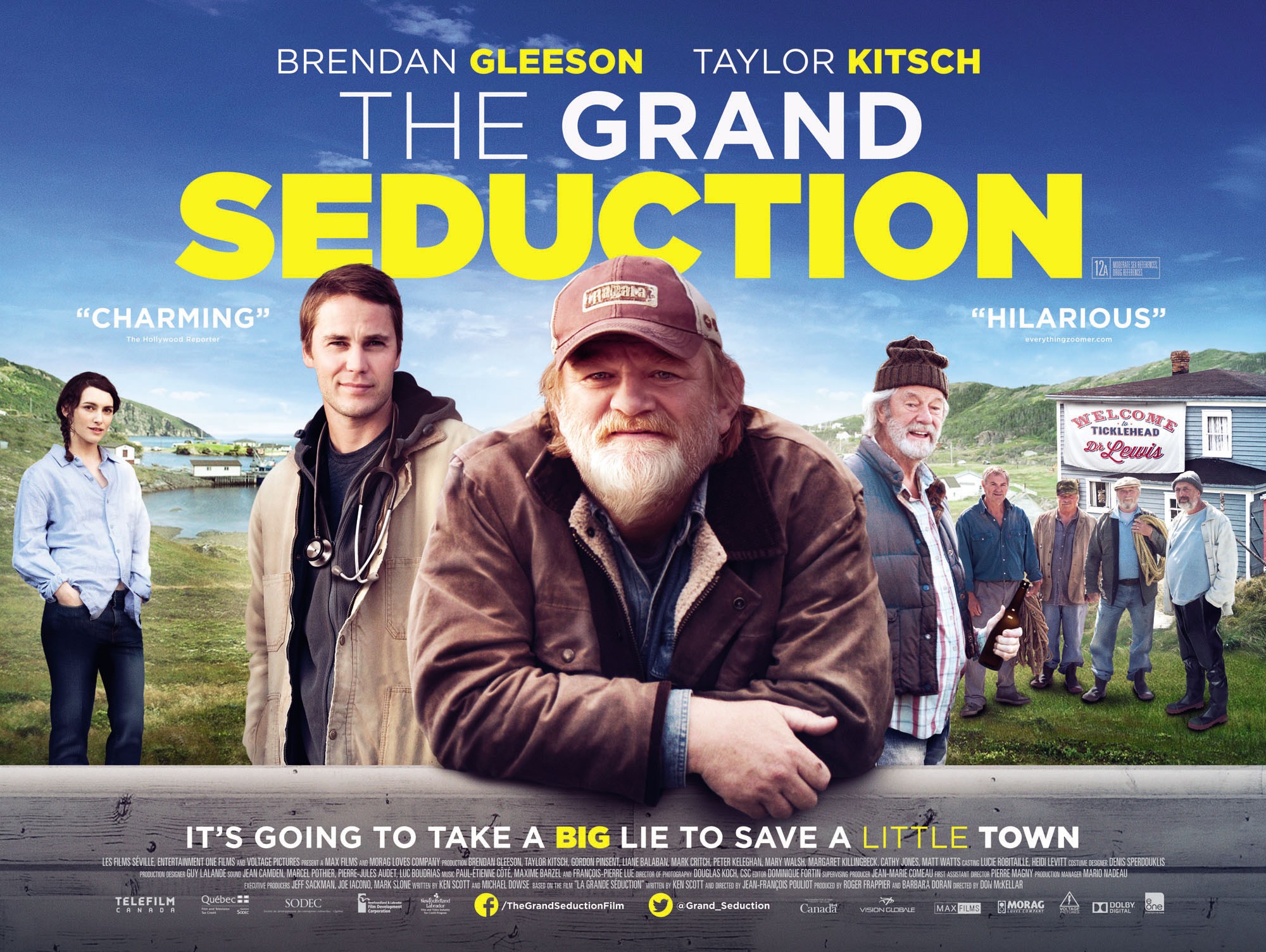
After eight years of surviving on state benefits, the inhabitants of a tiny harbour in Newfoundland called Ticklehead, are given a potential lifeline when a multi-national company plans to build a chemical waste recycling plant there, and provide full employment for the community.  The catch?  Unless they have a resident doctor, the plans will fall through.  The stroke of luck?  A doctor, Paul Lewis (Kitsch) caught at an airport with cocaine and sentenced to a month’s community service as Ticklehead’s temporary medic.  When the locals, headed by Murray French (Gleeson) learn of his imminent arrival, they decide to spend the ensuing month doing their best to get him to stay full time and save their community.

To help with this, and because Lewis likes cricket, the villagers build a cricket pitch and pretend to be huge fans of the sport.  They also leave Canadian bills of increasing value where Lewis will find them, and on the understanding that if he feels lucky in Ticklehead he won’t want to move on.  By selling themselves and the harbour, the people of Ticklehead aim to make Lewis feel like an important and much needed part of the village.  They also monitor the phone calls he makes to his girlfriend, Helen, looking for clues about the things he likes so they can make his stay all the more amenable.  Murray even tries to get the local post office-cum-general store assistant, Kathleen (Balaban), to flirt with Lewis but she won’t do it.

As their plan begins to pay off, problems arise with the siting of the plant.  A “bribe” of $100,000 needed to cement the deal, and which human ATM Henry Tilley (Critch) attempts to raise by means of a loan, eludes them.  And the boss of the multi-national company decides to visit Ticklehead and see for himself that they have the required one hundred and seventy inhabitants needed to see the plant manned efficiently.  And Lewis’s relationship with Helen begins to unravel, as his enthusiasm for the harbour goes unreciprocated until he learns an unpalatable truth.  Murray and the rest of the villagers are overjoyed: now Lewis doesn’t have any ties.  But as ever, things don’t work out in quite the way they’d planned.

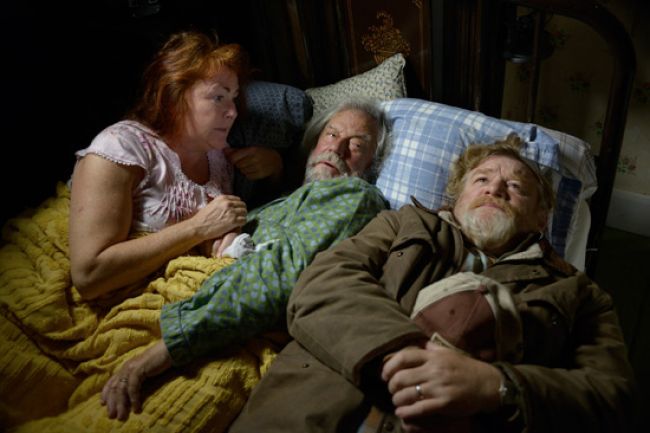
Grand Seduction, The - scene

A remake of Seducing Doctor Lewis (2003), The Grand Seduction is a great big, fluffy cardigan of a movie, a warm confection that elicits good-natured smiles from the viewer at practically every turn.  There is absolutely nothing new here and yet as is so often the case when something so familiar is performed with such confidence and affection, the experience is rewarding beyond any and all expectation.

And so it proves here, with Gleeson leading a cast that wouldn’t have been amiss in an Ealing comedy, and proving once again that ensemble casts representing a small community rarely ever disappoint.  If it reminds viewers of Local Hero (1983), then that’s no bad thing (and that movie carried the blueprint of Whisky Galore! (1949) firmly clutched to its chest).  It’s a fish-out-of-water movie too, with Kitsch’s bemused, deceived plastic surgeon all adrift at first, but finding his feet with ever-increasing confidence, and gaining a sense of purpose he didn’t have before.  Kitsch is better known for his action/fantasy roles but here he dials back the heroics to play a normal nice guy who may well have appeared colourless on the page, but who proves to be more sensitive than he seems in the beginning.

With the likes of Pinsent and Critch providing solid support – and a large portion of the laughs – it’s left to the ever dependable Gleeson to provide the movie’s dramatic backbone, imbuing Murray with the kind of rugged, roguish charm that wins over both Lewis and the rest of the villagers (even when they know he’s ‘playing’ them).  It’s the kind of role Gleeson could probably do in his sleep but he’s so effortlessly impressive it’s like observing a masterclass; he doesn’t put a foot wrong throughout.  He and the rest of the cast all help to elevate the material, making the slightness of it so trivial it’s barely worth mentioning.

As directed by McKellar, The Grand Seduction is an appealing piece of cinematic confectionery, its picture postcard locations photographed in all their roughhewn glory, and its (admittedly) lightweight construction proving a plus rather than the expected minus.  McKellar has the sense to go with the flow rather than try to make something different out of Ken Scott’s original screenplay (here adapted by Michael Dowse), and infuses even the smallest of scenes with both a painterly eye and a generous amount of good-natured, but not overwhelming sentiment.  It’s often a delicate balancing act, but McKellar demonstrates in scene after scene that he’s more than up to the task.  As a result, the movie never falters in its ability to entertain.

Rating: 8/10 – the kind of movie that makes a mockery of the phrase, “familiarity breeds contempt”, The Grand Seduction is a minor gem, and a movie that deserves as wide an audience as it can achieve; it may appear too whimsical for some, but that would be doing the movie a major disservice.

Share this:

  • Share on X (Opens in new window) X
  • Share on Facebook (Opens in new window) Facebook
  • More
  • Print (Opens in new window) Print
  • Email a link to a friend (Opens in new window) Email
Like Loading...

Obvious Child (2014)

11 Saturday Oct 2014

Posted by dullwood68 in Movies

≈ 2 Comments

Tags

Abortion, Comedy, Gaby Hoffmann, Gillian Robespierre, Jake Lacy, Jenny Slate, One night stand, Pregnancy, Relationships, Review, Romance, Romantic comedy, Stand up comedy


D: Gillian Robespierre / 84m

Cast: Jenny Slate, Jake Lacy, Gaby Hoffmann, Gabe Liedman, Richard Kind, Polly Draper, David Cross, Paul Briganti

Donna (Slate) is an aspiring comedienne who uses her own life as the basis for her stand up routines. On stage she’s fearless and bold, inviting audiences to share in her bewilderment at the stains she finds in her underwear, and the equally bewildering state of her sex life with boyfriend Ryan (Briganti). When he splits up with her after a gig, Donna doesn’t know what to do. Matters don’t improve when her boss at the bookstore where she works – the wonderfully named Unoppressive Non-Imperialist Bargain Books – tells her it’s going to be closing down. She looks to her parents (Kind, Draper) for advice but they both say the same thing: treat the current changes in her life as a challenge.

Donna uses the break up with Ryan as part of a routine but it goes badly. Afterwards she meets Max (Lacy) and they hit it off and end up having a one-night stand. Weeks later, while out on a shopping trip with best friend Nellie (Hoffmann), Donna realises she’s pregnant. Not ready to have a child yet, she decides to have an abortion. It’s at this point that Max reappears in her life, but while they begin to build a relationship together, Donna doesn’t tell him about the pregnancy. It becomes even more difficult to tell him when he reveals he can’t wait to be a grandfather after they see an elderly couple in a restaurant.

When Donna arranges with Max for him to come to her next show, she leaves with old friend Sam (Cross) before he can get there. They have an awkward moment at the kerbside that derails their relationship, leaving Donna feeling guilty and Max feeling confused. She tells her mother who confides that she was in the same position when she was young. From this, Donna decides to tell Max but he doesn’t find out until he goes to another of her shows and hears her discussing the pregnancy (and her plans to abort it) as part of the routine. The next day, and just as she’s leaving for the clinic, Max turns up with flowers…

Obvious Child - scene

Expanded from a short made in 2009, Obvious Child is an indie movie that mixes traditional romantic comedy fare with more considered dramatic elements and fuses them together to make a curious mix that is both beguiling and intriguing to watch. It all hinges on whether or not you buy into the character of Donna as a confident artist on stage, but an insecure, diffident person off stage. Thanks to Slate and writer/director Robespierre, Donna is someone we can all relate to, her lack of self-confidence away from the mic no different from the way in which any project or hobby or interest can elevate our faith in ourselves, if only for a short while, and allow us to put aside the more humdrum or mundane aspects of our daily lives. Donna’s also in her early twenties, still unsure about a lot of things, and like most of us at that age, still trying to find a place in the world around us. Her stand up routines are the way in which she works things out and puts some perspective on her life.

With Donna so cleverly and concisely drawn as a character, it leaves plenty of room for Slate to develop the role into something with a much greater depth than you’d normally expect from a comedy with such dramatic overtones. Donna is a mass of insecurities, flaws, uncertainties and self-doubts, but once she becomes pregnant she undergoes a sea change. It’s gradual but it’s there, a growing capacity for clear decision making, as the demands of Donna’s life become easier to deal with and her perception of herself becomes less debilitating. In short, deciding to have an abortion proves the making of her.

Abortion as a means to self-empowerment may not be the angle the filmmakers were aiming for, but it’s there nevertheless, and whether by design or not, it makes Donna all the more credible as a character. Cliché or not, adversity often brings out the best in people, and here, despite a couple of wobbles early on, Donna’s decision is one that proves to be a turning point, allowing her to grow and improve as a person. Slate is flawless in the role; she’s funny, poignant, touching, and she doesn’t strike a false note in the entire movie (and it’s helpful that’s she’s reprising her role from the short). It’s a star turn, able and arresting.

The rest of the cast provide more than capable support, with Lacy making Max the kind of amiable, dependable boyfriend material that all mothers would like to see their daughters hook up with, and Hoffmann providing an often acerbic turn as Donna’s best friend. Robespierre provides everyone with great dialogue – the exchange between Donna and her father at the dining table; Nellie’s admonishment, “You’re dizzy because you played Russian roulette with your vagina” – and directs loosely but with a judicious use of close ups. Donna’s stand up routines are darkly hilarious, and it’s great to see a female comic speaking as candidly as she does about such otherwise “hush hush” topics.

The subject of abortion may not be to everyone’s taste, and pro-Lifers may feel angered by the approach the movie takes, but this is one woman’s considered, positive reaction to an event she’s unprepared for, and on that level it works tremendously well. Robespierre and Slate et al should be congratulated for making a movie that doesn’t shy away from its contentious topic and doesn’t seek to complicate matters by referring to all the other agendas out there that relate to the issue.

Rating: 8/10 – an indie movie that is honest, emotive and rewarding, Obvious Child crams a lot into its short running time, and has much to recommend it; a breath of fresh air and seriously funny.

Share this:

  • Share on X (Opens in new window) X
  • Share on Facebook (Opens in new window) Facebook
  • More
  • Print (Opens in new window) Print
  • Email a link to a friend (Opens in new window) Email
Like Loading...

The Longest Week (2014)

03 Friday Oct 2014

Posted by dullwood68 in Movies

≈ Leave a comment

Tags

Billy Crudup, Comedy, Eviction, Jason Bateman, Olivia Wilde, Peter Glanz, Relationships, Review, Romantic comedy, Therapy

Longest Week, The

D: Peter Glanz / 86m

Cast: Jason Bateman, Olivia Wilde, Billy Crudup, Jenny Slate, Tony Roberts, Barry Primus, Laura Clery

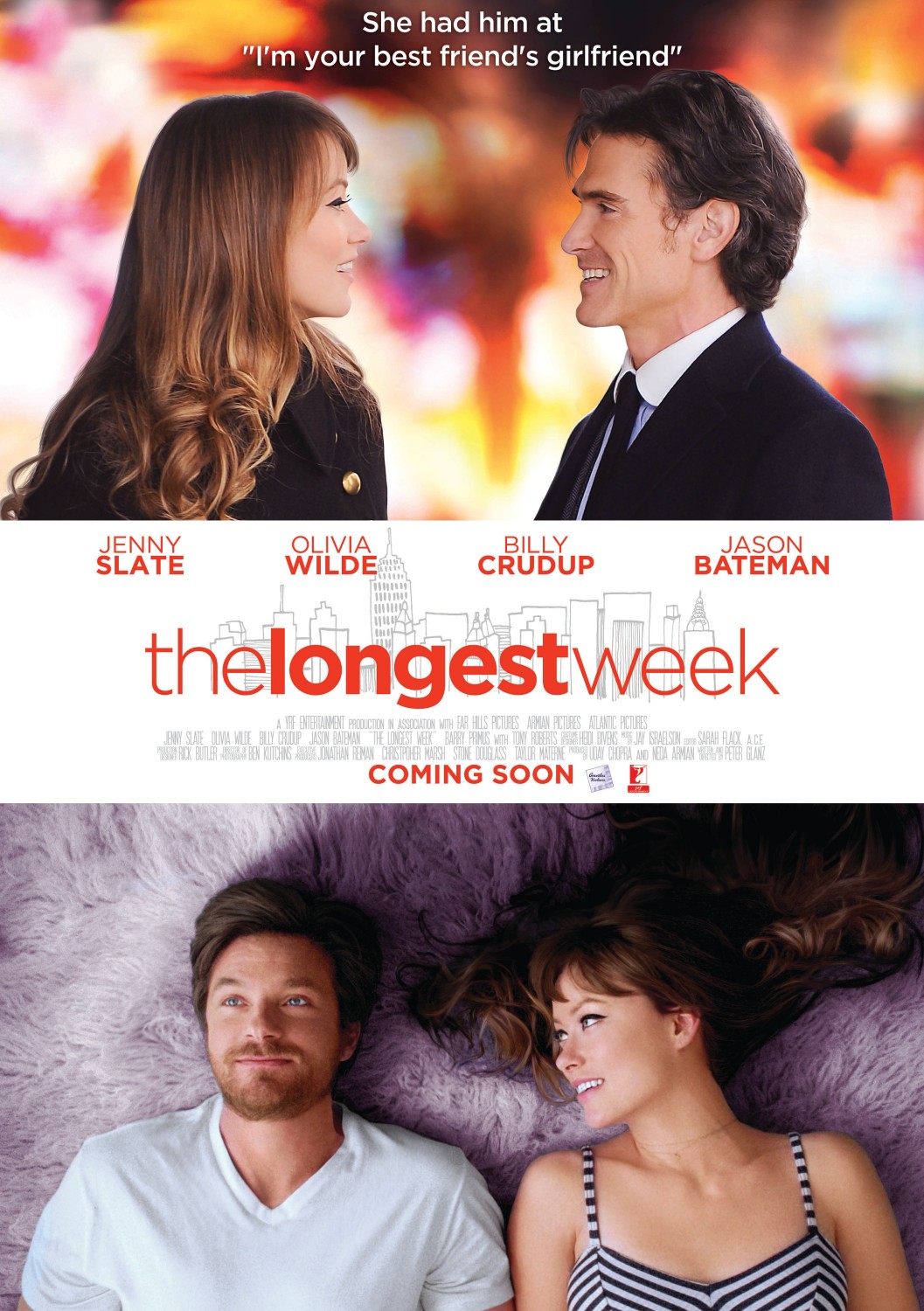
Conrad Valmont (Bateman) is a man in his early forties who has never had a job, lives in a hotel apartment owned by his wealthy parents (who he hasn’t seen in years), and who has few real friends.  He sees a therapist, Barry (Roberts) on a regular basis but pays little heed to what Barry advises him.  When his parents split up, neither one of them wants the responsibility of continuing to pay his allowance, so one day Conrad is told by the hotel management that he’s being evicted.  On the subway, travelling to a friend’s, Conrad sees a young woman (Wilde) he finds himself attracted to, and even though they only exchange looks, she gives him her phone number.

Conrad arrives at his friend’s apartment, but lies about the eviction, and tells his friend, Dylan (Crudup), that his suite is being redecorated.  Dylan welcomes him in, and later they attend a party where Dylan introduces Conrad to the woman he’s currently dating; it’s the woman on the subway, and her name is Beatrice.  There’s clearly an attraction between Conrad and Beatrice, and it’s something Dylan is afraid of.  He tells his friend repeatedly not to try anything with her.  Conrad agrees to stay away from Beatrice, but he reneges on the agreement straight away and starts seeing Beatrice behind Dylan’s back.

The three of them – plus a date for Conrad, Jocelyn (Slate) – go out for the evening, but the two couples pair off, leaving Dylan with Jocelyn, and Conrad with Beatrice.  Conrad tells Dylan he’s seeing Beatrice and Dylan throws him out.  He goes to stay with Beatrice but keeps quiet about his circumstances.  The couple go to see a theatre performance but Conrad inexplicably leaves Beatrice on her own; later that same evening, he sees her and Dylan in a cafe together.  An argument leads to Conrad telling Beatrice he’s homeless and broke.  They break up but not before Beatrice reveals the reason she and Dylan met up that night.

Leaving Beatrice’s, Conrad is knocked off his scooter by a truck; he suffers minor injuries.  He tries to get back with Beatrice, and rebuild his friendship with Dylan, but there’s a twist in store for him, one that will change things for the better and for good.

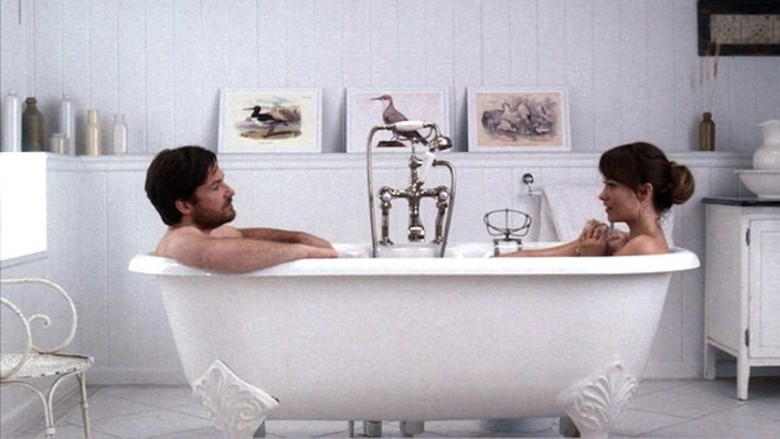
Longest Week, The - scene

With the look and feel of a sophisticated romantic comedy, The Longest Week is a movie that does its best to appear artless and affecting, but which ends up being a bit of a hard slog to get through.  With such a narcissistic main character, Peter Glanz’s debut feature struggles to involve its audience in Conrad’s efforts to win the heart of the fair Beatrice, and makes him largely unsympathetic throughout.  His privileged existence is portrayed as a fait accompli, an unfortunate outcome from his parents’ continual travelling abroad.  Cocooned in his suite, Conrad has little idea of how to engage with “real” people, even his trusted chauffeur, Bernard (Primus).  When he’s evicted – and later, when he tries to sneak back in with Beatrice in tow – his world view remains the same, and his sense of entitlement is rarely compromised.  With such a closed off, selfish main character, the movie is at an immediate disadvantage: it makes it very hard to like him.

As portrayed by Bateman, Conrad is an arrogant martinet, a slightly jaded rich kid who’s never really grown up.  Bateman is good in the role, but he still has to try hard to make Conrad likeable, and – thanks to Glanz’s script – he doesn’t always succeed.  He gives a mannered performance that highlights Conrad’s sense of entitlement, while at the same time, doing his best to redeem the character by the movie’s end.  It’s too much for the actor to achieve under ordinary circumstances, but with The Longest Week having the look and the feel of a Wes Anderson project (with extra added nods to Woody Allen), it’s a performance that feels incomplete, as if Bateman was given a character study that was missing a vital page in the middle.

Wilde and Crudup hold their own, but their characters aren’t very well defined.  Beatrice is close to being a cipher, a woman who exists (within the script) to justify Conrad’s gradual change in the way he sees the world.  The change is minimal, though, and undermines the preceding ninety minutes, leaving the viewer wondering if the storyline was adequately transcribed to screen.  For a character’s story arc to have such little effect, and promote such little change, makes for an uncomfortable movie, and an equally uncomfortable viewing experience.  It’s not Bateman’s fault, though: he does his best with a script that settles for enigmatic instead of decisive.

Glanz directs with confidence but it’s in service to a script that’s as lightweight as a feather and he seeks to add depth and meaning at every turn, but without success.  Sometimes arch, but mostly forgettable, the movie has little that’s new to say about relationships and keeps its comedy locked up except for “special” occasions.

Rating: 4/10 – lifeless and uninvolving for long stretches, The Longest Week is a romantic comedy where both elements don’t quite connect; with characters that are hard to care about, it’s a movie that’s as shallow as its main protagonist.

Share this:

  • Share on X (Opens in new window) X
  • Share on Facebook (Opens in new window) Facebook
  • More
  • Print (Opens in new window) Print
  • Email a link to a friend (Opens in new window) Email
Like Loading...

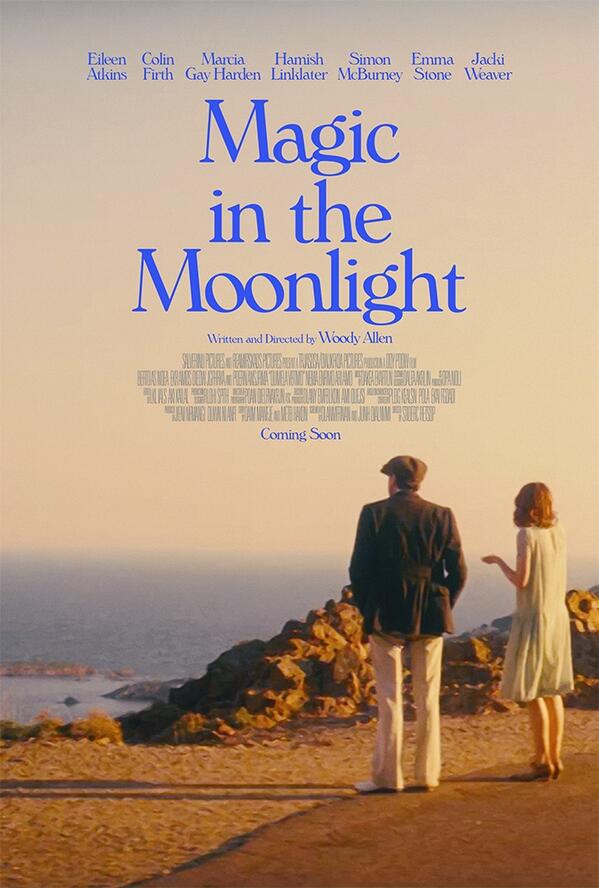
Magic in the Moonlight (2014)

28 Sunday Sep 2014

Posted by dullwood68 in Movies

≈ 1 Comment

Tags

Colin Firth, Comedy, Eileen Atkins, Emma Stone, Fraud, Magic, Magician, Medium, Review, Romance, Romantic comedy, Séance, South of France, Wei Ling Soo, Woody Allen

Magic in the Moonlight

D: Woody Allen / 97m

Cast: Colin Firth, Emma Stone, Simon McBurney, Eileen Atkins, Hamish Linklater, Marcia Gay Harden, Jacki Weaver, Erica Leerhsen, Jeremy Shamos, Catherine McCormack

Berlin, 1928.  British magician Stanley Crawford (Firth) astounds audiences as Chinese illusionist Wei Ling Soo, making elephants disappear and appearing to materialise himself out of thin air.  After another successful show, the arrogant, rude-minded Stanley is met by his old friend from childhood Howard Burkan (McBurney).  Burkan is also a magician, and he comes with a proposal: for Stanley to travel with him to the Côte d’Azur and expose a young American woman who is posing as a medium and exploiting Burkan’s friends, the Catledges.  Stanley, who abhors fake mediums and enjoys exposing them, agrees to go.

At the Catledges, Stanley is introduced to the young woman in question, Sophie Baker (Stone), and her mother (Harden).  He pretends to be a businessman called Taplinger but he is unable to restrain his skepticism, and although he does his best to hide his true identity, Sophie proves adept at “receiving” clues as to who he really is.  Still convinced she’s a fraud, he observes her during a séance but is unable to detect any trickery.  The next day, Sophie reveals she knows who Stanley is, and she warns him that she really has a gift, and that he shouldn’t doubt her.  But Stanley is becoming increasingly besotted with her, and while he has some lingering doubts, he finds himself spending more and more time with her, despite Sophie being wooed by Brice Catledge (Linklater).

Stanley takes Sophie to see his Aunt Vanessa (Atkins).  Sophie asks to hold a piece of Vanessa’s jewellery, and when she does, she reveals information about an affair that Vanessa had, and which Sophie couldn’t possibly have any knowledge of.  Now convinced that Sophie has a gift, he determines to hold a press conference where he will admit that his previous disbelief has been overturned.  The results of a further séance reinforces Stanley’s change of mind and heart.  Later, at a ball, Sophie asks him if he has any other feelings about her, but Stanley is baffled by her questions, and she leaves, disappointed.  Things come to a head when Aunt Vanessa is involved in a car crash, and Stanley finds himself praying for her survival on the operating table.  Will he embrace his newfound regard for the unseen, or will his skepticism return in the face of such a calamity?

Magic in the Moonlight - scene

This year’s annual movie offering from Woody Allen follows on from the sublime Blue Jasmine, and in comparison with that movie, Magic in the Moonlight is more Woody-lite than anything more substantial.  It’s a whimsical tale for the most part, anchored by a Scrooge-like performance by Firth that at times skirts perilously close to complete misanthropy, but which is rescued by the sheer pomposity of the character and his outlook on Life.  Crawford’s petulant skepticism and sarcastic attitude verges on the unpalatable throughout, but thanks to Firth, and Allen’s skill as a writer, he has just enough hidden vulnerability for the audience to connect with.  However, for large stretches of the movie he’s deliberately insufferable, and it’s difficult to understand what on earth Sophie could see in him (opposites do attract, but here it’s a little too extraordinary).
With its lead character so defiantly unlikeable for so much of the time, it falls to Stone to put some warmth and heart into the proceedings.  As the good-natured ingénue, Sophie, Stone is affecting, appealing, effortlessly lively, and the complete antithesis to Stanley, her winning smile and wide-eyed features both endearing and captivating.  It’s a more extrovert performance, but with a degree of subtlety that is best seen when Sophie enquires after Stanley’s feelings for her.  Her earnest entreaties, and her reaction to Stanley’s dismissal of the notion that he has a romantic interest in her, is cleverly done, and mesmerising to watch.

However, two good central performances aside, this is still a movie that trundles from one scene to the next without requiring much of a response from the audience, or indeed, any real investment in the plot or the characters.  The plotting is predictable, and the theme of science versus religion (or at least, the paranormal) is handled with Allen’s usual surety, but there’s still something lacking, a spark, perhaps, that stops the movie from being either memorable or touching.  The outcome is never in doubt, and while Allen pulls a dubious sleight-of-hand to get there – as well as twisting Stanley’s arm mercilessly towards the very end – a less conventional conclusion would have made all the difference.  (And how many more times will Allen trot out the old May-December romance we’ve seen so often in the past?)

The supporting cast – Atkins aside – have little to do except make up the numbers, and if no other characters stand out as much then it’s no one’s fault but Allen’s, his less than absorbing approach, and lightweight direction failing to lift the admittedly unsubstantial material.  That said, there are some delicious lines of dialogue here and there (as you’d expect, even in Allen’s lesser works), and the South of France is beautifully lensed by Darius Khondji, the colours (of the surrounding countryside in particular) popping and flaring in a way that hasn’t been seen in any of Allen’s previous work.  There’s the usual round up of jazz favourites from the Twenties and Thirties, but not all the compositions fit in this time, and Alisa Lepselter’s editing often leaves scenes hanging around just those few frames longer than necessary.  It all adds up to a Woody Allen movie that feels like a stopgap before the next really good project.
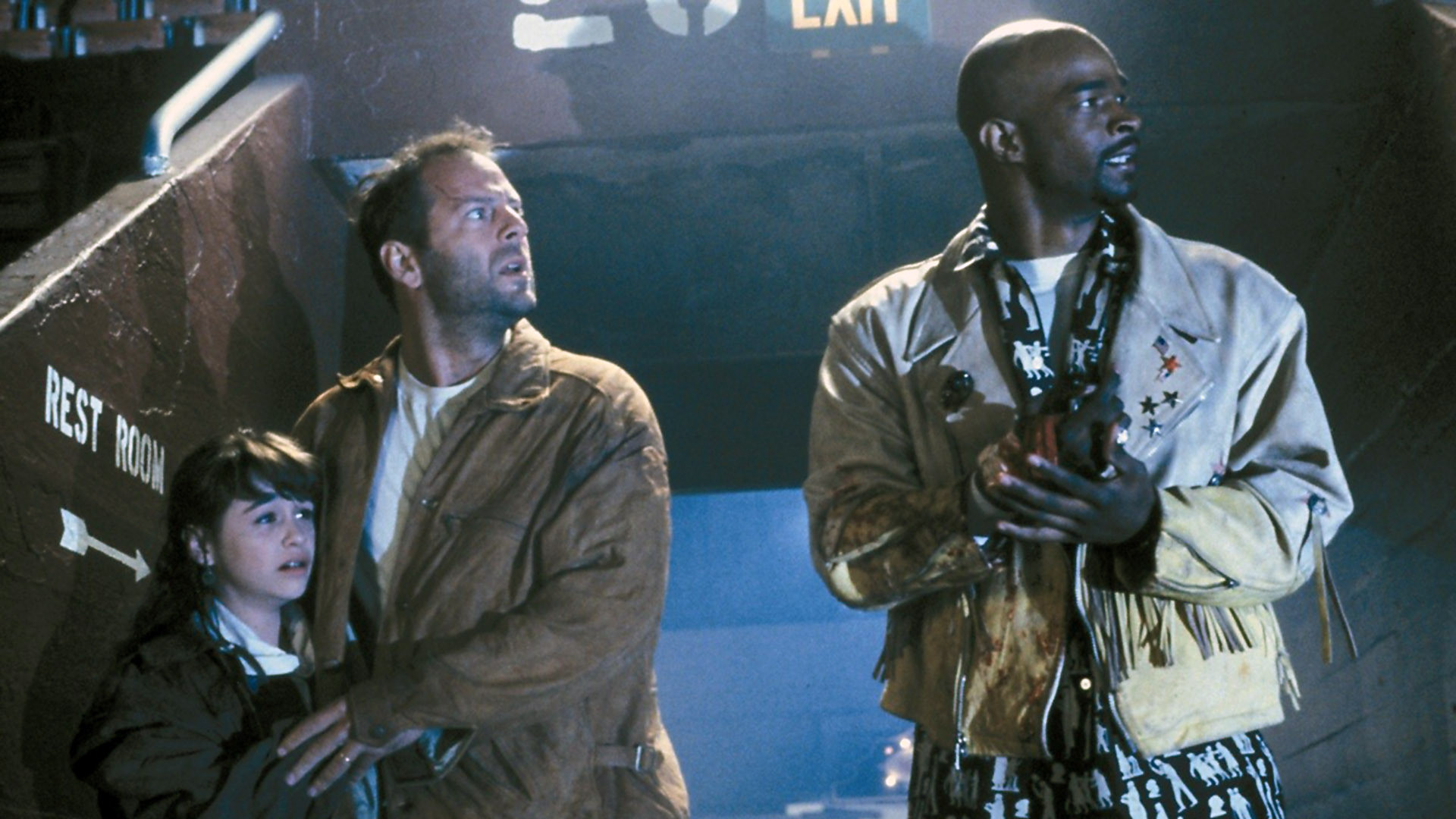
Rating: 6/10 – there’s just enough here to keep audiences occupied, but Magic in the Moonlight isn’t the romantic comedy delight of say, Midnight in Paris (2011); with a curmudgeonly central character holding it back, the movie ends up feeling like a magician’s parlour trick, but one where everybody knows how the trick is done.

Share this:

  • Share on X (Opens in new window) X
  • Share on Facebook (Opens in new window) Facebook
  • More
  • Print (Opens in new window) Print
  • Email a link to a friend (Opens in new window) Email
Like Loading...

The Boxtrolls (2014)

12 Friday Sep 2014

Posted by dullwood68 in Movies

≈ 3 Comments

Tags

Animation, Anthony Stacchi, Archibald Snatcher, Ben Kingsley, Cheesebridge, Comedy, Eggs, Elle Fanning, Graham Annable, Here Be Monsters!, Jared Harris, Laika, Lord Portley-Rind, Nick Frost, Review, Richard Ayoade, Scavengers, Scrap, White hats

Boxtrolls, The

D: Anthony Stacchi, Graham Annable / 97m

Cast: Ben Kingsley, Isaac Hempstead Wright, Elle Fanning, Jared Harris, Toni Collette, Nick Frost, Richard Ayoade, Tracy Morgan, Dee Bradley Baker, Steve Blum, Simon Pegg

In the town of Cheesebridge, there is a clear hierarchy in place: there is the Establishment, as represented by Lord Portley-Rind (Harris), who wear white hats as a sign of their social standing and influence; there are the common folk who are poorer by default; and then there are the Boxtrolls, cave-dwelling scavengers who avoid human contact as much as possible.  The Boxtrolls are a curious breed who wear cardboard boxes they can retreat into like tortoises when danger arises, and who have a strange language all their own.  They are feared by the human population of Cheesebridge, and are being hunted down by Archibald Snatcher (Kingsley).  Snatcher’s plan is to rid the town of the Boxtrolls and by doing so, rise up from his humble beginnings and claim a white hat; he has an agreement to this end with Lord Portley-Rind.

Amongst the Boxtrolls is the unexpected presence of a young boy known as Eggs (Wright), who has been raised by them since he was a baby.  Eggs knows both English and the Boxtroll language, and ventures out with them at night to search for scrap they can salvage and turn into something more useful.  While on one such trip, Eggs meets Lord Portley-Rind’s daughter Winnie (Fanning), and her astonishment at seeing him with the Boxtrolls leads her to question why Snatcher is hunting them down.  But with her father unwilling to listen to her, Winnie teams up with Eggs and the Boxtrolls in order to show the people of Cheesebridge that their suspicions and fears about the little creatures are unfounded, and that Snatcher is up to no good.

Snatcher, however, is one step ahead of them.  He devises a machine that threatens both the Boxtrolls’ underground home, as well as Lord Portley-Rind.  Meanwhile, Eggs learns that he’s not a boxtroll and that he’s a child who has long been thought of as disappeared.  While he and Winnie piece together his past – and Snatcher’s part in it – at a prestigious gala, Snatcher steps up his nefarious plan by using his machine to intimidate Lord Portley-Rind into giving him a White Hat.  Only Eggs, Winnie and the Boxtrolls can stop him…

Boxtrolls, The - scene

The latest from Laika Entertainment – they also made Coraline (2009) and ParaNorman (2012) – The Boxtrolls is an adaptation of Alan Snow’s Here Be Monsters!  It’s in keeping with their usual visual approach, an arresting mix of stop-motion animation augmented by CGI and traditional hand-drawn artwork, creating an endlessly fascinating and detailed Victorian-era steampunk aesthetic that keeps the eye transfixed throughout and is uniquely ravishing beneath the surface grime.

It may be a dark, ostensibly moody looking movie, but thanks to Irena Brignull and Adam Pava’s clever adaptation – and once the potentially difficult set up of the Boxtrolls’ world is established – the movie reveals a heart and soul that makes it a joy to follow along with, making its cardboard box-wearing stars immediately likeable and endearing.  The Boxtrolls themselves are a lot like a gaggle of unruly schoolchildren, their childlike wonder at the world around them giving them a naiveté that suits their characters and personalities.  Their quirky habits and foibles are rendered with charm and compassion, even when they’re busy playing pranks on each other.  With their innate sensitivity and goodness brought to the fore from the outset, it’s left to the scheming Archibald Snatcher to provide the villainy, and he’s a suitably impressive creation, dextrously voiced by Kingsley, and looking like he’s stepped straight out of one of Dickens’ workhouses.  He’s a gloriously hissable bad guy, and every time his face leers forward it’s like an assault.

Snatcher’s aided by a trio of equally grotesque associates, Mr Trout (Frost), Mr Pickles (Ayoade), and Mr Gristle (Morgan), and as sidekicks they provide some of the more knowing, self-aware humour (watch out for a wonderful pre-end credits piece of post-modernist deconstruction – really).  As the battling youngsters, Eggs and Winnie, both Wright and Fanning offer winning performances, while Harris is instantly recognisable as the straight-laced, luxuriously whiskered Portley-Rind (though viewers may have trouble recognising Collette as his wife).

There’s so much to enjoy in The Boxtrolls it’s almost a struggle to keep up with each new development or piece of background whimsy (like a lot of densely detailed animated features, the movie benefits from repeat viewings), and there are finely tuned moments of anarchic fun in amongst the more darker elements, but thanks to the combined efforts of co-directors Stacchi and Annable the movie achieves a balance that keeps it from tipping over too far in one direction.  From its often remarkable production design courtesy of Paul Lasaine, allied with Curt Enderle’s inspired art direction, the movie looks and feels like a world that’s truly lived in.  The story is involving, and if it all ends a little too predictably, it’s no bad thing.

Rating: 8/10 – another triumph for the folks at Laika, The Boxtrolls is irresistibly charming; exploring further the themes of abandonment and belonging that suffused Coraline and ParaNorman, this is animation that rewards on so many levels it’s almost embarrassing.

Share this:

  • Share on X (Opens in new window) X
  • Share on Facebook (Opens in new window) Facebook
  • More
  • Print (Opens in new window) Print
  • Email a link to a friend (Opens in new window) Email
Like Loading...

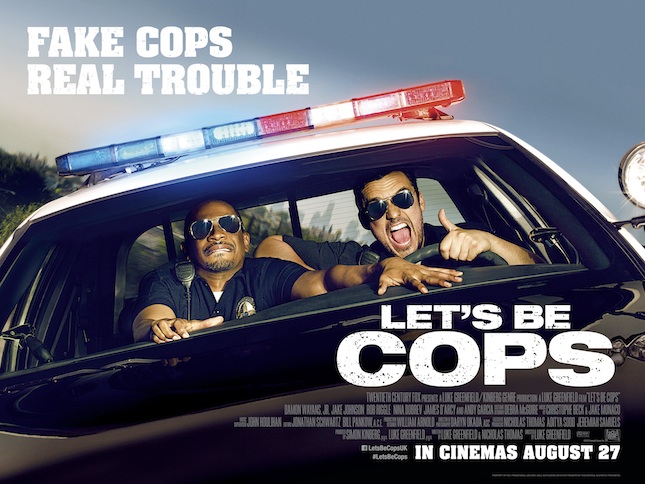
Let’s Be Cops (2014)

10 Wednesday Sep 2014

Posted by dullwood68 in Movies

≈ 1 Comment

Tags

Andy Garcia, Comedy, Damon Wayans Jr, Fake cops, Gangsters, Jake Johnson, Luke Greenfield, Review, Rob Riggle

Let's Be Cops

D: Luke Greenfield / 104m

Cast: Jake Johnson, Damon Wayans Jr, Rob Riggle, Nina Dobrev, James D’Arcy, Andy Garcia, Keegan-Michael Key

Let’s don’t.

Rating: 3/10 – really, let’s don’t.

Share this:

  • Share on X (Opens in new window) X
  • Share on Facebook (Opens in new window) Facebook
  • More
  • Print (Opens in new window) Print
  • Email a link to a friend (Opens in new window) Email
Like Loading...

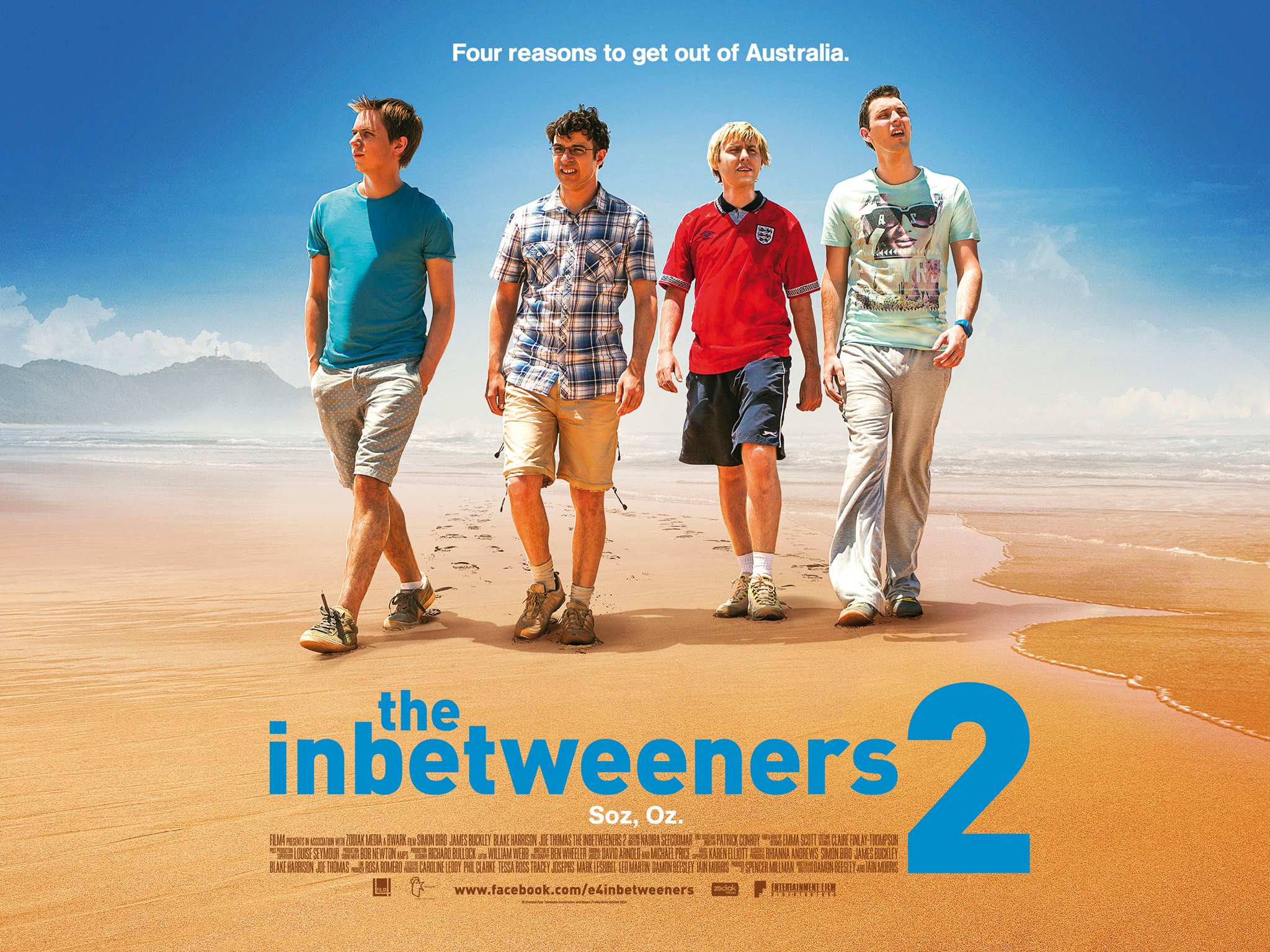
Mini-Review: The Inbetweeners 2 (2014)

09 Tuesday Sep 2014

Posted by dullwood68 in Movies

≈ Leave a comment

Tags

Australia, Backpacking, Blake Harrison, Comedy, IBS, James Buckley, Joe Thomas, Outback, Review, Sequel, Simon Bird, Splash Planet

Inbetweeners 2, The

D: Damon Beesley, Iain Morris / 96m

Cast: Simon Bird, James Buckley, Blake Harrison, Joe Thomas, Emily Berrington, Tamla Kari, Freddie Stroma, Belinda Stewart-Wilson, David Field, Greg Davies, Lydia Rose Bewley

With Jay (Buckley) having gone to live and work in Australia six months before, his friends Will (Bird), Simon (Thomas) and Neil (Harrison) decide to pay him a visit and do some travelling at the same time.  Arriving in Sydney, they find that Jay’s claims of being a top DJ and living in a mansion full of gorgeous, sexually available women is a pack of lies.  When Will bumps into Katie (Berrington), someone he used to know at school, and who seems to be attracted to him, he persuades the rest of the gang to head off to a water park called Splash Planet where Katie will be working.  While they’re there, it emerges that Jay is in Australia to find his old girlfriend, Jane (Bewley).  Meanwhile, Simon is trying to find a way of dumping his psychotic girlfriend, Lucy (Kari), and Neil wants to be a dolphin trainer.  When Jay discovers Jane has moved on, it causes a rift that sees Will stay behind while the others travel into the Outback.

Inbetweeners 2, The - scene

While a sequel to the first movie wasn’t entirely expected, now that it’s here the decision to move the action to Australia appears to have been a good idea, but aside from toning down Jay’s crude, rampant sexism and making him a little more sympathetic, the characters are the same as before, with the same attitudes and problems.  The humour is still as rancorous, and the depiction of women as little more than sex objects is still (unfortunately) in place, while attempts to make winners out of perennial losers leads to mixed results (Jay and Jane, Will and Katie).

Under the guidance of series’ and first movie scriptwriters Beesley and Morris, The Inbetweeners 2 has its moments – Will and one of Neil’s bowel movements is a very funny, very gross standout – but it coasts along for too much of its running time and provides little that’s unexpected or clever.  As sequels go, the change of location is effectively exploited (the stunning locations are beautifully framed and photographed by Ben Wheeler), but the inclusion of secondary characters such as Mr Gilbert (Davies – a series’ favourite) seems forced rather than a natural part of the story.

Rating: 6/10 – one for the fans, who will lap this up, The Inbetweeners 2 ticks all the boxes you’d expect and, to be fair, does so without stopping to apologise once; uneven then and on that level, on a par with the first movie.

Share this:

  • Share on X (Opens in new window) X
  • Share on Facebook (Opens in new window) Facebook
  • More
  • Print (Opens in new window) Print
  • Email a link to a friend (Opens in new window) Email
Like Loading...

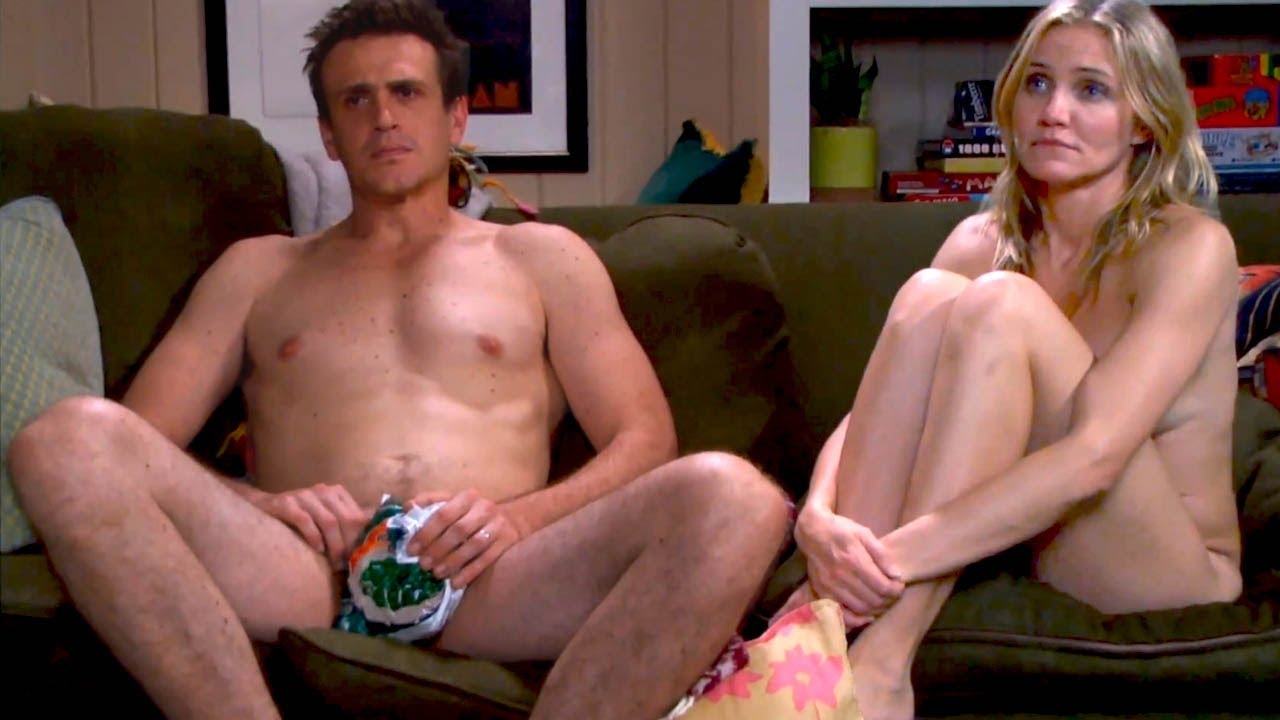
Sex Tape (2014)

09 Tuesday Sep 2014

Posted by dullwood68 in Movies

≈ 1 Comment

Tags

Blackmail, Cameron Diaz, Comedy, iPad, Jake Kasdan, Jason Segel, Marriage, Review, Rob Corddry, Rob Lowe, Sex, Sex life, The Joy of Sex, YouPorn

Sex Tape

D: Jake Kasdan / 94m

Cast: Cameron Diaz, Jason Segel, Rob Corddry, Ellie Kemper, Rob Lowe, Nat Faxon, Nancy Lenehan, Giselle Eisenberg, Harrison Holzer, Sebastian Hedges Thomas

When Annie (Diaz) and Jay (Segel) first meet they have sex all the time.  They have sex in different places (sometimes in public), and they try lots of different positions; in short, they can’t get enough of each other.  But then they get married, have a couple of kids and the spark and the spontaneity goes out of their sex life, and they’re reduced to making vague plans around getting together, but their plans never work out.  Jay is continually busy with work, while Annie writes a blog about being a “mommy” that’s about to be picked up by a company, Piper Brothers, that promotes family values.

To celebrate an imminent offer from Piper Brothers, Annie arranges for her mom (Lenehan) to have the kids overnight so that she and Jay can have some “alone” time. Initially raring to go they soon find that getting back to having sex isn’t as easy as they’d thought.  Then Annie suggests they make a sex tape of themselves doing all the positions in The Joy of Sex.  Jay agrees and three hours later, exhausted and done, Annie tells Jay to erase the video.  The next morning, Jay is surprised to receive text messages from someone who says they liked the video.  Jay is horrified to learn that instead of deleting the video from his iPad, instead he’s synched it with all the other iPads he’s used recently and given to friends as a gift when he’s finished with them.

Annie is horrified that their friends – and the mailman – may get to see their sex tape, and tells Jay they have to get the other iPads back.  First they head over to their friends, Robby (Corddry) and Tess (Kemper), and retrieve theirs, but not before they inadvertently reveal why they want it back.  It’s then that Annie realises that she gave an iPad to Hank, the Piper Brothers bigwig who is preparing the offer for her blog.  The four of them go to his house where Annie and Jay go inside; while Annie keeps Hank busy, Jay searches the house for the iPad.  Having done enough for the night, Annie and Jay drop Robby and Tess back at their house, where their son, Howard (Holzer) reveals he sent the texts, and he wants $25,000 or he’ll let the tape be uploaded to the YouPorn website.  Refusing to be blackmailed, Annie and Jay find out where YouPorn has its base, and go there with the intention of damaging the servers and stopping the upload.  But they’re disturbed by the owner while in the act…

Sex Tape - scene

There are several moments in Sex Tape where disbelief has to be suspended so much that it hurts the movie irreparably.  One such moment is when the owner of YouPorn sits down with Annie and Jay and acts as a counsellor to them both, putting aside any issues with their breaking and entering his warehouse and causing damage to his servers as if it was only a minor annoyance (though fortunately they’re not let off the hook entirely – that would have been way too much to swallow).  This scene also slows down the movie and highlights the episodic nature of the script, one that feels like it’s an amalgamation of scenes the filmmakers thought would be funny to see, and which were then included in the nearest screenplay.  Other scenes where this occurs include Robby and Tess on Hank’s doorstep, and an unnecessary final act at a presentation at Annie and Jay’s son’s school.

For a movie with an average running time, this amount of careless padding (as mentioned above) hurts the movie and stops it from being the laugh-a-minute success it could have been.  A lot of Hollywood comedies these days are predictable and play it safe, feeling cool if they throw in a few indie-style gross-out gags for effect, and Sex Tape isn’t any different, but it has two very committed performances from Diaz and Segel, both unafraid to get naked (though not full-frontal) and both unafraid to look silly as they try to reignite the passion that’s deserted Annie and Jay.  The chemistry between them helps as well, and the scene where they sound off at each other for “showing their true colours” in a crisis has all the credibility of a real couple arguing with each other.

But the duo excel when the comedy gets frantic, especially when trying to retrieve Hank’s iPad, and where Jay finds himself traversing the house trying to find it and avoid the deadly intentions of Hank’s alsatian at the same time.  Meanwhile, Annie learns that Hank’s attitude to family values is definitely one that’s left at the office as he persuades her to do some cocaine.  With both of them under duress, how they deal with each dilemma is the highlight of the movie.

There’s adequate support from the rest of the cast, though only Lowe stands out, his role given more attention than the others, and there’s an extended cameo from an actor who’s worked with both Diaz and Segel in the past.  But thanks to the limitations imposed by the script (courtesy of Kate Angelo, Segel and Nicholas Stoller), they do what’s needed and little else.  In the director’s chair, Kasdan orchestrates things comfortably but with very little flair, though the editing by Steve Edwards and Tara Timpone is astute enough to make the movie flow more easily than it might have done otherwise.

All in all, Sex Tape isn’t going to win any awards but it does provide some solid laughs and, now and again, shows a sense of its own absurdity.  Some of the sit-com aspects sit uncomfortably with the more “adult” humour, but there are plenty of laughs to be had in amongst the unfortunate downtimes.

Rating: 6/10 – a little lightweight in too many areas to be fully rewarding, Sex Tape still manages to entertain for the most part, and that’s thanks to its two leads; with a tighter script and less straying from the main plot, this could have been a sure-fire hit.

Share this:

  • Share on X (Opens in new window) X
  • Share on Facebook (Opens in new window) Facebook
  • More
  • Print (Opens in new window) Print
  • Email a link to a friend (Opens in new window) Email
Like Loading...

Blended (2014)

03 Wednesday Sep 2014

Posted by dullwood68 in Movies

≈ Leave a comment

Tags

Adam Sandler, Africa, Comedy, Divorcee, Drew Barrymore, Frank Coraci, Holiday, Review, Romance, Widower

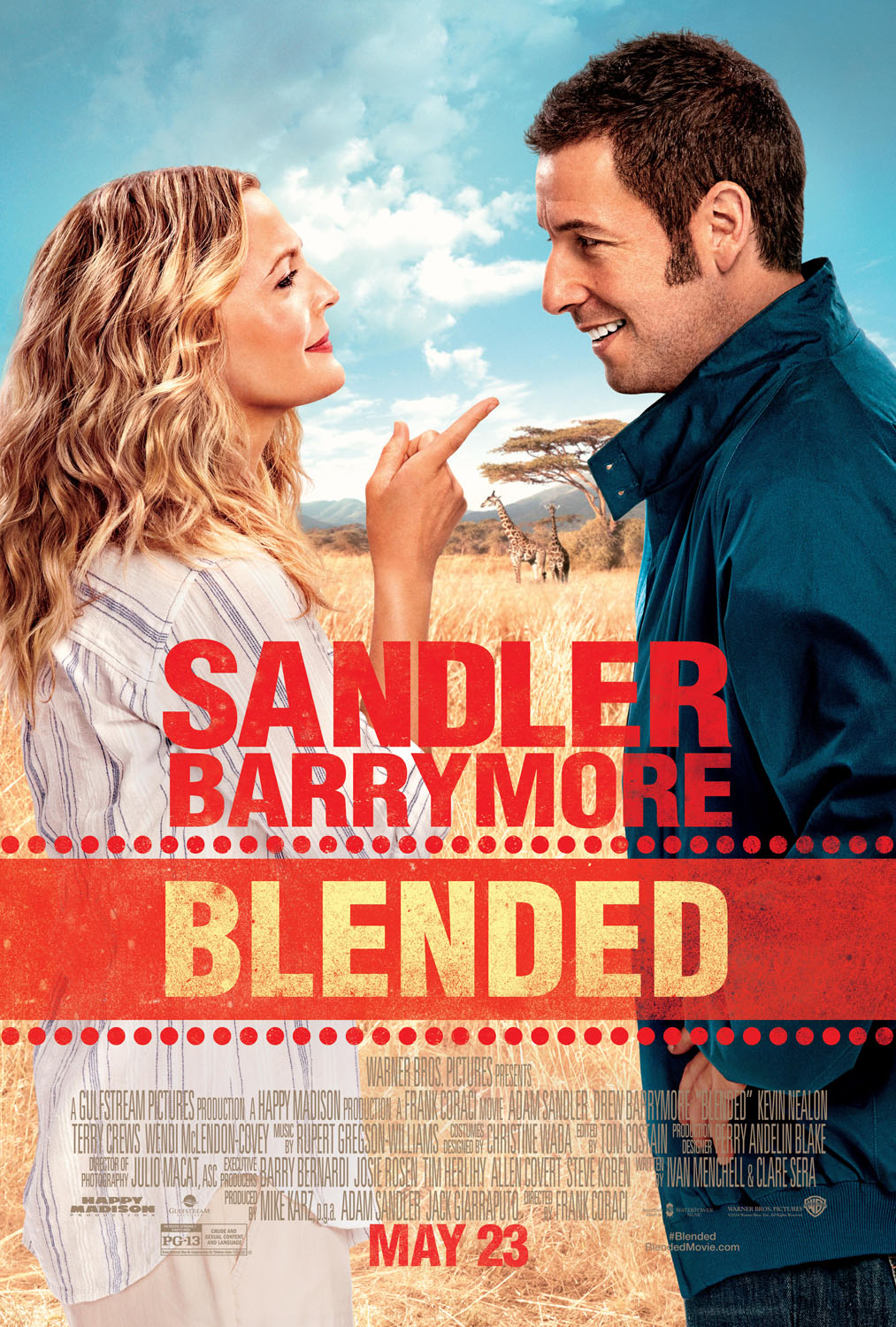
304053id1c_Blended_Final_Rated_27x40_1Sheet_5C.indd

D: Frank Coraci / 117m

Cast: Adam Sandler, Drew Barrymore, Kevin Nealon, Terry Crews, Wendi McLendon-Covey, Emma Fuhrmann, Bella Thorne, Braxton Beckham, Alyvia Alyn Lind, Joel McHale, Abdoulaye NGom, Kyle Red Silverstein, Zak Henri, Jessica Lowe

Widower Jim (Sandler) and divorcee Lauren (Barrymore) meet on a blind date that goes from bad to worse to disaster and leaves both of them never wanting to see each other again.  The holidays are coming up and both of them are looking to take their kids – Jim has three daughters: teenager Hilary (Thorne), Espn (Fuhrmann), and Lou (Lind), Lauren has two boys: Brendan (Beckham) and Tyler (Silverstein) – away, but neither set of children is looking forward to where they’re going.  When Jim and Lauren bump into each other at the store, their credit cards get mixed up.  Jim realises first and goes to Lauren’s house where Lauren’s friend Jen (McLendon-Covey) is freaking out because her boyfriend, Dick, wanted her to meet his children on a planned trip to Africa.  Having broken up with Dick because of this, the holiday is now available.  Lauren asks Jen if she can go in Jen’s place and take her boys, while Jim discovers Dick is his boss, and he asks Dick to sell the holiday to him.

When they all arrive at the resort in Africa, Jim and Lauren find they’re on a “blended familymoon”, and are surrounded by couples where one of the partners is a step-parent and the idea is to develop stronger ties with their step-children.  They meet Eddy (Nealon) and Ginger (Lowe), and Eddy’s teenage son, Jake (Henri).  Hilary has an instant crush on Jake, but because she looks like a boy she doesn’t think he’ll notice her.  The two families take part in the arranged activities and the children all learn to get on while Jim and Lauren continue to spar and bicker (even though they are clearly starting to like each other).  Lauren arranges for Hilary to have a makeover, and now Jake really does notice her.  With the holiday coming to an end, and with both Jim and Lauren having bonded with each other’s kids, Jim takes Lauren out for a romantic dinner but when they go to kiss, he backs off, unable to commit.

They all return home, and Jim begins to realise his mistake in not kissing Lauren.  He goes to see her but Lauren’s ex-husband, Mark (McHale), answers the door and makes it sound as if he and Lauren are getting back together.  Disheartened, Jim leaves, while Mark tries to persuade Lauren to have him back.  She won’t, but she tells him if he wants to make a good impression with his kids he should turn up for Tyler’s Little League baseball game at the weekend.  But on the day, it’s not Mark who turns up…

Blended - scene

Going by the assumption, “If it ain’t broke, don’t fix it”, Blended is the obvious follow-on from Just Go With It (2011), swapping Hawaii for Africa, and Jennifer Aniston’s dental assistant for Drew Barrymore’s divorced closet organiser, but without the added (and unexpected) star power of Nicole Kidman.  It’s a safe move, and an even safer movie, with Sandler injecting just enough of his loud man-child persona, as well as the standard amount of risqué gags, to ensure Blended is a few steps away from the kind of bland family fare that Disney pumps out with frightening regularity.  It almost feels like a movie made by committee, comfortably ticking off the boxes on its way to the expected happy ending: couple who initially detest each other – check; kids with various problems that will be addressed and dealt with by the end – check; supporting characters who provide most of the goofy humour – check; family values firmly reinforced in time-honoured Brady Bunch fashion – check; and so on.

Love him or loathe him, Sandler has a loyal fan base, and his movies regularly make their money back at the box office – just don’t mention the dreadful That’s My Boy (2012) which couldn’t recoup its $70 million budget even with international sales – so he must be doing something right.  As here, he appears to make little effort in terms of acting, and he’s becoming less and less of a physical performer, but he generally makes good choices in terms of the movies he makes, as well as the people he surrounds himself with.  But it’s with movies like Blended that it really springs to mind he’s just coasting until the next, more interesting project (and 2015’s Pixels may just be that project).

With its predictable plotting, tiresome running gags, and by-the-numbers characterisations, Blended could almost be the cure for insomnia, but it does have some good one-liners – “I naturally assumed your husband shot himself” – and the South African locations are suitably impressive, but the direction is too pedestrian for the movie to take off as effectively as Barrymore does in the parascending scene, and the script takes no chances with the material, leaving the audience amused for the most part but with little that’s truly memorable to take away with them.  It’s also a movie with a good deal of padding, its near two-hour running time stretched out largely because of the unnecessary third act set back in the US.

On the performance side, the various child actors are all appropriately adorable, cute, winsome etc., while the adults, Sandler and Barrymore aside, all blend in with the scenery and make little impression.  Unusually, there aren’t the expected cameos from some of Sandler’s off-screen pals, which may have provided a much-needed distraction, but all in all the performances are perfunctory enough and match the spirit of the script and the direction.

Rating: 5/10 – lacklustre and only sporadically entertaining, Blended is Sandler and co. ably treading on water but to no discernible effect; something to pass the time if you need to, otherwise there are other, better Adam Sandler movies you could be watching.

Share this:

  • Share on X (Opens in new window) X
  • Share on Facebook (Opens in new window) Facebook
  • More
  • Print (Opens in new window) Print
  • Email a link to a friend (Opens in new window) Email
Like Loading...

Are You Here (2013)

02 Tuesday Sep 2014

Posted by dullwood68 in Movies

≈ Leave a comment

Tags

Amy Poehler, Comedy, Competency hearing, Drama, Inheritance, Laura Ramsey, Matthew Weiner, Owen Wilson, Review, Romance, Therapy, Weatherman, Zach Galifianakis

Are You Here

D: Matthew Weiner / 112m

Cast: Owen Wilson, Zach Galifianakis, Amy Poehler, Laura Ramsey, Joel Gretsch, Paul Schulze, Alana De La Garza, Edward Herrmann, Peter Bogdanovich, Jenna Fischer, David Selby

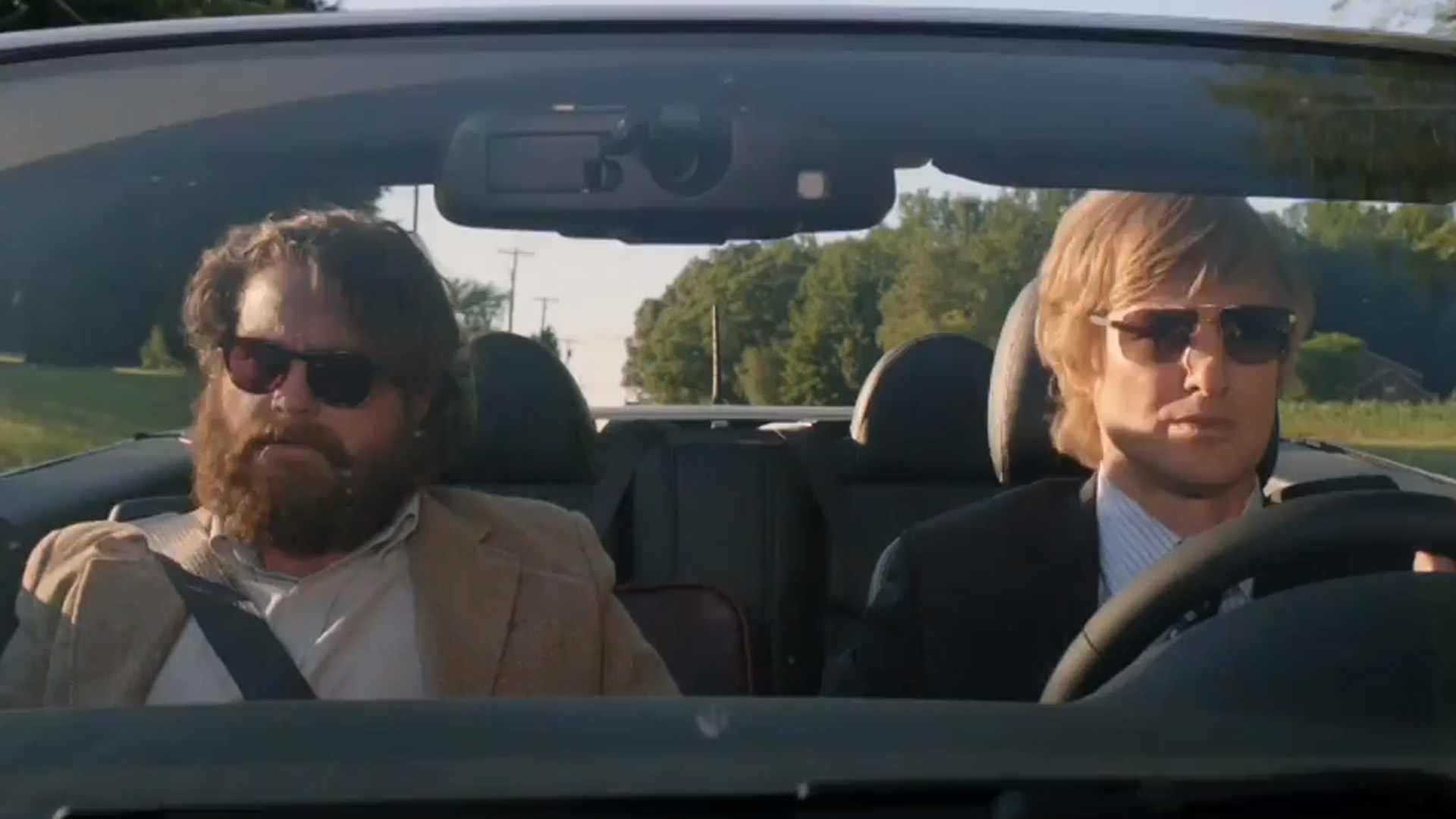
Steve Dallas (Wilson) is a weatherman whose easy-going, free-wheeling lifestyle is tempered by his long-time friendship with Ben Baker (Galifianakis).  Ben lives in a rundown trailer and has effectively turned his back on conventional society, preferring to live away from people and challenging most modern day conventions.  He also lacks certain social skills.  When Ben learns that his father has died, Steve agrees to take Ben back to the small town where they grew up for the funeral and to learn what, if any, inheritance Ben will receive.

To both friends’ surprise, and also Ben’s sister, Terri (Poehler), Ben inherits his father’s house and several acres of surrounding land, and his father’s store.  Terri is horrified, as she feels Ben is unable to deal with the responsibilities involved in running the store, and she’s even more horrified when Ben decides he wants to transfer the house and land over to Steve as a gift for all his years of support and friendship.  With the two siblings at loggerheads, there is also the issue of Angela (Ramsey), the young widow of Ben’s father.  Terri dislikes her (even though she clearly made the old man very happy), but Steve is besotted.  He tries to worm his way into her affections but she’s not easily swayed, and Steve, who usually rehearses his pick-up lines before talking to women, finds he has to rethink his approach.

While Ben and Terri fight over Ben’s plans to use the store as the site for a non-profit organisation, Steve returns to work but not before he asks Angela to keep an eye on Ben.  It’s not long, however, before Ben’s behaviour becomes more erratic, and when Steve returns he has to persuade him to see a counsellor (Herrmann) as Terri has insisted on a competency hearing to rule on Ben’s ability to manage his inheritance.  Steve continues to woo Angela and finds his efforts are beginning to pay off.  When the counsellor advises that Ben would need to take medication in order to meet the requirements of managing the store (however he sees fit), the meds prompt a change in Ben’s outlook.  It also brings Ben and Angela closer together, until one night they end up in bed together.  And then Steve finds out…

Are You Here - scene

Ostensibly a comedy-drama, Are You Here – on paper at least – looks like a shoo-in in terms of quality.  Written and directed by the creator of TV’s Mad Men, with two gifted comic actors headlining, and with a storyline ripe with comedic and dramatic potential, there shouldn’t be any reason why this doesn’t score points across the board.

And yet…

There are several problems here, and all of them serve to hold the movie back.  First and foremost is the relationship between Steve and Ben.  Steve is a shallow ladies man whose over-riding commitment in life is to himself, and he has very little time for the feelings of others; he treats his boss (Schulze) with disdain, and the women he meets as objects.  He’s a really selfish, unlikeable character, and while Wilson invests Steve with a certain amount of sympathy, it’s not enough to make him any more palatable as the movie goes on.  He’s supposed to change and become more self-aware as his relationship with Angela develops but the full extent of his selfishness is revealed when he confronts Ben and Angela over their sleeping together: he acts more like someone who’s had his favourite toy taken away from him than someone who’s truly aggrieved.  With this level of insularity, it’s amazing that he could be as selfless and supportive with Ben as he is.

With the central relationship proving unconvincing, the movie’s attempts at drama prove to be off-key and more than a little underwhelming.  Terri’s animosity towards Angela is trite and lacks any credibility, and her attacks soon become boring and gratuitous.  She’s meant to be the uptight older sister who means well but has a hard time showing it, but thanks to Weiner’s muddled script (and despite Poehler’s valiant efforts), Terri comes across as unnecessarily mean and thoughtless (a subplot involving her attempts to fall pregnant is meant to elicit some sympathy for her but it’s never developed fully enough to be effective).  Conversely, Angela is the wise-despite-her-age opposite of Terri, a loving, caring woman who is more accepting of others, and who seems settled in her own skin.  The problem here is that there’s nowhere for such a character to go to, and even though she’s attracted to Steve, the romance between them is so laid-back it barely registers as anything more than something for the characters to do while Ben gets his act together.

As character arcs go, Ben’s transformation from woolly-thinking anti-consumer to gifted businessman is the movie’s biggest stretch, given insufficient credence by his father’s belief that he “has it in him” to succeed.  It’s also a curious conceit that Ben achieves peace and the ability to properly move forward off the back of some mood altering drugs.  Whatever the message here is, it does make the audience wonder if Weiner is saying that success can be achieved through the use of controlled substances.  If he’s not then it’s just a way of forcing a change for the sake of the script and adding a bright bow tie in wrapping up one of the plot strands.  Galifianakis does his best, but falls back on the kind of comedic schtick we’re used to seeing from movies such as The Hangover (2009) and Due Date (2010).

The comedy elements dominate the first forty-or-so minutes, but are slowly discarded in favour of the rambling, sub-par dramatics of the rest of the movie, leaving the audience to wonder if it’s worth staying on til the end (in the vain hope that things will improve, or at least reach an acceptable conclusion – they don’t).  It’s a shame, because with a tighter, more focused script, this could have been an interesting slice of parochial disillusionment, or had something more pointed to say about consumerism, or presented the viewer with at least one character they could care about.  Instead, and thanks to Weiner’s equally undercooked attempts at direction, the movie gives up almost as soon as Steve and Ben reach their hometown.

Rating: 4/10 – for a movie with this much potential and talent (both behind and in front of the camera), Are You Here struggles to involve its audience, and is unlikely to linger in anyone’s memory for longer than an hour or so; somnolent and unrewarding, the answer to the titular question is likely to be, “Not really”.

Share this:

  • Share on X (Opens in new window) X
  • Share on Facebook (Opens in new window) Facebook
  • More
  • Print (Opens in new window) Print
  • Email a link to a friend (Opens in new window) Email
Like Loading...

Mini-Review: The Love Punch (2013)

22 Friday Aug 2014

Posted by dullwood68 in Movies

≈ Leave a comment

Tags

Cap d'Antibes, Celia Imrie, Comedy, Diamond, Emma Thompson, Joel Hopkins, Paris, Pierce Brosnan, Review, Robbery, Romance, Timothy Spall, Wedding

Love Punch, The

D: Joel Hopkins / 94m

Cast: Pierce Brosnan, Emma Thompson, Timothy Spall, Celia Imrie, Louise Bourgoin, Laurent Lafitte, Tuppence Middleton, Jack Wilkinson, Olivier Chantreau, Marisa Berenson

When divorced couple Richard (Brosnan) and Kate (Thompson) discover that their pensions are worthless thanks to a company takeover orchestrated by French businessman Vincent (Lafitte), they put aside their differences and set out to steal a diamond worth $10.8 million that he has just purchased.  Their plan sees them travel to the Cap d’Antibes where Vincent is due to marry supermodel Manon (Bourgoin), and for whom he has had the diamond made into a necklace for their wedding day.

Aided by their friends, Jerry (Spall) and Penelope (Imrie), the still-sparring couple plan to attend the wedding disguised as Texans (there to cement a deal with Vincent), steal the diamond and replace it with a fake, and then head back to the UK to sell the diamond and disperse the money from the sale to everyone who’s lost their pension.  But not everything goes to plan…

Love Punch, The - scene

Look through most actors’ filmographies and you’ll see one or two movies that look like they were made a) for the money, b) because of the location, or c) both.  Well, for Messrs. Brosnan, Thompson, Spall, and Imrie, this is that movie, a dreadfully unfunny romantic comedy/caper hybrid that boasts beautiful locations but little else.  It’s a measure of writer/director Hopkins’ script that belief has to be suspended time and time again, from Kate’s unconvincing faint that gets them into Vincent’s building, to the idea of four Fifty-somethings even planning a diamond robbery.  And when they decide the only way to physically attend the wedding is by climbing a nearby cliff face, then you know rampant absurdity is the order of the day.

The performances are hampered accordingly, though Thompson does her best with what she has.  Brosnan tries too hard, Spall is given a military background that no one knows about, and Imrie revisits the sex-hungry character she’s played so many times before (but without bringing anything new to the idea).  The rest of the cast do what they can but it’s an uphill struggle.

The Love Punch was obviously intended as a bit of a light-hearted romp featuring two of Britain’s most popular actors, but instead it’s a stodgy, lumpen mess that never gets off the ground.  Definitely not one for the promo reel.

Rating: 3/10 – awkward and terrible, The Love Punch should be approached with caution; hampered by a dire script and with too many moments where the audience will be wondering if they’re really seeing what they’re seeing, this is one for fans of the principal cast only.

Share this:

  • Share on X (Opens in new window) X
  • Share on Facebook (Opens in new window) Facebook
  • More
  • Print (Opens in new window) Print
  • Email a link to a friend (Opens in new window) Email
Like Loading...

The Hooligan Factory (2014)

18 Monday Aug 2014

Posted by dullwood68 in Movies

≈ Leave a comment

Tags

Cameos, Comedy, Danny Dyer, Dex, Football hooligans, Jason Maza, Keith-Lee Castle, Nick Nevern, Review, Spoof, The Baron

Hooligan Factory, The

D: Nick Nevern / 90m

Cast: Jason Maza, Nick Nevern, Tom Burke, Ray Fearon, Keith-Lee Castle, Steven O’Donnell, Morgan Watkins, Josef Altin, Leo Gregory, Lorraine Stanley

As a young lad, Danny (Maza) gets expelled from school, and with his father in prison, winds up living with his grandfather (an uncredited Ian Lavender).  Wanting to follow in his father’s footsteps as a top football hooligan (but unsure how to go about it, and not as obviously mental as his father), Danny is drifting through life when his grandfather announces he’s selling his flat and moving abroad.  Forced to move out, Danny takes his belongings and is looking for somewhere to stay when he finds himself being mugged.  But help comes from an unexpected source: recently released from prison hard man Dex (Nevern), one of the most vicious leaders of a football hooligan firm ever.  Dex is looking for revenge on the Baron (Castle), a rival firm leader, and responsible for the death of Dex’s young son.

Dex takes Danny under his wing, and he sets about rebuilding his old gang.  Danny begins to find his place in life as he joins Dex and his firm on trips around the country taking on other firms, and getting involved in violent clashes.  As Dex’s firm defeats more and more rivals, the Baron issues a challenge to the remaining firms: put Dex in his place once and for all.  But this proves too difficult, and in the end, the Baron is forced to confront Dex back at the same site where Dex’s son was killed.  Can Dex avenge his son?  Will the Baron get his just desserts?  Will Danny ever gain the respect of Dex’s right hand man, Bullet (Burke)?  And will anyone in Dex’s firm realise that Old Bill (O”Donnell) really is the Old Bill?

THE HOOLIGAN FACTORY

Though rough around the edges, The Hooligan Factory is a much-needed spoof of the recent spate of British football hooligan movies, such as Green Street (2005) and The Firm (2009) (there’s also a terrific parody of Rise of the Footsoldier (2007) in the movie’s prologue).  Where those movies have a kind of grim social commentary driving them forward, here the emphasis is on cutting that approach down to size and then trampling all over it (and with the proper colour co-ordinated trainers).

There’s much to commend it, even though it is uneven and some of the jokes aren’t as original (or amusing) as the filmmakers would like, but it is funny and it lampoons its targets with commendable attention to detail, from Danny and Dex’s outfits, to the scene where most of the various firms’ leaders admit to having an autobiography either on the shelves already, or about to be published.  There’s so much going on at times, particularly in the first hour, that when the movie begins to flag, it comes as no surprise at all, but by then it’s created such a good vibe that a shortfall in laughs is compensated for by the need for a more dramatic resolution (though as if to compensate even for that, Dex’s “passing of the torch” is one of the movie’s best – and most unexpected – visual gags).

In the director’s chair – he’s also the co-writer, with Michael Lindlay – Nevern assembles his cast and lets them loose on the material with what appears to be a great deal of leeway, with some scenes having a semi-improvised feel to them.  Maza has just the right amount of gung-ho neediness that helps make Danny so appealing, while the supporting cast all register their intent to make as much of the script as they possibly can (and if there’s the odd bit of over-acting here and there, well… so what?).  It’s Nevern, though, who makes the biggest impact, imbuing Dex with a violent streak a mile wide but also making him as naive as a newborn, his inability to realise that his two year old son (born while he was in prison) is the offspring of his best mate Midnight (Fearon), both endearing in its own way, as well as being laughable.  To Nevern’s credit, he plays it straight, and while there’s a minor amount of winking at the camera, Nevern doesn’t allow himself the luxury of breaking the fourth wall.

With priceless cameos from the likes of British crime movie stalwarts Tamer Hassan, Craig Fairbrass and Danny Dyer, as well as minor celebs such as Chloe Sims from The Only Way Is Essex and former hooligan Cass Pennant, The Hooligan Factory has its fair share of surprises to keep its audience on its toes, but it’s the humour that counts, and for long stretches this is a movie that delivers belly laughs galore, some that are very silly indeed, some that are blackly comic, and some that are clever allusions to the movie’s more dramatic forebears.  Strangely, there are moments that feel rushed, while others seem stretched out beyond the script’s requirements; on these occasions the movie does grind to a halt, but thanks to Nevern’s firm hand on the tiller, they don’t upset the movie’s rhythm too much, and he soon gets things back on an even keel.

The violence is toned way down in comparison with, say, I.D. (1995), but then this is a spoof, and while it may not be so bloody or contentious, what it lacks in febrile intensity, it more than makes up for with clever laughs and knowing performances from all concerned.

Rating: 7/10 – uneven at times but doing its best to please throughout, The Hooligan Factory succeeds largely due to the involvement of so many people who’ve been involved in the very movies this seeks to mock (including Nevern); a great movie for a Saturday night with a few beers, and well worth watching just for the aforementioned “passing of the torch” moment.

Share this:

  • Share on X (Opens in new window) X
  • Share on Facebook (Opens in new window) Facebook
  • More
  • Print (Opens in new window) Print
  • Email a link to a friend (Opens in new window) Email
Like Loading...

The Terminal (2004)

16 Saturday Aug 2014

Posted by dullwood68 in Movies

≈ 1 Comment

Tags

Airport, Catherine Zeta-Jones, Comedy, Drama, Krakozhia, Review, Romance, Stanley Tucci, Steven Spielberg, Tom Hanks, Unacceptable, Viktor Navorski, Zoe Saldana

Terminal, The

D: Steven Spielberg / 128m

Cast: Tom Hanks, Catherine Zeta-Jones, Stanley Tucci, Chi McBride, Diego Luna, Barry Shabaka Henley, Kumar Pallana, Zoe Saldana, Eddie Jones, Michael Nouri

Arriving at JFK International Airport, Viktor Navorski (Hanks) learns that while he was travelling from his home country of Krakozhia, a civil war has broken out and all travel permits and visas have been suspended; this means he can’t return home.  To make matters worse, the US government is refusing to recognise the revolutionary Krakozhian government, so won’t allow anyone from there to enter the US.  This makes Viktor “unacceptable”.  The only place he can stay is in the airport’s international terminal, something that Customs and Border Protection head Frank Dixon (Tucci) isn’t happy about but believes will be only temporary.

Viktor settles in at Gate 67 which is unfinished.  From there he ventures forth each day in the hope that the civil war has ended and he can either go home or go into New York as he’d originally planned (he has made a promise to do something for his father, who has recently died).  Through this he strikes up a friendship with Dolores (Saldana), a Customs officer who processes visa applications.  This in turn leads to a friendship with Enrique (Luna), an airport worker who has a crush on Dolores.  In return for food that hasn’t been used on flights, Viktor learns about Dolores’ likes and dislikes and relays this information back to Enrique.  During this time, Viktor also meets air stewardess Amelia (Zeta-Jones).  His attraction to her is tempered by her seeing a married man, Max (Nouri), but a relationship develops between them nevertheless.

As Viktor gets to know more of the airport staff – including Mulroy (McBride) and Gupta (Pallana) – Dixon becomes more and more irritated by his presence in the airport.  He tries to persuade Viktor to leave the airport but Viktor doesn’t take the bait.  With an important inspection coming up that will help towards an expected promotion, Dixon is anxious that nothing interfere with his plans, yet when a desperate Russian with undocumented drugs for his father arrives on the day of the inspection, Viktor interprets for him and resolves the situation with a lie, making Dixon furious with him. This makes Viktor very popular with the rest of the airport staff.

Viktor also continues to see Amelia when she flies in and when she tells him she’s stopped seeing Max, Viktor arranges a romantic dinner but it turns out Amelia has resumed the relationship (though this has an unexpected benefit later on).  When the war in Krakozhia ends, Dixon tells Viktor he has to return home and that he can’t go into New York; with the plane home ready to take off, Gupta stands on the tarmac and blocks it from moving, giving Viktor the chance to leave the airport and honour the promise he made to his father.

Terminal, The - scene

With a wonderful central performance from Hanks, The Terminal is glossy whimsy of the highest quality, a modern day fairy tale that features a princess in peril (Amelia), a wicked ogre (Dixon), three fairy godmothers (Enrique, Mulroy and Gupta), a maid (Dolores), and a handsome prince (Viktor – kind of).  It’s hugely enjoyable and is the type of movie that you can watch over and over again and still spot things you missed every other time (such as the head of the Statue of Liberty – keep an eye peeled, it’s there).  And like all good fairy tales it has a happy ending (though not the kind you might be thinking of).

Based around the true story of Mehran Karimi Nasseri, an Iranian refugee who spent eighteen years living in the departure lounge of Terminal One at Paris’s Charles de Gaulle airport, The Terminal downplays the drama inherent in such a predicament in favour of a heartwarming tale that is often hilarious, and which adds a romantic element that is both cute and bittersweet.  The script by Sacha Gervasi and Jeff Nathanson is structured much like a play, with act one concerning Viktor’s arrival at the airport, act two detailing his coming to terms with living in the airport, and act three showing his becoming a valued and respected member of the airport “staff”.  It’s a cleverly constructed script, with nods to wider issues such as immigration and racism, but included in such a way that they don’t intrude on the feelgood, aspirational  drive of the movie, or its message that tenacity and self-belief will always see you through.

It’s Viktor’s positive nature – so ably portrayed by Hanks – that is so affecting, his resourcefulness and persistence the very qualities we would like to think we’d have if we were in his position.  Hanks is nothing less than superb in a performance that is as richly nuanced as any other he’s given.  His choice of expressions alone offers a masterclass in acting; the scene in the men’s room when a traveller asks him, “Ever feel like you’re living in an airport?” is worth watching just for the stupefied look Viktor gives as a silent reply – and it’s made all the more impressive for being a reflection (and Hanks makes it all seem so effortless).

He has some great support too.  Zeta-Jones, still fresh from her Oscar-winning turn in Chicago (2002), makes Amelia appealing and sad at the same time, and in doing so makes the character more credible as Viktor’s possible love interest.  As the hard-nosed Customs and Borderland Protection administrator, Tucci is contained and hard to like but it’s a subtler performance than at first meets the eye, with echoes of a more sympathetic man showing through at odd moments.  And then there’s Pallana, whose deceptively expressive features are a joy to watch, his character’s unwavering paranoia amusing and wistful and, ultimately, well justified.  Luna plays Enrique as an adorable puppy, while McBride and Hensley are more stoic, and as Dolores, Saldana’s sunny approach to the character makes her more and more likeable as the movie goes on (it’s also fun to discover that Dolores is a Trekkie).

With all this favourable material allied to a raft of great performances, it comes as no surprise that Spielberg orchestrates everything with consummate ease, employing a lightness of touch that helps elevate Viktor’s plight from personal tragedy to unalloyed victory.  There’s more than a hint of Thirties screwball comedy in The Terminal, especially in Viktor’s confrontations with Dixon, and it’s to Spielberg’s credit that he augments such a contemporary story with such “old-fashioned” elements, and does it so seamlessly.  As with Hanks’ performance, this is one of Spielberg’s less appreciated movies, but one serious misstep aside – would Dixon really have been promoted after he grabbed Viktor by the neck and remonstrated with him? – he hits the movie out of the ballpark.

Rating: 8/10 – ripe for reassessment, The Terminal showcases an actor and a director working completely in synch, and providing their audience with a delightful slice of feelgood entertainment; richly detailed and with a clutch of stand-out moments, this is avowedly superior stuff.


Share this:

  • Share on X (Opens in new window) X
  • Share on Facebook (Opens in new window) Facebook
  • More
  • Print (Opens in new window) Print
  • Email a link to a friend (Opens in new window) Email
Like Loading...

Mini-Review: Ping Pong Summer (2014)

30 Wednesday Jul 2014

Posted by dullwood68 in Movies

≈ Leave a comment

Tags

1985, Comedy, Coming of age, Growing pains, John Hannah, Lea Thompson, Marcello Conte, Michael Tully, Nostalgia, Ocean City, Ping pong

Ping Pong Summer

D: Michael Tully / 92m

Cast: Marcello Conte, John Hannah, Lea Thompson, Myles Massey, Susan Sarandon, Helena May Seabrook, Emmi Shockley, Joseph McCaughtry, Andy Riddle, Robert Longstreet, Amy Sedaris, Judah Friedlander

On vacation at the beachside resort of Ocean City with his parents (Hannah, Thompson) and sister (Seabrook), thirteen year old Rad Miracle (Conte) makes friends with fellow teen Teddy (Massey), attracts the attention of pretty but wayward Stacy (Shockley), and earns the enmity of older, arrogant bullies Lyle (McCaughtry) and Dale (Riddle).  Rad has two hobbies: hip hop and ping pong.  When Lyle challenges him to a game, Rad loses badly.  Dejected, and with Lyle and Dale picking on him at every opportunity, Rad challenges Lyle to another game of ping pong.  With the help of reclusive neighbour Randi (Sarandon), Rad learns how to improve his game in advance of the match, while also navigating the treacherous waters of his growing feelings for Stacy.

Set in 1985, and drenched in nostalgia, Tully’s love letter to the vacation spot he visited as a child is an often poignant examination of growing up and the pains that go with it.  There’s nothing new here, but Ping Pong Summer deals well with the heartfelt experiences that teenagers have to go through, and despite a shaky start, goes on to become both enjoyable and emotionally engaging.  Tully uses Super 16 film stock to help recreate the look of the times and there are enough references to 80’s culture to anchor the period effectively.  It’s obviously a labour of love for the writer/director, and that shines through in the awkwardness of Rad’s relationships with Teddy and Stacy and the way in which Rad wanders the streets of Ocean City with barely disguised ennui.

This would probably be less interesting in other hands, and it’s thanks to Tully that the performances – despite being fairly low-key – are as accomplished as they are.  Conte is a winning presence, amiable and as socially inept as you would expect while as Rad’s parents, Hannah and Thompson do well with their limited screen time, while Seabrook is memorable in a secondary role.  Massey and Shockley are great as friend and possible girlfriend respectively, while the rest of the cast provide first-rate support.  With a great contemporary soundtrack, Ping Pong Summer is a welcome addition to the coming of age genre.

Rating: 7/10 – Warm-hearted and sincere, Ping Pong Summer benefits from its clear affection for the characters and the time; a little too lightweight over all but able to generate enough good will to see it through.

Share this:

  • Share on X (Opens in new window) X
  • Share on Facebook (Opens in new window) Facebook
  • More
  • Print (Opens in new window) Print
  • Email a link to a friend (Opens in new window) Email
Like Loading...

Mini-Review: The Other Woman (2014)

24 Thursday Jul 2014

Posted by dullwood68 in Movies

≈ 1 Comment

Tags

Affairs, Cameron Diaz, Comedy, Infidelity, Leslie Mann, Nikolaj Coster-Waldau, Revenge

Other Woman, The

D: Nick Cassavetes / 109m

Cast: Cameron Diaz, Leslie Mann, Nikolaj Coster-Waldau, Kate Upton, Don Johnson, Nicki Minaj, Taylor Kinney, David Thornton

When Carly Whitten (Diaz) discovers that her latest boyfriend, Mark (Coster-Waldau) is married, her attempts to move on are hampered by Mark’s wife, Kate (Mann), whose attempts to bond with her leads to their becoming unlikely friends.  When they discover that Mark is seeing yet another woman, Amber (Upton), they enlist Amber’s help in getting back at him.  Despite her initial intention to make Mark suffer, Kate relents and sleeps with him, which causes a rift between the three women.  When Mark takes Kate with him on a trip to the Bahamas, Carly and Amber go along too, giving Kate the opportunity to see that Mark hasn’t changed his ways – they see him with yet another woman – and confirm that he’s been defrauding some of the companies he’s invested in via his work.  They use this information to confront Mark and get Kate a divorce, while also exposing his fraudulent activities to his boss Nick (Thornton).

Other Woman, The - scene

A comedy that relies largely on slapstick for its humour and unconvincing plot developments – Carly really knows Mark’s home address? – The Other Woman is tired almost before it begins, its attempts to be hip, funny, and relevant undermined by a lack of plausible characters and rational dialogue, as well as predictable lashings of girl power.  The movie strives to be clever, but it never quite hits the mark, recycling old romantic comedy scenarios and ending with a showdown that requires Coster-Waldau to behave like a human cartoon.  It’s also a movie that drags in certain scenes, its running time padded out with unnecessary bits and pieces and extended conversations, leaving the women’s final showdown with Mark feeling hurried and badly set up.

Directing from Melissa Stack’s outdated screenplay, Cassavetes directs capably enough but without bringing anything new or surprising to the material, leaving it to pass muster on its own without any support.  Diaz plays Carly with all the commitment of someone filling in before the next, more exciting project, while Mann struggles to elevate Kate beyond stock comedy wife.  Upton has little to do, Coster-Waldau is not as horrible as he needs to be, and Johnson’s role could have been played by anyone, so generic is it.

Rating: 4/10 – another disappointment in the rom-com arena, with no rom- and in dire need of decent -com, The Other Woman is dissatisfying and undercooked; a waste of everyone’s time and talent, and with a particularly ponderous script to reinforce how bland it is.

Share this:

  • Share on X (Opens in new window) X
  • Share on Facebook (Opens in new window) Facebook
  • More
  • Print (Opens in new window) Print
  • Email a link to a friend (Opens in new window) Email
Like Loading...

A Long Way Down (2014)

14 Monday Jul 2014

Posted by dullwood68 in Movies

≈ 1 Comment

Tags

Aaron Paul, Adaptation, Comedy, Drama, Imogen Poots, New Year's Eve, Nick Hornby, Pascal Chaumeil, Pierce Brosnan, Suicide, Toni Collette, Valentine's Day

Long Way Down, A

D: Pascal Chaumeil / 96m

Cast: Pierce Brosnan, Toni Collette, Imogen Poots, Aaron Paul, Sam Neill, Rosamund Pike, Tuppence Middleton, Joe Cole, Leo Bill, Josef Altin

On New Year’s Eve, four very different people find themselves on the roof of a London tower block, and all with the same idea: to commit suicide.  There’s disgraced TV celebrity Martin (Brosnan), shy, apologetic Maureen (Collette), politician’s daughter Jess (Poots), and pizza delivery guy JJ (Paul).  With all of them unable to go through with their plans (and each actively stopping the rest from jumping), the quartet decide to make a pact: that none of them will try to kill themselves until Valentine’s Day.  Later that night, Jess accidentally O.D.’s in a club; with the aid of Jess’s boyfriend, Chas (Cole), the others get her to hospital.  News of their attempted suicides reaches the press and they all become minor celebrities. Martin suggests they use the attention to make some money, and they take part in interviews, and talk shows.  When one talk show appearance goes wrong, the four decide to go away together on holiday.

The trip proves to be yet another disaster, with JJ unknowingly befriending a journalist (Middleton) and further tensions arise when he also reveals something about himself that only Jess knows (and has kept to herself).  The group return to London and go their separate ways (though each in their own way keeps tabs on the others, except for JJ).  As Valentine’s Day draws near, JJ vanishes.  On the day itself, the others find him back on the roof of the tower block, and ready to kill himself.

Long Way Down, A - scene

Adapted from the novel by Nick Hornby, A Long Way Down takes a serious subject and uses it as the springboard for a sporadically dramatic, essentially lightweight comedy that never quite fires on all cylinders, and has enough awkward moments for two movies, let alone one.  The problems lie in the characters themselves.  Martin’s back story includes time in prison for sleeping inadvertently with a fifteen year old girl, and this is treated largely as an excuse for amusement, with Brosnan mugging for all he’s worth when the subject is brought up.  Maureen has a severely disabled son, Matty (Altin) that she no longer feels she can support adequately, but it’s obvious that she has a really good support network around her so the dramatic elements of her situation never really ring true.  Jess is almost a caricature of every wild child and rebellious daughter of an establishment figure you’re ever likely to encounter, and her sadness over the disappearance of her sister is briefly explored and then forgotten.  As for JJ, his character is the most maddening of them all, with his failed musical background and resulting depression proving hard to sympathise with, or appreciate.

While the movie works hard to flesh out these characters, and make their individual problems worthy of our concern, it’s unable to do so by virtue of their predicament being too artificial for its own good.  At no time in the movie do you really feel that any one of these disparate people really, truly wants to kill themselves, and so any drama in the two rooftop sequences that bookend the movie is immediately eliminated.  And as mentioned above, their individual dilemmas, particularly Martin’s, don’t hold the attention as well, or as much, as they should.  This all leaves the movie lurching from one lacklustre scene to another, its attempts at humour proving occasionally successful, its dramatic approach having no bite, and its supporting characters – from Jess’s dad (Neill) to Pike’s deliberately insensitive talk show host – endorsing the view that the main four characters aren’t that interesting.

As a result, it’s fitting that the performances are as equally uninspired as the movie itself.  Brosnan plays Martin as a bit of a buffoon, good-natured but with an often spectacular misunderstanding of the people around him, his unfortunate “indiscretion” treated like a minor inconvenience blown out of all proportion.  Brosnan’s an accomplished actor but here he seems unable to get to grips with such a poorly crafted character.  Collette has the least showy role, and fares better than the rest, her understated performance as Maureen the nearest the movie gets to providing someone for the audience to relate to; her scenes with Altin are genuinely affecting, but belong in a different movie.  Poots plays Jess as a whirling dervish, snappy and borderline obnoxious, her quieter scenes more convincing than the ones where she’s supposed to be the challenging anti-establishment rebel.  Paul, meanwhile – the predictably token American in the cast – does his best with a role that becomes more and more important as the movie goes on, but he can’t overcome the clumsy way in which JJ is written.

There’s a better movie to be made here, and while it’s clear the material is a challenge, A Long Way Down doesn’t even attempt to play up the more darkly humorous aspects of the group’s situation or elevate the drama inherent in such a premise.  The movie seems determined not to make things too uncomfortable for the audience, to play things down to make them more palatable (and presumably, more box office friendly).  It’s an obvious decision on the part of the producers (unfortunately) but it doesn’t help the movie at all.

Rating: 5/10 – not as dramatic or as funny as it looks, A Long Way Down struggles to be as emotionally involving as it should be; with no one to connect with, the movie loses focus early on and never really recovers, leaving its characters to stumble on until the movie’s predictably feel good ending.


Share this:

  • Share on X (Opens in new window) X
  • Share on Facebook (Opens in new window) Facebook
  • More
  • Print (Opens in new window) Print
  • Email a link to a friend (Opens in new window) Email
Like Loading...

The Last Boy Scout (1991)

13 Sunday Jul 2014

Posted by dullwood68 in Movies

≈ Leave a comment

Tags

Action, Bribery, Bruce Willis, Comedy, Corruption, Damon Wayans, Joe Hallenbeck, Private detective, Sports, Tony Scott

Last Boy Scout, The

D: Tony Scott / 105m

Cast: Bruce Willis, Damon Wayans, Chelsea Field, Noble Willingham, Taylor Negron, Danielle Harris, Halle Berry, Bruce McGill, Badja Djola, Kim Coates, Chelcie Ross, Joe Santos, Clarence Felder

Joe Hallenbeck (Willis) is an ex-presidential bodyguard turned private detective who looks like a bum and is fast becoming estranged from his wife, Sarah (Field) and daughter Darian (Harris).  Taking a job protecting a stripper – sorry, exotic dancer – named Cory (Berry), Joe falls foul of her boyfriend, disgraced L.A. Stallions quarterback Jimmy Dix (Wayans).  When Cory is killed, Joe and Jimmy (reluctantly) team up to find out why she was killed, and who was behind it.  The trail leads to the owner of the L.A. Stallions, Sheldon Marcone (Willingham), and an audio tape that contains a recording of Marcone attempting to bribe an influential senator called Baynard (Ross) into approving a bill that would make sports gambling legal.  When the audio tape is accidentally ruined, Joe and Jimmy must find another way of bringing Marcone to justice.

However, it’s not as easy as they would like.  Marcone’s goons, led by urbane psycho Milo (Negron), are continually trying to either frame Joe or dispose of Jimmy, and their problems get worse when Darian ends up in Marcone’s clutches.  With Senator Baynard agreeing to a $6,000,000 bribe, Marcone arranges for the briefcase with the money in it to be swapped for one that has ten pounds of C4 instead.  With an important L.A. Stallions match coming up, and the Senator in attendance, Joe and Jimmy have to stop the Senator from being blown up, and amass enough evidence to stop the police from arresting them instead of Marcone.

Last Boy Scout, The - scene

Famously known for the price paid for writer Shane Black’s script – a then whopping $1.75 million – The Last Boy Scout is an action movie that combines often sadistic violence with a large amount of drily profane humour, and never once lets the viewer forget how clever it is.  Its plot is paper thin (and a little beside the point), and its principal villain borders on being constructed from cardboard, but it’s the attitude that counts: irreverent, flippant, and yet with a well-developed sense of decency at its core that offsets all the vulgarity and casual mayhem.  (It’s worth noting at this point that Black’s script was heavily reworked by Willis and producer Joel Silver during production; that the movie is as good as it is, is nothing short of a miracle.)

Viewed now, twenty-three years on, it’s aged remarkably well, with only the lack of mobile phones and the Internet highlighting its age (that and the amount of hair on Willis’s head).  The characters may be familiar, but they’re fleshed out by a cast that clearly relishes the whip-smart dialogue.  Willis’s world-weary turn as Joe Hallenbeck (a nice twist on the phrase “hell and back”) is a lesson in how to be laconic and expansive at the same time, and he invests Joe with a no-nonsense attitude that riffs on every other loner hero we’ve ever seen while still making him seem fresh.  Wayans has the more earnest role, but acquits himself well, his comic leanings put aside in order to provide the make the student/teacher dynamic between Jimmy and Joe that much more credible (though he has his own fair share of one-liners).  Willingham is appropriately arrogant and slimy as the villainous Marcone, while Negron oozes an oily menace as Milo, his outwardly refined behaviour masking the soul of a cold-blooded killer.  As Sarah, Field is unsurprisingly sidelined for most of the movie, which leaves Harris unexpectedly brought to the fore in the movie’s final third; she’s more than capable and takes on Darian’s troubled child persona and makes her instantly likeable (if there’s ever likely to be a sequel, it should see Harris reprise her role as an adult and inheriting Joe’s private detective business; it could be called The Last Girl Guide?).

The action scenes are well-staged and include enough twists and embellishments to make them stand out from the crowd, and there’s some sterling stunt work as well.  There’s plenty of casual violence (the scene where Joe warns Chet (Coates), “Touch me again and I’ll kill you” is still a highlight), and it’s all expertly orchestrated by Scott.  The director adds his preference for heavily filtered skylines to the mix, but keeps the attention-sapping, frenzied editing style of his later movies in check, and marshals what could be very disparate elements into a more than satisfying whole (quite an achievement given the production’s notoriously difficult shoot).

Rating: 8/10 – a wonderful mix of caustic humour and nonchalant bloodshed, The Last Boy Scout turns genre expectations on their head throughout and is all the more entertaining because of it; Willis is on top form and and the movie sums everything up perfectly when Joe says: “This is the 90’s. You can’t just walk up and slap a guy, you have to say something cool first”.

Share this:

  • Share on X (Opens in new window) X
  • Share on Facebook (Opens in new window) Facebook
  • More
  • Print (Opens in new window) Print
  • Email a link to a friend (Opens in new window) Email
Like Loading...

Poster of the Week – The Titfield Thunderbolt (1953)

08 Tuesday Jul 2014

Posted by dullwood68 in Movies

≈ Leave a comment

Tags

Comedy, Ealing, Edward Bawden, Movie poster, Poster of the week, The Titfield Thunderbolt, Train

Titfield Thunderbolt, The

The Titfield Thunderbolt (1953)

There have been many memorable Ealing film posters over the years, and to pick just one of them for appraisal might seem foolish or a little mad, but the poster for The Titfield Thunderbolt has a distinction that marks it out from the rest: this poster was the work of English artist Edward Bawden (1903-1989) (you can see his name near the bottom right hand corner).  It’s a wonderfully colourful, vibrant work, full of marvelous detail that’s been done in an almost offhand, cavalier way, its broad brush strokes complimenting the more finely worked details.  The mix of the main colours – blue, red, orange, yellow – creates a warm, inviting glow that seems able to spread beyond the confines of the poster itself, giving the illusion that the train could actually move out from the station.

The graphics are eye-catching as well, issuing from the smoke like messages, giving pride of place to the title, then surrounding it with the names of the principal cast (and if you were a moviegoer in the early Fifties, wouldn’t you want to go and see a movie with that cast in it?).  It’s funny too, to observe the creative minds behind the movie being practically squeezed in at the end of the smoke trail, director Charles Crichton, producer Michael Truman, and screenwriter T.E.B. Clarke added in but with their names reduced in size compared to the (much more important) stars.

But it’s still the imagery that draws the attention, from the clever little details – the dog collars on the train driver and stoker, the towing chain at the front of the train, the Xmas cracker style of the smokestack – to the rudimentary background elements (dog, church etc.), to the happy, waving people on the platform, their sense of pride in the train clearly evident.  And the train itself is a terrific representation, a product of a bygone age given a new lease of life in the movie, and in the poster, shown as the principal character, a vital, much-loved piece of living machinery that will transport the viewer to wherever they want to go.

Share this:

  • Share on X (Opens in new window) X
  • Share on Facebook (Opens in new window) Facebook
  • More
  • Print (Opens in new window) Print
  • Email a link to a friend (Opens in new window) Email
Like Loading...

The Angriest Man in Brooklyn (2014)

07 Monday Jul 2014

Posted by dullwood68 in Movies

≈ Leave a comment

Tags

90 Minutes, Brain aneurysm, Brooklyn bridge, Comedy, Drama, Hollywood remake, Melissa Leo, Mila Kunis, Peter Dinklage, Phil Alden Robinson, Reconciliation, Robin Williams

Angriest Man in Brooklyn, The

D: Phil Alden Robinson / 92m

Cast: Robin Williams, Mila Kunis, Peter Dinklage, Melissa Leo, Hamish Linklater, Chris Gethard, Bob Dishy, Isiah Whitlock Jr, James Earl Jones, Richard Kind, Daniel Raymont

Henry Altmann (Williams) is having a bad day.  He’s on his way to a doctor’s appointment when his car is hit by a taxi.  Being the angry man that he is, Henry antagonises the taxi driver (Raymont) who drives off.  Meanwhile, junior doctor Sharon Gill (Kunis) is on her way to work, and feeling sad over the death of her cat.  Sharon is standing in for Henry’s usual physician, Dr Fielding.  When Henry gets to his appointment and is then kept waiting for two hours, and Sharon walks in instead of Dr Fielding (an uncredited Louis C.K.), Henry blows a(nother) gasket.  Sharon does manage to tell Henry that the result of a recent test he’s had shows that he has a brain aneurysm and that his life expectancy is uncertain.  Unimpressed by this, Henry bullies Sharon into giving him a timescale.  Flustered, and just to get Henry off her back, Sharon tells him ninety minutes.

Henry leaves the hospital.  He decides to spend his ninety minutes trying to tell his family – brother Aaron (Dinklage), ex-wife Bette (Leo), and son Tommy (Linklater) – that he loves them, but this is easier thought of than done.  Henry’s anger has alienated him from everyone, so when he tries calling them they don’t take or return his calls.  Back at the hospital, Sharon tells a colleague, Dr Reed (Gethard), what happened with Henry.  He tells her she has to find him and put things right.  While Henry attempts to put things right himself, Sharon tries to track him down but keeps missing him, enlisting the help of Aaron and Bette in her efforts.  Having tried his best with his brother and ex-wife, Henry is now hell-bent on seeing Tommy, with whom he has unresolved issues over Tommy’s choice of career.

Angriest Man in Brooklyn, The - scene

A remake of the Israeli movie Mar Baum (1997), The Angriest Man in Brooklyn jettisons that movie’s religious overtones and more “racy” content, for a somewhat distant and unremarkable look at a man for whom no slight should be ignored without ranting about it first.  Henry is a man who shouts first and has no intention of asking questions later, a bully who thinks it’s okay to castigate people for ruining his day.  As the movie’s main protagonist Henry is a thoroughly dislikable character; when he’s told about the aneurysm, chances are the audience will be cheering, so objectionable is he.  But the movie can’t sustain such a premise, and as the story unfolds, Henry’s attempts to reconcile with his family show a softer, less antagonistic side to his nature.  But then the movie remembers what it’s called, and once more Henry vents his spleen in ways that are neither funny or understandable.  It’s a problem the movie never quite overcomes: should Henry remain a curmudgeon until the end, or should he see the error of his ways?

Ultimately, it doesn’t matter, because the script by Daniel Taplitz combines with Robinson’s leaden direction to create a movie where the actors are about as convincing as a cat conducting an orchestra.  The Angriest Man in Brooklyn is advertised as a comedy first and a drama second, but the humour is forced and the drama is undercooked, leaving the audience wondering if they were meant to root for Henry as some kind of underdog, or even Sharon, as she’s ostensibly a good person.  Sadly, neither is possible, as both characters are shallow to the point of being puddles, and possess all the fascination of navel lint.

It’s actually difficult to say just how bad this movie is.  There’s not one honest moment in the whole movie, not one moment that the viewer can relate to or empathise with, such is the ponderous, tired approach to the material.  Robinson, who gave us the sublime Field of Dreams (1989), seems to have no clue as to how to set up even the simplest of scenes, and some appear as if they’re filmed rehearsals rather than the finished item.  It’s also an incredibly cheap looking movie (highlighted by Henry’s walk across some girders on the Brooklyn bridge), and has all the visual appeal of a low-budget TV mystery of the week.

As mentioned above, the cast fail to bring anything remotely interesting to relieve the dullness of the enterprise.  Williams is a fine dramatic actor, but here he coasts along, investing Henry with the bare minimum of pathos, and never once making him sympathetic (even when the script tries to make him so).  Kunis is just as dilatory, endowing Sharon’s predicament with all the emotional resonance attendant on tracking down some kitty litter (hang on, no, she doesn’t need any, does she?).  Dinklage and Leo do just enough to avoid being tedious, while Linklater (Williams’ co-star in the short-lived TV show The Crazy Ones) sports the expression of someone whose just realised his career may be stalling before it’s even begun.

Rating: 3/10 – incredibly dull throughout, and unrewarding beyond measure, The Angriest Man in Brooklyn should be retitled The Man Whose Aneurysm Didn’t Kill Him Quickly Enough; a career low point for most everyone concerned (Williams still has Patch Adams (1998) and Bicentennial Man (1999) on his résumé), and not even worth a watch to see if it is as bad as it looks.

Share this:

  • Share on X (Opens in new window) X
  • Share on Facebook (Opens in new window) Facebook
  • More
  • Print (Opens in new window) Print
  • Email a link to a friend (Opens in new window) Email
Like Loading...

They Came Together (2014)

06 Sunday Jul 2014

Posted by dullwood68 in Movies

≈ 1 Comment

Tags

Amy Poehler, Cobie Smulders, Comedy, Cup of Joel, David Wain, Ed Helms, Halloween costume party, Paul Rudd, Rom-com, Spoof, White supremacists

They Came Together

D: David Wain / 83m

Cast: Paul Rudd, Amy Poehler, Cobie Smulders, Christopher Meloni, Bill Hader, Ellie Kemper, Max Greenfield, Ed Helms, Jason Mantzoukas, Melanie Lynskey, Michael Ian Black, Teyonah Parris, Lynn Cohen

At a restaurant one evening, two couples – Joel and Molly (Rudd, Poehler), and Kyle and Karen (Hader, Kemper) – get to talking about how Joel and Molly got together.  Their answer: that it was like “a corny, romantic comedy kind of story”.  Molly was getting over the break up of a relationship, while Joel had just found out his long-time girlfriend Tiffany (Smulders) was cheating on him with a work rival (Black).  Cajoled into going to a Halloween costume party by friends, Joel and Molly literally bump into each other on the way, and an instant antipathy is born.  They bicker throughout the party, and Joel is unkind about Molly who overhears what he says; she walks out.  Some time later, they see each other again in a bookstore, and their mutual love of fiction brings them together.

They go for coffee, Molly introduces Joel to her son, Tucker (Skylar Gaertner), and both discover they have a (kind of) mutual connection through their work: Molly has an independent candy store, while Joel works for Candy Systems & Research, a candy store mega-company that is looking to put Molly out of business by building one of their stores directly opposite hers.  They fall in love but things don’t work out between them, and they split up.  Joel takes back Tiffany, while Molly begins dating Eggbert (Helms), her accountant.  Time passes.  Joel realises he doesn’t want to be with Tiffany and dumps her; at the same time Molly is all set to marry Eggbert.  Joel races to the stop the wedding but he’s too late: Molly has left Eggbert standing at the altar.  Joel tracks her down and declares his love for her.  Molly and Joel are reunited, and this brings their story full circle with Kyle and Karen… albeit with a twist in the tale.

They Came Together - scene

From the outset, They Came Together is not your typical romantic comedy.  It takes the standard format of the genre – boy meets girl, boy loses girl due to silly row/misunderstanding/mistake, boy gets girl back again, they both live happily ever after – and messes with that formula to its heart’s content.  In many ways, the movie plays like a straightforward rom-com but director Wain and his co-writer Michael Showalter are far more interested in playing fast and loose with the format to let a little thing like fidelity get in the way.  Indeed, the movie lets the audience know  from the start that this will be a story told with a knowing wink and a nod, and it gleefully tramples all over all kinds of genre conventions: Molly’s parents prove to be white supremacists; Tiffany’s return is predicated on her not being able to be faithful to Joel – and telling him; and Joel and Molly’s first night together sees them fall into bed kissing for all they’re worth, only for them to be shown the next morning fast asleep and fully clothed but with their lips still locked together.

In its efforts to be both clever and outrageous, They Came Together – unsurprisingly – is very much a hit-and-miss affair.  There’s a fair degree of subtlety as well, but it’s often lost amongst the more uncomfortable, gross-out moments (Joel’s sudden attraction for his grandmother (Cohen) is a case in point, though it does go somewhere that’s completely unexpected).  When it sticks to poking fun at the often sappy nature of romantic comedies (and some romantic dramas for that matter), the movie is funny, charming, and pitch perfect.  When it’s out to claim ground from movies such as American Pie (1999) or Bachelorette (2012), it doesn’t fare as well.  It’s a shame because when it is gently skewering those staple ingredients, They Came Together is relentlessly inventive and downright hilarious.

Wain movie regular Rudd, along with Poehler, are a great choice as the cute couple, sparking off each other’s performances and expertly grounding the more extreme aspects of the script.  Rudd is an old hand at this kind of material, and while Poehler’s big screen outings consist largely of voice work, here she invests Molly with a kooky warmth that complements Joel’s often confused naiveté.  In support, Meloni as Joel’s boss Roland demonstrates what not to do when needing a crap and wearing a superhero costume with an unreachable zip, Smulders plays Tiffany as a self-aware bimbo who isn’t all she seems (which leads to the movie’s most unexpected, and brilliantly surreal, moment), and Helms is both unctuous and creepy as Eggfart (sorry, Eggbert).  There are a number of cameos in the movie’s last twenty minutes – one of which leads to a wickedly hysterical (and unfortunate) encounter with a policeman – and there’s a musical interlude featuring Norah Jones that breaks so many “fourth walls” it’s frightening and ingenious at the same time.

Overall, They Came Together is an enjoyable, wacky deconstruction of the romantic comedy genre, blackly humorous in places, dubiously amusing in others, but always entertaining.  Wain and Showalter’s story may run out of steam two thirds in, but they rescue things for a flat out funny finale that encapsulates almost every rom-com cliché you can think of (including one stupendously silly sight gag).  And things are left wide open for a potential sequel: They Came Together Again anyone?

Rating: 7/10 – when it’s funny it’s a riot, but They Came Together stumbles too often to be completely successful; even so, it’s joke to laughter ratio is pretty high, and with this much effort involved, the movie qualifies as a guilty pleasure anyone can be proud to admit to.

Share this:

  • Share on X (Opens in new window) X
  • Share on Facebook (Opens in new window) Facebook
  • More
  • Print (Opens in new window) Print
  • Email a link to a friend (Opens in new window) Email
Like Loading...

Chef (2014)

02 Wednesday Jul 2014

Posted by dullwood68 in Movies

≈ Leave a comment

Tags

Comedy, Cooking, Cuban food, Dustin Hoffman, Food blogger, Food truck, John Leguizamo, Jon Favreau, Robert Downey Jr, Scarlett Johansson, Sofía Vergara, Twitter, Vine, Viral video


Chef

D: Jon Favreau / 114m

Cast: Jon Favreau, John Leguizamo, Sofía Vergara, Emjay Anthony, Scarlett Johansson, Bobby Cannavale, Oliver Platt, Dustin Hoffman, Amy Sedaris, Robert Downey Jr

Chef Carl Casper (Favreau) has been working at the same restaurant for ten years.  The food he cooks is well liked but when the movie opens he’s been cooking the same menu for the last five years, so when word gets out that influential food blogger Ramsey Michel (Platt) has booked a table, Carl wants to do something different to impress him.  However, Carl’s boss, Riva (Hoffman) wants him to stick to the existing menu and give Michel what Carl is famous for.  Carl reluctantly agrees.  In his review, Michel slams Carl’s efforts and wonders what happened to the culinary genius he first encountered ten years before.  The next day, with Michel’s review trending on Twitter, Carl – with the help of his son, Percy (Anthony) – sends Michel an angry tweet that he doesn’t realise will be seen by everyone.  A brief war of words leads to a challenge: if Michel comes back to the restaurant, he’ll cook food that will make Michel eat his words (excuse the pun).

This time, with the restaurant fully booked (thanks to Twitter), and with Riva even more concerned that Carl’s attempts to do something different will backfire on the restaurant’s reputation, he forces Carl to make a choice: either cook the established menu or leave.  Carl leaves.  Michel is bemused by receiving the same food again and assumes Carl has backed down on the challenge.  Carl reads Michel’s tweet and heads back to the restaurant where he lambasts the critic in front of everyone; unfortunately a customer films Carl’s rant and the video goes viral.  While all this has been going on, Carl has been trying to maintain an amicable relationship with his ex-wife, Inez (Vergara), and spend time with Percy, but his work has always gotten in the way.  Now out of a job, Inez suggests he start afresh with a food truck, making the food he wants to make, and being his own boss.  Carl isn’t keen on the idea, but with getting another job at a restaurant proving more and more unlikely, and while on a trip to Miami with Inez and Percy, he eventually agrees.  Given the truck by Inez’ other ex-husband, Marvin (Downey Jr), and helped by Percy and his friend and colleague from the restaurant, Martin (Leguizamo), Carl gets it up and running and the three of them embark on a cross country journey selling food that reinspires Carl’s love for his work, and goes a long way to improving his relationship with Percy.

Chef - scene

Each year, there’s always one movie that serves as an antidote or an alternative to the usual fare of summer blockbusters, a modestly budgeted, small-scale movie that entertains, moves, and delights audiences, and leaves them feeling that they’ve actually experienced something.  Last year that movie was Before Midnight, this year it’s Chef.  It’s one of those movies that inspires audiences to go home and take up whatever it is the central character does, and here it’s to make food that looks so mouth-wateringly delicious you want to jump into the screen and devour it (even the fried breakfast Carl makes Percy at one point looks heavenly).  Carl’s passion for food is his life, and while other parts of his life don’t fare so well, it’s his faith in food that keeps him going, even when his professional life goes into meltdown.  As played by Favreau, Carl is an outwardly positive man apparently in a good place in his life, but inwardly he’s stifled and lacking the drive to take his career to a new level.  Losing his job turns out to be the best thing that could have happened to him, and it sees him reconnect with the other important parts of his life.

In particular, this means his son Percy.  Carl is oblivious to Percy’s need for a proper relationship with him, and he doesn’t see his son’s unhappiness each time he lets him down.  Even when they do spend time together, such as when Percy shows Carl how to use Twitter, Carl can’t wait to get back to cooking.  The road trip from Miami back to California, where Carl teaches Percy how to cook, and father and son bond more effectively, helps Carl focus outside of being a chef, and brings him back to being the young(ish) tyro he was ten years before.  It’s these scenes that give the movie it’s heart, and a couple of minor lapses aside, make for often touching viewing.  There’s plenty of humour here too, with Favreau’s script hitting the funny bone with impressive ease.  There’s a pleasing mix of situational comedy, quirky one-liners (“Come here, amuse-douche”), and visual gags, all seamlessly integrated into the whole, and the cast judge their performances accordingly, the obvious fun they’re having with the material easily transferring itself to the audience; it’s just infectious.

There are some minor quibbles – Johansson’s character is jettisoned halfway through without a backward glance, Carl behaves stupidly towards his son until his behaviour appears stupid for the sake of it, Riva is unnecessarily antagonistic towards Carl (especially the second time) – but for the most part Favreau gets it just right, balancing the comedy and the light drama with aplomb, engaging the audience from the outset with likeable characters and familiar situations that leave the viewer smiling in affectionate recognition.  He’s also an unselfish director, knowing when to let his cast take the lead in a scene, and giving a largely unshowy performance himself.  Leguizamo and Cannavale make a great double act in the restaurant kitchen, Vergara adds just the right amount of sophisticated glamour, and Downey Jr almost steals the movie with his portrayal of an entrepreneur with cleanliness issues.

It would be easy to dismiss Chef as a feel good movie that never really makes Carl’s situation too dramatic, and there’s certainly large swathes of the movie that are both predictable and overly familiar, but again, it’s Favreau’s adept handling of the material that makes Chef so enjoyable, so much so that any reservations are swiftly cancelled (excuse the pun).

Rating: 8/10 – to borrow a title from Queens of the Stone Age, Chef is “the feel good hit of the summer”, a warmly funny celebration of food and its overriding importance in one man’s life; a treat indeed and one that should be returned to as often as possible.

Share this:

  • Share on X (Opens in new window) X
  • Share on Facebook (Opens in new window) Facebook
  • More
  • Print (Opens in new window) Print
  • Email a link to a friend (Opens in new window) Email
Like Loading...

Bad Words (2013)

29 Sunday Jun 2014

Posted by dullwood68 in Movies

≈ 1 Comment

Tags

Comedy, Finals, Guy Trilby, Jason Bateman, Kathryn Hahn, Rohan Chand, Spelling Bee contest, The Golden Quill, Tournament

Bad Words

D: Jason Bateman / 89m

Cast: Jason Bateman, Kathryn Hahn, Rohan Chand, Philip Baker Hall, Allison Janney, Ben Falcone, Steve Witting

At a regional spelling bee competition, forty year old Guy Trilby (Bateman) takes advantage of a loophole in the rules in order to take part and win the competition.  This allows him to take part in the national tournament, which he attends accompanied by a representative, Jenny Widgeon (Hahn), of his sponsor, online newspaper The Click and Scroll.  Travelling to the tournament by plane Guy meets fellow competitor Chaitanya (nicknamed Chai) (Chand).  Chai tries to strike up a friendship with Guy but is rudely rebuffed.  At the tournament, Guy and Jenny are met by the director of the Golden Quill National Spelling Bee Championship, Bernice Deagan (Janney).  She makes it clear that she thinks Guy’s presence and tactics so far are despicable, and that he shouldn’t be there.  Guy is dismissive of her (as he is with most people) and heads for his hotel where he finds his room is a supply cupboard.  That night he and Jenny have sex in his “room” and she leaves her panties behind.  When there’s a knock at his door shortly after, he thinks it’s Jenny come back to get them but instead it’s Chai; they end up spending the rest of the evening together.

On the first day of the tournament, Guy uses Jenny’s panties to help psych out one of the favourites, giving them to the kid in question and asking him to give them back to his mother.  The kid gets his word wrong and is eliminated.  Guy and Chai both advance to the next round. With pressure mounting from the parents of the other finalists, Deagan attempts to manipulate the outcome of the second day so that Guy gets the most difficult words she can find.  That night, he and Chai go out and have fun together, their antics forging a bond between them.  On the second day, Guy again psychs out one of the other contestants, while dealing easily with words such as antidisestablishmentarianism and floccinaucinihilipilification.  He and Chai advance to the final day, while Deagan’s plan is discovered by the moderator (Witting) and she is forced to resign.  That evening, Jenny tries to talk to Guy about something she’s found out, but he avoids her.  He heads to Chai’s room only to overhear the boy and his father discussing Guy and their strategy for dealing with him in the contest.  He bursts in on them and tells Chaitanya that he wants nothing more to do with him.

On the final day, Jenny finally reveals to Guy what she’s discovered, and he in turn reveals his reasons for taking part in the contest.  Still confident of winning, Guy sees the tournament come down to just him and Chai.  He spells his word wrongly, but so too does Chai, who wants to prove to Guy that he is still his friend, despite his father’s plotting.  With neither of them spelling their words correctly, the final turns into a farce, one that Golden Quill president Bill Bowman (Hall) cannot countenance.  But even after he intervenes, the two continue to try and let the other one win until…

Jason Bateman

From the outset, Bad Words is unafraid to show its main character in a bad light; in fact, it revels in it.  Guy Trilby is one of the most obnoxious, caustic, disagreeable, and rude people you’re ever likely to encounter in a movie, and has a putdown for pretty much everybody he comes into contact with – his response to the mother (Rachael Harris) of one of the national competitors when she tells him what he’s doing is disgraceful, is one of the movie’s highlights.  Guy has so little regard for other people’s feelings he’s like a whirlwind of bile, abusive and profane in equal measure.  As created by screenwriter Andrew Dodge, Guy is the acid-tongued, cruelly manipulative, don’t-give-a-shit person we’d all like to be sometimes (but keep locked away for fear of being punched).  He’s a wonderfully nasty creation, and while, yes, of course he has a softer side, it’s still on his own terms.

It’s a wonderful role for an actor and Bateman rightly plays it deadpan, as if Guy’s worked out that his disdain for other people should preclude any physical effort; only a stony-faced expression is employed, one that perfectly illustrates his contempt.  Bateman is clearly enjoying himself, and there are several moments when Guy’s behaviour strays toward being cartoonish, but the actor keeps this from happening, his largely quiet performance grounding both the movie and the character.  When the reason for his being at the tournament is revealed, it’s another quiet moment in a movie that has a stillness about it that offsets Guy’s conduct (and the same is true when that reason is confronted).  This approach to the material is a refreshing change from the usual heavy-handed, ultra-kinetic style of so many comedies made today, and bodes well for any further movies Bateman may decide to direct (and let’s hope the scripts are as good as this one).

In support, Hahn is the internet reporter who is fascinated by, and attracted to Guy in equal measure, her feelings for him keeping her alongside him even though there’s no chance of a long-term relationship.  As Guy’s main competitor and potential friend Chai, Chand is appealingly winsome and, surprisingly, plays his age with little of the pretentious introspection that some child actors bring to their roles – hello, Elle and Dakota Fanning!  Janney plays Deagan with a snide supercilious attitude that fits the character perfectly; it would have been nice to see her trade off against Guy a few more times but the movie has too many other targets for Guy to skewer.  And as the Golden Quill president, Hall adds a level of formality to proceedings that is hilariously undermined by Guy at every opportunity.

Aside from some of Guy’s aggressive turns of phrase, there are several uncomfortable moments where Guy’s interaction with Chai is so inappropriate you’d be calling social services in a heartbeat, but these moments are made palatable – just – by virtue of being very, very funny (check out the lobster in the toilet, and a lady called Marzipan).  And we don’t learn nearly enough about Guy to find out why he behaves the way he does, leaving his motivation for being so awful to people an unexplained character trait and not much more.  And in the director’s chair, Bateman opts for some strange camera placements and angles during the tournament scenes that often interrupt the visual flow.  But these are minor complaints, and bring no lasting detriment to the movie at all.

Rating: 8/10 – not a movie for everyone, but if you like letting out your inner malcontent from time to time, then Bad Words easily fits the bill; a great directorial debut from Bateman and when Guy vents his spleen, so funny and outrageous it’ll make your sides hurt.

Share this:

  • Share on X (Opens in new window) X
  • Share on Facebook (Opens in new window) Facebook
  • More
  • Print (Opens in new window) Print
  • Email a link to a friend (Opens in new window) Email
Like Loading...

Best Man Down (2012)

25 Wednesday Jun 2014

Posted by dullwood68 in Movies

≈ Leave a comment

Tags

Addison Timlin, Best man, Comedy, Drama, Funeral, Honeymoon, Jess Weixler, Justin Long, Marital problems, Sudden death, Ted Koland, Tyler Labine, Wedding

Best Man Down

D: Ted Koland / 89m

Cast: Justin Long, Jess Weixler, Addison Timlin, Tyler Labine, Shelley Long, Frances O’Connor, Evan Jones, Michael Landes

When Scott (Long) gets married to Kristin (Weixler) in Phoenix, there’s only one choice for best man: his best friend Lumpy (Labine).  At the reception, Lumpy drinks too much and his behaviour becomes more and more unacceptable, until Scott is forced to intervene.  Back in his room, Lumpy continues drinking; he has a fall and cracks his head open before passing out.  While the reception continues, Lumpy comes to and stumbles outside of his hotel.  Unable to get back in he heads toward the party but collapses before he can get there.  His body is discovered the next morning.

The news of Lumpy’s death puts Scott and Kristin in a bit of a bind.  Hailing from Minneapolis, they’re unable to afford both their honeymoon and the cost of arranging for Lumpy’s body to be returned home for the funeral.  Deciding to put off their honeymoon, they go through Lumpy’s phone in order to let his friends know what’s happened.  One name that neither of them recognise is that of Ramsey (Timlin).  Tracking her down proves difficult at first but eventually they find out where she lives and travel there to let her know the news about Lumpy.

Ramsey, who is fifteen, lives with her mother, Jaime (O’Connor) and her mother’s boyfriend, Winston (Jones), who is a bully to both of them.  Having got into trouble before, Ramsey is also under the care of the local priest (Landes); he vouches for her when she gets into any further trouble.  When Scott and Kristin meet Ramsey, they begin to learn that they didn’t really know Lumpy at all, and his relationship with the youngster reveals problems that Lumpy was doing his best to deal with (and which go some way to explaining his behaviour at the reception).

Best Man Down - scene

Advertised as a comedy – and with the presence of Long, Labine and Long (who sound like a firm of comedy lawyers), who can blame the makers for doing so – Best Man Down is first and foremost a drama with comedic moments, and not the laugh-fest some viewers might be expecting.  It’s an often heartfelt movie with the central relationship between Lumpy and Ramsey having a depth and a persuasive quality that is at once unexpected and which has an initial awkwardness that is entirely plausible (even if the first scene in Lumpy’s hotel room stretches that same plausibility).  As the mismatched friends, Labine and Timlin shine in their scenes together, and it’s their commitment to the material that makes the characters’ relationship so feasible.

Alas, the movie is on weaker ground when focusing on Scott and Kristin, newlyweds who never seem to have really talked to each other before they got married.  They’ve also lied to each other about some of the financial aspects of their marriage.  They argue a lot; Scott announces out of the blue that he’s quit his job; Kristin denies her increasing reliance on over the counter drugs.  This is a couple whose heads you want to bash together, and not just to make them see sense, but because it would actually make you feel better.  Long wears his exasperated face for most of the movie, and while it suits his character’s story arc to be like that, for the viewer it quickly becomes monotonous.  And though Long plays glum for most of the movie, it’s still preferable to the kooky, wide-eyed mugging that Weixler opts for.

There are other problems inherent in the material: just where is Lumpy’s mother in all this (she doesn’t show up until the funeral)?  Why does the threat posed by Winston, even when he brandishes a gun, feel about as menacing as being pelted with marshmallows?  And why doesn’t Lumpy confide in Scott in the first place – just how close were they really?  (This last question, at least, the movie tries to answer, but in an overly dramatic way that feels designed to add some much needed angst.)  There’s a resolution to Scott’s unemployment that smacks of expediency, and Kristin goes cold turkey without a backward glance; the audience is meant to believe at the movie’s end that their relationship is now much stronger, but in real life, the jury would still be deliberating.

With the movie proving so uneven, it’s left to the cast to make the most of writer/director Koland’s wayward script.  As mentioned above, Labine and Timlin come off best, while Long and Weixler appear lacklustre by comparison.  In support, O’Connor takes a clichéd role and wrings some invention out of it, Jones mistakes pouting for intimidation, and Shelley Long is almost unrecognisable as Kristin’s mother (it’s only when she speaks that it becomes obvious it’s her).  Koland directs too carefully for the movie’s own good, and never quite knows where the camera would be best placed; it’s a very unadventurous movie to watch.  On the plus side there is some magnificent, wintry location photography, and a pleasant, understated score by Mateo Messina.

Rating: 5/10 – unable to overcome its in-built limitations, Best Man Down stumbles along like a punch-drunk fighter refusing to stay down; another movie with twin storylines, though with just the one that’s at all interesting.

Share this:

  • Share on X (Opens in new window) X
  • Share on Facebook (Opens in new window) Facebook
  • More
  • Print (Opens in new window) Print
  • Email a link to a friend (Opens in new window) Email
Like Loading...

Mini-Review: Chinese Zodiac (2012)

21 Saturday Jun 2014

Posted by dullwood68 in Movies

≈ Leave a comment

Tags

Action, Adventure, Animals, Bronze heads, Comedy, Jackie Chan, Martial arts, Oliver Platt, Qi Shu, Stolen artefacts, Stunts, Treasure hunting

Chinese Zodiac

Original title: Sap ji sang ciu

D: Jackie Chan / 109m

Cast: Jackie Chan, Xingtong Yao, Qi Shu, Oliver Platt, Fan Liao, Laura Weissbecker, Rosario Amedeo, Qingxiang Wang, Stephen Chang, Sang-woo Kwon, Alaa Safi, Caitlin Dechelle, Ken Lo

JC (Chan) and his team of mercenary treasure hunters are tasked with finding the twelve bronze heads that the animals of the Chinese Zodiac are made up of.  Originally plundered from the Summer Palace, the whereabouts of some of the heads are already known.  JC’s boss, Lawrence Morgan (Platt), wants him to locate and/or steal each one.  JC and his team travel from Hong Kong to France to Australia to Vanuatu in their efforts to find the heads; along the way they’re joined by antiquities expert Coco (Yao) and Parisian heiress Catherine (Weissbecker).  Unaware that Morgan has an ulterior motive for collecting the heads, JC finds each head in turn and then discovers he’s been tricked.  With time against him, JC has to save the last remaining head from being dropped into a live volcano.

kinopoisk.ru

If that last bit sounds a bit over the top, then you’d be right.  But then this is an action comedy devised, written, directed by and starring Jackie Chan, and made first and foremost for a Hong Kong Chinese audience.  Platt’s presence aside, this makes no concessions to international viewers, and is the usual mix of injury-defying stunts, intricate fight sequences, slapstick comedy, desperate mugging, chaste romancing, and has a storyline that barely serves as a hook for the action scenes; there’s even the standard outtakes included in the end credits (as well as a recap of Chan’s career).  If you like this sort of thing you’ll find plenty to keep you engrossed, and to be fair, Chan delivers the action goods even at 58.  With everyone involved clearly having fun, Chinese Zodiac is only interested in giving its audience a good time, and its far-fetched approach merely adds to that fun.  Chan has a steady hand on the tiller, the action is expertly choreographed, shot and edited, and the whole thing has a welcome, Saturday morning matinee feel to it.

Rating: 7/10 – an exhilarating thrill ride of a movie, Chinese Zodiac will attract fans of this type of thing probably more so than newbies; Chan is still an amazing physical performer, though, and thankfully, the positives easily outweigh the negatives.

Share this:

  • Share on X (Opens in new window) X
  • Share on Facebook (Opens in new window) Facebook
  • More
  • Print (Opens in new window) Print
  • Email a link to a friend (Opens in new window) Email
Like Loading...

22 Jump Street (2014)

11 Wednesday Jun 2014

Posted by dullwood68 in Movies

≈ Leave a comment

Tags

Action, Bromance, Channing Tatum, College, Comedy, Drugs, Ice Cube, Jenko, Jonah Hill, Peter Stormare, Review, Schmidt, Sequel, Spring break, Undercover cops

22 Jump Street

D: Phil Lord, Chris Miller / 112m

Cast: Jonah Hill, Channing Tatum, Ice Cube, Peter Stormare, Wyatt Russell, Amber Stevens, Jillian Bell, Kenny Lucas, Keith Lucas, Nick Offerman, Jimmy Tatro, Caroline Aaron

Having saved the day in 21 Jump Street – and to everyone’s surprise – rookie cops Schmidt (Hill) and Jenko (Tatum) are given another assignment, but this time instead of going undercover at a high school, they’re off to college instead.  With the church at 21 Jump Street having been bought back by the Koreans, the pair are assigned to the Vietnamese church across the road at 22 Jump Street.  Still under the command of the ever-cussing Captain Dickson (Cube), Schmidt and Jenko have to find who’s dealing a new drug on campus called WhyPhy (pronounced Wi-Fi), and who the supplier is as well.

College life proves to be divisive for the duo, with Jenko being welcomed into a jock fraternity headed by Zook (Russell), while Schmidt finds himself welcome amongst the geeks, in particular, art major Maya (Stevens).  When Zook is revealed to have an incriminating tattoo, Jenko refuses to accept he might be the dealer; so strong is his new attachment to the fraternity life he decides he and Schmidt should go their own way.  When the college counsellor is arrested and the case officially closed, neither Schmidt nor Jenko is convinced he’s the dealer.  They resume their investigation and discover the supplier is a criminal known as the Ghost (Stormare).  They also find out he plans to distribute the new drug at the upcoming spring break celebrations at Puerto Mexico.  With the dealer’s identity still a mystery, Schmidt and Jenko travel there in a bid to apprehend him and stop the drug spreading nationwide.

22 Jump Street - scene

The surprise success of 21 Jump Street meant that a sequel was inevitable, and returning writers/directors Lord and Miller have a great time subverting the pitfalls of such an endeavour, most notably in an extended sequence featuring the hangdog Deputy Chief Hardy (Offerman) where his instructions to Schmidt and Jenko to “keep things the same because they seemed to work the first time” are carried to their logical extreme (and then beyond).  There’s even a reference to the increased budget for the movie – $70m as opposed to the original’s $42m – when Hardy says the top brass have given 22 Jump Street more money to help them with their investigation.  It’s one of the funniest scenes in the movie, and played to perfection by messrs Offerman, Tatum and Hill.

As it turns out, the investigation is of secondary (hell, even tertiary) importance, as the movie focuses on the break-up of Schmidt and Jenko’s professional and personal relationships, with Jenko’s bromance with Zook taking up a great deal of screen time (as if we didn’t get how important it is to him), leaving Schmidt to act possessive and look broken hearted, even with his budding romance with Maya taking off at the same time.  This jealousy angle, somewhat signposted from the beginning, is given far more emphasis than it needs, and there’s very little room for the actual investigation, other than a few half-hearted attempts at surveillance and a trip to the counsellor’s office that ends up mocking every couples therapy session you’ve ever seen.  But, despite these scenes being very well played by Tatum and Hill, they often outstay their welcome, and could do with some judicious editing.

With plenty of scenes that could have been excised or shortened, 22 Jump Street is a movie sequel where the saying “Less is more” is definitely not adhered to.  It’s as if Lord and Miller, by embracing the tropes and conventions that contribute to most sequels, felt that being self-referential was all they had to do, and that it would get them off the hook when things didn’t quite work out.  But by following the template of the first movie so closely, what little originality there is on display is overwhelmed by so much that is familiar.  It’s a tightrope walk, and one where not everyone manages to stay on.  That said, the jokes about the stars’ age and looks come thick and fast and are very funny, with Hill in particular being given a roasting on more than one occasion.

Hill and Tatum still make for a great double act, though it’s Tatum who edges it here, his physicality and willingness to look foolish having more appeal than Hill’s strident comic style.  Cube is, well, Cube playing every other foul-mouthed, aggressive character he’s ever played (he’s in danger of becoming his own caricature now), while the rest of the supporting cast deal well with a range of underwritten characters.  There are cameos from Rob Riggle and Dave Franco, and the usual attempts to make it difficult to work out who the dealer is (not easy but not difficult either), and there’s a great moment when Jenko uses a girl on the beach to see off two of the Ghost’s thugs (who appear out of nowhere).

Enjoyable for the most part, with one absolutely standout moment about halfway through – watch for Jenko’s reaction when he finds out something about Schmidt’s love life – 22 Jump Street coasts along for much of its running time, riffing off the previous movie and doing just enough for the most part to avoid being looked on as a “contractual obligation”.  There are laughs to be had, but the action scenes are low-key and not very exciting, and there’s an incredibly indulgent end credits sequence that is amusing to begin with but soon runs out of both steam and imagination.

Rating: 5/10 – too long, and too uninterested in its drugs-related storyline, 22 Jump Street will nevertheless please fans of the original; if there is a 23 Jump Street (as seems likely) then a tighter, less self-reverential storyline will be required.

Share this:

  • Share on X (Opens in new window) X
  • Share on Facebook (Opens in new window) Facebook
  • More
  • Print (Opens in new window) Print
  • Email a link to a friend (Opens in new window) Email
Like Loading...

A Million Ways to Die in the West (2014)

04 Wednesday Jun 2014

Posted by dullwood68 in Movies

≈ Leave a comment

Tags

Amanda Seyfried, Charlize Theron, Comedy, Gunfights, Liam Neeson, Neil Patrick Harris, Old Stump, Outlaw, Review, Romance, Seth MacFarlane, Sheep farmer, The Old West, Western

Million Ways to Die in the West, A

D: Seth MacFarlane / 116m

Cast: Seth MacFarlane, Charlize Theron, Amanda Seyfried, Liam Neeson, Giovanni Ribisi, Neil Patrick Harris, Sarah Silverman, Christopher Hagen, Wes Studi, Matt Clark, John Aylward, Evan Jones

It’s 1882, and on the edge of the wild frontier is the town of Old Stump, a place that epitomises the daily fight for survival, where “everything that isn’t you, wants to kill you”.  So believes Albert Stark (MacFarlane), a sheep farmer with low self esteem and a girlfriend, Louise (Seyfried) who dumps him after he chickens out of a gunfight.  Hurt, angry and depressed, Albert hides away at his farm until his best friend, Edward (Ribisi) persuades him to come back into town and try and win back Louise.  It soon becomes clear though that Louise has moved on, and she’s now seeing smarmy moustache salesman Foy (Harris).  Meanwhile, vicious outlaw Clinch Leatherwood (Neeson), riding nearby on his way to rob a stagecoach with his gang, decides to keep his wife, Anna (Theron) out of harm’s way and tells her to hide out in Old Stump until he can come back for her.

When a fight breaks out in Old Stump’s saloon, Albert saves Anna from being injured and a friendship develops between them.  He tells her about Louise and Anna agrees to help Albert win her back.  At the County Fair, Albert’s attempts to make Louise jealous by pretending Anna is his new girlfriend backfires when he ends up challenging Foy to a gunfight in a week’s time.  Albert has never fired a gun before and proves to be the worst shot in the world, but with Anna teaching him he slowly improves.  As the week progresses, Albert grows in confidence, and he and Anna begin to fall in love.  When Clinch comes to Old Stump he learns that Anna has been seen kissing another man, and he makes it clear that unless the man in question meets him at high noon the next day, he’ll keep killing the townspeople until he does.

Anna is forced to reveal Albert’s identity to Clinch.  She gets away from him and warns Albert who runs away.  An encounter with Cochise (Studi) and some serious peyote reveals Albert’s true courage and he returns to town to face Clinch and go through with the gunfight.

A Million Ways to Die in the West

As you’d expect from a movie starring, and written and directed by, Seth MacFarlane, A Million Ways to Die in the West does its best to raise big laughs, and there are plenty of laugh out loud moments that are either inspired or just plain funny (the movie’s best gag is also its most contentious, the Runaway Slave Shooting Gallery).  But there are also too many occasions when the humour falls flat, though to be fair it’s the attempts at injecting modern, gross-out gags into the mix that generally don’t work (except for one priceless combination of sound effect and line of dialogue that sounds like an outtake from Family Guy).  Albert’s claim that the West is a horrible place to live in is reinforced by some great sight gags, and Foy’s need for a hat at one point is a joy to watch.  And then there’s Edward’s girlfriend Ruth (Silverman), a prostitute who believes they shouldn’t have sex until they’re married, but who sleeps with around ten men each day (when things are slow).  All these aspects help to make A Million Ways to Die in the West one of the most entertaining comedies of recent years (though your appreciation for MacFarlane’s line in humour will go some way to determining that).

What does come as a surprise is MacFarlane’s handling of some of the other elements.  The romance between Albert and Anna is well thought out and handled with care, making it quite affecting, and MacFarlane ups his game during these scenes, matching Theron for soulfulness and charm.  Their romance is the heart of the movie and MacFarlane takes more care with these scenes than he does with most of the comedy, and proves himself a better director here than elsewhere.  He’s matched by Theron – who’s clearly enjoying herself – and even though the movie slows down a bit to accommodate this particular subplot, there’s no harm done.  There’s also some beautiful location photography, with the glories of Monument Valley on display throughout, and the score encapsulates nods to all the great Western musical themes without descending entirely into pastiche.  MacFarlane obviously has a love of the genre, and even though he spends as much time spoofing it as he does celebrating it, that appreciation shines through and provides the soul of the movie.

He’s helped by a great cast.  Theron, as noted above, has a whale of a time.  She hasn’t made a comedy since Waking Up in Reno (2002) – though the uncharitable of you out there might opt for Æon Flux (2005) – but on this evidence casting directors need to be looking at her anew.  She has a lightness of touch that makes her comic timing quite subtle.  Seyfried, unfortunately, is given very little to do except hang on Harris’s arm, though the sight of Louise giving head to Foy’s moustache is definitely an image not to be forgotten.  Harris is an appropriately hissable secondary villain, while Neeson plays it straight as the dastardly Clinch.  As the “virginal” lovers, Edward and Ruth, Ribisi and Silverman are given plenty of opportunities to shine as all good sidekicks should be, and there’s a number of cameos that add to the overall feel good vibe that MacFarlane engenders from start to finish (one in particular, featuring a character from another movie series altogether, is an unexpected delight).

On the minus side, and despite all the positives, MacFarlane’s script is in need of some judicious pruning, and as a result the movie is uneven and the various elements don’t always gel.  Scenes overrun, while others feel in need of further development, as if MacFarlane has thought of a great idea but isn’t sure where to take it; the end result is an addition to the movie that doesn’t feel right (the hallucination sequence toward the end is a good case in point).  Again, there are too many jokes that don’t work, or seem forced, and while the cast all acquit themselves well, there are too many occasions when they’re foundering trying to make a joke work.  Also, the last third plays much as if MacFarlane hadn’t quite worked out the ending, and there’s an air of settlement about the whole thing, as if it was the best conclusion he could think of.  Considering the attention given to the build-up, it’s a major disappointment (and to make matters worse, MacFarlane adds an unnecessary explanation into the mix as well).

Rating: 7/10 – there’s more to like here than not, but a lot will depend on your tolerance for MacFarlane’s sense of humour; not quite the edgy, smut-filled laugh-fest you might be expecting, and with a bigger heart as well, and topped off by a great cast clearly entering into the spirit of things (and we need more Westerns anyway).


Share this:

  • Share on X (Opens in new window) X
  • Share on Facebook (Opens in new window) Facebook
  • More
  • Print (Opens in new window) Print
  • Email a link to a friend (Opens in new window) Email
Like Loading...

Bad Asses (2014)

31 Saturday May 2014

Posted by dullwood68 in Movies

≈ Leave a comment

Tags

Action, Andrew Divoff, Comedy, Craig Moss, Danny Glover, Danny Trejo, Drugs, Fanny pack, Frank Vega, Ice pick, Review, Vigilante pensioner

bad-asses_9f0f4187

aka Bad Ass 2: Bad Asses

D: Craig Moss / 91m

Cast: Danny Trejo, Danny Glover, Andrew Divoff, Jacqueline Obradors, Ignacio Serricchio, Melany Ochoa, Patrick Fabian, Jeremy Ray Valdez, Jonathan Lipnicki, Leon Thomas III

Three years on from the events of Bad Ass (2012), Frank Vega (Trejo) is mentoring young boxers at a community centre.  One of his young proteges, Manny Parkes (Valdez), is poised to turn professional but has gotten mixed up with a drug dealer called Adolfo (Serricchio).  Manny steals from Adolfo and is killed in retaliation.  At first Frank leaves it to the police to investigate Manny’s murder, but when Manny’s mother, Rosaria (Obradors) asks him to look into it the obligation he feels convinces him.  Suspecting another of the young boxers at his gym must know something, he trails them to an apartment block where the young boxer, Tucson (Thomas III), collects a packet of drugs from one of the rooms.  Frank busts down the door, beats up the muscle, and burns the drugs.

Frank lives next door to a convenience store run by Bernie Pope (Glover), a grumpy old man with a serious liver problem that has left him with around six months to live.  When Frank is ambushed by some of Adolfo’s goons, Bernie comes to his aid.  Frank tortures one of the goons and learns about Adolfo’s involvement; hearing about Manny, Bernie offers to help.  Despite warnings from Officer Malark (Fabian), Frank and Bernie track down a lead that takes them to a frat house and another of Adolfo’s street dealers, Hammer (Lipnicki).  Hammer, encouraged by having a fan pressed against a tender part of his anatomy, tells Frank where Adolfo lives.  Frank goes there and confronts Adolfo who ends up with an ice pick in his right eye; he also tells Frank that it was his father, an Argentinian diplomat called Leandro (Divoff) who ordered the hit on Manny.  Frank and Bernie carry out a citizen’s arrest on Leandro but his diplomatic immunity means he’s released the same day.

Following Leandro’s release, Frank and Bernie trail him to a meat packing plant where they find out how the drugs are being smuggled into the country.  They are captured, and Leandro tells Frank that he’s going to retaliate for Adolfo’s losing an eye by taking Rosario and her daughter, Julia (Ochoa), away from him.  Frank and Bernie escape but are too late to stop Adolfo from kidnapping Rosario…

Bad Asses - scene

As a low budget follow-up to an equally low budget original, Bad Asses retains the first movie’s sense of its own absurdity and refuses to take itself seriously, eliciting groans throughout and an equal measure of affection.  Both movies are cut from the same template, with an Eighties action vibe that is reflected in the fight sequences and the way in which the script connects scenes with only the merest nod to logical continuity.  It’s easy to criticise a movie like Bad Asses but it’s mostly a pastiche of the kinds of movies that starred Chuck Norris or Michael Dudikoff, unrepentant in its paper-thin characterisations and their flimsy motivations, the meagre plotting, the dreadful picture car filming, the perfunctory nod to a romantic angle for the main character, and a villain who is both suave and slimy at the same time.  And all wrapped up with a knowing, almost winking at the camera kind of humour that offsets the predictable nature of the script and stops the movie from being completely ridiculous.

Thanks to returning director Moss and his star, Bad Asses works for the most part and is genuinely entertaining.  Watching Trejo and Glover riffing off each other is great fun, and even if they are “too old for this shit” their obvious enjoyment at working together boosts the movie immeasurably.  The retooling of the plot of Lethal Weapon 2 isn’t as off-putting as it might seem, and while some moments seem misguided or out of place – Bernie chatting up a young girl who’s only wearing her underwear, Adolfo surviving having the ice pick go through his eye and into his brain, Frank taking out a helicopter with a grenade flung from a moving car – the good will the rest of the movie engenders allows these moments the equivalent of a free pass.  (Even so, it’s inevitable the movie will have its naysayers but they won’t be picking up on the clear love of the genre the filmmakers have, and the necessity of embracing its faults as well as its good points.)

Rating: 6/10 – with Bad Ass 3 already in the can (and reuniting Moss, Trejo and Glover), Bad Asses is an unexpectedly enjoyable second outing for the vigilante pensioner; funny, derivative, good-natured, improbable, knowing, problematic – the movie is all these and more, and proof that some movies can be all the better for being uneven… but only when that was the intention.

Share this:

  • Share on X (Opens in new window) X
  • Share on Facebook (Opens in new window) Facebook
  • More
  • Print (Opens in new window) Print
  • Email a link to a friend (Opens in new window) Email
Like Loading...

Knights of Badassdom (2013)

28 Wednesday May 2014

Posted by dullwood68 in Movies

≈ 1 Comment

Tags

Comedy, Demons, Fantasy, Gore effects, Horror, Joe Lynch, LARPing, Live action role playing, Peter Dinklage, Review, Ryan Kwanten, Steve Zahn, Summer Glau

Knights of Badassdom

D: Joe Lynch / 86m

Cast: Steve Zahn, Ryan Kwanten, Summer Glau, Peter Dinklage, Margarita Levieva, Jimmie Simpson, Brett Gipson, Danny Pudi

When heavy metal loving Joe (Kwanten) is dumped by his girlfriend, Beth (Levieva), his best friends Eric (Zahn) and Hung (Dinklage) try to cheer him up by taking him on a larping weekend.  Larping is short for Live Action Role Playing, the province of fantasy game players who want to act out their roles for “real” as well as doing so online.  Eric is an enchanter, and has obtained a copy of a rare book said to have been written by Dr John Dee as an attempt to conjure angels but which was subsequently hidden when Dee found he was conjuring demons instead (though Eric thinks it’s just a prop he got off the Internet).  Challenged by games organiser Ronny (Simpson) to come up with a casting spell that will allow Eric, Joe and Hung – accompanied by Lando (Pudi), Gwen (Glau) and Gunther (Gipson) – to progress to the games’ next level, they use an incantation from Dee’s book.

Unaware at first that in doing so they’ve raised a succubus – and that it’s taken on the form of Joe’s ex-girlfriend – the three friends and their new companions continue with the games.  As the succubus begins killing stray larpers, it’s only when Hung, Ronny and Lando encounter her later that night that anyone becomes aware of what’s happening.  She kills Hung and Lando but Ronny runs away; while he tries to find his way back to where the gamers are camped overnight, Joe and Gwen find Hung’s body and are joined by Eric and Gunther.  They too try to get back to the campground but they run into the succubus; Eric recites another incantation to try and send it back to hell and the succubus runs off, apparently hurt.  When Ronny sees the book he recognises it straight away and is horrified to learn what’s happened, and lambasts Eric for his stupidity, telling him that if he spoke Enochian (the book’s language) he would have known that the incantation wasn’t for sending the succubus back to hell, but for transforming it.  Now the succubus is a demon, Abominog, and it’s down to the remaining group to stop it from feeding on the souls of anyone it encounters, and to destroy it.

KNIGHTS OF BADASSDOM

Originally filmed in 2010, Knights of Badassdom has had a chequered history.  A cut of the movie was shown at 2011’s Comic-Con but was held back from distribution by producers IndieVest Pictures (IVP).  Rumours that IVP were cutting the movie without Lynch’s involvement were rife, and it seemed that the movie might end up being released in a bowdlerised version, one that didn’t match Lynch’s vision.  Eventually a cut of the movie was screened in March 2013 and it was picked up by distributors Entertainment One.  How the movie would have turned out without all that having happened we’ll probably never know, but even if Lynch did have a different approach to the one we’re presented with, it’s unlikely it would have saved the movie from being so bad.

The problem, mainly, is the movie’s tone.  It wants to be a hip, clever horror comedy in the vein of Evil Dead II (1987), but where that movie was successful in its combination of extravagant, gory horror with laugh-out-loud sardonic humour, Knights of Badassdom is a crude misfire in comparison, providing lame jokes, gags that are shouted for emphasis by its cast, and which relies on Zahn’s intimidated baby face reactions to criticism as a humorous device.  There’s also an over-reliance on having the cast speak in mock-Shakespearean English before relapsing back into modern-day slang or swearing; what the movie’s makers have failed to realise is that it’s not even funny once, let alone the numerous times it’s trotted out over eighty-six laborious minutes.

There’s a woeful lack of characterisation as well, with Joe turning out to be one of the blandest heroes to reach our screens, and the rest of the characters are given little to do but run around and shout a lot.  Zahn does a watered-down version of his usual comedy schtick, Glau looks pretty but loses out to Levieva as the woman to watch (she gets far more to do as the bloodthirsty succubus), and Kwanten defaults to looking perplexed throughout (as well he might be).  Only Dinklage makes an impression, embracing the intrinsic absurdity of getting dressed up and running around in the woods playing fantasy games, and having as much fun as possible; when his character is killed off, his presence is sorely missed.

With an emphasis on the gore that overwhelms the comedy (such as it is), Knights of Badassdom further demonstrates its inability to strike a balance between the two, leaving the viewer to wonder if Kevin Dreyfuss and Matt Wall’s screenplay really was this artless to begin with, or if the rumoured tampering is to blame.  Either way, the movie fails on so many levels that by the time Abominog is despatched in a blaze of ill-conceived coloured lighting, the viewer can only heave a sigh of relief that it’s finally over (and for once there’s no hint of a possible sequel).

Rating: 3/10 – pleasingly old school gore effects aside, Knights of Badassdom has so little to recommend it that the viewer could well end up rooting for Abominog in its efforts to feast on the characters; dreadful and dire in equal measure and a warning to anyone trying to make a modern-day horror comedy.


Share this:

  • Share on X (Opens in new window) X
  • Share on Facebook (Opens in new window) Facebook
  • More
  • Print (Opens in new window) Print
  • Email a link to a friend (Opens in new window) Email
Like Loading...

In a World… (2013)

18 Sunday May 2014

Posted by dullwood68 in Movies

≈ 1 Comment

Tags

Comedy, Don LaFontaine, Father/daughter rivalry, Fred Melamed, Lake Bell, Marital break-up, Movie trailers, Review, Rob Corddry, Romance, The Amazon Games, Voice over

In a World...

D: Lake Bell / 93m

Cast: Lake Bell, Fred Melamed, Rob Corddry, Michaela Watkins, Alexandra Holden, Ken Marino, Demetri Martin, Nick Offerman, Tig Notaro, Stephanie Allynne, Geena Davis, Jason O’Mara

When King of the Voice Overs, Don LaFontaine dies, he leaves a vacuum within the voice over industry, one that veteran Sam Sotto (Melamed) would like to fill but he’s too aware of his own limitations to do so, and decides to support up and coming Gustav Warren (Marino) instead.  His daughter, Carol (Bell) works as a dialect coach, and while she would like to break into voice over work, the industry’s male-dominated nature – as well as Sam’s dismissal of her chances to succeed – keeps her from trying.  One day, while she’s teaching Eva Longoria to speak with a Cockney accent, Carol is asked by Heners (Offerman) to provide the voice over for the trailer for a children’s movie, one that Gustav was meant to do but which he hasn’t shown up for.  Helped by Louis (Martin), a sound engineer at the studio, Carol nails the voice over and begins to gain further trailer work on other children’s movies.

Gustav is upset by this, but Sam regards this development as a flash in the pan (neither of them know it’s Carol at this point).  When Gustav hosts a party for everyone in the industry, Carol attends with her father and sister, Dani (Watkins).  Gustav seduces Carol, much to the disgust and disappointment of Louis who has a crush on her, and the bemusement of her co-workers at the sound mixing studio.  When Carol is picked to voice the trailer for the upcoming futuristic fantasy movie The Amazon Games, and they plan to use the iconic phrase “in a world…” to begin the voice over, the news is greeted less than warmly by Sam.  He forces the issue with the movie’s producers, making them commit to an audition process.  Now facing competition from her father and Gustav, Carol almost throws in the towel, but Louis convinces her to go ahead with her audition tape.  At the Golden Trailer Awards, where Sam is to receive a Lifetime Achievement Award, the trailer’s first showing will reveal the producers’ choice.

In a World... - scene

Riffing off the death of LaFontaine, a real-life voice over artist, In a World… at first appears uncomfortably opportunistic, but thanks to Bell’s sure hand on the tiller, this feeling is soon dispensed with.  Writing as well as directing, Bell brings the audience into a world just as narcissistic and competitive as any other, but imbues it with enough good-natured characters and charm to offset the rampant ambition and casual backstabbing (Sam drops Gustav as soon as he knows Carol’s got the Amazon Games gig).  Indeed it’s only Sam who’s truly horrible, and Bell handles Carol’s scenes with him with understated simplicity, painting a portrait of a fractured relationship that shows no sign of ever being repaired.  Carol’s frustration with her father’s outdated sexist approach, as well as his lack of support for her and her career, are convincingly highlighted, and the way in which she deals with them completely plausible (it helps that Carol doesn’t have all the answers to the problems that beset her).

In her private life, Carol succumbs a little too easily to Gustav’s attentions, but there’s a lovely moment later when Louis declares his “liking” for her, and while this aspect of the script is less than persuasive, by the time it arrives the movie has built up so much good will it doesn’t matter.  There’s a subplot involving Dani and a guest at the hotel where she works, and whether or not she cheats on husband Moe (Corddry), and while it provides some much needed drama, it’s easily and neatly resolved, as are pretty much all the conflicts Bell’s script creates for her characters.  The movie relies on Carol’s placid nature throughout, and though there are plenty of laughs to be had, these are largely due to the activities and actions of the supporting cast – Notaro as deadpan lesbian Cher, Allynne as predatory receptionist Nancy, Offerman and Corddry.  Bell is an appealing presence as Carol, and proves an unselfish actor in scene after scene.  She draws good performances from her cast (Watkins and Corddry shine), and directs with an ease that some veteran directors never attain.  If the movie suffers from anything, it’s a lightness of touch that could have been fatal in the hands of someone less committed to the material.

Rating: 7/10 – satisfying for the most part, In a World… is a treat, but one that might not bear repeated viewings; it’s a great “debut” for Bell to be sure, but a little too lightweight in its execution to be truly memorable.

Share this:

  • Share on X (Opens in new window) X
  • Share on Facebook (Opens in new window) Facebook
  • More
  • Print (Opens in new window) Print
  • Email a link to a friend (Opens in new window) Email
Like Loading...

The King Is Dead! (2012)

18 Tuesday Feb 2014

Posted by dullwood68 in Movies

≈ 1 Comment

Tags

Australia, Bojana Novakovic, Comedy, Dan Wyllie, Gary Waddell, Neighbour from Hell, Review, Rolf de Heer, Slacker, Stoner

King Is Dead!, The

D: Rolf de Heer / 106m

Cast: Dan Wyllie, Bojana Novakovic, Gary Waddell, Luke Ford, Lani John Tupu, Roman Vaculik, Lily Adey, Michaela Cantwell, Anthony Hayes

When science teacher Max (Wyllie) and his accountant wife Therese (Novakovic) move into their new home, they are unprepared for the nightmare that is their neighbour, King (Waddell).  An addled, often-stoned slacker with dubious friends and a habit of having loud late night/early morning parties, King is the kind of neighbour who would drive any normal sane person to the brink of desperation… and so it proves with Max and Therese.

At first they try and ignore the nightly disturbances and the antisocial behaviour, the screams and the shouts and the loud music, and what sounds like a woman being attacked.  But when they begin to report these incidents to the police, and warn King that his behaviour is unacceptable, then things take a darker turn than even Max and Therese could have anticipated, and what begins as a distinct Aussie comedy of manners becomes something much darker and less comfortable to watch.

King Is Dead!, The - scene

While the premise is familiar – what would you do when confronted with the neighbour from Hell? – what director de Heer (Ten Canoes, Bad Boy Bubby) does is take that basic premise and uses it to explore a variety of different, and often unexpected avenues.  At one point, Max and Therese are burgled during the night, and while their suspicions naturally steer in King’s direction, there is no evidence to connect him to the robbery.  But this, and a few more disturbances, sees them not only plotting their revenge, but finding themselves in a situation they are completely unable to deal with.

There is much to like about The King Is Dead!  As the put-upon couple, Wyllie and Novakovic have a winning chemistry together, and while we as observers might find them a little too middle-class in their outlook and aspirations, this is a movie as much about class as it is about how to deal with an annoying neighbour.  As the offending King, Waddell brings a much-needed pathos and underdog sincerity to the role, making the character less of a bad guy and more misunderstood.  The dynamics between the trio are well-handled and all three are recognisable, sympathetic characters we can relate to.

As noted above, the movie starts off as a comedy of manners, and there is much that will remind viewers of Mike Leigh’s work, especially in the opening scenes; the music is also reminiscent of Leigh’s work.  There is plenty of humour, and much of it is to be found in the way that Max and Therese attempt to deal with King and his friends’ behaviour without losing their understanding and sympathy for someone they view as less fortunate than themselves.  Fortunately, they don’t descend into pomposity or self-pity.  Rather, they attempt to take matters into their own hands, and this is when the tone of the movie begins to shift.

Deciding to rid themselves of the problem of King once and for all, Max and Therese devise a couple of plans that backfire on them before coming up with a “last resort” idea: framing King for another “robbery”.  Here we enter, briefly, thriller territory, and then… well, then things take another, entirely different turn, and the tone becomes darker and more unsettling.  This proves to be a step too far in terms of the narrative and doesn’t really work; it also leaves the movie’s ending feeling weak and slapdash.  That said, it’s a brave move, but one that needed to be given more consideration.

De Heer is a confident director and impresses with his handling of both the characters and the fractured community they live in (keep an eye out for the old Sicilian man played by Giuseppe Lo Faro who thinks Max should “burn the lot of them”).  The photography is low-key but effective and the music suits the changing moods throughout.  If the movie struggles on occasion in maintaining the right tone then it’s because of the frequent changes in tack that the movie comes up with.  Still, this is a well-crafted movie, with plenty to say.

Rating: 7/10 – another intriguing movie from Down Under, The King Is Dead! poses some interesting questions, and refuses to let its characters become, or behave as, stereotypes.

Originally posted on thedullwoodexperiment website.

Share this:

  • Share on X (Opens in new window) X
  • Share on Facebook (Opens in new window) Facebook
  • More
  • Print (Opens in new window) Print
  • Email a link to a friend (Opens in new window) Email
Like Loading...

My Top 10 Movies – Part Nine

18 Tuesday Feb 2014

Posted by dullwood68 in Movies

≈ Leave a comment

Tags

American Civil War, Buster Keaton, Clyde Bruckman, Comedy, Kevin Brownlow, Marion Mack, National Film Theatre, Review, Silent film, The General (1926)

The General (1926)

General, The

D: Clyde Bruckman, Buster Keaton / 75m

Cast: Buster Keaton, Marion Mack, Glen Cavender, Jim Farley, Frederick Vroom, Charles Henry Smith, Frank Barnes

A lot of my earliest movie memories are of watching silent comedians such as Charlie Chaplin, Roscoe “Fatty” Arbuckle, Harold Lloyd, and Laurel and Hardy.  When I was growing up, their movies  were a major part of the programming during the mornings on the UK’s BBC 2 channel, along with the Flash Gordon serials, Tarzan movies, and later, Charlie Chan features.  Silent short films were often included in the schedules as filler, but for me they were more welcome than most of the feature length, talking pictures that were shown.  The Tarzan movies starring Johnny Weissmuller seemed interchangeable after a while, and when Andy Hardy and Dr. Kildare entered the fray, their small-town dramatics quickly felt repetitive.  No, it was Chaplin et al. who were my preferred choice, and I did my best to make sure I didn’t miss any that were shown (this was before the advent of video).

At first, it was the antics of Laurel and Hardy that I liked most.  Then, I saw a short called The Haunted House (1921), followed (a few days later) by One Week (1920).  Now I was asking myself, Who is this Buster Keaton?  (And why don’t the BBC show more of his movies?)  I kept checking the schedules for any more Keaton movies, eventually seeing only a half dozen or so more.  It was frustrating, especially as I now knew he’d made feature length movies as well; where were they when a budding cineaste needed them?

Here my memory becomes a little less reliable.  I know that College (1927) was the first of his features that I saw, but when The General came along, that moment is lost in the mists of early onset Alzheimers.  But it was a pivotal moment, because like the true aficionado of silent film that I believed I was – I wasn’t Kevin Brownlow, but as a self-taught teenager, I didn’t think I was doing too badly – when I saw The General I knew I was watching Keaton’s masterpiece, the movie he will always be remembered for above all his other movies.

General, The - scene

What I liked straight away was the level of detail, the lengths that Keaton and his co-director, the (for me) much underrated Clyde Bruckman had gone to in order to recreate the American Civil War, and to re-enact a famous event from that period.  So often comedy exists in its own little “bubble”, a place where a joke or a gag can have the most effect.  But here, Keaton uses the War as the grounding for all the jokes to come, all the visual gags and physical stunts, so that when you’re watching them they don’t seem as far-fetched as they would do if they were presented purely by themselves.  For me, there will never be a greater physical stunt/gag than when he sits on the train’s cowcatcher and flips railroad ties out of the way of the approaching General; knowing this was done for real with no camera trickery involved just makes it all the more impressive (and frightening if it had gone wrong).

There’s a subtlety to The General, as well, a sense that Keaton was aiming higher by making the comic elements arise organically from the overall mise-en-scène, along with the romantic and action elements.  Having taken an event from the War that a lot of people would either still remember or be well aware of, he takes what was, ultimately, a tragic tale, and elevates it.  In the process he provides us with an uplifting, surprisingly emotional experience that makes us laugh and urge him on, and it’s all done with a seeming effortlessness that we know can’t have been the case.  And I don’t think Keaton’s stoic features have ever been used to better effect than here.  He’s often accused of being expressionless, but in The General you’re never in any doubt as to how he’s feeling, or what he’s thinking.  Again, it’s the subtlety that makes this so fascinating to watch.

A few years ago, I took a friend to see The General at London’s National Film Theatre. It was having what they like to call an Extended Run, playing several times a day for around six weeks.  My friend has a passion for movies but he’s very much a “modern day” moviegoer; he likes the sturm und drang of today’s multiplex fare.  With this in mind I thought it would be a great idea to take him to see The General.  He had some reservations, not least because it was a silent movie, but because it was so far out of his comfort zone (even the fact that it was “only” seventy-five minutes long didn’t entirely persuade him he would be fine).  And while we waited for the movie to start he was visibly nervous (I wish I’d been able to video this).  When the movie ended, he turned to me and said, “That was incredible.  I can’t believe how incredible that was.”  Vindicated, and feeling on top of the world for seeing the movie for the first time on the big screen, I couldn’t help but feel that here was the true strength of Keaton’s masterpiece: that it can captivate and envelop anyone who comes to it.

Rating: 9/10 – not just a comedy, The General works on so many levels it’s almost embarrassing; one of the finest silent movies ever made, and as breathtaking today for its perfection as it was back in 1926.

Share this:

  • Share on X (Opens in new window) X
  • Share on Facebook (Opens in new window) Facebook
  • More
  • Print (Opens in new window) Print
  • Email a link to a friend (Opens in new window) Email
Like Loading...

Grudge Match (2013)

08 Saturday Feb 2014

Posted by dullwood68 in Movies

≈ Leave a comment

Tags

Alan Arkin, Billy 'The Kid' McDonnen, Boxing, Comedy, Drama, Henry 'Razor' Sharp, Jon Bernthal, Kevin Hart, Kim Basinger, Peter Segal, Raging Bull, Rematch, Review, Rivalry, Robert De Niro, Rocky, Sylvester Stallone

Grudge Match

D: Peter Segal / 113m

Cast: Robert De Niro, Sylvester Stallone, Alan Arkin, Kim Basinger, Kevin Hart, Jon Bernthal, Camden Grey, LL Cool J

Thirty years after they fought against each other, ageing boxers Henry “Razor” Sharp (Stallone) and Billy “The Kid” McDonnen (De Niro) are tempted back into the ring for one last bout to decide, once and for all, which of them is the better fighter. When they first fought, Billy won easily. In the rematch, it was Henry who won. A third, deciding fight was planned but Henry refused to fight and retired from the ring. Billy has always wanted a third fight to happen, and when the son of their old promoter, Dante Slate Jr (Hart) offers both men a chance to get back in the ring and settle the issue, it all hinges on getting Henry to say yes. Initially reluctant, but eventually persuaded by the size of the payout – which he needs to pay the nursing home bill of his former trainer Louis (Arkin) – Henry also has to contend with the reappearance of Sally (Basinger), an old flame of his who slept with Billy and as a result, had his child (and awkwardly called him BJ). With Sally attempting to win Henry back, and BJ (Bernthal) becoming a part of Billy’s life, both fighters have to deal with long buried personal as well as professional issues before they can step back into the ring.

As a piece of high concept matchmaking, the idea of bringing together Stallone and De Niro under the veiled banner of “Rocky vs Raging Bull” was probably too hard to resist (though why it’s taken so long for someone to come up with the idea is a little surprising). You can almost imagine the delight on the faces of the studio executives at Warner Bros when the pitch was made to them. You can also imagine that the script was the last thing they would have worried about. And while the whole idea has a whiff of Cocoon-style wish fulfilment about it, the basic plot is augmented with enough emotional and comedic incident to make Grudge Match watchable if not exactly unpredictable. The storyline involving Billy’s burgeoning relationship with BJ (it obviously stands for Butterscotch Jellies), is almost straight out of Screenwriting 101, but there’s enough there to make it affecting in a gentle, enjoyable fashion. Likewise the reawakening of Henry and Sally’s feelings for each other; again, nothing original and with the usual stumbling blocks along the way to true happiness, but done with enough feeling and conviction to keep the audience invested in the outcome.

Tim Dahlberg

With its ageing cast required to poke gentle fun at greater glories – Stallone wanting to punch a slab of beef during a training session and being soundly told off for it, De Niro getting heckled at a speaking engagement – Grudge Match never really aims to be as dramatic as the set up might imply.  Its notions of family ties and relationships aside, the boxing side of things is played mostly for laughs, particularly when both men agree to provide motion capture for a video game, or when pressed to make a public appearance together.  It’s only when the fight finally happens that the comedy is dropped altogether and the two men – both in remarkably good shape – batter each other over twelve rounds.  The rivalry, such a big part of the script and the plot, is allowed a proper resolution here, and it’s good to see a way in which both men can be seen to be winners.

This awkward mix of comedy and drama, both lightweight yet curiously satisfying, is saved by the sterling work of its cast.  Both Stallone and De Niro are fun to watch, and while neither is stretched (in or out of the ring), they acquit themselves well.  As the lost love who wants a second chance, Basinger fares well with an under-developed role, but it’s always good to see her, whatever she’s in.  Left with the bulk of the dramatic content, Bernthal is still a fresh enough screen presence that you’re never entirely sure what he’s going to do next, and this helps immensely in his scenes with De Niro.  The comedy then is left to Hart and Arkin, Hart edging it with a manic, ADHD-style performance that appears largely improvised and is often very funny, while Arkin replays his crotchety OAP from Little Miss Sunshine (2006) and almost steals the movie.

On the production side, the movie is well-mounted without being spectacular or too visually arresting, and the location work is suitably low-key and reflective of the two fighters’ backgrounds and current circumstances.  The movie flows thanks to Segal’s capable direction and William Kerr’s measured editing, and while the photography by Dean Semler is mostly subdued by the wintry colour scheme, it’s still sharp and carefully framed throughout, with good compositions and blocking.  Trevor Rabin’s score supports the action almost casually, and there’s fun to be had looking for background references to both Rocky and Raging Bull.

In the end, Grudge Match fails to live up to its potential by choosing to tread some very worn paths, and by failing to decide whether it should be a comedy with dramatic elements, or a drama with comedic moments.  The script by Tim Kelleher and Rodney Rothman could have been tightened a little, but it remains what it is: effective in a predictable, sometimes banal way, but falling short of making a solid impression.  A shame, then, as the basic premise is a good one.

Rating: 7/10 – not as bad as it could have been but equally not as good as it should have been, Grudge Match won’t win any awards (probably) but it’s a pleasant enough way to spend a couple of hours; a movie that, sadly, in boxing terms is “punching above its weight”.

Share this:

  • Share on X (Opens in new window) X
  • Share on Facebook (Opens in new window) Facebook
  • More
  • Print (Opens in new window) Print
  • Email a link to a friend (Opens in new window) Email
Like Loading...

Fred: The Movie (2010)

05 Wednesday Feb 2014

Posted by dullwood68 in Movies

≈ Leave a comment

Tags

Children's movie, Clay Weiner, Comedy, Fred Figglehorn, John Cena, Judy, Lucas Cruikshank, Pixie Lott, Review, Viral video, Yellow suspenders

Fred The Movie

D: Clay Weiner / 81m

Cast: Lucas Cruikshank, Pixie Lott, Jake Weary, Jennette McCurdy, John Cena, Siobhan Fallon Hogan

Created by Cruikshank as a riposte to bloggers – boo! hiss! – who talk about every last thing they’re doing, and the subject of several videos posted on YouTube, the character of Fred Figglehorn gets his first feature length outing, complete with annoying high-pitched voice, yellow belt suspenders, and endearing fantasy sequences.

Fred (Cruikshank) is a fifteen-year-old with an over-developed sense of paranoia, allied to a naive outlook on the world.  When his “girlfriend” Judy (Lott) moves to another part of town, Fred believes she’s been kidnapped and he sets out to rescue her, and all so that he can invite her over to his house so they can harmonise (Fred thinks he’s got a really great singing voice; Judy, as played by Lott, definitely has).  Along the way Fred meets a variety of strangers, has a number of strange encounters, and even finds himself buried up to his neck in sand.  When he finally reaches Judy’s new home, he ends up the unfortunate star of a viral video.  To even things up, Fred decides to throw a party… but with his own unique twist on things.

Your tolerance for Fred: The Movie will depend largely on your reaction to that voice.  Cruikshank has created a character who talks continually in a high-pitched tone that can easily slice through a person’s cranium at a hundred yards.  At times – and Fred could be happy or sad – he screams like a five-year-old girl.  He also has a tendency to run around madly waving his hands in the air… and screaming.  His singing voice leaves so much to be desired you’ll wonder what Judy will make of it (she’s never heard Fred sing).  And you will fully understand why his mom (Hogan) comes home from work and goes for a nap straight away.

Fred The Movie - scene

But – and this is a very important but – Cruikshank somehow makes Fred endearing and likeable.  Despite the rapid speech, the wild face-pulling, and the off-kilter way of looking at things, you soon realise that Fred is fifteen going on seven; he’s a little kid trapped in an adolescent’s body.  (Maybe what happened to Little Evan Weiss has stunted his emotional maturity – see the movie to find out what I mean.)  Once you realise Fred’s situation then you can sit back and enjoy a movie that’s a lot cleverer than it looks.  A major part of why the movie works is the various fantasy interludes, including scenes involving Fred’s imaginary dad (Cena).  Cena plays it in his WWE outfit, and even FU’s Fred at one point, but it’s the obvious love and affection he has for Fred that hits home, a wish-fulfillment dad that most kids would pray for.  The fantasy scenes also allow Fred to be have in a more adult way, even if they are highly preposterous; they still show Fred as he could be.

There’s a good deal of physical comedy going on here as well: Fred trying to trampoline over a fence; an invisible Fred attacking singing rival Kevin (Weary); Fred trying to dig a hole under the fence.  And that’s without some clever one-liners sprinkled throughout the script.  Of the cast, Cruikshank inevitably dominates proceedings, and while Lott’s accent wavers from scene to scene she still projects the most-popular-girl-in-school image to perfection (she’s helped by being lit so that she appears to glow in close-up).  Weiner offers some deft directorial touches, and the cinematography by Scott Henriksen reflects the highs and lows of Fred’s moods.

Rating: 7/10 – a surprise for the uninitiated, Fred: The Movie is by turns funny, poignant, and sad; a movie that works hard at subverting its audience’s expectations, and by and large succeeds.

Originally posted on thedullwoodexperiment website.

Share this:

  • Share on X (Opens in new window) X
  • Share on Facebook (Opens in new window) Facebook
  • More
  • Print (Opens in new window) Print
  • Email a link to a friend (Opens in new window) Email
Like Loading...

Love Before Breakfast (1936)

21 Tuesday Jan 2014

Posted by dullwood68 in Movies

≈ Leave a comment

Tags

Carole Lombard, Cesar Romero, Comedy, Preston Foster, Relationships, Review, Romantic comedy, Walter Lang, Yacht

Love Before Breakfast

D: Walter Lang / 70m

Cast: Carole Lombard, Preston Foster, Cesar Romero, Janet Beecher, Betty Lawford, Richard Carle

Enamoured with ambitious would-be executive Bill Wadsworth (Romero), Kay Colby (Lombard) can’t wait to marry him.  However, she doesn’t reckon on Bill’s boss Scott Miller (Foster) who also loves Kay and will do anything to come between the two lovebirds.  Scott offers Bill a promotion in Japan; when he takes up the offer, Bill leaves behind a disappointed Kay and a delighted Scott.  He makes every attempt to woo Kay and get her to give up Bill but Kay remains committed to her (now) long-distance relationship.

Scott “coincidentally” runs into Kay at every opportunity, but his persistence has the opposite effect at first, causing Kay to resent his attentions.  As time goes by, Kay begins to soften but remains Bill’s girl.  When Scott makes a calamitous mistake and Kay refuses to have anything further to do with him, he takes the advice of employee, Brinkerhoff (Carle) and brings Bill back to the US.  Brinkerhoff tells Scott it will only be a matter of time before Kay realises she’s with the wrong man and loves Scott after all.  When Bill returns, he’s even more ambitious than before, and sure enough, cracks begin to show in their relationship.

Love Before Breakfast - scene

A light, frothy romantic comedy, Love Before Breakfast coasts along on Lombard’s considerable charm, and even softens Foster’s tough guy image in the process (though it’s hard not to imagine what William Powell or Clark Gable would have made of the role).  As the battling pair, Lombard and Foster don’t always display the necessary chemistry, but what they have more than makes up for the complete lack of it between  Lombard and Romero.  Beecher is good as Kay’s mother, always supportive of Scott’s pursuing her daughter, and unwilling to indulge her daughter’s tantrums.

The script by Herbert Fields, from Faith Baldwin’s short story Spinster Dinner, contains some witty one-liners, and provides a lot of fun to be had at Lombard’s expense.  There’s a steady pace maintained by director Lang, and the movie is always engaging and enjoyable, with Lombard displaying the comic timing that made her a star.  If it’s ultimately predictable and tries a little to hard, it’s also pretty much irrelevant as there’s so much in the movie to be enjoyed.

Rating: 7/10 – a (very) minor gem raised up by the peerless Lombard, and scripted to just the right running time, Love Before Breakfast is cheerful and fun throughout; worth it just for the sight of Lombard and Romero getting drenched on a yacht.

Share this:

  • Share on X (Opens in new window) X
  • Share on Facebook (Opens in new window) Facebook
  • More
  • Print (Opens in new window) Print
  • Email a link to a friend (Opens in new window) Email
Like Loading...

Last Vegas (2013)

19 Sunday Jan 2014

Posted by dullwood68 in Movies

≈ 1 Comment

Tags

Ageism, Comedy, Jon Turteltaub, Kevin Kline, Las Vegas, Mary Steenburgen, May-December relationship, Michael Douglas, Morgan Freeman, Relationships, Review, Robert De Niro, Romance, Stag party

Last Vegas

D: Jon Turteltaub / 105m

Cast: Michael Douglas, Robert De Niro, Morgan Freeman, Kevin Kline, Mary Steenburgen, Jerry Ferrara, Romany Malco, Roger Bart, Joanna Gleason, Michael Ealy, Bre Blair, April Billingsley

Four friends – Billy (Douglas), Paddy (De Niro), Archie (Freeman), and Sam (Kline) – are reunited when Billy is set to get married in Las Vegas.  For three of them it’s a chance to escape from the mundanity of their lives and live a little.  Paddy is still mourning the death of his wife after a year; Archie is living with his son, yet being treated as if he’s too fragile to be trusted even to look after his granddaughter; and Sam is dying a slow death from boredom in a retirement community in Florida.  Meanwhile, Billy is marrying 32-year-old Lisa (Blair), and while he’s outwardly happy, it becomes clear he’s not as committed to the idea as his friends might have expected.  Friends since childhood, the four come together despite Paddy’s animosity towards Billy for not attending his wife’s funeral, and declare they’r going to party “like it’s 1959”.  With a burgeoning romance developing between Billy and lounge singer Diana (Steenburgen) that threatens to undermine his marriage plans, as well as his friendship with equally smitten Paddy, it’s up to Archie and Sam to keep things on track, and ensure everything goes as smoothly as possible…if they can.

As close to a vanity project as you’re likely to get these days, Last Vegas plays like a fever dream for the geriatric community.  With none of its star quartet below the age of sixty-five, seeing them behave as if they were still teenagers is alternately disquieting and off-putting.  Douglas is the lonely Lothario, afraid of getting old and losing out on love and companionship altogether.  De Niro is the devoted husband bereft at losing his wife and retreating from life.  Freeman is the supposedly frail grandfather who whose life is governed by his ill health (not that he displays any of this in the movie).  And Kline is the bored retirement dweller who feels his life and any excitement is behind him.  Frankly, if I was the same age as these guys and I felt they were supposed to represent my age group, I’d want to punch their lights out.

K72A6355.CR2

There’s nothing wrong with wanting to feel young again when you reach a certain age and the things you took for granted have become the things you have to think about before you do them.  But here, all the initial complaints about getting old are soon left behind once everyone’s in Las Vegas, and they can start to “party like it’s 1959”.  Archie busts some serious moves on the dance floor, Sam nearly gets to use the condom his wife has given him (so he can get over his “depression”), Paddy realises his wife wouldn’t want him to hole up in their apartment for the rest of his life, and Billy finds true love with Diana having come to terms – quickly – with his loneliness.  Tonally, Last Vegas is one of those “have your cake and eat it” movies where it’ll all come right if you remain true to yourself, and don’t lose sight of who you are.  It’s a wish fulfilment movie with no sense of irony or its own absurd premise.

It’s a good job then that the movie delivers on the laughter front.  There are some belly laughs to be had, mostly related to Freeman, and the movie has a good time making its characters look foolish before it makes them out to be super-cool.  The script by Dan Fogelman does its best to wring laughs out of the situations the four friends find themselves in, rather than completely at their expense, while most of the supporting characters are there mainly to show how ageist we are as a society, and to be humiliated (see Dean, played by Ferrara).

Of the four leads, it’s Freeman and Kline who come off best but that’s because they’ve got slightly more to work with (and Kline can do this sort of thing in his sleep).  Douglas looks uncomfortable, as if he really would like to be marrying a 32-year-old, while De Niro is just uncomfortable to watch.  Despite the number of comedies he’s made in the last twenty years, De Niro still fumbles the ball when it comes to humour. Here he looks like the guy who not only doesn’t get the joke, but isn’t even aware that a joke’s been told (it doesn’t help that Paddy has to remain angry with Billy for most of the movie).  Steenburgen does well as the singer with a heart of gold, but isn’t given much to do other than listen to the travails of the four friends, or warble a couple of songs.  Of the rest of the cast, only Malco stands out, as the organiser of Billy’s stag party.

The movie is adequately directed by Turteltaub, and there’s fun to be had from seeing a slightly different side of Las Vegas than the one normally seen, but without the committed performances of its leads, and the better-than-expected humour in the script, Last Vegas would be a waste of time and effort.  That it partially succeeds is therefore a surprise, and a pleasant one at that.

Rating: 7/10 – worth seeing for Freeman and Kline alone, and the rare sight of De Niro having a DJ’s crotch thrust at his face repeatedly, Last Vegas works a lot better than you’d think; no awards winner, it’s true, but a pleasing diversion nevertheless.

Share this:

  • Share on X (Opens in new window) X
  • Share on Facebook (Opens in new window) Facebook
  • More
  • Print (Opens in new window) Print
  • Email a link to a friend (Opens in new window) Email
Like Loading...

About Time (2013)

12 Sunday Jan 2014

Posted by dullwood68 in Movies

≈ Leave a comment

Tags

Bill Nighy, Comedy, Domhnall Gleeson, Father/son relationship, Margot Robbie, Rachel McAdams, Review, Richard Curtis, Romantic comedy, Time travel, Tom Hollander

About Time

D: Richard Curtis / 123m

Cast: Domhnall Gleeson, Rachel McAdams, Bill Nighy, Lydia Wilson, Lindsay Duncan, Richard Cordery, Joshua McGuire, Tom Hollander, Margot Robbie, Will Merrick, Vanessa Kirby

On his 21st birthday, Tim (Gleeson) is let into the big family secret by his dad (Nighy): that the men in the family can time travel.  Disbelieving at first, he follows his dad’s instructions and finds it’s all true; he travels back to a fateful New Year’s Eve party and  finds he’s able to change some of the things that did or didn’t happen.  Tim’s dad further explains the rules: they can’t travel back beyond their birth, they can’t travel forward in time, and they can only travel back to places and events that they can picture in their mind or can remember.

Tim initially uses this gift in order to rewrite awkward moments where he makes embarrassing mistakes, such as squirting a large amount of sun cream over sister Kit Kat’s friend Charlotte (Robbie).  Tim’s crush on Charlotte leads to his discovering that no matter how hard he tries, and no matter how many times he manipulates the past, he can’t make someone fall in love with him.  Which is just as well because when he meets Mary (McAdams) it’s love at first sight for both of them.  But when Tim makes a choice about returning to the night they met and does something different, he finds himself having to woo her all over again as that “something different” has meant they haven’t met (still with me?).

What follows is a series of events and situations requiring Tim’s intervention in the past, some to good effect, and one, involving Kit Kat (Wilson), that has a disastrous consequence requiring Tim to make a difficult reconsideration.  All the while, Tim and Mary’s relationship grows stronger, and their friends and families benefit from Tim’s gift.

About Time

At the heart of the movie is the relationship between Tim and his dad, a paternal romance that Curtis makes more of than the romance between Tim and Mary.  It’s uncomfortably sentimental and cloying at times, and Curtis only just manages to avoid it being completely off-putting, a testament to his skill as a writer, and the performances by Gleeson and Nighy, who portray the close bond the characters have with accomplished finesse.  If you like your romantic comedies with a little more bite or a little less mawkish, this isn’t the movie for you.  If, however, you don’t mind a couple of hours of breezy, effusive, bright-eyed and bushy-tailed romanticism, then this is definitely the movie to see.

Curtis directs capably if unspectacularly from his own script, and there’s a raft of great performances from the likes of Duncan (as Tim’s mum, acerbic but touching); Cordery as a slightly simple, less aggressive version of Four Weddings and a Funeral‘s Mad Old Man (as played by Kenneth Griffith); McGuire as the hapless Rory, Tim’s colleague; and the ever excellent Hollander as Harry, the scathing, egotistical playwright Tim lives with for a while.  As Tim’s first love, and potential moment of weakness once Tim and Mary are together, Robbie does well with a slightly underwritten character (actually more of a plot contrivance), and McAdams, here channelling the spirit of Andie MacDowell (and that’s not a bad thing), breathes life into a role that could have been relentlessly and annoyingly perky in the hands of some actresses.

But when all’s said and done the movie belongs to Gleeson and Nighy.  Gleeson, still probably best known for playing Bill Weasley in the Harry Potter movies, steps out from behind that particular shadow and gives a charming, instinctive performance that makes all the absurdities of Curtis’s script – and there are many – far more acceptable to an audience as a result; he’s credible in a way that draws in the viewer and makes Tim seem like a really good friend whose telling you this really good shaggy dog story.  And Nighy is just as excellent: diffident, amused (and amusing), relaxed, spontaneous, and a joy to behold.  He embraces the character’s foibles and makes virtues of them, grounding the movie also, and having a lot of fun at the same time.  It’s a performance made to look so easy you could be forgiven for thinking he wasn’t even trying.

The absurdities of the script can be overlooked because Curtis knows funny, and he uses the absurdities to punch up the humour rather than to drive the story forward.  That said, a couple of subplots help pad out the running time unnecessarily, and if Tim uses his gift three or four times too often, by the movie’s end he comes to a much delayed conclusion about the real benefits of time travel, and this offsets the repetition.  Curtis is a clever writer, a little under-appreciated for his movie work, but this is a clever movie, with a very clever cast, and a very clever central conceit.

Rating: 8/10 – ignore the naysayers, About Time is another quintessentially English movie from Richard Curtis that entertains from start to finish; blessed with a great cast and enough laugh-out-loud moments to shame a truckload of other comedies, this is a movie that radiates good will and is all the better for it.

Share this:

  • Share on X (Opens in new window) X
  • Share on Facebook (Opens in new window) Facebook
  • More
  • Print (Opens in new window) Print
  • Email a link to a friend (Opens in new window) Email
Like Loading...

Stuck in Love (2012)

07 Tuesday Jan 2014

Posted by dullwood68 in Movies

≈ Leave a comment

Tags

Comedy, Divorce, Drama, First love, Greg Kinnear, Jennifer Connelly, Josh Boone, Lily Collins, Logan Lerman, Nat Wolff, Novels, Review, Stephen King, Writers

Stuck in Love

D: Josh Boone / 97m

Cast: Greg Kinnear, Jennifer Connelly, Lily Collins, Nat Wolff, Kristen Bell, Logan Lerman, Liana Liberato, Michael Goodwin

Three years after his wife, Erica (Connelly), left him, acclaimed writer William Borgens (Kinnear) is still convinced she will come back to him, even though she’s remarried. To make matters worse, he hasn’t written a word since Erica left. All he seems able to do is spy on his ex-wife in the hope he’ll see some evidence that her marriage isn’t working, and engage in casual sex with one of his neighbours, Tricia (Bell). The break-up has affected their children in different ways. Daughter Samantha (Collins) refuses to have anything to do with her mother and wants her father to move on with his life. Son Rusty (Wolff) still sees his mother and has no animosity toward her at all.

With William not writing anything, it comes as a surprise to learn that Samantha is about to have her first novel published. Both William and Rusty are initially frosty about the news, William because it’s not the same book he helped her with before, and Rusty because he’s struggling to find his own voice as a writer (he likes fantasy fiction and is a huge fan of Stephen King). With Samantha’s return home from college, the family dynamic alters considerably, with no doubts that her novel will be a success leading William and Rusty to question their roles as writers. For Rusty it means experiencing life more fully, leading him into a relationship with substance abuser Kate (Liberato). William tries to put the past behind him but without much success until Tricia tells him he shouldn’t be settling for the kind of relationship he has with her. Samantha, however, is fiercely opposed to getting close to anyone, as she fears the same thing happening to her as it did to her parents. Despite this, she meets and begins a relationship with Louis (Lerman).

As the various relationships deepen and become more serious, with unexpected consequences for all concerned, the Borgens, including Erica, find their family dynamic being tested at every turn.

Stuck in Love - scene

While it’s true that Stuck in Love is a little light on real drama, and the emotional crises the characters have to deal with are far from original, the movie is still a pleasure to watch, and is rewarding in many other ways. The chemistry between Kinnear and Connelly is affecting and effective in equal measure, with both actors playing off each other with practiced ease. There’s a scene where they meet at a shopping mall, and while the dialogue is mainly functional, the underlying charge given to their meeting is all down to how they look at each other, and their body language. Wolff shines too, imbuing Rusty with a restless, nervous energy that transforms over the course of the movie (from one Thanksgiving to the next) into a more relaxed, easily maintained confidence. As the initially self-repressed Samantha, Collins does well in a role that could have been more vapid than vital, and she copes equally well with the demands of being remote from her mother and fully engaged with her father. As the love interests, Bell is all business and tough love, Lerman is sweet but under-used, and Liberato shows promise as the wayward Kate.

The interaction between the characters is well handled, and thanks to first-time writer/director Boone, there aren’t any awkward moments where motivations can be questioned or behaviour impeached.  The family scenes feel natural, and if some viewers are put off by the idea of yet another slice of middle class neurotic navel-gazing, then that would be a shame, because Stuck in Love is sharp, observant, knowing, and above all, intelligent.  The comic elements fit comfortably alongside the dramatic elements, and the East Coast locations are a good fit for the story (as well as being beautifully photographed by DP Tim Orr).

Rating: 8/10 – a genuine pleasure to watch, with great performances enhancing an already great script; an indie movie with a warmth and a feel good factor all its own.

Share this:

  • Share on X (Opens in new window) X
  • Share on Facebook (Opens in new window) Facebook
  • More
  • Print (Opens in new window) Print
  • Email a link to a friend (Opens in new window) Email
Like Loading...

Don Jon (2013)

05 Sunday Jan 2014

Posted by dullwood68 in Movies

≈ 2 Comments

Tags

Casual sex, Comedy, Drama, Joseph-Gordon-Levitt, Julianne Moore, One-night stands, Porn, Relationships, Review, Scarlett Johansson

Don Jon

D: Joseph Gordon-Levitt / 90m

Cast: Joseph Gordon-Levitt, Scarlett Johansson, Julianne Moore, Tony Danza, Glenne Headly, Brie Larson, Rob Brown, Jeremy Luke

Jon (Gordon-Levitt) is young, brash, cocky, and with his buddies, more comfortable rating women out of ten than engaging with them on a more meaningful level.  Although Jon has a lot of one-night stands, he finds the sex unfulfilling; often, once the women he’s with are asleep, he’ll go and fire up his laptop and masturbate to online porn.  For Jon, this kind of sexual activity is more rewarding than the real thing, and it dominates his life and his attitude to relationships.

When he meets Barbara (Johansson) in a club and she rebuffs his advances, he finds himself intrigued by her, and what begins as a chase to get her to sleep with him soon becomes more serious as Jon realises he has stronger feelings for Barbara than he would have thought possible.  When Barbara agrees to go out with him, she tells Jon the only thing she asks for is complete honesty; if he lies to her their relationship will be over.  Unable or unwilling to give up online porn, it’s only a matter of time before Jon slips up.  Will their relationship survive?  Will Jon change his ways to keep Barbara in his life, or will Jon’s addiction to porn continue to hamper his emotional growth?

The answers to these questions are all answered by a film that is only notionally edgy, and wants to argue the question of men’s use of porn from the perspective of both camps: the one where it’s okay (but not in a relationship), and the one where it is completely wrong altogether.  There’s a middle ground but for the purposes of this movie, first-time writer/director Gordon-Levitt focuses on the absolute wrongs and rights of the issue.  It makes for a starker, more clear-cut approach to the material and the characters reactions to porn, but at the same time, makes anticipating the outcome a little too easy.  Jon sees porn as the answer to all those unhappy fumbles one night stands often end up becoming, where a lack of awareness of each other’s likes and dislikes can lead to disappointment all round.  Jon wants solid, satisfying sex every time; once actual people are involved, well, there’s the problem.

Don Jon - scene

As a critique of modern sexual etiquette, Don Jon takes a mainly male point of view and leaves the female perspective largely undeveloped.  While Jon – thanks to well-written and conceived voice overs – expresses his feelings, however stunted, Barbara is less accessible.  She believes in love, that much is obvious, and she relishes the type of romantic chick flick where true love conquers everything, but aside from the need for honesty she remains the deus ex machina required to bring Jon up short and get him to rethink his approach to women and sex.  And to further help him, Jon meets Esther (Moore) at night school.  She catches him watching porn on his phone, but isn’t fazed by it; instead, the next time she sees him, she brings him some porn DVDs to watch.  As their relationship begins to broaden, the audience is left to wonder if Esther will free Jon of his predilection for porn, thus allowing him to grow as a person and begin to trust in relationships.

Putting aside the issue of porn and its mass consumption by men whether in or out of a relationship, Gordon-Levitt’s main focus seems to be on the emotional distancing that can arise out of such a dependency.  When we first meet Jon he’s not actually that likeable.  He has a boyish charm, sure, but his attitude is off-putting and offensive.  He works hard, goes to the gym where he works even harder, meets his buddies at the weekend, goes to church each Sunday with his family (and where he confesses the number of sexual liaisons he’s had), and all the while treats women like accessories.  As the movie progresses, and his relationship with Barbara becomes more and more important to him, his weakness for porn proves too much.  It’s at this point that, much as the audience might not realise it, Jon becomes more sympathetic.  We’ve all been in situations where we can’t help ourselves and we do the wrong thing even though we know it’ll get us in trouble, and it’s the same for Jon.  He just can’t resist the lure of unattached, unemotional sex.  When Barbara discovers he’s been lying about porn, you can’t help but feel sorry for the guy, but only because you begin to realise that, thanks to his avoiding commitment for all this time, he just doesn’t have a clue.

It’s a clever twist on Gordon-Levitt’s part and offsets the likelihood that Don Jon is going to be pro-porn all the way through.  As it is, the porn on display is unlikely to upset any but the most prurient of viewers, and the movie is far from explicit.  On an emotional level, Gordon-Levitt’s script provides the necessary number of beats to show Jon’s burgeoning awareness of the benefits of a fully committed relationship, and the performances are effective and well-judged (Danza, as Jon’s father, is a stand-out).  (Though as already noted, Johansson isn’t given a great deal to work with.)  The script is clever, laugh-out-loud funny in places, and each scene is tooled to produce the maximum effect.  As a director, Gordon-Levitt displays a confident approach to his own material, and handles the cast with supportive aplomb; he also knows when to keep the camera on a particular character, something of a lost art these days.  The movie is attractive to look at, boasts a great score courtesy of Nathan Johnson, and while it ends somewhat abruptly, certainly doesn’t outstay its welcome.

Rating: 8/10 – uneven in places but awash with good intentions, Don Jon isn’t quite the challenging movie it might appear; it is heartfelt though, and marks Gordon-Levitt as a writer/director to watch out for.  Oh, and despite what you might believe, this is a perfect date movie.

Share this:

  • Share on X (Opens in new window) X
  • Share on Facebook (Opens in new window) Facebook
  • More
  • Print (Opens in new window) Print
  • Email a link to a friend (Opens in new window) Email
Like Loading...

Anchorman 2: The Legend Continues (2013)

05 Sunday Jan 2014

Posted by dullwood68 in Movies

≈ 1 Comment

Tags

Comedy, David Koechner, Global News Network, Harrison Ford, Kristen Wiig, News anchor, Paul Rudd, Review, Ron Burgundy, San Diego, Sequel, Steve Carell, Will Ferrell

Anchorman 2 The Legend Continues

D: Adam McKay / 119m

Cast: Will Ferrell, Steve Carell, Paul Rudd, David Koechner, Christina Applegate, Meagan Good, James Marsden, Josh Lawson, Kristen Wiig, Dylan Baker, Judah Nelson, Greg Kinnear, Harrison Ford

Nine years after Ron Burgundy’s first outing, the news anchor with the salon quality hair is back, still unrepentantly sexist, still with an ego the size of San Diego, and still oblivious to the chaos he causes around him.  Happily married to Veronica Corningstone (Applegate) and sharing the lead anchor spot with her at the World Broadcast news station, Ron’s life is devastated when news boss Mack Tannen (Ford) promotes Veronica to lead anchor and fires Ron.  Forcing Veronica to choose between him and her promotion, she chooses the job and Ron leaves her and their son Walter (Lawson).  After a stint at San Diego’s Sea World, Ron is approached by Freddie Shapp (Baker) to come work for Global News Network and be part of the first ever 24-hour news channel.  Ron agrees on the proviso that he can assemble his own news team.  He tracks down Brian Fantana (Rudd), Champ Kind (Koechner) and Brick Tamland (Carell), and with his team around him, he sets about regaining his position at the top of the news tree.

The success of Anchorman: The Legend of Ron Burgundy, a slow-build process fuelled by home video and extensive word of mouth, brought with it the fans’ desire for a sequel.  On its own merits, the first movie can be seen as a “happy accident”, an uneven mixture of stupidity and witlessness that was nevertheless funny at the same time.  Ron was crass and boorish in a “who-let-the-moron-out?” kind of way, while his news team almost matched him low IQ for low IQ.  Carell, then still climbing the comedy ladder, was endearing as the intellectually challenged Brick, Rudd was boyishly charming as Brian, and Koechner was – intentionally? by accident? – the funniest of all of them as Champ Kind, a man who has never heard a woman speak before.  Ferrell created a fantastic character, a vain popinjay with delusions of adequacy, and milked the character for all he was worth.  The performances made the movie, and over the years, have firmly lodged themselves in our collective comedy memories, so much so that we remember them with excessive fondness.

Sadly, that’s how they should have remained.  Anchorman 2: The Legend Continues trades heavily on our love of the characters but holds them in a kind of developmental stasis; in nearly ten years they haven’t changed a bit.  Ron is still vain, Brian is still the scent-fixated ladies man, Champ is still the least developed of the four, and Brick is still an idiot.  Veronica, having challenged Ron’s supremacy in the first movie, is demoted back to the same role again.  The secondary characters are used as a foil for the news team’s shenanigans – not least Kristen Wiig’s uncomfortable turn as Brick’s love interest, Chani – and even Ron’s nemesis at GNN, Jack Lime (Marsden), is given little to make him a serious rival for the news anchor crown.  And as with the first movie, Ron’s “story arc” is that he learns not to be so self-centred.

Anchorman 2: The Legend Continues

A re-tread then rather than a true sequel, Anchorman 2 arrives with a tremendous weight of expectation and reveals itself as more of a vanity project for Will and the gang (including director/co-writer McKay).  There are laughs but as most of them are repeats of gags and scenes from the first movie, it’s hard to look upon them as anything but nostalgic or, worse still, lazy.  Add the awkwardness of Carell’s performance – the line between exploiting Brick’s “disability” and treating him kindly is crossed time and time again – plus two sequences that inflate the running time beyond what’s necessary, and a recurring sense that the script was a first draft, and you have a movie that never quite gels in the way its makers had hoped.  There’s an attempt at lampooning the public’s appetite for sensationalist news but it’s only briefly explored, and whatever criticism is implied by the need for ratings success over quality content is given short shrift also.

The movie does have a professional sheen to it, however, and the technical side of things is adequately handled but there are times when it even has the feel of a TV show.  Ferrell acquits himself well, despite the limitations of his own script, and is ably supported by his cast mates.  McKay directs ably enough, and the soundtrack throws up a few Eighties gems despite itself.  And as for the final, cameo-studded battle of the news stations, what starts out as a glorious free-for-all, ends up as a let-down with a poor ending…and this is, ultimately, the main fault with the movie: scenes begin strongly but soon peter out.  Once or twice in a two-hour movie is forgivable, but not all the way through.  With this much talent involved, a better return would have been expected.

Rating: 5/10 – a huge disappointment and a perfect example of when cherished, much-loved movies should be left to stand alone; uninspired, derivative and overlong.

Share this:

  • Share on X (Opens in new window) X
  • Share on Facebook (Opens in new window) Facebook
  • More
  • Print (Opens in new window) Print
  • Email a link to a friend (Opens in new window) Email
Like Loading...

My Top 10 Movies – Part Four

05 Sunday Jan 2014

Posted by dullwood68 in Movies

≈ 2 Comments

Tags

Always Look on the Bright Side of Life, Brian of Nazareth, Comedy, Eric Idle, Graham Chapman, Jesus Christ, John Cleese, Judea, Michael Palin, Monty Python, People's Front of Judea, Religion, Review, Satire, Terry Gilliam, Terry Jones

Monty Python’s Life of Brian (1979)

Monty Python's Life of Brian

D: Terry Jones / 94m

Cast: Graham Chapman, John Cleese, Terry Gilliam, Eric Idle, Terry Jones, Michael Palin, Sue Jones-Davies, John Young

I was going to write just four words to describe how I feel about Monty Python’s Life of Brian: The.  Funniest.  Film.  Ever.  (And then have it in Latin*.)

Although I do subscribe to that opinion – and suspect I always will – even that bold assertion doesn’t do justice to a movie that makes me laugh out loud every time I see it, and which is the one movie that I can quote whole chunks from.  To me it is the perfect distillation of what Monty Python could do when they were firing on all cylinders: witty, iconic, bombastic, satirical, acerbic, perceptive, dry, ironic, crazy, and just plain daft.

Like a lot of people in the UK, I saw Life of Brian when it first came out in cinemas.  Or, at least, in the cinemas that were allowed to show it.  Thirty-nine local authorities (councils) either banned the movie outright, or gave it an X certificate (meaning for over 18’s only), thereby denying the movie to part of its target audience, the over 14’s.  Luckily, my local council wasn’t as draconian in its outlook as some others, and on the first Saturday after the movie was released, two friends and I trekked to our local fleapit to see this cause célèbre.

We weren’t disappointed.  I’ve since seen movies where the audience has been laughing loudly throughout, but that afternoon in that cinema (the ABC Basildon), there was a reaction of such intensity to the humour shown that I’ve yet to experience it again, or even come anywhere close to re-experiencing it.  We laughed until it hurt…and then we laughed even more.  Here was a movie that just didn’t let up.  The number of gags was astonishing, and the momentum the Pythons maintained across ninety-four madcap minutes was incredible.  And the range and breadth of those gags was simply breathtaking.  Who else but the Pythons would portray Pontius Pilate with a lateral lisp?  Who else but the Pythons would base a whole scene around the correct grammatical spelling of a phrase in Latin (“People called Romanes they go the house?  This is motion towards, isn’t it, boy?”)?  Who else but the Pythons would keep asserting that crucifixion is either “a doddle” or not as bad as it seems?  Who else but the Pythons would have a short sci-fi interlude involving Brian aboard an alien spaceship?  And who else but the Pythons would top it all off with row upon row of crucified men and women all singing Always Look on the Bright Side of Life?  The answer is easy: no one.

Monty Python's Life of Brian - scene

I was already a fan of Monty Python and had enjoyed their TV outings, as well as Monty Python and the Holy Grail (although I found that movie a little too rough around the edges).  I knew the Pythons could be silly and in Life of Brian there were moments of inspired silliness, but this seemed altogether more grown up, more considered, as if the team had decided to infuse their unique brand of comedy with an added depth.  The satirical elements were brilliantly done, highlighting the hypocrisy and shallow-mindedness of religious followers, as well as adopting an heretical stance regarding the Church.  The political aspects were deftly handled, poking fun at revolutionary groups (“The Judean People’s Front!  Splitters!”) and skewering the pomposity of left-wing political idealists (any scene where Reg and the People’s Front of Judea endlessly debate how to move forward).  All these elements were fresh as well, giving the movie an edge of originality that added to the movie’s overall effect.

Of course, Life of Brian isn’t just about the script or the historical detail or the amazing visual look of the movie.  It’s about the characters, the larger than life caricatures and personas we’ve come to know and love: Brian (Chapman), the plucky everyman mistaken for the Messiah but in reality as rattled as anyone would be when confronted by a worshipping crowd; Mandy (Jones), Brian’s mother, a coarse, dentally-challenged harridan with loose morals (“You mean you were raped?” “Well, at first.”); Pilate (Palin), the slightly effeminate Roman leader with little sense of how ridiculed he is; Reg (Cleese), the contemptuous, shop steward-like leader of the People’s Front of Judea, and the first to hide when the Romans (or Brian) come knocking; Stan (Idle), who wants to be called Loretta and who wants to have the right to have babies (“Babies? You can’t have babies! Where’s the foetus gonna gestate? You gonna keep it in a box?”); and the Gaoler’s assistant (Gilliam) who knowingly looks at Brian and tells him, “I know where you can get it if you want it”.  All played to perfection, and firing off lines of dialogue with superb timing.

Since that initial screening, and as with 2001: A Space Odyssey, I have endeavoured to watch Life of Brian at least once a year since its debut on home video.  Up until a few years ago, myself and the friend I took to the IMAX five times last year, would put together 36-hour movie marathons; Life of Brian was always the closing movie (and the one we never slept through any part of, no matter how tired we were).  As with the other movies in my Top 10, it’s a movie I can watch over and over and still find something new in it each time, even though it’s the shortest.  It can cheer me up if I’m down, it can make me smile just by thinking about it – I’ve been smiling the whole time I’ve been writing this – and thirty-five years on it is still as impressive and hilarious as ever.

Rating: 9/10 – *funniest membrana umquam.


Share this:

  • Share on X (Opens in new window) X
  • Share on Facebook (Opens in new window) Facebook
  • More
  • Print (Opens in new window) Print
  • Email a link to a friend (Opens in new window) Email
Like Loading...

Alan Partridge: Alpha Papa (2013)

21 Saturday Dec 2013

Posted by dullwood68 in Movies

≈ 1 Comment

Tags

Alan Partridge, Colm Meaney, Comedy, Declan Lowney, North Norfolk Radio, Pat Farrell, Radio presenter, Review, Siege movie, Steve Coogan, TV series

Alan Partridge Alpha Papa

D: Declan Lowney / 90m

Cast: Steve Coogan, Colm Meaney, Felicity Montagu, Simon Greenall, Simon Delaney, Sean Pertwee, Tim Key, Monica Dolan, Phil Cornwell, Anna Maxwell Martin, Darren Boyd

When North Norfolk Radio is taken over by an American who wants to revamp the schedules and weed out the below-par presenters, Alan Partridge (Coogan) suggests they get rid of fellow presenter Pat Farrell (Meaney).  Pat doesn’t take too kindly to being fired and returns to the radio station armed with a shotgun.  Soon he’s taken the rest of the staff hostage and Partridge finds himself helping the police by being their “man on the inside”.  What follows are several attempts by Partridge to get Pat to surrender, interspersed with scenes where Partridge seeks to boost his profile via the media attention surrounding the siege.

Alan Partridge Alpha Papa - scene

It was only a matter of time, and presumably the right script, before the TV legend that is Alan Partridge would be given his cinematic debut.  Big screen incarnations of small screen successes don’t always get it right, though, and Coogan’s monstrous creation is another example to add to the pile.  Too often the humour is forced by either circumstance or the need to inject a big laugh every ten minutes or so; it doesn’t arise organically so much from the characters, as from the situation they find themselves in.  That’s not to say that the movie isn’t funny, it’s just that the jokes lack the inventiveness of Partridge’s TV outings, and the parts that do work are unpredictable and inconsistent.  The script, by Coogan, Peter Baynham,  Armando Iannucci, and Neil and Rob Gibbons, is a bit of a patchwork, with some scenes struggling and/or failing to make much of an impact.

Despite the script’s obvious shortcomings, Coogan is excellent – as expected – as the repellent yet strangely likeable Partridge, while Meaney is given little to do other than act menacing and wax lyrical about the “good old days” of radio broadcasting.  Of the other cast members, Key shines as Partridge’s producer/assistant, Simon, and there are returning faces from the TV series’ such as Montagu as Lynn Benfield.  There’s also a running joke involving the drummer of Marillion.

Lowney’s direction is flat and unrewarding, while the photography by Ben Smithard is drab and unremarkable.  The confines of the radio station seem larger than the building appears from the outside, and the whole movie has that contrasting claustrophobic low budget feel of so many TV-to-movie adaptations.  Partridge is a brilliant creation, spitting egotistical soundbites and ill-considered personal comments at every move, but on this occasion the feature-length format fails to add anything to  the character and serves only to illustrate the strengths of the TV shows.

Rating: 5/10 – a misfire, and one that remains fitfully amusing; one for the fans, certainly, but newcomers to the world of Alan Partridge should beware: there’s less here than meets the eye.

Share this:

  • Share on X (Opens in new window) X
  • Share on Facebook (Opens in new window) Facebook
  • More
  • Print (Opens in new window) Print
  • Email a link to a friend (Opens in new window) Email
Like Loading...

Saving Mr. Banks (2013)

13 Friday Dec 2013

Posted by dullwood68 in Movies

≈ Leave a comment

Tags

Annie Rose Buckley, Australia, Colin Farrell, Comedy, Disney, Drama, Emma Thompson, John Lee Hancock, Mary Poppins, P.L. Travers, Review, Tom Hanks, True story, Walt Disney

Saving Mr. Banks

D: John Lee Hancock / 125m

Cast: Emma Thompson, Tom Hanks, Annie Rose Buckley, Colin Farrell, Paul Giamatti, Ruth Wilson, Bradley Whitford, Jason Schwartzman, B.J. Novak, Rachel Griffiths, Kathy Baker, Ronan Vibert

Based on the true story of Walt Disney’s attempts to secure the film rights to P.L. Travers’ Mary Poppins, Saving Mr. Banks opens with the financially compromised author (Thompson) telling her agent she has absolutely no intention of flying to Los Angeles and letting Disney (Hanks) ruin her creation.  One quick turnaround later and we see Travers arriving in La La Land and being met by her driver for the duration of her stay, Ralph (Giamatti).  One dispiriting car journey (for her) later and she is introduced to the charming and sincere Disney.  Her doubts assuaged for the time being, she agrees to work with the proposed movie’s writers (Whitford, Schwartzman and Novak).  As they work through the script and songs we’ve all come to know – and perhaps love – Travers’ objections remain largely in place, but gradually her resistance is worn down by a combination of the writers’ enthusiasm, Disney’s determination not to renege on a promise made to his daughters twenty years before, and memories of her childhood that resurface during the visit.

It’s these flashbacks that add meat to the otherwise thin story of “a writer taking on the system”.  As portrayed by Thompson – and superbly, I might add – Travers is presented as a bit of an old dragon: scathing, contemptuous of her American “cousins”, rude, condescending and almost completely out of her depth.  Hancock and writers Kelly Marcel and Sue Smith, instead of making the movie a “fish out of water” story where the fish wins out by virtue of personal fortitude and stubbornness, have wisely chosen to look at the reasons for Travers’ animosity towards Disney, and why the character of Mr Banks was so important to her.  As Travers’ back story unfolds through the depiction of her childhood, so we come to learn the fundamental truth behind the characters of Mr Banks and of Mary Poppins herself, and the long-term effect Travers’ childhood has had on her.  These scenes give a much-needed depth to the movie, and allows Thompson to provide a richer, more psychological approach to P.L. Travers than may have been expected.  Thompson dominates the movie, reducing even Tom Hanks to the level of humble onlooker in their scenes together, and gives a masterclass in screen acting, her voice and mannerisms and facial expressions all perfectly pitched to leave the audience in no doubt as to her thoughts and feelings at any time.

Saving Mr. Banks - scene

Matching Thompson in terms of screen performance, and presence, is her younger counterpart, Annie Rose Buckley.  With only an episode of Aussie soap Home and Away back in 2010 under her belt, Buckley’s performance as Ginty is intuitive, mesmerising and a minor revelation.  As her scenes transform from pastoral idyllic to domestic unstable, Buckley displays a maturity and command of the material that few actresses her age would be capable of achieving, let alone maintaining, over the course of a two hour movie.  She’s a remarkable find, and all credit to the casting director Ronna Kress for picking her out.

As Disney, Tom Hanks gives a comfortable performance but the script often sidelines him, so that he pops up only now and again to urge on Travers and perform a little light damage control when required.  It’s effectively a supporting role, and one that doesn’t stretch him in any way.  In other roles, Farrell as the inspiration for Mr Banks plays against type for the first half of the movie, while Wilson is given little to do as his wife other than look disappointed or, in one scene, have a five minute breakdown.  Giamatti is good as Travers’ driver, and he provides several deft comic ripostes to Thompson’s sarcastic jibes.  And in perhaps the most sublime casting decision of all, Rachel Griffiths messes with our acceptance of Julie Andrews as Mary Poppins by portraying the “real” Mary.

Saving Mr. Banks is lovely to watch, courtesy of bright, colourful photography by John Schwartzman (half-brother of Jason), and a pleasing recreation both of turn-of-the-20th-century Australia and 60’s Los Angeles.  Disneyland is given an effective retro makeover, and the music by Thomas Newman – incorporating several of the songs from Mary Poppins (1964) – adds extra emotional elements to both storylines.  If there is a lightness of touch, a slight distancing from the more dramatic aspects of Ginty’s childhood, then it should be remembered that this is still a Disney movie, and the studio that works hard to sanitise almost all of its family-oriented movies – and at heart this is still one of them, make no mistake – isn’t about to let people leave the cinema feeling saddened or depressed.  Fortunately, Saving Mr. Banks carries enough emotional heft to offset its more calculated hilarity, and if there are moments where you wonder just how much of it all is true or not, the fact that Disney were banking on a much-loved “product” in Mary Poppins, also informs this movie as well.

Rating: 8/10 – enjoyable, handsomely mounted movie that avoids being as original as say, “Supercalifragilisticexpialidocious”; and without Thompson in the lead role providing a strong point of reference for the audience, would have struggled to stand out from the crowd of other “true stories” set in Hollywood.

Share this:

  • Share on X (Opens in new window) X
  • Share on Facebook (Opens in new window) Facebook
  • More
  • Print (Opens in new window) Print
  • Email a link to a friend (Opens in new window) Email
Like Loading...

The Family (2013)

08 Sunday Dec 2013

Posted by dullwood68 in Movies

≈ Leave a comment

Tags

Action, Comedy, Drama, Hitman, Luc Besson, Michelle Pfeiffer, Normandy, Review, Robert DeNiro, the Mob, Tommy Lee Jones, Witness Protection

Family, The

D: Luc Besson / 111m

Cast: Robert De Niro, Michelle Pfeiffer, Tommy Lee Jones, Dianna Agron, John D’Leo, Jimmy Palumbo, Domenick Lombardozzi, Stan Carp, Vincent Pastore, Jon Freda

Having ratted on his bosses in the Mob, Giovanni Manzoni (De Niro) and his family – wife Maggie (Pfeiffer), daughter Belle (Agron) and son Warren (D’Leo) – are living in France under the Witness Protection Program.  Following an incident at their placement on the Riviera, the Manzonis are moved to a quiet Normandy town where their handler, CIA agent Robert Stansfield (Jones), hopes they’ll settle down and stay out of trouble. While the Manzonis (now the Blakes) try to fit in, a hitman (Freda) is trying to track them down.

Each member of the family does their best to adapt to their new surroundings but with varied results.  Giovanni begins writing his memoirs, Maggie takes an interest in a nearby church, Belle fends off the advances of the local teenage boys and falls in love with a mature student, while Warren takes over the various rackets at their school.  They all encounter problems along the way, and each deals with these problems in their own way: Giovanni with violence, Belle with violence, Warren with violence, and Maggie with violence but then followed by her making confession.  It’s their inability to fit in without reverting to their Mob ways that causes Stansfield to threaten them with yet another relocation, especially after he reads Giovanni’s memoirs and realises how dangerous they could be if anyone outside the family were to read them.  But then the hitman and his gang find them, and everyone has to pull together to keep the Manzonis alive.

Family, The - scene

Ostensibly a comedy, The Family is ultimately a bit of a mixed bag.  Besson, directing from a script co-written with Michael Caleo, adds drama, romance, action, a lot of casual violence, a wonderful moment for De Niro at a film screening, and a soupçon of domestic troubles.  The main characters are well-drawn: Giovanni is both naturally aggressive and yet also quite melancholy and thoughtful, while Maggie appears lonely and struggling to adjust; she’s a mother whose role is no longer as clearly defined as it was back in New York.  Belle is sophisticated and yet naïve at the same time: she misunderstands the situation with the mature student, and takes too much for granted.  And Warren finds he’s not quite the clever gangster he thought he was.  All four actors are on top form, De Niro providing a world-weary performance that belies the uncompromising mobster he’ll always be at heart; he’s a joy to watch.  Pfeiffer revisits her character from Married to the Mob (1987), and gives a shaded turn where her unhappiness at her family’s situation is offset by her obvious pride and love for them.  As the children, Agron (from TV’s Glee) is confident, poised and vulnerable, and D’Leo plays Warren with an equal confidence that is impressive for his age.

What spoils the movie though is the continuing shifts in tone.  Beginning with a hit on a family (and providing Freda with a great entrance) that is horribly violent, the movie shifts uneasily between moments of light humour – there are no really laugh-out-loud moments in the movie – and more and more extreme bouts of violence: Belle taking a tennis racket to a teenage boy’s face, Giovanni fantasising about pushing a man’s face onto a barbecue grill.  These episodes, meant to remind the audience perhaps that these people, after all, were part of the Mob and have done some horrible things in the past, serve only to show that, Giovanni’s writing aside, the experience of being in the Witness Protection Program hasn’t changed them at all; if anything, they are using their unique skill-sets to dominate their community just as they used to do.  It’s this lack of personal improvement or growth that undermines the characters and makes them appear close to stereotypes.  There’s also an unpleasant whiff of institutionalised racism that runs throughout the movie, with the Manzonis the target of some unvarnished cultural attacks (“they eat hamburgers morning, noon and night”); the family’s only response is to have a barbecue for their neighbours where they serve only American food, and of course, the French all go away very happy.

The movie also isn’t quite as funny as it thinks it is, and shifts in tone aside, fails to hit the mark too often.  It’s largely predictable and while this isn’t necessarily a bad thing with this type of movie, with the cast involved you’d hope for something a little richer, and with more surprises.  The final shootout is well-staged and shows Besson is still more than adept at shooting action scenes.  The preceding set-up is equally well-staged and quite gripping.  If only the previous hour and a half had been the same.  That said, Thierry Arbogast’s photography is deceptively fluid and gives certain scenes an almost painterly finish, and the score by Sacha and Evgueni Galperine subtly enhances things throughout.

Rating: 6/10 – only fitfully entertaining, and saved by strong performances; The Family won’t change your life, but then it hasn’t changed theirs either.

Share this:

  • Share on X (Opens in new window) X
  • Share on Facebook (Opens in new window) Facebook
  • More
  • Print (Opens in new window) Print
  • Email a link to a friend (Opens in new window) Email
Like Loading...

Illegal Aliens (2007)

05 Thursday Dec 2013

Posted by dullwood68 in Movies

≈ Leave a comment

Tags

Action, Aliens taking over the world, Anna Nicole Smith, Chyna, Comedy, David Giancola, Joanie Laurer, Megagravitron, Review, Sci-fi

Illegal Aliens

D: David Giancola / 96m

Cast: Lenise Sorén, Gladise Jimenez, Anna Nicole Smith, Joanie Laurer, Kevin McGuire, Patrick Burleigh, Dennis Lemoine, Woody Keppel, Michael J. Valentine

This low-budget mash-up of Charlie’s Angels and Men in Black deserves some kind of award for the most movie references shoved – sometimes unwillingly – into one movie.  From random shots to one-liners to visual effects to footage lifted from other movies, Illegal Aliens proves to be a surprisingly enjoyable experience; it even raises a smile with its fart jokes.

Three aliens  – Cameron (Sorén), Drew (Jimenez) and Lucy (Smith) – are sent to Earth to protect it from potential invasion by other aliens.  They set up shop in Hollywood as stunt coordinators (did I mention how far-fetched this movie was?), and for three years all is quiet until a renegade alien (Laurer) lands on Earth and takes over the body of a mob boss’s wife.  The alien, Rex, takes over as mob boss and uses the mob to help her (yes, Rex is a she, even in alien form) steal various items which, together, will allow her to build a megagravitron, a device that will pull the Moon into the Earth and destroy all life.  Backed by holographic know-it-all Syntax (McGuire), our three heroines vow to stop Rex’s plan and save the Earth.

Illegal Aliens - scene

That Illegal Aliens is cheesy, cheap and chock-full of over-acting, often woeful special effects and too many “Jeez, they didn’t!” moments, is actually to miss the point.  This movie is deliberately cheesy and cheap etc.  What else can you say about a movie that has a Main Villian Monologue Timer appear on screen when Rex explains her motivation for what she’s doing?  (And yes, that is how ‘villain’ is spelt onscreen.)  And how else do you explain the occasional breaking of the fourth wall, particularly at the movie’s end?  And yet, for the most part, it works.  If you take the movie for what it is, and not try to make too much out of it, then it’s actually a rewarding experience.  But you also have to have a liking for this kind of movie already.  If you go into this one blind, then all you’ll see is a silly spoof that makes too much of Lucy being brainless, Laurer adding a maniacal laugh at the end of almost every sentence, and underling Ray (Lemoine) being shot several times over and yet still going strong at the movie’s end.

As for the acting, Sorén and Jimenez do well in spoofing the Kate Jackson and Jaclyn Smith roles from the original Charlie’s Angels, while Smith – in what was her last movie – does the ditzy klutz role (worryingly) to perfection; she’s like a child that’s too distracted to learn things properly.  Laurer, better known as WWE wrestler Chyna, is surprisingly good as Rex, downplaying her physicality and using her voice and facial expressions to good effect, and channelling her inner Vincent D’Onofrio.  Giancola keeps it all moving at a good pace, and and the action sequences, again, are better than expected – especially the one lifted from Red Heat (1987).  The humour is broad, there is a fair amount of slapstick, and the whole thing is done with a knowing wink to the audience: look out for the guard who won’t fight Jimenez because his shift has just ended.

NOTE: This was a troubled shoot, with Smith proving unreliable within the first few days of filming; at the time she had personal issues surrounding her marriage.  If you’re interested in finding out more about the movie’s production and what was going on behind the scenes then watch Addicted to Fame (2012).

Rating: 6/10 – a silly sci-fi spoof that hits the mark more often than it (perhaps) has a right to do; one for the fans and anyone who likes frat humour.

Originally posted on thedullwoodexperiment website.

Share this:

  • Share on X (Opens in new window) X
  • Share on Facebook (Opens in new window) Facebook
  • More
  • Print (Opens in new window) Print
  • Email a link to a friend (Opens in new window) Email
Like Loading...

Un prince (presque) charmant (2013)

04 Wednesday Dec 2013

Posted by dullwood68 in Movies

≈ Leave a comment

Tags

Comedy, French movie, Jacques Weber, Luc Besson, Philippe Lellouche, Review, Road trip, Romance, Romantic comedy, Vahina Giocante, Vincent Perez

Un Prince (Presque) Charmant

aka A Prince (Not Very) Charming

D: Philippe Lellouche / 88m

Cast: Vincent Perez, Vahina Giocante, Jérôme Kircher, Chloé Coulloud, Jacques Weber, Nicole Calfan, Côme Levin, Judith Siboni, Astrid Veillon

Businessman Jean-Marc (Perez), along with his partner Bertrand (Kircher), has clinched an important deal with a Russian company, but at the expense of a small, family-run business he’s dealt with for years. Incensed by his attitude, and the fact that her father’s company won’t survive without Jean-Marc’s patronage, Marie (Giocante) heads to Paris to confront him. However, Jean-Marc is heading out of Paris for his daughter’s wedding; her name is also Marie (Coulloud), and she is sure her father won’t make it, so focused is he on his work. A general strike doesn’t help matters, and with one mishap after another – including having to abandon his car and use an electric car instead – Jean-Marc and Marie end up travelling together, he to the wedding, she back to her home town and her parents’ farmhouse. When they arrive at Marie’s parents’, Jean-Marc discovers who Marie is but keeps quiet about his own identity, having begun to realise he is in love with her. With the wedding getting ever closer, and still more hold-ups to come, can Jean-Marc get there on time, and can he find a way to keep his budding romance with Marie from failing when she, inevitably, finds out who he is.

Un Prince (Presque) Charmant - scene

With a script by Luc Besson, this is a charming romantic comedy with a modicum of  dramatic moments dotted here and there. Besson packs a lot in to the short running time, and the story is ably realised by Lellouche, showing off the French countryside to beautiful effect, and his two leads in the same manner. Perez is wonderful, arrogant and egotistical at the beginning but gradually coming to terms with what he’s missed by being so fixated on his work. Giocante matches Perez in the performance stakes, and makes her aggrieved daughter a more fully-rounded character than at first might be expected. The dialogue, while not really that original or sparkling, is still affecting in places and Besson is clever enough to avoid the potential pitfalls from such a clichéd scenario. The supporting cast provide much of the laughs, but it’s a gentle humour that runs throughout the movie, and it never overwhelms the romantic storyline.

To be fair, this is the kind of movie the French can do in their sleep, and if it’s not the most original of storylines or plots, it doesn’t really matter. The familiar set up, the predictable outcome, the warmth even estranged characters have for each other – Jean-Marc and his ex-wife Liliane (Veillon) – all these things act to reassure the viewer that there won’t be any nasty surprises, and the course of true love, while never quite running smooth, will have a satisfactory ending, whatever the obstacles in its way.

Rating: 6/10 – a minor but enjoyable effort, heart-warming and inoffensive at the same time; perfect for a romantic evening in with your partner of choice.

Share this:

  • Share on X (Opens in new window) X
  • Share on Facebook (Opens in new window) Facebook
  • More
  • Print (Opens in new window) Print
  • Email a link to a friend (Opens in new window) Email
Like Loading...

Miss Nobody (2010)

27 Wednesday Nov 2013

Posted by dullwood68 in Movies

≈ Leave a comment

Tags

Adam Goldberg, Barry Bostwick, Black comedy, Brandon Routh, Comedy, Kathy Baker, Leslie Bibb, Murder, Office politics, Review, Vivica A. Fox

Miss Nobody

D: T. Abram Cox / 92m

Cast: Leslie Bibb, Adam Goldberg, Kathy Baker, Barry Bostwick, Geoffrey Lewis, Vivica A. Fox, Eddie Jemison, Patrick Fischler, Paula Marshall, Sam McMurray, Richard Riehle, Missi Pyle, Brandon Routh

When the position of Junior Executive becomes available at Judge Pharmaceuticals, bored secretary Sarah Jane McKinney (Bibb) decides to go for the job. To her surprise she gets it but when she arrives at her new office to begin her “new life”, she finds another executive, Milo Beeber (Routh), has been given the post instead and she is to be his new assistant. After a working dinner one evening, she and Milo end up at his place and when he makes a move on her, Milo ends up dead, albeit accidentally. This one event sets in motion a series of murders, blackmail attempts, career progressions, and the romantic attentions of a homicide detective, Bill Malloy (Goldberg). Through it all, Sarah Jane has to keep her cool and stave off the cutthroat machinations of her colleagues, the growing suspicions of Malloy, and stay “three steps ahead” of everyone else as she ascends the corporate ladder. “Helping” her is her patron saint, St George, who Sarah Jane believes has been guiding and intervening for her since childhood (she also has a bust of St George that she prays to).

Miss Nobody - scene

Miss Nobody is a deftly handled black comedy that benefits from a witty, not entirely unpredictable script, and succeeds thanks to a cast that expertly plays out the twists and turns of the plot. The underrated Bibb is terrific, blending gauche innocence with increasing steeliness in her efforts to get – and stay – ahead. (She also gets the best line in the movie, a perfect rug-pull of the audience’s assumption about her character, and delivered to perfection.)

The supporting cast fares just as well, from the ever-reliable Baker as Sarah Jane’s mother, to Bostwick as a slightly dodgy priest, and Lewis as the McKinney’s sole, dementia-suffering boarder. The various executives in Sarah Jane’s way to the top are all sly, manipulative creeps but they have their various quirks that help distinguish them from each other, and provide the raison d’être for Sarah Jane’s “dealing” with them (how she despatches Patrick Fischler’s arrogant, vile Pierre Jejeune is a particular highlight).

The movie zips along at a good pace, and the various deaths are well set up and executed (so to speak). Doug Steinberg’s script artfully mixes broad comedy, pathos and black humour, and Cox’s direction matches the spirit and genial absurdity of the script’s basic premise. As already noted, there are twists and turns – loads of them –  some delightful exchanges between Sarah Jane and Bill as he tries to unravel the puzzle of so many deaths at one company, and there’s a final cliffhanger that will either annoy you, or – hopefully – make you smile at how appropriate it is.

Rating: 7/10 – charming and entertaining, Miss Nobody is a great way to spend ninety-two minutes, helped immeasurably by Bibb’s wonderful performance, and a very confident script.

Originally posted on thedullwoodexperiment website.

Share this:

  • Share on X (Opens in new window) X
  • Share on Facebook (Opens in new window) Facebook
  • More
  • Print (Opens in new window) Print
  • Email a link to a friend (Opens in new window) Email
Like Loading...
← Older posts
Newer posts →

Blog Stats

  • 501,487 hits

Recent Posts

  • 10 Reasons to Remember Bibi Andersson (1935-2019)
  • Fantasia (1940)
  • Dances With Wolves (1990) – The Special Edition
  • Kiss of the Spider Woman (1985)
  • The Three Musketeers (1973)

Top Posts & Pages

  • The White Orchid (2018)
    The White Orchid (2018)
  • Cardboard Boxer (2016)
    Cardboard Boxer (2016)
  • Mayhem (2017)
    Mayhem (2017)
  • Mickey Cohen's nose
    Mickey Cohen's nose
  • The Book Thief (2013)
    The Book Thief (2013)
  • Just Before I Go (2014)
    Just Before I Go (2014)
  • Poster of the Week - Schindler's List (1993)
    Poster of the Week - Schindler's List (1993)
  • Scooby-Doo! Frankencreepy (2014)
    Scooby-Doo! Frankencreepy (2014)
  • The Dish (2000)
    The Dish (2000)
  • Drive Hard (2014)
    Drive Hard (2014)
Follow thedullwoodexperiment on WordPress.com

Blogs I Follow

  • Rubbish Talk
  • Film 4 Fan
  • Fast Film Reviews
  • The Film Blog
  • All Things Movies UK
  • Interpreting the Stars
  • Let's Go To The Movies
  • Movie Reviews 101
  • TMI News
  • Dan the Man's Movie Reviews
  • Film History
  • Jordan and Eddie (The Movie Guys)

Archives

  • April 2019 (13)
  • March 2019 (28)
  • February 2019 (28)
  • January 2019 (32)
  • December 2018 (28)
  • November 2018 (30)
  • October 2018 (29)
  • September 2018 (29)
  • August 2018 (29)
  • July 2018 (30)
  • June 2018 (28)
  • May 2018 (24)
  • April 2018 (21)
  • March 2018 (31)
  • February 2018 (25)
  • January 2018 (30)
  • December 2017 (30)
  • November 2017 (27)
  • October 2017 (27)
  • September 2017 (26)
  • August 2017 (32)
  • July 2017 (32)
  • June 2017 (30)
  • May 2017 (29)
  • April 2017 (29)
  • March 2017 (30)
  • February 2017 (27)
  • January 2017 (32)
  • December 2016 (30)
  • November 2016 (28)
  • October 2016 (30)
  • September 2016 (27)
  • August 2016 (30)
  • July 2016 (30)
  • June 2016 (31)
  • May 2016 (34)
  • April 2016 (30)
  • March 2016 (30)
  • February 2016 (28)
  • January 2016 (35)
  • December 2015 (34)
  • November 2015 (31)
  • October 2015 (31)
  • September 2015 (34)
  • August 2015 (31)
  • July 2015 (33)
  • June 2015 (12)
  • May 2015 (31)
  • April 2015 (32)
  • March 2015 (30)
  • February 2015 (37)
  • January 2015 (39)
  • December 2014 (34)
  • November 2014 (34)
  • October 2014 (36)
  • September 2014 (25)
  • August 2014 (29)
  • July 2014 (29)
  • June 2014 (28)
  • May 2014 (23)
  • April 2014 (21)
  • March 2014 (42)
  • February 2014 (38)
  • January 2014 (29)
  • December 2013 (28)
  • November 2013 (34)
  • October 2013 (4)

Create a free website or blog at WordPress.com.

Rubbish Talk

Film 4 Fan

A Movie Blog

Fast Film Reviews

The Film Blog

The official blog of everything in film

All Things Movies UK

Movie Reviews and Original Articles

Interpreting the Stars

Dave Examines Movies

Let's Go To The Movies

Film and Theatre Lover!

Movie Reviews 101

Daily Movie Reviews

TMI News

Latest weather, crime and breaking news

Dan the Man's Movie Reviews

All my aimless thoughts, ideas, and ramblings, all packed into one site!

Film History

Telling the story of film

Jordan and Eddie (The Movie Guys)

Movie Reviews & Ramblings from an Australian Based Film Fan

Privacy & Cookies: This site uses cookies. By continuing to use this website, you agree to their use.
To find out more, including how to control cookies, see here: Cookie Policy
  • Subscribe Subscribed
    • thedullwoodexperiment
    • Join 481 other subscribers
    • Already have a WordPress.com account? Log in now.
    • thedullwoodexperiment
    • Subscribe Subscribed
    • Sign up
    • Log in
    • Report this content
    • View site in Reader
    • Manage subscriptions
    • Collapse this bar
 

Loading Comments...
 

    %d