Extraterrestrial (2014) / D: The Vicious Brothers / 101m
Cast: Brittany Allen, Freddie Stroma, Melanie Papalia, Jesse Moss, Anja Savcic, Gil Bellows, Michael Ironside, Sean Rogerson, Emily Perkins
Rating: 4/10 – Teens in a remote cabin discover a crash-landed UFO, and soon learn that this isn’t an isolated incident, and that aliens have been abducting people for some time; yet another tired, gloomy-looking sci-fi/horror that starts promisingly and soon runs out of steam, Extraterrestrial aims to be edgy but is compromised by a convoluted narrative and some frustratingly poor performances.
A Close Call for Boston Blackie (1946) / D: Lew Landers / 60m
aka Lady of Mystery
Cast: Chester Morris, Lynn Merrick, Richard Lane, Frank Sully, George E. Stone, Claire Carleton, Erik Rolf, Mark Roberts, Russell Hicks
Rating: 6/10 – Private detective Boston Blackie (Morris) becomes embroiled in a scam involving a missing baby and an old flame, and finds himself accused of murder; one of the better entries in the series, A Close Call for Boston Blackie sees Morris having a ball as Blackie and the movie as a whole is a lot of fun, the simple, fast-paced approach to the material making the whole thing enjoyable even if you’re not a fan.
Christmas Icetastrophe (2014) / D: Jonathan Winfrey / 87m
Cast: Victor Webster, Jennifer Spence, Richard Harmon, Tiera Skovbye, Mike Dopud, Johannah Newmarch, Andrew Francis, Ben Cotton, Boti Bliss
Rating: 4/10 – A meteorite splits in two in the Earth’s atmosphere, and one half crashes to earth in the small mountain town of Lennox causing everything in the area to flash-freeze; another slice of sci-fi hokum from the SyFy channel, Christmas Icetastrophe narrowly avoids being complete rubbish thanks to some good location work and a sense of its own absurdity, but when all’s said and done, it’s still rubbish.
McCanick (2013) / D: Josh C. Waller / 96m
Cast: David Morse, Cory Monteith, Mike Vogel, Ciarán Hinds, Rachel Nichols, Trevor Morgan, Tracie Thoms, Aaron Yoo
Rating: 6/10 – Veteran detective Eugene McCanick (Morse) goes after a small-time crook (Monteith), but not for the reason everyone around him thinks; a feature role for the ever-reliable Morse is set in psychological thriller territory and gives the actor plenty of room and time to play “disturbed”, but Waller’s sterile direction lets him and the movie down, and McCanick becomes disturbing for all the wrong reasons.
We Are Your Friends (2015) / D: Max Joseph / 96m
Cast: Zac Efron, Wes Bentley, Emily Ratajkowski, Jonny Weston, Shiloh Fernandez, Alex Schaffer, Jon Bernthal
Rating: 6/10 – An aspiring DJ (Efron) finds the road to fame and fortune paved with obstacles: the friends who are unwittingly holding him back, the girl who can’t fully commit, and the mentor who may or may not help him fulfill his dream; a surprisingly aimless movie with little actual drama to sustain its running time, We Are Your Friends is too lightweight in its execution to make much of an impact, and as a result, never gets off the ground.
Cast: Joseph Mawle, Bojana Novakovic, Michael McElhatton, Michael Smiley
Premiered at the Sundance Film Festival this year, The Hallow has garnered a great deal of positive buzz about it, with even some mainstream critics won over by its combination of rural Ireland setting and demonic creatures from Irish folklore (they’re a difficult bunch to please, mainstream critics; horror isn’t a genre they particularly care for). But while it’s always good to hear any horror movie get a positive response, when it comes from the mainstream it’s always worrying, as it raises expectations a little too high. The Babadook (2014) is a recent case in point, being a horror movie that William Friedkin avowed would “scare the hell out of you as it did me” (the movie is good, just not that good).
So is The Hallow in the same (presumed) league? When the movie was in production it certainly looked like it would be, and the initial response coming out of Sundance was encouraging, but now that the movie is available to a wider, more fan-based audience, it seems that our hopes have been cruelly dashed once again. For what begins as a creepy, atmospheric twist on the home invasion genre soon descends into the kind of aimless let’s-run-around-the-woods-in-circles-over-and-over-again scenario that we’ve seen countless times before. It’s not fun to watch, and once again it involves a female character having to make stupid mistakes in an attempt to generate tension. It doesn’t matter how many times we see this kind of thing, it always means one thing: the writers – in this case director Hardy and Felipe Marino – have run out of story ideas.
The set up here is a simple one: an English conservationist, Adam Hitchens (Mawle), moves with his family to Ireland where his job is to earmark trees in a forest for future felling. This angers not only the locals but ensures he earns the wrath of the faery creatures who live in the forest. In retaliation for his marking the trees with white X’s, they mount a terror campaign that involves breaking windows and skittering about just out of sight of the house where Adam lives. So far it’s a fairly standard set up, with Adam refusing to take notions of angry faery folk seriously, and falling back on unlikely scientific or rational explanations as the cause of all the strange happenings (the bird that’s had a few is a good one).
And of course, while Adam is busy ignoring the evidence that’s right in front of his eyes, and on the camera that he doesn’t refer back to after he’s snapped one of the snarling faeries, his increasingly beleaguered wife, Clare (Novakovic), is doing her best to hold it all together. This involves going along with Adam’s weak reassurances that faeries don’t exist and that he can deal with whatever is “out there”. And then there’s their child, Finn, the obvious target of the creatures, and continually placed in danger by his in-denial parents. (There’s a point where it becomes clear that if you mess with the faeries then they’ll come and swap your child for a changeling – which begs the question, what if you don’t have any children?) With the two main characters behaving like they’ve left their brains behind in England, The Hallow stutters through a middle third that sees them make one hare-brained mistake after another (seriously – who looks through a keyhole to see if the creature that’s been outside banging on the door has gone away?).
One critic has stated that the movie is “visually energized” and “dynamically paced”, and while it’s been very well shot by DoP Martijn van Broekhuizen – his use of low light levels is particularly good – the idea that it’s “dynamically paced” is stretching things. If there is any energy to the movie it’s sucked right out in the movie’s final third, as Clare’s attempts to flee with baby Finn fail, succeed, fail, possibly succeed, fail – you get the idea. At the same time, Adam, who’s fallen foul of an unfortunate poke in the eye (wonder where he got that from?) is in danger of becoming one of the faery folk, transforming as he is thanks to the demands of the script rather than any accepted piece of folklore. He joins Clare in wandering through the forest but he does it in a much cooler way, brandishing a flaming scythe, and waving it in a non-menacing way at any creature that hisses at him.
To be fair, the creatures/faeries/offspring of the Newborn from Alien: Resurrection (1997) (take your pick) are very well designed and executed by British SFX artist John Nolan, and are surprisingly effective despite being actors in suits backed up by a sparse use of CGI augmentation. Alas, Hardy chooses to make them only occasionally threatening, and even then in a way that won’t have audiences reaching for a cushion to hide behind. With their provenance limited to “well, it’s their forest, so you don’t mess with it”, the faeries’ physical appearance is left unexplained, and their actions are less persuasive, as Hardy chooses to strip any magical qualities they might have out of the script at the earliest opportunity. This leaves the notion of the changeling as the only supernatural aspect of the entire movie, and even then the reason for this occurring is dulled by the knowledge that the daughter of one of the villager’s was kidnapped by them, but no replacement was sent back.
Hardy has stated that he wanted to give the narrative “a more rational, scientific base than the traditional magic-based fable”, and to this end he introduces early on a black goo-like substance that has aggressive parasitic qualities. Whether this is produced by the faeries or works independently of them is never properly explained, but in either case it doesn’t bode well if you’re an animal or an unlucky conservationist, or just a viewer trying to work out why it’s there in the first place (except to set up a potential sequel, or an X-Files crossover). It’s an idea that ultimately isn’t given enough room to breathe, and like so many of the ideas Hardy populates the script with, is subsumed by the need to put Adam and Clare in as much peril as possible.
The main problem – and the “curse” alluded to in this post’s title – is that The Hallow, like a lot of modern horror movies that gain a degree of critical approval, tries hard to be different from the hundreds of other horror movies out there but still manages to make the same mistakes that all the rest do: it never manages to provide the audience with characters it can care about, it puts them in evermore ridiculous situations, has them behave irrationally (and run around in those ever decreasing circles), focuses more on the special effects, and abandons its own internal logic in favour of a semi-bravura showdown between the hero (or heroine) and the villain(s). It’s a shame that so few directors of horror movies understand what actually works, but every week we’re confronted with the evidence that supports this, whether it’s the latest franchise cash-in that just repeats the mistakes of its predecessors (and usually on a smaller budget), yet another serial killer/haunted house/paranormal activity variation, or something that has ideas above its station. But if one thing can be relied on, it’s that horror movie fans must be the most forgiving fans out there, because they keep on coming back for more, and that in itself is more scary than a whole host of horror pretenders.
Rating: 5/10 – bolstered by its visual style and location shooting, The Hallow looks the business but fails to deliver in terms of scares, thrills or credibility; a worthy effort, though a bit like the horror movie version of The Emperor’s New Clothes, and the first movie to show how easy it is to kick through the back seat of a car from the confined space of the boot.
Cast: Antonio Banderas, Rodrigo Santoro, Juliette Binoche, Lou Diamond Phillips, Gabriel Byrne, Mario Casas, Jacob Vargas, Juan Pablo Raba, Oscar Nuñez, Tenoch Huerta, Marco Treviño, Adriana Barraza, Kate del Castillo, Cote de Pablo, Naomi Scott, Bob Gunton, James Brolin
On 5 August 2010, thirty-three men working at the San José copper-gold mine in Chile’s Atacama Desert, found themselves trapped seven hundred metres underground when there was a major cave-in. What happened over the ensuing sixty-nine days captured the attention of the world, as the Chilean government overcame numerous obstacles in its attempts to rescue the men and restore them to their families. The men – thirty-two Chileans and one Bolivian – were a mix of mine workers and technical support workers, and they survived in an area called The Refuge, albeit with meagre rations that would only last them a few days unless strictly rationed. As an example of the human will to survive against incredible odds and adversity, there are fewer recent examples that can match the story of the 33.
With such an incredible story to tell, The 33 should have been a sure-fire winner, but somewhere along the way, the makers dropped the ball, leaving the movie lacking focus and tension throughout. We meet several of the miners on the day before their fateful shift, with Banderas’ Mario Sepúlveda and Phillips’ Luis ‘Don Lucho’ Urzúa strongly to the fore. With the quality of their home lives established, and how well they’re respected made clear, we move to the next day and meet some of the other men, such as alcoholic Darío Segovia (Raba), and husband caught between wife and mistress Yonni Barrios (Nuñez). And then there’s unlucky Bolivian Carlos Mamani (Huerta), starting his first day at the mine and completely unaware, like all the others, of what’s going to happen.
Once inside the mine, and its winding corridors that lead down and down into the bowels of a mountain, the men begin their work but soon realise that they’re in terrible danger. Here the movie becomes a disaster epic, as the mountain collapses around them in spectacular fashion and the lights go out. So far, so good. But once the disaster has happened, the movie loses its grip on the story, and the ensuing struggle for survival juggles for time and attention with the rescue mission going on above ground. This has the effect of lessening the drama of both strands and giving the movie a stately pace that undermines the movie’s effectiveness even further.
By trying to focus on both the survivors and the rescue attempt – spearheaded by Santoro’s Laurence Golborne, the Minister of Mining – the script by Mikko Alanne, Craig Borten and Michael Thomas becomes an uneasy mix of pedestrian thriller and soap operatics, as below ground, Sepúlveda becomes the unofficial leader, while on the surface, Binoche’s forceful María Segovia (Dario’s sister) cajoles and embarrasses the Chilean government into rescuing her brother and his colleagues. It becomes pretty formulaic stuff, even down to the moment when, with the rescue mission on the verge of being called off, María says something to Golborne that gives him the idea that saves the day. It’s an awkward, cheesy moment, and neither Binoche or Santoro can do much with it to make it sound convincing.
By and large the plight of the men is downplayed, particularly once their rations run out. A big chunk of time goes by without any reference to how the men maintained their morale, or the general physical well-being that allowed them to survive for so long. Sepúlveda is kept at the forefront, while the majority of the other men are painted in broad brush strokes; only Dario’s going cold turkey has any impact, and even then it’s quite muted. Banderas is reliable enough as the de facto leader, but it’s Phillips as the guilt-ridden ‘Don Lucho’ who stands out from the crowd, delivering the movie’s best performance by a By the movie’s end, even the sense of relief that every man was rescued is less enervating than it should be, with even the celebrations of the families feeling perfunctory and blandly choreographed.
Leading the rescue team, Santoro is too fresh-faced to be a Minister of Mining (especially as he doesn’t know the first thing about it), while Byrne’s grizzled drilling expert is seen throwing in the towel too often for his credentials to be that impressive. Brolin appears towards the end when the drilling effort becomes an internationa one, but he has so few lines and makes so little impression that the only thing that’s impressive is that he gets fourth billing in the credits. Representing the families, Binoche’s mix of agitator and social conscience is saddled with the unlikely prospect of an attraction to Santoro that feels like a clumsy attempt to shoehorn a degree of (unnecessary) romance into the story.
But above all, The 33 is a movie that plods along doing just enough to look like it knows what it’s doing, but thanks to Riggen’s by-the-numbers direction it never becomes as tense or dramatic as it should be given the situation and the lives at stake. At least Checco Varese’s cinematography isn’t as staid, with sun-drenched vistas on offer above ground, and claustrophobic shadows below ground. And there’s a fine, wistful score courtesy of the late James Horner that lifts the movie whenever it’s included. Good as these elements are, however, they still only work to prop up a movie that gets more things wrong than right.
Rating: 6/10 – disappointing and onerous, the story of one of the most amazing survival/rescue events in recent history is treated in such a lacklustre way that it feels as if the men are being let down a second time (they’ve never received any compensation for their ordeal); subsumed by too many disaster clichés, The 33 lacks a sense of real danger and makes a remarkable story feel merely ordinary in the telling.
Cast: Jake Johnson, Rosemarie DeWitt, Brie Larson, Orlando Bloom, Sam Rockwell, Anna Kendrick, Mike Birbiglia, Chris Messina, Tom Bower, Sam Elliott, Judith Light, Steve Berg, Ron Livingston, Melanie Lynskey, Jane Adams
Tim (Johnson) and Lee (DeWitt) are a young-ish couple with a three year old son who agree to housesit for one of Lee’s clients while they’re away. On their first day there, while doing some gardening, Tim unearths what looks like a human bone, and a handgun. Lee is all for putting them back and forgetting about them, reasoning that the two items don’t have to be linked. Tim is brimming over with curiosity and wants to do more digging, but nevertheless he calls the police; when they prove uninterested Tim lets himself be persuaded not to pursue it further.
The weekend begins the next day. Lee has made arrangements to take their son to visit her mother (Light) and stepfather (Elliott), while Tim is tasked with completing their tax returns. But both have other plans for their respective weekends: Tim has invited several of his friends for a barbecue and beers, while Lee is looking forward to a girls’ night out with her friend Squiggy (Lynskey). Neither knows of the other’s plans, and neither of them has any intention of letting the other know what they’ve been up to.
That nothing goes quite as either of them expect shouldn’t come as any surprise. Tim’s excitement about his discovery leads to his roping his friends into helping him dig for further remains, while Lee’s friend, too busy warring with her husband Bob (Livingston) to leave him alone with their children’s nanny for the evening, backs out of their arrangement. More of Tim’s friends turn up, with one of them, Billy Tango (Messina), bringing with him two women, Max and Alicia (Larson, Kendrick). While Tim finds himself digging alone, he’s joined by Max who shows an interest in what he’s doing, and digs with him. Meanwhile, Lee resigns herself to a quiet night at her mother’s.
The next day sees Tim making a half-hearted attempt to do the taxes before resuming his digging. Lee goes shopping and buys herself a leather jacket before returning to her mother’s and deciding that this evening she’s going to go out, even if it is by herself. Tim finds himself rejoined by Max and together they continue looking for more evidence of foul play. When he calls it a day he offers to take Max out for a bite to eat as a thank you for helping him. With her own clothes dirty from all the digging, Tim tells her to choose from Lee’s clothes. And while Tim’s evening heads in one direction, Lee’s heads in another as she meets Ben (Bloom) in a restaurant bar.
Right about now, anyone watching Digging for Fire will be sizing up each situation and deciding which one of Tim and Lee will make the classic mistake of sleeping with someone else. But co-writers Swanberg and Johnson don’t make it so easy, and deftly pull the rug out from under the viewer’s feet. This may seem like a movie whose focus is on what happens when both halves of a married couple experience some much longed-for freedom, but it’s a much cleverer movie than that, and despite all the drinking and drug-taking and sexual tensions that occur, this is a staunchly conservative movie that reinforces marriage, fidelity and parenthood as truly desirous states to be in.
With temptation placed firmly in the way of both Tim and Lee, it’s interesting to see how the script has them react. Tim wants to party like he used to before he got married but he’s only really comfortable when he’s focused on his digging; when he calls it a night he barely receives any acknowledgment from any of his friends, so keen are they to carry on partying. And when he’s joined by Max the next day he’s so pleased that someone wants to help him it doesn’t matter to him if that someone is male or female. For Tim, discovering further evidence of foul play – if indeed there is any – has added an extra layer of blinkers to the way he views other women anyway, and despite Max’s obvious good looks and equally obvious liking for him, he can only view her as a friend.
Lee, however, becomes seduced by Ben’s carefree nature, a world away from her life as a wife and mother, tied down by responsibilities (even though she tells their son they’re down to his father to deal with – or mommy will be angry), and a belief that her life as an individual is over with. Call it post-natal depression, or a post-marital fugue, but Lee sees herself as having lost touch with herself, while Tim tells anyone who’ll listen how much his life has changed for the good through being a parent. Neither is wrong, and their feelings are true for each of them, but it’s whether or not they really need to recapture their lives before marriage and parenthood “tied them down” that counts.
Swanberg has been making smart, subtly sophisticated comedy dramas like this one for some time now – Drinking Buddies (2013), also with Johnson, is a gem that should be tracked down immediately if you haven’t seen it already – and while you could level an accusation of naïvete at the way in which Tim and Lee behave around their “prospective partners”, it’s the way in which they recognise the strength and durability of their marriage, and how it enhances their individual lives as well as their commitment to each other that makes it all work so well. And Swanberg is aided by two generous central performances from Johnson and DeWitt, wonderful supporting turns from Birbiglia, Larson and Lynskey, and rounds it all off with a carefully chosen soundtrack that perfectly complements the events happening on screen.
Rating: 8/10 – full of indie charm and a raft of likeable characters we can all relate to, Digging for Fire is another winner from Swanberg; smart, funny, emotional and knowing, it’s a movie that many married couples will find themselves relating to, and never once gives in to the temptation of being self-conscious or patronising.
Cast: Elizabeth Taylor, Richard Burton, Rex Harrison, Pamela Brown, George Cole, Hume Cronyn, Cesare Danova, Kenneth Haigh, Andrew Keir, Martin Landau, Roddy McDowall, Robert Stephens, Francesca Annis, Isobel Cooley, Richard O’Sullivan
Cleopatra, the movie that nearly ruined Twentieth Century Fox, has been given the 4k restoration treatment, and was shown at London’s BFI IMAX cinema on 24 November 2015 as part of the BFI’s season of movies about Love. Watching the movie on such a huge screen – now the largest in Europe after the one in Spain burnt down – it’s even more incredible the amount of detail that can be seen in each frame, and how magnificently crazy the whole project must have been to make at the time. The grandeur, the size, the ambition – it all comes across in a movie where the massive budget is defiantly there on screen, and for all to see. In these days of overwhelming CGI, it’s sobering to realise that, some poorly processed inserts, some matte painting, and some modelwork aside, everything was built both to scale and to impress (and not to mention twice). And even after fifty-two years, whatever else you can say about Cleopatra, it’s still a movie that impresses.
It’s interesting to wonder what the movie would have been like under the stewardship of its original director, Rouben Mamoulian, and if the production had stuck to its proposed $2 million budget. Or if the original cast had stayed on board: Peter Finch as Caesar, Stephen Boyd as Mark Antony, and briefly, before Elizabeth Taylor was cast in the title role, Joan Collins. Alas, we’ll never know, but one thing we can be sure of is that we wouldn’t be talking about that version anywhere near as much as we talk about this one.
The production was almost doomed from the start. Shooting began in London in 1960, but soon ran way over-budget thanks to the elaborate sets and costumes. After sixteen weeks, Mamoulian was fired; seven million dollars had yielded around ten minutes of footage – none of it usable. At the same time, Taylor, who was being paid an unprecedented $1 million, fell ill and had to have a tracheotomy (the scar can be seen in many of her scenes). Production was suspended while the studio worked out what to do next. They approached Joseph L. Mankiewicz, who agreed to write and direct; he had hopes of making the movie in two distinct parts, Caesar and Cleopatra, and Antony and Cleopatra. Each part would run three hours.
With the British weather hampering continued production, and Taylor’s recovery taking longer than expected – so much so that Finch and Boyd had to leave to honour prior commitments – the studio decided to relocate to Rome. Production resumed in 1961 with all the London sets being rebuilt (some would be built a third time), and Mankiewicz finding himself being pressured into providing a script that was being written each day for the next. As the production continued, it also continued to experience delays and problems due to the sheer size of the project. Filming in Rome was eventually completed in 1962, with the final leg of production taking place in Egypt.
Mankiwicz was unceremoniously fired by new studio head Darryl F. Zanuck during post-production, but he had to be re-hired when Zanuck realised that only Mankiewicz knew how all the footage fit together. Re-shoots were filmed in early 1963 – by Mankiewicz – but his early cut lasted six hours (in line with his idea of releasing two separate movies). Zanuck baulked at this, and decided to re-cut the movie himself. The result was the four hour version that was released in June 1963. The movie received mixed reviews, but was surprisingly a commercial success, becoming that year’s highest grossing earner at the box office. However, due to the spiralling costs of making the movie, over $31 million, it failed to make a profit, only breaking even in 1973.
But what of the movie itself? Well, yes, it is bloated and arguably in need of some judicious editing, but it is a fascinating viewing experience, with so much to recommend it that it’s a shame it lacks an overall shape to hold all its various elements together. Mankiewicz was a writer who didn’t lack for a great turn of phrase – “Fasten your seatbelts, it’s going to be a bumpy night!” was one of his, for All About Eve (1950) – and he doesn’t disappoint here, but amid all the declamatory, theatrical-sounding dialogue, there’s too much that sounds rooted in modern day psychology. Antony has a great speech after the disaster of the Battle of Actium that is an actor’s dream, but you have to wonder if Antony himself would have been quite so self-analytical. And Taylor has some of the most florid speeches about love you’re ever likely to hear.
The casting is one reason why the movie works as well as it does. Taylor and Burton, who famously began an affair during filming, transfer that newly-found passion to the screen in such a way that there’s no doubt that Antony and Cleopatra are bound together forever (even if he does marry Octavian’s sister – for political reasons, of course). Taylor gives one of her best performances, and Burton matches her for intensity, even though Mankiewicz’s script has him marked out as a self-pitying drunk for much of the time. As Caesar, Harrison is autocratic and ambitious, though a tad reliant on adopting a pedantic uncle approach to the character in his early scenes with Cleopatra.
The supporting players are a mixed bunch but they’re spearheaded by a magnificent turn by McDowall as Caesar’s successor Octavian. His speech about Mark Antony’s death is worth the price of admission alone, and he makes the final hour all the more thrilling purely because he doesn’t look intimidating or savvy enough to be a match for Antony and Cleopatra put together. Danova is an intimidating presence as Cleopatra’s loyal servant Apollodorus, Keir is a growling, battle-hardened Agrippa, Cronyn is quietly authoritative as Cleopatra’s advisor Sisogenes, and Landau is Antony’s patient, loyal lieutenant, Rufio. All add lustre to the acting talent at the head of the cast, and add different textures through their performances that help lift the movie out of some occasional doldrums.
So, is it a good movie? Overall, yes it is. It’s clearly got its faults – the Battle of Actium, fought on water, suffers from having very little money spent on it – and some of the spectacle is there just because it can be, but it does have depth, and Mankiewicz is adept at navigating the political nuances of the era, making them accessible to the layman when necessary. In the director’s chair, Mankiewicz, along with DoP Leon Shamroy, creates a visual world for his cast to act in front of that feels both real and organic, and he keeps things moving with a great deal of style and purpose, which, considering the production’s problems, is a fantastic achievement. It’s never going to top any Top 10 Movies of All Time lists but it doesn’t have to. It’s a tribute to the folly of epic moviemaking, to studio perseverance in the face of an apparent disaster, and a monument to what can be achieved on a practical level when a production’s back is against the wall. Simply put, it’s a triumph over adversity.
Rating: 8/10 – much, much better than many people will tell you, and with a reputation for being bloated and unwieldy that just isn’t the case, Cleopatra is an event movie in more ways than one, and manages to achieve much of what it aspires to; with efforts being made to find the rest of Mankiewicz’s six-hour cut, let’s hope a fuller appreciation of this unfairly maligned movie will be available soon.
Cast: Sarah Silverman, Josh Charles, Thomas Sadoski, Skylar Gaertner, Shayne Coleman, Mia Barron, Terry Kinney, Chris Sarandon
When we first meet Laney Brooks (Silverman), she’s in her bathroom, looking out the window at her husband Bruce (Charles) and their two young children, Eli (Gaertner) and Janey (Coleman), as they all shoot hoops. But she’s not actually seeing them. Her gaze is too distant, too removed from what’s going on outside. Instead she’s remembering recent events in her life: taking her kids to school, getting Chinese at a local restaurant, a dinner party with their friends Donny (Sadowski) and Susan (Barron), the unexpected arrival of a dog called Bingo… and then she snorts cocaine before taking a bath.
Faced with this kind of introduction to a character, some viewers may feel that they don’t want to spend any more time with them and will decide to go watch something else, something more light-hearted perhaps. But they would be missing out on one of the most impressive performances by an actress in the whole of 2015.
As I Smile Back progresses we come to realise that Laney has a heck of a lot more problems than just taking cocaine. She drinks to excess, pops pills like they’re sweets, and is cheating on Bruce with Donny. As well as struggling with being a wife, she struggles with being a mother, being overly fearful for Eli in particular, while proving unable to manage something as simple as bringing her school I.D. badge with her when she drops the kids off. She’s always a second or two behind everyone else, always a little distracted, always a little “vacant”.
It’s at around this point in Adam Salky’s take on the novel by Amy Koppelman (who also co-scripted with Paige Dylan) that the viewer begins to realise that Laney is suffering from depression and has mental health problems; the irresponsible behaviour is merely a sign of her inability to cope with every day life and its responsibilities. The average viewer will also realise that the movie can now only go in one of two ways: either Laney will hit rock bottom, get help, and get better, or she’ll spiral out of control until tragedy strikes. But Koppelman’s story takes a third way, one in which Laney has every opportunity to avoid ruining the rest of her life, but the question is: will she?
Thanks to the aforementioned impressive performance by Silverman, the answer to that question is not as simple as expected. There are some formulaic twists and turns to the story that most viewers will see coming, but on the whole, Laney is a character to root for, even when her self-destructive behaviour would have most people walking the other way. Silverman is incredibly good as a woman weighed down by the trauma of being abandoned by her father when she was nine, and whose inability to deal with the subsequent issues that have grown up around that event has led to the addictive behaviour that dictates her daily life. She has a loving husband, two great kids (though the movie hints that Eli may end up emulating his mother when he’s older), and an outwardly envious lifestyle. But for Laney, everything comes to an end; why not her marriage and all that goes with it?
After she drinks and takes too many drugs one night, Laney has a spell in rehab, and the movie starts to give her a chance, though there’s a noticeable distance now between her and Bruce that doesn’t bode well for the future. She talks about her father, and the fact that even though she knows where he lives, she hasn’t contacted him in thirty years (and vice versa). It becomes a challenge, to visit her father, and when she does Laney discovers that seeing him wasn’t such a great idea. From then on, things begin to spiral out of control again.
Let’s say it again: Silverman is magnificent as the self-torturing Laney. It’s the kind of dark, messy role that comediennes seem to be able to pull off without any problem at all, and Silverman gives a breathtakingly honest portrayal of a woman whose feelings are so raw, and yet who can’t connect with her emotions. And if you thought that this wouldn’t be an uncomfortable movie to watch because of Silverman’s presence, then there’s a scene involving a stuffed toy that shows just how committed the actress was to the role.
But, sadly, Silverman’s performance isn’t matched by Salky’s direction. The movie suffers from an icy tone that matches the wintry New York state locations, and Salky never fleshes out the characters around Laney, leaving Bruce to look and sound like a self-important grump with no amount of sympathy for Laney’s problems, while Sarandon as Laney’s father can only do limp regret in his brief scenes. The camera spends quite a lot of time observing Laney, and only gets in close when she’s really hurting or in trouble. Otherwise there’s a detachment going on that hampers the viewer from connecting with Laney, and stops any sympathy for her from becoming full-blown. It’s as if Salky has decided that, despite the obvious emotional traumas that Laney experiences, his movie is going to be more of an intellectual exercise, an examination of a character as they descend through their own personal hell. It’s not an approach that works, and detracts from the limited “enjoyment” the movie has to offer.
The script too has its faults, not least in the way that it avoids providing a convincing explanation for Laney’s mental illness/depression, and instead shows her popping pills, snorting coke, and gulping wine over and over, as if we won’t be aware of how addictive her behaviour is unless we keep seeing it. Eli’s problems are introduced but no attempt is made to resolve them, and her affair with Donny (which has so much dramatic potential) is dropped without a backward glance. Also, the scenes at the rehab centre are too short and too lacking in depth for them to be anything other than a bridge between two sets of aberrant behaviours, and the advice and comfort given by Laney’s psychiatrist (Kinney) is banal to the point of, well, extreme banality. But the final scene in the movie is thematically perfect, and ties in neatly with Laney’s problems, albeit to heartbreaking effect.
Rating: 7/10 – if it wasn’t for Silverman’s superb, and often harrowing, performance then I Smile Back wouldn’t be an attractive prospect, thanks to Salky’s distant feel for the material, and the repetitive nature of Laney’s behaviour built in to the script; but Silverman is superb, and her performance holds the movie together in a way that should be rewarded come Oscar time, but which will probably be ignored in favour of more mainstream, multiplex-friendly portayals – and that really is depressing.
Cast: Jemaine Clement, Regina Hall, Stephanie Allynne, Jessica Williams, Aundrea Gadsby, Gia Gadsby, Michael Chernus
Will Henry (Clement) is a graphic novelist and teacher of same who, on the day of his twin girls’ fifth birthday, discovers that his wife, Charlie (Allynne), is having an affair. Charlie feels unfulfilled and wants a change to her life, but she appears confused as to exactly what she wants. Nevertheless she and Will split up and she takes their children with her. Fast forward a year and several things happen within the space of a few days: the twins celebrate their sixth birthday, Charlie announces she’s pregnant and getting married to her lover, Gary (Chernus), and one of his students, Kat (Williams), invites Will home to meet her mother, Diane (Hall).
Through all this, Will moves like a man in a bad dream, baffled by most of what’s happening around him, and unable to gain any traction. His meeting with Diane is undermined by her telling him she’s already seeing someone. He does get Charlie to agree to his having the twins more often, but this brings with it further problems. They converge one morning when their school is closed unexpectedly and the only place he can find to leave them while he teaches is at Kat’s. When Will goes to collect them, it’s late, Diane is there, and the kids are asleep. Diane refuses to let him wake them and take them home, so he stays the night, and their relationship starts to become more serious.
Matters are further complicated when Charlie voices doubts about marrying Gary and she and Will kiss. Believing that Charlie wants to try again, Will reluctantly informs Diane that he can’t see her anymore. To his surprise, Charlie denies any confusion on her part and maintains that she’s marrying Gary. Will retreats to his apartment, but Kat intrudes on his despair, and using some artwork he’s shown her, gets him to think about what he really wants, and what he needs to do next.
If you only see one romantic comedy about a graphic artist having to decide which one of two women he should be involved with, then make sure its People Places Things. It’s a wonderfully smart, sharply scripted movie – by the director – and packs in more laughs than the likes of Vacation (2015) or Get Hard (2015) combined. And though they might not be huge belly laughs, they’re the kind that leave a residual smile on the viewer’s face long after the scene they’re in has ended. The script makes a virtue of awkward dialogue, making Will sound prickly and insulting without thinking, responding to some comments with such disdain that you can’t believe he doesn’t get slapped more often than the one time in the movie when he does.
But it’s likely that Strouse’s acid-tinged script wouldn’t have been as effective if it weren’t for the casting of Clement as Will. His deadpan, slightly nasal delivery of his lines, along with several variations of open-mouthed dismay, makes Will a hugely enjoyable character to spend time with, as he stumbles his way through the various ups and downs of being a part-time father and apparent ex-husband (apparent because the script never makes it clear that he and Charlie have actually divorced). You can’t help but feel sorry for Will as he does his best to work out why everyone around him is doing their best to confuse him. (For fans of the UK TV show The IT Crowd, Clement’s performance may be a little off-putting as it’s very reminiscent of Richard Ayoade’s character, Maurice; he even wears trousers that are too short at one point.)
Strouse also scores strongly by making Charlie as confused as Will. Their scenes together are wonderfully plaintive, as each tries to state their own case for being miserable and wanting to be happy. Allynne makes Charlie’s struggle for happiness something to admire, and when she starts to have doubts about marrying Gary, the character’s sense of bewilderment is so beautifully played that you can’t help but feel sorry for her – even if it does screw things up for Will and Diane. As Diane, Hall is more direct and more certain about what she wants, and she challenges Will in ways that Charlie never did during their marriage. There’s a meeting of minds that Strouse makes deliberately fractious at first, and their dinner together is a mini-masterclass in how two people can be attracted to each other and still take umbrage at nearly everything each other says.
With the cast having a field day with the script, Strouse is free to take his somewhat lightweight plotting – and that’s not a negative, by any means – and add some depth to the movie by relating Will’s plight to the way in which graphic novels are constructed, and how they can be more expressive in a single panel than people can be their whole lives. This allows us to see Will for the implacably lonely man that he is, and gives us a better insight into why he struggles to understand Charlie’s motivaions, and often his own. Strouse also makes the point about how so much can happen in the space between panels and how this is similar to the way in which so much in our own lives happens without us even realising it.
Strouse also uses tight close ups to focus our attention on the emotions of a scene, and with DoP Chris Teague he keeps the action weighted in the ordinary and mundane, with only the various graphic realisations offering any visual relief. These images are provided by the artist Gray Williams and are witty, incisive and clever, and also mirror Will’s feelings throughout. They add strong support to the sincerity of Strouse’s script and are amusing all by themselves. And there’s a distinctive and well-chosen soundtrack that also adds to the simplicity of Strouse’s tale.
Rating: 9/10 – completely charming and free from all the “cuteness” of many recent romantic comedies, People Places Things has enough heart and quirky humour for a dozen similar movies; deceptively ambitious and a pleasure to watch, Strouse’s third feature as a director – after Grace Is Gone (2007) and The Winning Season (2009) – is a sure-fire crowd-pleaser and easily one of the best movies of 2015.
Cast: Jennifer Lawrence, Josh Hutcherson, Liam Hemsworth, Donald Sutherland, Julianne Moore, Woody Harrelson, Philip Seymour Hoffman, Willow Shields, Sam Claflin, Elizabeth Banks, Mahershala Ali, Jena Malone, Jeffrey Wright, Natalie Dormer, Evan Ross, Elden Henson, Wes Chatham, Michelle Forbes, Patina Miller, Stanley Tucci
Picking up after Peeta’s failed attempt to kill Katniss, the final instalment in The Hunger Games series begins with a problem for both the makers and the audience to consider: should the movie launch straight into the rebels’ expected attack on the Capitol, or should it hold back and spend some time reiterating the relationships between Katniss and Peeta and Gale, and begin to explore the similar machinations of President Snow and his potential successor, Alma Coin? The answer is the latter, and while this decision allows for further layers to be added to Katniss’s ever-present self-doubt (and sets up the ending), it also has the effect of reminding the viewer that we’ve been here before – and in each of the three previous movies.
One of the series’ strengths has always been the way in which Katniss appears to be a stranger to herself while everyone around her finds her actions entirely predictable. It’s an idea that continues here, with the Mockingjay being used at every turn, even when she acts independently. But it’s in danger of becoming as unwieldy a plot device as the idea that President Snow has a camera in every home in Panem (as well as in every shop, and on every street corner… you get the idea). We get it. And if the decision to split Mockingjay the novel into two parts was so that the final movie could be all about the rebels’ final push on the Capitol, then why are we still going over old ground?
To be fair, it’s the price the movie makes for being faithful to Suzanne Collins’ source material. But what it also does is to make The Hunger Games: Mockingjay Part 2 longer than it needed to be, and curiously sapped of urgency once Katniss et al begin their progress toward the Capitol. There are too many scenes where characters stop to muse on their individual plights, and Peeta tries to sort out if his memories are real or lies constructed by his torturers in the Capitol. At first glance it’s all meaningful, and yet another indication of how careful the makers have been in grounding the action, but do you know what? It’s Part Four – we already care about these characters. All we want now is for Katniss to come face to face with President Snow, and for the promise of all those booby traps we’ve seen in the trailer to give us a thrilling, rousing, edge-of-the-seat kick-ass end to everything.
What we’re looking for is the kind of series’ ending we got with Harry Potter and the Deathly Hallows Part 2 (2011), but the action sequences, though expertly staged and choreographed – and which winnow out the surplus characters – just… don’t… bring it. It’s a strange awareness to have, to realise that the best action scenes have all appeared in the earlier movies, but there it is: even the underground fight against the Capitol Mutts suffers from over-familiarity as Katniss shows off the same bow skills we’ve seen before from Legolas and Hawkeye. And as mentioned before, there’s a distinct lack of urgency to it all, as the movie’s rhythm is maintained at such a steady pace that even when Katniss and her comrades are out-running a booby-trap at full pelt, you can sense the editing team of Alan Edward Bell and Mark Yoshikawa making sure it’s not shown at too full a pelt or their hard work elsewhere might be jeopardised.
And yet, somehow – somehow – the movie overcomes these drawbacks and proves to be a fitting end to the saga. It’s still an intelligent, and intelligently made, movie, and the effort in maintaining the good work achieved in the previous movies is clear to see, with returning director Lawrence once again steering things to tremendous effect. He’s aided by a returning cast who all clearly want to be there, and who are committed to ending the series as best they can. And for the most part, they succeed. Lawrence doesn’t put a foot wrong as Katniss, miring her in doubt and misplaced guilt, and keeping her insecurities to the fore in a performance that becomes all the more impressive for having been sustained across four movies. Hutcherson impresses the most (four words I didn’t think I’d ever write), his PTSD Peeta being a difficult role to pull off, but he makes short work of it, and in doing so, makes Peeta the most sympathetic character in the whole series.
Completing the “romantic threesome” is Hemsworth as Gale. Four movies in and he’s still the series’ one weak link, an actor so stiff he could throw himself at the enemy instead of shooting them, and still score a death. (Now if Sam Claflin had played Gale, then the often tepid romance with Katniss might have been more compelling.) Sutherland continues to play Snow with effortless malice; without his silky venom to play against, the rebellion would have appeared less than necessary. As his rival for power, Moore strikes a more strident note as Coin, and as Coin’s true nature becomes more and more clear, the actress withstands the temptation to become the series’ answer to Cruella de Ville (the clue’s in the hair).
Further down the cast list, Harrelson is sidelined early on; the late, great Philip Seymour Hoffman has a few scenes that hint at a bigger, if obviously curtailed role; Claflin brings his trademark smirk to playing Finnick Odair, as well as a much needed sense of fun; Banks hangs around on the periphery of things as Effie; and Tucci is shoehorned in as Caesar Flickerman in a TV segment that goes against an earlier scene where Snow (very severely) chastises an underling. Everyone is present and correct, and director Lawrence coaxes good performances from everyone, making it incredibly easy for the audience to continue rooting for their favourite characters.
Whatever your feelings about The Hunger Games franchise – and there are plenty of nay-sayers out there – this has been one of the most surprisingly intelligent and well produced projects of the last ten years. Jennifer Lawrence has proved to be an inspired choice as Katniss Everdeen, and the world of the Districts has been so convincingly constructed that the plight of their inhabitants has been echoed by events taking place in the real world even now. And even though Suzanne Collins originally wrote her novels for the YA market, these are remarkably adult movies, with a strong sense of moral culpability and responsibility. A triumph then, and when all is said and done, one that few of us could have seen coming.
Rating: 8/10 – narrative hiccoughs aside, The Hunger Games: Mockingjay Part 2 is still head and shoulders above any other dystopian YA sci-fi series out there, and is a great showcase for what can be achieved if the intention is not to soft pedal any serious themes inherent in the material; thrilling (just) and chock-full of great performances, this is a fitting swansong to a series that has surprised and entertained audiences for four years and this despite getting increasingly bleaker as it’s gone along.
Cast: Kitana Kiki Rodriguez, Mya Taylor, Karren Karagulian, Mickey O’Hagan, James Ransone, Alla Tumanian, Luiza Nersisyan, Arsen Grigoryan, Ian Edwards, Scott Krinsky, Clu Gulager
Tangerine is the latest feature from Sean Baker, an independent movie maker whose previous outings have looked closely at the lives of people who appear disenfranchised or who are living in a sub-culture that most people have no idea about. Here, Baker focuses on two transgender friends, Sin-Dee (Rodriguez) and Alexandra (Taylor), and what happens when Sin-Dee, having spent some time in jail, learns that her boyfriend, Chester (Ransone), has been cheating on her with Dinah (O’Hagan) while she was inside.
From this simple premise, Baker has crafted an equally simple tale that is by turns funny, sad, poignant, richly textured and incredibly bittersweet. Tangerine has a raw immediacy about it that compensates for some of the narrative’s more soap opera-like moments, and Baker is helped immeasurably by the performances of Rodriguez and Taylor. As Sin-Dee, Rodriguez is consumed by anger and a desire for revenge that fuels her journey throught the movie, and the actress is such a strong screen presence you can rarely take your eyes off her. As the aspiring singer Alexandra, Taylor is more reserved, almost a spectator, but she carries herself with such a strong sense of her own place in the scheme of things that she, like Rodriguez, becomes an equally strong screen presence.
Baker regular Karagulian – his character in Take Out (2004) is listed as “Chicken or beef” – features in a subplot involving an Armenian taxi driver, Razmik, who has a penchant for transgender prostitutes. At first it seems incidental to the main story, but Baker and co-scripter Chris Bergoch (seen briefly covered in another character’s vomit) link his story quite cleverly with Sin-Dee’s, and it all leads to the kind of embarrassing confrontation that is both funny and awful at the same time. This extended scene, which takes place in a branch of Donut Time, is the movie’s stand out sequence, and features an equally stand out turn from Ransone as the pimp who seems to be nicer than most but who shows glimpses of the shark beneath the pleasant exterior.
With the characterisations firmly established and locked down by his talented cast, Baker is free to explore the somewhat murkier realm of transgender prostitution and the darker side of sexual obsession (Razmik is disgusted when a girl he picks up proves to have a vagina). Baker doesn’t go too deeply but shows just enough to remind viewers that this isn’t a healthy lifestyle, and that Sin-Dee and Alexandra are both doing their best to survive. It’s an obvious point to make, perhaps, but one that fits in well with the narrative.
Tangerine has attracted a lot of attention for its visuals, having been shot on a number of iPhone 5s’s. It’s a fascinating fact, and shows just how far technology has come, but in reality, if you didn’t know this before seeing the movie you wouldn’t even notice (which is the better point to make). The title is derived from the colour the sky turns at dusk in Hollywood (where the movie was shot), and some of the compositions are breathtaking to look at. Baker has a keen eye for where to place his camera(phone) during a scene, and some of his framing packs in a lot of unexpected detail. With a soundtrack that features several judiciously placed songs, the movie has a style that is effective and embracing, and there’s a beautifully judged ending to round things off.
Rating: 8/10 – not without its problems in terms of its main plot, which seems too thin at times to mount a whole movie on, Tangerine nevertheless succeeds by virtue of two wonderful central performances, and Baker’s firm control over the project as a whole; it’s also a movie that rewards on multiple viewings and has a tendency to wrong-foot the viewer to good effect, making it even more worthwhile to watch.
Cast: Helen Hunt, Brenton Thwaites, Luke Wilson, David Zayas, Elizabeth Jayne, Callum Keith Rennie, Robert Knepper, Leonor Varela
Helen Hunt’s first directorial outing, Then She Found Me (2007), looked at the relationship between a mother and her daughter. Hunt also co-wrote the movie, co-produced it, and starred as the mother. The movie has its flaws, but all in all it’s enjoyable enough, even if some of the relationships don’t ring entirely true. This time round, Hunt addresses the relationship between a mother and her son, and as before she co-produces, stars and writes (solo this time). The result is a similar movie in terms of the relationships, but one that also has its flaws.
Hunt plays Jackie, a literary editor whose twenty year old son, Angelo (Thwaites), is writing a novel as he prepares to go off to university. He’s having trouble with the ending, and Jackie isn’t helping. She’s critical when she should be supportive, and keeps undermining Angelo’s confidence. In effect, she treats him like a child who needs to stand on his own two feet but every time he tries she tells him he’s doing it wrong. Faced with this continual barrage, it’s no wonder that Jackie’s marriage to Angelo’s father ended years ago, and he now lives with his new family in Los Angeles, a continent away from Jackie and Angelo who live in New York.
With his enrolment at university settled, Angelo takes a trip to see his father. Angelo loves surfing, and while he’s out in L.A. he spends most of his time at the beach. His love of surfing is so obvious that it’s unsurprising when Jackie learns he’s dropped out of university. Without a backward glance about her work commitments, or even if it’s the right thing to do, Jackie jumps on a plane and heads for L.A. And… here’s where the movie starts to become less about a mother and son relationship, and more about Jackie learning how to be less uptight and more relaxed.
This change in direction leads to the movie becoming disjointed and unfocused, with Jackie hijacking the driver who’s met her at the airport, Ramon (Zayas), to help her spy on Angelo and what he’s doing. It’s at odds with the direct, bulldozing approach that Hunt has established for Jackie, and while it’s meant to inject some humour into proceedings, it’s forced and not at all believable. Ramon becomes a bystander to Jackie’s odd behaviour and never once questions who Angelo is or why she’s following him. When she finally talks to him and he tells her he felt stifled by his life in New York and that surfing is what he wants to do, Jackie’s reaction is predictable: she accuses him of running away from being a writer and that he needs his education to succeed. And with no better argument, he criticises her in return for dismissing surfing when she’s never even tried it.
By now the even occasionally astute viewer will be able to guess what happens next. Jackie decides to learn to surf, but crucially, Hunt leaves out any clear-cut reason for her doing this, and we’re treated to several scenes where she stumbles about in the surf falling over, unable to get on her board, and generally acting as if surfing was the easiest thing in the world to master. It’s an obvious case of schadenfreude, and Hunt milks it for all its worth, from the difficulty in getting into a wetsuit to paddling out to the breakwater. Eventually she accepts help in the form of a surfer called Ian (Wilson). And… here’s where Hunt’s script further downplays the mother-son relationship even further, as Jackie embarks on an affair with Ian, and Angelo’s story is reduced to a couple of scenes where he reveals a family secret to a girl (Jayne) he meets on the beach.
With Hunt splintering her story into several different directions at once, the movie becomes less interesting and less involving. There’s a big, angry confrontation between Jackie and Angelo that comes out of the blue and feels shoehorned in to give the movie some much-needed drama, while Jackie’s journey of discovery weighs things down to the point that the viewer could be forgiven for hoping that Jackie’s board will fatally clump her on the head when she gets thrown off. And the resolution, when it comes, is entirely dependent on Jackie repeating something Ian tells her earleir on, and which she takes to heart without even a second thought. We’re meant to think that because she has to learn how to surf, and she’s not immediately proficient at it, that this has a way of humbling her. But Hunt doesn’t connect the dots in this regard, and much of how the movie is concluded seems awkward and clumsy, as if Hunt didn’t have a clear idea on how to round things up.
Hunt the director serves Hunt the star well, and there are glimpses in her performance that this could have been a different story entirely if Hunt the writer hadn’t felt the need to include so many surfing sequences (possibly in an effort to show how fit the actress is at fifty-two – though what appears to be one too many facelifts doesn’t help her case; her forehead is truly disturbing). With too many subplots thrown in at random as the movie unfolds, and with too many instances where Hunt’s script leaves a barrel big enough for two surfboards to plough through, Ride becomes an occasionally interesting viewing experience, and one that could have done with its script being tightened up considerably.
Rating: 5/10 – dead in the water for most of its running time, Ride‘s unfocused, repetitive script is its biggest downfall (how many times do we have see Jackie and Angelo text each other?); with a good cast given very little to do, and with Hunt unable to pep things up, it remains a movie that should be filed under Could Have Been So Much Better If…
Cast: Sarah Gadon, Bel Powley, Jack Reynor, Rupert Everett, Emily Watson, Jack Laskey, Jack Gordon, Roger Allam, Ruth Sheen
A Royal Night Out is based on real events: on V.E. Day, May 8 1945, Princess Elizabeth and Princess Margaret went out in a group that included their nanny, several friends, and a military detail as protection (one of whom was Group Captain Peter Townsend, who would later have a relationship with Margaret). They were charged by their father, King George VI, to be home by one a.m. – which they were. Nothing of any real significance happened, and the evening passed off without incident.
But in an attempt to overcome this disappointing outcome, A Royal Night Out chooses to paint an entirely different portrait of what happened that night, and in doing so, pushes the boundaries of credibility at every turn. It’s a movie that embraces the newspaper cry of “Print the Legend!”, and has no intention of worrying about just how far-fetched or unlikely it all is. And thanks to one of the most careless and poorly constructed screenplays of recent years – courtesy of Trevor De Silva and Kevin Hood – the movie limps from one unconvincing scene to another, and never once provides a moment’s plausibility.
From the moment that Gadon’s Elizabeth and Powley’s Margaret are introduced – responsible and carefree respectively – it’s clear that these characterisations aren’t going to change much as the movie progresses. Elizabeth is the thoughtful, considerate sister, always looking out for her younger, less mature sibling. Margaret is a pleasure-seeker, stifled by the conventions of royal life, and looking for a chance to express her more extrovert nature. Although there is some truth in both these approaches – Margaret definitely liked a good party – by reducing both young women to such paper-thin representations of their real counterparts, the movie avoids asking its audience to identify with them at all.
What the movie does to compensate is to infuse the action with liberal dollops of comedy. Surprisingly, a lot of it works, even though it’s often corny, and relies on the idea that Elizabeth and Margaret are so far removed from “ordinary” folk that they’re unable to deal with the simplest of social interactions. The humour is also derived in part from a lazy interpretation of the social divide between the princesses and the people they meet. Margaret is far too trusting, while Elizabeth becomes acutely aware of how little she really knows about everyday people. It’s predictable stuff, and if it wasn’t for the jokes, the movie would be dangerously difficult to sit through.
As well as De Silva and Hood’s just-enough-done-to-get-by script, there’s Jarrold’s lacklustre direction to contend with. There are moments when it really seems as if he settled for the first take and had no interest in finding out if the actors had anything else to offer. Whole stretches of the movie play out at a sedated pace that deadens each scene it touches, and it makes the performances seem stilted and free from nuance. Jarrold, whose last theatrical feature was the similarly underwhelming Brideshead Revisited (2008), misses almost every opportunity to make the movie relevant to its time frame, and concentrates instead on various levels of slapstick and farce to push the narrative forward. It leaves the movie feeling disjointed and as unconcerned about itself as Margaret is when she goes off with a man she doesn’t know.
There are issues with the various relationships as well. Elizabeth meets AWOL airman Jack (Reynor) who helps her find Margaret after they’re separated. You can tell straight away that the script wants them to get together, but at the same time it wants to stay true to historical events, so what we’re left with is an attraction that can’t (and doesn’t) lead anywhere, and which is entirely redundant as a plot device. The same can be said for Jack’s AWOL status, a dramatic angle that is resolved with the neatness of a parcel tied up with string. (There really isn’t anything in the movie that the viewer won’t be able to guess the outcome of – and long before it happens.)
Elsewhere, Laskey and Gordon play their military detail roles as if they were auditioning for an X Factor comedy special, with Laskey mugging for all he’s worth, and Gordon’s Lieutenant Burridge behaving in such an inappropriate manner it’s ridiculous. Allam is introduced late on as a mix of low-rent pimp and black marketeer who Margaret calls Lord Stan, but it’s the fanciful way in which her royal status is exploited that raises a chuckle, as Stan uses her to get some of his working girls inside the Chelsea Barracks, and circulating amongst the guests at a party there. Again it’s this kind of non-threatening, breezy plotting that hampers the movie and stops it from having any kind of edge.
The cast are left adrift to fend for themselves, with Watson coming off best by (ostensibly) directing herself, while the likes of Everett, Allam and Powley are stranded playing caricatures. Reynor can’t do anything with his establishment-baiting airman, and Gadon looks bewildered throughout, as if she can’t quite believe what she’s being asked to do (though, to be fair, her bewilderment could be down to the demands of the script).
Away from the uninspired direction and unimaginative script, A Royal Night Out struggles to rise above its TV movie look and feel, and some of the myriad night shots look like they were filmed during the day. And with the best will – or art direction – in the world, Hull is no substitute for London, leaving several scenes feeling incomplete in terms of the movie’s visual style. As a result, Christophe Beaucarne’s photography is choppy at best, though it suits the muddy compositions. And Luke Dunkley’s editing is so haphazard in its approach that a lot of scenes lack that all-important through line.
Rating: 4/10 – even though it’s an interpretation of what “might” have happened on the night of 8 May 1945, A Royal Night Out‘s script shows such a lack of imagination almost any other interpretation would be preferable; saved entirely by its sense of humour, and despite its being entirely nonsensical at times, the movie is one of those ideas that seemed like a good one at the time, but which should have been left well alone by all concerned.
With: Bob Gale, Robert Zemeckis, Michael J. Fox, Christopher Lloyd, Lea Thompson, Steven Spielberg, Frank Price, Donald Fullilove, Huey Lewis, Claudia Wells, James Tolkan, Alan Silvestri, Dean Cundey, Dan Harmon, Adam F. Goldberg, Jeffrey Weissman, Andrew Probert, Kevin Pike, Michael Scheffe
The enduring appeal of the Back to the Future trilogy is due to one inescapable fact: the scripts – by Bob Gale and Robert Zemeckis on Part I, and Gale alone on parts II and III – are some of the best screenplays ever written. Forget that these aren’t movies that explore in depth the meaning of life, or what it is to be human, or any other deep, meaningful topics. Remember instead that these movies, taken together, constitute one of the most enjoyable, most rewarding movie trilogies this side of the Toy Story series (and if you ignore animation altogether, then they win hands down – sorry anyone waving the Star Wars Original Trilogy at me; I have just one word for you: Ewoks).
Jason Aron’s likeable, though fumbled, documentary looks at the story behind the making of the first movie, and then widens its scope to look at how it’s affected the lives of some of its fans, people like Stephen Clark, who became the Executive Director of Backtothefuture.com, the one-stop shop for anyone looking for information or merchandise relating to the series. Or Terry and Oliver Holler, who bought a DeLorean as a Bucket List idea when Oliver was diagnosed with cancer; now they travel around the US in their BttF-style DeLorean raising money for Michael J. Fox’s Parkinson’s charity. Or Greg and Jill Henderson, who through their company Arx Pax, have created a working hoverboard.
While these stories are interesting in and of themselves, and the people recounting them are engaging and refreshingly down-to-earth about their love for the movies and the work they do as a result of that love, it all comes at the expense of the movies themselves. If you’re a fan of Parts II and III, then this is not the movie for you if you’re looking for insights into the making of those movies, or any anecdotes relating to them. Part II gets a brief look, while Part III is practically ignored. The focus is squarely on Part I as the launching point for all the fan activity that followed in its wake.
So this leaves the movie feeling, initially, like it’s going to be about the making of all three movies. But it keeps veering away, jumping from personal recollections to detailed analyses of how several DeLoreans were transformed (by several different people) into copies of the cars used in the movies. There’s feedback from other entertainers/writers/directors, such as Dan Harmon, who created Community, and Adam F. Goldberg, the creator of The Goldbergs. And there are glimpses of conventions and public events, including the Secret Cinema presentation of Back to the Future from 2014. The movie covers a lot of ground, but in doing so, misses out on quite a lot also.
Part of the issue is, as mentioned above, the way in which Back in Time‘s structure reduces the amount of time we have to find out about one of the most respected and well-regarded cultural icons of the last thirty years. There are some great anecdotes about the making of the first movie, including Disney’s reaction to the script, and Gale is a great guide for the viewer, but without the contributions of Fox, Lloyd and Thompson in particular, this would be a rather dry examination of a wonderful movie (Zemeckis looks uncomfortable throughout, as if looking back on such a long-ago project detracts from the work he’s doing today).
There’s a flatness about the movie as well, a quality that makes it difficult for the viewer to become completely engaged with it. Whole stretches pass by in such a plain, matter-of-fact way that anyone watching from the comfort of their armchair might be inclined to skip ahead to the next section and see if it’s any more interesting. Aron also keeps the shooting style pretty plain and simple, and the static talking head approach is rarely abandoned for anything different.
As for the cast and crew of Back to the Future, the absence of Thomas F. Wilson (any Tannen you care to mention), and Crispin Glover (George McFly in Part I) is disappointing even though it’s expected. Aside from voicing his characters on various video games over the years, Wilson hasn’t milked his association with the series in the way that, say, Wells and Fullilove have (just watch the movie to find out how), but it would have been interesting to hear what he recalls about making the movies*. Glover, of course, shot himself in the foot when negotiating his contract for Parts II and III, but again, his contribution to such a terrific movie would be great to hear about. (The same goes for Eric Stoltz, but that’s probably not going to happen either.)
With the movie not quite working at the level it needs to, and even though there are some priceless moments – Fox referring to Princess Diana as “smokin’ hot”; Greg Henderson saying if he could time travel he’d like to go back and “bitch slap” a couple of people – it’s perhaps fitting to end this review with an absolutely brilliant quote from Dan Harmon: “We actually use the same logic when we go to see movies as we do walking into a casino. We largely know we’re gonna get ripped off, but the chance is worth it. If it were any other industry, we would have long ago shut it down and sued everybody. Because if it was cans of tuna, the equivalent would be like every third can had a human finger in it. Movies are so bad now.” And amen to that.
Rating: 6/10 – imperfectly assembled and with too many distractions from the “main feature”, Back in Time is only occasionally successful in doing justice to the movie series it has such high regard for; a once only viewing experience that will only have viewers clamouring for more about the movies and not the fans – they should have been saved for another movie all their own.
*If you want to have some idea of how Thomas F. Wilson feels about his association with Back to the Future, check this out:
Set in an unnamed country in South-East Asia, No Escape is one of those survivalist fantasies that puts a lot of effort into stacking the odds against the hero (and his family as well, in this case), but then makes it incredibly easy for him to overcome those odds. Once the viewer realises this, other flaws in the plot become clearer and the initial tension that screenwriters John Erick Dowdle and his brother Drew go to some lengths to arrange, soon decreases the longer the movie plays out. By the end, there have been too many contrivances and coincidences for the tension to be maintained effectively.
Part of the problem here is that it doesn’t take long for the viewer to realise that, the set up notwithstanding – nationalists stage a coup in anger against US investment in the water industry (don’t worry, it almost makes sense) – the script has no intention of being too hard on its hard luck family. Yes, it makes things difficult for them, and yes they’re pursued throughout by one hard-line rebel who’s intent on killing all of them, but as more and more ambushes and deadly encounters are survived, any idea that they’re not going to make it to Vietnam and safety is soon abandoned. Even when they find themselves captured by the rebels, there’s always a delay in executing them that allows the family to be rescued or save themselves.
With any real peril sidelined by the movie’s need to keep its nuclear family free from harm, No Escape becomes even more predictable in its approach. Brosnan’s lively hedonist is revealed to have a darker past than he originally lets on, and once the coup is in full swing, any chance the family has of reaching the American Embassy is always going to be doomed to failure, while random strangers will pop up to help them as and when necessary.
But though it’s entirely predictable, and Wilson’s Jack and Bell’s Annie lack any appreciable depth – Annie doesn’t want to be in South-East Asia, while Jack is making the best of a bad business setback… and that’s it – the movie gets by on its early scenes where the seriousness of the coup begins to sink in, and the targetting of Americans for execution becomes altogether clear (even if the reasoning is a little too pat). The pace is brisk and efficient, and Dowdle uses hand-held photography to good effect (though as a result, some of the framing is off, though this may be deliberate – it’s hard to tell).
On the performance side, Wilson is okay as the determined Jack, but his portrayal reveals a facet of his acting that seems to have gone unnoticed all these years: he doesn’t have a great repertoire of expressions. What this means is that unless he really scrunches up his features, alarm or fear look much the same as surprise or wonder, and panic looks like he’s trying to fathom a difficult math problem. Bell is required to look fearful and upset for most of the movie, and even before the coup takes place, so there’s no hope of a character arc there, and some viewers may be alarmed at the ease with which she exhorts her terrified daughters to stay hidden while she goes off and does something that usually heightens the risk they’re in.
With Wilson and Bell having no choice but to play their roles as earnestly as possible, it’s left to Brosnan’s chirpy Brit to inject a bit of spice into proceedings, but his character, Hammond, is so perilously close to cliché that although he’s a welcome sight when he appears, it’s equally good to see the back of him (to be fair, this is less Brosnan’s fault and more Dowdle’s). As Jack and Annie’s two young girls, Jerins and Geare are both adorable, while the majority of the rebels are just ruthless, nasty thugs hell bent on killing all and sundry. Only Boonthanakit’s taxi driver, who models himself on Kenny Rogers, stands out from the rest of the locals, but sadly it’s in a way that hints at casual racism.
Towards the end, the family’s escape route becomes clear, and they take their chances, but it’s here that the movie makes its biggest faux pas, as it tries to present the city they’ve arrived in as being half in the unnamed country that serves as the movie’s backdrop, and half in Vietnam. It’s a totally ridiculous moment, and completely ruins any verisimilitude that Dowdle has managed to create thus far, leaving the viewer to scratch his or her head and wonder WtF?
And one last issue: what kind of father tells his frightened daughter – when she’s being forced to point a gun at him – to shoot him and that it’s okay to do so? What kind of selfless, parental martyrdom is being expounded here? True, it’s intended to make an already tense situation all the more horrific (or potentially so), but it’s likely most viewers will be wondering, again, WtF?
For all its tense confrontations and attempts to make the rebels as thuggish and murderous as possible, No Escape is hampered too much by Dowdle’s uncomfortable mix of revolution and manhunt, and his mandate that no real harm shall come to the family. What this leaves the viewer with is a movie that looks like it’s going to be tough and uncompromising, but in reality only treats its secondary and minor characters as if they were expendable. Now if one of the children had died…
Rating: 5/10 – mostly efficient, but neutered by a squeamishness about hurting the family, No Escape at least stops short of making Wilson an action hero, but does ask him to play a character who seems to be wilfully putting his family in harms way; better in its opening half hour, and before Jack starts throwing his children off of a rooftop, the movie tries its best to be a hard-hitting thriller, but never hits the mark.
Cast: Meryl Streep, Kevin Kline, Mamie Gummer, Rick Springfield, Sebastian Stan, Nick Westrate, Audra McDonald, Hailey Gates, Ben Platt
Let’s agree to disagree (perhaps): Meryl Streep can sing… sort of. She can carry a tune, certainly, but does she have the voice to be a rock singer? Well, as it turns out, it depends very much on the song (and particularly if it’s Bruce Springsteen’s My Love Will Not Let You Down, where she doesn’t). But thanks to Diablo Cody’s poorly constructed and focus-lite screenplay, maybe that’s the point, because Ricki, Meryl’s aging rock chick character, has been playing at the same bar for years, and has only managed to release one album in all the time she’s been a musician. She’s following her muse, and has sacrificed her family to pursue said muse, but it really seems as if Ricki hasn’t realised that her muse “left the building” ages ago.
On paper, Ricki and the Flash looks appealing and fun. The idea of La Streep strapping on a guitar and rocking out alongside Rick Springfield was no doubt more than enough to get the movie greenlit, and there’s plenty of songs included for Streep to wrap her larynx around, but while these scenes are fun to watch in a straightforward, head-on kind of way, the rest of the movie hangs around them like a groupie who’s only just realising they’re at the wrong gig. (And said groupie is likely to run for the exit as soon as Streep launches into an awkward, grating version of Lady Gaga’s Bad Romance.)
What’s confounding about the movie is that it never seems to go anywhere. We’re supposed to believe that Ricki is a long-absent mother who no longer talks to her family – ex-husband Pete (Kline), sons Josh (Stan) and Adam (Westrate), and daughter Julie (Gummer, Streep’s real-life daughter) – and whose selfish behaviour informs her every decision. But she drops everything when Pete calls to tell her that Julie’s husband has left her and it might be a good idea for Ricki to come and visit. Once she arrives, Julie is antagonistic toward her, as is Adam, though Josh, who is about to get married, is more sympathetic. With the family dynamics now firmly established, Cody’s script resolves each issue in turn with incredible non-credible ease, and does so to ensure that Streep gets to rock out again (and again… and again).
Things wouldn’t have been so bad if the various “issues” weren’t of such a poor standard that even the most desperate of soap operas would pass on them. The dialogue is just as bad, and begs the question is this really a script created by the writer of Juno (2007)? There’s a scene between Ricki and Pete’s second wife, Maureen (McDonald), that contains so many clichés – on both sides – that the viewer could be forgiven for thinking the lines were improvised and the scene was a rehearsal that somehow made it into the final cut, except you’d be convinced they could have come up with dialogue that was a lot, lot better. It’s a childish tit-for-tat exchange that neither actress can do much with, and it sits like an ugly child in the middle of a pretty girls’ photoshoot.
But it’s not just Cody’s banal script that makes it all so frustrating, it’s also Demme’s disinterest, which emanates from the director’s chair in waves. He never so much as comes close to engaging with the material, and scenes go by that are tonally flat and lacking in flair. The material is already less than exhilarating, but Demme’s approach harms the movie further, leaving it feeling like a bland TV movie. It’s left to the cast to try and inject some energy into the proceedings, and Streep is certainly game when called upon to belt out another rock staple, but the likes of Kline, Gummer and Stan aren’t given enough to do to make much of an impression.
In the end the script plumps for an eye-watering feelgood ending that wraps everything up nicely and without properly resolving any of the issues it’s tried to address earlier on, such as emotional abandonment, and robs itself of any dramatic resolution. It all ends with yet another excuse to put Streep behind the mike, and features a wedding party that seems to be made up entirely of professional dancers.
Rating: 4/10 – aimless, pointless, dreary, lifeless, meandering, ill-focused – all these are apt descriptions of Ricki and the Flash, a movie that never provides the viewer with a plausible reason for its existence; Streep somehow manages to hold it all together, but this is still a movie that wastes the talents of its cast, and suffers endlessly thanks to its wayward script and Demme’s absentee direction.
Cast: Brett Goldstein, Natalia Tena, Catherine Tate, Laura Haddock, Ruth Sheen, David Harewood, Ricky Grover, Christian Contreras, Martin McDougall
First brought to life in a three-minute short in 2009, SuperBob has been expanded to feature length movie proportions, and where some shorts should always remain as they are, here the team of writer/director Drever and writer/star Goldstein have spent the intervening years wisely avoiding the pitfalls of “going large”, and have crafted a low budget British superhero movie that is really a sweet-natured romantic comedy.
Bob (Goldstein) is a postman whose dull, ordinary life is changed forever when he’s struck by a meteorite in the middle of a park in Peckham. Quickly claimed by the British Ministry of Defence as their primary asset in emergency situations, and regarded by the jealous Americans as an uncontrollable weapon, Bob is given into the care of MoD bigwig Theresa (Tate), who manages his missions and oversees his private life as well. He has his own (completely unnecessary) security guard, Barry (Grover), and a cleaner, Dorris (Tena) who is from Colombia.
Six years on from being struck by the meteorite, Theresa decides it’s about time that the public see that Bob is actually pretty normal. She hires a documentary film crew to interview Bob and follow him around. Through this device we discover that Bob is a lonely, socially awkward man who has the support (of most) of his local community, but who is yearning to be loved. He is about to go on a date with local librarian June (Haddock) when Theresa hijacks him for a publicity shoot with US Senator Jackson (McDougall). Torn between wanting to go on his date and his sense of duty to the MoD, Bob’s hesitation is made harder to resolve by Dorris’s telling him he should say No more often.
Right about now viewers will probably be expecting SuperBob to become the tale of an affable, easily-swayed superhero who learns to stand up for himself and becomes his own man. And you’d be right. But it’s the way in which he achieves all this that makes the movie so charming and enjoyable. For instead of having Bob flex his muscles and take on hordes of special ops soldiers as they try to bring him back in line, Bob’s search for true love and someone “to shine his shoes with” (an unusual but lovely line retained from the short), takes centre stage.
There’ll be no prizes for guessing just who it is that Bob realises he’s in love with, nor given that he’s inadvertently called her a whore earlier in the movie, that they’ll still end up together. But even though SuperBob follows the dictates of romantic comedies with enthusiasm, it does so with a freshness and a charm (yes, it’s that word again – it’s hard to avoid) that paints a wide grin on the viewer’s face and dares them to wipe it off. There’s a scene at the care home where Bob’s mother, Pat (Sheen), resides that is so simply and yet so effectively done that its very simplicity is to be applauded. Make no mistake, this may be a superhero movie on the surface, but underneath that enticing facade, this is a movie that is one of the most effortlessly romantic comedies of this or any other recent year.
It’s also deceptively and continuously funny, with Bob’s shy, awkward personality proving a winner in the Wildly Inappropriate Public Speaking category (his idea of congratulating a couple celebrating their 60th wedding anniversary is both cringeworthy and hilarious at the same time). And like all the best socially awkward people, Bob often gets things completely and utterly wrong, like the local gospel choir he joins each week; he’s so pleased when their rehearsal ends early, his crestfallen face when he hears them start up again – though entirely predictable – is still a cause for sadness and mirth in equal measure. It’s at moments like these, when Bob’s naturally optimistic disposition is dented that Goldstein is at his most effective, his smiling features slackening for a few seconds, his disappointment registering for just a moment until he regains a grip on that positive attitude. (And this is without mentioning some great visual gags.)
Drever orchestrates it all with a simplicity that matches the needs of the script, and he is very adept at ringing out the pathos of Bob’s situation without resorting to overstating it. He’s helped by a terrific performance by Goldstein that is best exemplified by the moment when Bob finds himself ordered away from the scene of a bad traffic accident (Theresa insists he only goes on MoD-sanctioned missions). It’s the movie’s most dramatic scene, and could have felt out-of-place, but Drever uses it to show the frustration that we would all feel in such circumstances, and the devastating effect it has on Bob.
Tate provides solid support in the role of overbearing beauracrat Theresa, relishing her tough-as-nails personality and commitment to keeping Bob as a British asset. Tena is abrasive and vulnerable as Dorris, while Haddock goes from playfully besotted to hopelessly obsessive in the space of a few minutes. Sheen portrays Bob’s embarrassing mother with a twinkle in her eye, and Harewood pops up throughout as a newscaster following the story of Bob’s (UN sanctioned) day off. And there’s a great little cameo from the comedian Joe Wilkinson who is probably the person least impressed by Bob’s powers.
The movie does have its flaws, but most of them are entirely forgivable, such as a few of Bob’s means-well utterances that are too contrived to work properly. The idea that Bob is being followed around by a documentary film crew soon becomes hit and miss due to the needs of the script, and the whole subplot involving US fears that Bob is uncontrollable seems shoehorned in to add some drama to the proceedings, but it’s not really needed. And the tight budget means that the visuals don’t always look as sharp as they need to. But again, these are minor problems in a movie that has so much going on that works, that it seems churlish to mention them.
Rating: 8/10 – an unabashed gem of a movie, SuperBob is a delight from start to finish, and features a great romantic thread that anchors the movie and its characters with formidable ease; a superhero movie with a tremendous difference then, and one that can be highly recommended as a refreshing antidote to the bloated offerings available elsewhere.
Cast: Vin Diesel, Rose Leslie, Elijah Wood, Ólafur Darri Ólafsson, Michael Caine, Julie Engelbrecht, Joseph Gilgun, Isaach De Bankolé, Rena Owen
The fantasy-horror movie has been less than entertaining in recent years, what with Van Helsing (2004), the Underworld series (2003-2012), and I, Frankenstein (2014) showing just how it shouldn’t be done. And yet despite these weary efforts we now have The Last Witch Hunter, a movie that remains as jumbled and ineffectual as its genre predecessors. It’s a project that began life as a featured screenplay in the 2010 Blacklist, and was originally set to be directed by Timur Bekmambetov back in 2012. But those plans fell through, and with the project being championed by Vin Diesel (an avid fan of fantasy role playing games), it made it into production once its star was free after the interrupted filming of Furious 7 (2015).
If the movie proves anything, it’s that scripts on the Blacklist aren’t always filmed as written – the original script by Cory Goodman was rewritten by Dante Harper and Melissa Walack before Matt Sazama and Burk Sharpless finally ended up with the on-screen credit. Well, gentlemen, don’t be so proud, because if Goodman’s original script was really that good, then let’s make it clear: you guys went and ruined it.
It’s a movie that remains frustratingly remote from its audience throughout, and which fails to make its witchcraft-plunging-the-world-into-darkness storyline and plot even halfway exciting or dramatic. It’s a lot more serious than most, and not as po-faced as some of its competitors, but aside from one terrific joke involving a selfie, this is dour stuff that takes the end of the world as we know it and manages to make it about as threatening as flipping a pancake. And no matter how much Diesel glowers and frets, and no matter how much Ólafsson speaks of the world swallowed up by doom, we all know that whatever happens, Leslie is probably going to be the best bet for helping Kaulder – Diesel’s character – as he fights to discover who tried to kill his mentor and friend Father Dolan (Caine). (Oh, and we can be fairly certain that one character will prove to be less than they appear.)
Fantasy movies have a tough time now, what with the likes of Game of Thrones showing just how it can, and should, be done, and Diesel’s pet project suffers in much the same way as others of its ilk have done: in trying to set their bizarre plots and outlandish characters against the recognisable backdrop of modern times, they then go and wilfully ignore that backdrop in favour of elaborate special effects sequences where anything goes, and where any carefully established grounding in the here and now is catapulted right out of the narrative. If you’re going to have a showdown between good and evil, don’t hide it away in dingy basements or abandoned churches, where the viewer can ogle the impressive art direction or set design, but have it right out in the open: make magic a shocking, but real part of our daily existence (part of the fun of Ghost Busters (1984) is that everyone in New York sees the Stay-Puft Man).
And then there’s the plot itself, which sees Diesel’s barbarian warrior and his pals take on the Witch Queen (Engelbrecht) in pre-medieval times, only for them to fall one by one until it’s left to Kaulder to save the day. But in doing so she curses him to immortality – and provides a handy way for her to be resurrected in the future. And therein lies the movie’s first problem: Kaulder isn’t the last witch hunter, he’s the only witch hunter. But put that aside and then we have another problem: why is it that it always takes so long for the villain of the piece to be able to make a comeback? Here it’s eight hundred years, during which time Kaulder has played policeman in the witch community, and everything is predictably hunky dory (it all has something to do with the Witch Queen’s heart, which apparently, can still beat long after she’s dead – obviously).
Tasked to “Remember your death” by Father Dolan in the form of a handy clue made while he was being killed, Kaulder can’t just cast his mind back and remember it for himself. Instead he has to enlist the aid of a witch, the conveniently to hand Chloe (Leslie) who has to concoct a potion that will allow him to re-experience that fateful moment. Only that just leads to the next problem: he didn’t die, so why all this rigmarole? Could it be that old screenwriter’s fallback, padding? Or is it just a poorly conceived idea that nobody could fix during shooting (or wanted to)? There’s lots more that doesn’t add up or make sense, and it all goes to reinforce the idea that when it comes to fantasy, as long as the movie looks good – and The Last Witch Hunter does look good – then the story and the dialogue can be as ridiculous as it wants.
With a sequel already in pre-production, and despite a lukewarm reception at the box office, it’s clear that this is an attempt by Diesel to kick-start another franchise he can head up. But while he may be committed to telling further tales as Kaulder, he might just find, based on this “opener”, that not everyone will be as willing to follow him on that particular journey as they are when he gets behind a muscle car and trades macho stares with Dwayne Johnson.
Rating: 5/10 – genre conventions abound in this absurdly watchable yet majorly disappointing piece of fantasy, that at least sees its star smile more in one movie than he’s done in five (and a bit) Fast & Furious outings; derivative and lacking in real purpose, The Last Witch Hunter has neither the style nor the wit to help itself stand out from an already dispiriting crowd.
Cast: Kane Hodder, Bill Moseley, Caitlin Harris, Olivia Alexander, Brandi Cyrus, Margaret Keane Williams, Robert Bogue, Sascha Knopf, Jake Robinson, Devon Spence, Kenneth Simmons, Catherine Blades
Anyone who read my review of The Vatican Tapes (2015) will, hopefully, remember my comment that “watching contemporary horror movies is a pastime perfectly suited for the unabashed masochist”. Having now watched Old 37 in the same week, I feel I ought to count myself as one of those armchair hopefuls, and the trauma of having seen two dreadful horror movies just days apart is prompting me to rethink seeing any more of them in the foreseeable future.
By now you’ll have guessed that Old 37 is pretty bad, but that description is just skimming the surface of how awful it all is. One very big clue is the name of the credited director, Alan Smithee, the pseudonym directors use when they no longer want their names attached to the movies they’ve made (directors who’ve done this include Dennis Hopper, Arthur Hiller, Rick Rosenthal and Stuart Rosenberg, and it’s the regular name used by Michael Mann when his movies are edited for TV). Here, the unhappy director in question is Christian Winters, and it doesn’t take long for the viewer to realise he made exactly the right choice.
From its opening in 1977 with bogus paramedic Jimmy (Simmons) being watched by his two young sons, Darryl and Jon Roy, as he kills the female victim of a road accident and then licks the blood from one of her wounds, to its modern day setting and close look at the life of teen Amy and her “friends”, who like nothing more than getting themselves involved in road accidents where someone dies and they refuse to take any responsibility, Old 37 takes so many left turns and diversions in its attempt to tell a coherent story that most viewers will probably give up trying to follow the “narrative” quite early on. The script, by Paul Travers and Joe Landes (and based on a dream Travers had), is frankly, a hodgepodge of scenes that barely connect with each other, and which at times can have no other reason for being there other than to pad out the otherwise meagre running time.
It’s too ludicrous in too many places, from the subplot involving Amy’s breast enlargement, where she appears to have the operation and leave the hospital on the same day (and in a tight-fitting top), to the adult Jon Roy (Hodder) wearing a mask over his lower face to hide a disfigurement, one that, when revealed, makes him look more goofy than horrific. One of the characters is burnt alive but makes a comeback later on, Amy’s mother proves to have an “inappropriate” boyfriend, the idea of “Old 37” is abandoned in favour of a revenge plot, and any attempts at credibility are suffocated at birth. The acting is atrocious, with special mention going to Moseley, who can’t inject menace into any of the threats Darryl makes, and Alexander as the acid-tongued Brooke, a role that grates from the moment the actress tries for bitchy but ends up as merely petulant.
Rating: 2/10 – with so many unforced errors in the script, and what remains proving the result of very poor judgment on the writers’ part, Old 37 is horrific for all the wrong reasons, and isn’t helped by some very poor performances; a waste of everyone’s time, and best avoided by anyone who’s even halfway considering watching this – no, really, avoid it.
Scouts Guide to the Zombie Apocalypse (2015) / D: Christopher Landon / 93m
Cast: Tye Sheridan, Logan Miller, Joey Morgan, Sarah Dumont, Halston Sage, David Koechner, Cloris Leachman, Lukas Gage, Niki Koss
With Old 37 reinforcing the idea that low budget horror movies should be avoided at all costs (but not all of them, of course), it’s with a great deal of relief that Scouts Guide to the Zombie Apocalypse shows just how good a low budget horror movie can be. The difference? Well, actually, there are several. Here, the story – simple as it is – makes sense most of the time, and what narrative inconsistencies there are, aren’t so bad that they hurt the movie or bring the viewer up short. The performances are solid, and there’s a great sense of camaraderie between Sheridan, Miller and Morgan (and Dumont as well) that gives the movie an emotional core that isn’t always found in such movies. And Landon doesn’t allow the absurdity of the storyline to overwhelm the dramatic elements, keeping the more fanciful or gross out moments sufficiently in check (the trampoline sequence is a great case in point).
By mixing absurdist humour with lashings of latex and well-integrated CGI gore, the script – by Carrie Evans, Emi Mochizuki, and Landon – strikes a delicate balance between the two, as well as including a handful of heartfelt moments to offset the seriousness of the group’s predicament. It’s this “human focus” that aids the movie tremendously, and keeps the viewer rooting for the scouts and their stripper – sorry, cocktail waitress – comrade. There’s also the ongoing fate of their scout leader, played by Koechner, a dogged, determined man for whom the real downside of being a zombie is that he has even less respect than when he was alive/human.
While the quartet try to find the whereabouts of a secret party that Ben’s not-so secret crush (Sage) has gone to, the zombie hordes increase and in amongst the head blasting and the physical humour there are some nice visual flourishes, like the signpost that says Haddonfield is forty miles away, or the zombie whose T-shirt says YOLO. It’s little moments like these that add to the innate fun of the situation, and if you’re not amused by the idea of zombie cats (see above), then this really isn’t the movie for you.
The movie treads this fine line because between comedy and horror with relative ease (though some one-liners fall flat), and as the stakes increase for our merit badge warriors, the movie sees fit to put them increasingly in harms way, and to the point where you begin to suspect that one of them might not make it through either intact or alive. And when Augie (Morgan) reveals he’s put together a homemade bomb (“What are you, the Taliban?”), it’s at a point in the movie where a sacrifice wouldn’t be unexpected, and where the idea of only two of them getting out alive begins to hold some caché. Landon is good at this kind of narrative uncertainty, and gets the most out of both the script and the cast in these moments (though not forgetting that these kids are virgins, and when do virgins ever die in horror movies, 2000’s Cherry Falls aside, that is).
For sheer unadulterated, occasionally sophomoric humour, the movie is a clever twist on an old formula, and it gives its teen cast more than enough chances to shine, and each of them does. Sheridan is on winning form as the nerdy looking Ben, and Miller is suitably abrasive as the self-centred, selfie-obsessed Carter. But it’s Morgan as the dedicated scout Augie who steals the show, his often wide-eyed and wondering features perfectly suited for the outlandish exploits he and his fellow scouts find themselves involved in. And praise too for Dumont, who despite being garbed in cut-down shorts and bust-enhancing top, sidesteps any accusations of sexism by making her character, Denise, easily more ballsy than any of her male comrades.
Rating: 7/10 – a hugely enjoyable horror comedy that delivers pretty much throughout, Scouts Guide to the Zombie Apocalypse has enough charm and low budget panache to meet the needs of genre fans everywhere; packed with moments to make you smile and go “Wow!” (and often at the same time), this is one horror treat that deserves cult status and to be a big hit on home video.
Olivia Taylor Dudley, Michael Peña, Dougray Scott, Peter Andersson, John Patrick Amedori, Kathleen Robinson, Djimon Hounsou, Michael Paré, Cas Anvar, Alex Sparrow
Watching contemporary horror movies is a pastime perfectly suited for the unabashed masochist, someone who will continuously, regularly put themselves through all kinds of cinematic detritus in the hope of finding that rare beast: the above average horror movie. It’s a calling, a passion if you like, and there are plenty of people who will settle down to watch ultra-low budget efforts such as Silverhide (2015) or franchise dregs like Hellraiser: Revelations (2011) in the certain knowledge that they’ll be wasting their time and afterwards, will be wondering why on earth they watched said travesty in the first place – what was I thinking?
While such perseverance might be commended (or just marvelled at), the fact is that ultra-low budget horror movies are generally rubbish, and franchise entries are a dreadful infringement on our time and patience. But there’s a third kind of horror movie that endures today despite its commitment to shocking dialogue and nonsensical plotting, to vague characterisations and unconvincing acting. It’s the kind of horror movie that paints itself in respectability by having well-known actors in key roles, and by splashing a little more cash than usual. These movies also manage to find their way to our cinema screens – they actually open – and they work as stand alone movies that may or may not develop into franchises. But – and this is the most important point to be made about these movies – they’re still rubbish, they’re just made by people who really should know better.
And after that cycnical preamble, we come to The Vatican Tapes, a movie so blind to its many irritating, mind-bending faults that it becomes a struggle to get through after the first few minutes, and where any efforts to improve on its tortured storyline and disastrous plotting have apparently been strangled at the preconception stage. It’s a movie that can’t decide whether it’s an exorcism tale, all about the rise of the Antichrist, or religious paranoia (though it tries to be all three at once). It’s the kind of movie experience that makes you want to do what one character does, and drive broken lightbulbs into your eyes so that you don’t have to watch any more.
Going into a movie like this, there’s often the idea that because of the cast (who must know a good project when they see one, they’re all experienced actors, after all), the finished product will have an edge over the more bog-standard, predictable horror movies out there. And surely the producers wouldn’t have been able to attract such a cast with a dodgy script and a director with no clear idea of what he’s doing? Surely they wouldn’t have been able to do that, right? Wrong! Most actors go where the money or the work is, and sometimes all they can do is take the money, make the movie, and then pray that no one ever sees it.
Here we have Messrs Peña, Scott, Andersson and Hounsou all looking uncomfortable, embarrassed, and itching to get through their scenes as quickly as possible. Not one of them manages to attain any degree of credibility in their roles, and not one of them feels like they were cast in the right role. Of the four, Peña looks the most awkward, playing a priest, Father Lozano, who’s always in the wrong place at the right time, and who is the first to suspect that normally sweet-natured Angela (Dudley) is possessed by a demon. As the tortuous story continues, Peña hovers at the edge of group scenes with the air of a man hoping he could just take one more step to the left or right and then he’d be out of shot altogether. And Scott’s performance as a hard-nosed Army veteran and father of the possessed is staggeringly bad, with the scene where he describes his relationship with Angela’s mother rendered laughable thanks to the absurdity of the dialogue created by Michael C. Martin and Christopher Borelli, and Scott’s hamfisted attempt at sincerity.
The story itself doesn’t make any sense, and varies in intention from scene to scene. Angela becomes possessed but is it through cutting her finger, or the subsequent attack by a crow on a bus, or while she stays in a coma for forty days (one of the more spurious connections with Jesus the movie makes on Angela’s behalf)? Ultimately it doesn’t matter because once the exorcism – conducted by Vatican honcho Cardinal Bruun (Andersson) and abetted by Lozano – gets under way, the focus switches from casting out a pesky demon to battling for Angela’s soul against an incarnation of the Antichrist who just so happens to have possessed Bruun when he was twelve.
By now, the absurdity of the story will have become so apparent, all the hapless viewer can do is continue watching just to see if the movie can become even more absurd – which it manages with ease (the Antichrist as media darling, anyone?). It doesn’t help that the movie’s director, Mark Neveldine, has less than a firm grasp on the “dramatics” of the story, and instead concentrates on the visuals. However he doesn’t bring anything new to proceedings, leaving the movie looking like an homage to all the other recent horror movies that have traded on bleached out vistas and a jagged editing style overlaid with an effects heavy soundtrack that deadens the atmosphere and soon becomes annoying. And it remains resolutely scare-free.
In a less conservative era, comedians would tell jokes that began “My wife’s so fat…” A modern day equivalent in this instance might begin with “This movie’s so bad…” and end with “it makes Nicolas Cage’s recent career choices look like worthy Oscar winners.” Or, “this movie’s so bad… it’s the only thing that can take my mind off of how fat my wife is.” It’s simply a terrible movie and unless you’re one of those unabashed masochists mentioned at the top of the review, should be avoided at all costs.
Rating: 2/10 – dire doesn’t even begin to describe just how ridiculously awful The Vatican Tapes is; it’s yet another horror movie made by people who have no clue what they’re doing and who just don’t seem to care if the audience likes it or not.
On 7 August 2014 I posted a review of the documentary, Lost for Life. It was a movie that I’d discovered by accident, but it looked interesting, and the subject matter – a look at five teen killers and whether they should be forgiven for their homicidal actions – was certainly compelling. I watched the movie and found it both horrific and uplifting in equal measure.
Over time, Lost for Life has become thedullwoodexperiment‘s most viewed post. It’s also the post I’ve had the most feedback about. A lot of that feedback has concerned Jacob Ind (see picture below), whose story makes up the second part of the movie. Along with his brother Charles, Jacob was regularly abused by his mother and stepfather, both physically and emotionally, and he had nursed ideas of killing them for two or three years before they were murdered. His defenders state that his actions were the result of the abuse he’d suffered, but what helps to muddy the waters for anyone paying even the slightest attention to Jacob’s case, is his decision to persuade a classmate, Gabrial Adams to kill his parents for him (and for $2,000 Jacob didn’t have). A loner, Adams botched the job, and Jacob took over from him, successfully shooting and killing Pamela and Kermode Jordan.
In my review, I said that there was “something not quite right about his responses and the moments when he closes his eyes – which happen quite a lot – it’s as if he’s reliving the memories of killing his mother and stepfather”. Having watched the movie again, I still have that same feeling, that Jacob is so divorced from the concepts of personal responsibility and guilt that it’s all a puzzle to him – and one he has no interest in trying to decipher. Looking further into all the surrounding arguments I found a quote made by Jacob after the killings: “I thought that when they were gone, my whole world was going to be better. I thought all the weight was going to be off my shoulders, all the misery would be gone. But it wasn’t, and I said, ‘Man, I screwed up.'” Reading this, it’s not hard to think that Jacob’s only regret is that he didn’t get away with it.
The person I most felt sorry for was Josiah Ivy (see picture below), an abused teenager whose level of disconnection from those around him prompted him to kill two strangers “just to see what it felt like”. Josiah suffered abuse as a child, but where Jacob Ind looks unfazed and unconcerned by his crime, Josiah looks adrift in his own mind, a victim of mental ill health who’ll never quite manage to acclimatise to society (even if by some miracle he’s ever allowed out). Josiah, like Jacob and co-murderers Brian Lee Draper and Torey Adamczik, has an awareness of the magnitude of what he’s done, but it seems so overwhelming to him he doesn’t know how to properly express himself.
Of course, the question of individual responsibility is one the movie tackles throughout, and whether or not the teen killers in question were cognisant of what they were doing at the time. Some commentators argue that teenage minds aren’t as sharply defined in their thinking as an adult’s, but to me that’s a specious argument; everyone learns from an early age that it’s wrong to kill someone, but it’s an awareness that means nothing when placed up against a greater driver: that person’s level of self-interest. Aside from the final story involving ex-gang member Sean Taylor, whose random firing of a gun led to the death of a rival gang member, these are all stories of teens who deliberately set out to kill someone: random strangers, a friend, family members. You could argue that the victims were “convenient”, such was their murderers’ feelings about them at the time, and such was the brutality levelled at them. The question isn’t whether or not we should feel sorry for them – clearly the answer is No – nor is it whether they should be given a second chance as adults. The real question is how can we stop these types of killings from happening again.
Murder in any form is abhorrent, but what Joshua Rofé’s thought-provoking movie also does is to make the viewer doubt whether or not murder is ever so clear-cut. By focusing on three such horrific cases – Taylor’s story acts as a necessary rebuttal to the idea that rehabilitation is a waste of time – the movie broaches the possibility that murder can be understood and forgiven, even murders as heinous as the ones recorded here. This is true, but it’s down to the individual to decide, and is a brave choice to make with such an emotive issue. This is why the participation of Jennifer Bishop-Jenkins and Sharletta Evans is so important: without them (and Taylor) the movie would be unremittingly bleak, and wouldn’t fairly reflect the ways in which the human spirit can overcome the darkness that often blights people’s lives (it’s all about personal empowerment, but that’s a whole different movie).
At this moment in time, Draper, Adamczik, Ind and Ivy are all still in prison, and all still living out their very steep sentences. Ind’s accomplice, Gabrial Adams committed suicide in prison in March 2014, while the families of the victims still struggle to come to terms with what happened to their loved ones, and why. But again, the why is the easy bit: it’s because Draper, Adamczik, Ind and Ivy all wanted to do what they did. For the underlying reasons that drove them to murder, well, those are things we’re never likely to know for definite – but it would be fascinating if we did.
D: Jonathan M. Goldstein, John Francis Daley / 99m
Cast: Ed Helms, Christina Applegate, Skyler Gisondo, Steele Stebbins, Chris Hemsworth, Leslie Mann, Chevy Chase, Beverly D’Angelo, Charlie Day, Catherine Missal, Ron Livingston, Norman Reedus, Keegan-Michael Key, Regina Hall
Q: When is a movie a remake, a sequel and a reboot all put together?
A: When it’s Vacation!
With movie franchises being extended or rebooted at every turn, it was only a matter of time before we started to see an influx of movies made from comedies out of the Eighties (there’s a Police Academy reboot in the works, and Kevin Smith is still keen to make another Fletch movie). But while we anxiously await the arrival of a further Lemon Popsicle or Porky’s installment, we have this latest attempt at producing a contemporary version of a much-loved comedy favourite.
The set up is clever enough: now grown up, Rusty Griswold (Helms) has a family of his own: wife Debbie (Applegate), teenage son James (Gisondo), and pre-teen son Kevin (Stebbins). Each year he takes them all to the same cabin in the woods that everyone except Rusty is tired of. But when he overhears Debbie complaining about it to one of their friends he realises he needs to come up with a different destination this year. Remembering the trip he took to Walley World with his dad Clark (Chase), mom Ellen (D”Angelo) and sister Audrey (Mann) when he was a kid, Rusty decides the best way to get his family to be more excited about going away is to plan a road trip to the theme park that he recalls so fondly.
It’s at this point that the movie casts a knowing wink at the audience, and does its best to sound cleverer than it actually is. In response to James’s statement that he’s “never heard of the original vacation”, Rusty replies confidently, “Doesn’t matter. The new vacation will stand on its own”. It’s a bold though far from oversold moment, and one that will have fans of the original saying to themselves, “Really?” And that particular word will be one that viewers will come back to time and again as the Griswold family road trip unfolds from Chicago to Santa Monica with all the grim inevitability of an influenza outbreak in an old folks’ home.
With the original framework firmly in place, Vacation relies on a mix of modern day gross out humour, old fashioned puerility, and laboured jokes to provide the comedy while asking its cast to take a back seat and not do anything too funny. It’s a strange circumstance, but watch the movie closely and you’ll find that Helms, Applegate et al aren’t that funny in themselves (or as their characters), and that the script by Goldstein and Daley has the Griswolds acting largely as observers of their own road trip. On the few occasions when one of them is directly involved in a comedic situation, such as Rusty helping Stone Crandall (Hemsworth), his sister’s overly endowed husband, to round up some cows, the initial joke of his killing one is outdone by the one that follows, when one of the other cows chows down on the remains (yes folks, it’s a movie first, cannibal cows).
Elsewhere we’re treated to a paedophile trucker, a side trip to Debbie’s old alma mater, the Griswolds bathing in raw sewage, a rental car called the Prancer that comes with a remote control that includes buttons labelled with a rocket and a swastika (wisely, Rusty never presses that button), Stone showing off his “six pack”, a love interest for James, a white water rafting trip that goes wrong thanks to just-jilted guide Chad (Day), and the sight of Kevin trying to suffocate his older brother with a cellophane bag – twice (though, admittedly, the timing of this makes it a whole lot funnier than it sounds). There are various subplots: Rusty and Debbie’s attempts to put the spark back into their marriage by having sex wherever and whenever they can; Kevin’s bullying of James; Rusty’s run-ins with rival airline pilot Ethan (Livingston); and the whole notion of a family trying to bond over a trip only one of them wants to make (again).
If you’re easily amused, and don’t mind how uneven the movie is, then Vacation will seem like a great movie to sit down with a few beers and watch on a Saturday night, but the reality is that it’s hard to tell if writers/directors Goldstein and Daley were either in a rush with the script, or felt constrained by having to follow the original in terms of the movie’s structure. Whatever the case, the movie coasts along without making too much of an impact, and mixes gross out humour with long stretches of quiet amiability, and some very awkward moments that can’t help but feel out of place e.g. Rusty’s uncertain knowledge of sexual matters leads to James wanting to give the girl he likes a rim job (he thinks it’s kissing with your lips closed).
The cast cope well enough, and it’s good to see Chase back as the Griswold patriarch, but equally it won’t be long before you’re wondering what’s happened to his eyelids. There are some cameos dotted here and there, and a certain singer appears in the closing credits, but there’s no standout character or performance. What this movie really needed was someone like Cousin Eddie to come along and really stir things up.
Rating: 5/10 – not as amusing as the original movie it tries to emulate, Vacation suffers from trying too hard to be funny, and not having the conviction to be as subversive as its predecessor (watch it again to see how dark it is); beautifully shot however, and with a great soundtrack that features Seal’s Kiss from a Rose, this is technically well made but not a movie you’ll want to watch more than once.
Cast: Patrick Brammall, Alex Dimitriades, Abbey Lee, Harriet Dyer, Jack Thompson, Robyn Nevin, Jeremy Sims, Brenton Thwaites, Aaron Bertram
Four-time advertising award winner Ruben Guthrie (Brammall) has it all: the high-paid job that he’s phenomenally good at, the luxurious home with a pool, a beautiful model girlfriend, Zoya (Lee), and a drink problem to match it all. At a party to celebrate his latest awards win, his boozy, extrovert behaviour proves to be the proverbial straw that breaks the camel’s back for Zoya when Ruben finds himself up on his roof and jumping into his pool – and breaking his arm in the process. It’s time for Ruben to face up to his drinking problem and get some help.
So far, Brendan Cowell’s adaptation of his own stage play seems perfectly straightforward, and most viewers will believe they know exactly how the rest of the story will play out. But Cowell’s a shrewd writer who knows his story too well, and Ruben’s journey takes several unexpected turns along the way. He goes to his first AA meeting and instead of being ashamed or embarrassed, he reverts to his usual laddish behaviour and insults everyone. This leads to Zoya giving him an ultimatum: stay sober for a year while she’s gone, and if he can stay sober, to come find her. He somehow manages not to drink, revealing that he has a degree of self-control he either wasn’t aware of, or knew he had but has chosen not to use. At work though, his usual intuitive command of what makes for the best advertising is shown to have deserted him, so much so that his boss is thinking of replacing him with a talented/super chirpy youngster (Thwaites).
And in an effort to kick a character even more when he’s down, Cowell adds further fuel to the flame of Ruben’s reversal of fortune by having his parents (Thompson, Nevin) split up, and his gay best friend Damian (Dimitriades), who’s a bit of a sponger, move in on a temporary/permanent basis. But Ruben proves to be a forbearing soul, and with the aid of fellow alcoholic and mentor, Virginia (Dyer), he weathers the storm of these setbacks, and begins to find a way through them that makes him both stronger and more determined than ever to win Zoya back.
Well, determined might not be the right word, because he succumbs to the emotional fragility and neediness that Virginia exhibits around him and they become a couple. Now, in Australia, this could well be construed as acceptable behaviour on Ruben’s part, but when Zoya’s face adorns a whole wall in Ruben’s home as a permanent reminder of their five years together, you might expect him to be a little more circumspect. But nobody, not even Virginia (who might like to know where she stands in all this) mentions it, and Ruben himself seems to be oblivious to the double standard he’s following. It’s here that the movie finds itself in deeper, darker territory for a while, as Ruben’s sobriety leads him to make all sorts of decisions that he wouldn’t have made as a functioning alcoholic.
Of course, further complications ensue when his father becomes ill, his parents’ relationship becomes even more confusing, he has a major falling out with Damian, and just when you think that things can’t possibly get any worse for him, Zoya turns up out of the blue, and he finds his mother pushing him to resume drinking… because when he’s sober it makes him less of a(n Aussie) man. By now the movie is hell-bent on being a dark comedy, as Ruben’s world continues to implode with the force of a thousand beer bottles crashing to the floor. And then Cowell dispenses with the last shred of Ruben’s self-confidence, and with his main character curling up on the floor, he delivers one last kick to the head.
This is a sincere movie that isn’t just about alcohol addiction and its effects on the addict and the people who love him or her, but a (some times) powerful depiction of all sorts of forms of addiction, from booze to drugs to sex to relationships and back again. It’s also a very funny examination of the pitfalls of modern day living, and the culture of expectation and acceptance of social drinking. It’s often said that everyone drinks in Australia, and that they’re the greatest nation in the world for coming up with ways to justify getting rotten, but while this is a proud boast Down Under, Cowell is canny enough to hold up a mirror to modern Australian society and expose the “rotten” underpinning that stops it from collapsing in on itself. That Ruben bucks the trend for so long is both impressive and unusual.
With Cowell providing such a clever script, and creating a visual style for the movie that confronts and reflects the consequences of Ruben’s decision to quit drinking, it does seem a shame when he develops butterfingers and drops the ball, however momentarily. The aforementioned scene where Ruben’s mother tempts him to return to “the dark side” by having a drink is by turns clumsy, awkward, horrifying, and unnecessary, a way that the movie can explain the social pleasures and pressures of drinking, and advance the plot towards the final third. The role of Damian in proceedings is never clear: he’s not Ruben’s conscience, and nor is he the kind of arch manipulator that a more superficial script might have painted him, but he is surplus to requirements in terms of the dynamics of Ruben’s relationships, and how Ruben sees himself in terms of others around him.
The cast are uniformly good, with Brammall keeping a firm grip on some of the script’s more vague motivational moments, and his performance as Guthrie is both staid and delirious, as the script requires. Dimitriades keeps Damian from becoming a completely stereotypical role, while Lee is allowed to be more than just a pretty face. But it’s Dyer as the addict’s addict – she’s firmly addicted to Ruben, amongst other things – that draws the most attention, and hopefully the movie will lead to bigger and brighter things for the actress. As expected the movie’s patriarch and matriarch dance lightly but with maximum effect to the tune of Cowell’s musical trenchwork, and Thompson and Nevin appear to steal their scenes with others with so little effort it’s almost embarrassing.
All in all, Cowell’s ode to Australia’s national pastime of hitting the turps is a lively, enjoyable movie that makes several relevant points about addiction, and is clever enough to know when to be funny, when to be serious, and when to mix the two elements to their best advantage. It’s a movie that’s a little rough around the edges, and some scenes go on beyond their necessary lifespan, but these are small beer in comparison to the good work found elsewhere. And if Ruben’s next adventure, should it happen, sees him pitch up in Prague in search of Zoya, then Cowell’s acknowledgment that “those motherf*ckers can drink” may well be the challenge that our hero needs.
Rating: 7/10 – hiding a warm, gooey centre amongst the emotional drama and the often ludicrous humour, Ruben Guthrie is a movie about need and addiction that doesn’t downplay the seriousness of the subject matter, but which also manages to find the absurdity in a lifestyle that is ultimately as hollow as an empty beer bottle; Cowell has made a good first feature, and while it has its faults, his commitment – and that of his star’s – isn’t one of them.
Cast: Kristoffer Joner, Ane Dahl Torp, Jonas Hoff Oftebro, Edith Haagenrud-Sande, Fridtjov Såheim, Arthur Berning, Laila Goody, Eili Harboe, Thomas Bo Larsen
Geiranger in Norway is both the name of a fjord and the name of the small tourist village that nestles between the mountains at the fjord’s head. The area has been listed as a UNESCO World Heritage Site, and features some of the most spectacular scenery in the world; as a result it’s the must-visit destination of hundreds of thousands of tourists each year. But there’s a problem, and that’s the nearby Åkerneset mountain, because at some point it will erode to the extent that a significant portion of it will collapse into the fjord and send a devastating eighty metre tsunami towards Geiranger. Simply put: the village will be flattened.
Against this background, the magnificently named Roar Uthaug and screenwriters Harald Rosenløw-Eeg and John Kåre Raake have fashioned that most unlikely of movies: a Norwegian disaster movie. But unlikely is as unlikely does, and The Wave is grounded by the fact that this type of event has happened elsewhere in Norway in the past (and the movie opens with a recap of these tragedies). Where movies like San Andreas (2015) try to impress with the size of the devastation on display, The Wave keeps it simple, and is so much better for it.
Focusing on geologist/mountain whisperer Kristian (Joner) and his family – wife/hotel receptionist Idun (Torp), teenage son/skateboarder Sondre (Oftebro), and cute young moppet Julia (Haagenrud-Sande) – the movie opens with Kristian on the verge of leaving Geiranger and the geologist’s facility where he works, and moving to the “big city”. But in classic movie fashion he senses that all is not well on Åkerneset, and instead of taking himself and his kids to the airport, he abandons them at the facility’s car park in order to go check out his hunch – which of course proves to be deadly accurate. But also in classic movie fashion, his colleagues, led by doubtful Arvid (Såheim), in a performance guaranteed to make viewers think of Charles Hallahan’s similarly unimpressed/stupid geologist in Dante’s Peak (1997), say they’ll keep an eye on things and that Kristian shouldn’t worry.
Stuck in Geiranger until the next day, Kristian drops Sondre off at the hotel where Idun works, while he and Julia spend one last night in their old home. Sondre heads off to skateboard in the basement levels with his earbuds in, and without telling anyone. With the mountain making the kind of noises that practically scream “Evacuate right now!”, Arvid and colleague Jacob (Berning) rapel down into a crevice in order to check their recording equipment, and find themselves right smack in the middle of the mountain’s decision to give up keeping it together. Before anyone can say “What was that noise?”, an eighty metre high tsunami is heading for Geiranger, and the clock is ticking: if everyone wants to get to safety, they’ve only got ten minutes to get there.
At this point the special effects kick in, and very good they are too (the tsunami’s merciless, unstoppable rush toward the hotel is one of 2015’s most indelible images). With ten minutes proving too little time for everyone to save themselves, Kristian himself barely survives, while Julia at least is kept safe with a neighbour. Idun and Sondre find themselves holed up in the hotel’s bomb shelter with guest Phillip (Larsen) as the water level rises. What follows is the kind of race-against-time search and rescue mission these kind of movies thrive on, with Idun and Sondre facing more threats to their survival than would seem logically possible, and Kristian conveniently being in the right place at the right time to discover their whereabouts.
Hackneyed scripting aside, there’s tension aplenty in this “second half”, and the cast gamely play it straight, which adds to the edge-of-the-seat atmosphere that Uthaug creates (even if the viewer is certain it’ll all turn out okay in the end). One of the strengths of this scenario is that the family is one you can actually root for; for once they’re a family who clearly like each other and aren’t dysfunctional (it’s certainly more credible than Dwayne Johnson’s macho need to save his daughter in that other disaster movie). It’s also here that Uthaug uses his budget wisely, mixing vast swathes of destruction with more intimate location work and achieving a convincing fit with both. And there’s a decision made involving Phillip that hints at the script maybe having a darker edge in an earlier draft.
The Wave has been a massive hit in Norway, with almost a fifth of the country’s population having seen it on the big screen. Despite the subject matter – hey, let’s show what could happen when one of our mountains collapses – and its real life consequences, and not forgetting that the movie was actually shot in Geiranger, by keeping the heroics to a minimum, and dialling back on any potential histrionics, Uthaug and his cast and crew have made an effective, exciting thriller that surpasses expectations.
Rating: 8/10 – comprised of three distinct acts – “I think we should run”, “I hate it when I’m right”, and “I’d say I told you so but I have to go save my family first” – The Wave has a great deal of heart amid all the death and destruction, and never lets its more predictable elements get in the way of telling a good story; surprisingly gritty, and with a great deal of charm, it’s no wonder the movie’s been chosen as Norway’s Best Foreign Language Film entry at next year’s Oscars.
Cast: Gael García Bernal, Jeffrey Dean Morgan, Alondra Hidalgo, Diego Cataño, Marco Pérez, Lew Temple
In Jonás Cuarón’s second feature Desierto, we’re quickly introduced to a group of Mexicans who are being smuggled across the border into the US. They’re in the back of a truck, and amongst them is Moises, played by Gael García Bernal. When the truck breaks down on the edge of a vast salt flat, Moises is the only one who can pronounce the truck beyond repair. Faced with the problem of how to get these “illegals” to their expected destination, two of the “guides” decide to go the rest of the way on foot. This involves trekking across some rugged countryside, but one of the guides is in more of a hurry than the other, and soon there are two groups making the journey, the ones who can keep up with the main guide’s fast pace, and the few laggers who are encouraged by the other.
The distance that develops between them comes in handy when the first group are targeted by loony self-styled border guard and all-round racist psycho Sam, played by Jeffrey Dean Morgan. One by one he picks them off with his sniper’s rifle, and leaves them dead in a clearing, men and women. It’s all the same to Sam, and is one area where he does believe in equal opportunity. Watching this massacre transpire, Moises and the rest of the second group, which includes Adela, played by Alondra Hidalgo, soon flee the scene, but not without tipping off Sam as to their presence. Helped by his close companion and canine buddy Tracker – who he’s apparently trained to sniff out and savage illegal immigrants – Sam hunts down the remaining illegals until only Moises remains to stand against him. Which of course he does.
Wearing its confused heart on its sleeve from the outset, Desierto wants to be a taut, hard-edged thriller: brutal, unapologetic and bad-ass. But therein lies Desierto‘s problem, because at its core it’s really a wannabe bad-ass movie that lacks conviction, and steals as much as it can from as many other variations on Irving Pichel and Ernest B. Schoesdack’s The Most Dangerous Game (1932) as it can. Now, a little plagiarism (or homage, as Hollywood likes to call it) can go a long way, but when that plagiarism is used to so little effect, then it makes for such a dispiriting experience that the viewer could be forgiven for taking out their own sniper rifle and blasting away at the screen just to get a buzz on. As a thriller it’s a non-starter, thanks to Cuarón’s flat, uninspired direction, and the lack of investment made by the script in any of the characters (the responsibility of Cuarón again and co-scribe Mateo Garcia).
Moises, Adela, even Sam – all are relieved of any kind of back story. We don’t know why any of the Mexicans are travelling across the border in the first place, and without this information, without knowing what their hopes or dreams or ambitions are once they reach the US, it’s nigh on impossible to care about them. Even as you watch the massacre, you’ll be more aware of how the camera has been placed than whether or not the the life of the person being shot and killed is worth your sympathy (yes, it’s a cleverly staged and “executed” massacre, and also rather well edited – so that’s okay then).
And equally we know nothing about Sam, a man of whom you could say he’s a cartridge short of a full magazine, or to border control what Bill Clinton was to same sex marriages. He’s a cipher, a boogeyman for the Mexicans to run from (and over the course of the movie that’s all they do), as he moans and complains to his acrobatic dog about the Hell he’s living in. It makes you want to yell at him, “Well if it’s that bad, sell all your guns and move to Florida!” Instead he continues to act like an avenging angel, but one with no clear conception of why he’s behaving the way he does, and so becomes a character who’s too far-fetched even to boo or hiss.
Cuarón began writing the script around 2006, and then took time off from it to help his father make a little movie called Gravity (2013). He’s on record as saying that the problem of illegal immigrants (and not just those crossing the US-Mexico border) was always intended to be a part of the story, but watching the movie it seems clear that somewhere along the way that particular subtext got lost in translation, and in such a way that it never really appears at all. And Cuarón has also stated that he didn’t invest in any back stories because he didn’t feel they were necessary, and that viewers could – and should – have the choice to make up their own minds about things like motivation and personal choice. It seems very much as though Cuarón had several ideas for the movie, and what it was about, but somehow forgot to follow through on any of them.
In the end, and despite some stunning cinematography by Damian Garcia, Desierto is muddled and insubstantial. The performances are average, with only Morgan trying to do anything to salvage the mess he’s found himself in, and there’s an air of “that’ll do” about scenes that doesn’t help either. Fans of this kind of movie will be dismayed, while casual viewers may well wonder how on earth Desierto managed to win the FIPRESCI Prize for Special Presentations at this year’s Toronto International Film Festival.
Rating: 4/10 – it looks good, and there’s a germ of a good idea here, but Desierto is a misfire that never recovers from its writer/director’s indecision as to what kind of a movie it should be; file under “I coulda been a contender”.
Cast: Mia Wasikowska, Jessica Chastain, Tom Hiddleston, Charlie Hunnam, Jim Beaver, Burn Gorman, Leslie Hope, Doug Jones, Jonathan Hyde, Bruce Gray
When Edith Cushing (Wasikowska) is a young child her mother dies unexpectedly. After the funeral, Edith is visited by the ghost of her mother who warns her to “beware of Crimson Peak”. Fourteen years later, Edith is trying to establish herself as a writer. She has written a novel about ghosts but her intended publisher wants her to include a romance (though she feels this is unnecessary). Her father (Beaver), a self-made industrialist, is supportive of her efforts, and lets her type up her manuscript at his offices. There she meets Sir Thomas Sharpe, a visiting aristocrat from England, who is looking for financial backing for an invention of his that will aid in the mining of red clay at his home in Northumberland. But while Edith finds herself attracted to Thomas, her father takes a dislike to him and refuses to back him.
When a secret about Thomas is discovered it leads to the death of Edith’s father. Heartbroken, she turns to Thomas and his sister, Lady Lucille (Chastain) for support, and soon agrees to marry him. Together, they travel to England and the Sharpe family home, a towering gothic edifice called Allerdale Hall. The house is falling apart, and stands atop a clay mine that it is slowly sinking into. As she settles into her new life, Edith comes to discover that the house harbours secrets that neither Thomas nor Lucille want her to know about. Meanwhile, back in New York, Edith’s childhood friend Dr Alan McMichael (Hunnam), already suspicious of the way in which her father died, begins his own investigation.
Plagued by ghostly visions, Edith begins to unravel the secrets of Allerdale Hall, secrets that lead her to believe that Thomas’s mother was murdered there, and that there is some connection with his recent trips to places such as Edinburgh and Milan. The discovery of luggage engraved with the initials E.S. provides a further clue that links to the visions she has. At the same time she begins to fall ill, while McMichael learns the same secret that led to her father’s death and believing Edith to be in danger, he decides to leave for England.
A project that del Toro has been looking to film since 2006, Crimson Peak arrives with a great deal of anticipation and hype preceeding it, and with the enviable status of being the only movie of its kind – a gothic romance with distinct horror overtones – to be released in 2015. It’s a movie that splits its narrative in two, and in the process ends up making the first part more effective than the second, which has the unfortunate effect of leaving viewers with the impression that del Toro and co-screenwriter Matthew Robbins had a firmer grasp of what they were trying to achieve with the scenes set in New York than they did with the ones at Allerdale Hall.
This leads to the movie lacking a sense of true development once we’re ensconced in the Sharpe ancestral family home. It should be the other way round but while del Toro and Robbins expand on the mystery behind Thomas and Lucille’s motives, it soon becomes apparent that the ghostly visions Edith experiences are less of a threat to her and more of a series of clues as to what has happened at the Hall in the past. With this in mind, it’s puzzling that del Toro has decided to make these apparitions as scary as possible, and in particular the spectral wraith that is Edith’s mother (played by the erstwhile Doug Jones), a depiction that seems at odds with her role as a guardian in death of her daughter’s safety – did she have to be so frightening?
But while the recreation of pre-1900 New York is achieved with considerable success, it’s not until we reach Allerdale Hall that del Toro reveals the true focus of the movie: making that towering creation feel like a living, breathing character in its own right. The Hall is a triumph of production and set design, and is endlessly fascinating in its construction, with darkness leeching from the walls and corridors that look like they’ve been carved out of the vertebrae and rib cages of dead whales. Everywhere you look there’s another interesting detail to take in, some new quirk of the architecture to observe, but so good is this attention to detail that it overwhelms the story, leaving Edith’s plight of secondary importance. And with a subterranean level thrown in for good measure, the house and its “personality” become far more interesting than the pallid-by-comparison storyline involving Edith and the conspiring Sharpes (though you might wonder where all the leaves that tumble continuously through the roof are coming from, as the house is shown to sit proudly alone at the top of a hill).
As a gothic romance, the movie is on better ground, with Thomas’s pursuit of Edith feeling more than expedient from the beginning, and as he becomes less and less sure of the path that he and Lucille have embarked upon, it becomes obvious that his true feelings will cause his doom. Hiddleston relays the torment and indecision that Thomas endures with a great deal of yearning for a chance to be free of his family burden, and makes the character more sympathetic than his initial actions would warrant. As the wounded and betrayed Edith, Wasikowska ensures her would-be author isn’t shown as too soft or easily dominated, but is still asked to rein in Edith’s assertiveness in moments where the script requires it. She and Hiddleston do well in making their characters’ relationship more credible than most, but despite their good work there’s just not enough passion on display to make their feelings for each other too convincing.
The same can’t be said for Chastain, an actress who it seems can turn her hand to any character in any genre. As the taciturn and tightly controlled Lucille she’s a riveting presence in any scene she’s in, even when she’s in the background. By the movie’s end she’s asked to abandon all the subtleties she’s imbued her performance with in favour of a more traditional approach required by the material. Before this, Chastain is quietly chilling, her manipulative, simmering-with-anger personality more compelling in its intensity than any of the house’s blood-slicked apparitions. (In comparison, Hunnam is the movie’s anodyne hero, and one who almost operates as an historical forerunner of Hallorann from Kubrick’s The Shining.)
By the time the mystery has been revealed and the machinations of the plot (loosely) explained and sewn up, the movie has descended into the kind of bloody, violent showdown that audiences will be expecting, but it isn’t the best showdown you’re ever likely to see, and it lacks vitality. Partly this is due to the pacing, and partly due to the editing, which never picks up the pace, and never seems likely to add any kind of punch to proceedings. It all leads to an oddly melancholy ending that befits a gothic romance, but not the thriller this movie has become. With so much effort having gone into the look and feel of the movie, viewers may well feel let down by this half-hearted denouement, and they’d be right to, but the movie retains a strange fascination even at the end, and one that lingers long after the closing credits.
Rating: 7/10 – not as chilling or impressive on the plot or storyline front as it is when it comes to how the movie looks, Crimson Peak falls short on delivering the chills and thrills it promises to provide; del Toro has made better movies, and will probably make better ones in the future, but for now this will have to serve as a reminder, however disappointing, that there’s no one else out there who can make this kind of movie and with this kind of ardour.
Cast: Tim Roth, Robin Bartlett, Michael Cristofer, Sarah Sutherland, Rachel Pickup, Angela Bullock, Nailea Norvind, David Dastmalchian, Maribeth Monroe
David (Roth) is a male nurse who provides palliative care for terminally ill or seriously disabled people living in their own homes. When his latest patient, Sarah (Pickup), dies, her family are surprised to see him at the funeral, and when Sarah’s neice (Monroe) tries to ask David some questions about Sarah’s final weeks, he is uncooperative and avoids talking to her. At home, he checks the social media page of a young woman named Nadia (Sutherland), focusing on the pictures she’s posted.
Later, David is given another patient to look after, an architect called John (Cristofer), who’s had a stroke. As John recovers, he and David become friends of sorts, even to the point where David turns a blind eye to John watching porn on his laptop. But when one of John’s family walks in on David giving him a bed bath, the situation is misread, and David finds himself being told by his boss that he can’t continue as John’s carer – or indeed anyone’s – because he’s about to be sued for sexual misconduct. While he waits for another job to come up, David tracks down the young woman from the social media page, who it turns out is his daughter.
They haven’t seen each other in a while due to a family tragedy that David blames himself for, and which caused him to have a breakdown. As he gets to know Nadia again, and begins to mend his relationship with her mother, Laura (Norvind), David is offered a job looking after a woman called Marta (Bartlett) who has cancer. All is going well until one day she asks David to help her commit suicide…
A measured, sometimes agonisingly slow drama about one man’s attempt to redeem himself by caring for others, Chronic is always going to be a tough sell for potential viewers, mostly because of the subject matter, and partly because it’s paced so deliberately and so precisely. It’s like a chamber piece made for the big screen, with a restrained, honest performance from Roth that is so internalised it makes David seem removed from everything – and everyone – around him. And while he does keep his distance (except when it comes to his patients), the legacy of that tragedy has left very deep and lasting scars that he can deal with only by focusing his energies on people he can help; he’s trying to make amends in the only way he knows how.
It’s a fairly straightforward tale made up of long static shots where the action is kept firmly within the boundaries of the frame, and where David’s attempts to reconnect with his daughter offer the only evidence that he’s not entirely subsumed by the lives of his patients (when he learns John is an architect he does his homework on the matter, even going so far as to visit one of the houses John built). This way of identifying with his patients could have been presented as creepy or unhealthy, but it’s yet another way that David is trying to find a place for himself in the world he’s been absent from.
Franco directs his own script with a clear idea of what he wants to achieve, but makes the mistake of distancing not only David from others, but the audience from David, leaving the viewer to decide for themselves if David’s plight is affecting enough for them to bother. And there’s a final scene that’s likely to alienate viewers who’ve made it that far. With the decision to skip having a musical score or songs to act as emotional cues for the audience, the movie relies on its talented cast to highlight the various ambiguities of each character’s relationship with David, while its ideas of what it’s like to care about others when it’s difficult to care about oneself, are handled with care and sensitivity.
Rating: 8/10 – not for all tastes, not least because of Franco’s slow-burn, reflective approach to the narrative, Chronic is a showcase for Roth’s acting abilities, and the ways in which personal pain creates barriers between people; too plainly rendered for many, it’s a movie that is uncompromising in terms of the narrative, but rewards upon closer inspection.
Cast: Cate Blanchett, Rooney Mara, Kyle Chandler, Sarah Paulson, Jake Lacy, Nik Pajic, John Magaro, Cory Michael Smith, Carrie Brownstein
Therese (pronounced Ter-rez) Belivet (Mara) is young, has a devoted boyfriend, Richard (Lacy), works in a department store, but is unsure of her future. One day a female customer in the store engages her in conversation, and even though the customer makes mention of being married with a young child, it’s clear to Therese that there’s a mutual attraction. When the woman leaves her gloves behind, Therese goes to the effort of finding the woman’s address and sending them to her. This act of kindness leads to the woman, whose name is Carol Aird (Blanchett), inviting Therese to lunch. They meet, and a friendship begins, one that starts to cause problems between Therese and Richard, as she begins to lose interest in a planned trip to Europe with him, and spends more time with Carol.
Unbeknownst to Therese, Carol and her husband, Harge (Chandler) have separated due to his awareness that his wife has had an affair with her best friend, Abby (Paulson). Willing to overlook this “indiscretion” if she stays with him, Harge warns her that if she doesn’t then he’ll seek sole custody of their little girl, Rindy. With Xmas approaching, he takes Rindy to his parents for the holiday period; Carol decides to invite Therese to come stay with her. Although nothing happens, Harge returns home unexpectedly and sees them together. Fearing that Carol is embarking on another lesbian relationship, he files for divorce and sole custody of Rindy. Unable to see her child until the custody hearing, which will take two or three months to happen, Carol invites Therese on a road trip, where they can spend some time together, and where Harge can’t find them.
They stay in a succession of motel rooms, at first staying in separate rooms. At one particular motel they stay in the Presidential suite; the next morning, Therese gets to talking with a travelling salesman called Tommy (Smith). Although he tries to sell them something from his sales kit, he has no joy, though Therese wishes him well in the future. At the next motel, she and Carol finally make love. But a telegram Carol receives the next morning reveals Harge’s awareness of where she is, and the fact that she and Therese are now lovers. Unable to risk the now serious possibility of losing the custody hearing, Carol decides she has to return home to face Harge, and sends Abby in her place to see Therese gets home safely. But for both women, returning to their old lives proves unsatisfactory…
There’s a moment in Todd Haynes’ beautifully crafted Carol, an adaptation of Patricia Highsmith’s novel The Price of Salt, when it looks certain that the title character and Therese will make love for the first time. It’s a moment that the movie is clearly heading toward, and it’s a moment that audiences will be expecting, but Haynes, along with screenwriter Patricia Nagy, holds off from that first time and maintains the sense of anticipation that both characters (and viewers) must be feeling. For the audience, it’s also a moment – among many others – that shows just how much control Haynes has over both the material and its emotional centre, and how finely calibrated it all is, for Carol is without a doubt, one of 2015’s finest movies.
Of course, with previous projects such as Far from Heaven (2002) and the TV version of Mildred Pierce (2011), Haynes has already shown an affinity for what used to be termed “women’s pictures”, but here his immersion in a time – the 1950’s – when lesbianism was still something to be kept hidden, and where male attitudes towards the issue were still highly aggressive, feels also like a snapshot of an era where female empowerment was beginning to gain the upper hand, despite the so-called Lavender Scare that was prevalent at the time. Through Carol’s determination not to be defined by her sexuality, we get to see an example of what, in historical terms, was a turning of the tide, and also a love story that is simply that: a love story.
This simplicity is at the heart of Haynes’ confident handling of the story, and it shows in every scene, with every look and every gesture, and in the way that he brings Carol and Therese together within the frame – these moments where they’re “close but not touching” are so charged with pent-up emotion and increasing desire that the idea that they might be kept apart by Harge’s machinations becomes intolerable. These scenes are so expertly handled, with repressed longing so forcefully expressed, that the viewer is swept along with the characters’ desire to live freely and without sanction. Haynes makes great use of the era’s sense of propriety, using it as a touchstone against which Carol and Therese’s affair can be measured in both intensity and necessity. Therese quizzes Richard about same sex relationships but he has no point of reference, and has no understanding of why they occur; he loves her unequivocally but can’t see that two women – or two men for that matter – might feel the same way about each other as he does about Therese. It’s another of those moments where the audience can see just how difficult it was to live a life outside the (perceived) norm.
With the historical and social background of the story firmly in place, and with Nagy’s script making it clear that lesbians were expected to pretend to be happy in heterosexual relationships or face the social consequences, the movie paints an honest portrait of two women, both of whom gain increased confidence in themselves through their relationship, who come together at a point in both their lives where they’re looking for a way to find future happiness. That they find it in each other, if only briefly, and with such passion, gives value to the idea that any relationship is worth pursuing or fighting for. And even though Carol leaves Therese to fight for custody of her child, it’s not the end of their affair, but rather an interruption (albeit for Therese an unexpected one), and even though the younger woman is upset by it, her feelings remain, and though the movie tries for an air of ambiguity in its final scene, viewers won’t be fooled at where Carol and Therese’s relationship is likely to find itself.
The difference in ages might feel like it should be an issue but it’s left unexplored, and with good reason: it doesn’t matter. Love is love, and though an argument could be made that Therese is looking for a guide or a mentor first and foremost, it’s not the role Carol adopts in their relationship. As the “older woman”, Blanchett gives yet another astonishing, awards-worthy performance, striking the right balance between heartfelt longing for an honest life and acknowledging the difficulties that longing entails. Her brittle, striking features show the pain of Carol’s situation without too much need of more overt playing, but in those moments when overt emotion is required, Carol’s fears and hopes are etched indelibly on those striking features. It’s a magnificent performance, sincere, heartbreaking at times, and riveting.
She’s matched by Mara, whose portrayal of the unmoored, ingenuous Therese is so finely tuned that watching her blossom, however slowly, into a stronger, more confident young woman is like watching a flower grow out of the shadows to its full height. There are moments where the camera focuses on her smooth, unlined features and the only expression is there in the eyes, but Mara uses this approach to such good effect that the viewer is never in doubt as to what Therese is thinking or feeling. And as the movie progresses, Mara subtly shifts the weight of Therese’s longing for love so that it becomes a part of her, and not the whole, leaving her a character as strong in her own right as Carol is in hers.
With two such commanding performances, it would be a shame if the supporting cast were overshadowed, but Chandler, in what is superficially the “villain” role, brings out Harge’s pain and sense of loss over Carol with such force that his actions are less stereotypical than expected and driven more by his own deep love for her. In the same way that society says Carol can’t have Therese (in public at least), it also says that Harge can’t have Carol because of her “sexual impropriety”. Both characters are in danger of losing what they want most, and both are suffering as a result. Chandler is unexpectedly moving in the role, and his scenes with Blanchett are so emotionally charged it’s like an intense version of force majeure. Meanwhile, Paulson comes late to matters as Abby, but gives a brief but potent performance as Carol’s longtime friend, confidant and ex-lover, filling in the gaps of Therese’s knowledge about Carol, and providing further context for Carol’s emotional and sexual desires.
It’s all beautifully filmed by Edward Lachman, with lots of bright primary colours mixed in with rich earthy tones, making the period seem so alive as to be almost intoxicating, and acting as a dynamic background to the impassioned nature of Carol and Therese’s relationship. There’s some equally impressive attention to historical detail, and Haynes makes the era come alive as a result; this is a fully realised world, even if it does appear at first to be bathed in nostalgia (the scenes in the department store appear right out of a Fifities child’s fantasy of what such a store should look like), but in many ways it was a simpler time, and the script reflects this with aplomb. And the whole thing is embraced by a smoothly nonchalant yet spirited score by Carter Burwell that complements the on-screen proceedings with well orchestrated brio.
Rating: 9/10 – a firm contender for Movie of the Year, Carol is a masterpiece of mood and repressed emotional yearning, with two outstanding performances, and a director on the absolute top of his form; a model of period movie making, and rewarding in every department you can possibly think of, this is a movie that should go to the top of everyone’s must-see list.
Cast: Anya Taylor-Joy, Ralph Ineson, Kate Dickie, Harvey Scrimshaw, Ellie Grainger, Lucas Dawson, Bathsheba Garnett, Sarah Stephens
New England, 1630. Expelled from their newly settled community for religious differences, Puritans William (Ineson) and Katherine (Dickie) take themselves and their family – eldest daughter Thomasin (Taylor-Joy), eldest son Caleb (Scrimshaw), twins Mercy (Grainger) and Jonas (Dawson), and their newborn son Samuel – off into the wilderness where they make their new home. They build a dwelling, establish crops for food, and have goats for milk. All seems to be going well until one day when, in Thomasin’s care, Samuel disappears.
Katherine is devastated, and prays continuously. William and Caleb go into the surrounding forest to hunt for game, but have a strange encounter involving a rabbit that has an effect on Caleb. When they return, they find Katherine angry at their having gone, and Thomasin unable to control the unruly twins. Later, Mercy’s antagonistic nature annoys Thomasin so much that she threatens her younger sister by saying she – Thomasin – is a witch and will do terrible things to Mercy if she doesn’t do what she’s told; Mercy believes her completely.
Soon after, Caleb and Thomasin are in the forest when they become separated. Caleb meets a young woman (Stephens), while Thomasin searches in vain for him. She is found by William, but it isn’t until later that night that Caleb returns, naked and feverish. Katherine blames Thomasin for this, and Mercy reveals what Thomasin said to her about being a witch. Both Katherine and William believe Mercy at first, and confront Thomasin over it, but she manages to convince her father that she isn’t a witch, and that it is Mercy and Jonas who are in thrall to the Devil, and that they speak to him through one of their goats, Black Phillip.
Matters become worse when Katherine becomes afflicted by madness, and Thomasin and the twins are locked in the goat pen while William struggles to make sense of what’s happening. But the supernatural events that surround them begin to increase, and circumstances lead to Thomasin being the only person who can find of keeping herself at least from further harm.
The Witch is one of those movies that comes along every once in a while, gains some media attention and gets some critical mass behind it, so that by the time it reaches a wider audience it’s seen as something to be admired and sought out at the earliest opportunity. And so it is proving here, with Robert Eggers’ debut feature having picked up a lot of traction from film festivals around the globe throughout 2015 (including Romania’s Dracula Film Festival). Usually, the hype that attaches itself to such a movie proves to be undeserved – or is at least just that: hype – but for once, here is a movie that lives up to its promise.
Based on folk tales, fairy tales and legends from the New England area, all of which Eggers grew up with, The Witch is a fabulous collision between faith and evil, loneliness and paranoia, that is being marketed as a horror movie, but which is a whole lot more. While there are very definite supernatural elements, and we see the witch of the title very early on, this isn’t just a horror movie, this is a powerful drama that sees one family fall apart under conditions of deprivation – the crops fail, the goats give blood instead of milk – loss, paranoia, mistrust, lies, pride, and arrogance. The true horror is seeing this otherwise contented family undone by the loss of a child and the subsequent emotions that develop, and which each member is unable to deal with. By placing them in the middle of a forest, with no close neighbours to help, and leaving them to deal with the isolation that all that brings, Eggers exposes the fragility of faith and the inherent strains brought about by personal sacrifice.
The supernatural elements are well handled, and for once there’s no attempt at allegory or making it seem as if it’s all coincidence, or that there’s a more rational explanation for everything. Here, there is a witch, and we see her clearly, and there’s no room for doubt that she is responsible for setting in motion the events that lead to the family’s downfall. Without any possible ambiguity to muddy things, the straightforward horror of the situation is allowed to take hold, and as mutual suspicion leads to paranoia and then to madness and death, the movie is pitiless in its observational nature, leaving the viewer to watch a series of scenes in the movie’s last twenty minutes that signpost an outcome that is inevitable, even if the way in which it all happens isn’t.
Eggers’ confidence in the material, which is often very dark and uncomfortable – the scene where Caleb revels in a kind of sexual ecstacy is a good case in point – is aided by a trio of superb performances from Taylor-Joy, Ineson, and Dickie. The casting of Ineson and Dickie is particularly important: their accents and English speech would have been the norm at that time, and they both have a clear grasp of the religious and moral underpinning that their characters rely so heavily on. But as all that certainty begins to crumble, both actors retain an honesty in their performances that make their eventual fates all the more affecting. Taylor-Joy is similarly impressive in a role that, if the movie had been set somehow in modern times, would have reduced her to little more than the screaming virgin who gets chased through the woods. But Thomasin proves to be more than that, and there’s a scene where she confronts William over his behaviour that is compelling for the way in which the hypocrisy of William’s religious stance is exposed as a cruel sham (and which gives both actors the chance to highlight the true cause of the family’s problems).
The soundtrack is a big part of the movie’s effectiveness, with dissonant noises and choral sounds reaching their own kind of fever pitch, and serving to illustrate the weird nature of the events taking place, as well as being eerie in their own right. The score by Mark Korven is also highly evocative, and has an unsettling nature to it that is occasionally unnerving when allied to the visuals. Those visuals are expertly composed by Jarin Blaschke, and the dour, oppressive feel of the Canadian location where the movie was made, is evident in almost every exterior shot. And Louise Ford’s careful, measured editing style adds further lustre to a movie that, otherwise, could have lapsed into wilful obscurity in terms of the narrative and its intensions.
Rating: 8/10 – an unnerving examination of one family’s disintegration due to a lack of true faith in themselves, The Witch is a horror movie that works on several levels and has an embarrassment of riches, not least in its casting; Eggers’ confidence in the material and the way it holds together is compelling, and the whole thing is drenched in the kind of suffocating atmosphere that lingers long after the movie has ended.
Cast: Matt Damon, Chiwetel Ejiofor, Jessica Chastain, Jeff Daniels, Kristen Wiig, Michael Peña, Sean Bean, Kate Mara, Sebastian Stan, Aksel Hennie, Benedict Wong, Mackenzie Davis, Donald Glover
On Mars to explore the terrain and collect samples, the crew of the spaceship Hermes, headed by Commander Melissa Lewis (Chastain), have established a habitat station (the Hab) that allows them to check their samples before sending the results back to NASA. It’s also a living space for them. When a fierce storm approaches more quickly than expected, and some of the team are caught outside, botanist Mark Watney (Damon) is struck by debris and catapulted out of sight. With little option but to abandon the habitat centre and return to the Hermes, Lewis makes the decision to leave Mars even though she wants to find Watney. When NASA learns what’s happened, its director, Teddy Sanders (Daniels), holds a press conference that details the mission’s current status, and Watney’s unfortunate death.
But Sanders’ declaration proves to be wrong. Watney is still alive, though when he wakes after the storm has passed, he has a piece of antenna sticking out of his torso. He makes it back to the habitat station where he removes the antenna and staples shut the wound. He then starts to work out how long he can survive on the rations left in the Hab, but quickly realises that he doesn’t anywhere near enough to sustain him until a rescue mission can reach him. Drawing on his knowledge as a botanist, Watney decides to use the Hab’s resources (including his and the crew’s waste), and the Martian soil to grow potatoes. Meanwhile, back at NASA, mission director Vincent Kapoor (Ejiofor) is alerted to the fact that there is unexpected movement occurring on Mars, and soon it becomes apparent to everyone that Watney is alive.
Watney travels to where the Pathfinder probe lies abandoned and manages to get it to transmit images back to Earth. He and NASA come up with a means of communicating with each other (even if it is a bit slow due to the distance between them), and soon Watney is able to establish a more stable comms link. With NASA determined to rescue Watney, they finally decide to tell his crewmates that he’s alive. They’re all pleased but angry as well for being left out of the loop. But disaster strikes, when an airlock decompression at the Hab destroys the potato crop, leaving Watney with only enough rations for around 200 days, and a rocket supply drop arranged by NASA malfunctions and blows up before it even leaves Earth’s atmosphere. With time running out, NASA must find a way of getting to Watney before his food runs out, and he has to find a way of making his food last as long as possible.
An adaptation of the bestseller by Andy Weir, The Martian is something of a return to form for Ridley Scott, with the septuagenarian director making his most accessible and expertly constructed movie for some time. This is largely due to Drew Goddard’s assured, though not entirely flawless screenplay, which juggles successfully not only the hard science that keeps Watney alive (and making it relatable to the average viewer), but a myriad cast of characters, all of whom had the potential to become stereotypes. But Scott keeps all this in check and presents us with a sci-fi thriller that feels fresher than most recent outings (despite some obvious antecedents), and which features an impressive central performance from Matt Damon that helps ground the movie immeasurably.
So good, in fact, is Damon as the embattled astronaut of the title, that sometimes the events happening on Earth come as a bit of an intrusion. Yes, it’s good to see the effort being put in to rescue one man (even though you could argue that the cost of doing so would be too prohibitive for even the most caring of space agencies to consider), but these scenes too often feel like second cousins to those in Apollo 13 (1995), and Ejiofor’s character also feels like a close relative to his character from 2012 (2009). With this element of the narrative ticking several expected boxes, even down to the plucky, rule-bending astrodynamicist (Glover) who comes up with a plan to save Watney that no one else has thought of, it’s thanks to Goddard’s understanding of the necessity for these scenes, and Scott’s accomplished direction, they’re intrusion becomes less worrisome, and as Watney’s continued survival comes closer and closer to connecting with his rescue, the viewer can root for both camps.
But with so much happening back on Earth (and with such a large ensemble cast to cater to), the script doesn’t put Watney in as much jeopardy as Weir’s novel does. Part of the fun of reading the novel was that Weir consistently came up with ways to put Watney in danger, and he consistently made it seem as if Mars itself was conspiring to make Watney pay for being there. But here the suspense is lessened in favour of Watney’s unflagging determination to survive, which is admirable in itself, but there needs to be more in the way of peril, even if we can all guess the outcome. Harking back to Apollo 13, it was the way in which problems continued to mount on that mission that heightened the drama, and the way in which each problem was overcome that made it all the more engrossing and exciting. Here, Watney’s methodical, never-say-die attitude ensures that each setback is dealt with matter-of-factly and in double-quick time (and usually by virtue of a montage). By taking some of the natural tension of the situation away, the gravity of Watney’s dilemma is lessened when it should have had us on the edge of our seats.
But Damon holds it all together, making Watney a pleasure to spend time with, and be sympathetic of. The little dance and shouts of joy he makes when he discovers he can talk to NASA is a small moment of inspiration, especially when he looks round to check if anyone has seen him. And Damon is equally good at expressing the character’s somewhat arrogant sense of humour and keeping the viewer on his side, even with lines such as “They say once you grow crops somewhere, you have officially colonised it. So technically, I colonised Mars. In your face, Neil Armstrong!” There are few actors audiences would want to spend an entire movie with, alone, but Damon is one of them, and he keeps the viewer focused on what is essentially one man’s battle for survival against (almost) impossible odds.
He’s supported by a great ensemble cast headed up by the ever reliable Ejiofor, with Wiig playing serious for once, and Daniels giving Sanders a sardonic air that fits well with his job as director of NASA. Chastain and Peña grab most of the limelight from Mara, Stan and Hennie as Watney’s fellow astronauts, and The Martian marks one of the few occasions when Sean Bean’s character in a movie doesn’t get killed (he’s also part of a great joke involving The Lord of the Rings). As you’d expect from a movie directed by Ridley Scott, it all looks incredible, with Jordan standing in for Mars, Arthur Max’s expressive production design, and very impressive cinematography from Dariusz Wolski (Scott’s go-to DoP for his last few movies). And on the music front, anyone expecting to hear David Bowie’s Life on Mars? at some point will find that Scott has gone for Starman instead, and there’s the completely unexpected use of ABBA’s Dancing Queen, which should feel out of place but is surprisingly apt for the point at which it’s used.
Rating: 8/10 – good sci-fi these days is rare (as anyone who’s seen Prometheus (2012) should know – sorry, Ridley), but The Martian is that rare beast, and is intelligent enough overall to overcome a few narrative concerns; with Damon in commanding form, and the drama of the situation sufficiently gripping, being stranded on another planet has never seemed so tempting.
Cast: Joseph Gordon-Levitt, Ben Kingsley, Charlotte Le Bon, James Badge Dale, Clément Sibony, César Domboy, Steve Valentine, Ben Schwartz, Benedict Samuel
1973. Philippe Petit (Gordon-Levitt) is a street entertainer in Paris, France, who includes some wire work in his act, usually strung between two trees and without the benefit of having a permit. One day he accepts a gobstopper from a young girl in his audience, but when he bites into it, it causes a painful problem that he goes straight to the dentist with. While in the waiting-room he sees a magazine article on New York’s Twin Towers. Straightaway, Petit knows what he has to do: he has to learn the intricacies of high wire work, and from the acknowledged master, Papa Rudy (Kingsley), in order that he can fulfil his dream of walking between the Twin Towers on just a length of cable. Rudy agrees to teach him. Aided by his girlfriend, Annie (Le Bon), and mutual friend, Jean-Louis (Sibony), Petit determines to travel to New York and carry out his dream.
Once there, Petit enlists the aid of further “accomplices”, such as J.P. (Dale) and Barry Greenhouse (Valentine), who works in the South Tower. Several visits to the site are made in an effort to discover the best time for stringing the cable between the two buildings, and more importantly, when Petit should make the crossing. Petit, though, steps on a nail and injures his right foot, but won’t hear of cancelling or postponing the high wire walk (which has been set for 6 August 1974, and is called The Coup). Aided by Jean-Francois (aka Jeff) (Domboy) and two others recruited by J.P., Petit forges ahead with his plan and they manage to sneak all the relevant equipment into both buildings. But on the night of the 5th, with Petit planning to commence his walk across “the Void” at 6am, the presence of a night guard, and some unexpected problems with the cable and the lines used to stop it from wobbling, throw the endeavour off schedule. Eventually, with Jeff to help him, and Jean-Louis on the other tower, and with Annie, J.P. and Barry watching from the street, Petit takes his first steps out onto the wire…
James Marsh’s documentary on Philippe Petit, Man on Wire (2008), won the Best Documentary Feature Oscar in 2009, as well as a whole raft of other awards from around the world. The one criticism that can be levelled against what is otherwise a very good examination of Petit’s particular brand of “artistic madness”, is that there’s no footage of Petit walking between the Twin Towers. In the hands of Robert Zemeckis, The Walk seeks to remedy this by putting the audience up there with Petit, and by showing just how dangerous it was. However, the key phrase here is “seeks to remedy”, as by and large, Zemeckis takes his cue from Petit himself and dismisses any attempt to instil any fear or heart-pounding terror into the walk itself. While it may well be true that Petit was confident of his abilities, and that the walk – or walks: he traversed the wire several times – was easier than he’d expected, but once he’s out there, the tension that Zemeckis and co-screenwriter Christopher Browne have so successfully created in the movie’s third act (of four) swiftly evaporates.
The movie takes an odd approach to the material, and feels schizophrenic as a result, with a first half that concentrates, in a very old-fashioned Hollywood way, on Petit as a young man just starting out as a street performer, before becoming inspired to walk between the towers. It has the look and feel of a regular biography, with key moments ticked off against a list, and with any potential spontaneity halted before it’s given a chance to start (there’s even a scene where Petit and Annie are getting to know each other by romantic candlelight). And if truth be told, these scenes aren’t even that interesting, delaying as they do the central focus of the movie, namely that walk. Petit shows off his arrogance, Annie melts under his charm too quickly, and things happen with a convenience and disregard for clarity that it’s easier just to go along with it all and wait for the movie to pick up by itself.
Which it does once Petit and friends start “casing the joint” and begin installing the equipment they need. This stretch of the movie contains the most tension and is easily the most compelling, as obstacles need to be overcome and the Coup becomes in danger of being cancelled indefinitely. As the fiercely determined Petit, Gordon-Levitt holds it all together, and if his accent slips from time to time, it’s not the end of the world. He channels Petit’s passion for high wire work with aplomb, even if the character – as written – isn’t as socially aloof or as difficult to work with as Man on Wire revealed. Gordon-Levitt also proves to be a proficient high wire walker, having spent time learning how to do it for real. It’s this level of commitment that helps the movie overcome the weakness inherent in the narrative, the one that doesn’t allow the other characters to be as fleshed out as Petit.
While people like Le Bon, Valentine, and Dale left to stand on the sidewalk and stare at proceedings through binoculars, it’s left to Gordon-Levitt and Domboy to ratchet up the tension, especially Domboy, whose character Jeff, is terrified of heights. Kingsley floats in and out of the narrative and acts purely as a mine of information or encouraging mentor. But while the main performances, however truncated by the need to fit as much in as possible, are comfortably undemanding of the cast, don’t let them die.
Another issue is the unconvincing CGI work carried out once Petit and Jeff are on the roof of the South Tower. The backdrops are impressively detailed, but it’s not enough to allow them to look any better. They stand out against their surroundings, and unfortunately, it’s distracting, as well as a shock to see that an innovator like Zemeckis can’t overcome the lighting issues that have caused this effect. And even more unfortunately, when the camera swings or pans its way over and around Petit’s head when he’s on the wire, there’s no real sense of depth to the image, no sense that this is a very long way down (or somewhere very high up). Petit’s own storytelling image, the emphasis he puts on the danger, and the awkward position it puts him in with the authorities is nicely handled but it’s all too little, too late. And the decision to have Petit holding forth on his exploits from the top of the Statue of Liberty may have semed like a good idea at the time, but in actuality it’s off-putting and makes for dramatically turgid viewing.
The movie does benefit from a classy, contemporary score by the ever reliable Alan Silvestri, while the movie – on the ground, at least – offers some superb visuals courtesy of Dariusz Wolski. If the movie tries to include too much of Petit’s history for its own good, then the end result is a little uneven, and still very ragged in places, but overall the movie does have its charms, and some viewers may yet find themselves overcome by some of the aerial shots
Rating: 6/10 – too uneven and too much like a soap opera in the first half, The Walk treads the Hollywood line once too often to create a movie no one will be able to remember even when they’re buying it; a disappointment then (even in IMAX 3D), and not as gripping as it should have been, it’s still a much more attractive proposition than most movies that are out at the moment.
Cast: Kurt Russell, Patrick Wilson, Matthew Fox, Richard Jenkins, Lili Simmons, David Arquette, Kathryn Morris, Fred Melamed, Sean Young, Sid Haig, Evan Jonigkeit
The quiet town of Bright Hope finds itself host to thief and murderer Purvis (Arquette). With his behaviour proving suspicious to town deputy, Chicory (Jenkins), Purvis’s attempt to resist arrest by the sheriff, Franklin Hunt (Russell) leads to his being shot in the leg and put in jail. Later the same night, while being tended by the town’s medic, Samantha O”Dwyer (Simmons), and guarded by young deputy Nick (Jonigkeit), the jail is attacked and the trio are abducted.
When this is discovered the next morning, Hunt seeks advice from a local Indian scout as to who could have done such a thing, as a peculiarly shaped arrow was found at the scene. The scout is quick to tell Hunt that it’s the work of troglodytes, a flesh-eating “clan” that live in the nearby hills; he also tells Hunt he won’t go with him as any attempt to rescue the missing will be guaranteed to fail, and anyone who goes will die. Hunt has no choice but to go, as does Samantha’s husband, Arthur (Wilson), even though he recently broke his right leg and it’s still in a splint. John Brooder (Fox), the man who introduced the O’Dwyer’s to each other, feels obliged to go, and despite Hunt’s objections, Chicory insists on going as well.
The four set out alone into the nearby hills. They encounter a couple of Mexicans who prove to be scouts for a larger group of bandits. When the bandits attack one night, Brooder is injured, and O’Dwyer’s broken leg is further damaged. With no choice but to reset his leg, and leave him to recover – and if able to, follow them later – Hunt, Brooder and Chicory continue on. As they get nearer to the hills where the troglodytes are supposed to live, the trio begin to hear strange unearthly noises. Hunt is convinced these are warnings; the discovery of human and animal skulls near to a gulley serves as a further caution. When they’re ambushed by a group of troglodytes, Brooder suffers a more serious injury, while Hunt’s left arm is hit by an arrow, and Chicory recieves a nasty head wound. With Brooder too injured to continue, Hunt and Chicory make their way nearer to the cave that appears to be the troglodytes home. But they’re ambushed again and this time they’re captured and taken to the troglodytes’ cave. Meanwhile, O’Dwyer regains consciousness, and sets out to follow the others and rescue his wife…
A strange, mercurial hybrid of Western and Horror, Bone Tomahawk is a movie that consistently outdoes its low budget in terms of originality, unexpected twists and turns in the narrative, and a recurring sense of humour that often threatens to undermine the seriousness of the drama, but which actually works as an escape valve for the tension that first-time director Zahler seems able to pull together at will. At times, this isn’t a movie for the faint-hearted or the squeamish – Nick’s fate is particularly gruesome – but in amongst the sometimes extreme violence and the matter-of-fact tone that accompanies it, Zahler manages to explore themes of masculinity, comradeship, loss, self-sacrifice, and most surprisingly of all, manifest destiny.
From the outset, this is a Western that isn’t interested in telling a typical Western story, and although it bears a (very) basic resemblance to John Ford’s The Searchers (1956), it soon abandons any pretense at wanting to emulate that classic movie by taking a no-nonsense approach to the times, and the events that unfold. It also steers away from traditional Western motifs by having its quartet of lawful avengers put at a disadvantage right from the start, with O’Dwyer’s broken leg proving exactly the type of hindrance that’s likely to get them all killed. When they’re forced to leave him behind, not only does the size of their task increase, but also the likelihood of their ending up as buffet for the troglodytes increases too; they soldier on because they want to for each other, not because they have to for the abductees, which was how they set out.
By changing this kind of stance along the way, and by making their opponents so animalistic as to be unreasonable, Zahler avoids any sentimentality that might occur in a regular Western, and isn’t afraid to put his characters through the wringer, so much so that there are times when the viewer isn’t sure if any of the quartet will survive, or if they do, how intact they’ll be. With a rugged, inhospitable looking backdrop to the action (expertly rendered by DoP Benji Bakshi), the main characters’ confidence is slowly eroded by their surroundings and the troglodytes’ uncompromising ferocity, and this is where Zahler’s ability to ratchet up the tension is most prevalent – how are they going to get out of this alive? It’s an interesting question, as by the movie’s end it’s not about the survival of the fittest, but survival at any cost.
With so many weighty themes to incorporate, and with the violence and escalating tension proving so effective, it’s left to Jenkins’ daft, lovably clueless deputy to provide some much needed humour. There’s a lovely moment when he insists a travelling flea circus was operated by real live fleas, and he continually misunderstands things that have been said or done. Jenkins strikes just the right note of encroaching senility mixed with amiable foolishness and is a joy to watch as a result. Elsewhere, Russell’s flinty portrayal of Hunt will remind viewers of his turn as Wyatt Earp in Tombstone (1993), and his whiskers should by rights be given a movie of their own. It’s good to see him play a character who makes so many mistakes, and if he maintains a degree of unshakeable tenacity throughout, then the movie is all the better for it (even if it’s cruelly undermined by the troglodyte leader’s treatment of him).
As the equally tenacious O’Dwyer, Wilson is headstrong, determined and completely focused on the task ahead, even though O’Dwyer will suffer for it. As his captive wife, Simmons is appealing and vulnerable, and more resigned to her fate than anyone would surmise. Both give credible performances and are matched by Fox’s belligerent martinet Brooder, a man as out of place in the quartet as he is oddly appealing. With Arquette and Morris (as Hunt’s wife) offering strong support, the movie benefits from having assembled a fine cast who are all committed to telling the tale at hand, and their are fine turns from the likes of Haig and Melamed in minor roles that add to the richness of the characters.
With a low budget fixed in place, Zahler is forced to resort to some necessary sleight of hand in telling his story. The troglodytes’ cave is reduced to one static location that features little in the way of set dressing, and there’s a sense that the exterior scenes were all shot in the same place but from different angles to hide the repetition. There’s also a problem with the pace, as some scenes – notably those where Hunt et al travel to the hills – are flat and in need of tightening up. Otherwise, Zahler’s debut is a taut, gripping endeavour that breathes new life into a (mostly) moribund genre, and is a great way of announcing there’s a new director in town who’s definitely worth watching out for.
Rating: 8/10 – a surprise on so many levels, Bone Tomahawk is an uncompromising, unapologetic movie that revels in its ability to subvert the Western genre, and gives us a tribe of inbred cannibals that easily surpasses the cartoon equivalents in the Wrong Turn series; with a great cast clearly relishing their roles, and assured writing and direction from Zahler, this is meaty stuff indeed, and a rare treat.
Cast: Keanu Reeves, Lorenza Izzo, Ana de Armas, Aaron Burns, Ignacia Allamand, Colleen Camp
Architect and committed family man Evan Webber (Reeves) is forced to stay home for the weekend due to work commitments, while his artist wife, Karen (Allamand), and their two children go to the beach. On the first night he’s hard at work when he hears a knock at the front door. Not expecting anyone, he’s surprised to find two young women – Bel (de Armas) and Genesis (Izzo) – trying to find the location of a party they’re going to, and who are soaked through thanks to the rain. He lets them in to wait for another taxi, and gives them robes to wear while their clothes are put in the drier. He’s hospitable and friendly, but as the two women begin to flirt with him, Evan becomes uncomfortable. When the taxi finally arrives and he tries to give the girls back their clothes, he finds them in the bathroom, naked, and wanting very much to have sex with him.
Evan succumbs to their advances and they end up having a threesome. The next morning, he wakes to find Genesis and Bel have no intention of leaving. When they vandalise one of his wife’s sculptures, he threatens to call the police, but they call his bluff by saying they’d have an interesting story to tell the police, what with their being underage. Evan is shocked, and backs down, and the young women continue to disregard his pleas not to interfere or damage anything. Eventually he gets so mad he starts to call the police to report a break-in, and the women agree to leave. He drops them off where they’re supposed to live, and back home, cleans up all the mess they’ve created. Later that night, Evan is working again when he hears a noise. He goes to investigate and is knocked unconscious by Genesis. When he comes to he finds himself tied to the bed, and that both Genesis and Bel are determined to make him suffer for his actions of the night before.
“Knock knock.
Who’s there?
A pretty awful movie by Eli Roth.
Sorry, we’re out.”
A remake of Death Game (1977), which starred one of this movie’s producers, Sondra Locke, and cast member Colleen Camp, Knock Knock has all the tension and edge-of-your-seat suspense of an episode of The Simpsons. It’s stupid, ridiculous, annoying, derivative, farcical, erratic, ludicrous, woeful, preposterous, idiotic, and just plain dumb. It’s a psychological thriller that forgets all about the “logical” and plumps for the “psycho” side of things with a passion that will leave most viewers shaking their heads in disbelief. This is a home invasion movie where you can’t feel sympathy for Reeves’ character, or the barmy antics of Genesis and Bel, or even the unlucky Louis (Burns), Karen’s assistant, who proves that an asthmatic can still play piggy-in-the-middle long after they should have collapsed fighting for their breath.
The script, co-written by Roth, Nicolás López and Guillermo Amoedo, is a lumpen mess that judders from one unconvincing scene to another, and resolutely avoids giving Evan the chance to gain the upper hand, keeping him the shouting, sweating victim throughout, while making Bel and Genesis the equivalent of avenging angels (though why they do what they do is obscured by their commitment to behaving like five year olds on a sugar high). Reeves is also lumbered with some of the most awful dialogue written in recent years, and it shows up his deficiencies as an actor (it doesn’t help that for most of the movie’s second half, and one rant aside, his general reaction to what’s happening to him is to repeat the F-word). And Roth, whose caché as a director is becoming increasingly devalued, directs each scene as if it’s completely independent of the ones before and after it, and shows no interest in making it exciting or dramatic for the viewer.
Rating: 3/10 – a wince-inducing thriller that remains a huge waste of time, and confirms Evan’s question part way through of “What’s the point?” with every subsequent scene; more knock-off than remake, Knock Knock plays around with a decent clutch of ideas but ultimately hasn’t got a clue what to do with any of them.
Cast: Nat Wolff, Cara Delevingne, Austin Abrams, Justice Smith, Halston Sage, Jaz Sinclair, Cara Buono
Ever since Margo Roth Spiegelman (Delevingne) moved in across the street from Quentin “Q” Jacobsen (Wolff) when they were kids, Quentin has looked on her as his one true love. But even though they grew up together as friends, and spent a great deal of time together, they’ve drifted apart and no longer even acknowledge each other in high school. All that changes however when, one night, Margo comes in through Q’s bedroom window and asks to borrow a car. She tells him that she has nine things she needs to do that night (some of which are illegal), and she needs his help. Reluctant at first, Q agrees to help her, and they take his mother’s car and head to the nearest Costco.
There they pick up various supplies including duct tape, a lot of Saran wrap, and a raw catfish. Margo explains that she’s out to get revenge on her boyfriend and her close friends; her boyfriend has been cheating on her with one of her friends, and at least one more friend knew it was happening and didn’t say anything. As the night progresses, and they play prank after prank, it becomes more and more like the times they spent together as kids, and Q finds his attraction for Margo rekindled. The next day though there’s no sign of Margo; a few more days pass before it becomes clear that Margo has disappeared.
Q is certain that Margo has left for a reason and that she wants to be found. He bribes her younger sister to look for clues in her bedroom. A Walt Whitman quote leads Q to finding a note with an address on it. With his friends Radar (Smith) and Ben (Abrams), he goes there and finds an abandoned store but they don’t find another clue. The next day, Q is approached by Lacey (Sage), one of Margo’s friends who is concerned about what’s happened to her. When the boys go back to the abandoned store she follows them there, and the four of them discover an atlas with a page torn out, a page that indicates Margo has gone to a small town in upstate New York called Agloe.
Q decides to throw caution to the wind and travel to Agloe. His friends, and Lacey, all agree to go with him, but only as long as they can get back in time for the upcoming prom. Radar’s girlfriend, Angela (Sinclair), comes along with them. Along the way they have a near-miss with a cow that sees their car spin off the road. Stranded for the night, Ben and Lacey develop a fondness for each other, while Radar and Angela pre-empt the plans they have for after the prom. The next day, with the car repaired, they finally make it to Agloe, but what they find there isn’t exactly what Q expected…
A teen romance where the romance is potentially illusory, and a teen drama where the drama is assembled through the filter of a mystery, Paper Towns is a heartfelt ode to teenage longing and seizing the moment. It features several moments where it seems the narrative is being forced along by contrivance and crude coincidence, but the movie has the presence of mind to excuse itself by a trick of the very same narrative. This is to do with the clues Margo has left behind, and the way in which Q responds to them, but as they are the crux of the matter – even more so than Q and Margo’s relationship – it’s hard to imagine the movie working out in any other way, faithful as it is to the structure and tone of John Green’s novel.
However, what is difficult to pin down successfully in the novel is also difficult to pin down in the movie. Q’s commitment/devotion/attachment to Margo is never quite believable, despite Wolff’s compelling performance, and hinges on that one night of prankdom that in itself seems unlikely. Some viewers might not be too concerned by Margo’s appearance in Q’s room after so long, but it’s hard to believe that after so long “apart” that she would rekindle their friendship, and then make it so memorable for Q before disappearing. And Q’s disappointment only lasts until it becomes clear that Margo has run away, but instead of feeling taken advantage of, he becomes certain she wants him to find her. All of which begs the question, is Q just lovesick, or a stalker in training?
Michael H. Weber and Scott Neustadter’s adaptation does its best to portray Q’s search for Margo as the grand romantic gesture it appears to be, but the script never manages to make his obsession credible or based on anything but an intellectual challenge (can he find her from the clues she’s left behind?). As a result, and again despite Wolff’s engaging portrayal, Q comes across as a loyal puppy dog willing to do whatever he believes his mistress wants him to do. So wedded to the idea of his being with Margo does Q become that a more appropriate liaison with Lacey is quickly nipped in the bud by pairing her off with Ben, a relationship that would be more credible in a Revenge of the Nerds movie.
In the end the movie’s central concept is that we – or more particularly Q – should live for the moment, and create our own dreams instead of following someone else’s, and while this is a tenet that’s worth taking to heart, here it follows in the footsteps of too many other teen dramas to be either relevant or anything other than jaded. But thanks to its gifted cast, and a sense of fun that is more appealing than the drama that occupies centre stage, the movie is by no means a chore to watch, and features warm, soothing cinematography by David Lanzenberg, and a charming score by Son Lux. Schreier’s direction is unobtrusive for the most part, and with the help of Wolff and Delevingne he imbues the scenes between Q and Margo with a sense of unspoken yet mutual affection that is entirely touching.
Rating: 7/10 – in many respects a missed opportunity, Paper Towns has a superficial fascination that draws in the viewer but will leave them feeling less than fully satisfied by the movie’s end; competently made but missing that vital spark needed to make the material sing, it has another delightful performance from Wolff, and gives Delevingne the chance to shine in what is the movie’s most important, and unexpectedly fascinating, supporting role.
Cast: Chloe Rose, Robert Patrick, Rossif Sutherland, Rachel Wilson, Luke Bilyk, Peter DaCunha, Emir Hirad Mokhtarieh, Joe Silvaggio, Sydney Cross
Dora Vogel (Rose), is a seventeen-year-old who lives with her mother, Kate (Wilson), and younger brother Remi (DaCunha). She has a boyfriend, Jace (Bilyk), who she’s intending to go to a Halloween dance with, but the news that she’s four weeks’ pregnant gives her pause. Afraid to tell her mother who has high hopes for her, Dora decides to stay at home and not go to the dance, but she doesn’t tell Jace. When her mother and brother go out trick or treating, Dora discovers that being home alone isn’t as comforting as she’d hoped, not least because of the oddly costumed child that calls at her door. Deciding she will go to the dance, she gets dressed up but now two children call, and this time one of them places their hand on her stomach leaving a bloody handprint. Shortly after, Dora begins to experience painful stomach cramps and calls her physician, Doctor Gabe Henry (Sutherland), to come over.
The cramps subside but when they do there’s a further knock at the door. Angry, Dora throws the remainder of the candy into the children’s sack – and sees something else there that shocks and petrifies her. She calls the police and while she’s on the line to the police dispatcher the house is seemingly possessed by a violent storm that sees various items hurled around by a powerful wind. The line goes dead and in time the storm subsides, but now Dora can see that there are more and more children outside, all wearing odd costumes. The arrival of an injured Doctor Henry sees the nature of what is now a siege intensify, and he and Dora lock themselves in the basement. But the children show tenancity and find their way in; Dora escapes through the laundry chute but the doctor isn’t so lucky. Dora tries to escape the house, and in the kitchen she comes face to face with one of the children. In her efforts to escape, Dora throws whatever comes to hand at the child, with no effect, until a salt shaker hits the child and the salt causes it to dissolve.
Now outside, Dora finds the sky transformed thanks to a bloody full moon that saturates everything in an eerie reddish-pink colour. She hides in an outhouse where the voice of one of the children speaks to her in her mind. It tells her they want her baby, the baby that is now growing at an advanced rate. Scared and horrified, Dora is found by Officer Corman (Patrick). They prepare to leave but hear Doctor Henry’s voice calling to them from the house. They go in, but Henry’s survival proves to be a cruel joke, but it’s one that allows Corman to realise what’s happening, and just how much danger Dora is in…
In 2008, Bruce McDonald gave us one of the most cleverly assembled zombie movies of the last ten years in the deliciously quirky Pontypool. Since then he’s laboured mostly in television, with the occasional feature thrown in (his last, The Husband (2013), is well worth checking out). Returing to the horror genre, McDonald has done his best to make a movie that combines a creepy, single-location setting with a broader supernatural raison d’etre (the children are demons looking to swell their ranks with Dora’s unborn child). In bringing Pascal Trottier’s script to life, however, McDonald is unable to overcome the deficiencies of the script, and as the movie breasts the hour mark and descends into fever dream territory, the tightness of the script up til that point drifts off into a soup of elliptical imagery and random occurrences that seem designed to pad out the remainder of the movie instead of bringing it to a satisfactory conclusion.
The set up is simple and effective, and the children – decked out in sackcloth hoods, unnerving masks, and surprisingly sinister metalware – are menacing, freakish and nightmarish to look at. Part of their effectiveness lies in their costumes, corrupted versions of children’s characters such as Raggedy Ann and Pinocchio; there’s nothing innocent about these kids, or what they want. McDonald highlights this horror at every opportunity, and even the kid wearing a tin bucket on his head (the leader, appropriately named Buckethead in the credits) is uncomfortably menacing. The children are the movie’s best asset, and whenever they appear the horror of Dora’s situation is more apparent and more terrifying.
What is less successful is the lame attempt to explain that this isn’t the first time they’ve done this, as Patrick’s dogged officer recalls the same thing happening to his wife, and the legacy of Carrie (1976) is resurrected in a superfluous final “scare” that fans of the genre will see coming a mile off. Elsewhere, Halloween is used as a backdrop for the supernatural shenanigans, but there’s no clear connection between the occasion and the children’s actions, and the field of exploding pumpkins is a triumph of unconvincing CGI. As a home invasion movie, Hellions is on firmer ground, and Rose’s performance is the glue that knits all the disparate elements together, from her shocked gaze at learning she’s pregnant, to her annoyance with the first child to knock (“Good luck with puberty”), to the moment when her realisation that salt can kill the children offers her a brief respite from being scared out of her wits.
Although the script’s unevenness hurts the movie overall, there’s more than enough to keep the viewer interested, even if it does go off the rails in the last twenty minutes. Dora is a sympathetic heroine, and it’s not hard to root for her, even if at one point she’s incapable of navigating her way through several hanging bedsheets. The various violent encounters are well handled, and the movie is refreshingly free of the post-modern irony and self-awareness that’s blighted so many horror movies in recent years. And the movie may be the first of its kind to make the colour pink seem ominous and sickly at the same time.
Rating: 6/10 – making a virtue of its restricted setting and an intelligent performance from Rose, Hellions is an above average horror/thriller that features some truly scary demon children and intuitive direction from McDonald; spoiled by a dilution of the threat towards the end, and a lack of focus the longer it goes on, it’s still a movie worth catching up with, and another example of what its director can do on a limited budget.
Cast: Seann William Scott, Olivia Thirlby, Garret Dillahunt, Kate Walsh, Kyle Gallner, Mackenzie Marsh, Evan Ross, Rob Riggle, Connie Stevens, David Arquette, Diane Ladd, Missi Pyle, Clancy Brown, Beth Grant, Griffin Gluck, Elisha Cuthbert
When his marriage falls apart, Ted Morgan (Scott) finds himself reassessing his life. He doesn’t like what he sees and this leads to him making the decision to return to his hometown and right the wrongs in his childhood that he feels have contributed to where he is now – and then he’ll kill himself. He moves in with his older brother, Lucky (Dillahunt), and his family: wife Kathleen (Walsh), and sons Zeke (Gallner) and Randy (Gluck). Ted’s first mission is to confront one of his teachers, Mrs Lawrence (Grant), who treated him harshly and undermined his confidence. He finds her in a home but his confrontation doesn’t go as planned, though he does meet Greta (Thirlby), his teacher’s granddaughter. When he tells her why he was there, and about his plan to kill himself, Greta threatens to tell Lucky (who’s also the town sheriff) unless Ted lets her tag along and film everything in lieu of his having to leave a suicide note.
Ted next visits the man who bullied him mercilessly at school, Rowley Stansfield (Riggle), but Ted’s plan to beat him up is ruined when Rowley apologises straight away for his terrible behaviour. With his expectations being dashed at every turn – a meeting with the one girl in school who treated him kindly, Vickie (Marsh), leads to a one night stand – Ted finds himself taken into his nephew’s confidence over the issue of Zeke’s confused sexuality. He also finds himself recognising that not everything is okay with his brother’s marriage (Kathleen spits in Lucky’s coffee and “sleep masturbates” in front of Ted each night). Still intending to kill himself despite how much he finds people like him, a secret from Greta’s past threatens to put an end to their burgeoning relationship, and an incident at school leads to Zeke disappearing. Faced with being involved with everyone else’s problems, Ted has to lend what aid he can before going through with his own “self-help” plan.
For a movie that deals with themes of suicide, childhood bullying, homophobia, teen peer pressure, sexism, marital disharmony, and adds a dash of casual racism to the mix for good measure, Just Before I Go could have been one of the dourest, most depressing movies of 2014 or any other given year. And while it contains a layer of seriousness that befits all those themes, Courteney Cox’s feature debut opts instead to throw in all manner of comic additions to the material, from the aforementioned sight of Kathleen “auditioning the finger puppets” (thankfully not in close-up) to a totally unexpected moment when Lucky sports an early morning hard-on that he does nothing to hide. It’s moments like these when it seems that David Flebotte’s script has lost any confidence it had in its own effectiveness and goes for the cheap laugh as a way of maintaing the audience’s interest.
What this means for the movie is that the humour, misjudged and awkwardly shoehorned into the narrative as it is, leaves the undercooked drama somewhat isolated and struggling to make the required impact. Take away the humour and you have a movie that, while it still struggles to be insightful, is at least broadly entertaining, with a quiet, understated performance from Scott, and an awareness that the issues it’s dealing with aren’t being tackled with any real depth but with enough energy to keep the audience involved (if only to see how many tonal switches the movie can make in ninety-five minutes). Cox apparently had advice from David Fincher and Gus Van Sant, but it’s hard to see where, or if, their advice was taken up, and she has trouble focusing on the emotions needed in any given scene, which adds to the disappointment of seeing a pretty good ensemble cast given very little to sink their teeth into. That it’s all wrapped up so neatly as well, merely reinforces the soap opera dramatics that do the movie such a disservice.
Rating: 4/10 – there’s already a movie called Trainwreck (2015), but this comes close to being the celluloid equivalent, as crass humour collides with sentimental drama to very poor effect; saved by a handful of well-judged if directorially unsupported performances, Just Before I Go is a badly constructed mess that stretches the patience and often betrays itself, let alone the viewer.
Cast: Michael Fassbender, Marion Cotillard, Paddy Considine, Sean Harris, David Thewlis, Jack Reynor, Elizabeth Debicki
With Scotland ruled by King Duncan (Thewlis), his throne comes under threat from a Scottish lord seeking to overthrow him. Duncan’s depleted army is led by Macbeth (Fassbender), the Thane of Glamis, and thanks to his savagery and skill on the battlefield, Duncan’s forces win the fight and rout the opposition. On the fringes of the battle, Macbeth sees three women who stand watching him. When he approaches them, along with his trusted servant Banquo (Considine), they prophesy his rise to become Thane of Cawdor as well as Glamis, and his future role as King. They also tell Banquo that his offspring will provide a line of kings to come.
Soon after, Macbeth receives word that Duncan has awarded him the title of Thane of Cawdor (as predicted), and that the King wishes to spend the night at Macbeth’s home. News sent by Macbeth to his wife (Cotillard) of the day’s strange events prompts her to plot Duncan’s death so that her husband can ascend to the throne, though Macbeth is in need of her persuasion to even consider the idea. But when Duncan proclaims his successor will be Malcolm (Reynor), Macbeth sees no option but to go ahead with his wife’s plan. He kills Duncan, but Malcolm flees for his life, allowing Macbeth to blame him for Duncan’s death.
Macbeth is crowned king but he frets over the prophecy’s assertion that Banquo is the head of a line of future kings. Unwilling to see his reign usurped by Banquo’s inheritors, he charges two men to kill him and his son. Banquo is killed but his son escapes. At a feast later that night, Macbeth sees the murdered Banquo amongst the guests, and becomes maddened by the sight of him. Lady Macbeth does her best to calm him, but the actions of Macduff (Harris), who leaves in disgust at the new king’s erratic behaviour, lead Macbeth to have his family – his wife (Debicki) and three children – apprehended and put to death. Macduff has already left for England, and when he hears of his family’s fate, determines to have his revenge on Macbeth, and joins the army Malcolm has assembled to take back the crown. But while they plan their assault, Macbeth relies on his belief that “no man of woman born” can ever harm him, and is invincible. Lady Macbeth, though, seeing how much her husband’s mind has deteriorated begins to see that their futures have become heavily fore-shortened.
In a year that has seen any number of disappointing big-budget, action-stuffed, plot-lite, spectacle-driven adventure movies, it’s a pleasure to finally watch a movie that is the whole package – the real deal, if you like – and doesn’t pander in any way to any one particular audience demographic; in short, Macbeth is simply stunning. Thanks to a concise, yet exacting adaptation of Shakespeare’s play by Todd Louiso, Jacob Koskoff and Michael Lesslie, and Justin Kurzel’s robust, instinctive direction, this is a movie that sizzles with energy and fire and passion, and grips from its opening, dreamlike battle, shot and edited to perfection as Macbeth becomes aware of the three witches watching from the battle’s edge and the fighting rages around him. It’s a virtuoso sequence, visually arresting and exotically violent, and gives the audience a firm idea of the approach that Kurzel is taking with the material.
Indelible image follows indelible image as the wilds of Scotland are photographed to highlight both their inherent beauty and the eeriness that can be sensed within them, while the interiors, hemming in the passions that motivate Macbeth and his manipulative wife, act as a melting pot for the murderous intentions and descent into madness that erodes the new king’s grip on his throne. Rarely has a movie used its locations to such striking effect, with mist-shrouded hills and candle-strewn rooms becoming just as fervid and foreboding as each other. Kurzel’s eye for a powerful, arresting image is maintained throughout, whether it’s a church emerging from out of the highland mist, or the overhead shot of the King’s throne (almost lost in the emptiness of the great hall it resides in). Kurzel’s innovative style reaches its zenith in the way he presents the moment when “Birnam Wood doth come to Dunsinane”, a blazing wall of flame that reflects the ferocity of the attack and the intensity of Macduff’s thirst for revenge.
But while the movie is often a thing of beauty (and cruelly so), it’s the depth and richness of the performances that stands out most. Fassbender is a tightly coiled Macbeth, his conscience unravelling with ever increasing speed as his attempts to thwart the prophecy drive him to ever more desperate measures. Fassbender plays him at first as a reluctant conspirator, reliant on his wife to persuade him that killing Duncan is the “right” thing to do, but once he becomes King his sense of regal propriety gives way to paranoia and madness and prideful arrogance. These are aspects of Macbeth’s character that could easily be overplayed by the wrong actor but Fassbender is more than up to the challenge; when he tells Lady Macbeth his mind is full of scorpions, the smile he offers her is chilling in its murderous intent, and all the more effective for being fleeting and unexpected.
Matching Fassbender for intensity and the intelligence of their portrayal is Cotillard. The French actress is superb here, her cold-hearted determination and rejection of moral rectitude as unnerving as it is coolly self-justified. The scene where she realises she’s lost control of Macbeth and can do nothing to prevent his madness consuming him (and her) is magnificently handled, the character’s sudden awareness that everything is about to crumble around her, and that she’s misjudged her husband’s actions, is affecting and credibly realised. And later, Cotillard provides what is perhaps the movie’s best scene, as she delivers the “Out, damned spot” soliloquy with such an emotional wallop that it’s almost uncomfortable to watch (it’s also possibly the best single scene in any movie this year).
Of the rest of the cast, Considine is quietly commanding as Banquo, his taciturn visage used to best effect when placed among the unsuspecting guests at the feast, and Harris’s Macduff swirls with uncontrolled hostility, as maddened in his own way as Macbeth. Thewlis is an avuncular Duncan, Debicki and Reynor minor presences due to the adaptation’s focus on the key characters, and there are smaller roles for the likes of Maurice Roëves and David Hayman. The violence is stylised, though not as bloody as you might expect, and the make up team have done a great job adding various scars and cuts where needed (and excel themselves with Macduff’s broken nose). The costumes are functional rather than ornate – though Duncan sports what looks like a scarf made by a favoured child – and it’s photographed with rigorous style and impressive use of filters by Adam Arkapaw, Kurzel’s cinematographer on Snowtown (2011). There’s also a terrifically mournful, plaintive score supplied by Jed Kurzel that acts as a character in its own right, and underscores the tragedy of events with such conviction that it’s ultimately haunting.
Rating: 9/10 – easily the best Shakespeare adaptation in a very long time, Macbeth is a triumph of casting, directing, scripting, filming, and every other aspect required to make this one of the films of the year; an oft-told tale given a new lease of life through its presentation of the title character enduring a semi-lucid fever dream of grandeur, madness and inevitable tragedy, this is a tour-de-force of modern movie making and not to be missed.
Cast: Ellie Mahyoub, James Francis, Martin Alcock, Junior Daws, Angela Fleming, Teague Davis, Kimberley Windsor, Matthew Mellalieu, Darren Smallridge, Chris Salisbury, Rachel Grainger, Armani Katija
A young, heavily pregnant woman collapses outside her house. She later dies in childbirth, but her child, a daughter, survives. The daughter is adopted by the Twists, and is raised by them in Stoke-on-Trent. The marriage is cut short by Mrs Twist’s death and Olivia is left in the care of her father, Barry (Smallridge), but their relationship has become a distant one. At school it’s little better, though she does have a close friend, Dick (Davis) and they support each other against a group of bullies. When Olivia punches one of them for saying nasty things about her mother, she is meant to see the headmistress, Miss Corney (Windsor), but she ducks out of school and heads home instead. There, an unexpected discovery makes her leave home for good.
She wanders aimlessly and spends the night in a barn. The next day she comes across a group of youths who are mugging an old man (Salisbury). The police arrive and Olivia runs off; when the coast is clear she encounters a young man who introduces himself as Jack Dawkins (Francis). He takes her under his wing and tells her there’s a place she can go where she’ll be looked after, run by a man called Fagin (Alcock) who looks after waifs and strays. At Fagin’s it soon becomes clear that the other teenagers there are part of a gang of pickpockets and thieves, and that Fagin runs things. In return for looking after her, Olivia is expected to become a part of the gang but she’s resistant to the idea. When a criminal acquaintance of Fagin’s, Bill Sykes (Daws), is looking for a small child to help rob a house, Olivia’s slight frame makes her the ideal candidate. But when she gets inside the house, she’s knocked unconsciousness before she can let Sykes in.
Much later, Olivia wakes to find herself in a nice bed and still at the house, which is owned by Mrs Maylie (Grainger). With the aid of an Afghani girl called Aziza (Katija), Mrs Maylie explains that Olivia is safe there for as long as she wants to be. Meanwhile, Sykes is worried that Olivia may have talked about his and Fagin’s “business dealings”; they hatch a plan to get her back in their clutches. They get a message to her that’s apparently from Jack, and she agrees to meet “him”. With a riot going on in the city, Fagin and Sykes reckon the police will be too busy to worry about them, but when the pub that Fagin operates out of is raided, Olivia is given a chance to escape her captors for good.
Since 2006, the British Youth Film Academy has allowed students to work on (and appear in) some seventeen movies and two television series, and in the process gain the experience necessary for these students to go on and work in the industry. It’s a great initiative, and t’s equally good to see that there’s a structured, sustainable annual programme where budding movie makers can learn skills in a variety of departments, decide on which area they want to concentrate on, and build a career for themselves. In the past, the BYFA has made quite a few movies based on the works of a certain William Shakespeare, but this is their first attempt at adapting Charles Dickens, and while the attempt is to be applauded, the final result is less heartening.
By updating Dickens’ tale to the modern day, and playing it against a background of social and industrial unrest, Olivia Twist seeks to ground itself, and make it sound and feel more relevant to contemporary audiences. On the face of it, it’s a solid idea, and rich with possibilities, but thanks to budgetary constraints and the random nature of director/writer Arno Hazebroek’s screenplay, the movie never really feels relevant or too up-to-date. At one point, Jack Dawkins uses a huge dollop of irony to praise the less-than-attractive area of Stoke-on-Trent that he and Olivia find themselves in, but this is less a comment on the grim functionality of industrial buildings than a clumsy reminder that this is a movie about fateful circumstances and where they can lead you. Stoke-on-Trent is clearly meant to be as much a character as any of the human ones, but a couple of references like Jack’s isn’t enough to elevate the decaying environment to better effect.
The dialogue is another, huge, problem. It’s a curiously uneven, patchwork combination of prose from Dickens’ novel, less obviously archaic forms of speech, and odd snatches of modern day vernacular. This leads to various members of the cast having difficulty sounding confident about what they’re saying, and the meaning of some lines is lost altogether as they sprint through them (and finish with a sense of relief). Unfortunately, this also leads to the drama inherent in the story often losing traction, and there’s an air of some scenes having been included purely to connect one scene to the next as a formality rather than in any organic way.
As a consequence the performances vary wildly in quality, with Mahyoub given the unenviable task of looking worried/perturbed/annoyed/miserable/scared depending on what scene she’s in, and the awkward requirement of reciting the novel’s most famous line at an entirely unconvincing moment in the school cafeteria. Francis fares better than most, and injects a much needed sense of humour into his portrayal of the Artful Dodger figure, while Alcock plays Fagin as an avuncular gang leader who doesn’t quite seem to have the smarts necessary to run such an outfit. Of the rest of the cast, Fleming is perhaps the only member who navigates her role and the dialogue without sounding arch or false. It’s noticeable that other members of the cast look decidedly uncomfortable throughout, and the attendant awkwardness borne out of Hazebroek’s approach to the material only confirms that this is a movie that would have benefitted from more time, more money, and more attention to detail.
It’s a dour movie as well, with a depressing visual style that is no doubt meant to highlight/complement the idea that Olivia’s journey and circumstances are less than desirable. The drabness of the locations used doesn’t help either, though the daytime interiors have a brightness to them that feels like the lighting was designed to compensate for the exteriors (and yet this in its way proves distracting). And yet, with all this detracting from the overall experience, and proving frustrating to watch, the movie does have a certain appeal, and one that allows the viewer to keep watching even though they might be wondering why. The relationship between Olivia and Jack is unexpectedly sweet and believable, and there’s a wonderful transformation at the end that sees Fagin in a jail cell morph from human being to Victorian illustration. It’s moments and flourishes like these that show just how good the movie could have been, and bodes well for future adaptations, but only if more care and attention is made in the process.
Rating: 4/10 – disappointing on so many levels but with an obvious intention to be as good as possible with limited resources, Olivia Twist stumbles and falls far more often than it runs unimpeded; however, it’s still a movie that shouldn’t be overlooked or disparaged too much as this is a first-time effort for most of the crew and within the constraints imposed upon them, they’ve not disgraced themselves.
Cast: Barbara Stanwyck, Warren William, Glenda Farrell, Grant Mitchell, Arthur Byron, Henry O’Neill, Douglass Dumbrille, Russell Hicks
Ambitious state Attorney General Robert Sheldon (William) and Ruth Vincent (Stanwyck), the daughter of the state governor (Byron), are head over heels in love and decide to get married without telling anyone. But before they can announce it, an investigator working out of Sheldon’s office, Breeden (Dumbrille), discovers evidence that implicates the Governor in a potential bribery scandal. Breeden’s evidence comes courtesy of Willis Martin (Mitchell), the private secretary to J.F. Holdstock (Hicks) who deposited money from his boss into the Governor’s private bank account. With no credible business reason for these deposits to have been made, it looks very much as if the Governor was accepting money from Holdstock, a convicted embezzler, whom he’d pardoned.
Sheldon is obliged to investigate this claim and bring it before a legislative body. He tells Ruth about it and they decide to keep their marriage a secret for fear of Sheldon being accused of having a conflict of interest. Their first course of action is to speak to Holdstock but they learn he’s committed suicide, and later they find an incriminating letter amongst Holdstock’s papers. That night, Breeden visits Martin’s apartment, and it becomes clear that the investigator is working his own angle. Later, at Sheldon’s offices, his secretary, Hazel Normandie (Farrell), leaves to meet Breeden outside the building. As he comes toward her, he is shot and killed. Ruth has seen everything from Sheldon’s inner office, and knows Hazel wasn’t the shooter, but keeps quiet to protect her marriage and Sheldon’s enquiries.
Hazel is arrested and charged with Breeden’s murder. Meanwhile, the legislature is becoming suspicious of the Governor and Sheldon, believing them to be withholding evidence surrounding Holdstock’s death from them. With Hazel’s trial for murder fast approaching, Ruth takes a desperate chance and visits Martin in his apartment. She learns that Holdstock’s death wasn’t suicide, and that her father’s main political supporter, Jim Lansdale (O’Neill), is more involved than even she, or her father, suspects.
Based on the play by Leonard Ide, The Secret Bride is, on face value, the kind of mystery thriller that Warner Bros. seemed to churn out on a weekly basis throughout the early Thirties, but a closer look reveals a movie with more going on than meets the eye. Its construction will be familiar to anyone who’s seen similar movies from the era, and the playing is as heartfelt and melodramatic as the script demands, but it’s a movie that plays well on a number of different levels, and uses its bribery and corruption storyline to make several cogent and pertinent observations on the politics of the time.
That it does so is a testament to the professionalism of the cast and crew, and in particular, Dieterle and Stanwyck. Dieterle made the movie because he was contractually obliged to; in addition he thought the script – by Tom Buckingham, F. Hugh Herbert and Mary McCall Jr – was weak. Stanwyck was in a similar position, and wanted out of her contract as soon as possible; after this she made just one more movie for Warner Bros. before returning to the studio in 1941 for Frank Capra’s Meet John Doe. With its director and star both less than enamoured of the project, it still remains an object lesson in how to mount a tightly-focused and entertaining little drama, and make it a better feature than expected. That it only played in a small number of theatres when it was released is discouraging, and perhaps reflects Warner Bros. own concerns over its commercial viability.
But it is a great little movie, with several directorial flourishes that make up for some of the more (deliberately) pedestrian scenes (Breeden’s death is a perfect case in point, shot from a high vantage point with rain falling and the horrified presence of Hazel Normandie to give it an emotional impact). Dieterle’s preference for low camera angles is a feature of the movie’s look, as is the way in which the camera is allowed to move in close when characters are panicked or anguished or frightened. A lot of this is also due to the presence of the great Ernest Haller behind the camera, and he even manages to make the movie’s static set-ups visually interesting, while Owen Marks’ assured cutting and editing provides the movie with its fast-paced rhythm.
Along with Stanwyck, William and the rest of the cast, Dieterle also teases out some of the script’s obvious subtexts, and explores them thoroughly. While the absence of trust in politics is pushed to the fore, the notion that such an absence is sometimes necessary is also given expression in the Governor’s resignation to his probable fate, as if his treatment by the press and his colleagues is to be accepted as par for the course. Sheldon and Ruth’s keeping quiet about their marriage is cleverly shown as a way of protecting themselves from associated harm and their selfish actions (while allowed to be put aside later on in the movie) go unpunished, adding to the idea that deception and falsity in politics is okay, whether it’s for the “greater good” or not.
As the embattled and battling couple, Stanwyck and William make a great team, sparking off each other in their scenes together. Stanwyck could always be called upon to be glamorous and alluring, but here she’s a muted heroine, her wardrobe reflecting Ruth’s single-mindedness and inner fortitude. William, often the charming rogue, is equally restrained, drawing the viewer in by showing the doubts Sheldon has as the mystery surrounding Holdstock’s death and his father-in-law’s involvement becomes less and less clear-cut. And they’re provided with efficient and formidable support from the likes of Dumbrille (unprincipled co-worker), Farrell (wise-cracking but vulnerable secretary), O’Neill (smoothly objectionable political fixer), Mitchell (devious and scared private secretary), and Byron (principled but naïve career politician). It’s an enviable cast, and everyone is on fine form, creating solid performances and characterisations, and adding to the pleasure to be had from watching the movie in the first place.
It’s true that the scenario is unremarkable, and the outcome entirely predictable, but then what movie from the period was ever any different? What makes this movie stand out is the attention paid to the characters, and the way in which Dieterle – against his better judgement perhaps – took what he believed to be an unpromising script, and made it as absorbing and compelling (and more so) than many other movies made in the same vein. And that’s to be rightly applauded.
Rating: 8/10 – an unappreciated gem deserving of critical reappraisal, The Secret Bride overcomes its potboiler preconceptions to provide a hour and four minutes of substantial entertainment; Stanwyck and William are on great form, and the whole mystery of the Governor’s innocence is played out with such a convincing touch of ambivalence that it helps the material immensely, and leaves the viewer wondering for quite some time, if he really is as guilty as it seems.
Cast: Adam Sandler, Kevin James, Michelle Monaghan, Josh Gad, Peter Dinklage, Matt Lintz, Brian Cox, Sean Bean, Jane Krakowski, Fiona Shaw
Ten things you’ll be wondering while watching Pixels, and the answers that may well pop into your head:
1) How on earth has Adam Sandler landed a four-picture deal with Netflix – didn’t anyone at Netflix see this before they signed on the dotted line? (He must have something on the guys who run it.)
2) Is it really necessary for Sandler and Michelle Monaghan to behave like five year olds in the White House? (No, but it does seem like the script’s idea of cutting edge humour.)
3) Will it be easier to watch if I shut my eyes? (Probably.)
4) Would Americans really elect a complete idiot to the highest office in the land? (Hang on, who was that guy George something or other?)
5) When is that unfunny Rob Schneider cameo going to turn up? (Hopefully when it’s time for a toilet break.)
6) If the aliens are using video game characters that were around in 1982, just how many video games that came out post-1982 are they going to be allowed to use as well? (Loads, because nobody could be bothered to do the research.)
7) When is Chris Columbus going to direct another decent movie? (On this evidence, not any time soon.)
8) Why are the human characters more like cartoons than the video game characters? (Perhaps it’s meant to be ironic? Maybe?)
9) Just how many young actors are there that look like Adam Sandler when he was a kid, and are they all receiving counselling? (Too many, and probably not; what help could they possibly be given?)
10) Hang on, hasn’t this been done before – and better – in an episode of Futurama? (Yes, it has, so why aren’t I watching that instead of this mess?)
Rating: 3/10 – sci-fi has had a rough summer this year, and Pixels, with its lazy script and so-what-if-it-doesn’t-make-sense-or-is-particularly-funny approach acts as yet another nail in the coffin of tent-pole sci-fi movies; Sandler coasts, James gives yet another unfunny embarrassing performance, Monaghan and Cox look inconsolable, and Gad is left to – well, it’s not clear – making this ill-advised project one of the biggest disappointments of the year.
Cast: Abigail Breslin, Wes Bentley, Alexander Ludwig, Logan Huffman, Cameron Bright, Reece Thompson, Emma Paetz
Following the death of her parents at a young age, Veronica (Breslin) grows up in the care of William (Bentley), who trains her to become an assassin. Years later as a teenager, she’s told about a group of four young men whose idea of fun is to take young women out into the woods and hunt them before killing them. The group is led by Jameson (Ludwig); at the diner where the four meet, Veronica attracts his attention and he insists she meet him there the following Saturday night. Before he meets her he picks up his friends, Shane (Bright), Nelson (Thompson) and Danny (Huffman).
The group take Veronica out to the woods where at first they play a game of truth or dare. When she mentions the name of their last victim, they start to become suspicious, and it leads to a dare called Die. Jameson explains that Veronica will be given a five-minute head start, and then she’ll be hunted down and killed. As she heads off into the woods they’re unaware that the tables will soon be turned on them, and the kind of prey you’re used to hunting will prove to be more than a match for all of them.
With so much unexplained or explored, Final Girl could well be the most frustrating movie of 2015. A degree of mystery is fine in any movie, but here it’s taken to extremes, with motivations, actions and the reasons for certain decisions left out altogether; all any viewer can hope for is that it all makes sense in the end. Sadly, thanks to Adam Prince’s poorly constructed screenplay, it doesn’t, and ends with a scene that adds preposterousness to an already ridiculous mix (the inclusion of some hallucinations doesn’t help either). We never learn why William takes Veronica under his wing, or why he trains her to be an assassin, or why the group do what they do, or how they’ve managed to kill twenty blonde young women and gotten away with it for so long in what appears to be a very small town.
The movie isn’t helped by a visual style that relies on spot lighting to make the woods look like a fairground (at night), and a wintry aesthetic that adds to the movie’s unappealing plot. With its Red Riding Hood overtones and cod-indie dialogue allied to a hunt sequence that is anything but a hunt sequence, the movie becomes buried under the weight of its ill-conceived storyline(s) and never manages to dig its way out. Breslin is miscast, while Bentley’s efforts to be taciturn and remote seem more of a reflection of his wondering why he agreed to take part, and Ludwig doesn’t even try to make his character anything more than cruelly manipulative (which only goes so far). Shields, making his first feature, is out of his depth, and unable to make more of the script’s shortcomings, leaving the viewer stranded with no lifeline to cling onto. By the movie’s end, all you can hope for is that there won’t be any more of Veronica’s “assignments” in the future.
Rating: 3/10 – to paraphrase a popular saying, “awful is as awful does”, and Final Girl is pretty awful; seriously underwritten, and with the barest connection to credibility, the movie tries to be a psychological thriller without having the remotest idea of how to combine the two elements and make them work.
Cast: Adam Scott, Jason Schwartzman, Taylor Schilling, Judith Godrèche, R.J. Hermes, Max Moritt
Newly moved to Los Angeles, Alex (Scott) and Emily (Schilling) are both unsure just how successful their move will prove to be. They have a young son, RJ (Hermes), but no friends or family that live nearby; starting afresh is both challenging and scary. Emily goes out to work while Alex stays at home to look after their son. Their sex life is perfunctory and predictable, but they support each other and both are happy with their relationship.
One day at a local park, their son begins to make friends with another boy, Max (Moritt), who is of a similar age. This leads to their being approached by the other boy’s father, Kurt (Schwartzman). He gives them some good advice about getting RJ into a good school, and the three of them find themselves hitting it off, so much so that Kurt invites Alex and Emily to come over for dinner; they can even bring RJ with them. They accept, but when they’re getting ready that evening, their worries about not enjoying the dinner leads to them deciding to leave at the earliest opportunity.
Kurt’s home proves to be spacious and impressive. Alex and Emily are introduced to his wife, Charlotte (Godrèche), who is French, and they all start to get to know each other. Kurt is very artistic: he renovated the house himself, likes to paint (though the recurring theme of his paintings is surprising), and even makes short movies that feature Charlotte (and the content of these movies is also surprising). Despite Alex and Emily becoming more and more uncomfortable with the way the evening is going, they also find themselves fascinated by what might happen next. They’re persuaded to stay longer than they planned, and RJ and Max are put to bed, leaving the adults to continue learning about each other.
It isn’t long before the conversation becomes more personal, though Alex finds his own hang-ups alleviated by what’s said, while Emily becomes even more uncomfortable. When Kurt suggests they all go skinny-dipping in the pool it proves to be a major turning point for both the way the evening is going, and for Alex personally as he confronts one of his major demons. And Emily finds herself going on a trip with Charlotte that results in an experience that she could never have predicted at the beginning of the evening, but which leaves her uncomfortable and confused. It all leads to a moment of confession that reveals a hidden truth about Kurt and Charlotte and their enviable lifestyle, and which also reveals unspoken truths about Alex and Emily.
The second feature from writer/director/actor Patrick Brice is a complete about face from his first movie, the horror thriller Creep (2014). The Overnight is a comedy about sexual attraction, relationships, hidden desires, emotional and physical honesty, and to a lesser degree, self-loathing. It’s smart, clever, funny, surprisingly wistful, and features four wonderful performances, particularly from Schwartzman, whose impish portrayal of Kurt mines the character for extra layers of depth and is as fully rounded a performance as you’re likely to see all year.
It’s an enjoyable movie that some viewers may find predictable as it picks its way through the minefield of modern marriage, but Brice’s main trick is to keep the dialogue sparkling and fresh, so that by the time Kurt falls back naked into the pool it’s a moment that is both surprising and unnerving – surprising for Schwartzman being completely nude, and unnerving because the viewer is suddenly unsure of just where this movie is going (there’s more than a hint of a swinging motive at play here, but Brice isn’t that obvious). As Alex embraces each twist and turn the evening throws at him, and Emily holds back in her perceived role of the voice of reason, the cracks in their relationship begin to show, and their conservatism is shown to be a mask of self-deception.
Brice cleverly dissects the threads of attraction that exist in all marriages, both internal and external, but isn’t judgmental at all, and he doesn’t encourage his audience to be either. It makes for an intelligent look at the secret fantasies couples keep from each other, and how such fantasies can be harmful if not given proper expression (though it does depend on the fantasy). As the couple who think they’re reading from the same page, Scott and Schilling are both terrific, his nervy apprehensive nature perfectly complementing her outwardly confident demeanour, while in reality these traits are what the other really feels on the inside. Alex has the greater character arc, and his relationship with Kurt is carefully written so as to show the emerging similarities between the two of them, while Charlotte’s French sensibilities and lack of patience with Alex and Emily’s reluctance to be honest with themselves about what they want helps propel the story to its conclusion.
It’s a lively, very humorous tale constructed with a view to hoodwinking the audience at various points. That Brice succeeds in his intentions so easily is partly due to the way in which he makes each revelation about Kurt and Charlotte’s relationship a part of a larger puzzle for the viewer to solve, and the way he structures each revelation around the bemusement that Alex and Emily feel; they’re fish out of water and they flounder accordingly for much of the movie.
There are minor quibbles: in comparison to Kurt and Alex, Emily and Charlotte are afforded less screen time and attention; a particular “visual effect” looks unconvincing (as well as uncomfortable); and the emotional boldness on display throughout is undermined by the timidity of the movie’s penultimate scene. That said, Brice is firmly in control in the director’s chair, and the movie is adroitly assembled by editor Christopher Donlon. There’s also some subtly observant camera work courtesy of John Guleserian that keeps things focused and visually interesting, and the whole movie has an enviable pace that maintains the audience’s interest throughout.
Rating: 8/10 – smart, funny, intelligent, honest – The Overnight is all these things and more, and a rare example of a movie that isn’t afraid to explore the secret motives and desires of married couples; with its quartet of candid performances and Brice’s assured direction it’s a movie with so many nuances it bears a second, equally rewarding, viewing.
Cast: Michael Gross, Jamie Kennedy, Pearl Thusi, Daniel Janks, Ian Roberts, Zak Hendrikx, Nolitha Zulu, Rea Rangaka, Brandon Auret, Sello Sebotsane
After successfully hunting down and restricting Graboid outbreaks to the south-western United States, Burt Gummer (Gross) is restyling himself as a survivalist. He films his treks into the wilderness with the aid of a cameraman, but when his regular cameraman is replaced by bike-riding, smart-talking Travis Welker (Kennedy), Burt isn’t too pleased by his attitude or his suddenly showing up out of the blue. While Travis tries to tell Burt how he can improve his profile, they’re interrupted by the arrival of a South African called Erich Van Wyck (Janks). Van Wyck tells Burt there is a problem with Graboids in a wildlife reserve, and he wants him to travel there to help solve the problem. Naturally, Burt agrees, and Travis goes with him to document everything.
At the wildlife reserve, Van Wyck introduces them to their guide, Johan (Auret), and the facility’s doctor, Nandi Montabu (Thusi). An attack on an archaeological dig reveals the existence of a different form of Graboid, and while Burt tries to figure out how these particular creatures have come to exist and why they don’t behave in the same way as their American counterparts, the attacks become more frequent and claim more lives. The discovery of an egg leads to the realisation that somewhere there’s a nest, and if they’re allowed to hatch then the area will be overrun. But Burt’s plan to eradicate them is foiled by Van Wyck who reveals a different plan for the Graboids – one that has the potential to put a lot more people in danger, and not just in South Africa.
Eleven years after we last saw Michael Gross as a member of the Gummer family, in the wonderfully left-field Tremors 4: The Legend Begins (2004) (where he played Burt’s ancestor, Hiram), the trigger-happy, gun-loving “survivalist” is back, and though as expected this fourth sequel to the 1990 original is severely let down by a lazy, focus-lite script, it’s good to see the man back again, and doing what he does best: blasting Graboids, because he can. It’s a good thing too, because without him the movie would be a complete disaster, with only some unexpectedly impressive creature designs to save the day. (Forget about the rest of the cast, who range from perpetually annoying – Kennedy, Auret – to mildly embarrassing – Thusi, Janks – to just plain woeful – the couple at the archaeological dig.)
Any film with a 5 in the title is always going to be a bit suspect when it comes to quality, but here, with the participation of series’ creators Brent Maddock and S.S. Wilson reduced to providing the storyline only, the finished script by Woodrow Truesmith, M.A. Deuce, and John Whelpley is a hodgepodge of dreary dialogue, lazy character motivation, clumsy nods to the other movies in the franchise, a blatant steal from Jurassic Park (1993), and a couple of moments of casual racism. It’s all put together in unconvincing style by Paul, who’s made a career (of sorts) out of directing rubbish sequels such as Lake Placid: The Final Chapter (2012), Jarhead 2: Field of Fire (2014), and the upcoming – God help us all – Kindergarten Cop 2 (2016). Between Paul and DoP Michael Swan, the movie looks like it was shot by someone with very bad Parkinson’s, and Vanick Moradian’s editing is so uneven it looks as if the footage used in the final cut was chosen at random.
It’s a shame, as the Tremors series has, by and large, been a source of surprising thrills and sometimes wicked humour, as well as introducing us to a monster that exists with a clear set of boundaries as to its behaviour. This movie abandons that idea, but in trying to expand the threat – flying Graboids anyone? – it merely reinforces how lazy it all is. And even though Gross is the icing on the cake in the previous movies, here he’s the icing, the cake, and the cake stand as well.
Rating: 3/10 – bottom of the barrel stuff that “ass blasts” over the series’ legacy, and doesn’t even have the courtesy to pretend to care, Tremors 5: Bloodlines is far and away the worst instalment yet, and should remain the last; dead in the water from the word go, this gets by on Gross’s professionalism and little else, while every frame serves as a reminder of just how good the original movie was.
Cast: Mickey Rourke, Nat Wolff, Emma Roberts, Sarah Silverman, Kevin Dunn, Zachary Knighton, Michael Lerner, John Enos III
Seventeen year old Ed Wallis (Wolff) and his mother, June (Silverman), have moved into a new neighbourhood following June’s divorce from Ed’s father. Ed is a self-contained, quietly determined, well-read teenager who is struggling to make sense of his life and where it’s going. When his English teacher instructs Ed’s class to write a report about an “old person” – one they actually have to talk to – Ed decides to write his report about his neighbour, Ashby Holt (Rourke).
Unknown to Ed, Ashby has a brain tumour that has left him with only three months left to live. When Ed knocks on his door, Ashby tales advantage of the situation, and in return for talking to Ed about his life, gets him to drive Ashby around. On their first trip, Ashby tells Ed he was a napkin salesman, but later, when Ed helps Ashby through a potential seizure, he discovers that this particular “napkin salesman” has a small arsenal of weapons in his basement and a clutch of passports in different names. Despite Ed’s attempts to cover his tracks, Ashby knows what’s happened, and the next day he and Ed go for a drive where he reveals that he was actually a CIA assassin, and has killed over ninety people. When Ed asks him if he has any regrets or doubts about what he did, Ashby’s response isn’t as unequivocal as Ashby himself would have liked.
Back in high school, Ed attracts the attention of Eloise (Roberts), a student whose class project involves her studying the effect of violent collisions on the brains of the football team. Ed wants to be a part of the team, but his slight frame and nerd-like appearance doesn’t inspire much confidence, but when he reveals his talent as a wide receiver, he wins his place. Meanwhile, Ashby becomes concerned that one of the people he killed wasn’t as deserving as he believed at the time. When he looks into the man’s life and career, Ashby discovers that his bosses lied to him, and he determines to make amends before he dies, even if it means their deaths. While Ashby searches for redemption, Ed tries his best to deal with his mother’s habitual dating (and inferred one night stands), his father continually failing to visit him, his fear of being hit during a football match, and navigating the tricky waters of his relationship with Eloise. And then he learns about Ashby’s latest “mission”…
A coming-of-age tale that features a handful of winning performances, and an uneven but engaging storyline, Ashby is an independent feature that just about works thanks to the spirited commitment of its cast and the relative originality and quirkiness of the script by director McNamara, who also made the wonderful The Rage of Placid Lake (2003).
As a coming-of-age tale the movie relies heavily on making Ed a bit of a coward, and he’s whiny too, justifying his reluctant behaviour at every turn and always making excuses for the people around him, such as his father, whom he always speaks well of, even when they don’t deserve it. Ed is continually defending these people, even the jock who assaults him; he spends so much time understanding why people treat him so badly, this very “understanding” marks him out as one of Life’s perennial victims. He also complains too much when things don’t work out as he’d like them to, which leads to Ashby telling him he’s got to stop “bitchin’ like a sheep on crystal meth”. With all this, it’s a tribute to Wolff’s performance that the viewer doesn’t dislike Ed on principle, and it’s a further tribute that when things do start to go right for him, the viewer is completely on his side and urging him on.
But while Ed’s journey is paved with good intentions rarely achieved, Ashby’s is more soulful and melancholic. As he helps Ed manoeuvre the minefield that is becoming an adult, Ashby looks to put his affairs in order before he’s reunited with his wife and daughter in the afterlife (even though he knows there’s no guarantee he will be). There’s a sombre, religious and philosophical consideration here that doesn’t quite fit in with Ashby’s character as a whole, and there’s a scene where he visits the local priest (Knighton) for absolution that holds up the movie and feels out of place, mostly because this takes place during the period he’s looking to “take care” of his old bosses. That said, Rourke is on terrific form as Ashby, his usual mannered approach to a role here left off and replaced with a restrained, careful take on a character that could so easily have been a caricature if it weren’t for the combination of Rourke’s portrayal and McNamara’s writing (and for once, it looks like Rourke is really enjoying himself).
Where McNamara does stumble though is in his treatment of the secondary characters, with Roberts’ Eloise possessing the kind of confidence and self-awareness that only teenage females in the movies have, while Silverman’s love-hungry June openly admits to Ed that she likes sex in a scene that again, is only likely to happen in the movies. The writer/director also has trouble judging the length of a scene, leaving some to run on (the locker room scenes), while others feel truncated (the early scenes between Ed and his mother). But even though these problems intrude from time to time and break the movie’s rhythm, they’re not enough to ruin the mood of the piece as a whole, which finds clever ways to celebrate both the beginning of one adult life and the end of another.
First and foremost a drama, Ashby finds room for some much-needed and relishable humour, from some terrific one-liners to occasional visual gags that are as unexpected as they are hilarious, and McNamara is often on surer ground in these instances. But it’s Rourke and Wolff who make this work so well, their scenes together displaying a keen sense of timing with both actors sparking off each other to great effect. Aided by some very crisp, stylish photography from Christopher Baffa, and a succinct, gently supportive score by Alec Puro, the movie overcomes many of its failings to become a heartfelt, meditative examination of an unlikely but mutually rewarding friendship.
Rating: 7/10 – some viewers may feel that Ashby is too good-natured or lightweight to be entirely successful, but it has a likeable, winning nature that’s hard to ignore, and what it has to say it says without too much prevarication or pontificating; with Rourke giving one of his best performances for quite some time, and Wolff reminding audiences just why he’s one of the best young actors working today, the movie is a small-scale treat that would have benefitted from some judicious script editing and a more streamlined storyline, but still retains a charm all its own.
Cast: Miles Teller, Michael B. Jordan, Kate Mara, Jamie Bell, Toby Kebbell, Reg E. Cathey, Tim Blake Nelson
Telephone call from Fantastic Four director Josh Trank to Marvel head Stan Lee:
Trank: Hi, is that Stan Lee?
Lee: Yes. Who’s this?
Trank: Hi, it’s Josh Trank, I’m directing the new Fantastic Four movie.
Lee: How’s it going?
Trank: It’s going very well, very well indeed. I think you’re going to be pleasantly surprised.
Lee: That’s good. I hear you’ve made some interesting casting choices.
Trank: That’s true, but I think Toby Kebbell will be the definitive Victor Von Doom.
Lee: Ah, that wasn’t what I meant… Anyway, what can I do for you?
Trank: Well, I was calling to find out when you can come out to Louisiana to film your cameo role.
Lee: I’ll need to get back to you on that. I’m really snowed under at the moment. By the way, can you let me see any footage if you have some?
Trank: Sure, we’ve got some great early footage of Reed and Ben as grade school kids, and then seven years later when they’re played by Miles Teller and Jamie Bell.
Lee: Seven years? Okay… Well, if you could let me see it, that would be great.
Trank: Okay, I’ll get it sent to you.
Lee: Great. And I’ll let you know about the cameo.
Trank: Terrific. Well it was great talking to you. You take care now.
Lee: You too. Bye.
Trank: Bye.
E-mail sent from Stan Lee to Josh Trank six days later:
Dear Josh – Thanks for sending the early footage, it was… illuminating. I don’t think I’ll be able to find the time to film a cameo, though.
Rating: 3/10 – when your superhero team only works together as a team out of narrative necessity, and the actors portraying that team appear to have all the chemistry of fire and water, then you know you’re in trouble – unless you’re Josh Trank, writers Jeremy Slater, Simon Kinberg (and Trank), and the executives at Twentieth Century Fox, in which case you plough on hoping that no one will notice just how bad the reboot you’re making really is; an appalling mess that features a badly rendered Human Torch to add insult to injury, Fantastic Four is enough to make viewers pine for the 2005 and 2007 movies that should now be reassessed in the light of this movie’s failure to provide anything other than an incoherent plot, dreadful dialogue, even worse characterisations, and one of the all-time worst superhero movies ever (seriously, even Roger Corman’s 1994 version is more enjoyable than this farrago).
Cast: Daniel Radcliffe, Bill Paxton, Joe Dempsie, Mark Weinman, Ian Keir Attard, Fiona Ramsay, Shannon Esra, Garion Dowds, Thabo Rametsi, Gideon Lombard
Following the release of Grand Theft Auto: Vice City, eighteen-year-old Devin Moore (Rametsi) is arrested for stealing a car. At the police station, he disarms an officer and shoots him dead. He kills two more officers before escaping in a police car. When he’s apprehended, a link emerges between his actions and Vice City: Moore has copied one of the scenarios in the game. This claims the attention of Florida lawyer Jack Thompson (Paxton), a fiercely moralistic man who feels that the makers of the game are complicit in Moore’s crimes. He travels to Alabama in order to represent the victims’ families in a civil suit against the makers, Rockstar Games.
Meanwhile, Sam Houser (Radcliffe), the British-born co-founder and president of Rockstar Games, has decided that their next release will be bigger, better and more realistic. Always looking to improve both the content and the format of their games, Houser pushes for a sex scene to be included in their next Grand Theft Auto release, even though his closest colleagues, including his brother Dan (Attard), and fixer Jamie King (Dempsie), aren’t convinced it’s a good idea. When Houser learns of Thompson’s civil suit he rails against the notion that Rockstar is any way responsible for Moore’s actions. While Thompson looks for evidence to support his assertion that violent video games can influence people into behaving violently themselves, Rockstar hires a firm of corporate lawyers to represent them. But Thompson’s enthusiasm for the case proves to be its downfall, and the judge throws it out.
Rockstar press ahead with the release of their next instalment, Grand Theft Auto: San Andreas, but the inclusion of the sex scene proves problematical: if it’s included it will seriously effect the game’s potential sales. Houser bows to pressure from his close colleagues and orders the scene removed. The game is released and is a huge success, but a short time after, a modder (a person who modifies existing software or hardware) in Holland, Patrick Wildenborg (Lombard), finds the code for the sex scene hidden within the game. He renders the code into rudimentary animation and posts it on YouTube. When the post goes viral, and Rockstar are charged with misleading both their customers and the body that regulates the video game industry, it leads to a federal investigation, and gives Thompson a second chance to make Rockstar and other video game makers accountable for the content of their games.
Made for TV by the BBC, The Gamechangers sets out its stall right from the outset by stating that while it’s based on real events, scenes have been altered for dramatic effect. But while this seems entirely laudable, what it actually does is to make the viewer unsure if what they’re seeing is either next door to the truth or living in the next town. Certainly, Rockstar has disavowed the movie for containing a number of inaccuracies, and there are several moments where the likelihood of James Wood’s script being as factual as it should be are easily questioned, but what hurts the movie more than all this is the unfortunate way in which it takes the idea of violent video games causing impressionable game players to act out those violent fantasies, and does nothing with it.
What we’re left with is Thompson’s principled railings against the “filth” he sees in the games tempered with Houser’s insistence that they’re in no way to blame for Moore’s behaviour, and these confident outbursts are repeated over and over, as if the viewer would be unable to work out either hypothesis for themselves. Add a number of scenes designed to show both men’s commitment to their individual causes, and how their single-mindedness affects the people around them, the movie becomes less about issues of violence and more about what drives both Thompson and Houser to be so committed in their respective arenas. Alas, this isn’t as interesting or engaging as the movie thinks it is, and gives both Radcliffe and Paxton little room to provide well-rounded portrayals, or make much of the repetitive dialogue.
With the movie lacking focus, any drama feels either overdone or forced, particularly in the relationship between Houser and King, which becomes increasingly adversarial as the movie progresses, but seems based purely around King’s lack of time off. Harris seems unable to overcome these problems, and many scenes seem designed to pad out the running time, whether it’s another example of Houser’s dismissive attitude towards his staff, or Thompson’s unresolved anger at not being able to find the justice he’s seeking. By the time the viewer learns how the federal investigation pans out, and the result of an investigation into Thompson’s competence as a lawyer is revealed, the flatness of the drama is too apparent to make it compelling.
As a result, the performances range from the pedestrian to the merely satisfactory, with Radcliffe and Paxton both stranded by the script, and the supporting cast left to fend for themselves. Only Rametsi impresses, making Moore a blank-faced killer with no real conception of whether he’s living in the real world or the confines of a video game (Moore is still on Death Row awaiting execution by lethal injection). And despite occasional attempts to make the visuals more interesting, Gustav Danielsson’s cinematography is mostly perfunctory and uninspired, leaving no room for the movie to impress in other areas. There’s a decent movie to be made out of the events that followed Moore’s kill-spree, but this isn’t it.
Rating: 4/10 – an opportunity that’s been missed by a very wide margin indeed, The Gamechangers challenges the audience’s patience throughout, and never settles on which story it really wants to tell, Houser’s or Thompson’s; blandly made, and with an awkwardness that never resolves itself, potential viewers should lower their expectations before they start watching.
Cast: Lionel Barrymore, Claire McDowell, Charles Hill Mailes, Lillian Gish, Christy Cabanne, Robert Harron, William Elmer
In an asylum for people with “disordered minds”, a young nurse (McDowell) is wooed by one of the doctors (Barrymore). Their courtship leads to marriage, and a happy one at that. Meanwhile, one of the inmates, an older man (Mailes) who has clearly seen better times, wanders around quite calmly and with a dazed expression that speaks of his confusion. But when he suddenly turns violent, and for no apparent reason, he has to be physically restrained. As he struggles against the orderlies restraining him, the sound of a piano being played nearby by one of the other nurses (Gish), proves successful in calming down the old man, and returning him to his former docile state.
The hospital staff make a note of this, and the nurse is encouraged to play the piano whenever the man shows signs of aggression. However, it isn’t long before the man has another psychotic episode; in the process he escapes from the grounds of the asylum. He attacks two men in a park, and manages to wrest a gun from one of them. With orderlies and the police in pursuit, he flees the park and eventually finds himself outside the home of the recently married nurse and doctor. He breaks in, and discovers the nurse there by herself…
An interesting, well-made movie that shines an unexpectedly sympathetic spotlight on the mentally ill, Griffith’s even-paced, non-melodramatic portrayal of the “insane” (only once is the old man referred to as a lunatic), The House of Darkness is a perfect metaphor for the mind of a man with mental health problems. Without a strait-jacketed or gibbering madman in sight, this is still a powerful cry for a better understanding of those whose minds have betrayed them, and is remarkably “modern” in the way in which the old man’s mania is dealt with (even if it is based on the idea that “music hath charms to soothe the savage breast”).
With Barrymore and McDowell reduced to supporting players once their marriage is established it falls to Mailes to be the focus of the movie, and he gives a poignant, affecting performance that belies his usual role as a patrician elder, and also serves as a reminder that silent movie acting wasn’t always all declamatory hand gestures and facial gurning. Mailes has the viewer’s sympathy from the start, and even when he goes berserk, there’s always the sense that he can’t help what he’s doing and that he still deserves our understanding. Griffith, by now such an assured presence behind the camera that every shot and every camera placement provides information for the viewer to react to, keeps things from being too dramatic, and lets the story unfold with a grim fatalism that is thankfully derailed in the movie’s climax.
With the script having been written by the appropriately named Jere F. Looney (or unfortunately named, depending on your point of view), The House of Darkness is a solid, unspectacular yet moving account of madness and the burden it bestows on those affected by it. And in its own way, it’s as much an affecting drama as it is a gripping thriller.
Rating: 8/10 – a good example of Griffith subverting his audience’s expectations in terms of the movie’s approach to the subject matter, and bolstered by a great performance by Mailes, The House of Darkness is both illuminating and inspiring; a small-scale triumph and as relevant now as it was back then.
The Mothering Heart (1913)
D: D.W. Griffith / 29m
Cast: Walter Miller, Lillian Gish, Kate Bruce, Viola Barry, Charles West
A young woman (Gish), romantically involved with a young man called Joe (Miller), allows herself to be persuaded to marry him. They move into their new home but money is tight, and Joe is weighed down by his lack of success at work. His new bride earns extra money taking in ironing, and she’s pleased to do so, believing that it will only be a matter of time before her husband begins to earn better money. After a period where he returns home each night feeling more melancholy than the last, he finally has some good news: a welcome bonus. Joe wants to celebrate, and he tells his wife to get dressed to go out, but what she has to wear is neither new nor fashionable.
They go to a nightclub where Joe attracts the attention of a woman (Barry) sitting at the next table. His wife becomes aware of this and insists they leave, but a chance encounter with the woman leads to Joe neglecting his wife and spending more and more time with her, and in the same nightclub. When she finds out what he’s doing, she resolves to leave him. When she does, Joe is only momentarily upset, and continues to spend time with his new flame. His wife, meanwhile, goes back to living with her mother (Bruce), and without telling her husband that she’s expecting their child…
By the time of The Mothering Heart, Griffith was looking ahead to making feature length movies, but this didn’t mean that he was restless or putting any less of an effort into his short features. Here he pulls no punches in highlighting the pitiful surroundings of the young married couple, and contrasting them with the gaudy excesses of the nightclub, with its ornate furnishings and impeccably attired clientele. Through this juxtaposition he shows just how easy it is for young men to forget what’s really important in their lives, and how it can just as easily drain the love of a young bride for her husband. It’s a simple tale, and while Griffith’s approach is simple as well, he also makes Joe’s deception and its consequences tremendously emotive.
Of course, he’s aided immeasurably by Gish. It’s a little hard to credit, but at the time the movie was made, Gish was still only twenty, but in the scene where she first suspects her husband is deceiving her, she finds a glove in his coat pocket. At first she’s glad to find it, thinking it’s a present from him, but when she realises there’s only one, her expression begins to change from happiness to disappointment, all there for the audience to see as she stares into the camera. It’s a bravura moment, and beautifully crafted, as her faith in her husband is taken from her in a matter of seconds.
For all its passion and heartfelt melancholy, The Mothering Heart is also quite a restrained movie in terms of its look and the way in which Griffith uses fixed camera set ups throughout. This is a movie that is content to observe its characters and their actions, and its no frills approach adds beautifully to the carefully constructed mise en scene, the simple story allowed to be the focus and with little in the way of any distractions or irrelevancies (except for the nightclub dancers, that is).
Rating: 8/10 – with a tremendous performance by Gish, and assured, impressive direction from Griffith, The Mothering Heart is one of the very best of his American Biograph movies; powerful and moving, and visually striking, it’s a movie that rewards on far more levels than you’d expect, and paints a sobering portrait of young love undone.
Cast: Elijah Wood, Rainn Wilson, Alison Pill, Jack McBrayer, Leigh Whannell, Nasim Predad, Ian Brennan, Jorge Garcia, Cooper Roth, Miles Elliot, Morgan Lily, Sunny May Allison, Armani Jackson, Peter Kwong
Clint Hadson (Wood) is a would-be writer who finds himself back in his home town of Fort Chicken and making ends meet as a substitute teacher at the same elementary school he attended fifteen years ago. On his first day he finds the teachers are an odd mix, while the pupils in his class, particularly Patriot (Roth), are an unruly bunch who give him a hard time. Another of the pupils in his class, Shelly (Allison), is being bullied by Patriot but when he tugs at a ponytail and it comes off in his hand leaving a raw open wound where it was attached only seconds before, he finds himself being attacked by Shelly and having a chunk taken out of his cheek. Shelly runs off after the attack, while Clint takes Patriot to the nurse’s station.
Talking about it afterwards in the teachers’ lounge with Lucy McCormick (Pill), who was at school with Clint at the same time, they are oblivious to the situation that’s developing outside in the playground, as Shelly infects Patriot’s friend, Dink (Elliot), and he in turn begins infecting the other children. As the children’s behaviour turns savage, some of the teachers try to intervene but they’re quickly overwhelmed… and eaten. At the same time, PE teacher Wade Johnson (Wilson) – who’s shooting hoops in a corner of the playground – and the rest of the staff who are watching from the teachers’ lounge, begin to realise that what they’re seeing is an outbreak of zombie children.
Wade makes it back inside the school building, but the now ravenous pupils soon find their way in, and the remaining teaching staff hole up in the music room for safety; along the way they find Calvin (Jackson) who is unaffected. Wade is all for making a dash for his truck, while Clint thinks they should try and get help from the outside. But Lucy has a better idea: they should wait until 3pm when the parents arrive to pick up their children, and signal to them from the roof. But when the time comes only one parent arrives and she’s despatched as quickly as she arrived. Clint and the rest now head down to the hall where they find another unaffected child, Tamra (Lily). And when the hall is overrun, it’s the janitor, Mr Hatachi (Kwong), who comes to their rescue. Now barricaded in the basement, and with no choice but to find a way out, Clint and Wade come up with an idea between them that, if all goes well, will see them free of the school and its murderous pupils.
These days, zombie movies are a dime a dozen, and most are instantly forgettable, so any movie using them as the central protagonists really needs to bring something new and/or different to the table. And thanks to Leigh Whannell, creator of the Saw and Insidious franchises, Cooties certainly fits the bill, taking the (accepted) innocence of youth and destroying it with unrestrained malice. The idea of feral kids isn’t a new one, but here it’s taken to the extreme, with teachers being torn limb from limb, and entrails spread about with gory abandon. It’s a bloody exercise that’s reminiscent of the inmates taking over the asylum, but done here with a layer of crass humour to offset the blood spatters.
Be warned though: the movie isn’t as polished, or as funny as the trailer makes out, thanks largely to the script’s decision to keep the teachers moving from one breachable room to another, and by some poor choices when it comes to some of the characters’ quirks and foibles (Pedrad’s angry feminist practically accuses Clint of being a potential rapist without being properly introduced, while Tracy (McBrayer) talks about his partner’s lovely balls – his tennis partner that is). When the movie attempts to subvert the genre it’s on firmer ground, as when Whannell’s scientifically knowledgeable Doug announces he’s discovered the cause of the outbreak to be a virus, and has done so by rooting around in Clint’s vomit and “anal leakage”; when the rest of the staff voice their disgust he rebukes them by saying he wore gloves – and holds up his hands which are clearly glove-free.
Making children into zombies turns out to be a whole lot of fun by itself, and the young cast are clearly having fun with it all, especially Roth and Allison who are the Adam and Eve of the zombie outbreak. The kids aren’t funny at all (which is a relief), and their ferocity is well-gauged, leaving the humour to the adults, and in particular to Wilson, whose bullish PE teacher is ill-equipped to deal with the finer emotions such as love and trust, and who finds it impossible to say “dual rear wheels” (one of the movie’s funnier moments). There’s a great deal of physical humour too – Lucy whacking one of the kids with a plastic umbrella, Wade constructing a weapon out of a tennis ball launcher – as well as a couple of inspired visual gags. It all works intermittently, but still has enough energy and verve to see it through, despite the obvious low budget and presumably short shooting period.
The performances are engaging, with Wood evincing wide-eyed surprise at the sudden, horrific turn of events, while Wilson plays Wade as a stubborn jackass who comes good in the end, and Pill does perky and bubbly before having a Rambo moment that leaves Wilson, for once, upstaged and put in his place. Garcia is the pot-smoking school guard who can’t believe what he’s seeing from the safety of his van, and Kwong is the fierce Oriental janitor who wants to tell the story of the caterpillar and the frog (you have to wait until after the end credits to hear the end of the story). In the directors’ chairs, Milott and Murnion keep things moving but don’t always get the rhythm right, and some scenes are shot with a flatness of style that hurts the movie by virtue of standing out so easily.
Rating: 6/10 – enjoyable hokum that fans of the comedy-horror genre will lap up, Cooties still struggles to maintain a clear focus, and rarely feels as confident as it should do; that said, it is good fun, and has a winning approach that does let some level of disappointment to be overlooked, but in the end, the chase elements are wearying, and there’s not enough balance in the way the differing components are assembled.
Cast: Nicolas Cage, Sarah Wayne Callies, Lyriq Bent, Jack Fulton, Veronica Ferres, Susannah Hoffmann, Lauren Beatty, Stephen McHattie
It’s Halloween, and newly tenured professor Mike Lawford (Cage) arrives home just in time to take his young son Charlie (Fulton) to a nearby Halloween carnival. Charlie is a little nervous as the night before he saw something outside his bedroom window, and at the carnival he sees a large vulture circling overhead, though Mike doesn’t. When they queue up to get ice cream, Charlie asks his dad if they can “pay the ghost”, and in seconds he’s disappeared. Mike searches frantically for him but there’s no trace of Charlie, only the pirate hat he was wearing as part of his Halloween costume. The police are called, and the lead detective, Reynolds (Bent) assures Mike that these things usually resolve themselves within twenty-four hours.
A year later, with three days to go before Halloween, Mike and his wife Kristen (Callies) have separated, and Charlie is still missing. Mike pesters Detective Reynolds, accusing him of not trying hard enough, while also putting up flyers detailing Charlie’s disappearance. When he begins to hear Charlie’s voice, he initially doubts his senses, but when he sees him on a bus and chases after it, it leads him to an abandoned warehouse that’s become home to a group of vagrants. On the outside of the building the phrase “pay the ghost” has been painted. Mike asks if anyone knows what it means, and a blind man (McHattie) shows him a wall covered with the phrase; however he has little more to offer.
Mike tries to convince Kristen that Charlie might be trying to communicate with them from wherever he’s been taken. He discovers that a child who went missing on the Halloween before Charlie’s disappearance also said the same thing to her father. Kristen refuses to believe him until she has her own supernatural encounter. Together, Charlie’s parents begin to look into the number of child disappearances that have occurred on Halloween; a disturbing pattern emerges, one that leads them to believe that this has been happening for a very long time. They dig deeper, and find that the abductions are related to a tragedy that happened over three hundred years before.
For fans of Nicolas Cage, it’s been a rough few years since his lauded turn in Kick-Ass (2010). Since then, only Joe (2013) has shown audiences what Cage can do when he’s fully engaged with a project. Otherwise, the movies he’s chosen to star in have been so lacking in quality they could only have been taken on as a way of paying off his mortgage. Anyone who’s sat through the likes of Seeking Justice (2011), Rage (2014), and/or Left Behind (2014) will have wondered what’s happened to an actor who won an Oscar for one of the most powerful portrayals of an alcoholic ever committed to celluloid. With each new movie, his loyal fans must hope that this will be the one to change his dwindling fortunes and prove he still has what it takes.
Alas, Pay the Ghost isn’t the one. Here Cage doesn’t so much phone in his performance as fax it over an intermittent connection. Trying to maintain a semblance of commitment to the material, Cage goes through the motions with all the intensity of someone who can’t wait to move on to the next project. At one point, after Kristen has made it clear she blames Mike for losing Charlie, Cage is required to fall to the floor and begin crying. It should be an uncomfortable moment of parental grief, but instead it’s uncomfortable because Cage can’t sell the emotion (or any tears). In comparison with Callies, who at least makes an effort to be traumatised by Charlie’s disappearance, Cage sleepwalks through their scenes together, only showing any passion when called upon to share his growing suspicions about Charlie’s abduction.
To be fair to Cage, he isn’t helped by the material, a hodgepodge of supernatural thriller clichés stitched together by screenwriter Dan Gay and adapted from the novella by Tim Lebbon. Fans of the genre will have fun spotting the references to other, similar movies, while the makers of the Insidious franchise will have good cause to wonder if Edel and co. haven’t made an unofficial companion movie to that particular series (Hoffmann’s medium is certainly no match for Lin Shaye’s Elise Rainier). You know a movie hasn’t got a clue when the supernatural entity at the heart of everything is able to organise all kinds of mischief at the drop of a hat – including killing someone by spontaneous combustion – but fails to put Cage off his stride at any point (yes, he’s the hero, but really, shouldn’t he be put in danger at least once during the movie?).
Further incongruities occur throughout, with Bent’s credulous detective used to poor effect and removed from the movie once he experiences his own supernatural awakening. Fulton spends most of the movie in a pirate costume, and sporting an eye patch applied with black make up that makes him look like a reject from a KISS audition. The evil entity has evolved from a curse made centuries before but its modern day raison d’être is arbitrary and convenient at the same time, reinforcing the idea that the makers have adopted a kitchen sink approach to its behaviour (just why Charlie has been chosen is one of the many questions the movie fails to even ask let alone explain).
In charge of all this, Edel never shows he has a grip on the material, and several scenes seem under-rehearsed or sloppily staged. Even the de rigeuer scares are heavily signposted and too reminiscent of similar ones from the Insidious series, while the final showdown between Mike and the entity takes place on a gantry that’s surrounded by some of the worst visual effects seen for some time. It’s almost as if everyone concerned just wanted to do enough to get the movie made and then move on.
Rating: 3/10 – Cage has made few worse movies, but Pay the Ghost comes pretty close to being at the top of the list; derivative, uninspired, dull, laughable, ridiculous, awful – it’s all these things and more, and serves as yet another unfortunate nail in the coffin of Cage’s career.
Cast: Bella Heathcote, Lucas Till, Kevin Zegers, Penelope Mitchell, Martin Spanjers, Mark L. Young, Zane Holtz, Helen Slater, Tom Arnold
In the small town of Downers Grove, an annual series of deaths involving high school seniors has led to the belief that there is a curse on the town, though no one can explain why it’s happening. Each death has a rational explanation but the fact that it’s always a senior and it always happens in the week before graduation has entrenched the belief even further.
Chrissie Swanson (Heathcote) is a senior who doesn’t believe in the curse, though her best friend Tracy (Mitchell) does. As graduation approaches, Chrissie’s single mother Diane (Slater) goes away on a trip with her new boyfriend, leaving Chrissie and her younger brother, David (Spanjers) to their own devices. Tracy keeps wondering who will be this year’s victim, even suggesting it might be Chrissie. When they get invited to a party by local college quarterback Chuck (Zegers), his obvious attraction to Chrissie leads to his assaulting her, and in her efforts to get away from him she gouges out his right eye.
With his future as a star quarterback in ruins, Chuck begins to harass and intimidate Chrissie, letting her know how much he plans to make her life a misery. Chrissie begins seeing a mechanic called Bobby (Till), while unbeknownst to her, Tracy and David have invited pretty much everyone to the house for a party. As Chuck’s harassment begins to escalate, Chrissie goes to the police but when they learn that Chuck’s father (Arnold) is an ex-cop they close ranks and refuse to help her. David is beaten up and has his right hand badly broken. Bobby confronts Chuck and his cronies but he too is beaten up.
On the day of the party, Chrissie decides that she can no longer try to deal with Chuck on a normal level, and his insistence on their being together (even though she blinded him) isn’t going to be deterred by her obvious dislike of him. And when Chuck and his cronies invade the party, firing guns and scaring off everyone, Chrissie, David, and Bobby all make a stand to end things once and for all.
With its misleading title, and the involvement of author Bret Easton Ellis as co-screenwriter (with director Martini), The Curse of Downers Grove looks to all intents and purposes to be a small town horror movie with mystery elements. However, it’s really a small town thriller with one of the most ridiculous plots yet devised for the screen. In fact, as each development unfolds it becomes clear that the more absurd the idea, the more determined Ellis and Martini are to forge ahead with it. This is likely to leave the viewer scratching or shaking their head in disbelief for much of its running time.
There are so many things wrong with the plot and basic storyline that it’s hard to know where to start. The curse – introduced at the beginning in a gory black and white flashback – is practically abandoned as soon as we meet Chrissie and Tracy, and as the movie stumbles on, it becomes less and less important, until it’s rudely shoehorned back into the movie at the end in a vain attempt to provide some kind of shocking conclusion (which it isn’t). Occasional references are used to remind the viewer that what’s happening could all be leading up to the curse taking effect, but the focus is clearly on Chuck’s war of attrition and psychotic tendencies, and the script makes no attempt to connect the two.
Worse still is the issue of Chuck’s right eye. He doesn’t go to hospital, he just goes home and tries to patch things up himself. And then his dad comes in and instead of being shocked or concerned or sympathetic, is angry at his son for what happened and for ruining his future career in football, and attempts to beat him. The police aren’t called (remember, Chuck’s dad is an ex-cop), Chrissie isn’t arrested or questioned, and everyone gets on with their lives as if it had happened to somebody else in another town. Until Chuck goes all psycho…
From then on, the movie spirals downhill out of control and appears unconcerned as to how stupid or ridiculous it’s becoming. It’s the kind of movie where characters suddenly announce that their father taught them how to shoot when they were younger, and maybe it’s time they get out his old rifle, just before the inevitable showdown. It’s a movie where Chrissie’s creepy neighbour and childhood friend, Ian (Young), behaves even more alarmingly than Chuck does but somehow manages to avoid any suspicion that he might be up to no good. And it’s a movie where Chuck suddenly starts walking around with a bandage taped over his right eye and no one bats an eyelid (pun very much intended).
The lack of attention in the script leaves the cast high and dry. Heathcote has an alarming lack of facial expressions, making it difficult to work out what she’s feeling unless she says it out loud, and Till adds another showroom dummy role to his resumé. Zegers offers a one-note performance that struggles to be credible on any level, Mitchell pouts a lot to little effect, Spanjers is an unconvincing teenager (he was twenty-six when the movie was made), Slater plays the lovestruck middle-aged mom to surprisingly good effect before being written out for the rest of the movie, and Arnold is completely and totally wasted as Chuck’s dad (whose angry motivation is as nonsensical as his son’s psychopathy).
In all, it’s a disaster of a movie that could have been a lot more effective, and potentially creepy, than it is here. Martini – whose first feature, Lymelife (2008), is a well-polished gem of a movie, and well worth seeing – makes such a bad fist of things you begin to wonder if his heart was really in it. Scenes take place that are so desultory that again, it makes the viewer wonder if the cast were looking at their watches to see if the day’s shoot was almost over. Add to this the fact that the movie was shot nearly two and a half years ago, and is only now getting a release, and you have all the hallmarks of a movie that’s dead in the water but doesn’t know it.
Rating: 3/10 – one step up from being abysmal, but only just, The Curse of Downers Grove is an object lesson in how not to make a scary thriller; tedious, muddled, and disappointing throughout, this should be avoided like a bad case of the runs.
Cast: Tom Hardy, Emily Browning, David Thewlis, Christopher Eccleston, Paul Anderson, Taron Egerton, Colin Morgan, Tara Fitzgerald, Sam Spruell, John Sessions, Chazz Palminteri, Paul Bettany, Kevin McNally, Shane Attwooll, Jane Wood
London, the 1960’s. The East End is home to two brothers, the confident, ambitious Reggie Kray (Hardy), and his psychotic twin Ronnie (Hardy). Together they run a criminal network based around providing protection to local businesses, while Reggie owns a club that attracts celebrities and politicians who like to mingle with London’s criminal element. The pair are well-liked in their local neighbourhood, and are both feared and respected. Reggie is continually followed by Detective Superintendent “Nipper” Read (Eccleston) who has been given the task of bringing the twins to justice. But they’re always one step ahead of him.
One morning, Reggie’s regular driver, Frankie Shea (Morgan) hasn’t shown up. Reggie goes to his house; the door is opened by Frankie’s sister, Frances (Browning). He’s immediately attracted to her and he asks her out. She agrees to go out with him, despite her mother’s misgivings, and despite Reggie’s reputation. Meanwhile, one of the Krays’ gang has been caught “working” on the south side of the river, an area run by the Richardson family. This infraction leads to a meeting between the Krays and the Richardsons on neutral ground, but the Richardsons send some of their men instead to get rid of Reggie and Ronnie once and for all. But the twins prove too much for the men, and are all viciously beaten up.
With no other serious rivals, the Krays’ criminal empire spreads further afield. With the aid and advice of their accountant, Leslie Payne (Thewlis) – whom Ronnie dislikes and is suspicious of – they take over a casino in an attempt to earn some legitimate money (while still maintaining their regular criminal activities). An old warrant sees Reggie spend six months in prison, during which time he and Frances grow closer, though she seeks reassurances that he’ll be more honest when he gets out. But it doesn’t happen, and even with her hopes dashed, Reggie and Frances get married. Ronnie is welcoming at first, but their marriage leads him to think that Reggie is trying to move on without him. At the same time, Read’s investigation is sidelined when he allows himself to be photographed with the Krays in their casino.
Frances finds herself isolated, and begins to rely more and more on medication to ease her growing sense of anguish. Reggie is oblivious, and has more urgent matters to attend to when Ronnie kills one of the Richardsons’ men, George Cornell (Attwooll) in a pub in front of witnesses. In order to protect his brother, Reggie must intimidate the witnesses, which he does, but when Ronnie hatches another plan to eliminate a perceived enemy, and hires Jack “The Hat” McVitie (Spruell) to do the job, it leads to the end of their criminal careers and the empire they’ve built up.
Adapted from the book The Profession of Violence: The Rise and Fall of the Kray Twins by John Pearson (who was once an assistant to Ian Fleming), Legend is a curious movie in that it takes the two most notorious criminals known in Britain in the last sixty years, and tells their story in such a way that, on the whole, they don’t seem that bad. Sure they use intimidation and violence as a way of getting what they want from people, but we don’t see any of this, so the viewer has to take it for granted that they were as nasty as their “legend” would have it. Instead, writer/director Helgeland shows us the Kray twins as entrepreneurs, buying into legitimate businesses and making inroads into so-called polite society, including the patronage of Lord Boothby (Sessions), a predatory homosexual whose relationship with Ronnie leads to the Krays being acquitted at trial for fear of a government scandal. What’s given scant attention is their youth and how they got to where they were in the mid-Sixties, and how they actually attained the powerful position they enjoyed.
Then there’s the relationship between Reggie and Frances, which at first follows an almost predictable girl-meets-bad-boy scenario before settling down into something much darker and terrible. It’s hard to pick out just why Frances stays with Reggie for so long, because Helgeland doesn’t provide very many clues to help explain it all, and it’s equally unclear why Reggie wants Frances. It’s all very superficial, and though it’s based on real events etc., it doesn’t quite gel on screen, leaving the viewer with the feeling that whatever the truth about their marriage – and the movie makes some strong claims – there’s more to it than meets the eye (or is included in Helgeland’s script).
The same is true of the movie as a whole, with the sense that Helgeland’s adaptation isn’t concerned with providing any depth or subtext, leaving the poor viewer (again) suspecting that they just have to go along with everything and accept it all for what it is. It makes for a frustrating viewing experience as the characters – and there are a lot of them – all appear to lack an inner life (with the possible exception of Ronnie, whose inner life seems entirely weird and deranged). The movie also lacks a sense of time, its events and occurrences sometimes feeling like they’re happening in the absence of any recognisable timescale, or have been cherry-picked from Pearson’s book at random (one example: Frances meets Reggie when she’s sixteen but doesn’t marry him until she’s twenty-two). And that’s without mentioning that as a retelling of the Krays’ activities and lives, it’s not very faithful or accurate.
The period of the Krays’ infamy is, however, extremely well-realised, with the East End of London looking as foreboding and shadowy as it did back in the Sixties, and with the period detail proving impressive. In terms of the time and the place, Tom Conroy’s incredibly detailed production design is enhanced by Dick Pope’s sharply focused cinematography, and further augmented by Carter Burwell’s appropriately Sixties-style score. The costumes are also a plus, with the fashions of the time recreated in fine style by Caroline Harris, an underrated costume designer who has provided equally fine work on movies as varied as An Ideal Husband (1999), A Knight’s Tale (2001), and And When Did You Last See Your Father? (2007).
As to the performances, it’s either a one-man or a two-man show, depending on how you look at it. Hardy is magnificent in roles that it would be difficult now to imagine any other actor attempting. As the charming, urbane-sounding Reggie, Hardy does more with a glance than some actors can manage with a long speech and an unwavering close up. He’s magnetic in most of his scenes, grabbing the attention as firmly as if he had the viewer in a headlock, and making it difficult to look away from him. And as Ronnie it’s like watching a human shark, his dark eyes staring out from behind the character’s glasses with vicious intent, just waiting for the chance to explode, and speaking with the delusional belief that his ideas are as sane as he thinks they sound (at one point he comes out with a plan to protect the homeless children of Nigeria). In both cases, Hardy is superb, even if he’s let down by the material, but he’s such a good actor that he overcomes Helgeland’s negligence and commands the audience’s attention throughout.
In support, Browning is captivating and sincere as Frances, and finds layers in the role that aren’t so evident from the script, while Thewlis gives one of his best recent performances as Payne, the accountant who earns Ronnie’s enmity. Anderson is quietly effective as Reggie’s right-hand man Alby, Fitzgerald is a scornful Mrs Shea (she wears black to her daughter’s wedding), Sessions is suitably slimy as Lord Boothby, and Palminteri, as the Mafia representative who wants the Krays to run London as part of a criminal franchise overseen by Meyer Lansky, exudes a rough Italian charm that hides a more dangerous persona. Alas, Eccleston is given little to do beyond looking exasperated, and Spruell’s McVitie is required to “grow a pair” just when the script needs him to; up ’til then he’s the very definition of compliant.
Ultimately, Helgeland the writer undermines Helgeland the director, focusing on Reggie to the detriment of Ronnie, and trying to make this about Reggie’s loyalty to his brother, rather than the exploits that made them infamous (which are almost incidental here). Some scenes lack the intensity they deserve, as if Helgeland didn’t have the nerve to show some things as they actually occurred (McVitie’s murder was much more vicious than what is shown in the movie), and though the emphasis is quite rightly on the Krays, more time with some of the other characters would have added some richness to the material and kept it from feeling (on occasion) somewhat uninspired. Perhaps there’s a longer cut waiting to be released on DVD/Blu ray, and it fills in a lot of the gaps, but at this length, Helgeland’s scattershot approach to the Krays’ lives is too much of a hindrance to make it anything more than just okay.
Rating: 6/10 – missing the vital spark that would have elevated it into the realm of the truly great gangster movies, Legend instead squanders its chance and remains a mostly pedestrian account of the lives of two men who meant to rule London’s criminal underworld with four iron fists; not as violent as you might expect, but with two standout performances from Hardy to help compensate, this is one “real life” movie that feels like it could have, and should have, been a whole lot better.
Cast: Jeremy Sisto, David Walton, Amy Smart, J.K. Simmons, Joshua Rush, Adam DeVine, Chris Parnell, Vincent Ventresca, Jenny Wade, Cy Admundson
Jimmy Price (Sisto) is a pro tennis player who’s successfully alienated every doubles partner he’s ever played with. When his latest partner walks out on him, Jimmy tries to find a new one but his past behaviour catches up with him, and he’s turned down by everyone he contacts. Knowing that he has one last chance at taking part in a grand slam tournament, he has no option but to ask his brother, Darren (Walton), who is a substitute teacher, to be his partner. Darren is less than enthusiastic, as when they were younger Jimmy dumped him for another player during a tournament.
Darren eventually comes around to the idea, and he and Jimmy begin to practice together. They’re joined by one of Darren’s pupils, a precocious eleven year old called Barry (Rush) who has attached himself to Darren for the summer break. Supported and encouraged by their veterinarian father, Jack (Simmons), and his assistant Heather (Smart), they get through a qualifying tournament despite Jimmy’s confrontational antics. With one more qualifying match to play, a meet and greet sees Jimmy talking to several of the other pro players, leading Darren to suspect that history is about to repeat itself.
A broad mix of lightweight drama and affable comedy, Break Point is easy-going fare for those times when thinking about a movie isn’t required. It’s amiable and it pretty much does what it says on the tin, leading the viewer through a predictable yet enjoyable story that avoids any lows but equally doesn’t hit the heights either. A bit of a pet project for Sisto – as well as being its star, he’s the co-writer and one of the producers – the movie allows him to give another man-child performance that’s flecked with occasional moments of introspection. Sisto is good in the role but like all the characters, Jimmy is a step up from being one-dimensional, and nothing he does or says will come as a surprise to anyone.
With Sisto getting to play the “fun guy”, it falls to Walton to be the straight man, and while he’s more than up to the task, he has little to do beyond acting peevish or doubtful about his brother’s motives. With the exception of Rush as the cute but borderline annoying Barry, the rest of the cast are sidelined for much of the movie, with Simmons wasted as the brothers’ dad, and Smart roped in for the last third as a romantic partner for Darren. Karas directs ably but routinely, and even the tennis matches remain formulaic in both the way they’re shot and edited, with little in the way of any real excitement. All in all it’s a sweet movie, but not one you’re likely to remember for long.
Rating: 5/10 – while not a bad movie, Break Point is too laid-back for its own good, and it never really gets off the ground; a pleasant enough experience but it’s likely that the average viewer will be left wanting a whole lot more in order to feel rewarded for their time.






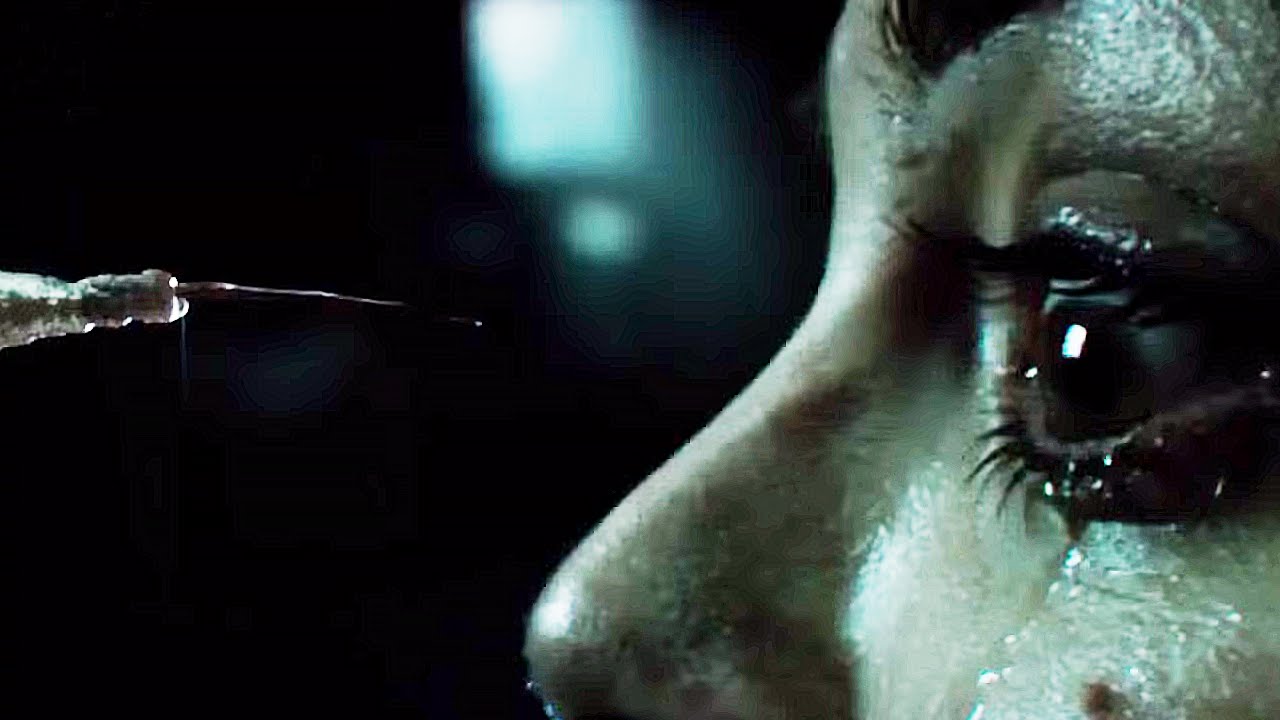
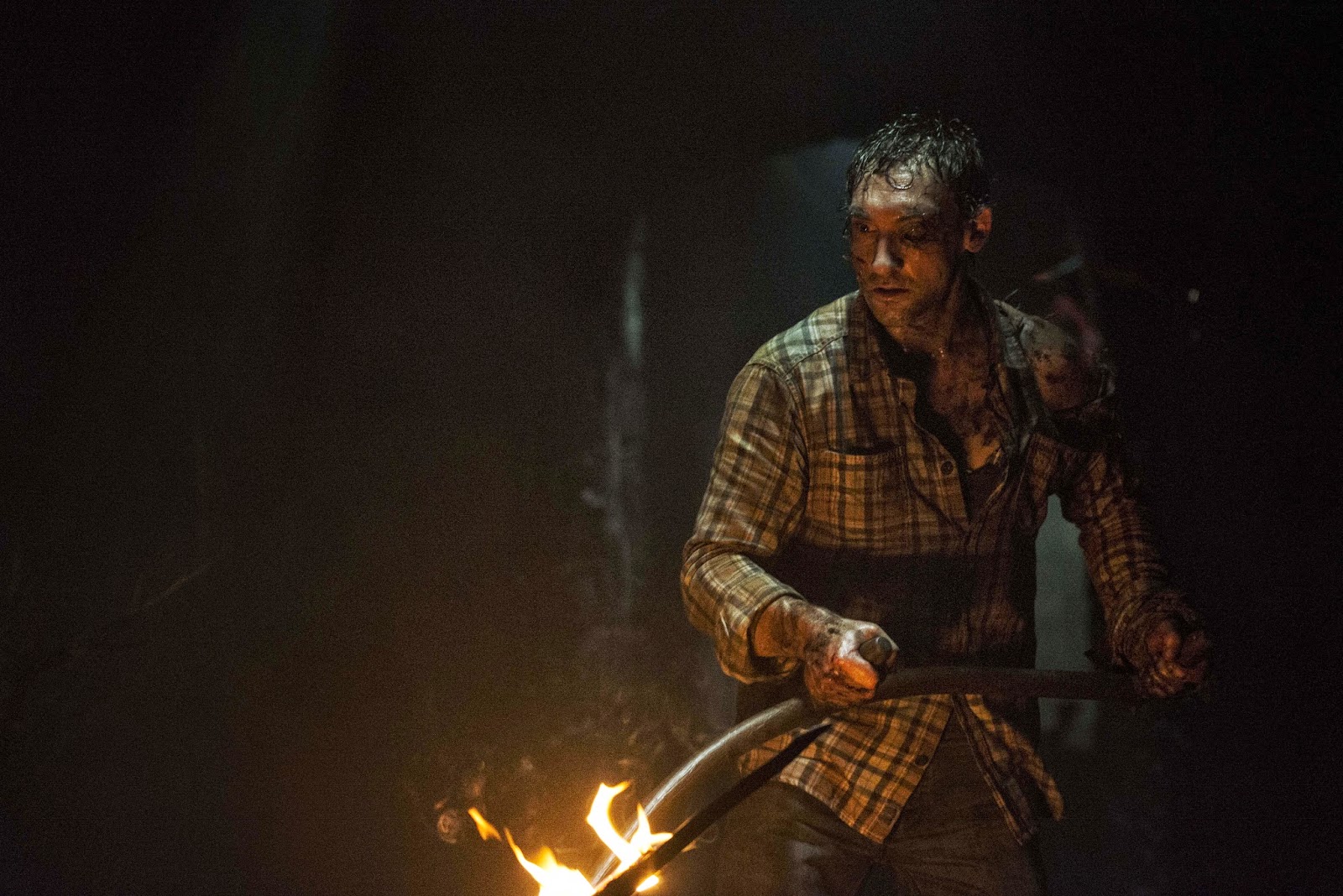

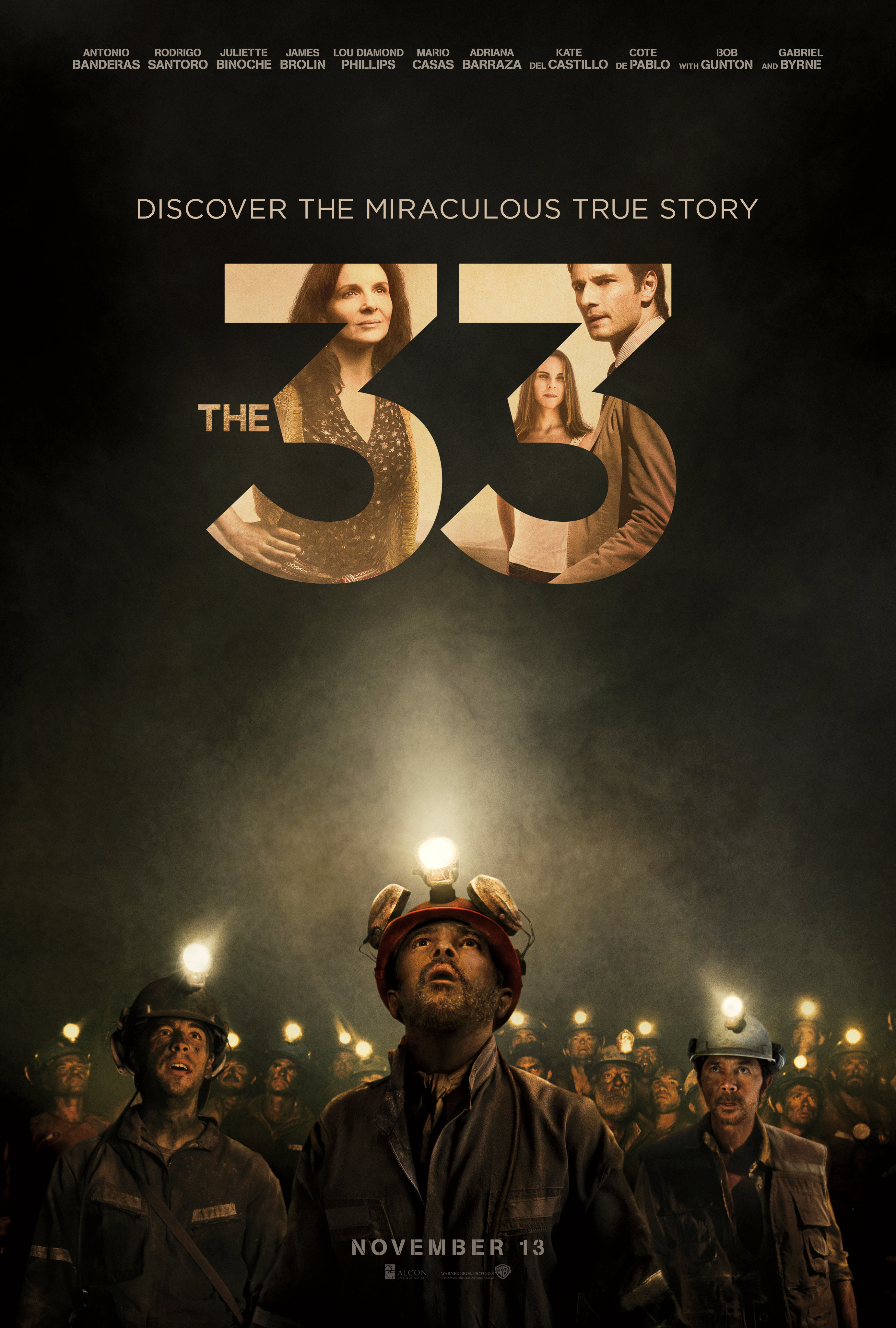
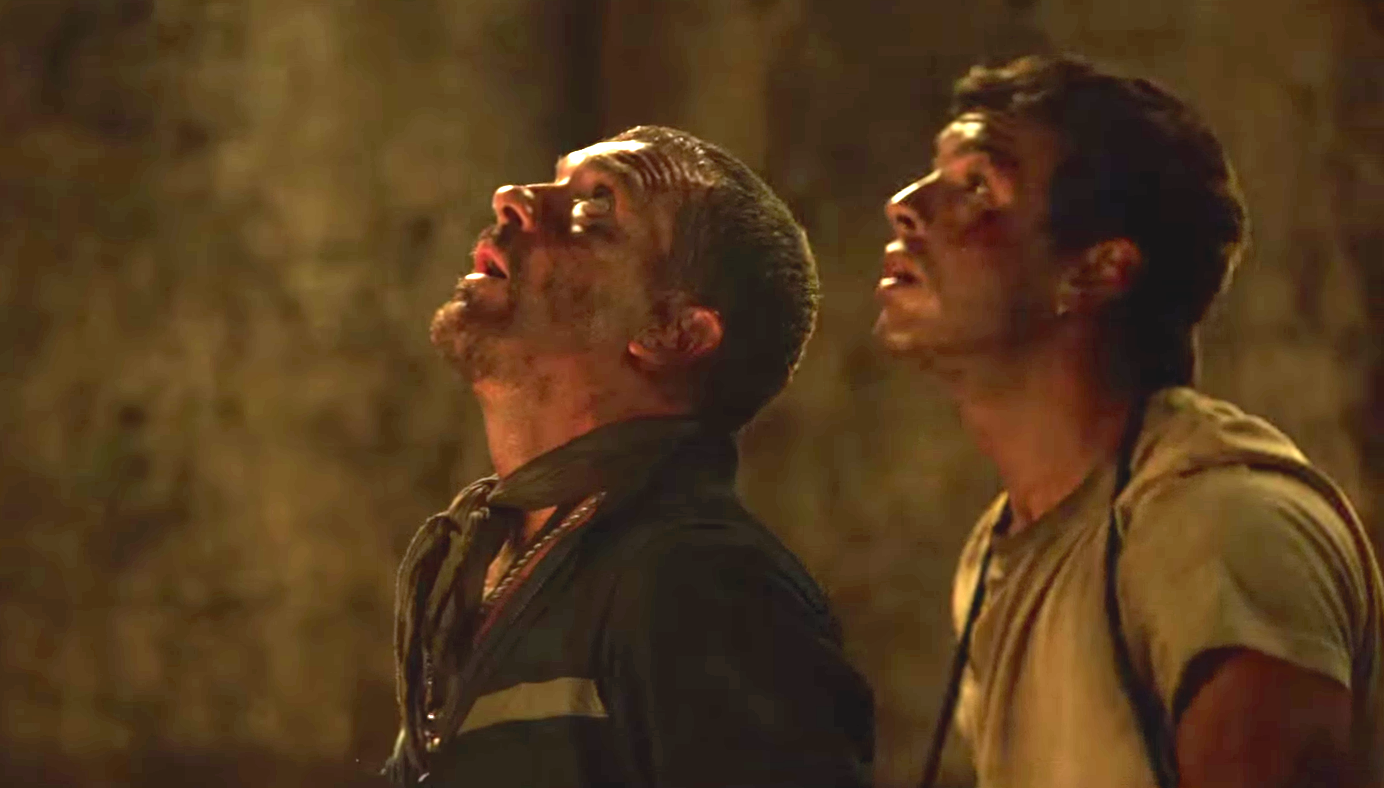
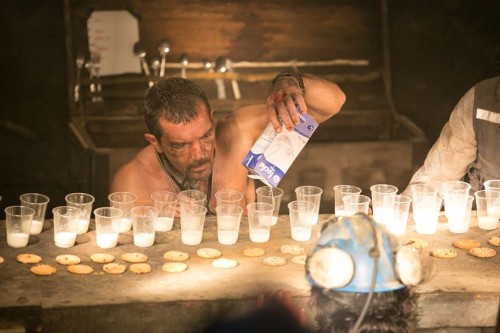
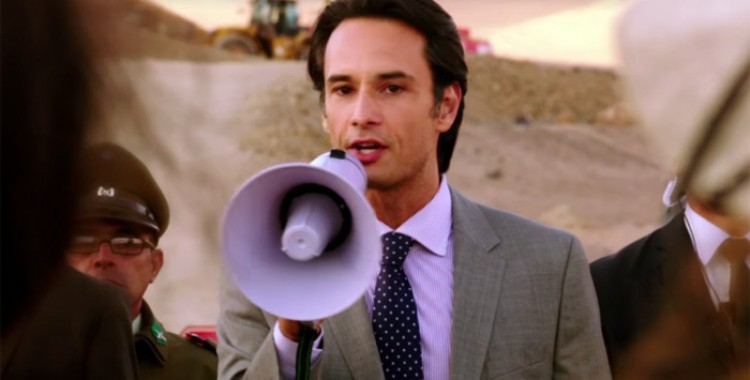
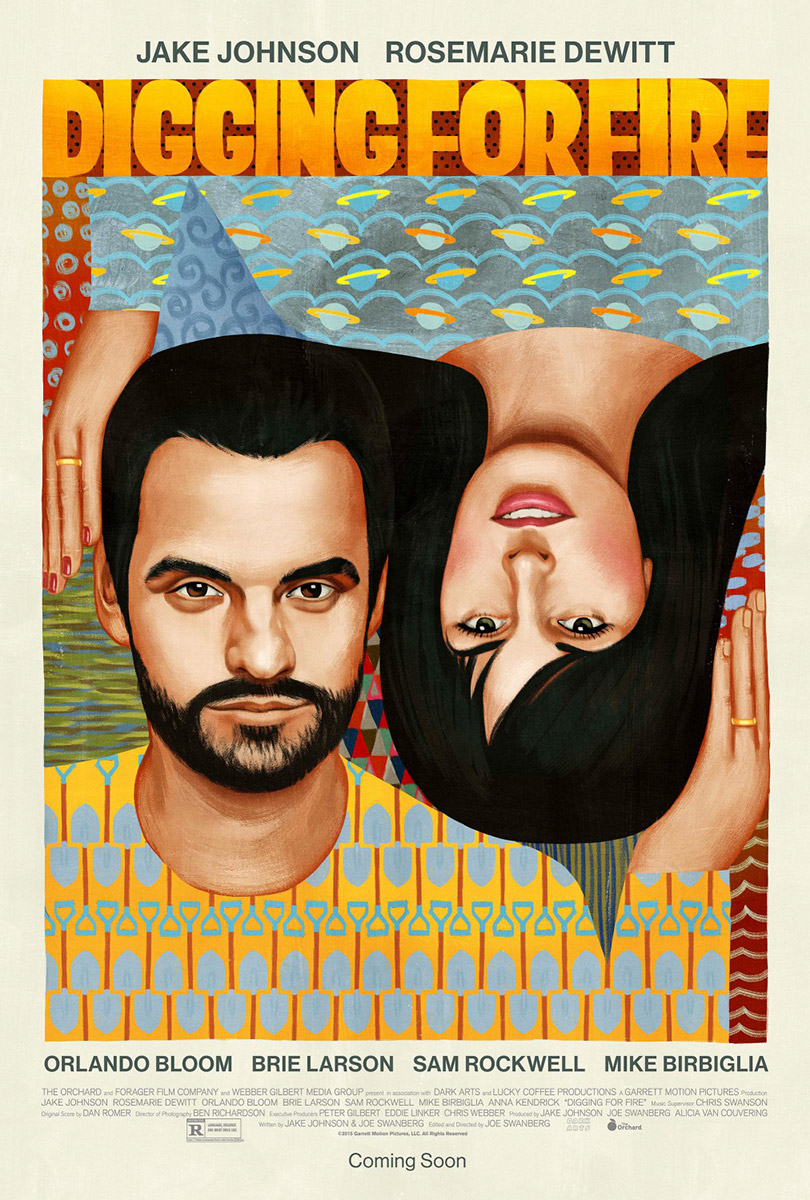

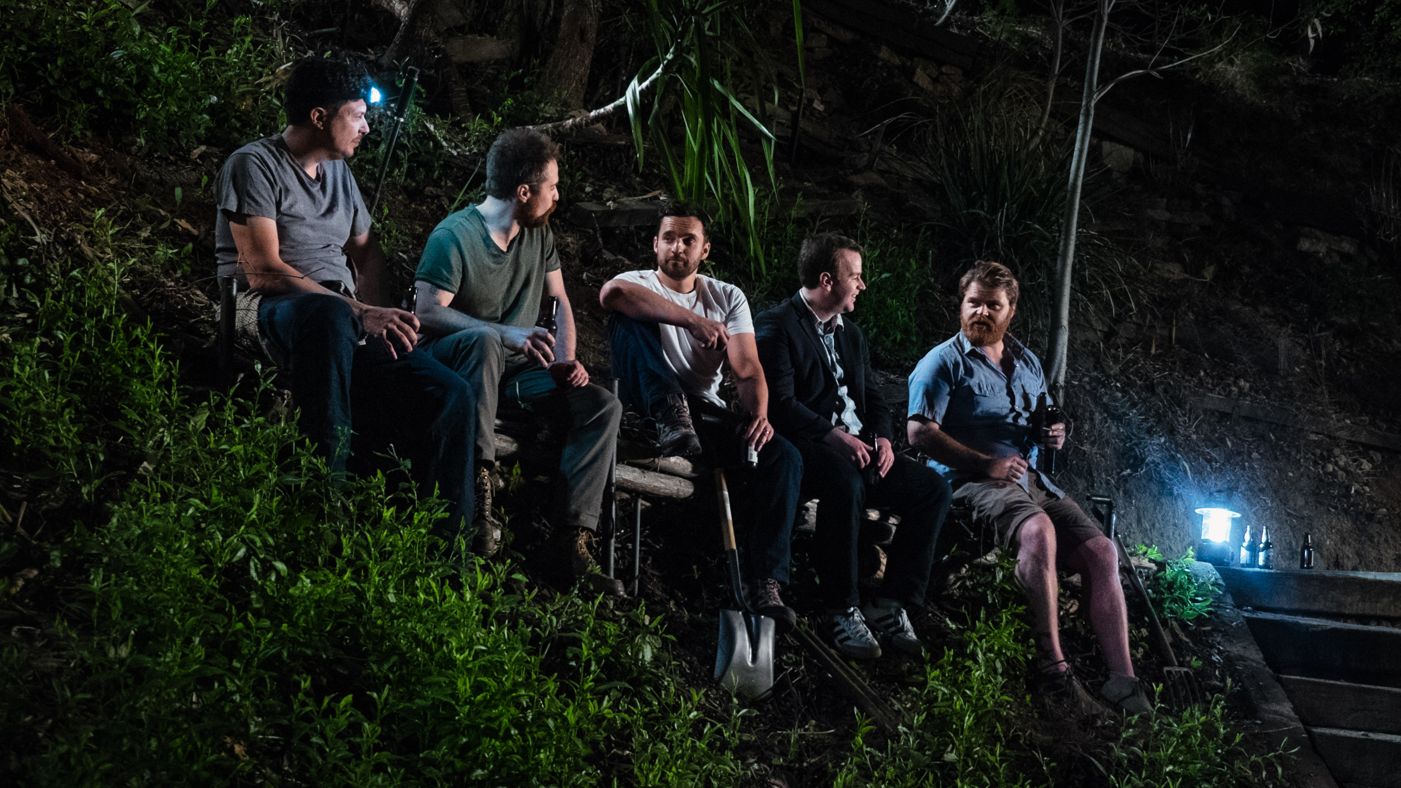




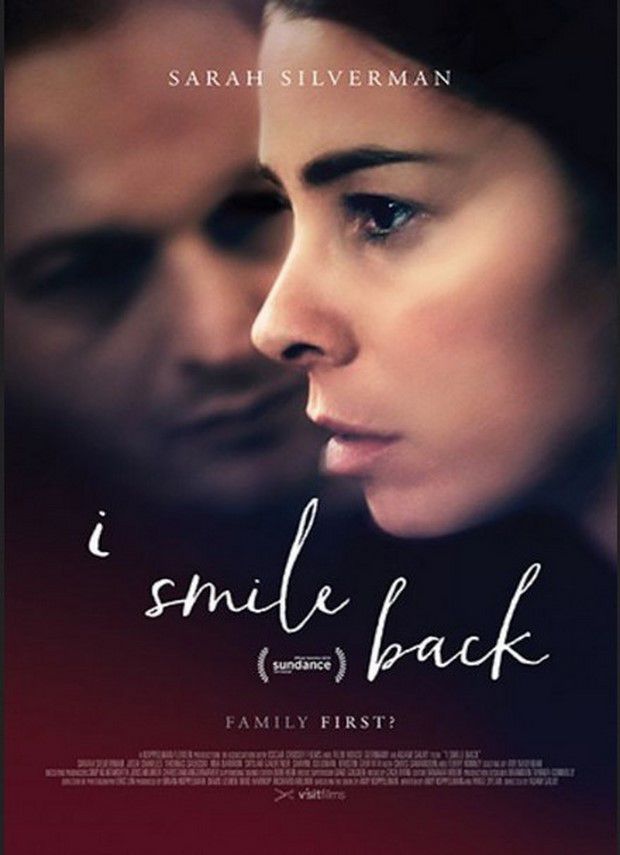
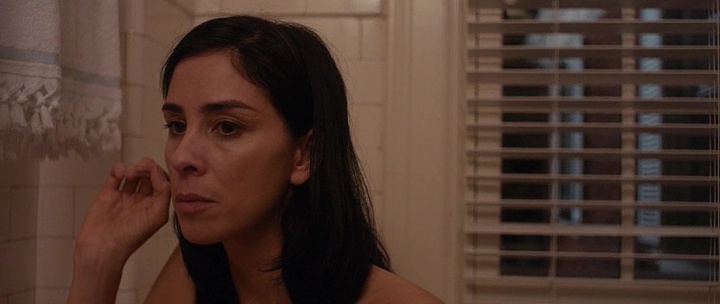


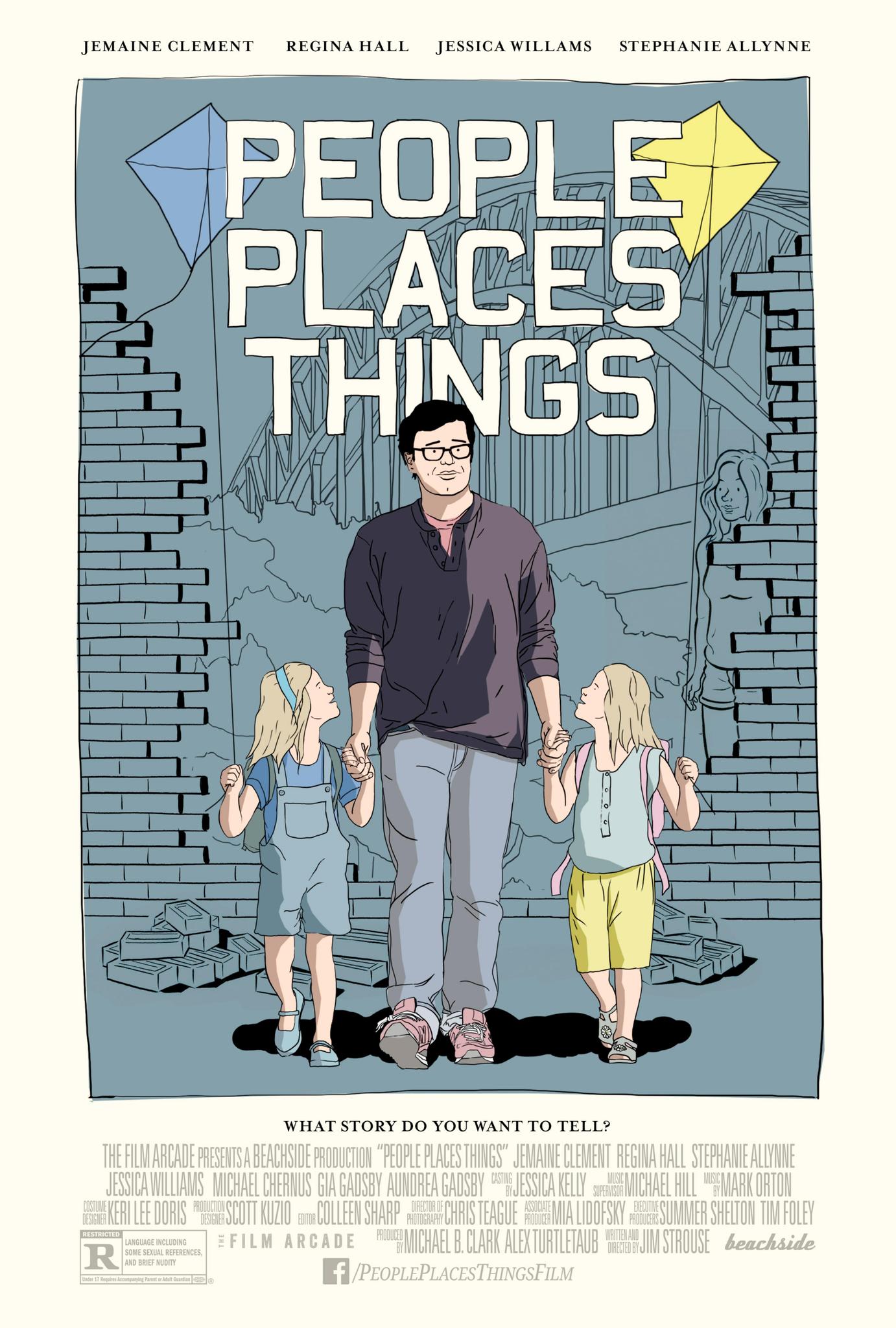
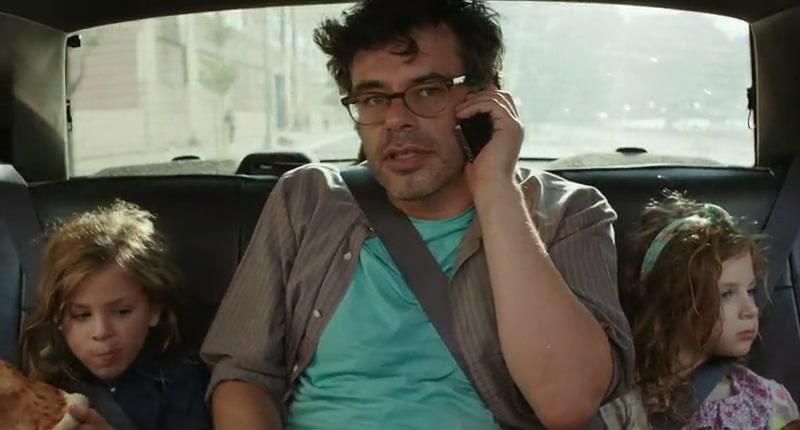
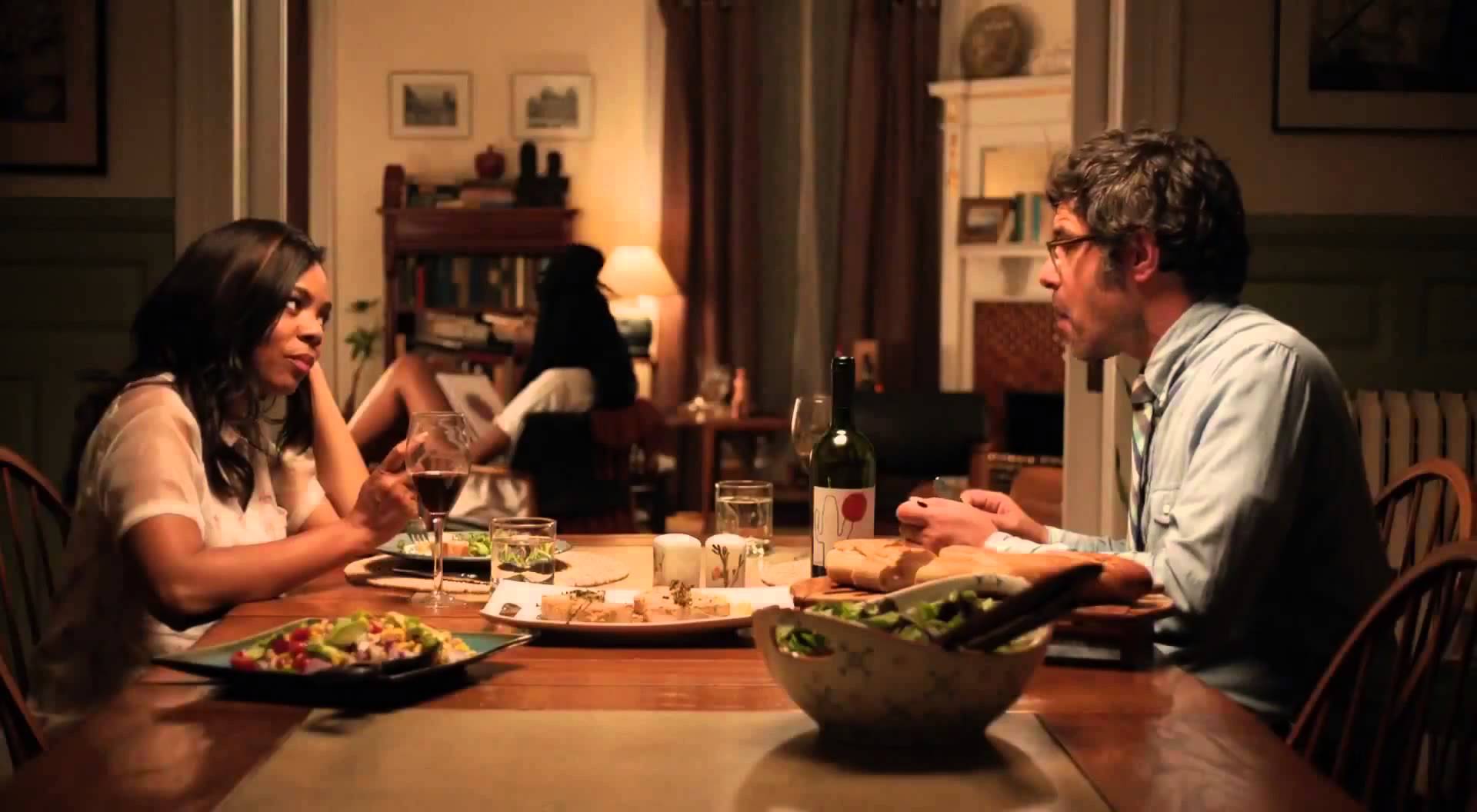
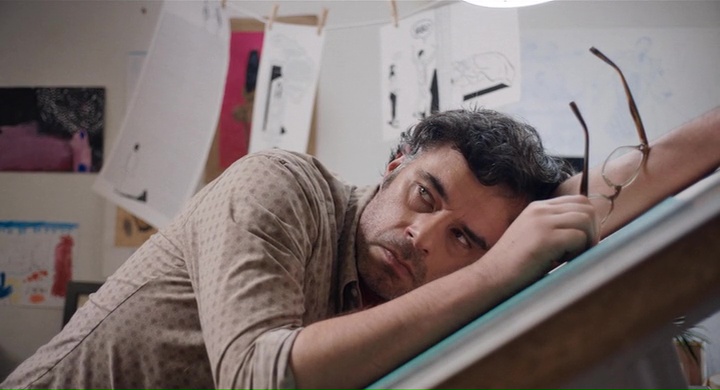


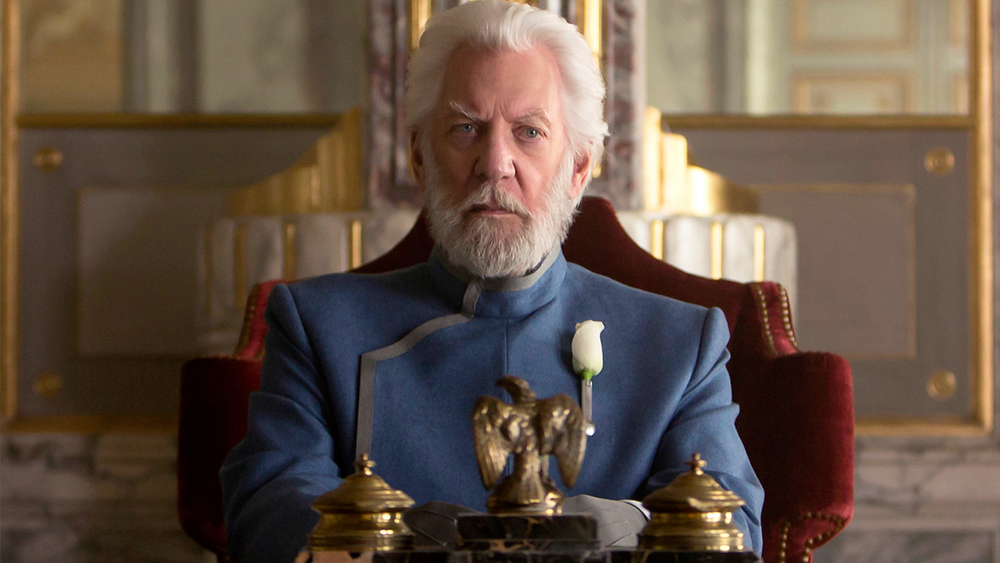
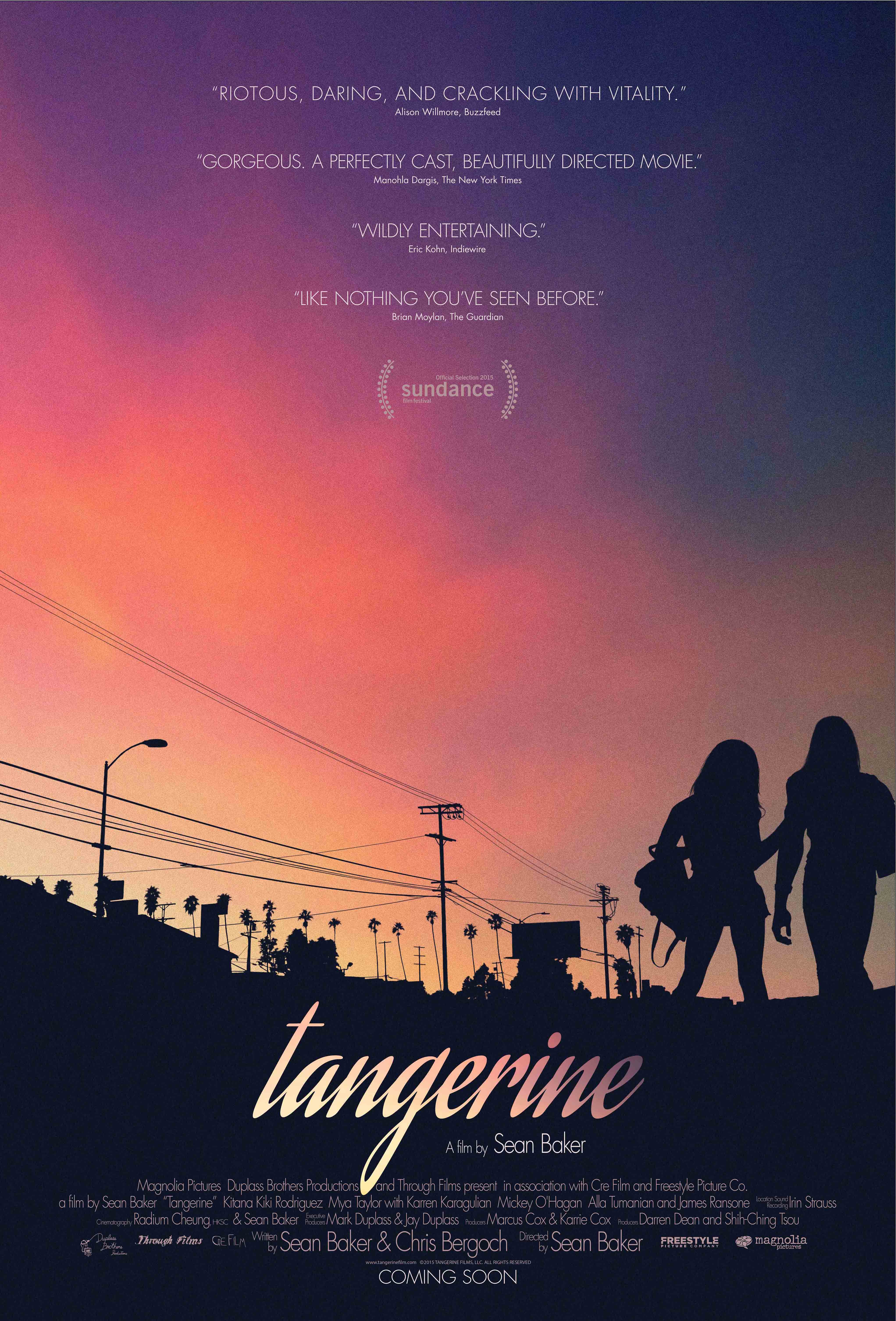
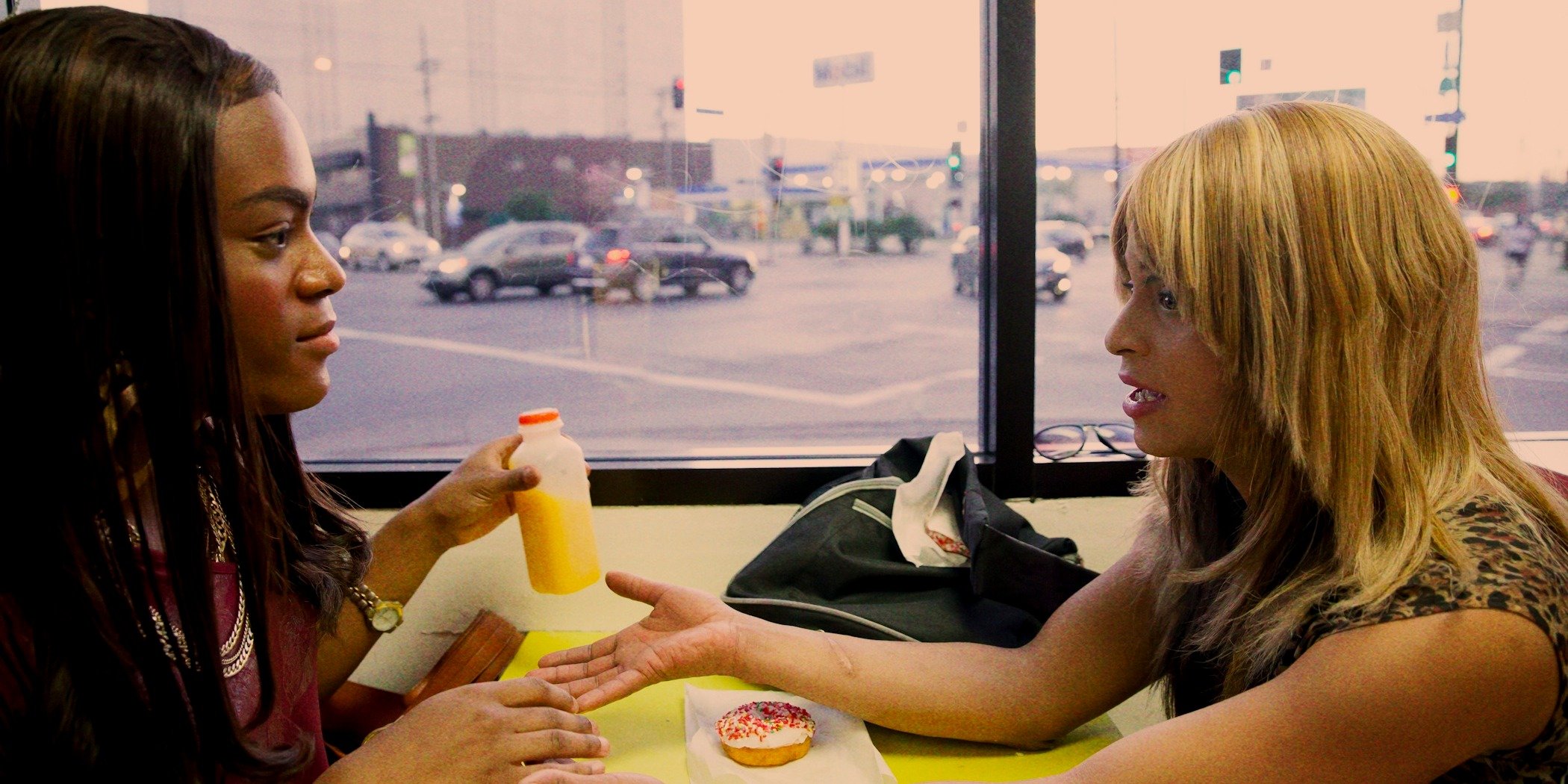


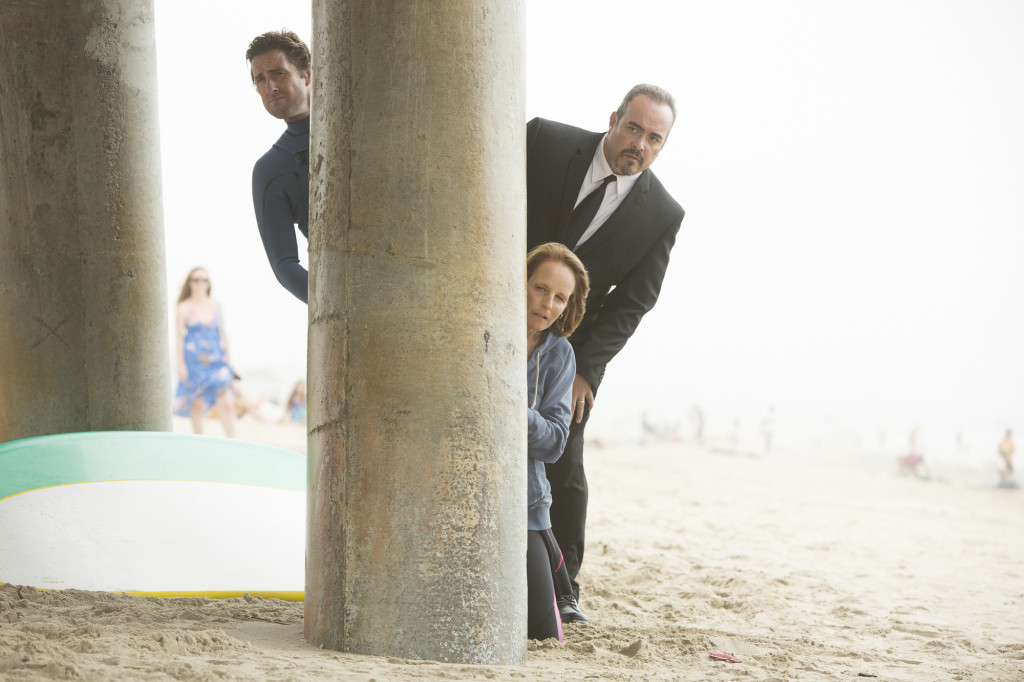
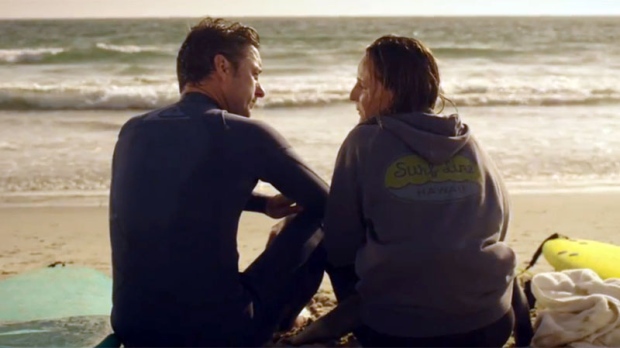



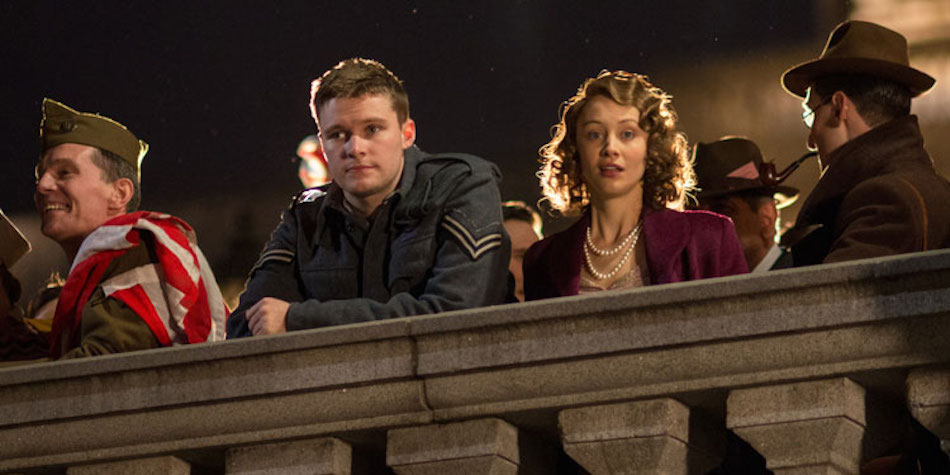
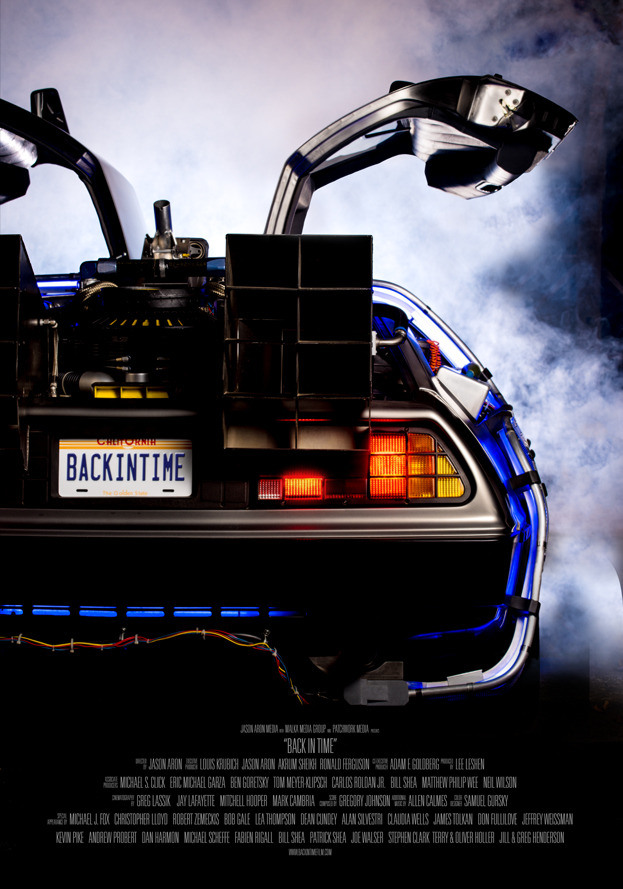

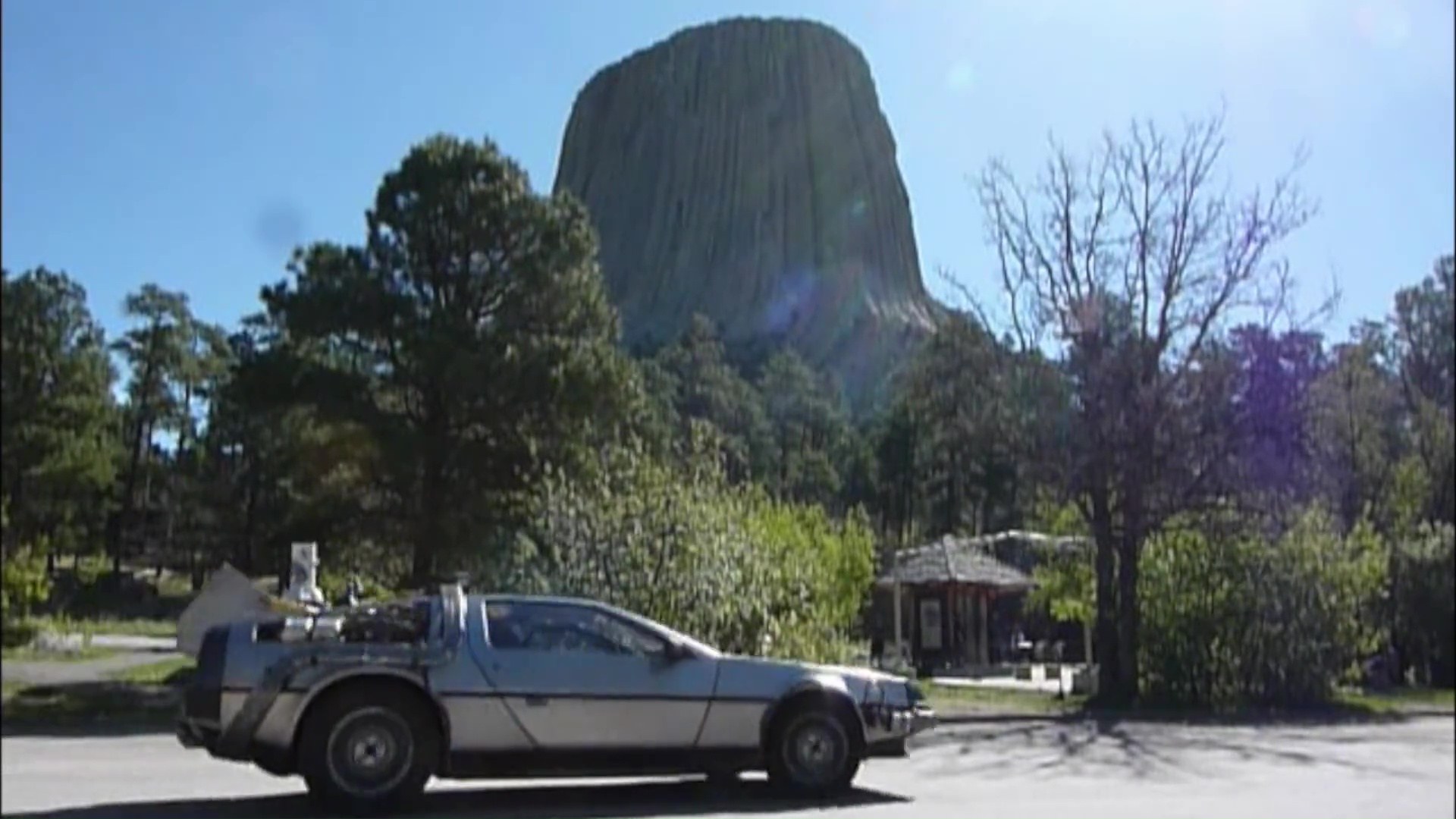



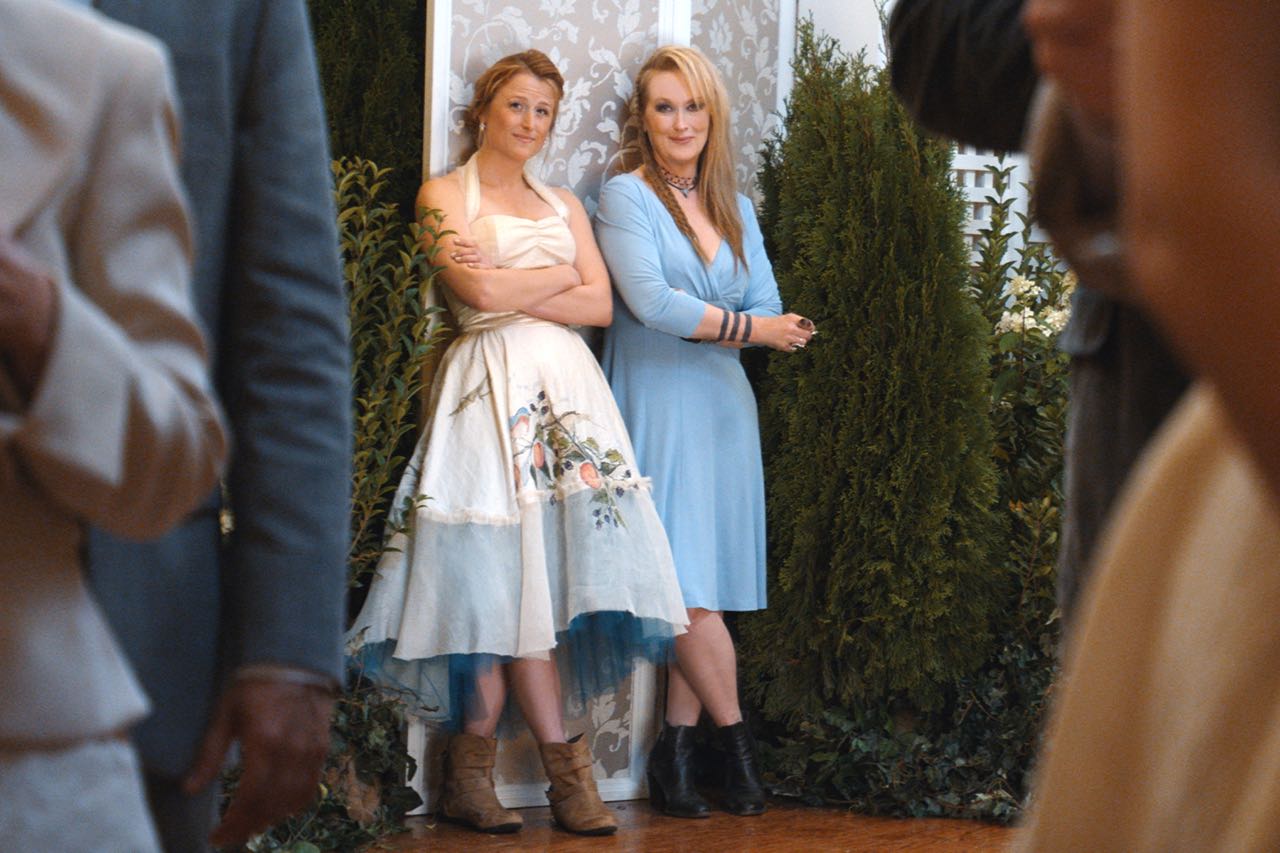

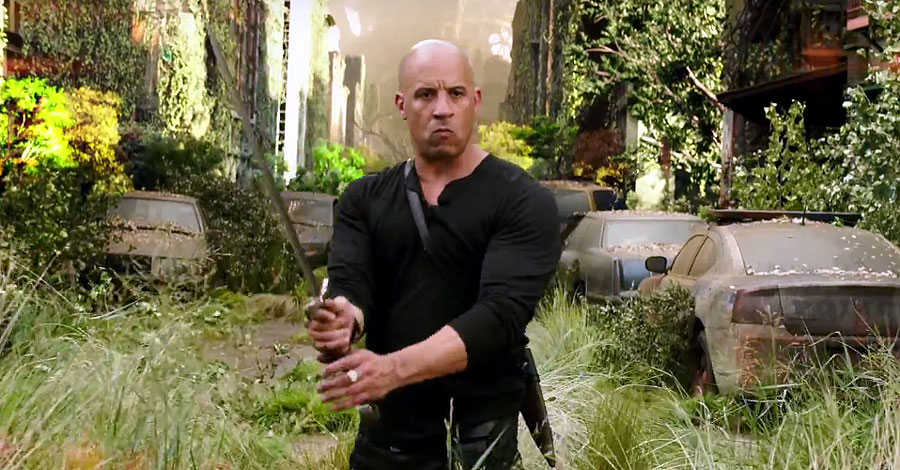
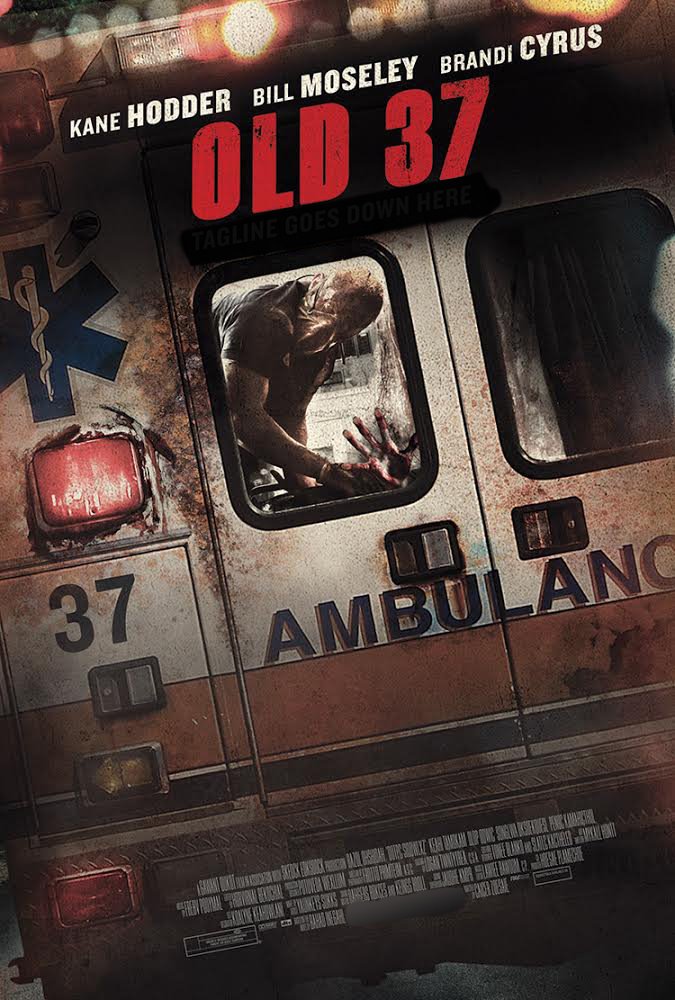

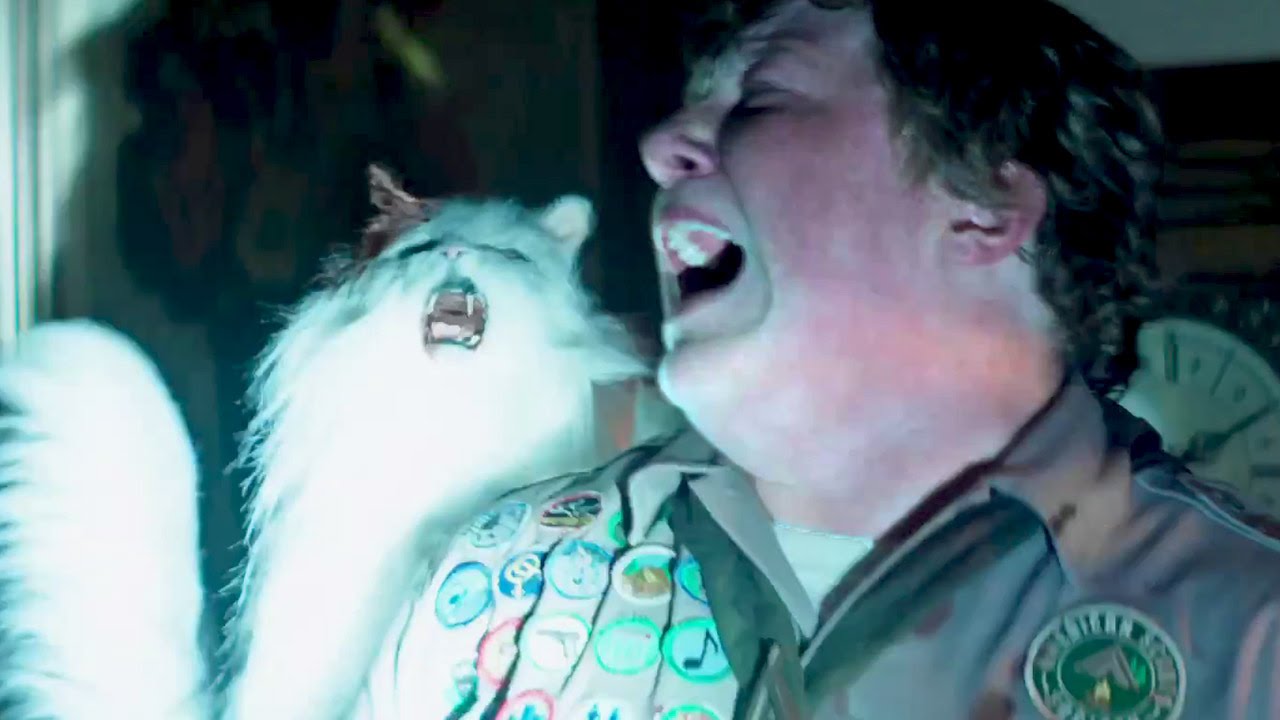

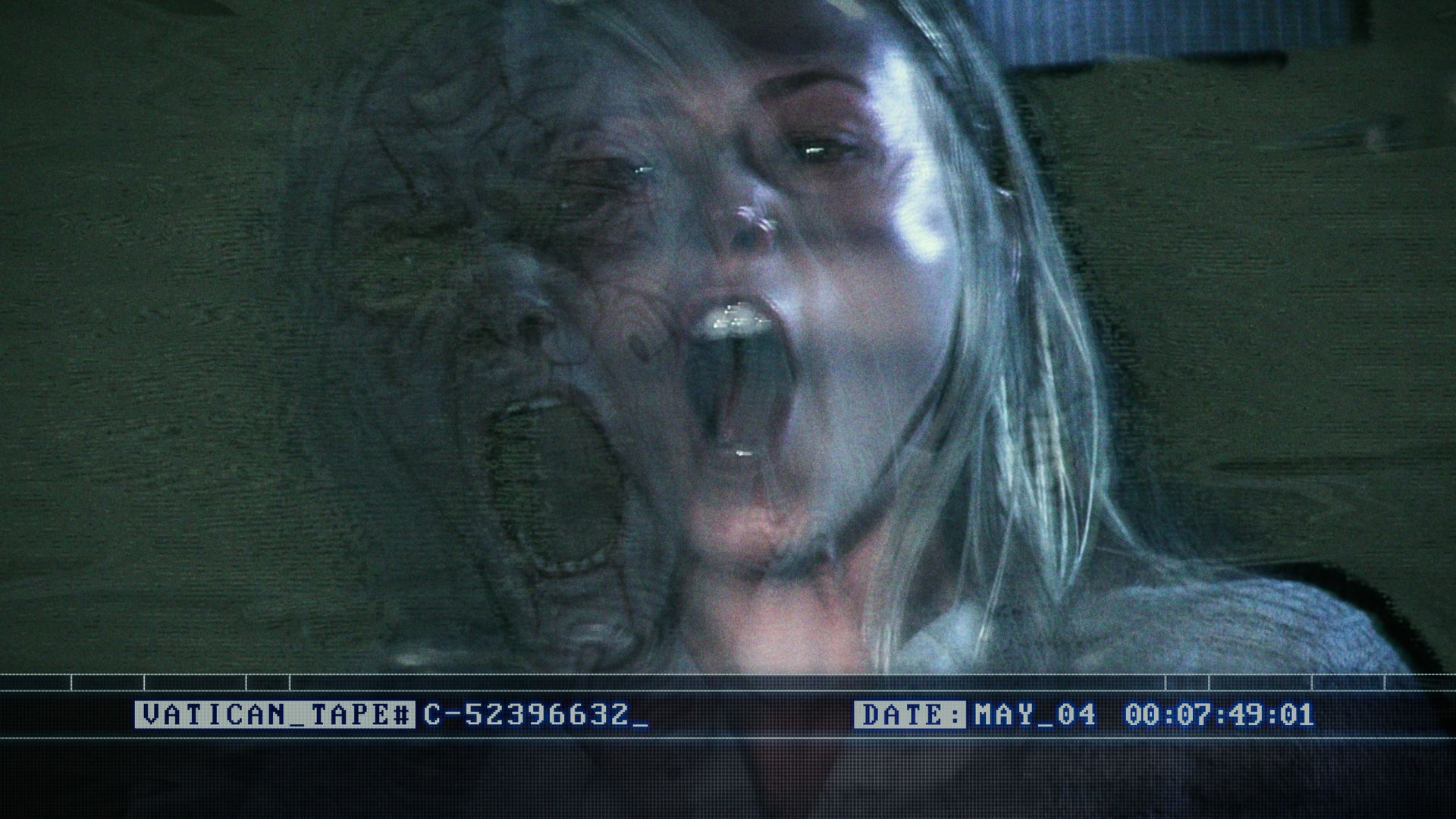




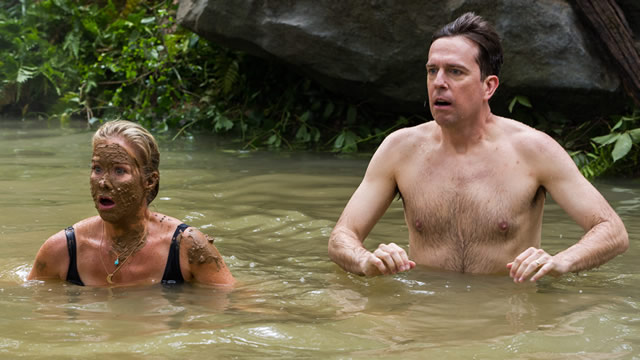


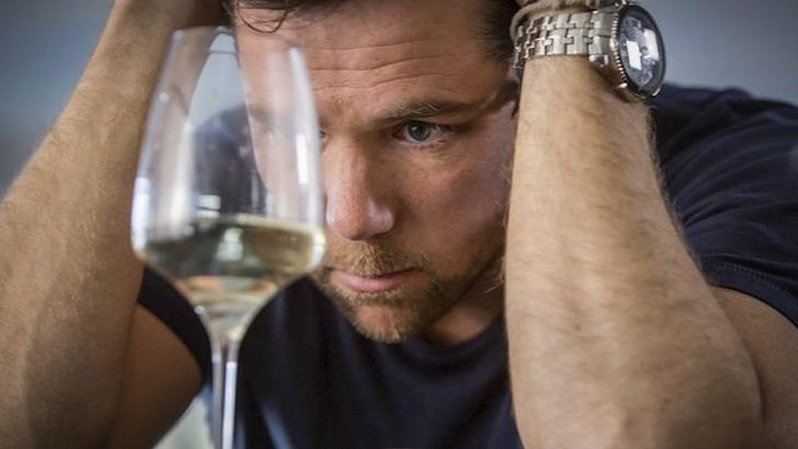


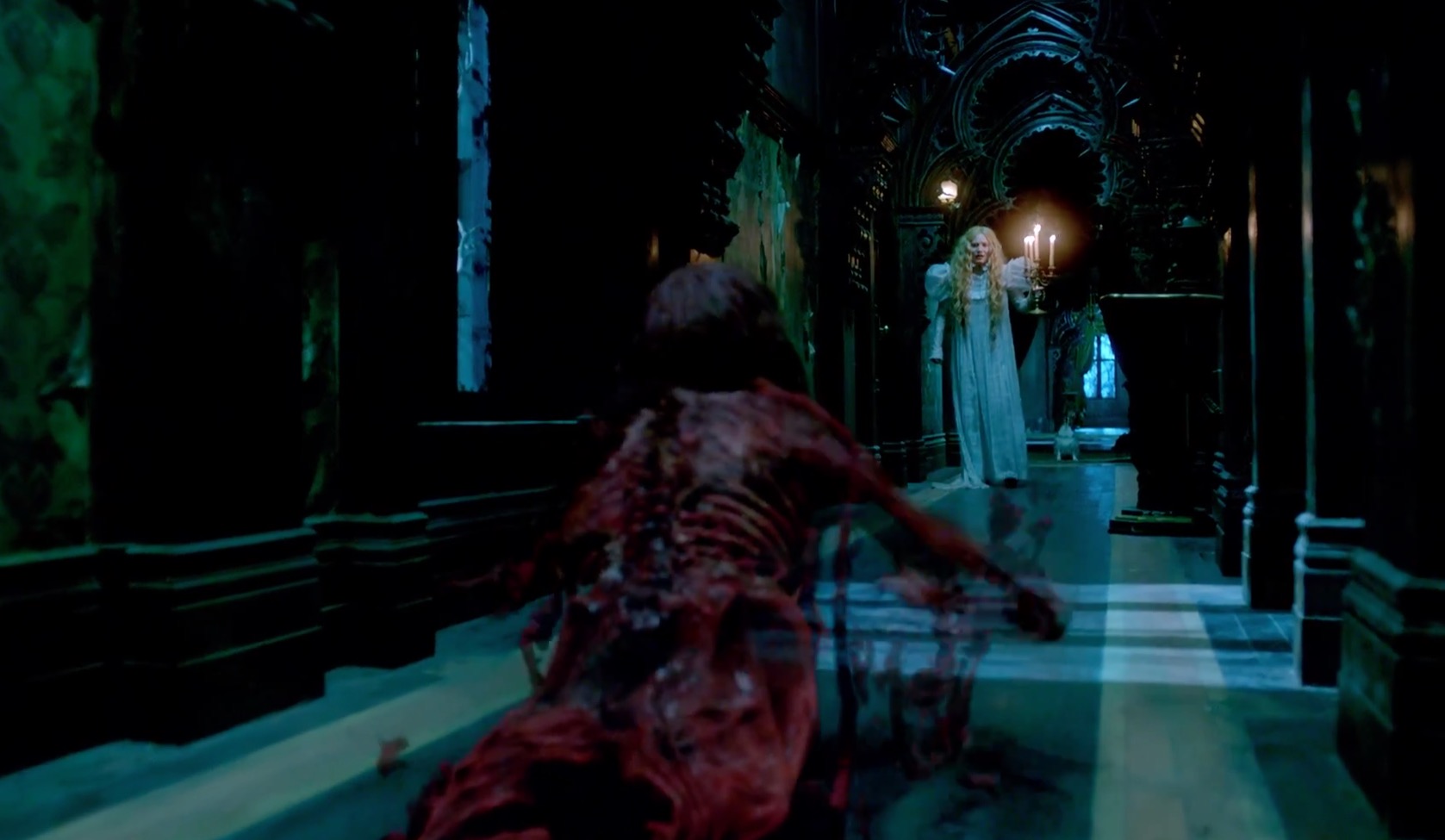

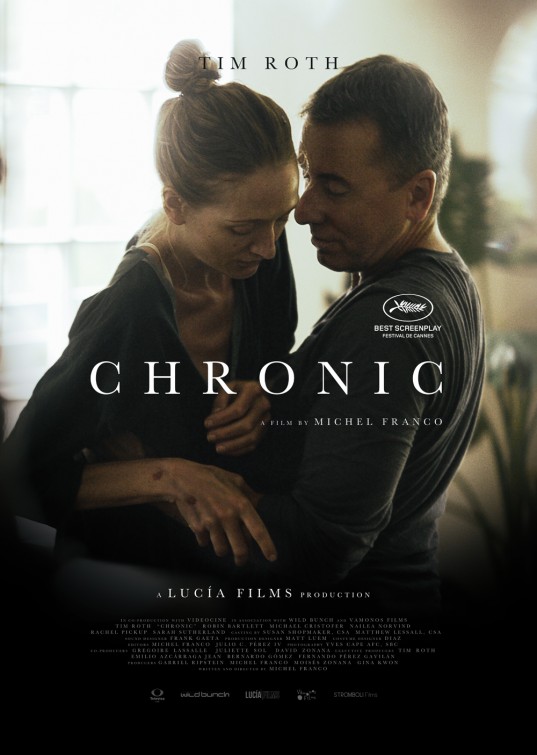
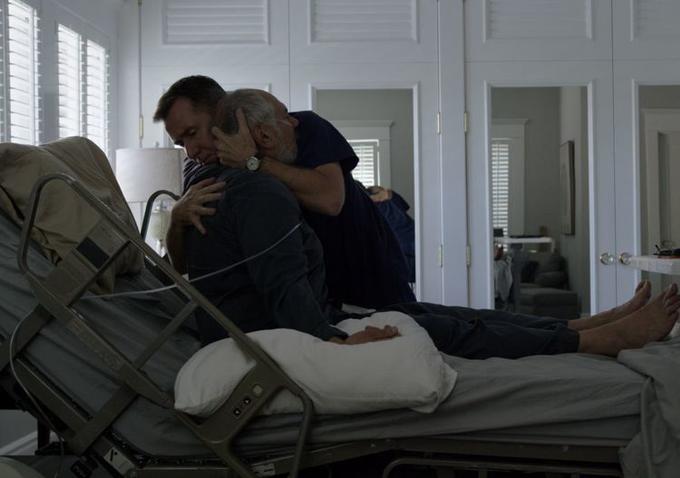
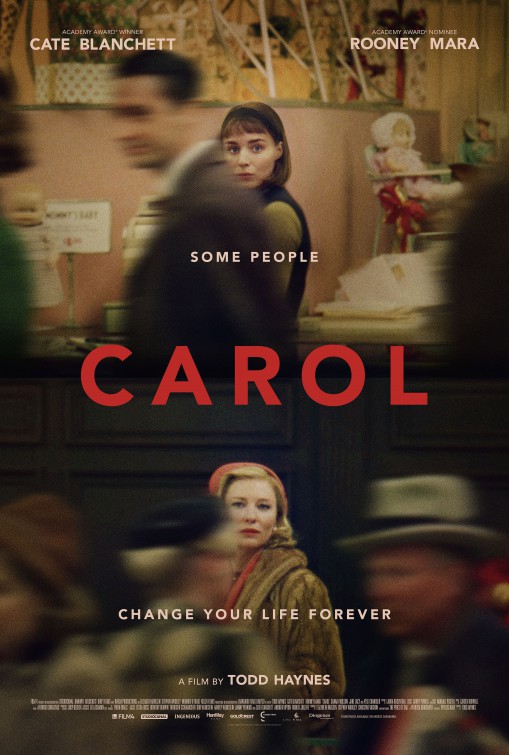

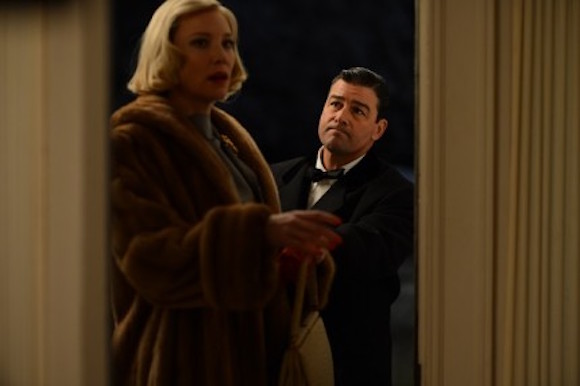


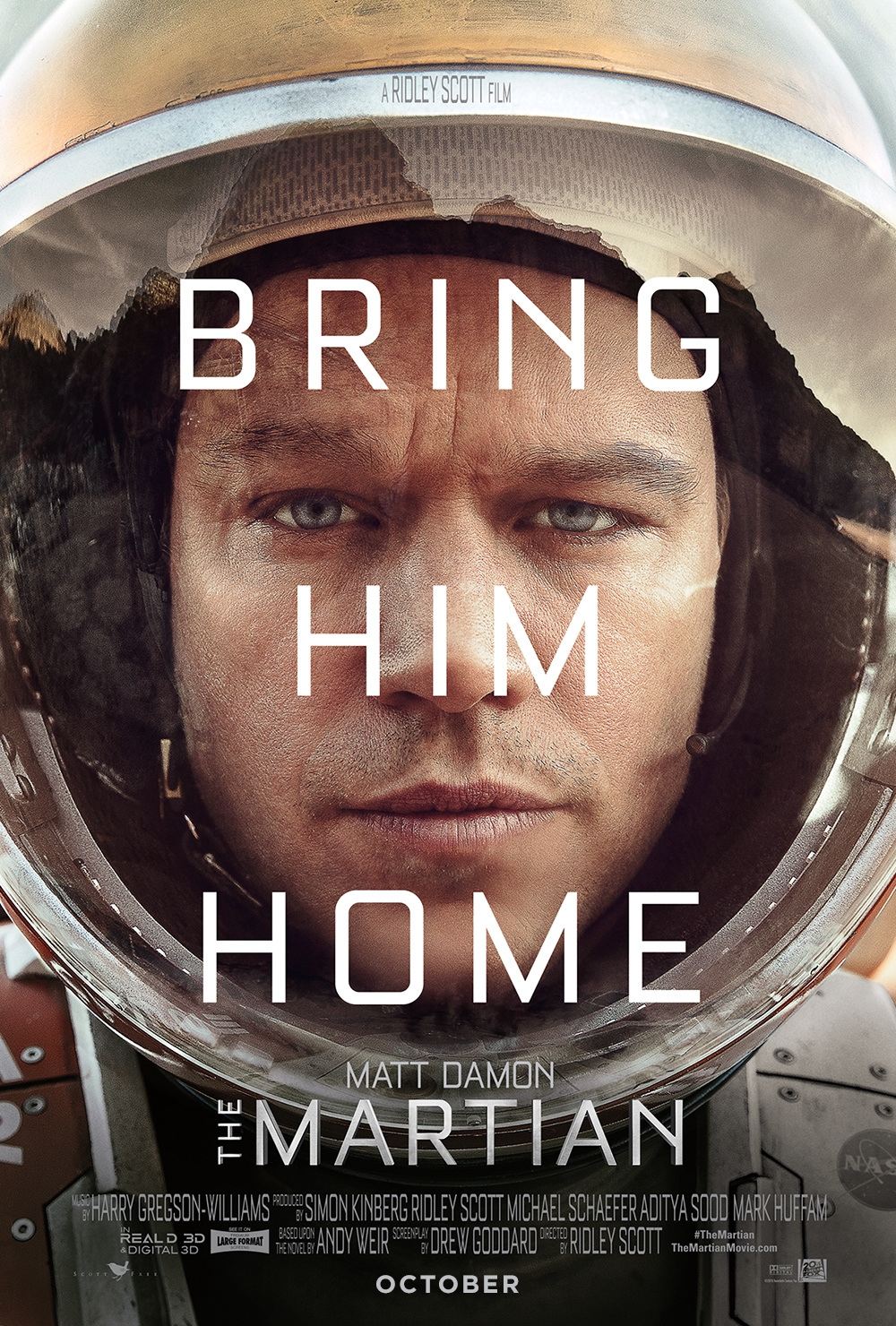



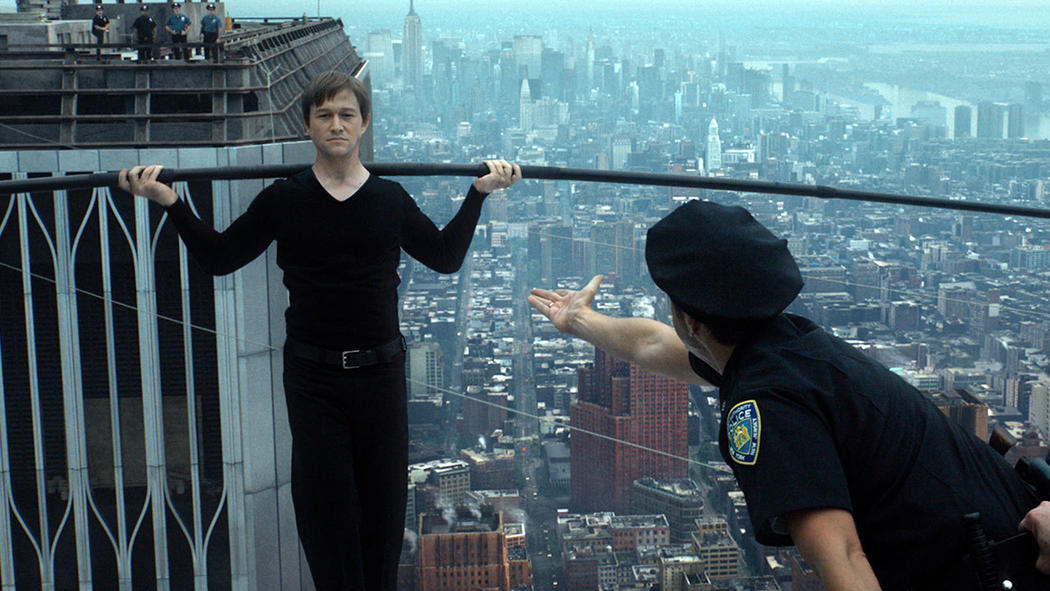


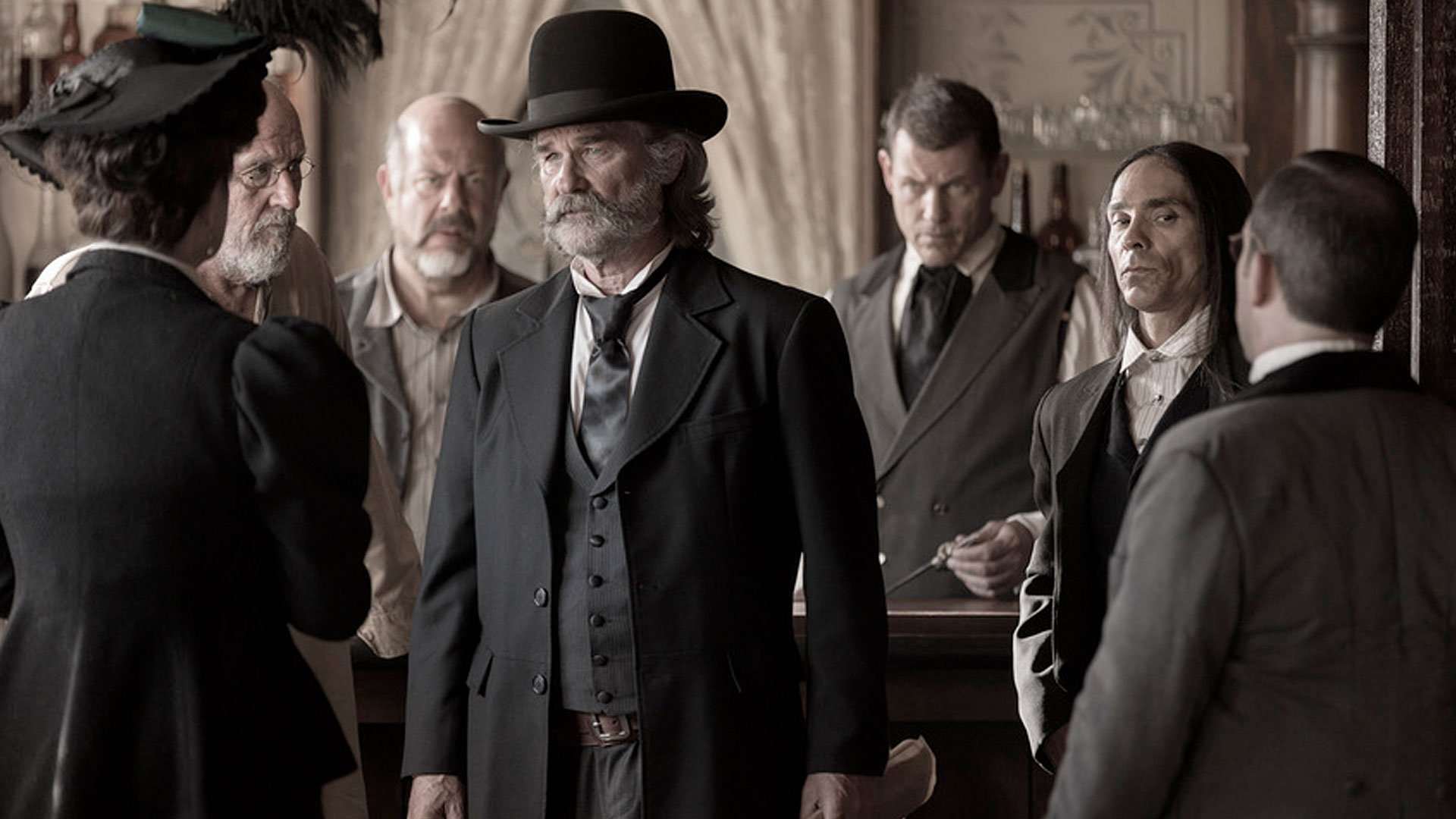
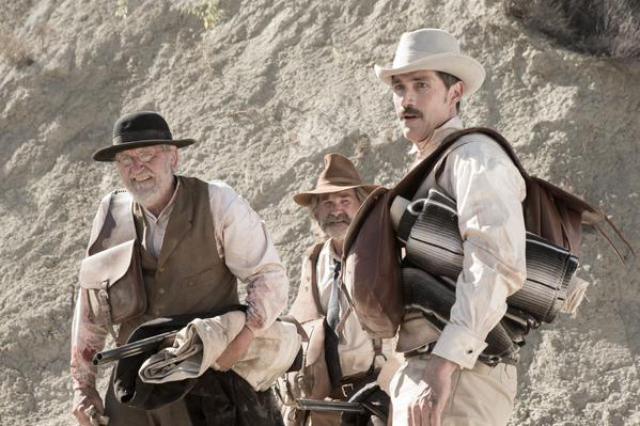
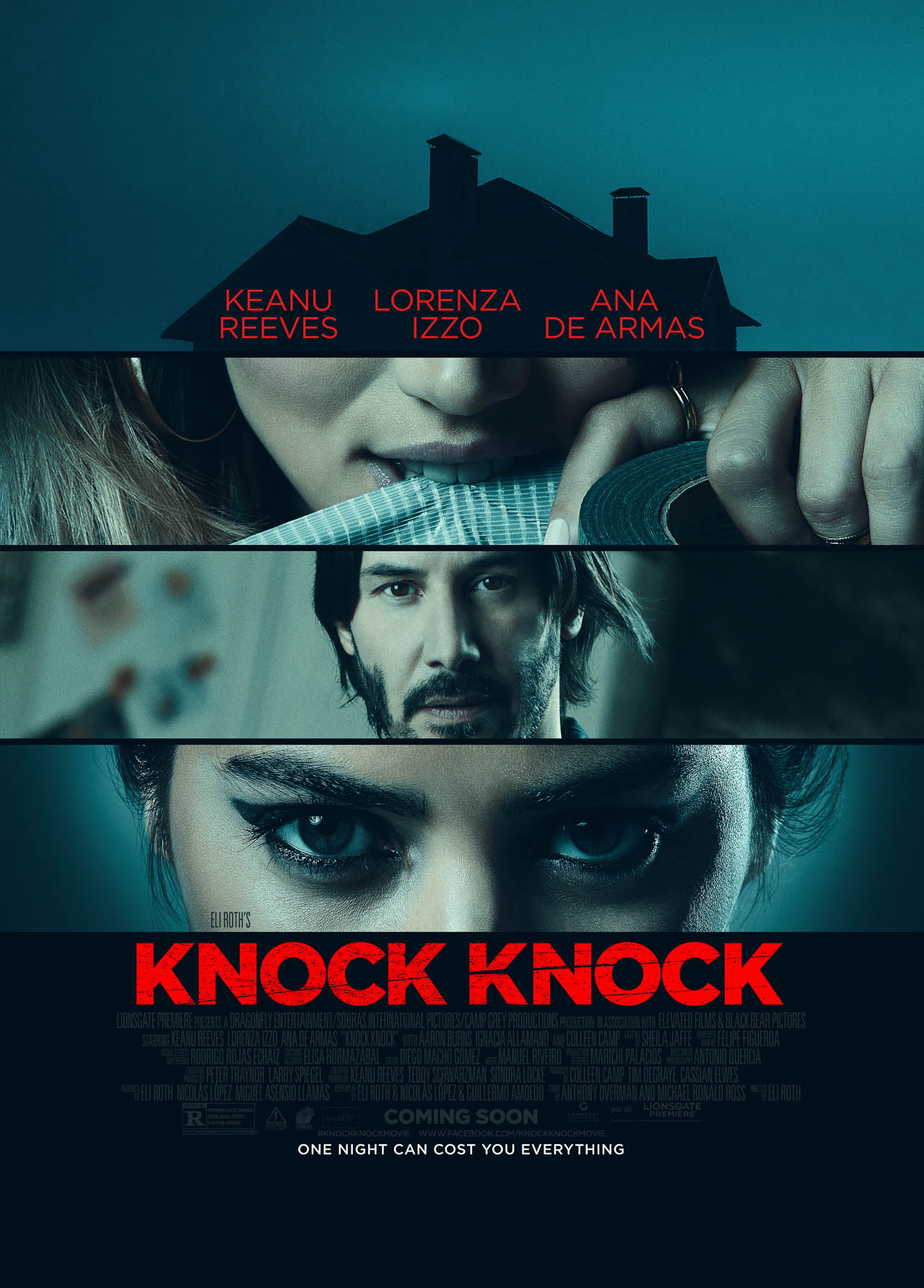
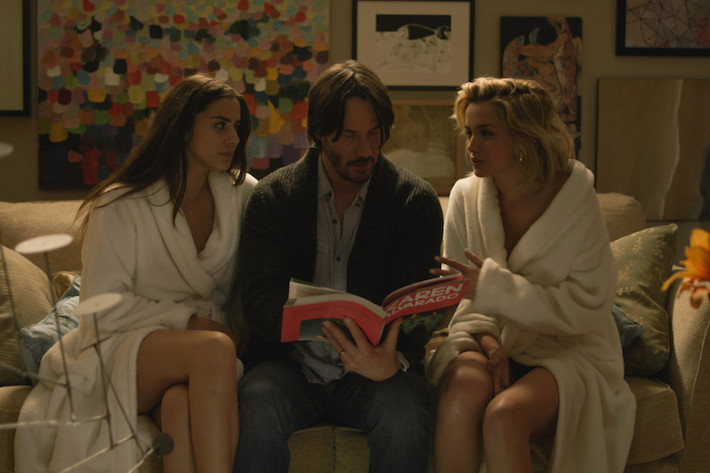
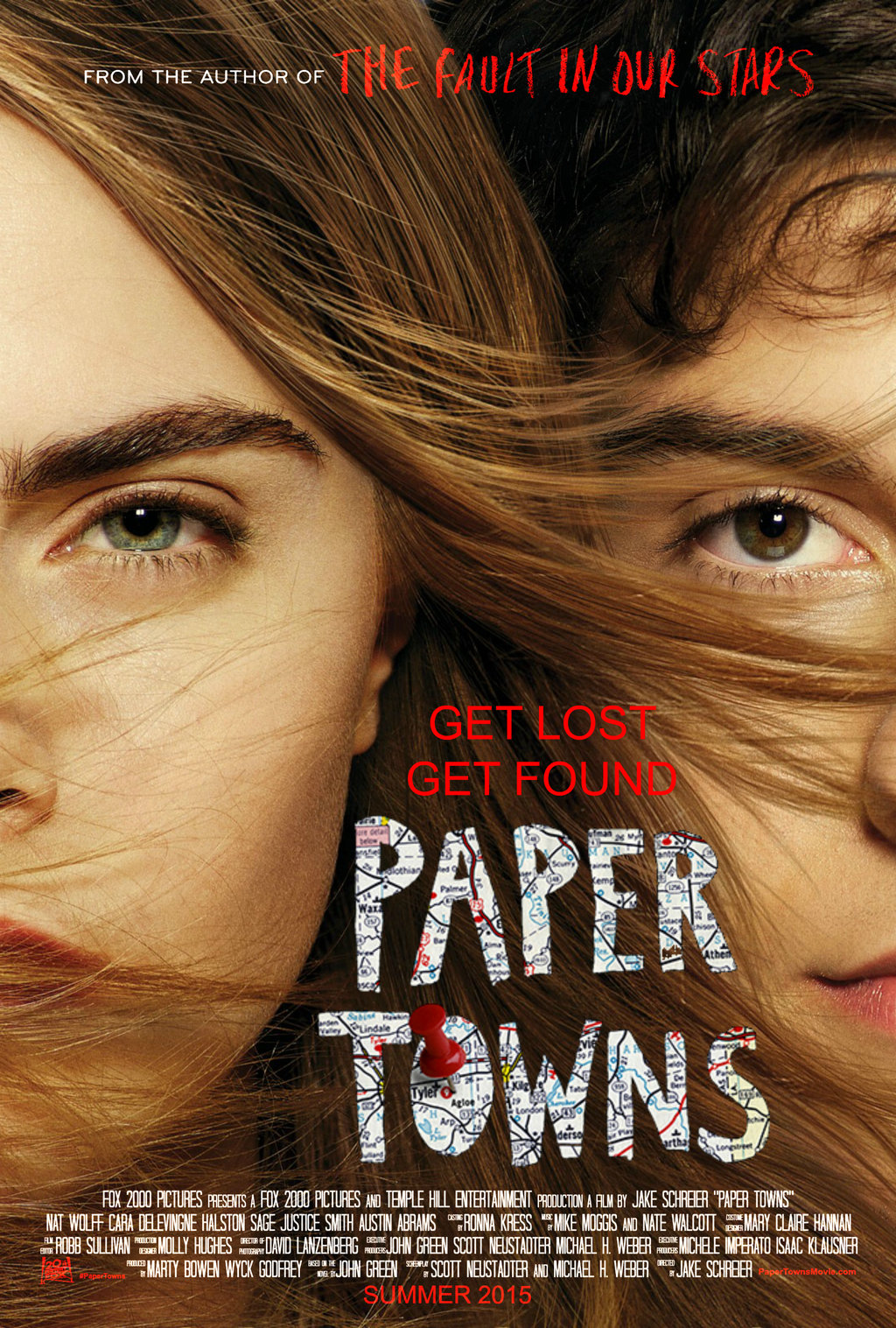
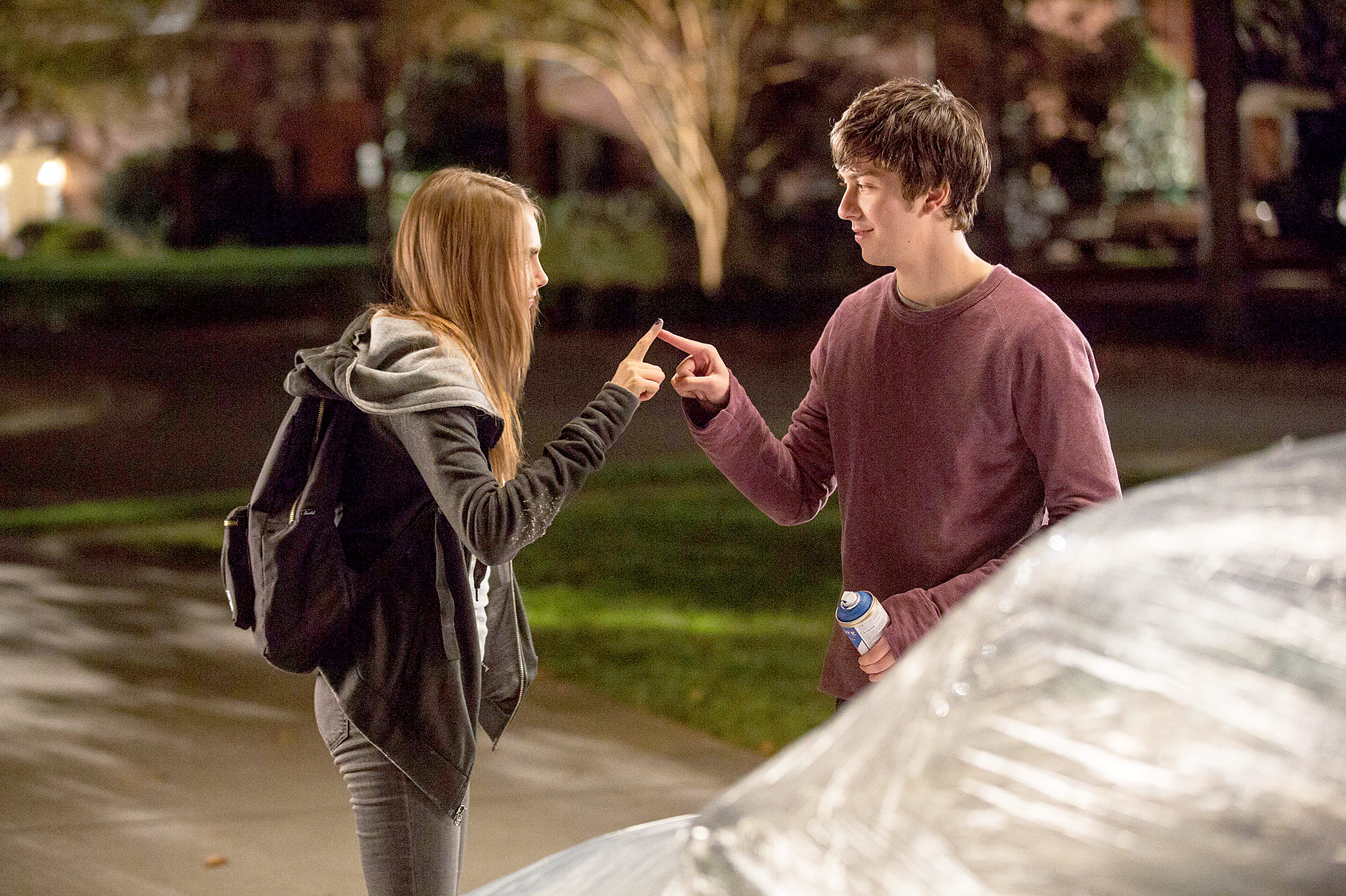


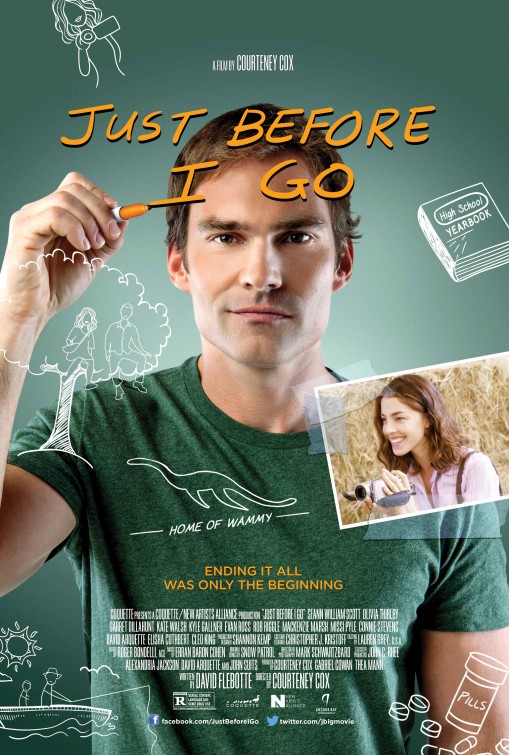
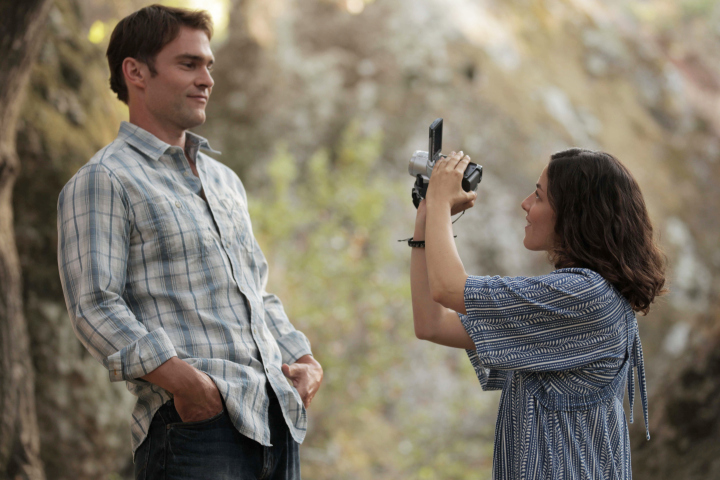
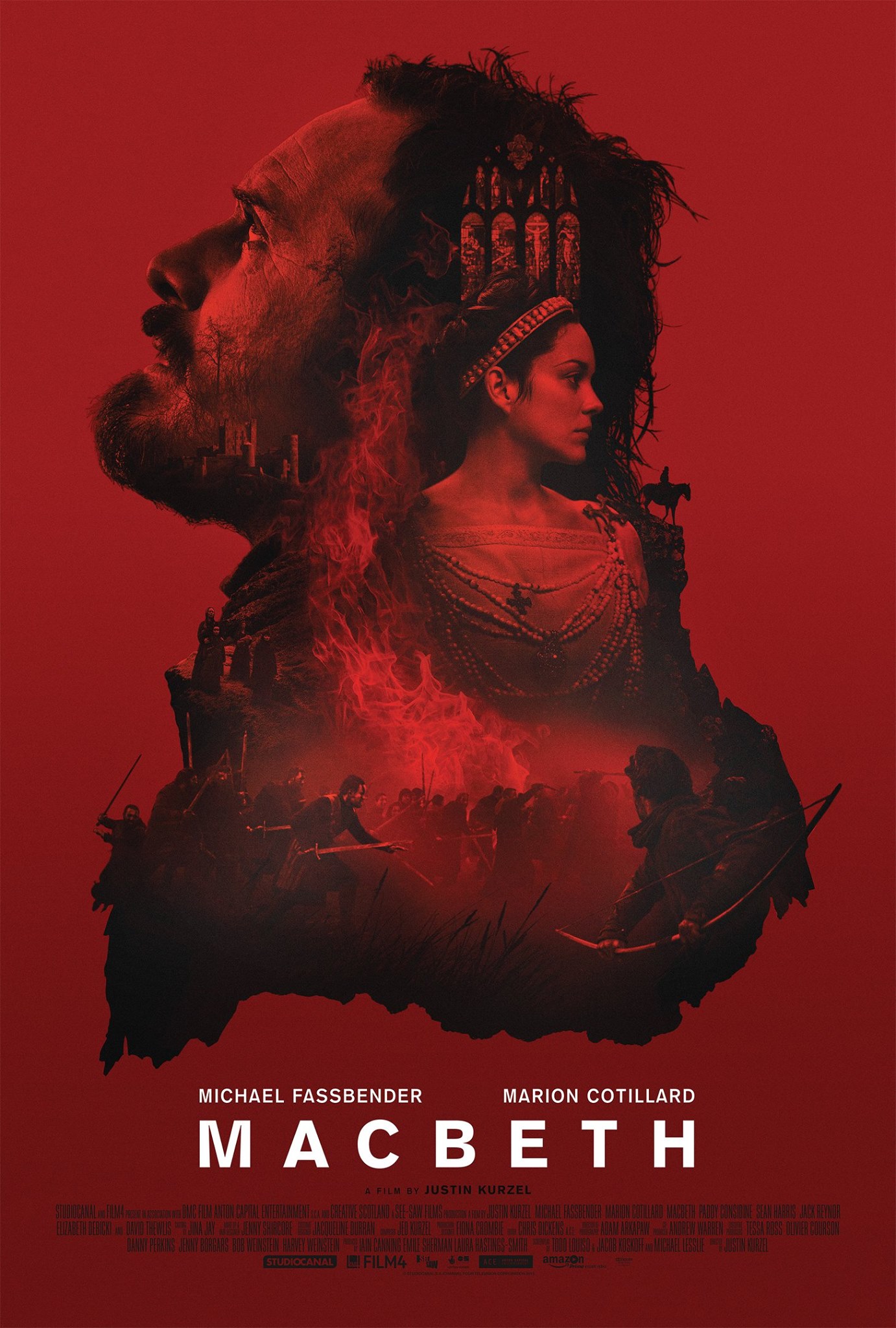
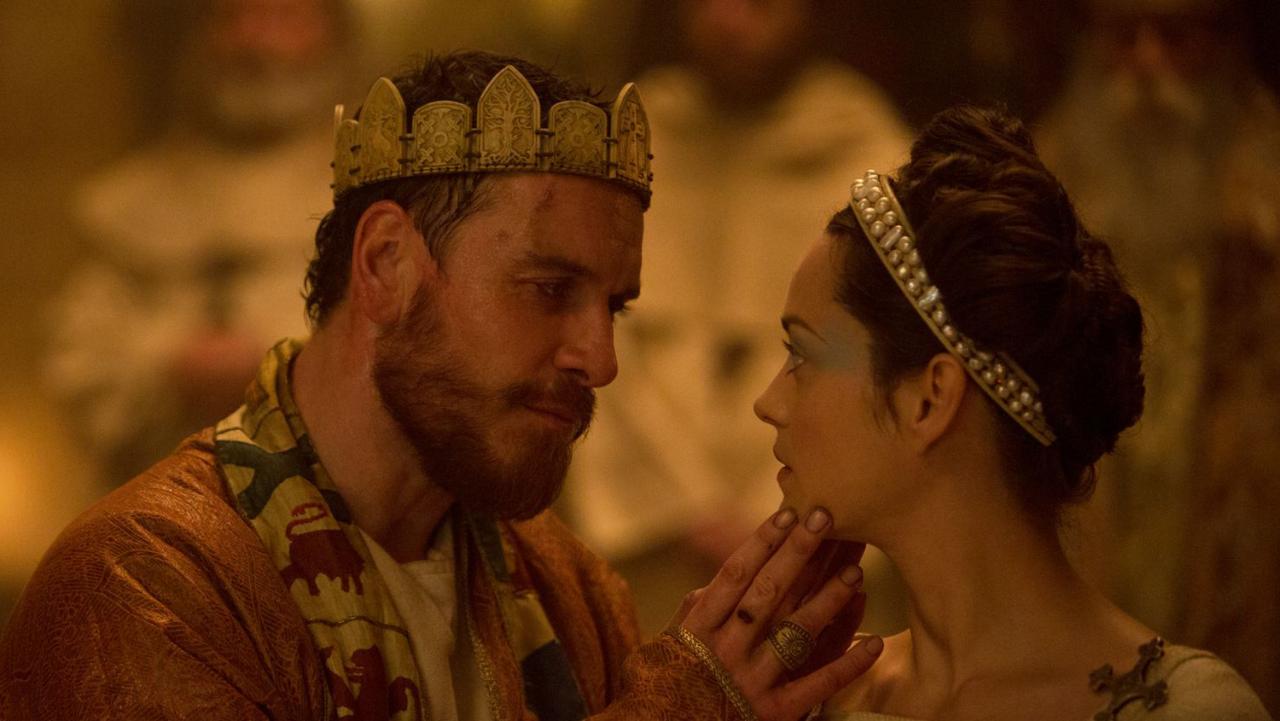





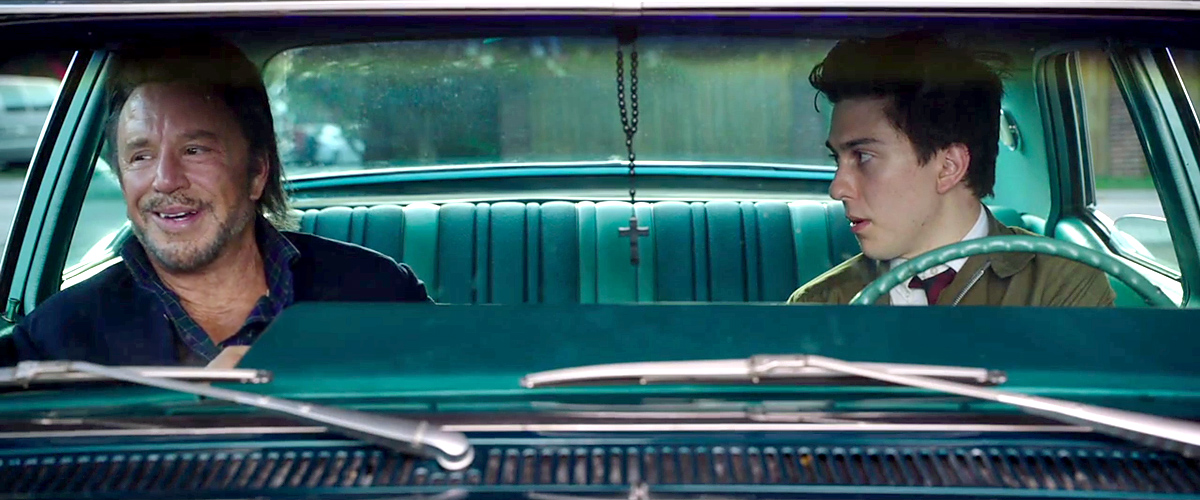

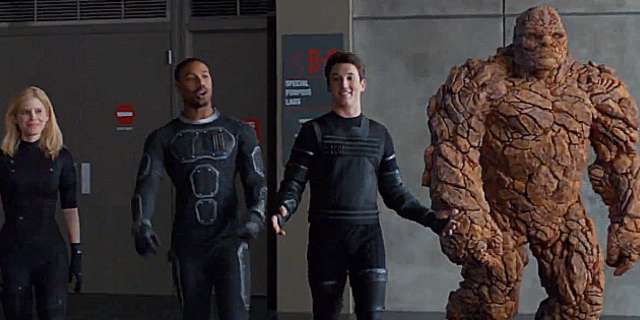

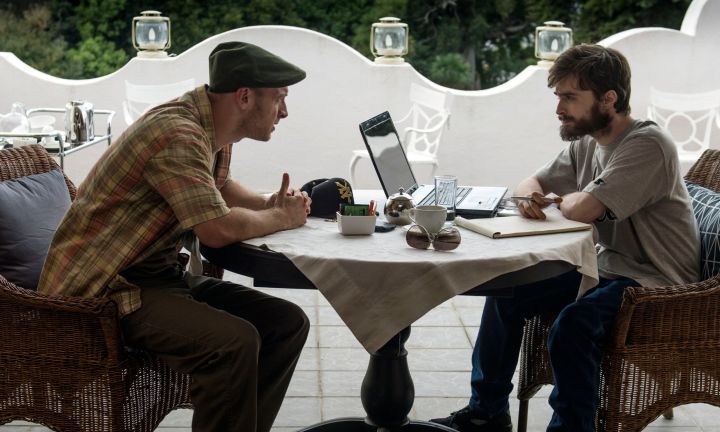

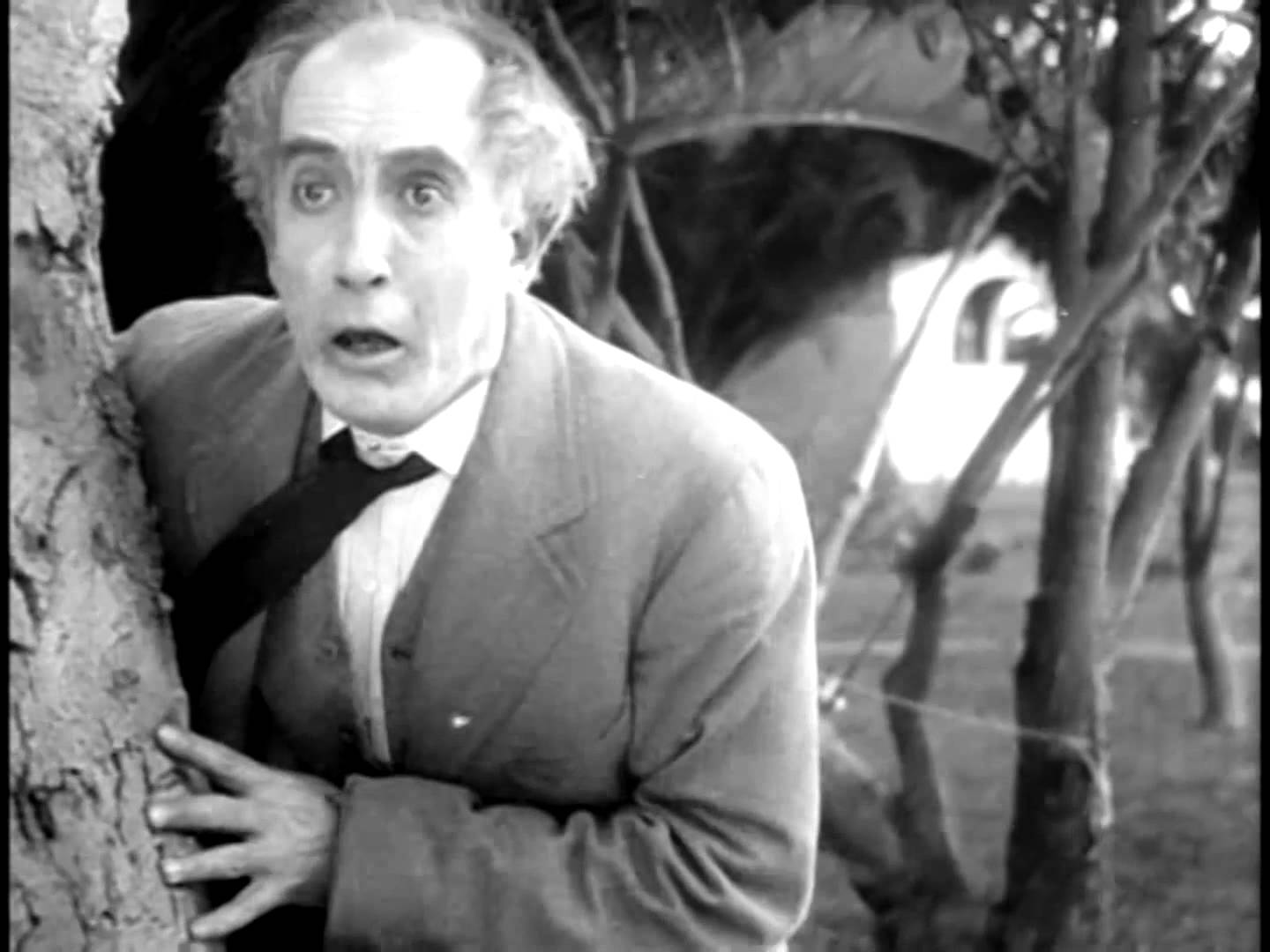



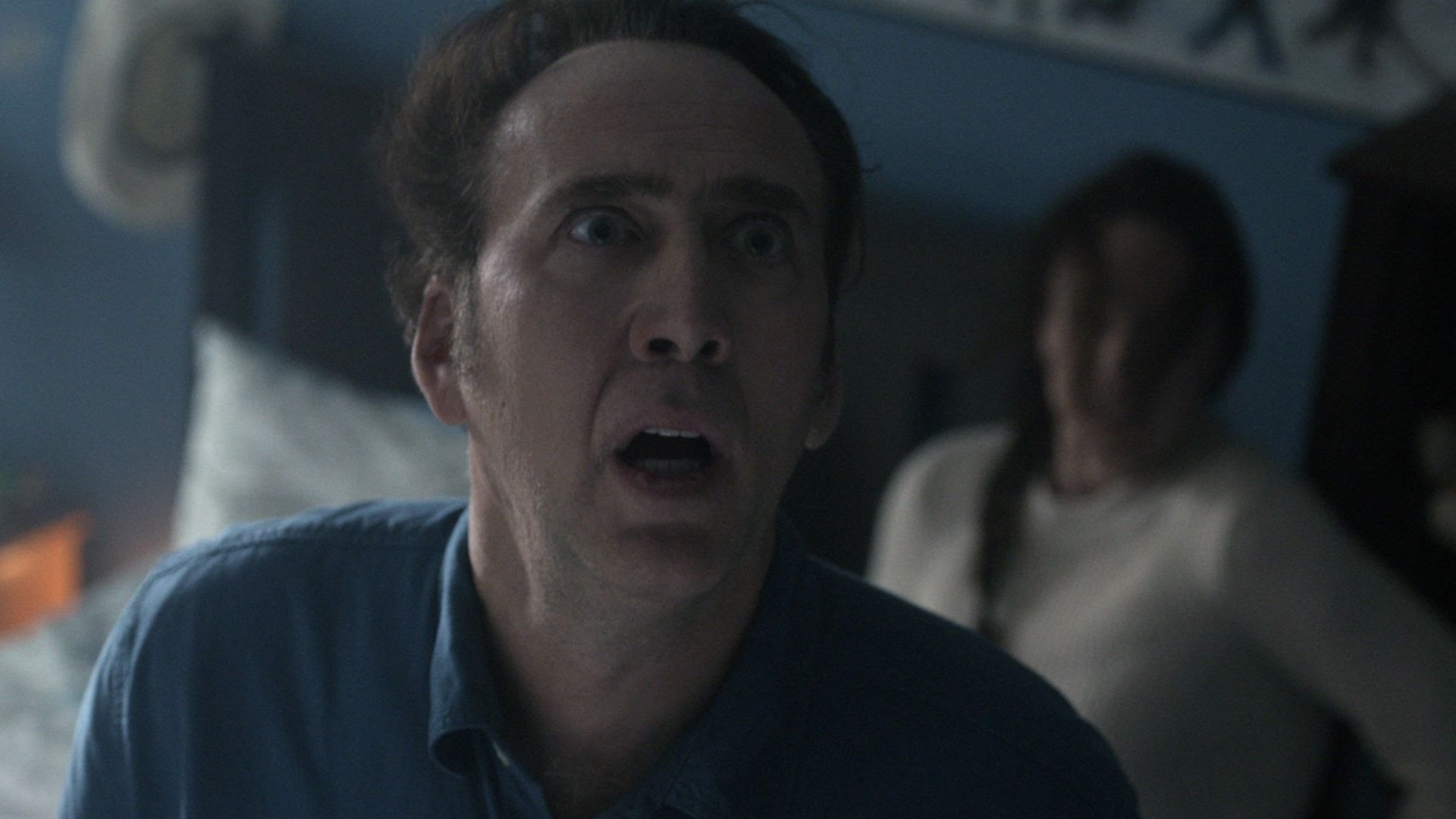


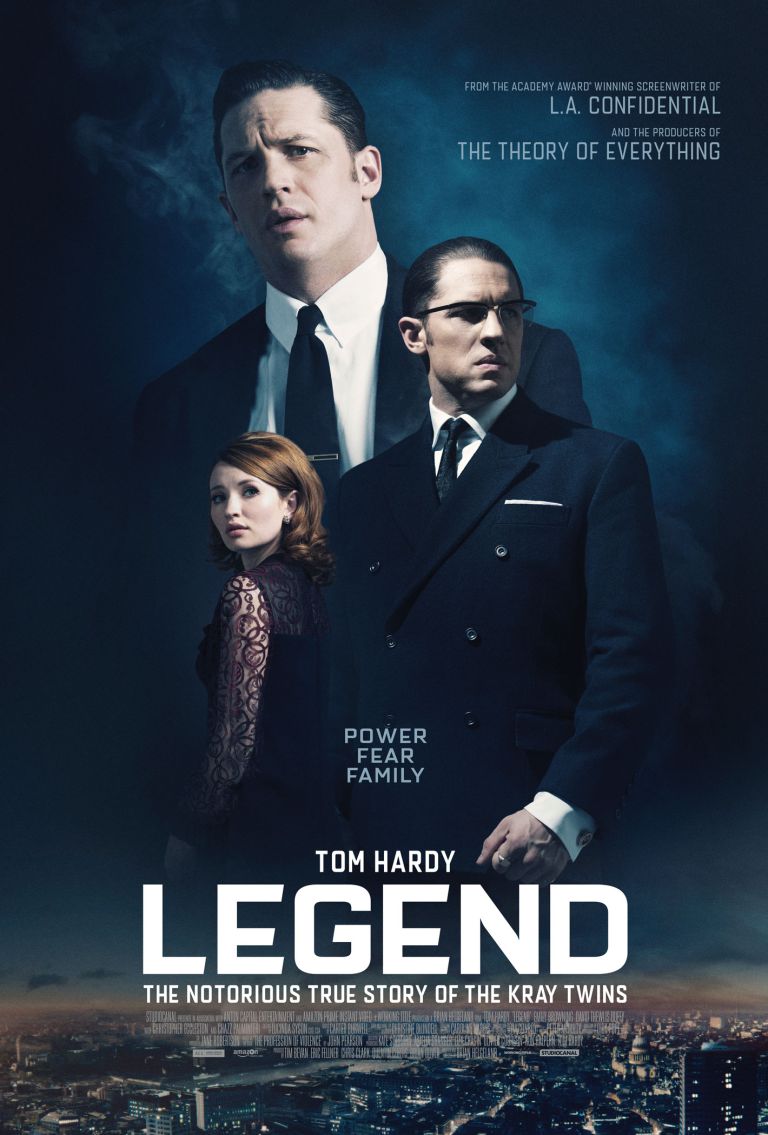
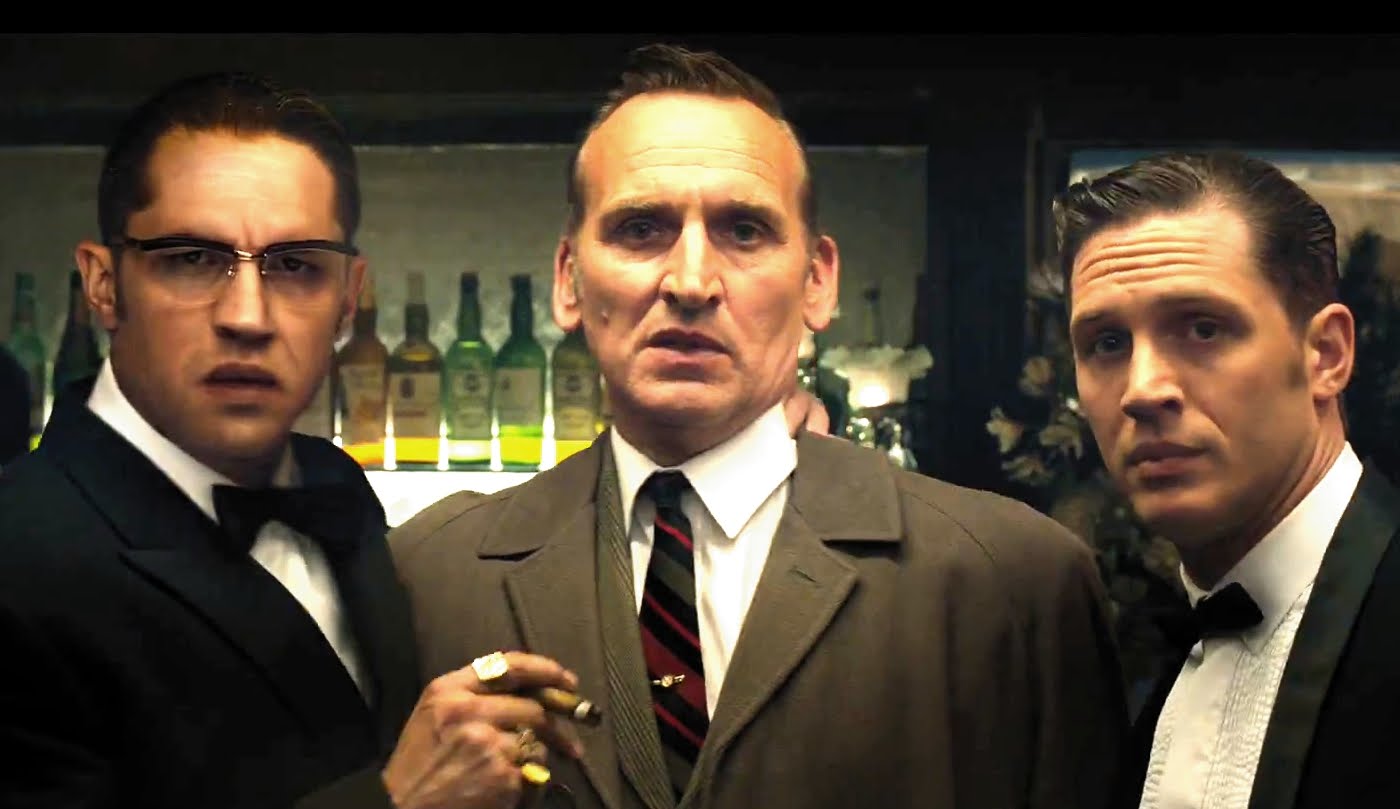



 thedullwoodexperiment