• 10 Reasons to Remember…
  • A Brief Word About…
  • About
  • For One Week Only
  • Happy Birthday
  • Monthly Roundup
  • Old-Time Crime
  • Other Posts
  • Poster of the Week
  • Question of the Week
  • Reviews
  • Trailers

thedullwoodexperiment

~ Viewing movies in a different light

thedullwoodexperiment

Tag Archives: Review

Odd Couple (1979)

12 Sunday Apr 2015

Posted by dullwood68 in Movies

≈ Leave a comment

Tags

Action, Chia Yung Liu, Comedy, Drama, Hong Kong, Ka-Yan Leung, King of Sabres, King of Spears, Laughing Bandit, Martial arts, Master Rocking, Review, Sammo Hung

Odd Couple

Original title: Bo ming chan dao duo ming qiang

aka Eternal Conflict

D: Chia Lung Yiu / 91m

Cast: Sammo Hung, Ka-Yan Leung, Chia Yung Liu, Dean Shek, Hoi Sang Lee, Huang Ha, Peter Chan, Karl Maka, Lam Ching-Ying, Mars, San Tai

The King of Sabres (Hung) and the King of Spears (Liu) are fierce rivals whose fighting skills are tested in each year in a duel. But the contests are always a draw, and after fifteen years they hit upon the idea of each training an apprentice who will represent them in another duel and hopefully, decide the issue. With the idea agreed, the King of Sabres discovers his apprentice at a local market, where the young man, Stubborn Wing (Liu) is defending himself against a gangster (Lee) and two of his henchmen. With the King of Sabres’ aid, the trio are defeated, but Stubborn Wing resists the King of Sabres’ entreaties to become his apprentice. It’s only when his home is burned down and the King of Sabres offers to train Stubborn Wing with a view to letting him try to kill him when he’s ready, that the young man agrees to go with him.

In turn, the King of Spears finds his apprentice in the form of a boatman called Ah Yo (Hung). In contrast to Stubborn Wing, Ah Yo is more than eager to join the King of Spears, and joins him willingly. Over time they both learn from their respective masters, until the day comes for them to travel to the Wulin Sacred Place, where their respective masters have their duels. On the way, Ah Yo encounters a lord called Master Rocking (Shek) and his retinue at an inn. A fight ensues and Master Rocking and his men are defeated by Ah So; but when Stubborn Wing arrives at the same inn, Master Rocking returns with two mercenaries to challenge Ah Yo. Instead, the two apprentices take them on individually, beating them and teaching Master Rocking one final lesson.

At Wulin Sacred Place the pair begin their duel but are interrupted by the arrival of Laughing Bandit (Leung). Laughing Bandit, who bears a scar on his face and the back of one hand from duels he fought with both Kings years before, captures Stubborn Wing and Ah Yo. Knowing that their masters will try to rescue them, Laughing Bandit waits for them to arrive at his hideout, and to take revenge for the loss of face they’ve both caused him.
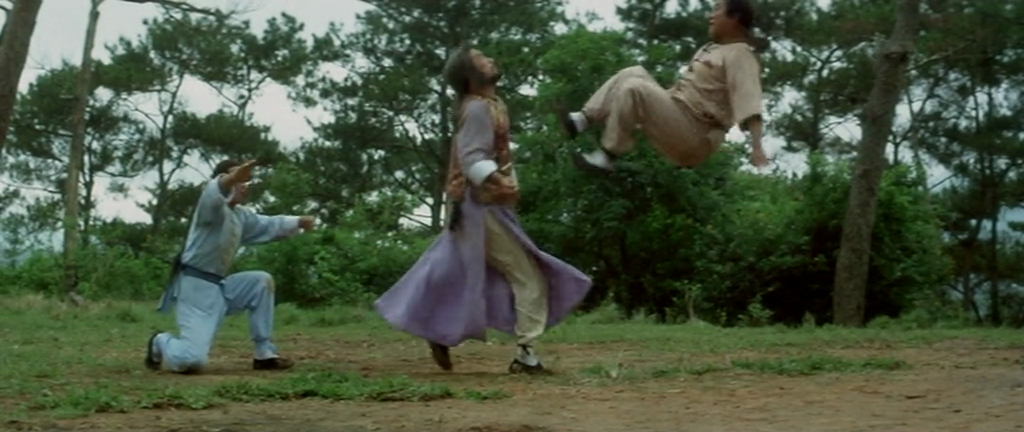
Odd Couple - scene

With dozens upon dozens upon dozens more martial arts movies made in Hong Kong during the Seventies, sorting the wheat from the chaff could be seen as either nigh on impossible, or the kind of project you’d need years to devote to. But what can be said about Odd Couple, is that it’s one of the best, a mix of silly comedy, stunning martial arts choreography, and a story that makes a virtue of its own simplicity.

It’s a movie that is almost incredibly silly at times, and yet it works, from the ridiculous mannerisms of Shek as Master Rocking, to the knowing facial expressions of its two Kings, to the scared remarks of two challengers to the King of Sabres’ title – “I’ll go and get my brother.” “I’ll go and tell my granny.” This is a movie that is easy to laugh along with and doesn’t descend fully into the kind of inexplicable playground humour that a lot of Hong Kong movies include (it may be funny to the people of Hong Kong but sometimes local humour doesn’t travel that well). There’s humour too in the relationships, where grudging respect is hidden beneath a barrage of insults and putdowns. There’s even a joke at the villain’s expense: when he and the two Kings come face to face it’s revealed that he used to be called Old Yellow Dog.

The story, despite some problems with its own timeline, keeps things moving from one glorious set-piece to another, and even lets some of the supporting characters share in the spotlight. A highlight is Mars’ performance as Potato, the King of Spears’ assistant. With a queue that features several short tufts of hair dotted above the forehead, and the kind of protruding upper middle teeth that Bugs Bunny would be proud of, Potato is a walking, talking “joke” all on his own. But it’s Hung and Liu who dominate, playing dual roles and yet creating four distinct and believable characters (and it’s a pleasant surprise that the movie doesn’t attempt to place them all in the same frame – or that it matters). Hung looks so youthful in this movie it serves as a reminder that he’s been making movies for such a long time (and to such a high standard). He has such a screen presence that he commands the screen in either role, and brings his usual high spirits to the material. But Liu matches him, playing his two roles with a more serious flair and frowning a lot, but clearly enjoying himself, both as an actor and as the director.

In the end, though, it’s action directors Yuen Biao, Lam Ching-Ying and Billy Chan who make the movie as entertaining and as breathtaking as it is. The martial arts choreography in Odd Couple is nothing short of astounding, with all concerned raising the bar with each action sequence. It’s incredible to see Hung and Liu – and Leung as well at the end – move with such speed and agility (though there is a moment where the action is speeded up deliberately, a nod perhaps to the sheer brio employed), and all without apparent benefit of wires or too much trickery in the editing suite. Every clash of sabre and spear or body blow is captured with loud, ringing clarity by the sound effects department, adding to the overall effect and making the action even more thrilling in its execution. Ming Ho’s cinematography supports it all with tremendous élan, perfectly framing each scene and showing a judicious use of close ups when required.

Rating: 8/10 – there’s a franchise that includes the words “fast” and “furious” in its title, but Odd Couple really is both those things, and very funny as well; with all the talent involved, it’s a movie that had every right to turn out as well as it did, and the overwhelming proof is there on the screen.

Share this:

  • Share on X (Opens in new window) X
  • Share on Facebook (Opens in new window) Facebook
  • More
  • Print (Opens in new window) Print
  • Email a link to a friend (Opens in new window) Email
Like Loading...

Wild Tales (2014)

12 Sunday Apr 2015

Posted by dullwood68 in Movies

≈ Leave a comment

Tags

Action, Airplane, Argentina, Érica Rivas, Comedy, Corruption, Damián Szifrón, Demolition, Diner, Drama, Hit and run, Julieta Zylberberg, Leonardo Sbaraglia, Marriage, Murder, Oscar Martínez, Parking fines, Portmanteau, Rat poison, Revenge, Review, Ricardo Darín, Rita Cortese, Road rage, Wedding reception

Wild Tales

Original title: Relatos salvajes

D: Damián Szifrón / 122m

Cast: Darío Grandinetti, María Marull, Rita Cortese, Julieta Zylberberg, César Bordón, Leonardo Sbaraglia, Walter Donado, Ricardo Darín, Nancy Dupláa, Oscar Martínez, Osmar Núñez, Germán de Silva, Érica Rivas, Diego Gentile

On a plane, catwalk model Isabel (Marull) meets classical music critic Salgado (Grandinetti). They discover they both know Gabriel Pasternak, Isabel’s ex-boyfriend. Soon, it becomes apparent that everyone on the flight knows Gabriel, and they’ve all held him back or made him angry in some way. But now Gabriel is flying the plane…

At a diner late one night, a man (Bordón) comes in and is rude to the waitress (Cortese). She recognises him as the man who caused her father’s death and made advances to her mother two weeks after her father’s funeral. The cook (Zylberberg), upon hearing this, suggests they put rat poison in his food. The waitress is horrified by the idea, but when the food goes out and she discovers the cook has added the poison, she makes little effort to stop the man from eating it. It’s only when the man’s son arrives and begins eating the food as well that she tries to take the food away, with terrible consequences…

Driving through the countryside, Diego (Sbaraglia) is deliberately held up by another driver, Mario (Donado). Diego finally overtakes him and yells abuse at him as he goes by. Several miles later, he gets a flat tyre just as he reaches a bridge. Just as he’s finishing putting a new wheel on, Mario arrives and pulls up directly in front of Diego’s car. Diego hides inside his car, while Mario takes the opportunity to vandalise it. When he’s finished, Mario gets back in his truck but before he can move off, an incensed Diego pushes Mario’s vehicle down the incline at the side of the bridge where it topples over into the river. Mario survives and clambers back up to the road, threatening to find Diego and kill him as Diego drives off. But Diego finds he can’t leave things as they are, and turns back…

Respected demolitions expert Simón (Darín) stops off on his way home to pick up a birthday cake for his daughter. While he does, his car is towed away for being in a No Parking zone. He goes to the towing depot and despite explaining that he couldn’t have known he was parked illegally, still has to pay to get his car released. He also finds that he has to pay the parking fine as well, but before he does he loses his temper and takes a fire extinguisher to the teller’s window. His subsequent arrest leads to his losing his job, which leads to his wife wanting a divorce, which – in a twist of fate – leads to his car being towed again. But this time, he makes the necessary payments, before embarking on a plan of revenge…

Well-off businessman Mauricio (Martínez) wakes one morning to learn that his teenage son has knocked down and killed a pregnant woman. He calls his lawyer (Núñez), who comes over straight away. They hit on a plan to persuade Mauricio’s groundskeeper Jose (de Silva) to take the blame for the hit-and-run in return for $500,000. When the fiscal prosecutor arrives he realises Jose isn’t the culprit, but proves willing to go along with Mauricio’s plan if he can be paid as well. When the cost of keeping things quiet begins to spiral out of control, Mauricio realises there’s only one thing he can do…

On the day of their wedding, Romina (Rivas) and Ariel (Gentile) are as happy as any newly-wed couple can be. Until Romina spies Ariel with a woman that he works with, and being more friendly than is comfortable. She confronts him and eventually he concedes that he’s slept with the other woman. Romina, angry and upset, runs off to the roof where she encounters one of the kitchen staff. He consoles her, which leads to Romina deciding to go back down and make this one wedding reception to remember…

Wild Tales - scene 3

With each of its six stories painting a picture of emphatic revenge, Wild Tales is a treasure trove of violence, pent-up emotion, unbridled anger, personal despair, and cathartic expression. It’s an often no-holds-barred experience where average people find themselves willing and able to do things they wouldn’t normally consider. As such it works on a visceral level that will have some viewers cheering in parts and laughing heartily in others; it’s that kind of feelgood movie.

The stories themselves vary in intensity, with several proving satisfactory on a wish fulfilment level, while a couple lack the bite of the rest. The opener has the initial feel of a Twilight Zone episode, but soon morphs into the ultimate revenge tale as one man decides to kill everyone who’s ever crossed him. It’s funny and horrifying at the same time and packs a punch with its final shot that isn’t forgotten very easily. The second tale has a classic structure, and is where revenge is complicated by the arrival of an innocent into the proceedings. It’s stylishly done, with a noir feel to it that complements and enhances the storyline, and Zylberberg’s fierce portrayal of the cook is an unexpected bonus.

The pick of the bunch is definitely the third tale, with its two protagonists descending rapidly from macho posturing to murderous determination with no attempt made to work things out. It’s brutal, uncompromising, and shocking in the way that these two men resort to such extreme measures – and with so little compunction. And then there’s the ironic postscript, where two investigators sum up their opinion of what happened, a perfect coda that subverts the savagery that’s gone before. By contrast, the fourth tale is a more considered tale of revenge, the kind that’s taken after one too many setbacks, reversals of fortune, or bad breaks. The issue of being towed away will be familiar to many people in many countries, and it’s this familiarity that gives the story it’s resonance. As Simón fights against an uncaring bureaucracy, you know it’s just a matter of time before he puts his “special set of skills” to good, vengeful use. And when he does, you can’t help but cheer, even though you know the system won’t let him get away with it.

The fifth tale is perhaps the weakest of the six, where the concept of revenge is used in its loosest form, with Mauricio taking a firm stand against the people who, seeing an opportunity, are looking to benefit from the awful situation his son has put him in. There’s a humorous side to the tale that manifests itself through the spiralling costs of people’s willingness to “help”, and finally by Mauricio’s assertion that enough is enough and all deals are off. But corruption has a way of winning out, and the outcome – while never in doubt – provides a sad, sour note that doesn’t feature elsewhere in the movie. The sixth tale is a riot, one of those stories that we’d like to think happens more often than it actually does, where fidelity is exposed and leads to the kind of publicly humiliating, extreme, morally indignant behaviour where verbal cruelty is the order of the day. It’s similar to the first tale in that it’s funny and horrifying at the same time, but on reflection, viewers may well find that it doesn’t go far enough, and that Romina’s actions aren’t quite as vindictive as they could have been. Still, it’s an entertaining tale, and in contrast to all the carnage and terrible behaviour seen in the previous stories, has a final scene that ends the movie on a positive note.

Wild Tales - scene 6

On the whole, Wild Tales is a darkly comic look at the various ways in which revenge can colour and alter our lives and lead us down some very dark paths indeed. As assembled by writer/director Szifrón, the movie is absorbing and compelling and bitingly satirical in its reflection of how quickly we dispense with so-called decent behaviour when we feel the need to. It’s difficult to detect any moral judgment in the stories, with Szifrón apparently content to let his audience make their own minds up as to how guilty or innocent each character is, but some will definitely have their supporters.

Each segment starts off slow then picks up speed, which does lead to the feeling that the movie is a bit of a stop-start experience, but the characters are concisely and effectively drawn, and Szifrón makes sure each tale is told in a lean, measured way that augments the material and ensures there’s nothing extraneous to deal with. The cast are uniformly excellent, with special mention going to Darín and Rivas. And each tale benefits from Javier Julia’s often invigorating and beautifully lit photography.

Rating: 8/10 – as portmanteau movies go, Wild Tales has such a high success rate it could be almost embarrassing; with its theme of revenge expressed in such an impressive fashion, the movie has so much to offer, and rewards on so many levels, that it can be returned to time and time again and still maintain its effectiveness.

Share this:

  • Share on X (Opens in new window) X
  • Share on Facebook (Opens in new window) Facebook
  • More
  • Print (Opens in new window) Print
  • Email a link to a friend (Opens in new window) Email
Like Loading...

Xala (1975)

10 Friday Apr 2015

Posted by dullwood68 in Movies

≈ Leave a comment

Tags

Chamber of Commerce, Comedy, Corruption, Drama, Impotence, Literary adaptation, Marabout, Ousmane Sembene, Politics, Review, Senegal, Seune Samb, Thierno Leye, Third marriage, Younouss Seye

Xala

aka The Curse

D: Ousmane Sembene / 123m

Cast: Thierno Leye, Seune Samb, Younouss Seye, Myriam Niang, Fatim Diagne, Mustapha Ture, Iliamane Sagna, Dieynaba Niang

With independence from France finally achieved, the white administrators of the Senegalese Chamber of Commerce are ousted from their offices by a group of local businessmen (who promptly accept hefty bribes from the French so that true power resides with them, “behind-the-scenes”). One businessman, El Hadji Abou Kader Beye (Leye) is preparing to marry for a third time. His first wife, Adja (Samb), and his second, Oumi (Seye) are both unhappy with his decision, as his new bride is much younger than them. But on the night of the wedding, El Hadji finds he cannot get an erection and the marriage remains unconsummated.

The beleaguered businessman confides in the President of the Chamber of Commerce who recommends he visit a marabout (a local witchdoctor). But despite the marabout’s advice, El Hadji remains impotent. Oumi visits him and invites him to her home that evening with the promise of sex; during her visit El Hadji starts to wonder if his impotency is a curse – a xala – placed on him by his second wife. Leaving his office his driver (Sagna) advises El Hadji to visit his marabout. A cure is effected but El Hadji finds his new wife has her period; he visits Oumi as arranged and he has sex with her instead. Meanwhile, El Hadji’s colleagues begin to discover that he’s running up debts he’s unable to repay, and that he’s been selling rice on the black market to maintain his social and economic standing.

His store comes under scrutiny from one of his buyers. With no stock in it, El Hadji has to reassure and cajole the man into accepting that all will be well and soon. A summons from the President of the Chamber of Commerce interrupts them. At the meeting, El Hadji is advised to go and visit his bank director. When he does so, he’s told that any further advances he needs will be dependent on his clearing his existing debts. But it’s at a further Chamber of Commerce meeting that El Hadji finds his future  as both a member and a businessman in jeopardy, and he still has no idea who placed the xala on him to begin with, or why.

Xala - scene

There’s a French proverb that goes, plus ça change, plus c’est la même chose. It means, the more things change, the more they stay the same. This is the theme at the heart of Sembene’s scathing look at contemporary politics in Senegal during the Seventies (and as adapted from his own novel of the same name). Xala is unapologetic  in its attempts to expose the continuing corruption that plagues the country, whoever is in power, and it paints a powerful portrait of the ways in which that corruption affects the poor and the disadvantaged. Viewed now after forty years, and with much more known about the ways in which Colonial Africa overthrew its European masters, only to prove even more ruinous in its inability to govern itself, the movie is a candid snapshot of the times.

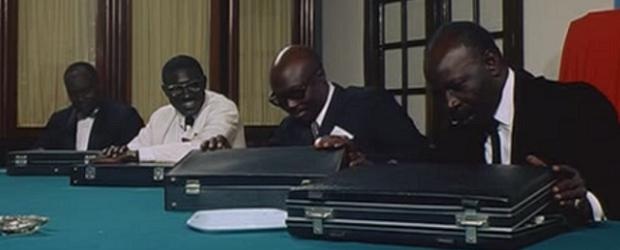
Sembene tells the audience everything they need to know about the political backdrop to the movie in the opening scenes where the local businessmen take over the Chamber of Commerce with all the pomp and circumstance of men acting with a moral certainty. The white administrators are rudely dispensed with, but are soon back, with briefcases full of money, one for each of the men who are supposed to be “better” than they are. With the bribes accepted eagerly, one of them hangs around as the President’s “advisor”, hovering in the background like a political fixer of old. The old corrupt system is dead, long live the new corrupt system. And once Sembene has established that indeed, things will remain the same, he focuses on El Hadji as an example of the greed and selfishness that were – and are – endemic in African politics.

The businessman’s lifestyle, or at least the lifestyles of his two wives, along with the cost of marrying a third, soon proves to be his undoing. Such is El Hadji’s need to be seen to be ascending the social and political ladder, it results in his risking everything to arrive and stay there. Like so many African leaders in the post-Colonial era, the temptation to appropriate resources for himself – and at the expense of the people – is shown as an extension of his usual business practice, a refinement if you will of sharp practice. The only difference between Xala and real life is that Sembene doesn’t let El Hadji off the hook, and his comeuppance is both well-deserved and horrible at the same time.

Although there is a great deal of drama to be had from El Hadji’s shady wheeling and dealing, it doesn’t come along until well after the halfway mark. Until then, the movie follows a recognisably European comic scenario, with the new groom afflicted by a bout of impotence that sees him berated by his new mother-in-law, and encouraged to approach his new wife on all fours with a fetish in his mouth that makes him look like some kind of dentally challenged vampire (it’s all part of a “cure”). There’s good fun to be had from the way in which this serious businessman, now in a position of power, will yield to the most bizarre of behaviours in order to regain his potency, and how he’ll let his first two wives dominate him. Sembene also pokes fun at El Hadji’s increasing “Europeanisation” through his wearing of Western clothing beneath more traditional robes, and his pretentious assertion that he only drinks bottled water (and which is used to fill his car’s radiator at one point).

Sembene also casts a judicious eye on El Hadji’s surroundings, spending time with those less fortunate than his main character, and speaking up for the rights of the disenfranchised and the disabled. As this storyline becomes more and more important to the narrative, Sembene more closely examines the ways in which this abandoned section of Senegalese society should have more of a voice than it does. Their ultimate effect on the fate of El Hadji is introduced with great skill by Sembene and leads to one of the most terrible of movie endings, but one that retains a redemptive feel, both for them and for El Hadji.

Xala - scene2

The movie has a washed-out colour scheme that may well be due to the film stock available for Sembene to use, but even so it makes for an effective reflection on the murky practices of El Hadji and the Chamber of Commerce (and their puppet masters). The soundtrack is filtered through the bustle of street life, and the occasional bursts of music enliven what is a mostly sombre tale. Sembene shows a complete confidence in the material throughout, and if he slips up occasionally in his attempts to make El Hadji as emotionally impotent as he is physically, then he can be forgiven for trying to add another layer to the character’s problems.

Rating: 8/10 – forthright and critical in its depiction of post-Colonial political corruption, and with a compelling comic sensibility, Xala tells it’s story simply and with a sense of righteous indignity; there are times when it seems as if we’re watching a documentary, but Sembene directs with compassion and no small amount of skill.

Share this:

  • Share on X (Opens in new window) X
  • Share on Facebook (Opens in new window) Facebook
  • More
  • Print (Opens in new window) Print
  • Email a link to a friend (Opens in new window) Email
Like Loading...

Ossos (1997)

09 Thursday Apr 2015

Posted by dullwood68 in Movies

≈ Leave a comment

Tags

Cleaner, Drama, Estrela d'Africa, Isobel Ruth, Lisbon, Mariya Lipkina, Newborn baby, Nuno Vaz, Pedro Costa, Portugal, Review, Vanda Duarte

Ossos

aka Bones

D: Pedro Costa / 94m

Cast: Vanda Duarte, Nuno Vaz, Mariya Lipkina, Isobel Ruth, Inês de Medeiros, Miguel Sermão

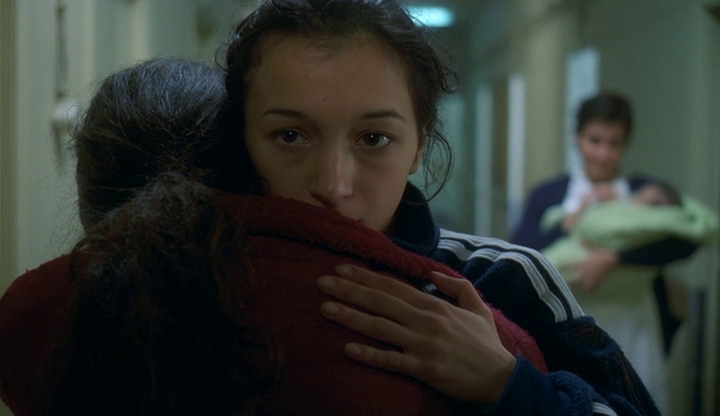
Clotilde (Duarte) lives in one of the poorest districts in Lisbon, the infamous Estrela d’Africa. She works as a cleaner in more affluent properties, and has a husband (Sermão) who treats her badly and a daughter. When her friend, Tina (Lipkina) comes home after giving birth to an unwanted baby, she tries her best to support her. But Tina isn’t bonding with her baby, and her partner (Vaz) doesn’t want very much to do with the child either. But when he suspects that Tina is trying to kill herself and the baby, he takes it away and tries to sell it on the street. He’s unsuccessful, however, but the baby falls ill and he takes it to a hospital. There he and the baby attract the attention of a nurse (Ruth) who takes an interest in their plight.

She takes the father back to her home and tries to learn more about his predicament, but he’s rude to her and leaves abruptly. The baby is allowed to go home the next day, and its father takes her back to the nurse’s home. He tries to leave it there but the nurse is unable (and unwilling) to take on the responsibility. Clotilde, meanwhile, begins taking Tina with her on her cleaning jobs. But away from these jobs, Tina remains listless and uninterested in the idea of being a mother. When Clotilde is unwell, Tina takes on one of her cleaning jobs, but when the client (who proves to be the nurse) comes home she finds Tina slumped on the kitchen floor with the gas on; she rescues her just in time. The father tries again to divest himself of the baby, and is successful in giving it to a prostitute (de Medeiros).

The nurse visits Tina to ensure she’s okay, while Clotilde returns to work. Matters begin to settle down, but there’s a sense that the father should be made to pay for his actions regarding the baby.

Ossos - scene

Actually filmed in Lisbon’s notoriously poverty-stricken “Estrela d’Africa” Fontainhas district, Ossos is an unremittingly bleak look at the lives of a handful of its inhabitants. It’s a dark, depressing drama, reflecting the milieu of the district and giving the viewer a glimpse at the impoverished area that its characters do their best to survive in. There’s a telling moment early on when the father is seen striding along a street with the baby in tow, and the reality of the area’s physical decay is evident in the various dilapidated buildings and overall sense of a blighted community. By focusing on this terrible state of affairs, writer/director Costa paints a convincing portrait of blasted lives and the continual struggle to maintain some semblance of “normality”.

Tina’s estrangement from her child is told with a dispassionate faux-documentary feel – indeed the whole movie has that approach – and as a result the movie keeps its distance from its characters, observing them more than engaging with them. The movie contains a mix of static close ups (often held for some time) and medium shots that emphasise the sense of separation that Costa wants the viewer to experience. By keeping his characters at a remove, Ossos becomes more of a social study, and proves gloomily effective as a result.

Making the most of its dismal mise-en-scene, the movie highlights the ways in which even the most disadvantaged try and make the most of what they have (even if it seems painfully little). Clotilde has a job that constantly reminds her of her place in society, her clients’ homes so much cleaner (thanks to her), warmer and welcoming. And yet she perseveres, doing her best to overcome the shortcomings of her own life, and doing her best to help Tina when she most needs it. She’s a good woman who doesn’t know any other way of dealing with the life she lives. In contrast, her husband has given up trying to make any difference in his own life, and is recalcitrant and dismissive of others who continue trying; or worse, who achieve any significant changes.

It’s not entirely doom-and-gloom, but does seem like it. However, Costa finds unexpected humour in the way his female characters interact with each other, their caring attitude and natural affinity reminding the viewer – and themselves – that there’s always hope, even in the worst of situations. It’s a positive message, and one that holds its own amongst the grime and sombre depredations of daily life in Fontainhas. This makes some scenes more rewarding than others, and the movie constantly surprising, despite its uncompromising tone. It’s a testament to Costa’s confidence in his material that these aspects make as much impression as they do.

He elicits quietly understated performances from his cast, with Duarte’s androgynous-looking Clotilde the movie’s early focus. Vaz is appropriately arrogant and childlike, his dogged determination to rid himself of his child the actions of a spoilt teenager unprepared for so much responsibility. Lipkina has the least to do, her fixed gaze cleverly indicating the worlds within worlds that make up her vacant stare. And Roth adds humanity to the piece with her kind-hearted nurse acting as the way in for any viewers having trouble connecting with the other characters.

With the narrative petering out by the movie’s end, Ossos isn’t entirely successful in what it does, but as a penetrating look at the lives of Lisbon’s disenfranchised, it packs a significant punch. The story and plot may be slight but it retains enough of a hook to make it an emotional, and rewarding, viewing experience.

Rating: 8/10 – a minor classic from Portugal, and evidence that slum life can be as positive as any other, Ossos is never far from astonishing thanks to Costa’s considered, measured approach; thought-provoking and resonant on many levels, it’s a movie that honours the residents of Fontainhas, and does so without being in any way pretentious.

Share this:

  • Share on X (Opens in new window) X
  • Share on Facebook (Opens in new window) Facebook
  • More
  • Print (Opens in new window) Print
  • Email a link to a friend (Opens in new window) Email
Like Loading...

Planeta bur (1962)

08 Wednesday Apr 2015

Posted by dullwood68 in Movies

≈ 1 Comment

Tags

Drama, Georgi Zhzhyonov, John, Literary adaptation, Pavel Klushantsev, Review, Robot, Sci-fi, Sirius, Soviet Union, Spaceships, Vega, Venus, Vladimir Yemelyanov

Planeta bur

aka Planeta Burg; Planet of Storms; Planet of Tempests; Storm Planet

D: Pavel Klushantsev / 78m

Cast: Vladimir Yevelyanov, Georgi Zhzhyonov, Gennadi Vernov, Yuriy Sarantsev, Georgiy Teykh, Kyunna Ignatova

Three spaceships from the Soviet Union – Vega, Sirius and Capella – are approaching Venus when one of them, Capella, is struck by a meteorite and destroyed. The mission requires two of the ships to land on Venus while the remaining ship stays in orbit. But Capella’s replacement, Arcturus, will take four months to reach Venus, a situation the cosmonauts on board Sirius – Ilya (Yemelyanov), Aleksey (Zhzhyonov) and Roman (Vernov) – find unacceptable. They hatch a plan to land on Venus using a glider and one of the ships, but it means someone having to stay in orbit and monitor their progress on the planet. This falls to Masha (Ignatova), a Vega crew member. In the end, it’s her fellow crew members, Scherba (Sarantsev) and Dr Kern (Teykh), along with Kern’s robot John, who make the trip in the glider. However, when they land, all communication with them is lost.

The Sirius crew land in their ship to look for them. They encounter a strange, rocky environment that is perpetually shrouded in mist. They identify their colleagues’ location and set out in a hover car to find them, but not before Aleksey is almost killed by a carnivorous plant-like creature. Realising that Venus holds more dangers than they’d expected, they proceed with caution. Meanwhile, Scherba and Kern have encountered another danger, lizard-like creatures that walk upright. Fighting them off they soon find another problem: with their spacesuits torn in places, they’ve become susceptible to the air on Venus and are getting sick. They hole up in a cave and wait for their colleagues to find them.

Locking onto their position, Ilya, Aleksey and Roman find themselves under attack, this time from a creature resembling a pterodactyl (they’ve already encountered what appears to be a brontosaurus). Their hover car is damaged and ends up at the bottom of a lake. With communication lost with everyone on the surface, Masha has to decide whether or not she should mount her own rescue mission or wait for Arcturus to arrive. With time running out, the hover car is rescued from the lake and Ilya and his two colleagues get closer to finding their comrades. But not before Scherba, Kern and John have to deal with the lava flow from a nearby volcano. And all the while an ethereal female voice can be heard both in the distance and incredibly close by…

Planeta bur - scene

Viewed now, over fifty years on, Planeta bur is less of a curio than you might expect. While it’s not very prescient in terms of future science, and retains a quaint approach to some of its technology – Masha records her thoughts about making her rescue mission on a reel-to-reel tape recorder – there’s more than enough going on to keep the viewer interested, even if there are some unfortunately comic moments.

The trick is to put aside what we know now about Venus, and just go with the flow. After a stodgy opening period where the characters are introduced and the dilemma of landing on Venus is discussed and then decided on, the meat of the movie is introduced and we get to see the rugged, inhospitable landscape that represents the planet’s surface, as well as some very unpleasant inhabitants. It’s like a science fiction movie crossed with a disaster epic, as the cosmonauts encounter danger after danger, from man-eating plants to mini-Godzilla-like creatures to sudden volcanic eruptions. And though the pace is unhurried, there’s still enough tension built up between the various scenes of peril to keep the viewer interested and engaged.

In between these scenes there’s also time for the characters to wax philosophical about the origins of life on Venus and Earth – maybe we’re all descended from Martians – and the importance of the mission to the people back home in the Soviet Union (there’s even a short sequence where Masha envisions a parade with appropriately cheering masses in attendance). These interludes add a layer of intellectual gravitas to what is essentially an adventure, and is matched by the serious, intense nature of the cast and their performances. Yemelyanov looks like he’s lost the ability to smile, while Zhzhyonov’s eagerness to land on Venus makes him appear reckless. As the sole female on the mission, Ignatova looks concerned, worried and fearful throughout, and Teykh goes the opposite way ands affects a disinterested, unemotional stance that befits his reserved character.

The special effects employed range from the casually simple, such as the space suits, to the impressively clever, such as the hover car (which really looks like it’s floating a good foot off the ground). The locations, though feeling restricted, are used to very good effect, and there’s an otherworldly feel to them that adds a level of eeriness to proceedings. Klushantsev orchestrates the various alien encounters without overdoing it in terms of increasing the pace or making it look as if the cosmonauts are in any real danger, but their encounters are effective enough and shot with a good deal of style (if a little restrained at the same time). While some of the creatures remind the viewer of the budgetary constraints, again there’s a quaintness to it all that makes up for any shortcomings.

Concluding with a couple of revolutionary sounding songs extolling the virtues of both Earth and Venus, the movie has a satisfactory ending that hints at a possible sequel (but which sadly never happened). What did sadly happen is that American International Pictures got hold of the movie and re-edited it twice to make two vastly inferior “new” versions: Voyage to the Prehistoric Planet (1965), with Basil Rathbone added to the mix, and Voyage to the Planet of Prehistoric Women (1968), directed by Peter Bogdanovich and with Mamie Van Doren added instead. Neither movie has much to recommend it, and should be avoided at all costs.

Rating: 7/10 – a little clunky in places, but thankfully free of too much ideology or Soviet propaganda, Planeta bur is a serious sci-fi movie that has much to say about the idea of space exploration; entertaining throughout, and as an entry movie into the career of the under-appreciated Klushantsev, definitely a good place to start.

Trailer: Sadly, there doesn’t seem to be a trailer for Planeta bur available.

Share this:

  • Share on X (Opens in new window) X
  • Share on Facebook (Opens in new window) Facebook
  • More
  • Print (Opens in new window) Print
  • Email a link to a friend (Opens in new window) Email
Like Loading...

Insurgent (2015)

08 Wednesday Apr 2015

Posted by dullwood68 in Movies

≈ 1 Comment

Tags

Abnegation, Action, Amity, Ansel Elgort, Candor, Dauntless, Drama, Erudite, Kate Winslet, Literary adaptation, Naomi Watts, Review, Robert Schwentke, Sci-fi, Sequel, Shailene Woodley, Theo James, Thriller, Veronica Roth

Insurgent

D: Robert Schwentke / 119m

Cast: Shailene Woodley, Theo James, Kate Winslet, Ansel Elgort, Miles Teller, Naomi Watts, Octavia Spencer, Jai Courtney, Mekhi Phifer, Zoë Kravitz, Maggie Q, Daniel Dae Kim, Jonny Weston, Ashley Judd, Ray Stevenson, Tony Goldwyn, Janet McTeer

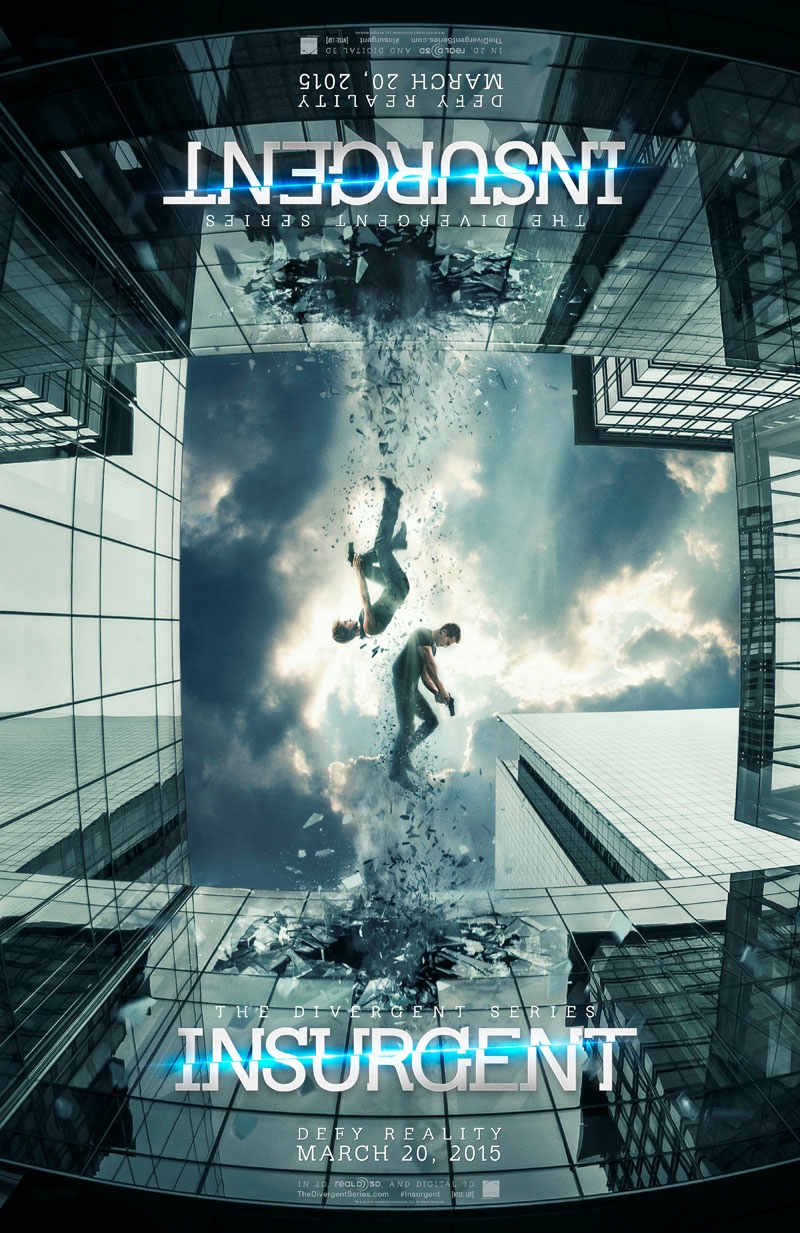
In the aftermath of the attack on Abnegation, a search reveals a box that contains all the faction symbols. It’s taken to Erudite where Jeanine (Winslet) reveals it holds a message from the city’s elders, but only a Divergent can open it; this leads Jeanine to order that all Divergents are rounded up. Meanwhile, Tris (Woodley), Four (James), Caleb (Elgort) and Peter (Teller) are hiding out in Amity, under the protection of their leader Johanna (Spencer). Tris is all for returning to Erudite and killing Jeanine but Four warns against acting so hastily: they need to be a stronger force before they can attack the ruling faction.

Matters are brought to a head when Dauntless leader Max (Phifer) arrives to look for any Divergents. Peter reveals their presence but Tris, Four and Caleb manage to escape on a train that takes them into Factionless territory. There they meet Evelyn (Watts), the Factionless leader who, it turns out, is Four’s mother. She advocates a coalition between Factionless and the remainder of Dauntless. The next day, Tris, Four and Caleb leave to visit Candor, where the remainder of Dauntless have taken refuge. On the way, Caleb tells Tris he can’t go with them and they part. In Candor, their leader, Jack (Dae Kim) arranges a trial to determine the truth of Four’s insistence that Jeanine is lying to the other factions. A raid by Max and Eric (Courtney) leads to Tris being tested and found to be 100% Divergent. The raid is unsuccessful though and Tris is rescued by Four and Candor. At Erudite, Peter tells Jeanine the best way in which she can trap Tris. With the lives of all in Candor at risk because of Tris’s presence there, she determines to turn herself in.

At Erudite, Tris is apprehended and taken in front of Jeanine. She explains about the box and has Tris hooked up to it. In order to open it, Tris has to pass each Faction test, something none of the other Divergents abducted by Jeanine has managed. With Caleb having rejoined Erudite, and Peter also on their side, Tris can only hope that whatever message the box holds, that she will survive the ordeal long enough to learn what it is, and what it means for the city.

Insurgent - scene

After the prolonged set up and introduction of each Faction and the world they support that made up most of Divergent (2014), you’d think Insurgent would be less reliant on large chunks of awkward exposition. But it’s not the case, as this instalment introduces new characters and broadens the original’s scope. This leads to more explanations for everyone’s behaviour and more occasions where the not-exactly-complicated story has to be explained every step of the way (as if the audience wouldn’t be able to keep up). Which is a shame, as this time around, Tris’s newfound place in her world is much more interesting and exciting to be a part of.

Weighed down by the expectations that come with cinema’s version of “middle child syndrome” (and even though Allegiant will be released in two parts – damn you Harry Potter!), Insurgent gets a lot right. It ups the action content, makes the heroes more heroic, the villains more villainous, and ends with the news that we’ve all been waiting to hear: next time we go outside the wall. The movie couldn’t be more designed to please its audience, both existing and new. And that’s another factor that makes the movie work: you don’t have to have seen Divergent to work out what’s going on. Such is the care that’s been taken with the adaptation of the book, that even though there are huge chunks that are missing (including whole storylines), it’s a tribute to screenwriters Brian Duffield, Akiva Goldsman and Mark Bomback that this is a well constructed, and surprisingly streamlined version that holds its own and isn’t reliant on the first movie.

It also moves the characters forward in unexpected ways. Tris is hell-bent on killing Jeanine which isn’t the usual approach in a YA movie (you’d never expect to hear Katniss Everdeen sound so vehement about President Snow as Tris is about Jeanine). It’s refreshing to see someone be that blunt and not harbour any deep-seated guilt or reservations about the rights or wrongs of such a thing; Tris is resigned and more importantly, she can’t wait to do it. As for her love interest, the taciturn Four, we get to see him deal with a greater authority than Eric or Max, or even his dad: his mother, presumed dead all these years and as determined to get Jeanine almost as much as Tris. While he wrestles with his emotional scars, Tris gets down to the task of taking out Jeanine; it’s like he’s not even supporting her anymore.

Of course, true love overcomes any dispute or disagreement and Tris and Four leave their differences behind when it comes to overthrowing Erudite, and although the message in the box is one that only readers of the novel will have seen coming, it’s still a treat to see it revealed in such a dramatic, world-upsetting way. It’s yet another way in which new director Schwentke keeps things interesting and the viewer on their toes. He makes judicious use of the new cast members, with even Watts (who has Big Villain written all over her) required to keep it simple and not detract from the main storyline, that of Tris learning to forgive herself for the deaths of her parents and the turncoat Will. Woodley, still the best thing in both movies, shades her emotions with ease and presents a version of Tris that is still learning but who’s also streets ahead of her rebellious companions (but then she is Divergent).

The rest of the cast offer and provide excellent support, with special mention going to Courtney, Spencer, Watts and Teller, though Elgort is still stuck with possibly the blandest character in the whole series, and suffers as a result; he just can’t make him interesting. Winslet is icy and controlling and strangely attractive because of all that, and steals each scene she’s in. The final scene robs us of a major character and is a great way to end this movie and set up some of the dramatics of the next, but it also feels like a bit of a cheap shot at the audience’s expense. What, do we ask, does that mean for Tris and Four and all the rest? Well, to find out, tune in next year!

Rating: 7/10 – better than Divergent, and better assembled, Insurgent shows the franchise gaining in confidence and moving ahead in the right direction; not without its flaws – Peter is still an annoyingly underwritten character – the movie packs a lot in and, on the whole, makes it all work with a great deal of panache.

Share this:

  • Share on X (Opens in new window) X
  • Share on Facebook (Opens in new window) Facebook
  • More
  • Print (Opens in new window) Print
  • Email a link to a friend (Opens in new window) Email
Like Loading...

Charlotte for Ever (1986)

07 Tuesday Apr 2015

Posted by dullwood68 in Movies

≈ 1 Comment

Tags

Benjamin Constant, Bereavement, Car accident, Charlotte Gainsbourg, Drama, Father/daughter relationship, France, Lolita, Review, Script, Serge Gainsbourg, Vladimir Nabokov

Charlotte for Ever

D: Serge Gainsbourg / 90m

Cast: Serge Gainsbourg, Charlotte Gainsbourg, Roland Bertin, Roland Dubillard, Anne Zamberlan, Anne Le Guernec, Sabeline Campo

Stanley (Serge Gainsbourg) is a movie maker who is down on his luck. His wife has recently died in a car accident and he has no money; all he has left is his daughter, Charlotte (Gainsbourg). He tries to get an advance for a new script from his friend, Herman (Dubillard), but it comes with a condition: he must come up with the script in a week’s time.

Charlotte blames him for the death of her mother. The car she was in, and which Stanley was driving, crashed into a petrol tanker. The subsequent explosion killed Stanley’s wife, and left him with a burned hand. He displays regret and sadness at her death but refuses to be made to feel guilty about what happened. Charlotte battles against him, being obstinate and aggressive and continually challenging his assertions about the accident and his lack of culpability. She also takes issue with his liaisons with young women who appear at their home on a regular basis.

Stanley receives a visit from his doctor, Leon (Bertin) who is gay and has recently split up from his boyfriend. Leon is depressed and unhappy, but Stanley is unsupportive toward him; only Charlotte shows him any sympathy. His visit encourages Stanley to think more on the script he needs to write. But instead of coming up with something original he decides to plagiarise the work of Benjamin Constant. When the script is finished, Stanley gives it to Herman who thinks it’s terrific. Leon is present when he reads through it, though, and he tells Herman what Stanley has done. Herman is furious, but Stanley is oblivious and hits on him again for money.

Charlotte encounters Adelaide (Le Guernec), one of her father’s conquests, and angry at her (and him), she attacks her. Stanley discovers them and makes Adelaide leave before he attempts to placate Charlotte. She shows some remorse for her actions, and later, tells her father that she never really blamed him for her mother’s death.

Charlotte for Ever - scene

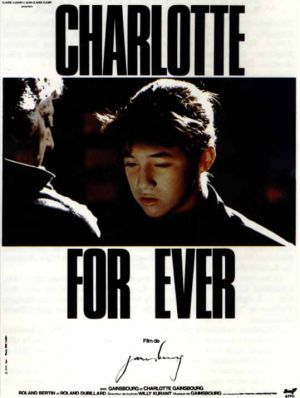
With a screenplay filled to the brim with literary and sexual references galore, as well as a few literally sexual references, Charlotte for Ever, the brainchild of multi-talented Serge Gainsbourg, is a movie that any viewer will hope is just that: a movie. Because if it isn’t, and it only semi-accurately describes the relationship between real-life father and daughter Serge and Charlotte, then this psycho-sexual drama is likely to leave a sour taste in the mouth.

From the opening scene where Stanley tells Herman how his attention has been transferred from his wife to Charlotte, and his speech becomes more and more erotically charged (with more than one reference to Nabokov’s Lolita to reinforce the issue), the movie becomes an uncomfortable experience to watch as he manipulates his conversations with his daughter, and the viewer is left wondering if Gainsbourg the writer/director/father isn’t averse to sharing his real feelings for Gainsbourg the actress/daughter. Charlotte Gainsbourg was fifteen when the movie was made, and there are scenes where she appears topless, including one that involves her being manhandled by her father. It may be that Charlotte was a willing, and completely aware, participant in the movie, but the fact that Gainsbourg chose his daughter for the role, and not another actress, doesn’t make it any easier to appreciate.

Added to this is Gainsbourg’s continual use of sexual rhetoric and innuendo, best displayed (if “best” is the right word) in a scene where Charlotte is doing her homework. It consists of a series of questions that she asks for his help with. One question is: “What quality do you most admire in a woman?” Stanley’s response is: “Her wetness.” There are other examples where Stanley’s blunt, unapologetic use of single entendres is used and most of them are wince-inducing. It doesn’t take a genius to figure out that Gainsbourg is playing with the audience, but the fact that he’s using his daughter as part of the game makes it all the more unconscionable. It’s also like seeing a naughty schoolboy trying to shock his teachers: the schoolboy knows what he’s doing will cause a stir, but he doesn’t have the context that would make it more palatable – or forgivable.

With the supporting characters in place for Stanley (and Gainsbourg) to feel superior to, the movie ends up looking and sounding more like a vanity piece than a fully realised drama. Everyone talks in an arch, mannered way of speaking that features literary quotes, apothegms, precepts and quasi-philosophical assertions that are only superficially astute. It’s the type of cod-intellectual rambling that is meant to make its author sound erudite and cultivated, but which in reality makes them sound asinine instead. Gainsbourg gives himself a lot of these meandering speeches – and not one sounds convincing.

The performances suffer as a result, with Gainsbourg appearing disinterested in his own movie and prowling around in scenes as if he can’t quite decide which mark he should be hitting. He continually grabs and paws at his daughter, and wears a black glove on his right hand to denote his injury from the car crash. Alas, this gloved hand is used more as an affectation as Gainsbourg waves it around to indicate all sorts of feelings that he can’t clarify through speech or expression. In the end, it’s a lazy, semi-committed performance that soon becomes boring to watch. As for Charlotte, she provides emotional responses to Stanley’s behaviour that match the affected way in which he behaves, but which prove too wayward and inconsistent for comfort. There are glimpses of the slightly removed acting style that has stood her in good stead in the years since, but here she’s pretty much a puppet being moved around at will by her father.

Curious viewers, or fans of Gainsbourg pére et fille, will find no one to sympathise with (or recognise), and even less to engage with beyond a handful of gratuitous scenes of female nudity. The ending is abrupt and unrewarding given all that’s gone before, but at least it brings to a close a tale that manages, with considerable ease, to be both tawdry and pretentious.

Rating: 2/10 – sometimes a movie is just a dud and that’s all there is to it, and Charlotte for Ever is the movie that proves the rule; with only Gainsbourg’s disco-themed score to recommend it, this sad, alienating movie shows him not at the peak of his powers (which were considerable) but declining badly – and seemingly unconcerned.

NOTE: The “trailer” is more of a promo video for the song that plays over the opening credits (and at various times during the movie).

Share this:

  • Share on X (Opens in new window) X
  • Share on Facebook (Opens in new window) Facebook
  • More
  • Print (Opens in new window) Print
  • Email a link to a friend (Opens in new window) Email
Like Loading...

The Keeper of Lost Causes (2013)

06 Monday Apr 2015

Posted by dullwood68 in Movies

≈ 3 Comments

Tags

Assad, Carl Mørck, Cold cases, Crime, Denmark, Department Q, Drama, Fares Fares, Jussi Adler-Olsen, Literary adaptation, Mikkel Nørgaard, Nicolaj Lie Kaas, Police, Review, Sonja Richter, Thriller

Keeper of Lost Causes, The

Original title: Kvinden i buret

aka The Woman in the Cage

D: Mikkel Nørgaard / 97m

Cast: Nikolaj Lie Kaas, Fares Fares, Sonja Richter, Peter Plaugborg, Søren Pilmark, Mikkel Boe Følsgaard, Troels Lyby

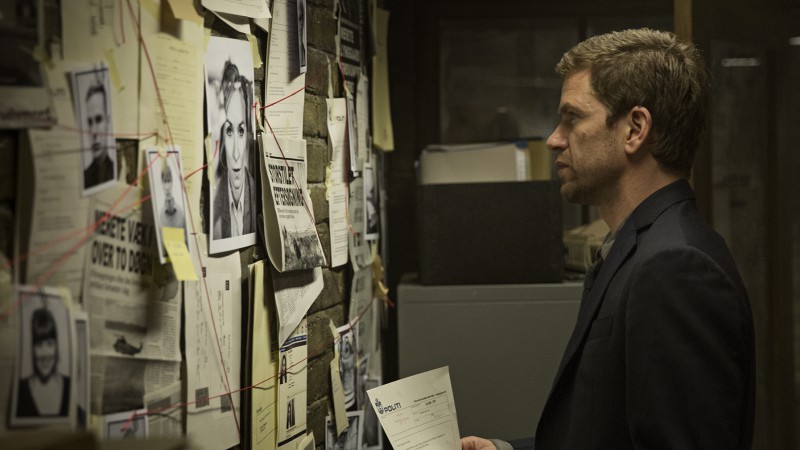
Following a police raid that leaves his partner, Hardy (Lyby) paralysed and another officer dead, detective Carl Mørck (Kaas) is transferred out of homicide and into Department Q, which deals exclusively with cold cases. His brief, along with his assistant, Assad (Fares), is to review the cases, submit a brief report and then close them. The first case he looks at concerns the apparent suicide of politician Merete Lynggaard (Richter) five years ago. Something about the case doesn’t make sense to Mørck and he reopens the investigation. He looks through the witness statements and finds that one statement wasn’t included in the final report: that Merete’s brother, Uffe (Følsgaard), who was with her on the ferry she is supposed to have jumped overboard from, was seen with a man in a raincoat.

Since Merete’s suicide, Uffe has resided in a home. Mørck and Assad visit him but his condition – brain damage from a car accident when he and Merete were children – prevents him from being of any help. A conversation with one of Merete’s colleagues reveals her liaison with a man at a conference shortly before she killed herself. Mørck gets hold of the list of attendees and photos that were taken at the conference. Suspecting that Uffe might recognise one of the men at the conference, they show him the various photos that show Merete and one of the male delegates. Uffe does recognise one of them, a man named Daniel Hale. With a solid lead to work with, Mørck’s investigation is brought up short by his boss, Marcus (Pilmark) following a complaint by the manager of the home and the original investigating officer. Unable to let things go, Mørck continues his investigation and travels to Sweden to speak to Hale.

When he and Assad get there, they discover that Hale died a few months after Merete’s suicide. They also discover that the man who attended the conference and was recognised by Uffe isn’t Daniel Hale. Learning that the man is likely to be a friend of Hale’s known as Lasse, the pair return to Denmark only to be suspended from duty. But again, Mørck can’t let things drop, and their investigation leads to an isolated farmhouse and a revelation involving the car accident that left Uffe in his current condition.

Keeper of Lost Causes, The - scene

The first of four movies adapted from Danish author Jussi Adler-Olsen’s Department Q novels – The Absent One (2014), A Conspiracy of Faith (2015), and The Purity of Vengeance (TBC) complete the quartet – The Keeper of Lost Causes is an efficient, gripping thriller that introduces possibly one of the dourest police detectives in recent cinema history. At one point, Assad remarks that he’s never seen Mørck smile. Mørck’s response? “My wife left me. My colleague’s dead, and my best friend’s a cripple … I don’t have a lot to smile about.” It’s a pithy, succinct summation of Mørck’s character, and while it seems in keeping with the recent trend in Scandinavian crime fiction and movies, the combination of Mørck’s gloomy outlook on life and Kaas’s glum demeanour raise this particular movie into the above average category.

With the central character so firmly established in the opening fifteen minutes, the movie is then free to concentrate on the mystery surrounding Merete’s apparent suicide. But as Mørck begins to piece together the clues that point to something more sinister, the script by Nikolaj Arcel takes a parallel line and shows the viewer what happened that day on the ferry. It’s a bold move, as the mystery elements inherent in the story are jettisoned in favour of a more cross-linear approach where the events of five years before run concurrently with the progress of Mørck’s investigation. This leaves the viewer with an entirely different type of crime drama than seems in play from the beginning, and while the villain of the piece enters the story quite late in the day, their appearance and the reason for their behaviour is cleverly revealed (even if what they actually do isn’t properly explained or feels credible).

The plot and various storylines play out with a surprising attention to detail, and Arcel’s adaptation does a good job of downplaying any implausibilities such as Mørck’s boss Marcus ignoring the progress he’s made in disputing the suicide theory. This aside, the movie is a solid, methodically paced crime drama that works best by keeping it simple, and Nørgaard’s unfussy, yet expressive direction is best exemplified by two moments of unexpected lyricism relating to Merete’s childhood. He’s good with the cast as well, eliciting strong, confident performances from all concerned. Kaas’s downbeat yet focused portrayal of Mørck is one of the things that makes the movie work so well; he’s completely credible as the impatient, disrespectful and arrogant ex-homicide detective who finds a new home in Department Q. And he’s matched for dedication and immersion in the role by Fares as Assad. Fares, who is Lebanese, spent two months learning Danish for the movie, but you wouldn’t know it. Assad is the sidekick role, but Fares brings a determination and an intelligence to the role that a lot of seasoned actors would have skirted past on their way to a more stereotypical portrayal.

Shot by DoP Eric Kress with an emphasis on dark, shadowy interiors and overcast, cloudy exteriors, the movie is recognisably part of the recent Nordic Noir genre that has spawned a myriad of similar tales both on the big screen and television. But thanks to a clever script, a director on top of his game, and a cast that brings credibility to (almost) every scene, The Keeper of Lost Causes is a terrific first movie in the series. If this outing is anything to go by, then the remaining three movies will definitely be ones to watch.

Rating: 8/10 – a well-paced, intelligent, and above all, absorbing crime thriller, The Keeper of Lost Causes is a testament to good story telling; quietly ambitious, the movie is a terrific example of how to maintain suspense without undermining either the plot or the characters.

Share this:

  • Share on X (Opens in new window) X
  • Share on Facebook (Opens in new window) Facebook
  • More
  • Print (Opens in new window) Print
  • Email a link to a friend (Opens in new window) Email
Like Loading...

29 February (2006)

05 Sunday Apr 2015

Posted by dullwood68 in Movies

≈ Leave a comment

Tags

Blood, Ghost, Horror, Ji-yeon, Jung Jong-hoon, K-Horror, Leap Year, Lim Ho, Murder, Park Eun-hye, Review, Ticket, Tollgate

29 February

Original title: 2 wol 29 il

aka The Curse of February 29th; February 29

D: Jung Jong-hoon / 90m

Cast: Park Eun-hye, Lim Ho, Lee Myung-jin, Lim Hyun-kyung, Kim Jae-man, Son Jung-bum

Ji-yeon (Park) works the late shift at a tollgate. It’s dull, unexciting work until the evening of February 27th. Just before her shift ends, the tollgate suffers an unexpected blackout. While Ji-yeon wonders what’s happening, a car comes up to her booth. She takes the ticket given to her by the driver, who quickly speeds off. Only then does Ji-yeon realise the ticket is covered in blood. The power comes back on and she goes home after being relieved by her friend Jong-sook (Lim Hyun-kyung). The next day Ji-yeon learns there was a murder at a nearby tollgate. Her friend jokes that it’s the curse of the tollgate, and tells her about an accident involving a prison bus that exploded and the female murderer who was supposed to have died in the fire. The story goes that her body was never found, and now every leap year, she comes back to claim more victims.

Ji-yeon is affected by the story, and has a nightmare in which she sees the woman’s burned face. She’s visited by the police officers (Lim Ho, Lee) who are looking into the murder, but she’s not able to tell them much. That night the tollgate suffers another blackout and the same car returns, again with a bloodstained ticket. The police, now dealing with two murders, become more involved, especially when they learn that the blood isn’t from the victims. Ji-yeon tells them the story of the female murderer, and though they’re not entirely convinced, they still look into it. When they show Ji-yeon a photo of the woman, she identifies her straight away as the woman she’s seen.

Having originally taken the night of the 29th off to celebrate Jong-sook’s birthday, Ji-yeon is horrified to learn that her friend has agreed to cover someone else’s shift that night. Ji-yeon rushes to the tollgate but is too late to stop Jong-sook from being murdered. With visions of the woman becoming more prevalent, and finding it difficult to sleep, Ji-yeon goes back to work accompanied by the police, who lie in wait for the car and its murderous occupant to return to the tollgate.

29 February - scene

Part of a series of four horror movies made and released in 2006 – the others being Hidden Floor, Dark Forest, and Roommates – this is a somewhat slight tale that might have played better as a short, and which never completely capitalises on its basic premise. Opening with a journalist’s visit to a mental hospital – where we first meet Ji-yeon as a patient – her story is told in flashback as we witness the events that have driven her to fear for her life. What unfolds is a familiar tale of haunting and murder that has much in common with other K-Horror (and even J-Horror) movies, but which doesn’t offer – at least at first – any reason for the ghostly murderer to be targeting Ji-yeon in the first place.

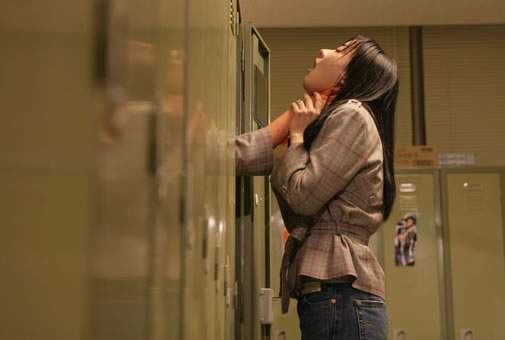
With the movie holding out for a more rational explanation of events nearer the end, the viewer is left with the feeling that the script, co-written by director Jung and Yoo Il-han, has been cobbled together with the idea of including as many unlikely scares and supernatural confrontations as it can manage without appearing too silly. That it manages to avoid this – though only just – is due to the relatively matter-of-fact approach Jung takes to the material, and the otherwise mundane way in which the plot unfolds. Ji-yeon becomes increasingly disturbed, the police remain baffled and confused, and the ghostly murderer pops up in all manner of places (see picture above) just to keep things from getting too staid. It’s not exactly a tired movie, just one that doesn’t try very hard.

Of course, horror movies by and large don’t have to make perfect sense, but it does help, especially when strange events are given what appears to be a rational explanation. And with the journalist’s interview with Ji-yeon having ended, the movie comes up with what it wants the audience to believe is the definitive spin on events. However, while it makes superficial sense, it’s so full of holes that even a viewer who’s only been paying partial attention will realise how daft it is. And then the movie trumps it’s own conclusions by adding on a twist that both supports and undermines both premises altogether (which is quite clever when you think about it).

The cast are proficient enough with Park keeping what could have been a more hysterical performance in check, and making Ji-yeon a more sympathetic character in the process (though when she’s required to look exhausted, instead she looks like she’s on drugs). Lim Ho as the senior Inspector who suffers an (initially) unexplained arm injury adds a layer of world-weariness to matters, while Lee plays the junior officer with a brash good nature that shows there is some comedy to be squeezed from the script. The rest of the cast don’t really make of a connection, with Kim’s journalist proving too vapid and Son’s hospital orderly too smug.

Jung, whose only feature to date this is, handles the supernatural elements well enough but the jump scares lack the visceral intensity to make them work as effectively as they should. And more could have been made of the tollgate location, but alas the camerawork is sluggish and there are too many occasions where it fails to take advantage of its surprisingly creepy vibe. With so little tension being created, Jung ploughs forward in the hope of the movie having an accumulative effect, but by the time it reaches its final confrontation, the movie doesn’t have enough left to get excited about.

Rating: 5/10 – serviceable, but too bland to be anywhere near terrifying, 29 February coasts along for much of its running time hoping to make an impression; that it doesn’t is due to a pallid script and an approach we’ve seen too many times before, making it one for K-Horror completists only.

TRAILER: There is a trailer for 29 February but it doesn’t have English subtitles. If anyone still wants to see it, it can be found here.

Share this:

  • Share on X (Opens in new window) X
  • Share on Facebook (Opens in new window) Facebook
  • More
  • Print (Opens in new window) Print
  • Email a link to a friend (Opens in new window) Email
Like Loading...

90 Minutes (2012)

04 Saturday Apr 2015

Posted by dullwood68 in Movies

≈ Leave a comment

Tags

Abuse, Aksel Hennie, Bjørn Floberg, Drama, Eva Sørhaug, Mads Ousdal, Marital problems, Norway, Pia Tjelta, Relationships, Review

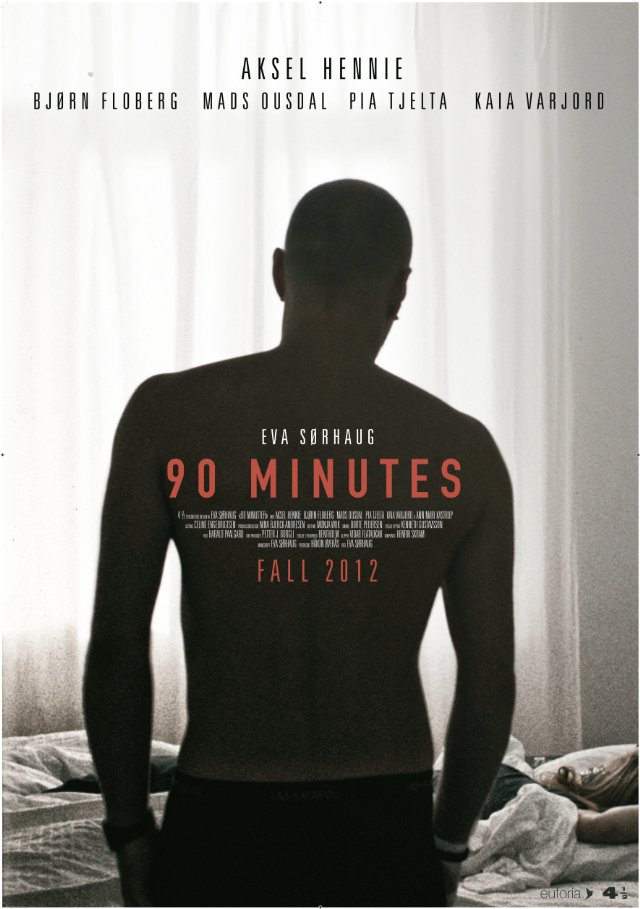
90 Minutes

Original title: 90 minutter

D: Eva Sørhaug / 89m

Cast: Bjørn Floberg, Mads Ousdal, Pia Tjelta, Aksel Hennie, Annmari Kastrup, Kaia Varjord

Johan (Floberg) has reached a point in his life where he’s made a profound decision as to his immediate future. He’s determined to put several aspects of his life behind him, such as the room he rents and a subscription he’s taken out. As he makes these changes, he’s goes about them with a sense of finality and sadness. Fred (Ousdal) is a cop who’s marriage to Elin (Tjelta) has ended in divorce. They have two young children, both girls, and Fred’s presence in their home while Elin plans a party is being tolerated by his ex-wife. When she takes a call from someone who is coming to the party and is currently playing golf, Fred assumes the man is the new love in her life, something that he isn’t happy about. Trond (Hennie) is a young man who appears to be living alone in a sparsely furnished apartment. He listens to the radio and tapes up his right hand but otherwise seems unmotivated. He goes into his bedroom, where he strips and has sex with a woman (Varjord) who is gagged and tied to the bed. Also in the room is a baby, which starts crying.

Johan arrives back home from a trip out. His wife, Hanna (Kastrup), is there. He begins to prepare dinner for them while Hanna has a shower. He is methodical and precise and makes sure that everything is just so. Fred begins to antagonise Elin by refusing to leave when she asks him to, and by complaining that she never seemed interested in golf before. He also finds excuses to remain there that involve either their children, or a neighbour. Elin loses her patience and insists that he leave. He eventually does so, and drives off angrily. Trond releases the woman tied to his bed to see to the baby. She is his partner, Karianne, and the baby is theirs. With the baby seen to, she begins to cook for them both, but when she looks out of the window, Trond becomes angry and attacks her. He drags her back into the bedroom and reties her to the bed. He snorts some cocaine, then arranges to meet a friend in order to get some more.

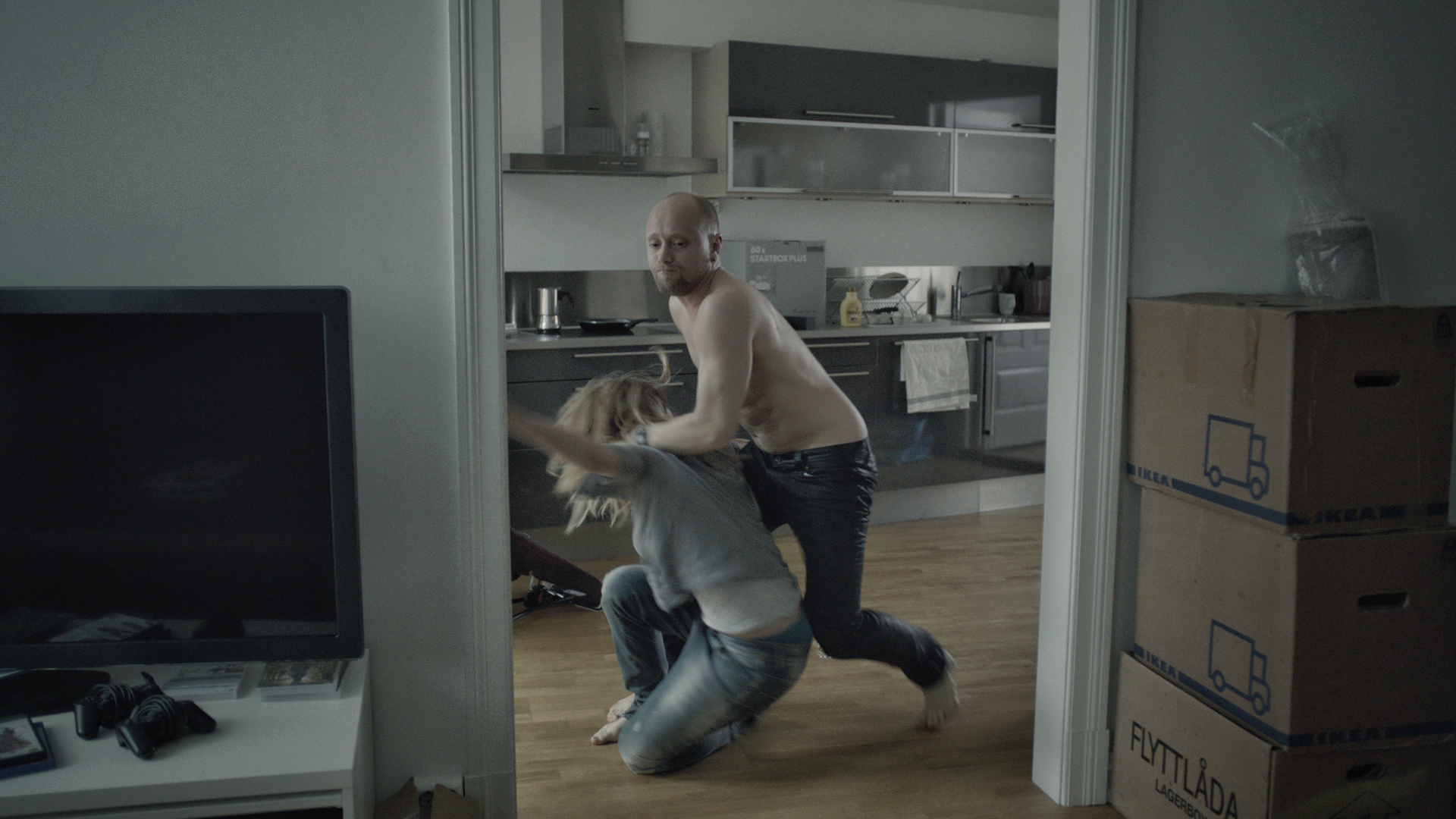
During their dinner, Johan prepares some gravy that he lets his wife try first. She becomes woozy and soon passes out. Fred drives around until he ends up back at his old home. He gets out of his car and goes inside to confront his family. Trond is visited by his friend and another man, who assault him and take his TV as repayment for his drug debts. Angry at being humiliated he decides to take it out on Karianne. He forces her to have sex and in the process nearly suffocates her, but stops just short of doing so. All three men find themselves on the verge of having their lives changed forever.

90 Minutes - scene

Only the second feature by talented director Sørhaug after Cold Lunch (2008), 90 Minutes is a bleak, uncompromising slice of Norwegian angst that gives the barest amount of detail for each man’s behaviour, and is coldly judgmental when it comes to the outcomes of each story. We meet each man at a stage where their individual journeys have reached a point of no return (though Trond’s is a little less cut and dried).

Johan’s actions are calculated and, in their own way, heartless and cruel. There may be an element of love involved in his actions toward Hanna, but the absence of any concrete reason for his actions doesn’t allow for any sympathy from the viewer. It’s clear he does have a reason for doing what he’s doing but Sørhaug is clever enough to make that reason irrelevant; his sadness tells us enough, and as we watch Johan carry out his plan, the sense of foreboding that builds is carefully orchestrated to the point where inevitability and hope collide, leaving a melancholy chill over the storyline that is quietly and unquestionably effective. Floberg is subdued, almost absent throughout, his careworn face providing all the information we need as to what he’s feeling. Of the three men he’s the most restrained and the most agonised, and Floberg gives perhaps the best performance as a result.

Fred is a man with unresolved marital issues and a simmering layer of anger lurking beneath an outwardly pleasant façade. Of the three men he’s the most recognisable and understandable, his jealous possessiveness a staple of marital dramas the world over. Sadly, this very familiarity stops Sørhaug from making his and Elin’s storyline from being anything more than entirely predictable, and his return to their home has all the surprise of presents at Xmas, especially after we learn he’s “taking a break” from active duty as a cop and is behind a desk. Nevertheless, Ousdal steers clear of making Fred too obvious, and makes his face almost mask-like when around other people. It’s only when he’s in his car that we see the full range of the emotions he’s feeling and realise just where those emotions will take him. As a transformation it’s unnerving and unexpectedly affecting.

As for Trond, he’s perhaps the most tormented of the three, his drug dependency exacerbating his paranoia and abusive behaviour towards Karianne. He’s an ogre, pitiless and self-absorbed, a rapist whose abusive nature has robbed him of every last ounce of decency. His actions are abominable, and it’s a measure of Sørhaug’s script, and Hennie’s abilities as an actor, that Trond isn’t allowed even the faintest hint of understanding or redemption; he’s unlikeable all the way through. Of the three storylines, Trond’s is the most difficult to watch, with its moments of domestic violence and sexual assault, and Sørhaug (again) is clever enough to thwart the audience’s expectations. The ultimate fate of Trond and Karianne and the baby is one that allows the movie to end on a note of cautious hope, but a note that nevertheless comes without any guarantees.

90 Minutes is a hard movie to like as such, its unremittingly grim mise en scene and examination of extreme misogynistic behaviour making it tough to engage with. But Fred’s story aside, Sørhaug’s script is still intrepid enough to make the other two storylines surprisingly engrossing. She also makes the camera more of an observer than a participant, allowing a more dispassionate approach to the material that offsets the horrors being witnessed. Henrik Skram’s icy score adds another dimension to the austere proceedings, and there’s sterling camera work from Harald Gunnar Paalgard, particularly in Trond’s apartment.

Rating: 7/10 – by making Johan, Fred and Trond so unsympathetic, writer/director Sørhaug runs the risk of making 90 Minutes too unpalatable for the average viewer, but there’s enough to admire in the stringent, uncompromising set ups to make up for any distaste at the characters’ actions; one that will linger in the memory and with a cathartic moment that remains appropriately unsatisfying.

Share this:

  • Share on X (Opens in new window) X
  • Share on Facebook (Opens in new window) Facebook
  • More
  • Print (Opens in new window) Print
  • Email a link to a friend (Opens in new window) Email
Like Loading...

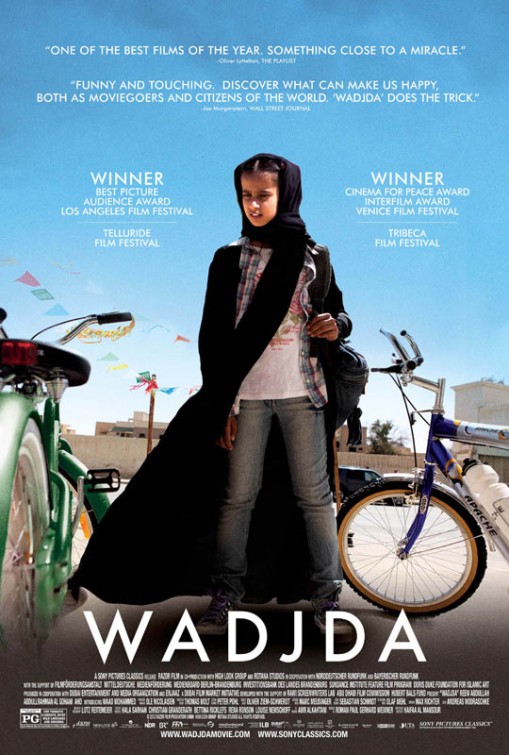
Wadjda (2012)

03 Friday Apr 2015

Posted by dullwood68 in Movies

≈ 3 Comments

Tags

Ahd, Competition, Drama, Green bike, Haifaa Al Mansour, Qu'ran, Reem Abdullah, Review, Riyadh, Saudi Arabia, Waad Mohammed

Wadjda

D: Haifaa Al-Mansour / 97m

Cast: Reem Abdullah, Waad Mohammed, Abdullrahman Al Gohani, Ahd, Sultan Al Assaf, Alanoud Sajini, Rafa Al Sanea, Dana Abdullilah, Rehab Ahmed, Nouf Saad, Ibrahim Almozael, Mohammed Zahir, Sara Aljaber

Wadjda (Mohammed) is an eleven year old girl living with her mother (Abdullah) in Riyadh. She regularly undermines the rules and restrictions of the school she attends, and remains unconvinced that the demands of the Qu’ran are at all necessary. She is friends with a boy, Abdullah (Al Gohani), who lives opposite her, but they have a bit of a combative friendship. When he mischievously steals her headscarf while riding his bike, Wadjda chases after him. This leads to her challenging him to a race when she has her own bike. However, the idea of girls riding bikes is frowned upon and Wadjda’s mother refuses to buy her one. But when Wadjda sees a green bike, she determines to buy it herself.

When her entrepreneurial activities at the school are curtailed by the headmistress, Ms Hussa (Ahd), Wadjda is unsure how she will raise the 800 riyals she needs to purchase the bike. Meanwhile, her mother is struggling to retain the attention of her husband and Wadjda’s father (Al Assaf); he is planning to marry a second time but Wadjda’s mother is convinced he won’t go through with it. Back at the school, Ms Hussa announces there’s to be a Qu’ran recital competition, one that carries a first prize of 1,000 riyals. Although she has little interest or knowledge in the Qu’ran, Wadjda joins the Religious Club and begins to learn sections of the Qu’ran by heart as well as the meaning of certain words and phrases. She gains the respect of Ms Hussa, and helps Abdullah when he asks to string some lights from his house to hers in aid of his uncle’s political election campaign (even though her mother is against it). While Abdullah works on the lights, Wadjda learns to ride on his bike.

The day of the recital arrives and Wadjda puts in an impressive performance. When she arrives home she finds her father there, but not her mother. She falls asleep, waking later that evening, and finds her mother up on the roof, listening to the sounds of a party nearby. It’s then that Wadjda learns both good and bad news, and receives reassurances as to her future.

Wadjda - scene

The first feature movie ever to be made fully in Saudi Arabia, and the first to be made by a female director, Wadjda is a delightful, life-affirming confection that is alternately funny, thought-provoking and heartfelt. It mixes gentle yet pointed observations about the role of women in Saudi society, and the pressures placed upon them by the male-dominated hierarchy, and finds subtle ways in which to subvert those pressures (Wadjda, for example, regularly goes about without her face covered, despite being of marital age; she also spends time with Abdullah unchaperoned, another no-no).

With nods to the neorealism of Italian cinema, this could be looked on as a variation of De Sica’s Bicycle Thieves (1953), but while the two movies share some vital DNA, Al-Mansour’s ode to childhood determinism works on a whole different set of levels, with social constraints and religious approbation strongly to the fore, and providing a rigid backdrop against which Wadjda’s efforts to secure her bike take place. It’s a clever piece of propaganda, though, showing how little real regard Wadjda’s fellow schoolchildren have for the rules that govern their lives. One girl meets her boyfriend in secret, while two others bend the rules by using make up when they shouldn’t; Wadjda herself sells hand-braided bracelets to the other pupils. It’s fun to see these girls behaving like the children they are, but Al-Mansour is canny enough to show through the actions and behaviour of the adults around them that it won’t last forever.

This celebration of childhood goes a long way to providing the heart of the movie, allowing the viewer several insights into Saudi life through young eyes. First-timer Mohammed is superb as Wadjda, funny and endlessly expressive, a mesmerising screen presence able to raise a smile or prompt a tear with seemingly little effort. In her scenes with Abdullah there’s a genuine bond between the characters that makes their interaction entirely credible and sincere. (Al-Mansour needed plenty of rehearsal time due to the constraints imposed on her by the filming process, which meant she couldn’t mix with the male crew members; some things, it seems, have a way of working out). Abdullah is equally as good, juggling the emotional demands of losing a husband with those attendant on being – effectively – a single working mother. The scene in which she tries on a red dress – meant to remind her husband of what he’s giving up – sees Abdullah provide a powerful yet understated comment on both her character’s pride and her desperation.

There’s formidable support too from Ahd as the frosty headmistress, and Al Assaf gives an astute turn as Wadjda’s largely absent, though loving father. Al-Mansour, working from her own script, avoids filling the minor characters with stereotypes and uses her own experiences growing up to good effect, telling her story with a refreshing lack of sentimentality and using the camera like a casual observer. She shows a confident appreciation for space and depth, often sprinkling wide shots and long shots into the mix with surprising accomplishment for a first-time director. Filmed entirely in Riyadh, the city backdrop adds that extra level of authenticity without which parts of the movie wouldn’t work, such as when Wadjda and Abdullah go to confront her mother’s driver (Zahir) over his decision to quit arbitrarily. The whole thing is expertly assembled and edited by Andreas Wodraschke, and features a subtly evocative score by Max Richter that supports and enhances the action.

Rating: 9/10 – a formidable first feature from Al-Mansour that rewards the viewer throughout, Wadjda is a cinematic marvel; coming from a part of the world where there are no cinemas (except for one IMAX screen in Khobar) and no movie industry as such, this is nothing short of a major triumph and should be on everyone’s list of must-see movies.

Share this:

  • Share on X (Opens in new window) X
  • Share on Facebook (Opens in new window) Facebook
  • More
  • Print (Opens in new window) Print
  • Email a link to a friend (Opens in new window) Email
Like Loading...

Wetlands (2013)

02 Thursday Apr 2015

Posted by dullwood68 in Movies

≈ Leave a comment

Tags

Anal fissure, Carla Juri, Charlotte Roche, Christoph Letkowski, Comedy, David Wnendt, Drama, Haemorrhoids, Literary adaptation, Marien Kruse, Meret Becker, Mother/daughter relationship, Personal hygiene, Review

Wetlands

Original title: Feuchtgebiete

D: David Wnendt / 109m

Cast: Carla Juri, Christoph Letkowski, Marien Kruse, Meret Becker, Axel Milberg, Peri Baumeister, Edgar Selge, Clara Wunsch, Ludger Bökelmann, Bernardo Arias Porras

Helen (Juri) is a rebellious teenager whose mother (Becker) and father (Milberg) are divorced; she wants nothing more than for them to get back together. Thanks to her controlling mother’s obsession with cleanliness when Helen was growing up, Helen has developed an opposite fascination with hygiene. This has led to her suffering from haemorrhoids and having an obsessive interest in her own bodily fluids, in particular those generated by and from her vagina. She gravitates to unclean toilets and wears her underwear for days at a time. She doesn’t have a boyfriend, and uses vegetables to masturbate with. She constantly challenges those around her, and affects a disinterested, yet provocative demeanour.

She does have a friend, Corinna (Kruse), but otherwise Helen doesn’t gravitate to any of her peers (though she does have a variety of sexual encounters). She reflects on her childhood and her mother’s abusive behaviour, but most of all she muses on her personal hygiene. However, when a burst of shaving results in her sustaining a cut to her anus, it creates an anal fissure that leads to her ending up in hospital and having an operation to remove part of her anus. Recovering in her hospital room, and attended by male nurse Robin (Letkowski), Helen is told she cannot leave until she has a bowel movement. Finding herself attracted to Robin, and using the situation to try and reunite her parents, Helen delays her release, but her childhood memories keep intruding, and it leads her to a clearer understanding of the trauma that she has been suppressing, and which has propelled her into being the person she is.

Robin becomes her confidante, and though he’s in an off-again-still-off-again relationship with teaching student Valery (Baumeister), he’s still hopeful that they’ll get back together. Valery does her best to speed up Helen’s recovery, but lacks the deviousness that Helen brings to the situation. And as the time for her leaving does approach, the likelihood of Helen’s parents being reunited seems remote.

Wetlands - scene

Those viewers whose gag reflex isn’t particularly good would do well to steer clear of Wetlands, as it’s a movie unafraid to go where practically every other movie fears to tread. In terms of body horror, this is a movie that even David Cronenberg might pass on, but David Wnendt’s adaptation – co-written with Claus Falkenburg – of Charlotte Roche’s novel is by turns comic, darkly dramatic, surreal, choc-full of squeamish moments, and occasionally bizarre. It’s a smorgasbord of cruelty, nudity, self-abuse, dysfunction, psychotropic nightmares, and casual sex, but it’s also possessed of a warm-hearted centre and is boosted by a raw, fearless performance by Juri that pushes more than a few boundaries to one side – and then comes back and tramples on them.

Vigorous and unnerving, Wetlands is a visceral trawl through the mind and life of a young woman for whom “normal” means rubbing her haemorrhoids on dirty toilet seats and making her own tampons (which she swaps with Corrina). Helen’s sense of propriety is so far out of whack that it’s amazing she has anyone close to her: she has no fear and no appreciation for the feelings of others, and alienates almost everyone in her path. That she remains likeable at all given all this is a testament to the script and Juri’s performance, which is often breathtaking. Juri inhabits the character of Helen with such gusto and disabling charm that the viewer can’t help but be drawn into her world – no matter how luridly disgusting it may be from time to time – and with her cheeky grin and unruly curls, she keeps Helen sympathetic throughout, even during the scene where she coldly berates Corinna for being pregnant. There’s a wealth of unexpected pathos beneath Helen’s ebullient, manipulative, mocking persona, and Juri keeps it all there, just close to the surface, threatening to succumb to it on several occasions but reining it in at the last second.

Helen’s combative relationship with her mother is agonisingly rendered by Juri and Becker, while the sad dependency she feels toward her father is reflected in the quiet, unforced performance of Milberg. Less fulfilling or convincing however is Helen’s relationship with Robin, which seems included as a way of giving Helen a chance at a quieter, more “normal” life. He also seems too much of a nice guy to fall for Helen’s ruinous antics, and Letkowski’s ingenuous portrayal never strays far from being bland and a trifle tame, leaving the viewer wondering what Helen sees in him. Also less convincing is Helen’s consultant, the patronising and insensitive Dr Notz (Selge); he’s the nearest the movie comes to having an authority figure to challenge but the character is too much of a cartoon to be effective as anything else.

With its clutch of spirited performances, Wetlands fares well when it focuses on the dysfunctions and disappointments of family life, and the ways in which people see the nuances of their life as defining them – there’s a great fantasy scene where Helen’s mother is dying and her last thought is about whether or not she’s wearing clean underwear, and which leads to a priceless moment straight out of Invasion of the Body Snatchers (1978). It’s also a highly stylised, visually inventive movie that offers a dizzying variety of close ups, point of view shots, flashbacks, and tightly edited scenes and sequences (thanks to Andreas Wodraschke). There’s even an animated sequence near the beginning that sets the tone of much of the fantasy/nightmare elements. All are well-staged and coordinated by Wdendt who shows a keen feel for the material and a determination not to pull any punches when it comes to Helen’s physical and sexual bravado.

By making Helen such an uncompromising character, it’s down to the viewer to decide just how far they want to go with her on her journey, but aside from all the notions of mental illness, sexual ethics and social acceptance, the movie is a surprisingly warm and nurturing experience, its gross-out moments (including the surprise ingredient in a pizza that should have take away sales plummeting) not as randomly added to the storyline as it appears.

Rating: 7/10 – not as morbid or deliberately confrontational as it may seem, Wetlands is all about love and acceptance, and the trials one young woman goes through to attain those; not without its flaws, the movie is still a mesmerising, emotional roller coaster ride, and not for the faint-hearted.

Share this:

  • Share on X (Opens in new window) X
  • Share on Facebook (Opens in new window) Facebook
  • More
  • Print (Opens in new window) Print
  • Email a link to a friend (Opens in new window) Email
Like Loading...

When Evening Falls on Bucharest or Metabolism (2013)

01 Wednesday Apr 2015

Posted by dullwood68 in Movies

≈ Leave a comment

Tags

Actress, Affair, Bogdan Dumitrache, Bucharest, Corneliu Porumboiu, Diana Avramut, Director, Drama, Movie, Rehearsal, Relationships, Review, Romania, World Cinema Month

When Evening Falls

Original title: Când se lasă seara peste Bucureşti sau Metabolism

D: Corneliu Porumboiu / 85m

Cast: Diana Avramut, Bogdan Dumitrache, Mihaela Sirbu, Alexandru Papadopol

Paul (Dumitrache) is a writer/director making his latest movie. He hasn’t worked with his lead actress, Alina (Avramut) before, but he likes to challenge her over her interpretation and understanding of the script as well as her personal opinions on topics such as shooting on film as opposed to digitally. One day during the movie’s production, Paul fakes a stomach problem and lets his producer, Magda (Sirbu) know that he can’t work; instead he meets up with Alina. They rehearse a scene where Alina’s character gets out of the shower, and as she gets dressed, overhears a conversation involving the male lead character. She and Paul discuss the various reasons for her behaviour during the scene, and try and pin down the various actions that will be involved. Afterwards they have sex.

As the day progresses they have lunch at a Chinese restaurant, and much later, they run into Magda at a hotel where some of the cast are staying. Magda isn’t happy with the male lead’s behaviour from the night before, and she’s also unhappy with Paul because she doesn’t believe his assertion that he’s seen a doctor and had an endoscopy carried out. Afterwards, Paul and Alina continue to block out the shower/dressing scene, going over it time and again in their efforts to fine tune the motivation of Alina’s character. Later, they eat out at another restaurant, where they are joined briefly by Laurentiu (Papadopol), one of Paul’s fellow movie makers. He mentions that Alina has the look of Monica Vitti about her, but Alina doesn’t know who that is. Paul is surprised, and when they leave they talk about the differences between theatre – which is Alina’s professional background – and cinema.

The next morning they meet up before heading for the day’s shooting location. There, Paul gives Magda a copy of the endoscopy exam to watch with a doctor called to the set. Despite some irregularities, the doctor is satisfied, though Magda remains convinced Paul has falsified the recording, though she can’t figure out why. And in a conversation with a makeup lady, Alina reveals its her last day on the production.

When Evening Falls - scene

The so-called Romanian New Wave has been responsible for a number of stark, minimalist movies in the last ten years, most of them poignant, subtle explorations of the effects of Communist rule on the lives of everyday people. Some movies, such as The Death of Mr. Lăzărescu (2005) and 4 Months, 3 Weeks and 2 Days (2007), have found an international audience and been critically applauded. And Porumboiu himself has been feted for his previous movies, including Police, Adjective (2009). Here, he adopts a rigid, formal approach to what is essentially a diffused romantic two-hander, as Paul attempts to both impress and manipulate Alina into giving the performance he’s looking for, and in the process, foster a relationship that, deep down, he knows will only be temporary.

Beneath his rigorous, intellectual demeanour however, Paul is a fraud: pompous, insecure, and insincere. He wants Alina to appear naked in his movie and uses the notion that she’ll be thankful fifty years on that she’ll have a permanent reminder of her youth and beauty. Alina turns the tables on him, though, and shoots down his argument by asking the simple question, what makes him think people will be watching his movies in fifty years’ time? It’s a lovely moment, Paul’s presumptuous ideas punctured without a trace of animosity, and showing just who has the upper hand in their relationship. As the movie progresses, and Paul’s continued attempts to gain some measure of control become less and less effective, Alina reveals more and more of the determination and poise that have been there all along, but which Paul has been too blinkered to notice. The moment when Alina reveals she’s never heard of Antonioni (let alone Monica Vitti) is a wonderful indication of how unconcerned she is by Paul’s cinematic posturing.

Both Avramut and Dumitrache excel in providing well-considered, measured performances, making even the blandest of Paul and Alina’s interactions more intriguing and suggestive than they appear on the surface. Avramut keeps Alina’s face in repose for most of the movie, deflecting Paul’s advances with cool detachment and engaging with him on her own terms. Dumitrache evinces disappointment and dismay, giving Paul the air of a man for whom this isn’t his first experience of being out-manoeuvred by his leading lady. Their relationship is one full of delicate cuts and thrusts, and Porumboiu directs their subtle feints and ripostes with a careful eye for the casual gains and losses inherent in such an unsatisfactory affair.

Unexpectedly absorbing as it is though, the movie does a visual aesthetic that could be off-putting to certain viewers. Porumboiu’s adoption of rigid camerawork and single shot set ups, while keeping things at a distance, actually works to force the audience to pay attention to what’s being said, and the way in which Paul and Alina move around each other, as if in a dance, reaps its own dividends. Particularly effective are the neutral backgrounds Porumboiu places his characters in front of, their non-committal colours and broad expanses reflecting the disinterest Alina and Paul really have in each other. It’s only when Paul and Magda run into each other in the hotel lobby that the environment changes, becoming more decorous and richly detailed. It’s a refreshing change for the viewer, but as Alina leaves them to it and Magda displays her anger, it becomes an indication that Paul’s personality needs an impersonal surrounding in order for him to feel comfortable, and to have a degree of control that reassures him (under Magda’s withering gaze Paul reacts like a chided schoolboy).

Rating: 8/10 – surprisingly emotional beneath its stringent visuals, Where the Evening Falls on Bucharest or Metabolism is deceptively simple and subtly rewarding; less a meditation on the nature of movie making (though with nods in that direction), and more an examination of two people using each other out of convenience, Porumboiu’s movie is an unexpected pleasure.

Share this:

  • Share on X (Opens in new window) X
  • Share on Facebook (Opens in new window) Facebook
  • More
  • Print (Opens in new window) Print
  • Email a link to a friend (Opens in new window) Email
Like Loading...

Tracers (2015)

31 Tuesday Mar 2015

Posted by dullwood68 in Movies

≈ Leave a comment

Tags

Action, Adam Rayner, Bike messenger, Chinatown, Crime, Daniel Benmayor, Drama, Marie Avgeropoulos, Parkour, Review, Robberies, Taylor Lautner, Thriller

Tracers

D: Daniel Benmayor / 94m

Cast: Taylor Lautner, Marie Avgeropoulos, Adam Raynor, Rafi Gavron, Luciano Acuna Jr, Josh Yadon, Johnny Wu, Sam Medina, Amirah Vann, Christian Steel, Wai Ching Ho

Cam (Lautner) has a problem: he owes the Chinese Mafia $15,000 and his work as a bike messenger isn’t earning him enough to meet the repayment schedule that’s been arranged. When his bike is totalled in a collision caused by a female freerunner, Cam doesn’t know what he’s going to do next. But the next day he finds that his “girlfriend” has dropped off a new bike where he works. Cam goes in search of his mystery benefactor and eventually catches up with her. Her name is Nikki (Avgeropoulos) and she’s part of a small group of tracers that includes her brother, Dylan (Gavron), and friends Tate (Acuna Jr) and Jax (Yadon). Cam is attracted to Marie and at first it’s his main reason for hanging out with them, but when his new bike is stolen and he has to move out of the garage space he’s renting because the Chinese Mafia threaten his landlord (Vann) and her young son (Steel), he tells the group that he wants “in” on whatever it is that they do (and which is probably both illegal and lucrative).

Cam eventually meets Miller (Raynor) who tells him that he runs the group as a kind of specialist team, hired to carry out dangerous or high risk “jobs” that are illegal, most of which involve stealing. Cam goes on a job with them that turns out to be a test, which he passes. But the money he’s earning isn’t enough to pay off his debt. At the same time, he and Nikki become closer, even though she is with Miller. They begin seeing each other, though Miller becomes suspicious. When Miller announces a big job, one that will earn each of them around $20,000, Cam sees his way out. But when he’s picked up for the job and Nikki isn’t taking part, he begins to wonder if Miller is setting him up. But the job, a robbery at the “bank” of a notorious Korean gang, goes wrong and in their attempt at escaping, Jax is killed and Cam ends up being arrested. But there is a surprise in store for him, but one that he might be able to turn to his advantage – if he stays alive long enough.

Tracers - scene

Since the first and subsequent Twilight movies, the career of Taylor Lautner hasn’t exactly set cinema screens alight. From being lost in the giant ensemble that was Valentine’s Day (2010), to the entirely risible Abduction (2011) and an uncredited turn in Grown Ups 2 (2013), his career seems to have stalled. On the strength of Tracers it doesn’t look as if it’s going to get any better any time soon.

It’s not that the movie is all bad or that Lautner is – in fact, he’s just about bearable – but it is the kind of movie that the word “disposable” was made for, occasionally exciting but generally quite benign and underwhelming. No one is required to do too much in the way of emoting, and the script seems determined to include as much in the way of bland dialogue as it can, while each character wanders from scene to scene with the vacant approach of someone under hypnosis. Even when Cam and Nikki end up in bed together it’s all Lautner and Avgeropoulos can do to make it seem like they’re attracted to each other.

But despite all this, where the movie does score points is with its parkour scenes, which stay just this side of inventive, and manage to install some much needed energy and thrills into proceedings. It’s also good to see that Lautner has put in his time learning how to participate without looking like an amateur, and if he’s not given anything too dangerous to jump across/down from/over, then it shouldn’t be a surprise. That said, it’s fun to watch his training montage and work out which fails were choreographed and which were originally meant to be outtakes.

With the camera following Cam and the gang from time to time on their parkour routines, the excitement of the chase is never far away, and there’s one sequence which looks set to emulate the foot chase from Point Break (1991), but unfortunately it’s over almost as soon as it’s started – did no one think to strap a helmet-cam on someone at any point? And the twin action sequences toward the end of the movie raise the raise things out of the doldrums of the previous hour. But without these elements – shot with an energetic, well-paced attention to low angles by DoP Nelson Cragg – Tracers is a largely humdrum affair that screams banality from every (other) angle.

Outside of Lautner, the cast are largely forgettable, with the exception of Wu who brings both humour and menace to his role as Tong enforcer Jerry, and Vann who portrays Cam’s landlady with a quiet grace that makes her the most credible character in the whole movie. Benmayor lacks the experience needed to meld the characters and the action together into a unified whole, and directs much of the movie as if from a distance, almost as if he were leaving the cast to direct themselves (and if so, that wasn’t such a good idea either). With his attention wandering – sometimes within a scene – it makes for an uneven, debilitating viewing experience that you won’t want to repeat.

Rating: 4/10 – with parts of the movie feeling padded out and slowed down unnecessarily, Tracers only picks up when its cast fling themselves over and around various rooftops; bordering on vacuous, it’s a movie that could be viewed as the second nail in the coffin of Lautner’s career.

Share this:

  • Share on X (Opens in new window) X
  • Share on Facebook (Opens in new window) Facebook
  • More
  • Print (Opens in new window) Print
  • Email a link to a friend (Opens in new window) Email
Like Loading...

Match (2014)

30 Monday Mar 2015

Posted by dullwood68 in Movies

≈ Leave a comment

Tags

Carla Gugino, Dance, Dance community, Dissertation, DNA, Drama, Interview, Matthew Lillard, Paternity, Patrick Stewart, Review, Stephen Belber, The Sixties, Theatre production

Match

D: Stephen Belber / 92m

Cast: Patrick Stewart, Carla Gugino, Matthew Lillard, Jaime Tirelli

Tobi Powell (Stewart) is an aging ballet instructor at Juilliard. He’s a lonely man, given to rejecting offers of friendship from his colleagues, and he lives by himself in an apartment in New York’s Inwood hamlet. Despite this he agrees to give an interview to Lisa Davis (Gugino) who is writing a dissertation on the dance community during the Sixties. Accompanied by her husband, Mike (Lillard), the three meet in Tobi’s favourite Greek diner. Lisa is bright and attentive to Tobi’s flamboyant personality, while Mike is more reserved. The interview continues at Tobi’s apartment, but Mike, who is ostensibly there to support his wife, begins to ask more pointed questions about the Sixties and in particular, Tobi’s sexual liaisons.

Tobi is initially perplexed by Mike and Lisa’s focus on the sexual mores of the period until they mention the name of a dancer he knew called Gloria Rinaldi. Tobi had a brief affair with her in the latter part of 1967, but she gave up a potential career as a dancer to have a child. That child is Mike and he thinks Tobi is his father. Tobi denies being this and tells them both that it would have been impossible as he always wore a condom in those days. Mike doesn’t believe him and becomes aggressive; Tobi asks them both to leave. Instead, Mike refuses and pins down Tobi so he can take a DNA swab from Tobi’s mouth. Having got what he came for, he leaves, but not before Lisa has made it clear that she’s unhappy with the way things have gone.

While Mike heads for a nearby forensics lab where a friend works, Lisa stays with Tobi and they begin to bond over prune pastries and Tobi’s love of knitting. He lets her know he can see the cracks in her marriage to Mike, and Lisa admits Mike has become a different man in recent months as the idea of finding and confronting Tobi has eaten away at him. Moved by Lisa’s honesty, Tobi shows a newspaper clipping he’s kept from when Mike was fifteen and he’d taken part in a fencing competition. He reveals that he knew Gloria was pregnant and that she asked him to be the child’s father but he refused; instead he decided to focus on building his career. And when he saw the newspaper clipping he sent Gloria a sum of money towards Mike’s college fund. But with all this he still can’t be Mike’s father: it’s all too late.

When Mike returns to the apartment, both men are forced to confront some unpleasant truths about each other, while Lisa is left to hope that some degree of reconciliation can be found.

Match - scene

Originally a stage play by writer/director Belber that opened in 2004 (and featured Frank Langella, Jane Adams and Ray Liotta as Tobi, Lisa and Mike respectively), Match still retains the look and feel of a stage play and the type of staging that betrays its theatrical origins. That’s not an entirely bad thing, but it does contribute to several occasions during the narrative where certain developments feel artificial and/or forced.

There’s always a degree of contrivance that accompanies a theatrical adaptation, and Match is no exception. In opening out his play from the constraints of Tobi’s apartment, Belber has chosen to also constrict it (the play ran half an hour longer), and while this possibly helps, there is still a sense that the story gets a little rushed once the trio reach Tobi’s humble abode. Following a number of flamboyant embellishments to his answers, and as many sidetrack comments as he can muster, Tobi is side-swiped by Mike’s bullish demeanour, and while there’s an argument that the movie needs to pick up some speed – and get to the crux of the matter – by this point, it’s done in such a clumsy way that Belber’s careful character building is given the cinematic equivalent of a knee-capping.

From here on until the end of the movie, Match struggles to regain the momentum it has carefully built up, and the characters’ attempts at connecting with each other become more unlikely and more laboured. Tobi and Lisa at one point have a discussion about the pleasures of giving and receiving cunnilingus, as unlikely a conversation as any that two strangers would have within a couple of hours of meeting. They go through Tobi’s collection of self-made knitwear and go up to the roof where Tobi tries to get Lisa to dance. It’s uncomfortably like a courtship, and despite Tobi’s obvious homosexuality, these events still provoke an uncertainty about Belber’s motives in putting these two characters together for so long. And when Mike returns, his confrontation with Tobi is resolved – with admirable speed, but at the expense of a fair degree of credibility.

With the narrative proving unwieldy and uneven, it’s a good thing that Belber has chosen well with his cast. Tobi is the kind of camp, peacockish character that an actor of Stewart’s calibre can bring to life with the twitch of an eyebrow, or the shake of a scarf. He dominates the movie, revelling in Tobi’s arch, semi-pretentious musings, his passion for life at odds with his self-enforced solitude, and still having an insatiable curiosity about the lives of others. It’s a performance that appears effortless, and Stewart is hypnotic throughout, smoothing over the cracks in Belber’s script with a well-timed expression here and a well-considered line reading there. He’s ably supported by Gugino, though Lisa appears largely out of her depth in the situation, two steps away from being entirely subordinate to her husband. When Tobi recognises the problems in their marriage, Gugino shows Lisa to be a woman looking for the answers to questions she hasn’t thought of, and displays the character’s sad-hearted vulnerability with admirable understated precision.

Unfortunately for Lillard, Mike is required to be a kind of aggressive deus ex machina, bulldozing his tight-lipped way through Tobi’s rambling reminiscences and being unnecessarily abusive to Lisa. It’s a dangerously underwritten part, but Lillard manages to salvage some of the pent-up sadness and disappointment Mike has been feeling throughout his life, and he makes it all the more evident when he challenges Tobi’s assertion that Gloria chose her life.

Belber proves to be an erratic director, depending too much on close ups to impart sincere emotion, and never quite knowing where to place the camera in Tobi’s apartment, leading to some odd framing that sees the characters either squeezed into shot and/or suffering a kind of temporary dismemberment. The scene at the forensics lab is dramatically unnecessary (but does remind us that Mike is still part of the story), and the ending, while entirely predictable, is an example of the way in which Belber wants to both punish and celebrate Tobi’s decision all those years ago, but can’t make up his mind which is the more appropriate.

Rating: 6/10 – with strong, committed performances from its main cast, Match maintains the audience’s interest despite some clumsy, ill-considered plot developments and a sense that it’s all a bit too overwrought for it’s own good; the fact that it’s taken ten years to reach the screen may give potential viewers enough of a warning, however, not to expect too much.

Share this:

  • Share on X (Opens in new window) X
  • Share on Facebook (Opens in new window) Facebook
  • More
  • Print (Opens in new window) Print
  • Email a link to a friend (Opens in new window) Email
Like Loading...

Let’s Kill Ward’s Wife (2014)

29 Sunday Mar 2015

Posted by dullwood68 in Movies

≈ Leave a comment

Tags

Black comedy, Body disposal, Bullying, Comedy, Donald Faison, Friendships, Golf, Greg Grunberg, James Carpinello, Marriage, Murder, Patrick Wilson, Review, Scott Foley

Let's Kill Ward's Wife

D: Scott Foley / 82m

Cast: Patrick Wilson, Scott Foley, Donald Faison, James Carpinello, Greg Grunberg, Dagmara Domińczyk, Amy Acker, Marika Domińczyk, Nicolette Sheridan

Ward (Faison) has three close friends: David (Wilson), Tom (Foley), and Ronnie (Carpinello), but since his marriage to Stacey (Dagmara Domińczyk) and the birth of their son, his chances of spending quality time with them has almost reached zero. The reason? Stacey has him browbeaten and henpecked and bullied and reduced to asking permission to see his friends (which he doesn’t get). When a planned Father’s Day trip to the golf course sees four end up as three, his friends start to muse on the idea of killing Stacey and ridding their lives of her forever. But while Tom and Ronnie dismiss the idea other than in principle, screenwriter David begins researching how to kill someone and get away with it.

At a party held at Ward’s house, the friends, along with Tom’s wife, Geena (Acker), and David’s ex-wife, Amanda (Marika Domińczyk), are all together when Tom receives a phone call from actress Robin Peters (Sheridan), whom he has recently interviewed for the magazine he and Ward work for. She flirts with him and he arranges to meet her. But Stacey overhears the conversation and threatens to tell Geena about it. In a fit of pent-up anger, Tom mashes her face into a cake. She comes up for air but slips on a piece of the cake and crashes to the floor, unconscious. She stirs, and Tom panics and strangles her.

He manages to keep the body away from prying eyes until everyone but his friends and Geena and Amanda have gone. He tells them what’s happened, and after the initial shock, they all decide to cover up Stacey’s murder, and then to dispose of the body. Ward is stunned but not unhappy, and goes along with the plan. When it comes to deciding what to do with the body, David reveals several ways in which they could get rid of it, and they decide to dismember it and bury the portions in various different locations. But there is a potential fly in the ointment: Ward’s nosy cop neighbour, Bruce (Grunberg), who senses something is up with Ward, and who keeps an eye on his and his friends’ comings and goings in the run up to the disposing of Stacey’s body.

But when it comes to actually dumping her body, Ronnie has a crisis of conscience that threatens the plan, and Ward is followed by an increasingly suspicious Bruce…

Let's Kill Ward's Wife - scene

There’s a moment in Let’s Kill Ward’s Wife that may well be too much for some viewers, and may prompt them to give the rest of the movie a miss, believing that there are some things – even in a black comedy – that shouldn’t be filmed. The moment in question involves Ward’s full bladder and his dead wife, and it’s the moment in the movie where any connection the audience might have had with Ward and his friends flies out of the window and heads south for the rest of eternity. Up til now, the easy complicity and the joking around have been awkwardly amusing, but here the script – by Foley – aims for the blackest of black comedy and misses by several country miles (there’s another moment later on, with a line of dialogue, that tries the same thing, but it also falls flat). These two moments are indicative of the script’s shortcomings – of which there are many – and why some movies shot on a low budget and in a short period of time… should remain unmade.

It’s true that there’s ambition here, but it’s almost choke-slammed into submission before the movie even begins. At their son’s Christening, Stacey berates Ward for his behaviour in front of all their guests, but he’s done nothing wrong; and while it’s a scene that’s played for maximum awfulness – and to show just how much of a shrew Stacey can be – it’s also a scene that feels too overwrought to be credible. And Stacey remains a shrew right up until she dies, with no attempt to show a different side to her personality, and with an almost blink-and-you’ll-miss-it explanation as to her bullying behaviour. It’s a one-note characterisation and harms the movie in ways that Foley hasn’t considered because he’s more interested in showing the four friends and their camaraderie. But they’re just a bunch of guys who can’t relate to women, and for whom casual misogyny is pretty much a way of life. Ronnie is a would-be Lothario, while Tom is planning to cheat on his wife because it’s easier than telling her she doesn’t turn him on anymore and trying to fix things. And apparent commitment-phone David can devise a plan to dismember and dispose of a dead body but he can’t devise a way in which he can win back his ex-wife. (And if you think these “issues” won’t be resolved by the movie’s end, then you need to think again.)

As the movie stumbles from one unconvincing set up to another – David proves to be a bit of a criminal mastermind, the friends all strip down to their underwear in order to get rid of their clothes… but before they leave Ward’s house, Ronnie fails to take a shovel with him to his burial site and has to use a golf club to dig the hole, Bruce proves to be the worst cop in the world – it soon becomes clear that writer/director Foley hasn’t got a grip on either the material or his cast’s performances. Wilson comes off best by making David gleefully amoral when it matters, and he wears a Cheshire Cat grin throughout. Faison plays Ward as either dazed or confused or panicky, and Carpinello adopts a breezy Brooklynite persona for Ronnie that is too close to parody for comfort. Of the rest of the cast, only Acker makes any kind of impression, but then only briefly before she’s required to turn into an unlikely sexpot. As for Foley, well, let’s just say this isn’t his finest hour.

With too much in the way of fixed camerawork going on, Let’s Kill Ward’s Wife isn’t the most visually arresting of movies, but Foley and DoP Eduardo Barraza do at least keep things moving within the frame, and their reliance on low angle shots occasionally pays off. There’s a score by John Spiker that rarely deviates from being twee and stiffly supportive of the action, and the movie’s brief running time proves to be an unexpected blessing.

Rating: 3/10 – considering the potential of its subject matter, Let’s Kill Ward’s Wife is a ridiculous, self-consciously careless attempt at making a whip-smart blacker-than-black comedy; with no one to root for, or care about, it’s a movie that tries too hard and as a result, fails to deliver.

Share this:

  • Share on X (Opens in new window) X
  • Share on Facebook (Opens in new window) Facebook
  • More
  • Print (Opens in new window) Print
  • Email a link to a friend (Opens in new window) Email
Like Loading...

Mini-Review: Get on Up (2014)

28 Saturday Mar 2015

Posted by dullwood68 in Movies

≈ Leave a comment

Tags

Biography, Chadwick Boseman, Dan Aykroyd, Drama, Funk, Godfather of Soul, James Brown, Nelsan Ellis, Review, Soul music, Tate Taylor, The Famous Flames, True story, Viola Davis

Get on Up

D: Tate Taylor / 139m

Cast: Chadwick Boseman, Nelsan Ellis, Dan Aykroyd, Viola Davis, Lennie James, Fred Melamed, Craig Robinson, Jill Scott, Octavia Spencer, Josh Hopkins, Brandon Smith, Tika Sumpter, Aunjanue Ellis

Get on Up recounts the life and career of James Brown (Boseman), but does so in a painfully non-linear way that sometimes makes it difficult to work out just when a scene is meant to be taking place; often it’s only Brown’s hairstyle that gives the viewer a clue. Opening with a scene set in 1988 where Brown accidentally fired a shotgun in a business property he owned and which lead to his arrest (shown much later in the movie), the script by Jez and John-Henry Butterworth skips back and forth in Brown’s life, from his abandonment by his mother (Davis) and then also his father (James), to his early start in the music business as part of the Famous Flames alongside Bobby Byrd (Ellis). With still further flashbacks and changes in direction, his rise to fame is examined, as well as the lengths he went to to maintain that fame.

What arises from all this is the notion that Brown was an intensely driven man who expected unwavering loyalty from the people around him, and whose talent hid an angry narcissism. He regularly treats people with disdain, particularly supposed best friend Byrd, and seems only to have had a “relationship of equals” with his manager, Ben Bart (Ackroyd), while preferring to be called Mr Brown rather than James by everyone else. It’s a trait that’s returned to again and again throughout the movie, and seems to be the only aspect of Brown’s character and personality that Get on Up is concerned about. And with the continual chopping and changing of the narrative, we learn little else about the man, or what motivates him; this has the effect of leaving the viewer adrift for much of the running time, as the movie veers away from exploring his personality in greater depth or detail.

Get on Up - scene

What does work, thankfully, is Boseman’s towering performance as Brown. The actor captures Brown’s sheer physicality and presence superbly, and although efforts to make him look like the singer in his later years don’t quite work, it’s still an amazing portrayal, fuelled by an energy that fizzes off the screen. On stage, recreating Brown’s movements, Boseman captures perfectly every crazy dance step and pirouette with ease. And he carries that intensity with him away from the stage or studio, giving as complete a performance as he can manage, even when the script isn’t completely supporting him. The same can be said for the likes of Davis, Ackroyd and Ellis, who all make more of their roles than you might expect.

Taylor focuses more on the musical numbers, recreating Brown’s live performances at every opportunity and using these sequences to inject some much needed zing into the movie, and to keep it from stalling. They are the best things in the movie, and the pace picks up every time one comes along. Otherwise, Taylor gives us a somewhat bland retelling of Brown’s life and one that, despite the lengthy running time, still feels rushed. The movie also has too many scenes lacking any resonance or connection to the other scenes around them (one moment of domestic abuse comes out of nowhere and feels included just for the sake of it). With this lack of focus, the movie proves only fitfully rewarding.

Rating: 6/10 – vibrant and alive when it “plays the hits!”, Get on Up falters when it tries to show Brown’s life away from the limelight; with Boseman’s astounding performance rescuing things time after time, it’s a movie that only does partial justice to the life and times of the self-proclaimed Godfather of Soul.

Share this:

  • Share on X (Opens in new window) X
  • Share on Facebook (Opens in new window) Facebook
  • More
  • Print (Opens in new window) Print
  • Email a link to a friend (Opens in new window) Email
Like Loading...

You’re Not You (2014)

27 Friday Mar 2015

Posted by dullwood68 in Movies

≈ Leave a comment

Tags

ALS, Caregiver, Classical pianist, Drama, Emmy Rossum, George C. Wolfe, Hilary Swank, Josh Duhamel, Literary adaptation, Michelle Wildgen, Relationships, Review

You're Not You

D: George C. Wolfe / 102m

Cast: Hilary Swank, Emmy Rossum, Josh Duhamel, Stephanie Beatriz, Jason Ritter, Julian McMahon, Frances Fisher, Marcia Gay Harden, Ali Larter, Andrea Savage, Loretta Devine, Ernie Hudson, Ed Begley Jr

Kate (Swank) is a successful classical pianist who begins to experience muscle spasms in her hands that affect her playing. Eighteen months later, Kate has been diagnosed with Amyotrophic Lateral Sclerosis (ALS) and needs daily personal care. With her regular caregiver having left, Kate is being looked after by her husband, Evan (Duhamel), but he works full-time and is unable to look after her during the day. Kate makes arrangements to interview a replacement caregiver. The first interviewee is Bec (Rossum), a college student who, despite her lack of experience, makes enough of an impression on Kate to be hired. And despite a first day that goes less than smoothly, and against Evan’s objections, Kate determines that Bec should continue as her caregiver.

While Bec and Kate get used to each other and develop a bond, they also learn that Evan has had a short affair with one of the women in his office. It leads to Kate feeling that she’s holding Evan back; she tries to get Bec to take her to an assisted living facility but Bec refuses to go through with the visit and instead they go to Evan’s office where Kate tells him she wants a divorce. Meanwhile, Bec has relationship problems of her own: she’s been sleeping with one of her tutors, Liam (MacMahon), but while she wants to end things, he doesn’t. And she’s attracted the interest of a young man named Wil (Ritter), who she believes is too nice for her.

Kate and Bec meet another couple where the wife has ALS, Marilyn (Devine) and John (Hudson). Their positive attitude and obvious love for each other give Kate the boost she needs to deal with her illness more effectively and she becomes more outgoing; she even allows Evan to express his feelings and regrets to her. At Xmas, Bec’s parents pay a visit, but a heated conversation between Bec and her mother (Harden) has Kate feeling that she’s holding Bec back from living her own life. Consequently, she fires Bec and arranges for her mother, Gwen (Fisher) to look after her. When Kate’s breathing becomes so bad she ends up hospitalised, Gwen wants her to be put on a ventilator but it’s revealed that Kate has given Bec authority to make any medical decisions relating to treatment or care. Knowing that being on a ventilator isn’t what Kate wants, and against Gwen and Evan’s wishes, she takes Kate home…

You're Not You - scene

Adapted from the novel by Michelle Wildgen, You’re Not You provides pretty much everything you could ever want from a movie trying its very best to make having a debilitating disease seem not so bad. This type of movie – or indeed any type of movie where the protagonist faces a difficult personal battle – always strives to “accentuate the positive”, making the illness/life changing event/seemingly insurmountable problem/horrible setback the trigger that allows the affected character to display resilience and fortitude in the face of such a terrible obstacle. It’s wish fulfilment on an adversarial basis, where triumph of the will trumps, if only temporarily, the problem that can’t be beaten (or which will require a high level of personal sacrifice). And so it proves, with Swank’s ALS sufferer fighting her husband’s selfishness, her dwindling social status, her own growing physical disablement, and a script that coats everything with the rosy glow of female empowerment.

This is a movie that ticks all the boxes. Main character shows stubborn attitude to dealing with illness? Check. Secondary main character shows increased ability to deal with own issues as a result of spending time with main character? Check. Family and friends of main character show complete lack of understanding re: issue main character is dealing with? Check. Main character has “dark moment” where suicide seems like an attractive option? Check. These and more pop up throughout the movie, making it seem like a “greatest hits” disease movie, rather than the heartfelt drama it wants to be.

What doesn’t help as well is that we never really get to know Kate as a person. Sure, she’s an accomplished pianist, and sure she’s bright and funny in the way that accomplished people are, and sure she appears to have reconciled herself to the eventual outcome having ALS dictates, but all this has happened before Bec comes on the scene. Swank is an accomplished actress but even she struggles to make Kate more than a cypher to hang an illness on. And when her speech necessarily worsens, Kate – and Swank – becomes even less of a presence in the movie. Thanks to Jordan Roberts and Shana Feste’s superficial screenplay, there’s no real depth that allows Swank to adequately portray anything like the absolute terror someone must feel as their body slowly but surely shuts down. All we’re left with is a selection of expressions that show patient acceptance or occasional, brief disappointment.

Rossum fares better, but that’s because she has more screen time (and not because Bec’s problems are any more interesting than Kate’s), while Duhamel flits in and out of the narrative as the penitent Evan, looking sheepish and lost for the most part, and blander than a beige throw rug. The rest of the cast come and go without making much of an impact, and as we head toward the inevitable outcome, emotions rise to a level where heartstrings are plucked to predictable effect but still without any depth behind them. Wolfe – making only his second feature – adopts a slightly diffident, low key approach to the material that keeps the audience from getting too involved, and which stops the movie from being as dramatic as it should be. Ultimately, it’s a movie that flirts with the tragedy of Kate’s dilemma without fully embracing it.

Rating: 5/10 – too derivative of every other “disease of the week” movie, You’re Not You struggles to attain any dramatic traction, and wastes the talents of its star; a so-so attempt that is likely to leave viewers wondering how patient they have to be before they’ll be able to connect with the storyline.

Share this:

  • Share on X (Opens in new window) X
  • Share on Facebook (Opens in new window) Facebook
  • More
  • Print (Opens in new window) Print
  • Email a link to a friend (Opens in new window) Email
Like Loading...

Mandrake, the Magician (1939) – Chapter 12: The Reward of Treachery

26 Thursday Mar 2015

Posted by dullwood68 in Movies

≈ Leave a comment

Tags

Al Kikume, Car chase, Columbia, Doris Weston, Drama, Lothar, Magician, Mandrake, Norman Deming, Nullifier, Platinite, Professor Houston, Radium machine, Review, Sam Nelson, Serial, The Wasp, Thriller, Warren Hull

Mandrake, the Magician

D: Sam Nelson, Norman Deming / 19m

Cast: Warren Hull, Doris Weston, Al Kikume, Rex Downing, Edward Earle, Forbes Murray, Kenneth MacDonald, Don Beddoe

With the Wasp having used the radium machine to destroy Mandrake’s home – and everyone in it – it’s by some small miracle that no one is seriously harmed, aside from Dr Bennett who is found pinned beneath the rubble. While Webster is charged with taking him to hospital, Raymond heads home. Mandrake searches through the debris and finds a further clue to the Wasp’s identity. He enlists Lothar to help him by retracing their steps from the day before when the Wasp’s lieutenant, Dirk, escaped being followed by them. They find the abandoned store that Dirk entered. Mandrake realises that the rear of the store leads to the Wasp’s hideout, and that Raymond’s store, Bennett’s office, and Webster’s apartment are all close by. He sends Lothar to watch all three while he ventures deeper into the building.

In the same anteroom where Dirk met his untimely end, Mandrake finds himself in danger from the same poison gas that killed the Wasp’s chief henchman. He uses his handkerchief to buy himself some time until he can exit the room. Once out, he finds himself inside the Wasp’s inner sanctum. Mandrake unmasks the Wasp but is held at gunpoint. He explains his reasons for suspecting the Wasp’s real identity, before wrestling the gun away from the master criminal and engaging in a brutal fistfight. The Wasp manages to escape by car but is chased by Mandrake and Lothar, a chase that leads to justice being served and the Wasp’s plan for “world terrorisation” brought to a timely end.

Mandrake 12

And so, we come to the end of twelve weeks of thrills and spills, and endless fight scenes, and car chases, and suspicious behaviour, and blatant sexism, and some very dodgy acting. It’s been an entertaining, if occasionally very silly ride, with cliffhanger endings to each chapter (the life-threatening danger of which is usually ignored at the beginning of the next episode), and such an extreme sense of its own absurdity that it more than makes up for the preposterousness of the script by Messrs. Poland, Dickey and Dandy. It’s been crazy, escapist fun: chock full of holes and about as convincing as the idea of James Corden taking over on The Late Late Show (wait… hang on a minute…).

As Thirties serials go, Mandrake, the Magician has been gloriously stupid at times, and instead of embracing the supernatural skills of its cartoon strip character, has made him into a low-rent magician who’s somehow parlayed his (not-so-) special magic skills into a crimefighting repertoire. And he’s not been the brightest of individuals: in Chapter 12: The Reward of Treachery we see him scanning the ceiling of the Wasp’s anteroom while poison gas seeps up through the floor, and he only notices it as if by accident. Bravo, Mandrake!

But these types of serials are easy – too easy in fact – to criticise and make fun of (see the reviews of all eleven previous episodes), but taken as a whole, this particular serial borders almost on being a guilty pleasure. It has bucket loads of panache and a fair degree of charm, and while it revels in its own foolishness, there’s an acknowledgment that however serious the viewer takes it, it’ll never quite overcome just how idiotic it all seems. From its poor treatment of Betty (rarely has the love interest been given so little to do), to its complete refusal to involve the police in any way, shape or form, Mandrake, the Magician provokes as many smiles as groans, and is a slightly less than perfect way to spend nearly four hours of your time. It’s cheap and cheerful, always fun to watch, and if the identity of the Wasp is never in doubt then so be it – it’s all part of the enjoyment to be had.

Rating: 7/10 – Chapter 12: The Reward of Treachery rounds things off in style, with the long awaited showdown between Mandrake and the Wasp taking centre stage; still displaying a sure sense of its own clumsiness (as do all the other episodes), it makes for a fitting end to a largely inventive, slightly goofy, often farcical serial.

Share this:

  • Share on X (Opens in new window) X
  • Share on Facebook (Opens in new window) Facebook
  • More
  • Print (Opens in new window) Print
  • Email a link to a friend (Opens in new window) Email
Like Loading...

The Homesman (2014)

25 Wednesday Mar 2015

Posted by dullwood68 in Movies

≈ 1 Comment

Tags

1850's, Action, Drama, Hilary Swank, History, John Lithgow, Literary adaptation, Madness, Mary Bee Cuddy, Meryl Streep, Nebraska Territory, Review, Tommy Lee Jones, Western

Homesman, The

D: Tommy Lee Jones / 122m

Cast: Tommy Lee Jones, Hilary Swank, Grace Gummer, Miranda Otto, Sonja Richter, Jo Harvey Allen, Barry Corbin, David Dencik, William Fichtner, Evan Jones, Caroline Lagerfelt, John Lithgow, Tim Blake Nelson, Jesse Plemons, James Spader, Hailee Steinfeld, Meryl Streep

In the Nebraska Territory in the 1850’s, three women – Arabella Sours (Gummer), Theoline Belknap (Otto), and Gro Svendsen (Richter) – fall victim to madness after enduring various hardships. Their pastor, Reverend Dowd (Lithgow), calls upon one of their husbands to take them to Hebron, Iowa where there is a church that will take care of them. With one refusing to do it at all, and the other two proving less than ideal, spinster and homesteader Mary Bee Cuddy (Swank) accepts the task, hoping that the “adventure” will help with her own feelings of isolation and depression.

Buddy encounters George Briggs (Jones), and saves him from being hanged for using another man’s home. She persuades him to accompany her and promises him $300 if they make it to Hebron. Briggs agrees but makes for surly company, and challenges Cuddy at every opportunity. However, they come to a mutual understanding, and Briggs’ experience proves invaluable when problems arise, such as one of the women wandering off and being found by a man (Nelson) who wants her for his own, and when they find themselves being watched by Indians.

However, when they find the desecrated grave of an eleven year old girl, Cuddy elects to restore it while Briggs continues on with the women. But Cuddy loses her way and finds herself back at the child’s grave. When she finally catches up with Briggs, she suggests to him that they should marry, but he rejects her offer, telling her – like som many other men before him – that she is too plain and too bossy. Later, she comes to him naked and they have sex. The next morning, Briggs makes a terrible discovery, one that changes the whole nature of the trek to Hebron.

Homesman, The - scene

Achingly stark yet beautiful at the same time, Jones’ adaptation of the novel by Glendon Swarthout, The Homesman, is a melancholic, richly detailed portrait of the hardships of frontier life in the 1850’s, and the different ways in which loneliness can affect even the strongest and most determined of people. Through the journey that Cuddy, Briggs and the three women make, the movie delves into notions of longing, despair, loss and, more curiously, faith (though to a lesser degree than the others). It’s a confident, expertly constructed and devised movie, and it features a handful of strong, finely detailed performances – from Jones, Swank, Streep and Lithgow – and also features some stunning photography courtesy of Rodrigo Prieto, but ultimately it’s a movie that plays too much to convention.

Part of the problem lies in the relationship between Briggs and Cuddy, two people for whom loneliness has become their lives. But where Briggs is comfortable in being alone, Cuddy isn’t, and strives to match herself with someone (at the beginning of the movie it’s another homesteader (Evan Jones), but her desperation is alienating). When she and Briggs meet it’s inevitable that she will offer him the same proposal of marriage it seems she’s made to everyone else. That Briggs will refuse her is another inevitability, and one that robs the moment of any dramatic tension; it also makes Cuddy’s willingness to strip naked and sleep with him too desperate (that Briggs would agree to this approach is unsurprising). What follows is robbed of any potency by Jones’ not allowing any build up to it – it’s presented so matter-of-factly that it makes Cuddy’s importance to the narrative seem irrelevant.

And so the focus remains on Briggs, a curmudgeonly old fox who lacks several degrees of decency, and who develops an unlikely sense of responsibility to the three madwomen (and purely, it seems, because they’ll follow him wherever he goes, a development that’s never really explained). He’s otherwise a selfish, mean-spirited man with no measure of social conscience, but who seems to gain said social conscience without a second thought, and who tries to echo Cuddy’s desperate need to fit in and be accepted by making a similar (uncomfortable) proposal to Steinfeld’s waitress. In Jones’s hands, he’s meant to be a sympathetic character overall, but his personality and way with others is too wayward to afford consistency, and Briggs’ initial roguishness gives way to behaving in whichever way the script needs him to.

With Jones the actor hamstrung by Jones the co-writer – along with Kieran Fitzgerald and Wesley A. Oliver – it’s left to Jones the director to save the day. If there’s one aspect that he’s very, very good at, it’s in the look of his movies. As in The Three Burials of Melquiades Estrada (2005), Jones’ mastery of the frame is simply superb, each shot crafted with a care and attention to light and shade and detail that is consistently impressive. His use of perspective is also finely attuned, the various landscape shots peppered throughout the movie displaying a level of natural beauty married to the width and depth of the image that is often breathtaking. And it’s no different in medium or close up shots: Jones displays such a sure knowledge of what’s he doing and how he’s presenting it that each scene has a rare quality to it, one that few other directors would be able to reproduce.

The movie moves along at a measured pace that gives the cast adequate time to make an impression, and which shows Jones to be generous when sharing the screen with someone else. He gives supporting actors such as Spader, Fichtner and Steinfeld plenty of room to impress, and stands well back to let them do their thing. Though the script gives them little to do except stare off into the distance, Gummer, Otto and Richter, are effective as the three women driven mad by circumstance and hardship (particularly Richter, who has a chilling and very disturbing scene with a sowing needle). They don’t quite achieve the prominence the story allows them at the beginning, but all three characters are convincingly portrayed throughout.

There are casual nods to the sexism of the times, and the grim nature of trying to survive in what was an often harsh, unforgiving environment is well depicted. The final twenty minutes serve more as a coda than a final act, and some viewers may feel this section is a little off-centre as a result, as the three madwomen arrive at their destination and Streep’s affable pastor’s wife takes centre stage (her performance is a reminder, if any were needed, of just how good an actress she is). And the final scene itself ends the movie on an awkward, offhand note that smacks of contrivance rather than a satisfying end to the story.

Rating: 7/10 – absorbing if uneven, The Homesman scores highly because of Jones’ ability as a director and his often glorious use of the camera; with its story often straying off into some unwanted dead ends, this journey is only occasionally involving, and only occasionally matches the commitment made by its cast.

Share this:

  • Share on X (Opens in new window) X
  • Share on Facebook (Opens in new window) Facebook
  • More
  • Print (Opens in new window) Print
  • Email a link to a friend (Opens in new window) Email
Like Loading...

Amira & Sam (2014)

20 Friday Mar 2015

Posted by dullwood68 in Movies

≈ Leave a comment

Tags

Comedy, Deportation, Dina Shihabi, Drama, Martin Starr, Paul Wesley, Racism, Relationships, Review, Romance, Sean Mullin, War veteran

Amira & Sam

D: Sean Mullin / 90m

Cast: Martin Starr, Dina Shihabi, Paul Wesley, Laith Nakli, David Rasche, Ross Marquand, Taylor Wilcox

Former Green Beret Sam (Starr), fresh out of the army, visits an old friend, Bassam (Nakli), who was an interpreter during Sam’s time in Iraq. He is there to repay a debt, and in the process he meets Bassam’s niece, Amira (Shihabi). However, she is rude and unwelcoming to him as her brother was also an interpreter, and he was killed by friendly fire.

Having lost his job, Sam visits his cousin Charlie (Wesley) for help. Charlie is a hedge fund manager, and Sam’s visit prompts him to ask Sam to help him land a potential investor he’s had trouble convincing to come on board. In exchange for Sam’s help, Charlie agrees to pay him $50,000; he also gives him the keys to his father’s boat, which Charlie has inherited but doesn’t use. Glad of the support, Sam agrees to help out. Meanwhile, Amira is stopped by a police officer while selling fake DVDs on the street; a check on her I.D. reveals she is in the country illegally. She runs away from the police officer and heads back to her uncle’s. Stuck with a job that requires him to be away for a few days, he contacts Sam and asks him to look after Amira until he gets back.

Sam agrees but Amira is less than happy about everything. She reluctantly allows Sam to take her to his apartment. He meets Charlie’s prospective investor, a Vietnam veteran called Jack (Rasche), and impresses him so much that Jack increases his investment beyond what Charlie was expecting. Feeling good about things, Sam takes Amira out on the boat and their relationship thaws as a result. Soon after, Charlie invites Sam to his engagement party, but asks him if he can wear his Army dress uniform; Sam agrees though he’s a little reluctant. He takes Amira with him but some of Charlie’s colleagues prove too aggressively racist toward her and an altercation ensues, during which Amira accidentally hits Charlie’s fiancé, Claire (Wilcox). She presses charges and Amira is arrested. As a result, she has only twenty-four hours before she’ll be deported back to Iraq – and there’s nothing Sam or Bassam can do…

Amira & Sam - scene

An unusual mix of interracial romance and army veteran adjusting to “normal” life dramatics, Amira & Sam is an absorbing combination of sub-genres that overcomes a somewhat staid, foreseeable approach to Sam’s troubles with his cousin, and scores heavily when portraying Amira and Sam’s growing relationship. It doesn’t try to be clever, but it does get its points across with a winning charm, and thanks to the well thought out script by writer/director Mullin, and the performances of the two leads, is a pleasure to watch.

There’s plenty to enjoy, from Sam’s horrible attempt at doing a stand up gig, to his letting Amira steer the boat (and then jumping overboard), to the awkward conversation he has with Jack about the realities of post-Army life. The movie is peppered with scenes that work because of the care and attention given to the characters, with even Charlie’s duplicitous nature proving less stereotypical than expected. And Mullin shows a complete command of the material, keeping it grounded and realistic, letting the narrative unfold at a steady, convincing pace, and placing the emotional lives of Amira and Sam at the forefront.

As the “unlikely” couple, Starr and Shihabi display a definite chemistry, their scenes together evincing a surety and a confidence that not only makes their relationship all the more credible, but all the more engaging as well. As these two very different people discover a common ground and develop their feelings for each other they become a couple for whom the word “cute” seems entirely appropriate. Mullin captures the first flush of romance with ease, and in the hands of his leads, that burgeoning romance is handled with aplomb. Starr has had a varied career in front of the camera, mostly as a supporting actor, but here he takes on his first lead role and shows a range and a capability that should have been exploited a long time ago. His deadpan looks and unhurried style suits Sam perfectly, making him feel like someone we might know in our own lives. Shihabi is equally as good, investing Amira with a tenacious yet sensitive quality that proves a match for Starr’s interpretation of Sam, and which makes their romance all the more credible. The bond they develop, and their need for each other, is never in doubt.

Less effective are the scenes designed to add some secondary drama to the proceedings, such as Charlie’s investigation by the SEC which feels entirely predictable, and the racial outbursts at the engagement party, which have been a longtime coming and which feel like the movie is ticking a box. And yet the idea of Sam being exploited by Charlie, of his Army veteran status being used to win over investors, is dealt with succinctly and the point is made with a minimum of fuss or attention. Likewise, the notion that Sam can be a funny guy in front of an audience when he’s clearly more of a storyteller, a feature of his personality that is explored casually but with a great deal of efficiency, is also a plus. Mullin proves how capable and subtle he can be in these scenes, and again, is helped immeasurably by his cast.

With a pleasing visual approach courtesy of DoP Daniel Vecchione, linked to Julian Robinson’s astute editing, the movie looks good and has a bright shine to it that reflects and enhances the romantic aspects while never downplaying the reality of Amira’s predicament or Sam’s need to “assimilate” back into society. It’s an enjoyable movie from start to finish, confidently assembled and memorable enough to warrant a second or third viewing.

Rating: 8/10 – surprising in places and yet overly familiar in others, Amira & Sam is a confident mix of comedy, drama and romance that features two first class lead performances; any flaws the movie may have are more than compensated for by the sheer goodwill the movie generates throughout.

Share this:

  • Share on X (Opens in new window) X
  • Share on Facebook (Opens in new window) Facebook
  • More
  • Print (Opens in new window) Print
  • Email a link to a friend (Opens in new window) Email
Like Loading...

The Road Within (2014)

19 Thursday Mar 2015

Posted by dullwood68 in Movies

≈ 1 Comment

Tags

Anorexia, Bereavement, Comedy, Dev Patel, Drama, Gren Wells, Kyra Sedgwick, OCD, Review, Road trip, Robert Patrick, Robert Sheehan, Stolen car, Therapy, Tourette's, Zoë Kravitz

Microsoft Word - RDW_1SHT_F

D: Gren Wells / 100m

Cast: Robert Sheehan, Dev Patel, Zoë Kravitz, Robert Patrick, Kyra Sedgwick, Ali Hills

Following the death of his mother, Vincent (Sheehan) is persuaded by his estranged father, Robert (Patrick), to attend an experimental treatment centre for his Tourette’s. After meeting with the head of the centre, Dr Rose (Sedgwick), Vincent is taken to the room where he’ll be staying, and meets OCD sufferer, Alex (Patel). Alex is horrified at having a roommate and does what he can to get Vincent moved to another room but his plans fail. Vincent also meets Marie (Kravitz), who is there because she suffers from anorexia (and who almost died a few months before).

Vincent and Marie strike up a friendship, but when he gets into trouble with Dr Rose, it’s she who offers an unexpected solution: take Dr Rose’s car and go wherever he wants to go. Vincent decides on the ocean so that he can scatter his mother’s ashes. He and Marie take off one night, but not without first having to abduct Alex and take him with them (he was going to inform on them to Dr Rose). When their absence is discovered, Dr Rose contacts Vincent’s father and tells him what’s happened. Despite being a politician in the middle of an election campaign, Robert agrees to come and help find his son.

He and Dr Rose struggle to get along as they pursue the runaways, while Vincent, Marie and Alex begin to forge stronger relationships. When Robert and Dr Rose catch up with them at a lake, they manage to get away. As they travel to the ocean they begin to learn to trust each other, and Vincent and Marie grow closer, while Robert, through talking about his son to Dr Rose, begins to realise that he’s not been the kind of father that Vincent needed while he was growing up. Meanwhile, Vincent and Marie’s relationship becomes intimate, but this angers Alex, who has seen her manipulate other patients at the centre in the same way. He takes off and leaves them stranded.

They catch up with him at the next town, and there is a violent confrontation, but it leads to a reconciliation, and they carry on to the ocean. But when they get there, Marie has a relapse and is taken to hospital, leaving Vincent to make the hardest decision of his life so far.

Road Within, The - scene

A dramatic comedy – or comic drama, whichever you prefer – The Road Within is an enjoyable, if formulaic, road movie that pitches itself somewhere to the left of inspirational, and partly to the right of sentimental. It’s a feelgood movie about people who can’t always, if ever, feel good about themselves, and as such has an air of wish fulfilment about it that it never quite shakes off. Alex’s OCD is a good case in point: he has to open and close doors four times before going through them but this comes and goes at the script’s discretion, and when he doesn’t do it it’s ignored rather than celebrated. But in the end, the movie is intelligent enough not to administer any miracle cures to Vincent, Marie or Alex, just some appropriate development in the way they deal with their conditions.

First-time director Wells, working from her own script, creates a narrative that most viewers will recognise from other road movies, and while sometimes familiarity can cause viewers to react in a blasé, seen-it-all-before way, here the journey is entirely important for the way in which it makes the characters interact. If the movie had been set entirely at the centre, then the metaphor of travelling toward an understanding of themselves would have been negated. And sometimes, comfort zones have to be left behind if we’re going to make any progress. These are obvious points to make, but the movie makes them with a sincerity and a sense of humour that allows the viewer to invest in the characters and care about what happens to them.

Thanks to the cast’s clever and often intuitive performances, the characters of Vincent, Marie and Alex never seem like the caricatures they could so easily have turned out to be. Vincent lives in the shadow of his father’s disappointment in having a son who causes him embarrassment, while Marie’s rebellious nature hides a young woman’s need for approbation despite how her illness makes her feel about herself. And Alex wants to be normal even though he knows at the same time that the likelihood of that ever happening is so minimal as to be impossible. Sheehan displays a vulnerable side to Vincent’s character that makes him instantly likeable, but there’s a deeply angry side to him that Sheehan exhibits with equal effectiveness, both aspects given due weight throughout. Kravitz gives Marie a bruised quality that highlights the suffering she’s endured and makes her the most damaged of the trio; it’s a surprisingly delicate performance, and one that keeps the viewer’s attention on her in any scene she’s in.

Patel, however, operates at the opposite end of the spectrum to Kravitz, portraying Alex as a screaming, panic-driven doomsayer – every pothole he hits while driving is someone he’s run over, like a pregnant woman – and providing someone for Vincent and Marie to play tricks on. It’s a confident performance, strident at times, but as with Sheehan and Kravitz, he portrays the character’s burden with sincerity and no small amount of sympathy. (This helps offset the several occasions when his tantrums make the viewer want to reach through the screen and give him a good slap – or wish the other characters would.)

The movie is attractive to watch, with beautiful location work at Yosemite National Park  proving a highlight, and the various themes of longing, connection and displacement given pertinent, if sometimes too gentle, attention, and Wells’ direction keeps the focus on the main characters’ often unsteady but quietly determined steps toward making their lives better, even if it’s just in small ways. This keeps the movie grounded and credible, and if the way in which Robert opens up to Dr Rose near the movie’s end seems a little too predictable or unlikely, then it’s a small misstep in an otherwise very enjoyable production.

Rating: 8/10 – not without some minor flaws – but none that keep the movie from being entertaining – The Road Within takes three people with serious illnesses and refuses to use those illnesses to define them; blackly comic in places – Vincent’s outburst at his mother’s funeral sets the tone – and with its heart in the right place, this is a movie that rewards the viewer on a small scale, but very effectively nevertheless.

Share this:

  • Share on X (Opens in new window) X
  • Share on Facebook (Opens in new window) Facebook
  • More
  • Print (Opens in new window) Print
  • Email a link to a friend (Opens in new window) Email
Like Loading...

Cymbeline (2014)

18 Wednesday Mar 2015

Posted by dullwood68 in Movies

≈ Leave a comment

Tags

Anton Yelchin, Biker gang, Crime, Dakota Johnson, Delroy Lindo, Drama, Ed Harris, Ethan Hawke, Iachimo, Imogen, John Leguizamo, Literary adaptation, Michael Almereyda, Milla Jovovich, Mistaken identity, Murder, Penn Badgley, Posthumus, Review, Shakespeare, Thriller

Cymbeline

D: Michael Almereyda / 98m

Cast: Ethan Hawke, Ed Harris, Milla Jovovich, John Leguizamo, Penn Badgley, Dakota Johnson, Anton Yelchin, Peter Gerety, Kevin Corrigan, Vondie Curtis-Hall, Delroy Lindo, James Ransone, Spencer Treat Clark, Harley Ware, Bill Pullman

Imogen (Johnson) and Posthumus (Badgley) are young lovers who have married in secret and exchanged gifts of a ring (for Posthumus) and a bracelet (for Imogen). Their marriage is not to the liking of Imogen’s father, biker king Cymbeline (Harris). He banishes Posthumus, and so paves the way for his second wife, the Queen (Jovovich) to advance her own son, Cloten (Yelchin) as Imogen’s husband, in an attempt to secure control of the biker gang when Cymbeline is dead. Aided by his servant, Pisanio (Leguizamo), Posthumus goes to stay with his friend Philario (Ransone). There he meets Iachomo (Hawke) who wagers that he can seduce Imogen to prove that she isn’t as virtuous as Posthumus believes. The wager accepted, Iachomo visits Imogen and when a direct assault on her virtue backfires, he portrays it as a test of her commitment to Posthumus – which she accepts. Before he leaves he asks her to look after an item for him overnight, which she also agrees to.

The item is a chest, one that Iachomo has hidden himself inside. While Imogen sleeps he climbs out of the chest and puts together evidence that he has slept with her. He takes this evidence back to Posthumus who, enraged by Imogen’s seeming duplicity, sends two letters: one to Imogen asking her to meet him at Milford Haven, the other to Pisanio asking him to take her there and when they arrive, to kill her. Pisanio, however, is unable to carry out his order and shows Imogen his letter. He has her disguise herself as a boy and tells her to travel on to Milford Haven; he also gives her what he believes to be a remedy for travel sickness that he has taken from the Queen, but which is a potion that will mimic death.

Meanwhile, Cloten discovers Posthumus’ plan to meet Imogen and heads to Milford Haven himself with the intention of killing Posthumus and bringing Imogen back to marry him. Imogen has reached the town already and fallen in with Belarius (Lindo) and his two “sons” Guiderius (Clark) and Arviragus (Ware). She tells them her name is Fidele. While they are out hunting, they encounter Cloten who insults and then threatens Guiderius, who in turn kills him and then beheads him. Imogen, feeling unwell, takes the remedy and becomes as dead. Belarius decides to bury her with Cloten’s body; when she wakes she believes Cloten to be Posthumus as he is wearing similar clothes. With both she and Posthumus believing themselves lost to each other, an impending war between Cymbeline’s gang and the Rome police – to whom they pay a tribute – proves to be the unlikely cause of their reconciliation.

Cymbeline - scene

In adapting the play by William Shakespeare, writer/director Almereyda has done two things very well, and two things not so well. The first is to employ an incredibly talented cast, all of whom are able to take Shakespeare’s lines and make them sound as natural as modern day speech, fully understandable and with clear purpose in their meaning. The likes of Hawke – reuniting with Almereyda for the first time since Hamlet (2000) – Harris, Leguizamo and Lindo provide convincing interpretations of the prose and help the casual viewer through some of the more confusing aspects of the plot (mistaken identities are key here). The second is to condense the play’s final third into a more manageable “wrapping up” of things, even if it all feels rushed and at the expense of the movie’s previously more measured pace.

But where Almereyda gets those things absolutely right, where he gets it absolutely wrong proves too damaging for the movie to recover from. The first is to set the action in a modern day setting, mostly Brooklyn, and to flavour the movie as if it were a version of Shakespeare meets Sons of Anarchy. This backdrop, given that it should enhance the drama – the Queen persuades Cymbeline to back out of his arrangement with the Rome police in the hope that war between them will see him dead – instead seems ponderous and ill-considered, more of a budgetary consideration than a narrative one. It leads to some incongruous moments, such as Cloten pushing a motorbike along a gravel road, Imogen choosing her nom-de-plume thanks to a T-shirt worn by Guiderius, and Posthumus getting about on a skateboard. While some of these tweaks may have appeared sound in the pre-production phase, on screen they’re not as effective as was probably hoped for.

The second problem is with Almereyda’s direction itself. The movie plods along from scene to scene with little energy or flair displayed, and struggles to provide any momentum to take the audience with it. There’s a signal lack of connection between scenes that makes for a stop/start experience, the narrative appearing jumbled and ill at ease with itself, like a story that needs more cohesion. With so many subplots and supporting characters, Cymbeline looks and feels like a movie that can’t quite get a grip on what it’s trying to say, or even how to say it. Again, if it weren’t for the very talented cast, the movie would founder even more, and the audience would be left adrift, waiting – unsuccessfully – for Almereyda to place his authority on the material and make it work with more style and verve.

Generally regarded as one of Shakespeare’s weaker plays (written at a time when he seemed to be bored with them), Cymbeline is a strange choice for a movie adaptation, its tale of thwarted lovers and political machinations proving not quite as amenable to the translation as might be expected. It also looks very much as if it were shot too quickly – some of the set ups look rushed or improvised. Still, it’s a brave choice by Almereyda, but if he has any plans to adapt any more of Shakespeare’s works, he might be better off securing a bigger budget, and concentrating on the script rather than directing. After all, “the play’s the thing…”

Rating: 5/10 – a dour, unimpressive adaptation, Cymbeline is rescued by a set of strong performances and an astute conflation of the plot; not as engrossing as it should have been, but not as awful as the early scenes seem to indicate.

Share this:

  • Share on X (Opens in new window) X
  • Share on Facebook (Opens in new window) Facebook
  • More
  • Print (Opens in new window) Print
  • Email a link to a friend (Opens in new window) Email
Like Loading...

Mandrake, the Magician (1939) – Chapter 11: At the Stroke of Eight

17 Tuesday Mar 2015

Posted by dullwood68 in Movies

≈ Leave a comment

Tags

Al Kikume, Columbia, Doris Weston, Drama, Green Valley Rest Home, Lothar, Magician, Mandrake, Norman Deming, Nullifier, Platinite, Professor Houston, Radium machine, Review, Sam Nelson, Serial, The Wasp, Thriller, Warren Hull

Mandrake, the Magician

D: Sam Nelson, Norman Deming / 19m

Cast: Warren Hull, Doris Weston, Al Kikume, Rex Downing, Edward Earle, Forbes Murray, Kenneth MacDonald, Don Beddoe, John Tyrrell

Trapped in the east wing of the Green Valley Rest Home, Mandrake and Betty manage to survive the Wasp’s attempt to kill them. The Wasp orders his men to abandon the place and in the ensuing confusion, Mandrake and Betty are able to get out. There they are met by Raymond, who tells them he was knocked out by some of the Wasp’s men, and Webster, who tells them he was captured but managed to escape. They find Bennett in the rubble, shaken up but alive. Mandrake and Webster go back into the rest home where they discover a tunnel that leads away from the home and out to the highway; there Mandrake finds a clue: a receipt from a car hire company.

At his home, and with everyone assembled, including Professor Houston who has been working on a machine that will be able to nullify the effects of the radium machine that the Wasp has, Mandrake tells them about the receipt, and asks them all to return at eight o’clock that night. He and Lothar head for the car hire place and see Dirk and some of the Wasp’s men drive away. They follow but Dirk manages to avoid them, and he meets up with the Wasp at his secret hideaway in the rear of an abandoned store. The Wasp reveals his plan to use the radium machine to destroy Mandrake’s home at eight o’clock, and to be there when it happens. Then he traps Dirk in a room that he floods with gas, and kills him.

At Mandrake’s home, eight o’clock draws near. He and Professor Houston reveal the nullifier, which causes Bennett, Webster and Raymond to each display an uncomfortable reaction. But as the Professor goes to place the final component he drops it onto the floor. As everyone searches for it, the radium machine – set on a timer – begins to activate, and the whole house collapses around everyone.

Mandrake 11

With its focus on making as many of its characters look as likely to be the Wasp as ever before – even Professor Houston is made to look suspicious – Chapter 11: At the Stroke of Eight is easily the best episode so far as the writers aim to wind things up with as much brio as possible. The early scenes outside the rest home have a brisk feel about them as each character’s explanation for being at the home is considered, and Mandrake begins to suspect the Wasp may be someone he knows. But he tells everyone his plans, and puts himself in harm’s way yet again (he’s clever, but now and again you have to wonder…).

But even though this episode has a lot going for it – not least the comical ways in which each character acts suspiciously – there’s still the usual number of odd moments that don’t make sense or challenge credibility. When the Wasp kills Dirk it’s in the same ante-room that he came through before meeting his boss, yet he enters the room through an entirely different door than the one before. As the radium machine begins to do its work, Betty and Tommy come running into the room and she shouts “The lights are off upstairs!” as if it was a major crisis (Weston also delivers the line to the floor for some reason). And even though the tunnel from the rest home leads out to the highway, it’s still not too far away for Raymond and Bennett to see Mandrake and Webster when they emerge from it.

With only the one brief fight scene – so brief that Kikume’s stunt “double” isn’t required – this chapter concentrates more on the narrative and proves even more enthralling for doing so. With one last chapter remaining, and the identity of the Wasp to be revealed at last, this episode sees the serial coming into its own at last after so many chapters that only provided filler.

Rating: 7/10 – it’s fair to say that the excitement is mounting, and Chapter 11: At the Stroke of Eight delivers the promise of an equally exciting conclusion to matters; a great precursor to Chapter 12 but an entertaining episode in its own right as well.

Share this:

  • Share on X (Opens in new window) X
  • Share on Facebook (Opens in new window) Facebook
  • More
  • Print (Opens in new window) Print
  • Email a link to a friend (Opens in new window) Email
Like Loading...

The Better Angels (2014)

16 Monday Mar 2015

Posted by dullwood68 in Movies

≈ 4 Comments

Tags

A.J. Edwards, Abraham Lincoln, Biography, Braydon Denney, Brit Marling, Diane Kruger, Drama, History, Indiana, Jason Clarke, Review, True story, Wes Bentley

Better Angels, The

D: A.J. Edwards / 95m

Cast: Jason Clarke, Diane Kruger, Braydon Denney, Brit Marling, Wes Bentley, Cameron  Mitchell Williams, McKenzie Blankenship

Indiana, 1817. Eight year old Abe Lincoln (Denney) lives with his father Tom (Clarke), mother Nancy (Marling), and younger sister Sarah (Blankenship) in an area of “unbroken forest”. They are joined by Nancy’s orphaned cousin, Dennis Hanks (Williams) who becomes an older brother to Abe. Abe’s father works as a farmer and a carpenter; he’s a taciturn man who doesn’t drink alcohol, gamble or curse, but he is a harsh disciplinarian, and Abe often finds himself being punished for some misbehaviour or minor infraction.

Abe has a better relationship with his mother, who is kind-hearted and supportive of his attempts to educate himself. She is a nurturing influence, one he thrives under, and the time he spends with her helps offset the onerous chores he has to do on the farm. But Abe is left adrift when Nancy contracts milk sickness and dies. His father tries to carry on but it doesn’t last long. He leaves Abe, Sarah and Dennis to manage the farm while he goes off to find another wife. When his father returns, it is with a new bride, Sarah “Sally” Bush Johnston (Kruger), a widow from Kentucky who has three children of her own. In her own way she proves as supportive and nurturing of Abe as Nancy was, and despite some initial reservations, Abe warms to her.

As their relationship deepens and strengthens, Abe’s relationship with his father remains the same, with an added emphasis on Abe’s “toughening up”. It’s around this time that Abe’s honesty becomes more noticeable (even if it leads to his being caned by his father), and his education receives a boost from the attention of local schoolteacher Mr Crawford (Bentley). Crawford seeks Tom’s permission to provide Abe with extra tutoring; as he tells Sally, Abe won’t be a backwoodsman for very much longer. Tom agrees, and Abe is set on the path to securing his future.

Better Angels, The - scene

An idyllic looking reminiscence on the early life of Abraham Lincoln, The Better Angels is a deliberately slow-paced meditation on the influences that helped the young Lincoln grow up to be the man he became. Taking as its focus the period of his life when he lost and gained a mother, the movie is a studied, thoughtful examination of the trials and joys of growing up in a wooded wilderness.

Shot in glorious, lustrous black and white, the movie paints a compelling portrait of a time and a place where life was certainly difficult, and sometimes harsh: the family’s cows get sick and die from eating poisonous weeds, and Nancy dies as a result of drinking their infected milk. When Tom Lincoln goes off to find a wife, it seems uncaring and thoughtless to leave his children and Dennis to cope until he returns, but this was part and parcel of life in America during that period, where a normal childhood had to be grabbed whenever possible. It’s to Edwards’ credit that he’s able to show that the young Lincoln was able to be a child as well as a farm labourer, and that he was able to find beauty in his surroundings, both in his two mothers and via the ever-changing natural habitat he was a part of.

Abe’s relationships with Nancy and Sarah are the heart and soul of the movie, delicate and affectionate and heartfelt, with both Marling and Kruger providing very different, yet very intuitive performances. Marling behaves almost like a wood nymph, her love of nature and the way in which she embraces it allowing Abe’s mind to embrace it too. Kruger is equally effective, imbuing Sarah with a quiet determination that Abe will realise his full potential, and unsupportive of her new husband’s strict approach to parenting. (It could be argued that without these two women in his life at such a formative time, then Abraham Lincoln’s future would have been entirely different.) As his stern, reticent father, Clarke is a stoic figure seemingly bereft of feeling and only able to connect with his son when correcting him. Indeed, the nearest he gets to showing any tenderness is when he’s teaching Abe how to wrestle, but it’s an awkward tenderness and borders on uncomfortable – for both of them.

The young Abe is played with quiet composure and assurance by Denney (making his movie debut), and he’s a great find, matching his adult co-stars for sincerity and skill. He has a natural ability that allows the viewer to engage and understand Abe instantly. Nancy mentions at one point that Abe is asking her questions she can’t answer; looking at Denney you can believe it. He’s also effective in scenes where he and his mothers bond through learning and their mutual appreciation of nature, his expressions of curiosity and understanding perfectly shaped and naturalistic. It’s a tremendous performance, and anchors the movie superbly.

With a quartet of understated yet superb performances at its centre, The Better Angels‘ glowing black and white cinematography emphasises the poetry and the beauty of the seasons, and is exhilarating to experience. Edwards’ use of shade and light, executed with tremendous precision by DoP Matthew J. Lloyd, is hugely impressive, immersing the viewer in shots of extraordinary seductiveness. Rarely has unspoilt countryside looked so alluring or captivating, and rarely has it looked so beautiful as it does here, in black and white. With every scene captured with breathtaking attention to period detail and highlighted by some of the most exquisite framing and composition seen in recent years, the movie is a visual treat par excellence.

Rating: 9/10 – some viewers may bemoan the slow pace and emphasis on recurring shots of natural beauty, but The Better Angels presents a fully realised world that is immersive and often deeply profound; with Edwards in full control of both the script and the world he’s recreating, this is a movie that resonates long after it’s been seen.

Share this:

  • Share on X (Opens in new window) X
  • Share on Facebook (Opens in new window) Facebook
  • More
  • Print (Opens in new window) Print
  • Email a link to a friend (Opens in new window) Email
Like Loading...

X/Y (2014)

15 Sunday Mar 2015

Posted by dullwood68 in Movies

≈ 1 Comment

Tags

America Ferrera, Break up, Common, Drama, Friendships, Jon Paul Phillips, Melonie Diaz, One night stand, Relationships, Review, Ryan Piers Williams, Sex

X:Y

D: Ryan Piers Williams / 83m

Cast: America Ferrera, Ryan Piers Williams, Melonie Diaz, Jon Paul Phillips, Amber Tamblyn, Dree Hemingway, David Harbour, Common, Adam Rapp, Maria Dizzia, Danny Deferrari, Sue Jean Kim

Mark (Williams) and Silvia (Ferrera) are unhappy with their relationship, with both of them feeling unappreciated, and with both of them failing to communicate with each other. These issues come to a head when Silvia reveals she’s slept with someone else called Jason (Common). Mark takes some of his stuff and moves in with his friend Jake (Phillips). While he tries to work out what to do next, he also tries to get a movie script he’s written off the ground via his agent, Todd (Harbour).

Elsewhere that morning, one of Silvia’s friends, Jen (Diaz) is waking up in the bed of a stranger she met the night before. She leaves before he wakes up, but leaves a bag behind so she has an excuse to see him again. At a coffee shop she leaves her number for the guy behind the counter, Phil (Deferrer). She meets Silvia and they talk about Mark leaving, but when Jen tells Silvia she “fucked up”, Silvia gets defensive and deliberately upsets Jen to the point where Jen tells her to go. Later, Jen goes back to retrieve her bag only to find the man she met is married.

Mark’s friend, Jake, meanwhile, is trying his best to get over the break up of a five year relationship. He has meaningless sex with a woman in the club where he DJ’s, but can’t connect with a woman, Claudia (Hemingway), he meets at a photo shoot and who is clearly attracted to him. He spies on his ex-girlfriend and uses his emotions to fuel the artwork he paints. Silvia’s separation from Mark means more time to have sex with Jason but her work begins to suffer as a result, and she begins to realise that she and Mark splitting up hasn’t been for the best after all.

X:Y - scene

While not pushing any boundaries at all in its depiction of the lives of four fairly messed up individuals, X/Y does have an honest approach to the material that helps carry it through some of the more dull and unsurprising stretches. It’s another movie that reminds us that people in relationships are notoriously bad at talking to each other, and that they only really confess their feelings to their friends: Mark and Silvia tell Jake and Jen respectively how they feel about each other, but somehow find it too difficult when in the same room together.

While this is standard operating procedure for most romantic dramas, the problem with this type of movie is how much depth the characters’ problems have. Here, Mark and Silvia have been together for six years but seem to have reached a point where they’re making each other unhappy but without understanding why. Unfortunately, over the course of the movie, the audience doesn’t find out either. Mark admits at one point that he doesn’t always know what he wants, and there are times when the multi-character set up means the movie doesn’t either. While Mark and Silvia’s relationship takes up most of the narrative, the time spent with Jen and Jake offers the viewer nothing more than two people who are struggling not to connect. Both characters are adrift, grabbing illusory notions of love and emotional attachment where none is present. Jen’s sadness at being alone prompts her to binge shop despite being unemployed; Jake moves from one pursuit to another in an attempt to outrun his sadness at being alone. But Mark and Silvia have each other, even though they’re apart, and while Jen and Jake’s problems add some range to the material, they’re vignettes that don’t add any depth to the basic storyline.

With Mark and Silvia’s troubles bookending the movie, and its centre proving something of a distraction, it’s left to the performances to rescue things. Real-life couple Ferrera and Williams are entirely credible as a couple too entrenched in their own differences to see how unimportant they are. Ferrera brings a rawness to her scenes with Williams that makes Silvia more sympathetic than she appears, her judgmental attitude giving way as the movie progresses to a more ambivalent awareness of how she’s behaved, and finally to a better understanding. As Mark, Williams brings less to the table, but that’s more to do with the way the character is written: he’s the typical male who thinks everything is okay until he finds out it isn’t… and then he’s completely bewildered. Williams does a good job in getting that across while making Mark’s initial need to keep his distance entirely understandable; he wants his relationship to work but not at the expense of his pride.

As Jen and Jake, Diaz and Phillips acquit themselves equally well, with Diaz proving again why she’s one of the most intuitive actresses working today. As the seemingly vapid (but clued up) Jen she almost steals the movie in terms of performance. When she confronts her one night stand and his wife, it’s a small masterpiece of injured pride and smiling revenge, and the movie benefits from her involvement (and seems somehow less of a piece after her segment is over). Phillips has the most challenging role, keeping Jake’s deep-rooted insecurities and emotional instability from becoming too much for the audience to believe in, but he juggles the various dilemmas Jake has to face with equanimity and quiet inspiration.

All told, X/Y is a valiant effort but somehow it doesn’t quite hit the mark, leaving the viewer with the sense that, not only has this been done before, but it’s probably been done in a better fashion and with more to say. Williams directs with an acceptable, if unremarkable, visual style that improves when he uses close ups to highlight the emotional tension in a scene, and he often lingers on characters’ faces to good effect, their feelings allowed full expression without any chance of doubtful interpretation. The soundtrack features a selection of indie songs that come and go without making much of an impression, and while this isn’t unusual – so many soundtracks nowadays seem like a contractual obligation than a benefit to the movie they’re in – they do distract from the overall feel that Williams is aiming for.

Rating: 5/10 – feeling like a collection of short films stitched together, X/Y lacks the drive and energy needed to make its audience care about its characters and their problems; not without its good moments, but lacking in necessary detail, the movie isn’t as compelling as it needs to be.

Share this:

  • Share on X (Opens in new window) X
  • Share on Facebook (Opens in new window) Facebook
  • More
  • Print (Opens in new window) Print
  • Email a link to a friend (Opens in new window) Email
Like Loading...

American: The Bill Hicks Story (2009)

14 Saturday Mar 2015

Posted by dullwood68 in Movies

≈ 1 Comment

Tags

Alcohol, Bill Hicks, Biography, Cancer, Comedy, Documentary, Drugs, Dwight Slade, Matt Harlock, Paul Thomas, Review, Stand up comedy

American The Bill Hicks Story

D: Matt Harlock, Paul Thomas / 102m

Bill Hicks, Dwight Slade, Mary Hicks, Steve Hicks, Lynn Hicks, Kevin Booth, James Ladmirault, David Johndrow, John Farneti, Andy Huggins, Steve Epstein

From an early age growing up in Houston, Texas, it seems that Bill Hicks knew he wanted to be a comedian. At the age of thirteen he joined forces with his friend, Dwight Slade, and they started writing comedy material together. At fifteen, they snuck out of their homes to attend an open mic evening at the Comedy Workshop – and were a hit. But then Slade had to move away, leaving Hicks to build a career for himself.

He acquitted himself well on the comedy circuit, but early signs of alcohol abuse became more prevalent – and obvious – as Hicks used drinking in his act. While this allowed his true comic persona to show through, it lead to his addiction to cocaine, and a period in which his career virtually stalled. His initial promise, and fame, waned and it wasn’t until the late Eighties that he put his addictions behind him (though he continued to chain smoke throughout the rest of his life, even incorporating into his act). In 1990, Hicks’ career took an upturn when he appeared at the Montreal Just for Laughs festival. And later in the same year he appeared for the first time in the UK, where his brand of confrontational comedy caught on with audiences in a way that had never happened with US audiences; in short, they got him.

Hicks’ reputation increased off the back of his time in the UK, but even with such a boost he was still an acquired taste in the US. In 1993, he was scheduled to appear on Late Night with David Letterman, but his entire performance was cancelled from the show because the producers felt the content – which included references to the anti-abortion movement and religion – was unsuitable (the routine was finally aired on the show in 2009, and can be seen here). By this time, however, Hicks had been diagnosed with pancreatic cancer, which had also spread to his liver. He kept it quiet, but began joking that each performance he gave might be his last. He died in February 1994, aged just thirty-two, but he remains one of the most popular, and influential, comedians of the last twenty-five years.

American The Bill Hicks Story - scene

If you’ve never seen any of Bill Hicks’ stand up routines, or watched one of his live videos, then it’s difficult to understand just how good a comedian he was. He used his keen intelligence and acerbic wit to poke fun at US mainstream society and its relation to politics, religion, consumerism, and state controls. He was often vitriolic in his routines and unflaggingly dismissive of social apathy, refusing to accept that as one audience member once said, “We don’t come to comedy to think!” If you were in the audience at one of his gigs, you had to be ready to be challenged, and not in a softly, softly way either; Hicks was uncompromising.

In telling his story, from his early life growing up in Houston, through to his final gig in January 1994, American: The Bill Hicks Story picks out the highs and lows of Hicks’ life and career, and paints a portrait of a man who left behind an indelible body of work, and who was taken from us too soon. The movie benefits from the involvement of his family: mother Mary, sister Lynn, and brother Steve, all of whom speak candidly about Hicks and his various battles with addiction, as well as the effect these had on his career. Hicks also spoke about these issues in his routines (though he remained an advocate of LSD, psychedelic mushrooms and marijuana), and he did so candidly; it’s somehow reassuring to learn that his family are the same. With their honest, heartfelt contributions, the movie is able to acknowledge Hicks as a troubled individual, but also one who was able to deal with it all, and use it as a tool to inform and educate his audiences.

Co-directors Harlock and Thomas have done a great job in assembling the various interviews that pepper the movie and give it a great deal of balance throughout. There are dozens of clips of Hicks doing what he did best, and they’ve been chosen with obvious care – one montage of Hicks accepting or having a drink onstage shows just how bad his addiction was. There’s plenty of archival footage of Hicks growing up, and the makers have adopted a graphic animated style to the material that keeps things interesting away from Hicks’ routines, and often proves inventive. Using cut-outs and graphic overlays, the movie is visually engaging and compelling, and although some viewers may have trouble keeping up with who’s providing the voice over at any given time, it doesn’t detract from the overall effectiveness of the material.

Hicks, like Lenny Bruce before him, was unafraid to challenge the establishment, and his disillusion and anger towards the powers that be are given full expression, and allow the viewer to see the passion Hicks displayed on stage. Whether or not the movie is entirely successful in showing the man behind the comedian is open for debate, as Hicks’ private life is barely touched upon unless it involves his family (for example there’s no mention of a girlfriend, or indeed, any kind of significant other), or the friends he made on the comedy circuit in Texas. But the movie’s focus is clearly on Hicks the comedian rather than Hicks the private individual, and as such, works supremely well at providing a fitting eulogy for a man who once said, “Do I have a message? Yes, I do. Here’s my message: as scary as the world is – and it is – it is merely a ride…”

Rating: 8/10 – an enjoyable, affectionate look back over the life of one of America’s finest – if not fully appreciated – comedians, American: The Bill Hicks Story is a worthy endorsement of Hicks’ life and career; by turns funny, sad, poignant and moving, but above all funny, the movie is a celebration that is both imaginative and sincere.

Share this:

  • Share on X (Opens in new window) X
  • Share on Facebook (Opens in new window) Facebook
  • More
  • Print (Opens in new window) Print
  • Email a link to a friend (Opens in new window) Email
Like Loading...

Oh! the Horror! – Backtrack (2014) and The Last House on Cemetery Lane (2015)

13 Friday Mar 2015

Posted by dullwood68 in Movies

≈ Leave a comment

Tags

Andrew Jones, Blind woman, Camping trip, Georgina Blackledge, Haunted house, Horror, Julian Glover, Lee Bane, Mark Drake, Murder, Nazis, Plumpton, Reincarnation, Revenge, Review, Rosie Akerman, Screenwriter, Sophie Barker, South Downs, Tom Sands, World War II

Backtrack

aka Nazi Vengeance

D: Tom Sands / 97m

Cast: Mark Drake, Sophie Barker, Rosie Akerman, Miles Jovian, Julian Glover

When Ralph (Drake) undergoes past life regression at the suggestion of his friend Claudia (Akerman), he has visions of Nazis in the small English village of Plumpton, and the deaths of an unknown woman and her three children. Confused and upset by this, Ralph manages to persuade his girlfriend, Andrea (Barker), along with Claudia and her boyfriend Lucas (Jovian), to go on a camping trip to the South Downs, and to investigate the area that Ralph saw glimpses of. Finding the village proves more difficult than expected, and while Ralph and Claudia explore further afield, Andrea and Lucas stay with the tents and continue the affair they’ve been having. While in the midst of having sex, an old man knocks Lucas unconscious and threatens Andrea with a shotgun. He ties up both of them and takes them to an old farm building where he tortures them before leaving to find Ralph and Claudia.

Ralph and Claudia return to the tents but don’t immediately realise that their partners have been abducted. Later they do, but by then it’s late and they decide to bed down for the night and go for help in the morning. The old man attempts to grab them but they manage to escape. Having got away, Claudia suggests that Ralph undergo further regression in an effort to find out more about what happened in Plumpton, and if it has any bearing on what’s happening to them now. Ralph learns he was one of the Nazis he saw before, and that he was responsible for the deaths of the woman and her children. He and Claudia seek shelter in a church but the old man is laying in wait for them; they too find themselves held captive with their partners in the old farm building and at the mercy of the old man’s thirst for revenge.

Backtrack - scene

Sometimes, when watching horror films – especially if you’ve seen way too many of them for your own good – there’s often a point where you know exactly what’s going to happen next, and how, and why. This is the feeling you get after the first five minutes of Backtrack, and the feeling persists throughout. For example, when Ralph and Claudia realise their other halves have been abducted, neither of them can make a call on their mobile phones (naturally). Or when Ralph realises he was a Nazi – something the viewer’s known all along. Or when Claudia tells Ralph to keep a Swiss Army knife in his pocket because, you know, it just might come in handy later on. But these examples of lazy storytelling aside, this is a movie that gets it wrong on so many levels it’s almost embarrassing.

While the basic idea of Backtrack is okay for this sort of thing – revenge-driven World War II survivor targets reincarnated souls who killed his family – the movie is defeated from the beginning by some really really really terrible dialogue (think Harrison Ford’s famous quote, “You can type this shit, but you can’t say it”, and you’ll find you’re not even close to how bad the dialogue is). Defeat comes as well through its cast’s complete inability to make the dialogue sound even remotely normal (even Glover, a classically trained actor, can’t do anything with it). And to make matters worse, the cast are uniformly awful, giving amateurish performances and exposing their lack of experience, and lack of knowledge of their craft in every scene.

Stepping away from the world of documentaries for which he’s best known, Sands does a ham-fisted job in every sense, and fails to inject any tension or drama into the proceedings, leaving the cast to fend for themselves and showing no sign that he’s recognised the absurdities of Mick Sands’ apparently first draft script (the old man stalks the two couples by tractor, one that must have the biggest muffler in the world attached to it, as it doesn’t make a sound). With basic attempts at framing and composition, and the feeling that a lot of shots were first takes, the look and feel of Backtrack is that of a movie that should have had a lot more attention paid to it at all stages of its production.

Rating: 1/10 – dire in every way possible, Backtrack is an object lesson in how not to make a low budget horror movie; if the choice is watching this or watching paint dry, then watch the paint – at least it’s got a more credible story arc.


Last House on Cemetery Lane, The

D: Andrew Jones / 81m

Cast: Lee Bane, Georgina Blackledge, Tessa Wood, Vivien Bridson

When screenwriter John Davies (Bane) rents a house for a couple of months in order to work on his latest screenplay, he finds there’s a sitting tenant up on the third floor: a blind old lady (Bridson) who never leaves her room. Annoyed at first because there was no mention of the old lady in the advertisement he saw, John is reassured by the estate agent (Wood) that it won’t interfere with his work. He spends a day or so visiting the nearby town and reminiscing on the visits he made to the area as a child. Then, one day, he meets a young woman, Cassie (Blackledge) in the garden. She apologises for being there, but John is unconcerned and, slightly smitten, tells her she can visit again if she wants to.

As his relationship with Cassie develops into something more romantic, John begins to have nightmares and experience strange phenomena. At night, a record player comes on and plays the same song each time. A doll in one of the bedrooms is found on the stairs, and a picture that hangs in the hallway ends up on the floor without being touched. He contacts the estate agent to see if the house has a history, but she says there’s nothing to tell. Cassie suggests using a ouija board, but John rejects the idea – at first. One night he uses one to find out if anything has happened in the past, and it tells him that there was a murder there. Convinced that the old lady must know what’s going on, he visits her, only to find that nothing is quite as it seems, and that his life is now in danger.

Cemetery Lane

With the look and feel of a short movie expanded to meet the needs of a full-length feature, The Last House on Cemetery Lane contains a lot of padding and a shortage of actual drama. The first twenty minutes contain enough off-putting moments to make even die-hard horror fans tune out from boredom, and though the introduction of the blind old lady adds a bit of mystery to proceedings, John’s walk through the nearest town, and then along the beach (accompanied on the soundtrack by a trenchant piece of AOR) seems almost like a test: if you can endure this, then the rest of the movie will be a piece of cake (or a walk on said beach). And even though writer/director Jones begins throwing the odd bit of supernatural phenomena into the mix, the movie finds itself focusing on John and Cassie’s relationship instead, subjecting the viewer to mildly interesting scenes where they get to know each other and trade inane lines of dialogue.

It’s not until John consults the ouija board that the movie begins to pick up pace and reminds itself as to why it’s here. The old lady’s revelations, though, prove less than original and lead to a violent showdown that borrows from Halloween (1978) for a key moment, and which lacks any real tension thanks to the clumsy way in which it’s shot and edited. And with a clear resolution to the tale, the script then undermines and ignores its own logic, both insulting itself and the patient viewer. With so much going on that lacks adequate attention from Jones, it’s left to Bane to carry the bulk of the movie, and while he’s worked with Jones on several previous occasions, even he can’t help the viewer along when the going becomes dull.

A haunted house mystery where the real mystery is why the movie was ever produced, Jones’ strives for atmosphere but misses it by a mile, and never develops his own tale beyond its mundane opening scene. There’s the germ of a good movie here, but Jones and his crew can’t quite get a grip on it.

Rating: 3/10 – only occasionally intriguing, The Last House on Cemetery Lane is a throwback to the kind of rural thrillers made in the Seventies, but without any energy or attempts at effective pacing; with a score that’s more irritating than eerie (not to mention too loud in places), any pleasure to be had will come from its brevity, and its brevity alone.

Share this:

  • Share on X (Opens in new window) X
  • Share on Facebook (Opens in new window) Facebook
  • More
  • Print (Opens in new window) Print
  • Email a link to a friend (Opens in new window) Email
Like Loading...

Everly (2014)

12 Thursday Mar 2015

Posted by dullwood68 in Movies

≈ 1 Comment

Tags

Action, Apartment, Drama, Hiroyuki Watanabe, Joe Lynch, Laura Cepeda, Mother/daughter relationship, Review, Salma Hayek, The Sadist, Thriller

Everly

D: Joe Lynch / 92m

Cast: Salma Hayek, Hiroyuki Watanabe, Laura Cepeda, Togo Igawa, Akie Kotabe, Gabriella Wright, Caroline Chikezie, Jennifer Blanc, Jelena Gavrilovic, Aisha Ayamah

Everly (Hayek) has been held captive for four years in an apartment building by notorious gangster Taiko (Watanabe). She hasn’t seen her five year old daughter, Maisey (Ayamah), or mother Edith (Cepeda), in all that time. Having made the decision to help the police by informing on Taiko, her plan to get out from his clutches begins to backfire when he finds out what’s she’s done. He leaves her to several of his gang, who abuse her, but she has a gun hidden in her apartment and she uses it to kill them. With her police contact having been disposed of by Taiko, he calls to tell her that she won’t be getting out of the apartment alive. He puts a bounty on her head, and soon, the prostitutes working on the same floor are all trying to kill her.

Everly deals with all of them except for Anna (Wright), with whom she strikes a bargain: let her have two hours to make sure her mother and daughter are out of the city, and she’ll let Anna kill her and collect the bounty. Unable to get a sizeable amount of money to them, she thinks of a way in which they can come to her. Before that can happen she has to fight off various would-be assassins, and deal with one of Taiko’s gang she calls Dead Man (Kotabe), who is bleeding to death on her couch. He helps her to avoid being killed and when Edith and Maisey arrive he watches over Maisey while Everly explains the situation to her mother. But the arrival of The Sadist (Igawa) and his group of Kabuki-masked sidekicks puts Everly and her mother in mortal jeopardy, as Everly finds herself caged and forced to watch as her mother is threatened with various forms of acid.

Everly - scene

Beginning with a dark screen and a soundtrack filled with a woman’s cries of pain and then followed by an overhead shot of a heavily-tattooed, and naked, woman stumbling into a bathroom, Everly announces itself as a less-than-subtle action movie from the get-go. And so it proves, with ever more ridiculous bouts of frenzied action, ever more inane dialogue (which culminates in Taiko arriving and displaying his knowledge of the Psycho’s Book of Villainous Monologues), ever more uncomfortable moments involving the five year old Amayah, and the narrative skipping merrily from one absurd scene to the next in its quest to be as over-the-top as possible.

And therein lies the main problem with Yale Hannon’s overcooked screenplay: it tries too hard to be hip, funny and profane. Its hyper-stylised violence aside, the movie is a cornucopia of awkward humour – Maisey wanting to open a Xmas present that has a policeman’s head inside – and misjudged sentiment: Everly being able to convince Anna not to kill her straight away. (As plot devices go, this one is about as credible as Everly being shot in the side and it leaving huge entrance and exit wounds, wounds she then shrugs off for the rest of the movie.) Add in The Sadist’s cruel, icy menace, and Taiko’s barely suppressed rage, and you have a script that borders on misogyny at the same time as it propagates the idea of the strong, determined woman who’ll defend her family at all costs (as long as she’s wearing a tight-fitting, bust-enhancing bra and top).

Hayek is lumbered with a role that allows her to show Everly as brave, vulnerable, resourceful, sensitive, determined, and sometimes scared and fearless in the same scene (there are times when the actress looks as bewildered by what’s happening as the viewer probably is). But this is a movie where the main character is the movie, and without Hayek throwing herself into it – literally – a lot of what passes for serious dramatics would fall flat on its face in seconds (that original choice Kate Hudson would have been as good is hard to imagine). Hayek is rueful, proud and undeniably sexy (even when spattered with blood), and she dominates the movie, her sharp-angled features as expressive as ever, and her sheer physicality in the role proving a decided bonus.

Of the supporting cast, Kotabe as the kind-hearted yakuza “Dead Man”, and Cepeda as Everly’s worried, and harried, mother make the most impact, while Watanabe tries to be cold-hearted and threatening but succeeds in making Taiko peevish and grouchy instead, and considering the relative ease with which she’s offed around two dozen or so people, unable to realise just how deadly Everly can be (frighteningly so, in fact, showing an aptitude for handling and using guns that is never even close to being explained properly). With the main villain given such a build-up, to have him “monologue” and give Everly too many chances to kill him, it’s a wonder he’s made it as far as he has.

On the technical side, Steve Galner’s cinematography adds a pleasing amount of gloom to proceedings, and the movie never once looks as garish as you might expect. The action scenes are ably assembled by editor Evan Schiff and have a visceral intensity about them that keeps the movie ticking over from one outlandish stunt to the next, and Ondrej Nekvasil’s production design helps play down the fact that the apartment varies in size from scene to scene. Overseeing all this, Lynch displays a fondness for odd camera angles that don’t always enhance the image, but he does score highly in the way he stages each new assault on Everly with a fair degree of visual inventiveness.

Rating: 4/10 – uneven throughout, and lacking the flair needed to carry this beyond being just a vicarious thrill-ride, Everly is a balls-to-the-wall action movie whose reach is let down by its grasp; Hayek is great, but is let down by haphazard plotting and shifts in tone and perspective that don’t always work.

Share this:

  • Share on X (Opens in new window) X
  • Share on Facebook (Opens in new window) Facebook
  • More
  • Print (Opens in new window) Print
  • Email a link to a friend (Opens in new window) Email
Like Loading...

Mandrake, the Magician (1939) – Chapter 10: The Unseen Monster

10 Tuesday Mar 2015

Posted by dullwood68 in Movies

≈ Leave a comment

Tags

Al Kikume, Columbia, Doris Weston, Drama, Green Valley Rest Home, Lothar, Magician, Mandrake, Norman Deming, Platinite, Professor Houston, Radium machine, Review, Sam Nelson, Serial, The Wasp, Thriller, Warren Hull

Mandrake, the Magician

D: Sam Nelson, Norman Deming / 16m

Cast: Warren Hull, Doris Weston, Al Kikume, Rex Downing, Edward Earle, Forbes Murray, Kenneth MacDonald, Don Beddoe, John Tyrrell

Having both been thrown clear of the train crash, Lothar finds Mandrake unconscious at the side of the wreckage. While he goes to find a doctor, an ambulance arrives and takes Mandrake away. Lothar catches sight of it, and later, tells Professor Houston, Betty, Dr Bennett and Raymond about it. Deciding that a search of the local hospitals is the best way forward, Betty and Raymond try to find Mandrake together, while Bennett searches on his own. Meanwhile, Mandrake is taken to a room in the Green Valley Rest Home and tied up. Later, Webster is brought to the rest home as well, and chained to the wall in another room.

Betty, Raymond and Bennett arrange to meet at their last destination, the Green Valley Rest Home. Bennett arrives first and is locked in another room. When Betty and Raymond get there, he decides to look around the grounds; eventually he goes inside and gets involved in a fight with two of the Wasp’s men. Betty is caught also, and she’s locked in yet another room. The Wasp appears in person to interrogate Mandrake, but when he’s brought from his room, with a hood over his head, it turns out to be his guard. Loose in the building, Mandrake tries to find a way out. Betty also manages to escape her room and the two meet up. But with corridors being blocked off by the Wasp and his henchman Dirk, they’re herded into the east wing, which is then blown up.

Mandrake 10

Pushing the narrative forward, Chapter 10: The Unseen Monster is yet another fast-paced episode that packs a lot into its short running time, and which succeeds in having fun with the identity of the Wasp. With all three suspects gathered together in one place – Bennett, Raymond and Webster – it’s up to the viewer to work out just who is the masked criminal (though there is another clue hidden away amongst all the mayhem). It’s a clever move, designed to throw doubt in the viewer’s mind if they’ve settled for one particular character already, and it adds a level of drama that’s been missing for several episodes. And with Mandrake sidelined for most of the chapter, it’s a welcome change of focus.

It also makes for a pleasing change in tone, with the emphasis on action in the previous two episodes downplayed in favour of putting everyone in peril, and giving its supporting players a lot more to do. This allows directors Nelson and Deming a chance to adopt a more studied race against time scenario, rather than the breakneck speed they’ve had to employ thus far. And there’s still time for a few series’ favourites, such as a couple of rounds of fisticuffs, and Mandrake’s hat going with him in the ambulance – even the Wasp’s men know how important it is to him – and being knocked off and then quickly put back on during a fight.

Rating: 6/10 – with two episodes to go, Chapter 10: The Unseen Monster shows the serial heading towards its conclusion with a much needed injection of gusto; playing up the Who-is-the-Wasp angle works a treat, and results in an episode that shows the serial won’t be on auto-pilot all the way to the end.

Share this:

  • Share on X (Opens in new window) X
  • Share on Facebook (Opens in new window) Facebook
  • More
  • Print (Opens in new window) Print
  • Email a link to a friend (Opens in new window) Email
Like Loading...

Bad Asses on the Bayou (2015)

09 Monday Mar 2015

Posted by dullwood68 in Movies

≈ Leave a comment

Tags

Action, Bad Ass, Baton Rouge, Bayou, Bernie Pope, Carmen, Craig Moss, Danny Glover, Danny Trejo, Drama, Frank Vega, Green machine, John Amos, Kidnapping, Review, Sequel, Thriller

Bad Asses on the Bayou

D: Craig Moss / 85m

Cast: Danny Trejo, Danny Glover, John Amos, Loni Love, Jimmy Bennett, Carol Sutton, Sammi Rotibi, Davi Jay, Judd Lormand, Jeff Pope

Pensioners with attitude Frank Vega (Trejo) and Bernie Pope (Glover) are still the best of friends and still annoying each other. When their friend Carmen (Love) calls to say she’s getting married, and she wants both of them to come to Baton Rouge for the wedding – with all expenses paid by her father Earl (Amos) – they head on down for the festivities. They meet Earl’s wife, Lois (Sutton), Carmen’s brother Ronald (Bennett), and Carmen’s wheelchair-bound fiancé, Geoffrey (Rotini). But on their first night at Earl’s mansion home, intruders break in and kidnap Carmen, despite Frank’s best efforts to stop them. The next day, Earl receives a ransom demand for $5 million, due in thirty-two hours.

The local chief of police, Broussard (Jay) takes charge of the investigation, but he’s aware of Frank and Bernie’s notoriety and warns them against getting involved. In no time at all they ignore Broussard’s advice, and using a clue found by Ronald, track one of the gang of intruders to a local club. There they force him to tell them the name of another gang member, Landry (Pope), who is more “connected”. While Carmen remains imprisoned in an abandoned factory, and her family struggle to deal with her kidnapping, Frank and Bernie ignore a further, more serious warning from Detective Williamson (Lormand) and track down Landry who tells them where Carmen is being held. At the same time, Carmen manages to escape from the room where she’s been imprisoned. She ends up in an office where she’s able to fax her location to the police.

However, the fax is intercepted by one of Broussard’s deputies who takes it to his chief. On their way to the abandoned factory, Frank and Bernie are forced to stop by uniformed police. Broussard is with them, and it becomes clear that he’s behind the kidnapping. He knocks Frank unconscious; when he comes to he and Bernie are on their way to an airstrip. Broussard’s plan is to have them thrown out of a plane to their deaths. But Frank and Bernie have other ideas…

Bad Asses on the Bayou - scene

The first Bad Ass movie, released in 2012, was based on the real-life exploits of Thomas Bruso. It was an uneven mix of wish fulfilment action beats and cornball humour that did enough to warrant a sequel, Bad Asses (2014). This upped the humour, thanks largely to the involvement of Glover, and showed that there was mileage to be had from a pensioner – or two – who wasn’t prepared to take any shit. With no sign that the series is stopping any time soon, and with the budget getting bigger with each instalment, Bad Asses on the Bayou shows the series stretching credibility and common sense in its efforts to provide a good time.

Lacking a cohesive script, the movie opts to play out like a Seventies low budget actioner, with dreadful leaps in both narrative and characterisation, and with writer/director Moss clearly having assembled his script from the bottom of the bin marked “clichés”. So we have Frank and Bernie bickering in a bank and foiling a robbery. We have Frank and Bernie taking out purse thieves at a gas station (actually well choreographed). We have Frank dispensing wisdom to a bullied Ronald, Carmen played as a sassy, high-energy stereotype, Bernie hitting on women around three times younger than he is, and the odd moment of sadistic violence (Frank pushing Landry’s face into a fat frier). And to cap it all we have intermittent scenes where Bernie’s recent liver transplant causes him pain at the wrong time (but which is never developed any further than that).

There’s also some poorly executed attempts at humour – Bernie: “I ain’t running” – and Moss hasn’t decided if he’s spoofing his own creation yet, but with Trejo’s performance bordering on tired already, and Glover playing Bernie exactly as he did in Bad Asses, the series is in danger of disappearing up its own absurdity. It’s not enough this time round for the movie to flirt with plausibility and then leave it high and dry like a forgotten bride at the altar, or for it to include moderately well executed action sequences that show off where the bulk of the budget has been used. Instead of using the extra money to strengthen, expand or add depth to the original concept, Moss and co have taken Frank and Bernie out of their comfort zones and relocated them to the Deep South – and fallen back on the same approach they used in the first two movies, thus making the change of scenery no real change at all (and Frank and Bernie never actually spend any time “on the bayou”).

With Baton Rouge proving a poor, unfriendly backdrop to the main storyline – a short montage of the sights of Baton Rouge shows very little that could be considered attractive about the area – and a visual style that highlights blandness each time, Bad Asses on the Bayou is the least interesting of the series to watch in terms of its look and feel, and is a movie propagated with too many similar-sounding rap songs. If there is to be another Bad Ass movie, and this one promises a next instalment titled Bad Asses in Bangcock (yep, that’s how they’ve spelt it), then let’s hope that Moss works from someone else’s (better) script, and Trejo and Glover are given more to do than beat people up and make cheap wisecracks.

Rating: 4/10 – the law of diminishing sequels kicks in with a vengeance, leaving Bad Asses on the Bayou looking and feeling like a half-finished idea that sounded good at the time; with a sense that everyone involved is treading water, or just going through the motions, keeping the series going may not be the best way forward for both the makers and for future audiences.

Share this:

  • Share on X (Opens in new window) X
  • Share on Facebook (Opens in new window) Facebook
  • More
  • Print (Opens in new window) Print
  • Email a link to a friend (Opens in new window) Email
Like Loading...

Mini-Review: The Wedding Ringer (2015)

08 Sunday Mar 2015

Posted by dullwood68 in Movies

≈ 1 Comment

Tags

Best man, Comedy, Golden Tux, Groomsmen, Jeremy Garelick, Jorge Garcia, Josh Gad, Kaley Cuoco-Sweeting, Kevin Hart, Review, Wedding

Wedding Ringer, The

D: Jeremy Garelick / 101m

Cast: Kevin Hart, Josh Gad, Affion Crockett, Kaley Cuoco-Sweeting, Jorge Garcia, Dan Gill, Corey Holcomb, Colin Kane, Aaron Takahashi, Alan Ritchson, Ken Howard, Olivia Thirlby, Mimi Rogers, Cloris Leachman, Ignacio Serricchio, Jenifer Lewis

Though Doug Harris (Gad) is a successful tax attorney, when it comes to his impending marriage to Gretchen Palmer (Cuoco-Sweeting), he’s having no success in conjuring up a best man or any other friends to be his groomsmen. With literally no one to call on, Doug hears about The Best Man Inc and checks it out. He meets best man for hire Jimmy Callaghan (Hart) and explains his predicament. Jimmy realises he needs a “Golden Tux” (seven groomsmen), which has never been done before. He takes on the challenge and finds seven “friends” for Doug who will be able to attend various pre-wedding functions and be there on the day.

Jimmy assumes the role of Bic Mitchum, a military priest fresh from a tour in El Salvador. He and Doug spend time getting to “know” each other before Jimmy meets Gretchen’s family, including her ultra-competitive dad (Howard) and immediately suspicious sister, Allison (Thirlby). Doug and Jimmy do well enough that Gretchen doesn’t suspect a thing, though as the wedding day gets nearer and nearer, a bond develops between Jimmy and Doug that Jimmy is wary of, as his one stipulation is that their relationship is purely a business one. But on the day of the wedding, Jimmy learns something that changes everything, including his role of best man, and Doug’s role as the groom. Does he keep to the terms of his agreement with Doug, or does he put it all aside to help Doug?

Kevin Hart;Josh Gad;Affion Crockett;Jorge Garcia

The latest movie in Kevin Hart’s seemingly unstoppable rise to superstardom, The Wedding Ringer is a comedy feature that pauses on too many occasions to ram home its message about the importance of friendship, and largely forgets to include the belly laughs it so desperately needs to work. It’s workmanlike stuff, the script by director Garelick and Jay Lavender never really coming up with situations or diversions that prove really funny. It is amusing – what happens to Gretchen’s gran (Leachman) at the lunch is surreally hilarious – but only in fits and starts. Like many comedies released in recent years, there’s too much exposition and too much emphasis on the set up rather than the pay off. What doesn’t help is that Hart appears to coasting on auto pilot, while Gad (easily the better comic actor) is stuck playing the straight guy.

The whole premise is weak, and Doug’s explanation for his situation seems improbable, while Jimmy’s lack of friends seems equally unlikely. There are lots of other contrivances on display, and they all stop the movie from being anything more than a loosely connected series of scenes that are there to tick the boxes. Garelick makes his feature debut but fails to impress, and the whole look of the movie is one step removed from a TV episode. Ultimately, it’s a movie that doesn’t try very hard, and gives new meaning to the word “underwhelming”.

Rating: 4/10 – with Hart citing The Wedding Ringer as his “best work to date”, some viewers may think it has a lot going for it, but the truth is more banal: it’s just not as funny as it should be; predictable and too pedestrian to be effective, the movie is a disappointment, and wastes its more than capable cast.

Share this:

  • Share on X (Opens in new window) X
  • Share on Facebook (Opens in new window) Facebook
  • More
  • Print (Opens in new window) Print
  • Email a link to a friend (Opens in new window) Email
Like Loading...

Cake (2014)

07 Saturday Mar 2015

Posted by dullwood68 in Movies

≈ Leave a comment

Tags

Adriana Barraza, Anna Kendrick, Chronic pain, Daniel Barnz, Drama, Freeway, Jennifer Aniston, Review, Sam Worthington, Suicide, Tijuana

Cake

D: Daniel Barnz / 102m

Cast: Jennifer Aniston, Adriana Barraza, Sam Worthington, Anna Kendrick, Mamie Gummer, Felicity Huffman, Chris Messina, William H. Macy, Lucy Punch, Britt Robertson

Claire Bennett (Aniston) attends a chronic pain support group following a car accident that has left her severely injured and in constant pain. At one meeting she learns that another member of the group, Nina Collins (Kendrick), has committed suicide. When it’s Claire’s turn to express how she feels about this, she is cruel and acerbic. When she gets home, she finds a message on her phone from Annette (Huffman) who suggests Claire find another support group. There’s another message, from her estranged husband, Jason (Messina), but she ignores it.

Claire has a housemaid, Silvana (Barraza), who also drives her from place to place when needed. They have a combative relationship, especially when it comes to the amount of medication Claire consumes (she even hides extra pills around the house). However, Claire relies on her too much to fire her. One night, Claire has a vision of Nina in which Nina challenges Claire as to why she hasn’t committed suicide herself. The next day, at her aquatic therapy appointment Claire tries to drown herself but her instinct for survival stops her. Following this, Claire contacts Annette and blackmails her into giving her Nina’s address. She goes there and meets Nina’s husband, Roy (Worthington).

A mutually supportive relationship develops between them. This leads to Claire beginning to feel a little better about herself (though she still persuades Silvana to take her to Tijuana where she can get some stronger, non-prescribed medication). She starts to make things up to people, including Annette, and allows Roy to bring his son over to her house for lunch. The visit prompts several unhappy reminiscences but while she’s able to deal with them it proves impossible when Claire receives another, unwanted, visitor: the man (Macy) who caused the car accident. Claire attacks him and later takes an overdose. In hospital, and following another disturbing vision of Nina, she makes the decision to try and get by without any further medication.

Cake - scene

An often stark, unshowy drama with spells of unexpected indifference to its own characters, Cake nearly overcomes its dour presentation thanks to an inspired performance by Aniston. In many ways, the movie wouldn’t be as good without her – she provides some much needed depth throughout, and a strong focal point. Claire is a great role for any actress, but Aniston is convincing from beginning to end, every painful twitch and grimace played so naturally the viewer could be forgiven for wondering if Aniston had deliberately injured herself ahead of filming.

With her puffy face, lank hair and baggy clothing, Claire is a woman whose only focus in life is her physical pain; beyond that, everything else is of minimal importance. She’s wounded, physically and emotionally, and is struggling to move forward. Without her medication, or her caustic view on life, she would have nothing. Struggling to keep mind and body together, she bullies Silvana, manipulates Roy, and keeps her distance from Jason, but even with these interactions and off-kilter relationships – especially her visions of Nina – she begins to find a way back to the person she was before the accident. It’s a gradual, carefully shaded portrayal, with Aniston keeping a lot below the surface but using her eyes to convey the warring emotions inside Claire. It’s an honest, deeply affecting performance and Aniston’s presence in the movie, as mentioned above, makes it all the more compelling.

If Aniston hadn’t committed to the project, or a similar performance hadn’t been provided by another actress, then Cake would not be as good a movie as it is. The problem lies with Patrick Tobin’s emotionally redolent screenplay, which focuses so completely on its main character that, Silvana aside, everyone else is underwritten and orbit around Claire to little effect. Roy and Claire’s relationship always looks to be a platonic one, so the usual will-they-won’t-they dramatics are ignored from the moment they first meet (there’s also a distinct lack of chemistry between Aniston and Worthington that undercuts things even further). The only other character of merit is Nina, but Kendrick is stuck with playing her as interfering and annoying rather than as the representation of Claire’s conscience that she should be. Thankfully, Barraza gives a wonderful performance that often matches Aniston’s for emotional honesty, Silvana’s increasing affection for Claire given full expression through every exasperated sigh and shrug of her shoulders.

The rest of the movie contains a lot of elements that don’t appear fully formed or thought through. Nina’s suicide, the McGuffin that propels the movie, is never explored from the angle of why she was at the pain support group in the first place, and the note she leaves, while meant to be poignant, instead comes across as poorly chosen and clichéd. Macy’s character turns up for no discernible reason other than as a chance to inject some much needed (actual) drama into proceedings; by this time we know the circumstances of Claire’s accident and its consequences, so it’s baffling as to why he’s there. And a later sequence that sees Claire chatting regretfully with Nina while lying across a train track, and which should be one of the movie’s standout moments, is let down by some trite dialogue and Barnz’ clumsy framing.

Further problems are caused by Barnz’ inability to maintain a consistent tone, and to move the camera in ways that might prove visually interesting, or at least stave off the criticism that most scenes are made up of dull shots of Claire being upset. It’s a bland, desaturated movie to watch, with disjointed rhythms and a lack of grace when dealing with shifts in emphasis and mood. There are moments of black humour – Claire asking Roy where he got the granite for Nina’s headstone as it’s the same material she’d like for a kitchen revamp – but Barnz doesn’t treat them any differently from occasions when Claire is feeling maudlin, or angry, or reflective. Yes, Claire is in some ways emotionally numb (if not physically so), but not to the extent that she’s operating on the same level at all times. But Barnz hits a plateau early on and rarely makes any attempt to aim any higher.

Rating: 5/10 – saved from being completely off-putting by Aniston’s intense, award-worthy performance, Cake is a movie that struggles with its own premise and never gets off the ground; occasionally heartfelt but mostly sterile in nature, it’s a movie that holds too much back in terms of its narrative to be successful.

Share this:

  • Share on X (Opens in new window) X
  • Share on Facebook (Opens in new window) Facebook
  • More
  • Print (Opens in new window) Print
  • Email a link to a friend (Opens in new window) Email
Like Loading...

Mini-Review: Focus (2015)

06 Friday Mar 2015

Posted by dullwood68 in Movies

≈ Leave a comment

Tags

Buenos Aires, Con artist, Drama, Gambling, Gerald McRaney, Glenn Ficarra, John Requa, Love affair, Margot Robbie, Motor racing, New Orleans, Pickpocket, Review, Rodrigo Santoro, Thriller, Will Smith

Focus

D: Glenn Ficarra, John Requa / 105m

Cast: Will Smith, Margot Robbie, Rodrigo Santoro, Gerald McRaney, Adrian Martinez, BD Wong, Robert Taylor, Brennan Brown, Dotan Bonen

Longtime conman Nicky Spurgeon (Smith) meets inexperienced grifter Jess (Robbie) and despite his initial misgivings, agrees to tutor her in the ways of becoming a real con artist. He takes her to New Orleans where he involves her in a series of minor cons such as pickpocketing. He introduces her to his crew as they prepare to hit the town during the Superbowl weekend. Altogether they amass $1.2 million from their efforts, but Nicky takes Jess to the Superbowl game where he’s challenged by compulsive gambler Liyuan Tse (Wong). The bets grow bigger until Nicky loses the money he and his crew have gained. He gets Liyuan to go for double or nothing and loses again. It’s only on when the stakes reach an even higher level that Jess realises it’s all a con designed to part Liyuan from his money.

With their relationship becoming romantic, Nicky’s reservations about becoming involved with a fellow con artist lead him to pay off Jess and leave her in New Orleans. Three years pass. Nicky is in Buenos Aires working a sting on local businessman and racing car team owner Garriga (Santoro) when he discovers that Jess is Garriga’s girlfriend. His feelings for her resurface, making it difficult for him to continue with the sting. He tries to pursue her at the same time, but Jess is reluctant to get involved with him a second time. Garriga’s head of security, Owens (McRaney) is suspicious of what Nicky is actually up to, and when he and Garriga become aware of the true sting, they grab Nicky and Jess as they try to leave town. Taken to an abandoned warehouse, Nicky has to find a way to keep both of them alive.

Focus - scene

Will Smith’s recent big screen appearances – the dreadful After Earth (2013), and cameos in Anchorman 2: The Legend Continues (2013) and Winter’s Tale (2014) – have been less than overwhelming, so it’s no surprise that he’s returned with a role that allows him to express the kind of genial, roguish charm that he’s more renowned for. However, thanks to a script by directors Ficarra and Requa that never quite works out what type of movie it is, Focus allows Smith only occasional chances to shine, and in the end, leaves him as stranded as Jess is in New Orleans. At one point, Nicky says that he can convince anyone of anything, but in practice he never convinces the viewer that his feelings for Jess are real, or even that he’s as good a conman as he makes out.

Away from Smith’s painful attempts at looking lovelorn, we have a movie that struggles to add any thrills to proceedings and only really comes alive thanks to Wong’s involvement at the Superbowl game; his extrovert performance is the movie’s one highlight. Afterwards it’s all downhill with a less than convoluted con game that steals shamelessly from The Sting (1974) and asks us to take such a leap of faith in terms of what happens to Nicky that most viewers will be picking their jaws up off the floor in stunned disbelief (or amusement). Slackly directed, and with a supporting cast reduced to mouthing platitudes, Focus won’t hang around long in the memory, and proves another stumbling block in Smith’s return to the A-list.

Rating: 5/10 – good location photography and a glossy sheen to things lift Focus out of the doldrums, and the pickpocket sequences – overseen by Apollo Robbins – are cleverly constructed and edited; with Robbie adrift in a sea of watered-down machismo, however, this is not a movie that serves its cast particularly well and is worryingly predictable.

Share this:

  • Share on X (Opens in new window) X
  • Share on Facebook (Opens in new window) Facebook
  • More
  • Print (Opens in new window) Print
  • Email a link to a friend (Opens in new window) Email
Like Loading...

It Follows (2014)

05 Thursday Mar 2015

Posted by dullwood68 in Movies

≈ 3 Comments

Tags

Daniel Zovatto, David Robert Mitchell, Death, Disasterpeace, Drama, Entity, Horror, Keir Gilchrist, Maika Monroe, Review, Sex

It Follows

D: David Robert Mitchell / 100m

Cast: Maika Monroe, Keir Gilchrist, Daniel Zovatto, Olivia Luccardi, Lili Sepe, Jake Weary

Jay (Monroe) is nineteen and embarking on a new relationship with Hugh (Weary). At the cinema one night they play a game where they have to choose someone they can see that they’d like to change places with. Jay gets Hugh’s choice wrong, but when it’s his turn, Hugh points out a woman in a yellow dress that Jay can’t see; with Hugh visibly upset, they leave the cinema. On their next date, Jay and Hugh have sex in his car. Afterwards he drugs her. When she wakes, she’s tied to a wheelchair in a ruined building. Hugh tells her he’s sorry but he’s had no choice: he’s passed on to her a curse that means she will be stalked by an unknown entity until it catches her and kills her. Then it will go after him and then on down the line of everybody who’s ever been affected.

They both see a naked woman walking slowly but steadily toward them. Now that Jay has seen an example of how the entity may appear – to make matters worse, it might also appear as someone she knows – Hugh takes her back to his car and leaves her outside her house. Jay reports the incident to the police but they find no evidence of the naked woman, and Hugh has disappeared. When Jay goes back to school she sees an old woman in a hospital gown walking toward her across the grounds and then inside the building. Jay flees and tells her sister Kelly (Luccardi) and friend Paul (Gilchrist) about the curse and what it means. Along with another friend, Yara (Sepe), they agree to stay with her that night for support.

A smashed window in the kitchen leads to the entity gaining entry to Jay’s house. It tries to attack Jay but she escapes and flees to a nearby playground. Her sister and friends catch up with her, as does her neighbour, Greg (Zovatto), who’s seen Jay leave in a panic. He offers to help. Using his car to get there, they go to Hugh’s address but it’s abandoned. However, they find a clue that leads them to his real address. They confront him but he refuses to help, except to advise Jay that she should sleep with someone else to pass on the curse.

The group travel to Greg’s lake house but Jay is attacked there as well. Fleeing in Greg’s car she crashes it, ending up in hospital with her right arm in a cast. While there she sleeps with Greg (much to Paul’s disappointment as he has a crush on her). Days pass and the entity isn’t seen by either of them, until one night when Jay sees Greg break into his own house. She rushes across the street in time to see the entity kill Greg in the guise of his mother. She flees, but when she returns, Paul tells her he has a plan that might kill the entity once and for all.

It Follows - scene

Every now and then a horror movie comes along that critics praise to the skies as being the “new best thing” in horror. Recently it was The Babadook (2014). Now we have It Follows, a movie that brings us a new creature to fear. But where the Babadook made itself known through the pages of a book – Babadook is an anagram of a bad book (the clue’s there for anyone to see) – the implacable entity in It Follows makes itself known through sex. As the logical extension of all those slasher movies from the Seventies and Eighties where promiscuous teenagers made up the bulk of the killer’s victims, and the virgin was left to fend off and despatch said psycho, David Robert Mitchell’s second feature gives the sexually active no way out from their predicament.

It’s a great idea, one that should be filed under “careful what you wish for” perhaps, and the script cleverly introduces the idea that passing on the curse won’t make any difference, almost from the start. This makes the movie the most nihilistic horror movie in years, and it becomes an object lesson in how to maintain hope against all odds. Mitchell makes it clear: Jay and Hugh and anyone else they have sex with are – cue: ominous predatory silence – doomed. And yet we still root for Jay and her friends in their efforts to avoid the inevitable. Even when Paul says he has an idea of how to kill the entity, and despite all the evidence to the contrary, we still hold out hope that he’s right. For if he’s not, then aren’t we all – say it quietly now – doomed as well?

Having a supernatural creature in the role of sexually transmitted disease is a fine metaphor, and one that Mitchell has great deal of fun with. By allowing the creature to appear in any guise it chooses, the movie becomes a series of guessing games for the increasingly paranoid audience (forget the characters – half the time they’re not even looking). And although Mitchell shows a preference for having his entity appear as a nude or semi-nude woman, they’re sufficiently creepy, reanimated even, to add a chill when they’re first spotted (the director does redress the nudity issue though, with the sight of a naked man on the roof of Jay’s house – what he’s doing there specifically is a bit puzzling, however). And there’s an added resonance when it appears as a family member – eagle-eyed viewers will recognise its first appearance as Hugh’s mother when she turns up later in the movie. That said, being chased, however slowly, by your naked, corpse-like mother is wrong in all sorts of ways, and again, Mitchell shows he’s unafraid to pile on the psychological horror in his efforts to make the viewer uncomfortable.

With an ending that’s suitably ambiguous, and likely to annoy viewers who like a more clear-cut resolution to their movies, It Follows is a horror movie that does its best to offer something new and different, and by and large it succeeds. It doesn’t try to explain everything – like where and how the curse got started in the first place – and it doesn’t try to over-elaborate its basic plot. Instead it tells things plain and simple, and if the sight of Jay running away time after time seems too repetitive, then what else can she do? It will find her; all she can do is postpone the inevitable.

As the beleaguered Jay, Monroe gives a finely tuned performance that anchors the movie and gives it an emotional core for the viewer to connect with. Jay’s not as strong as you might expect the heroine of a horror movie to be, but Monroe gives her a tenacity that helps carry Jay through. Gilchrist has a slightly unenviable role as the lovelorn friend who gets passed over for the hot guy across the street, but he shades the character well, expressing Paul’s disappointment and pain with an economy of expression and attitude. Zovatto and Luccardi have little to do in comparison, and Sepe even less, but Weary makes Hugh appropriately anxious and frightened.

It Follows - scene2

The movie is bolstered by some of the finest camerawork – courtesy of Mike Gioulakis – in a horror movie since John Carpenter let Dean Cundey loose on the streets of Haddonfield. Mitchell’s use of space and distance, particularly the way in which he utilises the foreground in a shot, is remarkably reminiscent of Carpenter’s work, and as a homage, offers some superb moments that linger in the memory: Hugh’s car with the ruined building looming ominously behind it; the entity as a tall, cadaverous man appearing out of the shadows in Jay’s house; the vast space to the left of shot as Jay sits on a swing in the playground; seeing Yara appear on the beach when she’s already on a lilo offshore; Jay’s point of view when she sees Greg breaking into his own house; and in perhaps the most obvious visual nod to Halloween (1978), the entity having a sheet thrown over it so that Paul et al can see it.

There’s a terrific score as well by Disasterpeace that is as unsettling as the visuals, a dark electronic discordance that is sinister and harrowing at the same time. With all this, the movie proves as well-constructed and well delivered as you could hope for, and if there is to be a sequel – entirely likely given its critical and commercial reception – then let’s hope Mitchell is the one to see it through. In anyone else’s hands it’s likely to be a letdown.

Rating: 8/10 – a genuine surprise, It Follows is that rare beast: a horror movie that is fresh and surprising and creepy and keeps its scares and any gore to a minimum, choosing instead to focus on the terror inherent in its protagonists’ situation; beautifully shot and with a killer soundtrack, this is bold, compelling stuff, and a shot in the arm for a genre that seems to have one foot in the grave more often than not.

Share this:

  • Share on X (Opens in new window) X
  • Share on Facebook (Opens in new window) Facebook
  • More
  • Print (Opens in new window) Print
  • Email a link to a friend (Opens in new window) Email
Like Loading...

The Second Best Exotic Marigold Hotel (2015)

04 Wednesday Mar 2015

Posted by dullwood68 in Movies

≈ 2 Comments

Tags

Bill Nighy, Celia Imrie, Comedy, Dev Patel, Drama, Hotel inspector, India, Jaipur, John Madden, Judi Dench, Maggie Smith, Marriage, Relationships, Review, Richard Gere, Ronald Pickup, Sequel

Second Best Exotic Marigold Hotel, The

D: John Madden / 122m

Cast: Judi Dench, Maggie Smith, Bill Nighy, Dev Patel, Celia Imrie, Ronald Pickup, Tina Desai, Diana Hardcastle, Richard Gere, Tamsin Greig, Penelope Wilton, Lillete Dubey, Shazad Latif, Claire Price, Rajesh Tailang, David Strathairn

With the Best Exotic Marigold Hotel a success, and extra rooms being added due to its popularity, owner Sonny (Patel) and his manager, Muriel (Smith) travel to San Diego to meet with Ty Burley (Strathairn), the owner of a string of hotels that cater to the elderly. Their plan is to purchase another hotel in Jaipur, but while Burley is enthusiastic about their plan, he tells them that any agreement will be dependent on his sending an anonymous inspector to the Best Exotic Marigold Hotel; it will be their recommendation that wins or loses the deal.

Back in Jaipur, Evelyn (Dench) and Douglas (Nighy) have yet to make a commitment to each other. They skirt around their friendship, too afraid to confess or reveal their true feelings for each other. In the meantime, Douglas works as a part-time tour guide (though he’s terrible at it), while Evelyn works for a company sourcing local fabrics. Another resident, Madge (Imrie), is having trouble deciding which one of two suitors to accept if they propose, while Norman (Pickup) and Carol (Hardcastle) are adjusting to being a couple after years of casual relationships. And preparations for Sonny’s impending wedding to Sunaina (Desai) are well under way.

The arrival of new guest Guy Chambers (Gere) has Sonny in a fluster as he thinks Guy is the anonymous hotel inspector. He goes all out to impress him, even to the point of showing him the nearby hotel he’s looking to buy. But a problem arises: an old friend of his and Sunaina’s, Kushal (Latif), has bought the hotel as an investment opportunity. Angered by this, and jealous of the time Kushal is spending with Sunaina arranging the wedding, Sonny puts his marriage in jeopardy. His problems are further added to when Guy shows a romantic interest in Sonny’s mother (Dubey).

Evelyn and Douglas continue to avoid committing to each other, and the arrival of Jean (Wilton), Douglas’s estranged wife, adds confusion to the mix. Madge finds her feelings for her suitors moving in an unexpected direction, and Norman begins to suspect that Carol is having an affair. With Guy and Sonny’s mother hitting it off as well, and Muriel receiving some unwelcome news following a check-up at the clinic, it’s left to Sonny and Sunaina’s wedding to bring everyone together, and to help everyone resolve their issues, and seal the fate of the second Best Exotic Marigold Hotel.

Second Best Exotic Marigold Hotel, The - scene2

The continued health and well-being of its stars permitting, the unexpected success of The Best Exotic Marigold Hotel (2011) was always likely to inspire a sequel – or, in this case, a follow on – and it’s a relief to find that the elements that made the first movie such a hit haven’t been ignored or forgotten about. And so, The Second Best Exotic Marigold Hotel, like its predecessor before it, is by turns funny, dramatic, sad, hopeful, colourful, affecting, and undemanding. This last isn’t a negative, however, but a recognition that this is a movie that doesn’t have to try too hard to be entertaining or provide its audience with anything more than they’re expecting. It does what it needs to do with the utmost confidence, and it doesn’t disappoint.

It’s a movie with a great deal of heart, and a great deal of affectionate humour too; and, for a movie with such an predominantly aging cast, a lot of energy. Madden directs Ol Parker’s script with an eye for the subtle moments in amongst the more farcical elements (Norman trying to “save” Carol), or those that seem too unlikely (Guy being attracted to Sonny’s mother). And he gets them: Douglas’s wistful wedding speech; Madge’s tearful recognition of the relationship she really wants; Sonny’s doorstep apology to Sunaina; Evelyn’s uncertainty about meeting Douglas in Mumbai; the manager of the Viceroy Club’s comment about their bedrooms: “They’re for guests when they’re tired… or fortunate”; and Guy’s quietly moving speech to Sonny’s mother.

Helped tremendously by its returning cast, writer, and director, the movie has an advantage right from the start: everyone knows what to do. If things seem too reminiscent of the first movie, then that’s a plus on this occasion, as familiarity breeds endearment and acceptance. It helps that actors of the calibre of Dench, Smith and Nighy are so loved by audiences around the globe, and that they rarely put a foot wrong or try to sell an unconvincing emotion. They’re past masters at this type of movie and their roles, and they inhabit their characters with ease. And if the main plot and various accompanying storylines seem a little obvious or straightforward – predictable even – then, again, this isn’t a negative. Sometimes you can have too much of a good thing.

The various Indian locations are used to good effect and remain a perfect backdrop for such an unlikely tale of success (both the hotel and the movie). The peace of the hotel is contrasted nicely with the din and the hubbub of the street scenes, and Ben Smithery’s cinematography adds a painterly sheen to everything, making the sights seem even more colourful than they are. There’s a well-choreographed dance routine to round things off, as well as a more sombre farewell to one of the characters, and the sense that if there were to be a third movie, the recognition that it might struggle to keep matters as interesting as the first two.

Rating: 8/10 – a sequel that’s as effective as its precursor, The Second Best Exotic Marigold Hotel is an enchanting, appealing return to Jaipur and some much-loved characters; while not pushing any boundaries (or needing to), it remains guaranteed to put a smile on the face of even the most indifferent of viewers.

Share this:

  • Share on X (Opens in new window) X
  • Share on Facebook (Opens in new window) Facebook
  • More
  • Print (Opens in new window) Print
  • Email a link to a friend (Opens in new window) Email
Like Loading...

Mandrake, the Magician (1939) – Chapter 9: Terror Rides the Rails

03 Tuesday Mar 2015

Posted by dullwood68 in Movies

≈ Leave a comment

Tags

Al Kikume, Columbia, Doris Weston, Drama, Gas station, Lothar, Magician, Mandrake, Norman Deming, Platinite, Professor Houston, Radium machine, Review, Sam Nelson, Serial, The Wasp, Thriller, Warren Hull

Mandrake, the Magician

D: Sam Nelson, Norman Deming / 13m

Cast: Warren Hull, Doris Weston, Al Kikume, Rex Downing, Edward Earle, Forbes Murray, Kenneth MacDonald, Don Beddoe, John Tyrrell, Lester Dorr

Mandrake and Lothar manage to avoid plunging into the raging torrent created by the dam burst and head back to the gas station where the Wasp’s men disappeared before. Beside it is a locked fence with a Private No Thoroughfare sign on it. The attendant (Dorr) tells Mandrake he doesn’t know anything about where the path beyond leads but Mandrake isn’t convinced and offers him $5000 for any information about a “rare” insect called a Wasp. He leaves the attendant his card and he and Lothar return home. There, with Betty and Dr Bennett in attendance, Mandrake receives a call from the attendant (whose name is Gray). But the Wasp’s chief henchman, Dirk, listens in on his call and sends his men to make sure Gray doesn’t talk.

Mandrake and Dr Bennett leave with Lothar to meet with Gray but just as they get there, the gas station is blown up and Gray is killed. Later, the Wasp informs Dirk that Mandrake is removing the platinite from his home and taking it to the smelting plant in the Crestline mines, and is planning to travel there by train from Giles Crossing. The Wasp wants him stopped before he gets to the train station, but his henchmen fail to do so, leaving the Wasp no choice but to use the radium machine to cause a landslide and derail the train that Mandrake and Lothar are travelling on. With the pair on board, the train leaves the tracks, sending them to “certain” death.

Mandrake 9

Just when you thought the chapters couldn’t get any shorter, along comes Chapter 9: Terror Rides the Rails. Brief, but containing as much incident as can be crammed into approximately ten minutes (the remaining three minutes feature a recap of Chapter 8 and a preview of Chapter 10), it’s a pacy, animated episode that once again reveals the Wasp’s uncanny knack for knowing what Mandrake will do next, a half decent explosion at the gas station, Mandrake and Lothar calmly climbing up out of the way of the dam burst (after appearing to fall into it), a car chase involving gunfire from both vehicles, Betty reduced to having one line: “But it may be a trap!”, and the Wasp standing up from behind his desk as if it will strike home the importance of stopping Mandrake from getting to the train station.

With so much crammed in there’s little time for any advancement of the plot, and even less time for subtlety. Co-directors Nelson and Deming, who have so far shown a fleeting regard for coaxing good performances from their cast, let Hull off the hook from some shameless eye-rolling once the train comes under attack, and allow Kikume to wrench the steering wheel all over the place during the car chase – even though both cars maintain a fairly straight line throughout. A lot of scenes have the appearance of being the first (and only) take, but again, it’s the energy and the vigour of it all that sees it through, and leaves the viewer anxious to see the next chapter.

Rating: 5/10 – you can’t fault the approach, with writers Poland, Dickey and Dandy maintaining the hell-for-leather vitality of the previous chapters, and despite its obvious flaws, making Chapter 9: Terror Rides the Rails as entertaining as its predecessors; throw in some unexpected sleight-of-hand at the gas station and an equally unexpected lack of fisticuffs, and you have an episode that offers more surprises than usual.

Share this:

  • Share on X (Opens in new window) X
  • Share on Facebook (Opens in new window) Facebook
  • More
  • Print (Opens in new window) Print
  • Email a link to a friend (Opens in new window) Email
Like Loading...

Project Almanac (2014)

02 Monday Mar 2015

Posted by dullwood68 in Movies

≈ Leave a comment

Tags

Allen Evangelista, Almanac, Cinema One, Dean Israelite, Drama, Jonny Weston, Review, Sam Lerner, Sci-fi, Sofia Black-D'Elia, Thriller, Time machine, Time travel, Virginia Gardner, Welcome to Yesterday

Project Almanac

D: Dean Israelite / 106m

Cast: Jonny Weston, Sofia Black-D’Elia, Sam Lerner, Allen Evangelista, Virginia Gardner, Amy Landecker, Gary Weeks

Budding inventor David Raskin (Weston) has been accepted into MIT but is unable to afford his tuition. When his mother (Landecker) finds out she plans to sell their home. In an attempt to avoid this happening, David decides to see if he can find anything amongst the various inventions left behind by his father (Weeks) before he died on David’s seventh birthday in a car crash. Instead he finds an old camcorder that contains footage of his seventh birthday party. Watching it back he’s shocked to discover himself as he is now in the background of one of the shots. He shows this to his sister, Christina (Gardner) and his two friends, Adam (Evangelista) and Quinn (Lerner). With their help David finds the blueprints for a “temporal relocation device” that his father was apparently building.

They then find the prototype he was working on and using some additional resources, such as the battery from the car of the girl David has a crush on, Jessie (Black-D’Elia), they manage to get the machine to work. But Jessie discovers what they’re doing and she becomes part of the group. All five travel back in time to the previous day and decide to play a trick on Quinn, but it nearly backfires on them. Making a pact to always use it together, they use the time machine for personal gain, Adam winning the lottery, Christina getting her own back on a school bully, and Quinn passing an important test. They also decide to travel back three months to a Lollapalooza festival where David has a chance to declare his feelings for Jessie. However, he hesitates too much and the moment passes. When it becomes clear that Jessie is upset by this and growing distant from him, David travels back alone to the festival to fix things.

But even though he and Jessie are a couple when he comes back, the change has caused a ripple effect that has culminated in a plane crash that killed everyone aboard. David goes back again to fix things but this time it causes a different set of problems. Jessie begins to suspect that David has manipulated their being together, but when they both travel back to correct things, Jessie meets her past self and is erased from that particular timeline. Worldwide catastrophes occur as a result, which prompt David to travel back to his seventh birthday and warn his father of the consequences of building his machine…

Project Almanac - scene

As with No Good Deed (2014), Project Almanac is a movie whose release has been delayed for reasons unknown, but anyone watching the movie – also known and advertised as Welcome to Yesterday before ending up with its current title – will have a fair idea of why when the quintet win big on the lottery (but not as big as expected), and Adam says, “I’m not winning the lottery a second time!” Casting aside its biggest mystery – just what was David doing at his seventh birthday party? – the movie opts for several bouts of wish fulfilment first before sending in the expected trials and tribulations of changing the past (has anyone noticed that the ripple effects in these movies are always for the worst, and never the best? Isn’t that equally as likely to happen?).

The script, by Jason Pagan and Andrew Deutschman, never really has a clear goal for its characters and never really gets its head around the conundrums of time travel, preferring instead to pull the rug out from under David et al with often ill-considered consequences attached. As attempts to heighten the drama they’re less than successful: one minute David’s mother has a job, the next she hasn’t; one minute Adam’s fine, the next he’s been run over; one minute David’s in one timeline, the next he’s not – and he has no idea what’s been happening in either. If it’s frustrating or maddening for the characters, imagine what it’s like for the poor viewer, having to sit through yet another time travel movie that doesn’t fully explore the possibilities inherent in its plotting and storyline. In the end it takes an unconvincing way out and doubles back on itself in a way that you know the makers think is clever, but if you give it enough thought, you’ll soon realise it’s a cheat.

With the plot and story chock full of holes, and constantly undermining itself, Project Almanac also plays havoc with its characters and their continuity. David is meant to be intelligent and inventive with a streak of geek in him that makes his relationship with Jessie that much more awkward to navigate. But the script throws out any intelligence he has when he goes back to Lollapalooza to change his and Jessie’s life together. Would someone so smart really want to manipulate his “true” love in such a way? And why is he suddenly so insensitive and shallow? And why can’t he see that with each trip he makes he runs the risk of losing everything? (Because the script needs him to, is the answer to all these questions.) And as this central romance takes prominence, the rest of the group become less interesting and less involved, and are reduced to making dire predictions about David’s tampering with time travel.

To make matters worse, the found footage style of filming used here often makes no sense, particularly in the scene where David travels back to Lollapalooza – just who is filming him and Jessie if this is now a separate timeline and he’s making his move? It’s moments like these that further undermine the credibility of events and make the movie such a disheartening viewing experience. Making his feature debut, Israelite pulls off some clever visuals, but shows his lack of experience throughout, leaving his cast adrift for most of the movie and along with the screenwriters, making the science seem too absurd for its own good (it’s handy that David’s high school has a good supply of hydrogen tanks – hydrogen tanks, really?). One plus is the lack of a musical score – as it should be – but it’s a sad state of affairs when the absence of something is a movie’s best feature.

Rating: 3/10 – with too many stupid decisions made by an apparently intelligent character – he got into MIT, remember? – Project Almanac is another in the long line of low budget time travel movies that fails to capitalise adequately on its basic premise; continually underwhelming, it remains risible throughout and entirely forgettable.

Share this:

  • Share on X (Opens in new window) X
  • Share on Facebook (Opens in new window) Facebook
  • More
  • Print (Opens in new window) Print
  • Email a link to a friend (Opens in new window) Email
Like Loading...

The Rewrite (2014)

28 Saturday Feb 2015

Posted by dullwood68 in Movies

≈ 2 Comments

Tags

Allison Janney, Bella Heathcote, Binghamton, Comedy, Hollywood, Hugh Grant, J.K. Simmons, Marc Lawrence, Marisa Tomei, Paradise Misplaced, Review, Romance, Romantic comedy, Screenwriter, Writing class

Rewrite, The

D: Marc Lawrence / 107m

Cast: Hugh Grant, Marisa Tomei, Bella Heathcote, J.K. Simmons, Chris Elliott, Allison Janney, Caroline Aaron, Steven Kaplan, Emily Morden, Annie Q, Andrew Keenan-Bolger, Aja Naomi King, Damaris Lewis

Keith Michaels (Grant) is a Hollywood screenwriter who had a big hit with his first script, Paradise Misplaced. But since then his caché has faded to the point where he can’t even get a job doing rewrites on other scripts. When his agent, Ellen (Aaron), tells him about a job teaching screenwriting at Binghamton University, he refuses to take it, but his lack of money persuades him to take it. He arrives in Binghamton and while at a fast-food restaurant, meets some of the university’s students, including Karen (Heathcote) who has signed up for his class.

The next day he wakes up in his new residence with Karen asleep beside him. He heads off to work and meets the university’s head, Dr Lerner (Simmons). He shows Michaels his office and leaves him with seventy script submissions made by students who want to attend his class; all he has to do is read through them and pick ten students whose work he feels is good enough. Instead, Michaels selects his students – eight of them at least – by checking their files and picking the ones he finds the most attractive (including Karen). On his way to a faculty meeting later that day he runs into mature student Holly Carpenter (Tomei) who gives him her own script and asks that he consider her for the class. Then, at the meeting, he falls foul of tenured professor Mary Weldon (Janney) when he rubbishes the idea of female empowerment and the novels of Jane Austen, Weldon’s specialist subject.

When he ends his first, very short, lesson with the proviso that his students meet back in a month after they’ve completed their scripts, Michaels finds that Weldon is also head of the ethics board and is looking to get rid of him, and if she finds out about his relationship with Karen, it’ll be all the ammunition she needs. He resumes lessons, and begins to take a closer interest in everyone’s scripts; at the same time he tries to end things with Karen. His relationship with Holly develops as she takes an equal interest in him, particularly in his son Alex, whom he hasn’t spoken to in a year. But when Weldon learns of his fling with Karen, he finds he has only two choices: either leave quietly, or face an enquiry which will eventually be made public. With one of his students, Clem (Kaplan) producing a script that Michaels can use as a way of boosting his career, he has to make a decision that proves to be harder than he expected.

Rewrite, The - scene

The fourth collaboration between Grant and director Lawrence – following Two Weeks Notice (2002), Music and Lyrics (2007), and Did You Hear About the Morgans? (2009) – The Rewrite is an amiable comedy sprinkled with astute literary and cinematic references, and features a romantic subplot that is practically traditional in this type of movie. It’s a fun, good-natured movie that coasts along for most of its runtime, but often redeems itself with a witty one-liner or a heartfelt scene that gives its talented cast a chance to make the material shine that much brighter than expected.

Much of the fun to be had comes from Grant, who downplays his usual tics and grimaces (though they’re still there) and provides a performance that’s a breezy mix of egocentric and rueful, charming and nonchalant. His more mature look is a pleasing addition to the mix and suits his character’s down-on-his-luck situation; Grant’s face makes Michaels’ moments of regret that much more effective. In the scene with Tomei where he talks about his son Alex, Grant reveals a vulnerability and a sadness we don’t see very often in his performances, and it serves as a reminder that, when required, Grant as an actor is capable of far more than just being a bumbling fish out of water.

Grant is ably supported by the likes of Tomei, Simmons and Janney, seasoned pro’s who can do this sort of thing in their sleep, and if their characters seem painfully underwritten at times it shouldn’t be surprising as this is Grant’s movie pure and simple, a star vehicle created for him and which he navigates with ease. It’s a good job too, as Lawrence’s script spends a lot of time ensuring that Michaels doesn’t encounter any real problems on his way to personal redemption. With the movie robbed of any real drama as a result, it’s left to Grant et al to inject a degree of seriousness at appropriate moments, and offset the more woolly aspects of the material.

However, Lawrence’s central conceit, that teaching can be as rewarding as doing, is ably demonstrated and the scenes where Michaels critiques his students’ work are among the most rewarding in the movie, and The Rewrite improves whenever these scenes occur. Again, it’s a good job, as without them (or the cast’s enthusiasm) the movie would be too familiar and unsurprising to be persuasive, and the goodwill Grant’s presence provides would be wasted. It is funny, though, but like so many comedies that don’t take the “edgy” approach of movies such as Sex Tape (2014), and instead rely on tried and trusted set ups and tropes, it struggles to provide its audience with anything new or original.

Still, it’s innocuous and pleasant enough to make it a not entirely disappointing prospect, and Lawrence’s direction – while a little wayward – does enough to ensure the viewer’s attention is held from start to finish. With efficient if unspectacular cinematography from Jonathan Brown that unfortunately adds a layer of blandness to some of the visuals, and a occasionally distracting soundtrack that mixes original songs with a score from irregular composer Clyde Lawrence, the movie’s aim doesn’t appear to be particularly high. But, perversely, it succeeds against a veritable truckload of odds by being oddly endearing and defiantly sweet.

Rating: 6/10 – sporadically effective and bolstered by Grant’s easy-going performance, The Rewrite is a middling comedy that comes alive in fits and starts; a tighter script – ironically – would have improved things, but even so, it hits the spot when required.

Share this:

  • Share on X (Opens in new window) X
  • Share on Facebook (Opens in new window) Facebook
  • More
  • Print (Opens in new window) Print
  • Email a link to a friend (Opens in new window) Email
Like Loading...

All the Wilderness (2014)

27 Friday Feb 2015

Posted by dullwood68 in Movies

≈ Leave a comment

Tags

Chopin, Danny DeVito, Death, Drama, Evan Ross, Isabelle Fuhrman, Kodi Smit-McPhee, Michael Johnson, Mother/son relationship, Review, Suicide, Therapy, Virginia Madsen

All the Wilderness

D: Michael Johnson / 76m

Cast: Kodi Smit-McPhee, Virginia Madsen, Isabelle Fuhrman, Evan Ross, Danny DeVito

Following the death of his father, James Charm (Smit-McPhee) has become emotionally isolated and withdrawn. While his mother, Abigail (Madsen) relies increasingly on extra glasses of wine to cope with her loss, James takes to roaming the nearby woods and sketching the dead animals and insects that he finds there. He attends therapy sessions with Dr Pembry (DeVito) but is largely uncommunicative when it comes to talking about his father. Before a session, James meets Val (Fuhrman); there’s an immediate connection, one that’s cemented when she catches him sneaking out during the session. As he heads home he sees a young man (Ross) playing an abandoned piano in an alleyway.

Later on he bumps into the young man while on a bus. The young man’s name is Harmon, and along with a friend, he invites James to tag along with him for the night. At a food area, James finds Val selling doughnuts out of a van. They have an awkward exchange but Val is pleased to see him. Harmon then takes James to a party, afterwards they head back to Harmon’s place where James smokes his first weed and, unwittingly, begins to open up about his problems. The next night he goes back to the food area and sees Val again. She writes an address on his palm and tells him to meet her there the next day.

Feeling unsure about their burgeoning relationship, James meets Val and they head out of the city to a lake where they spend time getting to know each other. Back in the city they meet up with Harmon at another party. But James witnesses Val and Harmon kissing and he leaves. At his next therapy session, Dr Pembry challenges James as to why he sees him. When he tells James he thinks it’s because he feels guilty for not being able to support his mother, and that he should just get on with life, James begins to see things differently. He confronts Harmon and patches things up with Val before heading home to speak to his mother and revealing something about his father’s death that nobody else knows.

All the Wilderness - scene

A lyrical coming of age tale from first-time writer/director Johnson, All the Wilderness is a slow, mood- rather than plot-driven movie that has a strong visual flair and does its best to be different in a genre with (perhaps) too many antecedents. Taking the basic idea of a teenager torn between clinging to his father’s memory (albeit in an unusual way) and finding a way out of his grief, the movie covers mostly typical territory, but thanks to a good central performance by Smit-McPhee, never seems forced or too over familiar.

James is initially an intriguing character, though his obsession with recording – and predicting – death does seem a little heavy-handed, especially when you add his fondness for Chopin into the mix, as well as his choice of reading material, Moby Dick. But Johnson’s script is smart enough to introduce these embellishments and then not play on them too much except to provide some occasional flashes of humour later on. As we get to know him, James’ uncertainty and social awkwardness gives way, and we see someone taking their first tentative steps in growing up. Again, the script does a good job in balancing the difficulties of dealing with grief and the need to leave it behind, and as James begins to do so, Smit-McPhee’s physicality and demeanour become more confident, and his emotions fall into place, allowing him to realise that the wilderness his father spoke of – a slightly clumsy metaphor for life and death – is not something he has to be a part of.

While James isn’t particularly self-destructive, his relationship with his mother is tested by his going AWOL to see Harmon and Val, and though the ensuing confrontations between them feel perfunctory, and Madsen is required to step back almost throughout, it’s the actors approach to them that stops them from being entirely redundant. It’s the same with James and Val’s trip to the lake: they exchange personal information, mess around in the water, and establish a bond that, despite what happens between Val and Harmon, won’t be broken. It’s thanks to Smit-McPhee and Fuhrman that this fairly brief sequence works so well, and makes their later talk in the wake of that kiss all the more credible.

Johnson does make some mistakes though. Pembry’s “resolution/advice” comes at the end of approximately six months of sessions, and appears to be so simple (and obvious) that you have to wonder why it’s taken him so long to say it. And James’s reaction to it is also too expedient to be taken entirely seriously; all of a sudden he’s focused and determined and knows exactly what he needs to do. James also imagines hooded assailants chasing him through the streets, and while this idea adds some much needed energy to the movie, their appearance is never properly explained (and in one case seems designed only to get James on the bus where he properly meets Harmon).

Where the movie scores highly is in its look and feel, with DoP Adam Newport-Berra giving the viewer the sense of how James sees the world around him, with all its sights and sounds either slightly distorted or given heightened emphasis. There’s also a good use of space and lighting that makes some of the images seem more original in their framing and composition than you’d expect. And there’s a great mix of classical and indie music on the soundtrack too.

Rating: 7/10 – a solid debut by Johnson, All the Wilderness deals with themes of loss, fear and personal responsibility and, by and large, makes them seem fresh; but with too much that’s familiar, not every attempt to subvert the formula works, leading to a movie that works for the most part but not entirely.

Share this:

  • Share on X (Opens in new window) X
  • Share on Facebook (Opens in new window) Facebook
  • More
  • Print (Opens in new window) Print
  • Email a link to a friend (Opens in new window) Email
Like Loading...

Nightcrawler (2014)

26 Thursday Feb 2015

Posted by dullwood68 in Movies

≈ 1 Comment

Tags

Bill Paxton, Dan Gilroy, Drama, Gunmen, Home invasion, Jake Gyllenhaal, Murders, News footage, Rene Russo, Review, Riz Ahmed, Thriller, TV News

Nightcrawler

D: Dan Gilroy / 117m

Cast: Jake Gyllenhaal, Rene Russo, Riz Ahmed, Bill Paxton, Ann Cusack, Kevin Rahm, Kent Shocknek, Leah Fredkin

Louis “Lou” Bloom (Gyllenhaal) unemployed; to make ends meet he steals things and then sells them. When he sees a freelance film crew working at the scene of a car crash, he asks their boss, Joe Loder (Paxton) how they make a living from what they do. Loder tells him about selling the footage to the TV stations; this inspires Bloom to steal a racing bicycle and trade it for a radio scanner and a camcorder. Later that same night, Bloom gets in close at the scene of a carjacking and films the victim dying. This gets both Bloom and Loder moved on and they become rivals as a result. Bloom takes his footage to a local TV station where he meets morning news director Nina Romina (Russo) who not only buys the footage but encourages him as well.

Bloom hires an assistant, Rick Carey (Ahmed), and together they start visiting as many crime scenes as they can but even though Bloom has no compunction about manipulating the scenes to provide himself with better footage, Loder still beats him to several important stories. However, his work begins to be shown more and more, and he’s able to get better equipment. Knowing she can’t do without his footage, Bloom also blackmails Nina into having sex with him. When Loder beats him to a major plane crash story, it leads to Bloom sabotaging Loder’s van. When Loder crashes his van and is severely injured, it’s Bloom who gets the footage of his rival being loaded into an ambulance.

Later that night, Bloom and Carey arrive at the site of a home invasion. Leaving Carey outside to sound an alert when the police get there, Bloom sees the gunmen leaving and films them. Going inside the house he finds three dead bodies, all of whom he films. He gives Romina a copy that doesn’t include the gunmen, and the footage is shown, even though some of Nina’s colleagues feel it’s unethical. The police become involved and ask for Bloom’s footage but he gives them another edited version. Then, using the footage he’s held back, Bloom tracks down the gunmen and he and Carey follow them to a nearby restaurant. They tip off the police, but when they arrive, things don’t go quite as Bloom planned.

Jake Gyllenhaal plays an unscrupulous news cameraman in the thriller Nightcrawler

A mesmerising, audacious drama set against the backdrop of a Los Angeles that’s never looked so foreboding at night as it does here, Nightcrawler features a powerhouse performance from Gyllenhaal, and makes for a riveting viewing experience. It all hinges on writer/director Gilroy’s script, a fervid foray into the dark underbelly of daily news gathering that exposes the often desperate need for more and more “potent” material, and the betrayal of ethical concerns in the search for ratings. It’s a bravura piece, challenging and appalling in equal measure, and in the character of Louis Bloom, shows how little appreciation can be given to the feelings of others in the pursuit of fame (and presumably fortune).

Bloom is a grim-faced, skeletal-looking, fixed-eyed monster, oozing an unstable charm, flattering just enough to get his foot in the door, dismissive when someone can’t or won’t help him. He’s the upbeat loner whose interaction with others is continually designed to improve his lot in life, to make things better for him before anyone else. As charismatic as he seems, there’s a mania lurking close beneath the surface that serves as a warning to everyone around him. But Bloom is adept at reading others; he knows when and how to press their buttons, to manipulate them, or if necessary, threaten them into doing what he wants. And if threats don’t work, well, he’s not averse to making sure he still gets what he wants, anyway he can. He’s a ruthless, predatory menace.

As the amoral stringer, Gyllenhaal gives a super-charged performance that is easily his best yet, his gaunt physical appearance a perfect fit for the rapacious Bloom. Gyllenhaal makes him uncomfortable to watch, a creepy, unsettling presence wherever he goes, those big eyes of his hinting at madness and danger. Even when he’s silent he gives off a dispiriting air, as if even what he’s thinking (and no matter how banal) is somehow as poisonous to others as anything he could actually say. Gilroy has created one of the most defiantly unprincipled characters in movie history, and Gyllenhaal has seized his chance with undisguised relish. (It’s still a mystery that he wasn’t nominated for an Oscar for the role.) Working on what seems like nervous energy, Gyllenhaal paints a convincing portrait of a man willing to do anything in order to succeed, and whose sociopathy is frightening. In the aftermath of the police’s arrival at the restaurant, the true nature and extent of his emotional detachment is revealed – and Gyllenhaal makes it truly disturbing.

It’s one of many scenes that Gilroy artfully constructs that keeps the viewer on the edge of their seat and which is anchored by Gyllenhaal’s impressive performance. As Bloom’s career blossoms, his amoral nature finds its mirror in Nina’s equally amoral disregard for conventional programming rules. In some ways she’s worse than Bloom, her lust for the material he provides as uncomfortable to watch as the ways in which he’ll procure it. When she sleeps with him the idea that she’s being blackmailed lacks currency; if anyone is being exploited it’s Bloom. Russo is superb in the role, giving ample expression to Nina’s vicious impropriety and matching Gyllenhaal for intensity. It’s been a long time since The Thomas Crown Affair (1999), and while she’s made a couple of interesting movies in the meantime, she’s not had a role that is as challenging as this one, and it’s great to see her inhabit the part with such fierce intelligence.

In presenting such a couple of despicable characters (made for each other but otherwise doomed to be alone), Gilroy has taken a considerable risk in making a movie without a sympathetic main character. But such is the awfulness of Bloom (and Nina’s) behaviour, and so complicit do we become as an audience, that we can’t take our eyes off them. In the same way that Bloom produces highly upsetting footage and Nina watches it with barely disguised impatience, Gilroy engineers things so that we too are drawn inexorably into a world we would otherwise avoid. Just how far will Bloom go? Will he film anything that Nina won’t be put off by? How much further can they take all this? All questions that the audience feels compelled to discover the answers to.

Nightcrawler - scene2

As well as his talented cast – Ahmed and Paxton provide sterling support as Bloom’s naïve employee and experienced rival respectively – Gilroy has surrounded himself with a pretty talented crew. Bringing his script to life, the movie is beautifully shot by DoP Robert Elswit, the night-time scenes having a luminosity to them that makes L.A. a character in itself. In the editor’s chair is Gilroy’s fraternal twin brother, John Gilroy, who has assembled the material with such care and attention to the movie’s emotional moods that each scene has a resonance that exists both alone and in conjunction with other scenes (and to add to the charges of nepotism he’s also Russo’s brother-in-law). And there’s a marvellously evocative score by James Newton Howard that subtly underpins the action without overwhelming it.

Rating: 9/10 – with a riveting, powerful performance from Gyllenhaal at its centre, Nightcrawler is a nightmarish journey into the heart of one man’s personal darkness; formidable and emotionally rigorous, it’s also a movie that rewards with each successive viewing, and stays in the mind long after it’s ended.

Share this:

  • Share on X (Opens in new window) X
  • Share on Facebook (Opens in new window) Facebook
  • More
  • Print (Opens in new window) Print
  • Email a link to a friend (Opens in new window) Email
Like Loading...

Unbroken (2014)

26 Thursday Feb 2015

Posted by dullwood68 in Movies

≈ 1 Comment

Tags

1936 Olympics, Angelina Jolie, Athlete, Domhnall Gleeson, Jack O'Connell, Japan, Literary adaptation, Louis Zamperini, Miyavi, Mutsuhito "Bird" Watanabe, P.O.W. camp, Review, World War II

Unbroken

D: Angelina Jolie / 137m

Cast: Jack O’Connell, Domhnall Gleeson, Miyavi, Garrett Hedlund, Finn Wittrock, Jai Courtney, Luke Treadaway, C.J. Valleroy

As a young child, Louis “Louie” Zamperini (Valleroy) is always getting into trouble, whether it’s through stealing or drinking. He’s also bullied at school because of his Italian roots. One day he’s caught looking up women’s dresses from beneath the bleachers at a track meet. He makes a run for it which is witnessed by his older brother, Pete. Realising how fast Louie can run, Pete decides to train him to be a runner. Louie earns a name for himself and as a young man (O’Connell) is chosen to represent the US at the 1936 Olympics in Berlin. He does well and sets a record for running the final lap of the 5000 metre race.

In 1943, Louie is a bombardier in the United States Army Air Force, stationed in the Pacific. On a search and rescue mission, his plane crashes into the ocean, leaving himself and two of his crew, Phil (Gleeson) and Mac (Wittrock), adrift in two inflatable rafts. Fighting off starvation and the attention of marauding sharks, they survive as a trio until the thirty-third day when Mac dies. On the forty-seventh day Louie and Phil are rescued by a Japanese military ship. Now prisoners of war they’re initially interrogated for information about the Allies and then transferred to separate P.O.W. camps. Louie ends up at a camp in Tokyo that is overseen by Corporal Mutsuhito “Bird” Watanabe (Miyavi). Watanabe makes a point of mistreating Louie, partly because of his fame as an Olympian, and partly out of jealousy.

Louis is given the opportunity to make a radio broadcast that will be heard in the US. He’s able to reassure his family that he’s alive, but when he’s asked to make a second broadcast that’s critical of the US, he refuses. Sent back to the camp, Watanabe makes all the other prisoners line up and punch Louie in the face as a punishment for not making the broadcast. Two years pass. Watanabe is promoted and leaves the camp, much to Louie’s relief. But when the camp is damaged in a bombing raid by US planes, the prisoners are moved to another camp where it transpires that Watanabe is in charge. Watanabe’s mistreatment of Louie continues, until one day when Louie’s resilience and inner strength lead to Watanabe being embarrassed in front of his men and the rest of the P.O.W.s.

Unbroken - scene

Adapted from the book Unbroken: A World War II Story of Survival, Resilience, and Redemption by Laura Hillenbrand, Angelina Jolie’s directorial debut is a sincere yet curiously dull affair that never quite engages the viewer, despite its obviously worthy subject matter. Zamperini’s plight was horrendous and yet this is a surprisingly sanitised version of events, with only Watanabe’s bouts of cruelty giving the movie any edge (it’s a strange movie that makes the viewer want to see more abuse in order to make it more involving).

This is partly to do with the script – a combination of drafts and rewrites carried out by William Nicholson, Richard LaGravenese and Joel and Ethan Coen – and the directorial decisions made by Jolie. The script does a good job in reflecting Louie’s life as a child, and it’s these early scenes that have the greatest impact, with their nostalgic appreciation for an earlier, more innocent time. Jolie paints these scenes in a rosy hue and quickly establishes a mood for the movie that the audience can appreciate as being straightforward and unfussy. But once Louie is adrift on the ocean it’s where things begin to unravel, and the movie loses traction. The drama begins to leak out of the movie just as it should start to be truly engrossing, and nothing Jolie does from then on ever comes close to retrieving it.

Once Louie arrives at the P.O.W. camp and encounters Watanabe, Unbroken settles into a predictable series of abusive moments that give O’Connell repeated chances to adequately display Louie’s agony and suffering, and Miyavi the chance to impart a degree of homoerotic self-loathing. There’s a surprising lack of tension to these scenes, and Jolie’s direction of them seems to be carried out at a distance, as if her respect for the material is stopping her from taking any risks. As a result, the audience becomes more of a spectator than a participant and the movie becomes unrewarding.

The movie isn’t helped either by some annoying inconsistencies. After spending forty-seven days adrift at sea, Louie and Phil’s physical deterioration is persuasively shown in a scene where they’re made to strip naked (Gleeson looks really awful). And yet it’s all undone by their carefully groomed facial hair – or lack of it – and equal lack of sunburn. It all contributes to the idea that what Jolie is going for is war-lite, a diffusion of the horrors that really happened, and while this isn’t a bad idea per se – we don’t always need to see just how bad things actually were – here it’s as if she’s taken basic notions of heroism and courage and made them more about stoicism and acceptance.

Unfortunately as well, Jolie fails to raise her cast’s performances above the level of satisfactory, with only Miyavi making any impression, his bland mask of a face hiding a dangerous sadism that seems to pain him as much as it pleases him. In contrast, O’Connell’s rise to international stardom takes a stumble. It’s not his fault, he’s just not given much to work with other than “look worried, look despairing, and grimace in pain”. With these constraints in place, he looks stranded at times, as if he knows he should be giving more but has been instructed not to.

Despite all this, there are some good things about the movie, not the least of which is Alexandre Desplat’s emotive, intimate score, and Roger Deakins’ Oscar nominated cinematography. The former is one of the composer’s best works in recent years and lifts the movie out of the doldrums with ease, and unobtrusively as well. Deakins is a master of lighting and mood, and he has an instinctive way of placing the camera, which helps Jolie’s pedestrian approach tremendously. Together, these two elements give the movie a boost it would have missed out on altogether.

Rating: 5/10 – lacking passion and drive, Unbroken is a dull, ponderous affair that is a less than rewarding experience for the viewer; as a tribute to Louis Zamperini’s fortitude and spirit, it could certainly have been more dramatic, but as a (very) low-key examination of one man’s will to survive it fares slightly better.

Share this:

  • Share on X (Opens in new window) X
  • Share on Facebook (Opens in new window) Facebook
  • More
  • Print (Opens in new window) Print
  • Email a link to a friend (Opens in new window) Email
Like Loading...

Mini-Review: No Good Deed (2014)

25 Wednesday Feb 2015

Posted by dullwood68 in Movies

≈ 1 Comment

Tags

Absent husband, Action, Drama, Escaped convict, Home invasion, Idris Elba, Leslie Bibb, Psychopath, Review, Sam Miller, Taraji P. Henson, Thriller

No Good Deed

D: Sam Miller / 84m

Cast: Idris Elba, Taraji P. Henson, Leslie Bibb, Kate del Castillo, Henry Simmons, Mirage Moonschein

Denied parole after serving five years for manslaughter, Colin Evans (Elba) makes his escape from a prison transport vehicle, killing a guard and the driver in the process.

In Atlanta, Terri Granger (Henson) is coping with the demands of a baby and young daughter Ryan (Moonschein). When her husband, Jeffrey (Simmons), comes home early from work and announces he has to leave right away to visit his father, Terri worries about the way he’s behaving (even though he reassures her that he loves her). Her friend, Meg (Bibb), suggests they have a girls night, to which she agrees. Meanwhile, elsewhere in Atlanta, Evans is stalking the woman who was his fiancée, Alexis (del Castillo), before he went to prison. He confronts her at her home with evidence that she’s seeing someone else; when she admits to it, Evans kills her.

With a violent storm raging, Evans crashes his car and seeks help at Terri’s house. He’s respectful and agreeable but when he calls for a tow truck and is told he could have a long wait due to the storm, Terri invites him in and gives him some dry clothes to change into. He mentions that his fiancée has been cheating on him; Terri is sympathetic (if a little unnerved by his telling her this so quickly). Meg arrives with wine and is clearly attracted to Terri’s guest. During a shared smoke break, Evans tries to get Meg to question Terri’s honesty, but when she doesn’t he kills her too. Evans tells Terri that Meg has left but Terri sees Meg’s umbrella is still there; she also discovers that the phone line has been cut. Realising that Evans is dangerous she attempts to leave with her children, but the escaped convict has other ideas.

No Good Deed - scene

A movie that all involved clearly took part in for the pay cheques, No Good Deed should be rechristened No Good Movie. Turgid and lacking in genuine excitement, the movie is a home invasion thriller that defies belief from the moment Evans is referred to as a “malignant narcissist” to one of the final scenes where multiple injuries leave Terri without a mark on her. It’s dull, it’s unimaginative, it’s repetitive, and a complete waste of its stars’ time and efforts. In fact, it’s so bad that a nadir of sorts is reached when Henson has to show fear and desperation to a police officer and succeeds only in looking as if she’s desperate for the toilet.

With Terri alternating between victim and victor (and sometimes in the same scene), and with Elba showing very little sign of the acting talent we know he has, the movie sputters its way through to one of those “Hollywood” showdowns where the attacks keep coming despite painful blows, stabbings, and the kind of injuries that would have ordinary people calling for an ambulance before the first flush of pain fully registered. It’s also a drab movie to watch, and is directed with an eye for awkward framing by Miller who probably got the job off the back of directing Elba in several episodes of the BBC series Luther. But here his lack of moviemaking experience shows and he fails to make much out of Aimee Lagos’s awful, awful script.

Rating: 3/10 – unsurprisingly pushed back for theatrical release on three occasions, No Good Deed squanders any good will by continually insulting the audience’s intelligence; poorly executed and lacking in energy, the movie seems content to undermine itself at every turn.

Share this:

  • Share on X (Opens in new window) X
  • Share on Facebook (Opens in new window) Facebook
  • More
  • Print (Opens in new window) Print
  • Email a link to a friend (Opens in new window) Email
Like Loading...

Blackhat (2015)

25 Wednesday Feb 2015

Posted by dullwood68 in Movies

≈ 1 Comment

Tags

Action, Chris Hemsworth, Computer virus, Crime, Drama, Hacker, Hong Kong, Jakarta, Leehom Wang, Michael Mann, Nuclear plant, Remote Access Tool, Review, Thriller, Viola Davis, Wei Tang

Blackhat

D: Michael Mann / 133m

Cast: Chris Hemsworth, Leehom Wang, Wei Tang, Viola Davis, Holt McCallany, Andy On, Ritchie Coster, Christian Borle, John Ortiz, Yorick van Wageningen

When a nuclear plant in Chai Wan, Hong Kong is targeted by a hacker (van Wageningen) and the cooling pumps made to explode and cause a radiation leak, the Chinese authorities hand over the investigation to cyber warfare officer Chen Dawai (Wang). When the same hacker infiltrates Chicago’s Mercantile Trade Exchange, causing soy futures to rise, it becomes clear that he’s using a Remote Access Tool (RAT). Dawai insists that that he be allowed to work with the FBI on a joint investigation, and he travels to the US where he joins forces with Agent Carol Barrett (Davis). Once there he reveals that the original code for the RAT was written by himself and another hacker named Nick Hathaway (Hemsworth). Hathaway is currently in prison for committing computer crimes; Dawai wants him released to help with the investigation.

With Nick on board – though security tagged and accompanied by US Marshal Jessup (McCallany) – and with Dawai’s US based sister, Lien (Tang) helping as well, they discover that the soy futures hack was designed to siphon off nearly $75 million, but they don’t know why. When they discover the hacker has had a mole in the Trade Exchange, Nick and Lien find he’s been killed but was supposed to meet his boss at a restaurant. Nick finds a clue to the hacker’s identity, while the money is traced to a mercenary named Kassar (Coster). An attempt to apprehend him in Hong Kong fails and several of Dawai’s men are killed.

A break in the investigation comes with the retrieval of a data drive from the nuclear plant. Although it’s been corrupted by the radiation leak, Barrett tells Hathaway about a program the NSA uses called Black Widow which assesses corrupt data and is then able to reconstruct it by “filling in the blanks”. Her request to use it is denied however, which prompts Hathaway to use it anyway, hacking into the programme and using it to discover that the hacker’s server is based in Jakarta. At the same time, Lien discovers that the hacker has an interest in a remote site in Perak, Malaysia.

Hathaway’s use of Black Widow is detected, and Barrett is ordered to bring him back to the US. Dawai alerts him about this, and Hathaway and Lien (who have started a relationship) attempt to flee Hong Kong with her brother’s help. But Kassar ambushes them. Hathaway and Lien manage to get away and they travel to Perak to see what is so interesting about the site. It’s there that they discover the hacker’s true motives, and devise a way in which they can stop him.

Blackhat - scene2

It’s always a pleasure to watch a Michael Mann movie. You know going in that it’s going to look beautiful (especially if there are scenes shot at night – and there’s always scenes shot at night), there’ll be a level of machismo that few other directors can attain, some pulse-pounding action sequences, and a storyline that will have been researched for the utmost authenticity. And so it proves with Blackhat, Mann’s first movie since Public Enemies (2009), and a return to the world of modern day criminals for which he has such a proven affinity. However, while Blackhat‘s plot and storyline are drawn from recent events – in this case the Stuxnet computer worm that apparently ruined one fifth of Iran’s nuclear centrifuges in 2010 – and it paints a convincing portrait of cyber crime and how systems can be breached, it badly falls down in its attempts to show just how cyber crime can be detected and defeated.

There are several problems with the overall plot that don’t add up, and it’s these problems that stop the movie from being as effective – or gripping – as Mann intended. The first is the coincidental nature of the relationship between Dawai and Hathaway and they’re having written the RAT code. It’s an unnecessary, and clumsy contrivance that asks the viewer to believe that they wrote this code as a test of their abilities and then they just left it on the Internet, apparently unaware of what it could be potentially used for. The second problem is the idea that a felon, serving time for computer crimes, would be allowed out of the country in order to help with the investigation. Hathaway is even allowed to take part in the attempt to capture Kassar in Hong Kong; how was that allowed to happen? All he needs is a desk and a computer – he doesn’t need to be globe-trotting with everyone else.

The third and most glaring problem is the way in which senior agents such as Barrett and Jessup allow Hathaway so much leeway in his efforts to catch the hacker. At the point where the Black Widow program is introduced, the speed and the ease with which Barrett goes along with Hathaway’s plan to hack into it is breathtaking for the way it undermines any authority she had up to that point. It would have been a better idea for Hathaway to have done it behind her back, thus making the need to bring him in once his hack is detected that much more dramatic, but Morgan Davis Foehl’s script instead takes the opportunity to throw all further attempts at credibility into the trash bin.

And like so many of his colleagues before him, Mann is unable to make looking at computer screens and tapping on keyboards anywhere near exciting. To offset this he focuses on the characters and their reactions to what’s happening on the computer screens, but this is even less exciting, and the viewer is subjected to endless reaction shots that are meant to convey various emotions but ultimately mean nothing as most reactions are ones of surprise or moments when a light bulb goes on over someone’s head.

Against all this, the cast do their best but Hemsworth is miscast, his performance only convincing when he’s required to physically go up against the bad guys. Wang and Tang both give earnest performances, but struggle with the script’s insistence on making their characters crime movie stereotypes: he the diligent cop battling professional prejudice, she the hero’s girlfriend (despite being independent and having a mind of her own the script still requires her to “stand by her man” when the going gets tough). Davis flits in and out of the narrative, while you could be forgiven for forgetting that McCallany was there at all, his character’s job to babysit Hathaway at all times conveniently ignored when the script requires it.

As with any Michael Mann movie, Blackhat does at least look impressive, DoP Stuart Dryburgh providing the kind of hyper-stylised, glossy feel to the night-time exteriors that we’ve come to expect from Mann’s movies. The scenes set in Hong Kong have a wonderfully organic, shiny aspect to them that makes the backgrounds and the locations the most effectively shot for a Mann movie since Collateral (2004), while the lighting throughout offers enough mood and intensity for a dozen other thrillers. But, ultimately, it’s not enough to rescue a movie that is let down by a poorly constructed script and its sympathy-free characters. (In fact, the movie has been so badly received that one of its distributors, Universal Pictures International, has decided not to release it theatrically in Australia at all.)

Rating: 4/10 – while Mann is a clever and experienced enough director to keep things moving, there are too many cracks to paper over no matter how quickly he does so; a major disappointment, Blackhat is a reminder that even the most talented of directors don’t always get it right (sadly).

Share this:

  • Share on X (Opens in new window) X
  • Share on Facebook (Opens in new window) Facebook
  • More
  • Print (Opens in new window) Print
  • Email a link to a friend (Opens in new window) Email
Like Loading...

Mandrake, the Magician (1939) – Chapter 8: Across the Deadline

24 Tuesday Feb 2015

Posted by dullwood68 in Movies

≈ Leave a comment

Tags

Al Kikume, Columbia, Doris Weston, Drama, Lothar, Magician, Mandrake, Norman Deming, Platinite, Professor Houston, Radium machine, Review, Sam Nelson, Serial, The Wasp, Thriller, Warren Hull

Mandrake, the Magician

D: Sam Nelson, Norman Deming / 17m

Cast: Warren Hull, Doris Weston, Al Kikume, Rex Downing, Edward Earle, Forbes Murray, Kenneth MacDonald, Don Beddoe, John Tyrrell, Dick Curtis

Climbing up to the overhead wire just as the hook holding up the trestle car straightens out completely, and sends the car plummeting to the canyon floor below, Mandrake rejoins Lothar and Webster as they fight off the Wasp’s men. The henchmen flee in their car, with Mandrake et al. in quick pursuit. The Wasp’s men hide out at a gas station, leaving the famous magician to return home; their leader informs Dirk of what has happened, and he tells them to pose as telephone repair men in order to plant a dictaphone in Mandrake’s home. When they get there, Betty and Tommy let in two of the Wasp’s men.

Mandrake returns home and immediately realises the two men are phony. He has a fight with them but they both escape. Meanwhile, the Wasp has Dirk and another of his men, Dorgan (Curtis) set up Professor Houston’s radium machine so that he can use it to destroy a dam. Still needing some more platinite to complete Houston’s new machine, Mandrake and Lothar return to the canyon where Webster has been mining some more of the precious metal. While Webster leaves to get a magnetic test kit, Dorgan takes a flag marker out to the dam and places it as a target for the Wasp to use with the radium machine. At the canyon, some of the Wasp’s men confront Mandrake and Lothar and a fight ensues. The Wasp destroys the dam, and the waters flood the canyon, causing massive destruction and into which both Mandrake and his loyal assistant fall to their deaths.

Mandrake 8

Three fist fights, a car chase, the Wasp getting out from behind his desk, Betty having even less to do than Tommy, Mandrake running in from another room (and at quite a distance) while the Wasp’s men shoot into one of his magic tricks (a cage he’s obviously disappeared into), Webster panhandling for platinite that’s already been mined – see Chapter 7: Gamble for Life – and the worst exploding dam effect seen in many a year, Chapter 8: Across the Deadline scrambles from one scene to the next with all the energy and vigour of a small child with ADD. This is another filler episode, adding nothing to the serial’s overall plot, and lacking in sense throughout.

And yet it still retains the serial’s rude charm, and provides the usual amount of unintentional laughs in amongst the seriously played theatrics. There’s little that can be said when the Wasp’s men are able to escape by holing up at a random gas station in the middle of nowhere, or by having Dirk and Dorgan test the radium machine on a lump of concrete, as by now the writers have abandoned what little plot development had been gained in the previous episode and decided to throw in the first idea that came to them – whether it works or not.

Rating: 4/10 – not the best of episodes and spurious in its plotting, Chapter 8: Across the Deadline becomes an episode to be endured on the way to the finale; at least it’s fast-paced, and the sight of Mandrake and Lothar congratulating themselves for having avoided a landslide is guaranteed to raise a chuckle.

Share this:

  • Share on X (Opens in new window) X
  • Share on Facebook (Opens in new window) Facebook
  • More
  • Print (Opens in new window) Print
  • Email a link to a friend (Opens in new window) Email
Like Loading...

Two Days, One Night (2014)

22 Sunday Feb 2015

Posted by dullwood68 in Movies

≈ Leave a comment

Tags

Belgium, Colleagues, Depression, Drama, Fabrizio Rongione, French movie, Jean-Pierre Dardenne, Luc Dardenne, Marion Cotillard, Review, Secret ballot, Seraing, The Dardenne Brothers, Weekend

Two Days, One Night

Original title: Deux jours, une nuit

D: Jean-Pierre Dardenne, Luc Dardenne / 95m

Cast: Marion Cotillard, Fabrizio Rongione, Catherine Salée, Batiste Sornin, Simon Caudry, Alain Eloy, Myriem Akeddiou, Fabienne Sciascia, Timur Magomedgadzhiev, Hicham Slaoui, Philippe Jeusette, Yohan Zimmer, Christelle Cornil, Laurent Caron, Serge Koto, Morgan Marinne, Gianni La Rocca, Ben Hamidou, Carl Jadot, Olivier Gourmet

In Seraing, a small Belgian industrial town, Sandra (Cotillard) works at a solar panel factory. The workforce consists of seventeen people, but Sandra has recently been off sick due to a bout of depression. During her absence, her boss, Monsieur Dumont (Sornin) has realised that the work can be done just as well by sixteen people instead of seventeen. As a result, she has fallen foul of machinations orchestrated by her foreman, Jean-Marc (Gourmet), and Dumont has given the rest of the staff a choice: they can have a €1000 bonus or keep Sandra in her job. Thanks to Jean-Marc’s scare tactics and bullying, the staff have voted for the bonus. Sandra has all but given up on her job when her co-worker Juliette (Salée) calls to say Dumont has agreed to meet with them. He agrees to a secret ballot, to be held on the Monday morning (it’s currently Friday afternoon).

All Sandra has to do is visit the rest of her colleagues over the weekend, explain about Jean-Marc’s role in things, and ask if they will vote for her to keep her job at the secret ballot. But Sandra hasn’t fully recovered from her illness, and her confidence is at such a low that she just wants to curl up in bed and ignore everything going on around her. Urged on by her husband, Manu (Rongione), and furnished with a list of addresses by Juliette, she sets out on Saturday morning by public transport to persuade her colleagues to vote for her. Some agree readily, others inform her that the money will ease their own problems. She manages to change the minds of a few, but by the end of the day she’s only halfway to getting the numbers she needs.

Driven round by her husband, she continues on Sunday but although she makes further headway, by the afternoon the whole thing begins to look even bleaker when she suffers a setback. Filled with despair, she takes a whole bottle of Xanax but when a colleague changes her mind and visits Sandra to tell her, her hope returns. With the pills flushed out of her system at the hospital, Sandra resumes her visits to her remaining colleagues. But by the time of the secret ballot on Monday morning, it’s too close to call and she has an agonising wait to hear the result.

Two Days, One Night - scene

The latest from the Dardenne Brothers, after their wonderfully simple and affecting The Kid With a Bike (2011), Two Days, One Night is another simply told, emotionally honest drama that features a strong central performance, and tells its story with a minimum of artifice and a maximum amount of intelligence.

Its tale of a woman fighting to retain both her job and what little self-confidence she’s managed to keep following her illness, Two Days, One Night takes a straightforward storyline and imbues it with such emotional depth, and makes such an impact, that it lingers in the memory long after it’s ended. This is due in no small part to Cotillard’s superb portrayal of Sandra, a role that she inhabits so completely and so effortlessly that if you started watching the movie from just two minutes in, you could be forgiven for thinking you were watching a documentary. As the movie progresses, Cotillard’s beautifully shows the depth of despair and terror that Sandra is feeling about her situation, and the way in which she clings to each small victory with undeniable relief. By the time Monday morning arrives, she’s still nervous and she’s still unsure how the vote will go, but she’s gained so much confidence in herself, and so much more courage than she had on the Friday that you’re praying the ballot will go her way.

Cotillard gives such a brilliant performance that it’s a testament to the abilities of the Dardenne Brothers that she doesn’t dominate the movie to the point where the other characters and their stories are overwhelmed. Each of her colleagues has their own story to tell and each is indelibly presented, with special mention going to Cornil as a woman with an abusive husband (and who tips the balance when Sandra takes her overdose), and Magomedgadzhiev as a male colleague who doesn’t react in anything like the way Sandra expects when she catches up with him.

The Dardennes show a clear appreciation for the rhythms and symmetries of daily life, with Sandra’s home and family life and their importance for her naturally presented. It’s contrasted with the homes of her colleagues, none of which she sees except from the doorstep. Even when someone is home she’s never invited inside, as if she were an outsider, and this unspoken rejection adds to Sandra’s struggle, as she has to go further almost every time in tracking someone down (at one point she bumps into one of her colleagues by accident). It all adds to her sense of impending failure and shows just how difficult such a simple “exercise” can become when so much rides on it. The Dardennes capture every high and low of Sandra’s journey and by setting it in such a familiar, provincial environment, they reinforce how perilous ordinary life can be when something unexpected happens.

Alain Marcoen’s exquisite photography breathes added life into the movie’s mise en scène, and is complemented and enhanced by Marie-Hélène Dozo’s confident, precise editing (some scenes were filmed in a single take, adding to the verisimilitude). With the Dardenne Brothers free to weave their magic on the material, the movie becomes a spirited, uplifting look at one woman’s dark journey to personal redemption.

Rating: 9/10 – a quietly effective, quietly rousing tale of an underdog finding strength in the unlikeliest of circumstances, Two Days, One Night is a triumph for the Dardennes and a delight for the viewer; Cotillard is superb, and confirms her place as one of the finest actresses working in movies today (as if we needed reminding).

Share this:

  • Share on X (Opens in new window) X
  • Share on Facebook (Opens in new window) Facebook
  • More
  • Print (Opens in new window) Print
  • Email a link to a friend (Opens in new window) Email
Like Loading...

Mr. Turner (2014)

21 Saturday Feb 2015

Posted by dullwood68 in Movies

≈ Leave a comment

Tags

Biography, Dorothy Atkinson, Drama, History, JMW Turner, Marion Bailey, Mike Leigh, Painting, Paul Jesson, Relationships, Review, Royal Academy of Arts, Timothy Spall

Mr. Turner

D: Mike Leigh / 150m

Cast: Timothy Spall, Dorothy Atkinson, Marion Bailey, Paul Jesson, Karl Johnson, Ruth Sheen, Lesley Manville, Martin Savage, David Horovitch, Joshua McGuire, Kate O’Flynn, Leo Bill

Eminent painter Joseph Mallord William Turner is famous for his land- and seascapes. He lives in a big house in London with his father, William (Jesson) (who acts as his assistant), and his devoted housekeeper, Hannah (Atkinson). He has children he’s estranged from: two daughters from a relationship with Hannah’s aunt Sarah (Sheen). He rejects their attempts to procure financial support from him, even when they visit with his first grandchild. When he’s not at home, Turner travels the country (and sometimes abroad) making sketches that he can expand into paintings when he’s home.

He also visits members of the aristocracy and valued patrons. On one such visit he’s accosted by the struggling artist Benjamin Haydon (Savage), who asks him for the sum of £100 to help him avoid ruin. Haydon’s entreaties lead to Turner promising to lend him £50 instead, which Haydon accepts. When his father dies, Turner becomes depressed but the need to draw and paint is stronger than his despair. Shortly after, Turner visits Margate where he finds lodging with Mrs Booth (Bailey) and her husband (Johnson). He stays there awhile and finds himself enjoying the couple’s company. When he returns a second time he learns that Mrs Booth’s husband has passed away.

In the meantime his anarchic behaviour at the Royal Academy of Arts beguiles and amuses some of his fellow artists, and angers and upsets others, such as Constable. He appears to deface one of his own seascapes with a splotch of red, then removes himself. His associates are appalled and discomfited at this, until he returns and shapes the splotch until it resembles a buoy. At this their respect is renewed, and Turner’s notoriety is upheld, along with the acceptance of his genius. Around this time, Haydon, who has had his run-in with the Academy, visits Turner and tries to repay part of his debt. Turner, whose reputation is that of a curmudgeon, relents and waives the debt.

Returning to Margate he begins a relationship with Mrs Booth; they find a place together in Chelsea where Turner spends most of his time. But when the young Queen Victoria voices her disapproval over one of his paintings, his fame and public support begins to diminish. And following an attempt to experience what it feels like to be in the midst of a snowstorm by having himself strapped to the mast of a sailing ship, his health deteriorates as well.

Mr. Turner - scene

Biopics of famous artists usually depend on their having lived eventful, passionate lives away from the canvas, but what is a director to do when their subject lives a fairly hermetic life, and who feels compelled to sketch at every opportunity (even when they’re with a prostitute and still mourning the loss of their father)? Unfortunately, Mike Leigh never really finds an answer to the question, which leaves Mr. Turner somewhat dry and determinedly episodic.

Turner’s life did have a few memorable moments but they largely occurred when he was much younger (the movie covers the last twenty-five years of his life). His younger sister died aged four and his mother was committed to an asylum where she later died. At the age of fourteen he was admitted to the Royal Academy of Arts school, and into the Academy itself a year later (Sir Joshua Reynolds was on the panel that admitted him). Perhaps the movie should have focused on these events, showing us how the “painter of light” earned that sobriquet.

Instead we have a movie that begins with Turner at the height of his powers and fame, and which seeks to concentrate on his private life, but without convincing the viewer that there’s any connection between the two. Despite his reputation for being a social malcontent, the Turner we encounter here is more open and friendly than expected and appears to be acidulous only with people he actively dislikes – there’s a great scene where the art critic John Ruskin (McGuire) reflects disapprovingly on a style of painting he clearly has no understanding of and Turner soundly rebuffs him. But while Leigh may be attempting to separate the man from his reputation, that he proves to be a more rounded individual shouldn’t come as a surprise.

In his relationships with women things vary between interesting and banal, and with his visit to a prostitute having a much different outcome than might be typical, that his emotional life was unconventional is to miss the point. There’s an element of desperation in his exploitation of Hannah that would border on abuse if she wasn’t such a willing accomplice, while his “wooing” of Mrs Booth speaks more of two lost souls finding each other than anything more dramatic. In both relationships however, Turner remains on the outside, receiving comfort when he needs it, and giving little back in return. It’s indicative of the female role in society at the time, 1826-1851, that Turner does all this without a moment’s consideration (or remorse) for his actions, and Hannah and Mrs Booth remain grateful for being part of his life.

Outside of these relationships there’s little else that serves as a way of learning more about Turner’s life, and as a result, the movie adds scene after scene that either reinforces what we already know about him, or adds nothing more to the narrative than the opportunity to show off some more of Leigh’s fastidious period recreation. This is hugely impressive, though, and is one area in which Mr. Turner can’t be faulted. Suzie Davies’ production design coupled with Charlotte Watts’ set decoration and Jacqueline Durran’s costume design, and all lovingly shot by DoP Dick Pope (and all four of them Oscar nominated for their efforts) make the movie a visual treat that is as richly rewarding as the reproductions of Turner’s paintings. It’s heritage moviemaking of the highest order.

Mr. Turner - scene2

Despite problems with the movie’s narrative and structure, Leigh is still able to show why he’s one of the most distinctive and idiosyncratic directors working today, and why any of his future projects will still command attention and respect. Leigh’s work ethic and methods are well-known, as well as his organic approach to the material he and his cast are working on, and with Mr. Turner those methods are all in place, leading to a clutch of excellent performances and some splendid supporting turns. Spall is simply magnificent, grumbling and grunting his way through scenes with a sour face and occasional flashes of charm. It’s a deceptively simple and sympathetic portrayal, and Spall inhabits the character completely, so much so that you forget he’s acting. He’s matched by Atkinson, whose screen time is much less, but who brings an unforgettable sadness and pathos to her role as Turner’s subjugated housekeeper (and for those who might be wondering why Hannah looks so dreadful by the movie’s end, it’s because she suffered from psoriasis). As Hannah’s “competitor” Mrs Booth, Bailey expresses more in one rueful smile than some actresses manage in an entire movie, and her pleasant, amiable approach to the character serves as a telling counterpoint to the gruff demeanour of Turner himself.

A movie then that requires a great deal of perseverance but which is helped immeasurably by its cast and its presentation, Mr. Turner is likely to divide audiences into two camps: those looking for a story to follow, and those who can forgive its absence. With too many longueurs for its own good, the movie struggles to be as effective as it needs to be, but retains just enough energy to help audiences reach the end. It’s a close run thing, though, and with so little explained throughout, will definitely try some viewers’ patience.

Rating: 7/10 – fans of Leigh’s might be tempted to forgive the lack of a recognisable storyline, but without it Mr. Turner suffers accordingly; strong performances and often beautiful compositions and framing can’t prevent the movie from feeling hollow, nor the material from seeming as if it wasn’t quite as fully developed as it should have been.

Share this:

  • Share on X (Opens in new window) X
  • Share on Facebook (Opens in new window) Facebook
  • More
  • Print (Opens in new window) Print
  • Email a link to a friend (Opens in new window) Email
Like Loading...

Top Five (2014)

21 Saturday Feb 2015

Posted by dullwood68 in Movies

≈ Leave a comment

Tags

Chris Rock, Comedy, Drama, Film critic, Gabrielle Union, Hammy the Bear, JB Smoove, Reality TV, Review, Romance, Rosario Dawson, Uprize, Wedding

Top Five

D: Chris Rock / 102m

Cast: Chris Rock, Rosario Dawson, JB Smoove, Gabrielle Union, Romany Malco, Cedric the Entertainer, Anders Holm, Tracy Morgan, Leslie Jones, Sherri Shepherd, Jay Pharaoh, Ben Vereen, Kevin Hart, Luis Guzmán, Adam Sandler, Jerry Seinfeld, Whoopi Goldberg, DMX, Taraji P. Henson, Gabourey Sidibe

Andre Allen (Rock) is a stand-up comedian whose move into movies has brought him international fame thanks to the Hammy trilogy where he plays a cop in a bear costume. Wanting to put the Hammy movies behind him and focus on more serious projects – his latest movie, Uprize, is about the slave revolt that began in Haiti in 1791 – Andre is also a recovering alcoholic and about to get married to reality TV star Erica Long (Union).With only a couple of days to go before the wedding, Andre agrees to an interview with the New York Times’ Chelsea Brown (Dawson).

The interview gets off to a poor start when Chelsea asks him a banal question that prompts him to challenge her to ask the questions she really wants to ask. She wants to know when he stopped being funny and why, and about his alcoholism. He tells her about the time he hit bottom, in 2003 on a trip to Houston, where a night of sex and drugs with a couple of prostitutes (and the unexpected involvement of his tour promoter) led to accusations of rape and his being arrested. He also credits Erica with helping him achieve sobriety and stay that way.

As the interview continues, Andre introduces Chelsea to some of his friends. He’s relaxed with them, and they all joke that he’s never been funny and still isn’t. At a press conference for Uprize, Andre is chagrined to hear calls for another Hammy the Bear movie. He and Chelsea stop off at a hotel so she can meet up with her boyfriend, Brad (Holm), whose birthday it is. Unfortunately, she discovers that Brad has been hiding the fact that he’s gay (despite some very obvious clues in their sex life). Upset and angry at being so easily duped, she’s less than happy when Andre expresses his disbelief at how naïve she’s been. They argue, but the argument leads to their kissing and ending up in a club bathroom about to have sex. They manage to stop themselves; Andre asks to borrow Chelsea’s phone to make a call. While he does he discovers that she is actually James Nielson. He confronts her. Chelsea admits to the deception but tries to explain that she does like him and that she regrets not having told him sooner. Andre refuses to accept her explanation and leaves her behind in the club. From there he goes to a convenience store where he gives in to temptation and starts drinking again…

Top Five - scene

A romantic comedy that weaves in some interesting dramatic elements, Top Five is an astute, cleverly constructed movie that shows Rock firing on all cylinders and mixing gross-out comedy with intelligent observations on fame and media exposure, as well as trenchant examinations of modern day relationships and their ups and downs. It’s a confident movie, unafraid to take a few risks, and Rock proves he has a gift for exposing some of the more absurd aspects of his profession, in particular the fame that can be gained from a movie trilogy based around the exploits of a cop in a bear costume (“It’s Hammy time!”).

He’s also more than adroit at creating a romance between Andre and Chelsea that anchors the movie and proves far more affecting than expected. Partly this is due to his script, which for the most part tries hard to avoid becoming standard romantic fare (though it follows an established formula), and the obvious chemistry he has with Dawson. As they travel the streets of New York, challenging each other, debating, laughing, supporting each other, the warmth and growing affection they feel for each other is so charmingly done that you find yourself rooting for them. As it becomes clear that their existing relationships are less than satisfactory, their slow pull towards each other becomes as rewarding for the viewer as it is for them. Dawson is always an appealing presence on screen, and here she proves a great foil for Rock’s often acerbic approach to his own material.

Of course, this being a Chris Rock movie, the focus is as much on the comedy as the romance, and here he succeeds in providing a slew of laugh-out-loud moments, from Cedric the Entertainer’s unexpected “party trick” to Andre and Chelsea’s discussion on the requirements for becoming the next President, to Chelsea’s punishment of Brad’s anal fixation, to Andre’s bodyguard Silk (Smoove) and his penchant for the larger lady (his encounter with Sidibe is brief but wonderful), to Andre’s adding “stank” to a radio promo – Rock maintains a high hit rate throughout. He also infuses several dramatic moments with a level of humour that adds poignancy and pathos to the material, and gives the likes of Union and Shepherd a chance to shine in scenes that hold a lot more weight than is immediately apparent.

While Rock scores highly with his script, and employs a cast who all make the most of their roles (and are clearly having a great deal of fun in the process), he’s not quite as successful in creating a visual palette that elevates or enlivens the material, and certain scenes have a perfunctory feel about them as a result (DoP Manuel Alberto Clara worked on Lars von Trier’s Nymph()maniac Vol. I & Vol. II and there are many similarities in style between those movies and this one). That said, there are some occasional moments – Andre’s impromptu appearance at a comedy club, the scene where Andre trashes the convenience store – where the visual approach works in the movie’s favour.

All in all though, Top Five is a movie that provides much to enjoy and admire, and serves as a reminder that when he puts his mind to it, Rock is one of the more gifted comedians working in movies today (it’s also amazing to think that he’s only recently turned 50; he definitely doesn’t look it). Let’s hope this is just the first of many more similar projects to come.

Rating: 8/10 – a disarmingly enjoyable romantic comedy, Top Five benefits greatly from its charming central romance and Rock’s willingness to offset the comedy with telling moments of drama; a winning return to form after the less than successful I Think I Love My Wife (2007), this has something for everyone and rarely disappoints.

Share this:

  • Share on X (Opens in new window) X
  • Share on Facebook (Opens in new window) Facebook
  • More
  • Print (Opens in new window) Print
  • Email a link to a friend (Opens in new window) Email
Like Loading...

Swamp Fire (1946)

19 Thursday Feb 2015

Posted by dullwood68 in Movies

≈ Leave a comment

Tags

Action, Bar pilots, Buster Crabbe, Carol Thurston, Cypress Point, Drama, Johnny Weissmuller, Louisiana, Mississippi River, Review, Romance, Virginia Grey, William H. Pine

Swamp Fire

D: William H. Pine / 69m

Cast: Johnny Weissmuller, Virginia Grey, Buster Crabbe, Carol Thurston, Pedro de Cordoba, Marcelle Corday, William Edmunds, Edwin Maxwell, Pierre Watkin

Coming home from the war, bar pilot Johnny Duval (Weissmuller) is a veteran whose return is tinged with a bittersweet quality. He lost both his ship and his men during the war and he’s haunted by the event, so much so that he’s lost his confidence as a bar pilot completely. But he does have the love of Toni Rousseau (Thurston) to look forward to, and the welcome of his friends. Travelling through the swamp to his home at Cypress Point, his row boat is side-swiped by a motor boat being driven by Janet Hilton, a wealthy socialite who lives at nearby Delta Island. With her motor boat run aground, Johnny offers to take her to Cypress Point where she can rent another boat. Once there, she wastes no time in alienating Johnny’s friends, including Toni, before leaving.

Johnny goes back to work for the Coast Guard but he takes a junior role, until one night the bar pilot on his ship feigns an illness that leads to Johnny taking over and seeing another boat through the river’s perilous sand bars. The boat belongs to Janet’s father; she’s also on the boat and makes advances towards him, but even with that and other distractions such as an hallucination from the war, he guides the boat safely through the waters, and regains his confidence. Quickly promoted to a lieutenant in the Coast Guard, Johnny resumes his usual work as a bar pilot. In the meantime, Janet continues to pursue him, much to the annoyance of Toni, and to the satisfaction of Mike Kalavich (Crabbe), a trapper who wants Toni for himself. Johnny decides to marry Toni and the date is set, but the night before, he finds himself persuaded to guide a ship through dangerous fog. There is a collision with another boat, one that leads to the death of Toni’s grandfather (de Cordoba).

Unable to cope with the guilt of what he’s done, Johnny goes away on leave and bar hops until he’s so drunk he stumbles into the path of a truck and is knocked down. He ends up in hospital and is there for two weeks before anyone discovers who he is. The news makes the papers and Toni and Johnny’s boss, Captain Moise (Maxwell), head to the hospital to bring him home. But when they get there they find Johnny has already left – in the care of Janet Hilton. At the Hiltons’, Janet tells them – falsely – that Johnny doesn’t want to see them, or anybody, from Cypress Point. Janet takes further steps to stop Johnny and Toni from contacting each other. With both believing the worst of the other, Johnny and Toni’s relationship falters then fails, until the capture of one of Kalavich’s comrades in poaching leads to Janet’s duplicity being revealed. But while Johnny tries to find Toni, Kalavich, enraged by this turn of events, decides to set fire to the swampland, putting them all in danger.

Swamp Fire - scene

The first of two movies uniting former Olympic swimming champions Weissmuller and Crabbe – the second would be the Jungle Jim adventure Captive Girl (1950) – Swamp Fire is an absorbing, though pedestrian drama that unfolds at a steady, if sometimes soporific pace, and which offers both actors a chance to spread their wings in roles they wouldn’t normally have played. Weissmuller, though as wooden as usual, does his best as the taciturn, PTSD-suffering Johnny, and makes a decent fist of his love scenes with Thurston (he certainly kisses her with gusto). Crabbe has the greater challenge, playing a disgruntled bad guy with a dodgy Cajun accent and a pencil-thin moustache, but it’s a more natural performance, and he seems more at ease in the role than Weissmuller does as Johnny, and the movie gains a noticeable energy whenever he’s on screen.

They’re kept apart for most of the movie, however, leaving room for Weissmuller to romance both Grey and Thurston in equal measure, and to show that his muscular frame still looks good in a T-shirt (he doesn’t go bare chested in this movie, perhaps because of the extra weight he’d put on at the time). The twin romances are agreeable, if not entirely believable. Grey’s character is so stuck up and manipulative that when Toni ends up in the river and at the mercy of an alligator, it’s likely the viewer will be wishing it was Janet in the water. The character vacillates between arrogant, passive and flirtatious (sometimes in the same scene), and Grey doesn’t always know when to move from one aspect to another. Thurston plays Toni as if she were more of a tomboy than a young woman with eyes for only one man, but she’s consistent in her approach to the character and makes slightly more of things than the script – by Daniel Mainwaring (credited as Geoffrey Homes) – would appear to allow. There’s an argument that both roles are underwritten, but the truth is they’re quite stereotypical for both the time the movie was made and its milieu.

In the hot seat, Pine – noted for being a producer more than a director – shows a sure hand in moving the camera around and elicits good performances from the supporting cast, including Edmunds as the local bar owner, and Maxwell as Johnny’s suppportive superior. The Louisiana locations are well chosen for their beautiful scenery, and make for splendid backdrops to the (occasionally) overheated emotions of the main characters (though the amount of rear projection work going on almost negates their effect). As well as being involved in several river collisions, Weissmuller gets to wrestle and kill an alligator – the danger of which he brushes off with manly stoicism – and there’s a catfight between Grey and Thurston that is, sadly, over almost as soon as it’s started. The fiery climax doesn’t look as impressive in the long shots as it does close up, but the emotional undercurrent is brought to the fore, making the denouement unexpectedly compelling, and satisfying as well.

Rating: 5/10 – like a lot of low-budget, modest post-War productions, Swamp Fire is borderline forgettable, but despite its faults, is a pleasant enough diversion for sixty-nine minutes; Weissmuller and Crabbe make for great adversaries, and the plot isn’t as banal as it seems, making this a notch above other, similar movies from the period.

Share this:

  • Share on X (Opens in new window) X
  • Share on Facebook (Opens in new window) Facebook
  • More
  • Print (Opens in new window) Print
  • Email a link to a friend (Opens in new window) Email
Like Loading...

Mini-Review: Life’s a Breeze (2013)

19 Thursday Feb 2015

Posted by dullwood68 in Movies

≈ Leave a comment

Tags

Comedy, Drama, Eva Birthistle, Fionnula Flanagan, Hidden money, Ireland, Kelly Thornton, Lance Daly, Mattress, One million Euros, Pat Shortt, Review

Life's a Breeze

D: Lance Daly / 80m

Cast: Fionnula Flanagan, Pat Shortt, Kelly Thornton, Eva Birthistle, Gerry McCann, Lesley Conroy, Willie Higgins

Thirteen year old Emma (Thornton) is tasked with visiting her Nan (Flanagan) twice a day to make sure she’s okay. Nan lives in a big old house with lots of clutter and her layabout son Colm (Shortt). They’re part of an extended family that includes Colm’s brother Des (McCann), his sister Annie (Conroy), Kelly’s mother Margaret (Birthistle) and their various spouses. Everyone has a fondness for Nan but are too busy with their own lives to pay her much attention. One day, Colm asks Emma to take Nan out for the day so that the family can surprise her by giving her home a makeover. When they get back, the clutter has vanished, there’s a new sofa, new kitchen appliances, and a new bed been installed. But Nan has only one question: where’s the mattress from the bed?
She asks because she kept all her life savings inside it, a sum that amounts to almost a million Euros. At first, the family doesn’t believe her but, unsure that she’s not telling the truth, they track down Arthur (Higgins), the man who took all the rubbish away. He tells them it’s gone to landfill, but when they visit the site they’re unable to find it. Nan thinks Arthur’s been lying and they follow him out of town to a place at the side of the road where he dumped everything, but the mattress isn’t there. Then Colm makes the mistake of going on a radio show and alerting everyone to the mattress’s disappearance and the money inside it. What began as a small-scale “search and rescue” mission now develops into a country-wide search for the mattress and the million Euros, and the family in danger of losing everything.

Life's a Breeze - scene

An Irish/Swedish co-production – with some scenes filmed in Sweden – Life’s a Breeze is the type of modest, low-key production that often succeeds just by being modest and low-key. However, while it’s moderately funny and it has a spirited cast who could do this sort of thing blindfolded and with their hands tied behind their backs, the short running time is an indication of how slight the material actually is. It’s also a simple tale, and while it skirts around issues relating to the elderly, personal dignity and avarice, it does so with such a lightness of touch that these attempts at adding some depth don’t always pay off.

That said, it is mildly diverting, and Daly handles it all with a confidence that helps make up for the less than attractive visual design and the often uncoordinated cinematography (Daly again, but uncredited). Ultimately though, the movie’s strengths are its cast and its score. Flanagan portrays Nan with a quiet sense of despair at the “idjit” antics of her family, Shortt does panic like it’s a daily occurrence for Colm, and Thornton displays a maturity that makes Emma the most interesting character of all. And the score – by Daly and Declan and Eugene Quinn – is jaunty and upbeat, and provides a suitably catchy counterpoint to the action.
Rating: 6/10 – with a little bit less going on than meets the eye, Life’s a Breeze is pleasant enough but isn’t likely to remain in the memory for long; boosted by an impressive first-time performance by Thornton, the movie is amusing, moderately charming, and doesn’t outstay its welcome.

Share this:

  • Share on X (Opens in new window) X
  • Share on Facebook (Opens in new window) Facebook
  • More
  • Print (Opens in new window) Print
  • Email a link to a friend (Opens in new window) Email
Like Loading...
← Older posts
Newer posts →

Blog Stats

  • 500,754 hits

Recent Posts

  • 10 Reasons to Remember Bibi Andersson (1935-2019)
  • Fantasia (1940)
  • Dances With Wolves (1990) – The Special Edition
  • Kiss of the Spider Woman (1985)
  • The Three Musketeers (1973)

Top Posts & Pages

  • The White Orchid (2018)
    The White Orchid (2018)
  • Mary Queen of Scots (2018)
    Mary Queen of Scots (2018)
  • Maine (2018)
    Maine (2018)
  • The Courageous Dr. Christian (1940)
    The Courageous Dr. Christian (1940)
  • About
    About
  • I Can't Think Straight (2008)
    I Can't Think Straight (2008)
  • Porco Rosso (1992)
    Porco Rosso (1992)
  • Broken Gardenias (2014)
    Broken Gardenias (2014)
  • The End (2012)
    The End (2012)
  • Black Tar Road (2016)
    Black Tar Road (2016)
Follow thedullwoodexperiment on WordPress.com

Blogs I Follow

  • Rubbish Talk
  • Film 4 Fan
  • Fast Film Reviews
  • The Film Blog
  • All Things Movies UK
  • Interpreting the Stars
  • Let's Go To The Movies
  • Movie Reviews 101
  • TMI News
  • Dan the Man's Movie Reviews
  • Film History
  • Jordan and Eddie (The Movie Guys)

Archives

  • April 2019 (13)
  • March 2019 (28)
  • February 2019 (28)
  • January 2019 (32)
  • December 2018 (28)
  • November 2018 (30)
  • October 2018 (29)
  • September 2018 (29)
  • August 2018 (29)
  • July 2018 (30)
  • June 2018 (28)
  • May 2018 (24)
  • April 2018 (21)
  • March 2018 (31)
  • February 2018 (25)
  • January 2018 (30)
  • December 2017 (30)
  • November 2017 (27)
  • October 2017 (27)
  • September 2017 (26)
  • August 2017 (32)
  • July 2017 (32)
  • June 2017 (30)
  • May 2017 (29)
  • April 2017 (29)
  • March 2017 (30)
  • February 2017 (27)
  • January 2017 (32)
  • December 2016 (30)
  • November 2016 (28)
  • October 2016 (30)
  • September 2016 (27)
  • August 2016 (30)
  • July 2016 (30)
  • June 2016 (31)
  • May 2016 (34)
  • April 2016 (30)
  • March 2016 (30)
  • February 2016 (28)
  • January 2016 (35)
  • December 2015 (34)
  • November 2015 (31)
  • October 2015 (31)
  • September 2015 (34)
  • August 2015 (31)
  • July 2015 (33)
  • June 2015 (12)
  • May 2015 (31)
  • April 2015 (32)
  • March 2015 (30)
  • February 2015 (37)
  • January 2015 (39)
  • December 2014 (34)
  • November 2014 (34)
  • October 2014 (36)
  • September 2014 (25)
  • August 2014 (29)
  • July 2014 (29)
  • June 2014 (28)
  • May 2014 (23)
  • April 2014 (21)
  • March 2014 (42)
  • February 2014 (38)
  • January 2014 (29)
  • December 2013 (28)
  • November 2013 (34)
  • October 2013 (4)

Create a free website or blog at WordPress.com.

Rubbish Talk

Film 4 Fan

A Movie Blog

Fast Film Reviews

The Film Blog

The official blog of everything in film

All Things Movies UK

Movie Reviews and Original Articles

Interpreting the Stars

Dave Examines Movies

Let's Go To The Movies

Film and Theatre Lover!

Movie Reviews 101

Daily Movie Reviews

TMI News

Latest weather, crime and breaking news

Dan the Man's Movie Reviews

All my aimless thoughts, ideas, and ramblings, all packed into one site!

Film History

Telling the story of film

Jordan and Eddie (The Movie Guys)

Movie Reviews & Ramblings from an Australian Based Film Fan

Privacy & Cookies: This site uses cookies. By continuing to use this website, you agree to their use.
To find out more, including how to control cookies, see here: Cookie Policy
  • Subscribe Subscribed
    • thedullwoodexperiment
    • Join 481 other subscribers
    • Already have a WordPress.com account? Log in now.
    • thedullwoodexperiment
    • Subscribe Subscribed
    • Sign up
    • Log in
    • Report this content
    • View site in Reader
    • Manage subscriptions
    • Collapse this bar
 

Loading Comments...
 

    %d