• 10 Reasons to Remember…
  • A Brief Word About…
  • About
  • For One Week Only
  • Happy Birthday
  • Monthly Roundup
  • Old-Time Crime
  • Other Posts
  • Poster of the Week
  • Question of the Week
  • Reviews
  • Trailers

thedullwoodexperiment

~ Viewing movies in a different light

thedullwoodexperiment

Tag Archives: Review

The Wolf of Wall Street (2013)

02 Sunday Feb 2014

Posted by dullwood68 in Movies

≈ Leave a comment

Tags

Drama, FBI, Insider trading, Investment fraud, Jean Dujardin, Joanna Lumley, Jonah Hill, Jordan Belfort, Leonardo DiCaprio, Margot Robbie, Martin Scorsese, Matthew McConaughey, Penny stocks, Review, Stratton Oakmont, True story

Wolf of Wall Street, The

D: Martin Scorsese / 180m

Cast: Leonardo DiCaprio, Jonah Hill, Margot Robbie, Kyle Chandler, Matthew McConaughey, Rob Reiner, Jon Bernthal, Jon Favreau, Jean Dujardin, Joanna Lumley, Cristin Milioti, Shea Whigham, P.J. Byrne, Kenneth Choi, Brian Sacca, Henry Zebrowski, Ethan Suplee

Already the basis for the movie Boiler Room (2000), and adapted from the life and experiences of Jordan Belfort (DiCaprio), an investment broker who started his career on Wall Street in the late Eighties, and went on to become the head of his own company, selling penny stocks to gullible investors before moving into the big leagues, The Wolf of Wall Street is a modern day cautionary tale about greed, corruption and the pursuit of money.

Having become a licensed stock broker, Belfort begins work on the worst day possible, 19 October 1987, Black Monday. With his company ruined by the fallout, Belfort is forced to start again at the bottom, working for a small investment company that sells penny shares to small-time investors. Seeing the potential in a part of the investment industry that offers a fifty per cent commission on any sales, Belfort starts up his own investment company, Stratton Oakmont. Taking some of the staff from the investment company, he shows them how to persuade reluctant investors into parting with their money, and more importantly, ensuring they never take their money out again, thereby keeping up the exorbitant profits Belfort and his staff are raking in. He meets Donnie Azoff (Hill) who comes to work for him; together they build up the company until they’re at a point where they can compete with some of the bigger Wall Street firms. Their selling tactics and methods bring them to the attention of the FBI’s Agent Denham (Chandler) who begins an investigation into their fraudulent business practices. In the meantime, Belfort’s first marriage collapses; he becomes addicted to drugs, booze and sex; the FBI’s investigation prompts him to spirit his money away to Switzerland; he remarries, this time to Naomi (Robbie), and has two children with her; risks his life getting to Switzerland when it looks as if he’ll lose all his money; sees one of his friends, Brad (Bernthal), go to jail thanks to Azoff’s stupidity; and excess dominates his life completely. When a deal to take a shoe company public on the stock market (and illegally arrange to be the major stockholder) begins to unravel, and his marriage falls apart, Belfort finds himself helping the FBI incriminate his colleagues in order to avoid a long prison sentence.

With occasional breaks to camera, Belfort relates his life of excess with a relish that reflects both his character and, you suspect, a love for the times that hasn’t quite dissipated. Starting as a typically naive young man with bold aspirations, Belfort appears easily swayed when Azoff coaxes him into taking drugs, and he seems equally unconcerned by the ease with which he can swindle unsuspecting investors. While this aspect isn’t properly addressed, it’s not so much where Belfort has come from as what he does once he’s there that the movie is concerned with. The Wolf of Wall Street focuses on the excess of both the characters and the times they were active, a period in recent history (the Nineties) where affluence by any means was a mantra to live by, and if you weren’t rich then you were a nobody.

Wolf of Wall Street, The - scene

Working with his usual technical mastery, Scorsese recreates that period with remarkable skill and the level of incidental detail is impressive. The look of the movie is always arresting, and there’s never a moment when the camera doesn’t pick out an impressive detail or something visually interesting. Scorsese also knows when to keep the camera moving, or when to choose an odd camera angle to highlight the mood or emotion of a scene. There are moments when it’s like watching a cinematic masterclass, so sure is Scorsese of his filmmaking prowess and intuition.

Arresting as it is visually, The Wolf of Wall Street stumbles a bit when it comes to the structure of the movie and its content. There are too many extended pep talks that Belfort gives to his staff, too many scenes of drug-fuelled debauchery (we get it – that was the lifestyle), and too many occasions where the core of a scene is repeated but with some variation (Belfort reassuring first wife Teresa (Milioti) that everything will be okay; Azoff and Belfort congratulating themselves on the amount of money they’ve made).  There are moments that lead nowhere: Belfort’s butler saying he’s seen Azoff at a gay club; sudden changes in tone: Belfort attacks Naomi when she threatens to leave him and take their children with her; and awkward moments that should be more meaningful: Belfort confessing his addictions to Naomi’s Aunt Emma (Lumley).

Terence Winter’s script, adapted from Belfort’s own memoir, does contain some good scenes, hits a patchy stretch around the two hour mark, and relegates the FBI investigation to a handful of scenes where Denham stares at info-laden whiteboards.  Thankfully there are more than enough individual scenes that work – and work brilliantly – to offset the missteps.  There’s Belfort’s lunch with first boss Mark Hanna (McConaughey), a mini-classic where Hanna explains the attitude needed to succeed as a stockbroker; McConaughey almost steals the movie with that one scene alone.  There’s the scene where Azoff meets Belfort and quits his job upon seeing proof of the amount of Belfort’s earnings; Belfort waking up at the end of a flight to Switzerland and having Azoff explain why he’s restrained in his seat; Belfort’s veiled attempt to bribe Denham during a meeting on Belfort’s yacht – and Denham’s amused response; and best of all, Belfort’s attempts to leave a country club after succumbing to the effects of several out-of-date Quaaludes – it’s the funniest sequence of 2013 and shows that DiCaprio has a surprising aptitude for physical comedy.

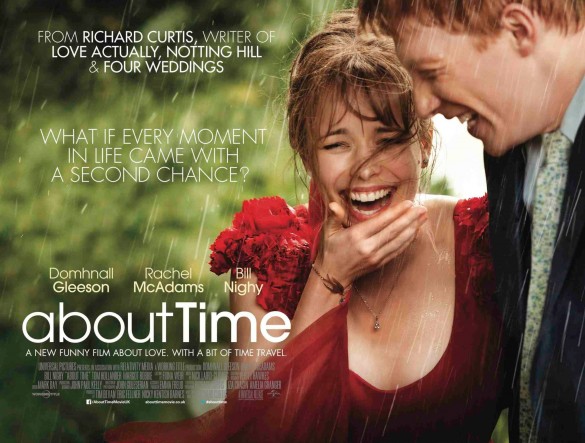
As Belfort, DiCaprio puts in one of his best performances, imbuing the man with a vain pride that proves his downfall.  It’s no one-dimensional characterisation, and DiCaprio nails the insecurities and the insanity of Belfort’s lifestyle: regarding money as “fun vouchers”; thinking he can seduce Aunt Emma; the aforementioned trip to Switzerland that results in the sinking of his yacht.  It’s a raging, tornado-like performance, with DiCaprio towering above his co-stars, eclipsing everyone around him.  As Belfort’s loyal “partner in excess” Azoff, Hill sports prominent false teeth and exudes charmless unreliability from every pore.  Robbie, fresh from playing the girl who got away in Richard Curtis’ About Time, is superb as Naomi, a simple girl from New Jersey who falls for Belfort but resists the darker aspects of the dream life he builds for them.  In minor supporting roles, Dujardin – as a slimy Swiss banker – and Lumley stand out from the crowd, and in the role of Belfort’s father, Reiner provides a calm at the eye of the storm that helps offset the wanton debauchery.

Ultimately, the success of The Wolf of Wall Street depends on whether or not the rise and inevitable downfall of a self-confessed drug addict and convicted fraudster is worth three hours of anyone’s time.  The movie is entertaining and convincingly portrays the hedonistic, shallow lifestyle Belfort and his cronies enjoyed, and it’s shot through with humorous moments, and yet the movie appears to revel in the hedonism itself.  With a cameo from the real Belfort, as well as only a passing nod towards the thousands of investors who were defrauded, The Wolf of Wall Street could be seen to be saying that Belfort et al were just greedy and selfish, and not so deserving of our approbation.  The operative words here, though, are “could be”.  Without those occasional darker elements, our sympathy for Belfort would be complete.

Rating: 7/10 – a better collaboration for Scorsese and DiCaprio than the lamentable Shutter Island (2010), The Wolf of Wall Street is striking, beautifully filmed and too eager to have its coke and snort it; less a character study than a valediction of the times, and saved by a handful of smart, knowing performances.
Share this:

  • Share on X (Opens in new window) X
  • Share on Facebook (Opens in new window) Facebook
  • More
  • Print (Opens in new window) Print
  • Email a link to a friend (Opens in new window) Email
Like Loading...

Seeing Other People (2004)

31 Friday Jan 2014

Posted by dullwood68 in Movies

≈ Leave a comment

Tags

Bryan Cranston, Casual sex, Dating, Jay Mohr, Julianne Nicholson, Lauren Graham, Pre-marital nerves, Relationships, Review, Romantic drama, Wally Wolodarsky

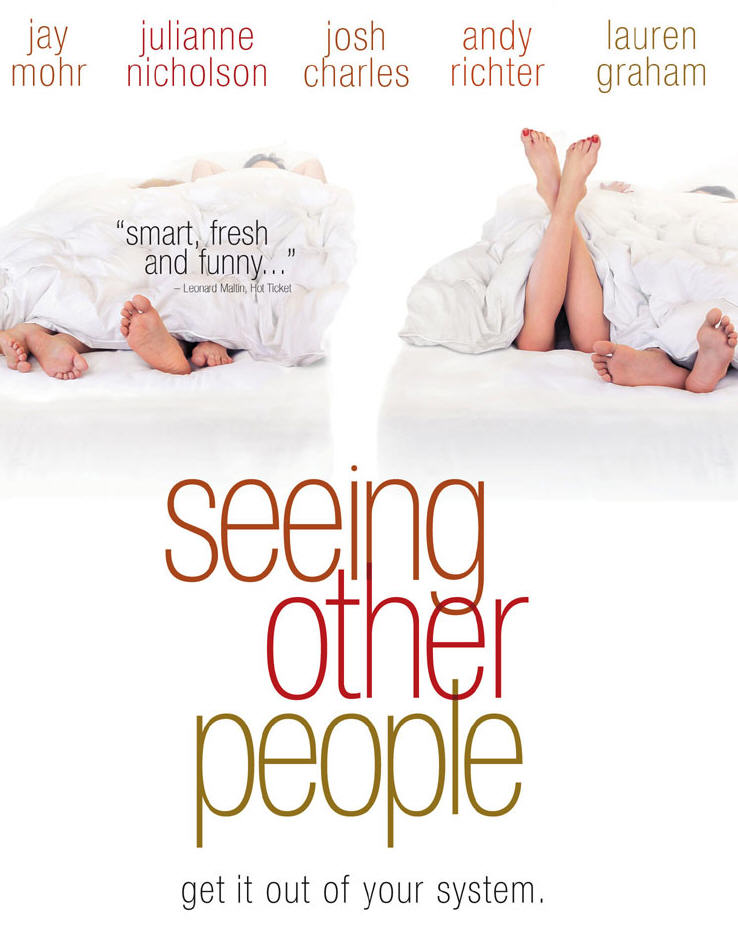
Seeing Other People

D: Wally Wolodarsky / 90m

Cast: Jay Mohr, Julianne Nicholson, Josh Charles, Andy Richter, Lauren Graham, Bryan Cranston, Matthew Davis, Helen Slater

Seeing Other People begins with Ed (Mohr) and Alice (Nicholson) head over heels in love and recently engaged.  Everything is going well… until Alice spies one of her friends having sex with a waiter at their engagement party.  This leads to Alice wondering if her relationship with Ed would be stronger if they were able to sleep with other people before they get married, in a kind of “let’s get it out of our systems” kind of way.  Alice also believes that she has missed out on a wider range of sexual experiences, and feels a little disadvantaged.  Ed is initially reluctant but agrees to go ahead with Alice’s plan, and they both begin to date other people.

At first, it all goes smoothly, with Alice seeing, but not sleeping with, Donald (Davis), and Ed also finding it difficult to actually have sex with someone else.  Their own sex life improves as a result, but soon Alice’s intimacy with Donald becomes a wedge that drives them apart.  Alice and Ed’s growing estrangement has a knock-on effect on Alice’s sister, Claire (Graham) and her husband, Peter (Cranston). Both unhappy with their marriage, they begin to search for their own fulfilment, using Ed and Alice’s example as either a guide or a warning of how to proceed.  Meanwhile, Alice and Ed’s friend, Carl (Richter) is so lovelorn he doesn’t believe he will ever find the woman of his dreams.  It’s only when he meets Penelope (Slater) that he begins to believe otherwise.  What follows for all is a somewhat bittersweet look at the perils of getting what you wish for.

Seeing Other People - scene

Seeing Other People starts off well, and once you get past the basic implausibility of the idea that two committed people would deflect to such a course of action – and the scene in which Alice convinces Ed her plan will work struggles to maintain a real sense of “this could happen” – there’s a certain amount of fun in trying to work out how things will progress, and what the eventual outcome will be.  Partly this is because the script by husband and wife team Wolodarsky and Maya Forbes shies away from the standard rom-com tropes and tries hard to make the situations its leading characters find themselves in as difficult to extract themselves from as possible.  It also creates an environment where the way each character expresses him- or herself is rarely pain-free, but is equally humorous at the same time.  This is a difficult juggling act, and Wolodarksy gets it right most of the time (he also contributes a funny cameo as a pushy salesman).

He’s helped by an enthusiastic cast led by Mohr and Nicholson.  Mohr has a boyish vulnerability that is pushed to the fore here, while Nicholson’s gamine appearance underscores Alice’s naïve willingness to put her relationship with Ed in jeopardy.  The supporting cast shine too, with Graham and Cranston on great form as a warring couple whose dislike of each other borders on the pathological.  On a warmer front, the developing relationship between Carl and Penelope is handled sweetly without it becoming too saccharine.

On the production side, the photography by Mark Doering-Powell matches the main characters’ moods throughout, while the music – the usual mix of contemporary songs and original score – highlights each prevailing mood to good effect.  Wolodarsky directs with a great eye for the foibles of modern relationships, and manages his cast, and the material, with aplomb.

Rating: 7/10 – an adroit romantic drama that overcomes the absurdity of its central premise by focusing instead on the pros and cons of getting what you want… and regretting it; well-acted and with a script that heads off predictability with ease.

Originally posted on thedullwoodexperiment website.

Share this:

  • Share on X (Opens in new window) X
  • Share on Facebook (Opens in new window) Facebook
  • More
  • Print (Opens in new window) Print
  • Email a link to a friend (Opens in new window) Email
Like Loading...

Free Birds (2013)

29 Wednesday Jan 2014

Posted by dullwood68 in Movies

≈ Leave a comment

Tags

Amy Poehler, George Takei, Hazmats, Jake, Jimmy Hayward, Owen Wilson, Plymouth Plantation, Reggie, Review, S.T.E.V.E., Thanksgiving, Time travel, Turkeys, Woody Harrelson

Free Birds

D: Jimmy Hayward / 91m

Cast: Owen Wilson, Woody Harrelson, Amy Poehler, George Takei, Colm Meaney, Keith David, Dan Fogler, Jimmy Hayward

With an opening sequence reminiscent of Chicken Run (2000), Free Birds has scrawny, unliked turkey Reggie (Wilson) trying to convince his fellow meals-in-waiting that being picked for “turkey paradise” isn’t as great as it sounds.  When the US President arrives at their farm to choose that year’s Pardoned Turkey it’s Reggie’s luck to be chosen.  After adapting to a lifestyle spent watching TV and ordering in pizza, Reggie ends up being coerced into helping fellow turkey Jake (Harrelson) who is determined to travel back in time to the first Thanksgiving and ensure that turkeys are taken off the menu forever.  Using a time machine called S.T.E.V.E. (Takei) that is hidden underground at Camp David, Reggie and Jake travel back to 1621 to the Plymouth plantation and meet up with the local turkey colony led by Chief Broadbeak (David).  With the planned Thanksgiving feast only days away, and the turkeys being hunted by cruel Myles Standish (Meaney), it’s up to Reggie and Jake to convince Chief Broadbeak and his daughter Jenny (Poehler) to take the fight to the settlers.

While it’s high concept storyline and Back to the Future-style plotting offers nothing new, Free Birds tries its best to entertain, throwing in a few clever jokes and keeping it light.  It’s not too demanding, and for children below the age of ten it should be diverting enough but there’s a lack of charm that seriously hurts the movie’s chances of broadening its audience.  The storyline is weak and underdeveloped, and there’s too much reliance on Reggie’s verbal schtick to pad out the uncomfortable dialogue.  With many of the ideas and speculations from Robert Zemeckis’ trilogy trotted out like badly tuned homages, Free Birds also proves derivative rather than referential, leaving the underused Takei to save the day as the time machine.

TURKEYS

The characters are painted with broad brushstrokes, leaving the cast with too much work to do to make the audience connect with anyone.  Wilson plays Reggie like a nerd with a persecution complex, rarely deviating from the standard vocal patter he uses in live action movies.  Harrelson is saddled with a bigger problem playing the loveable lunkhead Jake, a character so one-dimensional it’s amazing the actor manages to add some light and shade to his performance.  Takei aside, the rest of the cast make next to no impression at all, and the roles could have been played by anyone without any significant improvement or change.  With the script proving so undercooked, it’s often a relief to see that some ideas – the Hazmats, the President’s narcoleptic daughter – have managed to find their way in to alleviate matters.

Visually, Free Birds looks colourful and richly detailed but the movie lacks that zing that computer animation can bring to the big screen.  The time travel sequences look like they were filched from an Eighties animated movie, and the backgrounds don’t always look convincing.  That said, there are some stand-out sequences, the attack on the turkey’s hideout being one of them, but on the whole the movie isn’t visually strong enough to grab the attention; there’s not enough going on in the frame to fully occupy the viewer.

Hayward orchestrates the various elements with a lack of flair that keeps the movie treading water for most of its running time, and while he has a strong background in animation – he directed the much better Horton Hears a Who! (2008), as well as working on several Pixar movies – it’s a shame he’s let the material (co-written with Scott Mosier), and what appears to be a limited budget, get the better of him.

Rating: 5/10 – not the complete bust it sounds like but definitely one for a younger audience; a chore for adults then but leavened, thankfully, by some quirky humour.

Share this:

  • Share on X (Opens in new window) X
  • Share on Facebook (Opens in new window) Facebook
  • More
  • Print (Opens in new window) Print
  • Email a link to a friend (Opens in new window) Email
Like Loading...

Machete Kills (2013)

27 Monday Jan 2014

Posted by dullwood68 in Movies

≈ 1 Comment

Tags

Action, Amber Heard, Antonio Banderas, Charlie Sheen, Danny Trejo, Drug cartel, La Chameleon, Lady Gaga, Luther Voz, Machete, Mel Gibson, Nuclear missile, Review, Robert Rodriguez, Thriller

Machete Kills

D: Robert Rodriguez / 107m

Cast: Danny Trejo, Mel Gibson, Michelle Rodriguez, Amber Heard, Demian Bichir, Sofia Vergara, Charlie Sheen, Lady Gaga, Antonio Banderas, Cuba Gooding Jr, Walton Goggins, Vanessa Hudgens, William Sadler, Tom Savini, Jessica Alba

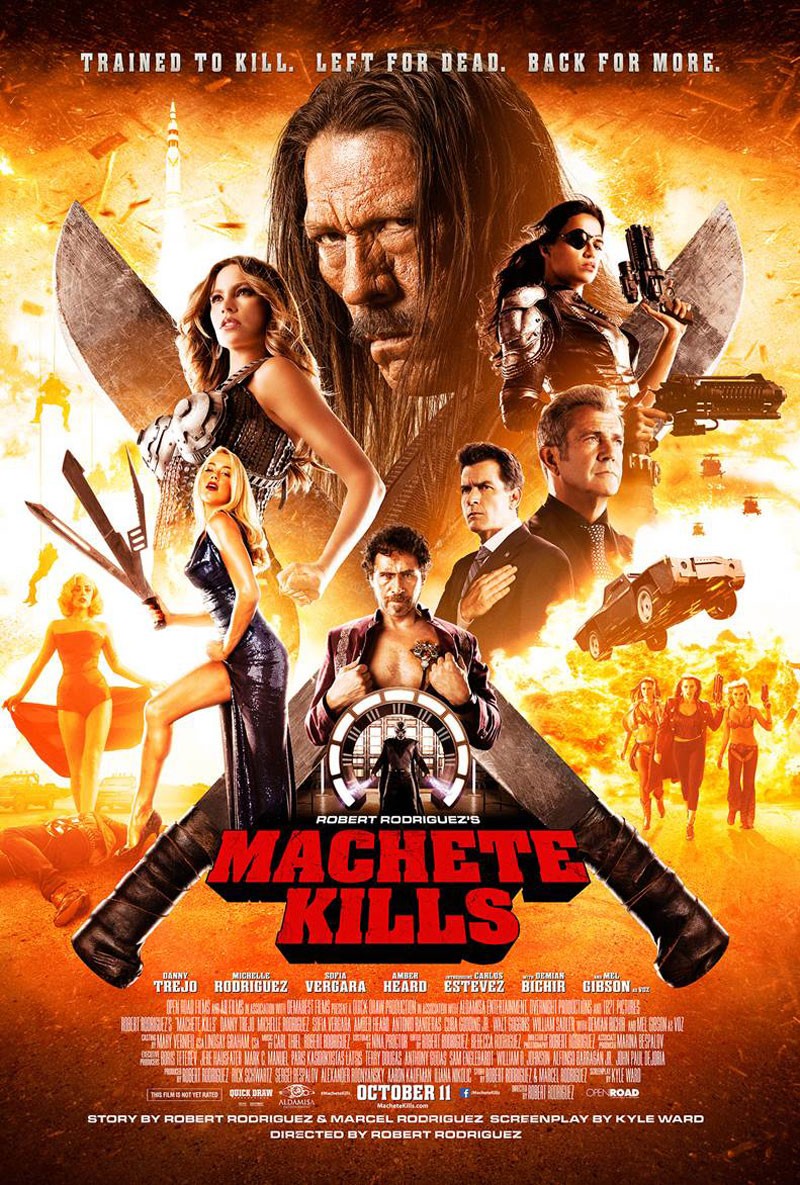
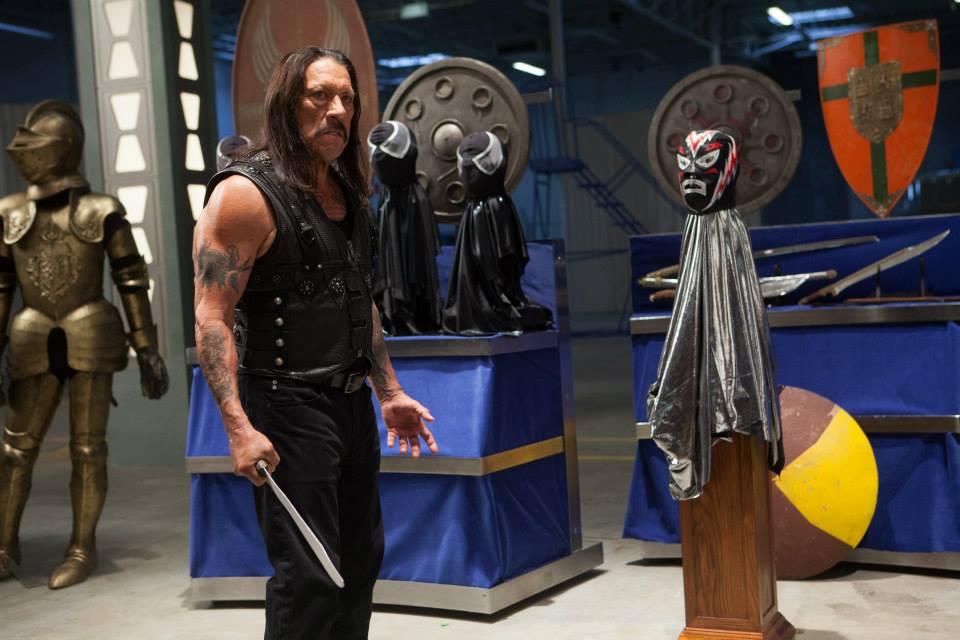
Arriving three years after its title character’s debut, Machete Kills opens with Machete (Trejo) and Agent Sartana (Alba) intercepting a weapons deal between US soldiers and members of a Mexican drugs cartel.  When their plan goes awry and Sartana is killed, Machete finds himself approached by President Rathcock (Sheen) to return to Mexico and find and, if necessary kill, cartel boss Mendez (Bichir).  Mendez is threatening to launch a nuclear missile on Washington D.C.; if Machete stops him, all of Machete’s past sins will be forgotten and he will be granted immediate US citizenship.

In Mexico, Machete finds himself captured by Mendez, who reveals he’s being backed by a mystery American who’s provided him with the missile.  This turns out to be Voz (Gibson).  Machete escapes with Mendez in tow and they head for the border but not before Mendez has put out a bounty on both their heads to the tune of $20 million.  With pretty much all of Mexico after them – plus face-changing super assassin La Chameleon (Goggins, Gooding Jr, Gaga, Banderas) – and the added problem of keeping Mendez alive (his heartbeat is connected to the missile’s arming device; if he dies the missile will fire), Machete has to get Mendez over the border and to Voz’s hideout in order to stop the missile from being fired.  Voz, though, proves to be a megalomaniac who can see the future (oh, and he’s also built an “ark” in space – once the world is destroyed by the nuclear missiles he’s got primed to be launched, and the dust has cleared, he and his followers will return to Earth and start a new, better society; there, got all that?)  With the help of old friend Luz (Rodriguez), Machete attacks Voz’s HQ just as he’s having his launch party.  Will Machete save the day?  Will Voz’s evil plan be thwarted?  Will there be a higher death toll than most Arnold Schwarzenegger movies from the Eighties?  (If you’ve answered yes to all three, then give yourself a pat on the back.)

Machete Kills - scene

As deliberately and casually over the top as its predecessor, Machete Kills is a riotous mix of primary colours, ear-crunching sound effects, limb-slicing violence, boys-with-toys style hardware, visceral humour, cheesy dialogue, unsubtle in-jokes, scantily clad gun-toting females, and the repository of Mel Gibson’s worst ever screen performance.  Rodriguez’s kitchen sink approach to the material works well over all, and he certainly wins points for inventiveness, but after ninety minutes the lack of subtlety begins to wear very thin indeed.  Fortunately he’s helped out by a committed cast who all seem to relish the chance to kick back and go with the absurdity of it all.  Except for Gibson, who plays Voz as if he were a villain in a Bond movie: all urbane chat and modish amusement.  He’s about as convincing as cottage cheese on steak.  That said, Trejo is still an awkward watch, his acting chops as wayward as a leaf in the wind, but it’s all about his physical presence, and Rodriguez uses him cleverly throughout, making Machete almost a force of nature.

For fans of the character, Machete Kills will reinforce their love for the character, though newcomers may wonder what all the fuss is about.  Some of the early scenes lack pace, and Rodriguez stops one too many times to introduce new characters or reintroduce old ones.  The action scenes are fun on an arcade game level, and give rise to all manner of violent, gory deaths (if I mention the words “intestines” and “helicopter blades” you might get an idea of how inventive Rodriguez is in this department).  Pretty much every woman in the movie is required to wear figure hugging and/or flesh-revealing clothing, including Lady Gaga (unfortunately, it doesn’t work for her as much as it does for, say, Sofia Vergara); sexist it may be but it’s as nothing compared to the casual racism that runs like a disquieting undertone from beginning to end (is American citizenship really such a great prize for a Mexican?).  Of course, there is a degree of irony here too, but it’s not quite as prominent as, say, Vergara’s crotch gun.

Away from Trejo and Gibson, the performances are much better, with Bichir a highlight as the schizophrenic Mendez: one moment a raging psychopath who thinks nothing of having his ward Cereza (Hudgens) killed as an example, the next a compassionate rebel determined to bring down the cartels.  Bichir switches between the two personalities with ease, often in the same line of dialogue, and his performance bolsters the movie every time he’s on screen.  Rodriguez, Alba and Savini reprise their roles from Machete, and of the four actors portraying La Chameleon, it’s Gooding Jr who impresses most.

At the beginning of the movie there’s a trailer for a forthcoming Machete feature, Machete Kills Again… In Space.  It appears to be a joke trailer but by the movie’s end it’s more of an accurate prediction of where Machete is heading next.  If and when that movie appears, let’s hope there’s a sharper script and less erratic direction.  With most, if not all, of Rodriguez’s movies there’s a feeling that he’s trying to bombard the audience with all sorts of diversions and trickery so that we don’t see the holes and the flaws in the plot or the storyline.  It’s evident here, and while Machete Kills is entertaining on a superficial level, the fact that there is no depth to it at all doesn’t help things.

Rating: 7/10 – a mixed bag (as usual) from Rodriguez with some stand-out moments and a firm sense of how ridiculous it all is; a popcorn movie for those who like their popcorn drenched in blood and free from logic.

Share this:

  • Share on X (Opens in new window) X
  • Share on Facebook (Opens in new window) Facebook
  • More
  • Print (Opens in new window) Print
  • Email a link to a friend (Opens in new window) Email
Like Loading...

Inside Llewyn Davis (2013)

26 Sunday Jan 2014

Posted by dullwood68 in Movies

≈ 1 Comment

Tags

Audition, Carey Mulligan, Chicago, Drama, Ethan Coen, Folk music, Gaslight Café, Greenwich Village, Joel Coen, John Goodman, Justin Timberlake, Llewyn Davis, New York, Oscar Isaac, Relationships, Review

Inside Llewyn Davis

D: Ethan Coen, Joel Coen / 104m

Cast: Oscar Isaac, Carey Mulligan, John Goodman, Justin Timberlake, Garrett Hedlund, Adam Driver, Stark Sands, Jeanine Serralles, F. Murray Abraham

The Coen brothers have led a remarkably charmed cinematic life, making quirky, offbeat movies featuring all sorts of weird and wonderful characters in all sorts of weird and wonderful situations. Part of the fun to be had from watching a Coen brothers movie is that you never quite know what’s going to happen next; the Coens are so unpredictable there’s always that element of surprise in every movie, even something as outwardly formulaic as The Ladykillers (2004) or True Grit (2010). It’s a real surprise then, to find that the main character in their latest melancholy opus, Inside Llewyn Davis is, to put it mildly, a bit of a shit.

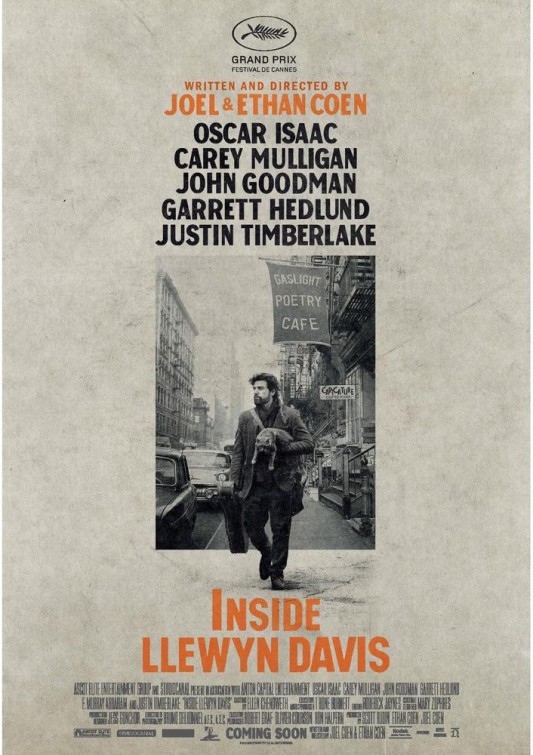
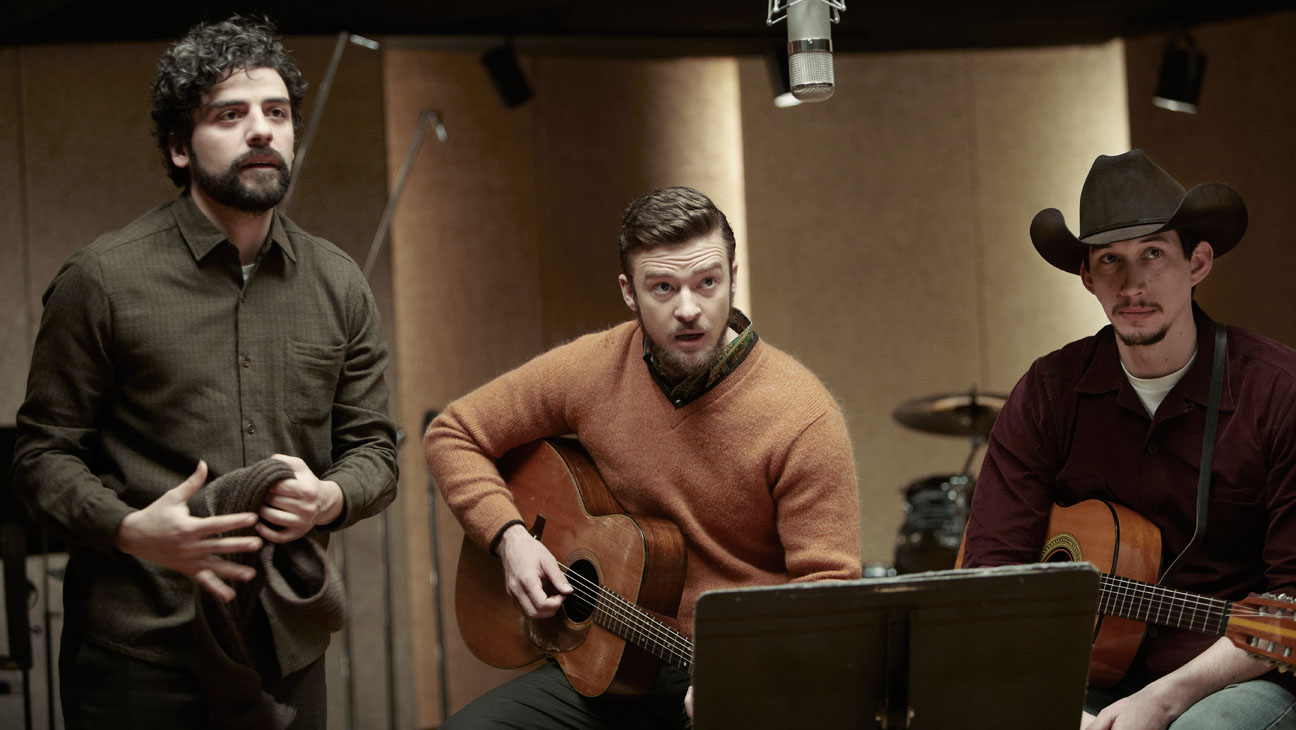
The movie is set in Greenwich Village, New York in 1961. Davis (Isaac) is a folk singer, eking out a career in clubs but without a clear idea on where he’s heading. He doesn’t have a place to live, so he sofa hops from place to place, trying the patience of friends and acquaintances, and never really repaying their kindnesses to him. He scoffs at the performances of others, including folk duo Jim (Timberlake) and Jean (Mulligan), but fails to see the weakness in his own abilities, weaknesses exacerbated by the recent death of his singing partner. Davis is horrible to just about everyone around him, foisting his unhappiness on them with all the fervour of a man trying to offload his troubles as fast as he gains them. His relationship with Jean becomes complicated when she tells him she’s pregnant and he might be the father. But Davis is so wretched she would rather have an abortion than give birth to a child that might be his. While he tries to deal with that issue, he’s also trying to deal with having lost his friends, the Gorfeins, cat. (When he takes a replacement cat back to them, it leads to one of the best lines in a Coen brothers movie ever.)  Taking a chance he can kick start his solo career in Chicago, Davis travels with proto-beat poet Johnny Five (Hedlund) and musician Roland Turner (Goodman) to audition for promoter Bud Grossman (Abraham). What he learns there has the possibility of changing his life.

Inside Llewyn Davis - scene

From its darkened, confessional-style opening at the Gaslight Café with Isaac proving himself to be a passionate vocalist, Inside Llewyn Davis is a fitting tribute to the era when folk music was at a turning point (see the singer who follows Davis on stage at the movie’s end). As well, though, it’s a clever, witty and engaging look at a man for whom Life is a constant struggle, but only because he hasn’t developed the ability to be happy. Thanks to a terrific performance by Isaac, Davis isn’t entirely the angry curmudgeon he appears to be. There are glimmers of hope throughout the movie that elicit the audience’s sympathy for him, and if he buries those glimmers almost as soon as they pop up, it’s still enough that they happen for him. Davis is like the black sheep of the family or the troubled friend you secretly like – despite all the times they upset you or let you down – and hope Life will eventually be kind to. For Davis it’s all about the music, the only thing he truly cares about, and around which his life revolves; without it he would be a truly broken man.

Once again, the Coens have chosen a strong supporting cast for their leading man, with Mulligan’s angry turn a standout, and Goodman close behind as the disabled, anecdote spouting Turner. It’s good to see the likes of Driver and Sands given the chance to shine in small, beautifully realised roles, and Abraham too, albeit in a smaller though more pivotal role (and obviously fitted in between episodes of Homeland). A wintry New York looks cold and yet somehow vibrant thanks to crisp, striking photography courtesy of Bruno Delbonnel, and the period detail is subtly evoked by Jess Gonchor’s production design and Deborah Jensen’s art direction.

What is less obvious from this review so far is the humour that permeates the movie. Davis may be an awkward, unlikely source of merriment, but the Coens weave comedy into the somewhat solemn proceedings with deceptive skill. There are laughs to be had, and they’re scattered here and there in the script like precious jewels. And then there’s the music. Perhaps closest to O Brother, Where Art Thou? (2000) in terms of dramatic importance, the music in Inside Llewyn Davis is extremely well chosen, both for reflecting the state of Davis’s life, and for providing a candid view of the folk music scene at the time (check out the wonderfully daft Please Mr. Kennedy, an ode to world peace performed by Isaac, Timberlake and Driver that amazes as much as it amuses). As already noted, Isaac has a commanding vocal style, and his deep, rich, melodic delivery suits the material well; it’s hard now to imagine anyone else in the role.

Rating: 9/10 – a richly detailed movie that delights and impresses in equal measure; confident, absorbing, and wickedly funny in places, Inside Llewyn Davis confirms once more that when it comes to off-kilter, the Coen brothers are in a class of their own.

Share this:

  • Share on X (Opens in new window) X
  • Share on Facebook (Opens in new window) Facebook
  • More
  • Print (Opens in new window) Print
  • Email a link to a friend (Opens in new window) Email
Like Loading...

My Top 10 Movies – Part Six

25 Saturday Jan 2014

Posted by dullwood68 in Movies

≈ Leave a comment

Tags

Elijah Wood, Frodo Baggins, Gandalf, Gollum, Helm's Deep, Hobbits, Ian McKellen, J.R.R. Tolkien, Literary adaptation, Middle Earth, New Zealand, Peter Jackson, Ralph Bakshi, Review, Sam Gamgee, Sauron, Sean Astin, The Hobbit, The Lord of the Rings, The Silmarillion, Viggo Mortensen

The Lord of the Rings (2001-2003)

Lord of the Rings Trilogy, The

D: Peter Jackson / 558 mins

Cast: Elijah Wood, Ian McKellen, Viggo Mortensen, Sean Astin, Billy Boyd, Dominic Monaghan, Orlando Bloom, John Rhys-Davies, Sean Bean, Liv Tyler, Christopher Lee, Cate Blanchett, Hugo Weaving, Andy Serkis, Karl Urban, John Noble, David Wenham, Miranda Otto, Bernard Hill, Brad Dourif, Ian Holm

I know, I know, this is a bit of a cheat, three movies for the price of one and all that, but how can you possibly separate the greatest trilogy ever made?

There have been enough superlatives heaped on Peter Jackson’s finest hour(s), and while I’m tempted to add to the pile, I’m going to restrain myself and keep to the personal aspect that makes these movies mean so much to me.  And besides, everyone already knows how brilliant they are (sorry, couldn’t help it).

My first encounter with J.R.R. Tolkien wasn’t via The Lord of the Rings or even The Hobbit.  It was through a friend of mine who was into fantasy art; at his home one day he showed me a picture he’d drawn of a wizard (you can guess which one).  He told me the wizard was one of the main characters in a book he’d read.  He handed me a battered copy of The Hobbit and advised me that if I was going to read it I ought to be prepared for it to be a bit child-oriented.  And me, being a 14-year-old with ideas of being older in my outlook, declined his kind offer and went home instead with the first issue of a new sci-fi magazine called Starburst.

A year later, Ralph Bakshi’s version of The Lord of the Rings was released but I didn’t see it.  My friend the artist did and he thought it was quite good but he also mentioned it wasn’t the whole story.  I thought, “what’s the point of that?” (not knowing then of Bakshi’s plan to finish the tale in a second movie).

And then, in 1981, two things happened that brought me into the fold, so to speak.  My girlfriend at the time was reading The Lord of the Rings and would spend whole evenings working through it; she thought it was “the best book” she’d ever read.  She asked me to read it but I was still hesitant (I was working my way through Dickens at the time and fantasy fiction wasn’t high on my (slightly pretentious) list of genres to  read).  And then on March 8 (a Sunday) the BBC began broadcasting a radio adaptation of Tolkien’s novel in thirty minute episodes that had me glued to my stereo every Sunday for the next twenty-five weeks.  I read the book in between episodes, keeping up with the adaptation.  By the time the broadcasts ended on 30 August I was a Tolkien fanatic.  Now I read The Hobbit, and The Silmarillion.  I raved about the books to anyone who might listen, and later tracked down Bakshi’s movie on video (not as bad as I thought it was going to be; the live-action based animation is actually quite visually arresting).

I re-read the books, revisited the radio adaptation when it was re-broadcast in hour-long episodes in 1982, and generally looked upon the whole mythology that Tolkien had created as being one of the most incredible literary works I’d (eventually) come across.

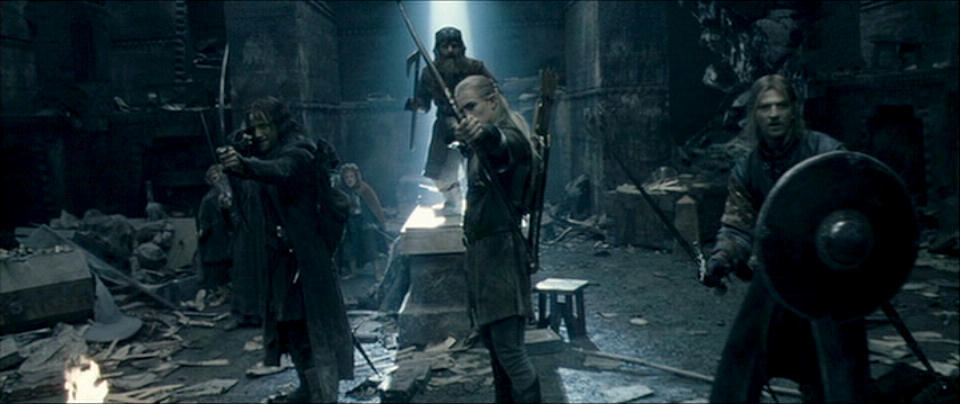
Lord of the Rings Trilogy, The - scene

When it became clear in the late Nineties that a large-budget adaptation of The Lord of the Rings was being planned, with Peter Jackson at the helm, I felt a mixture of anticipation and trepidation.  First of all, it was going to be a live action adaptation, and even though Jackson’s Heavenly Creatures (1994) had proved he could direct something with a bit more depth than say, Braindead (1992), I still had my doubts.  As the scope of the project became known, the more I wondered if, and how, Jackson was going to pull it off.  And over three movies!

Now, thirteen years on, and with Jackson giving us The Hobbit as well, we all know I needn’t have worried.  The Fellowship of the Ring was like the best Xmas present anyone could have.  Its mix of the intimate and the grandeur of Middle Earth, and the level of detail, along with the sheer excitement of the action sequences made for one of the most rewarding cinematic experiences of my whole movie-going life.  In the first two weeks of its release in the UK I saw the movie three times.  When The Two Towers was released a year later, I was itching to see it, especially after watching Fellowship‘s extended version the day before (Jackson’s idea to give us longer versions of each movie on home video was a stroke of genius).  I came out of seeing The Two Towers overwhelmed and buoyed up by the emotional depth that infused the movie, and by the sheer spectacle of the Battle of Helm’s Deep (I couldn’t see how the Battle of the Pelennor Fields could be any better or more exciting; what did I know?).  The following year passed too slowly, waiting for The Return of the King to be released.  When it finally did, I can remember hearing the opening music and feeling a shiver run through me.  Please, Mr Jackson, please, I remember thinking, please have got this right.  And did he.  The Return of the King was an incredible achievement, a massive undertaking in its own right, and the culmination of a saga that had built to this monumental, emotionally-charged conclusion with barely a (hobbit) foot out of step along the way.  (And to those people who feel the movie should have ended with the coronation of Aragorn, the movies have always been about the characters and their journeys; to not see them make their farewells and re-take up their lives would have been a disservice to both them and the audience.)

The Lord of the Rings trilogy remains a phenomenal achievement, with stand-out performances – who can forget Gollum’s schizophrenic argument with himself in The Two Towers? – stunning location photography; a script that never lost sight of the emotional cores of its characters; confident, breathtaking direction from Peter Jackson; special effects that served the story and didn’t overwhelm things; and most of all, the creation of a wholly believable world where all this could happen.  But again, it’s the emotional element that makes the trilogy work, that keeps all of us who fell in love with the movies coming back time and time again, to revisit Middle Earth in all its glory and grandeur.  For many years, a friend and myself would take a day out to watch the extended versions right through, revelling in being able to spend time again with old friends such as Samwise Gamgee and Gimli, son of Glóin.  This trend has (sadly) lapsed in the last few years, but as an added memory to the original, wonderful experience of seeing the trilogy unfold over three magical Xmas’s, it’s easily the next best thing.  Going back to Middle Earth is, in its own way, a little bit like going back home after a long journey away…and what would Frodo and Sam say to that?

Rating: 9/10 – a stupendously impressive piece of filmmaking, bold, inventive, gripping, and with an emotional intensity few fantasy movies ever manage; just as there is only One Ring, Jackson’s enduring achievement means there is only One Trilogy.

Share this:

  • Share on X (Opens in new window) X
  • Share on Facebook (Opens in new window) Facebook
  • More
  • Print (Opens in new window) Print
  • Email a link to a friend (Opens in new window) Email
Like Loading...

State of Emergency (2010)

23 Thursday Jan 2014

Posted by dullwood68 in Movies

≈ Leave a comment

Tags

Chemical plant, Horror, Jay Hayden, Review, Thriller, Tori White, Turner Clay, Warehouse, Zombies

State of Emergency

D: Turner Clay / 90m

Cast: Jay Hayden, Tori White, Scott Lilly, Kathryn Todd Norman, McKenna Jones, Andy Stahl

Low-budget often means minimal resources.  It can also mean inventive outcome.  Such is the case with State of Emergency, a movie that, at face value, is a zombie movie but which never uses that word once to describe the victims of a chemical plant explosion.

After a tense prologue, we see Jim (Hayden) and his partner Emilie (Jones) running across open countryside.  Emilie is bleeding from a wound in her side.  As they rest under a tree, Emilie dies.  Jim carries her body to a nearby stable block where he hides out.  Up tip now the audience doesn’t know what’s happening, but whatever it is, it can’t be good.  It’s only when Jim is attacked by another man that we begin to realise what’s going on, and the possible reason why.

Later, Jim meets a couple, Scott (Lilly) and Julie (Norman), who have taken refuge in a warehouse; with them is a young woman called Ix (White).  They have plenty of food and water, and weapons; feeling safe, they have decided to wait for help to arrive.  And all the while, “people” are gathering outside the warehouse…  That’s the meat of the movie right there: the anxious wait for help to arrive while a growing threat gets nearer and nearer.

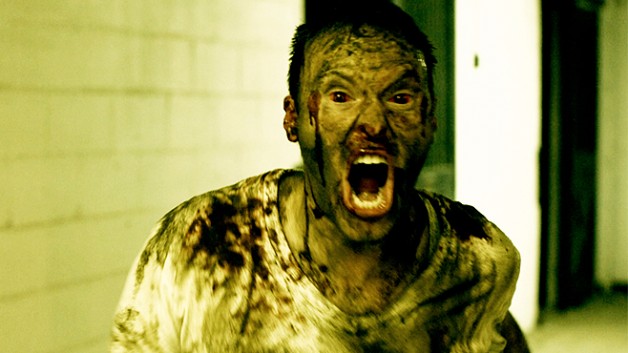
State of Emergency - scene

Full marks to writer/director Clay for making State of Emergency such a compelling movie.  It’s difficult enough to put a fresh spin on the zombie genre, but he pulls it off.  Not referring to the affected as zombies helps tremendously; after all, in the real world, if something like this was to happen, would we even call them that if we didn’t have George A. Romero to thank?  And where Clay really comes up trumps is with the committed performances of his cast.  Hayden does exceedingly well with his everyman role, projecting the right amount of vulnerability alongside a steely determination to survive.  Lilly has the more difficult male role, his character trying to be braver than he is and almost dying because of it, but he’s equally good even though he has less screen time.  As Ix, White plays defensive and scared mixed with an entirely credible teen obnoxiousness before she strikes a rapport with Jim; the scene where she opens up to him is one of the movie’s best.

As for the affected – remember, they’re not zombies – Clay has another good idea: if there’s no one around for them to attack they mostly stand still or walk in whatever direction (apparently) takes their fancy.  When they do spot someone, they charge at them, snarling.  This one-two combination of stillness and berserker speed is disconcerting; when it happens to Jim at the stables it’s a shock, even though Clay has set things up so the audience knows something nasty is about to happen.

With a clear nod to Romero’s Night of the Living Dead (1968), State of Emergency lacks that movie’s rising hysteria and ghoulish shock moments  (there’s no daughter in the basement), but it does ratchet up the tension.  The siege elements are handled with aplomb and Clay shows an aptitude for quick, yet concise characterisation.  Jim is someone the audience can identify with, as are Scott and Julie, and when they are put in danger, the movie lacks that sense of detachment that you’d find in most other zombie movies.  (I’ve seen quite a few zombie movies in the past year, from Zombie Farm, a more traditional, voodoo-based effort, to World of the Dead: The Zombie Diaries, a poor sequel to the original Zombie Diaries, and they all suffer from the same two problems: characters that you don’t care about, and – this bugs me the most – zombies who suffer from disfiguring facial injuries from the word go – I mean, how does that work exactly?  You die, come to as a zombie and wow! your jaw’s hanging off by a tendon or two.  Here, the affected have bloodshot eyes and what looks like a bad case of necrotising fasciitis – and that’s it, no missing bits, no decomposing limbs or extremities.  Memo to other would-be directors of zombie movies: make sure you watch State of Emergency first.)

Rating: 7/10 – a tense, effective “zombie” movie that keeps you hooked from start to finish; well-acted and free from the usual absurdities/deficiencies that otherwise seem endemic to the genre.

Originally posted on thedullwoodexperiment website.

Share this:

  • Share on X (Opens in new window) X
  • Share on Facebook (Opens in new window) Facebook
  • More
  • Print (Opens in new window) Print
  • Email a link to a friend (Opens in new window) Email
Like Loading...

Love Before Breakfast (1936)

21 Tuesday Jan 2014

Posted by dullwood68 in Movies

≈ Leave a comment

Tags

Carole Lombard, Cesar Romero, Comedy, Preston Foster, Relationships, Review, Romantic comedy, Walter Lang, Yacht

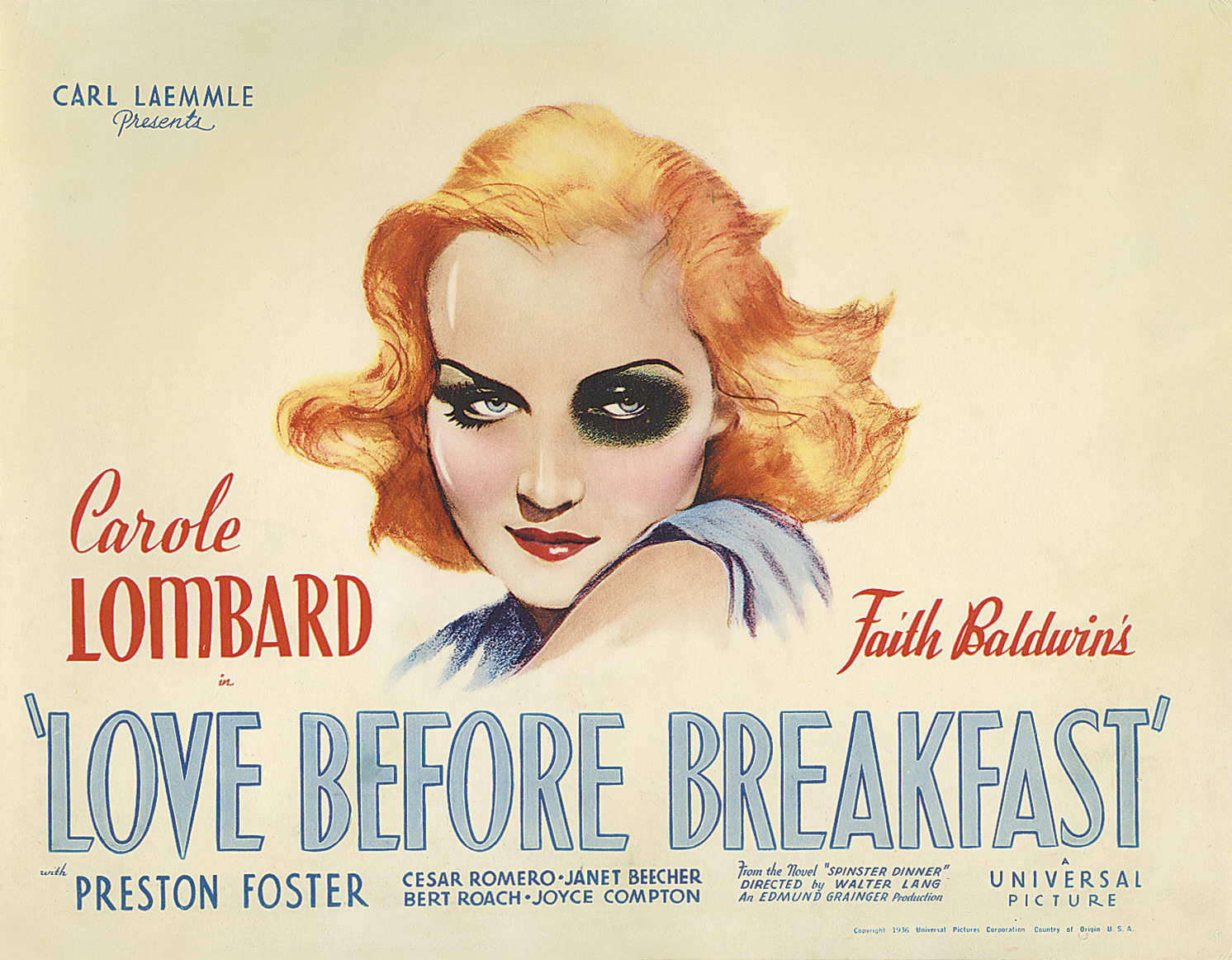
Love Before Breakfast

D: Walter Lang / 70m

Cast: Carole Lombard, Preston Foster, Cesar Romero, Janet Beecher, Betty Lawford, Richard Carle

Enamoured with ambitious would-be executive Bill Wadsworth (Romero), Kay Colby (Lombard) can’t wait to marry him.  However, she doesn’t reckon on Bill’s boss Scott Miller (Foster) who also loves Kay and will do anything to come between the two lovebirds.  Scott offers Bill a promotion in Japan; when he takes up the offer, Bill leaves behind a disappointed Kay and a delighted Scott.  He makes every attempt to woo Kay and get her to give up Bill but Kay remains committed to her (now) long-distance relationship.

Scott “coincidentally” runs into Kay at every opportunity, but his persistence has the opposite effect at first, causing Kay to resent his attentions.  As time goes by, Kay begins to soften but remains Bill’s girl.  When Scott makes a calamitous mistake and Kay refuses to have anything further to do with him, he takes the advice of employee, Brinkerhoff (Carle) and brings Bill back to the US.  Brinkerhoff tells Scott it will only be a matter of time before Kay realises she’s with the wrong man and loves Scott after all.  When Bill returns, he’s even more ambitious than before, and sure enough, cracks begin to show in their relationship.

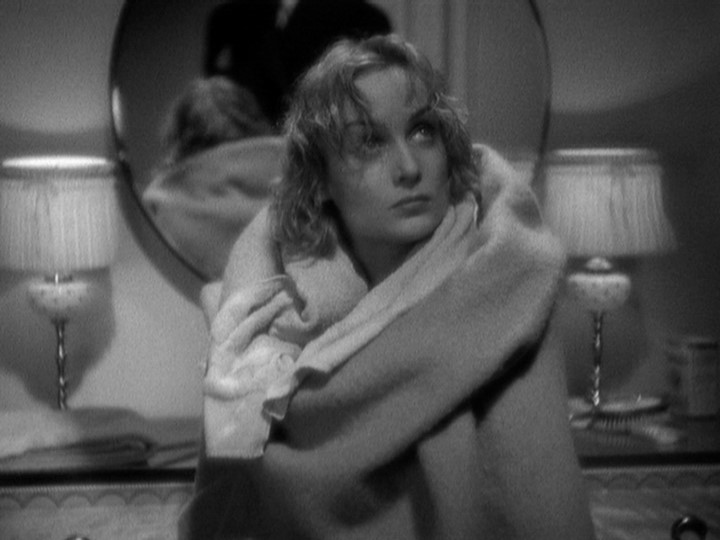
Love Before Breakfast - scene

A light, frothy romantic comedy, Love Before Breakfast coasts along on Lombard’s considerable charm, and even softens Foster’s tough guy image in the process (though it’s hard not to imagine what William Powell or Clark Gable would have made of the role).  As the battling pair, Lombard and Foster don’t always display the necessary chemistry, but what they have more than makes up for the complete lack of it between  Lombard and Romero.  Beecher is good as Kay’s mother, always supportive of Scott’s pursuing her daughter, and unwilling to indulge her daughter’s tantrums.

The script by Herbert Fields, from Faith Baldwin’s short story Spinster Dinner, contains some witty one-liners, and provides a lot of fun to be had at Lombard’s expense.  There’s a steady pace maintained by director Lang, and the movie is always engaging and enjoyable, with Lombard displaying the comic timing that made her a star.  If it’s ultimately predictable and tries a little to hard, it’s also pretty much irrelevant as there’s so much in the movie to be enjoyed.

Rating: 7/10 – a (very) minor gem raised up by the peerless Lombard, and scripted to just the right running time, Love Before Breakfast is cheerful and fun throughout; worth it just for the sight of Lombard and Romero getting drenched on a yacht.

Share this:

  • Share on X (Opens in new window) X
  • Share on Facebook (Opens in new window) Facebook
  • More
  • Print (Opens in new window) Print
  • Email a link to a friend (Opens in new window) Email
Like Loading...

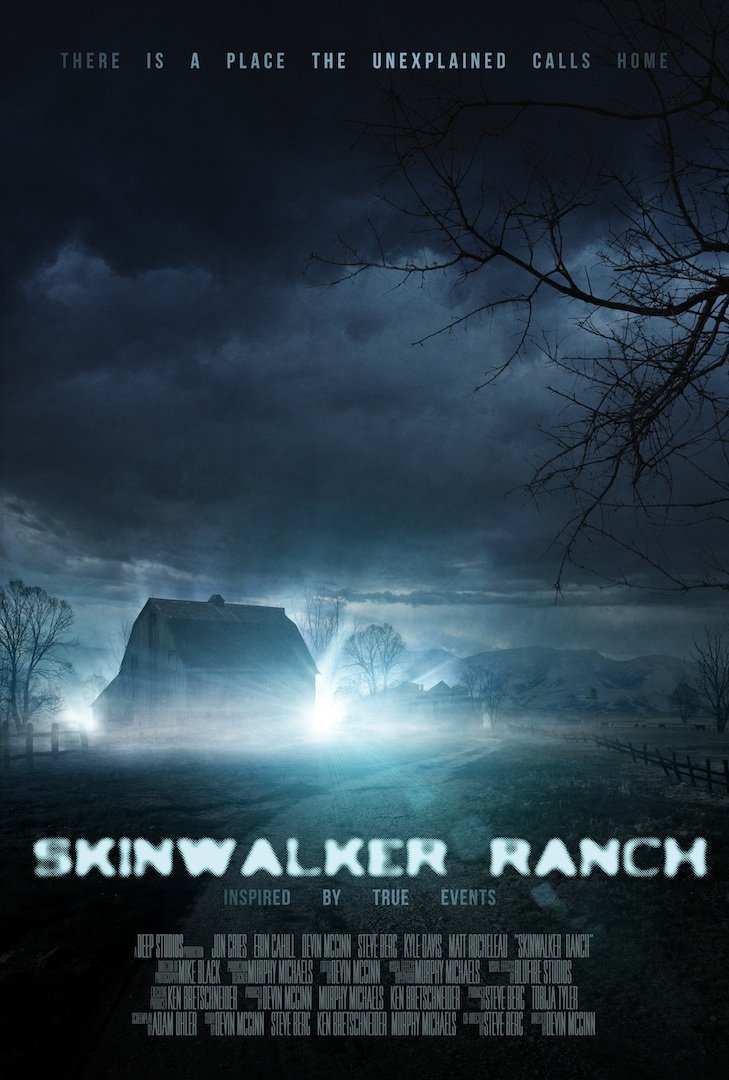
Skinwalker Ranch (2013)

21 Tuesday Jan 2014

Posted by dullwood68 in Movies

≈ Leave a comment

Tags

Alien abduction, Devin McGinn, Disappearance, Erin Cahill, Found footage, Horror, Jon Gries, Kyle Davis, Lights in the sky, Paranormal activity, Review, Thriller, UFO's

Skinwalker Ranch

D: Devin McGinn / 86m

Cast: Jon Gries, Kyle Davis, Erin Cahill, Devin McGinn, Steve Berg, Matthew Rocheleau, Michael Horse, Michael Black

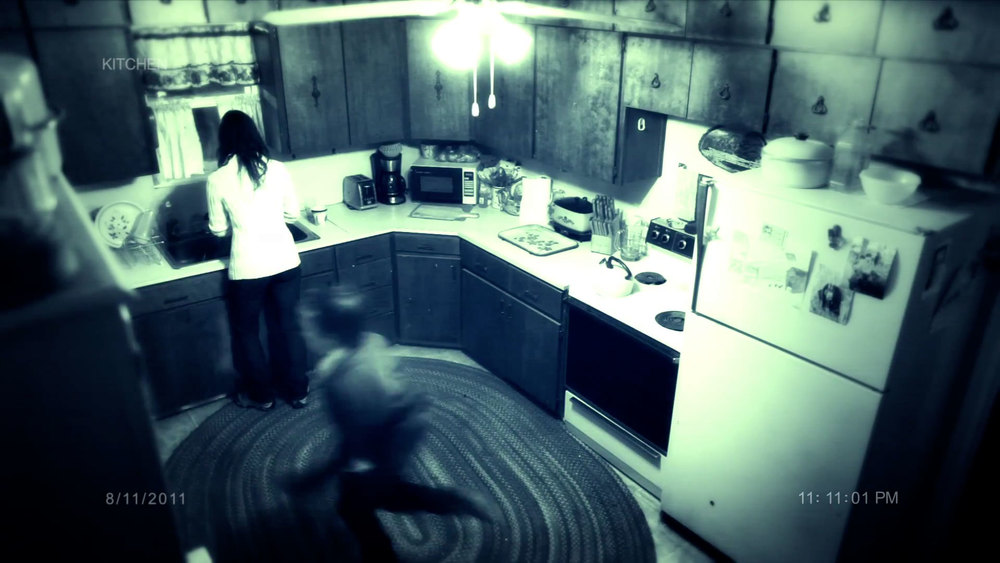
A short time after his son disappears inexplicably, Hoyt Miller (Gries) agrees for a team of paranormal researchers to spend time at his ranch in an effort to explain what happened to his son. The team, led by Sam (Berg), include veterinarian Lisa (Cahill), security and surveillance expert Ray (Davis), investigative journalist Cameron (McGinn), cameraman Britton (Black) plus media technician, driver, cook and resident bitch Matt (Rocheleau). Over the course of the next few days, Hoyt and the team experience all manner of weird phenomena, including strange lights, ghostly apparitions and loud, ear-splitting noises. As things get increasingly weirder, Matt leaves after getting injured, and exhorts everyone else to do the same. Nevertheless the rest all stay until events spiral wildly out of control…

Skinwalker Ranch - scene

Yet another found footage movie – and don’t we need even more of them? – Skinwalker Ranch at least tries to do something different by virtue of its location and the cause of the weird phenomena: this time around it’s (probably) aliens.  Taking some of the folklore surrounding UFO sightings and bending it to fit the storyline, the movie begins well enough, with comments from several locals about the boy’s disappearance, and with each character clearly defined and the team’s goal(s) clearly marked out.  McGinn invests these early sequences with the intention of making the audience identify to a degree with Hoyt and the team, but as the movie progresses that identification peters out as they all behave either stupidly or strangely, or both.

Skinwalker Ranch fails to address the same conundrum that undermines all found footage movies: when does someone pay heed to the danger around them and drop the ruddy camera?  That said, the movie gets extra mileage out of the fixed camera set ups the team employ around the ranch, and the open spaces make for an unexpectedly eerie visual theme.  But there’s still too much running with the camera.  By now we’re all aware that jostling the camera and/or employing interference is often a way of hiding an effect – here most effectively done in the barn sequence involving Hoyt’s dog – but this knowledge further undermines the effectiveness of the “fright” scenes.  Pulling off an apparently in-camera effect is half the fun of watching these movies – the girl being hoisted up in the air by her hair in Paranormal Activity 2 anyone? – but there’s little fun to be had now, there’s no sense of anticipation or dread either here, or anywhere else these days.

The movie takes an unexpected turn into Hound of the Baskervilles territory for a while before returning to its alien abduction theme, and the decision by Matt to leave after being thrown through the air is refreshing, but these aspects aside, there’s nothing really new here, just the setting.  A figure still passes by a window in the background but isn’t seen, one of the characters is forced to do something terrible by unseen hands, bright lights flash on and off for no discernible reason, and when the culprit is revealed there’s no element of terror, just a relief that, at last, things must be coming to an end.  And even though another side trip into the past where evidence comes to light that the organisation Sam works for – MDE – has been involved in previous strange events in the area, ticks the potential prequel box, this subplot leans more heavily in the direction of demonic possession than alien abduction, and actively lessens the effectiveness of the story as a whole.

Making his feature debut, McGinn copes well enough with the demands of the genre, but proves a better actor than director.  Gries is convincing throughout, and the rest of the cast do their best to flesh out characters that are largely stereotypes.  The location is the movie’s main strength, and is used tellingly, creating what little credible tension there is.  But more annoyingly, you never discover why it’s called Skinwalker ranch.

Rating: 6/10 – not the worst found footage movie, but not the best either, Skinwalker Ranch has some good ideas but they’re too often fumbled in the quest for the next scare; ultimately, a shallow experience and one that doesn’t follow through on its initial set up.

Share this:

  • Share on X (Opens in new window) X
  • Share on Facebook (Opens in new window) Facebook
  • More
  • Print (Opens in new window) Print
  • Email a link to a friend (Opens in new window) Email
Like Loading...

American Hustle (2013)

20 Monday Jan 2014

Posted by dullwood68 in Movies

≈ 1 Comment

Tags

AMSCAM, Amy Adams, Bradley Cooper, Christian Bale, David O. Russell, Drama, FBI, Investment scam, Jennifer Lawrence, Jeremy Renner, Review, Seventies crime, True story

American Hustle

D: David O. Russell / 138m

Cast: Christian Bale, Bradley Cooper, Amy Adams, Jeremy Renner, Jennifer Lawrence, Louis C.K., Jack Huston, Michael Peña, Shea Whigham, Alessandro Nivola, Elisabeth Röhm

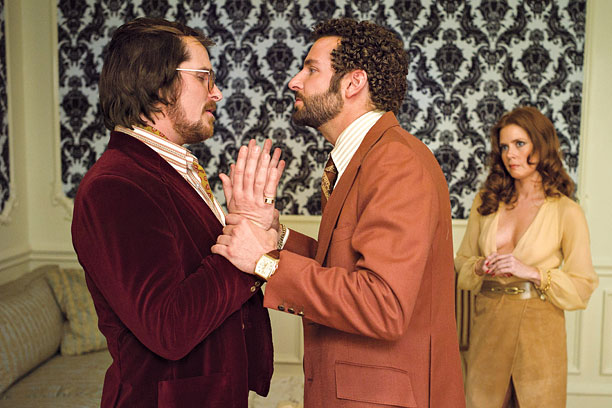
Small-time hustlers Irving Rosenfeld (Bale) and Sydney Prosser (Adams) have made a success out of an investment scam that involves Sydney posing as an English aristocrat with British banking connections.  They become so successful that they soon attract the attention of ambitious FBI agent Richie DiMaso.  DiMaso gives them a choice: either be prosecuted or help him go after local mayor Carmine Polito (Renner) who he suspects of being corrupt.  Not really having a choice, Irving and Sydney go along with DiMaso’s plan, only to find the plan mutating beyond the scope of exposing Polito’s possible corruption.  Soon the Mob is involved and DiMaso’s ambitions are jeopardising both the scam he’s set up, and their lives.  With Irving’s wife, Rosalyn (Lawrence) causing unexpected complications as well, it’s up to Irving and Sydney to come up with one more scam to save their necks.

Apparently based on the ABSCAM scandal from the late Seventies – where the FBI attempted to expose corrupt politicians and senators by dressing up as Arab sheikhs and offering them bribes for a wide range of illegal requests – American Hustle is a weird movie in many ways.  It celebrates Irving and Sydney’s love for each other while at the same time eulogising Irving’s faithfulness to his wife and adopted child.  The movie also presents their investment scam as essentially victimless.  This sets up DiMaso as the movie’s villain-in-residence, and encourages us to root for Irving and Sydney from the very beginning, and while pretty much every movie under the sun has a protagonist that the audience is supposed to identify or empathise with, the fact that Russell so blatantly overlooks their criminal tendencies – other than as necessary for the plot – is immediately disarming: we’re actively complicit in their criminal behaviour.  Where’s the moral ambiguity?

Christian Bale;Amy Adams;Bradley Cooper

While Irving and Sydney are clearly “nice” criminals, Richie is the “bad” cop: manipulative, self-aggrandising, violent, and arrogant.  He attempts to come between Irving and Sydney, shows his impatience at every turn, and due to his eagerness to get ahead, rarely makes the right move when part of the scam is in progress.  So bad is he, it’s almost funny, as if he’s an unfortunate composite of every bumbling FBI agent ever portrayed on the big screen.  Rosalyn, initially dim-witted and somewhat agoraphobic, develops into a player overnight, eventually “showing” Irving the way out of their shared predicament.  She’s a brash, outspoken character who never once rings true except when lambasting Irving for getting involved with Sydney.  And then there’s Carmine, a well-meaning politician whose naïveté gets him into so much trouble, and so quickly, you wonder how he ever managed to become mayor in the first place.  These are the main characters that Russell has admitted he cared more about than the story.

With such a focus, it’s a relief then that the performances by all concerned are uniformly excellent.  Bale, sporting a hideous comb-over and a beer gut, gives one of his best performances as the love-struck, hen-pecked, slightly less clever than he thinks Irving.  With each scene he peels back another layer of a man who at first seems one-dimensional and hollow, but who is actually heartfelt and loyal to those he cares about.  It’s a carefully structured performance and reminds anyone who might have forgotten that Bale is as adept at playing ordinary characters as he is damaged or vengeful ones.  Adams offers equally good support – and a decent British accent – as the emotionally torn Sydney, battling her burgeoning feelings for Richie before realising he’s using her as much as she’s used her marks in the past.  As the wildly out of control Richie, Cooper excels, adding to the kudos he gained from The Place Beyond the Pines with a controlled yet seething reading of a man with too much ambition for his own good, and a frightening lack of empathy or understanding of the people around him.  Renner has the least showy role, but manages to breathe life into a character who, at first, lacks any depth.  As the movie progresses, his need to help the people is shown as a personal crusade and his inevitable downfall a sad indictment of the collateral damage that can occur in these situations.  And lastly, there’s Lawrence, possibly the finest actress of her generation, imbuing Rosalyn with a vulnerability and tenacity that more than make up for the deficiencies in the characterisation.  She’s nothing short of miraculous.

With such a concentration on the characters, rather than the story or indeed the script – there’s a great deal of improvisation throughout – American Hustle ultimately falls short of its potential.  The story and plot are predictable, with any quirks that may have been part of the real-life scam ironed out in favour of more time with Irving and Sydney and Rosalyn and Richie and Carmine.  Russell directs with his usual flair, and while his focus may have been misguided, the look and feel of the Seventies is recreated effectively – those clothes! – and the structure of the movie is almost flawless.  Danny Elfman’s music, along with a carefully selected soundtrack, helps heighten the mood of the period and complements Linus Sandgren’s warm-toned cinematography, while Judy Becker’s production design provides a subtler evocation of time and place than most “period” pieces.

In essence, this isn’t the polished gem that most would have it but more of a rough diamond.  Russell is incapable of making a dull movie, but he nearly pulls it off here.  This is a character piece, not the crime drama the trailers and the advertising make it out to be, and while there’s always room for a character piece, with this movie’s background, more attention to those aspects would have made the movie a stronger, more interesting watch.

Rating: 8/10 – with a great cast – and one notable cameo – keeping things from being too dull, American Hustle doesn’t quite make the grade as a modern classic; absorbing and awkward to watch in equal measure, there’s another movie in there somewhere but not the one that Russell wants us to see.

Share this:

  • Share on X (Opens in new window) X
  • Share on Facebook (Opens in new window) Facebook
  • More
  • Print (Opens in new window) Print
  • Email a link to a friend (Opens in new window) Email
Like Loading...

Last Vegas (2013)

19 Sunday Jan 2014

Posted by dullwood68 in Movies

≈ 1 Comment

Tags

Ageism, Comedy, Jon Turteltaub, Kevin Kline, Las Vegas, Mary Steenburgen, May-December relationship, Michael Douglas, Morgan Freeman, Relationships, Review, Robert De Niro, Romance, Stag party

Last Vegas

D: Jon Turteltaub / 105m

Cast: Michael Douglas, Robert De Niro, Morgan Freeman, Kevin Kline, Mary Steenburgen, Jerry Ferrara, Romany Malco, Roger Bart, Joanna Gleason, Michael Ealy, Bre Blair, April Billingsley

Four friends – Billy (Douglas), Paddy (De Niro), Archie (Freeman), and Sam (Kline) – are reunited when Billy is set to get married in Las Vegas.  For three of them it’s a chance to escape from the mundanity of their lives and live a little.  Paddy is still mourning the death of his wife after a year; Archie is living with his son, yet being treated as if he’s too fragile to be trusted even to look after his granddaughter; and Sam is dying a slow death from boredom in a retirement community in Florida.  Meanwhile, Billy is marrying 32-year-old Lisa (Blair), and while he’s outwardly happy, it becomes clear he’s not as committed to the idea as his friends might have expected.  Friends since childhood, the four come together despite Paddy’s animosity towards Billy for not attending his wife’s funeral, and declare they’r going to party “like it’s 1959”.  With a burgeoning romance developing between Billy and lounge singer Diana (Steenburgen) that threatens to undermine his marriage plans, as well as his friendship with equally smitten Paddy, it’s up to Archie and Sam to keep things on track, and ensure everything goes as smoothly as possible…if they can.

As close to a vanity project as you’re likely to get these days, Last Vegas plays like a fever dream for the geriatric community.  With none of its star quartet below the age of sixty-five, seeing them behave as if they were still teenagers is alternately disquieting and off-putting.  Douglas is the lonely Lothario, afraid of getting old and losing out on love and companionship altogether.  De Niro is the devoted husband bereft at losing his wife and retreating from life.  Freeman is the supposedly frail grandfather who whose life is governed by his ill health (not that he displays any of this in the movie).  And Kline is the bored retirement dweller who feels his life and any excitement is behind him.  Frankly, if I was the same age as these guys and I felt they were supposed to represent my age group, I’d want to punch their lights out.

K72A6355.CR2

There’s nothing wrong with wanting to feel young again when you reach a certain age and the things you took for granted have become the things you have to think about before you do them.  But here, all the initial complaints about getting old are soon left behind once everyone’s in Las Vegas, and they can start to “party like it’s 1959”.  Archie busts some serious moves on the dance floor, Sam nearly gets to use the condom his wife has given him (so he can get over his “depression”), Paddy realises his wife wouldn’t want him to hole up in their apartment for the rest of his life, and Billy finds true love with Diana having come to terms – quickly – with his loneliness.  Tonally, Last Vegas is one of those “have your cake and eat it” movies where it’ll all come right if you remain true to yourself, and don’t lose sight of who you are.  It’s a wish fulfilment movie with no sense of irony or its own absurd premise.

It’s a good job then that the movie delivers on the laughter front.  There are some belly laughs to be had, mostly related to Freeman, and the movie has a good time making its characters look foolish before it makes them out to be super-cool.  The script by Dan Fogelman does its best to wring laughs out of the situations the four friends find themselves in, rather than completely at their expense, while most of the supporting characters are there mainly to show how ageist we are as a society, and to be humiliated (see Dean, played by Ferrara).

Of the four leads, it’s Freeman and Kline who come off best but that’s because they’ve got slightly more to work with (and Kline can do this sort of thing in his sleep).  Douglas looks uncomfortable, as if he really would like to be marrying a 32-year-old, while De Niro is just uncomfortable to watch.  Despite the number of comedies he’s made in the last twenty years, De Niro still fumbles the ball when it comes to humour. Here he looks like the guy who not only doesn’t get the joke, but isn’t even aware that a joke’s been told (it doesn’t help that Paddy has to remain angry with Billy for most of the movie).  Steenburgen does well as the singer with a heart of gold, but isn’t given much to do other than listen to the travails of the four friends, or warble a couple of songs.  Of the rest of the cast, only Malco stands out, as the organiser of Billy’s stag party.

The movie is adequately directed by Turteltaub, and there’s fun to be had from seeing a slightly different side of Las Vegas than the one normally seen, but without the committed performances of its leads, and the better-than-expected humour in the script, Last Vegas would be a waste of time and effort.  That it partially succeeds is therefore a surprise, and a pleasant one at that.

Rating: 7/10 – worth seeing for Freeman and Kline alone, and the rare sight of De Niro having a DJ’s crotch thrust at his face repeatedly, Last Vegas works a lot better than you’d think; no awards winner, it’s true, but a pleasing diversion nevertheless.

Share this:

  • Share on X (Opens in new window) X
  • Share on Facebook (Opens in new window) Facebook
  • More
  • Print (Opens in new window) Print
  • Email a link to a friend (Opens in new window) Email
Like Loading...

The High Command (1938)

17 Friday Jan 2014

Posted by dullwood68 in Movies

≈ Leave a comment

Tags

Drama, James Mason, Lionel Atwill, Lucie Mannheim, Military fort, Murder, Review, The General Goes Too Far, Thorold Dickinson, West Africa

High Command, The

D: Thorold Dickinson / 84m

Cast: Lionel Atwill, Lucie Mannheim, Steven Geray, James Mason, Leslie Perrins, Allan Jeayes, Michael Lambart, Kathleen Gibson

In Ireland in 1921, two army majors, Sangye (Atwill) and Challoner (Philip Strange), are caught in an ambush by Republican rebels.  With the attack over, and both men the only survivors, Challoner turns on Sangye and threatens him over Sangye’s affair with Challoner’s wife.  He also reveals that Sangye is the real father of Challoner’s daughter.  Sangye is remorseful but when Challoner tries to shoot him, he’s forced to shoot first, killing Challoner.  Sangye covers up his crime, but is unaware that the doctor who saw to Challoner’s body has identified the bullet that killed him as coming from Sangye’s gun.

Sixteen years later, Sangye is now Major-General Sir John Sangye VC, and in charge of a fort located on the West Coast of Africa.  With him is his ward, Challoner’s daughter Belinda (Gibson).  Feeling that the events in Ireland are far behind him, Sangye is unsettled by the arrival of Major Carson (Perrins) who appears to know what happened all those years ago.  In turn, Carson who has travelled to the fort in the company of local businessman’s wife Diana Cloam (Mannheim), is related to Captain Heverall (Mason), one of Sangye’s junior officers.  Heverall and Diana are attracted to each other but vow to remain friends for the good of her marriage to jealous husband Martin (Geray).  Carson has no such qualms, and actively pursues her.  This leads to a misunderstanding that results in Carson’s murder.  When it’s revealed that Heverall stands to inherit a fortune as a result of Carson’s death, he is arrested and put on trial by a military court.  With Challoner’s murder about to be exposed, and Heverall’s life at stake, Sangye determines to unmask Carson’s killer, and by doing so, redeem himself.

High Command, The - scene

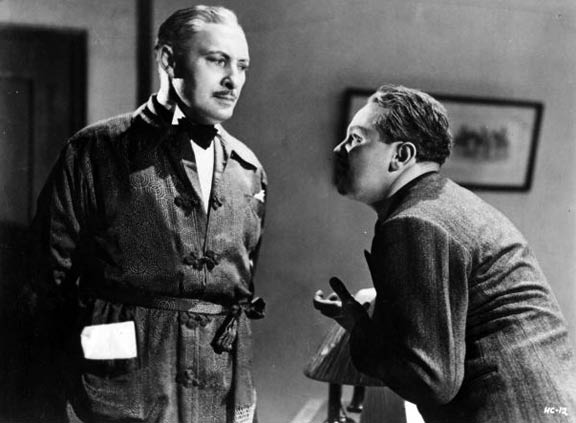
A quickly made drama that belies its low budget, The High Command, once past its awkward exposition-heavy opening, settles into a predictable yet entertaining groove that’s bolstered by a measured performance from Atwill, and fine supporting turns from Mannheim (Miss Smith in Hitchcock’s The 39 Steps) and Jeayes as the Governor who must reluctantly accept the evidence of Sangye’s guilt.  It’s actually good to see Atwill at work here; he’s a much underrated actor who deserves far more credit than he’s usually given.  As the outwardly composed but inwardly tortured Sangye, Atwill proves a good fit for the part, and rewards the producers for their picking him for the role.  Allied to Dickinson’s fluid direction and focus on the emotional undercurrents anchoring the plot, Atwill displays a capacity for vulnerability that most other roles he played didn’t allow him to reveal.

In an early role, Mason is less than convincing as Diana Cloam’s love interest, while Geray narrowly avoids chewing the scenery to tatters as her embittered husband.  The subplot involving Sangye being Belinda’s father is left aside in favour of Heverall’s trial, and the introduction of comic relief in the form of trial witness Miss Tuff (Drusilla Wills) almost overshadows the drama of the situation.  The identity of Carson’s killer is obvious despite a half-hearted attempt to make it a mystery, the cast contend well with appropriately clipped and/or stilted dialogue, and the minimalist art direction proves occasionally distracting (would a fort be this sparse with its fixtures and furnishings?).  With so much clashing going on, Dickinson ably holds it all together with his usual sense of restrained intimacy and a keen eye for the social and military hierarchies and how they commingle.

The High Command adequately reflects the prevailing attitudes of its time and fares well when exposing the hypocrisies of its main characters; pride is a theme that recurs throughout the movie, and the consequences of having too much pride are keenly observed.  The script by Katherine Strueby, Walter Meade and Val Valentine from the novel The General Goes Too Far – a much better title – by Lewis Robinson calls for less histrionics than might be expected, and allows the cast to inhabit their roles instead of get bogged down in the usual stuffed shirt theatrics.  Otto Heller’s photography is occasionally a little soft but otherwise well-framed, and the music by Ernest Irving ably supports the action.

Rating: 6/10 – raised up by good performances and clever direction, The High Command works best when focusing on Atwill and Mannheim; a minor gem well worth seeking out.

Share this:

  • Share on X (Opens in new window) X
  • Share on Facebook (Opens in new window) Facebook
  • More
  • Print (Opens in new window) Print
  • Email a link to a friend (Opens in new window) Email
Like Loading...

Art of Submission (2009)

16 Thursday Jan 2014

Posted by dullwood68 in Movies

≈ Leave a comment

Tags

Cage fighting, Drama, Ernie Reyes Jr, Frank Shamrock, George Takei, Gray Maynard, John Savage, Mixed Martial Arts, MMA, Review, The Red Canvas, Ving Rhames

Art of Submission

aka The Cage Fighter: Pride vs Honour; The Red Canvas; Submission

D: Kenneth Chamitoff, Adam Boster / 102m

Cast: Ving Rhames, Ernie Reyes Jr, John Savage, George Takei, Sara Downing, Ernie Reyes Sr, Maria Conchita Alonso, Ken Takemoto, Gray Maynard, Frank Shamrock

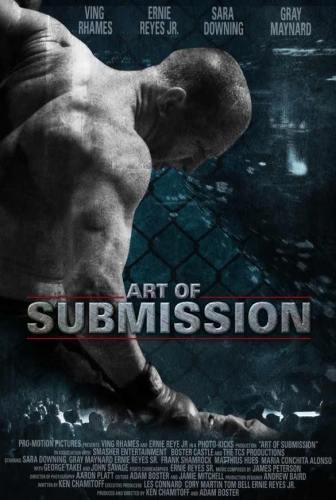
Primarily funded by martial arts school owners and their students, Art of Submission aims to show the other side of Mixed Martial Arts (MMA), namely the dedication and the respect that fighters have for the sport and for each other.  On that level it succeeds, but two main creative decisions undermine the message the movie wants to make.

The story centres around Johnny (Reyes Jr).  He’s a hothead who wants to get ahead in MMA but without first paying his dues or according the people around him the respect they deserve, including his father (Reyes Sr).  His trainer, Gene (Rhames) acknowledges his talent but insists he works his way up to fighting in a paying match.  Johnny has money problems and tries a variety of schemes to solve them without success.  When he and Gene’s daughter, Julia (Downing) have a child together, he tries to earn some easy money and winds up in jail.

At this point it’s all been so far, so predictable.  Rhames does his gruff mentor routine, Reyes Jr looks slightly weird with long straggly hair, the supporting cast come and go in various subplots, and the few fight sequences are edited to within an inch of the fighters’ trunks.  Family loyalties are strained, Reyes Jr pouts a lot, steroids are used, and prison awaits, though not in the way Johnny expects (he’s been offered a job as a prison guard more than once).  With Johnny inside, Art of Submission becomes a different movie altogether.

Art of Submission - scene

Coincidence and contrivance come thick and fast from this point on as Johnny meets Warden Rask (Savage).  Rask sees Johnny’s potential and arranges to have him released to take part in an MMA tournament organised by Krang (Takei).  It turns out Krang knew Rask – and Gene – during Vietnam, and… you know what, watch the movie and find out; it’s far too convoluted to recount here.  This narrative overkill hurts the movie from here until the end, and while it’s not confusing as such, it does lead to there being too many scenes that fail to advance the plot, and in turn, reduce the amount of time that could have been spent on the qualifying rounds and the tournament final.  Let’s just say that Krang is the villain of the piece, performance-enhancing drugs are involved, the various subplots are tidied up neatly, and the outcome of the final is never in doubt for a moment.

As well as the convoluted plotting, the other decision the filmmakers made that hurts the movie is with the editing.  At one point, Johnny’s father ends up in hospital in a coma; the sequences that follow are a badly stitched together montage that merge in and out of each other, stopping the viewer from making complete sense of what’s happening.  The dialogue in these sequences is also overwhelmed by the score, making it even more difficult to work out what’s going on (though to be fair, the copy of the movie I saw may have been the problem).  Elsewhere, the editing appears random, with shots chosen not so much for their relevance to the action as for their framing, and to show off the various camera angles that mire the look of the movie.  All in all, the last half hour seems to have been edited by someone with ADHD (my apologies to co-editors Boster and Jamie Mitchell if either one of them actually has this condition).

All of which leaves the fight scenes.  Choreographed by Reyes Sr, these are in keeping with regular MMA bouts: short, brutal bursts of physical punishment that leave you wondering how these guys stay upright for as long as they do.  What makes the bouts even more impressive is the participation of real MMA fighters (Maynard, Shamrock, ‘Crazy’ Bob Cook, Kim Do Nguyen et al).  Knowing that the moves and the blows are real makes all the difference.  (However, the manic editing still makes it look like the bouts were shot from over thirty different camera angles and in four second bursts.)

Art of Submission isn’t the best MMA movie in the world, but the level of behind-the-scenes authenticity does keep it from being a complete letdown.  The cast do their best with a script that resorts to muddled cliché more often than not, and the direction by Chamitoff and Boster is serviceable if uninspired.  Rhames coasts, Reyes Jr tries too hard, but the bouts save the day.

Rating: 5/10 – an uneven attempt at promoting MMA despite the involvement of several well-known participants, and not helped by crudely drawn characters; fitfully absorbing, but overall, one for the fans.

Originally posted on thedullwoodexperiment website.

Share this:

  • Share on X (Opens in new window) X
  • Share on Facebook (Opens in new window) Facebook
  • More
  • Print (Opens in new window) Print
  • Email a link to a friend (Opens in new window) Email
Like Loading...

The Secret Life of Walter Mitty (2013)

15 Wednesday Jan 2014

Posted by dullwood68 in Movies

≈ Leave a comment

Tags

Ben Stiller, Cover photo, Drama, Fantasy, Iceland, Kristen Wiig, Life magazine, Review, Romantic drama, Sean Penn, Shirley MacLaine, Walter Mitty

Secret Life of Walter Mitty, The

D: Ben Stiller / 114m

Cast: Ben Stiller, Kristen Wiig, Adam Scott, Shirley MacLaine, Kathryn Hahn, Adrian Martinez, Ólafur Darri Ólafsson, Patton Oswalt, Sean Penn

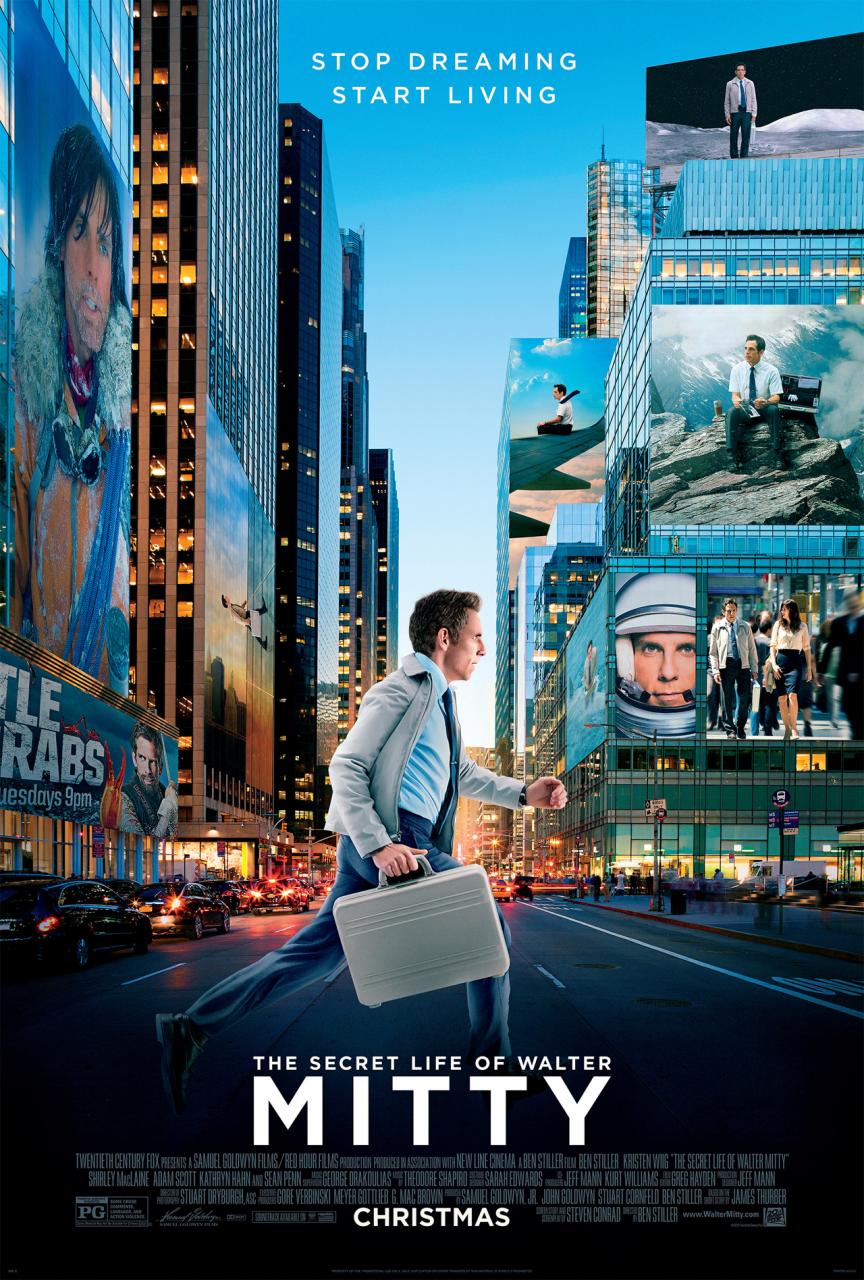
Working as a negative accounts manager (responsible for photo negatives sent in by contributing photographers) at Life magazine, Walter Mitty (Stiller) has led a largely unremarkable life.  Unmarried, with few friends, Walter is devoted to his job, but with the recent arrival of Cheryl Melhoff (Wiig) at the magazine, he finds himself smitten.  Upheaval also arrives with the news that the magazine is being cancelled in favour of an online edition.  Brought in to oversee the closure of the magazine and staff lay-offs, Ted Hendricks (Scott) picks on Walter, having caught him day-dreaming in the office.  When noted photographer Sean O’Connell (Penn) sends in a series of negatives, with one being his preferred choice for the final cover, Walter is horrified to discover he can’t find it.  With the final issue a matter of two weeks away, Walter decides to track down O’Connell and retrieve the missing negative.

Walter enlists Cheryl’s help in finding the elusive O’Connell.  A clue leads Walter to Iceland, where a drunken helicopter pilot (Ólafsson) tells him O’Connell is heading via trawler to Greenland.  He catches up with the trawler at sea but O’Connell has already left the ship.  Arriving in Greenland, Walter learns that his quarry is headed for a local airstrip.  As he gets there, O’Connell’s plane takes off… and a nearby volcano erupts.  With no further leads to help him follow O’Connell, Walter is forced to return to New York.  Back at work, he’s fired by Hendricks.  Depressed, Walter visits his mother (MacLaine) who tells him O’Connell came to see her a few weeks before.  She also provides him with enough information to help Walter decipher another clue he’s picked up during his travels.  Travelling to the foothills of the Himalayas, Walter finally catches  up with O’Connell and the mystery of the missing negative is solved.

THE SECRET LIFE OF WALTER MITTY

From its trailer, The Secret Life of Walter Mitty could be mistaken for another comic fantasy à la Stiller’s Night at the Museum movies, but thanks to a sharply observed script by Steve Conrad, and a sure hand at the helm from Stiller himself, nothing could be further from the truth.  This is not just an excuse for humorous fantasy sequences designed to prop up a patchy script, but a carefully thought out, intelligent, affectionate account of one man’s emergence from his own shell.  Walter is a terrific creation, a recognisable person with recognisable hopes and dreams, and a genuinely nice man who’s self-confidence is only evident when he’s at work.  His attraction to Cheryl is handled beautifully, his longing for a relationship played with adroitness and charm.  And as Walter’s adventures bring him further into the real world, and away from the fantasy world he slips into so easily, the acceptance he finds from the people he meets brings him a series of personal rewards.  By the time he confronts O’Connell, Walter is a changed man, able to deal with anything Life can throw at him (and which comes in handy when he later confronts Hendricks).

It’s a wonderful, nuanced turn from Stiller, subtle, skilful and affecting in equal measure, and a joy to watch.  It’s a life-affirming performance, ably supported by a well-chosen supporting cast headed by Wiig, and Stiller proves a confident director, marshalling the disparate elements of the script with verve and evident ease.  Penn is a great choice for the errant photographer, and Wiig adds several shades to a character she has played similar versions of before.  The only false note amongst the performances is Scott’s but that’s because his character is written as an obnoxious prat from the beginning; it’s the script’s only misstep.

The movie is often gorgeous to look at as well, especially when Walter is trekking through the foothills of the Himalayas; as he walks along the top of one particular ridge the panorama behind him is simply breathtaking.  But even amongst the offices of Life magazine, Stiller’s compositions are pleasing to the eye and far from perfunctory, a testament to the effort he’s made in presenting a movie that has a unique visual style throughout.  He’s ably supported by cinematographer Stuart Dryburgh and editor Greg Hayden, and there’s a wonderful score replete with songs courtesy of José González.

The Secret Life of Walter Mitty is that modern rarity amongst Hollywood movies, an uplifting, feel good, life-affirming romantic drama that isn’t queasily sentimental or emotionally over-the-top, and which doesn’t outstay its welcome.  It’s worth watching a second time for the subtle bits of business Stiller peppers the movie with, and for the pleasure of spending the best part of two hours with someone you’d be happy to call your friend.

Rating: 9/10 – a triumph for Stiller and his very talented cast and crew, The Secret Life of Walter Mitty deserves to be seen over and over again; a winning, multi-faceted experience that will keep a smile on your face for hours after seeing it.

Share this:

  • Share on X (Opens in new window) X
  • Share on Facebook (Opens in new window) Facebook
  • More
  • Print (Opens in new window) Print
  • Email a link to a friend (Opens in new window) Email
Like Loading...

My Top 10 Movies – Part Five

13 Monday Jan 2014

Posted by dullwood68 in Movies

≈ 1 Comment

Tags

4k restoration, Alec Guinness, Anthony Quinn, Aqaba, Cinematography, David Lean, Drama, London Film Festival 2012, Omar Sharif, Peter O'Toole, Review, T.E. Lawrence, True story

Lawrence of Arabia (1962)

Lawrence of Arabia

D: David Lean / 222m

Cast: Peter O’Toole, Alec Guinness, Anthony Quinn, Jack Hawkins, Omar Sharif, José Ferrer, Anthony Quayle, Claude Rains, Arthur Kennedy, Donald Wolfit, I.S. Johar

We’re at the halfway stage and so far I think I’ve got some pretty good choices for my Top 5: all are classics, all have stood (and continue to stand) the test of time, and all of them have had a profound effect on me as an individual and not just as a film buff.

I first saw Lawrence of Arabia on TV in the late Eighties.  It was one of those movies I’d lifted from my trusty Halliwell’s Film Guide as a must-see, and while I’d seen a few other epics up ’til then – Ben-Hur (1959), Spartacus (1960), and Lean’s own Doctor Zhivago (1965) – what really impressed me as the movie unfolded was the sheer size and scale of everything; even on a tiny portable TV in my bedroom this movie was astonishing in its scope (and it was a panned and scanned version as well – how terrible is that?).  There was so much to marvel at: the desert landscapes that seemed to stretch away into infinity, the shot of the attack on Aqaba with the tribesmen hurtling towards the city defences in that long panning shot that took in so much visual information it almost seemed impossible, the sense of mountains so tall and imposing that the characters appeared like ants in relation, and towering over it all, a performance that stands as one of the greatest in cinema history: Peter O’Toole as T.E. Lawrence.

I was familiar with O’Toole, had seen him in a few films, including The Lion in Winter (1968) and The Night of the Generals (1967), and while I’d thought him a good actor, very intense in his approach, I hadn’t marked him out as an actor to follow (unlike his co-stars Alec Guinness and Claude Rains).  Seeing him as Lawrence I began to realise I was watching something special, something beyond normal screen acting; here was a performance that not only made you forget there was an actor in front of you, but – and I know this is supremely silly – gave the impression that they’d somehow found the real Lawrence and plonked him down in the movie and asked him to recreate those scenes from his life being filmed.  O’Toole wasn’t just astonishing, he was breathtaking.  When he was on screen he was hypnotic, I couldn’t take my eyes off him.  If the camera cut away to another character, I wanted it to come back to Lawrence as quickly as possible.  If he wasn’t in a scene at all, I wanted that scene to end as quickly as possible so I could see him again.  (It sounds a bit creepy, I know, but this was a revelation to me, that an actor could be this good; I’m not even sure I’ve seen another performance as good since.)

Lawrence of Arabia - scene

As with Stanley Kubrick and Abel Gance and Marcel Carné (sorry, Terry Jones!), here also was a director with complete mastery and control over the material.  Lean did things in terms of composition and lighting I’d never seen before, things I’d never even considered could be done.  His use of natural light alone was impressive.  Watching Lawrence of Arabia now, over fifty years on from its release, there are shots that have never been replicated by other directors and/or cinematographers.  Lean was truly a cinematic painter, an artist concerned as much with light and shade as character and emotion and motivation; he could fuse these elements together to make an organic, complete representation of the subject at hand, and their environment.  In Lawrence of Arabia this makes for filmmaking of breathtaking beauty and accomplishment.

When I first saw the movie, and as I usually did, I raved about it to friends, even though I knew the subject matter and the movie’s length would put them off.  But one friend did see it (though some time later), and reported that they’d really enjoyed it but was surprised that the movie ended with the attack on Aqaba; he’d really wanted to find out what happened next.  I tried to keep my laughter to a minimum as I explained he’d only seen the first part of the movie.

I’ve seen the movie now around a dozen times, and each time it captivates me and mesmerises me in equal measure.  The last time I saw it was at the London Film Festival in 2012.  It was the first time the recent 4k restoration of the movie had been screened in the UK, and as a surprise, the festival organisers had arranged for two people connected with the movie to say a few words before the showing started.  Those two people turned out to be Anne V. Coates, the movie’s editor, and none other than Omar Sharif.  From where I was sitting I was only about six feet away from them both, and while Sharif spoke about his experiences making the film, several times he looked directly at me as he spoke.  (To say I walked out of that screening on cloud nine would be an understatement.)  And the movie looked tremendous, ravishing and beautiful in a way I’d never seen before, having never seen it at the cinema, only on home video or DVD.  It took me back to that first showing on TV, as I saw a movie I thought I was familiar with, but realised I hadn’t seen really properly in all this time.

For me, Lawrence of Arabia is the epic to end all epics, the grandest piece of filmmaking ever committed to celluloid.  Like the other movies I’ve discussed so far, it opened my eyes to what was possible in cinema, and its lustre hasn’t dimmed after all these years.  It’s also the most beautiful movie I’ve ever seen.

Rating: 9/10 – a movie that mixes the epic with quieter, more intimate moments, and  with skill and considerable brio; Lean’s masterpiece and O’Toole’s finest hour.

Share this:

  • Share on X (Opens in new window) X
  • Share on Facebook (Opens in new window) Facebook
  • More
  • Print (Opens in new window) Print
  • Email a link to a friend (Opens in new window) Email
Like Loading...

About Time (2013)

12 Sunday Jan 2014

Posted by dullwood68 in Movies

≈ Leave a comment

Tags

Bill Nighy, Comedy, Domhnall Gleeson, Father/son relationship, Margot Robbie, Rachel McAdams, Review, Richard Curtis, Romantic comedy, Time travel, Tom Hollander

About Time

D: Richard Curtis / 123m

Cast: Domhnall Gleeson, Rachel McAdams, Bill Nighy, Lydia Wilson, Lindsay Duncan, Richard Cordery, Joshua McGuire, Tom Hollander, Margot Robbie, Will Merrick, Vanessa Kirby

On his 21st birthday, Tim (Gleeson) is let into the big family secret by his dad (Nighy): that the men in the family can time travel.  Disbelieving at first, he follows his dad’s instructions and finds it’s all true; he travels back to a fateful New Year’s Eve party and  finds he’s able to change some of the things that did or didn’t happen.  Tim’s dad further explains the rules: they can’t travel back beyond their birth, they can’t travel forward in time, and they can only travel back to places and events that they can picture in their mind or can remember.

Tim initially uses this gift in order to rewrite awkward moments where he makes embarrassing mistakes, such as squirting a large amount of sun cream over sister Kit Kat’s friend Charlotte (Robbie).  Tim’s crush on Charlotte leads to his discovering that no matter how hard he tries, and no matter how many times he manipulates the past, he can’t make someone fall in love with him.  Which is just as well because when he meets Mary (McAdams) it’s love at first sight for both of them.  But when Tim makes a choice about returning to the night they met and does something different, he finds himself having to woo her all over again as that “something different” has meant they haven’t met (still with me?).

What follows is a series of events and situations requiring Tim’s intervention in the past, some to good effect, and one, involving Kit Kat (Wilson), that has a disastrous consequence requiring Tim to make a difficult reconsideration.  All the while, Tim and Mary’s relationship grows stronger, and their friends and families benefit from Tim’s gift.

About Time

At the heart of the movie is the relationship between Tim and his dad, a paternal romance that Curtis makes more of than the romance between Tim and Mary.  It’s uncomfortably sentimental and cloying at times, and Curtis only just manages to avoid it being completely off-putting, a testament to his skill as a writer, and the performances by Gleeson and Nighy, who portray the close bond the characters have with accomplished finesse.  If you like your romantic comedies with a little more bite or a little less mawkish, this isn’t the movie for you.  If, however, you don’t mind a couple of hours of breezy, effusive, bright-eyed and bushy-tailed romanticism, then this is definitely the movie to see.

Curtis directs capably if unspectacularly from his own script, and there’s a raft of great performances from the likes of Duncan (as Tim’s mum, acerbic but touching); Cordery as a slightly simple, less aggressive version of Four Weddings and a Funeral‘s Mad Old Man (as played by Kenneth Griffith); McGuire as the hapless Rory, Tim’s colleague; and the ever excellent Hollander as Harry, the scathing, egotistical playwright Tim lives with for a while.  As Tim’s first love, and potential moment of weakness once Tim and Mary are together, Robbie does well with a slightly underwritten character (actually more of a plot contrivance), and McAdams, here channelling the spirit of Andie MacDowell (and that’s not a bad thing), breathes life into a role that could have been relentlessly and annoyingly perky in the hands of some actresses.

But when all’s said and done the movie belongs to Gleeson and Nighy.  Gleeson, still probably best known for playing Bill Weasley in the Harry Potter movies, steps out from behind that particular shadow and gives a charming, instinctive performance that makes all the absurdities of Curtis’s script – and there are many – far more acceptable to an audience as a result; he’s credible in a way that draws in the viewer and makes Tim seem like a really good friend whose telling you this really good shaggy dog story.  And Nighy is just as excellent: diffident, amused (and amusing), relaxed, spontaneous, and a joy to behold.  He embraces the character’s foibles and makes virtues of them, grounding the movie also, and having a lot of fun at the same time.  It’s a performance made to look so easy you could be forgiven for thinking he wasn’t even trying.

The absurdities of the script can be overlooked because Curtis knows funny, and he uses the absurdities to punch up the humour rather than to drive the story forward.  That said, a couple of subplots help pad out the running time unnecessarily, and if Tim uses his gift three or four times too often, by the movie’s end he comes to a much delayed conclusion about the real benefits of time travel, and this offsets the repetition.  Curtis is a clever writer, a little under-appreciated for his movie work, but this is a clever movie, with a very clever cast, and a very clever central conceit.

Rating: 8/10 – ignore the naysayers, About Time is another quintessentially English movie from Richard Curtis that entertains from start to finish; blessed with a great cast and enough laugh-out-loud moments to shame a truckload of other comedies, this is a movie that radiates good will and is all the better for it.

Share this:

  • Share on X (Opens in new window) X
  • Share on Facebook (Opens in new window) Facebook
  • More
  • Print (Opens in new window) Print
  • Email a link to a friend (Opens in new window) Email
Like Loading...

Carrie (2013)

11 Saturday Jan 2014

Posted by dullwood68 in Movies

≈ 2 Comments

Tags

Bullying, Chloë Grace Moretz, Horror, Julianne Moore, Kimberly Peirce, Prom, Religion, Remake, Review, Stephen King, Telekinesis

Carrie (2013)

D: Kimberly Peirce / 100m

Cast: Chloë Grace Moretz, Julianne Moore, Gabriella Wilde, Portia Doubleday, Judy Greer, Alex Russell, Zoë Belkin, Ansel Elgort, Barry Shabaka Henley

When seventeen-year-old Carrie White (Moretz), already a social misfit at the school she attends, has her first period and doesn’t realise what’s happening, her fear and confusion leads to her classmates throwing tampons and sanitary napkins at her, and yelling at her to “plug it up”. This humiliating event is filmed by the worst of her tormentors, Chris Hargenson (Doubleday), and is later posted on the Internet. Stopped by their teacher Ms Desjardin (Greer), the girls are punished by having to stay after school and do repetitive exercises. Chris rebels against this and ends up being suspended; this means she will miss the upcoming school prom. Angered by what she feels is a terrible injustice, Chris vows to get even with Carrie (though not with Ms Desjardin).

For Carrie, her problems don’t end at the school gates. Her mother, Margaret (Moore), governs their lives according to her strict religious beliefs. Carrie tries to explain how terrified she’d been when her period started, but Margaret, her beliefs skewed by a pathological fear of sexual intimacy, berates her daughter for “becoming a woman” and locks her in a closet. Carrie’s anger surfaces and with just her mind she causes a jagged tear to appear down the centre of the closet door. With both mother and daughter realising there is going to be a shift in their relationship – and in Carrie’s favour – a tense line is drawn, and Margaret, now wary of the daughter she has controlled so easily until now, fears for both their futures.

While Chris plots her revenge, another of Carrie’s classmates, Sue Snell (Wilde), ashamed of how she behaved, tries to make amends by persuading her boyfriend Tommy (Elgort) to take Carrie to the prom instead of her. Tommy is initially resistant to the idea but eventually agrees, and asks Carrie if she’d like to go with him. Surprised but flattered (even if she doubts his sincerity to begin with), Carrie agrees. At the prom, and as part of Chris’s revenge, Carrie and Tommy are crowned Prom King and Queen. As they bask in the applause and approbation of their peers, Chris and her boyfriend Billy (Russell) drop two buckets of pig’s blood down onto Carrie and Tommy. The shock and the humiliation is too much and Carrie, using her nascent telekinetic powers, proceeds to take her revenge on everyone there.

Carrie (2013) - scene

Updated in minor ways for a new decade, Carrie plods its way uncomfortably from one leaden scene to the next, never fully convincing and never fully engaging the audience. As a remake it fails to justify its existence thanks to two main problems, both of which are insurmountable: Peirce’s direction and Moretz’s performance.

Peirce – still best known for Boys Don’t Cry (1999) – here proves a bad fit for the material, her approach leading to a curiously flat, matter-of-fact retelling that never takes off or impresses that much. It’s as if she’s decided to film events at a remove, keeping a distance between the audience and the characters so that any empathy the viewer may have is kept from flourishing. For a story with such a strong, emotional resonance, and centred around the age old topics of bullying and female empowerment, it’s even more surprising that Peirce has been unable to connect with the themes inherent in the script. This extends to the performances as well, which – Moore and Moretz aside – are perfunctory and/or lethargic.

Moore is a great choice for Margaret White, and expresses the religious paranoia that has blighted her life, and her daughter’s life, with a real sense of conviction. She’s like a coiled snake, biding its time until the right moment to strike. Moore is the best thing in Carrie but it’s effectively a supporting role and so she’s not on screen enough to make a difference.

Someone who is on screen too much, though, is Moretz, a moderately talented young actress whose rise to stardom on the back of the Kick-Ass movies has meant her being given more praise than is deserved, and who is cruelly shown to be lacking the acting skills needed to portray a character such as Carrie White. She may be the right age but the part requires an actress who is both older and more experienced. Moretz does her best but she’s just not up to it. She isn’t at all convincing as a put-upon teenager, and when required to show the pain and discomfort her life at home has engendered, there’s barely anything for the audience to latch on to. Worse still is the wide-eyed, “did-someone-just-goose-me?” stare she adopts for her telekinetic rampage; if it was intended to make her look scary then someone wasn’t checking the dailies.

With Peirce’s feather light touch on proceedings and Moretz’s underwhelming performance putting the movie at a disadvantage from the risible opening to the even more risible denouement, Carrie fails to meet its audience even halfway. The script is serviceable enough but there’s a lack of effort all round: even Carrie’s destruction of the prom is done half-heartedly, leaving a feeling of “was that it?” in the air.  In horror terms, this has to be the biggest disappointment of 2013.

Rating: 4/10 – yet another poor adaptation of a Stephen King novel/short story/laundry list, Carrie lacks the brio and energy needed to carry it off; turgid in the extreme and saved only by Moore’s creepy performance and a sequence that wouldn’t look out of place in a Final Destination movie.

Share this:

  • Share on X (Opens in new window) X
  • Share on Facebook (Opens in new window) Facebook
  • More
  • Print (Opens in new window) Print
  • Email a link to a friend (Opens in new window) Email
Like Loading...

Runner Runner (2013)

10 Friday Jan 2014

Posted by dullwood68 in Movies

≈ 2 Comments

Tags

Ben Affleck, Costa Rica, Crime drama, FBI, Gambling, Gemma Arterton, Justin Timberlake, Online gaming, Review, Thriller

Runner Runner

D: Brad Furman / 91m

Cast: Justin Timberlake, Ben Affleck, Gemma Arterton, Anthony Mackie, Michael Esper, Oliver Cooper, Christian George, Yul Vazquez, John Heard, Bob Gunton

Supporting his financial outlay at university by acting as a facilitator for an online gambling organisation, Richie Furst (Timberlake) is ratted on to the Dean (Gunton) who gives him an ultimatum: either quit or be expelled.  Richie’s response is to bet all his remaining money on an online gaming site; when he loses it all he suspects the game was rigged.  When he finds proof, he determines to travel to Costa Rica – where the site is based – and show the site’s owner, Ivan Block (Affleck), what he’s found.  Grateful for Richie’s information, he offers him a job which Richie accepts.  Now living the high life, Richie begins to woo Ivan’s personal assistant (and ex-lover) Rebecca (Arterton).  While Richie enjoys his new lifestyle, things begin to crumble around him. He is targeted by FBI agent Shavers (Mackie) who tells him Block is a scam artist.  Two of his friends who came to work for Block on Richie’s recommendation begin to find strange anomalies in the way Block’s site is run.  When one of them ends up beaten to death, Richie finally begins to realise the enormity of the situation he’s got himself into.

Advertised as a thriller, Runner Runner certainly has thriller elements, but largely this is a crime drama that keeps the actual crime so far off screen that it might as well not be there.  That Block is running a scam seems of little consequence against the effect it has on Richie; the movie concentrates almost exclusively on how Richie is betrayed time after time, and then how he retaliates.  There’s a larger story here with the possibility of a much wider drama being explored, but the script by Brian Koppelman and David Levien keeps things restricted to Block’s empire, with occasional side trips to island enforcer Herrera (Vazquez), the man Block has to pay in order to keep his business running.

Ben Affleck, Justin Timberlake

What doesn’t help is the incredible naïveté that Timberlake is forced to adopt due to the laziness of the script.  For someone attending Princeton, Richie is possibly the dumbest student you’re ever likely to meet.  He falls for Block’s spiel hook, line and sinker, and even when he’s tricked time and time again, he still carries on as if Block’s assertions are just “part of the job”.  Even when he realises how much trouble he’s in he tries to escape back to America, something agent Shavers has already told him would not be permitted.  And then, when he agrees to help the FBI and the Costa Rican police bring down Block, he’s suddenly able to turn the tables just…like…that.

Making online gambling interesting is something the movie also fails to achieve, and a   few over-the-top parties that Block hosts aside, there is little glamour here.  Costa Rica is a beautiful country but you wouldn’t know it from the glimpses you get of it, and Arterton, who has a pouting attractiveness, is relegated to the sidelines for most of the movie.  So what you end up with is a movie that looks and feels bland and uninteresting, and as a result, ends up disappointing its audience in almost every scene.

Furman directs with an indifference to the material that makes you wonder if he saw the problems ahead of time and decided just to take the pay.  Timberlake sleepwalks through most of his scenes, while Affleck looks embarrassed by some of the dialogue he has to (try to) give credibility to.  Arterton is wasted, Mackie tries too hard and gives a one-note performance, and Heard is saddled with a character so similar to his role in Sharknado (2013) it’s almost embarrassing.  With no one trying very hard either in front or behind the camera, Runner Runner is doomed to fail from the very first frame.

Rating: 4/10 – a silly, shabby drama with pretensions toward being a thriller, Runner Runner is the cinematic equivalent of roadkill; a low point for all concerned that will be hard to beat.

Share this:

  • Share on X (Opens in new window) X
  • Share on Facebook (Opens in new window) Facebook
  • More
  • Print (Opens in new window) Print
  • Email a link to a friend (Opens in new window) Email
Like Loading...

12 Years a Slave (2013)

10 Friday Jan 2014

Posted by dullwood68 in Movies

≈ 1 Comment

Tags

Benedict Cumberbatch, Chiwetel Ejiofor, Edwin Epps, Lupita Nyong'o, Michael Fassbender, Patsey, Paul Dano, Plantation, Review, Sarah Paulson, Slavery, Solomon Northup, Steve McQueen, True story, US history, Whipping

12 Years a Slave

D: Steve McQueen / 134m

Cast: Chiwetel Ejiofor, Michael Fassbender, Lupita Nyong’o, Benedict Cumberbatch, Paul Dano, Sarah Paulson, Adepero Oduye, Paul Giamatti, Garret Dillahunt, Brad Pitt, Alfre Woodard, Scoot McNairy, Taran Killam

In 2013 the movie that drew most people to the cinema was the third solo outing for Marvel’s high-tech reboot of the Tin Man, Iron Man 3. That movie was fun, a well-made piece of confectionery that was hyped, trailed and previewed to within an inch of its life. Enjoyable as it was though, it was still the equivalent of a Big Mac and fries, offering a quick fix for the Geek Squads and providing little or no nourishment for anyone not au fait with Marvel’s plan for Cinematic World Domination. But if 2013 is to be remembered as the year a man in a can was seen by more people than any other movie, what of that other way of remembering any given year: by the movie that was easily the best the year had to offer.

In some years, that “choice” has been easy. In 1930, All Quiet on the Western Front. In 1945, Les enfants du paradis. In 1962, Lawrence of Arabia. In 1974, The Godfather Part II. In 1993, Schindler’s List. And in 2013…a movie most of us won’t see until 2014. A movie called 12 Years a Slave.

Directed by McQueen from the account written by Solomon Northup, a free man living in New York with his wife and two children in 1841, 12 Years a Slave is a devastating account of one man’s abduction into slavery, and his subsequent experiences on the plantations of Louisiana. Northup is an accomplished musician, well-respected, and flattered when two members of a circus troupe approach him to join their company.  He journeys from New York to Washington with them only to wake up after a night’s drinking to find himself in chains and told he is now a slave; his name is also denied him and he is told he is to answer to Platt.  At first he finds himself at the mercy of (the ironically named) slave trader Freeman (Giamatti), until he is sold, along with a woman called Eliza (Oduye), to plantation owner Mr Ford (Cumberbatch).  Ford is in the process of adding extra buildings to his land, and has a master carpenter Tibeats (Dano) who oversees the construction. Northup impresses Ford with his engineering skills but soon makes an enemy of Tibeats.  Before long, Tibeats pushes Northup too far and Northup beats him with his own whip. Tibeats swears revenge against Northup and returns with two men; they proceed to hang Northup but are stopped by Ford’s overseer, Chapin (J.D. Evermore).  Although Chapin stops Northup from being killed, he leaves him hanging from the tree with his toes barely touching the ground to save himself from being strangled; it’s only when Ford returns at the end of the day that he is cut down.  But Ford’s leniency comes at a price: he must sell Northup on in order to save his plantation from Tibeats’ wrath.

Where Ford has been a considerate and compassionate man, Northup’s new owner, Edwin Epps is anything but.  He has his slaves  whipped if they don’t make the daily quota for picking cotton, and when his wife complains that he is paying too much attention to one of the female slaves, Patsey (Nyong’o), he tells her coldly that he will see the back of her before he will rid himself of Patsey.  Northup becomes Patsey’s confidante, and he does his best to keep Epps from bothering her, but it doesn’t always work.  It’s only when a carpenter named Bass (Pitt) comes to work on the plantation, and speaks of equality, that Northup takes courage and explains his situation.  Bass agrees to help him, and some time later, Northup is freed and reunited with his family.

12 Years a Slave - scene

From the outset, 12 Years a Slave grabs the attention and keeps its audience riveted.  The topic of slavery is one that has been only fitfully addressed in cinema, and while movies such as Amistad (1997), and Amazing Grace (2006) have taken a political approach to the issue, there hasn’t been a movie that has looked at it from both the financial side of things, and the actual day-to-day living experience.  Throughout the movie it’s made clear that slavery is a business, and a lucrative one for people such as the trader Freeman, and for the plantation owners who invest in slaves as a means of reaping huge profits.  Against this wellspring of money, a slave’s life is worth nothing at all, and the movie delivers this message on several occasions.  When Northup is on tiptoe trying not to hang, it’s heartbreaking to see the other slaves carry on with their tasks as if he isn’t there; only by going about their business can they add value to their lives.

12 Years a Slave is also quite graphic in its depiction of the violence endemic in slavery, with one on-screen whipping being truly horrifying, and its the casual nature of it all that the movie depicts so well, along with the hateful racism that fuelled so much of it.  Early on, before Northup is placed with Freeman, he is beaten with a paddle.  The scene is shocking both for what happens to Northup, and for the sustained nature of the beating.  Epps’s wife throws a decanter in Patsey’s face, her racism mixed with jealousy and injured pride.  There are other moments where violence escalates from nothing, and there is a palpable sense of the violent undercurrents that were prevalent during this period.  If the movie presents these aspects unflinchingly, then it is to show the full horror of the constant threat of injury or death that slaves experienced.  (And to anyone who feels these scenes were unnecessary or uncomfortable to watch, then you are missing the point.  The life of a slave was far worse than anything depicted here, and by showing us the things that we do see, the movie reinforces the fact that, so far removed from both those times and those circumstances as we are in our daily lives, we can easily fail to realise how terrible slavery actually was.)

Thankfully, in amongst the brutal violence and the despair there are quiet moments of hope to offset the horror.  Northup’s relationship with Patsey is affecting and desperately sad at the same time, and shows how two people can still retain a measure of their humanity despite existing under appalling conditions.  Thanks to both Ejiofor and Nyong’o, their scenes together are both emotionally charged and riveting viewing.

The heart of the film is Ejiofor’s towering performance, a career best that is breathtaking to watch as he depicts a man who somehow retains his dignity and his sense of self through twelve years of degradation and terror.  Ejiofor holds the attention in every scene he’s in, deflecting focus even from Fassbender, whose performance as Epps is mesmerising in its intensity.  The audience is drawn to Ejiofor as their moral compass and guide; without him, the movie would be a series of vignettes without a central point of reference.  He displays a clear understanding of the emotions that governed Northup’s reactions and response to his situation: the despair, the anger, the resignation to his plight, the fear, the barely acknowledged hope of regaining his freedom, the sadness, the sense of loss, and most effective of all, the will to survive.  It’s a magnificent achievement.

As already mentioned, Fassbender is on brilliant form as the tortured, torturing Epps, adding layers to a character who could have been portrayed more matter-of-factly and with less attention to nuance and interpretation.  His performance is mercurial, adding a sense of uncertainty to Epps that makes his unpredictable nature more dangerous.  His scenes with Ejiofor are akin to an acting masterclass.  In the various supporting roles, Dano stands out as the mealy-mouthed, insecure Tibeats, all puffed-up pride and coiled hostility, while Cumberbatch continues to impress as the fair-minded, socially conscious Ford.  Paulson also impresses as Mistress Epps, her eyes never once betraying any emotion other than disgust.  And making her feature debut, Nyong’o is superb as the object of Epps’s lust, imbuing Patsey with an inner strength and determination that offsets the cruelty she receives at the hands of Epps and his wife.

This is McQueen’s third feature – after Hunger (2008) and Shame (2011) – and serves to reinforce how talented a director he is.  His control of the material is confident and assured, and he elicits strong performances from everyone in the cast.  In conjunction with cinematographer Sean Bobbitt, McQueen places the camera in exactly the right place in each scene, framing the action expertly and with close attention to the physical and emotional requirements of each set-up.  His decision to make 12 Years a Slave has proved to be a wise one, and the way in which he’s overcome the difficulties inherent in telling such a complex story is compelling.

12 Years a Slave is a harrowing, disturbing look at a shameful period in US history, and while some people might say that we don’t need to see the barbarity of the times to know it was evil, a reminder as powerful as this one is should always be welcome.  With stand-out performances, an insightful, intricate script courtesy of John Ridley, and a score by Hans Zimmer that perfectly supports the emotional and dramatic moments in the film, 12 Years a Slave is a movie deserving of everyone’s attention.

Rating: 9/10 – a modern masterpiece, with much to say about the nature of evil as the will to survive it; an engrossing, deeply moving account of one man’s journey through a contemporary hell and his eventual salvation.

Share this:

  • Share on X (Opens in new window) X
  • Share on Facebook (Opens in new window) Facebook
  • More
  • Print (Opens in new window) Print
  • Email a link to a friend (Opens in new window) Email
Like Loading...

Stuck in Love (2012)

07 Tuesday Jan 2014

Posted by dullwood68 in Movies

≈ Leave a comment

Tags

Comedy, Divorce, Drama, First love, Greg Kinnear, Jennifer Connelly, Josh Boone, Lily Collins, Logan Lerman, Nat Wolff, Novels, Review, Stephen King, Writers

Stuck in Love

D: Josh Boone / 97m

Cast: Greg Kinnear, Jennifer Connelly, Lily Collins, Nat Wolff, Kristen Bell, Logan Lerman, Liana Liberato, Michael Goodwin

Three years after his wife, Erica (Connelly), left him, acclaimed writer William Borgens (Kinnear) is still convinced she will come back to him, even though she’s remarried. To make matters worse, he hasn’t written a word since Erica left. All he seems able to do is spy on his ex-wife in the hope he’ll see some evidence that her marriage isn’t working, and engage in casual sex with one of his neighbours, Tricia (Bell). The break-up has affected their children in different ways. Daughter Samantha (Collins) refuses to have anything to do with her mother and wants her father to move on with his life. Son Rusty (Wolff) still sees his mother and has no animosity toward her at all.

With William not writing anything, it comes as a surprise to learn that Samantha is about to have her first novel published. Both William and Rusty are initially frosty about the news, William because it’s not the same book he helped her with before, and Rusty because he’s struggling to find his own voice as a writer (he likes fantasy fiction and is a huge fan of Stephen King). With Samantha’s return home from college, the family dynamic alters considerably, with no doubts that her novel will be a success leading William and Rusty to question their roles as writers. For Rusty it means experiencing life more fully, leading him into a relationship with substance abuser Kate (Liberato). William tries to put the past behind him but without much success until Tricia tells him he shouldn’t be settling for the kind of relationship he has with her. Samantha, however, is fiercely opposed to getting close to anyone, as she fears the same thing happening to her as it did to her parents. Despite this, she meets and begins a relationship with Louis (Lerman).

As the various relationships deepen and become more serious, with unexpected consequences for all concerned, the Borgens, including Erica, find their family dynamic being tested at every turn.

Stuck in Love - scene

While it’s true that Stuck in Love is a little light on real drama, and the emotional crises the characters have to deal with are far from original, the movie is still a pleasure to watch, and is rewarding in many other ways. The chemistry between Kinnear and Connelly is affecting and effective in equal measure, with both actors playing off each other with practiced ease. There’s a scene where they meet at a shopping mall, and while the dialogue is mainly functional, the underlying charge given to their meeting is all down to how they look at each other, and their body language. Wolff shines too, imbuing Rusty with a restless, nervous energy that transforms over the course of the movie (from one Thanksgiving to the next) into a more relaxed, easily maintained confidence. As the initially self-repressed Samantha, Collins does well in a role that could have been more vapid than vital, and she copes equally well with the demands of being remote from her mother and fully engaged with her father. As the love interests, Bell is all business and tough love, Lerman is sweet but under-used, and Liberato shows promise as the wayward Kate.

The interaction between the characters is well handled, and thanks to first-time writer/director Boone, there aren’t any awkward moments where motivations can be questioned or behaviour impeached.  The family scenes feel natural, and if some viewers are put off by the idea of yet another slice of middle class neurotic navel-gazing, then that would be a shame, because Stuck in Love is sharp, observant, knowing, and above all, intelligent.  The comic elements fit comfortably alongside the dramatic elements, and the East Coast locations are a good fit for the story (as well as being beautifully photographed by DP Tim Orr).

Rating: 8/10 – a genuine pleasure to watch, with great performances enhancing an already great script; an indie movie with a warmth and a feel good factor all its own.

Share this:

  • Share on X (Opens in new window) X
  • Share on Facebook (Opens in new window) Facebook
  • More
  • Print (Opens in new window) Print
  • Email a link to a friend (Opens in new window) Email
Like Loading...

Evasive Action (1998)

06 Monday Jan 2014

Posted by dullwood68 in Movies

≈ Leave a comment

Tags

Action, DeLane Matthews, Dorian Harewood, Drama, Jerry P. Jacobs, Prison escape, Prisoners, Ray Wise, Review, Roy Scheider, Runaway train, Thriller

Evasive Action

aka Con Train; Steel Train

D: Jerry P. Jacobs / 91m

Cast: Dorian Harewood, Ray Wise, Roy Scheider, DeLane Matthews, Ed O’Ross, John Toles-Bey, Clint Howard, Don Swayze, Richard Foronjy, Steven Barr, Blake Gibbons, Mallory Farrow, Keith Coogan, Bill McGee

An unabashed mash-up of Con Air and Under Siege 2 but with a tenth of either movie’s budget (or inventiveness), Evasive Action pits con-with-integrity Luke Sinclair (Harewood) against prison big wheel Enzo Marcelli (Scheider) during an attempted escape from the train carrying them both to a new prison.  Sinclair is doing time for the murder of the man who killed his wife and child, while Marcelli’s crime is never revealed; he’s just a very bad man.  Sinclair’s integrity is shown by his refusal to admit remorse for his crime at his parole hearings; Marcelli’s evil nature is shown by…. well, he queue jumps in the prison yard.

Once Sinclair and Marcelli, along with additional convicts Tommy (Toles-Bey), Ian (Swayze), and Hector “The Director” Miller (Howard, on Steve Buscemi psychopath duty), are on the way to San Diego and their new “home”, what has been up-to-now a fairly unremarkable thriller with some daft dialogue, moves quickly into the outer reaches of low-budget silliness.  With the aid of accomplices Vince (Foronjy) and Joe (Barr), Marcelli et al are freed from the high-tech (but actually low-tech) carriage they are being transported in.  With a plan to rendezvous with a helicopter and flee to Mexico, it’s up to Sinclair and plucky train employee Zoe (Matthews) to save the day and thwart Marcelli’s (slightly) evil plan.

Evasive Action starts promisingly but soon resorts to desperate measures to keep itself “on track”.  With the convicts taking over the train, Zoe manages to contact the police; soon Sheriff Blaidek (Wise) is heading to intercept the train and save the day.  What follows is a series of incidents that demand such a massive suspension of disbelief, the viewer is in danger of self-inducing a migraine.  For example, Blaidek commandeers the helicopter and orders the pilot to get him onto the train; Sinclair jumps from the train and reconnects with it after travelling across the desert on foot before reaching a town and stealing a motorbike; and the train company has only one worker, Anthony (Coogan), who can help the police keep track of where the train is headed and/or located (and he’s inexperienced).

Evasive Action - scene

As an action thriller, Evasive Action sets a robust pace once the train sets off but the audience is unlikely to connect with any of the characters.  As Luke, Harewood is earnest and just a little bit stuffy; plus in the fight scenes it’s clear he hasn’t squared up to anyone since he was probably five.  Wise acts like a man who hopes no one he knows will see the movie, while Matthews shows no fear, merely a kind of mild exasperation at what she has to go through.  It’s left to Scheider to raise the acting bar but even he can’t salvage a character so underwritten he has to resort to snarling his way through the movie as a way of keeping him interesting.

Jacobs’ direction lacks focus and substance (he’s better known as a producer, albeit of movies such as Vampires Suck and Disaster Movie), and the photography by Ken Blakey too often resorts to shaking the camera in order to make it look like the train is moving.  The script plays fast and loose with its own timescale, and makes Passenger 57 – another movie it’s been partially cloned from – look like Oscar-bait.  The movie looks bland and lacks any kind of zest.  And the movie’s big set-piece moment, when the train crashes through a terminus at high speed, is reduced to three poorly achieved shots involving model work.

While Evasive Action does try hard to entertain its audience, what you’re left with is a sense that this was a movie that was made quickly so as not to burden its cast and crew any more than it had to.  And whoever came up with the poster design has made it look as if Scheider is some kind of spy dealing with terrorists (maybe), or, as some reviewers might put it, is “in the wrong place at the wrong time”.  (Well, yes he is, but only in the “whoops-I-should-have-passed-on-this-one” sense.)  All in all, the best thing about the movie is that it moves with a sense of urgency, even if that urgency is to get things over with as quickly as possible.

Rating: 4/10 – saved from a lower score because its very inoffensiveness is a kind of relief from the madness of most direct-to-video releases, but only worth a view if every other variation on Con Air is unavailable.

Originally posted on thedullwoodexperiment website.

Share this:

  • Share on X (Opens in new window) X
  • Share on Facebook (Opens in new window) Facebook
  • More
  • Print (Opens in new window) Print
  • Email a link to a friend (Opens in new window) Email
Like Loading...

Illegal (1955)

06 Monday Jan 2014

Posted by dullwood68 in Movies

≈ Leave a comment

Tags

Albert Dekker, Courtroom drama, DeForest Kelley, District attorney, Drama, Drink problem, Edward G. Robinson, Jayne Mansfield, Lewis Allen, Nina Foch, Review, Thriller

Illegal

D: Lewis Allen / 88m

Cast: Edward G. Robinson, Nina Foch, Hugh Marlowe, Jayne Mansfield, Albert Dekker, Howard St John, Ellen Corby, Edward Platt, Jan Merlin

When ace district attorney Victor Scott (Robinson) gains a conviction in the case of wife murderer Edward Clary (Star Trek’s DeForest Kelley), he couldn’t be more pleased as it maintains his impressive run of convictions.  Clary is sentenced to be executed but as he goes to the chair, a death bed confession by another man proves Clary’s innocence.  Alerted to the confession, Scott tries to halt the execution but is too late.  His professional reputation in tatters, Scott takes to the bottle.  Self-pitying and pushing away anyone who might help him, particularly his assistant Ellen Miles (Foch), Scott eventually pulls himself together but determines to take on only defence cases from then on.  In the process he falls in with local gangster Frank Garland (Dekker).  Scott defends Garland’s men when they end up in court, and on one occasion goes to extreme lengths to gain an acquittal.  Soon he begins to regret the course he’s chosen and tries to extricate himself from Garland’s clutches.  And then Ellen ends up on trial for the murder of her husband Ray (Marlowe), giving Scott a chance to redeem himself for the mistake he made with Clary, and ensure that Garland is brought to justice.

Illegal - scene

A remake of The Mouthpiece (1932), Illegal is a fast-paced courtroom drama with fine performances (though Foch can be a trifle stiff at times), and an early appearance for the buxom Mansfield.  Some of Scott’s motivations are a little bit hazy, especially when he begins working for Garland, but Robinson, consummate professional that he is, doesn’t allow this to interfere with the need for pushing the story forward.  As Garland, Dekker is a great foil for Robinson, and gives a firm reminder of why he was such a reliable supporting actor in the Forties.  There are a number of twists and turns, a mole in the DA’s office who must be uncovered (though the culprit is revealed early on), the usual lack of a romantic involvement for Robinson (he never did that well with the ladies), and some typically hard-boiled dialogue chewed on with relish by the largely male cast.

Directed with flair by Brit-born Allen (also responsible for The Uninvited – see review posted on 31 October 2013), Illegal is a legal potboiler that still retains a great deal of charm and is a pleasant enough way to spend an hour and a half.  On the downside, the sets are quite drab – evidence of a tight budget – and the photography is perfunctory, composed largely of medium shots.  It’s mostly predictable too, but this isn’t a drawback, and while there’s the odd misstep along the way (which might cause a grimace), the movie is an acceptable addition to the genre.  Plus there’s a great score from the ever-reliable Max Steiner.  There’s always an in-built reassurance with this type of movie, and if you’re a fan, you’ll be pleased you caught up with it.

Rating: 6/10 – minor problems with production values aside, Illegal benefits from a committed turn by Robinson and assured direction by Allen; not a classic but enjoyable nonetheless.

Share this:

  • Share on X (Opens in new window) X
  • Share on Facebook (Opens in new window) Facebook
  • More
  • Print (Opens in new window) Print
  • Email a link to a friend (Opens in new window) Email
Like Loading...

Frozen (2013)

06 Monday Jan 2014

Posted by dullwood68 in Movies

≈ 2 Comments

Tags

Animation, Arendelle, Disney, Disney Classics, Drama, Idina Menzel, Jonathan Groff, Josh Gad, Kristen Bell, Olaf, Review, Snow and ice, Snowman, Sven

Frozen

D: Jennifer Lee, Chris Buck / 102m

Cast: Kristen Bell, Idina Menzel, Jonathan Groff, Josh Gad, Santino Fontana, Alan Tudyk, Ciarán Hinds

With many a nod to Tangled, Frozen is the story of two sisters, Anna (Bell) and Elsa (Menzel), young princesses in the fairytale kingdom of Arendelle, who seem to live an idyllic lifestyle until Anna is hurt by Elsa’s “gift”: the ability to create snow and ice just by touch alone.  Anna nearly dies; this leads to Elsa hiding her gift and devoting the rest of her life to living a quiet, almost monastic life away from other people (including Anna). When their parents die, it is Elsa who becomes Queen.  On the day she is crowned, events transpire to reveal her gift to the people, who are horrified.  Urged on by the treacherous Duke of Weselton (Tudyk), Elsa is forced to flee the kingdom and take refuge in the snowy mountains, but not before her gift has covered her kingdom in ice.  There she fashions a castle for herself and determines never to return to her kingdom or her people.

Unperturbed by the revelation of her sister’s gift, Anna determines to find her, heading into the mountains by herself.  She soon finds herself lost and without transport, but is rescued by Kristoff (Groff), an ice harvester who agrees to help her (with the aid of his trusty reindeer, Sven). Meanwhile, the Duke of Weselton has sent two of his men to kill Elsa; they form part of a party led by Prince Hans of the Southern Isles, whose romantic eye has fallen on Anna (he leads the party in order to find her after she goes looking for Elsa).  They all reach Elsa’s hideout at the same time only to encounter a snow monster created by Elsa, as well as a snowman named Olaf.  Olaf tags along with Anna as she seeks to convince her sister that there is still a place for her in the kingdom.  But treachery ensues, and the fate of the kingdom rests in Elsa’s “gifted” hands, and Anna’s forgiving heart.

Frozen - scene

Overloaded with songs in its first half – the first of which is hard to understand – Frozen is a fine addition to the list of animated Disney Classics.  With richly drawn characters, often breathtakingly beautiful animation, a terrific voice cast, and memorable scenes throughout, the movie is a visual treat.  The storyline packs an emotional heft and the script is clever and well-constructed.  There are the usual Disney themes of a family in crisis, unselfish love winning out, the importance of being true to yourself, and being kind to others, and while these are all timeworn aspects of virtually every Disney movie (animated or otherwise), there’s a freshness here that keeps the familiar material interesting, and the audience’s attention throughout.

Ably directed by Lee and Buck, Frozen succeeds because it takes the aforementioned Disney values and puts a pleasing modern spin on them, even if the story feels like it’s taking place a couple of centuries ago in some mittel-European kingdom.  The movie is funny, sad, dramatic, action-packed, romantic and affecting, with fine performances from Bell and Menzel, and a great supporting turn from Gad as Olaf the endlessly upbeat, glad-to-be-alive snowman.  There’s what appears to be a cameo from Tangled’s Maximus (see Prince Hans’s horse at the quayside), a pleasing and convincing relationship between the two sisters, a couple of unexpected twists and turns, and a satisfying comeuppance for the main villain.

Rating: 8/10 – another absorbing, engaging hit from Disney, with glorious visuals and the required amount of laughs; even more impressive in 3D.

NOTE: I saw Frozen with my daughter.  She’s nineteen, loves animated movies, and has probably seen Disney’s Beauty and the Beast more times than is actually good for her.  She thought Frozen was wonderful.  For me, though, what was wonderful was that she and I can still go to the movies together and both let our inner child out to play for a couple of hours.  I hope we can carry on doing that for a very long time to come.

Share this:

  • Share on X (Opens in new window) X
  • Share on Facebook (Opens in new window) Facebook
  • More
  • Print (Opens in new window) Print
  • Email a link to a friend (Opens in new window) Email
Like Loading...

Don Jon (2013)

05 Sunday Jan 2014

Posted by dullwood68 in Movies

≈ 2 Comments

Tags

Casual sex, Comedy, Drama, Joseph-Gordon-Levitt, Julianne Moore, One-night stands, Porn, Relationships, Review, Scarlett Johansson

Don Jon

D: Joseph Gordon-Levitt / 90m

Cast: Joseph Gordon-Levitt, Scarlett Johansson, Julianne Moore, Tony Danza, Glenne Headly, Brie Larson, Rob Brown, Jeremy Luke

Jon (Gordon-Levitt) is young, brash, cocky, and with his buddies, more comfortable rating women out of ten than engaging with them on a more meaningful level.  Although Jon has a lot of one-night stands, he finds the sex unfulfilling; often, once the women he’s with are asleep, he’ll go and fire up his laptop and masturbate to online porn.  For Jon, this kind of sexual activity is more rewarding than the real thing, and it dominates his life and his attitude to relationships.

When he meets Barbara (Johansson) in a club and she rebuffs his advances, he finds himself intrigued by her, and what begins as a chase to get her to sleep with him soon becomes more serious as Jon realises he has stronger feelings for Barbara than he would have thought possible.  When Barbara agrees to go out with him, she tells Jon the only thing she asks for is complete honesty; if he lies to her their relationship will be over.  Unable or unwilling to give up online porn, it’s only a matter of time before Jon slips up.  Will their relationship survive?  Will Jon change his ways to keep Barbara in his life, or will Jon’s addiction to porn continue to hamper his emotional growth?

The answers to these questions are all answered by a film that is only notionally edgy, and wants to argue the question of men’s use of porn from the perspective of both camps: the one where it’s okay (but not in a relationship), and the one where it is completely wrong altogether.  There’s a middle ground but for the purposes of this movie, first-time writer/director Gordon-Levitt focuses on the absolute wrongs and rights of the issue.  It makes for a starker, more clear-cut approach to the material and the characters reactions to porn, but at the same time, makes anticipating the outcome a little too easy.  Jon sees porn as the answer to all those unhappy fumbles one night stands often end up becoming, where a lack of awareness of each other’s likes and dislikes can lead to disappointment all round.  Jon wants solid, satisfying sex every time; once actual people are involved, well, there’s the problem.

Don Jon - scene

As a critique of modern sexual etiquette, Don Jon takes a mainly male point of view and leaves the female perspective largely undeveloped.  While Jon – thanks to well-written and conceived voice overs – expresses his feelings, however stunted, Barbara is less accessible.  She believes in love, that much is obvious, and she relishes the type of romantic chick flick where true love conquers everything, but aside from the need for honesty she remains the deus ex machina required to bring Jon up short and get him to rethink his approach to women and sex.  And to further help him, Jon meets Esther (Moore) at night school.  She catches him watching porn on his phone, but isn’t fazed by it; instead, the next time she sees him, she brings him some porn DVDs to watch.  As their relationship begins to broaden, the audience is left to wonder if Esther will free Jon of his predilection for porn, thus allowing him to grow as a person and begin to trust in relationships.

Putting aside the issue of porn and its mass consumption by men whether in or out of a relationship, Gordon-Levitt’s main focus seems to be on the emotional distancing that can arise out of such a dependency.  When we first meet Jon he’s not actually that likeable.  He has a boyish charm, sure, but his attitude is off-putting and offensive.  He works hard, goes to the gym where he works even harder, meets his buddies at the weekend, goes to church each Sunday with his family (and where he confesses the number of sexual liaisons he’s had), and all the while treats women like accessories.  As the movie progresses, and his relationship with Barbara becomes more and more important to him, his weakness for porn proves too much.  It’s at this point that, much as the audience might not realise it, Jon becomes more sympathetic.  We’ve all been in situations where we can’t help ourselves and we do the wrong thing even though we know it’ll get us in trouble, and it’s the same for Jon.  He just can’t resist the lure of unattached, unemotional sex.  When Barbara discovers he’s been lying about porn, you can’t help but feel sorry for the guy, but only because you begin to realise that, thanks to his avoiding commitment for all this time, he just doesn’t have a clue.

It’s a clever twist on Gordon-Levitt’s part and offsets the likelihood that Don Jon is going to be pro-porn all the way through.  As it is, the porn on display is unlikely to upset any but the most prurient of viewers, and the movie is far from explicit.  On an emotional level, Gordon-Levitt’s script provides the necessary number of beats to show Jon’s burgeoning awareness of the benefits of a fully committed relationship, and the performances are effective and well-judged (Danza, as Jon’s father, is a stand-out).  (Though as already noted, Johansson isn’t given a great deal to work with.)  The script is clever, laugh-out-loud funny in places, and each scene is tooled to produce the maximum effect.  As a director, Gordon-Levitt displays a confident approach to his own material, and handles the cast with supportive aplomb; he also knows when to keep the camera on a particular character, something of a lost art these days.  The movie is attractive to look at, boasts a great score courtesy of Nathan Johnson, and while it ends somewhat abruptly, certainly doesn’t outstay its welcome.

Rating: 8/10 – uneven in places but awash with good intentions, Don Jon isn’t quite the challenging movie it might appear; it is heartfelt though, and marks Gordon-Levitt as a writer/director to watch out for.  Oh, and despite what you might believe, this is a perfect date movie.

Share this:

  • Share on X (Opens in new window) X
  • Share on Facebook (Opens in new window) Facebook
  • More
  • Print (Opens in new window) Print
  • Email a link to a friend (Opens in new window) Email
Like Loading...

Anchorman 2: The Legend Continues (2013)

05 Sunday Jan 2014

Posted by dullwood68 in Movies

≈ 1 Comment

Tags

Comedy, David Koechner, Global News Network, Harrison Ford, Kristen Wiig, News anchor, Paul Rudd, Review, Ron Burgundy, San Diego, Sequel, Steve Carell, Will Ferrell

Anchorman 2 The Legend Continues

D: Adam McKay / 119m

Cast: Will Ferrell, Steve Carell, Paul Rudd, David Koechner, Christina Applegate, Meagan Good, James Marsden, Josh Lawson, Kristen Wiig, Dylan Baker, Judah Nelson, Greg Kinnear, Harrison Ford

Nine years after Ron Burgundy’s first outing, the news anchor with the salon quality hair is back, still unrepentantly sexist, still with an ego the size of San Diego, and still oblivious to the chaos he causes around him.  Happily married to Veronica Corningstone (Applegate) and sharing the lead anchor spot with her at the World Broadcast news station, Ron’s life is devastated when news boss Mack Tannen (Ford) promotes Veronica to lead anchor and fires Ron.  Forcing Veronica to choose between him and her promotion, she chooses the job and Ron leaves her and their son Walter (Lawson).  After a stint at San Diego’s Sea World, Ron is approached by Freddie Shapp (Baker) to come work for Global News Network and be part of the first ever 24-hour news channel.  Ron agrees on the proviso that he can assemble his own news team.  He tracks down Brian Fantana (Rudd), Champ Kind (Koechner) and Brick Tamland (Carell), and with his team around him, he sets about regaining his position at the top of the news tree.

The success of Anchorman: The Legend of Ron Burgundy, a slow-build process fuelled by home video and extensive word of mouth, brought with it the fans’ desire for a sequel.  On its own merits, the first movie can be seen as a “happy accident”, an uneven mixture of stupidity and witlessness that was nevertheless funny at the same time.  Ron was crass and boorish in a “who-let-the-moron-out?” kind of way, while his news team almost matched him low IQ for low IQ.  Carell, then still climbing the comedy ladder, was endearing as the intellectually challenged Brick, Rudd was boyishly charming as Brian, and Koechner was – intentionally? by accident? – the funniest of all of them as Champ Kind, a man who has never heard a woman speak before.  Ferrell created a fantastic character, a vain popinjay with delusions of adequacy, and milked the character for all he was worth.  The performances made the movie, and over the years, have firmly lodged themselves in our collective comedy memories, so much so that we remember them with excessive fondness.

Sadly, that’s how they should have remained.  Anchorman 2: The Legend Continues trades heavily on our love of the characters but holds them in a kind of developmental stasis; in nearly ten years they haven’t changed a bit.  Ron is still vain, Brian is still the scent-fixated ladies man, Champ is still the least developed of the four, and Brick is still an idiot.  Veronica, having challenged Ron’s supremacy in the first movie, is demoted back to the same role again.  The secondary characters are used as a foil for the news team’s shenanigans – not least Kristen Wiig’s uncomfortable turn as Brick’s love interest, Chani – and even Ron’s nemesis at GNN, Jack Lime (Marsden), is given little to make him a serious rival for the news anchor crown.  And as with the first movie, Ron’s “story arc” is that he learns not to be so self-centred.

Anchorman 2: The Legend Continues

A re-tread then rather than a true sequel, Anchorman 2 arrives with a tremendous weight of expectation and reveals itself as more of a vanity project for Will and the gang (including director/co-writer McKay).  There are laughs but as most of them are repeats of gags and scenes from the first movie, it’s hard to look upon them as anything but nostalgic or, worse still, lazy.  Add the awkwardness of Carell’s performance – the line between exploiting Brick’s “disability” and treating him kindly is crossed time and time again – plus two sequences that inflate the running time beyond what’s necessary, and a recurring sense that the script was a first draft, and you have a movie that never quite gels in the way its makers had hoped.  There’s an attempt at lampooning the public’s appetite for sensationalist news but it’s only briefly explored, and whatever criticism is implied by the need for ratings success over quality content is given short shrift also.

The movie does have a professional sheen to it, however, and the technical side of things is adequately handled but there are times when it even has the feel of a TV show.  Ferrell acquits himself well, despite the limitations of his own script, and is ably supported by his cast mates.  McKay directs ably enough, and the soundtrack throws up a few Eighties gems despite itself.  And as for the final, cameo-studded battle of the news stations, what starts out as a glorious free-for-all, ends up as a let-down with a poor ending…and this is, ultimately, the main fault with the movie: scenes begin strongly but soon peter out.  Once or twice in a two-hour movie is forgivable, but not all the way through.  With this much talent involved, a better return would have been expected.

Rating: 5/10 – a huge disappointment and a perfect example of when cherished, much-loved movies should be left to stand alone; uninspired, derivative and overlong.

Share this:

  • Share on X (Opens in new window) X
  • Share on Facebook (Opens in new window) Facebook
  • More
  • Print (Opens in new window) Print
  • Email a link to a friend (Opens in new window) Email
Like Loading...

My Top 10 Movies – Part Four

05 Sunday Jan 2014

Posted by dullwood68 in Movies

≈ 2 Comments

Tags

Always Look on the Bright Side of Life, Brian of Nazareth, Comedy, Eric Idle, Graham Chapman, Jesus Christ, John Cleese, Judea, Michael Palin, Monty Python, People's Front of Judea, Religion, Review, Satire, Terry Gilliam, Terry Jones

Monty Python’s Life of Brian (1979)

Monty Python's Life of Brian

D: Terry Jones / 94m

Cast: Graham Chapman, John Cleese, Terry Gilliam, Eric Idle, Terry Jones, Michael Palin, Sue Jones-Davies, John Young

I was going to write just four words to describe how I feel about Monty Python’s Life of Brian: The.  Funniest.  Film.  Ever.  (And then have it in Latin*.)

Although I do subscribe to that opinion – and suspect I always will – even that bold assertion doesn’t do justice to a movie that makes me laugh out loud every time I see it, and which is the one movie that I can quote whole chunks from.  To me it is the perfect distillation of what Monty Python could do when they were firing on all cylinders: witty, iconic, bombastic, satirical, acerbic, perceptive, dry, ironic, crazy, and just plain daft.

Like a lot of people in the UK, I saw Life of Brian when it first came out in cinemas.  Or, at least, in the cinemas that were allowed to show it.  Thirty-nine local authorities (councils) either banned the movie outright, or gave it an X certificate (meaning for over 18’s only), thereby denying the movie to part of its target audience, the over 14’s.  Luckily, my local council wasn’t as draconian in its outlook as some others, and on the first Saturday after the movie was released, two friends and I trekked to our local fleapit to see this cause célèbre.

We weren’t disappointed.  I’ve since seen movies where the audience has been laughing loudly throughout, but that afternoon in that cinema (the ABC Basildon), there was a reaction of such intensity to the humour shown that I’ve yet to experience it again, or even come anywhere close to re-experiencing it.  We laughed until it hurt…and then we laughed even more.  Here was a movie that just didn’t let up.  The number of gags was astonishing, and the momentum the Pythons maintained across ninety-four madcap minutes was incredible.  And the range and breadth of those gags was simply breathtaking.  Who else but the Pythons would portray Pontius Pilate with a lateral lisp?  Who else but the Pythons would base a whole scene around the correct grammatical spelling of a phrase in Latin (“People called Romanes they go the house?  This is motion towards, isn’t it, boy?”)?  Who else but the Pythons would keep asserting that crucifixion is either “a doddle” or not as bad as it seems?  Who else but the Pythons would have a short sci-fi interlude involving Brian aboard an alien spaceship?  And who else but the Pythons would top it all off with row upon row of crucified men and women all singing Always Look on the Bright Side of Life?  The answer is easy: no one.

Monty Python's Life of Brian - scene

I was already a fan of Monty Python and had enjoyed their TV outings, as well as Monty Python and the Holy Grail (although I found that movie a little too rough around the edges).  I knew the Pythons could be silly and in Life of Brian there were moments of inspired silliness, but this seemed altogether more grown up, more considered, as if the team had decided to infuse their unique brand of comedy with an added depth.  The satirical elements were brilliantly done, highlighting the hypocrisy and shallow-mindedness of religious followers, as well as adopting an heretical stance regarding the Church.  The political aspects were deftly handled, poking fun at revolutionary groups (“The Judean People’s Front!  Splitters!”) and skewering the pomposity of left-wing political idealists (any scene where Reg and the People’s Front of Judea endlessly debate how to move forward).  All these elements were fresh as well, giving the movie an edge of originality that added to the movie’s overall effect.

Of course, Life of Brian isn’t just about the script or the historical detail or the amazing visual look of the movie.  It’s about the characters, the larger than life caricatures and personas we’ve come to know and love: Brian (Chapman), the plucky everyman mistaken for the Messiah but in reality as rattled as anyone would be when confronted by a worshipping crowd; Mandy (Jones), Brian’s mother, a coarse, dentally-challenged harridan with loose morals (“You mean you were raped?” “Well, at first.”); Pilate (Palin), the slightly effeminate Roman leader with little sense of how ridiculed he is; Reg (Cleese), the contemptuous, shop steward-like leader of the People’s Front of Judea, and the first to hide when the Romans (or Brian) come knocking; Stan (Idle), who wants to be called Loretta and who wants to have the right to have babies (“Babies? You can’t have babies! Where’s the foetus gonna gestate? You gonna keep it in a box?”); and the Gaoler’s assistant (Gilliam) who knowingly looks at Brian and tells him, “I know where you can get it if you want it”.  All played to perfection, and firing off lines of dialogue with superb timing.

Since that initial screening, and as with 2001: A Space Odyssey, I have endeavoured to watch Life of Brian at least once a year since its debut on home video.  Up until a few years ago, myself and the friend I took to the IMAX five times last year, would put together 36-hour movie marathons; Life of Brian was always the closing movie (and the one we never slept through any part of, no matter how tired we were).  As with the other movies in my Top 10, it’s a movie I can watch over and over and still find something new in it each time, even though it’s the shortest.  It can cheer me up if I’m down, it can make me smile just by thinking about it – I’ve been smiling the whole time I’ve been writing this – and thirty-five years on it is still as impressive and hilarious as ever.

Rating: 9/10 – *funniest membrana umquam.


Share this:

  • Share on X (Opens in new window) X
  • Share on Facebook (Opens in new window) Facebook
  • More
  • Print (Opens in new window) Print
  • Email a link to a friend (Opens in new window) Email
Like Loading...

Peacock (2010)

02 Thursday Jan 2014

Posted by dullwood68 in Movies

≈ Leave a comment

Tags

Bill Pullman, Cillian Murphy, Drama, Ellen Page, Michael Lander, Review, Small-town America, Susan Sarandon, Thriller

Peacock

D: Michael Lander / 90m

Cast: Cillian Murphy, Ellen Page, Susan Sarandon, Josh Lucas, Keith Carradine, Bill Pullman, Graham Beckel

Beginning with a major plot twist that most movies would leave until the final reel, Peacock is a small-town drama that focuses on notions of family and identity, as well as what it can mean to be part of a small-town community.

Murphy plays John, a painfully shy/socially awkward bank clerk who has managed to keep himself to himself in the year since his mother passed away, despite the best efforts of neighbours and some of the customers at the bank.  He lives in a large house next to the train tracks; when a carriage jumps the rails and ends up crashing into his back garden, narrowly missing him, his life becomes more complicated than he could ever have wished, leading him to discover things about himself that he would rather not have known.

Peacock - scene

Peacock is a beguiling movie, with Murphy’s performance firmly at its heart.  He shows the complexity of the character and the fragility of John’s mental state with an ease that is hypnotic, keeping the viewer glued to the unfolding events and eliciting sympathy at every turn.  It is a bravura piece, and the movie is worth watching for his performance alone.  It’s great to be able to add that he is more than ably supported by Sarandon, Pullman and Carradine, whose characters all want something from John, and use their apparent concern for him to advance their own causes.  Lucas serves as the nearest John has to a friend, while Page plays Maggie, a figure from his past who further adds to the problems he can’t seem to shake.  It all leads to a desperate climax with John sacrificing everything in order to be able to carry on.

There is much to admire in Peacock.  Aside from the quality of the acting – unsurprising given the cast involved – the cinematography by Philippe Rousselot is perfectly framed throughout and at times shows an almost painterly eye.  The editing, by Sally Menke (on her last film) and Jeffrey M. Werner, keeps the movie expertly paced, and the production design, especially with regard to the darkened interior of John’s home, is faultless; this is small-town America as even non-Americans will recognise it.

Director and co-writer Lander, making his feature debut, has a good eye for the nuances and undercurrents of small-town life, and manages everything with the confidence of a director with many more films under their belt.  He also knows how to keep a scene moving and when to switch focus from character to character.  And lastly, a mention for the score by Brian Reitzell: it ably supports the various emotional arcs of the characters and adds an appropriately melancholy touch to the proceedings.

Rating: 8/10 – a touching drama that becomes a character-driven thriller at the end but which remains grounded in credibility throughout; a minor gem.

Originally posted on thedullwoodexperiment website.

Share this:

  • Share on X (Opens in new window) X
  • Share on Facebook (Opens in new window) Facebook
  • More
  • Print (Opens in new window) Print
  • Email a link to a friend (Opens in new window) Email
Like Loading...

2013 – My Cinema Review

01 Wednesday Jan 2014

Posted by dullwood68 in Movies

≈ 1 Comment

Tags

10 Best movies, 10 Worst movies, 2013, Captain Phillips, Cinema visits, Cineworld, IMAX London, Nothing Left to Fear, Review

Cinema screen

In 2013 I saw 106 movies at the cinema, from Gangster Squad to Frozen. On the whole I think it’s been a good year, just above average in fact, and a definite improvement on 2012 (you could say I was far more choosy back then).

There have been some turkeys – I Give It a Year and The Hangover Part III spring to mind – and some nice surprises: Danny Boyle’s Trance (as gleefully misleading a movie as you’re ever likely to see); Warm Bodies (a rom-zom that makes a virtue out of its sweet nature); and Kill Your Darlings (the treacherous early days of the Beat Generation featuring Daniel Radcliffe as Allen Ginsberg).

There were movies I wanted to see but missed through bad timing and/or lack of opportunity: Carrie, The Way Way Back, Only God Forgives, and a couple I actively avoided: the Coen Brothers-scripted Gambit, and R.I.P.D.

The actual cinema-going experience improved during 2013, at least for me personally. Here in the UK there’s a cinema chain called Cineworld (see image above). They operate a monthly subscription service.  For a fixed fee each month (currently £18.90) you get a membership card that guarantees you a free ticket to as many movies as you can manage each month, and a healthy discount on food and drink purchases. It’s a great idea, and without it I definitely wouldn’t have seen 106 movies (probably nearer 60-70). For me, a trip to the cinema can mean seeing 4-5 movies in one day (and all the hot dogs I can eat).

I also travelled quite regularly to the British Film Institute’s IMAX screen in London. The IMAX screen is approximately 20 metres high by 26 metres wide and is easily the best way to see a movie, particularly a blockbuster like The Wolverine or Pacific Rim. It’s also a great way to treat someone for their birthday: I took one of my friends five times during 2013 (to see Iron Man 3, Star Trek: Into Darkness, Man of Steel, Thor: The Dark World, and The Hobbit: The Desolation of Smaug), and enjoyed a couple of visits with my daughter as well (The Lone Ranger and The Hunger Games: Catching Fire).

Working out which were the best and the worst of 2013 hasn’t been too difficult, although I will admit that one movie could have fallen into either camp; I don’t know if it’s just me but each year there’s always one movie that I can’t decide whether I love or hate. This year it was Frances Ha. Thankfully, other movies have come along to ensure it doesn’t end up in either list, and ultimately I’m glad because my final feeling on the movie is that it’s neither very good nor very bad, just okay (which is almost a condemnation in and of itself, I know).

Anyway, here they are then, the Best and Worst of 2013. If I’ve trashed a movie you thought was wonderful, then please accept my apologies here and now. If I’ve praised a movie you thought was a total pile of what Americans call “horse puckey”, then that’s easier to deal with: get over it, it’s just my opinion. Now, where’s that 20th Century fanfare…?

THE 10 WORST MOVIES OF 2013

10  You’re Next

9   Planes

8   Elysium

7   Walking With Dinosaurs The 3D Movie

6   A Good Day to Die Hard

5   The Hangover Part III

4   Grown Ups 2

3   I Give It a Year

2   After Earth

1   Nothing Left to Fear

Nothing Left to Fear - scene

THE 10 BEST MOVIES OF 2013

10  Side Effects

9   The Hunger Games: Catching Fire

8   Blue Jasmine

7   Monsters University

6   The Hobbit: The Desolation of Smaug

5   Classe tous risques (1960)

4   Nebraska

3   Before Midnight

2   All Is Lost

1   Captain Phillips

Captain Phillips - scene2

So, there you have it, two seafaring tales at the top of the 10 Best, and three sequels in the 10 Worst (that’s as much analysing as I’m prepared to do). I like preparing end of year lists, but this is the first time I’ve shared them with a wider audience. I hope they stimulate some discussion, even an argument or two (that’s healthy, right?), and if you feel the need to comment, please do.

Thanks for reading!

Share this:

  • Share on X (Opens in new window) X
  • Share on Facebook (Opens in new window) Facebook
  • More
  • Print (Opens in new window) Print
  • Email a link to a friend (Opens in new window) Email
Like Loading...

Wonder Woman (2009)

31 Tuesday Dec 2013

Posted by dullwood68 in Movies

≈ 1 Comment

Tags

Alfred Molina, Amazon, Animation, DC Universe, Diana, Gods and Mortals, Keri Russell, Lauren Montgomery, Nathan Fillion, Review, Rosario Dawson, Steve Trevor, Superhero

Wonder Woman

D: Lauren Montgomery / 74m

Cast: Keri Russell, Nathan Fillion, Alfred Molina, Rosario Dawson, Marg Helgenberger, Oliver Platt, Virginia Madsen

An origin story for everyone’s favourite Amazon, Wonder Woman starts before Diana (Russell) is even born. Ares, the god of War (Molina) is waging war against the Amazons; with each act of violence he grows stronger. However he is defeated and sentenced to be bound by magical bonds and imprisoned on the hidden island where the Amazons live, led by Hippolyta (Madsen), and having no contact with the outside world.

Diana (whose mother and father we discover are Hippolyta and Ares), grows up to be a talented warrior with a longing to do more than be a princess. She gets her chance when fighter pilot Steve Trevor (Fillion) is shot down over the island and crash lands there. Despite some initial mistrust it is decided he should be returned to his own land and an Amazon should ensure he gets there. Cue a tournament to decide who accompanies him. (Guess who wins?) While all this is going on however, Ares escapes his prison and the world is threatened once again by his insatiable lust for power. But first he must rid himself of the magical bonds…

Wonder Woman - scene

The animated DC Universe has become an impressive place to visit over the last ten years, with its Batman movies being particularly well-made. Here, the origin of Wonder Woman – largely adapted from 1987’s Gods and Mortals comics storyline – is given a thoroughly entertaining and robust presentation with strong voice casting (Molina steals the show as Ares), a fight-heavy storyline that keeps things inventive and involving, and which isn’t afraid to kill off some of its characters along the way (there’s even a couple of beheadings). Alongside Diana’s adapting to “outside” ways, there’s a meeting with Hades (Platt), concise examinations of sisterhood and family, and a terrible choice made by one of the supporting characters. Wonder Woman is almost wholly sure-footed from start to finish. The only stumble it makes is with the character of Trevor. He’s so casually sexist it grates against the otherwise laudable feminism displayed elsewhere; what Diana would see in him is hard to fathom.

Montgomery is an old hand at directing DC Universe movies now, but this was only her second outing after Superman/Doomsday (2007). She handles the material with confidence, marshalling the visual elements with flair and eliciting strong performances from the cast. The script, by Michael Jelenic, is spare, with often succinct dialogue (apart from Trevor’s), and a generous respect for the source material. And of course, the animation, while not as accomplished as some of the more recent DC Universe movies, is still polished and pleasing to the eye with rich primary colours and deceptively detailed backgrounds.

Rating: 7/10 – a small triumph for Warner Bros. with Russell filling Wonder Woman’s boots with aplomb, and a visual style that never fails to hold the attention.

Originally posted on thedullwoodexperiment website.

Share this:

  • Share on X (Opens in new window) X
  • Share on Facebook (Opens in new window) Facebook
  • More
  • Print (Opens in new window) Print
  • Email a link to a friend (Opens in new window) Email
Like Loading...

The Butler (2013)

29 Sunday Dec 2013

Posted by dullwood68 in Movies

≈ Leave a comment

Tags

Cecil Gaines, Civil rights movement, David Oyelowo, Drama, Eugene Allen, Forest Whitaker, History, Lee Daniels, Martin Luther King, Oprah Winfrey, Presidents, Racism, Review, True story, White House

Butler, The

D: Lee Daniels / 132m

Cast: Forest Whitaker, Oprah Winfrey, Cuba Gooding Jr, Lenny Kravitz, David Oyelowo, Terrence Howard, Olivia Washington, Yaya DaCosta, Clarence Williams III, Vanessa Redgrave, Alex Pettyfer, Robin Williams, John Cusack, James Marsden, Liev Schreiber, Alan Rickman, Jane Fonda

Based on the life of Eugene Allen (here re-named Cecil Gaines), The Butler covers over eighty years of American history, and focuses on the civil rights movement as seen through the eyes of Gaines, his family, and the various Presidents he served in the White House.  Beginning in 1926 where the young Gaines and his mother and father work on a cotton plantation, the film progresses through the decades touching on various important political events and attempts to establish the effect these events have on Gaines (Whitaker) and his family – wife Gloria (Winfrey), and two sons, Louis (Oyelowo) and Charlie (Isaac White, Elijah Kelley).

While Cecil’s climb from plantation worker’s son to White House servant takes up the first part of the movie, and reflects the prevailing attitudes surrounding race and social integration (or lack of it), there’s a hint throughout these scenes that this is merely the build up to the central story; there’s a lack of real incident once Cecil leaves the plantation and too much time passes as well.  Once he begins work at the White House it becomes clear that Louis isn’t as impressed by his father’s job, and sees his father’s easy acceptance of his place within a society struggling to achieve equality as a betrayal.

As Louis becomes more and more involved in the civil rights movement – he rides the Freedom Bus, works for Martin Luther King, joins the Black Panthers – we see the widening gulf between father and son at the same time as a nation begins to unify itself.  It’s this disparity that offers the most drama, while the political machinations and behind the scenes decision-making make for an interesting counterpoint to the home-spun drama being played out.

Butler, The - scene

It’s an interesting story, and one that shines a rare light on the personal side of political and social upheaval witnessed in the US during the 50s, 60s and 70s, and features strong performances from all concerned.  However – and it’s a big however – the movie has one major flaw: in attempting to cover so much ground it ends up being largely superficial and only fleetingly involving.  Thanks to Danny Strong’s wayward script, scenes pass with little purpose other than to reinforce Gaines’ apathy with regard to the fight for racial equality, and after the sixth or seventh or eighth time they become tedious and wearing (we get it already!).  Likewise for Louis’s involvement with the movement: yes, he’s committed, yes he sees his father as a sell-out, yes he feels with his head rather than his heart – all this is laboured and needlessly pedantic.  Gloria and Charlie are given small moments throughout as a result, and the larger family dynamic is reduced to odd scenes set around the dinner table; the only problem is there’s no meat being served. There are scenes that never amount to much: Gaines’ friend Howard (Howard) trying to seduce Gloria; a late-night encounter in the kitchens with Nixon (Cusack).

And then there are the Presidents, Eisenhower (Williams), Kennedy (Marsden), Johnson (Schreiber), Nixon and Reagan (Rickman).  Each actor has only two or three scenes to work with, and while each does well with what he’s given, they all suffer from the same approach: show the man in the highest office in the land struggling to decide what to do (though Kennedy comes off best in this regard).  At least the movie stops short of Gaines acting as some kind of authoritative guide, offering the best advice at the right time; but he does remain annoyingly non-partisan, except for the issue of equal pay between the white and the black employees at the White House (his own small battle for equality that is shown as the only part of the struggle he’s ever interested in).

The performances, though, are good, and while some of the cast are given little to work with – Kravitz, Washington, Howard, and surprisingly, Winfrey – they rise above the script’s limitations to convey a sense of what it was like to live during those troubled times.  Whitaker carries the movie with ease, and while it’s a little difficult to accept him as a man in his late twenties (when he takes over the part from Aml Ameen, himself a twenty-eight year old playing a fifteen year old), he displays a confidence and conviction that helps his character immensely.  Whitaker is an actor who can be unpredictable at times, but here he reins in any of his usual eccentricities and maintains the stolid, often resigned approach of a man who feels he has found his place in the world and doesn’t need to reach any further.

As with all historical dramas where real events are being portrayed there are inaccuracies and fabrications galore, but while this is sometimes glaring – Reagan’s indifference to civil rights, Eugene Allen’s son Charles wasn’t the political activist Louis is – they’re not so glaring that they detract from the story that’s being told.  This is based on the life of Eugene Allen, and if people are offended or upset by any deviation from “the truth” or historical fact, then they should avoid this movie completely.

On the technical side, Daniels directs with an increasingly confident flair but is hampered by the script’s lack of dramatic focus (it still feels odd to say that about a movie that appears to be all drama), and has no answer for its often stop/start structure.  That said, the movie is beautifully lensed by Andrew Dunn, and the production design by Tim Galvin, allied with Lori Agostino, Erik Polczwartek and Jason Baldwin Stewart’s art direction, means the movie is always handsome to look at.  Alas, Rodrigo Leão’s score is intrusive and overcooks the emotional beats.

Rating: 5/10 – not the incisive overview of the civil rights movement it should have been, nor the family drama it could have been, The Butler will probably do well in the Awards season, but there’s a lack of substance, and focus, here that holds it back from being a truly good movie; good performances aside, this has little to recommend it if you already know enough about its subject matter.

Share this:

  • Share on X (Opens in new window) X
  • Share on Facebook (Opens in new window) Facebook
  • More
  • Print (Opens in new window) Print
  • Email a link to a friend (Opens in new window) Email
Like Loading...

My Top 10 Movies – Part Three

28 Saturday Dec 2013

Posted by dullwood68 in Movies

≈ Leave a comment

Tags

Arletty, Boulevard du Crime, Children of Paradise, Debureau, Drama, French cinema, Garance, Jacques Prévert, Jean-Louis Barrault, Louis Brasseur, Marcel Carné, Marcel Herrand, Mime, Review, Romance

Les enfants du paradis (1945)

Image

aka Children of Paradise

D: Marcel Carné / 190m

Cast: Arletty, Jean-Louis Barrault, Pierre Brasseur, Marcel Herrand, Pierre Renoir, Maria Casares, Louis Salou, Gaston Modot, Fabien Loris

When I first heard about Les enfants du paradis I was fifteen and working my way through that year’s edition of Halliwell’s Film Guide, picking out all the 5-star movies and adding them to a list of “must-see” movies that I was compiling.  It was a long list as it turned out, and although Halliwell’s review was overwhelmingly positive, there were so many others that Les enfants didn’t stand out from the crowd.  Slowly but surely – this was in the days before video – I worked my way through the list, until around a couple of years later, Les  enfants was given an airing on BBC2.  It was on a Bank Holiday afternoon, and if memory serves, was shown with a fifteen-minute programme added during the interval.

I wasn’t entirely sure what to expect.  The setting was unusual: Paris’s Boulevard du Crime in the 1830s and 40s, and the background was intriguing as well: the life and loves and personal trials of a theatre troupe and associated individuals.  The sets, the costumes, the hair and make up, all had an impact on me that was as unexpected as it was welcome.  Up until then, these aspects of the movie making process and end product hadn’t made much of an impression on me; I took it all for granted.  But having an idea of the difficulty the filmmakers had in making the movie made me more aware of these details, and so, for the first time I found myself watching a movie where the details became as important as the overall mise-en-scène.

Les Enfants du Paradis - scene

There are times still when I watch Les enfants du paradis and find myself gazing in awe at the level of detail in any one frame, even a closeup.  And then there are the characters, the alluring, love-weary Garance (Arletty), the tragic-faced mime Debureau (Barrault), the carefree, preening actor Lemaître (Brasseur), the suave yet amoral Lacenaire (Herrand), the jealously scheming Nathalie (Casares), all of them so memorable and so superbly played.  Seeing these characters live and breathe on screen, seeing them behave credibly and realistically (if a trifle theatrically as well) was an enduring joy to watch.  I became swept up in the growing tumult of emotions as the plot unfolded and the various story lines blossomed, as the welter of finely observed detail complimented the highs and lows of the script.  By the interval, when everything seems to say “there will be no happy ending here”, I was desperate to see the rest of the movie, and cursed the BBC for adding an extra programme at its middle.

Of course, the second part was as captivating as the first, and the denouement as affecting and powerful as could have been hoped for.  When the movie ended I gave silent thanks to director Carné and screenwriter Jacques Prévert for making such an enchanting, magical, gripping experience, and under such incredible circumstances: filming in Vichy France at a time when all the materials needed to create the Boulevard  du Crime were being directed towards the war effort, somehow Carné and his team achieved a small miracle in constructing a set that looks so realistic you can believe the characters actually inhabit it when the camera isn’t rolling.

Having seen Les enfants du paradis several more times now, I still get carried away with the love stories, the dizzying photography of the opening minutes (courtesy of Roger Hubert), the threats of danger and violence that lurk at every turn, the peaceful moments that add soothing counterpoints to the frenzy of emotions on display, the disarming elegance of Arletty and Barrault’s performances, Carné’s amazing ability to frame and depict each scene with such skill and dexterity, and the perfect harmony between the visuals and Prévert’s exquisite dialogue.  This is – like the two previous movies discussed in my Top 10 – a masterpiece, pure and simple.  It’s often described or advertised as the “best French film ever made”, and while I think that title belongs to Napoleon (1927), let’s qualify it in order to give it its proper due: it’s the “best French language film ever made”.

Rating: 9/10 – miles upon miles ahead of every other historical romantic drama ever made and one of the true masterpieces of French cinema; a movie to lose yourself in over and over again and to never tire of.

NOTE: The trailer below is an extended promotional piece from 1945.

Share this:

  • Share on X (Opens in new window) X
  • Share on Facebook (Opens in new window) Facebook
  • More
  • Print (Opens in new window) Print
  • Email a link to a friend (Opens in new window) Email
Like Loading...

Walking With Dinosaurs: The 3D Movie (2013)

26 Thursday Dec 2013

Posted by dullwood68 in Movies

≈ 1 Comment

Tags

3D, Animation, Barry Cook, BBC series, CGI, Dinosaurs, Drama, John Leguizamo, Justin Long, Karl Urban, Neil Nightingale, Pachyrhinosaurus, Patchi, Review

walking-with-dinosaurs-3d_086fd500

D: Barry Cook, Neil Nightingale / 87m

Cast: John Leguizamo, Justin Long, Tiya Sircar, Skyler Stone, Karl Urban, Charlie Rowe, Angourie Rice

Taking his kids Ricky (Rowe) and Jade (Rice) to an archaeological dig, Zack (Urban) fails to engage a reluctant Ricky into moving far from the car.  While he waits for his dad and sis to come back, Ricky is greeted by a talking bird, Alex (Leguizamo).  Alex chides Ricky for his lack of interest in the past and begins to tell him a story set 70 million years before, the story of Patchi (Long), a pachyrhinosaurus.  Born the runt of a litter, Patchi has trouble fitting in, especially with his brother Scowler (Stone); they are at odds from day one.  After a run-in with a predator leaves him with a hole in his frill, Patchi’s efforts to fit in become even harder.  When the weather changes, an older Patchi must join his herd on a great migration; thus begins Patchi’s road to acceptance not only by the herd, but by his brother and by love interest Juniper (Sircar).

Walking With Dinosaurs: The 3D Movie is a mash-up of The Land Before Time (1988) and The Incredible Journey (1963). The mix of live action and CGI is impressive, with several of the dinosaurs achieving a level of photo-realism that bodes well for the forthcoming Jurassic World (2015).  Their “interaction” with the real world is well-staged and handled, and there is a pleasing sense of verisimilitude throughout.  Taking its cue from the BBC TV series of the same name, Walking With Dinosaurs: The 3D Movie looks amazing from start to finish (and in 3D it looks even better – despite being converted in post-production).  The detail is nothing less than breathtaking.  The backgrounds, shot in Alaska and New Zealand, are spectacular, and add a pleasing sense of scope to the movie despite its (relatively) small budget of $85m.

Walking With Dinosaurs The 3D Movie - scene

What isn’t so pleasing, however, is the script by John Collee (Master and Commander: The Far Side of the World, Happy Feet), a dialogue-driven disaster that manages to make dinosaurs seem un-cool and almost entirely lame in their pea-brained outlook.  That their lips don’t deliberately move in sync with their lines isn’t as distracting as the fact that what’s being said is so childish and immature (it’s actually amazing there isn’t a fart gag in there somewhere).  While Leguizamo fares better than the rest, even he can’t pull off some of his dialogue, and Long is saddled with some of the dopiest, silliest lines he may ever have to deal with.  Granted Walking With Dinosaurs: The 3D Movie is meant to be a children’s movie, but do kids really respond to, or appreciate, this level of half-baked, jokey, verbal simplicity?  If I was over the age of eight and watching this movie I might feel so insulted I’d want to chuck my popcorn at the screen in protest.

With things so hampered by the script, everything else suffers.  The plotting and story arcs are simplistic and predictable, the characterisations equally so, and the sense of danger provided by a pursuing trio of Gorgosauruses is never allowed to accrue too much tension.  Directors Cook and Nightingale at least ensure that things move along at a decent pace (helped by their editor, John Carnochan), but fail to inject much of note into proceedings.  The photography, as already mentioned, is impressive, and the scenery often breathtaking, but these aspects are unable to offer a distraction from the awkwardness of the movie as a whole.

Rating: 5/10 – saved from a lower score by its visuals, Walking With Dinosaurs: The 3D Movie is a movie that will probably impress very young children, but will frustrate teens and adults alike; a missed opportunity that sounds as if the producers lost faith in it somewhere during the production.

Share this:

  • Share on X (Opens in new window) X
  • Share on Facebook (Opens in new window) Facebook
  • More
  • Print (Opens in new window) Print
  • Email a link to a friend (Opens in new window) Email
Like Loading...

The Hobbit: The Desolation of Smaug (2013)

23 Monday Dec 2013

Posted by dullwood68 in Movies

≈ 1 Comment

Tags

Benedict Cumberbatch, Bilbo Baggins, Evangeline Lilly, Ian McKellen, J.R.R. Tolkien, Legolas, Literary adaptation, Martin Freeman, Orlando Bloom, Review, Smaug, The Hobbit, The Lord of the Rings

Hobbit The Desolation of Smaug, The

D: Peter Jackson / 161m

Cast: Martin Freeman, Ian McKellen, Richard Armitage, Ken Stott, Benedict Cumberbatch, Orlando Bloom, Evangeline Lilly, Lee Pace, Luke Evans, Stephen Fry, Sylvester McCoy

The Hobbit: An Unexpected Journey (2012) was, in some ways, a difficult movie to appreciate.  As the beginning of what is effectively now a six-film series, the difference in tone and approach threw some viewers who were expecting a match for The Lord of the Rings (2001-3).  Jackson and co-scriptwriters Fran Walsh and Philippa Boyens, and Guillermo del Toro, took the more humorous elements of Tolkien’s novel and weaved them into the story with accomplished ease.  They made several key decisions with the characterisations of the dwarves that left audiences unsure if the comedic aspects were appropriate or in keeping with the overall tone of the trilogy (not to mention the darker trilogy that follows it).  What seemed to be forgotten in the rush to criticise the movie was that it was the first of three: making any kind of criticism at this early stage was actually irrelevant.  As the first two Lord of the Rings movies were largely ignored at the Oscars, only for the third to be so heavily rewarded, so we should wait until all three parts of The Hobbit are released.  Then we can make a proper decision.

What is clear is that with The Hobbit: The Desolation of Smaug, Jackson has hit his stride, and as a result, the trilogy has hit its stride as well.  The exposition of the first movie is largely dismissed with, and the introduction of new characters such as Thranduil (Pace) and Tauriel (Lilly) is handled concisely and with greater attention than before.  There is an even greater focus on action, with the barrel-rolling sequence a highlight, and a greater sense that this movie’s events fit in with, or more appropriately foreshadow, the events of The Lord of the Rings.

Having survived the attack by orcs at the end of the first movie, Bilbo (Freeman), Thorin (Armitage) and the rest of the dwarves set off into Mirkwood where spiders – and not just any spiders – inhabit the forest.  Meanwhile, Gandalf (McKellen) heads off to Dol Guldur to face the rising power of the Necromancer (Cumberbatch).  The dwarf company, or überfellowship, make it out of Mirkwood only to find themselves captured by elves.  With Bilbo’s help, they escape, and are pursued by orcs, Tauriel – who has developed a bit of a crush on dwarf Kili (Adrian Turner) – and Thranduil’s son Legolas (Bloom).  At Dol Guldur, Gandalf meets up with Radagast the Brown (McCoy) and finds that the Necromancer is preparing an orc army to march against the lands of the west.    The dwarves evade the orcs with the help of Bard the Bowman (Evans).  Bard lives in Lake-town, and he takes Thorin and his band there where they can both tend to Kili, who has been hit by a poisoned orc arrow, and plan the next step of their journey to the Lonely Mountain.  The orcs attack again but not before Thorin has left; Bard helps the dwarves that have been left behind and Tauriel and Legolas join the fray as well.  Bilbo finds the way into the Lonely Mountain where he encounters the dragon Smaug (Cumberbatch), and despite their best attempts the dwarves fail to kill him.  Enraged, Smaug breaks free of the mountain and heads to Lake-town to wreak his revenge.

The movie ends there, rather abruptly too, with only Bilbo’s anguished “What have we done?” to see out proceedings.  As might be expected there has been a large amount of criticism of the movie ending this way, but watching The Desolation of Smaug, and with Smaug’s entrance occurring around the two-hour mark, anyone even half aware of the movie’s running time would have known a resolution to the problem of Smaug was always going to be unlikely.  And it means that The Hobbit: The Battle of the Five Armies (2014) is going to have one hell of a start.

Hobbit The Desolation of Smaug, The - scene

The ending aside, the movie does still suffer from “middle child syndrome”, with too many storylines set up to be resolved in the next one, and the running time feeling a little too long.  Gandalf is sidelined for much of the movie (fairly reflecting the novel), while some of the dwarves are given very little to do indeed – anyone know something specific that Ori or Bifor did?  Radagast gets a cameo this time round (and repeats his bird under the hat trick), Azog (Manu Bennett) cedes his quest for Thorin’s head to Bolg (Lawrence Makoare), and the worst kept secret in town: the identity of the Necromancer, is revealed at last.  Oh, and there’s the weird matter of Legolas sporting contact lenses; it makes him look slightly alien rather than Elvish.

These minor quibbles aside, The Desolation of Smaug is a terrific addition to the complete saga, thrilling, intense, spectacular to look at with even more beautiful New Zealand scenery to devour, a continued line of humour that complements the increasing sombre tone (Legolas’ dismay at seeing a picture of Gloin’s son), the introduction of Lilly as Tauriel (this trilogy’s Arwen), Jackson’s complete mastery of both the material and the visual language needed to present it, a cast that more than matches him for commitment and artistry, and of course, the mighty Smaug, without doubt the most realistic, most impressive dragon ever imagined.  Voiced by Cumberbatch, Smaug is the movie’s highlight: an arrogant, vain, greedy, vicious, preening monster who trades verbal barbs with Bilbo in the movie’s best scenes.  Both Freeman and Cumberbatch are on superb form here, adding layers to their performances that bring out all the subtleties of the dialogue, and keeping the audience riveted as they spar back and forth.

With another year to go before the trilogy’s conclusion, The Hobbit: The Desolation of Smaug is a more than satisfying instalment that works well and impresses on a regular basis.  There’s little doubt that Jackson and co are firing on all cylinders, and if the purists out there are still complaining about the increasing lack of fidelity to the original novel then they’re missing the point: this is an adaptation, and a wonderful one at that.

Rating: 9/10 – a rousing blend of action and spectacle that moves at breakneck pace, The Hobbit: The Desolation of Smaug rarely disappoints; event cinema that we see too little of these days and absolutely best seen in 48hfr on an IMAX screen.

Share this:

  • Share on X (Opens in new window) X
  • Share on Facebook (Opens in new window) Facebook
  • More
  • Print (Opens in new window) Print
  • Email a link to a friend (Opens in new window) Email
Like Loading...

Alan Partridge: Alpha Papa (2013)

21 Saturday Dec 2013

Posted by dullwood68 in Movies

≈ 1 Comment

Tags

Alan Partridge, Colm Meaney, Comedy, Declan Lowney, North Norfolk Radio, Pat Farrell, Radio presenter, Review, Siege movie, Steve Coogan, TV series

Alan Partridge Alpha Papa

D: Declan Lowney / 90m

Cast: Steve Coogan, Colm Meaney, Felicity Montagu, Simon Greenall, Simon Delaney, Sean Pertwee, Tim Key, Monica Dolan, Phil Cornwell, Anna Maxwell Martin, Darren Boyd

When North Norfolk Radio is taken over by an American who wants to revamp the schedules and weed out the below-par presenters, Alan Partridge (Coogan) suggests they get rid of fellow presenter Pat Farrell (Meaney).  Pat doesn’t take too kindly to being fired and returns to the radio station armed with a shotgun.  Soon he’s taken the rest of the staff hostage and Partridge finds himself helping the police by being their “man on the inside”.  What follows are several attempts by Partridge to get Pat to surrender, interspersed with scenes where Partridge seeks to boost his profile via the media attention surrounding the siege.

Alan Partridge Alpha Papa - scene

It was only a matter of time, and presumably the right script, before the TV legend that is Alan Partridge would be given his cinematic debut.  Big screen incarnations of small screen successes don’t always get it right, though, and Coogan’s monstrous creation is another example to add to the pile.  Too often the humour is forced by either circumstance or the need to inject a big laugh every ten minutes or so; it doesn’t arise organically so much from the characters, as from the situation they find themselves in.  That’s not to say that the movie isn’t funny, it’s just that the jokes lack the inventiveness of Partridge’s TV outings, and the parts that do work are unpredictable and inconsistent.  The script, by Coogan, Peter Baynham,  Armando Iannucci, and Neil and Rob Gibbons, is a bit of a patchwork, with some scenes struggling and/or failing to make much of an impact.

Despite the script’s obvious shortcomings, Coogan is excellent – as expected – as the repellent yet strangely likeable Partridge, while Meaney is given little to do other than act menacing and wax lyrical about the “good old days” of radio broadcasting.  Of the other cast members, Key shines as Partridge’s producer/assistant, Simon, and there are returning faces from the TV series’ such as Montagu as Lynn Benfield.  There’s also a running joke involving the drummer of Marillion.

Lowney’s direction is flat and unrewarding, while the photography by Ben Smithard is drab and unremarkable.  The confines of the radio station seem larger than the building appears from the outside, and the whole movie has that contrasting claustrophobic low budget feel of so many TV-to-movie adaptations.  Partridge is a brilliant creation, spitting egotistical soundbites and ill-considered personal comments at every move, but on this occasion the feature-length format fails to add anything to  the character and serves only to illustrate the strengths of the TV shows.

Rating: 5/10 – a misfire, and one that remains fitfully amusing; one for the fans, certainly, but newcomers to the world of Alan Partridge should beware: there’s less here than meets the eye.

Share this:

  • Share on X (Opens in new window) X
  • Share on Facebook (Opens in new window) Facebook
  • More
  • Print (Opens in new window) Print
  • Email a link to a friend (Opens in new window) Email
Like Loading...

My Top 10 Movies – Part Two

18 Wednesday Dec 2013

Posted by dullwood68 in Movies

≈ Leave a comment

Tags

Abel Gance, Albert Dieudonné, Drama, French movie, History, Kevin Brownlow, Napoleon, Review, Silent film, Triptych, True story

Napoléon (1927)

Napoleon

D: Abel Gance / 330m

Cast: Albert Dieudonné, Vladimir Roudenko, Edmond Van Daële, Gina Manès, Antonin Artaud, Alexandre Koubitzky, Marguerite Gance, Yvette Dieudonné, Philippe Hériat, Abel Gance

A five and a half hour silent movie?  One that’s unavailable in any home video format, and is unlikely to be for the very foreseeable future?  A rich visual spectacle that impresses from its opening snow fight sequence to its stunning triptych finale?  I have only one word as my answer: Absolutely!

Before I saw Napoléon, my exposure to silent movies had been restricted largely to comedies featuring the likes of Charlie Chaplin, Buster Keaton, Larry Semon etc.  The Keystone Kops were a favourite, and Harold Lloyd impressed me even more when I discovered he’d lost his right thumb and forefinger in an accident involving a bomb prop (I know, it’s a bit shallow, but in mitigation I was around nine or ten).  I remember seeing most of The Iron Horse (1924) on TV, and it had the effect of making me realise that silent movies could last longer than twenty minutes, but UK TV wasn’t in the habit of showing anything other than the short films already mentioned.  When Napoléon was shown as part of a nationwide tour in 1980 at my local arts theatre – with live piano accompaniment – I saw the advert for it and took out my trusty copy of Halliwell’s Film Guide to find out more about it.

It was the length of the movie that intrigued me.  At that time – and my memory is a bit hazy on this – the available print ran to just over five hours.  The idea of sitting in a theatre for that length of time, plus interval, was daunting, but equally an attractive one.  It’s a little shallow (again) but I wanted to see if I could “stay the course” and be able to say – if anyone I knew had even cared! – that I had seen, all the way through, the five hour plus silent movie set during the French Revolution and beyond.  It was like having a badge of honour.

Napoleon - scene

Imagine my surprise (and delight) when the movie began and I found myself swept up by the depth and breadth of Gance’s technical mastery of the silent medium.  By the intensity of the performances, the sweep of the narrative, the visual panache of the battle scenes – Gance put his camera in the middle of the action, unheard of up until then – and the effectiveness of the quieter moments against the stirring swirl of historical events.  Those five hours flew by.  At the interval, I can remember coming out of the auditorium (and into the light) and feeling overwhelmed.  Aside from 2001: A Space Odyssey (1968), I’d never been affected as much by a movie, and definitely not by a silent movie.  I was seeing techniques and a visual language that were truly amazing; this was breathtaking stuff and I couldn’t wait to go back in and see if the rest of the movie was as incredible.  And, of course, it was.

Since then I’ve seen Napoléon four more times.  (Sadly, I was out of the country for its most recent UK screening, on 30 November 2013.)  Each time I’ve revelled in its complexity and the sheer joy it provides, and each time I’ve come away wanting someone, anyone – but preferably Kevin Brownlow – to come along and say, “We’ve found all the missing footage, and will be presenting the original premiere version of Napoléon in just a few months’ time”.  I know this is unlikely, and Brownlow has said himself that the current version is probably the longest it will be for some time to come.  (But, what’s the world without a little hope, eh?)  Perhaps the best screening was the premiere of Carl Davis’s score for the movie shown at the Royal Festival Hall on London’s south bank.  The addition of an orchestra made the whole event even more wonderful and fulfilling.

Napoléon was the first movie that really engaged my heart and my mind and wouldn’t let go.  It holds a special place for me as the one movie that remains an event each time I see it.  In these days of instant streaming and fast downloads and blu ray discs, the notion of only being able to see a film at a cinema or a concert hall is somehow reassuring, that we haven’t lost that true element of spectacle that we take now for granted.  This was how audiences were first exposed to movies, not with ads for the latest trainers or holiday destinations, but with a sense of scale and excitement, a palpable tension at being swept away by what was unfolding on screen.  The language of cinema was being created by these movies, and it’s this aspect that shouldn’t be overlooked or forgotten.  Without trailblazers such as Gance, a lot of what we take for granted about movies today (or don’t even notice), would be missing.  That we’ve lost some of that grandeur is simply disappointing.

Sadly, it will be some time before Napoléon will be seen again on the big screen.  But when it is, you can rest assured that I’ll be there (if it’s in the UK), and ready to be enthralled and transported and amazed all over again.

Share this:

  • Share on X (Opens in new window) X
  • Share on Facebook (Opens in new window) Facebook
  • More
  • Print (Opens in new window) Print
  • Email a link to a friend (Opens in new window) Email
Like Loading...

Shame the Devil (2013)

18 Wednesday Dec 2013

Posted by dullwood68 in Movies

≈ 1 Comment

Tags

Doug Bradley, Horror, Juliette Bennett, Lie detector, Murders, Paul Tanter, Profiler, Review, Serial killer, Simon Phillips, Thriller

Shame the Devil

D: Paul Tanter / 94m

Cast: Simon Phillips, Juliette Bennett, Will de Meo, Bradford West, Lucy Clements, Doug Bradley, Kellie Shirley, Peter Woodward

Oh dear.  Oh dear, oh dear.  Really.  It’s that bad.  I mean, really bad.  Sooooo bad.

And once again, it’s all down to THE SCRIPT.  An awful… no, god-awful, unholy mess of a script that makes no effort to be coherent, has a passing acquaintance with competence, and contains some of the worst dialogue ever committed to celluloid.  The sad thing about Shame the Devil is that the cast and crew are actually trying their best…and failing miserably.

The plot concerns the hunt for a serial killer who hooks his victims up to lie detectors and then asks them a series of questions that will cause them to be killed if they lie.  The killer tells them, “The truth will set you free; tell the truth and shame the devil”.  The first victim is a supermarket manager, the second a doctor (Woodward), and the third a priest.  The police officer investigating the murders, Trent (Phillips) is suspended because he appears to be linked to the victims, and heads to New York to seek help from an old flame (Bennett) who is a profiler.  But while he’s there, the murders continue…

Shame the Devil - scene

Ten things that are wrong with Shame the Devil:

1 – Simon Phillips demonstrates every emotion required of his character by shouting.

2 – Writer/director Paul Tanter allows each actor to play their part independently of any other actor that might be in the same scene with them.

3 – The whole concept of the serial killer being one step ahead is made laughable by the circumstances surrounding the death of the first New York victim.

4 – Lucy Clements demonstrates every emotion required of her character by pouting.

5 – Despite jetting off to New York after being suspended, none of Trent’s superiors have any idea of where he is.

6 – Lines of dialogue are repeated by characters in a vain effort to reinforce the seriousness of the relevant situation.

7 – The photography by Haider Zafar is bland and uninspired.

8 – Writer/director Tanter and editor Richard Colton have no awareness of what makes a scene tense, thrilling, and/or dramatic.

9 – Doug Bradley, one of the few actors capable of injecting credibility into this kind of thing, is reduced to appearing in only one scene.

10 – The music is intrusive and fails to add any menace to the proceedings.

11 – There are moments of childish humour that even the Chuckle Brothers would have steered clear of (apologies to any non-UK readers for the reference).

I know, I know, that was eleven things but that just serves to illustrate how bad this movie really is: I could go on and on and on and on…  But I won’t.  Suffice it to say, Shame the Devil is an unmitigated disaster – poorly directed and acted, appallingly written, unimaginatively shot and edited, and completely unable to drag itself out of the mire of its own making.  Even the nihilistic ending – though welcome by the time it arrives – is badly staged and requires more of Phillips as an actor than he has to give.

Rating: 1/10 – another car crash of a movie from the writer/director of the White Collar Hooligan movies, Shame the Devil founders from its opening scene and never quite breaks the surface; an amateurish, dismaying waste of everyone’s time and patience.

Share this:

  • Share on X (Opens in new window) X
  • Share on Facebook (Opens in new window) Facebook
  • More
  • Print (Opens in new window) Print
  • Email a link to a friend (Opens in new window) Email
Like Loading...

The Shadow of Silk Lennox (1935)

14 Saturday Dec 2013

Posted by dullwood68 in Movies

≈ 1 Comment

Tags

Bank robbery, Creighton Chaney, Crime drama, FBI, Gangster, Lon Chaney Jr, Murder, Nightclub, Ray Kirkwood, Review

Shadow of Silk Lennox, The

D: Ray Kirkwood / 60m

Cast: Lon Chaney Jr, Dean Benton, Marie Burton, Jack Mulhall, Eddie Gribbon, Larry McGrath, Allen Greer, Theodore Lorch

After four years of being billed as Creighton Chaney in an effort to make his own way in movies, Lon Chaney Jr finally landed his first lead role in this below average potboiler.  As nightclub owner cum gangster John Arthur “Silk” Lennox, Chaney does his best to appear urbane and charming, and there are moments when he almost pulls it off, but mostly he looks uncomfortable; when he’s being an out and out villain, Chaney appears more relaxed.  It was inevitable perhaps that Chaney’s career – outside of Of Mice and Men (1939) and The Wolf Man (1941) – would be given over to playing villains.  He wasn’t blessed with matinee idol looks, and often his delivery was a little off, but he was a formidable screen presence, and it’s interesting to see him here finding his feet.

Lennox and his gang rob banks.  He tricks the police into giving him a cast-iron alibi for his latest robbery, and when they fail to make any headway, it’s down to the FBI to lend a hand.  Fortuitously, one of Lennox’s gang, the Deacon (Budd Buster), tries to leave town with the money from the robbery.  Lennox tracks him down and has him killed; this provides the FBI with the opportunity they need to bring Lennox to justice.

Shadow of Silk Lennox, The - scene

The short running time reflects the slightness of the plot, and the by-the-numbers filmmaking.  The script, adapted by Norman Springer from his story The Riot Squad, is too weak to make much of an impact, and Kirkwood directs without attempting to make any of it appear interesting.  There’s a sub-plot involving an act at the nightclub – played by Benton and Burton – that plays as unconvincingly as Lennox’s trademark saying “It’s all going as smooth as silk”.  The sets are functional and look entirely too flimsy, and the photography, by the usually reliable Robert F. Cline, is flat and uninspired, leaving the movie a chore to look at.  There’s a chirpy performance from Mulhall that raises the stakes when he’s onscreen but this isn’t until the last twenty minutes or so; before then, everyone else fails to ignite the soggy material.

From here, Chaney would go on to a succession of uncredited roles in movies such as Slave Ship (1937) and Love and Hisses (also 1937).  He had other, credited, roles but it wasn’t until Of Mice and Men that he finally broke out as a leading man, even if it was largely in low budget horror movies.  Chaney was capable of giving strong performances when needed, but all too often his personal demons got in the way of his career.  Seeing Chaney in The Shadow of Silk Lennox is like watching a fighter early on in his career who’ll maybe only get that one chance at a title shot.  It’s reassuring to know that, even with his eventual decline as an actor – Face of the Screaming Werewolf (1964) anyone? – Chaney had his time in the sun.  He was sometimes an unpredictable actor, and that often makes watching some of his movies more rewarding than they should be (although that can’t be said here).

Rating: 3/10 – low budget doesn’t have to mean low quality but it does here; ponderous and underwhelming, The Shadow of Silk Lennox fails to rise above its mediocre origins.

Share this:

  • Share on X (Opens in new window) X
  • Share on Facebook (Opens in new window) Facebook
  • More
  • Print (Opens in new window) Print
  • Email a link to a friend (Opens in new window) Email
Like Loading...

My Top 10 Movies – Part One

13 Friday Dec 2013

Posted by dullwood68 in Movies

≈ 2 Comments

Tags

Also Sprach Zarathustra, Arthur C. Clarke, Gary Lockwood, HAL 9000, Keir Dullea, Monolith, Moonwatcher, Review, Sci-fi, Spaceship, Stanley Kubrick, Star Child, The Sentinel

Having seen an unholy amount of movies in my life so far – over 13,000 – I do have my favourites, movies I can watch over and over and over again and never tire of.  Over the next ten weeks I’ll be posting my personal Top 10, the movies that have had either a tremendous impact on me, or that have struck a chord to such a degree that I keep returning to them.  These posts won’t be reviews as such, but a summing up of how and why they’re important to me, and – in some cases – what was happening in my life at the time that meant they ended up having such a lasting effect.  I hope some of them are your favourites too.  And at the top of the list:

2001: A Space Odyssey (1968)

2001 A Space Odyssey

D: Stanley Kubrick / 141m

Cast: Keir Dullea, Gary Lockwood, William Sylvester, Daniel Richter, Leonard Rossiter, Margaret Tyzack, Robert Beatty, Sean Sullivan, Douglas Rain

This, more than any other film, is the one that cemented my love of movies.  I first saw it in 1977, when it was on its second re-release.  My local cinema showed it for a week with three daily showings.  Back in those days you could go see a film at any time, even go in part way through; the best part was that you could then stay there and watch what you’d missed when the next showing started.  I saw 2001 at its first showing on the Saturday afternoon – I was 14 at the time – and I was so impressed, so overwhelmed, that I stayed and watched it again.  I was seriously tempted to stay and watch it a third time but sense(?) prevailed, and I left the cinema.  My head was reeling.  What had I just seen?  And why was it having such a profound effect on me?

And why couldn’t I get my friends to see how amazing it was?  Because to them it sounded boring.  A film approaching two and a half hours, with very little dialogue, no real laughs, no fights or car chases or shootouts, and whose main antagonist is a computer?  No, my friends said, we’ll stick with Doctor Who – that’s real science fiction.

2001 A Space Odyssey - scene

Looking back, I don’t blame them.  I think 2001 is an acquired taste, and it’s not for everybody.  A lot of people I’ve watched it with have given up before the Dawn of Man sequence is barely five minutes old.  They look at me as if to say, Are you serious?  And yes, I am.  This is a film I could watch every day and not tire of it.  Since its arrival on home video in 1980, I have watched 2001 at least once a year without fail, with at least six other trips to the cinema just to see it, as well.  Every time I see it I notice or see something new, some small detail perhaps, that I haven’t seen before but which has been there all along.  I hum along to the music, and get goosebumps every time I hear Also Sprach Zarathustra.  I wait for those classic moments: when Moon-Watcher first realises what he can use the animal bones for; the jump-cut; the moment when the stewardess turns and begins walking upwards; the first sight of the orbiting space station; seeing the Monolith surrounded by our “modern” technology; HAL’s first close up; Poole running in the centrifuge; the realisation that HAL can read lips; Bowman entering the air lock; “Daisy, Daisy, give me your answer do”; the journey through the Stargate; and the Star Child looking down on Earth.

2001 is the only film that merits – for me – a score of 10/10.  It was the first film that really made me sit up and realise just how powerful and inspiring a single film could be.  I found out everything I could about its production, read Arthur C. Clarke’s original story The Sentinel, promoted it as much as I could to my friends – still not buying it, though – and fell in love with this amazing director called Stanley Kubrick.  Thirty-six years and umpteen thousand movies have passed since that first viewing, but 2001 still impresses me with its verisimilitude and its adherence to strict scientific rules (no sound in space – take that Gravity!).  I love the film’s pace, the almost languid approach that allows the viewer to take in so much detail, and the beauty inherent in space travel.  2001 is often regarded as sterile and unemotional, but there is joy to be had here, humour as well (the toilet instructions), and a sense that destiny is only a leap of faith away.  There is awe, and wonder, and expectation and that very human of characteristics, the need to explore, to broaden and expand one’s horizons, to see what lies over the next hill.

I was asked once if the timing of when I saw 2001 for the first time was in any way important in terms of how much I liked it.  And I think the timing was vitally important.  Up ’til then, my movie diet consisted of old black and white movies, silents and serials.  Modern film had failed to have any kind of impact, and in some ways I distrusted it (or perhaps I didn’t understand it), and I only saw 2001 because it was a science fiction film, and those kinds of movies I could deal with.  But, what did I know?  It opened up a whole new world for me, and set me on the path to watching movies with a greater passion and enthusiasm than I ever would have done before then.  In effect, it helped me chart my own growth, as an individual and as a film buff.  And I will be eternally grateful to it, and to Mr Kubrick.

Share this:

  • Share on X (Opens in new window) X
  • Share on Facebook (Opens in new window) Facebook
  • More
  • Print (Opens in new window) Print
  • Email a link to a friend (Opens in new window) Email
Like Loading...

Disaster Zone: Volcano in New York (2006)

13 Friday Dec 2013

Posted by dullwood68 in Movies

≈ Leave a comment

Tags

Alexandra Paul, Construction team, Costas Mandylor, Disaster movie, Drama, Michael Ironside, Review, Robert Lee, Thriller, Volcano

Disaster Zone Volcano in New York

D: Robert Lee / 90m

Cast: Costas Mandylor, Alexandra Paul, Michael Ironside, Michael Boisvert, Eric Breker, Ron Selmour, Pascale Hutton, Kevin McNulty, Zak Santiago, Robert Moloney, Kaj-Erik Eriksen, Matthew Bennett, William S. Taylor

What looks like a SyFy movie, sounds like a SyFy movie, has a script and direction like a SyFy movie, and special effects like a SyFy movie, and yet isn’t a SyFy movie?  The answer, of course, is Disaster Zone: Volcano in New York.  Shot on a predictably low budget, Disaster Zone begins well, showing the camaraderie of a construction team working on a new water supply tunnel for the Manhattan area.  Two newbies, Joey (Eriksen) and Karen (Hutton) are thrown in the deep end when a routine blasting goes wrong and three members of the team are killed.  The ensuing enquiry – which seems to take place the very next day – sees team leader Matt McLaughlin (Mandylor) sacked, despite his having seen lava break through the tunnel wall just before he got out.  No one believes his story, least of all the NY authorities, who authorise his team to continue working on the tunnel.  Enter a team from the US Geological Service to investigate (and immediately dismiss) Matt’s claims.  On the USGS team is Matt’s ex-wife Susan (Paul).  At first they butt heads, but soon enough they’ve made up their differences and are trying to work out if what Matt saw is just an isolated incident or something presaging a bigger problem.

Experienced viewers will now be shouting, “Of course there’s a bigger problem!”, and the cause of it all is pill-popping mad scientist Dr Levering (Ironside).  He’s drilled down seven miles into the earth’s crust (from a warehouse, no less!), and has caused major instability as well as aggravating the volcano that no one has ever been aware of previously.  For some reason this is a highly secret operation, backed by mysterious investors, and overseen by oily politician Kavanagh (McNulty).  Levering’s plan is to harness the earth’s geo-thermal energy and do away with fossil fuels.  But in the drive to meet his backers’ deadline, Levering ignores the warning signs and presses on.  Eventually it’s up to Matt and his remaining crew to save the day.

Disaster Zone Volcano in New York - scene

Disaster Zone: Volcano in New York has two main problems and they are both fundamental to the movie’s success (or lack of it).  Firstly, there is the script by Sarah Watson, which, as expected, is as scientifically accurate as saying that water falls upwards, and is littered with lines even the best actors in the world couldn’t give credibility to.  One sequence, and perhaps the most laughable in a movie riddled with laughable moments, shows a man watering a lawn who goes to open a neighbour’s door and finds the handle is red hot.  He uses his sleeve to open the door, lava pours out, engulfs him, and then causes an explosion in the house.  Minutes later we’re told that seventy-two people died in the explosion, in what is being described as a “terrorist incident”.  By this point you’re reduced to mouthing WTF? almost every couple of minutes in sheer astonishment at the script’s determined implausibility.  The second problem is Lee’s scattershot attempts at direction.  Lee is more often employed as a first assistant director or a second unit director, and his lack of ability shows throughout.  Few scenes are handled with any appreciable skill and his decision to shoot the bulk of the movie using various headache-inducing camera techniques such as whip-pans makes it unpleasant to watch.  He’s also unable to frame a shot properly or provide his cast with enough support; sometimes it seems he’s shot a rehearsal rather than the finished scene.

Woeful as this movie is, it’s further undercut by the dreadful special effects – there’s even a couple of shots lifted from footage taken on 9/11 – and lighting that makes everyone look ill.  There’s also a ludicrous subplot involving an anti-terrorist unit led by Agent Walters (Bennett), who believes everything is down to terrorists.  Of the cast, Mandylor and Paul show real chemistry, and while Ironside ends up chewing the scenery with relish, he’s still the best thing in the movie.  The supporting cast do their best against insurmountable odds, and the score hits every beat with leaden predictability.  And to cap it all off, there isn’t even a proper eruption.

Rating: 3/10 – watchable only if you’re in the mood to check your brain at the door; or for the opportunity to witness so much that is witless and stupid in such a short space of time.

Originally posted on thedullwoodexperiment website.

Share this:

  • Share on X (Opens in new window) X
  • Share on Facebook (Opens in new window) Facebook
  • More
  • Print (Opens in new window) Print
  • Email a link to a friend (Opens in new window) Email
Like Loading...

Saving Mr. Banks (2013)

13 Friday Dec 2013

Posted by dullwood68 in Movies

≈ Leave a comment

Tags

Annie Rose Buckley, Australia, Colin Farrell, Comedy, Disney, Drama, Emma Thompson, John Lee Hancock, Mary Poppins, P.L. Travers, Review, Tom Hanks, True story, Walt Disney

Saving Mr. Banks

D: John Lee Hancock / 125m

Cast: Emma Thompson, Tom Hanks, Annie Rose Buckley, Colin Farrell, Paul Giamatti, Ruth Wilson, Bradley Whitford, Jason Schwartzman, B.J. Novak, Rachel Griffiths, Kathy Baker, Ronan Vibert

Based on the true story of Walt Disney’s attempts to secure the film rights to P.L. Travers’ Mary Poppins, Saving Mr. Banks opens with the financially compromised author (Thompson) telling her agent she has absolutely no intention of flying to Los Angeles and letting Disney (Hanks) ruin her creation.  One quick turnaround later and we see Travers arriving in La La Land and being met by her driver for the duration of her stay, Ralph (Giamatti).  One dispiriting car journey (for her) later and she is introduced to the charming and sincere Disney.  Her doubts assuaged for the time being, she agrees to work with the proposed movie’s writers (Whitford, Schwartzman and Novak).  As they work through the script and songs we’ve all come to know – and perhaps love – Travers’ objections remain largely in place, but gradually her resistance is worn down by a combination of the writers’ enthusiasm, Disney’s determination not to renege on a promise made to his daughters twenty years before, and memories of her childhood that resurface during the visit.

It’s these flashbacks that add meat to the otherwise thin story of “a writer taking on the system”.  As portrayed by Thompson – and superbly, I might add – Travers is presented as a bit of an old dragon: scathing, contemptuous of her American “cousins”, rude, condescending and almost completely out of her depth.  Hancock and writers Kelly Marcel and Sue Smith, instead of making the movie a “fish out of water” story where the fish wins out by virtue of personal fortitude and stubbornness, have wisely chosen to look at the reasons for Travers’ animosity towards Disney, and why the character of Mr Banks was so important to her.  As Travers’ back story unfolds through the depiction of her childhood, so we come to learn the fundamental truth behind the characters of Mr Banks and of Mary Poppins herself, and the long-term effect Travers’ childhood has had on her.  These scenes give a much-needed depth to the movie, and allows Thompson to provide a richer, more psychological approach to P.L. Travers than may have been expected.  Thompson dominates the movie, reducing even Tom Hanks to the level of humble onlooker in their scenes together, and gives a masterclass in screen acting, her voice and mannerisms and facial expressions all perfectly pitched to leave the audience in no doubt as to her thoughts and feelings at any time.

Saving Mr. Banks - scene

Matching Thompson in terms of screen performance, and presence, is her younger counterpart, Annie Rose Buckley.  With only an episode of Aussie soap Home and Away back in 2010 under her belt, Buckley’s performance as Ginty is intuitive, mesmerising and a minor revelation.  As her scenes transform from pastoral idyllic to domestic unstable, Buckley displays a maturity and command of the material that few actresses her age would be capable of achieving, let alone maintaining, over the course of a two hour movie.  She’s a remarkable find, and all credit to the casting director Ronna Kress for picking her out.

As Disney, Tom Hanks gives a comfortable performance but the script often sidelines him, so that he pops up only now and again to urge on Travers and perform a little light damage control when required.  It’s effectively a supporting role, and one that doesn’t stretch him in any way.  In other roles, Farrell as the inspiration for Mr Banks plays against type for the first half of the movie, while Wilson is given little to do as his wife other than look disappointed or, in one scene, have a five minute breakdown.  Giamatti is good as Travers’ driver, and he provides several deft comic ripostes to Thompson’s sarcastic jibes.  And in perhaps the most sublime casting decision of all, Rachel Griffiths messes with our acceptance of Julie Andrews as Mary Poppins by portraying the “real” Mary.

Saving Mr. Banks is lovely to watch, courtesy of bright, colourful photography by John Schwartzman (half-brother of Jason), and a pleasing recreation both of turn-of-the-20th-century Australia and 60’s Los Angeles.  Disneyland is given an effective retro makeover, and the music by Thomas Newman – incorporating several of the songs from Mary Poppins (1964) – adds extra emotional elements to both storylines.  If there is a lightness of touch, a slight distancing from the more dramatic aspects of Ginty’s childhood, then it should be remembered that this is still a Disney movie, and the studio that works hard to sanitise almost all of its family-oriented movies – and at heart this is still one of them, make no mistake – isn’t about to let people leave the cinema feeling saddened or depressed.  Fortunately, Saving Mr. Banks carries enough emotional heft to offset its more calculated hilarity, and if there are moments where you wonder just how much of it all is true or not, the fact that Disney were banking on a much-loved “product” in Mary Poppins, also informs this movie as well.

Rating: 8/10 – enjoyable, handsomely mounted movie that avoids being as original as say, “Supercalifragilisticexpialidocious”; and without Thompson in the lead role providing a strong point of reference for the audience, would have struggled to stand out from the crowd of other “true stories” set in Hollywood.

Share this:

  • Share on X (Opens in new window) X
  • Share on Facebook (Opens in new window) Facebook
  • More
  • Print (Opens in new window) Print
  • Email a link to a friend (Opens in new window) Email
Like Loading...

21/12/12 (2010)

10 Tuesday Dec 2013

Posted by dullwood68 in Movies

≈ Leave a comment

Tags

Chris Scheuerman, Drama, End of the world, Murders, New Image College of the Arts, Review, Short film, Suicide, Taylor Hastings

21:12:12

D: Chris Scheuerman / 16m

Cast: Taylor Hastings, Chris Donoghue, Aaron Baker, Edna Rojas, Beth Cantor, Anthony MacLean, Jordan Smith, Marianne Tikkanen

An intriguing short film from the New Image College of the Arts in Vancouver, 21/12/12 is set an hour before a mysterious event is due to bring about the end of the world.  Various individuals’ lives collide and interconnect, and each tries to deal with what’s happening in different ways.  One man tries to unburden himself by telling the woman he loves about two murders he committed, another gets himself shot while visiting an apartment to buy drugs, and the woman who shoots him finds herself stopping another man from jumping off their building.  At the end, two women witness for themselves the mysterious event.

The question, What would you do if you only had an hour to live, is answered here in a variety of ways.  The would-be suicide is reminded he doesn’t have to go to all the trouble when the event is bound to kill him anyway.  A woman leaves her deluded boss – he wants to make last-minute transactions on the stock market to make himself a rich man when he dies – to find the woman she has been looking for for some time; it’s they who witness the mysterious event.  And the woman who shoots the drug addict, goes out for some air.

21:12:12 - scene

A collection of untidy vignettes that vary in quality and significance, what stops 21/12/12 from being the small gem its writer/director/producer Scheuerman probably hoped for are its unexceptional characters, one-note for the most part, and matter-of-fact approach to the end of the world.  Nobody displays any signs of panic or look upset, everybody is going about their business – the murderer aside – almost as if it were just another normal day in the big city.  On the soundtrack there’s the sounds of rioting and looting, but again, the characters remain unaffected by it.  If Scheuerman is saying that, even facing impending doom, people will remain self-centred and insular – even with the end of the world an hour away – then as an hypothesis he has a sound anthropological idea.

However, the dialogue is awkward and occasionally stilted, and not all the cast are as adept at coping with its idiosyncrasies as the rest.  Two scenes, meant to be overtly dramatic, are undermined by the cast – and Scheuerman’s – inexperience.  One is rushed, the other played more for laughs than it should be.  The photography helps isolate the characters as they face the end, but the editing could have been a bit tighter: some scenes play out a little longer than necessary.

Rating: 5/10 – not bad for a college short film but 21/12/12 is worryingly vague about its intentions; a good idea that works intermittently and at the expense of a cohesive narrative.

Share this:

  • Share on X (Opens in new window) X
  • Share on Facebook (Opens in new window) Facebook
  • More
  • Print (Opens in new window) Print
  • Email a link to a friend (Opens in new window) Email
Like Loading...

X-Men: Apocalypse and Cinema’s Dependency on Superheroes

10 Tuesday Dec 2013

Posted by dullwood68 in Movies

≈ 1 Comment

Tags

Batman, Bryan Singer, Captain Phillips, DC, DC Universe, Iron Man, Marvel, Marvel Cinematic Universe, Opinion piece, Paul Greengrass, Review, Superhero movies, Superman, Thor, Tom Hanks, X-Men

The announcement a couple of days ago that Bryan Singer would be directing another X-Men movie, due to be released in 2016, seemed equally exciting and dispiriting at the same time.  When I first heard the news, my reaction was mixed: if the forthcoming Days of Future Past is as good as it looks then another X-Men movie, especially if it involves Apocalypse (a fan favourite), will be worth looking forward to.  But then I also thought, they’re talking about a movie that won’t be here for another three years.  Three years!  Can anyone really be that excited by the prospect?  And then I realised that yes, there probably was: that rare breed of upright ape, studio executives.

Apocalypse

Ever since Marvel went all Phase One on us and released Iron Man (2008), the big studios have lagged behind in their efforts to match the  returns that Marvel have made at the box office (at time of writing, the eight Marvel movies that have made it out of the gate so far – Iron Man, The Incredible Hulk (2008), Iron Man 2 (2010), Thor (2011), Captain America: The First Avenger (2011), Marvel’s The Avengers (2012), Iron Man 3 (2013), and Thor: The Dark World (2013), have amassed over five and a half billion dollars).  That level of success has definitely got the suits at Warner Bros., Sony and Fox practically scrambling to catch up.  So now, in various stages of development we have the follow-up to Man of Steel (2013) which we now know will also feature Batman and Wonder Woman as well as Superman, reboots of Fantastic Four, Daredevil, and the upcoming X-Men movies, as well as the Spider-Man franchise which is going to run to at least four movies and may even spawn some off-shoot movies featuring characters from that particular strand of the Marvel Cinematic Universe.

With Marvel committed to a Phase Three that will begin in 2015 with Ant Man, and continue with two movies in 2016 and one in 2017, it seems that we’ll be wading through big-budget superhero movies for some time to come.  And while it’s true Marvel has been canny enough to attract the right talent both behind and in front of the camera – Kenneth Branagh? Did anyone see that coming? – and as a result have garnered a degree of critical acclaim, the fact is that the movies that the majority of people on the planet want to go and see at the moment involve weird men and women in weirder costumes.  Now, I’m not some cineaste who thinks the only good movie is one that examines the plight of the dispossessed or that one ten minute static shot of an actor’s face eclipses any CGI-fuelled spectacle hands down, but I do have to question whether or not we’re losing some kind of perspective here.  Don’t get me wrong, I look forward to seeing a Marvel movie as much as the next person (providing they’re not still living with their mum at the age of forty), but what are we missing when the adventures of a man in a high-tech tin suit, or an ex-wimp with a shiny shield command so much of our attention and excite us so much?

Is it the grand scale on which this particular brand of escapism is served up?  Is it a combination of seeing characters previously only seen to good effect in comic books, now looking incredibly real on the big screen, and having them do all the things we’ve had to settle for seeing in flat old 2D?  Perhaps.  Or is it because the rest of the movies out there are pale and uninteresting in comparison, the skinny kid on the beach to Marvel’s Charles Atlas?  I think it’s all these things, plus one more, one very important part of the whole package that Marvel have done, and continue to do, since Tony Stark first stomped out of that cave in 2008: tell the audience what they can expect next time…and then the time after that.  Not in detail, but just enough to keep their attention from waning, and carefully spaced out between movies so that it’s always there, that knowledge that, like the legendary bus of English urban mythology, there’ll be another one along soon.

Which brings us back to the announcement that in 2016 we can all head down to our local multiplex and revel in the antics of a wheelchair-bound mind reader, a psychotic spoon bender, and their merry bands of malcontents.  If I’m being a bit facetious with my descriptions of Professor Xavier and Magneto, it’s because I can’t help but think it comes back to perspective.  The best film I’ve seen so far this year – by a nautical mile – is Captain Phillips.  It is one of the most gripping, emotional, tension-filled dramas you’re ever likely to see, and despite the high drama depicted, it’s a relatively small-scale movie (until the US Navy arrives).  It’s filmed with an emphasis on tight close-ups and even tighter locations: the bridge of the ship and its confines, and most of all, the lifeboat that houses Phillips and the four Somali pirates for about an hour.  It’s tour-de-force filmmaking, bravura in its style and scope, and an emotional rollercoaster ride to boot; it’s quite simply, breathtaking.  And yet, despite glowing reviews, an Oscar-worthy performance from Tom Hanks, and the exceptional directing talents of Paul Greengrass, more attention will have been paid to some blond bloke with a hammer and his sneaky adopted brother than to the real life story of a captain forced to engage tactically with Somali pirates.

Captain Phillips

Yes, but Marvel are making “entertainment”, I hear you say, their movies don’t have be deep and/or meaningful.  And I would agree with you, except that Marvel themselves are trying their best to make sure their movies have some depth and/or meaning to them.  These are largely tragic heroes, each trapped by fate or destiny into being the heroes that they are, and yet longing for peace, and mostly for themselves.  But ultimately, and in spite of Marvel’s good intentions, the focus will always remain on blowing things up, or knocking things down, or fighting.  The spectacle is what matters most.  Imagine turning up to see the next Thor movie, only to find it’s two hours of Thor and Jane Foster discussing their relationship à la Before Midnight (2013).  The fans would stay away in their millions. Ultimately, Marvel are giving people what they want, and the other studios will follow suit until the sight of yet another superhero crashing unscathed through yet another building is considered passé, and we all move on to the next big genre, whether it’s Westerns, or musicals, or play-doh animation.

For me, the news that Bryan Singer will be directing X-Men: Apocalypse for release in 2016 is neither good nor bad.  At this stage it’s very much an unknown quantity; it may not even happen.  What frightens me most, I guess, is that, already, too many people care about the announcement and the proposed movie for it to be a truly good thing.  Call me an old curmudgeon but if you’re excited by a movie that you won’t see for three years, and you can’t wait for it to get here, then the marketers and the sales guys and the executives and the CEOs have all won the jackpot in advance… only you’ll be providing the winnings.  Opt for a kind of studied indifference instead.  Damn it, make them work really hard for your attention!

Agree?  Disagree?  Feel free to let me know.

Share this:

  • Share on X (Opens in new window) X
  • Share on Facebook (Opens in new window) Facebook
  • More
  • Print (Opens in new window) Print
  • Email a link to a friend (Opens in new window) Email
Like Loading...

The Hunger Games: Catching Fire (2013)

10 Tuesday Dec 2013

Posted by dullwood68 in Movies

≈ 3 Comments

Tags

Action, District 12, Donald Sutherland, Drama, Francis Lawrence, Gale, Haymitch, Jennifer Lawrence, Josh Hutcherson, Katniss Everdeen, Mockingjay, Peeta, Philip Seymour Hoffman, President Snow, Review, Sci-fi, Suzanne Collins, Woody Harrelson

Hunger Games Catching Fire, The

D: Francis Lawrence / 146m

Cast: Jennifer Lawrence, Josh Hutcherson, Liam Hemsworth, Woody Harrelson, Donald Sutherland, Philip Seymour Hoffman, Elizabeth Banks, Stanley Tucci, Lenny Kravitz, Jeffrey Wright, Amanda Plummer, Sam Claflin, Toby Jones, Jena Malone, Willow Shields

Picking up from the end of The Hunger Games, part two of the franchise – Mockingjay is being adapted into two parts, due in 2014 and 2015 respectively – sees Katniss Everdeen (Lawrence) trying to fit in to a post-Games world where she is now seen as a symbol of hope for the beleaguered districts.  Becoming increasingly aware of the social injustice around her, Katniss tries her best to balance protecting her family from the less-than-veiled threats of President Snow (Sutherland) against the increasing demands made of her to be the symbol that promotes the resistance.  With things made even more difficult by her mixed feelings for Peeta (Hutcherson), and the attentions of Gale (Hemsworth), Katniss finds herself struggling to find her way in a world that is changing rapidly both around her, and because of her.

Aware of her increasing importance to the resistance movement, President Snow plots to destroy her with the help of new Games Master Plutarch Heavensbee (Hoffman).  In order to do this the next Hunger Games is designed to pit Katniss against the remaining winners in a kind of Best of the Best tournament.  She also has to contend with Peeta taking part as well and trying to keep him safe.  For his part, Peeta wants to keep Katniss safe in order for her to remain a beacon of hope.  With both of them striking deals with Haymitch (Harrelson) to protect the other, Katniss is unaware that their are deeper political manoeuvrings going on behind the scenes, manoeuvrings that will have a greater effect on her life than she could ever imagine.

As that awkward beast, the middle part of a trilogy, Catching Fire builds on the first movie’s strengths and benefits immensely from an even more assured and commanding turn from Lawrence.  She dominates proceedings from start to finish, eclipsing her co-stars with ease – no mean feat given the calibre of actors such as Hoffman and Sutherland – and gives such a layered, intelligent performance that it almost threatens to overwhelm the rest of the movie.  Full marks to director Lawrence and screenwriters Simon Beaufoy and Michael Arndt then for making Catching Fire such an exciting, dramatic episode that grips throughout, and successfully juggles the widening story arc with more intimate moments and the kind of cutting-edge visuals we’ve come to expect from big-budget sci-fi movies.

Hunger Games Catching Fire, The - scene

With the movie in such assured hands, Catching Fire is free to impress on even further levels: the gritty realism of District 12 contrasted with the spectacular opulence of the Capitol, both triumphs of art direction and production design; the costumes courtesy of  Trish Summerville (her costumes for Effie Trinket (Banks) are even more outlandish than those of the first movie); the score by James Newton Howard, by turns austere,  stirring and richly evocative from scene to scene, supporting effortlessly the emotional and physical elements; and the superb photography by Jo Willems, a feast for the eyes and even more impressive when seen at an IMAX cinema – the Hunger Games tournament is played out in the full IMAX format; it adds a whole new dimension to the movie, and the scale is suitably impressive: the lagoon seems impossibly huge and the forest thickly impenetrable.

But the scale of the movie is nothing without the characters that inhabit it, and here the cast display a greater confidence in their roles, while newcomers such as Hoffman, Claflin and Malone fit in with ease.  As already noted, Lawrence is excellent, while Hutcherson and Hemsworth overcome the limitations of the source material to forge much stronger characters than you’d expect.  Sutherland is as icy as the President’s name implies, and Hoffman creates a devious sadist in Heavensbee: all self-satisfied smiles and preening behaviour.  Tucci excels (as always) as the overly coiffed broadcaster Caesar Flickerman, Wright and Plummer have small but important roles as fellow Victors Beetee and Wiress, and once again, as Haymitch, Harrelson proves what a versatile actor he is by nearly stealing the movie out from under Lawrence – but only nearly.

With two more films to come, the producers have given themselves a hard task to overcome.  Catching Fire, in terms of the novels, was the point at which author Suzanne Collins began to lose her grip on the overall storyline.  Where Katniss and Peeta and Gale go from here is already known by millions; the trick will be to turn what was a largely disappointing resolution to Katniss’s story into something as exhilarating as this adaptation.  It will be interesting to see if they manage it.

Rating: 9/10 – a bold adaptation that retains all the strengths of the novel, and manages to jettison all the aspects that marred it; a rare sequel that stands on its own and towers over its predecessor.

Share this:

  • Share on X (Opens in new window) X
  • Share on Facebook (Opens in new window) Facebook
  • More
  • Print (Opens in new window) Print
  • Email a link to a friend (Opens in new window) Email
Like Loading...

The Family (2013)

08 Sunday Dec 2013

Posted by dullwood68 in Movies

≈ Leave a comment

Tags

Action, Comedy, Drama, Hitman, Luc Besson, Michelle Pfeiffer, Normandy, Review, Robert DeNiro, the Mob, Tommy Lee Jones, Witness Protection

Family, The

D: Luc Besson / 111m

Cast: Robert De Niro, Michelle Pfeiffer, Tommy Lee Jones, Dianna Agron, John D’Leo, Jimmy Palumbo, Domenick Lombardozzi, Stan Carp, Vincent Pastore, Jon Freda

Having ratted on his bosses in the Mob, Giovanni Manzoni (De Niro) and his family – wife Maggie (Pfeiffer), daughter Belle (Agron) and son Warren (D’Leo) – are living in France under the Witness Protection Program.  Following an incident at their placement on the Riviera, the Manzonis are moved to a quiet Normandy town where their handler, CIA agent Robert Stansfield (Jones), hopes they’ll settle down and stay out of trouble. While the Manzonis (now the Blakes) try to fit in, a hitman (Freda) is trying to track them down.

Each member of the family does their best to adapt to their new surroundings but with varied results.  Giovanni begins writing his memoirs, Maggie takes an interest in a nearby church, Belle fends off the advances of the local teenage boys and falls in love with a mature student, while Warren takes over the various rackets at their school.  They all encounter problems along the way, and each deals with these problems in their own way: Giovanni with violence, Belle with violence, Warren with violence, and Maggie with violence but then followed by her making confession.  It’s their inability to fit in without reverting to their Mob ways that causes Stansfield to threaten them with yet another relocation, especially after he reads Giovanni’s memoirs and realises how dangerous they could be if anyone outside the family were to read them.  But then the hitman and his gang find them, and everyone has to pull together to keep the Manzonis alive.

Family, The - scene

Ostensibly a comedy, The Family is ultimately a bit of a mixed bag.  Besson, directing from a script co-written with Michael Caleo, adds drama, romance, action, a lot of casual violence, a wonderful moment for De Niro at a film screening, and a soupçon of domestic troubles.  The main characters are well-drawn: Giovanni is both naturally aggressive and yet also quite melancholy and thoughtful, while Maggie appears lonely and struggling to adjust; she’s a mother whose role is no longer as clearly defined as it was back in New York.  Belle is sophisticated and yet naïve at the same time: she misunderstands the situation with the mature student, and takes too much for granted.  And Warren finds he’s not quite the clever gangster he thought he was.  All four actors are on top form, De Niro providing a world-weary performance that belies the uncompromising mobster he’ll always be at heart; he’s a joy to watch.  Pfeiffer revisits her character from Married to the Mob (1987), and gives a shaded turn where her unhappiness at her family’s situation is offset by her obvious pride and love for them.  As the children, Agron (from TV’s Glee) is confident, poised and vulnerable, and D’Leo plays Warren with an equal confidence that is impressive for his age.

What spoils the movie though is the continuing shifts in tone.  Beginning with a hit on a family (and providing Freda with a great entrance) that is horribly violent, the movie shifts uneasily between moments of light humour – there are no really laugh-out-loud moments in the movie – and more and more extreme bouts of violence: Belle taking a tennis racket to a teenage boy’s face, Giovanni fantasising about pushing a man’s face onto a barbecue grill.  These episodes, meant to remind the audience perhaps that these people, after all, were part of the Mob and have done some horrible things in the past, serve only to show that, Giovanni’s writing aside, the experience of being in the Witness Protection Program hasn’t changed them at all; if anything, they are using their unique skill-sets to dominate their community just as they used to do.  It’s this lack of personal improvement or growth that undermines the characters and makes them appear close to stereotypes.  There’s also an unpleasant whiff of institutionalised racism that runs throughout the movie, with the Manzonis the target of some unvarnished cultural attacks (“they eat hamburgers morning, noon and night”); the family’s only response is to have a barbecue for their neighbours where they serve only American food, and of course, the French all go away very happy.

The movie also isn’t quite as funny as it thinks it is, and shifts in tone aside, fails to hit the mark too often.  It’s largely predictable and while this isn’t necessarily a bad thing with this type of movie, with the cast involved you’d hope for something a little richer, and with more surprises.  The final shootout is well-staged and shows Besson is still more than adept at shooting action scenes.  The preceding set-up is equally well-staged and quite gripping.  If only the previous hour and a half had been the same.  That said, Thierry Arbogast’s photography is deceptively fluid and gives certain scenes an almost painterly finish, and the score by Sacha and Evgueni Galperine subtly enhances things throughout.

Rating: 6/10 – only fitfully entertaining, and saved by strong performances; The Family won’t change your life, but then it hasn’t changed theirs either.

Share this:

  • Share on X (Opens in new window) X
  • Share on Facebook (Opens in new window) Facebook
  • More
  • Print (Opens in new window) Print
  • Email a link to a friend (Opens in new window) Email
Like Loading...

Zombex (2013)

07 Saturday Dec 2013

Posted by dullwood68 in Movies

≈ Leave a comment

Tags

Chandler Pharmaceuticals, David Christopher, Drama, Emily Kaye, Horror, Jesse Dayton, Lew Temple, Malcolm McDowell, New Orleans, Review, Zombies

Zombex

D: Jesse Dayton / 81m

Cast: Lew Temple, Malcolm McDowell, David Christopher, Emily Kaye, Desiree McKinney, Pierre Kennel, Sid Haig, John Doe, Corey Feldman

An attempt at bringing something new to the zombie genre, Zombex has a fast-tracked drug devised to help the residents of New Orleans worst affected by the devastation caused by Hurricane Katrina, brought front and centre as the reason why people are transformed into flesh-eating monsters (the word zombie isn’t actually used in the movie).  The drug is the brainchild of Dr Soulis (McDowell); he works for Chandler Pharmaceuticals.  The company, led by Rush Chandler (Kennel), refuses to accept any blame for the chaos and death happening in New Orleans and employs a private security consultant Katie Ann (Kaye) to provide a “final solution” involving the killing and removal of all the affected.  Also caught up in Chandler’s rearguard action are radio DJ Aldous Huxtable (Temple), and musician Charlie Thibideaux (Christopher).  Huxtable uses his radio show to rail against Chandler Pharmaceuticals; when he receives a package from the military containing an antidote to the drug created by Soulis, he determines to travel to Austin, Texas where there are further supplies, and to bring more of the antidote back to New Orleans.  Thibideaux, whose parents are among the first victims of the drug, agrees to help him.

For the first thirty minutes or so, Zombex succeeds in its aim of telling a different story from the standard zombie outing.  The characters are introduced with an economy and flair that bodes well for the rest of the movie, and Dayton’s script, while keeping the narrative fragmented at first, is sure-footed and absorbing.  Some of the dialogue isn’t quite as convincing but Huxtable’s on-air rants are certainly entertaining.  Then Thibideaux and Huxtable hit the road for Austin, and the movie’s confidence in itself begins to wane.

Zombex - scene

As a road movie, Zombex is where things begin to go seriously wrong.  The tension drains away, Huxtable and Thibideaux pick up Katie Ann and her subordinate Thea (McKinney), and the journey is peppered with random attacks that serve to thin the cast and provide a series of gory moments that are an awkward mix of practical effects and CGI.  There are equally awkward digressions: an unnecessary sex scene between Katie Ann and Thea (watched by Thibideaux), a repeat of a scene involving Thibideaux outside his parents’ house, and the attack on Rush Chandler and his family (this last example is troubling because it’s never clear where Chandler lives or works but the impression is given that it’s outside New Orleans and the affected are supposed to be restricted to that area).  And the movie ends abruptly, with the rug pulled out from under the audience.

Budgetary considerations aside, Dayton, making his first outing as a writer/director, manages to keep things (mostly) interesting throughout, though events become increasingly risible.  There’s the small matter of Katie Ann being a dancer in a club as well as a security consultant – it’s how she and Thibideaux first meet – and the issue of her wearing hot pants and a low-cut top from the time she meets Thibideaux and Huxtable despite having been seen killing the affected in faux-combat gear.  (Thea’s change of costume is even more revealing.)  The affected pop up all over the place: at the side of the road, out of lakes, even appearing suddenly in a room in a secure building.  And one character’s fate – while packing an emotional heft lacking from the rest of the movie – comes across as an idea Dayton had while writing the script and decided to keep in, even though the reason behind it is tenuous at best.

The cast provide mixed performances, with Temple a stand out as the verbose, never-quite-knowing-when-to-keep-quiet DJ.  Christopher copes fairly well with the dialogue but uses only a couple of expressions from start to finish, while Kaye has the amateur’s talent for stressing the wrong syllables and distorting the meaning of what’s being said.  McDowell looks bored but still manages to shine in a role that requires him to spout a terrible amount of exposition, Kennel plays it one-note as the self-centred Chandler, while Haig reminds everyone why he only gets cameo roles these days: he’s just plain bad (and in possibly the world’s worst military outfit; he looks more like the commandante of a South American dictatorship than an army man).  And let’s not forget Feldman, who enters the first of his two scenes as if he’s late and the scene’s been filming past his entrance.

The photography by Allan Curtis is bright and energetic, and Dayton frames each scene with a more experienced eye than you’d expect.  Further on the technical side, Zombex features some good make up effects, and the music by Stuart Rau is quietly atmospheric and supports the action well.  Zombex is well-mounted from start to finish, and looks like a movie with a much bigger budget.

Rating: 5/10 – let down by its road movie mentality, Zombex struggles to maintain and capitalise on its early promise; not the car wreck it could have been but still a disappointment.


Share this:

  • Share on X (Opens in new window) X
  • Share on Facebook (Opens in new window) Facebook
  • More
  • Print (Opens in new window) Print
  • Email a link to a friend (Opens in new window) Email
Like Loading...

Illegal Aliens (2007)

05 Thursday Dec 2013

Posted by dullwood68 in Movies

≈ Leave a comment

Tags

Action, Aliens taking over the world, Anna Nicole Smith, Chyna, Comedy, David Giancola, Joanie Laurer, Megagravitron, Review, Sci-fi

Illegal Aliens

D: David Giancola / 96m

Cast: Lenise Sorén, Gladise Jimenez, Anna Nicole Smith, Joanie Laurer, Kevin McGuire, Patrick Burleigh, Dennis Lemoine, Woody Keppel, Michael J. Valentine

This low-budget mash-up of Charlie’s Angels and Men in Black deserves some kind of award for the most movie references shoved – sometimes unwillingly – into one movie.  From random shots to one-liners to visual effects to footage lifted from other movies, Illegal Aliens proves to be a surprisingly enjoyable experience; it even raises a smile with its fart jokes.

Three aliens  – Cameron (Sorén), Drew (Jimenez) and Lucy (Smith) – are sent to Earth to protect it from potential invasion by other aliens.  They set up shop in Hollywood as stunt coordinators (did I mention how far-fetched this movie was?), and for three years all is quiet until a renegade alien (Laurer) lands on Earth and takes over the body of a mob boss’s wife.  The alien, Rex, takes over as mob boss and uses the mob to help her (yes, Rex is a she, even in alien form) steal various items which, together, will allow her to build a megagravitron, a device that will pull the Moon into the Earth and destroy all life.  Backed by holographic know-it-all Syntax (McGuire), our three heroines vow to stop Rex’s plan and save the Earth.

Illegal Aliens - scene

That Illegal Aliens is cheesy, cheap and chock-full of over-acting, often woeful special effects and too many “Jeez, they didn’t!” moments, is actually to miss the point.  This movie is deliberately cheesy and cheap etc.  What else can you say about a movie that has a Main Villian Monologue Timer appear on screen when Rex explains her motivation for what she’s doing?  (And yes, that is how ‘villain’ is spelt onscreen.)  And how else do you explain the occasional breaking of the fourth wall, particularly at the movie’s end?  And yet, for the most part, it works.  If you take the movie for what it is, and not try to make too much out of it, then it’s actually a rewarding experience.  But you also have to have a liking for this kind of movie already.  If you go into this one blind, then all you’ll see is a silly spoof that makes too much of Lucy being brainless, Laurer adding a maniacal laugh at the end of almost every sentence, and underling Ray (Lemoine) being shot several times over and yet still going strong at the movie’s end.

As for the acting, Sorén and Jimenez do well in spoofing the Kate Jackson and Jaclyn Smith roles from the original Charlie’s Angels, while Smith – in what was her last movie – does the ditzy klutz role (worryingly) to perfection; she’s like a child that’s too distracted to learn things properly.  Laurer, better known as WWE wrestler Chyna, is surprisingly good as Rex, downplaying her physicality and using her voice and facial expressions to good effect, and channelling her inner Vincent D’Onofrio.  Giancola keeps it all moving at a good pace, and and the action sequences, again, are better than expected – especially the one lifted from Red Heat (1987).  The humour is broad, there is a fair amount of slapstick, and the whole thing is done with a knowing wink to the audience: look out for the guard who won’t fight Jimenez because his shift has just ended.

NOTE: This was a troubled shoot, with Smith proving unreliable within the first few days of filming; at the time she had personal issues surrounding her marriage.  If you’re interested in finding out more about the movie’s production and what was going on behind the scenes then watch Addicted to Fame (2012).

Rating: 6/10 – a silly sci-fi spoof that hits the mark more often than it (perhaps) has a right to do; one for the fans and anyone who likes frat humour.

Originally posted on thedullwoodexperiment website.

Share this:

  • Share on X (Opens in new window) X
  • Share on Facebook (Opens in new window) Facebook
  • More
  • Print (Opens in new window) Print
  • Email a link to a friend (Opens in new window) Email
Like Loading...

Paranoia (2013)

04 Wednesday Dec 2013

Posted by dullwood68 in Movies

≈ Leave a comment

Tags

Amber Heard, Commercial fraud, Communications, Drama, Gary Oldman, Harrison Ford, Liam Hemsworth, Review, Robert Luketic, Smart phone, Thriller

Paranoia

D: Robert Luketic / 106m

Cast: Liam Hemsworth, Gary Oldman, Amber Heard, Harrison Ford, Lucas Till, Embeth Davidtz, Julian McMahon, Josh Holloway, Richard Dreyfuss

When the final history of movies comes to be written, and all the various genres and sub-genres are assessed and valued, one type of movie will probably be given short shrift by its assessors: the industrial espionage thriller. In the real world, the cut and thrust of commercial enterprise, with often billions – and companies’ reputations – at stake, must play out with some degree of dramatic potential, but when it comes to the movies, this dramatic potential is all too often squandered for the sake of cinematic familiarity. And so it goes with Paranoia, a thriller based around the power play between two communications empires and the youngish would-be player who gets caught in the middle.

The player is Adam Cassidy (Hemsworth), an entry-level employee working for Nicolas Wyatt (Oldman). When a pitch to secure a position at Wyatt’s company fails disastrously, Adam decides to have one last splurge on his company credit card.  $16,000 later, he finds himself being blackmailed by Wyatt into going to work for Wyatt’s long-time rival, Jock Goddard (Ford). Once he has Goddard’s trust and knows his way around the company, Adam’s task is to steal details of the new, revolutionary smart phone that Goddard is planning to release onto the market. Along the way Adam meets and falls for Emma Jennings (Heard), an executive at Goddard’s company. As Wyatt increases the pressure on Adam to get the info he needs, Adam must decide if the path he has chosen is the right one.

PARANOIA

The problem with Paranoia – aside from the fact that the movie is mis-titled – is that we don’t care about anyone in the movie…at all. We’re supposed to feel sorry for Adam because his dad Frank (Dreyfuss) is ill and it’s a struggle for them to pay for the mounting medical bills. But Frank, who is on oxygen a lot of the time, continues to smoke; it’s this that gets him hospitalised and pushes the costs up. When Adam loses his job with Wyatt he doesn’t consider his responsibilities, he just goes out with his team and runs up a huge bill, another one he can’t pay.  So when Wyatt blackmails Adam into working for him as an industrial spy, there’s no sympathy for him at all. (I wanted him to really suffer as the movie went on but Adam is the “hero” in the movie, so that only goes so far.) Even when Wyatt threatens to hurt Frank if Adam doesn’t go along with his plan, you’re left thinking “yeah, that’s fair enough”. Adam is a slightly older version of the ‘callow youth’ the movies like to put in peril every so often, but here it doesn’t work. He’s simply not a good enough person for the audience to get behind.  Even when he begins to realise the real position he’s in, it’s still a case of “you got yourself into this mess…”.

As Adam, Hemsworth fails to make any connection with the audience, playing him as someone who thinks he’s smart but who actually hasn’t learnt anything in his twenty-seven years on the planet. Hemsworth is not the greatest actor in the world – watch how he tries to explain to Emma that he’s done some things he should have told her about – and there are times when the relevant emotion comes along a beat or two after it’s required, but as the character isn’t fully formed anyway – thanks to Jason Dean Hall and Barry L. Levy’s unconvincing screenplay – he does the best he can under the circumstances. Oldman uses an awkward mix of Cockney and mid-Atlantic vocal swagger as the keystone of his performance, while Heard, an actress who has yet to realise her full potential, is given little to do other than appear vapid and superficially strong. It’s Ford who impresses most, although that’s not saying much; he’s saddled with some of the most turgid dialogue this side of Star Wars (so he’s probably used to it), but at least he puts some energy and commitment into his performance, even if it counts, ultimately, for nothing. In a supporting role, McMahon exudes icy menace as Wyatt’s enforcer, Meechum, but Davidtz, as Wyatt’s PA, looks embarrassed throughout.
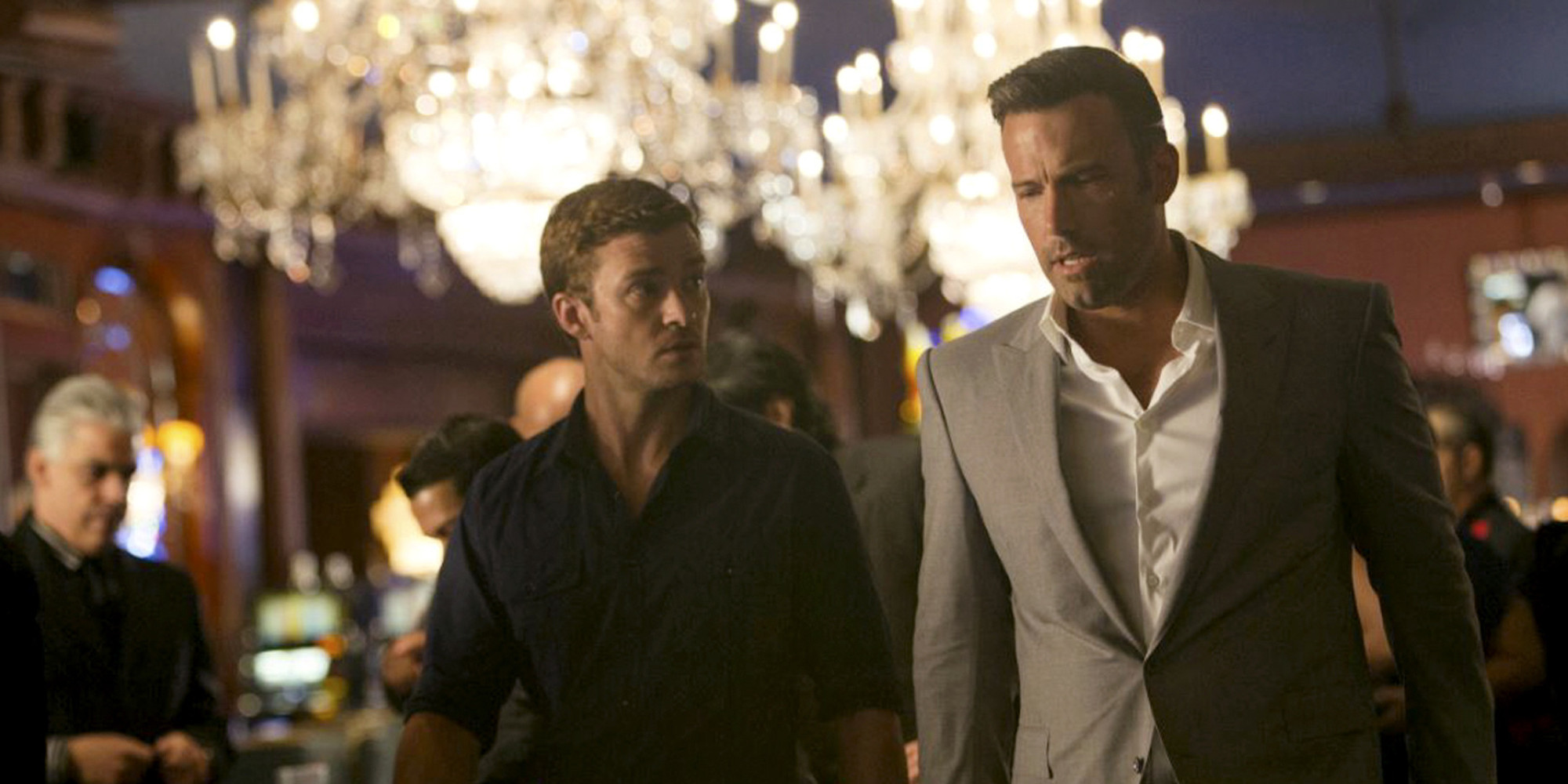
The direction by Robert Luketic is low-key and close to pedestrian, while the photography offers an almost wintry, subdued look that matches the downbeat aspects of the storyline and the grubby nature of the proceedings. The script struggles to add depth or texture to both events and characters, and the outcome can be seen from a mile off (you could even say it was phoned in). As a thriller, Paranoia never really hits the mark, and as a drama it’s too undercooked to be effective. Everyone involved has done better elsewhere, and probably will do again. What matters here is whether or not a hundred and five minutes of your time could be used doing something better instead.

Rating: 5/10 – an unimaginative thriller that goes through the motions for most of its running time, Paranoia never engages its audience or provides a way in to become involved; a shame then considering the talent taking part.

Share this:

  • Share on X (Opens in new window) X
  • Share on Facebook (Opens in new window) Facebook
  • More
  • Print (Opens in new window) Print
  • Email a link to a friend (Opens in new window) Email
Like Loading...

Un prince (presque) charmant (2013)

04 Wednesday Dec 2013

Posted by dullwood68 in Movies

≈ Leave a comment

Tags

Comedy, French movie, Jacques Weber, Luc Besson, Philippe Lellouche, Review, Road trip, Romance, Romantic comedy, Vahina Giocante, Vincent Perez

Un Prince (Presque) Charmant

aka A Prince (Not Very) Charming

D: Philippe Lellouche / 88m

Cast: Vincent Perez, Vahina Giocante, Jérôme Kircher, Chloé Coulloud, Jacques Weber, Nicole Calfan, Côme Levin, Judith Siboni, Astrid Veillon

Businessman Jean-Marc (Perez), along with his partner Bertrand (Kircher), has clinched an important deal with a Russian company, but at the expense of a small, family-run business he’s dealt with for years. Incensed by his attitude, and the fact that her father’s company won’t survive without Jean-Marc’s patronage, Marie (Giocante) heads to Paris to confront him. However, Jean-Marc is heading out of Paris for his daughter’s wedding; her name is also Marie (Coulloud), and she is sure her father won’t make it, so focused is he on his work. A general strike doesn’t help matters, and with one mishap after another – including having to abandon his car and use an electric car instead – Jean-Marc and Marie end up travelling together, he to the wedding, she back to her home town and her parents’ farmhouse. When they arrive at Marie’s parents’, Jean-Marc discovers who Marie is but keeps quiet about his own identity, having begun to realise he is in love with her. With the wedding getting ever closer, and still more hold-ups to come, can Jean-Marc get there on time, and can he find a way to keep his budding romance with Marie from failing when she, inevitably, finds out who he is.

Un Prince (Presque) Charmant - scene

With a script by Luc Besson, this is a charming romantic comedy with a modicum of  dramatic moments dotted here and there. Besson packs a lot in to the short running time, and the story is ably realised by Lellouche, showing off the French countryside to beautiful effect, and his two leads in the same manner. Perez is wonderful, arrogant and egotistical at the beginning but gradually coming to terms with what he’s missed by being so fixated on his work. Giocante matches Perez in the performance stakes, and makes her aggrieved daughter a more fully-rounded character than at first might be expected. The dialogue, while not really that original or sparkling, is still affecting in places and Besson is clever enough to avoid the potential pitfalls from such a clichéd scenario. The supporting cast provide much of the laughs, but it’s a gentle humour that runs throughout the movie, and it never overwhelms the romantic storyline.

To be fair, this is the kind of movie the French can do in their sleep, and if it’s not the most original of storylines or plots, it doesn’t really matter. The familiar set up, the predictable outcome, the warmth even estranged characters have for each other – Jean-Marc and his ex-wife Liliane (Veillon) – all these things act to reassure the viewer that there won’t be any nasty surprises, and the course of true love, while never quite running smooth, will have a satisfactory ending, whatever the obstacles in its way.

Rating: 6/10 – a minor but enjoyable effort, heart-warming and inoffensive at the same time; perfect for a romantic evening in with your partner of choice.

Share this:

  • Share on X (Opens in new window) X
  • Share on Facebook (Opens in new window) Facebook
  • More
  • Print (Opens in new window) Print
  • Email a link to a friend (Opens in new window) Email
Like Loading...

Sharknado (2013)

03 Tuesday Dec 2013

Posted by dullwood68 in Movies

≈ 3 Comments

Tags

Drama, Hurricane, Ian Ziering, John Heard, Review, Sci-fi, Sharks, SyFy Channel, Tara Reid, The Asylum, Thriller, Tornados

D: Anthony C. Ferrante / 86m

Cast: Ian Ziering, Tara Reid, Cassie Scerbo, Jaason Simmons, John Heard, Alex Arleo, Chuck Hittinger, Aubrey Peeples

With a title like Sharknado, this movie already has one strike against it.  That it’s also made by The Asylum for the SyFy Channel makes two more.  And… it’s out!

Any movie should be given the benefit of the doubt.  As the saying correctly has it, don’t criticise what you haven’t seen.  But there are times when to say this would be wrong, when the whole concept of a fair hearing, and leaving your prejudices at the door, is completely, totally and utterly a lost cause.  And ladies and gentlemen, here is one of those times.

Let’s not beat around the bush: Sharknado isn’t so bad it’s good, it’s just plain awful, and in ways that you can’t anticipate.  It takes the idea of low-concept movie making to somewhere below the acceptable nadir, and stakes its claim as the most inept, appalling movie ever made.  There are levels of bad this movie practically races past in its efforts to be dreadful.  If there was a clear intention to make the worst movie possible, and the filmmakers actually sat down and planned it to look and sound like this then, ladies and gentlemen of the jury, there can be only one verdict handed down this day: life imprisonment without hope of parole.

Beginning with a confusing scene set aboard a fishing boat, Sharknado sets out its stall of fake goods from the start.  A storm hoves into view and before you can say “holy flying sharks” the crew are all eaten by sharks that are being thrown about like tooth picks by the violent winds.  The movie then switches focus to the California coastline and bar owner/surfer Fin (Ziering).  When sharks that are attempting to outrun the storm – hey, I’m guessing here – start chewing on the local surfers and swimmers, including Fin’s pal Baz (Simmons), Fin, along with feisty bar girl Nova (Scerbo) and permanent lush George (Heard), decides that everyone needs to get to higher ground, as it’s a sure thing the storm – now upgraded to a hurricane – is going to cause untold devastation and, wait a minute!  Aren’t those sharks swirling around in the hurricane?  And aren’t they liable to just fall out of the sky at any minute and chomp on whoever’s unfortunate to hang around for dinner?
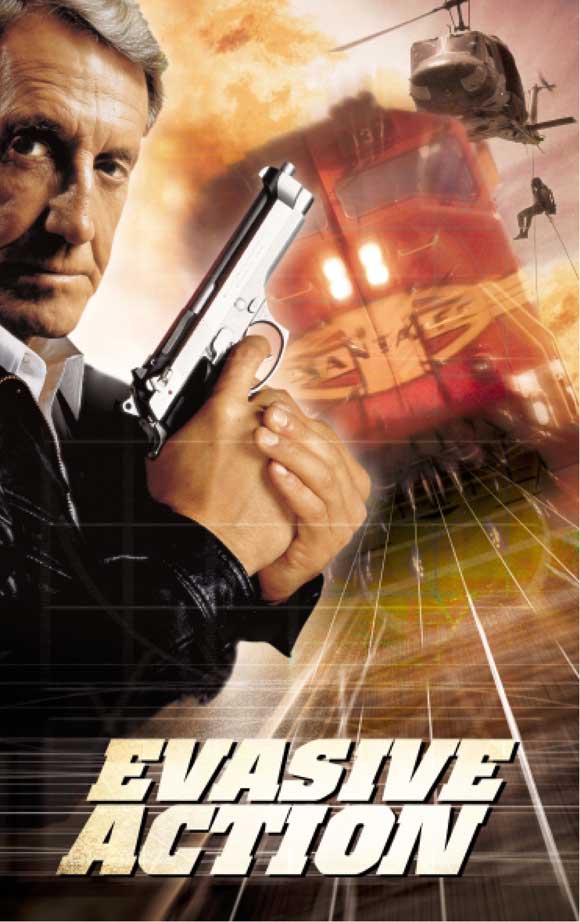
Sharknado - scene

With his estranged family – ex-wife April (Reid), son Matt (Hittinger), and daughter Claudia (Peeples) – living up in the hills, Fin and his entourage head over to rescue them.  With all sorts of obstacles in their way – flooded roads, marauding sharks popping up at every turn, the hurricane getting nearer as well – it looks unlikely they’ll live long enough to make it.  But they’re a plucky bunch, and before you can say “holy plot contrivances” they reach Fin’s family; once April’s new boyfriend is reduced to so much chum, they make a break for the airbase where Matt is doing some ATC work, and from there devise a plan to kill all the sharks, stop the hurricane in its tracks (it’s now subdivided into three huge water spouts), and save the California coastline from further devastation/a colossal insurance bill/being the source of the end of the world.  (Any of these could be true.)

Just writing that synopsis is difficult enough.  Seeing Sharknado in all its non-glory is harder still.  Yes, The Asylum make bad movies, yes the SyFy Channel is home to some of the worst monster mash-ups in recent history (Sharktopus (2010) anyone?), but this is just the worst kind of cynical movie making, with a script that makes no sense at all, where the characters behave like they were lobotomised a short while before everything went wrong, where the direction has all the style and originality of a toddler’s tea party, where the cast struggle and then give up quickly with any attempts at real acting (“just say the lines, keep your head down and it’ll all soon be over”), where the woeful special effects plumb new depths of ineptitude, where cutaways and inserts provide most of the photographic style, where the editing seems less fluid and more cut and splice with a hacksaw, and where the occasional gore effects are – surprise! – the only halfway decent aspect of the movie.  Sharknado is so bad it’s appalling, and so appalling it’s devoid of any worth at all.

If you have to watch Sharknado, and I suspect there are plenty of you out there for whom this will be as much a challenge as a must-see, then take this one piece of advice with you into the living room/lounge/den/bedroom/wherever: have no expectations whatsoever; that way you’ll survive the experience relatively intact.

Rating: 1/10 – saved from my first ever 0/10 rating by the acceptable gore effects (too few and far between though); atrocious, incompetent and utterly irredeemable as cinema, all those involved should hang their heads in shame.

Share this:

  • Share on X (Opens in new window) X
  • Share on Facebook (Opens in new window) Facebook
  • More
  • Print (Opens in new window) Print
  • Email a link to a friend (Opens in new window) Email
Like Loading...

Jekhane Bhooter Bhoy (2012)

03 Tuesday Dec 2013

Posted by dullwood68 in Movies

≈ Leave a comment

Tags

Anath Babur Bhoy, Bhut Bhabishyat, Brown Saheber Bari, Drama, Ghost stories, Ghosts, Horror, India, Paran Banerjee, Review, Sandip Ray, Satyajit Ray, Tarini Khuro

jekhane Bhooter Bhoy

D: Sandip Ray / 105m

Cast: Paran Banerjee, Dwijen Banerjee, Abir Chatterjee, Bhaswar Chatterjee, Biswajit Chakraborty, Saswata Chatterjee, Abanti Mohan Bandyopadhyay

A trio of ghost stories – two by Satyajit Ray, one by Saradindu Bandopadhyay – Jekhane Bhooter Bhoy (roughly translated it means “where there is a fear of ghosts”) opens with a character created by Satyajit Ray, Tarini Khuro (Paran Banerjee), travelling to the home of a friend. There are five children there and once settled with tea, Khuro begins to tell the first of the three stories, Anath Babur Bhoy. On a trip to Raghunathpur, a writer meets Anath Babu (Dwijen Banerjee), a semi-famous ghost hunter on his way to visit the reputedly haunted Halder Bari, a dilapidated mansion on the outskirts of the town. Babu aims to spend the night there and see for himself if the story that no one who spends the night there is alive the next morning.

The second tale, Brown Saheber Bari, concerns a diary that has come into the possession of a bank employee, Ranjan Sengupta (Abir Chatterjee). The diary was written by a man named Brown, and in it there are constant references to someone called Simon. Ranjan is convinced that Simon’s ghost haunts the house where Brown lived, and with his friend Aneek (Bhaswar Chatterjee) and associate Mr Banerjee (Chakraborty), arranges to stay there for the night in the hope of proving his theory.

The final tale, Bhut Bhabishyat, sees a writer, Pratap Sarkar (Saswata Chatterjee), renting a place in Raipur where he aims to write his latest novel. One night he is surprised by a ghost, Nandadulal Nandy (also Paran Banerjee). Initially astonished but unafraid, when the ghost reappears, Sarkar speaks to him, and so discovers a tale of woe that leads him to helping the ghost ensure his family, who are struggling financially, are taken care of.

Jekhane Bhooter Bhoy - scene

As a compendium of classic ghost stories, Jekhane Bhooter Bhoy works only occasionally, with the framing device of only minimal interest, and each story lacking any real scares. There’s a reverence to the material that undermines the effectiveness of each tale, and while Ray directs efficiently and elicits good performances from all concerned, the movie fails to make much of an impact. The first tale has an impressive haunted house, the location being creepy all by itself, and the set up is well handled but the payoff is predictable and banal. The second tale takes quite a while to get going, and though the cast in this segment do their best to “sell” the supernatural elements, the twist in the tale is badly executed and skirts dangerously close to being unintentionally humorous. Humour, though, is essential to the third tale, as the machinations of Nandy are played deliberately for laughs, and of the three stories, this is the most successful. That said, it sits uneasily against the other stories, played as they are for their scare factors, and while the playing by both Saswata Chatterjee and Paran Banerjee is a delight to watch, it’s this change in direction that undercuts the (minor) power of the two previous segments.
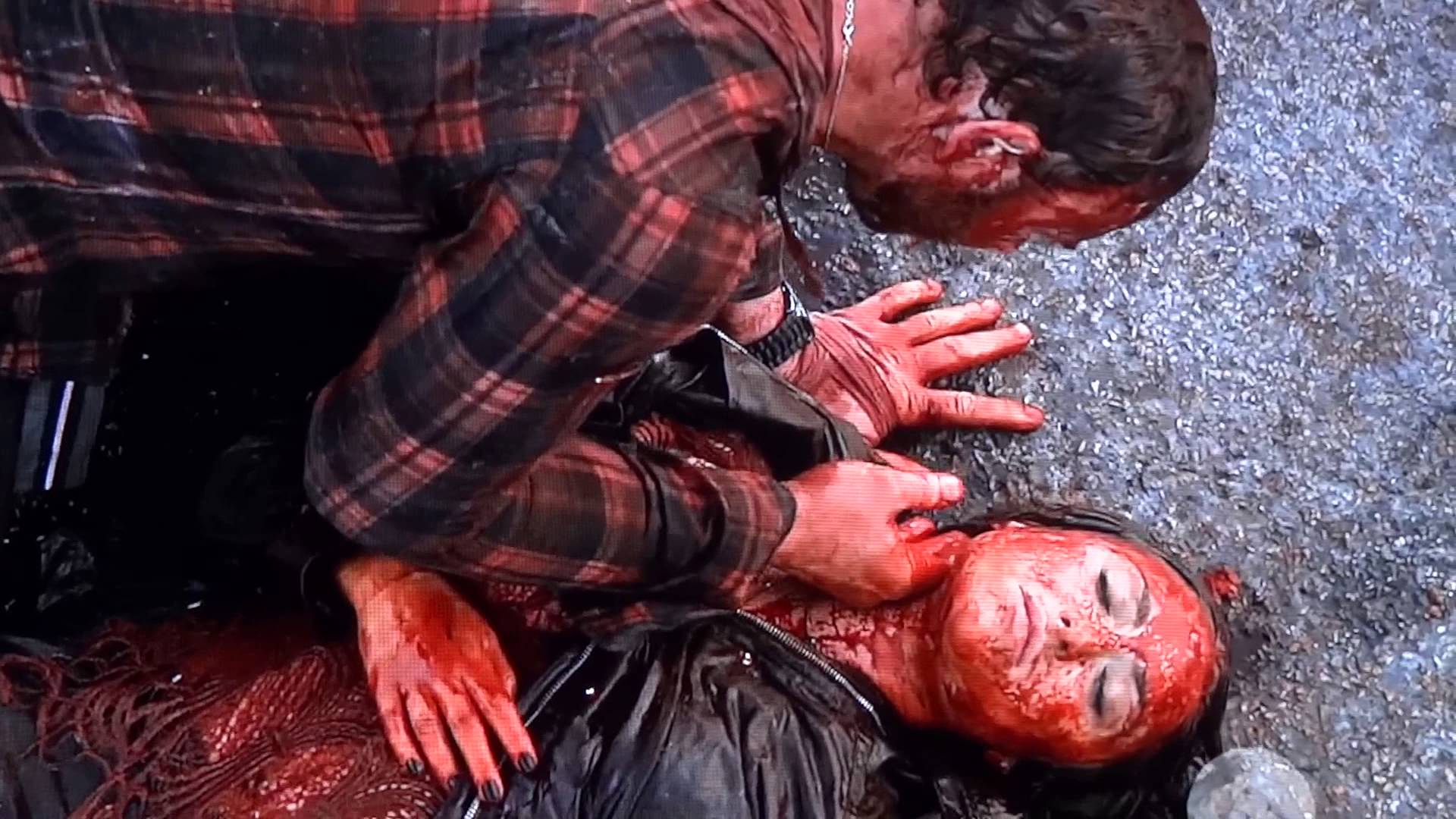
Visually, the movie isn’t all that impressive either. It’s a bit murky at times, and while the lighting of the first two tales is shadowy in relation to the mood and content of the stories, it serves only to make things look unnecessarily gloomy. A spooky atmosphere is supplied only in the first tale (courtesy of the dilapidated mansion and its locale), while any sense of unease is diminished due to a distancing from the material that doesn’t help the viewer get involved in what’s happening on screen. It’s almost as if Ray was loathe to try anything new with the material. As a result it’s hard to feel anything other than a kind of creeping lassitude.

Rating: 5/10 – an overly safe retelling of three classic Indian ghost stories, bolstered by good performances but ultimately falling short in its ambition; worth a look to see how it’s done elsewhere, just don’t expect anything too compelling, or scary.

Share this:

  • Share on X (Opens in new window) X
  • Share on Facebook (Opens in new window) Facebook
  • More
  • Print (Opens in new window) Print
  • Email a link to a friend (Opens in new window) Email
Like Loading...
← Older posts
Newer posts →

Blog Stats

  • 500,817 hits

Recent Posts

  • 10 Reasons to Remember Bibi Andersson (1935-2019)
  • Fantasia (1940)
  • Dances With Wolves (1990) – The Special Edition
  • Kiss of the Spider Woman (1985)
  • The Three Musketeers (1973)

Top Posts & Pages

  • The White Orchid (2018)
    The White Orchid (2018)
  • Mary Queen of Scots (2018)
    Mary Queen of Scots (2018)
  • Maine (2018)
    Maine (2018)
  • Cardboard Boxer (2016)
    Cardboard Boxer (2016)
  • The Courageous Dr. Christian (1940)
    The Courageous Dr. Christian (1940)
  • I Can't Think Straight (2008)
    I Can't Think Straight (2008)
  • Porco Rosso (1992)
    Porco Rosso (1992)
  • Broken Gardenias (2014)
    Broken Gardenias (2014)
  • About
    About
  • Lost for Life (2013) - Another Look
    Lost for Life (2013) - Another Look
Follow thedullwoodexperiment on WordPress.com

Blogs I Follow

  • Rubbish Talk
  • Film 4 Fan
  • Fast Film Reviews
  • The Film Blog
  • All Things Movies UK
  • Interpreting the Stars
  • Let's Go To The Movies
  • Movie Reviews 101
  • TMI News
  • Dan the Man's Movie Reviews
  • Film History
  • Jordan and Eddie (The Movie Guys)

Archives

  • April 2019 (13)
  • March 2019 (28)
  • February 2019 (28)
  • January 2019 (32)
  • December 2018 (28)
  • November 2018 (30)
  • October 2018 (29)
  • September 2018 (29)
  • August 2018 (29)
  • July 2018 (30)
  • June 2018 (28)
  • May 2018 (24)
  • April 2018 (21)
  • March 2018 (31)
  • February 2018 (25)
  • January 2018 (30)
  • December 2017 (30)
  • November 2017 (27)
  • October 2017 (27)
  • September 2017 (26)
  • August 2017 (32)
  • July 2017 (32)
  • June 2017 (30)
  • May 2017 (29)
  • April 2017 (29)
  • March 2017 (30)
  • February 2017 (27)
  • January 2017 (32)
  • December 2016 (30)
  • November 2016 (28)
  • October 2016 (30)
  • September 2016 (27)
  • August 2016 (30)
  • July 2016 (30)
  • June 2016 (31)
  • May 2016 (34)
  • April 2016 (30)
  • March 2016 (30)
  • February 2016 (28)
  • January 2016 (35)
  • December 2015 (34)
  • November 2015 (31)
  • October 2015 (31)
  • September 2015 (34)
  • August 2015 (31)
  • July 2015 (33)
  • June 2015 (12)
  • May 2015 (31)
  • April 2015 (32)
  • March 2015 (30)
  • February 2015 (37)
  • January 2015 (39)
  • December 2014 (34)
  • November 2014 (34)
  • October 2014 (36)
  • September 2014 (25)
  • August 2014 (29)
  • July 2014 (29)
  • June 2014 (28)
  • May 2014 (23)
  • April 2014 (21)
  • March 2014 (42)
  • February 2014 (38)
  • January 2014 (29)
  • December 2013 (28)
  • November 2013 (34)
  • October 2013 (4)

Create a free website or blog at WordPress.com.

Rubbish Talk

Film 4 Fan

A Movie Blog

Fast Film Reviews

The Film Blog

The official blog of everything in film

All Things Movies UK

Movie Reviews and Original Articles

Interpreting the Stars

Dave Examines Movies

Let's Go To The Movies

Film and Theatre Lover!

Movie Reviews 101

Daily Movie Reviews

TMI News

Latest weather, crime and breaking news

Dan the Man's Movie Reviews

All my aimless thoughts, ideas, and ramblings, all packed into one site!

Film History

Telling the story of film

Jordan and Eddie (The Movie Guys)

Movie Reviews & Ramblings from an Australian Based Film Fan

Privacy & Cookies: This site uses cookies. By continuing to use this website, you agree to their use.
To find out more, including how to control cookies, see here: Cookie Policy
  • Subscribe Subscribed
    • thedullwoodexperiment
    • Join 481 other subscribers
    • Already have a WordPress.com account? Log in now.
    • thedullwoodexperiment
    • Subscribe Subscribed
    • Sign up
    • Log in
    • Report this content
    • View site in Reader
    • Manage subscriptions
    • Collapse this bar
 

Loading Comments...
 

    %d