• 10 Reasons to Remember…
  • A Brief Word About…
  • About
  • For One Week Only
  • Happy Birthday
  • Monthly Roundup
  • Old-Time Crime
  • Other Posts
  • Poster of the Week
  • Question of the Week
  • Reviews
  • Trailers

thedullwoodexperiment

~ Viewing movies in a different light

thedullwoodexperiment

Tag Archives: Crime

Oh! the Horror! – Vengeance: A Love Story (2017) and Arsenal (2017)

29 Saturday Apr 2017

Posted by dullwood68 in Movies

≈ 1 Comment

Tags

Action, Adrian Grenier, Anna Hutchison, Brothers, Crime, Don Johnson, Drama, Johnathon Schaech, Johnny Martin, Joyce Carol Oates, Kidnapping, Literary adaptation, Nicolas Cage, Rape: A Love Story, Review, Steven C. Miller, Thriller

A Nicolas Cage double bill this time round, with two of his more recent movies offering him different roles, but both serving as reminders that when Cage is having a bad day on set, there’s really nothing quite like Cage having a bad day on set.
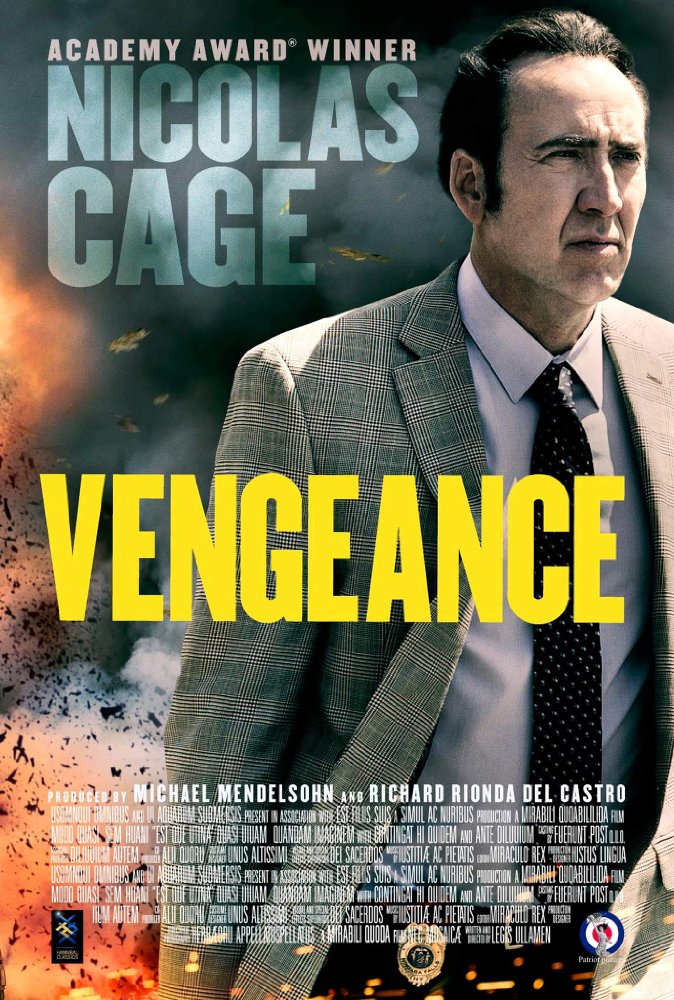
Vengeance: A Love Story (2017) / D: Johnny Martin / 99m

Cast: Nicolas Cage, Anna Hutchison, Talitha Bateman, Deborah Kara Unger, Don Johnson, Joshua Mikel, Rocco Nugent, Joe Ochterbeck, Carter Burch, Charlene Tilton

In Vengeance: A Love Story, Cage is Detective John Dromoor, a veteran Niagara Falls-based cop who meets a young woman, Teena (Hutchison), in a bar and takes a paternal liking to her. Teena is separated from her husband and has a young daughter, Bethie (Bateman). On their way home from a party at her husband’s, Teena and Bethie run into four men who proceed to drag them both into a nearby boathouse with the intention of raping Teena and, possibly, Bethie as well. Though Bethie manages to hide from them, it doesn’t stop her from being a witness to her mother being raped. The men leave Teena for dead, while Bethie comes out of hiding and gets help.

Dromoor is assigned to the case, but doesn’t recognise Teena when he arrives at the scene. But later, when her identity is revealed, Dromoor takes it upon himself to ensure that the four men are arrested and put in prison. Fate, however, has other plans: two of the men are brothers, and their mother (Tilton), protesting their innocence, hires a lawyer, Jay Kirkpatrick (Johnson), with a reputation for keeping violent criminals out of jail. When the trial begins and it begins to look as if Kirkpatrick’s winning streak will continue, Dromoor decides that, for justice to be truly served, he must go after the four men, and ensure they are punished.

Adapted from the novel, Rape: A Love Story by Joyce Carol Oates, the more commercially titled Vengeance: A Love Story sees Cage coast along in the role of Detective Dromoor, and look throughout as if the anti-depressants aren’t working. Maybe Cage is attempting to internalise his feelings but it’s hard to tell, as his expression rarely changes and he’s given the kind of dialogue that makes him sound like he’s half asleep. It’s also the kind of performance that could best be described as disconnected. Even when Dromoor’s playing judge, jury and executioner Cage still looks as if he wishes he were somewhere else.

For a while, Cage was set to direct, but scheduling conflicts saw him hand over the reins to Martin. As a director, Martin is a great stunt coordinator (his primary role within movies), and his previous experience has been in directing low budget horror movies. As a result, Vengeance: A Love Story, is a leaden effort that eschews any subtleties that might have been a part of the source material in favour of a by-the-numbers approach. It’s also tension-free, features a performance from Johnson that seems to be taking place in a vacuum, and makes its villains the kind of grinning idiots that should have gone out of movie fashion in the Eighties. All in all, it’s dispiriting stuff that reinforces the notion that, these days, Cage will commit to anything for a pay cheque.

Rating: 3/10 – not even an attempt at creating the moody, stifling atmosphere of a modern noir can help Vengeance: A Love Story gain any dramatic traction; a poorly realised adaptation of Oates’ novel and a blunt exercise in emotional distress, it’s a movie that’s best forgotten as soon as you’ve seen it.


Arsenal (2017) / D: Steven C. Miller / 92m

aka Southern Fury

Cast: Adrian Grenier, Johnathon Schaech, Nicolas Cage, John Cusack, Heather Johansen, Lydia Hull, William Mark McCullough, Christopher Coppola

In Arsenal, Cage is Eddie King, a low-life Southern mobster who snorts a lot of cocaine and gets involved with the lives of two brothers, JP (Grenier) and Mikey (Schaech). As kids, Mikey was always the one ot watch out for his younger brother, JP, but as adults the tables have turned. Mikey has been in trouble with the law, while JP has built up a local construction company; he’s also married with a young daughter. Mikey takes a loan of $10,000 from JP to help him start again, but Mikey’s idea is to use the money to buy cocaine and re-sell it at a profit. But Mikey’s home is raided, and the cocaine is stolen from him. He tracks down the two men who stole it, but is unable to get it back. Soon after, a chance encounter with Eddie King leads to Mikey being kidnapped by King and held to ransom.

Despite being told not to involve the police, JP enlists the help of old friend and local cop, Sal (Cusack). Between them the pair discover that King is the kidnapper they’re dealing with, though they have no immediate way of managing the situation other than to pay the ransom of $350,000. While JP gets the money together, Mikey makes an unsuccessful escape attempt, old alliances are put to the test, Eddie deals with some awkward family ties, and a clue leads to the location where Mikey is being held. Determined not to let his brother be killed, JP comes up with a plan to save Mikey and stop King once and for all.

As opposed to his almost invisible performance in Vengeance: A Love Story, here Cage aims for the opposite end of the spectrum and gives his most over-the-top performance since Bad Lieutenant (2009). With an ill-fitting (and frankly ridiculous looking) wig, bulbous nose, and semi-laughable moustache (that’s rarely in the same place twice), Cage goes full throttle in his efforts to make his character appear dangerous and/or psychotic. He may have aimed for bravura at first, but it isn’t long before he’s shouting his lines at high volume and appearing to be on the verge of having a stroke. It’s a one-note performance that makes Eddie look and sound like the ultimate spoilt child, and in terms of the movie, it undermines his role as the central villain.

However, against the likes of Grenier and Schaech (who are supposed to be brothers, but who don’t look or sound alike, and have little on-screen chemistry together), Cage at least is making an effort. Grenier looks confused a lot, as if the rest of the cast is working from a script he hasn’t seen, while Schaech tries for muscle-bound yet deep-down sensitive and only succeeds in looking like he’s unsure of what’s being asked of him as an actor. Cusack wanders in and out of the narrative, mutters a few lines each time, then disappears until the next time the script needs him to tell Grenier just how bad things are getting. The movie lacks a sense of urgency once Mikey is kidnapped, its action scenes are perfunctory, and an extended prologue goes to great lengths to show the deep, caring relationship between JP and Mikey when a short dialogue scene could have done it in half the time. All in all, it’s dispiriting stuff that reinforces the notion that, these days, Cage will commit to anything for a pay cheque.

Rating: 3/10 – predictable on every level, Arsenal is a dull excuse for an action thriller, and directed in a manner that suggests Miller knew there was little chance of a decent movie emerging from out of the banal nature of Jason Mosberg’s screenplay; Cusack, wearing a bandanna and shuffling around a lot, seems to be acknowledging a debt to Steven Seagal, while any fun to be had is in seeing how many times the movie can set up a promising scene only for it to turn out to be just as bad as the rest.
Share this:

  • Click to share on X (Opens in new window) X
  • Click to share on Facebook (Opens in new window) Facebook
  • More
  • Click to print (Opens in new window) Print
  • Click to email a link to a friend (Opens in new window) Email
Like Loading...

Mini-Review: Sleepless (2017)

11 Tuesday Apr 2017

Posted by dullwood68 in Movies

≈ Leave a comment

Tags

Action, Baran bo Odar, Corruption, Crime, Dermot Mulroney, Drama, Drugs, Internal Affairs, Jamie Foxx, Las Vegas, Michelle Monaghan, Review, Scoot McNairy, Thriller

D: Baran bo Odar / 95m

Cast: Jamie Foxx, Michelle Monaghan, Dermot Mulroney, Scoot McNairy, David Harbour, Tip ‘T.I.’ Harris, Gabrielle Union, Octavius J. Johnson, Tim Connolly

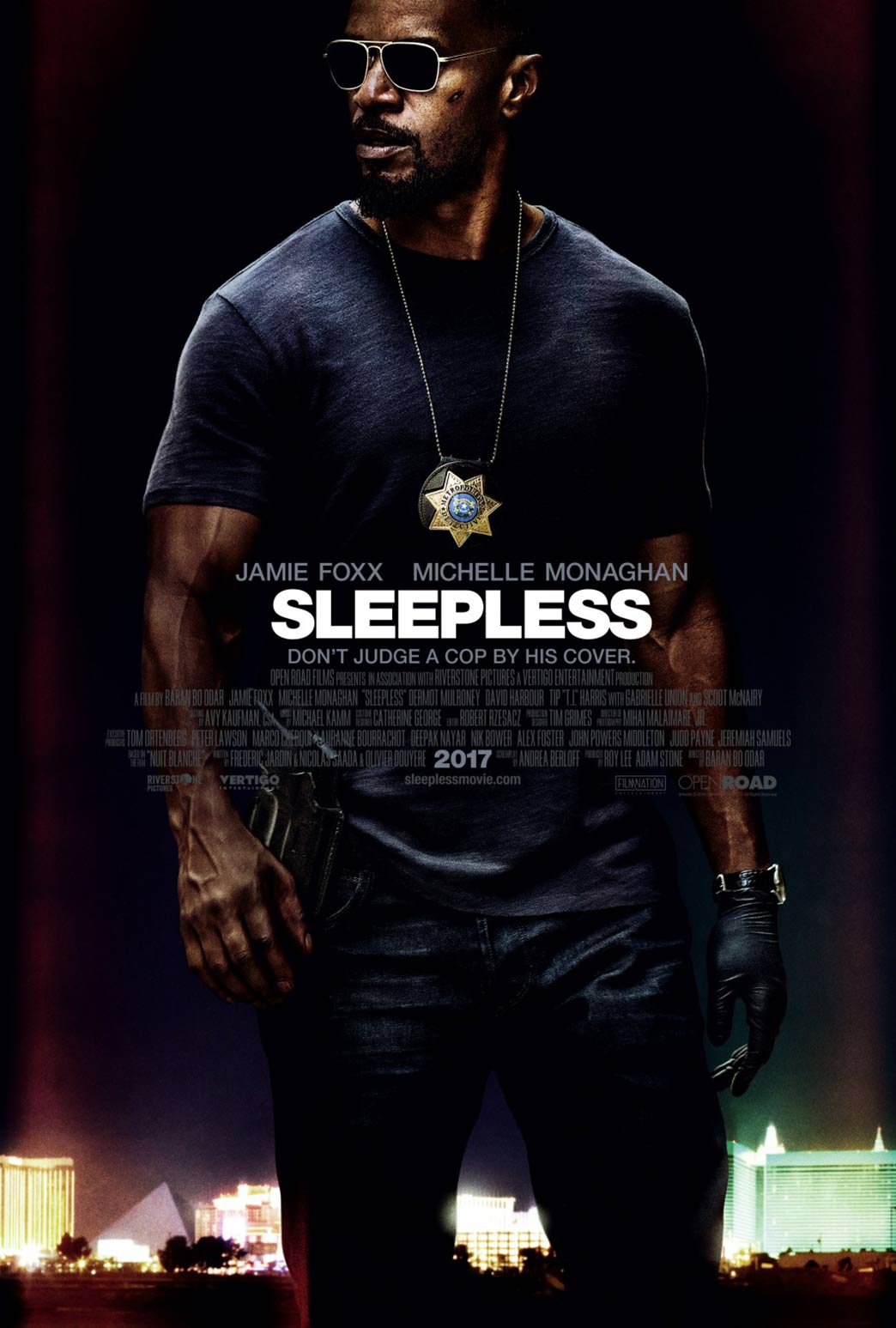
Vincent Downs (Foxx) is a crooked Las Vegas cop. Sean Cass (Harris) is his equally crooked partner. Together they steal twenty-five bundles of cocaine (though why they do this is a little fuzzy). Their use of department issue weapons gains the attention of Internal Affairs officer, Jennifer Bryant (Monaghan), who immediately suspects Downs of the theft. Convinced by her own intuition that he’s dirty, she brings her suspicions to her partner, Doug Dennison (Harbour), but he’s not convinced. Meanwhile, Downs – who has an ex-wife, Dena (Union) and teenage son Thomas (Johnson) – is trying to maintain a semblance of post-divorce family life when Thomas is abducted by local casino-cum-crime boss Stanley Rubino (Mulroney). The reason for this? Simple: the cocaine is his and he wants it back, or Thomas will pay for Downs’ actions.

Downs takes the cocaine to Rubino’s casino, but in one of those plot “twists” that never make sense, he hides twenty-three of the bundles in the casino, gives Rubino the other two and bargains for his son’s life, stating that he’ll hand over the rest when he knows his son is safe. Rubino agrees, but when Downs tries to retrieve the rest of the cocaine from its hiding place, he discovers that Bryant (who has been following him) has taken it, and in a move that would have her investigated by Internal Affairs as well, has hidden it elsewhere in the casino. But there’s a further wrinkle: the cocaine is owed to gangster Bobby Novak (McNairy), and he’s there to collect…

Nuit blanche. That’s the title of the French/Belgian/Luxembourgian co-production, released in 2011 that, in its English language guise, has become Sleepless. If it matters to you, Nuit blanche (aka Sleepless Night) has a score of 75 on Metacritic, while Sleepless has a score of 33. Which version would you rather see? (Don’t worry, it’s a rhetorical question.) Inevitably, Sleepless – a title that makes no sense without the word “night” attached to it – is professionally made, glamorous to look at, has Foxx and Monaghan working really hard to overcome the preposterousness of Andrea Berloff’s urgent-but-empty screenplay, and never once makes you care about Downs or his son’s predicament. It tries to, on several occasions, but thanks to a combination of Berloff’s writing and director Odar’s reliance on style over substance, it has a shallow, seen-it-all-before vibe that harms the movie more than it helps it, and which stops it from letting the audience in on the – sadly – warmed over intrigue.

Remakes of foreign language movies often suffer in comparison because there are more things that can be lost in translation than just the dialogue. Tone, the original movie’s rhythm, its location, its visual aesthetic, any subtexts – all these and more can be either abandoned or discarded in the process of “re-imagining” a movie for audiences who speak another language (though surely that’s what subtitles are for?). There may be an element of “we can do better” about these remakes, and though that certainly isn’t the case with Sleepless (and despite any intentions its makers may have had), this is still a bad idea that lets down audiences at every turn. Even its fight scenes, which see Foxx get pummelled regularly but to minimal effect even though he has a stab wound to deal with, don’t elicit enough reaction to be successful in themselves. And if an action thriller can’t get those scenes right…

Rating: 4/10 – lacklustre, and padded out with way too many establishing shots of Las Vegas itself (we know where we are, for Foxx’ sake), Sleepless is a run-of-the-mill effort that tries hard but doesn’t know how to deliver; an over-complicated script proves too much for the cast to deal with, and despite its relatively compact running time, you’ll be wishing for a quicker resolution than is actually on offer.

Share this:

  • Click to share on X (Opens in new window) X
  • Click to share on Facebook (Opens in new window) Facebook
  • More
  • Click to print (Opens in new window) Print
  • Click to email a link to a friend (Opens in new window) Email
Like Loading...

Monthly Roundup – March 2017

01 Saturday Apr 2017

Posted by dullwood68 in Movies

≈ 1 Comment

Tags

Action, Adventure, Alistair Sim, Anthony Hopkins, Ben Kingsley, Bette Davis, Brie Larson, Charlie Day, Collide, Comedy, Crime, Documentary, Dougray Scott, Drama, Eran Creevy, Eugenio Ercolani, Felicity Jones, Fist Fight, Gordon Harker, Guiliano Emanuele, Horror, I.T., Ice Cube, Inspector Hornleigh Goes to It, Inspector Hornleigh on Holiday, James Cagney, James Frecheville, Jimmy the Gent, John Moore, Jordan Vogt-Roberts, Kong: Skull Island, Michael Curtiz, Mystery, Nicholas Hoult, Omega Rising: Remembering Joe D'Amato, Pierce Brosnan, Review, Richie Keen, Samuel L. Jackson, Steve Barker, The Rezort, Tom Hiddleston, Walter Forde, Zombies

Fist Fight (2017) / D: Richie Keen / 91m

Cast: Ice Cube, Charlie Day, Tracy Morgan, Jillian Bell, Dean Norris, Christina Hendricks, Kumail Nanjiani, Dennis Haysbert, JoAnna Garcia Swisher, Alexa Nisenson

Rating: 3/10 – meh; lame on levels you wouldn’t have thought possible (Bell’s character wants to have sex with a pupil – and doesn’t think it’s wrong), Fist Fight is a virtually laugh-free exercise that wastes the time of everyone concerned, and its unsuspecting audience.

I.T. (2016) / D: John Moore / 95m

Cast: Pierce Brosnan, James Frecheville, Anna Friel, Stefanie Scott, Michael Nyqvist

Rating: 3/10 – meh; lame on levels you wouldn’t have thought possible (Brosnan’s character is a tech mogul who doesn’t know the first thing about the tech he’s promoting), I.T. is a virtually tension-free exercise that wastes the time of everyone concerned, and its unsuspecting audience.

Collide (2016) / D: Eran Creevy / 99m

Cast: Nicholas Hoult, Felicity Jones, Anthony Hopkins, Ben Kingsley, Marwan Kenzari, Aleksandar Jovanovic, Christian Rubeck, Erdal Yildiz, Clemens Schick, Johnny Palmiero

Rating: 6/10 – Hoult’s backpacker finds himself mixed up with rival gangsters Hopkins and Kingsley, and using his driving skills to stay one step ahead of both of them; the focus is squarely on the action, which is a good thing, as Collide‘s plot is as all over the place as the various cars Hoult throws about on German autobahns, but when it’s bad it’s Hopkins intoning “I’m the destroyer of worlds” bad.

Jimmy the Gent (1934) / D: Michael Curtiz / 67m

Cast: James Cagney, Bette Davis, Allen Jenkins, Alan Dinehart, Alice White, Arthur Hohl, Mayo Methot

Rating: 7/10 – in an effort to woo back his former secretary (Davis), Cagney’s brash racketeer attempts to put a classier spin on his finding “lost” heirs business, and finds himself mellowing when a case challenges his compromised ethics; worth watching just for the pairing of Cagney and Davis, Jimmy the Gent is a typically fast-paced, razor sharp romantic comedy that may seem predictable nowadays but is nevertheless a minor gem that is effortlessly entertaining.

Kong: Skull Island (2017) / D: Jordan Vogt-Roberts / 118m

Cast: Tom Hiddleston, Samuel L. Jackson, Brie Larson, John Goodman, John C. Reilly, Thomas Mann, Corey Hawkins, Toby Kebbell, Tian Jing, John Ortiz, Jason Mitchell, Shea Whigham, Richard Jenkins, Terry Notary

Rating: 5/10 – an expedition to a mysterious island in the Pacific yields dangers galore for its participants – Jackson’s crazed Army Colonel, Hiddleston’s ex-SAS captain, Larson’s anti-war photographer, Goodman’s duplicitous government official et al – not the least of which is an angry hundred-foot gorilla called Kong; while Kong: Skull Island may be visually arresting, and its action sequences pleasingly vivid, the lack of a decent plot and characters with any kind of inner life makes the movie yet another franchise-building letdown.

The Rezort (2015) / D: Steve Barker / 93m

Cast: Dougray Scott, Jessica De Gouw, Martin McCann, Elen Rhys, Claire Goose, Jassa Ahluwalia, Lawrence Walker

Rating: 4/10 – after a viral outbreak that turned its victims into flesh-hungry zombies is contained, an island resort opens that offers survivors the chance to hunt down and exterminate zombies with little or no risk of harm – but the resort is targeted from the inside and a group of holiday makers find themselves becoming the hunted; a strong idea that runs out of steam by the halfway mark, The Rezort leaves its cast stranded with a standard “run from this place to the next and look desperate” approach that drains the movie of any tension and makes it all look as generic as the next zombie movie.

Inspector Hornleigh on Holiday (1939) / D: Walter Forde / 90m

Cast: Gordon Harker, Alistair Sim, Linden Travers, Wally Patch, Edward Chapman, Philip Leaver, Kynaston Reeves

Rating: 7/10 – a seaside holiday for Inspector Hornleigh (Harker) and his trusty sidekick, Sergeant Bingham (Sim), leads inevitably to a murder case involving an inheritance and a criminal outfit who target their victims with the unwitting aid of döppelgangers; the second of three movies featuring Harker’s irascible policeman and Sim’s less-than-sharp second-in-command, Inspector Hornleigh on Holiday is a simple, easy-going, undemanding bit of fun that manages to combine drama and comedy to good effect, and which still holds up nearly eighty years later.

Inspector Hornleigh Gets on It (1941) / D: Walter Forde / 87m

aka Mail Train

Cast: Gordon Harker, Alistair Sim, Phyllis Calvert, Edward Chapman, Charles Oliver, Raymond Huntley, Percy Walsh, David Horne

Rating: 7/10 – despite being sidelined from regular detective work through a stint investigating thefts at an army barracks, Hornleigh and Bingham find themselves on the trail of Fifth Columnists; the last in the short-lived series, Inspector Hornleigh Goes to It is as sprightly and entertaining as the previous two instalments, and allows Huntley to make this priceless observation: “One of them’s tall, bald, looks intelligent but isn’t. The other’s short, sour-faced, doesn’t look intelligent but is.”

Omega Rising: Remembering Joe D’Amato (2017) / D: Eugenio Ercolani, Guiliano Emanuele / 69m

With: Joe D’Amato (archive footage), Luigi Montefiori, Michele Soavi, Claudio Fragasso, Rossella Drudi, Antonio Tentori, Carlo Maria Cordio, Mark Thompson-Ashworth

Rating: 3/10 – Aristide Massaccesi (aka Joe D’Amato)’s career in movies is assessed by some of the people who worked with him closely when he first started out; at sixty-nine minutes, Omega Rising: Remembering Joe D’Amato is a documentary that feels like it lasts twice as long, thanks to Ercolani and Emanuele’s decision to let their interviewees ramble on at length (and usually about themselves instead of D’Amato), and a random assortment of clips that don’t always illustrate what’s being talked about.

Share this:

  • Click to share on X (Opens in new window) X
  • Click to share on Facebook (Opens in new window) Facebook
  • More
  • Click to print (Opens in new window) Print
  • Click to email a link to a friend (Opens in new window) Email
Like Loading...

A Kind of Murder (2016)

05 Sunday Mar 2017

Posted by dullwood68 in Movies

≈ Leave a comment

Tags

Andy Goddard, Crime, Drama, Eddie Marsan, Jessica Biel, Literary adaptation, Murder, Patricia Highsmith, Patrick Wilson, Review, The Blunderer, Thriller, Vincent Kartheiser

kind_of_murder

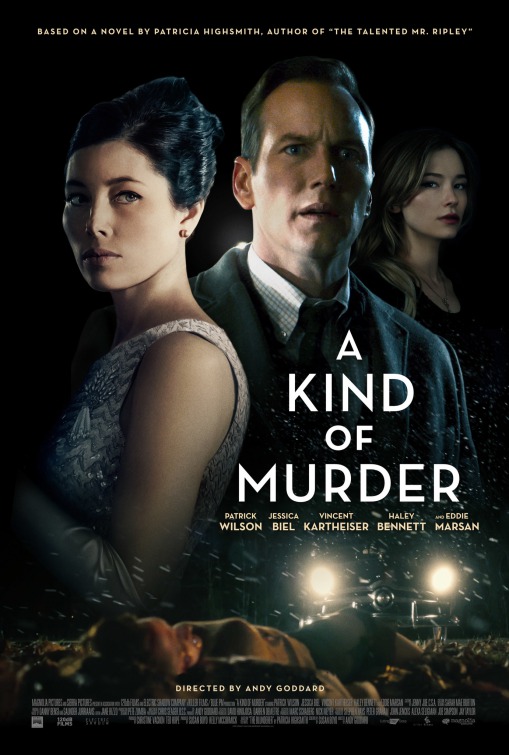
D: Andy Goddard / 95m

Cast: Patrick Wilson, Jessica Biel, Vincent Kartheiser, Haley Bennett, Eddie Marsan, Radek Lord, Jon Osbeck, Christine Dye

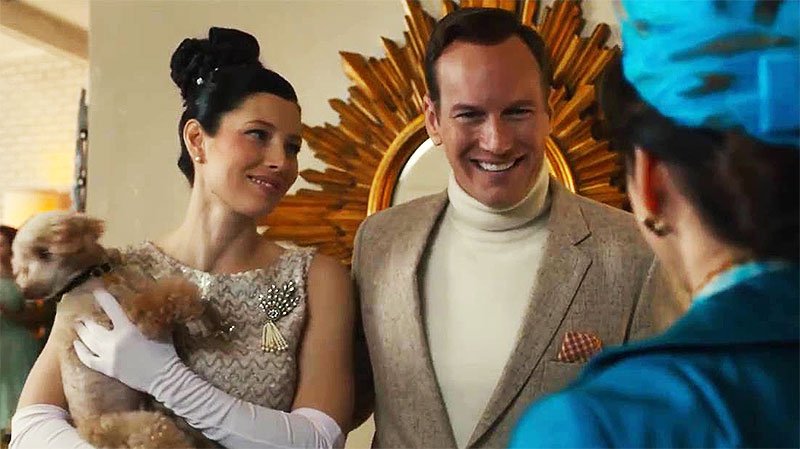
New York City, the Sixties. Walter Stackhouse (Wilson) is a successful architect with a beautiful home and a beautiful wife, Clara (Biel). In his free time he writes short stories about crime and murder. On the outside he’s living the perfect life, but his marriage is strained. Clara has a history of mental instability, and is remote from him. At the same time, though, she’s jealous and possessive, accusing him of having an affair with a young woman, Ellie (Bennett), who attended a party they gave. When Clara is like this, Walter usually ends up in a local bar. It’s on one such occasion that he reads an article in a newspaper about the unsolved murder of a woman outside of New York at a rest stop called Harry’s Rainbow Grill.

Suspicion seems to rest on the woman’s husband, a bookstore owner called Kimmel, but he has an alibi. This isn’t enough for the detective investigating the case, Corby (Kartheiser), who is convinced Kimmel is the killer. While he tries to intimidate Kimmel into confessing, Walter becomes more and more fascinated with the murder, and like Corby, becomes convinced that Kimmel is guilty. He even goes so far to visit Kimmel at his bookstore. But at home, his marriage goes from bad to worse. Clara takes an overdose and ends up in hospital. When she comes home, her jealousy remains firmly in place, and she remains convinced that Walter is having an affair with Ellie. When she’s proved right, Walter tells her he’s going to divorce her; Clara retaliates by saying she’ll definitely kill herself if he does.

a-kind-of-murder-2016-1

Undeterred, Walter continues with his relationship with Ellie, but when Clara leaves suddenly to visit her sick mother upstate, he follows the bus she takes until it reaches Harry’s Rainbow Grill. But though she gets off the bus, Walter doesn’t see her, and he heads back to New York City. Later, Walter receives terrible news, news that causes Corby to link him to the murder of Kimmel’s wife, his relationship with Ellie to falter, and his business partnership to founder. With his honesty and integrity on the line, as well as his freedom, Walter must find a way of extricating himself from a situation that grows worse every day, and that could ultimately cost him his life.

An adaptation of Patricia Highsmith’s novel The Blunderer, A Kind of Murder is a good-looking movie in search of a leading character for the audience to identify and sympathise with. Walter’s plight should be one that has the viewer on the edge of their seat, but thanks to both the script and Wilson’s performance, he’s vanilla bland from start to finish, and the movie never really knows how to make his predicament more intriguing or exciting. Walter becomes interested in the murder of Kimmel’s wife because he’s beginning to have thoughts about killing Clara. As he believes Kimmel killed his wife, Walter is supposed to feel some kind of kinship with the bookstore owner, but it’s all psychologically unconvincing. Walter channels his feelings about Clara into his writing, something we see on more than one occasion, and so any idea that he and Kimmel are similar can be disregarded from the start.

BRR 11-29-14-5392.dng

What this leaves us with is a contrived relationship that never develops beyond an uneasy semi-alliance against Corby’s invasive and confrontational detective work. And there’s never any doubt as to whether or not Kimmel killed his wife, or if Walter’s situation will lead to his livelihood being compromised. As the movie progresses from potential whodunnit to unabashed thriller, Susan Boyd’s first-time script forgets to instil proceedings with any tension, as Walter’s predicament never sees him fully in jeopardy, or at risk of having his comfortable world taken away from him. And in conjunction with Boyd’s script, Wilson delivers what may well be one of his least successful performances ever. For an actor who can genre-hop with ease, and who at least doesn’t look out of place in a period drama, Wilson never connects with Walter and gives a wayward portrayal of a man whose calm, outward manner belies a compulsive, selfish individual hidden away on the inside.

It’s this duality that the movie tries hard to promote, with Walter and Kimmel meant to be two sides of the same coin, and Clara and Ellie both representing the best and worst of Walter’s relationships with women. But again, there’s nothing for the audience to connect with. Even when Clara spells out her intention to kill herself if Walter goes ahead with the divorce, and tells him everyone will blame him for not doing enough to help her, there’s nothing there to back up that claim. It carries the weight of an empty paper bag, and as such, loses any validity, so that when Walter receives his terrible news, it doesn’t have the impact that it should have. And this is the moment when the viewer should find themselves completely on Walter’s side… but probably won’t.

akindofmurder_clipdeath

As a thriller, A Kind of Murder stumbles along trying to match Highsmith’s elegant turn of phrase to its early Sixties setting, and only doing so on very rare occasions. It also dispenses with any attempt at providing back stories for any of the characters, leaving us in a void when it comes to understanding their current motivations. Clara is clearly mentally ill, and she’s clearly difficult to live with, so why Walter stays with her is a bit of a mystery (and a better one than if Kimmel killed his wife or not). And why Corby becomes so obsessed with Kimmel and bringing him to justice isn’t explained either. In the end, these are characters operating in a vacuum, occasionally bumping into each other but failing to make a proper connection.

And so it goes for the length of the movie. Wilson’s disappointing turn is matched by Biel’s monotone performance, Kartheiser’s unncessarily angry cop, and Bennett’s subdued turn as Walter’s girlfriend. Only Eddie Marsan deserves any praise, giving the kind of unexpected, yet nuanced performance that this kind of movie needs to be anywhere near successful. His brooding, snake-like approach to Kimmel is a master-class in big screen malevolence. Tying all this together is Goddard, known mostly for his TV work, but not stretching his abilities too far in bringing this tale to the big screen. However, he’s on firmer ground with the movie’s recreation of Sixties New York, with its colourful vibrancy and Mad Men-style glamour of the period, and all despite (or in spite of) the wintry backdrop. But for anyone expecting more substance with their style, this isn’t the place to be looking for it.

Rating: 5/10 – lacklustre in too many ways to even count, A Kind of Murder flatlines for most of its running time, and forgets to make itself interesting for the viewer; with so-so performances and a dull script, this is one thriller that can be given a wide berth unless you’re a fan of Marsan’s, or in an undemanding mood when it comes to choosing something to watch.

Share this:

  • Click to share on X (Opens in new window) X
  • Click to share on Facebook (Opens in new window) Facebook
  • More
  • Click to print (Opens in new window) Print
  • Click to email a link to a friend (Opens in new window) Email
Like Loading...

Mini-Review: Blackway (2015)

28 Tuesday Feb 2017

Posted by dullwood68 in Movies

≈ Leave a comment

Tags

Alexander Ludwig, Anthony Hopkins, Crime, Daniel Alfredson, Drama, Enderby, Go With It, Julia Stiles, Literary adaptation, Ray Liotta, Review, Thriller

a4eb9f17e1a6a3cd39eedca150b5e57a

Original title: Go With Me

D: Daniel Alfredson / 90m

Cast: Anthony Hopkins, Julia Stiles, Alexander Ludwig, Ray Liotta, Steve Bacic, Lochlyn Munro, Hal Holbrook, Dale Wilson

Enderby, British Columbia. Lillian (Stiles) has returned to her hometown following the death of her mother. Working as a waitress in a bar she attracts the unwanted attention of Richard Blackway (Liotta), an ex-police constable turned local crime lord. One night he turns up at her house and frightens her so much that she goes to the local sheriff (Wilson). When he learns that Blackway is involved, the sheriff becomes uninterested in helping her, and tells Lillian to seek out a man named Scotty at one of the lumber companies. Instead of finding Scotty, Lillian is offered help by an old man called Lester (Hopkins), and a young man called Nate (Ludwig). Together they try and track down Blackway, beginning with a man Lester thinks will help them, Fitzgerald (Bacic).

But Fitzgerald is just as afraid of Blackway as the rest of the town. He does give them a lead on Blackway’s whereabouts, and the trio find themselves driving from place to place, either just missing him, or on one occasion, finding him but not where he’s alone. Along the way Nate has a fight with Blackway’s accountant, Murdoch (Munro), an incident at a hotel Blackway runs as a brothel leads to its being set on fire, and the trio reach a point of no return, travelling up into the mountains to an old logging camp where Blackway hides out when he needs to. But will they remain the hunters, or will Blackway turn the tables on them instead?

go-with-me-recensione

Post-Lisbeth Salander, Daniel Alfredson’s career hasn’t been as consistent as he perhaps would have liked. Work on the small screen took him back to his roots until Echoes of the Dead (2013) came along, but that movie couldn’t maintain its initial premise and made some questionable decisions before reaching its conclusion. In the same year as Blackway, Alfredson teamed up with Hopkins for Kidnapping Mr. Heineken, a lacklustre account of the true story that must have convinced the pair to work together again. And so we have Blackway, an austere thriller-cum-unspoken revenge drama that has more going for it than first meets the eye. The movie has a gloomy, penetrating atmosphere that perfectly suits the mood of the piece. Everyone in Enderby looks beaten down, defeated, all but Blackway, whose violent, malevolent nature leaves him as the only person in town enjoying himself.

Liotta revels in his evil nature, and he adds another psycho character to his resumé, infusing the title villain with all the rage and sadism he can muster. There’s a scene where Blackway has his hand around the neck of Fitzgerald’s daughter, squeezing it, and Liotta plays it as if he were playing with a doll. It’s disquieting, and uncomfortable to watch, and tells you everything you need to know about him. Against this we have Stiles’s heroine, unwilling to leave town, and at first, emotional and angry at being treated so horribly. But as the movie progresses, she too appears beaten down, saying less and less, until words become superfluous, until it becomes apparent where tracking down Blackway is going to take her; and her newfound allies. Hopkins is taciturn and determined, and gives one of his better performances of recent years, a proud man looking to redeem himself for something we can guess at, but which we never see confirmed. And there’s a lot that’s left unsaid in Blackway, adding to the austerity and the stripped back nature of the material, and making it far more absorbing and intriguing than it looks.

Rating: 6/10 – once you get past some of the more awkward elements in the script – Blackway never sends his men out to find Lester and co, their search for him seems just a little too easy at times – there’s much to admire about Blackway, and Alfredson keeps it agreeably low-key throughout; a mood piece as much as a thriller, it’s a movie that doesn’t deserve to be dismissed as just another DtV backwoods drama.

Share this:

  • Click to share on X (Opens in new window) X
  • Click to share on Facebook (Opens in new window) Facebook
  • More
  • Click to print (Opens in new window) Print
  • Click to email a link to a friend (Opens in new window) Email
Like Loading...

Trespass Against Us (2016)

21 Saturday Jan 2017

Posted by dullwood68 in Movies

≈ Leave a comment

Tags

Adam Smith, Brendan Gleeson, Crime, Drama, Father/son relationship, Lyndsey Marshal, Michael Fassbender, Review, Rory Kinnear, Travellers

94_tau_la_web

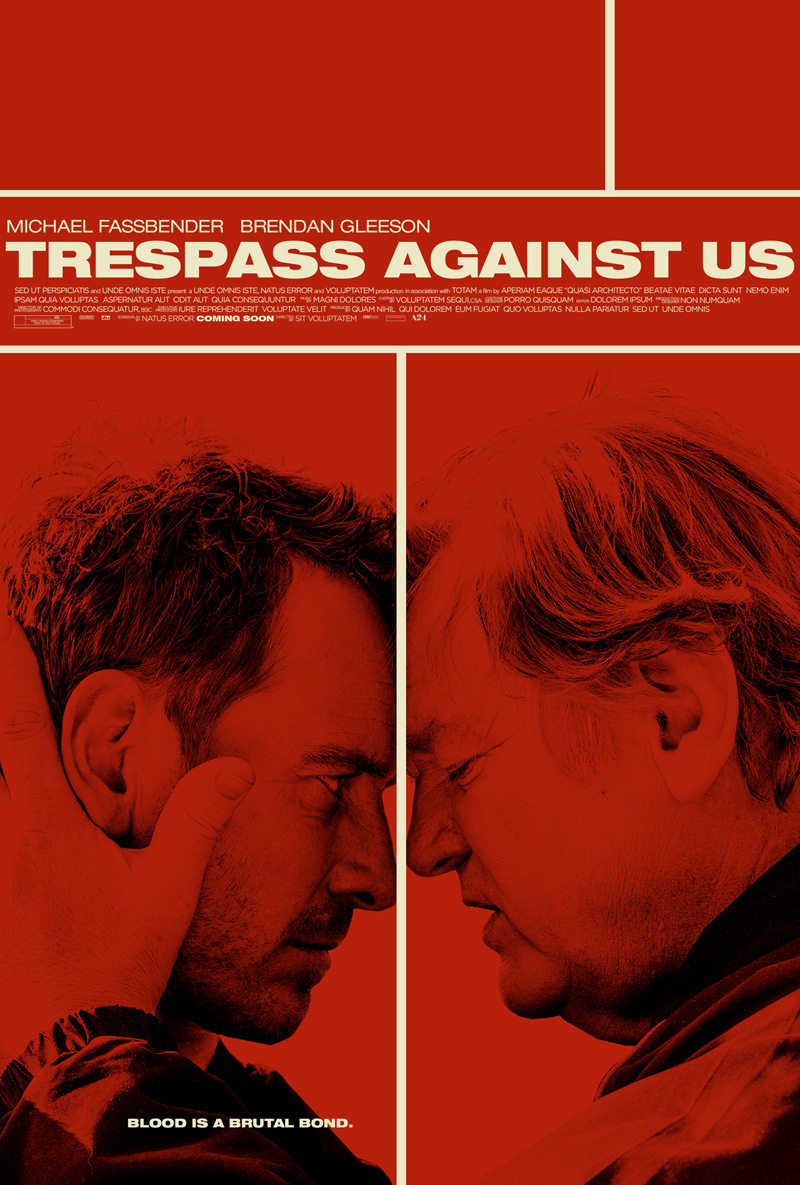
D: Adam Smith / 99m

Cast: Michael Fassbender, Brendan Gleeson, Lyndsey Marshal, Georgie Smith, Rory Kinnear, Killian Scott, Sean Harris, Gerard Kearns, Tony Way, Kingsley Ben-Adir, Barry Keoghan, Kacie Anderson, Peter Wight, Alan Williams, Anna Calder-Marshall, Mark Lewis Jones

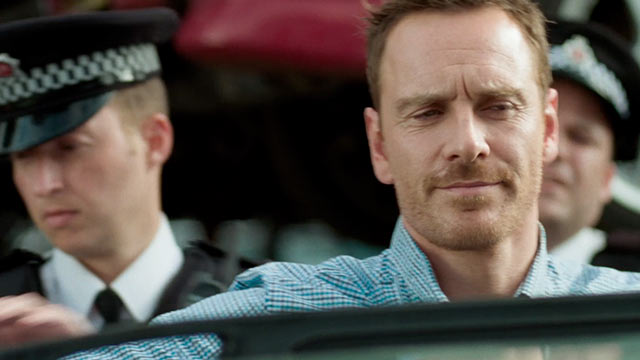
Chad Cutler (Fassbender) is part of a Travellers community whose patriarch is his father, Colby (Gleeson). Chad doesn’t know how to read or write, but he does know how to drive a car, especially if that car is being pursued by the police and it needs not to be caught. He’s also married, to Kelly (Marshal), and has two children, Tyson (Smith) and Mini (Anderson). Kelly wants more for their children than living in a caravan in a field, and though they go to a local school, it’s the only aspect of “normal” life they’re familiar with. Kelly wants them to move into a proper home – a house – and Chad is in agreement with her: he doesn’t want his children growing up in the same environment he did, and settling for less. But there’s a problem. If Colby finds out what they’re planning, he’ll never agree to it, and he’ll make sure they don’t leave.

While Chad sources a home for them nearby, Colby insists on his involvement in the robbery of a large house that proves to be the home of the Lord Lieutenant for the county. Though the robbery is successful, and Chad evades capture by the police – led by PC Lovage (Kinnear) – he’s not “out of the woods” just yet. Lovage is determined to arrest Chad, but if he can’t do it by fair means then he’ll twist the rules to suit his own agenda. This involves raiding the Travellers’ camp, and intimidating them as well as Chad and Kelly. When Chad learns that his father has intimidated the owner of the home he and his family were going to move into, and it’s no longer on offer, a showdown looms between Chad and Colby, one that Colby wins.

nintchdbpict000269236886-e1474642448269

In the meantime, Tyson and Mini go missing from the school. Chad searches for them, but it’s not until Kelly goes to the police that anyone knows the children are with them, and not actually missing or lost. Lovage tries to use their presence at the station as leverage in getting Chad or Kelly to admit his involvement in the robbery, but it doesn’t work. It’s not until Chad, attempting to buy a puppy as a birthday present for Tyson, is refused due to who he is that circumstances conspire to fix the issue of his family’s future once and for all.

Stories about the Travelling community are relatively thin on the ground, which makes Trespass Against Us all the more welcome. Highlighting the darker side of a life that most people will only know about from TV reality shows such as My Big Fat Gypsy Wedding, Adam Smith’s directorial debut is keen to show how hierarchy and loyalty play very important roles in the lives of Travellers, and how aspirations, no matter how much they may be needed, go against the established order of things. Whether or not Chad is a typical example of a “new generation” that sees the traditions of the Travelling community as old-fashioned or no longer socially relevant, isn’t addressed directly by Smith and screenwriter Alistair Siddons, but it certainly fuels the story of Chad’s “defection”.

trespass-against-us-trailer-still

Played with grit and determination by an on-form Fassbender, Chad is aware of his limitations and the possibilities available to his children, but he’s fighting a losing battle against his father. Colby asserts an unhealthy authority over his grandchildren, and at times is far more of an authority figure to them than Chad is. He tells Tyson to ignore what his teacher tells him at school, and looks to reinforce the sense of being part of a tight-knit community that keeps its own counsel (or particularly, Colby’s). Chad has no immediate answer to his father’s belligerence, and is too scared to challenge him openly. Chad and Kelly may want better lives for their children, but Colby doesn’t even see it as an issue; he believes the life they all lead is the right one for them, and any other opinion is a betrayal. As Colby, Gleeson delivers the kind of intense, brooding performance he’s so good at, and he shows Colby’s anger at being challenged in a way that mixes resigned authority and the enjoyment he derives from being a bully.

But while the family dynamic, and the battle, between Chad and Colby forms the central storyline, other aspects of the script lack the same intensity or fail to engage the audience as effectively. Kinnear has the thankless task of making PC Lovage anything more than a pasty-faced thug in a police uniform, his determination to arrest Chad made into an obsession that causes him to behave in ways that steer away from credibility at every turn. Likewise, Harris is back playing the kind of role that casting directors seem eager to offer him. Gordon Bennett – yes, really – sports a close-cropped scalp and rat’s-tail extensions, and looks as if he hasn’t had a bath in weeks. He’s the community halfwit, protected by Colby, derided by Chad and the others, and capable of acts of unwitting cruelty. Harris is a very good actor, but Gordon as written adds little to the narrative, and the script uses him on occasion to move things along, but he’s often a distracting presence, and an unnecessary one at that.

thumbnail_24947

The twin themes of community and tradition are given enough space and time to be explored with a fair degree of depth, and though in truth, this is a story that could have been applied to any number of other, different family units, Smith and Siddons do their best to show how relevant these themes are in Traveller life. The austerity of tradition is touched on to good effect, but the reasoning behind continuing such traditions isn’t explored at all, leaving the viewer to wonder just why living in a field – no matter how much it keeps society away from the Travellers in general – is so preferable to the alternative. It’s an exclusionist stance that needed referencing, if only to provide viewers with a broader perspective.

As a drama, Trespass Against Us sometimes feels forced, as events drift into melodrama and Chad’s dream of emancipation from his father drifts further and further away. By the end, and the unlikely convergence of people and circumstance that provides Chad with a solution, some viewers may well be experiencing a kind of emotional ennui. There’s no payoff, or distinct resolution to Chad’s plight, only a hope that the decision he makes will have the required effect, and allow Kelly and the children to escape Colby’s clutches. But it’s a puzzling conclusion to a story that starts off well, includes a couple of impressively mounted car chases, but which soon loses dramatic focus and traction, and in doing so, looks and feels as if it’s lost sight of that very same story it started off with.

Rating: 7/10 – a mixed bag in terms of drama and the overall material, Trespass Against Us never quite scales the heights of its own ambitions, but it does feature two commanding performances from Fassbender and Gleeson, and a refreshing mise-en-scéne; let down by its own inconsistencies, it’s nevertheless a movie that shouldn’t be avoided, and which may in time, find itself ripe for reassessment.

Share this:

  • Click to share on X (Opens in new window) X
  • Click to share on Facebook (Opens in new window) Facebook
  • More
  • Click to print (Opens in new window) Print
  • Click to email a link to a friend (Opens in new window) Email
Like Loading...

Mini-Review: Live by Night (2016)

21 Saturday Jan 2017

Posted by dullwood68 in Movies

≈ Leave a comment

Tags

Ben Affleck, Brendan Gleeson, Crime, Dennis Lehane, Drama, Elle Fanning, Gangsters, Ku Klux Klan, Literary adaptation, Prohibition, Review, Sienna Miller, Thriller, Ybor City, Zoe Saldana

live-by-night-poster

D: Ben Affleck / 128m

Cast: Ben Affleck, Elle Fanning, Remo Girone, Brendan Gleeson, Chris Messina, Matthew Maher, Sienna Miller, Zoe Saldana, Robert Glenister, Chris Cooper, Miguel J. Pimentel, Titus Welliver, Max Casella

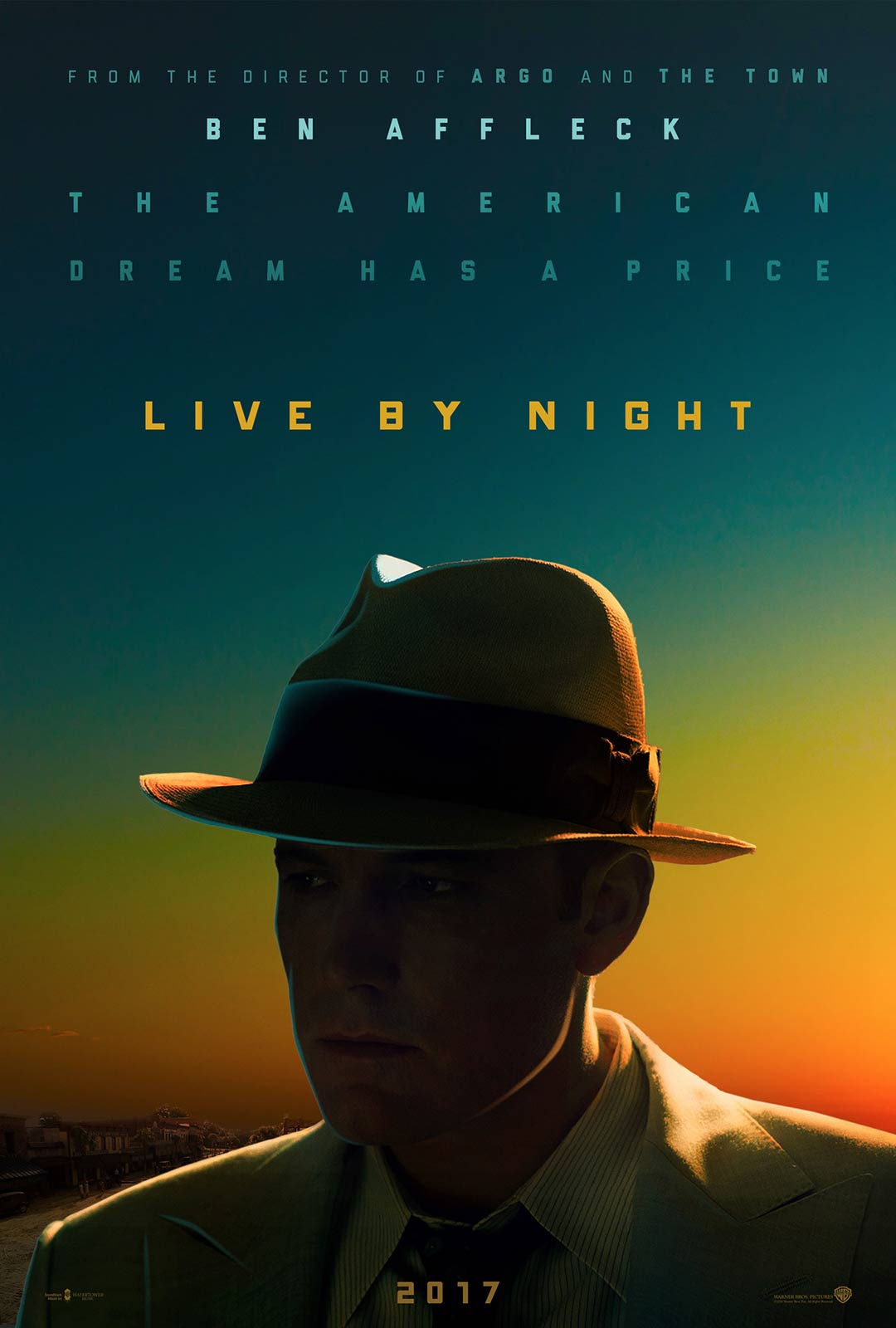
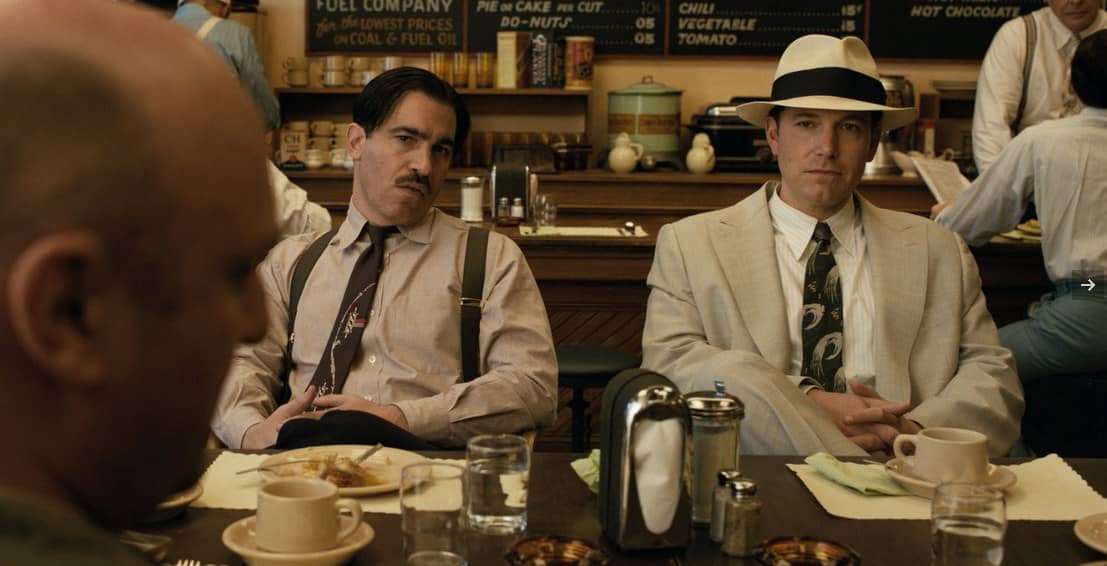
Undermined by a leaden script, Live by Night is writer/director/actor Ben Affleck’s third movie as a multi-hyphenate, but after the successes of Argo (2012) and The Town (2010), his latest project is a plodding affair that looks good thanks to Robert Richardson’s usual exemplary cinematography, but otherwise remains remote and uninvolving. The tale of a small-time Boston crook, Joe Coughlin (Affleck), who finds himself at odds with Irish gangster Albert White (Glenister) through his relationship with White’s girlfriend, Emma Gould (Miller), this adaptation of the novel by Dennis Lehane starts off well but soon gets bogged down by messy plotting and too many characters who randomly come and go.

Coughlin’s romance with Emma ends badly, leading him to offer his “services” to White’s rival, Maso Pescatore (Girone). Pescatore sends Coughlin down to Florida, to Ybor City, with instructions to take control of his rum-running operation and ensure that White’s activities in the area are curtailed. Once there, Coughlin, aided by trusted friend Dion (Messina), soon streamlines Pescatore’s operation and squeezes out all the competition. In the process he establishes a business relationship with a Cuban family, and begins an affair with the sister, Graciela (Saldana). Things run smoothly until Coughlin’s working with the Cubans as well as a group of local Negroes, attracts the ire of the Ku Klux Klan. Coughlin tries to come to an amicable arrangement with them, but the Klan’s leader, RD Pruitt (Maher) refuses to play ball, leading Coughlin to make an arrangement with Pruitt’s brother-in-law, Chief Figgis (Cooper) that has unforeseen consequences.

610279809

The Chief’s daughter, Loretta (Fanning), begins making evangelical protests against a casino that Coughlin is building in anticipation of Prohibition being repealed. Her protests lead to the project stalling, which makes Pescatore angry enough to forget all the money Coughlin has made for him, and travel down to Florida to oversee matters for himself, a development that leaves Coughlin vulnerable, and his future in doubt.

For all the convincing period detail and the impressive production design, Live by Night is let down by Affleck’s inability to craft a cohesive screenplay from Lehane’s novel. While Coughlin’s story is told against a backdrop of violence and betrayal, the movie remains a staid, pedestrian affair that moves at a steady pace despite Affleck’s best efforts to inject some energy and verve into proceedings. Part of the problem is the number of characters that appear for a short time then disappear or pop up again for another short period. Despite the cast’s best efforts, they’re let down by Affleck’s script, which uses each character to advance the narrative, but without investing in them to any great degree. This leaves actors of the calibre of Gleeson, Saldana and Glenister stranded for the most part, with only Miller and Fanning making much of an impression. It doesn’t help that Affleck’s portrayal of Coughlin also lacks range or depth, leaving the viewer hoping that things will improve over time, and that a way in to the material with eventually arise, something that, unfortunately, never happens.

Rating: 6/10 – curiously turgid and flat, Live by Night has clear aspirations to be a crime drama with operatic overtones, but instead, remains resolutely commonplace; with too many strands that make for a stop-start narrative, and characters that aren’t allowed to make much of an impact, the movie keeps its audience at a distance, and never looks as if it will close the gap at any point throughout.

Share this:

  • Click to share on X (Opens in new window) X
  • Click to share on Facebook (Opens in new window) Facebook
  • More
  • Click to print (Opens in new window) Print
  • Click to email a link to a friend (Opens in new window) Email
Like Loading...

Monthly Roundup – October 2016

31 Monday Oct 2016

Posted by dullwood68 in Movies

≈ 1 Comment

Tags

400 Days, Action, Africa, Alexander Skarsgård, Christoph Waltz, Crime, David Yates, Documentary, End of a Gun, Greg Kwedar, Historical drama, John Dower, Johnny Simmons, Keoni Waxman, Louis Theroux, Malin Buska, Margot Robbie, Matt Osterman, Michael Nyqvist, Mika Kaurismäki, Monthly roundup, My Scientology Movie, Queen Kristina of Sweden, Reviews, Samuel L. Jackson, Sarah Gadon, Sci-fi, Steven Seagal, The Girl King, The Legend of Tarzan, Thriller, Transpecos

The Legend of Tarzan / D: David Yates / 110m

Cast: Alexander Skarsgård, Samuel L. Jackson, Margot Robbie, Christoph Waltz, Djimon Hounsou, Jim Broadbent, Simon Russell Beale, Ben Chaplin

the-legend-of-tarzan-movie-review

Rating: 3/10 – “meh”; woeful only just about covers how bad this movie is, from the wooden performances, to the haphazard scripting, to Yates’s casual engagement with the material, and all the way to the creaky use of CGI to simulate the African backgrounds – at no point does The Legend of Tarzan ever feel as if it has any intention of putting any real effort into things.

400 Days (2015) / D: Matt Osterman / 91m

Cast: Brandon Routh, Dane Cook, Caity Lotz, Ben Feldman, Tom Cavanagh, Grant Bowler, Dominic Bogart, Fernanda Romero, Sally Pressman, Mark Steger

400-days-movie-review

Rating: 4/10 – four astronauts are locked inside a chamber designed to simulate the timescale of a planned mission, and the psychological effects of such a journey, but as the simulation nears its finish, the quartet find that things aren’t entirely what they seem; a mystery thriller that doesn’t need its sci-fi trappings (and where the mystery is unengaging), 400 Days plays out like an old Outer Limits episode but without the succinctness that show could provide, all of which leaves the viewer trying hard to make sense of what’s going on, and trying equally hard to decide whether or not they should be bothered about it all.

The Girl King (2015) / D: Mika Kaurismäki / 106m

Cast: Malin Buska, Sarah Gadon, Michael Nyqvist, Lucas Bryant, Laura Birn, Hippolyte Girardot, Peter Lohmeyer, François Arnaud, Patrick Bauchau

girl-king2

Rating: 5/10 – the story of Queen Kristina of Sweden (Buska), who in the ten years she ruled her country, did her best to bring enlightenment and peace for everyone, and who fought against her advisors’ insistence that she marry and secure her throne for the future; reminiscent of the Euro-pudding movies so prevalent in the late Seventies and throughout the Eighties, The Girl King lacks a coherent shooting style that isn’t helped by Hans Funck’s scattershot approach to the editing, but it does keep things admirably simple (if not too simple at times), and remains unexpectedly watchable thanks to Kaurismäki’s determined effort to convert Kristina’s reign (and her presumed lesbianism) into historical soap opera.

My Scientology Movie (2015) / D: John Dower / 99m

With: Louis Theroux, Marty Rathbun, Marc Headley, Tom De Vocht, Jeff Hawkins, Andrew Perez, Rob Alter

tumblr_o0t34k4rij1qzle40o1_1280

Rating: 7/10 – Louis Theroux, intrepid (and annoying) documentarian turns his attention onto Scientology, and attempts to understand why the organisation is so litigious and defensive about its practices; Theroux teams up with ex-Scientology bigwig Marty Rathbun to learn about what goes on behind the scenes, but succeeds largely in having childish spats with one of the organisation’s “security” team (very funny indeed), while organising a filmed representation of a meeting where Scientology leader David Miscavage threw a major tantrum, all of which leaves My Scientology Movie feeling arid for long stretches and not quite as illuminating as Theroux might have hoped.

Transpecos (2016) / D: Greg Kwedar / 86m

Cast: Johnny Simmons, Gabriel Luna, Clifton Collins Jr, Julio Oscar Mechoso

thumbnail_24647

Rating: 5/10 – three Border Patrol guards find themselves in trouble with a Mexican cartel when they stop the wrong car at a checkpoint, and learn that one of them is in even deeper trouble than anyone knew; Transpecos makes good use of its New Mexico locations, and the opening twenty minutes point towards the movie being a tense, tightly constructed thriller, but sadly it soon degenerates into an unconvincing, meandering collection of scenes that are often dramatically inert, and which stretch the narrative in a variety of ineffective ways that it can’t recover from.

End of a Gun (2016) / D: Keoni Waxman / 87m

Cast: Steven Seagal, Florin Piersic Jr, Jade Ewen, Ovidiu Nicolescu, Jonathan Rosenthal, Alexandre Nguyen, Claudiu Bleont

138

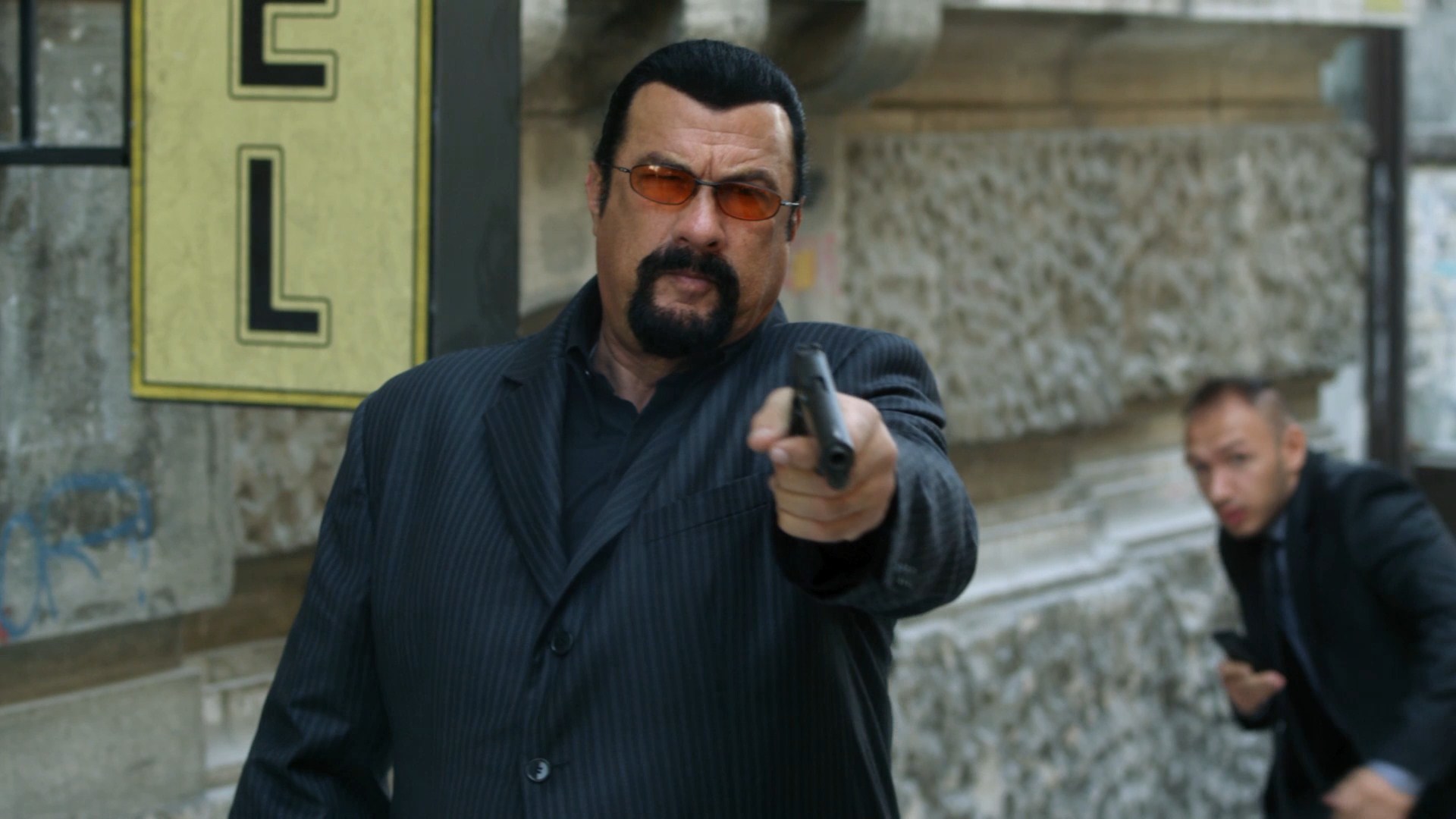
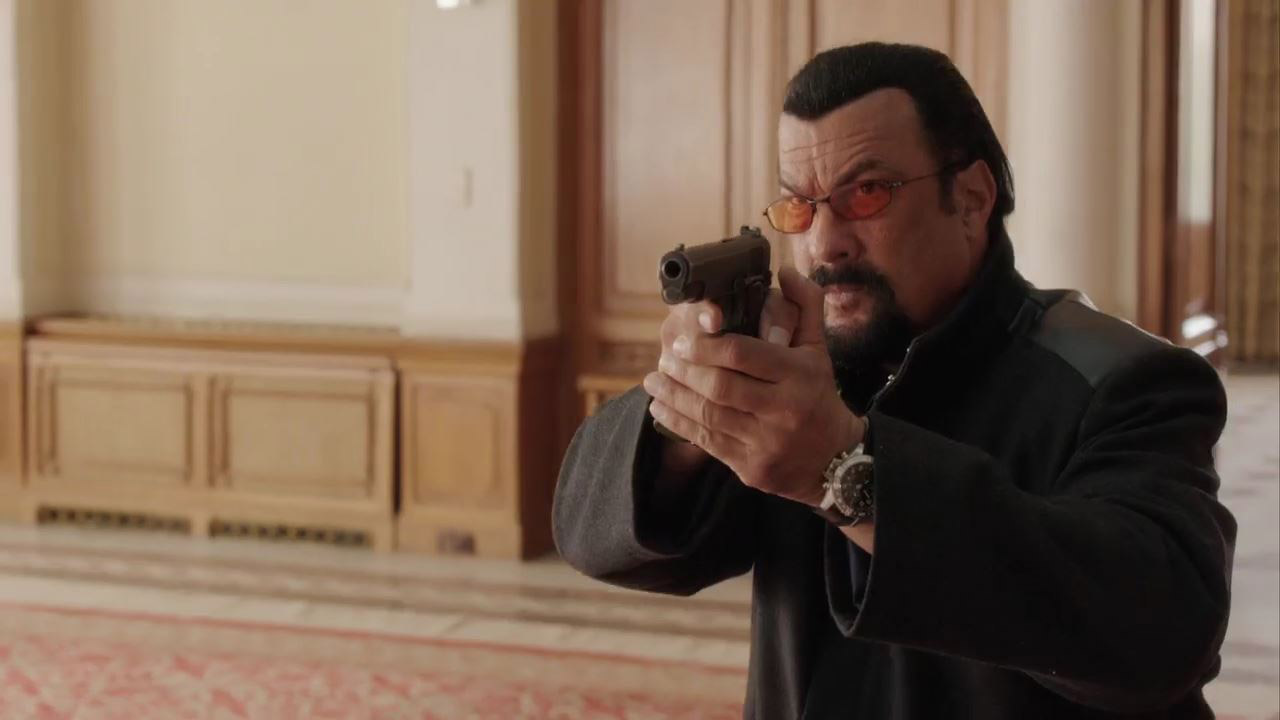
Rating: 4/10 – retired DEA agent-cum-“ghost” Michael Decker (Seagal) rescues a stripper (Ewen) from her abusive boyfriend (by killing him) and finds himself helping her steal €2m of the man’s money – which doesn’t go down well with his drug czar boss; another Romanian-shot quickie from Seagal that keeps his stunt double, his running double, and his walking double in gainful employment, End of a Gun is made bearable thanks to a good performance from Piersic Jr, and Waxman’s ingenuity when shooting low-budget shootouts, but otherwise it’s business as usual, which is to say, pretty awful (and the less said about ex-Sugababes member Ewen, the better).

Share this:

  • Click to share on X (Opens in new window) X
  • Click to share on Facebook (Opens in new window) Facebook
  • More
  • Click to print (Opens in new window) Print
  • Click to email a link to a friend (Opens in new window) Email
Like Loading...

The Whole Truth (2016)

22 Saturday Oct 2016

Posted by dullwood68 in Movies

≈ 2 Comments

Tags

Courtney Hunt, Crime, Drama, Gugu Mbatha-Raw, Jim Belushi, Keanu Reeves, Louisiana, Murder, Renée Zellweger, Review, Thriller, Trial

the-whole-truth-2016-movie-poster

D: Courtney Hunt / 93m

Cast: Keanu Reeves, Renée Zellweger, Gugu Mbatha-Raw, Gabriel Basso, Jim Belushi, Jim Klock, Ritchie Montgomery, Christopher Berry, Nicole Barré, Sean Bridgers, Mattie Liptak

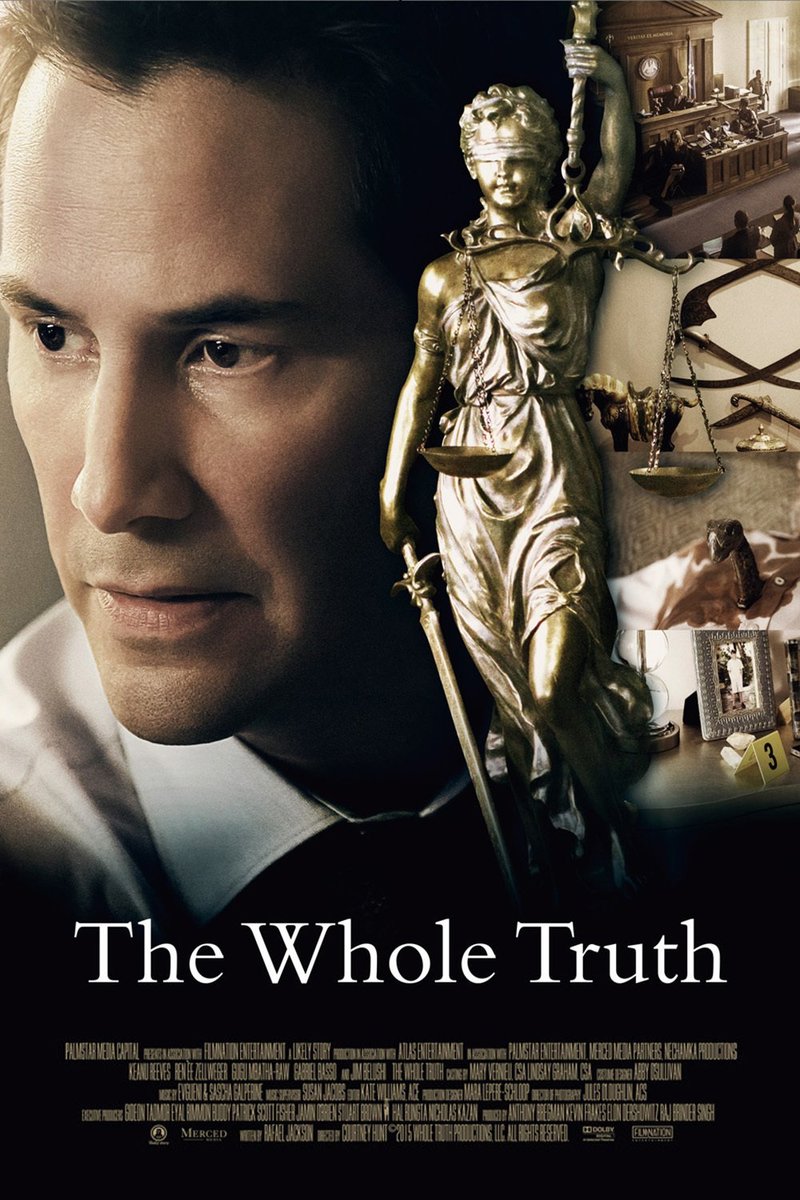
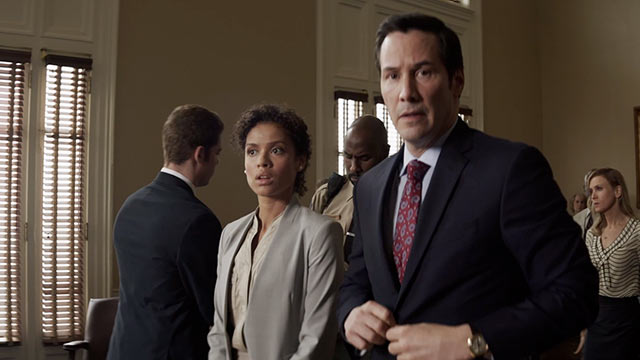
In a small Louisiana town, young Mike Lassiter (Basso) is arrested for the murder of his father, Boone (Belushi). Having confessed to the crime, Mike says nothing more, even to his lawyer, Richard Ramsey (Reeves). Obviously this makes it hard for Ramsey to mount a defence, but as a friend of the family, and someone that Boone helped become a lawyer, he has inside knowledge about Boone that the jury won’t be aware of. With his client staying quiet, Ramsey’s only choice is to malign Boone’s reputation as a good father to Mike and loving husband to Loretta (Zellweger).

As the trial begins, Ramsey is joined by a junior lawyer, Janelle Brady (Mbatha-Raw). Together they begin to piece together a defence based on Boone’s abusive behaviour towards Mike and Loretta, while the prosecution – led by Leblanc (Klock) – reinforces the details surrounding the murder and Mike’s subsequent confession. The case seems hopeless until Ramsey calls Loretta to the witness stand, where she confirms just how abusive her husband could be. But as the trial continues, Janelle becomes suspicious about what might have really happened; she comes to believe that Mike is taking the fall for his mother. There’s no evidence to support this, however, and when Mike takes the stand and delivers a bombshell that no one could have prepared for, his testimony takes the trial in a direction that no one could have prepared for either.

the-whole-truth-2015-movie-header1

With an introductory voice over by Reeves that sets the tone for the whole movie (he sounds bored and uninterested), The Whole Truth is one of those courtroom dramas where secrets are revealed every so often in an effort to keep the audience guessing as to what’s happened, or is happening, and which should add up to a last-minute revelation that will have said audience saying to themselves, “Wow! I never saw that coming!” Except, in reality, The Whole Truth opts for secrets that have no impact on the movie’s ending, and which are pretty much forgotten about once they’ve been revealed.

You don’t have to have seen hundreds of courtroom dramas to know that ninety-nine per cent of the time, if the defendant has confessed to the crime (but isn’t saying why they did it), then the chances of them actually being guilty are greatly reduced. And while it would be unfair to reveal if this is the case here, let’s just say that there is a formula here that’s being adhered to, and said formula shouldn’t spring too many surprises on anyone familiar with the genre. And thanks to screenwriter Nicholas Kazan (known here as Raphael Jackson, and perhaps wisely), the movie plods along from one unexciting revelation to another in a dour effort to appear exciting. It’s all so sloppily written that, from Ramsey’s “knowing” voice over to both his and Leblanc’s inability to cross-examine witnesses, The Whole Truth acts more as an educational movie about how not to make a courtroom drama than the effective thriller it wants to be.

reevesbar640

Kazan’s script is one of the main offenders, but it’s not alone in handicapping the movie at every turn. Since coming to people’s attention with her well-received debut, Frozen River (2008), director Courtney Hunt has only worked on five TV episodes before taking on the challenge of molding this movie into something that isn’t the cinematic definition of “generic”. That she never gets to grips with the material, and films everything in a bland, TV-movie-of-the-week style, is evident throughout, and the look of the movie – all washed-out and looking as if bright colours were a no-no – further undermines any attempts the movie might make to stand out from the crowd. It’s as if cinematographer Jules O’Loughlin was instructed not to make the movie look attractive.

And then, somewhat inevitably, there’s the cast. Keanu Reeves has the kind of career that fluctuates between godawful and cautiously optimistic with almost absurd regularity. John Wick (2014) was a reminder that when he’s asked to play taciturn and given minimal dialogue, he’s playing to his strengths as an actor. But then he also appears in movies such as Man of Tai Chi (2013 – and which he directed), and Knock Knock (2015), and you’re reminded that he’s only good with certain material. Here he struggles as usual with both his character and his character’s dialogue, with his occasional voice overs further underscoring how often he looks and sounds removed from the movies he makes. He makes for an unconvincing trial lawyer as well, and The Whole Truth teeters on the edge of disaster every time Ramsey gets up to question a witness.

thumbnail_24946

Making her return to acting after a six-year hiatus, Renée Zellweger is, as many people have already pointed out, hard to recognise as Loretta. Even when she speaks you could still be forgiven for thinking she’s someone else, and this proves to be something of a distraction whenever she’s on screen. Why she picked this movie to make her comeback is a mystery that’s more intriguing than the central mystery around who killed Boone, and though she has second billing, Loretta is more of a supporting role than a lead. She’s not asked to do too much, and when Loretta takes the stand, Zellweger treats us to a glimpse of what she’s capable of, but otherwise it’s a performance that dozens of other actresses could have given. Mbatha-Raw is underused as well, her character the inexperienced, somewhat naïve ingenue who gets her one chance to shine in court before being relegated back to the sidelines.

With the performances unable to lift the movie out of its self-imposed narrative doldrums, and Hunt apparently unable to make much out of the material, The Whole Truth proves to be hugely disappointing, and resoundingly flat. There’s no impetus, no energy in the courtroom scenes, and by the end it’s difficult to care who did what, why or how. Courtroom dramas succeed or fail on the quality of the secrets that are revealed during a trial, and the odds against the defence lawyer winning, but here there’s so much apathy on display that any impact is curtailed before any such secrets are fully revealed. This may be a courtroom drama per se, but someone really should have pointed out that the drama was, in legal terms, misrepresented.

Rating: 4/10 – originally set to star Daniel Craig as Ramsey, The Whole Truth is a movie that wouldn’t have turned out any better even if he hadn’t dropped out just days before production was due to begin; clumsy and dull, the movie is like drudge work for the eyes and ears, and never once feels like it’s going to step up a gear and become even slightly interesting.

Share this:

  • Click to share on X (Opens in new window) X
  • Click to share on Facebook (Opens in new window) Facebook
  • More
  • Click to print (Opens in new window) Print
  • Click to email a link to a friend (Opens in new window) Email
Like Loading...

War on Everyone (2016)

18 Tuesday Oct 2016

Posted by dullwood68 in Movies

≈ Leave a comment

Tags

Action, Alexander Skarsgård, Comedy, Corrupt cops, Crime, Drama, John Michael McDonagh, Michael Peña, New Mexico, Review, Tessa Thompson, Theo James, Thriller

war-on-everyone

D: John Michael McDonagh / 98m

Cast: Michael Peña, Alexander Skarsgård, Theo James, Tessa Thompson, Malcolm Barrett, Caleb Landry Jones, Stephanie Sigman, David Wilmot, Paul Reiser

Do you like your cops as corrupt as the criminals they arrest/steal from? Do you like to see cops misuse their position and betray your trust in them at every turn? And do you like them to have so little regard for your (or anyone else’s) dignity or safety that they’d hit a mime with their car just to see if he yells in pain? Well, if you only answered yes to that last question, then War on Everyone is the movie for you. It’s a buddy cop movie where the cops in question, Detectives Bob Bolaño (Peña) and Terry Monroe (Skarsgård), will do everything they possibly can to screw over everyone they meet, be it their long-suffering boss, Lt. Stanton (Reiser), or one of their stoolpigeons, Reggie (Barrett), or just about anyone operating on the wrong side of the law (like them).

When news reaches them that a big heist is being planned, naturally Bob and Terry want to know all about it so they can grab the money once the robbers have done all the hard work. But the man planning the heist is a shadowy figure they’ve not encountered before, and the details are equally shadowy; all they have are the men who’ll be involved but not the location or where the money is to be taken. With Reggie managing to get himself the getaway driver’s job, Bob and Terry think they’ve got it all worked out: follow Reggie, grab the cash at the earliest opportunity, and head off to somewhere foreign with no extradition arrangement with the US. But of course, nothing goes to plan, and Bob and Terry find themselves up against a British aristocrat called “Lord” James Mangan (James), the mastermind behind the heist, and someone who doesn’t take kindly to their efforts to hijack the robbery and take most of the money.

woe-scene1

After the relatively sombre and restrained The Guard (2011) and Calvary (2014), writer/director John Michael McDonagh has decided to cut loose – and quite a bit – with this tale of two ultra-corrupt cops that’s set in New Mexico, is bolstered by the inclusion of Glen Campbell on the soundtrack, and which has a very gritty Seventies vibe to it. War on Everyone is also extremely funny in places, as you’d expect from McDonagh, and there are a plethora of laugh-out-loud moments to keep the audience happy and the script from seeming too formulaic. McDonagh is great at creating a world for his dysfunctional characters to inhabit, and the bright, airy spaces of New Mexico are used to good effect to create a surprisingly natural background for the absurdities that unfold in the foreground.

The plot, such as it is, is acceptable without pushing any boundaries or bringing anything new to the table, and McDonagh is keen to highlight the fact that he knows this, and that the audience should just go along with it. It’s Bob and Terry who are the movie’s real focus, even though their relationship – built as ever on mutual trust and respect while everyone else (bar Bob’s family) is fair game – is one we’re meant to enjoy for its verbal jousting and the pair’s unspoken dependence on each other. Only when it seems that Bob has run out of luck do we see how much Terry depends on him as both a partner and a friend. But in keeping with the characters’ macho exteriors, it’s a necessarily brief glance – and then back to the action.

woe-scene2

With McDonagh having established the bond that unites these two latter-day Robin Hoods (only difference: they don’t give to the poor), he adds subplots and secondary characters to flesh out the drama, but in the process and with the exception of Landry Jones’ twitchy portrayal of Mangan’s right hand man, Birdwell, never quite manages to make them as memorable as they need to be. Despite sending Mangan (literally) on an acid trip that’s designed more to show off some fancy camera moves and elaborate staging than to look into the mind of the character, the villain is essentially colourless and in the end, easily dealt with. Likewise, Terry’s love interest, Jackie (Thompson), who he places under his own personal protection and who he promptly falls in love with. Jackie’s a sweet enough character, and as a counterpoint to all the cynicism on display elsewhere she fits the bill, but McDonagh doesn’t develop her in any way, and she remains a frustrating caricature: the girl who needs to be rescued.

As the two felons with badges, Peña and Skarsgård make a great team. Peña is the erudite, well-read partner who can quote from the Greek classics, and who realises that they can’t keep doing what they’re doing indefinitely (it doesn’t help that he looks a little like a Latino version of the British movie critic Mark Kermode). Skarsgård brings the muscle, folding in on himself a lot of the time and accentuating his forehead, as if he’s about to use it as a battering ram. He’s the more dangerous of the two, unpredictable, and Skarsgård projects just the right amount of bottled-up menace that the role requires. Together the two stars are a joy to watch, and McDonagh ensures that their camaraderie is entirely believable, even when he takes them out of their New Mexico comfort zone and sends them off to Iceland to track down an absconded Reggie.

woe-scene3

Making his first feature away from Ireland, McDonagh shows a confidence in his decision that isn’t supported by the way he handles the material, and on this occasion McDonagh the director doesn’t know quite what to do to combat the problems inherent in McDonagh the writer’s screenplay. But the movie is an enjoyable one for the most part, provided the viewer keeps their expectations to a minimum; then they might be pleasantly surprised by Bob and Terry’s antics, and also more invested in how things turn out. One area where the movie can’t be faulted is in its cinematography, courtesy of the very talented Bobby Bukowski, whose previous movies include Rosewater (2014) and The Iceman (2012). Thanks to his efforts, War on Everyone is often beautiful to look at, and he keeps the camera moving in ways that are often very inventive – and often without the viewer realising it.

Rating: 7/10 – at times a raucous, freewheeling movie with plenty of buzz about it, War on Everyone can’t sustain it’s initial set up for very long, and McDonagh’s script loses its freshness around the halfway mark; good performances from Peña and Skarsgård help things immeasurably, but this has to go down as a missed opportunity from McDonagh, but not so bad that his next movie won’t be as highly anticipated as this one was.

Share this:

  • Click to share on X (Opens in new window) X
  • Click to share on Facebook (Opens in new window) Facebook
  • More
  • Click to print (Opens in new window) Print
  • Click to email a link to a friend (Opens in new window) Email
Like Loading...

Trailers – Fences (2016), Mean Dreams (2016) and The Free World (2016)

01 Saturday Oct 2016

Posted by dullwood68 in Movies

≈ Leave a comment

Tags

August Wilson, Bill Paxton, Boyd Holbrook, Crime, Denzel Washington, Drama, Previews, Trailers, Viola Davis

In 2010, a production of Fences, August Wilson’s award-winning play, won Tony’s for Best Revival of a Play, Best Actor and Best Actress. The two leads in the revival were Denzel Washington and Viola Davis, so if you think after watching the trailer that their performances look incredibly good – well, there’s the reason why. Set in the 1950’s, the movie examines the effects changes in race relations in the US have on an average African-American family, and in particular the dynamic between Washington’s struggling husband and father Troy, and his teenage son Cory (played by relative newcomer Jovan Adepo). With Washington making his first feature since The Great Debaters (2007), it will be interesting to see just how much of Wilson’s tale of bitter regret and personal despair is retained, and if the movie retains the play’s episodic structure. But from the trailer alone it does look as if Washington has made a challenging, powerful movie, and perhaps a sure-fire awards winner further down the line.


In Mean Dreams, Bill Paxton is the kind of backwoods sheriff we’ve seen quite a lot of recently: outwardly charming, seemingly decent, but beneath all that, as callous and conniving as any regular bad guy (and probably more so). But this is a small-town sheriff bordering on the psychotic, which makes his treatment and eventual pursuit of his daughter (Sophie Nélisse) and her wrong-guy-in-the-wrong-place boyfriend (Josh Wiggins) all the more gripping. Given the right role, Paxton is an actor you should never underestimate; he can take a viewer to some very dark places indeed, and often at the drop of a hat. This has all the hallmarks of such a role, and while the movie has a wintry feel to it that appears to suit the mood and tone of the movie, it’s still going to be Paxton who grabs all the attention – and he looks good and ready to do so.


There are always actors who pop up in movies and make an impression, but who still manage to retain an air of mystery and have audiences scratching their heads and asking themselves, “Didn’t I see him/her in that other movie?” Boyd Holbrook is one of those actors. He’s been quietly amassing a body of work that’s also been increasingly impressive ever since he first appeared in Milk (2008). Now, it looks as if The Free World, a taut thriller about second chances and personal redemption set against the backdrop of a domestic murder case, could be the movie to catapault Holbrook into the big(ger) leagues. If it doesn’t, then it’s unlikely Holbrook will be too worried. He’ll just carry on giving good performances in whatever movies he makes.

Share this:

  • Click to share on X (Opens in new window) X
  • Click to share on Facebook (Opens in new window) Facebook
  • More
  • Click to print (Opens in new window) Print
  • Click to email a link to a friend (Opens in new window) Email
Like Loading...

Skiptrace (2016)

16 Friday Sep 2016

Posted by dullwood68 in Movies

≈ 1 Comment

Tags

Action, Bingbing Fan, China, Comedy, Con man, Crime, Drama, Drugs, Eric Tsang, Eve Torres, Hong Kong, Jackie Chan, Johnny Knoxville, Macau, Mongolia, Renny Harlin, Russia, The Matador, Thriller

skiptrace

Original title: Jue di tao wang

D: Renny Harlin / 107m

Cast: Jackie Chan, Johnny Knoxville, Bingbing Fan, Eric Tsang, Eve Torres, Winston Chao, Youn Junghoon, Shi Shi, Michael Wong, Kuo Pin Chao

Here’s a question for you: when did you last enjoy – really enjoy – a Jackie Chan movie? Was it Dragon Blade (2015)? Or Chinese Zodiac (2012) perhaps. Or was it even further back? The Karate Kid (2010) maybe. If it’s been even further back, don’t worry, it’s likely you’re not on your own.

Back in 2012, Chan told reporters at the Cannes Film Festival that Chinese Zodiac was going to be his last action movie. He was getting too old, and he felt the world was “too violent”. And for a whole year it seemed that Chan was sticking to his word… and then he went and made Police Story: Lockdown (2013). So much for that, then. And now he’s back again with another action movie, Skiptrace, and this time, it’s… practically dead on arrival.

Let’s try another question: when did you last enjoy – really enjoy – a Renny Harlin movie? Was it The Legend of Hercules (2014) Or Devil’s Pass (2013)? Or something from the time when his name on a picture was reason enough to see it, say back in the Nineties. Unlike Chan, Harlin has never announced his “retirement” from action movies, and now he’s back with Skiptrace, and this time… well, you get the picture.

skiptrace-scene2

There are many, many, many movies that are made because somebody somewhere thought they would be a good idea. Movies like Skiptrace, which are made both for a domestic market (in this case, China and Hong Kong) and a wider, international market, show up each and every year. Some succeed in gaining that wider, international success the makers hope for – the Internal Affairs trilogy, for example – while the majority barely make an impact. In between are movies such as Skiptrace, with its bankable, internationally famous star; less bankable but still well-known co-star; even less bankable but still fairly well-known director-for-hire; country-hopping locations; uninspired action set-pieces; and a patience-testing script that has no intention of making any kind of sense at any point in the movie.

The plot, such as it is, has Chan’s dogged cop, Bennie Chan, still trying to avenge the death of his partner (Tsang) at the hands of criminal mastermind the Matador. Nine years have passed since that terrible event, and Bennie has spent the years since in trying to prove that high-profile businessman and philanthropist Victor Wong (Chao) is the Matador. Of course he’s been unsuccessful, and his latest attempt leads to the kind of property destruction that warrants his being told to take a month’s leave of absence. In the meantime, his deceased partner’s daughter, Samantha (Fan), has infiltrated Wong’s organisation in an attempt to find some evidence against him… but she’s drawn a blank too. It’s not until con man and gambler Connor Watts (Knoxville) turns up at a casino run by Wong and witnesses a murder that Bennie has a solid chance of bringing Wong to justice.

skiptrace-scene1

So far, so straightforward. But the script, already over-complicating things by having Bennie as Samantha’s guardian, introduces us to Connor by putting him in jeopardy in Russia thanks to an ill-advised relationship with a mobster’s daughter. A series of non-linear flashbacks to the previous twenty-four hours reveals Connor’s actions at the casino (including winning a large amount of money), his meeting Samantha, trying to avoid the Russian mobster’s goons (out to bring him back to Russia so he can be put in jeopardy), witnessing a murder in the process, and coming into possession of a mobile phone that will reveal the identity of the Matador. Too much already? Don’t worry, there’s more – much more.

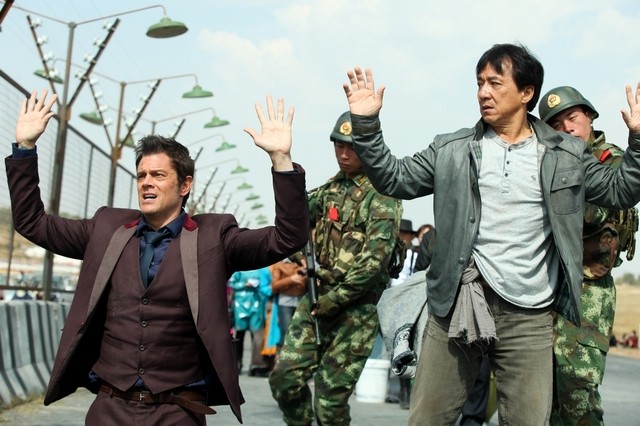
What follows is a tortuous road movie that sees Bennie and Connor eventually learn to respect and admire each other, and which takes in such locations/developments as the Russian bowling alley where Connor finds himself in peril, a train that both men jump from as soon as they hear the ticket inspector approaching, buying the slowest vehicle in Mongolia without ensuring it has enough petrol to get them anywhere, an encounter with a group of Mongolian tribespeople (more of which later), a game of bluff and double bluff at the Chinese border that sees them arrested, their opportune “rescue” by the Russian mobster’s goons, a whitewater raft ride, and eventually, a zipline escape from Wong’s men.

There’s more still, but it’s all too tiring, a series of desperate attempts by the screenplay – step forward writers Jay Longino and BenDavid Grabinski, whose first collaboration this is – to keep viewers from nodding off or asking themselves why they’re still watching after the first half an hour. If the events listed in the previous paragraph sound exciting, don’t be fooled: even handled by Harlin, not exactly a slouch when it comes to action movies, those sequences lack energy and are shot through with the kind of slapstick humour that Chan’s movies are famous for. And it needs to be said: Chan is getting on. His decision to “retire” back in 2012 should have been followed through, because in Skiptrace you can see just how slow he’s become. The speed and intricacy of his past fight scenes are absent here, with blows and parries signposted well in advance and Chan being given more than enough time to get into position for each.

skiptrace-scene3

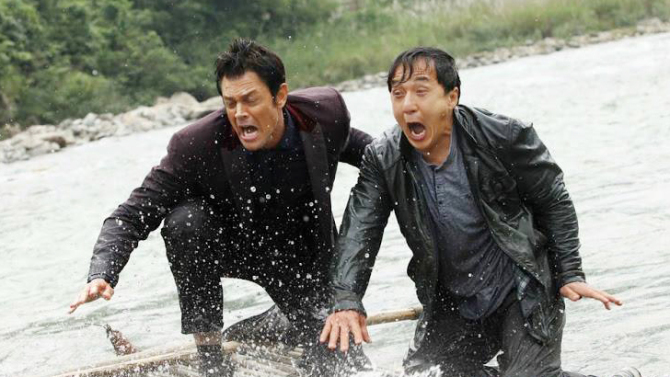
And then there’s the encounter with the Mongolian tribespeople. It’s a standard sequence to begin with, a misunderstanding leading to Connor and then Bennie squaring up against the tribe’s best fighters. The misunderstanding is resolved and the tribespeople take to the pair as if they were long-lost relatives. A feast ensues, and after a few too many drinks, Bennie begins to sing a song. A young woman joins him, and soon everyone is singing along as well, word perfect and in perfect harmony. The song is Adele’s Rolling in the Deep, and it’s possibly the most bizarre moment you’ll ever see, and hear, in a Jackie Chan movie. It’s also the best example of how haphazardly the script has been assembled, with sequences obviously arrived at and decided on before a plot was actually dreamt up.

Like so many of these productions, the editing is the worst aspect of all, leaving the movie looking like a cinematic patchwork, with shots truncated and poorly framed, and the performances (such as they are) suffering as a consequence. Chan is his usual amiable self, unstretched by the material, while Knoxville’s comic relief portrayal of Connor serves as a reminder that when a script is this bad the actor doesn’t have a way of countering it. Elsewhere, the supporting cast do what they can with their underwritten roles, with only ex-WWE wrestler Torres standing out thanks to her impressive physicality. Harlin is a bland presence in the director’s chair, his regular visual flair absent from the mix. It’s hard to believe that this is the same man who directed Die Hard 2 (1990) and The Long Kiss Goodnight (1996). But then, it’s hard to think of anyone who could have made something even halfway decent from the material on offer.

Rating: 3/10 – not the finest moment in Chan’s career, Skiptrace is hard to sit through and barely acceptable as entertainment; with all the vitality of a contractual obligation, the movie crams in a surfeit of incidents that, ordinarily, would keep at least another two movies happy – but ultimately, it doesn’t have any idea of what to do with them.

Share this:

  • Click to share on X (Opens in new window) X
  • Click to share on Facebook (Opens in new window) Facebook
  • More
  • Click to print (Opens in new window) Print
  • Click to email a link to a friend (Opens in new window) Email
Like Loading...

Mini-Review: Café Society (2016)

14 Wednesday Sep 2016

Posted by dullwood68 in Movies

≈ 1 Comment

Tags

Blake Lively, Comedy, Crime, Drama, Hollywood, Jesse Eisenberg, Kristen Stewart, Love, New York, Review, Romance, Steve Carell, The Thirties, Woody Allen

cafe-society

D: Woody Allen / 96m

Cast: Jesse Eisenberg, Kristen Stewart, Steve Carell, Blake Lively, Jeannie Berlin, Ken Stott, Corey Stoll, Sari Lennick, Stephen Kunken, Parker Posey, Paul Schneider, Anna Camp, Sheryl Lee

In the Thirties, naïve young Bobby Dorfman (Eisenberg) leaves the safety of his parents’ (Berlin, Stott) home in the Bronx to move to Hollywood and start a new life. Taken under the wing of his uncle, super-agent Phil Stern (Carell), Bobby is shown around town by Stern’s secretary, Vonnie (Stewart). He quickly falls in love with her, despite her having a boyfriend, and they spend a lot of time together. But when the man in Vonnie’s life reneges on a promise to leave his wife for her, she allows herself to be wooed by Bobby, and in time he asks her to marry him and go with him to New York (he’s bored by the shallowness of Hollywood and its denizens).

But Vonnie’s “boyfriend” finally leaves his wife and she chooses to marry him instead of Bobby. Heartbroken, and hardened by the experience, Bobby returns to New York where he goes to work with his older brother, Ben (Stoll), running a nightclub called Le Tropical. Ben has criminal ties, but keeps Bobby clear of any involvement. Eventually, Bobby meets and marries a recent divorceé, Veronica (Lively). They have a child, and the club becomes a focal point for the famous, the infamous, and everyone in between. Now settled firmly into the roles of husband, father and successful businessman, Bobby’s world is turned upside down when Vonnie pays a visit to Le Tropical with her husband, and it becomes clear that they still have feelings for each other.

cafe-society-scene

Woody Allen’s latest, annual, offering is an outwardly frivolous affair that touches on many of the tropes that have kept his movie career going for nearly fifty years. There’s the relationship between an older man and a (much) younger woman; love denied; philosophical enquiries into the natures of life, love and art; class merits and social acceptance; ambition; and all wrapped up in a slightly more jaundiced approach than is usual. Beneath the glamour and the glitzy lifestyles on display in both Hollywood and New York, Allen makes it clear that happiness is much harder to find than it appears. It also appears to be much more of a commodity, as Bobby’s offer of a romantic life in New York is spurned for a superficial one in Hollywood.

Allen once again assembles a great cast with Eisenberg as yet another on-screen substitute for The Man Himself, and Stewart putting in her best performance in quite some time as the (not really) conflicted Vonnie. But it’s the supporting characters who steal the show, in particular Bobby’s aunt Evelyn (Lennick) and her pacifist husband, Leonard (Kunken). Their problem with an abusive neighbour provides a much needed break from the predictable nature of the central romance, while Stoll’s droll gangster is worthy of a movie of his own. It’s this imbalance that hurts the movie at times, as the romance between Vonnie and Bobby, though given due emphasis by Allen’s screenplay, isn’t as compelling as you’d expect. It’s the distractions from the main storyline that work better as a result, and while Allen peppers things with his trademark wit (“First a murderer, and now a Christian!”), it’s not enough to offset the familiarity of a romance seen too often before.

Rating: 7/10 – Vittorio Storaro’s gorgeous cinematography is Café Society‘s biggest draw, along with its cast, but this is ultimately a Woody Allen movie that sees him revisiting familiar ground to sporadically good effect; enjoyable enough then, but there’s a sense that Allen’s once-a-year workload is still providing similar returns with each new movie.

Share this:

  • Click to share on X (Opens in new window) X
  • Click to share on Facebook (Opens in new window) Facebook
  • More
  • Click to print (Opens in new window) Print
  • Click to email a link to a friend (Opens in new window) Email
Like Loading...

Bastille Day (2016)

05 Monday Sep 2016

Posted by dullwood68 in Movies

≈ 5 Comments

Tags

Action, Bombing, Charlotte Le Bon, CIA, Crime, Drama, Idris Elba, James Watkins, José Garcia, Kelly Reilly, Paris, RAPID, Review, Richard Madden, Thriller

Bastille Day

D: James Watkins / 92m

Cast: Idris Elba, Richard Madden, Charlotte Le Bon, Kelly Reilly, José Garcia, Thierry Godard, Anatol Yusef

Meh (see also Mechanic: Resurrection).

Rating: 3/10 – uninspired, heavy-handed, preposterous, and as dead on arrival as the four victims of its fictional bombing, Bastille Day limps along from one turgid, barely credible scene to another with all the panache and style of a boxer who’s on the ropes and seeing double of everything; not even Elba’s stoic presence can save this Euro-mess of a movie, an action thriller that insults its audience at every turn, plays fast and loose with its own narrative, and which flags up every single plot development with all the subtlety of a punch in the face.

Share this:

  • Click to share on X (Opens in new window) X
  • Click to share on Facebook (Opens in new window) Facebook
  • More
  • Click to print (Opens in new window) Print
  • Click to email a link to a friend (Opens in new window) Email
Like Loading...

Mechanic: Resurrection (2016)

31 Wednesday Aug 2016

Posted by dullwood68 in Movies

≈ 4 Comments

Tags

Action, Arms dealers, Australia, Crime, Dennis Gansel, Drama, Hitman, Jason Statham, Jessica Alba, Malaysia, Michelle Yeoh, Review, Sequel, Thailand, Thriller, Tommy Lee Jones

Mechanic Resurrection

D: Dennis Gansel / 99m

Cast: Jason Statham, Jessica Alba, Tommy Lee Jones, Michelle Yeoh, Sam Hazeldine, John Cenatiempo, Toby Eddington, Femi Elufowoju Jr, Anteo Quintavalle

Meh.

Rating: 3/10 – a terrible sequel that lies dead on the screen, Mechanic: Resurrection features some of the worst green screen work ever (the opening fight in Buenos Aires), a plot that makes absolutely no sense at all, and performances from all concerned that border almost on perfunctory – if only they could have made that much effort; action movies don’t have to tie up every loose end or narrative loophole, but this has a script that just doesn’t know when to give up and go home, making it one of the worst experiences you’re likely to have at the cinema all year.

Share this:

  • Click to share on X (Opens in new window) X
  • Click to share on Facebook (Opens in new window) Facebook
  • More
  • Click to print (Opens in new window) Print
  • Click to email a link to a friend (Opens in new window) Email
Like Loading...

Blood Father (2016)

28 Sunday Aug 2016

Posted by dullwood68 in Movies

≈ Leave a comment

Tags

Action, Crime, Diego Luna, Drama, Erin Moriarty, Ex-con, Jean-François Richet, Literary adaptation, Mel Gibson, Michael Parks, New Mexico, Peter Craig, Thriller, William H. Macy

Blood Father

D: Jean-François Richet / 88m

Cast: Mel Gibson, Erin Moriarty, Diego Luna, Michael Parks, William H. Macy, Miguel Sandoval, Dale Dickey, Thomas Mann, Richard Cabral, Daniel Moncada, Ryan Dorsey, Raoul Trujillo

The recent career of Mel Gibson has seen him appear in one movie per year since 2010 (with the exception of 2015). While personal troubles have dogged him over the last ten years, and caused him no end of embarrassment – and given Ricky Gervais the opportunity to make one of the best jokes about an actor, ever – Gibson has tended to stick to the action genre that has stood him in such good stead in the past. Aside from his role in The Beaver (2011), Gibson’s choice of roles has seen him engage fitfully with the material on offer, and he’s been the villain in two action sequels that should have been much, much better: Machete Kills (2013) and The Expendables 3 (2014).

But now, with Blood Father, Gibson finally has a role he can really sink his teeth into, and the result is a performance that serves as a (much-needed) reminder of just how good an actor he really is. An adaptation of the novel by Peter Craig, and co-written by Craig and Andrea Berloff, the blood father of the title is an ex-con by the name of John Link. He’s been out of the joint for a year, and sober for two. He lives in a trailer outside a small town in New Mexico, and is a tattooist by trade. He’s also divorced, and has a seventeen year old daughter, Lydia (Moriarty). But Lydia has been missing for the last three years, ever since she ran away from the home she shared with her mother and her mother’s third husband. John has hopes of finding her one day, but without any clues as to her whereabouts, it’s unlikely he will.

Blood Father - scene3

It’s Lydia who finds him. Having gotten involved with a junior member of a Mexican cartel, Jonah Pincerna (Luna), Lydia finds herself in very deep trouble when Jonah raids the home of someone who’s been stealing from him. As a test of her loyalty he asks her to kill the woman there; Lydia ends up shooting Jonah instead. On the run, and with no one else she can call, Lydia contacts John and he arranges to meet her. He takes Lydia back to his trailer, but it’s not long before Jonah’s crew turn up looking for her. The ensuing gunfight prompts John to leave and take Lydia with him, and to find out more about Jonah and his connections. After a lucky escape from the police, John discovers that the cartel have sent a hitman (Trujillo) to kill Lydia.

A reunion with an old army buddy, Preacher (Parks), goes awry when he attempts to claim the missing persons reward money put up when Lydia ran away. She and John manage to get away, and at a motel they change their appearances, John shedding his beard and Lydia dyeing her hair blonde. While John travels to a nearby penitentiary to visit an old friend, Arturo Rios (Sandoval), who has concrete information about Jonah, Lydia is persuaded to take herself to a public place by John’s sponsor, Kirby (Macy), and trust no one. But it’s a set up, and Lydia is abducted. Her abductors contact John, and a rendezvous in the desert is arranged, but it’s a rendezvous that is likely to end in both of them being dead…

Blood Father - scene2

Fans of Mel Gibson the actor will be glad to see that his performance in Blood Father is very definitely a return to form. Ostracised and pilloried for the racist remarks he’s made in the past, Gibson seemed to be getting by on the goodwill of others – Jodie Foster, Robert Rodriguez, Sylvester Stallone etc. – and while he’s still a highly watchable actor in his own right, there was always a feeling over the last few years that Gibson wasn’t trying too hard, that the work he was taking on couldn’t have been challenging for him, and so he wouldn’t rise to the challenge. Here, though, Gibson has found a role that is not only challenging, but inspiring, rewarding, and above all, one of the best fits for his skills as an actor.

Inevitably, there’s more than a smidgeon of Martin Riggs lurking inside the character’s DNA. Witness John’s response to the arrival of Jonah’s henchmen and the gunfight that follows: he’s dismissive of them, and once they open fire and he has to deal with them he gives angry voice to the variety of ways that their appearance will lead to his breaking parole. He’s pissed off, he’s mostly unconcerned by their firepower, and he can’t wait around for the police – the sensible thing to do – because he’s convinced they won’t believe a word he says. Playing John with a fatalism that speaks volumes for the character’s mindset, Gibson gives one of the best performances of his entire career, and proves as mesmeric an actor as he was back in the late Eighties, early Nineties. As he scowls and growls his way through the movie, Gibson also imbues John with a subtle vulnerability that adds depth to the character and makes his need to reconnect with Lydia entirely credible.

Blood Father - scene1

Thanks to the combination of Gibson’s performance, Craig and Berloff’s astringent screenplay, and Richet’s sharp, purposeful direction, Blood Father is more than just a standard action drama punctuated by brief, kinetic bursts of violence. It has an off-centre sense of humour, is sure-footed enough to keep John and Lydia’s relationship free from sentiment, makes very good use indeed of its stunning New Mexico locations (beautifully lensed by DoP Robert Gantz), and above all, maintains a level of tension that many other so-called thrillers fail to achieve for even a fraction of the movie’s running time. As a return to form, Gibson couldn’t have picked a better vehicle or character, and the movie is proof positive that he’s still as mercurial an actor as ever, and that when the right role comes along, he’s nigh-on untouchable.

Rating: 8/10 – with deft supporting turns from the likes of Sandoval and Macy allied to Moriarty’s low-key, sympathetic portrayal of Lydia, Blood Father is more than just a vigorous action thriller; despite its awkward title, the movie explores themes of loss and regret, hope and sacrifice, that elevate the narrative beyond its basic, conventional set-up and make it one of the more astute “relationship dramas” out there.

Share this:

  • Click to share on X (Opens in new window) X
  • Click to share on Facebook (Opens in new window) Facebook
  • More
  • Click to print (Opens in new window) Print
  • Click to email a link to a friend (Opens in new window) Email
Like Loading...

600 Miles (2015)

16 Tuesday Aug 2016

Posted by dullwood68 in Movies

≈ Leave a comment

Tags

ATF, Crime, Drama, Gabriel Ripstein, Gun running, Hostage, Kristyan Ferrer, Mexican cartel, Mexico, Review, Thriller, Tim Roth

600 Miles

Original title: 600 Millas

D: Gabriel Ripstein / 84m

Cast: Tim Roth, Kristyan Ferrer, Noé Hernández, Harrison Thomas, Armando Hernández, Mónica Del Carmen, Orlando Moguel, Gilberto Barraza, Harris Kendall, Ángel Sosa

Trading on long static shots and a stately pace in which to anchor its two leading characters, first-time writer/director Gabriel Ripstein has made a movie that takes an interesting (if not original) idea and transforms it into a movie that moves bluntly from scene to scene, and rarely seeks to engage with its audience. It’s a crime drama where the crime is incidental, a road trip movie where the journey is nothing more than a journey, and a buddy movie which lacks any real sense that its two main protagonists have really bonded (this is particularly thrown into sharp relief thanks to the movie’s final two scenes, the second of which has a real sting in the tale).

It also takes a long while to bring its two central characters together. Arnulfo (Ferrer), along with his bully of a friend, Carson (Thomas), smuggles guns into Mexico for a cartel. He’s a young man who lacks self-confidence, and he wants to impress his bosses, but he’s awkward and unsure of himself when he’s around them. Several runs go without incident, and Arnulfo begins to feel more confident. He meets a girl he likes and begins a (very) tentative romance.

600 Miles - scene3

What Arnulfo is unaware of is that his activities are being monitored by ATF agent Hank Harris (Roth). Every time he and Carson buy guns to take into Mexico, Harris is right there to collect the details of their purchases. When he finally has enough evidence to arrest them, Harris approaches Arnulfo’s truck while he waits outside a gunsmith’s for Carson to come out. Carson manages to overpower Harris before leaving Arnulfo with the problem of what to do with him. Panicked by the whole thing, Arnulfo puts Harris in the back of the truck, and not knowing what else to do, decides to drive the six hundred miles to the cartel’s base. He believes that the cartel will be able to use Harris for information.

But six hundred miles is a long way, and though Harris is stuck in a hidden section of the truck until they cross the Mexican border, once in Mexico, Arnulfo lets him ride up front, albeit tied up. And so begins a long, drawn-out section of the movie where Harris and Arnulfo get to know each other a bit better – but not in such a way that they can call themselves newfound friends. In fact, if anything, their relationship (such as it is) has the feel of a fait accompli, a way for Ripstein to pass the time until he can get to the inevitable showdown at cartel HQ. (There’s also an attempt at emotional confliction due to the fact that one of the cartel bosses is Arnulfo’s uncle.)

600 Miles - scene1

Alas, for all of Ripstein’s efforts, 600 Miles is as arid as the Mexican desert vistas we see in the movie. By taking an almost documentary approach to the material, and by stripping back the narrative to almost bare minimum levels, Ripstein has ensured that the movie looks good but is scarce on incident, and his characters seem to be devoid of an inner life. As a result, it’s difficult to care what happens to Harris and Arnulfo, and it’s even harder to imagine their journey together as being anything other than a chore for both to get through. Even though Arnulfo is trying to do “the right thing” as he sees it, his naïve decision has potential consequences that even he should be able to foresee. That he doesn’t is too ingenuous for the movie’s own good, and there are further instances where Ripstein’s dramatic needs – such as they are – mean that Arnulfo undergoes too many emotional transformations for them to work effectively.

As the troubled young man, Ferrer adopts a shy, deferential demeanour that fits well with the character’s insecurity and lack of worldly experience. By contrast, Roth is all silent stares and dishevelled authority. He’s a weary man in a weary job, as inured by ennui as Arnulfo is by immaturity. He’s not even very good at his job, pointing a gun at Arnulfo and not announcing his ATF status, and allowing himself to be kidnapped in broad daylight. Roth is good at playing understated characters, but he has so little to work with, not even a basic character arc, that even he can’t give the kind of magnetic, internalised performance the movie needs from the role.

600 Miles - scene2

What the viewer is left with is a movie that promises much in the way of well-judged characterisations, clever insights into the male psyche, and occasional outbursts of violence, but which fails to engage except on a superficial level. It’s a symptom of low budget, arthouse fare that we get interminable scenes of people staring out of or through windows, or lapsing into prolonged silence as if the mere fact of their being silent was evidence enough of some inner turmoil or struggle. In most cases this muted behaviour feels more like padding than incisive direction, and Ripstein’s efforts to convince us that these two characters are more than what we see never ring true.

Sadly, the movie is also let down (though not quite as badly) by Ripstein’s involvement in the editing, along with Santiago Pérez Rocha León. Between them, both men have shaped the style and rhythm of the movie in such a way that instead of feeling languid and somewhat pastoral in nature (which would have helped), it instead feels sluggish and lacking in passion. Certain scenes end abruptly, while others go on beyond their natural lifespan; it’s hard to know which way each scene will go. What is undeniably a plus for the production is Alain Marcoen’s simple yet highly effective cinematography, a great example of how to make a movie look dazzling even when using natural or low-level lighting.

Rating: 4/10 – audiences may well feel that 600 Miles is a triumph of style over substance, and while they might have a case, it’s Ripstein’s lack of directorial experience that hampers the movie and stops it from fulfilling its potential; Roth and Ferrer do their best to elevate the material, but they have so little to work with that ultimately, their efforts are in vain.

Share this:

  • Click to share on X (Opens in new window) X
  • Click to share on Facebook (Opens in new window) Facebook
  • More
  • Click to print (Opens in new window) Print
  • Click to email a link to a friend (Opens in new window) Email
Like Loading...

I Am Wrath (2016)

12 Friday Aug 2016

Posted by dullwood68 in Movies

≈ Leave a comment

Tags

Action, Amanda Schull, Christopher Meloni, Chuck Russell, Corruption, Crime, Drama, John Travolta, Murder, Rebecca De Mornay, Revenge, Review, Sam Trammell, Thriller

I Am Wrath

D: Chuck Russell / 91m

Cast: John Travolta, Christopher Meloni, Amanda Schull, Sam Trammell, Patrick St. Esprit, Rebecca De Mornay, Asante Jones, Paul Sloan, Luis Da Silva Jr, Robert Forte Shannon III, James Logan

You’re an ex-Black Ops veteran turned law-abiding car engineer about to work for Honda (probably). You come home from a job interview and meet up with your wife who’s working on an independent review of a proposed water pipeline that’s being backed by the state governor. Both of you are approached by a shady looking guy who wants help paying his parking ticket. You warn him off but he gets offended. The next thing you know, you’ve been hit over the head and are on the floor, then the shady looking guy pulls out a gun and shoots your wife. She dies instantly. Thanks to your knowledge of cars, you recognise the sound of the car engine the shady looking guy and his two accomplices drive off in. Later, at the police station, the detectives assigned to your wife’s murder are sympathetic and helpful. Even later, those same detectives tell you they’ve got someone who may have been involved. At a line-up, you pick out the shady looking guy thanks to the distinctive fly tattoo he has near his right eye. And right then and there, the rug gets pulled out from under you: the detectives don’t have enough evidence to arrest him. The shady looking guy goes free. Now what do you do?

IAW - scene1

Well, if you’re John Travolta, and the movie you’re starring in is called I Am Wrath, then you tool up and go after the man who killed your wife, and his two accomplices. But what is it that prompts you to do this? Is it a profound sense of justice needing to be done? Is it anger and a need for revenge? Is it because you’re fed up with leading a “normal” life and you want to get back to killing bad guys? Or is it because a Bible the priest at your wife’s funeral gave you, lands open at a particular place (Jeremiah 6:11 to be precise) after you’ve thrown it to the floor? And is it because the phrase “But I am full of the wrath of the LORD, and I cannot hold it in” is featured there, and it seems like God’s giving you permission to go out and kill some people? Well, praise the Lord. Seems he doesn’t mind people committing murder after all.

This is exactly how Travolta’s character, called Stanley Hill (and since when did Travolta ever look like a Stanley?), comes to make the momentous decision to take the law into his own hands and seek vengeance on shady looking guy and his pals. If you’re in any doubt as to how good or bad this movie is at this point, then rest assured the scene with the Bible is as far from cinematic gold as it’s possible to get. Travolta hurls the good book to the floor. It lands cover side down and open at the aforementioned passage. Travolta looks over at it. He gets up, a look of consternation on his face. As he approaches the Bible he begins to look as if he already knows what he’s going to read when he picks it up. And once he does, there’s no doubt: it’s a sign! And he knew it was a sign! Stanley has been given a sign from God (even though he’s not a praying man)! Say Hallelujah everyone!

IAW - scene3

Unfortunately for I Am Wrath, any further religious overtones or connotations are abandoned with undue haste. Save an artless confessional scene much later on, the script and direction steer well clear of any religious undertones and concentrate on Travolta – aided by Meloni as his pal from their Black Ops days – and his mission to avenge his wife’s death. Along the way he discovers a conspiracy that involves the police, a local crime lord, and – shock! horror! – the state governor. What could have been an intriguing, finely balanced exercise in the nature of faith versus morality, instead becomes yet another tired actioner where one man and his friend take on a whole bunch of bad guys, break every law going in the process, and are cheered as heroes for “taking out the trash” (quite literally at one point).

First optioned as a vehicle for Nicolas Cage back in 2012, and with William Friedkin set to direct, the project derailed six months later. Watching this finished result, it’s hard not to see why, as it’s difficult to tell if Paul Sloan’s script – he also plays crime lord Lemi – is the same now as it was then, free from any revisions or amendments. It’s a screenplay that signposts everything so far in advance, that even the most naïve or inexperienced of viewers would have no trouble predicting each step or move made by the characters before they happen. From Travolta reassuring his daughter (Schull) that the drive-by shooting that nearly killed her will be the only time she’s put in danger (yeah, right!), to the police (Trammell, Jones) being in the pocket of both the crime lord and the governor, to the epilogue that apparently sees Travolta at the mercy of a “surprise” (not really) gunman, I Am Wrath diligently avoids doing anything that might be construed as original or different.

IAW - scene2

Those with fond memories of The Blob (1988), or The Mask (1994), might be encouraged by the presence of Chuck Russell in the director’s chair, but any hopes that  the fourteen year hiatus since The Scorpion King (2002) has left him pumped and raring to go should be abandoned from the start. It’s clear that Russell is just a director for hire, and his bland, uninspired approach to the material reflects this idea all too well. He’s unable to motivate his cast either, with Travolta going through the motions, Meloni playing the sidekick with a (much needed) sense of humour, Schull reduced to creating a character out of whatever reaction she’s required to have from scene to scene, St. Esprit oozing venom like it’s expected of him whatever the circumstances, Trammell and Jones playing detectives who don’t have an ounce of depth between them, and Sloan snarling away at everyone in lieu of providing a proper characterisation. It’s all as bad as it looks, dispiriting too, and without even a sense of its own absurdity to redeem matters.

Rating: 3/10 – another nail in the coffin of Travolta’s career, I Am Wrath is disjointed, mediocre, passionless, and calamitous in equal measure, with lacklustre direction, a weak script, perfunctory performances, and woeful continuity (look for Travolta’s disappearing/reappearing forehead contusions); when movies look and sound this stale, you have to wonder what could possibly have motivated everyone to have taken part, the answer to which would probably make for a better movie than this one could ever be.

Share this:

  • Click to share on X (Opens in new window) X
  • Click to share on Facebook (Opens in new window) Facebook
  • More
  • Click to print (Opens in new window) Print
  • Click to email a link to a friend (Opens in new window) Email
Like Loading...

Batman: The Killing Joke (2016)

02 Tuesday Aug 2016

Posted by dullwood68 in Movies

≈ Leave a comment

Tags

Action, Alan Moore, Animation, Barbara Gordon, Batgirl, Batman, Brian Bolland, Bruce Wayne, Commissioner Gordon, Crime, DC Universe, Drama, Graphic novel, Kevin Conroy, Mark Hamill, Ray Wise, Review, Tara Strong, The Joker, The Killing Joke, Thriller, Warner Bros.

Batman The Killing Joke

D: Sam Liu / 76m

Cast: Kevin Conroy, Mark Hamill, Tara Strong, Ray Wise, John DiMaggio, Robin Atkin Downes, Maury Sterling, Anna Vocino

The latest in Warner Bros. series of direct-to-video animated movies to feature the Caped Crusader, Batman: The Killing Joke is a movie Harvey Dent would appreciate as it compromises two separate stories that are welded together to make a full-length feature. Fans will have their own feelings about which one of the two stories is the more effective, but taken on its own merits, the movie does have some distinctive moments that warrant more than a cursory acknowledgment.

The first “half” concerns Barbara Gordon, aka Batgirl (Strong). As an occasional “partner” to Batman, Batgirl still feels the need to prove herself. The opportunity arises when she helps Batman in stopping a group of criminals led by Paris Franz (Sterling), escaping after a robbery. Franz gets away, but in the process he becomes obsessed with Batgirl, and when his plans to take over his father’s criminal empire begin to come to fruition, he drags her into it. This leads to Batgirl putting herself increasingly at risk, a situation that Batman is unhappy about. He tells her not to continue her involvement, but instead she rounds on him. Matters take an unexpected turn, and their relationship becomes even more strained. Later, Batman is lured into a trap by Franz, prompting Batgirl to go to his aid, and in doing so, she learns a valuable lesson – one that leads to her making a life-changing decision.

BTKJ - scene2

This storyline is more reminiscent of previous Batman outings, both tonally and visually, with compact, multi-angled scenes that remind viewers of Batman’s comic book origins, and which serve as dramatic enhancements of the narrative. The animation here is a key component, serving to reassure returning viewers to the series, and maintaining a style that Warner Bros. have made their own. But the storyline itself isn’t as impressive, or as well thought out. Batgirl is made to look too dependent on Batman’s sanctioning her actions, and there’s a hint of a daughter seeking approval from her father that is terribly at odds with the “unexpected turn” that alters their relationship (this moment in the movie has been widely reported and talked about elsewhere, and caused a fair degree of controversy). It’s a brave move on  Warner Bros.’ part, but while there is some justification for it happening, it’s the way in which the movie fails to properly address it afterwards that spoils things, preferring instead to finish on an action sequence.

But as one door closes – as they say – another door opens, and the meat of the movie is thrust front and centre. The Killing Joke is a justly celebrated graphic novel by Alan Moore and Brian Bolland that was first published in 1988. An adaptation has been anticipated ever since Mark Hamill announced his willingness to play the Joker in a movie of The Killing Joke back in 2011. Now that it’s here, fans can relax somewhat, but not entirely, as there are elements in this “half” that don’t work as well as they should.

It begins with Batman being called to a crime scene that could only have been the work of the Joker. But the Joker is being held at Arkham Asylum – or at least, that’s what everybody thinks. When Batman pays his arch-enemy a visit, he discovers that the Joker has escaped and left a decoy in his place. Meanwhile, the Joker has bought an old, rundown amusement park as part of his plan to hurt Batman and those he cares about. To this end, he shoots Barbara Gordon and abducts her father (Wise). Invited to the amusement park’s reopening, Batman rescues Commissioner Gordon and goes after the Joker – but not before Gordon insists that Batman brings him in “by the book”.

BTKJ - scene3

The Killing Joke is primarily about the Joker, his origin and the psychology that he shares with Batman. But while the movie embraces this idea, and does its best to reflect the graphic novel’s content, it’s not as successful in exploring the notion of Batman and the Joker being two sides of the same coin, or brothers cut from the same emotionally disturbed cloth. Aside from a surprise musical interlude sung by the Joker (I’m Looney), the emphasis rests firmly on setting up the inevitable confrontation between the Dark Knight and the Clown Prince of Crime. In between all this, we get to see the Joker’s origin story, a tale designed to provide the character with a degree of built-in sympathy, and which leads to the conclusion that we’re all “only one bad day away from being him”. It’s a neat idea, but fatally at odds with the fact that Batman has chosen to fight crime, while the Joker actively embraces it. Yes, both characters are psychologically disturbed, but in ways that are more different than similar.

With the psychological content failing to make as much of an impact as it needed to, there’s also the matter of what happens to Barbara Gordon. Again, much has been made of this elsewhere, and there is an implication that the Joker is responsible for much more than just shooting her, but it’s at odds with the character and his history, and while this is an animated Batman movie that is trying hard to be more adult in its themes and approach, it’s unlikely that the producers would have allowed this interpretation to be included deliberately (and producer Bruce Timm has confirmed this). Clumsy writing seems to be the culprit here, rather than an attempt at pushing any boundaries.

BTKJ - scene1

And then there’s the animation. While it’s a perfect fit for the first “half” and the preceeding entries in the series, here it fails to recreate Brian Bolland’s intense artistic vision with anything approaching the effect he conceived. There are enough iconic images retained from the source to keep fans happy but overall it would have been better to have made The Killing Joke as a true stand-alone movie, with maybe a bigger budget, and a visual style that reflects the graphic novel. There are too many moments where the Joker looks cartoonish rather than scary, and too many moments where the sparse visual details on offer leave the viewer with too little to look at. In the end, it all helps to devalue the impact of the story, and makes the movie look a little under-developed.

But there are still plenty of good things to be savoured, from the re-casting of Conroy and Hamill, to the energy expressed in the action sequences (which are all expertly designed and choreographed), the decision to explore darker and more disturbing material (even if it doesn’t always work out), and returning director Sam Liu’s confident direction. Fans of the series will be delighted to see the references to this story made in Batman: Under the Red Hood (2010) expanded on here, and the future of Batgirl is foreshadowed in an epilogue that, again, should please fans of the character.

Rating: 6/10 – too many bad decisions at a creative level scupper what could have been – potentially – the best animated Batman movie ever, but unfortunately Batman: The Killing Joke remains a slightly above average entry in the series; it’s great to have Hamill back in the fold, though, and his usual exemplary work as the Joker is highlighted by an impressively told joke at the movie’s end, a moment of class that the movie is sometimes sorely in need of elsewhere.

Share this:

  • Click to share on X (Opens in new window) X
  • Click to share on Facebook (Opens in new window) Facebook
  • More
  • Click to print (Opens in new window) Print
  • Click to email a link to a friend (Opens in new window) Email
Like Loading...

Angel of Death (2009)

25 Monday Jul 2016

Posted by dullwood68 in Movies

≈ Leave a comment

Tags

Action, Assassin, Brain injury, Crime, Drama, Jake Abel, Justin Huen, Lucy Lawless, Paul Etheredge, Review, Stuntwoman, Thriller, Vail Bloom, Web series, Zoë Bell

Angel of Death

D: Paul Etheredge / 77m

Cast:  Zoë Bell, Jake Abel, Vail Bloom, Justin Huen, Doug Jones, Lucy Lawless, Brian Poth, Ingrid Rogers, John Serge, Lucy Lawless

The career of Zoë Bell is one you could charitably and fairly say is all due to the influence and intervention of one Quentin Tarantino. If he hadn’t picked her to a) be Uma Thurman’s stunt double in both Kill Bill movies, and b) to do the “ship’s mast” stunt in Death Proof (2007), then it’s unlikely she would have the acting career that has followed in the wake of those movies (prior to Death Proof, her only big screen appearance – believe it or not – was in Billy Elliot (2000). A short stint on Lost (2008) followed, but Angel of Death was the first movie to put Bell front and centre.

Except that Angel of Death was originally a web series, ten episodes that aired on Crackle in March 2009 and which ran eight to ten minutes per episode. The series had limited success (a second season was considered but has yet to be made), but it provided Bell with a showcase for her obvious physical talents, while at the same time highlighting her limitations with dialogue and characterisation. For every kick-ass moment where she punches and kicks people in the face, there’s another that sees her mangle her lines as if the effort of disguising her New Zealand accent is too difficult when combined with speaking like an American.

AOD - scene2

However distracting Bell’s limitations may be though, Angel of Death provides the stuntwoman-turned-actress with a platform on which she can showcase her tremendous physical presence. Bell plays Eve, an assassin working for shadowy fixer Graham (Poth). The pair are partners in both their professional and private lives, and there’s an edge to their relationship that has more to do with Eve’s unwillingness to be treated like an employee rather than an equal. A straightforward hit is initially successful, but goes wrong when Eve finds herself facing two unexpected bodyguards and their charge, the target’s teenage daughter. Eve dispatches all three, but not before one of the bodyguards manages to stab her in the head (leaving the blade in her skull).

How you react to the sight of Bell with a knife sticking out of her head will set the tone for the rest of the movie. Keep a straight face, and you’ll find yourself accepting the movie’s more perverse developments with an ease that will probably surprise you. Laugh, and you’ll find yourself deriding those selfsame developments with the same amount of ease. And if that image isn’t enough to sway matters one way or the other, then the later image of Doug Jones’ mob-related Dr Rankin pulling it out without benefit of anaesthetic or proper surgical procedure, will decide things once and for all (clue: your ribs should be aching).

AOD - scene3

But to paraphrase Peter Parker’s Uncle Ben: with great cranial relief, comes great responsibility, because Eve begins to have disturbing visions of the teenage girl she killed. Worse yet, these visions have the effect of causing her to go after the people involved in hiring her. This leads her to Arthur Max (Serge), an underworld fixer in the same vein as Graham but with less of a conscience. Eve takes the first of several beatings before she manages to kill him. This brings her to the attention of Max’s boss, the young but suitably psychopathic Cameron Downes (Abel). Downes is the son of an ailing crime boss, and has designs on inheriting the business sooner than his father may have planned. He’s a nasty piece of work whose weapon of choice is a cutthroat razor.

With Eve trusting no one, everyone is out to find her, including Graham, Cameron, the FBI, and a former colleague, Franklin (Huen), who winds up working for Cameron’s duplicitous sister, Regina (Bloom). With Eve’s hallucinations having an increasingly deleterious effect, she soon finds herself face-to-face with a bloodthirsty Cameron, but with the odds stacked massively against her. (You can guess the outcome, especially given a second season was mooted.)

Amongst all the bone-cracking fight scenes, the script by Ed Brubaker makes random attempts to give Eve and Graham’s relationship a sense of poignancy, and gives Huen a chance to humanise his character – even though he’s supposed to be a hitman (who instead comes across as a bit of a whinger). Etheredge directs things with an eye for making Eve’s world a low-budget film noir (the action seems to take place in and around the seedy tenement building in which Eve lives), but beyond the visual look of the movie he has no control over the actors or the vagaries of Brubaker’s credibility-lite screenplay.

AOD - scene1

But this is an action movie first and foremost, and Etheredge does know where to put the camera during the numerous fight sequences. Alas, and despite Bell being her own stuntwoman for these sequences, these scenes are perfunctory and Ron Yuan’s fight choreography isn’t particularly thrilling, leaving them looking and feeling brutal, but without the emotional connection to Eve that would have you willing her on when things aren’t going her way. The episodic nature of the material doesn’t help either, or the way in which Eve recovers from each bout as if it’s never happened (really, she has powers of recovery that would embarrass the Wolverine).

But in the end, none of this is Bell’s fault. Brubaker’s script is a mess, Etheredge’s direction is cumbersome at best and lazy at worst, and the cast go about their performances as if each of them were appearing in a completely different movie. There’s a short, filmed-in-a-day performance by Lawless that is meant to provide some comic relief, but by the time she appears, there’s been too much comedy elsewhere for her ex-hooker character to register as anything more than a cameo for Bell’s benefit (Bell was Lawless’ stunt double on Xena – Warrior Princess). Bell does her best, and she’s surprisingly watchable, but only seems comfortable when she’s kicking ass, and not trying to approximate the kind of PTSD her character is suffering from.

Rating: 4/10 – Bell is the star attraction here, but like so many low-budget action thrillers, Angel of Death is strong on mood but weak on plausibiity; there’s some unnecessary comic strip transitions between episodes, some equally unnecessary attempts at providing depth, and a nagging sense that no one really felt there would be a second season.

Share this:

  • Click to share on X (Opens in new window) X
  • Click to share on Facebook (Opens in new window) Facebook
  • More
  • Click to print (Opens in new window) Print
  • Click to email a link to a friend (Opens in new window) Email
Like Loading...

A Conspiracy of Faith (2016)

16 Saturday Jul 2016

Posted by dullwood68 in Movies

≈ Leave a comment

Tags

Abduction, Children, Crime, Department Q, Drama, Fares Fares, Hans Petter Moland, Jakob Ulrik Lohmann, Jehovah's Witnesses, Jussi Adler-Olsen, Literary adaptation, Message in a bottle, Murder, Nikolaj Lie Kaas, Pål Sverre Hagen, Review, Thriller

A Conspiracy of Faith

Original title: Flaskepost fra P

D: Hans Petter Moland / 112m

Cast: Nikolaj Lie Kaas, Fares Fares, Pål Sverre Hagen, Jakob Ulrik Lohmann, Amanda Collin, Johanne Louise Schmidt, Jakob Oftebro, Signe Anastassia Mannov, Søren Pilmark, Olivia Terpet Gammelgaard, Jasper Møller Friis

The third in the series of Department Q adaptations – from the novels of Jussi Adler-Olsen – sees the discovery of, literally, a message in a bottle being forwarded to said department in the hope that they can deduce if it’s some kind of prank or if the message is for real. With the head of Department Q, Carl Mørck (Kaas), still on sick leave following the events of the previous instalment, The Absent One (2014), his partner, Assad (Fares), and their assistant, Rose (Schmidt), begin to tease out the puzzle of the message, faded and corrupted as it is after being in the water for eight years. When Mørck does return to work he makes an important point: that there have been only two children reported missing in Sweden in the last ten years.

A name in the message – Poul – leads the team to looking at schools in the general area where the message was washed ashore. They discover that around seven years ago a boy named Poul and his brother Trygve were removed from a school by their parents, and were apparently sent to live with a relative. But when Mørck and Assad manage to track down Trygve he eventually tells them an entirely different story: that of being abducted by a man who ransomed the two boys, and who killed Poul. What also becomes clear is that the man who has done this was known to Trygve’s parents, and they said nothing at the time. Meanwhile, the man in question, known as Johannes (Hagen) and posing as a minister, meets with a couple, Elias (Lohmann) and Rakel (Collin), and their two children, Magdalena (Gammelgaard) and Samuel (Friis). Later, Johannes abducts the two children but is spotted doing so. Mørck and Assad are informed by a local police officer, Lisa (Mannov), and the three of them visit Elias and Rakel.

ACOF - scene3

At first, Elias is defiant, and doesn’t want their help, but when Johannes demands Elias bring him the ransom, Mørck insists the police mount a large-scale operation designed to catch Johannes when he collects the money. With Elias tasked with taking a train until being given further instructions, when those instructions involve throwing the money off the train at a certain point, the anxious father does something no one could have expected: he jumps from the train. But in doing so, his attempt at confronting Johannes himself goes awry, and the hunted soon becomes the hunter as he learns of Mørck’s involvement, and decides to target the detective – and anyone who gets in his way.

Three movies in and this adaptation of Jussi Adler-Olsen’s novel is still uniquely Scandinavian, and is still as gripping as its predecessors. This is a series that trades on the bleakness at the heart of its central character’s soul, so it’s fitting that A Conspiracy of Faith should challenge Mørck’s insistence that having faith in any kind of deity is “stupid” – even Assad is derided by his partner’s intransigence on the matter. But as anyone who’s been following the series since it began with The Keeper of Lost Causes (2013) can attest, Mørck does have faith, it’s just that it’s been damaged by the terrible things that have happened to him over the years. He’s out of touch with people and his surroundings – at the beginning of the movie, Assad finds Mørck dressed and ready to return to work but sitting motionless in his apartment as if he’s waiting for something to give him purpose. The message does this, but the nature of the case, and the realisation that the parents of previously abducted children kept quiet about what had happened and made up lies about it, merely serves to reinforce his view that religion has no place in the real world.

ACOF - scene2

By the movie’s end, Mørck may have had a revelation of his own, and he may have discovered a way to accept a degree of faith for himself, but the viewer will have to make up their own mind about that. Returning screenwriter Nikolaj Arcel is too clever to make such a consequence of Mørck’s involvement in the case so literal, but the clues are there, and it will be interesting to see where this takes the character in the next, and final, movie. With Mørck being so adamant about religion and worship, it’s good to see Assad take him to task over his own faith, and the way in which Mørck is disrespectful of him. Again, three movies in and Assad is a far cry from the slightly under-developed character he was in the first movie. Here his intelligence and leaps of, well – faith, help propel the investigation, and for much of the movie he’s the one in charge, not Mørck. It’s good to see that Assad has become such an integral part of the series, and not just the average sidekick who might get the odd moment to shine if the script allows it.

Both Kaas and Fares know their roles so well by now that they pick up where they left off without missing a beat. Returning minor characters Rose and Marcus Jacobsen (Pilmark) provide further links with the previous movies and are welcome aspects of the series’ continuity, while the various newcomers all do extremely well, from Lohmann’s prideful father, to Oftebro’s pretty boy police officer, and all the way to Hagen’s impressive turn as the murderous Johannes. Hagen is perhaps the series’ best adversary for Mørck and Assad, his passive face and physical stillness providing a keen counterpoint to the urgency that they bring to their roles, as inevitably, they encounter a race against time.

ACOF - scene1

The story does skim over the motivations of characters such as Elias, and the central sequence involving the train and the ransom drop looks too much like it’s been visually inspired by the climax of Mission: Impossible (1996) – without the helicopter in a tunnel, naturally – but these are minor issues in a movie that has a solid emotional base beneath all the thriller elements, and a movie that further confirms the producers decision to make four movies altogether was the right one (though they could adapt the other three Department Q novels Adler-Olsen has written – if they wanted to). Stepping into the director’s chair for the first time, Moland has made a fine job of seamlessly integrating this movie into the series as a whole, and along with DoP John Andreas Andersen and editors Olivier Bugge Coutté and Nicolaj Monberg, has retained the series’ beautifully dour visual style and narrative rhythms. With one more movie to go, let’s hope the producers can maintain the quality of the series so far, and bow out on a continuing high.

Rating: 8/10 – there’s much to admire (and enjoy) here, from some truly mordaunt humour to the creepy behavioural tics that Hagen brings to his role, but overall this is another fine instalment from a series that really, really needs a wider audience; by maintaining its focus on its lead character, and the problems that plague him, A Conspiracy of Faith avoids comparisons with any other crime thrillers out there, and confirms its place in modern cinema as a second sequel that works equally as well as the original.

Share this:

  • Click to share on X (Opens in new window) X
  • Click to share on Facebook (Opens in new window) Facebook
  • More
  • Click to print (Opens in new window) Print
  • Click to email a link to a friend (Opens in new window) Email
Like Loading...

Monthly Roundup – June 2016

30 Thursday Jun 2016

Posted by dullwood68 in Movies

≈ Leave a comment

Tags

A Certain Justice, A Place to Go, Action, Al Pacino, Ann Sheridan, Anne Heywood, Antoine Bardou-Jacquet, Bascom Affair, Baseball, Basil Dearden, Bernard Lee, Bethnal Green, Cecil Parker, Cochise, Crime, Cung Le, D. Ross Lederman, David Gordon Green, Dennis O'Keefe, Dolph Lundgren, Drama, Ethan Hawke, Freddie Francis, Frieda Inescort, George Sherman, Giorgio Serafini, Heather Angel, Holly Hunter, Jack Elam, James Coyne, Jay Silverheels, Jeff Chandler, John Lund, Johnny Simmons, Literary adaptation, Manglehorn, Mike Sarne, Monument Valley, Moon landing, Moonwalkers, Mystery, Noah Buschel, Norman Foster, Paul Cavanagh, Paul Giamatti, Peter van Eyck, Relationships, Reviews, Rita Tushingham, Robbery, Robert Keith, Ron Perlman, Rupert Grint, Sci-fi, Shadows on the Stairs, Susan Cabot, The Battle at Apache Pass, The Brain, The Phenom, Thriller, Vinnie Jones, Western, Whodunnit, Woman on the Run

Manglehorn (2014) / D: David Gordon Green / 97m

Cast: Al Pacino, Holly Hunter, Harmony Korine, Chris Messina, Skylar Gasper

Manglehorn

Rating: 5/10 – in the wake of a failed romance that has left him heartbroken, locksmith A.J. Manglehorn (Pacino) decides to try again with bank teller Dawn (Hunter), but his personality puts obstacles in his way; despite the obvious talent involved, Manglehorn is a chore to sit through, as the character himself – as Dawn discovers – isn’t someone you want to spend too much time with.

The Brain (1962) / D: Freddie Francis / 83m

Cast: Anne Heywood, Peter van Eyck, Cecil Parker, Bernard Lee, Jeremy Spenser, Maxine Audley, Ellen Schwiers, Siegfried Lowitz, Hans Nielsen, Jack MacGowran, Miles Malleson, George A. Cooper

The Brain

Rating: 5/10 – a fatal plane crash sees a millionaire businessman’s brain kept alive by pioneering scientists, one of whom (van Eyck) finds himself searching for the person who caused the plane crash when the businessman’s brain communicates with him; an erratic sci-fi thriller that gets bogged down whenever it concentrates on the murder suspects, this adaptation of Curt Siodmak’s novel Donovan’s Brain has a great cast and a terrific premise, but is let down by Francis’ pedestrian direction and a style that wants to evoke film noir but can’t because the script hasn’t been written that way.

A Certain Justice (2014) / D: James Coyne, Giorgio Serafini / 96m

aka Puncture Wounds

Cast: Cung Le, Dolph Lundgren, Vinnie Jones, Briana Evigan, Gianni Capaldi, James C. Burns, Robert LaSardo, Jonathan Kowalsky, Sean O’Bryan, Eddie Rouse

A Certain Justice

Rating: 4/10 – Iraq veteran John Nguyen (Le) returns home and becomes embroiled in a fight against big-time drug dealer Hollis (Lundgren) when he saves a hooker (Evigan) from the violent attentions of Hollis’ men; as a showcase for Le, A Certain Justice works well enough, but this is still a muddled actioner that cuts narrative corners more often than it doesn’t, and sees Lundgren adopting a wig and ponytail that makes him look like an aging hippie instead of a menacing crime boss.

Woman on the Run (1950) / D: Norman Foster / 77m

Cast: Ann Sheridan, Dennis O’Keefe, Robert Keith, John Qualen, Frank Jenks, Ross Elliott, J. Farrell MacDonald, Victor Sen Yung, Steven Geray

Woman on the Run.jpg

Rating: 7/10 – when store window designer Frank Johnson (Elliott) witnesses a gangland execution he goes on the run, leaving his estranged wife (Sheridan), the police, and a persistent reporter (O’Keefe) trying to track him down before the killer does; a cleverly written film noir based on Sylvia Tate’s original story, Woman on the Run may have a misleading title but it features hard-boiled dialogue, bruised relationships, and atmospheric location work, all of which means the movie is an under-rated gem and deserves a wider audience.

The Battle at Apache Pass (1952) / D: George Sherman / 82m

Cast: John Lund, Jeff Chandler, Susan Cabot, Bruce Cowling, Beverly Tyler, Richard Egan, Jay Silverheels, John Hudson, Jack Elam, Regis Toomey

The Battle at Apache Pass

Rating: 6/10 – peace on the frontier with the Apache nation is threatened by the divisive tactics of Indian Affairs agent Neil Baylor (Cowling) and unsanctioned raids by Geronimo (Silverheels); based around two historical events – the Bascom Affair in 1861, and the title encounter in 1862 – The Battle at Apache Pass is an enjoyable Western featuring good location work in Monument Valley, beautiful photography, and Chandler (as Cochise) and Silverheels reprising their roles from Broken Arrow (1950).

The Phenom (2016) / D: Noah Buschel / 88m

Cast: Johnny Simmons, Ethan Hawke, Paul Giamatti, Sophie Kennedy Clark, Yul Vazquez, Louisa Krause, Paul Adelstein, Elizabeth Marvel, Marin Ireland

The Phenom

Rating: 5/10 – Hopper Gibson (Simmons) is a talented pitcher who has a shot at the big leagues but suffers a crisis of confidence, one that threatens his future; well acted but dour and uninviting, The Phenom plods along in such a low-key manner that some viewers may well decide they don’t care enough if Hopper overcomes his slump, and may also decide to watch something else instead.

A Place to Go (1964) / D: Basil Dearden / 86m

Cast: Rita Tushingham, Mike Sarne, Bernard Lee, Doris Hare, Barbara Ferris, John Slater, David Andrews, William Marlowe, Michael Wynne, Roy Kinnear

A Place to Go

Rating: 5/10 – an ambitious young man who wants to get away from Bethnal Green gets involved with a local racketeer (Slater) and a young woman (Tushingham) at the same time, and much to the consternation of his parents (Lee, Hare); a slice of life, East London style, this kitchen sink drama is enjoyable enough but is hampered by a dreadful performance by Sarne and some weak plotting, but still has enough to recommend it, particularly the (deliberately) sad sight of Lee’s character trying to impress as an escapologist.

Shadows on the Stairs (1941) / D: D. Ross Lederman / 64m

Cast: Frieda Inescort, Paul Cavanagh, Heather Angel, Bruce Lester, Miles Mander, Lumsden Hare, Turhan Bey, Charles Irwin, Phyllis Barry, Mary Field

Shadows on the Stairs

Rating: 4/10 – a killer strikes in a boarding house where everyone comes under suspicion; a leaden whodunnit shot in a pedestrian style, Shadows on the Stairs is typical of the period with its mix of drama, comic relief in the form of Hare and Irwin as bumbling policemen, romantic triangles, and occasional flashes of social comment, but it all adds up to a movie that betrays its stage origins at every turn.

Moonwalkers (2015) / D: Antoine Bardou-Jacquet / 107m

Cast: Rupert Grint, Ron Perlman, Robert Sheehan, Stephen Campbell-Moore, Tom Audenaert, Jay Benedict, James Cosmo, Eric Lampaert, Kevin Bishop, Erika Sainte

Moonwalkers

Rating: 4/10 – in 1969, the US military sends unstable CIA agent Kidman (Perlman) to London to contact Stanley Kubrick with an offer to film a mock moon landing (in case the real mission goes wrong) – but he ends up working with a would-be rock band manager (Grint) instead; uneven and often groan-inducing, Moonwalkers takes a great idea and tramples all over it with a mix of psychedelia, undercooked comedy and inappropriate violence, leaving just a few knowing nods and winks in relation to the period to provide anything of interest.

Share this:

  • Click to share on X (Opens in new window) X
  • Click to share on Facebook (Opens in new window) Facebook
  • More
  • Click to print (Opens in new window) Print
  • Click to email a link to a friend (Opens in new window) Email
Like Loading...

Essex Boys: Law of Survival (2015)

05 Sunday Jun 2016

Posted by dullwood68 in Movies

≈ Leave a comment

Tags

Chris Bell, Corruption, Crime, Drama, Essex, Jesse Birdsall, Mountie, Murder, Review, Ross Boatman, Steven M. Smith, The Rettendon murders, Thriller, True story

Essex Boys Law of Survival

D: Steven M. Smith / 91m

Cast: Chris Bell, Ross Boatman, Jesse Birdsall, Megan Lockhurst, Mark Sears, Abbie Steele, James Hodcroft, Jake Francis, Darren James King, Owen Clark, Dean Martin, Mark Arden, Carlton Leach

For anyone who doesn’t live in the county of Essex in the United Kingdom, the Rettendon murders, committed on 6 December 1995, probably won’t mean a thing. Three drug dealers – Tony Tucker, Patrick Tate and Craig Rolfe – were shot dead, executed, while they sat in a Range Rover down a small farm track. The subsequent police investigation yielded no suspects or evidence that could have led to a prosecution. It was only after the investigation was abandoned that further police enquiries led to the arrest of two men, Jack Whomes and Michael Steele, and they were eventually convicted of the murders. There is some doubt about their guilt due to the reliability of some of the evidence, but their sentence still stands.

In 1990, Essex Boys was released. It starred Sean Bean, Tom Wilkinson, and Charlie Creed-Miles, and was a fictionalised account of the murders and the events that led up to them. It’s not a great movie, but it gets most of the relevant facts right, and Bean is on splendid form as a psycho gangster. Then in 2007, Rise of the Footsoldier arrived, a violent, unimaginative movie that focused on ex-gangland enforcer Carlton Leach’s rise within the ranks of the criminal underworld, before it shoehorned in the murders at the end. (A sequel, Rise of the Footsoldier: Part 2 (2015), followed Leach in the wake of the murders.) Further movies have appeared since then, all attempting to gain some semblance of relevance by referencing the Rettendon murders, and using them as a means of exploring Essex’s criminal infrastructure – and each having the same effect: they’re all terrible.

EBLOS - scene3

And so, after Bonded by Blood (2010), The Fall of the Essex Boys (2013), Essex Boys: Retribution (2013), and a spurious documentary, Essex Boys: The Truth (2015), we have Essex Boys: Law of Survival, a sorry excuse for a movie that manages to reach a new low in British feature production. It’s an appalling movie that has only one positive aspect to it (more of which later), and which continually amazes in the way it maintains its completely shoddy visual style and amateurish presentation. Beginning with a voice over by Carlton Leach about the Rettendon murders, and the nature of crime (as he sees it), it sets the tone for the rest of the movie by making Leach sound as if he reads out loud to himself but doesn’t realise that full stops mean you can pause or take a breath.

Leach then disappears from the movie until he pops back up at the end with more words of wisdom. At this point we’re introduced to two rival gangs who want to beat the crap out of each other on an industrial estate, but won’t actually throw any punches until a handful of riot police get in between them. A very poorly choreographed fight sequence leads to another very poorly choreographed fight sequence – this time in a pub – and the death of one of the gang members. Two years pass. The police inspector who investigated the death, Franks (Boatman), is now a bit of a bigwig in criminal circles, and feared by pretty much everyone (even his boss won’t sanction him, despite knowing what he’s getting up to). One person who doesn’t really care is Danny (Bell). He’s making an effort to stay straight, and is helped in this by his girlfriend, Amy (Steele). But when the two of them witness Franks killing one of his “crew”, Amy is killed, and Danny is shot and left for dead.

Danny remains comatose for some time – the movie never really confirms just how long – but when he finally wakes up he has one thing on his mind: revenge on Franks for killing Amy. He seeks out an untraceable gun from a paranoid American called Gerrard (Clark), and begins targetting Franks’s men, and then Franks’s wife Judy (Lockhurst). Up until now the movie has been dreadful to watch, but it’s at this point that any semblance of credibility is thrown out of the window with the revelation that Judy is actually a Mountie – yes, a Canadian Mountie! – and has been sent undercover to become Franks’s wife and find out who the Canadian drug dealer is that’s supplying Franks with the product he’s distributing. It all leads to a showdown where Danny gets the chance to avenge Amy, and Judy gets her man (Arden). And then poor old Carlton comes back…

EBLOS - scene1

Watching Essex Boys: Law of Survival, the word that keeps springing to mind is: inept. The script by Christopher Jolley is replete with repetition, contains dialogue that’s never been spoken by anyone in real life, has no sense of the time period it’s trying to establish, and when it has Lockhurst admit that Judy has sex with Franks “but doesn’t enjoy it”, stomps on any hope that the viewer might have had that Jolley, director Smith, and the producers – who include the ever-dependably awful Paul Tanter and Simon Phillips (see Shame the Devil and He Who Dares) – had any intentions of making an even partially good movie. It’s not even clear that they care at all if the movie is bad or not. If they did, then they couldn’t possibly have thought that Judy’s admission, or any of the various scenes that give a bad name to screenwriting and directing, was anywhere near good enough to be included in the final cut.

The acting is atrocious, with the exception of Steele as Amy, the one bright spot in the whole movie. It’s her first feature role, and hopefully not her last, as she brings an innate sweetness to the role that thankfully offsets the harsher qualities of every other character. But she’s alone in being able to recite the dialogue convincingly, or as if English wasn’t most of the cast’s first language, and the emotional range on display ranges from teeth-clenchingly angry to teeth-clenchingly upset – and back again. Bell is particularly bad, displaying his anger at his girlfriend’s death and his own shooting by wandering around various back streets looking like he’s trying to solve a difficult maths problem in his head, instead of being on a vengeful killing spree.

EBLOS - scene2

The photography is alarming as well, with scenes inexpertly framed and blocked out, and odd camera angles used in almost every other shot, an effect that leaves the viewer wondering if Steadicam operator Matt Mitchell and the team of seven camera operators were all suffering from advanced Parkinsons during the shoot, or they were just putting the camera wherever they felt like it and hoping for the best. The editing is dreadful as a result; with so much ill-designed and shot footage to work with, editors Smith and Gareth Fient give up the ghost and play Connect Every Other Shot, a decision that makes continuity laughable – Danny appears in a scene with Gerrard where he has a cut lip and a head wound, and this is before we see the scene where he receives the selfsame injuries.
There are many other examples of how bad the movie is, but one that stands out is the movie’s final scene, a recreation of the Rettendon murders that wants to be an unexpected twist intended to have audiences gasping in shock and surprise, but which actually serves to show how ill-considered this whole venture has been all along. Let’s hope that with this awful farrago, we won’t have to endure yet another movie about the Rettendon murders, but if we do then we should also hope that it won’t be made on a micro-budget, feature a cast who can’t act (even veterans Boatman and Birdsall lack conviction), contain sound effects that don’t match the gunfire at any time, and have a script that has all the cohesion of a puff of smoke.

Rating: 1/10 – dire, just absolutely dire, and another nail in the coffin of low budget British crime dramas; Essex Boys: Law of Survival should be avoided at all costs, and even if you think the Rettendon murders are really fascinating, this is not the place to indulge that fascination, not when you could be doing something more useful, like knitting your own yoghurt, or counting the number of actual pixels in the movie Pixels (2015).

Share this:

  • Click to share on X (Opens in new window) X
  • Click to share on Facebook (Opens in new window) Facebook
  • More
  • Click to print (Opens in new window) Print
  • Click to email a link to a friend (Opens in new window) Email
Like Loading...

Monthly Roundup – May 2016

31 Tuesday May 2016

Posted by dullwood68 in Movies

≈ 2 Comments

Tags

Arkansas, Basil Dearden, Bedouin tribes, Biopic, Boaz Yakin, Carla Balenda, Cheerleaders, Chris White, Christine Nguyen, Crazy About Tiffany's, Crime, Damian Lewis, Documentary, Dog handler, Dominique Swain, Drama, Elliott Reid, Fantasy, Gertrude Bell, Googie Withers, History, Holly Golightly, Horror, Illegal arms, J.B. Priestley, James Franco, Jamie Brown, Jewellery, Jim Wynorski, John Clements, Jon Fabris, Josh Wiggins, Lauren Graham, Lawrence of Arabia, Matthew Miele, Max, Middle East, Mystery, Nicole Kidman, Prisoners, Queen of the Desert, Reviews, Robert Pattinson, Sharkansas Women's Prison Massacre, Stage play, Summer camp, The City, The Whip Hand, They Came to a City, Thomas Haden Church, Thriller, Tiffany's, Toxic waste, Traci Lords, True story, US Marines, Werner Herzog, William Cameron Menzies, Winnoga, Zombie Cheerleader Camp

Max (2015) / D: Boaz Yakin / 111m

Cast: Josh Wiggins, Thomas Haden Church, Lauren Graham, Luke Kleintank, Robbie Amell, Mia Xitlali, Dejon LaQuake, Jay Hernandez, Owen Harn

Max

Rating: 6/10 – after his handler is killed in Afghanistan, Max goes to stay with his handler’s family, and helps expose a plot to supply arms to a Mexican cartel; a feature that ticks every box in the “family movie” canon, Max is enjoyable enough but is also too lightweight to make much of a sustained impact, even though the cast enter wholly into the spirit of things.

They Came to a City (1944) / D: Basil Dearden / 78m

Cast: John Clements, Googie Withers, Raymond Huntley, Renee Gadd, A.E. Matthews, Mabel Terry-Lewis, Ada Reeve, Norman Shelley, Fanny Rowe, Ralph Michael, Brenda Bruce, J.B. Priestley

They Came to a City

Rating: 6/10 – nine individuals find themselves in unfamiliar terrain and on the outskirts of a vast city – and have to decide if they’re going to stay there; J.B. Priestley’s play is as close to a socialist tract as you could have got during World War II, and while They Came to a City betrays its stage origins and is relentlessly polemical, it has a stark, overbearing visual style that is actually quite effective.

Crazy About Tiffany’s (2016) / D: Matthew Miele / 86m

With: Jessica Alba, Katie Couric, Amy Fine-Collins, Fran Lebowitz, Baz Luhrmann, Sam Taylor-Johnson, Jennifer Tilly, Andrew & Andrew

Crazy About Tiffany's

Rating: 6/10 – a documentary charting the rise and rise of Tiffany’s, the jewellery store made even more famous by Truman Capote and Audrey Hepburn (who he despised in the role of Holly Golightly); a tremendously indulgent puff-piece for the company, Crazy About Tiffany’s is redeemed by some fascinating anecdotes, and the faint whiff of pretentiousness given off by most of its customers.

Queen of the Desert (2015) / D: Werner Herzog / 128m

Cast: Nicole Kidman, James Franco, Damian Lewis, Robert Pattinson, Jay Abdo, David Calder, Jenny Agutter, Holly Earl, Mark Lewis Jones, Christopher Fulford

Queen of the Desert

Rating: 5/10 – a biopic of the explorer and writer, Gertrude Bell (Kidman), and how she  won the trust of numerous Middle Eastern tribes at a time when British colonialism was  looked upon with distrust and contempt by those very same tribes; not one of Herzog’s best (or Kidman’s), Queen of the Desert suffers from being treated as history-lite by the script, and never quite being as courageous in its efforts as Miss Bell was in hers (and not to mention a disastrous turn by Pattinson as Lawrence of Arabia).

Zombie Cheerleader Camp (2007) / D: Jon Fabris / 85m

Cast: Jamie Brown, Chris White, Nicole Lewis, Jason Greene, Brandy Blackmon, Daniel Check, Terry Chandeline Nicole Westfall, Micah Shane Ballinger

Zombie Cheerleader Camp

Rating: 2/10 – when cheerleaders attend a summer training camp, they’re unaware that a squirrel exposed to toxic waste will be the catalyst that turns them and a group of horny males into flesh-eating zombies; all you need to know is that Zombie Cheerleader Camp was made at the extreme low budget end of movie making and features camera work that’s so bad it’s almost a challenge to find a well-framed shot anywhere in the movie (and then there’s the “acting”…)

Sharkansas Women’s Prison Massacre (2015) / D: Jim Wynorski / 84m

Cast: Dominique Swain, Traci Lords, Christine Nguyen, Cindy Lucas, Amy Holt, John Callahan, Corey Landis, Skye McDonald, Chris De Christopher

Sharkansas Women's Prison Massacre

Rating: 3/10 – fracking causes the release of an unspecified number of prehistoric sharks into the Arkansas waterways, and this jeopardises the escape of several women prisoners from a work detail; yes, Sharkansas (actually filmed in Florida) Women’s Prison Massacre is as bad as it sounds, and yes it is as cheesy as you’d expect, but it’s also one of the tamest and most annoying of all the recent shark-related movies we’ve had foisted upon us, and not even the talents of low budget movie maestro Wynorski can rescue this from the bottom of the barrel.

The Whip Hand (1951) / D: William Cameron Menzies / 82m

Cast: Carla Balenda, Elliott Reid, Edgar Barrier, Raymond Burr, Otto Waldis, Michael Steele, Lurene Tuttle, Peter Brocco, Lewis Martin, Frank Darien

The Whip Hand

Rating: 6/10 – a journalist (Reid) on vacation stumbles across a mystery involving a lake where the fish have all died, and a nearby ghost town where the remaining locals aren’t too friendly, and he finds himself prevented from leaving; a well-paced but forgettable effort from master production designer Menzies, The Whip Hand starts off well but soon ties itself inside out in trying to be a confident thriller, an ambition it fails to achieve thanks to untidy plotting and thin characterisations.

Share this:

  • Click to share on X (Opens in new window) X
  • Click to share on Facebook (Opens in new window) Facebook
  • More
  • Click to print (Opens in new window) Print
  • Click to email a link to a friend (Opens in new window) Email
Like Loading...

Triple 9 (2016)

21 Saturday May 2016

Posted by dullwood68 in Movies

≈ 1 Comment

Tags

2010 Black List, Action, Anthony Mackie, Casey Affleck, Chiwetel Ejiofor, Crime, Drama, Gal Gadot, Gold robbery, John Hillcoat, Kate Winslet, Murder, Review, Robbery, Russian mob, Thriller, Woody Harrelson

Triple 9

D: John Hillcoat / 115m

Cast: Casey Affleck, Chiwetel Ejiofor, Anthony Mackie, Woody Harrelson, Kate Winslet, Aaron Paul, Gal Gadot, Norman Reedus, Teresa Palmer, Clifton Collins Jr, Michael Kenneth Williams, Michelle Ang

Another script liberated from the Black List (this time from 2010), Triple 9 reaches us after having been optioned back in 2012 and with John Hillcoat firmly attached to the director’s chair. Back then, Shia LaBeouf was in place to play the lead, and Nick Cave was providing the score. But funding proved to be an issue and the movie languished in development hell until 2014 when financing was found and distribution rights were secured as well. Before then, LaBeouf left the project and was replaced by Charlie Hunnam, who in turn was replaced by Casey Affleck. During pre-production, casting choices also included Cate Blanchett and Christoph Waltz in the roles eventually taken by Kate Winslet and Woody Harrelson. And Nick Cave left as well, to be replaced by Atticus Ross.

All this is mentioned because Triple 9 is a movie that could and should have been better than the finished product. Whether or not it would have been with the talent proposed above we’ll never know, but upon consideration it’s unlikely it could have been any less disappointing. For a crime/action/drama/thriller with a top-notch cast and a director whose previous movies include The Proposition (2005) and The Road (2009), Triple 9 never really gets to grips with its own storyline, or makes the relationships between the characters at all convincing.

Triple 9 - scene3

The plot revolves around the efforts of a Russian mobster’s wife, Irina Vlaslov (Winslet), to free her husband from prison. In order to achieve this she hires a group of men consisting of three criminals – Michael (Ejiofor), Russell (Reedus) and his brother Gabe (Paul) – and two corrupt cops – Marcus (Mackie) and Franco (Collins Jr) – to steal a safety deposit box from a bank vault. This they do, but Irina refuses to pay them because what was supposed to be in the box isn’t there, and instead she insists that they have to take on another mission: the theft of data about her husband from a government storage facility.

In order to do this successfully, Marcus suggests they employ a triple nine scenario, an officer down situation that would see all other available officers sent to that incident’s location. He chooses his new partner, Chris (Affleck), to be the fall guy for their plan, and he begins to set things in motion. Using a local gang member as a patsy, Marcus arranges for Chris to be at an abandoned housing project on the day of the theft, but his plan doesn’t work in the way he’d hoped: a triple nine call does go out over the air but it isn’t Chris who is the officer down. Meanwhile, Michael and Franco retrieve the data from the storage facility, but what follows is a series of double crosses as everyone involved in the theft acts in their own, often murderous, interests.

Triple 9 - scene2

By the time these double crosses occur, the average viewer may well be wondering if they’re going to have anyone to root for. Certainly, Matt Cook’s well-regarded script seems hell-bent on eliminating as many of its lead characters as it can, and it may come as a surprise to discover just who is still standing come the movie’s finale, but with most of said characters getting what they deserve, each demise carries with it an increasing sense of ennui. It’s simply too difficult to care about any of them, whether it’s Ejiofor’s earnest gang leader, or Harrelson’s rule-bending detective. There’s not enough investment in any of the characters for an audience to identify with them or feel sympathetic towards them. Even Chris, with his arrogant sense of right and wrong, comes across as the kind of guy you’d avoid having a drink with.

There’s also the issue of the various sub-plots that are threaded throughout the movie, from Michael’s attempts to secure custody of his son – he just happens to have had a relationship with Irina’s sister, Elena (Gadot) – to Detective Allen’s (Harrelson) investigation into the bank robbery. While these and other sub-plots link together, they do so haphazardly and often without any sense that they’re always operating in the same milieu as the main plot or storylines. And it doesn’t help that, ultimately, the data in the storage facility (and the release of Irina’s husband) is treated like a McGuffin, used to drive the story forward but having no relevance over all.

Triple 9 - scene1

With the script and the drama proving too unwieldy and convoluted – the lengths Marcus goes to in setting up Chris being shot take up too much of the running time and seem unnecessarily complex – the characters are reduced to loosely sketched mannequins, moving around and reacting to things as the whims of the script dictate. The final half hour should have most viewers scratching their heads in amusement at the clumsy way in which Cook tries to wind things up neatly and with a bow on top. Instead of providing the audience with a satisfying and thrilling ending, the movie fizzles out and ends with a whimper and not a bang. It’s a movie that starts off promisingly with a well-staged bank robbery and getaway chase, and ends with an unlikely (and dramatically inert) confrontation in a car park.

Thankfully it’s not all doom and gloom, though that’s definitely the world the characters’ inhabit. Against the odds there are good performances to be had, with Ejiofor and Mackie giving their characters a far better grounding than the script allows them, while Winslet exudes icy menace with almost every glance. Affleck and Harrelson work well together, and there’s sterling support from Paul as the gang member who develops a conscience when confronted with the reality of the triple nine scenario. Fighting against the material, Hillcoat does manage to imbue proceedings with a nervous energy, even if he’s not able to be consistent, and the action sequences, even if they are reminiscent of Heat (1995), are still rousing enough to impress. And finally, there’s Nicolas Karakatsanis’ superb cinematography, which adds a febrile intensity to Hillcoat’s nervous energy, making the movie a pleasure to watch for its visuals if not its story.

Rating: 5/10 – with precious little back story for any of the characters, and a sense that Cook’s screenplay needed another pass, Triple 9 is a hard movie to get to grips with; stubbornly lacking in focus, it unfolds with all the inevitability of a tragedy but without the emotional content that would make it all the more rewarding.

Share this:

  • Click to share on X (Opens in new window) X
  • Click to share on Facebook (Opens in new window) Facebook
  • More
  • Click to print (Opens in new window) Print
  • Click to email a link to a friend (Opens in new window) Email
Like Loading...

Monthly Roundup – April 2016

30 Saturday Apr 2016

Posted by dullwood68 in Movies

≈ Leave a comment

Tags

Action, Adam Pally, Alison Brie, Amy Adams, Anneke Wills, Claire Forlani, Claude Alexander, Clive Donner, Comedy, Countdown (2016), Crime, Cruel Intentions 2, David Hemmings, Dolph Ziggler, Dougray Scott, Drama, Duke of Edinburgh scheme, George Archainbaud, Gig Young, Horror, Hunt the Man Down, Jo Maryman, Katharine Isabelle, Kenneth More, Larry Buchanan, Libby Hall, Love's Kitchen, Luchenboch Witch, Lynne Roberts, Manchester Prep, Mary Anderson, Mexico, Murder, Musical, Nudity, Public defender, Ray Brooks, Review, Robert Short, Robin Dunne, Romance, Romantic comedy, Scot Armstrong, Search Party, Seven witnesses, Sex, Some People, T.J. Miller, Texas, The Boot, The Naked Witch, Thomas Middleditch, Thriller, Wedding day, Willard Parker

Cruel Intentions 2 (2000) / D: Roger Kumble / 87m

Cast: Robin Dunne, Amy Adams, Sarah Thompson, Keri Lynn Pratt, Barry Flatman, Mimi Rogers, David McIlwraith, Clement von Franckenstein, Jonathan Potts

Cruel Intentions 2

Rating: 5/10 – a young Sebastian Valmont (Dunne) transfers to a new school and encounters the Machiavellian Kathryn Merteuil (Adams), leading to a rivalry that will last the rest of their lives; a prequel to Kumble’s PYT version of Dangerous Liaisons, Cruel Intentions 2 is enjoyable on a guilty pleasure level, and is full of moments where the viewer will ask themselves, Did they just do/say that?, but it’s still not enough to hide the cracks in the narrative or the paucity of some of the performances.

Countdown (2016) / D: John Stockwell / 90m

Cast: Dolph Ziggler, Glenn “Kane” Jacobs, Katharine Isabelle, Josh Blacker, Alexander Kalugin, Michael Kopsa, Alan O’Silva

Countdown

Rating: 3/10 – when a disaffected Ukrainian straps a bomb to a young boy and then dies before revealing the boy’s whereabouts, it’s up to maverick cop Ray Fitzpatrick (Ziggler) to save the day – and whether his bosses like it or not; another WWE DTV movie that abandons crdibility from the word go – watch out for Fitzpatrick’s one-man storming of a Russian consulate – Countdown is hard-going rubbish that only has Cliff Hokanson’s crisp cinematography to recommend it.

Love’s Kitchen (2011) / D: James Hacking / 93m

Cast: Claire Forlani, Dougray Scott, Lee Boardman, Peter Bowles, Michelle Ryan, Matthew Clancy, Holly Gibbs, Simon Callow, Seretta Wilson, Cherie Lunghi, Caroline Langrishe, Gordon Ramsay

Love's Kitchen

Rating: 4/10 – following the tragic death of his wife, top chef Rob (Scott) loses his way until he takes over a small village pub, and with the help of food critic Kate (Forlani), attempts to regain the flair and the passion that made him such a good chef; a lightweight romantic comedy that breezes through its own running time as nonchalantly as possible, Love’s Kitchen is, in cooking terms, like a soufflé that hasn’t risen: still edible but nowhere near as enjoyable if it had turned out as planned.

The Naked Witch (1964) / D: Larry Buchanan, Claude Alexander / 59m

Cast: Jo Maryman, Robert Short, Libby Hall

The Naked Witch

Rating: 2/10 – a student (Short) of German folklore arrives in a small Texas town and unwittingly awakens the ghost of a witch (Hall) bent on revenge on the descendants of those who put her death three hundred years before; Buchanan’s first low-budget exploitation movie is low on incident and big on padding – check out the ten-minute prologue – but does earn a point for a strange, hypnotic vibe that develops once the witch is resurrected.

Hunt the Man Down (1950) / D: George Archainbaud / 69m

aka Seven Witnesses

Cast: Gig Young, Lynne Roberts, Mary Anderson, Willard Parker, Carla Balenda, Gerald Mohr, James Anderson, John Kellogg, Harry Shannon, Cleo Moore, Christy Palmer

Hunt the Man Down

Rating: 6/10 – when a man (Anderson) is caught after twelve years on the run from a murder trial, his public defender (Young) investigates the original crime, and learns enough to believe that the man is probably innocent; a minor noir, Hunt the Man Down has plenty of double dealings in a plot that doesn’t always make sense but is enjoyable enough on its own terms.

Some People (1962) / D: Clive Donner / 93m

Cast: Kenneth More, Ray Brooks, Anneke Wills, David Andrews, Angela Douglas, David Hemmings, Timothy Nightingale, Frankie Dymon

Some People

Rating: 7/10 – a group of teenagers aiming to start a band find an ally in a local choir master (More), but along the way have to contend with internal rivalries and the problems inherent in growing up; as much an historical record of the times – Bristol, England in the early Sixties – Some People features a slew of raw performances but is only occasionally as dramatic as the story requires, leaving the viewer to wonder what all the fuss is about.

Search Party (2014) / D: Scot Armstrong / 93m

Cast: Adam Pally, T.J. Miller, Thomas Middleditch, Shannon Woodward, Alison Brie, J.B. Smoove, Octavio Gómez Berríos, Maurice Compte, Lance Reddick, Krysten Ritter, Jason Mantzoukas, Rosa Salazar, Jon Glaser

Search Party

Rating: 5/10 – when one of his best friends, Evan (Miller), ruins his wedding day, Nardo (Middleditch), follows his fianceé to Mexico in order to win her back, while Evan and his other best friend, Jason (Pally), end up heading across the border as well to help him out after he’s carjacked; a passable comedy that tries too hard one moment and then hits the comedic nail on the head the next, Search Party isn’t particularly memorable but if you’re in the mood for an easy watch, this will definitely do the trick.

Share this:

  • Click to share on X (Opens in new window) X
  • Click to share on Facebook (Opens in new window) Facebook
  • More
  • Click to print (Opens in new window) Print
  • Click to email a link to a friend (Opens in new window) Email
Like Loading...

Ride Along 2 (2016)

23 Saturday Apr 2016

Posted by dullwood68 in Movies

≈ 2 Comments

Tags

Action, Atlanta, Benjamin Bratt, Comedy, Crime, Drugs, Ice Cube, Ken Jeong, Kevin Hart, Miami, Olivia Munn, Review, Sequel, Tim Story

Ride Along 2

D: Tim Story / 102m

Cast: Ice Cube, Kevin Hart, Ken Jeong, Benjamin Bratt, Olivia Munn, Tika Sumpter, Bruce McGill, Michael Rose, Sherri Shepherd, Tyrese Gibson

Overheard at a cinema in Boise, Idaho (or somewhere like that – you get the idea):

Assistant: Hi, how can I help you today?

Customer: Hi. I’d like two tickets for Ride Along 2, please.

Ride Along 2

Assistant: Two tickets? Why?

Customer: I’m sorry?

Assistant: Why do you want two tickets? Don’t you like the person you’ve come with?

Customer: I beg your pardon.

RA2 - scene2

Assistant: Look, it’s no skin off my nose, but wouldn’t you rather see something else? Like Norm of the North perhaps?

Customer: No, we’d like to see Ride Along 2. We like Kevin Hart. He’s funny.

Assistant: He is, yes. But unfortunately the movie isn’t.

Customer: Well, that’s your opinion. Now, can I have two tickets to see Ride Along 2? Please.

Assistant: Well, okay, I guess you’re old enough to know what you’re doing.

RA2 - scene3

Customer: You know, you’re being very rude. I don’t think I’ve ever been so insulted before.

Assistant: Let’s not get ahead of ourselves, shall we? Wait until you’ve seen the movie, then decide, huh?

Rating: 3/10 – a dire sequel that recreates several of the first movie’s so-called “funniest moments”, Ride Along 2 proves that recycling isn’t as good for the environment (and particularly a cinema screen) as we’ve all been told; formulaic in the extreme, and low on real laughs, this is the kind of movie that studios make when they can’t think of anything that’s better/more original/more entertaining to make.

Share this:

  • Click to share on X (Opens in new window) X
  • Click to share on Facebook (Opens in new window) Facebook
  • More
  • Click to print (Opens in new window) Print
  • Click to email a link to a friend (Opens in new window) Email
Like Loading...

The Trust (2016)

22 Friday Apr 2016

Posted by dullwood68 in Movies

≈ Leave a comment

Tags

Action, Alex Brewer, Benjamin Brewer, Crime, Drama, Drug dealers, Drugs, Elijah Wood, Hidden vault, Jerry Lewis, Las Vegas, LVPD, Nicolas Cage, Review, Robbery, Sky Ferreira, Thriller

The Trust

D: Alex Brewer, Benjamin Brewer / 93m

Cast: Nicolas Cage, Elijah Wood, Sky Ferreira, Ethan Suplee, Eric Heister, Kenna James, Keston John, Steven Williams, Jerry Lewis

When you’re watching The Trust, the latest no-brainer, substance-lite thriller starring Nicolas Cage, spare a thought for Jerry Lewis (yes, the Jerry Lewis). Urged by Cage to appear as his on-screen dad, Lewis appears in three scenes and amasses roughly a minute of screen time. What, you may be asking, was the point? In fairness, Lewis is ninety, so he may have worked to his potential, but it’s the kind of unkind cameo that will either have audiences, a) wondering if it’s really him, or b) asking themselves, isn’t he dead? The answers (already established) are yes it is, and no he’s not. The better question is, was he so bored that he didn’t have something, anything, better to do?

As it turns out, Lewis gets off lightly, sharing his scenes with Cage and Wood, while the two lead actors get to spar with each other for almost the rest of the movie. Cage is Jim Stone, an evidence technician for the Las Vegas Police Department, stifled by his bosses lack of vision when it comes to his ideas for gathering evidence more efficiently, and treated like a nuisance caller who makes the mistake of giving his name every time. Also working as an evidence technician for the LVPD is Wood’s character, David Waters. Waters is good at his job but he’s too fond of a joke, and smoking weed, to be as uptight as Stone; he’s coasting along, none too ambitious but clearly lacking the wherewithal to make his life better.

The Trust - scene2

At an auction of property seized by the LVPD, Stone is shown one clever way that drugs have been transported. Looking through the paperwork that went with the bust, Stone spots an anomaly: the guy who was caught was a low-level criminal and yet his $200,000 bail was paid quickly and without fuss. Wondering why someone so inconsequential would have that kind of support, Stone begins to follow him to see who he’s affiliated with. What Stone discovers is a hidden vault located in back of a laundry. But what is actually in the vault? Stone, along with Waters’ help, determines to find out.

Viewers of The Trust – should anyone take such an ill-advised step – will find themselves unsurprised at the dearth of reasonable ideas, the lack of credibility, and the complete absence of tension or drama. They’ll be equally unsurprised at the way in which the narrative unfolds with all the urgency of someone with crippling arthritis trying to navigate a particularly steep set of stairs. In the hands of its directors, the movie stumbles around looking for reasons to keep Stone and Waters together, while ignoring the plain and simple fact that despite the “best” efforts of Cage and Wood, the movie can’t come up with any reason they would ever team up in the first place. It’s the elephant in the room: why would Waters go along with Stone’s plan when there’s so much they don’t know, and so much that could go wrong?

The Trust - scene3

But hey, this is the movies, and people do the funniest things in the movies, like purchase expensive drilling equipment from a German manufacturer because it’ll be harder to trace (really?), or let a hostage make a phone call during the middle of a heist (that won’t come back to haunt anyone, surely?). It’s a truism that the cleverer the concept the sillier the execution, and The Trust is no different in its attention to making things look and sound absurd. From the now traditional discussion where one person outlines their criminal plan to another in a public place (a Vegas casino bar on this occasion), to Stone and Waters being able to just drop their day job and concentrate on breaking into the vault, the script by co-director Benjamin Brewer and Adam Hirsch cuts narrative corners as if it’s de rigeuer for this sort of movie, and never once gives the viewer the sense that this is all happening in a world anyone could recognise.

And it’s yet another movie that features a performance from Nicolas Cage that has little to offer other than the actor’s trademark tics and quirky line deliveries. It seems incredible that you have to go back to 2013 to find a Cage performance worthy of his talent, but that’s how long it’s been (it was a banner year for Cage, with roles in Joe, The Frozen Ground, and The Croods all reminding us of just how good he can be). Here he looks tired, not quite going through the motions but perilously close to it, his mannerisms and reactions just a touch off from what they would be if he were fully engaged with the material. It’s a shame to see Cage at such a remove from what he can achieve as an actor; perhaps his upcoming turn in Oliver Stone’s Snowden will help turn things around.

The Trust - scene1

Playing opposite him, Wood does his best but may now be wishing that original choice Jack Huston had been able to play Waters. It’s the “anxious partner” role, the doubting Thomas who sees the potential for disaster at every turn, and who’s proved right (and suffers for it). Since playing a certain Hobbit back at the turn of the century, Wood’s career has been a varied one, but mostly played out in shorts and TV shows. Here he’s competent enough, but like Cage he can’t wrestle anything from the script that will allow him to improve on what he’s been given to work with. As a result, it’s to Wood’s chagrin perhaps that, on occasion, he looks like he’s lost.

Rating: 4/10 – with the narrative proving only occasionally interesting or absorbing, and with the actual vault break-in taking up far too much of the running time, The Trust is more laborious than it needs to be; tedious then, and a waste of both Cage and Wood, and punctuated by unnecessary bursts of violence, it’s a movie that never settles for, or decides on, a consistent tone to help tell its story.

Share this:

  • Click to share on X (Opens in new window) X
  • Click to share on Facebook (Opens in new window) Facebook
  • More
  • Click to print (Opens in new window) Print
  • Click to email a link to a friend (Opens in new window) Email
Like Loading...

Exposed (2016)

02 Saturday Apr 2016

Posted by dullwood68 in Movies

≈ 5 Comments

Tags

Ana de Armas, Angels, Christopher McDonald, Crime, Daughter of God, Declan Dale, Drama, Gee Malik Linton, Keanu Reeves, Lionsgate, Melody London, Mira Sorvino, Murder, Pregnancy, Review, Thriller

Exposed

aka Daughter of God; Wisdom

D: Declan Dale / 102m

Cast: Ana de Armas, Keanu Reeves, Christopher McDonald, Mira Sorvino, Big Daddy Kane, Venus Ariel, Gabriel Vargas, Melissa Linton, Michael Rispoli

Hands up anyone who’s heard of Declan Dale. Maybe you’ve seen his last movie. Well, actually, you couldn’t have because Declan Dale doesn’t exist, he’s the pseudonym of writer/director Gee Malik Linton, Exposed‘s director when it was called Daughter of God, and when it didn’t try to be two movies at the same time. Thanks to the intervention of distributor Lionsgate – who thought they were getting a gritty police drama starring Keanu Reeves – Linton’s stark, character-driven bi-lingual drama focusing on child abuse and violence towards women was emasculated, and the movie became a sluggish crime thriller instead (just watch the trailer below to see how determined Lionsgate were to make Exposed seem like an exciting, must-see thriller).

The result is astonishingly bad. In its current form, Exposed has the potential of being one of the year’s worst movies, a terrible disaster brought about, not by one of the production companies involved, but by a distributor who thought it knew better. In downplaying Isabel’s story in favour of Galban’s glum search for his partner’s killer, the less than competent folks at Lionsgate have made a potentially absorbing, surrealist drama into a muddled snoozefest that clumps along like an amputee getting used to a badly fitting prosthesis. Again, the result is astonishingly bad – really, seriously, completely, astonishingly, bad.

It’s hard to believe, but the movie’s editor, Melody London, has a great track record. She’s worked with Jim Jarmusch on movies such as Down by Law (1986) and Mystery Train (1989), and contributed greatly to the success of documentaries such as Going Upriver: The Long War of John Kerry (2004) and Apache 8 (2011). With that in mind, it’s hard to understand just how wretchedly Exposed has been stitched together, and just how deluded the “good” folks at Lionsgate were when they came to giving London their feedback on how to “improve” the movie’s chances at the box office. Because ultimately that was Lionsgate’s fear: that Linton’s original version, Daughter of God, would fail to make a dent at the box office. They were actively saying to Linton, this movie will sink without trace unless we intervene.

Exposed - scene1

Well, hubris is a wonderful thing – except when it’s unfounded. Exposed has been released in eight countries at time of writing, and while exact figures aren’t available, the movie appears to have made only $205,703 worldwide (it made just $122 in the UK, while US returns haven’t even been revealed). If anyone at Lionsgate is still trying to say they did the right thing, then any production companies planning to let them distribute their latest feature, should turn around and run as far away as possible in the opposite direction.

So just how bad is Exposed? It’s astonishingly bad (but we’ve established that). Why is it so bad? Here are just three examples (there could have been more but this review has to end at some point): Detective Galban (Reeves) is allowed to investigate the death of his partner, Cullen, even though he’s still grieving over the loss of his wife; when it becomes clear that his partner was corrupt, Galban is warned off the investigation by his boss, Lieutenant Galway (McDonald), in order to avoid Cullen’s wife, Janine (Sorvino), losing out on his pension rights; and when Janine is informed that her husband’s death isn’t going to be investigated, she’s incensed – until the next scene where she attempts to seduce Galban while also admitting that Cullen was as crooked as everyone said.

What investigation there is – Janine insists her husband’s murderer is caught – depends on photos found on a camera at the murder scene. In them, there are several Latinos, including Manuel de La Cruz (Vargas) and his sister-in-law, Isabel (de Armas). Manuel seems to be focus of Cullen’s surveillance, and when the other people in the pictures start turning up dead, the main suspect in their deaths, and Cullen’s, is local crime boss Jonathan “Black” Jones (Kane). He denies any involvement but Galban is convinced he’s guilty. All Galban really knows for sure is that the girl in the photos is probably the key to everything. But Galban is such a terrible detective that he can’t even track her down, even though it should be easy.

Exposed - scene3

Meanwhile, Isabel has problems of her own. On the night that Cullen was killed (and on the same subway platform) she has a vision: an albino man who walks on air above the tracks. With her husband away in Iraq, and living with her devout in-laws, Isabel’s faith is challenged when she begins seeing another strange being. She comes to believe that God has a plan for her, and that these beings she’s seeing are angels. But when her husband is killed and she later discovers that she’s pregnant, her in-laws disown her, despite her saying it’s a miracle (her husband was in Iraq for over a year). Ostracised, she turns her attention to a little girl, Elisa (Ariel), who appears to be suffering abuse at the hands of her father. This leads to a tragedy that reveals the reason for her pregnancy, and explains much of what happened the night that Cullen died.

In essence, there are two very different stories here, and they clash with each other at every turn. Galban’s investigation goes nowhere, partly because he’s apparently useless at his job (at one point he whinges that “nobody’s talking”), and partly because the revised storyline doesn’t know what to do with him. Reeves is a producer on the movie; one would have thought he would have more input into how the character is presented, but it’s soon obvious he either didn’t have as much clout as you’d expect, or he realised early on that, once Lionsgate got their hands on the movie, it was all over bar the crying. Either way, Reeves gives one of the most lethargic, barely involved performances of his career. For everyone who thought he’d turned his career slump around with John Wick (2014), think again. This and Knock Knock (2015) are clear indicators that John Wick was an unexpected blip on the radar.

Exposed - scene2

de Armas has the better, more developed role, and she’s very effective in an emotionally confused, gamine kind of way, but as Isabel’s story takes her to some very dark places indeed, the actress’s performance is undervalued by the arbitrary twists and turns of Lionsgate’s re-edit. There are moments when the power of Linton’s original cut is able to shine through, notably in the sequences with the angels, and later as we realise just how fragile Isabel’s grip on reality really is. But there are long stretches where her story sits there like a stalled car, and as with Galban’s story, this version of her story doesn’t always know how to move forward without looking and feeling clumsy (and which it never comes close to overcoming).
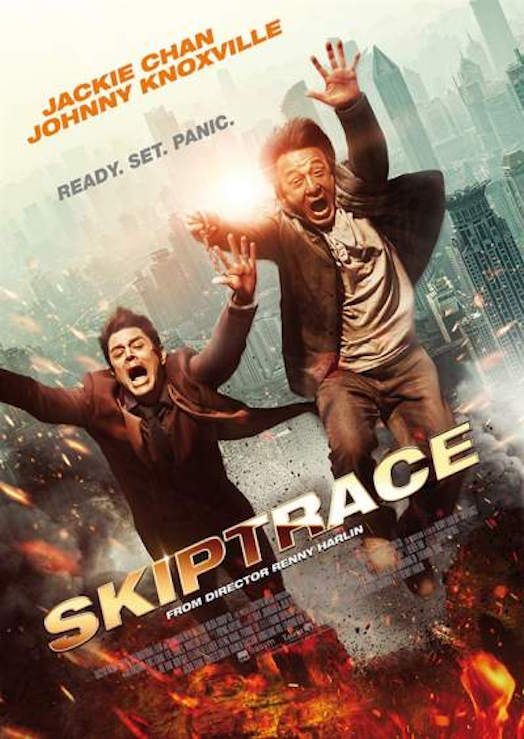
At least there is some closure to Isabel’s story, even if it is rushed and overly melodramatic. Other characters come and go without the viewer even realising, and there’s a confrontation between Manuel and “Black” Jones that comes out of nowhere and then returns there as soon as it’s done. But by the time this encounter pops up the average viewer will be checking their watch and wondering just how longer this farrago has got to go. There are just so many wretchedly glum and dispiriting scenes that have come before, suspended moments that lack resonance or emotion, for anyone to really care how it all turns out. And when it finally does, the only reaction left to the viewer who’s got that far is relief.

Rating: 3/10 – a spectacular misfire of a movie, Exposed is so bad that William Goldman’s classic quote, “In Hollywood, nobody knows anything”, should have the qualifier, “especially Lionsgate” added to it; let’s hope that Linton’s original cut eventually sees the light of day, and this dull, leaden, dreary mess can be consigned to the cinematic landfill where it belongs.

Share this:

  • Click to share on X (Opens in new window) X
  • Click to share on Facebook (Opens in new window) Facebook
  • More
  • Click to print (Opens in new window) Print
  • Click to email a link to a friend (Opens in new window) Email
Like Loading...

Monthly Roundup – March 2016

31 Thursday Mar 2016

Posted by dullwood68 in Movies

≈ Leave a comment

Tags

Andy Mikita, Australia, Comedy, Cricket, Crime, Death of a Gentleman, Deathgasm, Devil worship, Disaster, Documentary, Drama, Ed Cowan, Edgar Ramirez, Ericson Core, Extreme Sports, FBI, Fred Durst, Horror, Ice Hockey, India, James Blake, Jarrod Kimber, Jason Bourque, Jeremy Sisto, Johnny Blank, Luke Bracey, Michael Shanks, Michelle MacLaren, Milo Cawthorne, Movies, Mr. Hockey: The Gordie Howe Story, Murder, Paul Johansson, Point Break (2015), Population / 436, Ray Winstone, Religion, Remake, Reviews, Robbery, Rockwell Falls, Sam Collins, Sci-fi, Sebastian Spence, Sports, Stonados, SyFy, Test match cricket, Twenty 20, Water spouts

Deathgasm (2015) / D: Jason Lei Howden / 86m

Cast: Milo Cawthorne, James Blake, Kimberley Crossman, Sam Berkley, Daniel Cresswell, Delaney Tabron, Stephen Ure, Andrew Laing, Colin Moy, Jodie Rimmer

Deathgasm

Rating: 7/10 – when a teenage wannabe death metal band come into possession of sheet music that, when played, summons a demon called the Blind One, it’s up to them to stop both a zombie outbreak and the Blind One from destroying the world; raucous, rough around the edges, and with a liberal approach to gore, Deathgasm is a good-natured horror comedy that stumbles on occasion but, luckily, never loses sight of its simple brief: to be loud, dumb and lots of fun.

Mr. Hockey: The Gordie Howe Story (2013) / D: Andy Mikita / 87m

Cast: Michael Shanks, Kathleen Robertson, Dylan Playfair, Andrew Herr, Emma Grabinsky, Martin Cummins, Andrew Kavadas, Teach Grant, Ali Tataryn, Lochlyn Munro, Tom Anniko, Donnelly Rhodes, Erik J. Berg

HANDOUT PHOTO; ONE TIME USE ONLY; NO ARCHIVES; NOTFORRESALE Actor Michael Shanks as Gordie Howe is shown in a scene from the film "Mr.Hockey:The Gordie Howe Story," airing on CBC-TV on Sunday. THE CANADIAN PRESS/HO -CBC-Allen Fraser

Rating: 6/10 – the true story of ice hockey legend Gordie Howe who, after retiring in 1971, came back two years later and played not only with his two sons but in a new league altogether – and maintained his winning ways; looking like a strange hybrid of TV movie and abandoned big screen project, Mr. Hockey: The Gordie Howe Story does its best to avoid being a formulaic biopic, but is let down by the episodic nature of the script and a tendency to raise issues but not always follow them through.

Point Break (2015) / D: Ericson Core / 114m

Cast: Edgar Ramirez, Luke Bracey, Ray Winstone, Teresa Palmer, Matias Varela, Clemens Schick, Tobias Santelmann, Delroy Lindo, Max Thieriot, Nikolai Kinski

Point Break

Rating: 4/10 – ex-extreme sportsman Johnny Utah joins the FBI and is given the opportunity to infiltrate a group of extreme sports fanatics who may or may not be responsible for a string of daring robberies; pretty to look at and featuring some great extreme sports sequences, Point Break is nonetheless a pointless remake with poor performances from all concerned, a woeful script, and lacks the edge Kathryn Bigelow brought to the original, leaving the viewer to wonder – yet again – why Hollywood insists on making so many dreadful remakes.

Stonados (2013) / D: Jason Bourque / 88m

Cast: Paul Johansson, Sebastian Spence, Miranda Frigon, Jessica McLeod, Dylan Schmid, William B. Davis, Grace Wolf, Thea Gill

Stonados

Rating: 3/10 – off the coast of Boston, freak water spouts appear and hurl large stone chunks in all directions, putting everyone in danger and hoping they don’t hit land and become… stonados!; made in the same year as Sharknado, this tries to take itself seriously, but without a sense of its own absurdity it stutters from one poorly staged “stonado” sequence to another while – ironically – being unable to shrug off a whole raft of ineffective, embarrassing performances.

Population / 436 (2006) / D: Michelle MacLaren / 88m

Cast: Jeremy Sisto, Fred Durst, Charlotte Sullivan, Peter Outerbridge, David Fox, Monica Parker, Frank Adamson, R.H. Thomson, Reva Timbers

Population 436

Rating: 6/10 – a census taker (Sisto) comes to the small town of Rockwell Falls and begins to suspect a terrible conspiracy, one that keeps the town’s population fixed at the same number; an uneasy, paranoid thriller with horror overtones, Population 436 features a good performance from Sisto and a well maintained sense of dread, but is held back from being entirely convincing by some awkward soap opera moments and a mangled reason for the town keeping its numbers to 436.

Death of a Gentleman (2015) / D: Sam Collins, Jarrod Kimber, Johnny Blank / 99m

With: Sam Collins, Jarrod Kimber, Ed Cowan, Giles Clarke, Narayanaswami Srinivasan, Lalit Modi, Gideon Haigh, Mark Nicholas, Chris Gayle

Death of a Gentleman

Rating: 8/10 – journalists Collins and Kimber set out to make a movie about their love of cricket and the challenges it faces, both commercially and culturally, and discover a scandal that threatens an end to test match cricket; not just for fans of “the gentleman’s game”, Death of a Gentleman is a quietly impressive documentary that sneaks up on the viewer and exposes the level of corruption at the very top of the game, revealing as it does the way in which the sport is being held to ransom by Srinivasan and a handful of others.

Share this:

  • Click to share on X (Opens in new window) X
  • Click to share on Facebook (Opens in new window) Facebook
  • More
  • Click to print (Opens in new window) Print
  • Click to email a link to a friend (Opens in new window) Email
Like Loading...

Showdown in Manila (2016)

28 Monday Mar 2016

Posted by dullwood68 in Movies

≈ 2 Comments

Tags

Action, Alexander Nevsky, Cary-Hiroyuki Tagawa, Casper Van Dien, Crime, Cynthia Rothrock, Don 'The Dragon' Wilson, Drama, Manila, Mark Dacascos, Philippines, Review, Thriller, Tia Carrere

Showdown in Manila

D: Mark Dacascos / 86m

Cast: Alexander Nevsky, Casper Van Dien, Cary Hiroyuki-Tagawa, Tia Carrere, Matthias Hues, Don ‘The Dragon’ Wilson, Cynthia Rothrock, Olivier Gruner, Dmitriy Dyuzhev, Maria Bravikova, Iza Calzado, Jake Macapalga, Hazel Faith Dela Cruz, Mark Dacascos

There’s a saying that if it walks like a duck, sounds like a duck, and looks like a duck then it must be a duck. But if the ‘it’ in question walks like Arnold Schwarzenegger, sounds like Arnold Schwarzenegger, and looks like Arnold Schwarzenegger (in certain circumstances) then it must be Alexander Nevsky. The Russian-born former body builder turned actor/writer/producer has modelled his acting style so closely on that of the former Governor of California that if make up was judiciously applied in the right places they could pass for brothers (or maybe even twins – sorry, Danny DeVito).

In Showdown in Manila, this is most apparent during the extended showdown that happens not in Manila but in the jungle. Here Nevsky adopts Schwarzenegger’s trademark stance from his Eighties heyday, fires off rounds one-handed, and turns his whole body to face a new opponent. Nevsky also sounds like Schwarzenegger, his phrasing and accent often completely the same. If it isn’t intentional then it’s an incredible feat of unconscious mimicry.

vlcsnap-00003

But Nevsky’s troublesome performance aside, the movie has several other distractions for the viewer to contend with. Following a botched mission to apprehend local crime kingpin the Wraith (Tagawa), Nevsky’s character, Violent Crimes Unit detective Nick Peyton, takes the rap for his team being wiped out and leaves the force. It’s a strange reaction for such a tough guy, and if it’s intended to provide the character with a degree of debilitating guilt (or any kind of guilt), then it’s soon abandoned. Instead, we fast forward two years. Now we’re introduced to vacationing FBI agent Matthew Wells (Dacascos) and his wife (Carrere). Spotting the Wraith at the hotel where they’re staying, Wells engages his men in a fight but ends up being killed by the Wraith himself.

As a witness, Mrs Wells is soon targeted by the Wraith, but a VCU agent (Calzado) has the bright idea of putting her in the safe hands of Nick (now a private eye) and his partner, sex addict Charlie Benz (Van Dien). At this point, viewers might want to hit the pause button and ask themselves, he’s a private eye? With a sex addict partner? And he’s the first choice to protect the chief witness in a murder investigation? Against an untouchable crime boss? Am I hearing this properly? Well, yes. But things get even more incredible. Mrs Wells then hires Nick and Charlie to track down the Wraith and bring him to her alive.

Cue a series of scenes where Nick and Charlie intimidate various low-level criminals about the whereabouts of the Wraith and his principal henchman, Dorn (Hues) (and which also feature Charlie letching at almost every female he meets/sees/catches a brief glimpse of). Eventually they apprehend Dorn and they learn about the Wraith’s jungle hideout. Nick contacts his old captain at the VCU (Macapalga), but instead of passing on the information, he asks for help, and that help proves to be his “old team”.

vlcsnap-00004

It’s at this point that fans of Eighties/Nineties action flicks will smile appreciatively at the introduction of Messrs, Rothrock, Gruner, and Wilson. Together with Dyuzhev, they join Nick and Charlie on a raid on the Wraith’s hideout that involves lots of shooting (at unidentified targets), and get to show off their trademark moves. It’s a lengthy sequence, choppily edited and lacking exactly the kind of thrills that low budget Eighties action movies lacked. There’s a less than satisfying coda to wrap things up, and the moment where full effect of Nevsky’s “impersonation” of Schwarzenegger is cemented for all to see.

Unsurprisingly, Showdown in Manila isn’t the best example of the dozens of Philippine-based actioners that are made each year for the international market. Even with the presence of Rockroth, Gruner and Wilson, the movie slips into first gear early on and never manages to reach second, settling instead for an even rhythm that robs the action sequences of any excitement, but which also highlights the paucity of Nevsky’s story idea. The script, by Craig Hamann, who co-wrote Quentin Tarantino’s very first, uncompleted movie, My Best Friend’s Birthday (1987), takes the usual continuity short cuts in connecting the dots of Nick’s search for the Wraith, and the distractions mentioned above include a foot chase that couldn’t have been pitched at a faster pace if Nevsky and Hues had been using zimmer frames, Dacascos orchestrating the best fight sequence for himself, and Tagawa’s disinterested performance.

vlcsnap-00001

Alas, Tagawa isn’t the only one. Van Dien, employed to provide a degree of comedy via Charlie’s sex addiction, looks bored and resigned for most of the time, while Hues merely looks smug for no reason at all. Nevsky is as wooden as you’d expect, Carrere does crazed, vengeance-seeking widow as if her life depended on it, and the inclusion of Rothrock, Gruner and Wilson is brief enough that they avoid having to make too much of an effort and in doing so remind viewers why they never won any acting awards back in the day. And Dacascos does a perfunctory job behind the camera, but doesn’t engage enough with his cast to make a difference.

Rating: 4/10 – forgettable and unrewarding, Showdown in Manila acts as a showcase for Nevsky, but the actor/writer/producer lacks the necessary screen presence to make that much of an impact; once again, a low budget actioner that never overcomes or exceeds its limitations, despite having more potential to do so than most.

Share this:

  • Click to share on X (Opens in new window) X
  • Click to share on Facebook (Opens in new window) Facebook
  • More
  • Click to print (Opens in new window) Print
  • Click to email a link to a friend (Opens in new window) Email
Like Loading...

Trailers – The Shallows (2016), All the Way (2016) and Too Late (2015)

23 Wednesday Mar 2016

Posted by dullwood68 in Movies

≈ Leave a comment

Tags

All the Way, Blake Lively, Bryan Cranston, Civil rights, Crime, Dennis Hauck, Great white shark, Jaume Collet-Serra, Jay Roach, John Hawkes, Lyndon B. Johnson, Previews, Racial equality, The Shallows, Thriller, Too Late, Trailers, True story

Forty-one years after we all thought it was safe to go back into the water, and despite movies such as the Jaws sequels, Open Water (2003), and The Reef (2010), it’s time to really crank up the terror and put Carcharodon carcharias back where he belongs: prowling the waters and looking for people to munch on. Or in this case, a person to munch on, as Blake Lively’s unfortunate surfer finds herself trapped two hundred yards from shore, injured, and with the least friendliest denizen of the deep idly swimming about between her and safety. Anthony Jaswinski’s screenplay was on the 2014 Blacklist, and has been picked up by Jaume Collet-Saura – Orphan (2009), Run All Night (2015) – so there’s every chance that this will have aquaphobics everywhere repeating “It’s only a movie” over and over.


American politics in the Sixties was dominated by one issue: racial equality. But what few people remember is that the Civil Rights Bill was passed during Lyndon B. Johnson’s time in office, and that he was more instrumental in getting the Bill through Congress than you’d expect. All the Way is an adaptation of the Tony award winning play by Robert Schenkkan that also starred Bryan Cranston as LBJ, and which reunites Cranston with his Trumbo (2015) director, Jay Roach. So, in essence another biopic set against the backdrop of turbulent political times in America. But with the prospect of a certain wild-haired businessman sitting in the White House in nine months’ time, this may well serve as a timely reminder that what a country really needs in a leader is the will to do what’s right, and not what his party thinks is right.


In Dennis Hauck’s first feature, John Hawkes is the world weary private eye tasked with finding a missing woman in this modern day film noir that consists of five “acts”, all of which have been filmed in a single take. What may seem like an awkward way of presenting a traditional kind of Hollywood movie looks to have been overcome by the cleverness of the script and the freshness of the direction, and the presence of a terrific cast, headed by one of current cinema’s best character actors. With the investigation taking a back seat to the effects on the characters involved, this should be quirky and rewarding, and prove to be one of those movies that rewards the lucky viewer who seeks it out.

Share this:

  • Click to share on X (Opens in new window) X
  • Click to share on Facebook (Opens in new window) Facebook
  • More
  • Click to print (Opens in new window) Print
  • Click to email a link to a friend (Opens in new window) Email
Like Loading...

Crack-Up (1946)

10 Thursday Mar 2016

Posted by dullwood68 in Movies

≈ Leave a comment

Tags

Art, Claire Trevor, Crime, Drama, Fraud, Herbert Marshall, Irving Reis, Murder, Museum, Mystery, Pat O'Brien, Ray Collins, Review, RKO, Thriller, Train crash, X-rays

Crack-Up

D: Irving Reis / 93m

Cast: Pat O’Brien, Claire Trevor, Herbert Marshall, Ray Collins, Wallace Ford, Dean Harens, Damian O’Flynn, Erskine Sanford, Mary Ware

Suggested by the wonderfully titled short story, Madman’s Holiday by Fredric Brown, Crack-Up is, on face value, yet another cheap throwaway movie made by RKO in the post-war years, and of little interest to anyone who isn’t a fan of Pat O’Brien, Claire Trevor or Herbert Marshall. But look more closely and you’ll find a neat little thriller, still modest by the standards of the day, but with an approach to the material that makes it a fascinating piece to watch.

O’Brien is noted art critic and curator George Steele. When the movie begins we see him desperately trying to break into a museum late one evening. He appears drunk and he’s violent towards the policeman who tries to stop him. Once inside the museum the policeman manages to knock him unconscious. When he comes to he’s surrounded by Barton and some of the other museum trustees, as well as Terry, a visiting Englishman called Traybin (Marshall), and a police lieutenant called Cochrane (Ford). When Steele starts talking about being involved in a train crash earlier, it’s Cochrane who breaks the bad news: there hasn’t been a train crash (and his mother isn’t in the hospital). Certain there has been a crash, Steele allows himself to be pacified by one of the trustees, Dr Lowell (Collins). Lowell asks Steele if he can remember anything before the so-called crash, and though his mind is obviously disturbed, Steele recounts events from earlier in the day.

Crack-Up - scene1

He gives a lecture at the museum, and is particularly interested in debunking the idea that art and culture are the exclusive properties of the rich and prosperous. He wants to see art made more available to the general public, an idea that worries the museum’s director, Barton (Sanford). When Steele goes further, and voices his plan to allow the public to see paintings being x-rayed so as to see how some artists have painted over an existing work, Barton is incensed and tells Steele he will do his best to block the idea and ensure it never happens.

Unperturbed by Barton’s waspish attitude, Steele hooks up with an old flame, Terry Cordell (Trevor) and they go for a drink together. Steele receives a call that tells him his mother is sick in hospital. He heads straight for the train station where he boards the first available train north. But as the train approaches one of its stops, Steele sees another train that he’s convinced will crash headlong into his. The other train gets nearer and nearer, and beyond that Steele can’t remember anything else, and certainly not breaking into the museum. With Traybin intervening to stop Cochrane from arresting Steele for assaulting the policeman, and with the trustees all wanting the whole affair being kept out of the press, Steele is allowed to go home.

Crack-Up - scene2

But you can’t keep a confused art critic down and soon Steele is determined to find out what happened to him. He makes the same journey by train and learns enough to know that there’s something suspicious going on at the museum, and that it has something to do with a painting by Gainsborough that was recently lost at sea. With Terry’s aid he begins to piece together the fragments of a conspiracy that brings together the museum, a collection of old masters, and his own unwitting involvement.

There’s something undeniably charming about Crack-Up, with its murky lighting and frazzled hero, its well-oiled narrative and pleasing performances. For modern audiences it’ll prove too familiar perhaps, but if viewed with the eyes and ears of a contemporary viewer, there’s a lot that won’t seem as predictable or commonplace as it would do today. And a large part of the movie’s charm is the freshness the script – by John Paxton, Ben Bengal and Ray Spencer – brings to its central mystery: did George Steele experience a train crash, and if he didn’t, then why does he think he did? And as the story unfolds there are enough twists and turns to keep things lighhhearted and playful.

This is largely due to Irving Reis’s exemplary direction. Reis was a director who by 1946 had made a number of low budget thrillers including three featuring The Falcon. But while the projects he worked on were largely prosaic and uninspiring, Reis himself didn’t see it that way, and he worked hard to elevate the material he had to work with. This can be evidenced by the way in which Crack-Up is structured – there are breaks in the narrative where the viewer could convince him- or herself that they’ve missed something (just as Steele does) – and the way in which Steele is never able to fully convince himself that his sanity is as secure as he’d like it to be (he’s not quite the tortured hero of other film noirs, but his insecurity is a definite plus).

Crack-Up - scene3

Reis is aided by strong performances from O’Brien and Trevor, with the latter given the chance to be more than just a piece of attractive window dressing to pose beside the lead actor. While O’Brien is steadfast and determined (while remaining unsure deep down), Trevor is angry and tenacious, refusing to believe her man is of unsound mind, and willing to support him no matter what. It’s a tough, unwavering performance, and Trevor, who was always an actress capable of far more than she was usually asked to provide, here makes Terry the equal of any of the male characters, and someone who the audience can identify with and be sympathetic towards. As the urbane Traybin, Marshall plays to type and uses his sleepy-eyed features to good effect, drawling his way through the material with a casual deference that balances O’Brien’s gruffer, more aggressive portrayal.

For fans of the genre (and the era) there are cameos from the likes of Edward Gargan (an arcade cop), Eddie Parks (a drunk in the same arcade), and Gertrude Astor (a nagging wife), and there’s an above average score by Leigh Harline that includes a couple of unsettling motifs that are used during some of the more intense sequences. It all builds to a satisfactory climax, with the villain – and their accomplice – proving not quite as obvious as usual (though, again, fans of the genre may think otherwise). It all adds up to a surprisingly rewarding film noir, and a movie well worth checking out if you get the opportunity.

Rating: 7/10 – an unassuming, modest little thriller that features a robust script, adroit performances, and assured, confident direction, Crack-Up is a movie that goes some way to proving that not all post-war mysteries were derivative and/or bland; not just for fans, this is a welcome addition to the genre that doesn’t settle for being second best or tired and predictable.

NOTE: Alas, no trailer for Crack-Up is available.

Share this:

  • Click to share on X (Opens in new window) X
  • Click to share on Facebook (Opens in new window) Facebook
  • More
  • Click to print (Opens in new window) Print
  • Click to email a link to a friend (Opens in new window) Email
Like Loading...

Monthly Roundup – February 2016

29 Monday Feb 2016

Posted by dullwood68 in Movies

≈ Leave a comment

Tags

5th birthday, Action, Adam Sandler, Andy Samberg, Animation, Athletics, Batman, Batman: Bad Blood, Batwing, Batwoman, Benson Fong, Bruce Wayne, Charlie Chan, Crime, Detective, Dracula, Drama, Fast Girls, Genndy Tartakovsky, Hotel Transylvania 2, Jason O'Mara, Jay Oliva, Kevin James, Lenora Crichlow, Lily James, Mantan Moreland, Morena Baccarin, Murder, Mystery, Nightwing, Noel Clarke, Phil Karlson, Radium, Regan Hall, Relay team, Review, Robin, Sean Maher, Selena Gomez, Sequel, Shanghai, Sidney Toler, Sports, Steve Buscemi, Stuart Allan, The Heretic, Thriller, Yvonne Strahovski

Batman: Bad Blood (2016) / D: Jay Oliva / 72m

Cast: Jason O’Mara, Yvonne Strahovski, Stuart Allan, Sean Maher, Morena Baccarin, Gaius Charles, James Garrett, Ernie Hudson, Robin Atkin Downes, Travis Willingham, Geoff Pierson

Batman Bad Blood

Rating: 7/10 – when Batman (O’Mara) is missing believed dead after an encounter with  The Heretic (Willingham), it falls to Nightwing (Maher), Robin (Allan) and newcomer Batwoman (Strahovski) to discover if he really is dead, or if his disappearance is part of a bigger plot; continuing Warner Bros. impressive streak of animated Batman movies, Batman: Bad Blood is as moody and psychologically sombre as its live action counterparts, even if some of its characters behave like children in their attempts to get along.

The Shanghai Cobra (1945) / Phil Karlson / 64m

Cast: Sidney Toler, Mantan Moreland, Benson Fong, James Cardwell, Joan Barclay, Addison Richards, Arthur Loft

The Shanghai Cobra

Rating: 5/10 – the Oriental detective is tasked with finding the murderer of several bank employees, but the mystery turns out to be connected to an old case Chan was involved in years before in Shanghai; another conveyor belt Monogram/Charlie Chan movie, The Shanghai Cobra is hardly distracting, or distinguishable from any of its Forties brethren, but it’s entertaining enough in its way, and Toler still seems to be enjoying himself in the role (which is no mean feat).

Fast Girls (2012) / D: Regan Hall / 91m

Cast: Lenora Crichlow, Lily James, Lorraine Burroughs, Noel Clarke, Lashana Lynch, Dominique Tipper, Rupert Graves, Philip Davis, Bradley James, Emma Fielding

Fast Girls

Rating: 3/10 – Olympics wannabe sprinter Shania Andrews (Crichlow) makes it onto the UK team but finds her progress hampered by a rivalry with fellow athlete Lisa Temple (James), as well as personal problems of her own; for Fast Girls, writer and star Noel Clarke has fashioned a cliché-strewn drama that lacks cohesion between scenes and is laden with unconvincing dialogue, not to mention the paper-thin plotting and some extremely wayward performances.

Hotel Transylvania 2 (2015) / D: Genndy Tartakovsky / 89m

Cast: Adam Sandler, Andy Samberg, Selena Gomez, Kevin James, Steve Buscemi, David Spade, Keegan-Michael Key, Asher Blinkoff, Fran Drescher, Molly Shannon, Megan Mullally, Nick Offerman, Dana Carvey, Rob Riggle, Mel Brooks

Hotel Transylvania 2

Rating: 6/10 – Count Dracula (Sandler) has a grandchild – but will the little sprog turn out to be fully human, or will he sprout fangs and make his grandfather eternally happy?; a serviceable sequel, Hotel Transylvania 2 lacks momentum in the first hour and then pulls it together to provide a fun conclusion, which makes it okay for children, but adults will probably be wishing they were watching the first movie instead.

Share this:

  • Click to share on X (Opens in new window) X
  • Click to share on Facebook (Opens in new window) Facebook
  • More
  • Click to print (Opens in new window) Print
  • Click to email a link to a friend (Opens in new window) Email
Like Loading...

Secret in Their Eyes (2015)

11 Thursday Feb 2016

Posted by dullwood68 in Movies

≈ 2 Comments

Tags

Alfred Molina, Billy Ray, Chiwetel Ejiofor, Crime, Drama, El secreto de sus ojos, Julia Roberts, Murder, Nicole Kidman, Remake, Revenge, Review, Thirteen years, Thriller

Secret in Their Eyes

D: Billy Ray / 111m

Cast: Chiwetel Ejiofor, Nicole Kidman, Julia Roberts, Dean Norris, Michael Kelly, Joe Cole, Alfred Molina, Zoe Graham

Remakes of foreign language movies are never easy. Not everything translates as well in another language, and some of the idiosyncracies or nuances of the original movie will be lost in the process. But that’s not to say that foreign language movies shouldn’t be remade in English, or that movie makers shouldn’t try to put their own stamp on an existing idea/concept/storyline, just that if they do, we shouldn’t be too surprised if the end result isn’t as compelling or as satisfying as the original.

Such is the case with Secret in Their Eyes, the English language remake of El secreto de sus ojos (2009), an Argentinian thriller that was a bit of a surprise when it was released, and which garnered critical acclaim around the world. It’s a gripping, very stylishly realised movie, and easily one of the best movies of that particular year, a fact supported by its taking home the Oscar for Best Foreign Language Film. With that version being so successful, the question that needs to be asked is: do we need this one as well?

SITE - scene3

The answer is not really, no. It was always going to be a difficult challenge, but when it was announced that the writer of Captain Phillips (2013), Billy Ray, was going to write and direct the movie, and the services of Messrs Ejiofor, Kidman and Roberts had been secured for the trio of lead roles, you could have been forgiven for thinking that this was one remake that couldn’t go wrong. But right from the start there’s a sense that something’s not quite right, that whatever magic made the original such a breath of fresh air is missing, and that what follows is likely to be more disappointing than rewarding.

And so it proves. The basic plotting and structure are retained but where the original wove its connected stories over a distance of twenty-five years, Ray reduces it to thirteen (perhaps to avoid having to cast two sets of actors in the lead roles). He also retains the cutting back and forth between the two time periods, as Ejiofor’s obsessed FBI Counter-Terrorism expert Ray Kasten investigates the death of his friend and colleague Jess Cobb’s daughter (Graham). While Jess (Roberts) is overwhelmed by grief, Karsten determines to bring her daughter’s killer to justice, but soon finds himself in hot water when his main suspect, Marzin (Cole), is connected to a surveillance operation he’s a part of, and none of his superiors, including DA Martin Morales (Molina), want to know anything about his potential involvement in a murder.

While Kasten battles political expediency, he finds an ally in newly appointed Assistant DA Claire Sloan (Kidman). Together they try to build a strong enough case against Marzin, but their efforts go unrewarded. Thirteen years later, and with Marzin having gone to ground in the meantime, Kasten stumbles across new evidence that points to Marzin’s whereabouts. He gets back in touch with Claire (now the DA, having succeeded Morales) and Jess, and vows that this time they’ll get Marzin. Claire is hesitant and unconvinced, while Jess seems unimpressed and unwilling to help. Kasten presses on, but as before his plans go awry, and catching Marzin proves as difficult as it was thirteen years before.

SITE - scene1

By retaining the twin storylines and having them run side by side as the movie unfolds, Ray strives to keep the audience guessing as to the eventual outcome of both, but in the process he robs the material of any pace, and makes some scenes appear out of context to what’s gone before. Others seem to have sprung out of thin air, with certain relationship developments – a lukewarm romance between Kasten and Claire being the main culprit – stuttering in and out of life. It’s as if certain editorial choices were made in the cutting room, and the structure was the ultimate loser. It also makes for several frustrating moments when the viewer has to stop and remind themselves of where they (and the movie) are.

And unfortunately, Ray isn’t anywhere near as good a director as he is a writer. Too many scenes lack the appropriate energy, and his use of the camera doesn’t always show a knack for effective framing, leading to some shots where his cast are marginalised unnecessarily at the expense of the broader composition. He and the audience should be grateful then that, despite all these bars to their doing so, Ejiofor and Roberts both come up with terrific performances (Kidman is good but as with so many of her performances in recent years, she somehow manages to fall just shy of impressing completely). Kasten’s dogged, guilt-charged determination gives Ejiofor the chance to flex his acting muscles to highly charged effect, while Roberts steals every scene she’s in as the detached, grief-stricken mother who is a shadow of her former self; her de-glammed features display Jess’s sorrow so perfectly it’s heartbreaking to look at her.

But these are two unexpected positives in a movie that steadfastly refuses to provide its audience with anything other than a concerted diet of perfunctory plot and character developments, and which also asks said audience to take several leaps of faith in terms of the narrative and how it plays out (at one point, Kasten and Claire make a deduction – which Ray clumsily illustrates – that they can’t possibly have arrived at in the way that they do). And the end, which should be quietly powerful, as well as disturbing, lacks the necessary heightened emotion to provide the payoff the movie so badly needs by this point.

SITE_030515_182.CR2

Thanks to an ill-considered approach to the material, Ray’s adaptation lacks appeal and falls flat far too often to be excusable. As remakes of foreign language movies go it’s not up there with the best, but rather occupies a place much lower down the table, and serves as an object lesson in how not to compensate for the loss of nuance and subtlety present in the original. Some movies, as we all know – and studio executives should know by now – deserve not to be remade, and this is as good an example as any that El secreto de sus ojos should have been one of them.

Rating: 4/10 – laborious, and lacking in too many departments to be anywhere near as effective as it needs to be, Secret in Their Eyes may well be too much of a chore for some viewers to watch all the way through; however this would be doing a disservice to Ejiofor and Roberts, but their performances aside, there’s really very little to recommend this particularly unnecessary remake.

Share this:

  • Click to share on X (Opens in new window) X
  • Click to share on Facebook (Opens in new window) Facebook
  • More
  • Click to print (Opens in new window) Print
  • Click to email a link to a friend (Opens in new window) Email
Like Loading...

Misconduct (2016)

06 Saturday Feb 2016

Posted by dullwood68 in Movies

≈ 4 Comments

Tags

Al Pacino, Alice Eve, Anthony Hopkins, Blackmail, Crime, Drama, Fraud, Josh Duhamel, Lawsuits, Legal drama, Malin Akerman, Manhunt, Murder, Review, Shintaro Shimasawa, Thriller

Misconduct

D: Shintaro Shimasawa / 106m

Cast: Josh Duhamel, Alice Eve, Anthony Hopkins, Al Pacino, Malin Akerman, Byung-hun Lee, Julia Stiles, Glen Powell, Marcus Lyle Brown

Released as a Lionsgate Premiere (rough translation: not good enough to be shown in cinemas), Misconduct is an early contender for Worst Movie of 2016. It’s ostensibly a thriller but veers off in so many different directions in an effort to be interesting that in the end it’s just a jumbled mess. There’s not even the germ of a good idea here, the script by Simon Boyes and Adam Mason resorting to cliché after cliché and line after line of awful dialogue in its efforts to appear somehow less than the sum of its parts (or the parts of its sum even).

It’s a movie where everybody is up to no good. Sadly, the audience knows this right from the start, so any “revelations” or twists and turns have the effect of inducing a headache rather than any surprises. The storyline tries to be convoluted in an attempt to mystify anyone unfortunate enough to watch Misconduct, and the basic plot – Hopkins’ pharmaceutical CO is accused of deliberately falsifying bad test results – struggles even to be relevant within the movie’s own structure. Once a badly attached blackmail plot is added to the mix, it gives the movie carte blanche to be as stupid as it wants, a move it takes full advantage of.

Misconduct - scene3

As well as the blackmail plot – instigated by Hopkins’ unbalanced girlfriend (played by Akerman) and involving Duhamel’s ambitious attorney – Misconduct features a dire attempt at adding depth to two of the characters’ lives, Duhamel and his moody, depressed wife Eve, by having them recovering from the loss of a child during pregnancy. Why this subplot is even present is a mystery the movie never answers, along with the presence of Lee as a corporate-sponsored assassin who for some inexplicable reason is dying from some unstated disease (again you have to ask yourself why any of this has been included).

There’s more, but as the movie continues piling absurdity on top of absurdity, the unlucky viewer will find themselves wondering if this is intended more as a parody than a thriller, and will be laughing accordingly, but if it is then no one informed the cast, who struggle through scene after scene with resolutely straight faces and a grim determination to get through it all and reach the end with a degree of integrity still intact. Duhamel is a capable actor, but here he’s as wooden as a fence post and spends most of his screen time looking petulant, or as if there’s a bad smell under his nose (there is, and it’s coming from the script). Matching him for petulance, and using staring off into space a lot as a character trait, Eve gives probably the worst performance of her career so far, as she tries to distance herself from everyone and everything connected with the movie.

Misconduct - scene2

Akerman is a poor femme fatale, her attempt to seduce Duhamel having all the allure of a drunken one-night stand with someone you hope doesn’t give you their number the next morning. As mentioned above, Lee is the assassin who’s close to death, and he sleepwalks through his role making supposedly “deep” comments and trying to appear above it all by refusing to acknowledge that this is one acting gig his agent should be apologising for profusely. And then there’s Stiles, an actress who really should be given better roles than the one she has here, a Kidnap and Response expert who gets to shout at Hopkins a lot and look suitably badass (and that’s basically it).

You get the picture: Misconduct has its fair share of bad performances to match its bad script and wayward direction – Shimasawa, making his first feature, gives an approximation of what a director should be doing – but then there’s Hopkins and Pacino, two Oscar winners now content (like De Niro) to throw away their talent and make terrible movie after terrible movie. Hopkins has the larger amount of screen time, but phones in his performance, and falls back on the kind of aloof, manipulative, all-knowing characterisation he’s played way too often in recent years. When you’ve got Hopkins in a movie and he’s playing a powerful businessman you just know in advance that he’s not going to be putting much effort in, and that’s exactly the case here. Amazingly though, Pacino is worse, his law firm boss coming across as a pale imitation of his role in The Devil’s Advocate (1997). He’s also upstaged by his own hair, which in one scene, looks like the worst comb-back in history. Why either of them took on their roles is the one abiding mystery the movie cannot solve.

Misconduct - scene1

From starting out as a legal thriller – you get the idea the movie might just be about bringing Hopkins’ fraudulent CO to justice, and the hunt for the evidence to prove his negligence – it soon descends into a welter of murder and violence and betrayal on all sides, as the script decides it needs to be more punchy than in its earlier scenes. It leads to one of the movie’s more absurd scenes where Duhamel, having gouged his stomach escaping from the police, buys some glue in a convenience store and uses it to close his wound. And of course, he then runs around as if it had never happened. Lazy, lazy, lazy.

There is an attempt at providing a central murder mystery to keep the audience intrigued, but regular viewers of this kind of movie will spot the culprit from a mile off. But this is in keeping with the movie’s inability to come up with anything new or unpredictable, and again, regular viewers of this kind of star-happy dross will have resigned themselves to the movie’s inevitable outcome(s) long before they reach the end. The makers probably didn’t intend the title Misconduct to be so relevant to its own content and execution, but in one respect they can be applauded: they made sure the movie certainly lived up to it.

Rating: 3/10 – with only its standard, by-the-numbers production effort propping it up in the ratings stakes, Misconduct is a woeful, massively disappointing movie that falls down each and every time it tries to be interesting; with awful dialogue and some truly atrocious performances, it’s a movie that defies explanation as to its existence, and ranks as one of the worst “corporate/legal thrillers” in recent memory.

Share this:

  • Click to share on X (Opens in new window) X
  • Click to share on Facebook (Opens in new window) Facebook
  • More
  • Click to print (Opens in new window) Print
  • Click to email a link to a friend (Opens in new window) Email
Like Loading...

A Most Violent Year (2014)

09 Saturday Jan 2016

Posted by dullwood68 in Movies

≈ Leave a comment

Tags

Albert Brooks, Ambition, Crime, David Oyelowo, Drama, Gangsters, J.C. Chandor, Jessica Chastain, Oscar Isaac, Review, Theft, Thriller

A Most Violent Year

D: J.C. Chandor / 125m

Cast: Oscar Isaac, Jessica Chastain, David Oyelowo, Albert Brooks, Elyes Gabel, Christopher Abbott, Matthew Maher, Alessandro Nivola, Peter Gerety, Catalina Sandino Moreno

New York, 1981. In the midst of one of the most violent years in the city’s history, local businessman Abel Morales (Isaac) is looking to expand his fuel distribution company with the acquisition of a bay-front storage facility, and to do it all legally and above board. He’s supported by his wife, Anna (Chastain), but the deal he’s making for the facility is dependent on his being able to make the final payment. With his trucks being hijacked on a regular basis, and with his drivers afraid to make deliveries, Abel struggles to make sense of who’s behind it all.

Matters aren’t made any better by his having to contend with an investigation into his company by District Attorney Lawrence (Oyelowo). Lawrence is convinced that Abel’s business must be crooked in some way, despite his protestations. And as if that wasn’t bad enough, one of his drivers, Julian (Gabel), is involved in a shootout with robbers during an attempted hijacking. Julian goes on the run, and Abel has to track him down and convince him to give himself up. But Julian refuses and remains at large.

AMVY - scene2

Meanwhile, the due date for the final payment is fast approaching and Abel has to negotiate loans from as many people and places as he can, but he’s still short. When he learns that one of his trucks is in the process of being hijacked he pursues the robbers, eventually catching one of them. To his surprise he finds that the hijackings aren’t all that they seemed, though it does lead to a discovery about one of his competitors that he uses to his financial advantage. But with time running out he’s forced to approach Mafia-affiliated Peter Forente (Nivola); Forente agrees to loan Abel the money he needs but the terms are not very favourable. But when Abel tells Anna about the deal he’s made, she reveals something she’s done which has an impact on everything.

It’s been said on many previous occasions by many other people that the title A Most Violent Year is misleading. The movie contains little actual violence, despite including a bridge shootout and Abel chasing down one of the robbers, and there’s none of the tense showdowns we’ve come to associate with gangster movies. Instead, writer/director Chandor has chosen to focus on how difficult it is to operate in a criminal environment and remain honest. To look at Abel, and to see how close he’s getting to securing his company’s future, you do expect temptation to be placed in his way, and you expect him to struggle with each temptation, but what Chandor does instead is replace temptations with a series of setbacks. Abel’s a good man, solid and trustworthy through and through, and it’s how he maintains his innate honesty when faced with these setbacks – when he could be excused for taking a short cut or looking the other way for a moment – that defines him.

AMVY - scene3

As played by Isaac, Abel is a strong, determined individual who always seems a little out of his depth, despite his commitment. It’s his wife, Anna, played with spirited guile by Chastain, who is really the driving force and overseer of the business’s fortunes, and so we have a Lady Macbeth for the Eighties, as she cajoles and prompts and on occasion, bullies her husband into doing what’s needed. It’s a subtly constructed conceit – behind every successful man is an even more ambitious woman – but in the hands of Chandor and Chastain, the movie is all the more intelligent and engrossing when Anna is forced to take centre stage.

The period setting is entirely apt, with the cold, wintry conditions of the time reflecting purposefully on the narrative, as Abel’s fuel distribution business, mostly gas, is seen as a saviour not only for him, but for the city and its battle with the elements (Isaac is seen throughout in a big mustard-coloured coat that looks as warming as it does heavy). The movie wants Abel to succeed and so do we, and as he navigates the treacherous waters of “low” finance, each time he doesn’t quite achieve what he sets out to get, it has the effect of impressing on the viewer that he too will be fighting the elements if he fails completely. Bradford Young’s cinematography is a highlight, the wet, shiny, chilly streets of New York given a light sheen of glamour that makes for some impressive shots throughout the movie.

AMVY - scene1

By focusing on the trials and tribulations of someone seeking to firmly establish themselves in their chosen area of commerce, and by keeping the stakes firmly in the foreground, Chandor achieves a directness of style and narrative that keeps the viewer intrigued as to the outcome, and committed to following Abel’s story to its conclusion. It may not be a movie that features a swift pace and dazzlingly executed photography, but its measured approach to the material allows the viewer to become embroiled in the machinations and leverages that Abel becomes involved in. And if there aren’t any standout action beats or revenge style melodramatics then it’s entirely to the benefit of the movie, and stands as a testament to the quality of Chandor’s writing and directing.

Rating: 8/10 – a modest yet effective crime drama, A Most Violent Year is yet another example of just how good writer/director J.C. Chandor is, and why he’s one of the best movie makers working today; perceptive, extremely well acted, and lacking only in its inclusion of the DA subplot (which doesn’t add anything), this is the kind of movie that shouldput audiences in mind of the kind of thrillers that were being made in the early Seventies: assured, classy, and with a lot to say.

Share this:

  • Click to share on X (Opens in new window) X
  • Click to share on Facebook (Opens in new window) Facebook
  • More
  • Click to print (Opens in new window) Print
  • Click to email a link to a friend (Opens in new window) Email
Like Loading...

Life of a King (2013)

14 Monday Dec 2015

Posted by dullwood68 in Movies

≈ Leave a comment

Tags

Big Chair Chess Club, Chess, Crime, Cuba Gooding Jr, Dennis Haysbert, Drama, Eugene Brown, High School, Jake Goldberger, Kevin Hendricks, Malcolm M. Mays, Review, True story, Washington D.C.

Life of a King

D: Jake Goldenberger / 98m

Cast: Cuba Gooding Jr, Malcolm M. Mays, Kevin Hendricks, Carlton Byrd, Rachae Thomas, LisaGay Hamilton, Richard T. Jones, Dennis Haysbert, Paula Jai Parker, Jordan Calloway, Blake Cooper Griffin

A true story involving troubled teens, inner city trials and tribulations, an ex-con with family issues, and the redemptive power of chess, Life of a King has good intentions, a lot of heart, and the slow, steady pace of an illness-of-the-week TV movie. It also has a relaxed, committed performance from Gooding Jr, and enough hokey moments to choke an elephant. But what it also has is that curious approach to a true story that often leads audiences to believe that a real person’s life is stuffed full of clichés and dramatic coincidence.

The movie tells the story of Eugene Brown (Gooding Jr), who served seventeen years in prison for armed robbery, and who, once he was released, took the opportunity with a group of inner city youths to set up a community chess club. Along the way he finds it difficult to find honest work by admitting he’s an ex-con; subsequently lies on an application form for janitor at his local high school; tries to reunite with his disaffected children, Katrina (Thomas) and Marcus (Calloway); avoids being dragged back into a life of crime by his old partner Perry (Jones); faces down the school hard nut, Clifton (Byrd); sees potential in another student, Tahime (Mays); is fired once his principal (Hamilton) finds out he’s lied on his application; rents a derelict house so the chess club can carry on; stands helplessly by as one of the other students, Peanut (Hendricks), is dragged into a dangerous situation with unfortunate results; begins to connect with his children through his efforts with the chess club; overcomes a setback involving the house; and looks ahead to his chess protegés entering and triumphing in a local tournament. And then…?

Life of a King - scene2

If any of this sounds incredibly or entirely predictable, then by and large it is. From Brown’s surrogate father relationship with The Chessman (Haysbert) while in gaol, to Tahime’s showdown against a chess prodigy (Griffin), Life of a King ticks every possible true story box in its retelling of Brown’s story. It’s an homogenised approach to an uplifting tale that deserves better, but thanks to Goldberger’s mostly leaden direction, there are precious few moments of real power and emotion. What moments there are, are also mostly down to Gooding Jr’s earnest, well-modulated performance. He’s suitably determined as Brown, and shows the man’s resourcefulness and drive with a good sense of the difficulties he must have faced and overcome.

But again, he’s fighting against the poor performance of Goldberger in the director’s chair (making only his second feature). Goldberger – working from the script he wrote with David Scott and Dan Wetzel – seems unable to rise above the clichéd nature of his own narrative, and on several occasions seems to be embracing each cliché wholeheartedly. Some scenes feel like they’ve been constructed from the DNA of several true story TV movies, and viewers familiar with those kind of movies will notice that some of the scenes have been shot in that very style (and some individual shots as well).

Life of a King - scene1

This all makes the movie watchable enough thanks to the familiarity with which it’s being presented, but a bit of a chore as well thanks to the very same familiarity. Some fun can be had from anticipating each cliché before it appears, and if you felt so inclined, you could devise a predictability curve that could be drawn as the movie progresses (though it might end up being just a straight line). It’s all a shame as Brown’s story is engaging in its own right, and his efforts are well worth celebrating, but a different format is definitely needed. There’s also the problem of the script’s occasional moralising, as it uses the metaphor of chess to represent Life as often as it can, as if the audience wouldn’t get it the first time.

Aside from Gooding Jr’s portrayal of Brown, the rest of the cast do their best to make some headway against the material, with Mays’ reticent Tahime and Hendricks’ eager beaver Peanut making more of an impression than expected. Byrd’s sneering Clifton is straight out of Stock Characters 101, and he’s matched by Jones’ preening drug lord and Calloway’s petulant son. It’s the female characters that come off best (though that’s not saying much), and Hamilton is strongest as the high school principal who’s sympathetic to Brown’s cause (and even helps out with the dishes at the chess house).

Life of a King - scene3

As mentioned above, the movie ends with Tahime taking on a chess genius in an open tournament, and in the final naturally. But what should be a gripping sequence is let down by Goldberger’s inability to shoot it all with any sense of urgency or tension. And he’s further let down by editor Julie Garces, whose decision to represent the game through a flurry of indistinguishable moves and clock-punching makes it all impossible to follow (though that was probably the idea). It’s a clunky end to a movie that’s been the definition of clunky from the very beginning.

Rating: 4/10 – slackly and lazily constructed, Life of a King doesn’t do its subject matter justice, and lets the audience down in the process; tired and ineffective, it’s a true life tale that’s been soaked in complacency and shows off its shortcomings as if they were unavoidable.

Share this:

  • Click to share on X (Opens in new window) X
  • Click to share on Facebook (Opens in new window) Facebook
  • More
  • Click to print (Opens in new window) Print
  • Click to email a link to a friend (Opens in new window) Email
Like Loading...

Heist (2015)

03 Thursday Dec 2015

Posted by dullwood68 in Movies

≈ Leave a comment

Tags

Action, Bus 657, Casino, Crime, Dave Bautista, Drama, Gina Carano, Jeffrey Dean Morgan, Review, Robbery, Robert De Niro, Scott Mann, Thriller

J1026_ThePrfctHst_Pstr_50FM.indd

D: Scott Mann / 93m

Cast: Jeffrey Dean Morgan, Robert De Niro, Dave Bautista, Gina Carano, Morris Chestnut, Kate Bosworth, Mark-Paul Gosselaar, Summer Altice, D.B. Sweeney, Lydia Hull

There are few things in the world of cinema more dispiriting, more dismal, than the sight of good actors struggling to make something out of nothing. We’ve all seen them: those star-drenched movies that feature a great cast; the kind of movie where you can’t help but think, “Well, if they all signed up for it then it must be good”. But here’s the thing, the thing that a lot of people forget: actors, just like everyone else on the planet, have bills to pay, and so, sometimes, they forget about the “art” of cinema and focus on getting paid. And you can tell within minutes of the movie starting that the Oscar-winner in the supporting role is bored, or that the up-and-coming actor with a few good roles under his belt is trying too hard by way of compensating for the paper-thin nature of his character, and the star looks weary throughout, as if once committed to making the movie he can’t wait for filming to be over. (And let’s not mention any promotion work, where they might have to talk about the movie and how “good” it is…)

And so it is with Heist, a movie that has no real reason for existing, and wouldn’t be missed if by some chance it suddenly didn’t. This is knock-off movie making of the finest ordure, a terrible waste of the cast’s time, the crew’s time, your time, everybody’s time. It sucks, and royally. Despite what you see on screen, the overwhelming impression is of a movie made just for the sake of it, because somebody  – and here we have to lay the blame very firmly at the feet of writer Stephen Cyrus Sepher – had an idea for a movie and they managed to persuade five separate production companies to cough up the money to make it. And as so often happens in these situations, nobody looked at Sepher’s script and said, “Er, hang on a second…”

Heist - scene1

Ironically given the movie’s subject matter, this should be filed under “take the money and run”, as everyone involved does not quite enough to make Heist a watchable affair, from Mann’s uninspired, by-the-numbers direction to Sepher’s cliché-ridden, nonsensical script to half a dozen bored performances that help to sap the life out of a movie that’s already on life support. The main offender is De Niro, giving possibly the worst performance of his career, a lazy, credibility-free caricature of a gangster. De Niro is so bad that if you were to show someone who had no idea about his career or his legacy this particular movie, and then showed them, say, Raging Bull (1980), that someone would be completely baffled as to how it could be the same actor. This is a role where he mugs his way through in lieu of providing a recognisable character, and where he makes absolutely no attempt to convince the audience that his character’s sudden change of heart in the last ten minutes is in any way believable.

Elsewhere, the movie’s star looks tired and/or bored, with Morgan summing up just enough energy to get him through each scene, while Bautista undoes the kudos he’s gained from Guardians of the Galaxy (2014) by giving such a one-note performance it’s embarrassing (though to be fair his character doesn’t exactly benefit from being written that well). He’s matched by Chestnut as De Niro’s psychotic right hand man, but both actors are outdone by Gosselaar’s crooked cop, a wise-cracking annoyance who’s introduced in the most unlikely of fashions and continues to be annoying until the script finally has done with him. And Carano continues to undo the good work she did in Haywire (2011) by steadfastly refusing to alter her expression no matter what.

Heist - scene2

With so many things going against it, Heist struggles along from scene to scene, clearly happening in its own little alternate universe where the laws of plausibility are flouted with impunity, and where bad directing, writing and acting are actively encouraged and supported. The plot, such as it is, involves Morgan teaming up with Bautista to rob De Niro’s casino, but when the robbery goes wrong, they hijack a bus and head for Texas (as you do). Bautista is bad through and through – hey, he doesn’t care if the pregnant lady on board goes into labour, that’s how badass he is – but Morgan is doing it to pay for his sick daughter’s transplant operation (so he’s much more noble). The threat of passengers being killed keeps the police at bay, while De Niro and Chestnut beaver away in the background looking for a way to isolate Morgan from the bus and for De Niro to get his money back. Along the way Carano becomes an ally, Bosworth cameos as De Niro’s daughter, and bus driver D.B. Sweeney continually looks like he’s wondering what happened to his career.

So, it’s a bad movie, but it’s professionally made and manages to look a little more glossy than your average TV movie, but with so many “did they really just do that?” moments littering the narrative, no amount of goodwill generated by the production crew can mitigate for the farrago of bad ideas and decisions made in front of the camera. This could – and should – have been better in every way but sadly, no one took the time or made the effort to improve things, and the result is a movie that should be a dictionary definition of the word lame. Or awful. Or lousy. Or rubbish (you get the picture).

Rating: 3/10 – one to avoid, Heist only scores so highly because the crew, at least, weren’t asleep at the wheel; with no one attempting to correct the mistakes inherent in the script, or even recognise them, all the viewer can do is to try and stop their jaw from continually hitting the floor from seeing all the ridiculous antics the script is packed with.

Share this:

  • Click to share on X (Opens in new window) X
  • Click to share on Facebook (Opens in new window) Facebook
  • More
  • Click to print (Opens in new window) Print
  • Click to email a link to a friend (Opens in new window) Email
Like Loading...

Monthly Roundup – November 2015

01 Tuesday Dec 2015

Posted by dullwood68 in Movies

≈ Leave a comment

Tags

A Close Call for Boston Blackie, Alien abduction, Blackmail, Boston Blackie, Brittany Allen, Chester Morris, Christmas Icetastrophe, Cory Monteith, Crime, Criminal, David Morse, Detective, Disaster, DJ, Drama, Emily Ratajkowski, Extraterrestrial, Flash freeze, Freddie Stroma, Friendships, Horror, Jennifer Spence, Jonathan Winfrey, Josh C. Waller, Lew Landers, Lynn Merrick, Max Joseph, McCanick, Meteor, Mike Vogel, Murder, Review, Sheriff, SyFy, The Vicious Brothers, Victor Webster, We Are Your Friends, Wes Bentley, Zac Efron

Extraterrestrial (2014) / D: The Vicious Brothers / 101m

Cast: Brittany Allen, Freddie Stroma, Melanie Papalia, Jesse Moss, Anja Savcic, Gil Bellows, Michael Ironside, Sean Rogerson, Emily Perkins

Extraterrestrial

Rating: 4/10 – Teens in a remote cabin discover a crash-landed UFO, and soon learn that this isn’t an isolated incident, and that aliens have been abducting people for some time; yet another tired, gloomy-looking sci-fi/horror that starts promisingly and soon runs out of steam, Extraterrestrial aims to be edgy but is compromised by a convoluted narrative and some frustratingly poor performances.

A Close Call for Boston Blackie (1946) / D: Lew Landers / 60m

aka Lady of Mystery

Cast: Chester Morris, Lynn Merrick, Richard Lane, Frank Sully, George E. Stone, Claire Carleton, Erik Rolf, Mark Roberts, Russell Hicks

A Close Call for Boston Blackie

Rating: 6/10 – Private detective Boston Blackie (Morris) becomes embroiled in a scam involving a missing baby and an old flame, and finds himself accused of murder; one of the better entries in the series, A Close Call for Boston Blackie sees Morris having a ball as Blackie and the movie as a whole is a lot of fun, the simple, fast-paced approach to the material making the whole thing enjoyable even if you’re not a fan.

Christmas Icetastrophe (2014) / D: Jonathan Winfrey / 87m

Cast: Victor Webster, Jennifer Spence, Richard Harmon, Tiera Skovbye, Mike Dopud, Johannah Newmarch, Andrew Francis, Ben Cotton, Boti Bliss

Christmas Icetastophe

Rating: 4/10 – A meteorite splits in two in the Earth’s atmosphere, and one half crashes to earth in the small mountain town of Lennox causing everything in the area to flash-freeze; another slice of sci-fi hokum from the SyFy channel, Christmas Icetastrophe narrowly avoids being complete rubbish thanks to some good location work and a sense of its own absurdity, but when all’s said and done, it’s still rubbish.

McCanick (2013) / D: Josh C. Waller / 96m

Cast: David Morse, Cory Monteith, Mike Vogel, Ciarán Hinds, Rachel Nichols, Trevor Morgan, Tracie Thoms, Aaron Yoo

McCanick

Rating: 6/10 – Veteran detective Eugene McCanick (Morse) goes after a small-time crook (Monteith), but not for the reason everyone around him thinks; a feature role for the ever-reliable Morse is set in psychological thriller territory and gives the actor plenty of room and time to play “disturbed”, but Waller’s sterile direction lets him and the movie down, and McCanick becomes disturbing for all the wrong reasons.

We Are Your Friends (2015) / D: Max Joseph / 96m

Cast: Zac Efron, Wes Bentley, Emily Ratajkowski, Jonny Weston, Shiloh Fernandez, Alex Schaffer, Jon Bernthal

We Are Your Friends

Rating: 6/10 – An aspiring DJ (Efron) finds the road to fame and fortune paved with obstacles: the friends who are unwittingly holding him back, the girl who can’t fully commit, and the mentor who may or may not help him fulfill his dream; a surprisingly aimless movie with little actual drama to sustain its running time, We Are Your Friends is too lightweight in its execution to make much of an impact, and as a result, never gets off the ground.

Share this:

  • Click to share on X (Opens in new window) X
  • Click to share on Facebook (Opens in new window) Facebook
  • More
  • Click to print (Opens in new window) Print
  • Click to email a link to a friend (Opens in new window) Email
Like Loading...

Monthly Roundup – October 2015

01 Sunday Nov 2015

Posted by dullwood68 in Movies

≈ Leave a comment

Tags

AnnaLynne McCord, Blackmail, Charlie Chan, Crime, Detective, Donald Sutherland, Drama, Gambling, George Eads, Gold bullion, Gutshot Straight, Justin Steele, Las Vegas, Lesley-Anne Down, Literary adaptation, Mantan Moreland, Michael Crichton, Murder, Radio station, Reviews, Robbery, Sean Connery, Sidney Toler, Stephen Lang, Steven Seagal, The First Great Train Robbery, The Scarlet Clue, Thriller, Victorian England, Vinnie Jones

It’s been a pretty quiet month, so only a few movies make the roundup.

The First Great Train Robbery (1979) / D: Michael Crichton / 110m

Cast: Sean Connery, Donald Sutherland, Lesley-Anne Down, Alan Webb, Malcolm Terris, Robert Lang, Michael Elphick, Wayne Sleep, Pamela Salem, Gabrielle Lloyd

Rating: 7/10 – in Victorian England, master criminal Pierce (Connery) recruits a motley gang of criminals (including Sutherland’s dandy pickpocket) to pull off an audacious heist: the robbery of gold bullion from a moving train; Crichton adapts his own novel with wit and style, and even though he finds himself hampered by budgetary restrictions, still manages to make The First Great Train Robbery an enjoyable, if predictable, diversion.

First Great Train Robbery, The

The Scarlet Clue (1945) / D: Phil Rosen / 65m

Cast: Sidney Toler, Mantan Moreland, Ben Carter, Benson Fong, Virginia Brissac, Robert Homans, Jack Norton, I. Stanford Jolley, Janet Shaw

Rating: 5/10 – murder and espionage are the order of the day for Charlie Chan (Toler) as he investigates criminal goings-on in a building that houses both a radio station and a science laboratory (which are, of course, connected); not one of the Oriental detective’s better outings but still possessed of an admirable energy, The Scarlet Clue has a meandering script but it’s offset by good performances (though Toler does look tired) and better-than-average injections of humour.

Scarlet Clue, The

Gutshot Straight (2014) / D: Justin Steele / 89m

aka: Gutshot

Cast: George Eads, AnnaLynne McCord, Stephen Lang, Ted Levine, Steven Seagal, Vinnie Jones, Tia Carrere, Fiona Dourif

Rating: 4/10 – when Las Vegas-based gambler Jack (Eads) meets fellow gambler Duffy (Lang) he finds himself entangled in a web of murder and deceit centred around Duffy’s wife, May (McCord); boasting a half-decent performance by Seagal, this vanity project for Eads signposts its clunky plot developments with all the finesse of a punch to the face, and never finds a way of overcoming its star’s shortcomings as an actor.

Gutshot Straight

Share this:

  • Click to share on X (Opens in new window) X
  • Click to share on Facebook (Opens in new window) Facebook
  • More
  • Click to print (Opens in new window) Print
  • Click to email a link to a friend (Opens in new window) Email
Like Loading...

The Secret Bride (1934)

02 Friday Oct 2015

Posted by dullwood68 in Movies

≈ Leave a comment

Tags

Barbara Stanwyck, Bribery, Corruption, Crime, District attorney, Drama, Glenda Farrell, Governor, Grant Mitchell, Marriage, Murder, Review, Thriller, Warren William, William Dieterle

Secret Bride, The

aka Concealment

D: William Dieterle / 64m

Cast: Barbara Stanwyck, Warren William, Glenda Farrell, Grant Mitchell, Arthur Byron, Henry O’Neill, Douglass Dumbrille, Russell Hicks

Ambitious state Attorney General Robert Sheldon (William) and Ruth Vincent (Stanwyck), the daughter of the state governor (Byron), are head over heels in love and decide to get married without telling anyone. But before they can announce it, an investigator working out of Sheldon’s office, Breeden (Dumbrille), discovers evidence that implicates the Governor in a potential bribery scandal. Breeden’s evidence comes courtesy of Willis Martin (Mitchell), the private secretary to J.F. Holdstock (Hicks) who deposited money from his boss into the Governor’s private bank account. With no credible business reason for these deposits to have been made, it looks very much as if the Governor was accepting money from Holdstock, a convicted embezzler, whom he’d pardoned.

Sheldon is obliged to investigate this claim and bring it before a legislative body. He tells Ruth about it and they decide to keep their marriage a secret for fear of Sheldon being accused of having a conflict of interest. Their first course of action is to speak to Holdstock but they learn he’s committed suicide, and later they find an incriminating letter amongst Holdstock’s papers. That night, Breeden visits Martin’s apartment, and it becomes clear that the investigator is working his own angle. Later, at Sheldon’s offices, his secretary, Hazel Normandie (Farrell), leaves to meet Breeden outside the building. As he comes toward her, he is shot and killed. Ruth has seen everything from Sheldon’s inner office, and knows Hazel wasn’t the shooter, but keeps quiet to protect her marriage and Sheldon’s enquiries.
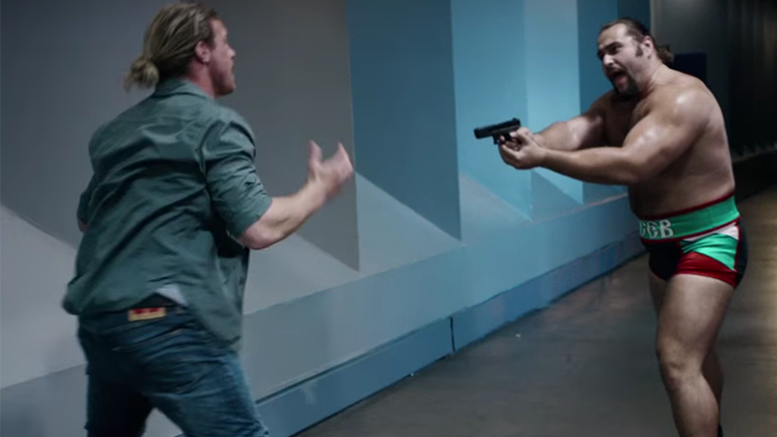
Hazel is arrested and charged with Breeden’s murder. Meanwhile, the legislature is becoming suspicious of the Governor and Sheldon, believing them to be withholding evidence surrounding Holdstock’s death from them. With Hazel’s trial for murder fast approaching, Ruth takes a desperate chance and visits Martin in his apartment. She learns that Holdstock’s death wasn’t suicide, and that her father’s main political supporter, Jim Lansdale (O’Neill), is more involved than even she, or her father, suspects.

Secret Bride, The - scene

Based on the play by Leonard Ide, The Secret Bride is, on face value, the kind of mystery thriller that Warner Bros. seemed to churn out on a weekly basis throughout the early Thirties, but a closer look reveals a movie with more going on than meets the  eye. Its construction will be familiar to anyone who’s seen similar movies from the era, and the playing is as heartfelt and melodramatic as the script demands, but it’s a movie that plays well on a number of different levels, and uses its bribery and corruption storyline to make several cogent and pertinent observations on the politics of the time.

That it does so is a testament to the professionalism of the cast and crew, and in particular, Dieterle and Stanwyck. Dieterle made the movie because he was contractually obliged to; in addition he thought the script – by Tom Buckingham, F. Hugh Herbert and Mary McCall Jr – was weak. Stanwyck was in a similar position, and wanted out of her contract as soon as possible; after this she made just one more movie for Warner Bros. before returning to the studio in 1941 for Frank Capra’s Meet John Doe. With its director and star both less than enamoured of the project, it still remains an object lesson in how to mount a tightly-focused and entertaining little drama, and make it a better feature than expected. That it only played in a small number of theatres when it was released is discouraging, and perhaps reflects Warner Bros. own concerns over its commercial viability.

But it is a great little movie, with several directorial flourishes that make up for some of the more (deliberately) pedestrian scenes (Breeden’s death is a perfect case in point, shot from a high vantage point with rain falling and the horrified presence of Hazel Normandie to give it an emotional impact). Dieterle’s preference for low camera angles is a feature of the movie’s look, as is the way in which the camera is allowed to move in close when characters are panicked or anguished or frightened. A lot of this is also due to the presence of the great Ernest Haller behind the camera, and he even manages to make the movie’s static set-ups visually interesting, while Owen Marks’ assured cutting and editing provides the movie with its fast-paced rhythm.

Along with Stanwyck, William and the rest of the cast, Dieterle also teases out some of the script’s obvious subtexts, and explores them thoroughly. While the absence of trust in politics is pushed to the fore, the notion that such an absence is sometimes necessary is also given expression in the Governor’s resignation to his probable fate, as if his treatment by the press and his colleagues is to be accepted as par for the course. Sheldon and Ruth’s keeping quiet about their marriage is cleverly shown as a way of protecting themselves from associated harm and their selfish actions (while allowed to be put aside later on in the movie) go unpunished, adding to the idea that deception and falsity in politics is okay, whether it’s for the “greater good” or not.

As the embattled and battling couple, Stanwyck and William make a great team, sparking off each other in their scenes together. Stanwyck could always be called upon to be glamorous and alluring, but here she’s a muted heroine, her wardrobe reflecting Ruth’s single-mindedness and inner fortitude. William, often the charming rogue, is equally restrained, drawing the viewer in by showing the doubts Sheldon has as the mystery surrounding Holdstock’s death and his father-in-law’s involvement becomes less and less clear-cut. And they’re provided with efficient and formidable support from the likes of Dumbrille (unprincipled co-worker), Farrell (wise-cracking but vulnerable secretary), O’Neill (smoothly objectionable political fixer), Mitchell (devious and scared private secretary), and Byron (principled but naïve career politician). It’s an enviable cast, and everyone is on fine form, creating solid performances and characterisations, and adding to the pleasure to be had from watching the movie in the first place.

Secret Bride, The - scene2

It’s true that the scenario is unremarkable, and the outcome entirely predictable, but then what movie from the period was ever any different? What makes this movie stand out is the attention paid to the characters, and the way in which Dieterle – against his better judgement perhaps – took what he believed to be an unpromising script, and made it as absorbing and compelling (and more so) than many other movies made in the same vein. And that’s to be rightly applauded.

Rating: 8/10 – an unappreciated gem deserving of critical reappraisal, The Secret Bride overcomes its potboiler preconceptions to provide a hour and four minutes of substantial entertainment; Stanwyck and William are on great form, and the whole mystery of the Governor’s innocence is played out with such a convincing touch of ambivalence that it helps the material immensely, and leaves the viewer wondering for quite some time, if he really is as guilty as it seems.

Share this:

  • Click to share on X (Opens in new window) X
  • Click to share on Facebook (Opens in new window) Facebook
  • More
  • Click to print (Opens in new window) Print
  • Click to email a link to a friend (Opens in new window) Email
Like Loading...

Monthly Roundup – September 2015

30 Wednesday Sep 2015

Posted by dullwood68 in Movies

≈ Leave a comment

Tags

12 Rounds 3: Lockdown, Abigail Breslin, Action, Airlock, Alexander and the Terrible Horrible No Good Very Bad Day, Arizona, Axe to Grind, Baseball, Beverly Tyler, Birthday, Brian McGinn, Brighton, Cancer charity, Cattle rustling, Corrupt cops, Crime, Dean Ambrose, Debbie Rochon, Drama, Earl Bellamy, Ferrell Takes the Field, George Montgomery, Georgie Henley, Horror, Insurance fraud, Jennifer Garner, Jim Davis, Jim O'Connolly, John Carson, Josh Gad, Judith Viorst, Keoni Waxman, Literary adaptation, Matt Zettell, Mercenary, Michael Matzur, Michael Steppe, Miguel Arteta, Mira Sorvino, Movie role, Murder, Perfect Sisters, Peter Vaughan, Rob Margolies, Roger R. Cross, Romantic comedy, Sci-fi, Screenwriter, She Wants Me, Short movie, Silver mines, Smokescreen, Stanley M. Brooks, Stephen Reynolds, Steve Carell, Steven Seagal, The Boss, The Toughest Gun in Tombstone, True story, Vacuity, Vinnie Jones, Western, Will Ferrell, Wish, WWE, Yvonne Romain

Smokescreen (1964) / D: Jim O’Connolly / 70m

Cast: Peter Vaughan, John Carson, Yvonne Romain, Gerald Flood, Glynn Edwards, John Glyn-Jones, Penny Morrell, Barbara Hicks, Sam Kydd, Deryck Guyler

Rating: 7/10 – bowler-hatted insurance fraud investigator Roper (Vaughan) is called in to investigate when a heavily insured businessman’s car bursts into flames before going over a cliff – but was he in it?; a neat, unprepossessing British thriller, Smokescreen features an enjoyable performance from Vaughan, some stunning location photography, and a script that allows for plenty of ironic humour in amongst the drama.

Smokescreen

Alexander and the Terrible Horrible No Good Very Bad Day (2014) / D: Miguel Arteta / 81m

Cast: Steve Carell, Jennifer Garner, Ed Oxenbould, Dylan Minnette, Kerris Dorsey, Sidney Fullmer, Bella Thorne, Megan Mullally

Rating: 7/10 – when overlooked youngest child Alexander (Oxenbould) has the worst day ever, he wishes that his family could experience just a little of what he has to deal with – but when they do, things quickly escalate beyond anything that Alexander has ever faced; Judith Viorst’s novel gets a fun-filled adaptation that is amusing, clever, and visually inventive, but which lacks bite, and has surprisingly few characters to root for (that is, none).

Alexander etc

She Wants Me (2012) / D: Rob Margolies / 85m

Cast: Josh Gad, Kristen Ruhlin, Johnny Messner, Aaron Yoo, Hilary Duff, Melonie Diaz, Wayne Knight, Charlie Sheen

Rating: 6/10 – an ambitious though neurotic writer (Gad) working on his first screenplay faces a dilemma when the role written for his girlfriend (Ruhlin) grabs the attention of an A-list actress (Duff); a romantic comedy with few ambitions that struggles to make good comedy out of anxious indecision, She Wants Me is innocuous stuff that passes by in amiable fashion without ever really involving its audience.

She Wants Me

12 Rounds 3: Lockdown (2015) / D: Stephen Reynolds / 90m

Cast: Dean Ambrose, Roger R. Cross, Daniel Cudmore, Lochlyn Munro, Ty Olsson, Sarah Smyth, Rebecca Marshall, Kirby Morrow

Rating: 3/10 – an honest cop (Ambrose) finds himself trapped in a station house and hunted by several of his corrupt colleagues when he comes into possession of evidence that will see them put away for the rest of their lives; another depressing WWE Films action movie, 12 Rounds 3: Lockdown dispenses with the set up of the first two movies, and does its best to be yet another Die Hard rip-off, albeit one stifled by inept plotting, terrible dialogue and a performance by Ambrose that never gets started.

12 Rounds 3 Lockdown

Perfect Sisters (2014) / D: Stanley M. Brooks / 100m

Cast: Abigail Breslin, Georgie Henley, Mira Sorvino, James Russo, Rusty Schwimmer, Zoë Belkin, Jeffrey Ballard, Zak Santiago

Rating: 5/10 – two sisters (Breslin, Henley), fed up with the antics of their alcoholic mother (Sorvino) and her poor choice in boyfriends, decide the only way of improving their lives is to kill her; if it wasn’t based on a true story, Perfect Sisters would be dismissed as absurd nonsense with no basis in reality, but as it is it’s an uneven, tonally awkward movie that features average performances from its leads, but which does seem completely committed to drawing the viewer’s attention to Breslin’s cleavage at every opportunity.

Perfect Sisters

Ferrell Takes the Field (2015) / D: Brian McGinn / 49m

With: Will Ferrell

Rating: 5/10 – in support of a friend’s cancer charity, Will Ferrell takes to the baseball field to play all nine positions for ten major league teams at five separate pre-season games, and all in one day; if the charity had been the Reassure Will Ferrell He’s Still Funny Charity, then this would have made more sense because Ferrell Takes the Field is a mercifully brief documentary that sees the comedian attempt to appear relevant in an arena where he has no real talent, and where, when he gets it wrong, he’s quite rightly booed by fans, leaving viewers to wonder why on earth this idea was commissioned in the first place.

Ferrell Takes the Field

Axe to Grind (2015) / D: Matt Zettell / 81m

Cast: Debbie Rochon, Guy Torry, Matthew James Gulbranson, Paula Labaredas, Michelle Tomlinson, Dani Thompson, Adrian Quihuis, Tony von Halle

Rating: 2/10 – when the producer of her latest film tells aging actress Debbie Wilkins (Rochon) that her role has gone to another, younger actress, it sets her on a killing spree that sees her despatch the cast and crew, and anyone else who gets in her way; low-budget horror always runs the risk of being offensively stupid, and Axe to Grind is no exception, as it treats its audience with disdain while failing to appear as clever and entertaining as it thinks it is.

Axe to Grind

The Toughest Gun in Tombstone (1958) / D: Earl Bellamy / 72m

Cast: George Montgomery, Jim Davis, Beverly Tyler, Gerald Milton, Don Beddoe, Scotty Morrow, Harry Lauter

Rating: 6/10 – with outlaws running most of the nascent state of Arizona, the Governor assigns Matt Sloane (Montgomery) and a team of undercover officers to apprehend the gang involved with cattle rustling and silver thefts; a modest Western that tells its simple story plainly and with few frills, The Toughest Gun in Tombstone is acceptable fare that doesn’t exert itself too much, but is enjoyable nonetheless.

Toughest Gun in Tombstone, The

Absolution (2015) / D: Keoni Waxman / 91m

aka The Mercenary: Absolution

Cast: Steven Seagal, Byron Mann, Adina Stetcu, Vinnie Jones, Howard Dell, Josh Barnett, Maria Bata, Dominte Cosmin

Rating: 4/10 – mercenary John Alexander (Seagal) and his colleague Chi (Mann) find themselves battling both a criminal syndicate and their own corrupt boss when a contract killing proves to have larger ramifications; another mumbling, stand-in heavy performance from Seagal detracts from what is – for him – a better outing than of late, and thanks to Mann’s athleticism and Jones’ snarling villain, any scenes where Seagal doesn’t take part are actually halfway enjoyable.

Absolution

Vacuity (2012) / D: Michael Matzur / 14m

Cast: Michael Steppe

Rating: 6/10 – an astronaut, Alan Brahm (Steppe), stranded in an airlock while the space station he’s on begins to fall apart has a choice: either save his crew by jettisoning the airlock (but dooming himself), or save himself and get back to Earth (and dooming the crew) – which choice will he take?; as moral dilemmas go, the one facing Alan Brahm in Vacuity is, on the face of it, fairly cut and dried, but thanks to Matzur’s script and Steppe’s performance you’re never quite sure how things will play out, or even if either choice will be taken away from him, making this short movie a model of concisely focused drama.

Vacuity

Share this:

  • Click to share on X (Opens in new window) X
  • Click to share on Facebook (Opens in new window) Facebook
  • More
  • Click to print (Opens in new window) Print
  • Click to email a link to a friend (Opens in new window) Email
Like Loading...

Legend (2015)

18 Friday Sep 2015

Posted by dullwood68 in Movies

≈ 2 Comments

Tags

"Nipper" Read, Brian Helgeland, Christopher Eccleston, Crime, David Thewlis, Drama, Emily Browning, Gangsters, London's East End, Murder, Protection, Reggie Kray, Review, Ronnie Kray, The Kray Twins, Tom Hardy, True story, Violence

Legend

D: Brian Helgeland / 131m

Cast: Tom Hardy, Emily Browning, David Thewlis, Christopher Eccleston, Paul Anderson, Taron Egerton, Colin Morgan, Tara Fitzgerald, Sam Spruell, John Sessions, Chazz Palminteri, Paul Bettany, Kevin McNally, Shane Attwooll, Jane Wood

London, the 1960’s. The East End is home to two brothers, the confident, ambitious Reggie Kray (Hardy), and his psychotic twin Ronnie (Hardy). Together they run a criminal network based around providing protection to local businesses, while Reggie owns a club that attracts celebrities and politicians who like to mingle with London’s criminal element. The pair are well-liked in their local neighbourhood, and are both feared and respected. Reggie is continually followed by Detective Superintendent “Nipper” Read (Eccleston) who has been given the task of bringing the twins to justice. But they’re always one step ahead of him.

One morning, Reggie’s regular driver, Frankie Shea (Morgan) hasn’t shown up. Reggie goes to his house; the door is opened by Frankie’s sister, Frances (Browning). He’s immediately attracted to her and he asks her out. She agrees to go out with him, despite her mother’s misgivings, and despite Reggie’s reputation. Meanwhile, one of the Krays’ gang has been caught “working” on the south side of the river, an area run by the Richardson family. This infraction leads to a meeting between the Krays and the Richardsons on neutral ground, but the Richardsons send some of their men instead to get rid of Reggie and Ronnie once and for all. But the twins prove too much for the men, and are all viciously beaten up.

With no other serious rivals, the Krays’ criminal empire spreads further afield. With the aid and advice of their accountant, Leslie Payne (Thewlis) – whom Ronnie dislikes and is suspicious of – they take over a casino in an attempt to earn some legitimate money (while still maintaining their regular criminal activities). An old warrant sees Reggie spend six months in prison, during which time he and Frances grow closer, though she seeks reassurances that he’ll be more honest when he gets out. But it doesn’t happen, and even with her hopes dashed, Reggie and Frances get married. Ronnie is welcoming at first, but their marriage leads him to think that Reggie is trying to move on without him. At the same time, Read’s investigation is sidelined when he allows himself to be photographed with the Krays in their casino.

Frances finds herself isolated, and begins to rely more and more on medication to ease her growing sense of anguish. Reggie is oblivious, and has more urgent matters to attend to when Ronnie kills one of the Richardsons’ men, George Cornell (Attwooll) in a pub in front of witnesses. In order to protect his brother, Reggie must intimidate the witnesses, which he does, but when Ronnie hatches another plan to eliminate a perceived enemy, and hires Jack “The Hat” McVitie (Spruell) to do the job, it leads to the end of their criminal careers and the empire they’ve built up.

Legend - scene

Adapted from the book The Profession of Violence: The Rise and Fall of the Kray Twins by John Pearson (who was once an assistant to Ian Fleming), Legend is a curious movie in that it takes the two most notorious criminals known in Britain in the last sixty years, and tells their story in such a way that, on the whole, they don’t seem that bad. Sure they use intimidation and violence as a way of getting what they want from people, but we don’t see any of this, so the viewer has to take it for granted that they were as nasty as their “legend” would have it. Instead, writer/director Helgeland shows us the Kray twins as entrepreneurs, buying into legitimate businesses and making inroads into so-called polite society, including the patronage of Lord Boothby (Sessions), a predatory homosexual whose relationship with Ronnie leads to the Krays being acquitted at trial for fear of a government scandal. What’s given scant attention is their youth and how they got to where they were in the mid-Sixties, and how they actually attained the powerful position they enjoyed.

Then there’s the relationship between Reggie and Frances, which at first follows an almost predictable girl-meets-bad-boy scenario before settling down into something much darker and terrible. It’s hard to pick out just why Frances stays with Reggie for so long, because Helgeland doesn’t provide very many clues to help explain it all, and it’s equally unclear why Reggie wants Frances. It’s all very superficial, and though it’s based on real events etc., it doesn’t quite gel on screen, leaving the viewer with the feeling that whatever the truth about their marriage – and the movie makes some strong claims – there’s more to it than meets the eye (or is included in Helgeland’s script).

The same is true of the movie as a whole, with the sense that Helgeland’s adaptation isn’t concerned with providing any depth or subtext, leaving the poor viewer (again) suspecting that they just have to go along with everything and accept it all for what it is. It makes for a frustrating viewing experience as the characters – and there are a lot of them – all appear to lack an inner life (with the possible exception of Ronnie, whose inner life seems entirely weird and deranged). The movie also lacks a sense of time, its events and occurrences sometimes feeling like they’re happening in the absence of any  recognisable timescale, or have been cherry-picked from Pearson’s book at random (one example: Frances meets Reggie when she’s sixteen but doesn’t marry him until she’s twenty-two). And that’s without mentioning that as a retelling of the Krays’ activities and lives, it’s not very faithful or accurate.

The period of the Krays’ infamy is, however, extremely well-realised, with the East End of London looking as foreboding and shadowy as it did back in the Sixties, and with the period detail proving impressive. In terms of the time and the place, Tom Conroy’s incredibly detailed production design is enhanced by Dick Pope’s sharply focused cinematography, and further augmented by Carter Burwell’s appropriately Sixties-style score. The costumes are also a plus, with the fashions of the time recreated in fine style by Caroline Harris, an underrated costume designer who has provided equally fine work on movies as varied as An Ideal Husband (1999), A Knight’s Tale (2001), and And When Did You Last See Your Father? (2007).

Legend - scene2

As to the performances, it’s either a one-man or a two-man show, depending on how you look at it. Hardy is magnificent in roles that it would be difficult now to imagine any other actor attempting. As the charming, urbane-sounding Reggie, Hardy does more with a glance than some actors can manage with a long speech and an unwavering close up. He’s magnetic in most of his scenes, grabbing the attention as firmly as if he had the viewer in a headlock, and making it difficult to look away from him. And as Ronnie it’s like watching a human shark, his dark eyes staring out from behind the character’s glasses with vicious intent, just waiting for the chance to explode, and speaking with the delusional belief that his ideas are as sane as he thinks they sound (at one point he comes out with a plan to protect the homeless children of Nigeria). In both cases, Hardy is superb, even if he’s let down by the material, but he’s such a good actor that he overcomes Helgeland’s negligence and commands the audience’s attention throughout.

In support, Browning is captivating and sincere as Frances, and finds layers in the role that aren’t so evident from the script, while Thewlis gives one of his best recent performances as Payne, the accountant who earns Ronnie’s enmity. Anderson is quietly effective as Reggie’s right-hand man Alby, Fitzgerald is a scornful Mrs Shea (she wears black to her daughter’s wedding), Sessions is suitably slimy as Lord Boothby, and Palminteri, as the Mafia representative who wants the Krays to run London as part of a criminal franchise overseen by Meyer Lansky, exudes a rough Italian charm that hides a more dangerous persona. Alas, Eccleston is given little to do beyond looking exasperated, and Spruell’s McVitie is required to “grow a pair” just when the script needs him to; up ’til then he’s the very definition of compliant.

Ultimately, Helgeland the writer undermines Helgeland the director, focusing on Reggie to the detriment of Ronnie, and trying to make this about Reggie’s loyalty to his brother, rather than the exploits that made them infamous (which are almost incidental here). Some scenes lack the intensity they deserve, as if Helgeland didn’t have the nerve to show some things as they actually occurred (McVitie’s murder was much more vicious than what is shown in the movie), and though the emphasis is quite rightly on the Krays, more time with some of the other characters would have added some richness to the material and kept it from feeling (on occasion) somewhat uninspired. Perhaps there’s a longer cut waiting to be released on DVD/Blu ray, and it fills in a lot of the gaps, but at this length, Helgeland’s scattershot approach to the Krays’ lives is too much of a hindrance to make it anything more than just okay.

Rating: 6/10 – missing the vital spark that would have elevated it into the realm of the truly great gangster movies, Legend instead squanders its chance and remains a mostly pedestrian account of the lives of two men who meant to rule London’s criminal underworld with four iron fists; not as violent as you might expect, but with two standout performances from Hardy to help compensate, this is one “real life” movie that feels like it could have, and should have, been a whole lot better.

Share this:

  • Click to share on X (Opens in new window) X
  • Click to share on Facebook (Opens in new window) Facebook
  • More
  • Click to print (Opens in new window) Print
  • Click to email a link to a friend (Opens in new window) Email
Like Loading...

The Transporter Refueled (2015)

10 Thursday Sep 2015

Posted by dullwood68 in Movies

≈ 2 Comments

Tags

Action, Camille Delamarre, Car chases, Crime, Ed Skrein, Loan Chabanol, Prostitution, Ray Stevenson, Reboot, Revenge, Review, South of France, Thriller

Transporter Refueled, The

D: Camille Delamarre / 96m

Cast: Ed Skrein, Ray Stevenson, Loan Chabanol, Gabriella Wright, Tatiana Pajkovic, Wenxia Yu, Radivoje Bukvic, Noémie Lenoir, Yuri Kolokolnikov, Lenn Kudrjawizki, Samir Guesmi, Anatole Taubman

Comments made following an advance US screening of The Transporter Refueled:

“When did Jason Statham get a facelift? Damn, he looks good!”

“Why was Florida full of French people?”

“Where can I learn to drive like the transporter?”

“Why was the transporter’s dad such a manwhore?”

“Who’s Ed Skrein?”

“A roundabout with four conveniently placed fire hydrants – what are the odds?”

“What a great idea to have the final showdown take place on a boat. Well done!”

“The four women looked really good after being prostitutes for fifteen years. What was their skin care regime?”

“It was good that the Russian bad guy and the English good guy had served in the same army at some point.”

“Will the next one be called, The Transporter: Are We There Yet?”

“Shouldn’t it be spelt refuelled?”

Transporter Refueled, The - scene

Rating: 4/10 – for a fast-paced action movie, The Transporter Refueled is instead quite sluggish, and easily the least of the four movies so far; Skrein doesn’t have Statham’s intensity (or his moves), and the plot – as usual – relies on far too many things falling conveniently into place for comfort, leaving the viewer with the feeling that the three screenwriters weren’t interested in scripting a movie that might have had audiences on the edge of their seats.

Share this:

  • Click to share on X (Opens in new window) X
  • Click to share on Facebook (Opens in new window) Facebook
  • More
  • Click to print (Opens in new window) Print
  • Click to email a link to a friend (Opens in new window) Email
Like Loading...

Monthly Roundup – August 2015

23 Sunday Aug 2015

Posted by dullwood68 in Movies

≈ 1 Comment

Tags

A Capella, Action, Anna Kendrick, Arnold Schwarzenegger, Bank robbers, Barden Bellas, Bloody Mary 3D, Brighton Mob, Cathryn Michon, Charlie Vaughn, Christian J. Hearn, Comedy, Crime, David Arquette, David Siegel, Derek Jameson, Documentary, Elizabeth Banks, James Cameron, Jamie Lee Curtis, Jaqueline Siegel, Lauren Greenfield, Lavalantula, Literary adaptation, Los Angeles, Max Day, Mike Mendez, Movies, Muffin Top: A Love Story, Musical, Nia Peeples, Pitch Perfect 2, Ray James, Real estate, Rebel Wilson, Reviews, Sci-fi, Self esteem, Spiders, Steve Guttenberg, Terrorists, Thriller, Tom Arnold, True Lies, Undercover cop, Veronica Ricci, Versailles, Volcanoes, Weight loss

True Lies (1994) / D: James Cameron / 141m

Cast: Arnold Schwarzenegger, Jamie Lee Curtis, Tom Arnold, Tia Carrere, Bill Paxton, Art Malik, Eliza Dushku, Grant Heslov, Charlton Heston

Rating: 8/10 – spy Harry Tasker (Schwarzenegger) must track down and thwart the plans of jihadists to detonate nuclear bombs on US soil – and keep it all secret from his unsuspecting wife (Curtis); even now, True Lies remains tremendous fun, even if it does get bogged down by its middle act domestic dramatics, and Cameron directs with his usual attention to detail and aptitude for kinetic energy.

True Lies

The Queen of Versailles (2012) / D: Lauren Greenfield / 100m

With: Jaqueline Siegel, David Siegel, Richard Siegel, Marissa Gaspay, Victoria Siegel, Wendy Ponce

Rating: 7/10 – a look at the lives of self-made millionaire David Siegel and his wife Jaqueline, as their lives go from riches to rags thanks to the economic crisis in 2008; “how the other half lived” might be an appropriate subtitle for The Queen of Versailles, and the ways in which the Siegels try to deal with their reversal of fortune will bring a wry smile to viewers who aren’t millionaires, but ultimately this is a story about a couple for whom hardship means not being able to build their dream home: an enormous mansion that defies both taste and propriety.

Queen of Versailles, The

Brighton Mob (2015) / D: Christian J. Hearn / 79m

Cast: Ray James, Max Day, Philip Montelli Poole, Stephen Forrest, Nick Moon, George Webster, Reuben Liburd, Amy Maynard

Rating: 2/10 – an inexperienced young policeman (James) is given the job of infiltrating a gang suspected of carrying out bank robberies across the South of England; a low-budget, amateurish effort, Brighton Mob features dreadful dialogue, awful acting, and the kind of direction that seems to have been carried out by someone who’s not actually watching any of the dailies.

Brighton Mob

Muffin Top: A Love Story (2014) / D: Cathryn Michon / 97m

Cast: Cathryn Michon, Diedrich Bader, Melissa Peterman, David Arquette, Marissa Jaret Winokur, Haylie Duff, Marcia Wallace, Gary Anthony Williams

Rating: 7/10 – when Suzanne (Michon) learns that her husband (Bader) is having an affair and wants a divorce, she goes on a voyage of personal discovery; with several pertinent (if obvious) points to make about self-esteem and body image, Muffin Top: A Love Story is a gently comedic, engaging movie that features an endearing performance from Michon, and doesn’t overdo its theme of female empowerment.

Muffin Top A Love Story

Lavalantula (2015) / D: Mike Mendez / 80m

Cast: Steve Guttenberg, Nia Peeples, Patrick Renna, Noah Hunt, Michael Winslow, Marion Ramsey, Leslie Easterbrook, Ralph Garman, Diana Hopper, Zac Goodspeed, Danny Woodburn, Time Winters

Rating: 4/10 – when volcanic activity strikes Los Angeles, it brings with it giant fire-breathing spiders, and only action movie hero Colton West (Guttenberg) can save the day; taking its cue from the Sharknado series’ combination of low-budget special effects and broad self-referential humour, Lavalantula is enjoyable enough if you just go with it, and benefits from having Mendez – who gave us the superior Big Ass Spider! (2013) – in the director’s chair.

Lavalantula

Pitch Perfect 2 (2015) / D: Elizabeth Banks / 115m

Cast: Anna Kendrick, Rebel Wilson, Hailee Steinfeld, Brittany Snow, Skylar Astin, Adam DeVine, Katey Sagal, Anna Camp, Ben Platt, Alexis Knapp, Hana Mae Lee, Ester Dean, Chrissie Fit, Birgitte Hjort Sørensen, Flula Borg, John Michael Higgins, Elizabeth Banks

Rating: 6/10 – after a show goes disastrously, embarrassingly wrong, the Barden Bellas are banned from competing in the US, but it doesn’t stop them from taking part in the World A Capella Championships and going up against the dominating Das Sound Machine; a predictable sequel that offers nothing new (other than a great cameo by Snoop Dogg), Pitch Perfect 2 will satisfy fans of the original but newcomers might wonder what all the fuss is about.

Pitch Perfect 2

Bloody Mary 3D (2011) / D: Charlie Vaughn / 77m

Cast: Veronica Ricci, Derek Jameson, Alena Savostikova, Bear Badeaux, Shannon Bobo, Michael Simon, Natalie Pero, Ryan Barry McCarthy, Shawn C. Phillips, Shay Golden

Rating: 2/10 – the ghost of Mary Worth (Ricci) targets the makers of a music video when her name is invoked and she finds the reincarnation of the man who killed her is the video’s star; dire in the extreme, Bloody Mary 3D is the kind of low budget horror movie that gives low budget horror movies a bad name, and criminally, takes too much time out to showcase Jameson’s limited talents as a singer (and the 3D is awful as well).

Bloody Mary 3D

Share this:

  • Click to share on X (Opens in new window) X
  • Click to share on Facebook (Opens in new window) Facebook
  • More
  • Click to print (Opens in new window) Print
  • Click to email a link to a friend (Opens in new window) Email
Like Loading...

Cop Car (2015)

16 Sunday Aug 2015

Posted by dullwood68 in Movies

≈ Leave a comment

Tags

Crime, Drama, Drugs, Hays Wellford, James Freedson-Jackson, Jon Watts, Kevin Bacon, Murder, Review, Shea Whigham, Sheriff, Stolen car, Thriller

Cop Car

D: Jon Watts / 86m

Cast: Kevin Bacon, James Freedson-Jackson, Hays Wellford, Shea Whigham, Camryn Manheim

Two boys, Travis (Freedson-Jackson) and Harrison (Wellford) have run away from their respective homes, and are travelling across country when they stumble upon a police cruiser in a small wooded area. Nervous about being discovered and taken home, they approach the vehicle with caution but soon realise that whoever it belongs to isn’t anywhere nearby. They get in and pretend to be driving it when Travis finds the keys. Caught up in the excitement of finding the car, they drive off, eventually reaching a main road where they almost collide with a woman driver (Manheim).

Meanwhile, Sheriff Kretzer (Bacon), whose cruiser it is, is busy disposing of a body he had in the trunk. When he returns to the car to dispose of a second body, he of course finds it’s gone. Confused, he uses his mobile phone to call Dispatch and ask the operator if she’s heard anything unusual over the radio. Kretzer is relieved when she says no, but knows that it could be just a matter of time before his car is seen or stopped. He begins to run across country until he comes to a trailer park. There he steals a car, and uses it to head home where he can regroup. When another call to Dispatch reveals reports of a stolen cop car, he dismisses the idea and arranges for all the local units to switch to another channel.

That done, he uses the radio in his truck to try and contact whoever’s stolen his cruiser. The boys don’t hear him at first, but they do hear a noise from the trunk. When they open it they discover a badly beaten man (Whigham) who is also tied up. He implores them to free him, saying the sheriff is a bad man and his life is still in danger. But when Travis and Harrison do free him, he overpowers them, and when Kretzer calls through again, the man forces Harrison to give him their location. While Kretzer heads to meet them, the man takes the sheriff’s assault rifle and hides nearby with the intention of killing him when he arrives. But when the sheriff does arrive, he senses something’s wrong, and so begins a game of cat-and-mouse that sees the two friends trapped in the back of the cruiser, and at the mercy of both the man and the sheriff.

Cop Car - scene

Cop Car‘s basic premise is a simple one: boys steal a sheriff’s cruiser, sheriff tries to get cruiser back, things get messy and complicated very quickly. In fact, it’s such a simple premise that it doesn’t need much more embellishment than a woman driver who can’t believe what’s she seen (two boys driving a sheriff’s car). And director/co-writer (along with Christopher J. Ford) Watts knows it, paring down the action and the drama to the point where only the most essential requirements are needed or used. It makes a refreshing change to see a thriller that’s pared down in such an effective way, and it’s all credit to Watts and Ford that they maintain such a tightly focused narrative throughout.

Of course, they’re helped enormously by the presence of Bacon (sporting a moustache that could qualify as either a special effect or a character in its own right). As the cocksure sheriff whose crooked endeavours are brought to heel by the intervention of two unsuspecting ten year olds, Bacon is a mix of sweaty terror and ambivalent menace; there’s a moral compass in there, but thanks to the script and Bacon’s interpretation of the character the viewer can’t be sure which way he’ll turn when it comes to dealing with the two boys (as opposed to Whigham’s unequivocally bad guy, who in the movie’s most cruelly effective scene, tells the boys just what he’ll do if they try and double cross him).

With Bacon on such fine form, it’s a good job that Freedson-Jackson and Wellford are able to match him for credibility, their easy-going camaraderie and childish naïvete another of the movie’s wealth of positives. In this day and age of computer whizz-kids and their seemingly inevitable rush to adulthood, it’s good to see a couple of kids who aren’t tech savvy, don’t know about safety catches on guns, and believe that someone they find bound and bloodied in the trunk of a car isn’t on the wrong side of the law (their ease in driving does raise a few questions however). Travis is the more confident of the two, and Freedson-Jackson – making his feature debut – shows how vulnerable he really is beneath all the bravado. By contrast, Harrison is the more cautious and reserved of the two, and Wellford portrays his gradual toughening up with a skill that belies his age and experience.

There’s very little in the way of subplot either, with Kretzer’s pursuit of his car, and the man’s determination to kill him providing all the required tension and drama. By putting the two boys square in the middle of the two men’s determination to kill each other, Watts adds a layer of vulnerability to a story that would otherwise be a straightforward slab of testosterone set in wide open spaces. And what wide open spaces they are, the Colorado locations beautifully lensed by Matthew J. Lloyd and Larkin Seiple, the rolling grasslands often overwhelmed by some impressively glowering skies. The locations give the movie a sense of place and dimension, making even Kretzer’s run across country seem entirely possible, despite the seemingly endless vistas he has to travel through.

For all Watts’ and Ford’s careful attention to detail and the way in which they’ve carefully structured their story, there are still a few problems. The scene where Kretzer persuades the woman driver to look for his keys isn’t as clever or convincing as it needs to be, and leaves the viewer feeling a little disappointed at the way in which the movie is heading towards its conclusion. And the outcome of the sheriff’s showdown with the man feels forced, while what follows seems hopelessly contrived, as if the movie needed to be a certain length and this was the best way they could come up with to meet that need. It undermines all the good work that’s gone before, but not so much to negate it entirely, though some viewers will probably be left shaking their heads in dismay.

Rating: 7/10 – let down by a final quarter hour that flouts the carefully constructed narrative that’s gone before, Cop Car is still a great little thriller that is much better than you’d expect; eschewing cynicism (in a genre that can’t help itself sometimes), and focusing on the situation the boys find themselves in, it has a knowing depth that rewards on closer examination.

Share this:

  • Click to share on X (Opens in new window) X
  • Click to share on Facebook (Opens in new window) Facebook
  • More
  • Click to print (Opens in new window) Print
  • Click to email a link to a friend (Opens in new window) Email
Like Loading...

Dark Places (2015)

02 Sunday Aug 2015

Posted by dullwood68 in Movies

≈ Leave a comment

Tags

1985, Charlize Theron, Chloë Grace Moretz, Christina Hendricks, Corey Stoll, Crime, Drama, Gilles Paquet-Brenner, Gillian Flynn, Kansas, Literary adaptation, Murder, Nicholas Hoult, Review, Satanism, The Kill Club

Dark Places

D: Gilles Paquet-Brenner / 113m

Cast: Charlize Theron, Nicholas Hoult, Christina Hendricks, Tye Sheridan, Chloë Grace Moretz, Corey Stoll, Sterling Jerins, Sean Bridgers, Andrea Roth, Shannon Kook, Drea de Matteo

In 1985, in a small rural community in Kansas, a single mother and two of her daughters are all killed one night at their farmhouse; later, the surviving daughter, Libby (Jerins), tells the police her brother Ben (Sheridan) did it. After his arrest and during his trial, Ben offers no defence and he’s sent to prison for the rest of his life.

In 2015, the adult Libby (Theron) is down on her luck and counting on her minor celebrity status to keep her afloat. When she’s contacted by Lyle Wirth (Hoult) with the offer of $500 for a speaking engagement, she arranges to meet with him first. Lyle tells her he belongs to a group called The Kill Club, an organisation of volunteers who look into old unsolved murders, or cases where they believe an innocent person has been put in jail. She attends one of their meetings and finds that several members believe Ben didn’t commit the murders, and Libby finds herself challenged over her version of events that night. Angry at first, Libby agrees to help the group look into the  case, and begins her own investigation alongside theirs.

Lyle convinces her to visit her brother, something she’s never done. Ben (Stoll) is happy to see her, but Libby’s resentment of him means the visit goes badly. Back in her hometown she tries to find her father, Runner (Bridgers), who abandoned them when she was much younger. She also looks into the possibility of Ben having been part of a Satanic cult at the time, and why a young girl named Krissi Cates is relevant to what happened. As she learns more and more, she discovers Ben had a girlfriend called Diondra (Moretz). With Lyle’s help, Libby begins to put all the pieces together, and finds that what she believed happened all those years ago is far more complicated than she could ever imagined – and the repercussions of those events are still being played out in the present.

Dark Places - scene

Adapted from the novel by Gillian Flynn, author of Gone Girl, Dark Places is a murder mystery where what appears to be a simple, unexplainable crime proves to be something a lot more complicated and strange, and with a bewildering set of coincidences that make up the solution to the murders. Paquet-Brenner’s adaptation keeps the narrative skipping backwards and forwards between 1985 and 2015, showing us the events that led to the murders in 1985, and linking these scenes to the discoveries Libby makes in the present. As the story gradually unfolds, and we see the drama that played out in the past, we gain a greater understanding of the whys and hows that govern the actions of Libby and those people who were involved.

It’s a delicate balancing act at times, with the structure dictating that there be some degree of repetition throughout, as what we see in the past is explained in the future. Thankfully, Paquet-Brenner avoids such a hazard by making each new discovery as confusing as the last, and by throwing in so many suspects it almost seems as if the entire community could have done it. As Libby’s investigation leads to some unsavoury truths and revelations, the director makes it clear that her memories of that night have always been tainted, but to what degree she and the audience have to find out for themselves.

The dark places of the title are the ones we go to in our minds when we contemplate issues of murder and perceived guilt. The movie explores these avenues via the adult Libby’s increasingly fractured certainty that Ben killed his mother and sisters. And while the script plants a very big clue early on as to what really happened, it’s more concerned with the various ways in which we, through Libby, justify our actions and sense of culpability. Libby is tormented by having not been able to do anything to stop Ben, but as his innocence becomes more and more likely, her own assertions (the ones that have carried her through all these years) begin to crumble and she’s faced with the daunting prospect that her testimony condemned her brother to prison for the rest of his life.

But it proves not to be so simple. Ben has his own reasons for staying quiet, and so we, like Libby, have to seek answers in those dark places mentioned already. Thanks to a tight, focused script, and a clutch of telling performances, the movie shifts and turns with every passing minute, making it more and more difficult to work out what actually happened. Theron is impressive as the outwardly angry but internally uncomfortable Libby, her strained features and abrasive attitude in keeping with a survivor who only has her celebrity to keep her going; without it she’d be aimless (another reason why she agrees to help the Kill Club). As Lyle, Hoult brings a determined optimism to the role that offsets and complements Libby’s antagonistic approach, while Hendricks stands out as the harried mother struggling to keep her home and family together in the face of impending financial ruin. With more than able support from the likes of Sheridan, Moretz and de Matteo as the older Krissi, Dark Places succeeds in making each character credible, even when they’re sometimes asked to behave in ways that don’t make sense until the final reveal.

To add to the effectiveness of the script, the acting and Paquet-Brenner’s solid, unshowy direction, the movie is filmed in a gloomy, downlit style by DoP Barry Ackroyd, his compositions and framing illustrating proceedings with confidence and giving scenes an eerie quality that makes it seem that there’s other, stranger stuff we should know about happening just out of frame. With a running time that allows more than sufficient time to detailing events in both time periods, and a score by Gregory Tripi that subtly adds a level of foreboding to the material, Dark Places is an intelligent thriller that holds the attention and makes for avid viewing.

Rating: 8/10 – riveting in a sombre, calculated way, Dark Places maintains its gloomy, oppressive mise en scene to good effect throughout, and makes its audience work hard to solve the mystery; a better than average adaptation that showcases another fine performance from Theron, and flits between the past and the present with assured clarity and focus.

Share this:

  • Click to share on X (Opens in new window) X
  • Click to share on Facebook (Opens in new window) Facebook
  • More
  • Click to print (Opens in new window) Print
  • Click to email a link to a friend (Opens in new window) Email
Like Loading...

Hot Pursuit (2015)

30 Thursday Jul 2015

Posted by dullwood68 in Movies

≈ Leave a comment

Tags

Anne Fletcher, Comedy, Crime, Drug cartel, Reese Witherspoon, Review, Road trip, Shoes, Sofía Vergara, Witness

Hot Pursuit

D: Anne Fletcher / 87m

Cast: Reese Witherspoon, Sofía Vergara, John Carroll Lynch, Matthew Del Negro, Michael Mosley, Robert Kazinsky, Richard T. Jones, Benny Nieves, Michael Ray Escamilla, Joaquín Cosio, Vincent Laresca

After an unfortunate incident involving a taser, San Antonio policewoman Rose Cooper (Witherspoon) finds herself stuck in the Evidence Room. She’s the butt of her colleague’s jokes, and things aren’t helped by her too eager nature and strict adherence to the police manual. But when a female officer is needed to help escort Felipe Riva (Laresca), a member of a drug cartel and his wife to Dallas, in the company of renowned Detective Jackson (Jones), her boss, Captain Emmett (Lynch) gives her the job. When they arrive to collect their witness, they find Riva engaged in an argument with his wife, Daniella (Vergara). While Cooper tries to convince Daniella not to take all her clothes and shoes, two armed men in masks break into the house – one of whom has a longhorn tattoo on his wrist – and start shooting. Then two more armed men show up and during the crossfire Riva is shot and killed. Jackson too is shot, leaving Cooper to get Daniella out of there.

They manage to escape, and though Daniella makes various efforts to get away, Cooper keeps hold of her until she can contact the San Antonio police. Two of her fellow officers, Hauser (Del Negro) and Dixon (Mosley), arrive to escort them back but Cooper notices that Hauser has the same longhorn tattoo that one of the armed gunmen had. She and Daniella evade the two officers, but discover later on that they are both wanted in connection with the deaths at Riva’s home; Cooper is even described as armed and dangerous. Having stolen a truck the two women begin to get to know each other, until they learn that there’s a man in the back of the truck. The man is called Randy (Kazinsky), and he’s a felon with an ankle tag who’ll gladly help them get to Dallas in return for the removal of his tag.

They hole up in an Indian casino for the night, but while Cooper and Kazinsky become closer, Daniella makes another escape attempt. Cooper stops her just as Hauser and Dixon arrive at their room, and thanks to Randy’s help they escape onto a tour bus. Pursued by the two crooked cops, as well as the other two armed gunmen, Cooper and Daniella manage to avoid being captured or killed, but when the bus stops, Cooper finds that Daniella has a plan that doesn’t include testifying against her husband’s boss  (Cosio), but taking a more drastic approach. Daniella gets away, and later, when Cooper is back in San Antonio, Captain Emmett commends her for her work in keeping Daniella alive and tells her to take some time off. But Cooper can’t rest knowing what Daniella plans to do, and set out to stop her.

Hot Pursuit - scene

You’re an A-list Oscar winner who’s just made a movie that features what many critics regard as your finest performance, a true life tale that reminded everyone of just how talented an actress you are. But then, what to do next? Another heavy, emotional drama that might attract more awards for your mantelpiece? An ensemble piece that combines comedy and drama to good effect? Something completely different perhaps, something you’ve never tried before, like a sci-fi movie, or even a horror flick? Of all the options and possibilities, what will be your next choice of movie?

If you’re Reese Witherspoon, then the answer is simple: go back to making the kind of comedy movie where mismatched characters learn to become best buddies during a road trip, and which offers all kinds of humorous encounters for a casual audience to laugh at. For such is Hot Pursuit, a formulaic, sporadically amusing comedy that does just enough to stop itself from being completely predictable, and which coasts along for much of its (admittedly) short running time like a student in detention asked to write out the same lines a hundred times.

There is talent here, but it’s in service to a script by David Feeney and John Quaintance that tries for substance but often resorts to the time honoured tradition of having two women insult each other in shouty voices for its humour – though they’re nowhere near the inspired level of abuse that Melissa McCarthy and Rose Byrne hurl at each other in Spy (2015). Aside from one visual gag involving a dead deer, and a short sequence involving a severed finger that leads to Witherspoon performing the Heimlich manoeuvre on a dog, Hot Pursuit moves from scene to scene without too much consideration for what’s gone before, or even what’s ahead. A lot of it doesn’t add up, such as Randy’s ankle tag: one minute it’s a way of their being tracked, the next it’s off and chucked in a river. If there’s a dramatic or even narrative need for this to happen, then it’s hard to work out why.

Fletcher’s previous movie was The Guilt Trip (2012), the Rogen/Streisand team-up that nobody wanted, and while Hot Pursuit is better than that movie, she still seems unable to add a level of madcap energy that most movies of this type require in order to succeed. Without the commitment of Witherspoon and Vergara, the movie would be even more difficult to sit through, and it’s thanks to them that it even partially succeeds. Witherspoon is an old hand at this sort of thing, and handles even the daftest developments with a practised shrug and a “let’s move on”, while Vergara doesn’t quite get out from under the role of pampered, shallow sex object (though there does seem to be a competition between the two actresses in terms of who can show the most cleavage).

Rating: 5/10 – if you were to switch off your brain and just go with the flow, Hot Pursuit would prove to be pretty enjoyable, but alas its tired scenario and merely acceptable heroics wouldn’t fool anyone who’s paying attention; not as lame as some other, similar comedies, but not quite the rib-tickler it’s trying to be either.

Share this:

  • Click to share on X (Opens in new window) X
  • Click to share on Facebook (Opens in new window) Facebook
  • More
  • Click to print (Opens in new window) Print
  • Click to email a link to a friend (Opens in new window) Email
Like Loading...

Mini-Review: The Face of an Angel (2014)

20 Monday Jul 2015

Posted by dullwood68 in Movies

≈ Leave a comment

Tags

Amanda Knox, Angel Face, Barbie Latza Nadeau, Carla Delevingne, Crime, Daniel Brühl, Drama, Fame, Journalism, Kate Beckinsale, Literary adaptation, Michael Winterbottom, Murder, Publicity, Review, Siena, Valerio Mastandrea

Face of an Angel, The

D: Michael Winterbottom / 100m

Cast: Daniel Brühl, Kate Beckinsale, Valerio Mastandrea, Cara Delevingne, Corrado Invernizzi, John Hopkins, Genevieve Gaunt

Thomas (Brühl) is a documentary filmmaker who becomes interested in making a movie about the media circus surrounding the trial for murder of student Jessica Fuller (Gaunt), who, with her boyfriend, is accused of killing her roommate. He meets journalist Simone Ford (Beckinsale), and she provides him with the background material he needs in relation to the murder and the people involved. As Thomas begins to look into the case he finds himself focusing on the ways in which the spotlight has caught Jessica in its gaze, and how the media have lost sight of the victim. He determines to make his movie about this (perceived) injustice, and begins to interview the various players.

In doing so, Thomas meets a young English student, Melanie (Delevingne). She helps him with introductions within the community that Jessica is part of, but by this stage he’s already finding it difficult to write his script, and his frustration has led to him drinking heavily and taking drugs. When Thomas is introduced to Francesco (Invernizzi), who appears to know too much about the murder, and who Thomas believes is involved, it leads him to try and solve the mystery of the murder, and what exactly happened to Jessica’s roommate. But Thomas finds himself increasingly adrift in the town where the trial is taking place, and begins to have trouble sifting reality from fantasy, as his drink and drug use causes him to become desperate to find the truth.

Face of an Angel, The - scene

Michael Winterbottom’s career has always been an interesting and very often challenging one. He’s a director who’s unafraid to take risks – 9 Songs (2004), The Killer Inside Me (2010) – and his ability to genre hop and still maintain an impressive track record of movies, is unimpeachable. However, he does sometimes trip up, and for every 24 Hour Party People (2002) there’s a Genova (2008), and sadly, despite the movie’s real-life background and inspiration – Barbie Latza Nadeau’s book Angel Face – The Face of an Angel falls into the latter category.

While it’s refocused look at the Amanda Knox trial gives the movie a sense of immediacy, it’s overwhelmed by the decision to make Thomas’s gradual emotional and intellectual disintegration more important than the story he’s looking into. The movie’s initial examination of the machinations and narrow-sighted approach of the media soon gives way to Thomas’s increasingly fevered, personal investigation, and the possibility that Francesco is the real killer. Alas, by doing so, Winterbottom and writer Paul Viragh commit the same sin they’re seeking to expose at the beginning, and lose sight of the victim as well. What doesn’t help is that Thomas, despite Brühl’s best efforts, is charmless and unlikeable, and this makes it difficult for the audience to engage or sympathise with him. Beckinsale is underused, while Delevingne delivers a fresh, natural performance as Melanie.

Rating: 4/10 – unbearably arch at times, with the character of Thomas continually placed in situations where he’s clearly out of his depth, The Face of an Angel is an unnecessarily glum, and surprisingly tedious, outing from the usually reliable Winterbottom; the location photography is a much-needed bonus, and the basic idea is sound, but in its execution, the movie strays too far from its own agenda.

Share this:

  • Click to share on X (Opens in new window) X
  • Click to share on Facebook (Opens in new window) Facebook
  • More
  • Click to print (Opens in new window) Print
  • Click to email a link to a friend (Opens in new window) Email
Like Loading...
← Older posts
Newer posts →

Blog Stats

  • 484,376 hits

Recent Posts

  • 10 Reasons to Remember Bibi Andersson (1935-2019)
  • Fantasia (1940)
  • Dances With Wolves (1990) – The Special Edition
  • Kiss of the Spider Woman (1985)
  • The Three Musketeers (1973)

Top Posts & Pages

  • Everest (2015)
    Everest (2015)
  • Lost for Life (2013) - Another Look
    Lost for Life (2013) - Another Look
  • The 89th Annual Academy Awards - The Oscars 2017
    The 89th Annual Academy Awards - The Oscars 2017
  • Lost for Life (2013)
    Lost for Life (2013)
  • About
    About
  • Bone Tomahawk (2015)
    Bone Tomahawk (2015)
  • I Don't Feel at Home in This World Anymore. (2017)
    I Don't Feel at Home in This World Anymore. (2017)
  • Cardboard Boxer (2016)
    Cardboard Boxer (2016)
  • Exposed (2016)
    Exposed (2016)
  • A Brief Word About La La Land (2016)
    A Brief Word About La La Land (2016)
Follow thedullwoodexperiment on WordPress.com

Blogs I Follow

  • Rubbish Talk
  • Film 4 Fan
  • Fast Film Reviews
  • The Film Blog
  • All Things Movies UK
  • Interpreting the Stars
  • Let's Go To The Movies
  • Movie Reviews 101
  • TMI News
  • Dan the Man's Movie Reviews
  • Film History
  • Jordan and Eddie (The Movie Guys)

Archives

  • April 2019 (13)
  • March 2019 (28)
  • February 2019 (28)
  • January 2019 (32)
  • December 2018 (28)
  • November 2018 (30)
  • October 2018 (29)
  • September 2018 (29)
  • August 2018 (29)
  • July 2018 (30)
  • June 2018 (28)
  • May 2018 (24)
  • April 2018 (21)
  • March 2018 (31)
  • February 2018 (25)
  • January 2018 (30)
  • December 2017 (30)
  • November 2017 (27)
  • October 2017 (27)
  • September 2017 (26)
  • August 2017 (32)
  • July 2017 (32)
  • June 2017 (30)
  • May 2017 (29)
  • April 2017 (29)
  • March 2017 (30)
  • February 2017 (27)
  • January 2017 (32)
  • December 2016 (30)
  • November 2016 (28)
  • October 2016 (30)
  • September 2016 (27)
  • August 2016 (30)
  • July 2016 (30)
  • June 2016 (31)
  • May 2016 (34)
  • April 2016 (30)
  • March 2016 (30)
  • February 2016 (28)
  • January 2016 (35)
  • December 2015 (34)
  • November 2015 (31)
  • October 2015 (31)
  • September 2015 (34)
  • August 2015 (31)
  • July 2015 (33)
  • June 2015 (12)
  • May 2015 (31)
  • April 2015 (32)
  • March 2015 (30)
  • February 2015 (37)
  • January 2015 (39)
  • December 2014 (34)
  • November 2014 (34)
  • October 2014 (36)
  • September 2014 (25)
  • August 2014 (29)
  • July 2014 (29)
  • June 2014 (28)
  • May 2014 (23)
  • April 2014 (21)
  • March 2014 (42)
  • February 2014 (38)
  • January 2014 (29)
  • December 2013 (28)
  • November 2013 (34)
  • October 2013 (4)

Blog at WordPress.com.

Rubbish Talk

Film 4 Fan

A Movie Blog

Fast Film Reviews

The Film Blog

The official blog of everything in film

All Things Movies UK

Movie Reviews and Original Articles

Interpreting the Stars

Dave Examines Movies

Let's Go To The Movies

Film and Theatre Lover!

Movie Reviews 101

Daily Movie Reviews

TMI News

Latest weather, crime and breaking news

Dan the Man's Movie Reviews

All my aimless thoughts, ideas, and ramblings, all packed into one site!

Film History

Telling the story of film

Jordan and Eddie (The Movie Guys)

Movie Reviews & Ramblings from an Australian Based Film Fan

Privacy & Cookies: This site uses cookies. By continuing to use this website, you agree to their use.
To find out more, including how to control cookies, see here: Cookie Policy
  • Subscribe Subscribed
    • thedullwoodexperiment
    • Join 481 other subscribers
    • Already have a WordPress.com account? Log in now.
    • thedullwoodexperiment
    • Subscribe Subscribed
    • Sign up
    • Log in
    • Report this content
    • View site in Reader
    • Manage subscriptions
    • Collapse this bar
 

Loading Comments...
 

    %d