• 10 Reasons to Remember…
  • A Brief Word About…
  • About
  • For One Week Only
  • Happy Birthday
  • Monthly Roundup
  • Old-Time Crime
  • Other Posts
  • Poster of the Week
  • Question of the Week
  • Reviews
  • Trailers

thedullwoodexperiment

~ Viewing movies in a different light

thedullwoodexperiment

Tag Archives: Horror

Housebound (2014)

03 Saturday Jan 2015

Posted by dullwood68 in Movies

≈ Leave a comment

Tags

Comedy, Gerard Johnstone, Glen-Paul Waru, Haunted house, Horror, Morgana O'Reilly, Mystery, Review, Rima Te Wiata, Thriller, Unsolved murder

HB POSTER FINAL_BLEED_3

D: Gerard Johnstone / 107m

Cast: Morgana O’Reilly, Rima Te Wiata, Glen-Paul Waru, Cameron Rhodes, Ross Harper, Ryan Lampp, Mick Innes

After an attempted robbery of an ATM goes wrong, Kylie Bucknell (O’Reilly) is sentenced to eight months house arrest and forced to move back in with her mother, Miriam (Te Wiata) and father Graeme (Harper). Not getting on with them in the first place, Kylie’s disdain is increased by Miriam’s insistence that the house is haunted. Dismissive of her mother’s claims, Kylie keeps to herself and refuses to help out, but soon she too begins to experience strange happenings.

One such happening leads to her ankle tag being activated and the involvement of security operative Amos (Waru). When he’s not being a security operative, Amos is a paranormal investigator. He begins an investigation but it’s an encounter with a stuffed toy bear that convinces Kylie something sinister might be taking place. While she comes to terms with the possibility that her mother has been right all along, she has to put up with visits from court appointed counsellor Dennis McRandle (Rhodes). But it’s the discovery of a box of personal effects belonging to a teenage girl that deepens the mystery of what’s happening in the house.

Kylie learns that the house was originally a halfway house, and that a young girl was murdered there sixteen years before. Her killer was never caught, and Kylie begins to suspect that her ghost is causing all the strange disturbances. During a visit, Dennis is attacked and injured, but the police believe Kylie is responsible and dismiss her claims of a malevolent spirit. She tries to run away but is stopped by Amos, who persuades her to return and get to the bottom of things.

Another strange occurrence leads to the discovery of a clue to the young girl’s murder: a denture left behind by the murderer. The evidence points toward their neighbour, Mr Kraglund (Innes). Kylie breaks into Kraglund’s home in an attempt to steal his current denture for comparison but her plan backfires. But when Amos returns by himself, Kraglund tells him a story that changes everything.

Housebound - scene

A horror-comedy-mystery-thriller from New Zealand, Housebound is a wonderfully barmy breath of fresh air that mixes its various components with skill and confidence. Making his feature debut, writer/director Johnstone has fashioned a movie that pleases on so many different levels that it works as an object lesson in how to balance several genres all at once.

Beginning with a botched attempt at stealing an ATM where Kylie’s accomplice is knocked out by his own sledgehammer, the humour in Housebound is laugh-out-loud funny and as sharp as a scalpel. Throughout the movie, Johnstone throws in hilarious one-liners – “He’s a cabbage in a polo fleece” – priceless visual gags – Amos taking the knife from the killer – and absurd props such as a three-quarter size Jesus. The humour complements perfectly the mystery elements and the increasing physical horror of the movie’s final third, providing an amusing tone that never tires and offers often clever distractions and highlights.

Johnstone’s script segues from sitcom to supernatural chiller with aplomb, and helps draw in the viewer, painting a picture of domestic disharmony with broad, effective strokes that introduce the characters and sets up the ensuing disturbances with both charm and a refreshing conviction. Kylie’s relationship with her mother is deftly handled, while the awkwardness of her relationship with her father is shown best in a basement scene where he tries to have a proper conversation with her.

The central mystery – who killed the young girl? – is another example of how cleverly Johnstone’s script is constructed, its introduction around the forty-minute mark providing a reason for the supernatural happenings and paving the way for the movie’s transition from ghost story to whodunnit. (The structure of the movie is such that it moves from one genre to another with polished ease, and does justice to each one, making the whole experience so enjoyable it’s difficult to separate one particular genre from the rest as being the best served.)

Once the mystery is solved and a highly relevant character is introduced, Housebound switches tone and genre once more to become a violent thriller, with peril introduced at every turn (but still shot through with enough comedy to off-set the often vicious nature of the violence). Johnstone handles this transition with invention and panache, and makes a virtue of what amounts to a home invasion approach to the material, using the house and its internal environs to good effect.

Johnstone is well served by his cast, with O’Reilly making a tremendous impression as the sulky, standoffish Kylie, her surly looks and waspish remarks wonderfully rendered; it’s a captivating performance, mordantly funny and surprisingly emotive. She’s matched by Te Wiata as Miriam, her blasé reactions and dotty demeanour dovetailing neatly with Kylie’s antipathy, creating a mother-daughter relationship that is entirely credible. Waru is similarly effective as the trusting Amos, his faith in the supernatural played so amusingly he provides most of the comic relief (he also gets the best line in the movie: in response to Kylie’s assertion that she’ll “smash” any hostile spirits “in the face”, he mutters plaintively, “You can’t punch ectoplasm”.)

Rating: 8/10 – funny, thrilling, violent and hugely enjoyable, Housebound is the kind of movie that comes along every once in a while, but rarely reaches a wider audience than genre fans and festival audiences; one of the best feature debuts of recent years and one that marks out Johnstone as a talent to keep an eye out for.

Share this:

  • Share on X (Opens in new window) X
  • Share on Facebook (Opens in new window) Facebook
  • More
  • Print (Opens in new window) Print
  • Email a link to a friend (Opens in new window) Email
Like Loading...

Jessabelle (2014)

27 Saturday Dec 2014

Posted by dullwood68 in Movies

≈ 1 Comment

Tags

Ghost, Horror, Joelle Carter, Kevin Greutert, Louisiana, Mark Webber, Review, Sarah Snook, Tarot cards, Thriller, Wheelchair bound

Jessabelle

D: Kevin Greutert / 90m

Cast: Sarah Snook, Joelle Carter, Mark Webber, David Andrews, Ana de la Reguera, Amber Stevens, Chris Ellis

Following a car accident that kills her fiancé and leaves her paralysed from the waist down, Jessie (Snook) goes to recuperate at what was her parents’ house but is now just her dad’s, her mother (Carter) having died from cancer when Jessie was very young. She’s given her mother’s room, and settles in, but her dad (Andrews) is distant and not very supportive. One day, Jessie discovers a number of old video tapes in a box labelled “Jessabelle”. When she plays one she finds herself watching her mother playing with a deck of Tarot cards and talking to “Jessabelle”. Jessie thinks her mother means her, but some of what she says doesn’t relate to Jessie at all. When her dad finds out about the tape he gets angry and destroys it; he also throws her wheelchair into the nearby lake.

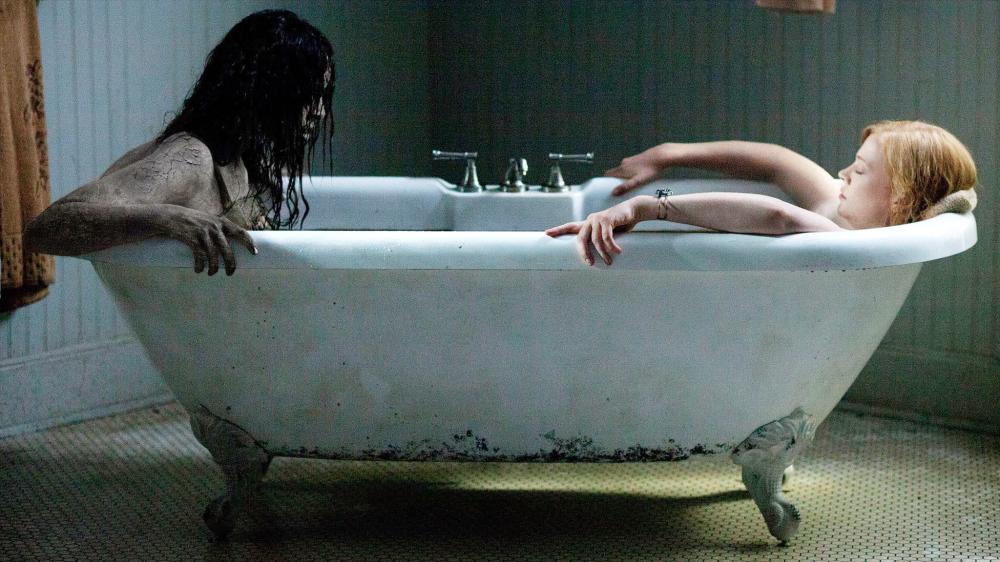
The next day he apologises and gives Jessie her mother’s old wheelchair so that she can still get about. When he goes out she watches another tape; on it her mother mentions a man named Moses. On the next day, Jessie is helped into a bath by a physiotherapist. She falls asleep, and the bath begins to fill with blood. When Jessie wakes she finds the ghost of a girl a few years younger than her in the bath with her. The ghost (Stevens) attacks Jessie but when she screams and her dad bursts in, the ghost disappears, as if it was all an hallucination. Her dad finds the other tape and tries to burn both of them but he gets locked in his shed and burns to death.

At her dad’s funeral, Jessie is reunited with an old flame, Preston (Webber). She confides in him about the tapes, and although he’s married he promises to help her as much as he can. Jessie later finds more tapes, one of which contains her mother telling “Jessabelle” that she’s already dead. Things take a strange turn when Jessie and Preston discover an infant’s grave in the bayou, an infant named Jessabelle. They alert the police and the remains are taken away to be examined. Jessie and Preston also discover a shrine to the man known as Moses but are warned away from it. Echoes of the past begin to reveal themselves, and soon Jessie learns the truth about Jessabelle and her parents, and a terrible crime that was committed before she was born.

JESSABELLE, Sarah Snook (right), 2014. ©Lions Gate/Courtesy Everett Collection

While Jessabelle attempts to bring something new to the sins of the past sub-genre of horror movies, regular viewers of this sort of thing will find it commendably low-key and sadly unambitious at the same time. The source of most viewers’ consternation will be Robert Ben Garant’s screenplay, his first proper outing in the horror field (he also wrote Hell Baby (2013) but that was more of a horror-comedy hybrid – and didn’t work in either department). Garant is better known as the writer/creator of the Night at the Museum movies, as well as being an actor, but on this occasion his enthusiasm for trying to tell a ghost story that isn’t as derivative as all the rest, is the one thing that actually gets him – and the movie – into trouble.

From the moment Jessie arrives at her childhood home it’s clear that her dad’s behaviour towards her is borne out of guilt over something he’s done in the past, and while this type of relationship isn’t exactly unusual in horror movies, here it’s more awkward than usual thanks to the script’s refusal to portray him as anything other than angry and scornful – which in light of what we discover he’s done, actually makes him appear self-deluded and cruel; it also makes the viewer wonder why Jessabelle’s vengeful spirit hasn’t killed him already. The mother’s appearance is problematic as well, her graduation from early video blogger to phantom presence in the movie’s final quarter being needed not to provide any unexpected scares but to explain the plot amid a welter of artless exposition.

The answer to the mystery of Jessabelle and the tapes Jessie’s mother recorded, when it comes, is as underwhelming as the relationship between Jessie and Preston, an attempt at romance that even stops the plot long enough for them to end up between the sheets. The clues that lead to the discovery of Jessabelle’s identity are so heavily signposted it’s like playing connect-the-dots (and there’s only three dots to be connected). Again, Garant’s script wants to appear more clever than it is, but lets itself down time after time with weak scares and even weaker plot developments (experienced viewers will have worked out what’s going on long before Jessabelle shows up in the bath).

Things aren’t helped by Greutert’s disinterested direction, nor Michael Fimognari’s pedestrian camerawork, reducing the beautiful North Carolina locations to gloomy backdrops. The performances aren’t that convincing either, with only Snook offering anything like a commitment to her character, making Jessie far more sympathetic than she has any right to be (she’s the most likeable character in a movie that makes it extra hard to root for anyone). And with an ending that is as predictable as it is entirely derivative, Jessabelle winds up disappointing far more than it entertains.

Rating: 3/10 – stupid is as stupid does – a phrase that applies to so many horror movies that it’s embarrassing, and Jessabelle does nothing to avoid being added to the list; despite Garant’s efforts this is dispiriting stuff indeed, and with only Snook’s performance to warrant a viewing, can be consigned to the so-bad-it’s-bad list of recent horror movies without a moment’s hesitation.

Share this:

  • Share on X (Opens in new window) X
  • Share on Facebook (Opens in new window) Facebook
  • More
  • Print (Opens in new window) Print
  • Email a link to a friend (Opens in new window) Email
Like Loading...

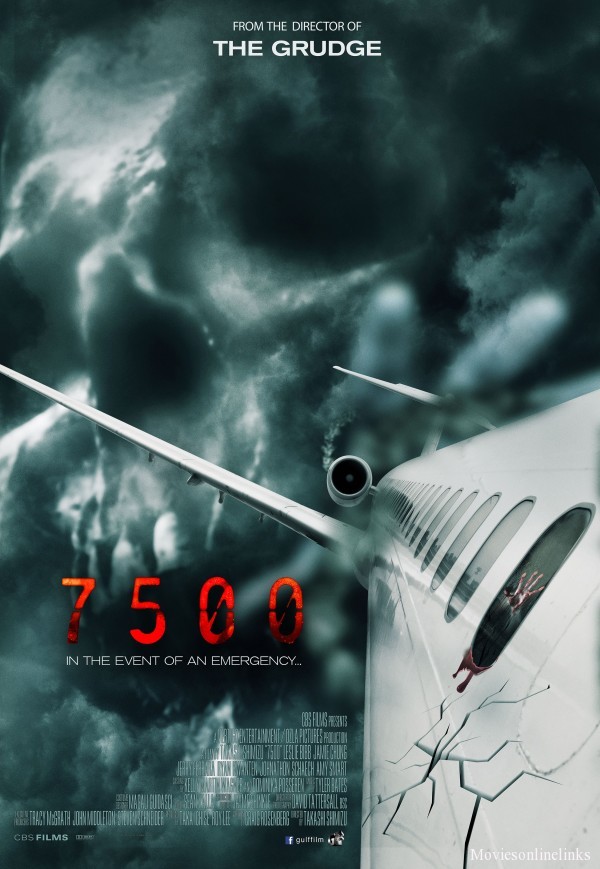
Mini-Review: 7500 (2014)

27 Saturday Dec 2014

Posted by dullwood68 in Movies

≈ Leave a comment

Tags

Amy Smart, Drama, Flight 7500, Horror, Jamie Chung, Leslie Bibb, Review, Ryan Kwanten, Takashi Shimizu, Thriller

7500

D: Takashi Shimizu / 97m

Cast: Leslie Bibb, Jamie Chung, Ryan Kwanten, Amy Smart, Jerry Ferrara, Scout Taylor-Compton, Nicky Whelan, Alex Frost, Christian Serratos, Rick Kelly, Johnathan Schaech

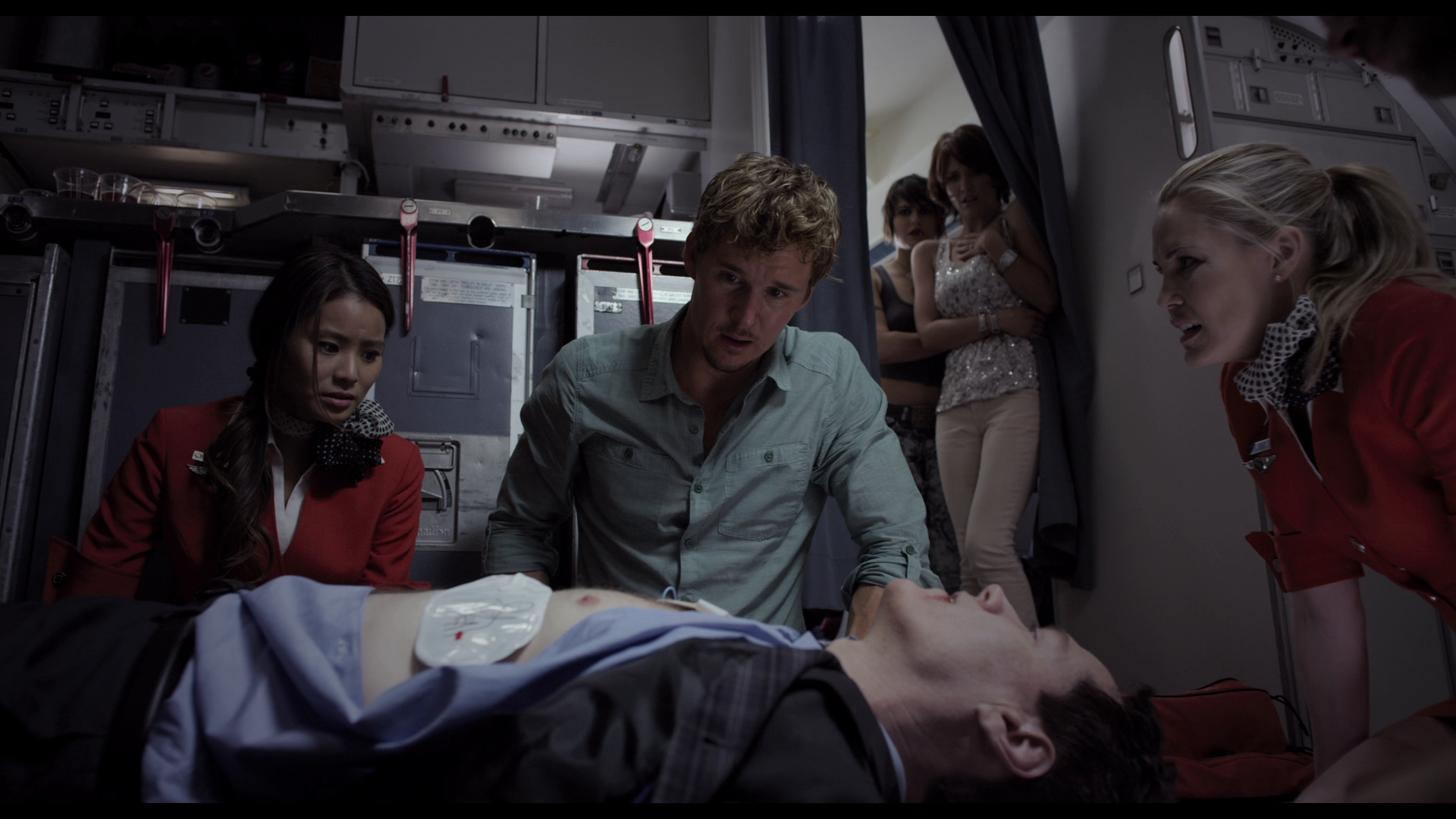
Vista Pacific Flight 7500 is an overnight flight from Los Angeles to Tokyo. While the take off is routine, a bout of severe turbulence leads to a passenger (Kelly) having a seizure; despite the best efforts of travelling paramedic Brad (Kwanten) and stewardesses Laura (Bibb) and Suzy (Chung), he dies. With no immediate reason to turn back, the flight continues on but the passengers and crew encounter ever stranger events, including a life-threatening cabin depressurisation, the disappearance of the dead passenger’s body, and the lack of radio contact with Tokyo air control. As a supernatural explanation for things seems to be the most likely, Brad, his wife Pia (Smart), Laura, Suzy, and newlyweds Rick (Ferrara) and Liz (Whelan), with occasional help from fellow passenger Jacinta (Taylor-Compton), come to believe it’s all connected to the dead man, and look through his belongings for an answer. But what they find is even stranger still…

7500 - scene

At first glance, this latest offering from the director of The Grudge movies (Japanese and American) has all the hallmarks of an intriguing mystery thriller, with its characters trapped in a confined space, supernatural elements, strange occurrences, and growing sense of menace. But as so often happens with this type of movie, the script is unable to support its own premise and soon gets bogged down in one unexplained phenomena after another, making several attempts to increase the tension and heighten the dread the passengers and crew are experiencing, but falling short each time.

Further problems arise from the characters themselves, with perfunctory back stories for all that resist any depth being added, and wallow in cliché: the stewardesses with relationship problems (are there any stewardesses in the movies that don’t have relationship problems?), the couple splitting up who re-commit through being put in peril, the “wild child” who just happens to have the explanation for what’s happening, and the new wife whose OCD traits are jettisoned at the first opportunity. With so little to work with, the more than capable cast are left adrift, with Shimizu opting to focus on poorly lit visuals and less than satisfying “scares”.

By the movie’s end, 7500 has descended into a collection of disjointed and there-for-the-sake-of-it scenes that fracture the narrative beyond any possibility of recovery, and it concludes with a scene so derivative and redundant it beggars belief. (It shouldn’t be surprising then that the movie was filmed back in 2012 and has only now found a release via home video.)

Rating: 3/10 – with its cast doing just enough to achieve lacklustre performances, and Shimizu matching them with his direction, 7500 soon plummets into mediocrity; this is definitely one flight that can be missed in favour of the next one.

Share this:

  • Share on X (Opens in new window) X
  • Share on Facebook (Opens in new window) Facebook
  • More
  • Print (Opens in new window) Print
  • Email a link to a friend (Opens in new window) Email
Like Loading...

Mini-Review: V/H/S Viral (2014)

16 Tuesday Dec 2014

Posted by dullwood68 in Movies

≈ Leave a comment

Tags

Aaron Moorhead, Alternate universe, Cloak, Found footage, Gregg Bishop, Horror, Ice cream van, Justin Benson, Magician, Marcel Sarmiento, Nacho Vigalondo, Review, Sequel, Skateboarders, Tijuana

V:H:S Viral

D: Marcel Sarmiento (Vicious Circles)/Gregg Bishop (Dante the Great)/Nacho Vigalondo (Parallel Monsters)/Justin Benson, Aaron Moorhead (Bonestorm)/ 82m

Cast: Justin Welborn, Emmy Argo, Gustavo Salmerón, Marian Álvarez, Nick Blanco, Chase Newton, Shane Bradey

The latest in the found footage horror series, V/H/S Viral strays further and further from the original concept, partly it seems to avoid accusations of “more of the same”, and partly in recognition that the VHS format is now too outdated to work effectively (either way, just how many empty houses full of old tapes can there be?).

Beginning with the wraparound story, Vicious Circles, where a guy ends up chasing the ice cream van that he believes holds his kidnapped girlfriend (and which is already being chased by police), the movie then tells the bizarre story of Dante the Great, a magician who comes into possession of a cloak (once owned by Houdini) that allows him to really do magic – but at a price. It’s a bit of dumb fun, more interested in showing off it’s gravity-defying stunt work than exploring the idea of possession by an object. In terms of found footage it’s also the most contrived, with camera placements in places where they’re really unlikely to be, and with too many used sources for the footage to have been put together in the way in which the segment is presented.

The middle tale, Parallel Monsters, concerns a scientist, Alfonso, who creates a doorway to an alternate universe – in his basement. He meets a replica of himself and the two explore each other’s houses, but while they seem identical, Alfonso soon discovers that not everything is the same in this other universe. It’s a mix of Cronenbergian body horror and sci-fi conventions that has an unintentionally hilarious bedside moment before reaching its predictable climax.

V:H:S Viral - scene

The last tale, Bonestorm, features a couple of skateboarders who travel down to Tijuana to skate at a remote storm drain only to find they’ve upset the local devil worshippers who try and kill them before the devil in the drain tries as well. Of the three stories this is the worst, mixing POV shots of the skaters offing dozens of extras dressed as devil worshippers with the kind of crass dialogue that makes you wish they’d die before they even get to Tijuana.

With the wraparound story proving too confusing to make sense, as well as having no connection to the three tales – a fourth tale, Gorgeous Vortex, was cut to provide a “smoother” running time (whatever that means) – V/H/S Viral is too far removed from the first two movies to be effective, and the material is weak throughout (it’s like watching Halloween (1978) and Halloween II (1981) and then wondering if Halloween III: Season of the Witch (1982) was really the best they could come up with).

Rating: 3/10 – a very poor sequel that can’t even be bothered to put its tales into any kind of context, V/H/S Viral is lacking in almost every department; tired, and horrible (as opposed to horrifying), this sequel is one that even fans will want to disown.

Share this:

  • Share on X (Opens in new window) X
  • Share on Facebook (Opens in new window) Facebook
  • More
  • Print (Opens in new window) Print
  • Email a link to a friend (Opens in new window) Email
Like Loading...

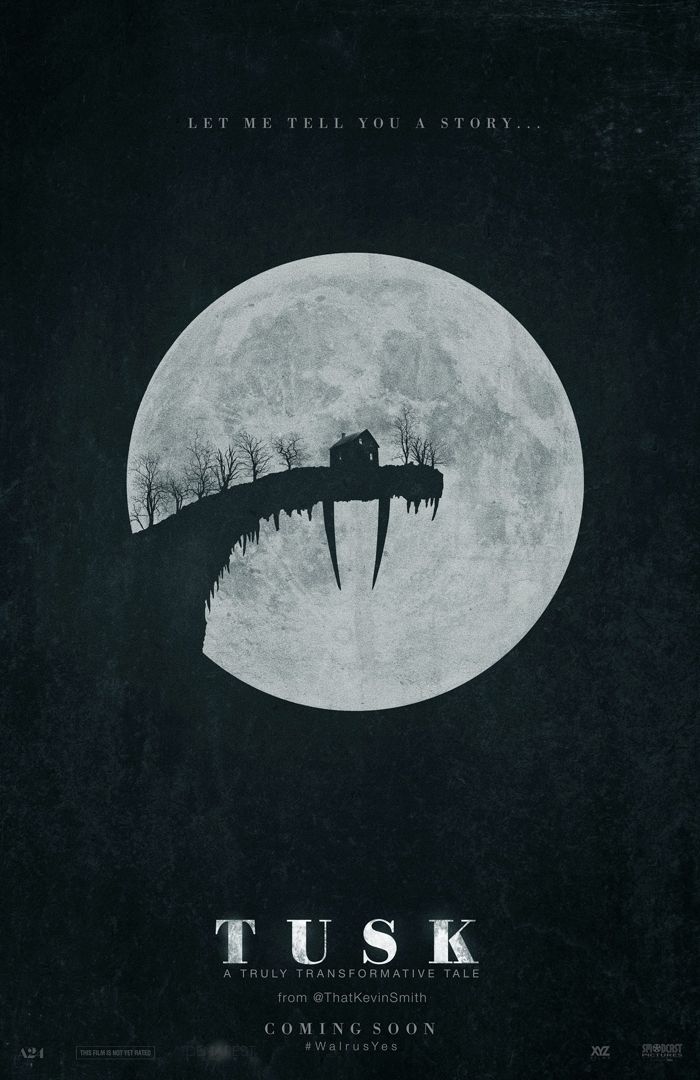
Tusk (2014)

13 Saturday Dec 2014

Posted by dullwood68 in Movies

≈ 1 Comment

Tags

Drama, Genesis Rodriguez, Haley Joel Osment, Horror, Howard Howe, Justin Long, Kevin Smith, Manitoba, Michael Parks, Mr Tusk, Podcast, Review, Thriller, Transformation, Walrus

Tusk

D: Kevin Smith / 102m

Cast: Michael Parks, Justin Long, Haley Joel Osment, Genesis Rodriguez, Guy Lapointe

Popular podcast hosts Wallace Bryton (Long) and Teddy Craft (Osment) have built up their following by finding videos of people doing stupid and/or humiliating things and re-broadcasting them. When they find a video of a young Canadian whose swordplay proves disastrous, Wallace determines to follow it up by meeting him. His girlfriend, Ally (Rodriguez), wants to go with him but he dissuades her. When Wallace arrives in Manitoba, though, he finds the story is a dead end. Later that night in a bar, he comes across a flyer from someone offering free lodging in return for listening to a lifetime of interesting stories. Intrigued, Wallace calls the man, Howard Howe (Parks) and arranges to meet him where he lives.

Their initial meeting goes well. Howe does indeed have some remarkable stories to tell, and Wallace is fascinated by them. Howe’s home is also full of mementoes and keepsakes from his travels. But as he begins to tell Wallace about the time he was stranded on a small Russian island with only a walrus for company, the podcaster begins to feel tired. Soon he passes out. When he comes to he finds himself in a wheelchair and very groggy. Howe explains that Wallace was bitten by a poisonous spider – which caused him to pass out – but he’s been seen by a doctor, though in order to stop the poison from spreading, Wallace’s left leg has been removed below the knee.

Wallace soon learns that the story of the spider is untrue, and that Howe has plans for Wallace that involve transforming him into a walrus. Wallace manages to call both Ally and Teddy but his calls go to voicemail. Howe finds out what he’s doing, and so speeds up his plan. The next morning, Ally and Teddy find Wallace’s calls and head for Manitoba. When they get there they find there is little evidence to go on, but the local police put them in touch with an ex-detective of the Sûreté du Québec, Guy Lapointe. Lapointe has been chasing a serial killer who’s been responsible for dismembering and mutilating young men for years, twenty-three in total. Together, he, Ally and Teddy trace Wallace’s journey from Manitoba to Howe’s home. But will they be in time to save Wallace from an awful fate?

Tusk - scene

The last few years have seen writer/director Kevin Smith broaden his cinematic horizons away from his New Jersey roots – and the dialogue heavy movies he made there – to incorporate ideas and places far removed from the kind of movies we’ve become used to. Cop Out (2010) was a serious misstep, working from someone else’s script and having no real feel for the material; in many ways it looked like a movie made by someone who didn’t give a toss (it also has one of the most embarrassing tag lines ever: “Rock out with your Glock out”). Red State (2011) was a better choice of material but was too unsure of what it wanted to be to be entirely successful. Now, with Tusk, Smith returns with a more focused, more accessible movie, but one which also has its fair share of needless longueurs.

Using Long and Osment as on screen versions of himself and long-time producer/friend Scott Mosier, Smith opens the movie with a podcast that recreates the vibe of his own podcasts: funny, irreverent, and with a healthy disdain for “holding back” (the video they show is both predictable and yet shocking at the same time). It sets up Wallace as a bit of a horrible jerk, something that is confirmed later on when we learn that he doesn’t want Ally to go on trips with him because it cuts down on his opportunities to get some “road head”. He’s not a likeable guy, but as he tells Ally, he’s the new Wallace, whereas the old, pre-podcast Wallace was a loser. It’s a neat trick on Smith’s part, that the object of a painful physical transformation has already undergone a mental one, and it’s this that will (hopefully) see him through his ordeal. Long makes Wallace objectionable and crass in his dealings with others, but this makes it difficult for the audience to fully sympathise with him when Howe’s plan swings into action. It’s a measure of Smith’s confidence as a director, and Long’s performance, that this hesitancy doesn’t undercut the movie’s effectiveness, and instead, adds to the tension.

However, with the introduction of Lapointe, Smith scuppers both the momentum he’s built up up to that point, and a large portion of the goodwill the movie needs to keep the audience with it (it’s a far-fetched tale requiring a healthy dose of acceptance, especially in the later stages). Lapointe is played by a very well known actor who is simply credited as Guy Lapointe, but it’s a mannered caricature of a performance that stops the movie cold and ruins the tone completely. Lapointe is in many ways the comic relief, but it’s an extended turn that doesn’t work and includes an awkward flashback that adds little to the movie other than the chance to see Parks play old and bordering on senile (as opposed to old and way past disturbed).

Parks is on fine form, his verbose dialogue made into polite expressions of personal experience in his opening scenes with Long, and then given a more florid, cod-Shakespearean approach once his plan is under way. It’s an operatic performance in many ways, and leans toward tragedy by the end, but Parks is quietly, authoritatively magnificent in a role that could so easily have descended into high farce (especially when Smith’s script skirts it quite often). In support, Osment has a subdued role that doesn’t allow him to stretch as an actor, while Rodriguez gets to emote to camera but with very little reason for her to be doing so.

Tusk is an odd little movie that will likely divide audiences, and in certain quarters will find itself the object of unintentional laughter, but the nature of the story is such that this is unavoidable. Like many of Smith’s movies it’s not the most visually compelling of projects to watch, and the score by Christopher Drake doesn’t highlight the drama as well as it could have done, often feeling perfunctory rather than part of the movie’s fabric. However, in the editor’s chair, Smith really shows his strengths – the sequence with Guy Lapointe in the diner aside – and he makes good use of long shots to evoke menace (Howe walking the length of the dining table to see to Wallace’s cries for help is a great example).

Rating: 7/10 – with often superb dialogue that any actor would relish delivering, and a sense of the truly macabre that most horror movies can’t even fake properly, Tusk sees Smith on fine form; this may well turn out to be a future cult movie, while its scenes of Cronenberg-style body horror are grim and uncompromising to watch.

Share this:

  • Share on X (Opens in new window) X
  • Share on Facebook (Opens in new window) Facebook
  • More
  • Print (Opens in new window) Print
  • Email a link to a friend (Opens in new window) Email
Like Loading...

The Babadook (2014)

30 Sunday Nov 2014

Posted by dullwood68 in Movies

≈ 5 Comments

Tags

Australian movie, Creature, Dead husband, Drama, Essie Davis, Grief, Horror, Jennifer Kent, Mother/son relationship, Noah Wiseman, Possession, Review, Thriller

Babadook, The

D: Jennifer Kent / 93m

Cast: Essie Davis, Noah Wiseman, Hayley McElhinney, Daniel Henshall, Barbara West, Benjamin Winspear, Tim Purcell

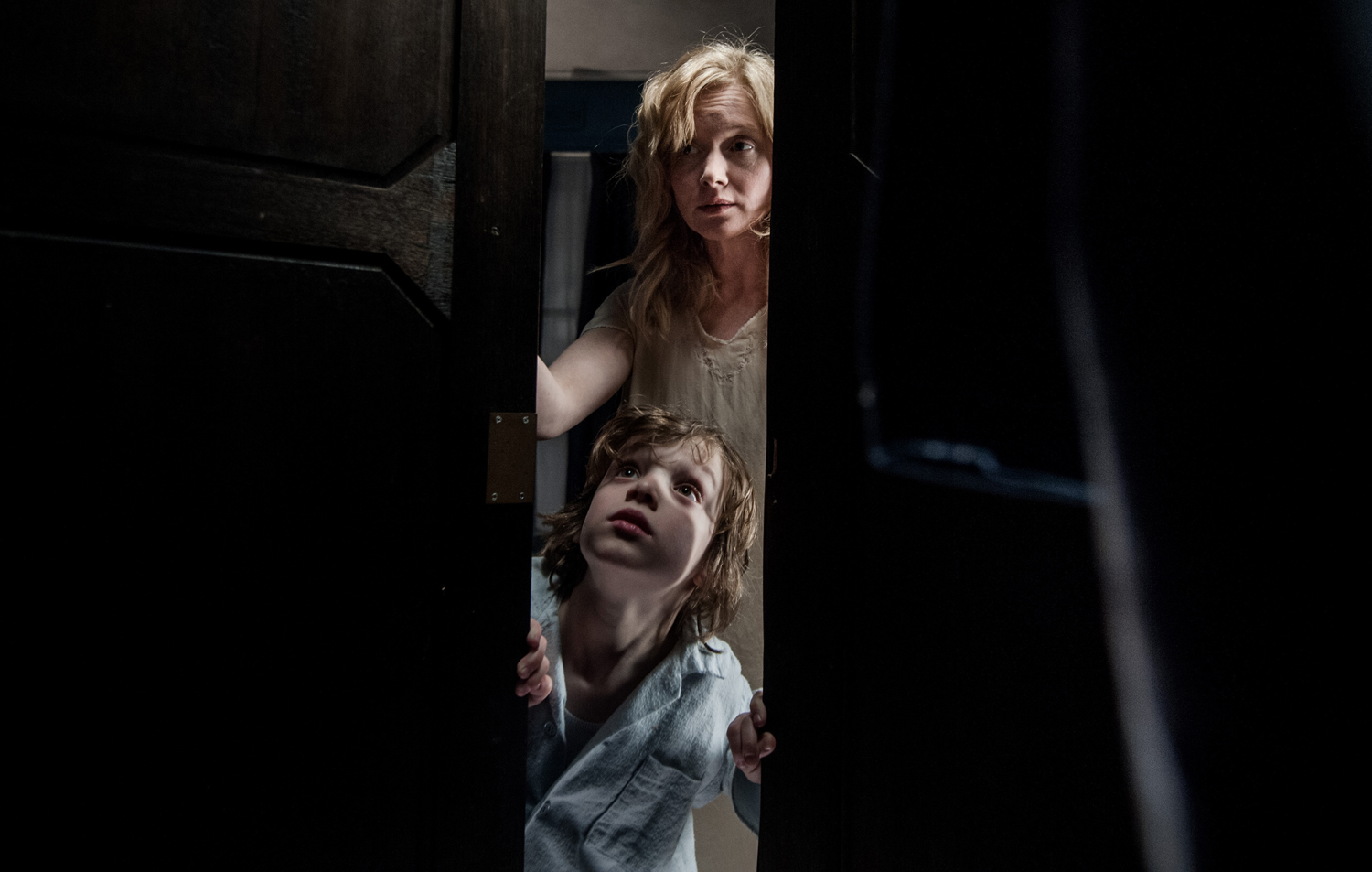
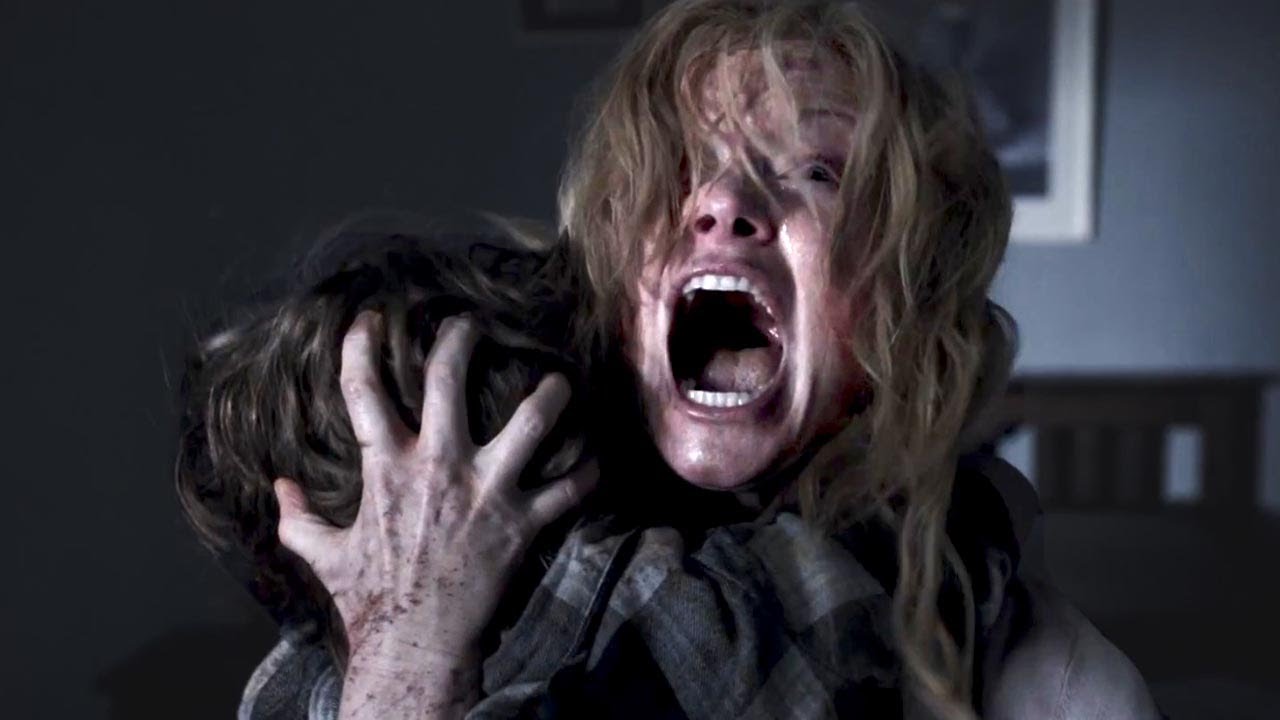
Six-year-old Samuel (Wiseman) has a deep-rooted fear of monsters. Each night he makes sure his mother, Amelia (Davis) checks under the bed and inside his wardrobe to ensure nothing lurks in his room. Most nights, though, Samuel’s fear leads to his sleeping with his mother; this in turn leads to Amelia being constantly tired. With his fear of monsters becoming obsessive – Samuel is convinced they’re real and constructs weapons to kill them – his behaviour begins to have an isolating effect. His school doesn’t know how to deal with him, and Amelia’s sister, Claire (McElhinney) is sufficiently worried to want to keep her daughter away from him.

One night, Samuel chooses a book for Amelia to read to him at bedtime. The book is called The Babadook, and shows a menacing creature trying to prey on a young child; strangely, the last few pages are blank. Amelia is disturbed by the book, but not as much as Samuel. His behaviour worsens as he refers to the Babadook as being real. Unable to cope at work, and struggling with Samuel’s “acting up”, Amelia rips the book into pieces and throws it into the trash. Soon after, there is a loud knocking at the front door. Amelia finds the book on the doorstep, its pages reassembled, and with the last few pages now depicting her murdering their dog, and then Samuel before taking her own life. Horrified, this time she burns the book.

Amelia also starts to receive phone calls where a voice chants “ba-BA-ba Dook! Dook! Dook!” Then one night she sees the creature in her room. Terrified, but unsure of what to do, Amelia attempts to carry on as usual but Samuel becomes increasingly wary of her. When he has a fit in the back of their car, she keeps him off school, but her attempts to look after him are hampered by sudden mood swings and angry outbursts. Samuel becomes convinced she’s been possessed by the Babadook, and tells her so. And soon, the book’s added illustrations start to come true…

Babadook, The - scene

Expanded from Kent’s debut short, Monster (2005), The Babadook is an occasionally chilling examination of childhood terror and adult paranoia. It opens with the accident that claims the life of Oskar (Winspear), Amelia’s husband. This pivotal moment is at the heart of Amelia’s troubles, her unresolved grief keeping her from moving on with her life and hindering her from properly dealing with Samuel’s fear of monsters. Of the two, she is the more susceptible to the attentions of the Babadook, and so it proves, the creature targeting the weaker inhabitant of the house. It’s a frightening scenario for any child: to see their parent turning into the very creature they’re most afraid of, and it’s this very real terror that the movie exploits so effectively.

However, the concept of the Babadook itself is less successful. As the latest boogeyman to hit our screens, its look a combination of German Expressionism and Freddy Krueger’s favourite manicure, the creature is kept hidden for the most part, Kent preferring to use Oskar as its more user-friendly incarnation. This decision is a wise one on the writer/director’s part, as when the Babadook does appear in the flesh, the nightmarish quality of the book’s rendering of it is undermined, and there’s just too much of a resemblance to Conrad Veidt in The Cabinet of Dr. Caligari (1920). (There’s also a moment when the Babadook, hidden in the darkness of Amelia’s bedroom, extends its arms in a wing-like effect; it’s meant to be terrifying but instead is puzzling as there’s no follow up.) Used largely as a shock effect, the Babadook isn’t quite as scary as might be expected, and Kent doesn’t do full justice to the opportunities the creature could have afforded.

The Babadook is more effective, however, as a study of one woman’s extreme mental breakdown. Taking the death of her husband as a starting point, Amelia’s inability to cope is more understandable. There’s a scene with her sister where Amelia admits she doesn’t talk about Oskar’s death but it’s still a source of pain; it’s clear from this that she’s never properly dealt with the feelings and emotions that have developed over the years since he died (there is an added level of heartache to Oskar’s death: he was driving Amelia to the hospital so she could give birth to Samuel when the accident happened). With Samuel’s seventh birthday fast approaching, and his insistence on the reality of monsters – in particular the Babadook – Amelia’s descent into murderous psychosis is a credible alternative to the idea of a creature in the shadows. To back this up, Amelia is shown in various fugue states, and her mood swings revolve around items belonging to Oskar, or Samuel’s own need for reassurance and comfort. As she clings to the past and deflects the concerns of the present, her grip on reality loosens to the point where her mania is all-encompassing, and where any lucid moments are short-lived.

In this context, the Babadook is an obvious extension of Amelia’s mania, but the script calls for a more traditional showdown, though even here Kent can’t resist throwing a twist into the mix, and the movie ends by creating a fresh mystery (viewers can decide for themselves just what it all means in relation to what’s gone before). With its drab, murky interiors and deep shadows, Amelia and Samuel’s home is yet another movie location where the lighting is largely ineffectual (or never used), and there’s a conveniently placed kitchen window that allows Amelia to view the Babadook in their neighbour’s home (and which violates the creature’s own mythology for the sake of a cheap scare). Unable to resist the inclusion of some standard horror tropes – bumps in the night, the wardrobe door that was shut and is later mysteriously open – Kent’s script also offers up some very minor subplots that aren’t developed fully, and keeps its secondary characters firmly in the background. Away from the script, Kent directs with a confidence that stands her in good stead when the focus is on the relationship between Amelia and Samuel, but less so when she’s trying to inject some terror into the proceedings.

Babadook, The - scene2

If you’re someone who rarely watches horror movies, and really this is more of a domestic drama with horror themes attached, then it’s likely you’ll find The Babadook quite disturbing. However, fans of the genre will find less to celebrate, and may well feel let down by all the hype that’s surrounded the movie since its release. Kent has done a proficient job of expanding her original short film (which is well worth checking out), but the main problem in that version remains here: just what does the Babadook represent, and why?

Rating: 6/10 – uneven, and with too many longueurs holding up the action, The Babadook never quite lives up to its potential; only occasionally scary, and with performances from Davis and Wiseman that don’t resonate or impress as much as they should, this is yet another reminder of how difficult it is nowadays to create a truly terrifying horror movie.

Share this:

  • Share on X (Opens in new window) X
  • Share on Facebook (Opens in new window) Facebook
  • More
  • Print (Opens in new window) Print
  • Email a link to a friend (Opens in new window) Email
Like Loading...

The Brain That Wouldn’t Die (1962)

18 Tuesday Nov 2014

Posted by dullwood68 in Movies

≈ 2 Comments

Tags

Creature, Eddie Carmel, Exploitation, Horror, Jason Evers, Joseph Green, Review, Strippers, Thriller, Transplants, Virginia Leith

Brain That Wouldn't Die, The

D: Joseph Green / 82m

Cast: Herb Evers, Virginia Leith, Leslie Daniel, Adele Lamont, Bonnie Sharie, Paula Maurice, Bruce Brighton

Dr Bill Cortner (Evers) is assisting his father (Brighton) in an operation on a man whose life is slipping away. Cortner Sr is prepared to accept the man’s passing, but Bill persuades his father to let him try something experimental. By a combination of heart massage and brain cortex manipulation, Bill’s efforts prove successful and the man’s life is saved. Afterwards, Bill tells his father about the experiments he’s been carrying out, experiments that involve limb and organ transplants from deceased patients. Cortner Sr voices his concerns but his son remains adamant that his experiments will lead to a time when illness and disease can be conquered by the use of transplanted organs and tissue.

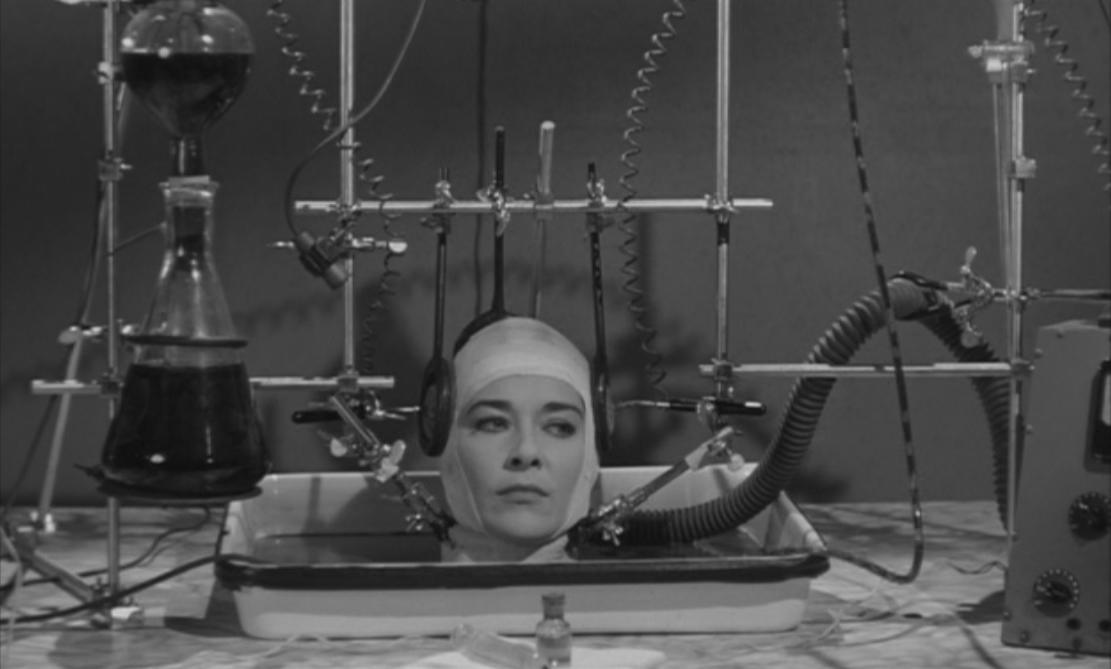
The Cortners are joined by Bill’s fianceé, Jan Compton (Leith). They have a weekend trip planned to the Cortners’ country house (also where Bill has been conducting his research). An urgent call from the house sees Bill rushing to get there, and in the process, causing the car to go off the road. The ensuing crash sees Bill thrown clear but Jan is decapitated and killed. However, Bill flees the scene and heads for the house – with Jan’s head wrapped in his jacket. At the house he’s met by his assistant, Kurt (Daniel), and he quickly arranges Jan’s head in a tray of rejuvenating serum that he’s developed. Once Jan’s consciousness is revived, Bill tells Kurt his plan next is to find a body he can attach Jan’s head to.

Kurt manages to tell Bill about the reason for the urgent call: one of Bill’s experiments in limb transplantation has gone awry, and the “patient” is currently locked away in a room in the cellar where Bill works. Bill dismisses Kurt’s fears and goes in search of a “donor” body for Jan. While he’s gone, Jan wakes up and is horrified at what’s happened to her; she also finds she can communicate with Bill’s previous “patient”. Determined to make Bill pay for what he’s done to her, Jan plans her revenge. Meanwhile, Bill’s search for a woman with an appropriately attractive body proves unsuccessful. He returns to the house to find Kurt even more anxious than before and Jan threatening to stop him. He continues to ignore any warnings, and leaves again to find a suitable woman. Through an old flame he’s reminded of someone they used to know who’s suffered a facial disfigurement. Bill visits the woman, Doris Powell (Lamont), and on the pretext of correcting her scarring, convinces her to come with him to the house. But when they get there, not everything is as Bill left it…

Brain That Wouldn't Die, The - scene

Confusingly (or mistakenly) titled The Head That Wouldn’t Die at the very end of the movie, The Brain That Wouldn’t Die is a semi-exploitation movie that surprisingly spends several occasions questioning the lengths to which medical science should go in order to save lives. This philosophical and ethical approach serves to ground the movie more effectively than the standard mad-scientist-playing-at-God scenario it otherwise plays with. That Bill Cortner experiments with dead tissue in his efforts to perfect his transplants – a predictable nod to Frankenstein – it’s ironic that if he’d used live tissue (however unethically), he’d likely be regarded as a true saviour of people’s lives (he even mentions the “recent eye cornea transplants” that have been carried out). Ironic, but not quite as lurid as required.

Scientific discussions aside, there’s a marked prurience on display here, with Bill’s first search for a donor body taking him to a strip club. Cue a scene where a blonde “exotic” dancer (Sharie) moves around with all the flair of a barely animated mannequin, and a follow-on scene where another stripper (Maurice) removes her dress for no other reason than because the script requires her to. And as if that wasn’t enough for early Sixties audiences, there’s a swimsuit contest, and Bill’s eventual intended victim, Doris, is shown in her part-time role as a photographer’s model, dressed only in a bikini. It’s all quaint enough by today’s standards but back then would have been considered quite racy, and in terms of the narrative it’s probably as lurid as the producers could get away with.

As with most “creature features” from the Fifties and Sixties, the movie holds off on revealing its monster until the end. Usually the build-up is more impressive than the actual monster itself, but here that’s not the case. Played by Eddie Carmel, who was 7′ 6¾” tall and suffered from acromegaly, the make-up applied to his face and head is suitably horrific, even if it is reminiscent of The Monster from Hammer’s The Curse of Frankenstein (1957). When he’s first seen it’s a real jolt, and even afterwards, he commands the viewer’s attention, despite whatever else is going on in the frame.

As the increasingly megalomaniacal Bill, Evers is a poor choice for the committed doctor, his acting skills ranging from cursory to absent, often within the same scene. It’s a struggle to listen to him expound on Bill’s medical theories; even he doesn’t sound that convinced by them. Forced to act with her head through a table for most of the movie, Leith is at least able to provide two separate characterisations for Jan. First, and briefly, there’s the happy-go-lucky bride-to-be, and then there’s the embittered head in a tray. She’s asked to laugh and cackle a little too much but her performance is still the nearest to satisfactory that the movie manages to achieve. Daniel gives the impression that the conversations he has with Jan are all happening in his head, and chews so much of the scenery it’s amazing there’s any left by the movie’s end.

The script, written by Green, is unnecessarily padded out by both its dissertations on medical ethics (they could have been gone over in half the time), and Bill’s tour of places filled with scantily clad females. Once it enters the last ten minutes the movie picks up speed, but the final shot prompts more questions than it can answer. The production values are predictably low – Bill apparently has the use of just a table and a few tubes and beakers for his experiments – and Stephen Hajnal’s camerawork is particularly awkward when asked to provide something more than a standard medium shot. Green directs competently enough but doesn’t have the experience – this was his first movie – to make it visually interesting (despite all the heaving bosoms) and to avoid things becoming too melodramatic. And the uncredited score is as derivative as they come for this type of movie, and in that era.

Rating: 4/10 – filmed in 1959, and regarded by some as a cult classic, The Brain That Wouldn’t Die is only occasionally diverting, and only occasionally satisfying; with the look and feel of a movie assembled from rehearsal footage, this is still worth seeking out, if only to see just how badly an exploitation movie can turn out when there’s so little exploitation actually included.

Share this:

  • Share on X (Opens in new window) X
  • Share on Facebook (Opens in new window) Facebook
  • More
  • Print (Opens in new window) Print
  • Email a link to a friend (Opens in new window) Email
Like Loading...

The Town That Dreaded Sundown (2014)

17 Monday Nov 2014

Posted by dullwood68 in Movies

≈ Leave a comment

Tags

1946, Addison Timlin, Charles B. Pierce, Gary Cole, Horror, Murders, Review, Sequel, Texarkana, The Phantom Killer, Thriller, True story, Veronica Cartwright

Town That Dreaded Sundown, The (2014)

D: Alfonso Gomez-Rejon / 86m

Cast: Addison Timlin, Veronica Cartwright, Gary Cole, Edward Herrmann, Travis Tope, Joshua Leonard, Anthony Anderson, Ed Lauter, Denis O’Hare, Spencer Treat Clark

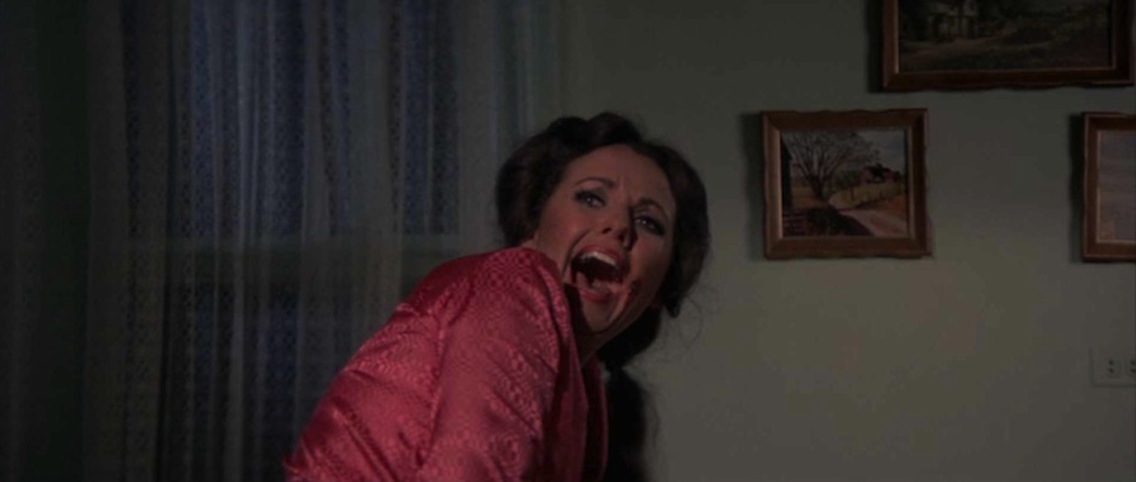
Texarkana, October 2013. At an outdoor screening of The Town That Dreaded Sundown, the movie made in 1976 about the murders that took place in the town during the spring of 1946, Corey (Clark) realises that his girlfriend Jami (Timlin) isn’t enjoying the movie. They leave, and find somewhere else to park up. They soon find they’re not alone: a man with a burlap sack over his head and eyeholes cut out is standing in front of their car with a gun in his hand. He forces them out of the car. The man makes Corey lie face down on the ground before killing him with a knife. Jami escapes but not before the man tells her that he’s doing this for “Mary, and so that the town won’t forget her”.

In the days that follow, Jami tries to discover what the killer meant about “Mary”, and goes to the town’s newspaper archives to learn more about the murders in 1946. She meets Nick (Tope) who helps her find the material she’s looking for. She finds a suspect at the time whose son might be responsible for the new crimes and takes her findings to the police. Led by Texas Ranger, Captain J.D. Morales (Anderson), the investigating team – which also includes Chief Deputy Tillman (Cole), Sheriff Underwood (Lauter), and Deputy Foster (Leonard) – allow Jami to explain her theory but reveal that they’ve already explored that avenue and it leads to a dead end.

A double murder occurs and it becomes clear that the killer is replicating the original murders. Jami continues her own investigation and discovers that there was a death in 1946 that was considered to be a suicide but which may have been the Phantom Killer’s final victim. When she also discovers that the man’s wife was called Mary, she begins to piece together enough evidence to suggest that the man’s grandson is very likely the killer. Meanwhile, the murders continue, and Jami finds herself targeted once again, as she and Nick edge ever nearer to revealing the killer’s identity.

Town That Dreaded Sundown, The (2014) - scene

Less a remake of the original movie than a belated sequel – though it has elements of the former – The Town That Dreaded Sundown is an initially interesting, apparently well constructed movie that riffs on the events of 1946 while adding a modern day twist to proceedings that appears cleverer than it actually is.

The movie begins with a voiceover reminiscent of the 1976 movie, and offers a recap of the Phantom Killer’s exploits. It then states that the following events happened in Texarkana in 2013. With such an unnecessary claim made right from the start, the movie’s attempts at creating a companion piece to Charles B. Pierce’s cult classic are seriously hindered, as the credibility needed to make the movie work on the same level is quickly abandoned. It’s a shame, as the meta-movie that was intended shines through from time to time, dispelling the fug of contemporary horror movie clichés that the movie trots out with wearying persistence.

As a result the killings are less intense, eschewing the febrile pitch of the original for a more blood-soaked approach; it’s as if the makers didn’t trust their audience to remain interested unless they threw in a gory moment or two every ten minutes. This leads to unnecessarily silly moments such as when a woman jumps out of a motel room window and breaks her leg (you get a close-up shot of the bone sticking out) – and then makes it to a car and tries to get it started. To make matters worse, when the killer catches up with her and stabs her to death in the car, the windows are treated to the kind of blood spray that looks like it was achieved by ejecting it from a cannon.

Where the movie does score points for originality is when Jami and Nick focus on the original movie and the idea that, in putting his movie together, Charles B. Pierce may have come across evidence that he wasn’t able to either incorporate into his movie, or prove was relevant to the murders. With Pierce having passed away in 2010, they turn their attention to his son – also Charles – who still lives in Texarkana. Alas, this twist in the story is ruined by having Pierce Jr behave like an obsessive backwoods loon, rather than someone who’s just interested in what is a very beguiling mystery (he’s played by Denis O’Hare, but the real Pierce can be seen in the background of the bar where Tillman meets up with a local prostitute).

With the script by Roberto Aguirre-Sacasa proving so uneven despite a plethora of good intentions, and with Gomez-Rejon unable to raise the material above the level of a slasher movie, this dispenses with character development early on – Anderson’s laid-back Morales remains that way whatever happens – and reveals the killer’s identity in such a WTF? moment (as well as being lifted from another horror franchise) that the viewer will probably be picking their jaw up off the floor. The cast add little to the proceedings, with Timlin unable to dial down Jami’s insipid nature, or provide any energy in a role that the likes of Jamie Lee Curtis would have made their own in the first couple of scenes. Cole is wasted, as is Leonard and Cartwright (as Jami’s grandmother), while Lauter gets the odd line here and there, and Herrmann has a puzzling role as the local clergyman who’s dispensed with – by the plot, at least – halfway through.

As noted above, there are plenty of good intentions here but almost none of them are organised into a coherent, plausible whole. The accent on gore is a misstep, the whole revenge plot is never given the depth or sense of injustice it needs, and the whole scene at the gas station throws what little credibility the movie has managed to retain to the four winds and beyond. As a belated sequel it barely works, but as an example of a potentially clever remake it fails completely.

Rating: 4/10 – a clever premise undermined by sloppy plotting, weak characters and a lack of directorial control, The Town That Dreaded Sundown is one of the less appealing horror movies of 2014; if watched on a double bill with the original, this should definitely be viewed first.

Share this:

  • Share on X (Opens in new window) X
  • Share on Facebook (Opens in new window) Facebook
  • More
  • Print (Opens in new window) Print
  • Email a link to a friend (Opens in new window) Email
Like Loading...

The Town That Dreaded Sundown (1976)

17 Monday Nov 2014

Posted by dullwood68 in Movies

≈ 1 Comment

Tags

1946, Andrew Prine, Ben Johnson, Charles B. Pierce, Drama, Horror, Murders, Review, Texarkana, The Phantom Killer, Thriller, True story

Town That Dreaded Sundown, The (1976)

D: Charles B. Pierce / 89m

Cast: Ben Johnson, Andrew Prine, Dawn Wells, Jimmy Clem, Jim Citty, Charles B. Pierce, Robert Aquino, Cindy Butler, Christine Ellsworth, Earl E. Smith, Bud Davis

Texarkana, February 1946. As the inhabitants of the town continue to put the war behind them, a couple park up along the local lovers’ lane. They hear a noise outside the car and find themselves confronted by a man wearing a burlap sack over his head with eyeholes cut out (Davis). He rips out some of the engine wiring before shattering the driver’s window and dragging the man out of the car. He batters the man before turning his attention to the woman whom he assaults before leaving both of them for dead. They survive the attack but with so little to go on the police – led by Chief Sullivan (Citty) – are unable to make any headway in the case.

Three weeks later, another couple are attacked in their car. This time, their attacker shoots the man dead and assaults the woman before killing her too. A police officer, Deputy Ramsey (Prine), almost catches the killer but he makes good his escape. Yet again the police have no clues to help them catch the man, and with the citizens of Texarkana becoming ever more fearful, they call in the help of the Texas Rangers. Led by legendary Ranger Captain J.D. Morales (Johnson), the investigation falls under his purview and he arranges for more police cars to patrol the streets, a curfew after dark, and a news blackout.

However, following a junior and high schools prom, a young couple park up in one of the town’s parks but nod off. When they wake they’re attacked by the man now known as the Phantom Killer. The man is shot and killed, while the woman (a trombonist in the high school band) is tied to a tree and murdered when the killer ties his knife to the end of her trombone and repeatedly stabs her as he “plays” it. With still no clues or evidence to reveal the killer’s identity, Morales becomes less sure they’ll catch him. When he kills a man by shooting him in the head through a window and tries to kill the man’s wife (who succeeds in getting to safety), it seems as if the trail will run cold yet again. However, a car fitting the description of the one that Ramsey saw the night of the first murders is reported abandoned. Morales and Ramsey follow a nearby path to an old quarry, and there they find the Phantom Killer…

Town That Dreaded Sundown, The (1976) - scene

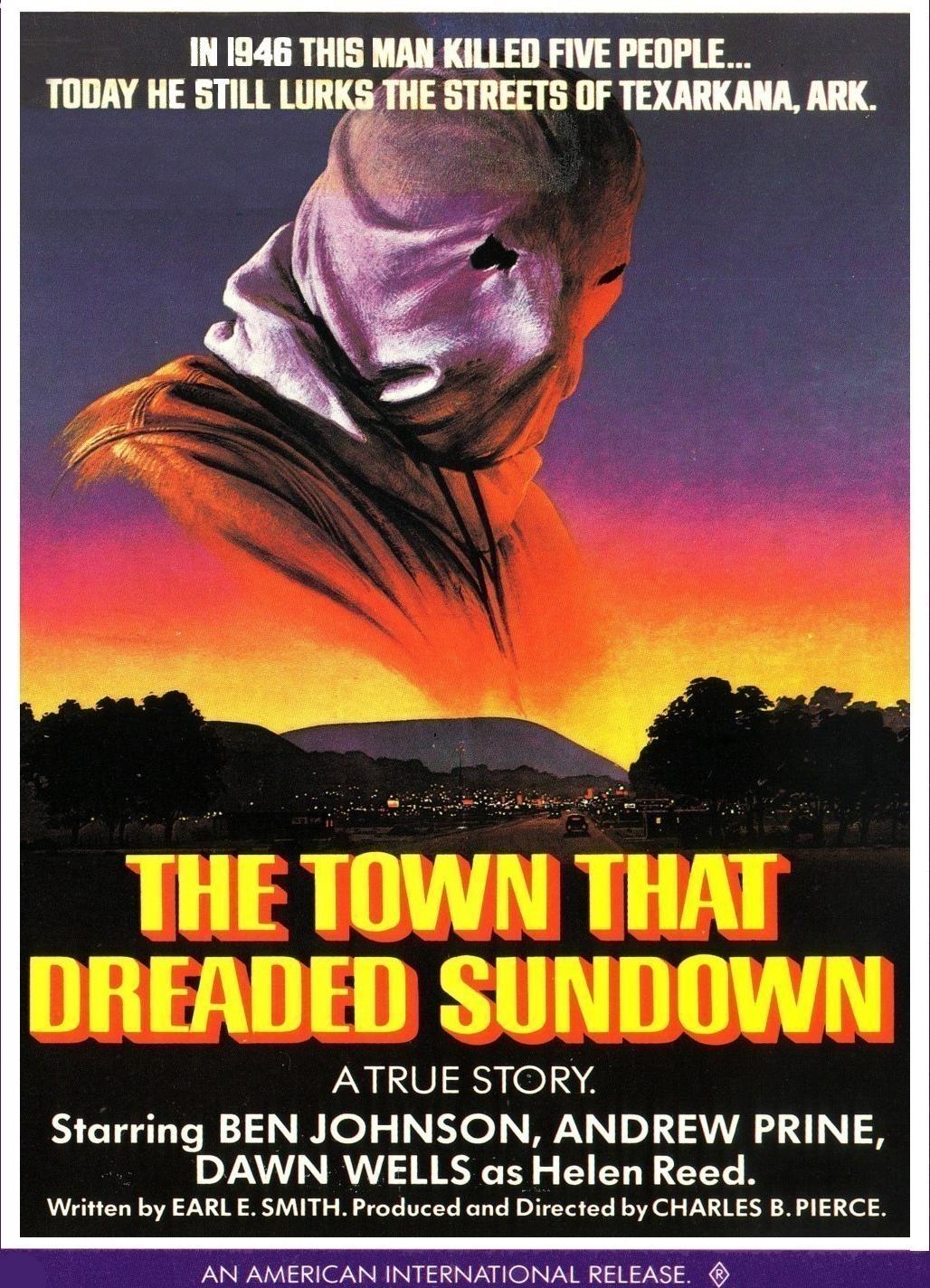
Based on real events that took place in Texarkana between February and May 1946, and dubbed the Moonlight Murders, The Town That Dreaded Sundown owes much to the drive-in features of the late Fifties and the Sixties, its independent, low budget feel so reminiscent of the movies from – and for – that period that it’s comforting to revisit such a lively era. With its ominous, scene-setting narration, effective recreation of post-war Texarkana, and silent killer, the movie has a quiet power in its killing scenes that makes them quite uncomfortable to watch. The sequence involving the trombone is the best example: in other hands, this could have been unintentionally funny, but Pierce focuses on the horror of the situation and keeps the Phantom Killer’s murderous intent at the forefront of things, his muffled breathing acting as a chilling counterpoint to the pleas of his victim.

All the attacks have an intensity about them that is hard to forget, and these often prolonged sequences are the movie’s strong suit; the movie also makes each successive event as terrifying as the one before. The decision to keep the killer from speaking is a wise one, and with his eyes staring out from his hood, the Phantom Killer’s implacable nature is never in doubt. He’s an early boogeyman, a proto-Michael Myers without the supernatural background. Never caught in real life, the movie posits its own (fictional) account of what might have happened, but it’s as credible as the idea that the police force would employ an officer as inept as patrolman Benson (Pierce).

For while The Town That Dreaded Sundown is incredibly gripping when the Phantom Killer is on screen, when he’s not we’re left with too many unsubtle, almost slapstick encounters with Benson and his inability to follow even the simplest of orders (and which leads to a Dukes of Hazzard-style car accident that feels like it was air-lifted in specially from the series). The character is very much a throwback to the type of comic relief that was prevalent in drive-in movies only a decade before, the kind of witless nincompoop who screws up continually but somehow retains his job and the goodwill of the people around him. Pierce is actually pretty good in the role, but it’s a jarring, unnecessary character, and while Benson may be there to lessen the horror of the murders, he’s on screen too often to be anything other than annoying.

Johnson is his usual gruff self, Morales’ increasing frustration at not being able to catch the killer tempered by his experience. It’s a great performance from Johnson, relaxed and yet coiled like a spring at the same time. The same, alas, can’t be said for Prine, who acts with all the stiffness of several planks of wood, and manages one or two decent line readings late on in the movie (just wait for any exchange over the police radio to see just how bad he is). The supporting cast are all fine without distinguishing themselves, though special mention should go to Davis, whose imposing presence precludes any hint of mercy that the killer may be susceptible to.

Pierce, a native of Texarkana, assembles the material with a fine eye for detail and as mentioned above, makes each attack so intense even the casual viewer will be transfixed. The script, by Earl E. Smith (who also appears as Dr Kress, the shrink who attempts to explain the killer’s motives), is mostly faithful to events as they happened, but anyone familiar with what really happened back then will be able to spot the necessary artistic licence used by Smith to tell the story in such a short running time. There’s some eerily atmospheric photography, especially at night, courtesy of James W. Roberson, and a robust score by Jaime Mendoza-Nava that underscores events with surprising panache. And anyone worried that the movie might be excessively gory will be pleasantly surprised as Pierce keeps the bloodletting to an onscreen minimum, choosing instead to focus on the fear and terror of the victims.

Rating: 7/10 – rough and uneven, but with a clear sense of the horror involved in the attacks/murders, The Town That Dreaded Sundown has a ferocity that acts like a slap to the viewer’s face; a minor true crime classic, and since 2003, shown in Texarkana each year as part of a “Movies in the Park” mini-festival.

Share this:

  • Share on X (Opens in new window) X
  • Share on Facebook (Opens in new window) Facebook
  • More
  • Print (Opens in new window) Print
  • Email a link to a friend (Opens in new window) Email
Like Loading...

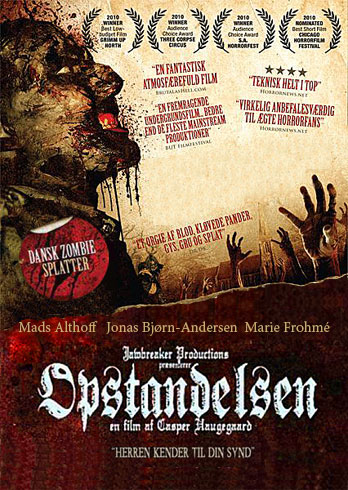
Opstandelsen (2010)

06 Thursday Nov 2014

Posted by dullwood68 in Movies

≈ Leave a comment

Tags

Casper Haugegaard, Church, Denmark, Funeral, Gore, Horror, Jonas Bjørn-Andersen, Mads Althoff, Marie Frohmé Vanglund, Review, Splatter, Zombies

Opstandelsen

aka Resurrection

D: Casper Haugegaard / 50m

Cast: Marie Frohmé Vanglund, Mads Althoff,  Jonas Bjørn-Andersen, Asta Stidsen, Roxanne Tirkov, Peter Althoff, Hans Maaløe

At the funeral of Simon (Peter Althoff), one member of his family is noticeably absent from the service: his brother Peter (Mads Althoff).  Peter’s other brother, Johannes (Bjørn-Andersen), and his sister, Esther (Vanglund), go to look for him.  They find him in the toilets, snorting cocaine.  He and Johannes argue, but Peter is dismissive when Johannes tells him the family is through supporting him with his drug problem.  Johannes and Esther return to the service; Peter continues to take cocaine.

With the drug affecting him substantially, Peter makes his way to the service.  When he does he finds scenes of carnage, with everyone under attack from the newly risen dead.  Scrabbling away he seeks refuge in another room and is joined by Johannes, Esther, and their younger sister, Maria (Stidsen).  Johannes finds a trap door and they all follow him down into the room below; in the process, Peter blacks out.

When he comes to, he finds they are trapped in a small room beneath the church, and with no safe way out.  Maria has been injured and with no way for her to stem the bleeding, Esther cradles her as she dies.  While the two brothers argue about what to do, Maria comes back to life and attacks Esther.  Peter and Johannes restrain her but have little option in the end but to kill her.  The shock of it all has a terrible effect on Esther and she retreats into her own mind.

Peter takes control of the situation and they leave the room, finding themselves in a maze of underground corridors and rooms.  Coming under attack from the undead at almost every turn, they fight their way to ground level but become separated, leading each of them into confrontations that will decide their eventual fate.

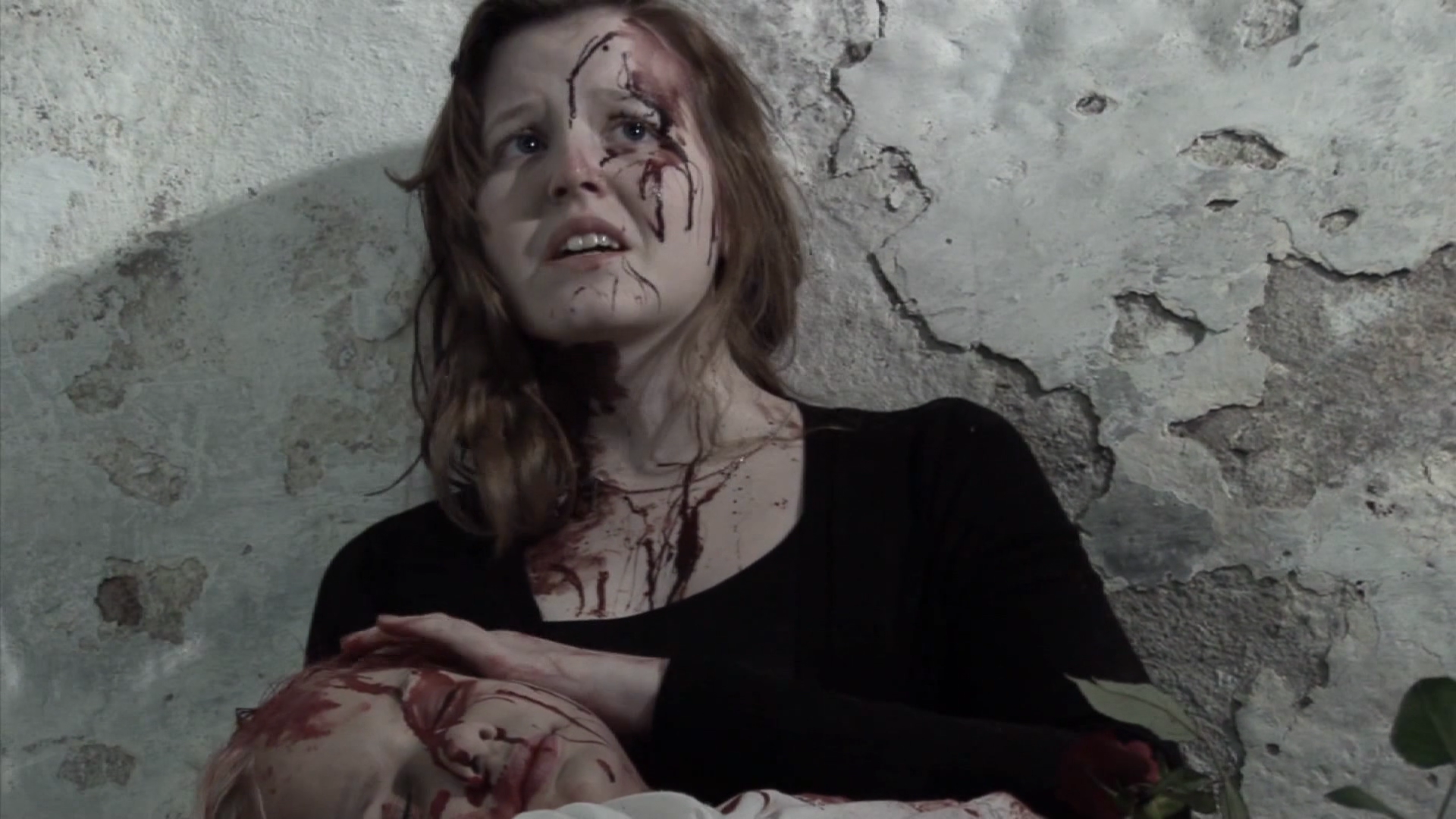
Opstandelsen - scene

A very, very low budget exercise in zombie terror, Opstandelsen is a compact feature that works better as a calling card to the industry than as a fully realised project.  The decision to shoot this as a short film was a wise one, and shows just how padded out by endless running around in tunnels/corridors/woods other horror movies have become.  It also helps the movie hit an above average number of dramatic high points, with the beleaguered trio facing (and fending off) attack after attack in their efforts to escape from the church.

The low budget necessitates some inventive responses to the challenge of presenting a church-bound zombie apocalypse, and while some work very well indeed – Maaløe’s fire and brimstone preaching from the pulpit (and practically blaming everyone there for what’s about to happen), an attack on Johannes through a door, Esther’s confrontation with her mother (Tirkov) – there are others that don’t, most notably the use of camera lights as the only form of illumination during a chase sequence below ground.  The editing is determinedly choppy during several of the attacks and it’s difficult to work out just what is going on (it gives the impression that some of the zombie make up and effects weren’t that great during those scenes).  It’s a shame, as these scenes would otherwise be quite effective at adding further energy to a movie that wastes little time in putting its main characters at risk and showing in gory detail what can happen to them.

There are things to be said for briefly introducing characters before letting the action take hold, but here it does lead to some problems, the main one being the way that Peter shakes off the effects of some very excessive coke-snorting to become as focused as he does (either he’s very used to it or the cocaine wasn’t as pure as it looks).  And the way in which Johannes earnestly prays to God for protection – giving the impression he may fold under the pressure – isn’t followed up or allowed to get in the way of his subsequent heroics.  Otherwise, the narrative follows a fairly standard formula, whittling down its cast until there’s only one survivor, and leaving things open-ended as to where the story might go next.

With a strong, heavily stylised visual aesthetic in play, Opstandelsen is often potent stuff, with its gruesome splatter effects used sparingly and with unflinching attention to detail, leaving the unprepared viewer to deal with some purposely raw and violent imagery; fans, however, will lap it up.  Haugegaard drives the action forward, making the movie a kinetic treat, allowing only the briefest of pauses once the trio leave the room below the trap door.  Some of the more violent, dramatic scenes are abetted by having Lasse Elkjær’s pounding score jacked-up in volume, and the soundtrack is beefed up as well, making all the lip-smacking zombie sounds that much more appalling to hear.  As an attempt to further highlight the awfulness of what’s happening, it’s unnecessary, but it does fit in with the movie’s unsubtle, in-your-face approach to the material.

Rating: 6/10 – very rough around the edges, and with performances that are perfunctory if not memorable, Opstandelsen is a short that bodes well for Haugegaard’s future projects; seriously grim and grisly throughout, fans of zombie movies will find much to enjoy even if the storyline offers very little that’s new.

Share this:

  • Share on X (Opens in new window) X
  • Share on Facebook (Opens in new window) Facebook
  • More
  • Print (Opens in new window) Print
  • Email a link to a friend (Opens in new window) Email
Like Loading...

The Canal (2014)

31 Friday Oct 2014

Posted by dullwood68 in Movies

≈ Leave a comment

Tags

Antonia Campbell-Hughes, Drama, Horror, Ivan Kavanagh, Murder, Review, Rupert Evans, Thriller

Canal, The

D: Ivan Kavanagh / 92m

Cast: Rupert Evans, Antonia Campbell-Hughes, Hannah Hoekstra, Steve Oram, Kelly Byrne, Calum Heath, Carl Shaaban

Film archivist David, his wife, Alice (Hoekstra), and young son Billy (Heath) move into an old house near a canal.  There are marital tensions: David suspects Alice of having an affair, and their lovemaking is perfunctory and passionless.  While they get used to living in their new home, David’s colleague Claire (Campbell-Hughes) asks him to look through some old crime scene footage sent to the archive by the police.  When he does, he discovers that the house was the site of a murder in 1902.  The discovery has a profound effect on David who starts to imagine he can hear voices in the walls, and he begins to catch glimpses of a man in the house.  He also has nightmares in which he sees the man kill his wife and then dump her body in the canal.

One day, Alice tells David she’ll be working late.  He waits outside the place where she works and sees her leave with a man (Shaaban).  He follows them along the canal to the man’s home.  He finds his way inside and sees them having sex.  David comes away upset and feverish.  He heads back along the canal but becomes nauseous and stops in a disused public toilet to throw up.  There he has what may be an hallucination involving the man he’s glimpsed at the house, and sees Alice at the side of the canal being attacked by the same man.

The next morning, David discovers that Alice hasn’t come home.  He reports her as missing, and the case is investigated by Inspector McNamara (Oram).  David continues to fixate on the house’s history and he learns more about the murder in 1902 and how it fits into a wider pattern of child abduction and ritual sacrifice.  When Alice’s body is found in the canal it’s deemed an accidental death but David’s visions increase and so too his sense of paranoia.  David tells Claire that he suspects the ghost of the man who killed his wife has killed Alice and is trying to kill Billy as well, but Claire doesn’t believe him.  With the help of babysitter Sophie (Byrne) he tries to keep Billy safe, while attempting to find proof of the supernatural events happening around the house.  But when McNamara returns with news that David was seen at the canal the night Alice died, David has no choice but to take Billy with him in a final chance to escape the dead man’s clutches.

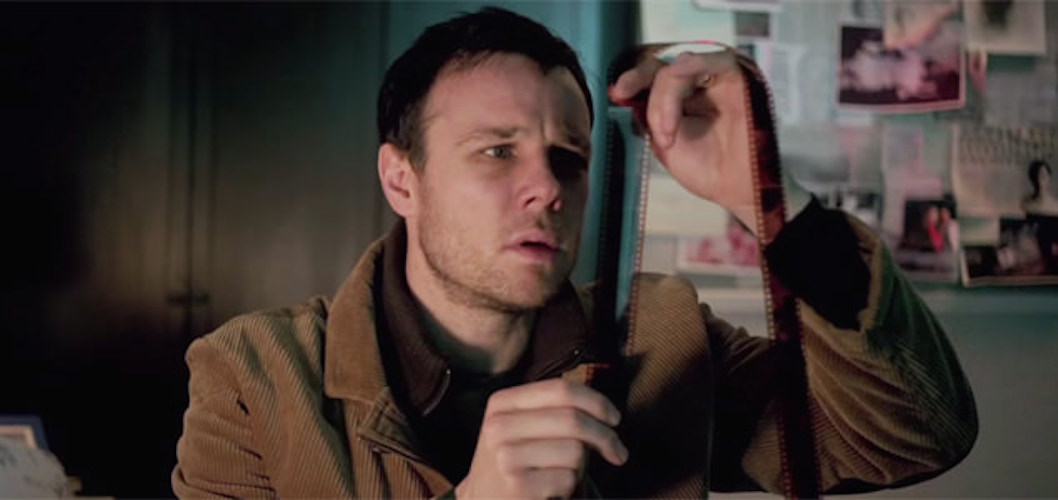
Canal, The - scene

Featuring one of the creepiest set ups of recent years, The Canal has enough chilling moments to make it one of the most effective scary movies of recent years.  It’s a refreshing change to watch a horror movie where the nightmarish qualities of the script are brought so potently to life.  Filmed in Ireland, The Canal is a dark, eerie, disturbing movie that uses well set up scares and shocks to keep the viewer on the edge of their seat.  The depictions of past events are often shocking, but are used sparingly, their execution and careful inclusion adding to the tension and the horror.

The mystery of the murder in 1902 and its connection to the canal is the spine of the movie, making David’s growing paranoia and sense of mounting terror its meat.  As the beleaguered archivist, Evans paints a convincing portrait of a man searching for a meaning to the strange phenomena happening around him, while also trying to maintain his sanity.  It’s a standard characterisation seen in many other horror movies but here Evans’ performance lends a credibility to David’s reactions and motivations that isn’t that prevalent elsewhere.  Evans’ sweaty, desperate turn anchors the movie throughout, and his early likeable, nervous approach makes David a sympathetic character the viewer can relate to.  As events become darker and more intense, Evans never loses focus on the character and he helps ground the more lurid developments, so that David’s mounting terror is rendered with complete conviction.

Evans’ performance is one of the main reasons the movie is as good as it is.  Another is the well constructed screenplay by writer/director Kavanagh, with its cleverly realised flashbacks, archival footage and photographs showing what really happened in 1902.  Kavanagh also makes a virtue of the kind of choppy editing style that usually makes things more difficult to process, but here adds to the disjointed, off-kilter and unnerving sequences involving the dead husband and the children who watched him kill their mother before being meeting an even worse fate.  These sequences carry a distinctive power that elevates the material and makes it all the more impressive in its visual styling.

The various scares – the man passing by open doorways, the sequence in the public toilet where blackened fingers appear over the top of a cubicle door, David’s vision of the murder in 1902 – are confidently presented and completely gripping.  It’s occasionally uncompromising, rarely dull or distracting, and a tour-de-force of low budget inventiveness and emphatic editing.  Ceiri Torjussen’s perturbing score adds a layer of menace to the proceedings and there’s sterling work from production designer Stephanie Clerkin that makes the house and its environs look unearthly even in  daylight.

Rating: 8/10 – a genuinely scary movie that deserves a wider audience, The Canal is often a tough watch, but is bolstered by a cast and writer/director who know exactly what they’re doing; moody and demanding, this is entirely worthwhile and not for the faint-hearted.

Share this:

  • Share on X (Opens in new window) X
  • Share on Facebook (Opens in new window) Facebook
  • More
  • Print (Opens in new window) Print
  • Email a link to a friend (Opens in new window) Email
Like Loading...

The Trouble With Horror Sequels: Wrong Turn VI (2014) and See No Evil 2 (2014)

24 Friday Oct 2014

Posted by dullwood68 in Movies

≈ 1 Comment

Tags

Anthony Ilott, Appalachians, Aqueela Zoll, Cannibals, Chris Jarvis, Danielle Harris, Glenn Jacobs, Gruesome murders, Horror, Inheritance, Jacob Goodnight, Kane, Katharine Isabelle, Morgue, One Eye, Review, Sadie Katz, Sawtooth, Sequel, Three Finger, Valeri Milev

If you love horror movies then you’ll be more than familiar with the idea of the indestructible killer.  Brought to life in brilliant fashion by John Carpenter in Halloween (1978), the unstoppable serial killer has become a staple of horror movies ever since, and if you’re a movie studio with a death-defying killer on your books, what can you do?  The answer is: make as many movies featuring them as you can before the public gets too tired of them.

This is the way the makers of the Wrong Turn series have gone, and since the debut of Three Fingers, Sawtooth and One Eye back in 2003 – yes, it’s been that long – they’ve sliced and diced their way through unlucky teen after unlucky teen and carved out a place for themselves in the world of low budget, made for home video horror movies.  And if anyone thought, eleven years ago, that the original would spawn five sequels, then they should be predicting lottery numbers and not how many cheap variations can be made out of one less than expandable idea.  Which leads us to:

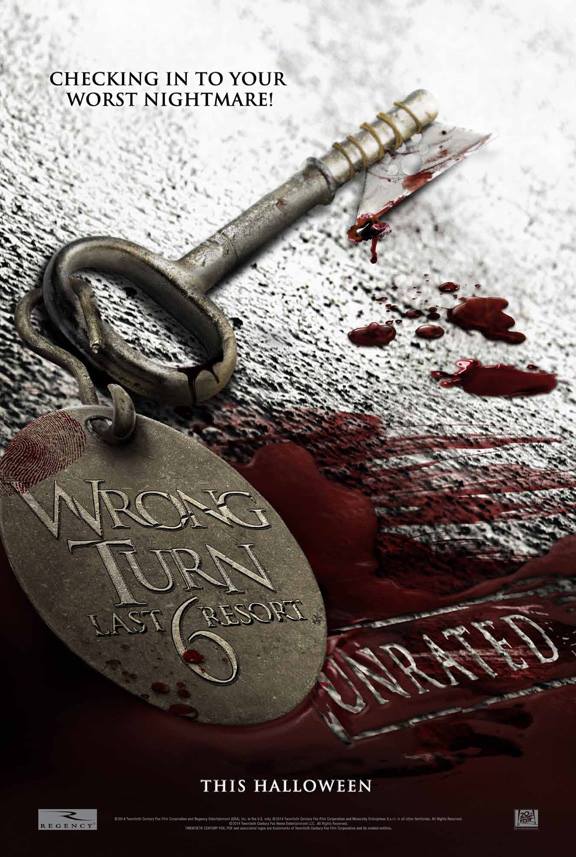
Wrong Turn VI

aka Wrong Turn 6: Last Resort

D: Valeri Milev / 90m

Cast: Anthony Ilott, Chris Jarvis, Aqueela Zoll, Sadie Katz, Rollo Skinner, Billy Ashworth, Harry Belcher, Joe Gaminara, Roxanne Pallett, Radoslav Pardanov, Danko Jordanov, Asen Asenov

Part four – the aptly titled Wrong Turn 4 (2011) – attempted to provide an origin story for the series’ trio of maniacal cannibals, but this instalment ignores that attempt altogether and creates another one.  It’s no better or worse than the previous idea, but is indicative of the problems in making a fifth sequel to a movie that told you all you needed to know in the first place.  No one expects a brilliant plot or storyline from a movie with VI in the title, but it’s the feeling that the makers are content to put in as little effort as possible that rankles the most.  There’s the requisite handful of horny, less than whip-smart faux teens to be despatched in occasionally inventive ways, and absolutely no sense that any of the series’ less than iconic trio will ever be put in any meaningful danger or even be injured.

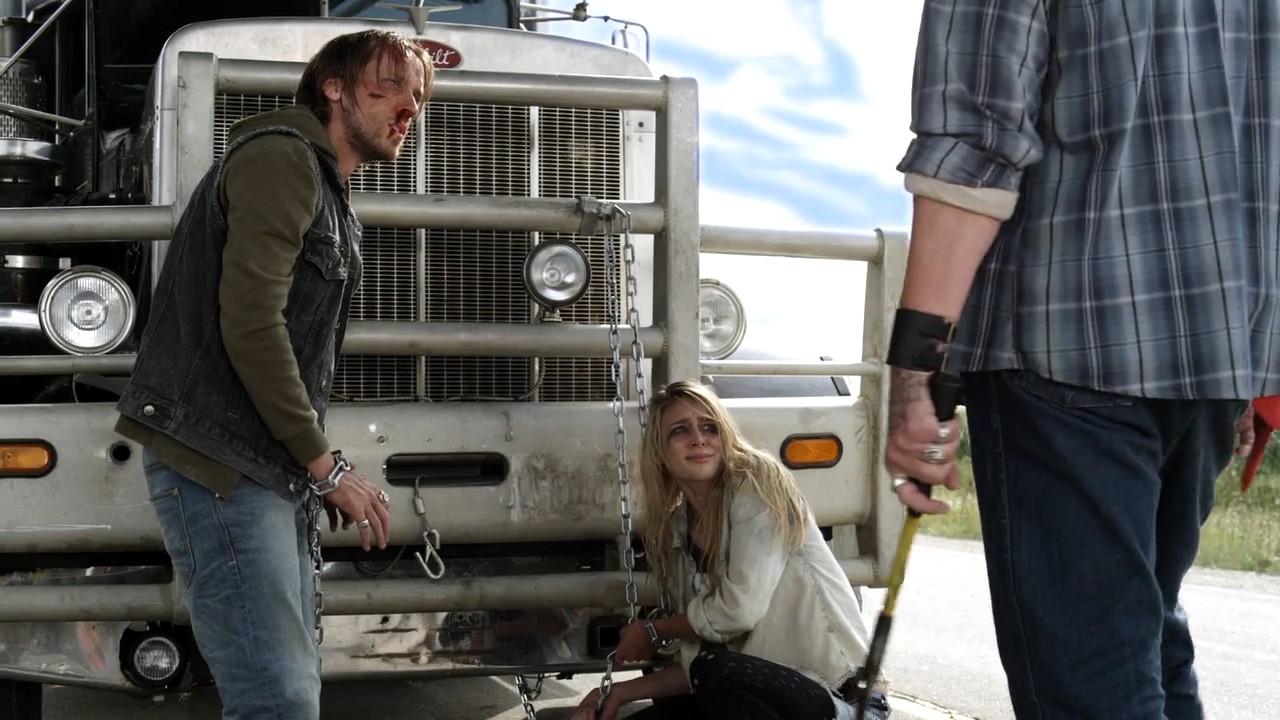
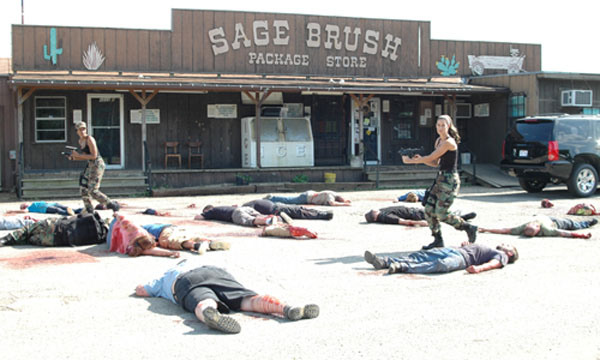
Wrong Turn 6 - scene

Wrong Turn VI tries to be different by having its three deformed murderers involved in a bizarre plot to maintain the “purity” of their hidden community, and which is set largely in a hotel that is “inherited” by troubled twenty-something Danny (Ilott).  It’s ridiculous, nonsensical stuff, a badly constructed hook on which to hang a series of gory murders.  It’s a movie that’s tension-free and treats its audience with a large dollop of contempt, and yet the producers are already planning a seventh movie to foist upon us in 2015.  With all that, it seems equally clear that fans of the series have a low tolerance for the repetitive vagaries of the franchise, and aren’t too bothered if the acting and direction are poor, the dialogue is atrocious, and the trio’s make up varies in quality from movie to movie (Three Finger looks awful in this instalment, as if he’s part melted in the sun).  It’s all about the kills, and one surreal murder involving a fire hose aside, Wrong Turn VI offers little that’s new or inventive or even interesting.

Rating: 2/10 – a chore to sit through, Wrong Turn VI is a waste of ninety minutes of anyone’s life; as mentioned above, the movie is a contemptuous, cynical exercise that deserves to be avoided like the proverbial plague.

So, then, what about…

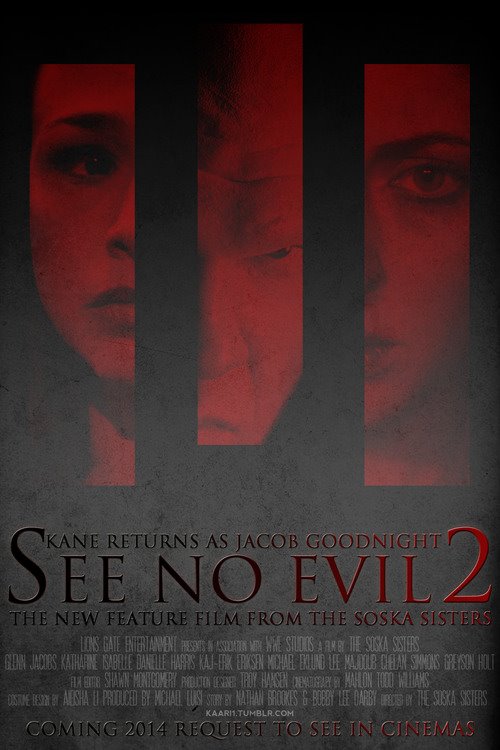
See No Evil 2

D: Jen Soska, Sylvia Soska / 90m

Cast: Glenn Jacobs, Danielle Harris, Katharine Isabelle, Kaj-Erik Eriksen, Chelan Simmons, Greyston Holt, Lee Majdoub, Michael Eklund, Nancy Bell

Where Wrong Turn VI puts every deformed foot wrong in its efforts to achieve some degree of plausibility, See No Evil 2 is surprisingly nimble on its feet, and, for a sequel appearing eight years after its predecessor, does more with its Halloween II (1981) set up than you might expect.

This is largely due to the involvement of the Soska sisters, Jen and Sylvia, who made genre favourite American Mary (2012, and which also starred Katharine Isabelle).  For once, a horror sequel is in the hands of directors who really understand what works and what doesn’t work, and who manage to elevate material that’s sorely lacking in some departments to a level where those failings can be readily forgiven.  The movie spends time introducing its characters, and does it so well that even Simmons’ airhead gains the viewer’s sympathy.  As with any horror sequel – or pretty much any stand alone horror movie – there’s nothing here that hasn’t been seen before, but it’s the way in which it’s put together that makes all the difference.  And it has a major plus in the presence of Danielle Harris, an actress with a great pedigree in horror movies.

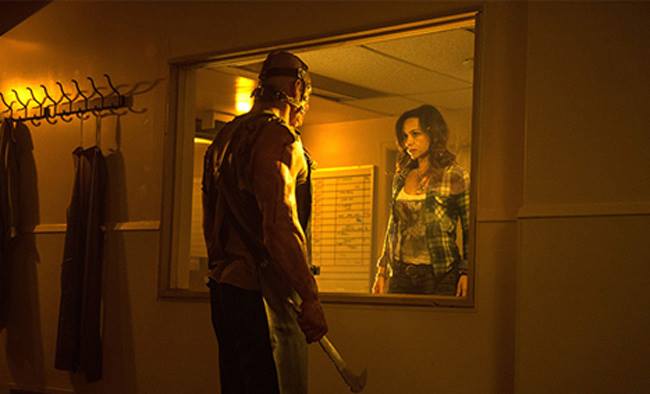
Despite being a WWE produced movie (not always the best advert for a movie – see Leprechaun: Origins (2014) if any proof is needed), See No Evil 2 has a great feel to it, and the Soska’s display an ingenious ability in framing shots and using large areas of unoccupied space to often unnerving effect.  They can’t quite overcome Jacob Goodnight’s uncanny ability to navigate the morgue where the action takes place with such incredible ease, and the flashbacks to the first movie are more for the sake of newbies than anything else, but it’s all done with such confidence that when other things happen just so the movie can move forward, the viewer doesn’t feel like they’ve been treated as if it doesn’t matter.  There’s the expected nihilistic ending, an unexpected twist around twenty minutes from the end, and kills that are effective if not too flashy (or even that gory).

See No Evil 2 - scene

Rating: 6/10 – not so good that you can’t predict how things will turn out, but a well directed and solidly paced sequel that in many ways, improves on the original, See No Evil 2 has a lot going for it; Isabelle provides an amazing turn as the not-quite-on-the-same-planet Tamara, and for once, watching characters running up and down deserted corridors isn’t as demoralising as in other movies.

Comparing the two movies, it seems obvious that care is a forgotten word in the world of horror sequels, and that while See No Evil 2 is clearly the better of the two, it only achieves that position by being lucky enough to have the right directors in place.  Without the Soska sisters, Jacob Goodnight’s second outing would be just another derivative stalk ‘n’ slash horror, with no verve to offset its jarring lack of ideas and solid if unspectacular retread of Halloween II.  Wrong Turn VI doesn’t even have that luxury, and shows how bad a movie can be when it appears that the template is more important than the finished product.  The future for both series’ antagonists is likely to see an even further reduction in the quality of their respective instalments – just how worse the Wrong Turn movies can get will be interesting by itself – but unless their producers really put some thought and effort into what they’re doing then these movies will remain for aficionados only.

Share this:

  • Share on X (Opens in new window) X
  • Share on Facebook (Opens in new window) Facebook
  • More
  • Print (Opens in new window) Print
  • Email a link to a friend (Opens in new window) Email
Like Loading...

10 Movies That Are 40 Years Old This Year – 2014

22 Wednesday Oct 2014

Posted by dullwood68 in Movies

≈ 1 Comment

Tags

1974, A Woman Under the Influence, Al Pacino, Biography, Bob Fosse, Chinatown, Comedy, Crime, Drama, Dustin Hoffman, Fear Eats the Soul, Francis Ford Coppola, Gena Rowlands, Gene Hackman, Gene Wilder, Gunnar Hansen, Horror, John Cassavetes, Lenny, Luis Buñuel, Mel Brooks, Movies, Rainer Werner Fassbinder, Reviews, Robert De Niro, Roman Polanski, The Conversation, The Godfather Part II, The Phantom of Liberty, The Taking of Pelham One Two Three, The Texas Chain Saw Massacre, Walter Matthau, Young Frankenstein

Pick any year and you’re likely to find ten really good films that were released during that year, but 1974 is a year when there were ten really great films released.  It’s not a year that stands out when first thought about, but upon closer inspection it seems like a banner year, when movie makers pulled out all the stops and gave us a succession of impressive movies that even now, still resonate and attract viewers in high numbers.  (And if truth be told, this list could have been stretched a little further, but 13 Movies That Are 40 Years Old This Year didn’t sound right.)  So, in no particular order, here are those ten movies we’re all still talking about.

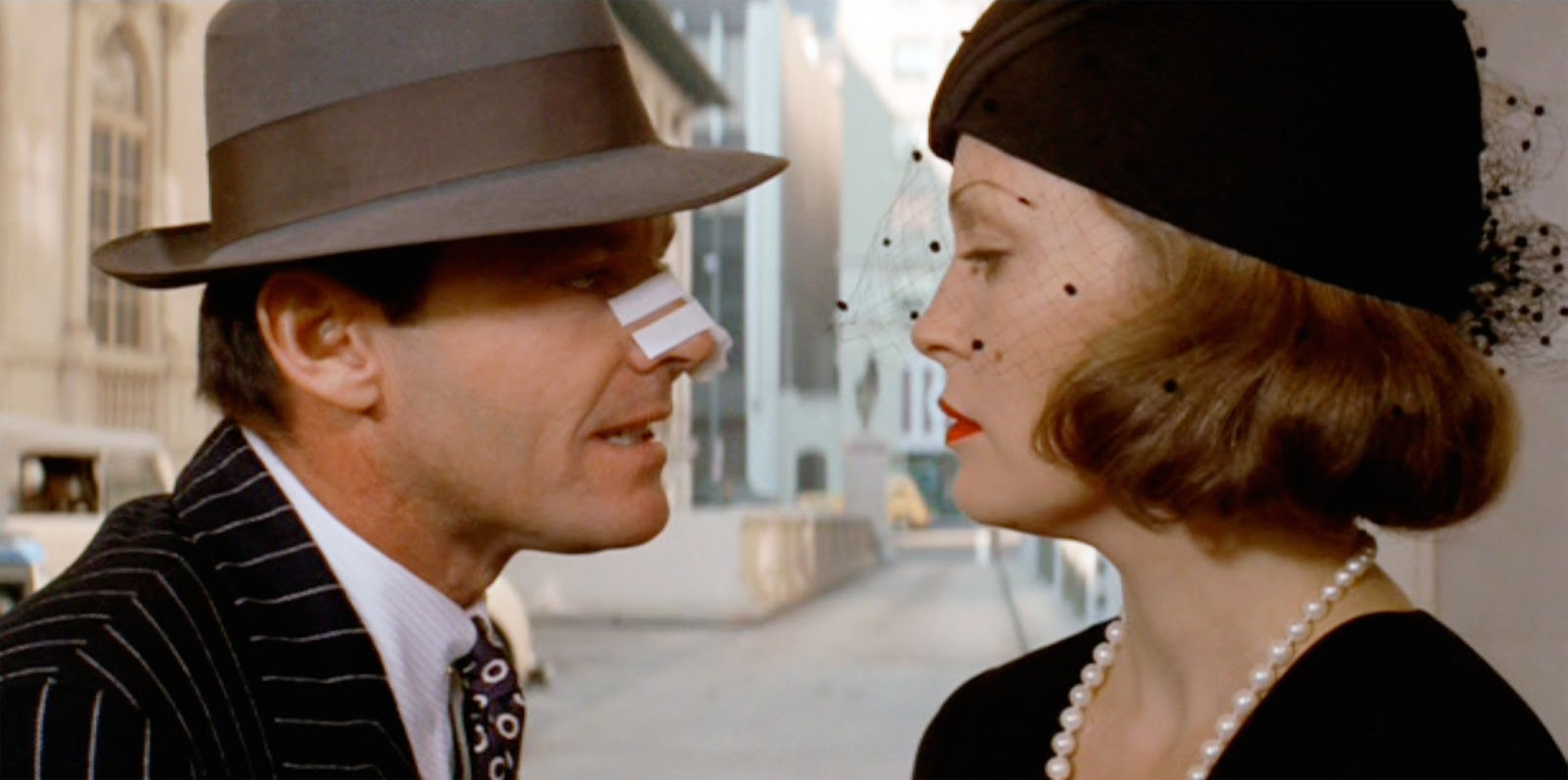
1) Chinatown – Roman Polanski’s stunning neo-noir thriller transformed Jack Nicholson into a superstar and made Robert Towne’s elaborate, gripping screenplay – one of the most compelling, intelligent screenplays ever written – the main reason for seeing the movie.  With superb performances from Faye Dunaway and John Huston, this incredible movie still has the power to unnerve and startle with its story of corruption and greed in 40’s Los Angeles, and that tragic revelation.

Chinatown - scene

2) Lenny – Revisiting the life of counter-culture, angst-ridden comic Lenny Bruce was always going to depend on the actor playing him, but Dustin Hoffman turns in an amazing, detailed performance that is possibly his best ever.  With a career best turn from Valerie Perrine, deft, sympathetic direction from Bob Fosse, and a grimy, authentic recreation of the clubs where Bruce vented his anger at the hypocrisies of society, Lenny still has the potential to shock and surprise, and takes no prisoners (just like Bruce himself).

3) Fear Eats the Soul – German auteur Rainer Werner Fassbinder had made a number of excursions into movies for TV before he wrote and directed this vital, important tale of the relationship between a Moroccan migrant worker (the soulful El Hadi ben Salem) and a German woman in her mid-sixties (the affecting Brigitte Mira). Ageism and racism are given short shrift by Fassbinder’s script, and the growing relationship is portrayed naturally and with little sentiment.  It’s a dour movie, to be sure, but uplifting at the same time.

4) The Godfather Part II – The crowning glory of Francis Ford Coppola’s career and a movie that’s nigh on faultless, The Godfather Part II is the classic example of a sequel that is better than its predecessor… so, so much better.  Even Brando’s presence isn’t missed.  With its flashback sequences detailing the origin of Vito Corleone’s role as Godfather conflated with the inexorable rise of his son Michael to the same position, this has tragedy and triumph in equal measure, and features astonishing achievements in directing, scripting, acting, cinematography, sound, editing, costumes, art direction, and set design.  In short, it’s a masterpiece.

Godfather Part II, The - scene

5) The Texas Chain Saw Massacre – With its fierce, tension-wringing set up and feral, nightmarish family of cannibals, Tobe Hooper’s second feature still has the power to shock, and leave audiences feeling drained by the end.  The iconic image of Gunnar Hansen with a literal “face”-mask and revving a chainsaw – once seen, never forgotten – sums up the movie’s terrifying approach to its subject matter, and confirms (if anyone needed reminding) that low budget horror can be startling, original and a once in a lifetime experience.

6) A Woman Under the Influence – Possibly the finest examination of mental illness within the family, John Cassavetes’ stinging, heart-rending drama features a tour-de-force performance from Gena Rowlands as the emotionally downtrodden Mabel, a woman whose ill treatment by her husband and children leads her to suppress any positive feelings for fear of being judged as “unbalanced”.  Not a movie for everyone but one that isn’t afraid to confront a complex, contentious issue with poise and a piercing intelligence.

7) The Phantom of Liberty – If you like your movies chock-full of symbolism, surrealism and absurdist humour, then Luis Buñuel’s collection of barely connected episodes will capture your attention and never let go.  It’s a modern masterpiece of (mis)direction and subversive behaviour, and features a seasoned cast that includes Jean Rochefort, Monica Vitti and Adolfo Celi, all of whom enter into the spirit of things with undisguised gusto.

Phantom of Liberty, The - scene

8) The Conversation – It’s that man Coppola again, this time with an introspective low-key look at the self-contained life of a surveillance expert (the superb Gene Hackman) who finds himself drawn – against his better judgment – into a perfectly weighted mystery.  The chilly, withdrawn mise-en-scene is expertly crafted, and Coppola’s script delivers more and more as the movie heads toward its incredible denouement.  To release both this and The Godfather Part II in the same year – well, that’s just insane.

9) Young Frankenstein – Mel Brooks’ finest hour, even though Blazing Saddles was also released in ’74, this grand homage to the Universal horrors of the 30’s and 40’s is an undeniable treat, full of terrific one-liners – “To the lumber yard!” – and wonderful visual flourishes.  Co-writers Brooks and Gene Wilder are on top form, and their affection for the Fronkensteen movies made by Universal adds to the joy of watching Mary Shelley’s classic tale unfold in its own, very unique manner.  And the “Puttin’ on the Ritz” sequence is just inspired.

10) The Taking of Pelham One Two Three – Ignore the turgid remake with Denzel Washington and John Travolta, this is ten times as good and ten times as gripping.  Walter Matthau is the grizzled cop engaged in a battle of wits with train hijacker Robert Shaw, and as the movie ratchets up the tension, audiences are treated to one of the finest thrillers ever made.  Bravura movie making from all concerned but anchored by a fantastic job of direction by the underrated Joseph Sargent.

Taking of Pelham One Two Three, The - scene

If you agree or disagree with my choices, feel free to let me know.  And if there’s another year with an equally brilliant selection of movies released, feel free to let me know as well.  But more importantly, if you haven’t seen some or all of the movies listed above, then what are you doing reading this?  Get out there and watch them!

Share this:

  • Share on X (Opens in new window) X
  • Share on Facebook (Opens in new window) Facebook
  • More
  • Print (Opens in new window) Print
  • Email a link to a friend (Opens in new window) Email
Like Loading...

Dracula Untold (2014)

16 Thursday Oct 2014

Posted by dullwood68 in Movies

≈ Leave a comment

Tags

Charles Dance, Dominic Cooper, Gary Shore, History, Horror, Luke Evans, Reboot, Review, Sarah Gadon, Thriller, Transylvania, Vampire, Vlad Tepes

Dracula Untold

D: Gary Shore / 92m

Cast: Luke Evans, Dominic Cooper, Sarah Gadon, Art Parkinson, Charles Dance, Diarmaid Murtagh, Paul Kaye

Set in the Middle Ages in Eastern Europe, fealty to the Sultan of Turkey is observed by the giving of a thousand boys to be trained in his army.  Such is the early fate of Vlad Tepes (Evans), who grows up to be a fierce warrior and friend of the subsequent Turkish ruler, Mehmet (Cooper).  Turning his back on war, Vlad returns home to rule his people.  He marries Mirena (Gadon) and has a son, Ingeras (Parkinson).  After years of peace, Vlad is alerted to the presence of Turkish scouts in his homeland.  He tracks them to Broken Tooth Mountain, where in a cave that reveals itself as a slaughterhouse, Vlad comes face to face with a monster (Dance).  He escapes, but not before two of his men have been claimed by the creature.  Returning home, Father Lucien (Kaye) advises Vlad of the creature’s origins, and its vampiric nature.  They decide to keep their knowledge a secret between them.

A Turkish envoy, come to collect his master’s tribute, tells Vlad the Sultan wants a thousand boys for his army.  Vlad wavers over doing his duty to the Sultan and doing what’s best for his people.  When the Sultan’s envoy adds that Mehmet wants a thousand and one boys, and the extra boy should be Ingeras, Vlad is even further torn.  But at the point of giving his son to the envoy, Vlad makes a fateful decision: no boys will go to the Sultan.  War is inevitable, but Vlad seeks a way to avoid his people being decimated by the Turkish hordes.  He returns to Broken Tooth Mountain where he confronts the vampire and asks to share in his power.  The creature agrees but stipulates that if Vlad is to drink any human blood in the next three days then he will be cursed as a vampire forever, and unable to be fully human again.

When the Turks march on Castle Dracula, Vlad goes out to meet them alone… and he decimates their forces.  With a greater army on the way, headed by Mehmet himself, Vlad orders his people to move to a monastery high up in the mountains, somewhere it will be difficult for the Turks to attack directly.  A surprise attack leaves Mirena and Ingeras in peril, but Vlad saves them using his newfound powers.  The next day, at the monastery, suspicions over Vlad’s new powers leads to him being attacked by his own people.  He survives to rebuke them, telling them that what he has done is because of them, and that they should be concentrating on Mehmet’s approaching army.

Arriving just before dawn, the Turkish forces are met by Vlad but they prove to be a decoy for a smaller force that gains entry to the monastery and targets Mirena and Ingeras.  With their fates intertwined with his, Vlad is forced to make a decision that will affect all their lives, and bring him face to face with his boyhood friend.

Dracula Untold - scene

Dracula Untold is yet another reboot of an established and well-defined character that seeks to make them look less like a monster and more like someone who has to be bad in order to do good (this year’s Maleficent is another example).  It’s a strange phenomenon in the movies these days, almost as if moviemakers feel they have to apologise for these characters’ behaviour.  It also ends up rendering them relatively anaemic (excuse the pun) in comparison to their original incarnation.  And so it proves with this reimagining of the Dracula story.

While the initial idea is sound – show how Vlad Tepes, Transylvanian prince and hero to his people became Dracula, bloodthirsty monster feared by all – the movie fumbles its way through its attempts to create an origin story partly based on historical fact and partly on romantic fiction.  Vlad is shown as a peaceful man reigning in a vicious, cruel capacity for violence but even though we see the the results of his warlike nature – the infamous impalings on the battlefield – it’s hard to associate the two differing temperaments.  As played by a suitably brooding Evans, Vlad is a bit of a wimp in the opening scenes, browbeaten by the Turkish envoy and then dismissed by Mehmet in a scene where Vlad pleads for clemency in relation to the thousand boys.  Vlad doesn’t appear the proud leader of men he’s meant to be, but more an easily cowed man with no stomach for a fight.  It’s only when he saves his son and kills some of Mehmet’s men that he shows some mettle.

It’s here that Dracula Untold finally becomes a vampire movie, reintroducing Dance’s withered creature, and setting up a future storyline if the movie is as successful at the box office as Universal hope it will be (they have a modern Monsters Cinematic Universe in mind).  The bargain is made, allowing the inevitable tragedy of such a bargain to begin playing out.  Vlad tries to deny his thirst for blood while Mirena marvels at the disappearance of his battle scars.  And in a scene of limited ferocity and actual bloodshed, Vlad takes on a thousand Turks and kills them all.  But it’s all done at a remove, with the intensity of the situation dialled down a notch or two, and Vlad’s predicament reduced to the level of suffering occasional stomach cramps.  From here, the movie picks up the pace but it’s at the expense of time-related logic and dramatic credibility.

With Vlad needing to defeat Mehmet and his army within three days, the Turks’ ability to travel huge distances in such a short space of time goes unquestioned, while Vlad creates a vampire horde of his own to take them on (would a ruler who truly cares for his people do such a thing even if they were on the verge of dying?).  And the script tries for an ironic twist – Vlad’s fate is sealed by the one person he loves most – that feels hackneyed and short on originality.

Muddled though the movie is for the most part, it’s stronger in its performances.  Evans brings a brutish physicality to the role that suits the warrior Vlad, and he dominates scenes just by being present.  He’s a more thoughtful actor than you might expect from his resumé, and he does his best to offset some of the more florid dialogue in the script, as well as making Vlad a more rounded character.  Gadon also gives a good performance, matching Evans for intensity in their scenes together and making Mirena slightly more than the wife who waits anxiously at home while her man goes off to battle.  Dance radiates a cold disdain as the trapped “master vampire” though his voice retains too much of its recognisable charm to make that disdain truly chilling.  Parkinson proves an adequate match for the demands of a role that could so easily have been more stereotypically presented, while Kaye as Father Lucien has a small but pivotal role that he acquits himself well in (even if some audience members will be saying to themselves, “but that’s Dennis Pennis”).  The only disappointment is Cooper, once again confirming his limited range as an actor, and making Mehmet look and sound like an arrogant jerk.

Dracula Untold - scene2

In the director’s chair, Shore (making his feature debut) uses his experience working in   high-end commercials to provide some impressive visuals – one shot shows Vlad taking on the Turks as reflected in the blade of a sword – and shows a confidence that bodes well for the future if it’s combined with a better script.  He’s clearly comfortable directing actors as well, and the performances are as much to his credit as to theirs.  The photography by John Schwartzman is predictably gloomy, though it avoids the steely gray-blue aesthetic of the Underworld series, and there’s a dramatic if occasionally intrusive score courtesy of Ramin Djawadi that is used to good effect throughout.

Ultimately, Dracula Untold is a bit of a mixed bag, its historical pretensions never fully reconciled with its need to reinvent its title character.  The script – by Matt Sazama and Burk Sharpless – remains jumbled throughout and it’s this lack of focus that hampers things the most.  As an entreé into the revamped (excuse the pun) world of Universal’s collection of classic monsters it’s maybe not quite the start the company were looking for, but it’s also not as bad as it could have been.

Rating: 5/10 – despite some occasionally severe deficiencies in the script, Dracula Untold is a solid, unpretentious reintroduction to the world’s most (in)famous vampire; a good mix of the epic and the intimate also helps but the characters remain at too much of a remove to make us truly care what happens to them.

Share this:

  • Share on X (Opens in new window) X
  • Share on Facebook (Opens in new window) Facebook
  • More
  • Print (Opens in new window) Print
  • Email a link to a friend (Opens in new window) Email
Like Loading...

Mini-Review: Jersey Shore Massacre (2014)

12 Sunday Oct 2014

Posted by dullwood68 in Movies

≈ Leave a comment

Tags

Angelica Boccella, Danielle Dallacco, Fat Camp Massacre, Gore, Horror, Jersey Devil, Jersey Shore, Murders, New Jersey, Paul Tarnopol, Pine Barrens, Review, Spoof

JERSEY SHORE MASSACRE, poster art, from left: Chris Lazzaro, Giovanni Roselli, Danielle Dallacco,

D: Paul Tarnopol / 88m

Cast: Danielle Dallacco, Angelica Boccella, Giovanni Roselli, Chris Lazzaro, Nicole Rutigliano, Ashley Mitchell, Christina Scaglione, Brenton Duplessie, Brett Azar, John Michael Hastie, Leonarda Bosch, Ron Jeremy

A group of friends – Teresa (Dallacco), Dina (Boccella), Joanne (Rutigliano), Valerie (Mitchell), and Gigi (Scaglione) – decide to head for the beach for the weekend but a double booking on the place where they’re meant to stay means they end up staying at Teresa’s Uncle Vito’s place on the edge of the Pine Barrens.  They head for the beach anyway, and meet a group of guys – Tony (Roselli), Freddy (Lazzaro), Vinnie (Duplessie), Gino (Azar), and Joey (Hastie) – with similar ambitions for the weekend: to party hard and get laid.  They all head back to Uncle Vito’s where they start to get to know each other better, but there’s a killer on the loose, and he’s hell bent on murdering them all.

Intended as a spoof horror – the spoof element being the characters who bear a strong resemblance to the characters in the TV show, Jersey Shore – Jersey Shore Massacre is  an unsophisticated, deliberately awful parody of that particular show, as well as a fond tribute to various horror movies of the last twenty years (it’s nice to see both Friday the 13th and The Shining being alluded to… as well as many other horror classics).  It makes fun of the show’s conventions, and boasts some unexpectedly funny one-liners as well as a further in-movie spoof entitled Fat Camp Massacre.

Jersey Shore Massacre - scene

But poking fun at a bunch of narcissists will only get you so far, and so it goes here, with a cast who look and sound the part – with the exception of Dallacco who looks like she’s wandered in from another show entirely (one with an IQ requirement that’s in double figures) – but who are as annoying as their small screen counterparts.  Having them killed off in ever more inventive ways goes some way to making the movie more palatable but it’s still riddled with casual sexism and even more casual attempts at acting.

Co-writer/director Tarnopol struggles with the set up and appears undecided as to whether his version of the Jersey Devil should be into torture porn or straight forward slaying, and there’s a shower murder that would have had Hitchcock shaking his head in dismay.  All in all it’s as amateurish as you’d expect, and further proof that just because someone can make a movie, it doesn’t mean they should.

Rating: 3/10 – as bad as it sounds, and good intentions aside, the kind of spoof that works only if the original source isn’t already an example of self-parody; when the cast whine louder than the sander used on one victim, then it’s clear – if the title Jersey Shore Massacre hadn’t convinced anyone already – that this is low budget stuff and less than impressive.

Share this:

  • Share on X (Opens in new window) X
  • Share on Facebook (Opens in new window) Facebook
  • More
  • Print (Opens in new window) Print
  • Email a link to a friend (Opens in new window) Email
Like Loading...

Spider Baby or, the Maddest Story Ever Told (1967)

10 Friday Oct 2014

Posted by dullwood68 in Movies

≈ Leave a comment

Tags

Beverly Washburn, Black comedy, Carol Ohmart, Drama, Horror, Jack Hill, Jill Banner, Lon Chaney Jr, Merrye Syndrome, Murder, Quinn Redeker, Review, Sid Haig, Spiders

Spider Baby

D: Jack Hill / 84m

Cast: Lon Chaney Jr, Carol Ohmart, Quinn Redeker, Beverly Washburn, Jill Banner, Sid Haig, Mary Mitchel, Karl Schanzer, Mantan Moreland

A messenger (Moreland) approaches a lonely old house located way out of town on an unmarked dirt road.  On the porch he looks in an open window, hoping to find someone at home. It’s the last thing he does.  For this is the Merrye House, home to a family blighted by inbreeding and a resulting genetic disorder that causes mental regression from around the age of ten.  Looking after the last descendants of this particular branch of the Merrye family is Bruno (Chaney Jr), the family chauffeur who promised to look after the children when their father died years before.  He’s kept them safe and away from prying eyes, knowing that their behaviour would see them taken and locked away.

There are two daughters: Elizabeth (Washburn) and Virginia (Banner), and a son, Ralph (Haig).  Elizabeth thinks it’s natural to hate everyone, and that everyone else is prone to hate too.  Virginia is fixated on spiders, and keeps two tarantulas in a writing desk; she has a special spider game she likes to play as well.  Ralph is a grinning halfwit, unable to communicate except by grunts and gestures.  All three have developed murderous tendencies, though Bruno has done his best to instil some degree of socially accepted behaviour in all of them.  They trust him to look after them, and he does so willingly.

The messenger’s letter informs of an impending visit by distant relatives Emily (Ohmart) and Peter (Redeker), their lawyer and his secretary.  Their aim is to dispossess the children of their home and profit from the sale of the house.  When they arrive, Bruno and the children attempt to be hospitable but the lawyer, Schlocker (Schanzer) is suspicious of them and their avoidance when discussing an aunt and uncle that should be living with them.  Emily reacts coldly, while Peter is equitable and treats them with respect.  Schlocker’s secretary, Ann (MItchel) gravitates towards Peter but is also uneasy, especially at the prospect of spending the night.  When the issue of two few rooms means Ann having to stay at a hotel in town, Peter offers to take her.

After they leave, Schlocker waits until everyone has gone to bed before he starts to snoop around.  He’s discovered by Elizabeth and Virginia, but not before he’s had a nasty encounter with their uncle.  They murder him, and when Bruno finds out what they’ve done, he realises it’s really the end of everything.  With a plan in mind to keep the children safe forever, he leaves the house.  Meanwhile, Ralph is spying on Emily while she undresses for bed.  When she sees him at her window she runs from the house.  All three children pursue her, but it’s Ralph who catches her. and with unfortunate repercussions.

With all the hotels in town full, Peter and Ann return to the house.  Peter agrees to play the spider game with Virginia and finds himself tied to a chair.  At the same time, Ann is grabbed by Ralph after she sees the children’s father, and helped by the two girls, is taken to the cellar where they try to kill her.  Help comes in an unexpected form, but with things having gone too far, Bruno’s return heralds a more permanent solution.

Spider Baby - scene

Filmed in 1964 but unreleased until ’67 because the producers went bankrupt, Spider Baby or, the Maddest Story Ever Told is a movie unburdened by notions of good taste or civility.  Its tale of a family of “retarded” (the movie’s term for it) degenerates at the mercy of an inherited disorder, the movie doesn’t lack for chances to be exploitative or horrific or unnerving.  There’s humour as well, a penchant for weirdness for weirdness’ sake, and above average performances, elements that fuse together to provide a rewarding experience, despite its creaky sub-haunted house scenario.

The key to everything is writer/director Hill, making his first movie and showing an undisputed flair for the macabre (not bad for someone who started their career at Disney).  The movie has an eerie quality that eludes most horror movies from the Sixties, and it has a pace and style that helps avoid the usual pitfalls, adding greatly to the more outlandish moments such as Ann being expected to stay in the room where the father’s remains are still in the bed.  Even when Schlocker begins his prowl round the house, a sequence which, for the period, is often the cue for an extended and usually dull interlude, here it’s given a welcome boost by the Merrye House not being a rambling mansion, and by the unexpected intervention of Uncle Ned.

With certain expectations undermined, Hill is free to tell his story as imaginatively as he wants, and he’s aided by a cast who all seem as committed as he is to making the best movie they can from the material.  Chaney Jr gives what is possibly one of the best performances of his later career – if not the best – his sad, weary face a joy to behold whenever he’s on screen, and more expressive than a dozen of his other movies all put together.  Chaney wasn’t in the best of health at this stage of his career, and the filming conditions weren’t the best – no air conditioning – so he does look inappropriately sweaty throughout, but his quiet, almost retiring approach to the character of Bruno is effective and oddly profound.

Spider Baby - scene2

As the children, Hill’s choice of actors also pays off.  Washburn and Banner play the sisters like errant schoolgirls, remonstrating with each other over their behaviour and curiously displaying little or no affection.  Their quirky, strange, off-kilter view of people and the outside world is by turns amusing, worrying, and terrifying.  Without Bruno’s guidance, you wonder how unfettered their behaviour would have become, and the two actresses display that kind of blithe dissociation with ease, inhabiting their roles with impressive composure.  Haig hasn’t quite as much to do but his jerky physical movements are often unsettling and his slack-jawed facial expressions, while often humorous to watch, belie a disturbing preponderance for lustful abduction.  With his bald head and pop eyed stare, Haig draws the attention throughout.

Redeker narrates the story with a smooth, urbane charm, and maintains a wide-eyed naïveté that contrasts well with the theatrical hysterics of his character’s relatives.  It’s an easy-going performance, skewed towards providing much of the movie’s comedy, his reactions to the more outré events providing a lot of beguiling amusement.  By contrast, Ohmart is the chilly relative who can only see dollar signs and intolerable weirdness.  She spends the latter part of the movie in just her underwear (apparently chosen specifically by Ohmart for use in the movie), and looks great.

Spider Baby looks great too even today, its crisp, atmospherically lit scenes often beautifully executed by DoP Alfred Taylor.  Hill shows a good eye for composition as well, blocking scenes with confidence and an intuitive feel for unnerving camera angles.  As well as encouraging strong performances from his talented cast, Hill also makes a virtue of the movie’s low budget to create a series of interchangeable sets that add tremendously to the claustrophobic feel of the Merrye house.  A mention too for the score by Ronald Stein: suitably creepy in parts, aptly stirring in others, but always complementary to the action.

Rating: 8/10 – with a better presentation and attention to detail than might be expected, Spider Baby or, the Maddest Story Ever Told is a wild ride bolstered by strong performances and a clever script; not weighed down by some of the stylistic excesses of later, similar movies, Hill’s debut sticks out by being effortlessly creative, and delightfully grotesque.

Share this:

  • Share on X (Opens in new window) X
  • Share on Facebook (Opens in new window) Facebook
  • More
  • Print (Opens in new window) Print
  • Email a link to a friend (Opens in new window) Email
Like Loading...

Horns (2013)

07 Tuesday Oct 2014

Posted by dullwood68 in Movies

≈ Leave a comment

Tags

Alexandre Aja, Black comedy, Daniel Radcliffe, Drama, Fantasy, Horror, Ig Parrish, Joe Anderson, Joe Hill, Juno Temple, Literary adaptation, Max Minghella, Murder, Review, Snakes, Thriller, Whodunnit

Horns

D: Alexandre Aja / 120m

Cast: Daniel Radcliffe, Max Minghella, Joe Anderson, Juno Temple, Kelli Garner, James Remar, Kathleen Quinlan, David Morse, Heather Graham

Ig Perrish (Radcliffe) has earned the enmity of the small town he lives in.  His longtime girlfriend, Merrin Williams (Temple) has been brutally killed in nearby woods, and everyone thinks Ig killed her.  With the townsfolk threatening him at every turn, and news crews following him wherever he goes, Ig protests his innocence but is continually ignored.  Even his friends and family suspect or believe he did it; only his best friend, Lee (Minghella), a lawyer, believes he’s innocent.

When a candlelit vigil is held at the place where Merrin was murdered, a drunken Ig rages against a God who could allow her to die.  The next morning he awakes to find two tiny horns growing out of his forehead.  Horrified, he goes to his doctor where he becomes aware of a startling side effect that the horns have brought with them: the people he encounters are compelled to tell him their darkest thoughts and desires once they’ve seen the horns.  He also learns that he can persuade them to act on these desires.  Using this ability he begins to visit people who knew Merrin in the hope of finding clues as to her killer’s identity – or even find them in person.  Everyone reveals something about themselves that is otherwise hidden except for Lee who doesn’t see any horns at all.

Ig suffers a setback when he learns a witness has come forward to say that they saw him leave a diner with Merrin on the night she was killed.  Ig knows this isn’t true, but at first he can’t think how to make the witness withdraw their statement.  The arrival of a bed of snakes that he can control solves the issue but brings him no nearer to finding Merrin’s killer.  It’s only when he confronts his brother, Terry (Anderson), that he begins to discover what exactly happened that night, including a fateful meeting at the diner that he had with Merrin, and which he’d forgotten.

As the clues mount up and Ig gets nearer the truth, an unexpected revelation leads to an attempt on his life.  Surviving the attempt, Ig sets a trap for the killer, and in the process, learns the tragic truth about his beloved Merrin.

Horns -scene

There’s a moment in Horns when Ig suggests that a couple of TV news reporters should “beat the shit out of each other” with an exclusive interview as the prize for the winner.  What follows is a free-for-all brawl between news teams that is both funny and ferocious at the same time.  It’s a perfect example of the tone of the movie, a delightfully perverse adaptation of Joe Hill’s novel that offers a mix of very dark humour and fantasy alongside a very traditional whodunnit.  It’s a bold, audacious movie, encompassing romantic drama, horror, broad comedy, and childhood flashbacks to often dizzying effect.  It’s also a great deal of fun.

Under the auspices of Aja, Horns is never less than riveting, its structure so cleverly constructed by screenwriter Keith Bunin that a few minor plot stumbles aside – the presence of the snakes (never properly explained), the killer’s apparent amnesia when confronted a second time by Ig – the movie grabs the attention from the outset, thrusting the viewer into Ig’s predicament with economy and style.  Its greatest trick is not to make Ig instantly likeable, and while it’s no stretch to believe he’s entirely innocent, his behaviour is self-destructive and aggressive, leaving just that sliver of doubt that maybe, just maybe, he might have killed Merrin.  And with a major motive introduced two thirds in, the movie still manages to throws doubts at the viewer with deliberate glee.

Radcliffe – building a quietly diverse and impressive career for himself post-Hogwarts – is the movie’s trump card, giving a well-rounded, nuanced performance that requires a lot from him as an actor.  He’s more than up to the task though, and is simply mesmerising throughout, justifying entirely the decision to cast him.  It’s a rich, deceptively detailed portrayal, much more resonant than we’re used to in what is ultimately a horror fantasy.  There’s a scene towards the end where Ig reads a letter written to him by Merrin.  The pain and anguish Radcliffe evinces, along with Temple’s perfect reading of the letter, makes the scene achingly sad to watch (and also the movie’s standout moment).

The supporting cast offer sterling support, from Garner’s turn as Ig’s would-be girlfriend Glenna, to Morse as Merrin’s heartbroken father.  If there’s a weak link it’s Minghella, an actor whose features lend themselves well to looking perturbed or querulous, but who regularly struggles to persuade audiences when more convincing emotions are required.  Temple continues to impress, her role in flashback as Merrin giving her another chance to shine (along with Radcliffe, she’s carving out a very interesting career for herself), and there’s a pivotal role for the underused Graham that reminds the viewer – however briefly – just how good she is.

The fantasy elements are effective, with a final transformation for Ig that is impressively handled, and the striking British Columbia locations are lensed to subtly remarkable effect by DoP (and David Lynch alumni) Frederick Elmes.  Aja keeps the focus on Ig and Merrin, the true heart of the movie, and holds back on the bloodshed to a level that, while it may annoy some horror fans, is in keeping with the overall tone of the movie (that said, he can’t resist including one splatter moment).  With a denouement that ups the pace and provides a satisfying conclusion to events, Horns succeeds on so many levels that it’s a very jaded viewer who will be disappointed by what the movie has to offer.

Rating: 8/10 – an above average fantasy thriller with dark comedic overtones, Horns is another daring outing from the very talented Aja; with a deep well of emotion for it to draw on, the movie succeeds in marrying a variety of disparate elements into a rewarding and gratifying whole.

Share this:

  • Share on X (Opens in new window) X
  • Share on Facebook (Opens in new window) Facebook
  • More
  • Print (Opens in new window) Print
  • Email a link to a friend (Opens in new window) Email
Like Loading...

Leprechaun: Origins (2014)

27 Saturday Sep 2014

Posted by dullwood68 in Movies

≈ 2 Comments

Tags

Andrew Dunbar, Dylan Postl, Gold, Hornswoggle, Horror, Ireland, Irish village, Reboot, Review, Sacrifice, Stephanie Bennett, WWE Films, Zach Lipovsky

Leprechaun Origins

D: Zach Lipovsky / 90m

Cast: Stephanie Bennett, Andrew Dunbar, Melissa Roxburgh, Brendan Fletcher, Dylan Postl, Garry Chalk, Teach Grant, Bruce Blain, Mary Black

Backpacking through Ireland, two young American couples – Sophie (Bennett) and Ben (Dunbar), Jeni (Roxburgh) and David (Fletcher) – are heading for a mysterious village that has a standing stone on its outskirts.  At the inn, the friends get talking to Hamish (Chalk), a local who appears friendly and welcoming, and when he learns they are interested in the village’s history, he offers them the chance to stay overnight in a cabin just outside the village.  The friends take up Hamish’s offer, and though the cabin isn’t exactly comfortable, they settle in for the night.  Some time later, Jeni hears a noise outside.

The four friends soon realise there’s something “out there” and that it wants to get in. When it does, the quartet escape the cabin only to discover that Hamish has set them up to be sacrifices to a creature they call a leprechaun.  Horrified to find that the legend is real, the four now find themselves having to defend themselves from the murderous attacks of the leprechaun, but also from a determined Hamish and his son, a more sympathetic Sean (Grant).  As the leprechaun picks them off one by one, it becomes clear that the only way to survive the night is to reach the standing stone, which not only marks the village boundary but is the point beyond which the leprechaun cannot go.

Leprechaun Origins - scene

It was perhaps inevitable that, in the wake of all the other horror reboots that have been foisted on us over the last six or seven years, the Leprechaun series would be dusted off and given the update treatment.  However, the only thing this particular remake/reboot/reimagining proves is – once again – that some movies shouldn’t be made, especially when there’s as little imagination and skill involved as there is here.  The original sextet of Leprechaun movies may be fondly remembered for their cheesy humour and semi-inventive killings, and they may have made Warwick Davis even more well-known than his turn as Wicket in Star Wars Episode VI: Return of the Jedi, but they still got worse as they went on until the last entry, 2003’s Leprechaun: Back 2 tha Hood, had all but jettisoned the horror in favour of infantile humour.  With that in mind, the producers’ decision to go a different route is to be applauded.  Alas, it’s the only thing they got right.

They say it’s easy enough to make a horror movie, but on this evidence, the adage should read: it’s easy enough to make a terrible horror movie.  Because Leprechaun: Origins is exactly that: a terrible horror movie.  It features by-the-numbers, uninspired plotting that sees the four friends running from one building or vehicle to another ad nauseam; phoned in performances from a cast who give new meaning to the word insipid; direction that distracts due to its waywardness and lack of cohesion; dialogue that sounds like it was dictated through hidden earpieces and repeated by the cast; the by now obligatory Canadian locations that are blandly photographed (by Mahlon Todd Williams); a score by Jeff Tymoschuk that does little to increase the minimal amounts of tension created by Harris Wilkinson’s unimaginative script; a creature that is supposed to be single-minded in its purpose but which pauses/hesitates/suspends its attempts to kill everyone when the script requires it (and whether they have gold on them or not); a special effects budget that limits itself to one (admittedly effective) kill shot; and the entirely predictable post credits scene that sets up an equally predictable sequel (though hopefully this outing will do so badly it won’t happen).

With the movie looking so much like a drab, lacklustre slasher movie – though without the benefit of having an actual slasher in it – the casual viewer might expect the leprechaun itself to be more effectively realised than the Gollum/Orc-style creature presented here.  Worse still is the movie’s advertising, which heavily promotes WWE “superstar” Hornswoggle (aka Dylan Postl) as the leprechaun.  It’s a bit of a cheat on WWE’s part to do so as Postl is unrecognisable beneath the layers of leprechaun make up, and has no lines either (though this is probably a good thing).  Literally anyone could play the role in these circumstances, and while it’s always been the case that WWE tailor their “superstars” movie roles to their experience/acting skills, it doesn’t say much for Postl that he’s buried so completely in the part.

And lastly, a quick mention for the deceptive running time.  The end credits (including the post credits scene mentioned above) run for a full twelve minutes, so the movie is, in real terms, much shorter… but it still drags like watching a balloon slowly deflate.

Rating: 3/10 – woeful from start to finish, Leprechaun: Origins screams “cheap and nasty rip off”; with cast and crew displaying a bare minimum of commitment or creativity, this is one reboot that has little or no chance of striking gold.


Share this:

  • Share on X (Opens in new window) X
  • Share on Facebook (Opens in new window) Facebook
  • More
  • Print (Opens in new window) Print
  • Email a link to a friend (Opens in new window) Email
Like Loading...

Kristy (2014)

11 Thursday Sep 2014

Posted by dullwood68 in Movies

≈ 3 Comments

Tags

Ashley Greene, College campus, Drama, Haley Bennett, Horror, Internet cult, Intruders, Murder, Olly Blackburn, Review, Thanksgiving, Thriller

Kristy

D: Olly Blackburn / 86m

Cast: Haley Bennett, Ashley Greene, Lucas Till, James Ransone, Chris Coy, Mike Seal, Lucius Falick, Mathew St Patrick, Erica Ash

Justine (Bennett) is a slightly nerdy college student who’s planning to spend Thanksgiving on campus as she can’t afford to get home for the holiday.  Her boyfriend, Aaron (Till), tries to persuade her to come with him to stay with his family but she won’t accept his kindness.  With only her friend, Nicole (Ash) and campus security guard Wayne (St Patrick) for company, Justine is looking forward to spending some time (largely) by herself.  However, Nicole heads home too, leaving Justine (nearly) all alone.

When she goes out to get some supplies at a local gas station, she encounters a young woman (Greene) whose strange attitude and challenging manner Justine attempts to placate in order to avoid an ugly encounter with the gas station attendant.  With her offer rebuffed, Justine voices her disappointment at not being able to just help someone.  The young woman rounds on her and tells her she’s the “Kristy”.  Later, on her way back to the campus, the young woman uses her car to block Justine’s, but Justine gets past her.  She tells Wayne what’s happened and although he’s sure nothing worse will happen, Justine isn’t so sure.

It isn’t long before she’s proven right.  The young woman appears in her room carrying  a knife.  Justine gets past her but soon learns the young woman isn’t alone: she has three male accomplices, all wearing tin foil masks and hoodies, and all carrying weapons.  A game of cat and mouse begins between Justine and the intruders.  Wayne is murdered and Justine is forced to run from building to building in an attempt to avoid being killed as well.  Even when she seeks help from the campus maintenance man, Scott (Ransone), who has a shotgun, the intruders outsmart him and Justine is left to fend for herself once again.  She must use every ounce of ingenuity she has to outwit the intruders and stay alive…

RANDOM

With its mix of Halloween (1978), The Shining (1980) and every school-based slasher movie ever released, Kristy could be accused of being derivative and unimaginative.  But in the hands of director Blackburn and writer Anthony Jaswinski, the movie is strong on atmosphere, as tense as barbed wire, and features some sterling, predatory camerawork thanks to DoP Crille Forsberg.  It’s an impressively mounted picture as well, the university environs – in particular, the swimming pool – put to very good use, the wide open spaces of the grounds proving just as claustrophobic as the interiors, Justine’s attempts at hiding or escape placed against a pitiless, unremarkable background of beiges and off-whites.

It’s a very measured, well-constructed mise-en-scene that benefits from Blackburn’s close attention to detail, validating his decision to combine tightly framed shots with wider, equally threatening compositions that add immeasurably to the sense of unease the movie displays from the first moment an overhead light begins to flicker in the dorm’s laundry room.  But while there’s a sure hand behind the camera, in front of it there’s a commanding performance from Bennett, her slightly geeky, girl-next-door looks and demeanour explored with effortless simplicity in the opening twenty minutes, from her interaction with Aaron to a deceptively effective montage of her activities once everyone’s left.  Justine is instantly likeable, the kind of young woman who makes you smile from the off.  Bennett invests her with a goofy charm, and while she spends the middle third running from the intruders, once Justine decides to take the hunt to them instead, she applies a calculating side of her character that comes across as entirely natural (it’s less the worm turning, more the worm realising she’s actually more than a match for her tormentors).

As the unreasoning, psychotic leader of a cell that’s part of a wider, Internet-based cult, Greene is hidden for the most part under a pink-tinged hoodie, only her facial piercings and chapped lips allowed any prominence.  She gives an angry, embittered performance, her coiled physicality threatening to erupt at any moment, making her the most unpredictable character of all; you watch her to see just what she’ll do next.  As her homicidal accomplices, Messrs Coy, Seal and Falick are hidden behind their masks but their presences are felt even when they’re off screen (Kristy is one of those movies where the viewer can’t quite be sure that one or more of them won’t just pop into view when it’s least expected).

There is violence throughout, from an opening montage of video clips of the cell’s other victims (which are posted on the Internet for other cult members to “enjoy”), to the outcome of Justine’s showdown with the young woman, but there is very little actual bloodshed, and Blackburn wisely avoids the kind of brutality that would have taken Kristy down the torture-porn route.  Instead, and aside from one crowd-pleasing contact blow that is entirely justified, each kill is rendered out-of-shot and with an emphasis on good old-fashioned sound effects.  In fact, the sound mix is one of the most effective aspects of the movie (take a bow, Michael B. Koff), particularly when the intruders are stalking Justine through the kitchens, their knives and weapons scraping against the fixtures and walls with hideous potency.

As mentioned above, the movie is indebted to several other horror outings, and while there will be those who won’t see beyond those influences, and will see deliberate moments taken from those movies – the fate of one character is lifted wholesale from Kubrick’s masterpiece – any naysayers will be missing the efficiency and verve that Blackburn et al. have employed to make these staple ingredients appear fresh and invigorated.  It’s very difficult these days to come up with something new in the horror arena, and while the thriller elements are pushed to the fore here, this variation on the home invasion sub-genre is refreshingly presented and, one unnecessary post-end credits sequence aside, belies its derivative nature to provide a riveting viewing experience.

Rating: 8/10 – unnerving, gripping and rewarding in equal measure, Kristy is a step up from other movies of a similar nature, and treats its audience accordingly; with clear intelligence at work both behind and in front of the camera this is one horror/thriller that really does deserve a wider audience.

Share this:

  • Share on X (Opens in new window) X
  • Share on Facebook (Opens in new window) Facebook
  • More
  • Print (Opens in new window) Print
  • Email a link to a friend (Opens in new window) Email
Like Loading...

Mini-Review: The Possession of Michael King (2014)

30 Saturday Aug 2014

Posted by dullwood68 in Movies

≈ Leave a comment

Tags

Angels, Bereavement, David Jung, Demons, Found footage, Horror, Possession, Review, Shane Johnson, Supernatural, Tomas Arana

Possession of Michael King, The

D: David Jung / 83m

Cast: Shane Johnson, Julie McNiven, Jed Rees, Ella Anderson, Cara Pifko, Cullen Douglas, Freda Foh Shen, Patricia Healy, Dale Dickey, Tomas Arana

Following the tragic demise of his wife, Samanatha (Pifko), distraught Michael King (Johnson) decides to make a film about the search for the existence of the supernatural.  By placing himself at the centre of the search, and by allowing all sorts of demonologists and occult practitioners to involve him in their spell-castings, Michael hopes they’ll all fail, thereby reinforcing his belief that it’s all just hokum.  Aided at first by cameraman Jordan (Rees), Michael’s initial endeavours bear little or no fruit until a meeting with a mortician (Douglas) leads to a ritual that doesn’t go as expected.  Plagued by fugue moments, unexplained phenomena, and a persistent noise like interference that only he can hear, Michael begins to suspect that something has happened to him.

He retraces his steps but everyone he’s spoken to or encountered, including the mortician, wants nothing more to do with him.  Rebuffed, and with his behaviour slowly but surely estranging him from everyone else around him, including his pre-teen daughter Ellie (Anderson) and sister Beth (McNiven), Michael struggles to control the often violent transformation he begins to experience, as well as trying to ignore the voice he can hear beneath the interference – a voice that urges him to harm his daughter.

Possession of Michael King, The - scene

Let down by the stupidity of its central character, The Possession of Michael King is a hyper-stylised found footage movie that throws logic out of the window at the first opportunity and never looks back.  With a visual style that’s reminiscent of Se7en (1995) (albeit without the constant rainfall), first-time writer/director Jung assembles a woeful mess that rehashes motifs and camera angles from the Paranormal Activity series, as well as a hundred other found footage movies.  In short, there’s little that’s new or original here, although Michael’s reasons for making his film are certainly some of the dumbest heard for a long time.

The movie also suffers from a final third that seeks to inject some menace via Michael’s attempts to kill his daughter, attempts that are about as frightening as her being chased by a Care Bear.  To be fair, there are some effective moments where Jung employs some uncomfortable body horror but these are few and far between.  Johnson gamely struggles against the script’s more absurd quirks and foibles, and in doing so, saves Michael from being a complete idiot and elicits some much-needed sympathy by the movie’s end.  However, by then, like Michael, you’ll be praying for a way out from all the misery.

Rating: 3/10 – despite several attempts to be cleverer than the average found footage horror movie, The Possession of Michael King undermines itself by having its title character behave as stupidly as possible at pretty much every turn; for found footage, or possession movie completists only.

Share this:

  • Share on X (Opens in new window) X
  • Share on Facebook (Opens in new window) Facebook
  • More
  • Print (Opens in new window) Print
  • Email a link to a friend (Opens in new window) Email
Like Loading...

Poster of the Week – Werewolf of London (1935)

26 Tuesday Aug 2014

Posted by dullwood68 in Movies

≈ Leave a comment

Tags

Horror, Movie poster, Poster of the week, Universal, Warning

Werewolf of London

Werewolf of London (1935)

As Universal’s first werewolf movie – though now overshadowed by The Wolf Man (1941) – Werewolf of London is an interesting forerunner for the later series of movies, and it has its own undeniable charm.  The poster – one of several used at the time – has all the usual characteristics of a movie poster from the period: the montage of images from the movie, the garish title, principal cast names in larger print than the supporting cast, but it’s the addition of the printed warning that separates this from its peers.

Viewed nowadays, the reference to “hysterical women” would be viewed with distaste and probably, a certain amount of vehemence.  But back in 1935, these types of warnings, while not commonplace, were certainly not unknown, and this is a perfect example of the dramatic hyperbole employed.  Advising its potential audience of “the most terrifying scene ever filmed” sets the tone immediately, and while modern audiences might laugh at such a claim, contemporary viewers would have been less credulous.  Urging female viewers to close their eyes at a certain point in the movie is a master-stroke too, as it’s more than likely that curiosity will overcome any fear and they’ll watch anyway (there’s nothing like a bit of reverse psychology to bring in the audience).

The reference to “fainting spells or shocks of any kind” is almost like a challenge: we dare you to watch this scene.  It’s funny to read from the perspective of 2014, but we live in different times, and we have to remember that in 1935 the sight of Henry Hull with excessive facial hair and a jutting underbite would have been frightening to a lot of people.

As for the rest of the poster, the actors have been given an effective colour makeover, and the green tinge given to the werewolf is weirdly compelling, while the inclusion of a bat flying close to Big Ben seems to hint at another famous monster being involved, even though it’s not the case.  But it’s that warning to women that always draws the eye (and boggles the mind).

Agree?  Disagree?  Feel free to let me know.

Share this:

  • Share on X (Opens in new window) X
  • Share on Facebook (Opens in new window) Facebook
  • More
  • Print (Opens in new window) Print
  • Email a link to a friend (Opens in new window) Email
Like Loading...

The Sacrament (2013)

17 Sunday Aug 2014

Posted by dullwood68 in Movies

≈ 3 Comments

Tags

AJ Bowen, Cult, Eden Parish, Father, Gene Jones, Horror, Joe Swanberg, Review, Sober living community, Thriller, Ti West, Vice

Sacrament, The

D: Ti West / 95m

Cast: Joe Swanberg, AJ Bowen, Kentucker Audley, Gene Jones, Amy Seimetz, Katie Forbes, Shirley Jones-Byrd, Kate Lyn Sheil, Donna Biscoe, Talia Dobbins

When photographer Patrick (Audley) receives a letter from his sister, Caroline (Seimetz), that tells him she’s part of a sober living community, and that she’s moving with them to a foreign country, he enlists the help of Vice, a multi-media company, to discover what’s really happening.  Joined by reporter Sam (Bowen) and cameraman Jake (Swanberg), they travel to the community’s new location – a compound named Eden Parish – and find Caroline safe and well and happy, along with dozens of people of all ages who have dedicated their lives to the teachings of the man they call Father (Jones).  Father has created a drug and alcohol free, politically independent society where there is no violence, no crime, only a firm belief in the Bible and the need for the community to remain apart from others.

Father agrees to be interviewed by Sam but it doesn’t go as Sam expects, and he finds himself wrong-footed and confused.  He and Jake become increasingly aware that not everything is as it seems, or as Father professes.  A woman implores them to take her mute daughter with them when they leave; an encounter with Caroline leads Sam and Jake to believe that she is high; and Patrick is kept away from them deliberately.  The next morning, as well as the woman and her mute child, there are several other people trying to leave the compound.  Fearing an end to his work, Father makes a drastic decision, one that has terrible consequences for everyone there.

Sacrament, The - scene

With obvious parallels to the story of Jim Jones, The Sacrament has a horrible fatalism that permeates the movie throughout, and makes for often uncomfortable viewing.  Filmed found footage style – but with the odd occasional shot that clearly isn’t part of the set up – Ti West’s latest sees the world of exclusionist religion brought into sharp relief.  It’s a difficult subject to tackle, but West crafts a gripping thriller from the premise of a collective created out of one man’s misguided wish to provide a better life for his followers.  As it becomes more and more evident that Eden Parish is not the paradise that Father would have Sam and Jake (or the outside world) believe, the movie develops a quiet power and the tragedy that unfolds takes on a grim inevitability.

To be clear, there is nothing new here, and nor does West’s screenplay attempt to add anything different to the basic set up, but such is his growing confidence as a filmmaker that, while The Sacrament plays out as predictably as expected, it does so with a compelling fascination that keeps the viewer hooked as events unfold.  It’s also one of the few found footage movies that doesn’t look contrived with its framing, West proving capable of making the majority of shots look organic and plausible in their focus (and without resorting to any manufactured jump scares).  That said, the movie could have been filmed in a more traditional manner and it would still have been as effective.

Adding another layer of credibility to proceedings, West coaxes some great performances from his cast, with Bowen and Jones proving particularly impressive. Bowen is gaining more and more exposure as an actor, his indie leanings often leading to characterisations that have a greater depth to them than you might expect, and here he expertly displays the indecision that Sam feels about Eden Parish and its leader.  And as that leader, Jones is simply mesmerising, his low-key, slightly pained delivery both forceful and unnerving in equal measure.  As his vision for the community begins to unravel, so too does Father, revealing the psychosis beneath the believer, a psychosis shared by Caroline and many others.  It’s a subtle, confident performance, one that stays in the memory long after the movie is over.  Until now, Jones has been known primarily as the gas station proprietor who survives an encounter with Javier Bardem’s badly tonsured psycho in No Country for Old Men (2007), but on this evidence he deserves to be given even bigger and better opportunities to shine.

The Sacrament does have one major flaw however, and while it’s entirely forgivable, it does undermine the growing tension of the first hour.  With the understanding that there are people who want to leave Eden Parish because it’s not all it seems, but are too afraid to speak out, the sudden attempt at an exodus comes across as expediency instead of an intrinsic consequence of events so far.  This awkward turn of events also brings forward the expected denouement, and in doing so, sees the movie abandon its measured approach in the first hour in favour of various confrontations and chase sequences.  These scenes are still effective – one that features Patrick and Caroline and the fate of one of them is as terrible to watch as anything featured in a more bloody horror film – but they end up divorced from the cumulative effect of what’s gone before.

But when all is said and done, this is a testament to West’s increasing skills as a writer/director.  With his revenge Western, In a Valley of Violence, due in 2015, it’s not unreasonable to place him on the list of directors whose movies are eagerly looked forward to, especially on this evidence.  And with so few original voices working in the field of horror these days, West is a talent to be followed with avid interest.

Rating: 8/10 – essential viewing for fans of intelligent, well-constructed terror, with an understated but scary performance from Jones, The Sacrament is a throwback to the paranoia-ridden horror movies of the Seventies; potent and rewarding, this confirms West’s rising status and is pretty much a horror sleeper.


Share this:

  • Share on X (Opens in new window) X
  • Share on Facebook (Opens in new window) Facebook
  • More
  • Print (Opens in new window) Print
  • Email a link to a friend (Opens in new window) Email
Like Loading...

Poster of the Week – Dracula (1958)

22 Tuesday Jul 2014

Posted by dullwood68 in Movies

≈ 1 Comment

Tags

Christopher Lee, Hammer Films, Horror, Movie poster, Poster of the week, Vampire, Victim

Dracula (1958)

Dracula (1958)

Hammer Films not only made lurid melodramas and (for their time) sex-driven horror movies, they also produced lurid, sex-driven movie posters.  This poster, for the first in what would be seven movies featuring Christopher Lee as the titular bloodsucker, isn’t as daring as some that would follow, but in its own way it has a disturbing quality that perfectly matches, and complements, the mood of the movie it’s advertising.

First, there’s the woman, lying prone and unconscious, her neck and shoulders exposed, the intended victim who is unaware of the terrible thing that is about to be done to her.  She looks innocent, a perfect contrast to the beast in human form that has her in its clutches, the threat of its vampire fangs clearly visible, his intention equally clear: he is about to defile her innocence.  It’s a horrifying prospect: the woman is unable to defend herself and her fate is assured; she too will become a vampire.

The image has some clever touches.  There’s the bronzed, healthy skin tones of the woman which are in stark contrast to the unhealthy pallor of the vampire’s, his pale(r) flesh revealing another loss the woman will endure once she’s bitten.  And then there’s the proximity of Dracula’s hand at her neck: could it be there to caress her rather than keep her hair away from where he plans to bite her?  If so, this neatly ties in with the movie’s audacious tag line, its bold assertion giving rise to the idea that maybe Dracula wants more than just blood from his victim, that there’s another thrill involved here (they are both lying down); maybe the woman is a willing participant instead?

The warning in the bottom right hand corner is another clever piece of marketing, urging couples to see the movie, to experience the thrills and chills together (and thereby boost the box office).  The principal cast are given prominent billing, the director et al. appearing slightly less important as usual, and lastly there’s the added touch of the reminder that an X certificate movie is for adults only – perhaps as a further hint of the “terrifying love” that they’ll witness within the movie?

Agree?  Disagree?  Feel free to let me know.

Share this:

  • Share on X (Opens in new window) X
  • Share on Facebook (Opens in new window) Facebook
  • More
  • Print (Opens in new window) Print
  • Email a link to a friend (Opens in new window) Email
Like Loading...

Joy Ride 3 (2014)

20 Sunday Jul 2014

Posted by dullwood68 in Movies

≈ Leave a comment

Tags

Declan O'Brien, Horror, Horror series, Ken Kirzinger, Psychopath, Road Rally 1000, Rusty Nail, Sequel, Serial killer, Slaughter Alley, Trucker

Joy Ride 3

D: Declan O’Brien / 96m

Cast: Ken Kirzinger, Jesse Hutch, Kirsten Prout, Ben Hollingsworth, Gianpaolo Venuta, Leela Savasta, Jake Manley, Dean Armstrong, Sara Mitich, J. Adam Brown, David Ferry

When a couple (Mitich, Brown) decide to lure someone to their motel room so they can rob them, they put a call out to any nearby truckers who might be listening on their CB radios.  What they don’t bank on is psycho trucker Rusty Nail (Kirzinger) answering their call.  Easily overpowering them, they find themselves chained to the axle of his rig and clinging to the bonnet; if they manage to stay on for a mile, not only will Rusty set them free, they’ll also be okay for coke.  Of course, Rusty has a trick up his sleeve, and the couple die.  When their bodies are discovered, the police put it down to some kind of animal attack, but newbie Officer Williams (Armstrong) isn’t so sure, especially when another officer talks about that particular stretch of highway being called Slaughter Alley, and the high number of deaths and disappearances that have taken place there over the years.

The movie switches focus then to a group of race car enthusiasts planning to take part in Canada’s Road Rally 1000.  Jordan (Hutch) is the lead driver, Mickey (Hollingsworth), the mechanic, Austin (Venuta) the owner of the race car and second driver, Bobby (Manley), Mickey’s assistant, while Austin and Mickey’s girlfriends, Jewel (Prout) and Alisa (Savasta) are also along for the ride.  Realising that by taking Route 17 – the aforementioned Slaughter Alley – will shave a day off their travelling time, the group take the road more dangerous, and even after they receive a warning from resident truck stop looney Barry (Ferry).  While Austin is driving the race car, he overtakes a truck, causing stones to fly up and hit the front of the vehicle.  The truck is Rusty Nail’s and he proceeds to chase them; they elude him however, and continue on to the border.

It’s not long, though, before Rusty catches up with them, and one by one the group fall foul of the angry trucker’s desire for revenge.  As the death toll rises, it’s left to the remaining two people in the group to face Rusty in a showdown at a scrap yard.

Joy Ride 3 - scene

Following on from Joy Ride 2: Dead Ahead (2008), this latest instalment in the franchise is yet another excuse for gory killings and the liberal spraying of blood and grue.  Brought in to breathe new life into what wasn’t exactly a failing series of movies – do two movies constitute a series? – writer/director O’Brien brings the overwrought bag of tricks he used to successfully exterminate any fun to be had with the Wrong Turn franchise, and uses it to create a movie that resonates more as an offshoot of the Saw movies than as another chapter in the saga of everyone’s favourite road-based psycho (outside of the one in Duel (1971) that is).

With O’Brien behind the wheel (apologies for the pun), anyone who has seen Wrong Turn 5 (2012) will know that characterisation, consistency, credibility and creativity will all be abandoned in favour of Nail doing what he does best: maiming, torturing and killing various poor unfortunates; or basically, anyone who pisses him off (which it seems is just about everybody).  While the set piece killings are this movie’s entire raison d’être, it’s still a shame that the same amount of effort can’t go into developing some characters we can actually care about.  Not one character in the entire movie is worthy of our sympathy or regard, and so, all the viewer can do is struggle through the dreary scenes that pad out the movie between killings.  As each death occurs, it’s almost with a sense of relief that there’s one less individual each time who won’t be around to spout the inconsequential dialogue that O’Brien serves up as either gratuitous exposition or wretched conversation.

It all adds up to poor performances all round, with Hutch and Prout proving more difficult to watch than their co-stars, both actors seemingly unable to pitch an emotion in such a way that the audience will recognise it.  Kirzinger provides the series’ first physical incarnation of Rusty Nail, though O’Brien focuses more on his boots than his mostly obscured features, and “gifts” the stuntman-turned-actor with the kind of quip-filled dialogue that Robert Englund would have rejected/struggled with in his Freddy Krueger days.  That said, Kirzinger is an imposing figure, and is quietly menacing, which does add to the required effect.  Sadly, though, it’s not enough to save Joy Ride 3 from being as derivative and difficult to relate to as any other horror movie sequel.  The killings are as well-staged as you might expect (and certainly not shy about spreading as much gore around as possible), but Michael Marshall’s photography is serviceable and not particularly attention-grabbing.  There’s also some dubious editing, courtesy of Michael Trent, that cripples any tension that might have helped the movie seem a little more accomplished, and a few attempts at humour that fall as flat as a burst tyre.

Rating: 4/10 – disposable and relentlessly disappointing, Joy Ride 3 proves an even worse addition to the franchise than its predecessor; gorehounds will probably enjoy it, but this is a horror movie that runs out of gas in the first five minutes.

Share this:

  • Share on X (Opens in new window) X
  • Share on Facebook (Opens in new window) Facebook
  • More
  • Print (Opens in new window) Print
  • Email a link to a friend (Opens in new window) Email
Like Loading...

Oculus (2013)

19 Thursday Jun 2014

Posted by dullwood68 in Movies

≈ 3 Comments

Tags

Brenton Thwaites, Horror, Karen Gillan, Katee Sackhoff, Mike Flanagan, Mirror, Possession, Review, Rory Cochrane, Spirits, Supernatural

Oculus

D: Mike Flanagan / 104m

Cast: Karen Gillan, Brenton Thwaites, Katee Sackhoff, Rory Cochrane, Annalise Basso, Garrett Ryan, James Lafferty, Miguel Sandoval

Upon his release from a psychiatric hospital, Tim Russell (Thwaites) is met by his sister, Kaylie (Gillan) and reminded of a promise he made when they were children: to destroy the mirror she believes was responsible for the deaths of their parents eleven years before.  Tim has done his best to overcome the trauma of that event, and has no wish to relive it.  But Kaylie has become obsessed with destroying the mirror, and since its time in their childhood home, she has kept track of it and has managed to get it put up for sale at the auction house where she works.  On the pretext of having it checked for any necessary repairs before sending it off to the buyer, Kaylie takes it to their old home; there she has set up cameras and various recording devices in an attempt to prove that the mirror is possessed of an evil force.  Tim is less than convinced, despite the number of bizarre deaths that have happened to the mirror’s owners over the years.  As the plan progresses, Tim begins to remember more and more about the past, and the events that led up to the deaths of their mother, Marie (Sackhoff), and father, Alan (Cochrane).  With the mirror increasingly able to manipulate their minds into seeing what it wants them to see, Tim and Kaylie fight to stay one step ahead in their efforts to destroy it.

Oculus - scene

At first glance, Oculus looks and feels like a throwback to early Seventies horror, with its slow build up and emphasis on tension and suspense.  The early scenes, where Kaylie and Tim are introduced both as adults and as children (Basso, Ryan) are well constructed and as the movie unfolds, they show clearly how Kaylie and Tim have become the people they are now.  Young Kaylie is headstrong and a little rebellious; adult Kaylie is forceful and determined.  Young Tim lacks confidence and is easily scared; adult Tim is reticent and emotionally withdrawn.  The conflict between the two siblings is well handled and credible – even if what they’re attempting to deal with is incredible – and the dynamic of their relationship as children is echoed in their behaviour as adults.  It’s a smart move on the part of co-writer and director Flanagan, and helps keep things grounded when the tension and suspense is dropped in favour of a more violent and gory approach.

The structure employed here is unusual too.  Both storylines are allowed to run side by side, and in doing so, the movie keeps Kaylie and Tim in peril in two different time frames.  Although we know their parents died all those years ago, the how is still a mystery, and as the two strands are allowed to dovetail closer and closer together, so events become inter-related, with scenes cutting from then to now, allowing us to see, for example, adult Kaylie running into a room and then young Kaylie facing what awaited her there in the past.  It’s a clever approach and serves to keep the audience on the back foot for most of the last thirty minutes, but sadly, becomes too clever for its own good.  A more linear retelling would expose some lapses in the movie’s internal logic, and its reliance on all the cross-cutting to hide some further inconsistencies in continuity (though the one big problem with the movie is never adequately addressed: why not just destroy the mirror in the first place, why go to all the trouble of setting up cameras etc.).

With the two storylines allowed almost equal running time, it also becomes clear that the events of the past, though occasionally sacrificing coherence for effect (Alan’s recurring fingernail problem, Marie’s apparent possession), are the more engrossing and thrilling, while there’s too much arguing amongst the adults (as it were) for those sequences to be completely effective.  And with the present’s dependence on its scientific hardware and Kaylie’s unwavering belief in its effectiveness, the ease with which she and Tim are regularly outmanoeuvred becomes wearing and just a little too predictable.  In contrast, the past has more of a “kids-trapped-in-a-house-with-a-psycho-killer” approach, and their fight for survival is played out more effectively.

It’s no surprise, then, that the younger actors provide the more compelling performances, and are ably supported by Sackhoff and Cochrane.  Gillan overdoes the older Kaylie’s obsession with the mirror to the point where it becomes uncomfortable to watch, while Thwaites is stuck with playing the older Tim as little more than a bystander.  There’s a couple of suitably nasty moments – older Kaylie making the wrong choice between an apple and a light bulb; Alan removing a plaster from over his fingernail (it’s worse than it sounds) – and there are undeniably creepy moments involving one of the mirror’s previous victims that add to the dread-fuelled atmosphere.  Flanagan, who made the even creepier Absentia (2011), is definitely one to watch and as a calling card for the big leagues, Oculus should secure his future.

Rating: 7/10 – a horror film that attempts to mix an original storyline with its sequel, Oculus is brim-full of ideas, most of which work with unexpected panache; it’s a shame then that the sequel strand lets the movie down by being so derivative and predictable.

Share this:

  • Share on X (Opens in new window) X
  • Share on Facebook (Opens in new window) Facebook
  • More
  • Print (Opens in new window) Print
  • Email a link to a friend (Opens in new window) Email
Like Loading...

The Borderlands (2013)

16 Monday Jun 2014

Posted by dullwood68 in Movies

≈ Leave a comment

Tags

Church, Elliot Goldner, Found footage, Gordon Kennedy, Horror, Miracle, Pagan deity, Paranormal, Review, Robin Hill, Vatican

Borderlands, The

D: Elliot Goldner / 89m

Cast: Gordon Kennedy, Robin Hill, Aidan McArdle, Luke Neal, Patrick Godfrey

Following reports of paranormal activity at a church in Devon, a small team of investigators is sent by the Vatican to look into the matter.  The team consists of Deacon (Kennedy), an investigator with many years’ experience; Gray (Hill) an IT specialist who has been drafted in to set up and monitor various cameras and recording devices; and Mark (McArdle), a priest who is in charge.  Deacon and Gray meet with the church’s incumbent, Father Crellick (Neal) who shows them video footage from a christening where items on the altar are seen to move (apparently) by themselves.  Deacon is unconvinced there is any paranormal involvement, while Father Crellick believes his church may be the site of a miracle.  Gray is also sceptical but he and Deacon go ahead with the installation of several cameras within the church.

Strange phenomena continues to be seen and heard in and around the church, and Father Crellick begins to behave oddly.  As the possibility of a hoax being played out becomes increasingly unlikely, Deacon looks further into the church’s history, discovering a diary written by a priest in the 1880’s.  In it there are disturbing references to a nearby orphanage that was open at the time, and hints that the children were abused, all of which is somehow linked to the church.  Exploring the church itself more thoroughly, Deacon discovers a concealed doorway and steps that lead down under the building.  He also hears sounds and then a voice that references one of Deacon’s previous investigations.  Fearing they may be dealing with something far more serious than they’d originally imagined, Deacon calls on the services of Father Calvino (Godfrey), an expert on matters relating to pagan deities.  The four men make their way to the church to perform a cleansing ritual, but things don’t go as they planned…

Borderlands, The - scene

The Borderlands – as you may have guessed – is a found footage horror movie, and while that particular sub-genre has been filmed to death over the last seven to eight years, there are several things that make this movie stand out from the crowd, and help make it a more rewarding experience than say, Grave Encounters (2011) or Devil’s Due (2014).  First and foremost are the characters, which are drawn quite broadly but with enough detail to make them credible as individuals, and their motivations and approach to events at the church remain consistent throughout.  Deacon is the world-weary pragmatist faced with something he can’t explain, while Gray has an initial happy-go-lucky approach that you know won’t last.  Mark is the uptight cleric whose faith only extends to the teachings of Jesus, and Father Crellick is the young priest who may or may not be looking for some publicity to bolster the attendance at his services.  There’s a good feel to their interaction with each other, and the dynamic of the team is quickly and easily established.

The Borderlands also boasts a very creepy vibe from the outset, and while there are the standard camera shots where nothing happens, the movie’s use of head cams makes for a steadier and surprisingly unsettling perspective than the standard shaky cam, and allows for each character’s reactions to events to be seen there and then.  The church – unused in real life for worship since 1981 – has an unsettling feel to it, and the scenes inside it, for the most part, achieve an unnerving quality that is quite unexpected.  Also, the pagan backdrop is used sparingly but to good effect, and the inclusion of allegations of historical child abuse has a resonance (thanks to the inclusion of a character called Mandeville – British viewers may pick up on this) that is given a distinctly uncomfortable payoff.

The denouement has Lovecraftian overtones, and there are some neat touches for those eagle-eyed viewers watching the background and not the foreground – look out for the headstone Gray stands near to at one point.  Goldner, directing from his own script, assembles the various elements to very good effect, and creates a palpable, nightmarish atmosphere.  There are a few narrative stumbles – an episode involving a sheep doesn’t lead anywhere, Crellick’s behaviour is odd from the word go, and Father Calvino arrives (at short notice) with information about the church that hints of the Vatican’s prior awareness of the site – but on the whole the movie successfully rises above the slough of other found footage movies and does so by virtue of working hard on the characters.  Kennedy gives an unusually layered performance, while Hill adds depth to a character who seems to be there just for comic relief but who actually serves as the viewer’s way in to the movie.  In support, McArdle and Neal have less to do but acquit themselves well playing secondary characters, and Godfrey arrives too late to make much of an impact but handles his exposition-heavy dialogue with aplomb.

Rating: 7/10 – With some comic moments early on that stem from the characters and their situation, and don’t feel shoehorned in to provide relief from the growing unease the movie is creating, The Borderlands is an effective little chiller; with good location work and a screenplay that subverts audience expectations, this is one found footage movie that can easily be viewed more than once.


Share this:

  • Share on X (Opens in new window) X
  • Share on Facebook (Opens in new window) Facebook
  • More
  • Print (Opens in new window) Print
  • Email a link to a friend (Opens in new window) Email
Like Loading...

Silent House (2011)

09 Monday Jun 2014

Posted by dullwood68 in Movies

≈ 1 Comment

Tags

Chris Kentis, Elizabeth Olsen, Escape, Haunted house, Horror, Injured father, Laura Lau, Locked in, Remake, Review, Supernatural, Thriller, Visions

Silent House

D: Chris Kentis, Laura Lau / 86m

Cast: Elizabeth Olsen, Adam Trese, Eric Sheffer Stevens, Julia Taylor Ross, Adam Barnett, Haley Murphy

While renovating the summer home her family hasn’t visited or used for some time, Sarah (Olsen) begins to experience strange phenomena that may mean the house is haunted.  She is particularly attuned to the strange goings on, and finds herself becoming more and more aware that not everything is as it should be.  A visit from childhood friend, Sophia (Ross), whom she clearly doesn’t remember, adds to the sense of unease Sarah feels.  When her uncle Peter (Stevens) leaves after a dispute with her father John (Trese), Sarah starts to hear weird noises coming from one of the rooms upstairs.  She gets her dad to investigate but at first they don’t find anything (though John does find some photographs that he quickly hides away).  When her father is attacked and injured, Sarah tries to flee the house but finds herself locked in and unable to get out.  With someone else in the house, stalking her, Sarah becomes increasingly terrified; she finds a key to the padlock on the storm cellar door and escapes.

Outside, she has a vision of a young girl (Murphy), and runs into her returning uncle.  She tells him about her father and they head back to the house.  Peter goes inside; while Sarah waits in the car she becomes convinced someone has gotten in there with her.  She runs back into the house and locks the front door behind her.  Peter can’t find her father’s body (though he does find some photographs that he quickly hides away).  They search for John but Peter is attacked and knocked unconscious by the unknown intruder (Barnett).  Sarah’s visions of the young girl become more frequent, and the intruder looks more and more like a reanimated corpse.  Once again, Sarah tries to flee the house…and runs into Sophia who begins to challenge her memories of the past.  With her visions of the young girl proving more and more revealing of a past tragedy that happened at the house, Sarah is forced to confront some horrible truths surrounding her childhood.

Silent House - scene

A remake of the Uruguayan movie La casa muda (2010), Silent House starts off well, its remote lakeside location just wintry enough to make things feel eerie from the start.  The house is a bit of a labyrinth and seems to contain more rooms than seems feasible when looking at it from the outside, and the basement seems twice as large again.  The lack of working electricity adds to the atmosphere and the battery lamps used throughout throw out just enough light to keep things hidden in the shadows, further adding to the sense of foreboding, while Olsen’s wide-eyed moon face reflects the building tension with unexpected authority.

With all this in place, it’s a surprise then that the movie doesn’t work as well as it should.  The main problem lies in the approach to the material. What begins as a haunted house movie mutates part way through into a psychological thriller with lingering supernatural overtones, and ends as an uncomfortable revenge drama.  Wearing and shedding so many identities leaves Silent House feeling as if the writer (co-director Lau) couldn’t decide which approach was the most effective.  This also leaves the movie feeling disjointed and incohesive, and there are too many moments when the requirements of the script make for forced (non-)activity on screen – is it unreasonable to assume that Sarah wouldn’t be seen hiding under the kitchen table by the intruder?  There’s also the issue of what’s real and what’s not real – there’s a good argument to be made for Sophia not being real throughout, but this isn’t confirmed one way or the other – and it’s unclear if what Sarah is seeing is happening at all, but in the hands of Kentis and Lau the ending is inconclusive (but maybe deliberately so).

While the directors try and decide what kind of a movie they’re making, it’s left to Olsen to shoulder the burden of selling the movie and its twists and turns.  Fortunately she’s up to the task, and even if she can’t quite make the final scenes ring true, it’s still a strong performance, Sarah’s increasing hysteria tempered by an overriding obduracy.  Trese and Stevens are fine, if underused, and Ross is realistically creepy in her manner; when Sophia gives Sarah a hug it’s so awkward as to be cringe-inducing.  When she returns towards the movie’s end, her appearance is a powerful boost to proceedings (even if it doesn’t make complete sense for her to be there).

Rating: 6/10 – it needs a better ending, but on the whole Silent House works well within its (for the most part) interior location; a great performance from Olsen anchors the more outlandish moments and there’s a degree of fun to be had in trying to work out what’s happening and why, but sadly the movie stumbles far too often for it to be completely successful.

Share this:

  • Share on X (Opens in new window) X
  • Share on Facebook (Opens in new window) Facebook
  • More
  • Print (Opens in new window) Print
  • Email a link to a friend (Opens in new window) Email
Like Loading...

Willow Creek (2013)

06 Friday Jun 2014

Posted by dullwood68 in Movies

≈ 1 Comment

Tags

Alexie Gilmore, Bigfoot, Bluff Creek, Bob Gimlin, Bobcat Goldthwait, Bryce Johnson, Found footage, Horror, Review, Roger Patterson, Sasquatch

Willow Creek

D: Bobcat Goldthwait / 80m Cast: Alexie Gilmore, Bryce Johnson, Laura Montagna, Bucky Sinister, Tom Yamarone, Troy Andrews

Riffing on the legend of Bigfoot, Willow Creek is yet another entry in the overstuffed found footage genre.  Jim (Johnson) and his girlfriend Kelly (Gilmore) are making a trip to the spot where the famous Patterson-Gimlin footage of a sasquatch-type creature was shot in 1967.  Other than the fact that Jim is a big fan of the hairy biped, there seems no real reason for them to make the journey, as Kelly is a non-believer, and there are signs that their relationship isn’t as strong as it might be (though it’s intimated that Jim hopes to find the creature and film it as well).  Making a variety of stops along the way, Jim and Kelly head further and further into Bigfoot country, and despite an angry warning from one of the locals, head for the trail that will be the start of their trek to Bluff Creek.

As they approach the trail, another local stops them and tells them to turn around; intimidated but still determined, Jim takes another route to the trail.  He and Kelly begin to head into the forest.  By nightfall they still haven’t reached the creek and so make camp.  During the night they are woken by strange sounds coming from the forest.  They also hear what sounds like a woman crying.  Soon they hear footsteps outside their tent, and the tent is shaken by whatever is there.  The next morning they head back to the head of the trail but become lost.  With nightfall quickly approaching, they find themselves at the mercy of whatever it is that inhabits the forest.

Willow Creek - scene

Willow Creek makes a valiant effort to return to the halcyon days of the found footage genre, when The Blair Witch Project (1999) made such an impact, but in simplifying both its story and its presentation, the end result is largely unremarkable.  Jim and Kelly as a couple are likeable enough, though Jim – in the grand tradition of this kind of movie – behaves like an unfeeling idiot far too many times, and as the movie ventures further into the wilderness, writer/director Goldthwait throws in a left field moment that undermines their relationship even further.  It’s certainly a first for the genre but lacks sincerity, and will have viewers wondering if there was a point to even including it.

Frustratingly, the movie spends so much time getting Jim and Kelly into harm’s way that when they finally are, it’s almost a relief.  It seems that the couple visit every Bigfoot-related tourist trap and “expert” in the entire Orleans, California area (including the very real Tom Yamarone; his song, “Roger and Bob (Rode Out That Day)” is the movie’s unexpected highlight).  It’s also here that Goldthwait makes a grievous error in judgment and signals way in advance just what Jim and Kelly are going to encounter once they get to the forest.  Even if you’ve seen just a handful of similar movies, you’ll be able to work it out, and being put “in the know” so far in advance has the effect of robbing the movie of any subsequent tension; you’ll just be waiting for your suspicions to be proved correct – and they will be.

There’s an impressive eighteen-minute scene that is comprised solely of a medium shot of Jim and Kelly in their tent on the first night.  As the noises outside grow more and more unnerving and frightening, Goldthwait’s decision to hold the camera on them for so long pays off (though Jim seems not to be too bothered by what’s happening).  It’s a bravura scene, and Goldthwait milks it for all it’s worth.  Afterwards though, the movie hurries towards its conclusion, and the entirely predictable ending feels rushed and a concession to the budget.

Light on real scares, and low on atmosphere, Willow Creek is a laudable effort to return to genre basics, but achieves its remit at the expense of characters you can care about, and any distinct threat.  Goldthwait directs with a clear affection for, and knowledge of, the genre but is let down by the weaknesses in his own script.  With average performances from Gilmore and Johnson, Willow Creek is only fitfully engaging and will leave you wondering what all the fuss is about.

Rating: 5/10 – with its first half entrenched firmly in “warning” territory, Willow Creek doesn’t follow through with the scares it needs to ensure it stands out from the crowd; not bad, but not great either.

Share this:

  • Share on X (Opens in new window) X
  • Share on Facebook (Opens in new window) Facebook
  • More
  • Print (Opens in new window) Print
  • Email a link to a friend (Opens in new window) Email
Like Loading...

Knights of Badassdom (2013)

28 Wednesday May 2014

Posted by dullwood68 in Movies

≈ 1 Comment

Tags

Comedy, Demons, Fantasy, Gore effects, Horror, Joe Lynch, LARPing, Live action role playing, Peter Dinklage, Review, Ryan Kwanten, Steve Zahn, Summer Glau

Knights of Badassdom

D: Joe Lynch / 86m

Cast: Steve Zahn, Ryan Kwanten, Summer Glau, Peter Dinklage, Margarita Levieva, Jimmie Simpson, Brett Gipson, Danny Pudi

When heavy metal loving Joe (Kwanten) is dumped by his girlfriend, Beth (Levieva), his best friends Eric (Zahn) and Hung (Dinklage) try to cheer him up by taking him on a larping weekend.  Larping is short for Live Action Role Playing, the province of fantasy game players who want to act out their roles for “real” as well as doing so online.  Eric is an enchanter, and has obtained a copy of a rare book said to have been written by Dr John Dee as an attempt to conjure angels but which was subsequently hidden when Dee found he was conjuring demons instead (though Eric thinks it’s just a prop he got off the Internet).  Challenged by games organiser Ronny (Simpson) to come up with a casting spell that will allow Eric, Joe and Hung – accompanied by Lando (Pudi), Gwen (Glau) and Gunther (Gipson) – to progress to the games’ next level, they use an incantation from Dee’s book.

Unaware at first that in doing so they’ve raised a succubus – and that it’s taken on the form of Joe’s ex-girlfriend – the three friends and their new companions continue with the games.  As the succubus begins killing stray larpers, it’s only when Hung, Ronny and Lando encounter her later that night that anyone becomes aware of what’s happening.  She kills Hung and Lando but Ronny runs away; while he tries to find his way back to where the gamers are camped overnight, Joe and Gwen find Hung’s body and are joined by Eric and Gunther.  They too try to get back to the campground but they run into the succubus; Eric recites another incantation to try and send it back to hell and the succubus runs off, apparently hurt.  When Ronny sees the book he recognises it straight away and is horrified to learn what’s happened, and lambasts Eric for his stupidity, telling him that if he spoke Enochian (the book’s language) he would have known that the incantation wasn’t for sending the succubus back to hell, but for transforming it.  Now the succubus is a demon, Abominog, and it’s down to the remaining group to stop it from feeding on the souls of anyone it encounters, and to destroy it.

KNIGHTS OF BADASSDOM

Originally filmed in 2010, Knights of Badassdom has had a chequered history.  A cut of the movie was shown at 2011’s Comic-Con but was held back from distribution by producers IndieVest Pictures (IVP).  Rumours that IVP were cutting the movie without Lynch’s involvement were rife, and it seemed that the movie might end up being released in a bowdlerised version, one that didn’t match Lynch’s vision.  Eventually a cut of the movie was screened in March 2013 and it was picked up by distributors Entertainment One.  How the movie would have turned out without all that having happened we’ll probably never know, but even if Lynch did have a different approach to the one we’re presented with, it’s unlikely it would have saved the movie from being so bad.

The problem, mainly, is the movie’s tone.  It wants to be a hip, clever horror comedy in the vein of Evil Dead II (1987), but where that movie was successful in its combination of extravagant, gory horror with laugh-out-loud sardonic humour, Knights of Badassdom is a crude misfire in comparison, providing lame jokes, gags that are shouted for emphasis by its cast, and which relies on Zahn’s intimidated baby face reactions to criticism as a humorous device.  There’s also an over-reliance on having the cast speak in mock-Shakespearean English before relapsing back into modern-day slang or swearing; what the movie’s makers have failed to realise is that it’s not even funny once, let alone the numerous times it’s trotted out over eighty-six laborious minutes.

There’s a woeful lack of characterisation as well, with Joe turning out to be one of the blandest heroes to reach our screens, and the rest of the characters are given little to do but run around and shout a lot.  Zahn does a watered-down version of his usual comedy schtick, Glau looks pretty but loses out to Levieva as the woman to watch (she gets far more to do as the bloodthirsty succubus), and Kwanten defaults to looking perplexed throughout (as well he might be).  Only Dinklage makes an impression, embracing the intrinsic absurdity of getting dressed up and running around in the woods playing fantasy games, and having as much fun as possible; when his character is killed off, his presence is sorely missed.

With an emphasis on the gore that overwhelms the comedy (such as it is), Knights of Badassdom further demonstrates its inability to strike a balance between the two, leaving the viewer to wonder if Kevin Dreyfuss and Matt Wall’s screenplay really was this artless to begin with, or if the rumoured tampering is to blame.  Either way, the movie fails on so many levels that by the time Abominog is despatched in a blaze of ill-conceived coloured lighting, the viewer can only heave a sigh of relief that it’s finally over (and for once there’s no hint of a possible sequel).

Rating: 3/10 – pleasingly old school gore effects aside, Knights of Badassdom has so little to recommend it that the viewer could well end up rooting for Abominog in its efforts to feast on the characters; dreadful and dire in equal measure and a warning to anyone trying to make a modern-day horror comedy.


Share this:

  • Share on X (Opens in new window) X
  • Share on Facebook (Opens in new window) Facebook
  • More
  • Print (Opens in new window) Print
  • Email a link to a friend (Opens in new window) Email
Like Loading...

Sleepaway Camp (1983)

24 Saturday May 2014

Posted by dullwood68 in Movies

≈ Leave a comment

Tags

Angela Baker, Boating accident, Bullying, Camp Arawak, Felissa Rose, Gruesome murders, Horror, Review, Robert Hiltzik, Surprise ending

Sleepaway Camp

D: Robert Hiltzik / 88m

Cast: Felissa Rose, Jonathan Tiersten, Karen Fields, Christopher Collet, Mike Kellin, Katherine Kamhi, Paul DeAngelo, Desiree Gould, Owen Hughes, Robert Earl Jones

Eight years after the death of her father and brother in a boating accident, Angela Baker (Rose) is heading off to Camp Arawak for the summer with her cousin Ricky (Tiersten).  Angela is withdrawn, says hardly anything to anyone, rarely joins in the camp’s activities, and soon becomes the target of bully Judy (Fields), as well as some of the boys.  She finds an ally in Ricky’s friend, Paul (Collet).  He shows an interest in her, and they begin a tentative relationship.  Meanwhile, a killer has struck twice, attempting the death of kitchen worker Artie (Hughes), and drowning one of the boys who tormented Angela earlier.  Camp owner Mel (Kellin) refuses to close the camp, though, and as Angela continues to be bullied by Judy and camp counsellor Meg (Kamhi), the body count rises.

The Eighties were a tough time for some horror movies.  The templates established by Halloween (1978) and Friday the 13th (1980) dictated a serial killer with supernatural abilities, not the least of which was the ability to suffer all manner of physical punishment and still keep on killing.  To be noticed in this particular sub-genre there had to be something different about either the setting (The Funhouse, 1981), or the killer (Curse of the Cannibal Confederates, 1982 – actually zombies).  By the time Sleepaway Camp appeared in 1983, there were already too many weird and wonderful slicers and dicers out there, and too many appearing against the backdrop of a very low budget (and even less imagination).

On face value, Sleepaway Camp had two things working against it from the start: the summer camp setting appropriated by the Friday the 13th series, and an eponymous mystery killer with a grudge against, well, pretty much everyone.  But somehow, and despite some very obvious disadvantages – the acting, the $350,000 budget, the relative inexperience of both cast and crew – the movie struck a nerve with audiences (and went on to make a very tidy profit).  The “shocking” twist ending had a lot to do with the movie’s success – it’s still one of the most unnerving final shots/close ups in horror movie history – but even without this, Sleepaway Camp has an unexpected, and goofy, charm that more than makes up for its faults.

Sleepaway Camp - scene

The familiar location, the typical teenage bickering and peer pressure, the now-awful fashions (did men really wear shorts that short back then?), all these aspects add to the tremendous sense of goodwill the movie engenders, and it’s a measure of writer/director Hiltzik’s confidence in his own material that Sleepaway Camp works so well.  With its slightly askew framing style, and scenes that often run just a beat or two longer than they need to, the movie has a disquieting feel about it from the start; it also throws in a few close ups when the audience least expects it, and this all adds to the disconcerting atmosphere the movie creates from its opening credits sequence showing the camp abandoned and in disrepair. It’s rare that a slasher movie is also creepy, but Sleepaway Camp is creepy without even having to try too hard.

The murders are carried out with gusto, although with an emphasis on not showing too much actual gore, that’s saved for the discovery of the body later on when the special make up effects come into their own (though it’s perhaps a good thing that the aftermath of one character’s death by hair straightener isn’t shown).  There’s the usual moments when you wonder just how one killer could have apparently been in more than one place at a time, and the average viewer could be forgiven for thinking the killer must be on steroids, but this is one time where the logistics of a killing spree can be safely ignored; the escalation has a kooky inventiveness that just works (even though it shouldn’t).  And the killer’s identity, when revealed, is still a moment of genius that has never been imitated since.

As mentioned before, the acting does hamper things, and some of the performances are practically raw (Fields doesn’t appear to be able to deliver a line without pouting at the same time), and some of the dialogue comes out sounding as if English isn’t the actor’s first language.  There’s also the sense that the actors aren’t listening to each other so much as just waiting for each other to finish talking so they can get their own lines out.  Again though, it all adds to the movie’s charm (though you have to see Gould’s performance to get a real idea of just how many “different” acting styles are on display here).

Rating: 7/10 – a superior slasher (and cult favourite) that still impresses over thirty years on; unintentionally funny to be sure (from the perspective of so many years having gone by, at least) but still an effective shocker with a killer twist ending that lodges itself in the memory and stays there.

Share this:

  • Share on X (Opens in new window) X
  • Share on Facebook (Opens in new window) Facebook
  • More
  • Print (Opens in new window) Print
  • Email a link to a friend (Opens in new window) Email
Like Loading...

The Haunting of Harry Payne (2014)

16 Wednesday Apr 2014

Posted by dullwood68 in Movies

≈ 4 Comments

Tags

Crime, Gangster, Ghosts, Graham Cole, Horror, John Mangan, Martyn Pick, Norfolk, P.H. Moriarty, Rayleton, Review, Sickle, Tony Scannell, White Lady

Haunting of Harry Payne, The

aka Evil Never Dies

D: Martyn Pick / 73m

Cast: Tony Scannell, Graham Cole, Anouska Mond, Fliss Walton, Katy Manning, P.H. Moriarty, Neil Maskell, John Mangan, Louis Selwyn

These days, British horror – Hammer’s recent resurgence aside – is almost entirely the preserve of low-budget filmmakers.  Within the broad spectrum of horror movies that are being made, there is a sub-genre involving a rural setting and a lot of blood-letting.  The Haunting of Harry Payne fits the mould quite nicely, and adds a gangster back story for its troubled title character.  It’s an awkward mash-up, but it is at least an attempt to do something a little different, even if the end results are as unstable as the movie’s chief villain.

Harry Payne (Scannell) is released from prison after serving ten years for the murder of his friend and gang boss, Eugene McCann (Moriarty).  He leaves London for the Norfolk countryside and the sleepy village of Rayleton, where he is the new owner of the pub.  He’s also able to visit his wife, Susan (Manning), who lives at a nearby sanitarium.  On his first night in Rayleton a young woman is brutally killed and dismembered.  Payne is immediately accused of the crime by Detective Inspector Bracken (Cole) who knows about Payne’s gangster past.  Along with Detective Sergeant Churchill (Walton), Bracken does his best to implicate Payne in the murder but doesn’t even have circumstantial evidence to proceed, just an intense dislike for Payne and his history.  When another murder occurs, Payne becomes embroiled in both the murders and the local legend of a Lady in White, a ghostly apparition that may or may not be responsible for the deaths.

To complicate matters, Payne has violent headaches that leave him with no memory of what he’s done, and flashbacks to his days working for McCann.  McCann was an extremely vicious gangster with a penchant for torture and cold-blooded murder.  This back story impacts on the events at Rayleton in a surprising fashion and leads to revelations that affect Payne and his wife, Bracken and Churchill and local occult store owner, Angela (Mond).  There’s a further twist to proceedings which I won’t spoil by revealing here, but it adds a little depth to the storyline, and gives Payne an extra layer of characterisation.

Haunting of Harry Payne, The - scene

From the outset, The Haunting of Harry Payne shows evidence of its low-budget origins and continues to do so throughout.  The flashbacks to Payne working with McCann are shot in large, open warehouse spaces that feature little or no props or set design.  The roads outside Rayleton are actually the same road through the woods each time, plus the same village road is used (but is shot from different angles).  There’s too much footage of a predatory presence prowling through the woods at ankle height, replaying the roving camerawork from The Evil Dead (1983) and dozens of other horror movies from the last thirty years.  And the gore effects are reduced to the results or after affects of an attack, making the various blood spurts that are seen almost abstract in their presentation.  The painfully short running time is another clear indicator of the movie’s low budget, though it does mean that the movie doesn’t outstay its (potential) welcome.

The script, by Mangan (who also appears as pub manager Tark), packs a lot in, but sacrifices characterisation and effective dialogue for a melange of ideas and plot contrivances in an effort to hold the audience’s attention.  Events happen quickly, almost overlapping themselves at times, with Payne striving to make sense of what’s going on, and in particular, how the Lady in White fits into everything.  The filmmakers’  ambition should be rewarded; however, in its execution the movie falls flat, and it’s like watching an am-dram attempt at making a gangster/horror movie.

Director Martyn Pick (better known as an animator), fails to rein in his cast’s preference for hamming it up – Moriarty and Cole are the worst offenders while Manning misjudges her role completely – and his inexperience leaves the movie looking distinctly ramshackle and visually unappealing.  He’s aided by John Fensom’s scattershot editing – some scenes look and feel like they’ve been taken from a work print – and an overbearing score courtesy of Alex Ball.  As Payne, Scannell looks uncomfortable throughout, as if he’s having second thoughts about being in the movie, and leaves what little acting kudos there is to Mond, who takes a severely malnourished character and makes more of her than would seem possible from the script.

With so much of contemporary British horror lying in the doldrums, The Haunting of Harry Payne could have been a welcome addition to the rural terror sub-genre, but its botched attempts at creating menace, and its awkward shoe-horning of McCann’s evil nature into the scheme of things serve only to show – once again – that horror is incredibly difficult to get right, and especially on a low budget.

Rating: 3/10 – with so much crammed in, it’s no surprise that The Haunting of Harry Payne lacks focus, or that it often looks rushed; at best an interesting failure, at worst a terrible mess that ought to be missed off everyone’s CV.

Share this:

  • Share on X (Opens in new window) X
  • Share on Facebook (Opens in new window) Facebook
  • More
  • Print (Opens in new window) Print
  • Email a link to a friend (Opens in new window) Email
Like Loading...

Fear Island (2009)

23 Sunday Mar 2014

Posted by dullwood68 in Movies

≈ Leave a comment

Tags

Aaron Ashmore, Haylie Duff, Horror, Michael Storey, Mystery, Review, Serial killer, Summer vacation, Teens

Fear Island

D: Michael Storey / 95m

Cast: Aaron Ashmore, Haylie Duff, Lucy Hale, Kyle Schmid, Anne Marie DeLuise, Martin Cummins, Jacob Blair, Jessica Harmon, Jim Thorburn

Told in flashback by the lone survivor of a group of teens spending one last summer vacation together, and who find themselves at the mercy of a killer, Fear Island is a mystery/thriller/horror movie that tries to throw in more twists than a Chubby Checker dance competition.  When Jenna (Duff) is found covered in blood and clutching a knife she is immediately arrested by Detective Armory (Cummins).  Before he can bully a confession from her, police psychologist Dr Chalice (DeLuise) takes charge, and slowly, Jenna – who has very little memory of what took place – begins to tell the story of what happened on the island.

As Jenna recalls the events that led to the deaths of her friends, it looks at first as if there is a killer on the island with them, but then it appears that the killer may be one of the group – but who?  A further mystery unfolds surrounding the death of another girl the year before – were the friends involved, and are they being targeted because of it?  And is Jenna telling the truth about what happened, or is she warping the story to avoid incriminating herself?

Fear Island - scene

There’s a moment during Fear Island when one of the characters goes in search of her dog – alone – in the woods – by herself.  As this hoary old device is trotted out for the four billionth time, the full extent of the movie’s reliance on horror cliches becomes all too apparent.  As well as the brooding member of the group who is the initial suspect, through to the ripped devil-may-care lothario who cares only about himself, Fear Island allows itself the merest nod to adequate characterisation, throws in a few red herrings, and tries to make its mystery more difficult to unravel than it actually is.  The scenes with Jenna, Dr Chalice and Detective Armory are risible, and as a result, Duff struggles to maintain any continuity of tone or emotional distress.  The rest of the cast fare equally as badly, with only Ashmore providing a performance that keeps itself a few notches above adequate.

The island location is underused, and any sense of terror is undermined by director Storey’s inability to create tension or increasing dread.  The script is largely to blame, but the execution is so ham-fisted it just makes matters worse.  The action is often poorly framed and the editing seems intent on removing all tension or thrills from the murder sequences.  By the movie’s end, it’s as much a relief for the audience as it must have been for the cast and crew when filming was completed.

Rating: 3/10 – an underwhelming combination of I Know What You Did Last Summer and The Usual Suspects, Fear Island fails to generate any excitement at any stage of the proceedings; one for single location murder mystery enthusiasts only.

Originally posted on thedullwoodexperiment website.

Share this:

  • Share on X (Opens in new window) X
  • Share on Facebook (Opens in new window) Facebook
  • More
  • Print (Opens in new window) Print
  • Email a link to a friend (Opens in new window) Email
Like Loading...

Blood Car (2007)

09 Sunday Mar 2014

Posted by dullwood68 in Movies

≈ Leave a comment

Tags

Alex Orr, Alternative fuel, Anna Chlumsky, Gas prices, Horror, Katie Rowlett, Mike Brune, Review, Satire, Wheatgrass

Blood Car

D: Alex Orr / 76m

Cast: Mike Brune, Anna Chlumsky, Katie Rowlett, Matt Hutchinson, Marla Malcolm, Mr. Malt, Matthew Stanton, Hawmi Guillebeaux, Bill Szymanski, Vince Canlas

With an introduction to camera that tells the viewer that the movie is set in the near future – “a couple of weeks from now” – Blood Car begins with elementary school teacher Archie (Brune) telling his class the story of the Little Engine That Could. It’s a neat foreshadowing of the movie to come and a great offset to the carnage in store for the viewer.

In the future, gas prices in America have hit record levels, around $30 a gallon. Having a car that runs is a rich man’s game, but Archie isn’t rich. He does have a car though, and a plan to run it using wheatgrass. But his plan isn’t working, the wheatgrass will only let the car run for a minute or two, and he’s close to giving up when he stumbles on the real fuel he needs to keep his car running. There’s no prizes for guessing it’s blood (this isn’t called Wheatgrass Car, after all), but therein lies a problem: Archie is a vegan; how will he be able to find enough blood to keep his car running?

The answer is: quite easily. After some attempts at despatching the local wildlife, Archie graduates to larger animals i.e. dogs, but they’re simply not large enough to provide sufficient blood. When his neighbour, Mrs Butterfield (Barbara Carnes) passes away unexpectedly, it’s just a short drop from her veranda to the back of Archie’s car where he’s developed a contraption that is basically part blender and part engine. From then on, finding “donors” is only the first of Archie’s mounting problems.

Problem number one is Denise (Rowlett). She’s interested in Archie because of his car and is willing to let him sleep with her if he drives her around; their relationship becomes dependent on Archie finding enough blood for his car. Problem number two is Lorraine (My Girl‘s Chlumsky), who is attracted to Archie but begins to have suspicions about his car when he stops buying wheatgrass from her. Problem number three is the government: agents are sent to steal the car for the government’s own purposes and Archie has to fend them off almost continuously. And problem number four is Archie’s deteriorating mental stability; after all, how can someone kill so many people and not have it affect them?

Blood Car - scene

Adopting a grind house approach, Blood Car is a very black comedy and some aspects will doubtless offend people – Archie’s shooting at a dog tied to a stake; one of Archie’s pupils being shot in the head at point blank range; the final “throwaway” shot involving a baby – but the movie is very funny and if the humour is a little bit offensive in places then it’s balanced by moments where the script (by Orr and Adam Pinney) displays some fine touches – the predatory Denise letting Archie see her vulnerable side by inviting him back to her place; Archie having sex with Lorraine but clearly not enjoying the experience; Archie being carjacked and then debating the finer points of gas consumption with the carjacker (Mr. Melt); and the answer to the age-old question: how far will you get when the disabled war veteran you feed to your car has plastic legs and a plastic arm? (The answer is: not far.)

The script, however, does falter at times. Lorraine is underused, and once she and Archie sleep together, the script doesn’t know what to do with her. The government agents are presented as either stupid or psychotic, or both, and the eventual meeting between Archie and Agent Watkins (Hutchinson) reads like the conspiracy theories of a confused pot smoker. The editing is also clumsy at times, leaving the viewer wondering if what they’re seeing is happening in the right order (it’s a weird effect but that’s the best way to describe it). There’s an initial over-reliance on public domain classical music on the soundtrack, and the movie itself ends rather abruptly.

Further on the plus side, the general tone of the movie is feverish and this suits the subject matter perfectly, while the performances are likeable with Brune well cast in particular. There’s very little gore despite the killing method, but there is the requisite number of bare breasts on display throughout (watch out as well for the fantasy art that Lorraine has drawn of her and Archie). Orr, making his feature debut, shows a sure hand and keeps things moving along at a good pace while allowing his principal cast plenty of room to flesh out their characters. The satire is cleverly worked into the proceedings and the various messages surrounding society’s approach to consumption and waste are presented organically and without resorting to tub-thumping.

NOTE: When Archie and Denise are at the drive-in, the movie they’re watching is Stomp! Shout! Scream! (2005). Alex Orr appears in that movie as Deputy Frank.

Rating: 7/10 – hugely enjoyable satirical horror with a bit of a soft heart amidst the carnage; well worth tracking down despite (or maybe because of) its low-budget limitations.

Originally posted on thedullwoodexperiment website.

Share this:

  • Share on X (Opens in new window) X
  • Share on Facebook (Opens in new window) Facebook
  • More
  • Print (Opens in new window) Print
  • Email a link to a friend (Opens in new window) Email
Like Loading...

Mini-Review: House of Bodies (2013)

20 Thursday Feb 2014

Posted by dullwood68 in Movies

≈ Leave a comment

Tags

Alex Merkin, Deaf teenager, Horror, Internet site, Murder investigation, Peter Fonda, Queen Latifah, Review, Serial killings, Terrence Howard, Thriller

House of Bodies

D: Alex Merkin / 78m

Cast: Terrence Howard, Peter Fonda, Alexz Johnson, Harry Zittel, George Katt, Queen Latifah, Francisco A. Pino, Juliana Harkavy, Elizabeth Brissenden, Karlee Eldridge

Alternating between a police interview with convicted serial killer, Henry Lee Bishop (Fonda) and events taking place in the house he used to live in, House of Bodies plays with notions of what is real and what isn’t and does it in quite a clever manner.  While the interview, carried out by Detective Starks (Howard) moves on, it becomes clear that events in the house are taking place before the interview so we’re treated to a framing device around an ongoing series of flashbacks.  It’s an awkward structure at times, with initial scenes appearing disjointed and confusing.  Once the movie hits its stride though, things become more clearcut, and the reason for the interview is brought into sharper relief.

Bishop’s house is being used as an internet site where members can log on and see recreations of Bishop’s original killings.  Run by Tracy (Brissenden), she employs three other girls, Kelli, Tisha and Ambra (Johnson, Harkavy and Eldridge) to play the victims and Ambra’s boyfriend Darryl (Pino) to play Bishop.  With each murder room set up with a video link and the requisite props, Tracy hopes to make a killing of her own.  On Kelli’s first night it becomes clear someone else is in the house with them; watching online is deaf teenager Kyle (Zittel).  He strikes up an unlikely relationship with Kelli and when he sees what’s happening (by hacking into the live feed – as all teenagers could), he tries to warn her.

House of Bodies - scene

House of Bodies has a neat premise but for a horror movie that sets up its serial killer as a particularly bloodthirsty monster, it’s quite tame when the killings are shown.  There’s very little tension during these sequences, and too much time is spent with Kelli and Kyle while the murders are taking place.  As an executive producer, Latifah adds another string to her bow by popping up a couple of times as Kyle’s online support worker, while Howard and Fonda give the movie a boost by making some very clunky dialogue sound better than it is.  Johnson and Zittel give it their best, but sadly the rest of the cast all seem on auto-pilot.  Merkin directs the interview scenes with confidence but lets himself down when things switch to the house, leaving the viewer stranded and waiting for the interview to resume.

Rating: 5/10 – a movie of two parts, with the worst part taking up too much of the (admittedly) short running time; if you’re new to the horror genre you might enjoy this, but if you’re not, you’ll be quickly disappointed.

Share this:

  • Share on X (Opens in new window) X
  • Share on Facebook (Opens in new window) Facebook
  • More
  • Print (Opens in new window) Print
  • Email a link to a friend (Opens in new window) Email
Like Loading...

Devil’s Due (2014)

08 Saturday Feb 2014

Posted by dullwood68 in Movies

≈ 1 Comment

Tags

Allison Miller, Antichrist, Devil worshippers, Found footage, Horror, Matt Bettinelli-Olpin, Review, Rosemary's Baby, Tyler Gillett, Zach Gilford

Devil's Due

D: Matt Bettinelli-Olpin, Tyler Gillett / 89m

Cast: Allison Miller, Zach Gilford, Sam Anderson, Roger Payano, Vanessa Ray

Newlyweds Sam (Miller) and Zach (Gilford) have their honeymoon in Santo Domingo.  On their last night, having got lost wandering around the town where they’re staying, they accept a lift from a cab driver (Payano) who persuades the couple to go with him to a club.  Once there, Sam is led down to a cellar; when Zach follows he is knocked unconscious.  The next day they return home but without any recollection of what happened in the cellar.  Soon after, Sam finds out she’s pregnant.  Both are delighted, but what begins as a happy circumstance soon turns sour as problems with the pregnancy make themselves manifest.  Sam displays behavioural changes that are worrying, and the couple find their house being watched by strangers in the street.  As the pregnancy nears its end, Zach discovers a plot involving the baby that points toward the involvement of devil worshippers and a horrible revelation.

It’s amazing to think now that The Blair Witch Project was released as long ago as 1999.  Back then, the idea of a movie made from “found” video footage was inventive and, in the hands of directors Daniel Myrick and Eduardo Sánchez, genuinely unsettling.  Fifteen years on, and with what seems like a million “found” footage movies having been released in the interim, it comes as no surprise to find that Devil’s Due takes this format and fails to do anything remotely interesting with it.  While the idea of someone filming key moments in their life is entirely understandable and credible, filming almost every moment, or taking the camera with them when weird/strange/crazy things happen, clearly isn’t.  And yet filmmakers continue to foist unappealing characters making unconvincing decisions on us on what seems like a weekly basis.

Devil's Due - scene

So weak is the concept – husband recording his wife’s pregnancy for posterity – and so limited, the filmmakers have to introduce hidden cameras into Sam and Zach’s house in order to provide the movie with enough footage.  It’s a given that these movies are contrived, but as this is quite clearly a rip-off of Rosemary’s Baby (1968), you have to wonder why the filmmakers didn’t take a cue from that movie’s subtlety, and dial back on the rampant absurdity.  It’s also a shame that Sam and Zach are two of the most annoying, and incredibly dull, characters to be found in any “found” footage movie (though if you’re a fan of the genre, don’t worry, Micah Sloat from the first Paranormal Activity still wears the crown for that one).  Even before things turn weird they don’t behave normally, so it’s hard to tell if they’re reacting correctly or that they don’t have  any real appreciation for, or understanding of, what’s going on.  With Zach being particularly vapid it becomes difficult to tell if Gilford is playing the role as written and with guidance from his directors, or that’s just his style of acting.

There are the usual risible moments throughout: Zach only looks at the footage from the honeymoon several months later (and when it’s too late) to discover something of what happened in the club; Sam’s encounter with some teens in the nearby woods with its Chronicle-style special effects; Sam’s scaring a child half to death and there being no fallout or consequences from that; the local priest (Anderson) serving as a warning of what will happen to Zach if he interferes too much; and pretty much any occasion where the camera is set down in exactly the right place to provide a totally non-scary moment.  The hidden camera set ups provide their own sense of absurdity too, and by the movie’s climax their positioning has been forgotten about in order to provide a couple of effective shots that wouldn’t have worked otherwise (cameras in the skirting boards? really, guys? because that’s what it looks like).

With an annoying coda that could mean sequels to come, Devil’s Due is proof if any were needed that the “found” footage sub-genre of horror movies is well and truly played out.  If there is to be any way forward for this style of filmmaking then it will need something really imaginative to turn things around.  With the Paranormal Activity series having run out of steam by its third outing (but still going “strong”), all Devil’s Due does is make the viewer wish for some real creativity and some real thought to be present in current horror fare, as well as credible characters and most of all, some really good scares.  Because there’s nothing like that here.

Rating: 4/10 – a dreadful mishmash of ideas and tangled plotting, directors Bettinelli-Olpin and Gillett prove unable to make Devil’s Due anything other than derivative and uninspired; if you’re a fan of Rosemary’s Baby then this is one movie that you’d be best avoiding.

Share this:

  • Share on X (Opens in new window) X
  • Share on Facebook (Opens in new window) Facebook
  • More
  • Print (Opens in new window) Print
  • Email a link to a friend (Opens in new window) Email
Like Loading...

State of Emergency (2010)

23 Thursday Jan 2014

Posted by dullwood68 in Movies

≈ Leave a comment

Tags

Chemical plant, Horror, Jay Hayden, Review, Thriller, Tori White, Turner Clay, Warehouse, Zombies

State of Emergency

D: Turner Clay / 90m

Cast: Jay Hayden, Tori White, Scott Lilly, Kathryn Todd Norman, McKenna Jones, Andy Stahl

Low-budget often means minimal resources.  It can also mean inventive outcome.  Such is the case with State of Emergency, a movie that, at face value, is a zombie movie but which never uses that word once to describe the victims of a chemical plant explosion.

After a tense prologue, we see Jim (Hayden) and his partner Emilie (Jones) running across open countryside.  Emilie is bleeding from a wound in her side.  As they rest under a tree, Emilie dies.  Jim carries her body to a nearby stable block where he hides out.  Up tip now the audience doesn’t know what’s happening, but whatever it is, it can’t be good.  It’s only when Jim is attacked by another man that we begin to realise what’s going on, and the possible reason why.

Later, Jim meets a couple, Scott (Lilly) and Julie (Norman), who have taken refuge in a warehouse; with them is a young woman called Ix (White).  They have plenty of food and water, and weapons; feeling safe, they have decided to wait for help to arrive.  And all the while, “people” are gathering outside the warehouse…  That’s the meat of the movie right there: the anxious wait for help to arrive while a growing threat gets nearer and nearer.

State of Emergency - scene

Full marks to writer/director Clay for making State of Emergency such a compelling movie.  It’s difficult enough to put a fresh spin on the zombie genre, but he pulls it off.  Not referring to the affected as zombies helps tremendously; after all, in the real world, if something like this was to happen, would we even call them that if we didn’t have George A. Romero to thank?  And where Clay really comes up trumps is with the committed performances of his cast.  Hayden does exceedingly well with his everyman role, projecting the right amount of vulnerability alongside a steely determination to survive.  Lilly has the more difficult male role, his character trying to be braver than he is and almost dying because of it, but he’s equally good even though he has less screen time.  As Ix, White plays defensive and scared mixed with an entirely credible teen obnoxiousness before she strikes a rapport with Jim; the scene where she opens up to him is one of the movie’s best.

As for the affected – remember, they’re not zombies – Clay has another good idea: if there’s no one around for them to attack they mostly stand still or walk in whatever direction (apparently) takes their fancy.  When they do spot someone, they charge at them, snarling.  This one-two combination of stillness and berserker speed is disconcerting; when it happens to Jim at the stables it’s a shock, even though Clay has set things up so the audience knows something nasty is about to happen.

With a clear nod to Romero’s Night of the Living Dead (1968), State of Emergency lacks that movie’s rising hysteria and ghoulish shock moments  (there’s no daughter in the basement), but it does ratchet up the tension.  The siege elements are handled with aplomb and Clay shows an aptitude for quick, yet concise characterisation.  Jim is someone the audience can identify with, as are Scott and Julie, and when they are put in danger, the movie lacks that sense of detachment that you’d find in most other zombie movies.  (I’ve seen quite a few zombie movies in the past year, from Zombie Farm, a more traditional, voodoo-based effort, to World of the Dead: The Zombie Diaries, a poor sequel to the original Zombie Diaries, and they all suffer from the same two problems: characters that you don’t care about, and – this bugs me the most – zombies who suffer from disfiguring facial injuries from the word go – I mean, how does that work exactly?  You die, come to as a zombie and wow! your jaw’s hanging off by a tendon or two.  Here, the affected have bloodshot eyes and what looks like a bad case of necrotising fasciitis – and that’s it, no missing bits, no decomposing limbs or extremities.  Memo to other would-be directors of zombie movies: make sure you watch State of Emergency first.)

Rating: 7/10 – a tense, effective “zombie” movie that keeps you hooked from start to finish; well-acted and free from the usual absurdities/deficiencies that otherwise seem endemic to the genre.

Originally posted on thedullwoodexperiment website.

Share this:

  • Share on X (Opens in new window) X
  • Share on Facebook (Opens in new window) Facebook
  • More
  • Print (Opens in new window) Print
  • Email a link to a friend (Opens in new window) Email
Like Loading...

Skinwalker Ranch (2013)

21 Tuesday Jan 2014

Posted by dullwood68 in Movies

≈ Leave a comment

Tags

Alien abduction, Devin McGinn, Disappearance, Erin Cahill, Found footage, Horror, Jon Gries, Kyle Davis, Lights in the sky, Paranormal activity, Review, Thriller, UFO's

Skinwalker Ranch

D: Devin McGinn / 86m

Cast: Jon Gries, Kyle Davis, Erin Cahill, Devin McGinn, Steve Berg, Matthew Rocheleau, Michael Horse, Michael Black

A short time after his son disappears inexplicably, Hoyt Miller (Gries) agrees for a team of paranormal researchers to spend time at his ranch in an effort to explain what happened to his son. The team, led by Sam (Berg), include veterinarian Lisa (Cahill), security and surveillance expert Ray (Davis), investigative journalist Cameron (McGinn), cameraman Britton (Black) plus media technician, driver, cook and resident bitch Matt (Rocheleau). Over the course of the next few days, Hoyt and the team experience all manner of weird phenomena, including strange lights, ghostly apparitions and loud, ear-splitting noises. As things get increasingly weirder, Matt leaves after getting injured, and exhorts everyone else to do the same. Nevertheless the rest all stay until events spiral wildly out of control…

Skinwalker Ranch - scene

Yet another found footage movie – and don’t we need even more of them? – Skinwalker Ranch at least tries to do something different by virtue of its location and the cause of the weird phenomena: this time around it’s (probably) aliens.  Taking some of the folklore surrounding UFO sightings and bending it to fit the storyline, the movie begins well enough, with comments from several locals about the boy’s disappearance, and with each character clearly defined and the team’s goal(s) clearly marked out.  McGinn invests these early sequences with the intention of making the audience identify to a degree with Hoyt and the team, but as the movie progresses that identification peters out as they all behave either stupidly or strangely, or both.

Skinwalker Ranch fails to address the same conundrum that undermines all found footage movies: when does someone pay heed to the danger around them and drop the ruddy camera?  That said, the movie gets extra mileage out of the fixed camera set ups the team employ around the ranch, and the open spaces make for an unexpectedly eerie visual theme.  But there’s still too much running with the camera.  By now we’re all aware that jostling the camera and/or employing interference is often a way of hiding an effect – here most effectively done in the barn sequence involving Hoyt’s dog – but this knowledge further undermines the effectiveness of the “fright” scenes.  Pulling off an apparently in-camera effect is half the fun of watching these movies – the girl being hoisted up in the air by her hair in Paranormal Activity 2 anyone? – but there’s little fun to be had now, there’s no sense of anticipation or dread either here, or anywhere else these days.

The movie takes an unexpected turn into Hound of the Baskervilles territory for a while before returning to its alien abduction theme, and the decision by Matt to leave after being thrown through the air is refreshing, but these aspects aside, there’s nothing really new here, just the setting.  A figure still passes by a window in the background but isn’t seen, one of the characters is forced to do something terrible by unseen hands, bright lights flash on and off for no discernible reason, and when the culprit is revealed there’s no element of terror, just a relief that, at last, things must be coming to an end.  And even though another side trip into the past where evidence comes to light that the organisation Sam works for – MDE – has been involved in previous strange events in the area, ticks the potential prequel box, this subplot leans more heavily in the direction of demonic possession than alien abduction, and actively lessens the effectiveness of the story as a whole.

Making his feature debut, McGinn copes well enough with the demands of the genre, but proves a better actor than director.  Gries is convincing throughout, and the rest of the cast do their best to flesh out characters that are largely stereotypes.  The location is the movie’s main strength, and is used tellingly, creating what little credible tension there is.  But more annoyingly, you never discover why it’s called Skinwalker ranch.

Rating: 6/10 – not the worst found footage movie, but not the best either, Skinwalker Ranch has some good ideas but they’re too often fumbled in the quest for the next scare; ultimately, a shallow experience and one that doesn’t follow through on its initial set up.

Share this:

  • Share on X (Opens in new window) X
  • Share on Facebook (Opens in new window) Facebook
  • More
  • Print (Opens in new window) Print
  • Email a link to a friend (Opens in new window) Email
Like Loading...

Carrie (2013)

11 Saturday Jan 2014

Posted by dullwood68 in Movies

≈ 2 Comments

Tags

Bullying, Chloë Grace Moretz, Horror, Julianne Moore, Kimberly Peirce, Prom, Religion, Remake, Review, Stephen King, Telekinesis

Carrie (2013)

D: Kimberly Peirce / 100m

Cast: Chloë Grace Moretz, Julianne Moore, Gabriella Wilde, Portia Doubleday, Judy Greer, Alex Russell, Zoë Belkin, Ansel Elgort, Barry Shabaka Henley

When seventeen-year-old Carrie White (Moretz), already a social misfit at the school she attends, has her first period and doesn’t realise what’s happening, her fear and confusion leads to her classmates throwing tampons and sanitary napkins at her, and yelling at her to “plug it up”. This humiliating event is filmed by the worst of her tormentors, Chris Hargenson (Doubleday), and is later posted on the Internet. Stopped by their teacher Ms Desjardin (Greer), the girls are punished by having to stay after school and do repetitive exercises. Chris rebels against this and ends up being suspended; this means she will miss the upcoming school prom. Angered by what she feels is a terrible injustice, Chris vows to get even with Carrie (though not with Ms Desjardin).

For Carrie, her problems don’t end at the school gates. Her mother, Margaret (Moore), governs their lives according to her strict religious beliefs. Carrie tries to explain how terrified she’d been when her period started, but Margaret, her beliefs skewed by a pathological fear of sexual intimacy, berates her daughter for “becoming a woman” and locks her in a closet. Carrie’s anger surfaces and with just her mind she causes a jagged tear to appear down the centre of the closet door. With both mother and daughter realising there is going to be a shift in their relationship – and in Carrie’s favour – a tense line is drawn, and Margaret, now wary of the daughter she has controlled so easily until now, fears for both their futures.

While Chris plots her revenge, another of Carrie’s classmates, Sue Snell (Wilde), ashamed of how she behaved, tries to make amends by persuading her boyfriend Tommy (Elgort) to take Carrie to the prom instead of her. Tommy is initially resistant to the idea but eventually agrees, and asks Carrie if she’d like to go with him. Surprised but flattered (even if she doubts his sincerity to begin with), Carrie agrees. At the prom, and as part of Chris’s revenge, Carrie and Tommy are crowned Prom King and Queen. As they bask in the applause and approbation of their peers, Chris and her boyfriend Billy (Russell) drop two buckets of pig’s blood down onto Carrie and Tommy. The shock and the humiliation is too much and Carrie, using her nascent telekinetic powers, proceeds to take her revenge on everyone there.

Carrie (2013) - scene

Updated in minor ways for a new decade, Carrie plods its way uncomfortably from one leaden scene to the next, never fully convincing and never fully engaging the audience. As a remake it fails to justify its existence thanks to two main problems, both of which are insurmountable: Peirce’s direction and Moretz’s performance.

Peirce – still best known for Boys Don’t Cry (1999) – here proves a bad fit for the material, her approach leading to a curiously flat, matter-of-fact retelling that never takes off or impresses that much. It’s as if she’s decided to film events at a remove, keeping a distance between the audience and the characters so that any empathy the viewer may have is kept from flourishing. For a story with such a strong, emotional resonance, and centred around the age old topics of bullying and female empowerment, it’s even more surprising that Peirce has been unable to connect with the themes inherent in the script. This extends to the performances as well, which – Moore and Moretz aside – are perfunctory and/or lethargic.

Moore is a great choice for Margaret White, and expresses the religious paranoia that has blighted her life, and her daughter’s life, with a real sense of conviction. She’s like a coiled snake, biding its time until the right moment to strike. Moore is the best thing in Carrie but it’s effectively a supporting role and so she’s not on screen enough to make a difference.

Someone who is on screen too much, though, is Moretz, a moderately talented young actress whose rise to stardom on the back of the Kick-Ass movies has meant her being given more praise than is deserved, and who is cruelly shown to be lacking the acting skills needed to portray a character such as Carrie White. She may be the right age but the part requires an actress who is both older and more experienced. Moretz does her best but she’s just not up to it. She isn’t at all convincing as a put-upon teenager, and when required to show the pain and discomfort her life at home has engendered, there’s barely anything for the audience to latch on to. Worse still is the wide-eyed, “did-someone-just-goose-me?” stare she adopts for her telekinetic rampage; if it was intended to make her look scary then someone wasn’t checking the dailies.

With Peirce’s feather light touch on proceedings and Moretz’s underwhelming performance putting the movie at a disadvantage from the risible opening to the even more risible denouement, Carrie fails to meet its audience even halfway. The script is serviceable enough but there’s a lack of effort all round: even Carrie’s destruction of the prom is done half-heartedly, leaving a feeling of “was that it?” in the air.  In horror terms, this has to be the biggest disappointment of 2013.

Rating: 4/10 – yet another poor adaptation of a Stephen King novel/short story/laundry list, Carrie lacks the brio and energy needed to carry it off; turgid in the extreme and saved only by Moore’s creepy performance and a sequence that wouldn’t look out of place in a Final Destination movie.

Share this:

  • Share on X (Opens in new window) X
  • Share on Facebook (Opens in new window) Facebook
  • More
  • Print (Opens in new window) Print
  • Email a link to a friend (Opens in new window) Email
Like Loading...

Shame the Devil (2013)

18 Wednesday Dec 2013

Posted by dullwood68 in Movies

≈ 1 Comment

Tags

Doug Bradley, Horror, Juliette Bennett, Lie detector, Murders, Paul Tanter, Profiler, Review, Serial killer, Simon Phillips, Thriller

Shame the Devil

D: Paul Tanter / 94m

Cast: Simon Phillips, Juliette Bennett, Will de Meo, Bradford West, Lucy Clements, Doug Bradley, Kellie Shirley, Peter Woodward

Oh dear.  Oh dear, oh dear.  Really.  It’s that bad.  I mean, really bad.  Sooooo bad.

And once again, it’s all down to THE SCRIPT.  An awful… no, god-awful, unholy mess of a script that makes no effort to be coherent, has a passing acquaintance with competence, and contains some of the worst dialogue ever committed to celluloid.  The sad thing about Shame the Devil is that the cast and crew are actually trying their best…and failing miserably.

The plot concerns the hunt for a serial killer who hooks his victims up to lie detectors and then asks them a series of questions that will cause them to be killed if they lie.  The killer tells them, “The truth will set you free; tell the truth and shame the devil”.  The first victim is a supermarket manager, the second a doctor (Woodward), and the third a priest.  The police officer investigating the murders, Trent (Phillips) is suspended because he appears to be linked to the victims, and heads to New York to seek help from an old flame (Bennett) who is a profiler.  But while he’s there, the murders continue…

Shame the Devil - scene

Ten things that are wrong with Shame the Devil:

1 – Simon Phillips demonstrates every emotion required of his character by shouting.

2 – Writer/director Paul Tanter allows each actor to play their part independently of any other actor that might be in the same scene with them.

3 – The whole concept of the serial killer being one step ahead is made laughable by the circumstances surrounding the death of the first New York victim.

4 – Lucy Clements demonstrates every emotion required of her character by pouting.

5 – Despite jetting off to New York after being suspended, none of Trent’s superiors have any idea of where he is.

6 – Lines of dialogue are repeated by characters in a vain effort to reinforce the seriousness of the relevant situation.

7 – The photography by Haider Zafar is bland and uninspired.

8 – Writer/director Tanter and editor Richard Colton have no awareness of what makes a scene tense, thrilling, and/or dramatic.

9 – Doug Bradley, one of the few actors capable of injecting credibility into this kind of thing, is reduced to appearing in only one scene.

10 – The music is intrusive and fails to add any menace to the proceedings.

11 – There are moments of childish humour that even the Chuckle Brothers would have steered clear of (apologies to any non-UK readers for the reference).

I know, I know, that was eleven things but that just serves to illustrate how bad this movie really is: I could go on and on and on and on…  But I won’t.  Suffice it to say, Shame the Devil is an unmitigated disaster – poorly directed and acted, appallingly written, unimaginatively shot and edited, and completely unable to drag itself out of the mire of its own making.  Even the nihilistic ending – though welcome by the time it arrives – is badly staged and requires more of Phillips as an actor than he has to give.

Rating: 1/10 – another car crash of a movie from the writer/director of the White Collar Hooligan movies, Shame the Devil founders from its opening scene and never quite breaks the surface; an amateurish, dismaying waste of everyone’s time and patience.

Share this:

  • Share on X (Opens in new window) X
  • Share on Facebook (Opens in new window) Facebook
  • More
  • Print (Opens in new window) Print
  • Email a link to a friend (Opens in new window) Email
Like Loading...

Zombex (2013)

07 Saturday Dec 2013

Posted by dullwood68 in Movies

≈ Leave a comment

Tags

Chandler Pharmaceuticals, David Christopher, Drama, Emily Kaye, Horror, Jesse Dayton, Lew Temple, Malcolm McDowell, New Orleans, Review, Zombies

Zombex

D: Jesse Dayton / 81m

Cast: Lew Temple, Malcolm McDowell, David Christopher, Emily Kaye, Desiree McKinney, Pierre Kennel, Sid Haig, John Doe, Corey Feldman

An attempt at bringing something new to the zombie genre, Zombex has a fast-tracked drug devised to help the residents of New Orleans worst affected by the devastation caused by Hurricane Katrina, brought front and centre as the reason why people are transformed into flesh-eating monsters (the word zombie isn’t actually used in the movie).  The drug is the brainchild of Dr Soulis (McDowell); he works for Chandler Pharmaceuticals.  The company, led by Rush Chandler (Kennel), refuses to accept any blame for the chaos and death happening in New Orleans and employs a private security consultant Katie Ann (Kaye) to provide a “final solution” involving the killing and removal of all the affected.  Also caught up in Chandler’s rearguard action are radio DJ Aldous Huxtable (Temple), and musician Charlie Thibideaux (Christopher).  Huxtable uses his radio show to rail against Chandler Pharmaceuticals; when he receives a package from the military containing an antidote to the drug created by Soulis, he determines to travel to Austin, Texas where there are further supplies, and to bring more of the antidote back to New Orleans.  Thibideaux, whose parents are among the first victims of the drug, agrees to help him.

For the first thirty minutes or so, Zombex succeeds in its aim of telling a different story from the standard zombie outing.  The characters are introduced with an economy and flair that bodes well for the rest of the movie, and Dayton’s script, while keeping the narrative fragmented at first, is sure-footed and absorbing.  Some of the dialogue isn’t quite as convincing but Huxtable’s on-air rants are certainly entertaining.  Then Thibideaux and Huxtable hit the road for Austin, and the movie’s confidence in itself begins to wane.

Zombex - scene

As a road movie, Zombex is where things begin to go seriously wrong.  The tension drains away, Huxtable and Thibideaux pick up Katie Ann and her subordinate Thea (McKinney), and the journey is peppered with random attacks that serve to thin the cast and provide a series of gory moments that are an awkward mix of practical effects and CGI.  There are equally awkward digressions: an unnecessary sex scene between Katie Ann and Thea (watched by Thibideaux), a repeat of a scene involving Thibideaux outside his parents’ house, and the attack on Rush Chandler and his family (this last example is troubling because it’s never clear where Chandler lives or works but the impression is given that it’s outside New Orleans and the affected are supposed to be restricted to that area).  And the movie ends abruptly, with the rug pulled out from under the audience.

Budgetary considerations aside, Dayton, making his first outing as a writer/director, manages to keep things (mostly) interesting throughout, though events become increasingly risible.  There’s the small matter of Katie Ann being a dancer in a club as well as a security consultant – it’s how she and Thibideaux first meet – and the issue of her wearing hot pants and a low-cut top from the time she meets Thibideaux and Huxtable despite having been seen killing the affected in faux-combat gear.  (Thea’s change of costume is even more revealing.)  The affected pop up all over the place: at the side of the road, out of lakes, even appearing suddenly in a room in a secure building.  And one character’s fate – while packing an emotional heft lacking from the rest of the movie – comes across as an idea Dayton had while writing the script and decided to keep in, even though the reason behind it is tenuous at best.

The cast provide mixed performances, with Temple a stand out as the verbose, never-quite-knowing-when-to-keep-quiet DJ.  Christopher copes fairly well with the dialogue but uses only a couple of expressions from start to finish, while Kaye has the amateur’s talent for stressing the wrong syllables and distorting the meaning of what’s being said.  McDowell looks bored but still manages to shine in a role that requires him to spout a terrible amount of exposition, Kennel plays it one-note as the self-centred Chandler, while Haig reminds everyone why he only gets cameo roles these days: he’s just plain bad (and in possibly the world’s worst military outfit; he looks more like the commandante of a South American dictatorship than an army man).  And let’s not forget Feldman, who enters the first of his two scenes as if he’s late and the scene’s been filming past his entrance.

The photography by Allan Curtis is bright and energetic, and Dayton frames each scene with a more experienced eye than you’d expect.  Further on the technical side, Zombex features some good make up effects, and the music by Stuart Rau is quietly atmospheric and supports the action well.  Zombex is well-mounted from start to finish, and looks like a movie with a much bigger budget.

Rating: 5/10 – let down by its road movie mentality, Zombex struggles to maintain and capitalise on its early promise; not the car wreck it could have been but still a disappointment.


Share this:

  • Share on X (Opens in new window) X
  • Share on Facebook (Opens in new window) Facebook
  • More
  • Print (Opens in new window) Print
  • Email a link to a friend (Opens in new window) Email
Like Loading...

Jekhane Bhooter Bhoy (2012)

03 Tuesday Dec 2013

Posted by dullwood68 in Movies

≈ Leave a comment

Tags

Anath Babur Bhoy, Bhut Bhabishyat, Brown Saheber Bari, Drama, Ghost stories, Ghosts, Horror, India, Paran Banerjee, Review, Sandip Ray, Satyajit Ray, Tarini Khuro

jekhane Bhooter Bhoy

D: Sandip Ray / 105m

Cast: Paran Banerjee, Dwijen Banerjee, Abir Chatterjee, Bhaswar Chatterjee, Biswajit Chakraborty, Saswata Chatterjee, Abanti Mohan Bandyopadhyay

A trio of ghost stories – two by Satyajit Ray, one by Saradindu Bandopadhyay – Jekhane Bhooter Bhoy (roughly translated it means “where there is a fear of ghosts”) opens with a character created by Satyajit Ray, Tarini Khuro (Paran Banerjee), travelling to the home of a friend. There are five children there and once settled with tea, Khuro begins to tell the first of the three stories, Anath Babur Bhoy. On a trip to Raghunathpur, a writer meets Anath Babu (Dwijen Banerjee), a semi-famous ghost hunter on his way to visit the reputedly haunted Halder Bari, a dilapidated mansion on the outskirts of the town. Babu aims to spend the night there and see for himself if the story that no one who spends the night there is alive the next morning.

The second tale, Brown Saheber Bari, concerns a diary that has come into the possession of a bank employee, Ranjan Sengupta (Abir Chatterjee). The diary was written by a man named Brown, and in it there are constant references to someone called Simon. Ranjan is convinced that Simon’s ghost haunts the house where Brown lived, and with his friend Aneek (Bhaswar Chatterjee) and associate Mr Banerjee (Chakraborty), arranges to stay there for the night in the hope of proving his theory.

The final tale, Bhut Bhabishyat, sees a writer, Pratap Sarkar (Saswata Chatterjee), renting a place in Raipur where he aims to write his latest novel. One night he is surprised by a ghost, Nandadulal Nandy (also Paran Banerjee). Initially astonished but unafraid, when the ghost reappears, Sarkar speaks to him, and so discovers a tale of woe that leads him to helping the ghost ensure his family, who are struggling financially, are taken care of.

Jekhane Bhooter Bhoy - scene

As a compendium of classic ghost stories, Jekhane Bhooter Bhoy works only occasionally, with the framing device of only minimal interest, and each story lacking any real scares. There’s a reverence to the material that undermines the effectiveness of each tale, and while Ray directs efficiently and elicits good performances from all concerned, the movie fails to make much of an impact. The first tale has an impressive haunted house, the location being creepy all by itself, and the set up is well handled but the payoff is predictable and banal. The second tale takes quite a while to get going, and though the cast in this segment do their best to “sell” the supernatural elements, the twist in the tale is badly executed and skirts dangerously close to being unintentionally humorous. Humour, though, is essential to the third tale, as the machinations of Nandy are played deliberately for laughs, and of the three stories, this is the most successful. That said, it sits uneasily against the other stories, played as they are for their scare factors, and while the playing by both Saswata Chatterjee and Paran Banerjee is a delight to watch, it’s this change in direction that undercuts the (minor) power of the two previous segments.

Visually, the movie isn’t all that impressive either. It’s a bit murky at times, and while the lighting of the first two tales is shadowy in relation to the mood and content of the stories, it serves only to make things look unnecessarily gloomy. A spooky atmosphere is supplied only in the first tale (courtesy of the dilapidated mansion and its locale), while any sense of unease is diminished due to a distancing from the material that doesn’t help the viewer get involved in what’s happening on screen. It’s almost as if Ray was loathe to try anything new with the material. As a result it’s hard to feel anything other than a kind of creeping lassitude.

Rating: 5/10 – an overly safe retelling of three classic Indian ghost stories, bolstered by good performances but ultimately falling short in its ambition; worth a look to see how it’s done elsewhere, just don’t expect anything too compelling, or scary.

Share this:

  • Share on X (Opens in new window) X
  • Share on Facebook (Opens in new window) Facebook
  • More
  • Print (Opens in new window) Print
  • Email a link to a friend (Opens in new window) Email
Like Loading...

The Monkey’s Paw (2013)

23 Saturday Nov 2013

Posted by dullwood68 in Movies

≈ Leave a comment

Tags

Brett Simmons, C.J. Thomason, Drama, Horror, Literary adaptation, Murders, Review, Stephen Lang, Three wishes, W.R. Jacobs

Monkey's Paw, The

D: Brett Simmons / 92m

Cast: C.J. Thomason, Stephen Lang, Michelle Pierce, Corbin Bleu, Daniel Hugh Kelly, Charles S. Dutton, Tauvia Dawn, Andy Favreau, Grayson Berry, Sabrina Gennarino

A modern-day adaptation of W.R. Jacobs’ classic horror tale, The Monkey’s Paw begins promisingly with a well-staged, condensed version of the original tale as seen through the eyes of Gillespie (Kelly) as a child. Years later, Gillespie is working as a supervisor at a factory. Also working there are pals Jake (Thomason) and Cobb (Lang). A mistake with an order gets Gillespie fired. Later that night, Jake and Cobb run into Gillespie at a local bar. He tells them about the monkey’s paw, and how it grants three wishes to whomever owns it; once the wishes are used, it can move on to another owner. Jake takes hold of the paw and makes a wish: that a car in the parking lot should be his. When Jake and Cobb leave, they look at the car and find the keys are in it. With Jake driving they go for a spin along some of the back roads. Swerving to avoid an alligator in the road, Jake loses control of the car and hits a tree; the impact sends Cobb through the windshield, killing him. In a panic, Jake wishes his friend was alive, then when it doesn’t work straight away, he flees the scene. After he’s gone, Cobb comes back to “life”.

So far, so good. Some real thought has been put into the set up, and the car crash is effectively staged. Cobb returns to “life” with some facial scarring, but otherwise, apart from some jerky movements, looks pretty normal. Jake throws away the paw in an abandoned building, and after a day or two brooding about what’s happened, tries to get on with his life. Until Cobb shows up, demanding that Jake use his third wish to bring Cobb and his estranged young son together again. Jake sees that Cobb’s return has made him dangerous and he refuses to do so. At this point, Cobb begins targeting the people Jake knows, including their boss Kevin (Favreau), his wife (and Jake’s ex-girlfriend Olivia (Pearce), Gillespie, and Jake’s brother and sister-in-law (Berry, Gennarino).

Monkey's Paw, The - scene

At this point, the movie starts to lose its way, opting for a Friday the 13th/slasher style approach as Cobb picks off Jake’s friends and family one by one. The previous slow-build of tension is left behind as Jake struggles to deal with what’s happening while at the same time trying to get back with Olivia. Motivations and logic are put aside as Cobb goes on an undetected killing spree, where the police, led by Detective Margolis (Dutton) are so far behind they might as well not be involved. Cobb kills with impunity time and again and seems able to vanish at will in-between times. Eventually, Jake retrieves the paw and there is a showdown at the home of Cobb’s estranged son.

The extended premise of The Monkey’s Paw, that those we bring back from the dead may want more from their new life than they could have had before, is an interesting one that could have been explored a lot further. Lang brings an initial pathos to his role, but it’s quickly put aside so he can become the script’s required psycho. (A mention here for how Cobb looks as the movie continues; aside from the facial scarring, he also shows more and more decay, courtesy of special makeup effects artist Emily Burka.  It’s an intriguing look, which, if the movie had taken place over a longer period, would have added another layer to the character’s mental and physical decline.) Jake goes from cocky to desperate in the time to takes for Cobb to crash through the windscreen, and although Thomason – back in familiar territory after Simmons’ Husk (2011) – struggles to maintain a grip on the character as the movie goes on, he’s still a likeable presence on screen.

The script, by Macon Blair, as noted before has some interesting aspects in its first half hour, and if The Monkey’s Paw had retained this psychological approach, it may have turned out better. As it is, the movie suffers by lurching from one (admittedly) well-executed kill scene to the next, leaving the viewer in unnecessarily unoriginal waters and hoping for a better resolution (which doesn’t come). Simmons shows occasional flashes of creativity that bolster the script (the kill scenes), but ultimately he can’t get around the lack of imagination the script settles for.
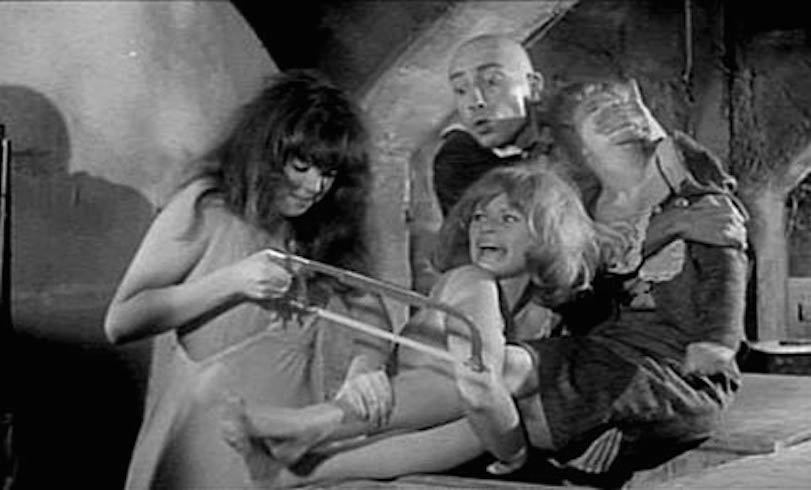
Rating: 6/10 – there’s a better movie here than might have been expected but it’s severely let down by it’s need to fit in with an already overcrowded market; psychological horror movies are few and far between these days – this could have been one of them.

Share this:

  • Share on X (Opens in new window) X
  • Share on Facebook (Opens in new window) Facebook
  • More
  • Print (Opens in new window) Print
  • Email a link to a friend (Opens in new window) Email
Like Loading...

Twixt (2011)

16 Saturday Nov 2013

Posted by dullwood68 in Movies

≈ 1 Comment

Tags

Bruce Dern, Drama, Edgar Allan Poe, Elle Fanning, Francis Ford Coppola, Horror, Murder investigation, Murders, Old Chickering hotel, Psychological thriller, Review, Swann Valley, Thriller, Val Kilmer

D: Francis Ford Coppola / 88m

Cast: Val Kilmer, Bruce Dern, Elle Fanning, Ben Chaplin, Joanne Whalley, David Paymer, Anthony Fusco, Alden Ehrenreich, Bruce A. Miroglio

Several years ago, Francis Ford Coppola announced he would be making only personal films, and since then we’ve had Youth Without Youth (2007), Tetro (2009), and now Twixt, ostensibly a horror movie but one that veers off down several different paths before its conclusion.

Hall Baltimore (Kilmer) is a moderately successful writer of witchcraft-themed horror novels.  He’s also in a bit of a creative slump.  While on a book tour, he finds himself in the small town of Swann Valley. He meets Sheriff Bobby LeGrange (Dern) who tells him about a mystery that involves a dead girl and a group of teens camped out across the lake. The girl is recently deceased, “obviously the victim of a serial killer”, according to LaGrange, and still in the sheriff’s office-cum-morgue with a stake through her heart. That night, Baltimore falls asleep and dreams of walking through town and out into the surrounding woods. There he meets V (Fanning), a young girl who looks drained of blood. They go to the Old Chickering Hotel where Baltimore learns that the bodies of twelve children are buried under the floor. This adds to the mystery, and when Baltimore wakes up he realises the answers to both his creative slump and the murder of the dead girl are to be found in his dreams.
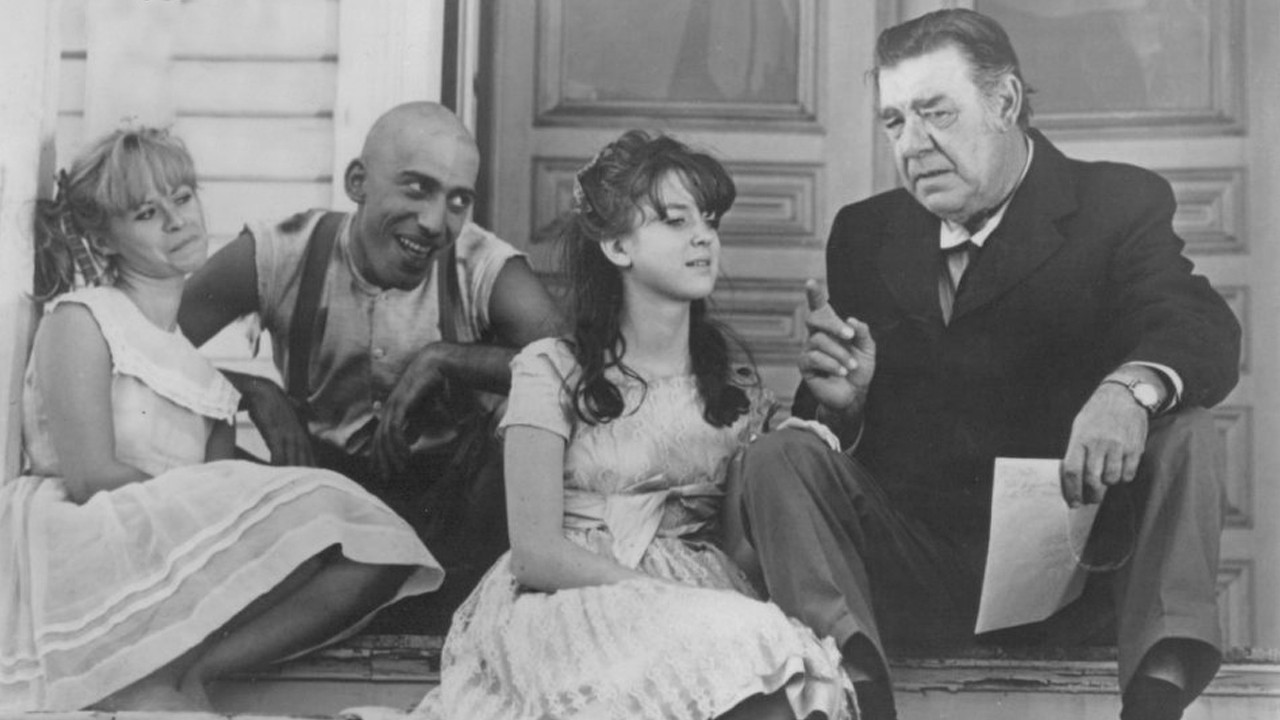
To give a fuller description of the plot would take a while as Coppola, serving as writer, producer and director, piles layer upon layer of story onto the already overloaded plotting.  There’s several appearances by Edgar Allan Poe (Chaplin) who helps Baltimore in his dreams but also provides some literary allusions to the main plot. There’s a sub-plot involving a seven-sided clock tower where each clock face tells a different time. The twelve children were the charge of Pastor Allan Floyd (Fusco); there’s a protracted sequence involving a Jim Jones-style massacre. LaGrange acts strangely throughout, at one point knocking Baltimore unconscious out of anger (but also as a handy device for getting him to the next dream sequence). Baltimore is also mourning the death of his teenage daughter, while fending off the financial needs of his wife Denise (Whalley). The teens across the river, led by Beaudelaire-quoting Flamingo (Ehrenreich), provide temporary relief from the increasing pretentiousness of all the other proceedings. Oh, and there’s a scene involving a Ouija board, and Baltimore fighting writer’s block by impersonating Marlon Brando (with a near-quote from Apocalypse Now) and James Mason amongst others, and an ending so abrupt you might wonder if you’ve nodded off and missed a few minutes.

Twixt - scene

From all this you could be forgiven for thinking that Twixt is a bit of a mess, and largely it is. Coppola has applied a kind of kitchen sink approach to the movie, and it would be a dedicated viewer – one prepared to watch it several times in fact – who could find a strict, coherent storyline that runs through the movie, and who could adequately explain the various diversions that Coppola includes. However, it’s unclear if Coppola himself knows exactly what’s going on, or why, and if he doesn’t, then the rest of us don’t stand a chance.

Visually, though, the movie is often stunning to look at, the initial dream sequences – at the Old Chickering hotel, Baltimore’s chat with Poe in the same location – all have a weird, surreal quality that suits the action that’s unfolding. The characters speak with a slight hollowness, and the colour scheme, all grey, metallic hues, looks wonderfully unsettling. This is where Twixt works best, in the dreamworld that Baltimore inhabits as often as he can. Coppola pulls out all the stops in these sequences, imbuing them with a sense of predatory menace that elevates them from perfunctory scenes of exposition to something more disquieting. Alas, the scenes in the real world lack any kind of sense or coherence, and as a result, bog down the movie unnecessarily.

The cast do their best under the circumstances, Kilmer injecting some humour when he can at the absurdity of LaGrange’s eccentricities, but otherwise going with the flow and committing to the script’s vagaries. Dern adds another oddball character to his repertoire, while Fanning plays the girl who may or may not have gotten away from the pastor (it’s never made clear) with an appropriate detachment. Chaplin copes well with some really dense, literary dialogue, and rest of the supporting cast do the best they can as well, particularly Miroglio as Deputy Arbus.

Ultimately, the best that can be said about Twixt is that it’s no better or worse than a lot of other horror movies made in the last five years, but definitely a step up visually.  Coppola still knows how to construct a scene and have it play out – even if the internal logic is skewed – and he still has the confidence borne out of his many years as a director.  He may not have made the best decision in working from his own script, and if truth be told, this may not be the best version of that script (some of the cast have apparently seen an earlier, different version), but despite the absurdities and the incoherent plot, Twixt still has enough going for it to make it worth watching, even if it’s just to say you have.
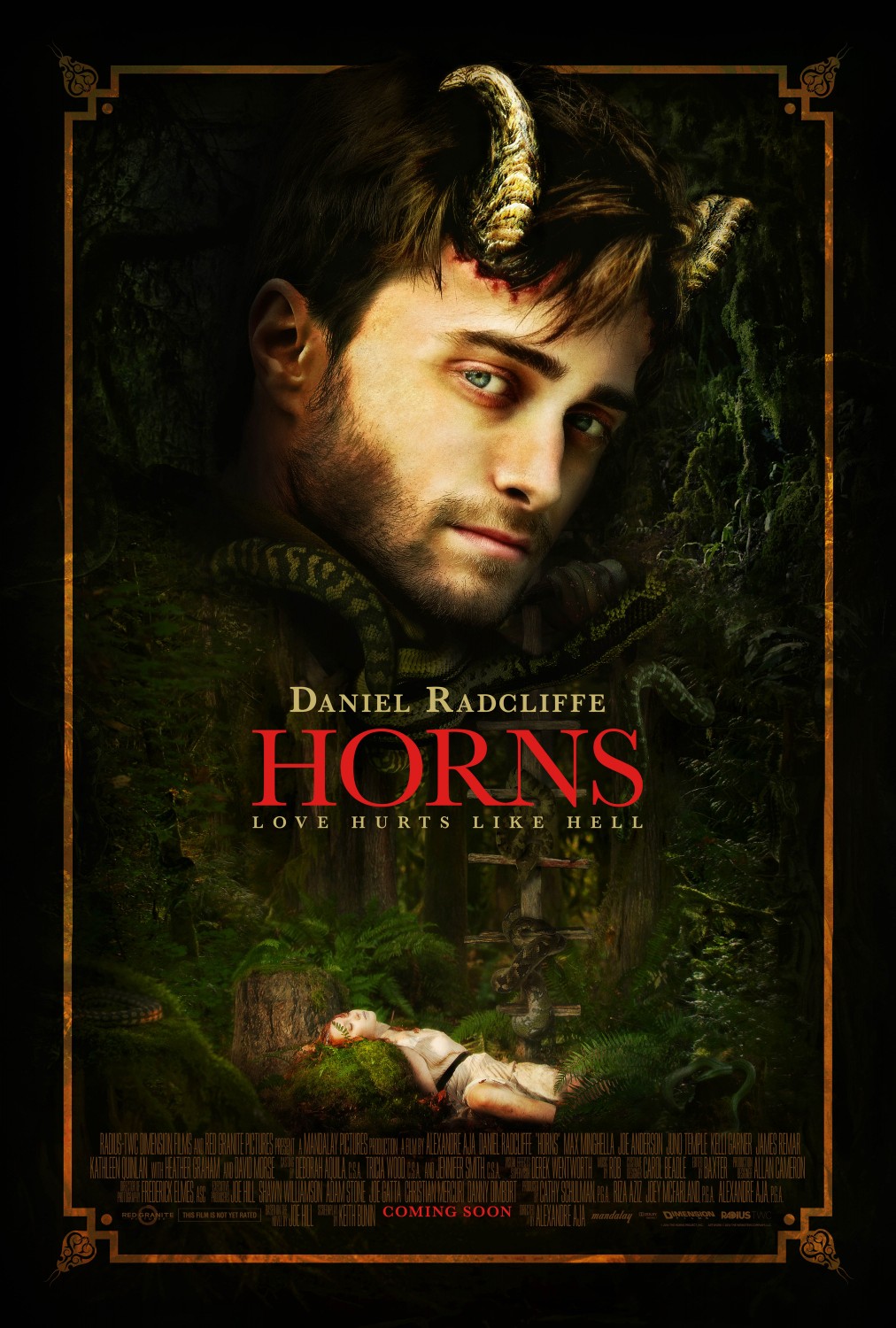
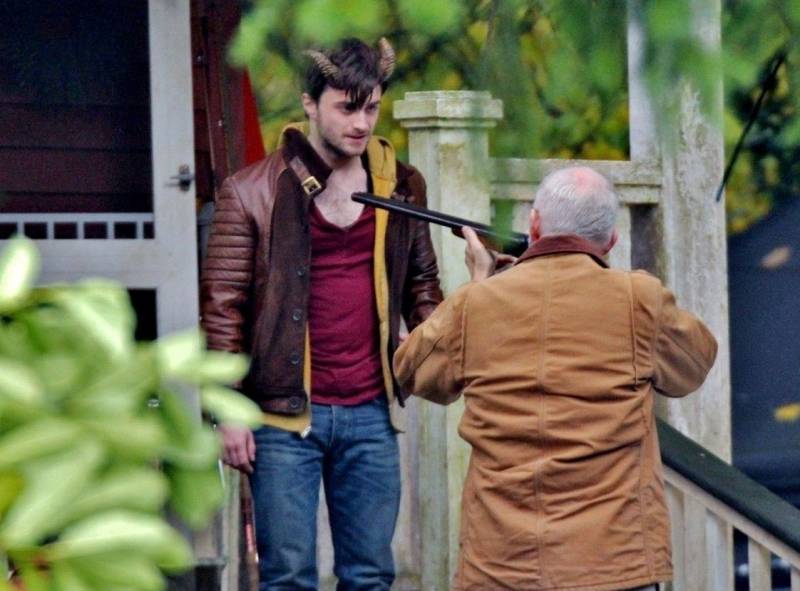
Rating: 6/10 – Coppola delivers what appears to be a train wreck of a movie, but on closer inspection, there’s still a few carriages on the track to rescue things; worth seeing for its hallucinogenic visuals and Kilmer back on form after too many low-budget thrillers.

Share this:

  • Share on X (Opens in new window) X
  • Share on Facebook (Opens in new window) Facebook
  • More
  • Print (Opens in new window) Print
  • Email a link to a friend (Opens in new window) Email
Like Loading...

Film4 Frightfest All Night Special 2013

05 Tuesday Nov 2013

Posted by dullwood68 in Movies

≈ 2 Comments

Tags

Anne Heche, Anthony Leonardi III, Charles Dance, Clancy Brown, Discopath, Exploitation, German Alps, Horror, Mark Hartley, Marvin Kren, Nothing Left to Fear, Patrick (2013), Rachel Griffith, Remake, Renaud Gauthier, Reviews, Stull Kansas, The Station

Taking place at the Empire cinema in Basildon, Essex here in the UK, the Film4 Frightfest All Night Special 2013 started at approx. 11:00pm on 2 November and finished at approx. 6:15am on 3 November.  The following four films were shown.

Patrick (2013)

Patrick (2013)

D: Mark Hartley / 90m

Cast: Charles Dance, Rachel Griffith, Sharni Vinson, Peta Sergeant, Damon Gameau, Martin Crewes, Jackson Gallagher

A remake of the 1978 movie of the same name, Patrick is the first feature from documentary filmmaker Mark Hartley.  Taking the same basic premise as the original – coma patient uses telekinesis to manipulate and murder those around him – Hartley’s version is a grim yet stylish offering that sits comfortably alongside its predecessor.  Dr Roget (Dance) runs a private clinic where he is attempting to “re-awaken” coma patients.  Following the disappearance of one of his nurses, he employs Kathy Jacquard (Vinson) to take her place.  Under the watchful eye of Matron Cassidy (Griffith) and the helpful ministrations of Nurse Williams (Sergeant), Kathy soon finds herself assisting Dr Roget in his treatment of “the patient in room 15”, a young man named Patrick (Gallagher).  As time passes, Kathy begins to realise that Patrick is capable of communicating with her… at the same time that strange things start happening to those around her, in particular, prospective love interest Brian (Crewes), and recently separated husband Ed (Gameau).  And so begins a cat-and-mouse game between Kathy and Patrick as she fights to keep those around her safe from harm, and Patrick becomes increasingly homicidal.
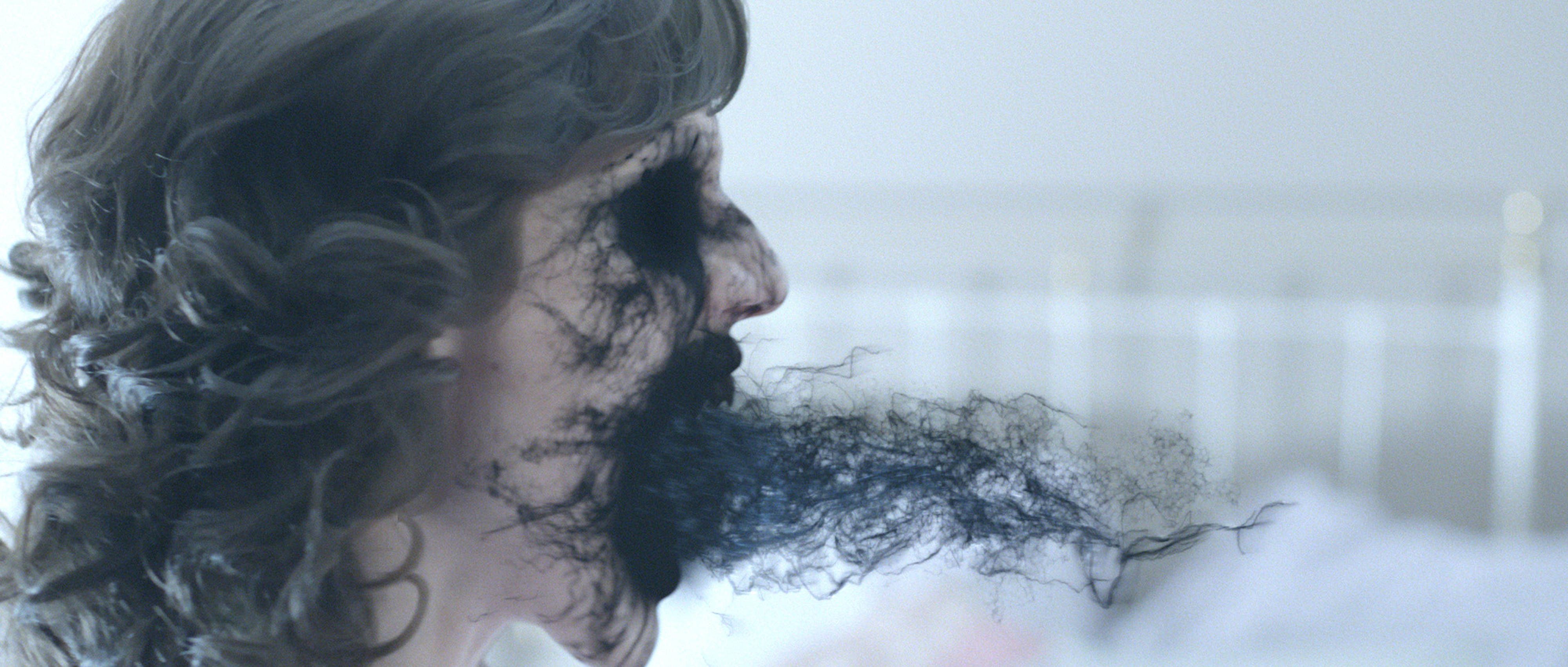
Patrick (2013) - scene

Patrick is an effective shocker, solidly done with a serious approach that works well (no jokey one-liners here).  Justin King’s script provides straightforward motivations for each character and ramps up the tension until the final showdown.  There are some narrative lapses along the way, and some of the dialogue sounds a little contrived, but on the whole Patrick delivers an often brutally efficient retake on the classic original.  The cast help immeasurably, everybody giving committed performances and proving that a little Grand Guignol can go a long way.  Patrick also benefits from a great score by Pino Donaggio, and splendidly nasty gore effects courtesy of the makeup department.  Aside from the aforementioned narrative lapses, it’s Patrick’s back story that strikes the only false note in the movie, an unnecessary sequence of flashbacks that would have been better presented as a suitably chilling piece of exposition by Dr Roget or Matron Cassidy.

Rating: 7/10 – gloomy interiors and deliberately low-tech effects work bolster this first feature from Hartley; and as the very last credit has it: Patrick vive.


Discopath (2013)

Discopath

Original title: Discopathe

D: Renaud Gauthier / 81m

Cast: Jérémie Earp-Lavergne, Katherine Cleland, Ingrid Falaise, Pierre Lenoir, Ivan Freud, François Aubin

This Canadian-lensed homage to the heady days of low-budget 80’s slasher flicks is so on the money it’s scary all by itself.  The movie opens in 1976.  Duane Lewis (Earp-Lavergne) is fired from the New York diner where he (badly) flips burgers.  On his way home he meets Valerie (Cleland).  They hook up, and later that evening she takes Duane to Seventh Heaven, a trendy nightclub that plays disco music.  The music triggers a murderous rage in Duane and soon he’s fleeing the country, heading for Montreal before the cops, led by Detective Stephens (Freud), can arrest him.  The movie then skips forward to 1980.  Duane is now working in a Catholic girls’ college as a sound and video engineer.  He wears hearing aids that block out any music that might trigger one of his murderous outbursts.  But when two of the girls decide to stay in their room one weekend while everyone else is away, the music they play causes Duane to revert to his homicidal urges.
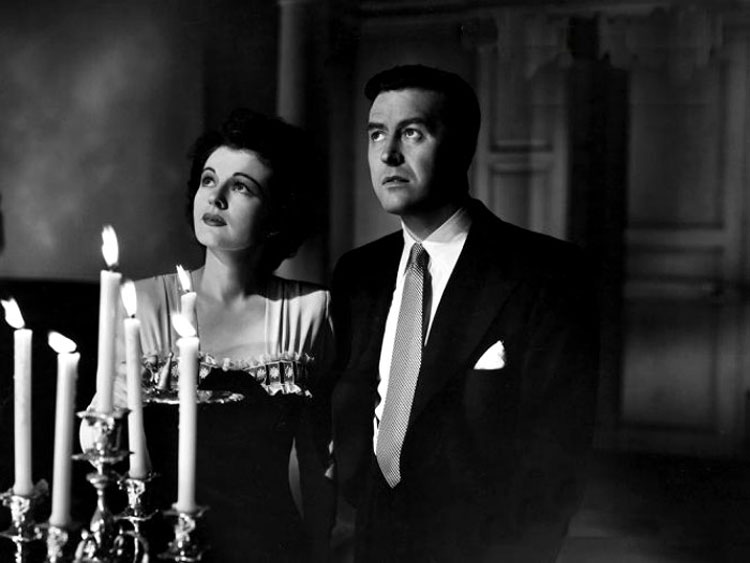
Discopath - scene

Psychopath is a loving recreation of all those cheesy, hard-to-believe shockers that somehow found themselves “Banned in Britain” and whose video covers usually featured a girl in chains being approached by a maniac wielding his weapon of choice.  It’s a cheerfully ‘bad’ movie, with deliberately ‘bad’ acting, stilted dialogue, awkward scene transitions, off-kilter camera compositions, and plenty of gratuitous gore effects.  Writer/director Gauthier has crafted the kind of grindhouse movie that both Planet Terror and Death Proof should have been but weren’t.  It also throws a linguistic curveball when the action moves from New York (all dialogue in English) to Montreal (all dialogue in French-Canadian), and amps up the exploitation angle by throwing in some nudity and a tasteless slo-mo moment involving a female corpse tumbling out of a coffin.  Great fun, but not for everyone.

Rating: 7/10 – outrageous, awful (but deliberately so), corny, hammy, gory, stupid – all these things are true…and it’s great!


The Station (2013)

Station, The

Original title: Blutgletscher

D: Marvin Kren / 98m

Cast: Gerhard Liebmann, Edita Malovcic, Hille Beseler, Peter Knaack, Felix Römer, Brigitte Kren

Scientists working in the German Alps discover a mysterious red substance that acts as a mutating parasite when it comes into contact with living creatures.  As the team comes under increasing attack from a variety of mutated creatures, a party of visitors including Minister Bodicek (Kren) are hiking towards them, unaware of what awaits  them.  The Station is a clever, intriguing movie that creates a fair amount of tension without quite making you grip the edge of your seat.  The characters are well-drawn despite being standard archetypes – a rugged loner who just sees the creatures as needing to be killed (Liebmann), doubtful scientists who see value in the creatures’ existence (Beseler, Römer), a resourceful Minister and her assistant (Malovcic) who also had a previous relationship with the rugged loner, and the usual creature fodder – and the cast acquit themselves well.

Station, The - scene

The location photography is often spectacular without undermining the insular nature of the narrative, and director Kren marshals everything to good effect.  What lets the movie down however is the incredibly shoddy creature design and execution; they’re largely puppets and look like it.  This leaves the attack sequences bereft of any real menace and it’s up to the cast to sell it all.  There’s also a “Bond-in-the-shower” moment when the Minister, forced to remove a parasite from a young girl’s thigh, opens her up with an ordinary pair of scissors!  These problems aside, The Station works largely because of the committed cast, and the underlying subtext relating to climate and eco-change, giving the movie a depth and resonance most creature features lack.

Rating: 7/10 – a big step-up from Kren’s first feature, Rammbock, The Station is a fine addition to the roster of movies where Nature turns against Man.


Nothing Left to Fear (2013)

Nothing Left to Fear

D: Anthony Leonardi III / 100m

Cast: Anne Heche, James Tupper, Clancy Brown, Rebekah Brandes, Jennifer Stone, Ethan Peck, Carter Cabassa

Based in part on the true-life legend of Stull, Kansas, Nothing Left to Fear sees new pastor in town Dan (Tupper) and his family, wife Wendy (Heche), daughters Mary (Stone) and Rebecca (Brandes), and son Christopher (Cabassa) become the focus of a satanic ritual set in motion by on-the-point-of-retiring pastor Kingsman (Brown).  As strange events and incidents begin to happen around them it’s only Rebecca who realises that not all is what it seems and that the smiling, welcoming faces of the townspeople hide a deeper, disturbing secret.  And that secret is… well, frankly, a mess.  In the hands of first-time screenwriter Jonathan W.C. Mills, Nothing Left to Fear staggers under the weight of lacklustre plotting, hazy motivations, perfunctory characterisations and unconvincing dialogue.

Nothing Left to Fear - scene2

By the movie’s end it’s given up altogether, bogged down by an over-reliance on demonic movie tropes and all-too-familair CGI effects.  And the movie’s basic premise is further undermined by the movie’s coda, which sees another pastor and his family on their way to Stull…  (For anyone now thinking, Oh great, that’s a spoiler and a half, don’t worry, you’ll be more annoyed with the movie by then than you’ll ever be with this review.)  Of the cast, Heche and Brown should have known better, while Brandes and Stone at least make an effort, as does Peck as Rebecca’s love interest Noah.  Director Leonardi III, whose first feature this is, seems unable to generate any real tension or sense of impending horror, and badly mishandles an extended sequence where one of the children becomes possessed and attacks their siblings: what should be a terrifying experience for the audience becomes a game of cat-and-mouse that cries out for a quicker, more shocking resolution.  On the plus side, the score by Slash (also a producer) and Nicholas O’Toole is effective without being intrusive, and the production design by Deborah Riley adds a level of charm to small-town life that becomes pleasingly distorted by the movie’s denouement.

Rating: 4/10 – a muddled, narratively incoherent movie that promises much but fails to deliver almost entirely; there’s nothing left to fear except the movie itself.

Share this:

  • Share on X (Opens in new window) X
  • Share on Facebook (Opens in new window) Facebook
  • More
  • Print (Opens in new window) Print
  • Email a link to a friend (Opens in new window) Email
Like Loading...

The Uninvited (1944)

31 Thursday Oct 2013

Posted by dullwood68 in Movies

≈ Leave a comment

Tags

Devon coast, Dodie Smith, Donald Crisp, Gail Russell, Ghost story, Haunted house, Haunting, Horror, Lewis Allen, Ray Milland, Review, Ruth Hussey, Suspense, Windward House

D: Lewis Allen / 99m

Cast: Ray Milland, Ruth Hussey, Donald Crisp, Gail Russell, Cornelia Otis Skinner, Alan Napier, Barbara Everest, Dorothy Stickney

Adapted from the novel, Uneasy Freehold, by Dorothy Macardle, The Uninvited is Hollywood’s first attempt at a ‘serious’ ghost story. When siblings Roderick and Pamela Fitzgerald (Milland and Hussey) discover Windward House on the rugged Devon coast, they have no idea what they’re letting themselves in for when they purchase it from the house’s owner, Commander Beach (Crisp). Their dog won’t venture upstairs, the studio room is unnaturally cold, and a previous resident, Mary Meredith, fell to her death from the cliff at the end of the garden. Add to this some ghostly weeping in the pre-dawn hours, the mysterious relationship between Mary Meredith and a trained nurse, Miss Holloway (Skinner), an unfolding back story involving the Commander’s granddaughter Stella (Russell) – who may or may not be the key to all the strange occurrences – and you have the makings of one of the best scary movies ever made.

Uninvited, The - scene

The movie starts strongly with an unnerving voiceover by Milland; it sets the scene perfectly for the events that follow. Once the Fitzgeralds have moved in the sense of foreboding is cleverly and effectively evoked, and the scenes that increase the tension are well-played and directed. The mystery elements are handled with aplomb, and the unfolding of the back story involving Mary Meredith, Stella and Miss Holloway is absorbing and intelligently revealed. The movie uses humour too to underpin the sense of unease, and in Milland’s practiced hands, it’s never over-played or becomes grating. As the movie plays out, the tension thickens until the truth of what really happened in the past is realised, and the showdown with the ghost of Windward House grips like a vise.

The Uninvited is a great movie, superbly and confidently directed by Lewis Allen, with an often chilling, evocative script by the playwright/novelist Dodie Smith (The Hundred and One Dalmatians) and Frank Partos. The roles are well-cast: Milland and Hussey are credible as brother and sister, while Russell excels as the focus of the haunting (sadly, Crisp was distant to her during filming: this was only her third movie and he felt she was too much the amateur). Skinner adds an exotic, otherworldly presence as the trained nurse who knows more than she’s telling, and there’s further comic relief from Barbara Everest as the Fitzgerald’s Irish housekeeper Lizzie Flynn. There’s striking, atmospheric cinematography courtesy of Charles Lang, and a playful yet dramatic score by Victor Young that includes the now-classic composition Stella by Starlight. But it’s art directors Hans Dreier and Ernst Fegté who deserve the most credit, for creating a haunted house that is open and airy and devoid of the usual dark corners and hidden passages that were the staple of previous haunted house movies. It’s this ‘ordinary house’ approach that helps ground the scares when they happen, and which makes for a refreshing change after all the old dark house movies of the 30’s and early 40’s.

Rating: 9/10 – a classic tale that is as fresh today as it was on first release, The Uninvited remains one of the best ghost stories ever committed to the big screen; recommended viewing.

Share this:

  • Share on X (Opens in new window) X
  • Share on Facebook (Opens in new window) Facebook
  • More
  • Print (Opens in new window) Print
  • Email a link to a friend (Opens in new window) Email
Like Loading...
Newer posts →

Blog Stats

  • 495,703 hits

Recent Posts

  • 10 Reasons to Remember Bibi Andersson (1935-2019)
  • Fantasia (1940)
  • Dances With Wolves (1990) – The Special Edition
  • Kiss of the Spider Woman (1985)
  • The Three Musketeers (1973)

Top Posts & Pages

  • Lost for Life (2013)
    Lost for Life (2013)
  • The White Orchid (2018)
    The White Orchid (2018)
  • Undercover Grandpa (2017)
    Undercover Grandpa (2017)
  • Mayhem (2017)
    Mayhem (2017)
  • The Corpse of Anna Fritz (2015)
    The Corpse of Anna Fritz (2015)
  • Cardboard Boxer (2016)
    Cardboard Boxer (2016)
  • 2016 - A Review
    2016 - A Review
  • The Tale of Zatoichi Continues (1962)
    The Tale of Zatoichi Continues (1962)
  • Mad to Be Normal (2017)
    Mad to Be Normal (2017)
  • Fantasia (1940)
    Fantasia (1940)
Follow thedullwoodexperiment on WordPress.com

Blogs I Follow

  • Rubbish Talk
  • Film 4 Fan
  • Fast Film Reviews
  • The Film Blog
  • All Things Movies UK
  • Interpreting the Stars
  • Let's Go To The Movies
  • Movie Reviews 101
  • TMI News
  • Dan the Man's Movie Reviews
  • Film History
  • Jordan and Eddie (The Movie Guys)

Archives

  • April 2019 (13)
  • March 2019 (28)
  • February 2019 (28)
  • January 2019 (32)
  • December 2018 (28)
  • November 2018 (30)
  • October 2018 (29)
  • September 2018 (29)
  • August 2018 (29)
  • July 2018 (30)
  • June 2018 (28)
  • May 2018 (24)
  • April 2018 (21)
  • March 2018 (31)
  • February 2018 (25)
  • January 2018 (30)
  • December 2017 (30)
  • November 2017 (27)
  • October 2017 (27)
  • September 2017 (26)
  • August 2017 (32)
  • July 2017 (32)
  • June 2017 (30)
  • May 2017 (29)
  • April 2017 (29)
  • March 2017 (30)
  • February 2017 (27)
  • January 2017 (32)
  • December 2016 (30)
  • November 2016 (28)
  • October 2016 (30)
  • September 2016 (27)
  • August 2016 (30)
  • July 2016 (30)
  • June 2016 (31)
  • May 2016 (34)
  • April 2016 (30)
  • March 2016 (30)
  • February 2016 (28)
  • January 2016 (35)
  • December 2015 (34)
  • November 2015 (31)
  • October 2015 (31)
  • September 2015 (34)
  • August 2015 (31)
  • July 2015 (33)
  • June 2015 (12)
  • May 2015 (31)
  • April 2015 (32)
  • March 2015 (30)
  • February 2015 (37)
  • January 2015 (39)
  • December 2014 (34)
  • November 2014 (34)
  • October 2014 (36)
  • September 2014 (25)
  • August 2014 (29)
  • July 2014 (29)
  • June 2014 (28)
  • May 2014 (23)
  • April 2014 (21)
  • March 2014 (42)
  • February 2014 (38)
  • January 2014 (29)
  • December 2013 (28)
  • November 2013 (34)
  • October 2013 (4)

Blog at WordPress.com.

Rubbish Talk

Film 4 Fan

A Movie Blog

Fast Film Reviews

The Film Blog

The official blog of everything in film

All Things Movies UK

Movie Reviews and Original Articles

Interpreting the Stars

Dave Examines Movies

Let's Go To The Movies

Film and Theatre Lover!

Movie Reviews 101

Daily Movie Reviews

TMI News

Latest weather, crime and breaking news

Dan the Man's Movie Reviews

All my aimless thoughts, ideas, and ramblings, all packed into one site!

Film History

Telling the story of film

Jordan and Eddie (The Movie Guys)

Movie Reviews & Ramblings from an Australian Based Film Fan

Privacy & Cookies: This site uses cookies. By continuing to use this website, you agree to their use.
To find out more, including how to control cookies, see here: Cookie Policy
  • Subscribe Subscribed
    • thedullwoodexperiment
    • Join 481 other subscribers
    • Already have a WordPress.com account? Log in now.
    • thedullwoodexperiment
    • Subscribe Subscribed
    • Sign up
    • Log in
    • Report this content
    • View site in Reader
    • Manage subscriptions
    • Collapse this bar
 

Loading Comments...
 

    %d