• 10 Reasons to Remember…
  • A Brief Word About…
  • About
  • For One Week Only
  • Happy Birthday
  • Monthly Roundup
  • Old-Time Crime
  • Other Posts
  • Poster of the Week
  • Question of the Week
  • Reviews
  • Trailers

thedullwoodexperiment

~ Viewing movies in a different light

thedullwoodexperiment

Tag Archives: Murder

Monthly Roundup – September 2015

30 Wednesday Sep 2015

Posted by dullwood68 in Movies

≈ Leave a comment

Tags

12 Rounds 3: Lockdown, Abigail Breslin, Action, Airlock, Alexander and the Terrible Horrible No Good Very Bad Day, Arizona, Axe to Grind, Baseball, Beverly Tyler, Birthday, Brian McGinn, Brighton, Cancer charity, Cattle rustling, Corrupt cops, Crime, Dean Ambrose, Debbie Rochon, Drama, Earl Bellamy, Ferrell Takes the Field, George Montgomery, Georgie Henley, Horror, Insurance fraud, Jennifer Garner, Jim Davis, Jim O'Connolly, John Carson, Josh Gad, Judith Viorst, Keoni Waxman, Literary adaptation, Matt Zettell, Mercenary, Michael Matzur, Michael Steppe, Miguel Arteta, Mira Sorvino, Movie role, Murder, Perfect Sisters, Peter Vaughan, Rob Margolies, Roger R. Cross, Romantic comedy, Sci-fi, Screenwriter, She Wants Me, Short movie, Silver mines, Smokescreen, Stanley M. Brooks, Stephen Reynolds, Steve Carell, Steven Seagal, The Boss, The Toughest Gun in Tombstone, True story, Vacuity, Vinnie Jones, Western, Will Ferrell, Wish, WWE, Yvonne Romain

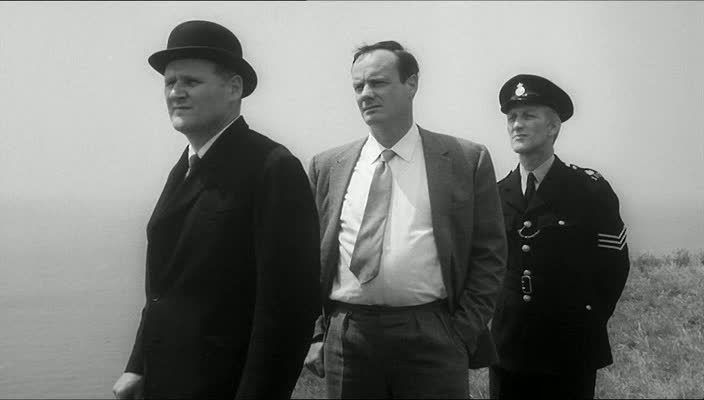
Smokescreen (1964) / D: Jim O’Connolly / 70m

Cast: Peter Vaughan, John Carson, Yvonne Romain, Gerald Flood, Glynn Edwards, John Glyn-Jones, Penny Morrell, Barbara Hicks, Sam Kydd, Deryck Guyler

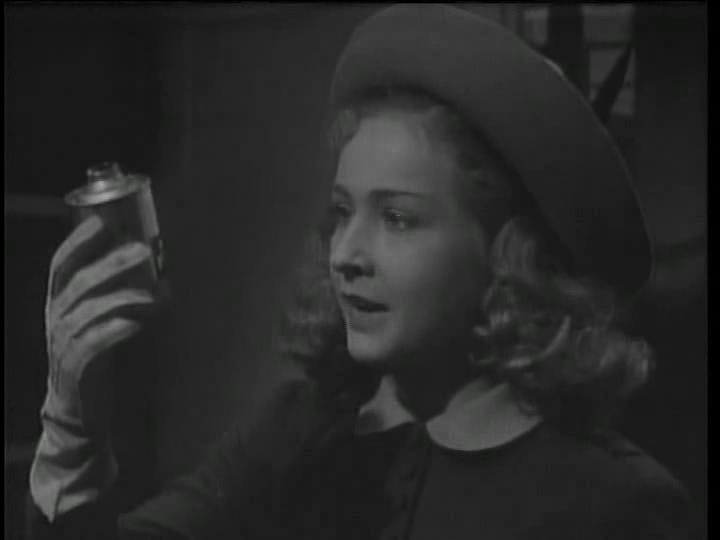
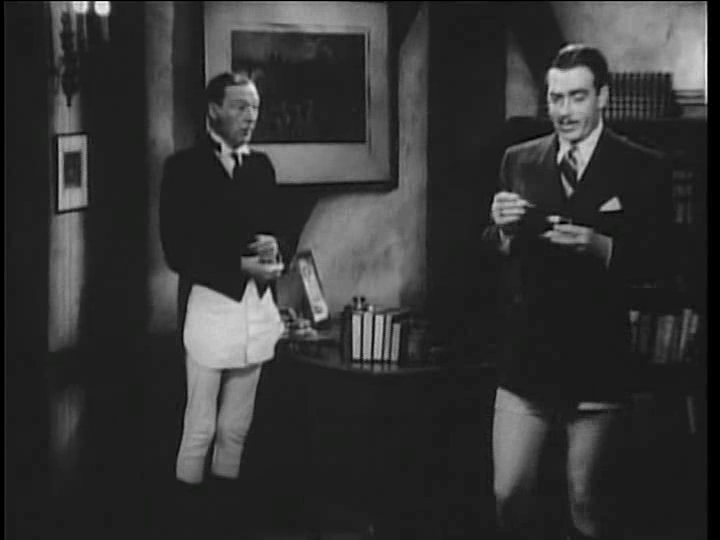
Rating: 7/10 – bowler-hatted insurance fraud investigator Roper (Vaughan) is called in to investigate when a heavily insured businessman’s car bursts into flames before going over a cliff – but was he in it?; a neat, unprepossessing British thriller, Smokescreen features an enjoyable performance from Vaughan, some stunning location photography, and a script that allows for plenty of ironic humour in amongst the drama.

Smokescreen

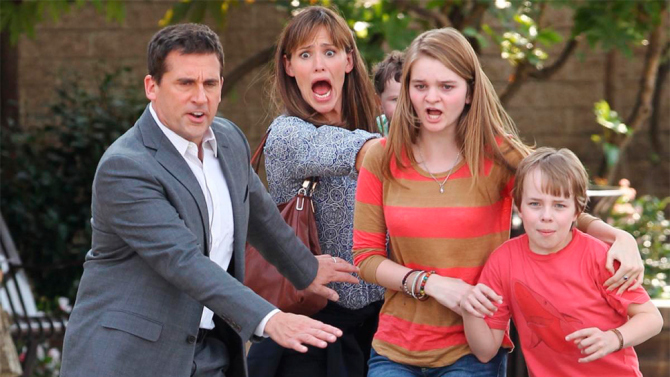
Alexander and the Terrible Horrible No Good Very Bad Day (2014) / D: Miguel Arteta / 81m

Cast: Steve Carell, Jennifer Garner, Ed Oxenbould, Dylan Minnette, Kerris Dorsey, Sidney Fullmer, Bella Thorne, Megan Mullally

Rating: 7/10 – when overlooked youngest child Alexander (Oxenbould) has the worst day ever, he wishes that his family could experience just a little of what he has to deal with – but when they do, things quickly escalate beyond anything that Alexander has ever faced; Judith Viorst’s novel gets a fun-filled adaptation that is amusing, clever, and visually inventive, but which lacks bite, and has surprisingly few characters to root for (that is, none).

Alexander etc

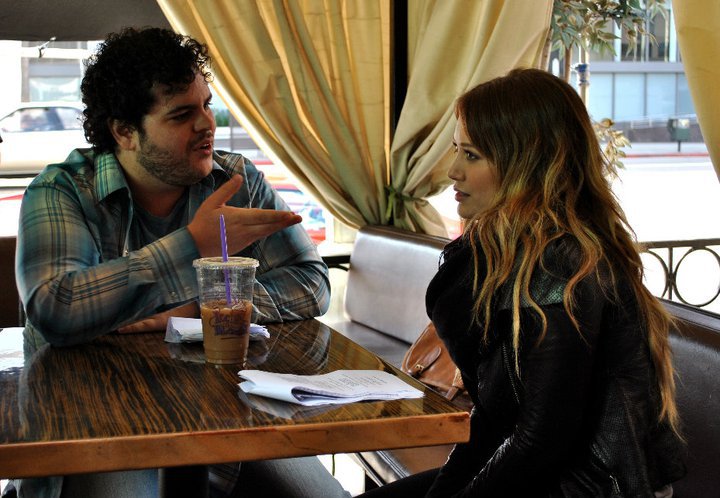
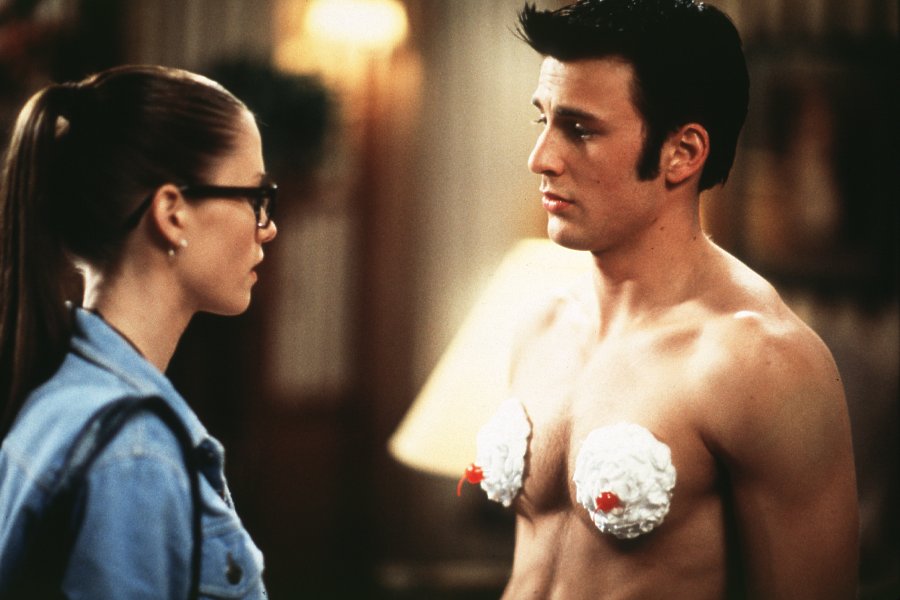
She Wants Me (2012) / D: Rob Margolies / 85m

Cast: Josh Gad, Kristen Ruhlin, Johnny Messner, Aaron Yoo, Hilary Duff, Melonie Diaz, Wayne Knight, Charlie Sheen

Rating: 6/10 – an ambitious though neurotic writer (Gad) working on his first screenplay faces a dilemma when the role written for his girlfriend (Ruhlin) grabs the attention of an A-list actress (Duff); a romantic comedy with few ambitions that struggles to make good comedy out of anxious indecision, She Wants Me is innocuous stuff that passes by in amiable fashion without ever really involving its audience.

She Wants Me

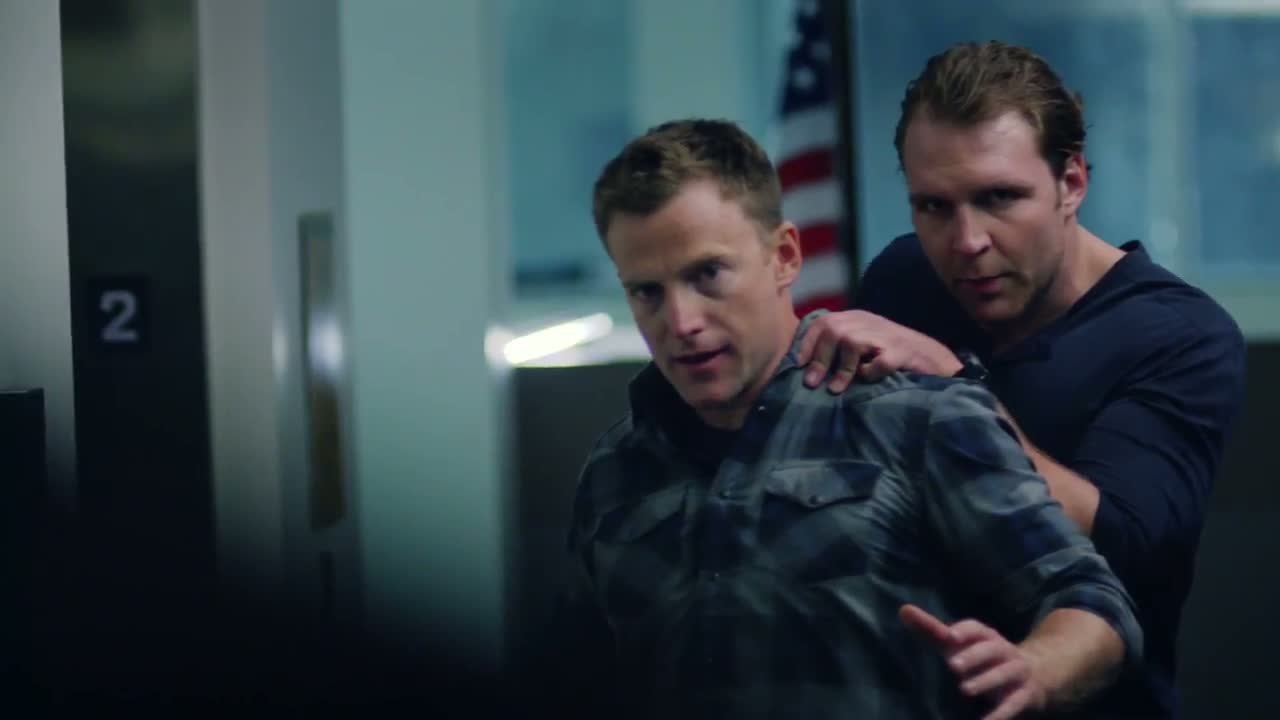
12 Rounds 3: Lockdown (2015) / D: Stephen Reynolds / 90m

Cast: Dean Ambrose, Roger R. Cross, Daniel Cudmore, Lochlyn Munro, Ty Olsson, Sarah Smyth, Rebecca Marshall, Kirby Morrow

Rating: 3/10 – an honest cop (Ambrose) finds himself trapped in a station house and hunted by several of his corrupt colleagues when he comes into possession of evidence that will see them put away for the rest of their lives; another depressing WWE Films action movie, 12 Rounds 3: Lockdown dispenses with the set up of the first two movies, and does its best to be yet another Die Hard rip-off, albeit one stifled by inept plotting, terrible dialogue and a performance by Ambrose that never gets started.

12 Rounds 3 Lockdown

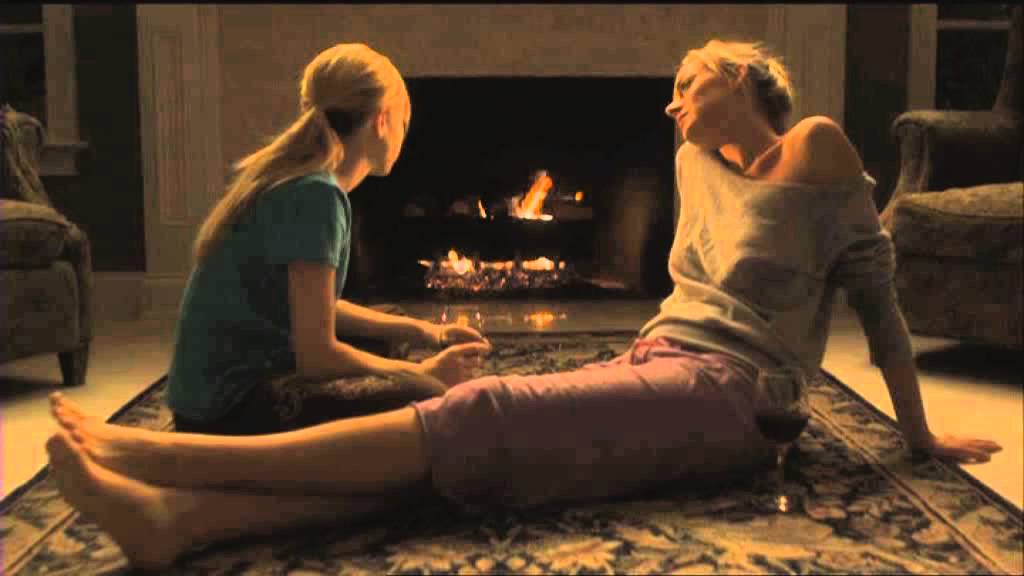
Perfect Sisters (2014) / D: Stanley M. Brooks / 100m

Cast: Abigail Breslin, Georgie Henley, Mira Sorvino, James Russo, Rusty Schwimmer, Zoë Belkin, Jeffrey Ballard, Zak Santiago

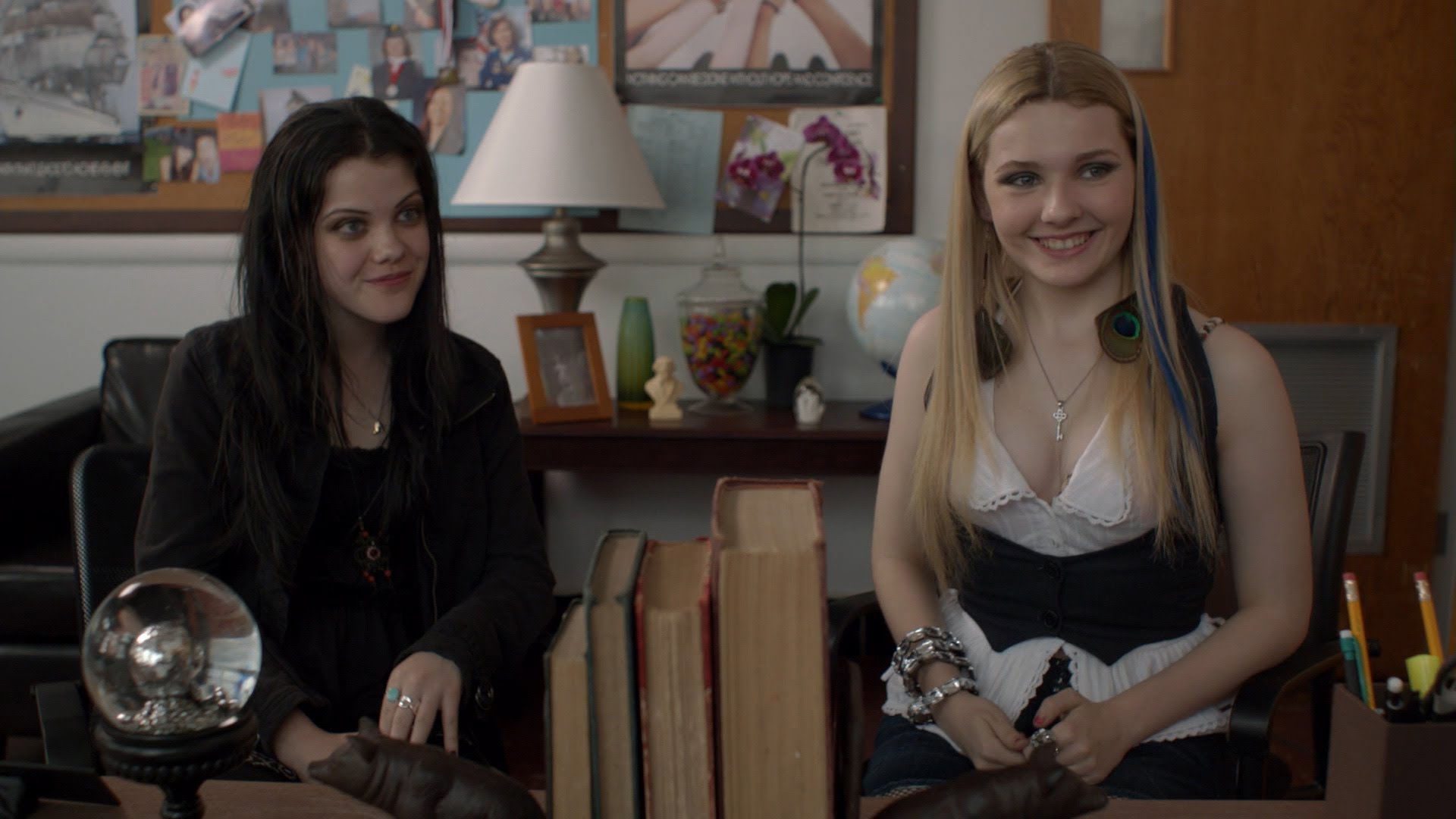
Rating: 5/10 – two sisters (Breslin, Henley), fed up with the antics of their alcoholic mother (Sorvino) and her poor choice in boyfriends, decide the only way of improving their lives is to kill her; if it wasn’t based on a true story, Perfect Sisters would be dismissed as absurd nonsense with no basis in reality, but as it is it’s an uneven, tonally awkward movie that features average performances from its leads, but which does seem completely committed to drawing the viewer’s attention to Breslin’s cleavage at every opportunity.

Perfect Sisters

Ferrell Takes the Field (2015) / D: Brian McGinn / 49m

With: Will Ferrell

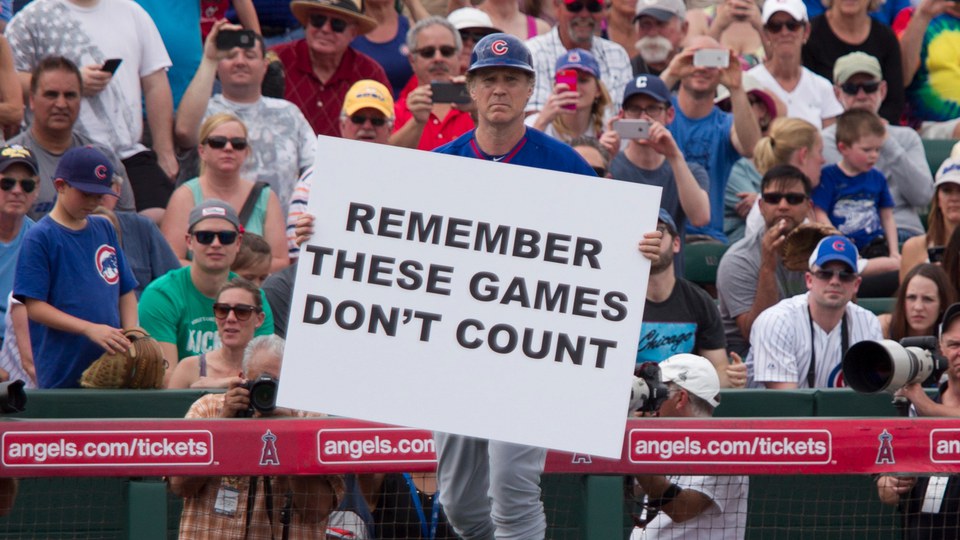
Rating: 5/10 – in support of a friend’s cancer charity, Will Ferrell takes to the baseball field to play all nine positions for ten major league teams at five separate pre-season games, and all in one day; if the charity had been the Reassure Will Ferrell He’s Still Funny Charity, then this would have made more sense because Ferrell Takes the Field is a mercifully brief documentary that sees the comedian attempt to appear relevant in an arena where he has no real talent, and where, when he gets it wrong, he’s quite rightly booed by fans, leaving viewers to wonder why on earth this idea was commissioned in the first place.

Ferrell Takes the Field

Axe to Grind (2015) / D: Matt Zettell / 81m

Cast: Debbie Rochon, Guy Torry, Matthew James Gulbranson, Paula Labaredas, Michelle Tomlinson, Dani Thompson, Adrian Quihuis, Tony von Halle

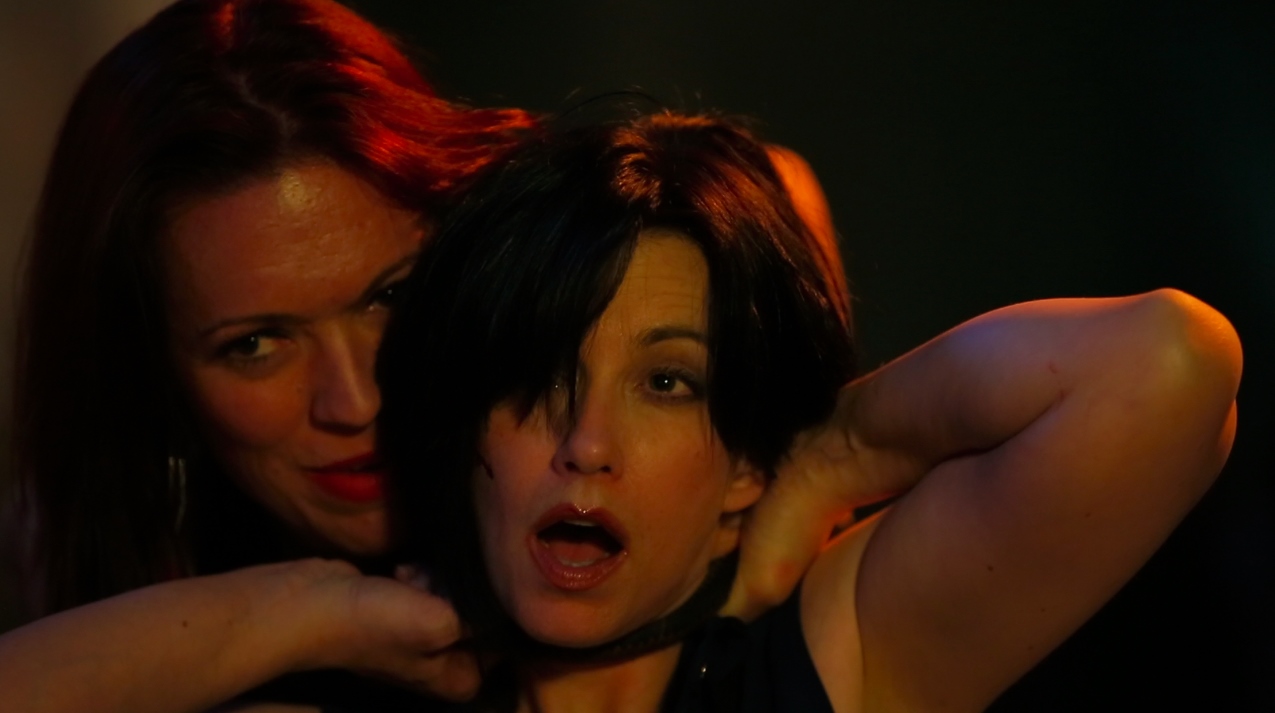
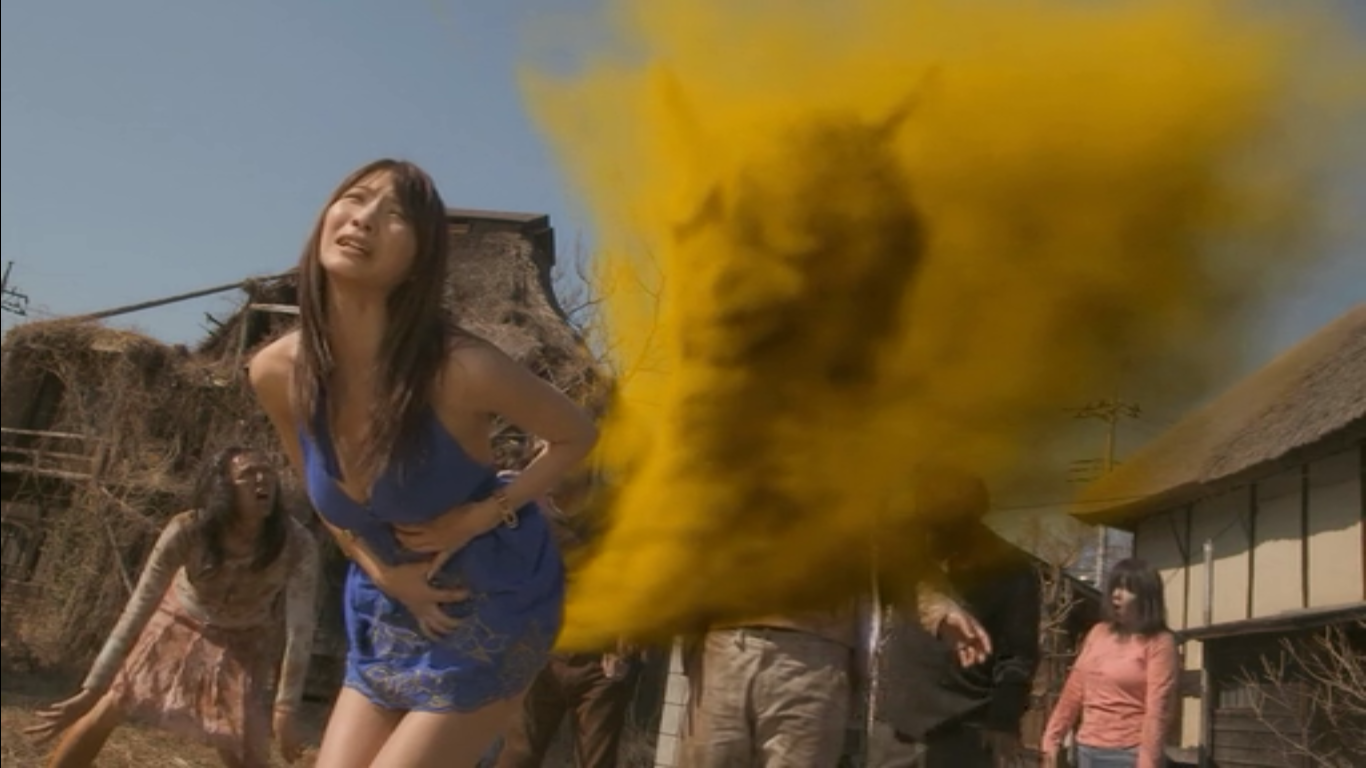
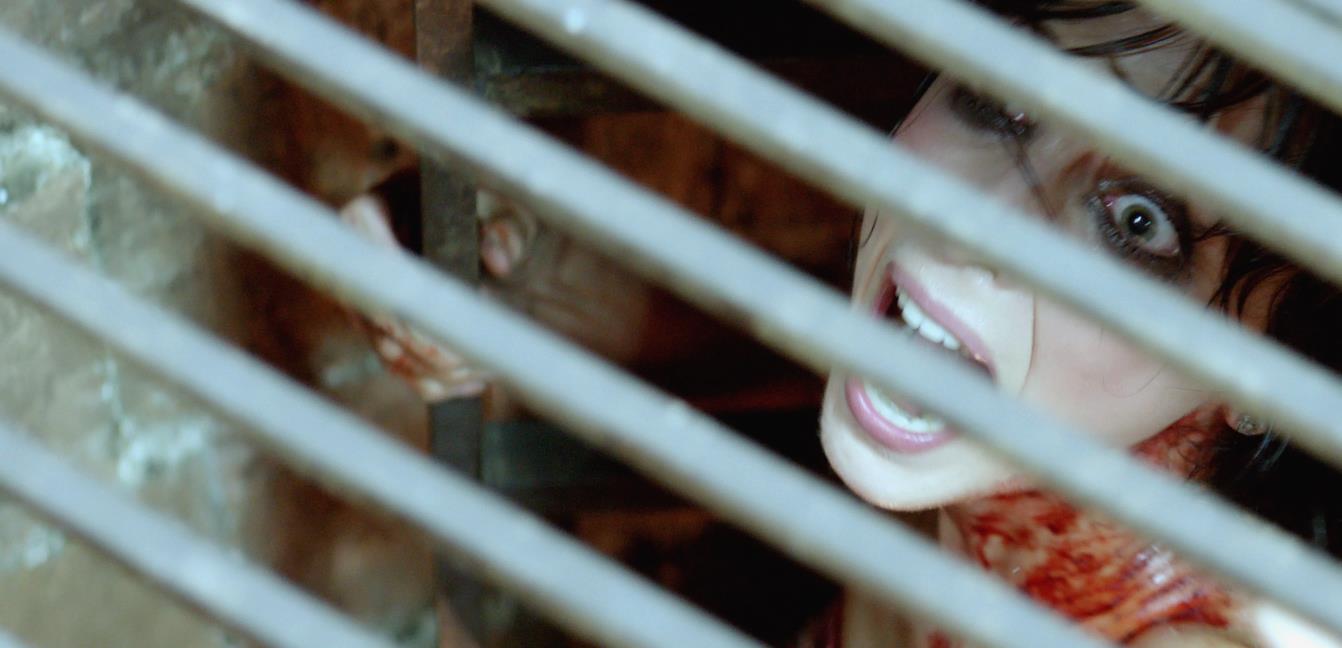
Rating: 2/10 – when the producer of her latest film tells aging actress Debbie Wilkins (Rochon) that her role has gone to another, younger actress, it sets her on a killing spree that sees her despatch the cast and crew, and anyone else who gets in her way; low-budget horror always runs the risk of being offensively stupid, and Axe to Grind is no exception, as it treats its audience with disdain while failing to appear as clever and entertaining as it thinks it is.

Axe to Grind

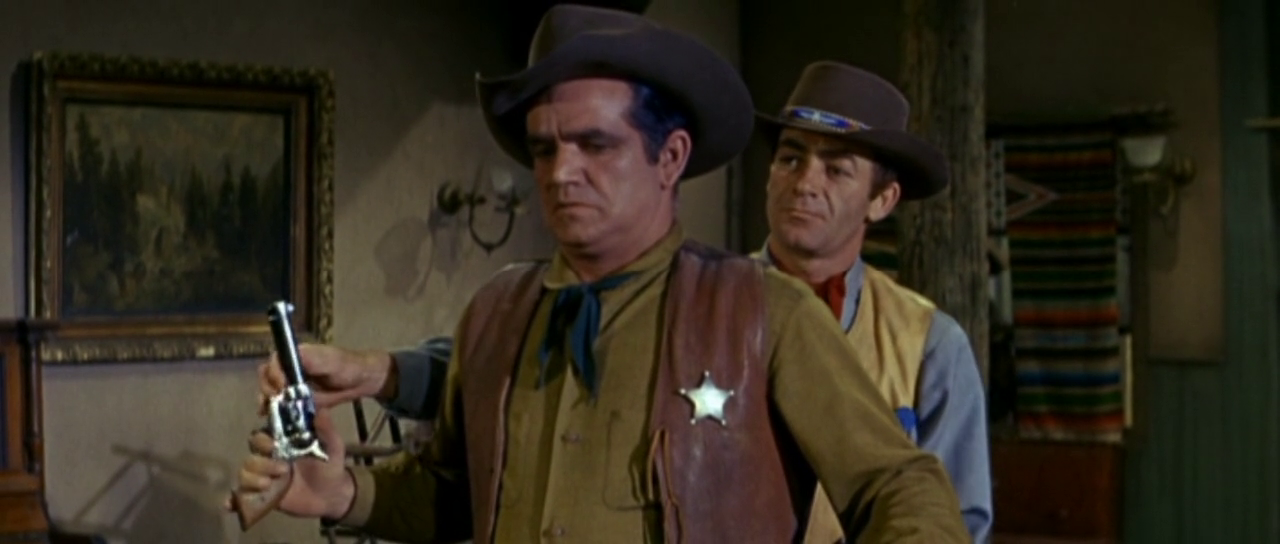
The Toughest Gun in Tombstone (1958) / D: Earl Bellamy / 72m

Cast: George Montgomery, Jim Davis, Beverly Tyler, Gerald Milton, Don Beddoe, Scotty Morrow, Harry Lauter

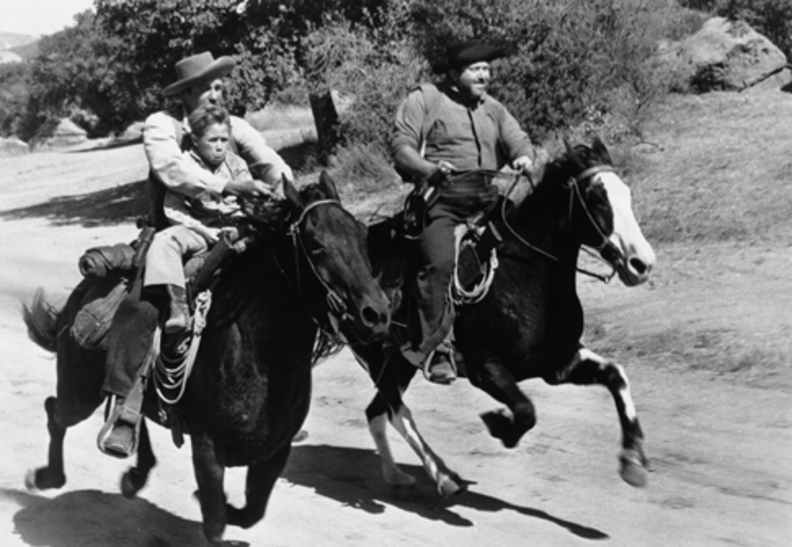
Rating: 6/10 – with outlaws running most of the nascent state of Arizona, the Governor assigns Matt Sloane (Montgomery) and a team of undercover officers to apprehend the gang involved with cattle rustling and silver thefts; a modest Western that tells its simple story plainly and with few frills, The Toughest Gun in Tombstone is acceptable fare that doesn’t exert itself too much, but is enjoyable nonetheless.

Toughest Gun in Tombstone, The

Absolution (2015) / D: Keoni Waxman / 91m

aka The Mercenary: Absolution

Cast: Steven Seagal, Byron Mann, Adina Stetcu, Vinnie Jones, Howard Dell, Josh Barnett, Maria Bata, Dominte Cosmin

Rating: 4/10 – mercenary John Alexander (Seagal) and his colleague Chi (Mann) find themselves battling both a criminal syndicate and their own corrupt boss when a contract killing proves to have larger ramifications; another mumbling, stand-in heavy performance from Seagal detracts from what is – for him – a better outing than of late, and thanks to Mann’s athleticism and Jones’ snarling villain, any scenes where Seagal doesn’t take part are actually halfway enjoyable.

Absolution

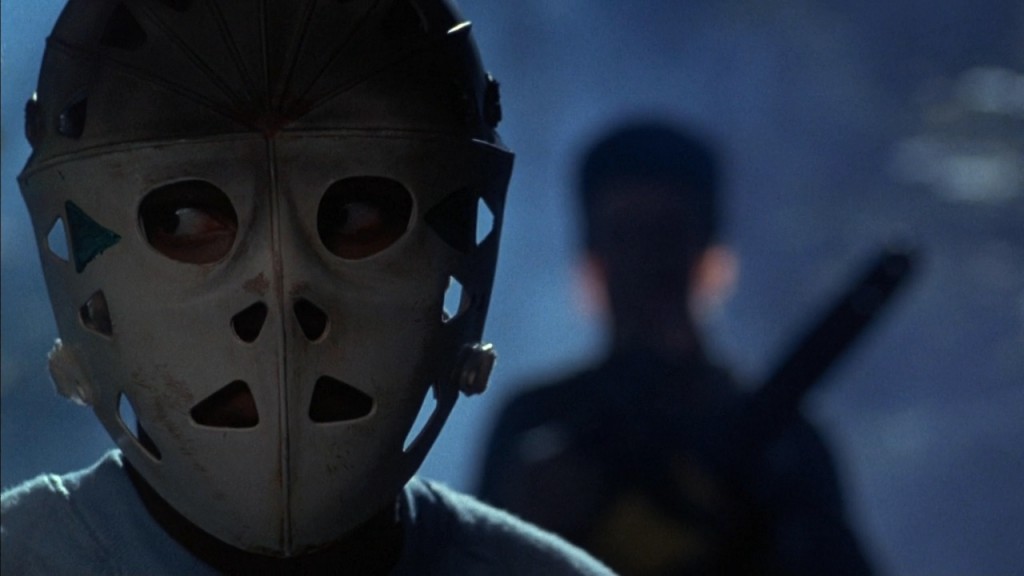
Vacuity (2012) / D: Michael Matzur / 14m

Cast: Michael Steppe

Rating: 6/10 – an astronaut, Alan Brahm (Steppe), stranded in an airlock while the space station he’s on begins to fall apart has a choice: either save his crew by jettisoning the airlock (but dooming himself), or save himself and get back to Earth (and dooming the crew) – which choice will he take?; as moral dilemmas go, the one facing Alan Brahm in Vacuity is, on the face of it, fairly cut and dried, but thanks to Matzur’s script and Steppe’s performance you’re never quite sure how things will play out, or even if either choice will be taken away from him, making this short movie a model of concisely focused drama.

Vacuity

Share this:

  • Click to share on X (Opens in new window) X
  • Click to share on Facebook (Opens in new window) Facebook
  • More
  • Click to print (Opens in new window) Print
  • Click to email a link to a friend (Opens in new window) Email
Like Loading...

Legend (2015)

18 Friday Sep 2015

Posted by dullwood68 in Movies

≈ 2 Comments

Tags

"Nipper" Read, Brian Helgeland, Christopher Eccleston, Crime, David Thewlis, Drama, Emily Browning, Gangsters, London's East End, Murder, Protection, Reggie Kray, Review, Ronnie Kray, The Kray Twins, Tom Hardy, True story, Violence

Legend

D: Brian Helgeland / 131m

Cast: Tom Hardy, Emily Browning, David Thewlis, Christopher Eccleston, Paul Anderson, Taron Egerton, Colin Morgan, Tara Fitzgerald, Sam Spruell, John Sessions, Chazz Palminteri, Paul Bettany, Kevin McNally, Shane Attwooll, Jane Wood

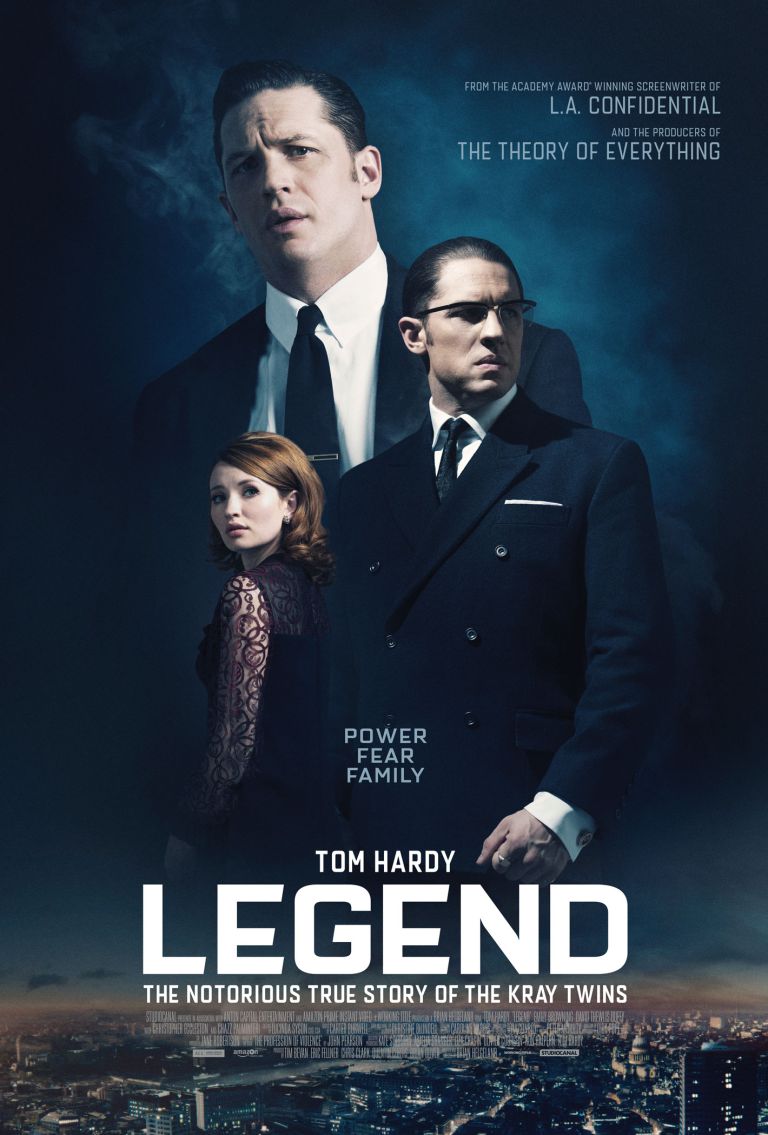
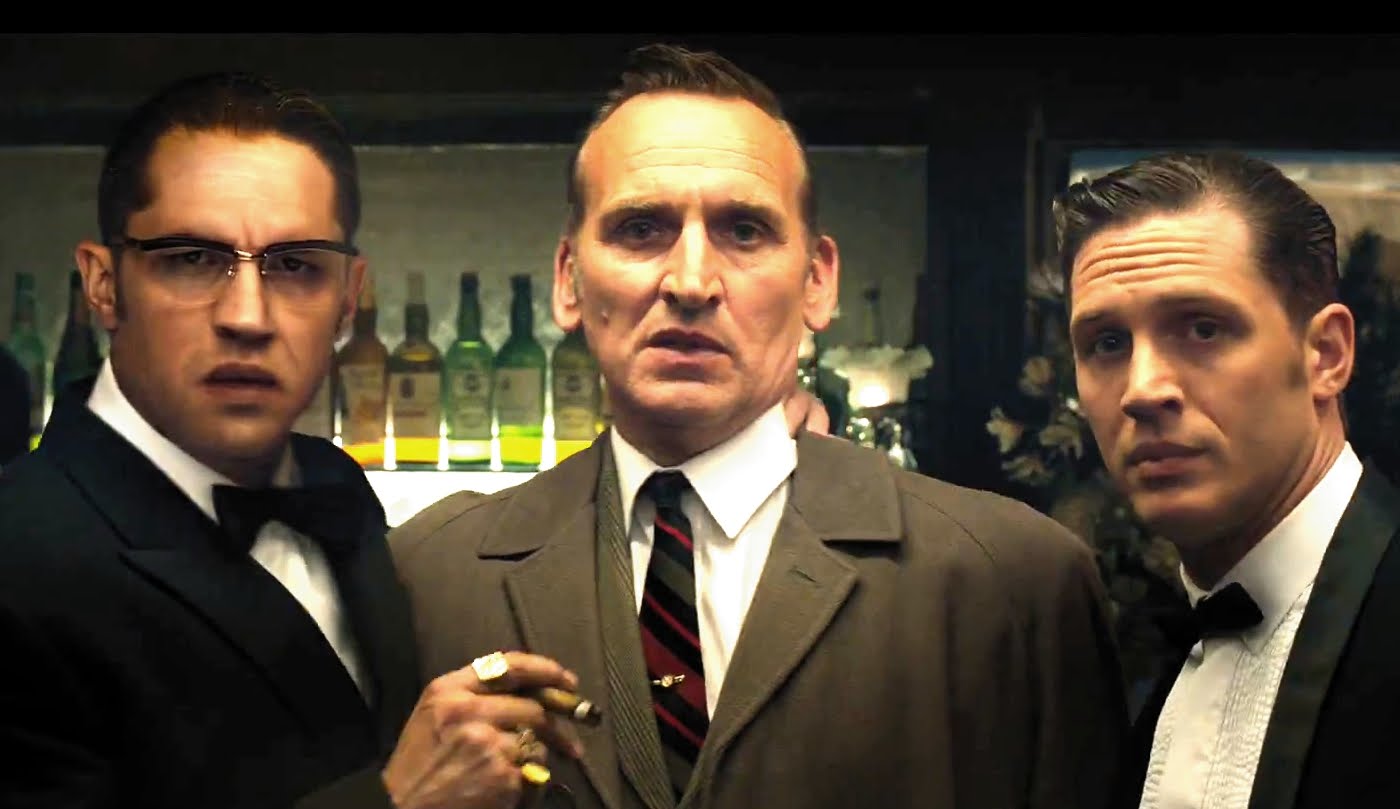
London, the 1960’s. The East End is home to two brothers, the confident, ambitious Reggie Kray (Hardy), and his psychotic twin Ronnie (Hardy). Together they run a criminal network based around providing protection to local businesses, while Reggie owns a club that attracts celebrities and politicians who like to mingle with London’s criminal element. The pair are well-liked in their local neighbourhood, and are both feared and respected. Reggie is continually followed by Detective Superintendent “Nipper” Read (Eccleston) who has been given the task of bringing the twins to justice. But they’re always one step ahead of him.

One morning, Reggie’s regular driver, Frankie Shea (Morgan) hasn’t shown up. Reggie goes to his house; the door is opened by Frankie’s sister, Frances (Browning). He’s immediately attracted to her and he asks her out. She agrees to go out with him, despite her mother’s misgivings, and despite Reggie’s reputation. Meanwhile, one of the Krays’ gang has been caught “working” on the south side of the river, an area run by the Richardson family. This infraction leads to a meeting between the Krays and the Richardsons on neutral ground, but the Richardsons send some of their men instead to get rid of Reggie and Ronnie once and for all. But the twins prove too much for the men, and are all viciously beaten up.

With no other serious rivals, the Krays’ criminal empire spreads further afield. With the aid and advice of their accountant, Leslie Payne (Thewlis) – whom Ronnie dislikes and is suspicious of – they take over a casino in an attempt to earn some legitimate money (while still maintaining their regular criminal activities). An old warrant sees Reggie spend six months in prison, during which time he and Frances grow closer, though she seeks reassurances that he’ll be more honest when he gets out. But it doesn’t happen, and even with her hopes dashed, Reggie and Frances get married. Ronnie is welcoming at first, but their marriage leads him to think that Reggie is trying to move on without him. At the same time, Read’s investigation is sidelined when he allows himself to be photographed with the Krays in their casino.

Frances finds herself isolated, and begins to rely more and more on medication to ease her growing sense of anguish. Reggie is oblivious, and has more urgent matters to attend to when Ronnie kills one of the Richardsons’ men, George Cornell (Attwooll) in a pub in front of witnesses. In order to protect his brother, Reggie must intimidate the witnesses, which he does, but when Ronnie hatches another plan to eliminate a perceived enemy, and hires Jack “The Hat” McVitie (Spruell) to do the job, it leads to the end of their criminal careers and the empire they’ve built up.

Legend - scene

Adapted from the book The Profession of Violence: The Rise and Fall of the Kray Twins by John Pearson (who was once an assistant to Ian Fleming), Legend is a curious movie in that it takes the two most notorious criminals known in Britain in the last sixty years, and tells their story in such a way that, on the whole, they don’t seem that bad. Sure they use intimidation and violence as a way of getting what they want from people, but we don’t see any of this, so the viewer has to take it for granted that they were as nasty as their “legend” would have it. Instead, writer/director Helgeland shows us the Kray twins as entrepreneurs, buying into legitimate businesses and making inroads into so-called polite society, including the patronage of Lord Boothby (Sessions), a predatory homosexual whose relationship with Ronnie leads to the Krays being acquitted at trial for fear of a government scandal. What’s given scant attention is their youth and how they got to where they were in the mid-Sixties, and how they actually attained the powerful position they enjoyed.

Then there’s the relationship between Reggie and Frances, which at first follows an almost predictable girl-meets-bad-boy scenario before settling down into something much darker and terrible. It’s hard to pick out just why Frances stays with Reggie for so long, because Helgeland doesn’t provide very many clues to help explain it all, and it’s equally unclear why Reggie wants Frances. It’s all very superficial, and though it’s based on real events etc., it doesn’t quite gel on screen, leaving the viewer with the feeling that whatever the truth about their marriage – and the movie makes some strong claims – there’s more to it than meets the eye (or is included in Helgeland’s script).

The same is true of the movie as a whole, with the sense that Helgeland’s adaptation isn’t concerned with providing any depth or subtext, leaving the poor viewer (again) suspecting that they just have to go along with everything and accept it all for what it is. It makes for a frustrating viewing experience as the characters – and there are a lot of them – all appear to lack an inner life (with the possible exception of Ronnie, whose inner life seems entirely weird and deranged). The movie also lacks a sense of time, its events and occurrences sometimes feeling like they’re happening in the absence of any  recognisable timescale, or have been cherry-picked from Pearson’s book at random (one example: Frances meets Reggie when she’s sixteen but doesn’t marry him until she’s twenty-two). And that’s without mentioning that as a retelling of the Krays’ activities and lives, it’s not very faithful or accurate.

The period of the Krays’ infamy is, however, extremely well-realised, with the East End of London looking as foreboding and shadowy as it did back in the Sixties, and with the period detail proving impressive. In terms of the time and the place, Tom Conroy’s incredibly detailed production design is enhanced by Dick Pope’s sharply focused cinematography, and further augmented by Carter Burwell’s appropriately Sixties-style score. The costumes are also a plus, with the fashions of the time recreated in fine style by Caroline Harris, an underrated costume designer who has provided equally fine work on movies as varied as An Ideal Husband (1999), A Knight’s Tale (2001), and And When Did You Last See Your Father? (2007).

Legend - scene2

As to the performances, it’s either a one-man or a two-man show, depending on how you look at it. Hardy is magnificent in roles that it would be difficult now to imagine any other actor attempting. As the charming, urbane-sounding Reggie, Hardy does more with a glance than some actors can manage with a long speech and an unwavering close up. He’s magnetic in most of his scenes, grabbing the attention as firmly as if he had the viewer in a headlock, and making it difficult to look away from him. And as Ronnie it’s like watching a human shark, his dark eyes staring out from behind the character’s glasses with vicious intent, just waiting for the chance to explode, and speaking with the delusional belief that his ideas are as sane as he thinks they sound (at one point he comes out with a plan to protect the homeless children of Nigeria). In both cases, Hardy is superb, even if he’s let down by the material, but he’s such a good actor that he overcomes Helgeland’s negligence and commands the audience’s attention throughout.

In support, Browning is captivating and sincere as Frances, and finds layers in the role that aren’t so evident from the script, while Thewlis gives one of his best recent performances as Payne, the accountant who earns Ronnie’s enmity. Anderson is quietly effective as Reggie’s right-hand man Alby, Fitzgerald is a scornful Mrs Shea (she wears black to her daughter’s wedding), Sessions is suitably slimy as Lord Boothby, and Palminteri, as the Mafia representative who wants the Krays to run London as part of a criminal franchise overseen by Meyer Lansky, exudes a rough Italian charm that hides a more dangerous persona. Alas, Eccleston is given little to do beyond looking exasperated, and Spruell’s McVitie is required to “grow a pair” just when the script needs him to; up ’til then he’s the very definition of compliant.

Ultimately, Helgeland the writer undermines Helgeland the director, focusing on Reggie to the detriment of Ronnie, and trying to make this about Reggie’s loyalty to his brother, rather than the exploits that made them infamous (which are almost incidental here). Some scenes lack the intensity they deserve, as if Helgeland didn’t have the nerve to show some things as they actually occurred (McVitie’s murder was much more vicious than what is shown in the movie), and though the emphasis is quite rightly on the Krays, more time with some of the other characters would have added some richness to the material and kept it from feeling (on occasion) somewhat uninspired. Perhaps there’s a longer cut waiting to be released on DVD/Blu ray, and it fills in a lot of the gaps, but at this length, Helgeland’s scattershot approach to the Krays’ lives is too much of a hindrance to make it anything more than just okay.

Rating: 6/10 – missing the vital spark that would have elevated it into the realm of the truly great gangster movies, Legend instead squanders its chance and remains a mostly pedestrian account of the lives of two men who meant to rule London’s criminal underworld with four iron fists; not as violent as you might expect, but with two standout performances from Hardy to help compensate, this is one “real life” movie that feels like it could have, and should have, been a whole lot better.

Share this:

  • Click to share on X (Opens in new window) X
  • Click to share on Facebook (Opens in new window) Facebook
  • More
  • Click to print (Opens in new window) Print
  • Click to email a link to a friend (Opens in new window) Email
Like Loading...

True Story (2015)

05 Saturday Sep 2015

Posted by dullwood68 in Movies

≈ Leave a comment

Tags

Christian Longo, Drama, Felicity Jones, James Franco, Jonah Hill, Literary adaptation, Mike Finkel, Murder, New York Times, Review, Rupert Goold, Trial, True story

True Story

D: Rupert Goold / 99m

Cast: Jonah Hill, James Franco, Felicity Jones, Robert John Burke, Ethan Suplee, Gretchen Mol, Maria Dizzia, Byron Jennings

A journalist with the New York Times, Mike Finkel (Hill) hands in an assignment that looks at the African slave trade. It becomes the cover story for the New York Times Magazine, but later it’s discovered that Finkel hasn’t been entirely honest about his research and has created a composite character for the story’s focus. Finkel is subsequently fired and returns to his home in Montana where he lives with his wife Jill (Jones). At around the same time, the discovered bodies of a woman and her three children has led authorities to Mexico where they arrest a man who claims to be Mike Finkel. His real name, though, is Christian Longo (Franco), and he’s accused of having killed his family.

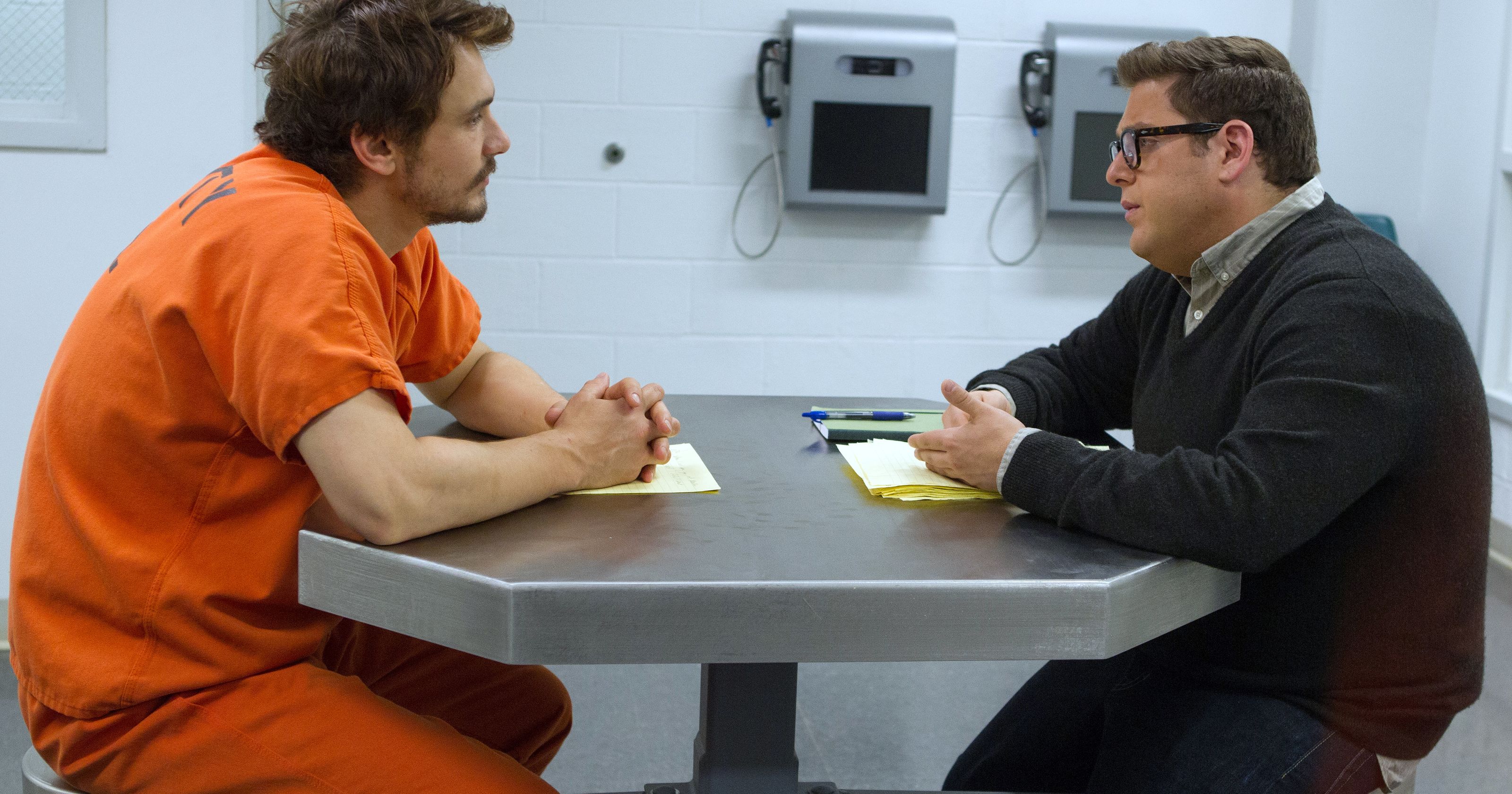
When Finkel becomes aware that Longo claimed to be him, he becomes intrigued. He begins to look into the case, and travels to see Longo in prison. At their first meeting, Longo tells Finkel he’s admired his writing for a long time. They also strike a bargain: in return for Longo’s story, Finkel will teach him to write and he won’t discuss what they talk about until after Longo’s trial. Soon after, Finkel receives a lengthy letter in which Longo describes the events that led up to his wife and children’s murders – but it stops short of going further.

Over the next few months as the two men continue to meet, Longo intimates that he didn’t kill his family, and Finkel begins to believe he may be innocent, even though Longo avoids giving any definitive statement on the matter, and refers to a mysterious “someone” he needs to protect. He tells Finkel he’ll plead Not Guilty at his arraignment, and the journalist begins to believe that there must be another answer to the question of who murdered Longo’s wife and children. But at the arraignment, Longo pleads Not Guilty to the murders of two of his children, and Guilty to the murder of his wife and other child. Feeling betrayed, Finkel confronts him, but Longo hides behind the idea that he’s protecting someone.

As the trial approaches, Finkel – who has been busy turning his and Longo’s correspondence into a book – now begins to doubt the veracity of Longo’s claims, but though he’s approached by one of the detectives who arrested Longo, Greg Ganley (Burke) and asked to provide evidence for the prosecution, he refuses. The trial takes place and the prosecution puts forward a convincing case for Longo’s guilt. But then the defence begins its case, and Longo is called to the stand…

True Story - scene

At one point in True Story, Christian Longo tells Mike Finkel that “sometimes the truth isn’t believable. But that doesn’t mean that it’s not true.” It’s a fine idea, and the movie trades on Longo’s assertion for most of its running time, leading the audience down various dead ends and blind alleys in an attempt to keep the mystery of what really happened to Longo’s family from being revealed too soon. There’s always a degree of fun to be had from a character who is deliberately elliptical, or who hides behind a wall of half-clues and misdirection, but while Franco’s cold-eyed, hooded expressions suit the character’s manipulative nature, the movie isn’t so convincing that anyone would think Finkel could be easily duped. In fact, the way in which their scenes are set up and choreographed, it should have been obvious that Longo was trying to influence Finkel’s thinking, and by doing so, gain an acquittal at his trial.

But as many people say, hindsight is a wonderful thing, but it is something that the movie can’t quite avoid dealing with. As a fairly straightforward retelling of a relationship between two narcissistic, prideful individuals, the movie wisely avoids coming down on the side of one character over the other, but at the same time, Finkel’s credulity is incredibly worrying; he is a seasoned journalist after all, even if he has made an almighty, career-shredding error of judgment. Hill plays him as a kind of eager puppy dog, wanting to be liked and willing to believe in anything that will help him get back on top. He also shows the desperation Finkel feels when the book deal is jeopardised, or when he begins to suspect that Longo is probably guilty – he needs Longo to be innocent so that he won’t look like he’s been fooled.

As the potential murderer of his entire family, Franco keeps Longo self-contained and aloof, meeting Finkel partway but never revealing anything of real substance. He uses a blank expression to convey all the audience needs to know about him, and acts with his eyes for the most part, conveying hurt and innocence and sadness, but failing to show any regret for his family’s demise, or anger at being arrested. (Again, it’s worrying that Finkel never picked up on any of this.) Both actors play well against each other, with Hill slightly edging it by virtue of his being more emotive. As Jill, Jones – in a somewhat underwritten role – is given a remarkable scene in which she’s able to confront Longo and show her contempt for him, but it smacks too much of writer’s licence, and as a result, interrupts the movie’s flow. Elsewhere she’s required to look concerned and irritable by turns, and her participation becomes yet another example of a very talented actress being shamefully underused.

Making his feature debut, Goold steps up from directing British TV dramas to make a solid, if restrained movie that tries its best to examine issues of trust and falsehood, as well as public perception, but ultimately it shies away from looking at them in any depth. Goold is better with his cast, even when his screenplay – co-written with David Kajganich – has them repeating conversations and scenes, and emphasising over and over the “mystery” that Longo implies has happened. There’s also an attempt at some basic psychology that doesn’t come off too well, and it’s a humourless piece for the most part, with only a few ironic statements to leaven the drama.

Rating: 7/10 – absorbing for the most part, True Story tries to be direct and complex at the same time, but the two approaches don’t mix, leaving the audience with a story that leaks vitality and energy as it progresses; Hill and Franco are good value, and Longo’s testimony is a highlight, but there are too many questions left unanswered for it to be entirely successful.

Share this:

  • Click to share on X (Opens in new window) X
  • Click to share on Facebook (Opens in new window) Facebook
  • More
  • Click to print (Opens in new window) Print
  • Click to email a link to a friend (Opens in new window) Email
Like Loading...

Mini-Review: Lila and Eve (2015)

27 Thursday Aug 2015

Posted by dullwood68 in Movies

≈ 1 Comment

Tags

Charles Stone III, Drama, Drive-by shooting, Drug dealers, Jennifer Lopez, Julius Tennon, Murder, Revenge, Review, Shea Whigham, Support group, Thriller, Viola Davis

Lila and Eve

D: Charles Stone III / 94m

Cast: Viola Davis, Jennifer Lopez, Shea Whigham, Julius Tennon, Aml Ameen, Ron Caldwell, Andre Royo, Chris Chalk, Michole Briana White, Yolonda Ross

Following the death of her eldest son Stephon (Ameen) in a drive-by shooting, single mother Lila (Davis) finds herself at a loss as to how to continue with her life. She puts on a brave front for her youngest son Justin (Caldwell), and struggles with the lack of progress the police are making in finding her son’s killer. When she attends a local support group she meets Eve (Lopez), who lost her nine year old daughter. Eve persuades Lila to look into Stephon’s death herself, and they start by looking into why the intended victim of the drive-by shooting was the target. They learn that the victim was dealing drugs where he shouldn’t have been and his death was just a matter of “business”. In the process of learning this, Eve shoots and kills the drug dealer who gives them the information, but not before he’s given them the names of the men who supplied him.

The detectives investigating Stephon’s death, Holliston (Whigham) and Skaketti (Royo), are assigned to this new shooting. While it looks like another gang hit, Holliston isn’t so sure. Lila, meanwhile, having been shocked by Eve’s actions, tries to put it behind her. A burgeoning romance with her neighbour, Ben (Tennon), keeps her occupied until Eve pressures her into finding the men who supplied the dead dealer. They follow them to the roof of a car park; once there, Lila pulls a gun on them and when they try to resist she shoots and wounds one and kills another (as well as another dealer). This time the wounded man gives them the name of the man who carried out the shooting, Alonzo (Chalk), then Lila kills him. Holliston begins to piece together what’s happening and becomes suspicious of Lila. And then she and Eve find Alonzo, and Lila prepares to take her revenge…

Lila and Eve - scene

A female-driven murder/revenge movie that features a bravura performance from Viola Davis, Lila and Eve has a fatalistic 70’s feel to it that suits the mood and the tone of the narrative, and keeps its tale of hate-filled revenge refreshingly simple and straightforward. It does stretch credulity at times in terms of how easily Lila and Eve find out who’s responsible for Stephon’s death, and how inept it makes the otherwise quite astute Holliston look in comparison, but this corner-cutting by screenwriter Patrick Gilfillan keeps the movie from meandering, and allows the pace to aid in keeping the audience involved.

It helps that the viewer also remains involved thanks to Davis’s emotive, fearless portrayal of Lila, a woman pushed to the edge by the sense of injustice she feels regarding her son’s death, and who finds the strength within herself to navigate the moral maze revenge throws up in her path. For a movie that looks to have been made on a fairly low budget, and which aims for a gritty realism (which it achieves for the most part), Davis’s presence elevates the material and makes the movie much more than a simple revenge drama. As her friend and confederate in revenge, Lopez is much more effective here than she was in The Boy Next Door (2015), bringing a coiled, steely energy to her role that fits comfortably with Lila’s hesitant, uncertain belief in what they’re doing. Whigham is equally good as the detective who cites Columbo as a role model for cops, and Tennon (Davis’s real life husband) adds a layer of humility and gentleness that provides the movie with some necessary breathing room.

Rating: 7/10 – directed with confidence and unassuming flair by Stone III, Lila and Eve is a spirited, enjoyable crime drama that isn’t afraid to show the human consequences of random violence; a pleasant surprise amongst all the other crime dramas out there and well worth watching for the performances alone (even Royo’s, whose character is written as an idiot, and is subsequently played like one).

Share this:

  • Click to share on X (Opens in new window) X
  • Click to share on Facebook (Opens in new window) Facebook
  • More
  • Click to print (Opens in new window) Print
  • Click to email a link to a friend (Opens in new window) Email
Like Loading...

Oh! the Horror! – Harbinger Down (2015) and Charlie’s Farm (2014)

20 Thursday Aug 2015

Posted by dullwood68 in Movies

≈ Leave a comment

Tags

Alec Gillis, Australia, Bering Sea, Bill Moseley, Camille Balsamo, Charlie's Farm, Chris Sun, Harbinger Down, Horror, Kane Hodder, Lance Henriksen, Murder, Nathan Jones, Reviews, Soviet space capsule, Tara Reid, Tardigrades, Thriller

Both movies under review here have something in common: they take an old school approach to special effects, forsaking CGI for practical make up and/or prosthetic effects. It’s an approach that had its heyday in the Eighties and early Nineties, but recently aficionados of this kind of “low-tech” way of movie making have made movies that celebrate all things rubbery, slimy and blood-drenched. Here are two such movies that employ rubber tubing and gruesome make up to splendidly gory effect.

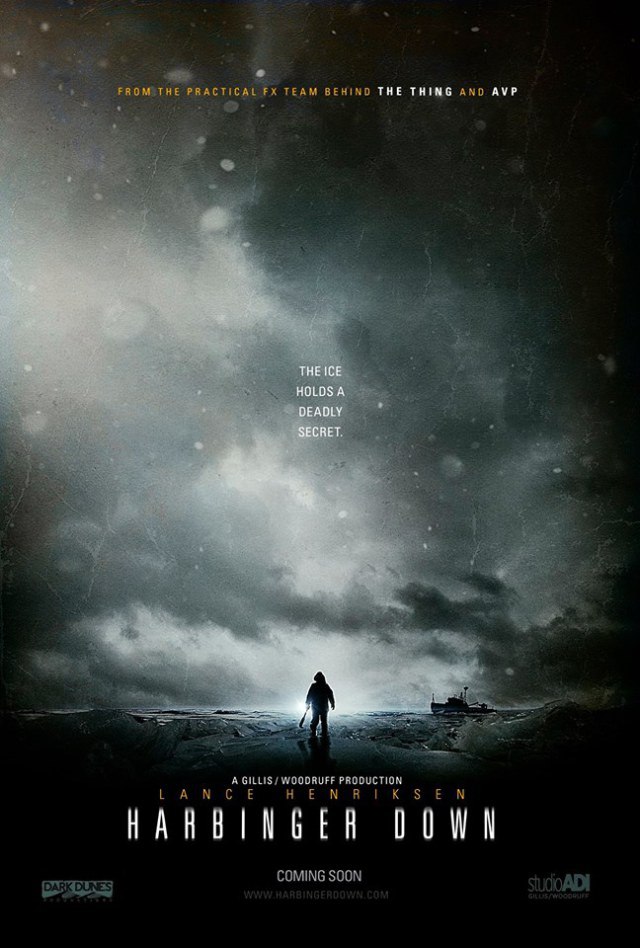
Harbinger Down

Harbinger Down (2015) / D: Alec Gillis / 82m

Cast: Lance Henriksen, Camille Balsamo, Matt Winston, Reid Collums, Winston James Francis, Milla Bjorn, Giovonnie Samuels

On a crabbing trip to the Bering Sea, the ship Harbinger and its captain, Graff (Henriksen), play host to a group of research students looking into how global warming is affecting a pod of Beluga whales. Among the students is Graff’s granddaughter, Sadie (Balsamo). When she spots something in the ice, the crew haul it aboard. It turns out to be a Soviet space capsule with an astronaut remarkably well preserved inside. The capsule also contains tardigrades, micro-animals that can withstand extremes of temperature and the vacuum of space. Sadie does some tests on the tardigrades and discovers that they’ve been exposed to some sort of radiation and are now capable of mutating into any living form they come into contact with.

When the research group’s leader, Stephen (Winston) attempts to claim the capsule and its contents as space salvage, the astronaut’s disappearance further inflames his desire to receive the credit for its discovery. But as Sadie has surmised, the tardigrades are assimilating their new human hosts, and all thoughts of salvage rights and personal glory are abandoned when the first of them falls victim to the tardigrades’ capability for mutating. As one by one the research group and the crew fall victim to the creature that is growing on board the ship, loyalties are tested, secrets are revealed, and a desperate fight for survival ensues.

Harbinger Down - scene

When the makers of The Thing (2011) decided to overlay CGI effects on the already filmed practical effects that represented the titular organism, the company that created those practical effects, ADI, decided that they would provide audiences with the chance to see their original designs and effects in another movie altogether. The result is Harbinger Down, and while their efforts are to be applauded, the finished product isn’t as impressive or persuasive as they may have hoped. Part of the reason for this can be laid at the door of the budget (part of which was funded by Kickstarter contributions), but mostly it’s down to Alec Gillis’s poorly constructed screenplay and sloppy direction. He may be a whiz when it comes to creating suitably fantastic and icky creatures, but away from his usual environment, the cracks soon show and once they do, the movie never recovers.

Considering that this is strictly speaking a reworking of both the 1982 and 2011 versions of The Thing, and Gillis is such an aforementioned whiz at the creature side of things, it’s dismaying to report that this particular incarnation is saddled with some really awkward dialogue (of the George Lucas variety*), characters that scream deliberate stereotype, situations that lack any tension or drama, performances that give new meaning to the term “barely adequate”, and worst of all, creature effects that are often shot in half light or obscured by rapid editing, leaving them on nodding terms with the words “unimpressive” and “dull”. It’s a shallow exercise in showing viewers how it should be done, and as hubristic a movie as you’re likely to see all year.

Rating: 3/10 – with long stretches that challenge the viewer to remain interested, Harbinger Down improves when Henriksen is on screen but flounders everywhere else; some Kickstarter investors may want to think about asking for their money back before it’s too late.

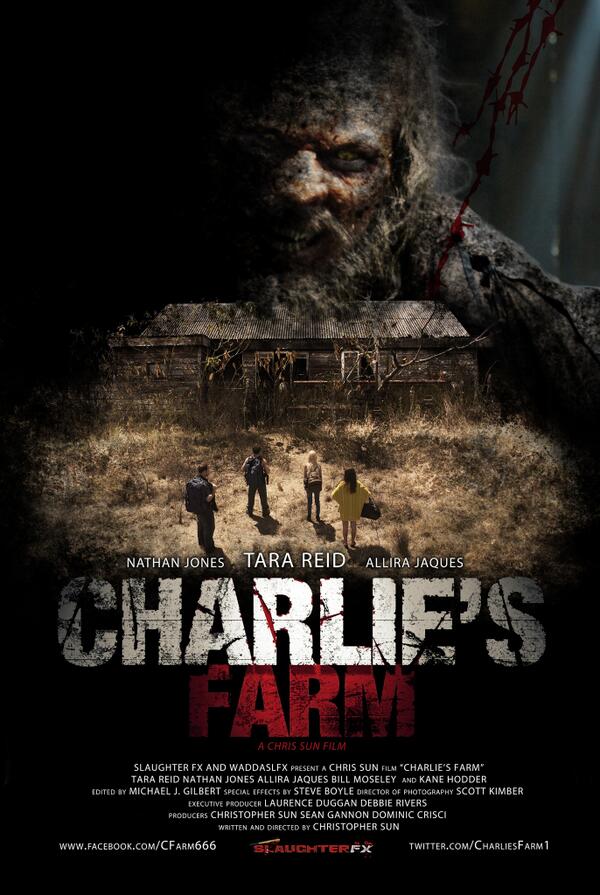
Charlie's Farm

Charlie’s Farm (2014) / D: Chris Sun / 93m

Cast: Tara Reid, Nathan Jones, Allira Jaques, Bill Moseley, Kane Hodder, Dean Kirkright,  Sam Coward, Genna Chanelle Hayes, David Beamish, Trudi Ross, Robert J. Mussett

Four friends – couple Natasha (Reid) and Jason (Kirkright), and singles Mick aka Donkey (Coward) and Melanie (Jaques) – agree to take a trip into the Outback in search of Charlie’s Farm, the site of several gruesome murders that were carried out by the Wilsons (Moseley, Ross) over thirty years ago. Legend has it that even though the Wilsons were killed by the local townsfolk, their retarded son Charlie got away and hasn’t been seen since… and may be the cause of a recent spate of disappearances involving backpackers and people curious enough to visit the farm and check out its tarnished history. When the group need directions they ask in a local bar but are told in no uncertain terms not to go to Charlie’s farm; Jason, who wants to go more than anyone else, eventually talks to his friend Tony (Hodder) who tells him the same thing before telling him where they need to head to.

When they finally reach the farm they’re unsurprised to find it’s rundown and uninhabited. They’re joined by another couple, Alyssa (Hayes) and Gordon (Beamish). They all spend the night, which proves uneventful, though Melanie thinks she saw someone when she woke briefly, but she can’t be sure if she was dreaming or not. Planning to leave the next day, Jason suggests they all split up into twos and explore the surrounding farmland. Alyssa and Gordon investigate an old equipment shed, Mick and Melanie end up taking a dip in the river, while Jason and Natasha’s roaming takes them, eventually, to the same equipment shed. It’s Alyssa and Gordon who are the first to discover that the legend is real, and that Charlie (Jones) is still alive, only now he’s a seven-foot brute of a killing machine, and intent on picking everyone off one by one.

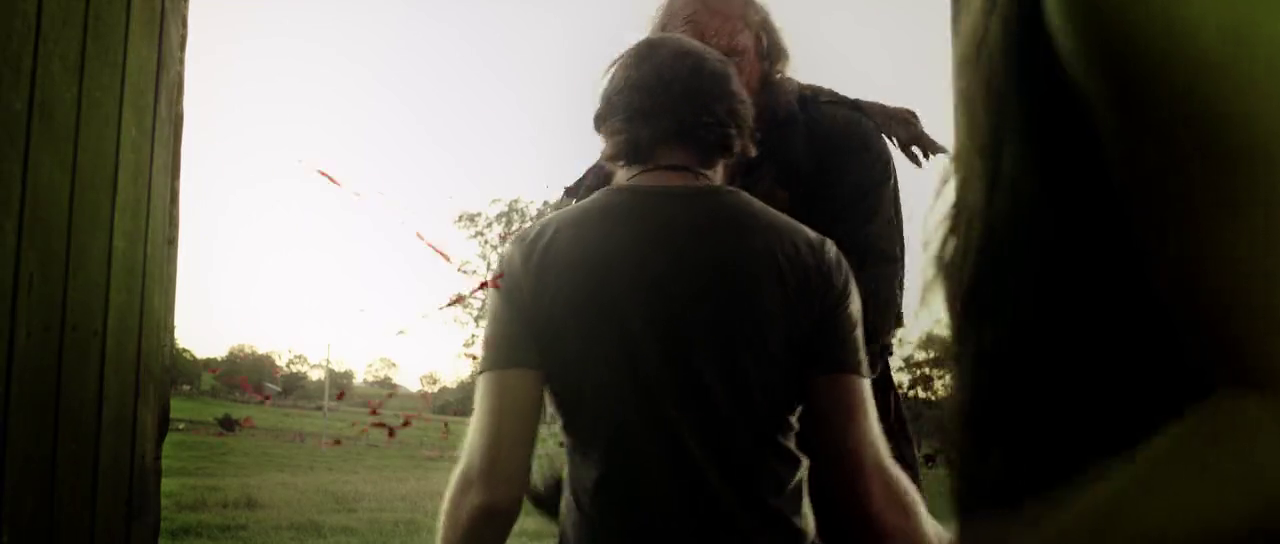
Charlie's Farm - scene

An Aussie slasher movie in the mould of Behind the Mask: The Rise of Leslie Vernon and Hatchet (both 2006, and both featuring Kane Hodder), Charlie’s Farm builds its basic premise from the ground up by introducing its main characters and the murderously insane Wilsons in the movie’s slow-paced first half, and then allows itself to cut loose with some brutally effective killings courtesy of Charlie and various sharp implements (though he’s not afraid to get his hands dirty either). But while those movies had a rude, somewhat grimy atmosphere about them, Chris Sun’s third feature is yet another example – sadly – of how imitation doesn’t yield the same results, and rather than providing solid entertainment, adds yet one more disappointment to the list of cheap and nasty horror movies that get released each year.

The movie isn’t helped by many of the same things that hamper Harbinger Down, namely some awful dialogue, performances that are barely adequate (Kirkright is the worst offender), and situations that lack tension or drama (or both). Sun’s script also goes off on too many tangents, such as the bed that Alyssa and Gordon argue about, Melanie’s being unaware of many things that everyone else knows about (“Who’s Charles Manson?”), and the clumsy, laughable way in which Hodder is shoehorned into proceedings, and just so he can try and box his way to defeating Charlie (yes, you read that right: by boxing). Thankfully, the killings are much better than the rest of the movie and are genuinely impressive, with one character having their jaw ripped off, while another suffers death by penis (not a phrase you see too often in any movie review, let alone a horror movie review).

Rating: 4/10 – derivative and long-winded during the first hour, Charlie’s Farm pulls out all the stops for its kill scenes, and shows what Sun can do when he’s not trying to present ordinary people in an extraordinary situation; however, it lacks an ending, and while nihilism in horror movies isn’t exactly unheard of, this particular example smacks of its writer/director running out of ideas at the eighty-five minute mark.

Share this:

  • Click to share on X (Opens in new window) X
  • Click to share on Facebook (Opens in new window) Facebook
  • More
  • Click to print (Opens in new window) Print
  • Click to email a link to a friend (Opens in new window) Email
Like Loading...

For One Week Only: Australian Cinema – Part II

18 Tuesday Aug 2015

Posted by dullwood68 in Movies

≈ Leave a comment

Tags

1921-1940, American movies, Australian cinema, Beaumont Smith, Convicts, Eva Novak, For One Week Only, For the Term of His Natural Life, George Fisher, Historical drama, Literary adaptation, Marcus Clarke, Murder, Norman Dawn, Raymond Longford, Review, Romance

Australian Cinema Part II – 1921-1940

At the beginning of the 1920’s, the Australian movie industry was facing new challenges following the aftermath of World War I. Back in 1912, production companies had merged to form the Australasian Films and Union Theaters, a body which effectively controlled which movies were shown and where. However, it soon became apparent to distributors that there was a decreasing market for Australian movies, a belief that was exacerbated by the relatively cheap cost of importing, say, American movies that had already recouped their budgets in their home market. With local movies being passed over in favour of these imports, the industry began to dwindle. By 1923 this meant that 94% of all movies shown in Australia were American imports.

Movies did continue to be made though, and directors such as Raymond Longford and Beaumont Smith maintained their own standards against the influx of American product. Longford made several well-received movies during the early Twenties, including The Blue Mountains Mystery (1921) and The Dinkum Bloke (1923), but with the death of Lottie Lyell in 1925 his career began to flounder and he never regained the status he’d had in the 1910’s. Beaumont Smith made comedies, quickly and cheaply produced, and this practice earned him the nickname “One Shot Beau”. He too made several movies during the early Twenties, including While the Billy Boils (1921) and The Digger Earl (1924), but like Longford his career began to flounder and he retired officially in 1925 thanks to dwindling profits.

With the US continuing to dominate the market, especially in terms of the emerging “talkies”, Australian movie production maintained a reasonable level but not every movie was as successfully received as they had been in the past. New movie makers arrived on the scene, writer/directors such as Norman Dawn and Paulette McDonagh, and though they too faced an uphill battle to make an impact (or a profit) with their movies, nevertheless they succeeded. Dawn made one of the most impressive Australian movies of the late Twenties, the historical drama For the Term of His Natural Life (1927), yet another movie that showed Australia was just as capable as Hollywood of producing intelligent and compelling movies.

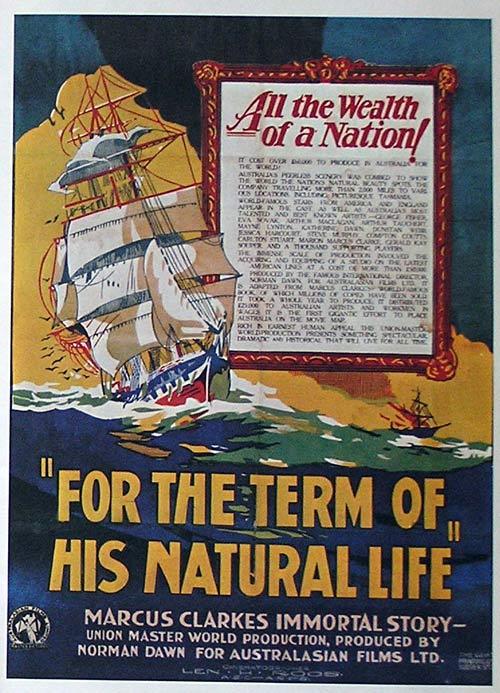
For the Term of His Natural Life

For the Term of His Natural Life (1927) / D: Norman Dawn / 102m

Cast: George Fisher, Eva Novak, Dunstan Webb, Jessica Harcourt, Arthur McLaglen, Katherine Dawn, Gerald Kay Souper, Marion Marcus Clarke, Arthur Tauchert, Mayne Lynton, Compton Coutts

1827, England. A row between Sir Richard Devine and his wife Ellinor (Clarke) leads to the revelation that their son, also Richard (Fisher), is illegitimate and the result of a brief affair with Lord Bellasis. Sir Richard banishes his son, while at the same time Lord Bellasis has an argument with his son, known as John Rex (also Fisher) that leads to John killing his father. Richard chances upon the body but is discovered by some of Lord Bellasis’s men. Accused of his murder, but thinking that Sir Richard has committed it, he remains silent (and helps to keep his mother’s shame from being exposed as well). He gives his name as Rufus Dawes and allows himself to be tried and sentenced to life imprisonment in a penal colony in Australia.

On the voyage a mutiny is organised by none other than John Rex, with the aid of his fiancée, Sarah Purfoy (Harcourt). Purfoy is travelling as nurse to the daughter of the new governor, Major Vickers (Souper) and his wife (Dawn). Rufus overhears the plans for the mutiny and alerts the crew. The mutiny is foiled but the mutineers guess that Rufus informed on them, and they have their revenge by claiming he was the leader. When the ship reaches Macquarie Harbour, Rufus is left in isolation on a nearby island.

Six years pass. The governor’s daughter, Sylvia (Novak) has grown into a beautiful young woman, and has attracted the attention of Captain Frere (Webb). Frere was in command of the penal ship that brought them all to Australia; his distrust of the convicts has made him cruel and merciless. His arrival at the harbour is to inform Major Vickers that he is to decamp to Port Arthur, along with all the convicts. This coincides with Rufus’s decision to end his life by jumping off a high cliff on his island; however, he survives. Meanwhile, Vickers travels with the prisoners on one ship while his wife and daughter, accompanied by Frere, travel on a second ship. This ship is hijacked by Rex and the trio are left on a beach, witjhout supplies, to fend for themselves. Rufus is washed ashore and sets about trying to return them all to the governor. He builds a makeshift boat and they set off, but not before Sylvia’s mother succumbs to a fever. It’s all too much for the young woman, and by the time they’re rescued, Sylvia also has a fever, but one that robs her of the memories of what has happened. Frere takes advantage of this and has Rufus re-imprisoned, and takes the credit for their being alive.

Years pass. Frere and Sylvia are due to be married, while Rex has been apprehended and is to be tried and expected to hang. Purfoy reappears and blackmails Frere into getting his sentence reduced. At the trial Rufus is called to testify, but when it becomes clear that Sylvia doesn’t recognise him, his accusations against Frere go unheeded. With his life spared, Rex plans another escape and asks Rufus to go with him. Rufus declines the offer but asks Rex to take a letter home to his mother. The escape plan is a success, and with Purefoy’s help, Rex gets to Sydney, whereupon he reads Rufus’s letter and discover the truth about their relationship. Realising that this is the reason why they look so much alike, Rex determines to go to England and impersonate Rufus and live his life in the way he’s always wanted…

For the Term of His Natural Life - scene

Based on the novel by Marcus Clarke, and previously adapted for the screen in 1908 and 1911, For the Term of His Natural Life is the most expensive Australian silent movie ever made, and also one of the most gripping. Its tale of doppelgängers, murder, mutinies, dangerous convicts, a scheming captain, a young woman in peril, the twin burdens of shame and regret – all combine to make a movie that grips from beginning to end, and it’s a movie that’s so well filmed for the time that it makes some modern day movies look amateurish in comparison.

The budget aside, Dawn’s adaptation aims high and rarely falls short, capturing the agony and despair of the convicts’ lives and the conditions they’re forced to live in. In this sense the movie doesn’t pull any punches, and as a record of the period it’s remarkably faithful, with the makers’ decision to film in the actual locations depicted adding to the credibility of the outdoor scenes (the Inca, an old sailing ship, was renovated and used for the scenes in Sydney harbour). With such an effort made to make the background as realistic as possible, and with exact copies of contemporary clothing made as well, Dawn’s grounding of the narrative pays off in dividends. It’s like looking through a window into the past.

Dawn is aided immeasurably by his cast, with Fisher a standout as the anguished Rufus and the malicious Rex. The viewer is never in any doubt as to which character is on screen, and even though there are few scenes where the two characters interact, it’s a testament to the efforts of DoP’s Len Roos, John William Trerise and Bert Cross that when they do it’s as seamlessly as possible. Of the two characters, Rufus is the more sympathetic (as you’d expect), but Fisher makes sure Rex’s dastardly behaviour isn’t entirely objectionable. It’s a delicate process, but you only have to look to the scene where his relationship to Rufus is revealed to see the desperate need to be accepted that has driven Rex onwards.

Novak is exquisitely lovely as Sylvia, and displays her character’s amnesia with aplomb, keeping her expressions natural and free from hysteria (or the declamatory style of acting that still afflicted some silent movies of the era). As the cowardly, villainous Frere, Webb is eminently hissable, while Harcourt, formerly a fashion model, is entirely convincing as Purfoy, using her feminine wiles to good effect as she charms and entices a variety of the male characters into doing what she wants. In smaller roles, The Sentimental Bloke‘s Tauchert pops up as a prison warden, while Dawn’s wife, Katherine has a touching death scene as Sylvia’s mother (she was also the movie’s editor).

There’s enough here to make a mini-series, but Dawn apportions the appropriate time needed for each scene and development of the storyline, so that no scene outstays its welcome or feels truncated. There’s a natural rhythm and flow to the narrative, and Dawn handles the crises and lulls with equal attention and commitment. In fact, so confident is he with the material that, when it’s over, you don’t realise just how quickly it’s all happened… and how rewarding it’s all been.

Rating: 9/10 – some very minor quibbles aside – such as Coutts eyeball-rolling performance, or an unnecessary reference to a secondary character’s claims of cannibalism – For the Term of His Natural Life is an exciting, character-driven historical drama that succeeds by virtue of its cast and crew’s commitment to the overall tale; one to be seen both for its confident, considered approach and its exacting take on both the material and the period evoked.

Movies such as For the Term of His Natural Life weren’t common however, and as the Twenties drew to a close, movie production resumed a more familiar pattern of homegrown comedies such as the Dad and Dave series along with turgid dramas such as Tiger Island (1930). It was in 1930 that exhibitor F.W. Thring established Efftee Studios in Melbourne, a production company that made the first Australian talkies, movies such as Diggers (1931), The Haunted Barn (1931), and the generally well received remake of The Sentimental Bloke (1932). But with the Australian government refusing to implement quotas for Australian movies it was difficult for any studio or production company to make a profit, and in 1935 Thring was forced to cease making movies; it was estimated he lost A$75,000 of his own money.

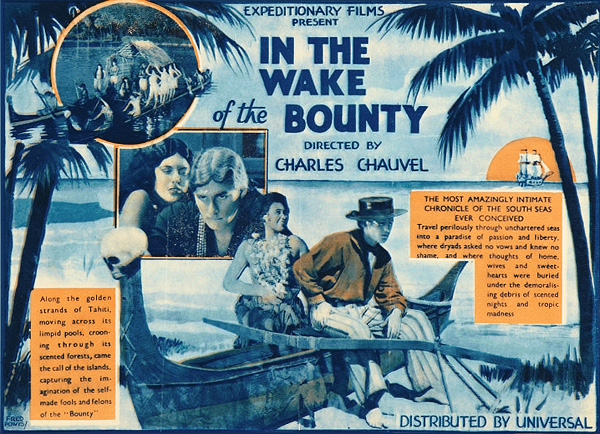
Another movie company, Cinesound Productions was more successful, making seventeen features between 1932 and 1940. Cinesound based their productions on the American model and promoted them well enough that each feature either broke even or made a profit. But while other movies continued to be made independently – e.g. In the Wake of the Bounty (1933), which introduced the world to Errol Flynn – the decline that had begun in the Twenties continued unabated. As fewer movies were made each year, and were less and less profitable, the Australian movie industry was dealt a further blow when the UK decided that Australian movies would no longer be included in the local movie quota, thus causing the loss of a previously guaranteed market.

In the Wake of the Bounty

As the Thirties drew to a close with World War II looming on the horizon, the industry began to implement a kind of self-imposed shutdown, recognising that feature length movies would prove too costly to make in the new economic climate. But the future was already uncertain, and though the War did have an impact on movie production, a break was perhaps just what the industry needed.

Share this:

  • Click to share on X (Opens in new window) X
  • Click to share on Facebook (Opens in new window) Facebook
  • More
  • Click to print (Opens in new window) Print
  • Click to email a link to a friend (Opens in new window) Email
Like Loading...

Cop Car (2015)

16 Sunday Aug 2015

Posted by dullwood68 in Movies

≈ Leave a comment

Tags

Crime, Drama, Drugs, Hays Wellford, James Freedson-Jackson, Jon Watts, Kevin Bacon, Murder, Review, Shea Whigham, Sheriff, Stolen car, Thriller

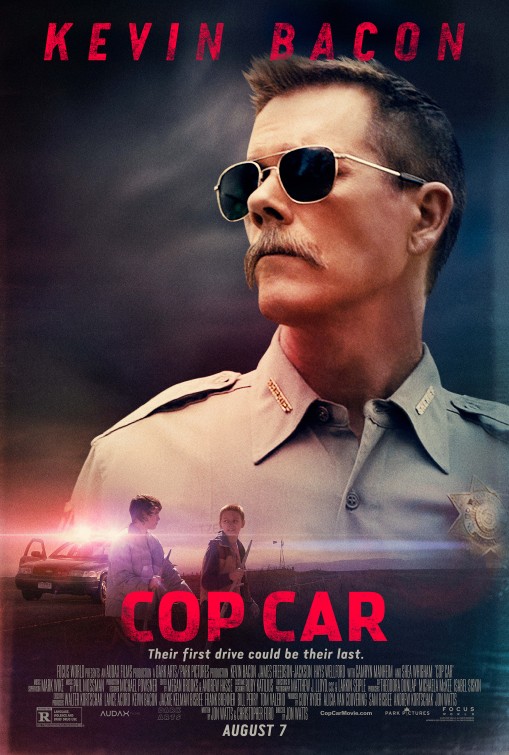
Cop Car

D: Jon Watts / 86m

Cast: Kevin Bacon, James Freedson-Jackson, Hays Wellford, Shea Whigham, Camryn Manheim

Two boys, Travis (Freedson-Jackson) and Harrison (Wellford) have run away from their respective homes, and are travelling across country when they stumble upon a police cruiser in a small wooded area. Nervous about being discovered and taken home, they approach the vehicle with caution but soon realise that whoever it belongs to isn’t anywhere nearby. They get in and pretend to be driving it when Travis finds the keys. Caught up in the excitement of finding the car, they drive off, eventually reaching a main road where they almost collide with a woman driver (Manheim).

Meanwhile, Sheriff Kretzer (Bacon), whose cruiser it is, is busy disposing of a body he had in the trunk. When he returns to the car to dispose of a second body, he of course finds it’s gone. Confused, he uses his mobile phone to call Dispatch and ask the operator if she’s heard anything unusual over the radio. Kretzer is relieved when she says no, but knows that it could be just a matter of time before his car is seen or stopped. He begins to run across country until he comes to a trailer park. There he steals a car, and uses it to head home where he can regroup. When another call to Dispatch reveals reports of a stolen cop car, he dismisses the idea and arranges for all the local units to switch to another channel.

That done, he uses the radio in his truck to try and contact whoever’s stolen his cruiser. The boys don’t hear him at first, but they do hear a noise from the trunk. When they open it they discover a badly beaten man (Whigham) who is also tied up. He implores them to free him, saying the sheriff is a bad man and his life is still in danger. But when Travis and Harrison do free him, he overpowers them, and when Kretzer calls through again, the man forces Harrison to give him their location. While Kretzer heads to meet them, the man takes the sheriff’s assault rifle and hides nearby with the intention of killing him when he arrives. But when the sheriff does arrive, he senses something’s wrong, and so begins a game of cat-and-mouse that sees the two friends trapped in the back of the cruiser, and at the mercy of both the man and the sheriff.

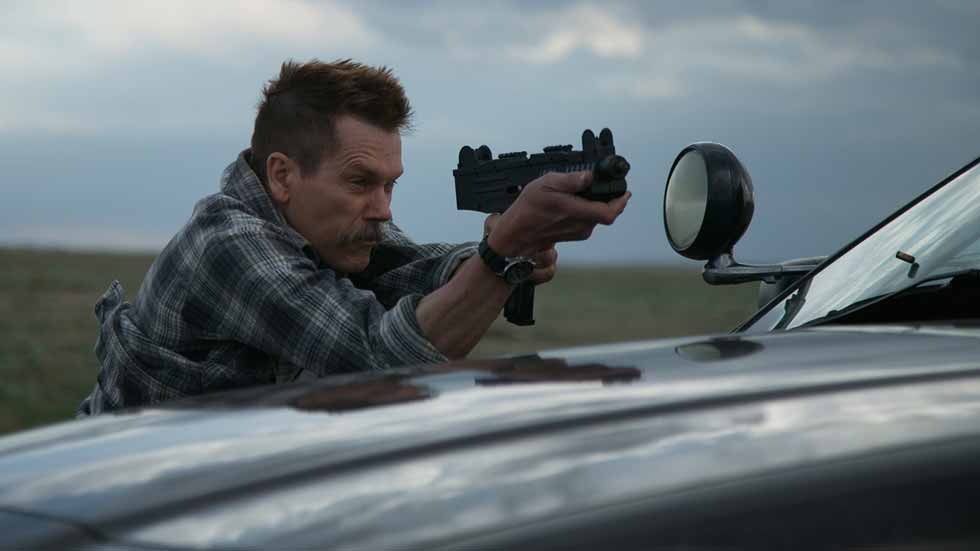
Cop Car - scene

Cop Car‘s basic premise is a simple one: boys steal a sheriff’s cruiser, sheriff tries to get cruiser back, things get messy and complicated very quickly. In fact, it’s such a simple premise that it doesn’t need much more embellishment than a woman driver who can’t believe what’s she seen (two boys driving a sheriff’s car). And director/co-writer (along with Christopher J. Ford) Watts knows it, paring down the action and the drama to the point where only the most essential requirements are needed or used. It makes a refreshing change to see a thriller that’s pared down in such an effective way, and it’s all credit to Watts and Ford that they maintain such a tightly focused narrative throughout.

Of course, they’re helped enormously by the presence of Bacon (sporting a moustache that could qualify as either a special effect or a character in its own right). As the cocksure sheriff whose crooked endeavours are brought to heel by the intervention of two unsuspecting ten year olds, Bacon is a mix of sweaty terror and ambivalent menace; there’s a moral compass in there, but thanks to the script and Bacon’s interpretation of the character the viewer can’t be sure which way he’ll turn when it comes to dealing with the two boys (as opposed to Whigham’s unequivocally bad guy, who in the movie’s most cruelly effective scene, tells the boys just what he’ll do if they try and double cross him).

With Bacon on such fine form, it’s a good job that Freedson-Jackson and Wellford are able to match him for credibility, their easy-going camaraderie and childish naïvete another of the movie’s wealth of positives. In this day and age of computer whizz-kids and their seemingly inevitable rush to adulthood, it’s good to see a couple of kids who aren’t tech savvy, don’t know about safety catches on guns, and believe that someone they find bound and bloodied in the trunk of a car isn’t on the wrong side of the law (their ease in driving does raise a few questions however). Travis is the more confident of the two, and Freedson-Jackson – making his feature debut – shows how vulnerable he really is beneath all the bravado. By contrast, Harrison is the more cautious and reserved of the two, and Wellford portrays his gradual toughening up with a skill that belies his age and experience.

There’s very little in the way of subplot either, with Kretzer’s pursuit of his car, and the man’s determination to kill him providing all the required tension and drama. By putting the two boys square in the middle of the two men’s determination to kill each other, Watts adds a layer of vulnerability to a story that would otherwise be a straightforward slab of testosterone set in wide open spaces. And what wide open spaces they are, the Colorado locations beautifully lensed by Matthew J. Lloyd and Larkin Seiple, the rolling grasslands often overwhelmed by some impressively glowering skies. The locations give the movie a sense of place and dimension, making even Kretzer’s run across country seem entirely possible, despite the seemingly endless vistas he has to travel through.

For all Watts’ and Ford’s careful attention to detail and the way in which they’ve carefully structured their story, there are still a few problems. The scene where Kretzer persuades the woman driver to look for his keys isn’t as clever or convincing as it needs to be, and leaves the viewer feeling a little disappointed at the way in which the movie is heading towards its conclusion. And the outcome of the sheriff’s showdown with the man feels forced, while what follows seems hopelessly contrived, as if the movie needed to be a certain length and this was the best way they could come up with to meet that need. It undermines all the good work that’s gone before, but not so much to negate it entirely, though some viewers will probably be left shaking their heads in dismay.

Rating: 7/10 – let down by a final quarter hour that flouts the carefully constructed narrative that’s gone before, Cop Car is still a great little thriller that is much better than you’d expect; eschewing cynicism (in a genre that can’t help itself sometimes), and focusing on the situation the boys find themselves in, it has a knowing depth that rewards on closer examination.

Share this:

  • Click to share on X (Opens in new window) X
  • Click to share on Facebook (Opens in new window) Facebook
  • More
  • Click to print (Opens in new window) Print
  • Click to email a link to a friend (Opens in new window) Email
Like Loading...

Mini-Review: The Boy Next Door (2015)

14 Friday Aug 2015

Posted by dullwood68 in Movies

≈ 1 Comment

Tags

Affair, Drama, Jennifer Lopez, John Corbett, Murder, Neighbour, One night stand, Review, Rob Cohen, Ryan Guzman, Stalker, Stalking, Thriller

Boy Next Door, The

D: Rob Cohen / 91m

Cast: Jennifer Lopez, Ryan Guzman, John Corbett, Ian Nelson, Kristin Chenoweth, Lexi Atkins, Hill Harper, Jack Wallace

Claire Peterson (Lopez) teaches classic literature at her local high school. She’s separated from her husband, Garrett (Corbett), due to his having had an affair, and lives with their son, Kevin (Nelson). When high school senior Noah Sandborn (Guzman) moves in to look after his ailing uncle (Wallace) next door, his good looks and chiseled physique prove distracting to Claire, and she finds herself becoming attracted to him. With Garrett making every effort to win back Claire’s trust, he and Kevin go off fishing for the weekend. Noah creates an excuse for Claire to come and see him, and when she does, he seizes his chance and they have sex.

The next morning, Claire realises she shouldn’t have slept with Noah and tells him it was a mistake. Noah becomes angry, and his behaviour reveals a darker, more sinister side, one that sees Claire at risk of losing her family, her job, and possibly, her life. As she tries desperately to keep their one night stand a secret, Noah insists they should be together, and warns Claire that if she doesn’t agree to be with him, he’ll let Kevin or Garrett watch the video he made of them having sex. But when the brakes on Garrett’s car fail while he and Kevin are in it, Claire realises that Noah will stop at nothing in his attempts to have her, and that she needs to do something to protect both her and her family.

Boy Next Door, The - scene

It’s hard to say which is the worst thing about The Boy Next Door: it’s either Rob Cohen’s tired, uninspired direction, or the unappealing, highly derivative script by Barbara Curry, or even the various below-par performances. There’s nothing here to recommend the movie to an audience, and very, very little that warrants the kind of attention lavished on it by the producers (who include Lopez herself), so amateurish in execution is the final product. This isn’t even a movie-by-the-numbers; instead it’s just an absurd, lazy, painfully bad B-movie given spurious credibility by the involvement of Lopez, and the inclusion of a sex scene that is about as erotic as peeling potatoes.

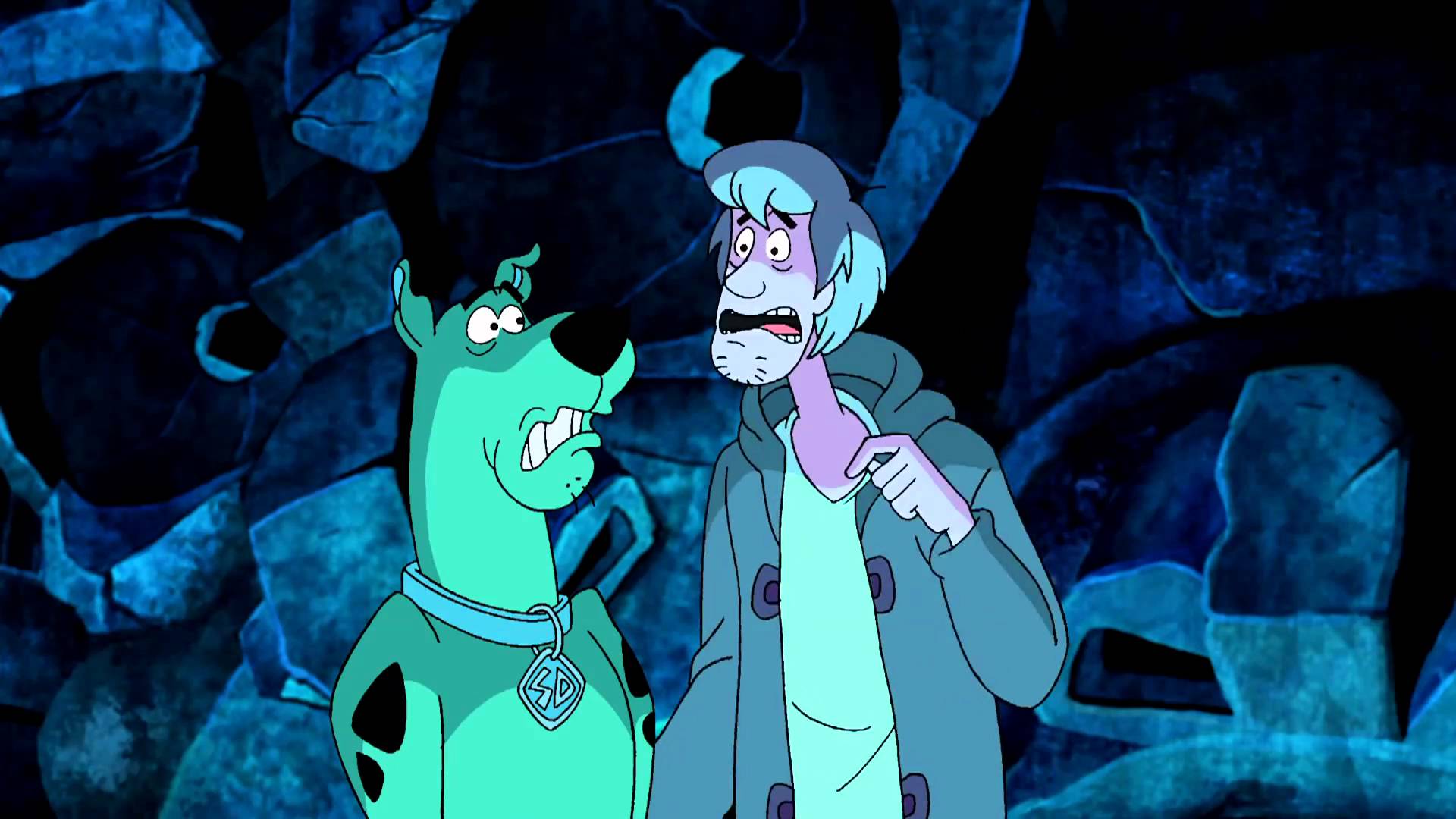
Why this movie was made will remain a mystery that not even Scooby-Doo could solve, but given the talent involved, it should have had at least a thin veneer of respectability to help make it more palatable, but it’s clear that no one thought that this was relevant or necessary. Lopez looks embarrassed throughout, Guzman is there to get his shirt off as often as possible, while everyone else waits for their scenes to be over so they can go and do something more challenging (it’s a career low point for everyone concerned). If any proper evidence was needed as to the movie’s ridiculous attempts at drama, it would be the aftermath of a scene where Noah beats up a bully, and fractures his skull in the process: the police are never involved, and he further threatens the school’s vice principal without any reprisals there either. Like Noah, the movie is mad, bad, and dangerous to know.

Rating: 2/10 – so bad it’s truly difficult to watch without wondering if something this terrible shouldn’t have a laughter track, The Boy Next Door might be aspiring to trash movie status, but it’s hard to tell thanks to how terrible it is; a daunting prospect even at ninety-one minutes, only Randy Edelman and Nathan Barr’s cliché-lite score makes any real impression, but even then you’ll have forgotten it within a couple of hours.

Share this:

  • Click to share on X (Opens in new window) X
  • Click to share on Facebook (Opens in new window) Facebook
  • More
  • Click to print (Opens in new window) Print
  • Click to email a link to a friend (Opens in new window) Email
Like Loading...

Trailer – Secret in Their Eyes (2015)

03 Monday Aug 2015

Posted by dullwood68 in Movies

≈ Leave a comment

Tags

Billy Ray, Chiwetel Ejiofor, Julia Roberts, Murder, Nicole Kidman, Preview, Remake, Thriller, Trailer

When The Secret in Their Eyes, an Argentinian thriller, was released in 2009, it was perhaps inevitable, given its critical success, that Hollywood would attempt a remake at some point – and here it is. Boasting a fantastic cast, including an almost unrecognisable Julia Roberts (could they have made her look more dowdy?), Secret in Their Eyes looks edgy and dark and compelling, and with Billy Ray in the driving seat as director and writer (bear in mind his last script was for Captain Phillips), this has all the potential to be as riveting as its predecessor, and pick up a healthy clutch of awards come 2016.

Share this:

  • Click to share on X (Opens in new window) X
  • Click to share on Facebook (Opens in new window) Facebook
  • More
  • Click to print (Opens in new window) Print
  • Click to email a link to a friend (Opens in new window) Email
Like Loading...

Dark Places (2015)

02 Sunday Aug 2015

Posted by dullwood68 in Movies

≈ Leave a comment

Tags

1985, Charlize Theron, Chloë Grace Moretz, Christina Hendricks, Corey Stoll, Crime, Drama, Gilles Paquet-Brenner, Gillian Flynn, Kansas, Literary adaptation, Murder, Nicholas Hoult, Review, Satanism, The Kill Club

Dark Places

D: Gilles Paquet-Brenner / 113m

Cast: Charlize Theron, Nicholas Hoult, Christina Hendricks, Tye Sheridan, Chloë Grace Moretz, Corey Stoll, Sterling Jerins, Sean Bridgers, Andrea Roth, Shannon Kook, Drea de Matteo

In 1985, in a small rural community in Kansas, a single mother and two of her daughters are all killed one night at their farmhouse; later, the surviving daughter, Libby (Jerins), tells the police her brother Ben (Sheridan) did it. After his arrest and during his trial, Ben offers no defence and he’s sent to prison for the rest of his life.

In 2015, the adult Libby (Theron) is down on her luck and counting on her minor celebrity status to keep her afloat. When she’s contacted by Lyle Wirth (Hoult) with the offer of $500 for a speaking engagement, she arranges to meet with him first. Lyle tells her he belongs to a group called The Kill Club, an organisation of volunteers who look into old unsolved murders, or cases where they believe an innocent person has been put in jail. She attends one of their meetings and finds that several members believe Ben didn’t commit the murders, and Libby finds herself challenged over her version of events that night. Angry at first, Libby agrees to help the group look into the  case, and begins her own investigation alongside theirs.

Lyle convinces her to visit her brother, something she’s never done. Ben (Stoll) is happy to see her, but Libby’s resentment of him means the visit goes badly. Back in her hometown she tries to find her father, Runner (Bridgers), who abandoned them when she was much younger. She also looks into the possibility of Ben having been part of a Satanic cult at the time, and why a young girl named Krissi Cates is relevant to what happened. As she learns more and more, she discovers Ben had a girlfriend called Diondra (Moretz). With Lyle’s help, Libby begins to put all the pieces together, and finds that what she believed happened all those years ago is far more complicated than she could ever imagined – and the repercussions of those events are still being played out in the present.

Dark Places - scene

Adapted from the novel by Gillian Flynn, author of Gone Girl, Dark Places is a murder mystery where what appears to be a simple, unexplainable crime proves to be something a lot more complicated and strange, and with a bewildering set of coincidences that make up the solution to the murders. Paquet-Brenner’s adaptation keeps the narrative skipping backwards and forwards between 1985 and 2015, showing us the events that led to the murders in 1985, and linking these scenes to the discoveries Libby makes in the present. As the story gradually unfolds, and we see the drama that played out in the past, we gain a greater understanding of the whys and hows that govern the actions of Libby and those people who were involved.

It’s a delicate balancing act at times, with the structure dictating that there be some degree of repetition throughout, as what we see in the past is explained in the future. Thankfully, Paquet-Brenner avoids such a hazard by making each new discovery as confusing as the last, and by throwing in so many suspects it almost seems as if the entire community could have done it. As Libby’s investigation leads to some unsavoury truths and revelations, the director makes it clear that her memories of that night have always been tainted, but to what degree she and the audience have to find out for themselves.

The dark places of the title are the ones we go to in our minds when we contemplate issues of murder and perceived guilt. The movie explores these avenues via the adult Libby’s increasingly fractured certainty that Ben killed his mother and sisters. And while the script plants a very big clue early on as to what really happened, it’s more concerned with the various ways in which we, through Libby, justify our actions and sense of culpability. Libby is tormented by having not been able to do anything to stop Ben, but as his innocence becomes more and more likely, her own assertions (the ones that have carried her through all these years) begin to crumble and she’s faced with the daunting prospect that her testimony condemned her brother to prison for the rest of his life.

But it proves not to be so simple. Ben has his own reasons for staying quiet, and so we, like Libby, have to seek answers in those dark places mentioned already. Thanks to a tight, focused script, and a clutch of telling performances, the movie shifts and turns with every passing minute, making it more and more difficult to work out what actually happened. Theron is impressive as the outwardly angry but internally uncomfortable Libby, her strained features and abrasive attitude in keeping with a survivor who only has her celebrity to keep her going; without it she’d be aimless (another reason why she agrees to help the Kill Club). As Lyle, Hoult brings a determined optimism to the role that offsets and complements Libby’s antagonistic approach, while Hendricks stands out as the harried mother struggling to keep her home and family together in the face of impending financial ruin. With more than able support from the likes of Sheridan, Moretz and de Matteo as the older Krissi, Dark Places succeeds in making each character credible, even when they’re sometimes asked to behave in ways that don’t make sense until the final reveal.

To add to the effectiveness of the script, the acting and Paquet-Brenner’s solid, unshowy direction, the movie is filmed in a gloomy, downlit style by DoP Barry Ackroyd, his compositions and framing illustrating proceedings with confidence and giving scenes an eerie quality that makes it seem that there’s other, stranger stuff we should know about happening just out of frame. With a running time that allows more than sufficient time to detailing events in both time periods, and a score by Gregory Tripi that subtly adds a level of foreboding to the material, Dark Places is an intelligent thriller that holds the attention and makes for avid viewing.

Rating: 8/10 – riveting in a sombre, calculated way, Dark Places maintains its gloomy, oppressive mise en scene to good effect throughout, and makes its audience work hard to solve the mystery; a better than average adaptation that showcases another fine performance from Theron, and flits between the past and the present with assured clarity and focus.

Share this:

  • Click to share on X (Opens in new window) X
  • Click to share on Facebook (Opens in new window) Facebook
  • More
  • Click to print (Opens in new window) Print
  • Click to email a link to a friend (Opens in new window) Email
Like Loading...

Murder of a Cat (2014)

29 Wednesday Jul 2015

Posted by dullwood68 in Movies

≈ Leave a comment

Tags

Blythe Danner, Drama, Ford's Megastore, Fran Kranz, Gillian Greene, Greg Kinn, J.K. Simmons, Mouser, Murder, Nikki Reed, Review, Theft, Thriller

Murder of a Cat

D: Gillian Greene / 101m

Cast: Fran Kranz, Nikki Reed, J.K. Simmons, Greg Kinnear, Blythe Danner, Leo Nam, Brian Turk, Aidan Andrews

Clinton Moisey (Kranz) is still smarting after the closure of his comic book store, thanks to the arrival of a large supermarket called Ford’s. He lives with his mother, Edie (Danner) and his pet cat Mouser. Recently, Mouser has been disappearing for long periods and doesn’t seem his old self. When Clinton takes Mouser to the vet’s, it’s all put down to his advanced age. Clinton isn’t so sure, but things take a darker turn the next morning when he wakes to find Mouser lying dead in the road outside his home, and with a bolt from a crossbow sticking out of him.

Clinton calls the police. Sheriff Hoyle (Simmons) arrives but decides there’s not much he can do except file a report and hope for the best. Clinton is outraged by this, and decides to find out who killed Mouser by himself. A local boy (Andrews) tells him that he saw Mouser just after he was hit by the bolt, and it wasn’t outside Clinton’s home. When the boy shows him the spot where he saw Mouser, Clinton is shocked to see a lost pet poster that shows a picture of Mouser, but under another name, and with an address on it. He finds the address and encounters Greta (Reed). It transpires that her home was where Mouser was disappearing off to. After some initial suspicion about each other’s motives, she and Clinton agree to try and find out who killed Mouser.

Greta recognises the bolt as one that would have been sold at Ford’s. She used to work there until recently, but doesn’t say why she left. At Ford’s they discover that the brand of crossbow used is only sold in that one store, but when the store’s owner, Al Ford (Kinnear), refuses to show them details of any purchases, Clinton causes a scene and is thrown out. Later, he sneaks into the store’s warehouse and finds that the shelf where the crossbows are kept is empty; he also learns that one of the employees, Yi Kim (Nam) is using the crossbow boxes to remove computer equipment from the store and sell it to a fence.

Things become further complicated when Clinton misreads Greta’s growing interest in him, and Sheriff Hoyle is revealed to be dating his mother. When he tells the sheriff about Yi Kim’s activities, he manages to persuade Hoyle to go to Kim’s house and search it. They don’t find anything, but Clinton swipes Yi’s phone. On it he finds several photos that prove what Yi is doing, but when he takes this evidence to Al Ford, he finds the store owner depressed over his impending divorce, and certain that the fence Yi is selling to is actually Greta…

Murder of a Cat - scene

On the face of it, Murder of a Cat is a quirky, noir-tinged murder mystery with an unlikely victim, and an even more unlikely “detective”. Clinton Moisey is an adolescent trapped in an adult’s body, an older, less hyper Fred Figglehorn perhaps, but with the same selfish, socially awkward behaviour and lack of empathy towards others. When he implores Sheriff Hoyle to find Mouser’s murder, his outrage at Hoyle’s disinterest is evident but also a little unnerving. It’s the intensity that makes Clinton seem like a crazy person, and while the movie spends quite a lot of time supporting his search for justice, where the narrative takes him actually robs his cause of any emotional investment made by the viewer. As the thefts from Ford’s take priority over the murder investigation, so Clinton becomes less intense (if still determined), and his shaggy mop top gives way to a more coiffured hairstyle, changing both his look and his attitude.

By providing Clinton with a makeover, the movie ultimately robs him of the demanding, aggressive, petulant behaviour that makes him stand out in the first place. In short, he mellows, and while this may have seemed like a great idea for a character arc, it actually means the opposite: Clinton becomes less interesting as the movie goes on, and other characters – Ford, in particular – take over. It’s a strange process to watch, as a movie’s main character, though still driving the narrative forward, ends up being a bit of a bystander in his own story. Thanks to the script by Robert Snow and Christian Magalhaes, the movie never overcomes this approach and often stalls as Clinton struggles to make the next connection in the mystery. It’s as if they didn’t trust his dogged determination – a trait all the great detectives share – to fully engage the audience, and were uncertain if his way of behaving would invoke any sympathy.

The movie is further undone by some trite and unconvincing dialogue, some of which sounds so awkward that the cast do well in dealing with it all. Kinnear is saddled with some of the stiffest lines in recent memory – “I am a phony, kid. You were right about that. My whole life’s been an act” is one of the more memorable challenges he has to overcome, but there are plenty more where that came from, and though as mentioned above the cast do their best, it’s still too noticeable for comfort.

Of the cast, Kranz is a committed Clinton, absurdly childish and arrogant but lacking the support from the script and from Greene to make Clinton more likeable. Reed is efficient but used mostly to fill in the blanks in the story (she has a lot of exposition to deal with), while Simmons and Danner tread water with characters who come perilously close to being stereotypes. It’s Kinnear who makes the most impact though, taking an unevenly detailed character and making Ford the most interesting role by the movie’s end. It’s a small triumph that boosts Murder of a Cat in its last half hour, and without it, would have made the movie end on a whimper.

This is Greene’s first feature, but even though she’s the wife of Sam Raimi, it’s clear she hasn’t learnt too much from him, directing the majority of scenes with a flat, often bland approach that hurts the movie tonally and waters down both the drama and the often haphazard comedy elements, making some parts of the movie feel undeveloped. It’s a shame as there is the germ of a really good idea here, but sadly, it could – and should – have been a whole lot better.

Rating: 5/10 – a missed opportunity for everyone concerned, and the kind of movie that proves endlessly frustrating to watch, Murder of a Cat loses ground quickly and never recovers; it aims for quirky and bizarre but in reality is actually tedious and too rudimentary to work effectively throughout.

Share this:

  • Click to share on X (Opens in new window) X
  • Click to share on Facebook (Opens in new window) Facebook
  • More
  • Click to print (Opens in new window) Print
  • Click to email a link to a friend (Opens in new window) Email
Like Loading...

Careful What You Wish For (2015)

24 Friday Jul 2015

Posted by dullwood68 in Movies

≈ Leave a comment

Tags

Affair, Dermot Mulroney, Drama, Elizabeth Allen Rosenbaum, Isabel Lucas, Lake Lure, Murder, Nick Jonas, Paul Sorvino, Review, Thriller

Careful What You Wish For

D: Elizabeth Allen Rosenbaum / 91m

Cast: Nick Jonas, Isabel Lucas, Paul Sorvino, Dermot Mulroney, Graham Rogers, Kandyse McClure, Leon Pridgen, Kiki Harris, David Sherrill, Kevin L. Johnson

Doug Martin (Jonas), along with his mother and father (Harris, Sherrill), live in the small town of Lake Lure. During the summer, Doug works at a local bar with his best friend, Carson (Rogers). Carson’s aim is to find Doug a girl (or girls) he can make out with, but Doug hasn’t had much success with girls in the past, plus he also finds Carson’s approach too desperate, not to mention off-putting. Focusing on his work, Doug’s rather staid life is thrown for a loop when new neighbours move on next door. Elliott Harper (Mulroney) is a self-made millionaire with a trophy wife, Lena (Lucas). Doug is instantly attracted to Lena but keeps his distance, watching her when he can. Lena notices him but appears unperturbed by his behaviour.

One day, Doug is in his room when he hears a cry from the road outside. He rushes out and finds Lena standing beside her car, scared of something inside. It turns out to be a spider; Doug gets rid of it and Lena thanks him. Later that night, he finds Lena waiting outside his home, sheltering from the rain having locked herself out. She persuades him to help her get back in by breaking a basement window. In the Harpers’ kitchen, Lena seduces Doug and they have sex several times during the night. The next morning, Lena tells Doug that he can’t tell anyone about what they’ve done in case Elliott finds out.

At the same time that he and Lena take every opportunity to be together, Elliott employs Doug to help him renovate a sail boat he’s recently purchased. One day, the three of them go out on the boat and Doug sees bruising on Lena’s face. A succession of minor injuries culminates in Lena calling Doug from the hospital to come get her. Now completely afraid, Lena gives Doug an untraceable mobile phone so they can be in contact with each other. A little while later, Lena texts Doug saying she’s done something terrible. When he goes with her to her home, he finds she’s killed Elliott by smashing his head in with a fire extinguisher.

Convincing Doug that the police won’t believe it was a case of her defending herself, Lena lets him come up with the solution: to take Elliott’s body out on his boat, make it look like the head trauma happened there, and then set fire to the boat. But when Elliott’s remains are discovered, and it becomes clear that Lena stands to inherit ten million dollars from her husband’s death, the arrival of an insurance investigator, Angie Alvarez (McClure), begins to make life very uncomfortable for both of them.

Nick Jonas in Careful What You Wish For

If you’ve read the above synopsis, then by now you’re probably thinking something along the lines of “The wife’s up to no good” or “”It’s all a big frame up”, or even “Jesus, are they still making these kind of movies?” The correct response to all three suppositions is “Yes”, but the most important thought you could possibly have about Careful What You Wish For is: “Why am I watching this in the first place?”

Sadly for the efforts of all involved, the choice of title and tagline lend themselves far too easily to rejoinders such as “Careful what you wish for – you might get it”, or “His second mistake was reading the script”, or some such variation. It’s not that the movie is bad – which it is – it’s that this is a movie that doesn’t have one original idea to offer, and throws in one of the most badly handled “twists” in recent memory, all in service to a plot that was probably old before the movies were invented, and which has been done to death ever since. The question then becomes, not why is this movie so bad, but why was this movie made in the first place?

It’s hard to believe that the makers of Careful What You Wish For thought that their movie could be successful given it’s a rehash of a story told so often before that as soon as Lena makes her first appearance – the now hackneyed shot of a tanned, sandalled foot as its owner gets out of an expensive car – the rest of the movie falls into place, ticking all the required boxes and ending up like the cinematic version of predictive text. What doesn’t help is that everything is so deliberately signposted, it wouldn’t be too unfair to say that a blind person could see what was going to happen.

So with a screenplay by Chris Frisina that doesn’t allow the viewer to be anywhere near one step ahead, it’s left to Rosenbaum’s patchy direction (one minute she’s interested in what’s going on, the next she’s busy draining the tension out of the whole movie), and the performances of Jonas and Lucas to rescue things. But neither of them are up to the task. Jonas (yes, he is one third of the Jonas Brothers) is clearly trying to step up from being a teen heartthrob and gain some credibility as a serious actor. However, he’s got some way to go, particularly in scenes that require some degree of confrontation where he just looks uncomfortable (and the movie takes every opportunity for him to be shirtless or flashing his behind). Worse though is Lucas, whose wooden performance is, in places, simply embarrassing.

With only some pretty visuals and the performance of Sorvino to recommend it, the movie is further encumbered with a score by Josh Debney and the Newton Brothers that’s allowed to overwhelm certain stretches of dialogue, and which isn’t even that rewarding to listen to. Rogier Stoffers’ photography is proficient but bland, and the pace is often too slow for the thriller elements to have the proper effect. All in all, this is the kind of movie that’s been done better elsewhere, but not quite as poorly as it’s been made here.

Rating: 3/10 – dreary and hopelessly obvious, Careful What You Wish For is a movie that doesn’t seem to want to impress anyone at all, and which remains unconvincing throughout; if an hour and a half of tedium is what you’re looking for, then step right up – but don’t say you weren’t warned.

Share this:

  • Click to share on X (Opens in new window) X
  • Click to share on Facebook (Opens in new window) Facebook
  • More
  • Click to print (Opens in new window) Print
  • Click to email a link to a friend (Opens in new window) Email
Like Loading...

Mini-Review: The Face of an Angel (2014)

20 Monday Jul 2015

Posted by dullwood68 in Movies

≈ Leave a comment

Tags

Amanda Knox, Angel Face, Barbie Latza Nadeau, Carla Delevingne, Crime, Daniel Brühl, Drama, Fame, Journalism, Kate Beckinsale, Literary adaptation, Michael Winterbottom, Murder, Publicity, Review, Siena, Valerio Mastandrea

Face of an Angel, The

D: Michael Winterbottom / 100m

Cast: Daniel Brühl, Kate Beckinsale, Valerio Mastandrea, Cara Delevingne, Corrado Invernizzi, John Hopkins, Genevieve Gaunt

Thomas (Brühl) is a documentary filmmaker who becomes interested in making a movie about the media circus surrounding the trial for murder of student Jessica Fuller (Gaunt), who, with her boyfriend, is accused of killing her roommate. He meets journalist Simone Ford (Beckinsale), and she provides him with the background material he needs in relation to the murder and the people involved. As Thomas begins to look into the case he finds himself focusing on the ways in which the spotlight has caught Jessica in its gaze, and how the media have lost sight of the victim. He determines to make his movie about this (perceived) injustice, and begins to interview the various players.

In doing so, Thomas meets a young English student, Melanie (Delevingne). She helps him with introductions within the community that Jessica is part of, but by this stage he’s already finding it difficult to write his script, and his frustration has led to him drinking heavily and taking drugs. When Thomas is introduced to Francesco (Invernizzi), who appears to know too much about the murder, and who Thomas believes is involved, it leads him to try and solve the mystery of the murder, and what exactly happened to Jessica’s roommate. But Thomas finds himself increasingly adrift in the town where the trial is taking place, and begins to have trouble sifting reality from fantasy, as his drink and drug use causes him to become desperate to find the truth.

Face of an Angel, The - scene

Michael Winterbottom’s career has always been an interesting and very often challenging one. He’s a director who’s unafraid to take risks – 9 Songs (2004), The Killer Inside Me (2010) – and his ability to genre hop and still maintain an impressive track record of movies, is unimpeachable. However, he does sometimes trip up, and for every 24 Hour Party People (2002) there’s a Genova (2008), and sadly, despite the movie’s real-life background and inspiration – Barbie Latza Nadeau’s book Angel Face – The Face of an Angel falls into the latter category.

While it’s refocused look at the Amanda Knox trial gives the movie a sense of immediacy, it’s overwhelmed by the decision to make Thomas’s gradual emotional and intellectual disintegration more important than the story he’s looking into. The movie’s initial examination of the machinations and narrow-sighted approach of the media soon gives way to Thomas’s increasingly fevered, personal investigation, and the possibility that Francesco is the real killer. Alas, by doing so, Winterbottom and writer Paul Viragh commit the same sin they’re seeking to expose at the beginning, and lose sight of the victim as well. What doesn’t help is that Thomas, despite Brühl’s best efforts, is charmless and unlikeable, and this makes it difficult for the audience to engage or sympathise with him. Beckinsale is underused, while Delevingne delivers a fresh, natural performance as Melanie.

Rating: 4/10 – unbearably arch at times, with the character of Thomas continually placed in situations where he’s clearly out of his depth, The Face of an Angel is an unnecessarily glum, and surprisingly tedious, outing from the usually reliable Winterbottom; the location photography is a much-needed bonus, and the basic idea is sound, but in its execution, the movie strays too far from its own agenda.

Share this:

  • Click to share on X (Opens in new window) X
  • Click to share on Facebook (Opens in new window) Facebook
  • More
  • Click to print (Opens in new window) Print
  • Click to email a link to a friend (Opens in new window) Email
Like Loading...

Nancy Drew… Reporter (1939)

13 Monday Jul 2015

Posted by dullwood68 in Movies

≈ Leave a comment

Tags

Bonita Granville, Crime, Drama, Frankie Thomas, John Litel, Literary adaptation, Murder, Mystery, Nancy Drew, Review, Series, Thriller, William Clemens

Nancy Drew... Reporter

D: William Clemens / 68m

Cast: Bonita Granville, John Litel, Frankie Thomas, Dickie Jones, Mary Lee, Larry Williams, Betty Amann, Jack Perry, Thomas E. Jackson, Olin Howland, Sheila Bromley

When she takes part in a newspaper contest, headstrong Nancy Drew (Granville) doesn’t like the assignment she’s given, so instead she swipes another reporter’s assignment: to cover the inquest of a woman, Kate Lambert, who was recently found dead. At the inquest, it’s revealed that Mrs Lambert was poisoned by a photographic chemical, and suspicion falls on her companion, Eula Denning (Amann). Protesting her innocence, and stating that whoever killed Mrs Lambert would have left fingerprints on the tin the poison came in, Eula is still remanded in custody for trial.

Also at the inquest is a man with a cauliflower ear (Perry) who hits Nancy’s bumper as he leaves the courthouse. She follows him to the Lambert house where he tries to gain entry, but Nancy and a guard stop him. She tells her father, well-known and respected lawyer Carson Drew (Litel), all about it but he warns her to leave well alone. Instead, Nancy gains the help of her neighbour, Ted Nickerson (Thomas) and together they visit Eula in jail. She tells them the tin must still be in the house and gives them a clue as to where to find it. At the Lambert house, Ted distracts the guard while Nancy sneaks inside and finds the tin. But the man is also there, and tries to grab the tin but Nancy gets away from him. She takes the tin to the police station, but before she can hand it over, the man’s girlfriend (Bromley) steals it from her.

Nancy discovers that the man is a boxer, Soxie Anthens, and she also discovers the gym where he trains. She and Ted go there and further learn that Soxie’s girlfriend is called Miss Lucas. They track her down to the Beldenburg Hotel, where they also find out that she’s gone to the Mandarin Cafe. Nancy and Ted head over there, and find Soxie’s girlfriend in the company of Miles Lambert (Williams), the son of the murdered woman. Alerting Soxie to their being together, he causes a scene when he arrives at the cafe. During the altercation, Nancy learns enough about the tin and the murder to set a trap for the killer.

Nancy Drew... Reporter - scene

The second of four movies made in 1938-9 by Warner Bros. and based on the character created by Edward Stratemeyer, Nancy Drew… Reporter is a fast-paced comedy whodunnit that has time to pause for a musical interlude, and adds two young “whippersnappers” in the form of Ted’s younger sister Mary (Lee) and her friend in mischief Killer Parkins (Jones) to the mix as often as it can. It has a certain degree of innocent charm, and is largely inoffensive, but beneath the irreproachable content of the plot and storyline, the movie is surprisingly subversive.

When Nancy steals the reporter’s assignment, she later justifies her actions by stating that a good reporter should always do what it takes to get the story. It’s the best example of the lying and manipulation that Nancy displays throughout the movie in her efforts to catch the killer. She hoodwinks Ted on more than one occasion, traps her father into defending Eula thanks to a fait accompli, and blatantly lies in order to get the newspaper to print a fraudulent headline in order to flush out the killer. In her quest to uncover the truth it seems that Nancy will bend or break the rules in whatever way she needs in order to do so. And it’s noticeable that she rarely – if ever – apologises.

With its heroine proving almost as devious and deceitful as the bad guys, the movie carries on as if it hadn’t noticed at all that Nancy was so duplicitous, and of course, she wins the newspaper contest (though, to be fair, she declines the cash prize, but accepts the accompanying medal). There’s too much of this ironic counterpoint for the movie to be an entirely comfortable watch, with its moral compass being so broadly compromised. Of course, Nancy isn’t the only character in the movies to behave in such a way, but this is a character who was intended to encourage young girls to read more; what message are they meant to be getting when Nancy behaves as if the usual rules don’t apply to her?

Away from the dubious character of Nancy, there’s the small matter of the plot, which is very basic to say the least, and which advertises the villains straight away at the inquest. Usually, the killer is revealed in the final reel, but here anyone will be able to work out their identity well in advance, and this helps to dilute whatever drama or tension is inherent in the plot. In fact, there are times when the plot is so lightweight it’s almost gossamer thin. But the cast are entertaining to watch, with Granville and Thomas proving a good pairing, while Litel is kept firmly in the background, aside from an uncomfortable moment when he carries Granville off to bed and sings an awkward lullaby to her while also tucking her in.

Series’ director Clemens maintains a loose feel throughout and gives his cast enough room to indulge themselves when appropriate, and this happy-go-lucky approach makes the movie seem smarter and more energetic than it actually is, and despite the best efforts of screenwriter Kenneth Gamet. A mention too for editor Frank DeWar whose skill in the cutting room means the movie contains very little fat, and has a freshness to it even now, over seventy-five years since its release.

Rating: 6/10 – allowing for its (probably) unintentionally crafty heroine, Nancy Drew… Reporter is still an interesting, if flawed, take on the teen sleuth genre; bolstered by good performances, though with a mystery that even a blind person could work out, the movie is nevertheless a minor treat for fans of this type of movie, and of Granville in particular.

Share this:

  • Click to share on X (Opens in new window) X
  • Click to share on Facebook (Opens in new window) Facebook
  • More
  • Click to print (Opens in new window) Print
  • Click to email a link to a friend (Opens in new window) Email
Like Loading...

The Absent One (2014)

06 Monday Jul 2015

Posted by dullwood68 in Movies

≈ 1 Comment

Tags

Boarding school, Cold cases, Conspiracy, Crime, David Dencik, Denmark, Department Q, Drama, Fares Fares, Jussi Adler-Olsen, Literary adaptation, Mikkel Nørgaard, Murder, Nikolaj Lie Kaas, Pilou Asbæk, Review, Sequel, Thriller

Fasandraeberne

Original title: Fasandræberne

D: Mikkel Nørgaard / 119m

Cast Nikolaj Lie Kaas, Fares Fares, Pilou Asbæk, David Dencik, Sarah-Sofie Boussnina, Danica Curcic, Nikolaj Groth, Søren Pilmark, Beate Bille, Marco Ilsø, Philip Stilling, Kristian Høgh Jeppesen, Johanne Louise Schmidt, Hans Henrik Clemensen, Peter Christoffersen, Katrine Rosenthal

At a police awards ceremony, cold case investigator Carl Mørck (Kaas) is accosted by a retired policeman who begs him to look into the case of his two children who were both killed in 1994. Mørck refuses, and later the man commits suicide, prompting Mørck, supported by his partner Assad (Fares) to look into the case. They learn that the siblings both attended the same boarding school, and that there was a call to the police – made by a young woman – alerting them to the crime. With this as their only clue, Mørck and Assad visit the school where they learn that the young woman was probably Kimmie Lassen (Boussnina); but unfortunately for them she hasn’t been seen in twenty years.

Learning also that Kimmie’s friends at the time included now reputable businessmen Ditlev Pram (Asbæk) and Ulrik Dybbøl (Dencik), and that the man who confessed to the crime, Bjarne Thøgersen (Jeppesen), was represented by the best criminal lawyer in Denmark, Bent Krum (Clemensen), and only served three years in prison, Mørck and Assad sense a conspiracy. They visit Thøgersen who alerts Pram to the new interest in the deaths. Pram hires a man named Albjerg (Christofferson) to look for Kimmie, while Mørck endeavours to find her first. But an older Kimmie (Curcic) is also a very wary Kimmie, and with the help of her friend, Tine (Rosenthal), she manages to stay one step ahead of everyone when she becomes aware that people are looking for her. But Albjerg tracks her down, and though she gets away, she also has a run in with Mørck that leaves him bruised and battered.

Meanwhile, Pram and Dybbøl use their political contacts to put pressure on senior police in an effort to get Mørck and Assad taken off the case. Furious, Mørck confronts his immediate boss (Pilmark) and makes enough of a case from the evidence that he’s amassed to show that it should be pursued further, and that Kimmie Lassen holds the key to what happened twenty years ago. When she is finally caught by the police, it seems that Pram and Dybbøl’s arrest is only a matter of time. But Kimmie has other ideas: she escapes and goes after them herself, as much to kill them first, and as much again to make up for her involvement in the deaths of the young brother and sister.

Fasandraeberne - scene

As much a riveting crime thriller as its predecessor, The Keeper of Lost Causes (2013), The Absent One is another triumphal adaptation of a novel by Jussi Adler-Olsen. With almost everyone involved in the first movie returning to make this one, the movie is like a seamless addition to what is an ongoing series. The tone, the feel, the pace, and the sensibility of The Absent One is such that anyone who has seen The Keeper of Lost Causes can slip into the series’ bleak, gloomy mise en scene with ease, sure in the knowledge that what follows will be of an equally high standard, and equally as satisfying (if not more so).

There are several reasons for this, not least the taut, gripping screenplay by Nikolaj Arcel and his writing partner Rasmus Heisterberg. In distilling Adler-Olsen’s novel they’ve kept the focus on the ripple effect the murders have had over the years, as well as Mørck’s inability to let something go once he’s got a grip on it. The detective’s persistence and dogged nature – which are pretty much all he has to keep him going – is beautifully expressed through Kaas’s beleaguered performance. This is a man who keeps his pain externalised to stop it from eating away at him inside, but the payoff is a lack of compassion and sympathy for others; he only takes on the case in the first place because he can’t deal with the guilt of refusing the retired policeman. Kaas gives a wonderfully fractured portrayal of Mørck, growing further into the character and inhabiting him completely.

Ably supported by Fares, whose Assad is never a foil for Mørck, Kaas heads up a cast that never puts a foot wrong, even in the smaller roles. The script supports them all the way, assembling the pieces of the plot with skill and precision, letting the viewer glimpse the events of twenty years ago without spoiling the true nature of the killings, and allowing the mystery surrounding those killings to remain in place almost until the very end. It’s a bold, confident approach, and allows the tension inherent in the story to build to a quietly devastating denouement (and which puts Mørck through the ringer once more – but then he probably wouldn’t have it any other way).

Retaining his place in the director’s chair, Nørgaard keeps things tightly focused and highlights the psychological toll felt by Kimmie over the course of twenty years (she has a terrible secret of her own that, when revealed, is the most upsetting thing seen in either movie). It’s to Nørgaard’s credit that Kimmie’s humanity is never downplayed,  and in the hands of Curcic, she’s a character so far removed from her younger self (also extremely well played by Boussnina) that the sadness of her situation is almost palpable. (In a better world, she and Mørck would make for an interesting couple.)

While the villains of the piece aren’t as effectively drawn, their callous natures are given plenty of screen time, as well as the slow disintegration of their self-confidence and eventual hubris. Asbæk and Dencik are appropriately cold and uncaring in their roles, revealing the innate hostility towards others that privilege has bestowed on them, and providing strong counterpoints to Mørck’s own disdain for others. It’s all reflected in the somber, unforgiving violence and shadowy dangers that permeate the movie and which help to make it such a rewarding (if slightly downbeat) experience.

Rating: 9/10 – a sequel that is as equally good as its forerunner, The Absent One is a dark, atmospheric thriller that is as uncompromising as it is compelling; with two further movies in the pipeline, let’s hope that the makers can maintain the quality shown so far.

Share this:

  • Click to share on X (Opens in new window) X
  • Click to share on Facebook (Opens in new window) Facebook
  • More
  • Click to print (Opens in new window) Print
  • Click to email a link to a friend (Opens in new window) Email
Like Loading...

Monthly Roundup – June 2015

30 Tuesday Jun 2015

Posted by dullwood68 in Movies

≈ 1 Comment

Tags

Action, Animation, Beyond the Reach, Black Samurai, Blood, Brian Cox, Bulldog Drummond Comes Back, Bulldog Drummond in Africa, Children of the Corn: Genesis, Chris Evans, Chyler Leigh, Crazy Sexy Cancer, Crime, Curse of the Witching Tree, Daphne, Documentary, Dolph Lundgren, Drama, Drunk Wedding, E.E. Clive, Echelon Conspiracy, Ed Burns, Espionage, Every Secret Thing, Faults, Forrest Tucker, Fred, Gambling, Green Dragon, Gunsmoke in Tucson, Horror, Human trafficking, Imogen Poots, Indie movie, Jennifer Aniston, Jeremy Irvine, John Barrymore, John Howard, Kris Carr, Leland Orser, Leticia Dolera, Louis King, Mark Stevens, Martin Sheen, Mary Elizabeth Winstead, Michael Douglas, Miguel Ferrer, Mojave Desert, Movies, Murder, Noboru Iguchi, Not Another Teen Movie, Owen Wilson, Pamela Springsteen, Paul Bethany, Peter Bogdanovich, Prague, Predator: Dark Ages, Reviews, Rhys Ifans, Riley Stearns, Scooby-Doo! and the Samurai Sword, Serial killer, Shaggy, Shane West, She's Funny That Way, Skin Trade, Sleepaway Camp 2: Unhappy Campers, Thailand, The Four-Faced Liar, The Night Flier, The Posthuman Project, The Reconstruction of William Zero, Thriller, Tony Jaa, uwantme2killhim?, Vampire, Velma, Ving Rhames, Witch's curse, Zombie Ass: The Toilet of the Dead, Zombies, [Rec]³ Génesis

This month, the roundup is bigger than usual thanks to spending three weeks in sunny France, in an area where the Internet was an occasional luxury rather than a constant presence. But in between drinking copious amounts of beer and wine, and sampling far too much cheese and local bread, there was quite a bit of movie watching going on. These are the movies I watched in a gite in the middle of the gorgeous Brittany countryside, almost all of them a reminder that when life is this good you can forgive quite a bit…

The Posthuman Project (2014) / D: Kyle Roberts / 93m

Cast: Kyle Whalen, Collin Place, Josh Bonzie, Lindsay Sawyer, Alexandra Harris, Jason Leyva, Rett Terrell, Will Schwab

Rating: 5/10 – a group of teens develop super powers thanks to a device created by the dastardly uncle of one of them, and must thwart his plan to use it for immoral profit; pretty much a low-budget, amateur version of The Fantastic Four, The Posthuman Project relies on its not inconsiderable charm to help the viewer get past its rough edges, but the acting and the dialogue leave an awful lot to be desired, sometimes too much so.

Posthuman Project, The

Predator: Dark Ages (2015) / D: James Bushe / 27m

Cast: Adrian Bouchet, Amed Hashimi, Sabine Crossen, Ben Loyd-Holmes, Jon Campling, Joe Egan, Philip Lane, Bryan Hands

Rating: 7/10 – a group of mercenaries led by Thomas (Bouchard) set off to hunt the mysterious creature killing people and animals in a nearby forest – and find something even more deadly than they expected; a fan-made short that adds a novel twist to the Predator saga, Predator: Dark Ages is a welcome distraction that confirms that, sometimes, the big studios don’t always have the right idea when it comes to their franchise characters.
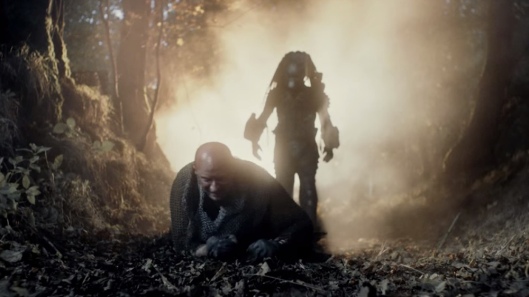
Predator Dark Ages

Drunk Wedding (2015) / D: Nick Weiss / 81m

Cast: Christian Cooke, Victoria Gold, Dan Gill, Anne Gregory, J.R. Ramirez, Nick P. Ross, Genevieve Jones, Diana Newton

Rating: 4/10 – when a couple decide to get married in Nicaragua, they and some of their friends are given hand-held cameras to film it all… with predictably awful, drunken, outrageous, and potentially life-altering effects; if your idea of comedy is seeing someone urinating on another person’s back, then Drunk Wedding is the movie for you, and despite its lowbrow modern day National Lampoon-style approach it still manages to hold the attention and is surprisingly enjoyable – if you don’t expect too much.
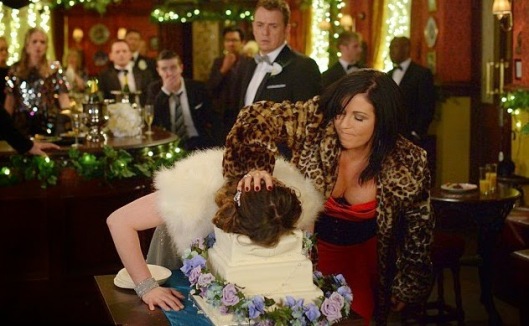
Drunk Wedding

Zombie Ass: The Toilet of the Dead (2011) / D: Noboru Iguchi / 85m

Original title: Zonbi asu

Cast: Arisa Nakamura, Mayu Sugano, Asana Mamoru, Yûki, Danny, Kentaro Kishi, Demo Tanaka

Rating: 5/10 – while on a trip to the woods, Megumi (Nakamura) and four older friends find themselves under attack from zombies who have emerged from the bowels of an outhouse – and only her martial arts skills can save them; a wild, wild ride from one of the masters of Japanese Shock Cinema, Zombie Ass: The Toilet of the Dead is equal parts raw, uncompromising, witless, and gross, but it’s also a movie that just can’t be taken at all seriously, and on that level it succeeds tremendously, providing enough WtF? moments to make it all worthwhile.
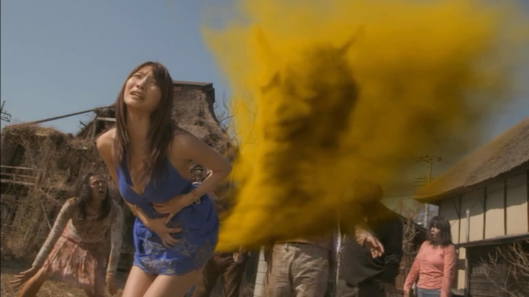
Zombie Ass

Faults (2014) / D: Riley Stearns / 89m

Cast: Leland Orser, Mary Elizabeth Winstead, Chris Ellis, Beth Grant, Jon Gries, Lance Reddick

Rating: 8/10 – down on his luck cult expert Ansel (Orser) sees a way out of debt and a chance to regain some self-respect when a couple (Ellis, Grant) ask him to abduct and de-programme their daughter (Winstead), but he soon finds himself out of his depth and facing up to some hard truths; a tour-de-force from the always excellent Orser – and with a solid supporting performance from Winstead – Faults is an unnerving look at a man on the verge of a nervous breakdown, and the ways in which his broken life have led him to a motel room where his own personal beliefs come under as much scrutiny as his captive’s.
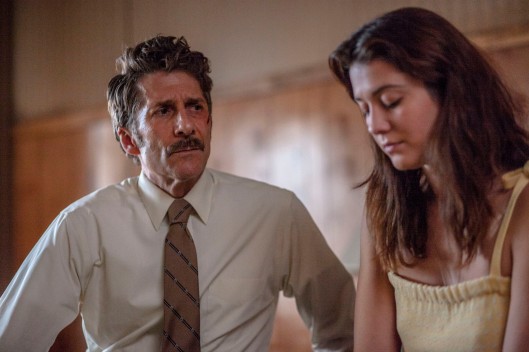
(l-r) Leland Orser and Mary Elizabeth Winstead stars in FAULTS. ©Snoot Entertainment. CR: Jack Zeman.

She’s Funny That Way (2014) / D: Peter Bogdanovich / 93m

Cast: Imogen Poots, Owen Wilson, Rhys Ifans, Jennifer Aniston, Will Forte, Kathryn Hahn, Illeana Douglas, Debi Mazar, Cybill Shepherd, Richard Lewis, Ahna O’Reilly, Joanna Lumley

Rating: 6/10 – theatre director Arnold Albertson has a secret: he gives prostitutes money in order that they can set up their own businesses, but when his latest “project”, aspiring actress Isabella Patterson (Poots) lands the starring role in his latest production, it all leads to the kind of deception and duplicity that will test the notion that the show must go on; a modern attempt at a screwball comedy, She’s Funny That Way doesn’t have the sheer energy that made movies such as His Girl Friday (1940) or  Bringing Up Baby (1938) so enjoyable, but Bogdanovich knows his stuff and keeps the movie entertaining for the most part, even if it doesn’t stay in the memory for too long afterwards.
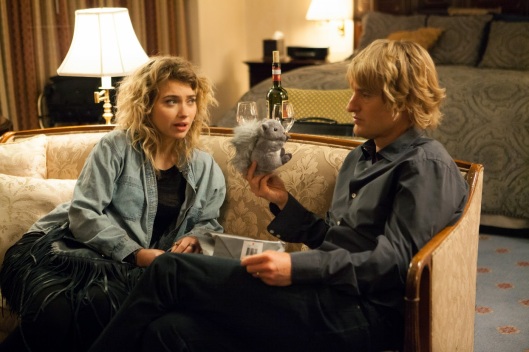
She's Funny That Way

Curse of the Witching Tree (2015) / D: James Crow / 102m

Cast: Sarah Rose Denton, Lucy Clarvis, Lawrence Weller, Jon Campling, Caroline Boulton, Danielle Bux

Rating: 2/10 – divorcée Amber Thorson (Denton) moves into an old house with her two children (Clarvis, Weller) only for strange phenomena to start happening that’s connected to a witch’s curse, and which leaves them all at risk of supernatural forces; woeful in the extreme, Curse of the Witching Tree is amateurish nonsense that is badly directed, poorly acted, contains defiantly stilted dialogue, suffers from below-par photography, is tension-free throughout, and stands as an object lesson in how not to make a low-budget British horror movie.
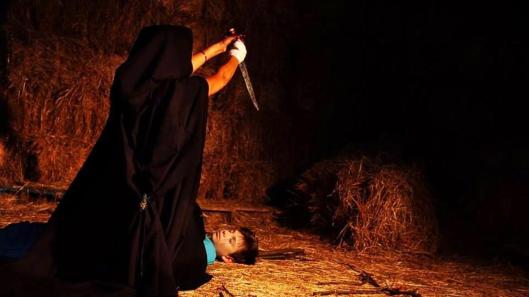
Curse of the Witching Tree

Bulldog Drummond Comes Back (1937) / D: Louis King / 64m

Cast: John Barrymore, John Howard, Louise Campbell, Reginald Denny, E.E. Clive, J. Carrol Naish, Helen Freeman

Rating: 5/10 – when dastardly villains Mikhail Valdin (Naish) and Irena Saldanis (Freeman) kidnap Phyllis Clavering (Campbell), the girlfriend of Captain Hugh Drummond (Howard), they send him on a merry chase where each clue he finds leads to another clue as to her whereabouts – but no nearer to finding her; the first of seven movies with Howard as the dashing sleuth created by H.C. “Sapper” McNeile, Bulldog Drummond Comes Back is as cheap and cheerful and antiquatedly entertaining as you might expect, and benefits enormously from a cast and crew who know exactly what they’re doing.
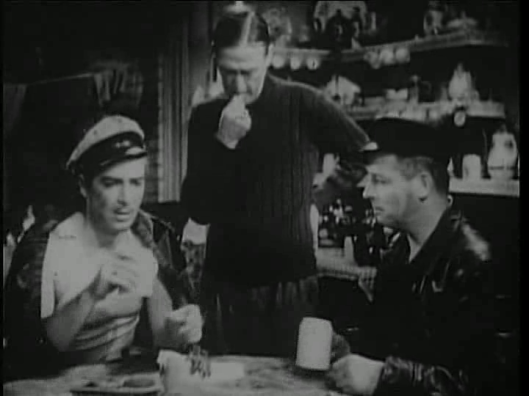
vlcsnap-00001

Every Secret Thing (2014) / D: Amy Berg / 93m

Cast: Diane Lane, Elizabeth Banks, Dakota Fanning, Danielle Macdonald, Nate Parker, Common

Rating: 7/10 – several years after two young girls are incarcerated for the murder of a younger child, their return to their hometown is marred by the disappearance of a little girl, and the belief that one or both of them is responsible; a stilted attempt at an indie film noir, Every Secret Thing features good performances – particularly from Macdonald – and focuses on the emotional effects a child abduction can have on everyone involved, but it never develops a sense of urgency, though its key revelation at the end carries a wallop that helps dismiss what will seem like a narrative impasse up until then.
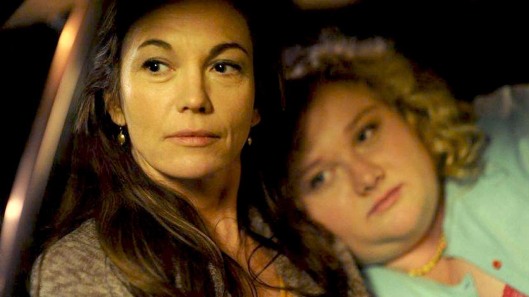
Every Secret Thing

Children of the Corn: Genesis (2011) / D: Joel Soisson / 80m

Cast: Kelen Coleman, Tim Rock, Billy Drago, Barbara Nedeljakova

Rating: 3/10 – a couple (Coleman, Rock) break down on a desert highway but manage to find shelter overnight with a old preacher (Drago) and his much younger, foreign bride (Nedeljakova), but soon find that what’s in the preacher’s barn is much more menacing than the old man himself; placing the action largely away from Gatlin, Nebraska may have seemed like a smart move but this tired, dreary, and just downright dull entry in the franchise shows just how bad things have gotten since the 1984 original, and just why Children of the Corn: Genesis should remain the last in the series to be made.

Children of the Corn Genesis

Skin Trade (2014) / D: Ekachai Uekrongtham / 96m

aka Battle Heat

Cast: Dolph Lundgren, Tony Jaa, Michael Jai White, Ron Perlman, Celina Jade, Peter Weller

Rating: 6/10 – when cop Nick Cassidy (Lundgren) is powerless to stop his wife and daughter being killed, he determines to go after the crime boss responsible, Viktor (Perlman), and destroy his human trafficking network, which means travelling to Thailand and teaming up with detective Tony Vitayakul (Jaa), who’s also out to put a stop to Viktor’s illegal behaviour; with its human trafficking backdrop giving it an unexpected depth, Skin Trade is not just a brainless, slam-bang action movie, but instead a very well-made (for its budget) revenge flick that features some great fight scenes – particularly one between Lundgren and Jaa – and uses its Thai locations to very good effect.
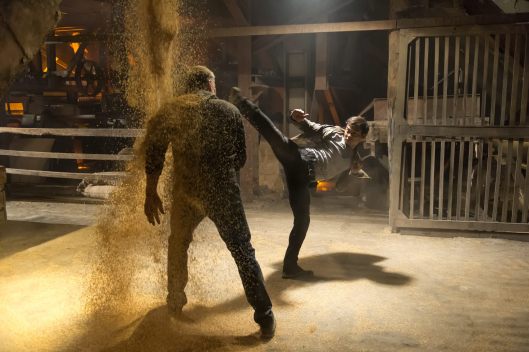
Skin Trade

The Reconstruction of William Zero (2014) / D: Dan Bush / 98m

Cast: Conal Byrne, Amy Seimetz, Scott Poythress, Lake Roberts, Melissa McBride, Tim Habeger

Rating: 6/10 – when the brother (Byrne) of a scientist (also Byrne) wakes from a coma, it’s not long before he begins to suspect that this identity may not be that of the scientist’s brother, and that he’s a pawn in a much bigger conspiracy, but the truth proves even stranger and more disturbing than he realised; a spare, almost antiseptic movie about notions of identity and individual consciousness, The Reconstruction of William Zero features terrific performances from Byrne, but lacks consistency of pace and sometimes feels as if Bush has taken his eye off the ball and taken a while to find it again, which leaves the movie often feeling flat and lifeless.
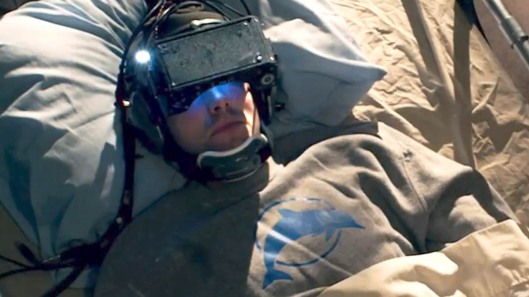
Reconstruction of William Zero, The

Not Another Teen Movie (2001) / D: Joel Gallen / 89m

aka Sex Academy

Cast: Chyler Leigh, Chris Evans, Jaime Pressly, Eric Christian Olsen, Randy Quaid, Mia Kirshner, Deon Richmond, Ed Lauter, Paul Gleason, Mr T, Molly Ringwald

Rating: 5/10 – at John Hughes High School, popular jock Jake Wyler (Evans) accepts a bet that he can’t take an ugly girl and transform her into the prom queen, but when he picks out Janey Briggs (Leigh), and begins to spend time with her, it makes him begin to question whether he should have made the bet in the first place; a predictably irreverent teen movie that parodies all those dreadful teen comedies from the Eighties, Not Another Teen Movie has more heart than most, and thanks to Mike Bender’s script contributions, is also quite funny in its knowing way, and gives viewers a chance to see the future Captain America back in the day when his skill as an actor wasn’t quite as honed as it is now.
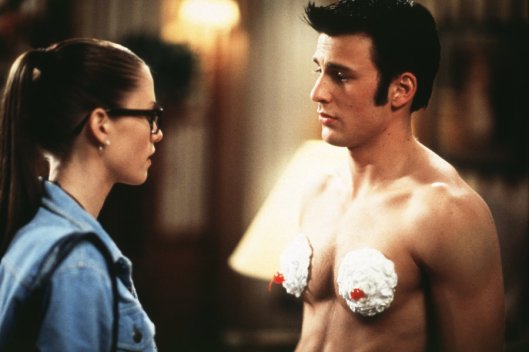
Not Another Teen Movie

Bloomington (2010) / D: Fernanda Cardoso / 83m

Cast: Allison McAtee, Sarah Stouffer, Katherine Ann McGregor, Ray Zupp, J. Blakemore, Erika Heidewald

Rating: 7/10 – former child actress Jackie (Stouffer) attends Bloomington college, and finds herself having an affair with one of the professors, Catherine (McAtee), until the offer of a comeback threatens to end their relationship before it’s fully begun; an intelligent, finely crafted romantic drama, Bloomington has two great central performances, and an emotional honesty that is only undermined by the clichéd nature of Jackie’s need to return to acting, and Cardoso’s over-reliance on silent longing as a sign of emotional upheaval.
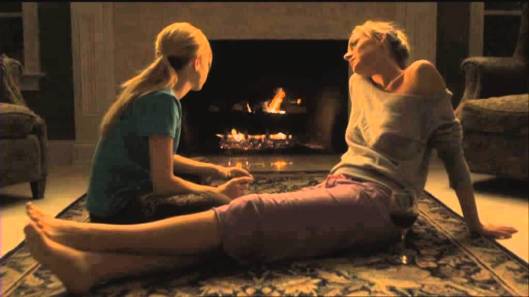
Bloomington

Sleepaway Camp 2: Unhappy Campers (1988) / D: Michael A. Simpson / 80m

Cast: Pamela Springsteen, Renée Estevez, Tony Higgins, Valerie Hartman, Brian Patrick Clarke, Walter Gotell

Rating: 5/10 – Angela Baker (Springsteen), having decimated most of the staff and children at Camp Arawak, and now judged to be safe around others, begins sending unruly teenagers “home” from Camp Rolling Hills – which in reality means killing them for any and all perceived infractions that Angela takes a dislike to; a much better sequel than expected, Sleepaway Camp 2: Unhappy Campers gets by on Springsteen’s preppy performance, some not-too-gory deaths, and Simpson’s confident touch behind the camera, as well as that dreadful musical interlude: The Happy Camper Song.
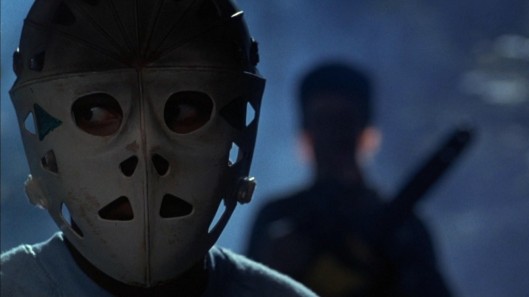
Sleepaway Camp 2

Gunsmoke in Tucson (1958) / D: Thomas Carr / 80m

Cast: Mark Stevens, Forrest Tucker, Gale Robbins, Vaughn Taylor, John Ward, Kevin Hagen, William Henry, Richard Reeves, John Cliff, Gail Kobe

Rating: 6/10 – brothers Jedediah (Stevens) and John (Tucker) are on opposite sides of the law, but when Jedediah becomes involved in a land dispute between cattle ranchers and farmers, his sense of right and wrong is put to the test, and he has to choose sides in the upcoming fight for the choicest plot of land; a robust, earnest Western, Gunsmoke in Tucson is a staid, respectable movie that doesn’t stray too far from its basic plot, and skimps on any psychological undertones in favour of a straight ahead anti-hero vs. the bad guys scenario that makes for a pleasant diversion.
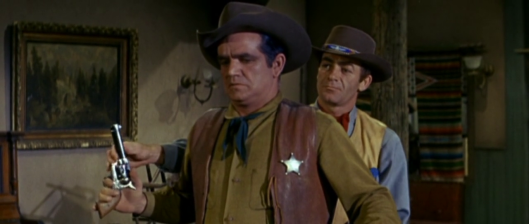
vlcsnap-00002

Beyond the Reach (2014) / D: Jean-Baptiste Léonetti / 91m

Cast: Michael Douglas, Jeremy Irvine, Ronny Cox, Hanna Mangan Lawrence

Rating: 6/10 – arrogant businessman Madec (Douglas) hires tracker Ben (Irvine) in order to bag some game out of season, but when he shoots and kills an old man by mistake, Madec refuses to accept responsibility for his actions and when Ben stands his ground over the issue, finds himself being hunted instead through the harsh Mojave Desert; an occasionally tense two hander that will do little for either actor’s career, Beyond the Reach ramps up the contrivance levels with each successive narrow escape that Ben makes, and with each missed shot that Madec makes, leading to the inevitable conclusion that this is one movie where credulity needs to be left at the door – an idea that is further enhanced by the movie’s risible conclusion.
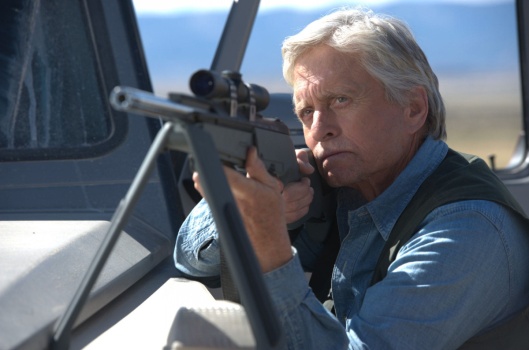
Email sent from: "Barnard, Linda"  lbarnard@thestar.ca  Subject: Beyond the Reach Date: 9 April, 2015 4:30:15 PM EDT   Jeremy Irvine and Michael Douglas star in Beyond The Reach Linda Barnard Movie Writer The Toronto Star thestar.com 416-869-4290

Blood (2012) / Nick Murphy / 92m

Cast: Paul Bettany, Mark Strong, Stephen Graham, Brian Cox, Ben Crompton, Naomi Battrick, Zoë Tapper, Adrian Edmondson

Rating: 5/10 – when a young girl is found murdered, the police, led by Joe Fairburn (Bethany) immediately set their sights on local child molester Jason Buleigh (Crompton), but when their prime suspect has to be let go for lack of evidence, Joe and his brother Chrissie (Graham) decide to take the law into their own hands, with terrible results; grim, visually depressing, and with a script that has more holes in it than a string vest, Blood has only its performances to recommend it, particularly those of Bethany, Graham and Cox, as well as the sense to know that its tale of a proud man’s downfall is always more interesting when you don’t know just how far they’ll fall.

Blood

Echelon Conspiracy (2009) / D: Greg Marcks / 102m

aka The Conspiracy; The Gift

Cast: Shane West, Ed Burns, Ving Rhames, Martin Sheen, Tamara Feldman, Jonathan Pryce, Sergey Gubanov, Todd Jensen

Rating: 3/10 – computer security tech Max Peterson is given a mysterious phone that helps him gain a small fortune, but in doing so he finds himself embroiled in a plot to ensure that the NSA’s super computer, Echelon, gains the upgrade it needs in order to spy on everyone globally; so bad on so many levels, Echelon Conspiracy wastes its (mostly) talented cast, flirts with credibility before running away from it at high speed, offers laughs in places where they shouldn’t be, and is the cinematic equivalent of a car crash.
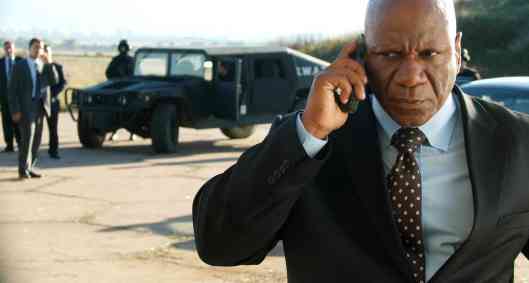
Echelon Conspiracy

Crazy Sexy Cancer (2007) / D: Kris Carr / 90m

With: Kris Carr, Jackie Farry, Melissa Gonzalez, Brian Fassett, Aura Carr, Kenneth Carr, Leslie Carr, Oni Faida Lampley, Bhavagan Das

Rating: 7/10 – when aspiring actress Kris Carr was diagnosed with cancer, she decided to make a visual record of the process of dealing with it, and the various ways in which other cancer sufferers have done so, and supported by the cameraman/editor who became her husband, as well as family and friends; an uplifting, positive message for anyone dealing with cancer, or who knows someone who is, Crazy Sexy Cancer is the kind of documentary that doesn’t attempt to overdo the physical and emotional strain of being in such a situation, but which does nevertheless offer plenty of poignant moments in amongst the hospital visits, and shows Carr to be a determined, aggressive would-be survivor.

Crazy Sexy Cancer

The Night Flier (1997) / D: Mark Pavia / 94m

Cast: Miguel Ferrer, Julie Entwisle, Dan Monahan, Michael H. Moss, John Bennes, Beverly Skinner, Rob Wilds, Richard K. Olsen, Elizabeth McCormick

Rating: 7/10 – hard-nosed, disreputable reporter Richard Dees investigates a series of murders carried out at small airstrips that appear to be the work of a vampire, but his initial scepticism gives way to reluctant belief as he talks to witnesses, and sees the injuries the victims have sustained; a well-crafted movie that betrays its low budget and scrappy production design, The Night Flier is still one of the better Stephen King adaptations thanks to Pavia’s confident handling of the material, Ferrer’s see-if-I-care performance, and some impressively nasty effects work courtesy of the KNB Group.
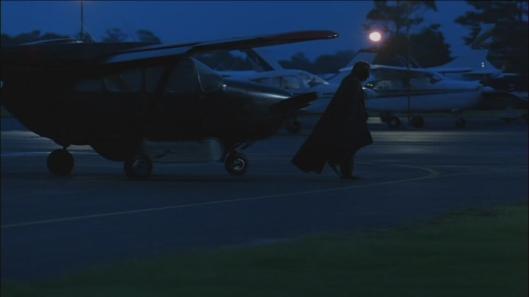
Night Flier, The

Killer by Nature (2010) / D: Douglas S. Younglove / 90m

Cast: Ron Perlman, Armand Assante, Zachary Ray Sherman, Lin Shaye, Haley Hudson, Richard Riehle, Richard Portnow, Svetlana Efremova, Jason Hildebrandt

Rating: 3/10 – troubled by nightmares of murder and sleepwalking, teen Owen (Sherman) undergoes therapy with Dr Julian (Perlman), a therapist who believes that a person’s essential nature is handed down through bloodlines – a theory originated by convicted murderer Eugene Branch (Assante), and who is connected to Owen in a way that causes Owen to believe he might be the perpetrator of a series of murders that mimic Branch’s modus operandi; a thriller that can’t decide if it’s tepid or overwrought, and then settles for both (sometimes in the same scene), Killer by Nature is a humdinger of a bad movie, and proof positive that sometimes the old saying that “if you can, it doesn’t mean you should” relates to far too many movies for comfort – especially this farrago of awful performances, pseudo-intellectual posturing, and deathless direction.
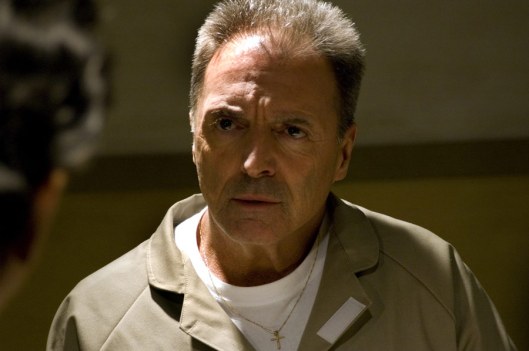
Killer by Nature

Scooby-Doo! and the Samurai Sword (2009) / D: Christopher Berkeley / 75m

Cast: Frank Welker, Casey Kasem, Mindy Cohn, Grey DeLisle, Kelly Hu, Kevin Michael Richardson, Sab Shimono, Keone Young, Gedde Watanabe, George Takei, Brian Cox

Rating: 6/10 – on a trip to Japan, Scooby-Doo and the gang become involved in the search for a mystical sword, while trying to thwart the efforts of the ghost of the Black Samurai to beat them to it; a middling entry in the series that at least provides a different backdrop than the standard old dark house (or mine, or hotel, or funfair…), and which allows Shaggy and Scooby to be the heroes we all know they really are deep down, while displaying a pleasing awareness of Japanese culture.
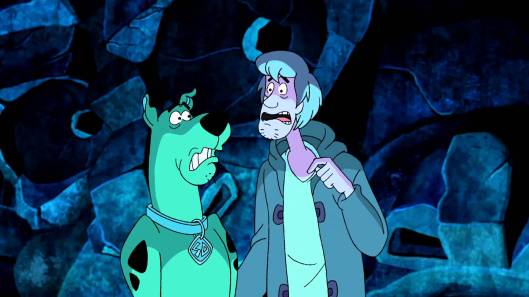
Scooby-Doo! and the Samurai Sword

[Rec]³ Génesis (2012) / D: Paco Plaza / 80m

Cast: Leticia Dolera, Diego Martín, Ismael Martínez, Àlex Monner, Sr. B, Emilio Mencheta, David Ramírez, Miguel Ángel González

Rating: 7/10 – a young couple’s wedding day is disrupted for good when one of the guests takes a bite out of another one, leading to a frenzied free-for-all among the guests and a fight for survival for those not affected by whatever’s causing people to become zombies – including the bride and groom, who have become separated in the mêlée; half found footage, half professionally filmed, [Rec]³ Génesis acts as a prequel to the events of the first two movies but is let down by both the change in location, and the absence of Claudia Silva, as well as a sense that by going backwards in terms of the outbreak and its possible cause, the makers are treading water until an idea as to how to carry the story forward from [Rec]2 (2009) comes along.
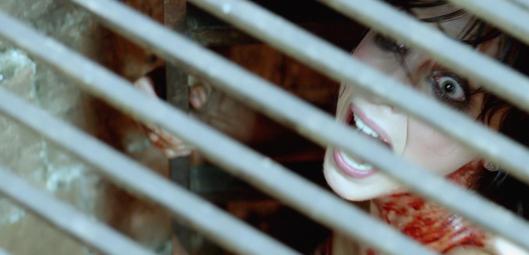
Rec3 Genesis

uwantme2killhim? (2013) / D: Andrew Douglas / 92m

Cast: Jamie Blackley, Toby Regbo, Joanne Froggatt, Jaime Winstone, Liz White, Mark Womack, Louise Delamere, Stephanie Leonidas, Mingus Johnston

Rating: 7/10 – popular schoolboy Mark (Blackley) leads a secret life on the Internet, where he invests his time and emotions in relationships with people he’s never met, but when of those people ask him to stop their younger brother, John (Regbo), from being bullied, what follows sets Mark on a dangerous path to murder; based on a true story, and told with a glum sense of foreboding throughout, uwantme2killhim? is an engrossing (though slightly frustrating) recounting of one of the strangest cases of the last fifteen years, and features two very good performances from Blackley and Regbo, though they have to fight against a script that favours repetition over clarity, but which still manages to flesh out what must have been a very strange relationship between the two boys.
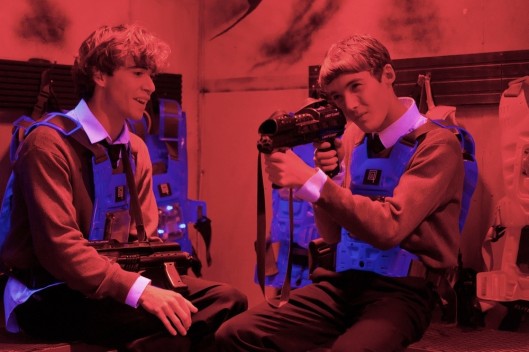
JAMIE BLACKLEY (Mark) (L) & TOBY REGBO (John) (R) in UWANTME2KILLHIM? (c) 2011 U Want M2K Ltd. Photo by Mark Tillie

Bulldog Drummond in Africa (1938) / D: Louis King / 58m

Cast: John Howard, Heather Angel, H.B. Warner, J. Carrol Naish, Reginald Denny, E.E. Clive, Anthony Quinn

Rating: 7/10 – on the very day that Drummond (Howard) is finally due to marry his long-suffering girlfriend Phyllis (Angel) he becomes embroiled in the kidnapping of his old friend Colonel Nielsen (Warner), and finds himself travelling to Morocco – with Phyllis, butler Tenny (Clive) and old pal Algy (Denny) in tow – in order to rescue him; the fourth in the series is perhaps the funniest, with Howard allowed to spread his comedic wings, and even the villain (played again by Naish) given some splendidly dry remarks to make in amongst the threats of death by hungry lion, and a bomb on Drummond’s plane.
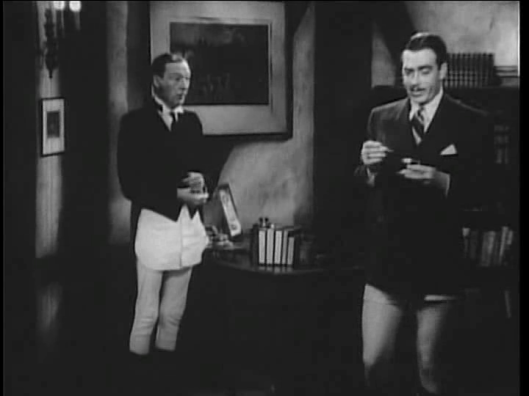
vlcsnap-00003

The Four-Faced Liar (2010) / D: Jacob Chase / 87m

Cast: Daniel Carlisle, Todd Kubrak, Emily Peck, Marja-Lewis Ryan, Liz Osborn

Rating: 8/10 – five friends – couples Greg (Carlisle) and Molly (Peck), Trip (Kubrak) and Chloe (Osborn), and single lesbian Bridget (Ryan) – experience various ups and downs in their relationships, especially when Trip has a one night stand, and Molly finds herself attracted to Bridget; a refreshingly honest look at what relationships mean to different individuals, and how they affect the people around them, The Four-Faced Liar is an effective, well-written drama that benefits from good performances all round, a soundtrack that supports the mood throughout, and Chase’s confident approach to Ryan’s script.
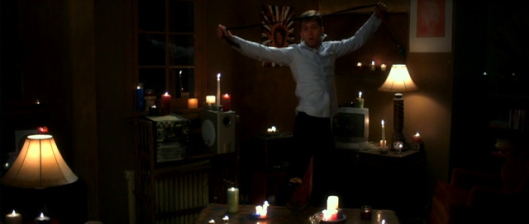
vlcsnap-00004

Share this:

  • Click to share on X (Opens in new window) X
  • Click to share on Facebook (Opens in new window) Facebook
  • More
  • Click to print (Opens in new window) Print
  • Click to email a link to a friend (Opens in new window) Email
Like Loading...

Oh! the Horror! – Evangeline (2013) and The Black Dahlia Haunting (2012)

26 Tuesday May 2015

Posted by dullwood68 in Movies

≈ Leave a comment

Tags

1947, Brandon Slagle, Britt Griffith, Devanny Pinn, Drama, Elizabeth Short, Horror, Karen Lam, Kat de Lieva, Los Angeles, Mayumi Yoshida, Murder, Noah Dahl, Possession, Review, Richard Harmon, Serial killer, The Black Dahlia, True crime

Evangeline

D: Karen Lam / 83m

Cast: Kat de Lieva, Richard Harmon, Mayumi Yoshida, David Lewis, Kelvin Redvers, John Shaw, Nelson Leis, Dejan Loyola, Madison Smith, Anthony Shim

College student Evangeline Pullman (de Lieva) – known as Eva – shares a dorm room with fellow student Shannon (Yoshida). When they and another college friend attend a frat party, Eva comes to the attention of frat leader Michael Konner (Harmon). Meanwhile, Mr K (Lewis), a teacher at another school is abducting and murdering teenage girls and dumping their bodies in the nearby forest. One weekend, Eva finds herself alone at the college and runs into Konner. He takes her to his dad’s hunting lodge, where he drugs her. When she wakes, she ends up being chased by Konner and two of his friends (Loyola, Smith). They catch her and after savagely beating her, Eva is strangled and left for dead.

Eva is found by a couple of vagrants living in the forest, Billy (Redvers) and Jim (Shaw). They nurse her back to health, unaware that she is becoming possessed by a forest demon. When she’s threatened by Dee (Leis), another vagrant, she runs off and is picked up by Mr K. He takes her back into the forest, but his attempt to kill Eva leads to the demon taking full control of her and setting her on a course of revenge against Konner and his cronies.

Evangeline - scene

While Evangeline has a few good ideas dotted amongst its more risible moments, and Lam shows a certain amount of visual flair, this particular demonic revenge outing is hamstrung by gaping plot holes, trite dialogue, shallow characterisations, and amongst the supporting cast, some very poor performances. Viewers who are familiar with this type of horror movie will be frustrated by Lam’s decisions as a writer, and further dismayed by the way in which the scenes of Eva’s revenge are marred by a myriad of bizarre editing choices.

There’s an Eighties feel to the movie that leaves the viewer thinking of other, better movies from the period, and the obvious budgetary restraints make it seem as if the bulk of the movie was filmed in a variety of basement rooms. With no one – not even Eva – to sympathise with, the movie has less to offer than most and never really succeeds in getting across the horror of its main character’s troubles. There’s a curiously dispassionate tone used throughout, as if everything is being viewed from a safe distance, even when Eva is in peril or taking her revenge.

Rating: 3/10 – a few inspired moments aside, Evangeline fails to capitalise on its basic premise and takes too many narrative shortcuts in telling its story; with a hint of Japanese folklore to give credibility to the idea of a forest demon, the movie doesn’t make much of this approach either.

Black Dahlia Haunting, The

D: Brandon Slagle / 80m

Cast: Devanny Pinn, Britt Griffith, Noah Dahl, Alexis Iacono, Cleve Hall, Brandon Slagle, Jessica Cameron

Holly Jenson (Pinn) travels to Los Angeles in the wake of her step-brother, Tyler (Dahl), having killed their father and his mother. What makes the case unusual is that Tyler is blind. Currently under the care and supervision of Dr Brian Owen (Griffith), Tyler also draws pictures of a mysterious woman who Dr Owen recognises as Elizabeth Short, the Black Dahlia murder victim from 1947. Holly has to wait for the DA’s office to allow her to see Tyler, and while she does she finds herself wandering around LA until she loses her way. She asks a woman for directions, but the woman (Iacono) talks inaudibly to herself.

Tyler proves uncooperative and tells Holly to go. At her hotel room she takes a shower and is possessed by the spirit of Elizabeth Short (the woman she saw on the street). Holly is forced to visit a cave in the desert where Elizabeth’s killer (Hall) disposed of her clothes, her blood and the knives he used. Then she visits the home of Dr Owen and waits for him to arrive, now aware – as Tyler is as well – of the connection between the doctor and the Black Dahlia murder over sixty years before.

Black Dahlia Haunting, The - scene

By taking the real life murder of Elizabeth Short as the basis for its plot, The Black Dahlia Haunting makes a poor fist of squeezing out a revenge story, using muddled coincidences and ill thought out connections to shepherd the idea of Short reaching out from beyond the grave and gaining retribution through the murderous actions of two half-siblings. It’s a poor movie that proceeds at a pedestrian pace, features several scenes that don’t advance the plot or add depth to the characters, and feels like a short movie stretched beyond its limits.

It doesn’t help that the performances seem to have been crafted without the benefit of rehearsals, and that some lines of dialogue sound mannered and/or mis-emphasised. Pinn makes Holly unlikeable from the start, while Griffith is such a dull presence it seems as if the scenes he’s in go on far longer than any of the ones he isn’t in. As the vengeful spirit of Elizabeth Short, Iacono has the more varied role, and can be seen in flashbacks to 1947 talking with a young Norma Jean Baker (Cameron), or being tortured by her killer. But ultimately, these don’t add anything to the story, and merely pad out the already short running time. Writer/director Slagle – who gives himself a secondary role as a young man who finds one of the knives the killer used – strives for relevance but misses by a mile, and never overcomes the sheer implausibility of his screenplay.

Rating: 3/10 – a neat premise wasted by poor execution, The Black Dahlia Haunting has little to recommend it beyond its real life basis; anyone with a keen interest in Elizabeth Short and her tragic murder would do well to avoid this completely.

Share this:

  • Click to share on X (Opens in new window) X
  • Click to share on Facebook (Opens in new window) Facebook
  • More
  • Click to print (Opens in new window) Print
  • Click to email a link to a friend (Opens in new window) Email
Like Loading...

Cut Bank (2014)

12 Tuesday May 2015

Posted by dullwood68 in Movies

≈ Leave a comment

Tags

Billy Bob Thornton, Bruce Dern, Crime, Drama, John Malkovich, Liam Hemsworth, Matt Shakman, Michael Stuhlbarg, Miss Cut Bank pageant, Montana, Movie reviews, Murder, Postman, Review, Reward money, Teresa Palmer, Thriller

Cut Bank

D: Matt Shakman / 93m

Cast: Liam Hemsworth, Teresa Palmer, John Malkovich, Billy Bob Thornton, Bruce Dern, Michael Stuhlbarg, Oliver Platt, Sonya Salomaa, David Burke, Denis O’Hare

In the small town of Cut Bank, Montana, car mechanic Dwayne McLaren (Hemsworth) dreams of leaving town with his girlfriend Cassandra (Palmer), but he hasn’t got any money and he has to look after his disabled father (O’Hare). While spending time together on the outskirts of town, Dwayne inadvertently films the murder of local postman Georgie Witts (Dern). He takes the footage to Cassandra’s father, car dealer Big Stan Steeley (Thornton), who calls in the sheriff, Roland Vogel (Malkovich). The sheriff watches the footage and declares it’s the town’s first murder.

With the community in shock over Georgie’s death and the disappearance of the mail van he was driving, Vogel begins his investigation. At the same time, a loner with a strong interest in taxidermy named Derby Milton (Stuhlbarg) comes looking for a parcel he was expecting (and which was in the mail van). Where Vogel looks for a vehicle with a particular set of tyres, Milton looks for a boot with a particular sole. He finds out that a Native American named Match (Burke) bought a pair a few months before.

Meanwhile, Dwayne applies for a reward due for evidence relating to the death of a member of the postal service. The reward – $100,000 – will allow Dwayne to find alternative care for his father, and give him and Cassandra the chance to start a new life together in California. But when the Postal Inspector (Platt) arrives to confirm the reward, there’s only one snag: he needs to see the body, which so far hasn’t been found as it was taken with the mail van.

Matters escalate when Big Stan makes a discovery at his spare parts yard, a discovery that sees him brutally attacked. However, Milton – still looking for his parcel and unwilling to forget about it – makes the same discovery, but with a different outcome, one that implicates Dwayne. With the reward money not being paid out for a few months, it’s down to Cassandra to win the upcoming Miss Cut Bank pageant and its first prize of $5,000, and thereby give them enough money to leave town for good. But Milton has other ideas, and the sheriff is beginning to put all the pieces together surrounding Georgie’s death…

Cut Bank - scene

Watching Cut Bank, the obvious comparison is with Fargo (1996), but while that movie is still highly regarded as a classic nearly twenty years on, it’s hard to believe that Cut Bank will be looked on in the same way, or remembered at all. While it does its best to look and feel as moody as many other small-town crime dramas, it’s the quality of the story that lets it down. There are too many occasions where the story is driven forward by the messiest of contrivances, or characters behave in ways that contradict their previous attitudes. For the viewer it means a suspension of disbelief that is needed on several occasions, and for which the movie makes no apologies, as it just carries on digging a bigger and bigger hole for itself.

Indeed, it’s the script by Roberto Patino, and as directed by Shakman, that proves the movie’s downfall, causing as it does a loss of faith almost from the beginning. It plods through its twists and turns with all the authority of a movie that doesn’t know where it’s going or why – and which winds things up with one of the worst, most nonsensical outcomes that anyone could possibly imagine (except Patino). To say that it defies belief would be to suggest that the viewer might actually have some by this point. And as for some of the dialogue, the script aims for clever and insightful, but succeeds in being arch and unimportant. Only the running gag, “I thought you were dead” works as well as it should, and at one point it receives a great pay-off, but it’s the only aspect of the script that really hits home.

With the script being so derivative and uneven, the movie suffers and so too does its more than talented cast. Hemsworth proves once more that he’s the blandest of the Hemsworth brothers, and still has trouble being convincing as any character in any movie, while Palmer has an embarrassing pageant song to sing and dance to but very little else. Thornton portrays Big Stan as the same kind of no-nonsense bully he’s played so often before, and Malkovich gives possibly the best performance as the sheriff who looks to be so out of his depth that he can’t see the bottom. Of the rest of the cast, Dern is great but not well-used, and Stuhlbarg is given a monologue that attempts to explain his behaviour but which actually proves too confusing to be much of an explanation. And Platt breezes through his scenes with all the bluster that he’s employed elsewhere, but here, it’s all to no effect, and his character adds nothing to the mix.

Shakman orchestrates the various plot strands and characters with the confidence of a director who doesn’t quite know what to do with the material – which is strange as he directed two episodes of the TV version of Fargo (2014) – but again it’s the quality of the material that hampers him. He does display an appreciation for widescreen composition, but he never seems comfortable presenting any close ups, and appears content to work with medium or long-range shots instead. This creates a distancing effect between the audience and the characters, and before long, the viewer has lost all interest in what’s happening, or how important it might all be. This applies particularly to Milton’s basement “secret”, which, when it’s revealed, is never adequately explained (though an attempt is made with Milton’s monologue). It’s the movie’s one true moment where it pulls something out of the bag that’s different and entirely unexpected.

In failing to live up to its potential, and by wasting the talents of its cast, Cut Bank stalls and stutters so often, and finds it so difficult to maintain a convincing approach that in the end it becomes too frustrating to watch, and is so undermined by its cavalier attitude to law enforcement and guilt, that it never recovers. The plot lacks originality, and the characters lack any appreciable depth, often doing things without any clear motivation. That said, there’s supportive and beautiful cinematography by Ben Richardson, and while some scenes appear to run on too long, the editing by Carol Littleton is sharp and keeps things moving (when they should be stalling).

Rating: 4/10 – with a script that tries to be clever and ingenious, but falls short on both counts, Cut Bank is left to founder in almost every area; one to avoid unless the idea of a murder mystery that leaves out the mystery is an attractive one that you can’t pass up.

NOTE: The trailer contains a few spoilers that aren’t included in the above synopsis, so if you watch it, please bear this in mind.

Share this:

  • Click to share on X (Opens in new window) X
  • Click to share on Facebook (Opens in new window) Facebook
  • More
  • Click to print (Opens in new window) Print
  • Click to email a link to a friend (Opens in new window) Email
Like Loading...

Mini-Review: Mortdecai (2015)

11 Monday May 2015

Posted by dullwood68 in Movies

≈ Leave a comment

Tags

Action, Art heist, Comedy, Crime, David Koepp, Ewan McGregor, Gwyneth Paltrow, Johnny Depp, Literary adaptation, Moustache, Murder, Paul Bettany, Review

Mortdecai

D: David Koepp / 107m

Cast: Johnny Depp, Gwyneth Paltrow, Ewan McGregor, Paul Bettany, Olivia Munn, Jonny Pasvolsky, Michael Culkin, Ulrich Thomsen, Jeff Goldblum, Michael Byrne, Paul Whitehouse

When an art restorer is killed and the painting she was working on stolen, Inspector Alistair Martland (McGregor) is put in charge of the investigation. He brings on board crooked art dealer Charlie Mortdecai (Depp) to help recover the painting which is a Goya. Mortdecai has potentially ruinous debts, and though agreeing to help, he plans to sell the painting when he finds it. While he begins the search, his wife Johanna (Paltrow) decides to look for it herself. She visits a duke (Byrne) who tells her it was stolen by a friend of his during the war, and that on the back of the painting are codes that will lead to a hidden stash of Nazi gold.

With criminal Emil Strago (Pasvolsky) also after the painting to help fund his terrorist activities, and the involvement of Russian mobster Romanov (Thomsen), Mortdecai, aided by his faithful manservant Jock Strapp (Bettany), eventually discovers the location of the painting and attempts to steal it back from the man who has it, American dealer Milton Krampf (Goldblum). Strago, in cahoots with Cramp’s daughter Georgina (Munn), manages to get the painting himself, but when he tries to find the codes, he inadvertently destroys it. But Johanna reveals that the painting was a fake, and that she knows the location of the real one.

Mortdecai - scene

Recent movies starring Johnny Depp have proved to be mostly disappointing, and Mortdecai continues that streak, lacking cohesion, credible characters, and worst of all, sufficient laughs to offset the movie’s other faults, such as Depp’s own performance. For anyone with even a passing knowledge of British comedy from the Fifties and Sixties, Mortdecai will be the movie where Depp does his best Terry-Thomas impersonation, even down to the gap in his upper teeth. It’s hard to say if Depp is being affectionate or paying tribute, but either way his overly mannered performance is so distracting it ultimately becomes off-putting (not to mention annoying).

Thanks to Eric Aronson’s trying-too-hard screenplay (adapted from the novel by Kyril Bonfiglioli), the movie struggles on almost every level except for cinematography and costume design, and makes a hash of its absurdist situations, refusing to acknowledge that less is more and that caper movies should be fun and not a trial to sit through. Koepp is a better writer than he is a director, and he plays around with the pace of the movie throughout, making some stretches play out inordinately while letting his cast direct themselves. The twists and turns of the plot are too predictable for anyone to care about, and the action scenes too pedestrian. With running gags the order of the day, the humour soon becomes tiresome as well. There’s a decent movie to be made from Bonfiglioli’s Mortdecai novels, but sadly, this isn’t it.

Rating: 3/10 – not as clever or funny as its makers will have intended, Mortdecai is yet another movie where no one realised early on just how many mistakes were being made; lacking subtlety, wit or charm, the movie is like a smörgåsbord of bad ideas all pulled together in the wrong place at the wrong time and in the wrong way.

Share this:

  • Click to share on X (Opens in new window) X
  • Click to share on Facebook (Opens in new window) Facebook
  • More
  • Click to print (Opens in new window) Print
  • Click to email a link to a friend (Opens in new window) Email
Like Loading...

Child 44 (2015)

04 Monday May 2015

Posted by dullwood68 in Movies

≈ Leave a comment

Tags

Daniel Espinosa, Drama, Gary Oldman, Joel Kinnaman, Leo Demidov, Literary adaptation, Moscow, Murder, Noomi Rapace, Review, Rostov, Serial killer, Soviet Union, Thriller, Tom Hardy, Tom Rob Smith

Child 44

D: Daniel Espinosa / 137m

Cast: Tom Hardy, Noomi Rapace, Gary Oldman, Joel Kinnaman, Paddy Considine, Fares Fares, Vincent Cassel, Jason Clarke, Nikolaj Lie Kaas, Tara Fitzgerald, Sam Spruell, Charles Dance

In post-war Soviet Russia, Leo Demidov (Hardy) is a respected officer in the Secret Police. Along with wartime comrades Vasili Nikitin (Kinnaman) and Alexei Andreyev (Fares) he investigates crimes against the state. When a suspect, Anatoly Brodsky (Clarke) goes on the run, their pursuit takes them to a farm where Brodsky has taken refuge. Against Leo’s wishes, Vasili kills the farmer’s wife and his young son; this drives a wedge between the two men.

A short while later, Andreyev’s young son is found dead by some railroad tracks. Though it’s clear that he has been murdered, thanks to Stalin’s edict that there shall be “no murder in paradise”, Leo is commanded by his superior, Major Kuzmin (Cassel), to tell Andreyev that the death was accidental. The idea doesn’t sit well with Leo but he goes ahead with it. When another child is murdered, Leo learns that there have been even more, similar cases. At the same time, he is tasked with investigating another suspected enemy of the state: his wife, Raisa (Rapace). She works in a school, and is friendly with one of the teachers, Ivan Sukov (Kaas). When his investigation reveals nothing incriminating about Raisa, his report is used as an excuse to strip Leo of his job and his home.

Leo is sent to Rostov to work under the command of General Mikhail Nesterov (Oldman). There, the discovery of another child’s body leads Leo to believe that the killer is responsible for over forty murders and is using the railway line between Rostov and Moscow as a means of hiding his crimes. Convincing Nesterov of his theory, Leo, aided by Raisa, returns to Moscow to seek help from Andreyev and gain access to files that will provide further information. But Vasili, who has been promoted to Leo’s old post, learns of his being in Moscow and tries to track him down and arrest him. Leo and Raisa manage to get out of Moscow and make their way back to Rostov. Now knowing that this is where the killer lives and works, Leo tries to find him on his own, but he has to work completely outside the law to do so.

Child 44 - scene

Based on the novel by Tom Rob Smith, Child 44 looks, on the surface, to be the kind of quality literary adaptation that offers outstanding performances, first-rate direction, a gripping script, and all of it culminating in a rewarding cinematic experience. Alas, this isn’t that kind of movie.

Instead, Child 44 is one of the most lethargic, dullest thrillers in recent years. It’s hard to say just what is right about the movie, cloaked as it is in a thick layer of cod-Russian accents and the kind of amateur thesping expected from a movie with a much smaller budget.

That such a talented cast appears so ill-at-ease is thanks largely to a script by Richard Price that leaves them high and dry in terms of conviction, and rarely links two scenes with any sense that they’re connected. The movie opens with two scenes that show Leo and Vasili growing up and during the war. Anyone who’s read the novel will know the importance of this, but thanks to Price it has as much relevance later on as its clichéd outcome requires (which isn’t much). There are other moments and aspects of the novel that are included and then ignored, such as Raisa’s initial fear of Leo when they first met, and these go some way to making the movie feel uncoordinated and ill-considered.

And the movie feels rushed once Leo has to look into Raisa’s activities, as if the strain of adapting so much wieldy material became too much and Price had to jettison any subtlety in favour of just ploughing ahead with the thriller side of things. The end result is a movie that plods along avoiding any attempt to re-engage with its audience. As such, it becomes a chore, and the average viewer will be regretting the lengthy running time.

As mentioned above, the cast can do little with what they’re given. Hardy – usually a reliably  hard-working actor – here fails to get to grips with the character of Leo, and gives a drab, uninspired performance that runs out of steam before even a quarter of the movie is over. Raoace, who really should be picking her roles with more perspicacity, is left on the sidelines too much and only ever registers when taking part in a fight scene. Oldman appears halfway through, has a handful of scenes and then disappears until the end; Kinnaman plays Vasili as a one-note sociopath (and looks increasingly like a young Keith Carradine); and Considine is saddled with the role of the killer, but never looks comfortable when trying to make him seem pitiable.

Perhaps it’s as much Espinosa’s fault as the script’s, as the director never seems to have s firm grip on the material, and shoots several scenes with a peculiarly uninvolved approach that makes them seem as if they’ve been included for the sake of it. Under his wing, the movie lacks any real thrills, and the race to track down the killer is hampered by too many longeuers to be entirely effective. And when you have a cast of this quality, not getting the best out of them is practically criminal.

Rating: 4/10 – with its superficial recreation of Soviet Russia, and cruelly dispassionate approach to the material, Child 44 never convinces; when a movie adaptation is this disappointing it’s a sure sign that everyone was having a very long off day.

Share this:

  • Click to share on X (Opens in new window) X
  • Click to share on Facebook (Opens in new window) Facebook
  • More
  • Click to print (Opens in new window) Print
  • Click to email a link to a friend (Opens in new window) Email
Like Loading...

The Blossoming of Maximo Oliveros (2005)

29 Wednesday Apr 2015

Posted by dullwood68 in Movies

≈ Leave a comment

Tags

Auraeus Solito, Crime, Drama, Homosexuality, J.R. Valentin, Manila, Murder, Nathan Lopez, Neil Ryan Sese, Philippines, Ping Medina, Police officer, Review, Soliman Cruz

Blossoming of Maximo Oliveros, The

Original title: Ang pagdadalaga ni Maximo Oliveros

D: Auraeus Solito / 100m

Cast: Nathan Lopez, Soliman Cruz, J.R. Valentin, Neil Ryan Sese, Ping Medina, Bodjie Pascua, Elmo Redrico

Twelve-year-old Maximo Oliveros (Lopez) lives with his father Paco (Cruz), and his two older brothers, Boy (Sese) and Bogs (Medina). In the absence of his mother who has passed away, Maximo cooks and cleans and generally takes care of everyone. But where his brothers and father are all tough, macho men, Maximo is the opposite: he’s effeminate, sashays when he walks, and he likes dressing up in women’s clothes and wearing make up. He has a few friends who have similar interests, and most of the time they watch romantic movies in a local DVD shop.

The arrival of a new police officer in the district, Victor Perez (Valentin), has Maximo wondering if what he’s seen in the movies could happen in real life. Despite the difference in their ages, Maximo develops a crush on Victor and determines to get to know him better. His attraction deepens when Victor interrupts two youths who assault Maximo and remove his clothes. Victor takes Maximo home, but earns Paco’s suspicion when he refuses to accept money as thanks. Later, the two youths are found naked and unconscious on a rubbish heap; one of them subsequently dies. At the same time, Maximo finds Boy cleaning blood from a T-shirt that belongs to Bogs.

With Victor proving to be a cop who doesn’t take bribes, Paco, who steals cell phones and sells them on, begins to become concerned over Maximo’s liking for him. Maximo cooks for him and begins to neglect his family. When Victor quizzes him over the murder of the youth, it leads to Paco, Boy and Bogs ambushing him one night and giving him a severe beating. Maximo finds him and taking him to Victor’s home, nurses him until he falls asleep. The next morning, Victor is hesitant towards Maximo, despite what he’s done, but they do share a wistful moment together that gives Maximo renewed hope that they will remain friends at least.

The arrival of a new police chief, Dominguez (Pascua), however, means promotion for Victor and a crackdown on local criminal activity. Maximo’s home is raided but the police don’t find anything. With Maximo still hoping that his relationship with Victor can be saved, Paco has other ideas: he decides he’s going to kill Victor, but when he confronts him, Paco comes face-to-face with an enemy from the past, an enemy as willing to step outside the law as Paco.

Blossoming of Maximo Oliveros, The - scene

A movie that begins brightly, almost in a carefree manner before slowly darkening until tragedy is the order of the day, The Blossoming of Maximo Oliveros is a heartfelt, uplifting movie when it comes to Maximo’s lifestyle and subsequent infatuation with Victor, but plays it safe with its more dramatic, criminal elements.

When we first meet Maximo he’s on his way home and swinging his hips as if he’s parading along a catwalk rather than the grimy backstreets of Manila. He’s unashamed, confident, and more importantly, he’s not harassed in any way. In his local community, Maximo is well-known and much liked. His family treat him no differently than they would anyone else, and are openly affectionate toward him. In short, his obviously gay mannerisms and outlook aren’t a problem – until he meets Victor. The difference in age, the social divide created by Victor’s job and Paco’s “business”, the moral and spiritual implications (Victor is a practising Catholic), all conspire to keep Maximo and Victor apart, but it’s Maximo’s naïve yearning that gives him hope.

It’s Maximo’s continued hope in spite of everything that the script by Michiko Yamamoto plays with most effectively. It’s a delicate balancing act, but Yamamoto, aided by intuitive direction from Solito and razor-sharp performances from Lopez and Valentin, succeeds in adequately capturing the heady infatuation of first love alongside that love’s inevitable disintegration. It’s handled with a great deal of charm and discretion and scenes that might have bordered on being uncomfortable aren’t allowed to become so thanks to the script’s awareness of where the boundaries are. Even when Maximo gives Victor a peck on the cheek it’s done with an emphasis on the sweetness of the gesture rather than anything more sexual.

With the Maximo’s one-sided “romance” so confidently dealt with, it’s a pleasure to see the Oliveros’ family dynamic treated with equal confidence, their close-knit inter-dependence one of the movie’s many plusses. The tenderness shown toward Maximo by his father and brothers is heartwarming and sincere, and even though their criminal activities threaten all their futures, including Maximo’s, the movie’s message is clear: this family will do whatever it can to stay together. Played with artless integrity by Cruz, Sese and Medina, this is a nuclear family (sans the mother) that has learned the hard way that family matters above all else. So when Maximo begins to place Victor ahead of his family, the threat to that solidarity is all the more disconcerting for them; it’s no wonder Paco makes the choice he does.

But while the rest of the cast play their roles with a strong sense of authenticity and purpose – with the exception of Valentin who retains a hulking presence but little else – the movie remains a showcase for the remarkable talent shown by Lopez. Making his feature debut, Lopez inhabits the role of Maximo with so much assurance and poise that it doesn’t seem as if he’s acting at all. From his first appearance making that catwalk strut to the scene where Victor tests his loyalty to his brothers, to the final scene where he employs an altogether different walk from that first one, Lopez’s performance is never less than authoritative and genuine. He’s not fazed by the emotional requirements of the script and handles each development in the story with an ease you can imagine some other actors would kill for.

But while the movie has several strong components going for it, one of them isn’t the descent into turgid melodrama it takes in the final half hour, as notions of honour and revenge take a back seat to the carefully constructed storyline that’s gone before. With no other possible ending for Maximo and Victor’s relationship than the one that occurs, the movie was always likely to end quietly, but Yamamoto’s script turns its focus away from its main protagonist and leaves him on the sidelines while his future is decided on without him. Somehow, given Maximo’s intelligence and acceptance of the world he lives in, it seems a shame to marginalise him in this way. And a quick mention for the music, mostly guitar-based, but which is, at times, incredibly intrusive.

Rating: 8/10 – a compelling drama about the consequences of one young boy’s first love, The Blossoming of Maximo Oliveros makes no judgment about his love, but does tread a very fine line in displaying it; with a mesmerising performance from Lopez it’s genuinely affecting and rewarding.

Share this:

  • Click to share on X (Opens in new window) X
  • Click to share on Facebook (Opens in new window) Facebook
  • More
  • Click to print (Opens in new window) Print
  • Click to email a link to a friend (Opens in new window) Email
Like Loading...

Borgman (2013)

18 Saturday Apr 2015

Posted by dullwood68 in Movies

≈ Leave a comment

Tags

Alex van Warmerdam, Angels, Civil rights, Demons, Drama, Hadewych Minis, Holland, Incubus, Jan Bijvoet, Jeroen Perceval, Murder, Psychological thriller, Review, Thriller

Borgman

D: Alex van Warmerdam / 108m

Cast: Jan Bijvoet, Hadewych Minis, Jeroen Perceval, Sara Hjort Ditlevsen, Tom Dewispelaere, Alex van Warmerdam, Eva van de Wijdeven, Annet Malherbe, Elve Lijbaart, Dirkje van der Pijl, Pieter-Bas de Waard, Mike Weerts

In a forest, three men (including a priest) hunt for a man (Bijvoet) who lives in an underground hideout. The man escapes and alerts two others, Pascal (Dewispalaere), and Ludwig (van Warmerdam), to the presence of the three men. The man heads into a nearby town where he tries to find somewhere to have a bath and clean up. At the home of the van Schendel’s he’s rebuffed by the husband, Richard (Perceval), until he says that he knows his wife, Marina (Minis). Although she denies this, Richard becomes angry and attacks the man, knocking him to the ground. Later, after Richard has gone to work, Marina finds the man, who is called Camiel Borgman, hiding in their summer house. She lets him have a bath and some food and he persuades her to let him stay in the summer house for a few days, though Marina makes it clear he has to avoid being seen.

However, Borgman is soon finding reasons to be in the house, and is seen by her three children and their nanny, Stine (Ditlevsen). As problems in their marriage become apparent, Marina begins to lean towards Borgman for support and he stays for longer than planned. Borgman asks if their gardener is a friend or someone they’re close to; Marina says no. The next day, the gardener is shot with a poisoned dart by Borgman who takes him to his home and where he arranges for two of his associates, Olinka (van de Wijdeven) and Brenda (Malherbe) to meet him. The three of them kill the gardener and his wife and later dispose of the bodies.

Marina and Richard’s relationship continues to deteriorate, and when Borgman applies for the job of replacement gardener, Richard doesn’t recognise him, and he’s hired straight away. His friends Pascal and Ludwig arrive to help with the work needed to be done. Suffering from nightmares in which Richard is violent towards her, Marina grows ever more distant toward him and closer – at least on her part – to Borgman. With the children and Stine beginning to act strangely, and Marina becoming more and more desperate to be with Borgman, she asks him if there is something he can do about Richard. He can, and events converge on the night of a dinner party that includes Marina’s family, Borgman and his two friends, and Stine and her boyfriend, Arthur (Weerts).

Borgman - scene

The first Dutch movie in thirty-eight years to be selected for the Cannes Film Festival, Borgman is a dark, psychological thriller that comes replete with supernatural overtones. It’s a strange movie, uneven in places, disconcerting in others, and too much of its narrative feels arbitrary, or is left unexplained, for it to work fully. The mystery of Camiel Borgman and his associates is never completely revealed (though there are clues sprinkled throughout the movie), and the relationship between Marina and Richard lacks sufficient exploration to be completely convincing. And yet the movie is deceptively fascinating despite all this, taking hold from the start and keeping the viewer’s attention until the very (disappointing) end.

What stops the movie from being as rewarding or effective as it could be is the curious motivations behind Borgman’s activities and those of his associates. With writer/director van Warmerdam appearing unsure of which side of the coin he wants to come down on – are they angels or demons? – the resulting uncertainty is reflected in the tone and the imagery of the movie. There’s a repeated visual reference to Henry Fuseli’s The Nightmare, where an incubus sits atop a sleeping woman (several times Borgman is seen astride Marina while she sleeps), but there’s also a scar on Borgman’s back that may represent the absence of wings. This causes a fair degree of confusion about the character’s motives and his reasons for choosing the van Schenkels as his targets (at first it seems as if they’ve been chosen at random but as the movie continues it seems more appropriate to think of them as having been picked out deliberately). It also leads to an unsatisfactory conclusion that is as puzzling as it is abrupt.

With the movie proving inconsistent – even though it’s absorbing at the same time – it’s left to the cast to help maintain any semblance of continuity. Bijvoet is mesmerising as the title character, his remote gaze and dispassionate regard for the people around him so exactingly portrayed it makes his performance completely unnerving; you just never know what he’s thinking. There’s a degree of urbanity about him that’s contrasted by his manipulative behaviour, but Bijvoet handles the various differences in the character of Borgman with ease. As the troubled, frustrated Marina, Minis is equally as good, and equally as mesmerising as Bijvoet, and she helps ground the more elaborate, metaphysical aspects of the script. Alas, Perceval isn’t given enough leeway to make Richard anything more than a bully and a probable victim of Borgman’s scheme to see the pair fall into his trap. With the remaining characters used to widen the narrative, but often to very little effect, the movie remains essentially a two-hander.

But again, Borgman is consistently absorbing and intriguing, and van Warmerdam works hard to stop the movie from becoming too abstruse, creating a tone that combines mystery, very dark humour, and psychological suspense to impressive effect. He’s aided by Tom Erisman’s clinical photography and Job ter Burg’s ascetic editing style, each adding to the somewhat distant effect used by van Warmerdam to highlight the dysfunction of the characters and their actions. There’s also some clever lighting effects used when necessary, and the score by Vincent van Warmerdam is cleverly suited and adapted to the material’s even pace and disturbing moments.

Rating: 6/10 – with the resolution of its central mystery proving so unsatisfying, Borgman wastes a lot of time setting things up only to forget to follow through; Bijvoet and Minis make for superb protagonists but can’t prop up van Warmerdam’s unwieldy script enough to save it completely.

Share this:

  • Click to share on X (Opens in new window) X
  • Click to share on Facebook (Opens in new window) Facebook
  • More
  • Click to print (Opens in new window) Print
  • Click to email a link to a friend (Opens in new window) Email
Like Loading...

Wild Tales (2014)

12 Sunday Apr 2015

Posted by dullwood68 in Movies

≈ Leave a comment

Tags

Action, Airplane, Argentina, Érica Rivas, Comedy, Corruption, Damián Szifrón, Demolition, Diner, Drama, Hit and run, Julieta Zylberberg, Leonardo Sbaraglia, Marriage, Murder, Oscar Martínez, Parking fines, Portmanteau, Rat poison, Revenge, Review, Ricardo Darín, Rita Cortese, Road rage, Wedding reception

Wild Tales

Original title: Relatos salvajes

D: Damián Szifrón / 122m

Cast: Darío Grandinetti, María Marull, Rita Cortese, Julieta Zylberberg, César Bordón, Leonardo Sbaraglia, Walter Donado, Ricardo Darín, Nancy Dupláa, Oscar Martínez, Osmar Núñez, Germán de Silva, Érica Rivas, Diego Gentile

On a plane, catwalk model Isabel (Marull) meets classical music critic Salgado (Grandinetti). They discover they both know Gabriel Pasternak, Isabel’s ex-boyfriend. Soon, it becomes apparent that everyone on the flight knows Gabriel, and they’ve all held him back or made him angry in some way. But now Gabriel is flying the plane…

At a diner late one night, a man (Bordón) comes in and is rude to the waitress (Cortese). She recognises him as the man who caused her father’s death and made advances to her mother two weeks after her father’s funeral. The cook (Zylberberg), upon hearing this, suggests they put rat poison in his food. The waitress is horrified by the idea, but when the food goes out and she discovers the cook has added the poison, she makes little effort to stop the man from eating it. It’s only when the man’s son arrives and begins eating the food as well that she tries to take the food away, with terrible consequences…

Driving through the countryside, Diego (Sbaraglia) is deliberately held up by another driver, Mario (Donado). Diego finally overtakes him and yells abuse at him as he goes by. Several miles later, he gets a flat tyre just as he reaches a bridge. Just as he’s finishing putting a new wheel on, Mario arrives and pulls up directly in front of Diego’s car. Diego hides inside his car, while Mario takes the opportunity to vandalise it. When he’s finished, Mario gets back in his truck but before he can move off, an incensed Diego pushes Mario’s vehicle down the incline at the side of the bridge where it topples over into the river. Mario survives and clambers back up to the road, threatening to find Diego and kill him as Diego drives off. But Diego finds he can’t leave things as they are, and turns back…

Respected demolitions expert Simón (Darín) stops off on his way home to pick up a birthday cake for his daughter. While he does, his car is towed away for being in a No Parking zone. He goes to the towing depot and despite explaining that he couldn’t have known he was parked illegally, still has to pay to get his car released. He also finds that he has to pay the parking fine as well, but before he does he loses his temper and takes a fire extinguisher to the teller’s window. His subsequent arrest leads to his losing his job, which leads to his wife wanting a divorce, which – in a twist of fate – leads to his car being towed again. But this time, he makes the necessary payments, before embarking on a plan of revenge…

Well-off businessman Mauricio (Martínez) wakes one morning to learn that his teenage son has knocked down and killed a pregnant woman. He calls his lawyer (Núñez), who comes over straight away. They hit on a plan to persuade Mauricio’s groundskeeper Jose (de Silva) to take the blame for the hit-and-run in return for $500,000. When the fiscal prosecutor arrives he realises Jose isn’t the culprit, but proves willing to go along with Mauricio’s plan if he can be paid as well. When the cost of keeping things quiet begins to spiral out of control, Mauricio realises there’s only one thing he can do…

On the day of their wedding, Romina (Rivas) and Ariel (Gentile) are as happy as any newly-wed couple can be. Until Romina spies Ariel with a woman that he works with, and being more friendly than is comfortable. She confronts him and eventually he concedes that he’s slept with the other woman. Romina, angry and upset, runs off to the roof where she encounters one of the kitchen staff. He consoles her, which leads to Romina deciding to go back down and make this one wedding reception to remember…

Wild Tales - scene 3

With each of its six stories painting a picture of emphatic revenge, Wild Tales is a treasure trove of violence, pent-up emotion, unbridled anger, personal despair, and cathartic expression. It’s an often no-holds-barred experience where average people find themselves willing and able to do things they wouldn’t normally consider. As such it works on a visceral level that will have some viewers cheering in parts and laughing heartily in others; it’s that kind of feelgood movie.

The stories themselves vary in intensity, with several proving satisfactory on a wish fulfilment level, while a couple lack the bite of the rest. The opener has the initial feel of a Twilight Zone episode, but soon morphs into the ultimate revenge tale as one man decides to kill everyone who’s ever crossed him. It’s funny and horrifying at the same time and packs a punch with its final shot that isn’t forgotten very easily. The second tale has a classic structure, and is where revenge is complicated by the arrival of an innocent into the proceedings. It’s stylishly done, with a noir feel to it that complements and enhances the storyline, and Zylberberg’s fierce portrayal of the cook is an unexpected bonus.

The pick of the bunch is definitely the third tale, with its two protagonists descending rapidly from macho posturing to murderous determination with no attempt made to work things out. It’s brutal, uncompromising, and shocking in the way that these two men resort to such extreme measures – and with so little compunction. And then there’s the ironic postscript, where two investigators sum up their opinion of what happened, a perfect coda that subverts the savagery that’s gone before. By contrast, the fourth tale is a more considered tale of revenge, the kind that’s taken after one too many setbacks, reversals of fortune, or bad breaks. The issue of being towed away will be familiar to many people in many countries, and it’s this familiarity that gives the story it’s resonance. As Simón fights against an uncaring bureaucracy, you know it’s just a matter of time before he puts his “special set of skills” to good, vengeful use. And when he does, you can’t help but cheer, even though you know the system won’t let him get away with it.

The fifth tale is perhaps the weakest of the six, where the concept of revenge is used in its loosest form, with Mauricio taking a firm stand against the people who, seeing an opportunity, are looking to benefit from the awful situation his son has put him in. There’s a humorous side to the tale that manifests itself through the spiralling costs of people’s willingness to “help”, and finally by Mauricio’s assertion that enough is enough and all deals are off. But corruption has a way of winning out, and the outcome – while never in doubt – provides a sad, sour note that doesn’t feature elsewhere in the movie. The sixth tale is a riot, one of those stories that we’d like to think happens more often than it actually does, where fidelity is exposed and leads to the kind of publicly humiliating, extreme, morally indignant behaviour where verbal cruelty is the order of the day. It’s similar to the first tale in that it’s funny and horrifying at the same time, but on reflection, viewers may well find that it doesn’t go far enough, and that Romina’s actions aren’t quite as vindictive as they could have been. Still, it’s an entertaining tale, and in contrast to all the carnage and terrible behaviour seen in the previous stories, has a final scene that ends the movie on a positive note.

Wild Tales - scene 6

On the whole, Wild Tales is a darkly comic look at the various ways in which revenge can colour and alter our lives and lead us down some very dark paths indeed. As assembled by writer/director Szifrón, the movie is absorbing and compelling and bitingly satirical in its reflection of how quickly we dispense with so-called decent behaviour when we feel the need to. It’s difficult to detect any moral judgment in the stories, with Szifrón apparently content to let his audience make their own minds up as to how guilty or innocent each character is, but some will definitely have their supporters.

Each segment starts off slow then picks up speed, which does lead to the feeling that the movie is a bit of a stop-start experience, but the characters are concisely and effectively drawn, and Szifrón makes sure each tale is told in a lean, measured way that augments the material and ensures there’s nothing extraneous to deal with. The cast are uniformly excellent, with special mention going to Darín and Rivas. And each tale benefits from Javier Julia’s often invigorating and beautifully lit photography.

Rating: 8/10 – as portmanteau movies go, Wild Tales has such a high success rate it could be almost embarrassing; with its theme of revenge expressed in such an impressive fashion, the movie has so much to offer, and rewards on so many levels, that it can be returned to time and time again and still maintain its effectiveness.

Share this:

  • Click to share on X (Opens in new window) X
  • Click to share on Facebook (Opens in new window) Facebook
  • More
  • Click to print (Opens in new window) Print
  • Click to email a link to a friend (Opens in new window) Email
Like Loading...

29 February (2006)

05 Sunday Apr 2015

Posted by dullwood68 in Movies

≈ Leave a comment

Tags

Blood, Ghost, Horror, Ji-yeon, Jung Jong-hoon, K-Horror, Leap Year, Lim Ho, Murder, Park Eun-hye, Review, Ticket, Tollgate

29 February

Original title: 2 wol 29 il

aka The Curse of February 29th; February 29

D: Jung Jong-hoon / 90m

Cast: Park Eun-hye, Lim Ho, Lee Myung-jin, Lim Hyun-kyung, Kim Jae-man, Son Jung-bum

Ji-yeon (Park) works the late shift at a tollgate. It’s dull, unexciting work until the evening of February 27th. Just before her shift ends, the tollgate suffers an unexpected blackout. While Ji-yeon wonders what’s happening, a car comes up to her booth. She takes the ticket given to her by the driver, who quickly speeds off. Only then does Ji-yeon realise the ticket is covered in blood. The power comes back on and she goes home after being relieved by her friend Jong-sook (Lim Hyun-kyung). The next day Ji-yeon learns there was a murder at a nearby tollgate. Her friend jokes that it’s the curse of the tollgate, and tells her about an accident involving a prison bus that exploded and the female murderer who was supposed to have died in the fire. The story goes that her body was never found, and now every leap year, she comes back to claim more victims.

Ji-yeon is affected by the story, and has a nightmare in which she sees the woman’s burned face. She’s visited by the police officers (Lim Ho, Lee) who are looking into the murder, but she’s not able to tell them much. That night the tollgate suffers another blackout and the same car returns, again with a bloodstained ticket. The police, now dealing with two murders, become more involved, especially when they learn that the blood isn’t from the victims. Ji-yeon tells them the story of the female murderer, and though they’re not entirely convinced, they still look into it. When they show Ji-yeon a photo of the woman, she identifies her straight away as the woman she’s seen.

Having originally taken the night of the 29th off to celebrate Jong-sook’s birthday, Ji-yeon is horrified to learn that her friend has agreed to cover someone else’s shift that night. Ji-yeon rushes to the tollgate but is too late to stop Jong-sook from being murdered. With visions of the woman becoming more prevalent, and finding it difficult to sleep, Ji-yeon goes back to work accompanied by the police, who lie in wait for the car and its murderous occupant to return to the tollgate.

29 February - scene

Part of a series of four horror movies made and released in 2006 – the others being Hidden Floor, Dark Forest, and Roommates – this is a somewhat slight tale that might have played better as a short, and which never completely capitalises on its basic premise. Opening with a journalist’s visit to a mental hospital – where we first meet Ji-yeon as a patient – her story is told in flashback as we witness the events that have driven her to fear for her life. What unfolds is a familiar tale of haunting and murder that has much in common with other K-Horror (and even J-Horror) movies, but which doesn’t offer – at least at first – any reason for the ghostly murderer to be targeting Ji-yeon in the first place.

With the movie holding out for a more rational explanation of events nearer the end, the viewer is left with the feeling that the script, co-written by director Jung and Yoo Il-han, has been cobbled together with the idea of including as many unlikely scares and supernatural confrontations as it can manage without appearing too silly. That it manages to avoid this – though only just – is due to the relatively matter-of-fact approach Jung takes to the material, and the otherwise mundane way in which the plot unfolds. Ji-yeon becomes increasingly disturbed, the police remain baffled and confused, and the ghostly murderer pops up in all manner of places (see picture above) just to keep things from getting too staid. It’s not exactly a tired movie, just one that doesn’t try very hard.

Of course, horror movies by and large don’t have to make perfect sense, but it does help, especially when strange events are given what appears to be a rational explanation. And with the journalist’s interview with Ji-yeon having ended, the movie comes up with what it wants the audience to believe is the definitive spin on events. However, while it makes superficial sense, it’s so full of holes that even a viewer who’s only been paying partial attention will realise how daft it is. And then the movie trumps it’s own conclusions by adding on a twist that both supports and undermines both premises altogether (which is quite clever when you think about it).

The cast are proficient enough with Park keeping what could have been a more hysterical performance in check, and making Ji-yeon a more sympathetic character in the process (though when she’s required to look exhausted, instead she looks like she’s on drugs). Lim Ho as the senior Inspector who suffers an (initially) unexplained arm injury adds a layer of world-weariness to matters, while Lee plays the junior officer with a brash good nature that shows there is some comedy to be squeezed from the script. The rest of the cast don’t really make of a connection, with Kim’s journalist proving too vapid and Son’s hospital orderly too smug.
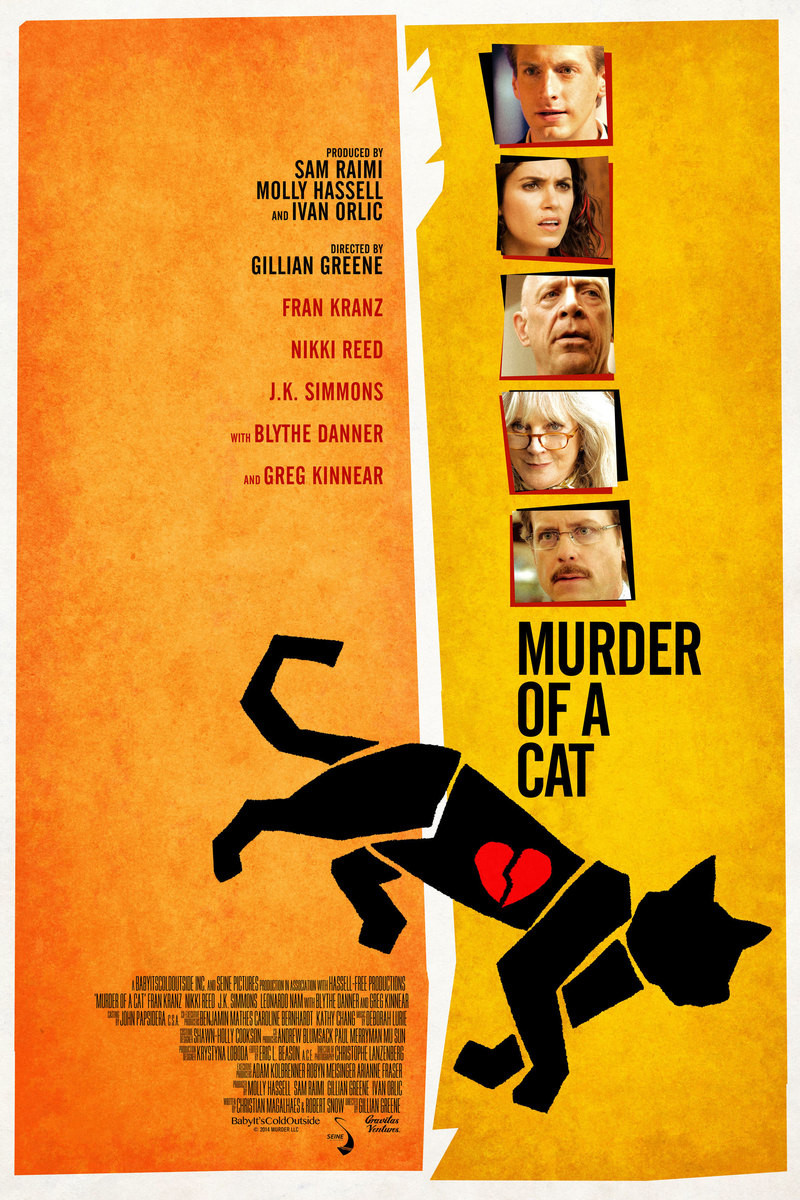
Jung, whose only feature to date this is, handles the supernatural elements well enough but the jump scares lack the visceral intensity to make them work as effectively as they should. And more could have been made of the tollgate location, but alas the camerawork is sluggish and there are too many occasions where it fails to take advantage of its surprisingly creepy vibe. With so little tension being created, Jung ploughs forward in the hope of the movie having an accumulative effect, but by the time it reaches its final confrontation, the movie doesn’t have enough left to get excited about.

Rating: 5/10 – serviceable, but too bland to be anywhere near terrifying, 29 February coasts along for much of its running time hoping to make an impression; that it doesn’t is due to a pallid script and an approach we’ve seen too many times before, making it one for K-Horror completists only.

TRAILER: There is a trailer for 29 February but it doesn’t have English subtitles. If anyone still wants to see it, it can be found here.

Share this:

  • Click to share on X (Opens in new window) X
  • Click to share on Facebook (Opens in new window) Facebook
  • More
  • Click to print (Opens in new window) Print
  • Click to email a link to a friend (Opens in new window) Email
Like Loading...

Let’s Kill Ward’s Wife (2014)

29 Sunday Mar 2015

Posted by dullwood68 in Movies

≈ Leave a comment

Tags

Black comedy, Body disposal, Bullying, Comedy, Donald Faison, Friendships, Golf, Greg Grunberg, James Carpinello, Marriage, Murder, Patrick Wilson, Review, Scott Foley

Let's Kill Ward's Wife

D: Scott Foley / 82m

Cast: Patrick Wilson, Scott Foley, Donald Faison, James Carpinello, Greg Grunberg, Dagmara Domińczyk, Amy Acker, Marika Domińczyk, Nicolette Sheridan

Ward (Faison) has three close friends: David (Wilson), Tom (Foley), and Ronnie (Carpinello), but since his marriage to Stacey (Dagmara Domińczyk) and the birth of their son, his chances of spending quality time with them has almost reached zero. The reason? Stacey has him browbeaten and henpecked and bullied and reduced to asking permission to see his friends (which he doesn’t get). When a planned Father’s Day trip to the golf course sees four end up as three, his friends start to muse on the idea of killing Stacey and ridding their lives of her forever. But while Tom and Ronnie dismiss the idea other than in principle, screenwriter David begins researching how to kill someone and get away with it.

At a party held at Ward’s house, the friends, along with Tom’s wife, Geena (Acker), and David’s ex-wife, Amanda (Marika Domińczyk), are all together when Tom receives a phone call from actress Robin Peters (Sheridan), whom he has recently interviewed for the magazine he and Ward work for. She flirts with him and he arranges to meet her. But Stacey overhears the conversation and threatens to tell Geena about it. In a fit of pent-up anger, Tom mashes her face into a cake. She comes up for air but slips on a piece of the cake and crashes to the floor, unconscious. She stirs, and Tom panics and strangles her.

He manages to keep the body away from prying eyes until everyone but his friends and Geena and Amanda have gone. He tells them what’s happened, and after the initial shock, they all decide to cover up Stacey’s murder, and then to dispose of the body. Ward is stunned but not unhappy, and goes along with the plan. When it comes to deciding what to do with the body, David reveals several ways in which they could get rid of it, and they decide to dismember it and bury the portions in various different locations. But there is a potential fly in the ointment: Ward’s nosy cop neighbour, Bruce (Grunberg), who senses something is up with Ward, and who keeps an eye on his and his friends’ comings and goings in the run up to the disposing of Stacey’s body.

But when it comes to actually dumping her body, Ronnie has a crisis of conscience that threatens the plan, and Ward is followed by an increasingly suspicious Bruce…

Let's Kill Ward's Wife - scene

There’s a moment in Let’s Kill Ward’s Wife that may well be too much for some viewers, and may prompt them to give the rest of the movie a miss, believing that there are some things – even in a black comedy – that shouldn’t be filmed. The moment in question involves Ward’s full bladder and his dead wife, and it’s the moment in the movie where any connection the audience might have had with Ward and his friends flies out of the window and heads south for the rest of eternity. Up til now, the easy complicity and the joking around have been awkwardly amusing, but here the script – by Foley – aims for the blackest of black comedy and misses by several country miles (there’s another moment later on, with a line of dialogue, that tries the same thing, but it also falls flat). These two moments are indicative of the script’s shortcomings – of which there are many – and why some movies shot on a low budget and in a short period of time… should remain unmade.

It’s true that there’s ambition here, but it’s almost choke-slammed into submission before the movie even begins. At their son’s Christening, Stacey berates Ward for his behaviour in front of all their guests, but he’s done nothing wrong; and while it’s a scene that’s played for maximum awfulness – and to show just how much of a shrew Stacey can be – it’s also a scene that feels too overwrought to be credible. And Stacey remains a shrew right up until she dies, with no attempt to show a different side to her personality, and with an almost blink-and-you’ll-miss-it explanation as to her bullying behaviour. It’s a one-note characterisation and harms the movie in ways that Foley hasn’t considered because he’s more interested in showing the four friends and their camaraderie. But they’re just a bunch of guys who can’t relate to women, and for whom casual misogyny is pretty much a way of life. Ronnie is a would-be Lothario, while Tom is planning to cheat on his wife because it’s easier than telling her she doesn’t turn him on anymore and trying to fix things. And apparent commitment-phone David can devise a plan to dismember and dispose of a dead body but he can’t devise a way in which he can win back his ex-wife. (And if you think these “issues” won’t be resolved by the movie’s end, then you need to think again.)

As the movie stumbles from one unconvincing set up to another – David proves to be a bit of a criminal mastermind, the friends all strip down to their underwear in order to get rid of their clothes… but before they leave Ward’s house, Ronnie fails to take a shovel with him to his burial site and has to use a golf club to dig the hole, Bruce proves to be the worst cop in the world – it soon becomes clear that writer/director Foley hasn’t got a grip on either the material or his cast’s performances. Wilson comes off best by making David gleefully amoral when it matters, and he wears a Cheshire Cat grin throughout. Faison plays Ward as either dazed or confused or panicky, and Carpinello adopts a breezy Brooklynite persona for Ronnie that is too close to parody for comfort. Of the rest of the cast, only Acker makes any kind of impression, but then only briefly before she’s required to turn into an unlikely sexpot. As for Foley, well, let’s just say this isn’t his finest hour.

With too much in the way of fixed camerawork going on, Let’s Kill Ward’s Wife isn’t the most visually arresting of movies, but Foley and DoP Eduardo Barraza do at least keep things moving within the frame, and their reliance on low angle shots occasionally pays off. There’s a score by John Spiker that rarely deviates from being twee and stiffly supportive of the action, and the movie’s brief running time proves to be an unexpected blessing.

Rating: 3/10 – considering the potential of its subject matter, Let’s Kill Ward’s Wife is a ridiculous, self-consciously careless attempt at making a whip-smart blacker-than-black comedy; with no one to root for, or care about, it’s a movie that tries too hard and as a result, fails to deliver.

Share this:

  • Click to share on X (Opens in new window) X
  • Click to share on Facebook (Opens in new window) Facebook
  • More
  • Click to print (Opens in new window) Print
  • Click to email a link to a friend (Opens in new window) Email
Like Loading...

Cymbeline (2014)

18 Wednesday Mar 2015

Posted by dullwood68 in Movies

≈ Leave a comment

Tags

Anton Yelchin, Biker gang, Crime, Dakota Johnson, Delroy Lindo, Drama, Ed Harris, Ethan Hawke, Iachimo, Imogen, John Leguizamo, Literary adaptation, Michael Almereyda, Milla Jovovich, Mistaken identity, Murder, Penn Badgley, Posthumus, Review, Shakespeare, Thriller

Cymbeline

D: Michael Almereyda / 98m

Cast: Ethan Hawke, Ed Harris, Milla Jovovich, John Leguizamo, Penn Badgley, Dakota Johnson, Anton Yelchin, Peter Gerety, Kevin Corrigan, Vondie Curtis-Hall, Delroy Lindo, James Ransone, Spencer Treat Clark, Harley Ware, Bill Pullman

Imogen (Johnson) and Posthumus (Badgley) are young lovers who have married in secret and exchanged gifts of a ring (for Posthumus) and a bracelet (for Imogen). Their marriage is not to the liking of Imogen’s father, biker king Cymbeline (Harris). He banishes Posthumus, and so paves the way for his second wife, the Queen (Jovovich) to advance her own son, Cloten (Yelchin) as Imogen’s husband, in an attempt to secure control of the biker gang when Cymbeline is dead. Aided by his servant, Pisanio (Leguizamo), Posthumus goes to stay with his friend Philario (Ransone). There he meets Iachomo (Hawke) who wagers that he can seduce Imogen to prove that she isn’t as virtuous as Posthumus believes. The wager accepted, Iachomo visits Imogen and when a direct assault on her virtue backfires, he portrays it as a test of her commitment to Posthumus – which she accepts. Before he leaves he asks her to look after an item for him overnight, which she also agrees to.

The item is a chest, one that Iachomo has hidden himself inside. While Imogen sleeps he climbs out of the chest and puts together evidence that he has slept with her. He takes this evidence back to Posthumus who, enraged by Imogen’s seeming duplicity, sends two letters: one to Imogen asking her to meet him at Milford Haven, the other to Pisanio asking him to take her there and when they arrive, to kill her. Pisanio, however, is unable to carry out his order and shows Imogen his letter. He has her disguise herself as a boy and tells her to travel on to Milford Haven; he also gives her what he believes to be a remedy for travel sickness that he has taken from the Queen, but which is a potion that will mimic death.

Meanwhile, Cloten discovers Posthumus’ plan to meet Imogen and heads to Milford Haven himself with the intention of killing Posthumus and bringing Imogen back to marry him. Imogen has reached the town already and fallen in with Belarius (Lindo) and his two “sons” Guiderius (Clark) and Arviragus (Ware). She tells them her name is Fidele. While they are out hunting, they encounter Cloten who insults and then threatens Guiderius, who in turn kills him and then beheads him. Imogen, feeling unwell, takes the remedy and becomes as dead. Belarius decides to bury her with Cloten’s body; when she wakes she believes Cloten to be Posthumus as he is wearing similar clothes. With both she and Posthumus believing themselves lost to each other, an impending war between Cymbeline’s gang and the Rome police – to whom they pay a tribute – proves to be the unlikely cause of their reconciliation.

Cymbeline - scene

In adapting the play by William Shakespeare, writer/director Almereyda has done two things very well, and two things not so well. The first is to employ an incredibly talented cast, all of whom are able to take Shakespeare’s lines and make them sound as natural as modern day speech, fully understandable and with clear purpose in their meaning. The likes of Hawke – reuniting with Almereyda for the first time since Hamlet (2000) – Harris, Leguizamo and Lindo provide convincing interpretations of the prose and help the casual viewer through some of the more confusing aspects of the plot (mistaken identities are key here). The second is to condense the play’s final third into a more manageable “wrapping up” of things, even if it all feels rushed and at the expense of the movie’s previously more measured pace.

But where Almereyda gets those things absolutely right, where he gets it absolutely wrong proves too damaging for the movie to recover from. The first is to set the action in a modern day setting, mostly Brooklyn, and to flavour the movie as if it were a version of Shakespeare meets Sons of Anarchy. This backdrop, given that it should enhance the drama – the Queen persuades Cymbeline to back out of his arrangement with the Rome police in the hope that war between them will see him dead – instead seems ponderous and ill-considered, more of a budgetary consideration than a narrative one. It leads to some incongruous moments, such as Cloten pushing a motorbike along a gravel road, Imogen choosing her nom-de-plume thanks to a T-shirt worn by Guiderius, and Posthumus getting about on a skateboard. While some of these tweaks may have appeared sound in the pre-production phase, on screen they’re not as effective as was probably hoped for.

The second problem is with Almereyda’s direction itself. The movie plods along from scene to scene with little energy or flair displayed, and struggles to provide any momentum to take the audience with it. There’s a signal lack of connection between scenes that makes for a stop/start experience, the narrative appearing jumbled and ill at ease with itself, like a story that needs more cohesion. With so many subplots and supporting characters, Cymbeline looks and feels like a movie that can’t quite get a grip on what it’s trying to say, or even how to say it. Again, if it weren’t for the very talented cast, the movie would founder even more, and the audience would be left adrift, waiting – unsuccessfully – for Almereyda to place his authority on the material and make it work with more style and verve.

Generally regarded as one of Shakespeare’s weaker plays (written at a time when he seemed to be bored with them), Cymbeline is a strange choice for a movie adaptation, its tale of thwarted lovers and political machinations proving not quite as amenable to the translation as might be expected. It also looks very much as if it were shot too quickly – some of the set ups look rushed or improvised. Still, it’s a brave choice by Almereyda, but if he has any plans to adapt any more of Shakespeare’s works, he might be better off securing a bigger budget, and concentrating on the script rather than directing. After all, “the play’s the thing…”

Rating: 5/10 – a dour, unimpressive adaptation, Cymbeline is rescued by a set of strong performances and an astute conflation of the plot; not as engrossing as it should have been, but not as awful as the early scenes seem to indicate.

Share this:

  • Click to share on X (Opens in new window) X
  • Click to share on Facebook (Opens in new window) Facebook
  • More
  • Click to print (Opens in new window) Print
  • Click to email a link to a friend (Opens in new window) Email
Like Loading...

Oh! the Horror! – Backtrack (2014) and The Last House on Cemetery Lane (2015)

13 Friday Mar 2015

Posted by dullwood68 in Movies

≈ Leave a comment

Tags

Andrew Jones, Blind woman, Camping trip, Georgina Blackledge, Haunted house, Horror, Julian Glover, Lee Bane, Mark Drake, Murder, Nazis, Plumpton, Reincarnation, Revenge, Review, Rosie Akerman, Screenwriter, Sophie Barker, South Downs, Tom Sands, World War II

Backtrack

aka Nazi Vengeance

D: Tom Sands / 97m

Cast: Mark Drake, Sophie Barker, Rosie Akerman, Miles Jovian, Julian Glover

When Ralph (Drake) undergoes past life regression at the suggestion of his friend Claudia (Akerman), he has visions of Nazis in the small English village of Plumpton, and the deaths of an unknown woman and her three children. Confused and upset by this, Ralph manages to persuade his girlfriend, Andrea (Barker), along with Claudia and her boyfriend Lucas (Jovian), to go on a camping trip to the South Downs, and to investigate the area that Ralph saw glimpses of. Finding the village proves more difficult than expected, and while Ralph and Claudia explore further afield, Andrea and Lucas stay with the tents and continue the affair they’ve been having. While in the midst of having sex, an old man knocks Lucas unconscious and threatens Andrea with a shotgun. He ties up both of them and takes them to an old farm building where he tortures them before leaving to find Ralph and Claudia.

Ralph and Claudia return to the tents but don’t immediately realise that their partners have been abducted. Later they do, but by then it’s late and they decide to bed down for the night and go for help in the morning. The old man attempts to grab them but they manage to escape. Having got away, Claudia suggests that Ralph undergo further regression in an effort to find out more about what happened in Plumpton, and if it has any bearing on what’s happening to them now. Ralph learns he was one of the Nazis he saw before, and that he was responsible for the deaths of the woman and her children. He and Claudia seek shelter in a church but the old man is laying in wait for them; they too find themselves held captive with their partners in the old farm building and at the mercy of the old man’s thirst for revenge.

Backtrack - scene

Sometimes, when watching horror films – especially if you’ve seen way too many of them for your own good – there’s often a point where you know exactly what’s going to happen next, and how, and why. This is the feeling you get after the first five minutes of Backtrack, and the feeling persists throughout. For example, when Ralph and Claudia realise their other halves have been abducted, neither of them can make a call on their mobile phones (naturally). Or when Ralph realises he was a Nazi – something the viewer’s known all along. Or when Claudia tells Ralph to keep a Swiss Army knife in his pocket because, you know, it just might come in handy later on. But these examples of lazy storytelling aside, this is a movie that gets it wrong on so many levels it’s almost embarrassing.

While the basic idea of Backtrack is okay for this sort of thing – revenge-driven World War II survivor targets reincarnated souls who killed his family – the movie is defeated from the beginning by some really really really terrible dialogue (think Harrison Ford’s famous quote, “You can type this shit, but you can’t say it”, and you’ll find you’re not even close to how bad the dialogue is). Defeat comes as well through its cast’s complete inability to make the dialogue sound even remotely normal (even Glover, a classically trained actor, can’t do anything with it). And to make matters worse, the cast are uniformly awful, giving amateurish performances and exposing their lack of experience, and lack of knowledge of their craft in every scene.

Stepping away from the world of documentaries for which he’s best known, Sands does a ham-fisted job in every sense, and fails to inject any tension or drama into the proceedings, leaving the cast to fend for themselves and showing no sign that he’s recognised the absurdities of Mick Sands’ apparently first draft script (the old man stalks the two couples by tractor, one that must have the biggest muffler in the world attached to it, as it doesn’t make a sound). With basic attempts at framing and composition, and the feeling that a lot of shots were first takes, the look and feel of Backtrack is that of a movie that should have had a lot more attention paid to it at all stages of its production.

Rating: 1/10 – dire in every way possible, Backtrack is an object lesson in how not to make a low budget horror movie; if the choice is watching this or watching paint dry, then watch the paint – at least it’s got a more credible story arc.


Last House on Cemetery Lane, The

D: Andrew Jones / 81m

Cast: Lee Bane, Georgina Blackledge, Tessa Wood, Vivien Bridson

When screenwriter John Davies (Bane) rents a house for a couple of months in order to work on his latest screenplay, he finds there’s a sitting tenant up on the third floor: a blind old lady (Bridson) who never leaves her room. Annoyed at first because there was no mention of the old lady in the advertisement he saw, John is reassured by the estate agent (Wood) that it won’t interfere with his work. He spends a day or so visiting the nearby town and reminiscing on the visits he made to the area as a child. Then, one day, he meets a young woman, Cassie (Blackledge) in the garden. She apologises for being there, but John is unconcerned and, slightly smitten, tells her she can visit again if she wants to.

As his relationship with Cassie develops into something more romantic, John begins to have nightmares and experience strange phenomena. At night, a record player comes on and plays the same song each time. A doll in one of the bedrooms is found on the stairs, and a picture that hangs in the hallway ends up on the floor without being touched. He contacts the estate agent to see if the house has a history, but she says there’s nothing to tell. Cassie suggests using a ouija board, but John rejects the idea – at first. One night he uses one to find out if anything has happened in the past, and it tells him that there was a murder there. Convinced that the old lady must know what’s going on, he visits her, only to find that nothing is quite as it seems, and that his life is now in danger.

Cemetery Lane

With the look and feel of a short movie expanded to meet the needs of a full-length feature, The Last House on Cemetery Lane contains a lot of padding and a shortage of actual drama. The first twenty minutes contain enough off-putting moments to make even die-hard horror fans tune out from boredom, and though the introduction of the blind old lady adds a bit of mystery to proceedings, John’s walk through the nearest town, and then along the beach (accompanied on the soundtrack by a trenchant piece of AOR) seems almost like a test: if you can endure this, then the rest of the movie will be a piece of cake (or a walk on said beach). And even though writer/director Jones begins throwing the odd bit of supernatural phenomena into the mix, the movie finds itself focusing on John and Cassie’s relationship instead, subjecting the viewer to mildly interesting scenes where they get to know each other and trade inane lines of dialogue.

It’s not until John consults the ouija board that the movie begins to pick up pace and reminds itself as to why it’s here. The old lady’s revelations, though, prove less than original and lead to a violent showdown that borrows from Halloween (1978) for a key moment, and which lacks any real tension thanks to the clumsy way in which it’s shot and edited. And with a clear resolution to the tale, the script then undermines and ignores its own logic, both insulting itself and the patient viewer. With so much going on that lacks adequate attention from Jones, it’s left to Bane to carry the bulk of the movie, and while he’s worked with Jones on several previous occasions, even he can’t help the viewer along when the going becomes dull.

A haunted house mystery where the real mystery is why the movie was ever produced, Jones’ strives for atmosphere but misses it by a mile, and never develops his own tale beyond its mundane opening scene. There’s the germ of a good movie here, but Jones and his crew can’t quite get a grip on it.

Rating: 3/10 – only occasionally intriguing, The Last House on Cemetery Lane is a throwback to the kind of rural thrillers made in the Seventies, but without any energy or attempts at effective pacing; with a score that’s more irritating than eerie (not to mention too loud in places), any pleasure to be had will come from its brevity, and its brevity alone.

Share this:

  • Click to share on X (Opens in new window) X
  • Click to share on Facebook (Opens in new window) Facebook
  • More
  • Click to print (Opens in new window) Print
  • Click to email a link to a friend (Opens in new window) Email
Like Loading...

Mini-Review: Buddy Hutchins (2015)

11 Wednesday Feb 2015

Posted by dullwood68 in Movies

≈ 1 Comment

Tags

Chainsaw, Divorce, Drama, Dry cleaning business, Jamie Kennedy, Jared Cohn, Low budget, Murder, Review, Sally Kirkland, Sara Malakul Lane, Steve Hanks, Thriller

Buddy Hutchins

D: Jared Cohn / 98m

Cast: Jamie Kennedy, Sally Kirkland, Sara Malakul Lane, Steve Hanks, David Gere, Demetrius Stear, Richard Switzer, Milana Lev, Hiram A. Murray, Nicole Alexandra Shipley, HenRii Coleman, Harwood Gordon

Recovering alcoholic Buddy Hutchins (Kennedy) has a wife, Evelyn (Lane) and two kids, Joel (Switzer) and Molly (Lev). Thanks to the time when he was an alcoholic he has a dry cleaning business that’s on the verge of failing, his son hates him, his ex-wife (Shipley) is chasing him for unpaid alimony, and his relationship with his brother, Troy (Hanks) is on rocky ground. Only his daughter, his mother, Bertha (Kirkland), and his remaining employee, Ryan (Stear) actually like him. When Buddy discovers that his wife, who is a teacher, is having an affair with one of the other staff, Don (Gere), it’s the first in a long line of injustices and reversals of fortune that end up tipping him over the edge into murderous rage.

Along the way he’s locked out of his own house, forced to stay with his mother, see his dry cleaning business seized by the bank, he’s threatened by his ex-wife’s new boyfriend (Coleman), ends up in jail for harassment, loses custody of his children in divorce proceedings, has to deal with his mother’s hospital bill when she has a heart attack, learns his father whom he thought was dead is actually alive and is really his uncle (his uncle is actually his father), and loads more beside. He starts drinking again and decides that it’s time to take back control of his life… by killing anyone he feels has contributed to the mess his life has become. In possession of a gun and a chainsaw, Buddy begins to take his revenge, leading to a standoff with the police.

vlcsnap-00007

A low budget drama-cum-thriller-cum-occasional black comedy (with a budget so low that some of it was filmed in the director’s own home), Buddy Hutchins is a movie that must have looked and sounded good on paper, but which in reality is so ragged and unconvincing that the average viewer will be wondering why anyone bothered. The movie seeks to make Buddy a sympathetic character who is just so incredibly hard done by by virtually everyone around him, but trips up from the start by making him an unlikeable, arrogant jerk who blames everyone but himself for his troubles. With Kennedy unable to salvage the character (though he tries), the movie staggers as drunkenly as Buddy from one poorly shot, flatly directed scene to another.

Against a script by Cohn that abandons all credibility long before it gets to the point where Buddy is pursued in his van for hours by three lone police cars and then evades them just… like… that (or when he’s at Don’s house and he goes straight to the one cutlery drawer that has a gun in it), the movie offers little more than a succession of disasters that are piled on with no discernible reason other than that they’re meant to be humorous somehow. With characters behaving meanly and selfishly for no other reason than the script requires them to, Buddy Hutchins becomes quickly swamped by increasingly unlikely scenarios, and branches into gore territory once Buddy starts using his chainsaw.

Rating: 3/10 – as the movie adds to Buddy’s agony, so too does it add to the viewer’s, making Buddy Hutchins a movie that satisfies on only a couple of unexpected occasions; Kennedy does his best to keep it interesting but the material defeats him, and to make matters worse – if that was possible – Cohn’s direction is largely AWOL.

Share this:

  • Click to share on X (Opens in new window) X
  • Click to share on Facebook (Opens in new window) Facebook
  • More
  • Click to print (Opens in new window) Print
  • Click to email a link to a friend (Opens in new window) Email
Like Loading...

The Voices (2014)

11 Wednesday Feb 2015

Posted by dullwood68 in Movies

≈ 1 Comment

Tags

Anna Kendrick, Black comedy, Drama, Gemma Arterton, Jacki Weaver, Marjane Satrapi, Murder, Review, Ryan Reynolds, Schizophrenia


Voices, The

D: Marjane Satrapi / 103m

Cast: Ryan Reynolds, Gemma Arterton, Anna Kendrick, Jacki Weaver, Ella Smith, Paul Chahidi, Stanley Townsend, Adi Shankar, Sam Spruell

Jerry Hickfang (Reynolds) has a problem. Actually, he has quite a few problems, but the main one is that his cat, Mr Whiskers, and his dog, Bosco, talk to him. Mr Whiskers  wants Jerry to behave in all sorts of horrible ways and takes a caustic view of him when he refuses to listen. Bosch is more supportive of Jerry and tells him that he’s a better person than the one Mr Whiskers wants him to be. Jerry does his best to ignore both of them, but therein lies another problem: the reason he can hear them is because he’s not taking his medication… and anti-psychotic medication at that.

Jerry works in the shipping department at a bathtub factory. He gets on well with his fellow workers and is regarded highly by his supervisor Dennis (Chahidi). He has a crush on one of the accounts staff, Fiona (Arterton) and musters up the nerve to ask her out, remaining blissfully unaware that Lisa (Kendrick) (who works with Fiona) has a crush on him as well. However, Fiona stands him up and goes out with Lisa and Allison (Smith), another accounts clerk. When she tries to go home her car won’t start. Jerry happens to pass by and offers Fiona a lift. They decide to go for a drink together but on the way a deer hits the car. The deer tells Jerry that it’s too injured to survive and that he should kill it. Jerry takes out a knife and cuts its throat. Fiona freaks out and runs from the car into the woods. Jerry chases after her and when he catches up with her he stabs her… accidentally at first and then repeatedly.

He leaves the body there but Mr Whiskers persuades him to go back the next day and retrieve it. He takes it home, cuts it up into little pieces and puts Fiona’s head in his fridge. She’s not happy about being alone in the fridge and tries to persuade Jerry to find someone she can have as company. Jerry resists though and to try and improve things, resumes taking his medication. He and Lisa start to see each other, but when she decides to surprise Jerry at his place she sees what he’s been doing, and it leads to Fiona getting her wish after all. When Allison goes missing as well (after finding out about Jerry’s past), two of his workmates, John (Shankar) and Dave (Spruell), grow suspicious of Jerry and visit his home. What they find there leads them to call the police…

Voices, The - scene

First shown at the Sundance Festival back in January 2014, The Voices finally arrives in cinemas and on VoD but, despite several festival awards under its belt, with very little fanfare. Part of this may be to do with the movie’s content. If you watch the trailer it keeps things light and funny (you could even be forgiven for thinking it’s a serial killer rom-com with an emphasis on the com), but what the movie does in reality  is try to offset moments of goofy humour with darker insights into the mind of a seriously disturbed individual. But in doing so, The Voices proves to be as schizophrenic as its main character.

With the tone of the movie veering between whimsical and malicious, and with detours that take in quirky, creepy and absurd, it doesn’t take long for the viewer to realise that the material is going to be uneven and, as a result, not entirely convincing. Yes, Jerry is mentally ill, psychotic even, and yes, the way in which his two states of mind – on drugs, off drugs – are cleverly dramatised by the state of his apartment – gleaming and clean when off his meds, gnarly and grim when he’s on them – but there’s still not enough glue to hold all the pieces together. Part of the problem is that the script (by Michael R. Perry) gives the impression that once all the ideas for the movie were gone through the decision was made to include them all, whether they worked or not.

Off the back of this, Satrapi has fashioned a movie that works well in spurts but drags in others while meandering in-between times. It makes for a frustrating watch and while Reynolds gives an atypical performance that works well with the material (though his doofus smile makes him look mentally challenged rather than mentally ill), the feeling that a firmer hand was needed persists throughout. Reynolds certainly understands the character, and he makes Jerry entirely sympathetic. All Jerry wants to be is happy; it’s just the way he goes about it that’s inappropriate. And he makes it clear when the script doesn’t that Jerry has a degree of self-awareness about his illness and what it makes him do, but a couple of token instances of resistance aside, he can’t quite pull off the ease with which Jerry goes about killing people.

As for Mr Whiskers and Bosco, it’s clear that they’re meant to be the source of much of the movie’s humour, but once you’ve heard Mr Whiskers’ Scottish-sounding, foul-mouthed attempts at coercion the first time, it soon becomes a played-out plot device; he needs to be less aggressive and more insinuating. The same is true of Bosco, his down-home Southern drawl humorous at first but proving more of a vocal stunt as the movie progresses (Reynolds provides both voices, adding to the conceit that Jerry is hearing their voices inside his own head and they’re not really talking to him). Otherwise, the humour relies on severed heads proving peevish about their situation, awkward comments that Jerry makes to his co-workers, and a few cartoon-style moments that we’ve all seen before.

The rest of the cast cope well enough with largely under-developed characters, with Arterton and Kendrick reduced to window dressing, though Weaver (as Jerry’s court-appointed psychiatrist) acts like she’s in a farce and not something trying to be a little darker. Maxime Alexandre’s cinematography and Udo Kramer’s production design combine to make Berlin look like the US, and the movie is full of garish little touches, such as the work clothes Jerry and his co-workers have to wear. And at the end there’s a musical number that concludes things with one final (unnecessary) flourish.

Rating: 6/10 – while not as clever or as funny as it thinks it is, The Voices does have a (still beating) heart that helps the viewer wade through some of the more uneven aspects; better as well thanks to Reynolds’ involvement, it’s a movie that will probably gain cult credibility in the future but its delay in hitting cinemas should act as a warning as to its real quality.

Share this:

  • Click to share on X (Opens in new window) X
  • Click to share on Facebook (Opens in new window) Facebook
  • More
  • Click to print (Opens in new window) Print
  • Click to email a link to a friend (Opens in new window) Email
Like Loading...

Mini-Review: The Calling (2014)

23 Friday Jan 2015

Posted by dullwood68 in Movies

≈ Leave a comment

Tags

Canada, Crime, Donald Sutherland, Drama, Ellen Burstyn, Fort Dundas, Gil Bellows, Jason Stone, Literary adaptation, Murder, Religion, Review, Serial killer, Susan Sarandon, Thriller, Topher Grace

Calling, The

D: Jason Stone / 108m

Cast: Susan Sarandon, Gil Bellows, Ellen Burstyn, Topher Grace, Christopher Heyerdahl, Donald Sutherland, Kristin Booth, Ella Ballentine, Jane Moffat

Asked to look in on an old woman as a courtesy, Fort Dundas police inspector Hazel Micallef (Sarandon) finds the woman has been murdered, her throat cut and her mouth manipulated to make it look like she’s screaming. With help from fellow detective Ray Green (Bellows) she begins to investigate the murder but when another victim is discovered in similar circumstances, she begins to suspect a serial killer is responsible. She asks for help on the case and is sent Ben Wingate (Grace), an officer from Toronto; he’s a bit wet behind the ears but eager to help.

As previous victims are identified, Hazel discovers a religious aspect to the murders. She consults with Father Price (Sutherland) who tells her of a biblical portent that relates to the belief in the resurrection of the dead through the sacrifice of twelve willing individuals. Further murders occur but clues lead to a man named Simon (Heyerdahl); they also show the trail he appears to be taking across the country and the way in which he chooses his victims. Armed with this knowledge, Hazel takes a risk and sends Wingate to the home of Simon’s next intended victim…

Calling, The - scene

Pitched somewhere between Fargo (1996) and Se7en (1995), The Calling is a serial killer movie that, like many others before it, takes a biblical angle and makes it sound preposterous. It’s always difficult to provide a religious-minded serial killer with an entirely plausible reason for their actions, but this movie, with its otherwise cleverly constructed script by Scott Abramovitch (based on Inger Ash Wolfe’s novel), has a hard time making Simon’s motive credible, and fares even less well when it comes to the sacrificial elements – why does his victims have to be killed so horribly? It’s all too confusing and muddled to work properly and hampers a movie that goes about its business with a moody, unrelenting seriousness.

There’s a sterling performance from Sarandon as a detective with a drink problem, but even she can’t avoid comparisons with Frances McDormand in Fargo – though her level of world-weariness is more pronounced. Bellows and Grace offer solid support, as does Burstyn as Hazel’s over-protective mother, but it’s Heyerdahl who makes the most impact, his portrayal of Simon both unnerving and chilling in its quiet intensity. One scene with the daughter of a waitress is so unsettling it’ll stay with you long after the rest of the movie has faded from your memory. Stone directs with the eagerness of someone making their first feature (which he is), but reigns in the desire to show off and throw in everything including the kitchen sink. He has a pleasingly straightforward approach to framing and composition, and isn’t afraid to embrace some of the more awkward plot developments (basically, anything involving Sutherland). It’s a confident outing for Stone, but sadly, it only gets him so far.

Rating: 5/10 – an interesting premise that’s let down by its own explanation, The Calling is left feeling overcooked and underwhelming; fans of this sort of thing will see the final scene coming from a mile off, while anyone else will have lost any initial enthusiasm once Hazel consults with Father Price.

Share this:

  • Click to share on X (Opens in new window) X
  • Click to share on Facebook (Opens in new window) Facebook
  • More
  • Click to print (Opens in new window) Print
  • Click to email a link to a friend (Opens in new window) Email
Like Loading...

The Whip and the Flesh (1963)

17 Saturday Jan 2015

Posted by dullwood68 in Movies

≈ Leave a comment

Tags

Christopher Lee, Dagger, Daliah Lavi, Drama, Horror, Italian movie, Kurt Menliff, Mario Bava, Murder, Review, Sado-masochism, Tony Kendall, Whipping

Whip and the Flesh, The

Original title: La frusta e il corpo

aka: Night Is the Phantom; What; The Whip and the Body

D: Mario Bava / 91m

Cast: Daliah Lavi, Christopher Lee, Tony Kendall, Ida Galli, Harriet Medin, Gustavo De Nardo, Luciano Pigozzi

Returning home after a period away due to his involvement in the death of a servant girl, Kurt Menliff (Lee) receives a less than warm welcome from his father, Count Menliff (De Nardo), his younger brother Cristiano (Kendall) and his wife Nevenka (Dali), nor from their servant Giorgia (Medin) whose daughter, Tania, was the servant girl who died. Despite this, Kurt intends to reclaim his title, as well as to rekindle the sadomasochistic relationship he had with Nevenka (they were originally to be married before the scandal with the servant girl forced Kurt to leave). One evening, while Nevenka takes a stroll on the beach, Kurt intercepts her. He whips her as a prelude to sex; afterwards, Nevenka realises she is still in love with him. When she doesn’t return from her walk on the beach, Cristiano instigates a search for her and she is found on the beach, but unconscious. Meanwhile, Kurt has returned to the castle unaware of what’s happening, but while in his room, is killed with the same dagger that Tania committed suicide with.

Following Kurt’s death, Nevenka begins to have visions of him. He visits her in her room and once more flogs her. She becomes ever more fearful, and ever more convinced that he’s alive. Then, the Count is found dead, killed by the same weapon as Kurt and Tania. Nevenka tells Cristiano that Kurt has come back from the dead and is seeking revenge on all of them. With the appearance of muddy footprints leading from Kurt’s tomb to inside the castle, and Nevenka’s increasingly unstable behaviour, the possibility that Kurt has returned from the grave becomes more certain, until Cristiano determines to open Kurt’s coffin.

Whip and the Flesh, The - scene

One of Bava’s most effective movies, The Whip and the Flesh has bags of atmosphere, a deceptively simple plot, great performances from all concerned (bearing in mind the melodrama inherent in the story), and a visual style that makes great use of half light and shadows. It’s also a deliberately paced movie that allows the horror to build to a crescendo, giving Bava the opportunity to create a fever dream that’s both delirious and oppressive.

Locating the action in and around a lonely castle on a cliff next to the sea, the script – by Ernesto Gastaldi, Ugo Guerra and Luciano Martino – adds a sense of isolation to proceedings that in turn makes each development in the story that much more forbidding and grim. It’s as if the characters were all trapped, doomed in a way to remain there until their fate is decided. Kurt’s death, so surprising both for how soon it occurs and because he’s played by Lee, the second lead, is unsettling because there is no human involvement in it (at least none that the audience sees). And even though his death is attributed to another character at the end, it makes better sense that this is another example of revenge from beyond the grave, and that Tania’s ghost is responsible. Unfortunately, the script doesn’t take this approach, but with Kurt’s death the movie does become a potent mix of ghost story, whodunnit and psychosexual drama.

Making Nevenka the focus of each strange event that follows gives Bava the chance to indulge in some creepy set pieces, such as Kurt’s first visit to Nevenka’s bedroom, a chilling, drawn out sequence that combines the sound of approaching footsteps, the ominous turn of a door handle, and the sight of muddy boots appearing out of the shadows. It’s a sequence that’s so moodily effective that it has the effect of putting the viewer on the edge of their seat, and just as anxious as Nevenka to see what’s going to happen next. What we see next is perhaps the movie’s most horrifying moment of all, as Kurt’s ghost stands by her bed, his figure in silhouette for a second or two before revealing he has a whip. On the page it may not sound so frightening, but in the movie it’s shocking, as much for the effect of seeing the whip revealed, but also for the implications that come with it. Just that sequence alone is a masterpiece of direction and editing.

With Bava so firmly in control of the material, it gives him the opportunity to coax some better than average performances from his cast. Lavi, an actress employed usually for her decorative appeal rather than her acting ability, here makes an indelible impression as a woman whose masochistic tendencies lead to fear and paranoia, and self-induced erotic imaginings. It’s a performance that’s more controlled than it appears, and anchors the movie to great effect. As the cold and sadistic Kurt, Lee imparts more in a look than some actors can convey in a five-minute monologue. Always an imposing presence, he commands attention in every scene he’s in, and though his appearance diminishes as the movie progresses, he leaves an indelible mark on the movie that adds to the cloying atmosphere of the movie’s final third (it’s sad that his lines, even in English, were dubbed by another actor). Kendall, making only his second movie, downplays the usual melodramatic heroics expected of his role, and makes Cristiano as wretched in his own way as all the other characters. And as his true love, Katia, Galli is not as vapid or as wishy-washy as virtuous love interests often prove to be, but makes the character sympathetic without being tiresome.

There are some flaws, though, with certain scenes feeling truncated or not fully developed. One such scene involves the discovery of the dagger in Katia’s room by Giorgia; it could have been a tense, dramatic moment that introduced an element of doubt about the character, but it’s over before it can go anywhere. And it’s never explained as to why the dagger is kept in a glass cage with Tania’s blood still on the blade. But these are minor caveats in a movie that makes great use of its castle setting, with its rooms and corridors proiving wonderfully creepy in the way that only old castles can be, and supported by a lush, romantic score courtesy of Carlo Rustichelli that shouldn’t complement the action but in a strange way, is entirely appropriate.

Rating: 8/10 – for many, Bava is a director who can do no wrong, and on this evidence they’re absolutely right; tense, unnerving and making no apologies in its depiction of what would have been ascribed as aberrant behaviour, The Whip and the Flesh is a stylish horror that remains as effective now as it was over fifty years ago.

Share this:

  • Click to share on X (Opens in new window) X
  • Click to share on Facebook (Opens in new window) Facebook
  • More
  • Click to print (Opens in new window) Print
  • Click to email a link to a friend (Opens in new window) Email
Like Loading...

Mini-Review: Taken 3 (2014)

13 Tuesday Jan 2015

Posted by dullwood68 in Movies

≈ 1 Comment

Tags

Action, Dougray Scott, Famke Janssen, Forest Whitaker, Liam Neeson, Maggie Grace, Murder, Olivier Megaton, Review, Sequel, Thriller

Taken 3

D: Olivier Megaton / 109m

Cast: Liam Neeson, Forest Whitaker, Maggie Grace, Famke Janssen, Dougray Scott, Sam Spruell, Leland Orser, Jon Gries, David Warshofsky, Don Harvey, Dylan Bruno, Andrew Howard, Jonny Weston

When Bryan Mills (Neeson) receives a visit from his ex-wife Lenore, it’s because she wants to let him know she still has feelings for him, and that her marriage – to Stuart St John (Scott) – is on the rocks. Bryan tells her that they can’t be together while she’s still married. Stuart pays him visit as well and asks Bryan to stay away from Lenore while they try to sort out their marriage; Bryan tells him he will.

The next day, Lenore asks to meet Bryan at his place. When he gets there he finds she’s been murdered. The police arrive and try to arrest him but he escapes. He tells his daughter, Kim (Grace) what’s happened and vows to find Lenore’s killer. The police, led by Inspector Franck Dotzler (Whitaker), pursue Bryan while he tries to figure out the reason for Lenore’s death. He learns that Stuart has hired personal bodyguards and, fearing Kim is in danger from Lenore’s killer and Stuart is somehow involved, he abducts Stuart and learns that he owes a lot of money to a Russian gangster named Oleg Malankov (Spruell), and that Lenore’s death was probably to make Stuart pay up. With the help of his ex-CIA colleagues (Orser, Gries, Warshofsky), Bryan goes after Malankov, intending to kill him.

Taken 3 - scene

And so, the law of diminishing returns rears its predictable head and helps bury yet another action franchise. It shouldn’t really be a surprise, as this was a movie that wouldn’t have been made if 20th Century Fox hadn’t wanted it in the first place. With that decision made, and with Neeson unwilling to star unless no one was actually “taken”, you can see how the project was doomed from the start. As it is, no one could have been prepared for just how little effort was going to be put in by all concerned. From the lazy, credibility-free script by Luc Besson and Robert Mark Kamen, to the wayward, unfocused direction by Megaton, to the headache-inducing, rapid cross-cutting of the action scenes, to the (mobile) phoned-in performances from a cast that should know better.

Just how bad is it? Two examples: Lenore is killed by having her throat cut, but when Stuart has to identify her at the morgue she clearly has a scar where the cut should be. And despite being “trapped” in an underground car park full of police, Bryan escapes with ease by driving through them all and exiting the car park – which the police haven’t thought to cordon off or block. There are plenty of other moments where the unfortunate viewer will be shaking their head in disbelief, and plenty of other moments where they’ll be wondering if it can get any worse – the answer is yes, it can.

Rating: 3/10 – a sad conclusion to an otherwise entertaining if always far-fetched action franchise, Taken 3 is a spectacular misfire that often defies explanation; if there is to be a fourth movie – and Neeson appears to be keen on the idea – then maybe the tag line will be It Really Does End Here… Probably.

Share this:

  • Click to share on X (Opens in new window) X
  • Click to share on Facebook (Opens in new window) Facebook
  • More
  • Click to print (Opens in new window) Print
  • Click to email a link to a friend (Opens in new window) Email
Like Loading...

To Kill a Man (2014)

04 Sunday Jan 2015

Posted by dullwood68 in Movies

≈ 2 Comments

Tags

Alejandra Yañez, Alejandro Fernández Almendras, Chile, Daniel Antivilo, Daniel Candia, Drama, Harassment, Murder, Revenge, Review, Shooting, True story

To Kill a Man

Original title: Matar a un hombre

D: Alejandro Fernández Almendras / 82m

Cast: Daniel Candia, Alejandra Yañez, Daniel Antivilo, Ariel Mateluna, Jennifer Salas, Don Willie, Paula Leoncini

Jorge (Candia) is a quiet family man who works as a caretaker at a forest research site. One night he’s mugged near to his home by a man called Kulale (Antivilo) and some of his gang; they steal his money and his insulin kit. He tells his wife, Marta (Yañez) and Jorgito (Mateluna). Jorgito knows who Kulale is and tells his father that he can get his insulin kit back for 5,000 pesos. Jorge demurs but later that night he realises his son has gone out. He goes to look for him and hears a gunshot from the nearby projects. He finds Jorgito has been shot. As he tends to him, Kulale appears and, weighing up the situation, shoots and wounds himself.

While Jorgito spends three months in hospital recovering, Kulale’s prosecution goes ahead. He contends Jorge and his son attacked and shot him first and he was defending himself when he shot Jorgito, but the court rules against him. To the family’s shock, however, his sentence is restricted to eighteen months due to a technicality. Following the trial, cracks begin to appear in Jorge and Marta’s marriage, and she blames him for Jorgito’s being shot.

Two years pass. Jorge and Marta are now divorced, though he visits his family often. One day at work he receives a call from Kulale who tells him he’s not finished with Jorge and his family and that they have a debt to settle. This proves to be the beginning of a campaign of harassment carried out by Kulale and his gang, which includes abusive phone calls, trapping Jorgito in the back of his truck, throwing rocks at the family home, and assaulting Jorge’s teenage daughter, Nicole (Salas). Each time, Jorge and his family report the incidents but the police and the prosecutor’s office seem unconcerned or unwilling to proceed without any witnesses.

Realising that the chances of anything being done to stop Kulale’s harassment and intimidation of his family are minimal, Jorge decides to take matters into his own hands. One night he lures Kulale out of his home and forces him at gunpoint into the back of Jorgito’s truck. It’s at this point that Jorge must decide if killing Kulale is the right course of action, and if it is, if he can go through with it.

To Kill a Man - scene

A sparse, quietly powerful movie, To Kill a Man is an intense, thought-provoking look at the way in which intimidation and bullying can lead even the most reserved of people to take the law into their own hands, and the subsequent ways in which their lives can be affected, both subtly and obviously. It’s a stark, poetic movie, one that carries a tremendous emotional wallop, and which portrays its central character as a simple man trying to lead a simple life, and struggling when that simplicity of existence is threatened.

The emotional turmoil suffered by Jorge and his family is soberly portrayed, and without recourse to melodrama. Their pain and anger is clearly felt and expressed both through their dealings with authority, and through the deteriorating relationship between Jorge and Marta. Even after they’ve divorced there’s a lingering sense of resentment and disapproval that undermines their ability to communicate with each other. Marta wants Jorge to be more assertive, but it’s not really in his nature; he’s a solitary man, even within his own family. Faced with the problem of Kalule and his aggressive behaviour, Jorge reacts as best he can but it’s not enough for Marta or Jorgito. He deflects their anger at the situation and appears weak in the process.

But all this turmoil is having an effect, and thanks to the combination of Almendras’ impressive script and Candia’s riveting portrayal, Jorge’s eventual decision to “deal” with the problem of Kalule displays an inner strength that abrogates any suggestion that he’s too reserved to cope with it all. Bolstered by an encounter on forest land with a man who pulls a knife on him, Jorge takes confidence from his dealing with that situation and commits to a course of action that tests both his sense of morality and his sense of himself as a man. For the viewer it’s a moment where the feeling of holding one’s breath gives way to a sense of relief at Jorge making such an important, difficult decision.

Candia gives a remarkable performance, Jorge’s withdrawn, taciturn nature given full articulation via the actor’s subtly expressive features. It’s a performance that proves unexpectedly gripping, and while the rest of the cast provide more than adequate support, Candia is the emphatic heart and soul of the movie. Even when he’s alone in a scene there’s little doubt as to how he’s feeling, or what he’s thinking. It’s gripping to watch, and a testament to Almendras’s decision to cast him.

As well as an examination of the morality of taking the law into your own hands, the movie also looks at the effects a shocking event can have the family involved, as well as its legacy. Even when they fight back against Kulale by going to the police there’s no real sense of a family united in their efforts, and Almendras rarely shows all four members spending time together. It’s beyond the movie’s scope but it would be interesting to see their reaction to Jorge’s abduction of Kulale and what happens as a consequence. The Chilean legal system comes in for some considerable criticism (though at present it is undergoing a radical change), and some aspects might seem a little far-fetched – the prosecutor’s home address being given out upon request, for example – but it’s all fuel for the predicament Jorge finds himself trying to cope with.

To Kill a Man - scene2

Visually, the movie is a dour experience in keeping with the material, but there are glimpses of the natural beauty in the forest area where Jorge works, plus some stunning coastal scenery. Almendras keeps things straightforward and direct, dispensing with any frills or unnecessary camera flourishes, and maintaining a tight focus on the characters and placing them in various cramped locations to highlight their sense of being hemmed in at all turns. There’s also an ominous score courtesy of Pablo Vergara that accentuates the drama and cleverly pre-empts the emotional result of Kulale’s abduction.

Rating: 9/10 – a striking, intelligently constructed exploration of one man’s alienation from his family and his attempt at redressing the wrongs done to him, To Kill a Man is a modest drama that succeeds by virtue of a strong central performance and a compelling narrative; apparently based on “real events”, Almendras’s third feature is a triumph of low-budget, independent movie making.

Share this:

  • Click to share on X (Opens in new window) X
  • Click to share on Facebook (Opens in new window) Facebook
  • More
  • Click to print (Opens in new window) Print
  • Click to email a link to a friend (Opens in new window) Email
Like Loading...

The Drop (2014)

29 Monday Dec 2014

Posted by dullwood68 in Movies

≈ Leave a comment

Tags

Chechen mob, Dennis Lehane, Drama, James Gandolfini, Literary adaptation, Matthias Schoenaerts, Michaël R. Roskam, Murder, Noomi Rapace, Review, Robbery, Thriller, Tom Hardy

Drop, The

D: Michaël R. Roskam / 106m

Cast: Tom Hardy, Noomi Rapace, James Gandolfini, Matthias Schoenaerts, John Ortiz, Elizabeth Rodriguez, Michael Aronov, Ann Dowd, James Frecheville, Tobias Segal

Cousin Marv’s is a bar managed by Marv (Gandolfini). It serves as a “drop bar” for money owed to the Chechen mob (who own the bar). Helping Marv is long-time friend Bob Saginowski (Hardy), a quiet, brooding man who appears somewhat slow-witted. While on his way home one day, Bob discovers an injured dog that’s been dumped in a trash can. As he rescues it, Nadia (Rapace), whose trash can it is, sees him and though wary of Bob at first, helps him with the dog.

The bar is robbed one night by two masked gunmen. They get away with just the money from the till, but it’s the Chechen mob’s money, and Marv will need to get it back. Meanwhile, a local hoodlum, Eric Deeds (Schoenaerts) begins following Bob around. Eventually he visits Bob at his home and tells him he’s the dog’s owner and can prove it, but he makes only veiled threats about going to the police if Bob causes any trouble over it. Deeds is suspected of killing a man named Richie Whelan ten years before, and has a reputation for being unpredictable and violent. It also turns out that he and Nadia (whom Bob is slowly getting closer to) were in a relationship once.

Later on, Bob and Marv find a trash bag that contains the severed arm of one of the gunmen and the money they stole. Bob disposes of the arm, cleans the money of the blood on it, and gives it to the Chechen mob’s enforcer Chovka (Aronov). In return, Chovka tells Bob and Marv that the bar will be the “drop bar” on the upcoming Super Bowl night.

Deeds tells Bob that he wants $10,000 or he’ll go to the police about the dog. He arranges to meet Bob at his home to collect the money but he doesn’t show. Instead he goes to Nadia’s house and tells her they’ll be going away together that night; Nadia is too intimidated to do otherwise. That night, the night of the Super Bowl, they go to the bar where it becomes clear to Bob that Eric is looking to steal the money being dropped off for the mob.

Drop, The - scene

Adapted by Dennis Lehane from his short story, Animal Rescue, The Drop is a quietly impressive, deliberately paced crime drama that features strong performances from its four leads, intelligent direction, and a slow build up in tension that benefits the movie greatly. There’s not a lot that’s new here, but The Drop is a movie where there’s just enough misdirection and plot-tweaking to keep the audience guessing at what’s going to happen next.

A big part of this is due to the character of Bob, as mentioned above, a quiet, brooding man who leads a simple life but lacks certain social skills (his budding romance with Nadia is awkward yet sweet, and proceeds at a hesitant pace that suits them both). As the movie progresses it’s revealed that he and Marv were part of a crew before the Chechens came along, and thanks to Lehane’s well-constructed screenplay and Hardy’s compelling performance, the viewer begins to get a sense that there’s more to Bob than meets the eye. In his dealings with Deeds, Bob is taciturn and compliant but there’s a definite hint of repressed menace there; part of the energy of these scenes is derived from waiting to see if Bob will respond with violence or not.

The threat of violence is palpable throughout, and when it does happen it has an almost cathartic effect, releasing the tension so effectively constructed by Lehane and director Roskam. This is a movie where so much is on the line, and so much is dependent on people doing what’s expected of them that it becomes unnerving when things come to a head. But through it all, Bob treats each new development in such a matter-of-fact way it’s like he’s just an observer. He’s the rock around which the movie is built, and in a role that would defeat a lot of actors, Hardy brings a subtlety and a quiet grace to the role.

In support, Gandolfini reminds us of just how gifted an actor he was, imbuing Marv with a melancholic bitterness that reflects his dismay at being ousted by the Chechens. He’s a man who hasn’t been able to move on, forced to live with his sister (Dowd), and always harking back to the days when he had respect in the neighbourhood. It’s an intense performance, full of the brio we’ve come to expect from Gandolfini, and as his last released movie, a fitting end to his career. As Nadia, Rapace is, somewhat predictably, reduced to playing the girlfriend who becomes a pawn in the game that Deeds plays with Bob. It’s a role that needs a bit more depth given to it in the screenplay, but Rapace uses her curious looks to good effect, and her scenes with Hardy are refreshingly appealing. It falls to Schoenaerts to provide the main thread of menace, and he does so by making Deeds unpleasant to watch at all times, his eyes showing a lack of amenity and concern for others that is often disturbing. It could have been a much showier performance, but Schoenaerts gets it just right, keeping the viewer on edge throughout.

All this is orchestrated with aplomb by director Roskam making his English language debut after the success of Bullhead (2011). He’s a director with a clear, precise style of movie making, and he frames his scenes with a refreshing lack of artifice, keeping things simple and without recourse to odd camera angles or visual trickery. He’s aided in this by DoP Nicholas Karakatsanis and editor Christopher Tellefsen; together the trio’s efforts make for a surprisingly low-key but effective viewing experience. Roskam also keeps the various sub-plots, particularly the one involving the murder of Richie Whelan, as relevant as they need to be, and as potent.

Rating: 8/10 – a riveting crime drama that sports four terrific performances, The Drop is a confident, compelling movie that offsets familiarity with attention to detail; a slow burn movie that yields a plethora of riches and features a killer pay-off line.

Share this:

  • Click to share on X (Opens in new window) X
  • Click to share on Facebook (Opens in new window) Facebook
  • More
  • Click to print (Opens in new window) Print
  • Click to email a link to a friend (Opens in new window) Email
Like Loading...

The Hand That Rocks the Cradle (1992)

26 Friday Dec 2014

Posted by dullwood68 in Movies

≈ 1 Comment

Tags

Annabella Sciorra, Curtis Hanson, Drama, Greenhouse, Julianne Moore, Matt McCoy, Murder, Nanny, Rebecca De Mornay, Revenge, Review, Thriller

Hand That Rocks the Cradle, The

D: Curtis Hanson / 110m

Cast: Annabella Sciorra, Rebecca De Mornay, Matt McCoy, Ernie Hudson, Madeline Zima, Julianne Moore, John de Lancie

Pregnant with her second child, Claire Bartel (Sciorra) attends a routine check up and finds she has a new obstetrician, Dr Mott (de Lancie). During the examination he sexually molests her; later she reports him to the police. Further women come forward and to avoid being brought to trial, Mott kills himself. His pregnant widow (De Mornay) loses her child as a result, and while she recuperates in hospital, she learns of Claire’s involvement in her husband’s problems.

Six months pass. Claire has given birth to a baby boy, Joey. With her husband, Michael (McCoy) and young daughter Emma (Zima) they make for a happy family, but it becomes clear that Claire can’t juggle the needs of looking after their home and children as well as the part-time work she does at a garden centre. They decide to hire a nanny, and soon after, Mott’s widow, posing as Peyton Flanders, gets the job. She moves in and soon begins to undermine the Bartels’ stability: she breast feeds Joey at odd hours so that he won’t feed from Claire; she persuades Emma to keep secrets from Claire; and she intimidates Solomon (Hudson), a mentally challenged man from a local charity home who does odd jobs around the Bartels’ garden.

Peyton does her best to make Claire seem like a bad mother, and tries to upset her relationship with Michael. When Peyton suggests to Michael that they organise a surprise party for Claire, and include their friend Marlene (Moore) in the planning of it, it leads to Claire believing that Michael and Marlene are having an affair. She accuses him on the evening of the party, unaware that Marlene and the rest of their guests are in the next room. Later, Claire tells Michael that she is beginning to have her suspicions about Peyton; this leads to Peyton booby-trapping Claire’s greenhouse in an attempt to kill her. However, the next day Claire goes out instead. Meanwhile, Marlene discovers Peyton’s true identity and rushes over to tell Claire what she’s found out, but Peyton tricks her into going into the greenhouse. The booby-trap works and Marlene is killed. When Claire finds her it triggers an asthma attack that sees her hospitalised.

When she returns home Claire decides to find out why Marlene was at the house that day. She discovers the same truth about Peyton that Marlene did, and tells Michael. They confront her and she leaves… but not for long.

Hand That Rocks the Cradle, The - scene

While there have been plenty of variations on the “home invasion/cuckoo in the nest” storyline prior to the release of The Hand That Rocks the Cradle – Pacific Heights (1990) for example – and a whole shedload of further imitations and variations since its release – Trespass (2011) anyone? – the strength of this particular movie is in its confident direction courtesy of a debuting Hanson, a career best performance from De Mornay, and one of the most impressive (and crowd-pleasing) punches in cinema history.

The basic premise is as old as the hills, but in the hands of Hanson and screenwriter Amanda Silver, it receives a jolt in the arm that elevates the material beyond the type of hokey predictability we’re used to seeing nowadays. The “examination” Claire endures at the hands of Dr Mott is still one of the most uncomfortable scenes you’re ever likely to encounter in a mainstream thriller, a testament to the staging of the scene by Hanson and de Lancie’s disturbing performance. It’s matched by the moment when Peyton stands over Joey’s crib with a cushion in her hands, the viewer unsure if she’ll really smother him. And even though we all know it’s been planted there, the discovery by Claire of a pair of Emma’s panties in Solomon’s toolbox carries a frisson that is somehow all the more effective because of what it will mean for Solomon (though the script, conveniently, lets him off rather lightly considering the allusion being made).

There are other scenes that, while not carrying such dramatic weight, still manage to hook the audience and not let go. Peyton’s machinations are well-constructed and thought out, De Mornay’s icy beauty a perfect match for the character’s psychotic nature; even when she smiles it’s unnerving. Every time she sees an opportunity to further her plans for vengeance, Hanson ratchets up the tension and keeps it there until the inevitable payoff. As the Bartels continue to find their lives falling apart around them, it’s De Mornay who remains the focus, her unsettling malevolence waiting for yet another dastardly manoeuvre to present itself. She’s a hypnotic presence, alluring yet callous (to Solomon: “Are you a retard?”), outwardly supportive yet inwardly seething, and too dangerous to live. De Mornay is impressive from start to finish, playing Peyton as a calculating whirlwind of anger and violence whose path can lead to only one outcome.

As Peyton’s main protagonist, Claire, Sciorra matches De Mornay for intensity but faces an uphill struggle in trying to keep Claire entirely likeable. The script needs her to be too susceptible at times: Peyton only has to mention that she feels something is wrong and Claire will believe her, which, while it helps to drive the narrative forward, leaves the viewer wondering when she’ll stand back and see what’s really happening. Hampered by this too convenient character trait, Sciorra nevertheless succeeds in making Claire sympathetic, and when she unleashes that punch, any doubts the viewer has had about her will evaporate there and then.

With two such compelling performances from its female leads – plus an unsurprisingly strong supporting turn from Moore – it’s a shame then that the male characters suffer in comparison. Michael is a bit of a damp squib, easily sidelined by Peyton at the crunch, and played with a degree of reticence by McCoy, as if he’d realised the character’s shortcomings at an early script reading and decided to play the role accordingly. But it’s Solomon who really drags things down, a slow-witted simpleton intelligent enough to make jokes at the Bartels’ expense, but not so intelligent as to deny an accusation of inappropriate behaviour with a child. It’s not so much a terrible performance, but a terrible and unnecessary characterisation, and the kind that nowadays would be booed or jeered off the screen.

Played out against a background of white and brightly lit interiors, The Hand That Rocks the Cradle is buoyed up by a great original score by Graeme Revell, well-lit and sometimes unnerving photography by Robert Elswit, and in the last fifteen minutes, an effectively staged showdown that benefits greatly from the editing skills of John F. Link. But above it all, Hanson directs with all the skill and confidence of somebody making their tenth movie and not their first. Whether he’s using a Louma crane to follow Peyton from the house to the greenhouse, or employing a close up when she attacks Michael, Hanson makes the right choice of shot every time, and shows an economy of style that benefits the movie throughout.

8/10 – some minor issues aside – why don’t the Bartels check Peyton’s reference?, why isn’t anyone questioned about Marlene’s death? – The Hand That Rocks the Cradle is a classy, confidently crafted thriller that touches on themes of motherhood and sacrifice while rightly focusing on Peyton’s thirst for revenge; hard-edged and nail-biting in a way that has been watered down by repetition ever since, this is a thriller that deserves to be remembered for its transgressive moments as well as its formidable performance by De Mornay.

Share this:

  • Click to share on X (Opens in new window) X
  • Click to share on Facebook (Opens in new window) Facebook
  • More
  • Click to print (Opens in new window) Print
  • Click to email a link to a friend (Opens in new window) Email
Like Loading...

Columbus Circle (2012)

12 Friday Dec 2014

Posted by dullwood68 in Movies

≈ Leave a comment

Tags

Agoraphobia, Amy Smart, Beau Bridges, Crime, Drama, George Gallo, Jason Lee, MIssing person, Murder, Penthouse, Review, Selma Blair, Thriller

Columbus Circle

D: George Gallo / 82m

Cast: Selma Blair, Amy Smart, Jason Lee, Beau Bridges, Kevin Pollak, Giovanni Ribisi, Jason Antoon, Robert Guillaume

Abigail Clayton (Blair) lives alone in her penthouse apartment overlooking Columbus Circle, and has done so for nearly twenty years. She communicates with only two people: in person with her physician and long-time family friend Raymond Fontaine (Bridges), and by note with concierge Klandermann (Pollak). Her quiet, ordered life is disrupted following the death of her neighbour. The investigating detective, Frank Giardello (Ribisi), isn’t convinced it’s the accidental death it looks like. He speaks to Abigail (much to her dislike); she in turn alerts Fontaine who reassures her that Giardello’s talking to her was just routine.

Abigail attempts to buy her neighbour’s apartment to further maintain her privacy but to her dismay a couple move in shortly afterward. Charles (Lee) and Lillian (Smart) seem like a young, prosperous, happy couple but one night, Abigail overhears an argument the couple have in the corridor. The argument becomes violent and Lillian is hit by her husband. Lillian’s cries for help prompt Abigail to do something she would never have thought possible: help the injured woman. Once inside Abigail’s apartment, Lillian makes excuses for Charles’s behaviour before she falls asleep. The next morning she thanks Abigail for her help and the beginnings of a friendship are established.

Meanwhile, Giardello’s investigation reveals a link between Abigail’s neighbour and Fontaine. When Giardello visits him, Fontaine lets slip that he knows Abigail as well. The detective begins to suspect that Abigail isn’t who she seems to be, and is probably wealthy heiress Justine Waters, who disappeared on her eighteenth birthday and hasn’t been seen since.

Abigail and Lillian grow closer, while Charles becomes more and more aggressive in his behaviour. One evening, he and Klandermann are in the elevator together when the concierge remarks that Charles is familiar to him but he can’t place where they might have met. Charles thinks it unlikely but Klandermann is convinced that he’ll remember. When he does, it brings to light a conspiracy that involves the search for a missing heiress…

Columbus Circle - scene

Making out like a Hitchcockian thriller, Columbus Circle has a basic plot that seems clever at the outset but which quickly abandons plausibility in favour of a more tired and derivative approach, and wraps things up so awkwardly that it makes you wonder if co-scripters Pollak and Gallo really had an ending in the first place. With any thriller there’s an accepted – indeed, expected – amount of suspension of disbelief, and Columbus Circle is no different in this respect, but sometimes it’s a matter of how many times that suspension is required that defeats everything. No matter how much good will a movie generates during its running time, sometimes it’s never enough. And so it proves here.

Abigail’s reclusive lifestyle is explained via a mix of flashbacks and exposition, and is used as the basis for her helping Lillian. So far, so good. But when we see Lillian playing amateur therapist and helping Abigail down the corridor in an attempt to conquer her fear of leaving her apartment, then things begin to tumble downhill with ever increasing speed. And even later still, when the movie requires Abigail to leave the safety of her apartment altogether, she does so without a backward glance. It’s moments like these that prompt the question, why make Abigail a recluse in the first place? For ultimately it doesn’t matter. Nor does the issue of whether or not she’s really a missing heiress (something the movie gives up quite early on). What Columbus Circle does, and with a clumsiness that does itself no favours, is to take a fairly run-of-the-mill scenario and then try to make it more intriguing by having its lead character driven by a deep-rooted phobia – which it then ignores/drops/abandons in order to provide the movie with a “satisfying” ending.

Long-time mystery fans will spot the mechanics of what’s happening from a mile off, while even newcomers shouldn’t have too many problems spotting the bad guys. It all leaves the movie appearing less effective than it should be given the calibre of the cast involved. Blair is a perfect choice for Abigail, her injured looks and awkward physicality providing more character development than her dialogue, but the rest of the cast struggle to make more of their characters than is on the page or the script allows. As a result, generic performances abound, particularly from Pollak who you’d be forgiven for thinking would have given himself a better role. Ribisi takes a secondary role and employs his trademark blank-faced stare to minimal effect, and Bridges (sadly) reminds us once again why his brother gets all the good roles. Worst of all, Lee and Smart fail to convince as Charles and Lillian, displaying a lack of chemistry that hurts the movie whenever they’re on screen together.

Organising it all, Gallo starts off strong but fumbles things almost from the moment Giardello talks to Abigail. Their encounter is stiff and unfriendly and it sets the tone for many of the scenes that follow, even amongst other characters. As the mystery unfolds and the movie heads into unashamed thriller territory, Gallo loses his grip completely, leading to a final fifteen minutes that defies the movie’s own logic and screams “convenience” at the top of its lungs. The movie also looks like it was made for TV, with Anastasia Michos’ photography battling against an incredibly bland lighting design. Add an equally bland score by Brian Tyler and you have a movie that seems content to settle for second best in its endeavours.

Rating: 4/10 – of passing interest only, Columbus Circle undermines itself by dispensing with its mystery elements early on, leaving any tension or drama feeling forced and artless; the only puzzle here is why Gallo and Pollak thought this would pass muster as either a mystery or a thriller.


//ws-eu.amazon-adsystem.com/widgets/q?ServiceVersion=20070822&OneJS=1&Operation=GetAdHtml&MarketPlace=GB&source=ss&ref=as_ss_li_til&ad_type=product_link&tracking_id=thedullwoodex-21&marketplace=amazon&region=GB&placement=B01N5OPW1E&asins=B01N5OPW1E&linkId=9aa194befe76589f95d1ee291eb5ad5e&show_border=true&link_opens_in_new_window=true

Share this:

  • Click to share on X (Opens in new window) X
  • Click to share on Facebook (Opens in new window) Facebook
  • More
  • Click to print (Opens in new window) Print
  • Click to email a link to a friend (Opens in new window) Email
Like Loading...

The Sin of Nora Moran (1933)

25 Tuesday Nov 2014

Posted by dullwood68 in Movies

≈ Leave a comment

Tags

Abuse, Alan Dinehart, Circus, District attorney, Drama, Execution, Governor, Literary adaptation, Love affair, Murder, Paul Cavanagh, Phil Goldstone, Review, W. Maxwell Goodhue, Zita Johann

Sin of Nora Moran, The

D: Phil Goldstone / 65m

Cast: Zita Johann, Paul Cavanagh, Alan Dinehart, Claire Du Brey, John Miljan, Henry B. Walthall, Sarah Padden, Cora Sue Collins, Aggie Herring, Otis Harlan

Edith Crawford (Du Brey), the wife of a state governor, goes to visit her brother John Grant (Dinehart), the District Attorney. She shows him several letters that prove her husband, Dick (Cavanagh) has been having an affair. She wants to know the woman’s name, but her brother tries to reassure her there could be other explanations for the letters, but then he lets slip that he knew what was going on. Pushed to reveal the woman’s name he hands his sister a newspaper cutting that reports the imminent execution of a woman named Nora Moran (Johann). At first, Edith doesn’t see the connection, but then her brother begins to explain.

He tells her of an orphaned child called Nora (Collins) who is adopted by an elderly but loving couple, the Morans (Herring, Harlan). When Nora is twenty-one the Morans are both killed in a car crash. Using her inheritance, Nora determines to be a dancer and seek her fame and fortune in the theatre. But she encounters disappointment after disappointment, until, almost broke, she gets a job working in a circus as the assistant for lion wrestler, Paulino (Miljan). Paulino proves to be a sexually abusive boss; with the aid of one of her co-workers, Mrs Watts (Padden), Nora flees the circus and heads to New York where she finds work in a nightclub. There she meets Dick Crawford, and their romance begins.

Grant becomes aware of his brother-in-law’s affair and pays the lovers a visit at Dick’s country hideaway. He confronts the pair; Nora pretends to have “known” several men during her time at the circus. This causes Dick to leave, and after she assures Grant she won’t hang around anymore, he leaves too. Later, Nora telephones Grant and asks him to return to the hideaway, where she shows him the dead body of a man, a man she has murdered. Fearing a scandal, Grant helps Nora dispose of the body, and she leaves town. Later, Nora is arrested for the man’s murder, and at her trial, and with Nora refusing to give any evidence to save herself, she is sentenced to be electrocuted.

Sin of Nora Moran, The - scene

A somewhat surreal, non-linear drama, The Sin of Nora Moran is a strange, visually inventive movie that resists easy categorisation – it has elements of murder, mystery, romance, redemption and sacrifice – and gives Johann her best role by far. It’s also a far cry from the more usual romantic dramas of the period, and doesn’t shy away from showing the terrors of pre-execution incarceration.

Dark and brooding, this adaptation of W. Maxwell Goodhue’s story Burnt Offering, features a narrative that begins in the office of the District Attorney and then flits about from place to place – and from time to time – in its efforts to tell a very plain tale and infuse it with some flair. At one point, Grant makes Dick look at Nora in her coffin; it’s a fantasy sequence but unsettling all the same for not being signposted. Or there’s the shot of Nora’s head being encased in imaginary flames (a none-too blatant example of how badly she’s being treated, as well as being indicative of her expected post-mortem destination). With imagery such as this, the  movie has a vivid, sometimes hallucinatory quality that perfectly complements the more melodramatic twists and turns of the script.
Full credit for this must go to the director, as well as the screenplay by Frances Hyland that, together, forge a significantly darker tragedy than perhaps even audiences of the time might have expected. Faced with the man she loves being exposed as a love cheat in the press, and his reputation tarnished irrevocably, Nora does what every lovestruck young woman would do: she keeps quiet, and by doing so, keeps him safe. The theme of self-sacrifice is given probably its best expression when Grant’s intrusion leads to Nora’ almost immediate, and selfless, decision to withdraw from Dick’s life; she believes with all her heart that his reputation and character mustn’t be sullied. (Of course, these days, Dick would probably be left to fend for himself, and would probably be asked to do whatever fun things someone could come up with.)

With all the symbolism on display, and no end of metaphors for those viewers who aren’t quite up to speed on the visual clues, The Sin of Nora Moran features several broad acting performances from the likes of Dinehart and Miljan, while sadly confirming what contemporary audiences must have known all along: that Cavanagh was an actor with the range of a large piece of wood. As the titular heroine, Johann gives an assured, sympathetic performance as the young woman looking for some fleeting happiness to make her life all the more worthwhile.

Rating: 7/10 – shot in an unfussy yet often severe style by DoP Ira H. Morgan, and with a suitably intense score by an uncredited Heinz Roemheld, The Sin of Nora Moran is a cautionary tale of love gone awry that is often enthralling, and visually arresting; Johann shines in the title role, and the expected sentimentality is given short shrift thanks to the script’s determined sobriety.

Share this:

  • Click to share on X (Opens in new window) X
  • Click to share on Facebook (Opens in new window) Facebook
  • More
  • Click to print (Opens in new window) Print
  • Click to email a link to a friend (Opens in new window) Email
Like Loading...

Miss Meadows (2014)

22 Saturday Nov 2014

Posted by dullwood68 in Movies

≈ 1 Comment

Tags

Black comedy, Callan Mulvey, Drama, James Badge Dale, Karen Leigh Hopkins, Katie Holmes, Murder, Review, Romance, Sheriff, Substitute teacher, Vigilante

Miss Meadows

D: Karen Leigh Hopkins / 88m

Cast: Katie Holmes, James Badge Dale, Callan Mulvey, Ava Kolker, Mary Kay Place, Jean Smart, Stephen Bishop

Miss Meadows (Holmes) is a sweet-natured, well-mannered substitute school teacher who hides a dark secret: she’s a vigilante, dedicated to “removing” anyone whose moral compass isn’t attuned as finely as her own. On her way home one day, she’s threatened by a gun-wielding kerb crawler who points a gun at her and tells her to get in his car. Miss Meadows promptly shoots him dead with her own gun… and carries on walking as if nothing has happened.

At the elementary school, Miss Meadows is put in charge of a class whose teacher has just died of cancer. One little girl, Heather (Kolker), has been seriously upset by this and Miss Meadows does her best to console her, and eventually earns her trust. In the meantime, she also meets the town Sheriff (Dale); there’s an immediate attraction but neither of them pursue it immediately. It’s left to the Sheriff to do the pursuing, and he takes Miss Meadows for a drive. As their romance blossoms, a school trip to a local park eventually sees Miss Meadows entering a fast food restaurant in order to get the school children some hot dogs. There she finds a young man has killed all the staff and customers and wants to kill himself. When she tells him he should, he attempts to kill Miss Meadows instead, but she proves quicker on the draw than he does, and she kills him.

Faced with a vigilante in his town, the Sheriff is suspicious that it might be Miss Meadows but he doesn’t have any evidence, other than that she’s lived in previous towns where a vigilante has been on the loose. Meanwhile, Miss Meadows learns that she’s pregnant with the Sheriff’s baby; she doesn’t tell him straight away but when she does he asks her to marry him, and she says yes. Around this time a convicted child molester called Skylar (Mulvey) moves into the neighbourhood. Miss Meadows tries to warn him off but he ignores her and starts hanging around the school. And Heather reveals that she saw Miss Meadows shoot the man in the fast food restaurant.

An incident with a priest leads to Miss Meadows killing him as well but this time she leaves behind a clue, and one that the Sheriff recognises. He confronts her, and out of love for her, tells Miss Meadows her vigilante days are over. But then on their wedding day, Skylar abducts Heather…

Miss Meadows - scene

A quirky mix of drama, comedy, romance and the kind of vigilante thrillers Charles Bronson made in the Seventies and Eighties, Miss Meadows gives Katie Holmes her best role since Batman Begins (2005). As the unfeasibly sweet and wholesome Miss Meadows (we never learn her first name), Holmes embraces the role and gives a tremendous performance, doing full justice to the duality of the character and the changes in tone such a character demands. It’s an assured, confident performance – the kind Holmes hasn’t given in a very long time – but it’s so good that Miss Meadows the movie sadly doesn’t match the  quality of Miss Meadows the character.

While Holmes is mesmerising throughout, her understanding of the role so complete she doesn’t put a foot wrong at any point, the rest of the movie stumbles along around her, the various strands and shifts in tone not quite gelling to create a balanced, effective whole. Matching Miss Meadows with the equally good-natured Sheriff (we don’t learn either of his names) lessens the chance of any real tension between the two when his suspicions are confirmed. Because the script avoids the Sheriff experiencing any personal dilemma at all, the confrontation between the two has no depth to it at all, and it’s almost perfunctory in its execution. Similarly, the scene where Miss Meadows confronts Skylar over tea in his home feels forced because of its mixture of genteel manners and unequivocal threat.

There are other scenes and moments that don’t quite work. The cause of Miss Meadows antipathy towards wrongdoers is due to a childhood trauma that is teased out as the movie progresses, but there are clues to be had in the character’s talks with her mother (Smart). And as those clues are revealed before the full tragedy of the traumatic incident is shown, the viewer is effectively given the same information twice, leaving the incident to play out with little dramatic resonance or emotional impact. It’s poor choices like this that undermine the movie’s persuasiveness, and leave the cast adrift within scenes that often bear no relation to the ones that have gone before, or follow on. The scenes in the Sheriff’s office are the best examples of this, taking place almost in isolation of the rest of the plot, and again feeling more perfunctory than essential to the story.

It’s not all bad, though. Holmes’ mannered, skilful performance anchors the movie, and is so rich it bolsters the movie during those short stretches when she’s not on screen. Dale and Mulvey are more than competent foils for Holmes’ ultra-proper, Fifties influenced femme fatale – the scene where Miss Meadows and the Sheriff make love for the first time is worth seeing all by itself just for her delighted reaction; it’s not just their first time – and the photography by Barry Markowitz is almost painterly in its depiction of small-town life. There’s also an amusing, wistful score courtesy of Jeff Cardoni that is appropriately idiosyncratic, and matches Miss Meadows’ prim nature perfectly. And even though her script doesn’t always meet the challenges it sets itself, Hopkins is on firmer ground in her choice of shots and the way in which she places the camera to achieve the desired comic or dramatic effect (this is a very good-looking, carefully composed movie).

Rating: 5/10 – without Holmes’ assured, ironic performance, Miss Meadows would swiftly become a chore to sit through, even though the premise is a shrewd one; uneven and unsure of which impression to make, the movie aims for a John Waters-style vibe but is ultimately too lightweight to succeed completely.

Share this:

  • Click to share on X (Opens in new window) X
  • Click to share on Facebook (Opens in new window) Facebook
  • More
  • Click to print (Opens in new window) Print
  • Click to email a link to a friend (Opens in new window) Email
Like Loading...

The Canal (2014)

31 Friday Oct 2014

Posted by dullwood68 in Movies

≈ Leave a comment

Tags

Antonia Campbell-Hughes, Drama, Horror, Ivan Kavanagh, Murder, Review, Rupert Evans, Thriller

Canal, The

D: Ivan Kavanagh / 92m

Cast: Rupert Evans, Antonia Campbell-Hughes, Hannah Hoekstra, Steve Oram, Kelly Byrne, Calum Heath, Carl Shaaban

Film archivist David, his wife, Alice (Hoekstra), and young son Billy (Heath) move into an old house near a canal.  There are marital tensions: David suspects Alice of having an affair, and their lovemaking is perfunctory and passionless.  While they get used to living in their new home, David’s colleague Claire (Campbell-Hughes) asks him to look through some old crime scene footage sent to the archive by the police.  When he does, he discovers that the house was the site of a murder in 1902.  The discovery has a profound effect on David who starts to imagine he can hear voices in the walls, and he begins to catch glimpses of a man in the house.  He also has nightmares in which he sees the man kill his wife and then dump her body in the canal.

One day, Alice tells David she’ll be working late.  He waits outside the place where she works and sees her leave with a man (Shaaban).  He follows them along the canal to the man’s home.  He finds his way inside and sees them having sex.  David comes away upset and feverish.  He heads back along the canal but becomes nauseous and stops in a disused public toilet to throw up.  There he has what may be an hallucination involving the man he’s glimpsed at the house, and sees Alice at the side of the canal being attacked by the same man.

The next morning, David discovers that Alice hasn’t come home.  He reports her as missing, and the case is investigated by Inspector McNamara (Oram).  David continues to fixate on the house’s history and he learns more about the murder in 1902 and how it fits into a wider pattern of child abduction and ritual sacrifice.  When Alice’s body is found in the canal it’s deemed an accidental death but David’s visions increase and so too his sense of paranoia.  David tells Claire that he suspects the ghost of the man who killed his wife has killed Alice and is trying to kill Billy as well, but Claire doesn’t believe him.  With the help of babysitter Sophie (Byrne) he tries to keep Billy safe, while attempting to find proof of the supernatural events happening around the house.  But when McNamara returns with news that David was seen at the canal the night Alice died, David has no choice but to take Billy with him in a final chance to escape the dead man’s clutches.

Canal, The - scene

Featuring one of the creepiest set ups of recent years, The Canal has enough chilling moments to make it one of the most effective scary movies of recent years.  It’s a refreshing change to watch a horror movie where the nightmarish qualities of the script are brought so potently to life.  Filmed in Ireland, The Canal is a dark, eerie, disturbing movie that uses well set up scares and shocks to keep the viewer on the edge of their seat.  The depictions of past events are often shocking, but are used sparingly, their execution and careful inclusion adding to the tension and the horror.

The mystery of the murder in 1902 and its connection to the canal is the spine of the movie, making David’s growing paranoia and sense of mounting terror its meat.  As the beleaguered archivist, Evans paints a convincing portrait of a man searching for a meaning to the strange phenomena happening around him, while also trying to maintain his sanity.  It’s a standard characterisation seen in many other horror movies but here Evans’ performance lends a credibility to David’s reactions and motivations that isn’t that prevalent elsewhere.  Evans’ sweaty, desperate turn anchors the movie throughout, and his early likeable, nervous approach makes David a sympathetic character the viewer can relate to.  As events become darker and more intense, Evans never loses focus on the character and he helps ground the more lurid developments, so that David’s mounting terror is rendered with complete conviction.

Evans’ performance is one of the main reasons the movie is as good as it is.  Another is the well constructed screenplay by writer/director Kavanagh, with its cleverly realised flashbacks, archival footage and photographs showing what really happened in 1902.  Kavanagh also makes a virtue of the kind of choppy editing style that usually makes things more difficult to process, but here adds to the disjointed, off-kilter and unnerving sequences involving the dead husband and the children who watched him kill their mother before being meeting an even worse fate.  These sequences carry a distinctive power that elevates the material and makes it all the more impressive in its visual styling.

The various scares – the man passing by open doorways, the sequence in the public toilet where blackened fingers appear over the top of a cubicle door, David’s vision of the murder in 1902 – are confidently presented and completely gripping.  It’s occasionally uncompromising, rarely dull or distracting, and a tour-de-force of low budget inventiveness and emphatic editing.  Ceiri Torjussen’s perturbing score adds a layer of menace to the proceedings and there’s sterling work from production designer Stephanie Clerkin that makes the house and its environs look unearthly even in  daylight.

Rating: 8/10 – a genuinely scary movie that deserves a wider audience, The Canal is often a tough watch, but is bolstered by a cast and writer/director who know exactly what they’re doing; moody and demanding, this is entirely worthwhile and not for the faint-hearted.

Share this:

  • Click to share on X (Opens in new window) X
  • Click to share on Facebook (Opens in new window) Facebook
  • More
  • Click to print (Opens in new window) Print
  • Click to email a link to a friend (Opens in new window) Email
Like Loading...

The Anomaly (2014)

30 Thursday Oct 2014

Posted by dullwood68 in Movies

≈ Leave a comment

Tags

9 minutes 47 seconds, Alexis Knapp, Brian Cox, Drama, Ian Somerhalder, Kidnapping, Luke Hemsworth, Mind control, Murder, Noel Clarke, Review, Sci-fi, Thriller

Anomaly, The

D: Noel Clarke / 97m

Cast: Noel Clarke, Ian Somerhalder, Alexis Knapp, Luke Hemsworth, Brian Cox, Ali Cook, Art Parkinson, Niall Greig Fulton, Michael Bisping

When Ryan (Clarke) wakes up in the back of a moving van and finds a young boy called Alex (Parkinson) shacked to the dividing wall, he puts aside the strangeness of the situation and helps the boy escape when the van comes to a halt.  Chased by two men into a cemetery, Ryan learns that Alex’s mother has been killed by the men chasing them.  He uses military training to incapacitate one of the men before a third man shows up who seems to know he is.  Before he can find out any more, he finds himself in an office but older now and with a beard.  Further changes in time and location happen to him and he learns that this will happen every nine minutes and forty-seven seconds.

Not knowing why this is happening to him, or why he can’t remember anything before he woke up in the van, Ryan sets about finding the truth.  The mystery third man turns out to be Harkin (Somerhalder), a colleague Ryan’s host body works with.  Ryan’s consciousness is being manipulated by a Dr Langham (Cox), but solar flares are interfering with the satellite link that aids Langham in controlling him; this allows Ryan his nine minutes and forty-seven seconds of autonomy.  As Ryan begins to piece together the conspiracy his host body is involved in, he finds himself aided by a prostitute called Dana (Knapp).  She believes his story, and his further persuaded to help him by his attempts to get her away from her pimp, Sergio (Bisping).

Harkin is attempting to sell the mind control technology to the highest bidder, while supporting a scientist (Fulton) whose DNA work has led to the discovery of a virus that will cause hideous mutations if made airborne.  Both these projects can be linked in such a way that it will be possible for one man to control everyone in the world.  Intent on finding Alex and rescuing him – he’s the scientist’s son – Ryan uses the knowledge he learns about the mind control programme to stay one step ahead of Harkin and two US agents (Hemsworth, Cook) who are trying to acquire the technology for their own government.

Anomaly, The - scene

Set sometime in the future – London and Times Square are given a bit of a makeover – The Anomaly takes its sci-fi premise seriously and never lets up on the drama and the potential horror of worldwide mind control.  The movie sets a grim tone early on and never really lets the viewer forget just what’s at stake, making Ryan’s search for answers and then a solution all the more dramatic.  However, the movie’s structure, where Ryan moves from one seemingly disparate time and location to another every ten minutes or so, soon becomes tiresome and seems more of a concept that was committed to early on, but which wasn’t fully thought out.

Linking the various locations and characters proves to be a hit-and-miss affair, with Ryan and Dana meeting up when the script demands it rather than in any organic, credible way, and the same can be said for Harkin’s interventions as well.  There’s a thread of plausibility somewhere in the movie but it’s lost amid the slo-mo action sequences – fine once but then just repetitive pieces of violent choreography that make Clarke and myriad stuntmen look clumsy – and the need to continually establish what’s going on every time Ryan’s on/off switch gets triggered.  It’s a frustrating experience, peppered with the kind of dire exposition that makes it look as if the cast are having to remind themselves of what scene they’re in.

Both behind and in front of the camera, Clarke wears his usual slightly baffled look (as well he might with the material), and fails to assemble the various plot threads with any real confidence that it will all make sense by the movie’s end.  He also shows a knack of putting the camera in entirely the wrong place during the action scenes (which adds to the notion that he and the stuntmen look clumsy).  Clarke is a talented actor and director – he also contributed to Simon Lewis’s convoluted screenplay – but here the material defeats him, and he never shows that he has a firm grasp of how to present things.

The rest of the cast fare either badly or worse, with Somerhalder annoyingly diffident for most of the movie and then going all cruel, sadistic villain in the last ten minutes, a sea change that again seems arranged more out of necessity than as a real piece of character development.  Knapp does fearful in little or no clothing, while Hemsworth’s “old school” agent is the nearest the movie comes to providing any levity.  It’s Cox you have to feel sorry for, though: he’s strapped inside a perspex box with electrodes stuck to his head and no lines.

With little wit or originality on display, The Anomaly is a sci-fi action thriller that plods along, convinced of its own relevance, and yet has nothing to say beyond be careful what scientists get up to in their labs.  It’s not a complete waste of time, but it will test the average viewer’s patience.  And a good answer to the movie poster’s tag line, If you only had 9 minutes, 47 seconds what would you do? would be: see if I can fast forward the whole movie in that time.

Rating: 4/10 – Clarke and sci-fi prove to be unsatisfactory bedfellows in a movie where the highlight is Clarke being blasted with a fire extinguisher; The Anomaly is low budget nonsense that is rarely coherent, and “viewer discretion” should be used throughout.

Share this:

  • Click to share on X (Opens in new window) X
  • Click to share on Facebook (Opens in new window) Facebook
  • More
  • Click to print (Opens in new window) Print
  • Click to email a link to a friend (Opens in new window) Email
Like Loading...

A Good Marriage (2014)

29 Wednesday Oct 2014

Posted by dullwood68 in Movies

≈ Leave a comment

Tags

Anthony LaPaglia, Beadie, Drama, Joan Allen, Literary adaptation, Marriage, Murder, Peter Askin, Review, Serial killer, Stephen King, Stephen Lang, Thriller

Good Marriage, A

D: Peter Askin / 101m

Cast: Joan Allen, Anthony LaPaglia, Stephen Lang, Cara Buono, Kristen Connolly, Theo Stockman

Darcy and Bob Anderson (Allen, LaPaglia) are the perfect couple: loving, considerate, still attracted to each other, and with two bright, well-adjusted children, Petra (Connolly) and Donnie (Stockman). Everyone says what a good marriage they have. On their twenty-fifth wedding anniversary, Bob gives Darcy a pair of earrings that represent her birth sign of Pisces. Darcy is delighted by them.  In return she offers to purchase a coin that avid collector Bob has been looking for but he tells her he’d rather wait for it to turn up in some change.  Both happy in their affection for each other, their lives continue as normal, with Darcy running a mail order business that sells rare coins, and Bob working as an accountant who often has to travel away.

In the news is a serial killer called Beadie who has just claimed his tenth victim, a woman named Marjorie Duvall.  Beadie kidnaps and tortures his victims before killing them and dumping their bodies; later he sends any I.D. cards they had to the police with a note taunting them for not being able to catch him.

One night, while Bob is away on a trip, the TV remote won’t work and Darcy goes out to the garage where the spare batteries are kept.  While looking for them she dislodges a box under a bench.  She sees some magazines inside the box and pulls them out, as some of them are ones she’s been looking for.  She also finds an S&M magazine that shows pictures of women being bound and humiliated.  And at the very back underneath the bench is a hole in the wall that contains a box that Petra made for Bob when she was younger – a box that contains Marjorie Duvall’s I.D.

Shocked and horrified, Darcy can’t believe what she’s found.  She Googles Beadie and his killings, and becomes completely convinced that Bob is Beadie when she sees a picture of Marjorie Duvall wearing the same earrings Bob got her for their anniversary. And then Bob comes home early from his trip, and the truth about Beadie is revealed. But now Darcy has an even bigger dilemma…

Good Marriage, A - scene

Adapted by King from his novella of the same name (and which can be found in his short story collection Full Dark, No Stars), A Good Marriage is a slow-burn thriller that lights the blue touch paper very early on but which, sadly, never really bursts into flame at any point.  As with the original novella, King focuses on the little details and inherent rhythms of the Andersons’ life together, leaving the thriller elements to (almost) fend for themselves.  They’re only brought in when King needs to drive the story forwards, but otherwise they seem of secondary importance, whereas the relationship between Darcy and Bob takes centre stage.  To some degree this is entirely necessary, but it also stops the movie from being as dramatic as it could have been.

Part of the problem with A Good Marriage is Darcy’s reaction – and subsequent actions – when Bob arrives home and she learns all about Beadie.  For some viewers it will appear unconvincing and contrived (it will help if you’ve read the novella), while others will find it completely unbelievable.  Even if the viewer gives Darcy some considerable leeway for her behaviour, it still hurts the movie to see her behaving in the way that she does.  Even Allen, an actress with more smarts than most, can’t quite pull it off, and the movie’s middle section slows down even further, making a movie that is already moving at a slow, steady pace now almost glacial.

While the audience waits for things to pick up, and Beadie to claim another victim, King and director Askin throw in an unexpected twist that turns the movie on its head and proves to be A Good Marriage‘s standout, bravura moment, a quintessential King literary moment made uncomfortable flesh, and which is reminiscent of that scene in Hitchcock’s Torn Curtain (1966).  With that moment out of the way, it’s time to properly introduce Lang’s supporting character, a retired detective who thinks he knows who Beadie is, and have him provide quite a bit of extraneous exposition.  It all leads to a final scene that – on screen at least – appears entirely superfluous and adds nothing to what’s gone before.

As Darcy and Bob, Allen and LaPaglia at least share a degree of chemistry, and their early scenes together are well played and playful at the same time.  As the movie darkens, Allen becomes more distant as Darcy, while if anything, LaPaglia takes the opposite approach and makes Bob seem like he’s permanently on a cheerful streak.  If this sounds awkward to watch, and difficult to believe, then it is, but King is too clever a writer to make it appear too incredible, and it suits the mood of the movie as the viewer waits to see what’s going to happen next.  Both stars put in good performances on the whole, though it must be said, Allen – who doesn’t always look like herself from certain angles – has the harder job, and she doesn’t always nail it in the way she would normally.

The supporting cast aren’t given much to do – this would work well as a two-hander on stage – and Lang’s detective aside, are interchangeable in terms of their importance to the story.  Buono’s saucy neighbour is a potential victim for all of a minute, while Connolly and Stockman fail to make much of an impact, and are sidelined at the halfway mark.  Askin, along with DoP Frank G. DeMarco keeps things visually subdued as befits the material, and while the pace of the movie is kept deliberately slow, Colleen Sharp’s astute editing makes each scene, individually at least, interesting to watch.  However, the score, by Saunder Juriaans and Danny Bensi is too generic to add much to the proceedings.

Rating: 5/10 – while it’s very faithful to the original novella, A Good Marriage still isn’t the best example of a Stephen King adaptation, even if it is penned by the man himself; some parts are extraneous, while others are meant to increase the tension but fail to do so making the movie – on the whole – a bit of a disappointment.

Share this:

  • Click to share on X (Opens in new window) X
  • Click to share on Facebook (Opens in new window) Facebook
  • More
  • Click to print (Opens in new window) Print
  • Click to email a link to a friend (Opens in new window) Email
Like Loading...

The Judge (2014)

20 Monday Oct 2014

Posted by dullwood68 in Movies

≈ Leave a comment

Tags

Billy Bob Thornton, Carlinville, Courtroom drama, David Dobkin, Drama, Guilty, Manslaughter, Murder, Not guilty, Review, Robert Downey Jr, Robert Duvall, Thriller, Vera Farmiga

Judge, The

D: David Dobkin / 141m

Cast: Robert Downey Jr, Robert Duvall, Vera Farmiga, Vincent D’Onofrio, Jeremy Strong, Billy Bob Thornton, Dax Shepard, Leighton Meester, Ken Howard, Emma Tremblay, Balthazar Getty, David Krumholtz, Grace Zabriskie, Denis O’Hare

Defence attorney Hank Palmer (Downey Jr) has made a name for himself by getting acquittals for some of the guiltiest defendants ever brought before the bench.  When his mother dies unexpectedly it means his returning home after twenty years and dealing with his estranged father, Joseph (Duvall), who’s the local judge.  On the day of the funeral, Hank is reunited with his high school sweetheart, Samantha (Farmiga) but he remains unable to bridge the gap that keeps himself and his father at a distance from each other.  Later that night, Joseph takes a drive to a nearby gas station to get some groceries.  When Hank gets ready to leave the next morning, he notices that Joseph’s car is damaged, as if it’s hit something.

Before his flight can take off, Hank hears from his older brother Glen (D’Onofrio) that the police are investigating a fatal hit and run from the night before and are talking to Joseph at the station.  Against his better judgment, Hank gets off his flight and heads to the station where he learns that the man who died was someone the judge had let off years ago only for the man to kill the girl he’d been stalking.  When blood is found on Joseph’s car that matches the dead man’s, the police arrest him.  Family tensions increase when Joseph decides to appoint local lawyer, inexperienced C.P. Kennedy (Shepard) to represent him instead of Hank.  But at his arraignment, where he’s committed for trial, the judge realises his mistake and asks Hank to take over his defence.

It emerges that Joseph has increasing memory problems and he can’t remember anything after he left the gas station and had to make a detour due to a flooded road.  As Hank begins to build his case, Joseph proves unhelpful and the two clash repeatedly.  At the same time, Hank learns that Samantha has a daughter, Carla (Meester), and that he might be the father.  With family issues coming to the boil over events that happened twenty years ago, along with a special prosecutor (Thornton) being appointed to try the case, Hank finds himself under growing pressure to find a way to meet all the demands being made of him, and solve the puzzle of what happened the night his father went for groceries.

Judge, The - scene

A family drama wrapped up in a courtroom drama, The Judge is the kind of movie that looks glossy, feels important (on its own level), and sounds impressive but is actually none of those things, being instead a kind of kitchen sink drama where so much is thrown in and very little is as compelling as it first appears.  Take, for example, the case of Hank’s brother Glen, who was a promising baseball player until an accident caused by Hank ended his career before it began.  It’s an issue that Joseph brings up a few times and is one of the sources of their estrangement, but neither of them have ever thought to ask Glen how he feels about it all (he’s actually made his peace with it but we don’t find this out until the end).

Likewise, the issue of whether or not Joseph deliberately killed the ex-offender is of secondary importance in comparison to the movie’s need to have him and Hank reconcile – and which takes place in the courtroom, and with everyone sitting back and letting them show that they really do care about each other etc. etc.  But will the audience care by this point, having already sat through over two hours of undercooked “woe is me” dramatics?  Because therein lies the movie’s biggest problem: Hank is too much the aggrieved party.  His marriage is heading for divorce, his colleagues across the courtroom floor have no time for him, he can’t make his relationship with Samantha work, he doesn’t understand his father at all, and he believes too much in his own talent to have an inkling of what humility is all about.  In short, he’s an arrogant prick, and even though he’s presented as charming and a bit of a “good” bad boy, and all this is meant to be attractive, especially with Downey Jr in the role, it’s a character we’ve seen too many times before to end up rooting for.

The judge’s motives remain muddled throughout, as he wavers between wanting to be honest and upstanding, and maintaining his legacy after forty-two years on the bench. Hank is a chip off the old block and all the arrogance can be seen in the way in which Joseph conducts himself, cleaving to his own idea of what’s right and wrong, and to hell with anyone else’s opinion.  The phrase, “two peas in a pod”, is perfect for them, but it doesn’t make for affecting drama, and there’s no tension at all.  We know what’s going to happen from the outset with these two and it involves re-found mutual respect and admiration, and a shared understanding of past events.  The movie is one big therapy session and it struggles to rise above the level of a predictable TV Movie of the Week.

Against this, Downey Jr and Duvall put in credible enough performances but fail to energise the material, and spar off each other so predictably it’s like filming by numbers.  Farmiga and D’Onofrio fare better but then their roles are smaller and they have less focus on them.  Thornton’s role is a step above a cameo but he makes the most of it even if it is a reprise of so many other roles where he’s had to be both smug and menacing.

Dobkin assembles things with a nod to almost every other small-town, local-boy-makes-good-then-comes-back-to-confront-the-issues-that-drove-him-away drama we’ve ever seen, and signposts pretty much every plot development with the excitement of someone who can’t wait to show off his next scene.  Carlinville is a pretty town, shot beautifully by Janusz Kaminski, but what we see of it is mostly restricted to the judge’s house, the courtroom and Samantha’s diner.  It’s a slightly claustrophobic effect and is rarely betrayed by a long shot.  Thomas Newman’s score provides standard support for the proceedings, but like so many other aspects of the movie, is never compelling enough to elevate matters.

Rating: 5/10 – competently made but lacking on so many levels – emotionally, dramatically, as a thriller – The Judge is one of those ideas that sounds great on paper but proves largely underwhelming once it’s transferred to the screen; if you’ve got actors of this calibre in front of the lens and they can’t make it work, then maybe it’s a movie that should’ve remained as just a great idea.

Share this:

  • Click to share on X (Opens in new window) X
  • Click to share on Facebook (Opens in new window) Facebook
  • More
  • Click to print (Opens in new window) Print
  • Click to email a link to a friend (Opens in new window) Email
Like Loading...

Kill Me Three Times (2014)

19 Sunday Oct 2014

Posted by dullwood68 in Movies

≈ 1 Comment

Tags

Alice Braga, Australia, Black comedy, Blackmail, Bryan Brown, Crime, Drama, Eagle's Nest, Insurance fraud, Kriv Stenders, Murder, Review, Simon Pegg, Sullivan Stapleton, Teresa Palmer, Thriller

Kill Me Three Times

D: Kriv Stenders / 90m

Cast: Simon Pegg, Sullivan Stapleton, Alice Braga, Teresa Palmer, Callan Mulvey, Bryan Brown, Luke Hemsworth

In the small Western Australian town of Eagle’s Nest, bar owner Jack (Mulvey) suspects his wife, Alice (Braga), is having an affair.  He’s a jealous man, and hires a “consultant”, Charlie Wolfe (Pegg), to find out if his suspicions are true.  Meanwhile, Alice has been chosen by dentist Nathan Webb (Stapleton) and his wife Lucy (Palmer) to be the substitute corpse in their plan to fake Lucy’s death and claim on her life insurance (Nathan has huge gambling debts that he needs to clear as quickly as possible).  When Wolfe provides proof of Alice’s infidelity – with garage owner Dylan (Hemsworth) who she plans to run away with – Jack wants her dead and asks Wolfe to take care of it.

Alice books an appointment with Nathan for later that day, and the Webbs decide it’s the perfect opportunity to put their plan into action.  When Alice arrives, she’s drugged  and put into the boot of Nathan’s car.  Lucy drives Alice’s car to a nearby quarry while Nathan heads there in his car, though he has to stop off at Dylan’s garage for some petrol first.  At the quarry, a mishap with Alice’s car sees it still end up in the water as planned, and the Webbs head back to the main road where, despite an attempt by Alice to get away, they put her in Lucy’s car, douse it in petrol and set light to it, and send it over the cliff edge.

Unknown to the Webbs, Wolfe has been following and taking photos of them.  When they reach a local beach house where the owners are away travelling (and where Lucy will hide out until the insurance money comes through), Wolfe sends Nathan an e-mail containing some of the photos he’s taken and demanding $250,000.  As if that wasn’t bad enough, local bent cop Bruce Jones (Brown), having seen Lucy’s car in flames at the bottom of the cliff has put two and two together and believes Nathan has actually killed her for the insurance money.  He blackmails Nathan for half the insurance money.

Back at the bar, Wolfe tells Jack that Alice is dead (though he keeps quiet about the details) and asks for his money.  It’s now that Jack discovers Alice has robbed him over three hundred thousand dollars he had in his safe.  He manages to put off paying Wolfe until the next day, but finds himself in even more trouble when Dylan turns up demanding to know where Alice is and what he’s done to her.  And while all that’s happening, Nathan agrees to meet Wolfe at the quarry to pay the blackmail demand…

Kill Me Three Times - scene

What follows on is an increasingly maze-like series of twists and turns and counter-twists that make Kill Me Three Times a hugely enjoyable and darkly comic thriller that picks up momentum after a slow start, and gleefully begins killing off its cast in ever more violent ways.  It’s a fine balancing act, mixing traditional thriller elements with a more extravagant comic sensibility, but without letting either ingredient overwhelm the other.  It’s the kind of off-kilter movie the Australians do so well and here, under the auspices of director Stenders, proves that they’re still more than capable of making this kind of movie and instilling it with originality and verve.

The movie’s chief asset is the script by first-timer James McFarland.  Structured in three parts – part one focuses on Alice’s murder by the Webbs, part two on the various back stories and how things move forward following Alice’s death, while part three ties things up neatly and in a nice big bloodstained bow – Kill Me Three Times avoids any potential pitfalls in its narrative by making its characters’ motivations quite clearcut and even relatable (whether you like them or not).  With such an investment made in the characters, the story is that much easier to accept and go along with, and despite an opening half hour where everything is established (and is necessarily slower than the rest of the movie), once all that is dispensed with, the movie becomes faster, funnier and more engrossing.

Behind the camera, Stenders – who made the criminally under seen Red Dog (2011) – shows a keen understanding and appreciation for the impulses driving the characters and elicits great performances from all concerned.  He’s also got a great eye for composition, highlighting the natural beauty of the Western Australia landscape and shoreline, and framing each shot with skill and conviction.  As a result the movie is often stunning to look at, his collaboration with very talented DoP Geoffrey Simpson paying off in dividends.

As the amoral psychopath Charlie Wolfe, Pegg is on fine form, inhabiting him with a carefree exuberance and just the right amount of bemused mirth.  As the observer of all the machinations and double-crosses and manipulations and blackmail going on, Wolfe is our eyes and ears, allowing us to see just how awful these people are – Alice and Dylan aside, though they’re not entirely innocent.  In a sense, his lack of artifice and straightforward approach to matters makes him seem less “evil” and more of an anti-hero.  Whichever way you view it, it’s still one of Pegg’s more enjoyable performances (and he gets the movie’s best line).

In support, Stapleton is great as the nervous, weak-minded Nathan (a million miles away from his turn as Themistocles in this year’s 300: Rise of an Empire), Palmer is suitably abrasive as his Lady Macbeth-like wife, and Braga earns the audience’s sympathy and support by virtue of being entirely likeable as the put-upon Alice.  Brown does glib menace with aplomb, Hemsworth makes dumb seem appealing, and Mulvey broods as if Jack’s life depends on it (which, actually, it does).  It’s a great ensemble cast, and you can see the fun everyone had making the movie coming out in the spirited and enthusiastic performances.

Kill Me Three Times won’t change anyone’s life, or inspire people to go on to do great things, but it is an entertaining and rewarding way to spend an hour and a half, and if it does so by shamelessly drawing in the viewer and keeping them hooked on what’s going to happen next, then that’s no bad thing, even if things do get (very) nasty and violent.

Rating: 8/10 – a hugely enjoyable romp that takes itself just seriously enough to make the thriller elements bitingly effective, Kill Me Three Times is at times happily “wrong” in all the right ways; with beautiful locations and a great cast clearly having a blast, this is strong, confident stuff that’s definitely worth seeking out.

Share this:

  • Click to share on X (Opens in new window) X
  • Click to share on Facebook (Opens in new window) Facebook
  • More
  • Click to print (Opens in new window) Print
  • Click to email a link to a friend (Opens in new window) Email
Like Loading...

Spider Baby or, the Maddest Story Ever Told (1967)

10 Friday Oct 2014

Posted by dullwood68 in Movies

≈ Leave a comment

Tags

Beverly Washburn, Black comedy, Carol Ohmart, Drama, Horror, Jack Hill, Jill Banner, Lon Chaney Jr, Merrye Syndrome, Murder, Quinn Redeker, Review, Sid Haig, Spiders

Spider Baby

D: Jack Hill / 84m

Cast: Lon Chaney Jr, Carol Ohmart, Quinn Redeker, Beverly Washburn, Jill Banner, Sid Haig, Mary Mitchel, Karl Schanzer, Mantan Moreland

A messenger (Moreland) approaches a lonely old house located way out of town on an unmarked dirt road.  On the porch he looks in an open window, hoping to find someone at home. It’s the last thing he does.  For this is the Merrye House, home to a family blighted by inbreeding and a resulting genetic disorder that causes mental regression from around the age of ten.  Looking after the last descendants of this particular branch of the Merrye family is Bruno (Chaney Jr), the family chauffeur who promised to look after the children when their father died years before.  He’s kept them safe and away from prying eyes, knowing that their behaviour would see them taken and locked away.

There are two daughters: Elizabeth (Washburn) and Virginia (Banner), and a son, Ralph (Haig).  Elizabeth thinks it’s natural to hate everyone, and that everyone else is prone to hate too.  Virginia is fixated on spiders, and keeps two tarantulas in a writing desk; she has a special spider game she likes to play as well.  Ralph is a grinning halfwit, unable to communicate except by grunts and gestures.  All three have developed murderous tendencies, though Bruno has done his best to instil some degree of socially accepted behaviour in all of them.  They trust him to look after them, and he does so willingly.

The messenger’s letter informs of an impending visit by distant relatives Emily (Ohmart) and Peter (Redeker), their lawyer and his secretary.  Their aim is to dispossess the children of their home and profit from the sale of the house.  When they arrive, Bruno and the children attempt to be hospitable but the lawyer, Schlocker (Schanzer) is suspicious of them and their avoidance when discussing an aunt and uncle that should be living with them.  Emily reacts coldly, while Peter is equitable and treats them with respect.  Schlocker’s secretary, Ann (MItchel) gravitates towards Peter but is also uneasy, especially at the prospect of spending the night.  When the issue of two few rooms means Ann having to stay at a hotel in town, Peter offers to take her.

After they leave, Schlocker waits until everyone has gone to bed before he starts to snoop around.  He’s discovered by Elizabeth and Virginia, but not before he’s had a nasty encounter with their uncle.  They murder him, and when Bruno finds out what they’ve done, he realises it’s really the end of everything.  With a plan in mind to keep the children safe forever, he leaves the house.  Meanwhile, Ralph is spying on Emily while she undresses for bed.  When she sees him at her window she runs from the house.  All three children pursue her, but it’s Ralph who catches her. and with unfortunate repercussions.

With all the hotels in town full, Peter and Ann return to the house.  Peter agrees to play the spider game with Virginia and finds himself tied to a chair.  At the same time, Ann is grabbed by Ralph after she sees the children’s father, and helped by the two girls, is taken to the cellar where they try to kill her.  Help comes in an unexpected form, but with things having gone too far, Bruno’s return heralds a more permanent solution.

Spider Baby - scene

Filmed in 1964 but unreleased until ’67 because the producers went bankrupt, Spider Baby or, the Maddest Story Ever Told is a movie unburdened by notions of good taste or civility.  Its tale of a family of “retarded” (the movie’s term for it) degenerates at the mercy of an inherited disorder, the movie doesn’t lack for chances to be exploitative or horrific or unnerving.  There’s humour as well, a penchant for weirdness for weirdness’ sake, and above average performances, elements that fuse together to provide a rewarding experience, despite its creaky sub-haunted house scenario.

The key to everything is writer/director Hill, making his first movie and showing an undisputed flair for the macabre (not bad for someone who started their career at Disney).  The movie has an eerie quality that eludes most horror movies from the Sixties, and it has a pace and style that helps avoid the usual pitfalls, adding greatly to the more outlandish moments such as Ann being expected to stay in the room where the father’s remains are still in the bed.  Even when Schlocker begins his prowl round the house, a sequence which, for the period, is often the cue for an extended and usually dull interlude, here it’s given a welcome boost by the Merrye House not being a rambling mansion, and by the unexpected intervention of Uncle Ned.

With certain expectations undermined, Hill is free to tell his story as imaginatively as he wants, and he’s aided by a cast who all seem as committed as he is to making the best movie they can from the material.  Chaney Jr gives what is possibly one of the best performances of his later career – if not the best – his sad, weary face a joy to behold whenever he’s on screen, and more expressive than a dozen of his other movies all put together.  Chaney wasn’t in the best of health at this stage of his career, and the filming conditions weren’t the best – no air conditioning – so he does look inappropriately sweaty throughout, but his quiet, almost retiring approach to the character of Bruno is effective and oddly profound.

Spider Baby - scene2

As the children, Hill’s choice of actors also pays off.  Washburn and Banner play the sisters like errant schoolgirls, remonstrating with each other over their behaviour and curiously displaying little or no affection.  Their quirky, strange, off-kilter view of people and the outside world is by turns amusing, worrying, and terrifying.  Without Bruno’s guidance, you wonder how unfettered their behaviour would have become, and the two actresses display that kind of blithe dissociation with ease, inhabiting their roles with impressive composure.  Haig hasn’t quite as much to do but his jerky physical movements are often unsettling and his slack-jawed facial expressions, while often humorous to watch, belie a disturbing preponderance for lustful abduction.  With his bald head and pop eyed stare, Haig draws the attention throughout.

Redeker narrates the story with a smooth, urbane charm, and maintains a wide-eyed naïveté that contrasts well with the theatrical hysterics of his character’s relatives.  It’s an easy-going performance, skewed towards providing much of the movie’s comedy, his reactions to the more outré events providing a lot of beguiling amusement.  By contrast, Ohmart is the chilly relative who can only see dollar signs and intolerable weirdness.  She spends the latter part of the movie in just her underwear (apparently chosen specifically by Ohmart for use in the movie), and looks great.

Spider Baby looks great too even today, its crisp, atmospherically lit scenes often beautifully executed by DoP Alfred Taylor.  Hill shows a good eye for composition as well, blocking scenes with confidence and an intuitive feel for unnerving camera angles.  As well as encouraging strong performances from his talented cast, Hill also makes a virtue of the movie’s low budget to create a series of interchangeable sets that add tremendously to the claustrophobic feel of the Merrye house.  A mention too for the score by Ronald Stein: suitably creepy in parts, aptly stirring in others, but always complementary to the action.

Rating: 8/10 – with a better presentation and attention to detail than might be expected, Spider Baby or, the Maddest Story Ever Told is a wild ride bolstered by strong performances and a clever script; not weighed down by some of the stylistic excesses of later, similar movies, Hill’s debut sticks out by being effortlessly creative, and delightfully grotesque.

Share this:

  • Click to share on X (Opens in new window) X
  • Click to share on Facebook (Opens in new window) Facebook
  • More
  • Click to print (Opens in new window) Print
  • Click to email a link to a friend (Opens in new window) Email
Like Loading...

Gone Girl (2014)

09 Thursday Oct 2014

Posted by dullwood68 in Movies

≈ 1 Comment

Tags

Amazing Amy, Ben Affleck, David Fincher, Drama, Gillian Flynn, Literary adaptation, Marital problems, Murder, Neil Patrick Harris, Relationships, Review, Rosamund Pike, Thriller, Unhappy marriage

Gone Girl

D: David Fincher / 149m

Cast: Ben Affleck, Rosamund Pike, Neil Patrick Harris, Tyler Perry, Carrie Coon, Kim Dickens, Patrick Fugit, David Clennon, Lisa Banes, Missi Pyle, Emily Ratajkowski, Casey Wilson, Lola Kirke, Boyd Holbrook, Sela Ward, Scoot McNairy

One morning in July, Nick Dunne (Affleck) comes home to find signs of a violent struggle and his wife, Amy (Pike), missing.  He calls the police and when they arrive, Detective Boney (Dickens) and Officer Gilpin (Fugit), soon find further evidence that something bad has happened.  Soon, Amy’s face is everywhere, and while it’s assumed at first that she’s been abducted, Nick’s behaviour doesn’t ring true and he becomes a suspect in what may be his wife’s death.  With evidence building up against him, Nick and his sister Margo (Coon) try to figure out what’s going on, but they’re stumped at every turn.  It’s only when they make a startling discovery in a woodshed on Margo’s property that they begin to realise what’s really happening.

At this point in the movie, as well as in Gillian Flynn’s original novel, there is a major plot twist, and both incarnations of the story begin to move in a new direction, opening out what is a fairly claustrophobic small-town mystery into something that strains credulity and begins to founder under the weight of its attempts to be cleverer than it needs to be.  There are many, many problems with the plot against Nick Dunne, not least Nick’s conveniently inappropriate responses in front of the police and the media, but also the introduction of Amy’s diary.  This offers a disjointed view of Nick and Amy’s marriage that’s meant to put doubts in the minds of the audience as to Nick’s innocence, but which has its effectiveness rendered null and void by the aforementioned plot twist.

It’s not unusual to watch a thriller and find yourself questioning the logic of what’s happening, but with Gone Girl it’s a constant process.  There’s little doubt that Flynn’s tale of marital discord has a degree of cultural relevancy, and her examination of the hidden duplicities and feelings within a marriage is sharper than expected, but ultimately, what we’re talking about here is an above averagely presented potboiler that marries trenchant observations on the media and modern marriage with more traditional thriller elements, and which muddles its way through to an ending which can be seen as either depressingly nihilistic or just desserts for a character – Nick – who has been outclassed from the beginning (though it seems at first glance that it’s all happening because the person doing it all really holds a grudge).

Gone Girl - scene

What happens in the movie’s second half, as Nick attempts to regain control of his life, and defend himself from the police and the media, is confidently arranged and presented by Fincher, but with what the audience knows is happening elsewhere, the movie maintains its measured, effective pacing but at the expense of the tension that’s been built up before.  It’s not the movie’s fault; it is, after all a very faithful adaptation by Flynn of her own novel, and Fincher seems happy to go along with the twists and turns and her reliance on dramatic licence to steer her characters through.  The weaknesses that plague the second half of the novel are present in the movie, and have the same effect: they make everything too unbelievable, and lead to a denouement that will either have audiences who haven’t read the novel shaking their heads in disbelief and asking, “Is that it?”, or audiences who have read the novel shaking their heads in disbelief and asking, “Is that still it?”

So – is Gone Girl then a bad movie?  The answer is very definitely No.  In Fincher’s hands, Gone Girl overcomes it’s cod-psychological thriller origins to become a dark, unsettling movie that picks at the conventional notions of love and marriage and finds murky, troubled waters flowing just below the surface.  As an examination of how two people can fall out of love with each other so easily, and be so ready to hurt each other in the process, the movie scores on all counts.  Nick and Amy, once so right for each other, are now adversaries, both looking to come out on top.  It’s an unfair fight; after all, if Nick was a box-cutter, he’d be the last one you’d use to open up something (he’s just not that sharp).  But Amy is sharp, smart as a whip in fact.  She’s Amazing Amy, the ultimate version of herself that her parents created when she was a little girl, a prodigy who always excels, who always ends up the winner, just because she’s Amazing Amy.  (Amy has always been in competition with her literary alter-ego, but the movie only mentions it in passing, while the novel explores the idea in greater, and more rewarding, depth.  It’s important to take in, though.)

Fincher excels at fleshing out the characters.  Nick is smug and stupid and reckless and self-satisfied and callow and foolish, and he has no idea how idiotically he behaves.  He’s like Bambi in a hunter’s sights, a prize just waiting to be claimed.  Affleck gives perhaps his best performance in years, earning our initial sympathy then dashing it to the ground in one superbly orchestrated scene that pulls the rug out from under the audience with undisguised pleasure.  Nick is twitchy, nervous, anxious, panicky – all the things you’d expect when someone is increasingly viewed as having killed their wife, but Affleck never puts a foot – or an inappropriate grin – wrong, imbuing Nick with an easy-to-warm-to naïveté that hardens as the movie plays out, his nervous energy transformed into a need for redemption in the public’s eye.  As mentioned before, Nick is a frustratingly obtuse character, but Affleck makes it a positive.  Even when Nick is doing or saying something witless, like posing with a woman for a selfie, it’s witless because it’s part of his nature, his way of dealing with people.  He’s like a puppy: he just wants to be loved.

Gone Girl - scene2

Conversely, Amy has always been loved, her parents’ books about her excelling alter-ego having made her treasured by default.  But that affection comes with an expectation that everyone around Amy will feel the same way about her, and if she’s in a relationship then it’s all or nothing, her way or no way.  Pike is a revelation here: as we learn more and more about Amy, she reveals more and more of the fractured person Amy really is.  It’s a role that would test any actress, but Pike – who probably wasn’t most people’s first choice for the part – claims the role as her own and pulls off a devastating performance.  She’s an actress who shows everything with her eyes; watch those and you’ll know everything her character is thinking and feeling, and some things you might not want to know.  She complements Affleck’s performance superbly, and she even manages to make some of Flynn’s more tortured dialogue sound appropriate and convincing.

In support, Dickens is excellent as the detective who never feels entirely satisfied with the way things keep happening, her experience telling her that there’s more going on than meets the eye.  As one of Amy’s old boyfriends, Desi Collings, Harris is awkwardly emotional and manipulative at the same time, the kind of creepy paramour most women would run a mile from.  Coon offers solid support as Nick’s sister but the role is  stereotypically rendered: she believes in him no matter what, even when he does something really stupid.  And Perry – as Nick’s lawyer, Tanner Bolt – has fun with a role that could have done with a bit more bluster, and he provides some much needed levity from the seriousness of the situation.

Marshalling the production into something much greater than its origins, though, is Fincher, a director able to elevate any material he’s given – save Alien³ (1992) – and make it riveting to watch.  In hand with cinematographer Jeff Cronenweth, Fincher makes Gone Girl an impressively visual experience, with shots and images that linger in the memory, and never so cleverly as with Nick and Amy’s home, a large, airy property that serves to highlight how far apart from each other they actually are.  Fincher also takes the more outlandish aspects of Flynn’s story and makes them more credible (though even he’s powerless to override the flimsy psychology that underpins the ending), and he makes the audience want to know what happens next, even if it might be obvious.  With two commanding central performances as well, Gone Girl cements Fincher’s reputation even further, and if at some point down the road Flynn decides to revisit Nick and Amy’s marriage, there shouldn’t be any question as to who should direct the movie version.

While it may divide some audiences – especially those who like their endings to be unequivocal (although this is, in its way) – Gone Girl is nonetheless superior movie-making, and should be regarded as such.  Fincher shows a complete understanding of the characters and their motivations, and delivers one of the most unexpectedly energised movies of the year.  It’s a thriller, yes, but at its heart it’s a movie about the expectations of love and the slow decay of a relationship, where passion turns to pain and love turns to hate.  And it’s relentless.

Rating: 8/10 – the script’s deficiencies knock this one down a point, but this is still very impressive stuff indeed; a taut, engrossing thriller that impresses with every scene, Gone Girl is that rare movie that grips the audience despite its faults and becomes a movie that everyone will want to talk about afterwards.

Share this:

  • Click to share on X (Opens in new window) X
  • Click to share on Facebook (Opens in new window) Facebook
  • More
  • Click to print (Opens in new window) Print
  • Click to email a link to a friend (Opens in new window) Email
Like Loading...

Horns (2013)

07 Tuesday Oct 2014

Posted by dullwood68 in Movies

≈ Leave a comment

Tags

Alexandre Aja, Black comedy, Daniel Radcliffe, Drama, Fantasy, Horror, Ig Parrish, Joe Anderson, Joe Hill, Juno Temple, Literary adaptation, Max Minghella, Murder, Review, Snakes, Thriller, Whodunnit

Horns

D: Alexandre Aja / 120m

Cast: Daniel Radcliffe, Max Minghella, Joe Anderson, Juno Temple, Kelli Garner, James Remar, Kathleen Quinlan, David Morse, Heather Graham

Ig Perrish (Radcliffe) has earned the enmity of the small town he lives in.  His longtime girlfriend, Merrin Williams (Temple) has been brutally killed in nearby woods, and everyone thinks Ig killed her.  With the townsfolk threatening him at every turn, and news crews following him wherever he goes, Ig protests his innocence but is continually ignored.  Even his friends and family suspect or believe he did it; only his best friend, Lee (Minghella), a lawyer, believes he’s innocent.

When a candlelit vigil is held at the place where Merrin was murdered, a drunken Ig rages against a God who could allow her to die.  The next morning he awakes to find two tiny horns growing out of his forehead.  Horrified, he goes to his doctor where he becomes aware of a startling side effect that the horns have brought with them: the people he encounters are compelled to tell him their darkest thoughts and desires once they’ve seen the horns.  He also learns that he can persuade them to act on these desires.  Using this ability he begins to visit people who knew Merrin in the hope of finding clues as to her killer’s identity – or even find them in person.  Everyone reveals something about themselves that is otherwise hidden except for Lee who doesn’t see any horns at all.

Ig suffers a setback when he learns a witness has come forward to say that they saw him leave a diner with Merrin on the night she was killed.  Ig knows this isn’t true, but at first he can’t think how to make the witness withdraw their statement.  The arrival of a bed of snakes that he can control solves the issue but brings him no nearer to finding Merrin’s killer.  It’s only when he confronts his brother, Terry (Anderson), that he begins to discover what exactly happened that night, including a fateful meeting at the diner that he had with Merrin, and which he’d forgotten.

As the clues mount up and Ig gets nearer the truth, an unexpected revelation leads to an attempt on his life.  Surviving the attempt, Ig sets a trap for the killer, and in the process, learns the tragic truth about his beloved Merrin.

Horns -scene

There’s a moment in Horns when Ig suggests that a couple of TV news reporters should “beat the shit out of each other” with an exclusive interview as the prize for the winner.  What follows is a free-for-all brawl between news teams that is both funny and ferocious at the same time.  It’s a perfect example of the tone of the movie, a delightfully perverse adaptation of Joe Hill’s novel that offers a mix of very dark humour and fantasy alongside a very traditional whodunnit.  It’s a bold, audacious movie, encompassing romantic drama, horror, broad comedy, and childhood flashbacks to often dizzying effect.  It’s also a great deal of fun.

Under the auspices of Aja, Horns is never less than riveting, its structure so cleverly constructed by screenwriter Keith Bunin that a few minor plot stumbles aside – the presence of the snakes (never properly explained), the killer’s apparent amnesia when confronted a second time by Ig – the movie grabs the attention from the outset, thrusting the viewer into Ig’s predicament with economy and style.  Its greatest trick is not to make Ig instantly likeable, and while it’s no stretch to believe he’s entirely innocent, his behaviour is self-destructive and aggressive, leaving just that sliver of doubt that maybe, just maybe, he might have killed Merrin.  And with a major motive introduced two thirds in, the movie still manages to throws doubts at the viewer with deliberate glee.

Radcliffe – building a quietly diverse and impressive career for himself post-Hogwarts – is the movie’s trump card, giving a well-rounded, nuanced performance that requires a lot from him as an actor.  He’s more than up to the task though, and is simply mesmerising throughout, justifying entirely the decision to cast him.  It’s a rich, deceptively detailed portrayal, much more resonant than we’re used to in what is ultimately a horror fantasy.  There’s a scene towards the end where Ig reads a letter written to him by Merrin.  The pain and anguish Radcliffe evinces, along with Temple’s perfect reading of the letter, makes the scene achingly sad to watch (and also the movie’s standout moment).

The supporting cast offer sterling support, from Garner’s turn as Ig’s would-be girlfriend Glenna, to Morse as Merrin’s heartbroken father.  If there’s a weak link it’s Minghella, an actor whose features lend themselves well to looking perturbed or querulous, but who regularly struggles to persuade audiences when more convincing emotions are required.  Temple continues to impress, her role in flashback as Merrin giving her another chance to shine (along with Radcliffe, she’s carving out a very interesting career for herself), and there’s a pivotal role for the underused Graham that reminds the viewer – however briefly – just how good she is.

The fantasy elements are effective, with a final transformation for Ig that is impressively handled, and the striking British Columbia locations are lensed to subtly remarkable effect by DoP (and David Lynch alumni) Frederick Elmes.  Aja keeps the focus on Ig and Merrin, the true heart of the movie, and holds back on the bloodshed to a level that, while it may annoy some horror fans, is in keeping with the overall tone of the movie (that said, he can’t resist including one splatter moment).  With a denouement that ups the pace and provides a satisfying conclusion to events, Horns succeeds on so many levels that it’s a very jaded viewer who will be disappointed by what the movie has to offer.

Rating: 8/10 – an above average fantasy thriller with dark comedic overtones, Horns is another daring outing from the very talented Aja; with a deep well of emotion for it to draw on, the movie succeeds in marrying a variety of disparate elements into a rewarding and gratifying whole.

Share this:

  • Click to share on X (Opens in new window) X
  • Click to share on Facebook (Opens in new window) Facebook
  • More
  • Click to print (Opens in new window) Print
  • Click to email a link to a friend (Opens in new window) Email
Like Loading...

A Walk Among the Tombstones (2014)

06 Monday Oct 2014

Posted by dullwood68 in Movies

≈ Leave a comment

Tags

Crime, Dan Stevens, David Harbour, DEA, Drama, Kidnapping, Lawrence Block, Liam Neeson, Literary adaptation, Matt Scudder, Murder, Ransom, Review, Scott Frank, Thriller

Walk Among the Tombstones, A

D: Scott Frank / 114m

Cast: Liam Neeson, Dan Stevens, David Harbour, Boyd Holbrook, Brian ‘Astro’ Bradley, Ólafur Darri Ólafsson, Adam David Thompson, Mark Consuelos, Sebastian Roché

New York, 1991.  Matt Scudder (Neeson) is a cop with a drink problem.  When armed robbers hold up the bar he’s in, he chases them outside and shoots all three of them, fatally.

Eight years later, Scudder is an unlicensed private detective, still working in New York, and a recovering alcoholic.  When a fellow AA member, Peter (Holbrook) tells him his brother, Kenny (Stevens) wants to offer him a job, Scudder isn’t really interested at first, but he decides to see what the job is about.  Kenny offers him $20,000 to find the men who kidnapped and killed his wife.  Kenny’s reluctance to involve the police tips off Scudder that he’s a drug dealer, and he declines the offer.  When Scudder returns to his apartment later, he finds Kenny waiting for him.  Kenny tells him about the kidnapping, and how he was left to find his wife dismembered in the trunk of a car.  He also leaves a tape recording the kidnappers made of them torturing his wife.  Scudder decides to take the case.

Sensing that Kenny’s wife may not have been the kidnappers first victim, Scudder visits the library to go through the newspaper records.  He strikes up a conversation with a young boy, TJ (Bradley), and together they discover two other murder victims where abduction and subsequent dismemberment have occurred.  Scudder visits the cemetery where the second victim’s body was discovered, and talks to one of the groundskeepers, Jonas (Ólafsson).  Jonas behaves suspiciously, and when he leaves work, Scudder follows him to his apartment.  While there he discovers that the partner of the second victim lives in the building opposite.  Beginning to see a connection, Scudder goes up onto the roof of Jonas’s building and finds a shed that contains evidence of Jonas’ involvement in her kidnapping and murder.  When Jonas returns, he gives Scudder a name – Ray – then jumps off the roof to his death.

Later, Scudder learns that the first victim was a DEA agent, and that the kidnappers may be rogue or ex-DEA agents themselves, as the second victim and Kenny’s wife were both linked to drug dealers.  When they kidnap a fourth victim, the daughter of a Russian drug dealer, Yuri (Roché), he calls on Kenny and Scudder’s help.  Scudder negotiates a ransom drop in the same cemetery where he met Jonas, but the drop goes badly, and the kidnappers get away… with TJ hiding in their van.

Walk Among the Tombstones, A - scene

Adapted from the tenth book in the series of Matt Scudder novels written by Lawrence Block, A Walk Among the Tombstones is a grim, atmospheric crime thriller that features a brooding, melancholy performance from Neeson, and suitably gloomy New York locations.  It’s a look at the darker, seedier side of Life that is impressively realised by writer/director Frank, and draws the viewer in from its opening shootout (which has tragic consequences), to its blood-soaked denouement in the basement of the kidnappers’ house.  Brief moments of levity do occur but they’re few and far between in a movie that anchors itself so effectively in the underbelly of criminal life that some viewers may be put off by its downbeat, distressing approach to the source material.

Carrying the movie like a well-worn overcoat is Neeson, his battered visage telling the audience all they need to know about Scudder and the kind of life he’s lived.  The scenes where he’s attending various AA meetings, while appearing as no more than standard character development, are instead chances for Neeson to show a more reflective, considered approach to the character.  These add subtly to the overall performance, grounding Scudder while the other characters aren’t quite so well fleshed out.  Neeson is a strong, credible actor, and when he’s the focus of a movie (as he is here), then the audience will follow him anywhere, even in something as nonsensical as Non-Stop (2014).

And it helps, because while A Walk Among the Tombstones is determinedly dour, this is a movie that does itself no favours when addressing its bad guys and what they do.  It’s dark, edgy stuff, and made all the more potent by the performances of Harbour and Thompson, who make Ray and his accomplice Albert two of the nastiest villains seen for a while, with the more garrulous Harbour making some truly horrifying dialogue sound even worse by virtue of Ray’s emotional and moral detachment.  These guys are evil, pure and simple, and as the black heart of the movie, are incredibly effective and completely justify Jonas’s decision to jump off the roof.

With a strong, capable hero and two loathsome villains in place, it’s disappointing that the remaining characters don’t quite resonate as much.  As Kenny, Stevens is oddly distant, his anger at his wife’s murder coming across as what’s expected of him rather than a real emotion (even after he’s gone through what happened).  TJ is the annoying would-be sidekick with a poignant back story that threatens to derail the movie – isn’t it enough that Scudder is looking to personally redeem himself, without the added responsibility of a homeless child as well (and one who, when hospitalised, isn’t handed over to social services)?  That said, Bradley does have a screen presence, and he makes the most of a potentially irritating character.

Morally complex it may be, and with drug dealers painted more sympathetically than usual, nevertheless the movie is a crime thriller, and as it ramps up the violence towards the end, the slow deliberate pace of the first half is ramped up as well, and gives the audience another chance to see Neeson in action hero mode (watch though for the table that breaks before it’s landed on).  There’s a satisfying conclusion, and if another Matt Scudder movie doesn’t get made, Frank’s polished, considered outing will stand on its own as an above average entry in the private eye genre.

Rating: 8/10 – stronger and more powerful than the average crime flick, this benefits from a committed turn by Neeson and has a funereal approach that works far better than perhaps it should; confident, absorbing and persuasive, A Walk Among the Tombstones is stirring stuff and shouldn’t be missed.


Share this:

  • Click to share on X (Opens in new window) X
  • Click to share on Facebook (Opens in new window) Facebook
  • More
  • Click to print (Opens in new window) Print
  • Click to email a link to a friend (Opens in new window) Email
Like Loading...

Sin City: A Dame to Kill For (2014)

01 Wednesday Oct 2014

Posted by dullwood68 in Movies

≈ Leave a comment

Tags

Action, Basin City, Corruption, Drama, Frank Miller, Guns, Jessica Alba, Joseph-Gordon-Levitt, Josh Brolin, Kadie's Bar, Marv, Mickey Rourke, Murder, Old Town, Review, Robert Rodriguez, Senator Roark, Sequel, Swords

Sin City A Dame to Kill For

D: Robert Rodriguez, Frank Miller / 102m

Cast: Mickey Rourke, Jessica Alba, Josh Brolin, Joseph Gordon-Levitt, Rosario Dawson, Bruce Willis, Eva Green, Powers Boothe, Dennis Haysbert, Ray Liotta, Christopher Meloni, Jeremy Piven, Christopher Lloyd, Jaime King, Juno Temple, Stacy Keach, Marton Csokas, Jude Ciccolella, Jamie Chung, Julia Garner

Basin City, night.  Marv (Rourke) is having trouble remembering what’s happened to him as he surveys the wreckage of two cars and the bodies of two young men lying in the road.  As the night’s events become clearer, he remembers an encounter with four young men, and being shot by one of them.  Heading for the Projects, two of the young men attempt to ambush Marv but they’re stopped by unseen assailants.  Marv kills them both and chases the other two down, bringing his memory full circle.

At Kadie’s Bar, a poker game in a back room is presided over by Senator Roark (Boothe).  Johnny (Gordon-Levitt), a drifter, invites himself into the game and wins big, earning the enmity of the Senator.  Later, Johnny has the fingers of his lucky hand broken by the Senator, and is shot in the leg as well.  Johnny swears revenge but Roark is dismissive of the threat, believing himself invincible because of the power he wields.

Elsewhere in Basin City, private eye Dwight (Brolin) receives a phone call from someone he’d hoped he’d never hear from again, old flame Ava (Green).  They meet, and she reveals she is in an abusive marriage, and is fearful for her life.  When she’s forced to leave by Manute (Haysbert), who works for her husband, Dwight decides to find out more.  He goes to Ava’s home but is caught by Manute and viciously beaten up.  Back at his apartment, Dwight receives another visit from Ava and they have sex, but again Manute arrives and takes her away.  Enlisting Marv’s help, Dwight returns to Ava’s home, where he kills her husband, Damien (Csokas), but soon realises he’s been set up by Ava who shoots him.  Marv (who’s blinded Manute in a vicious fight between the two) rescues Dwight and they get away to Old Town.  Helped by old friend Gail (Dawson), Dwight recovers and enlists her help in seeking revenge on Ava.  They return to Ava’s home to settle matters once and for all.

Johnny finds a doctor (Lloyd) to help him with his injuries and he returns to the poker game where once again he beats Roark.  His victory is short-lived as Roark turns the tables on him once more.  While Roark reclaims his standing, Nancy (Alba), a stripper at Kadie’s, plots to kill him in revenge for the death of Hartigan (Willis), a cop she cared about.  But Nancy drinks too much and hasn’t the courage to act on her anger.  In a fit of rage, she disfigures herself, which leads Marv to offer his help.  Together they make their way to Roark’s estate, where Nancy comes face to face with the Senator.

Sin City A Dame to Kill For - scene

Arriving nine years after its predecessor, Sin City: A Dame to Kill For retains many of the earlier movie’s characters, the same visual approach, hard-boiled dialogue and non-linear storytelling, and extreme bouts of violence.  As a companion piece, the movie works well, but there’s something missing from the experience: anything new.

The first movie worked precisely because it was new.  The mixture of live action and CGI, allied to heavily stylised violence and Frank Miller’s nihilistic characters, was, in its own way, a refreshing change from other violent dramas (and thankfully proved hard to duplicate).  The problem here is that Miller and Rodriguez have stuck too closely to the original formula, leaving Sin City: A Dame to Kill For looking and feeling like a greatest hits version of the first movie, rather than a bona fide sequel.  It’s disquieting to realise as you watch the movie that everything’s the same, and with that realisation it also becomes clear that this outing is going to lack the verve and complexity of Miller and Rodriguez’s first collaboration.  The tone is the same and there’s no variation.

Worse still is the lack of investment in certain characters, notably Johnny who we don’t really care about, despite his opposition to Senator Roark, and Nancy, whose bitter reluctance to act against the Senator seems forced rather than natural.  Twice she has him in her sights while performing a routine, and both times she fails to pull the trigger.  Credible?  No; and nor is Marv appearing in each storyline, and helping out in the same fashion on two separate occasions (it’s also problematical that he died in the first movie – why is he in this one?)  Hartigan returns as a ghost but makes almost no impact on Nancy’s story, while Gail and her team of female assassins are treated like bystanders.

Even the cast can’t raise this one from its slumbers, though Green makes the biggest impression, making Ava one of the most deceitful and alluring femme fatales to be seen for some time (she’s naked quite a lot as well, and shot in a fetishistic fashion that is reserved only for her).  Brolin subs for Clive Owen, and Boothe steps out from behind Rutger Hauer to play the movie’s main villain with aggressive panache.

Ultimately, the stories aren’t strong enough, or interesting enough, to resonate beyond a first viewing, and by the end, even the violence has lost its charm, becoming repetitive and – sadly – unexciting.  What’s left is an uneven mix that doesn’t know how to straighten itself out or make itself more coherent.

Rating: 5/10 – below par in pretty much every department with just enough being done to make the movie look better than it actually is, Sin City: A Dame to Kill For is a sequel that tries hard to recreate the magic of its forerunner, but never really succeeds; if a further entry is planned, Messrs Miller and Rodriguez will need to spend more time at the drawing board before committing anything to film.

Share this:

  • Click to share on X (Opens in new window) X
  • Click to share on Facebook (Opens in new window) Facebook
  • More
  • Click to print (Opens in new window) Print
  • Click to email a link to a friend (Opens in new window) Email
Like Loading...

The Guest (2014)

21 Sunday Sep 2014

Posted by dullwood68 in Movies

≈ Leave a comment

Tags

Adam Wingard, Brendan Meyer, Cuckoo in the nest, Dan Stevens, Dead son, Drama, Leland Orser, Maika Monroe, Military, Murder, Psychopath, Review, Sheila Kelley, Simon Barrett, Thriller

Guest, The

D: Adam Wingard / 99m

Cast: Dan Stevens, Maika Monroe, Brendan Meyer, Leland Orser, Sheila Kelley, Lance Reddick, Chase Williamson, Joel David Moore, Ethan Embry, Tabatha Shaun

Shortly after the death of her son Caleb while he was in Afghanistan, Laura Peterson (Kelley) receives an unexpected visit from a young man who served with Caleb and has come to honour a promise he made.  David (Stevens) is welcomed into the Peterson household and despite initially unsure reactions from dad Spencer (Orser), daughter Anna (Monroe) and younger son Luke (Meyer), he soon wins their trust.

But when strange incidents begin to happen around town – Spencer’s boss is killed in mysterious circumstances, Anna’s boyfriend is implicated in a murder – incidents that in some way benefit the Peterson family, Anna starts to wonder if David is everything that he says he is, even down to his having served with Caleb.  While Anna’s suspicions grow, Luke overhears David talking to a plastic surgeon on the phone (though he doesn’t tell anyone).  When Anna calls the military base that David said he was last stationed at before he was discharged, their response is to send an armed unit, led by Major Carver (Reddick) to apprehend him.

With David needing to move on sooner than he’d planned, it becomes clear that he has no intention of letting anyone he’s met in the last few days be left behind for the military (or anyone else) to talk to.  He sets about killing the Peterson’s and anyone else he feels is a liability.  With Carver in hot pursuit, David tracks Anna and Luke to their local high school, and an inevitable showdown.

Guest, The - scene

After the less than sophisticated home invasion story depicted in You’re Next (2011), director Wingard and writer Simon Barrett turn their attention to a more subtle variation on the same theme, with a cuckoo in the nest approach that reaps dividends thanks to a more controlled script, and strong performances from Stevens, Monroe, Kelley et al.

Thanks to Barrett’s more credible set up, The Guest draws the viewer in, allaying any initial fears the audience may have that this will turn out to be as predictable as, say, The Stepfather (1987).  But, while it’s a fair assumption to make – David is handsome, charming and polite, there are family tensions that mark out the Petersons as easily dividable – the way in which David’s more dubious undertakings are carried out have a disturbing frisson to them that obscures their obvious wrongdoing (and makes them partly acceptable for the audience).  Laura’s need for secondary contact with her son via David is understandable, and her vulnerability is well played by Kelley; there’s a quiet desperation to her scenes with Stevens that is often more touching than expected.

Spencer is a man at a standstill, attempting to make sense of his life through railing at what he sees as its inequalities, and yet, when he learns of his boss’s demise, and the promotion it means for him, his sense of place is so disturbed he can’t fathom how to react.  Orser (a much underrated actor) excels in what is an unsung role, and it’s great to see him in a movie where he’s not there to make up the numbers as in the Taken trilogy.

As their troubled offspring, Monroe and Meyer have larger roles but they’re a little too generic, with Anna’s doubtful behaviour and Luke’s need for an older brother substitute feeling more tired than dramatically necessary, and despite good performances from both, they can’t elevate their characters above the limitations set within the script.

With so much attention given to the Peterson family dynamic, it’s reassuring to find that David is much more complex than you might expect, and Stevens relishes the opportunity to take a trip to the dark side, making David attractive and dangerous at the same time, his military “training” having created a monster whose sense of morality is fleeting and impersonal.  That he chooses to help the Petersons in the way that he does is never fully explained (and is one of the ways in which the movie often feels more contrived than it needs to be).  Stevens is riveting as David, dispelling any memories of his role in TV’s Downton Abbey, and proving a superb choice in the title role, alternately charismatic and treacherous, and showing no contrition for his actions.

Beautifully filmed on location in New Mexico by Robby Baumgartner, The Guest benefits from a great cast and is smartly directed by Wingard who is improving with each movie he makes.  The movie’s midpoint sees some pacing issues and the Eighties style slasher finale at Anna and Luke’s high school is a little out of place – and makes the viewer wonder just what the school’s budget was to have created such a Halloween inspired maze/dancefloor/entrance etc.  And there’s a final shot that both echoes that Eighties conclusion and undermines it all at the same time.  It’s an understandable move by Wingard and Barrett but a bad one nevertheless, and is the cinematic version of leaving a sour taste in the mouth.

Rating: 7/10 – its unexpectedly derivative ending aside, The Guest is a welcome addition to the psycho thriller genre; gripping for most of its running time, it features a terrific performance from Stevens and shows no problem in being seductively cruel throughout.

Share this:

  • Click to share on X (Opens in new window) X
  • Click to share on Facebook (Opens in new window) Facebook
  • More
  • Click to print (Opens in new window) Print
  • Click to email a link to a friend (Opens in new window) Email
Like Loading...
Mini-Review: Not Safe for Work (2014)

19 Friday Sep 2014

Posted by dullwood68 in Movies

≈ 2 Comments

Tags

Arson, Court cases, Eloise Mumford, JJ Field, Joe Johnston, Law firm, Max Minghella, Murder, Review, Thriller

Not Safe for Work

D: Joe Johnston / 74m

Cast: Max Minghella, JJ Feild, Eloise Mumford, Christian Clemenson, Tom Gallop, Molly Hagan

Tom Miller (Minghella) is a junior lawyer at the firm of Rosen, Byres and Emmerich.  In his attempts to get ahead he manages to antagonise one of the firm’s senior partners, and is fired.  As he leaves the building along with everyone else, he sees an exchange of briefcases that raises his suspicions.  He goes back up to where RB&E have their offices, and sees the man (Feild) who took the briefcase tampering with some of the electrics for that floor.  When the man is disturbed by Janine (Hagan), an RB&E employee, he cold-bloodedly shoots her.

Tom tries to raise the alarm but the telephones are dead and his mobile phone signal is blocked.  With only Roger (Gallop), an ex-colleague, and Emmerich (Clemenson), the partner who fired him, still working in the offices, Tom tries to stay one step ahead as he tries to figure out why the man is there.  With two high profile cases about to go to court, Tom has to find out which one the man is there to hinder, and who sent him.  A cat and mouse game develops when the man discovers Tom’s presence, a game that leads to further danger when the man tricks Anna (Mumford) (one of the firm’s secretaries and Tom’s secret girlfriend) into returning to the building.  Tom has to find a way of keep Anna safe from harm, while foiling the man and his attempt to set off an incendiary device in the firm’s file room.

Not Safe for Work - scene

Filmed in 2012 but only now gaining an audience, Not Safe for Work is a tepid, low budget thriller that hides a plethora of plot holes beneath its glossy surface, and emerges as a solid, if slightly pretentious thriller that coasts along on the back of its own improbability.  It’s a movie that’s hard to dislike despite its faults, and while Johnston does his best to create tension and a modicum of thrills, he’s powerless to overcome the ludicrous nature of Adam Mason and Simon  Boyes’ script, which plays like a first draft that was never rewritten.

Minghella is an unlikely hero, while Feild aims for urbane hitman, but misses the target by a mile, creating an arch, self-conscious performance that invites hilarity even more than it does menace.  With a twist that – of course – can be seen coming from as far off as Omar Sharif in Lawrence of Arabia (1962), in the end, the movie works hard at what it does, but winds up being largely unremarkable.

Rating: 4/10 – there’s a neat premise at the heart of Not Safe for Work, but it’s one that’s buried beneath layers of unnecessary artifice; the brief running time is a bonus, though.

Share this:

  • Click to share on X (Opens in new window) X
  • Click to share on Facebook (Opens in new window) Facebook
  • More
  • Click to print (Opens in new window) Print
  • Click to email a link to a friend (Opens in new window) Email
Like Loading...
← Older posts
Newer posts →

Blog Stats

  • 491,506 hits

Recent Posts

  • 10 Reasons to Remember Bibi Andersson (1935-2019)
  • Fantasia (1940)
  • Dances With Wolves (1990) – The Special Edition
  • Kiss of the Spider Woman (1985)
  • The Three Musketeers (1973)

Top Posts & Pages

  • I Origins (2014)
    I Origins (2014)
  • Cardboard Boxer (2016)
    Cardboard Boxer (2016)
  • Logan (2017)
    Logan (2017)
  • Breaking and Exiting (2018)
    Breaking and Exiting (2018)
  • The White Orchid (2018)
    The White Orchid (2018)
  • Bang Gang (A Modern Love Story) (2015)
    Bang Gang (A Modern Love Story) (2015)
  • The Corpse of Anna Fritz (2015)
    The Corpse of Anna Fritz (2015)
  • Groundhog Day (1993)
    Groundhog Day (1993)
  • Poster of the Week - Werewolf of London (1935)
    Poster of the Week - Werewolf of London (1935)
  • Honeytrap (2014)
    Honeytrap (2014)
Follow thedullwoodexperiment on WordPress.com

Blogs I Follow

  • Rubbish Talk
  • Film 4 Fan
  • Fast Film Reviews
  • The Film Blog
  • All Things Movies UK
  • Interpreting the Stars
  • Let's Go To The Movies
  • Movie Reviews 101
  • TMI News
  • Dan the Man's Movie Reviews
  • Film History
  • Jordan and Eddie (The Movie Guys)

Archives

  • April 2019 (13)
  • March 2019 (28)
  • February 2019 (28)
  • January 2019 (32)
  • December 2018 (28)
  • November 2018 (30)
  • October 2018 (29)
  • September 2018 (29)
  • August 2018 (29)
  • July 2018 (30)
  • June 2018 (28)
  • May 2018 (24)
  • April 2018 (21)
  • March 2018 (31)
  • February 2018 (25)
  • January 2018 (30)
  • December 2017 (30)
  • November 2017 (27)
  • October 2017 (27)
  • September 2017 (26)
  • August 2017 (32)
  • July 2017 (32)
  • June 2017 (30)
  • May 2017 (29)
  • April 2017 (29)
  • March 2017 (30)
  • February 2017 (27)
  • January 2017 (32)
  • December 2016 (30)
  • November 2016 (28)
  • October 2016 (30)
  • September 2016 (27)
  • August 2016 (30)
  • July 2016 (30)
  • June 2016 (31)
  • May 2016 (34)
  • April 2016 (30)
  • March 2016 (30)
  • February 2016 (28)
  • January 2016 (35)
  • December 2015 (34)
  • November 2015 (31)
  • October 2015 (31)
  • September 2015 (34)
  • August 2015 (31)
  • July 2015 (33)
  • June 2015 (12)
  • May 2015 (31)
  • April 2015 (32)
  • March 2015 (30)
  • February 2015 (37)
  • January 2015 (39)
  • December 2014 (34)
  • November 2014 (34)
  • October 2014 (36)
  • September 2014 (25)
  • August 2014 (29)
  • July 2014 (29)
  • June 2014 (28)
  • May 2014 (23)
  • April 2014 (21)
  • March 2014 (42)
  • February 2014 (38)
  • January 2014 (29)
  • December 2013 (28)
  • November 2013 (34)
  • October 2013 (4)

Create a free website or blog at WordPress.com.

Rubbish Talk

Film 4 Fan

A Movie Blog

Fast Film Reviews

The Film Blog

The official blog of everything in film

All Things Movies UK

Movie Reviews and Original Articles

Interpreting the Stars

Dave Examines Movies

Let's Go To The Movies

Film and Theatre Lover!

Movie Reviews 101

Daily Movie Reviews

TMI News

Latest weather, crime and breaking news

Dan the Man's Movie Reviews

All my aimless thoughts, ideas, and ramblings, all packed into one site!

Film History

Telling the story of film

Jordan and Eddie (The Movie Guys)

Movie Reviews & Ramblings from an Australian Based Film Fan

Privacy & Cookies: This site uses cookies. By continuing to use this website, you agree to their use.
To find out more, including how to control cookies, see here: Cookie Policy
  • Subscribe Subscribed
    • thedullwoodexperiment
    • Join 481 other subscribers
    • Already have a WordPress.com account? Log in now.
    • thedullwoodexperiment
    • Subscribe Subscribed
    • Sign up
    • Log in
    • Report this content
    • View site in Reader
    • Manage subscriptions
    • Collapse this bar
 

Loading Comments...
 

    %d