• 10 Reasons to Remember…
  • A Brief Word About…
  • About
  • For One Week Only
  • Happy Birthday
  • Monthly Roundup
  • Old-Time Crime
  • Other Posts
  • Poster of the Week
  • Question of the Week
  • Reviews
  • Trailers

thedullwoodexperiment

~ Viewing movies in a different light

thedullwoodexperiment

Tag Archives: Review

Our Brand Is Crisis (2015)

25 Thursday Feb 2016

Posted by dullwood68 in Movies

≈ Leave a comment

Tags

Anthony Mackie, Billy Bob Thornton, Bolivia, Campaign, Comedy, David Gordon Green, Drama, Joaquim de Almeida, Negative campaign, Political consultants, Politics, Polls, Presidential elections, Review, Sandra Bullock

Our Brand Is Crisis

D: David Gordon Green / 107m

Cast: Sandra Bullock, Billy Bob Thornton, Anthony Mackie, Joaquim de Almeida, Ann Dowd, Scoot McNairy, Zoe Kazan, Dominic Flores, Reynaldo Pacheco, Louis Arcello, Octavio Gómez Berríos, Luis Chávez

When a Bolivian politician, Pedro Castillo (de Almeida), hires an American political consulting firm to help him win the upcoming Presidential elections, they’re unprepared for how unpopular he is with the Bolivian people, and how uncharismatic he is. With their candidate adrift in the polls by twenty-eight points, the consultants, led by Ben (Mackie), bring in “Calamity” Jane Bodine (so called because of the way in which she’s mishandled the last four electoral campaigns she’s overseen). Arriving in Bolivia, Jane is initially laid low by altitude sickness, and takes a few days to find her feet. During this time, the other consultants do their best to make Castillo more voter friendly, but nothing seems to work.

Castillo’s main rival is a plain-speaking man of the people called Rivera (Arcello). His campaign is being run by Jane’s nemesis, Pat Candy (Thornton), a man who – like Jane – isn’t averse to lying and cheating to getting the job done. When he orchestrates a physical assault on Castillo, Jane sees the answer to the campaign’s problems in Castillo’s response – he knocks his assailant to the ground – and at once she regains her old flair for electoral battle. She quickly energises the consulting team (and against their better judgment on occasion), and impresses on them that the message should be that Castillo doesn’t have time for silly publicity stunts; he’s too busy trying to get elected so that he can save the country from the crisis it finds itself in right then.
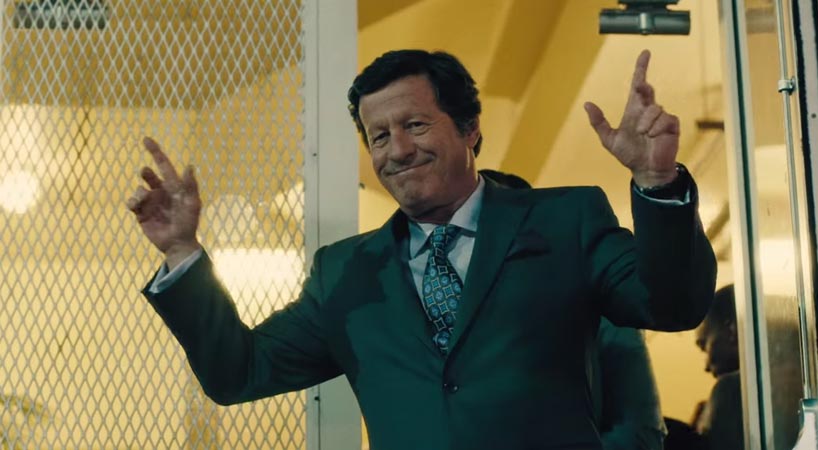
Our Brand Is Crisis Movie Film Trailers Reviews Movieholic Hub

This approach begins to work, and Castillo makes up some ground in the polls, but there’s a problem: it won’t be enough. Jane advocates starting a negative campaign, looking for dirt on Rivera, anything that will put him in a bad light. But Castillo is resistant to the idea, and refuses to do it. Behind his back, Jane has some flyers printed that make it seem Rivera has launched his own negative campaign. Castillo relents, and Jane digs deep into Rivera’s background, uncovering a public funding fraud related to the purchase of some cars. It proves to be the first salvo in a battle between Jane and Candy that in time, changes the whole complexion of the campaign, and gives Castillo a fighting chance of winning the election.

For anyone watching Our Brand Is Crisis who finds themselves suffering an attack of déjà vu, it will be because this story has been covered before (with the real people concerned) in the 2005 documentary of the same name. Covering the 2002 Bolivian Presidential elections, and the involvement of US consulting firm Greenberg Carville Shrum, Rachel Boynton’s timely examination of political campaign tactics was both illuminating and worrying in equal measure. Arriving ten years on, and without the benefit of those elections to give it some much-needed context, Our Brand Is Crisis feels out-of-sorts with itself from the moment it touches down in Bolivia and tries to develop its comedy credentials by having Jane look ill and barf into a wastebasket.

It’s at this point that anyone expecting a political satire will begin to suspect they’re going to be disappointed. And so it proves, with the movie’s comic highlight involving the sad demise of a llama (so not really much of a highlight). Elsewhere there’s a nervy, whingy performance from McNairy that is meant to provide further humour but looks and sounds out of place, and the kind of uncomfortable banter between Jane and Candy that in any other workplace would have seen him fired for sexual harrassment. It’s hard to see why such obvious attempts at comedy were included in the movie, as all they do is interrupt the more carefully orchestrated drama, and detract from the somewhat clumsy message the movie is promoting (basically, never trust a politician or the people who work for him/her).
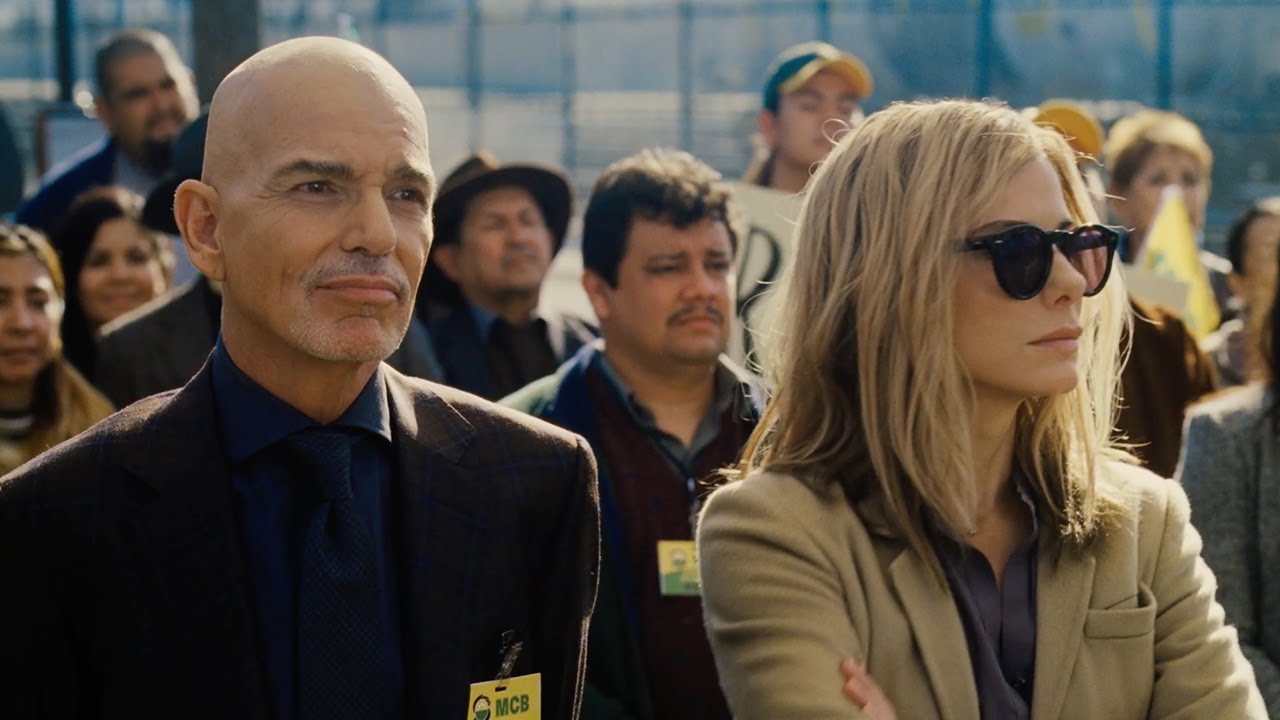
OBIC - scene1

That said, the movie does get its point across quite succinctly at times. Castillo has a quiet exchange on the campaign bus with a naïve young supporter called Eduardo (Pacheco) in which he spells out exactly what’s going to happen if he’s elected, and by inference, what it will mean for Bolivia. It’s played with due restraint by the two actors and is the movie’s most plainly shot scene, a simple two-hander (with cutaways to Jane) that also shows just how good the movie could have been if the effects of political expediency had been shown rather than the lengths that some consulting teams will go to to maintain that expediency. And in its own deceptive way it illustrates clearly the difference between a campaign promise and an elected imperative.

Again, it’s the political dirty tricks that become the focus, from the revelation that Castillo had an affair (and which Peter Straughan’s script never manages to make as devastating as it’s meant to be), to the ridiculous notion that Rivera has Nazi sympathies. The game of political oneupmanship between Jane and Candy is also one of the movie’s less convincing sleight of hands, while the impromptu visit by Jane to Eduardo’s home (and which leads to her getting drunk and arrested) merely adds to the notion that the script hasn’t decided what it wants to be: searing political drama, raucous comedy, or mocking satire. In the end it’s none of these. Instead it’s a messy political exposé that fails to tell us anything new about either South American politics or the grubby tactics used by US consulting firms to ensure their candidate’s success.

OBIC - scene3

It does, however, have one great redeeming feature: Sandra Bullock. In a movie that tries too hard and spreads itself too thin (and often in the same scene), Bullock is the through line that the audience can connect and stay with. Beneath her seen-it-all-with-warts-on demeanour and lack of shame at some of the things she devises, Jane is a memorable character made all the more memorable for Bullock’s portrayal of her as a media-savvy manipulator with hidden reserves of compassion. There’s a scene at the end that, in the hands of some actresses, would have appeared maudlin and unconvincing. But Bullock nails it with a dazed expression and eyes full of fear for what she’s done. It’s the movie’s strongest, most affecting moment; it’s just a shame that it comes so late in the day.

Developed by George Clooney and his producing partner Grant Heslov, Our Brand Is Crisis was originally meant to be directed by and star Clooney, but as time – and the movie’s development – rolled on, his intended participation dwindled to that of producer. Seeing the movie now this seems like a wise move on his part. Even though Green is a clever, often mercurial director, he’s defeated here by the hit-and-largely-miss script, and as a result he never finds a consistent tone that the movie can adhere to. Away from Bullock, the rest of the cast provide serviceable performances (thanks to some cruelly underdeveloped characters), with only de Almeida showing what can be done with the briefest of outlines. And Thornton, drafted in to give one of his patented Machiavellian opponent roles, does just that – and nothing more.

Rating: 5/10 – an undemanding look at how political campaigns can be manipulated toward a desired outcome, Our Brand Is Crisis lacks dramatic focus and a clear approach to the material; saved by Bullock’s performance, the movie nevertheless struggles to fly when she’s not on screen, and ends up as disappointing as the electoral outcome.


Share this:

  • Share on X (Opens in new window) X
  • Share on Facebook (Opens in new window) Facebook
  • More
  • Print (Opens in new window) Print
  • Email a link to a friend (Opens in new window) Email
Like Loading...

Mini-Review: Freeheld (2015)

22 Monday Feb 2016

Posted by dullwood68 in Movies

≈ 1 Comment

Tags

Cancer, Civil partnerships, Drama, Ellen Page, Equality, Freeholders, Julianne Moore, Laurel Hester, Michael Shannon, New Jersey, Ocean County, Pension rights, Peter Sollett, Police, Review, True story

Freeheld

D: Peter Sollett / 103m

Cast: Julianne Moore, Ellen Page, Michael Shannon, Josh Charles, Steve Carell, Dennis Boutsikaris, William Sadler, Tom McGowan, Kevin O’Rourke, Luke Grimes, Gabriel Luna, Anthony DeSando, Skipp Sudduth, Mary Birdsong, Kelly Deadmon

When Forrest Gump memorably announced that “life [is] like a box of chocolates. You never know what you’re gonna get”, he probably wasn’t referring to Freeheld, a cliché-ridden recounting of the struggle endured by New Jersey police detective Laurel Hester (Moore) as she tried to get her pension benefits assigned to her same-sex partner, Stacie Andree (Page). Hester had an aggressive form of lung cancer that spread to her brain, and she wanted her pension paid to Stacie so that she would be able to remain in their home.

Freeheld - scene1

But a combination of political and gender prejudices decreed that Stacie would not be entitled to those benefits, even though the Ocean County board of freeholders assigned to make that decision had been recently empowered to do so by the state legislature. Instead they rejected Laurel’s claim and, if you believe this version of events, remained stubborn in their rejection of her claim for some time afterward, and in the face of mounting protests and media criticism.

Now, if you’ve read this far – or have already seen the movie – it won’t be much of a stretch to realise that Laurel got her wish and Stacie got her benefits. But it’s the way in which this story is told that is likely to anger viewers, more than the intransigence of the board. With its bland, TV-movie-of-the-week visual style, and numbingly rote storytelling, Freeheld has all the appeal of televised jury service (and where the case is a minor one). It ticks all the boxes as it wends its weary way to its foregone conclusion: Hester’s concealment of her lesbianism from her colleagues and police partner Dane Wells (Shannon); the way in which this concealment affects her relationship with Stacie; Wells’ disappointment when he finds out (that Laurel didn’t tell him ages ago); the discovery of a lump that “isn’t that serious”; the male police detective (played by Grimes) who’s also gay and can’t/won’t show his support; Stacie’s determination to believe that Laurel will beat her cancer; one of the board (Charles) acting as its moral conscience; and the discovery of information about the board that will help in getting them to overturn their decision.

Freeheld - scene3

Freeheld is a movie that lacks joy and passion, and thanks to uninspired direction from Sollett, it’s even hard to be outraged by the board’s spurious reasons for their decision. Even Moore isn’t as engaged in her character as you’d expect her to be (perhaps she realised early on there wasn’t a lot of depth there), and Page plays Stacie as either grouchy or permanently upset with no room in between. Shannon looks uncomfortable throughout, Charles looks like he’s trying to solve a difficult maths problem, Grimes wears a guilty-through-shame expression that should be a giveaway to his colleagues but isn’t, and there’s an irritating, over-the-top performance by Carell as a gay rights activist that both enlivens the movie and highlights how drab it is elsewhere.

Rating: 4/10 – despite the movie’s attempts to retell an important milestone in the struggle for equal rights, Freeheld is a lazy attempt to do so, and fails to convince in almost every department; for a better overview of Laurel Hester’s story, track down Freeheld (2007), an Oscar-winning documentary short that doesn’t deal in awkward sentimentality or by-the-numbers moralising.

Share this:

  • Share on X (Opens in new window) X
  • Share on Facebook (Opens in new window) Facebook
  • More
  • Print (Opens in new window) Print
  • Email a link to a friend (Opens in new window) Email
Like Loading...

Goodnight Mommy (2014)

21 Sunday Feb 2016

Posted by dullwood68 in Movies

≈ Leave a comment

Tags

Drama, Elias Schwarz, Horror, Lukas Schwarz, Mother, Review, Severin Fiala, Susanne Wuest, Thriller, Twins, Veronika Franz

Goodnight Mommy

Original title: Ich seh ich seh

D: Veronika Franz, Severin Fiala / 100m

Cast: Lukas Schwarz, Elias Schwarz, Susanne Wuest, Hans Escher, Elfriede Schatz, Karl Purker

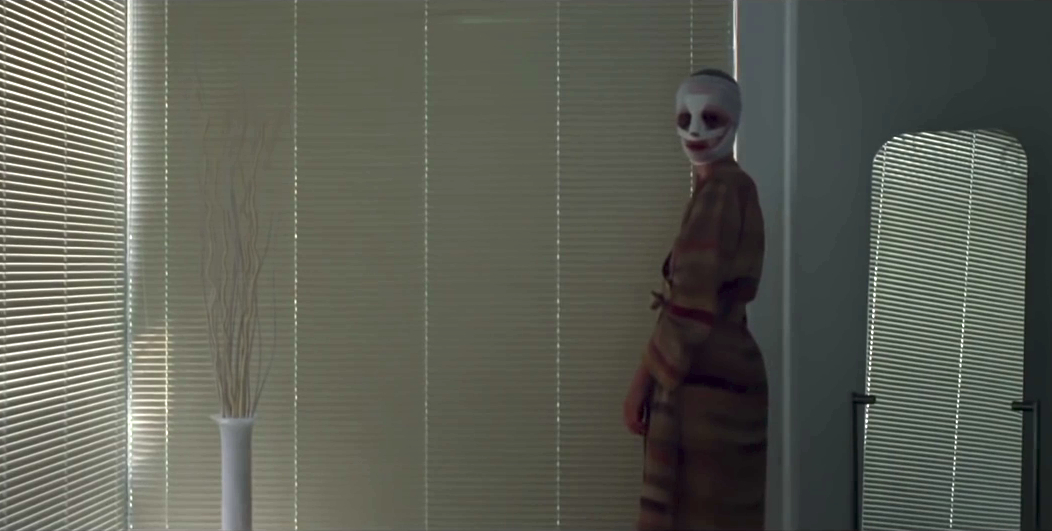
At an isolated lakeside property surrounded by woods and cornfields, two nine year old boys, twins, play freely while they await the return of their mother who has been in hospital following an accident. When she returns home they are dismayed to find she has had facial reconstructive surgery, and her features are hidden under a swathe of bandages. Her mood and attitude have changed and she’s no longer the kind-hearted mother they remember. She insists on imposing some strict house rules in order to aid her recovery, and because of a perceived slight, refuses to acknowledge the presence of one of the boys, Lukas.

Lukas and his brother, Elias, begin to feel uneasy around their mother, and soon they’ve convinced themselves that the woman who has come home from the hospital isn’t their mother at all but an imposter. When they rescue a cat and bring him home, it’s not long before they find him dead in the basement. Convinced their “mother” is responsible they begin to form a plan of resistance. As they ignore her wishes and behave inappropriately around her, she becomes less and less tolerant, to the point of locking them in their room. The boys challenge her more and more, even telling her they want their mother back. This leads to increased tension in the house, tension that is relieved for a short period when their “mother” is able to remove her bandages and she looks like her old self.

By now though, Elias and Lukas have convinced themselves completely that she is an imposter, and they take steps to prove their theory. When she wakes one morning she finds herself tied to her bed and her two sons determined to learn the truth – whatever the cost.

GM - scene2

Goodnight Mommy begins in a cornfield, with Lukas and Elias playing hide and seek amongst the rows. It’s the epitome of a carefree, spirited childhood, as we follow the two boys on their adventures and explorations of the local countryside. It’s almost idyllic, beautifully shot (on glorious 35mm) by DoP Martin Gschlacht, and with only a shot of the two boys disappearing into a disused tunnel to give any indication that their childhood is anything but unspoiled and bucolic. When they return to their brightly lit, glass-fronted home with its open-plan spaces and minimalist furniture, it seems as if the house is, for them, an extension of the world they play in outside. Excited to see their mother again, they rush to her bedroom, and in the moment it takes to acknowledge her appearance, their picturesque existence comes to an end.

What follows is less about innocence lost as innocence corrupted from within, as Elias and Lukas take increasingly disturbing steps in their quest to find the truth about their mother’s identity. With no one to correct them – their father and mother have separated as a result of the accident – and with their imaginations becoming ever more fervid and distressing, the twins create their own cauldron of oppression. When they take matters too far, and their methods in finding the truth become too harrowing, their dispassionate features and lack of compassion become even more frightening than the idea that their mother really is some kind of evil döppelganger.

GM - scene1

The movie toys with this idea, that there’s a matriarchal cuckoo in the nest, for quite some time, with the mother behaving oddly while her sons are out of sight and earshot, and thanks to some cleverly inserted dream sequences that are played out in the boys’ own psyches (one such sequence, involving a cockroach, will have some viewers wishing they were watching something altogether more wholesome). As the movie pulls the audience firmly in this direction, and litters the narrative with clues that something truly isn’t right with the mother, it distracts cleverly and persuasively from the real horror: that something truly isn’t right with the children.

By the time viewers work this out – and some may do so quite early on – it’s far too late, and the movie has sunk its claws in and won’t let go. Thanks to two superb performances from real-life twins Elias and Lukas Schwarz, the blandness of their appearance, and their downplayed facial expressions hide a growing menace that sits like a suffocating cloak around their shoulders. As they carry out newer and more emasculating “procedures” on their “mother”, the movie attains a level of intensity that proves hard to watch, and where the drama so far has been patiently heightened and maintained, it now becomes the kind of horror movie where to look away is no guarantee of relief. One mealtime sequence becomes so excruciating to watch, thanks to the children’s lack of foresight, that their casual, matter-of-fact response is even more horrifying.

GM - scene3

Matching the Schwarzes in the acting stakes is Wuest, whether she’s looking grim and monstrous behind her bandages, or later when she’s restored to her former good looks. When further doubt to her identity is added to the mix late on, Wuest still manages to tread the line of providing clarity while also maintaining the uncertainty of her character’s true nature. It’s a delicate balancing act, but one that she pulls off with aplomb. All three are helped immeasurably by the writing-directing team of Franz and Fiala. Their script, and the confident way in which they’ve developed it visually, is refreshingly spare, and yet it’s also possessed of a depth in terms of the characterisations and the psycho drama being enacted on screen that elevates the material to unexpected heights.

The movie is also paced to perfection, with scenes allowed to play out for maximum effect, and to enhance the sense of impending doom that permeates the narrative with every inevitable development. Franz and Fiala have worked hard to create a private world for the story to take place in, and interior worlds for the boys that feed off of and sustain that original private world. It all adds up to one of the most original and nerve-racking horror movies of recent years.

Rating: 9/10 – anchored by a trio of superb performances, and a script that doesn’t shy away from showing the consequences of imaginations left unchecked, Goodnight Mommy has a clammy, skin-crawling effect that’s hard to shake off; with striking imagery and a tremendous sound design to add to the movie’s sense of mounting terror, this is satisfying in ways you really shouldn’t want it to be.

Share this:

  • Share on X (Opens in new window) X
  • Share on Facebook (Opens in new window) Facebook
  • More
  • Print (Opens in new window) Print
  • Email a link to a friend (Opens in new window) Email
Like Loading...

The Condemned 2 (2015)

20 Saturday Feb 2016

Posted by dullwood68 in Movies

≈ 1 Comment

Tags

Action, Drama, Drones, Eric Roberts, Explosions, Gambling, New Mexico, Randy Orton, Review, Roel Reiné, Sequel, Steven Michael Quezada, Thriller

The Condemned 2

D: Roel Reiné / 90m

Cast: Randy Orton, Eric Roberts, Wes Studi, Steven Michael Quezada, Bill Stinchcomb, Alex Knight, Dylan Kenin, Michael Sheets, Morse Bicknell

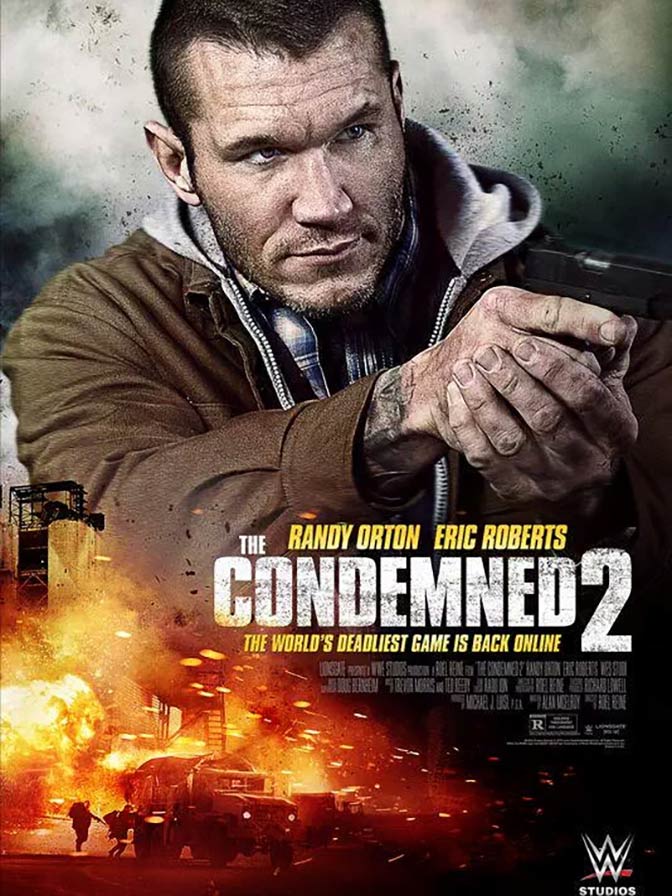
The world of The Most Dangerous Game gets another hackneyed, played out already diversion in the form of The Condemned 2, yet another WWE Films exercise in low budget stupidity. You can imagine the meeting where such a movie is discussed and agreed: men in sharp suits sitting around asking themselves which WWE superstar they should employ in their latest cheaply produced action thriller, and which already expired concept should they put him in. And though Randy Orton has already paid his dues in 12 Rounds: Reloaded (2013), someone clearly felt that one embarrassing WWE movie on his CV wasn’t enough.

But what further movie to shoehorn him into? And then someone had the idea, the creative challenge that would make all the difference, and that would show a solid commitment to enhancing Orton’s onscreen career: a sequel to a movie made eight years before, and which had an actual budget and a degree of in-built credibility with its casting of “Stone Cold” Steve Austin and Vinnie Jones. Yes, someone said, let’s make a sequel to The Condemned (2007).

But then someone else must have interrupted all the cheering and the backslapping and the hearty congratulations for solving such a weighty issue. And that person must have said, “hang on, before we get carried away, we haven’t got the same kind of money to make a sequel that we did the original”. And everyone would have nodded their heads in agreement, acknowledging that the studio’s run of action movies over the last five years had underperformed spectacularly, and that as a result, budgets had been trimmed to within an inch of a WWE Diva’s waistline. So what to do? Come up with another idea?

TC2 - scene3

The answer was clearly no. The answer was to scale back the production values of the original – obviously – and scale down the size of the original’s plot. Instead of a nationally televised manhunt taking place on a remote island, and Jones’s twisted psycho hellbent on killing Austin’s noble hero, how about a twisted psycho putting pressure on the team of an ex-bail bondsman to take part in hunting him through the dusty arroyos of New Mexico? Cue more nods of agreement, a phone call to Orton’s agent, the drafting of a production schedule, and hey presto! one more movie out of the starting (Lions)gate.

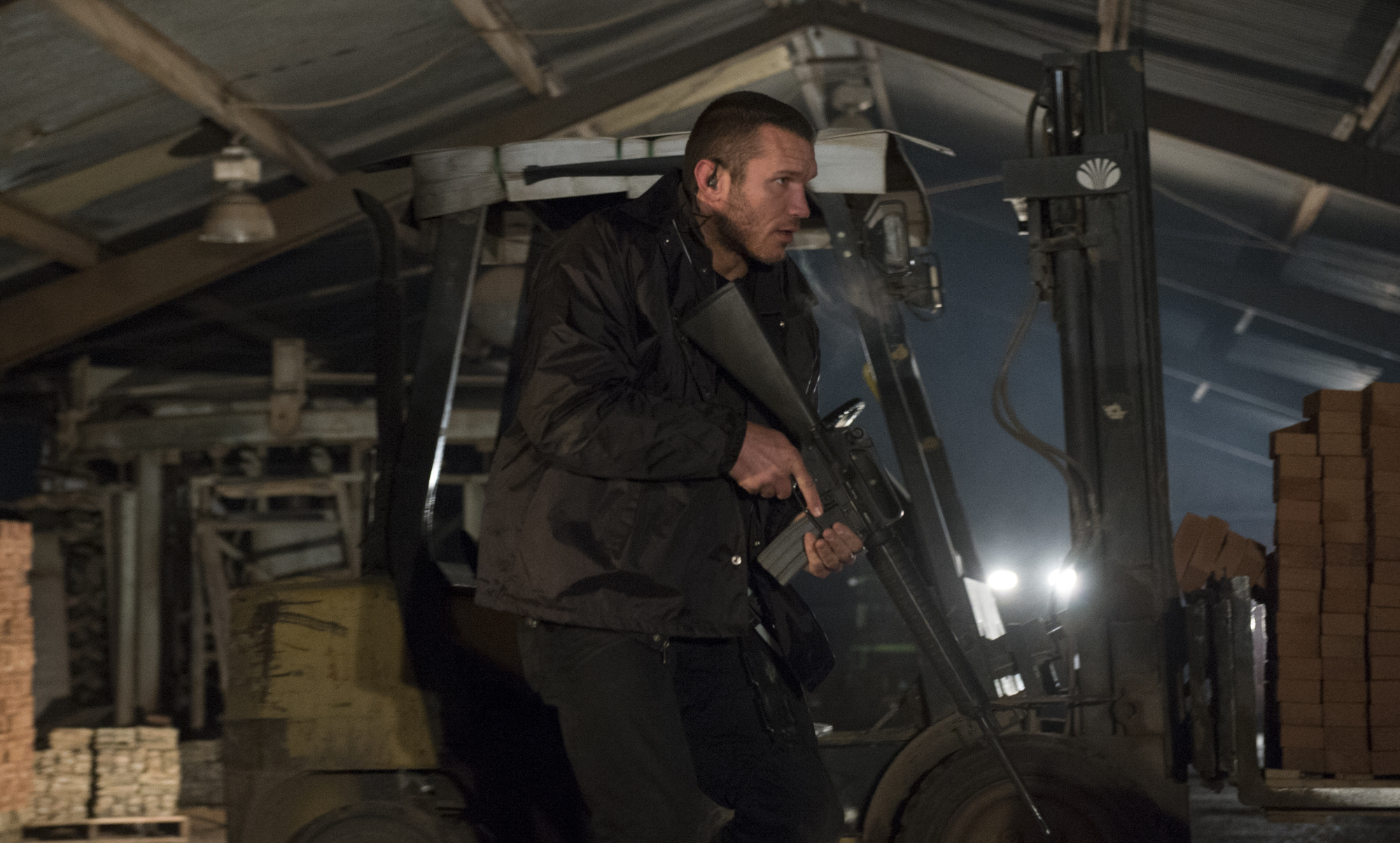
As quickly and as cheaply made as The Condemned 2 is though, it’s still a masterpiece in comparison to some of WWE Films’ other releases – Knucklehead (2010), and Leprechaun: Origins (2014), yes, we’re talking about you guys. But it does push the boundaries of credibility from the very start, as Orton and his team of heavily armed bail bondsmen infiltrate the hideout of a very bad man indeed (played by Studi), who’s worth a million if they bring him in alive. After much gunplay and a standoff between Orton and Studi, Orton kills the very bad man and is subsequently convicted of involuntary manslaughter (but he’s given a two year suspended sentence, so that’s okay). But Orton quits the bail business and decides he’s having nothing more to do with guns or criminals or running around in the middle of the night chasing bounties.

Of course, that’s what he thinks. In the meantime, Studi’s second in command, a shifty-looking sleazebag called Raul (Quezada) has set up a bizarre gambling casino in an abandoned industrial plant, where high rollers can bet on the outcome of the latest game in town: hunting the ex-bail bondsman. Having coerced/threatened/blackmailed his team to try and kill Orton, Raul encourages his bloodthirsty clientele to bet heavily on each encounter. But Orton proves unsurprisingly difficult to kill (note to WWE execs: how about that for a movie title?). As he struggles to get to the bottom of why his friends suddenly have murderous intentions toward him, Orton looks perplexed and confused, and often seems to have forgotten he has lines of dialogue. In comparison, while Orton underacts, Quezada takes up the shortfall and overacts like a ramped-up kid with ADHD.

TC2 - scene2

Soon though, Orton finds out what’s going on thanks to one of his team showing some balls, and aided by his father (played by Roberts) and another of his team that he convinces to help him, Orton heads for Raul’s casino-cum-hideout, and against a backdrop of several dozen explosions, comes face-to-face with his nemesis. Yes, it’s not exactly Shakespeare, and nor should it be, but aside from its use of a drone as a way of Raul keeping track of what’s happening with Orton, there’s very very very little that either makes sense or shows any sign of an inventive approach to the material or the narrative. The script is credited to Alan B. McElroy, and if that name rings any kind of a bell, then it’ll be because he wrote Wrong Turn (2003), The Marine (2006), and way back, Halloween 4: The Return of Michael Myers (1988). (You should now have a pretty good idea just how bad the script is.)

Thankfully though, McElroy’s script has been put in the hands of low-budget action movie specialist Roel Reiné, whose recent career has seen him wrestle equally unwieldy storylines and plots to life, and often for WWE Films. One thing Reiné is good at is injecting energy into often tired screenplays. He’s also adept at boosting them by virtue of a visual style that allows for unexpected camera angles during fight scenes, and particularly here, some stunning overhead (drone-PoV) shots that look amazing, and show off the New Mexico landscape to impressive effect. They’re not enough to outweigh the dreary predictability of the script, or the muted performances of the cast (Quezada’s aside – he really needed a moustache to play with to complete the portrayal), but they do add rare moments of sunshine in an otherwise gloomy offering.

TC2 - scene1

There are more WWE movies waiting in the pipeline to be released on an unsuspecting audience, and while there’s no sign that any of them will be better than The Condemned 2, one thing can be taken for granted: they’ll follow WWE Films existing template for making these kinds of movies: take one WWE superstar, add a few fight scenes and a handful of explosions, throw in a psychotic bad guy, and combine all these elements into a less than compelling whole, and on the stingiest budget possible. Next up? Dolph Ziggler and Kane in Countdown (2016). Now how can anyone pass that up?

Rating: 4/10 – there are worse WWE-backed movies out there, but this still takes some explaining in terms of its stitched-together script and performances that make no effort to connect with each other; not even strictly a sequel to the original, The Condemned 2 ambles awkwardly to its pyrotechnic-heavy conclusion, and provides further evidence that rather than enhancing its superstars’ careers, these kind of outings seem more of a punishment than a reward for their work in the ring.

Share this:

  • Share on X (Opens in new window) X
  • Share on Facebook (Opens in new window) Facebook
  • More
  • Print (Opens in new window) Print
  • Email a link to a friend (Opens in new window) Email
Like Loading...

She Killed in Ecstacy (1971)

19 Friday Feb 2016

Posted by dullwood68 in Movies

≈ Leave a comment

Tags

Drama, Ewa Strömberg, Fred Williams, Howard Vernon, Jesús Franco, Medical committee, Murder, Paul Muller, Revenge, Review, Seduction, Sie tötete in Ekstase, Soledad Miranda, Suicide

She Killed in Ecstacy

Original title: Sie tötete in Ekstase

D: Jesús Franco (as Frank Hollmann) / 80m

Cast: Soledad Miranda (as Susann Korda), Fred Williams, Paul Muller, Howard Vernon, Ewa Strömberg, Horst Tappert, Jesús Franco

In a career that began with the documentary short El árbol de España (1957), Jesús Franco (better known as Jess) made over two hundred movies. He was a fiercely independent movie maker who worked quickly and never went over-budget. This allowed him to make the movies he wanted to make, and though the general conception is that he made a lot of awful exploitation movies from the late Sixties until his death in 2013 – his last movie was Revenge of the Alligator Ladies (2013) – there are those who would claim Franco as an auteur. It’s true he wrote and directed a lot of his movies, and was also a cinematographer, an editor, a composer, and sometimes an actor, and his movies are recognisable for their visual aesthetic (an ethereal picture postcard quality), but Franco’s style is often his own worst enemy. When watching his movies, there’s a distinct feeling that what happens doesn’t matter, that as long as the appropriate atmosphere is created – a kind of heightened reality – then everything else is of secondary importance. This can lead to many of his movies proving difficult to watch, and sometimes they’re like an endurance test.

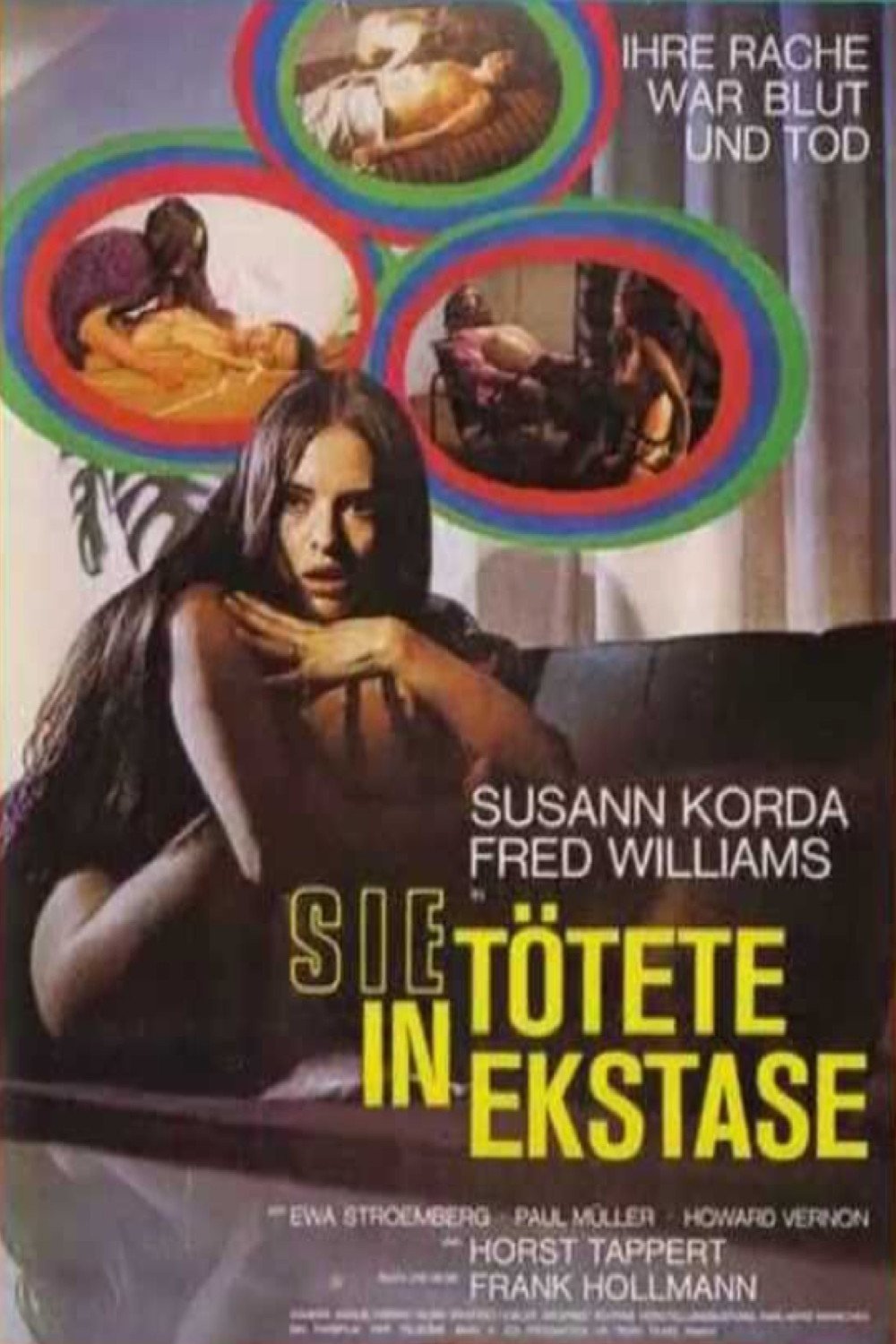
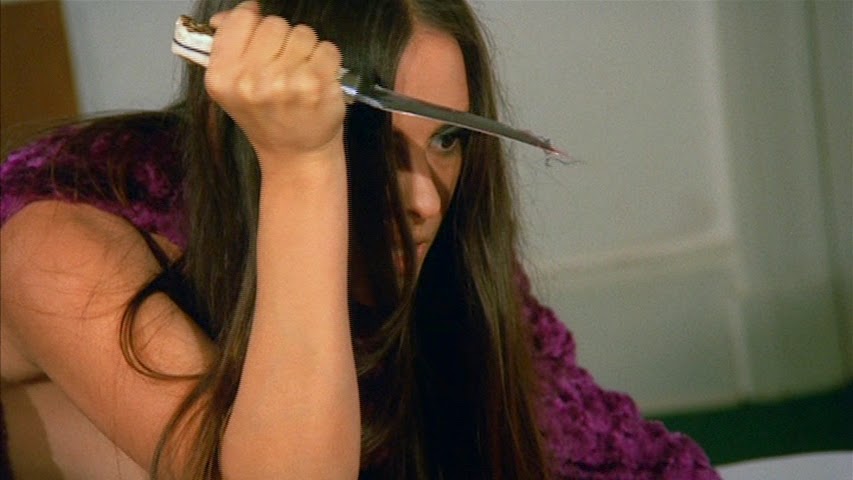
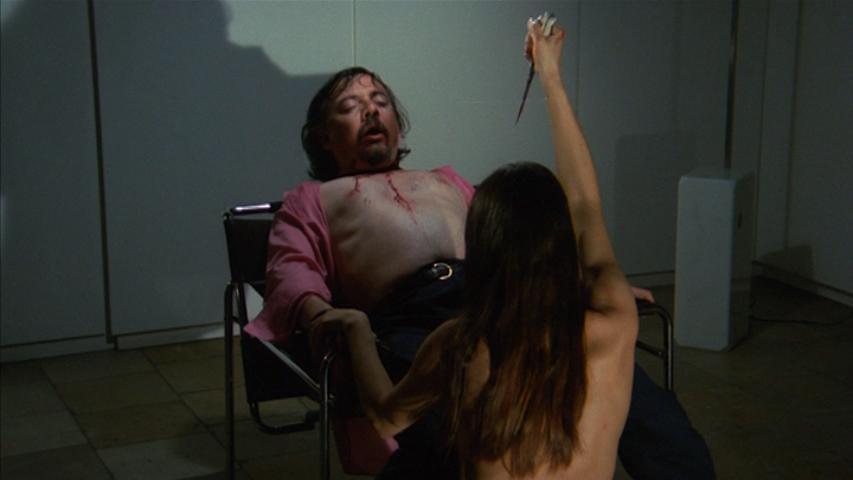
Fortunately, She Killed in Ecstacy is one of his more well-known and accessible movies. It’s also got a more straighforward plot than usual, as the wife (Miranda) of a disgraced doctor (Williams), sets out to punish the board members who have rejected her husband’s work – something to do with human foetuses and growth hormones – and banned him from medical practice for life. The doctor, plagued by the accusations made by the board, and driven to despair, kills himself. His wife becomes an avenging angel, and one by one, she aims to have her revenge.

SKIE - scene2

But being a Franco movie, she does so using sex. She seduces the first member of the board (Franco regular Howard Vernon) in his hotel room before killing and then emasculating him. She leaves a note warning the other three that they too will suffer a similar fate, and this is found by another board member (played by Franco himself). He warns his colleagues and even tells them that a woman was involved. However, this doesn’t stop the doctor’s wife from pursuing her revenge. Next, she seduces and murders the female member of the board (Strömberg), suffocating her with a plastic cushion while in the throes of passion. She leaves a further note.

The last member of the board (Muller) goes to the police with his fears and tells the investigating officer (Tappert) of his suspicion that the murders are linked to the doctor’s disgrace. The officer is unconcerned and dismissive. And sure enough the board member finds himself being pursued by the doctor’s wife, trailed and followed through a series of encounters that lead to a third seduction and his murder at the wife’s hands. This now leaves one remaining board member. Can the doctor’s wife complete her mission before the police find and stop her?

Shot in a spare, otherworldly style by Franco in his choice of locations, all isolated and with extraneous people removed – the board members’ hotel is devoid of any staff – She Killed in Ecstacy is one of those movies that exerts a strange fascination. Its basic revenge plot is bolstered by some odd narrative diversions, such as the doctor’s corpse laid out in bed for his wife to have conversations with, and the initial meeting between the doctor’s wife and the female board member where the wife is reading a John le Carré novel in English. Strange quirks and decisions like these add a further element of the unusual to what is already in some respects a strange movie (such as the doctor’s work on human embryos having, apparently, been conducted in his lounge at home).

SKIE - scene4

But the strangeness of Franco’s narrative fits perfectly with his approach to the material, keeping the viewer slightly off-balance, and highlighting the increasingly disturbed actions of the doctor’s wife. Until her untimely death in 1970, Miranda had become one of Franco’s muses, and their work together showcases both her skills as an actress, and Franco’s as a director; for some reason they brought out the best in each other. Here, the actress gives a terrific performance that shows the character’s pain and suffering, as well as the effects her violent activity begin to have on her. It’s not quite the sort of depth of character that you’d expect from a Franco movie, but it’s there nonetheless, and it elevates the movie out of its standard low-budget formula.

But there are still plenty of Franco’s trademark idiosyncracies for fans to revel in. His use of the zoom lens at odd, inexplicable moments is there, as is his shooting through glass or other translucent materials (the plastic cushion). At one point, Miranda positions a wine glass directly in front of the camera (and appears to break the fourth wall while doing so), so as to obscure her seduction of the female doctor. These are just a couple of the things that Franco litters his movies with, and while some viewers may find them off-putting and annoying, once you’ve seen a few of Franco’s movies, they become less intrusive.

SKIE - scene3

Miranda’s performance aside, the rest of the cast indulge in varying degrees of histrionics, with Muller coming closest to the usual kind of performance you’d expect. Even Franco, not always the best cast member in his movies, displays a coolness of character that is broadly effective, and Tappert’s unhurried, almost frivolous portrayal works as close to comic relief as you’re likely to get. But in the end, these are bonuses, as the performances aren’t the main attraction of a Franco movie. It’s the man himself, and discovering what new perpsective on his somewhat perverse world view is going to be explored on each particular occasion that makes viewing his movies so worthwhile in the end.

Rating: 7/10 – in usual terms this is no masterpiece, but amongst Franco’s work this is easily one of his best, a brooding, provocative revenge movie that proves unexpectedly rewarding; as an entry level movie to Franco’s ouevre, She Killed in Ecstacy is a great place to start, and better still, works well on its own.

Share this:

  • Share on X (Opens in new window) X
  • Share on Facebook (Opens in new window) Facebook
  • More
  • Print (Opens in new window) Print
  • Email a link to a friend (Opens in new window) Email
Like Loading...

The Hateful Eight (2015)

18 Thursday Feb 2016

Posted by dullwood68 in Movies

≈ 1 Comment

Tags

Bounty hunter, Bruce Dern, Demián Bichir, Drama, Jennifer Jason Leigh, Kurt Russell, Michael Madsen, Minnie's Haberdashery, Mystery, Quentin Tarantino, Review, Samuel L. Jackson, Thriller, Tim Roth, Walton Goggins, Western, Wyoming

The Hateful Eight

D: Quentin Tarantino / 167m

Cast: Samuel L. Jackson, Kurt Russell, Jennifer Jason Leigh, Walton Goggins, Tim Roth, Demián Bichir, Michael Madsen, Bruce Dern, James Parks, Channing Tatum

It’s post-Civil War Wyoming, and a stagecoach trying to outrun a fast approaching snowstorm (in already treacherous weather) is stopped by an unexpected encounter with a bounty hunter, Major Marquis Warren (Jackson), stranded on the road to the nearest safe haven, a staging post named Minnie’s Haberdashery. On board the stagecoach is another bounty hunter, John “The Hangman” Ruth (Russell) and his prisoner, Daisy Domergue (Leigh), heading for the town of Red Rock so she can face trial. Once bona fides are established between the two men, Warren is allowed to journey on aboard the stagecoach. Later they pick up another stranded man, Chris Mannix (Goggins), who tells them he’s also heading to Red Rock where he is to take up the post of sheriff.

At Minnie’s Haberdashery, they find that an earlier stagecoach has taken shelter there, and there are four men waiting out the impending snowstorm. One is a Southern general, Sanford Smithers (Dern), who’s come to Wyoming in search of his missing son. Another is Joe Gage (Madsen), a cowboy heading home after being away on a lengthy cattle trail. The third introduces himself as Oswaldo Mobray (Roth), on his way to Red Rock to act as hangman should Daisy Domergue be found guilty at her trial. And then there’s Bob (Bichir), a Mexican who tells Warren that Minnie and her husband, Sweet Dave, have gone to see her mother, and that they’ve entrusted the upkeep of the staging post to him. But Warren is unconvinced.

Once everyone is inside and introduced to each other, Ruth is quick to make it clear that he believes at least one person there isn’t who he says he is, and that it’s likely they’re going to try and free Daisy (though he doesn’t say why, or how he knows). Warren believes him, and they agree to join forces and keep an eye on the other men. But things begin to go wrong when Warren recognises Smithers, and he realises why the old man is there, and so far from home.

THE - scene1

The eighth movie by Quentin Tarantino is ostensibly a Western, but thanks to its writer/director’s penchant for being a movie magpie, it’s also a thriller, a revenge drama, an old dark house-style mystery, and yet another movie where he assembles a great cast only to give preference to some – Jackson, Russell, Goggins – while neglecting others – Leigh, Bichir, Madsen. That Tarantino wants to stuff his movie with references to other movies has always been a part of his movie making raison d’être, so it shouldn’t come as any surprise that The Hateful Eight isn’t just a Western. But this time around, the end result is a movie that struggles to find its identity, and thanks to the novel-style approach of Tarantino’s script – it’s made up of six Chapters – it feels much more artificial than it should be.

As Tarantino nudges along his characters in the wake of Jackson’s central character, and takes in issues of racism and post-War guilt, and a very occasional stab at the morality behind the execution of women, it becomes clear that these characters are mere cyphers, lacking in development and free from any real, appreciable insight into their motives. Given this lack of investment by Tarantino’s script, and despite the detailed and often hypnotic rhythms of the dialogue he grants them, it’s left to his very talented cast to make up the shortfall. Some achieve this with aplomb – Goggins in particular – but even the likes of Russell and Leigh can’t elevate the shallow nature of their characters. Russell bellows like an absurdist bully, while Leigh at one point is reduced to the kind of playground boasting that was outmoded even in the 1860’s.

Spare a thought then for Tarantino regular Jackson. Having landed the lead role in the movie, and been given the kind of back story that most actors would relish getting their hands on (or teeth into), it must have been dispiriting to see the final product and realise that for all the blood and thunder involved, it was all for nought given how the character is treated in the movie’s final chapter. There’s a lot to be said for a movie of this length when it exposes some of its maker’s more crueller narrative decisions and forces its audience to wonder if its wunderkind creator is quite the impressive writer/director he’s reputed to be. And this is where The Hateful Eight is most successful: in showing that the hype surrounding Tarantino isn’t always deserved.

THE - scene2

Take one scene in particular, the beginning of Chapter Four, entitled Domergue’s Got a Secret. Unable to introduce a major plot development in any other way (apparently), Tarantino resorts to the use of an offscreen narrator (voiced by himself) who not only explains what Daisy’s secret is, but clearly signposts for those in the audience who may be hard of understanding, what this means in terms of what follows. It’s like someone stopping a theatre production of Macbeth and stepping forward to explain that when Shakespeare says Macbeth can’t be “killed by man born of woman” he actually means he can be killed by someone born via Caesarean. Got it? Then let’s move on.

From there on The Hateful Eight swiftly unravels in a welter of violence and bloodshed that throws out all the groundwork made to get this far, and concentrates instead on bumping off its cast of characters. But any fascination or sympathy the viewer may have had for anyone is eroded by Tarantino’s decision to go for a bloodbath rather than a tense showdown. And then there’s the final chapter, so awkward and clunkily written that the viewer can’t help but wonder if Tarantino didn’t know how to end his movie, and settled on the first thought that came to him – and then didn’t even bother to polish the finished script. For once, Tarantino relinquishes control over the material, and the camerawork by Robert Richardson – up til then one of the few consistent positives about the movie – is undermined by the kind of reckless scissor-happy editing that you’d expect from someone having to deal with far less filmed material and an impossible deadline (and the movie’s editor, Fred Raskin, is a much better editor than that – check out his work on another 2015 Western, Bone Tomahawk, for proof).

THE - scene3

When all is said and done, The Hateful Eight isn’t a movie that works; at least, not entirely. If anything, the movie never proceeds to anywhere successful once Chris Mannix boards the stagecoach and they arrive at Minnie’s Haberdashery. Up til then, Tarantino does what he does best: he introduces his characters through his trademark intricate dialogue, and he sets the scene for the rest of the movie. But once in Minnie’s Haberdashery, the plot has to take over, and it soon runs out of steam. The addition of a flashback in Chapter Five feels even more awkward than the revelation that Daisy has a secret, and makes scant use of Channing Tatum into the bargain.

And finally, as if to rub salt into the movie’s wounds, we have a score by Ennio Morricone that has no impact throughout, and isn’t in any way memorable (there are times when it doesn’t even feel suited to the material). When your favourite movie composer can’t even make a difference then you just know that it’s not going to work. Sometimes – and this applies to anyone who writes and directs their own movies, or who have carte blanche from the studio that writes the cheques – having an idea isn’t enough. And building on that idea isn’t enough. And writing a screenplay isn’t enough. Sometimes you just have to let an idea go. Often it’s the kindest thing you can do for everyone.

Rating: 6/10 – narrative glitches aside, Tarantino’s eighth movie proves lacklustre both in terms of its visuals and its attention to its characters, leaving the viewer without anyone to sympathise with or warm to; The Hateful Eight is also the first of the writer/director’s movies to feel incomplete in terms of his investment in the project, and while he may argue otherwise, there’s a distance between him and the final product that hasn’t been there in any of his other, seven movies.

Share this:

  • Share on X (Opens in new window) X
  • Share on Facebook (Opens in new window) Facebook
  • More
  • Print (Opens in new window) Print
  • Email a link to a friend (Opens in new window) Email
Like Loading...

Room (2015)

13 Saturday Feb 2016

Posted by dullwood68 in Movies

≈ Leave a comment

Tags

Abduction, Brie Larson, Drama, Emma Donoghue, Escape, Jack, Jacob Tremblay, Joan Allen, Lenny Abrahamson, Literary adaptation, Ma, Old Nick, Review, Sean Bridgers

Room

D: Lenny Abrahamson / 118m

Cast: Brie Larson, Jacob Tremblay, Sean Bridgers, Joan Allen, Tom McCamus, William H. Macy, Amanda Brugel

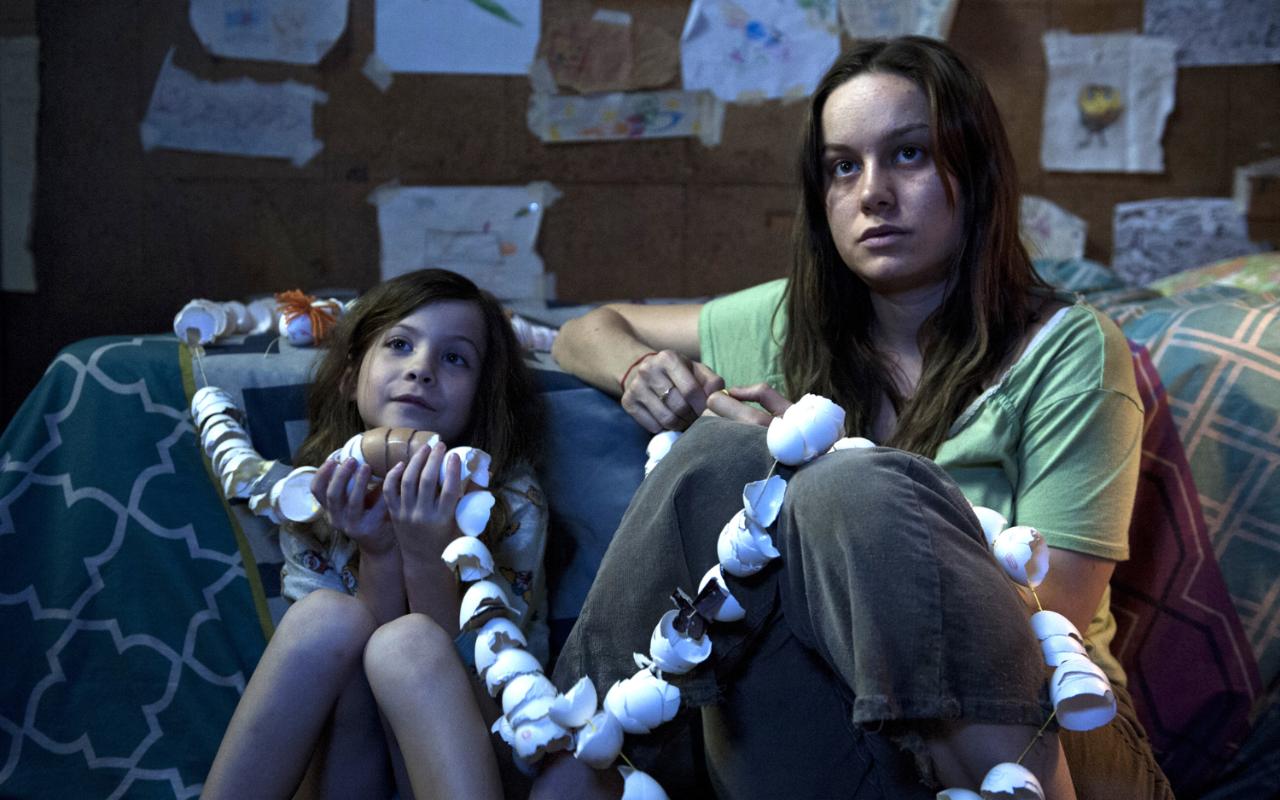
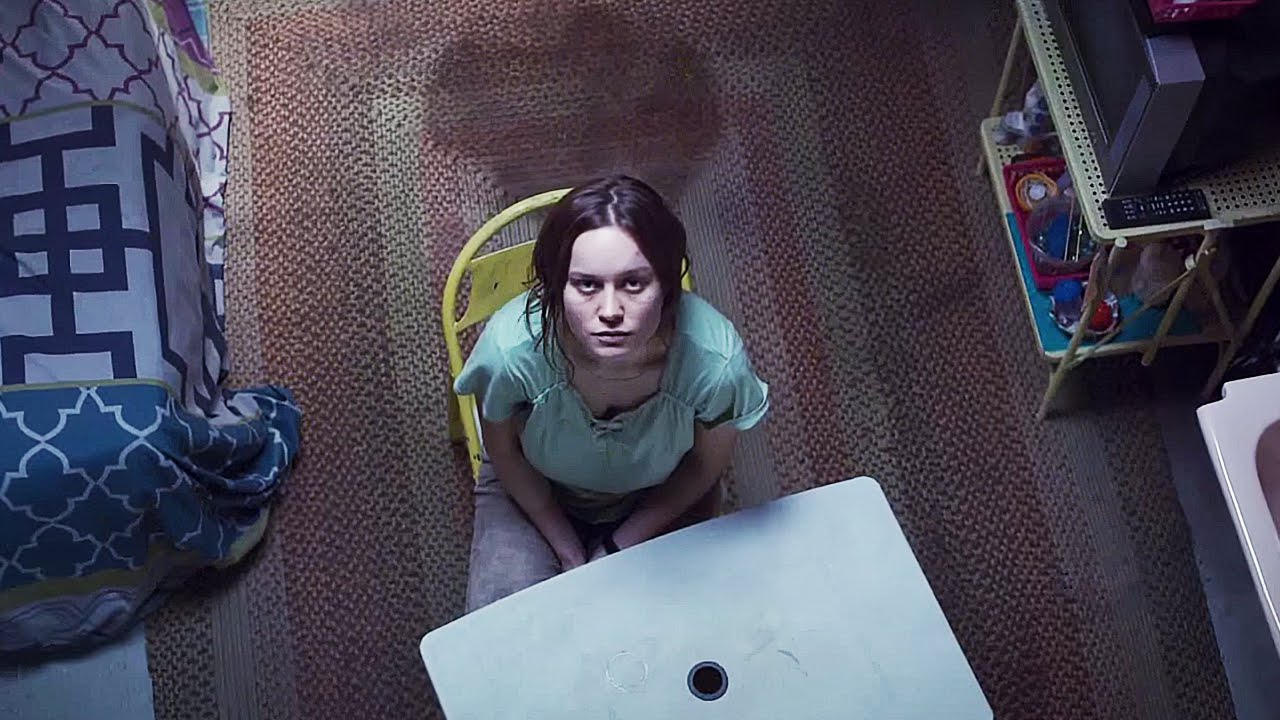
Ma (Larson) and Jack (Tremblay) live in what they refer to as Room, literally a single room environment that they haven’t been outside of since Ma was abducted and brought there seven years before, and Jack’s birth five years ago. Everything in Room is functional or adapted to be functional. There’s a TV but Ma has told Jack that the people and places and things he sees there aren’t real, and that there isn’t any outside world, only space. This doesn’t quite explain the visits of Old Nick (Bridgers) who brings supplies and ensures the power stays on, but as a constant in their lives, Jack doesn’t question his appearances, or why he has to sleep in the closet when Old Nick pays Ma “special attention”.

The door to Room is always locked; Old Nick uses a combination keypad to get in and out, and Ma doesn’t know the code. With Jack now five years old, and of an age where he can begin to understand the concept of a larger world outside Room – even if he doesn’t believe it can be true – Ma decides it’s time for them to leave and begin to lead a normal life. One night when Old Nick pays them a visit she arranges for Jack to appear sick. Old Nick refuses to do anything more than bring more painkillers the next night. But Ma persuades Jack to play dead and be wrapped up in a rug – her idea is that Old Nick will take Jack’s body somewhere to bury it; when he stops his truck at a road junction, Jack is to jump out and run to the first person he sees and ask for help.

Room - scene1

Old Nick is fooled by Ma’s assertion that Jack has died, and takes out the rug with Jack inside it. In the back of Old Nick’s truck, Jack frees himself from the rug, and after a few missed opportunities, jumps from the truck. Old Nick chases him but they encounter a man walking his dog. Seeing that something is wrong, the man challenges Old Nick who throws Jack to the ground and speeds off in his truck. The police are called, and a supportive officer (Brugel) manages to work out from what Jack tells her, just where Ma is. The two are reunited, and at last they can begin to build a new life for themselves.

Without spoiling anything for anyone who hasn’t seen Room yet, it’s a movie of two unequal parts, both in running time and in content. For the first forty-five minutes (approximately), we’re sequestered in Room with Ma and Jack, stuck like they are within four unforgiving walls. But while you might be expected to feel confined or claustrophobic, it’s rarely the case because Ma and Jack don’t see it that way – Jack because he’s never known anything else, and Ma because she’s adapted after seven years to her environment. Neither feels trapped (or at least Ma never gives any indication that she does), and neither appears unhappy with their lot. They have each other, and live in a world that, Old Nick aside, is theirs alone. For Jack it’s a normal life given the parameters Ma has made for him, and for Ma it’s the only life she can have because she wants to protect Jack.

Once Jack and Ma are free of Room, and free to go wherever they wish (once the media has lost interest in them at least), they find themselves confined in a different environment, Ma’s childhood home, now inhabited by her mother, Nancy (Allen) and her new partner, Leo (McCamus) (her father, Robert (Macy) lives abroad, though he returns when he learns Ma – whose real name is Joy – has been rescued). The remaining hour and a quarter finds Joy and Jack finding their way in this new world. There are clever moments of adjustment, such as Jack learning to navigate stairs, but Joy retreats from everyone. And while this may seem like an unexpected turn of events – that Joy should have the most trouble adapting to being back in the “real world” – it’s actually entirely predictable.

Room - scene2

This lessens the drama of the second part, as we watch Jack assimilate slowly but surely, and with much more inner confidence than his mother. While Joy becomes dissociative and withdrawn, Jack begins to blossom, aided by his grandmother and Leo (and a very cute dog called Seamus). In fact, it’s the way in which Jack adapts so quickly to his new life that causes the movie to lose some of the dramatic intensity it’s built up until that point. And with Joy missing for a while, the movie has little choice but to show just how Jack’s bonding with Leo and his grandmother is replacing his formerly rock-solid relationship with his mother. It’s a natural progression, perhaps – Jack makes his first friend during this period as well – but given the vigour and the power of the movie’s first part, it also feels like a bit of a letdown. Just how easily can Jack and Joy be separated from each other? As it turns out, quite easily.

Room has been adapted by Emma Donoghue from her novel of the same name, but what works on the page doesn’t translate so well to the screen. Jack provides random smatterings of narration to explain his feelings, but while these interior monologues work in the novel, here they’re another example of insecurities built in to the script. Far more effective is Jack’s wide-eyed astonishment at seeing an impossibly vast sky as he lies in the back of Old Nick’s truck. Inside Room we’re seeing this insular world almost entirely from Jack’s perspective, and thanks to the strength of the material, and Abrahamson’s masterly direction, these scenes have a depth and a profundity that the outside world lacks. Once we’re out of Room the movie loses its way and never recovers the compelling aspect that propels those first forty-five minutes.

Room - scene3

Thankfully, the two central performances, despite being hamstrung by the change in narrative direction, are uniformly superb. Larson is possibly the finest actress in her age group working today, and here she’s simply breathtaking, finding aspects and nuances of her character that aren’t always apparent from the script, and making Joy’s eventual struggle with “normality” less formulaic than it is as written. Matching her is Tremblay, giving the kind of honest, uninhibited performance that only a child actor can give. He provides such an intelligent, forthright portrayal that the viewer can only look on in wonder at how effortlessly he does it all. Just watch his reactions to being asked questions by the police officer: they’re a mini-masterclass in conflicting emotions forcing themselves past overwhelming shock.

In the director’s chair, Abrahamson (thankfully not calling himself Leonard anymore) excels at portraying the insular world of Room, and maintains an uneasy tension throughout these scenes and Jack’s escape. And with the aid of Danny Cohen’s exemplary camerawork, he allows the viewer to prowl in and around Room as if they were living there too. But once the movie settles down at Nancy’s home, his confidence and control over the material lessens and leads to several scenes lacking any kind of resonance at all. And as a result, newcomers to the story such as Allen and McCamus are left largely to fend for themselves. It’s clear that Abrahamson and Donoghue have forged a good working partnership, but it’s also clear that they couldn’t recognise or overcome the deficiencies that so hurt the movie’s second act. In the end, the relationship the viewer has built up with Ma and Jack in their captivity is ruined by their freedom, and in essence, that’s too much of a price to pay when that relationship has been so immediate and so powerful.

Rating: 7/10 – let down by an injudicious approach to its second part, Room wastes the tremendous amount of goodwill it acquires during the first part, and becomes a movie that sinks under the weight of its own capitulation; however, it does boast two hugely impressive performances from Larson and Tremblay, and an opening forty-five minutes that are among the most remarkable of any movie in recent years – so see it just for them.

Share this:

  • Share on X (Opens in new window) X
  • Share on Facebook (Opens in new window) Facebook
  • More
  • Print (Opens in new window) Print
  • Email a link to a friend (Opens in new window) Email
Like Loading...

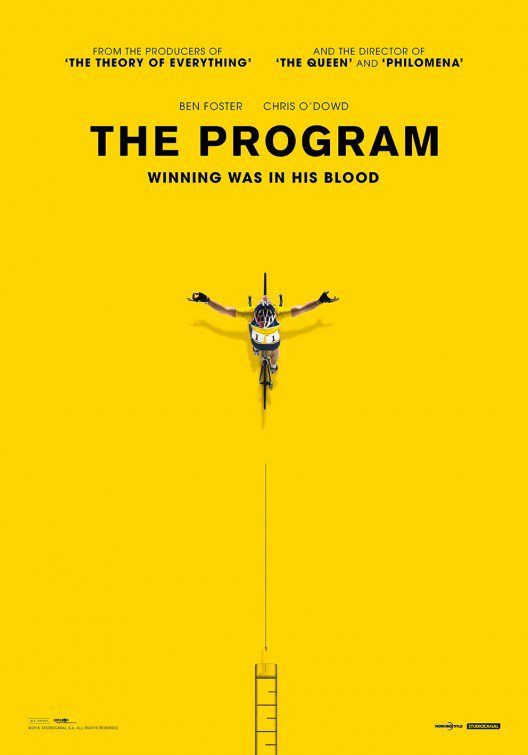
The Program (2015)

12 Friday Feb 2016

Posted by dullwood68 in Movies

≈ 1 Comment

Tags

Ben Foster, Blood doping, Chris O'Dowd, Cycling, David Walsh, Drama, Dustin Hoffman, EPO, Floyd Landis, Jesse Plemons, Journalist, Lance Armstrong, Performance enhancing drugs, Review, Stephen Frears, Team Postal, Testicular cancer, The Sunday Times, Tour de France, True story

The Program

D: Stephen Frears / 103m

Cast: Ben Foster, Chris O’Dowd, Guillaume Canet, Jesse Plemons, Lee Pace, Denis Ménochet, Dustin Hoffman, Edward Hogg, Elaine Cassidy, Laura Donnelly, Peter Wight

In 1993, Irish sports journalist David Walsh (O’Dowd) met and interviewed Lance Armstrong (Foster) for the first time. Armstong was a newcomer to the Tour de France, and when asked by Walsh what he hoped to achieve, the young rider’s answer was, “to finish”. He did, but so far down the field that he made next to no impact on his rivals. Armstorng became aware that his stronger, faster adversaries were able to beat him because their blood was more richly oxygenated than his… and that there was a reason for this.

The reason was a banned substance called erythropoietin – EPO. It was administered by the advising doctor of the team winning all the Tour de France stages (and the tournament over all). Armstrong persuaded the team’s doctor, Michele Ferrari (Canet), to provide him with EPO as well. But before his “treatment” could make a distinct difference in his performance, Armstrong was diagnosed with stage three testicular cancer in October 1996. He underwent an intensive series of treatments that involved the removal of a diseased testicle, four cycles of chemotherapy, and surgery to remove several brain lesions. Amazingly, in February 1997, Armstrong was given the all clear. And he was determined to return to professional cycling.

The Program - scene3

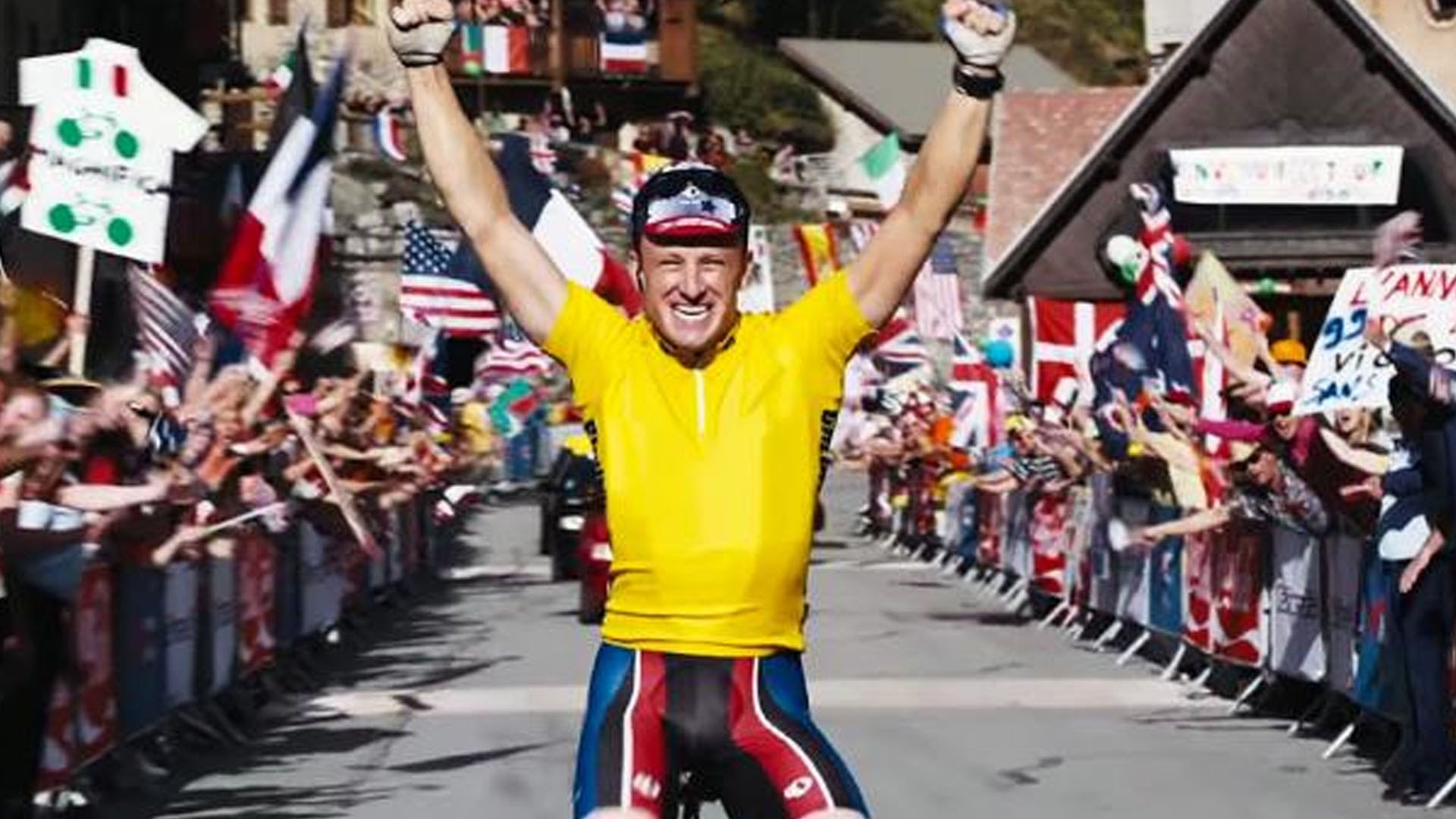
But he had no team to come back to. Eventually he hooked up with the American Team Postal, and soon he was winning races, and impressively so. And two years later, in 1999, he won the Tour de France for the first in what would be seven consecutive years. But while everyone celebrated Armstrong’s tenacious comeback and fierce will to win, it was journalist David Walsh who suspected that something wasn’t quite right. How, he asked, had a middling rider with unimpressive riding times, and after an albeit short battle with cancer, returned to cycling only fitter, faster, and stronger, and been able to win the Tour de France so easily (he won by seven minutes and thirty-seven seconds)? And why wasn’t anyone else asking the question? And, more importantly, why wasn’t anyone asking the question when Armstrong kept winning year after year?

There are many reasons, as it happens, but the main one was that Armstrong became so successful, so famous as the face of cycling, that no one within the industry was able (or willing) to challenge him, even the officials in charge of the Cycling Federation. So powerful was he that when he tested positive for corticosteroids he was able to get his personal team to supply backdated prescriptions for cortisone as a treatment for saddle sores, and so avoid any charges of drug taking. Throughout his career, Armstrong was able to bluff and bully and wriggle his way out of any accusations of drug taking, blood doping or any other form of cheating. He became famous for avoiding the question of whether he’d taken drugs by saying he’d “never tested positive for performance enhancing drugs”.

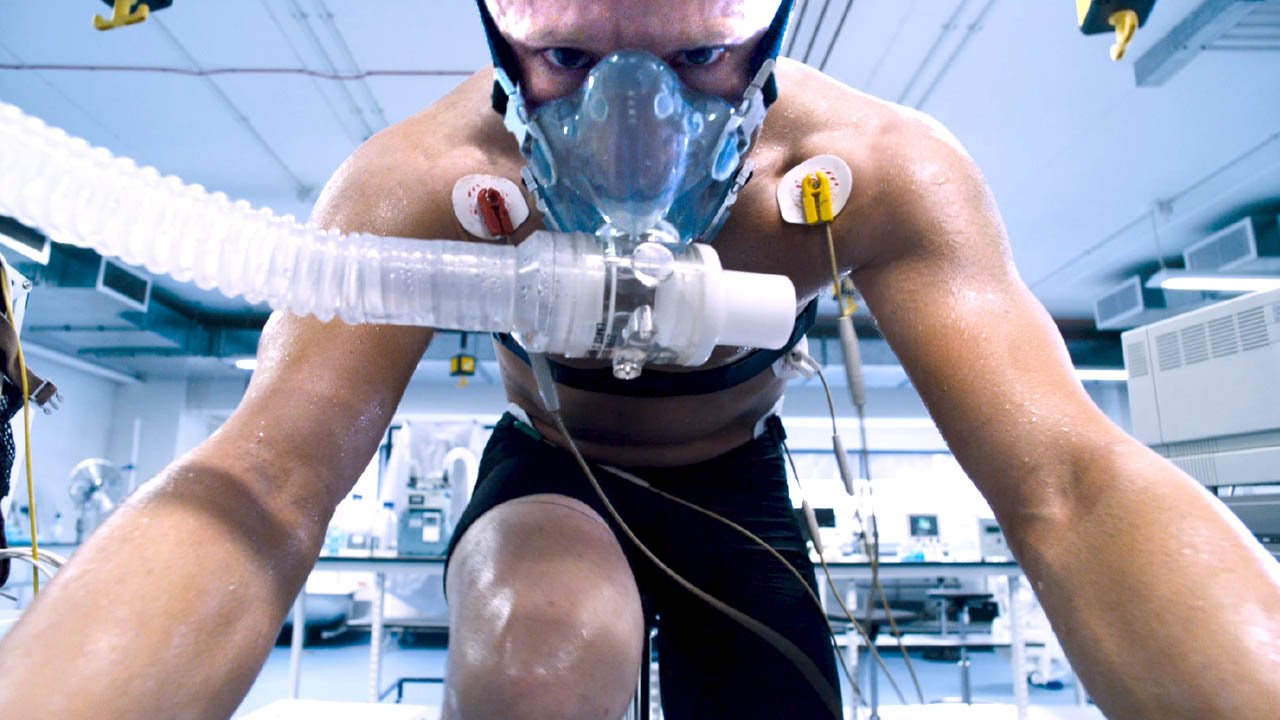
As Armstrong did take EPO on many occasions, so The Program shows him doing it over and over as well. In fact it shows Armstrong shooting up or drawing off his own blood on several more occasions than is absoutely necessary. We know it’s endemic to the sport because we’re told this almost right away, and it loses its dramatic effectiveness very quickly. It’s a problem the movie suffers from throughout, a lack of dramatic effectiveness, and this in turn leads to the movie becoming perfunctory, and in places quite dull. It also makes the mistake of focusing too much on Armstrong – an obvious mistake, but one the makers should have avoided.

The Program - scene1

The problem with Armstrong as your main character is that no matter how much you try and shade his character with visits to a children’s cancer ward, or have him ride out  into the Texas desert to stare meaningfully at naturally occurring pools of water, he’s still the villain of the piece and the architect of his own downfall. And yes, sometimes that’s enough, but even David Walsh, in his book on which the movie is partly based, Seven Deadly Sins: My Pursuit of Lance Armstrong, couldn’t answer the one question that the average viewer is likely to be asking all the way through: just why did he do it? Because, without an answer, Armstrong just goes from ambitious cyclist to arrogant, self-serving bastard in the drop of a hat.

And once he’s there the script by John Hodge stops looking for answers and becomes a braodly faithful retelling of the facts as they transpired once Floyd Landis (Plemons) joined Team Postal and everything began to unravel. The complexities of Armstrong’s story are smoothed over and/or ignored, Walsh’s tenacity in the face of almost everyone in his profession treating him like a pariah is given short shrift, and the nature of cycling’s unspoken acceptance of the cheating going on under its nose – these are all passed over in favour of following Armstrong from one non-illuminating scene to another. Even Foster, normally a more than capable actor, can’t stop his performance from becoming tedious by the end; it’s almost as if even he’s recognised that he can’t make any more out of Lance’s character as written.

With the script continually taking a backward step when it should have been ploughing forward, and with no sense of outrage at what Armstrong did – and encouraged others to do – the movie lacks passion and feels remote from its subject matter. There are a number of people who played a large part in Walsh’s investigation into doping in cycling, and while they are represented, they’re also marginalised along with the very important knowledge they have about Armstrong’s activities. It was a very big thing when Armstrong admitted that he took performance enhancing drugs when asked by a doctor during his cancer treatment, but here it’s referenced and then ignored as if of little or no importance. And then there’s Armstrong’s appearance on The Oprah Winfrey Show, a move he thought would help him retain the public’s admiration for him, but which backfired on him spectacularly when Oprah wouldn’t accept that he was remorseful.

It’s when moments like these are not given their due place in proceedings that The Program stumbles and fails to achieve any relevance as a recounting of Armstrong’s career. He was a lot more manipulative and a lot less caring of others, even his closest confidantes, and he had no qualms about trying to ruin the lives of those he thought weren’t being “team players”. His antipathy towards Walsh, at least, is given some expression, particularly when his one of his colleagues stops him from travelling between Tour de France stages with them as they used to, a good example of how Lance got what Lance wanted. But otherwise, the movie manages only to keep Armstrong at a remove from others, and in consequence from the audience.

The Program - scene2

Unable to find a way around the sedate nature of the script, Frears is left with trying to coax good performances out of his cast, and make the cycling sequences exciting to watch. As mentioned above, Foster can only do so much, but he’s very good in the earlier, pre-cancer scenes, showing Armstrong’s determination and will to succeed to very good effect. O’Dowd has a limited number of scenes in which to make an impression, and two of those involve him answering a phone and acting surprised. As the doping Doctor Ferrari, Canet is the movie’s liveliest, most effusive character, but his appearance and his demeanour make him look like he’s stepped out of a Seventies porn movie. Pace struts and swaggers his way through as Armstrong’s lawyer, and Ménochet makes the most of playing Armstrong’s righ hand man on the team, Johan Bruyneel. Only Plemons makes any kind of an impact, as the morally confused farmboy who joins the team but finds himself cut adrift when he gets “caught” taking testosterone.

On a visual level the movie works better when it’s out of doors, and by and large it successfully recreates the buzz of the races, though it can be off-putting when you realise you’re watching archival footage instead of a re-enactment. Foster looks persuasive in these scenes (even if you’re pretty sure the other cyclists have been told to go slower), and there’s at least a sense that this isn’t “fun” but quite punishing in its own unique way. Inside however, and the movie seems cramped – sometimes stifled – as if Frears’ visual creativity had deserted him. But by the time you notice all this, you probably won’t care too much, what with all the other deficiencies on display.

Rating: 5/10 – a middling, disappointing examination of one man’s renunciation of professional ethics and personal morality, The Program rarely succeeds in raising any indignation at Armstrong’s attitude or behaviour; for a more fastidious, much more involving look at Armstrong’s fall from grace, you’d be far better off watching The Armstrong Lie (2013) than this pallid endeavour.

Share this:

  • Share on X (Opens in new window) X
  • Share on Facebook (Opens in new window) Facebook
  • More
  • Print (Opens in new window) Print
  • Email a link to a friend (Opens in new window) Email
Like Loading...

Secret in Their Eyes (2015)

11 Thursday Feb 2016

Posted by dullwood68 in Movies

≈ 2 Comments

Tags

Alfred Molina, Billy Ray, Chiwetel Ejiofor, Crime, Drama, El secreto de sus ojos, Julia Roberts, Murder, Nicole Kidman, Remake, Revenge, Review, Thirteen years, Thriller

Secret in Their Eyes

D: Billy Ray / 111m

Cast: Chiwetel Ejiofor, Nicole Kidman, Julia Roberts, Dean Norris, Michael Kelly, Joe Cole, Alfred Molina, Zoe Graham

Remakes of foreign language movies are never easy. Not everything translates as well in another language, and some of the idiosyncracies or nuances of the original movie will be lost in the process. But that’s not to say that foreign language movies shouldn’t be remade in English, or that movie makers shouldn’t try to put their own stamp on an existing idea/concept/storyline, just that if they do, we shouldn’t be too surprised if the end result isn’t as compelling or as satisfying as the original.

Such is the case with Secret in Their Eyes, the English language remake of El secreto de sus ojos (2009), an Argentinian thriller that was a bit of a surprise when it was released, and which garnered critical acclaim around the world. It’s a gripping, very stylishly realised movie, and easily one of the best movies of that particular year, a fact supported by its taking home the Oscar for Best Foreign Language Film. With that version being so successful, the question that needs to be asked is: do we need this one as well?

SITE - scene3

The answer is not really, no. It was always going to be a difficult challenge, but when it was announced that the writer of Captain Phillips (2013), Billy Ray, was going to write and direct the movie, and the services of Messrs Ejiofor, Kidman and Roberts had been secured for the trio of lead roles, you could have been forgiven for thinking that this was one remake that couldn’t go wrong. But right from the start there’s a sense that something’s not quite right, that whatever magic made the original such a breath of fresh air is missing, and that what follows is likely to be more disappointing than rewarding.

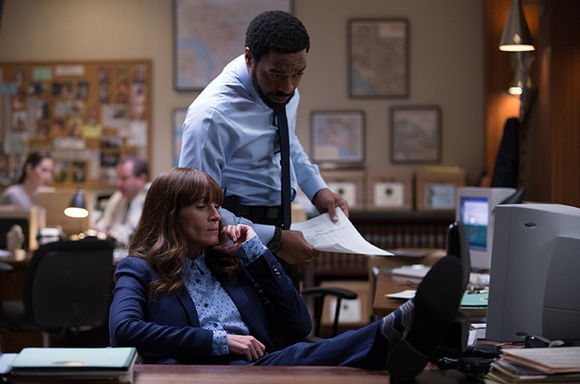
And so it proves. The basic plotting and structure are retained but where the original wove its connected stories over a distance of twenty-five years, Ray reduces it to thirteen (perhaps to avoid having to cast two sets of actors in the lead roles). He also retains the cutting back and forth between the two time periods, as Ejiofor’s obsessed FBI Counter-Terrorism expert Ray Kasten investigates the death of his friend and colleague Jess Cobb’s daughter (Graham). While Jess (Roberts) is overwhelmed by grief, Karsten determines to bring her daughter’s killer to justice, but soon finds himself in hot water when his main suspect, Marzin (Cole), is connected to a surveillance operation he’s a part of, and none of his superiors, including DA Martin Morales (Molina), want to know anything about his potential involvement in a murder.

While Kasten battles political expediency, he finds an ally in newly appointed Assistant DA Claire Sloan (Kidman). Together they try to build a strong enough case against Marzin, but their efforts go unrewarded. Thirteen years later, and with Marzin having gone to ground in the meantime, Kasten stumbles across new evidence that points to Marzin’s whereabouts. He gets back in touch with Claire (now the DA, having succeeded Morales) and Jess, and vows that this time they’ll get Marzin. Claire is hesitant and unconvinced, while Jess seems unimpressed and unwilling to help. Kasten presses on, but as before his plans go awry, and catching Marzin proves as difficult as it was thirteen years before.

SITE - scene1

By retaining the twin storylines and having them run side by side as the movie unfolds, Ray strives to keep the audience guessing as to the eventual outcome of both, but in the process he robs the material of any pace, and makes some scenes appear out of context to what’s gone before. Others seem to have sprung out of thin air, with certain relationship developments – a lukewarm romance between Kasten and Claire being the main culprit – stuttering in and out of life. It’s as if certain editorial choices were made in the cutting room, and the structure was the ultimate loser. It also makes for several frustrating moments when the viewer has to stop and remind themselves of where they (and the movie) are.

And unfortunately, Ray isn’t anywhere near as good a director as he is a writer. Too many scenes lack the appropriate energy, and his use of the camera doesn’t always show a knack for effective framing, leading to some shots where his cast are marginalised unnecessarily at the expense of the broader composition. He and the audience should be grateful then that, despite all these bars to their doing so, Ejiofor and Roberts both come up with terrific performances (Kidman is good but as with so many of her performances in recent years, she somehow manages to fall just shy of impressing completely). Kasten’s dogged, guilt-charged determination gives Ejiofor the chance to flex his acting muscles to highly charged effect, while Roberts steals every scene she’s in as the detached, grief-stricken mother who is a shadow of her former self; her de-glammed features display Jess’s sorrow so perfectly it’s heartbreaking to look at her.

But these are two unexpected positives in a movie that steadfastly refuses to provide its audience with anything other than a concerted diet of perfunctory plot and character developments, and which also asks said audience to take several leaps of faith in terms of the narrative and how it plays out (at one point, Kasten and Claire make a deduction – which Ray clumsily illustrates – that they can’t possibly have arrived at in the way that they do). And the end, which should be quietly powerful, as well as disturbing, lacks the necessary heightened emotion to provide the payoff the movie so badly needs by this point.

SITE_030515_182.CR2

Thanks to an ill-considered approach to the material, Ray’s adaptation lacks appeal and falls flat far too often to be excusable. As remakes of foreign language movies go it’s not up there with the best, but rather occupies a place much lower down the table, and serves as an object lesson in how not to compensate for the loss of nuance and subtlety present in the original. Some movies, as we all know – and studio executives should know by now – deserve not to be remade, and this is as good an example as any that El secreto de sus ojos should have been one of them.

Rating: 4/10 – laborious, and lacking in too many departments to be anywhere near as effective as it needs to be, Secret in Their Eyes may well be too much of a chore for some viewers to watch all the way through; however this would be doing a disservice to Ejiofor and Roberts, but their performances aside, there’s really very little to recommend this particularly unnecessary remake.

Share this:

  • Share on X (Opens in new window) X
  • Share on Facebook (Opens in new window) Facebook
  • More
  • Print (Opens in new window) Print
  • Email a link to a friend (Opens in new window) Email
Like Loading...

Dad’s Army (2016)

09 Tuesday Feb 2016

Posted by dullwood68 in Movies

≈ 2 Comments

Tags

Bill Nighy, Blake Harrison, Captain Mainwaring, Catherine Zeta-Jones, Comedy, Corporal Jones, Drama, German spy, Home Guard, Invasion plans, Michael Gambon, Oliver Parker, Private Pike, Review, Sergeant Wilson, Toby Jones, Tom Courtenay, Walmington-on-Sea, War, World War II

Dad's Army

D: Oliver Parker / 100m

Cast: Toby Jones, Bill Nighy, Catherine Zeta-Jones, Tom Courtenay, Michael Gambon, Blake Harrison, Daniel Mays, Bill Paterson, Mark Gatiss, Sarah Lancashire, Felicity Montagu, Alison Steadman, Emily Atack, Holli Dempsey, Julia Foster, Annette Crosbie, Ian Lavender, Frank Williams

Those of a certain age will remember the original UK TV series that ran from 1968 to 1977. It was immensely popular, with episodes regularly hitting the eighteen million mark for viewers, and it spawned a radio version, a stage version, and in 1971, there was even a movie featuring the original cast. Even today, repeat showings of Dad’s Army garner viewing figures in the low millions. It’s a national institution, and one of the few shows in the UK that pretty much everyone either likes or has a soft spot for. In short, it’s that good.

And now we have a remake to contend with, an updating (of necessity) of the cast – though series’ veteran Frank Williams does return as the vicar – and an attempt at recreating past glories with a slightly modern slant attached. When the project was first announced in 2014, the reaction amongst fans wasn’t as enthusiastic as the makers would have hoped, and when the trailer was first shown in cinemas in late 2015, some audiences gave it a less than warm reception. The general consensus seemed to be: this can’t be any good… can it?

Dad's Army - scene2

The short answer is no. This version is so disappointing that for much of its running time, viewers will be wondering how the makers could have got it so badly wrong, and with such consistency. It’s obvious from the opening scenes that find the platoon attempting to capture a bull, and which lead to their running scattershot across a field while the camera adopts the POV of the bull, that this isn’t going to be the warmly humorous affair that the series was, or as cleverly constructed. And as the movie continues, introducing its tired plot centred around the Allied invasion in 1944 and the search for a German spy, it becomes abundantly clear that whatever merits Hamish McColl’s screenplay may have had, they’ve not been transferred to the screen.

In this version, as opposed to the series, Captain Mainwaring (a game but badly undermined Toby Jones) is portrayed not as the officious prig that he was on TV but as a bumbling idiot. Sergeant Wilson (Nighy) was always the quiet Lothario, but now we’re asked to believe that he would fall so easily and in such a headstrong way for a woman from his past, the worldly-wise journalist Rose Winters (Zeta-Jones) (he was her tutor at Oxford, which raises all sorts of questions that thankfully the script doesn’t want to explore). And then there’s the rest of the platoon: nervous Corporal Jones (Courtenay, going from the sublime 45 Years to this farrago), addled Private Godfrey (an admittedly well cast Michael Gambon), doomy Private Frazer (Paterson), upbeat spiv Private Walker (Mays), and dopey Private Pike (The Inbetweeners’ Harrison). If nothing else, it’s a great cast, but it’s also a cast who are given so little to do in real terms (other than to keep advancing the plot – there’s an incredible amount of exposition here) that one ultimately wonders what was the point of hiring them.

Dad's Army - scene3

When the best you can do with actors of this calibre is have them stand around in a church hall for no better reason than to see how terrible they are as a Home Guard – which we already know – and then repeat the same three or four more times, it shows up the paucity of ideas on display. The rivalry between Mainwaring and Wilson, so beautifully enacted by Arthur Lowe and John Le Mesurier on TV, is retained, but with Mainwaring appearing so petulant and bullying in his responses to Wilson that all the subtlety of their relationship is lost, abandoned possibly from the first draft. Corporal Jones’s nervous anxiety in the face of danger is poorly channelled by Courtenay (who never seems comfortable in the role), while Private Pike’s innate stupidity is bolstered for some reason by his quoting famous lines from the movies of the period and being made to look like Errol Flynn (and all to little effect). Only Gambon succeeds in beating the odds, making Godfrey endearingly silly in his dotage, but then the character isn’t given anything else to do other than be endearingly silly, so Gambon can’t go wrong.

And then there’s the plot, the kind of hackneyed attempt at combining contemporary concerns with light humour that the series would have done more justice to, and more effectively, in under half an hour. The original scripts by Jimmy Perry and David Croft were tightly constructed, beautifully observant of their characters’ foibles, and the humour always arose from those foibles; everything was in service to the characters. Here it’s the opposite, and the characters are shoehorned into a plot that never gets off the ground (unlike a certain number of tanks). Thankfully, the script doesn’t attempt to hide the identity of its German spy (and their identity is easily deduced from the trailer), so that’s one hurdle it doesn’t have to stumble over in the dark, but it does lay a massive egg in the form of Mark Gatiss’ Major Theakes, a martinet senior officer with an unexplained limp and a penchant for fitting the war in around his leisure activities. It feels like Theakes is there as a satirical nod to the incompetencies of the command structure, but if so, he’s out of place and would be better off appearing in a World War I tale instead.

Dad's Army - scene1

The movie is also one of the blandest, most visually depressing movies to watch in some time, its dour colour palette and compromised colour range doing little to engage the senses beyond the red dress worn by Zeta-Jones. Even the outdoor scenes seem to have been filmed only on days when the skies were overcast and/or gloomy. And the final shootout is so devoid of tension and excitement that you can only hope it’s all over with as quickly as possible.

If it seems unfair to judge Dad’s Army 2016 with the original show, then it’s because the original was so good, and this isn’t. This is laboured, uninspired, woeful stuff in places, and not a tribute to the enduring qualities of the TV show in any way, shape or form. Even the attempts to squeeze in the various catchphrases from the show are awkwardly handled, and some you might even miss as you fight to maintain a decent level of attention. With the show having gained such a level of respect and admiration and affection over the years, to have this released now, and to be so badly put together, begs the question that’s asked here quite often: why didn’t anyone realise how bad this was when they were making it, or was it all too late if they did?

Rating: 3/10 – another example of a UK TV sitcom given a lacklustre cinema outing, Dad’s Army should stand as a warning to other movie makers looking to adapt a small screen favourite; with a script that forgot to include any jokes, or anything that an audience that could react to by laughing out loud, this should be avoided by anyone who loves the series and who doesn’t want that love tarnished by what’s been attempted here.

Share this:

  • Share on X (Opens in new window) X
  • Share on Facebook (Opens in new window) Facebook
  • More
  • Print (Opens in new window) Print
  • Email a link to a friend (Opens in new window) Email
Like Loading...

The Queen of Ireland (2015)

08 Monday Feb 2016

Posted by dullwood68 in Movies

≈ Leave a comment

Tags

Ballinrobe, Conor Horgan, Documentary, Drag queen, Homosexuality, Ireland, Marriage equality, Panti Bliss, Review, Rory O'Neill, RTE, True story

The Queen of Ireland

D: Conor Horgan / 82m

With: Rory O’Neill

Unless you’re a part of the Irish LGBT community, or have been to one of her shows in a number of cities worldwide, it’s unlikely that you’ll have heard of Panti Bliss, the drag queen alter ego of Rory O’Neill. And you may think that a documentary about her would focus on O’Neill’s life and his experiences of being a gay man in a country where homosexuality was only legalised in 1993. But there’s a bigger story here, and one that the makers of The Queen of Ireland couldn’t have foreseen would happen when they first began filming.

In January 2014, O’Neill appeared (as himself) on RTÉ’s The Saturday Night Show. He and the presenter discussed homphobia in Ireland and as part of his comments, O’Neill alleged that some individuals in Irish journalism were homophobic. This resulted in the TV station being threatened with legal action, and in order to avoid being taken to court, RTÉ paid compensation amounting to €85,000. And then on 1 February 2014, Panti appeared onstage at Dublin’s Abbey Theatre and made a Noble Call speech in response to RTÉ’s actions and about his own personal feelings as a homosexual man living in Ireland. As a result of this, Irish gay rights began to be discussed more openly and more seriously in the Irish government, and in May 2015 the country held the first referendum on same-sex marriages.

TQOI - scene1

What begins as a heartfelt and very charming introduction to an instantly likeable personality, with plenty of input from O’Neill’s family, friends and associates, would have been entirely acceptable if the movie’s focus hadn’t strayed any further than that. O’Neill is an engaging screen presence by himself, confident, self-deprecating, politically and culturally aware, and quite witty in his approach to the way in which being Panti has made his life so rewarding. And Panti is genuinely good company to spend time with, her outrageous look (“a big cartoon woman”) and friendly, approachable demeanour doing a lot to mollify any notions of prejudice. She’s funny, vivacious, passionate, and more confident than O’Neill is likely to be without the wig and makeup. We see some of her earlier incarnations, and there’s a definite progression in terms of Panti developing her cabaret style, and her character as a whole. It’s informative, enjoyable stuff, and if there’s only one problem with it all, it’s that we don’t get to see Panti onstage in all her glory for any real length of time.

But then there’s that TV interview, and the whole tone of the movie changes, as it becomes a probing examination of LGBT rights in Ireland, and how homophobia, and its endemic nature, comes to be challenged at the highest level. The movie also steps up a gear, and the issue of homosexuality comes to the fore, as O’Neill and Panti find themselves at the forefront of a cause that will lead to a major change in the rights of LGBT people in Ireland. Panti becomes an icon, the unofficial face of change, and through it all we see O’Neill maintain a quiet demeanour that reflects his determination to remain humble and unaffected by his sudden increase in fame and public awareness. He’s also very astute, and very aware of what the referendum will mean if it’s successful, and what it will mean if it isn’t.

TQOI - scene2

The nature of homophobia is perhaps best revealed in two short passages: the speech Panti gives at the Abbey Theatre (perhaps the best description of homophobia and its effects that you’ll ever hear), and a speech given in the Irish legislature attacking the way in which RTÉ failed to uphold its duties as the national broadcaster. These two speeches are supplemented by shots of emotive posters put up by groups opposing the idea of same-sex marriages, and the movie, without resorting to impassioned hysterical outbursts or relating extreme homophobic rhetoric, makes its point in a much more effective way, allowing the viewer to feel that they’re not being led by the nose into supporting Panti without appreciating both sides of the argument (something that Panti does very cleverly).

Throughout all this though we never lose sight of Panti the entertainer, and O’Neill the individual behind the public persona. It comes as a bit of a shock when, without warning, O’Neill reveals he was diagnosed as HIV+ in 1995, and the awkward effect it’s had since on his dating – just when do you let the other person know, and how much do you really hope it won’t make a difference? But O’Neill is self-assured – and self-aware – enough to ensure that being HIV+ doesn’t define him, and watching him ten years on he looks the picture of health.

After the referendum, O’Neill returns to his home town of Ballinrobe to make a one-off appearance as Panti (also her first appearance there). There are several touching moments with his family, in particular when Panti is getting ready in her parents’ bedroom, where as a young boy she used to watch her mother getting ready and putting on her makeup. It’s an unexpectedly affecting moment, and yet another example of how O’Neill has managed to stay grounded as an individual throughout all the ups and downs of his life so far. And it’s gratifying to see that despite thousands of public appearances and shows, Panti can still be nervous when faced with an audience of people she’s known since childhood.

TQOI - scene3

What makes The Queen of Ireland so rewarding is the way in which its director has assembled the footage from the various stages of O’Neill’s life, and made each period as interesting and informative as all the others. There’s not a dull, uninteresting moment in the whole movie, and O’Neill is someone the viewer can warm to right from the start. Whatever your views on LGBT rights, or homosexuality in general, this is a movie that promotes an honest, healthy attitude to both sides of the argument, and is to be commended for doing so unreservedly.

Rating: 9/10 – humorous, poignant and candid, The Queen of Ireland treats its central character and the political discourse of recent years in Ireland with a refreshing lack of bias (though it would be very difficult to take a disliking to Panti on any level); without losing sight of the man behind the makeup, Panti’s story is an uplifting one that speaks for itself and is well worth taking a look at.

Share this:

  • Share on X (Opens in new window) X
  • Share on Facebook (Opens in new window) Facebook
  • More
  • Print (Opens in new window) Print
  • Email a link to a friend (Opens in new window) Email
Like Loading...

Flightplan (2005)

07 Sunday Feb 2016

Posted by dullwood68 in Movies

≈ Leave a comment

Tags

Berlin, Disappearance, Drama, Flight, Hijack, Jodie Foster, Missing daughter, Peter Sarsgaard, Propulsion engineer, Review, Robert Schwentke, Sean Bean, Thriller, Widow

Flightplan

D: Robert Schwentke / 98m

Cast: Jodie Foster, Peter Sarsgaard, Sean Bean, Kate Beahan, Erika Christensen, Michael Irby, Assaf Cohen, Marlene Lawston, Greta Scacchi

Every once in a while a movie comes along that is one part absurd, one part stupid, and two parts ridiculous. Back in 2005 that movie was Flightplan, a modest thriller starring Jodie Foster as super-anxious widow Kyle Pratt who’s travelling with her six-year-old daughter Julia (Lawston), from Berlin to New York by plane after the unexpected death of her husband (whose body is travelling with them in the hold). Hours into the flight, Kyle awakes from a nap to find that Julia has disappeared. Panicked, she accosts passengers and cabin crew alike in her efforts to find her daughter, but everyone tells Kyle the same thing: no one has seen her, not even the flight attendant, Fiona (Christensen) who saw them on board.

The plot thickens when Kyle tries to enlist the aid of the captain, Marcus Rich (Bean), who is initially sympathetic, even though a check of the plane’s manifest reveals the seat Julia was sitting in is officially empty. A search of the plane is conducted, and as expected, Julia isn’t found. When Kyle insists she and the crew search the cargo hold and the avionics section, Rich finds her abrupt, pushy attitude hard to handle. He finds things even harder when he receives notification from the morgue that has shipped her husband’s body, that Julia is also dead, killed at the same time as her father. Kyle vigorously denies this to be true, but now everyone sees her as the deluded, grieving widow. With the aid of the flight’s air marshal, Carson (Sarsgaard), Rich does his best to contain the situation from getting any worse.

Flightplan - scene1

And then it gets worse. Kyle accuses two Arab passengers (Irby, Cohen) of being complicit in Julia’s disappearance and attacks one of them. Carson intervenes but in the ensuing scuffle, she gets free. Carson chases after her but one of the Arabs intercepts her and throws her to the floor and she is knocked unconscious. When Kyle comes to she finds herself talking to a therapist (Scacchi) who nearly convinces her that her grief over her husband and daughters’ deaths have caused her to imagine that Julia is still alive (as this is easier to deal with). Kyle is almost convinced but sees evidence that Julia is alive, and she redoubles her efforts to find her. She eludes Carson and gets up into the roof of the plane where she causes the emergency oxygen masks to drop down and the loss of lighting throughout the plane.

Her efforts at sabotage allow her to go below decks to the cargo hold. She opens her husband’s coffin just as Carson catches up with her. In handcuffs and with the captain diverting the plane to land in Newfoundland, Kyle doesn’t have long to find her daughter and work out why she’s been abducted in the first place. Can she find out who’s behind it all, stop them, and get her daughter back? Are you kidding? Of course she can, she’s Jodie Foster.

Watching Flightplan again so long after seeing it for the first time is a strangely unrewarding experience. Memory – that elusive mistress – has covered the movie in a soft rosy blanket and if pressed, offers up a 7/10 rating, confident that it won’t be questioned too closely. But isn’t that the nature sometimes of first-time viewings, that with the passage of time some movies take on a brighter, shinier hue than was actually the case? Flightplan is definitely one of those movies, its high altitude hysterics and gaping plot holes you could fly a 747 through – oh, wait, they actually did – seemingly impervious to criticism eleven years ago because the movie was a whole lot of fun. But now with the dubious benefit of a second viewing, it’s a movie that’s revealed in all its lacklustre glory (oxymoron intended).

FLIGHTPLAN, Jodie Foster, Peter Sarsgaard, 2005, (c) Touchstone

Now it’s true we don’t always expect air-tight screenplays that follow every logical line when it comes to thrillers, especially so-called “high concept” ones. And sometimes, the ones that only come close to credibility by accident are often the thrillers we can enjoy the most, but Flightplan misses out on even this by virtue of two very grave errors made right from the start. The first is that it casts Jodie Foster as a grieving widow who may be hallucinating the existence of her daughter. Right away, the idea that Foster could be hallucinating anything, no matter how sad or grieving her character may be is patently absurd (that’s the first part, remember?). She’s Jodie Foster; she only ever plays strong women. And secondly, her daughter disappears on a plane, which in itself is a variation on the hoary old locked-room mystery, so of course she’s been abducted. Any other explanation would be just plain stupid (and that’s the second part).

The movie battles against these issues valiantly, but soon resorts to running Foster around in circles in her efforts to discover her daughter’s whereabouts. All the while she looks like she’s about to have a coronary, so prominent is the vein in her forehead.  But she perseveres, and is helped/hindered/helped by Sarsgaard’s dopey-looking air marshal (he really does look like he’s going to nod off right in the middle of a scene). With so few of the cast as plausible suspects for the villain role, Sarsgaard becomes the obvious choice, and despite the presence of Bean. But then he’s ruled out of the competition, then he’s back in again – oh wait, now he’s just been nice again. Yes it’s designed to add tension to a plot that lacks any kind of edge, but it only succeeds in being annoying and ridiculous (part three), though not quite as ridiculous as the reason for Julia’s abduction in the first place, which makes no sense at all and is patently ridiculous (and there we have it, part four).

Flightplan - scene3

Still, Foster is good value, even when she’s running down aisles like a champion sprinter, or punching out stewardesses, and she’s as watchable as always, imbuing Kyle with that patented inner strength that Foster, as an actress at least, possesses in abundance. Sarsgaard limps along behind her in comparison, trying to find a way in to a character who appears to have no inner life at all and exists purely for the script’s lazy benefit. Bean gets to play exasperated at various points, but is compensated by being handed the movie’s best line: “I am responsible for the safety of every passenger on this plane – even the delusional ones!” Sadly, everyone else is forgettable, but that’s because their roles are.

Schwentke directs in a bland, perfunctory style that does nothing to elevate the material (not that much could), and signals his desire early on to focus exclusively on Foster, and to the detriment of everyone else. Florian Ballhaus’s cinematography shows Berlin in the bleakest light possible before trying to make us go “Wow!” at the glamorous interior of the plane, and there’s a turgid, ineffective score from James Horner. All of which goes to prove that high concept thrillers need a whole lot more than a committed lead and a hokey script to be successful.

Rating: 5/10 – Flightplan plays like a toned-down Die Hard of the skies, but with its central plot and storyline proving too uninspired for comfort, it’s left to Foster to keep things moving and the audience from straying; if you want to see an imperilled Foster trapped in a confined space, see Panic Room (2002) instead.

Share this:

  • Share on X (Opens in new window) X
  • Share on Facebook (Opens in new window) Facebook
  • More
  • Print (Opens in new window) Print
  • Email a link to a friend (Opens in new window) Email
Like Loading...

Misconduct (2016)

06 Saturday Feb 2016

Posted by dullwood68 in Movies

≈ 4 Comments

Tags

Al Pacino, Alice Eve, Anthony Hopkins, Blackmail, Crime, Drama, Fraud, Josh Duhamel, Lawsuits, Legal drama, Malin Akerman, Manhunt, Murder, Review, Shintaro Shimasawa, Thriller

Misconduct

D: Shintaro Shimasawa / 106m

Cast: Josh Duhamel, Alice Eve, Anthony Hopkins, Al Pacino, Malin Akerman, Byung-hun Lee, Julia Stiles, Glen Powell, Marcus Lyle Brown

Released as a Lionsgate Premiere (rough translation: not good enough to be shown in cinemas), Misconduct is an early contender for Worst Movie of 2016. It’s ostensibly a thriller but veers off in so many different directions in an effort to be interesting that in the end it’s just a jumbled mess. There’s not even the germ of a good idea here, the script by Simon Boyes and Adam Mason resorting to cliché after cliché and line after line of awful dialogue in its efforts to appear somehow less than the sum of its parts (or the parts of its sum even).

It’s a movie where everybody is up to no good. Sadly, the audience knows this right from the start, so any “revelations” or twists and turns have the effect of inducing a headache rather than any surprises. The storyline tries to be convoluted in an attempt to mystify anyone unfortunate enough to watch Misconduct, and the basic plot – Hopkins’ pharmaceutical CO is accused of deliberately falsifying bad test results – struggles even to be relevant within the movie’s own structure. Once a badly attached blackmail plot is added to the mix, it gives the movie carte blanche to be as stupid as it wants, a move it takes full advantage of.

Misconduct - scene3

As well as the blackmail plot – instigated by Hopkins’ unbalanced girlfriend (played by Akerman) and involving Duhamel’s ambitious attorney – Misconduct features a dire attempt at adding depth to two of the characters’ lives, Duhamel and his moody, depressed wife Eve, by having them recovering from the loss of a child during pregnancy. Why this subplot is even present is a mystery the movie never answers, along with the presence of Lee as a corporate-sponsored assassin who for some inexplicable reason is dying from some unstated disease (again you have to ask yourself why any of this has been included).

There’s more, but as the movie continues piling absurdity on top of absurdity, the unlucky viewer will find themselves wondering if this is intended more as a parody than a thriller, and will be laughing accordingly, but if it is then no one informed the cast, who struggle through scene after scene with resolutely straight faces and a grim determination to get through it all and reach the end with a degree of integrity still intact. Duhamel is a capable actor, but here he’s as wooden as a fence post and spends most of his screen time looking petulant, or as if there’s a bad smell under his nose (there is, and it’s coming from the script). Matching him for petulance, and using staring off into space a lot as a character trait, Eve gives probably the worst performance of her career so far, as she tries to distance herself from everyone and everything connected with the movie.

Misconduct - scene2

Akerman is a poor femme fatale, her attempt to seduce Duhamel having all the allure of a drunken one-night stand with someone you hope doesn’t give you their number the next morning. As mentioned above, Lee is the assassin who’s close to death, and he sleepwalks through his role making supposedly “deep” comments and trying to appear above it all by refusing to acknowledge that this is one acting gig his agent should be apologising for profusely. And then there’s Stiles, an actress who really should be given better roles than the one she has here, a Kidnap and Response expert who gets to shout at Hopkins a lot and look suitably badass (and that’s basically it).

You get the picture: Misconduct has its fair share of bad performances to match its bad script and wayward direction – Shimasawa, making his first feature, gives an approximation of what a director should be doing – but then there’s Hopkins and Pacino, two Oscar winners now content (like De Niro) to throw away their talent and make terrible movie after terrible movie. Hopkins has the larger amount of screen time, but phones in his performance, and falls back on the kind of aloof, manipulative, all-knowing characterisation he’s played way too often in recent years. When you’ve got Hopkins in a movie and he’s playing a powerful businessman you just know in advance that he’s not going to be putting much effort in, and that’s exactly the case here. Amazingly though, Pacino is worse, his law firm boss coming across as a pale imitation of his role in The Devil’s Advocate (1997). He’s also upstaged by his own hair, which in one scene, looks like the worst comb-back in history. Why either of them took on their roles is the one abiding mystery the movie cannot solve.

Misconduct - scene1

From starting out as a legal thriller – you get the idea the movie might just be about bringing Hopkins’ fraudulent CO to justice, and the hunt for the evidence to prove his negligence – it soon descends into a welter of murder and violence and betrayal on all sides, as the script decides it needs to be more punchy than in its earlier scenes. It leads to one of the movie’s more absurd scenes where Duhamel, having gouged his stomach escaping from the police, buys some glue in a convenience store and uses it to close his wound. And of course, he then runs around as if it had never happened. Lazy, lazy, lazy.

There is an attempt at providing a central murder mystery to keep the audience intrigued, but regular viewers of this kind of movie will spot the culprit from a mile off. But this is in keeping with the movie’s inability to come up with anything new or unpredictable, and again, regular viewers of this kind of star-happy dross will have resigned themselves to the movie’s inevitable outcome(s) long before they reach the end. The makers probably didn’t intend the title Misconduct to be so relevant to its own content and execution, but in one respect they can be applauded: they made sure the movie certainly lived up to it.

Rating: 3/10 – with only its standard, by-the-numbers production effort propping it up in the ratings stakes, Misconduct is a woeful, massively disappointing movie that falls down each and every time it tries to be interesting; with awful dialogue and some truly atrocious performances, it’s a movie that defies explanation as to its existence, and ranks as one of the worst “corporate/legal thrillers” in recent memory.

Share this:

  • Share on X (Opens in new window) X
  • Share on Facebook (Opens in new window) Facebook
  • More
  • Print (Opens in new window) Print
  • Email a link to a friend (Opens in new window) Email
Like Loading...

Love the Coopers (2015)

04 Thursday Feb 2016

Posted by dullwood68 in Movies

≈ Leave a comment

Tags

Alan Arkin, Christmas, Comedy, Diane Keaton, Drama, Dysfunctional family, Ed Helms, Family ties, Jessie Nelson, John Goodman, Olivia Wilde, Relationships, Review, Romance, Steve Martin

Love the Coopers

aka Christmas With the Coopers

D: Jessie Nelson / 107m

Cast: Diane Keaton, John Goodman, Alan Arkin, Olivia Wilde, Ed Helms, Marisa Tomei, Amanda Seyfried, June Squibb, Jake Lacy, Anthony Mackie, Alex Borstein, Timothée Chalamet, Maxwell Simkins, Blake Baumgartner, Steve Martin

It’s February, so what better time to watch a movie set at Xmas? Coming to Love the Coopers a couple of months or so after what would be deemed the best time to watch it, the first thing that comes to mind about the movie is that it didn’t have to be set at Xmas at all. As several branches of the same extended family all prepare to get together over the Yuletide period, it’s easy to see how this could have been set at Thanksgiving, or on an anniversary, or in the run up to a wedding (or even a funeral). The backdrop is just that: a backdrop, serviceable enough, but aside from the introduction of mistletoe to encourage some very sloppy kissing, there’s nothing about Love the Coopers that required it to be set at Xmas.

Love the Coopers - scene2

With that out of the way, the viewer can now sit back and enjoy the highly amusing interactions between the various members of the Cooper family, from acerbic patriarch Bucky (Arkin), to his uptight daughter Charlotte (Keaton) and her nearly estranged husband Sam (Goodman), and on down to their wayward daughter Eleanor (Wilde) who meets a soldier, Joe (Lacy), in an airport bar and persuades him to pose as her boyfriend. Then there’s Charlotte’s brother, Hank (Helms), who’s recently lost his job as an in-store photographer, and their sister, Emma (Tomei), who resorts to shoplifting as a way of getting Charlotte a present she’ll have to pretend to like. Oh, and then there’s diner waitress Ruby (Seyfried), whose friendship with Bucky might mean more to both of them than they’ll admit.

Wait, there was mention of “highly amusing interactions”. Well, that was probably the intention, but sadly, Steven Rogers’ screenplay forgot to include any appreciable laughs beyond the aforementioned sloppy kissing, and the tried and trusted use of inappropriate comments from a senior citizen with dementia, Sam’s Aunt Fishy (Squibb). Matters are made worse by the decision to include a narrator (Martin) who provides a running commentary on what’s happening, and what the characters are thinking, and who at the end, is revealed to be – well, let’s just say the narrator’s identity is meant to be whimsical and in some ways, cute, but it just goes to show how poorly constructed and thought out the whole thing is.

Love the Coopers - scene3

With the humour left somewhere behind in an earlier draft perhaps, the movie tries to make the most of a series of underwhelming dramatic scenarios, from the impending break up of Charlotte and Sam, to Hank’s inability to get a new job while keeping his recent unemployment a secret from everyone else, to Eleanor’s confusion over what sort of life she wants and whether or not she believes in love (yawn). Thanks again to Rogers’ screenplay though, the viewer will find these trials and tribulations having a minimal impact, and will most likely be checking their watch to see how much longer all these banal travails have got to continue.

Taking advantage of a Xmas metaphor, the movie is the equivalent of the Xmas roast that’s not been cooked properly. It’s dramatically turgid, unconvincing, and despite the incredibly talented cast (who are clearly wasted – and not in an alcoholic way; that might have been more interesting), never takes flight in the way that its makers probably intended. Quite why it was made is hard to work out, and it’s definitely a movie that you’ll only endure once, but if there’s one thing about it that can be used as a positive, it’s that – no, actually, there isn’t anything.

Love the Coopers - scene1

Rating: 3/10 – the dysfunctional American family coming together to feud and fuss with each other is a staple of US movie making, but Love the Coopers brings absolutely nothing new to the (Xmas) table; poor in every department, and one that its cast will probably want to forget, this is a movie that defies anyone to gain any kind of reward from it.

Share this:

  • Share on X (Opens in new window) X
  • Share on Facebook (Opens in new window) Facebook
  • More
  • Print (Opens in new window) Print
  • Email a link to a friend (Opens in new window) Email
Like Loading...

Truth (2015)

02 Tuesday Feb 2016

Posted by dullwood68 in Movies

≈ Leave a comment

Tags

60 Minutes, Cate Blanchett, CBS, Dan Rather, Dennis Quaid, Drama, George W. Bush, James Vanderbilt, Literary adaptation, Mary Mapes, Preview, Review, Robert Redford, Texas Air National Guard, Topher Grace, True story

Truth

D: James Vanderbilt / 125m

Cast: Cate Blanchett, Robert Redford, Topher Grace, Dennis Quaid, Elisabeth Moss, Bruce Greenwood, Stacy Keach, Noni Hazlehurst, John Benjamin Hickey, David Lyons, Rachael Blake, Dermot Mulroney, Andrew McFarlane, Connor Burke

In 2004, Mary Mapes (Blanchett) was a producer at CBS’ flagship news programme, 60 Minutes. She worked with the legendary news anchor Dan Rather (Redford), and earlier that year she and her team had produced a news report on the abuse happening at Abu Ghraib (which later won a Peabody Award). Mapes was a highly regarded producer who had been at CBS for fifteen years; when she told her bosses that she wanted to investigate irregularities connected with then President George W. Bush’s service in the Texas Air National Guard during the early Seventies, she was given the go ahead to look into the matter and prepare a segment for broadcast.

Soon after, Mapes came into possession of documents – memos – that claimed to show Bush had failed to follow orders while in the ANG, and that efforts were made by his superiors to influence and improve his record. These documents were purportedly written by Bush’s commander, the late Jerry B. Killian. Mapes and her team set about trying to find witnesses who could corroborate the content of these memos, but were consistently rebuffed. At the same time they sought to have the documents examined for authenticity. But there were problems: the documents weren’t the originals, and their source wasn’t confirmed before the segment was aired on 8 September 2004. Mapes, even though the documents were copies of the originals, was convinced of their probity at least, and so was Rather. The segment was broadcast, and during it, Rather stated that “the material” had been authenticated.

Truth - scene1

But this wasn’t true, and soon criticism of the show’s claims were spreading far and wide, and focused primarily on the typography used in the memos and other anachronisms that seemed damning. CBS found themselves backtracking, and Mapes was disturbed to learn that the person who’d given her the documents, retired Lt. Col. Bill Burkett (Keach), had lied about where he got them from. With their provenance appearing unsavoury at the least, Mapes came under pressure from the head of CBS, Andrew Heyward (Greenwood), to limit the damage of these revelations, and to find conclusive proof that the memos were even written by Killian. Unable to, and with other accusations of poor journalism coming in thick and fast, Mapes and her team were suspended pending an internal investigation. With his own integrity tarnished by the criticisms, Rather made a public apology regarding the segment, and later, announced his retirement.

Adapted from Mapes’ book Truth and Duty: The Press, the President, and the Privilege of Power, writer/director James Vanderbilt’s debut feature is an awkward beast, telling its story with a great deal of enthusiasm for showing just how tarnished Bush’s ANG record was, but then failing to properly acknowledge just how badly Mapes and her team scored a classic own goal. You don’t have to be an expert in TV news journalism to realise that the whole issue of the memos – their authenticity, their provenance, what they appeared to say – was handled with an irresponsible disregard for true journalistic integrity. Anyone watching Truth, and that really does mean anyone, will be watching events unfold and wincing at just how readily Mapes and her team were willing to put their heads in a collective noose. They failed to do the one thing that any journalist or writer needs to do to make an accusation: have conclusive, incontrovertible proof that what they’re saying is true. And Mapes didn’t have that.

Truth - scene2

But again, the movie tries its best to avoid acknowledging what should be obvious to anyone watching. It still supports Mapes in her efforts to “get out from under” the storm of approbation and scathing criticism that rains down on her once the segment airs. And it tries to make her into a scapegoat for a much larger conspiracy, one that’s expressed with anguished contempt by her colleague, Mike Smith (Grace), but the whole idea lacks weight, despite the movie clinging to it unashamedly for the last thirty minutes. This may be how Mapes and her team felt at the time, but a judicious helmer would have excised it for being too incongruous and absurd a proposition (it’s also one of those embarrassing tantrums that people have when they haven’t got anyone else to blame but themselves).

All this leads to an inescapable, but strangely welcome conclusion: the movie you’re watching is about failure, a rare topic in American movies, but one that Vanderbilt at least tries to embrace, even if he doesn’t quite know what to do with it, hence the ambivalence towards Mapes and the schoolboy errors she makes. Rather makes his apology but is seen doing so on a variety of TV screens and monitors, rather than up close, thereby limiting the effect of his regret and the connection we can make to it; it’s almost inconsequential to what’s happening to Mapes at the time, as if the movie has to acknowledge it occurred but doesn’t want to lend it too much importance. It’s like when someone says to you, “Oh, by the way…” But Mapes is resolute in her convictions right up until the credits. In any other movie the audience would be applauding her for standing up for her beliefs, but instead you can’t help but wonder if she ever learnt anything of personal value from it all.

Truth - scene3

In the end we’re asked to have a tremendous amount of sympathy for Mapes and the way she’s treated, but it becomes increasingly difficult. Even Blanchett can’t make her entirely sympathetic, and while she gives a good performance, she’s hampered by the fact that she’s trying to elevate the position of someone who was the author of her own downfall. As Rather, Redford is a bit of a distraction, not because of how we see him after all these years, but because we have no idea if he’s portraying Rather with any degree of accuracy; there’s just not enough there for us to be sure. Further down the cast list, Grace essays yet another earnest young man role, while Quaid adds gravitas as the ex-military man on Mapes’ team. Moss rounds out Mapes’ (in)famous five, Greenwood is her angry, unsupportive boss, and Keach is the whistle blower who isn’t telling the whole truth. All give adequate performances but bow to Blanchett’s greater involvement and do their best not to get in the way when she’s in full flow (which is often).

With half an eye trained on being a prestige, awards-gathering picture, Truth aims for solid and dependable, and for the most part achieves those aims, but lacks the passion that would have made all the difference to the material. Vanderbilt has the talent to make better, more focused movies, and he’s to be congratulated for attracting what is a top-notch cast for his first project, but too often they’re operating at the edge of the frame to be effective, and are given few chances to shine (except for Blanchett, that is). And Vanderbilt needs to interpret his material more, to let it breathe and grow beyond the obvious, as several scenes in Truth have the feel of filler instead of moments that advance the storyline. But these are forgivable errors for a first-time director to make, and though the movie isn’t entirely successful on its own merit, there’s just enough here to make the experience pleasant enough to hang around til the end.

Rating: 6/10 – flawed, and with a central character who loses the audience’s sympathy with each passing minute, Truth should be an engrossing exposé of journalistic persecution, but instead proves to be far stranger, less convincing affair; Blanchett does her best to hold it all together, but she’s defeated by the material and Mapes’ recurring ability to undermine herself without anyone else’s help.

Share this:

  • Share on X (Opens in new window) X
  • Share on Facebook (Opens in new window) Facebook
  • More
  • Print (Opens in new window) Print
  • Email a link to a friend (Opens in new window) Email
Like Loading...

Joy (2015)

01 Monday Feb 2016

Posted by dullwood68 in Movies

≈ 1 Comment

Tags

Bradley Cooper, Comedy, David O. Russell, Drama, Edgar Ramirez, Inventions, Jennifer Lawrence, Joy Mangano, QVC Channel, Review, Robert De Niro, The Miracle Mop, True story

Joy

D: David O. Russell / 124m

Cast: Jennifer Lawrence, Robert De Niro, Bradley Cooper, Edgar Ramirez, Diane Ladd, Virginia Madsen, Isabella Rossellini, Dascha Polanco, Elisabeth Röhm, Aundrea Gadsby, Gia Gadsby

At first glance, Joy looks like a traditional rags to riches story about a plucky young woman who overcomes several hurdles on her way to making her fortune. And for the most part this is exactly the kind of movie that Joy is. But it’s also a David O. Russell movie, and that means that the story can’t be told in a completely straightforward way. Instead we’re treated to occasional dream sequences that apparently hold a mirror up to Joy’s feelings at the time, a voiceover that comes and goes without adding too much to the overall presentation, and a lengthy stopover at the headquarters of the QVC Channel that amounts to a very generous piece of promotion.

By returning to the kind of small-town milieu he depicted so well in Silver Linings Playbook (2012), Russell has forgotten to include the one thing that made that movie so affecting and effective: interesting characters. Here, we have budding business matriarch Joy Mangano (Lawrence) whose struggle to get her Miracle Mop – the first self-wringing mop – both into production and into people’s homes is punctuated by several obstacles and problems, not the least of which is her business naïvete. That she overcomes all these problems is a given – this is based on a true story after all – but in the hands of Russell and his co-story writer Annie Mumolo, Joy’s tale lacks the kind of investment in the characters that’s needed for an audience to be cheering them on through adversity after adversity.

Joy - scene2

The problems begin almost immediately, with Joy’s grandmother Mimi (an almost unrecognisable Ladd), foreshadowing events with an upbeat voiceover that predicts Joy’s success as an adult because Mimi knows she’s destined for greatness. This is the restaurant equivalent of being told that a particular meal on the menu is going to be a feast for the tastebuds. If you’re already seated at your table (or in the back row of your local cinema), then you’re not going to disbelieve the person telling you all this, and with Joy we know in advance that Mimi’s predictions will come true. So it doesn’t need all this dreamy talk of predestination and making one’s dreams come true. And this is largely the role that Ladd has in the movie, to pop up every now and then when things go wrong and remind everyone that everything will be alright in the end. (But we know this already…)

We then have a considerable amount of time spent introducing the characters. There’s Joy, obviously, a divorced mother of two who spends most of her time clearing up after her reclusive mother, Terry (Madsen), and her father, Rudy (De Niro), who owns an auto repair shop. Her parents are divorced, but circumstances have them living in Joy’s house, Terry in her room, Rudy in the basement. There’s also Tony (Ramirez), Joy’s ex-husband, who also lives in the basement, and has his own dreams of being a singer (but this subplot is smothered at birth and dismissed thereafter). Adding to the mix is Joy’s petulant half-sister Peggy (Röhm), whose own struggle to be accepted fully by Rudy is another subplot that gets an early grave, and Joy’s childhood friend Jackie (Polanco), whose role is to support Joy at the expense of having any character of her own. All these characters interact with each other in ways that are mostly confrontational, but which add up to a series of poorly timed dramatic interludes, Russell filming these scenes as if they were rehearsals rather than the finished offering.

Joy - scene3

And then there’s Joy herself. Whatever really happened in Joy Mangano’s life as she fought to get her Miracle Mop into people’s homes (“It’s the only mop you’ll ever need to buy” is repeated like a mantra), it’s hard to believe that someone with so much flair and the kind of intelligence to come up with such a revolutionary invention could be so continuously undermined both by her family – though admittedly with her best interests at heart – and by such a large number of poor business decisions. And the movie eventually realises this at the end, but by then it’s too late. Despite several setbacks, including a declaration of bankruptcy that gets ignored like so many other briefly introduced subplots, Joy wins out in the end, as expected, but it’s the way in which she does that shows just how uninterested Russell is in portraying his central character in any kind of consistent light. Joy solves all her business problems by providing the kind of expertly constructed and detailed deconstruction of her opponent’s position that only exists in the movies, and which has them backing down immediately.

Russell’s uneven, and often ill-considered script is the one major flaw that stops Joy from being the thought-provoking, inspirational movie it no doubt wants to be in the first place. Thankfully it’s bolstered by an impressive performance from Lawrence even if she is fighting against the script’s often painful restrictions on her ability to connect with the audience. Alas, the same can’t be said for Cooper, who plays a senior buyer at QVC as if he were a Messiah of the airwaves. It’s an arch, uncomfortable to watch performance, and helps to mire the movie around the halfway mark, as Joy’s initial attempts to sell the Miracle Mop are given awkward free rein on TV, and the movie’s pace, not the sprightliest at the best of times, grinds to a clunking halt. De Niro has the look of an actor whose starting to realise his role isn’t going to be as big or as important to the story as he’d thought, Madsen channels an odd combination of deliberate shut-in and shy Southern belle supposedly to comic effect but soon becomes annoying, Ramirez is sidelined early on and hangs around in the background for two thirds of the movie, and Rossellini comes in halfway through and behaves like a low-rent mafiosi whose just suffered a minor stroke.

Joy - scene1

Along with American Hustle (2013), Russell seems to be foregoing content over style, but here it doesn’t work either. The wintry Long Island setting and bland interiors do little to improve the visual malaise that stalks the movie throughout, and there are too many occasions where the framing seems off-kilter, though whether this is deliberate or not is hard to tell, but it does have the effect of further distancing the viewer from the characters. Russell adds a few cinematic tricks to mix things up but they only serve to reinforce how ineffective the overall design is. With it already being too difficult to connect with Joy and her dysfunctional family, Russell’s directorial stance and ragged screenplay offer little help in getting any actual joy out of Joy.

Rating: 6/10 – lacking the necessary creative steam to get it through the hesitancies and inconsistencies of the script, Joy is a pedestrian tale of success borne out of personal tenacity; Lawrence elevates proceedings but even her sterling effort can’t save a movie that doesn’t know what kind of movie it wants to be, and which fumbles around for too long trying to find out.


//ws-eu.amazon-adsystem.com/widgets/q?ServiceVersion=20070822&OneJS=1&Operation=GetAdHtml&MarketPlace=GB&source=ss&ref=as_ss_li_til&ad_type=product_link&tracking_id=thedullwoodex-21&marketplace=amazon&region=GB&placement=B019FCY2WK&asins=B019FCY2WK&linkId=f213782d1476d6cc31466bf718695513&show_border=true&link_opens_in_new_window=true

Share this:

  • Share on X (Opens in new window) X
  • Share on Facebook (Opens in new window) Facebook
  • More
  • Print (Opens in new window) Print
  • Email a link to a friend (Opens in new window) Email
Like Loading...

Grandma (2015)

29 Friday Jan 2016

Posted by dullwood68 in Movies

≈ Leave a comment

Tags

Abortion, Bereavement, Comedy, Granddaughter, Grandmother, Judy Greer, Julia Garner, Lesbian, Lily Tomlin, Marcia Gay Harden, Paul Weitz, Relationships, Review, Sam Elliott

Grandma

D: Paul Weitz / 78m

Cast: Lily Tomlin, Julia Garner, Marcia Gay Harden, Judy Greer, Sam Elliott, Laverne Cox, Elizabeth Peña, Nat Wolff, Lauren Tom

Elle Reid (Tomlin) is a once well-known poet. She’s also a lesbian whose long-term partner has recently passed away. She has a daughter, Judy (Harden), she isn’t on very good terms with. She’s grouchy, antagonistic and caustic as the mood takes her. She’s also just shown the door – horribly – to Olivia (Greer) whom she’s been in a relationship with for four months. And now she’s visited by her granddaughter Sage (Garner) who’s pregnant and needs $630 for an abortion by five forty-five that evening. No wonder she’s so unapologetically cranky.

Elle has another reason to be in a bad mood: thanks to an attack of principles she’s cut up her credit card and used it as a wind chime, so she can’t give Sage the money she needs. To make up for this selfish crime against modern day living, Elle agrees to help Sage find the money from other sources. First they visit Sage’s boyfriend, Cam (Wolff), where his aggressive and disrespectful attitude to Elle leads to some unexpected violence and the accrual of $50. From there they try to call in a loan from one of Elle’s friends, Deathy (Cox), but that only nets $65. When Elle next tries to sell some of her first edition books (even though they’re not in the best of condition), that plan backfires when Olivia appears on the scene and an argument ensues. With time running out, Elle decides she has to take a risk and visit an old flame, Karl (Elliott). At first Karl seems amenable to lending Elle the remaining $515 but their shared history ruins things and he refuses. This leaves Elle and Sage with only one remaining option: they have to see Judy and ask for her help, even though she and Elle are effectively estranged and she has no idea that Sage is pregnant (Elle also tells Sage that she’s afraid of Judy and has been since she was five).

Grandma - scene2

It should take the viewer roughly two minutes of Grandma‘s running time to see why Lily Tomlin signed up to play Elle. In keeping with her literary background, and doing her best to end her relationship with Olivia as quickly as possible, Elle refers to her as “a footnote”. It’s an unnecessarily cruel remark, and Tomlin delivers it casually, as if it were of no more significance than if Elle had called Olivia a terrible lay, or a boring conversationalist. And from that nasty remark, and Elle’s adamant refusal to apologise, the viewer can see that spending time with Elle is going to be made all the more enjoyable thanks to Tomlin’s acid dry performance. Yes, she’s unconscionably horrid at times, and yes she does her best to belittle the people she despises (which seems to be everyone outside of Sage and Deathy), but it’s Elle’s acerbic, take-no-prisoners attitude that is so ironically appealing, and Tomlin knows this. And knowing this she grabs the role in both hands and has a high old time with it.

But Tomlin’s performance isn’t the whole movie, and thanks to Weitz’s command of his own script, Elle isn’t allowed to overwhelm the other characters, and she doesn’t get all the best moments. And it’s not just about one woman’s misanthropic attitude to the world around her, but the ruptured family dynamics that keep her alone following the death of her partner, and how her being needed leads to a reconciliation that everyone is a part of. This gives the movie the heart it needs to balance Elle’s angry behaviour, and leavens the nihilism she seems to revel in. Without it, Grandma would still be funny, absorbing even, but it wouldn’t be anywhere near as rewarding.

Weitz is back on form after a string of less than fully realised movies – Cirque du Freak: The Vampire’s Assistant (2009) and Little Fockers (2010) to name but two – and he creates a sympathetic storyline to hang his characters from, as well as making each encounter on the road to Judy’s office as grounded and credible as possible while also indulging Elle’s astringent nature. The outcome of the trip to see Karl is a particular highlight, adding a layer of unexpected poignancy to a situation that some viewers might not see coming until it’s there. It also gives Elliott the chance to show just how good an actor he is, and if Grandma has no other impact than to open the doors for Elliott to give further, equally moving performances then his appearance here will have been entirely worth it.

Grandma - scene3

By carefully balancing the inherent pathos and humour of Sage’s “situation”, Weitz also gets to poke fun at the American public’s antipathy to hearing the emotive word “abortion”. Elle and Sage are ejected from a coffee shop (that used to be a free clinic) thanks to Elle bemoaning out loud the clinic’s passing – “Where can you get a reasonably priced abortion in this town?” The word is used liberally throughout, and as an accurate description of the procedure Sage needs to have it’s entirely in context, but Weitz refuses to sugar coat the situation, and it’s to the movie’s credit that when Elle and Sage do encounter a pro-lifer (and her young daughter), their position isn’t criticised or lampooned, but instead is used to provide one of the movie’s best laughs.

With Weitz so assured in the handling of the material, his cast are free to provide fully rounded characters that you can empathise with and support (except for Cam, naturally). Tomlin, as mentioned before, is on superb form, and is ably supported by Garner who gives Sage a wistful nature that makes it seem as if she’s always working things out in her head, but is just a little bit too slow in doing so (“Screw you”). Harden pitches up in the final third and does sterling work as the mother who can’t quite work out why her daughter is afraid to tell her she’s pregnant when she has such a distant relationship with her own mother. Greer has a handful of scenes as the jilted Olivia and displays the character’s dismay and pain at being rejected with aplomb, her need to know the real reason for her dismissal a necessary challenge to Elle’s self-centred arrogance.

Grandma - scene1

Grandma is a movie that it would be easy to overlook, sounding as it does like an indie chick-flick for the generationally unbiased. That it’s profoundly moving in places, riotously funny in others, and completely charming all the way through is more than enough to recommend it. It’s short, sweet, avoids a lot of the clichés associated with the subject of abortion, features a cast who are behind Weitz all the way, and is just plain terrific.

Rating: 9/10 – one of the smarter, funnier, more enjoyable comedies of 2015, Grandma is a small-scale joy that deserves to be seen by as wide an audience as possible; and let’s say it again, and louder this time: “Where can you get a reasonably priced abortion in this town?”

Share this:

  • Share on X (Opens in new window) X
  • Share on Facebook (Opens in new window) Facebook
  • More
  • Print (Opens in new window) Print
  • Email a link to a friend (Opens in new window) Email
Like Loading...

Bleeding Heart (2015)

28 Thursday Jan 2016

Posted by dullwood68 in Movies

≈ Leave a comment

Tags

Diane Bell, Drama, Edi Gathegi, Half-sisters, Jessica Biel, Joe Anderson, Prostitution, Relationships, Review, Shiva, Thriller, Yoga, Zosia Mamet

Bleeding Heart

D: Diane Bell / 88m

Cast: Jessica Biel, Zosia Mamet, Edi Gathegi, Joe Anderson, Kate Burton, Harry Hamlin

Bleeding Heart is likely to end up being one of those movies. You know the ones, those  “interesting” looking movies you pass by on your way to the New Release/Blockbuster section of your local DVD store (if there still is one in your area). It has a well-known “name” actor or actress in the lead role, and is often a drama that looks intriguing and which you may even pick up to read the blurb on the back of the case. But chances are that even then you’ll think twice and instead, plump for the latest Bruce Willis flick (Career Suicide Part 9 perhaps), or the most recent Katherine Heigl humdrum rom-com. But if you did put Bleeding Heart back on the shelf, then you would be doing both it and yourself a serious disservice.

It begins with Jessica Biel’s slightly ethereal yoga teacher May extolling the virtues of a non-violent, peaceful existence. She and her boyfriend Dex (Gathegi) have big plans to expand their yoga business, and their sense of contentment – with their work, their lives, and each other – is palpable. But May has a personal issue she needs to deal with first: getting in touch with the maternal half-sister she’s only just located (and luckily only half an hour away from where she lives). Nervous and unsure if she’s doing the right thing, May knocks on her door and drops the bombshell she’s been carrying around with her for some time.

Bleeding Heart - scene2

The young woman who answers is ten years younger and suitably shell-shocked by May’s turning up on her doorstep. They agree to meet in a bar and May’s half-sister Susan, who likes to call herself Shiva (Mamet), is nice and agreeable and pleasantly surprised by this sibling revelation. The two get on and at May’s urging, agree to meet up again. Back home, Dex is initially pleased for her, but his focus is on their business and his support dwindles at the realisation that seeing Shiva is likely to become more important than taking their current success to the level.

May accepts a late night invitation to meet Shiva and her boyfriend, Cody (Anderson), outside a bar. Cody is aggressive and clearly has a volatile temper, and when someone reproaches him for speaking harshly to Shiva, he gives them a vicious beating. May and Shiva drive off and they go back to May’s place. The next morning, with Cody in jail, May and Shiva persuade each other that spending some proper time with each other is a good idea and they head for May’s mother’s place. On the way, they stop off at Shiva’s apartment to pick up some things and May discovers that Shiva is a prostitute. May is stunned by this and by the implication that Cody is both boyfriend and pimp. But Shiva is unconcerned by it all, even appearing comfortable with it.

As they begin to get to know each other, cracks start to appear in May’s relationships with her mother, Martha (Burton) (unhappy at not being consulted about May looking for Shiva) and Dex (unhappy that she’s no longer focused on their business). But she feels a bond with Shiva that she’s never felt before, and even though Shiva tells her she doesn’t need to be saved, May’s instincts are to do exactly that. When Cody gets out of jail, Shiva goes back to him, and he drops her off at a client’s home. May, though, follows them, and decides to rescue her, and the resulting effort leads to both a consolidation of their relationship and a showdown with an angry Cody.

Bleeding Heart - scene1

At its core, Bleeding Heart has a lot to say about relationships and the nature of power and control within them. While Shiva and Cody’s relationship is volatile and intense, and his control over her is the frame within which they exist, May’s relationship with Dex is, on the surface at least, more fluid and mutually supportive. But Dex has his own control issues, and in his own way doesn’t want May to do the things she wants to do. When she begins spending time with Shiva, and even gives her money to pay her rent, Dex is angry because May’s behaviour is a threat to the orderly existence he’s cultivated with her. And when May resists his insistence on maintaining their “status quo” his reactions are similar to Cody’s (though to be fair he’s not as violent).

With May coming to terms with the impact of having a half-sister in her life, and the repercussions of pursuing that relationship, the movie concentrates on how both women find their way out of what are unhealthy relationships for both of them. It doesn’t offer any blinding revelations, or even provide any new insights into how people justify their staying with people who profess to care about them but don’t show it in reality (or when it’s really important to do so). But what it does offer is a chance to see how two people can find real dependence in each other, and despite having numerous obstacles put in their way. May and Shiva are more alike than they realise, and Bell’s perceptive script is careful to show the ways in which they begin to mirror each other, with the best of each one’s character having an effect on the other.

Both Biel – an actress whose career resumé is littered with too many lacklustre Hollywood movies – and Mamet are well suited to their roles, and their onscreen partnership is both subtly rewarding and emotionally resonant, with both actresses inhabiting their characters with confidence and skill. Biel undergoes a physical as well as emotional change, and shows a burgeoning strength of purpose that helps May refind herself after years of following what appears to be the path of least resistance. Mamet underplays the vulnerability beneath Shiva’s street smarts, and there are moments where her unhealthy dependence on Cody is both frustrating and yet entirely credible. It’s to both actresses credit that while May and Shiva are clearly recognisable “types”, they’re still sympathetic and likeable, and easy to root for.

Bleeding Heart - scene3

On the opposing side, Gathegi plays Dex like an injured puppy who can’t understand why someone would upset him (deliberately or otherwise), while Anderson’s turn as the outwardly charming Cody is hampered by his character’s lack of depth. Bell can be forgiven for this, as Cody is essentially the unthinking catalyst for the two sisters coming together, and without him this would be a different movie altogether; his adversity is necessary for May and Shiva to bond together with the appropriate intensity. That said, Anderson definitely makes an impression, and it’s difficult to remind yourself that he’s British.

Bell, making her second feature after her impressive debut Obselidia (2010), here tells a simple story with a firm grasp of the dynamics of May and Shiva’s relationship, and the unfulfilling lives they lead. If there’s an element of wish fulfillment towards the end it’s negated by the movie’s resolution, which is tougher and less cathartic than it might seem. Add some unshowy but deft camerawork by Zak Mulligan and you have a movie that is polished and assured and which offers far more than at first glance. And if Bell decides to revisit May and Shiva at some point in the future, that wouldn’t be a bad thing at all.

Rating: 8/10 – Bell is a moviemaker to watch, and imbues Bleeding Heart with a simple complexity (not a contradiction) that elevates the movie from its indie roots and provides the audience with unexpected rewards throughout; Biel and Mamet give great performances, and the whole exercise shows that even the most staple of storylines can be enhanced by well-judged brio and conviction.

Share this:

  • Share on X (Opens in new window) X
  • Share on Facebook (Opens in new window) Facebook
  • More
  • Print (Opens in new window) Print
  • Email a link to a friend (Opens in new window) Email
Like Loading...

Amy (2015)

24 Sunday Jan 2016

Posted by dullwood68 in Movies

≈ Leave a comment

Tags

Alcohol, Amy Winehouse, Archival footage, Asif Kapadia, Back to Black, Blake Fielder-Civil, Career, Documentary, Drugs, Frank, Grammy's, Mitch Winehouse, Review, Singer, Tony Bennett

Amy

D: Asif Kapadia / 128m

With: Amy Winehouse, Juliette Ashby, Nick Shymansky, Mitch Winehouse, Blake Fielder-Civil, Lauren Gilbert, Sam Beste, Raye Cosbert, Andrew Morris, Lucian Grainge, Tyler James, Yasiin Bey

One of the most talented singers of her generation, Amy Winehouse “arrived” on the music scene in 2003 with the release of her first album, Frank. Eight years later she was dead from alcohol poisoning. She was in the public eye so often, and so often for the wrong reasons, that a lot of people felt they knew her. Unable to deal with the fame and fortune she so justly deserved, she retreated into a life of alcohol and drug addiction and repeated, unsuccessful attempts to throw off the demons that plagued her. One of her idols, Tony Bennett, said of her, “she was the only singer that really sang what I call ‘the right way’ because she was a great jazz-pop singer”. But why did she die at the age of twenty-seven, alone and with only her bodyguard checking on her occasionally?

Sadly, Amy doesn’t provide any answers. Nor does it probe too deeply into why the singer had such an addictive personality, or why she had been bulimic for most of her life (a topic which is mentioned partway through then dropped as a point of fact that needs no further investigation). It also fails to explore the differences between Amy Winehouse the world-famous singer/celebrity, and Amy Winehouse the private person. While there are times when her friends and family comment on her behaviour, and there’s a large amount of regret that can be felt, no one seems to have really known what made Amy tick during those brief eight years when she was so well known and so highly regarded.

Amy - scene3

The reason that Amy fails to do this is partly due to the very cleverly constructed way in which it recounts Amy’s life, charting her teenage home life and early success with Frank, through to her increasing use of drugs and her alcohol dependency before the further success of Back to Black. From there the pressures associated with such an unexpected and meteoric rise were compounded by her poor choice of partner – step forward, Blake Fielder-Civil – and the lack of support gained from her family, in particular her father, Mitch, whose lack of empathy for his daughter is incredible to witness. All this led to repeated, and entirely predictable relapses following stays in various rehab clinics. With no one attempting to deal with her bulimia – or get her to – Amy’s health was so compromised by 2011 that those close enough to her knew that her drinking would eventually kill her.

But Amy is effectively reportage, a trawl through the singer’s life that relies on a great deal of archival footage of Amy and her friends, Amy and her working relationships, Amy on stage, Amy in the public eye, and the contributions of many of the people who knew her personally and worked with her professionally. And while some of the early, pre-Frank footage is beguiling to watch, and fascinating in a morbid way (knowing how she would look in later life), the later footage, once her demons have made themselves felt, leads the movie into darker, more disturbing territory. It’s at this point that Amy moves away from bittersweet reflection and becomes a rehash of the public and private life we all saw develop over those eight years. We see the public appearances where she seems overawed and/or overwhelmed, the sight of someone with the light in their eyes slowly dying out, and we gain the sad realisation that this person’s life can only end in tragedy.

Amy - scene2

Did we always know this? Certainly Amy’s friends knew this, and it’s likely that her colleagues in the music industry knew this, and the movie, while not pointing any fingers directly (or with any intention of doing so), does however make one thing clear: no one did enough to stop it. Her friends stepped away because they couldn’t bear to watch her destroy herself, and her record company wouldn’t work with her unless she was clean (reasonable in itself but for Amy an ultimatum she was never going to achieve, not in the long-term). In the end, that’s why Amy died alone and with only her bodyguard occasionally checking in on her: she had nobody she could rely on to protect her.

The sadness and the largely unavoidable tragedy of all this is brought out by Kapadia’s firm control over the movie’s content, and while some people, particularly Mitch Winehouse, have subsequently decried Amy as having produced “an inaccurate narrative of Amy’s story”, there’s little doubt that in the last three years of her life, when her problems became insurmountable, that she was desperately unhappy and struggling to find direction in her life. You can see this illustrated best when she’s seen recording a duet with Tony Bennett, one of her life-long idols. The confidence that has seen her give outstanding vocal performances time and time again has deserted her; she keeps apologising for getting things wrong. Bennett continually reassures her but you can see from her eyes that Amy isn’t convinced; when the session is done, you can see how relieved she is that she’s got through it all. It’s moments like these, when she clearly wants to be at her best, but her best is too far away for her to grasp, that prove the most disturbing and the most upsetting.

Amy - scene1

Could Amy Winehouse have conquered her demons and still be making great records today? We’ll never know, but one thing we can be sure of: her short career gave us many wonderful recordings, and it’s these lasting treasures by which we should remember her, not as the drunk, confrontational, tragically lost figure she was in her last few years. She was talented, incredibly so, and Amy reminds us of that constantly, even as it charts her downward spiral. She was always about the music, always about the irresistable pull of it, and thanks to Kapadia’s inclusion of several of her most iconic and meaningful songs, Amy is still a reminder of just how talented she was, and how much she will be missed.

Rating: 8/10 – a fascinating documentary that tells a fascinating story, even if we think we’ve seen it all before, Amy mixes archival footage of the singer along with candid commentaries from the people who knew and worked with her to create a devastatingly human story of tragedy borne out of success; that it doesn’t make judgments (except very cleverly) or arrive at any conclusions are the only things that stop this from being any better than it already is.

Share this:

  • Share on X (Opens in new window) X
  • Share on Facebook (Opens in new window) Facebook
  • More
  • Print (Opens in new window) Print
  • Email a link to a friend (Opens in new window) Email
Like Loading...

The Big Short (2015)

22 Friday Jan 2016

Posted by dullwood68 in Movies

≈ 1 Comment

Tags

Adam McKay, Banking crisis, Brad Pitt, CDO's, Christian Bale, Drama, Fraud, Housing market, Review, Ryan Gosling, Steve Carell, Sub-prime mortgages, Triple A's, True story, Wall Street

The Big Short

D: Adam McKay / 130m

Cast: Christian Bale, Steve Carell, Ryan Gosling, Brad Pitt, John Magaro, Finn Wittrock, Marisa Tomei, Melissa Leo, Rafe Spall, Jeremy Strong, Hamish Linklater, Adepero Oduye, Byron Mann

It seems a little odd now that next year, 2017, will see the tenth anniversary of the collapse of the US housing market. Thanks to the greed of the Wall Street banks, in the US alone, eight million people lost their jobs and six million people lost their homes. It was a national scandal. But how did it all come about? Well, it’s fairly complicated, but The Big Short does a good job of explaining it all.

Adapted from the book by Michael Lewis, the movie looks at the people who first realised that the US housing market was a timebomb waiting to happen. It begins with a hedge fund manager, Dr Michael Burry (Bale). He had been analysing mortgage lending practices and discovered that mortgages were being sold at an alarming, and unchecked rate. With increasing defaults at the lower end of the market, a collapse was inevitable, and Burry predicted it would happen in 2007. Burry then approaches several of the big name banks, including Goldman Sachs, and persuades them to let him take out credit default swaps, an insurance against the collapse happening. If it does, they pay him a major return on his premiums.

The Big Short - scene2

Burry’s actions attract the attention of a trader at Goldman Sachs, Jared Vennett (Gosling). At first, like everyone else, Vennett thinks that Burry’s idea is completely ridiculous. But he does what Burry did and digs a little deeper, until he too sees the likelihood of the collapse happening. He attempts to do what Burry has done using his own funds but a misplaced phone call ends up putting him in touch with Mark Baum (Carell), another hedge fund manager. Baum and his small team begin to create their own credit default swaps.

In addition, two young investors, Charlie Geller (Magaro) and Jamie Shipley (Wittrock) hear about the default credit swaps, and with the aid of industry veteran Ben Rickert (Pitt), they too manage to raise their own swaps. Burry faces the ire of his bosses at the company where he works (who can’t see that the housing market could collapse – because it’s never happened before) because of the size of the premiums he’s paying, while Baum’s investigation into the pending collapse begins to show the enormous effect it will have on the public, as well as the financial system. The sheer size and scope of the fallout, they realise, won’t just affect the US economy, but the global economy as well.

As Baum and his team look further into the reasons why the collapse will occur, they discover that the banks and mortgage lenders are complicit in keeping the status quo, preferring to get rich off of short term investments instead of long term ones. And they also discover the existence of CDO’s (collateralized debt obligations), groups of poor loans that are packaged together and given incorrect ratings in order that they can be sold on. These packages are essentially worthless but are being used to a) prop up the already wobbly housing market, and b) to further ensure quick, easy profits for the banks.

The Big Short - scene1

But it all proves to be too much and too late. In 2007 the markets defaulted and the collapse began in earnest. The ripple effect of foreclosure after foreclosure began to cripple the banks, and many closed for business, owing billions of dollars (the movie states that $5 trillion was lost in total). But – and here’s the irony – Burry, Baum, Vennett, Geller and Shipley all profited from the collapse. Their credit default swaps allowed them to make millions off of the back of everyone else’s misery. The movie acknowledges this around halfway through, and while up til then the viewer might be regarding these guys as the heroes of the story, by the end it’s doubtful you’ll see them in the same light. When Burry leaves his office once his company’s credit default swaps have been honoured you see the amount they’ve made written on a board: $2.69 billion.

By focusing on the people who warned the system what was going to happen, and who benefitted from it in the long run, The Big Short is able to show us what was happening on the inside, and how pervasive the fraud related to mortgage lending was. It’s a morality tale where no one gets off lightly. Geller and Shipley, once they realise the effect the collapse will have on ordinary people they try and warn their friends and families, but they’ve made no effort to warn anyone else during the whole time. Baum approaches one of the Ratings agencies, to see how they can justify giving approval ratings to the CDO’s, only to be told that if they didn’t the banks would take their business elsewhere; and yet Baum doesn’t warn anyone outside his own team about what this means. And Burry sits back in his office and watches it all unfold with the view that he’s just doing his job.

That the US financial institutions of the time were amoral in their approach to protecting their clients is something we’ve long been aware of, but the point The Big Short makes with absolute clarity is that everyone was too busy getting rich to even care. What makes matters worse is that the banks weren’t even worried; they knew that the government – the people, if you like – would have to bail them out if anything did go wrong. It’s this nasty, reprehensible lack of responsibility, and the extent of it, that really comes across, and even though Baum in particular bemoans the industry’s fraudulent activities, it still remains that few efforts were made to avoid the collapse when it was known about and accurately predicted.

The Big Short - scene3

As the movie’s anti-heroes, Bale is on nervous, Asperger’s-type form as Burry, supposedly with a glass eye (the left one), and working with absolute certainty that his projections are correct. Burry is a character that comes across as indifferent to anyone around him, and dismissive of others when challenged, but Bale makes him into a weary financial warrior, determined to make a profit for his investors at the expense of millions of ordinary non-investors. He’s likeable enough but some viewers may find him cold and distant. Carell plays Baum as the script – by McKay and Charles Randolph – has set him up: as the tale’s sole source of any conscience. With an unflattering wig perched on his head to add to his woes, Carell looks crestfallen and morose throughout, as if the weight of the (financial) world was all on his shoulders alone. It’s less of a performance than an extended mope-athon, and aside from a few moments of outrage, Baum looks and sounds like someone who’s got inside the cookie jar, has stuffed them all in his mouth, and only then discovered that he doesn’t like the flavour.

In support, Gosling sports a hideous hairstyle and struts around breaking the fourth wall with undisguised glee (as do several other characters), while Pitt buries himself beneath another odd wig and a scruffy beard. Magaro and Shipley adequately put across the eagerness and the excitement of being in on what could be termed an “industry secret”, and their scenes together are eloquent for how they go from earnest and enthusiastic to demoralised and dismayed. The rest of the cast do well with sometimes sketchily written characters, though Mann comes in towards the end as an investment manager that the banks use to create synthetic CDO’s (even worse than the real thing) and who is scarily unconcerned about the consequences of what he’s doing.

McKay – better known for his work with Will Ferrell – has made a movie that exposes the indolence and the greed at the heart of Wall Street during the last decade, and he’s done it with no small amount of style. When something complicated needs explaining, instead of getting one of the characters to explain it, the movie is effectively paused while a celebrity does so in terms that the average viewer can understand (which leads to the surreal moment when Selena Gomez explains what synthetic CDO’s are). With the intricacies of the financial jargon overcome, McKay looks to emphasise the human cost of the banks’ endeavours and does so with a pointed, judgmental approach that can be hugely effective.

The Big Short - scene4

The Big Short may not be everyone’s idea of a movie to crack open a few beers with, or indeed one that could be enjoyable, but there’s much to warrant giving it a try, and if you pay attention to what’s being said, there’s a lot to be understood about what went wrong in 2007 and why it was inevitable. As a cautionary tale it’s perhaps a little too late in the telling, but it does leave the viewer with one very clear warning right at the end: beware of “bespoke tranche opportunities”. They’re the new version of CDO’s and the banks are pushing them with all the gusto did in the past.

Rating: 8/10 – well focused on both the financial and human sides of the crisis, The Big Short is a scary look at a situation that nearly caused a global financial meltdown, and why it came about; fascinating and horrific on a continually WtF? level, the movie is at its best when its skewering the antipathy and the greed of the banks and their seemingly pathological determination to screw over everybody for the sake of a quick buck.

Share this:

  • Share on X (Opens in new window) X
  • Share on Facebook (Opens in new window) Facebook
  • More
  • Print (Opens in new window) Print
  • Email a link to a friend (Opens in new window) Email
Like Loading...

Steve Jobs (2015)

21 Thursday Jan 2016

Posted by dullwood68 in Movies

≈ Leave a comment

Tags

1984, 1988, 1998, Aaron Sorkin, Apple, Biography, Black cube, Computers, Computing, Danny Boyle, Drama, Father/daughter relationship, History, iMac, Jeff Daniels, Kate Winslet, Literary adaptation, Macintosh, Michael Fassbender, NeXT, Product launches, Review, Seth Rogen, True story

Steve Jobs

D: Danny Boyle / 122m

Cast: Michael Fassbender, Kate Winslet, Seth Rogen, Jeff Daniels, Michael Stuhlbarg, Katherine Waterston, Ripley Sobo, Makenzie Moss, Perla Haney-Jardine, Sarah Snook, John Ortiz

Steve Jobs – maverick genius, arrogant manipulator, or indifferent human being? In Danny Boyle’s latest movie we get to learn that the late founder and CEO of Apple was all three, which shouldn’t be a surprise as each description isn’t exclusive of itself. But where Aaron Sorkin’s script, adapted from Walter Isaacson’s book, impresses most is when we see Jobs being all three at the same time.

The structure of the movie allows us to see Jobs at three separate points in his life, and each time in the immediate lead up to a product launch. So in 1984 we see him trying to launch the Macintosh, Apple’s first new product in seven years since the Apple II. In 1988 he’s on his own, attempting to impress everyone with the NeXT computer, an item that is doomed to failure. And we end on a high note in 1998 with the launch of the first iMac and Jobs’ ensuring he would never be forgotten. It’s like a crazy rollercoaster ride, as the advances in computer innovation are revealed to be less important than marketing and design. As Jobs so aptly puts it, “They won’t know what they’re looking at or why they like it but they’ll know they want it”.

Steve Jobs - scene2

By telling Jobs’ story in three distinct episodes, Boyle and Sorkin, with the aid of a very talented cast, reveal how Jobs started with an idea and kept pursuing it for over fifteen years. That idea may have gone through some variations in all that time, but the movie paints a very convincing portrait of a man driven by the need to do things differently and in a way that’s at odds with everyone around him. In his pursuit of excellence in home computing, Jobs brooked very little compromise, and we see this in the meticulous nature of his product launches, where even the Exit signs have to be switched off so that the visual presentation can have the most impact. Jobs doesn’t compromise, and he doesn’t recognise the value and support of the people around him, including his old friend and co-creator of the Macintosh, Steve Wozniak (Rogen), and his long-suffering personal assistant Joanna Hoffman (Winslet).

Each launch brings its own set of issues and problems for Jobs to overcome, from the first Macintosh’s failure to say “hello”, to the NeXT computer’s lack of an operating system, to Wozniak’s public insistence that the iMac launch should include an acknowledgment of the work put in by the team who made Apple II so successful. Jobs refuses to accept that any of these will interfere with his plans for success, and he drives the people around him with a fierce determination that is both alienating and patronising. The movie keeps Jobs focused and uncompromising in his self-belief, right until the end, and as an anti-hero he fits the bill entirely.

But while the behind the scenes manoeuvrings that show how each phase of Jobs’ career were a necessary, evolutionary step (for him and his computers) all make for compelling viewing, the movie is less successful with its three act structure than it realises. Each section relies on a lot of repetition, as encounters and personal problems are examined each time, albeit from slightly different angles. Jobs’ condescending treatment of Wozniak is a case in point, as is his dismissive treatment of computer engineer Andy Hertzfeld (Stuhlbarg). And then there’s Lisa, the daughter he tried to deny having.

Film Title: Steve Jobs

Jobs’ relationship with Lisa is one of the bigger subplots in the movie, and as an attempt by Boyle and Sorkin to show the man’s more “human” side, it’s nevertheless quite clumsy and unconvincing in its execution. At the first launch, Lisa is five years old; up until she uses a Macintosh to draw a picture, Jobs is distant toward her, and to her mother, Chrisann (Waterston). But the picture changes his feelings about her, and in the other two acts we see the same sort of thing happen again, as Jobs begins to treat Lisa as a person and not a Court-confirmed inconvenience (Jobs was so arrogant that upon learning that a paternity test showed it was 94% certain he was Lisa’s father, he came up with an algorithm that counter-claimed that the 6% difference meant Chrisann could have slept with any one of twenty-eight million men and the result would have been the same). While it’s a creditable attempt to humanise Jobs, it’s these scenes that carry the least weight, and the least credibility. By the time Lisa is nineteen and on the verge of wanting nothing to do with him, all it takes is for Jobs to say he was “poorly made” and she forgives him just like that (as well as a hastily improvised bribe that promises she’ll have one of the first iPods).

More potent is the relationship Jobs has with John Sculley (Daniels), the CEO he poached from Pepsi to run Apple in the Eighties. It was Sculley who had Jobs ousted from Apple following the disastrous sales of the Macintosh, and Sorkin’s script soars whenever it focuses on the pair’s uneasy relationship. There’s a bravura scene where Jobs confronts Sculley over what he sees as the CEO’s betrayal of him, and Boyle intercuts with flashbacks that show the depth of Jobs’ own complicity, giving the audience a balanced view of what happened and why. Both Fassbender and Daniels are superb in these scenes, and the movie has a fire and an energy that it lacks elsewhere.

As expected, Boyle elicits strong performances from his cast, with Fassbender giving a superb performance as the empathy-lite Jobs, and Winslet stealing the movie out from under him as Joanna. Winslet is simply in a class of her own, adding subtlety and shading to a role that would otherwise have been quite bland. When she confronts Jobs over his treatment of Lisa before the ’98 launch, the pent-up emotions she releases are as liberating for the viewer as they are for Joanna. In support, Rogen shows fleeting glimpses of the actor he can be when he’s not channelling Seth Rogen, and Daniels is magnificent as Sculley.

Steve Jobs - scene1

Jobs is frequently challenged as to what he can actually do, and at one point he tells Wozniak that “musicians play their instruments. I play the orchestra”. With Jobs, Boyle shows himself to be a great conductor as well, but thanks to some uncomfortable narrative decisions borne out of Sorkin’s script, this isn’t as rewarding as some of his other movies, and his control over the material, while evident throughout, isn’t enough to overcome the movie’s built-in deficiencies. That said, and as with all of Boyle’s movies, it’s visually stimulating and in tandem with editor Elliot Graham, he maintains a pace and a rhythm that propel the viewer along effortlessly.

Rating: 7/10 – slickly, professionally made with Boyle firmly in charge and full of impressive performances, Jobs is nevertheless a movie that fails to do full justice to its central character; as a result Jobs the human being proves less interesting than Jobs the arrogant perfectionist, and any insights into the man that can be gleaned are at the expense of soap opera elements that, unfortunately, compromise his more acerbic nature.

Share this:

  • Share on X (Opens in new window) X
  • Share on Facebook (Opens in new window) Facebook
  • More
  • Print (Opens in new window) Print
  • Email a link to a friend (Opens in new window) Email
Like Loading...

Anomalisa (2015)

20 Wednesday Jan 2016

Posted by dullwood68 in Movies

≈ 1 Comment

Tags

Animation, Charlie Kaufman, Cincinnati, Comedy, Customer service, David Thewlis, Drama, Duke Johnson, Jennifer Jason Leigh, Michael Stone, Mid-life crisis, Review, The Fregoli, Tom Noonan

Anomalisa

D: Charlie Kaufman, Duke Johnson / 90m

Cast: David Thewlis, Jennifer Jason Leigh, Tom Noonan

If you’re new to the work of Charlie Kaufman, and haven’t seen any of his earlier works such as Being John Malkovich (1999) or Eternal Sunshine of the Spotless Mind (2004), then Anomalisa may not be the best place to start. Not because it’s a bad movie – very far from it – but because it requires a great deal of navigation to get to where Kaufman wants to take you. You can approach the story at face value: middle aged man suffering a mid-life crisis has a one-night stand while on a business trip, or you can see past the obvious and examine the bizarre psycho-sexual mindset of a man for whom everyone else in the world looks and sounds the same, and for whom personal relationships are a form of existential torture.

By having his lead character suffer from the Fregoli Delusion, a rare disorder where a person believes that different people are in fact the same person but in constantly changing disguises, Kaufman has found a new way to look at how we assess new relationships and how we assign emotional links to new relationships from old ones. It all sounds heavy going, and maybe not the best material for an animated movie, but in fact it’s the perfect approach and style for telling Kaufman’s tale.

Anomalisa - scene4

Michael Stone (Thewlis) is a customer service guru. He’s written a well-known and highly regarded book on the subject and he’s arrived in Cincinnati to give a speech the next day. He’s married with a young son and on the ride from the airport establishes that there’s a toy store near his hotel where he can get a gift for his son. At the hotel, called The Fregoli, Stone checks in and goes to his room where he decides to call up an old girlfriend, Bella Amarossi, and see if she’ll meet him for a drink. She agrees and they meet up in the hotel bar. There are recriminations from Bella over the way Michael just upped and left her, and the reunion ends badly when he suggests they go up to his room to “talk more privately”; angered that he just wants to have sex with her, Bella leaves.

With nothing else to do, Michael visits the nearby toy store only to learn that it’s an adult toy store. But he sees a mechanical head and upper torso, with arms, of a Japanese woman behind the counter and he decides to buy it. Back in his room he’s just getting out of the shower when he hears a familiar woman’s voice from outside in the hallway. He dashes out but no one is there. Convinced she must be in one of the other rooms, he knocks on doors until one is opened by Emily. Emily is in town for his speech along with her colleague and best friend Lisa (Leigh). Michael is immediately smitten by Lisa and after the three of them have had cocktails in the hotel bar, he invites Lisa back to his room. Fascinated by her, and in particular by her voice, Michael flatters her into having sex with him.

Afterwards he has a dream where the hotel manager speaks to him in the basement and tells him that while assignations in the hotel rooms are to be expected, Michael can do so with anyone but Lisa. A team of secretaries all offer themselves to him and as he attempts to escape he wakes up. In the morning, Michael and Lisa have breakfast together, but he begins to criticise her behaviour, and soon her voice, which he finds so alluring, begins to pall, and she sounds like everyone else. Later, when he gives his speech, Michael rambles and goes off topic, and his previous confidence deserts him; he sounds alienated and confused. And when he returns home, he still finds no relief from the problems that plague him.

Anomalisa - scene3

Part of the pleasure of watching Anomalisa is trying to fathom if Michael knows he suffers from Fregoli disorder or not. There are times when it seems as if he does but is choosing to ignore it (or deal with it), and there are times when he seems oblivious to it (you can guess when these moments occur). The movie’s perspective doesn’t help, with everyone except for Michael and Lisa looking the same – and bearing an uncanny resemblance to Sonny from I, Robot (2004). Further disorientation is added by having Tom Noonan voice all the other characters, male or female. (It’s a great idea, and Noonan’s rich tones are used to very good effect.) If we’re seeing all this from Michael’s perspective, then he is aware of it and is choosing to deal with it. But if we’re seeing all this from the vantage point of an observer, then Michael’s awareness of his condition is open to question, and so are his motives.

There’s much that’s open to interpretation either way, but it’s his relationship with Lisa, however short-lived, that holds the key to Michael’s behaviour. His marriage is on the rocks because he’s unhappy with his life in general (because of his disorder?), he’s in town just overnight, alone, and seeking “company”; it’s a cliché waiting to happen. Kaufman relates the ensuing “courtship” with aplomb, embedding an early clue as to Lisa’s “place” in Michael’s mindset (the payoff comes when he gets home), and leading the viewer down the path called misdirection. It’s all cleverly done, and with more than a hint of mischief, and in terms of the narrative, is richly rewarding when all becomes clear at the end.

To explain more would be to ruin the fun of discovering how Michael overcomes his disorder and makes a connection with another person. The stop motion animation style employed appears clunky and hesitant but it’s a perfect fit for Michael’s confused mind and emotions, as well as his lumbering approach to other people. It’s charming too, with little details here and there that add depth to the narrative (the zoo sign that can be seen from Michael’s hotel window). And Kaufman adds sly, witty moments of his trademark humour: the plane that can be seen from Michael’s plane (you know exactly what’s going to happen), and the hotel clerk who taps away at a keyboard without taking his eyes off Michael at all.

Anomalisa - scene1

So much animation is aimed at the younger market that it’s refreshing to see a completely adult-themed animated movie that doesn’t include talking animals or magical fairy kingdoms. Kaufman and Johnson have created a unique world for us to visit and spend time in, and aided by a beautifully melancholy score by Carter Burwell, have made a movie that resonates long after it’s ended.

Rating: 9/10 – a superb movie in its own right but elevated by its distinctive use of stop motion animation, Anomalisa is a sheer delight from start to finish; with much to say about how we view other people and relate to them in times of emotional crisis, and how insular we can be, it’s also at times unbearably poignant – and that’s a very good thing indeed.

Share this:

  • Share on X (Opens in new window) X
  • Share on Facebook (Opens in new window) Facebook
  • More
  • Print (Opens in new window) Print
  • Email a link to a friend (Opens in new window) Email
Like Loading...

Trumbo (2015)

19 Tuesday Jan 2016

Posted by dullwood68 in Movies

≈ Leave a comment

Tags

Bryan Cranston, Dalton Trumbo, Diane Lane, Drama, Exodus, Historical drama, Hollywood, HUAC, Jay Roach, Kirk Douglas, Oscar winner, Otto Preminger, Review, Roman Holiday, Screenwriter, Spartacus, The Blacklist, The Brave One, The Hollywood Ten, True story

Trumbo

D: Jay Roach / 124m

Cast: Bryan Cranston, Diane Lane, Elle Fanning, Helen Mirren, John Goodman, Michael Stuhlbarg, Louis C.K., David James Elliott, Roger Bart, Adewale Akinnuoye-Agbaje, Dean O’Gorman, Christian Berkel, Stephen Root, Alan Tudyk, John Getz

Anyone with a passing interest in the history of Hollywood will probably have heard of the Hollywood Ten, a group of screenwriters and directors who were cited for contempt of Congress for refusing to state their affiliation (if any) with the Communist Party. They stood up for their First Amendment rights only to find that the government wasn’t listening; as a result they were fined and given prison sentences ranging from six months to a year. Hollywood exacted a further penalty: none of the ten would be allowed to work in the industry and their names would be added to the Blacklist, a list of actors, writers, directors and other industry professionals who were regarded as communists and traitors to the American way of life.

This ignominious period in American political and entertainment history is the backdrop for Trumbo, a look at the life and experiences of one of the Hollywood Ten, and the ways in which he managed to subvert the Blacklist. Beginning in 1947, the movie charts the attempts by the Hollywood establishment to fall into line with the political manoeuvrings of people such as stockbroker and US Representative J. Parnell Thomas, and to not appear out of step with the paranoia of the time. Against this, screenwriter Dalton Trumbo (Cranston) tries to marshal his “comrades” in an effort to rebut the accusations made against them, and with the likes of Edward G. Robinson (Stuhlbarg) in support, prepares to defy Congress and to refuse to cooperate at the hearings.

Trumbo - scene3

The movie shows how some of the Ten, including Arlen Hird (Louis C.K.) – a character created to represent several of the original members – have their doubts about this course of action, but they are persuaded by Trumbo, and their time before Congress leads to the ruination of their careers. Matters are made worse when supporters such as Robinson give their names to the enquiry, and the extent of the Blacklist begins to be felt once their gaol terms are completed. Hird becomes ill, while Trumbo does his best to support him. Still needing to write, Trumbo writes a screenplay that he gives to his friend Ian McLellan Hunter (Tudyk) to sell to the studios. The script is bought by Paramount and the movie made from it, Roman Holiday (1953), goes on to win an Oscar for its screenplay.

The irony isn’t lost on Trumbo, and when he’s approached by King Brothers Productions, headed by Frank King (Goodman), to produce screenplays for them (under pseudonyms of course), he jumps at the chance. However, a combination of King’s demand for scripts and Trumbo’s own exhausting work ethic leads to an estrangement from the rest of his family: wife Cleo (Lane), eldest daughter Nikola (Fanning), son Chris, and youngest daughter Mitzi. He ropes them in to be his support team, delivering scripts and rewrites whenever needed and refusing to see that they have their own lives to lead. In time, they begin to rebel against his dictatorial attitude.

As rumours of Trumbo’s involvement with King Brothers begins to spread throughout Hollywood, efforts are made by columnist Hedda Hopper (Mirren) to expose him. The release of The Brave One (1956) with a script by Robert Rich (in reality Trumbo), adds fuel to the fire, especially when it too wins an Academy Award for its screenplay. With Trumbo’s profile becoming even more pronounced than it was before the Blacklist, he finds himself working for both Kirk Douglas (O’Gorman) (on Spartacus) and Otto Preminger (Berkel) (on Exodus). Both men are willing to ignore the Blacklist and give Trumbo screen credit, but not before they have to deal with the possibility of anti-Communist boycotts of their movies and widespread industry disapproval.

Trumbo - scene2

In recounting Trumbo’s story, Jay Roach’s movie plays very much like every other Hollywood biopic you’ve ever seen. It moves at a steady pace, ticks all the important boxes when recounting/explaining the motives of the House Committee on Un-American Activities, shows how deeply the Blacklist affected the lives of its victims, and recounts Trumbo’s subsequent attempts to remain gainfully employed in the town that had turned its back on him. In short, it sticks to a very traditional formula and rarely strays from it, even down to the idea that Trumbo would have befriended a black fellow inmate in prison (Akinnuoye-Agbaje) (an example of his pro-egalitarian approach to people and politics). It’s only when see him at home, bashing out screenplay after screenplay, that the movie offers us something different from the standard notion of a writer struggling to maintain his career. Here, Trumbo is shown to be a bit of a monster – indifferent to his wife, dismissive of his children, and so self-absorbed he can’t see the damage he’s doing.

But like a lot of things that happen in the movie, this self-absorption and bad behaviour is easily remedied, and then it’s on to the next hurdle. For this is what Trumbo the movie is comprised of: a series of hurdles for the writer to clear. Sometimes he does so with inches of room to spare, at other times he knocks them down on his way to the finish line, and occasionally he doesn’t even realise the hurdles are even there. And he does it all with wit and panache and a fondness for the odd bon mot. For someone dealing with the issues that Trumbo had to deal with – and his pseudonym dependency issues aside – his movie incarnation never really seems to be affected by what’s happening around him. Sure he’s outraged, and sure he’s angry at the injustice of it all, but all too often the movie makes it sound like it’s all just a big intellectual challenge for him, and one that he can easily outmanoeuvre.

As the screenwriter who did some of his best work in the bathtub, Cranston gives a rasping, eloquent portrayal of a man who never loses sight of his principles, even when everyone around him is either trying to deny they exist, or castigate him for having them. It’s an award-worthy performance but one that lives or dies on Cranston’s likeability in the role, and it’s good that he is very likeable. But then so is everyone else, even the “villains” like Mirren’s vicious Hedda Hopper; there’s no one you really take exception to. In this sense, John McNamara’s screenplay becomes all surface sheen and lightweight drama, with none of the varied emotions that must have been felt by all concerned at the time.

Trumbo - scene1

By arriving with an air of detachment (whether deliberate or not), and an ironic detachment at that, Roach has crafted a movie that is effortlessly watchable but which falls short of being compelling. We follow Trumbo on his journey from celebrated Hollywood screenwriter to… well, celebrated Hollywood screenwriter via a couple of detours, and though we know it probably was rough, that doesn’t come across. Still the performances are a large measure of the fun to be had (Mirren, Goodman and Stuhlbarg each bring their A-game), and the period setting gives Daniel Orlandi a chance to shine in the Costume Design department. One aspect that does work? The inclusion of archival footage from the HUAC hearings, a salient reminder that people like Ronald Reagan were quick to distance themselves from their friends and colleagues under the threat of censure. What times they were, and what a shame that Trumbo isn’t quite the movie to show us just how bad they were.

Rating: 7/10 – full of unrealised potential, Trumbo is an easy watch when it should have been more engrossing and, in terms of the political witch hunt that occurred at the time, able to invoke the viewer’s ire with ease; Cranston is on fine form and he heads a more than capable cast but this has to be filed under “missed opportunity”.

Share this:

  • Share on X (Opens in new window) X
  • Share on Facebook (Opens in new window) Facebook
  • More
  • Print (Opens in new window) Print
  • Email a link to a friend (Opens in new window) Email
Like Loading...

Brooklyn (2015)

18 Monday Jan 2016

Posted by dullwood68 in Movies

≈ Leave a comment

Tags

1952, Colm Tóibín, Domhnall Gleeson, Drama, Emory Cohen, Enniscorthy, Ireland, John Crowley, Julie Walters, Literary adaptation, New York, Review, Romance, Saoirse Ronan, The Fifties

Brooklyn

D: John Crowley / 111m

Cast: Saoirse Ronan, Emory Cohen, Domhnall Gleeson, Jim Broadbent, Julie Walters, Jane Brennan, Brid Brennan, Jessica Paré, Fiona Glascott, Emily Bett Rickards, Eve Macklin, Nora-Jane Noone, Michael Zegen, Eva Birthistle, Eileen O’Higgins

Adapted from the novel by Colm Tóibín, Brooklyn is the tale of a young Irish girl, Eilis (pronounced A-lish) (Ronan) who, in 1952, travels from the small town where she’s lived all her life, to the Big Apple, and specifically the borough of Brooklyn. It’s a chance for her to make a future for herself, to escape the narrow confines of rural Irish life. She’s supported by the local Catholic diocese, in the form of Father Flood (Broadbent), and goes to live in a boardinghouse run by God-fearing, opinionated Mrs Keogh (Walters). With a job in a department store lined up for her as well, Eilis has all she needs to do well.

But she misses home, and her widowed mother (Jane Brennan) and well-liked sister, Rose (Glascott). She writes to Rose a lot to try and combat her feelings of homesickness, and at first, finds it hard to fit in with the other young women at Mrs Keogh’s. As she struggles to find her place in this overwhelming new world, she meets a young Italian boy, Tony Fiorello (Cohen), at a dance. He’s sweet, good-natured, and has a winning smile. Eilis likes him straight away, and they begin seeing each other. He meets her when she gets out of her evening bookkeeping course; they go to the movies together and to other dances; and they go to Coney Island where Eilis learns the tricky etiquette behind wearing a bathing suit.

Saoirse Ronan in Brooklyn

Their relationship makes Eilis more confident and self-assured. She helps out at the local shelter at Xmas time, providing food for the homeless Irish. She gains the respect and approval of her supervisor (Paré) at the department store, and she sails through her first year at night school, earning Father Flood’s admiration. And then Tony tells her he loves her. At first she doesn’t know how to respond to this, and Tony believes she doesn’t love him back, but Eilis overcomes her fears and admits she loves him too (though she’s still a little uncomfortable about it). Unexpected, tragic news comes from home, and Eilis feels compelled to go back. Tony urges her to marry him before she goes, afraid that if they don’t have such a strong tie to bind them, Eilis will never come back. They tie the knot and Eilis returns to her home town of Enniscorthy.

Though she agrees to stay until after the wedding of her close friend, Nancy (O’Higgins), Eilis’s return is viewed by many in the town as a permanent one. She lands a job at a local firm doing their books for them, and attracts the attention of Jim Farrell (Gleeson), a young man who’s regarded as a bit of a catch. Eilis and Jim begin spending time with each other, and she begins to feel conflicted over her marriage to Tony; she leaves his letters to unopened in a drawer in her room. With the weight of local expectations pressing down on her, will Eilis stay in Enniscorthy, or will she return to Brooklyn and her husband?

If you’ve already seen Brooklyn, then you’ll already know that the summary above covers most of the main points in the movie, and that Eilis’s journey from smalltown girl to big city woman isn’t without its fair share of ups and downs. But you’ll also be aware – hopefully – that these ups and downs lack a certain dramatic impact. It’s not that Eilis’s story is short of incident, far from it, but what incidents there are just don’t have any weight behind them, making the movie feel under-developed. Despite being adapted from Tóibín’s novel by Nick Hornby, this is one screenplay that doesn’t do the source material justice.

Brooklyn - scene2

Having said that, it’s likely any subsequent adaptation would have the same problem that Hornby had: much of what transpires is only moderately dramatic, and it’s very difficult to see how the material could be strengthened without harming the observant nature of the narrative. In essence, we’re invited to watch how Eilis Lacey deals with the various problems and positives that come along in her life, but we’re not really asked to participate in them, or to become involved with her. It’s like hearing about someone from someone else: you only get the flavour of a person and their life, and not the detail.

Part of the problem is that nothing really happens, certainly not enough for Eilis to feel as emotionally burdened as she does for a lot of the time. And the script never really puts Eilis in a place where she has to make any really important decisions. Yes, she agrees to marry Tony, yes, she has to make a choice between staying in Enniscorthy or going back to Brooklyn, but that’s it. Even the notion that she might fall for Jim Farrell and stay becomes unlikely as soon as the viewer realises that all they do is go for walks on the beach together, and Eilis isn’t showing the slightest romantic interest in him. Iin a movie lasting nearly two hours, there should be more drama than that, and as romantic love triangles go it’s bland and unconvincing.

Despite all this, the movie still has plenty of things going for it, not the least of which is Ronan’s performance as Eilis. Ronan is a gifted actress, and while she’s not given too much heavy lifting to do, she still impresses as the awkward young girl who grows to adulthood in a foreign land. Her oval features are used to good effect as Eilis becomes more self-assured, and her faltering grasp on love allows Ronan to display a guarded excitement that is entirely appropriate to the character. She’s ably supported by Cohen and Gleeson as the men in her life, though Gleeson has a hard time making Farrell seem more than just a puppy dog waiting for Eilis to play with him. Walters provides a good deal of the comedy, and Broadbent is a capable substitute figure for Eilis’s father.

Brooklyn - scene1

Behind the camera, Crowley, who has yet to make a movie that fully realises its potential – his last was Closed Circuit (2013) – does a great job in recreating the period, and with DoP Yves Bélanger, keeps the camera focused on Ronan’s face, all the better to catch her slowly dawning self-awareness and confidence. Bélanger also keeps the movie looking rich and inviting while Eilis is in Brooklyn, and naturally beautiful when she’s in Ireland. But with the material lacking bite, there’s only so much he and Crowley can do to keep the audience involved and following along in Eilis’s wake. Things aren’t helped either by an intrusive score by Michael Brook that doesn’t so much amplify what little drama there is, as try and become it.

Rating: 7/10 – though it tells its story plainly and with few attempts made to elevate the drama, Brooklyn is the kind of movie that would suit on a wintry Sunday afternoon in front of the fire; that it never really achieves any great dramatic heights is a shame, but it’s nevertheless an enjoyable watch if you don’t expect too much from it.

Share this:

  • Share on X (Opens in new window) X
  • Share on Facebook (Opens in new window) Facebook
  • More
  • Print (Opens in new window) Print
  • Email a link to a friend (Opens in new window) Email
Like Loading...

Creed (2015)

15 Friday Jan 2016

Posted by dullwood68 in Movies

≈ Leave a comment

Tags

Adonis Creed, Apollo Creed, Boxing, Championship bout, Drama, Light heavyweight, Michael B. Jordan, Review, Rocky Balboa, Ryan Coogler, Sequel, Sylvester Stallone, Tessa Thompson

Creed

D: Ryan Coogler / 133m

Cast: Michael B. Jordan, Sylvester Stallone, Tessa Thompson, Phylicia Rashad, Andre Ward, Anthony Bellew, Ritchie Coster, Jacob “Stitch” Duran, Graham McTavish, Gabe Rosado

The Rocky series has been a recurring staple of moviegoing since Sylvester Stallone first introduced us to the Italian Stallion back in 1976. The first movie had so much heart it sometimes felt like it would burst, and Stallone’s performance was a perfect match for the character. Rocky II (1979) was the inevitable sequel, and Stallone was canny enough to replicate enough of what made the first movie so good with newer elements that complemented the original. But then he made an unnecessary third movie, Rocky III (1982), and suddenly Rocky was fighting for an uneasy mix of revenge and morality. And then we had the blatant jingoism of Rocky IV (1985), with the Italian Stallion representing American pride at its most unseemly against a near unstoppable Russian opponent (thank God the Cold War was nearly over).

That seemed to be it, but then Stallone came up with Rocky V (1990), an attempt at scaling back the stylistic excesses of the previous two movies, but which lacked an interesting story. By then, Stallone was forty-four and age was beginning to make its point (as the movie recognised), and the chances of Rocky Balboa still stepping into the ring and taking even more poundings was quickly dismissed. But just as you can never keep a good fighter down, a sixth movie appeared, Rocky Balboa (2006). It showed more of a respect for the series than parts III – V, and it gave Stallone a chance to show just how much affection he had for the character, and that Rocky could be rescued from unintended parody. And that, surely, everyone felt, was that.

Creed - scene3

Well, almost. Now we have a seventh movie and a sixth sequel, except that this time around, the focus isn’t on Rocky Balboa but instead it’s on the illegitimate son of his most famous opponent, Apollo Creed. He has the appropriate (and unfortunate) name of Adonis, and when we first meet him he’s a young boy in a childcare facility. He’s also beating up one of the other boys, so right away we know he’s got anger issues. And we know that these issues will resurface later in the movie to provide an obstacle to getting where he wants to be, and if by chance he meets someone significant, in being with the person he wants to be with. He’s given an unexpected reprieve from a young life busting other kid’s noses by the arrival of Apollo Creed’s widow, Mary Anne (Rashad), who takes him home with her.

As an adult, Adonis (Jordan) is conflicted: he has a well-paid office job but he also fights down in Tijuana where he’s undefeated after fifteen bouts. He’s self-taught, self-motivated, but knows he needs a proper coach to help him make a name for himself in the ring. And that name needs to be Johnson, his mother’s name, because he doesn’t want to make it on the back of his father’s legendary status. So he resigns from his job, and moves from Los Angeles to Philadelphia, home of another boxing legend. There he approaches Rocky, who after the usual demurring, agrees to help him train to be a better, professional fighter. And he meets someone significant, in the form of wannabe musician and downstairs neighbour, Bianca (Thompson).

Adonis is focused, and when he wins his first US fight against local boxer Leo ‘The Lion’ Sporino (Rosado), the cat is soon out of the bag in terms of his heritage. And with World Light-Heavyweight Champion ‘Pretty’ Ricky Conlan (Bellew) needing a fight in the next six months, the stage is set for the kind of fairytale ending that only happens in Hollywood boxing movies, and which includes highlights of a highly physical, hugely punishing twelve round bout (basically the kind that rarely happen in the real world).

Creed - scene1

If some of the summary above sounds a little cynical, then it is. Creed is a movie that follows a well established template, and is incredibly easy to predict, right down to the outcome of Adonis’s bout with Conlan. There’s nothing here that you won’t have seen before, and there’s little that’s new or innovative. But fortunately, this is a movie where all that doesn’t matter, because what it does have is a fondness for and a charity towards the characters that allows them to feel like old friends even though you’ve only just met them. Adonis is the eternal child trying to find a place for himself in the world, and with only a single means to do it. He’s matched by Bianca, whose progressive hearing loss means she has to concentrate on her music almost to the exclusion of everything else. They’re both sympathetic characters and easily likeable, and both Jordan and Thompson have no trouble investing them with the kind of emotional honesty needed to avoid their becoming stereotypes.

And then there’s the man himself, Rocky Balboa, aged, resigned to running his restaurant, and staying adrift from the world that made him famous. This is a character that Stallone has played for nearly forty years all told, and this is finally the movie where he gives his best performance as the Italian Stallion. It’s a modest, surprisingly complex performance, with delicate shadings that haven’t been seen in a Rocky movie before, and Stallone appears so at home in the role that it really does seem difficult to separate the two: is Stallone Rocky, or is Rocky Stallone? Either way, the much maligned actor is excellent in his signature role, and he reminds us of just how much heart and soul the character had back in the beginning.

Away from Stallone, much of the movie’s success is down to the direction of Ryan Coogler. Coogler adopts a slightly unconventional visual approach to the movie which pays off during its quieter moments as the widescreen image is used to highlight a range of emotions. He’s also adept at keeping the camera in the ring, having it circle the boxers (and sometimes getting in between them) and prowl around every punch and blow. It’s a fluid performance by the camera, and superbly orchestrated by Coogler and DoP Maryse Alberti. The editing by Claudia Castello and Michael P. Shawver is also a plus in these sequences, interspersing the fluid camerawork with quick cuts and flourishes when the action needs to get in tight.

Creed - scene2

There are references to the earlier movies throughout, though bizarrely, Rocky’s early morning training run is transformed completely, with Adonis trailed and then overtaken by local youngsters on a variety of souped-up bikes. Bill Conti’s iconic score is in there as well, though you might not always recognise it, and of course, those steps outside the Philadelpha Museum of Art get a visit, but in a way that’s less majestical and more realistic. Fans will be pleased to see so much effort being put into what is the seventh movie in the series, and with the torch being passed from Stallone to Jordan, there’s always the possibility that we’ll be following Adonis Creed’s career for some time to come.
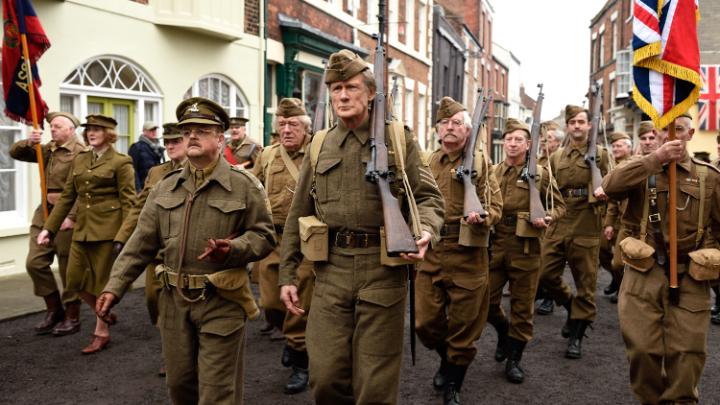
Rating: 8/10 – on a par with the first two movies, Creed is hugely enjoyable, and benefits from a script – by Coogler and Aaron Covington – that puts the characters first before the fight scenes; if there still remains a lack of development in some areas (the various subplots), there’s more than enough here to keep old, new and non-fans alike happy and satisfied.

Share this:

  • Share on X (Opens in new window) X
  • Share on Facebook (Opens in new window) Facebook
  • More
  • Print (Opens in new window) Print
  • Email a link to a friend (Opens in new window) Email
Like Loading...

45 Years (2015)

12 Tuesday Jan 2016

Posted by dullwood68 in Movies

≈ 4 Comments

Tags

Andrew Haigh, Anniversary party, Charlotte Rampling, David Constantine, Drama, Glacier, In Another Country, Literary adaptation, Marriage, Norfolk, Review, Switzerland, Tom Courtenay, Wedding anniversary

45 Years

D: Andrew Haigh / 95m

Cast: Charlotte Rampling, Tom Courtenay, Geraldine James, Dolly Wells, David Sibley

Geoff and Kate Mercer (Courtenay, Rampling) are near to celebrating forty-five years of married life with a big party. As their party planner remarks, it’s an odd year to celebrate, but it’s because their fortieth had to be cancelled thanks to Geoff needing a heart bypass. They live outside a small village in Norfolk with their dog Max and appear to have a tranquil, reclusive existence.

On the Monday before the party, Geoff receives a letter from Switzerland that contains a surprise. Back in 1962, Geoff and his then girlfriend, Katya, were hiking through the Swiss Alps when she fell into a crevasse. Now, with the snowline having retreated due to global warming, Katya’s body has been found embedded in a glacier. The news startles Geoff, and unnerves Kate, especially when it occurs to her that it seems odd that Geoff would have been contacted. When he tells her that on occasion during their trip he and Katya pretended to be married to get a hotel room, and because of this he’s regarded as her next of kin, it further unnerves Kate.

45 Years - scene3

As the week progresses and Kate spends her time organising the party, she begins to realise that Geoff is spending his time reliving memories of his time with Katya. There arre questions she wants to ask him but is afraid to. When she discovers that Geoff has been going up into the loft and looking at old slides, she also discovers something that proves shocking. Kate becomes distant from Geoff, and angry with him for what she sees as a betrayal of their own relationship, that he should want to spend so much time thinking about a woman he knew before he and Kate even met.

With the party looming ever nearer, Kate confronts Geoff over his behaviour but she can’t quite bring herself to fully explain her feelings. All she wants is for Geoff to make it look like he wants to be there. But even with his assurance that he does want to be there, and he does love her, on the day, Kate is wracked with unresolved emotions as the celebration of their life together gets under way.

Adapted from the short story In Another Country by British author David Constantine, 45 Years is a subtle, intelligent movie about perceived betrayal and the jealousy resulting from it that features tremendous performances from both Rampling and Courtenay, and confident, assured direction from Andrew Haigh. It’s a movie that relies heavily on the stillness of contemplation to explore the surprisingly strong emotions felt by its central character, Kate, and it quietly and effectively makes those emotions resonate with a power that is equally unexpected for their intensity.

45 Years - scene1

Haigh, who also wrote the screenplay, postions Kate and Geoff at a point where their contentment with each other is so ingrained that it brooks no question – from us at least. But when the letter from Switzerland arrives and we see their quite different reactions to it – Geoff retreats into a world of memory and introspection, Kate sees a challenge to the comfort she’s found in their marriage – that contentment is sure to be disrupted. But where some movies might explore the ways in which both characters are affected by this kind of news, Haigh does something a little unusual: he makes Geoff a silent mourner who talks about Katya in generalities, and brings Kate’s fears and concerns to the fore.

Kate is governed by an irrational but entirely understandable need to know that Katya isn’t Geoff’s great lost love, the woman he has missed for all these years, and also that their marriage hasn’t been a case of Geoff settling for second best. She wants to know that she matters, that Geoff loves her more than he did Katya, that their marriage hasn’t been one of convenience on Geoff’s part. But she cannot find the courage to ask the question directly or with any conviction that she wants to know the answer. And by doing so she makes her situation all the worse, as her assumptions and worries about her place in Geoff’s life are amplified by her insecurities.

As Kate, Rampling is simply incredible. She gives an impressive, astonishing performance, one of contained desperation, as Kate appears to allow herself to give in to the emotions she feels in the wake of the letter’s arrival. In several scenes and shots Rampling’s features are a mask behind which you can see a swirling cauldron of emotional confusion and dismay. There’s a scene where she plays the piano, and in her playing there’s a release of emotion that is so terrible for its restrained violence; as she hits the keys each note is like a plea for exculpation of her feelings. And at the party, as Kate and Geoff dance together in what should be a joyous moment for them both – a recreation of the first dance at their wedding – Rampling’s body language tells the viewer everything they need to know about how Kate is dealing with it all.

45 Years - scene2

By contrast, Courtenay is required to remain – comparatively – in the shadows. Geoff’s behaviour at the news of Katya’s discovery is largely poignant, an inadequate response given his age and his physical infirmity. Geoff looks frail throughout, and there’s always the possibility the news will prove too much for him, but Haigh is canny enough to make Geoff stronger than he seems, at least emotionally, and there’s a handsome payoff for this at the party. Courtenay is a terrific match for Rampling, his naturally far-off gaze used to good effect as someone remembering another time in their life when they were happy. When he recounts the circumstances of Katya’s death, it’s with a heartfelt sense of acknowledgment for the happiness of that time in his life. For the viewer, it’s clear that Geoff doesn’t feel his relationship with Kate is of lesser importance. Oh that Kate could feel the same way.

45 Years excels at portraying the way in which someone can so easily and quickly feel that the relationship they’ve invested so much time in can feel so false (even if it’s probably not the case; though the movie doesn’t commit itself either way). Haigh shows complete control over the material and the narrative, even in the scenes where Kate is wandering aimlessly about a nearby town and her uncertainty is clear by the random directions she takes. The action is also beautifully framed and shot by DoP Lol Crawley, and the movie revels in its autumnal colour scheme (a perfect metaphor for the characters’ time of life and expectations). It’s a rich, sometimes lyrical movie that rewards in scene after scene, and features two actors at the top of their game. And it all ends with a final shot that is devastating for the way in which it leaves the viewer to decide how, or even if, Geoff and Kate continue their marriage.

Rating: 9/10 – a moving, emotionally astute portrait of a marriage plunged into crisis by the insecurities of one partner, 45 Years is a poignant look at how easy a long-term relationship can be undermined by simple suspicion; Rampling once again shows why she’s still one of the best actresses working today, and Haigh cements his position as one of Britain’s brightest directing talents.

Share this:

  • Share on X (Opens in new window) X
  • Share on Facebook (Opens in new window) Facebook
  • More
  • Print (Opens in new window) Print
  • Email a link to a friend (Opens in new window) Email
Like Loading...

Solace (2015)

11 Monday Jan 2016

Posted by dullwood68 in Movies

≈ 1 Comment

Tags

Abbie Cornish, Afonso Poyart, Anthony Hopkins, Colin Farrell, Drama, FBI, Jeffrey Dean Morgan, Murder, Psychics, Review, Serial killer, Terminal illnesses, Thriller, Visions

Solace

D: Afonso Poyart / 101m

Cast: Anthony Hopkins, Jeffrey Dean Morgan, Abbie Cornish, Colin Farrell, Xander Berkeley, Marley Shelton, Janine Turner, Kenny Johnson, Sharon Lawrence

Solace is one of those movies. You know, a movie that dares you not to laugh at the absurdity of it all. It’s a movie that acknowledges the idea of credibility and then tramples all over it with big hob-nailed boots on. It’s so consistently bad that there’s no getting over just how awful it is. And it just goes to show that, sometimes, actors definitely go for the pay cheque rather than the artistic challenge (not that there is one here, unless you count keeping a straight face when the movie gets really silly).

But in amongst all the terrible dialogue and horrible acting, there are lessons to be learnt from Sean Bailey and Ted Griffin’s script, lessons that could prove invaluable if you’ve a mind to write your own serial killer thriller. Here are ten pointers toward making that movie a success.

1 – Always give your central protagonist – here Hopkins’ psychic John Clancy – a heartrending backstory that will have no relevance at all until the final scene, when you can reveal a dark secret that sheds new light on the character and his/her motivations (but which will be redundant in terms of the drama).

Solace - scene3

2 – If your central character is a psychic it’s important to keep moving the goalposts in terms of what triggers his/her visions. Start off with being touched by others, then move on to have them be practically all-seeing all by themselves.

3 – If your villain is another psychic with advanced “powers”, don’t forget to make sure that, in the end, he/she is no match for your central character, and can be easily defeated, despite having a talent for seeing every outcome of every situation ahead of time.

4 – If you have to involve the police or Federal authorities, then make sure that those characters are at odds with each other in terms of their beliefs; one should be totally behind your psychic hero, while the other should doubt their abilities, and say so more than once.

Solace - scene2

5 – If you have an agent or policeman who doubts the psychic’s abilities then you should definitely include a scene where their history is laid bare with as much detail as possible, and which should be upsetting for them to hear. (This will ensure that the audience is completely impressed with the psychic’s powers.)

6 – It’s very important that your villain should be able to kill on more than one occasion and never leave any DNA or other forensic evidence at any of the crime scenes. This will make him/her seem invincible/uncatchable until it’s time for them to be defeated with ease by the psychic hero.

7 – Always ensure your psychic hero gets to upstage their police partners by making educated guesses that they can pass off as benefits of their psychic abilities. This will be important when the narrative takes a wrong turn or gets bogged down by its own implausibilities.

Solace - scene1

8 – When deciding on the killer’s motivations, it’s always best to make them sound like they’re acting with the best of (misguided) intentions. But always be sure to translate those motivations into the kind of dialogue that even the most talented actor couldn’t make convincing.

9 – Never ever insult your audience by including a scene where the psychic refuses to help the authorities because of past traumas. Everyone knows they’ll take the case, and everyone knows their reason for doing so is completely irrelevant (if it’s mentioned at all).

10 – Be sure to include several “psychic montages” that comprise shots and short clips from the rest of the movie interspersed with other, abstract images that have no relevance to the story at all (but which look pretty or ominous). Feel free also to include shots that feature the characters but which don’t actually occur anywhere else in the movie; get away with this by saying these shots are “interpretive”.

Oh, and if you can, get Anthony Hopkins to play your psychic hero. He doesn’t seem to mind what roles he takes on these days.

Rating: 3/10 – originally shot in 2013 and shelved by Warner Bros until it was picked up for distribution by troubled Relativity Media, Solace is a dreadful thriller that deserves to be locked up and never seen again; the cast are wasted, the direction is ham-fisted, and the script refuses to make any sense whatsoever, leaving the viewer with only one option – and you don’t have to be psychic to work out what that is.

Share this:

  • Share on X (Opens in new window) X
  • Share on Facebook (Opens in new window) Facebook
  • More
  • Print (Opens in new window) Print
  • Email a link to a friend (Opens in new window) Email
Like Loading...

Kidnapping Mr. Heineken (2015)

10 Sunday Jan 2016

Posted by dullwood68 in Movies

≈ 1 Comment

Tags

1982/3, Alfred Heineken, Amsterdam, Anthony Hopkins, Daniel Alfredson, Drama, Jim Sturgess, Kidnapping, Ransom, Review, Ryan Kwanten, Sam Worthington, Thriller, True story

Kidnapping Mr. Heineken

aka Kidnapping Freddy Heineken

D: Daniel Alfredson / 95m

Cast: Jim Sturgess, Sam Worthington, Ryan Kwanten, Anthony Hopkins, Mark van Eeuwen, Thomas Cocquerel, Jemima West, David Dencik

In 1982, five friends working and living in Amsterdam  – Cor Van Hout (Sturgess), Willem Holleeder (Worthington), Jan ‘Cat’ Boellard (Kwanten), Frans ‘Spikes’ Meijer (van Eeuwen), and Martin ‘Brakes’ Erkamps (Cocquerel) – are struggling to keep their construction business from going under. They don’t have any appreciable capital so the banks won’t lend them any money. But Cor has an idea (a New Year’s resolution in fact): to do something big, something that will see them all become immensely rich. That idea leads to a plan, and the plan is to kidnap the owner and founder of the Heineken brewery empire, Alfred ‘Freddy’ Heineken (Hopkins).

Needing to pull off this coup quite quickly, the five men begin to plan their abduction and how they will keep the ransom – $35m – and avoid being caught. They begin to watch Heineken to learn his routine, and to figure out the best time to grab him. They also realise that in order to look like professional kidnappers they’ll need to have some money behind them. So they rob a bank, and get away with enough cash to bankroll the abduction. At a shed owned by Jan, they construct soundproof cells where they can keep Heineken (and Ab Doderer (Dencik), his driver), and which are hidden behind false panelling.

KMH - scene2

The kidnapping is successful and the five men wait for the ransom note to be found by the police. They hole up at Jan’s shed, taking it in turns to check on Heineken and Doderer, and to wait for the ransom to be paid. But time passes, and after three weeks they’ve heard nothing. Willem is all for sending the police evidence that they will harm Heineken if the ransom isn’t paid, but when it comes to it he can’t do it. Another demand leads to the police and Heineken’s company agreeing to pay the ransom money, and the group successfully attain it. They stash most of it in buried tubes out in the forest, but in the days ahead they become more fearful and paranoid that the police will soon be snapping at their heels, and their long-term friendships begin to fray at the seams.

True stories – in the movies at least – usually come with the disclaimer that certain scenes, characters and/or dialogue have been fictionalised or conflated or created for dramatic purposes. This we know, and it’s always the problem with telling a true story: just how much of what you’re seeing is really true. The answer, of course, is absolutely none of it. It doesn’t matter if its’s based on a true story, or has the backing and involvement of the people it concerns or portrays, every single movie that’s based on a true story, or real events – what you’re watching is never going to be exactly what happened. And while we all know this deep down, still we take for granted that what we’re seeing actually happened, as if the writer(s), director(s) and cast have a special way of recreating past events exactly as they happened.

KMH - scene1

Sadly for Kidnapping Mr. Heineken, if that were the case, then it might help obscure or erase the movie’s most fundamental problem: it’s not in the least bit convincing or dramatic enough to work. A belated English language remake of The Heineken Kidnapping (2011), the movie is a tired, tangled piece that features five men who don’t seem to have anything in common except they take to kidnapping with apparent ease, especially when it comes to abandoning their consciences (not one of them offers any objections to the idea). And there’s an incredible naïvete about their decision that’s never properly addressed; none of them have a criminal background but they take to being criminals as if it were the most natural, and easiest, thing in the world.

With the movie establishing an awkward tone from the start, the middle section does little to rescue things, as Heineken gets the chance to be belligerent and caustic to his kidnappers on a regular basis, and they all sit around wondering why the ransom hasn’t been paid. Five more glum-looking faces you’re unlikely to see for quite some time, as the movie – scripted by William Brookfield from the book by Peter R. de Vries – fails to add any tension to proceedings, even when Willem wants to get violent. It gives rise to an odd feeling, that neither Brookfield nor Alfredson have made any connection to the story, and are telling it out of some sense of obligation.

The same can be said of the cast. Sturgess, usually a sharp-minded presence on screen, here seems held back by the vagaries of the script, in particular with regard to Cor’s relationship with his girlfriend Sonia (West), which appears to be of minor importance during the abduction but assumes a disproportionate relevance in the movie’s final third. Worthington continues to make audiences wonder why he gets so much work, giving a performance that’s so stiff you expect him to seize up at any moment. And Kwanten, thanks to one of the scruffiest wigs seen in ages, will have viewers trying to work out who he is (in real life) rather than how good his performance is. But spare a thought for Hopkins, playing yet another supporting performance and having to go from assured patriarch to rambling mental patient in the space of a competently edited chase sequence.

KMH - scene3

The story of Alfred Heineken’s kidnapping was a major news story at the time – in Holland at least – and is notable still today for the ransom being the largest ever paid for an individual, and for the fact that some of the money has never been recovered. The movie cites this at the end, along with the fates of the main characters (two of which may come as a very big surprise). But by then you’ll be less than interested, and just as relieved as Heineken probably was at being rescued from it all.

Rating: 4/10 – plodding, uninspired and plain dull for long stretches, Kidnapping Mr. Heineken is a movie that lacks commitment from its cast and crew, and ambles along with all the urgency of a downhill racer missing his skis; broadly factual (ironically, de Vries, who was an advisor on the movie, subsequently refused to watch the movie, citing numerous discrepancies between the movie and what really happened), this is a movie that gives new meaning to the words defiantly turgid.

Share this:

  • Share on X (Opens in new window) X
  • Share on Facebook (Opens in new window) Facebook
  • More
  • Print (Opens in new window) Print
  • Email a link to a friend (Opens in new window) Email
Like Loading...

A Most Violent Year (2014)

09 Saturday Jan 2016

Posted by dullwood68 in Movies

≈ Leave a comment

Tags

Albert Brooks, Ambition, Crime, David Oyelowo, Drama, Gangsters, J.C. Chandor, Jessica Chastain, Oscar Isaac, Review, Theft, Thriller

A Most Violent Year

D: J.C. Chandor / 125m

Cast: Oscar Isaac, Jessica Chastain, David Oyelowo, Albert Brooks, Elyes Gabel, Christopher Abbott, Matthew Maher, Alessandro Nivola, Peter Gerety, Catalina Sandino Moreno

New York, 1981. In the midst of one of the most violent years in the city’s history, local businessman Abel Morales (Isaac) is looking to expand his fuel distribution company with the acquisition of a bay-front storage facility, and to do it all legally and above board. He’s supported by his wife, Anna (Chastain), but the deal he’s making for the facility is dependent on his being able to make the final payment. With his trucks being hijacked on a regular basis, and with his drivers afraid to make deliveries, Abel struggles to make sense of who’s behind it all.

Matters aren’t made any better by his having to contend with an investigation into his company by District Attorney Lawrence (Oyelowo). Lawrence is convinced that Abel’s business must be crooked in some way, despite his protestations. And as if that wasn’t bad enough, one of his drivers, Julian (Gabel), is involved in a shootout with robbers during an attempted hijacking. Julian goes on the run, and Abel has to track him down and convince him to give himself up. But Julian refuses and remains at large.

AMVY - scene2

Meanwhile, the due date for the final payment is fast approaching and Abel has to negotiate loans from as many people and places as he can, but he’s still short. When he learns that one of his trucks is in the process of being hijacked he pursues the robbers, eventually catching one of them. To his surprise he finds that the hijackings aren’t all that they seemed, though it does lead to a discovery about one of his competitors that he uses to his financial advantage. But with time running out he’s forced to approach Mafia-affiliated Peter Forente (Nivola); Forente agrees to loan Abel the money he needs but the terms are not very favourable. But when Abel tells Anna about the deal he’s made, she reveals something she’s done which has an impact on everything.

It’s been said on many previous occasions by many other people that the title A Most Violent Year is misleading. The movie contains little actual violence, despite including a bridge shootout and Abel chasing down one of the robbers, and there’s none of the tense showdowns we’ve come to associate with gangster movies. Instead, writer/director Chandor has chosen to focus on how difficult it is to operate in a criminal environment and remain honest. To look at Abel, and to see how close he’s getting to securing his company’s future, you do expect temptation to be placed in his way, and you expect him to struggle with each temptation, but what Chandor does instead is replace temptations with a series of setbacks. Abel’s a good man, solid and trustworthy through and through, and it’s how he maintains his innate honesty when faced with these setbacks – when he could be excused for taking a short cut or looking the other way for a moment – that defines him.

AMVY - scene3

As played by Isaac, Abel is a strong, determined individual who always seems a little out of his depth, despite his commitment. It’s his wife, Anna, played with spirited guile by Chastain, who is really the driving force and overseer of the business’s fortunes, and so we have a Lady Macbeth for the Eighties, as she cajoles and prompts and on occasion, bullies her husband into doing what’s needed. It’s a subtly constructed conceit – behind every successful man is an even more ambitious woman – but in the hands of Chandor and Chastain, the movie is all the more intelligent and engrossing when Anna is forced to take centre stage.

The period setting is entirely apt, with the cold, wintry conditions of the time reflecting purposefully on the narrative, as Abel’s fuel distribution business, mostly gas, is seen as a saviour not only for him, but for the city and its battle with the elements (Isaac is seen throughout in a big mustard-coloured coat that looks as warming as it does heavy). The movie wants Abel to succeed and so do we, and as he navigates the treacherous waters of “low” finance, each time he doesn’t quite achieve what he sets out to get, it has the effect of impressing on the viewer that he too will be fighting the elements if he fails completely. Bradford Young’s cinematography is a highlight, the wet, shiny, chilly streets of New York given a light sheen of glamour that makes for some impressive shots throughout the movie.

AMVY - scene1

By focusing on the trials and tribulations of someone seeking to firmly establish themselves in their chosen area of commerce, and by keeping the stakes firmly in the foreground, Chandor achieves a directness of style and narrative that keeps the viewer intrigued as to the outcome, and committed to following Abel’s story to its conclusion. It may not be a movie that features a swift pace and dazzlingly executed photography, but its measured approach to the material allows the viewer to become embroiled in the machinations and leverages that Abel becomes involved in. And if there aren’t any standout action beats or revenge style melodramatics then it’s entirely to the benefit of the movie, and stands as a testament to the quality of Chandor’s writing and directing.

Rating: 8/10 – a modest yet effective crime drama, A Most Violent Year is yet another example of just how good writer/director J.C. Chandor is, and why he’s one of the best movie makers working today; perceptive, extremely well acted, and lacking only in its inclusion of the DA subplot (which doesn’t add anything), this is the kind of movie that shouldput audiences in mind of the kind of thrillers that were being made in the early Seventies: assured, classy, and with a lot to say.

Share this:

  • Share on X (Opens in new window) X
  • Share on Facebook (Opens in new window) Facebook
  • More
  • Print (Opens in new window) Print
  • Email a link to a friend (Opens in new window) Email
Like Loading...

Daddy’s Home (2015)

07 Thursday Jan 2016

Posted by dullwood68 in Movies

≈ 1 Comment

Tags

Bobby Cannavale, Comedy, Infertility, Linda Cardellini, Mark Wahlberg, Review, Rivalry, Sean Anders, Stepdad, Thomas Haden Church, Will Ferrell

Daddy's Home

D: Sean Anders / 96m

Cast: Will Ferrell, Mark Wahlberg, Linda Cardellini, Thomas Haden Church, Scarlett Estevez, Owen Vaccaro, Hannibal Buress, Bobby Cannavale

Sometimes it’s easy to dismiss a movie when it appears formulaic and predictable, or has the same actor portraying the same kind of character they always do. And sometimes that’s okay because it’s the cinematic equivalent of comfort food. One such actor is Will Ferrell, who’s made a very successful career playing a man-child in a succession of comedies that have made a lot of money if never quite gaining critical approval (in short, the public likes him so the critics don’t matter). Ferrell rarely strays from playing this kind of character, and if he does it’s not very often; the last time Ferrell tried anything different was in Everything Must Go (2010).

And so he’s back in Daddy’s Home, as Brad Whitaker, a stepdad desperate to win his stepkids’ love and affection, and putting in the extra time and effort to do so because he can’t have kids of his own. Facing an uphill battle – his stepdaughter, Megan (Estevez) keeps drawing family pictures where Brad is shown either dead or dying – he begins to earn their respect and a confirmed place in their lives when, out of the blue, their biological father, Dusty Mayron (Wahlberg), calls up and Brad finds himself inviting Dusty to visit. Despite several warnings from his wife, Sara (Cardellini), that this isn’t a good idea, Brad assures her everything will be fine.

Daddy's Home - scene3

Now, up until this point, Ferrell does manage to portray a slightly different variation on his usual character, and Brad is a more confident (albeit naïve) person who knows what he’s doing. But with the arrival of Dusty, it’s back to normal as Brad’s confidence goes out the window, and Ferrell ramps up the childish and confused behaviour as Brad attempts to outdo Dusty for being cool. Of course, his efforts mostly backfire – moving Dusty’s motorbike allows for a quick succession of visual jokes – and he receives less and less support from the people around him as Dusty’s friendly nature and willingness to help others makes Brad look second-rate.

It’s obvious that Dusty is there to break things up between Brad and Sara, and the issue of Brad’s infertility is brought up time and again as a potential wedge between them, while bedtime stories about the king who returns to his castle to find an evil step-king ruling his people is stretched beyond its natural lifespan. Dusty’s efforts to undermine Brad’s role are purely of the “great gift” variety, such as the treehouse he builds in a day along with a skate ramp (he’s not averse to bribing his kids with cash to earn their loyalty, either). Against this, Brad’s efforts appear paltry and ill-advised. But when he tries to play Dusty at his own game, it leads to public humiliation and estrangement from Sara. Now it’s up to Dusty to prove he can be the kind of father that Brad is.

The Ferrell movie template is adhered to pretty closely as his character’s initial security is well established, only to be undermined or reversed with predictable ease. As Brad struggles to regain his position as head of the family, Ferrell can’t resist slipping back into the kind of character motifs he’s used over and over again in the past, from inherent cowardice to inappropriate boasting to emotional shallowness. By now, each feature Ferrell makes is like a greatest hits movie, allowing the audience to tick off familiar moment after familiar moment.

Daddy's Home - scene1

But does it all work with Daddy’s Home? The answer (predictably) is yes and no. The movie does have its moments, with Brad’s alcoholic meltdown at a basketball match proving a particular highlight, but there are still too many times when the humour is slowed down by muddled attempts to advance the (very slight) storyline, or to indulge in the kind of verbal sparring that drags on for far too long and to increasingly little effect – here it’s in a scene at the radio station where Brad works and features the man himself, his boss Mr Holt (Church), and a secondary character called Griff (Buress). The idea is there but the execution lacks both pacing and humour, leaving the viewer to wait patiently until it’s over.

There’s also a subplot involving Dylan (Vaccaro), Brad’s other stepkid, and his being bullied at school. It leads to a scene where Brad and Dusty compete to give him the best advice about dealing with the situation, but it drags on too long and loses all sense of momentum (or purpose). There is a payoff later on in the movie, and it is one of the funnier moments, if only for how unapologetically inappropriate it is, but even then, the script by Brian Burns, Anders and John Morris, follows it up with a scene that looks and feels strained and tired. It’s the movie’s curse: for every good scene that raises a chuckle or even a belly laugh, there’s at least two more scenes that cancel it all out.

With Ferrell on auto pilot for most of the movie, and the basic scenario not requiring too much effort from anyone to sell it, the rest of the cast breeze through their scenes as if they were on a break from more serious acting chores. Reuniting with his co-star from The Other Guys (2010), Wahlberg coasts along as Dusty, while Cardellini has the less than enviable task of playing the inevitably underwritten lead female. Church is frankly annoying as Brad’s boss, and is stuck with some of the worst “inspirational stories” ever relayed on screen; and Buress wanders in and out of the movie in order that Brad can be accused of racism at odd moments (and yes it is as awkward as it sounds).

Daddy's Home - scene2

If there’s a purpose to Daddy’s Home, other than to propagate the idea that one man’s sexual potency can reverse the infertility of another man, then it quickly gets lost in the telling. This is a movie whose central idea would have been better suited to a half hour short, or perhaps an episode of Modern Family. Anders directs with all the flair of someone who prints the first take, and the movie is blandly shot and edited so as not to stand out from the blandness of the material. All in all, it’s another knock-off Will Ferrell movie, and with all the disappointment that that entails.

Rating: 5/10 – more of an effort all round would have made all the difference to Daddy’s Home, but sadly it didn’t happen, and large stretches of the movie go by without making any kind of impact whatsoever (though it might encourage a degree of apathy in the casual viewer); but when it does get it right, on approximately half a dozen occasions, then its very good indeed (surprisingly), and makes you wonder what could have been achieved if the cast and crew hadn’t settled for “just good enough”.

Share this:

  • Share on X (Opens in new window) X
  • Share on Facebook (Opens in new window) Facebook
  • More
  • Print (Opens in new window) Print
  • Email a link to a friend (Opens in new window) Email
Like Loading...

Mini-Review: He Never Died (2015)

06 Wednesday Jan 2016

Posted by dullwood68 in Movies

≈ Leave a comment

Tags

Action, Bingo, Blood, Diner, Drama, Father/daughter relationship, Henry Rollins, Horror, Jane Greenhouse, Jason Krawczyk, Jordan Todosey, Kidnapping, Review, Steven Ogg, Thriller

He Never Died

D: Jason Krawczyk / 97m

Cast: Henry Rollins, Steven Ogg, Jane Greenhouse, Jordan Todosey, Booboo Stewart, James Cade, Dan Petronijevic, Don Francks

Jack (Rollins) is a loner. He lives in a run-down apartment building and spends most of his days sleeping. When he’s awake he’s uncommunicative and miserable. He goes to the same diner every day for the same thing (oatmeal), and is oblivious to the attempts by one of the waitresses, Cara (Greenhouse), to find out more about him. The only appointments he has are with a hospital intern, Jeremy (Stewart), who sells him unidentified items out of his car. Jack isn’t just world weary, he’s time weary.

He Never Died - scene1

When two thugs (Cade, Petronijevic) come to his apartment looking for Jeremy and threaten him, Jack dispenses with them even though he’s shot in the hand. And later that same night, he receives a call from his most recent wife asking him to pick up their daughter, Andrea (Todosey), before she gets too drunk to drive home. He finds her and takes her back to his apartment. Before long, Jack is taking Andrea to the diner, and to the place where he plays bingo two or three times a week. As they get to know each other – reluctantly on Jack’s part – his true nature begins to assert itself once the two thugs from the day before try to have him killed. From there, matters escalate. Andrea is kidnapped, Jack is revealed to have certain “skills” and one heck of a back story, and the shadowy presence of an old man continually leaves Jack spooked.
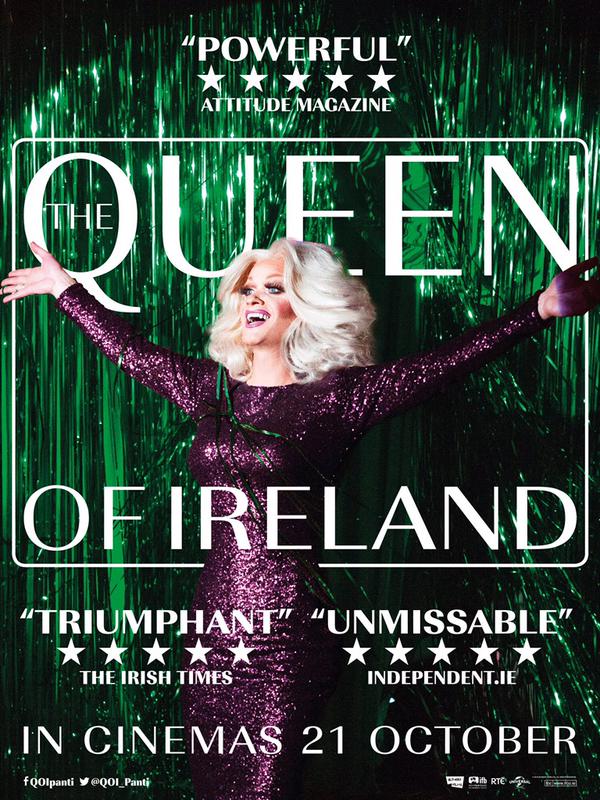
He Never Died is many things: a black comedy, a thriller, a horror movie, a relationship drama, and a movie with a core mystery whose reveal is at odds with one of the first things we learn about Jack. But this is okay, because even though these various story elements don’t always gel together into an effective whole, this is a movie that has Henry Rollins giving one of the most enjoyably deadpan, sardonic performances ever. While there are times when writer/director Krawczyk’s script drops the ball (and never finds out where it’s ended up), Rollins is the rock the movie is built on, and he doesn’t disappoint, playing Jack completely straight and with a no-nonsense attitude that reaps dividends from the start. This is a man who is seriously underwhelmed by everything; to say he doesn’t suffer anything gladly would be a massive understatement.

But while Rollins is impressive as Jack, and he plays him with a hard-edged nonchalance that’s strangely endearing (for the viewer), elsewhere there are performances and characters that don’t quite fit the bill. Ogg’s slimy club owner, Alex, is played at too manic a pitch to be anything but annoying, while Greenhouse’s smitten waitress is asked to suspend disbelief too often for comfort, and too easily. It’s left to Todosey to inject some fun into proceedings, as Andrea manoeuvres her way through the minefield of Jack’s reluctance to bond.

He Never Died - scene3

He Never Died is also a movie that, for a comedy-horror-thriller, is drenched in blood, whether it’s from one of the many goons who cross his path, or from Jack himself (there’s a scene with a pair of pliers that you won’t forget easily). The red stuff is all over the place here, but it’s relevant too, and thanks to Eric Billman’s often colour saturated cinematography, is memorable for its distribution and its lurid quality. But while Krawczyk pays his genre dues, it’s in terms of the movie’s humour that He Never Died works so well, with some whip-smart dialogue and a handful of killer one-liners (Andrea’s assertion that “vaginas are like coupon books for alcohol” is an instant classic).

Rating: 7/10 – while it struggles at times to be coherent and true to its main character’s origins, there’s much to enjoy in He Never Died; violent, profane and gloriously acerbic, it’s a movie that revels in its own cleverness, and wants its audience to have the anarchic ride of their lives, something it achieves with undisguised relish.

Share this:

  • Share on X (Opens in new window) X
  • Share on Facebook (Opens in new window) Facebook
  • More
  • Print (Opens in new window) Print
  • Email a link to a friend (Opens in new window) Email
Like Loading...

The Visit (2015)

03 Sunday Jan 2016

Posted by dullwood68 in Movies

≈ Leave a comment

Tags

Deanna Dunagan, Drama, Ed Oxenbould, Found footage, Grandchildren, Grandparents, Horror, Kathryn Hahn, M. Night Shyamalan, Olivia DeJonge, Peter McRobbie, Review, Thriller

The Visit

D: M. Night Shyamalan / 94m

Cast: Olivia DeJonge, Ed Oxenbould, Deanna Dunagan, Peter McRobbie, Kathryn Hahn, Celia Keenan-Bolger

If you’re M. Night Shyamalan, and your career has become known more for the disappointing movies you’ve made rather than the global box office success of your third feature, then what do you do? Do you plug away at the kind of movies you like to make, where there’s a twist in the tail every time, or do you try something different? And what do you do if “different” still doesn’t work?

Well, if you are M. Night Shyamalan, then you keep coming back to the kind of movie that brought you international fame and fortune in the first place. You keep tweeking the idea to be sure, but in the end it’s the same mystery set up with a twist at the end designed to make viewers gasp, “Wow! I didn’t see that coming!” The only problem with that approach though, is that viewers will be expecting the twist and trying to work it out from the word go. The beauty of The Sixth Sense (1999) was that it was a movie with so little fanfare that when the truth about Bruce Willis’s character was revealed, audiences were properly surprised. But now, audiences are that much more savvy, and getting something past them like that is even more difficult.

The Visit - scene2

But Shyamalan is a trier, and he certainly doesn’t give up easily. And so we have The Visit, his latest venture as writer/director, and a movie that is two parts Tales from the Crypt and one part The Twilight Zone. The set up is pretty simple: single mom (Hahn) decides to send her two young children – Becca (DeJonge) and Tyler (Oxenbould) – to visit their grandparents for the first time. Mom is estranged from her parents, but feels it will be good for her kids to meet them and build a relationship with them. Becca decides to film the trip and their stay, both as a record of the occasion and as part of a larger school project.

When they arrive at their grandparents’ place, they find Nana (Dunagan) and Pop-Pop (McRobbie) to be a pleasant, welcoming couple. However, it’s not long before they begin to realise that Nana and Pop-Pop might have a few issues related to their age. Nana exhibits strange behaviour during the night, from wandering (apparently) aimlessly through the house to scratching at the wall outside their room – and without any clothes on either. But Pop-Pop explains that Nana isn’t too well, and Becca and Tyler sympathise and continue their stay – even after they play hide and seek under the house and find Nana under there with them and chasing them on all fours.
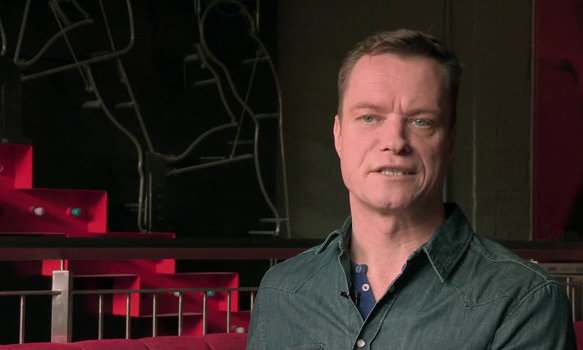
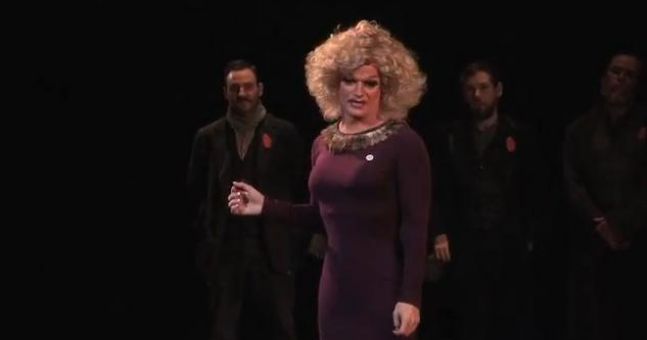
But Pop-Pop also exhibits some strange behaviour. He keeps going out to the shed each day and depositing a package there. Tyler investigates and finds that Pop-Pop has his own problems. And still the children continue their stay, even as they begin to suspect that good old Nana and Pop-Pop might not be in the best of mental and/or physical health. FaceTime calls with their mom don’t help, as she’s focused on the holiday she’s enjoying with her new man. But as the week of their stay progresses, events become more unnerving and both Becca and Tyler begin to look forward to going home, just as Nana and Pop-Pop begin to think it might be a good idea if they stayed longer.

The Visit - scene1

Let’s get the twist out of the way. It comes along with roughly fifteen minutes to go, and for seasoned veterans of this kind of movie, will have been guessed a long time before then. It’s not a particularly difficult twist to work out – Shyamalan provides enough clues – and when it comes it’s done in a suitably effective way. But while some viewers may feel it’s an unnecessary turn of events, advance knowledge actually doesn’t make the movie any less effective (as far as that goes). What it does do though is give Shyamalan the chance to ramp up the tension of the last ten minutes and inject some much needed energy.

The Visit lives or dies by how convincing the children’s reaction to their grandparents’ behaviour is. Today, with children being a lot more aware of the wider world around them, and of what is and isn’t right, being holed up with a couple of elderly people who exhibit bizarre behaviour that might lead to their being violent, doesn’t seem like something that two kids of Tyler and Becca’s intelligence would endure (even for their mom’s sake). But they do, and in reality we wouldn’t have a movie if they didn’t, but equally, in reality they would have been out of there the moment they saw Nana scratching at the walls in the all-together. Shyamalan is clever enough to invoke the sympathy card but when Becca surprises Pop-Pop “cleaning” his rifle, they still opt to wait out the week.

Suspension of disbelief is pretty much a standard requirement for horror thrillers, and The Visit requires it just as much as any other, similar movie. But here the basic set up is so banal, so bland, that when events become disturbing and threatening, Shyamalan can’t come up with a convincing reason for the kids to stay. And he’s not helped by the decision to use the found footage approach, which leads to several moments where suspension of disbelief is not only required but stretched to its limits (just how many times can a camera be dropped/left in exactly the right place to record things?).

The Visit - scene3

But while the movie’s more sinister elements aren’t entirely successful, with several references to Grimm’s Fairy Tales added to the mix, where Shyamalan does succeed is with his cast. DeJonge and Oxenbould are terrific as the children, siblings who fight and argue with each other all the time but who are clearly devoted to each other at the same time. Becca is a budding cineaste and talks about movie making as if she were an auteur; DeJonge captures the child’s need to feel and be treated like an adult with surprising precision. Tyler’s wannabe rapper feels like a way for him to deal with not having a father, and Oxenbould gives Tyler a wonderful braggadocio in these moments (even if his rapping is awful). As Nana and Pop-Pop, Dunagan and McRobbie don’t overplay their “issues” and prove remarkably effective at providing the chills beneath the sweetness of the couple’s exterior affability.

Made on a small budget but with a degree of creativity that makes the movie a lot more entertaining than some of Shyamalan’s other movies – The Happening (2008), The Last Airbender (2010) to name but two – The Visit still doesn’t quite mean a return to the early form Shyamalan showed with The Sixth Sense. But it’s a better found footage movie than most, tells its story with a refreshing lack of gimmicks, and might just be a sign that Shyamalan is turning the corner and starting to make good movies again.

Rating: 6/10 – not as eerie or as frightening as its writer/director may have wanted, The Visit is nevertheless a worthwhile entry in the found footage genre (even if it’s not technically “found” footage); good performances bolster a script that doesn’t fulfill its own potential, but most viewers will find the movie an okay watch that doesn’t insult them too much of the time, or deliberately.

Share this:

  • Share on X (Opens in new window) X
  • Share on Facebook (Opens in new window) Facebook
  • More
  • Print (Opens in new window) Print
  • Email a link to a friend (Opens in new window) Email
Like Loading...

Goodbye to All That (2014)

02 Saturday Jan 2016

Posted by dullwood68 in Movies

≈ Leave a comment

Tags

Angus MacLachlan, Anna Camp, Ashley Hinshaw, Audrey Scott, Comedy, Drama, Heather Graham, Heather Lawless, High school reunion, Marital break-up, Marriage, Melanie Lynskey, Paul Schneider, Relationships, Review, Romance

Goodbye to All That

D: Angus MacLachlan / 87m

Cast: Paul Schneider, Melanie Lynskey, Audrey Scott, Anna Camp, Ashley Hinshaw, Heather Lawless, Heather Graham, Michael Chernus, Amy Sedaris, Celia Weston

For Otto Wall (Schneider), life appears to be ticking along quite nicely. He has a wife, Annie (Lynskey) and a pre-teen daughter, Edie (Scott), a good job, and he wins local running competitions. He’s also quite accident prone, and one day he breaks his foot. One day during his recovery, Annie asks him to meet her at her therapist’s. Unaware of what’s about to happen, he learns that Annie wants a divorce (though the reason why is less than forthcoming). Shocked and confused, Otto struggles with the need to find a new place, and telling the people around him. The only positive is that he can still see Edie, and have her stay over at his new place.

Otto soon learns that Annie has been having an affair. This prompts him to consider dating again. He hooks up with an old girlfriend, Stephanie (Graham), when she contacts him via Facebook, and they have a one night stand that leaves Otto even more confused than before. Using a dating sight he meets Mildred (Hinshaw), who will willingly have sex with Otto, but doesn’t want a relationship. When Edie expresses an interest in going to church, he meets Debbie Spangler (Camp), a young single woman he takes to a cabin for the weekend. They too have sex, but the next morning she freaks out and tells Otto they shouldn’t have done what they did (which makes the journey home a little fraught).

Goodbye to All That - scene2

Otto still sees Annie occasionally, but their meetings are brittle moments of cordiality. When Edie begins to show signs that she doesn’t want to stay over any more, following a break-in, Otto begins to feel as if his life is now in complete freefall. It’s only his high school’s 20th anniversary reunion party that offers any relief: there he sees the girl who got away, Lara (Lawless). They spend time together briefly before she announces she has to leave. Otto gets her number though, and later calls her. He’s delighted to learn that she’s divorced, but surprised to learn that she’s heading to Costa Rica to teach scuba diving. It all leaves Otto with a big decision to make: whether to go with Lara, or stay and be near to Edie.

A gentle comedy of sexual manners married to a relationship drama that lacks depth, Goodbye to All That is a movie that most viewers will watch with the idea that at some point it’ll reveal what it wants to say. But unfortunately, MacLachlan, who wrote and directed the movie, never does reveal what the movie wants to say, or what it’s all about. On the surface – a very cloudy surface, admittedly – it’s about a man coming to terms with being single again after a lengthy time being married, and having no clue as to what to do next. Otto is possibly one of the most aimless, laidback characters seen in recent years, his oblivious manner and clueless expressions the marks of a man with little or no understanding of the people and places around him; it’s like he’s sleepwalked through his entire life so far.

His sexual liaisons with Stephanie, Mildred and Debbie should allow Otto the room and the experience to grow as both a father and an individual, but he’s much the same at the end as he was at the beginning, just less of a man with a puppy dog’s approach to life. Faced with women who are more emotionally and sexually complex than he is, Otto can only marvel at the ways in which relationships have evolved since he started dating Annie. As an observation on life in general, it’s pretty shallow, and as an observation of the female characters in the movie, it’s shallower still. Stephanie is all about self-gratification, Mildred is all about boundaries, and Debbie is all about unrestrained excess (with a side order of post-sexual guilt). Put them all together and they’re still not a complete woman. Instead they’re stereotypes, created to allow Otto to express his confusion about women’s needs.

Goodbye to All That - scene1

It’s this confused state that Otto wanders around in the whole time that makes the movie less than engaging. He doesn’t learn from any of his experiences, and doesn’t realise at any point that his laidback, “everything’s okay, I don’t have to try anymore” attitude is what has prompted Annie to push for a divorce. He can’t connect properly with her, or with the women he sleeps with, and even though he has an epiphany of sorts near the end, by then it’s too late, and the viewer is no longer interested.

What writer/director MacLachlan forgets to include is a scene where Otto behaves sympathetically to any of the women he knows. If he did we might have a degree of sympathy for Otto himself, but his relationship with Edie aside, it’s all about Otto. Schneider plays him as a well-meaning doofus, but it’s a portrayal that wears thin as the movie progresses, and by the end you’re hoping that Lara will bring him down to earth with some well-chosen observations about his behaviour, but instead the script has her supporting him unreservedly. It makes you wonder – still – what on earth the movie’s all about.

Goodbye to All That - scene3

Despite some serious pitfalls and and a less than cohesive story, Goodbye to All That does feature some good performances, with Lynskey and Camp making the biggest impressions. Lynskey is an underrated actress and should be given bigger and better roles, and here she takes what could be the shrew’s role and makes it much more rounded and emotional. Camp has a ball as the sexually expressive Debbie, playing demure one moment and bawdily kittenish the next. Both actresses hold the attention when they’re on screen, and both do more with their characters than the script would necessarily allow. And Scott is a winning screen presence, a moppet with a firm grasp on the mixed emotions Edie feels in the wake of her parents’ splitting up.

In contrast, MacLachlan’s direction is solid but unremarkable, though he does show an enthusiasm for shooting the sex scenes that makes all the other scenes appear like afterthoughts, and he can’t quite stop Otto from looking baffled in each and every scene once Annie (or rather, her therapist) tells him it’s over. Corey Walter’s cinematography is a definite plus, with the autumnal North Carolina locations given an extra lustre, and praise too to editor Jennifer Lilly for making a number of scenes feel more potent than the script did (the scene in the therapist’s, Otto and Mildred’s first time together to name but two).

Rating: 5/10 – uneven, sporadically amusing (for a comedy), lacking in focus, but somehow better than a lot of other, similar movies, Goodbye to All That is perfect for a wet Sunday afternoon after a big lunch; if you can ignore Otto’s unfortunate misogyny then you might be able to reap some enjoyment from the movie, but otherwise it’s a romantic comedy-drama that doesn’t know which one it is at any given moment.

Share this:

  • Share on X (Opens in new window) X
  • Share on Facebook (Opens in new window) Facebook
  • More
  • Print (Opens in new window) Print
  • Email a link to a friend (Opens in new window) Email
Like Loading...

Burnt (2015)

01 Friday Jan 2016

Posted by dullwood68 in Movies

≈ Leave a comment

Tags

Bradley Cooper, Chef, Clean and sober, Cuisine, Daniel Brühl, Drama, Emma Thompson, Food, John Wells, Kitchen, London, Michelin Guide, Restaurant, Review, Romance, Sienna Miller, Steven Knight, Three stars

Burnt

D: John Wells / 101m

Cast: Bradley Cooper, Sienna Miller, Daniel Brühl, Riccardo Scamarcio, Omar Sy, Sam Keeley, Henry Goodman, Matthew Rhys, Stephen Campbell Moore, Emma Thompson, Uma Thurman, Lexie Benbow-Hart, Alicia Vikander, Sarah Greene

Adam Jones (Cooper) is a bit of a cause célèbre in the culinary world, having crashed and burned at the Paris restaurant where he worked thanks to his diva-like behaviour and propensity for drugs and booze. Now clean for two years, he turns up in London at the restaurant run by his friend and colleague from his time in Paris, Tony (Brühl). Adam tells an unimpressed and disbelieving Tony that he’s there to make up for Paris, run the kitchen in a top restaurant, and gain three Michelin stars. Naturally, Tony refuses to help him, but Adam isn’t about to give up. He bullies his way into Tony’s restaurant, shows Tony (and his clientele) what he can do, and eyes up the sous chef, Helene (Miller), with a view to poaching her for his own place.

Which, of course, he does, but not before Helene puts up a (semi-)spirited defence, and Tony has to be dragged away from his own job as a maître d’. Having assembled his kitchen staff, Adam’s opening night doesn’t go as smoothly or successfully as he’d hoped, and the abrasive side of his personality comes out, leading to a tirade of abuse directed at his staff and Helene walking out. But Tony persuades her to come back, and soon she and Adam are starting out on the rocky road to a relationship – of sorts. Back in the kitchen, the apparent arrival of two Michelin Guide inspectors sees Adam go all out to get his three stars, but an unforeseen setback destroys his dream.

Burnt - scene1

Adam goes off the deep end (albeit for one night) and winds up at the restaurant of a rival chef, Reece (Rhys). There he learns a couple of valuable lessons, reconnects with Tony and Helene, is given a second chance at gaining the three Michelin stars, and begins – again – to put his life back together.

Burnt features a screenplay by Steven Knight, a British screenwriter who’s also responsible for Eastern Promises (2007) and Locke (2013). But he’s also written the likes of Hummingbird (2013) and Seventh Son (2014), so his track record is a little uneven… and Burnt falls firmly into the latter category. There’s very little here that makes sense, and a lot of it happens for no particular reason at all, leaving the drama feeling undercooked and the romance warmed over. For example, we don’t know why Adam chooses London to make his return. It’s never explained how he manages to stay clean without attending any meetings (“I’m not good in groups,” he keeps saying). And his backers have insisted he have weekly blood tests to ensure he’s not using again; if he does they’ll withdraw their backing. (This is where Emma Thompson comes in, as the therapist who takes his blood. Why not the hospital or a doctors’ surgery? It’s a strange arrangement, and one that just sits there like a fait accompli.)

Elsewhere there are subplots and other subplots that have their own subplots, like the money Adam owes to some unsavoury types in Paris, and who have traced him to London (having failed to learn he was in the US for two years while getting and staying sober). On the back of that we’re introduced – very briefly – to an old flame (played by Vikander) who drifts in and out of the movie and provides no threat whatsoever to the relationship Adam has with Helene (it might have been predictable but it would also have raised the movie out of the dramatic doldrums it rolls around in for an hour and a half).

Burnt - scene2

And when the script decides to throw in the notion that Tony is in love with Adam, it comes literally out of nowhere and then is left hanging there to dwindle away to nothing. Maybe these moments are meant to add depth or meaning to the various relationships in the movie, but all they do is confirm the notion that Knight hasn’t really got to grips with what the movie is meant to be saying. Adam rants unconvincingly at his staff, and thanks to the movie’s PG-13 approach, sounds less like Gordon Ramsay and more like someone having a good whinge. There’s the awkward use of his rival, Reece, as well. One minute Reece is disparaging of Adam’s talent and attempt at redemption, the next he’s stuck with lines like “You’re better than me. But the rest of us need you to lead us to places we wouldn’t otherwise go.” (Really?)

There’s more, too much more, and things aren’t helped by Wells’ direction, which remains staunchly flavourless throughout, and a cast who struggle continually to do their best but remain hamstrung by Knight’s script. Cooper, normally a very capable actor, doesn’t seem to know what to do with his character, and goes with the flow of each individual scene, so that he’s angry one moment, happy the next, confused after that, and then determined, but it’s like he’s acted in each scene with no intention of linking them with any other scenes, or the picture as a whole.

Burnt - scene3

Miller is poorly used – again – and the other female roles don’t even amount to a whole one. Thompson does just enough, Vikander isn’t allowed to do even that, and Thurman pops up as a food critic who can’t even do bitchy properly (honestly, Anton Ego from Ratatouille (2007) was more caustic). On the male side, Sy is kept firmly in the background until the script needs him (only twice), Brühl struggles with a character who gives new meaning to the word “bland”, and Scamarcio is virtually a passer-by as one of the two French thugs. The Doors once sang, “No one here gets out alive”, but in terms of Burnt, the line should be “No one here gets to act alive”.

Rating: 4/10 – with the food on display looking bright and vibrant and good enough to eat, a plate is the only place you’ll find anything that’s vibrant in Burnt; tedious, muddled and poorly constructed, this is a movie that should be sent back for being completely inedible.

Share this:

  • Share on X (Opens in new window) X
  • Share on Facebook (Opens in new window) Facebook
  • More
  • Print (Opens in new window) Print
  • Email a link to a friend (Opens in new window) Email
Like Loading...

Spotlight (2015)

29 Tuesday Dec 2015

Posted by dullwood68 in Movies

≈ 4 Comments

Tags

Boston Globe, Cardinal Law, Catholic Church, Drama, Investigation, Liev Schreiber, Mark Ruffalo, Michael Keaton, Priests, Rachel McAdams, Review, Sexual abuse, Stanley Tucci, Tom McCarthy, True story

Spotlight

D: Tom McCarthy / 128m

Cast: Mark Ruffalo, Michael Keaton, Rachel McAdams, Liev Schreiber, John Slattery, Brian d’Arcy James, Stanley Tucci, Billy Crudup, Jamey Sheridan, Paul Guilfoyle, Len Cariou, Neal Huff, Michael Cyril Creighton, Richard Jenkins

In 2001, the Boston Globe newspaper hired a new editor, Marty Baron (Schreiber). Baron noticed a column in the paper about a Catholic priest, John Geoghan, who was known to be a paedophile, and a lawyer, Mitchell Garabedian (Tucci) who claimed he had evidence that the Archbishop of Boston, Cardinal Law (Cariou), knew all about it and did nothing to stop Geoghan’s activities. Urging the paper’s Spotlight section – an investigative team made up of four people – to look more closely at the matter, Baron set in motion an investigation that would expand rapidly to reveal a far greater problem than one errant priest.

This is the story that Spotlight tells: the investigation into one priest’s predatory behaviour that revealed the systemic abuse of children over decades, and which had been covered up by the Catholic Church. It’s a tale of widespread abuse, and the political and legal corruption, and immorality, that goes with it. As the team – editor Walter “Robby” Robinson (Keaton), and reporters Mike Resendez (Ruffalo), Sacha Pfeiffer (McAdams), and Matt Carroll (James) – begin looking into the story they learn that the Globe was aware of some of the allegations being made as far back as 1996 following a similar case, but these were never followed up. They speak to the founder of a support group for people who have been abused by priests, Phil Saviano (Huff), who reveals that, based on what he’s been told, Goeghan is one of thirteen priests in the Boston area that have molested children over the years.

Spotlight - scene3

Shocked by this, the team divide their attention in different areas: Resendez contacts the lawyer, Garabedian, in order to find out what evidence he has; Pfeiffer meets with a victim, Joe Crawley (Creighton); and Carroll starts looking into the backgrounds of the priests Saviano has named. What emerges is a picture of abuse that appears to have been ignored or covered up by the Church, and which is still continuing. They also get in touch with an ex-priest, Richard Sipe (Jenkins), who worked at a “treatment centre” back in the Sixties. Since leaving the Church he’s made a thorough study of the “phenomena” of sexual abuse wihtin the priesthood, and in one particularly chilling telephone conversation with the Spotlight team he tells them his findings indicate that 6% of priests abuse children. Now the team has to rethink their strategy: based on Sipe’s findings, they’re no longer looking at thirteen priests in the Boston area, but ninety.

With the enormity of the problem now fully revealed, the team have to tread even more carefully, and refocus their investigation; it’s no longer enough to target Cardinal Law and his tacit allowance of the abuse. It’s now obvious that the abuse isn’t confined to Boston, it happens everywhere. The story becomes about how the Church itself allows this to happen and never disciplines its priests, preferring instead to move them around and still allowing them to have unsupervised access to children.

In the end, Spotlight broke the story in early 2002. It was the major news story of its day, and the movie recounts those days with a measured simplicity that avoids any potential hyperbole or grandstanding. Thanks to an intelligently constructed script by McCarthy and Josh Singer, the way in which the story unfolded is handled with a sensitivity and compassion for the victims that is offset by the Spotlight team’s increasing sense of disgust at the Church’s mistreatment of them. Each of the team is affected in their own way, showing just how pervasive the issue was, and without anyone realising. It’s a sobering realisation, that the abuse of children by a powerful organisation such as the Catholic Church – such a huge presence in so many people’s lives – can have such far-reaching consequences.

S_09159.CR2

Thanks again to the script, the legal and moral issues surrounding the cases are clearly laid out on both sides, and Mitchell Garabedian aside, the lawyers involved in out of court settlements fare badly, as they put ethical issues aside and justify their actions by virtue of “just doing their job”. As one of these lawyers, Billy Crudup has a small but crucial role that highlights just how much one section of the Boston legal system was prepared to look the other way. And the Cardinal’s spokesman, a wily operator called Joe Connelly (Guilfoyle), is on hand to show how the political machine tried to keep the Church from being exposed by attempting to make it seem that the revelations would be bad for the city.

It’s safe to say that the movie exposes a lot more than the hypocrisy of the city’s movers and shakers, and it does so in a low key dramatic manner that allows the horror of the situation to seep through as the movie progresses. McCarthy and his talented cast never let us forget just how awful the amount of abuse was, and through their pursuit of the truth we get to see levels of betrayal that most of us would be hard pressed to even consider let alone believe in. And when a necessary delay in printing the story leads to an angry outburst by Resendez, we can sympathise with him, because by then the audience wants the story to be told equally as much as he does.

In many ways, Spotlight‘s steady pace and determined approach is unexpectedly gripping. As each new development unfolds, the movie steps up a gear, until the viewer is completely enthralled and can’t look away. It doesn’t matter that you know the outcome in advance, this is one of those movies that is so well constructed that you can’t help but be drawn along with it. Helping McCarthy make such an impact is his cast. Keaton is the wise old newspaperman, determined not to let the story get away and the Church off the hook, and patient enough to wait for the right evidence to come along. Ruffalo is the cocksure reporter who feels too much too often, and who uses his anger and disgust at the abuse to fuel his work. By contrast, McAdams’ lone female is affected in small ways, as in the way in which the news will be hurtful to her devout grandmother. And James’ dogged researcher learns that the issue is much closer to home than he’d realised (and which leads to one of the movie’s rare moments of humour).

Spotlight - scene1

It’s a powerful movie about a powerful subject and although the naysayers will point to diffusions and imperfections in the story – this didn’t happen like that, that didn’t happen like they say it did – the truth is still clear: abuse happened and the Church covered it up. In 2002 alone, Spotlight ran a further 600 articles based on what they learned from victims. What the movie reminds us is that looking the other way can be even more uncomfortable than looking straight at something that’s too horrible to contemplate.

Rating: 9/10 – one of 2015’s best movies, Spotlight is tense, absorbing, horrifying, and a must-see, with superb performances and and one of the year’s best scripts; it’s already won a shedload of well-deserved awards, and as a movie that tackles a disturbing subject with tact and sensitivity, should gain even more further down the road – it’s that good.

Share this:

  • Share on X (Opens in new window) X
  • Share on Facebook (Opens in new window) Facebook
  • More
  • Print (Opens in new window) Print
  • Email a link to a friend (Opens in new window) Email
Like Loading...

Zatoichi on the Road (1963)

28 Monday Dec 2015

Posted by dullwood68 in Movies

≈ Leave a comment

Tags

Action, Blind swordsman, Daiei Studios, Drama, Feudal Japan, Kimiyoshi Yasuda, Masseur, Review, Samurai, Shiho Fujimura, Shintarô Katsu, Yakuza

Zatoichi on the Road

Original title: Zatôichi kenka-tabi

aka Zatoichi’s Fighting Journey

D: Kimiyoshi Yasuda / 87m

Cast: Shintarô Katsu, Shiho Fujimura, Ryûzô Shimada, Reiko Fujiwara, Matasaburo Niwa, Yoshio Yoshida, Sônosuke Sawamura, Shôsaku Sugiyama, Yutaka Nakamura

The fifth entry in the series sees our hero being escorted to meet a prospective employer. Zatoichi (Katsu) is spotted by members of a yakuza clan who are aware that the propsective employer the blind swordsman is to meet is their sworn enemy, the head of a rival yakuza clan. With a showdown happening soon between the two clans, Zatoichi’s presence can mean only one thing: the rival boss is looking to hire him, and thereby swing matters in his favour. In an attempt to stop Zatoichi being hired, the gang members ambush him and his guide. Zatoichi despatches them with ease but not before his guide is killed.

The wife of one his would-be killers, Hisa (Fujiwara), witnesses the aftermath of the attack and learns Zatoichi’s identity. She takes this information back to the clan boss who, quite rightly, is disturbed by this development. But he has another plan in motion, one that involves the kidnapping of a young girl, Mitsu (Fujimura), for ransom. By luck, Zatoichi almost literally stumbles across a dying man who implores him to “save Mitsu”. Gaining her trust, Zatoichi determines to help her get back home. But it turns out that both yakuza clans have the same idea, and the blind masseur finds himself having to avoid both gangs, as well as the criminal intentions of a crooked innkeeper.

ZOTR - SCENE3

Five movies in and you could be forgiven for thinking that the series should already be running out of steam, but Zatoichi on the Road sees the franchise taking the basic “wandering swordsman” premise and putting a clever spin on things. Here, Zatoichi’s pledge to a dying man exposes the character’s nobility and selflessness to an even greater extent than in previous entries, as he shepherds Mitsu to her home in Edo, protecting her and keeping her safe. There is the usual romantic angle thrown in, but where before, Zatoichi has fallen in love with the lead female character, here his romantic feelings are held in check by his own awareness that there’s no chance of a relationship developing between them (though he does remain initially hopeful, as always).

Romanticism aside, the movie focuses on traditional notions of honour and fealty to the samurai code, with Zatoichi upholding these in isolation while – again – those who profess to follow the same code pay lip service to it. Both clan bosses are venal, greedy men who use the code for their own ends, and Zatoichi’s innate sense of propriety remains in stark contrast to the corruption that surrounds him. While each boss schemes and plots the end of the other, Zatoichi turns the tables on them, even when one of them finally manages to kidnap Mitsu and hold her hostage. By using their own avarice against them, Zatoichi highlights the ways in which their covetous natures will always undermine their criminal intentions. It’s a moral approach that everyone can relate to, and is played out with confidence and straightforward charm.

ZOTR - SCENE2

One of the series’ strengths is Zatoichi’s avoidance of violence wherever possible. Of course he’s going to find himself in situations where he has no choice but to fight, but here Minoru Inuzuka’s screenplay features a scene of such simple brilliance that it’s worth watching over and over again for Katsu’s superb performance and Yasuda’s assured direction. In it, Zatoichi rescues Mitsu from the clutches of a crooked innkeeper and does so without resorting to using his sword. It’s a tense, riveting scene, and sees Zatoichi attack the innkeeper and his men verbally over and over, denigrating their position and their competence. It’s further enhanced by their awareness of who Zatoichi is, and what he’s capable of; no one wants to risk their lives and prove him right.

But when there is a fight that Zatoichi can’t avoid, the sadness and melancholy that afflicts him is touchingly rendered by Katsu, whose immersion in the role is by now complete. He’s a wonderfully expressive actor, vulnerable and strong at the same time, and with no airs or graces about him. Whether he’s expressing his disappointment at the situations he finds himself in, or marvelling at some of the simpler pleasures in life (tea, for example), Katsu’s Zatoichi is a fully rounded character that any viewer can relate to. And he portrays the character’s loneliness so vividly that there’s very little further information we need to know about him in order to understand why he gets involved in righting wrongs and defeating injustice.

ZOTR - SCENE1

As the object of everyone’s crooked intentions, Mitsu is essentially a McGuffin decked out in a kimono, a hook to hang the plot on. But Fujiwara imbues her with a childlike artlessness that makes her more than just an object of lust and financial gain for the two clans. Her quiet, subservient nature is so calming that it’s no wonder Zatoichi finds himself falling for her, offering as she does a peaceful alternative to the wandering, often violent life he leads. Zatoichi’s search for peace is a constant theme in the series, but it’s here, where the chance of his attaining it is so close (and yet so far) that gives his yearning such resonance.

Filmed largely on location, with some poorly lit interiors doubling as the outdoors from time to time, Zatoichi on the Road retains the visual strengths of the previous colour entries, and the sword fights are still as well choreographed as before. Yasuda’s first outing as director on a Zatoichi movie proves both absorbing and resplendent, his positioning of the camera yet another example of how determined Daiei Studios had become in ensuring that each movie had its own identity while adhering to the overall tone and and accessibility of the series.

Rating: 7/10 – another successful entry in the series, Zatoichi on the Road is as engaging and captivating as its previous outings, and manages to provide further evidence that the character can – and will – avoid the pitfalls of series’ ennui; with Katsu providing yet another polished, emotionally astute performance, the movie never once takes the easy route in telling its deceptively simple story.

NOTE: Alas, the following trailer is free from subtitles.

Share this:

  • Share on X (Opens in new window) X
  • Share on Facebook (Opens in new window) Facebook
  • More
  • Print (Opens in new window) Print
  • Email a link to a friend (Opens in new window) Email
Like Loading...

Sunset Song (2015)

27 Sunday Dec 2015

Posted by dullwood68 in Movies

≈ Leave a comment

Tags

Agyness Deyn, Blawearie, Drama, Farming, Kevin Guthrie, Lewis Grassic Gibbon, Literary adaptation, Peter Mullan, Review, Scotland, Terence Davies, World War I

Sunset Song poster

D: Terence Davies / 135m

Cast: Agyness Deyn, Peter Mullan, Kevin Guthrie, Jack Greenlees, Daniela Nardini, Ian Pirie, Douglas Rankine

Terence Davies is not one of the UK’s most prolific movie makers, but he is one who is highly regarded and he’s been justly lauded over the years for movies such as Distant Voices, Still Lives (1988) and The House of Mirth (2000). He’s a director who chooses his projects with great care, and he invests a lot of time and effort in getting things right. Sunset Song, an adaptation of the classic novel by Lewis Grassic Gibbon, has taken fifteen years to reach our screens, and shows Davies focusing on the lives of a small farming family on the eve of World War I.

The main character is Chris Guthrie (Deyn), the eldest daughter of John (Mullan) and Jean (Nardini). She has her work on the farm to occupy her, but she has few plans for her own future, despite being well educated and with an innate sense of the world around her (even if she hasn’t travelled far enough to see it). Her father is a hard, pitiless man who controls the farm and his family with a harshness that tips over into brutality when he feels it necessary. As well as Chris, he has a son, Will, and two younger children, Dod and Alec. John and Will clash continually, and Chris tries to act as peacekeeper but her father’s attitude makes it difficult.

Sunset Song - scene1

When Jean discovers she is pregnant again, it proves too much for her, and the action she takes to avoid childbirth leads to Dod and Alec being sent to live with their aunt and uncle. Tensions and tempers flare up as John and Will clash ever more violently, and so much acrimony arises that Will makes the decision to emigrate to South America. Left on her own with her father, Chris has no choice but to fill both her brother’s and her mother’s shoes, and run the household as well as look after parts of the farm. She and her father have an uneasy relationship, and it’s made harder when he suffers a stroke that leaves him bedridden. Subsequently she finds herself in charge of the farm, and with a difficult decision to make: sell up or manage the farm herself.

She chooses the latter, and with help from some of her neighbours and old friends of her father’s, Chris finds she has a natural flair for farm management, and she comes to realise just how much she loves the life she leads. Wooed by a young farmer called Ewan Tavendale (Guthrie), Chris eventually marries him and they have a son. But World War I arrives and Ewan goes off to fight in France. Chris waits anxiously for his return but when he does he’s a changed man: violent, angry and aggressive. Fearing the consequences for their marriage if he’s the same when the war ends, Chris is left with yet another difficult decision to make.

If you’re adapting a classic novel then it makes sense to stick closely to the novel’s structure and themes, and with Sunset Song, Davies has done exactly that. The farm, Blawearie, is surrounded by rolling hills and (in summer at least) some very beautiful meadowland, but it’s an old farm, with few modern appliances or signs of mechanical progress to show that John is moving forward with the times. Chris and Will can see the value of these modernisations but their father is something of a grim traditionalist, holding out against the inevitability of change. It’s his way of staying in control, even if ultimately, it’s to his, and the farm’s, detriment.

Sunset Song - scene2

With themes of change firmly embedded in the script and foregrounding the relationships between Chris, Will, and their father, Davies is free to explore the role of women in such small communities – Chris is independent and speaks her own mind, not a commonplace for the period – as well as the way in which these small communities unite in times of need, and often in a way that is now anathema to modern ways of thinking; despite his often appalling behaviour, John is still highly regarded by his peers, and where he might be shunned today, back then he’s still a man to be respected, and helped when required.

But while the tone and the subject matter and the characters are all handled with skill and seemingly effortless dexterity, somehow Davies has managed to make Sunset Song somehow lacking, as if the story, by itself, should be enough to carry the viewer along quite comfortably. Instead, the narrative meanders at times as it tries to paint a broader picture of the small world it’s focused on. The events that occur on Blawearie Farm, while undeniably dramatic, also suffer from over-familiarity. The blinkered, brutal father figure is one we’ve seen time and again (and with Mullan in the role as well), and the character of Chris is the intelligent, brave, compassionate daughter who acts as a counterpoint to her father’s belligerence. A classic tale complete with classic characters is here transposed into a classic tale with all-too predictable character arcs.

To be fair it’s not entirely Davies’ fault. The problems are inherent in the story and the narrative, as each step of Chris’s journey to maturity and independence are threatened at every turn, and her resilience and resourcefulness is challenged each time. Davies never really finds a way to overcome these over-familiarities, and we’re left with a movie that is sumptuous to look at, and beautifully framed and realised as only Davies can devise, but also a movie that doesn’t allow itself to connect with the audience, preferring instead to tell its story at a distance. There’s never any real emotional investment made in the characters, or their trials and tribulations, and without that investment, many scenes lack the intensity needed to draw the audience in.

Sunset Song - scene3

Nevertheless, Sunset Song is still a good movie, but one that could have made more of an impact on viewers. Davies is at times a visually astonishing director, and there are several shots in the movie that are simply superb in terms of light and colour and shade and composition. His cast are uniformly excellent, with Deyn grabbing all the plaudits as Chris, giving a complex, striking performance as a young woman on the verge of achieving whatever she wants, but still retaining the insecurity that comes with being in such a momentous position. Mullan could probably play his type of role in his sleep by now, but there are few actors who can take such an objectionable character and make him recognisably, understandably human. The scenes between the two of them, though lacking the emotional charge that’s sorely needed, are still fascinating to watch for the ways in which both actors spar with each other.

There’s certainly room for this type of “heritage” movie in amongst all the over-hyped productions out there, and Davies is a movie maker we should all cherish for his ability to bring recent periods in history to life with such precision and attention to detail, but with Sunset Song he’s made a movie that only goes part way to achieving the classic status of its source novel.

Rating: 8/10 – a bracing depiction of early 20th Century Scottish farming life with terrific performances and Davies creating a fully recognisable world, Sunset Song – while missing a fair degree of passion in its telling – is still a movie with considerable merit; achingly beautiful in places, and a joy to watch if you appreciate measured, thoughtful movie making, Davies’ latest may be a tad disappointing but it’s still head and shoulders above the majority of movies out there at the moment.

Share this:

  • Share on X (Opens in new window) X
  • Share on Facebook (Opens in new window) Facebook
  • More
  • Print (Opens in new window) Print
  • Email a link to a friend (Opens in new window) Email
Like Loading...

Mini-Review: The Good Dinosaur (2015)

26 Saturday Dec 2015

Posted by dullwood68 in Movies

≈ 3 Comments

Tags

Animation, Anna Paquin, Apatosaurus, Arlo, Dinosaurs, Disney, Drama, Family, Fantasy, Frances McDormand, Jack Bright, Jeffrey Wright, Peter Sohn, Pixar, Pterodactyls, Raymond Ochoa, Review, Sam Elliott, Spot, Steve Zahn, T-Rex

The Good Dinosaur

D: Peter Sohn / 93m

Cast: Raymond Ochoa, Jack Bright, Jeffrey Wright, Frances McDormand, Steve Zahn, Sam Elliott, Anna Paquin, A.J. Buckley, Jack McGraw

Anyone going to see The Good Dinosaur should know a couple of things before they do. One: if you’re expecting a movie as enjoyable and as creative as Inside Out was earlier this year, then you’re going to be disappointed. And two: you’ll be surprised at how bland and pedestrian it all is.

The Good Dinosaur - scene2

Getting that out of the way at the beginning of this review makes it easier to write the following: Pixar should have let this one die in development. The movie has had a troubled history. Original director Bob Peterson was removed from the movie in 2013 because he couldn’t come up with a final, third act. All of the cast, with the exception of McDormand, were replaced, large chunks of the script were re-written, and the movie was re-scheduled for release two years after its original, planned release date (27 November 2013). All in all, it feels very much as if, having sunk an awful lot of money into the production, Pixar had a choice: write off the project entirely and take a large financial hit, or carry on in the hope that the finished product will be good enough to earn back its costs.

Obviously they chose the latter, but it was the wrong decision. The Good Dinosaur is a movie that any other animation company could have made, and that’s not what we should be saying about a Pixar movie. It may be unfair, but Pixar is synonymous with animation excellence, both in terms of the visuals and the stories. And while The Good Dinosaur contains some of the most photo-realistic animation ever, when it comes to the story, it becomes clear that it wasn’t only the third act that had problems. Once the basic premise is done with – meteor that wipes out the dinosaurs 65 million years ago misses the earth, leaving dinosaurs to evolve further – the movie doesn’t know if it wants to be the new The Land Before Time (1988), an out-and-out Western, or a distant narrative cousin to The Lion King (1994). And it doesn’t help that against all the beautifully rendered backdrops, we have an apatosaurus whose animation looks like it was sub-contracted out to Aardman (it’s Arlo’s eyes – take a look at Chicken Run (2000) and you’ll see what I mean).

The Good Dinosaur - scene3

But whichever story it’s trying to tell, it’s not strong enough to hold the audience’s attention, and scenes pass by that provoke ennui instead of engagement. Even the relationship between Arlo and Spot, normally something you could rely on Pixar to make affecting and charming, proves merely sufficient to the story’s needs, and the “inventiveness” of having Spot being the “pet” wears off pretty quickly. With the movie’s two lead characters lacking a way to connect with the audience, it further hinders the movie’s attempts to make itself a satisfying experience for the viewer.

The movie also has problems with its tone, as it mixes humorous elements with moments of terrible heartbreak, and there’s an unexpected sequence where Arlo and Spot get stoned. The introduction of friendly T-Rexes is a bit of a stretch, and leads to a campfire scene where you wonder if an homage to Blazing Saddles (1974) is on the cards (The Good Dinosaur has lots of these moments, ones that remind you of other, better movies). It all goes to reinforce the idea that Pixar have released their latest movie in the hopes that it’ll recoup its costs before anyone notices how disappointing it is.

Rating: 5/10 – saved from a lower score by the incredible visuals, which elevate the material just by being there, The Good Dinosaur is yet another unfortunate example of Pixar having (mostly) lost their way in recent years; even the talented voice cast can’t do much to improve things, and potential viewers will be better off waiting until Finding Dory (2016) is released for their next Pixar fix.

Share this:

  • Share on X (Opens in new window) X
  • Share on Facebook (Opens in new window) Facebook
  • More
  • Print (Opens in new window) Print
  • Email a link to a friend (Opens in new window) Email
Like Loading...

The Intern (2015)

23 Wednesday Dec 2015

Posted by dullwood68 in Movies

≈ Leave a comment

Tags

About the Fit, Anders Holm, Anne Hathaway, Business problems, Comedy, Drama, Fashion retailer, Internet, Nancy Meyers, Relationships, Rene Russo, Review, Robert De Niro, Senior intern programme

The Intern

D: Nancy Meyers / 121m

Cast: Robert De Niro, Anne Hathaway, Rene Russo, Anders Holm, JoJo Kushner, Andrew Rannells, Adam DeVine, Zack Pearlman, Jason Orley, Christina Scherer, Nat Wolff, Celia Weston, Linda Lavin

Taken at face value, The Intern looks like a movie that you could easily pass by. For one thing it’s a comedy starring Robert De Niro, not exactly the best recommendation a movie could have these days, and secondly, there’s the possibility of a May-December romance between De Niro and Hathaway (and with all due respect to both actors, nobody wants to see that). Look a little closer and it still doesn’t look like a great prospect: it’s about a small internet fashion retailer, built up out of nothing by Hathaway’s determined entrepreneur, and facing an uphill battle to maintain and expand on its initial successes. Then there’s the whole senior intern programme idea that’s bolted onto the basic storyline – and where De Niro’s Ben Whittaker comes in. Sold yet? Maybe not? Then consider this: Hathaway’s character, Jules Ostin, is neglecting her husband and young daughter while she builds her business empire. Sound familiar, maybe overly so? Any guesses as to who helps Jules get her business and private lives back in sync and on track?

If you’re still not sold on The Intern, and this type of comedy (with a smattering of light drama added) still doesn’t appeal, then fair enough, move on to something else. But you’d be making a mistake, because against all the odds, Nancy Meyers’ latest writing/directing gig is deceptively charming and warm-hearted, the movie equivalent of a hug from a loved one. In these days of mega-budget, special effects-laden tributes to the joys of target demographics, The Intern is a refreshing change of pace, a movie that plays out simply and effectively, and not without a degree of style all its own.

The Intern - scene2

What makes it work so well is Meyers’ well-balanced, and surprisingly intuitive script. Even though the majority of what unfolds has been done before, and will be again (and again), here familiarity breeds contentment, and fosters a relationship between the characters and the audience that allows some of the more sentimental moments to slide by without too much approbation. In short, it’s a joy to watch from its slightly slow beginning to its let’s-wrap-all-this-up-with-a-bow-on-top finish.

By marrying the two ideas – senior citizen with oodles of personal and business experience looking to keep busy, young internet-based company trying to move up to the next level but uncertain how to do it – Meyers has created a movie that looks at how little difference there is in generational thinking when it comes to relationships, and how it’s often true that experience can offer a much simpler solution than seems immediately apparent. At one point, one of Jules’ staff, Jason (DeVine) asks Ben for advice. He’s cheated on his girlfriend, co-worker Becky (Scherer), and hasn’t had much luck getting her to forgive him. Ben’s advice is simple: say sorry to her and do it face-to-face, not via texts. But where some movies might take that advice and have it work straight away, here Meyers is canny enough to make it just the first move in an eventual reconciliation.

So, with Ben’s experience of life and work clearly to his advantage, it’s all down to Jules to realise that it’s to her advantage as well. It doesn’t happen overnight, and along the way Jules makes the kind of mistakes that a lack of experience will bring out. But through it all Ben maintains a patience and a determination not to let things overwhelm or get the better of him that eventually has its effect on the other staff around him. And, of course, along the way, he helps Jules come to realise just how her behaviour and narrow focus on work is contributing to the problems she has both in the office and at home.

The Intern - scene1

Meyers keeps things light and airy throughout, and her insistence that old age is not a passport to obsolescence is well handled; it’s patently obvious but not rammed down our throats. And the relationship between Ben and Jules is handled so deftly that as it develops and they come to have a mutual respect for each other, there’s not one awkward moment for the viewer where they might suspect Ben and Jules will find themselves in a romantic situation.

De Niro is self-effacing and modest as Ben, always dressed in a suit, always shaving every day (even if he’s not seeing anyone he knows, even on a Sunday), and always ready with the right thing to say. It’s a quiet, mostly internal performance from De Niro, and if he still has a rampant tendency to grimace uncontrollably every time he’s called upon to be embarrassed or uncertain or surprised, it’s strangely effective here even if it is overdone. It’s not a role that was ever likely to tax him as an actor, but he gives a commitment to the part that he hasn’t done in some of his more recent movies (Heist (2015) anyone?).

Matching him for effort and commitment, Hathaway combines vulnerability, fortitude, uncertainty and a blinkered siege mentality with casual ease, and makes Jules an easily recognisable and sympathetic character from the start. It’s the more emotional role (naturally) but she handles it with skill and sensitivity, maintaining a through line that makes her journey from overwhelmed businesswoman to poised, decisive company head all the more credible. It’s worth pointing out again that this is a relatively lightweight movie that provides just enough depth for its characters to avoid being stereotypes, but it’s the themes around age and experience that are more important, and thanks to De Niro and Hathaway’s involvement, Ben and Jules are the kind of unlikely friends that really do crop up in real life.

The Intern - scene3

And it’s a genuinely funny movie, with the humour arising from the characters and their individual foibles. There’s a sequence where Ben and three other staffers volunteer to break into Jules’ parents’ home to delete a nasty e-mail she’s sent to her mother by mistake, and while it may seem out of place, it allows some of the secondary cast members a chance to impress, and they grab the opportunity with gusto; as a result it’s the funniest part of the movie. Meyers is also good at providing her willing cast with great dialogue, dialogue that doesn’t sound like lines to be acted but which is natural-sounding and far from contrived.

Modestly budgeted at $35m, The Intern has gone on to make nearly $200m at the box office (worldwide), and is a good sign that there’s room for intelligent, adult comedies that don’t rely on gross-out gags and puerile humour to attract audiences. It’s not a movie that will win tons of awards (or gain many nominations), but the fact that it’s been as successful as it has should be counted as a very good sign indeed that audiences know a good movie when they see them.

Rating: 8/10 – above average comedy with something to say about the compatibility between the young and the old, The Intern is charming and, as it progresses, irresistible; De Niro and Hathaway have a great chemistry, but it’s Meyers’ combination of great script and assured direction that makes this movie so enjoyable.

Share this:

  • Share on X (Opens in new window) X
  • Share on Facebook (Opens in new window) Facebook
  • More
  • Print (Opens in new window) Print
  • Email a link to a friend (Opens in new window) Email
Like Loading...

Star Wars: The Force Awakens (2015)

21 Monday Dec 2015

Posted by dullwood68 in Movies

≈ 1 Comment

Tags

Adam Driver, Anthony Daniels, BB8, C-3PO, Carrie Fisher, Chewbacca, Daisy Ridley, Darth Vader, Drama, Episode VII, Finn, Harrison Ford, J.J. Abrams, Jakku, John Boyega, Kylo Ren, Lightsabre, Luke Skywalker, Mark Hamill, Oscar Isaac, Peter Mayhew, Poe Dameron, R2-D2, Review, Rey, Sci-fi, Star Wars, The First Order, The Force

Star Wars The Force Awakens

D: J.J. Abrams / 135m

Cast: Daisy Ridley, John Boyega, Adam Driver, Harrison Ford, Oscar Isaac, Domhnall Gleeson, Carrie Fisher, Lupita Nyong’o, Andy Serkis, Peter Mayhew, Anthony Daniels, Mark Hamill, Max von Sydow, Gwendoline Christie, Greg Grunberg, Warwick Davis, Simon Pegg, Harriet Walter, Iko Uwais

The Lucasfilm logo appears. The screen fades to black. Then the opening crescendo of the Star Wars theme in perfect sync with the Star Wars logo sends a welcome shiver down the spine. And then the subtitle: Episode VII The Force Awakens appears, followed by a summary of recent events that tells us Luke Skywalker is missing and Princess (now General) Leia has sent her best man to find him. With everyone up to speed we see a familiar sprinkling of stars against the inky blackess of space. The camera begins its equally familiar pan down until a planet comes into view. Then an ominous sound can be heard, and a dark shadow falls across the planet, only this is no shadow, it’s a huge starship; this can’t be good.

And it isn’t. But we all know it isn’t. This is Star Wars, and huge starships are always bad news, because it’s a sure sign the bad guys are up to no good. But wait – haven’t the bad guys been defeated? Wasn’t the evil Emperor, Palatine, killed by Darth Vader at the end of Episode VI? And didn’t the Rebel Alliance take charge of the galaxy, and restore order where previously there had been tyranny and unfair trade embargoes? Isn’t this a brave new future we’re looking at?

SWTFA - scene3

Well, actually, no, it isn’t. Thirty years have passed since the Emperor’s death, thirty years in which a lot has obviously happened, but for some reason the Rebels are still fighting, this time against a pernicious new regime, the First Order, and they don’t seem to have been in charge of anything, or made any difference to the galaxy they fought so hard to free from oppression. Just what have they been doing all this time? (We learn what Luke has been doing, and Han Solo, but Leia? That’s a little less clear.) So with no one having ensured peace and prosperity are the “first order” of the day, we’re back to a frighteningly familiar situation: the bad guys are running things and a small group of rebels are the only thing standing between them and – wait, that’s a little less clear as well. Just what are the First Order planning to do, other than show off their fancy new weapon (or the Mark III as it might be known)?

Now, don’t get me wrong, I really liked Star Wars: The Force Awakens. It’s a fantastic thrill ride, for fans new and old, but instead of The Force Awakens it should be titled Another New Hope, because this is what writers J.J. Abrams, Lawrence Kasdan and Michael Arndt have given us, a retread of Episode IV with some fancy new trimmings. The similarities between the two movies are unavoidable, and are sometimes as unavoidable as the crashed star destroyers we see in the deserts of Jakku. Where we might have hoped that this new trilogy would strike out in a bold, new direction, instead it retreats back into the previous trilogy and gives us a kind of Star Wars Greatest Hits movie, with storylines lifted clean out of Episode IV, dusted down and given a shiny retooling, and references galore to the earlier episodes (“Is there a trash compactor?”).

As there may still be some people who haven’t seen the movie yet, I’m not going to spoil things by listing all the ways in which Abrams et al have cribbed from George Lucas’s original vision (not in this post anyway), but it’s relevant to say that he is very much present throughout, almost as if Abrams and his co-writers have continually asked themselves, what would George come up with next? So we have a movie that looks new but feels old at the same time, and it’s a tribute to Abrams – can the mantle of franchise viagra be stripped from Dwayne Johnson and given to Abrams now? – that despite this the movie feels as invigorarting as it does. It fizzes and pops in all the right places, and if it doesn’t quite have anything that really gets the audience saying “Wow!”, then you can put that down to the number of big-budget sci-fi spectaculars we’ve become overly familiar with since 1977 (and that includes the other five Star Wars movies).

SWTFA - scene2

What it does have that raises the bar for the franchise as a whole, are three new characters who audiences can relate to, and who have been developed with great care by… yes, Abrams et al. First there’s Rey, waiting for her parents to return to the planet of Jakku where she ekes out a living trading scrap for food. Then there’s Finn, a stormtrooper whose conscience won’t allow him to serve the First Order any more. And lastly, there’s this trilogy’s über-bad guy, Kylo Ren, a follower of the Dark Side who boasts Darth Vader as an inspiration. These three characters’ fates become intertwined, and it will be interesting to see how their storylines play out over the course of Episodes VIII and IX.

Thanks to some very astute casting – Ridley as Rey, Boyega as Finn, and Driver as Ren – these characters should prove to be as popular as Luke, Han and Leia, and its their diversity which is a major plus for the franchise as a whole. Rey is fearless and largely unimpressed by the testosterone she’s surrounded by (including Han Solo), and it’s great to see a female character so unencumbered by stereotypical programming at the forefront of such a huge movie. The same can be said for Finn, his character torn between doing the right thing and getting as far away as possible from the First Order. As for Ren, well, let’s just say he has issues and they’re not going anywhere anytime soon, and it’s good to see a level of emotional complexity that you don’t normally see in what’s effectively a space opera.

With the new cast members proving so effective – except for Isaac, alas, whose role as Leia’s “best man” Poe Dameron is sidelined for much of the movie – what of the old guard? Without giving too much away, it’s only Ford and Mayhew who grab much screen time, but it’s good to see them back, and there’s a moment in the cockpit of the Millennium Falcon that should bring a tear to the eye of every diehard fan of the series. This feels very much like a transition movie, and though one “old” character should be at the forefront of Episode VIII, it’s the new ones who’ve already proved they can connect with fans and it’s their journey that (hopefully) will drive the trilogy to its conclusion (and even if it seems clear already where those journeys will converge and end).

SWTFA - scene1

A good job, then, and imbued with the sense of wonder that made Episode IV such a breath of fresh air back in 1977. It has a modern day sheen to it, and is effortlessly funny in places, with Abrams’ trademark sense of humour applied liberally throughout, but it’s unmistakably a Star Wars movie, from John Williams’ magical score to the inclusion of so many different alien races and species, to the exhilarating aerial battles between T.I.E.’s and X-Wing fighters. And of course there’s the Force, so integral to everything that happens, and still the guiding factor for everyone concerned. It’s so good to know that it’s woken up at last.

Rating: 8/10 – not entirely the joyous celebration everyone wanted it to be, but still standing head and shoulders over every other sci-fi series, Star Wars: The Force Awakens is a welcome return to form after the po-faced seriousness of the prequel trilogy; with more than enough on display to make fans feel that the remaining two episodes are in good hands, this is easily the best feelgood movie of 2015, and if you don’t come out of the cinema with a big smile on your face, then you shouldn’t have gone in the first place.

Share this:

  • Share on X (Opens in new window) X
  • Share on Facebook (Opens in new window) Facebook
  • More
  • Print (Opens in new window) Print
  • Email a link to a friend (Opens in new window) Email
Like Loading...

Don Verdean (2015)

19 Saturday Dec 2015

Posted by dullwood68 in Movies

≈ Leave a comment

Tags

Al Qaeda, Amy Ryan, Archaeology, Comedy, Danny McBride, Goliath, Israel, Jared Hess, Jemaine Clement, Leslie Bibb, Lot's Wife, Religion, Review, Sam Rockwell, Satire

Don Verdean

D: Jared Hess / 96m

Cast: Sam Rockwell, Amy Ryan, Jemaine Clement, Will Forte, Danny McBride, Leslie Bibb, Steve Park, Sky Elobar

Now and then a motion picture comes along that rocks the very foundation of accepted Christian belief, a movie that lifts the lid on the precepts of religious beliefs and exposes them to the light of clever satire. And for its first twelve minutes, Don Verdean looks like it might be that movie. But once those twelve minutes are over, and Don (Rockwell) commits to working with born-again preacher Tony Lazarus (McBride), any hopes of something special are dashed by the introduction of Boaz (Clement), an Israeli jack-of-all-trades who brings the movie down to earth with a resounding thud.

It’s not so much that Boaz is a manipulative, shady, stupid, sexist, arrogant, deceiving, lying opportunist, nor that he comes close to being one of the most offensive racial characters seen in recent years, but purely because he becomes the driving force behind a plot that doesn’t need him. Boaz is a character who belongs in another movie entirely, and one that hasn’t got the kind of ambition that Don Verdean has. But he’s there, he’s an idiot, and we’re stuck with him. (Even Clement, an actor whose comedy chops aren’t to be overlooked, can’t do much with him; and if he can’t, how’s the viewer meant to cope?)

Don Verdean - scene2

The way in which Boaz overwhelms both the narrative and the other characters is unfortunate for several reasons. The movie sets out its comedic stall from the start with an infomercial detailing Don’s successes finding holy artefacts in Israel, items such as his greatest find: iron shears dating back over 3000 years (and possibly the very shears used to rob Samson of his hair – yes?). The narration is portentous and deadly serious, and it’s this seriousness that is carried forward as we see Don field questions about the validity of his finds at a small church group. Don responds to these doubts with calm sincerity, and even though the viewer will know without a shadow of a doubt that he’s as naive in his own way as the people that believe in him, he’s also determined to provide reassurance for those whose faith might be wavering.

With Don’s unwavering naïvete matched by the public’s erstwhile gullibility, he joins forces with Lazarus and Lazarus’s ex-prostitute wife Joylinda (Bibb) to bring even more religious artefacts back from the Holy Land (even if the whole idea is both illegal and preposterous). Lazarus wants to put these items on display at his church, both as a display of his unwavering faith, and as a way of undermining a rival ministry run by ex-Satanist-turned preacher Pastor Fontaine (Forte). Don has a lead on the remains of Lot’s Wife – actually a rock formation that looks like it has breasts – and contacts Boaz to arrange to have them shipped to the States, but the Israeli sends a different “statue”. Lazarus retains his faith in Don and asks if there is a particular antiquity he’d like to track down. Don’s answer? The skull of Goliath.

Don Verdean - scene3

However, setbacks in Israel lead Don to make an awful decision, and he fakes finding the skull. When Boaz discovers the deception, he blackmails Don into bringing him to the US. And the script, by Hess and his wife Jerusha, quickly runs out of comedic steam as it brings Boaz’ selfish demands and childish behaviour to the fore, and sidelines Don’s attempts to weather the storm of his professional duplicity. It’s still a funny movie, but by now it’s lost the subtlety and the poise applied by a cast who know to play things completely straight, even when they’re called upon to behave ridiculously or say something absurd (even McBride, an actor not exactly known for the subtlety of his performances, reigns in the urge to put in a larger than life performance, and his tirade against sea monkeys is a highlight).

With the focus now on Boaz and his increasingly ludicrous machinations, the script brings in an unlikely scam: the finding of the Holy Grail (on an Indian reservation no less). It’s an idea that’s ripe for comic exploitation, but again, Hess misjudges the strength of the material, and the movie labours under the weight of that misjudgment, and struggles to recover. A twist in the tale proves laboured and is awkwardly revealed, and the subplot involving Don’s lovelorn assistant Carol (Ryan) is wrapped up with undue haste. And the less said about Pastor Fontaine and his efforts to see Lazarus’s church shut down the better.

Don Verdean - scene1

This is very much a movie with a core idea – the need for religious proof of events mentioned in the Bible in an increasingly secular world – that is downplayed and eventually discarded in favour of a succession of betrayals and implausible story turns that eradicate the good work done in the movie’s first half hour. Rockwell is laidback as  Don, playing him with a delicate sense of irony that makes the character immensely likeable and sympathetic, even when he responds to Carol’s dismay that he’s never asked her about her personal life by saying he hasn’t because he didn’t think she had one. Ryan struggles to make Carol anything more than an amiable stereotype, while Forte comes close to sabotaging his own performance by substituting mugging for acting. And Clement… well…

By the end, most viewers will be feeling a mixture of disappointment and ennui, as the script tries to wind things up with one last flourish, but it’s an effort that comes too late, and reminds the viewer of what might have been if the script had been more focused on the world of Biblical archaeology and its desperate-to-believe supporters. Instead, Hess’s latest fails to make the most of its central idea, and never fully gets to grips with its inherent notions of faith and honesty.

Rating: 5/10 – with a script that strays further and further away from its initial set up with each successive minute, Don Verdean lacks coherence and conviction once the search for Goliath’s skull is begun; Rockwell is good value as usual, but those expecting a more concerted, consistently humorous movie will be sorely disappointed thanks to some very poor storyline choices.

Share this:

  • Share on X (Opens in new window) X
  • Share on Facebook (Opens in new window) Facebook
  • More
  • Print (Opens in new window) Print
  • Email a link to a friend (Opens in new window) Email
Like Loading...

A Walk in the Woods (2015)

18 Friday Dec 2015

Posted by dullwood68 in Movies

≈ Leave a comment

Tags

Appalachian Trail, Bill Bryson, Comedy, Drama, Emma Thompson, Hiking, Ken Kwapis, Literary adaptation, Mary Steenburgen, Nick Nolte, Review, Robert Redford, True story

A Walk in the Woods

D: Ken Kwapis / 104m

Cast: Robert Redford, Nick Nolte, Emma Thompson, Mary Steenburgen, Kristen Schaal, Nick Offerman, R. Keith Harris, Susan McPhail

It all starts with a verbal chastisement-cum-ambush on TV: celebrated author Bill Bryson (Redford) is being interviewed and distinctly not feeling the love. When asked if he has retired, Bryson responds by saying, “Writers don’t retire. We either drink ourselves to death or blow our brains out.” The interviewer is unimpressed: “What will it be for you?” Bryson is resigned: “After this interview, probably both.” But the interviewer has found the nub of Bryson’s dilemma as an author, namely what to write about next.

He’s no nearer finding an answer while attending a funeral. While taking a break from the rest of the mourners, he finds himself on part of the Appalachian Trail, a hiking trail that runs 2,200 miles from Springer Mountain in Georgia all the way to Mount Katahdin in Maine. Suddenly inspired, Bryson tells his wife, Catherine (Thompson), that he’s going to hike the entire trail, despite being unfit and too old. Catherine is horrified by the idea, and takes to leaving newspaper and internet clippings around for him to see, with headlines such as “Decomposed body found on trail” in an effort to dissuade him. Eventually she gets him to agree to hike with a companion. Bryson reaches out to several of his male friends but they all turn him down. It’s only when an old friend he hasn’t seen in years, Stephen Katz (Nolte) gets in touch and volunteers to go with him that the trip becomes a go.

A Walk in the Woods - scene3

There are reservations though (how could there not be?). Bryson and Katz always used to rub each other up the wrong way, and back when they were friends, Katz was an habitual womaniser and alcoholic. But he tells Bryson he’s in good shape and ready to go on the hike. When Bryson and Catherine meet him at the airport, Katz’s physical condition raises cause for concern but he assures them he’ll be fine. They set out on the trail from Springer Mountain and soon find it hard going, much more so than they expected. Along the way they meet a variety of people, including the ever-talkative, ever-opinionated Mary Ellen (Schaal), a woman named Beulah (McPhail) who Katz hits up for a date (unaware that she’s married), and motel owner Jeannie (Steenburgn), who develops a crush on Bryson. They have an encounter with bears, hike through heavy snow drifts, and manage to fall down onto a ledge that they can’t get back up from (until two other hikers come along and rescue them).

And… that’s about it. For most of its running time, A Walk in the Woods proves to be a light-hearted, lightweight walk on the wild side, as Bryson and Katz tramp their way along the trail like two men at the head of the hip transplant list. They reminisce, they argue, they bicker, they explore notions of personal regret, and they remain “nice” throughout. Even when they have the expected and entirely predictable falling out, the movie has made it to that point with so little drama attached to it that you could be forgiven for thinking it had all been written out of the story. And it serves to highlight the story’s one major problem: once they’re on the trail, all the excitement is given little or no attention, and any potential for drama is wasted.

A Walk in the Woods - scene2

Once on the trail, Bryson and Katz are amiable enough companions, amiable to suit their own needs, and amiable enough for the time to pass without undue hardship or hazards to slow them down (even when they do fall down onto that ledge). It’s a hike that has its fair share of incidents but none of them are dramatic enough to warrant more than a passing interest. There’s also a distinct lack of personal growth for both Bryson and Katz, even though the script by Michael Arndt and Bill Holderman tries hard to include this idea. What we’re left with is a series of mildly amusing anecdotes peppered with isolated, random musings on the fate of the surrounding wilderness (one of the few thematic aspects of the novel retained by the movie). It wouldn’t be so bad if it weren’t so anodyne and disturbingly bland in its execution.

If the movie has anything going for it, it’s the scenery, beautifully lensed by DoP John Bailey. Parts of the trail are absolutely stunning, and the cinematography picks them out and, occasionally, makes them seem hyperreal, as with the McAfee Knob overlook, a jutting piece of rock that allows for a panoramic view of Virginia’s Catawba Valley. Against this splendid backdrop, Bryson and Katz’s mythologising of their younger days pales into insignificance, and the longer the hike goes on, the less involving it becomes, until the viewer is left with the same level of interest as someone having to sit through an extended slideshow of the same journey.

A Walk in the Woods - scene1

As the OAP’s who can survive a serious fall without so much as a scratch between them, Redford and Nolte make for a comfortable double act, but there’s little that allows them to spark against each other. Thompson makes more of an impression in her limited supporting role than either actor does across the whole movie, while Steenburgen, Schaal and Offerman all make temporary forays into the limelight before being quickly forgotten. Overseeing all this is Kwapis, a director best known for his work on US TV shows such as The Office and Malcolm in the Middle. In actuality he doesn’t so much direct the movie as guide it by the arm from scene to scene so that no harm comes to it.

Rating: 5/10 – with Bryson’s trademark acerbic wit toned down, and his love of knowledge for knowledge’s sake given few occasions to shine, A Walk in the Woods is a passion-free project that ambles along like its two aging stars, and like them, doesn’t take too many risks; with as little ambition employed as possible, it’s still a pleasant enough movie to watch, but it’s not one that will encourage anyone to take up the same challenge that Bryson did.

Share this:

  • Share on X (Opens in new window) X
  • Share on Facebook (Opens in new window) Facebook
  • More
  • Print (Opens in new window) Print
  • Email a link to a friend (Opens in new window) Email
Like Loading...

Pan (2015) or: One More Unnecessary Origin Movie

16 Wednesday Dec 2015

Posted by dullwood68 in Movies

≈ 1 Comment

Tags

Amanda Seyfried, Blackbeard, Captain Hook, Drama, Fairies, Fantasy, Garrett Hedlund, Hugh Jackman, J.M. Barrie, Joe Wright, Lambert Home for Boys, Levi Miller, Neverland, Peter Pan, Pirates, Review, Rooney Mara, Tiger Lily, World War II

Pan

D: Joe Wright / 111m

Cast: Hugh Jackman, Levi Miller, Garrett Hedlund, Rooney Mara, Amanda Seyfried, Adeel Akhtar, Nonso Anozie, Kathy Burke, Lewis MacDougall, Cara Delevingne

Let’s cut to the chase: Pan, by itself, is a disappointment, an uneven children’s fantasy movie that is disjointed, awkwardly humorous, suffers from production overkill, and makes very little sense throughout. But unfortunately, Pan isn’t just a movie by itself, it’s an origin story for a beloved children’s tale that didn’t need it in the first place.

In recent years, Hollywood has given us origin story after origin story in an attempt to expand franchises and add “depth” to existing stories. Last year we had Maleficent, a movie that tried to rewrite the Sleeping Beauty story to make its Wicked Queen a more sympathetic character, as if somebody somewhere had decided that a Wicked Queen couldn’t just be a Wicked Queen; no, there had to be a good reason why she was a Wicked Queen. And now we get to see how a foundling called Peter became the high-flying leader of the Lost Boys, Peter Pan. But did we need to? Perhaps there’s a clue in the fact that J.M. Barrie, who created Peter Pan, never felt the need to go back and provide an origin story for him. And if he didn’t feel the need to, do we really need to know either?

Pan - scene2

But Hollywood knows better (or so they like to think), and now we have an origin story anyway, but one that’s been given so little thought it’s frightening given all the talent involved in making it. You only have to watch the first five minutes of Pan to know that the makers have got it completely, spectacularly wrong. The scene is London, between the two World Wars. An unidentified young woman, clearly scared and frightened that she’s being followed, carries an infant with her until she reaches the doorstep of the Lambert Home for Boys. There she leaves him but not before she’s told him that they’ll meet again, in this world or another. Already there’s a problem: why does the woman abandon her son so recklessly (it’s not the most pleasant-looking of orphanages) and if he’s in as much danger as she seems to think, why take the risk of leaving him in such an awful place?

We fast forward twelve years and find the infant has grown up to be Peter (Miller), and he’s still at the orphanage (surprise, surprise), and he’s a bright, confident child who has no problem challenging authority, in this case Kathy Burke’s snarling, growling, thoroughly unpleasant Sister Barnabas. At this point the movie introduces a superfluous subplot involving Sister Barnabas hoarding goods before Peter and some of the orphans are kidnapped by pirates who descend through the skylights on bungee cords (the dormitory is located conveniently in the roofspace). Now correct me if I’m wrong, but this now makes the woman’s decision to leave Peter there a tad careless, as she’s placed him in the very place that her adversary – who we learn is the pirate Blackbeard (Jackman) – is stealing children from. (What it is to be undone by unforeseen coincidence…)

Pan - scene3

Once in Neverland, the movie takes a left turn by introducing Blackbeard and his merry band of pirates, and what looks like thousands of Lost Boys, as they indulge in a  bit of a sing-song. The song in question turns out to be Nirvana’s Smells Like Teen Spirit, an anachronistic choice that serves only to remind viewers just how well this sort of thing was done in A Knight’s Tale (2001) (and begs the question, does Blackbeard time travel as well for his Lost Boys?). From then on, and despite the introduction of James Hook (Hedlund) (also trapped by Blackbeard), and Tiger Lily (Mara), the princess of the natives, and a plot involving Blackbeard’s determined efforts to wipe out all the fairies (don’t ask why – the movie doesn’t), Pan becomes the Hugh Jackman larger-than-life performance movie as he struts and rampages and roars his way through things with all the gusto of a pantomime villain. It’s not a bad performance per se, it’s just in the wrong movie.

As you’d expect, Neverland is beautifully, stunningly realised, and is a triumph of art direction, set construction, costume design, and special effects, but ultimately it all makes for a hollow confection, an empty shell that the narrative flits and jumps around without any clear idea of where it’s going or why. With the fairies hidden from Blackbeard’s grasp, and of course with Peter as his unwitting accomplice in getting to them, it comes as no surprise that the script shows the fairies completely able to defend themselves from Blackbeard and his men, thus ending any idea that the pirate’s intentions were in any way a threat. It’s not the first time in the movie that the  viewer is likely to be wondering why something is happening, or if it’s likely to be explained (usually not).

Pan - scene1

Pan is a movie that should be included in the ever-growing number of movies that come under the heading, Just Because You Can, Doesn’t Mean You Should. Joe Wright’s direction is focused largely on the cast, and while he’s obviously let Jackman do his own thing, he does allow Mara to give a decent performance, and Miller is suitably stout-hearted as Peter, even if he does take everything in his stride a little too easily. And Hedlund acts more by smiling roguishly than actually emoting, but it’s still a likeable portrayal. The only trouble is, Hook is a character who lacks for development, and remains the same from beginning to end.

Pan‘s terrible performance at the box office – so far it’s only grossed $125m against a budget of $150m – will hopefully discourage other studios/production companies from messing with other established, classic stories. These stories are so well-regarded for a reason: they work independently of any others and in many cases are archetypal and don’t need further embellishment or expansion. Such is the case with Barrie’s tale of the boy who never grew up, and Pan serves only to reinforce what a foolhardy idea it is to try.

Rating: 4/10 – lacking a true sense of childlike wonder, or focus in the story it’s telling, Pan is the movie equivalent of pudding: rich, stolid, and if you’ve had too much, weighing too heavily for comfort; another unsatisfactory, unnecessary origin story that shows just how difficult it is to get these things right, and especially when there’s no real need to.

Share this:

  • Share on X (Opens in new window) X
  • Share on Facebook (Opens in new window) Facebook
  • More
  • Print (Opens in new window) Print
  • Email a link to a friend (Opens in new window) Email
Like Loading...

Life of a King (2013)

14 Monday Dec 2015

Posted by dullwood68 in Movies

≈ Leave a comment

Tags

Big Chair Chess Club, Chess, Crime, Cuba Gooding Jr, Dennis Haysbert, Drama, Eugene Brown, High School, Jake Goldberger, Kevin Hendricks, Malcolm M. Mays, Review, True story, Washington D.C.

Life of a King

D: Jake Goldenberger / 98m

Cast: Cuba Gooding Jr, Malcolm M. Mays, Kevin Hendricks, Carlton Byrd, Rachae Thomas, LisaGay Hamilton, Richard T. Jones, Dennis Haysbert, Paula Jai Parker, Jordan Calloway, Blake Cooper Griffin

A true story involving troubled teens, inner city trials and tribulations, an ex-con with family issues, and the redemptive power of chess, Life of a King has good intentions, a lot of heart, and the slow, steady pace of an illness-of-the-week TV movie. It also has a relaxed, committed performance from Gooding Jr, and enough hokey moments to choke an elephant. But what it also has is that curious approach to a true story that often leads audiences to believe that a real person’s life is stuffed full of clichés and dramatic coincidence.

The movie tells the story of Eugene Brown (Gooding Jr), who served seventeen years in prison for armed robbery, and who, once he was released, took the opportunity with a group of inner city youths to set up a community chess club. Along the way he finds it difficult to find honest work by admitting he’s an ex-con; subsequently lies on an application form for janitor at his local high school; tries to reunite with his disaffected children, Katrina (Thomas) and Marcus (Calloway); avoids being dragged back into a life of crime by his old partner Perry (Jones); faces down the school hard nut, Clifton (Byrd); sees potential in another student, Tahime (Mays); is fired once his principal (Hamilton) finds out he’s lied on his application; rents a derelict house so the chess club can carry on; stands helplessly by as one of the other students, Peanut (Hendricks), is dragged into a dangerous situation with unfortunate results; begins to connect with his children through his efforts with the chess club; overcomes a setback involving the house; and looks ahead to his chess protegés entering and triumphing in a local tournament. And then…?

Life of a King - scene2

If any of this sounds incredibly or entirely predictable, then by and large it is. From Brown’s surrogate father relationship with The Chessman (Haysbert) while in gaol, to Tahime’s showdown against a chess prodigy (Griffin), Life of a King ticks every possible true story box in its retelling of Brown’s story. It’s an homogenised approach to an uplifting tale that deserves better, but thanks to Goldberger’s mostly leaden direction, there are precious few moments of real power and emotion. What moments there are, are also mostly down to Gooding Jr’s earnest, well-modulated performance. He’s suitably determined as Brown, and shows the man’s resourcefulness and drive with a good sense of the difficulties he must have faced and overcome.
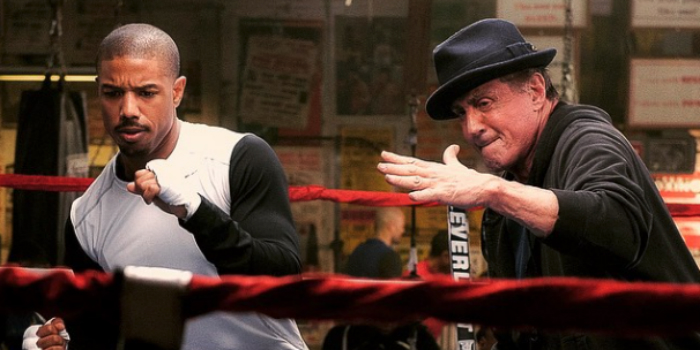
But again, he’s fighting against the poor performance of Goldberger in the director’s chair (making only his second feature). Goldberger – working from the script he wrote with David Scott and Dan Wetzel – seems unable to rise above the clichéd nature of his own narrative, and on several occasions seems to be embracing each cliché wholeheartedly. Some scenes feel like they’ve been constructed from the DNA of several true story TV movies, and viewers familiar with those kind of movies will notice that some of the scenes have been shot in that very style (and some individual shots as well).

Life of a King - scene1

This all makes the movie watchable enough thanks to the familiarity with which it’s being presented, but a bit of a chore as well thanks to the very same familiarity. Some fun can be had from anticipating each cliché before it appears, and if you felt so inclined, you could devise a predictability curve that could be drawn as the movie progresses (though it might end up being just a straight line). It’s all a shame as Brown’s story is engaging in its own right, and his efforts are well worth celebrating, but a different format is definitely needed. There’s also the problem of the script’s occasional moralising, as it uses the metaphor of chess to represent Life as often as it can, as if the audience wouldn’t get it the first time.
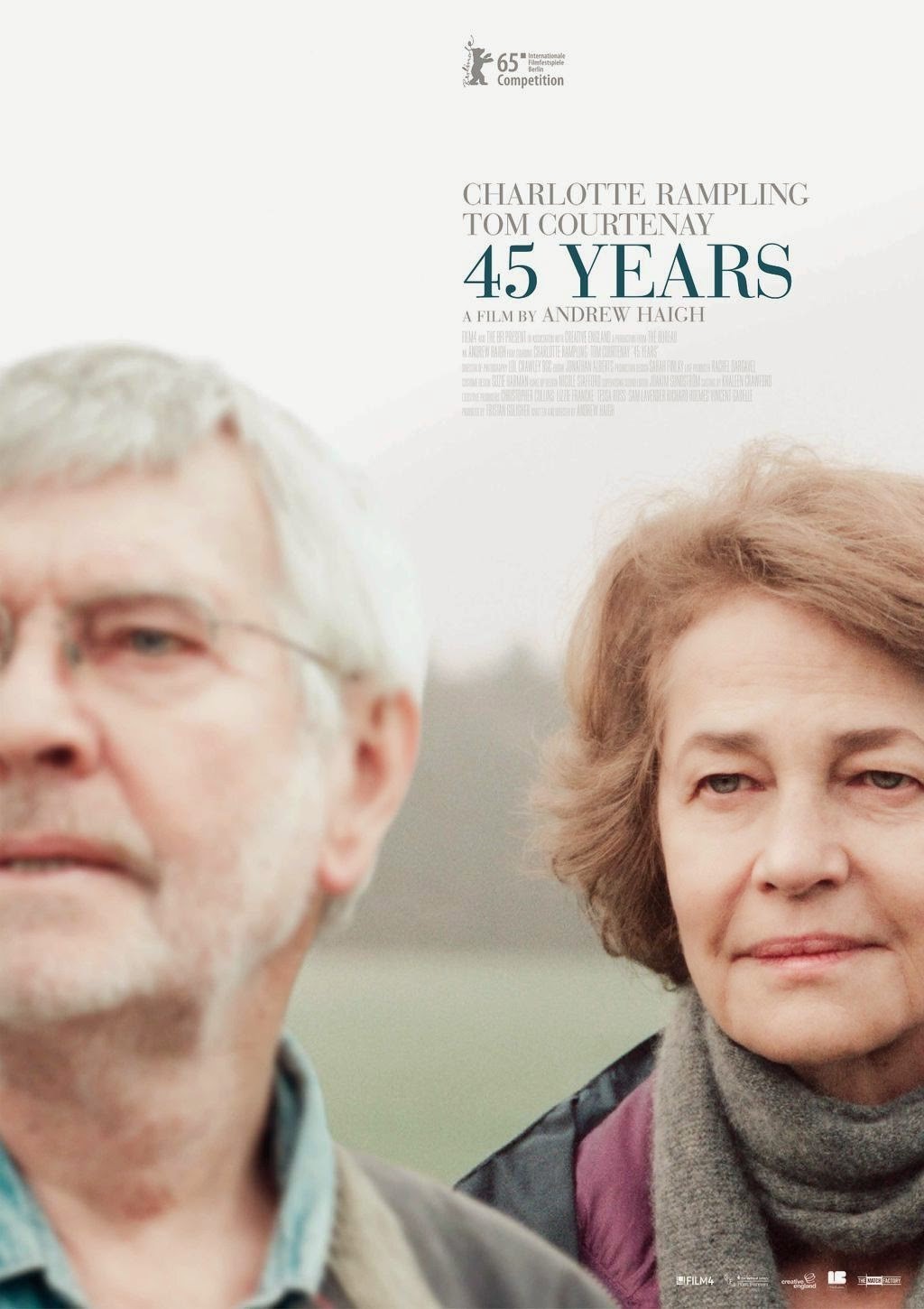
Aside from Gooding Jr’s portrayal of Brown, the rest of the cast do their best to make some headway against the material, with Mays’ reticent Tahime and Hendricks’ eager beaver Peanut making more of an impression than expected. Byrd’s sneering Clifton is straight out of Stock Characters 101, and he’s matched by Jones’ preening drug lord and Calloway’s petulant son. It’s the female characters that come off best (though that’s not saying much), and Hamilton is strongest as the high school principal who’s sympathetic to Brown’s cause (and even helps out with the dishes at the chess house).

Life of a King - scene3

As mentioned above, the movie ends with Tahime taking on a chess genius in an open tournament, and in the final naturally. But what should be a gripping sequence is let down by Goldberger’s inability to shoot it all with any sense of urgency or tension. And he’s further let down by editor Julie Garces, whose decision to represent the game through a flurry of indistinguishable moves and clock-punching makes it all impossible to follow (though that was probably the idea). It’s a clunky end to a movie that’s been the definition of clunky from the very beginning.

Rating: 4/10 – slackly and lazily constructed, Life of a King doesn’t do its subject matter justice, and lets the audience down in the process; tired and ineffective, it’s a true life tale that’s been soaked in complacency and shows off its shortcomings as if they were unavoidable.
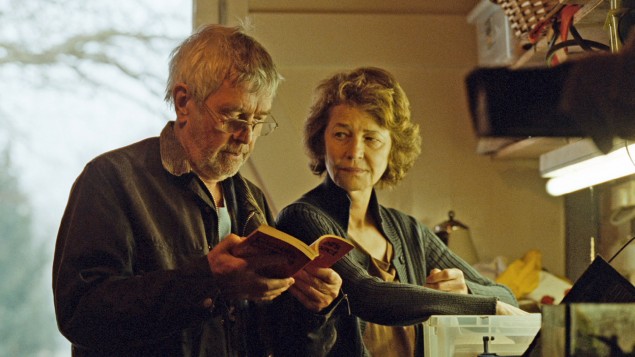
Share this:

  • Share on X (Opens in new window) X
  • Share on Facebook (Opens in new window) Facebook
  • More
  • Print (Opens in new window) Print
  • Email a link to a friend (Opens in new window) Email
Like Loading...

Mini-Review: Krampus (2015)

13 Sunday Dec 2015

Posted by dullwood68 in Movies

≈ Leave a comment

Tags

Adam Scott, Allison Tolman, Comedy, David Koechner, Drama, Elves, Horror, Michael Dougherty, Review, Santa Claus, Toni Collette, Toys, Xmas, Yuletide

Krampus

D: Michael Dougherty / 98m

Cast: Adam Scott, Toni Collette, David Koechner, Allison Tolman, Conchata Ferrell, Emjay Anthony, Stefania LaVie Owen, Krista Stadler, Lolo Owen, Queenie Samuel, Maverick Flack

If Krampus is someone (or something) you’ve never heard of before now, then you’re probably not alone. He (or it) is a figure from Austro-Bavarian Alpine folklore, an anti-Santa who punishes those who’ve been wicked. Michael Dougherty’s movie isn’t the first to feature the creature – if you’re a completist you can check out Krampus (2012), Krampus: The Christmas Devil (2013), Krampus: The Reckoning (2015), and A Christmas Horror Story (2015) as well – but this latest incarnation is very different from all the rest in one particular respect: it’s less concerned with being a horror movie.

Of all the horror movies you’re likely to see in 2015, Krampus will always retain the distinction of being scare-free, relatively bloodless, and more interested in creating a mood it can’t fully sustain. It’s also keen to impress with its focus on the extended dysfunctional family that finds itself trapped in one home in the run-up to Xmas and besieged by the title character, his trusty elves, and a bag full of demonic toys. (These last elements sound great but hold that thought for a moment…)

Krampus - scene3

The set up is simple enough: pre-teen Max (Anthony) still believes in Santa Claus, but the dismal, selfish attitudes of his mother’s sister’s family leads him to tear up his usual letter to Saint Nick and cast it to the wind. For this, a terrible snowstorm sets in, the other residents in the street disappear, and Krampus turns up to carry everyone off to whatever underground realm he’s come from. In the process, the two families who have little liking for each other learn to come together and defend themselves against the supernatural force that’s determined to make them suffer for being “naughty, not nice”.

What follows is designed to wring more laughs than scares or shocks from the material, and while the movie throws in a couple of sequences that are designed to leave the viewer perched on the edge of their seat, the threat is undermined by the makers’ determination not to upset their audience with too much blood and gore, or strangely, by making Krampus himself about as threatening as having your nails buffed. What is effective is a sequence set in the loft space where several of Krampus’s demonic toys attack Scott, Collette and Tolman, and it’s this that remains the movie’s stand out scene. But even then, the toys are too reminiscent of the puppets created by Full Moon Features, so much so that it wouldn’t have been a surprise to see Jester or Pinhead pop up at some point.

Krampus - scene1

Elsewhere, Dougherty uses his cast to fairly good effect but makes several characters one-note or underwritten – Ferrell’s bitchy mother, Tolman’s perplexed-looking sister – while the budget keeps Krampus sidelined until the final fifteen minutes. His elves launch an attack on the house that seems more arbitrary than properly planned, and the inclusion of growing numbers of ugly snowmen in the house’s front yard is meant to be menacing but is more of a distraction. It all ends with the kind of narrative trickery that is more confusing than conclusive, and leaves the viewer scratching their head in bewilderment.

Rating: 5/10 – a valiant attempt to make a Xmas horror movie with a difference, Krampus lacks bite and a truly scary monster; needing a greater sense of peril to work properly, and less bickering between the characters, it’s a movie that runs out of steam far too quickly and never recovers from doing so.

Share this:

  • Share on X (Opens in new window) X
  • Share on Facebook (Opens in new window) Facebook
  • More
  • Print (Opens in new window) Print
  • Email a link to a friend (Opens in new window) Email
Like Loading...

Victor Frankenstein (2015)

09 Wednesday Dec 2015

Posted by dullwood68 in Movies

≈ 1 Comment

Tags

Andrew Scott, Body parts, Daniel Radcliffe, Drama, Frankenstein, Horror, Igor, James McAvoy, Jessica Findlay Brown, Life and death, Literary adaptation, Mary Shelley, Monster, Paul McGuigan, Review, Science, Thriller, Victorian London

Victor Frankenstein

D: Paul McGuigan / 110m

Cast: Daniel Radcliffe, James McAvoy, Jessica Findlay Brown, Andrew Scott, Freddie Fox, Callum Turner, Daniel Mays, Charles Dance, Mark Gatiss

And so we have the latest variation on Mary Shelley’s Frankenstein, or the Modern Prometheus, or as it perhaps should be known, Victor Frankenstein: A Funny Thing Happened on the Way to the Release Date…

When the first trailer was released back in August 2015, prospective viewers could have been forgiven for thinking that Victor Frankenstein was going to be a bit of a romp, a version where comedy was at the forefront, the bromance between Victor and Igor was going to carry the movie, and there was going to be lots of flashy special effects (and a monster). When the second trailer was released, the humour had been dialled back and the movie appeared to be a more serious take on the legend (albeit with a bromance between Victor and Igor and lots of flashy special effects – and a monster). Some prospective viewers may have sighed with relief; after all, if you’re going to make a Frankenstein movie that’s got humour in it, how on earth are you going to top Young Frankenstein (1974)?

VF - scene1

Thankfully, the makers seemed to have realised that the one-liners and the overt bromance weren’t as good an idea as they might have been, and the movie is a more serious proposition, but there are still echoes of both humour and bromance, mostly from McAvoy’s hyperactive performance and screenwriter Max Landis’s uncertainty as to what tone to take with the material. What we’re left with is a movie that tries to make two tortured individuals into an unofficial couple – they meet, they admire each other to bits, they fall out, they reunite and reconfirm their commitment to each other – while using Andrew Scott’s equally tortured, increasingly crazed police inspector as the religious foil for their scientific endeavours, and never quite reconciling the whole “benefit to mankind” approach that goads them on.

Victor is portrayed as a manic obsessive with a “history” that drives him on, and McAvoy, usually a sensitive actor, here can’t resist the urge to go for broke and just let rip. You half suspect that Victor’s taking drugs but it’s not that simple: it’s just his personality, and McAvoy parades around like he’s on display throughout, declaiming wildly and to little purpose. Radcliffe takes the quieter route, but his Igor is a dead weight in a movie that wants to celebrate Victor’s mania rather than his assistant’s good sense. As one half of a team that’s in danger of destroying itself and being forgotten by history, you can understand his willingness to spend more and more time with ex-circus aerialist Lorelei (Brown) (who only appears to like him when he’s not a hunchback or looking like Robert Smith from The Cure).

VF - scene2

On the visual side, Victor Frankenstein owes a lot to Guy Ritchie’s Sherlock Holmes movies, its late Victorian era setting full of background shots of building work going on and the streets teeming with the great and the downtrodden (and is further reinforced by the sudden appearance at the end of Gatiss as Victor’s new assistant). The climax is a suitably overwrought affair with plenty of explosions and destruction, and a monster that bears an unfortunate resemblance to both Dave Prowse’s incarnation in The Horror of Frankenstein (1970) and the Newborn from Alien: Resurrection (1997) (and why is it that mad scientists just can’t master putting a proper nose on their creation’s face?).

McGuigan doesn’t appear to have a firm grip on any of the movie, and there are moments of pure farce that undermine the intensity the makers are going for, such as Dance’s brief appearance as Victor’s father: there just to give Victor a slap and tell him he’s been a naughty boy. Still some humour then, but this time, unfortunate and unintentional, a bit like the movie as a whole.

Rating: 5/10 – another disappointing “adaptation” of Shelley’s tale, Victor Frankenstein is held back by weak plotting and a sense that there’s a different, perhaps better movie in there somewhere; McAvoy seems to be acting on his own recognisance, and the movie skips on providing any real horror from what Victor is bent on achieving, leaving it more anodyne than effective.

Share this:

  • Share on X (Opens in new window) X
  • Share on Facebook (Opens in new window) Facebook
  • More
  • Print (Opens in new window) Print
  • Email a link to a friend (Opens in new window) Email
Like Loading...

Bridge of Spies (2015)

09 Wednesday Dec 2015

Posted by dullwood68 in Movies

≈ 1 Comment

Tags

America, Amy Ryan, Cold War, Drama, East Germany, Espionage, Exchange, Francis Gary Powers, Glienicke Bridge, Historical drama, James B. Donovan, Mark Rylance, Review, Rudolf Abel, Russia, Scott Shepherd, Spies, Steven Spielberg, Thriller, Tom Hanks, U2 spy plane

Bridge of Spies

D: Steven Spielberg / 141m

Cast: Tom Hanks, Mark Rylance, Scott Shepherd, Amy Ryan, Austin Stowell, Sebastian Koch, Alan Alda, Jesse Plemons, Will Rogers, Michael Gaston, Dakin Matthews, Billy Magnussen, Peter McRobbie, Mikhail Gorevoy, Burghart Klaußner, Max Mauff

In 1957, Rudolf Abel (Rylance) was arrested by FBI agents and charged with three counts of conspiracy as a Soviet spy. He was defended by an insurance attorney called James B. Donovan (Hanks), but despite Donovan’s best efforts (and to no one’s surprise) Abel was found guilty on all counts and sentenced to a total of forty-five years in prison (which was a surprise). An appeal to the Supreme Court was rejected and Abel remained in jail.

In 1960, US pilot Francis Gary Powers (Stowell) was shot down while on a spy plane mission over Soviet territory. He was charged with espionage against the Soviet Union and sentenced to ten years in prison. In 1961, American economics student Frederic Pryor (Rogers) found himself arrested and held without charge by the East German police. In 1962, Donovan, at the request of CIA chief Allen Dulles (McRobbie), travelled to Berlin to negotiate the exchange of Abel for Powers; when he learned of Pryor’s incarceration he made the young student’s release a part of the deal as well. On 10 February 1962, Pryor was released at Checkpoint Charlie, and Abel and Powers’ exchange took place at the Glienicke Bridge.

Bridge of Spies - scene3

These are the basic facts that Bridge of Spies elects to tell, and while it makes it clear from the beginning that the movie is “inspired” by real events, writers Matt Charman and Joel and Ethan Coen have expanded on those facts in order to fill in the gaps and make the movie more audience friendly. They’ve done a terrific job, with the politics of the time, both American and Soviet, explored and explained with a conciseness and brevity that allows the story to breathe and not be bogged down by endless exposition (there’s even room for a brief exposé of East German politics as well). What this means is that Bridge of Spies becomes a movie where all the twists and turns don’t leave the viewer baffled as to what’s going on, and they have a firm grounding as to why it’s all happening.

With the political and espionage themes so effectively set up and presented, Spielberg is left to get on with doing what he does best: telling a complex, complicated story easily and with surprising verve. The director seems at home when making historical dramas, and he has an enviable track record in the genre, from Empire of the Sun (1987) to Schindler’s List (1993) to Munich (2005) to Lincoln (2012). Spielberg is rightly regarded as a populist movie maker, but it’s his forays into history that often prove more satisfying, and Bridge of Spies is no different. Most of the “action” takes place behind closed doors, and consists generally of conversations between Donovan and one or two others. But it’s during these scenes that Spielberg teases out the subtleties and unspoken nuances of the various negotiations and political manoeuvrings, and makes them resonate in a way that few other directors are able to.

Bridge of Spies - scene2

As Donovan juggles the demands of his own government with the needs of the Soviet Union, and the aims of the newly created East German authorities, Spielberg shows how close everyone is in terms of not wanting to be seen to be directly involved in any of the negotiations – Donovan himself is officially a private citizen representing his client, Abel – and how appearances are more important than the truth. Donovan is seen as an honorable man doing the best he can, and as he sees fit, in difficult circumstances, and his early brushes with his own legal system (which seems happy to ignore due process and the Fourth Amendment when it comes to prosecuting Soviet spies) show just how determined and independent-minded he is; or, as Abel puts it, a “standing man”. Donovan provides the moral compass to help audiences steer their way through the various schemes and ruses that each side comes up with.

In the more than capable hands of Hanks, Donovan is an ordinary man thrust into the extraordinary world of legal and political expediency and asked to put aside his personal and moral beliefs. That he doesn’t, and that he doesn’t in such a way that he also doesn’t appear to be pedantic or judgmental (at least not publicly) is a measure of Hanks’ controlled portrayal and what’s needed to make Donovan both sympathetic and credible. Hanks is matched by an equally impressive performance from Rylance, his stoic features and polite bearing providing a neat counterpoint to the American public’s view of him as reprehensible and an enemy of the American way of life. At different points in the movie, Donovan asks Abel the same question but in different ways: “Aren’t you worried by what might happen to you?” And always he answers: “Would it help?” Rylance plays Abel quietly and with dignity, his awareness of his situation and the political games going on around him expressed with a resigned authority.

Spielberg recreates the period with his trademark exactitude, and aided by longtime collaborator Janusz Kaminski highlights the differences between US and East German life by emphasising Powers’ homeland via warm tones and an ingrained sense of comfort, while recreating Berlin’s post-War identity as the still-blasted, partially rebuilt city it was. The contrast is illuminating, adding to Donovan’s initial feelings of unease as he navigates the treacherous waters of international diplomacy.

Bridge of Spies - scene1

It’s here though that the movie loses some of the traction it’s built up along the way. Abel’s arrest and subsequent trial, along with Donovan’s hampered attempts to defend him properly, are expertly handled by Spielberg, and if the movie had only been concerned with Abel’s case then it would be an unqualified success. But once Donovan arrives in Berlin, and despite the various obstacles that threaten to derail his negotiations with the Soviets and the East Germans, there’s no tension in these scenes. Donovan overcomes each obstacle by either refusing to accept the problem is worth worrying about, or by making demands in the hope that the other side will blink first. By making this stretch of the movie so “easy” for Donovan, by the time we get to the exchange at the Glienicke Bridge, there’s so little reason or chance for things to go wrong at the last minute that any apprehension on the audience’s part has evaporated long before.

It’s a shame as the scenes in Berlin should have provided most if not all of the movie’s dramatic highlights, but alas it’s not to be. There is humour however, with Donovan’s fish-out-of-water situation used to good effect, and it’s drily executed by Hanks and perfectly in keeping with Donovan’s increasingly weary view of the world (at one point he remarks that the full names of the Soviet Union and East Germany are just too long). Away from Donovan’s efforts to negotiate the exchange and Pryor’s release, there’s a powerful sequence that shows Powers’ U2 plane being shot down and just how lucky he was to survive (though the movie makes it clear he shouldn’t have), and we see the initial creation of the Berlin Wall, a sight that remains unnerving even now that it’s gone.

Rating: 8/10 – measured, patient and deceptively simple in its approach, Bridge of Spies lacks resonance in terms of what’s happening in the world today, but as an examination of a particular event in recent world history it’s still fascinating and informative; capped by another of Hanks’ effortless performances, and Spielberg’s mastery of the medium, it’s a movie that holds the attention throughout even if it isn’t particularly thrilling.

Share this:

  • Share on X (Opens in new window) X
  • Share on Facebook (Opens in new window) Facebook
  • More
  • Print (Opens in new window) Print
  • Email a link to a friend (Opens in new window) Email
Like Loading...

Goosebumps (2015)

06 Sunday Dec 2015

Posted by dullwood68 in Movies

≈ Leave a comment

Tags

Abominable Snowman, Amy Ryan, Comedy, Delaware, Drama, Dylan Minnette, Fantasy, Giant praying mantis, Jack Black, Madison, Monsters, Odeya Rush, R.L. Stine, Review, Rob Letterman, Ryan Lee, Slappy, Wolfman

Goosebumps

D: Rob Letterman / 103m

Cast: Jack Black, Dylan Minnette, Odeya Rush, Amy Ryan, Ryan Lee, Jillian Bell, Halston Sage, Ken Marino, Timothy Simons, Amanda Lund

There’s a moment in Goosebumps when Mr Shivers (Black), having already been rumbled as the writer R.L. Stine, tries to maintain his cover. Not believing him for a second, new neighbour Zach (Minnette) goads him by saying that he’s not as good a writer as Stephen King. Shivers/Stine rounds on Zach and in the process mentions that he’s sold way more books than “Steve”. It’s an odd moment in an otherwise straightforward, enjoyable imagining of Stine’s fictional world of monsters, and while it may be true, you can’t help but wonder if it’s there to give Stine some extra credibility now that he’s been adapted for the movies (not that he needs it). (And maybe it’s an issue for him.)

On the strength of this outing, Stine has little to be worried about. Although Goosebumps is a steadfastly homogenised horror fantasy for children – the zombies aren’t at all frightening, and the abominable snowman is played mostly for laughs – it has enough in the way of heavily stylised fantasy elements to keep its target audience happy for an hour and a half or so, and has been lucky enough to secure the services of Black as the “cursed” author. Black strikes just the right tone as an anxious, over-protective father-cum-author whose creations will spring fully formed and alive from the pages of his books if they’re opened (this doesn’t explain how his books have been published up til now, but it’s a great idea for a fantasy movie).

With Zach believing that his reclusive neighbour is mistreating his daughter, Hannah (Rush), he convinces a school friend, Champ (Lee) to help him break in to the house next door and ensure that Hannah is okay. Along the way, they discover bear traps in the basement and a bookcase full of Goosebumps novels that have locks on them. And in true children’s fantasy style, one of the books is opened, while the others all fall to the floor, leaving at least one of the books unlocked. The trouble is, this particular book features Slappy the ventriloquist’s dummy, and he’s the one monster that Stine doesn’t want to let out at all… and Slappy knows it.

Goosebumps - scene1

Soon the town of Madison, Delaware is home to all sorts of rampaging monsters and creatures, and it’s down to Stine, Hannah, Zach and Champ to save the day by getting all of the author’s creations back in their books. But Slappy is one step ahead of them, and is making sure each book is burnt once the creature in it is released. This leaves the quartet with only one option: to make sure Stine has the time he needs to write a new story that involves all the monsters so that they can be returned to the new pages en masse.

There are the usual obstacles to their doing this, and the usual action sequences when they encounter any of the monsters – the lawn gnomes are particularly good – but it’s all done with an energy and a sense of fun that carries the movie along and doesn’t allow it to get bogged down by too many distractions. As mentioned before, Black is great as the author whose sense of responsibility has kept him moving from place to place and isolated his daughter in the process (though a plot twist two thirds in unfortunately cancels this out), while Rush, Minnette and Lee all play their standard teen characters with verve if not too much depth. Ryan is continually sidelined as Zach’s mother and high school vice principal, and Simons and Lund are given brief exposure as the town’s (apparently) lone law enforcement officers, with Lund’s gung ho approach bagging quite a few laughs.

In the hands of screenwriter Darren Lemke, Goosebumps sets out its stall quite early on and sticks to what is a safe formula: kids accidentally release monsters, team up with concerned adult, and find a way to save the day. But the movie avoids outstaying its welcome, though it does takes each new monstrous development in its stride, which is at a cost to the drama and the tension that should be inherent in the storyline. By ensuring that its target audience isn’t too frightened or worried, there’s no real sense of danger or peril, and each “threat” is neatly or quickly dealt with.

Goosebumps - scene2

As you’d expect the special effects are woven seamlessly into the physical action, and there’s a pleasing sense of spectacle when the high school is besieged by all the creatures. Keeping things moving with an eye for the quirkier moments, Letterman allows his cast, both human and CGI, their individual moments to shine – Champ rescues the girl he likes from the wolfman, Slappy acknowledges his driving Stine’s car is compromised by not being able to reach the brakes – and includes enough adult humour to keep older viewers happy. And most of all, he manages to keep Zach and Hannah’s blossoming romance from becoming too mawkish or saccharine.

Rating: 7/10 – straying too close to formula to make it stand out from similar fare, Goosebumps is nevertheless a fun ride that can be enjoyed by children and adults alike; if there are to be any more adaptations of Stine’s work then that won’t be such a bad thing at all.

Share this:

  • Share on X (Opens in new window) X
  • Share on Facebook (Opens in new window) Facebook
  • More
  • Print (Opens in new window) Print
  • Email a link to a friend (Opens in new window) Email
Like Loading...

The Little Death (2014)

04 Friday Dec 2015

Posted by dullwood68 in Movies

≈ Leave a comment

Tags

A Funny Kind of Love, Alan Dukes, Bojana Novakovic, Comedy, Dacryphilia, Damon Herriman, Drama, Erin James, Fetishes, Josh Lawson, Kate Box, Kate Mulvany, Lisa McCune, Patrick Brammall, Relationships, Review, Roleplay fetishism, Sex, Sexual masochism, Sign language, Somnophilia, Telephone scatalogia, TJ Power

The Little Death

aka A Funny Kind of Love

D: Josh Lawson / 96m

Cast: Bojana Novakovic, Josh Lawson, Damon Herriman, Kate Mulvany, Kate Box, Patrick Brammall, Alan Dukes, Lisa McCune, Erin James, TJ Power, Kim Gyngell, Lachy Hulme, Genevieve Hegney

What do sexual masochism, roleplay fetishism, dacryphilia, somnophilia, and telephone scatalogia all have in common? Well, the answer is, they’re all sexual impulses, and they’re all used by Josh Lawson in his feature debut as writer/director to look at five different relationships – some of which interconnect – and how these sexual obsessions can affect how people behave.

First up we have Paul (Lawson) and Maeve (Novakovic). Maeve wants to be raped, which sounds awful, but it’s a fantasy she’s always had, and she wants Paul to help her play out her fantasy. Paul is initially aghast, but he loves Maeve so much he decides he’ll do it. There’s only one proviso: Maeve doesn’t want to know when or where it’s going to happen. Paul’s first attempt is less than successful, but he tries again, but with completely unexpected results.

The Little Death - scene1

Then there’s Dan (Herriman) and Evie (Mulvany). We first meet them in couples’ therapy, where it’s clear they’re not communicating properly with each other. The therapist suggests they try some roleplay; when they do, Evie can’t quite take it seriously enough for Dan but the sex is incredible and afterwards, Evie compliments Dan on his roleplaying. This leads to Dan taking the whole thing way too seriously, and his commitment to “acting” begins to threaten their marriage.

The third couple is Richard (Brammall) and Rowena (Box). They’re trying to have a baby but nothing’s working, and sex has become perfunctory. Rowena is advised by her doctor that she and Richard should try and time their orgasms to happen at the same time, thus increasing their chances of conception. But she and Richard never get a chance to try this out; Richard learns that his father has died, and when he breaks down in tears, Rowena discovers she’s turned on by the sight of his crying (this is dacryphilia). They have sex right then and Rowena becomes addicted to the intensity it provides, and she starts to engineer circumstances where Richard is made upset enough to cry… and Rowena can experience more orgasms.

All these couples live in the same street, as do Phil (Dukes) and Maureen (McCune). Phil’s compulsion is watching his wife while she sleeps (somnophilia). But Maureen is cold and abusive toward him, while at work his long nights spent watching her means he finds it hard to stay awake during the day. His boss (Hulme) gives him some strong sedatives to help with his sleeping problem, but Maureen unwittingly takes them. Now Phil can indulge his obsession to hisnheart’s content as he makes sure Maureen takes the sedatives each night. But it doesn’t help his case at work, and it doesn’t help either when Maureen accuses him of having an affair.

The Little Death - scene2

Lastly, there’s Monica (James) and Sam (Power), who aren’t a couple, but who do meet – and connect – in the unlikeliest of cirumstances. Monica works at a video relay company that helps deaf individuals make telephone calls to other people via their computers. Sam uses sign language to tell Monica what to say to the other person, and Monica signs back their replies. When Sam connects one evening, Monica is surprised to learn that he wants to connect to a telephone sex line. Her discomfort at having to repeat what Sam and the sex worker (Hegney) are saying makes it all the more awkward, but through it all there’s a hint of mutual attraction there.

All five stories, and a sixth involving Steve (Gyngell) – about whom little should be said other than that he has his own sexual predisposition – are funny, romantic, poignant, sometimes sad, sometimes dramatic, ocasionally outrageous, but always pertinent and credible. Lawson shows he has a keen ear (and eye) for the more absurd aspects of sexual behaviour, and he doesn’t hesitate to confound audience expectations by having three of the five stories end badly. This isn’t a standard rom-com where everyone is united or reunited in the last five minutes and they all live happily ever after. Instead, Lawson’s script makes it clear that compromise is a large part of everyday relationships, and that sins of omission can be just as devastating as outright lies (two characters never confess their compulsions, or the way in which they’ve manipulated their partners).

So there’s a strong dramatic element to each story, but Lawson layers each story with a fantastic amount of comedy (though Phil and Maureen’s tale, of necessity, is more sad and depressing than the rest), and there are moments where the viewer will be laughing out loud at the antics, and dialogue, played out on screen (this is likely to be the only time in a movie where you’ll hear the line, “How’s your cervical mucus – okay?”). Lawson is also astute at teasing out the subtleties and self-imposed dilemmas that come with modern day relationships, and there are plenty of times where his confidence in his own observations and his own script leave the viewer not knowing whether to laugh or grimace. When Rowena tells Richard a massive, horrible lie to get him to cry, it’s funny and deplorable at the same time, and Lawson’s fearlessness with the narrative means that both reactions are entirely acceptable; you can laugh and you can feel repelled.

The Little Death - scene3

Lawson is backed up by a great cast who all enter into the spirit of things with gusto, though special mention has to go to Herriman as the acting-obsessed Dan, whose idea of roleplay morphs from straightforward policeman interrogating helpless female suspect, and with no costumes used other than their own clothing, to kitting out his and Evie’s garage to house a prison set so he can play a jailbird about to have sex with a prison guard (Evie) – but not before he tells her he’s inside for sexually assaulting a man (it’s called having a backstory). Herriman as Dan is wonderfully unaware of anything else going on in his life, and his narrow, self-absorbed thinking is a constant source of humour. A joy to watch as well are James’s reactions to the comments made by Sam and the sex worker, her wide-eyed dismay and prudish distaste testing her professionalism at every turn. And there’s Gyngell as Steve, popping up here and there, often at the wrong time, but guaranteed to make the viewer laugh once his own “backstory” is revealed.

There’s a feeling that this is a movie that could only have come out of Australia. It’s brash, it’s sweet-natured, it’s romantic yet not idealistic, and it has bags of charm. You can imagine an American remake trying hard to be more gross or unnecessarily explicit (for a movie that’s ostensibly about sex there’s no nudity at all), and it would probably fumble the more serious strands that run through it all, but thankfully that’s unlikely to happen. Lawson advances the various stories by switching back and forth between them, though Monica and Sam’s story does occupy most of the last twenty minutes, its single location and textured narrative requiring a lengthier time on screen than the other stories. This does make the movie feel a little lopsided, and there’s a final scene that connects four of the stories in an unexpected and not wholly satisfying way, but by then the viewer will be more than happy to forgive Lawson his attempt at what might be regarded as closure. With a great soundtrack and score by Michael Yezerski that isn’t just there to provide musical cues or augment each of the character’s feelings or emotions, Lawson has made an entertaining and unexpectedly clever movie that packs an equally unexpected emotional punch as well.

Rating: 8/10 – movies from Down Under are still proving to be a little underwhelming, but The Little Death is definitely not one of them, combining as it does passion, wit and style to tremendous effect; mixing drama and comedy with heart makes for a small but terrific movie, and one that rewards the viewer over and over again.

Share this:

  • Share on X (Opens in new window) X
  • Share on Facebook (Opens in new window) Facebook
  • More
  • Print (Opens in new window) Print
  • Email a link to a friend (Opens in new window) Email
Like Loading...

Heist (2015)

03 Thursday Dec 2015

Posted by dullwood68 in Movies

≈ Leave a comment

Tags

Action, Bus 657, Casino, Crime, Dave Bautista, Drama, Gina Carano, Jeffrey Dean Morgan, Review, Robbery, Robert De Niro, Scott Mann, Thriller

J1026_ThePrfctHst_Pstr_50FM.indd

D: Scott Mann / 93m

Cast: Jeffrey Dean Morgan, Robert De Niro, Dave Bautista, Gina Carano, Morris Chestnut, Kate Bosworth, Mark-Paul Gosselaar, Summer Altice, D.B. Sweeney, Lydia Hull

There are few things in the world of cinema more dispiriting, more dismal, than the sight of good actors struggling to make something out of nothing. We’ve all seen them: those star-drenched movies that feature a great cast; the kind of movie where you can’t help but think, “Well, if they all signed up for it then it must be good”. But here’s the thing, the thing that a lot of people forget: actors, just like everyone else on the planet, have bills to pay, and so, sometimes, they forget about the “art” of cinema and focus on getting paid. And you can tell within minutes of the movie starting that the Oscar-winner in the supporting role is bored, or that the up-and-coming actor with a few good roles under his belt is trying too hard by way of compensating for the paper-thin nature of his character, and the star looks weary throughout, as if once committed to making the movie he can’t wait for filming to be over. (And let’s not mention any promotion work, where they might have to talk about the movie and how “good” it is…)

And so it is with Heist, a movie that has no real reason for existing, and wouldn’t be missed if by some chance it suddenly didn’t. This is knock-off movie making of the finest ordure, a terrible waste of the cast’s time, the crew’s time, your time, everybody’s time. It sucks, and royally. Despite what you see on screen, the overwhelming impression is of a movie made just for the sake of it, because somebody  – and here we have to lay the blame very firmly at the feet of writer Stephen Cyrus Sepher – had an idea for a movie and they managed to persuade five separate production companies to cough up the money to make it. And as so often happens in these situations, nobody looked at Sepher’s script and said, “Er, hang on a second…”

Heist - scene1

Ironically given the movie’s subject matter, this should be filed under “take the money and run”, as everyone involved does not quite enough to make Heist a watchable affair, from Mann’s uninspired, by-the-numbers direction to Sepher’s cliché-ridden, nonsensical script to half a dozen bored performances that help to sap the life out of a movie that’s already on life support. The main offender is De Niro, giving possibly the worst performance of his career, a lazy, credibility-free caricature of a gangster. De Niro is so bad that if you were to show someone who had no idea about his career or his legacy this particular movie, and then showed them, say, Raging Bull (1980), that someone would be completely baffled as to how it could be the same actor. This is a role where he mugs his way through in lieu of providing a recognisable character, and where he makes absolutely no attempt to convince the audience that his character’s sudden change of heart in the last ten minutes is in any way believable.

Elsewhere, the movie’s star looks tired and/or bored, with Morgan summing up just enough energy to get him through each scene, while Bautista undoes the kudos he’s gained from Guardians of the Galaxy (2014) by giving such a one-note performance it’s embarrassing (though to be fair his character doesn’t exactly benefit from being written that well). He’s matched by Chestnut as De Niro’s psychotic right hand man, but both actors are outdone by Gosselaar’s crooked cop, a wise-cracking annoyance who’s introduced in the most unlikely of fashions and continues to be annoying until the script finally has done with him. And Carano continues to undo the good work she did in Haywire (2011) by steadfastly refusing to alter her expression no matter what.

Heist - scene2

With so many things going against it, Heist struggles along from scene to scene, clearly happening in its own little alternate universe where the laws of plausibility are flouted with impunity, and where bad directing, writing and acting are actively encouraged and supported. The plot, such as it is, involves Morgan teaming up with Bautista to rob De Niro’s casino, but when the robbery goes wrong, they hijack a bus and head for Texas (as you do). Bautista is bad through and through – hey, he doesn’t care if the pregnant lady on board goes into labour, that’s how badass he is – but Morgan is doing it to pay for his sick daughter’s transplant operation (so he’s much more noble). The threat of passengers being killed keeps the police at bay, while De Niro and Chestnut beaver away in the background looking for a way to isolate Morgan from the bus and for De Niro to get his money back. Along the way Carano becomes an ally, Bosworth cameos as De Niro’s daughter, and bus driver D.B. Sweeney continually looks like he’s wondering what happened to his career.

So, it’s a bad movie, but it’s professionally made and manages to look a little more glossy than your average TV movie, but with so many “did they really just do that?” moments littering the narrative, no amount of goodwill generated by the production crew can mitigate for the farrago of bad ideas and decisions made in front of the camera. This could – and should – have been better in every way but sadly, no one took the time or made the effort to improve things, and the result is a movie that should be a dictionary definition of the word lame. Or awful. Or lousy. Or rubbish (you get the picture).

Rating: 3/10 – one to avoid, Heist only scores so highly because the crew, at least, weren’t asleep at the wheel; with no one attempting to correct the mistakes inherent in the script, or even recognise them, all the viewer can do is to try and stop their jaw from continually hitting the floor from seeing all the ridiculous antics the script is packed with.

Share this:

  • Share on X (Opens in new window) X
  • Share on Facebook (Opens in new window) Facebook
  • More
  • Print (Opens in new window) Print
  • Email a link to a friend (Opens in new window) Email
Like Loading...
← Older posts
Newer posts →

Blog Stats

  • 500,712 hits

Recent Posts

  • 10 Reasons to Remember Bibi Andersson (1935-2019)
  • Fantasia (1940)
  • Dances With Wolves (1990) – The Special Edition
  • Kiss of the Spider Woman (1985)
  • The Three Musketeers (1973)

Top Posts & Pages

  • Lost for Life (2013) - Another Look
    Lost for Life (2013) - Another Look
  • Lost for Life (2013)
    Lost for Life (2013)
  • Irrational Man (2015)
    Irrational Man (2015)
  • Green Book (2018)
    Green Book (2018)
  • Mr. Topaze (1961)
    Mr. Topaze (1961)
  • 10 Reasons to Remember Arthur Hiller (1923-2016)
    10 Reasons to Remember Arthur Hiller (1923-2016)
  • 45 Years (2015)
    45 Years (2015)
  • 2016 - A Review
    2016 - A Review
  • Non-Stop (2014)
    Non-Stop (2014)
  • The Fault in Our Stars (2014)
    The Fault in Our Stars (2014)
Follow thedullwoodexperiment on WordPress.com

Blogs I Follow

  • Rubbish Talk
  • Film 4 Fan
  • Fast Film Reviews
  • The Film Blog
  • All Things Movies UK
  • Interpreting the Stars
  • Let's Go To The Movies
  • Movie Reviews 101
  • TMI News
  • Dan the Man's Movie Reviews
  • Film History
  • Jordan and Eddie (The Movie Guys)

Archives

  • April 2019 (13)
  • March 2019 (28)
  • February 2019 (28)
  • January 2019 (32)
  • December 2018 (28)
  • November 2018 (30)
  • October 2018 (29)
  • September 2018 (29)
  • August 2018 (29)
  • July 2018 (30)
  • June 2018 (28)
  • May 2018 (24)
  • April 2018 (21)
  • March 2018 (31)
  • February 2018 (25)
  • January 2018 (30)
  • December 2017 (30)
  • November 2017 (27)
  • October 2017 (27)
  • September 2017 (26)
  • August 2017 (32)
  • July 2017 (32)
  • June 2017 (30)
  • May 2017 (29)
  • April 2017 (29)
  • March 2017 (30)
  • February 2017 (27)
  • January 2017 (32)
  • December 2016 (30)
  • November 2016 (28)
  • October 2016 (30)
  • September 2016 (27)
  • August 2016 (30)
  • July 2016 (30)
  • June 2016 (31)
  • May 2016 (34)
  • April 2016 (30)
  • March 2016 (30)
  • February 2016 (28)
  • January 2016 (35)
  • December 2015 (34)
  • November 2015 (31)
  • October 2015 (31)
  • September 2015 (34)
  • August 2015 (31)
  • July 2015 (33)
  • June 2015 (12)
  • May 2015 (31)
  • April 2015 (32)
  • March 2015 (30)
  • February 2015 (37)
  • January 2015 (39)
  • December 2014 (34)
  • November 2014 (34)
  • October 2014 (36)
  • September 2014 (25)
  • August 2014 (29)
  • July 2014 (29)
  • June 2014 (28)
  • May 2014 (23)
  • April 2014 (21)
  • March 2014 (42)
  • February 2014 (38)
  • January 2014 (29)
  • December 2013 (28)
  • November 2013 (34)
  • October 2013 (4)

Create a free website or blog at WordPress.com.

Rubbish Talk

Film 4 Fan

A Movie Blog

Fast Film Reviews

The Film Blog

The official blog of everything in film

All Things Movies UK

Movie Reviews and Original Articles

Interpreting the Stars

Dave Examines Movies

Let's Go To The Movies

Film and Theatre Lover!

Movie Reviews 101

Daily Movie Reviews

TMI News

Latest weather, crime and breaking news

Dan the Man's Movie Reviews

All my aimless thoughts, ideas, and ramblings, all packed into one site!

Film History

Telling the story of film

Jordan and Eddie (The Movie Guys)

Movie Reviews & Ramblings from an Australian Based Film Fan

Privacy & Cookies: This site uses cookies. By continuing to use this website, you agree to their use.
To find out more, including how to control cookies, see here: Cookie Policy
  • Subscribe Subscribed
    • thedullwoodexperiment
    • Join 481 other subscribers
    • Already have a WordPress.com account? Log in now.
    • thedullwoodexperiment
    • Subscribe Subscribed
    • Sign up
    • Log in
    • Report this content
    • View site in Reader
    • Manage subscriptions
    • Collapse this bar
 

Loading Comments...
 

    %d