Mini-Review: The Boy Next Door (2015)

Tags

, , , , , , , , , , , ,

Boy Next Door, The

D: Rob Cohen / 91m

Cast: Jennifer Lopez, Ryan Guzman, John Corbett, Ian Nelson, Kristin Chenoweth, Lexi Atkins, Hill Harper, Jack Wallace

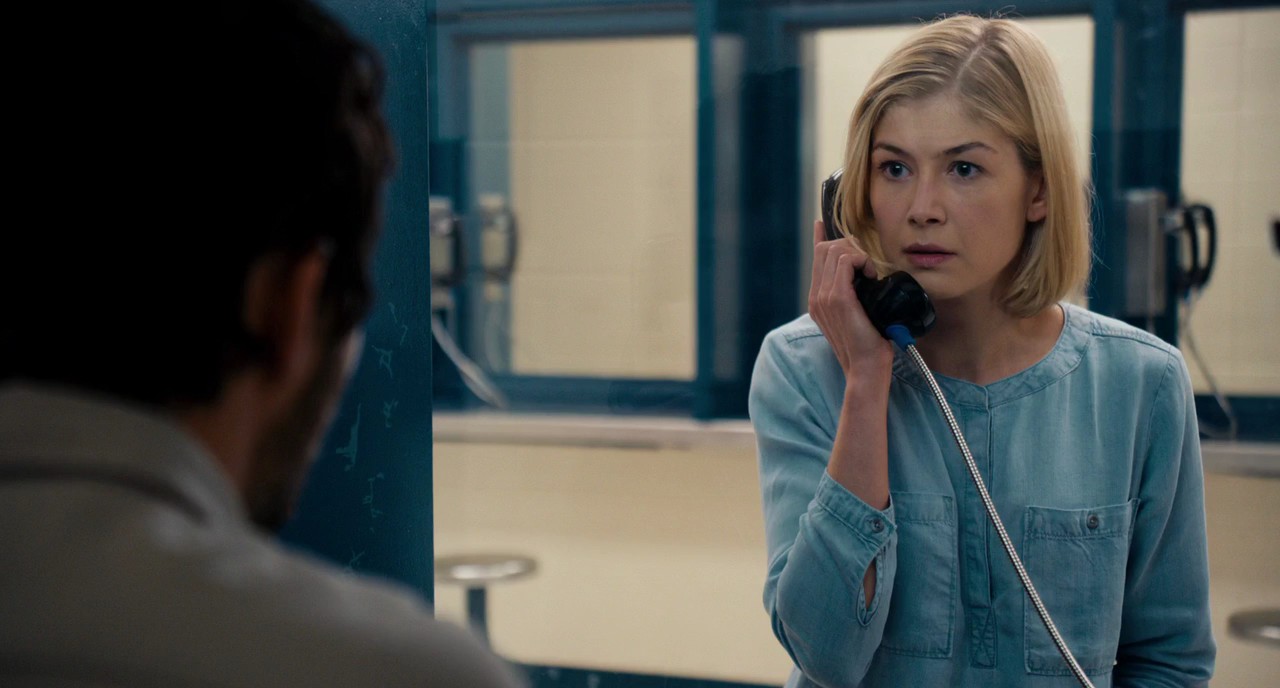
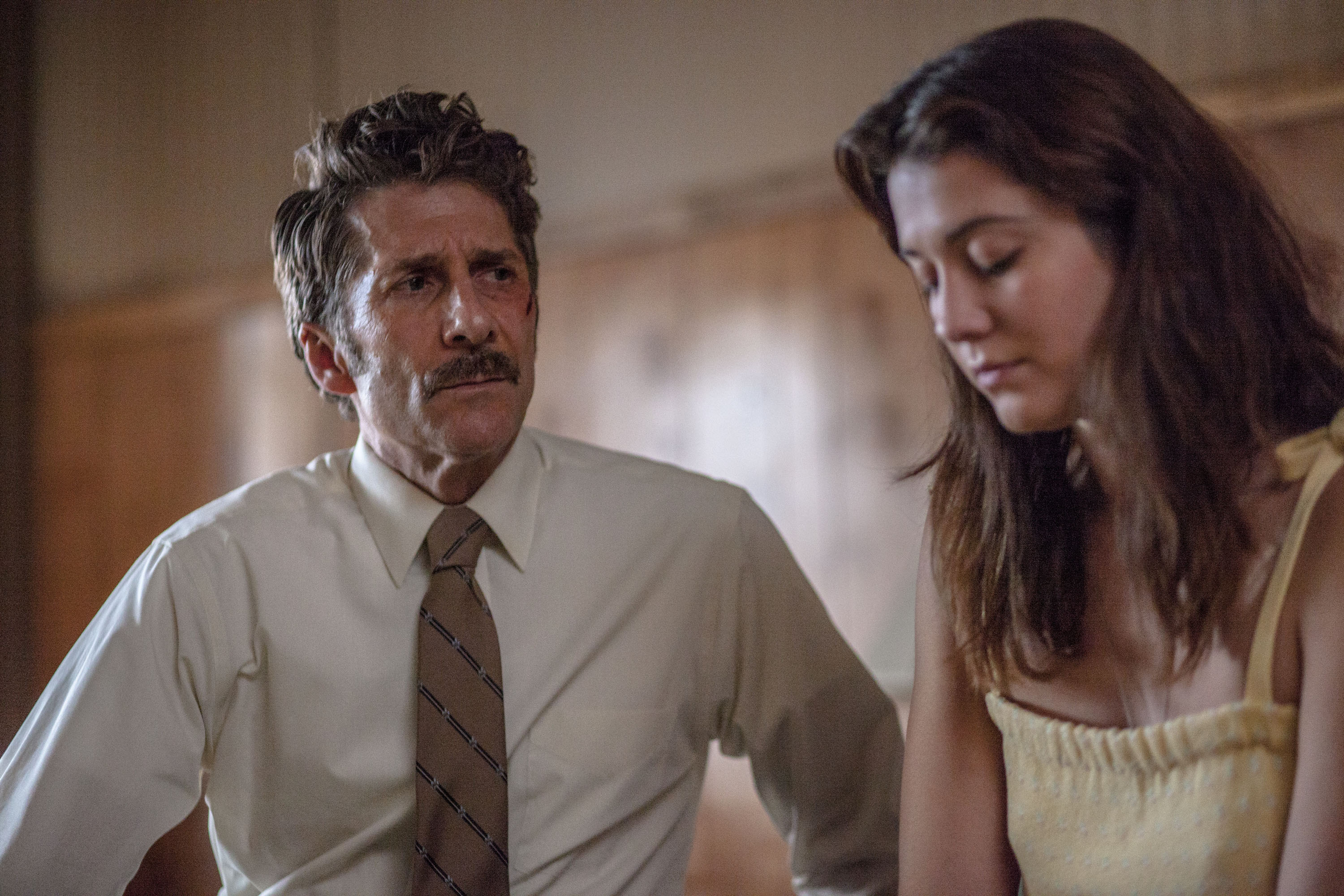
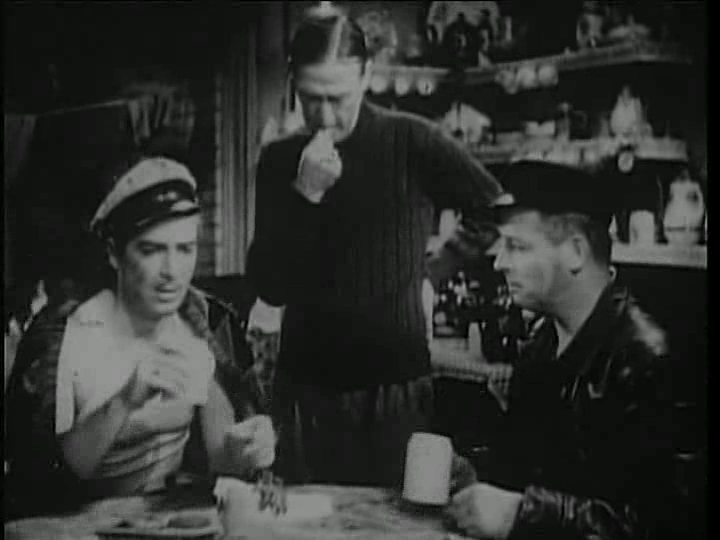
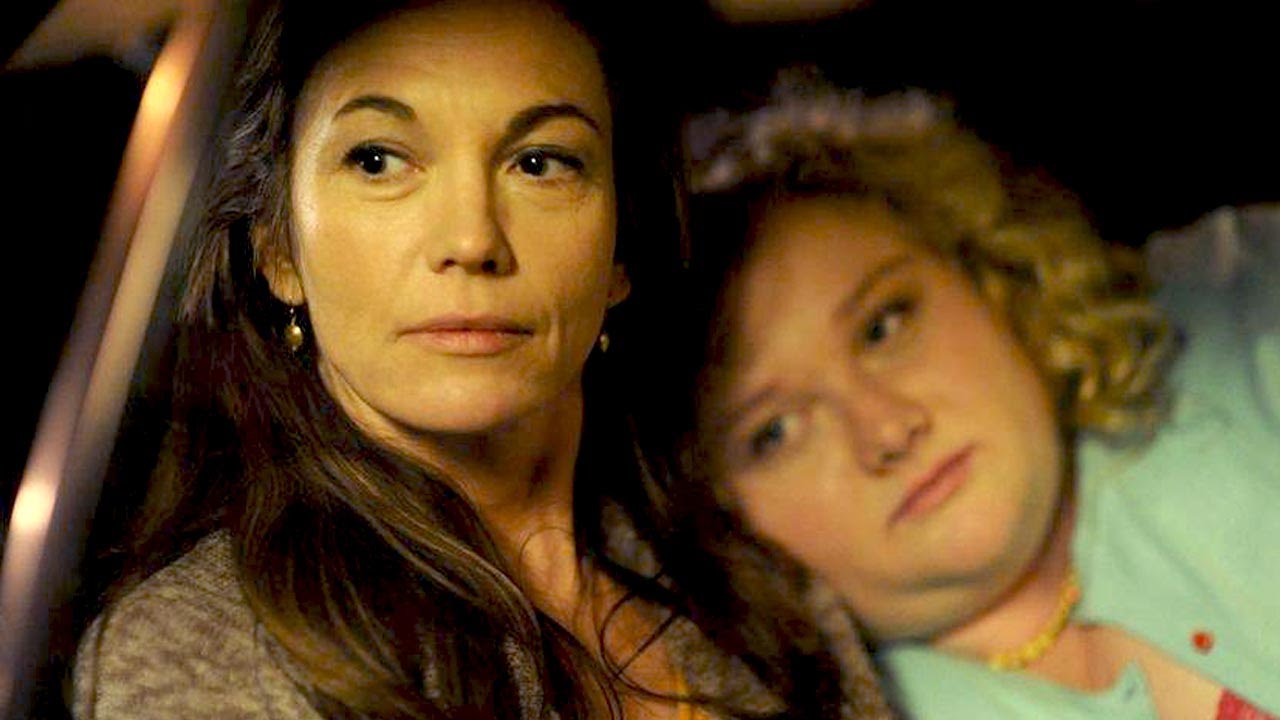
Claire Peterson (Lopez) teaches classic literature at her local high school. She’s separated from her husband, Garrett (Corbett), due to his having had an affair, and lives with their son, Kevin (Nelson). When high school senior Noah Sandborn (Guzman) moves in to look after his ailing uncle (Wallace) next door, his good looks and chiseled physique prove distracting to Claire, and she finds herself becoming attracted to him. With Garrett making every effort to win back Claire’s trust, he and Kevin go off fishing for the weekend. Noah creates an excuse for Claire to come and see him, and when she does, he seizes his chance and they have sex.

The next morning, Claire realises she shouldn’t have slept with Noah and tells him it was a mistake. Noah becomes angry, and his behaviour reveals a darker, more sinister side, one that sees Claire at risk of losing her family, her job, and possibly, her life. As she tries desperately to keep their one night stand a secret, Noah insists they should be together, and warns Claire that if she doesn’t agree to be with him, he’ll let Kevin or Garrett watch the video he made of them having sex. But when the brakes on Garrett’s car fail while he and Kevin are in it, Claire realises that Noah will stop at nothing in his attempts to have her, and that she needs to do something to protect both her and her family.

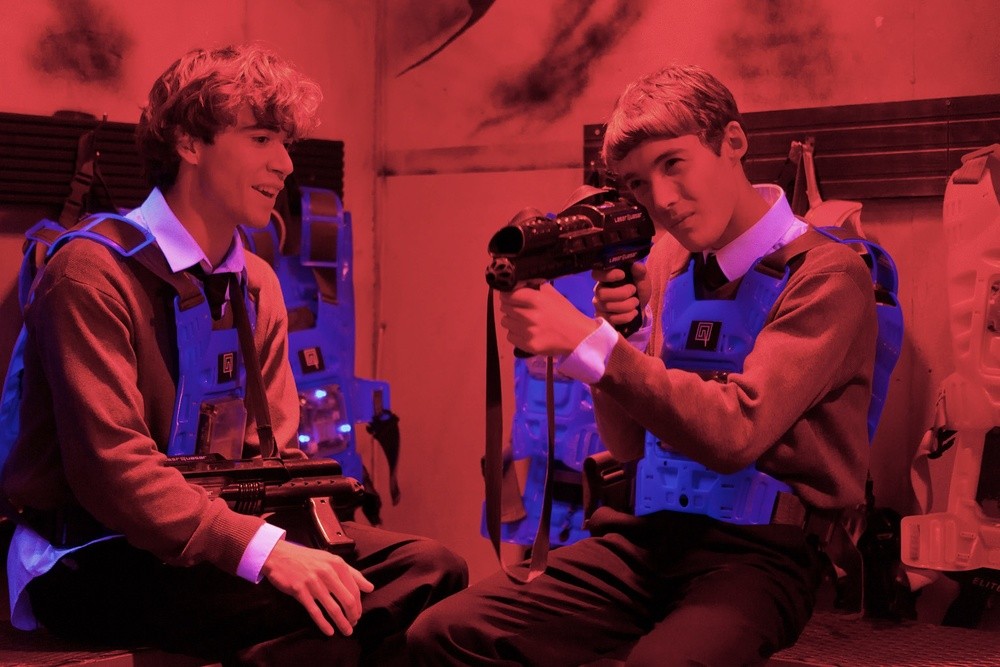
Boy Next Door, The - scene

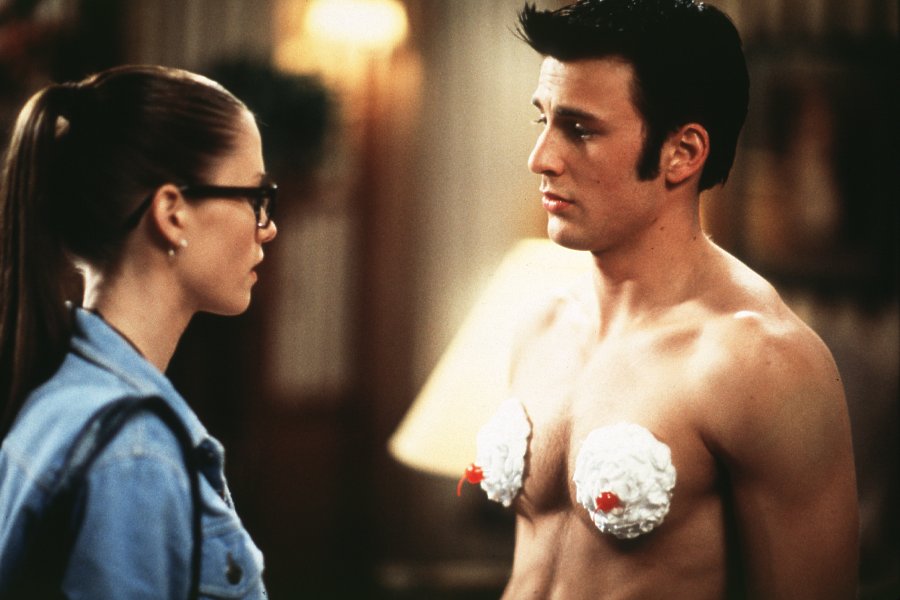
It’s hard to say which is the worst thing about The Boy Next Door: it’s either Rob Cohen’s tired, uninspired direction, or the unappealing, highly derivative script by Barbara Curry, or even the various below-par performances. There’s nothing here to recommend the movie to an audience, and very, very little that warrants the kind of attention lavished on it by the producers (who include Lopez herself), so amateurish in execution is the final product. This isn’t even a movie-by-the-numbers; instead it’s just an absurd, lazy, painfully bad B-movie given spurious credibility by the involvement of Lopez, and the inclusion of a sex scene that is about as erotic as peeling potatoes.

Why this movie was made will remain a mystery that not even Scooby-Doo could solve, but given the talent involved, it should have had at least a thin veneer of respectability to help make it more palatable, but it’s clear that no one thought that this was relevant or necessary. Lopez looks embarrassed throughout, Guzman is there to get his shirt off as often as possible, while everyone else waits for their scenes to be over so they can go and do something more challenging (it’s a career low point for everyone concerned). If any proper evidence was needed as to the movie’s ridiculous attempts at drama, it would be the aftermath of a scene where Noah beats up a bully, and fractures his skull in the process: the police are never involved, and he further threatens the school’s vice principal without any reprisals there either. Like Noah, the movie is mad, bad, and dangerous to know.

Rating: 2/10 – so bad it’s truly difficult to watch without wondering if something this terrible shouldn’t have a laughter track, The Boy Next Door might be aspiring to trash movie status, but it’s hard to tell thanks to how terrible it is; a daunting prospect even at ninety-one minutes, only Randy Edelman and Nathan Barr’s cliché-lite score makes any real impression, but even then you’ll have forgotten it within a couple of hours.

Trailer – The Last Witch Hunter (2015)

Tags

, , ,

The second trailer for The Last Witch Hunter appears to be an object lesson in how NOT to sell a movie. Usually, these trailer alerts are to bring attention to movies that look like they could be fun, or entertaining, or thought-provoking, or just a little bit different from the standard fare served up to us. But this is something altogether more dispiriting, and more of a cause for alarm. The producers obviously think we’ve forgotten about Van Helsing (2004), Hansel and Gretel: Witch Hunters (2013), I, Frankenstein (2014), and all of the Underworld movies, because otherwise why would they make such a movie, and why would they advertise it in exactly the same way as the trailers for those movies? (Having said that, alarm bells started to ring for me when I saw that beard.) I might be wrong, but on this evidence, this looks to be one movie where anticipation can be scaled back and disappointment can be prepared for.

Ladies and Gentlemen – Introducing… For One Week Only

Tags

, ,

For anyone with an interest in movies, there’s generally a point in time when they realise that there’s one aspect of movie watching that provides more pleasure than all the others. It might be a particular genre, horror perhaps, or historical dramas, or movies set in a specific country. It might be a certain theme (addiction, corporate crime), or movies made by the same director or actor. Whatever it is, any movies connected with that aspect will come to mean the cinematic equivalent of comfort food, and sometimes, even if the movie is really, really, really bad, you’ll still gain some degree of satisfaction from watching it.

For me, horror movies fit the bill. I grew up watching them, I continue to watch them (good, bad, or frankly appalling), and if I’m having a really bad day, or just feel completely fed up or miserable, I sit down and watch the worst horror movie I can find. (We’re talking Leprechaun: Origins (2014) levels of bad here.) And it always does the trick.

With that in mind, let me introduce a new feature on thedullwoodexperiment: For One Week Only. The idea is to focus on one theme or actor or country’s output or cinematographer or point in history (or future) or genre or production company – you get the gist. This feature will occur roughly every six to eight weeks and will cover the selected topic/person in some detail across the week. During these weeks the regular reviews and trailer alerts will continue to appear, but will take a back seat to the new feature. Any and all feedback will be greatly appreciated, as will any suggestions for future weeks.

The first For One Week Only begins on Monday 17 August with a look at the Australian movie industry, and will comprise a kind of potted history of its development, and include reviews of movies that have been either instrumental in bringing Australia’s output to the attention of international audiences, or have a historical significance. Australian cinema is unique, and I’m looking forward to exploring that strange, wicked, off-beat world in all its cinematic glory. I can’t wait to get started on Monday – as Nux from Mad Max: Fury Road (2015) might say, “What a day! What a lovely day!”

For One Week Only (1)

Trailer – Deadpool (2016)

Tags

, , , , , ,

After a less than stellar introduction in X-Men Origins: Wolverine (2009), the self-styled Merc With the Mouth is back, and in a movie that seems certain to banish all memories of that particular (mute) incarnation. With Deadpool fan Ryan Reynolds donning the red and black costume, and strong support from the likes of Morena Baccarin and T.J. Miller, this promises to be as funny as it is violent, and seems likely to please fans everywhere. For a proper taste of the movie, it has to be the Red Band trailer – presented here – though it does lack the slightly creepy request that Deadpool makes at the end of the standard trailer. In any case, it all looks as if this could be the first Marvel character to really push the envelope in terms of adult material… and if so, then it’s a big m*therf*cking amen to that.

Honeytrap (2014)

Tags

, , , , , , , , , , , , ,

Honeytrap

D: Rebecca Johnson / 93m

Cast: Jessica Sula, Lucien Leviscount, Ntonga Mwanza, Naomi Ryan, Danielle Vitalis, Lauren Johns

Fifteen year old Layla (Sula) has had to move from Trinidad to Brixton to live with her mother, Shiree (Ryan). Neither of them is happy about the arrangement: Shiree makes it clear that Layla isn’t going to change her routine to help her fit in, while Layla makes it equally clear that she doesn’t want to be in the UK. They come to an uneasy arrangement, and Layla begins attending school. At first she finds it hard to fit in, but she eventually makes friends with a group of girls that includes Tonisha (Vitalis) and Jade (Johns). They take her under their wing but at the same time keep a distance from her, and encourage Layla to shoplift. Not wanting to remain an outsider, Layla goes along with whatever they do, including taking part in a music video being made by local rapper Troy (Leviscount).

Troy takes a close interest in Layla and gives her the impression that he really likes her. Layla is smitten and starts spending time with him, believing she’s his new girlfriend. When Troy’s attention begins to wane, and her friends become less interested in her because of the way she’s apparently snared Troy, whom they’re attracted to as well. With Troy losing interest, Layla goes to his flat where she is confronted by his real girlfriend. The visit ends badly, while at home, Shiree’s new boyfriend notices Layla and makes things awkward between mother and daughter.

At school, and with Troy no longer making any attempt to see Layla, she begins to spend time with Shaun (Mwanza). She regards Shaun as a friend while he hopes they can be closer. When he’s seen with Layla once too often, Troy hears about it and is angered by what he sees as an unacceptable relationship (Shaun has an effeminate air about him that Troy is disgusted by). Using Tonisha and Jade’s influence on Layla, Troy gets them to convince Layla to bring Shaun to a particular spot where Troy and some of his friends will be lying in wait for him With her loyalties torn between her friendship for Shaun and her need to fit in, Layla has to make a decision that will prove to be life changing.

Jessica Sula in Honeytrap

Based on a true story, Honeytrap is a sparse, naturalistic drama that highlights issues of race, acceptance, self-respect, jealousy, bullying, love, and manipulation amongst teenagers. It’s a powerfully direct movie capped by a terrific performance from Sula, and consistently thought-provoking. In the hands of writer/director Johnson, Layla’s struggle to fit in and be valued is given a fresh, pragmatic approach that helps the movie overcome some very clichéd moments as it recounts a tale that most viewers will already be familiar with from other, fictional dramatisations.

Where the story’s familiarity may appear to be a hindrance, the opposite is true. As Layla becomes more and more aware of the role she must play in order to be accepted, we see the decisions she makes and the effect they have on her, and the efforts she goes to in order to live with them. Some are easy (shoplifting clothes), others are more difficult (bonding with Shiree), but Layla approaches them all with a tremulous optimism that everything will work out for the best, even though she clearly has her doubts that this will be the case. Johnson and Sula make Layla’s insecurity and  need for acceptance so keenly felt that the viewer can almost forgive her for the fate that eventually awaits Shaun; it’s certainly understandable.

By making Shaun and Layla victims of their own desires, Johnson creates a milieu where the simplest act of affection or friendship can be misconstrued, and with terrible consequences. This would be bad enough if the characters depicted were adults, but Johnson is good at making the tragedy of teenage self-consciousness that much more stark and (seemingly) unavoidable. When Layla makes known her feelings for Troy, it’s with that desperate, needy wish to be noticed that most teenagers go through at some point, and it’s heartbreaking to see someone heading down a path that will ultimately see them place themselves, and others, in jeopardy.

In the main role of Layla, Sula is outstanding, bringing spirit, poignancy and a tempered ambivalence to the role that elevates Layla’s insecurities to a level that further underlines her initial timidity. As she gains in confidence, Johnson cleverly skewers that confidence by having Layla stumble and make mistakes, so that by the time she’s coerced into walking Shaun to an uncertain fate, her complicity in what follows becomes more credible and affecting. Sula is persuasive throughout, giving a polished, intuitive performance that anchors the movie and gives it an additional emotional grounding that becomes more necessary as the movie progresses.

In support, Leviscount is arrogant and charming as Troy, showing the attractive side of his art before revealing the seedier, more misogynistic values he really adheres to. In comparison to Layla, Troy is more of a stereotype, though one can see a hint of the “good guy” he’d like people to believe he can be, or is. Mwanza is diffident and restrained as Shaun, keeping his feelings for Layla bottled up and settling for being with her as an acceptable substitute for being “with” her. And as Shiree, Ryan is on top form as the mother whose idea of parental responsibility is to pretend (for the most part) that she’s not really a mother; her scenes with Sula are subtle and potent all at once.

Filmed on the streets and in the houses of Brixton, Honeytrap is a straightforward though dramatically authoritative movie that tells its melancholy story with a great deal of empathy for its characters, and with a telling sense of its own worth as a (fictional) record of a terrible tragedy.

Rating: 8/10 – not an uplifting or redemptive movie by any stretch, Honeytrap is nevertheless a moody, compelling examination of teenage social exclusion that builds to a dread-filled climax; unapologetically bleak in places, it’s still one of the finest British dramas of recent years and deserving of a much wider audience than it’s received so far.

Mini-Review: Southpaw (2015)

Tags

, , , , , , , , , , , , , , ,

Southpaw

D: Antoine Fuqua / 124m

Cast: Jake Gyllenhaal, Forest Whitaker, Rachel McAdams, Oona Laurence, Curtis ’50 Cent’ Jackson, Naomie Harris, Skylan Brooks, Victor Ortiz, Beau Knapp, Miguel Gomez

Billy ‘The Great’ Hope (Gyllenhaal) is both the light heavyweight boxing champion of the world and undefeated in forty-three professional fights. Defending his title against the latest challenger, Billy’s lack of defence causes the fight to last longer and take more of a toll. His wife, Maureen (McAdams) feels he should take some time off to fully recover, while his manager, Jordan Mains (Jackson), wants him to sign a lucrative contract with a TV network for three further fights. And another boxer, young and cocky Miguel ‘Magic’ Escobar (Gomez), is trying to goad Billy into letting him challenge for the title.

At a charity event, a brawl between Billy and Miguel ends in tragedy when one of Miguel’s entourage accidentally shoots and kills Maureen. Devastated, Billy retreats from his daughter, Leila (Laurence), and embarks on a self-destructive path that sees him accept the TV network offer but lose the first fight in embarrassing fashion when he punches the referee, lose his licence to box professionally, be let go by Mains, lose his home and property through mounting debts, and when he tries to kill himself, he loses custody of Leila as well. Charged by the court to straighten himself out, Billy turns to boxing coach Tate Wills (Whitaker) to help him get back in the ring and in turn, regain custody of Leila. When it’s clear he’s back in shape and boxing better than ever, Mains reappears and offers him a fight he can’t refuse: against Miguel, now the light heavyweight champion of the world.

Southpaw - scene

On paper at least, Southpaw should have been a sure-fire winner (or in boxing parlance, a knockout). With a director known for his visual flair and aptitude for strong male characters, a lead actor who – Accidental Love (2015) aside – is on one of the hottest streaks of recent years, and the screenwriter who created Sons of Anarchy, this tale of riches to rags to redemption should have been a gripping examination of one man’s descent into despair, and his journey back to a more stable life.

But alas, Southpaw is a movie that consistently disappoints the viewer and sticks to such a precisely engineered, formulaic script that when there is a moment of unexpected originality, it sticks out like a sore thumb. And all this despite another physically demanding performance from Gyllenhaal, but one that is strangely lacking in  the kind of passion that would have made Billy a lot more sympathetic. As it is, he’s a sullen presence throughout, and not very likeable either. McAdams and Whitaker fare better, taking the flimsiness of their characters and making them appear to have more depth than they actually have. But in the acting stakes it’s Laurence who steals the show (and somebody needed to), giving yet another outstanding child performance. Behind the lens, Fuqua doesn’t seem to have the energy to vary the tempo, leaving some scenes feeling flatter than others, while the estimable Mauro Fiore’s photography is reduced to showcase scenes that are so underlit that it makes you wonder if the production couldn’t afford lighting rigs or spots.

Rating: 6/10 – too predictable and too bland despite the punishing boxing matches and the various attempts at emotionally manipulating its audience, Southpaw falls short of being a great boxing movie; it ticks all the boxes marked cliché, and never once tries to lift itself up off the canvas and land a killer blow.

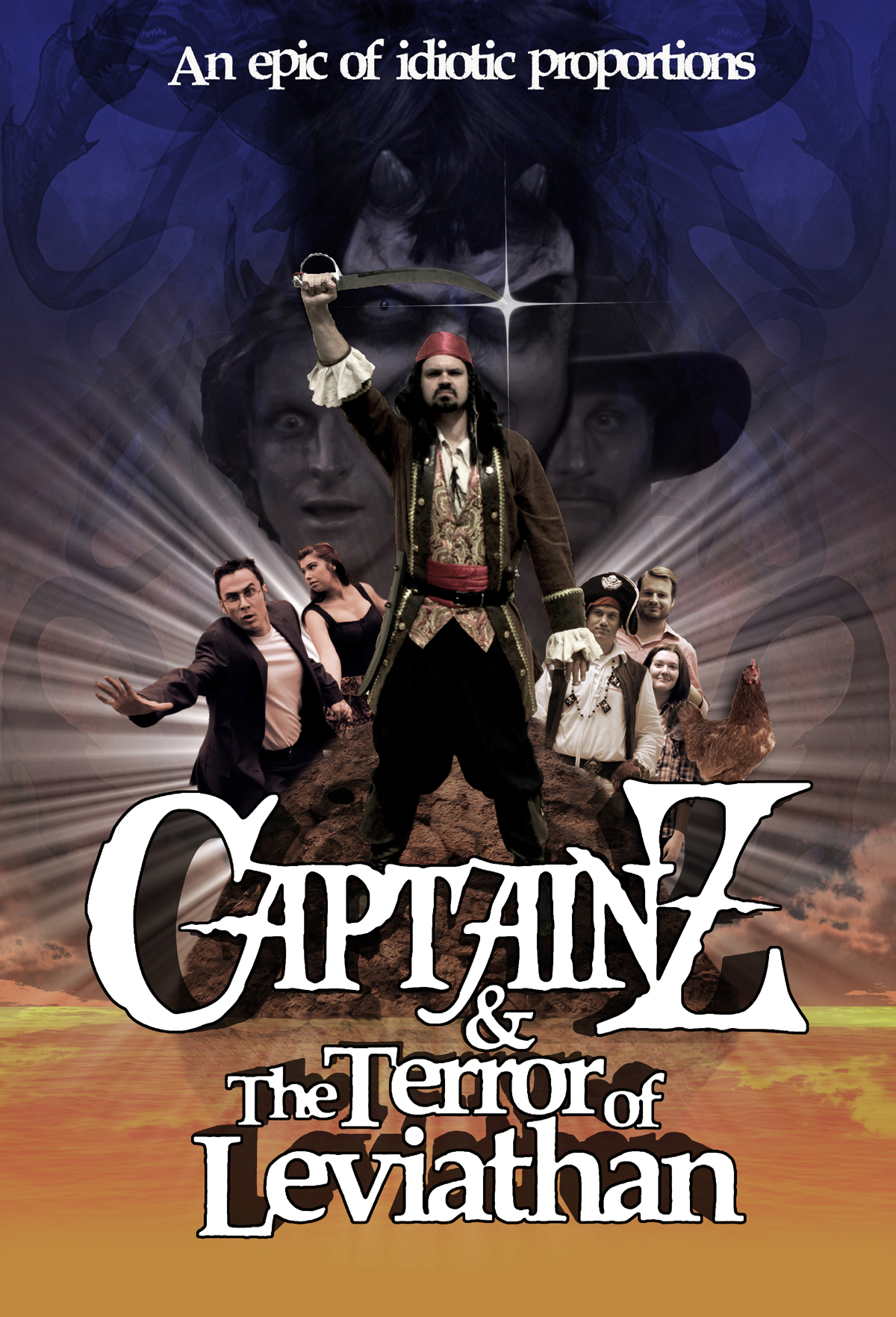
Captain Z & the Terror of Leviathan (2014)

Tags

, , , , , , , , , , , , , , ,

Captain Z

D: Steve Rudzinski / 80m

Cast: Zoltan Zilai, Steve Rudzinski, Madison Siple, Aleen Isley, Seth Gontkovic, Ian S. Livingston, Cerra Atkins, Josh Devett, Scott Lewis, Joshua Antoon

1714, the town of Riverwood, Ohio. Having taken possession of some of the townsfolk, a band of demons attempt to raise the dark god Leviathan using an amulet and the sacrifice of a redhead. With their victim about to be offered up, the infamous pirate captain Zachariah Zicari (Zilai) comes to her rescue and kills the demons’ human forms but in the process the demons and the captain are absorbed into the amulet, which ends up at the bottom of the nearby river.

2014. The Toy & Train Museum is celebrating the three hundredth anniversary of Captain Zicari’s triumph over the demons, an event that has come to be thought of as more of a local legend than historical fact. Under the auspices of museum head Mr Kincaid (Lewis), the staff there, intellectually challenged redhead Heather (Siple), inappropriate J.T. (Antoon), abrasive Samantha (Atkins) and Kincaid’s son Neal (Devett), all have their roles to play in the upcoming celebrations. The arrival of a paranormal researcher and author, Glen Stewart (Rudzinski), who’s come to investigate the legend and maybe find the amulet, prompts the museum staff to help him with his research.

Meanwhile, by the river, two of the locals, Jake (Livingston) and his son Judd (Gontkovic) are fishing. Jake lands the amulet and they take it home with them. Judd’s sister, Bobbie (Isley), looks it over and finds there’s writing on one side. She reads it aloud; this releases the demons – who promptly possess Bobbie, Jake and Judd and the rest of their family – and Captain Zicari. The Captain fights his way out and takes the amulet with him. Further along the river, Glen, Kincaid and Heather are pondering the possibility of the amulet being found when Captain Zicari appears. Although he tells them about the demons, it’s not until proof is provided by the arrival of one of Bobbie’s family (who kills Kincaid by ripping his heart out), does anyone believe him.

Killing the demon’s human form, Glen and Heather bow to the captain’s wishes and head for J.T.’s place, where he’s having a party. While the captain indulges in sex and rum, the demons trace him there and try to retrieve the amulet. The trio escape, and head back to the museum. There they bring Neal and Samantha up to speed on what’s happening, but before long Bobbie, Jake and Judd (now called Vepar, Barbatos and Bune respectively), turn up and various showdowns ensue, which lead to Barbatos and Bune being killed, but Vepar getting away with both the amulet and Heather. Now it’s up to the captain and Glen to stop Vepar from completing the ritual to summon Leviathan, and save the world… as we know it.

Captain Z - scene

Every now and then, a movie comes along that aims to spoof a particular genre or sub-genre of movie. Usually, those movies are pretty dire – anyone who’s seen just one of the Scary Movie series will know what I mean – but sometimes, on even rarer occasions, the spoof movie proves to be inspired, and well worth tracking down and watching. Such is the case with Captain Z & the Terror of Leviathan.

Be warned though: this movie looks incredibly cheap (the set representing Bobbie and her family’s home wouldn’t look out of place in a Seduction Cinema release). The opening scenes in 1714 are woefully acted, directed, shot and edited, and some viewers may think, “Uh uh, no way I’m watching any more of this”. But that would be the wrong idea, because with its extra-ropey prologue out of the way, the movie can begin to flourish, and its true purpose becomes clear: it’s an amateur production that wants to look even more amateurish in order to raise quite a few laughs – and intentional ones at that.

What Rudzinski and co-writer Zilai have done is to take the accepted style of a low budget horror movie, with its lame dialogue, low production values, and low rent special effects, and make these very drawbacks the whole point. This is a movie that knows it’s bad, and the great thing is that it’s all been done deliberately, from the terrible CGI to the rickety sets, from the arch, often over-ripe dialogue to the mannered, stereotypical performances; it’s all done with an absurdist air that helps make the movie far more enjoyable and self-reflexive than the viewer has any right to expect.

Throughout there are nods and small homages to other movies, and in-jokes that bear witness to the movie’s knowing attitude. At one point, Glen revs up a chainsaw and says he’s always wanted to say this: “Groovy!” And there’s a scene where Zicari and Neal share an emotional moment that ends with Heather saying it’s like in a comedy or action movie where it has to get real for a moment. It’s at times like these that the true intention behind the movie shines out, and any accusations that Captain Z & the Terror of Leviathan is low budget trash or completely unredeemable, crumble away to nothing. Sure, the sets look shoddy, and sure the framing usually has trouble fitting in more than two people in any given scene, and sure some of the editing looks to have been done with a pair of blunt scissors, but it truly does add to the charm of the piece, and makes it a lot more enjoyable.

Rudzinski and his cast and crew clearly know what they’re doing. The basic plot is silly and stupid, the characters act and behave as if they’ve never interacted with real people before, the dialogue is clumsy and leaves the characters looking like English isn’t their first language, the cast cope “awkwardly” with said dialogue, and despite all this, the movie just plain works. There’s a knowing attitude here, an approach that invites the audience to join in with the gag, that this movie is so bad it’s actually very good, that what the viewer sees has all been planned ahead of time and thanks to Rudzinski’s confidence in the material and the way in which it’s been put together, it provides more entertainment than anyone could envisage.

However, it should be noted that there are times when the in-jokes and the laughs aren’t as effective as they should be, and while some of the performances may seem as bad as they’re meant to be, a couple really are that bad, particularly Devett and Antoon. Siple is maddeningly good as the bubble-headed Heather, and in a role that often confounds the viewer: is she really this bad, or is she just really good at being bad? You decide, but anyone who can deliver the line, “I learned how to talk to cats today” in such a guileless way as Siple does, deserves to be congratulated rather than condemned. Elsewhere, Zilai isn’t the most convincing of pirates, while Rudzinski is obviously having too much fun to care. It all adds up to a movie with a definite agenda, and one that has clearly been achieved.

Rating: 7/10 – with some wicked moments of unforced hilarity in amongst all the superficial “errors of judgement”, Captain Z & the Terror of Leviathan is a Z-movie fan’s dream: continually witless, defiantly odd, and apparently awful; if you see only one spoof movie this year, make sure it’s this one, or the captain might just have something to say about it.

Trailer – Secret in Their Eyes (2015)

Tags

, , , , , , , ,

When The Secret in Their Eyes, an Argentinian thriller, was released in 2009, it was perhaps inevitable, given its critical success, that Hollywood would attempt a remake at some point – and here it is. Boasting a fantastic cast, including an almost unrecognisable Julia Roberts (could they have made her look more dowdy?), Secret in Their Eyes looks edgy and dark and compelling, and with Billy Ray in the driving seat as director and writer (bear in mind his last script was for Captain Phillips), this has all the potential to be as riveting as its predecessor, and pick up a healthy clutch of awards come 2016.

Dark Places (2015)

Tags

, , , , , , , , , , , , , , ,

Dark Places

D: Gilles Paquet-Brenner / 113m

Cast: Charlize Theron, Nicholas Hoult, Christina Hendricks, Tye Sheridan, Chloë Grace Moretz, Corey Stoll, Sterling Jerins, Sean Bridgers, Andrea Roth, Shannon Kook, Drea de Matteo

In 1985, in a small rural community in Kansas, a single mother and two of her daughters are all killed one night at their farmhouse; later, the surviving daughter, Libby (Jerins), tells the police her brother Ben (Sheridan) did it. After his arrest and during his trial, Ben offers no defence and he’s sent to prison for the rest of his life.

In 2015, the adult Libby (Theron) is down on her luck and counting on her minor celebrity status to keep her afloat. When she’s contacted by Lyle Wirth (Hoult) with the offer of $500 for a speaking engagement, she arranges to meet with him first. Lyle tells her he belongs to a group called The Kill Club, an organisation of volunteers who look into old unsolved murders, or cases where they believe an innocent person has been put in jail. She attends one of their meetings and finds that several members believe Ben didn’t commit the murders, and Libby finds herself challenged over her version of events that night. Angry at first, Libby agrees to help the group look into the  case, and begins her own investigation alongside theirs.

Lyle convinces her to visit her brother, something she’s never done. Ben (Stoll) is happy to see her, but Libby’s resentment of him means the visit goes badly. Back in her hometown she tries to find her father, Runner (Bridgers), who abandoned them when she was much younger. She also looks into the possibility of Ben having been part of a Satanic cult at the time, and why a young girl named Krissi Cates is relevant to what happened. As she learns more and more, she discovers Ben had a girlfriend called Diondra (Moretz). With Lyle’s help, Libby begins to put all the pieces together, and finds that what she believed happened all those years ago is far more complicated than she could ever imagined – and the repercussions of those events are still being played out in the present.

Dark Places - scene

Adapted from the novel by Gillian Flynn, author of Gone Girl, Dark Places is a murder mystery where what appears to be a simple, unexplainable crime proves to be something a lot more complicated and strange, and with a bewildering set of coincidences that make up the solution to the murders. Paquet-Brenner’s adaptation keeps the narrative skipping backwards and forwards between 1985 and 2015, showing us the events that led to the murders in 1985, and linking these scenes to the discoveries Libby makes in the present. As the story gradually unfolds, and we see the drama that played out in the past, we gain a greater understanding of the whys and hows that govern the actions of Libby and those people who were involved.

It’s a delicate balancing act at times, with the structure dictating that there be some degree of repetition throughout, as what we see in the past is explained in the future. Thankfully, Paquet-Brenner avoids such a hazard by making each new discovery as confusing as the last, and by throwing in so many suspects it almost seems as if the entire community could have done it. As Libby’s investigation leads to some unsavoury truths and revelations, the director makes it clear that her memories of that night have always been tainted, but to what degree she and the audience have to find out for themselves.

The dark places of the title are the ones we go to in our minds when we contemplate issues of murder and perceived guilt. The movie explores these avenues via the adult Libby’s increasingly fractured certainty that Ben killed his mother and sisters. And while the script plants a very big clue early on as to what really happened, it’s more concerned with the various ways in which we, through Libby, justify our actions and sense of culpability. Libby is tormented by having not been able to do anything to stop Ben, but as his innocence becomes more and more likely, her own assertions (the ones that have carried her through all these years) begin to crumble and she’s faced with the daunting prospect that her testimony condemned her brother to prison for the rest of his life.

But it proves not to be so simple. Ben has his own reasons for staying quiet, and so we, like Libby, have to seek answers in those dark places mentioned already. Thanks to a tight, focused script, and a clutch of telling performances, the movie shifts and turns with every passing minute, making it more and more difficult to work out what actually happened. Theron is impressive as the outwardly angry but internally uncomfortable Libby, her strained features and abrasive attitude in keeping with a survivor who only has her celebrity to keep her going; without it she’d be aimless (another reason why she agrees to help the Kill Club). As Lyle, Hoult brings a determined optimism to the role that offsets and complements Libby’s antagonistic approach, while Hendricks stands out as the harried mother struggling to keep her home and family together in the face of impending financial ruin. With more than able support from the likes of Sheridan, Moretz and de Matteo as the older Krissi, Dark Places succeeds in making each character credible, even when they’re sometimes asked to behave in ways that don’t make sense until the final reveal.

To add to the effectiveness of the script, the acting and Paquet-Brenner’s solid, unshowy direction, the movie is filmed in a gloomy, downlit style by DoP Barry Ackroyd, his compositions and framing illustrating proceedings with confidence and giving scenes an eerie quality that makes it seem that there’s other, stranger stuff we should know about happening just out of frame. With a running time that allows more than sufficient time to detailing events in both time periods, and a score by Gregory Tripi that subtly adds a level of foreboding to the material, Dark Places is an intelligent thriller that holds the attention and makes for avid viewing.

Rating: 8/10 – riveting in a sombre, calculated way, Dark Places maintains its gloomy, oppressive mise en scene to good effect throughout, and makes its audience work hard to solve the mystery; a better than average adaptation that showcases another fine performance from Theron, and flits between the past and the present with assured clarity and focus.

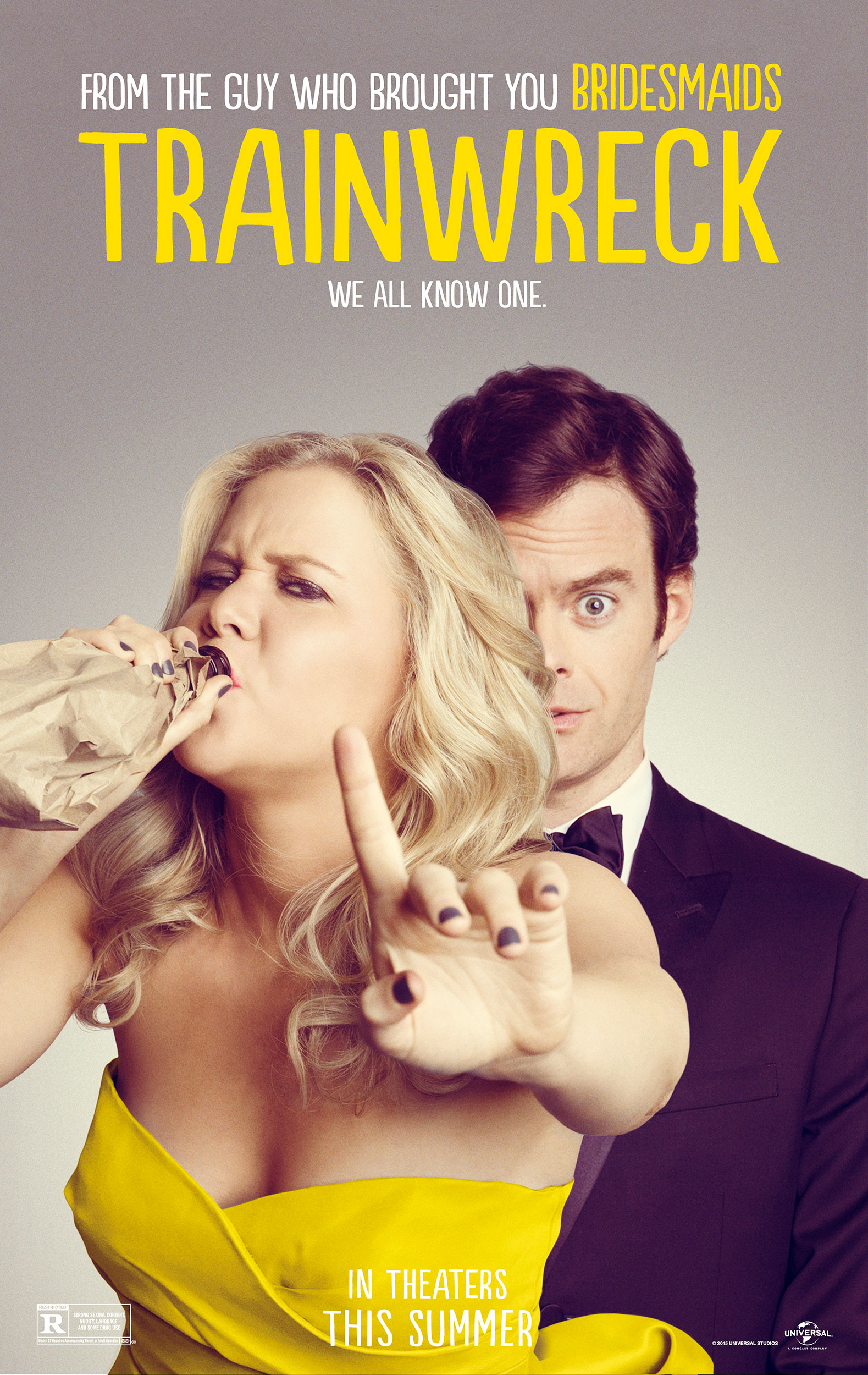
Trainwreck (2015)

Tags

, , , , , , , , , , , , , , ,

Trainwreck

D: Judd Apatow / 125m

Cast: Amy Schumer, Bill Hader, Brie Larson, Tilda Swinton, Colin Quinn, John Cena, Vanessa Bayer, Ezra Miller, Mike Birbiglia, Evan Brinkman, LeBron James, Amar’e Stoudemire, Daniel Radcliffe, Marisa Tomei

Amy Townsend (Schumer) is a magazine journalist whose idea of a relationship is to sleep with a guy on the first date and then wave goodbye to them in the morning (or sooner if she’s able to). She works for a men’s magazine called S’nuff that publishes articles such as “You’re Not Gay, She’s Boring”; when her editor, Dianna (Swinton) assigns her to write a profile on sports doctor Aaron Conners (Hader), she balks because she knows nothing about sports and thinks it’s all too silly.

At the same time as all this is going on, Amy and her sister Kim (Larson) are trying to get their father, Gordon (Quinn), who’s suffering from multiple sclerosis, into a nursing home. He’s a bit of a curmudgeon and is always antagonising or upsetting people. He also cheated on their mother and Kim resents him for it, though Amy is more forgiving. When she meets Aaron he quickly guesses that she knows nothing about sports, but there’s an attraction between them, and she plans to meet up with him again. In the meantime an evening with her on/off boyfriend Steven (Cena) goes horribly wrong when he learns about all the other men she’s been seeing.

Kim, who’s married to Tom (Birbiglia) and is stepmother to his son Allister (Brinkman), reveals she’s pregnant, but when she tells Gordon his attitude leads to her and Amy falling out. Amy meets Aaron again and after the interview they go back to his place and have sex; Amy breaks her own rule and stays the night. Panicked by this unexpected turn of events, Amy decides she must end things but Aaron calls wanting to see her again. At the next interview she intends to tell him but her dad has a fall and she and Aaron go to him, and Aaron stitches his head wound.

Amy and Aaron begin dating in earnest but she’s worried she’ll screw it up. At a baby shower for her sister, Amy upsets everyone with tales of her sexual escapades, but when she tries to apologise to Kim a couple of days later, Kim has some bad news that brings them back together. Later though they have another falling out, and she and Aaron argue as well. When she attends a function where Aaron is to receive an award she gets a call from Dianna and leaves the room while he makes his speech. When he catches up with her outside they have a fight which carries on back at his apartment. The next morning Aaron is unable to go ahead with an operation because of how tired he is. When he confronts Amy and says they should take a break, she takes him to mean permanently. Aware that this is one argument he’s not going to win, he leaves, which prompts Amy to return to her old ways… but this gets her into more trouble than she ever expected…

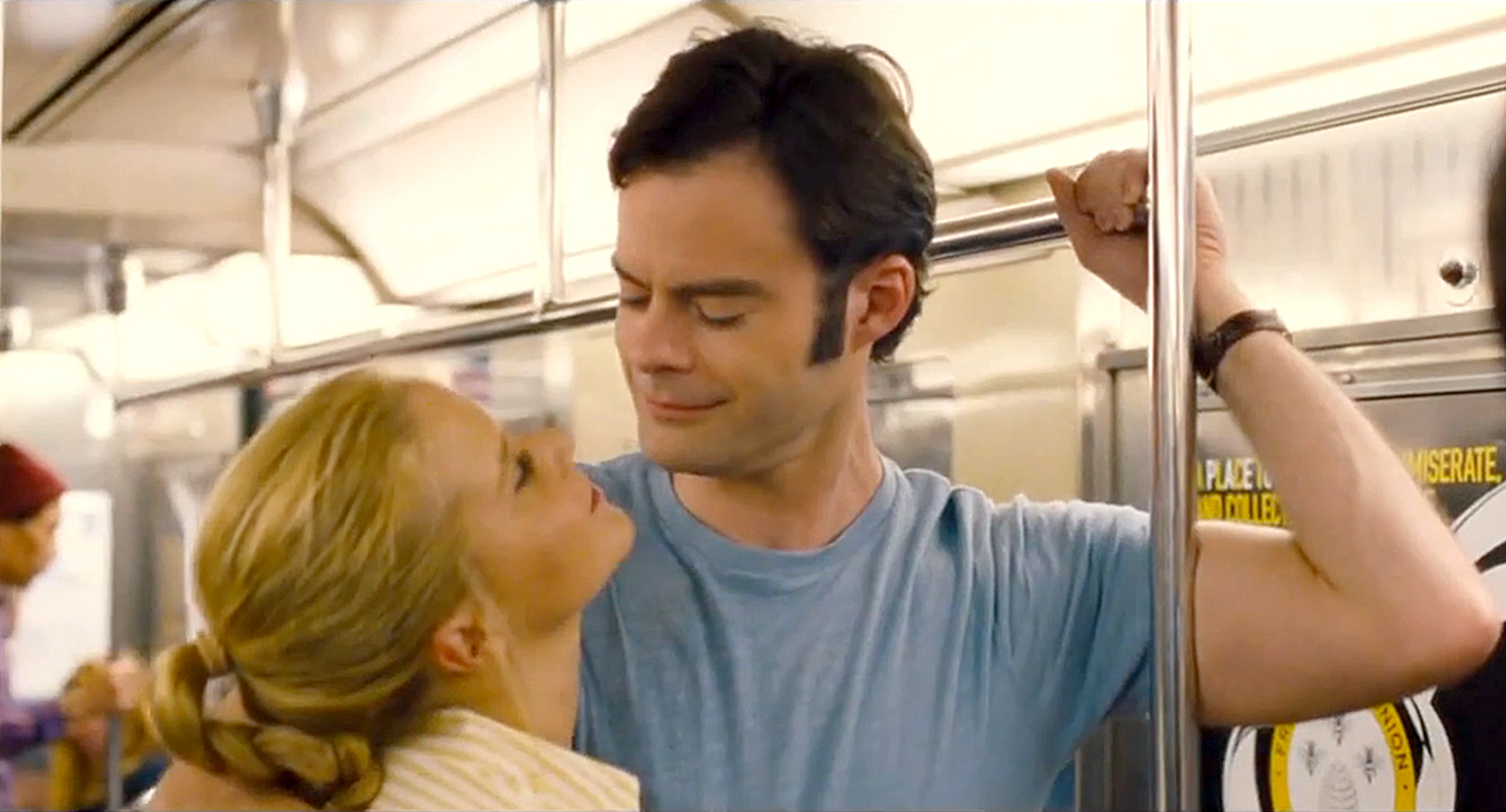
Trainwreck - scene

Best known for her TV appearances in the likes of A Different Spin with Mark Hoppus (2010), Delocated (2012) and her own show, Inside Amy Schumer (2013-15), the writer and star of Trainwreck is perhaps an unlikely choice to drive a relationship dramedy directed by Judd Apatow, but surprisingly enough, Schumer does extremely well in both departments. She’s not the world’s greatest actress, and her script skirts perilously close at times to being needlessly crude, but with the aid of Apatow, Hader and a strong supporting cast, Schumer has come up with a story that covers a lot of emotional ground and manages to avoid short-changing its characters.

And while her script isn’t exactly the most original concoction out there – too much happens that makes it look as if Schumer followed a pre-existing blueprint – what makes it work as well as it does is Apatow’s handling of the various relationships and the way in which he gives his cast the room to flesh out their characters beyond the story’s conventions, and pays close attention to the serious undertones that are present throughout. These are key to the movie’s overall effectiveness, and shows that Schumer the writer is able to be poignant and touching, as well as funny and caustic. There’s a brief scene between Amy and Allister that is as touching as anything you’ll see in a more dramatic movie, and the moment when Steven reveals his true feelings for Amy is superbly written, acted and directed.

Of course, this is primarily a comedy, but though it is incredibly funny in places – Amy’s attempt at a slam dunk is the movie’s comedy highlight – there are also times where the script tries too hard, notably in a sex scene involving Schumer and Cena that undermines the idea of Amy and Steven being together and includes Cena talking dirty in Chinese (but not really). Elsewhere there are some great one-liners (Aaron calling LeBron James his bitch), instances of situational comedy that brighten things immensely (Amy’s aforementioned speech about her sexual escapades), and some great visual gags too (co-worker Nikki’s smile). All in all the comedy and the drama are well balanced and neither detracts from the other.

The cast enter into the spirit of things with enthusiasm, and aside from the inclusion of some real life athletes (James is particularly awkward), there are some really great performances, notably from Larson as the sensible but resentful sister, and Cena as the boyfriend whose inappropriate responses to another cinema goer’s complaints is another of the movie’s highlights. Schumer proves herself to be a better actress than you might expect, and Hader shows a sensitivity as Aaron that grounds the character and makes him entirely sympathetic. And there are brilliant cameos from Daniel Radcliffe and Marisa Tomei in the movie Amy and Steven go to see called The Dogwalker, a small masterpiece of Sixties existential canine distress appropriately shot in black and white and which is such a glorious pastiche it leaves you wanting more.

Trainwreck is a little slow to get off the ground, and Amy’s behaviour may put off some viewers, but this is a movie that tugs at the heartstrings just as much as it tickles the funny bone. With Apatow using his directorial prowess to enhance Schumer’s script, and a cast prepared to give it their all, Schumer’s first attempt at a polished, nuanced movie is mostly successful, though what missteps it does make aren’t enough to hurt it.

Rating: 8/10 – an unexpected treat (even with the talent involved), Trainwreck is a small triumph, both laugh out loud funny and tearfully serious; all credit to Schumer for coming up with such an intelligent script and not trying to make every scene full of unnecessary jokes.

Monthly Roundup – July 2015

Tags

, , , , , , , , , , , , , , , , , , , , , , , , , , , , , , , , , , , , , , , , , , ,

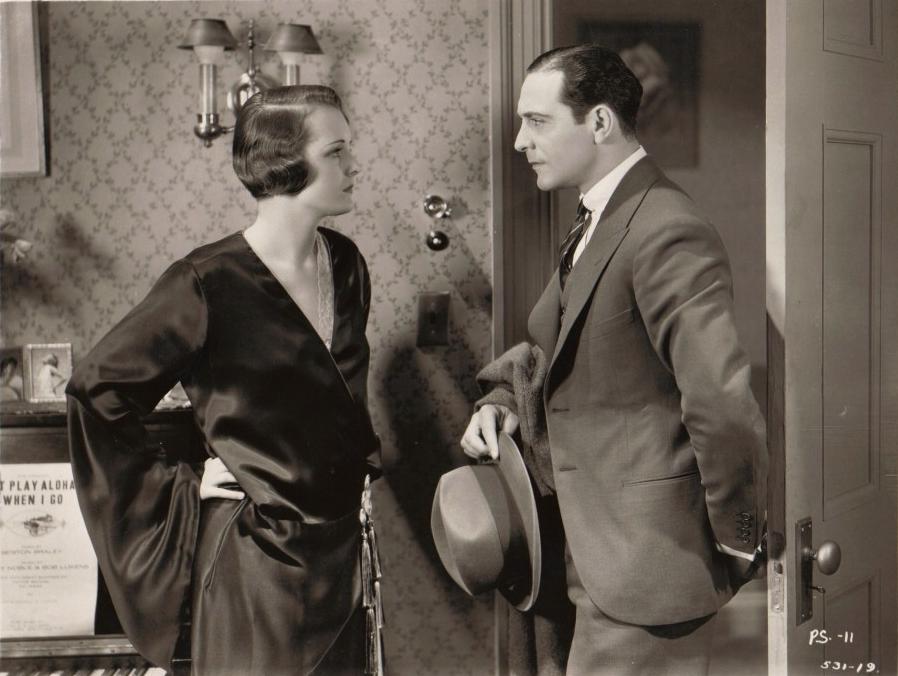
Behind Office Doors (1931) / D: Melville W. Brown / 82m

Cast: Mary Astor, Robert Ames, Ricardo Cortez, Catherine Dale Owen, Kitty Kelly, Edna Murphy, Charles Sellon, William Morris

Rating: 6/10 – at a paper supply company, personal assistant Mary Linden (Astor) is in love with rising young salesman Jim Duneen (Ames), but has to watch from the sidelines as he  plans to marry a socialite (Owen), completely unaware of how she feels about him; a broadly entertaining drama that was probably as predictable to watch in 1931 as it is today, Behind Office Doors benefits from a good performance from the always watchable Astor, and a breezy approach to social affairs that – pre-Hays code – allows Astor to kiss Cortez without being introduced first.

Behind Office Doors

Minions (2015) / D: Pierre Coffin, Kyle Balda / 91m

Cast: Sandra Bullock, Jon Hamm, Michael Keaton, Allison Janney, Steve Coogan, Jennifer Saunders, Geoffrey Rush, Steve Carell, Pierre Coffin

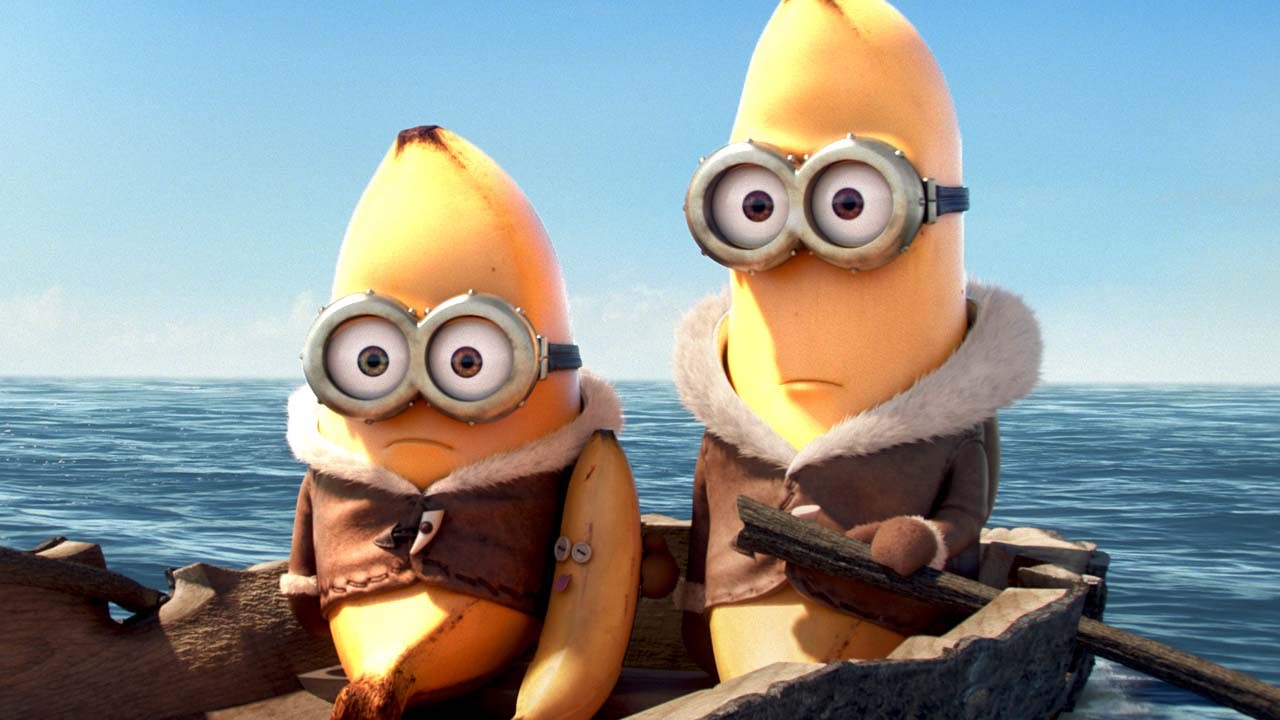
Rating: 8/10 – the origin of the Minions takes us all the way back to the first stirrings of life on earth and then catapults the viewer to 1968 and the efforts of three intrepid Minions – Kevin, Stuart and Bob – to find a new evil master; as absurdist and mayhem-filled as the Despicable Me movies, Minions promotes the little yellow sidekicks to centre stage, and has all sorts of fun riffing on the Sixties, even though some of the voice talents are far from recognisable (Hamm, Keaton, Janney).

Minions

Paris á tout prix (2013) / D: Reem Kherici / 93m

aka Paris or Perish

Cast: Reem Kherici, Cécile Cassel, Tarek Boudali, Philippe Lacheau, Shirley Bousquet, Salim Kechiouche, Stéphane Rousseau

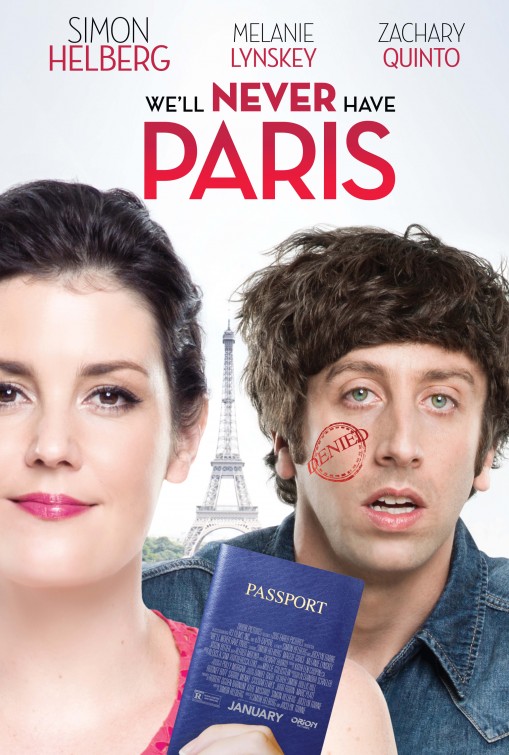
Rating: 7/10 – Moroccan-born fashion designer Maya (Kherici) finds herself in the running for a promotion but is deported back to Morocco when it’s discovered her visa has expired, leaving her with no choice but to pretend she’s off sick until she can find a way back to Paris and win her promotion; Kherici’s likeable, frothy comedy has its poignant moments too, and takes an affectionate stab at the fashion industry, but in the end, Paris á tout prix suffers by being too predictable and slow to get off the ground while using very broad brush strokes on the secondary characters.

Paris a tout prix

Ted 2 (2015) / D: Seth MacFarlane / 115m

Cast: Mark Wahlberg, Seth MacFarlane, Amanda Seyfried, Jessica Barth, Giovanni Ribisi, Morgan Freeman, Sam J. Jones, Patrick Warburton, Michael Dorn, John Slattery, John Carroll Lynch

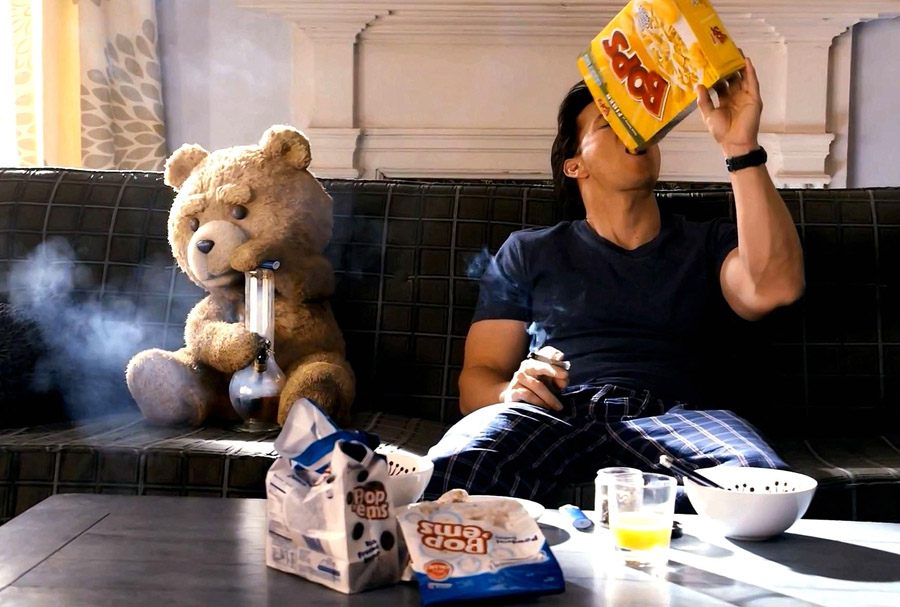
Rating: 6/10 – when Ted (MacFarlane) marries his sweetheart Tami-Lynn (Barth) and they want to have children, their adoption application leads to Ted being declared to be property rather than a person, and his only chance of reversing the decision is to employ the services of eminent lawyer Patrick Meighan (Freeman); a sequel was always in the works and to his credit MacFarlane hasn’t strayed too far from the first movie’s formula, but it also makes Ted 2 seem more like a rehash than a genuine sequel, and while some of it is as outrageous as expected, there’s a little too much unnecessary plotting getting in the way of the jokes.

Ted 2

Scooby-Doo! and KISS: Rock and Roll Mystery (2015) / D: Spike Brandt, Tony Cervone / 79m

Cast: Frank Welker, Mindy Cohn, Grey Griffin, Matthew Lillard, Gene Simmons, Paul Stanley, Eric Singer, Tommy Thayer, Jennifer Carpenter, Garry Marshall, Penny Marshall, Doc McGhee, Jason Mewes, Pauley Perrette, Rachel Ramras, Darius Rucker, Kevin Smith

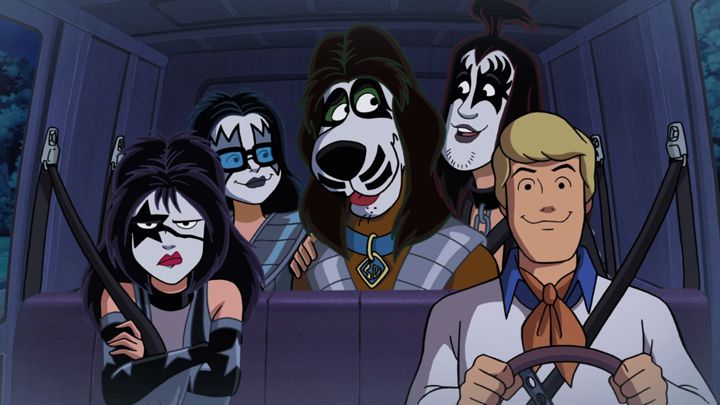
Rating: 5/10 – at the KISS World amusement park, the appearance of the Scarlet Witch and her search for a legendary rock leads to the Mystery Gang and KISS teaming up to unmask the Witch and save the park from closing; not the best of Scooby-Doo’s recent outings, Scooby-Doo! and KISS: Rock and Roll Mystery is overlong – an extended fantasy sequence soon becomes tedious – and doesn’t play to either group’s strengths, while the actual mystery is sadly, quite weak, all of which leaves the movie both disappointing and unrewarding (unless you’re a die hard KISS fan, in which case you’ll probably love it).

Scooby-Doo! and KISS

The Demonology of Desire (2007) / D: Rodrigo Gudiño / 22m

Cast: Bianca Rusu, Tudor Plopeanu, Jewelia Fisico

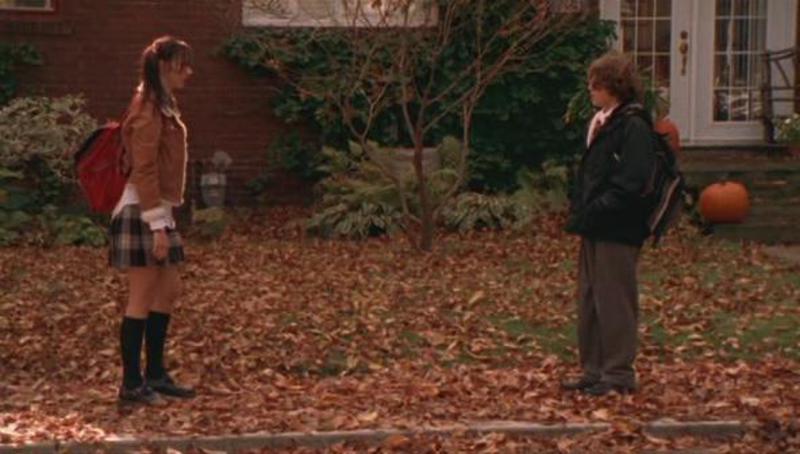
Rating: 6/10 – a teenage girl (Rusu) torments a younger boy (Plopeanu) who professes his love for her, and leads him into a nightmare of death and madness; regarded as art-core, The Demonology of Desire is less art and more waspish commentary on the futility of young love, but it does feature some strong visuals and a performance from Rusu that makes a virtue of some very poor line readings.

Demonology of Desire, The

The DUFF (2015) / D: Ari Sandel / 101m

Cast: Mae Whitman, Robbie Amell, Bella Thorne, Bianca A. Santos, Skyler Samuels, Romany Malco, Nick Eversman, Chris Wylde, Ken Jeong, Allison Janney

Rating: 5/10 – ordinary-looking Bianca (Whitman) discovers she’s her two best (attractive) friends’ DUFF (Designated Ugly Fat Friend), but finds her way through the necessary social adjustments thanks to best friend Wesley (Amell); pleasant enough, though featuring too many stretches where the audience is likely to lose interest, The DUFF is yet another Cinderella makeover movie that adds little to its old-time scenario.

DUFF, The

10 Movies That Are 40 Years Old This Year – 2015

Tags

, , , , , , , , , , , , , , , , , , , , , , , , , , , , , , , ,

If 1974 was a banner year, then surprisingly 1975 kept up the level of quality from around the globe. A closer look at the releases for 1975 show an amazing amount of movies that simply shone, and for all kinds of reasons. As with the list for 1974, there could have been a lot more movies included here, and the ten featured below were difficult to choose from out of all the fantastic movies available, but I think these are as representative of what a great year 1975 was as you’re likely to get.

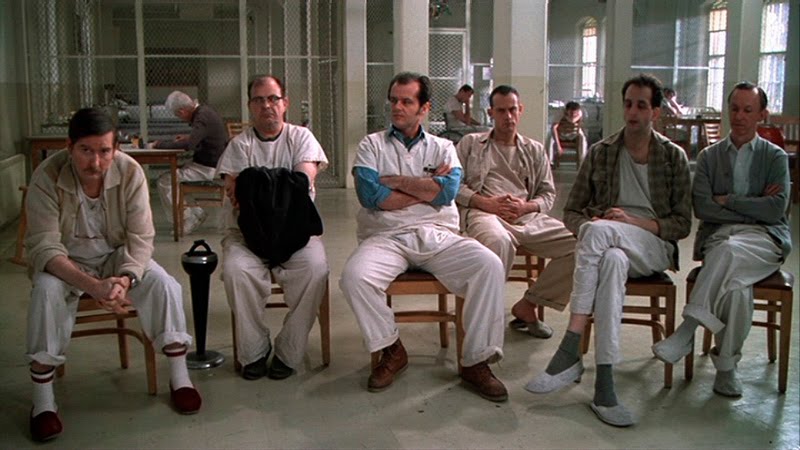
1) One Flew Over the Cuckoo’s Nest – Ken Kesey’s landmark novel was given the best screen treatment possible, one of the best ensemble casts ever, and placed in the hands of a director, Milos Forman, who was able to tease out every nuance and subtlety of emotion that the movie required. At once depressing, sad, comedic and poignant, but ultimately uplifting, this is the finest hour for everyone concerned and one of the few movies to tackle issues of mental health head on and without flinching.

One Flew over the Cuckoo's Nest

2) Jaws – The grandaddy of all Summer tentpole movies, it’s still easy to see why Steven Spielberg’s make-or-break movie was so successful, and caused audiences around the world to stay out of the water. With that menacing score by John Williams, one of the most effective jump scares in screen history, a great trio of performances from Shaw, Dreyfuss and Scheider, some of the most intense cat-and-shark sequences ever, it all adds up to a movie that still terrifies as much today as it did back then.

Jaws

3) Salò, or the 120 Days of Sodom – Pasolini’s fierce condemnation of the Italian Fascist ruling classes during World War II, and the increasing lack of empathy in modern society, is one long, intentionally nihilistic piece of anguished propaganda. Difficult to watch, with long scenes that test the audience’s endurance, Pasolini’s last movie before he was murdered is shot through with despair and lacking completely in hope, or faith in the goodness of man, and is as powerful a vision of hell on earth as you’re ever likely to see.

Salo

4) Dog Day Afternoon – Based on a true story, Sidney Lumet’s triumphant telling of friendship and compassion and the lengths one person will go to to ensure their friend’s happiness boasts a stunning performance from Al Pacino, and is as tense as any other thriller out there. Mixing high drama with situational comedy borne out of the characters themselves, Dog Day Afternoon is unexpectedly affecting and is one of those movies that reveals different facets to its story with each successive viewing.

Dog Day Afternoon

5) Nashville – The ensemble movie’s highpoint, Robert Altman’s look at the contemporary US political scene is merely a backdrop for some of the most riveting dissections of people’s behaviour and (in)tolerances yet seen in the movies. Full of standout moments (and none more so than Keith Carradine’s rendition of I’m Easy), and with Altman in firm control at the helm, this is another movie that rewards with every viewing.

Nashville

6) Grey Gardens – One of the finest documentaries ever made, Grey Gardens is as compelling as any thriller and as absorbing as any intimate portrait of an unusual lifestyle can be. Produced and co-directed by Albert and David Maysles, the lives of Edith Bouvier Beale and her daughter, “Little Edie”, are highlighted in haunting, intimate detail, and prove that any notions of strangeness in others is merely a matter of misguided perception.

Grey Gardens

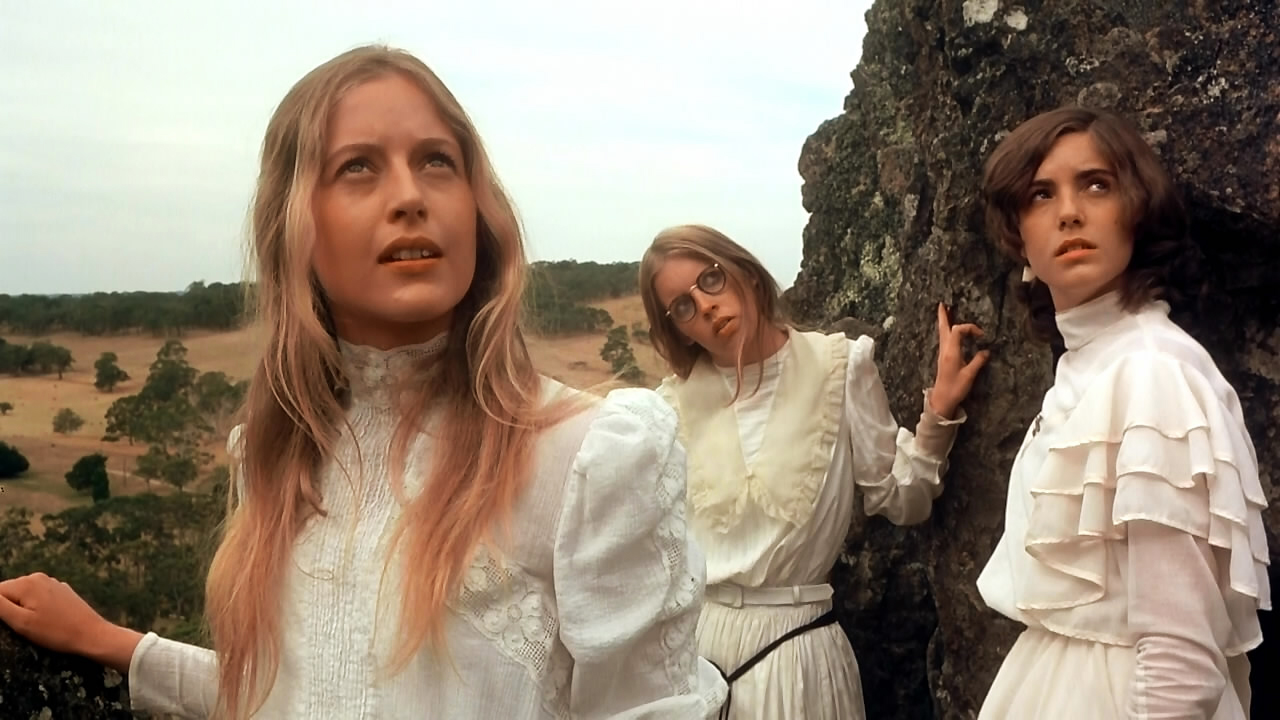
7) Picnic at Hanging Rock – Peter Weir’s haunting, immaculately filmed mystery is one of the most memorably eerie movies ever made, its sense of time and place and mood all combining to create a cinematic experience that remains unmatched. A true classic of Australian cinema and the movie that catapulted Weir – deservedly – onto the international scene, it’s as unsettling now as it was back when it was first released.

Picnic at Hanging Rock

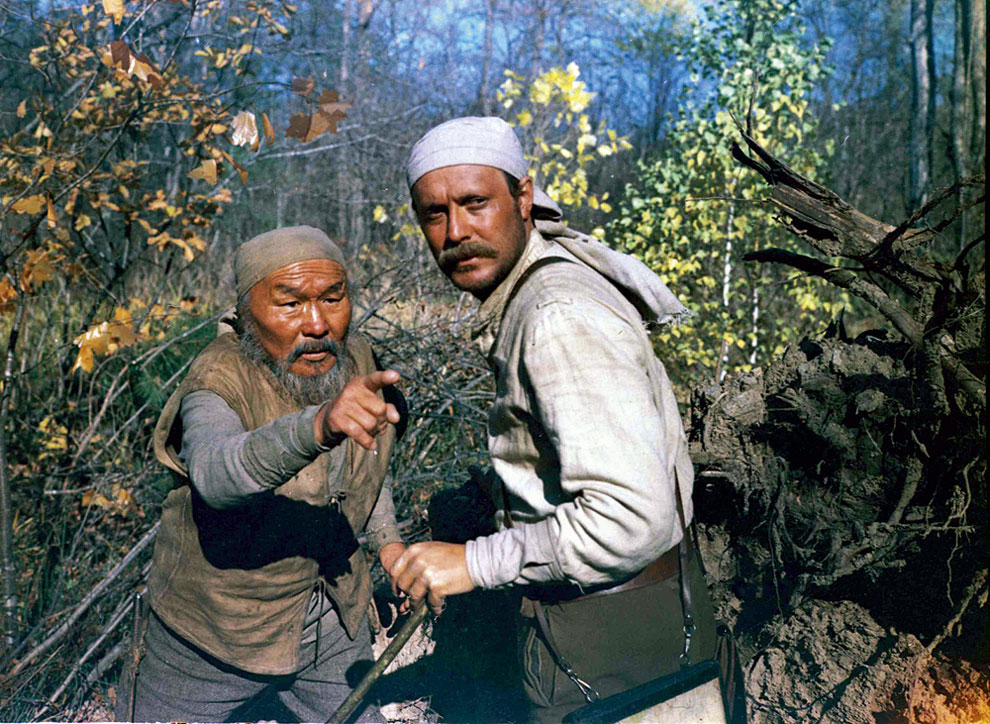
8) Dersu Uzala – Kurosawa’s examination of the differences that exist between the old ways of nature and the apparent progress that civilisation brings is enhanced by some stunning cinematography and two magnificent central performances by Yuriy Solomin and Maksim Munzuk. By turns deceptively gripping and subtly elegiac, the movie has an emotional honesty to it that makes the development of the relationship between the explorer and the hunter that much more convincing and affecting.

Dersu Uzala

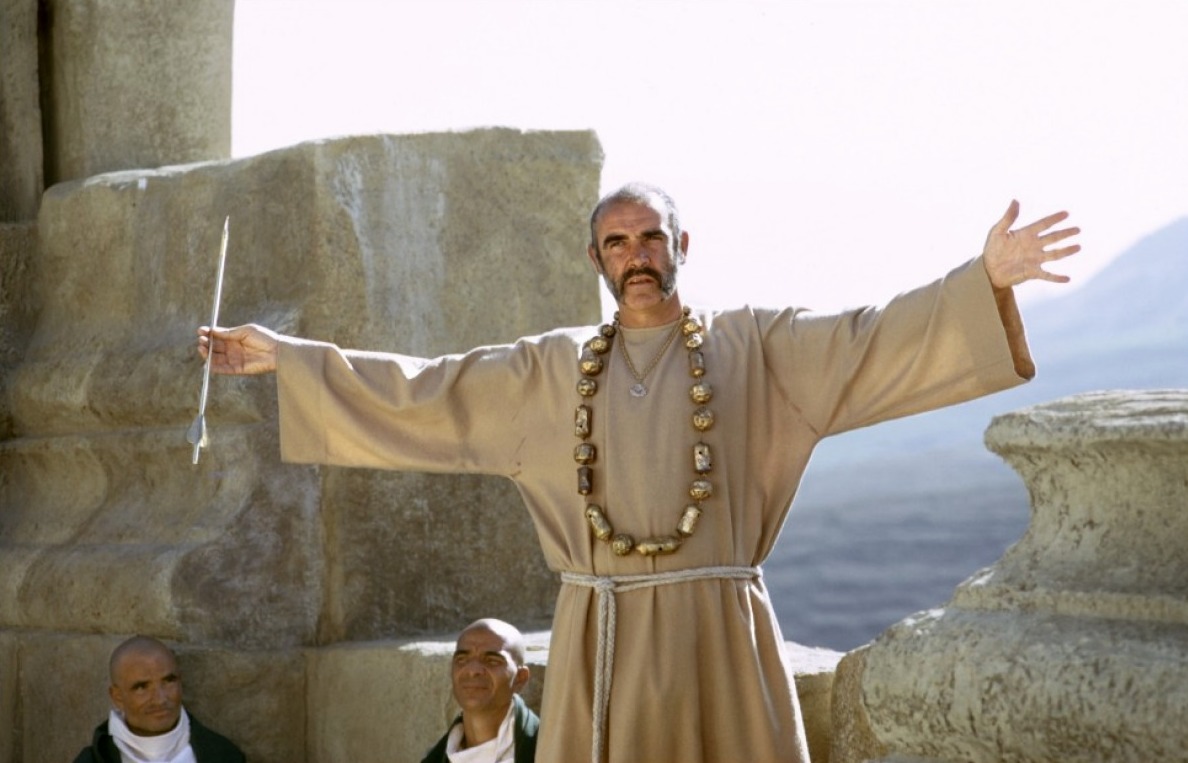
9) The Man Who Would Be King – One of director John Huston’s favourite projects, this adaptation of a story by Rudyard Kipling is the kind of rip-roaring adventure tale that doesn’t really get made any more, and features drama, comedy, suspense, action and two lovely performances from Sean Connery and Michael Caine. At its core it’s a heartfelt look at an enduring friendship overtaken by one man’s delusion of grandeur, but it’s also a penetrating examination of the abuse of power and the consequences thereof.

Man Who Would Be King, The

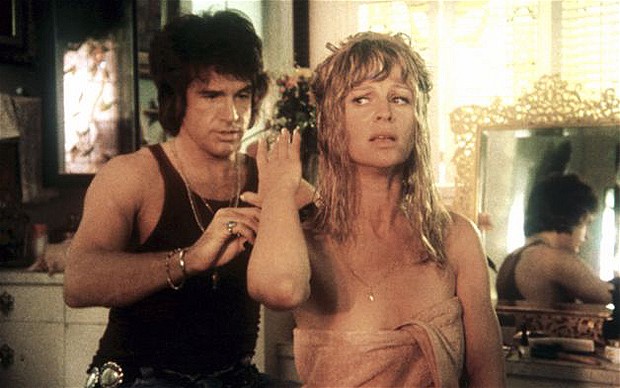
10) Shampoo – For some this is Warren Beatty’s finest hour, but the plaudits must go to his co-screenwriter, Robert Towne, for constructing such a beautifully realised satire on the fallout from the sexual revolution that took place in the Sixties and the way in which it gave way to a period of political paranoia. The cast hit all the right notes with ease, Hal Ashby directs with his usual simplicity and attention to framing, and the caustic humour is used more subtly than expected, making the contexts it relates to more important – and effective – than having a slew of one-liners.

Shampoo

Trailer – Spotlight (2015)

Tags

, , , , , ,

A powerful story of systematic, uncontrolled child abuse committed by the Catholic clergy across decades, and the journalistic investigation that exposed it, Spotlight has all the hallmarks of a real life thriller built in, and a cast that all look to be on top form. The scandal, and the extent of it, can still be felt today, but in telling this true story centred on abuse that happened in Boston, the movie has the potential to act as a microcosm of how and why these things happened – and continue to in other parts of the globe. It’s sure to be fascinating, gripping stuff, and come awards time, in the running for multiple awards.

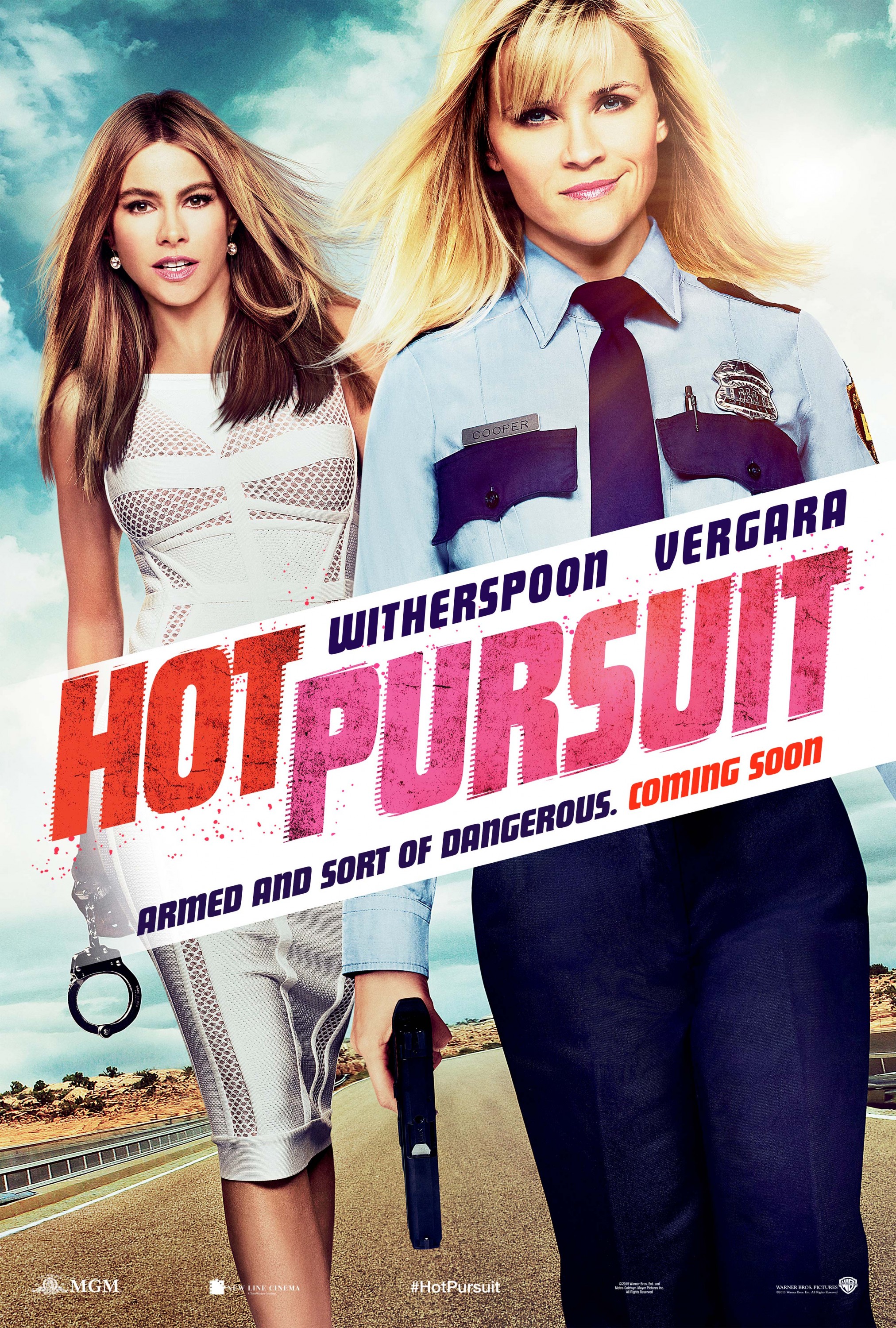
Hot Pursuit (2015)

Tags

, , , , , , , , ,

Hot Pursuit

D: Anne Fletcher / 87m

Cast: Reese Witherspoon, Sofía Vergara, John Carroll Lynch, Matthew Del Negro, Michael Mosley, Robert Kazinsky, Richard T. Jones, Benny Nieves, Michael Ray Escamilla, Joaquín Cosio, Vincent Laresca

After an unfortunate incident involving a taser, San Antonio policewoman Rose Cooper (Witherspoon) finds herself stuck in the Evidence Room. She’s the butt of her colleague’s jokes, and things aren’t helped by her too eager nature and strict adherence to the police manual. But when a female officer is needed to help escort Felipe Riva (Laresca), a member of a drug cartel and his wife to Dallas, in the company of renowned Detective Jackson (Jones), her boss, Captain Emmett (Lynch) gives her the job. When they arrive to collect their witness, they find Riva engaged in an argument with his wife, Daniella (Vergara). While Cooper tries to convince Daniella not to take all her clothes and shoes, two armed men in masks break into the house – one of whom has a longhorn tattoo on his wrist – and start shooting. Then two more armed men show up and during the crossfire Riva is shot and killed. Jackson too is shot, leaving Cooper to get Daniella out of there.

They manage to escape, and though Daniella makes various efforts to get away, Cooper keeps hold of her until she can contact the San Antonio police. Two of her fellow officers, Hauser (Del Negro) and Dixon (Mosley), arrive to escort them back but Cooper notices that Hauser has the same longhorn tattoo that one of the armed gunmen had. She and Daniella evade the two officers, but discover later on that they are both wanted in connection with the deaths at Riva’s home; Cooper is even described as armed and dangerous. Having stolen a truck the two women begin to get to know each other, until they learn that there’s a man in the back of the truck. The man is called Randy (Kazinsky), and he’s a felon with an ankle tag who’ll gladly help them get to Dallas in return for the removal of his tag.

They hole up in an Indian casino for the night, but while Cooper and Kazinsky become closer, Daniella makes another escape attempt. Cooper stops her just as Hauser and Dixon arrive at their room, and thanks to Randy’s help they escape onto a tour bus. Pursued by the two crooked cops, as well as the other two armed gunmen, Cooper and Daniella manage to avoid being captured or killed, but when the bus stops, Cooper finds that Daniella has a plan that doesn’t include testifying against her husband’s boss  (Cosio), but taking a more drastic approach. Daniella gets away, and later, when Cooper is back in San Antonio, Captain Emmett commends her for her work in keeping Daniella alive and tells her to take some time off. But Cooper can’t rest knowing what Daniella plans to do, and set out to stop her.

Hot Pursuit - scene

You’re an A-list Oscar winner who’s just made a movie that features what many critics regard as your finest performance, a true life tale that reminded everyone of just how talented an actress you are. But then, what to do next? Another heavy, emotional drama that might attract more awards for your mantelpiece? An ensemble piece that combines comedy and drama to good effect? Something completely different perhaps, something you’ve never tried before, like a sci-fi movie, or even a horror flick? Of all the options and possibilities, what will be your next choice of movie?

If you’re Reese Witherspoon, then the answer is simple: go back to making the kind of comedy movie where mismatched characters learn to become best buddies during a road trip, and which offers all kinds of humorous encounters for a casual audience to laugh at. For such is Hot Pursuit, a formulaic, sporadically amusing comedy that does just enough to stop itself from being completely predictable, and which coasts along for much of its (admittedly) short running time like a student in detention asked to write out the same lines a hundred times.

There is talent here, but it’s in service to a script by David Feeney and John Quaintance that tries for substance but often resorts to the time honoured tradition of having two women insult each other in shouty voices for its humour – though they’re nowhere near the inspired level of abuse that Melissa McCarthy and Rose Byrne hurl at each other in Spy (2015). Aside from one visual gag involving a dead deer, and a short sequence involving a severed finger that leads to Witherspoon performing the Heimlich manoeuvre on a dog, Hot Pursuit moves from scene to scene without too much consideration for what’s gone before, or even what’s ahead. A lot of it doesn’t add up, such as Randy’s ankle tag: one minute it’s a way of their being tracked, the next it’s off and chucked in a river. If there’s a dramatic or even narrative need for this to happen, then it’s hard to work out why.

Fletcher’s previous movie was The Guilt Trip (2012), the Rogen/Streisand team-up that nobody wanted, and while Hot Pursuit is better than that movie, she still seems unable to add a level of madcap energy that most movies of this type require in order to succeed. Without the commitment of Witherspoon and Vergara, the movie would be even more difficult to sit through, and it’s thanks to them that it even partially succeeds. Witherspoon is an old hand at this sort of thing, and handles even the daftest developments with a practised shrug and a “let’s move on”, while Vergara doesn’t quite get out from under the role of pampered, shallow sex object (though there does seem to be a competition between the two actresses in terms of who can show the most cleavage).

Rating: 5/10 – if you were to switch off your brain and just go with the flow, Hot Pursuit would prove to be pretty enjoyable, but alas its tired scenario and merely acceptable heroics wouldn’t fool anyone who’s paying attention; not as lame as some other, similar comedies, but not quite the rib-tickler it’s trying to be either.

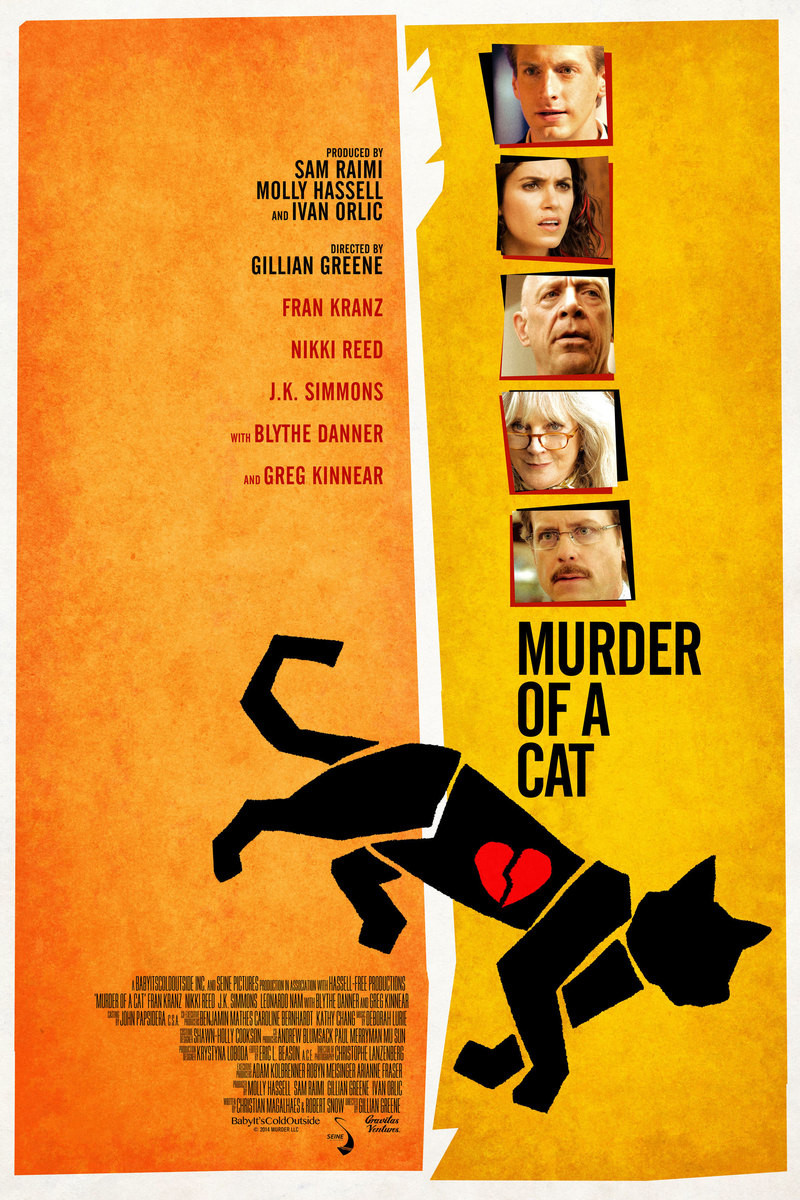
Murder of a Cat (2014)

Tags

, , , , , , , , , , , ,

Murder of a Cat

D: Gillian Greene / 101m

Cast: Fran Kranz, Nikki Reed, J.K. Simmons, Greg Kinnear, Blythe Danner, Leo Nam, Brian Turk, Aidan Andrews

Clinton Moisey (Kranz) is still smarting after the closure of his comic book store, thanks to the arrival of a large supermarket called Ford’s. He lives with his mother, Edie (Danner) and his pet cat Mouser. Recently, Mouser has been disappearing for long periods and doesn’t seem his old self. When Clinton takes Mouser to the vet’s, it’s all put down to his advanced age. Clinton isn’t so sure, but things take a darker turn the next morning when he wakes to find Mouser lying dead in the road outside his home, and with a bolt from a crossbow sticking out of him.

Clinton calls the police. Sheriff Hoyle (Simmons) arrives but decides there’s not much he can do except file a report and hope for the best. Clinton is outraged by this, and decides to find out who killed Mouser by himself. A local boy (Andrews) tells him that he saw Mouser just after he was hit by the bolt, and it wasn’t outside Clinton’s home. When the boy shows him the spot where he saw Mouser, Clinton is shocked to see a lost pet poster that shows a picture of Mouser, but under another name, and with an address on it. He finds the address and encounters Greta (Reed). It transpires that her home was where Mouser was disappearing off to. After some initial suspicion about each other’s motives, she and Clinton agree to try and find out who killed Mouser.

Greta recognises the bolt as one that would have been sold at Ford’s. She used to work there until recently, but doesn’t say why she left. At Ford’s they discover that the brand of crossbow used is only sold in that one store, but when the store’s owner, Al Ford (Kinnear), refuses to show them details of any purchases, Clinton causes a scene and is thrown out. Later, he sneaks into the store’s warehouse and finds that the shelf where the crossbows are kept is empty; he also learns that one of the employees, Yi Kim (Nam) is using the crossbow boxes to remove computer equipment from the store and sell it to a fence.

Things become further complicated when Clinton misreads Greta’s growing interest in him, and Sheriff Hoyle is revealed to be dating his mother. When he tells the sheriff about Yi Kim’s activities, he manages to persuade Hoyle to go to Kim’s house and search it. They don’t find anything, but Clinton swipes Yi’s phone. On it he finds several photos that prove what Yi is doing, but when he takes this evidence to Al Ford, he finds the store owner depressed over his impending divorce, and certain that the fence Yi is selling to is actually Greta…

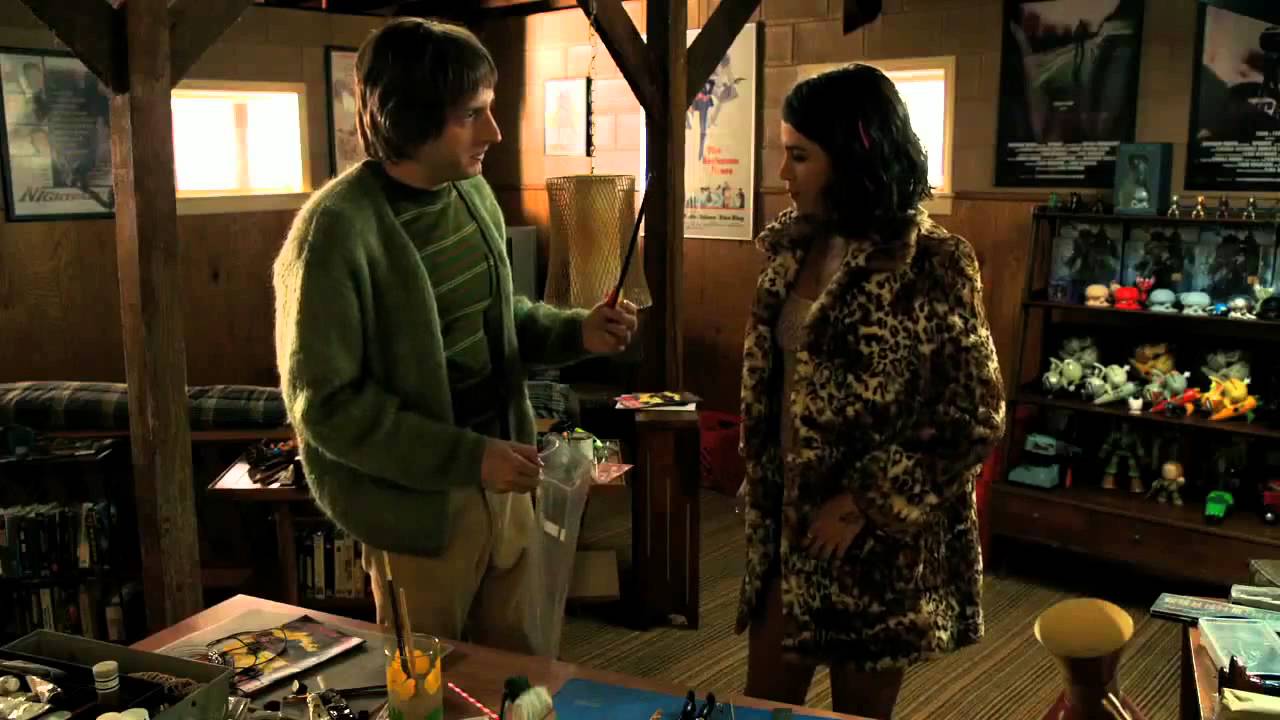
Murder of a Cat - scene

On the face of it, Murder of a Cat is a quirky, noir-tinged murder mystery with an unlikely victim, and an even more unlikely “detective”. Clinton Moisey is an adolescent trapped in an adult’s body, an older, less hyper Fred Figglehorn perhaps, but with the same selfish, socially awkward behaviour and lack of empathy towards others. When he implores Sheriff Hoyle to find Mouser’s murder, his outrage at Hoyle’s disinterest is evident but also a little unnerving. It’s the intensity that makes Clinton seem like a crazy person, and while the movie spends quite a lot of time supporting his search for justice, where the narrative takes him actually robs his cause of any emotional investment made by the viewer. As the thefts from Ford’s take priority over the murder investigation, so Clinton becomes less intense (if still determined), and his shaggy mop top gives way to a more coiffured hairstyle, changing both his look and his attitude.

By providing Clinton with a makeover, the movie ultimately robs him of the demanding, aggressive, petulant behaviour that makes him stand out in the first place. In short, he mellows, and while this may have seemed like a great idea for a character arc, it actually means the opposite: Clinton becomes less interesting as the movie goes on, and other characters – Ford, in particular – take over. It’s a strange process to watch, as a movie’s main character, though still driving the narrative forward, ends up being a bit of a bystander in his own story. Thanks to the script by Robert Snow and Christian Magalhaes, the movie never overcomes this approach and often stalls as Clinton struggles to make the next connection in the mystery. It’s as if they didn’t trust his dogged determination – a trait all the great detectives share – to fully engage the audience, and were uncertain if his way of behaving would invoke any sympathy.

The movie is further undone by some trite and unconvincing dialogue, some of which sounds so awkward that the cast do well in dealing with it all. Kinnear is saddled with some of the stiffest lines in recent memory – “I am a phony, kid. You were right about that. My whole life’s been an act” is one of the more memorable challenges he has to overcome, but there are plenty more where that came from, and though as mentioned above the cast do their best, it’s still too noticeable for comfort.

Of the cast, Kranz is a committed Clinton, absurdly childish and arrogant but lacking the support from the script and from Greene to make Clinton more likeable. Reed is efficient but used mostly to fill in the blanks in the story (she has a lot of exposition to deal with), while Simmons and Danner tread water with characters who come perilously close to being stereotypes. It’s Kinnear who makes the most impact though, taking an unevenly detailed character and making Ford the most interesting role by the movie’s end. It’s a small triumph that boosts Murder of a Cat in its last half hour, and without it, would have made the movie end on a whimper.

This is Greene’s first feature, but even though she’s the wife of Sam Raimi, it’s clear she hasn’t learnt too much from him, directing the majority of scenes with a flat, often bland approach that hurts the movie tonally and waters down both the drama and the often haphazard comedy elements, making some parts of the movie feel undeveloped. It’s a shame as there is the germ of a really good idea here, but sadly, it could – and should – have been a whole lot better.

Rating: 5/10 – a missed opportunity for everyone concerned, and the kind of movie that proves endlessly frustrating to watch, Murder of a Cat loses ground quickly and never recovers; it aims for quirky and bizarre but in reality is actually tedious and too rudimentary to work effectively throughout.

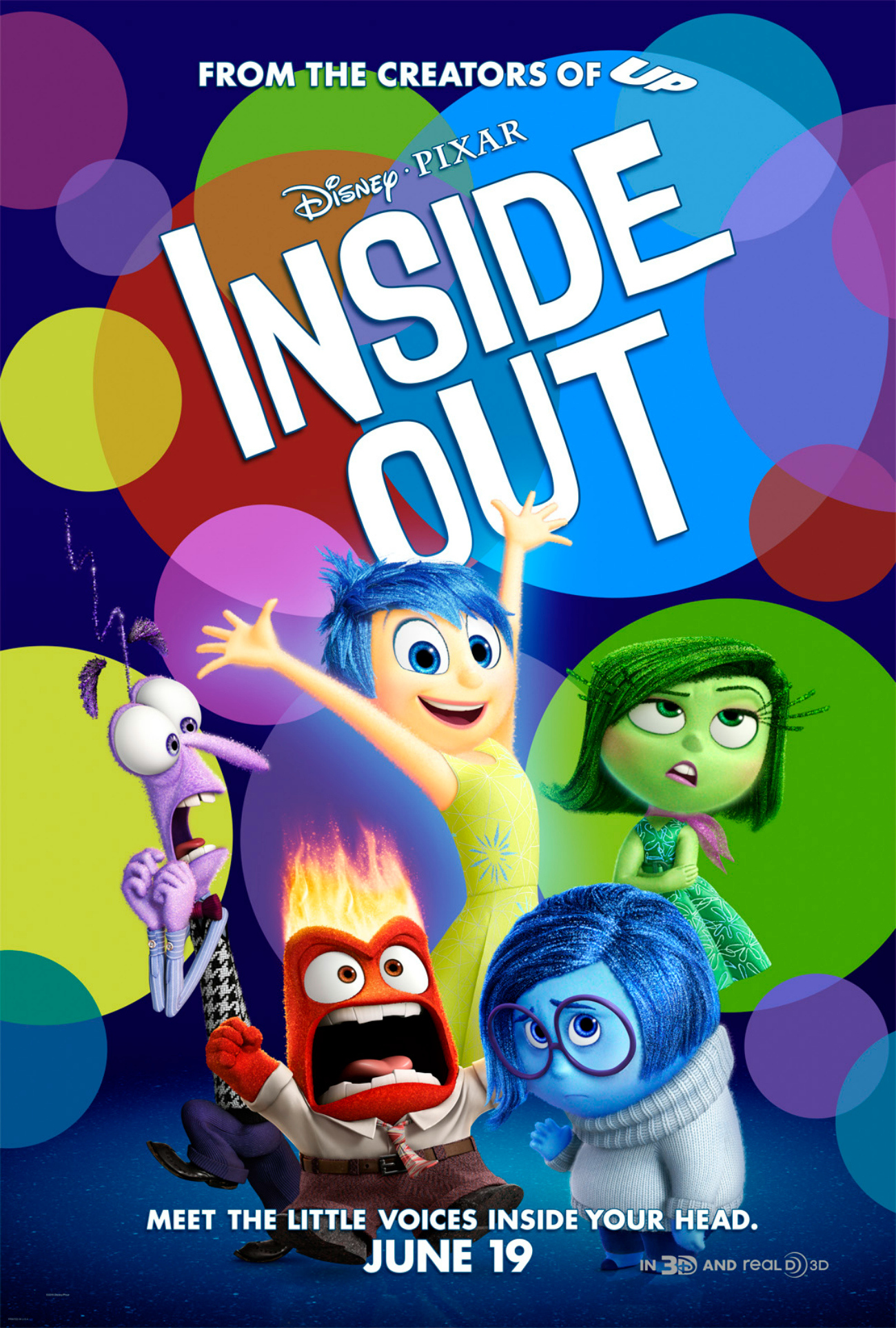
Inside Out (2015)

Tags

, , , , , , , , , , , , , , , , , ,

Inside Out

D: Pete Docter, Ronaldo Del Carmen / 94m

Cast: Amy Poehler, Phyllis Smith, Richard Kind, Bill Hader, Lewis Black, Mindy Kaling, Kaitlyn Dias, Diane Lane, Kyle MacLachlan

When a girl named Riley (Dias) is born the first emotion she forms is Joy (Poehler), followed by Sadness (Smith). As she grows up, Fear (Hader), Anger (Black) and Disgust (Kaling) form as well, but Joy ensures she supersedes the others. When Riley is twelve her father (MacLachlan) starts a new business in San Francisco; this means moving from their home in Minnesota. Riley puts a good face on things (thanks to Joy), but Sadness is never too far away from trying to influence her reactions and behaviour. When Riley’s mother (Lane) asks her what her favourite memory from the trip was, what starts off as a happy memory soon turns sour because Sadness has touched this particular recollection, and changed its composition.

At her first day at her new school, Riley talks about the hockey team she played in but this memory also becomes tinged with sorrow. In her mind, Sadness has touched this happy core memory and changed its composition as well, despite Joy’s efforts to stop her. A struggle ensues between them, and through Joy’s efforts to stop Sadness changing any more core memories, she, Sadness and the remaining core memories are sucked up into the dump tube and find themselves stranded in Riley’s long-term memory. With two of her core emotions removed from her mind’s control room, Riley finds it difficult to control her feelings, and friction develops between her and her parents.

This leads to her personality islands, areas of her mind that have been founded on her core memories, beginning to crumble and collapse. Joy and Sadness can see this happening, and they double their efforts to return to the control room. As they look for a way back they meet Bing Bong (Kind), Riley’s old imaginary friend. He helps them navigate their way through Riley’s long-term memory, and hitch a ride on Riley’s Train of Thought, which always passes close to the control room. Various obstacles cause their return to be delayed, and while Fear, Anger and Disgust do their best to make the right decisions for Riley’s emotional behaviour, she becomes more and more withdrawn and disillusioned. Eventually, Fear decides the best course of action is to prompt Riley into running away back to Minnesota. She steals money from her mother’s purse and sneaks out one evening to the bus station. As she does, Joy makes an important realisation about Sadness, one that will hopefully return things to how they were before.

Inside Out - scene

The last few years have seen Pixar stuck in a kind of creative rut. Since Toy Story 3 (2010), they’ve released only one original movie – the beautiful but flawed Brave (2012) – and two further movies featuring returning characters: the disappointing Cars 2 (2011), and the enjoyable but somehow flat Monsters University (2013). Also, another proposed movie, Newt, fell by the wayside (although Docter’s spin on it has led to Inside Out being made). With the company taking 2014 off, it seems as if a minor resurgence has occurred, because Inside Out is Pixar’s best movie since Toy Story 3, and in many ways their best movie to date.

This is due mostly to the decision to avoid sugar-coating Riley’s emotions and her reactions to the move from the home she loves to a place where she has to sleep on the floor because her furniture has been delayed in arriving. It’s a movie about the emotional changes that are needed to deal with being uprooted and having to “start all over again” in a strange place. It’s also about recognising that you can’t be happy all the time, and that it’s okay to be sad sometimes. For adults this is a lesson we’ve all learnt, but for a twelve year old it’s a frightening prospect, and one of the strengths of the script by Docter, Meg LeFauve, and Josh Cooley, is that it accurately and succinctly portrays the doubts and fears and confusion of trying to deal with such issues when your experience of them is so limited.

By focusing on five particular emotions, the script also covers the more basic human emotions, and this allows the script to be more astute than if the full range of emotions had been included. Joy is endlessly upbeat and constantly striving to make Riley’s life a continually happy one. Sadness is becoming more of an influence on Riley, and she’s also the gloomy one, who when tasked with talking about something she likes, responds with “I like being outside… in the rain”. Fear is like a paranoid health and safety inspector, always on edge and expecting the worst. Anger is, predictably, a hothead, prone to aggressive outbursts at the slightest provocation. And Disgust is resolute in her dislikes, dismissive of most things and also a little bit manipulative. Each character is portrayed with skill and understanding by the cast, and there’s much fun to be had in amongst the pre-teen trials and tribulations (when a new console is installed in Riley’s control room, Disgust asks, “What’s this button? Pu…berty?”).

Some viewers may find Joy and Sadness’s efforts to return to the control room to be a little long-winded as various parts of Riley’s mind are explored to varying degrees, but what should be appreciated is the sheer inventiveness and impressive art design that has gone into these sequences, especially the room called Abstract Thought, where Joy, Sadness and Bing Bong begin to lose their body shapes. It’s a clever, standout moment in the movie, and a reminder that when Pixar are playing their A game, no one else can touch them. Of course, the visuals are up to Pixar’s exemplary standards, with several scenes boasting a clarity of image and matching emotional heft that on at least two occasions are likely to bring a tear or two to the viewer’s eyes.

In assembling the material, Docter and his team have done a remarkable job. The cast are uniformly excellent (but with special mention going to Smith and Kind), the character design is impressive, and there’s yet another evocative score courtesy of Michael Giacchino. It’s all been put together with precision and care, and is by far and away one of the best movies of 2015.

Rating: 9/10 – funny, sad, thrilling, poignant, knowing, endearing – Inside Out is all these things and more, and shows that serious topics can be approached with honesty and hilarity, and with neither hampering the other; superbly done, and with The Good Dinosaur also heading our way this year, a clear indication that Pixar are well and truly back on form.

Mini-Review: A Little Chaos (2014)

Tags

, , , , , , , , , , , , , ,

Little Chaos, A

D: Alan Rickman / 116m

Cast: Kate Winslet, Matthias Schoenaerts, Alan Rickman, Helen McCrory, Stanley Tucci,  Steven Waddington, Jennifer Ehle, Paula Paul, Danny Webb

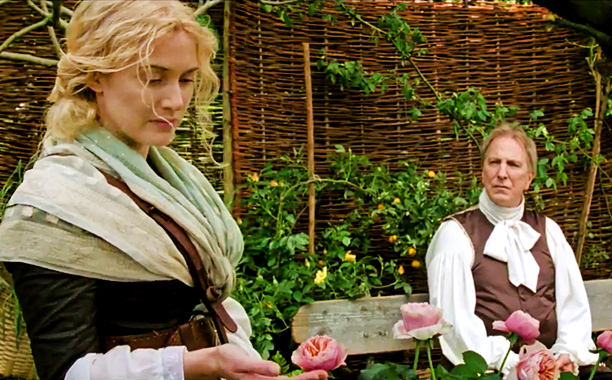
France, 1682. At the behest of King Louis XIV (Rickman), landscape garden designers are invited to submit their designs for the planned new gardens at the Palace of Versailles. Sabine De Barra (Winslet), a widow who has a keen eye for the disruptive yet beguiling influence that disorder can have on a garden, meets with the King’s renowned landscape architect, André Le Notre (Schoenaerts). He is concerned by her attitude and lack of formal training, but he nevertheless hires her to build one of the main gardens at Versailles, the Rockwork Grove.

Sabine begins her work in earnest but is initially hampered in her efforts by the other, male, designers. Le Notre intervenes for her, and as her design begins to take shape, he finds himself increasingly attracted to Sabine, despite his being married. He takes to spending more time with her, something which his wife (McCrory) notices. While Le Notre wrestles with his sense of honour and marital duty, Sabine unwittingly earns the respect of the King, and also his brother, Philippe (Tucci). As the project nears completion, Sabine is invited to attend the King’s court, where her honesty and subtle persuasiveness earns her many friends among the ladies in waiting – all except one, who decides to sabotage Sabine’s design…

Little Chaos, A - scene

An old-fashioned heritage picture, A Little Chaos – Rickman’s second directorial feature after The Winter Guest (1997) – is a movie that will sit well with anyone who’s seen similar movies from the Thirties, replete as it is with a woman battling against the preconceptions of her gender and the sexism of the times, a romance where convention says the couple should remain apart, and a minimal amount of political intrigue at the King’s court. It’s a pleasant movie to watch, not least because of Winslet’s emotive yet (mostly) carefully detailed performance, and shows Rickman is adept at staging scenes for their maximum emotional effect as well as their visual splendour.

And yet, while the movie has plenty of positives about it, it’s let down by the romantic storyline, with Le Notre and Sabine’s ardour for each other feeling watered down and sounding less than enthusiastically entered into. Schoenaerts never looks entirely comfortable in these scenes, and Winslet too seems unsure of how to play the drama of their situation. In contrast, the scene where Sabine and the King exchange views on gardening and various flowers, is laden with subtext and deliberate innuendo, leaving the viewer with no doubt that, in a different life, the romance would be between them and not Sabine and Le Notre.

Rickman is a generous director when it comes to his cast, and he finds a willing aide in Ellen Kuras’ often stunning cinematography, for the movie is beautiful to look at. And as historical romantic dramas go there’s a degree of humour that helps leaven the seriousness of the story, while Tucci’s flamboyant Philippe gives the movie a much needed boost just as it was starting to sag. And there’s a wonderful, non-intrusive score courtesy of Peter Gregson.

Rating: 7/10 – enjoyable if lacking in any appreciable depth, A Little Chaos is gentle, harmless, and a pleasant diversion from this year’s slew of mega-blockbusters; with Winslet, Rickman and McCrory winning the acting plaudits, this trip back to 17th Century France is an undemanding one but worth seeing nevertheless.

10 Spoof Movie Posters

Tags

, , , , , , , , , , , , , , , ,

While I was searching for movie posters to include in my Poster of the Week feature, I came across quite a few spoof versions, most of which were obvious or clumsy in execution. But there were some that stood out in terms of originality and for putting a clever spin on the original poster. Here are ten of the best, and in no particular order of popularity or preference. I hope you like them as much as I do.

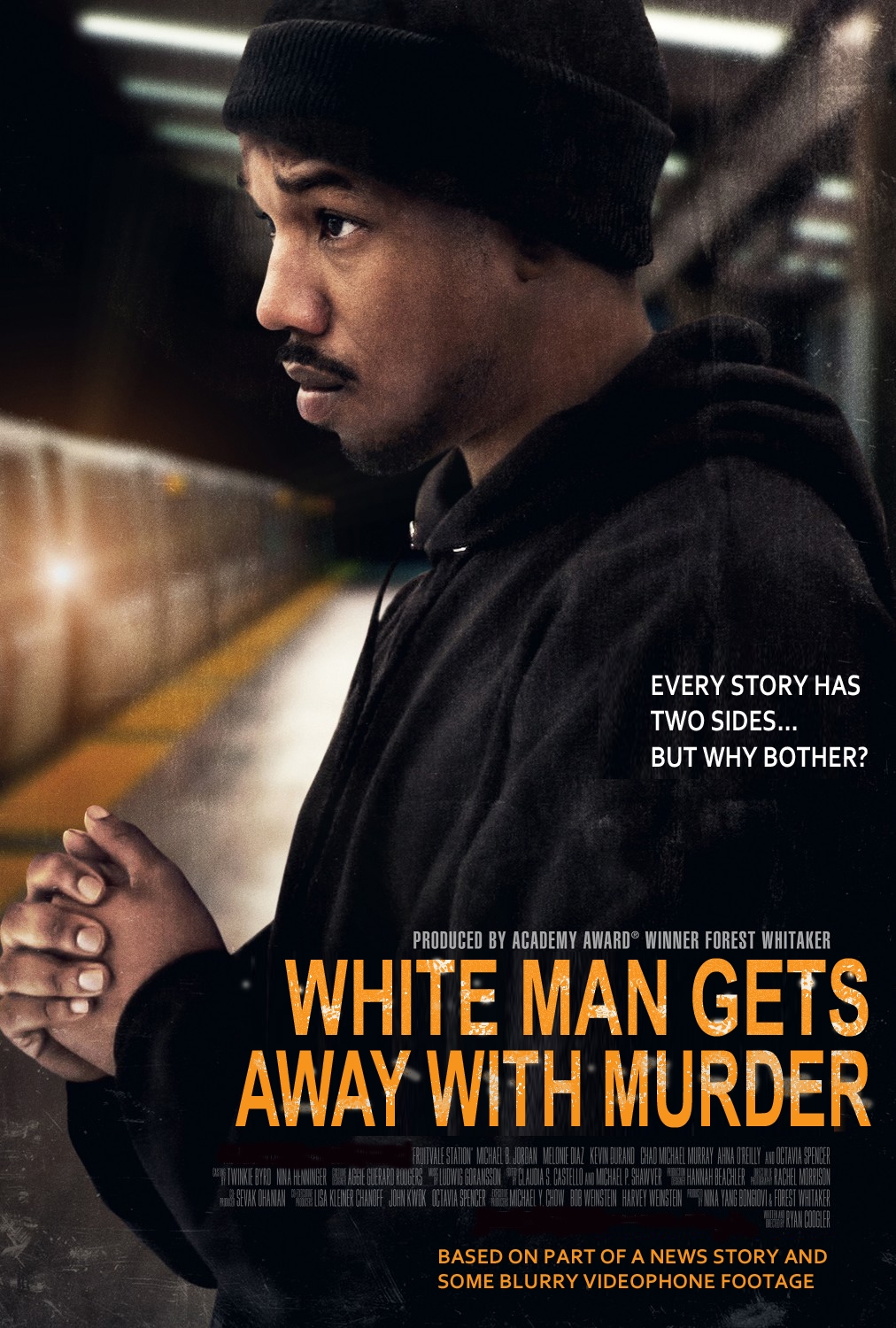
1 – Fruitvale Station (2013)

There’s nothing like getting to the heart of the matter or telling it straight, which is what makes this “serious” spoof so effective. It’s an example of the “honest poster” and the title change from Fruitvale Station says it all, and for an extra twist of the knife, the tagline rams the message home quite forcefully and with no apologies for its stance.

Fruitvale Station

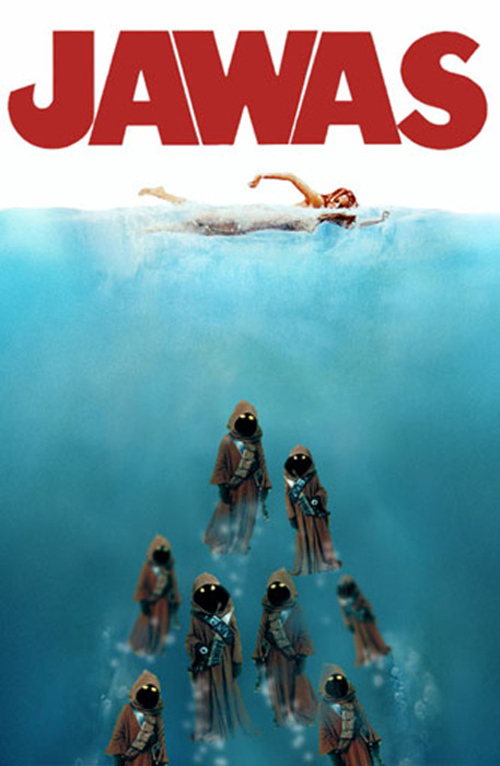
2 – Jaws (1975)

There are dozens of spoof Jaws movie posters out there, and almost all of them try to retain the title as much as they can, but few keep the whole word with just the addition of a single extra letter. Congratulations then to this poster for being so creative and for providing a mash-up of two movie series into the bargain.

Jaws

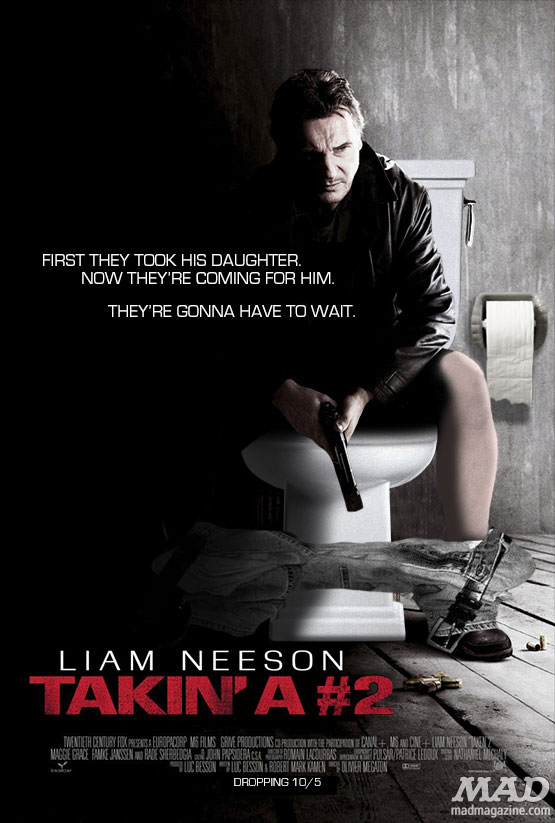
3 – Taken 2 (2012)

Sometimes, the best spoofs are those that poke fun at movies that take themselves just a little bit too seriously. And Taken 2 was certainly a gloomy revenge thriller, with Liam Neeson glowering throughout. But this example of the spoof poster takes all that gloominess and the oppressive atmosphere and literally “dumps” all over it.

Taken 2

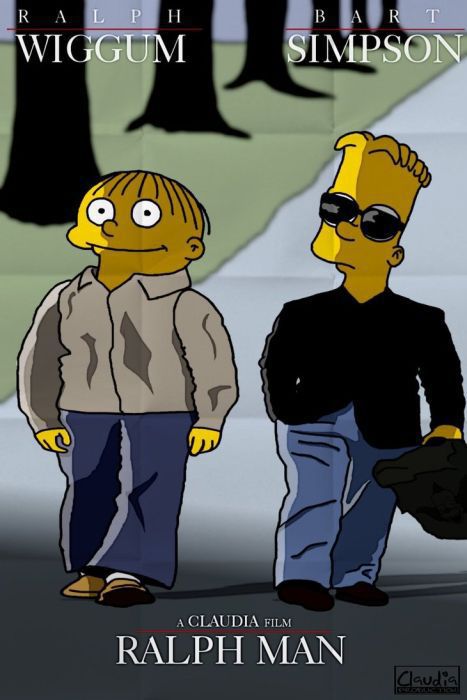
4 – Rain Man (1988)

The Simpsons feature in a lot of spoof movie posters but this is one of the best, recreating the original’s style and looking more like an animated sequel than a humorous homage to Rain Man itself. The expressions are fantastic as well, and the whole thing is so simple it just adds another layer of quality to the finished poster.

Rain Man

5 – Star Wars Episode I: The Phantom Menace (1999)

As with the Simpsons, those little yellow Minions feature in quite a few spoof movie posters as well, and trying to choose just one was really difficult, but in the end this example won out because it’s visually striking as well as funny, and isn’t a case of someone just photoshopping a Minion onto the head of Darth Maul.

Star Wars Episode 1

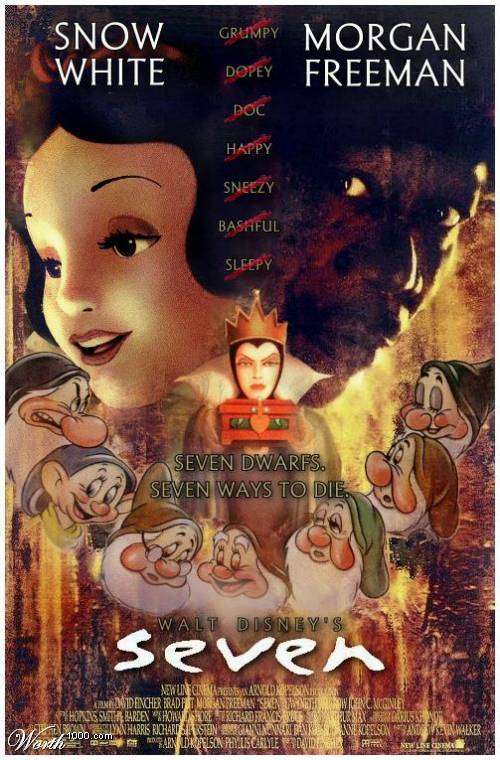
6 – Se7en (1995)

Mash-ups are popular with spoof movie poster designers, and this combination of Disney classic Snow White and the Seven Dwarfs (1937) and modern serial killer movie Se7en is inspired (though John Doe is still scarier than Maleficent). And to add to the fun you can try and work out which dwarf matches up with which deadly sin.

Se7en

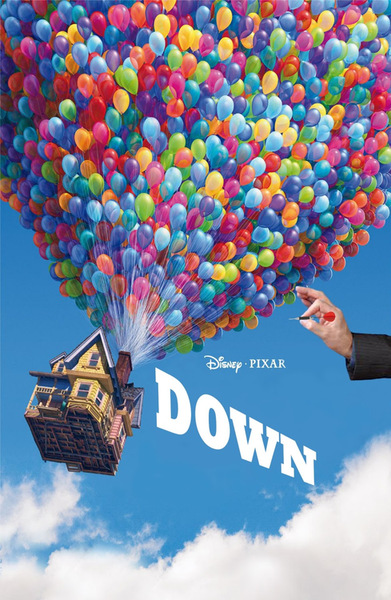
7 – Up (2009)

A simple enough exercise that retains the bright colour scheme of the original, and still manages to capture Up‘s spirit of adventure, this poster is an obvious response perhaps, but again it’s the way in which the original look and feel has been recreated, and still manages to raise a smile, this time of happy acknowledgement.

Up

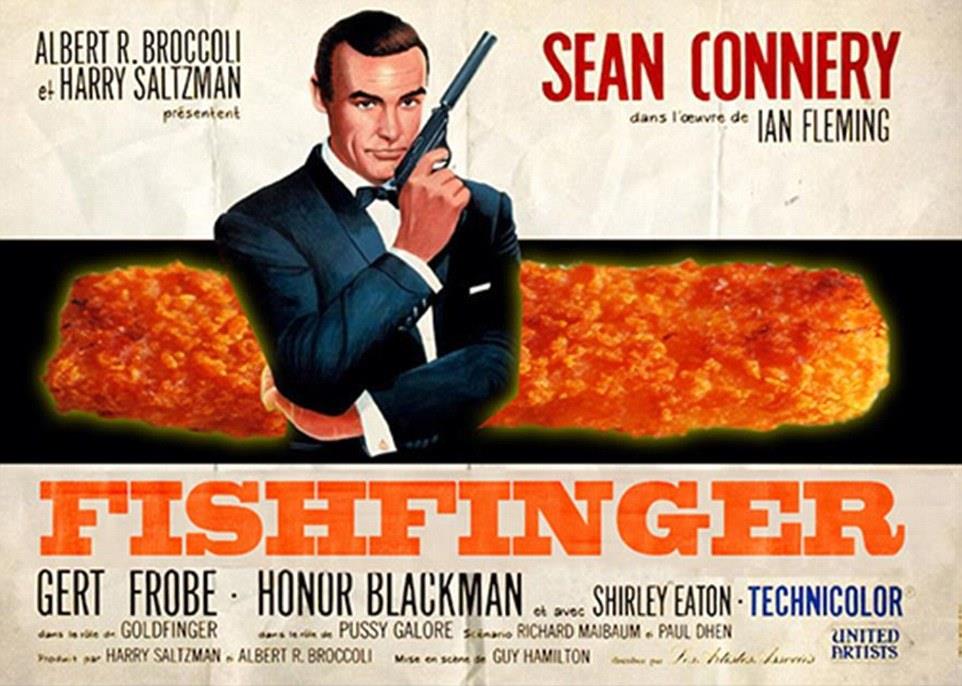
8 – Goldfinger (1964)

If ever there was a movie series that deserved to be spoofed (as it has been) then it’s the James Bond franchise. This French poster for Goldfinger takes an obvious title change and adds a picture of the item in question and does nothing else, keeping the rest of the poster intact and making it look – at first glance at least – as if it’s a genuine Bond movie.

Goldfinger

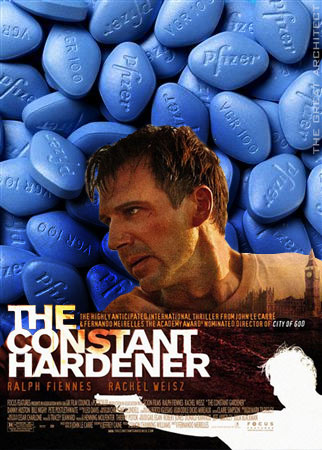
9 – The Constant Gardener (2005)

One small change to a title can make all the difference sometimes, and this example turns The Constant Gardener‘s paranoid thriller into something very different indeed. The graphics are a little too “in your face” but the humour is guaranteed to “raise” a smile, and is a good example of how a little smut can go a long way.

Constant Gardener, The

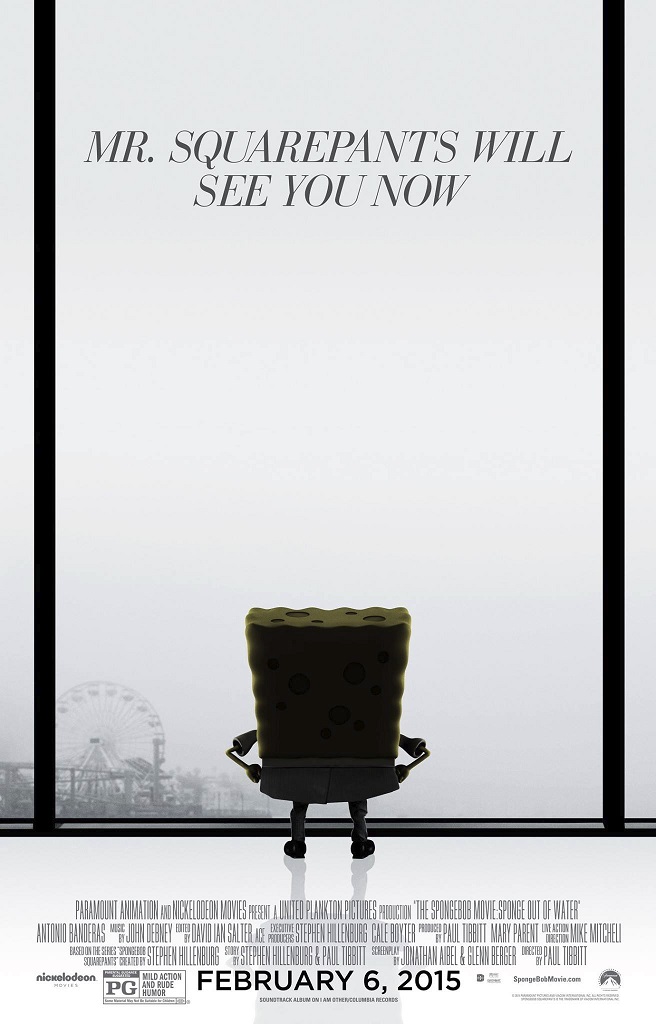
10 – Fifty Shades of Grey (2015)

A lot of spoof movie posters work by subverting the original image and/or juxtaposing it with an image that is completely at odds or at a considerable distance from the original image and its intentions. Such is the case with this version of Fifty Shades of Grey, where Christian Grey’s replacement – and the careless absurdity of his being at the window in the first place – just makes it all the funnier (and might just make for a more interesting and entertaining movie).

Fifty Shades of Grey

Oh! the Horror! – Lake Placid vs Anaconda (2015) and Sharknado 3: Oh Hell No! (2015)

Tags

, , , , , , , , , , , , , , , , , , , , ,

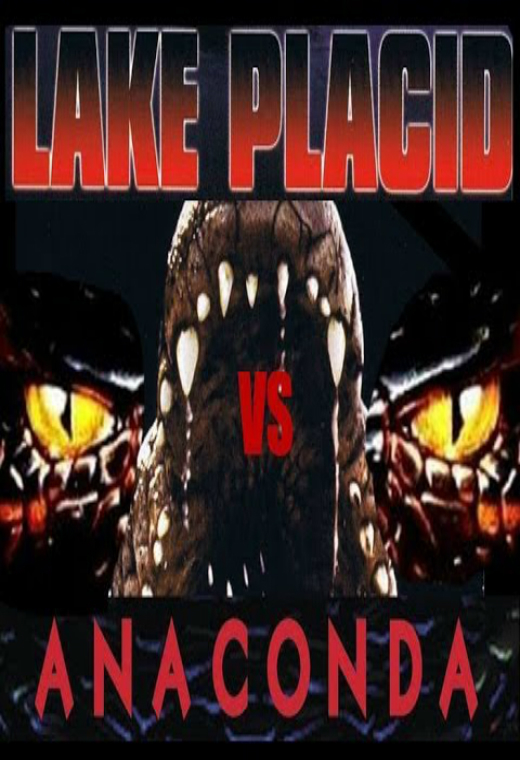
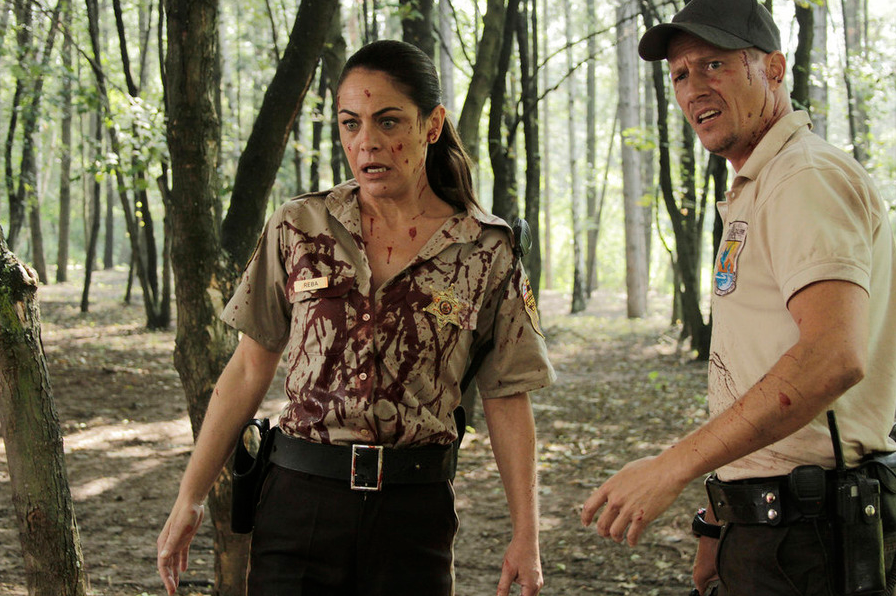
Lake Placid vs Anaconda

D: A.B. Stone / 91m

Cast: Corin Nemec, Yancy Butler, Stephen Billington, Skye Lourie, Oliver Walker, Ali Eagle, Annabel Wright, Laura Dale, Robert Englund

When the Wexel Corporation decides to create a hybrid anaconda/crocodile in order to increase their chances of procuring the rare properties of the Blood Orchid plant, their attempts to do so lead to both creatures being on the loose in and around Black Lake and Clear Lake. Fish and Wildlife ranger Will Tull (Nemec) and local sheriff Reba (Butler) team up to track and hunt them while at the same time trying to keep the news of the creatures’ escape quiet from the local residents.

Tull’s daughter, Bethany (Lourie), however, is at Clear Lake as part of her sorority pledge, and soon finds herself and her friends at the mercy of several crocodiles. While Tull and Reba try to find her, and fight off the attacks of the crocodiles, Wexel head Sarah Murdoch (Wright), along with hired muscle Beach (Billington) and two of his men, track the female anaconda who is due to lay her cross-fertilised eggs anytime soon. As the body count rises, the importance of finding the female anaconda before this happens becomes of paramount importance.

Lake Placid vs Anaconda - scene

For anyone who thought Lake Placid: The Final Chapter (2012) was really the final entry in the series, here’s yet another stab at the idea that ran out of steam in Lake Placid 2 (2007). If you’ve seen The Final Chapter, then as far as the crocodile parts of this movie go it’s very much business as usual, with Butler and England returning to provide a link with the previous instalment (and both looking as if they’ve regretted it). The inclusion of the anacondas from that particular series, along with the quest for the life-giving properties of the Blood Orchid, was probably felt to be a good enough idea to kickstart a new franchise – you can guess what happens in the final scene – but the whole teens in peril/let’s hunt predators in the woods set up is as dull and uninspired as it was before in both series.

Rookie director Stone is unable to make anything out of Berkeley Anderson’s patchwork script, and the performances range from perfunctory to embarrassing (Walker’s comedy deputy). Once again the special effects are of the sub-par CGI variety, with the requisite blood splatters looking even more fake than usual. The anacondas play second fiddle to the crocodiles, while the lacklustre Bulgarian locations give a clear indication of how far both series’ have fallen in terms of their production values. If, as seems likely, there’s to be another in the (joint) series, then it’s hard to imagine it could be any worse than this entry.

Rating: 3/10 – of only superficial interest, and one for the fans if no one else, Lake Placid vs Anaconda is an attempt at regenerating two flagging franchises that falls flat on its face within the first five minutes; that it’s terrible from start to finish is a given, but you have to see it to realise just how terrible it actually is.


Sharknado 3

D: Anthony C. Ferrante / 88m

Cast: Ian Ziering, Tara Reid, Cassie Scerbo, Frankie Muniz, Ryan Newman, David Hasselhoff, Bo Derek, Mark Cuban

In Washington D.C. to receive a Freedom medal from the President (Cuban), unlucky hero Fin Shepard (Ziering) finds himself dealing with yet another, more intense sharknado that causes an incredible amount of destruction, hundreds of deaths, and leads to Fin saving the President’s life. Worse still, a series of storms out in the Atlantic are converging on America’s east coast, and look set to generate the worst, most devastating sharknado of them all. With his ex-wife April (Reid) close to giving birth, and spending some time with her mother May (Derek) and daughter Claudia (Newman) at the Universal Studios theme park in Florida, Fin determines to get to her as quickly as possible, and make sure she’s safe.

With mini-sharknados popping up out of the blue on his journey south, Fin finds himself rescued from one such obstacle by his friend and partner in shark killing, Nova (Scerbo). She and a friend, Lucas (Muniz) have been trying to find a way of stopping the sharknados from happening ever again, but as they help Fin get to Florida, their vehicle is destroyed and they’re forced to fly there. After a crash landing, Fin and April are reunited, and together with Nova they come up with a plan to put paid to the approaching weather system, but their plan fails, leaving Fin with only one option: to ask for help from his father, a retired NASA Colonel (Hasselhoff). By using a space shuttle, their plan is to drop the main fuel tank into the eye of the storm, but when that idea proves ineffective, there’s only one thing left to do: use the supposedly defunct Star Wars programme from the Eighties…

Sharknado 3 - scene

The first Sharknado (2013) was awful, dreadful rubbish that seemed unaware of its failings or how terrible it was. The second – aptly titled Sharknado 2: The Second One (2014) – was much better as it tried to be ironic and aware of its own absurdity. With Sharknado 3: Oh Hell No!, the makers have upped their game considerably in terms of how insane it all is and by throwing away the rule book entirely (this is perhaps the only movie where you’ll hear the line, “There’s sharks… in space!”). The sharks literally pop up out of nowhere: inside buildings, on staircases, through windows, and memorably, in the President’s secure underground bunker. With no thought to logic or any consideration for providing some level of working coherence, the movie races through each preposterous scene in Thunder Levin’s script with all the intended mayhem of a five year old with ADHD.

It’s a movie that’s incredibly, ridiculously stupid… and yet, by going balls out in terms of how absurd it can be, the movie actually attains a degree of charm that the previous movies never managed. It’s also laugh out loud funny in a way that doesn’t alienate the viewer, or have them shaking their head and groaning in despair. Instead, the laughs come thick and fast because of all the preposterous antics going on, and it’s clear the makers have just decided to make the movie as bizarre and reckless as they possibly can. Returning cast members Ziering, Reid and Scerbo play it as straight as they can, while there’s a plethora of cameos – Jerry Springer, Chris Jericho, Jedward, Lou Ferrigno, Jackie Collins, and Ne-Yo to name but a few – that adds to the fun, and the low rent special effects show no signs of being improved upon. With the potential for yet another episode to come, it’s hard to think how much more barmy this series can get.

Rating: 4/10 – as each movie improves on the last, Sharknado 3: Oh Hell No! is (currently) the series’ zenith and nadir combined, and shows that its makers have a firmer grasp on what makes these movies so successful; still terrible though in many, many, many ways, by trading on its own idiocy the movie makes a virtue of being extremely silly and defiantly farcical.

Careful What You Wish For (2015)

Tags

, , , , , , , , , ,

Careful What You Wish For

D: Elizabeth Allen Rosenbaum / 91m

Cast: Nick Jonas, Isabel Lucas, Paul Sorvino, Dermot Mulroney, Graham Rogers, Kandyse McClure, Leon Pridgen, Kiki Harris, David Sherrill, Kevin L. Johnson

Doug Martin (Jonas), along with his mother and father (Harris, Sherrill), live in the small town of Lake Lure. During the summer, Doug works at a local bar with his best friend, Carson (Rogers). Carson’s aim is to find Doug a girl (or girls) he can make out with, but Doug hasn’t had much success with girls in the past, plus he also finds Carson’s approach too desperate, not to mention off-putting. Focusing on his work, Doug’s rather staid life is thrown for a loop when new neighbours move on next door. Elliott Harper (Mulroney) is a self-made millionaire with a trophy wife, Lena (Lucas). Doug is instantly attracted to Lena but keeps his distance, watching her when he can. Lena notices him but appears unperturbed by his behaviour.

One day, Doug is in his room when he hears a cry from the road outside. He rushes out and finds Lena standing beside her car, scared of something inside. It turns out to be a spider; Doug gets rid of it and Lena thanks him. Later that night, he finds Lena waiting outside his home, sheltering from the rain having locked herself out. She persuades him to help her get back in by breaking a basement window. In the Harpers’ kitchen, Lena seduces Doug and they have sex several times during the night. The next morning, Lena tells Doug that he can’t tell anyone about what they’ve done in case Elliott finds out.

At the same time that he and Lena take every opportunity to be together, Elliott employs Doug to help him renovate a sail boat he’s recently purchased. One day, the three of them go out on the boat and Doug sees bruising on Lena’s face. A succession of minor injuries culminates in Lena calling Doug from the hospital to come get her. Now completely afraid, Lena gives Doug an untraceable mobile phone so they can be in contact with each other. A little while later, Lena texts Doug saying she’s done something terrible. When he goes with her to her home, he finds she’s killed Elliott by smashing his head in with a fire extinguisher.

Convincing Doug that the police won’t believe it was a case of her defending herself, Lena lets him come up with the solution: to take Elliott’s body out on his boat, make it look like the head trauma happened there, and then set fire to the boat. But when Elliott’s remains are discovered, and it becomes clear that Lena stands to inherit ten million dollars from her husband’s death, the arrival of an insurance investigator, Angie Alvarez (McClure), begins to make life very uncomfortable for both of them.

Nick Jonas in Careful What You Wish For

If you’ve read the above synopsis, then by now you’re probably thinking something along the lines of “The wife’s up to no good” or “”It’s all a big frame up”, or even “Jesus, are they still making these kind of movies?” The correct response to all three suppositions is “Yes”, but the most important thought you could possibly have about Careful What You Wish For is: “Why am I watching this in the first place?”

Sadly for the efforts of all involved, the choice of title and tagline lend themselves far too easily to rejoinders such as “Careful what you wish for – you might get it”, or “His second mistake was reading the script”, or some such variation. It’s not that the movie is bad – which it is – it’s that this is a movie that doesn’t have one original idea to offer, and throws in one of the most badly handled “twists” in recent memory, all in service to a plot that was probably old before the movies were invented, and which has been done to death ever since. The question then becomes, not why is this movie so bad, but why was this movie made in the first place?

It’s hard to believe that the makers of Careful What You Wish For thought that their movie could be successful given it’s a rehash of a story told so often before that as soon as Lena makes her first appearance – the now hackneyed shot of a tanned, sandalled foot as its owner gets out of an expensive car – the rest of the movie falls into place, ticking all the required boxes and ending up like the cinematic version of predictive text. What doesn’t help is that everything is so deliberately signposted, it wouldn’t be too unfair to say that a blind person could see what was going to happen.

So with a screenplay by Chris Frisina that doesn’t allow the viewer to be anywhere near one step ahead, it’s left to Rosenbaum’s patchy direction (one minute she’s interested in what’s going on, the next she’s busy draining the tension out of the whole movie), and the performances of Jonas and Lucas to rescue things. But neither of them are up to the task. Jonas (yes, he is one third of the Jonas Brothers) is clearly trying to step up from being a teen heartthrob and gain some credibility as a serious actor. However, he’s got some way to go, particularly in scenes that require some degree of confrontation where he just looks uncomfortable (and the movie takes every opportunity for him to be shirtless or flashing his behind). Worse though is Lucas, whose wooden performance is, in places, simply embarrassing.

With only some pretty visuals and the performance of Sorvino to recommend it, the movie is further encumbered with a score by Josh Debney and the Newton Brothers that’s allowed to overwhelm certain stretches of dialogue, and which isn’t even that rewarding to listen to. Rogier Stoffers’ photography is proficient but bland, and the pace is often too slow for the thriller elements to have the proper effect. All in all, this is the kind of movie that’s been done better elsewhere, but not quite as poorly as it’s been made here.

Rating: 3/10 – dreary and hopelessly obvious, Careful What You Wish For is a movie that doesn’t seem to want to impress anyone at all, and which remains unconvincing throughout; if an hour and a half of tedium is what you’re looking for, then step right up – but don’t say you weren’t warned.

Ant-Man (2015) and the Problem with the Marvel Cinematic Universe

Tags

, , , , , , , , , , , , , , , , ,

And so we say farewell to Phase Two of the Marvel Cinematic Universe, a place audiences have become incredibly familiar with in the last seven years. It’s been a wildly successful run so far: including Avengers: Age of Ultron (2015), Marvel has made eleven movies and reaped over eight and a half billion dollars worldwide. Their movies make up the most successful franchise ever… and with Ant-Man and a further ten movies making up Phase Three due between now and July 2019, it’s clear that title isn’t going to be relinquished anytime soon.

Ant-Man

But while Ant-Man is pleasantly entertaining, and features possibly the best supporting turn in any Marvel movie – stand up, Michael Peña! – it’s also the most formulaic and predictable, from its opening scene set in 1989 and featuring an amazingly youthful Michael Douglas, to its introduction of Scott Lang (a criminal with a moral backbone), to the nefarious activities of villain Darren Cross and his attempts to replicate the work of Dr Henry Pym, to Scott’s friends/sidekicks, to the revelation that Pym is estranged from his daughter Hope (not really!), to Scott’s easy acceptance of Pym’s recruitment of him, to his quickly established command of the Ant-Man suit, to the foiled capers, and the eventual success of Cross in emulating Pym’s work. It’s a Marvel movie, true enough: safe, non-controversial, carrying a faint whiff of po-faced seriousness in amongst all the goofy humour, and sticking close to the established Marvel movie template, all the way down to the post-credits teaser for Captain America: Civil War (2016).

Ant-Man isn’t a bad film. In parts, it’s quite spirited and enjoyable, and there are clear indications that Edgar Wright knew what he was doing before Peyton Reed inherited the director’s chair (the toy locomotive derailing silently could only have come from the mind of the co-creator of the Cornetto Trilogy). The special effects are superb, with the 3D conversion (especially in the IMAX format) proving particularly immersive and impressive. But the story is bland, and so are the characters. When you have a cast that includes the likes of Douglas, Paul Rudd, Evangeline Lilly, Anthony Mackie and Peña, surely it would be a good idea to have them do something more adventurous and original than try to steal a suit (no matter what it can do). Even the humour, usually something that Marvel gets right, feels tired and derivative of other Marvel movies.

Marvel's Ant-Man..Scott Lang/Ant-Man (Paul Rudd)..Photo Credit: Zade Rosenthal..? Marvel 2014

And it’s this derivation, this close sticking to the perceived required template that is leading Marvel astray, leaving only Guardians of the Galaxy (2014) as their most fully realised and effective movie so far. With each stand-alone movie having to fit into the larger Marvel universe (an issue Guardians didn’t have to worry about), it’s clear that these entries lack the attention to their own stories that would allow them to be more distinctive. As it is, the similarities keep on coming: Iron Man fights another robot or batch of robots, Thor fights a race intent on destroying either Asgard or just about everything, Captain America acts as a moral compass while performing acrobatics with his shield, and both Avengers movies see the group fighting off overwhelming hordes of attackers (while also laying waste to whichever city they happen to be in). And the Hulk is sidelined because they can’t work out what to do with him.

Fans of the Marvel Cinematic Universe – and there’s obviously more than a few of them – will suggest that the movies are delivering almost exactly what they want, with all their in-jokes and easter eggs and cameos, and those post-credit scenes that keep people in their seats right until the very end of the movie, but the formula is already showing signs of becoming tired. Ant-Man was the project that prompted Marvel and producer Kevin Feige to go ahead with the whole Cinematic Universe idea; how sad then to see that the movie is less than the sum of its parts, and doing just enough to raise a smile or a jaded bout of wonder.

But maybe there is hope. In amongst the two Avengers movies (three if you count Civil War) and the Guardians and Thor sequels, there are some hopefully different movies coming, with new characters – Doctor Strange, Black Panther, Captain Marvel – and maybe, just maybe the promise of a new direction for the whole Universe. It would be great to see these characters carry Marvel forward into Phase Four and in doing so, offer audiences new experiences rather than the fatigue-ridden outings we’ve started to see in the last couple of years. Let’s hope so, anyway.

Rating: 6/10 – saddled with the kind of storyline and plot that would be more at home on the small screen, Ant-Man never lives up to its “Heroes don’t get any bigger” tagline; in many ways a kind of contractual obligation, it skimps on depth to provide the most lightweight and undemanding Marvel movie yet.

Trailer – The Good Dinosaur (2015)

Tags

, , , ,

After taking a year off in 2014, Pixar are back this year with two new movies – it’s like having two Xmases. Inside Out has already charmed both critics and audiences alike, and by the look of The Good Dinosaur, it’s pretty certain that Pixar have come up with another winner. The story of what might have happened if a meteorite hadn’t hit Earth sixty-five million years ago, and the unlikely relationship that develops between an Apatosaurus named Arlo and a human child, this has attracted criticism for the way that Arlo looks against the photo-realistic background – check out the shot of leaves in the rain – but however he looks this is probably going to tug at the heartstrings just as effectively as the beautifully compiled montage in Up (2009).

Fifty Shades of Grey (2015)

Tags

, , , , , , , , , , , , ,

Fifty Shades of Grey

D: Sam Taylor-Johnson / 125m

Cast: Dakota Johnson, Jamie Dornan, Jennifer Ehle, Eloise Mumford, Victor Rasuk, Luke Grimes, Marcia Gay Harden, Rita Ora, Max Martini, Callum Keith Rennie

Ten things that Fifty Shades of Grey has taught us:

1 – When you’re a successful multi-millionaire businessman (at age 27), you can attend board meetings and never have to say a word.

2 – When you’re a dowdy English Lit. student, you can be awkward and behave embarrassingly, and still attract a successful multi-millionaire businessman (who’s 27).

3 – When a successful multi-millionaire businessman that you met the day before, turns up at your place of work and asks for help in buying rope and cable ties and other restraints, it doesn’t need to be a cause for alarm.

4 – When a roommate asks about your “secret relationship”, it’s perfectly okay to ignore her concerns and carry on seeing the successful multi-millionaire businessman cable tie buyer.

5 – When a successful multi-millionaire businessman tells you he doesn’t share his bed with anyone, it’s not necessarily an indication that you’ll have problems in the relationship.

6 – When a successful multi-millionaire businessman wants you to sign a contract that means you can’t say anything about your relationship with him, it doesn’t mean that he wants to control your life, or pressure you into letting him flog you on a regular basis.

7 – When a successful multi-millionaire businessman shows you his Red Room, full of whips and chains and suspension equipment, there’s no need to run a mile as he’s just showing you his hobby room.

8 – When you visit your mother and the successful multi-millionaire businessman you’re unofficially having a relationship with, turns up out of the blue and pouts a lot, the correct response is to shrug off his obvious neediness and be flattered.

9 – When negotiating a contract with a successful multi-millionaire businessman it’s always best to read the small print, that way avoiding any possibility of his hand touching any part of your internal anatomy.

10 – When a successful multi-millionaire businessman ties you to a bed and blindfolds you, moaning uncontrollably before he’s even done anything will always enhance the experience.

DAKOTA JOHNSON as Anastasia Steele and JAMIE DORNAN as Christian Grey in "Fifty Shades of Grey".

Rating: 3/10 – dire on so many levels, with redundant characters in redundant situations and scenarios spouting repetitive, redundant dialogue, Fifty Shades of Grey only has a sleek visual look and some judicious editing to recommend it; with sex scenes that have all the eroticism of a home improvements show, and with its leads struggling to make either of their characters appear sympathetic or credible, this is one fantasy world that should be avoided at all costs.

Mini-Review: The Face of an Angel (2014)

Tags

, , , , , , , , , , , , , , , ,

Face of an Angel, The

D: Michael Winterbottom / 100m

Cast: Daniel Brühl, Kate Beckinsale, Valerio Mastandrea, Cara Delevingne, Corrado Invernizzi, John Hopkins, Genevieve Gaunt

Thomas (Brühl) is a documentary filmmaker who becomes interested in making a movie about the media circus surrounding the trial for murder of student Jessica Fuller (Gaunt), who, with her boyfriend, is accused of killing her roommate. He meets journalist Simone Ford (Beckinsale), and she provides him with the background material he needs in relation to the murder and the people involved. As Thomas begins to look into the case he finds himself focusing on the ways in which the spotlight has caught Jessica in its gaze, and how the media have lost sight of the victim. He determines to make his movie about this (perceived) injustice, and begins to interview the various players.

In doing so, Thomas meets a young English student, Melanie (Delevingne). She helps him with introductions within the community that Jessica is part of, but by this stage he’s already finding it difficult to write his script, and his frustration has led to him drinking heavily and taking drugs. When Thomas is introduced to Francesco (Invernizzi), who appears to know too much about the murder, and who Thomas believes is involved, it leads him to try and solve the mystery of the murder, and what exactly happened to Jessica’s roommate. But Thomas finds himself increasingly adrift in the town where the trial is taking place, and begins to have trouble sifting reality from fantasy, as his drink and drug use causes him to become desperate to find the truth.

Face of an Angel, The - scene

Michael Winterbottom’s career has always been an interesting and very often challenging one. He’s a director who’s unafraid to take risks – 9 Songs (2004), The Killer Inside Me (2010) – and his ability to genre hop and still maintain an impressive track record of movies, is unimpeachable. However, he does sometimes trip up, and for every 24 Hour Party People (2002) there’s a Genova (2008), and sadly, despite the movie’s real-life background and inspiration – Barbie Latza Nadeau’s book Angel Face – The Face of an Angel falls into the latter category.

While it’s refocused look at the Amanda Knox trial gives the movie a sense of immediacy, it’s overwhelmed by the decision to make Thomas’s gradual emotional and intellectual disintegration more important than the story he’s looking into. The movie’s initial examination of the machinations and narrow-sighted approach of the media soon gives way to Thomas’s increasingly fevered, personal investigation, and the possibility that Francesco is the real killer. Alas, by doing so, Winterbottom and writer Paul Viragh commit the same sin they’re seeking to expose at the beginning, and lose sight of the victim as well. What doesn’t help is that Thomas, despite Brühl’s best efforts, is charmless and unlikeable, and this makes it difficult for the audience to engage or sympathise with him. Beckinsale is underused, while Delevingne delivers a fresh, natural performance as Melanie.

Rating: 4/10 – unbearably arch at times, with the character of Thomas continually placed in situations where he’s clearly out of his depth, The Face of an Angel is an unnecessarily glum, and surprisingly tedious, outing from the usually reliable Winterbottom; the location photography is a much-needed bonus, and the basic idea is sound, but in its execution, the movie strays too far from its own agenda.

Safelight (2015)

Tags

, , , , , , , , , , ,

Safelight

D: Tony Aloupis / 83m

Cast: Evan Peters, Juno Temple, Christine Lahti, Kevin Alejandro, Jason Beghe, Ariel Winter, Will Peltz, Don Stark, Joel Gretsch, Ever Carradine, Meaghan Martin, Gigi Rice

California, the Seventies. Charles (Peters) is seventeen, attends high school, has an absent mother, a deceased older brother, a seriously ill father (Beghe), legs that cause him difficulty in walking, and a job working in the diner at a truck stop. One night he sees a teenage girl named Vicki (Temple) accosted by a man called Skid (Alejandro). Charles intervenes and threatens Skid with a baseball bat. Skid is amused by Charles’s attitude and drives off. Over the next few nights, Vicki – who is a prostitute – comes into the diner for coffee, and she and Charles begin a fledgling relationship.

Meanwhile, Charles decides to enter a school photography competition. For his theme he picks the lighthouses of the California coast but his disability stops him from driving. However, when he mentions his idea to Vicki she volunteers to drive him to each location. With each successive trip they grow a little bit closer, and Charles introduces Vicki to his father and his boss at the diner, Peg (Lahti). She impresses them, so much so that Peg invites Vicki and Charles to a girls’ night at a local bar. They dance together for the first time, and later, Vicki takes Charles back to the hotel room where she lives (and which Skid, who’s her pimp, doesn’t know about).

Some time later, Charles persuades Vicki to visit her estranged family: mother Lois (Carradine), and younger sisters Kate (Winter) and Sharon (Martin). The visit doesn’t go as well as Charles had hoped, with recriminations on both sides, and it leads to Vicki disappearing. When Skid begins asking Charles if he’s seen her, he can honestly say no, but Skid makes it clear he’ll find her, no matter what. Charles completes his entry for the photography competition, and goes back to his regular life at the truck stop. It’s when Skid finally does locate Vicki that things take a desperate turn, one that will either bond them together forever, or part them irrevocably.

Safelight - scene

Slow moving but character driven, Safelight is a contemplative look at how two teenagers (Vicki is eighteen) form a relationship while viewing themselves as outsiders, Charles because of his physical condition, Vicki because of her occupation. It’s an often wistful tale, with sterling performances from Peters and Temple, and assured writing and direction from Aloupis.

But for every positive footstep the movie makes there’s an annoying misstep – sometimes in the very next scene – as Aloupis tries to explore aspects of both lead characters’ lives that don’t immediately add to the central storyline or overall plot. A case in point is the harassment Charles receives at the hands of three bullies. It serves to highlight just how difficult his life is, and the problems he has to face, but it all seems contrived and unnecessary, as if having legs that don’t work properly isn’t enough. It also leads to a scene where Vicki arrives in the nick of time and scares off the bullies with a handgun that she conveniently has in her bag – as if that’s nothing more than the writer/director adding in a bit of wish fulfilment to perk up the audience.

Vicki’s visit to her family is another area in which the script dares to travel where it has no need to go. By the time of the visit, Vicki has already told Charles about her upbringing, and her mother’s abusive boyfriend, so any information we glean has been rendered redundant, and the whole thing isn’t helped by an awkwardly judged performance by Rice as the mother doing her best not to feel guilty at failing to protect her daughter. It leads to the necessary break up of Charles and Vicki, but still it seems like an afterthought in the scriptwriting process.

Thankfully, these missteps don’t hurt the bulk of the (short) running time, but they do seem like intruders, disrupting the movie’s flow and causing the viewer to stop short. Away from these errors of judgment, Apoulis is on firmer ground when dealing with the nascent relationship between Charles and Vicki, and garnering the aforementioned sterling performances from his leads, and in particular, from Alejandro. Where Peters gives Charles a diffidence and lack of confidence that makes him immediately sympathetic, Temple takes Vicki in the opposite direction, making her too worldly-wise yet with a streak of tough vulnerability that she can drawn on when needed. The two characters complement each other, and Peters and Temple display a winning chemistry. At odds with their more structured performances, Alejandro is a sweaty, broiling, unpredictable Skid, his manic movements and unnerving laughter leaving the viewer uncertain as to what he’s going to do next (it sometimes feels as if even Alejandro didn’t know). The movie also picks up some energy when he’s on screen, a valuable counterpoint to the considered perspective offered by Peters and Temple.

At its heart, of course, the movie is an unconventional love story, and it’s here that it’s at its most effective. While the idea of two professed outsiders finding common ground isn’t unusual in the movies, what Aloupis has done is to make a virtue of Charles’ emotional reticence, and Vicki’s need to be loved for herself and not just her body (which leads to an uncomfortable and telling moment in Vicki’s motel room). With their relationship falling into place so neatly and plausibly, Aloupis moves the supporting characters around with ease, eliciting strong performances from Lahti and Beghe, and showing a flair for spare, unshowy dialogue. The desert landscapes and coastal cliffs are beautifully photographed by DoP Gavin Kelly, and Charles’s photographs of the lighthouses and Vicki are rendered in wonderful black and white by Darrell Lloyd, making the movie a visual treat at times and surprisingly poetic.

Rating: 7/10 – some narrative flaws stop Safelight from being more accomplished, but there’s lots to enjoy here, from the performances to the writing, and all backed by an evocative visual style that keeps the drama from becoming too gloomy; while some elements may be predictable to seasoned viewers it’s Apoulis’ approach to the material that keeps it interesting.

Meet Me There (2014)

Tags

, , , , , , , , ,

Meet Me There

D: Lex Lybrand / 93m

Cast: Lisa Friedrich, Micheal Foulk, Dustin Runnels, Jill Thompson, Megan Simon, Jack Jameson, John Gholson, David Laurence, Bob Swaffar

Ada (Friedrich) and Calvin (Foulk) are in a committed relationship but there’s a problem: Ada, despite wanting to, is unable to make love with Calvin. She tries to, but every time she does she becomes uncomfortable and stops. Calvin is understanding and makes no effort to pressure her, mainly because Ada has recurring flashbacks to scenes and images from her childhood, fragments of memory that appear to be affecting her ability to have sex, but which she is unable to decipher.

As these fragments are from Ada’s childhood – a childhood she has very little memory of – Calvin suggests that they visit her hometown of Sheol, Oklahoma in an attempt to find some answers. Ada agrees and they make the journey to where Ada grew up. Along the way, Calvin raises the point that Sheol is another name for Hell; Ada replies that it was. When they arrive, they stop at a gas station where two local men (Jameson, Gholson) challenge and intimidate Calvin, eventually running him off with the threat of being shot. He and Ada travel on to the road on which she lived, but when they get to where her home should be it’s no longer there; nor is there any evidence it was ever there.

Confused, Ada and Calvin go to Ada’s aunt Lindsay (Thompson). Aunt Lindsay proves to be unhelpful and aggressive, and Ada and Calvin seek help at the local church where they encounter the Reverend Woodward (Runnels). Woodward tells Calvin that people come to Sheol to die by their own hand, and it’s his job to help them through it. When Ada and Calvin leave the church they find their car has been set on fire. As they try to figure a way of leaving Sheol, they find themselves pursued through the woods by some of the townspeople. They manage to avoid them and head back to the church. Reverend Woodward agrees to show them a way out of town through the woods, but when they reach a stream, events take an unexpected turn for the worse…

Meet Me There - scene

Beginning with a prologue that sees two strangers meet an airport, then tracking their journey to a field outside Sheol, Meet Me There is an independent horror movie that – prologue over – takes its time in establishing its two central characters and building an eerie mood that, by the movie’s end, hangs like a pall over the material. It’s a confident approach by screenwriters Brandon Stroud and Destiny Talley, allowing the drama and the ever-growing sense of unease felt by Ada and Calvin to permeate each successive scene with increasing intensity. The script is also canny enough to take Ada’s haphazard memories and use them as a kind of McGuffin, with their importance eventually gaining less and less traction as the movie advances. Instead, the mystery of Sheol takes over, and the couple’s nightmare grows more pronounced.

By focusing on the mood of the piece, Stroud and Talley, along with multi-hyphenate Lybrand, have created a sombre and chilling tale of small town paranoia and appeasing sacrifice that is far more effective than its low budget origins would suggest. As Ada and Calvin’s initially hopeful journey to Sheol begins to give way to feelings of suspicion and terror, Lybrand and his writers do their best to ensure that Ada and Calvin’s reactions lie within the bounds of credibility, and that the actions of the townspeople never seem arbitrary but set within the parameters of the mystery that envelops them.

The imperilled couple are played with a large degree of understanding and skill by Friedrich and Foulk; not only are they believable as a couple, but their performances – which could so easily have sailed into the stratosphere named hysterical once they reached Sheol – remain considered and restrained in comparison to most other low budget horror movies where characters are chased through the woods or threatened with imminent death. Here, Ada and Calvin react and behave in a way that isn’t too stylised or removed from recognisable, understandable behaviour, and as they find themselves drawn ever deeper into the mystery of Sheol, both actors maintain the solid performances they’ve provided up ’til then.

They’re aided by Lybrand’s slightly off-kilter cinematography. Not exactly a new way of doing things, it’s still an effective way of highlighting the strangeness of Ada and Calvin’s situation and is used with careful attention to the scenes it’s used in. Otherwise the visual look of the movie doesn’t stray too far from a natural, straightforward approach that serves the majority of scenes well, and avoids any unnecessary frills. And with Lybrand serving as the movie’s editor, the movie is quite well assembled as well, though some shots are held for a little longer than is needed, especially those involving Runnels (best known as WWE wrestler Goldust).

A little less successful in terms of characterisation is the role of aunt Lindsay, well acted by Thompson, but so edgy and manic that her appearances threaten to undermine the carefully wrought suspense and low-key menace that otherwise makes the movie so quietly potent. Her facial appearance is also very distracting, and when she’s on screen the movie’s formidable mood is blunted. The sound too is mostly less than satisfying – it sounds as if everything was recorded with tin cans strapped to the front of the boom mic’s. But the sound isn’t a complete disaster as on occasion it adds to the overall mood, and on those occasions is ably supported and enhanced by Mark Daven’s creepy original score.

Rating: 7/10 – an above average entry in the low budget horror movie stakes, Meet Me There is an often intriguing movie that is held back from being more successful by a few budgetary constraints; that said, its strange disposition and increasingly doom-laden storyline has far more going for it than other movies of a similar ilk.

Trailer – The Revenant (2015)

Tags

, , , , , ,

After his audacious, Oscar-winning Birdman: or (the Unexpected Virtue of Ignorance), Alejandro González Iñárritu turns his attention to a story – based on real events – that takes place in America’s uncharted wilderness in the 1820’s. Leonardo DiCaprio is the frontiersman betrayed and left for dead by his best friend (played by Tom Hardy), and whose fight for survival following a bear attack looks to be as harsh and as gripping as conditions at the time would have merited. The supporting cast includes Domhnall Gleeson, Will Poulter and Lukas Haas, and the spectacular visuals are courtesy of Iñárritu’s long-time cinematographer Emmanuel Lubezki. All in all, it makes The Revenant look like a must-see (and a shoo-in for a slew of awards).

The Death of “Superman Lives”: What Happened? (2015)

Tags

, , , , , , , , , , , , , , ,

Death of Superman Lives

D: Jon Schnepp / 104m

With: Tim Burton, Kevin Smith, Jon Peters, Lorenzo di Bonaventura, Colleen Atwood, Wesley Strick, Dan Gilroy, Steve Johnson, Rick Heinrichs, Derek Frey, Nicolas Cage (archive footage), Jon Schnepp

In 1993, producer Jon Peters purchased the rights to Superman from the Salkinds (makers of the Christopher Reeve Superman movies), and approached Warner Bros about making a new movie entitled Superman Reborn, from a script by Jonathan Lemkin. Lemkin’s script was later rewritten by Gregory Poirier, but although Warner Bros were happy with it, in 1996 Kevin Smith, creator of Clerks (1994), was asked by Peters to write a script for “the fans” – but with three provisos: Superman couldn’t be seen flying, he wasn’t to wear his usual outfit, and he had to battle with a giant spider in the final act. Smith agreed to Peters’ terms and produced a script he titled Superman Lives, and which was based on The Death of Superman comic book storyline.

Smith’s script was accepted and Tim Burton, Peters’ first choice as director, came on board. He immediately jettisoned Smith’s script and brought in Wesley Strick to rewrite it. Nicolas Cage signed on to play Clark Kent/Superman, while Peters sought Kevin Spacey for the part of Lex Luthor, Courteney Cox for Lois Lane, and Chris Rock for Jimmy Olsen. The movie went into pre-production in June 1997, with Rick Heinrichs brought in as production designer. While various artists were hired to provide drawings of alien beasts, Krypton, and the main characters, Cage attended a costume fitting that was overseen by Colleen Atwood and Burton, and which brought an entirely new look to the character of Superman.

Strick produced his rewrite, emphasising Burton and Cage’s idea of Superman as an outsider, making him more of an existentialist. However, the cost of making Strick’s script was prohibitive, and Warner Bros asked Dan Gilroy to contribute a further version that would reduce the cost. Gilroy did so, but by this time Warner Bros were having a less than successful time at the box office, with many of their movies failing to make their money back. By this time, April 1998 (two months before the movie’s original planned release), $30 million had been spent on the production without anything to show for it. Warner Bros decided to put the film on hold, and Burton left to make Sleepy Hollow (1999).

Peters continued to try and get the project resurrected and offered it to several directors, none of whom accepted the challenge. In 1999 another script was written by William Wisher Jr with input from Cage, but in June 2000, Cage withdrew from the project, and despite further efforts by Peters to get his Superman movie made, the whole idea was abandoned in favour of a new approach in 2002.

Death of Superman Lives - scene

The question in the title, The Death of “Superman Lives”: What Happened?, is surprisingly easy to answer: Peters and Warner Bros wanted to repeat the success of Batman (1989) and Batman Returns (1992) while at the same time abandoning the very special qualities that made Superman so unique a character. It was a movie doomed to fail from the beginning because, as Smith correctly asserts, it was being made by people who had no feel for Superman or his place in comic book history. By taking Superman, one of the most iconic superhero figures of all time, and removing most of the traits that made him so iconic, Peters et al were practically guaranteeing their movie’s failure.

Those of you who have seen Superman IV: The Quest for Peace (1987) will know just how bad a Superman movie can be, but under the auspices of Peters, a man who thinks giving Superman a makeover is an acceptable way forward, Superman Lives was always bound to founder. Hearing him talk about the movie it’s clear that whatever previous success Peters may have had in the past it’s of no relevance to the project at all. At one point he instructed Smith to include a scene at the Fortress of Solitude where Brainiac, the movie’s villain, would fight two polar bears. When Smith asked the reason for this, Peters’ response was, “They could be Superman’s guards” (Smith and Schnepp’s reaction to this is priceless).

Here, Smith is a vocal critic of Peters and the script he was asked to write (and he’s been equally critical elsewhere), and he makes several important points about the production’s inherent flaws. But nothing can prepare you for the sheer absurdity of Nicolas Cage’s costume fitting, where he and Burton try to make insightful remarks into the character but without ever finishing any of their thoughts or sentences. While Cage sports an awful shoulder-length wig as Superman, it’s actually nothing compared to the brief scene in which we see him as Clark Kent, dressed as if he’d just stepped out of a thrift store and looking like a beachcomber.

Atwood talks at length about the difficulties in coming up with a new costume for Superman, and the movie looks at this process in some depth, along with interviews with several of the concept design artists (many of whom did their work with little in the way of context to go by) that illuminates the ramshackle nature of the pre-production period. Burton, wearing his customary sunglasses, and still unable to finish a sentence that contains more than ten words, is a frustrating interviewee, vague on several points and misunderstanding several of Schnepp’s questions. Against this, everyone else, even the dreadfully misguided Peters, responds to Schnepp’s enquiries with candour and sincerity, all of which makes this examination of one of recent cinema’s most well-known follies an absorbing and fascinating watch.

Rating: 8/10 – there’s more to Peters’ doomed project than is covered here, but The Death of “Superman Lives”: What Happened? covers the salient points with admirable clarity; having Cage’s recollections as well would have rounded things off nicely but considering Burton’s reticence, it’s maybe not much of a surprise that he didn’t take part.

Mini-Review: We’ll Never Have Paris (2014)

Tags

, , , , , , , , , ,

We'll Never Have Paris

D: Jocelyn Towne, Simon Helberg / 92m

Cast: Simon Helberg, Maggie Grace, Melanie Lynskey, Zachary Quinto, Alfred Molina, Jason Ritter, Fritz Weaver, Dana Ivey, Ebon Moss-Bachrach

Quinn (Helberg) is a florist who’s also a bit of a hypochondriac. He’s also in a long-term relationship with Devon (Lynskey), his high school sweetheart. Encouraged by his optometrist father Terry (Molina), he decides to ask Devon to marry him. But when he announces his intentions to his assistant, Kelsey (Grace), it prompts her to reveal her feelings for him.  Confused by this revelation, Quinn seeks advice from his best friend, Jameson (Quinto), but it all leads to Quinn having second thoughts about matrimony. Devon takes it badly and leaves him. Believing that he needs to explore other relationships, he starts seeing Kelsey, but her behaviour becomes distressing to him and he distances himself from her.

Quinn’s attempts to regain Devon’s trust and forgiveness but it all falls flat. She moves to Paris, and when Quinn finds out – and despite the continued attentions of Kelsey – he decides to pluck up the courage and follow her there in an effort to win her back. When he does he finds Devon has forged a friendship with a Frenchman called Guillaume (Moss-Bacharach), and is planning to spend some time with his family. Quinn follows her there but his visit is a disaster and prompts him to return to the US and put his relationship with Devon behind him. But he learns that it’s not all over…

We'll Never Have Paris - scene

Best known for his role as Howard Wolowitz on The Big Bang Theory, Simon Helberg is to be congratulated for writing, co-directing and starring in a romantic comedy that a) sees him as an object of lust and b) has attracted a good cast. However, somewhere along the way, Simon Helberg the writer seriously undermined Simon Helberg the actor, and in doing so was in cahoots with Simon Helberg the co-director, for Quinn the character is one of the most irritating creations seen in recent years. Quinn is a nebbish, an ineffectual, stuttering idiot who isn’t so much easily led as emotionally vacant. His relationship with Devon is unconvincing – why would she love such a man when he’s so obviously gornisht helfn?

But even if Helberg the writer had given Helberg the actor a better role, he still would have let him down by failing to make his character funny or even halfway amusing. We’ll Never Have Paris is simply not funny – at all. Helberg’s script meanders from one poorly developed scene to the next, with spurious character motivations thrown in at random moments, and supposedly humorous situations allowed to peter out before they can achieve any relevance or resolution. Against this, Grace and Lynskey struggle to make anything of the material, with Lynskey particularly hamstrung by a role that requires her to be continually forgiving in the face of Quinn behaving (repeatedly) like an ass. Only Molina comes out of it all with any dignity intact, popping up at the beginning and again at the end in what is effectively a cameo role, his cheery demeanour and impish behaviour showing how it should be done.

Rating: 3/10 – dreadful, and lacking in anything remotely resembling dramatic or comedic acuity, We’ll Never Have Paris is sluggish, implausible stuff that is a struggle to sit through; Helberg isn’t the writer he thinks he is, and lets himself down too often for this to succeed, leaving the viewer with the feeling that they’ve sat through a movie that was filmed from a first draft.

Woman in Gold (2015)

Tags

, , , , , , , , , , , , , ,

Woman in Gold

D: Simon Curtis / 109m

Cast: Helen Mirren, Ryan Reynolds, Daniel Brühl, Katie Holmes, Tatiana Maslany, Max Irons, Charles Dance, Antje Traue, Elizabeth McGovern, Jonathan Pryce, Frances Fisher, Moritz Bleibtreu, Tom Schilling, Allan Corduner, Henry Goodman, Nina Kunzendorf, Justus von Dohnányi

Following the death of her sister, Maria Altmann (Mirren), who fled from Austria before the war and now resides in Los Angeles, finds letters that relate to an attempt to recover artwork that her family owned before it was stolen by the Nazis, and in particular, the famous Klimt painting, Woman in Gold (who in reality was Maria’s aunt Adele). This painting and several other items are on display in a gallery in Vienna, Maria’s birthplace. Wanting to get them back, she enlists the help of a friend’s son, lawyer E. Randol Schoenberg (Reynolds).

They travel to Vienna – against Maria’s initial wishes – but find that the country’s minister and art director are unwilling to hear her case. The Klimt painting is regarded as a national treasure, and Maria is told that it was given to the gallery in Adele’s will. Schoenberg, aided by Austrian journalist Hubertus Czernin (Brühl), discovers that it wasn’t Adele’s property in the first place, but even though this evidence is presented to the Austrian officials, and a hearing takes place, Maria’s claim is denied. Unable to challenge the ruling because the cost is too prohibitive, Maria and Schoenberg return to the US.

Some time later, Schoenberg is browsing in a bookstore when he sees an art book with the Woman in Gold on the cover. It gives him an idea but Maria is against pursuing the claim any further. He manages to persuade her to move forward, and using precedents relating to retroactive art restitution claims, begins the process of suing the Austrian government for the return of the artwork. The case goes all the way to the Supreme Court, where the case is ruled in Maria’s favour. But it still means she and Schoenberg need to return to Vienna to resolve the claim completely. Maria refuses to go, and Schoenberg goes by himself. There he pleads their case to the art restitution board, a panel of three who are the last hurdle in the attempt to get the artwork returned.

Woman in Gold - scene

If you’re already aware of the case of the Woman in Gold, then you’ll know how the movie ends, but in many ways the outcome – which most people could accurately predict – isn’t the focus here, but the way in which notions of family and heritage are portrayed via the flashbacks to Maria’s youth, and the resonance they have in the present day.

The modern day scenes, while adequately presented and lensed in a way that adds a sheen to events, are moderately effective and benefit greatly from the performances of Mirren and Reynolds. But they’re also largely perfunctory, a predictable set of events and occasions that tick all the appropriate boxes: investigation, doubts, bureaucratic indolence, setback, regrouping, pushing forward to a final resolution. It’s all handled with intelligence and precision but this actually robs the modern day scenes of any emotion. Despite Mirren’s semi-anguished, semi-determined portrayal, and Reynolds’ naïve yet stubborn lawyer, the movie seems too generic in these moments, as if it were following some kind of true story template.

Where the movie improves is in its recreation of the younger Maria’s family life, the relationship she has with her parents, and the myriad relatives and friends that populate their apartment. Here there’s life aplenty, and a sense of an age when life wasn’t about looking back. In contrast to the older Maria’s attempts to reclaim what’s rightfully hers, the scenes from her youth are redolent of ownership of both the times and the place they live in. It’s a microcosm to be sure, but one that you feel would have been replicated in many other homes as well. When that ownership turns to loss, and Maria and her husband Fritz make plans to leave Austria for the US, and in doing so leave their families to an uncertain fate, the emotional strain is clearly and effectively shown, giving those scenes the resonance the modern day story lacks.

That said, in the hands of Mirren and Reynolds, the quest to win back the Woman in Gold is more compelling than it seems from the basic qualities of Alexi Kaye Campbell’s script. Aside from some legal technicalities, it’s a straightforward, plainly told endeavour that would have seemed even blander without their participation. The rest of the cast are used to a much lesser extent, often to the point of appearing in what are mostly cameo roles (McGovern, Pryce, Dance) or in supporting roles that add little to the overall story (Holmes, Irons). But again its the cast who appear in the pre-war scenes (Corduner, Goodman, Traue, Kunzendorf) who come off best, and in particular Maslany as the younger Maria, who exudes a fortitude and an honesty that Mirren reflects with ease.

In the end, as a drama, Woman in Gold isn’t quite as effective as it wants to be, and in places is far too turgid to work properly. As an exploration of one woman’s desire to be repatriated with her family’s possessions it’s moderately engaging, and while the viewer will no doubt sympathise with her plight, this is a David vs Goliath tale that lacks an emotional core to keep the viewer on the edge of the seat, or railing against the impropriety of the Austrian officials. Much of this is due to Curtis’s matter-of-fact directing style, which is unfussy and lacks a level of sophistication that would have improved things immeasurably.

Rating: 6/10 – with two stories intertwined, Woman in Gold suffers from only one of them – and not the main one – being interesting; with a cast that appear to have been encouraged to play down their roles to augment the two leads, this is a movie that stutters to the finish line, and unconvincingly at that.

Trailer – The Finest Hours (2016)

Tags

, , , , , , , , ,

The Finest Hours is based on a true story, and is set in 1952, when a nor’easter off the New England coast tore two oil tankers – the SS Mercer and the SS Pendleton – in half. The ensuing rescue mission took place in some of the most extreme sea weather ever experienced, and was fraught with danger. The cast includes Casey Affleck, Chris Pine, Eric Bana, Ben Foster, and fresh from The Riot Club (2014), Holliday Grainger, and the cinematographer is Javier Aguirresarobe, whose work on movies such as The Road (2009), A Better Life (2011) and Blue Jasmine (2013), is a strong indication that this may well be one of the most strikingly shot dramas of 2016. But what is clear from the trailer is that this is one movie that might just eclipse The Perfect Storm (2000) for storm-drenched action.

Nancy Drew… Reporter (1939)

Tags

, , , , , , , , , , , ,

Nancy Drew... Reporter

D: William Clemens / 68m

Cast: Bonita Granville, John Litel, Frankie Thomas, Dickie Jones, Mary Lee, Larry Williams, Betty Amann, Jack Perry, Thomas E. Jackson, Olin Howland, Sheila Bromley

When she takes part in a newspaper contest, headstrong Nancy Drew (Granville) doesn’t like the assignment she’s given, so instead she swipes another reporter’s assignment: to cover the inquest of a woman, Kate Lambert, who was recently found dead. At the inquest, it’s revealed that Mrs Lambert was poisoned by a photographic chemical, and suspicion falls on her companion, Eula Denning (Amann). Protesting her innocence, and stating that whoever killed Mrs Lambert would have left fingerprints on the tin the poison came in, Eula is still remanded in custody for trial.

Also at the inquest is a man with a cauliflower ear (Perry) who hits Nancy’s bumper as he leaves the courthouse. She follows him to the Lambert house where he tries to gain entry, but Nancy and a guard stop him. She tells her father, well-known and respected lawyer Carson Drew (Litel), all about it but he warns her to leave well alone. Instead, Nancy gains the help of her neighbour, Ted Nickerson (Thomas) and together they visit Eula in jail. She tells them the tin must still be in the house and gives them a clue as to where to find it. At the Lambert house, Ted distracts the guard while Nancy sneaks inside and finds the tin. But the man is also there, and tries to grab the tin but Nancy gets away from him. She takes the tin to the police station, but before she can hand it over, the man’s girlfriend (Bromley) steals it from her.

Nancy discovers that the man is a boxer, Soxie Anthens, and she also discovers the gym where he trains. She and Ted go there and further learn that Soxie’s girlfriend is called Miss Lucas. They track her down to the Beldenburg Hotel, where they also find out that she’s gone to the Mandarin Cafe. Nancy and Ted head over there, and find Soxie’s girlfriend in the company of Miles Lambert (Williams), the son of the murdered woman. Alerting Soxie to their being together, he causes a scene when he arrives at the cafe. During the altercation, Nancy learns enough about the tin and the murder to set a trap for the killer.

Nancy Drew... Reporter - scene

The second of four movies made in 1938-9 by Warner Bros. and based on the character created by Edward Stratemeyer, Nancy Drew… Reporter is a fast-paced comedy whodunnit that has time to pause for a musical interlude, and adds two young “whippersnappers” in the form of Ted’s younger sister Mary (Lee) and her friend in mischief Killer Parkins (Jones) to the mix as often as it can. It has a certain degree of innocent charm, and is largely inoffensive, but beneath the irreproachable content of the plot and storyline, the movie is surprisingly subversive.

When Nancy steals the reporter’s assignment, she later justifies her actions by stating that a good reporter should always do what it takes to get the story. It’s the best example of the lying and manipulation that Nancy displays throughout the movie in her efforts to catch the killer. She hoodwinks Ted on more than one occasion, traps her father into defending Eula thanks to a fait accompli, and blatantly lies in order to get the newspaper to print a fraudulent headline in order to flush out the killer. In her quest to uncover the truth it seems that Nancy will bend or break the rules in whatever way she needs in order to do so. And it’s noticeable that she rarely – if ever – apologises.

With its heroine proving almost as devious and deceitful as the bad guys, the movie carries on as if it hadn’t noticed at all that Nancy was so duplicitous, and of course, she wins the newspaper contest (though, to be fair, she declines the cash prize, but accepts the accompanying medal). There’s too much of this ironic counterpoint for the movie to be an entirely comfortable watch, with its moral compass being so broadly compromised. Of course, Nancy isn’t the only character in the movies to behave in such a way, but this is a character who was intended to encourage young girls to read more; what message are they meant to be getting when Nancy behaves as if the usual rules don’t apply to her?

Away from the dubious character of Nancy, there’s the small matter of the plot, which is very basic to say the least, and which advertises the villains straight away at the inquest. Usually, the killer is revealed in the final reel, but here anyone will be able to work out their identity well in advance, and this helps to dilute whatever drama or tension is inherent in the plot. In fact, there are times when the plot is so lightweight it’s almost gossamer thin. But the cast are entertaining to watch, with Granville and Thomas proving a good pairing, while Litel is kept firmly in the background, aside from an uncomfortable moment when he carries Granville off to bed and sings an awkward lullaby to her while also tucking her in.

Series’ director Clemens maintains a loose feel throughout and gives his cast enough room to indulge themselves when appropriate, and this happy-go-lucky approach makes the movie seem smarter and more energetic than it actually is, and despite the best efforts of screenwriter Kenneth Gamet. A mention too for editor Frank DeWar whose skill in the cutting room means the movie contains very little fat, and has a freshness to it even now, over seventy-five years since its release.

Rating: 6/10 – allowing for its (probably) unintentionally crafty heroine, Nancy Drew… Reporter is still an interesting, if flawed, take on the teen sleuth genre; bolstered by good performances, though with a mystery that even a blind person could work out, the movie is nevertheless a minor treat for fans of this type of movie, and of Granville in particular.

10 Best Explosions in the Movies

Tags

, , , , , , , , , , ,

Come closer – I want to tell you something. I love explosions in the movies. There, I’ve said it. And now that I’ve got that off my chest, let me explain why. It’s the level of devastation, pure and simple. The bigger the bang, the better the explosion. And there’s got to be a bit of a wow factor, both in the build up and the final detonation. If it’s just another car with the obligatory four sticks of dynamite wrapped around the fuel tank, then I’m not interested. The pyrotechnics have got to look impressive, so scale is often a deciding factor.

But most important of all – and it’s a consideration that a lot of movies get completely wrong – is the way in which it’s filmed and edited. Cast your mind back to The Specialist (1994), where Sylvester Stallone’s bomb expert has a hideaway that’s rigged to explode should the site be compromised. When it is, Stallone triggers his hideaway’s destruction and thanks to director Luis Llosa’s “smart thinking” the resulting explosions are seen mostly in close up and with little idea of which part of the compound is being destroyed. It’s a letdown, and more so because it should have been the high point of the movie; instead it’s a wasted opportunity that should have had a place in the following list.

The criteria then: the explosion has to be big and loud, and if possible, one of a kind, or in this writer’s opinion, the best of its kind. It should be an explosion that makes the viewer applaud the makers for their ingenuity, and balls-to-the-wall approach to blowing shit up. In short, it should make you want to watch it again – right away.

10 – Independence Day (1996) – The White House

In most lists of this sort, Independence Day would probably be higher up the ladder, but its iconic explosion involving the White House is obviously model work, and while it’s impressive model work, it’s still not real. But as noted, it is impressive, and even nearly twenty years on it’s still able to create a frisson of awe at seeing such a famous building reduced to rubble. With all the disaster movies that have followed since then, and with pretty much every famous landmark having been destroyed in the meantime, it’ll be interesting to see if Roland Emmerich and his special effects team can come up with an equally impressive explosive moment in Independence Day: Resurgence (2016).

9 – Die Hard (1988) – “You just blew up a building!”

With the police making a doomed attempt at retaking the Nakatomi Building, and being soundly thrashed by Hans Gruber’s “terrorists”, it’s down to John McClane to turn the tide. Lashing some high explosives to a chair and sending it down a lift shaft, the resulting explosion rips apart one of the lower floors of the building and sends a fireball back up the lift shaft. The effect of several windows being blown out is hugely impressive, and all the more so because the whole thing is a trick involving powerful camera flashbulbs and a superimposed shot of an actual explosion. So, not real either, but still so memorable that it had to be included in this list.

Die Hard

8 – Tropic Thunder (2008) – There goes the jungle

Things aren’t going too well on the set of Tropic Thunder, a movie based around the experiences of a Vietnam veteran. When one particularly poignant scene goes wrong, the director’s fit of apoplexy leads pyro expert Cody to believe he’s got the go ahead to set off the movie’s most expensive effect: a series of explosions that climb high into the sky and stretch for nearly half a mile. As an homage to a similar series of explosions in Apocalypse Now (1979), this is large scale destruction that is all the better for being real – at last! – and for being filmed from overhead to get the full effect. As an effect it’s terrific, but it is only jungle that’s been devastated, so this is one for the aesthetes.

Tropic Thunder

7 – Stealth (2005) – Escape from the hangar

In this terrible mix of military hysterics and AI nonsense, a mission to stop the “memory wipe” of a plane flown by a rogue computer system, Navy pilot Ben Gannon finds himself trapped in a hangar surrounded by gun-toting bad guys. So what’s a guy to do? Why, blast his way out through the hangar doors, of course. The resulting explosion doesn’t just vaporise the doors, it spreads a fireball that sends the bad guys hurtling through the air along with several vehicles. It’s an over-the-top moment that finally brings a semblance of life to a movie that has struggled to get airborne for most of its running time, and at last involves some real damage.

Stealth

6 – Lethal Weapon 3 (1992) – “Grab the cat!”

A bomb in a car in an underground car park proves to be a particular challenge for partners Riggs and Murtaugh, as another of Riggs’ bright ideas (to not wait for the bomb squad) literally blows up in their faces – along with the building the car park was underneath. Taking advantage of the city of Orlando, Florida’s need to see the back of their old, ugly City Hall building, the producers took a real building and levelled it to the ground in spectacular fashion. Some might argue that the amount of dust and debris obscures the building’s collapse, but this is an explosion that shows just what happens when a demolition is carried out to purpose.

Lethal Weapon 3

5 – The Dark Knight (2008) – Gotham Hospital

Having paid Harvey Dent a visit, the Joker starts to leave Gotham Hospital, and as he does so, he presses a remote control device that starts a series of explosions intended to destroy the building entirely. But once outside, the trigger malfunctions and the explosions stop. Bemused and baffled, the Joker tries again and again to restart the explosions, and finally he succeeds, levelling the building as he wanders off in his nurse’s uniform. A series of explosions that grow in size, and that contain a great deal of unexpected comedy, this is brilliant stuff, with Heath Ledger’s performance adding an extra layer of fun to the proceedings, and which is topped off – á la Tropic Thunder – with a gloriously framed overhead shot of the hospital’s demise.

Dark Knight, The

4 – The Long Kiss Goodnight (1996) – A bridge, a tanker, a shootout – guess what happens next

Having stopped a tanker full of explosives from reaching its destination, recently amnesiac assassin Charly Baltimore must fend off the murderous intentions of bad guy Timothy as the timer on the explosives counts down to zero. Leaving Timothy wounded on top of the tanker she makes her escape with the aid of private eye Mitch Henessey, and with her young daughter in tow. The resulting detonation obliterates the bridge they’ve just crossed, and releases a fireball that races to incinerate the car they’re in. A mixture of model work and carefully positioned camera work, this is a big dumb loud explosion that fills the screen and feels like it should be lighting up the night sky and all surrounding areas. As it spreads it looks and sounds like an angry beast raging to cause more devastation, and is all the better for the sheer size of it all.

Long Kiss Goodnight, The

3 – Speed (1994) – Bus meets plane

Having made it to the airport, interrupted the live feed to the bomber, and got most of the passengers off, it’s now Jack Traven and Annie Porter’s turn to save themselves and leave the bus to do what Howard Payne has wanted it to do all along: blow up. As the bus slows down to that all-important fifty-mile per hour mark, it heads towards a taxi-ing plane, and at the magic moment, hits it. The bomb goes off, destroying the bus and with it, the plane. Shot from several angles, this has beauty and style to it, and is a great example of an audience not being let down by something they’ve been waiting a long time for. Satisfying and convincing.

Speed

2 – CutThroat Island (1995) – Dawg’s ship

With her villainous uncle Dawg despatched by a cannon ball, pirate Morgan Adams goes in search of William Shaw who’s trapped below decks with the water rising quickly. She frees him and together they make for the bow of the ship, just as a stray line of fire reaches the ship’s powder kegs. The first explosion blows a hole up through the centre of the ship, and as Morgan and Shaw dive to safety, the whole ship explodes at once, sending wooden debris everywhere. An incredible piece of pyrotechnics, expertly shot by extremely well-positioned cameras, and having a heft to it that most explosions don’t carry, this example – and despite the movie’s poor reception – makes for a loud, impressive bang that’s second only to…

Cutthroat Island

1 – Blown Away (1994) – That’s no gambling ship, that’s a bomber’s hideout

Confronting mad Irish bomber Ryan Gaerity in his dilapidated and abandoned ship, the Dolphin, bomb disposal expert Jimmy Dove gets the best of him but not before Gaerity has set in motion the destruction of the ship thanks to a complicated, sinister version of Ker-Plunk! Helped to safety by colleague Anthony Franklin, the two hurry along a short pier as the ship explodes behind them, section by section and with ever increasing force. The ne plus ultra of cinematic explosions, Blown Away‘s superb blast shattered windows up to five miles away, and even with the terrible inserts of Jeff Bridges and Forest Whitaker, remains the single most impressive piece of pyrotechnical destruction ever committed to celluloid. The sheer size and scope of it beggars belief, and the excellent positioning of the cameras means it’s all there to enjoy, every blast and concussive eruption. Over twenty years later, it’s still an awe-inspiring sight, and one that’s unlikely to be beaten.

Blown Away

Trailer – The Wolfpack (2015)

Tags

, , , ,

A documentary about seven children – six brothers and one sister – who were home-schooled by their parents and rarely allowed out of their sixteenth-story, four-bedroom apartment except on strictly controlled trips, The Wolfpack is a startling look at the redeeming and transformative nature of movies, and how they enabled the Angulo children to overcome the limitations imposed upon them by their father. Despite the intriguing and fascinating subject matter, it’s likely that The Wolfpack won’t get the wide release it probably deserves, but it’s definitely one to watch.

Return to Sender (2015)

Tags

, , , , , , , , , , ,

Return to Sender

D: Fouad Mikati / 95m

Cast: Rosamund Pike, Shiloh Fernandez, Nick Nolte, Camryn Manheim, Alexi Wasser, Rumer Willis, Illeana Douglas

Miranda Wells (Pike) is a nurse aiming to transfer to another hospital and become a surgical nurse. She lives alone and has few friends beyond her colleagues at work. She also has obsessive-compulsive tendencies, preferring to use her own pens, and work and rest in a (mostly) clean environment. Unattached, she’s persuaded by a friend to go on a blind date. On the day in question she’s getting ready for her date when she realises someone is at her front door. Thinking it’s her date, she tells him he’s too early but allows him in. When she becomes uncomfortable with his being there, Miranda asks him to leave. Instead, he locks the front door and assaults her, eventually raping her in the kitchen.

The man, whose name is William Finn (Fernandez), is caught, tried and sent to prison. Miranda’s recovery is aided by her father, Mitchell (Nolte), but her ordeal has affected her to the point where her transfer is denied and she finds her right hand trembles uncontrollably without warning. She experiences outbursts of anger, and is unable to move from her home because no one will buy a house where a rape occurred. Some time later she decides to write a letter to Finn. The letter comes back to her marked ‘Return to Sender’, but Miranda continues to send Finn letters until on one returned letter he writes “You win”. Keeping all this from her father, Miranda travels to the prison where Finn is incarcerated.

Her visits increase until Finn is able to tell her that he is being released. He asks her if she would want to see him once he’s out; she says yes. When Finn arrives at her home she is in the middle of having some work done on the outside, work that Mitchell has been trying to help her with. Miranda gets Finn to do some of the work as recompense for what he did, but when her father finds out he’s been there, Miranda has to persuade him that it’s all part of her coming to terms with what happened and being able to move on. Mitchell is disgusted by her attitude, and stays away, leaving Miranda and Finn by themselves…

Return to Sender - scene

An odd mix of character study and thriller, Return to Sender is a colourless movie that tries to squander a very good performance from Pike, plays flatly throughout, and shies away from anything too controversial in its efforts to tell its story. It’s a dull movie as well, with Patricia Beauchamp and Joe Gossett’s script lacking any real punch or tension, and it’s further undermined by Mikati’s weak direction.

With all this it’s a wonder that Pike that comes off as well as she does, elevating her performance above and beyond the production’s attempts to stifle her. It’s the main reason why the movie doesn’t work as well as it should, as from the beginning it almost strives to make Miranda unappealing and unsympathetic, so much so that when she is raped, the shock isn’t there for the viewer; it makes it all the harder to feel the appropriate sadness and horror for her. Even in the following scenes, where we see her battered and bruised in hospital, Miranda’s vacant stare is tellingly depicted by Pike but lacks the emotional heft that should come with it. Thanks to Mikati’s matter-of-fact approach to the scenes, Pike is left adrift, emoting in a way that should have audiences hoping Finn gets his just desserts – and then some – but which in truth does nothing of the sort. Instead, Finn disappears from the movie while Miranda spends her time aimlessly watching TV or trying to control her hand tremors.

As this section takes some time to work itself through, Miranda’s sudden decision to write to Finn seems like a turn out of left field, a way of propelling the plot forward but without any appreciable conviction. It does lead to some misdirection (or confusion, depending on your point of view), as Miranda and Finn begin to bond in prison, and the possibility of her attempting to extract some kind of revenge becomes apparent. And yet, it’s also possible that some form of emotional, even physical relationship may develop between them, and it’s all thanks to Pike’s glacial features and the way in which she makes Miranda a blank slate to look at. Again, without Pike’s performance, the movie – and this part of it – wouldn’t be anywhere near as effective as it is, and this despite any attempt to support the actress and the presentation of her character.

Fernandez fares even worse, with the reasons for Finn’s actions glossed over in a couple of mumbled sentences. As a character, Finn is too “wet” for the actor to have any chance of doing anything worthwhile with him, and Fernandez looks uncomfortable in most of his scenes, as if he’s realised early on that nothing he does will make Finn hated or pitied, or more than just a necessary plot device. Nolte coasts along, putting in the minimum effort required, and there’s an awkward scene where he’s required to fall over a porch swing and be helped up by Pike; the redundancy of the moment is shocking.

With so little effort made to sell the plot and with Pike stranded as if she’s been imported from another thriller entirely, the movie fails in other areas as well, not least in its look, which is like that of a slightly more expensive TV movie. As mentioned above, it leaves the movie feeling colourless, and there’s little going on in most scenes that grabs the attention (even the rape scene is shot in such a way that you become too aware of the choreography and the camera positions). And the movie ends so abruptly, the average viewer will be thinking, “Really? That’s it?” With all this to detract from potential enjoyment, it’ll be a fortunate viewer who takes anything more from this movie than Pike’s sterling performance.

Rating: 4/10 – muddled, poorly assembled, and lacking in focus, Return to Sender is a misfire that seems to have achieved such a status deliberately; Pike – if you haven’t guessed by now – is the only reason for watching, but good as she is, it’s a recommendation that should only be taken up after a lot of consideration and forethought.

10 Reasons to Remember Omar Sharif (1932-2015)

Tags

, , ,

Omar Sharif (10 April 1932 – 10 July 2015)

Omar Sharif will always be remembered for his distinctive look: the thick black moustache, the large eyes and mesmerising stare, and his mischievous smile. While his career began in 1954 with the Egyptian movie Devil in the Sahara, it wasn’t until he made his slow appearance out of the haze in Lawrence of Arabia (1962) that stardom caught up with him and thrust him into the international limelight. Over the next fifty years he was pigeon-holed as the romantic foreigner, charming and urbane, whether playing real life characters such as Che Guevara, or fantasy roles such as Captain Nemo. He made movies in almost every genre, and was surprisingly adept at comedy, and if his career never maintained the heights he achieved in the Sixties, he was still an actor who was always interesting to watch (even if the movie wasn’t).

For my part, I saw Omar Sharif at a showing of the 4K restoration of Lawrence of Arabia at the London Film Festival in 2012. I was in the second row, roughly ten feet away from him, and as he spoke about David Lean and the making of the film, his gaze focused on mine, and for most of his reminiscing he looked directly at me. It was a fantastic moment and one I will treasure forever.

Omar 1

1 – Lawrence of Arabia (1962)

2 – Genghis Khan (1965)

3 – Doctor Zhivago (1965)

4 – The Night of the Generals (1967)

5 – Funny Girl (1968)

6 – The Last Valley (1971)

7 – The Horsemen (1971)

8 – The Baltimore Bullet (1980)

9 – The Rainbow Thief (1990)

10 – Monsieur Ibrahim et les fleurs du Coran (2003)

Omar 2

No Way Jose (2015)

Tags

, , , , , , , , , , , , , , ,

MrsMiracle_DVD_Sleeve

D: Adam Goldberg / 98m

Cast: Adam Goldberg, Ahna O’Reilly, Eric Siegel, Anna Belknap, Pat Healy, Greg Pritikin, Gillian Jacobs, Emily Osment, Brendan Hines

Musician Jose Stern (Goldberg) is fast approaching forty and is reduced to playing children’s parties with his band, the Borges. He’s also engaged to Dusty (O’Reilly), and though they haven’t set a date, they have decided on where to go for their honeymoon: Mexico (as you can’t drive to Hawaii). When best friends Gabe and Kate (Siegel, Belknap) suggest that they hold a joint birthday party for Jose and their young daughter Violet, Jose is initially ambivalent, but thanks to Dusty’s urging, agrees to the idea. Later that night in their new apartment, Dusty downloads an app to her phone that brings to light something about Jose that she doesn’t know. For Dusty it proves to be a deal breaker, despite Jose’s explanation of what she’s learnt.

Their relationship over, Jose crashes on Gabe and Kate’s couch. Kate goes out to work while Gabe stays at home to look after Violet and their infant son, Fred, and provide piano lessons to children. They row a lot, but in-between times, Jose manages to get them to give their opinions on what to do next. Their answer (based on having two impressionable children in the home): frog Dusty and move on. But Jose can’t quite do that, even though he won’t contact her. Instead he hooks up with an old girlfriend, Penny (Jacobs), when she calls him out of the blue, but the evening they spend together proves disappointing.

With his friends, Lawrence (Healy) and Mickey (Pritikin), Jose begins to put Dusty behind him (though he still feels strongly about her). When he learns that Dusty has decided to cash in their honeymoon tickets and go by herself, Jose – who doesn’t fly – follows her there in a last ditch effort to win her back. But when he gets there, he gets a surprise, one that’s exacerbated by Dusty telling him something unexpected…

No Way Jose - scene

Adam Goldberg’s fourth directorial feature since 1998 (the last one, I Love Your Work, was released in 2003), No Way Jose is an acerbic, drily witty look at the pitfalls of modern relationships. Co-written with Sarah Kate Levy, Goldberg’s take on the middle-aged man-child coming to terms with commitment has a couple of comedic set pieces – Jose struggling to talk to Dusty while strung out on Ativan; Kate coming home and yelling coarsely at someone on the phone – but is mostly a sedate, considered drama that  features some great performances while never quite saying anything too profound about the differences between men and women.

From the outset it’s clear that Jose is out of his depth, somehow having reached the age of forty without getting married or having children. His musical career is in the doldrums, and while his relationship with Dusty seems like a dream come true (you know she’s far too good for him), his cavalier attitude and need for approbation marks him out as an outsider, jogging along but without much purpose or direction. Faced with having to grow up and find some meaning in his life, Jose’s reaction is to cling even tighter to his sense of freedom, even though losing Dusty has made him begin (without realising) to reassess what he wants from Life.

Goldberg is a quirky, unpredictable actor, but here he tones down his usual schtick to give us a character who’s more unsure than confident, and who’s only a few steps away from being a complete loser. As such it’s hard to sympathise with him completely as a lot of his problems are caused by a lack of consideration of others; he’s his own worst enemy. By making Jose so insecure, and with so little ambition, Goldberg has painted himself into a bit of a corner. It doesn’t take long to realise that Jose’s coasting along is robbing the movie of a good deal of drama, and with that realisation, most viewers may find themselves less interested in how things play out. It doesn’t help either that Dusty is sidelined once their relationship is over, and disappears until the movie’s end, when she’s required to respond to Jose’s lovelorn melancholy in a way that will be familiar to anyone who’s seen more than a few romantic dramas.

With Jose being less than completely interesting, it falls to the supporting cast to provide most of the entertainment. It’s here that Goldberg and Levy have done the movie a favour, investing the supporting characters with enough humorous foibles to offset the moodiness of the central storyline. Siegel and Belknap are terrific as a warring couple continually trying to score points off each other and offloading their parental responsibilities on each other at every opportunity (the phrase “Violet’s done a bad thing” will linger in the memory). Healy and Pritikin also provide sterling performances, their characters’ idiosyncrasies played to the fore and fully recognisable as the kind of friends most of us have despite our best wishes or intentions.

On the distaff side, O’Reilly is a pleasure to watch as Jose’s engaging other half, and she makes enough of an impact that her enforced departure from the story feels calamitous. As the “coconut water” drinking Penny, Jacobs soon turns into the ex we’d all like to forget, but instead of enhancing the drama by having Jose sleep with her (or just be seen with her by Dusty), Goldberg elects to have Jose refuse her overtures and not go through with anything, reaffirming his inability to take chances.

Where Goldberg does get things right is in his choice of music to support the emotional beats within the movie – the songs that play in Jose’s car shortly after Dusty dumps him, including One Is the Loneliest Number, are inspired – and his choice of cinematographer, Mark Putnam, his go-to guy when making features. Putnam is great at coming up with shots that provide maximum effect, and guided by Goldberg, keeps things continually interesting within the frame. It all serves to make the visual aspect of the movie more compelling than expected.

Rating: 7/10 – flawed but still mostly enjoyable, No Way Jose is an indie drama with comedic overtones that tells its simple story without much embellishment or pretentiousness; alas this makes for a movie that feels somewhat underdeveloped, and while there are good performances throughout, there’s too little of substance going on to improve things.

Mini-Review: Spanish Affair (2014)

Tags

, , , , , , , , , , ,

Spanish Affair

Original title: Ocho apellidos vascos

D: Emilio Martínez Lázaro / 98m

Cast: Clara Lago, Dani Rovira, Carmen Machi, Karra Elejalde, Alberto López, Alfonso Sánchez, Aitor Mazo

When Rafa (Rovira) meets Amaia (Lago) and they end up in bed together, the lovestruck barman is shocked to learn that Amaia is from the Basque region. As he is from Seville in Andalusia, and has never left the area, and there is an historical animosity between the two regions, Rafa is at first heartbroken when she leaves the next morning (and not on the best of terms). But when he realises Amaia’s left her purse behind, he takes the bull by the horns, and decides to travel to Amaia’s hometown of Euskadi in an attempt to win her back. On the bus ride to Euskadi he meets Merche (Machi) who takes a liking to him and offers her help should he need it during his stay. When Rafa finds Amaia she’s less than pleased to see him, but his romantic persistence has unexpected consequences: when he meets Amaia’s father, Koldo (Elejalde), he’s forced to claim to be of Basque heritage.

Keeping up this claim leads to Rafa’s being accepted within the community, but this acceptance makes his attempts to woo Amaia even more difficult as the charade requires him to behave as a Basque (and sometimes speak like one). With Koldo remaining suspicious of Rafa’s “origins”, he persuades Merche to be his “mother”. But when Amaia – who before going to Seville had been engaged to marry – decides to go ahead with the ceremony, Rafa is faced with a difficult choice: to reveal his true identity, or leave for good.

Spanish Affair - scene

The most popular Spanish movie at the Spanish box office, Spanish Affair – that’s enough of the word “Spanish” – is a light, frothy, romantic comedy delight that, in its first hour, is one of the funniest movies of recent years. Even with all the in-jokes and political references that are specific to the Basque region, there’s so much for international audiences to enjoy that some viewers may be in danger of suffering from injured ribs – it really is that laugh out loud funny. And even though the movie does run out of steam in its efforts to provide the standard romantic comedy outcome, there’s still plenty to enjoy, as the cast, helped immeasurably by Lázaro’s effortless direction of the script by Borja Corbeaga and Diego San José, have as much fun with the material as the audience.

Making his feature debut, TV presenter Rovira makes for an appealing, charming (though hapless) Lothario, and his comic timing is so acute it makes an extended set piece around the unfortunate ringing of a mobile phone one of the movie’s highlights. Lago, with her severe fringe cut and large, expressive eyes, is a fiery, passionate Amaia, while the undervalued (in Spanish cinema, at least) Elejalde steals the show as the Andalusia-hating Koldo – just watch his reaction when Rafa is called upon to recite the eight family names that will convince the old man of his Basque heritage. Shot on location, Gonzalo F. Berridi’s cinematography adds a sheen to the proceedings that enhances the mise-en-scene greatly, and the whole thing is rounded off by a sprightly score from Fernando Velázquez.

Rating: 8/10 – at times the sound of the viewer’s own laughter may overwhelm some of the often priceless dialogue, but it’s a small price to pay for so much enjoyment; with a sequel due in 2016, Spanish Affair is an absolute gem that sparkles so brightly you might need to wear sunglasses.

Mr. Holmes (2015)

Tags

, , , , , , , , , , , , , , , ,

Mr. Holmes

D: Bill Condon / 104m

Cast: Ian McKellen, Laura Linney, Milo Porter, Hiroyuki Sanada, Hattie Morahan, Patrick Kennedy, Roger Allam, Frances de la Tour, Philip Davis, John Sessions

In 1947, Sherlock Holmes (McKellen), now 93, lives in a Sussex farmhouse, and is looked after by his housekeeper, Mrs Munro (Linney), and her young son, Roger (Porter). He keeps bees and uses royal jelly as a means of improving his memory, which has deteriorated in recent years. A recent trip to Japan in search of supplies of prickly ash, a plant also known for improving the memory, has been undertaken with a view to ensuring that Holmes can complete one last project before he becomes unable to: to write a true account of his last case as a detective. Unhappy with the way Dr Watson portrayed those events, Holmes is struggling to remember the details of the case. Urged on by the interest shown by Roger, Holmes renews his efforts to pin them down.

His recollections take him back thirty years, after Watson has gotten married and their partnership has dissolved. He’s visited by Thomas Kelmot (Kennedy), a man worried about the behaviour of his wife, Ann (Morahan). Following two miscarriages, Ann Kelmot has become withdrawn; her husband has advised her to take up a musical hobby but now that has become an obsession, and even though he has forbade her from continuing her lessons with glass harmonica teacher, Madame Schirmer (de la Tour), he has discovered Ann is still visiting her. He suspects the music teacher of some kind of plot and wants Holmes to investigate.

Back in the present, Holmes takes Roger under his wing in and introduces him to his apiary. Roger persists in asking about Holmes’ last case; his enthusiasm prompts Holmes to make more of an effort to remember Ann Kelmot, including following her to Madame Schirmer’s and from there to various places before he approaches her in a public garden. Their conversation becomes confrontational but Holmes reveals the depth of his knowledge about her situation, and the effect the two miscarriages has had on her.

Mrs Munro, meanwhile, informs Holmes that she is planning to move to Portsmouth and work in a hotel; it will mean taking Roger with her. Roger doesn’t want to go, but when Holmes suffers a collapse shortly after, they are forced to stay. While he remains bedridden on the advice of his doctor (Allam), Roger takes care of the bees. He also finds a grey glove in Holmes’ study, a memento from the case of Ann Kelmot that Holmes can’t remember keeping or having. As Holmes remembers more about the case he also recalls the event that led to his retirement as a detective, and the reasons behind Watson’s subsequent involvement. But his remembrance of the past is put into perspective when he finds Roger has been stung by dozens of bees, and the boy’s life is hanging in the balance…

Mr. Holmes - scene

Dealing with themes of sadness and loss and regret, Mr. Holmes presents us with a portrait of a master detective beset by echoes from his past. It’s a richly detailed depiction of times long past, anchored by a superb performance from McKellen, and redolent of a bygone age, with its frock coats and steam trains and pre-suffrage gender politics. Expertly marshalled by Condon – reunited with McKellen for the first time since they collaborated on Gods and Monsters (1998) – the movie is a flawless recreation of two periods in English history that still exert a strong fascination: the post-Victorian era and the years immediately following the cessation of World War II. There’s also Holmes’ trip to Japan and the sight of the devastation wrought on Hiroshima. The historical trappings carry so much weight it’s almost as if the audience has been transported back with Holmes and are experiencing things themselves.

With the period detail proving so effective, it’s the twin mysteries on offer – what really happened during Holmes’ last case, and what is causing the deaths of his beloved bees – that unfortunately stop the movie from becoming even more memorable (an ironic outcome for a movie that deals with the loss and despair in losing one’s own memory). The story of Ann Kelmot has all the initial hallmarks of a classic Holmes tale, with its anxious husband and a heroine seemingly under the influence of a scheming criminal. But the truth, when Holmes finally remembers it, is far more prosaic than that, and while presented with some emotional impact, still doesn’t seem as devastating as Holmes makes out. Maybe it’s seeing it from the perspective of an old man trying to make sense of things that remain just out of reach that leaves the viewer with a sense of detachment: if Holmes can’t access those recollections and connect with them, how are we to do so?

But the movie, even with its handful of slightly underdeveloped storylines, has several aces up its sleeve that mitigate and make up for the paucity of the plot and the general structure. These are the performances from McKellen, Linney, Porter and Morahan. As already mentioned, McKellen is superb as Holmes, fragile, distressed, playful, curmudgeonly, afraid – tuning his portrayal of the master detective to such a fine degree that it’s both an acting and organic masterclass; he’s believable and convincing throughout, particularly when he’s trying to downplay the public misconceptions about him that are thanks to Watson’s writings. As Holmes’ housekeeper, Linney adopts a country dialect with precision and aplomb, and imbues Mrs Munro with a stoic dignity that stops her from expressing her misgivings about the relationship between Holmes and her son. As Roger, Porter gives another of those naturalistic, not-even-trying performances that it seems most child actors can produce at the drop of a hat; his scenes with McKellen are affecting and perfectly modulated. And as the focus of Holmes’ disturbed memories, Morahan is quietly magnificent as the troubled Ann Kelmot, her tear-rimmed eyes a more than adequate depiction of the turmoil her character has fallen prey to.

The movie has an often stately, measured pace, and some viewers may find the early scenes a little hard going, but once Holmes begins to remember events following the arrival of Thomas Kelmot at Baker Street, Condon increases the rate at which things begin to happen, until the final thirty minutes are as engrossing as any modern day thriller. With Martin Childs’ meticulous production design being augmented by often beautiful cinematography from Tobias A. Schliessler, and a delicately evocative score courtesy of Carter Burwell, there’s so much to enjoy here that audiences who stay the course will be rewarded by a movie that quietly steals up behind them and warms their hearts.

Rating: 8/10 – modest in intention and design, Mr. Holmes is a small-scale triumph of historical veracity and emotional honesty, focusing as it does on the melancholic suffering of a man for whom his intellect, now foundering, defined him; full of deceptively powerful performances, this is one historical drama that resonates long after it’s ended.

The Absent One (2014)

Tags

, , , , , , , , , , , , , , , , ,

Fasandraeberne

Original title: Fasandræberne

D: Mikkel Nørgaard / 119m

Cast Nikolaj Lie Kaas, Fares Fares, Pilou Asbæk, David Dencik, Sarah-Sofie Boussnina, Danica Curcic, Nikolaj Groth, Søren Pilmark, Beate Bille, Marco Ilsø, Philip Stilling, Kristian Høgh Jeppesen, Johanne Louise Schmidt, Hans Henrik Clemensen, Peter Christoffersen, Katrine Rosenthal

At a police awards ceremony, cold case investigator Carl Mørck (Kaas) is accosted by a retired policeman who begs him to look into the case of his two children who were both killed in 1994. Mørck refuses, and later the man commits suicide, prompting Mørck, supported by his partner Assad (Fares) to look into the case. They learn that the siblings both attended the same boarding school, and that there was a call to the police – made by a young woman – alerting them to the crime. With this as their only clue, Mørck and Assad visit the school where they learn that the young woman was probably Kimmie Lassen (Boussnina); but unfortunately for them she hasn’t been seen in twenty years.

Learning also that Kimmie’s friends at the time included now reputable businessmen Ditlev Pram (Asbæk) and Ulrik Dybbøl (Dencik), and that the man who confessed to the crime, Bjarne Thøgersen (Jeppesen), was represented by the best criminal lawyer in Denmark, Bent Krum (Clemensen), and only served three years in prison, Mørck and Assad sense a conspiracy. They visit Thøgersen who alerts Pram to the new interest in the deaths. Pram hires a man named Albjerg (Christofferson) to look for Kimmie, while Mørck endeavours to find her first. But an older Kimmie (Curcic) is also a very wary Kimmie, and with the help of her friend, Tine (Rosenthal), she manages to stay one step ahead of everyone when she becomes aware that people are looking for her. But Albjerg tracks her down, and though she gets away, she also has a run in with Mørck that leaves him bruised and battered.

Meanwhile, Pram and Dybbøl use their political contacts to put pressure on senior police in an effort to get Mørck and Assad taken off the case. Furious, Mørck confronts his immediate boss (Pilmark) and makes enough of a case from the evidence that he’s amassed to show that it should be pursued further, and that Kimmie Lassen holds the key to what happened twenty years ago. When she is finally caught by the police, it seems that Pram and Dybbøl’s arrest is only a matter of time. But Kimmie has other ideas: she escapes and goes after them herself, as much to kill them first, and as much again to make up for her involvement in the deaths of the young brother and sister.

Fasandraeberne - scene

As much a riveting crime thriller as its predecessor, The Keeper of Lost Causes (2013), The Absent One is another triumphal adaptation of a novel by Jussi Adler-Olsen. With almost everyone involved in the first movie returning to make this one, the movie is like a seamless addition to what is an ongoing series. The tone, the feel, the pace, and the sensibility of The Absent One is such that anyone who has seen The Keeper of Lost Causes can slip into the series’ bleak, gloomy mise en scene with ease, sure in the knowledge that what follows will be of an equally high standard, and equally as satisfying (if not more so).

There are several reasons for this, not least the taut, gripping screenplay by Nikolaj Arcel and his writing partner Rasmus Heisterberg. In distilling Adler-Olsen’s novel they’ve kept the focus on the ripple effect the murders have had over the years, as well as Mørck’s inability to let something go once he’s got a grip on it. The detective’s persistence and dogged nature – which are pretty much all he has to keep him going – is beautifully expressed through Kaas’s beleaguered performance. This is a man who keeps his pain externalised to stop it from eating away at him inside, but the payoff is a lack of compassion and sympathy for others; he only takes on the case in the first place because he can’t deal with the guilt of refusing the retired policeman. Kaas gives a wonderfully fractured portrayal of Mørck, growing further into the character and inhabiting him completely.

Ably supported by Fares, whose Assad is never a foil for Mørck, Kaas heads up a cast that never puts a foot wrong, even in the smaller roles. The script supports them all the way, assembling the pieces of the plot with skill and precision, letting the viewer glimpse the events of twenty years ago without spoiling the true nature of the killings, and allowing the mystery surrounding those killings to remain in place almost until the very end. It’s a bold, confident approach, and allows the tension inherent in the story to build to a quietly devastating denouement (and which puts Mørck through the ringer once more – but then he probably wouldn’t have it any other way).

Retaining his place in the director’s chair, Nørgaard keeps things tightly focused and highlights the psychological toll felt by Kimmie over the course of twenty years (she has a terrible secret of her own that, when revealed, is the most upsetting thing seen in either movie). It’s to Nørgaard’s credit that Kimmie’s humanity is never downplayed,  and in the hands of Curcic, she’s a character so far removed from her younger self (also extremely well played by Boussnina) that the sadness of her situation is almost palpable. (In a better world, she and Mørck would make for an interesting couple.)

While the villains of the piece aren’t as effectively drawn, their callous natures are given plenty of screen time, as well as the slow disintegration of their self-confidence and eventual hubris. Asbæk and Dencik are appropriately cold and uncaring in their roles, revealing the innate hostility towards others that privilege has bestowed on them, and providing strong counterpoints to Mørck’s own disdain for others. It’s all reflected in the somber, unforgiving violence and shadowy dangers that permeate the movie and which help to make it such a rewarding (if slightly downbeat) experience.

Rating: 9/10 – a sequel that is as equally good as its forerunner, The Absent One is a dark, atmospheric thriller that is as uncompromising as it is compelling; with two further movies in the pipeline, let’s hope that the makers can maintain the quality shown so far.

Trailer – The Martian (2015)

Adapted from the best-selling novel by Andy Weir and directed by the indefatigable Ridley Scott, this has all the hallmarks of a compelling, thrilling movie as Matt Damon’s stranded astronaut fights to stay alive long enough for him to be rescued. The novel was a real page-turner, and there was a very dark line in humour that hopefully has translated well to the big screen. With a great supporting cast that includes Jessica Chastain, Chiwetel Ejiofor and Sean Bean, let’s keep our fingers crossed that Scott and screenwriter Drew Goddard have made a pacy, heart-stopping thriller that will keep audiences glued to their seats.

Stung (2015)

Tags

, , , , , , , , , ,

Stung

D: Benni Diez / 87m

Cast: Matt O’Leary, Jessica Cook, Clifton Collins Jr, Lance Henriksen, Eve Slatner, Cecilia Pillado

Caterers Julia (Cook) and Paul (O’Leary) have been booked for a birthday celebration for Mrs Perch (Slatner) at her house in the country. It’s make or break for the business, and Julia, who’s taken over since her father’s recent death, is particularly on edge and wanting to make a good impression. When they arrive and get set up, everything seems to be going in their favour, although Paul finds himself bothered by a bigger than average wasp. When the guests have arrived and the party is in full swing, the fun turns to horror as a swarm of these swaps erupts from a hole in the ground and begins attacking the guests. To make matters worse, these wasps don’t just sting their victims – they use them as cocoons from which they emerge even bigger and more powerful.

Fighting their way through the panic, Paul and Julia, along with Mrs Perch, her hunchbacked son Sydney (Collins Jr), their maid Flora (Pillado), and the local mayor (Henriksen), make into the house where they hide in the kitchen. But Mrs Perch has already been stung, and soon transforms into a giant wasp. The rest escape but in doing so, Flora is killed, leaving the remaining foursome to barricade themselves in the cellar. Deciding that their only real hope of escape is for someone to get to their catering van and bring it nearer to the house, Paul leaves the basement and retrieves the keys he dropped earlier. While he does, it soon becomes clear that Sydney has been stung as well. As he begins to change, a wasp’s head emerges from his hunch. Paul runs back when he hears Julia and the mayor cry out in fear. He knocks out Sydney and the three of them try and make their escape through the house. But when the mayor is attacked by one of the wasps, Julia and Paul have no option but to find their own way out.

Eventually they get outside and head for their van but are attacked by the biggest wasp yet. It impales Paul through his left shoulder and though Julia manages to sever the wasp’s limb it knocks her unconscious. When she comes to, the first thing she becomes aware of is Paul’s screams, which are coming from the house…

Stung - scene

A German-made movie with all the hallmarks of a low-budget horror sensibility where the concept is key, Stung is another entry in the nature gone wild sub-genre that harks back to the days of Them! (1954) and Tarantula (1955). Skipping any reason for the wasps’ behaviour (or origin), the movie sets out its stall quite early on with its wasp attack on a bee: clearly, something bad is going to happen if this is anything to go by. With the characters of Paul (carefree, rule-bending), Julia (determined, anxious), and Sydney (creepy, unreliable) firmly established, the party gets under way and Adam Aresty’s script gets on with the gleeful task of slaughtering a raft of minor characters before settling down to a game of wasp and mouse in the house, with Henriksen’s macho cliché-spouting mayor coming into his own (and stealing the movie).

From here the movie loses some of its momentum, reducing the number of wasps that appear, and concentrating on Paul and Julia’s burgeoning romance, an example of character building that thankfully doesn’t feel forced, thanks to the script and the playing of O’Leary and Cook. But once Paul is injured, the movie picks up the pace and heads for a bravura finale that features a chase sequence that definitely hasn’t been seen before. And with a coda that sets up a potential sequel, as well as providing the movie’s best sight gag, Stung ends on an unexpected, satisfying high.

But while the movie is entertaining enough, and its splatter effects convincingly gloopy, there’s a budgetary struggle that it never quite overcomes. With so many wasps erupting from the ground, and so many guests to feed on, their dwindling numbers from then on (replaced by an Aliens-style mother for the most part), actually serves to reduce the tension. While outside, Paul is only attacked by one wasp when there should be dozens more at least. Inside the house it appears there’s only one or two of the creatures prowling around, and one of those is quite easily despatched. And the final twenty minutes, with Paul trapped in the house with “Mother”, jettisons the whole idea of the wasps attacking people to grow larger, and settles instead for a queen wasp pumping out larvae that then have to be ingested. It’s an unsettling development, in the sense that the movie now feels like an insect version of James Cameron’s classic.

That this doesn’t spoil the movie entirely is down to Aresty’s tart script and Diez’s straightforward direction. This isn’t a movie with very many frills, and it’s all the better for it, telling its story with a degree of modesty and style that blunts any concerns the viewer may have about its content or how absurd it may be (of course it’s absurd – it’s a giant killer wasp movie!). There’s humour there as well, carefully included but not allowed to take away from the seriousness of the situation, and as mentioned before, the characters are credibly written considering what they’re going through (and no one behaves like a self-serving coward). Thanks to all the care and attention given to the material throughout, Stung can be taken for exactly what it is: a low-budget horror movie that’s entertaining on its own terms, and well worth seeking out.

Rating: 7/10 – some narrative concerns midway through shouldn’t detract from the fact that Stung hits just the right note in mixing strong drama, horror and an acceptable level of humour; maybe not the midnight classic it was aiming for but still a better than average killer insect movie – and how many similar movies can you say that about?

Uh-Oh! Here Comes Summer! Jurassic World (2015) and Terminator Genisys (2015)

Tags

, , , , , , , , , , , , , , , , , , , , , , ,

The third and fourth sequels in their respective franchises, Jurassic World and Terminator Genisys are that rare combination: reboots that feed off the original movies. And you could argue that they’re also remakes, in that they take the basic plots of those original movies and put their own – hopefully – nifty spins on them. But while there’s a definite fan base for both series, which means both movies should do well at the box office (enough to generate further sequels), is there enough “new stuff” in these movies to actually warrant seeing them in the first place, or getting excited about any future releases that are in the pipeline? (And let me say just now, that both movies have ensured that the possibility of further entries in both franchises will be an absolute certainty.)

Jurassic World

Jurassic World (2015) / D: Colin Trevorrow / 124m

Cast: Chris Pratt, Bryce Dallas Howard, Vincent D’Onofrio, Irrfan Khan, Ty Simpkins, Nick Robinson, Jake Johnson, Omar Sy, BD Wong, Judy Greer, Lauren Lapkus

Twenty-two years on from the disastrous attempt by John Hammond to open the world’s first dinosaur theme park, his dream has become a paying reality, but one that needs ever more impressive dinosaurs to keep visitors coming. Thanks to the backing of the park’s owner, Masrani (Khan), and the scientists responsible for cloning the park’s main attractions – led by Dr Henry Wu (Wong) – each new attraction strays further and further from the original concept of replicating the dinosaurs everyone is aware of. Now, Wu and his team have designed a new dinosaur, the so-called Indominus Rex, an intelligent, über-predator that is taller than a T. Rex and even more deadly.

When animal behavioural specialist Owen Grady (Pratt) is called in to assess the new dinosaur’s readiness for being shown to the public, he and park manager Claire (Howard) are unprepared for just how intelligent the Indominus Rex is; soon it escapes and begins to wreak havoc across the island. With an evacuation of over twenty thousand tourists going ahead, including Claire’s nephews Gray (Simpkins) and Zach (Robinson) who have strayed off the normal tourist track, Grady and Claire must try to keep everyone safe, as well as dealing with parent company InGen’s local representative, Hoskins (D’Onofrio), who sees Indominus Rex’s escape as a chance to prove that raptors – who have been trained by Grady – can be used as militarised weapons. But his strategy backfires, leaving everyone at risk from Indominus Rex and the raptors.

Jurassic World - scene

Given that Jurassic Park III (2001) was pretty much dismissed as so much dino guano on its release, the idea of making a fourth movie always seemed like a triumph of optimism over experience. And yet, Jurassic World is a triumph – albeit a small scale one – and while it doesn’t offer us anything really new (aside from Grady’s instinctive, respect-driven relationship with the raptors), it does make a lot of things feel fresher than they have any right to be. This is essentially a retread of the first movie, with Gray and Zach as our guides to the park’s wonders (and perils), the fiercest dinosaur in the park getting loose, and the humans relying on other dinosaurs to take down the big bad and save the day. It’s not a bad concept – after all, it worked the first time around – but despite how well the movie has been put together, it’s still a fun ride that just misses out on providing that much needed wow factor.

Part of the problem is that the movie makers have taken the bits of Jurassic Park (1993) that worked and added some stuff that doesn’t. Do we really need to see yet another misogynistic portrayal of a relationship, where the woman changes for the man and not the other way round? Do we really need to hear a scientist blame the moneyman for not paying attention when the scientist created something unethical? And do we really need to hear deathless lines such as “We have an asset out of containment” or “It can camouflage!” (a trick the Indominus Rex pulls off just the once, by the way, when it’s convenient to the narrative). Of course we don’t, but because this isn’t a straight remake, but a reboot/update/witting homage, that’s what we get. For all that the movie is technically well made, and looks fantastic in IMAX 3D, it’s still a retread, and lacks the thrills we need to invest in it properly (and that’s without the paper-thin characters, from the stereotypically neanderthal Hoskins, to the annoying dweeb in the park’s Control Centre (Johnson). In short, the movie lacks the depth necessary to make us care about it, and without that depth, it just becomes another superficial ride the viewer will forget without realising it.

Rating: 6/10 – another summer blockbuster that doesn’t do enough to justify its budget or hype, Jurassic World is like an old friend regaling you with a story you’ve heard a thousand times before; maybe this will work better as the intro to a bigger story and plot, but if not, then this is just another disappointing entry in that ever growing cache of movies known as the Unnecessary Sequel.

Terminator Genisys

Terminator Genisys (2015) / D: Alan Taylor / 126m

Cast: Arnold Schwarzenegger, Jason Clarke, Emilia Clarke, Jai Courtney, J.K. Simmons, Dayo Okeniyi, Matt Smith, Courtney B. Vance, Byung-hun Lee, Michael Gladis, Sandrine Holt

In 2029, the human resistance, led by John Connor (Clarke), is on the verge of defeating Skynet and its machines. But it also needs to destroy Skynet’s last chance of avoiding defeat: a time displacement machine. When John reaches the site, though, he learns that Skynet has sent a terminator back to 1984 in order to kill his mother, Sarah Connor (Clarke); with her dead, John won’t be born and won’t be able to lead the resistance to victory. Knowing his past and what needs to be done, he agrees to let Kyle Reese (Courtney) travel back as well and keep Sarah safe. As the machine begins to work, though, Kyle sees John being attacked by a terminator.

When Kyle arrives in 1984 he finds himself being hunted by a T-1000 (Lee) before being rescued by Sarah – and a T-800 (Schwarzenegger). Sarah tells Kyle that the T-800 was sent to protect her when she was nine years old, but that she doesn’t know who sent it. With the T-1000 in constant pursuit, the trio do their best to work out why this timeline is now so different from the one that John has always known. Kyle is sure that it has something to with visions he’s been having of a future that hasn’t been destroyed by Skynet, a future that will still exist in 2017, the year that Skynet – in this timeline – launches the nuclear missiles that will seal Man’s fate. He persuades Sarah to travel with him to 2017 using a time displacement machine that she has built with the T-800’s aid.

However, their arrival in 2017 leads to their being arrested. But at the police station, an even greater surprise awaits them: the arrival of John…

Terminator Genisys - scene

As Arnold Schwarzenegger has said all along, “I’ll be back”, and here he is, older, greyer, slower, with a few motor skills issues, but as he also says, “not obsolete”. It’s a clever distinction that says as much about the actor as it does the character of the T-800, giving us an aging Terminator and providing a perfectly acceptable reason for the Austrian Oak to be involved. But while he’s the star of the show, it’s also noticeable that he’s sidelined a lot of the time, giving both Clarkes, and Courtney, the chance to carry the movie in their iconic star’s absence. That they don’t is down to a script that, as with Jurassic World, wants to be as much as a retread of its progenitor as it does an entirely new instalment. As a result, the need to include what might be generously termed “fan moments” – “Come with me if you want to live” – often means a narrative that struggles to find its own identity.

There’s the germ of a great idea here, predicated on the series’ idea that “the future isn’t set”, but its revisionist version of 1984, complete with Schwarzenegger taking on his younger self (one of the movie’s better ideas), devolves into an extended chase sequence that rehashes elements from Terminator 2: Judgment Day (1991), and acts as a kind of Terminator Greatest Hits. It’s all effectively staged by director Alan Taylor, but the sense of déjà vu persists throughout, making the screenwriters’ efforts to give us something new all the more disappointing. Even moving the action to 2017 is less than inspiring, not even allowing for a change of scenery or approach, but canny enough to include J.K. Simmons’ light relief, and change the thrilling truck chase from T2 to an unexciting helicopter pursuit. As with the trip to Isla Nubar, it’s all very professionally done, but with that one all-important ingredient still missing: something to make the viewer go “wow”.

Rating: 6/10 – as fourth sequels go, Terminator Genisys is a vast improvement on the last two instalments but remains very much a missed opportunity; with the way open for another sequel it’s to be hoped that it’ll be more original than this, and will take the kind of risks that the first movie made in order to be successful.

Monthly Roundup – June 2015

Tags

, , , , , , , , , , , , , , , , , , , , , , , , , , , , , , , , , , , , , , , , , , , , , , , , , , , , , , , , , , , , , , , , , , , , , , , , , , , , , , , , , ,

This month, the roundup is bigger than usual thanks to spending three weeks in sunny France, in an area where the Internet was an occasional luxury rather than a constant presence. But in between drinking copious amounts of beer and wine, and sampling far too much cheese and local bread, there was quite a bit of movie watching going on. These are the movies I watched in a gite in the middle of the gorgeous Brittany countryside, almost all of them a reminder that when life is this good you can forgive quite a bit…

The Posthuman Project (2014) / D: Kyle Roberts / 93m

Cast: Kyle Whalen, Collin Place, Josh Bonzie, Lindsay Sawyer, Alexandra Harris, Jason Leyva, Rett Terrell, Will Schwab

Rating: 5/10 – a group of teens develop super powers thanks to a device created by the dastardly uncle of one of them, and must thwart his plan to use it for immoral profit; pretty much a low-budget, amateur version of The Fantastic Four, The Posthuman Project relies on its not inconsiderable charm to help the viewer get past its rough edges, but the acting and the dialogue leave an awful lot to be desired, sometimes too much so.

Posthuman Project, The

Predator: Dark Ages (2015) / D: James Bushe / 27m

Cast: Adrian Bouchet, Amed Hashimi, Sabine Crossen, Ben Loyd-Holmes, Jon Campling, Joe Egan, Philip Lane, Bryan Hands

Rating: 7/10 – a group of mercenaries led by Thomas (Bouchard) set off to hunt the mysterious creature killing people and animals in a nearby forest – and find something even more deadly than they expected; a fan-made short that adds a novel twist to the Predator saga, Predator: Dark Ages is a welcome distraction that confirms that, sometimes, the big studios don’t always have the right idea when it comes to their franchise characters.
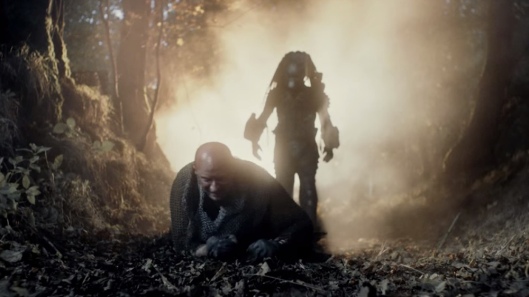
Predator Dark Ages

Drunk Wedding (2015) / D: Nick Weiss / 81m

Cast: Christian Cooke, Victoria Gold, Dan Gill, Anne Gregory, J.R. Ramirez, Nick P. Ross, Genevieve Jones, Diana Newton

Rating: 4/10 – when a couple decide to get married in Nicaragua, they and some of their friends are given hand-held cameras to film it all… with predictably awful, drunken, outrageous, and potentially life-altering effects; if your idea of comedy is seeing someone urinating on another person’s back, then Drunk Wedding is the movie for you, and despite its lowbrow modern day National Lampoon-style approach it still manages to hold the attention and is surprisingly enjoyable – if you don’t expect too much.
Drunk Wedding

Zombie Ass: The Toilet of the Dead (2011) / D: Noboru Iguchi / 85m

Original title: Zonbi asu

Cast: Arisa Nakamura, Mayu Sugano, Asana Mamoru, Yûki, Danny, Kentaro Kishi, Demo Tanaka

Rating: 5/10 – while on a trip to the woods, Megumi (Nakamura) and four older friends find themselves under attack from zombies who have emerged from the bowels of an outhouse – and only her martial arts skills can save them; a wild, wild ride from one of the masters of Japanese Shock Cinema, Zombie Ass: The Toilet of the Dead is equal parts raw, uncompromising, witless, and gross, but it’s also a movie that just can’t be taken at all seriously, and on that level it succeeds tremendously, providing enough WtF? moments to make it all worthwhile.
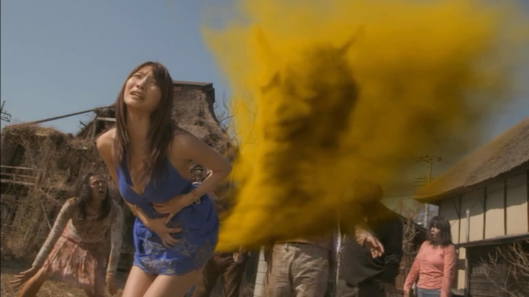
Zombie Ass

Faults (2014) / D: Riley Stearns / 89m

Cast: Leland Orser, Mary Elizabeth Winstead, Chris Ellis, Beth Grant, Jon Gries, Lance Reddick

Rating: 8/10 – down on his luck cult expert Ansel (Orser) sees a way out of debt and a chance to regain some self-respect when a couple (Ellis, Grant) ask him to abduct and de-programme their daughter (Winstead), but he soon finds himself out of his depth and facing up to some hard truths; a tour-de-force from the always excellent Orser – and with a solid supporting performance from Winstead – Faults is an unnerving look at a man on the verge of a nervous breakdown, and the ways in which his broken life have led him to a motel room where his own personal beliefs come under as much scrutiny as his captive’s.
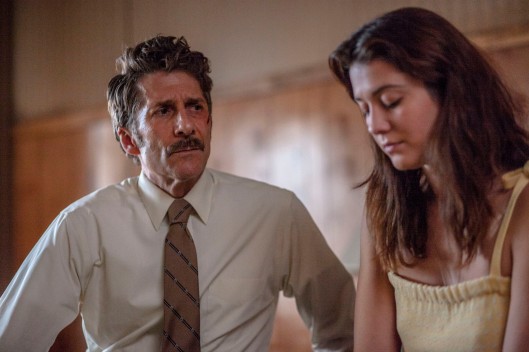
(l-r) Leland Orser and Mary Elizabeth Winstead stars in FAULTS. ©Snoot Entertainment. CR: Jack Zeman.

She’s Funny That Way (2014) / D: Peter Bogdanovich / 93m

Cast: Imogen Poots, Owen Wilson, Rhys Ifans, Jennifer Aniston, Will Forte, Kathryn Hahn, Illeana Douglas, Debi Mazar, Cybill Shepherd, Richard Lewis, Ahna O’Reilly, Joanna Lumley

Rating: 6/10 – theatre director Arnold Albertson has a secret: he gives prostitutes money in order that they can set up their own businesses, but when his latest “project”, aspiring actress Isabella Patterson (Poots) lands the starring role in his latest production, it all leads to the kind of deception and duplicity that will test the notion that the show must go on; a modern attempt at a screwball comedy, She’s Funny That Way doesn’t have the sheer energy that made movies such as His Girl Friday (1940) or  Bringing Up Baby (1938) so enjoyable, but Bogdanovich knows his stuff and keeps the movie entertaining for the most part, even if it doesn’t stay in the memory for too long afterwards.
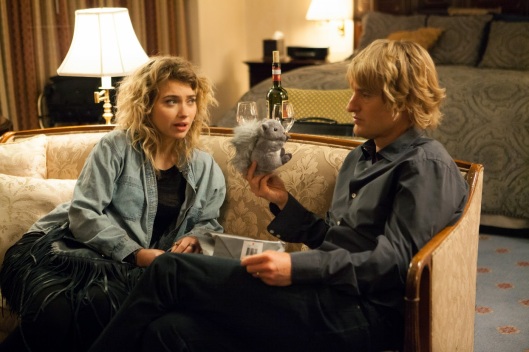
She's Funny That Way

Curse of the Witching Tree (2015) / D: James Crow / 102m

Cast: Sarah Rose Denton, Lucy Clarvis, Lawrence Weller, Jon Campling, Caroline Boulton, Danielle Bux

Rating: 2/10 – divorcée Amber Thorson (Denton) moves into an old house with her two children (Clarvis, Weller) only for strange phenomena to start happening that’s connected to a witch’s curse, and which leaves them all at risk of supernatural forces; woeful in the extreme, Curse of the Witching Tree is amateurish nonsense that is badly directed, poorly acted, contains defiantly stilted dialogue, suffers from below-par photography, is tension-free throughout, and stands as an object lesson in how not to make a low-budget British horror movie.
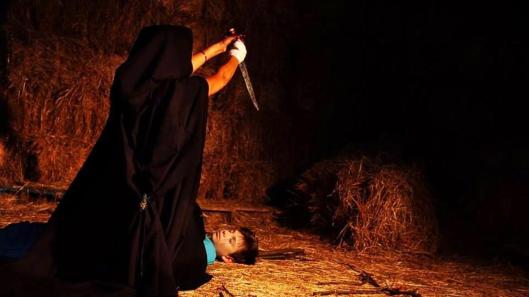
Curse of the Witching Tree

Bulldog Drummond Comes Back (1937) / D: Louis King / 64m

Cast: John Barrymore, John Howard, Louise Campbell, Reginald Denny, E.E. Clive, J. Carrol Naish, Helen Freeman

Rating: 5/10 – when dastardly villains Mikhail Valdin (Naish) and Irena Saldanis (Freeman) kidnap Phyllis Clavering (Campbell), the girlfriend of Captain Hugh Drummond (Howard), they send him on a merry chase where each clue he finds leads to another clue as to her whereabouts – but no nearer to finding her; the first of seven movies with Howard as the dashing sleuth created by H.C. “Sapper” McNeile, Bulldog Drummond Comes Back is as cheap and cheerful and antiquatedly entertaining as you might expect, and benefits enormously from a cast and crew who know exactly what they’re doing.
vlcsnap-00001

Every Secret Thing (2014) / D: Amy Berg / 93m

Cast: Diane Lane, Elizabeth Banks, Dakota Fanning, Danielle Macdonald, Nate Parker, Common

Rating: 7/10 – several years after two young girls are incarcerated for the murder of a younger child, their return to their hometown is marred by the disappearance of a little girl, and the belief that one or both of them is responsible; a stilted attempt at an indie film noir, Every Secret Thing features good performances – particularly from Macdonald – and focuses on the emotional effects a child abduction can have on everyone involved, but it never develops a sense of urgency, though its key revelation at the end carries a wallop that helps dismiss what will seem like a narrative impasse up until then.
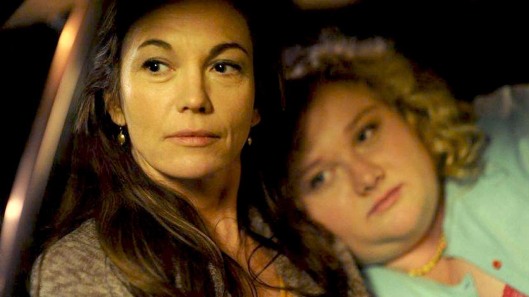
Every Secret Thing

Children of the Corn: Genesis (2011) / D: Joel Soisson / 80m

Cast: Kelen Coleman, Tim Rock, Billy Drago, Barbara Nedeljakova

Rating: 3/10 – a couple (Coleman, Rock) break down on a desert highway but manage to find shelter overnight with a old preacher (Drago) and his much younger, foreign bride (Nedeljakova), but soon find that what’s in the preacher’s barn is much more menacing than the old man himself; placing the action largely away from Gatlin, Nebraska may have seemed like a smart move but this tired, dreary, and just downright dull entry in the franchise shows just how bad things have gotten since the 1984 original, and just why Children of the Corn: Genesis should remain the last in the series to be made.

Children of the Corn Genesis

Skin Trade (2014) / D: Ekachai Uekrongtham / 96m

aka Battle Heat

Cast: Dolph Lundgren, Tony Jaa, Michael Jai White, Ron Perlman, Celina Jade, Peter Weller

Rating: 6/10 – when cop Nick Cassidy (Lundgren) is powerless to stop his wife and daughter being killed, he determines to go after the crime boss responsible, Viktor (Perlman), and destroy his human trafficking network, which means travelling to Thailand and teaming up with detective Tony Vitayakul (Jaa), who’s also out to put a stop to Viktor’s illegal behaviour; with its human trafficking backdrop giving it an unexpected depth, Skin Trade is not just a brainless, slam-bang action movie, but instead a very well-made (for its budget) revenge flick that features some great fight scenes – particularly one between Lundgren and Jaa – and uses its Thai locations to very good effect.
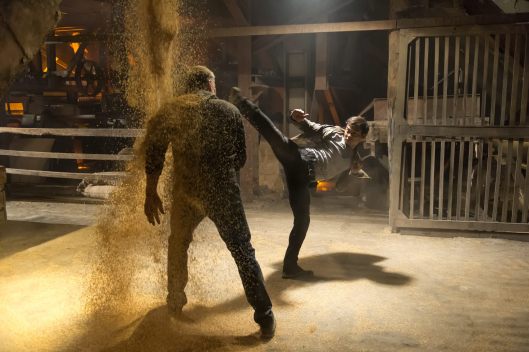
Skin Trade

The Reconstruction of William Zero (2014) / D: Dan Bush / 98m

Cast: Conal Byrne, Amy Seimetz, Scott Poythress, Lake Roberts, Melissa McBride, Tim Habeger

Rating: 6/10 – when the brother (Byrne) of a scientist (also Byrne) wakes from a coma, it’s not long before he begins to suspect that this identity may not be that of the scientist’s brother, and that he’s a pawn in a much bigger conspiracy, but the truth proves even stranger and more disturbing than he realised; a spare, almost antiseptic movie about notions of identity and individual consciousness, The Reconstruction of William Zero features terrific performances from Byrne, but lacks consistency of pace and sometimes feels as if Bush has taken his eye off the ball and taken a while to find it again, which leaves the movie often feeling flat and lifeless.
Reconstruction of William Zero, The

Not Another Teen Movie (2001) / D: Joel Gallen / 89m

aka Sex Academy

Cast: Chyler Leigh, Chris Evans, Jaime Pressly, Eric Christian Olsen, Randy Quaid, Mia Kirshner, Deon Richmond, Ed Lauter, Paul Gleason, Mr T, Molly Ringwald

Rating: 5/10 – at John Hughes High School, popular jock Jake Wyler (Evans) accepts a bet that he can’t take an ugly girl and transform her into the prom queen, but when he picks out Janey Briggs (Leigh), and begins to spend time with her, it makes him begin to question whether he should have made the bet in the first place; a predictably irreverent teen movie that parodies all those dreadful teen comedies from the Eighties, Not Another Teen Movie has more heart than most, and thanks to Mike Bender’s script contributions, is also quite funny in its knowing way, and gives viewers a chance to see the future Captain America back in the day when his skill as an actor wasn’t quite as honed as it is now.
Not Another Teen Movie

Bloomington (2010) / D: Fernanda Cardoso / 83m

Cast: Allison McAtee, Sarah Stouffer, Katherine Ann McGregor, Ray Zupp, J. Blakemore, Erika Heidewald

Rating: 7/10 – former child actress Jackie (Stouffer) attends Bloomington college, and finds herself having an affair with one of the professors, Catherine (McAtee), until the offer of a comeback threatens to end their relationship before it’s fully begun; an intelligent, finely crafted romantic drama, Bloomington has two great central performances, and an emotional honesty that is only undermined by the clichéd nature of Jackie’s need to return to acting, and Cardoso’s over-reliance on silent longing as a sign of emotional upheaval.
Bloomington

Sleepaway Camp 2: Unhappy Campers (1988) / D: Michael A. Simpson / 80m

Cast: Pamela Springsteen, Renée Estevez, Tony Higgins, Valerie Hartman, Brian Patrick Clarke, Walter Gotell

Rating: 5/10 – Angela Baker (Springsteen), having decimated most of the staff and children at Camp Arawak, and now judged to be safe around others, begins sending unruly teenagers “home” from Camp Rolling Hills – which in reality means killing them for any and all perceived infractions that Angela takes a dislike to; a much better sequel than expected, Sleepaway Camp 2: Unhappy Campers gets by on Springsteen’s preppy performance, some not-too-gory deaths, and Simpson’s confident touch behind the camera, as well as that dreadful musical interlude: The Happy Camper Song.
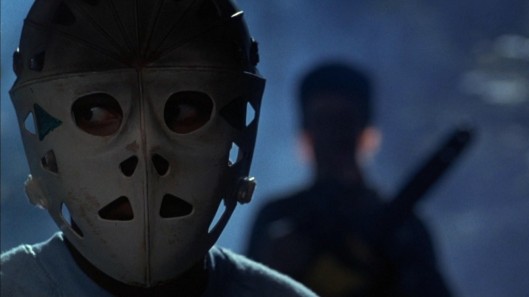
Sleepaway Camp 2

Gunsmoke in Tucson (1958) / D: Thomas Carr / 80m

Cast: Mark Stevens, Forrest Tucker, Gale Robbins, Vaughn Taylor, John Ward, Kevin Hagen, William Henry, Richard Reeves, John Cliff, Gail Kobe

Rating: 6/10 – brothers Jedediah (Stevens) and John (Tucker) are on opposite sides of the law, but when Jedediah becomes involved in a land dispute between cattle ranchers and farmers, his sense of right and wrong is put to the test, and he has to choose sides in the upcoming fight for the choicest plot of land; a robust, earnest Western, Gunsmoke in Tucson is a staid, respectable movie that doesn’t stray too far from its basic plot, and skimps on any psychological undertones in favour of a straight ahead anti-hero vs. the bad guys scenario that makes for a pleasant diversion.
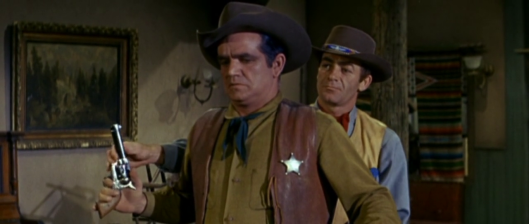
vlcsnap-00002

Beyond the Reach (2014) / D: Jean-Baptiste Léonetti / 91m

Cast: Michael Douglas, Jeremy Irvine, Ronny Cox, Hanna Mangan Lawrence

Rating: 6/10 – arrogant businessman Madec (Douglas) hires tracker Ben (Irvine) in order to bag some game out of season, but when he shoots and kills an old man by mistake, Madec refuses to accept responsibility for his actions and when Ben stands his ground over the issue, finds himself being hunted instead through the harsh Mojave Desert; an occasionally tense two hander that will do little for either actor’s career, Beyond the Reach ramps up the contrivance levels with each successive narrow escape that Ben makes, and with each missed shot that Madec makes, leading to the inevitable conclusion that this is one movie where credulity needs to be left at the door – an idea that is further enhanced by the movie’s risible conclusion.
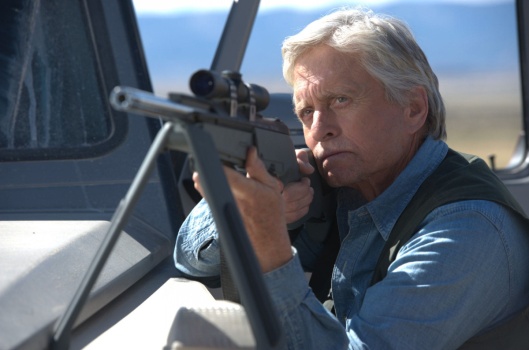
Email sent from: "Barnard, Linda"  lbarnard@thestar.ca  Subject: Beyond the Reach Date: 9 April, 2015 4:30:15 PM EDT   Jeremy Irvine and Michael Douglas star in Beyond The Reach Linda Barnard Movie Writer The Toronto Star thestar.com 416-869-4290

Blood (2012) / Nick Murphy / 92m

Cast: Paul Bettany, Mark Strong, Stephen Graham, Brian Cox, Ben Crompton, Naomi Battrick, Zoë Tapper, Adrian Edmondson

Rating: 5/10 – when a young girl is found murdered, the police, led by Joe Fairburn (Bethany) immediately set their sights on local child molester Jason Buleigh (Crompton), but when their prime suspect has to be let go for lack of evidence, Joe and his brother Chrissie (Graham) decide to take the law into their own hands, with terrible results; grim, visually depressing, and with a script that has more holes in it than a string vest, Blood has only its performances to recommend it, particularly those of Bethany, Graham and Cox, as well as the sense to know that its tale of a proud man’s downfall is always more interesting when you don’t know just how far they’ll fall.
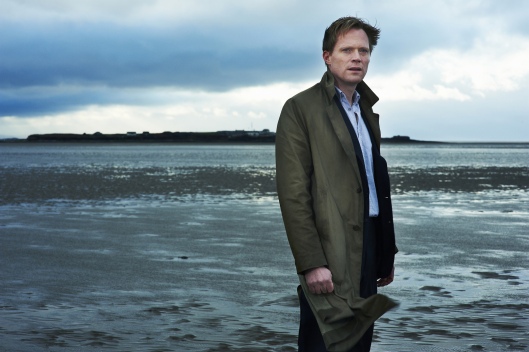
Blood

Echelon Conspiracy (2009) / D: Greg Marcks / 102m

aka The Conspiracy; The Gift

Cast: Shane West, Ed Burns, Ving Rhames, Martin Sheen, Tamara Feldman, Jonathan Pryce, Sergey Gubanov, Todd Jensen

Rating: 3/10 – computer security tech Max Peterson is given a mysterious phone that helps him gain a small fortune, but in doing so he finds himself embroiled in a plot to ensure that the NSA’s super computer, Echelon, gains the upgrade it needs in order to spy on everyone globally; so bad on so many levels, Echelon Conspiracy wastes its (mostly) talented cast, flirts with credibility before running away from it at high speed, offers laughs in places where they shouldn’t be, and is the cinematic equivalent of a car crash.
Echelon Conspiracy

Crazy Sexy Cancer (2007) / D: Kris Carr / 90m

With: Kris Carr, Jackie Farry, Melissa Gonzalez, Brian Fassett, Aura Carr, Kenneth Carr, Leslie Carr, Oni Faida Lampley, Bhavagan Das

Rating: 7/10 – when aspiring actress Kris Carr was diagnosed with cancer, she decided to make a visual record of the process of dealing with it, and the various ways in which other cancer sufferers have done so, and supported by the cameraman/editor who became her husband, as well as family and friends; an uplifting, positive message for anyone dealing with cancer, or who knows someone who is, Crazy Sexy Cancer is the kind of documentary that doesn’t attempt to overdo the physical and emotional strain of being in such a situation, but which does nevertheless offer plenty of poignant moments in amongst the hospital visits, and shows Carr to be a determined, aggressive would-be survivor.

Crazy Sexy Cancer

The Night Flier (1997) / D: Mark Pavia / 94m

Cast: Miguel Ferrer, Julie Entwisle, Dan Monahan, Michael H. Moss, John Bennes, Beverly Skinner, Rob Wilds, Richard K. Olsen, Elizabeth McCormick

Rating: 7/10 – hard-nosed, disreputable reporter Richard Dees investigates a series of murders carried out at small airstrips that appear to be the work of a vampire, but his initial scepticism gives way to reluctant belief as he talks to witnesses, and sees the injuries the victims have sustained; a well-crafted movie that betrays its low budget and scrappy production design, The Night Flier is still one of the better Stephen King adaptations thanks to Pavia’s confident handling of the material, Ferrer’s see-if-I-care performance, and some impressively nasty effects work courtesy of the KNB Group.
Night Flier, The

Killer by Nature (2010) / D: Douglas S. Younglove / 90m

Cast: Ron Perlman, Armand Assante, Zachary Ray Sherman, Lin Shaye, Haley Hudson, Richard Riehle, Richard Portnow, Svetlana Efremova, Jason Hildebrandt

Rating: 3/10 – troubled by nightmares of murder and sleepwalking, teen Owen (Sherman) undergoes therapy with Dr Julian (Perlman), a therapist who believes that a person’s essential nature is handed down through bloodlines – a theory originated by convicted murderer Eugene Branch (Assante), and who is connected to Owen in a way that causes Owen to believe he might be the perpetrator of a series of murders that mimic Branch’s modus operandi; a thriller that can’t decide if it’s tepid or overwrought, and then settles for both (sometimes in the same scene), Killer by Nature is a humdinger of a bad movie, and proof positive that sometimes the old saying that “if you can, it doesn’t mean you should” relates to far too many movies for comfort – especially this farrago of awful performances, pseudo-intellectual posturing, and deathless direction.
Killer by Nature

Scooby-Doo! and the Samurai Sword (2009) / D: Christopher Berkeley / 75m

Cast: Frank Welker, Casey Kasem, Mindy Cohn, Grey DeLisle, Kelly Hu, Kevin Michael Richardson, Sab Shimono, Keone Young, Gedde Watanabe, George Takei, Brian Cox

Rating: 6/10 – on a trip to Japan, Scooby-Doo and the gang become involved in the search for a mystical sword, while trying to thwart the efforts of the ghost of the Black Samurai to beat them to it; a middling entry in the series that at least provides a different backdrop than the standard old dark house (or mine, or hotel, or funfair…), and which allows Shaggy and Scooby to be the heroes we all know they really are deep down, while displaying a pleasing awareness of Japanese culture.
Scooby-Doo! and the Samurai Sword

[Rec]³ Génesis (2012) / D: Paco Plaza / 80m

Cast: Leticia Dolera, Diego Martín, Ismael Martínez, Àlex Monner, Sr. B, Emilio Mencheta, David Ramírez, Miguel Ángel González

Rating: 7/10 – a young couple’s wedding day is disrupted for good when one of the guests takes a bite out of another one, leading to a frenzied free-for-all among the guests and a fight for survival for those not affected by whatever’s causing people to become zombies – including the bride and groom, who have become separated in the mêlée; half found footage, half professionally filmed, [Rec]³ Génesis acts as a prequel to the events of the first two movies but is let down by both the change in location, and the absence of Claudia Silva, as well as a sense that by going backwards in terms of the outbreak and its possible cause, the makers are treading water until an idea as to how to carry the story forward from [Rec]2 (2009) comes along.
Rec3 Genesis

uwantme2killhim? (2013) / D: Andrew Douglas / 92m

Cast: Jamie Blackley, Toby Regbo, Joanne Froggatt, Jaime Winstone, Liz White, Mark Womack, Louise Delamere, Stephanie Leonidas, Mingus Johnston

Rating: 7/10 – popular schoolboy Mark (Blackley) leads a secret life on the Internet, where he invests his time and emotions in relationships with people he’s never met, but when of those people ask him to stop their younger brother, John (Regbo), from being bullied, what follows sets Mark on a dangerous path to murder; based on a true story, and told with a glum sense of foreboding throughout, uwantme2killhim? is an engrossing (though slightly frustrating) recounting of one of the strangest cases of the last fifteen years, and features two very good performances from Blackley and Regbo, though they have to fight against a script that favours repetition over clarity, but which still manages to flesh out what must have been a very strange relationship between the two boys.
JAMIE BLACKLEY (Mark) (L) & TOBY REGBO (John) (R) in UWANTME2KILLHIM? (c) 2011 U Want M2K Ltd. Photo by Mark Tillie

Bulldog Drummond in Africa (1938) / D: Louis King / 58m

Cast: John Howard, Heather Angel, H.B. Warner, J. Carrol Naish, Reginald Denny, E.E. Clive, Anthony Quinn

Rating: 7/10 – on the very day that Drummond (Howard) is finally due to marry his long-suffering girlfriend Phyllis (Angel) he becomes embroiled in the kidnapping of his old friend Colonel Nielsen (Warner), and finds himself travelling to Morocco – with Phyllis, butler Tenny (Clive) and old pal Algy (Denny) in tow – in order to rescue him; the fourth in the series is perhaps the funniest, with Howard allowed to spread his comedic wings, and even the villain (played again by Naish) given some splendidly dry remarks to make in amongst the threats of death by hungry lion, and a bomb on Drummond’s plane.
vlcsnap-00003

The Four-Faced Liar (2010) / D: Jacob Chase / 87m

Cast: Daniel Carlisle, Todd Kubrak, Emily Peck, Marja-Lewis Ryan, Liz Osborn

Rating: 8/10 – five friends – couples Greg (Carlisle) and Molly (Peck), Trip (Kubrak) and Chloe (Osborn), and single lesbian Bridget (Ryan) – experience various ups and downs in their relationships, especially when Trip has a one night stand, and Molly finds herself attracted to Bridget; a refreshingly honest look at what relationships mean to different individuals, and how they affect the people around them, The Four-Faced Liar is an effective, well-written drama that benefits from good performances all round, a soundtrack that supports the mood throughout, and Chase’s confident approach to Ryan’s script.
vlcsnap-00004

Mini-Review: Queen & Country (2014)

Tags

, , , , , , , , , , , , , , , ,

Queen & Country

D: John Boorman / 110m

Cast: Caleb Landry Jones, Callum Turner, Pat Shortt, David Thewlis, Richard E. Grant, Vanessa Kirby, Tamsin Egerton, Aimee-Ffion Edwards, Sinéad Cusack, David Hayman, John Standing, Brian F. O’Byrne, Julian Wadham

Nine years after the events depicted in Hope and Glory (1987), eighteen year old Bill Rohan (Turner) is nurturing a desire to get into movie making. But National Service comes along and Bill is conscripted into the Army, where his skills lead him – and his friend Percy (Jones) – to teaching other conscripts how to type. With the threat of being transferred to the front line in Korea hovering over them, Bill and Percy make the best of their lot, including continual run-ins with their immediate superior, the punctilious Sergeant-Major Bradley (Thewlis). They find a comrade in skiver Private Redmond (Shortt), and resolve to steal the regimental clock as a two-fingered salute to one of their senior officers, the pompous, overbearing RSM Digby.

While Bill and Percy circumvent the rules with seeming impunity, they also find love: Percy with nurse Sophie (Edwards), and Bill with emotionally distant Ophelia (Egerton). But the course of true love fails to run smoothly for either of them, with Ophelia proving complicit in an abusive relationship, and Percy showing no signs of committing to Sophie. Their run-ins with Sgt-Major Bradley escalate to the point where they turn the tables on him, a decision which has unforeseen consequences. The search for the regimental clock leads Private Redmond – suspected by Digby and Major Cross (Grant), the officer in charge – to ratting on Percy to avoid being sent to Korea. With his friend facing a court-martial, and his affair with Ophelia offering no comfort, Bill’s rite of passage to adulthood proves a rockier experience than he ever expected.

Queen & Country - scene

Widely reported as John Boorman’s swan song movie, Queen & Country is a largely disappointing end to a career that has had some tremendous highs – Point Blank (1967), Deliverance (1972), The General (1998) – and one incredible low – Exorcist II: The Heretic (1977). What’s disappointing is that Boorman has failed to inject the same kind of nostalgic bonhomie that made Hope and Glory such a joy to watch. And though the movie is based on Boorman’s own experiences in the Fifties, there’s little here that resonates as effectively as his experiences of World War II. It’s a shame, as the movie will generate a lot of interest due to the warm regard held by its predecessor, but anyone persuaded to watch this as part of a Boorman double bill with Hope and Glory would do well to choose something else (the undervalued Leo the Last (1970) perhaps).

This isn’t to say that the movie is a complete disaster – Boorman is too good a director for that, and the material does have moments where it’s both affecting and heartfelt. Bill’s despair at the actions of Ophelia tugs at the heartstrings, while Bradley’s officious nature hides a man struggling to maintain his sanity. The performances range from the credulous (Jones, all sniggering, body-wracking obnoxiousness), to the pantomimic (Grant, operating at a level of high-strung anxiety that would look less out of place in a drawing-room farce), while Egerton strikes a chilling note as an upper-class object of desire who has no idea of her own self-worth. Turner is okay as the older Bill, but thanks to Boorman’s script, is hampered by being too likeable throughout, and isn’t allowed to show any other facets of the character. But the standout is Kirby as Bill’s rapacious sister, Dawn, a force of nature that the script – thankfully – fails to keep a lid on. References to Bill’s family living near to Shepperton Studios hint at his future endeavours and there’s a lovely final shot that is as succinct as it is emotive. If Boorman is persuaded to continue making movies, his take on starting out in the industry would be well worth waiting for.
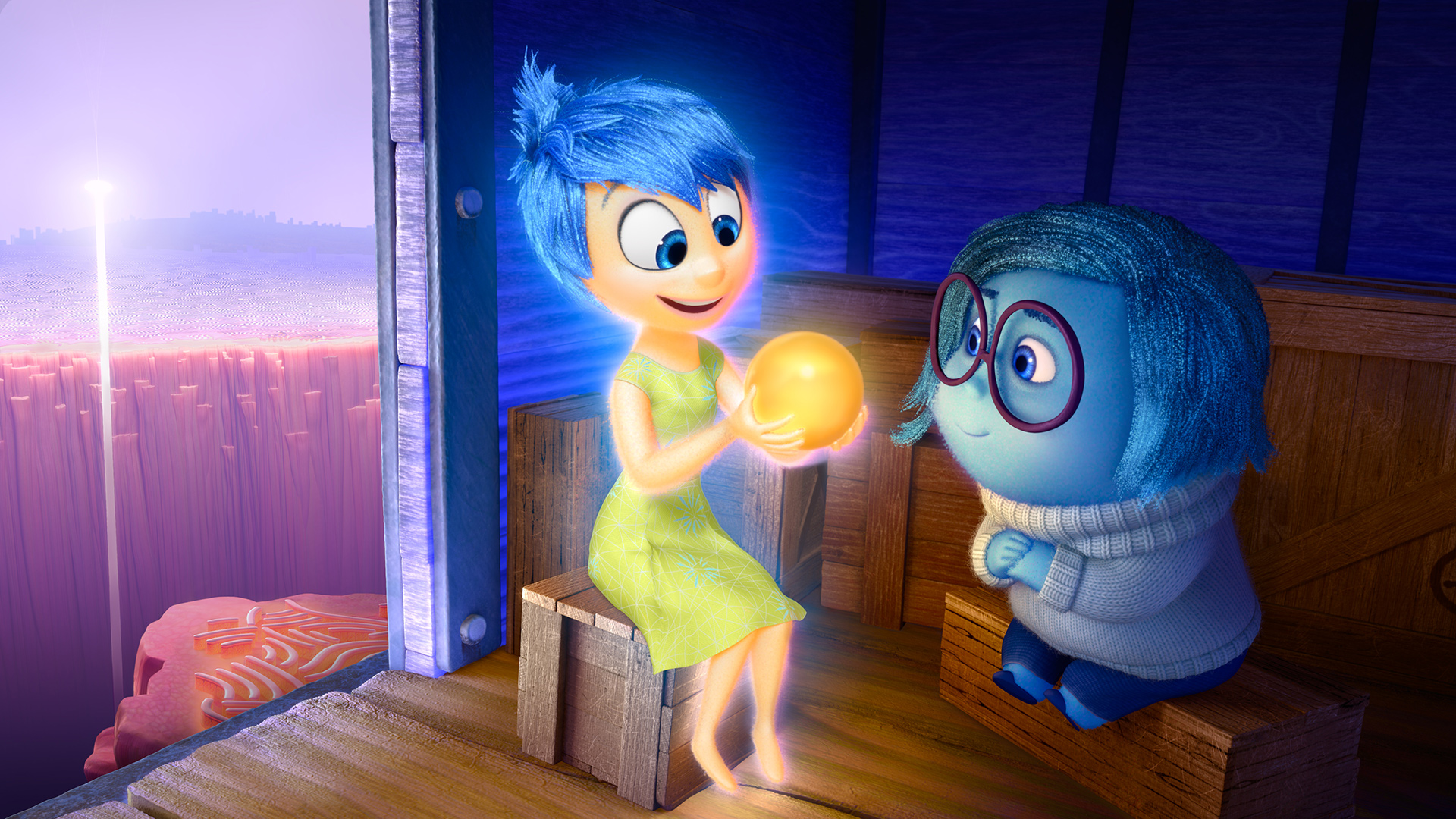

Rating: 5/10 – awkwardly irreverent in its dealings with the Army, but on surer ground in its more emotional relationships, Queen & Country is a mix of drama and comedy that never quite gels; with some scenes that feel extraneous, and others that seem burdened by the need to harken back to Hope and Glory, this is a movie that – sadly – promises more than it actually delivers.

Insidious Chapter 3 (2015)

Tags

, , , , , , , , , , , , , ,

Insidious Chapter 3

D: Leigh Whannell / 97m

Cast: Lin Shaye, Dermot Mulroney, Stefanie Scott, Angus Sampson, Leigh Whannell, Michael Reid MacKay, Phyllis Applegate, Ele Keats

When single father Sean Brenner (Mulroney) and his teenage daughter, Quinn (Scott), move into a new apartment following the death of Quinn’s mother (Keats), the teenager’s desire to contact her mother leads her to visit retired medium Elise Rainier (Shaye). Reluctant to use her gift since becoming aware that each time she does she leaves herself open to attack from a murderous spirit – the bride in black – Elise agrees to try and contact Quinn’s mother, but another presence makes itself felt, one that scares Elise into warning Quinn to be careful about contacting her mother in the future.

Quinn begins to experience strange phenomena within the apartment, including knocking and loud footsteps from the apartment above. Cracks appear in the ceiling and walls of her room. Sean checks the upstairs apartment but it’s been empty for a while. Further disturbances occur, and Quinn is attacked, leading to both her legs being broken. Later, another attack witnessed by her father leads to her neck being injured. At this point, Sean reluctantly contacts Elise, who equally reluctantly agrees to try and help. Elise comes to the apartment and tries to contact the spirit persecuting Quinn – an entity who died in the building and is dubbed the Man Who Can’t Breathe – but is attacked by the bride in black instead. Shocked by this, Elise leaves, saying she can no longer help them.

As Quinn becomes more and more frightened by what’s happening to her, she persuades her father to contact a couple of paranormal investigators, Tucker (Sampson) and Specs (Whannell). They set up their equipment but are unprepared for the supernatural events that follow; as they pack up, Elise returns, having been reassured by a friend as to the strength of her gift. With Tucker and Specs in support, Elise travels back into the Further where she discovers Quinn, but in a faceless, limbless state: the half of Quinn’s soul that the entity has control of. Back in the apartment, Elise reveals that the battle for Quinn’s soul is down to Quinn herself. But Quinn is losing the battle, until Elise becomes aware of a presence that could tip the balance in the young girl’s favour…
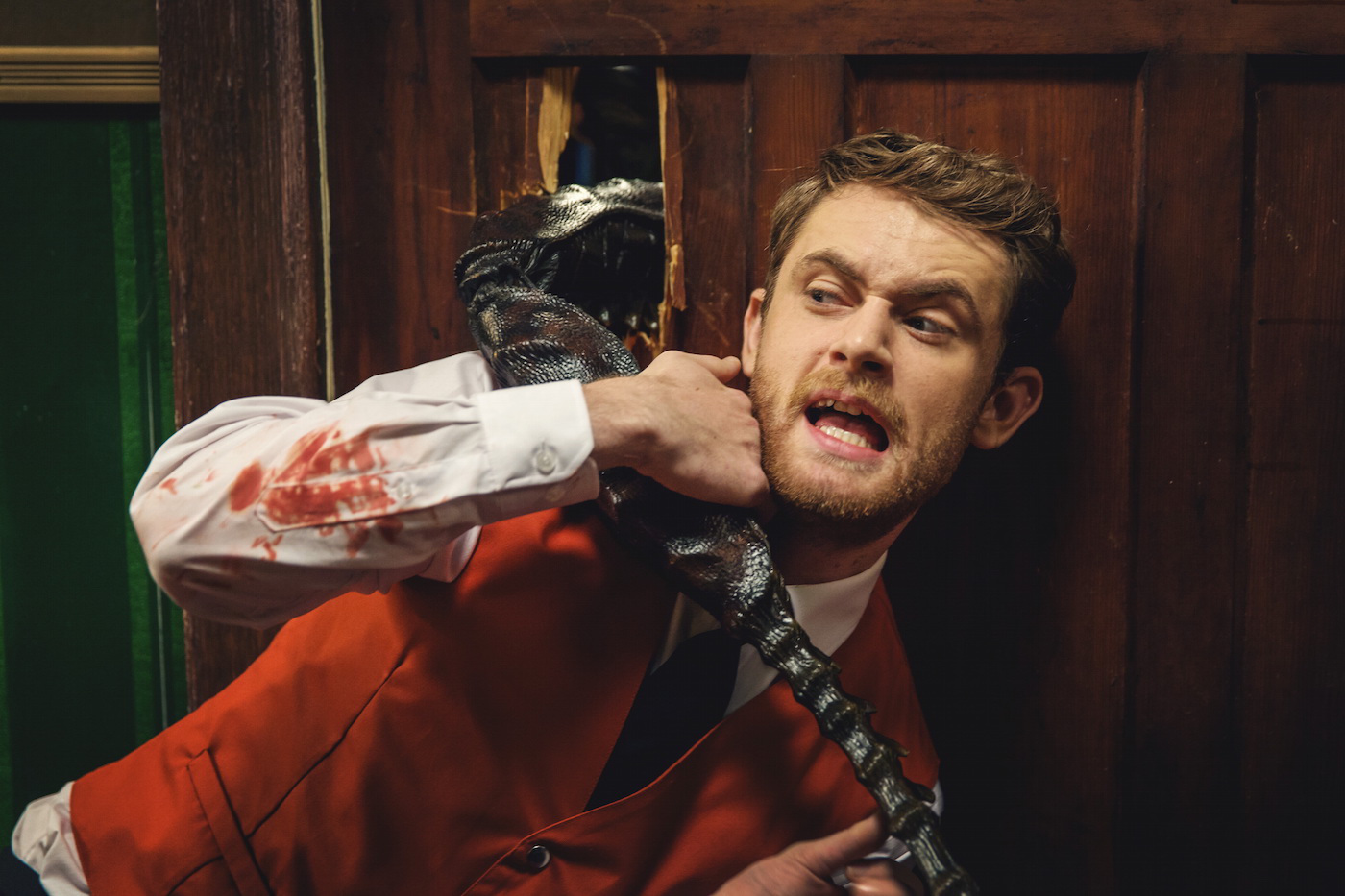

3S7C3792.CR2

As any horror movie afficionado will tell you, three is rarely the charm when it comes to horror movie franchises. And Insidious Chapter 3 is no different in that respect, coming as it does after two previous entries that explored the effects of prolonged supernatural distress on the same family, the unlucky Lamberts. The decision here to make a prequel to those movies seems, at first look, to be a solid idea given the chance it takes to bring back Lin Shaye’s popular psychic. But as with any third entry, familiarity undercuts any chance of effective suspense or scares, a problem that Leigh Whannell’s script never overcomes.

The main problem is that we’ve all been here before, and though Whannell – taking over from James Wan in the director’s chair – is well-versed in the particular universe he and Wan have created, is still unable to bring anything new to the table (or the realm of the Further) that provides the required thrills and chills. The Man Who Can’t Breathe is an admittedly unsettling presence – at first – but then makes too many appearances to remain entirely scary. The appearance of the bride in black also lacks the fear factor of the previous instalments (as we know she can’t actually harm Elise), and she’s seen too much in close up to be truly startling. And the Further, once the realm of the scarily unexpected, is now the realm of the mildly alarming. But it’s the movie’s final shot that shows just how much the movie is its own insidious mix of narrative set up (for parts one and two) and self-reflexive homage, as a moment from the first movie is rehashed with a lot less style or potency.

But at least it’s not as dubiously shambolic as some prequels/sequels/later entries in a horror movie franchise. Whannell and co are really trying to scare their audience, and while any originality in doing so is quickly exhausted, at least there’s an effort involved here that most Part Threes never manage. The plot is fairly simple, a hook on which to hang a few uneasy moments that, unfortunately, never fully realise their potential, and though most viewers will see what few twists the narrative provides from a whole other dimension away, there’s enough serious intent here to offset any shortcomings. This doesn’t mean that the movie works per se, just that it doesn’t work as badly as may be expected.

Where the movie does do well is with the performances. Mulroney, making his horror debut – though a case could be made for Stoker (2013) – is surprisingly good as the beleaguered father who’s way out of his depth, but determined to save his daughter no matter what. Returning as the equally out of their depth paranormal investigators Tucker and Specs, Sampson and Whannell replay their enjoyable double act but as in the previous movies, without making them seem too much like complete buffoons. The one weak link is Scott, who never quite convinces as a teen in peril, and whose reactions to the events going on around her always feel like they’ve been lifted from the performance of another actress in a similar role. But it’s Shaye’s movie throughout, her portrayal of Elise given added depth thanks to the inclusion of nods to her deceased husband, and her ability to get across just how scary the Further really is (even if the time spent there in the movie doesn’t support her contention). She also gets a moment straight out of the Sigourney Weaver/Ripley School of Confrontational One-Liners, aimed at the bride in black and guaranteed to raise a smile.

If there is to be a fourth in the series then it’s difficult to see where the makers could go next. As the movie which brings together Elise and Tucker and Specs, Insidious Chapter 3 does its job with a certain amount of gusto and charm. But if the series is to move forward rather than, say, further back, or sideways, then a whole new approach is going to be required. Whether it will restore the intensity and the scares of the first movie, though, is another matter entirely.

Rating: 6/10 – with the scare quotient dialled down in favour of connecting to the previous (subsequent?) entries in the series, Insidious Chapter 3 is only occasionally scary, and only occasionally enthralling; helped greatly by the commitment of its cast and crew, this is one horror movie prequel that tries hard to avoid the pitfalls of its place in the franchise.

Mini-Review: Survivor (2015)

Tags

, , , , , , , , , , , , ,

Survivor

D: James McTeigue / 96m

Cast: Milla Jovovich, Pierce Brosnan, Dylan McDermott, Angela Bassett, James D’Arcy, Robert Forster, Frances de la Tour, Roger Rees, Benno Fürmann, Genevieve O’Reilly, Corey Johnson

Kate Abbott (Jovovich) has transferred to the American Embassy in London. She oversees visa applications to the US by foreign nationals travelling through the UK. When she suspects that gas expert Dr Balan (Rees) isn’t all that he seems, it leads to her being hunted by assassin the Watchmaker (Brosnan). With only her colleague, Sam Parker (McDermott), believing she’s had nothing to do with the deaths of other colleagues in a bomb blast, or that of her immediate boss, Bill Talbot (Forster), Kate is forced to go on the run in an attempt to get to the bottom of the conspiracy she’s found herself entangled in.

Narrowly escaping several attempts on her life by the Watchmaker, Kate realises she has to get back into the embassy in order to find the proof she needs to expose the conspiracy. Helped by Sam and another colleague, Sally (de la Tour), Kate discovers enough information to send her off to New York on New Year’s Eve. Followed by the Watchmaker, Kate has only a few hours to foil a terrorist attack planned for midnight in Times Square, and which is backed by the pharmaceutical company that Balan works for.

Survivor - scene

Take a director whose previous output includes V for Vendetta (2005) and the underrated Ninja Assassin (2009), add two principal stars who are no strangers to the action genre, a supporting cast of more than capable (and proven) actors, and good location work in both London and New York – and what do you get? A terrible piece of nonsense that doesn’t even bother to try and hide how preposterous it all is. This is largely thanks to Philip Shelby’s overly-simplistic, corner-cutting script, a melange of action movie clichés and inane dialogue lumped in amongst an unconvincing plot and the kind of one-dimensional characterisations that leave the viewer shaking their head in disbelief.

There’s no point at which Survivor is even remotely credible, and while there’s a small degree of amusement to be had at each nutty development in the script, McTeigue fails to maintain any degree of confidence behind the camera. As a result, the movie plods from one uninspired set piece to the next without pausing for breath or an injection of self-belief. Jovovich runs around a lot looking frazzled and confused (as well she might), while Brosnan sleepwalks through his role with the look of an actor wondering where his career went to. By the end, with its inevitable showdown between Kate and the Watchmaker, the movie has given up trying to be exciting or different, and renders itself completely unremarkable.

Rating: 3/10 – why movies like these continue to be made is anybody’s guess, but Survivor is an object lesson in how not to make a modern day thriller with Cold War overtones; lacking credibility is one thing, but lacking suspense as well makes for a poorly judged and ill-considered movie that viewers can only help will end sooner than it does.

Trailer – The Secret Life of Pets (2016)

From the creators of the Minions, Illumination Entertainment’s offering for 2016 is this penetrating insight into what happens when pet owners leave their homes and their pets behind. The trailer is hilarious, and will have pet owners nodding in rueful agreement at the antics shown (who doesn’t know a Chloe or a Mel?). The only problem? We have to wait a year until we get to see the finished movie.

10 Reasons to Remember Christopher Lee (1922-2015)

Tags

, , ,

Christopher Lee (27 May 1922 – 7 June 2015)

The sad passing of Christopher Lee this month means not just the end of an amazing career, but the loss of an actor who was always good value even if some of the movies he made weren’t. Of course, he’ll be forever associated with the movies he made for Hammer, including seven outings as Count Dracula. But he had a much more varied career than that, and was a versatile actor who could turn his hand to pretty much any genre you care to mention. His imposing figure and richly textured voice were instantly recognisable, and he still remains one of the few actors who are also an honorary member of three stuntmen’s unions.

Christopher Lee 1

1 – Dracula (1958)

2 – Rasputin the Mad Monk (1966)

3 – The Devil Rides Out (1968)

4 – The Wicker Man (1973)

5 – The Three Musketeers (1973)

6 – The Man With the Golden Gun (1974)

7 – The Return of Captain Invincible (1983)

8 – Jinnah (1998)

9 – The Lord of the Rings: The Fellowship of the Rings (2001)

10 – Star Wars Episode II: Attack of the Clones (2002)

Christopher Lee 2

The Lazarus Effect (2015)

Tags

, , , , , , , , , , ,

Lazarus Effect, The

D: David Gelb / 83m

Cast: Mark Duplass, Olivia Wilde, Evan Peters, Sarah Bolger, Donald Glover, Amy Aquino, Ray Wise

10 Reasons Why The Lazarus Effect Will Disappoint You:

1) It’s a Frankenstein variation that swaps injected chemicals for lightning bolts (not nearly as visually exciting).

2) Mark Duplass’ character, Frank, is supposed to be driven but instead comes across as petulant – Duplass is good at petulant but not at being a scientist.

3) Ray Wise pops in for a cameo as a corporate douchebag and takes all their research notes and computer drives – but it doesn’t stop them replicating their experiment.

4) They first revive a dog who turns out to have an aggression problem, but they don’t do anything about it, and still keep him around the lab.

5) Olivia Wilde is a fine actress with a great filmography, but she does herself no favours here with a performance that wishes it could be merely inadequate.

6) Aside from Frankenstein, it also borrows heavily from Carrie (1976) and Lucy (2014) but not in a good way, and not with any fresh ideas grafted on.

7) The reason for Zoe coming back with one hell of a mean streak is never explained, and no one even attempts to explain it.

8) What few “scares” there are in the movie are repetitively set up around the lights going out and then coming on again (boo!).

9) The script – by Luke Dawson and Jeremy Slater – wants the viewer to believe that Frank et al can work undetected in a lab overnight until it becomes convenient for the script to say that, actually, they have been watched the whole time… and Ray Wise’s corporate douchebag doesn’t show up.

10) You don’t care when Zoe starts killing off her colleagues; in fact, you feel a little bit envious that they’re out of the movie, but you’re still watching it.

And lastly, a message to studio executives everywhere: if a screenwriter can’t plug the many holes in his or her plot or storyline, then send them away until they can. And if they’re touting a horror script, don’t believe that any kind of weird shit will be scary when it’s translated to the big screen. It isn’t. And one last thing: don’t ever green light a sequel to this movie – ever.

Rating: 3/10 – once again an example of how worryingly bad some studio backed horror movies can be; The Lazarus Effect is silly, stupid, a waste of a good cast, and directed by Gelb in a way that screams “coincidence” given that his first (short) movie was called Lethargy (2002).